

Обновитесь для доступа ко всему словарю
Получите неограниченный доступ ко всем словам с подпиской Pro
Обновить до ProПеревод
Прошедшее
Причастие прошедшего времени
Третье лицо единственного числа
Герундий
Значение
Пример предложения
Перевод примера предложения
Синонимы
Антонимы
Коллокации
Мнемоника

Swipe left or right, or use the buttons. Tap image to zoom.
Обновитесь для доступа ко всем предложениям
Получите неограниченный доступ ко всем предложениям с подпиской Pro
Обновить до ProПеревод примера предложения
Слово
Lesson 377Lesson 377 - Переключатель маски
|
Эмодзи
|
Слово | Images | Перевод | Прошедшее | Причастие прошедшего времени | Третье лицо единственного числа | Герундий | Значение | Пример предложения | Перевод примера предложения | Пример выражения | Значение примера выражения | Перевод примера выражения | Синонимы | Антонимы | Коллокации | Мнемоника |
|---|---|---|---|---|---|---|---|---|---|---|---|---|---|---|---|---|---|
|
#11275
🤾
|
/dʒʌmp/
verb
(джамп)
••••••
|
|
прыгать
dzhamp
••••••
|
jumped
джампед
••••••
|
jumped
джампед
••••••
|
jumps
джампс
••••••
|
jumping
джампинг
••••••
|
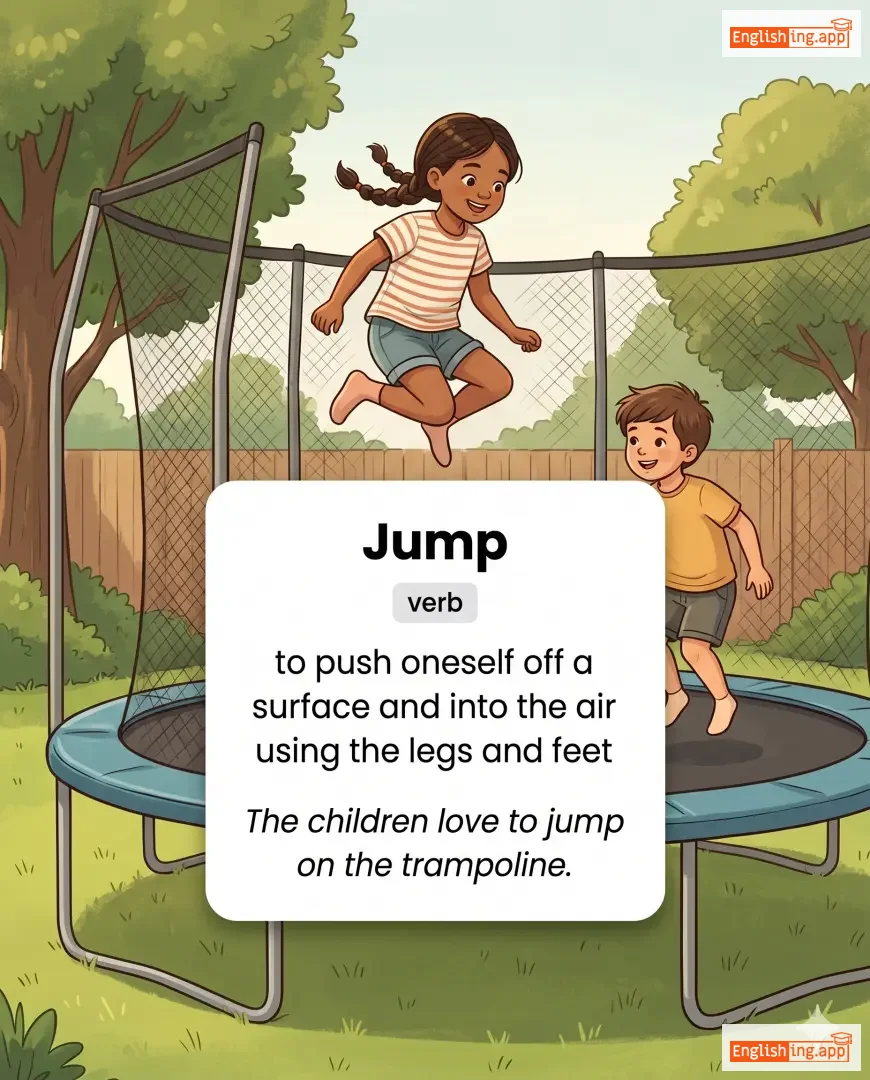
to push oneself off a surface and into the air using the legs and feet
••••••
|
The children love to jump on the trampoline.
Дети любят прыгать на батуте.
••••••
|
Дети любят прыгать на батуте.
Deti lyubyat prygat na batute.
••••••
|
jump the gun
джамп зе ган
••••••
|
to act before the proper time
••••••
|
поспешить
pospeshit
••••••
|
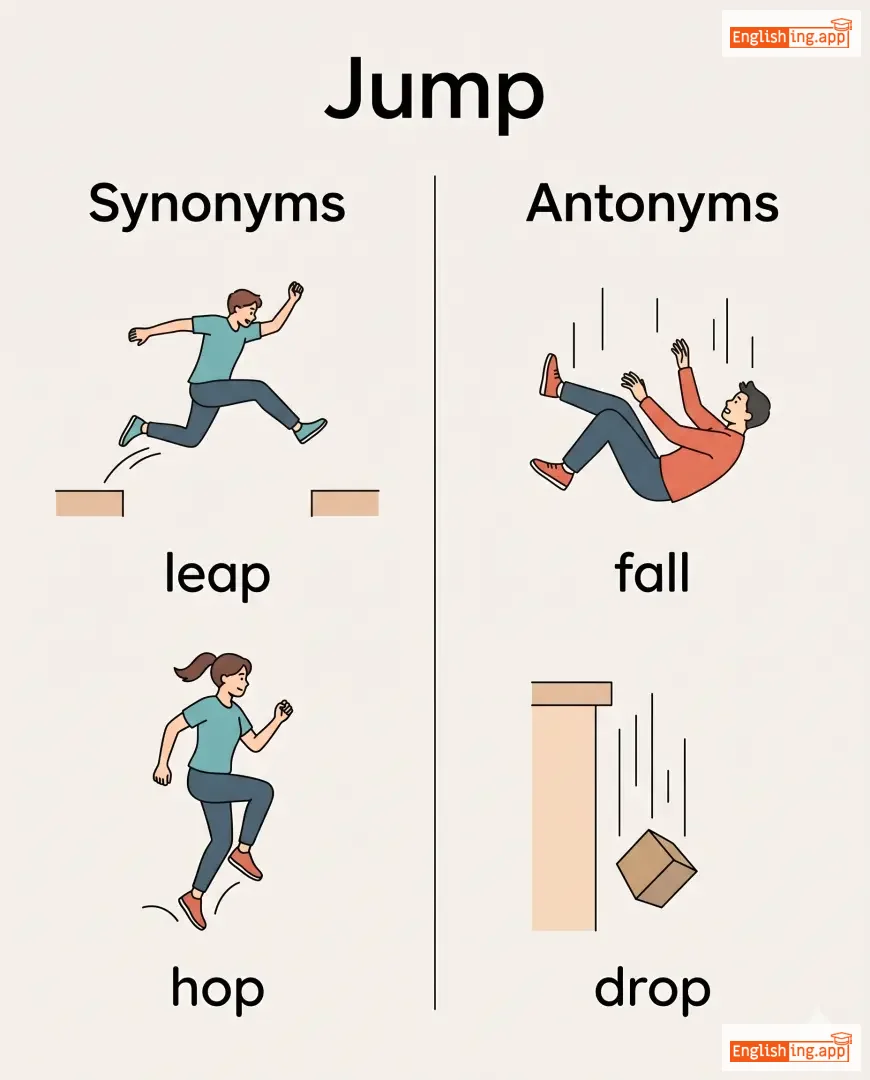
leap, hop, spring, bound, vault
••••••
|
fall, drop, descend
••••••
|
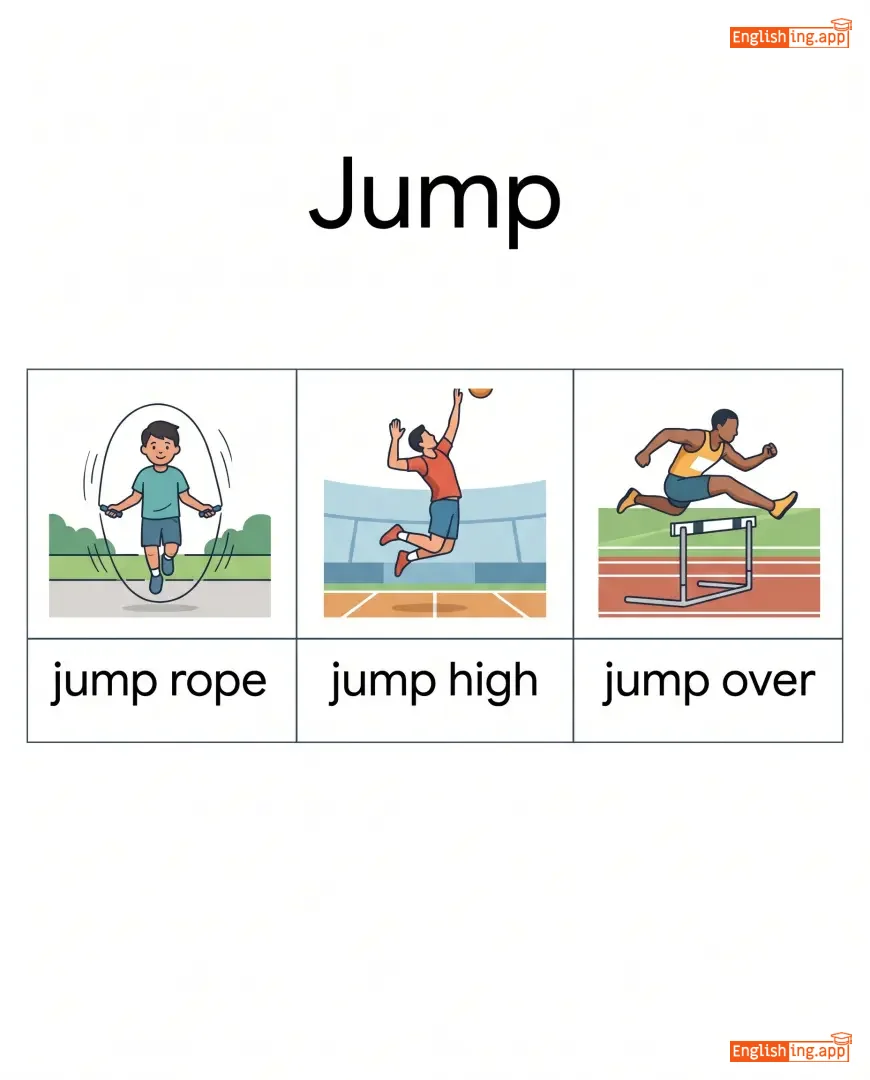
jump rope, jump high, jump over, jump into
••••••
|
джамп = Jump. Представь батут: прыгай как ребенок, и помни что прыгать означает двигаться вверх, поэтому Джамп поможет запомнить Прыгать.
••••••
|
|
#11276
🔪
|
/naɪf/
noun
(хэппинесс)
••••••
|
- •••••• |
счастье
schast'ye
••••••
|
- •••••• | - •••••• | - •••••• | - •••••• |
a tool or weapon with a blade and a handle, used for cutting
••••••
|
He used a sharp knife to cut the vegetables. |
Она не могла скрыть своего счастья, когда получила награду.
Ona ne mogla skryt' svoego schast'ya, kogda poluchila nagradu.
••••••
|
at knife's edge |
in a very tense or dangerous situation
••••••
|
поиск счастья
poisk schast'ya
••••••
|
blade, cutter, dagger, utensil, scalpel
••••••
|
spoon, fork
••••••
|
sharp knife, kitchen knife, knife blade, knife attack
••••••
|
Счастье — это радость, которую легко запомнить.
••••••
|
|
#11277
🦵
|
/niː/
noun
(хэппинесс)
••••••
|
- •••••• |
счастье
schastye
••••••
|
- •••••• | - •••••• | - •••••• | - •••••• |
the joint between the thigh and the lower leg
••••••
|
He hurt his knee while playing football. |
Она не могла скрыть своего счастья, когда получила награду.
Ona ne mogla skryt' svoego schast'ya, kogda poluchila nagradu.
••••••
|
cut off at the knees |
to suddenly stop someone from progressing or succeeding
••••••
|
поиск счастья
poisk schast'ya
••••••
|
joint, kneecap, patella, articulation
••••••
|
straight leg, extension
••••••
|
bend the knee, knee pain, knee surgery, knee injury
••••••
|
Счастье — это когда всё в порядке.
••••••
|
|
#11278
🍳
|
/ˈkɪtʃən/
noun
(kitchen)
••••••
|
- •••••• |
кухня
kukhnya
••••••
|
- •••••• | - •••••• | - •••••• | - •••••• |
a room or area where food is prepared and cooked
••••••
|
The kitchen was filled with the smell of fresh bread.
The kitchen was filled with the smell of fresh bread.
••••••
|
Кухня была наполнена запахом свежего хлеба.
Kukhnyia byla napolniena zapakhom svezhego khleba.
••••••
|
everything but the kitchen sink
everything but the kitchen sink
••••••
|
almost everything imaginable
••••••
|
всё, кроме раковины на кухне
vsyo, krome rakoviny na kukhne
••••••
|
cookhouse, galley, canteen, scullery
••••••
|
living room, bedroom
••••••
|
kitchen table, modern kitchen, clean the kitchen, kitchen utensils
••••••
|
Кухня = место, где готовятся самые вкусные блюда 🍲
••••••
|
|
#11279
💋
|
/kɪs/
verb
(happiness)
••••••
|
|
счастье
schast'ye
••••••
|
kissed
••••••
|
kissed
••••••
|
kisses
••••••
|
kissing
••••••
|
to touch someone with your lips as a sign of affection, greeting, or respect
••••••
|
She kissed her child goodnight before leaving the room.
Она не смогла скрыть свою радость, когда получила награду.
••••••
|
Она не смогла скрыть свою радость, когда получила награду.
Ona ne smogla skryt' svoyu radost', kogda poluchila nagradu.
••••••
|
kiss and make up
поиск счастья
••••••
|
to end an argument and become friendly again
••••••
|
поиск счастья
poisk schast'ya
••••••
|
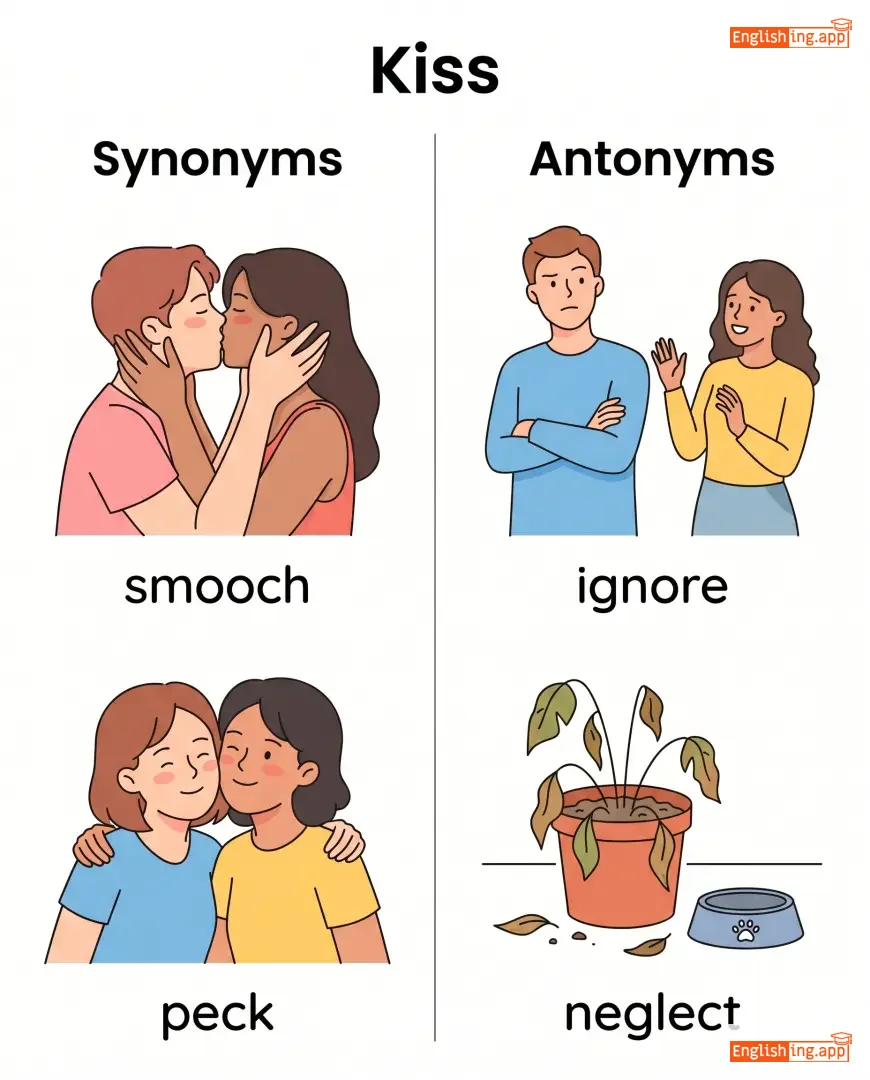
smooch, peck, embrace, caress
••••••
|
ignore, neglect
••••••
|
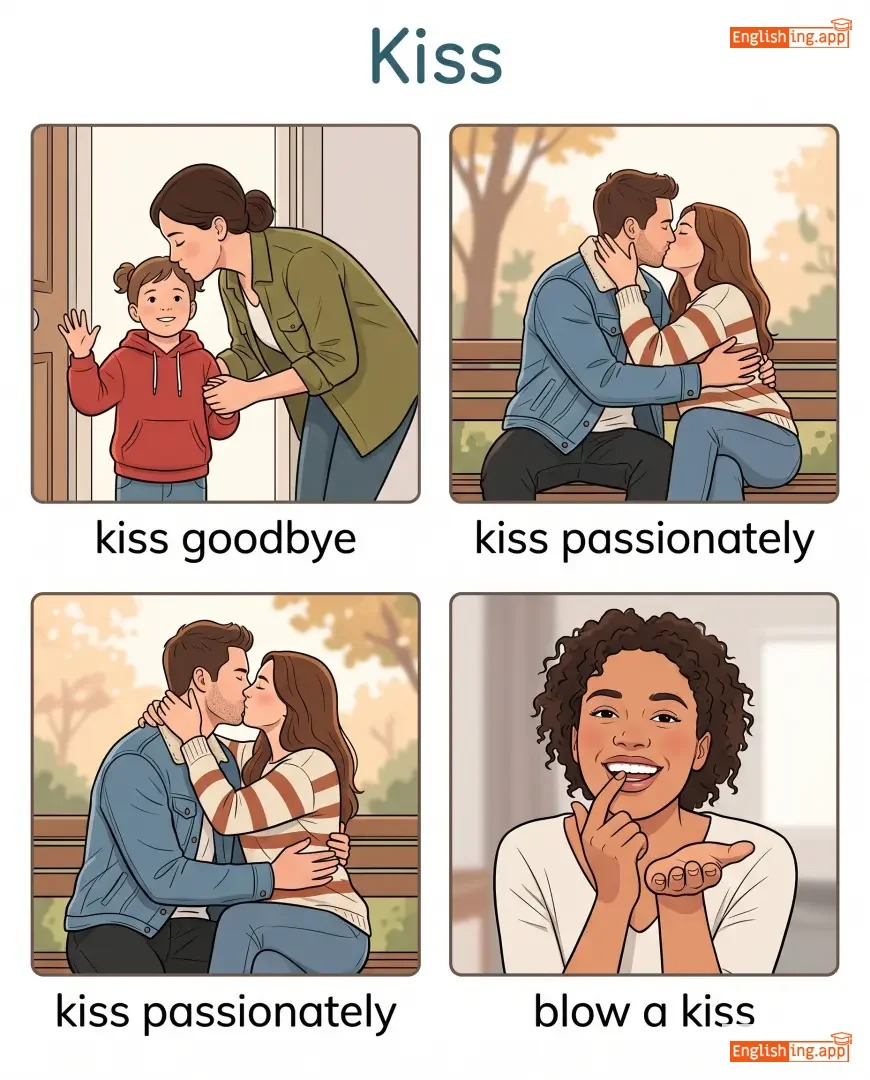
kiss goodbye, kiss passionately, blow a kiss, kiss on the cheek
••••••
|
Счастье — это подарки, наполненные радостью!
••••••
|
|
#11280
👑
|
/kɪŋ/
noun
(кинг)
••••••
|
- •••••• |
король
korol
••••••
|
- •••••• | - •••••• | - •••••• | - •••••• |
the male ruler of an independent state, especially one who inherits the position by right of birth
••••••
|
The king ruled the country with wisdom and fairness. |
Король правил страной с мудростью и справедливостью.
Korol' pravil stranoy s mudrost'yu i spravedlivost'yu.
••••••
|
King of the hill |
a person who is the best or most powerful in a particular area
••••••
|
Король на холме
Korol' na kholme
••••••
|
monarch, ruler, emperor, sovereign, potentate
••••••
|
subject, commoner
••••••
|
king and queen, crowned king, king of England, king of the hill
••••••
|
👑 Король - это лидер, коронованный властью.
••••••
|
|
#11281
💀
|
/ˈkɪlɪŋ/
noun
(киллинг)
••••••
|
- •••••• |
убийство
ubiystvo
••••••
|
- •••••• | - •••••• | - •••••• | - •••••• |
the act of causing death, especially deliberately
••••••
|
The movie depicts the brutal killing of the villagers. |
Фильм показывает жестокое убийство деревенских жителей.
Film pokazyvayet zhestokoye ubiystvo derevenskikh zhiteley.
••••••
|
make a killing |
to earn a large amount of money quickly
••••••
|
заработать целое состояние
zarabotat' tseloe sostoyaniye
••••••
|
murder, homicide, slaughter, assassination, massacre
••••••
|
saving, rescue
••••••
|
cold-blooded killing, brutal killing, make a killing, senseless killing
••••••
|
Убийство означает убить, но в бизнесе 'заработать целое состояние' означает быстро заработать много денег.
••••••
|
|
#11282
🔪
|
/ˈkɪlər/
noun
(ки́лер)
••••••
|
- •••••• |
убийца
ubiytsa
••••••
|
- •••••• | - •••••• | - •••••• | - •••••• |
A person or thing that kills.
••••••
|
The police caught the killer last night.
Полиция поймала киллера прошлой ночью.
••••••
|
Полиция поймала убийцу прошлой ночью.
Politsiya poymala ubiitsu proshloy noch'yu.
••••••
|
killer instinct
инстинкт киллера
••••••
|
a strong drive to succeed or dominate
••••••
|
инстинкт киллера
instinkt killera
••••••
|
murderer, slayer, assassin, executioner, destroyer
••••••
|
savior, protector
••••••
|
serial killer, cold-blooded killer, contract killer, killer instinct
••••••
|
Killer означает убийца, в фильмах убийца всегда плохой человек.
••••••
|
|
#11283
☠️
|
/kɪl/
verb
(kil)
••••••
|
|
убивать
ubivat
••••••
|
killed
kild
••••••
|
killed
kild
••••••
|
kills
kils
••••••
|
killing
kiling
••••••
|
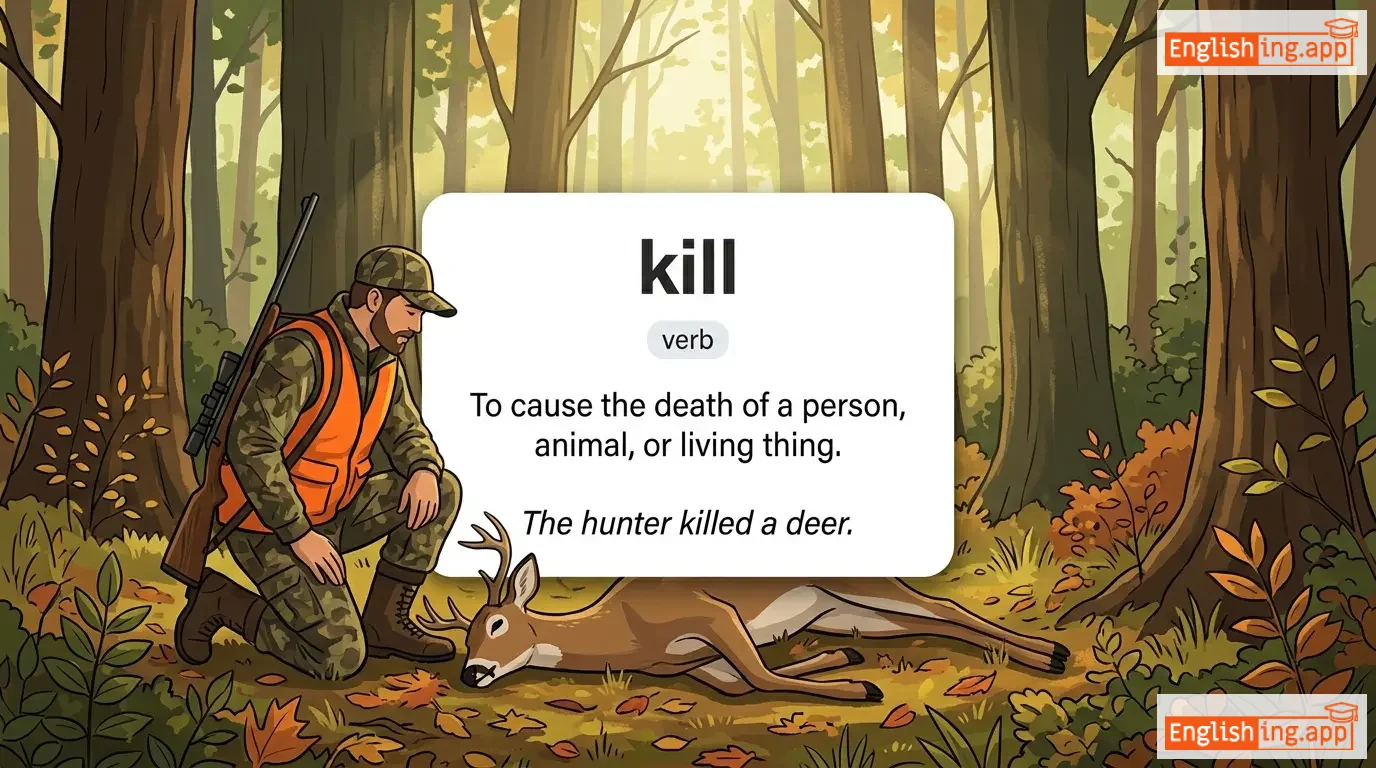
To cause the death of a person, animal, or living thing.
••••••
|
The hunter killed a deer.
Охотник убил оленя.
••••••
|
Охотник убил оленя.
Okhotnik ubil olenya.
••••••
|
kill time
убивать время
••••••
|
to spend time doing something unimportant while waiting
••••••
|
убивать время
ubivat vremya
••••••
|
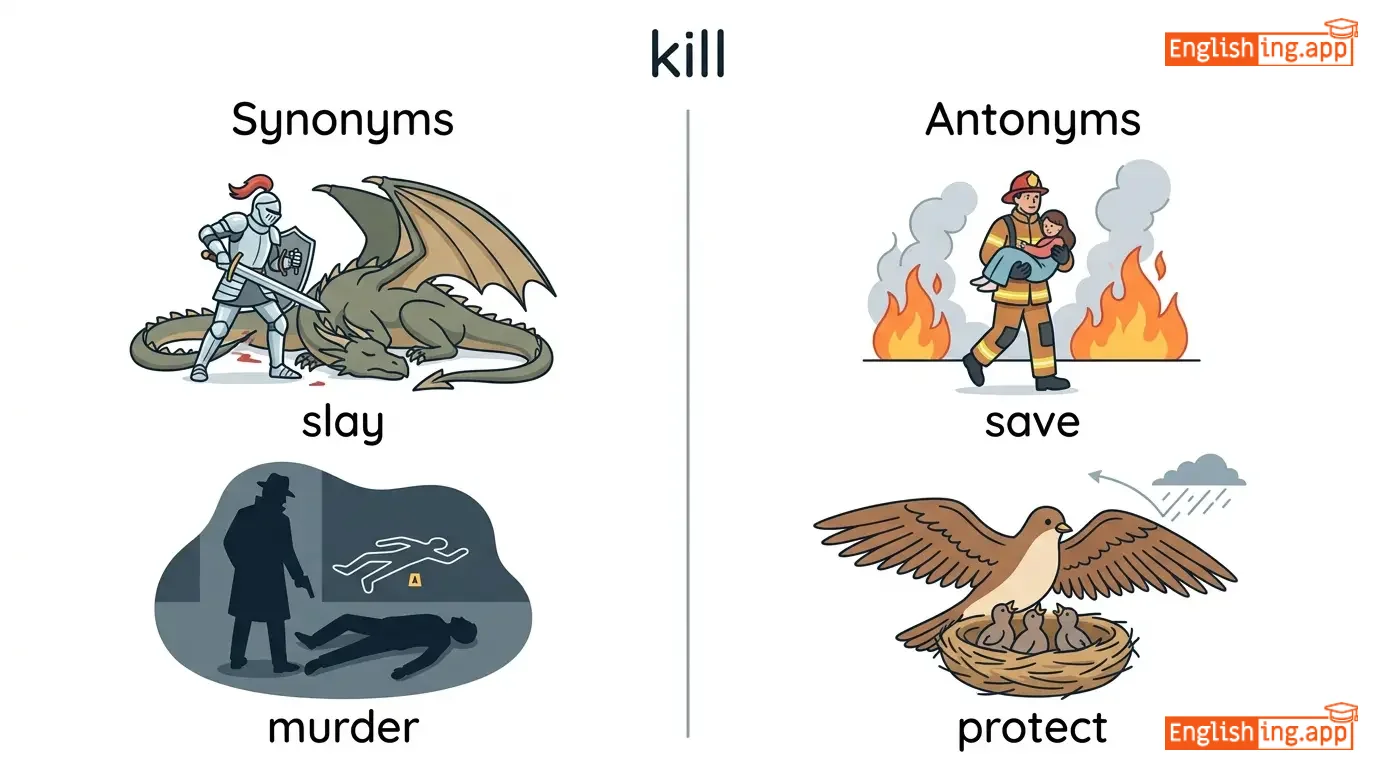
slay, murder, destroy, end, eliminate
••••••
|
save, protect, preserve
••••••
|
kill time, kill instantly, kill someone, kill the mood
••••••
|
Убивать — это убивать, убивать время — это ждать пустое время.
••••••
|
|
#11284
👦
|
/kɪd/
noun
(кид)
••••••
|
- •••••• |
ребёнок
rebyonok
••••••
|
- •••••• | - •••••• | - •••••• | - •••••• |
A child or young person.
••••••
|
The kid was playing in the park.
Ребёнок играл в парке.
••••••
|
Ребёнок играл в парке.
Rebyonok igral v parke.
••••••
|
no kidding
Не шучу
••••••
|
used to emphasize that one is serious
••••••
|
Не шучу
Ne shuchu
••••••
|
child, youngster, youth, minor, juvenile
••••••
|
adult, grown-up
••••••
|
little kid, school kid, kid brother, kid around
••••••
|
Kid на английском – это 'ребёнок' на русском, маленький человек.
••••••
|
|
#11285
👟
|
/kɪk/
verb
(kik)
••••••
|
|
пнуть
pnut
••••••
|
kicked
kikd
••••••
|
kicked
kikd
••••••
|
kicks
kiks
••••••
|
kicking
kiking
••••••
|
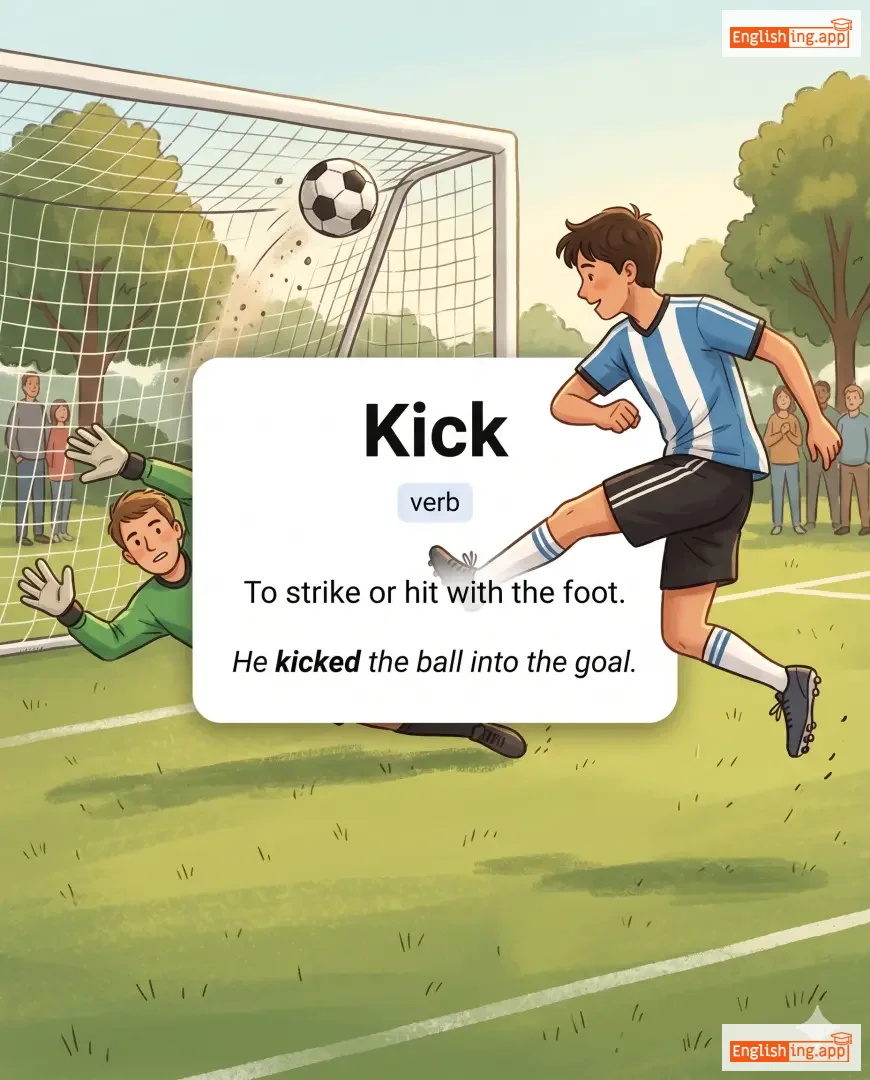
To strike or hit with the foot.
••••••
|
He kicked the ball into the goal.
Он пнул мяч в ворота.
••••••
|
Он пнул мяч в ворота.
On pnut myach v vorota.
••••••
|
kick the bucket
пнуть ведро
••••••
|
a euphemism for dying
••••••
|
умереть
umeret
••••••
|
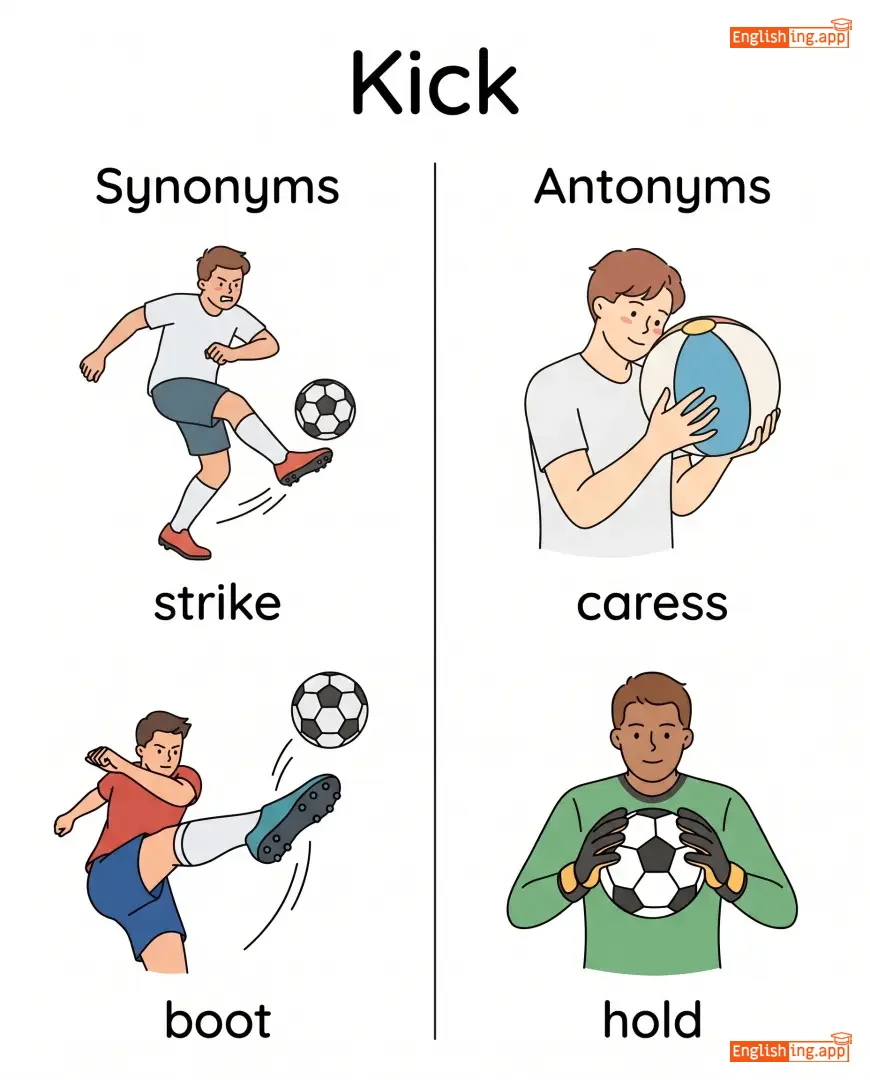
strike, boot, punt, lash, thrust
••••••
|
caress, hold, touch gently
••••••
|
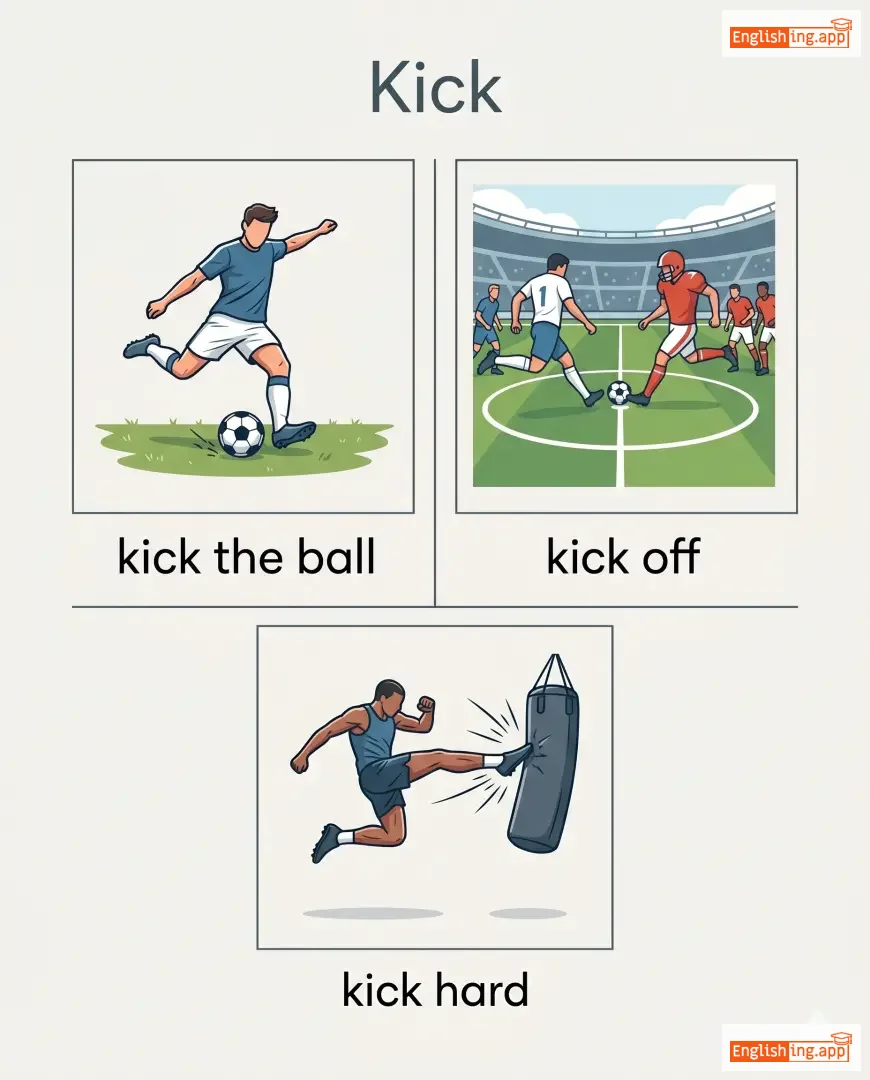
kick the ball, kick off, kick hard, kick out, kick start
••••••
|
Kick значит пнуть, как герой в фильме, который всегда пинает (kick).
••••••
|
|
#11286
🔑
|
/kiː/
noun
(ki)
••••••
|
- •••••• |
ключ
klyuch
••••••
|
- •••••• | - •••••• | - •••••• | - •••••• |
A small piece of shaped metal used to open or close locks, or something crucial and essential.
••••••
|
She lost the key to her apartment. |
Она потеряла ключ от своей квартиры.
Ona poteryala klyuch ot svoey kvartiry.
••••••
|
key to success |
the essential factor in achieving success
••••••
|
ключ к успеху
klyuch k uspekhu
••••••
|
essential, crucial, vital, main, important
••••••
|
unimportant, trivial, minor
••••••
|
house key, car key, key role, key point, key factor
••••••
|
Ключ — это то, что открывает дверь к успеху.
••••••
|
|
#11287
⚖️
|
/ˈdʒʌstɪs/
noun
(джастис)
••••••
|
|
справедливость
spravedlivost
••••••
|
- •••••• | - •••••• | - •••••• | - •••••• |
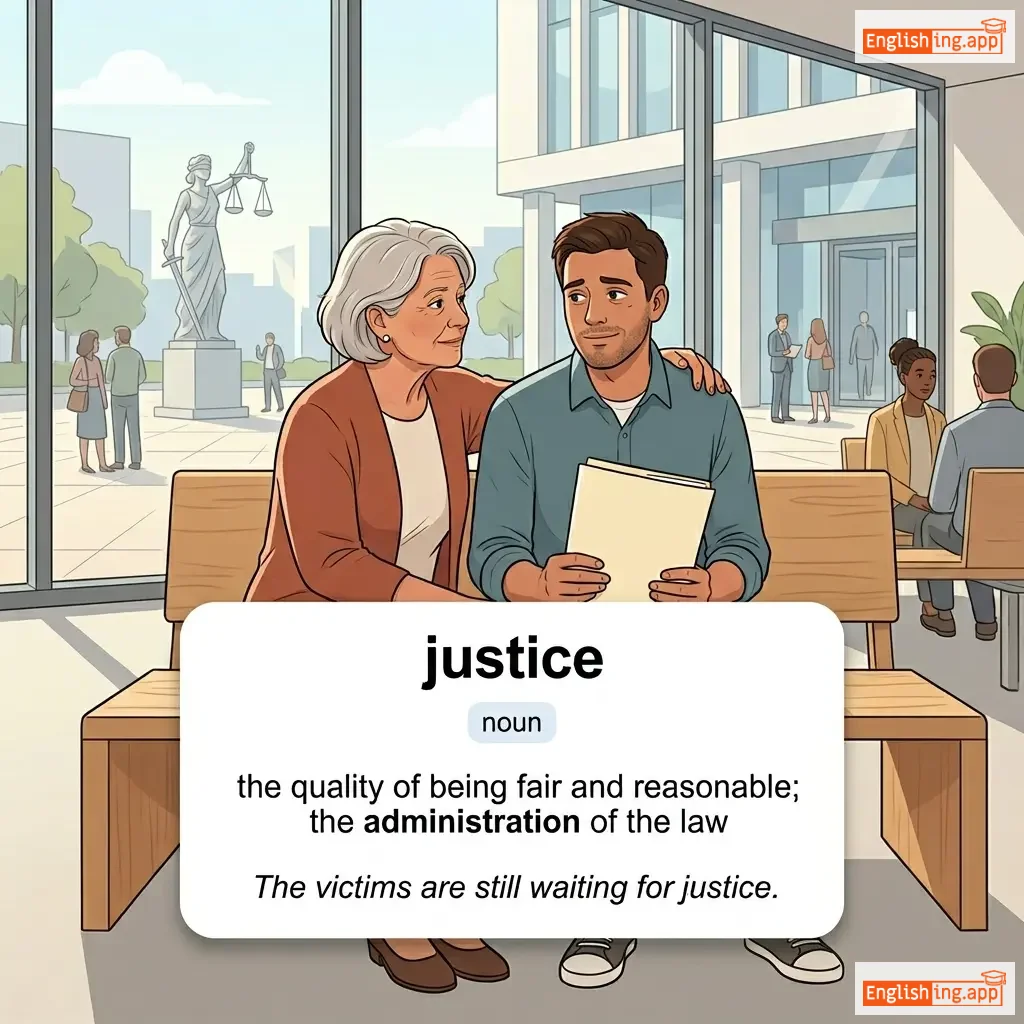
the quality of being fair and reasonable; the administration of the law
••••••
|
The victims are still waiting for justice. |
Жертвы все еще ждут справедливости.
Zhertvy vse eshche zhdut spravedlivosti.
••••••
|
bring to justice |
to arrest and punish someone for a crime
••••••
|
достигнуть справедливости
dostignut' spravedlivosti
••••••
|
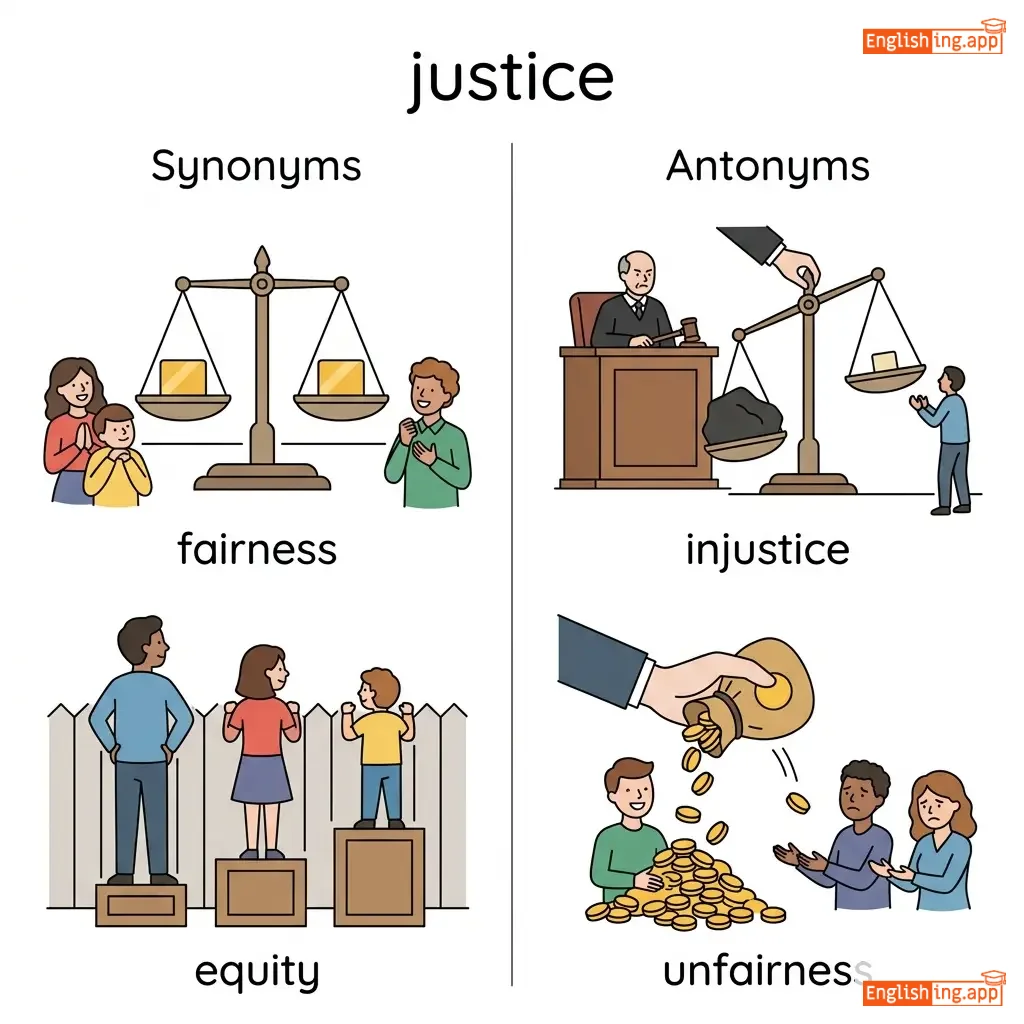
fairness, equity, law, righteousness, impartiality
••••••
|
injustice, unfairness, corruption
••••••
|
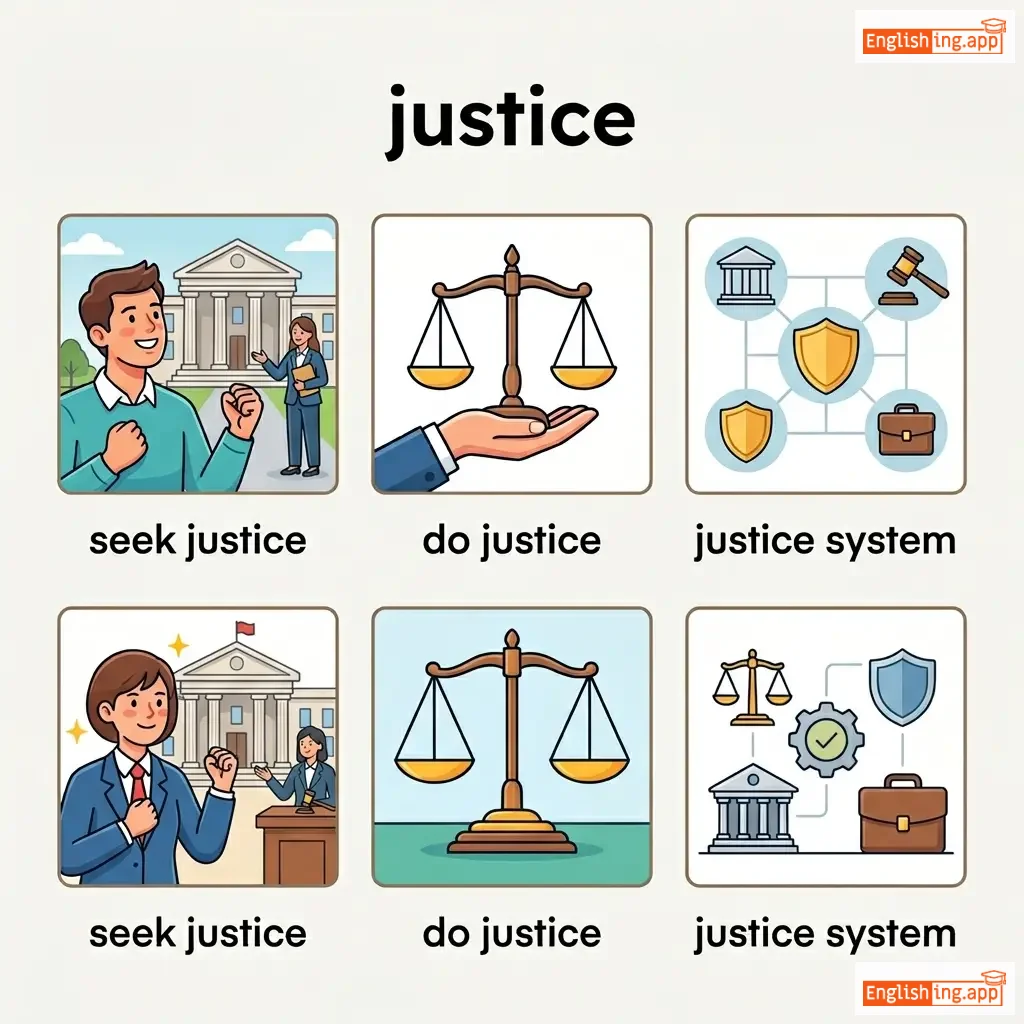
seek justice, do justice, justice system, social justice
••••••
|
Justice = справедливость (справедливо)
••••••
|
|
#11288
⚖️
|
/ˈdʒʊəri/
noun
(жюри)
••••••
|
- •••••• |
жюри
zhuri
••••••
|
- •••••• | - •••••• | - •••••• | - •••••• |
a group of people sworn to give a verdict in a legal case based on the evidence
••••••
|
The jury found him guilty of the crime.
жюри признало его виновным в преступлении
••••••
|
Жюри признало его виновным в преступлении.
Zhuri priznalo ego vinovnym v prestuplenii.
••••••
|
the jury is still out
жюри еще не приняло решение
••••••
|
a decision has not yet been made
••••••
|
Жюри еще не приняло решение
Zhuri eshche ne prinyalo reshenie
••••••
|
panel, tribunal, committee, board, assessors
••••••
|
judge, individual decision
••••••
|
jury duty, jury trial, grand jury, jury verdict
••••••
|
Жюри - это группа, которая решает, виновен ли человек в преступлении.
••••••
|
|
#11289
👶
|
/ˈdʒuːniər/
adjective, noun
(джуниор)
••••••
|
- •••••• |
младший
mladshiy
••••••
|
- •••••• | - •••••• | - •••••• | - •••••• |
younger or lower in rank; also a student in the next-to-last year of high school or college
••••••
|
He works as a junior officer in the company.
Он работает младшим офицером в компании.
••••••
|
Он работает младшим офицером в компании.
On rabotaet mladshim ofitserom v kompanii.
••••••
|
- •••••• | - •••••• | - •••••• |
younger, subordinate, lower, apprentice, trainee
••••••
|
senior, elder, superior
••••••
|
junior officer, junior partner, junior year, junior member
••••••
|
Junior означает младший – в офисе быть младшим означает быть на низшей должности!
••••••
|
|
#11290
🔗
|
/ɪts/
pronoun
(its)
••••••
|
- •••••• |
его
ego
••••••
|
- •••••• | - •••••• | - •••••• | - •••••• |
Belonging to or associated with a thing previously mentioned.
••••••
|
The company changed its logo last year.
Компания изменила свой логотип в прошлом году.
••••••
|
Компания изменила свой логотип в прошлом году.
Kompaniya izmenila svoy logotip v proshlom godu.
••••••
|
- •••••• | - •••••• | - •••••• |
belonging, owned by, related to
••••••
|
others, theirs
••••••
|
its value, its name, its purpose, its role
••••••
|
Its означает его — как в 'dog its tail' означает хвост его собаки.
••••••
|
|
#11291
🧃
|
/dʒuːs/
noun
(дʒус)
••••••
|
- •••••• |
сок
sok
••••••
|
- •••••• | - •••••• | - •••••• | - •••••• |
the liquid obtained from fruits, vegetables, or meat; also refers to energy or power in informal use
••••••
|
She drank a glass of orange juice with breakfast. |
Она выпила стакан апельсинового сока за завтраком.
Ona vypila stakan apelsinovogo soka za zavtrakom.
••••••
|
juice up |
to make something more exciting or powerful
••••••
|
сделать что-то более увлекательным или мощным
sdelat' chto-to bolee uvelichitel'nym ili moshchnym
••••••
|
liquid, extract, nectar, sap, essence
••••••
|
solid, pulp
••••••
|
fresh juice, fruit juice, orange juice, juice box
••••••
|
Сок (sok) даёт энергию - сок = энергетический напиток
••••••
|
|
#11292
⚖️
|
/dʒʌdʒ/
noun/verb
(дʒʌдʒ)
••••••
|
|
судья / судить
sud'ya / sudit'
••••••
|
judged
дʒʌдʒд
••••••
|
judged
дʒʌдʒд
••••••
|
judges
дʒʌдʒез
••••••
|
judging
дʒʌдʒинг
••••••
|
a person who makes decisions in a court of law; or to form an opinion about something
••••••
|
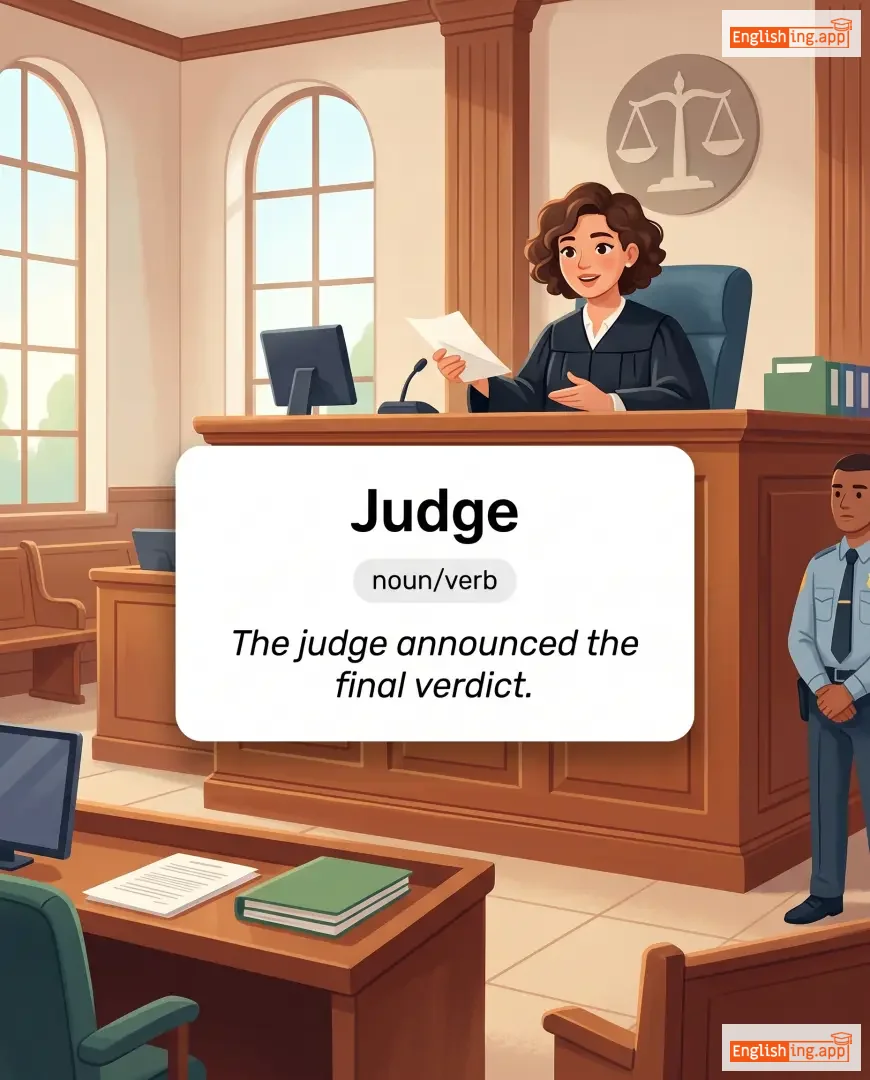
The judge announced the final verdict.
Судья объявил окончательный вердикт.
••••••
|
Судья объявил окончательный вердикт.
Sud'ya ob'yavil okonchatel'nyy verdikt.
••••••
|
don't judge a book by its cover
Не суди книгу по обложке
••••••
|
don't form an opinion based only on appearances
••••••
|
Не суди книгу по обложке
Ne sudi knigu po oblozhke
••••••
|
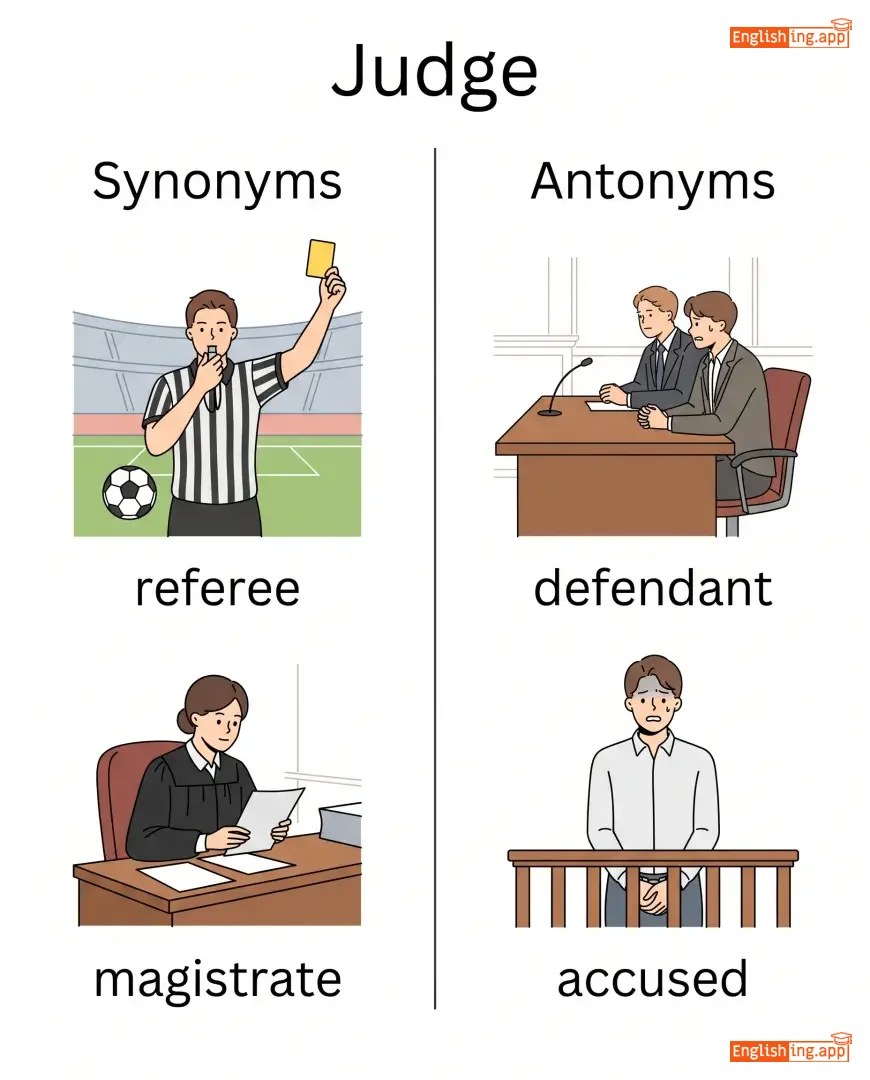
referee, magistrate, critic, evaluator
••••••
|
defendant, accused
••••••
|
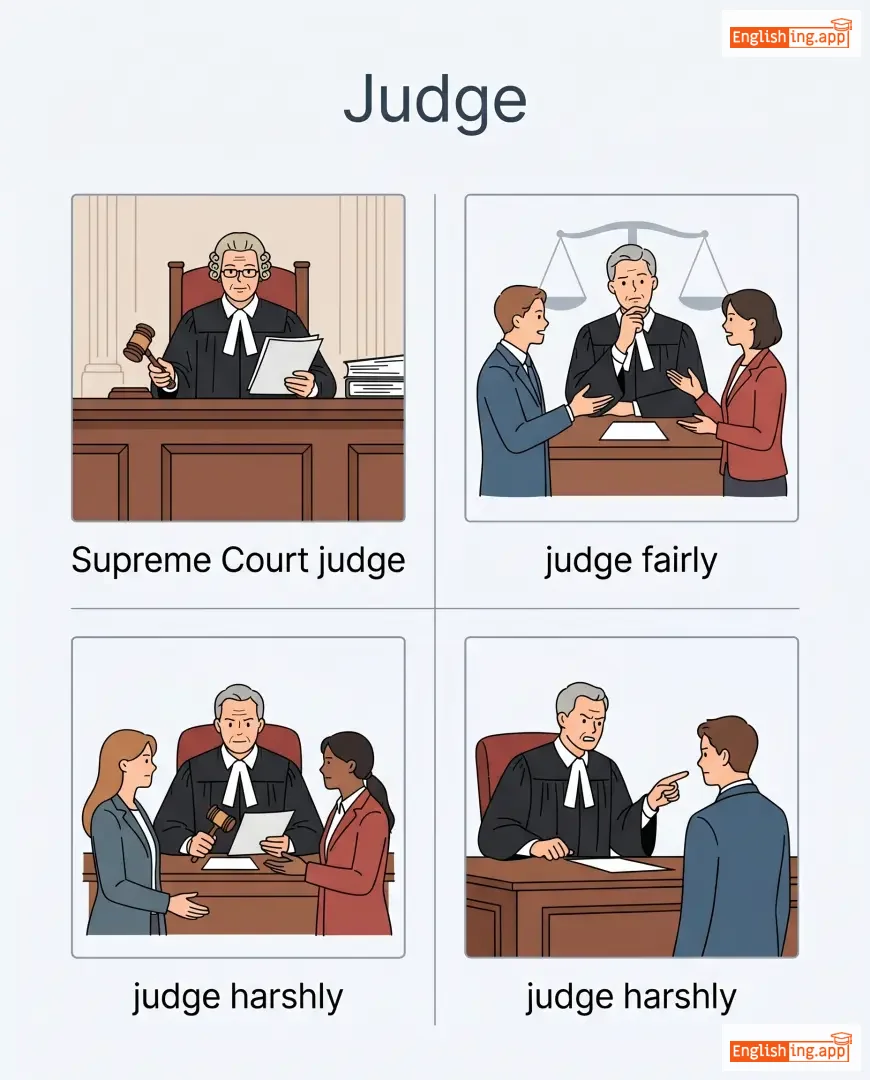
Supreme Court judge, judge fairly, judge harshly, judge wisely
••••••
|
Judge означает судья, не суди по внешности.
••••••
|
|
#11293
🛤️
|
/ˈdʒɜːrni/
noun
(ˈdʒɜːrni)
••••••
|
- •••••• |
путешествие
puteshestvie
••••••
|
- •••••• | - •••••• | - •••••• | - •••••• |
the act of traveling from one place to another
••••••
|
Their journey across the desert was difficult. |
Их путешествие через пустыню было трудным.
Ikh puteshestvie cherez pustynyu bylo trudnym.
••••••
|
life is a journey |
life is like a path with experiences and challenges along the way
••••••
|
жизнь — это путешествие
zhizn' — eto puteshestvie
••••••
|
trip, voyage, travel, expedition
••••••
|
stay, rest
••••••
|
long journey, spiritual journey, begin a journey, return journey
••••••
|
Путешествие — это путь с многими поворотами и трудностями.
••••••
|
|
#11294
📰
|
/ˈdʒɜːrnəlɪst/
noun
(журналист)
••••••
|
- •••••• |
журналист
zhurnalist
••••••
|
- •••••• | - •••••• | - •••••• | - •••••• |
a person who writes news articles or reports for newspapers, magazines, or media
••••••
|
The journalist covered the political event. |
Журналист освещал политическое событие.
Zhurnalist osveshchal politicheskoe sobytie.
••••••
|
- •••••• | - •••••• | - •••••• |
reporter, correspondent, columnist, writer
••••••
|
reader, audience
••••••
|
investigative journalist, freelance journalist, professional journalist
••••••
|
Журналист – это тот, кто пишет и сообщает новости, как в газете.
••••••
|
|
#11295
📓
|
/ˈdʒɜːrnəl/
noun
(журнал)
••••••
|
- •••••• |
журнал
zhurnal
••••••
|
- •••••• | - •••••• | - •••••• | - •••••• |
a daily record of news, events, or personal thoughts
••••••
|
She writes in her journal every night. |
Она пишет в своем журнале каждую ночь.
Ona pishet v svoem zhurnale kazhduyu noch.
••••••
|
keep a journal |
to regularly write in a journal or diary
••••••
|
вести журнал
vesti zhurnal
••••••
|
diary, log, record, notebook
••••••
|
silence, forgetfulness
••••••
|
scientific journal, personal journal, daily journal, medical journal
••••••
|
Журнал: записывай каждый день свои мысли и переживания!
••••••
|
|
#11296
😂
|
/dʒoʊk/
noun/verb
(джоук)
••••••
|
|
шутка
shutka
••••••
|
joked
джоукт
••••••
|
joked
джоукт
••••••
|
jokes
джоукс
••••••
|
joking
джоукинг
••••••
|
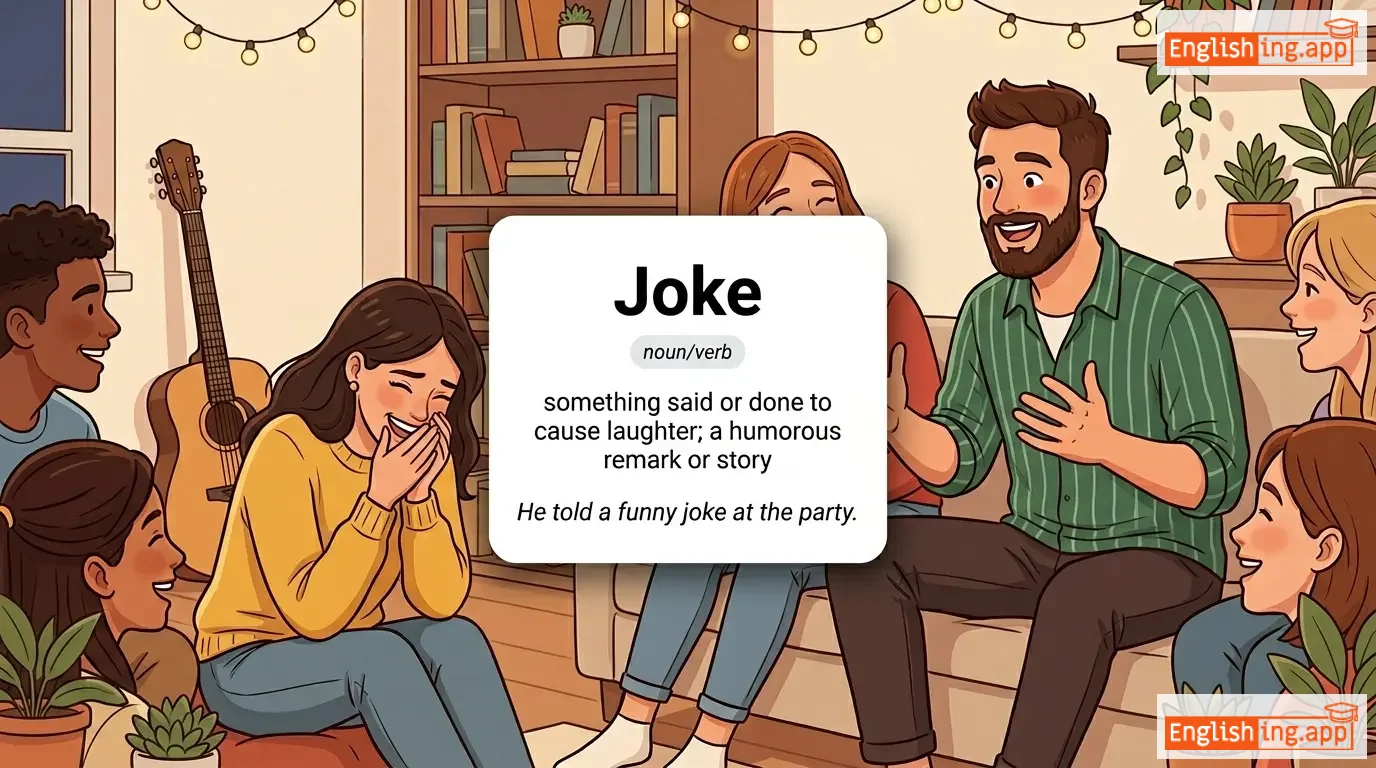
something said or done to cause laughter; a humorous remark or story
••••••
|
He told a funny joke at the party.
Он рассказал смешную шутку на вечеринке.
••••••
|
Он рассказал смешную шутку на вечеринке.
On rasskazal smeshnuyu shutku na vecherinke.
••••••
|
crack a joke
рассказать шутку
••••••
|
to tell a joke, usually to lighten the mood
••••••
|
рассказать шутку
rasskazat' shutku
••••••
|
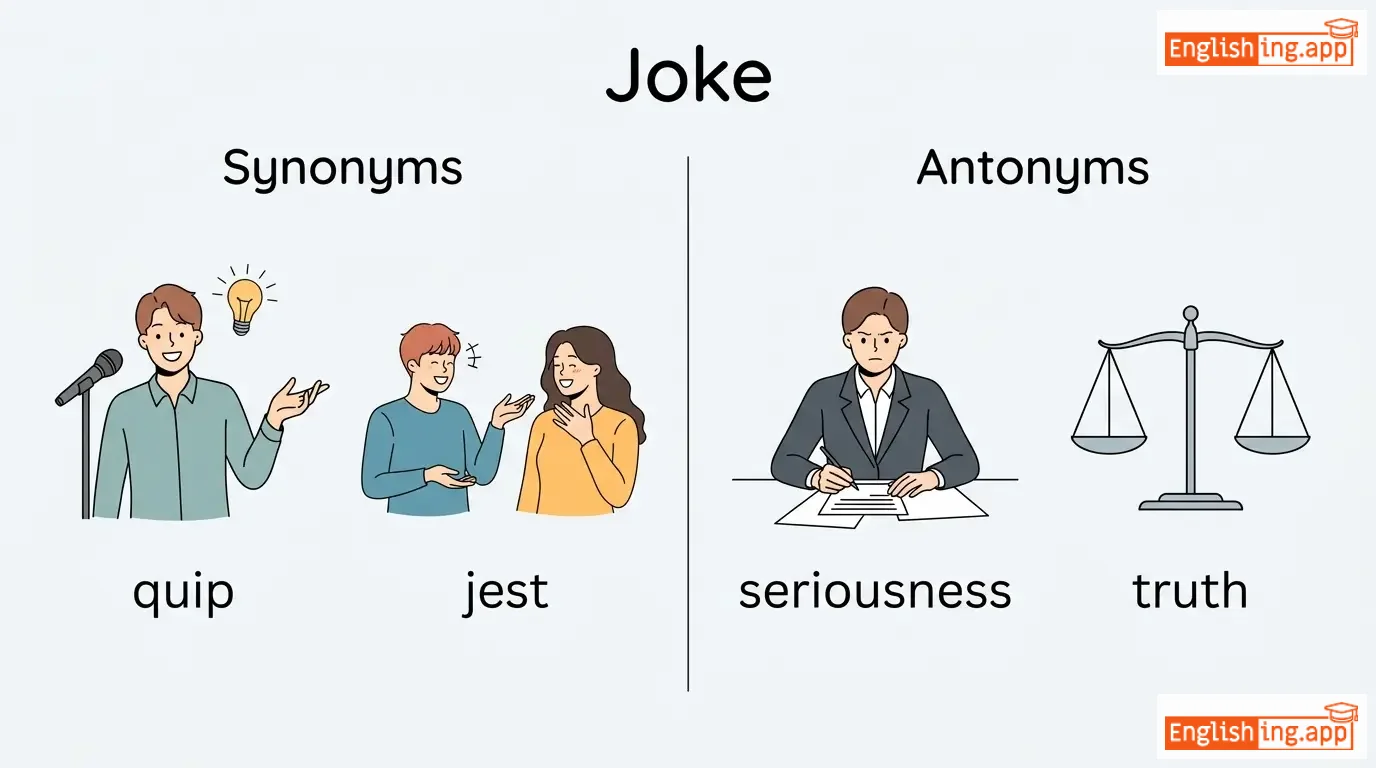
quip, jest, gag, witticism, pun
••••••
|
seriousness, truth
••••••
|
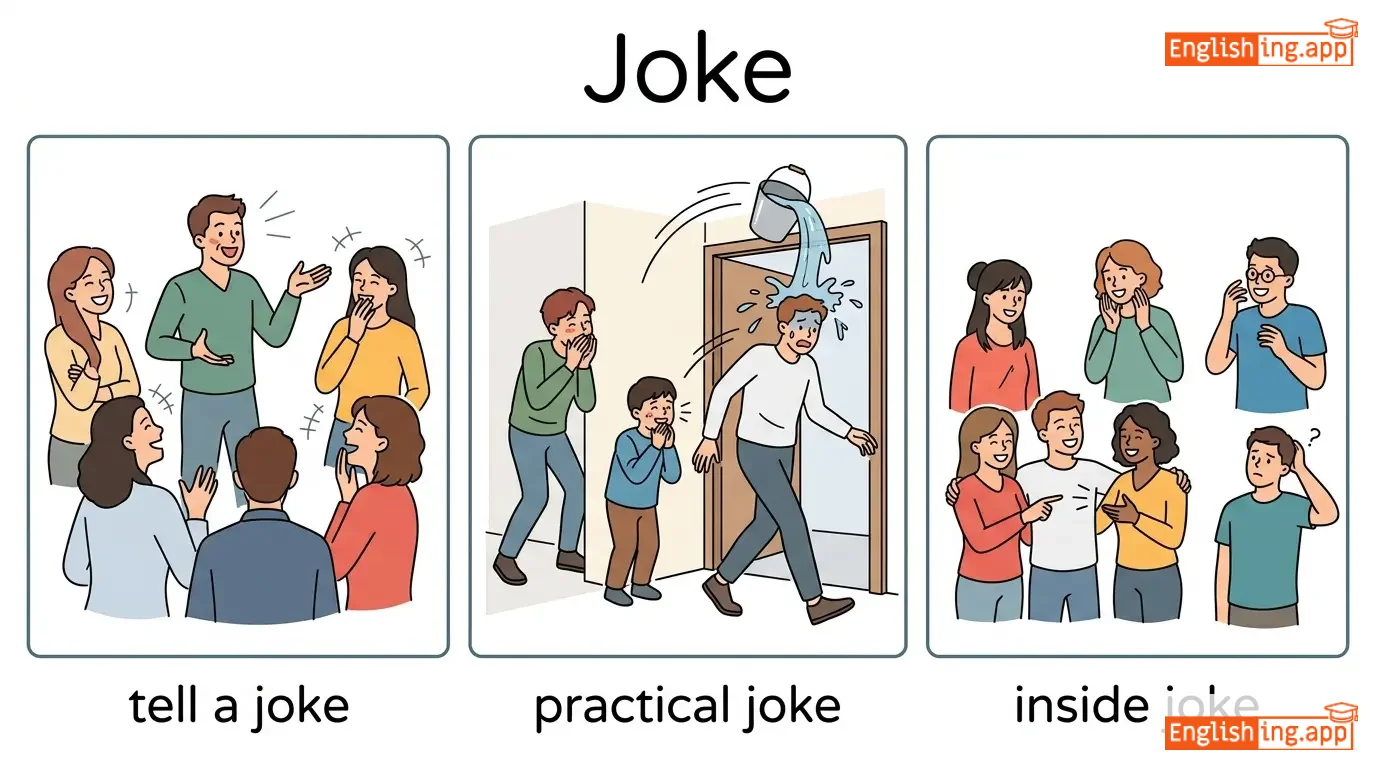
tell a joke, practical joke, inside joke, crack a joke
••••••
|
Joke значит шутка, рассказывайте шутки, и все смеются.
••••••
|
|
#11297
🦵
|
/dʒɔɪnt/
noun
(джоинт)
••••••
|
- •••••• |
сустав
sustav
••••••
|
- •••••• | - •••••• | - •••••• | - •••••• |
a place where two parts of something are joined; also a term for a business establishment or a cannabis cigarette
••••••
|
The knee is a joint that connects the thigh and the leg. |
Колено — это сустав, который соединяет бедро и ногу.
Koleno — eto sustav, kotoryy soyedinyayet bedro i nogu.
••••••
|
out of joint |
dislocated or not properly aligned
••••••
|
вышел из строя
vyshel iz stroya
••••••
|
connection, junction, link, establishment, partnership
••••••
|
separation, disconnection
••••••
|
joint venture, joint pain, joint effort, joint account
••••••
|
Слово сустав связано с движением и соединением частей
••••••
|
|
#11298
💼
|
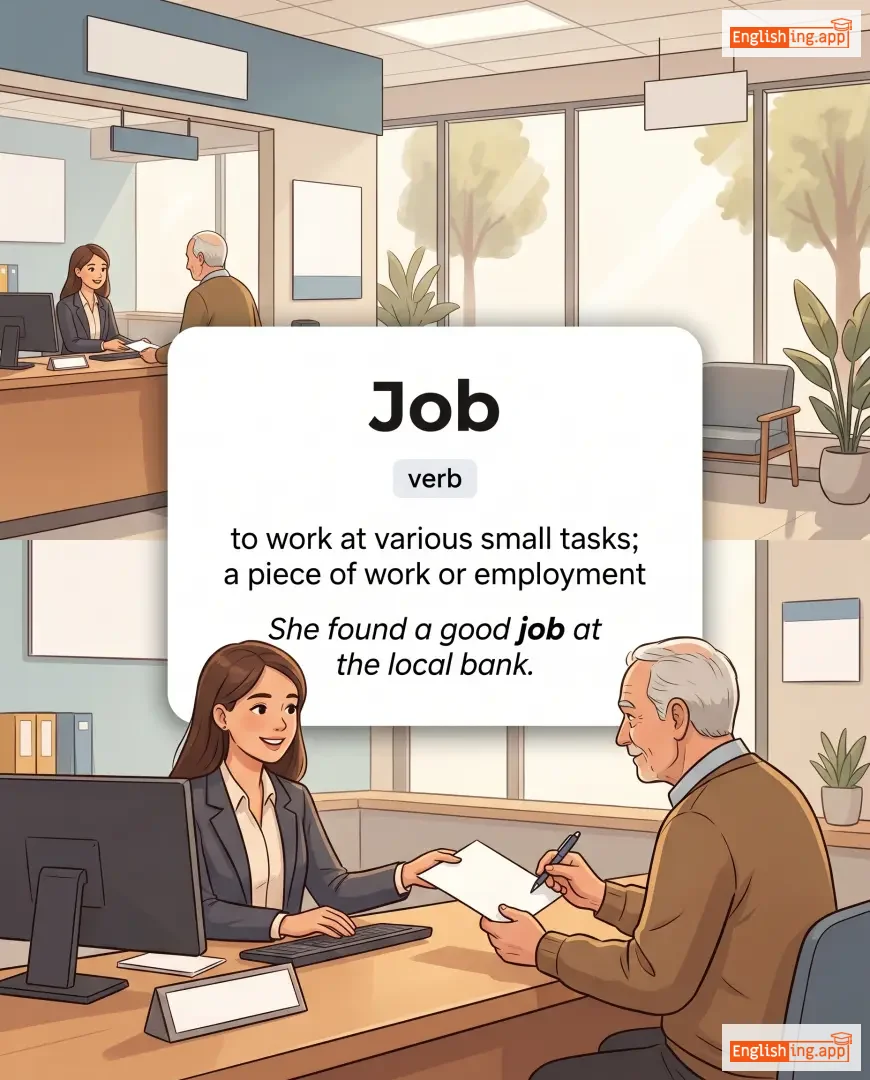
/dʒɒb/
noun
(джоб)
••••••
|
|
работа
rabota
••••••
|
- •••••• | - •••••• | - •••••• | - •••••• |
a paid position of regular employment
••••••
|
She got a new job at a software company.
Она получила новую работу в компании по разработке программного обеспечения.
••••••
|
Она получила новую работу в компании по разработке программного обеспечения.
Ona poluchila novuyu rabotu v kompanii po razrabotke programmnogo obespecheniya.
••••••
|
on the job
на работе
••••••
|
while working
••••••
|
на работе
na rabote
••••••
|
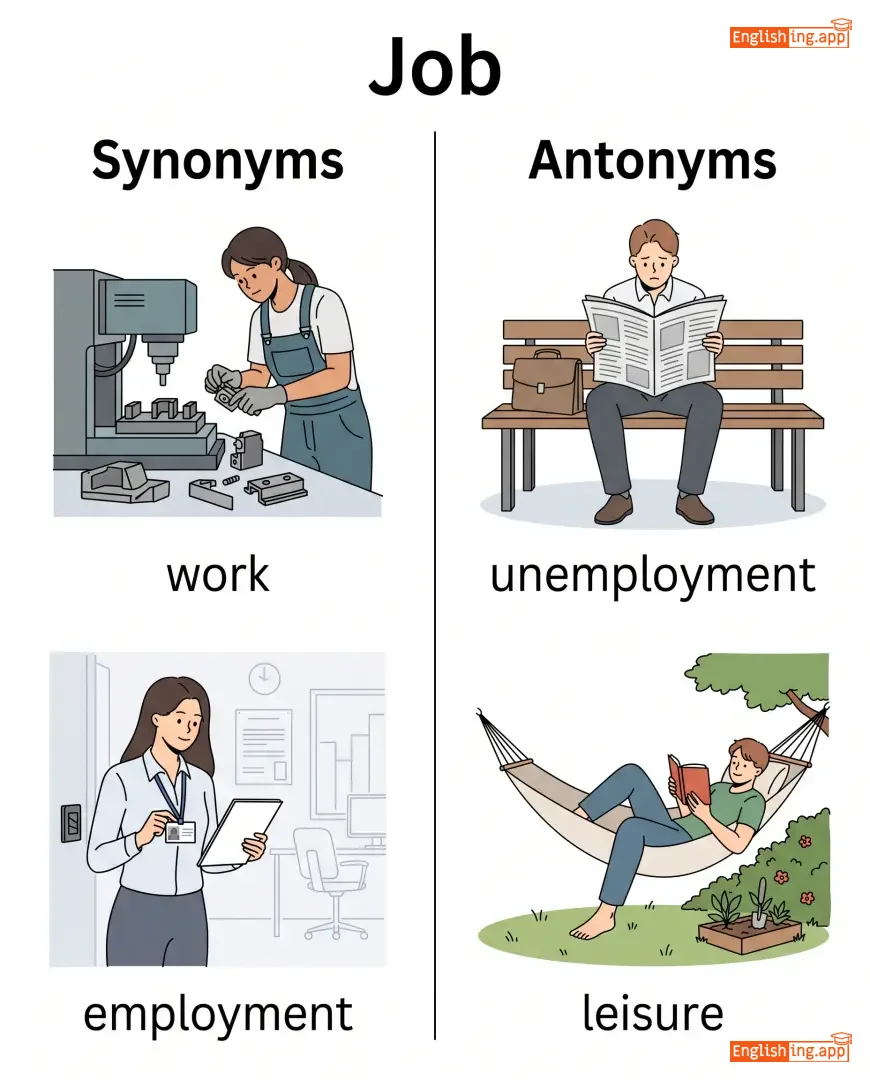
employment, occupation, position, work, profession
••••••
|
unemployment, idleness
••••••
|
job offer, job interview, job market, job satisfaction
••••••
|
Job означает работа, помни, что 'Job' - это работа на русском
••••••
|
|
#11299
🕍
|
/ˈdʒuːɪʃ/
adjective
(хэппинесс)
••••••
|
- •••••• |
счастье
schastye
••••••
|
- •••••• | - •••••• | - •••••• | - •••••• |
relating to Jews or Judaism
••••••
|
They celebrate Jewish festivals every year. |
Она не могла скрыть своего счастья, когда получила награду.
Ona ne mogla skryt' svoego schast'ya, kogda poluchila nagradu.
••••••
|
Jewish law |
The body of religious laws in Judaism
••••••
|
поиск счастья
poisk schast'ya
••••••
|
Hebraic, Judaic, Israelite, Semitic
••••••
|
non-Jewish, gentile
••••••
|
Jewish culture, Jewish tradition, Jewish history
••••••
|
Счастье = достижение баланса
••••••
|
|
#11300
✡️
|
/dʒuː/
noun
(джу)
••••••
|
- •••••• |
еврей
evrey
••••••
|
- •••••• | - •••••• | - •••••• | - •••••• |
a person whose religion is Judaism or who is of Jewish descent
••••••
|
He is a Jew by heritage and follows Jewish customs. |
Он еврей по наследству и следует еврейским традициям.
On yevrey po nasledstvu i sleduyet yevreyskim traditsiyam.
••••••
|
- •••••• | - •••••• | - •••••• |
Hebrew, Israelite, Semite, Jewish person
••••••
|
gentile, non-Jew
••••••
|
Jewish community, practicing Jew, observant Jew
••••••
|
Еврей — это Jew на русском языке.
••••••
|
|
#11301
🇯🇵
|
/ˌdʒæpəˈniːz/
adjective
(японский)
••••••
|
- •••••• |
японский
yaponskiy
••••••
|
- •••••• | - •••••• | - •••••• | - •••••• |
relating to Japan, its people, or their language
••••••
|
She loves Japanese culture and traditions. |
Ей нравится японская культура и традиции.
Eyy nravitsya yaponskaya kul'tura i traditsii.
••••••
|
Japanese cuisine |
Food that originates from Japan
••••••
|
японская кухня
yaponskaya kukhnya
••••••
|
Nipponese, oriental, Asian, Tokyo-based, Japanese-speaking
••••••
|
non-Japanese, foreign, western
••••••
|
Japanese food, Japanese language, Japanese culture, Japanese technology
••••••
|
Япония + ский = японский, все что связано с Японией
••••••
|
|
#11302
🚔
|
/dʒeɪl/
noun, verb
(джеил)
••••••
|
- •••••• |
тюрьма
tyur'ma
••••••
|
jailed
джейлд
••••••
|
jailed
джейлд
••••••
|
jails
джейлз
••••••
|
jailing
джейлинг
••••••
|
A place for the confinement of people accused or convicted of a crime; to imprison.
••••••
|
The thief was sent to jail for stealing.
ðə θiːf wəz sɛnt tə ʤеɪл fɔr stiːlɪŋ.
••••••
|
Вора отправили в тюрьму за кражу.
Vora otpravili v tyur'mu za krazhu.
••••••
|
throw in jail
θroʊ ɪn ʤеɪл
••••••
|
to imprison someone
••••••
|
бросить в тюрьму
brosit' v tyur'mu
••••••
|
prison, lockup, penitentiary, detention
••••••
|
freedom, release
••••••
|
go to jail, in jail, jail sentence, jail term
••••••
|
Jail – это тюрьма. Воры идут в тюрьму, когда их поймают.
••••••
|
|
#11303
🧥
|
/ˈdʒækɪt/
noun
(dʒækɪt)
••••••
|
- •••••• |
куртка
kurtka
••••••
|
- •••••• | - •••••• | - •••••• | - •••••• |
A short coat, typically extending to the hips.
••••••
|
She wore a leather jacket in the winter.
Она носила кожаную куртку зимой.
••••••
|
Она носила кожаную куртку зимой.
Ona nosila kozhanuju kurtku zimoi.
••••••
|
straight jacket
врачи-техники
••••••
|
something that severely restricts freedom of movement or action
••••••
|
врачи-техники
vrachy-tehniki
••••••
|
coat, blazer, overcoat, garment
••••••
|
shirt, vest
••••••
|
leather jacket, winter jacket, denim jacket, safety jacket
••••••
|
Куртка защищает от холода, врачи-техники ограничивают движение.
••••••
|
|
#11304
🙆
|
/ɪtˈsɛlf/
pronoun
(итселф)
••••••
|
- •••••• |
сам
sam
••••••
|
- •••••• | - •••••• | - •••••• | - •••••• |
Used to emphasize the thing just mentioned; by its own power or effort.
••••••
|
The cat cleaned itself after eating. |
Кошка вычистила себя после еды.
Koshka vychistila sebya posle yedy.
••••••
|
in itself |
considered alone, without reference to anything else
••••••
|
в себе
v sebe
••••••
|
alone, personally, independently
••••••
|
together, others
••••••
|
by itself, itself alone, itself clear, itself evident
••••••
|
Itself значит сам — Кошка сама (itself) себя вычистила.
••••••
|
Vocabulary Quiz
Test your vocabulary by matching words with their translations or meanings.
Login to take the quiz
Comments (0)
Share your thoughts and join the discussion.
Join the discussion by logging in
Login to CommentNo comments yet
Be the first to share your thoughts!