

Обновитесь для доступа ко всему словарю
Получите неограниченный доступ ко всем словам с подпиской Pro
Обновить до ProПеревод
Прошедшее
Причастие прошедшего времени
Третье лицо единственного числа
Герундий
Значение
Пример предложения
Перевод примера предложения
Синонимы
Антонимы
Коллокации
Мнемоника



Swipe left or right, or use the buttons. Tap image to zoom.
Обновитесь для доступа ко всем предложениям
Получите неограниченный доступ ко всем предложениям с подпиской Pro
Обновить до ProПеревод примера предложения
Слово
Lesson 366Lesson 366 - Переключатель маски
|
Эмодзи
|
Слово | Images | Перевод | Прошедшее | Причастие прошедшего времени | Третье лицо единственного числа | Герундий | Значение | Пример предложения | Перевод примера предложения | Пример выражения | Значение примера выражения | Перевод примера выражения | Синонимы | Антонимы | Коллокации | Мнемоника |
|---|---|---|---|---|---|---|---|---|---|---|---|---|---|---|---|---|---|
|
#10945
🧪
|
/ɪkˈsperɪmənt/
noun/verb
(ekspeˈriment)
••••••
|
- •••••• |
эксперимент
eksperiment
••••••
|
experimented
ekspeˈrimentiroval
••••••
|
experimented
ekspeˈrimentiroval
••••••
|
experiments
ekspeˈrimentuet
••••••
|
experimenting
ekspeˈrimentirujushchij
••••••
|
a test or trial carried out to discover something or prove an idea
••••••
|
The scientist conducted an experiment on plant growth.
Učenyj provodil eksperiment po rostu rastenij.
••••••
|
Učenyy provodil eksperiment po rostu rastenij.
Uchenyy provodil eksperiment po rostu rastenij.
••••••
|
experiment with
eksperimentirovat' s
••••••
|
to try something new to see what happens
••••••
|
eksperimentirovat' s
eksperimentirovat' s
••••••
|
test, trial, research, investigation, study
••••••
|
proof, certainty
••••••
|
conduct experiment, scientific experiment, lab experiment, experiment results
••••••
|
Eksperiment - eto issledovaniye i testirovaniye (eksperiment)
••••••
|
|
#10946
❌
|
/ˈfeɪljər/
noun
(fey-lyur)
••••••
|
- •••••• |
неудача
neudacha
••••••
|
- •••••• | - •••••• | - •••••• | - •••••• |
The lack of success in doing or achieving something.
••••••
|
The project was considered a failure due to poor planning. |
Проект был признан неудачей из-за плохого планирования.
Proyekt byl prizan neudachey iz-za plokhogo planirovaniya.
••••••
|
trial and error |
A method of solving problems by trying different solutions until one works.
••••••
|
метод проб и ошибок
metod prob i oshibok
••••••
|
defeat, breakdown, collapse, disaster, fiasco
••••••
|
success, achievement, victory
••••••
|
complete failure, business failure, engine failure, failure rate
••••••
|
Неудача – это когда все, что ты пробуешь, не удается – вспомни слово 'неудача'.
••••••
|
|
#10947
❌
|
/feɪl/
verb
(fejl)
••••••
|
- •••••• |
провалиться
provalit'sya
••••••
|
failed
fejld
••••••
|
failed
fejld
••••••
|
fails
fejls
••••••
|
failing
fejling
••••••
|
To be unsuccessful in achieving a goal or expectation.
••••••
|
He failed the driving test.
он провалил экзамен по вождению.
••••••
|
Он провалил экзамен по вождению.
On provalil ekzamen po vozhdeniyu.
••••••
|
fail miserably
провалиться ужасно
••••••
|
to fail completely and badly
••••••
|
провалиться полностью
provalit'sya polnost'yu
••••••
|
lose, flop, collapse, fall short, break down
••••••
|
succeed, achieve, pass
••••••
|
fail exam, fail test, fail to act, fail miserably
••••••
|
Провалиться — это когда говорят 'ты провалился' после экзамена.
••••••
|
|
#10948
🌫️
|
/feɪd/
verb
(фейд)
••••••
|
- •••••• |
блекнуть
bleknut
••••••
|
faded
фейдед
••••••
|
faded
фейдед
••••••
|
fades
фейдс
••••••
|
fading
фейдинг
••••••
|
To gradually lose brightness, color, or strength.
••••••
|
The colors of the old photo have started to fade.
цвета старой фотографии начали тускнеть.
••••••
|
Цвета старой фотографии начали тускнеть.
Tsveta staroy fotografii nachali tusknet'.
••••••
|
fade away
тускнеть
••••••
|
to disappear slowly
••••••
|
медленно исчезать
medlenno ischezat'
••••••
|
diminish, weaken, vanish, pale, decline
••••••
|
brighten, strengthen, appear
••••••
|
fade away, fade out, fade over time, colors fade
••••••
|
Блекнуть означает тускнеть, как старое фото, которое теряет цвета.
••••••
|
|
#10949
🏭
|
/ˈfæktəri/
noun
(faktoɾi)
••••••
|
- •••••• |
фабрика
fabrika
••••••
|
- •••••• | - •••••• | - •••••• | - •••••• |
A building or group of buildings where goods are manufactured.
••••••
|
He works in a shoe factory. |
Он работает на обувной фабрике.
On rabotayet na obuvnoy fabrike.
••••••
|
- •••••• | - •••••• | - •••••• |
plant, mill, workshop, industry
••••••
|
office, home
••••••
|
shoe factory, textile factory, factory worker, factory production
••••••
|
Фабрика означает место, где производят вещи.
••••••
|
|
#10950
⚖️
|
/ˈfæktər/
noun
(фактор)
••••••
|
- •••••• |
фактор
faktor
••••••
|
- •••••• | - •••••• | - •••••• | - •••••• |
A circumstance, fact, or influence that contributes to a result.
••••••
|
Weather is an important factor in crop production. |
Погода - важный фактор в производстве сельскохозяйственных культур.
Pogoda - vazhnyy faktor v proizvodstve selskokhozyaystvennykh kul'tur.
••••••
|
key factor |
a crucial or essential element
••••••
|
ключевой фактор
klyuchevoy faktor
••••••
|
element, component, cause, aspect, determinant
••••••
|
result, consequence
••••••
|
important factor, key factor, risk factor, success factor
••••••
|
Фактор = элемент, который влияет на результат, как ключевой фактор.
••••••
|
|
#10951
🧵
|
/ˈfæbrɪk/
noun
(fabryk)
••••••
|
- •••••• |
ткань
tkan'
••••••
|
- •••••• | - •••••• | - •••••• | - •••••• |
Cloth or material produced by weaving or knitting fibers.
••••••
|
The tailor used silk fabric to make the dress. |
Портной использовал шёлковую ткань для пошива платья.
Portnoy ispol'zoval shylkovuyu tkan' dlya poshiva plat'ya.
••••••
|
the fabric of society |
the basic structure or foundation of society
••••••
|
структура общества
struktura obshchestva
••••••
|
cloth, textile, material, fiber, weave
••••••
|
metal, stone, plastic
••••••
|
cotton fabric, woven fabric, fabric softener, fabric design
••••••
|
Fabric - это ткань, которая используется для шитья одежды.
••••••
|
|
#10952
👁️
|
/aɪ/
noun
(ay)
••••••
|
- •••••• |
глаз
glaz
••••••
|
- •••••• | - •••••• | - •••••• | - •••••• |
the organ in the head through which people and animals see
••••••
|
She closed her eyes and went to sleep. |
Она закрыла глаза и пошла спать.
Ona zakryla glaza i poshla spat'.
••••••
|
keep an eye on |
to watch carefully or look after
••••••
|
держать глаз на
derzhat' glaz na
••••••
|
vision, sight, gaze, view, look
••••••
|
blindness, neglect
••••••
|
eye contact, eye color, keep an eye, eye for detail
••••••
|
Eye означает 'глаз', поэтому 'Keep an eye' значит 'держать глаз на'.
••••••
|
|
#10953
🔥
|
/ɪkˈstriːmli/
adverb
(ikstrimli)
••••••
|
- •••••• |
крайне
kraine
••••••
|
- •••••• | - •••••• | - •••••• | - •••••• |
to a very high degree; very much
••••••
|
The movie was extremely interesting. |
Фильм был крайне интересным.
Film byl krajne interesnym.
••••••
|
- •••••• | - •••••• | - •••••• |
very, highly, greatly, tremendously, incredibly
••••••
|
slightly, mildly
••••••
|
extremely difficult, extremely important, extremely rare, extremely useful
••••••
|
Extremely означает крайне (очень сильно, на высшем уровне).
••••••
|
|
#10954
⚠️
|
/ɪkˈstriːm/
adjective
(ik-strim)
••••••
|
|
экстремальный
ekstremal'nyy
••••••
|
- •••••• | - •••••• | - •••••• | - •••••• |
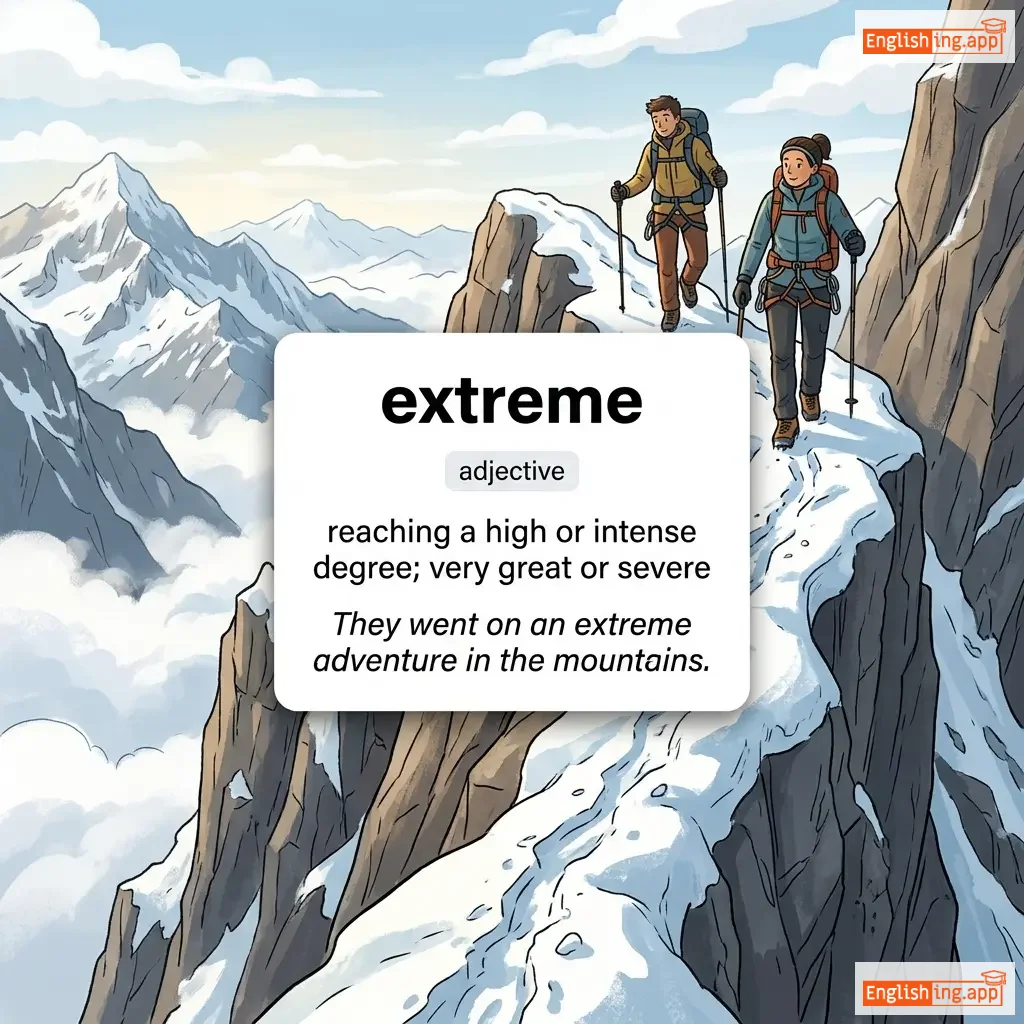
reaching a high or intense degree; very great or severe
••••••
|
They went on an extreme adventure in the mountains. |
Они отправились на экстремальное приключение в горы.
Oni otpravilis' na ekstremal'noye priklyucheniye v gory.
••••••
|
go to extremes |
to do something in an excessive or exaggerated way
••••••
|
идти на крайности
idti na kraynosti
••••••
|
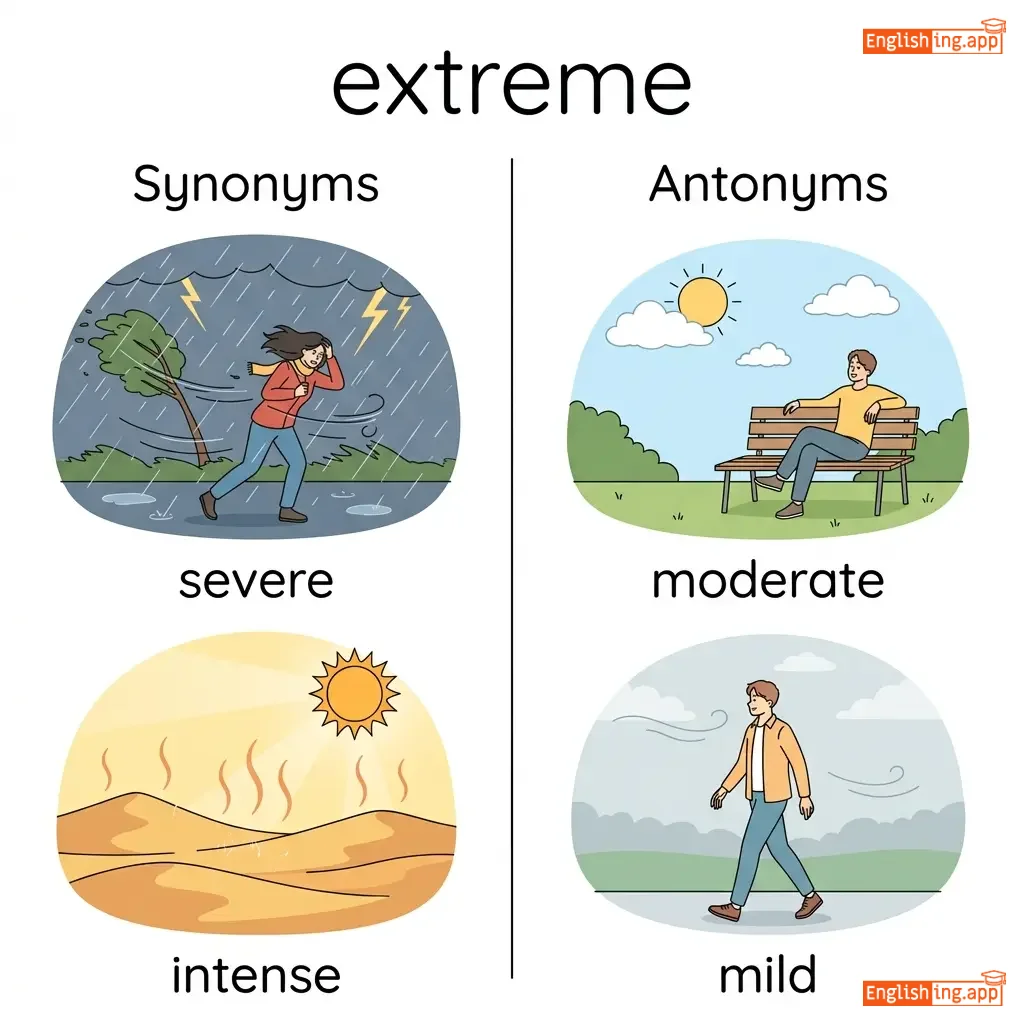
severe, intense, excessive, radical, ultimate
••••••
|
moderate, mild, ordinary
••••••
|
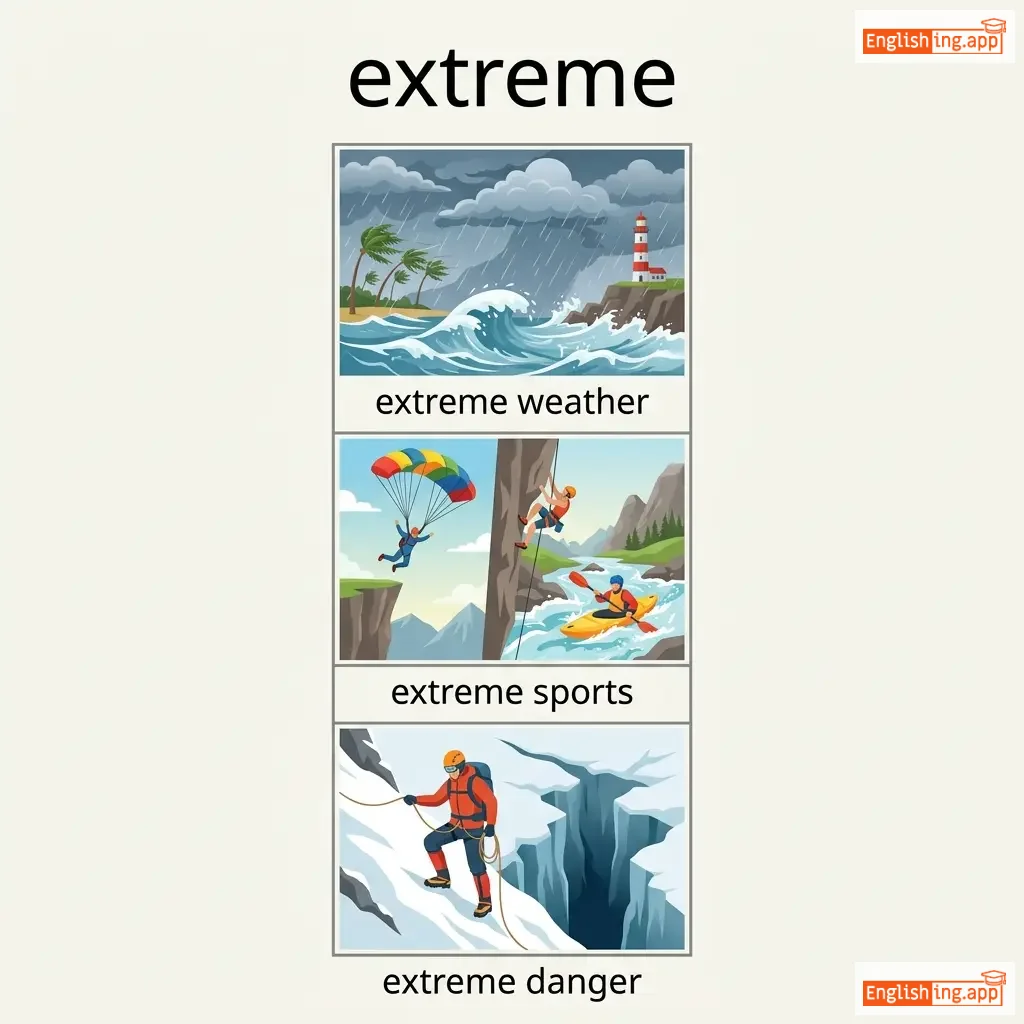
extreme weather, extreme sports, extreme danger, extreme measures
••••••
|
Extreme на русский — экстремальный, как в экстремальной ситуации.
••••••
|
|
#10955
🙂
|
/ɪkˈsprɛʃən/
noun
(экспрешн)
••••••
|
- •••••• |
выражение
vyrazhenie
••••••
|
- •••••• | - •••••• | - •••••• | - •••••• |
the act of putting thoughts or feelings into words, actions, or facial gestures
••••••
|
His facial expression showed surprise.
Его выражение лица показало удивление.
••••••
|
Его выражение лица показало удивление.
Ego vyrazhenie litsa pokazalo udivlenie.
••••••
|
facial expression
выражение лица
••••••
|
the look on someone's face that conveys emotion
••••••
|
выражение лица
vyrazhenie litsa
••••••
|
statement, utterance, manifestation, phrase, gesture
••••••
|
silence, suppression
••••••
|
facial expression, expression of love, free expression, expression of opinion
••••••
|
выражение = эмоции на лице можно прочитать.
••••••
|
|
#10956
💬
|
/ɪkˈsprɛs/
verb
(экспресс)
••••••
|
- •••••• |
выражать
vyrazhat
••••••
|
expressed
выразил
••••••
|
expressed
выразил
••••••
|
expresses
выражает
••••••
|
expressing
выражая
••••••
|
to convey a thought, feeling, or idea in words, actions, or other forms
••••••
|
She expressed her gratitude with a warm smile.
Она выразила свою благодарность тёплой улыбкой.
••••••
|
Она выразила свою благодарность тёплой улыбкой.
Ona vyrazilas' svoi blagodarnost' tyoploi ulybkoi.
••••••
|
express yourself
вырази себя
••••••
|
to communicate one's thoughts and feelings openly
••••••
|
вырази себя
vyrazi sebya
••••••
|
convey, communicate, articulate, state, voice
••••••
|
suppress, conceal, hide
••••••
|
express feelings, express gratitude, express concern, express clearly
••••••
|
Выражай свои чувства, как художник — словами!
••••••
|
|
#10957
🧭
|
/ɪkˈsplɔːr/
verb
(эксплорировать)
••••••
|
- •••••• |
исследовать
issledovat
••••••
|
explored
эксплорировал
••••••
|
explored
эксплорировал
••••••
|
explores
эксплорирует
••••••
|
exploring
эксплорируя
••••••
|
to travel through or study something in order to learn more about it
••••••
|
They decided to explore the forest together.
Они решили исследовать лес вместе.
••••••
|
Они решили исследовать лес вместе.
Oni reshili issledovat' les vmeste.
••••••
|
explore possibilities
исследовать возможности
••••••
|
to consider different options or opportunities
••••••
|
исследовать возможности
issledovat' vozmozhnosti
••••••
|
discover, investigate, examine, search, probe
••••••
|
ignore, neglect
••••••
|
explore new ideas, explore opportunities, explore the world, explore nature
••••••
|
Исследовать, как Дора-исследователь
••••••
|
|
#10958
📖
|
/ˌekspləˈneɪʃən/
noun
(ekspləˈneɪʃən)
••••••
|
- •••••• |
объяснение
ob'yasneniye
••••••
|
- •••••• | - •••••• | - •••••• | - •••••• |
a statement or account that makes something clear
••••••
|
The teacher gave a clear explanation of the theory. |
Учитель дал четкое объяснение теории.
Uchitel' dal chetkoye ob'yasneniye teoryi.
••••••
|
beyond explanation |
too strange or difficult to explain
••••••
|
вне объяснения
vne ob'yasneniya
••••••
|
clarification, interpretation, description, account, justification
••••••
|
confusion, mystery
••••••
|
give explanation, detailed explanation, proper explanation, clear explanation
••••••
|
Explanation означает 'Explain' + 'ation' = объяснение
••••••
|
|
#10959
👨🏫
|
/ˈekspɜːt/
noun/adjective
(эксперт)
••••••
|
- •••••• |
эксперт
ekspert
••••••
|
- •••••• | - •••••• | - •••••• | - •••••• |
a person who has a lot of knowledge or skill in a particular area
••••••
|
He is an expert in computer programming.
Он эксперт в программировании компьютеров.
••••••
|
Он эксперт в программировании компьютеров.
On ekspert v programmirovanii komp'yuterov.
••••••
|
expert opinion
мнение эксперта
••••••
|
a professional or highly knowledgeable view
••••••
|
мнение эксперта
mnenie eksperta
••••••
|
specialist, professional, authority, master, guru
••••••
|
novice, amateur, beginner
••••••
|
expert advice, subject expert, expert opinion, expert knowledge
••••••
|
Expert = Extra Part knowledge, значит эксперт
••••••
|
|
#10960
🔍
|
/ˈɛv.ɪ.dəns/
noun
(эвидэнс)
••••••
|
- •••••• |
доказательство
dokazatel'stvo
••••••
|
- •••••• | - •••••• | - •••••• | - •••••• |
facts or information that show whether something is true or not
••••••
|
The lawyer presented new evidence in court. |
Адвокат представил новые доказательства в суде.
Advokat predstavil novye dokazyvatel'stva v sude.
••••••
|
hard evidence |
strong, undeniable proof
••••••
|
жесткое доказательство
zhestkoye dokazatel'stvo
••••••
|
proof, testimony, confirmation, validation, indication
••••••
|
denial, contradiction, disproof
••••••
|
present evidence, gather evidence, strong evidence, lack of evidence
••••••
|
Доказательство = то, что подтверждает, истинно ли что-то.
••••••
|
|
#10961
🎓
|
/ɪkˈspɪəriəns/
noun/verb
(хэппинесс)
••••••
|
- •••••• |
счастье
schastye
••••••
|
experienced
••••••
|
experienced
••••••
|
experiences
••••••
|
experiencing
••••••
|
knowledge or skill gained through involvement in or exposure to something over time
••••••
|
She gained valuable experience while working abroad.
Она не могла скрыть своего счастья, когда получила награду.
••••••
|
Она не могла скрыть своего счастья, когда получила награду.
Ona ne mogla skryt' svoego schast'ya, kogda poluchila nagradu.
••••••
|
learning from experience
поиск счастья
••••••
|
gaining knowledge by going through events or situations
••••••
|
поиск счастья
poisk schast'ya
••••••
|
knowledge, skill, practice, exposure, familiarity
••••••
|
ignorance, inexperience
••••••
|
gain experience, valuable experience, life experience, work experience
••••••
|
Schast'ye = счастье, как когда ты счастлив и все на свете кажется хорошим.
••••••
|
|
#10962
💰
|
/ɪkˈspɛnsɪv/
adjective
(экспенсив)
••••••
|
- •••••• |
дорогой
ekspensiv
••••••
|
- •••••• | - •••••• | - •••••• | - •••••• |
costing a lot of money
••••••
|
That car is too expensive for me to buy.
Эта машина слишком дорогая, чтобы я мог её купить.
••••••
|
Эта машина слишком дорогая, чтобы я мог её купить.
Eta mashina slishkom dorogaya chtoby ya mog eyo kupit
••••••
|
at an expensive price
по дорогой цене
••••••
|
with great cost or sacrifice
••••••
|
по дорогой цене
po dorogoy tsene
••••••
|
costly, pricey, valuable, extravagant
••••••
|
cheap, inexpensive, affordable
••••••
|
expensive car, expensive gift, expensive clothes, too expensive
••••••
|
Ekspen siv: вообрази Ex держит pennies за дорогую машину
••••••
|
|
#10963
🎯
|
/ˌɛkspɛkˈteɪʃən/
noun
(экспектация)
••••••
|
- •••••• |
ожидание
ozhidanie
••••••
|
- •••••• | - •••••• | - •••••• | - •••••• |
a strong belief that something will happen or be the case
••••••
|
The students had high expectations for their exam results. |
Студенты имели высокие ожидания от своих результатов экзаменов.
Studenty imeli vysokiye ozhidaniya ot svoikh rezul'tatov ekzamenov.
••••••
|
beyond expectations |
better or greater than what was anticipated
••••••
|
за пределами ожиданий
za predelami ozhidaniy
••••••
|
anticipation, hope, belief, outlook, assumption
••••••
|
doubt, disbelief, hopelessness
••••••
|
high expectation, meet expectation, raise expectation, beyond expectation
••••••
|
Ожидание - это то, что мы ожидаем, как, например, высокие ожидания для результатов экзаменов.
••••••
|
|
#10964
📜
|
/ɪɡˈzɪstɪŋ/
adjective
(игзистинг)
••••••
|
|
существующий
sushchestvuyushchiy
••••••
|
- •••••• | - •••••• | - •••••• | - •••••• |
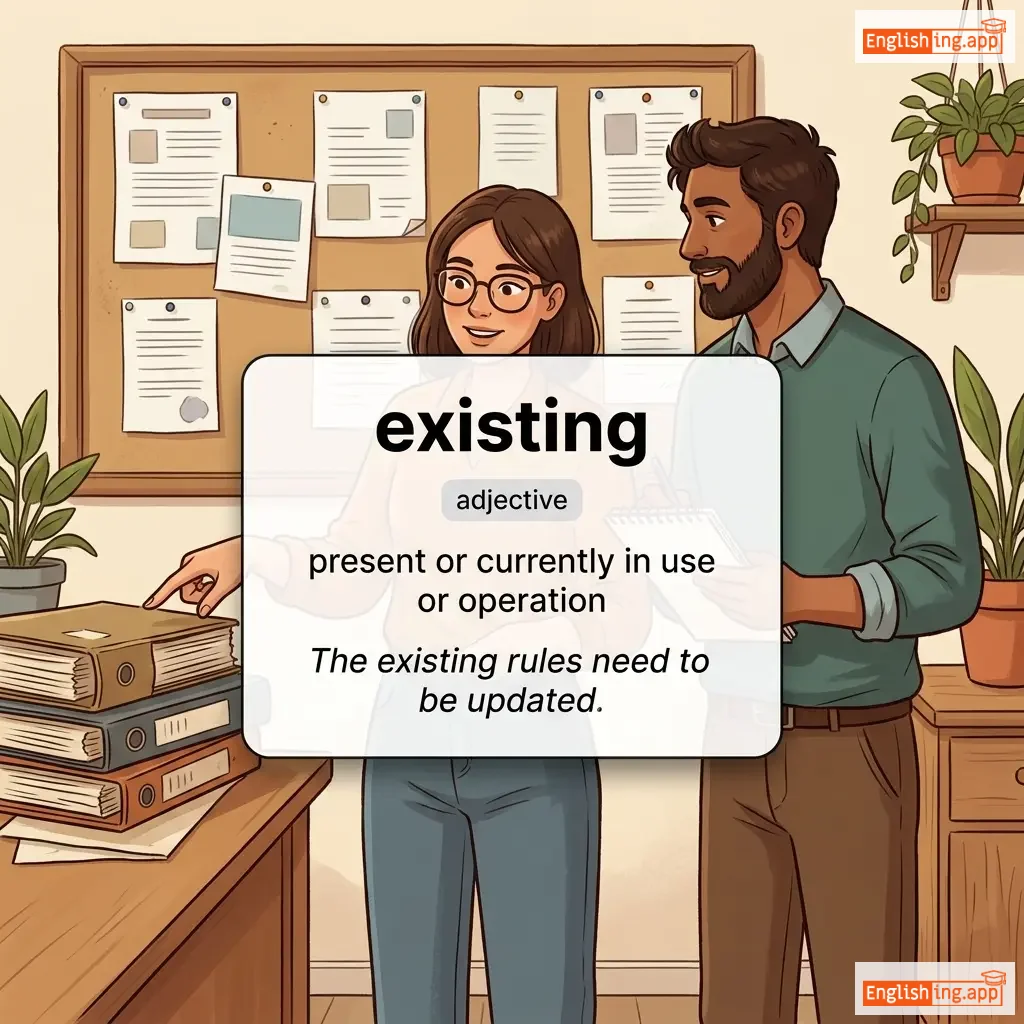
present or currently in use or operation
••••••
|
The existing rules need to be updated. |
Существующие правила должны быть обновлены.
Sushchestvuyushchie pravila dolzhny byt' obnavleny.
••••••
|
- •••••• | - •••••• | - •••••• |
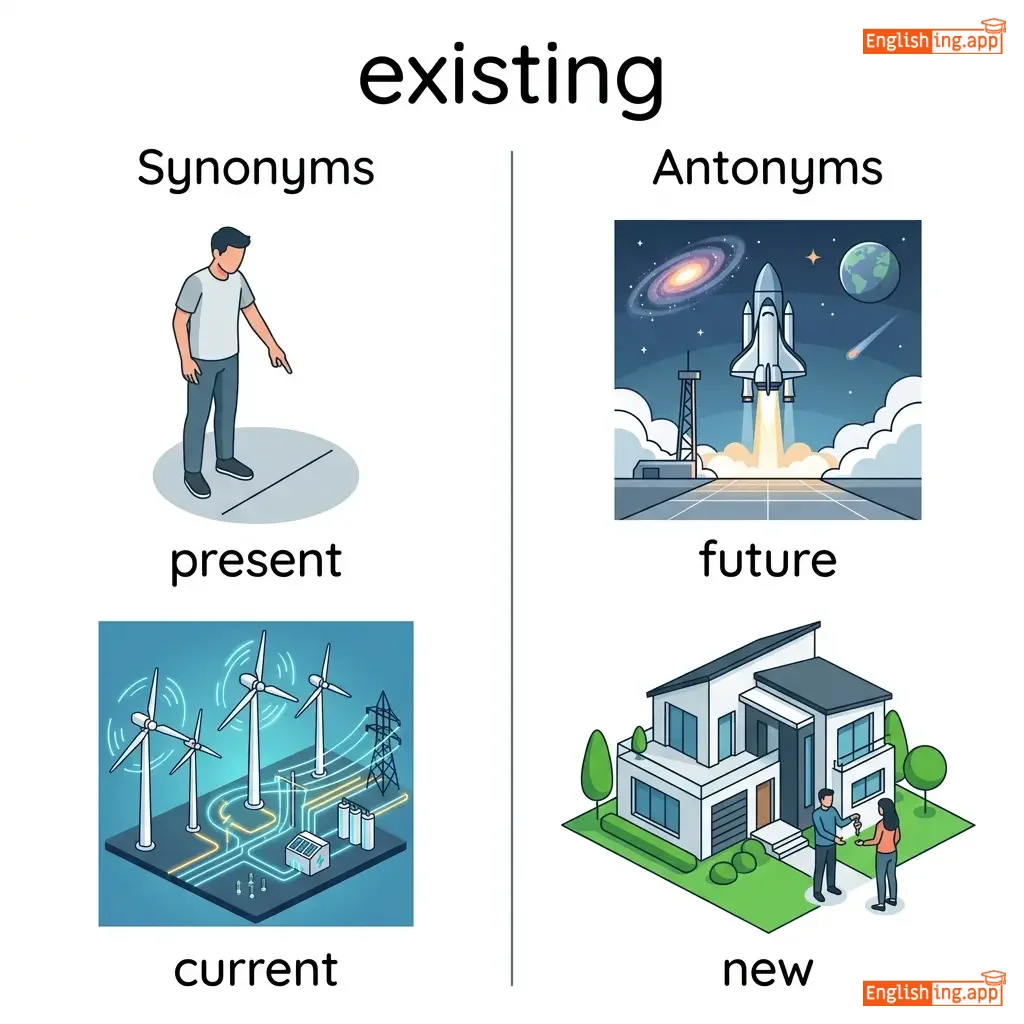
present, current, available, ongoing
••••••
|
future, new, upcoming
••••••
|
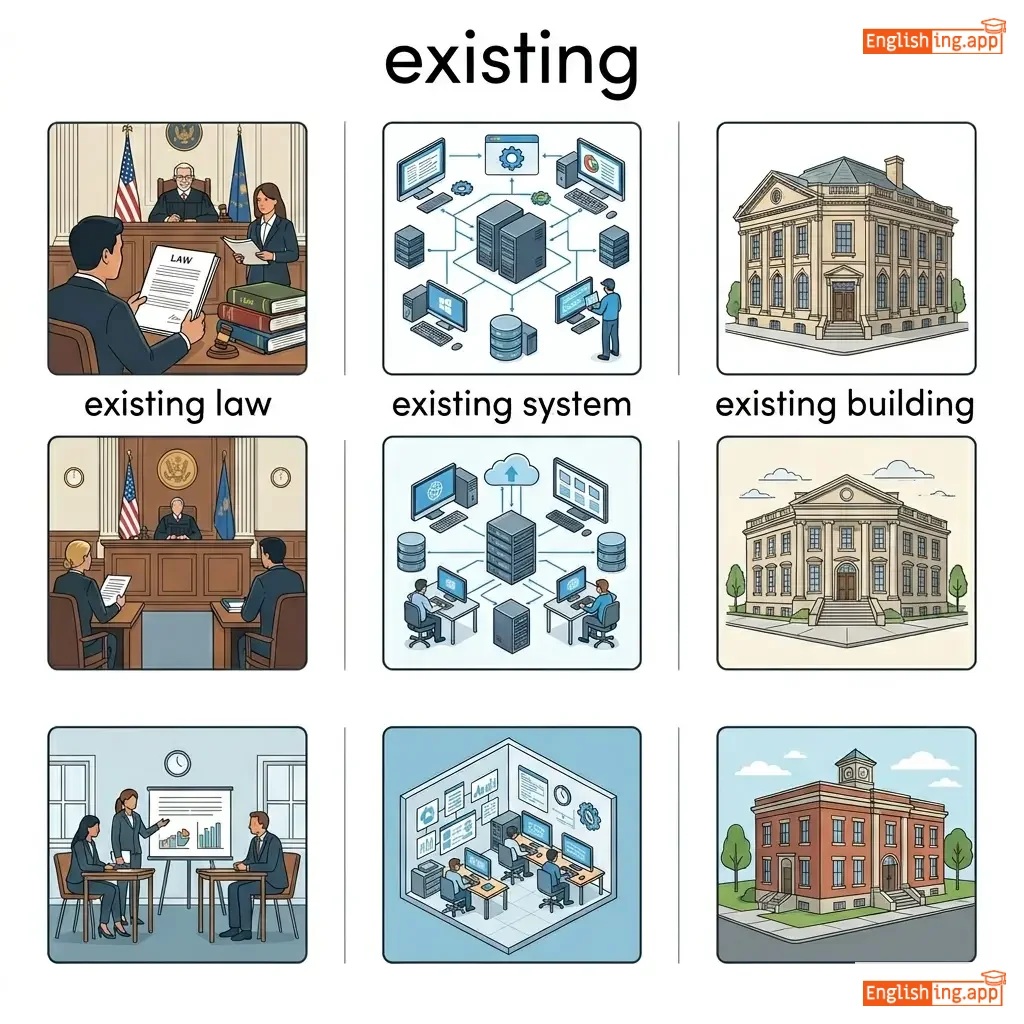
existing law, existing system, existing building, existing structure
••••••
|
Existing означает существующий, как существующие правила экзамена.
••••••
|
|
#10965
🌍
|
/ɪɡˈzɪst/
verb
(ik-sist)
••••••
|
- •••••• |
существовать
sushchestvovat
••••••
|
existed
ik-sisted
••••••
|
existed
ik-sisted
••••••
|
exists
ik-sists
••••••
|
existing
ik-sisting
••••••
|
to have actual being; to be real or present
••••••
|
Dinosaurs no longer exist on Earth.
Динозавры больше не существуют на Земле.
••••••
|
Динозавры больше не существуют на Земле.
Dinozavry bol'she ne sushchestvuyut na Zemle.
••••••
|
exist in name only
существовать только на бумаге
••••••
|
to have no real power or function despite existing formally
••••••
|
существовать только на бумаге
sushchestvovat tol'ko na bumage
••••••
|
live, survive, endure, be
••••••
|
perish, disappear, vanish
••••••
|
still exist, continue to exist, exist only, exist in reality
••••••
|
Существовать значит быть реальным, как экзамен, который всегда существует в нашей жизни.
••••••
|
|
#10966
🖼️
|
/ˌɛksɪˈbɪʃən/
noun
(eksibishion)
••••••
|
- •••••• |
выставка
vystavka
••••••
|
- •••••• | - •••••• | - •••••• | - •••••• |
a public display of works of art, products, or other items of interest
••••••
|
The art exhibition attracted thousands of visitors. |
Выставка искусства привлекла тысячи посетителей.
Vystavka iskusstva privlekla tysyachi posetiteley.
••••••
|
put on an exhibition |
to organize or display something for public viewing
••••••
|
организовать выставку
organizovat vystavku
••••••
|
display, show, presentation, exposition, fair
••••••
|
concealment, hiding
••••••
|
art exhibition, trade exhibition, science exhibition, put on an exhibition
••••••
|
Exhibition - это выставка, где EXtra вещи могут быть увидены всеми.
••••••
|
|
#10967
🖼️
|
/ɪɡˈzɪbɪt/
verb/noun
(экспонат)
••••••
|
- •••••• |
экспонировать
eksponirovat
••••••
|
exhibited
экспонирован
••••••
|
exhibited
экспонирован
••••••
|
exhibits
экспонирует
••••••
|
exhibiting
экспонирующий
••••••
|
To display or show publicly; something put on display.
••••••
|
The museum will exhibit ancient artifacts.
Музей будет экспонировать древние артефакты.
••••••
|
Музей будет экспонировать древние артефакты.
Muzei budet eksponirovat drevnie artefakty.
••••••
|
exhibit behavior
экспонировать поведение
••••••
|
to show a particular kind of behavior
••••••
|
экспонировать поведение
eksponirovat povedenie
••••••
|
display, present, demonstrate, showcase, reveal
••••••
|
conceal, hide
••••••
|
exhibit art, exhibit talent, exhibit symptoms, exhibit courage
••••••
|
Exhibit означает экспонировать — на экзамене студенты экспонируют свою нервозность.
••••••
|
|
#10968
🏋️
|
/ˈɛksərsaɪz/
noun/verb
(экзерсис)
••••••
|
|
упражнение
uprazhnenie
••••••
|
exercised
занимался
••••••
|
exercised
занимался
••••••
|
exercises
занимается
••••••
|
exercising
занимаясь
••••••
|
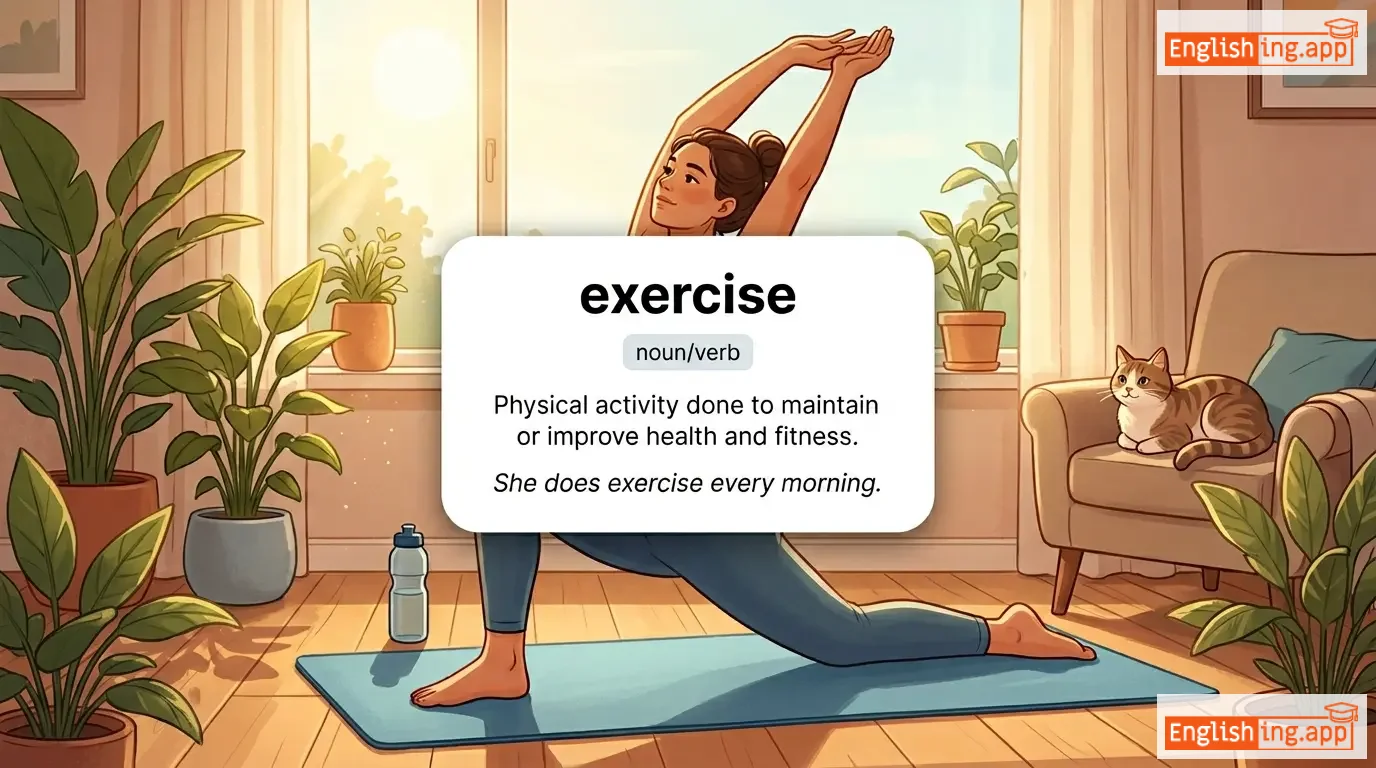
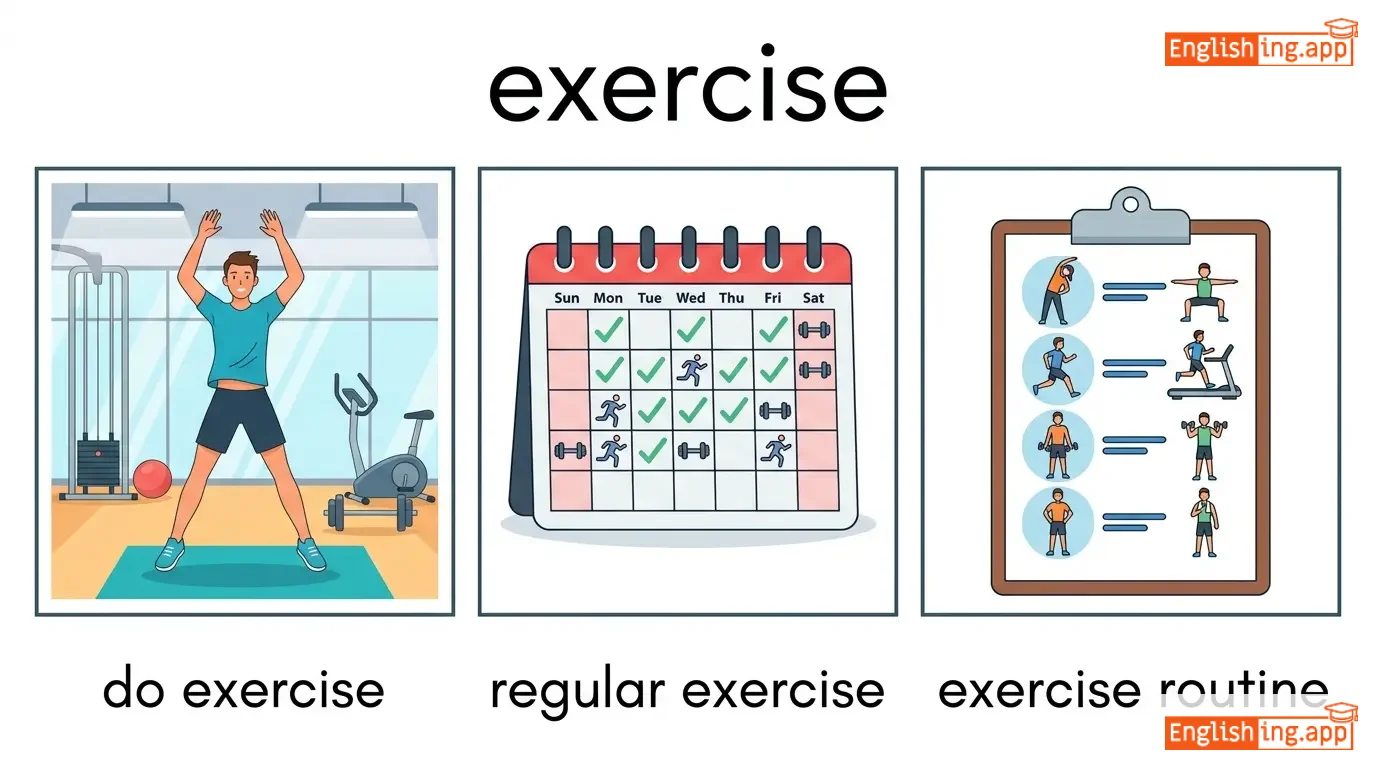
Physical activity done to maintain or improve health and fitness.
••••••
|
She does exercise every morning.
Она занимается спортом каждое утро.
••••••
|
Она занимается спортом каждое утро.
ona zanimayetsya sportom kazhdoe utro.
••••••
|
exercise control
осуществлять контроль
••••••
|
to use or apply control
••••••
|
осуществлять контроль
osushchestvlyat' kontrol'
••••••
|
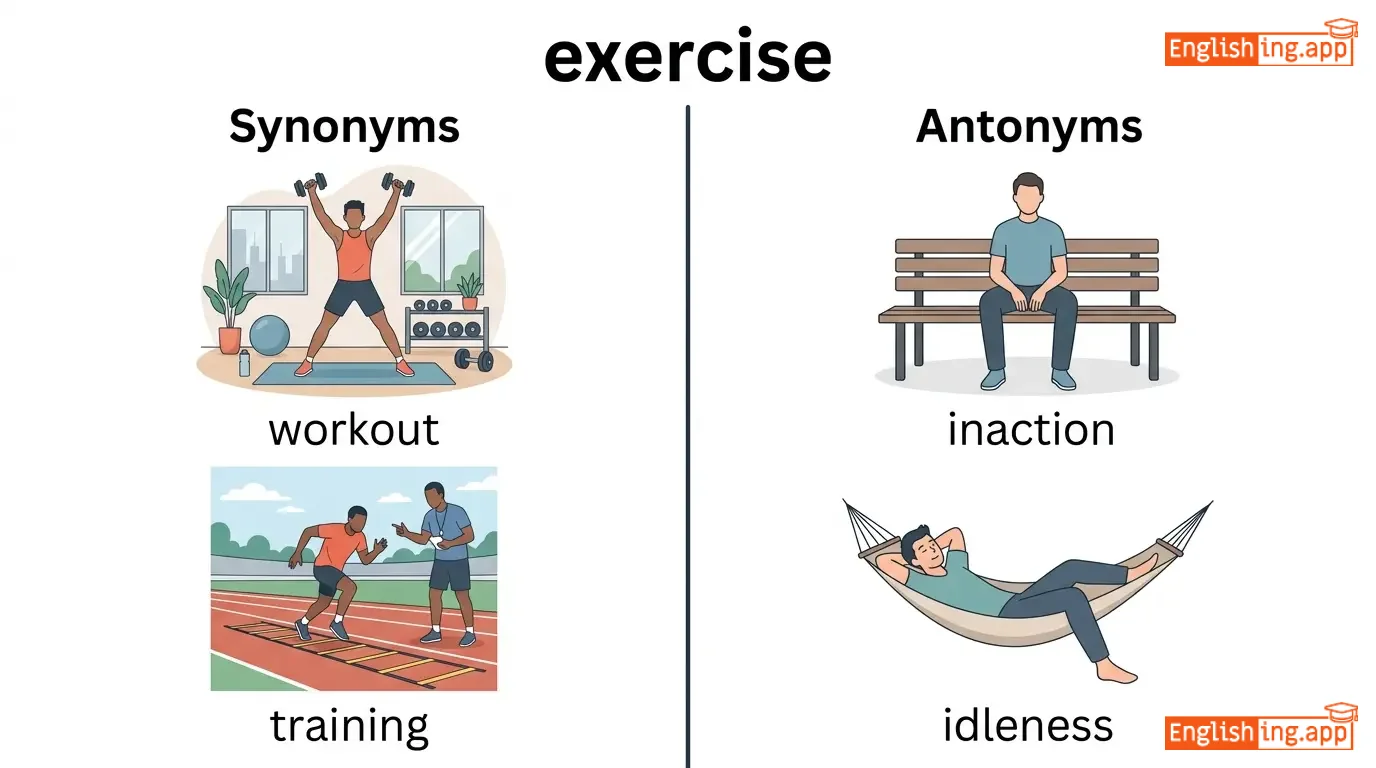
workout, training, practice, drill, activity
••••••
|
inaction, idleness
••••••
|
do exercise, regular exercise, exercise routine, exercise program
••••••
|
Упражнение — физическая активность, так же как экзамен требует физических усилий.
••••••
|
|
#10969
🎉
|
/ɪkˈsaɪtɪŋ/
adjective
(eksayting)
••••••
|
|
захватывающий
zakhvatyvayushchiy
••••••
|
- •••••• | - •••••• | - •••••• | - •••••• |
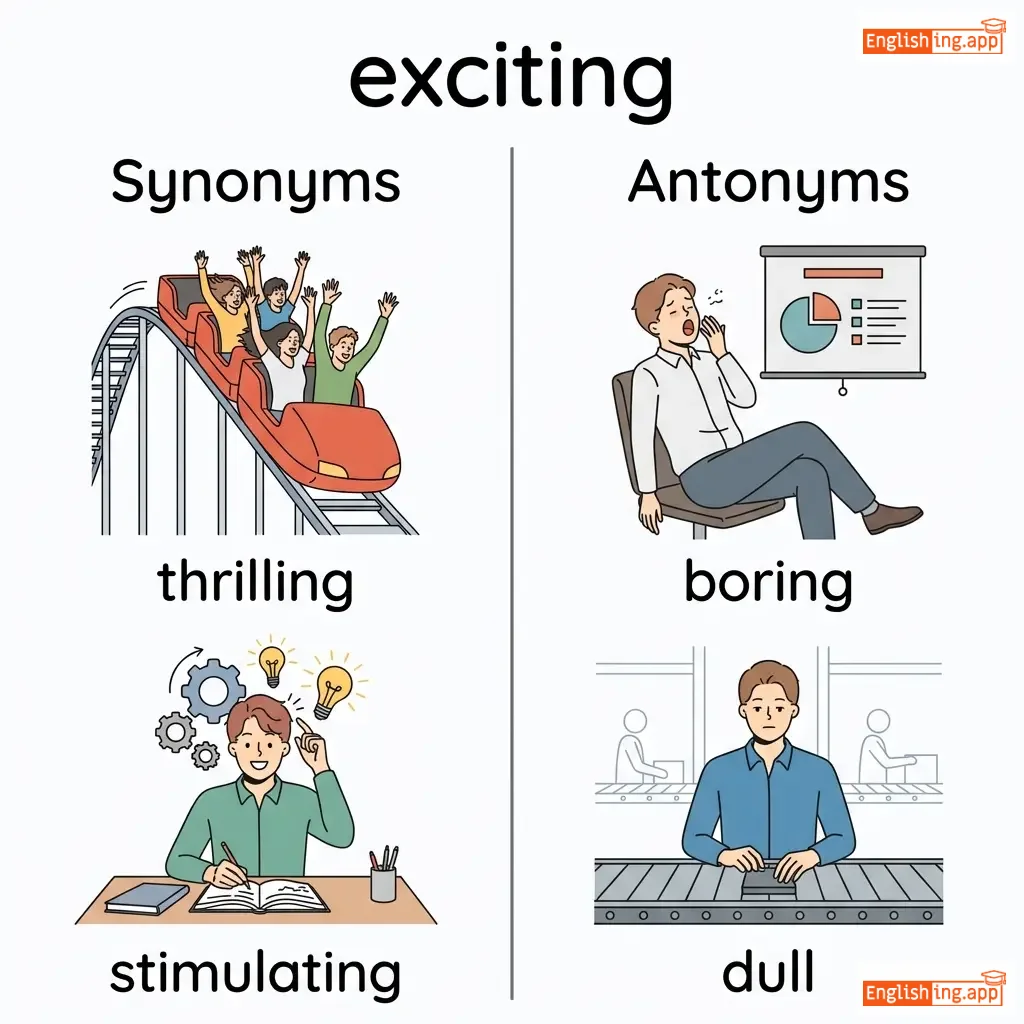
Causing great enthusiasm and eagerness.
••••••
|
The movie was so exciting that I watched it twice.
Фильм был так захватывающим, что я посмотрел его дважды.
••••••
|
Фильм был так захватывающим, что я посмотрел его дважды.
Film byl tak zakhvatyvayushchim, chto ya posmotrel ego dvazhdy.
••••••
|
- •••••• | - •••••• | - •••••• |
thrilling, stimulating, exhilarating, interesting, gripping
••••••
|
boring, dull, uninteresting
••••••
|
exciting news, exciting opportunity, exciting journey, exciting event
••••••
|
Exciting означает захватывающий — Смотрите exciting фильмы, чтобы увлечься!
••••••
|
|
#10970
🔄
|
/ɪksˈtʃeɪndʒ/
verb
(ɛksʧeindʒ)
••••••
|
|
обмен
obmen
••••••
|
exchanged
ɛksʧeindʒd
••••••
|
exchanged
ɛksʧeindʒd
••••••
|
exchanges
ɛksʧeindʒes
••••••
|
exchanging
ɛksʧeindʒing
••••••
|
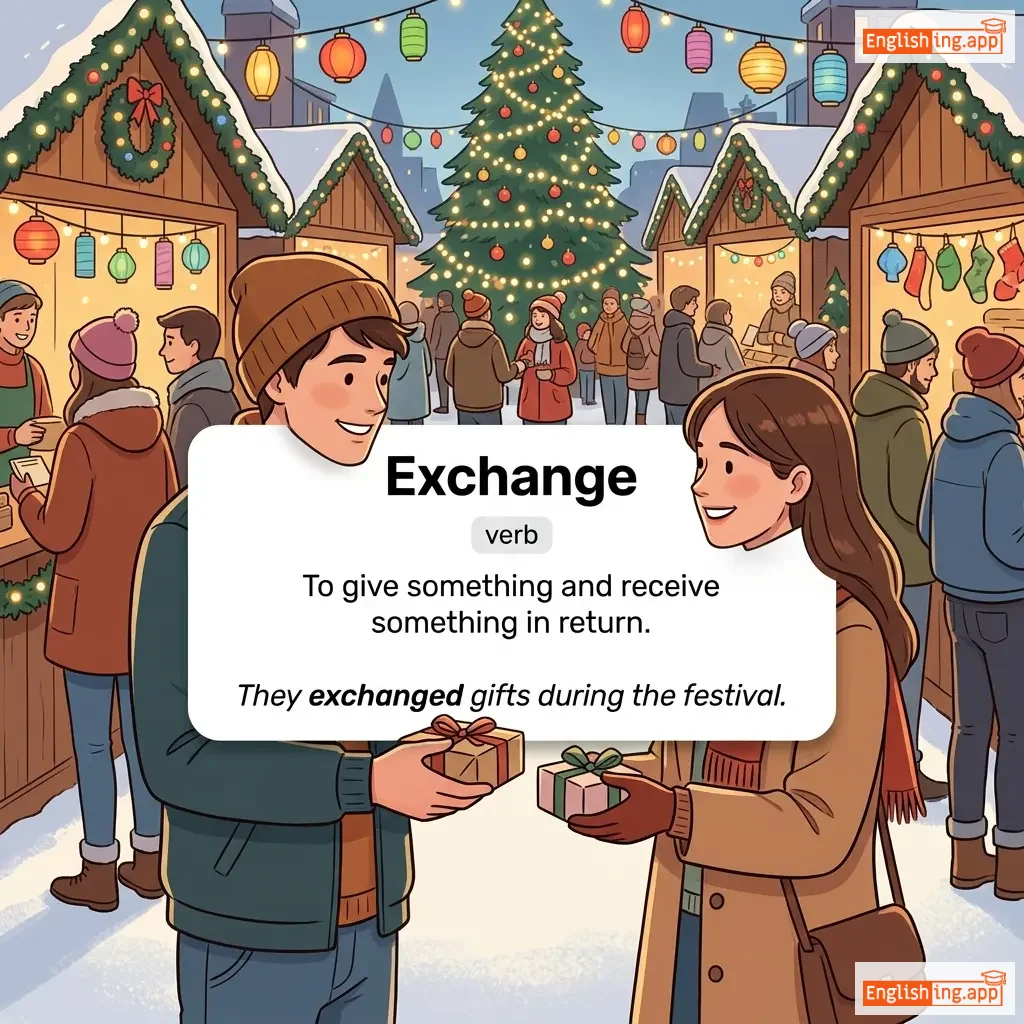
To give something and receive something in return.
••••••
|
They exchanged gifts during the festival.
Они обменялись подарками во время фестиваля.
••••••
|
Они обменялись подарками во время фестиваля.
Oni obmenyalis' podarkami vo vremya festivala.
••••••
|
exchange views
обмен мнениями
••••••
|
to share opinions or ideas
••••••
|
обмен мнениями
obmen mneniyami
••••••
|
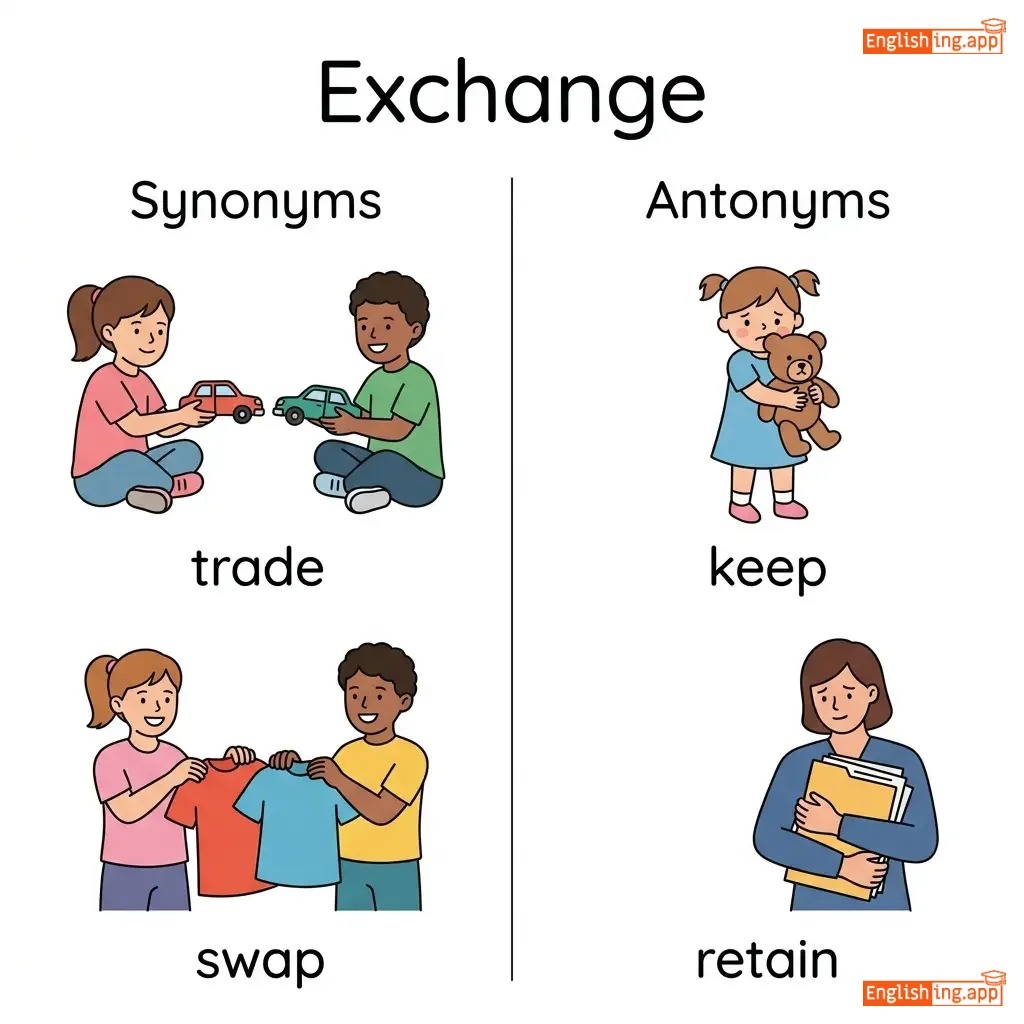
trade, swap, barter, interchange, replace
••••••
|
keep, retain
••••••
|
exchange ideas, exchange gifts, exchange money, exchange information
••••••
|
Exchange — это как 'обмен' — обмен вещами и идеями.
••••••
|
|
#10971
🚫
|
/ɪkˈsɛpʃən/
noun
(иксепшн)
••••••
|
- •••••• |
исключение
isklyucheniye
••••••
|
- •••••• | - •••••• | - •••••• | - •••••• |
A case or instance that does not follow a general rule.
••••••
|
Every rule has an exception. |
Каждое правило имеет исключение.
Kazhdoye pravilo imeyet isklyucheniye.
••••••
|
take exception to |
to be offended by something
••••••
|
выражать недовольство
vyrazhat' nedovol'stvo
••••••
|
anomaly, irregularity, deviation, exclusion, exemption
••••••
|
rule, norm, standard
••••••
|
make an exception, without exception, rare exception, exception to the rule
••••••
|
Exception означает исключение — представьте, что все сдали экзамен, кроме одного = исключение.
••••••
|
|
#10972
📖
|
/ɪɡˈzɑːm.pəl/
noun
(eksámpl)
••••••
|
- •••••• |
пример
primer
••••••
|
- •••••• | - •••••• | - •••••• | - •••••• |
a thing or person regarded as a model to be followed or avoided
••••••
|
He is a good example of a hardworking student.
Он хороший пример трудолюбивого студента.
••••••
|
Он хороший пример трудолюбивого студента.
On khoroshiy primer trudolyubivogo studenta.
••••••
|
set an example
давать пример
••••••
|
to behave in a way that others should copy
••••••
|
давать пример
davat' primer
••••••
|
model, instance, case, sample, illustration
••••••
|
counterexample, deviation
••••••
|
give example, provide example, set an example, classic example
••••••
|
Primer означает пример 📖 - всегда пример дается с экзаменом.
••••••
|
|
#10973
🔎
|
/ɪɡˈzæm.ɪn/
verb
(he-pi-nes)
••••••
|
- •••••• |
счастье
schast'ye
••••••
|
examined
••••••
|
examined
••••••
|
examines
••••••
|
examining
••••••
|
to look at something carefully in order to understand it
••••••
|
The doctor will examine the patient tomorrow. |
Она не могла скрыть своего счастья, когда получила награду.
Ona ne mogla skryt' svoego schast'ya, kogda poluchila nagradu.
••••••
|
cross-examine |
to question someone thoroughly, especially in a court
••••••
|
поиск счастья
poisk schast'ya
••••••
|
inspect, analyze, investigate, check, study
••••••
|
ignore, overlook, neglect
••••••
|
examine carefully, examine evidence, examine thoroughly, examine closely
••••••
|
Счастье = в поисках радости
••••••
|
|
#10974
✍️
|
/ɪɡˌzæm.ɪˈneɪ.ʃən/
noun
(экзаминация)
••••••
|
- •••••• |
экзамен
ekzamen
••••••
|
- •••••• | - •••••• | - •••••• | - •••••• |
a formal test of knowledge or ability
••••••
|
She is preparing for her final examination. |
Она готовится к своему финальному экзамену.
Ona gotovitsya k svojemu final'nomu ekzameny.
••••••
|
under examination |
being carefully inspected or studied
••••••
|
под экзаменом
pod ekzamenom
••••••
|
test, assessment, evaluation, inspection, quiz
••••••
|
ignorance, neglect
••••••
|
take examination, pass examination, final examination, medical examination
••••••
|
Examination означает экзамен ✍️ - Сдайте экзамен, и нация вздрогнет!
••••••
|
Vocabulary Quiz
Test your vocabulary by matching words with their translations or meanings.
Login to take the quiz
Comments (0)
Share your thoughts and join the discussion.
Join the discussion by logging in
Login to CommentNo comments yet
Be the first to share your thoughts!