

翻訳
過去
過去分詞
三人称単数
動名詞
意味
例文
例文の翻訳
同義語
対義語
コロケーション
ニーモニック



Swipe left or right, or use the buttons. Tap image to zoom.
例文の翻訳
単語
Lesson 366Lesson 366 - マスクトグル
|
絵文字
|
単語 | Images | 翻訳 | 過去 | 過去分詞 | 三人称単数 | 動名詞 | 意味 | 例文 | 例文の翻訳 | 表現例 | 表現例の意味 | 表現例の翻訳 | 同義語 | 対義語 | コロケーション | ニーモニック |
|---|---|---|---|---|---|---|---|---|---|---|---|---|---|---|---|---|---|
|
#10945
🧪
|
/ɪkˈsperɪmənt/
noun/verb
(ekusuperimento)
••••••
|
- •••••• |
実験
jikken
••••••
|
experimented
ekusuperimento-do
••••••
|
experimented
ekusuperimento-do
••••••
|
experiments
ekusuperimento-su
••••••
|
experimenting
ekusuperimento-shita
••••••
|
a test or trial carried out to discover something or prove an idea
••••••
|
The scientist conducted an experiment on plant growth.
科学者は植物の成長に関する実験を行いました。
••••••
|
科学者は植物の成長に関する実験を行いました。
Kagakusha wa shokubutsu no seichō ni kansuru jikken o okonaimashita.
••••••
|
experiment with
実験する
••••••
|
to try something new to see what happens
••••••
|
実験する
jikken suru
••••••
|
test, trial, research, investigation, study
••••••
|
proof, certainty
••••••
|
conduct experiment, scientific experiment, lab experiment, experiment results
••••••
|
実験は科学の試験 (jikken)
••••••
|
|
#10946
❌
|
/ˈfeɪljər/
noun
(フェイリヤー)
••••••
|
- •••••• |
失敗
shippai
••••••
|
- •••••• | - •••••• | - •••••• | - •••••• |
The lack of success in doing or achieving something.
••••••
|
The project was considered a failure due to poor planning. |
プロジェクトは不十分な計画のため失敗と見なされました。
Purojekuto wa fujūbun na keikaku no tame shippai to minasaremashita.
••••••
|
trial and error |
A method of solving problems by trying different solutions until one works.
••••••
|
試行錯誤
shikou sakugo
••••••
|
defeat, breakdown, collapse, disaster, fiasco
••••••
|
success, achievement, victory
••••••
|
complete failure, business failure, engine failure, failure rate
••••••
|
失敗は、すべてを試した結果だと思う – '失敗'を思い出して!
••••••
|
|
#10947
❌
|
/feɪl/
verb
(フェイル)
••••••
|
- •••••• |
失敗する
shippai suru
••••••
|
failed
フェイルド
••••••
|
failed
フェイルド
••••••
|
fails
フェイルズ
••••••
|
failing
フェイリング
••••••
|
To be unsuccessful in achieving a goal or expectation.
••••••
|
He failed the driving test.
彼は運転試験に失敗した。
••••••
|
彼は運転試験に失敗した。
Kare wa unten shiken ni shippai shita.
••••••
|
fail miserably
ひどく失敗する
••••••
|
to fail completely and badly
••••••
|
完全に失敗する
kanzen ni shippai suru
••••••
|
lose, flop, collapse, fall short, break down
••••••
|
succeed, achieve, pass
••••••
|
fail exam, fail test, fail to act, fail miserably
••••••
|
試験に失敗する時に‘あなたは失敗した’と言われるような感じ。
••••••
|
|
#10948
🌫️
|
/feɪd/
verb
(フェイド)
••••••
|
- •••••• |
色あせる
iro aseru
••••••
|
faded
フェイデッド
••••••
|
faded
フェイデッド
••••••
|
fades
フェイデス
••••••
|
fading
フェイディング
••••••
|
To gradually lose brightness, color, or strength.
••••••
|
The colors of the old photo have started to fade.
古い写真の色が薄れてきた。
••••••
|
古い写真の色が薄れてきた。
Furui shashin no iro ga usurete kita.
••••••
|
fade away
フェイドアウェイ
••••••
|
to disappear slowly
••••••
|
ゆっくり消える
yukkuri kie ru
••••••
|
diminish, weaken, vanish, pale, decline
••••••
|
brighten, strengthen, appear
••••••
|
fade away, fade out, fade over time, colors fade
••••••
|
色あせるは消えるという意味です。色がだんだん薄くなっていきます。
••••••
|
|
#10949
🏭
|
/ˈfæktəri/
noun
(fakutori)
••••••
|
- •••••• |
工場
kōjō
••••••
|
- •••••• | - •••••• | - •••••• | - •••••• |
A building or group of buildings where goods are manufactured.
••••••
|
He works in a shoe factory. |
彼は靴工場で働いています。
Kare wa kutsu kōjō de hataraiteimasu.
••••••
|
- •••••• | - •••••• | - •••••• |
plant, mill, workshop, industry
••••••
|
office, home
••••••
|
shoe factory, textile factory, factory worker, factory production
••••••
|
工場は物を作る場所です。
••••••
|
|
#10950
⚖️
|
/ˈfæktər/
noun
(ファクター)
••••••
|
- •••••• |
要因
yōin
••••••
|
- •••••• | - •••••• | - •••••• | - •••••• |
A circumstance, fact, or influence that contributes to a result.
••••••
|
Weather is an important factor in crop production. |
天候は作物生産において重要な要因です。
Ten kō wa sakumotsu seisan ni oite jūyōna yōin desu.
••••••
|
key factor |
a crucial or essential element
••••••
|
重要な要因
jūyōna yōin
••••••
|
element, component, cause, aspect, determinant
••••••
|
result, consequence
••••••
|
important factor, key factor, risk factor, success factor
••••••
|
要因 = 結果に影響を与えるもの、例えば重要な要因。
••••••
|
|
#10951
🧵
|
/ˈfæbrɪk/
noun
(fāburikku)
••••••
|
- •••••• |
布地
nuno
••••••
|
- •••••• | - •••••• | - •••••• | - •••••• |
Cloth or material produced by weaving or knitting fibers.
••••••
|
The tailor used silk fabric to make the dress. |
仕立て屋はドレスを作るために絹の布地を使いました。
Shitateya wa doresu o tsukuru tame ni kinu no nuno o tsukaimashita.
••••••
|
the fabric of society |
the basic structure or foundation of society
••••••
|
社会の構造
Shakai no kōzō
••••••
|
cloth, textile, material, fiber, weave
••••••
|
metal, stone, plastic
••••••
|
cotton fabric, woven fabric, fabric softener, fabric design
••••••
|
Fabric は布地、衣服を作るために使う布のことです。
••••••
|
|
#10952
👁️
|
/aɪ/
noun
(アイ)
••••••
|
- •••••• |
目
me
••••••
|
- •••••• | - •••••• | - •••••• | - •••••• |
the organ in the head through which people and animals see
••••••
|
She closed her eyes and went to sleep. |
彼女は目を閉じて、寝ました。
Kanojo wa me o tojite, nemashita.
••••••
|
keep an eye on |
to watch carefully or look after
••••••
|
目を光らせる
me o hikaraseru
••••••
|
vision, sight, gaze, view, look
••••••
|
blindness, neglect
••••••
|
eye contact, eye color, keep an eye, eye for detail
••••••
|
Eyeは'目'を意味し、'Keep an eye'は'目を光らせる'という意味です。
••••••
|
|
#10953
🔥
|
/ɪkˈstriːmli/
adverb
(ikustorīmuri)
••••••
|
- •••••• |
非常に
hijō ni
••••••
|
- •••••• | - •••••• | - •••••• | - •••••• |
to a very high degree; very much
••••••
|
The movie was extremely interesting. |
その映画は非常に面白かった。
Sono eiga wa hijō ni omoshirokatta.
••••••
|
- •••••• | - •••••• | - •••••• |
very, highly, greatly, tremendously, incredibly
••••••
|
slightly, mildly
••••••
|
extremely difficult, extremely important, extremely rare, extremely useful
••••••
|
Extremely は非常に (とても多く、とても高い) という意味です。
••••••
|
|
#10954
⚠️
|
/ɪkˈstriːm/
adjective
(ik-sutoreemu)
••••••
|
|
極端
kyokutan
••••••
|
- •••••• | - •••••• | - •••••• | - •••••• |
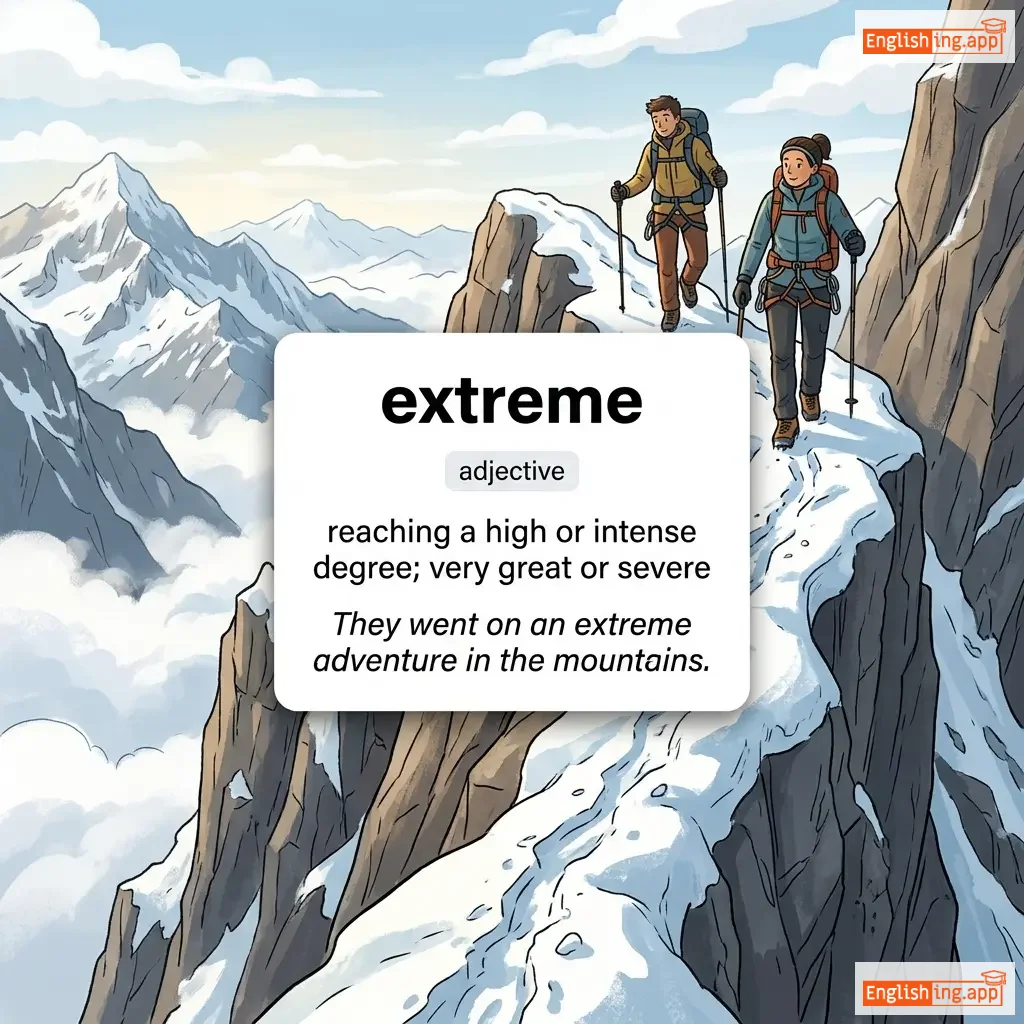
reaching a high or intense degree; very great or severe
••••••
|
They went on an extreme adventure in the mountains. |
彼らは山で極端な冒険をしました。
Karera wa yama de kyokutan na bōken o shimashita.
••••••
|
go to extremes |
to do something in an excessive or exaggerated way
••••••
|
極端に走る
kyokutan ni hashiru
••••••
|
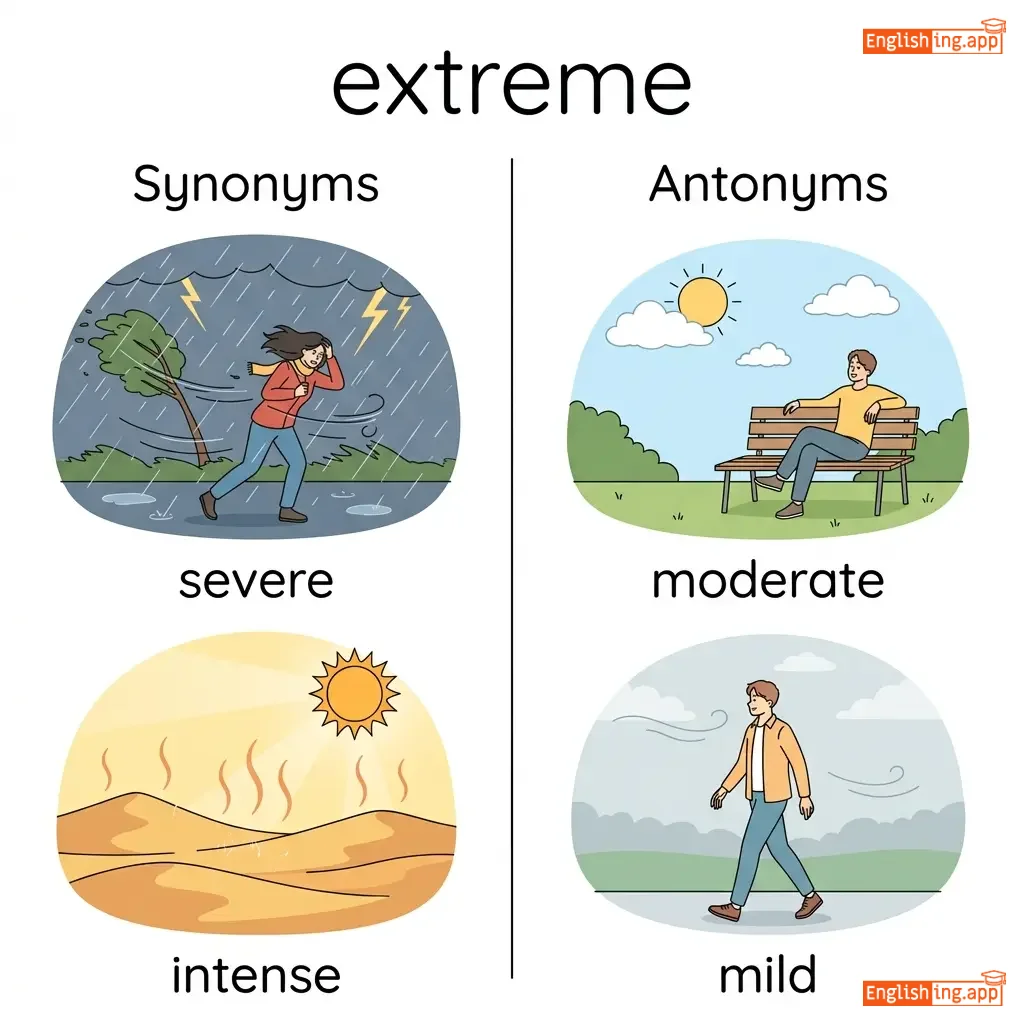
severe, intense, excessive, radical, ultimate
••••••
|
moderate, mild, ordinary
••••••
|
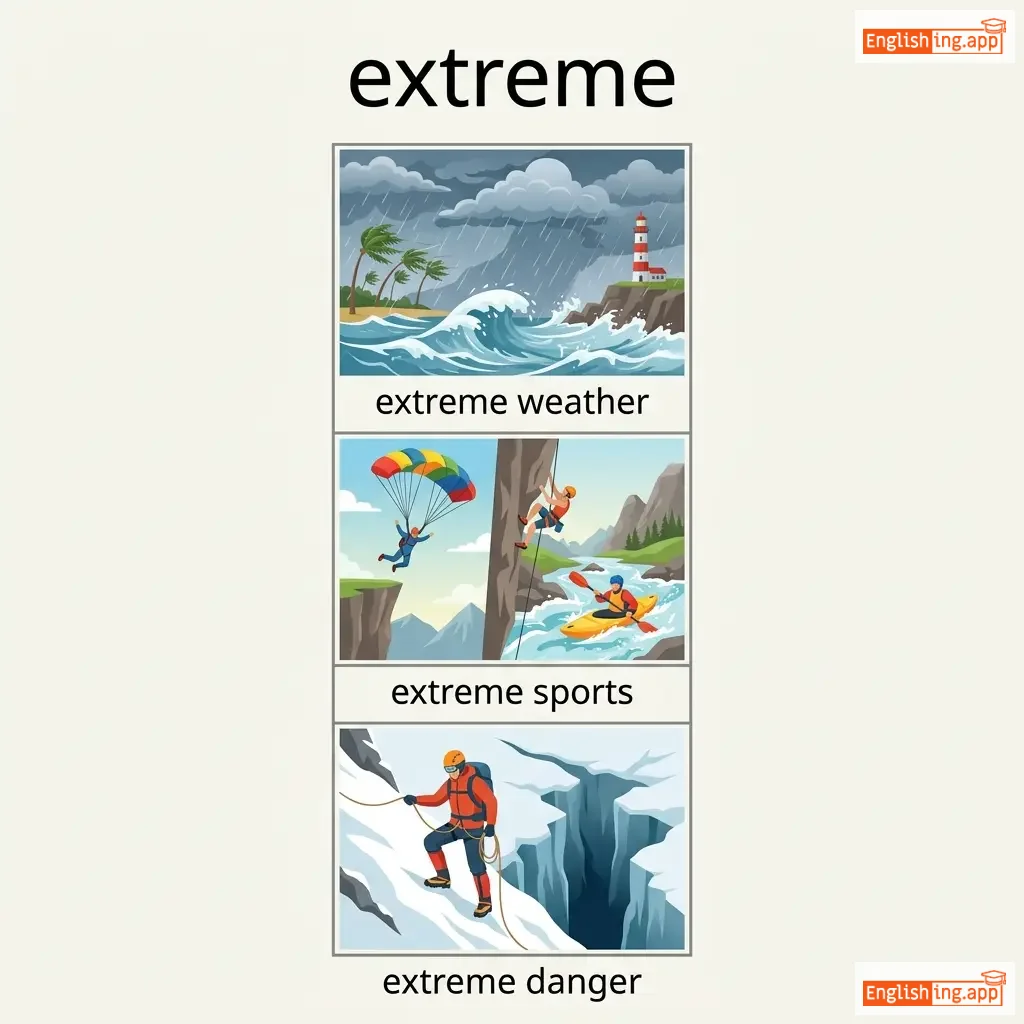
extreme weather, extreme sports, extreme danger, extreme measures
••••••
|
Extremeは極端を意味します、極端な状況のように。
••••••
|
|
#10955
🙂
|
/ɪkˈsprɛʃən/
noun
(エクスプレッション)
••••••
|
- •••••• |
表現
hyougen
••••••
|
- •••••• | - •••••• | - •••••• | - •••••• |
the act of putting thoughts or feelings into words, actions, or facial gestures
••••••
|
His facial expression showed surprise.
彼の顔の表情は驚きを示していた。
••••••
|
彼の顔の表情は驚きを示していた。
Kare no kao no hyoujou wa odoroki o shimeshite ita.
••••••
|
facial expression
顔の表情
••••••
|
the look on someone's face that conveys emotion
••••••
|
顔の表情
kao no hyougen
••••••
|
statement, utterance, manifestation, phrase, gesture
••••••
|
silence, suppression
••••••
|
facial expression, expression of love, free expression, expression of opinion
••••••
|
表現 = 顔の表情で感情がわかる。
••••••
|
|
#10956
💬
|
/ɪkˈsprɛs/
verb
(エクスプレス)
••••••
|
- •••••• |
表現する
hyougensuru
••••••
|
expressed
エクスプレスド
••••••
|
expressed
エクスプレスド
••••••
|
expresses
エクスプレッセズ
••••••
|
expressing
エクスプレッシング
••••••
|
to convey a thought, feeling, or idea in words, actions, or other forms
••••••
|
She expressed her gratitude with a warm smile.
彼女は温かい笑顔で感謝の気持ちを表現しました。
••••••
|
彼女は温かい笑顔で感謝の気持ちを表現しました。
Kanojo wa atatakai egao de kansha no kimochi wo hyougen shimashita.
••••••
|
express yourself
自分を表現する
••••••
|
to communicate one's thoughts and feelings openly
••••••
|
自分を表現する
Jibun wo hyougen suru
••••••
|
convey, communicate, articulate, state, voice
••••••
|
suppress, conceal, hide
••••••
|
express feelings, express gratitude, express concern, express clearly
••••••
|
表現するのは、あなたの心の声を伝えることです。
••••••
|
|
#10957
🧭
|
/ɪkˈsplɔːr/
verb
(エクスプロア)
••••••
|
- •••••• |
探検する
tanken suru
••••••
|
explored
エクスプロアド
••••••
|
explored
エクスプロアド
••••••
|
explores
エクスプロアズ
••••••
|
exploring
エクスプローリング
••••••
|
to travel through or study something in order to learn more about it
••••••
|
They decided to explore the forest together.
彼らは一緒に森を探検することに決めました。
••••••
|
彼らは一緒に森を探検することに決めました。
Karera wa issho ni mori wo tanken suru koto ni kimemashita.
••••••
|
explore possibilities
可能性を探る
••••••
|
to consider different options or opportunities
••••••
|
可能性を探る
kanousei wo saguru
••••••
|
discover, investigate, examine, search, probe
••••••
|
ignore, neglect
••••••
|
explore new ideas, explore opportunities, explore the world, explore nature
••••••
|
探検するのは、ドーラの冒険のようなものです
••••••
|
|
#10958
📖
|
/ˌekspləˈneɪʃən/
noun
(エクスプレイネーション)
••••••
|
- •••••• |
説明
setsumei
••••••
|
- •••••• | - •••••• | - •••••• | - •••••• |
a statement or account that makes something clear
••••••
|
The teacher gave a clear explanation of the theory. |
先生は理論を明確に説明しました。
Sensei wa riron o meikaku ni setsumei shimashita.
••••••
|
beyond explanation |
too strange or difficult to explain
••••••
|
説明を超えて
setsumei o koete
••••••
|
clarification, interpretation, description, account, justification
••••••
|
confusion, mystery
••••••
|
give explanation, detailed explanation, proper explanation, clear explanation
••••••
|
Explanationは'Explain' + 'ation' = 説明
••••••
|
|
#10959
👨🏫
|
/ˈekspɜːt/
noun/adjective
(エキスパート)
••••••
|
- •••••• |
専門家
senmongaku
••••••
|
- •••••• | - •••••• | - •••••• | - •••••• |
a person who has a lot of knowledge or skill in a particular area
••••••
|
He is an expert in computer programming.
彼はコンピュータプログラミングのエキスパートです。
••••••
|
彼はコンピュータプログラミングの専門家です。
Kare wa konpyūta puroguramingu no senmongaku desu.
••••••
|
expert opinion
専門家の意見
••••••
|
a professional or highly knowledgeable view
••••••
|
専門家の意見
senmongaku noiken
••••••
|
specialist, professional, authority, master, guru
••••••
|
novice, amateur, beginner
••••••
|
expert advice, subject expert, expert opinion, expert knowledge
••••••
|
Expert = Extra Part knowledge, だから専門家
••••••
|
|
#10960
🔍
|
/ˈɛv.ɪ.dəns/
noun
(エヴィデンス)
••••••
|
- •••••• |
証拠
shōko
••••••
|
- •••••• | - •••••• | - •••••• | - •••••• |
facts or information that show whether something is true or not
••••••
|
The lawyer presented new evidence in court. |
弁護士は法廷で新しい証拠を提出しました。
Bengoshi wa hotei de atarashī shōko o teishutsu shimashita.
••••••
|
hard evidence |
strong, undeniable proof
••••••
|
決定的証拠
ketteiteki shōko
••••••
|
proof, testimony, confirmation, validation, indication
••••••
|
denial, contradiction, disproof
••••••
|
present evidence, gather evidence, strong evidence, lack of evidence
••••••
|
証拠 = 何かが真実かを証明するもの。
••••••
|
|
#10961
🎓
|
/ɪkˈspɪəriəns/
noun/verb
(ハピネス)
••••••
|
- •••••• |
幸せ
shiawase
••••••
|
experienced
••••••
|
experienced
••••••
|
experiences
••••••
|
experiencing
••••••
|
knowledge or skill gained through involvement in or exposure to something over time
••••••
|
She gained valuable experience while working abroad.
彼女は賞を受け取ったとき、幸せを隠すことができませんでした。
••••••
|
彼女は賞を受け取ったとき、幸せを隠すことができませんでした。
Kanojo wa shō o uketotta toki, shiawase o kakusu koto ga dekimasen deshita.
••••••
|
learning from experience
幸せを追い求める
••••••
|
gaining knowledge by going through events or situations
••••••
|
幸せを追い求める
Shiawase o oimotomeru
••••••
|
knowledge, skill, practice, exposure, familiarity
••••••
|
ignorance, inexperience
••••••
|
gain experience, valuable experience, life experience, work experience
••••••
|
幸せ = shiawase, いつも笑顔でいると幸せだよ。
••••••
|
|
#10962
💰
|
/ɪkˈspɛnsɪv/
adjective
••••••
|
- •••••• | - •••••• | - •••••• | - •••••• | - •••••• | - •••••• |
costing a lot of money
••••••
|
That car is too expensive for me to buy. |
- •••••• |
at an expensive price |
with great cost or sacrifice
••••••
|
- •••••• |
costly, pricey, valuable, extravagant
••••••
|
cheap, inexpensive, affordable
••••••
|
expensive car, expensive gift, expensive clothes, too expensive
••••••
|
No •••••• |
|
#10963
🎯
|
/ˌɛkspɛkˈteɪʃən/
noun
(エクスペクテーション)
••••••
|
- •••••• |
期待
kitai
••••••
|
- •••••• | - •••••• | - •••••• | - •••••• |
a strong belief that something will happen or be the case
••••••
|
The students had high expectations for their exam results. |
学生たちは試験結果に高い期待を持っていました。
Gakusei-tachi wa shiken kekka ni takai kitai o motte imashita.
••••••
|
beyond expectations |
better or greater than what was anticipated
••••••
|
期待以上
kitai ijō
••••••
|
anticipation, hope, belief, outlook, assumption
••••••
|
doubt, disbelief, hopelessness
••••••
|
high expectation, meet expectation, raise expectation, beyond expectation
••••••
|
期待は期待していることを意味します、例えば試験結果に対する高い期待のように。
••••••
|
|
#10964
📜
|
/ɪɡˈzɪstɪŋ/
adjective
(イグジスティング)
••••••
|
|
既存の
kizon no
••••••
|
- •••••• | - •••••• | - •••••• | - •••••• |
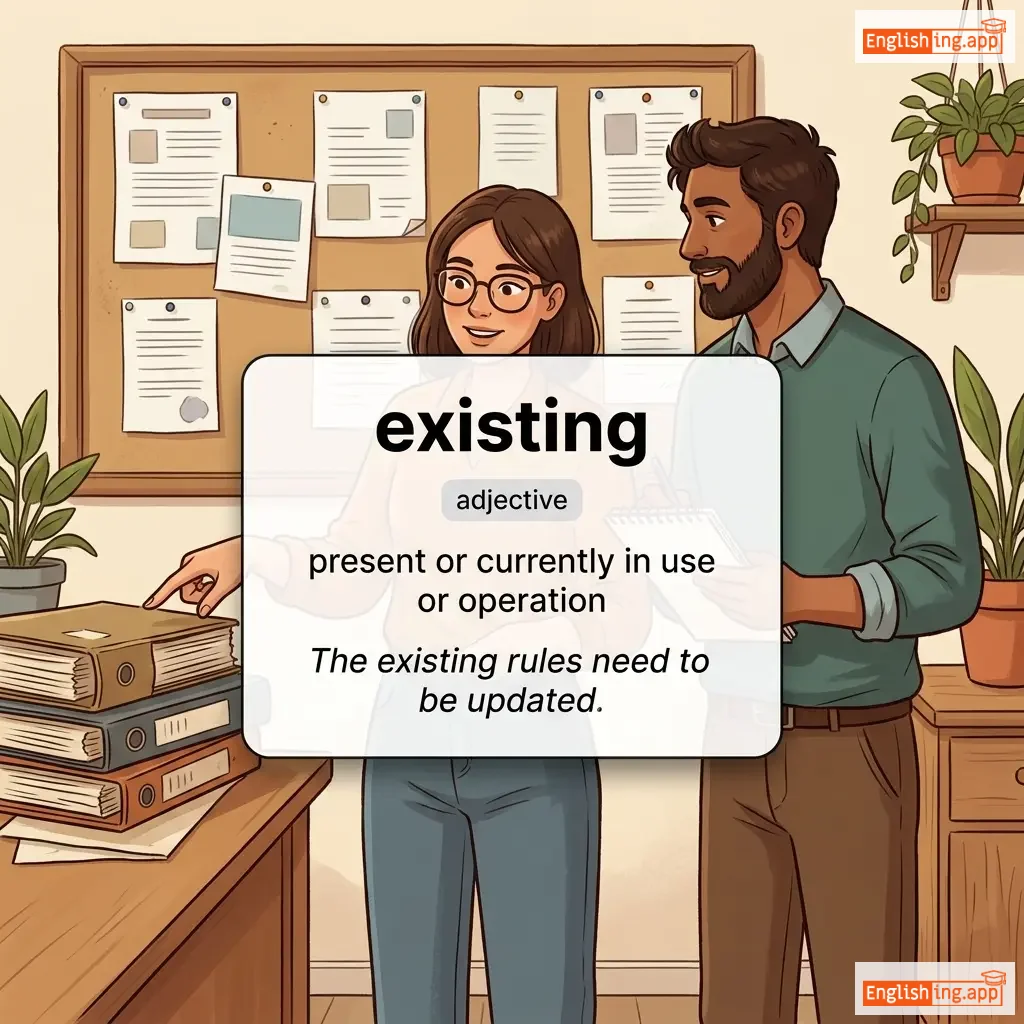
present or currently in use or operation
••••••
|
The existing rules need to be updated. |
既存のルールは更新する必要があります。
Kizon no rūru wa kōshin suru hitsuyō ga arimasu.
••••••
|
- •••••• | - •••••• | - •••••• |
present, current, available, ongoing
••••••
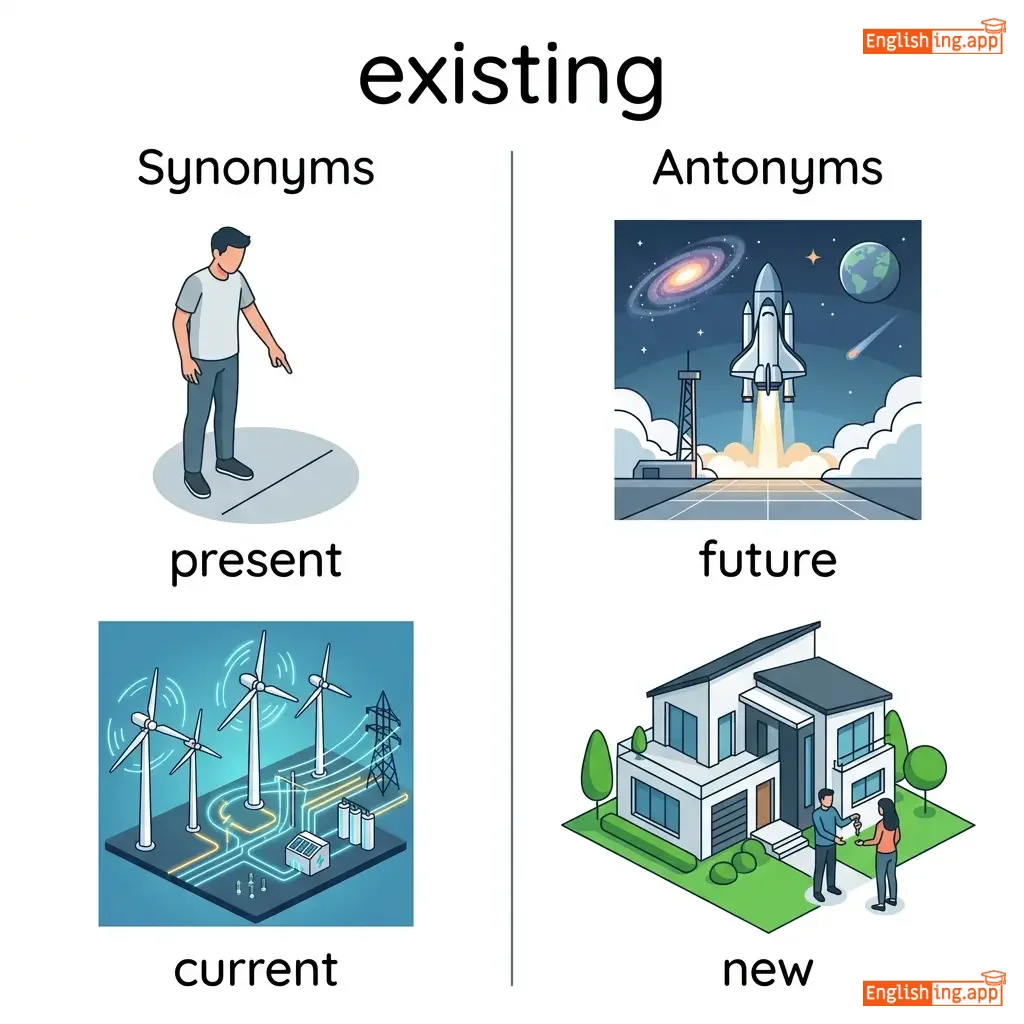
|
future, new, upcoming
••••••
|
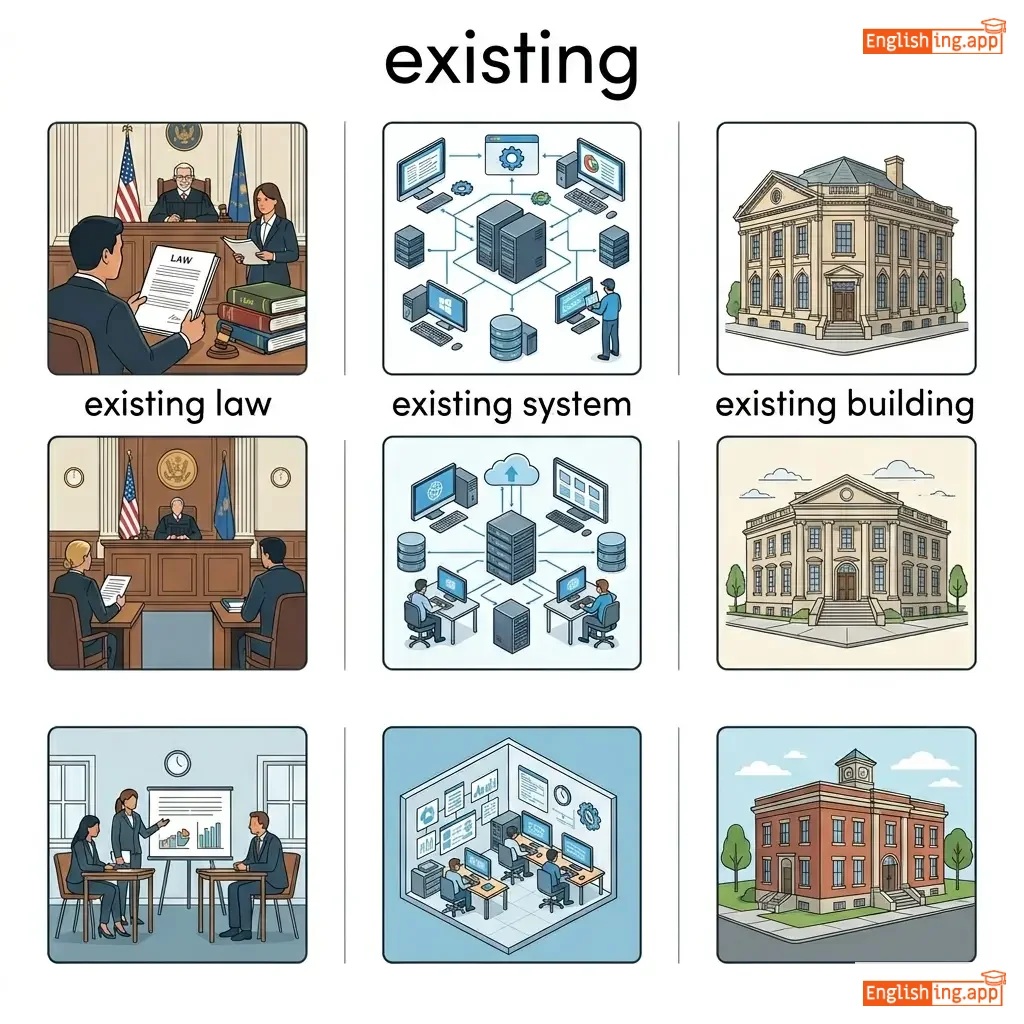
existing law, existing system, existing building, existing structure
••••••
|
Existingは既存の意味、例えば既存の試験ルール。
••••••
|
|
#10965
🌍
|
/ɪɡˈzɪst/
verb
(ik-sist)
••••••
|
- •••••• |
存在する
sonzai suru
••••••
|
existed
ik-sisted
••••••
|
existed
ik-sisted
••••••
|
exists
ik-sists
••••••
|
existing
ik-sisting
••••••
|
to have actual being; to be real or present
••••••
|
Dinosaurs no longer exist on Earth.
恐竜は地球上にはもう存在しません。
••••••
|
恐竜は地球上にはもう存在しません。
Kyouryuu wa chikyuu jou ni wa mou sonzai shimasen.
••••••
|
exist in name only
名義上のみ存在する
••••••
|
to have no real power or function despite existing formally
••••••
|
名義上のみ存在する
meigi jou nomi sonzai suru
••••••
|
live, survive, endure, be
••••••
|
perish, disappear, vanish
••••••
|
still exist, continue to exist, exist only, exist in reality
••••••
|
存在するとは実際に存在することであり、試験のように常に私たちの生活の中に存在しています。
••••••
|
|
#10966
🖼️
|
/ˌɛksɪˈbɪʃən/
noun
(ekusibishon)
••••••
|
- •••••• |
展示会
zenshikai
••••••
|
- •••••• | - •••••• | - •••••• | - •••••• |
a public display of works of art, products, or other items of interest
••••••
|
The art exhibition attracted thousands of visitors. |
アート展示会は何千人もの来場者を魅了しました。
Aato zenshikai wa nan-sen nin mo no raijō-sha o miryō shimashita.
••••••
|
put on an exhibition |
to organize or display something for public viewing
••••••
|
展示会を開催する
zenshikai o kaisai suru
••••••
|
display, show, presentation, exposition, fair
••••••
|
concealment, hiding
••••••
|
art exhibition, trade exhibition, science exhibition, put on an exhibition
••••••
|
Exhibitionは展示会を意味し、EXtraのものを皆で見られる場所です。
••••••
|
|
#10967
🖼️
|
/ɪɡˈzɪbɪt/
verb/noun
(展示する)
••••••
|
- •••••• |
展示する
tenji suru
••••••
|
exhibited
展示した
••••••
|
exhibited
展示した
••••••
|
exhibits
展示する
••••••
|
exhibiting
展示している
••••••
|
To display or show publicly; something put on display.
••••••
|
The museum will exhibit ancient artifacts.
博物館は古代の遺物を展示する予定です。
••••••
|
博物館は古代の遺物を展示する予定です。
Hakubutsukan wa kodai no ibutsu wo tenji suru yotei desu.
••••••
|
exhibit behavior
行動を展示する
••••••
|
to show a particular kind of behavior
••••••
|
行動を展示する
kōdō wo tenji suru
••••••
|
display, present, demonstrate, showcase, reveal
••••••
|
conceal, hide
••••••
|
exhibit art, exhibit talent, exhibit symptoms, exhibit courage
••••••
|
Exhibit は展示することを意味します — 試験中に学生たちは緊張感を展示します。
••••••
|
|
#10968
🏋️
|
/ˈɛksərsaɪz/
noun/verb
(エクササイズ)
••••••
|
|
運動
undou
••••••
|
exercised
エクササイズド
••••••
|
exercised
エクササイズド
••••••
|
exercises
エクササイズズ
••••••
|
exercising
エクササイズング
••••••
|
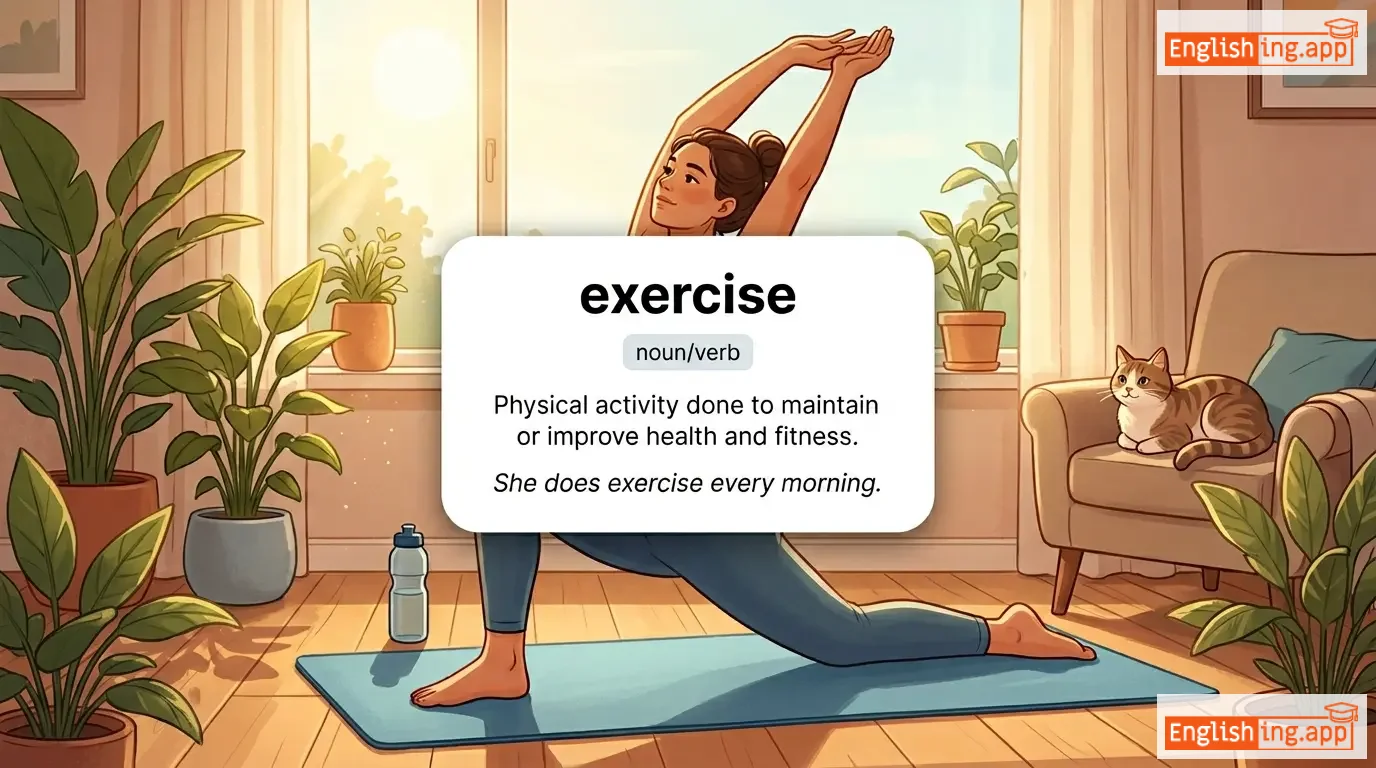
Physical activity done to maintain or improve health and fitness.
••••••
|
She does exercise every morning.
彼女は毎朝エクササイズをします。
••••••
|
彼女は毎朝運動をします。
kanojo wa mai asa undou wo shimasu.
••••••
|
exercise control
コントロールを行使する
••••••
|
to use or apply control
••••••
|
コントロールを行使する
kontorooru wo koushi suru
••••••
|
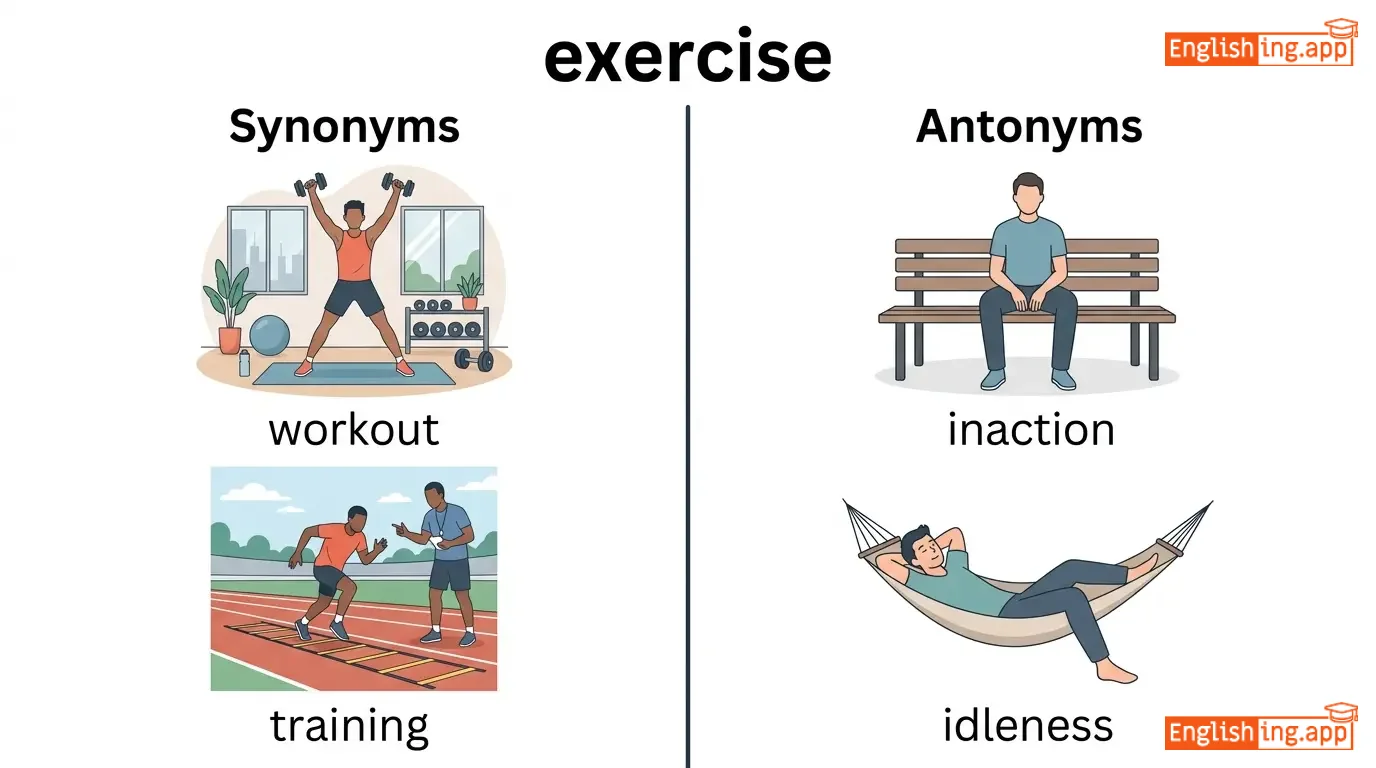
workout, training, practice, drill, activity
••••••
|
inaction, idleness
••••••
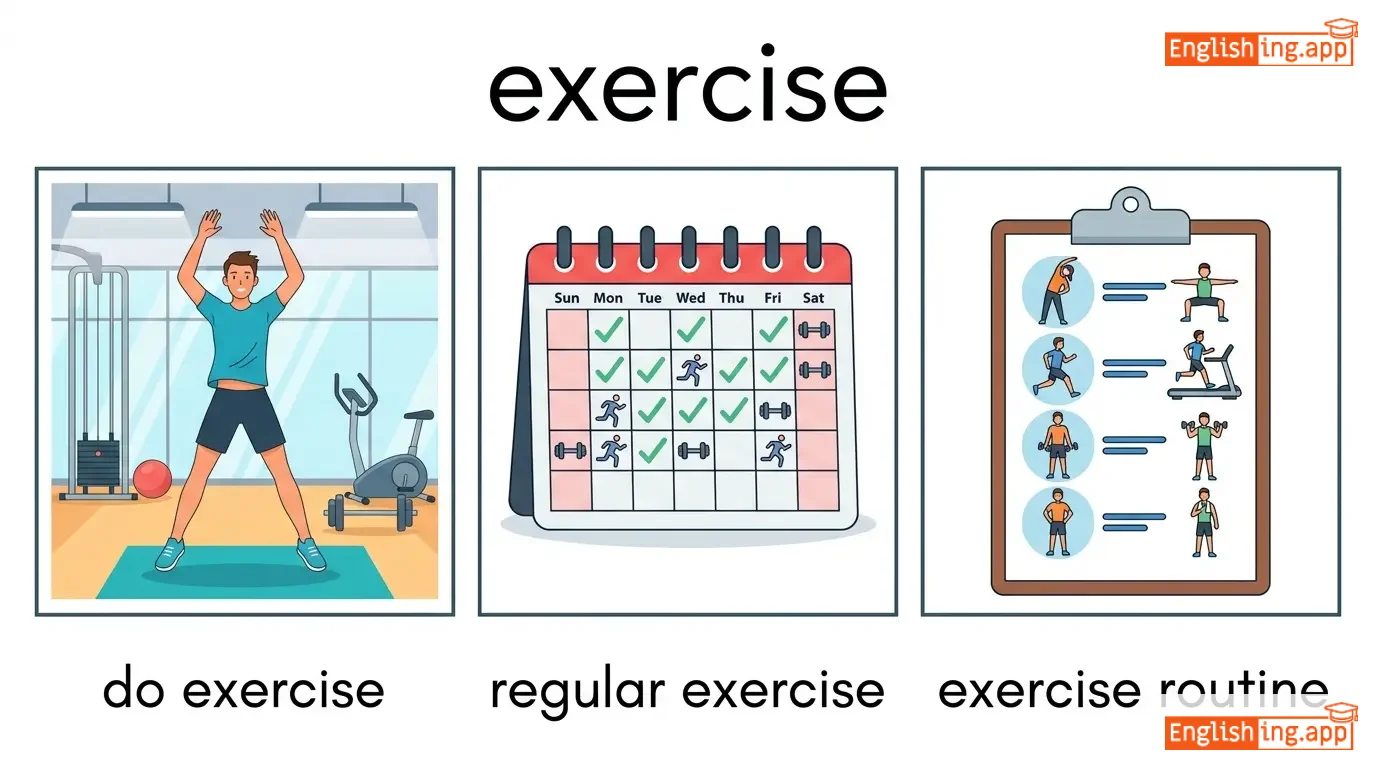
|
do exercise, regular exercise, exercise routine, exercise program
••••••
|
運動はエクササイズのようなもの — 考えてみて、試験に合格するためには運動が必要です!
••••••
|
|
#10969
🎉
|
/ɪkˈsaɪtɪŋ/
adjective
(ekusaitingu)
••••••
|
|
ワクワクする
wakuwaku suru
••••••
|
- •••••• | - •••••• | - •••••• | - •••••• |
Causing great enthusiasm and eagerness.
••••••
|
The movie was so exciting that I watched it twice.
その映画はとてもエキサイティングで、私はそれを二回見ました。
••••••
|
その映画はとてもエキサイティングで、私はそれを二回見ました。
Sono eiga wa totemo ekisaitingu de, watashi wa sore o nikai mimashita.
••••••
|
- •••••• | - •••••• | - •••••• |
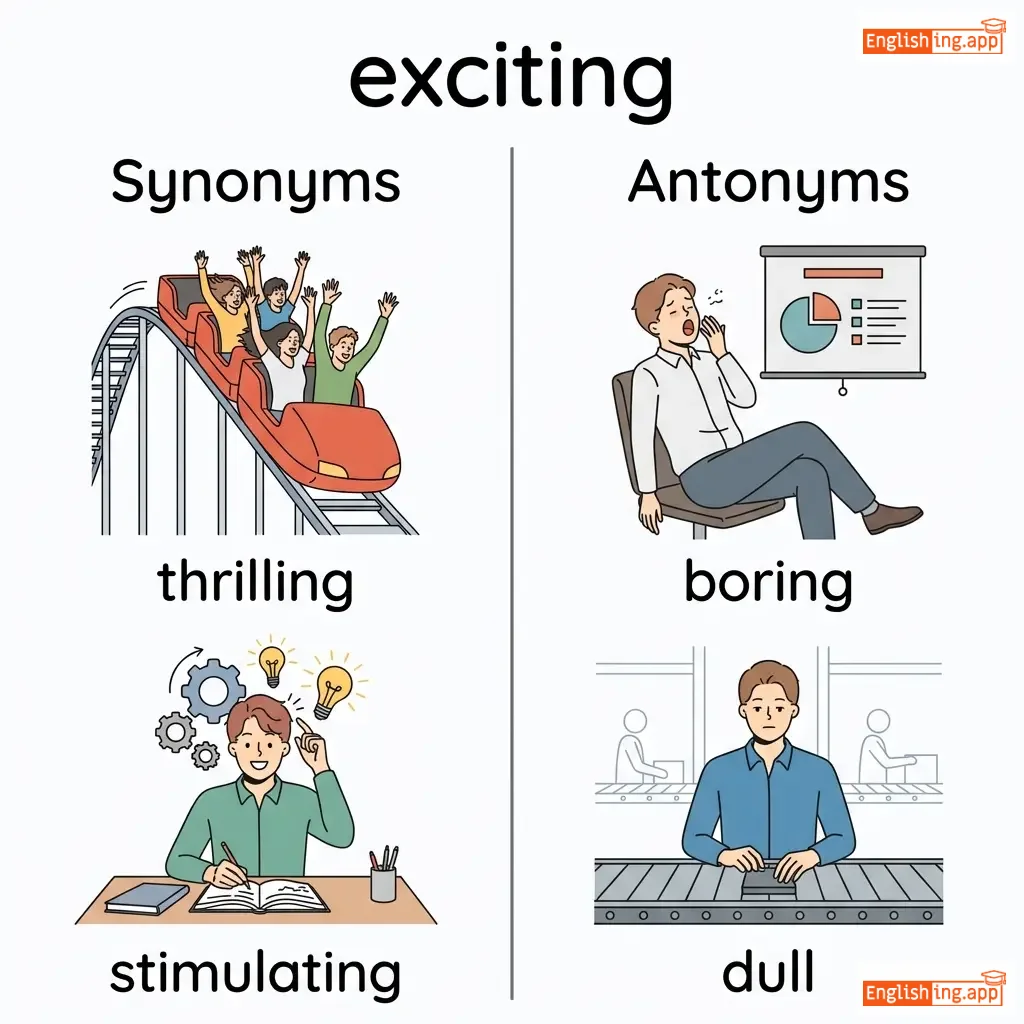
thrilling, stimulating, exhilarating, interesting, gripping
••••••
|
boring, dull, uninteresting
••••••
|
exciting news, exciting opportunity, exciting journey, exciting event
••••••
|
Excitingはワクワクする意味 — excitingな映画でワクワクして止まらない!
••••••
|
|
#10970
🔄
|
/ɪksˈtʃeɪndʒ/
verb
(エクスチェンジ)
••••••
|
|
交換
koukan
••••••
|
exchanged
エクスチェンジド
••••••
|
exchanged
エクスチェンジド
••••••
|
exchanges
エクスチェンジズ
••••••
|
exchanging
エクスチェンジング
••••••
|
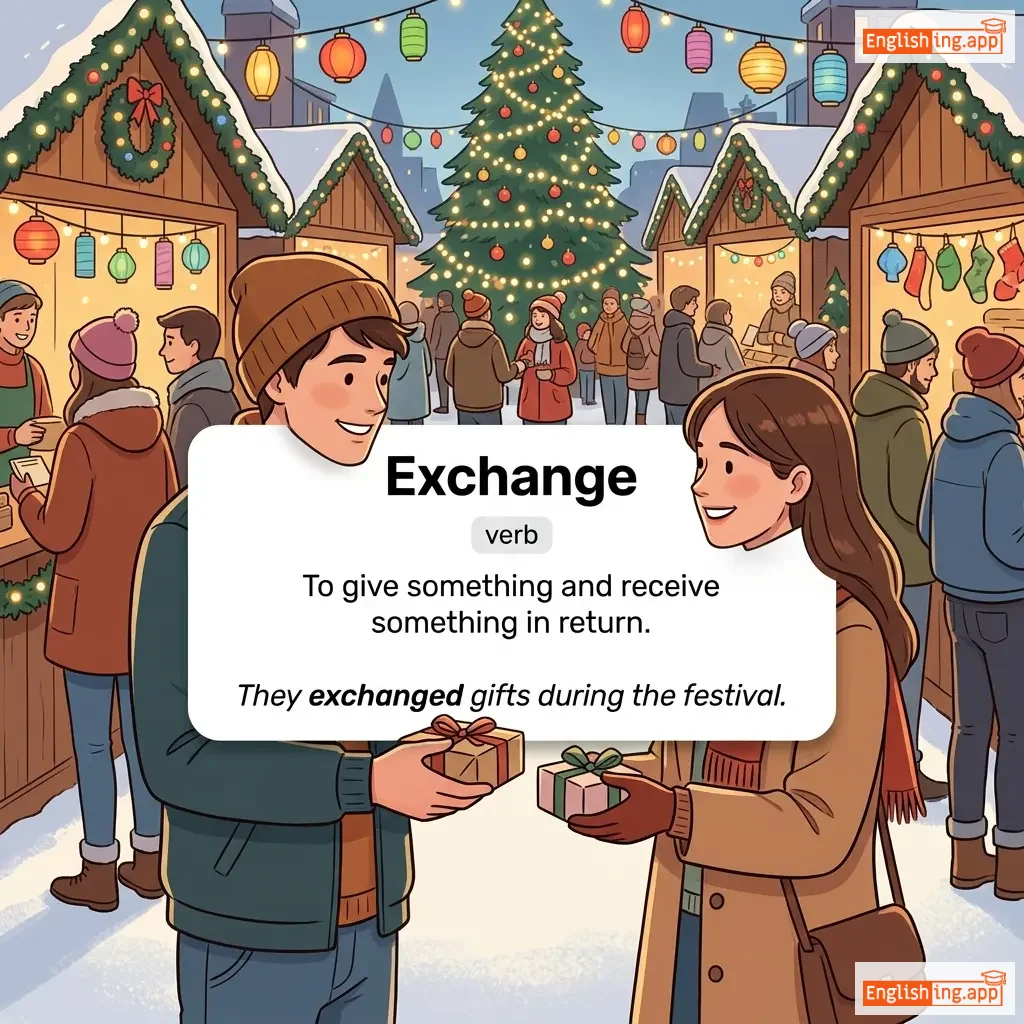
To give something and receive something in return.
••••••
|
They exchanged gifts during the festival.
彼らは祭りの間に贈り物を交換しました。
••••••
|
彼らは祭りの間に贈り物を交換しました。
Karera wa matsuri no aida ni okurimono o koukan shimashita.
••••••
|
exchange views
意見交換
••••••
|
to share opinions or ideas
••••••
|
意見交換
iken koukan
••••••
|
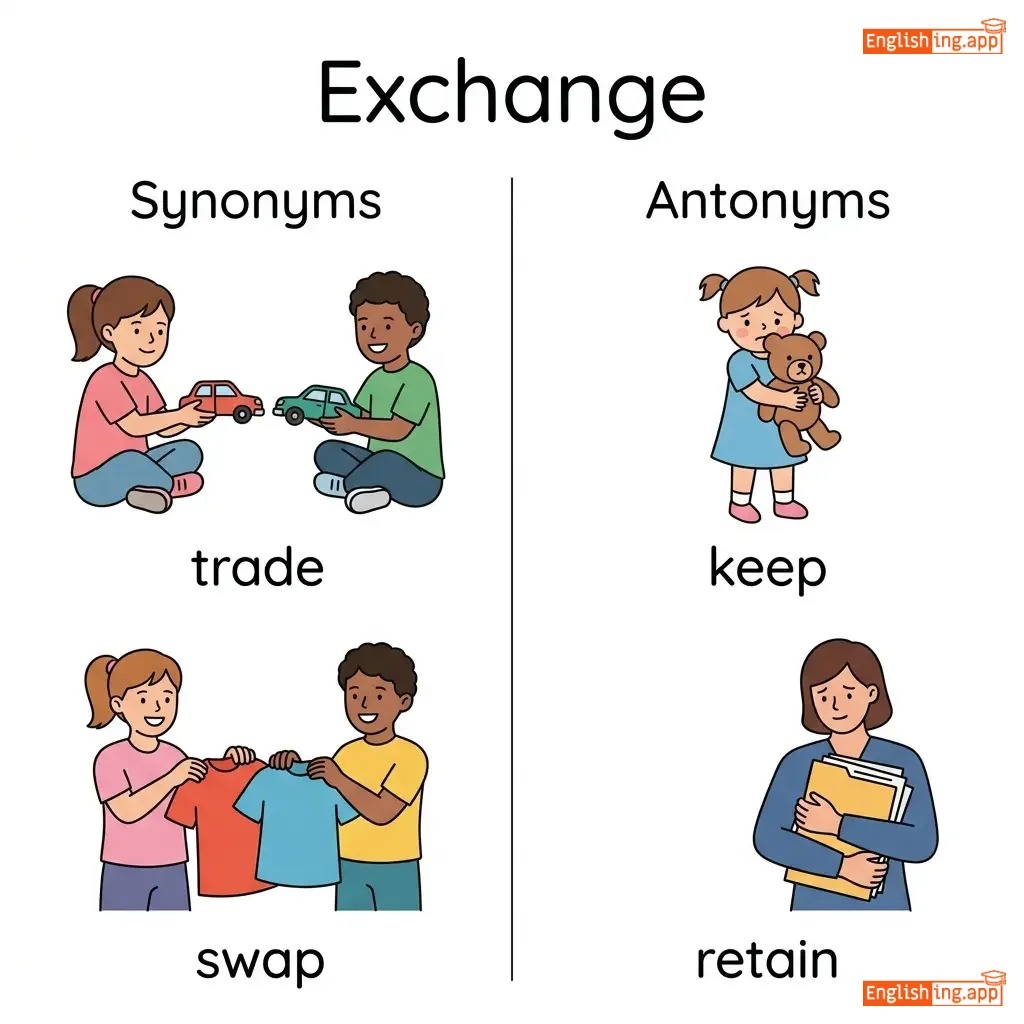
trade, swap, barter, interchange, replace
••••••
|
keep, retain
••••••
|
exchange ideas, exchange gifts, exchange money, exchange information
••••••
|
Exchange は '交換' — 物を交換することです。
••••••
|
|
#10971
🚫
|
/ɪkˈsɛpʃən/
noun
(ikusepushon)
••••••
|
- •••••• |
例外
reiwai
••••••
|
- •••••• | - •••••• | - •••••• | - •••••• |
A case or instance that does not follow a general rule.
••••••
|
Every rule has an exception. |
すべての規則には例外があります。
Subete no kisoku ni wa reiwai ga arimasu.
••••••
|
take exception to |
to be offended by something
••••••
|
異議を唱える
igi o tonaeru
••••••
|
anomaly, irregularity, deviation, exclusion, exemption
••••••
|
rule, norm, standard
••••••
|
make an exception, without exception, rare exception, exception to the rule
••••••
|
Exception は例外を意味します — みんなが試験に合格したが、1人だけが落ちた = 例外。
••••••
|
|
#10972
📖
|
/ɪɡˈzɑːm.pəl/
noun
(エクサンプル)
••••••
|
- •••••• |
例
rei
••••••
|
- •••••• | - •••••• | - •••••• | - •••••• |
a thing or person regarded as a model to be followed or avoided
••••••
|
He is a good example of a hardworking student.
彼は勤勉な学生の良い例です。
••••••
|
彼は勤勉な学生の良い例です。
Kare wa kinben na gakusei no yoi rei desu.
••••••
|
set an example
例を示す
••••••
|
to behave in a way that others should copy
••••••
|
例を示す
Rei o shimesu
••••••
|
model, instance, case, sample, illustration
••••••
|
counterexample, deviation
••••••
|
give example, provide example, set an example, classic example
••••••
|
Rei は例 📖 - 試験の際に例が示されます。
••••••
|
|
#10973
🔎
|
/ɪɡˈzæm.ɪn/
verb
(ハピネス)
••••••
|
- •••••• |
幸福
kōfuku
••••••
|
examined
••••••
|
examined
••••••
|
examines
••••••
|
examining
••••••
|
to look at something carefully in order to understand it
••••••
|
The doctor will examine the patient tomorrow. |
彼女は賞を受け取ったとき、幸せを隠せませんでした。
Kanojo wa shō o uketotta toki, kōfuku o kakusemasen deshita.
••••••
|
cross-examine |
to question someone thoroughly, especially in a court
••••••
|
幸せの追求
shiawase no tsuikyū
••••••
|
inspect, analyze, investigate, check, study
••••••
|
ignore, overlook, neglect
••••••
|
examine carefully, examine evidence, examine thoroughly, examine closely
••••••
|
幸せ=幸 (kou) + 服 (fuku) = 幸福
••••••
|
|
#10974
✍️
|
/ɪɡˌzæm.ɪˈneɪ.ʃən/
noun
(試験)
••••••
|
- •••••• |
試験
shiken
••••••
|
- •••••• | - •••••• | - •••••• | - •••••• |
a formal test of knowledge or ability
••••••
|
She is preparing for her final examination. |
彼女は最終試験の準備をしています。
Kanojo wa saishū shiken no junbi o shiteimasu.
••••••
|
under examination |
being carefully inspected or studied
••••••
|
試験中
shiken-chū
••••••
|
test, assessment, evaluation, inspection, quiz
••••••
|
ignorance, neglect
••••••
|
take examination, pass examination, final examination, medical examination
••••••
|
Examinationは試験を意味します✍️ - 試験を受けて、国が震えます!
••••••
|
Vocabulary Quiz
Test your vocabulary by matching words with their translations or meanings.
Login to take the quiz
Comments (0)
Share your thoughts and join the discussion.
Join the discussion by logging in
Login to CommentNo comments yet
Be the first to share your thoughts!