

翻訳
過去
過去分詞
三人称単数
動名詞
意味
例文
例文の翻訳
同義語
対義語
コロケーション
ニーモニック
Swipe left or right, or use the buttons. Tap image to zoom.
例文の翻訳
単語
Lesson 51Lesson 51 - マスクトグル
|
絵文字
|
単語 | Images | 翻訳 | 過去 | 過去分詞 | 三人称単数 | 動名詞 | 意味 | 例文 | 例文の翻訳 | 表現例 | 表現例の意味 | 表現例の翻訳 | 同義語 | 対義語 | コロケーション | ニーモニック |
|---|---|---|---|---|---|---|---|---|---|---|---|---|---|---|---|---|---|
|
#1501
🤝
|
/ˌkoʊəˈlɪʃən/
noun
(kəʊəˈlɪʃən)
••••••
|
- •••••• |
連立
renritsu
••••••
|
- •••••• | - •••••• | - •••••• | - •••••• |
a temporary alliance of distinct parties, persons, or states for joint action
••••••
|
Several parties formed a coalition to pass the new law. |
いくつかの政党が新しい法律を通すために連立を組んだ。
Ikutsuka no seitō ga atarashī hōritsu o tōsu tame ni renritsu o kunda.
••••••
|
coalition government |
a government formed by the cooperation of multiple political parties
••••••
|
連立政府
renritsu seifu
••••••
|
alliance, union, partnership, federation, bloc
••••••
|
division, separation, disunity
••••••
|
form a coalition, political coalition, coalition partners, coalition forces
••••••
|
連立は異なるグループが協力して目標を達成することです。
••••••
|
|
#1502
🧠
|
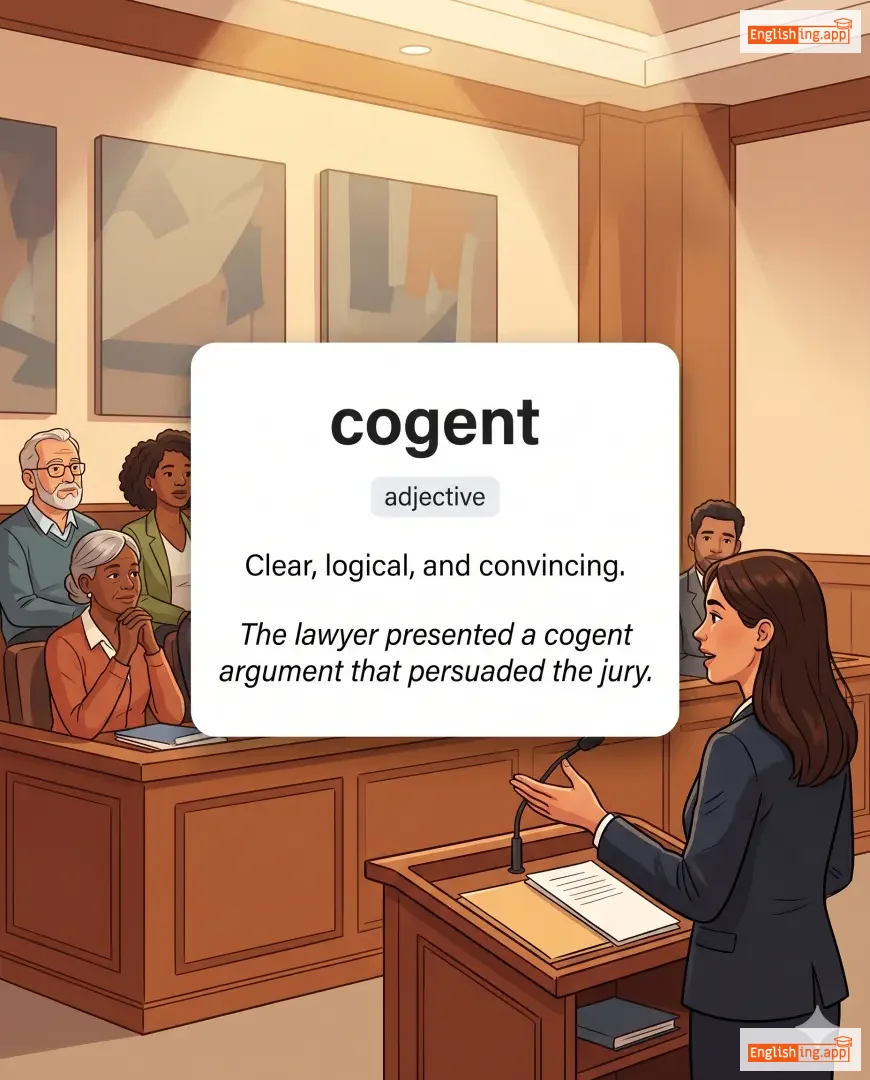
/ˈkoʊdʒənt/
adjective
(コージェント)
••••••
|
|
明確で論理的
meikaku de ronriteki
••••••
|
- •••••• | - •••••• | - •••••• | - •••••• |
Clear, logical, and convincing.
••••••
|
The lawyer presented a cogent argument that persuaded the jury. |
弁護士は明確で論理的な議論を提示し、陪審員を納得させました。
Bengoshi wa meikaku de ronriteki na giron o teiji shi, baishin'in o nattoku sasemashita.
••••••
|
- •••••• | - •••••• | - •••••• |
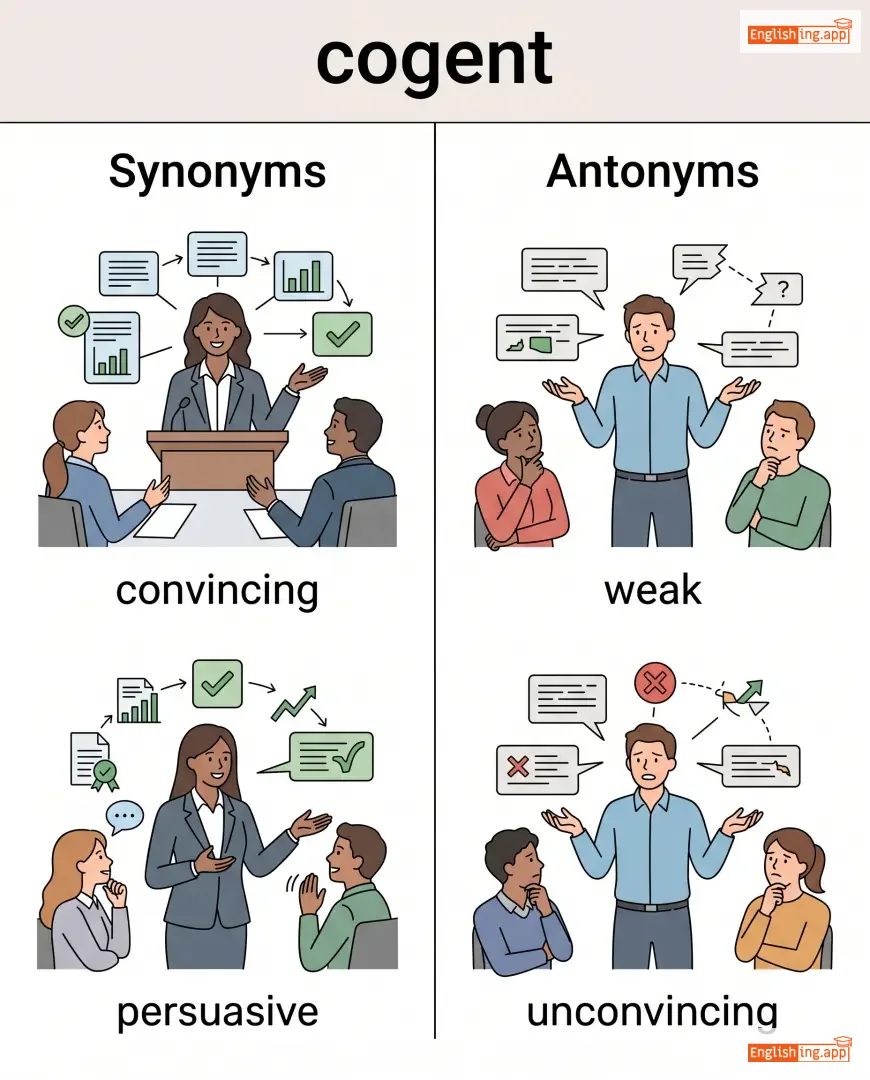
convincing, persuasive, compelling, logical, forceful
••••••
|
weak, unconvincing, illogical
••••••
|
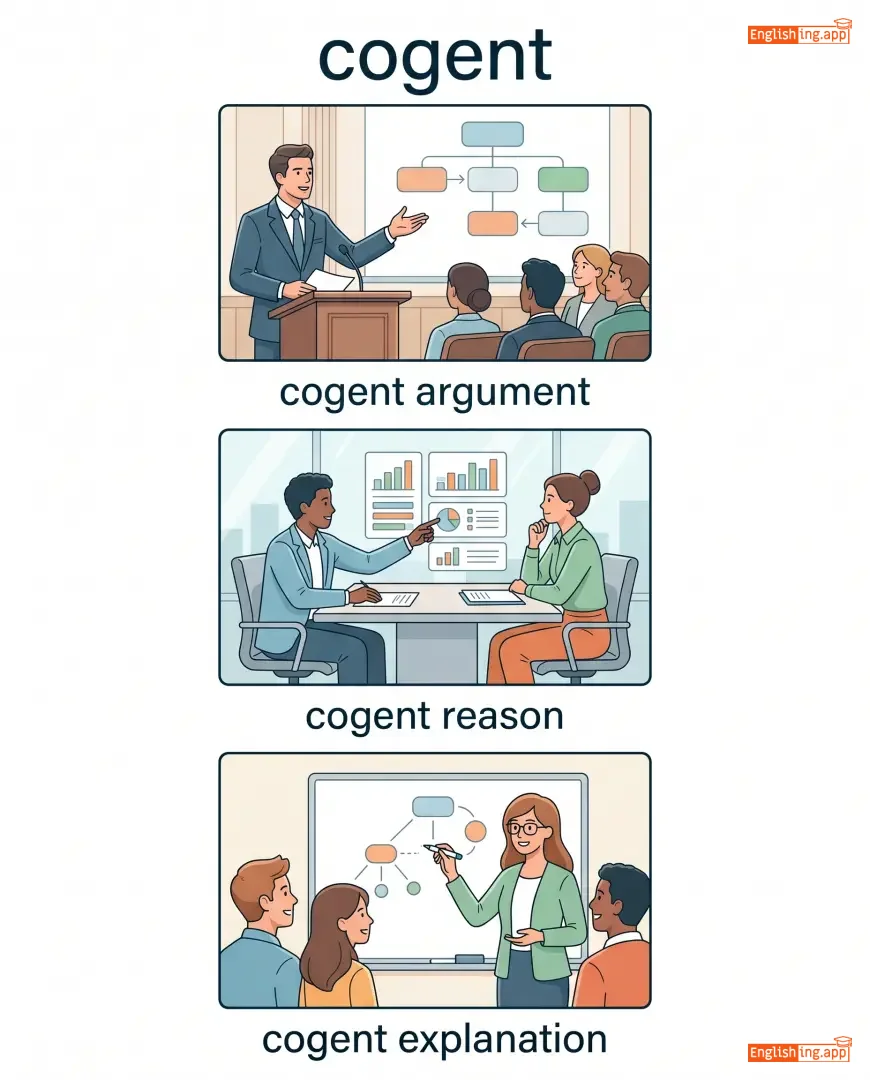
cogent argument, cogent reason, cogent explanation, cogent evidence
••••••
|
Cogentは明確で説得力のある意味—日本語では、コー=言うことが簡単で論理的な議論。
••••••
|
|
#1503
⚙️
|
/kɑːɡ/
noun
(コグ)
••••••
|
- •••••• |
車輪や歯車の歯
sharin ya haguruma no ha
••••••
|
- •••••• | - •••••• | - •••••• | - •••••• |
A tooth on the rim of a wheel or gear; metaphorically, a minor but necessary part of a larger system.
••••••
|
He felt like just a small cog in a big machine. |
彼は大きな機械の中で小さな歯車のように感じていた。
Kare wa ōkina kikai no naka de chiisana haguruma no yō ni kanjite ita.
••••••
|
cog in the machine |
A person who feels insignificant in a large system or organization.
••••••
|
機械の中の歯車
kikai no naka no haguruma
••••••
|
gear, tooth, wheel, component, part
••••••
|
whole, entirety, leader
••••••
|
cog wheel, cog in the machine, cog mechanism
••••••
|
Cogは歯車:小さいけれど大切な部分、機械の中で重要な役割を果たす。
••••••
|
|
#1504
💰
|
/ˈkɔːfər/
noun
(コファー)
••••••
|
- •••••• |
金庫
kinko
••••••
|
- •••••• | - •••••• | - •••••• | - •••••• |
A strongbox or small chest for holding valuables, often used metaphorically for funds or financial reserves.
••••••
|
The city's coffers were drained after the costly project. |
高額なプロジェクトの後、都市の金庫は空になりました。
Kōgaku na purojekuto no ato, toshi no kinko wa kara ni narimashita.
••••••
|
fill the coffers |
To increase financial resources or funds.
••••••
|
金庫を満たす
Kinko o mitasu
••••••
|
treasury, strongbox, chest, fund, reserve
••••••
|
debt, deficit, poverty
••••••
|
public coffers, state coffers, company coffers, fill coffers
••••••
|
Coffer は金庫、資金を貯める箱です。
••••••
|
|
#1505
⏳
|
/koʊˈiːvəl/
adjective
(コエヴァル)
••••••
|
- •••••• |
同時代
dōjidai
••••••
|
- •••••• | - •••••• | - •••••• | - •••••• |
Having the same age, date of origin, or duration; contemporary.
••••••
|
The philosopher was coeval with the rise of modern science.
その哲学者は現代科学の発展と同時代の人物でした。
••••••
|
その哲学者は現代科学の発展と同時代の人物でした。
Sono tetsugakusha wa gendai kagaku no hatten to dōjidai no jinbutsu deshita.
••••••
|
- •••••• | - •••••• | - •••••• |
contemporary, simultaneous, synchronous, contemporaneous
••••••
|
asynchronous, different-aged, anachronistic
••••••
|
coeval generation, coeval thinkers, coeval civilizations
••••••
|
Coeval = co + eval (同じ時間に生まれた)、したがって同時代。
••••••
|
|
#1506
⚠️
|
/koʊˈɜːrsɪv/
adjective
(コーエルシヴ)
••••••
|
- •••••• |
強制的
kyōseiteki
••••••
|
- •••••• | - •••••• | - •••••• | - •••••• |
Relating to or using force or threats to make someone do something.
••••••
|
The government faced criticism for adopting coercive measures against protestors.
ザ・ガバメント・フェイスド・クリティシズム・フォー・アダプティング・コーエルシヴ・メジャーズ・アゲインスト・プロテスターズ
••••••
|
政府は抗議者に対して強制的な措置を取ったことで批判を受けた。
Seifu wa kōgisha ni taishite kyōseiteki na sochi o totta koto de hihan o uketa.
••••••
|
- •••••• | - •••••• | - •••••• |
forceful, intimidating, threatening, compelling, repressive
••••••
|
voluntary, permissive, lenient
••••••
|
coercive power, coercive measures, coercive tactics, coercive control
••••••
|
Coerceは強制を意味し、coerciveは強制的—力で何かをさせること。
••••••
|
|
#1507
🔒
|
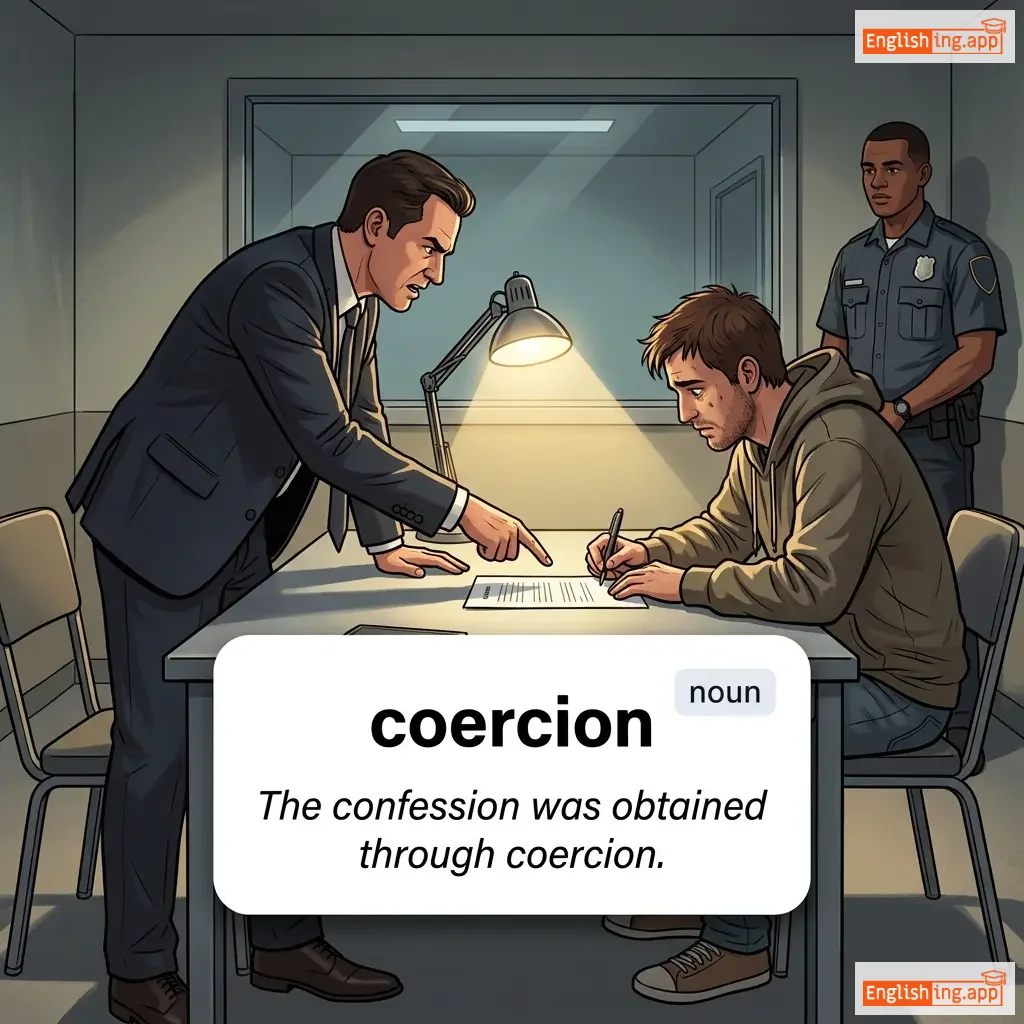
/kəʊˈɜː.ʒən/
noun
(コエルシオン)
••••••
|
|
強制
kyousei
••••••
|
- •••••• | - •••••• | - •••••• | - •••••• |
the practice of forcing someone to act in a certain way by using threats or pressure
••••••
|
The confession was obtained through coercion. |
自白は強制によって得られた。
Jihakuhō wa kyousei ni yotte erareta.
••••••
|
- •••••• | - •••••• | - •••••• |
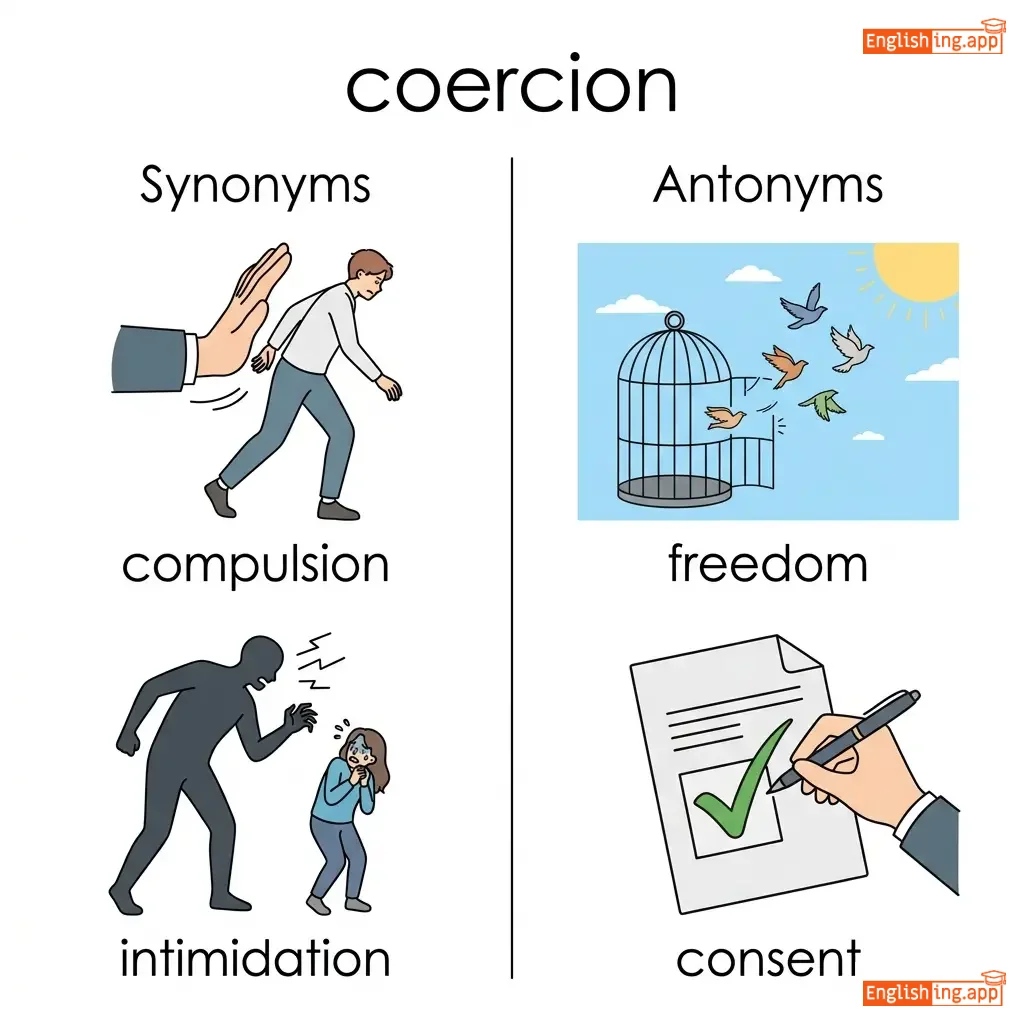
compulsion, intimidation, duress, force
••••••
|
freedom, consent, choice
••••••
|
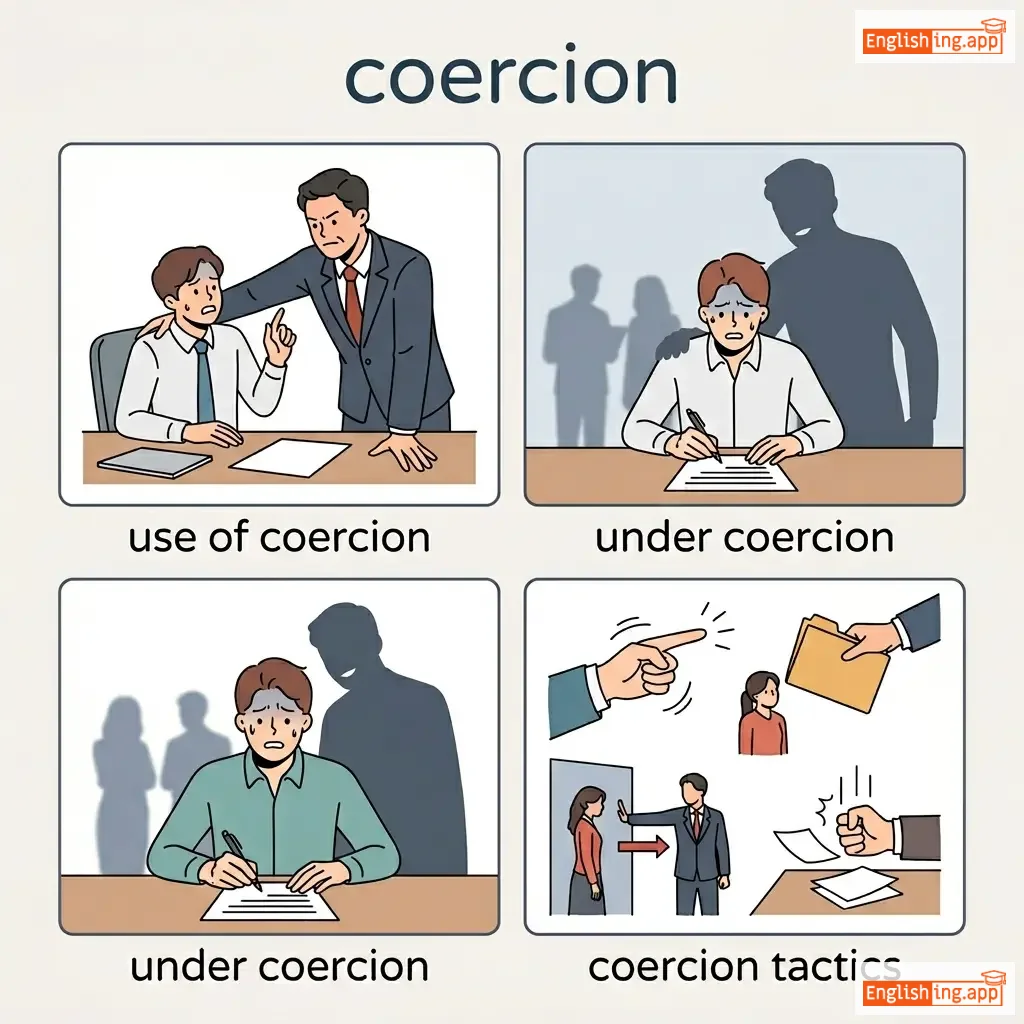
use of coercion, under coercion, coercion tactics, coercion methods
••••••
|
強制(kyousei)はcoercionと同じ—誰かを無理にさせること
••••••
|
|
#1508
⚠️
|
/kəʊˈɜːs/
verb
(koh-ers)
••••••
|
|
強要する
kyouyou suru
••••••
|
coerced
koh-erst
••••••
|
coerced
koh-erst
••••••
|
coerces
koh-erses
••••••
|
coercing
koh-ersing
••••••
|
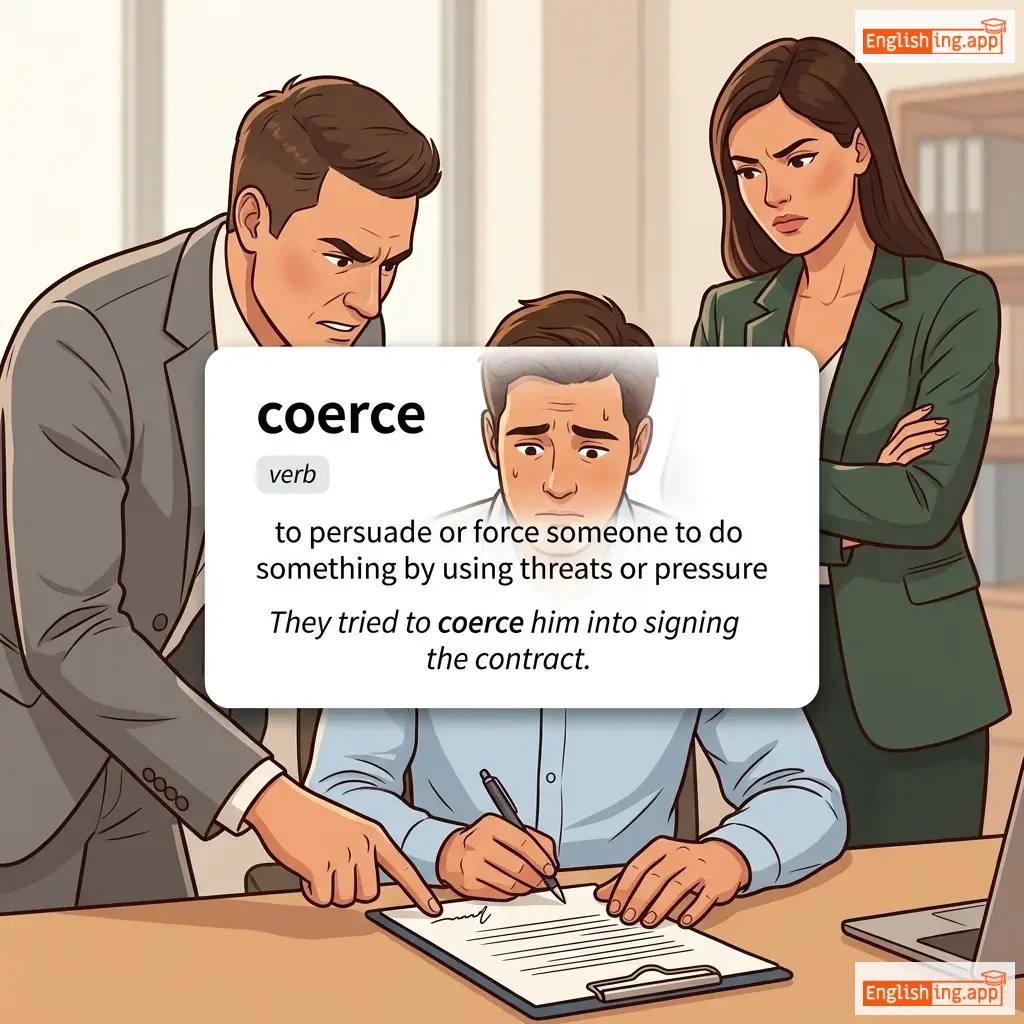
to persuade or force someone to do something by using threats or pressure
••••••
|
They tried to coerce him into signing the contract.
They tried to coerce him into signing the contract.
••••••
|
彼らは彼に契約書にサインさせようとした。
Karera wa kare ni keiyaku-sho ni sain saseyou to shita.
••••••
|
- •••••• | - •••••• | - •••••• |
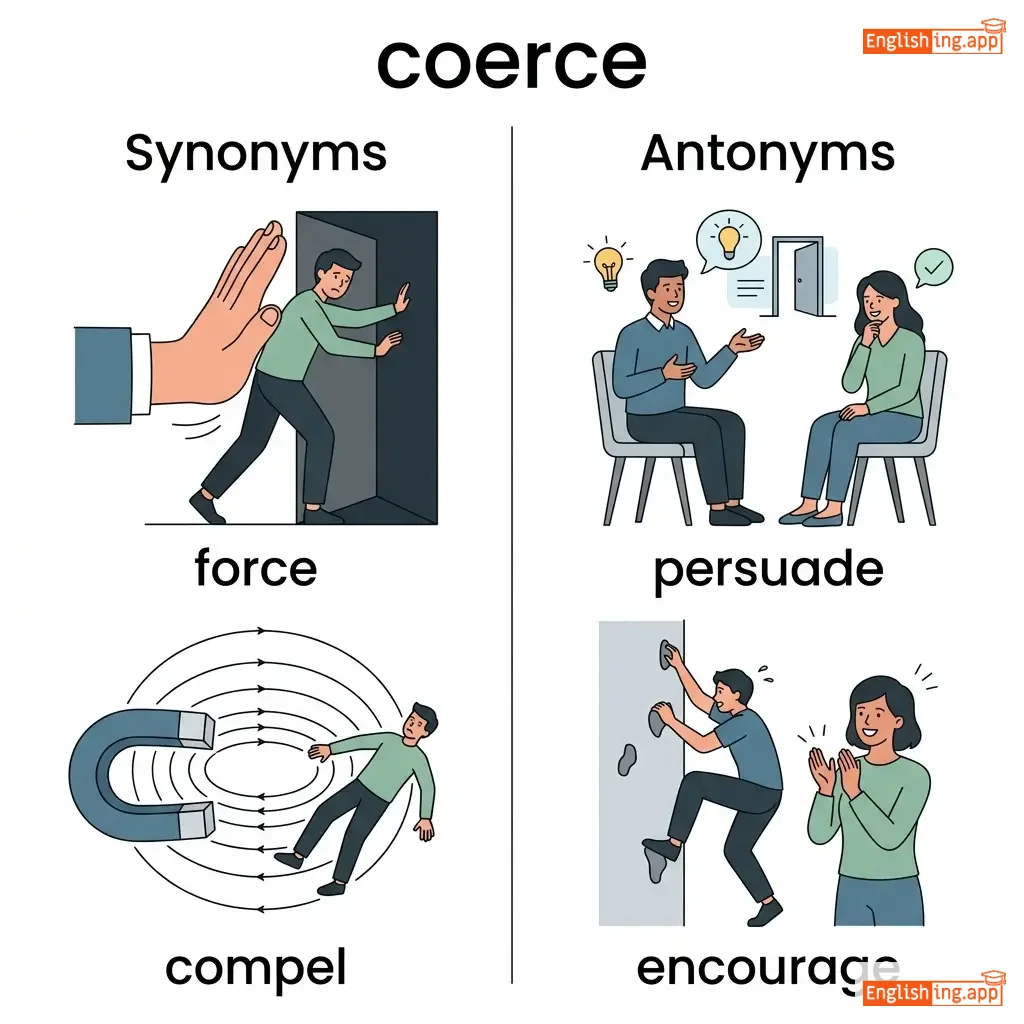
force, compel, pressure, intimidate, bully
••••••
|
persuade, encourage, allow
••••••
|
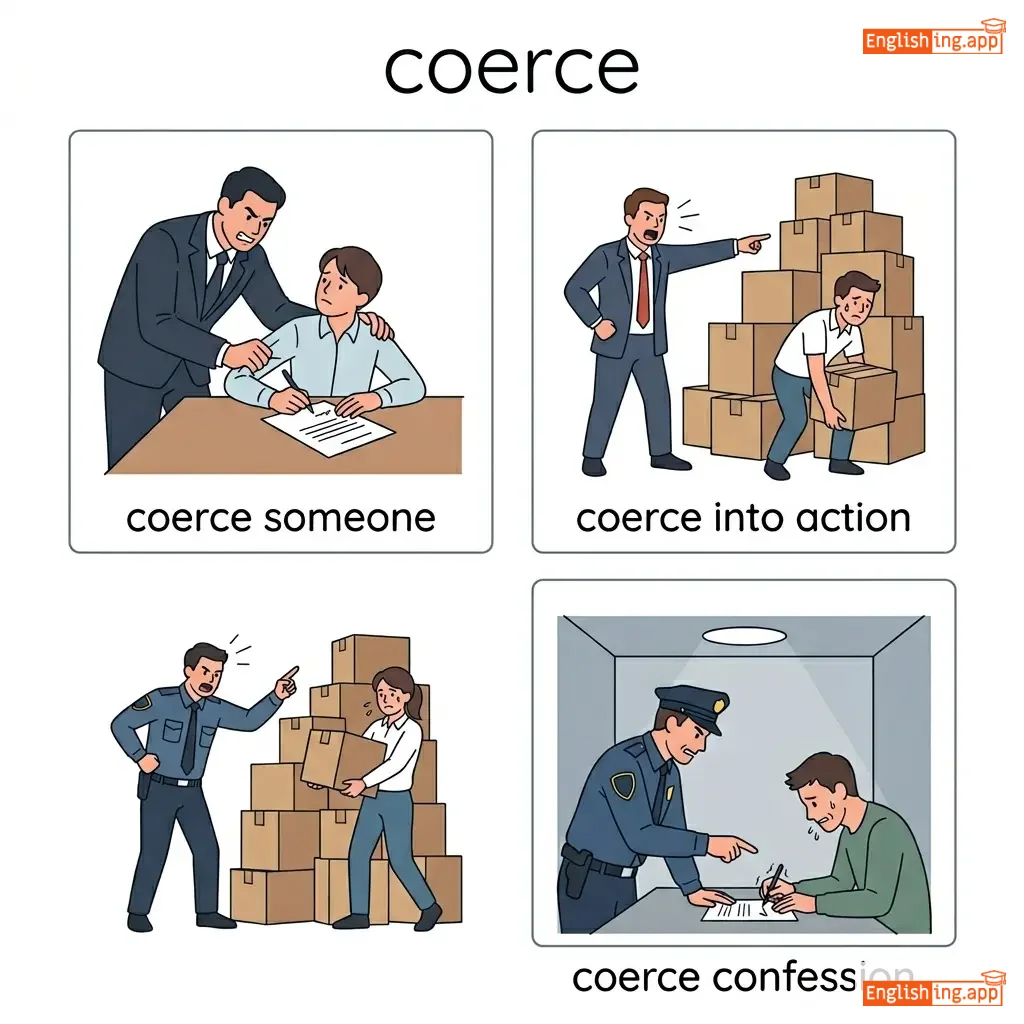
coerce someone, coerce into action, coerce confession, coerce agreement
••••••
|
Coerce とは強要する—圧力や脅迫で無理やりさせること。
••••••
|
|
#1509
📚
|
/ˈkəʊ.dɪ.faɪ/
verb
(コーディファイ)
••••••
|
|
体系化する
taikeika suru
••••••
|
codified
コーディファイド
••••••
|
codified
コーディファイド
••••••
|
codifies
コーディファイズ
••••••
|
codifying
コーディファイング
••••••
|
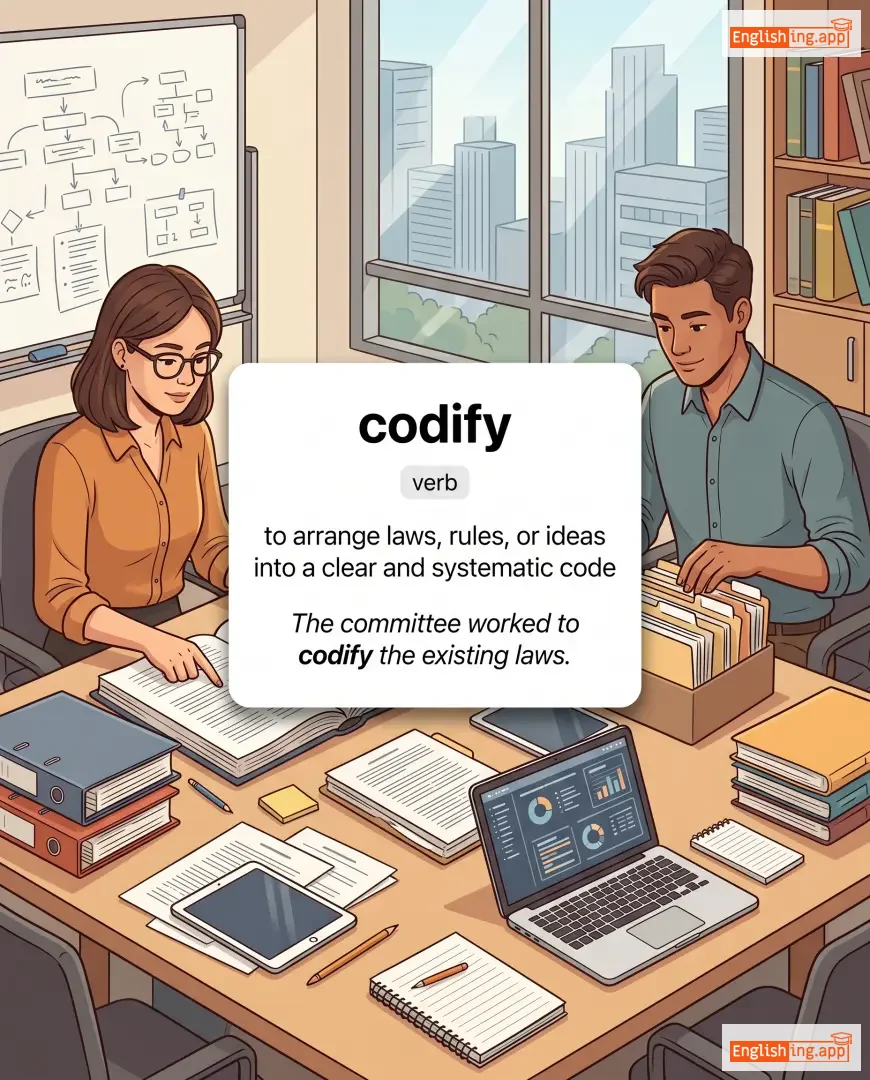
to arrange laws, rules, or ideas into a clear and systematic code
••••••
|
The committee worked to codify the existing laws.
委員会は既存の法律をコーディファイするために取り組みました。
••••••
|
委員会は既存の法律を体系化するために取り組みました。
Iinkai wa kizon no hōritsu o taikeika suru tame ni torikimimashita.
••••••
|
- •••••• | - •••••• | - •••••• |
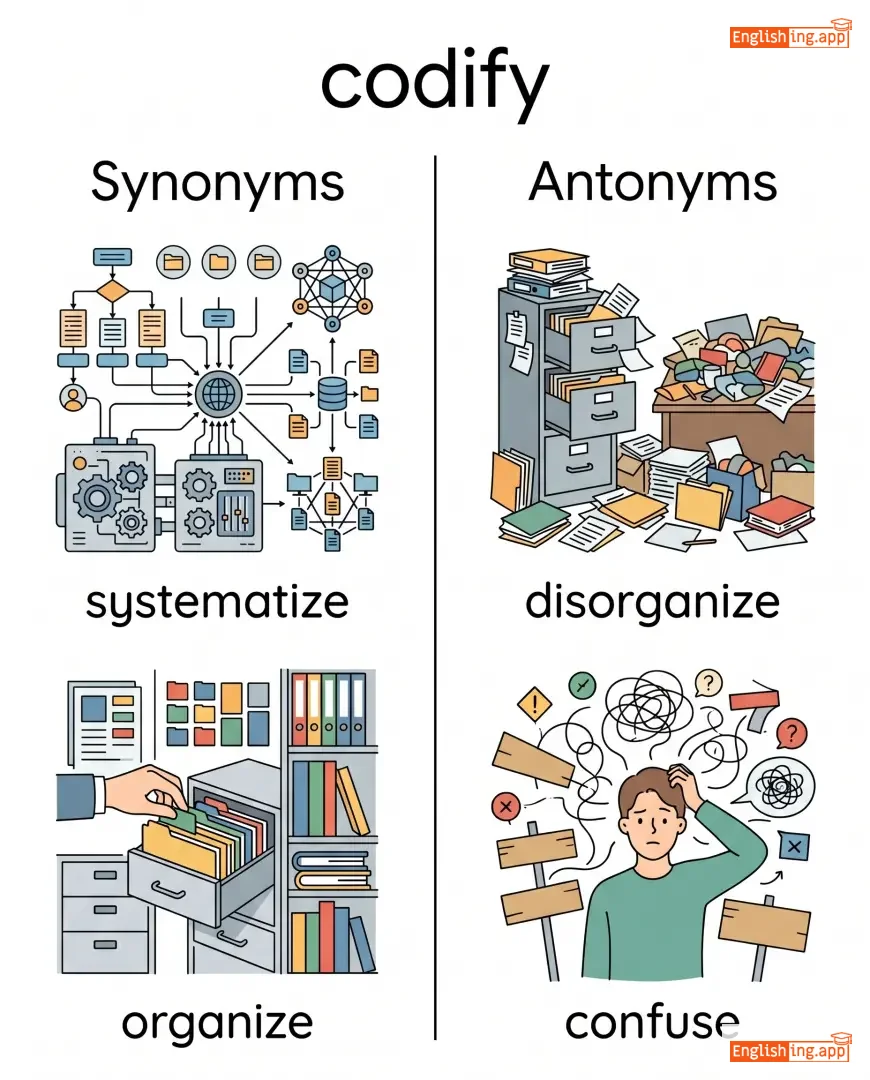
systematize, organize, arrange, classify
••••••
|
disorganize, confuse
••••••
|
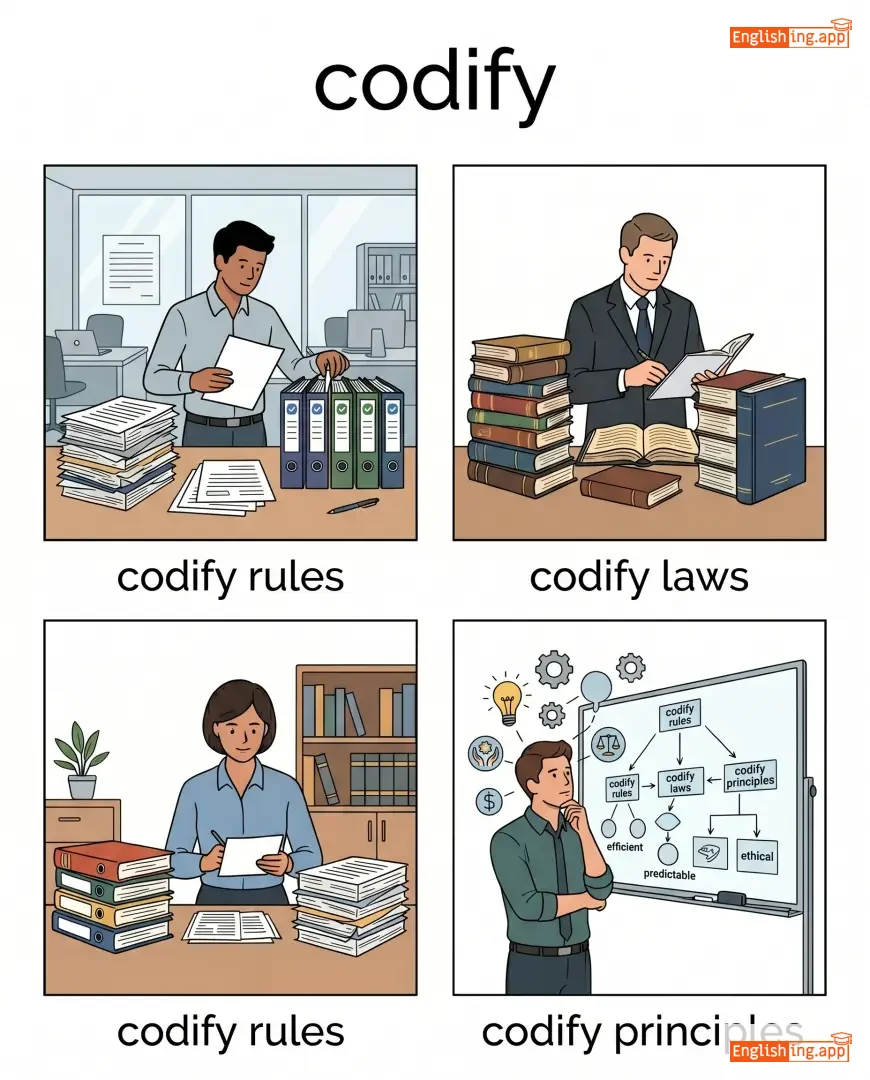
codify rules, codify laws, codify principles, codify knowledge
••••••
|
CODEのようにすべてを整理する—コーディファイは法律を整理すること
••••••
|
|
#1510
📜
|
/ˈkɒd.ɪ.sɪl/
noun
(コディシル)
••••••
|
- •••••• |
遺言補遺
igon hoi
••••••
|
- •••••• | - •••••• | - •••••• | - •••••• |
a legal document that makes changes or additions to an existing will
••••••
|
He added a codicil to his will to include his granddaughter. |
彼は自分の遺言に孫娘を含めるためにコディシルを加えました。
Kare wa jibun no igon ni magomusume o fukumeru tame ni kodishiru o kuwaemashita.
••••••
|
- •••••• | - •••••• | - •••••• |
amendment, supplement, appendix, addition
••••••
|
nullification, cancellation
••••••
|
codicil to a will, legal codicil, add codicil, sign a codicil
••••••
|
コディシル - コードのように、遺言に封印された
••••••
|
|
#1511
🤱
|
/ˈkɒd.l̩/
verb
(コドゥル)
••••••
|
- •••••• |
過保護にする
kahogo ni suru
••••••
|
coddled
コドゥルド
••••••
|
coddled
コドゥルド
••••••
|
coddles
コドゥルズ
••••••
|
coddling
コドゥリング
••••••
|
to treat someone with excessive care or kindness, often in a way that is overprotective
••••••
|
Parents should support their children without coddling them.
親は子供を甘やかさずにサポートすべきです。
••••••
|
親は子供を甘やかさずにサポートすべきです。
Oya wa kodomo o amayakasa zu ni sapōto subeki desu.
••••••
|
- •••••• | - •••••• | - •••••• |
pamper, spoil, indulge, nurture, overprotect
••••••
|
neglect, mistreat, ignore
••••••
|
coddle a child, coddle an employee, coddle too much, overly coddle
••••••
|
CODL は cuddle と似ている—過保護にする
••••••
|
|
#1512
🔚
|
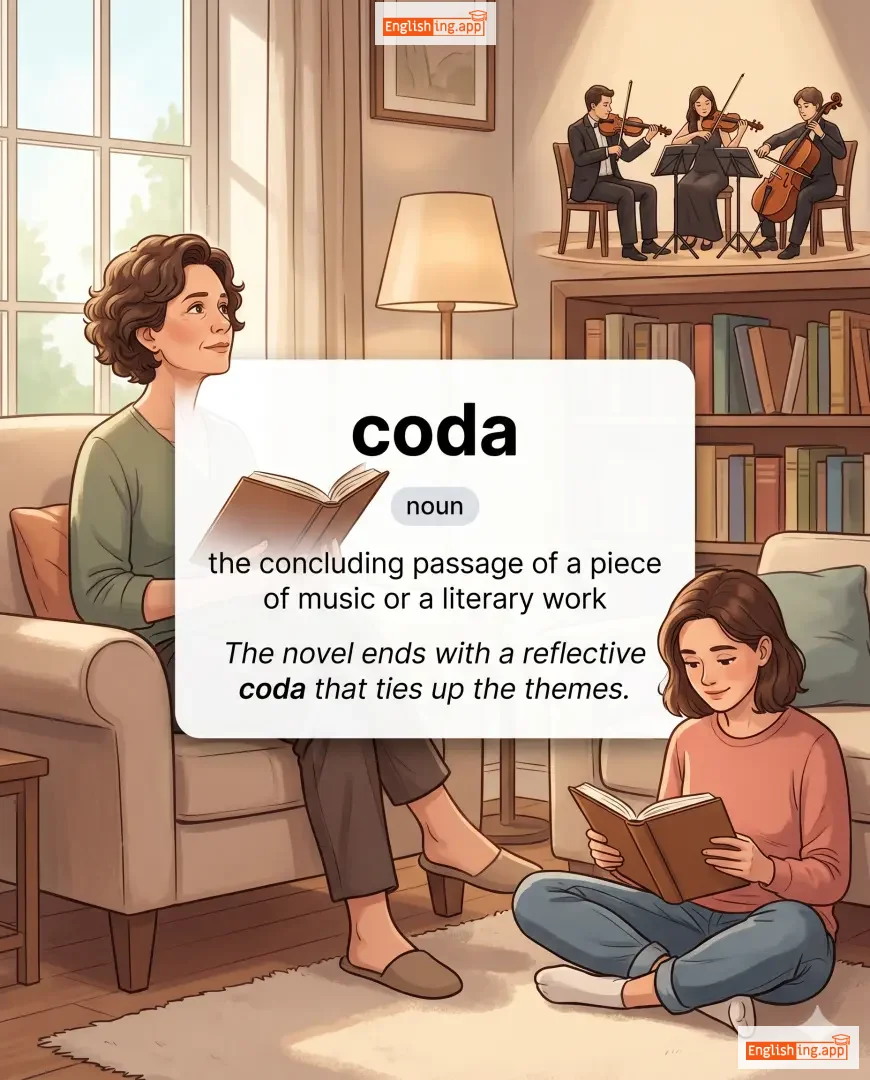
/ˈkoʊdə/
noun
(コーダ)
••••••
|
|
コーダ
koda
••••••
|
- •••••• | - •••••• | - •••••• | - •••••• |
the concluding passage of a piece of music or a literary work
••••••
|
The novel ends with a reflective coda that ties up the themes. |
その小説は、テーマを結びつける反省的なコーダで終わります。
Sono shousetsu wa, tēma o musubitsukeru hanseiteki na koda de owarimasu.
••••••
|
- •••••• | - •••••• | - •••••• |
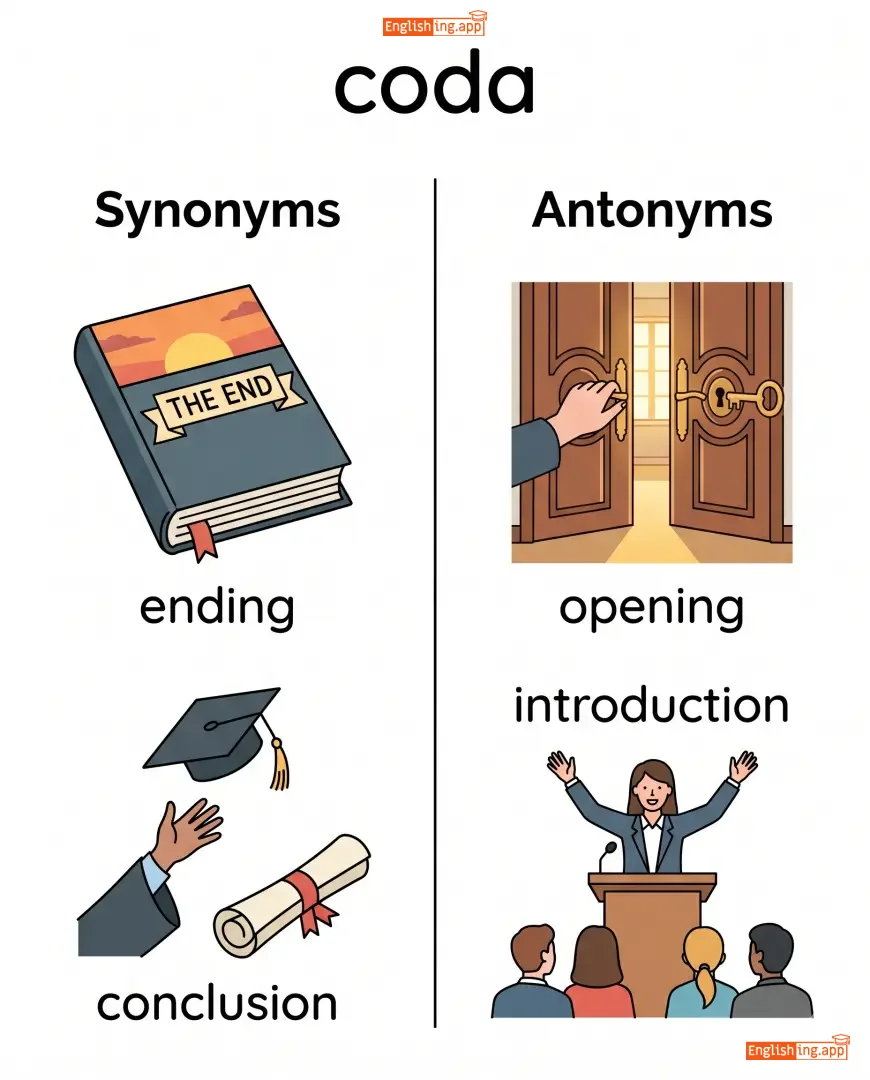
ending, conclusion, finale, epilogue
••••••
|
opening, introduction, beginning
••••••
|
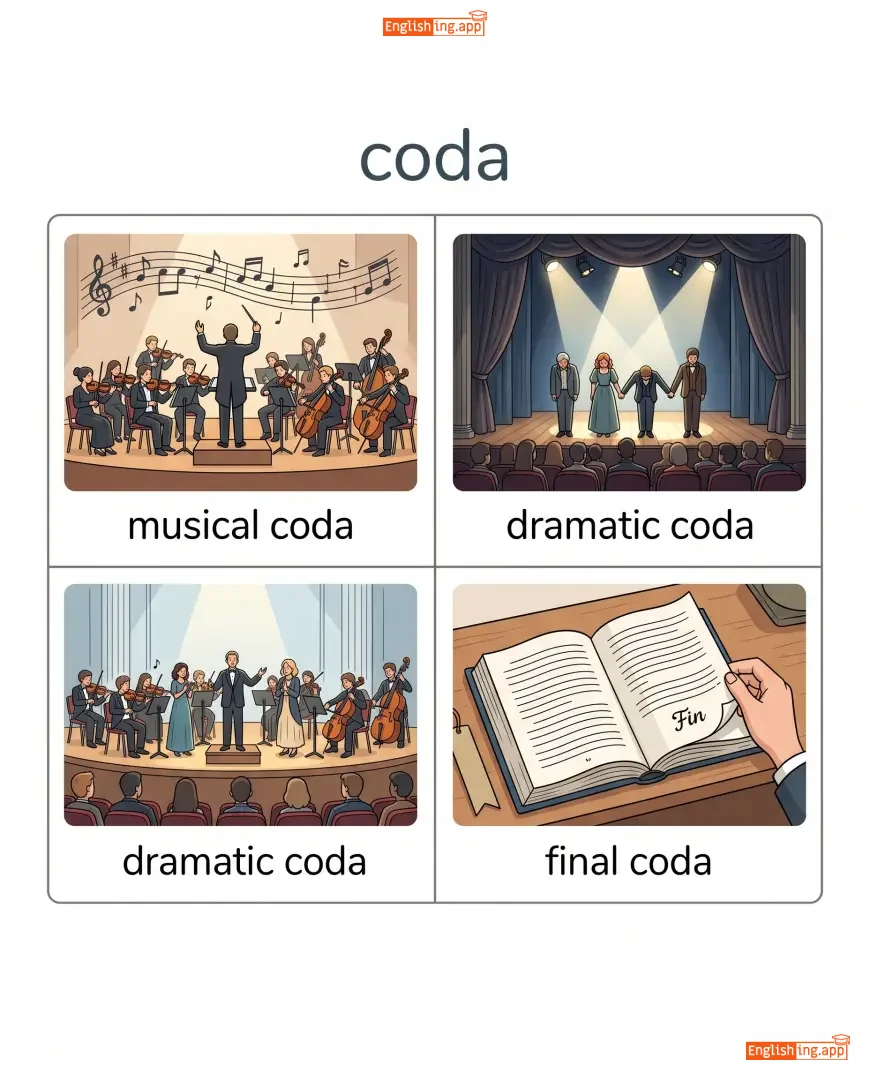
musical coda, dramatic coda, final coda
••••••
|
Codaは作品の終わりの部分です。音楽や本の最後の部分のように。
••••••
|
|
#1513
🎖️
|
/kɒˈkeɪd/
noun
(コケード)
••••••
|
- •••••• |
リボンのロゼット
ribon no rozetto
••••••
|
- •••••• | - •••••• | - •••••• | - •••••• |
a rosette or knot of ribbon, usually worn on a hat as a badge of office or party
••••••
|
The soldier wore a red cockade on his cap. |
兵士は帽子に赤いリボンのロゼットを付けていました。
Heishi wa bōshi ni akai ribon no rozetto o tsukete imashita.
••••••
|
- •••••• | - •••••• | - •••••• |
badge, emblem, insignia, ribbon
••••••
|
plainness, simplicity
••••••
|
wear a cockade, red cockade, cockade on hat
••••••
|
兵士の帽子にリボンのロゼットがついていると想像してください。
••••••
|
|
#1514
🗣️
|
/koʊks/
verb
(コークス)
••••••
|
- •••••• |
説得する
settoku suru
••••••
|
coaxed
コークスド
••••••
|
coaxed
コークスド
••••••
|
coaxes
コークセス
••••••
|
coaxing
コークシング
••••••
|
to persuade someone gently or gradually to do something
••••••
|
She managed to coax the cat out of the tree with some food.
彼女は食べ物で猫を木からおろすことができました。
••••••
|
彼女は食べ物で猫を木からおろすことができました。
Kanojo wa tabemono de neko o ki kara orosu koto ga dekimashita.
••••••
|
- •••••• | - •••••• | - •••••• |
persuade, convince, entice, cajole, influence
••••••
|
force, compel, bully
••••••
|
coax into, coax out, coax gently, coax someone
••••••
|
Coax は説得すること、コーチが優しく説得するようなものです。
••••••
|
|
#1515
🌊
|
/koʊst/
noun, verb
(kōsuto)
••••••
|
- •••••• |
海岸
kaigan
••••••
|
coasted
kōsuto shita
••••••
|
coasted
kōsuto shita
••••••
|
coasts
kōsuto suru
••••••
|
coasting
kōsuto suru
••••••
|
noun: the land along the edge of the sea; verb: to move easily without effort or power
••••••
|
They walked along the coast enjoying the sea breeze.
彼らは海風を楽しみながら海岸を歩いていました。
••••••
|
彼らは海風を楽しみながら海岸を歩いていました。
Karera wa umikaze wo tanoshimi nagara kaigan wo aruiteimashita.
••••••
|
coast is clear
海岸はクリアです
••••••
|
a situation is safe or free of obstacles
••••••
|
状況はクリアです
jōkyō wa kuria desu
••••••
|
shore, seashore, beach, glide, drift
••••••
|
inland, struggle, resistance
••••••
|
coastal area, east coast, coast guard, coast along
••••••
|
海岸を歩くのは簡単だ。
••••••
|
|
#1516
⛪
|
/ˈklɔɪstər/
noun
(クロイスター)
••••••
|
|
回廊
kairou
••••••
|
- •••••• | - •••••• | - •••••• | - •••••• |
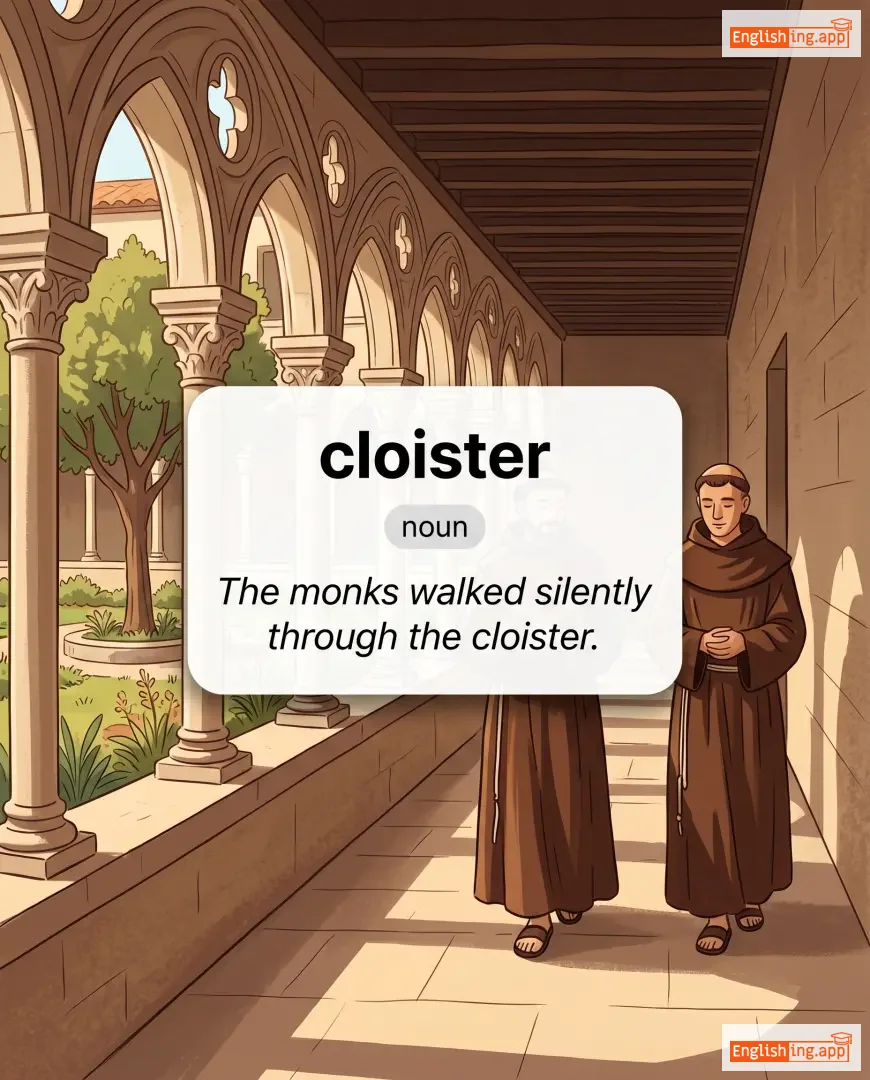
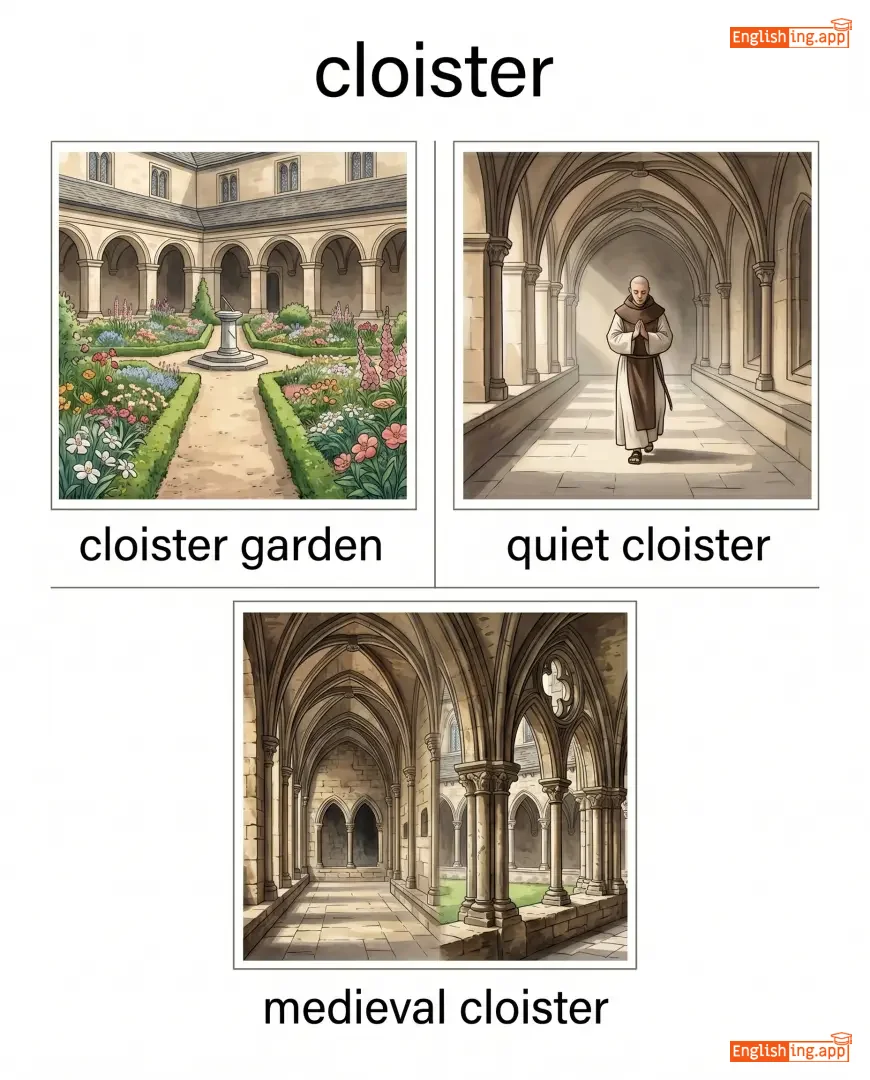
a covered walk in a convent, monastery, or cathedral, typically with a wall on one side and a colonnade open to a quadrangle on the other.
••••••
|
The monks walked silently through the cloister.
修道士たちは静かに回廊を歩いていた。
••••••
|
修道士たちは静かに回廊を歩いていた。
Shūdōshi-tachi wa shizuka ni kairou o aruite ita.
••••••
|
- •••••• | - •••••• | - •••••• |
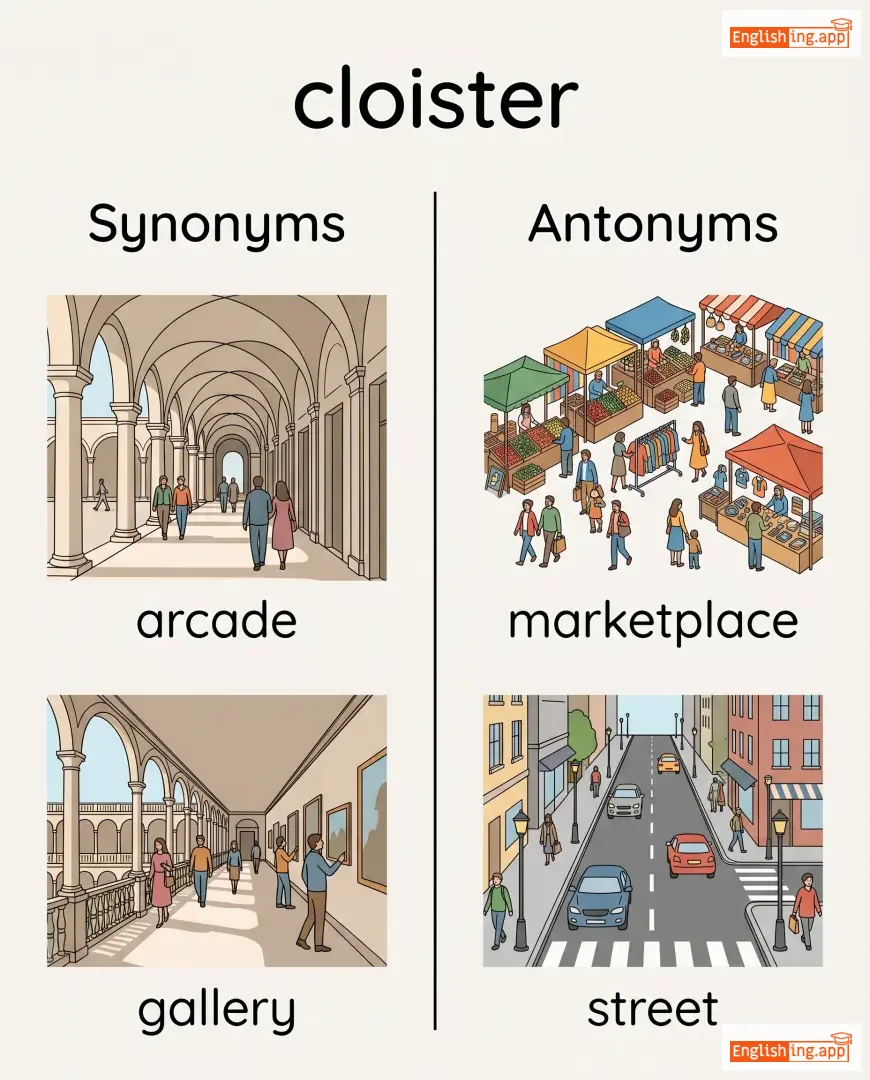
arcade, gallery, walkway, monastery, abbey
••••••
|
marketplace, street, outside
••••••
|
cloister garden, quiet cloister, medieval cloister, cloister life
••••••
|
回廊は修道院や聖堂の静かな歩道で、心を落ち着かせる場所です。
••••••
|
|
#1517
🌐
|
/ˌkoʊəˈlɛsəns/
noun
(koarēsensu)
••••••
|
|
融合
yūgō
••••••
|
- •••••• | - •••••• | - •••••• | - •••••• |
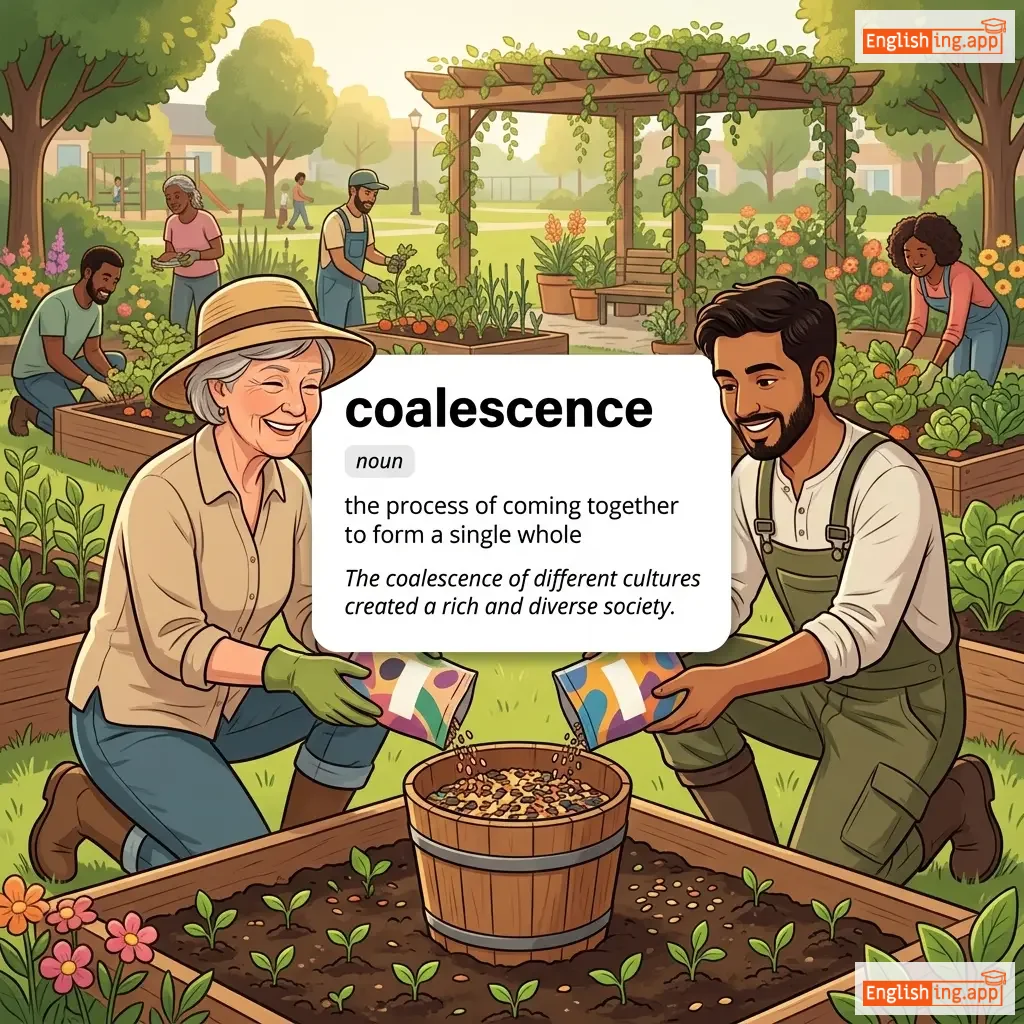
the process of coming together to form a single whole
••••••
|
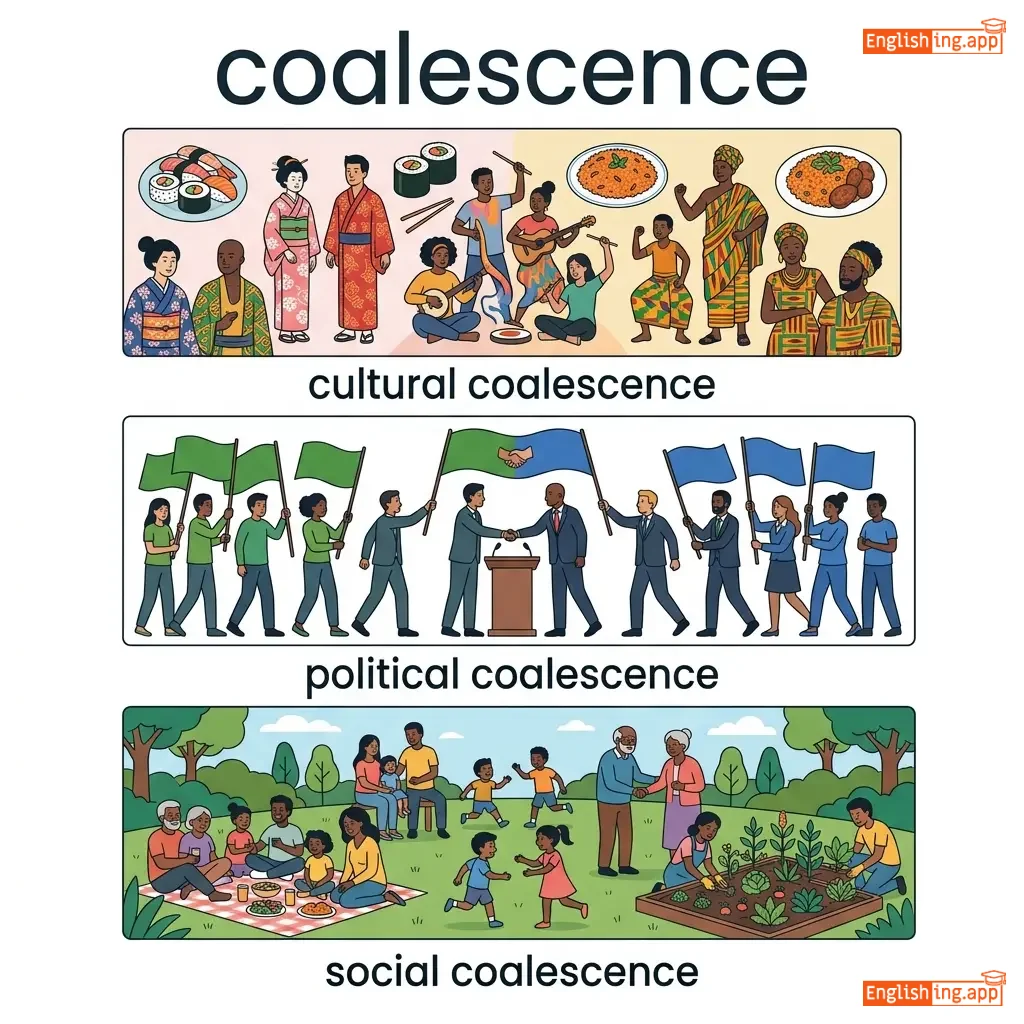
The coalescence of different cultures created a rich and diverse society.
異なる文化の融合は、豊かで多様な社会を作り上げました。
••••••
|
異なる文化の融合は、豊かで多様な社会を作り上げました。
Kotonaru bunka no yūgō wa, yutaka de tayō na shakai o tsukuri agemashita.
••••••
|
- •••••• | - •••••• | - •••••• |
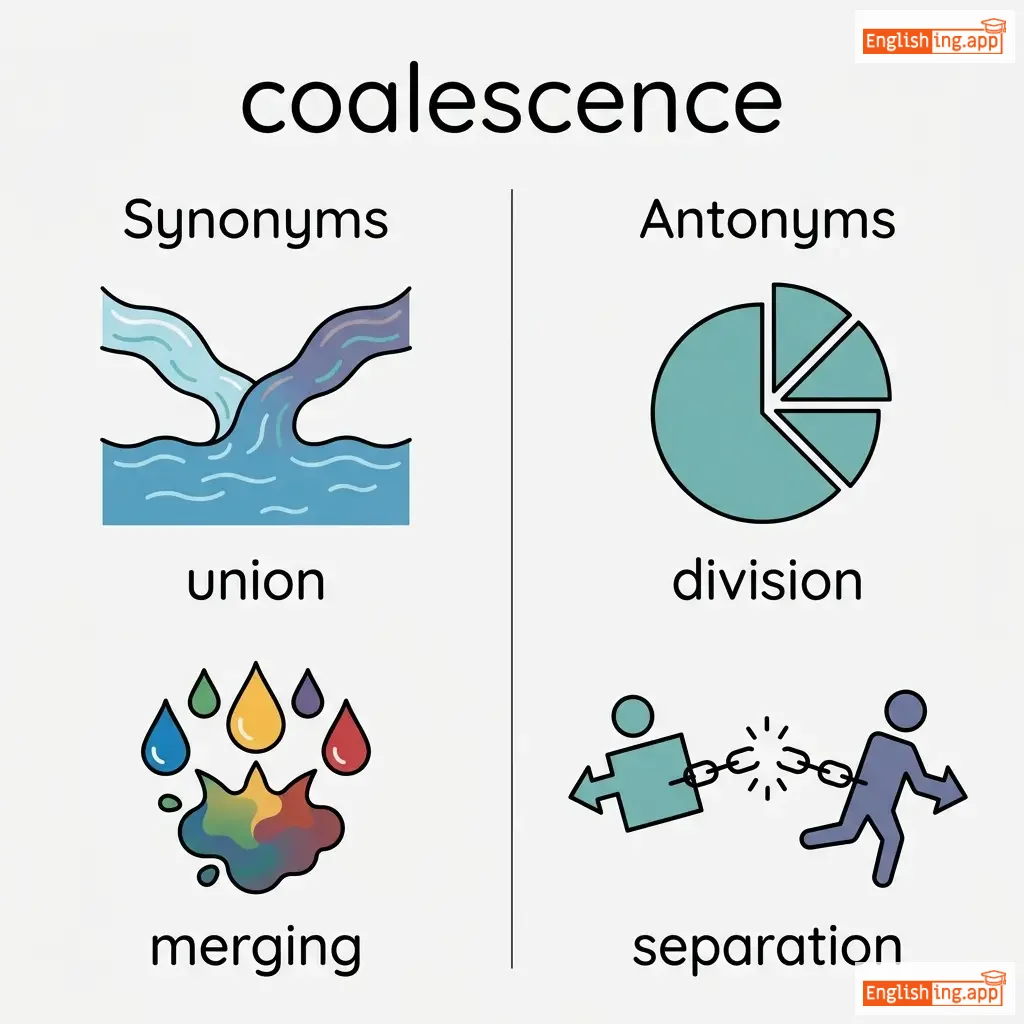
union, merging, fusion, integration, amalgamation
••••••
|
division, separation, fragmentation
••••••
|
cultural coalescence, political coalescence, social coalescence
••••••
|
Coalescence とは融合 - 異なる文化が集まり社会を作る
••••••
|
|
#1518
🔗
|
/ˌkoʊəˈlɛs/
verb
(コアレス)
••••••
|
|
団結する
danketsu suru
••••••
|
coalesced
コアレスド
••••••
|
coalesced
コアレスド
••••••
|
coalesces
コアレスズ
••••••
|
coalescing
コアレスイング
••••••
|
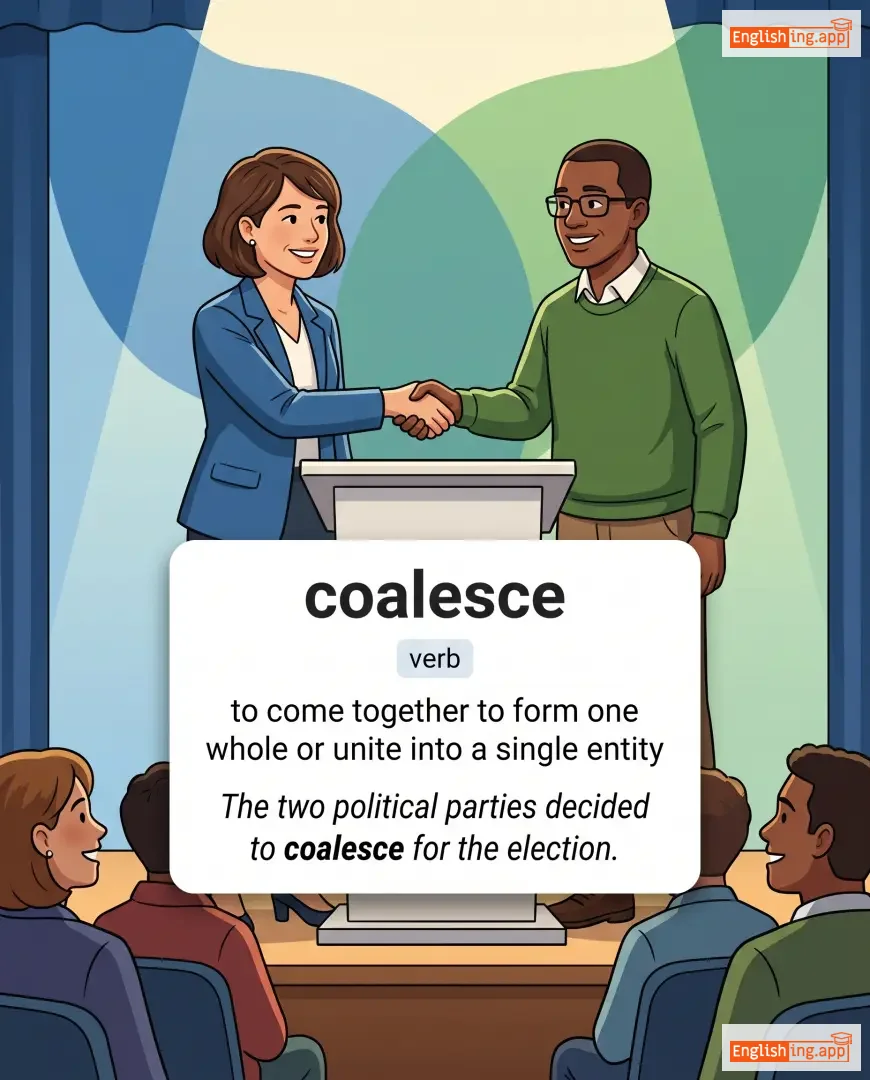
to come together to form one whole or unite into a single entity
••••••
|
The two political parties decided to coalesce for the election.
二つの政治的な政党は選挙のために団結することを決定しました。
••••••
|
二つの政治的な政党は選挙のために団結することを決定しました。
Futatsu no seijiteki na seitō wa senkyo no tame ni danketsu suru koto o kettei shimashita.
••••••
|
- •••••• | - •••••• | - •••••• |
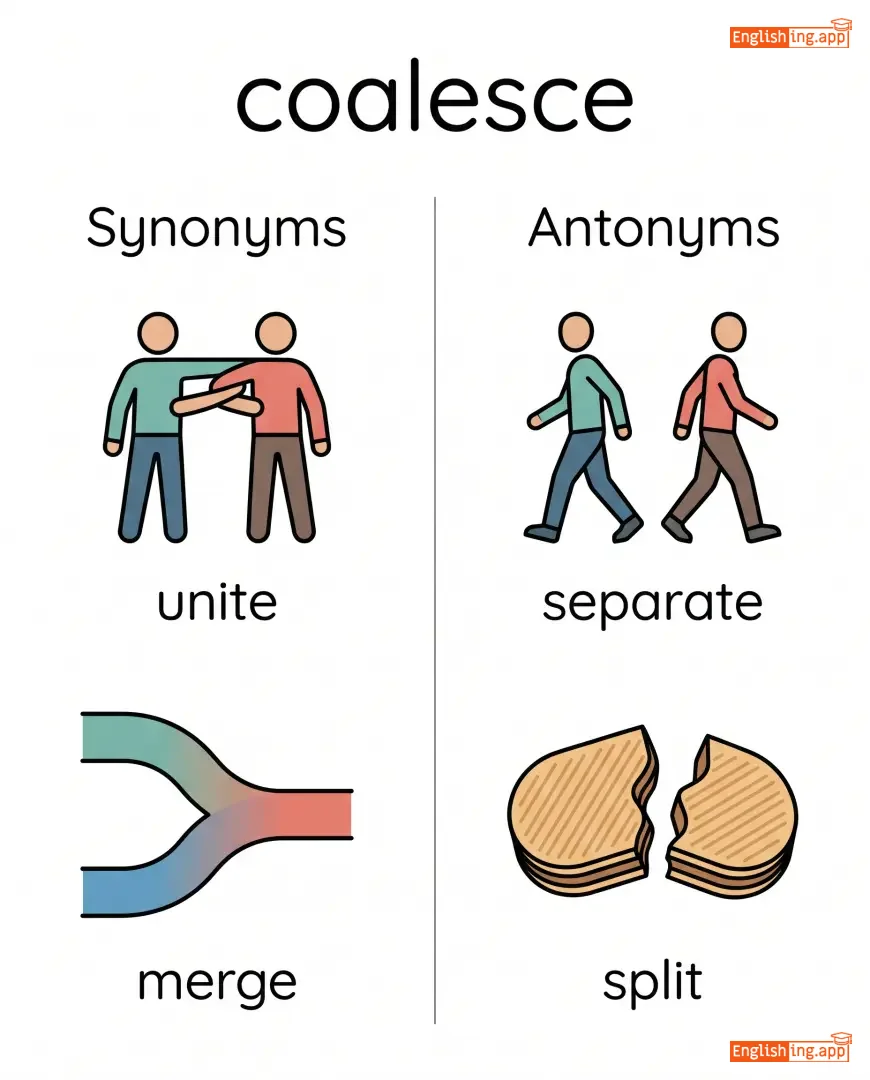
unite, merge, combine, fuse, integrate
••••••
|
separate, split, divide
••••••
|
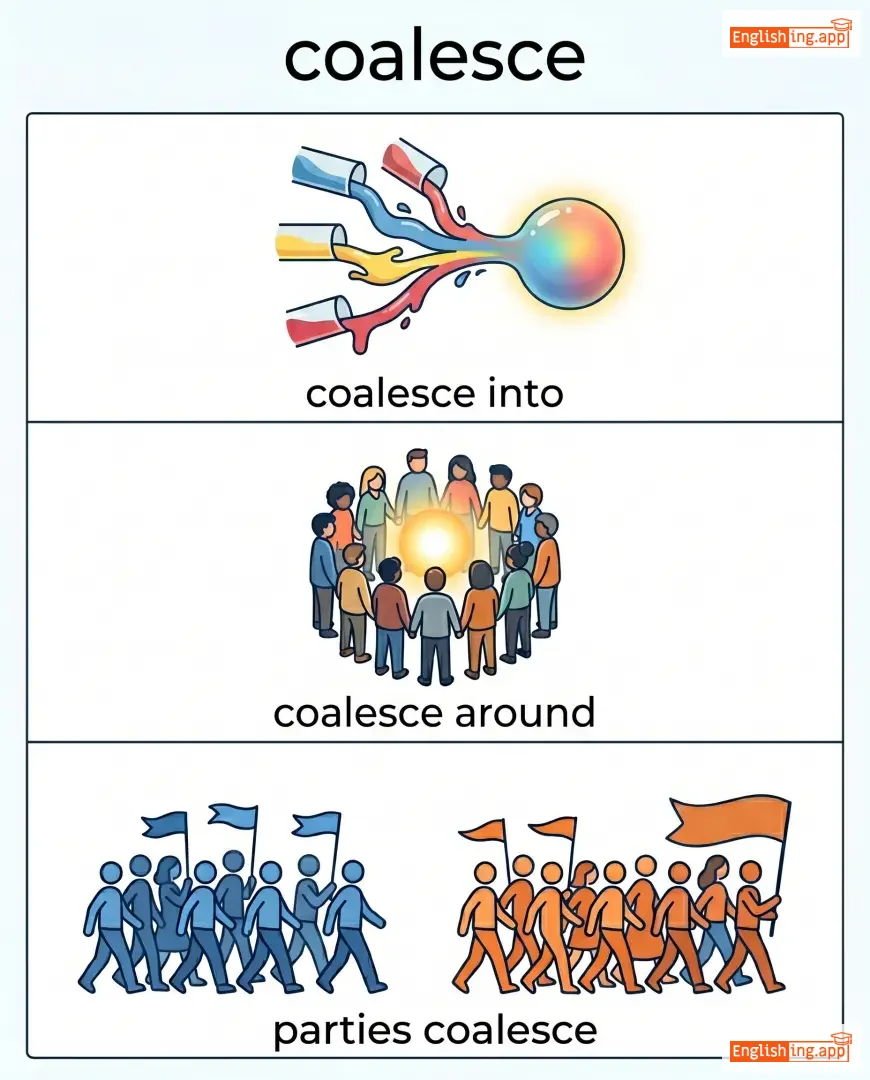
coalesce into, coalesce around, parties coalesce
••••••
|
Coal + つ = 一緒に集まるようなもの
••••••
|
|
#1519
🧪
|
/koʊˈæɡjəˌleɪt/
verb
(コアギュレイト)
••••••
|
|
凝固
gyōkō
••••••
|
coagulated
コアギュレイテッド
••••••
|
coagulated
コアギュレイテッド
••••••
|
coagulates
コアギュレイツ
••••••
|
coagulating
コアギュレイティング
••••••
|
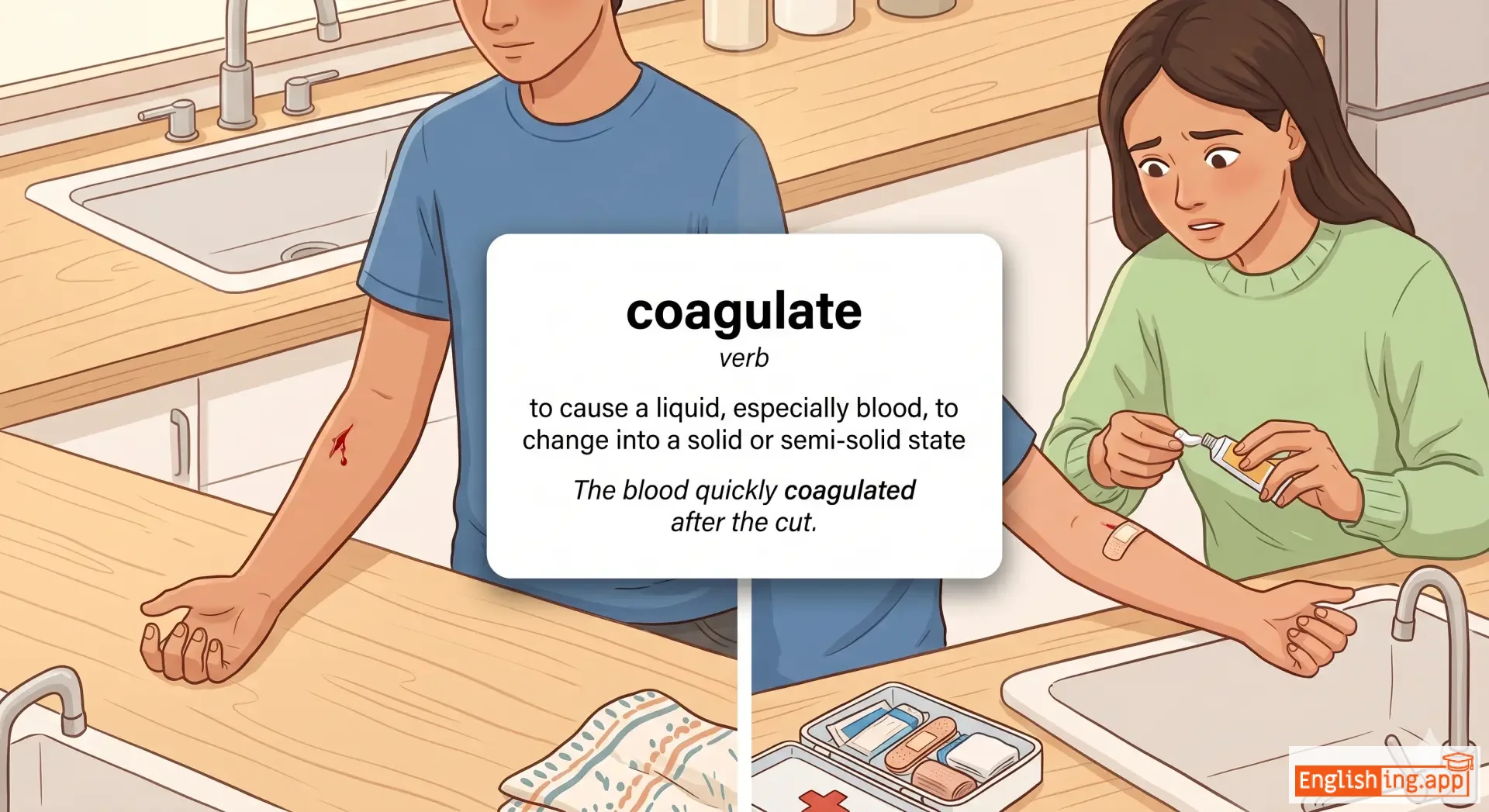
to cause a liquid, especially blood, to change into a solid or semi-solid state
••••••
|
The blood quickly coagulated after the cut.
切り傷の後、血液はすぐに凝固しました。
••••••
|
切り傷の後、血液はすぐに凝固しました。
Kirikizu no ato, ketsueki wa sugu ni gyōkō shimashita.
••••••
|
- •••••• | - •••••• | - •••••• |
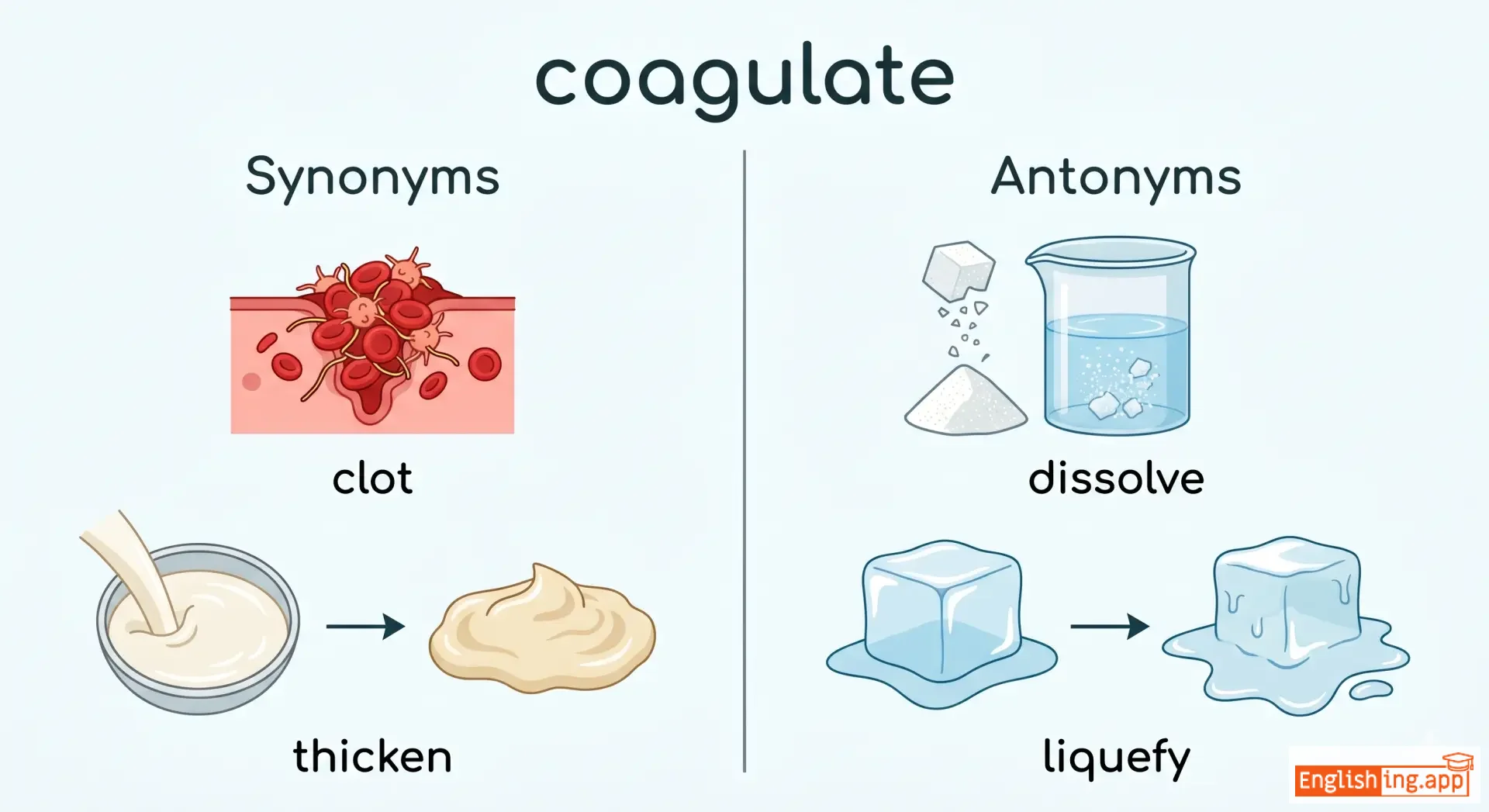
clot, thicken, curdle, congeal
••••••
|
dissolve, liquefy, melt
••••••
|
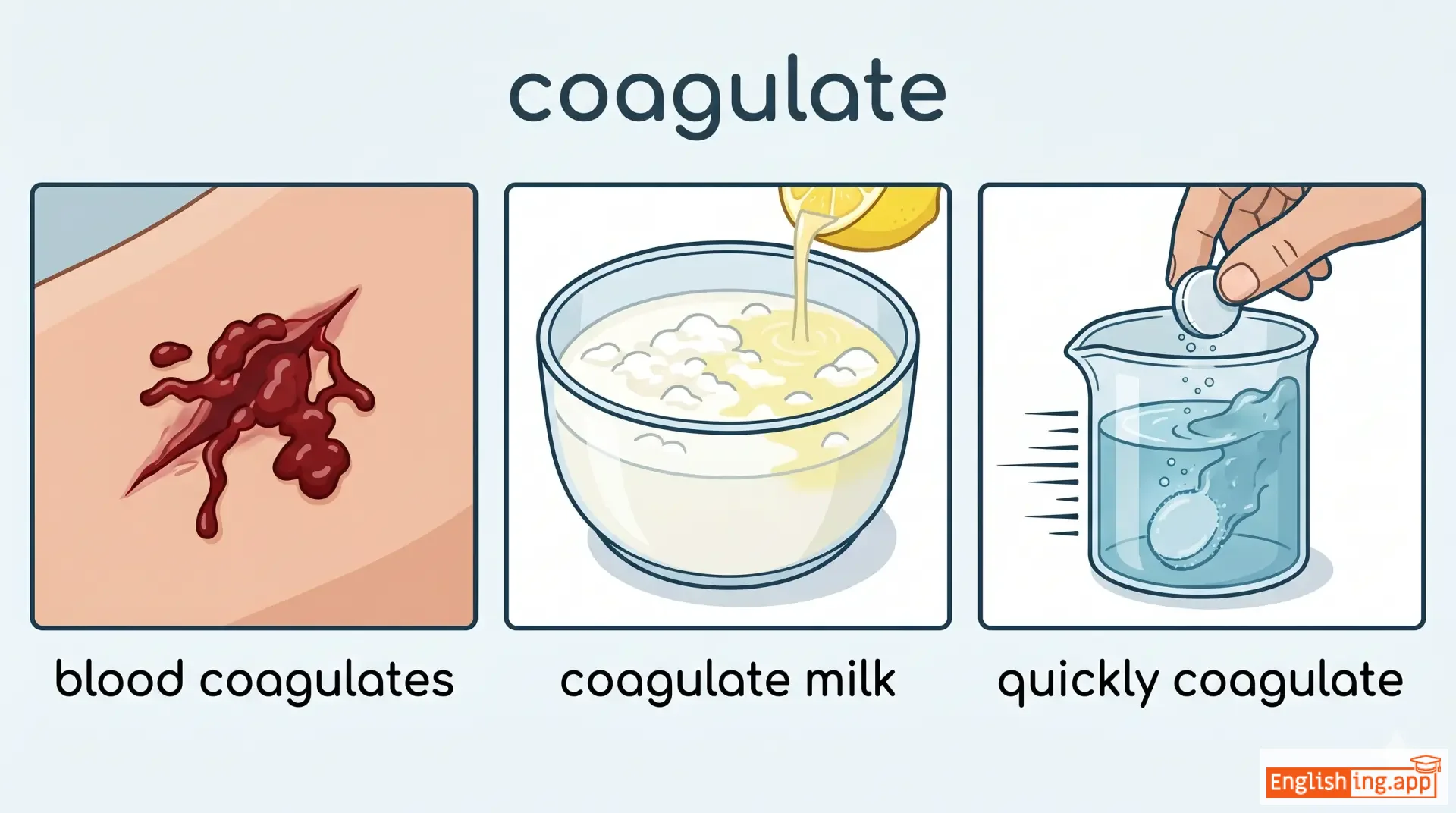
blood coagulates, coagulate milk, quickly coagulate
••••••
|
切ると血液が凝固する
••••••
|
|
#1520
🩸
|
/koʊˈæɡjələnt/
noun
(コアグラント)
••••••
|
- •••••• |
凝固剤
gyoukodzai
••••••
|
- •••••• | - •••••• | - •••••• | - •••••• |
a substance that causes blood or another liquid to clot
••••••
|
The doctor applied a coagulant to stop the bleeding quickly. |
医者は出血をすぐに止めるために凝固剤を使いました。
Isha wa shukketsu o sugu ni tomeru tame ni gyoukodzai o tsukaimashita.
••••••
|
- •••••• | - •••••• | - •••••• |
clotting agent, curdling agent, thickener, binder
••••••
|
anticoagulant, thinner
••••••
|
apply coagulant, chemical coagulant, natural coagulant
••••••
|
凝固剤は血液を凝固させるための物質 - 血液を固めるもの
••••••
|
|
#1521
🤝
|
/koʊˈædʒətər/
noun
(コウエジュター)
••••••
|
- •••••• |
補佐
hosa
••••••
|
- •••••• | - •••••• | - •••••• | - •••••• |
a person who helps or assists another, especially in a religious or official capacity
••••••
|
The bishop appointed a coadjutor to assist him with his duties. |
司教は自分の義務を手伝うために補佐を任命した。
Shikyō wa jibun no gimu o tetsudau tame ni hosa o ninmei shita.
••••••
|
- •••••• | - •••••• | - •••••• |
assistant, helper, deputy, aide, partner
••••••
|
opponent, rival, adversary
••••••
|
appoint a coadjutor, serve as coadjutor, coadjutor bishop
••••••
|
Co + 補佐 = Coadjutor, 補佐とは補佐を意味する
••••••
|
|
#1522
🤦
|
/ˈklʌm.zi/
adjective
(kuram-ji)
••••••
|
- •••••• |
不器用
bukiyou
••••••
|
- •••••• | - •••••• | - •••••• | - •••••• |
awkward in movement or lacking skill
••••••
|
He is so clumsy that he drops things all the time.
彼はとても不器用で、いつも物を落としてしまいます。
••••••
|
彼はとても不器用で、いつも物を落としてしまいます。
Kare wa totemo bukiyou de, itsumo mono o otoshite shimaimasu.
••••••
|
clumsy attempt
不器用な試み
••••••
|
an awkward or unskilled effort
••••••
|
不器用な試み
bukiyou na kokoromi
••••••
|
awkward, uncoordinated, graceless, inept
••••••
|
graceful, skillful, coordinated
••••••
|
clumsy movement, clumsy attempt, clumsy hands
••••••
|
Clumsy はクラスで物を落とし続ける学生を意味します。
••••••
|
|
#1523
🍰
|
/ˈklɔɪ.ɪŋ/
adjective
(クローイング)
••••••
|
- •••••• |
甘ったるい
amattarui
••••••
|
- •••••• | - •••••• | - •••••• | - •••••• |
too sweet, rich, or sentimental, making it unpleasant
••••••
|
The dessert was so cloying that I couldn't finish it. |
デザートは甘ったるすぎて、私はそれを食べ終えることができませんでした。
Dezāto wa amattaru sugite, watashi wa sore o tabe oeru koto ga dekimasen deshita.
••••••
|
- •••••• | - •••••• | - •••••• |
sickly, sugary, over-sweet, excessive
••••••
|
pleasant, balanced, mild
••••••
|
cloying sweetness, cloying sentiment, cloying perfume
••••••
|
Cloyingは甘すぎて不快になるという意味です。
••••••
|
|
#1524
🤡
|
/klaʊn/
noun
(クラウン)
••••••
|
- •••••• |
ピエロ
piero
••••••
|
- •••••• | - •••••• | - •••••• | - •••••• |
a comic entertainer who wears funny clothes and makeup
••••••
|
The clown made the children laugh with his tricks. |
ピエロは自分のトリックで子供たちを笑わせました。
Piero wa jibun no torikku de kodomotachi o warawasemashita.
••••••
|
act like a clown |
to behave in a silly or foolish way
••••••
|
ピエロのように振る舞う
Piero no yō ni furumau
••••••
|
jester, fool, comedian, joker
••••••
|
serious person, professional
••••••
|
circus clown, party clown, funny clown
••••••
|
ピエロは面白い服とメイクでみんなを笑わせる存在です。
••••••
|
|
#1525
💪
|
/klaʊt/
noun
(クラウト)
••••••
|
- •••••• |
影響力
eikyōryoku
••••••
|
- •••••• | - •••••• | - •••••• | - •••••• |
influence or power, especially in politics or business
••••••
|
The businessman has a lot of political clout.
そのビジネスマンは政治的な影響力を持っています。
••••••
|
そのビジネスマンは政治的な影響力を持っています。
Sono bijinesuman wa seijiteki na eikyōryoku o motteimasu.
••••••
|
pull clout
影響力を持つ
••••••
|
to have influence or power over something
••••••
|
影響力を持つ
eikyōryoku o motsu
••••••
|
influence, power, sway, authority
••••••
|
weakness, helplessness
••••••
|
political clout, social clout, economic clout, wield clout
••••••
|
Cloutは群衆のように影響力を持つこと (eikyōryoku)
••••••
|
|
#1526
🌧️
|
/ˈklaʊdˌbɜːrst/
noun
(kuraudobāsuto)
••••••
|
- •••••• |
突然の豪雨
totsuzen no gōu
••••••
|
- •••••• | - •••••• | - •••••• | - •••••• |
a sudden and very heavy rainfall
••••••
|
The picnic was ruined by a sudden cloudburst.
ピクニックは突然のcloudburstで台無しになった。
••••••
|
ピクニックは突然の豪雨で台無しになった。
Pikunikku wa totsuzen no gōu de dainashi ni natta.
••••••
|
- •••••• | - •••••• | - •••••• |
downpour, deluge, shower, torrent
••••••
|
drought, dryness
••••••
|
sudden cloudburst, heavy cloudburst, unexpected cloudburst
••••••
|
Cloud burst! 突然の豪雨が来る。
••••••
|
|
#1527
🗳️
|
/ˈkloʊtʃər/
noun
(クロチュール)
••••••
|
- •••••• |
討論終了手続き
tōron shūryō tetsuzuki
••••••
|
- •••••• | - •••••• | - •••••• | - •••••• |
a procedure for ending a debate and taking a vote.
••••••
|
The Senate invoked cloture to end the lengthy debate. |
上院は長時間の討論を終わらせるためにクロチュールを適用しました。
Jōin wa chōjikan no tōron o owaraseru tame ni kurotyūru o tekiyō shimashita.
••••••
|
- •••••• | - •••••• | - •••••• |
closure, end, termination, conclusion
••••••
|
continuation, extension
••••••
|
invoke cloture, cloture motion, cloture vote
••••••
|
Clotureは討論を閉じて投票をすることです。
••••••
|
|
#1528
👔
|
/ˈkloʊðiər/
noun
(クロスィア)
••••••
|
- •••••• |
衣料品商
iryōhin-shō
••••••
|
- •••••• | - •••••• | - •••••• | - •••••• |
a person or company that makes, sells, or deals in clothes.
••••••
|
The town’s clothier displayed fine suits in his shop window. |
町の衣料品商は店の窓に素晴らしいスーツを展示しました。
Machi no iryōhin-shō wa mise no mado ni subarashī sūtsu o tenji shimashita.
••••••
|
- •••••• | - •••••• | - •••••• |
tailor, outfitter, haberdasher, draper
••••••
|
customer, buyer
••••••
|
local clothier, clothier shop, clothier business
••••••
|
Clothier は衣料品商を意味します — Clothes + seller = clothier.
••••••
|
|
#1529
🩸
|
/klɒt/
noun, verb
(クローット)
••••••
|
- •••••• |
血栓
kessen
••••••
|
clotted
クローット
••••••
|
clotted
クローット
••••••
|
clots
クローッツ
••••••
|
clotting
クローッティング
••••••
|
a thick mass of coagulated liquid, especially blood; to form such a mass.
••••••
|
The doctor removed a blood clot from the patient.
医者は患者から血栓を取り除きました。
••••••
|
医者は患者から血栓を取り除きました。
Isha wa kanja kara kessen wo tori nokoshimashita.
••••••
|
- •••••• | - •••••• | - •••••• |
lump, mass, coagulum, lumping
••••••
|
flow, stream
••••••
|
blood clot, clot formation, clot removal
••••••
|
Clotとは、血液の塊、特に血栓のことです。
••••••
|
|
#1530
⛵
|
/ˌkloʊs ˈhɔːld/
adjective
(クローズホールド)
••••••
|
- •••••• |
風上に最も近い帆走
kazami ni mottomo chikai hansou
••••••
|
- •••••• | - •••••• | - •••••• | - •••••• |
of a sailing ship, sailing as nearly as possible towards the direction from which the wind is blowing.
••••••
|
The yacht was close-hauled as it cut through the waves. |
ヨットは波を切りながら風上に近い方向で進んでいた。
Yotto wa nami o kirinagara kazami ni chikai hōkō de susunde ita.
••••••
|
- •••••• | - •••••• | - •••••• |
upwind, windward, tight to the wind
••••••
|
downwind, leeward
••••••
|
close-hauled course, sail close-hauled, yacht close-hauled
••••••
|
Close-hauled は風の方向にできるだけ近づいて進むことを意味します。
••••••
|
Vocabulary Quiz
Test your vocabulary by matching words with their translations or meanings.
Login to take the quiz
Comments (0)
Share your thoughts and join the discussion.
Join the discussion by logging in
Login to CommentNo comments yet
Be the first to share your thoughts!