

翻訳
過去
過去分詞
三人称単数
動名詞
意味
例文
例文の翻訳
同義語
対義語
コロケーション
ニーモニック


Swipe left or right, or use the buttons. Tap image to zoom.
例文の翻訳
単語
Lesson 261Lesson 261 - マスクトグル
|
絵文字
|
単語 | Images | 翻訳 | 過去 | 過去分詞 | 三人称単数 | 動名詞 | 意味 | 例文 | 例文の翻訳 | 表現例 | 表現例の意味 | 表現例の翻訳 | 同義語 | 対義語 | コロケーション | ニーモニック |
|---|---|---|---|---|---|---|---|---|---|---|---|---|---|---|---|---|---|
|
#7800
🎭
|
/səˈtɪrɪkəl/
adjective
(サティリカル)
••••••
|
- •••••• |
風刺的
fūshiteki
••••••
|
- •••••• | - •••••• | - •••••• | - •••••• |
containing or using satire to criticize or mock
••••••
|
The satirical cartoon mocked the government's new policy.
その風刺的な漫画は政府の新しい政策を嘲笑しました。
••••••
|
その風刺的な漫画は政府の新しい政策を嘲笑しました。
Sono fūshiteki na manga wa seifu no atarashī seisaku o chōshō shimashita.
••••••
|
- •••••• | - •••••• | - •••••• |
mocking, ironic, sarcastic, humorous, biting
••••••
|
serious, sincere, genuine
••••••
|
satirical writing, satirical cartoon, satirical novel, satirical humor
••••••
|
Satiricalは風刺で笑わせる—風刺で人々を楽しませること。
••••••
|
|
#7801
🪵
|
/ˈsɔː.dʌst/
noun
(ソーダスト)
••••••
|
- •••••• |
木屑
mokusesu
••••••
|
- •••••• | - •••••• | - •••••• | - •••••• |
The tiny particles of wood produced by sawing or sanding.
••••••
|
The floor was covered with sawdust from the carpentry work. |
床は大工仕事からの木屑で覆われていました。
Yuka wa daiku shigoto kara no mokusesu de ōwarete imashita.
••••••
|
- •••••• | - •••••• | - •••••• |
wood shavings, wood particles, saw shavings, wood dust
••••••
|
solid wood, timber
••••••
|
sawdust floor, sawdust trail, covered with sawdust
••••••
|
木屑(mokusesu)は、のこぎりで切ったり研磨したりしたときに出る粉。
••••••
|
|
#7802
🧠
|
/ˈsæv.i/
adjective
(サヴィ)
••••••
|
- •••••• |
賢い, 熟練した
kashikoi, jukuren shita
••••••
|
- •••••• | - •••••• | - •••••• | - •••••• |
Having practical knowledge and the ability to make good judgments.
••••••
|
She is a tech-savvy entrepreneur. |
彼女はテクノロジーに詳しい起業家です。
Kanojo wa tekunorojī ni kuwashī kigyōka desu.
••••••
|
street savvy |
Practical knowledge and experience needed to deal with urban life.
••••••
|
街の知恵
machi no chie
••••••
|
shrewd, knowledgeable, sharp, perceptive, clever
••••••
|
naive, ignorant, clueless
••••••
|
tech-savvy, business-savvy, street-savvy
••••••
|
Savvyは賢く、熟練している、何でも知っているという意味です。
••••••
|
|
#7803
🍲
|
/ˈseɪ.vər.i/
adjective
(セイヴォリー)
••••••
|
- •••••• |
風味のある(塩辛いまたは辛い)
fūmi no aru (shiokarai mata wa karai)
••••••
|
- •••••• | - •••••• | - •••••• | - •••••• |
Having a pleasant salty or spicy taste; morally acceptable.
••••••
|
The restaurant serves a variety of savory dishes. |
そのレストランはさまざまな風味のある料理を提供しています。
Sono resutoran wa samazama na fūmi no aru ryōri o teikyō shiteimasu.
••••••
|
leave a savory taste |
To leave a pleasant or favorable impression.
••••••
|
風味のある味を残す
fūmi no aru aji o nokosu
••••••
|
tasty, flavorful, appetizing, palatable
••••••
|
bland, tasteless, unpleasant
••••••
|
savory dish, savory flavor, savory aroma
••••••
|
Savory は '風味がある'、美味しい塩辛い料理の味!
••••••
|
|
#7804
😋
|
/ˈseɪ.vər/
verb
(セイヴァー)
••••••
|
|
味わう
ajiwau
••••••
|
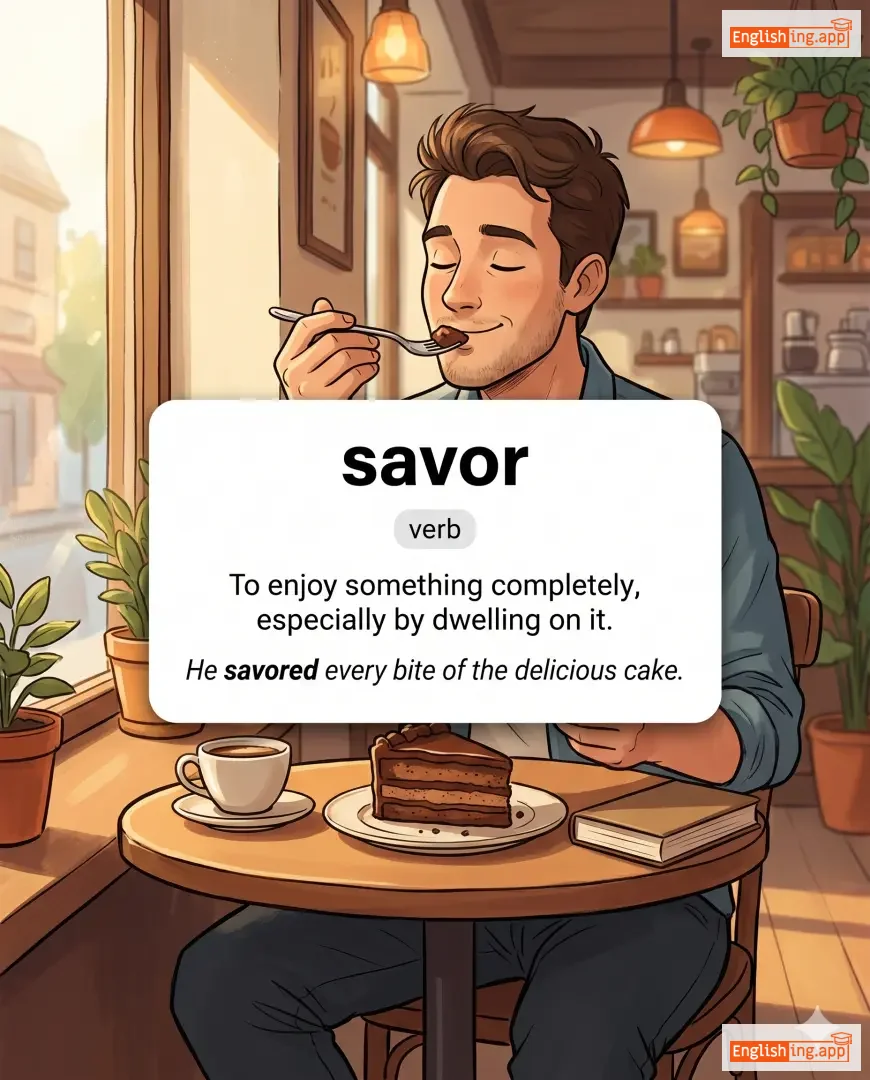
savored
セイヴァード
••••••
|
savored
セイヴァード
••••••
|
savors
セイヴァーズ
••••••
|
savoring
セイヴァリング
••••••
|
To enjoy something completely, especially by dwelling on it.
••••••
|
He savored every bite of the delicious cake.
彼はおいしいケーキの一口一口を味わった。
••••••
|
彼はおいしいケーキの一口一口を味わった。
Kare wa oishii kēki no hitokuchi hitokuchi o ajiwatta.
••••••
|
savor the moment
その瞬間を楽しむ
••••••
|
To fully appreciate and enjoy a particular experience.
••••••
|
その瞬間を楽しむ
Sono shunkan o tanoshimu
••••••
|
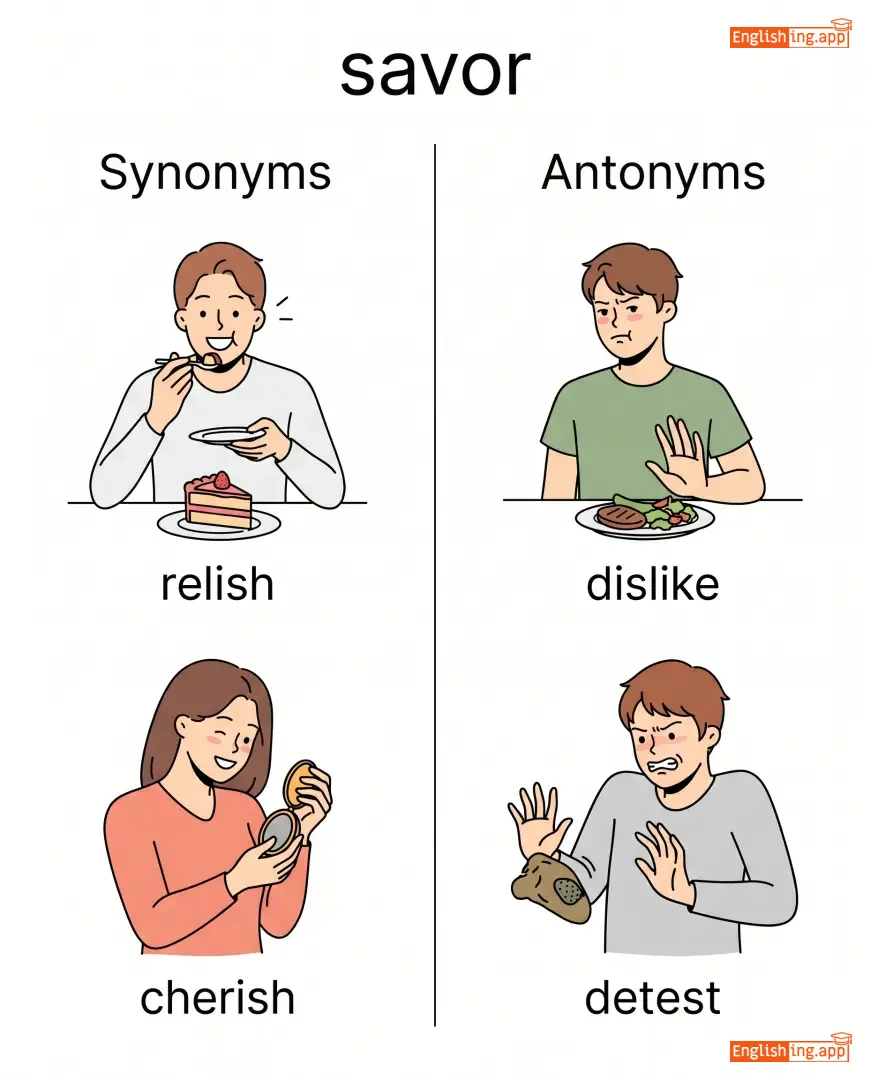
relish, cherish, appreciate, enjoy, delight in
••••••
|
dislike, detest, avoid
••••••
|
savor the flavor, savor the moment, savor success
••••••
|
Savorは、味わうこと、そして瞬間を楽しむことです。
••••••
|
|
#7805
🎩
|
/ˌsæv.wɑːr ˈfeər/
noun
(サヴォワフェール)
••••••
|
- •••••• |
社交術
shakou-jutsu
••••••
|
- •••••• | - •••••• | - •••••• | - •••••• |
The ability to act or speak appropriately in social situations; polished social skills.
••••••
|
She handled the delicate situation with remarkable savoir-faire.
彼女は見事なサヴォワフェールで微妙な状況をうまく処理しました。
••••••
|
彼女は見事な社交術で微妙な状況をうまく処理しました。
Kanojo wa migoto na shakou-jutsu de bimyou na joukyou wo umaku shori shimashita.
••••••
|
- •••••• | - •••••• | - •••••• |
tact, diplomacy, finesse, elegance, poise
••••••
|
clumsiness, awkwardness, ineptitude
••••••
|
show savoir-faire, with great savoir-faire, diplomatic savoir-faire
••••••
|
Savoir-faire は社交術を意味し、会話や行動でうまくバランスを取ることです。
••••••
|
|
#7806
🧠
|
/səˈvɑːnt/
noun
••••••
|
- •••••• | - •••••• | - •••••• | - •••••• | - •••••• | - •••••• |
a learned person, especially a distinguished scientist or scholar; sometimes used in the phrase ‘savant syndrome’ for someone with exceptional abilities alongside developmental differences
••••••
|
The conference keynote was delivered by a linguistic savant who studies endangered languages. |
- •••••• |
savant syndrome |
a condition in which a person demonstrates profound abilities far beyond what would be considered normal
••••••
|
- •••••• |
scholar, expert, sage, pundit, intellectual
••••••
|
novice, layperson
••••••
|
musical savant, scholarly savant, autistic savant, renowned savant
••••••
|
No •••••• |
|
#7807
🌾
|
/səˈvænə/
noun
(サバンナ)
••••••
|
- •••••• |
サバンナ(散在する木々がある草原)
saban'na (sanzai suru kigi ga aru sōgen)
••••••
|
- •••••• | - •••••• | - •••••• | - •••••• |
a grassy plain with scattered trees, typical of tropical and subtropical regions
••••••
|
Giraffes browsed on acacia trees across the wide savanna. |
キリンは広いサバンナでアカシアの木の葉を食べていました。
Kirin wa hiroi sabanna de akashia no ki no ha o tabete imashita.
••••••
|
- •••••• | - •••••• | - •••••• |
grassland, prairie, steppe, plain
••••••
|
forest, jungle
••••••
|
African savanna, open savanna, savanna ecosystem, savanna grasses
••••••
|
サバンナ = 木のある草原—覚えておいて:'サバンナ'、広大な草原に木々が散らばっている場所。
••••••
|
|
#7808
🗡️
|
/ˈsævɪdʒ/
adjective
(サヴェージ)
••••••
|
- •••••• |
野蛮; 残酷
yaban; zankoku
••••••
|
- •••••• | - •••••• | - •••••• | - •••••• |
fierce, violent, or uncontrolled; cruel or brutal
••••••
|
The storm brought savage winds that tore branches from the trees.
嵐は、木の枝を引き裂くような荒々しい風をもたらしました。
••••••
|
嵐は、木の枝を引き裂くような荒々しい風をもたらしました。
Arashi wa, ki no eda o hikisaku yō na araarashī kaze o motarashimashita.
••••••
|
- •••••• | - •••••• | - •••••• |
brutal, fierce, ferocious, ruthless, barbaric
••••••
|
gentle, civilized, mild
••••••
|
savage attack, savage criticism, savage beast, savage blow
••••••
|
Savage とは野蛮—想像してみて、全てを壊すような野蛮な人!
••••••
|
|
#7809
🚶
|
/ˈsɔːntər/
verb
••••••
|
- •••••• | - •••••• |
sauntered
••••••
|
sauntered
••••••
|
saunters
••••••
|
sauntering
••••••
|
to walk in a slow, relaxed manner without hurry or effort
••••••
|
We sauntered along the riverside, stopping now and then to watch the boats. |
- •••••• |
saunter in |
to enter casually and unhurriedly
••••••
|
- •••••• |
stroll, amble, wander, meander, ramble
••••••
|
rush, hurry, sprint
••••••
|
saunter along, saunter down the street, casual saunter, evening saunter
••••••
|
No •••••• |
|
#7810
🐐
|
/ˈsætər/
noun
(ハピネス)
••••••
|
|
幸せ
shiawase
••••••
|
- •••••• | - •••••• | - •••••• | - •••••• |
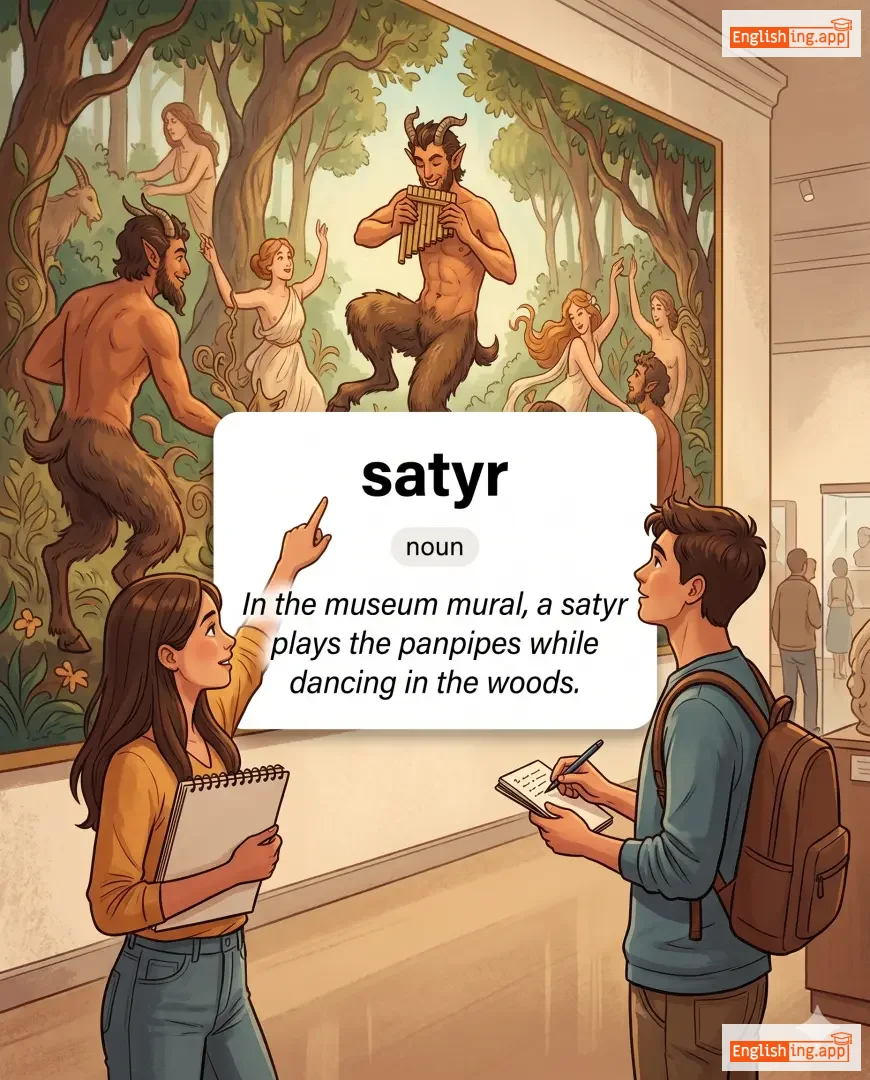
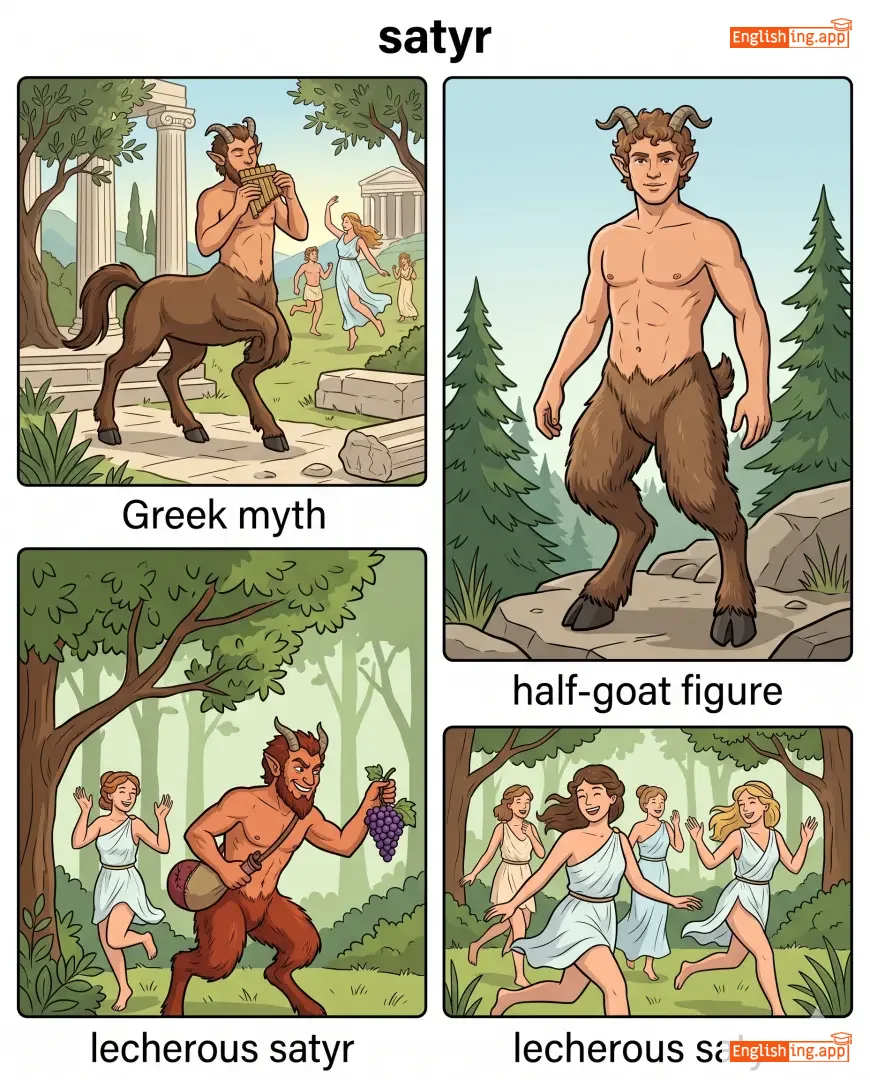
a creature from Greek mythology depicted as a lustful being, often half-man and half-goat; by extension, a lecherous man
••••••
|
In the museum mural, a satyr plays the panpipes while dancing in the woods. |
彼女は賞を受け取ったとき、自分の幸せを隠すことができませんでした。
Kanojo wa shou wo uketotta toki, jibun no shiawase wo kakusu koto ga dekimasen deshita.
••••••
|
- •••••• | - •••••• | - •••••• |
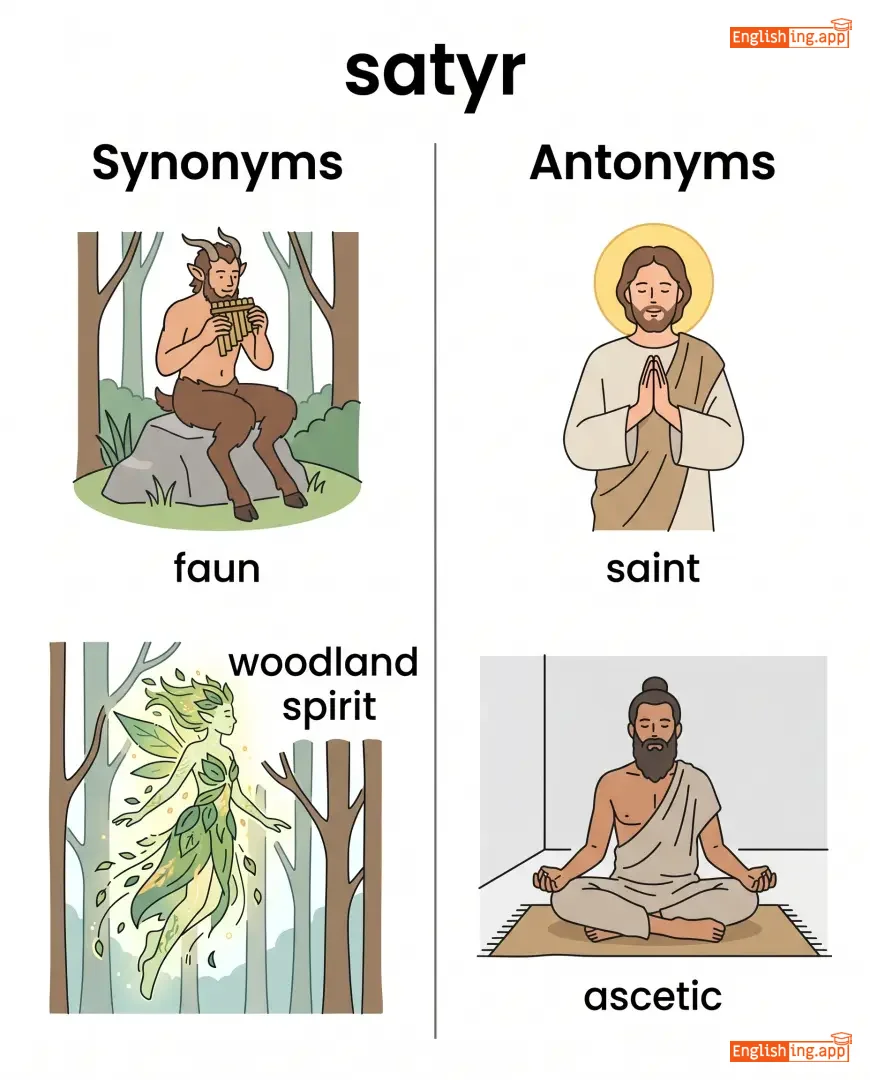
faun, woodland spirit, lecher, rake
••••••
|
saint, ascetic
••••••
|
Greek myth, half-goat figure, lecherous satyr, satyr plays
••••••
|
幸せは人生の目標です。「幸せ」を探し続けていると感じましょう!
••••••
|
|
#7811
😔
|
/ˈsætərˌnaɪn/
adjective
(サターンナイン)
••••••
|
|
陰気な
inki na
••••••
|
- •••••• | - •••••• | - •••••• | - •••••• |
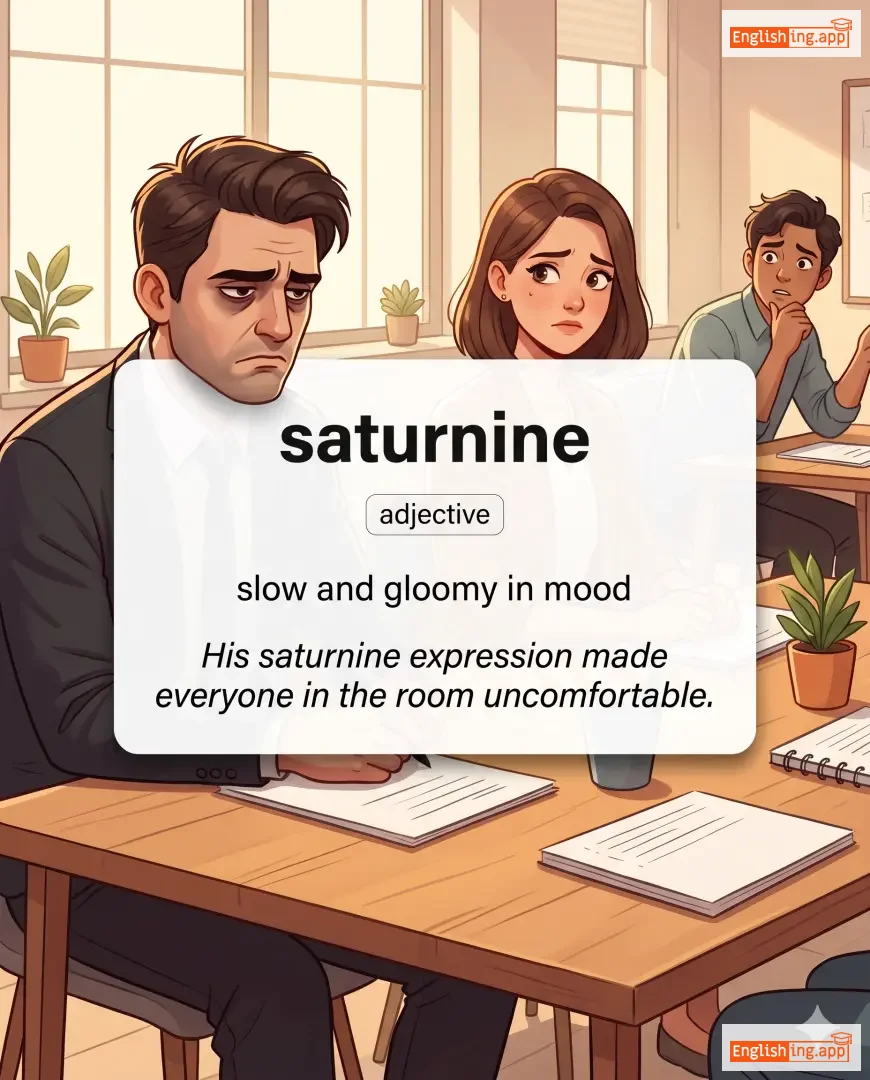
slow and gloomy in mood
••••••
|
His saturnine expression made everyone in the room uncomfortable. |
彼の陰気な表情は部屋の中の誰もが不快に感じさせた。
Kare no in'kina hyōjō wa heya no naka no dare mo ga fukai ni kanjisaseta.
••••••
|
- •••••• | - •••••• | - •••••• |
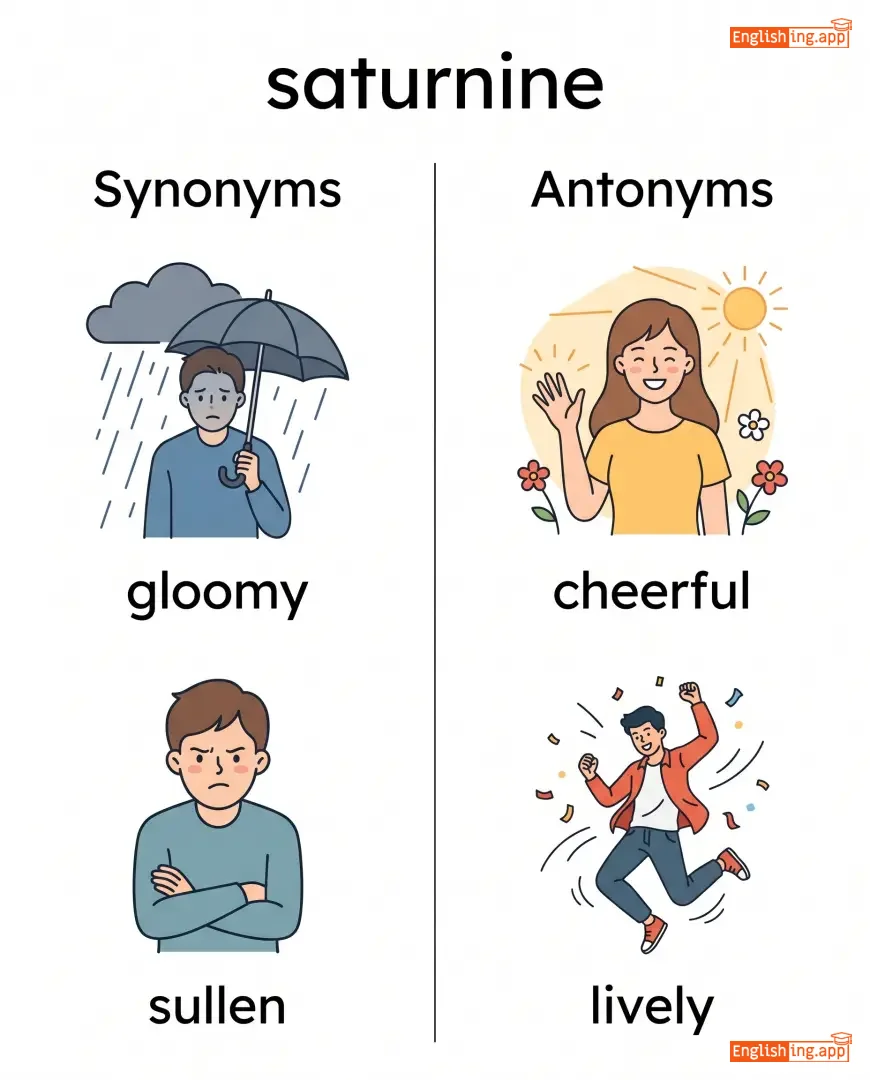
gloomy, sullen, morose, dour, melancholy
••••••
|
cheerful, lively, joyful
••••••
|
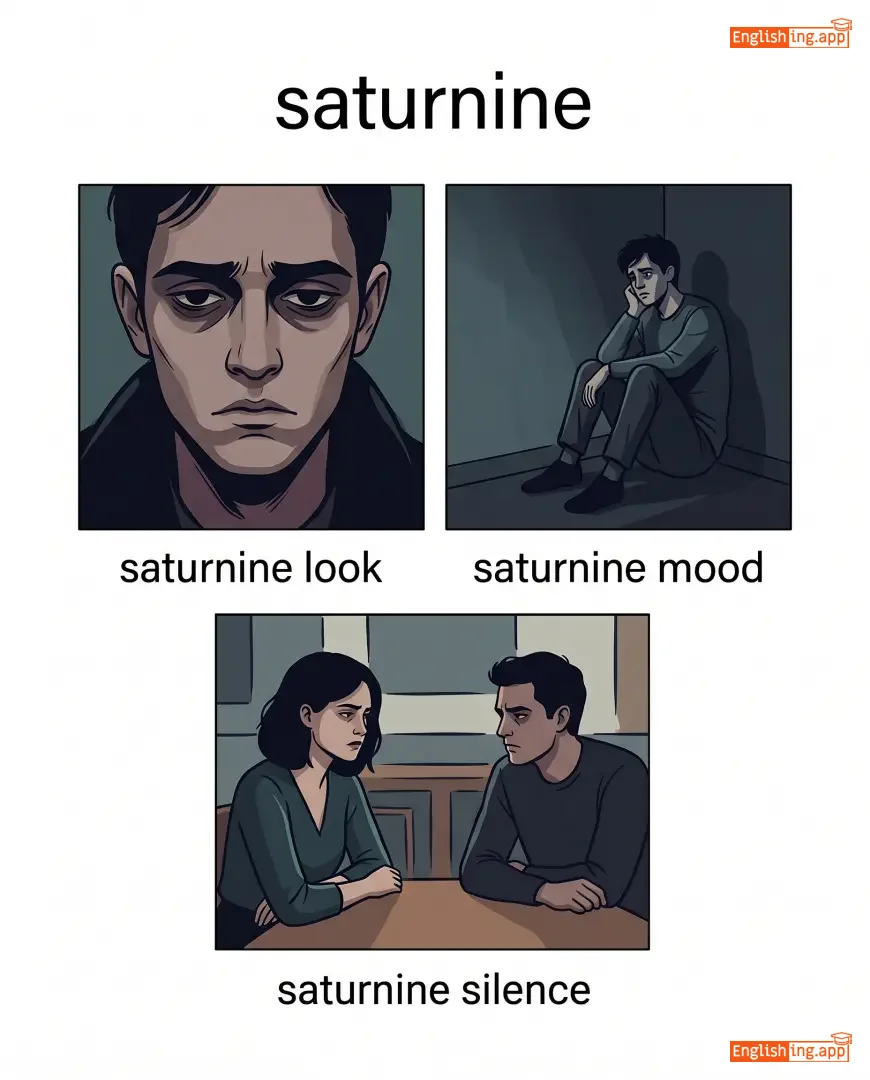
saturnine look, saturnine mood, saturnine silence, saturnine personality
••••••
|
Saturnineは陰気な意味—土星のように冷たく遠い。
••••••
|
|
#7812
💧
|
/ˈsætʃəˌreɪt/
verb
••••••
|
|
- •••••• |
saturated
••••••
|
saturated
••••••
|
saturates
••••••
|
saturating
••••••
|
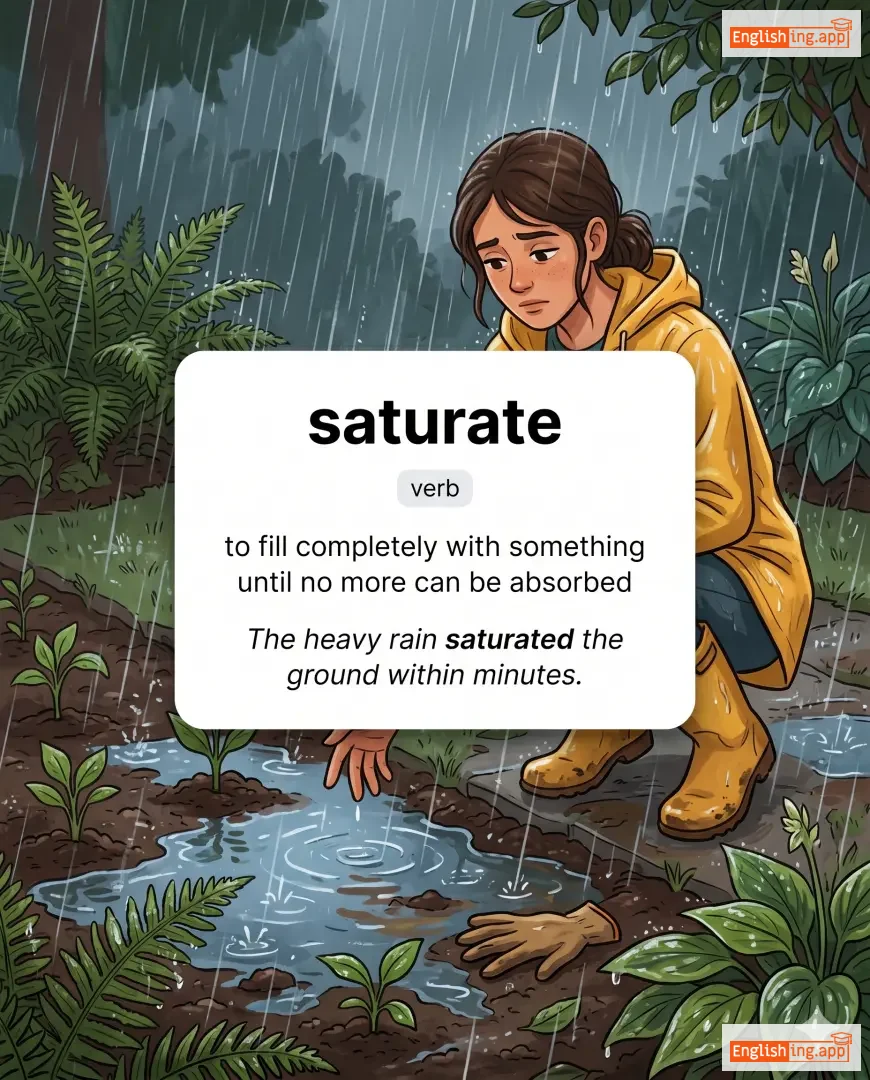
to fill completely with something until no more can be absorbed
••••••
|
The heavy rain saturated the ground within minutes. |
- •••••• |
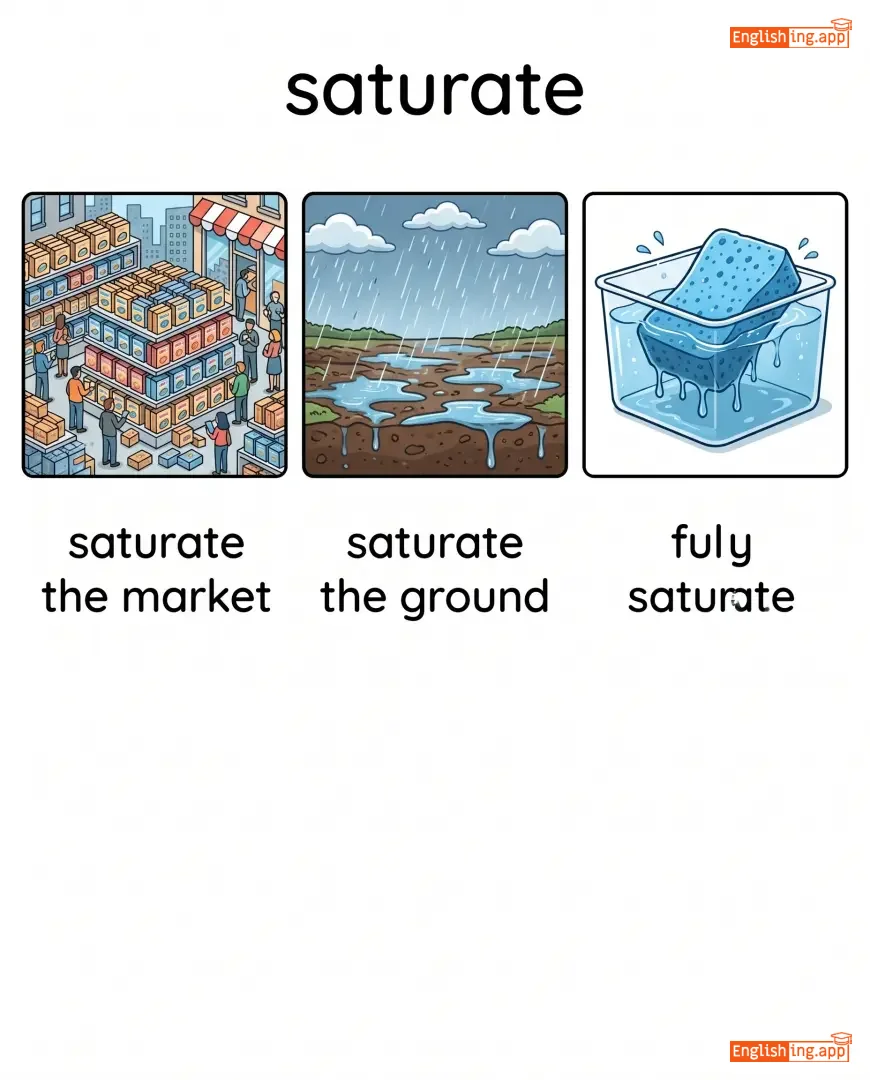
saturate the market |
to supply so much of a product that demand is fully met or exceeded
••••••
|
- •••••• |
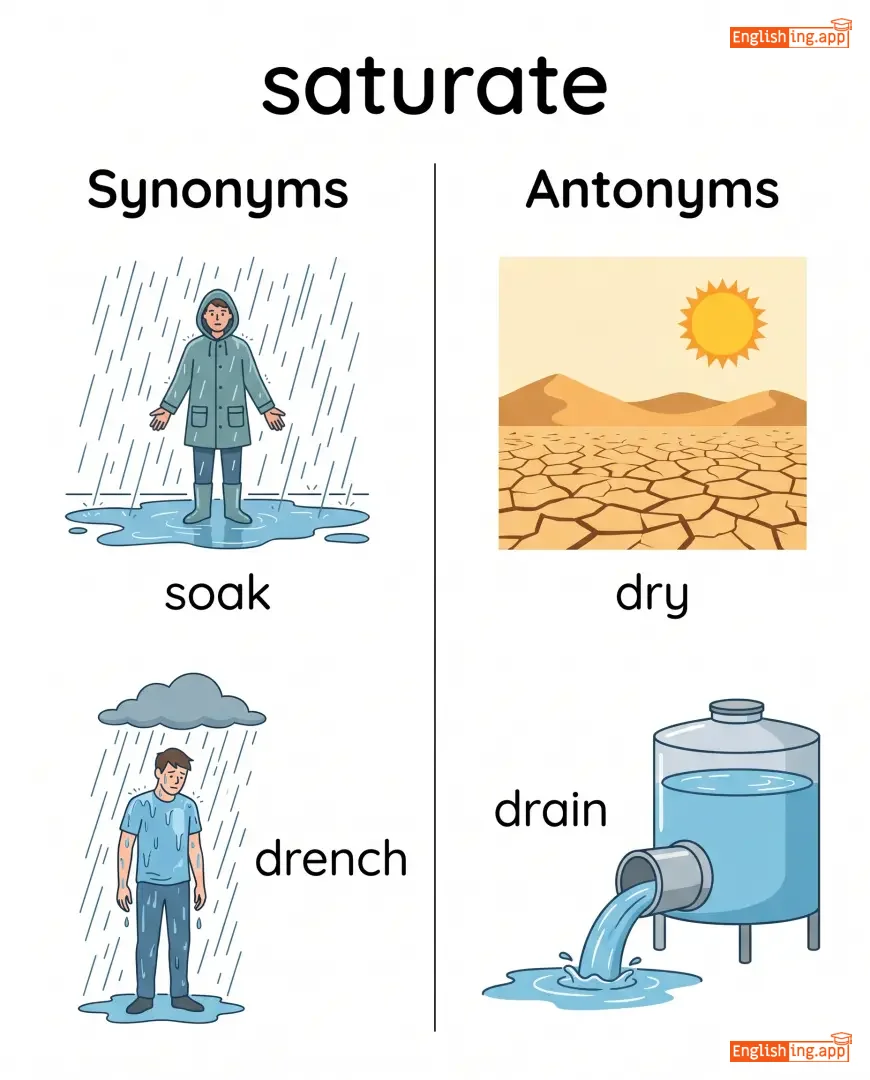
soak, drench, flood, permeate, fill
••••••
|
dry, drain, empty
••••••
|
saturate the market, saturate the ground, fully saturate, saturate completely
••••••
|
No •••••• |
|
#7813
👑
|
/ˈsætræp/
noun
(サトラプ)
••••••
|
- •••••• |
総督
sōtoku
••••••
|
- •••••• | - •••••• | - •••••• | - •••••• |
a governor of a province in ancient Persia; also used figuratively for a subordinate ruler
••••••
|
The king appointed a satrap to oversee the distant province. |
王は遠くの州を監督するために総督を任命しました。
Ō wa tōku no shū o kantoku suru tame ni sōtoku o ninmei shimashita.
••••••
|
- •••••• | - •••••• | - •••••• |
governor, ruler, viceroy, official
••••••
|
subject, citizen
••••••
|
Persian satrap, local satrap, satrap system, powerful satrap
••••••
|
サトラプは支配者のように、古代ペルシャを治めていました。
••••••
|
|
#7814
🖊️
|
/ˈsætəˌraɪz/
verb
(サティライズ)
••••••
|
- •••••• |
風刺する
fūshi suru
••••••
|
satirized
サティライズド
••••••
|
satirized
サティライズド
••••••
|
satirizes
サティライズズ
••••••
|
satirizing
サティライズイング
••••••
|
to mock or criticize something using satire
••••••
|
The play satirizes the greed of modern corporations.
その劇は現代の企業の貪欲さを風刺しています。
••••••
|
その劇は現代の企業の貪欲さを風刺しています。
Sono geki wa gendai no kigyō no dōyoku-sa o fūshi shiteimasu.
••••••
|
- •••••• | - •••••• | - •••••• |
mock, ridicule, lampoon, parody, caricature
••••••
|
praise, admire, respect
••••••
|
satirize politics, satirize culture, satirize society, satirize leaders
••••••
|
Satirizeは風刺を使って批判することです。
••••••
|
|
#7815
😋
|
/ˈsæpɪd/
adjective
(サピッド)
••••••
|
- •••••• |
美味しい
oishii
••••••
|
- •••••• | - •••••• | - •••••• | - •••••• |
Having a pleasant taste; flavorful.
••••••
|
The chef prepared a sapid dish that delighted everyone at the table. |
シェフはテーブルの全員を喜ばせる美味しい料理を準備しました。
Shefu wa tēburu no zen'in o yorokobaseru oishī ryōri o junbi shimashita.
••••••
|
- •••••• | - •••••• | - •••••• |
tasty, flavorful, savory, palatable, delicious
••••••
|
bland, tasteless, insipid
••••••
|
sapid meal, sapid flavor, sapid dish, sapid sauce
••••••
|
Sapidは美味しいを意味します、'sap'は甘い味を思い出させます。
••••••
|
|
#7816
😏
|
/səˈtɪrɪk/
adjective
(サティリック)
••••••
|
- •••••• |
皮肉な
hinikuna
••••••
|
- •••••• | - •••••• | - •••••• | - •••••• |
Relating to or using satire.
••••••
|
The novel takes a satiric view of urban life. |
その小説は都市生活を皮肉な視点で描いています。
Sono shōsetsu wa toshi seikatsu o hinikuna shiten de egaiteimasu.
••••••
|
- •••••• | - •••••• | - •••••• |
mocking, ironic, sarcastic, satirical
••••••
|
serious, sincere
••••••
|
satiric style, satiric tone, satiric writing
••••••
|
皮肉な視点から見た生活がサティリックです。
••••••
|
|
#7817
🎭
|
/ˈsætaɪər/
noun
(サタイア)
••••••
|
- •••••• |
風刺
fūshi
••••••
|
- •••••• | - •••••• | - •••••• | - •••••• |
The use of humor, irony, or exaggeration to criticize people's stupidity or vices.
••••••
|
The play was a brilliant satire on modern politics. |
その劇は現代政治への素晴らしい風刺でした。
Sono geki wa gendai seiji e no subarashī fūshi deshita.
••••••
|
political satire |
Humorous criticism of political leaders or situations.
••••••
|
政治風刺
seiji fūshi
••••••
|
parody, lampoon, mockery, caricature
••••••
|
praise, seriousness
••••••
|
satire on, biting satire, social satire
••••••
|
風刺は、政治を笑い飛ばすサイクルのようなものだ!
••••••
|
|
#7818
😌
|
/səˈtaɪ.ə.ti/
noun
(サティエティ)
••••••
|
|
満腹感
manpukukan
••••••
|
- •••••• | - •••••• | - •••••• | - •••••• |
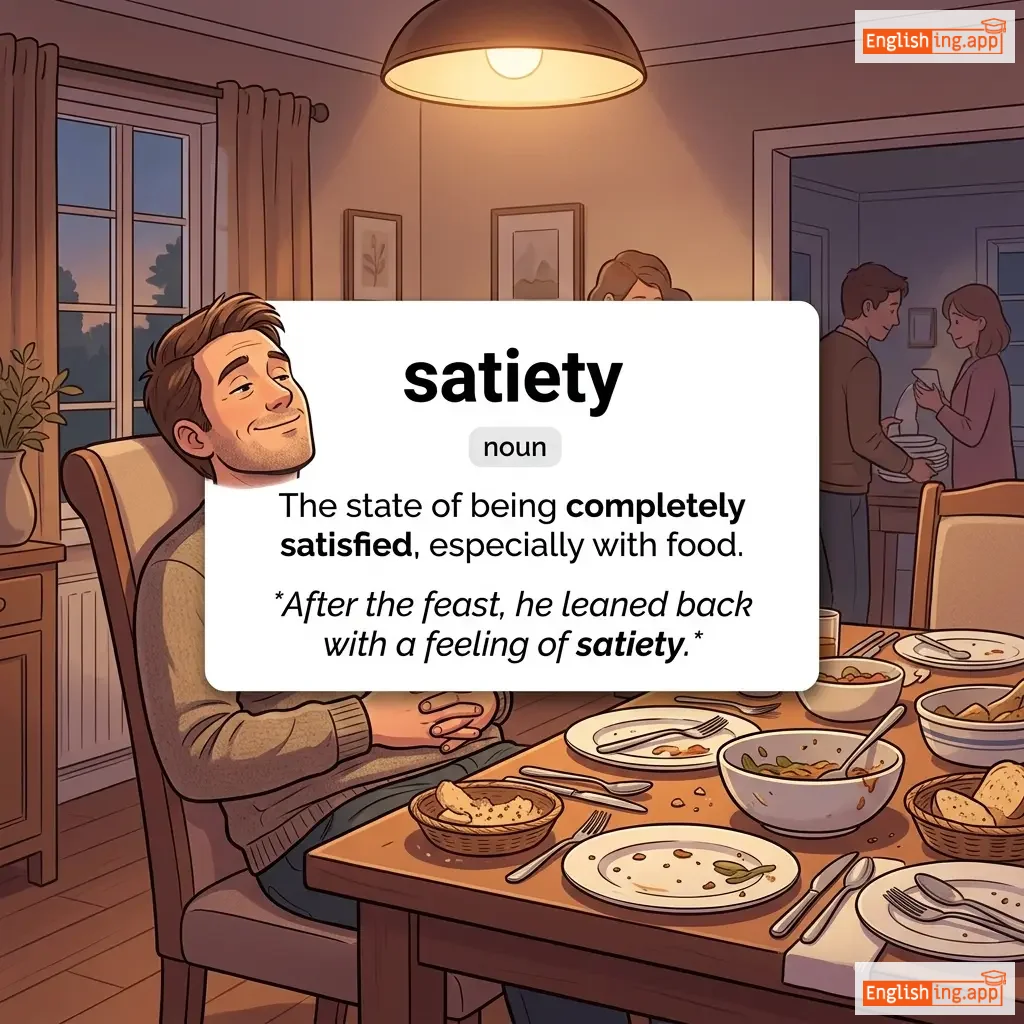
The state of being completely satisfied, especially with food.
••••••
|
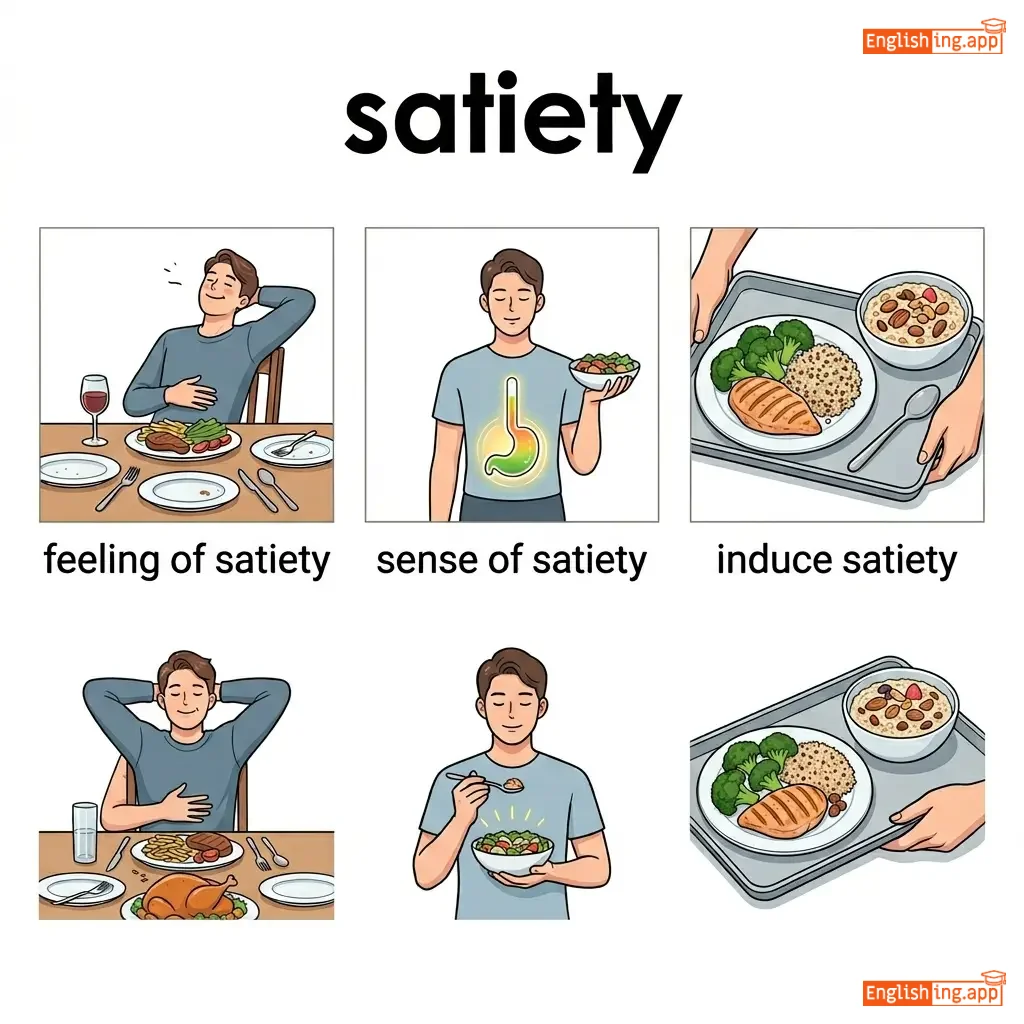
After the feast, he leaned back with a feeling of satiety. |
宴会の後、彼は満腹感を感じながら背もたれに寄りかかった。
Enkai no ato, kare wa manpukukan wo kanjinagara semotare ni yori kakatta.
••••••
|
- •••••• | - •••••• | - •••••• |
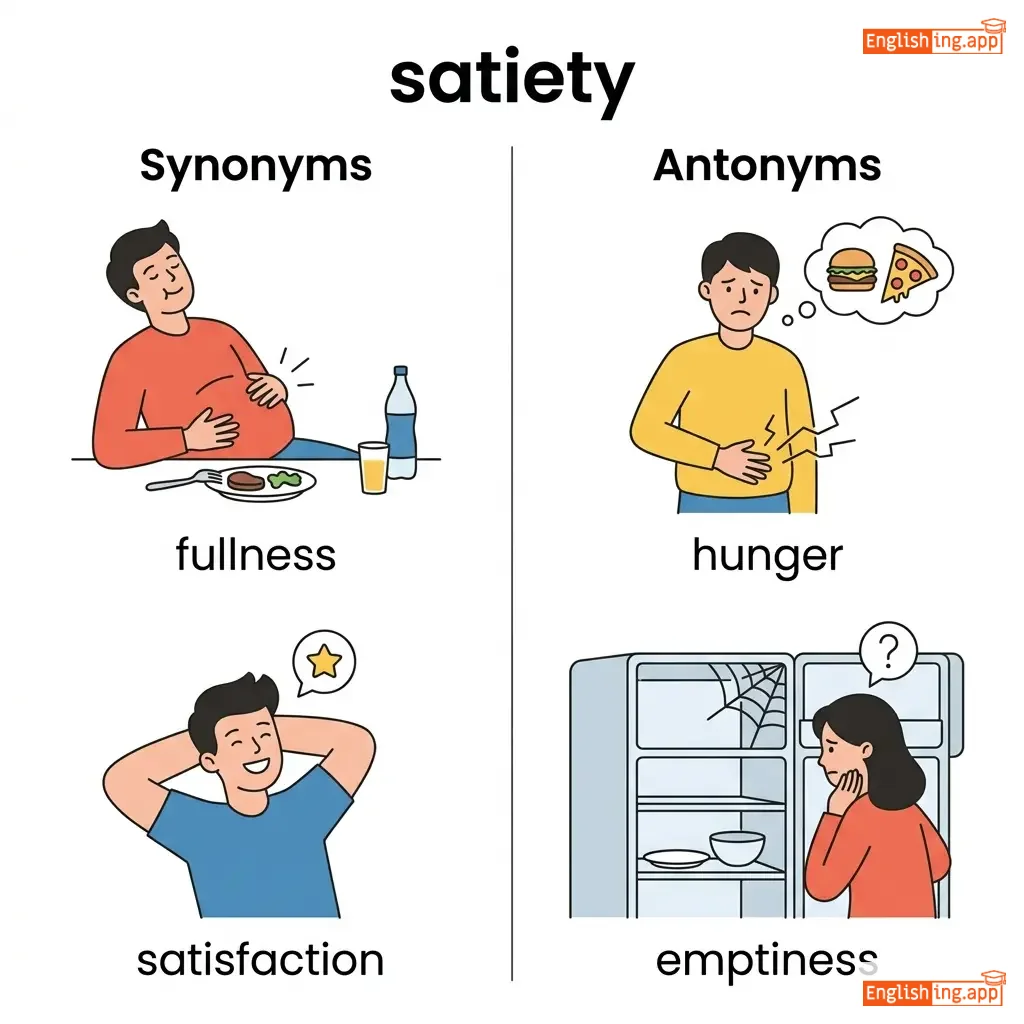
fullness, satisfaction, gratification, repletion
••••••
|
hunger, emptiness
••••••
|
feeling of satiety, sense of satiety, induce satiety
••••••
|
Satietyは食べすぎた後のsatisfaction、満腹感を感じる時です。
••••••
|
|
#7819
🍽️
|
/ˈseɪʃiˌeɪt/
verb
(seishiet)
••••••
|
|
満たす
mitasu
••••••
|
satiated
seishieted
••••••
|
satiated
seishieted
••••••
|
satiates
seishiets
••••••
|
satiating
seishieting
••••••
|
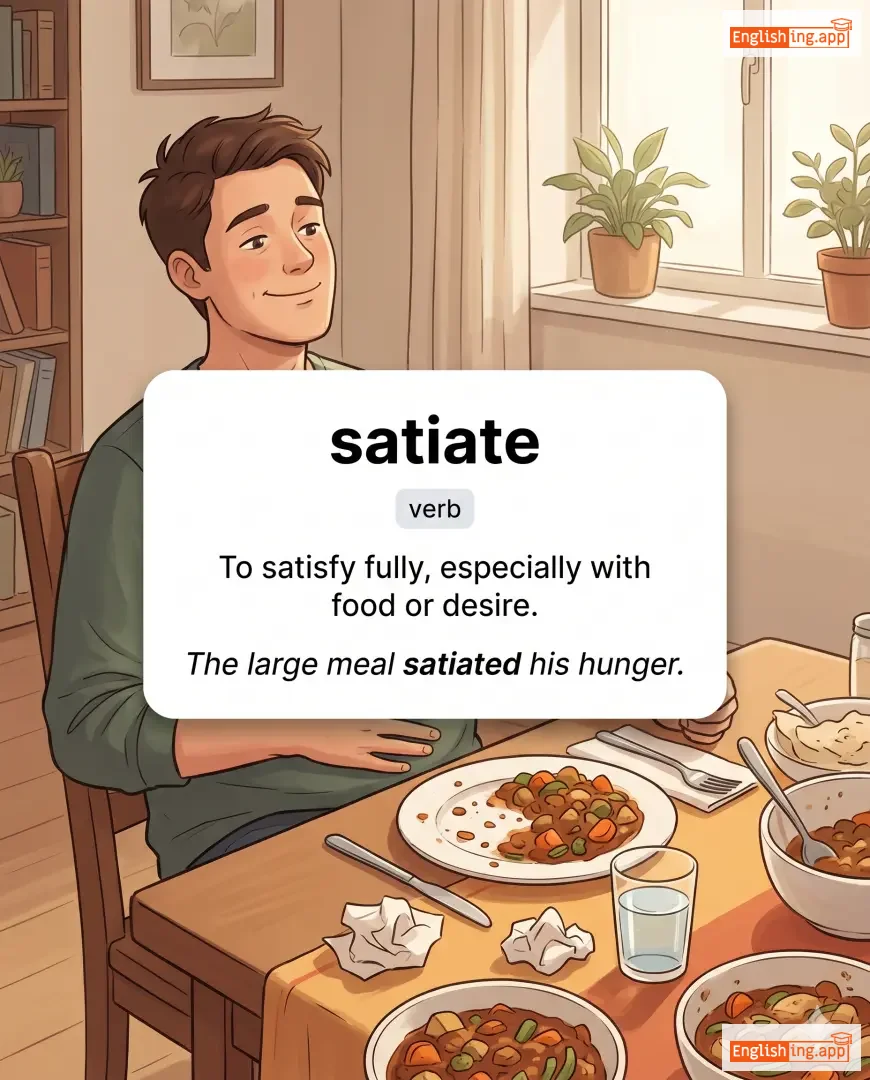
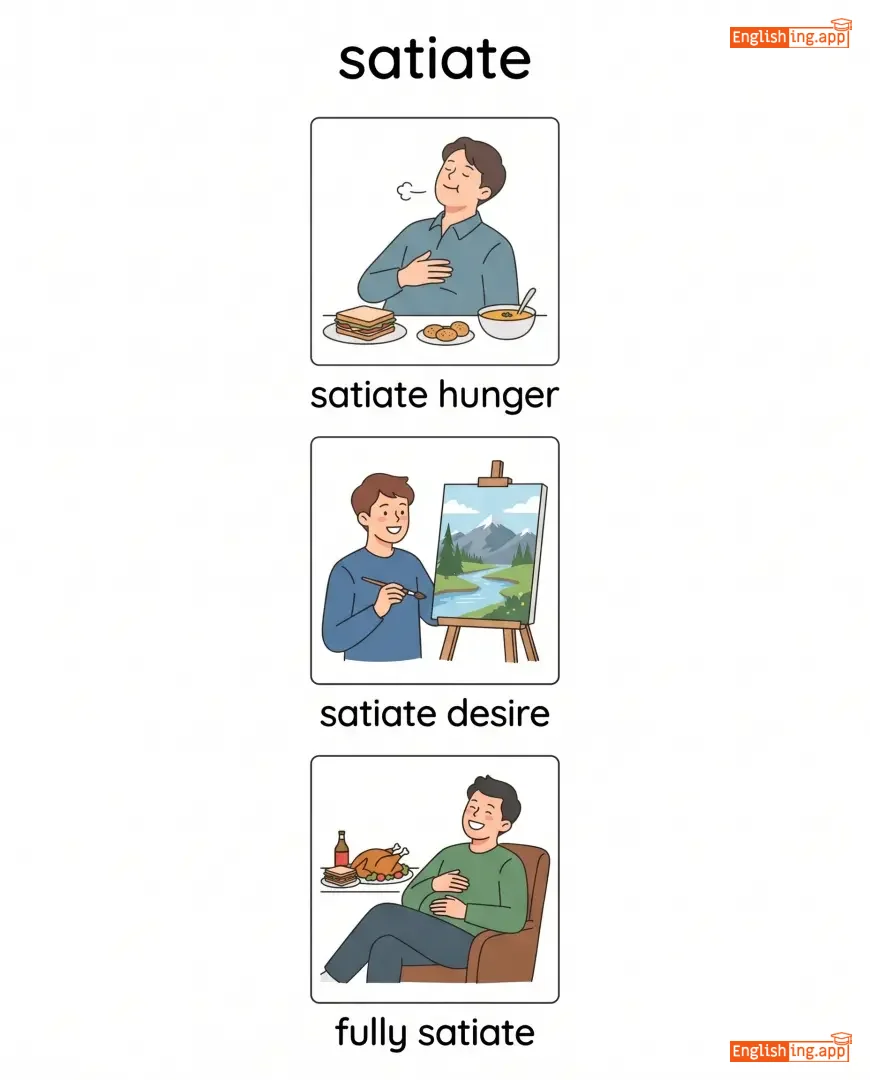
To satisfy fully, especially with food or desire.
••••••
|
The large meal satiated his hunger.
大きな食事が彼の空腹を満たしました。
••••••
|
大きな食事が彼の空腹を満たしました。
Ookina shokuji ga kare no kuufuku o mitashimashita.
••••••
|
- •••••• | - •••••• | - •••••• |
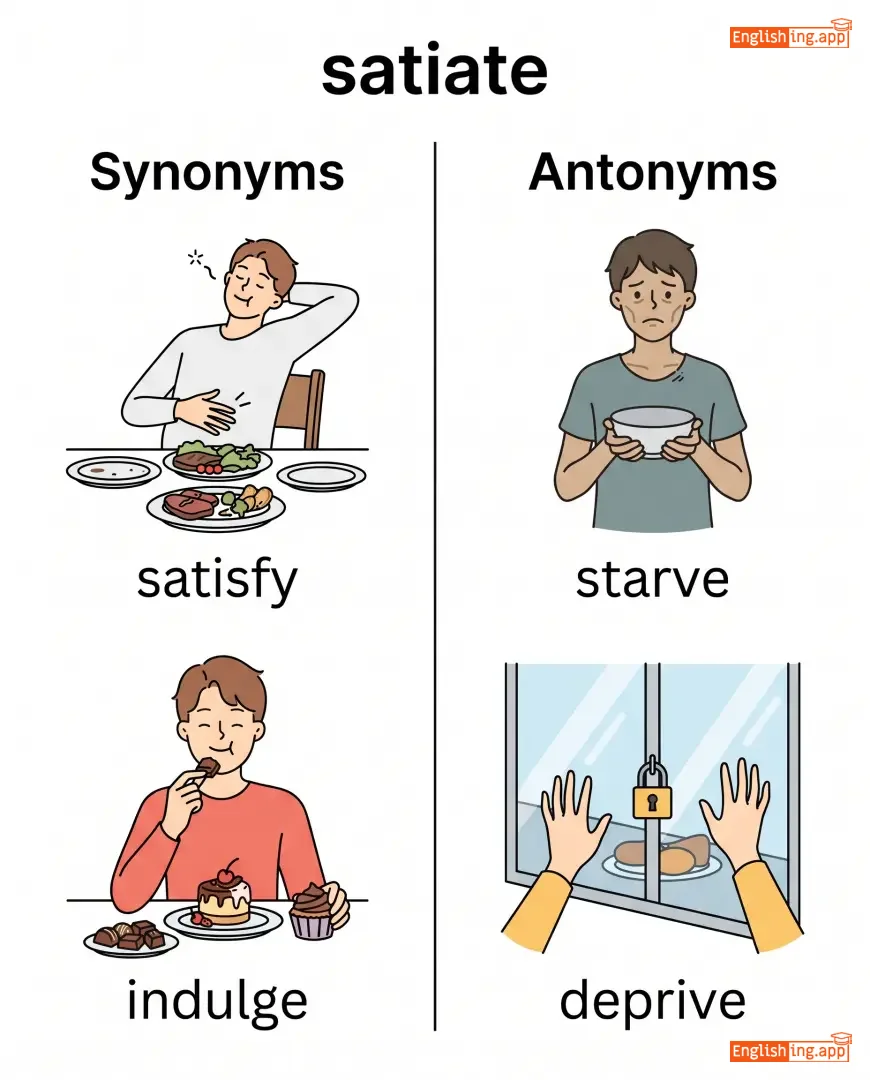
satisfy, indulge, fulfill, gratify
••••••
|
starve, deprive
••••••
|
satiate hunger, satiate desire, fully satiate
••••••
|
‘セッション’後、食事を完全に食べて満たされる – satiate
••••••
|
|
#7820
🛰️
|
/ˈsætəlaɪt/
noun
(サテライト)
••••••
|
|
衛星
eisei
••••••
|
- •••••• | - •••••• | - •••••• | - •••••• |
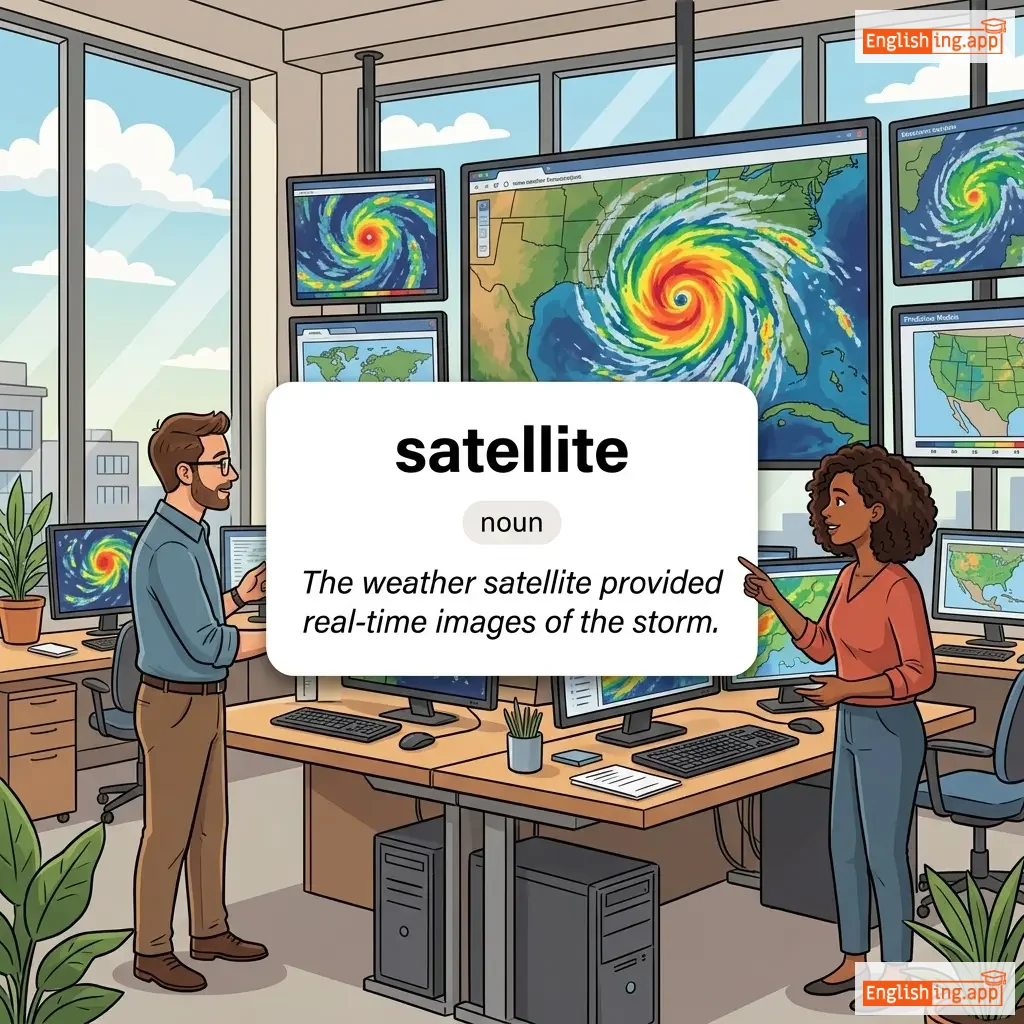
An artificial body placed in orbit around the earth or another planet to collect information or for communication.
••••••
|
The weather satellite provided real-time images of the storm. |
気象衛星は嵐のリアルタイム画像を提供しました。
Kishou eisei wa arashi no riaru taimu gazou wo teikyoushimashita.
••••••
|
satellite office |
A smaller office located separately from the main headquarters.
••••••
|
衛星オフィス
eisei ofisu
••••••
|
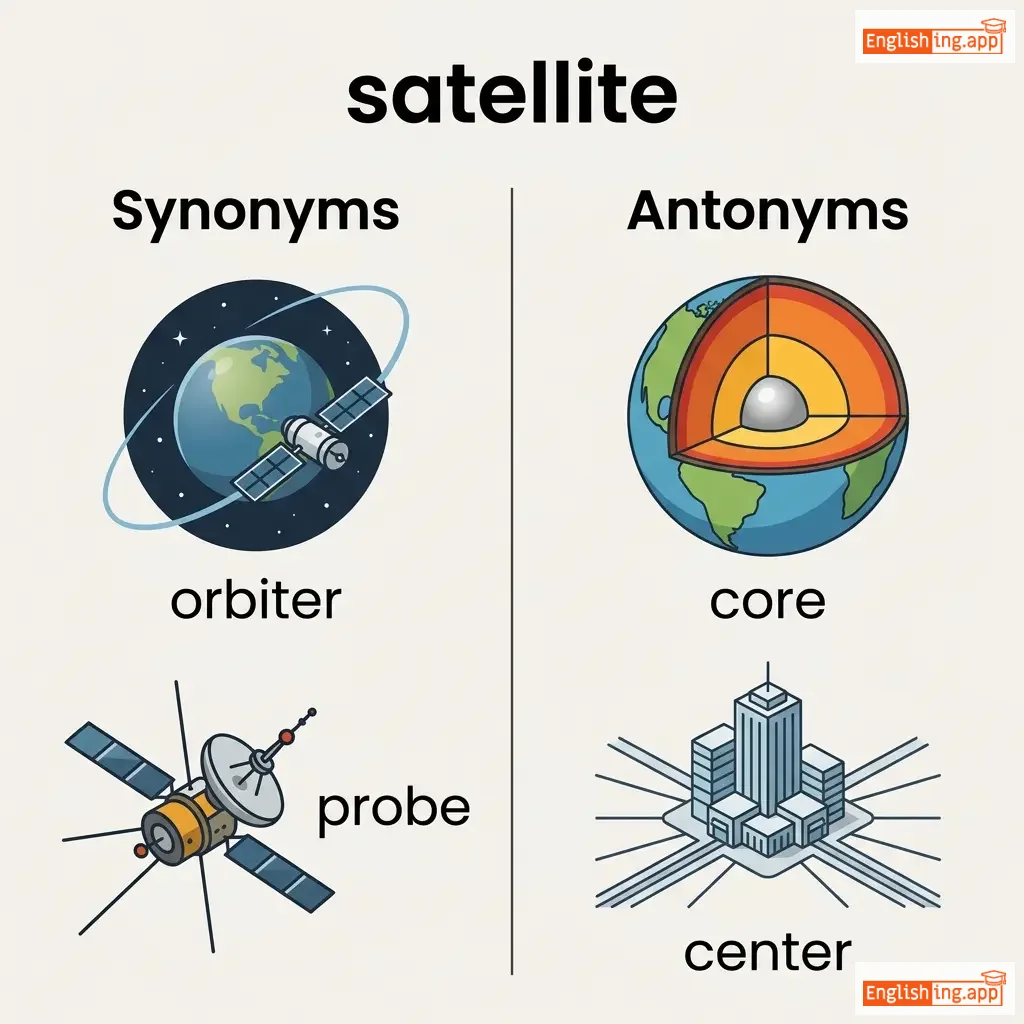
orbiter, probe, spacecraft, moon, companion
••••••
|
core, center
••••••
|
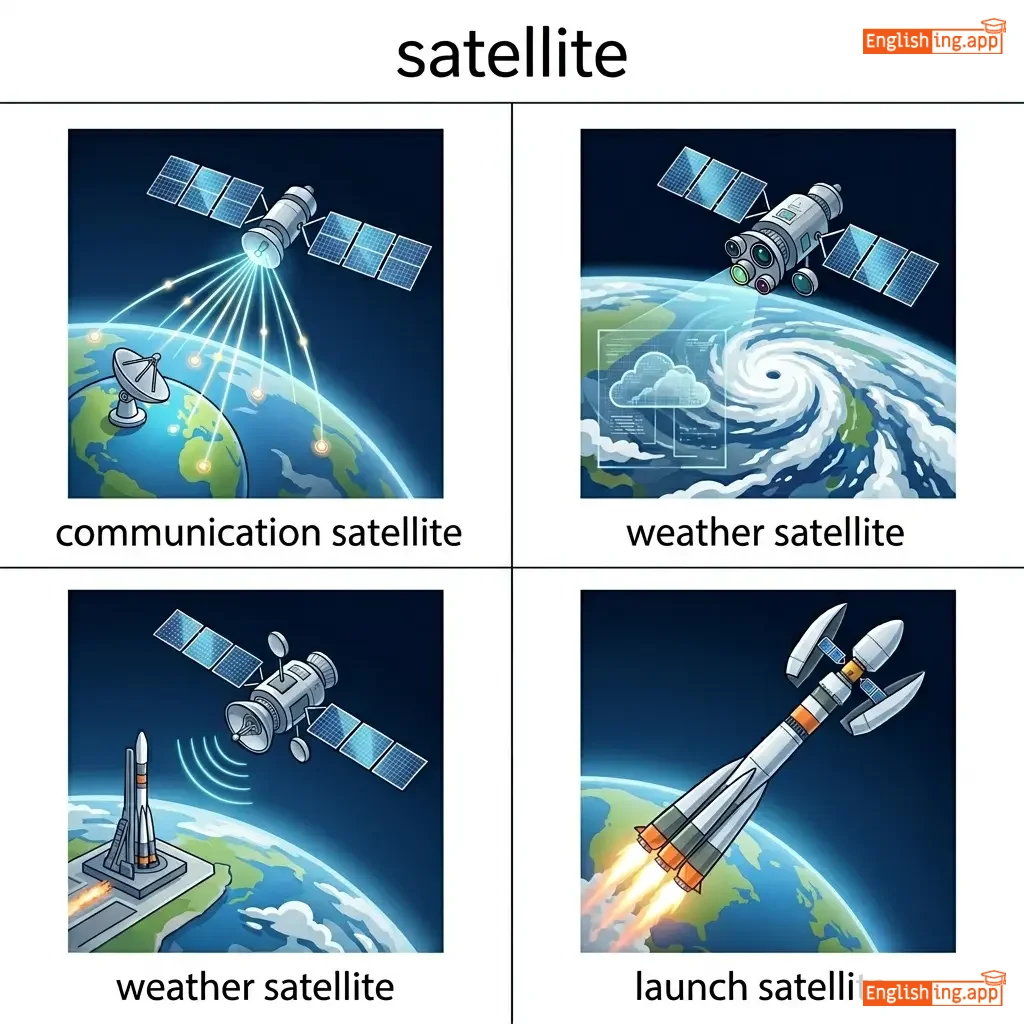
communication satellite, weather satellite, launch satellite, satellite dish
••••••
|
サテライト 🛰️ はいつも地球の周りを回り、頭の中でもそのように回ります。
••••••
|
|
#7821
🍽️
|
/seɪt/
verb
(セット)
••••••
|
- •••••• |
満たす
mitasu
••••••
|
sated
セテッド
••••••
|
sated
セテッド
••••••
|
sates
セットス
••••••
|
sating
セッティング
••••••
|
To satisfy fully or to excess.
••••••
|
The huge meal sated their hunger after the long journey.
The huge meal seted their hunger after the long journey.
••••••
|
長い旅の後、巨大な食事が彼らの空腹を満たした。
Nagai tabi no ato, kyodaina shokuji ga karera no kuufuku o mitashita.
••••••
|
sate one's appetite
set one's appetite
••••••
|
to fully satisfy a desire or hunger
••••••
|
食欲を満たす
shokuyoku o mitasu
••••••
|
satisfy, indulge, gratify, fulfill
••••••
|
deprive, starve
••••••
|
sate hunger, sate desire, sate curiosity
••••••
|
Sateは食欲を満たす意味です。
••••••
|
|
#7822
👔
|
/sɑːrˈtɔːriəl/
adjective
(サートリアル)
••••••
|
|
仕立てに関する
shitate ni kansuru
••••••
|
- •••••• | - •••••• | - •••••• | - •••••• |
Relating to tailoring, clothes, or style of dress.
••••••
|
The actor is known for his sartorial elegance on the red carpet. |
その俳優はレッドカーペットでのサートリアルな優雅さで知られています。
Sono haiyu wa reddo kāpetto de no sātoriaru na yūgasa de shirareteimasu.
••••••
|
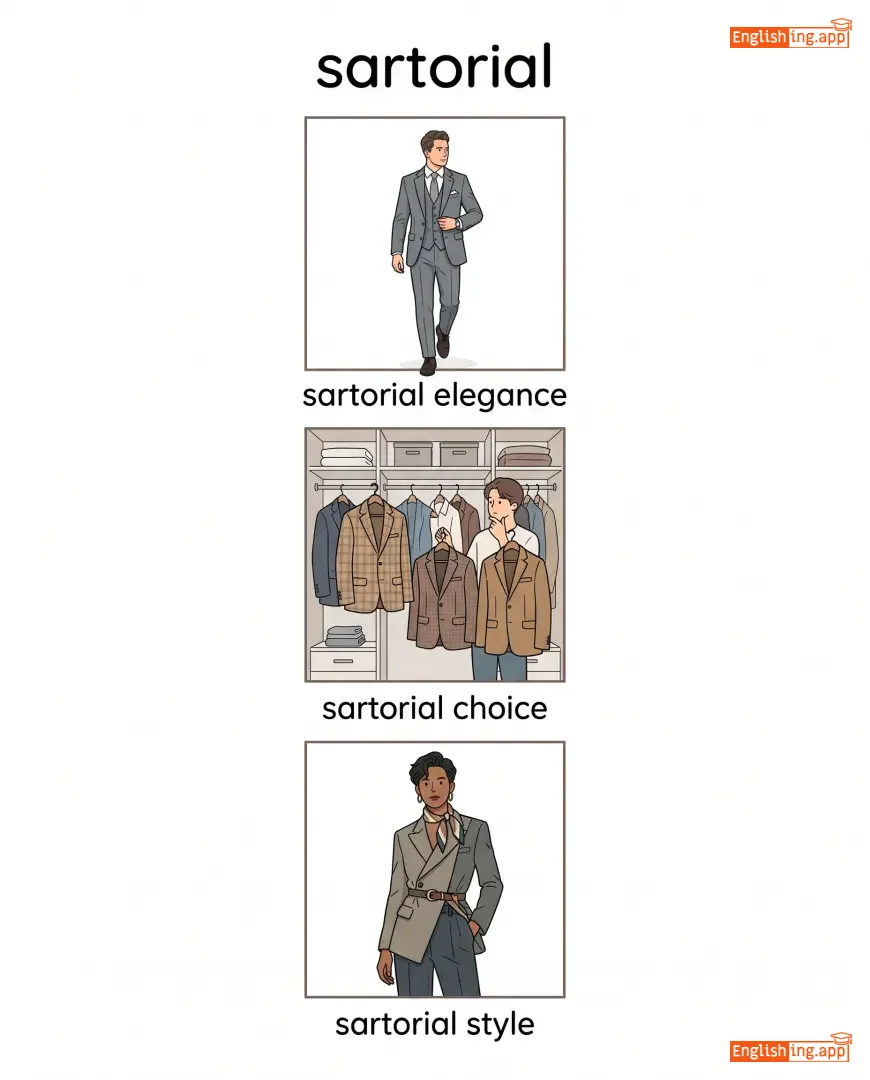
sartorial elegance |
stylish and sophisticated clothing sense
••••••
|
サートリアルな優雅さ
sātoriaru na yūgasa
••••••
|
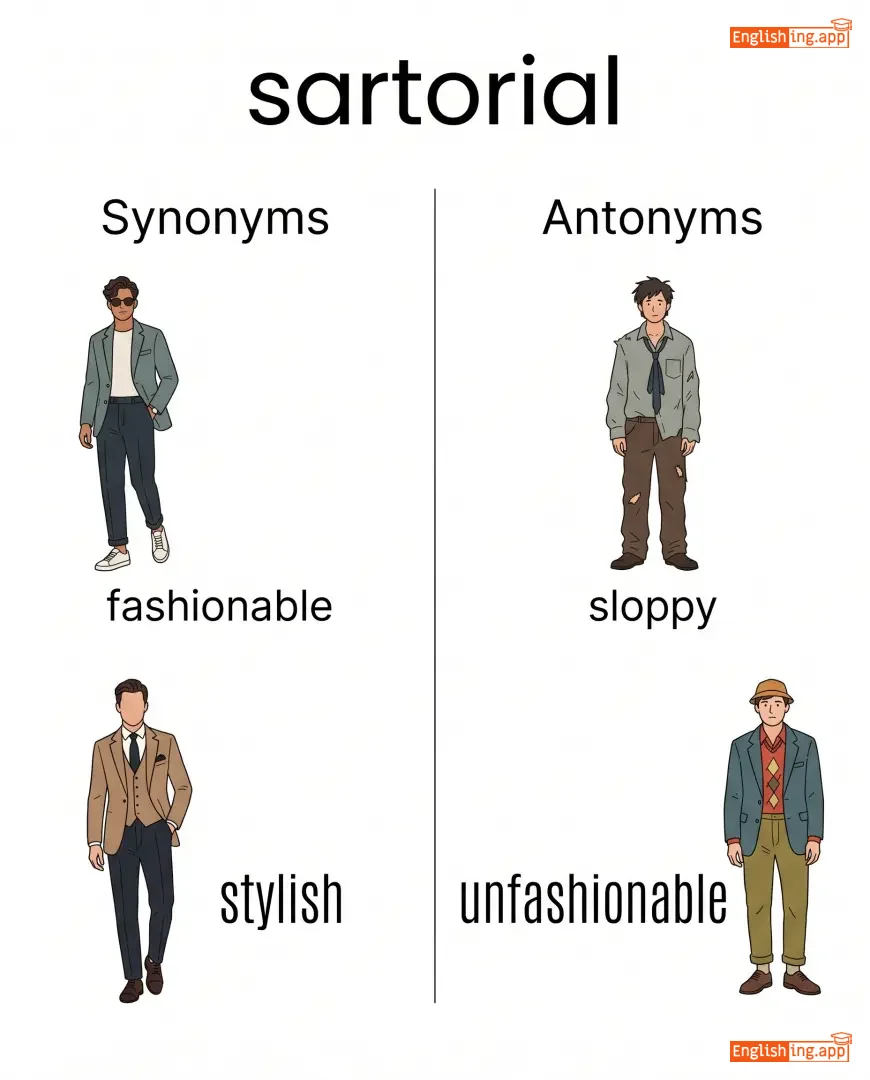
fashionable, stylish, elegant, dapper
••••••
|
sloppy, unfashionable
••••••
|
sartorial elegance, sartorial choice, sartorial style
••••••
|
Sartorialは衣服に関係する - Shirtorial、シャツと衣服を覚えてください。
••••••
|
|
#7823
😒
|
/sɑːrˈdɒnɪk/
adjective
(ハピネス)
••••••
|
|
幸福
koufuku
••••••
|
- •••••• | - •••••• | - •••••• | - •••••• |
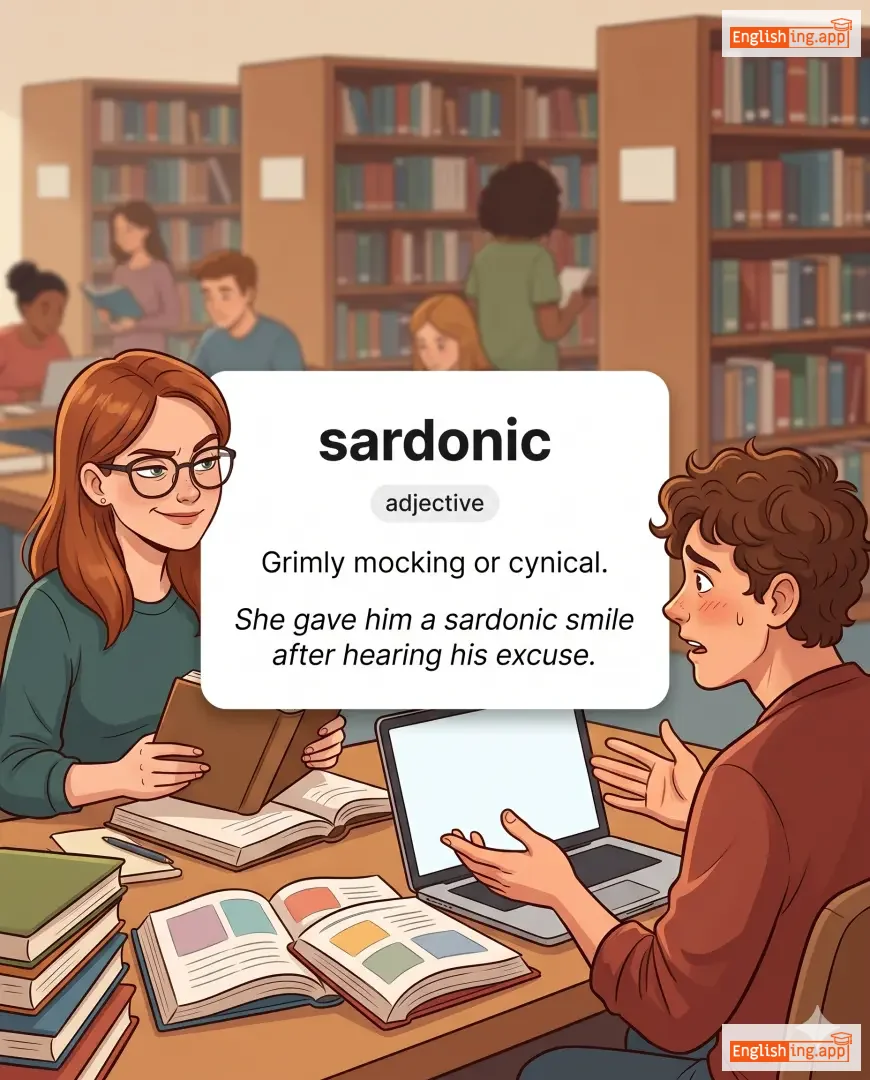
Grimly mocking or cynical.
••••••
|
She gave him a sardonic smile after hearing his excuse. |
彼女は賞を受け取ったとき、自分の幸福を隠すことができませんでした。
Kanojo wa shō o uketotta toki, jibun no kōfuku o kakusu koto ga dekimasen deshita.
••••••
|
sardonic smile |
a mocking or cynical smile
••••••
|
幸福を追い求める
kōfuku o oimotomeru
••••••
|
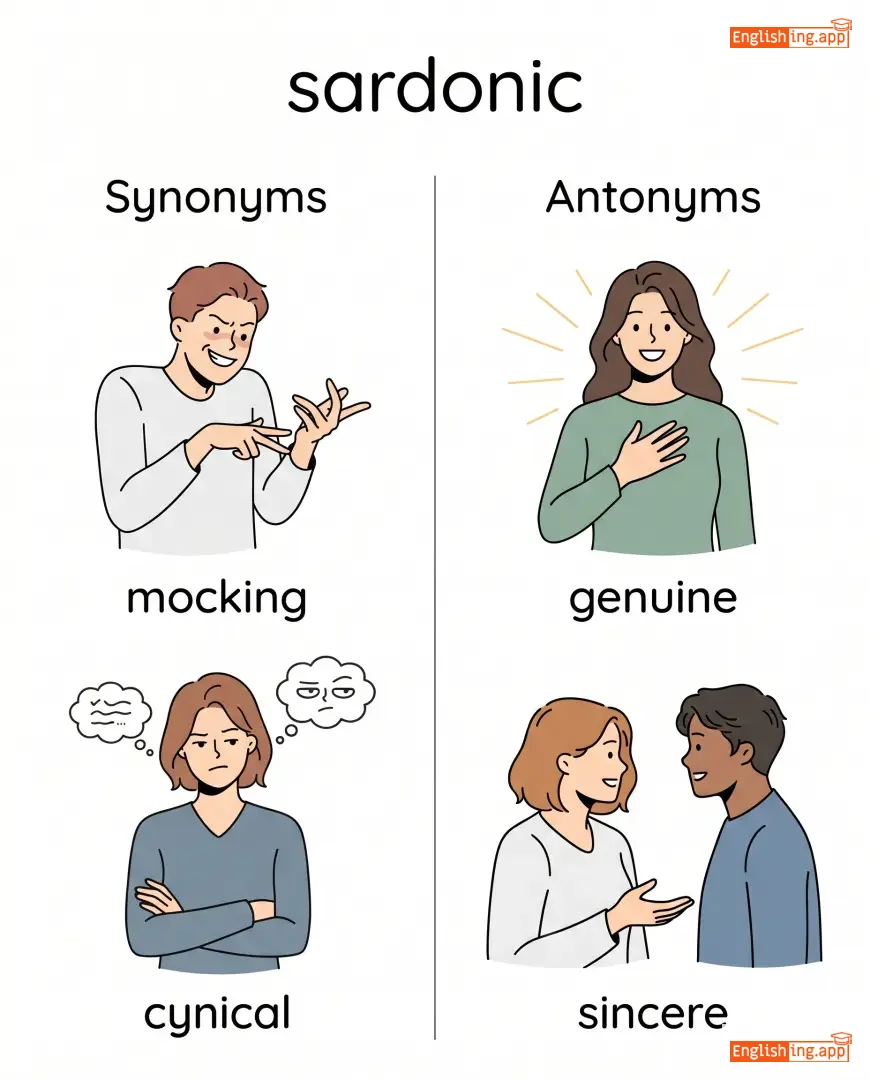
mocking, cynical, scornful, sarcastic
••••••
|
genuine, sincere
••••••
|
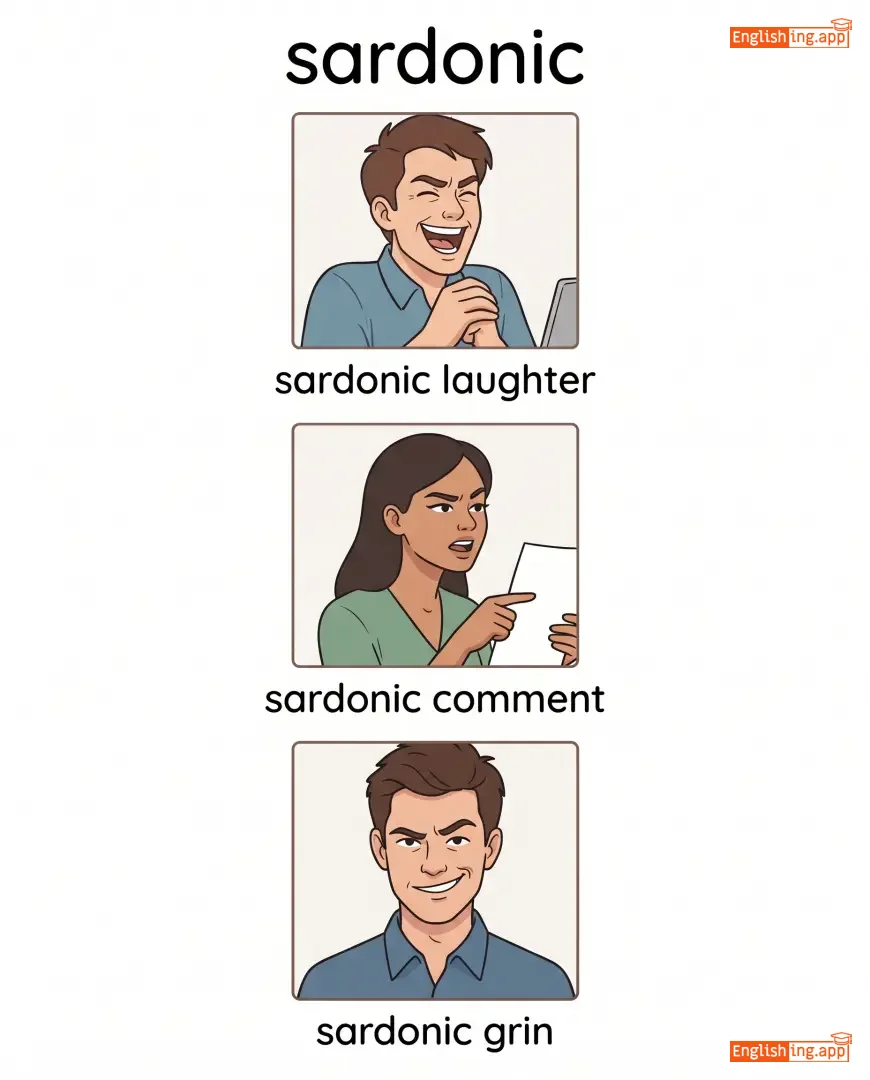
sardonic laughter, sardonic comment, sardonic grin
••••••
|
幸福 = '幸せ' – 幸せを追い求めて、毎日を幸せで満たす!
••••••
|
|
#7824
⚰️
|
/sɑːrˈkɒfəɡəs/
noun
(サルコファガス)
••••••
|
- •••••• |
石棺
sekigan
••••••
|
- •••••• | - •••••• | - •••••• | - •••••• |
A stone coffin, often decorated, used in ancient times.
••••••
|
The museum displayed a beautifully carved sarcophagus from ancient Egypt. |
博物館には古代エジプトからの美しく彫刻された石棺が展示されていました。
Hakubutsukan ni wa kodai Ejiputo kara no utsukushiku chōkoku sareta sekigan ga tenji sarete imashita.
••••••
|
- •••••• | - •••••• | - •••••• |
tomb, coffin, casket, crypt
••••••
|
birthplace, cradle
••••••
|
ancient sarcophagus, stone sarcophagus, Egyptian sarcophagus
••••••
|
Sarcophagusは '石棺' を意味します – 古代の装飾された石の棺。
••••••
|
|
#7825
😏
|
/ˈsɑːrˌkæzəm/
noun
(サーカズム)
••••••
|
- •••••• |
皮肉
hiniku
••••••
|
- •••••• | - •••••• | - •••••• | - •••••• |
The use of irony to mock or convey contempt.
••••••
|
His sarcasm often made people laugh but sometimes offended them. |
彼の皮肉はよく人々を笑わせたが、時々彼らを怒らせた。
Kare no hiniku wa yoku hitobito o warawaseta ga, tokidoki karera o okorase ta.
••••••
|
dripping with sarcasm |
speaking in a tone heavily filled with sarcasm
••••••
|
皮肉たっぷりの
Hiniku tappuri no
••••••
|
mockery, irony, cynicism, derision, satire
••••••
|
sincerity, honesty
••••••
|
sense of sarcasm, touch of sarcasm, sarcasm detector, sarcasm in voice
••••••
|
皮肉は、まるでサーカスのように、楽しいがちょっと辛辣な笑いを引き起こす。
••••••
|
|
#7826
🧼
|
/ˌsæpəˈneɪʃəs/
adjective
(saponēshasu)
••••••
|
- •••••• |
石鹸のような
sekken no yōna
••••••
|
- •••••• | - •••••• | - •••••• | - •••••• |
Soapy or having the qualities of soap.
••••••
|
The plant has saponaceous leaves that produce foam when rubbed in water. |
その植物には、摩擦で泡を作る石鹸のような葉があります。
Sono shokubutsu ni wa, masatsu de awa o tsukuru sekken no yōna ha ga arimasu.
••••••
|
- •••••• | - •••••• | - •••••• |
soapy, foamy, sudsy, slippery
••••••
|
dry, rough, gritty
••••••
|
saponaceous plant, saponaceous substance, saponaceous quality, saponaceous texture
••••••
|
Saponaceous は石鹸のような意味です。'soap' + 'neishas' = 石鹸のようです。
••••••
|
|
#7827
📚
|
/ˌseɪpiˈɛnʃəl/
adjective
(sāpienshiaru)
••••••
|
- •••••• |
知恵に関連する
chie ni kanren suru
••••••
|
- •••••• | - •••••• | - •••••• | - •••••• |
Relating to wisdom or knowledge, often in a religious or philosophical sense.
••••••
|
The monk shared sapiential teachings with his students. |
僧侶は学生たちに知恵に関連する教えを共有しました。
Sōryo wa gakusei-tachi ni chie ni kanren suru oshie o kyōyū shimashita.
••••••
|
- •••••• | - •••••• | - •••••• |
wise, philosophical, intellectual, insightful
••••••
|
ignorant, unwise, foolish
••••••
|
sapiential books, sapiential wisdom, sapiential teaching, sapiential tradition
••••••
|
Sapiential は知恵に関連することを意味します、'sapient' + 'al' = 知恵に関連する。
••••••
|
|
#7828
👨🏫
|
/ˈseɪpiənt/
adjective
(セイピエント)
••••••
|
- •••••• |
賢明な
kenmei na
••••••
|
- •••••• | - •••••• | - •••••• | - •••••• |
Wise, or appearing to be wise.
••••••
|
The professor gave a sapient response to the complex question.
教授は複雑な質問に賢明な回答をしました。
••••••
|
教授は複雑な質問に賢明な回答をしました。
Kyoju wa fukuzatsu na shitsumon ni kenmei na kotae o shimashita.
••••••
|
- •••••• | - •••••• | - •••••• |
wise, judicious, prudent, intelligent, sagacious
••••••
|
foolish, ignorant, naive
••••••
|
sapient remark, sapient advice, sapient response, sapient leader
••••••
|
Sapient は賢明な意味、'sap' で夢を見ることで賢明になれる。
••••••
|
|
#7829
🧠
|
/ˈseɪpiəns/
noun
(サピエンス)
••••••
|
- •••••• |
知恵
chie
••••••
|
- •••••• | - •••••• | - •••••• | - •••••• |
Wisdom or intelligence.
••••••
|
Her sapience in solving problems earned her the respect of her colleagues. |
問題解決における彼女の知恵は、同僚たちの尊敬を集めました。
Mondai kaiketsu ni okeru kanojo no chie wa, dōryō-tachi no sonkei o atsume mashita.
••••••
|
- •••••• | - •••••• | - •••••• |
wisdom, intelligence, sagacity, insight, knowledge
••••••
|
ignorance, folly, stupidity
••••••
|
human sapience, divine sapience, great sapience, practical sapience
••••••
|
Sapience = 知恵、覚えておいて sapiens = Homo sapiens、すなわち賢い人。
••••••
|
Vocabulary Quiz
Test your vocabulary by matching words with their translations or meanings.
Login to take the quiz
Comments (0)
Share your thoughts and join the discussion.
Join the discussion by logging in
Login to CommentNo comments yet
Be the first to share your thoughts!