

翻訳
過去
過去分詞
三人称単数
動名詞
意味
例文
例文の翻訳
同義語
対義語
コロケーション
ニーモニック



Swipe left or right, or use the buttons. Tap image to zoom.
例文の翻訳
単語
Lesson 381Lesson 381 - マスクトグル
|
絵文字
|
単語 | Images | 翻訳 | 過去 | 過去分詞 | 三人称単数 | 動名詞 | 意味 | 例文 | 例文の翻訳 | 表現例 | 表現例の意味 | 表現例の翻訳 | 同義語 | 対義語 | コロケーション | ニーモニック |
|---|---|---|---|---|---|---|---|---|---|---|---|---|---|---|---|---|---|
|
#11395
🙋
|
/miː/
pronoun
(ミ)
••••••
|
- •••••• |
私
watashi
••••••
|
- •••••• | - •••••• | - •••••• | - •••••• |
Used by a speaker to refer to themselves as the object of a verb or preposition.
••••••
|
She gave me a beautiful gift.
シー ギヴ ミ ア ビューティフル ギフト。
••••••
|
彼女は私に美しいプレゼントをくれました。
Kanojo wa watashi ni utsukushī purezento o kuremashita.
••••••
|
me time
ミ タイム
••••••
|
time spent relaxing alone and focusing on oneself
••••••
|
私の時間
watashi no jikan
••••••
|
myself, I, self
••••••
|
you, he, she
••••••
|
for me, to me, with me, about me
••••••
|
Me = 私 (watashi) → 彼女は *私* にプレゼントをくれました。
••••••
|
|
#11396
✨
|
/mɪr/
adjective
(ミアー)
••••••
|
- •••••• |
単なる
tannaru
••••••
|
- •••••• | - •••••• | - •••••• | - •••••• |
Used to emphasize how small or insignificant something is.
••••••
|
It was a mere suggestion, not a command. |
それは単なる提案であり、命令ではありません。
Sore wa tannaru teian de ari, meirei de wa arimasen.
••••••
|
a mere formality |
Something done because it is expected, but without real importance
••••••
|
単なる形式
Tannaru keishiki
••••••
|
simple, trivial, insignificant, minor, slight
••••••
|
important, significant, major
••••••
|
mere coincidence, mere child, mere formality, mere mention
••••••
|
Mere は日本語で '単なる' を意味します — 覚えやすい!
••••••
|
|
#11397
📜
|
/ˈmɛnjuː/
noun
(メニュー)
••••••
|
- •••••• |
メニュー
menyū
••••••
|
- •••••• | - •••••• | - •••••• | - •••••• |
A list of food and drinks available at a restaurant or offered at a meal.
••••••
|
The restaurant updated its menu with new dishes. |
レストランは新しい料理をメニューに追加しました。
Resutoran wa atarashī ryōri o menyū ni tsuika shimashita.
••••••
|
set menu |
A fixed selection of dishes offered at a set price.
••••••
|
定食メニュー
Teishoku menyū
••••••
|
bill of fare, food list, card, menu card, offerings
••••••
|
emptiness, nothingness
••••••
|
menu card, lunch menu, digital menu, special menu
••••••
|
メニューはレストランの料理リストです。
••••••
|
|
#11398
💬
|
/ˈmɛnʃən/
verb
(メンション)
••••••
|
- •••••• |
言及する
genkyu suru
••••••
|
mentioned
メンションド
••••••
|
mentioned
メンションド
••••••
|
mentions
メンションズ
••••••
|
mentioning
メンションイング
••••••
|
To refer to something briefly without giving much detail.
••••••
|
He mentioned her name during the meeting.
ヒー メンションド ハー ネーム デュアリング ザ ミーティング。
••••••
|
彼は会議で彼女の名前に言及した。
Kare wa kaigi de kanojo no namae ni genkyu shita.
••••••
|
not to mention
ノット トゥ メンション
••••••
|
Used to add emphasis to something by including an additional point.
••••••
|
言うまでもなく
Iu made mo naku
••••••
|
refer, cite, state, remark, bring up
••••••
|
ignore, omit, overlook
••••••
|
mention casually, fail to mention, specifically mention, worth mentioning
••••••
|
メンションは、会話の中で誰かの名前を言及することです。
••••••
|
|
#11399
🧩
|
/ˈmɛntəl/
adjective
(メンタル)
••••••
|
- •••••• |
精神的
seishinteki
••••••
|
- •••••• | - •••••• | - •••••• | - •••••• |
Relating to the mind, thoughts, or intellectual processes.
••••••
|
He needs to take a break for his mental health. |
彼は精神的な健康のために休憩が必要です。
kare wa seishinteki na kenkō no tame ni kyūkei ga hitsuyō desu.
••••••
|
mental block |
An inability to think of something or remember something.
••••••
|
精神的ブロック
seishinteki burokkusu
••••••
|
cognitive, intellectual, psychological, rational, emotional
••••••
|
physical, bodily
••••••
|
mental health, mental illness, mental strength, mental state
••••••
|
精神的は心に関すること。心が元気でないと、精神的健康が悪化する。
••••••
|
|
#11400
🧠
|
/ˈmɛməri/
noun
(メモリー)
••••••
|
- •••••• |
記憶
kioku
••••••
|
- •••••• | - •••••• | - •••••• | - •••••• |
The faculty of the mind by which information is stored and remembered.
••••••
|
She has a vivid memory of her childhood home. |
彼女は子供時代の家について鮮明な記憶を持っています。
Kanojo wa kodomojidai no ie ni tsuite senmei na kioku o motteimasu.
••••••
|
in memory of |
As a way of showing respect for someone who has died.
••••••
|
追悼のために
tsuitō no tame ni
••••••
|
recollection, remembrance, retention, recall, reminiscence
••••••
|
forgetfulness, amnesia
••••••
|
short-term memory, long-term memory, memory loss, vivid memory
••••••
|
記憶は過去を保存するための脳のファイルキャビネットです。
••••••
|
|
#11401
🎫
|
/ˈmɛmbərʃɪp/
noun
(メンバーシップ)
••••••
|
|
会員資格
kaiinshikaku
••••••
|
- •••••• | - •••••• | - •••••• | - •••••• |
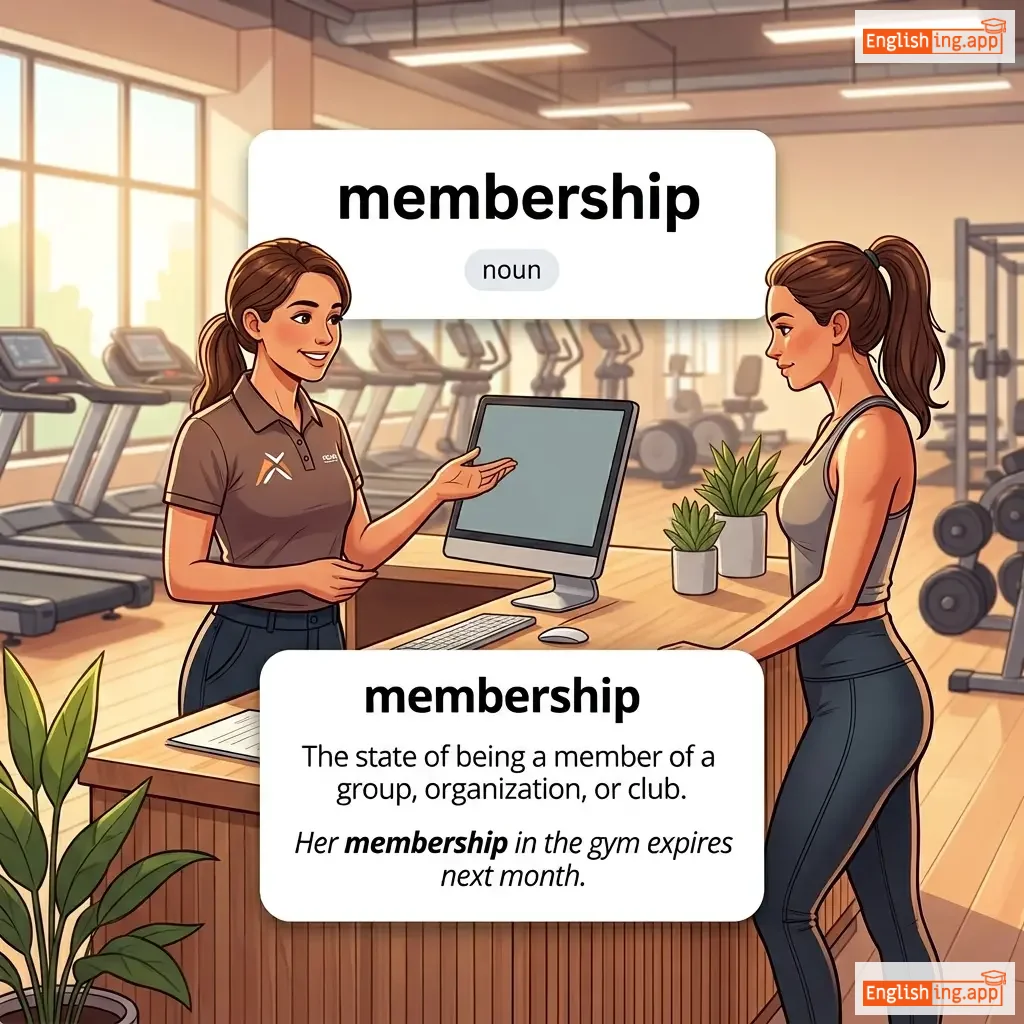
The state of being a member of a group, organization, or club.
••••••
|
Her membership in the gym expires next month. |
ジムの会員資格は来月終了します。
Jimu no kaiinshikaku wa raigetsu shūryō shimasu.
••••••
|
membership drive |
A campaign to recruit new members for an organization.
••••••
|
会員募集キャンペーン
Kaiin boshū kyanpēn
••••••
|
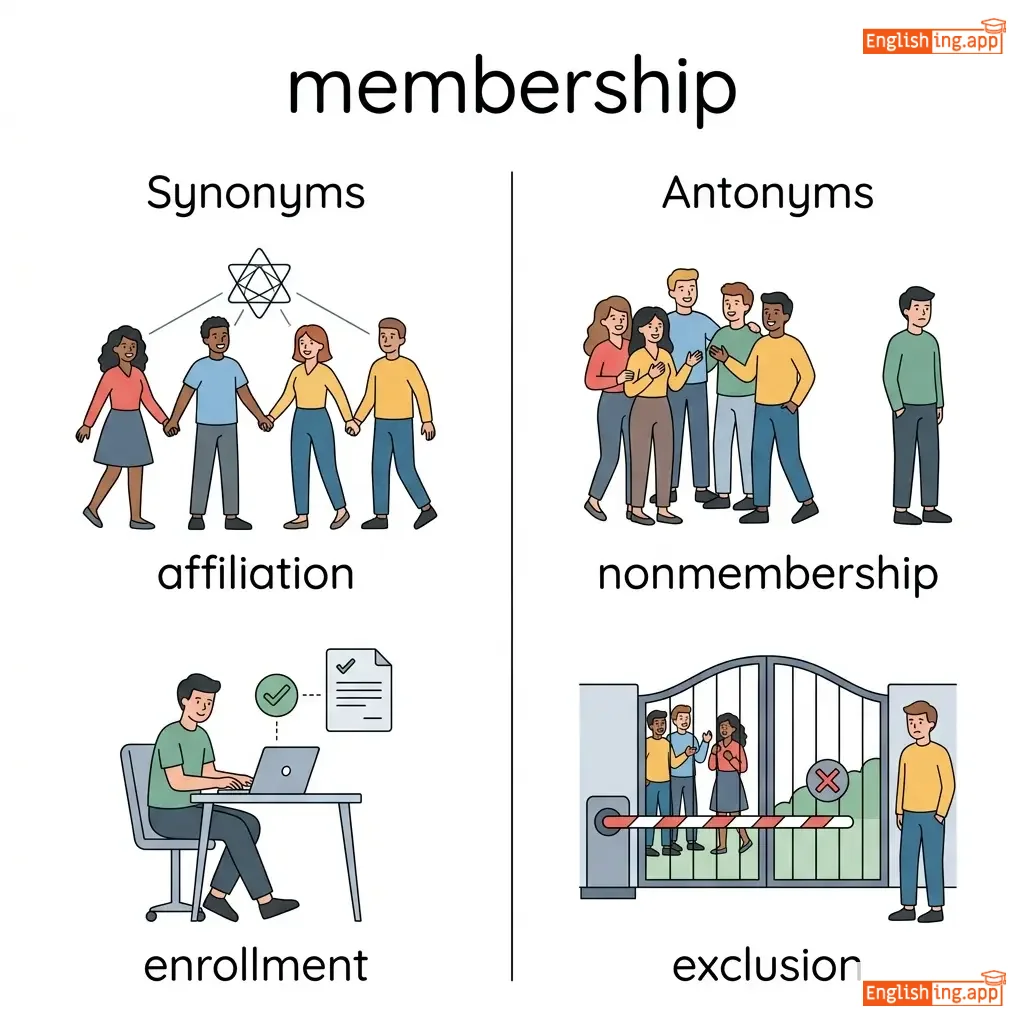
affiliation, enrollment, subscription, association, participation
••••••
|
nonmembership, exclusion
••••••
|
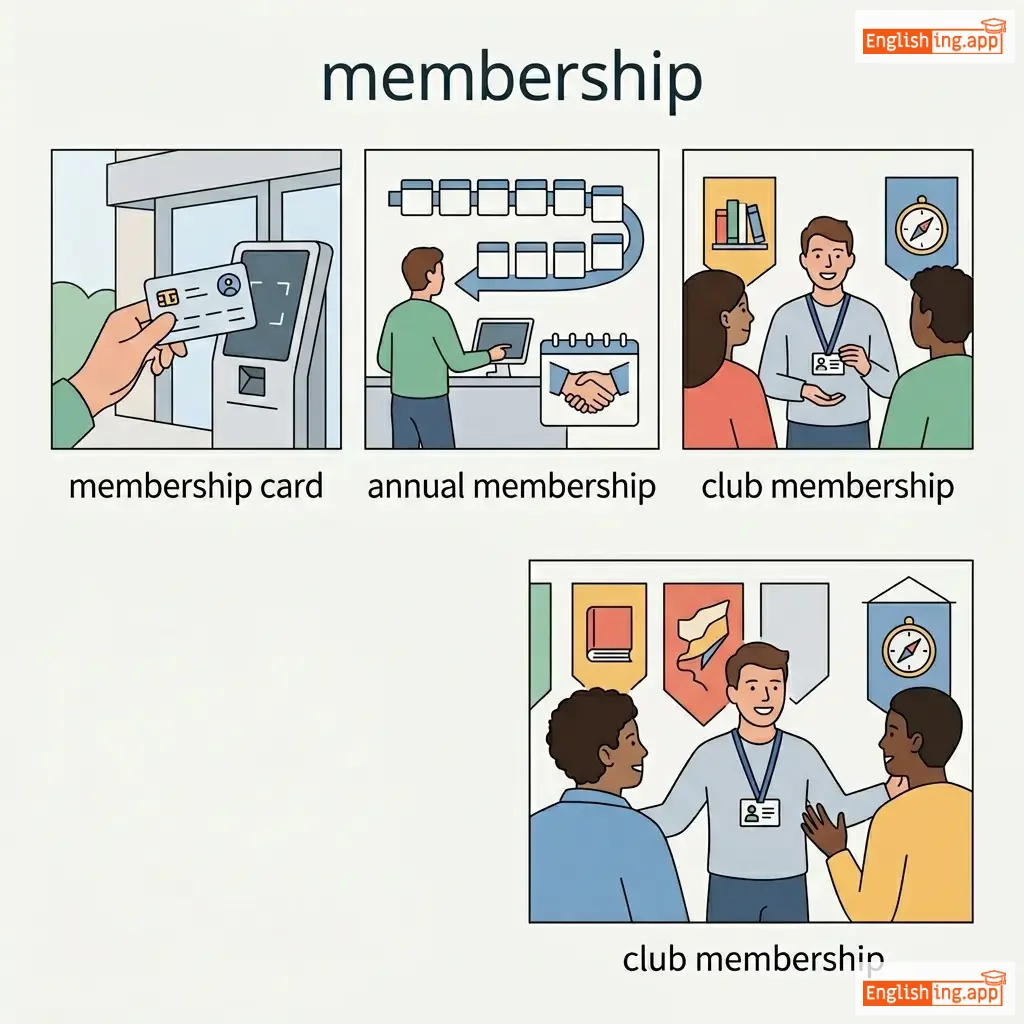
membership card, annual membership, club membership, membership fee
••••••
|
会員資格は「加入する」ための鍵、簡単に覚えて参加しよう!
••••••
|
|
#11402
👥
|
/ˈmembər/
noun
(メンバー)
••••••
|
- •••••• |
メンバー
menbā
••••••
|
- •••••• | - •••••• | - •••••• | - •••••• |
a person or thing that belongs to a group or organization
••••••
|
She is a member of the local sports club. |
彼女は地元のスポーツクラブのメンバーです。
Kanojo wa jimoto no supōtsu kurabu no menbā desu.
••••••
|
active member |
a person who participates regularly in the activities of a group
••••••
|
アクティブメンバー
akutibu menbā
••••••
|
participant, affiliate, associate, enrollee
••••••
|
outsider, nonmember
••••••
|
club member, family member, group member, board member
••••••
|
メンバーはmemberに似ていて、チームの一員。
••••••
|
|
#11403
💊
|
/ˌmedɪˈkeɪʃən/
noun
(メディケーション)
••••••
|
- •••••• |
薬
kusuri
••••••
|
- •••••• | - •••••• | - •••••• | - •••••• |
a drug or other form of medicine used to treat or prevent disease
••••••
|
The doctor prescribed medication for his headache. |
医者は彼の頭痛のために薬を処方した。
Isha wa kare no zutsuu no tame ni kusuri wo shohou shita.
••••••
|
take medication |
to consume prescribed medicine
••••••
|
薬を飲む
kusuri wo nomu
••••••
|
medicine, drug, remedy, prescription
••••••
|
disease, illness
••••••
|
take medication, prescribe medication, over-the-counter medication, pain medication
••••••
|
Medicationsは薬と同じ、'Med'で薬を思い出そう!
••••••
|
|
#11404
🏥
|
/ˈmedɪkəl/
adjective
(メディカル)
••••••
|
|
医療的
iryōteki
••••••
|
- •••••• | - •••••• | - •••••• | - •••••• |
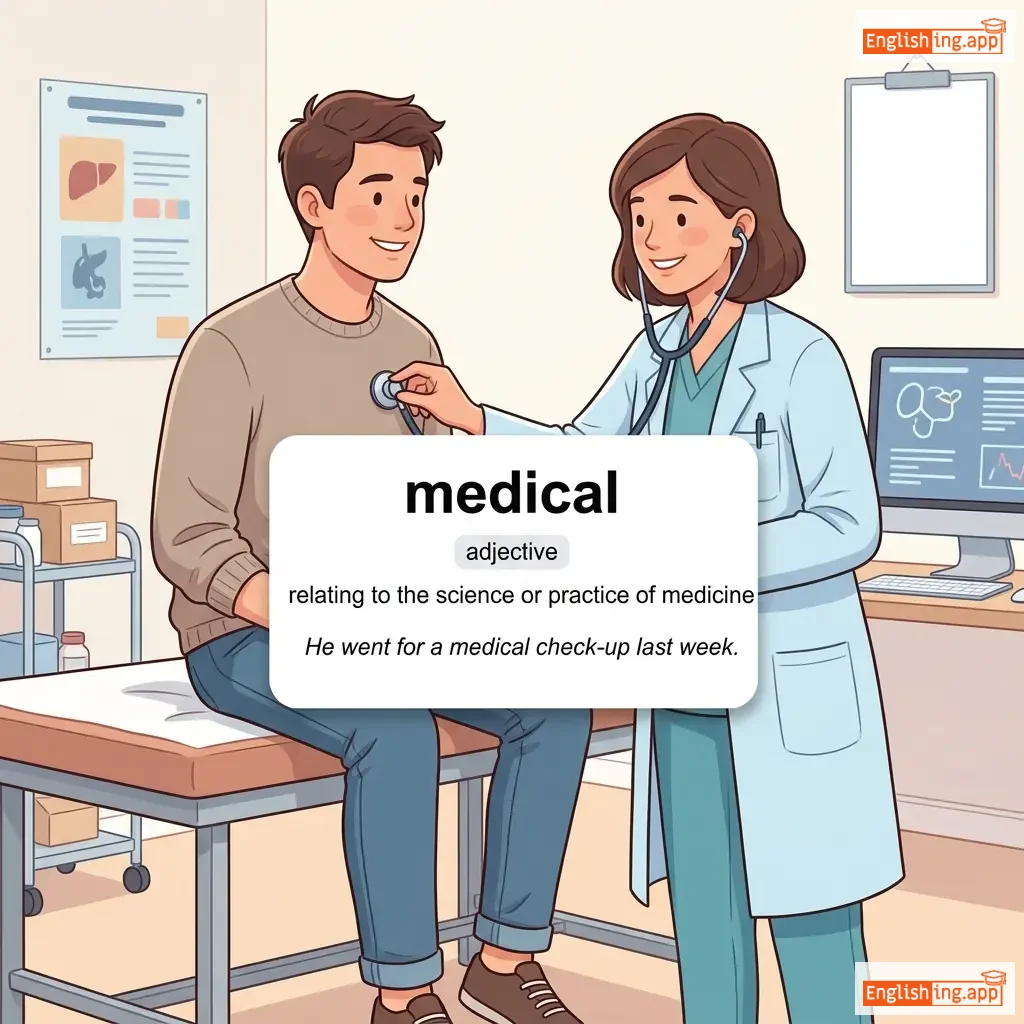
relating to the science or practice of medicine
••••••
|
He went for a medical check-up last week. |
彼は先週、医療検査を受けに行きました。
Kare wa senshū, iryō kensa o uke ni ikimashita.
••••••
|
medical condition |
a disease or health issue someone has
••••••
|
医療状態
iryō jōtai
••••••
|
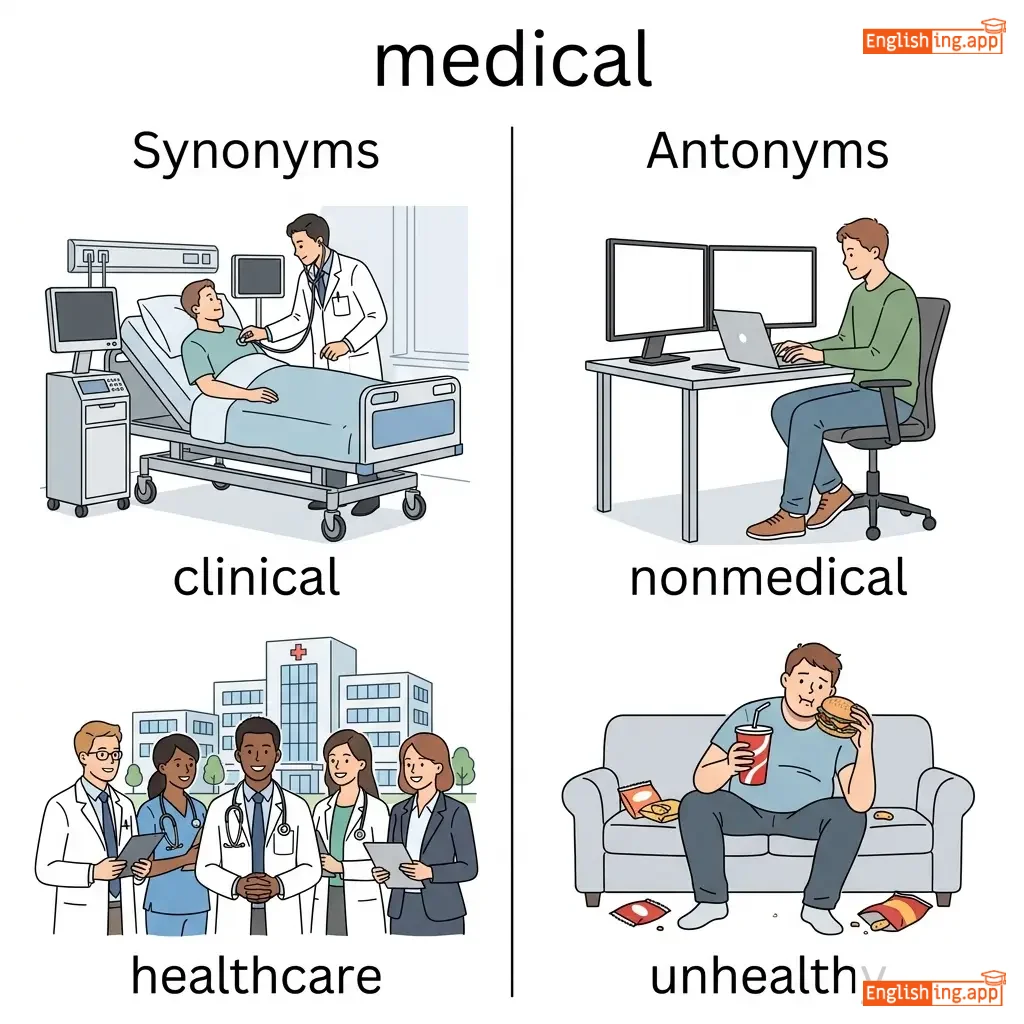
clinical, healthcare, therapeutic, medicinal
••••••
|
nonmedical, unhealthy
••••••
|
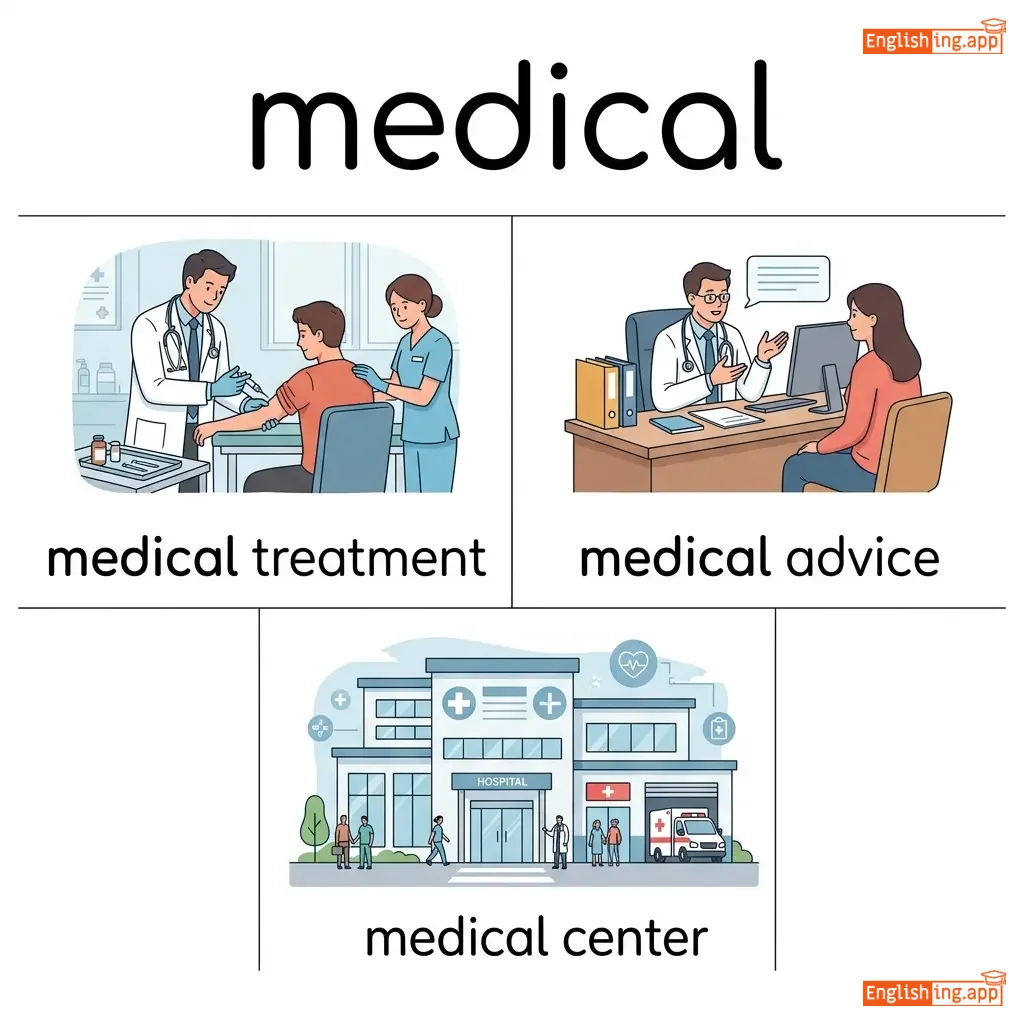
medical treatment, medical advice, medical center, medical research
••••••
|
Medicalは医療と関係している、まるで病院で医療検査を受けるようなものです。
••••••
|
|
#11405
🥩
|
/miːt/
noun
(ミート)
••••••
|
- •••••• |
肉
niku
••••••
|
- •••••• | - •••••• | - •••••• | - •••••• |
the flesh of animals used as food
••••••
|
She bought fresh meat from the market.
彼女は市場で新鮮な肉を買いました。
••••••
|
彼女は市場で新鮮な肉を買いました。
Kanojo wa ichiba de shinsen na niku o kaimashita.
••••••
|
the meat of the matter
問題の本質
••••••
|
the most important or basic part of something
••••••
|
問題の本質
mondai no honshitsu
••••••
|
flesh, beef, chicken, lamb, pork
••••••
|
vegetable, fruit
••••••
|
red meat, fresh meat, cooked meat, meat dish
••••••
|
肉は日本語でMEAT - 肉を食べて力をつけよう!
••••••
|
|
#11406
📏
|
/ˈmeʒərmənt/
noun
(メジャーメント)
••••••
|
- •••••• |
測定
sokutei
••••••
|
- •••••• | - •••••• | - •••••• | - •••••• |
the size, length, or amount of something, as determined by measuring
••••••
|
The tailor took my waist measurement before stitching the suit. |
仕立て屋はスーツを縫う前に私のウエストの測定を取りました。
Shitateya wa suutsu o nuu mae ni watashi no uesuto no sokutei o torimashita.
••••••
|
take measurements |
to measure the size, length, or amount of something
••••••
|
測定を行う
sokutei o okonau
••••••
|
dimension, size, extent, magnitude, evaluation
••••••
|
guess, estimate
••••••
|
accurate measurement, take measurement, standard measurement, body measurement
••••••
|
Measurementは📏測定を意味します。学校で先生が言っていたように『予測せずに、測定しよう!』
••••••
|
|
#11407
⏳
|
/ˈmiːnˌwaɪl/
adverb
(ミンワイル)
••••••
|
- •••••• |
その間に
sono aida ni
••••••
|
- •••••• | - •••••• | - •••••• | - •••••• |
At the same time; in the intervening period.
••••••
|
She was cooking dinner; meanwhile, I set the table. |
彼女は夕食を作っていた; その間に、私はテーブルをセットした。
Kanojo wa yūshoku o tsukutte ita; sono aida ni, watashi wa tēburu o setto shita.
••••••
|
- •••••• | - •••••• | - •••••• |
at the same time, simultaneously, in the meantime, concurrently
••••••
|
afterwards, later
••••••
|
meanwhile back, meanwhile at home, and meanwhile
••••••
|
Meanwhile = mini + while → その間に何かが進行中です。
••••••
|
|
#11408
❓
|
/ˈmiːnɪŋ/
noun
(ミーニング)
••••••
|
- •••••• |
意味
imi
••••••
|
- •••••• | - •••••• | - •••••• | - •••••• |
The definition, purpose, or significance of something.
••••••
|
The meaning of the word is explained in the dictionary. |
その単語の意味は辞書で説明されています。
Sono tango no imi wa jisho de setsumei sareteimasu.
••••••
|
hidden meaning |
a deeper or secret interpretation of something
••••••
|
隠された意味
kakusareta imi
••••••
|
sense, significance, purpose, definition, interpretation
••••••
|
nonsense, insignificance, absurdity
••••••
|
true meaning, literal meaning, meaning of life, meaning behind
••••••
|
意味は '意味' を意味します → 辞書で意味を見つけることができます。
••••••
|
|
#11409
🍽️
|
/miːl/
noun
(ハピネス)
••••••
|
- •••••• |
幸せ
shiawase
••••••
|
- •••••• | - •••••• | - •••••• | - •••••• |
An occasion when food is eaten, or the food that is eaten on such an occasion.
••••••
|
We had a delicious meal at the restaurant. |
彼女は賞を受け取ったとき、幸せを隠すことができませんでした。
Kanojo wa shou o uketotta toki, shiawase o kakusu koto ga dekimasen deshita.
••••••
|
square meal |
a substantial, satisfying, and balanced meal
••••••
|
幸せを追求する
Shiawase o tsuikyuu suru
••••••
|
dish, feast, food, banquet, repast
••••••
|
fast, hunger, starvation
••••••
|
have a meal, cook a meal, family meal, main meal
••••••
|
幸せ = 幸せ = 笑顔で幸せを探し続ける。
••••••
|
|
#11410
🔢
|
/ˈmɛni/
adjective
(meni)
••••••
|
- •••••• |
多くの
ooku no
••••••
|
- •••••• | - •••••• | - •••••• | - •••••• |
a large number of
••••••
|
Many students attended the lecture. |
多くの学生が講義に参加しました。
Ooku no gakusei ga kougi ni sanka shimashita.
••••••
|
many a time |
very often
••••••
|
何度も
nandomo
••••••
|
numerous, countless, several, various, multiple
••••••
|
few, little
••••••
|
many people, many years, many times, many ways
••••••
|
Many は多くの (ooku no)
••••••
|
|
#11411
🏛️
|
/ˈmeɪər/
noun
(メイヤー)
••••••
|
- •••••• |
市長
shichō
••••••
|
- •••••• | - •••••• | - •••••• | - •••••• |
The elected head of a city, town, or municipality.
••••••
|
The mayor announced a new policy to improve public transport. |
市長は公共交通機関を改善するために新しい政策を発表しました。
Shichō wa kōkyō kōtsū kikan o kaizen suru tame ni atarashī seisaku o happyō shimashita.
••••••
|
- •••••• | - •••••• | - •••••• |
city leader, governor, official, magistrate, chief
••••••
|
citizen, resident, subordinate
••••••
|
mayor of the city, mayoral election, city mayor, mayor's office
••••••
|
市長は街のリーダー、‘偉大なリーダー’のようなものです。
••••••
|
|
#11412
🌸
|
/meɪ/
modal verb, noun
(メイ)
••••••
|
- •••••• |
かもしれない / 五月
kamoshirenai / gogatsu
••••••
|
- •••••• | - •••••• | - •••••• | - •••••• |
Used to express possibility, permission, or uncertainty; also the name of the fifth month of the year.
••••••
|
You may leave early if you finish your work. |
もし仕事が終わったら、早く帰ってもいいですよ。
Moshi shigoto ga owattara, hayaku kaette mo ii desu yo.
••••••
|
come what may |
No matter what happens.
••••••
|
どうなっても
dounattemo
••••••
|
might, perhaps, can, possibility
••••••
|
cannot, must not
••••••
|
may occur, may happen, may I, month of May
••••••
|
五月、何でも起こりうる!
••••••
|
|
#11413
📌
|
/ˈmætər/
noun, verb
(マター)
••••••
|
- •••••• |
問題 / 重要
mondai / jūyō
••••••
|
mattered
マタード
••••••
|
mattered
マタード
••••••
|
matters
マターズ
••••••
|
mattering
マタリング
••••••
|
A subject or situation under consideration; to be important.
••••••
|
It doesn’t matter what others think.
他人がどう思うかは関係ない。
••••••
|
他人がどう思うかは関係ない。
Tanin ga dō omou ka wa kankei nai.
••••••
|
a matter of time
時間の問題
••••••
|
Something that will definitely happen sooner or later.
••••••
|
時間の問題
Jikan no mondai
••••••
|
issue, subject, affair, significance, importance
••••••
|
triviality, insignificance
••••••
|
serious matter, personal matter, matter of time
••••••
|
Matterは日本語で'問題'。問題が重要なら、解決する必要がある。
••••••
|
|
#11414
➗
|
/mæθ/
noun
(マス)
••••••
|
- •••••• |
数学
sugaku
••••••
|
- •••••• | - •••••• | - •••••• | - •••••• |
The study of numbers, quantities, and shapes, also called mathematics.
••••••
|
She is very good at math. |
彼女は数学が得意です。
Kanojo wa sugaku ga tokui desu.
••••••
|
do the math |
Figure something out logically or by calculation.
••••••
|
計算する
Keisan suru
••••••
|
mathematics, arithmetic, calculus, algebra
••••••
|
nonsense, guesswork
••••••
|
math problem, math test, math skills, math homework
••••••
|
Mathは数学を意味します – 数学が得意な人はテストで良い点を取る。
••••••
|
|
#11415
⚽
|
/mætʃ/
noun, verb
(マッチ)
••••••
|
|
試合 / コンペティション
shiai / konpetishon
••••••
|
matched
マッチド
••••••
|
matched
マッチド
••••••
|
matches
マッチェス
••••••
|
matching
マッチング
••••••
|
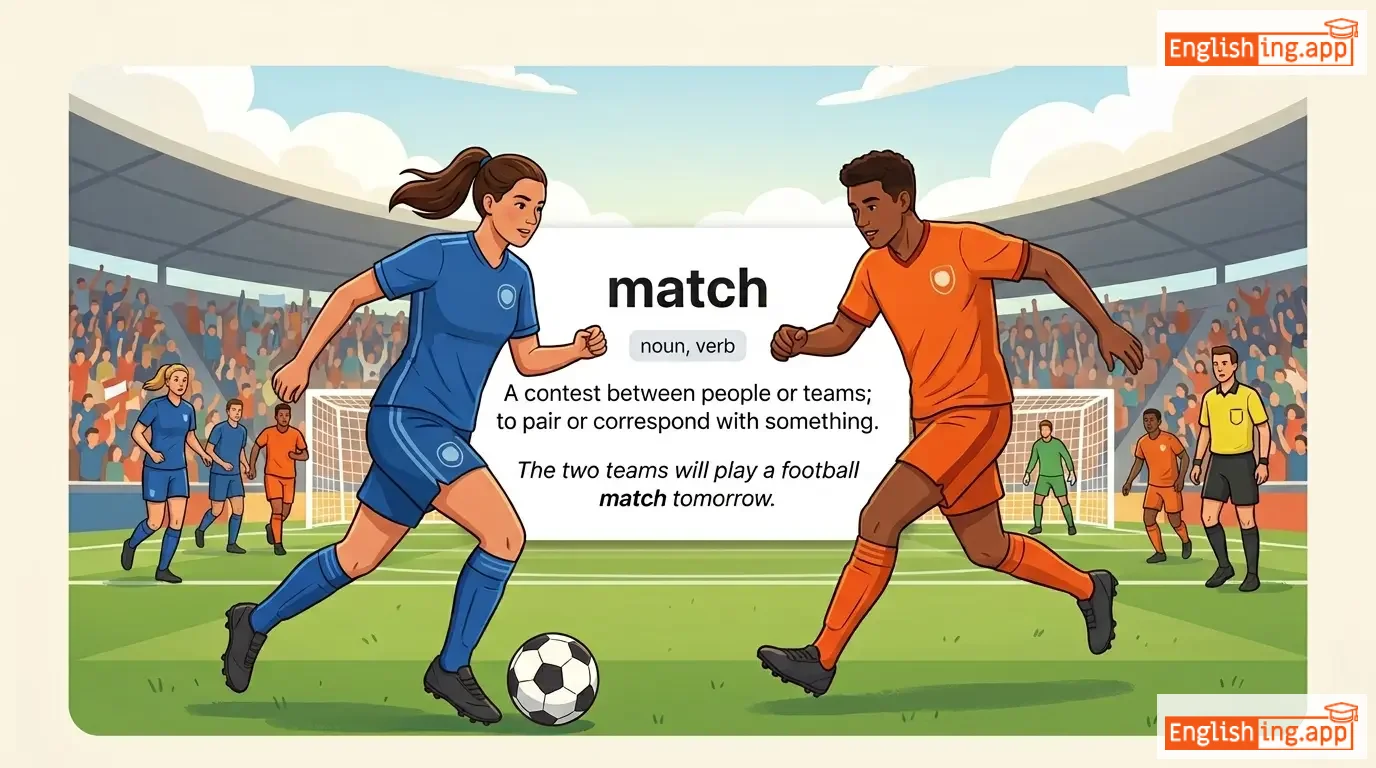
A contest between people or teams; to pair or correspond with something.
••••••
|
The two teams will play a football match tomorrow.
2つのチームが明日サッカーマッチを行います。
••••••
|
2つのチームが明日サッカーマッチを行います。
Futatsu no chīmu ga ashita sakkā matchi o okonai masu.
••••••
|
perfect match
完璧な組み合わせ
••••••
|
Two people or things that go very well together.
••••••
|
完璧なペア
kanpeki na pea
••••••
|
contest, game, pair, partner, counterpart
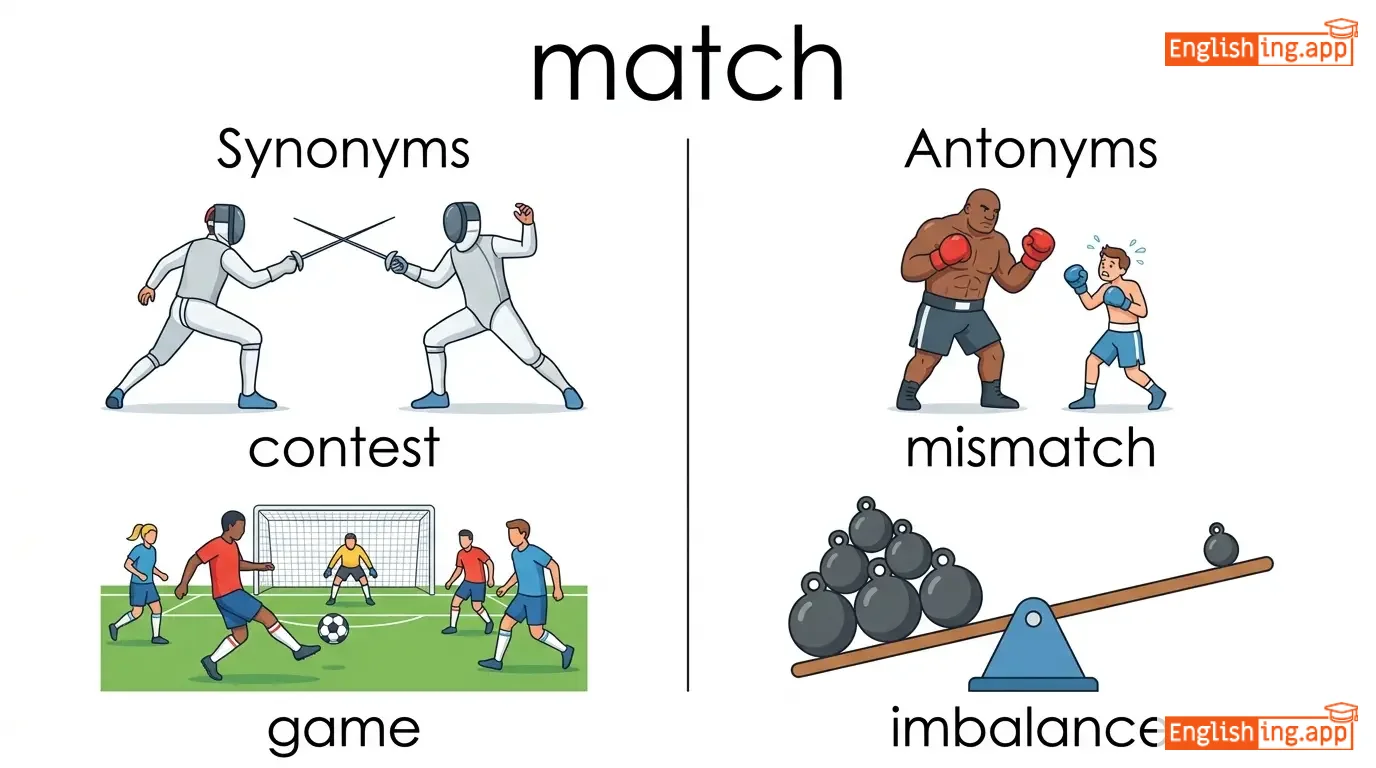
••••••
|
mismatch, imbalance
••••••
|
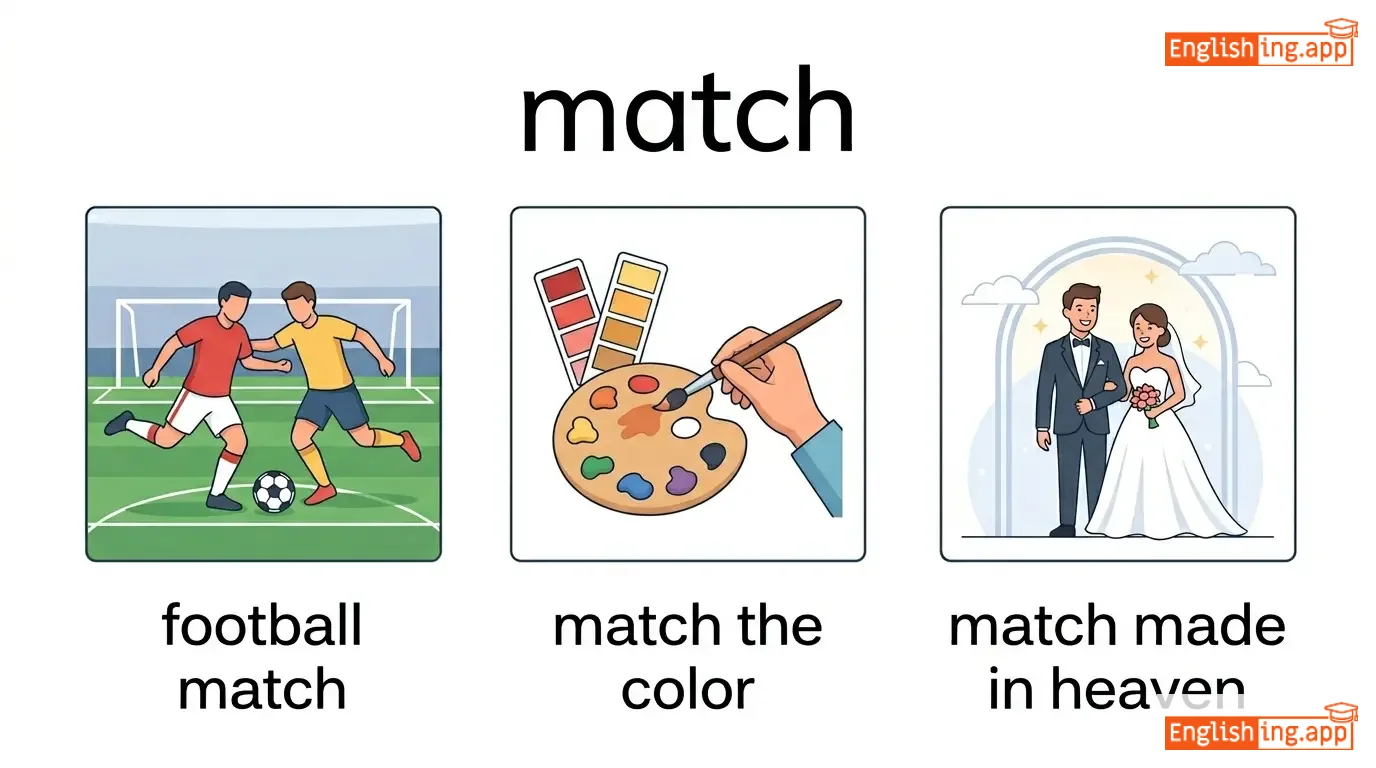
football match, match the color, match made in heaven
••••••
|
サッカーのMATCHは競争です。MATCHは競争を意味します。
••••••
|
|
#11416
🎓
|
/ˈmɑːstər/
noun, verb
••••••
|
- •••••• | - •••••• |
mastered
••••••
|
mastered
••••••
|
masters
••••••
|
mastering
••••••
|
A person with great skill or control in a subject or activity; to gain full command over something.
••••••
|
She mastered the art of cooking Italian dishes. |
- •••••• |
jack of all trades, master of none |
Someone who can do many things but is not an expert in any of them.
••••••
|
- •••••• |
expert, specialist, teacher, guru, controller
••••••
|
novice, beginner, student
••••••
|
master plan, master key, master skill, master class
••••••
|
No •••••• |
|
#11417
🎭
|
/mæsk/
noun
(マスク)
••••••
|
- •••••• |
仮面
kamen
••••••
|
- •••••• | - •••••• | - •••••• | - •••••• |
A covering for the face to protect, disguise, or entertain.
••••••
|
He wore a mask at the costume party. |
彼は仮装パーティーで仮面をかぶっていた。
Kare wa kasō pātii de kamen o kabutte ita.
••••••
|
wear many masks |
To play different roles or hide one's true self.
••••••
|
多くの仮面をかぶる
Ōku no kamen o kaburu
••••••
|
covering, disguise, veil, shield, facade
••••••
|
exposure, reveal
••••••
|
face mask, protective mask, surgical mask, wear a mask
••••••
|
仮面、顔を隠すための道具。
••••••
|
|
#11418
💒
|
/ˈmæri/
verb
••••••
|
|
結婚する
kekkon suru
••••••
|
married
••••••
|
married
••••••
|
marries
••••••
|
marrying
••••••
|
To join in marriage; to take someone as a spouse.
••••••
|
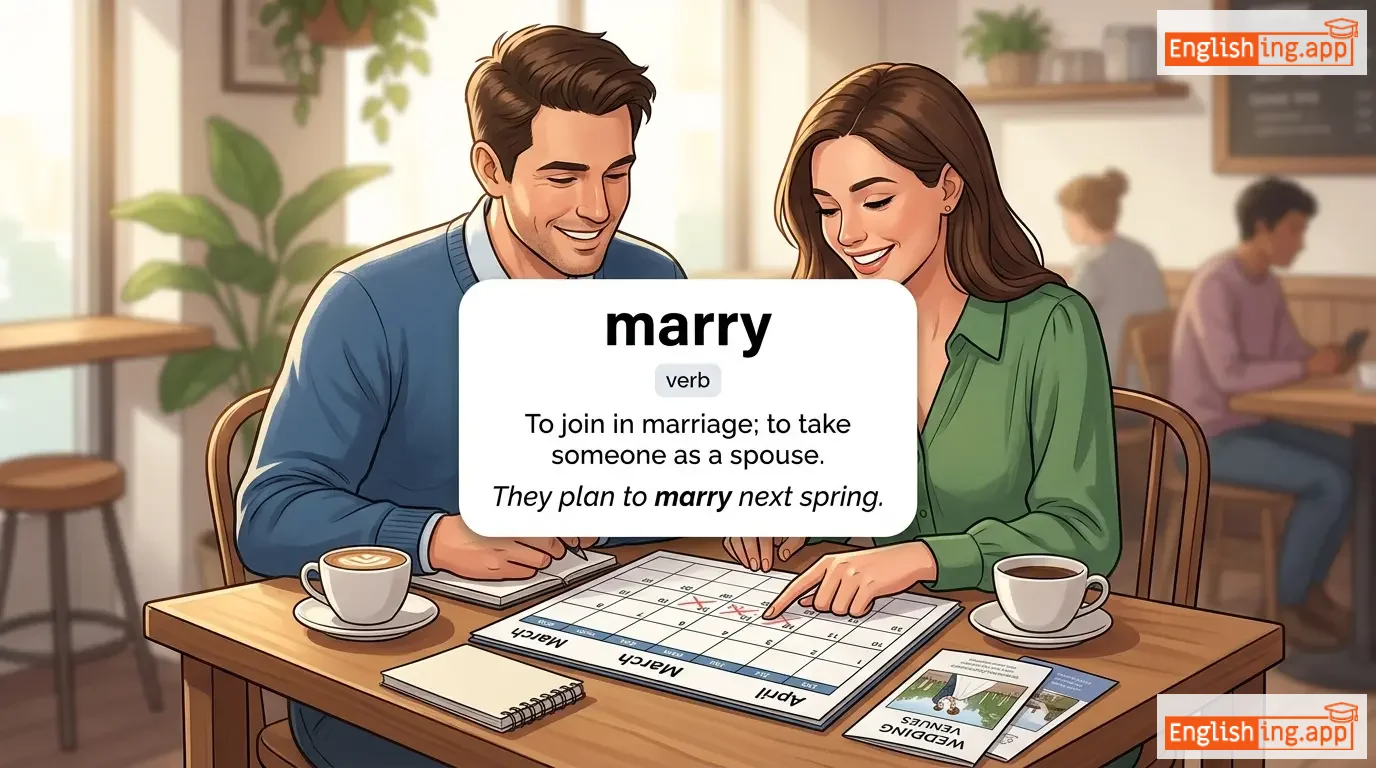
They plan to marry next spring. |
彼らは来年の春に結婚する予定です。
Karera wa rainen no haru ni kekkon suru yotei desu.
••••••
|
marry into |
To become part of a family or social group through marriage.
••••••
|
家族に結婚する
kazoku ni kekkon suru
••••••
|
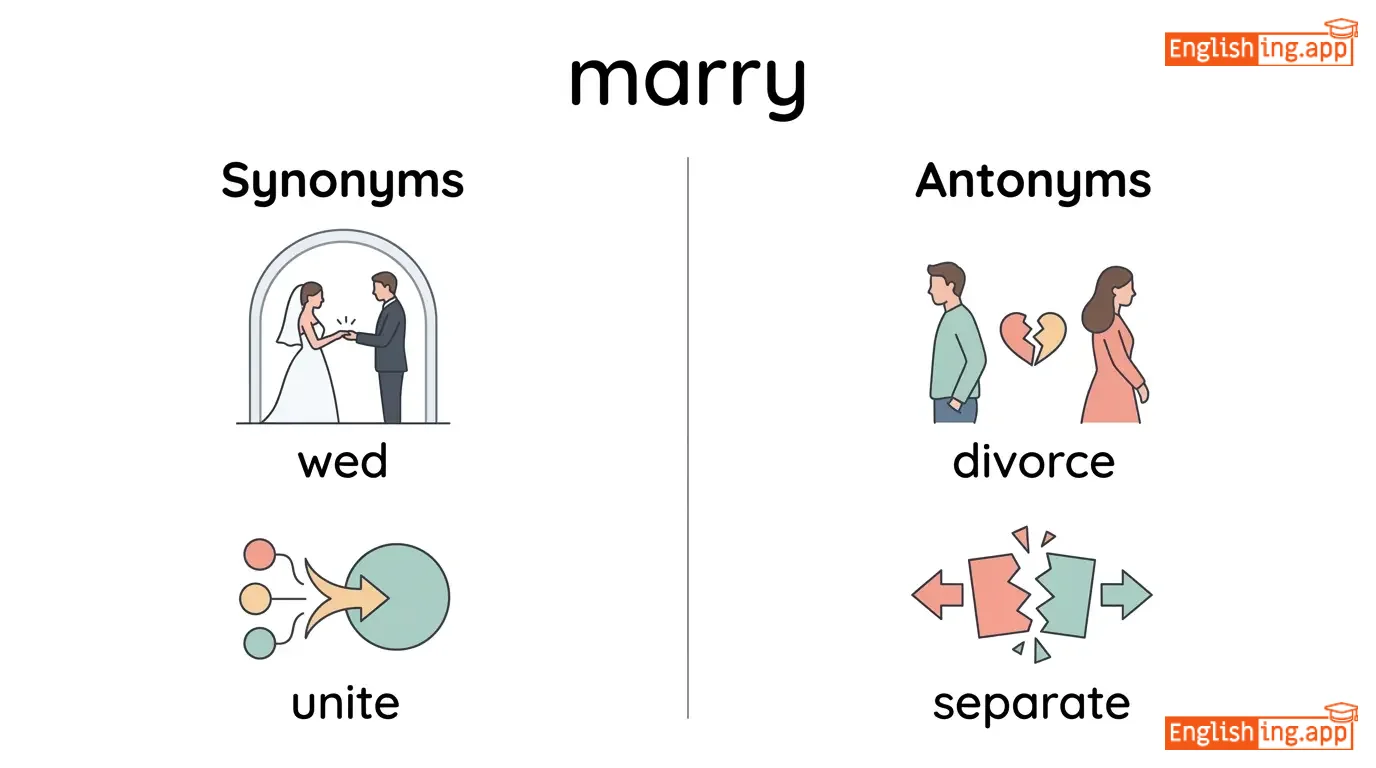
wed, unite, espouse, join
••••••
|
divorce, separate
••••••
|
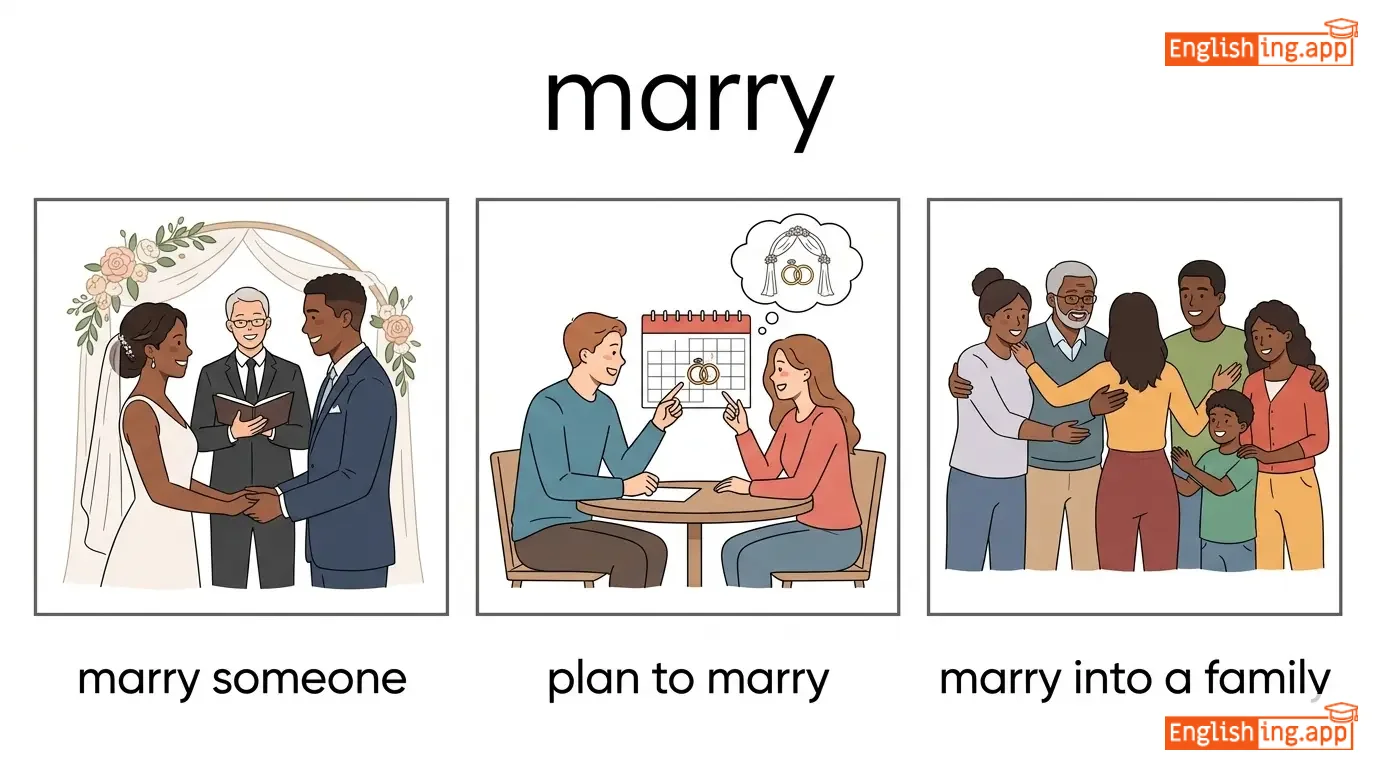
marry someone, plan to marry, marry into a family, decide to marry
••••••
|
Marry は結婚すること
••••••
|
|
#11419
👩❤️👨
|
/ˈmærid/
adjective
(ハピネス)
••••••
|
- •••••• |
幸福
kōfuku
••••••
|
- •••••• | - •••••• | - •••••• | - •••••• |
Having a spouse; joined in marriage.
••••••
|
She is happily married with two children. |
彼女は賞を受け取ったとき、自分の幸福を隠せなかった。
Kanojo wa shō o uketotta toki, jibun no kōfuku o kakusenakatta.
••••••
|
newly married |
Recently entered into marriage.
••••••
|
幸福の追求
Kōfuku no tsuikyū
••••••
|
wedded, espoused, united, partnered
••••••
|
single, divorced
••••••
|
married couple, happily married, married life, married man, married woman
••••••
|
幸福とは幸せを感じること - 幸福な生活。
••••••
|
|
#11420
💍
|
/ˈmærɪdʒ/
noun
(ˈhæpinəs)
••••••
|
- •••••• |
幸せ
shiawase
••••••
|
- •••••• | - •••••• | - •••••• | - •••••• |
The legally or formally recognized union of two people as partners in a personal relationship.
••••••
|
Their marriage lasted for over thirty years. |
彼女は賞を受け取ったとき、自分の幸せを隠せなかった。
Kanojo wa shō o uketotta toki, jibun no shiawase o kakusenakatta.
••••••
|
marriage of convenience |
A marriage for practical reasons rather than love.
••••••
|
幸せの追求
shiawase no tsuikyū
••••••
|
wedding, union, matrimony, partnership, alliance
••••••
|
divorce, separation
••••••
|
happy marriage, arranged marriage, successful marriage, marriage ceremony, marriage contract
••••••
|
幸せ = 心が温まる瞬間
••••••
|
|
#11421
📢
|
/ˈmɑːrkɪtɪŋ/
noun
(マーケティング)
••••••
|
|
マーケティング
māketingu
••••••
|
- •••••• | - •••••• | - •••••• | - •••••• |
The action or business of promoting and selling products or services, including market research and advertising.
••••••
|
The company invested heavily in digital marketing. |
その会社はデジタルマーケティングに多大な投資をしました。
Sono kaisha wa dejitaru māketingu ni tadaina tōshi o shimashita.
••••••
|
guerrilla marketing |
Unconventional and creative marketing strategies to promote a product.
••••••
|
ゲリラマーケティング
gerira māketingu
••••••
|
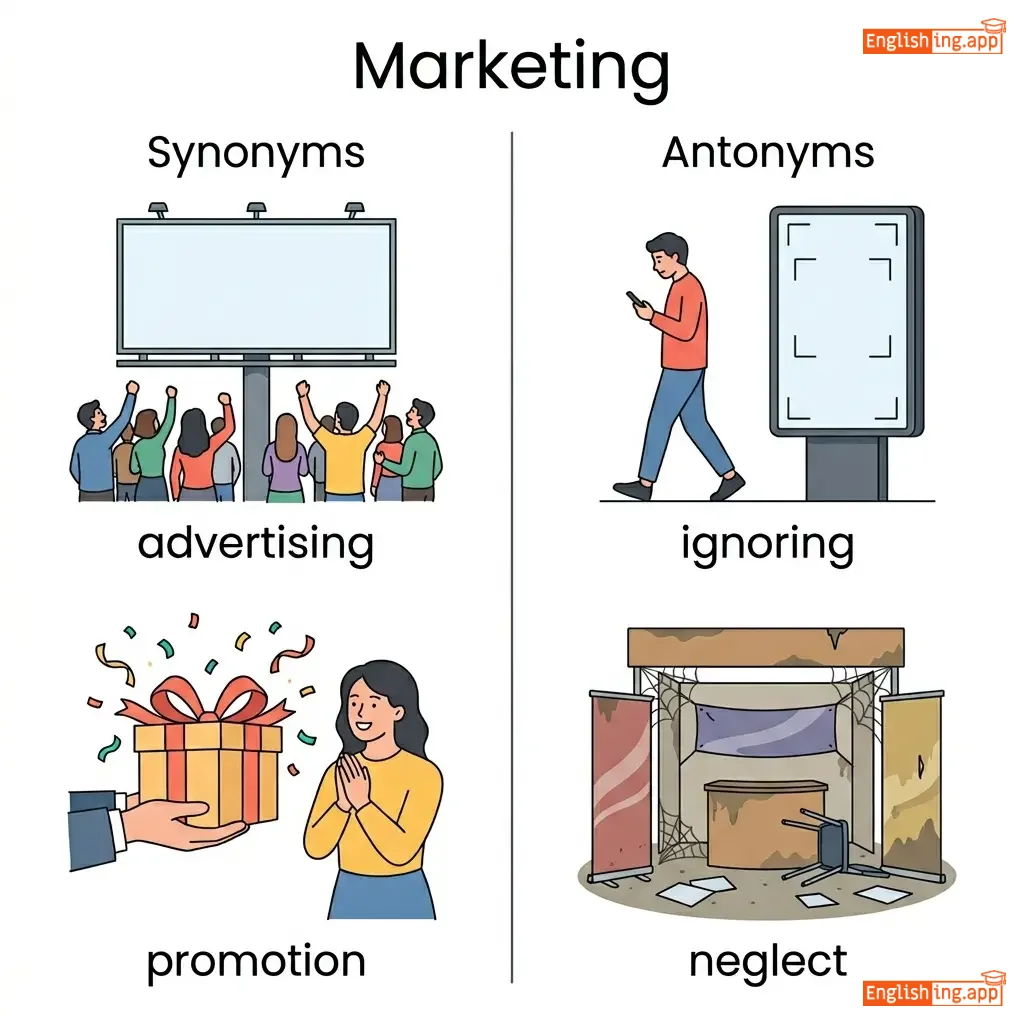
advertising, promotion, publicity, sales, merchandising
••••••
|
ignoring, neglect
••••••
|
marketing strategy, digital marketing, marketing campaign, marketing research, marketing mix
••••••
|
マーケティングは市場で物を売ることです!
••••••
|
|
#11422
🛒
|
/ˈmɑːrkɪt/
noun
(マーケット)
••••••
|
|
市場
ichiba
••••••
|
- •••••• | - •••••• | - •••••• | - •••••• |
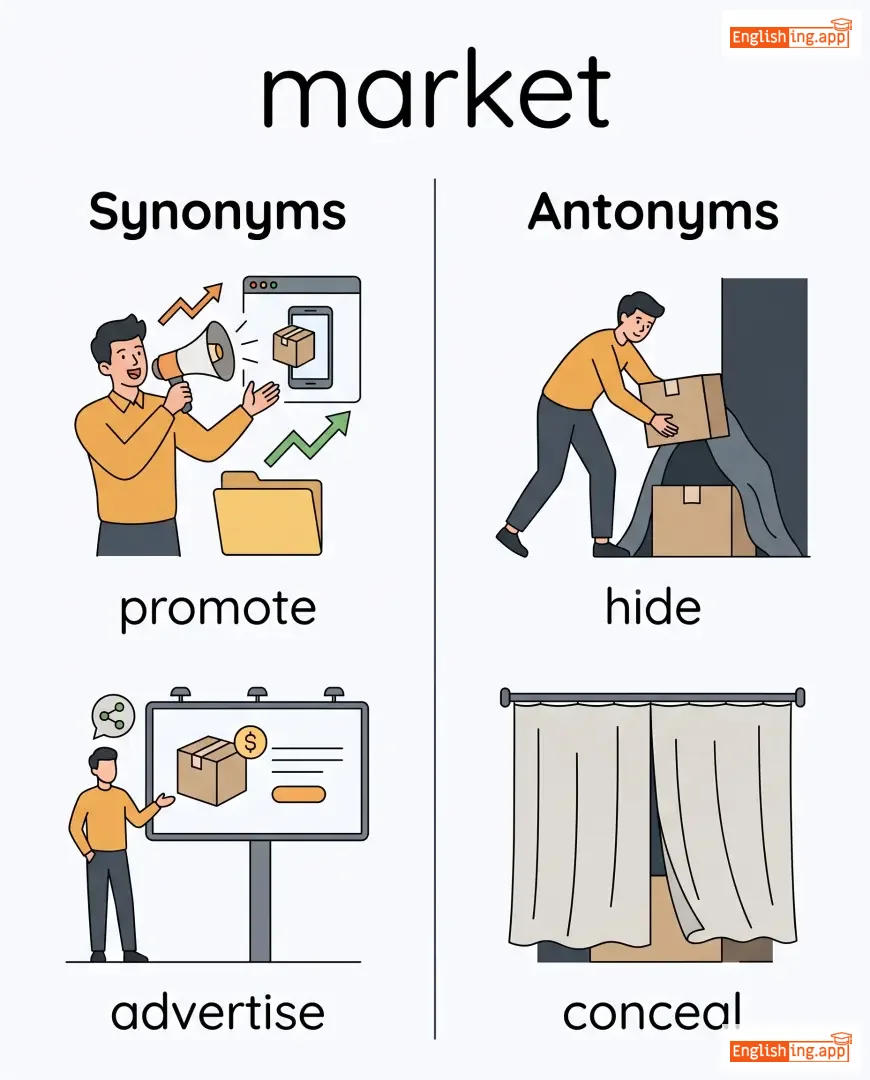
a place or system where goods and services are bought and sold
••••••
|
They went to the market to buy fresh vegetables.
彼らは新鮮な野菜を買いにマーケットに行った。
••••••
|
彼らは新鮮な野菜を買いにマーケットに行った。
Karera wa shinsen na yasai o kai ni māketto ni itta.
••••••
|
black market
ブラックマーケット
••••••
|
illegal buying and selling of goods
••••••
|
ブラックマーケット
burakku māketto
••••••
|
bazaar, exchange, trade, fair
••••••
|
monopoly, scarcity
••••••
|
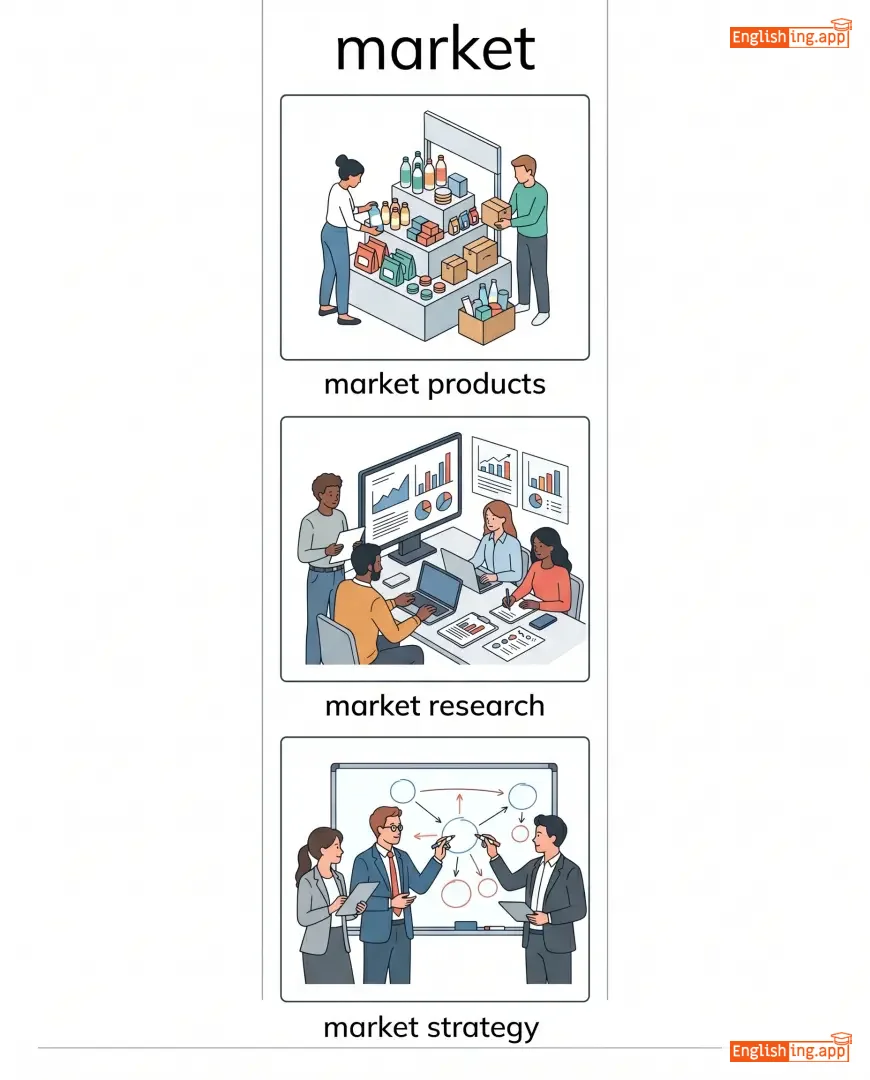
local market, stock market, global market, open market
••••••
|
市場は、英語でいう 'market' と同じ意味です。
••••••
|
|
#11423
✏️
|
/mɑːrk/
verb
(マーク)
••••••
|
|
印をつける
ishi o tsukeru
••••••
|
marked
マークド
••••••
|
marked
マークド
••••••
|
marks
マークス
••••••
|
marking
マーキング
••••••
|
to make a visible impression or symbol on a surface
••••••
|
The teacher marked the important points in red.
先生は赤で重要なポイントをマークしました。
••••••
|
先生は赤で重要なポイントをマークしました。
Sensei wa aka de jūyōna pointo o māku shimashita.
••••••
|
make your mark
自分の痕跡を残す
••••••
|
to have a lasting impact or achieve success
••••••
|
自分の印を残す
jibun no shirushi o nokosu
••••••
|
label, stain, sign, indicate, highlight
••••••
|
erase, remove, clear
••••••
|
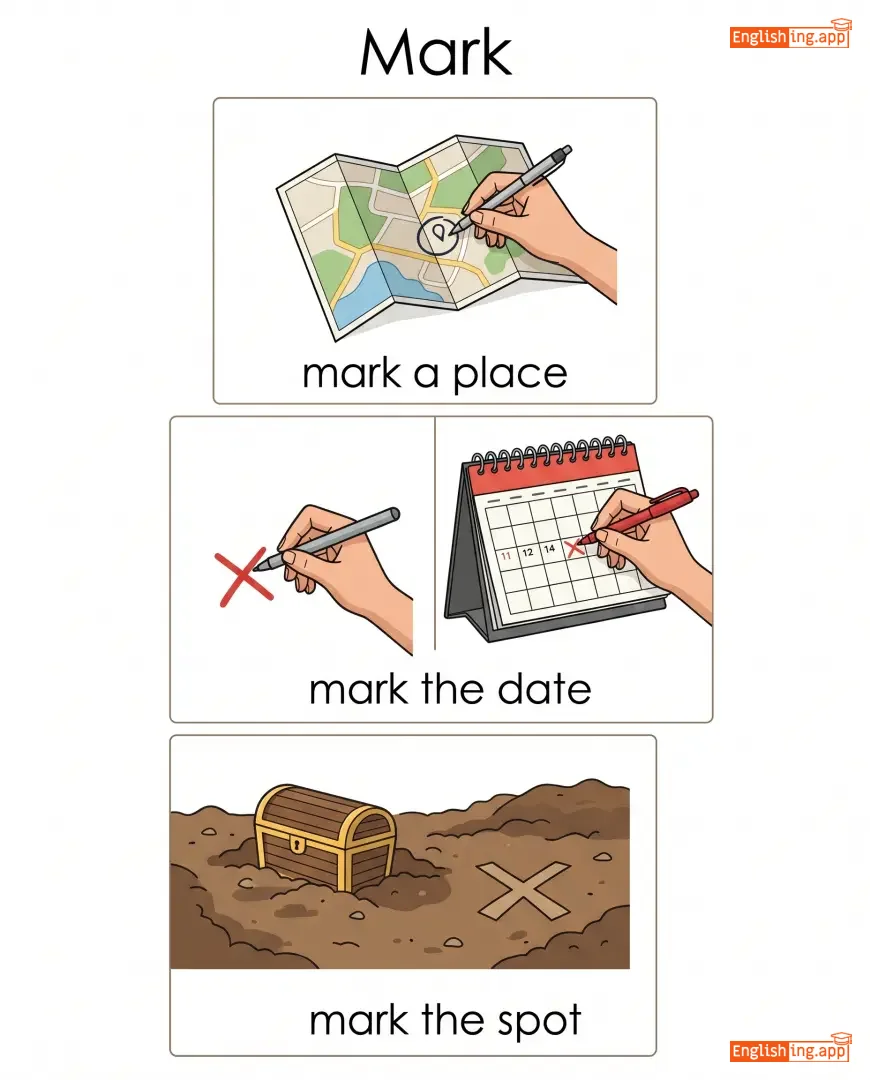
mark a place, mark the date, mark the spot, examination mark
••••••
|
Markで印をつける
••••••
|
|
#11424
🗺️
|
/mæp/
noun
(マップ)
••••••
|
- •••••• |
地図
chizu
••••••
|
- •••••• | - •••••• | - •••••• | - •••••• |
a drawing that shows the features of an area of land or sea
••••••
|
He studied the map before starting his journey. |
彼は旅を始める前に地図を調べました。
Kare wa tabi o hajimeru mae ni chizu o shirabemashita.
••••••
|
put on the map |
to make someone or something famous or important
••••••
|
地図に載せる
chizu ni noseru
••••••
|
chart, plan, diagram, blueprint
••••••
|
disorder, chaos
••••••
|
world map, road map, city map, draw a map
••••••
|
地図 = 地図 (map = chizu)
••••••
|
Vocabulary Quiz
Test your vocabulary by matching words with their translations or meanings.
Login to take the quiz
Comments (0)
Share your thoughts and join the discussion.
Join the discussion by logging in
Login to CommentNo comments yet
Be the first to share your thoughts!