

翻訳
過去
過去分詞
三人称単数
動名詞
意味
例文
例文の翻訳
同義語
対義語
コロケーション
ニーモニック


Swipe left or right, or use the buttons. Tap image to zoom.
例文の翻訳
単語
Lesson 284Lesson 284 - マスクトグル
|
絵文字
|
単語 | Images | 翻訳 | 過去 | 過去分詞 | 三人称単数 | 動名詞 | 意味 | 例文 | 例文の翻訳 | 表現例 | 表現例の意味 | 表現例の翻訳 | 同義語 | 対義語 | コロケーション | ニーモニック |
|---|---|---|---|---|---|---|---|---|---|---|---|---|---|---|---|---|---|
|
#8490
💘
|
/ˈsuːtər/
noun
(スーター)
••••••
|
- •••••• |
求婚者
kyuukonsha
••••••
|
- •••••• | - •••••• | - •••••• | - •••••• |
a man who pursues a relationship with a woman, often with the intent to marry
••••••
|
She had many suitors vying for her attention.
シー ハド メニー スーターズ ヴァイング フォー ハー アテンション。
••••••
|
彼女には彼女の注意を争う求婚者がたくさんいた。
kanojo ni wa kanojo no chuui o arasou kyuukonsha ga takusan ita
••••••
|
- •••••• | - •••••• | - •••••• |
admirer, lover, wooer, beau, boyfriend
••••••
|
enemy, stranger
••••••
|
eligible suitor, wealthy suitor, many suitors, suitor for marriage
••••••
|
A suitor is a 求婚者—literally someone who requests marriage!
••••••
|
|
#8491
➕
|
/ˌsuːpərˈæd/
verb
(スーパーアッド)
••••••
|
- •••••• |
追加する
tsuika suru
••••••
|
superadded
スーパーアッドされた
••••••
|
superadded
スーパーアッドされた
••••••
|
superadds
スーパーアッズ
••••••
|
superadding
スーパーアディング
••••••
|
to add something to what has already been added
••••••
|
The author chose to superadd a new chapter to the revised edition.
著者は改訂版に新しい章を追加することに決めました。
••••••
|
著者は改訂版に新しい章を追加することに決めました。
Chosha wa kaitei-ban ni atarashii shou wo tsuika suru koto ni kimemashita.
••••••
|
- •••••• | - •••••• | - •••••• |
append, include, add, supplement, attach
••••••
|
remove, subtract, deduct
••••••
|
superadd value, superadd detail, superadd meaning
••••••
|
Super + Add = スーパーアッド
••••••
|
|
#8492
🌸
|
/ˌsuː.pər.əˈbʌn.dəns/
noun
(スーパーバンダンス)
••••••
|
- •••••• |
過剰な豊富さ
Kajou na houfusa
••••••
|
- •••••• | - •••••• | - •••••• | - •••••• |
An excessive or overflowing amount of something.
••••••
|
The garden was filled with a superabundance of flowers. |
庭は花の過剰な豊富さで満たされていました。
Niwa wa hana no kajou na houfusa de mitasarete imashita.
••••••
|
- •••••• | - •••••• | - •••••• |
excess, surplus, overflow, profusion, plenty
••••••
|
scarcity, shortage, lack
••••••
|
superabundance of resources, superabundance of wealth, superabundance of flowers
••••••
|
Super + abundance, 必要以上に豊富 – 過剰な豊富さ
••••••
|
|
#8493
🛍️
|
/ˈsʌn.dri/
adjective
(サンドリー)
••••••
|
|
雑多な
zattana
••••••
|
- •••••• | - •••••• | - •••••• | - •••••• |
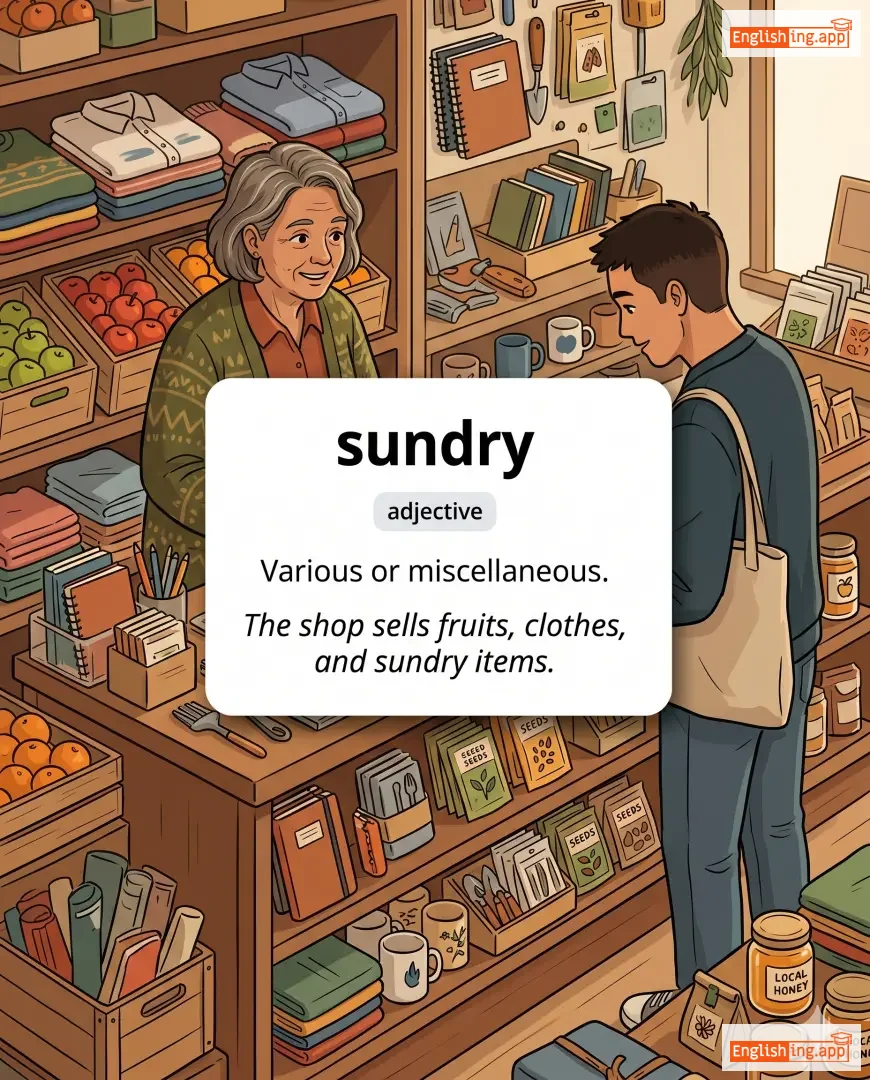
Various or miscellaneous.
••••••
|
The shop sells fruits, clothes, and sundry items. |
その店は果物、衣類、そして雑多な商品を販売しています。
Sono mise wa kudamono, irui, soshite zattana shōhin o hanbai shiteimasu.
••••••
|
- •••••• | - •••••• | - •••••• |
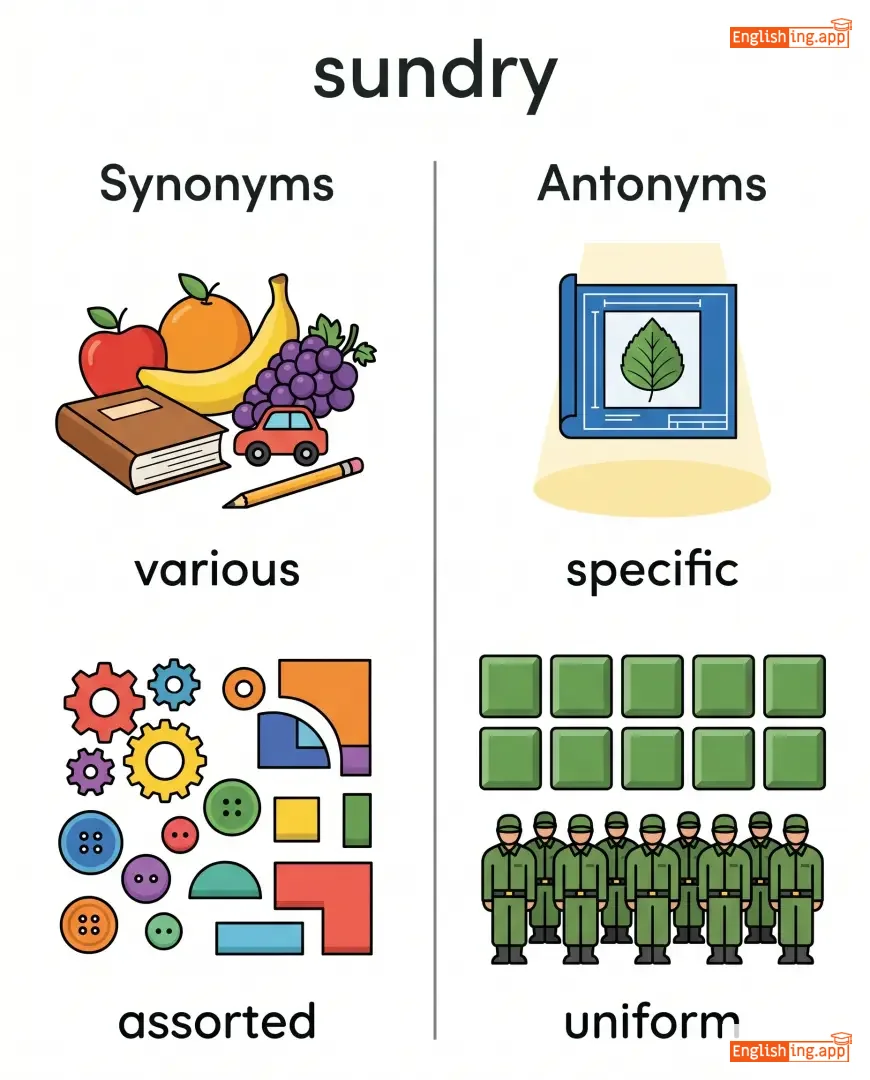
various, assorted, diverse, miscellaneous
••••••
|
specific, uniform
••••••
|
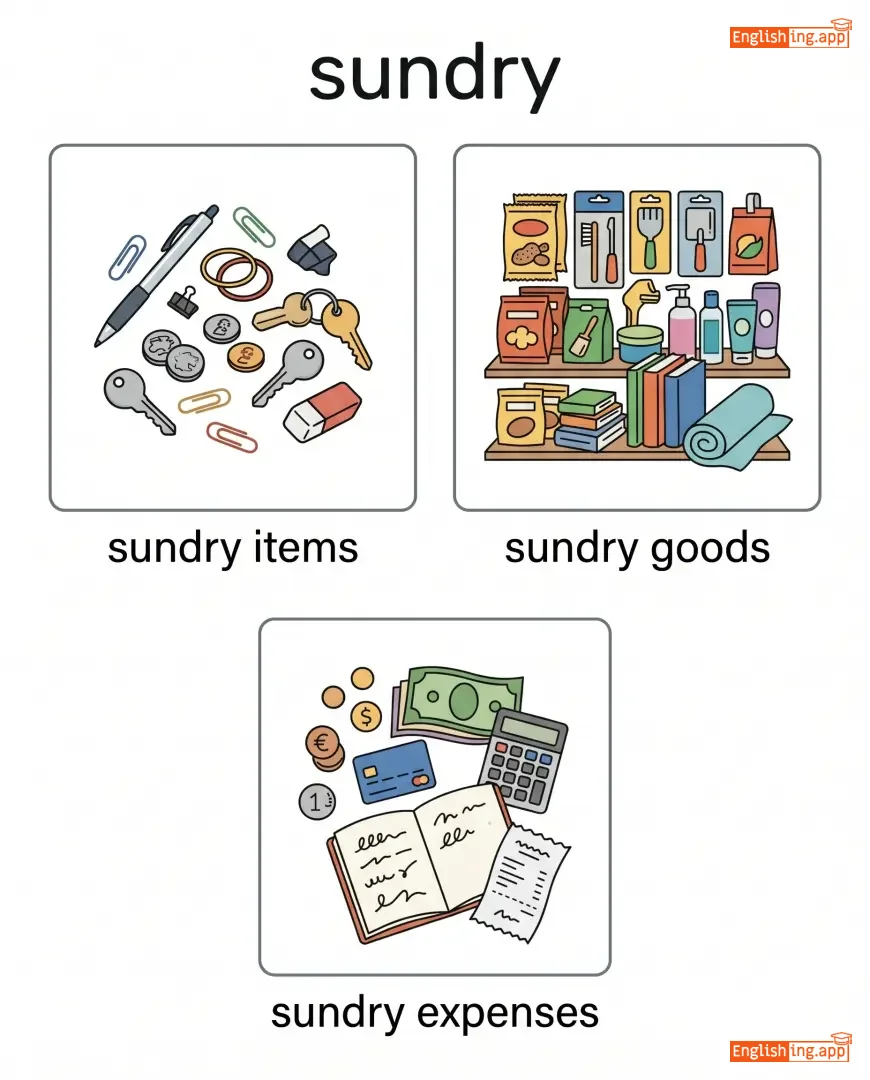
sundry items, sundry goods, sundry expenses
••••••
|
Sundryとは、日曜日に様々なものが見つかるような感じです
••••••
|
|
#8494
✂️
|
/ˈsʌn.dər/
verb
(サンダー)
••••••
|
- •••••• |
引き裂く
hikisaku
••••••
|
sundered
サンダード
••••••
|
sundered
サンダード
••••••
|
sunders
サンダーズ
••••••
|
sundering
サンデリング
••••••
|
To split apart or separate, especially with force.
••••••
|
The war sundered families and friends.
戦争は家族と友人を引き裂きました。
••••••
|
戦争は家族と友人を引き裂きました。
Sensou wa kazoku to yuujin o hikisakimashita.
••••••
|
tear asunder
アサンダーで引き裂く
••••••
|
To break apart violently
••••••
|
激しく引き裂く
hageshiku hikisaku
••••••
|
separate, split, divide, sever, part
••••••
|
unite, join, combine
••••••
|
sunder apart, sunder from, sundered families
••••••
|
Sunder、雷のようにすべてを引き裂く
••••••
|
|
#8495
🍽️
|
/ˈsʌmp.tʃu.əs/
adjective
(サンプチュアス)
••••••
|
- •••••• |
豪華な
gōka na
••••••
|
- •••••• | - •••••• | - •••••• | - •••••• |
Splendid and expensive-looking; luxurious.
••••••
|
The guests were treated to a sumptuous banquet. |
ゲストは豪華な晩餐にもてなされました。
Gesuto wa gōka na bansan ni motenasaremashita.
••••••
|
sumptuous feast |
A very luxurious or lavish meal
••••••
|
豪華な晩餐
Gōka na bansan
••••••
|
luxurious, lavish, opulent, splendid, rich
••••••
|
plain, simple, modest
••••••
|
sumptuous meal, sumptuous feast, sumptuous decoration, sumptuous clothing
••••••
|
Sumptuousは' sum-sum 'の音 – 豪華な食事!
••••••
|
|
#8496
⚖️
|
/ˈsʌmp.tʃuˌɛr.i/
adjective
(サンプチュアリ)
••••••
|
- •••••• |
贅沢品の個人的な支出を制限する法律または規制に関連する
zeitakuhin no kojinteki na shishutsu o seigen suru hōritsu matawa kisei ni kanren suru
••••••
|
- •••••• | - •••••• | - •••••• | - •••••• |
Relating to laws or regulations intended to limit personal spending on luxury goods.
••••••
|
In medieval Europe, sumptuary laws restricted the wearing of expensive fabrics to the nobility. |
中世ヨーロッパでは、贅沢品法が高価な布地の着用を貴族に限定していました。
Chūsei Yōroppa de wa, zeitakuhin-hō ga kōka na nuno no chakuyō o kizoku ni gentei shite imashita.
••••••
|
- •••••• | - •••••• | - •••••• |
restrictive, prohibitive, regulatory, limiting
••••••
|
permissive, indulgent
••••••
|
sumptuary laws, sumptuary regulations, sumptuary restrictions
••••••
|
贅沢品の制限 - サンプチュアリ法
••••••
|
|
#8497
📢
|
/ˈsʌmən/
verb
••••••
|
- •••••• | - •••••• |
summoned
••••••
|
summoned
••••••
|
summons
••••••
|
summoning
••••••
|
To order someone to come or to gather courage or strength.
••••••
|
The king summoned his advisors to the court. |
- •••••• |
summon up courage |
to gather or muster courage
••••••
|
- •••••• |
call, request, order, assemble, convene
••••••
|
dismiss, disperse
••••••
|
summon a meeting, summon help, summon someone, summon up courage
••••••
|
No •••••• |
|
#8498
⛰️
|
/ˈsʌmɪt/
noun
(samitto)
••••••
|
|
頂点, サミット
tōten, samitto
••••••
|
- •••••• | - •••••• | - •••••• | - •••••• |
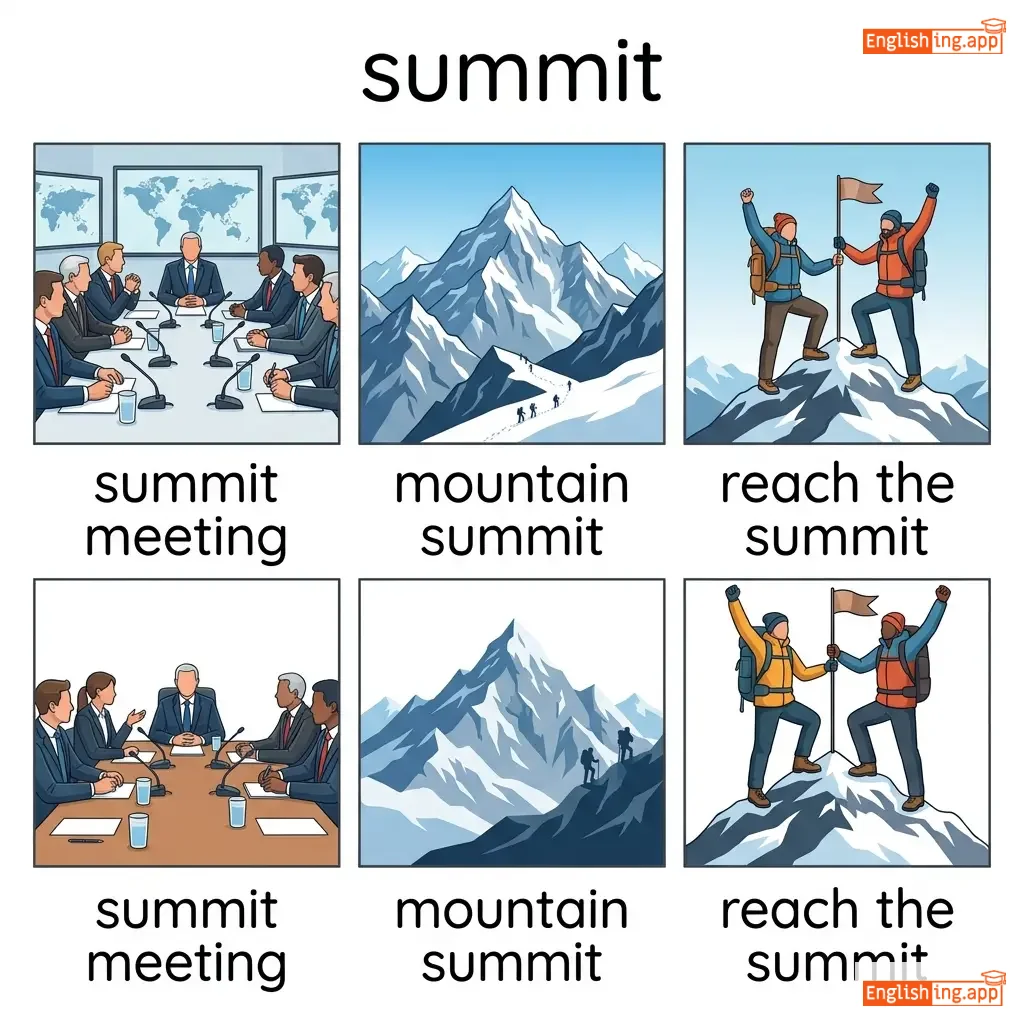
The highest point of a hill or mountain; a meeting between heads of state or leaders.
••••••
|
The leaders met at the summit to discuss global issues. |
リーダーたちはサミットで世界的な問題について話し合いました。
Rīdā-tachi wa samitto de sekaiteki na mondai ni tsuite hanashimashita.
••••••
|
reach the summit |
to arrive at the highest point, literally or figuratively
••••••
|
頂点に達する
tōten ni tassuru
••••••
|
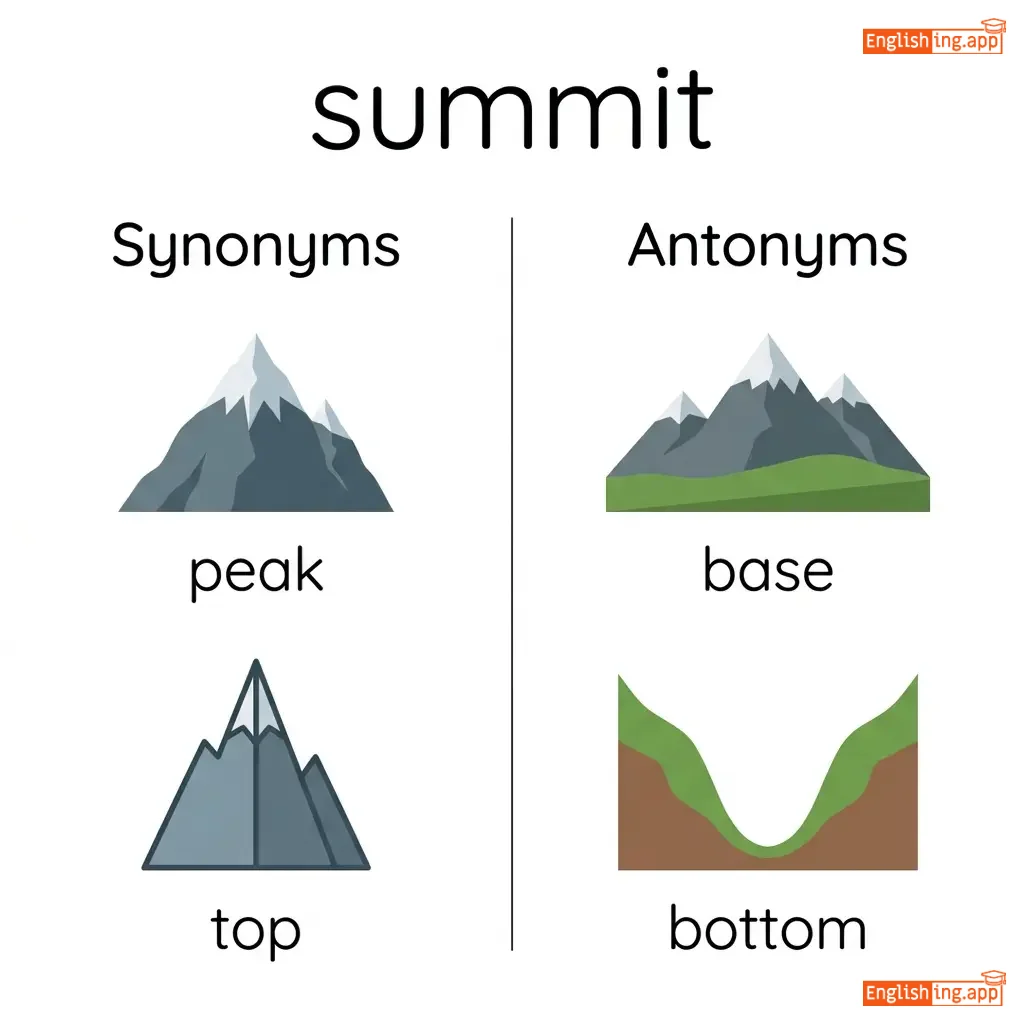
peak, top, apex, conference, meeting
••••••
|
base, bottom
••••••
|
summit meeting, mountain summit, reach the summit, summit conference
••••••
|
Summit = 頂点 = 山の頂上
••••••
|
|
#8499
➕
|
/sʌˈmeɪʃən/
noun
(サマネーション)
••••••
|
- •••••• |
合計, 要約
goukei, youyaku
••••••
|
- •••••• | - •••••• | - •••••• | - •••••• |
The process of adding things together; a summary of points.
••••••
|
The lawyer gave a powerful summation of the case. |
弁護士は事件の強力な要約を行った。
Bengoshi wa jiken no kyouryoku na youyaku wo okonatta.
••••••
|
- •••••• | - •••••• | - •••••• |
total, aggregation, conclusion, recap, synthesis
••••••
|
division, separation
••••••
|
final summation, mathematical summation, summation of points, summation speech
••••••
|
Summationは合計 = sumのtotal
••••••
|
|
#8500
📝
|
/ˈsʌməri/
noun
(サマリー)
••••••
|
- •••••• |
要約
yōyaku
••••••
|
- •••••• | - •••••• | - •••••• | - •••••• |
A brief statement of the main points of something.
••••••
|
She wrote a summary of the book for her class. |
彼女はクラスのためにその本の要約を書きました。
Kanojo wa kurasu no tame ni sono hon no yōyaku o kakimashita.
••••••
|
in summary |
used to introduce a concise statement that captures the main points
••••••
|
要約すると
yōyaku suru to
••••••
|
outline, synopsis, abstract, digest, recap
••••••
|
detail, expansion
••••••
|
write a summary, brief summary, executive summary, short summary
••••••
|
Summaryは内容の短いバージョンで、要約だ。
••••••
|
|
#8501
🌡️
|
/ˈsʌltri/
adjective
(サルトリー)
••••••
|
- •••••• |
蒸し暑く湿った、魅力的な
mushi atsuku shimetta, miryokuteki na
••••••
|
- •••••• | - •••••• | - •••••• | - •••••• |
Uncomfortably hot and humid; also describes someone attractive in a passionate or sensual way.
••••••
|
The sultry weather made it hard to focus on work. |
蒸し暑い天気は仕事に集中するのを難しくしました。
Mushi atsui tenki wa shigoto ni shūchū suru no o muzukashiku shimashita.
••••••
|
- •••••• | - •••••• | - •••••• |
hot, humid, sweltering, steamy, passionate
••••••
|
cool, chilly, dry
••••••
|
sultry night, sultry look, sultry climate, sultry day
••••••
|
Sultry = 熱くて魅力的、つまり sultry は暑くて魅力的な意味です。
••••••
|
|
#8502
🖤
|
/ˈsʌli/
verb
(サリー)
••••••
|
- •••••• |
汚す
yogosu
••••••
|
sullied
サリッド
••••••
|
sullied
サリッド
••••••
|
sullies
サリーズ
••••••
|
sullying
サリイング
••••••
|
to damage the purity, integrity, or reputation of something
••••••
|
The scandal sullied the politician’s reputation.
スキャンダルは政治家の評判を汚した。
••••••
|
スキャンダルは政治家の評判を汚した。
Sukyandaru wa seijika no hyōban o yogoshita.
••••••
|
sully one’s name
名前を汚す
••••••
|
to ruin someone’s reputation or honor
••••••
|
名前を汚す
namae o yogosu
••••••
|
taint, tarnish, stain, disgrace, defile
••••••
|
honor, purify, clean
••••••
|
sully reputation, sully honor, sully image, sully name
••••••
|
Sullyは汚すという意味—名前を汚す 😡
••••••
|
|
#8503
🌧️
|
/ˈsʌlən/
adjective
(サレン)
••••••
|
- •••••• |
むっつりした
muttsuri shita
••••••
|
- •••••• | - •••••• | - •••••• | - •••••• |
bad-tempered and gloomy; silently resentful
••••••
|
She gave him a sullen look and walked away. |
彼女はむっつりした表情を見せて、立ち去った。
Kanojo wa muttsuri shita hyōjō o misete, tachisatta.
••••••
|
- •••••• | - •••••• | - •••••• |
gloomy, morose, sulky, moody, dour
••••••
|
cheerful, lively, bright
••••••
|
sullen look, sullen mood, sullen silence, sullen teenager
••••••
|
Sullen = むっつりした、何も言わずに怒っている感じ
••••••
|
|
#8504
😒
|
/sʌlk/
verb
(サルク)
••••••
|
|
すねる
suneru
••••••
|
sulked
サルクド
••••••
|
sulked
サルクド
••••••
|
sulks
サルクス
••••••
|
sulking
サルキング
••••••
|
to be silently resentful or moody
••••••
|
He went to his room to sulk after the argument.
彼は議論の後、部屋に行ってサルクしました。
••••••
|
彼は議論の後、部屋に行ってすねました。
Kare wa giron no ato, heya ni itte sunemashita.
••••••
|
to sit and sulk
サルクして座る
••••••
|
to remain silent and angry due to disappointment or resentment
••••••
|
すねて座る
sunete suwaru
••••••
|
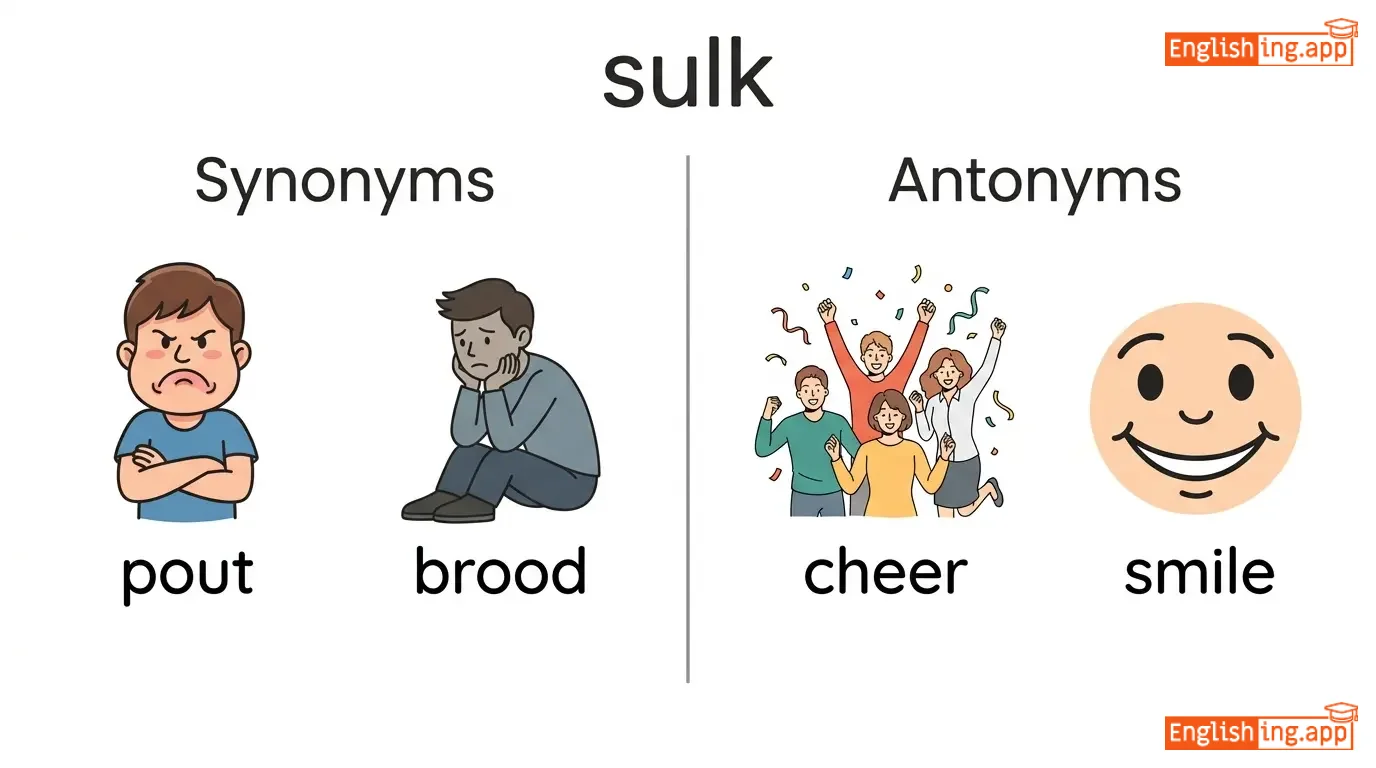
pout, brood, mope, glower, frown
••••••
|
cheer, smile, rejoice
••••••
|
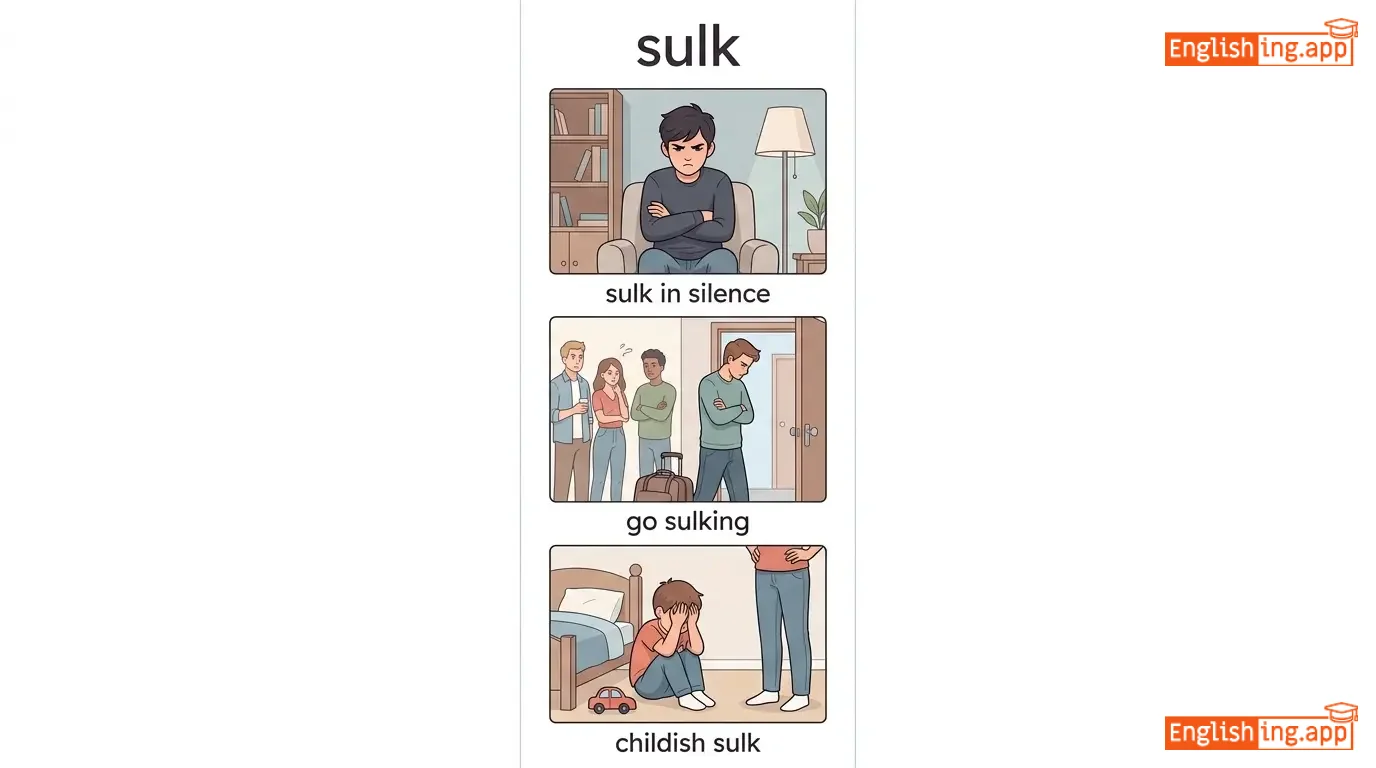
sulk in silence, go sulking, childish sulk, long sulk
••••••
|
Sulk = solk (silent + suneru) = すねる
••••••
|
|
#8505
✍️
|
/səkˈsɪŋkt/
adjective
(サクスィンクト)
••••••
|
|
簡潔な
kanketsu na
••••••
|
- •••••• | - •••••• | - •••••• | - •••••• |
Expressed in a clear and brief manner.
••••••
|
Her presentation was succinct and easy to follow. |
彼女のプレゼンテーションは簡潔で理解しやすかった。
Kanojo no purezentēshon wa kanketsu de rikai shiyasukatta.
••••••
|
- •••••• | - •••••• | - •••••• |
concise, brief, terse, compact, clear
••••••
|
wordy, lengthy, verbose
••••••
|
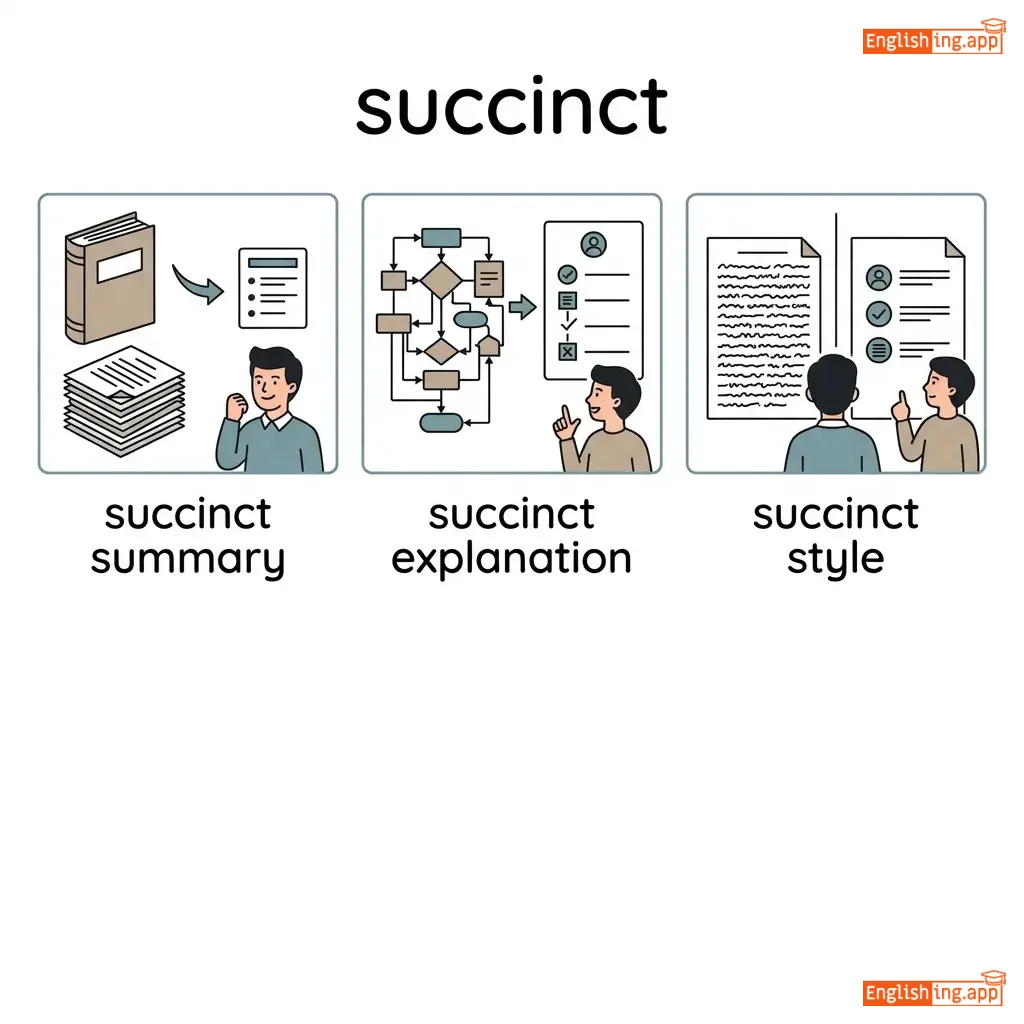
succinct summary, succinct explanation, succinct style, succinct response
••••••
|
Succinctは簡潔で、無駄を省いた表現。
••••••
|
|
#8506
💭
|
/səˈdʒɛstɪv/
adjective
(サジェスティブ)
••••••
|
- •••••• |
示唆的
shisa-teki
••••••
|
- •••••• | - •••••• | - •••••• | - •••••• |
tending to suggest ideas or images; sometimes implies something sexual or provocative
••••••
|
The painting was highly suggestive and sparked much debate. |
その絵画は非常に示唆的で、たくさんの議論を引き起こしました。
Sono kaiga wa hijou ni shisateki de, takusan no giron wo hikiokoshimashita.
••••••
|
- •••••• | - •••••• | - •••••• |
provocative, evocative, indicative, stimulating, symbolic
••••••
|
innocent, neutral, bland
••••••
|
suggestive remark, suggestive look, highly suggestive, suggestive gesture
••••••
|
示唆的=何かを示唆する、時には挑発的
••••••
|
|
#8507
🧠
|
/səˈdʒɛstəbəl/
adjective
(サジェスティブル)
••••••
|
- •••••• |
影響されやすい
eikyō sareyasui
••••••
|
- •••••• | - •••••• | - •••••• | - •••••• |
easily influenced by the suggestions of others
••••••
|
Children are highly suggestible and may believe what they are told. |
子供たちは非常に影響されやすく、言われたことを信じるかもしれません。
Kodomotachi wa hijō ni eikyō sareyasuku, iwareta koto o shinjiru kamoshiremasen.
••••••
|
- •••••• | - •••••• | - •••••• |
influencable, persuadable, impressionable, gullible
••••••
|
resistant, independent, skeptical
••••••
|
highly suggestible, easily suggestible, suggestible person
••••••
|
影響されやすいは他人の提案に簡単に影響されること—子供たちは影響されやすい。
••••••
|
|
#8508
🌅
|
/səˈfjuːz/
verb
(safyūzu)
••••••
|
- •••••• |
広がる
hirogaru
••••••
|
suffused
safyūzudo
••••••
|
suffused
safyūzudo
••••••
|
suffuses
safyūzesu
••••••
|
suffusing
safyūzingu
••••••
|
to gradually spread through or over something
••••••
|
A warm glow suffused her face as she smiled.
A uāmu gurō sūfyūzudo hā fēsu azu shī sumairudo.
••••••
|
彼女が微笑んだとき、暖かい輝きが彼女の顔に広がった。
Kanojo ga hohoenda toki, atatakai kagayaki ga kanojo no kao ni hirogatta.
••••••
|
- •••••• | - •••••• | - •••••• |
spread, permeate, flood, fill, cover
••••••
|
drain, remove
••••••
|
suffuse with light, suffuse the room, suffuse with color, suffuse with emotion
••••••
|
Suffuseは広がる—太陽の光が部屋に広がるように。
••••••
|
|
#8509
✊
|
/ˈsʌfrədʒɪst/
noun
(サフラジスト)
••••••
|
- •••••• |
女性参政権運動家
josei senseiken undōka
••••••
|
- •••••• | - •••••• | - •••••• | - •••••• |
a person advocating the extension of suffrage, especially to women
••••••
|
The suffragists organized rallies to demand voting rights for women. |
女性参政権運動家たちは女性の投票権を求めて集会を開いた。
Josei senseiken undōka-tachi wa josei no tōhyōken o motomete shūkai o hiraita.
••••••
|
- •••••• | - •••••• | - •••••• |
activist, campaigner, reformer, advocate
••••••
|
opponent, conservative
••••••
|
women suffragist, suffragist leader, suffragist movement
••••••
|
女性参政権運動家 = 女性の投票権を求めて活動する人、'選挙'の'選'を覚えよう。
••••••
|
|
#8510
🗳️
|
/ˈsʌfrɪdʒ/
noun
(サフリッジ)
••••••
|
|
参政権
sanseiken
••••••
|
- •••••• | - •••••• | - •••••• | - •••••• |
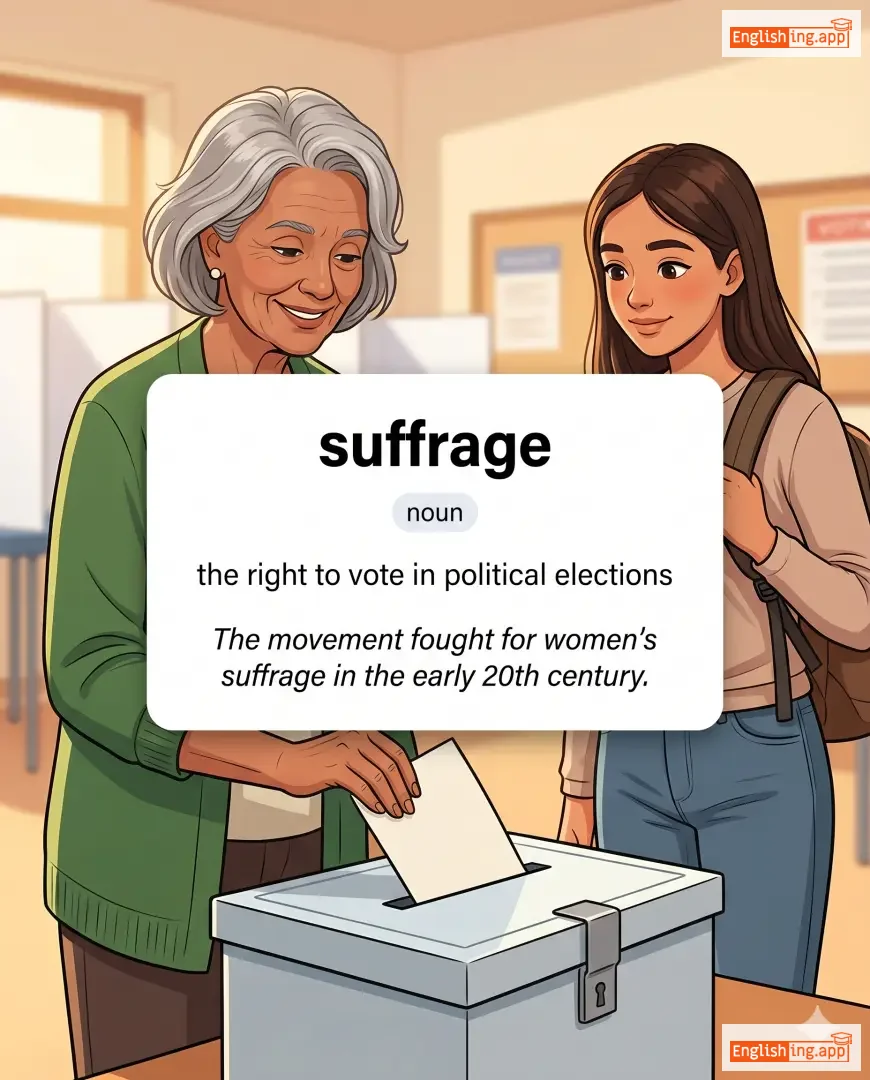
the right to vote in political elections
••••••
|
The movement fought for women’s suffrage in the early 20th century.
ザ ムーブメント フォート フォー ウィメンズ サフリッジ イン ジ アーリ トゥウェンティエス センチュリー。
••••••
|
その運動は20世紀初頭に女性の参政権のために戦った。
sono undou wa nijusseiki shotou ni josei no sanseiken no tame ni tatakatta.
••••••
|
universal suffrage
ユニバーサル サフリッジ
••••••
|
the right of all adults to vote regardless of status
••••••
|
普通選挙
futsu senkyo
••••••
|
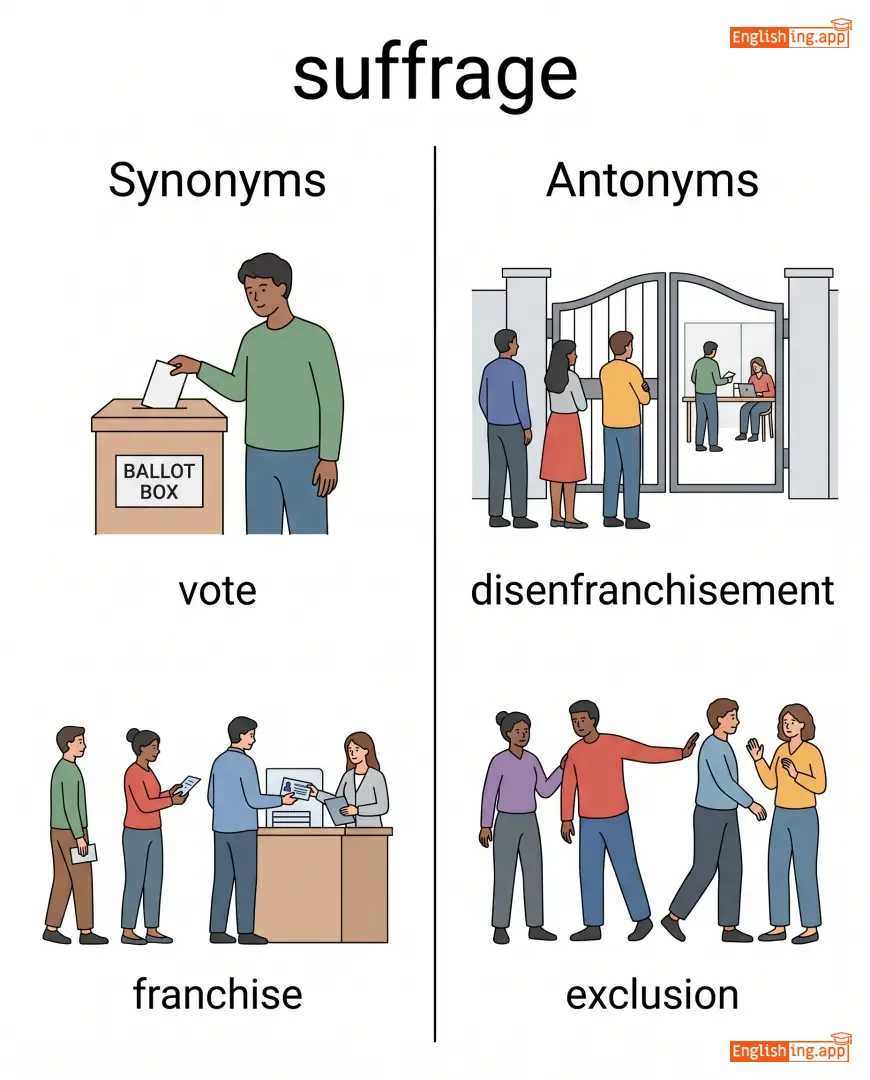
vote, franchise, ballot, voice
••••••
|
disenfranchisement, exclusion
••••••
|
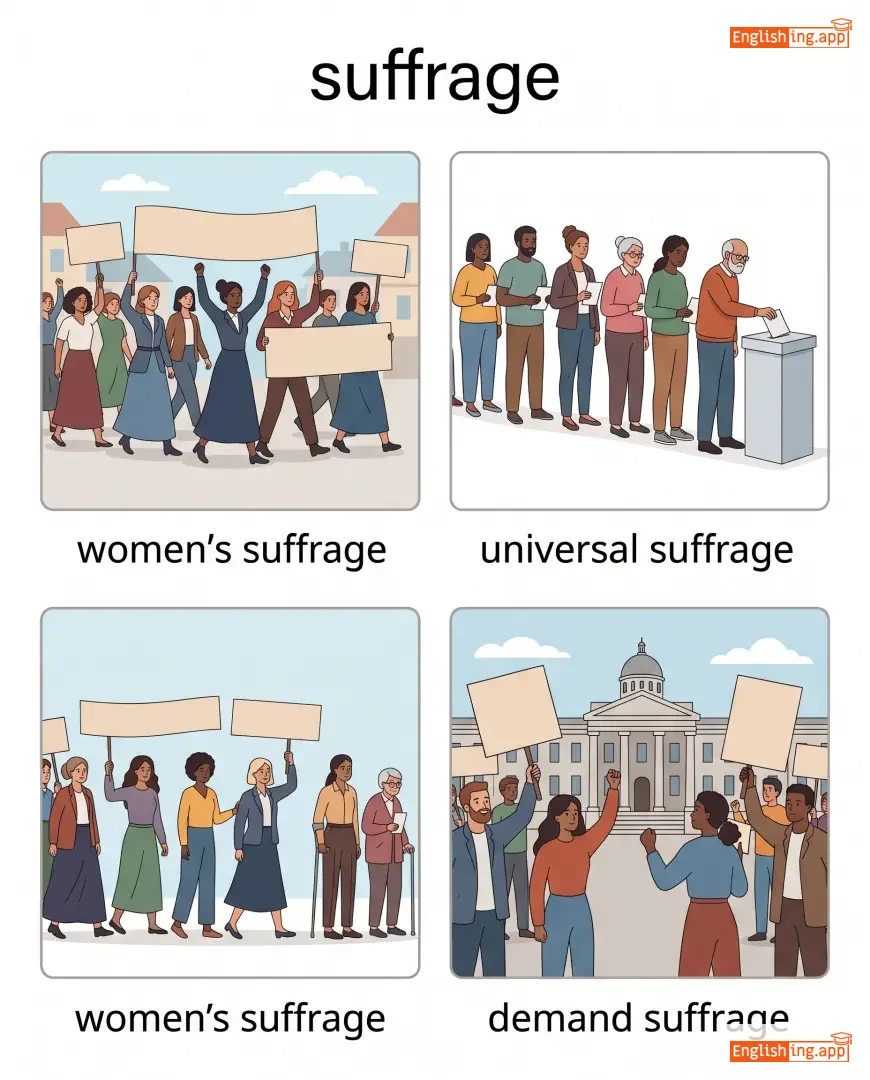
women’s suffrage, universal suffrage, demand suffrage, grant suffrage
••••••
|
Suffrage sounds like サフリッジ → 参政権, rights to join 政治(せいじ).
••••••
|
|
#8511
😮💨
|
/ˈsʌfəkeɪt/
verb
••••••
|
- •••••• | - •••••• |
suffocated
••••••
|
suffocated
••••••
|
suffocates
••••••
|
suffocating
••••••
|
to cause someone to die or have difficulty breathing by depriving them of air
••••••
|
The child nearly suffocated when trapped in the locked room. |
- •••••• |
feel suffocated |
to feel trapped or restricted, emotionally or physically
••••••
|
- •••••• |
choke, smother, stifle, asphyxiate, strangle
••••••
|
breathe, inhale, ventilate
••••••
|
suffocate in smoke, suffocate under pressure, suffocate slowly, suffocate with love
••••••
|
No •••••• |
|
#8512
✔️
|
/səˈfɪʃənt/
adjective
(サフィシエント)
••••••
|
- •••••• |
十分な
jūbun na
••••••
|
- •••••• | - •••••• | - •••••• | - •••••• |
enough; adequate for a purpose
••••••
|
She had sufficient money to buy the dress. |
彼女はドレスを買うために十分なお金を持っていました。
Kanojo wa doresu o kau tame ni jūbun na okane o motte imashita.
••••••
|
sufficient unto the day |
today's troubles are enough without worrying about the future
••••••
|
今日のためには十分な
kyō no tame ni wa jūbun na
••••••
|
enough, adequate, ample, satisfactory
••••••
|
insufficient, inadequate, lacking
••••••
|
sufficient money, sufficient evidence, sufficient reason
••••••
|
Jūbun na は十分な意味 ✔️ – 完璧なパーティーを想像してみてください
••••••
|
|
#8513
✅
|
/səˈfɪʃənsi/
noun
(sufishenshī)
••••••
|
|
十分
juubun
••••••
|
- •••••• | - •••••• | - •••••• | - •••••• |
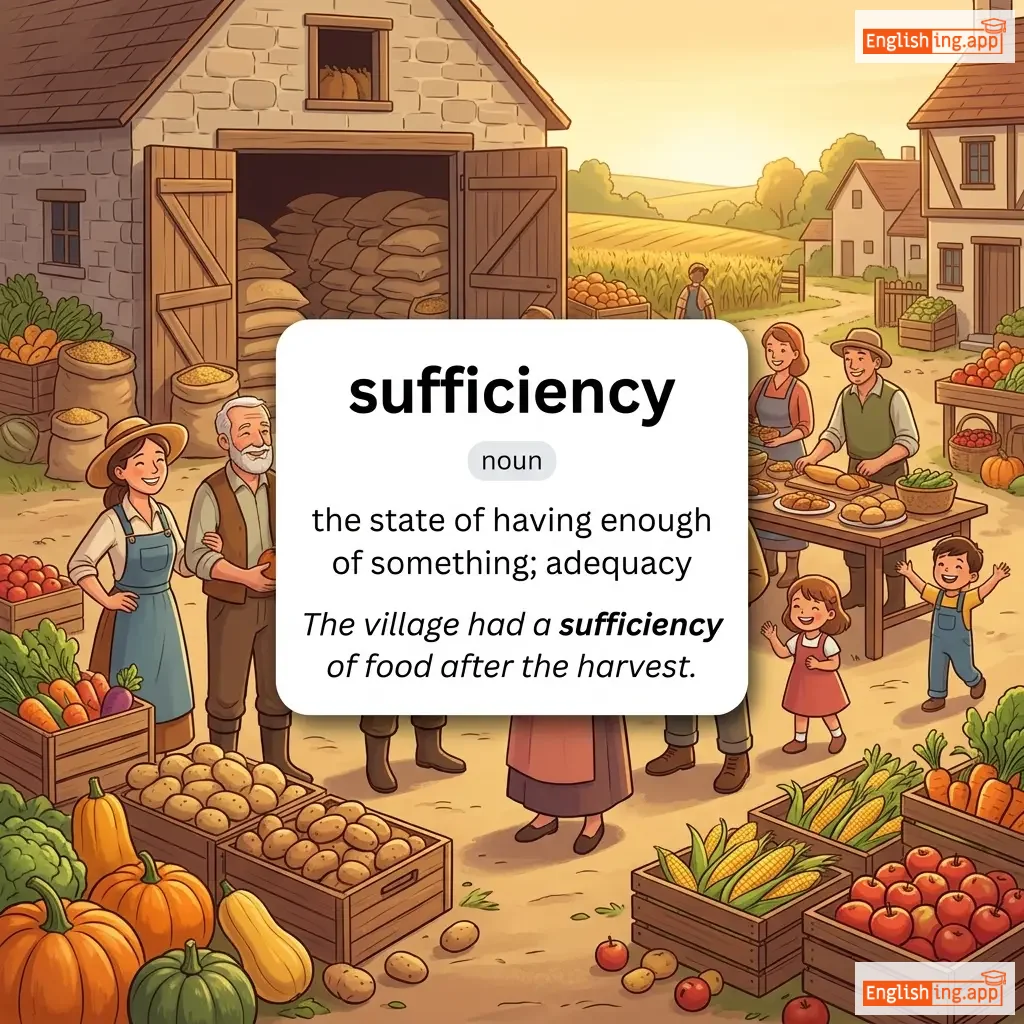
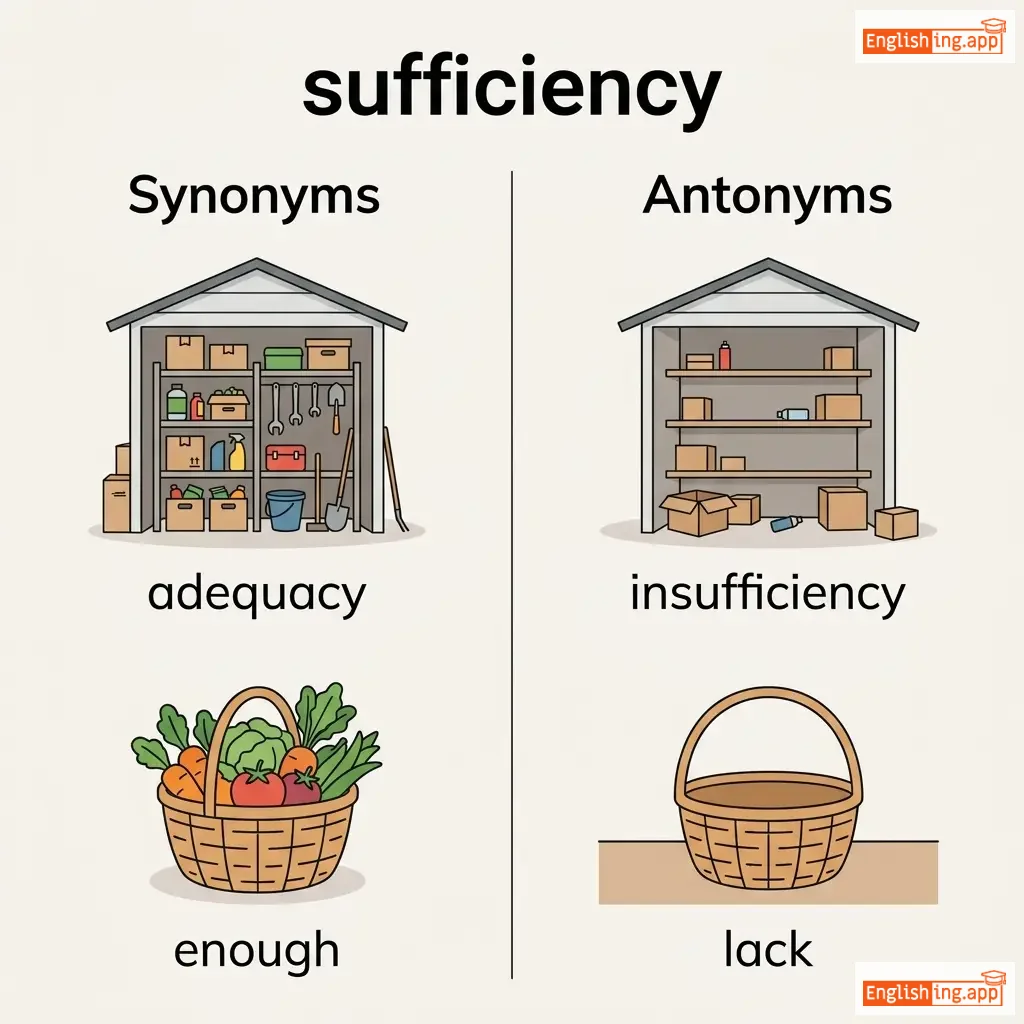
the state of having enough of something; adequacy
••••••
|
The village had a sufficiency of food after the harvest.
収穫後、村には十分な食料がありました。
••••••
|
収穫後、村には十分な食料がありました。
Shuukaku go, mura ni wa juubun na shokuryou ga arimashita.
••••••
|
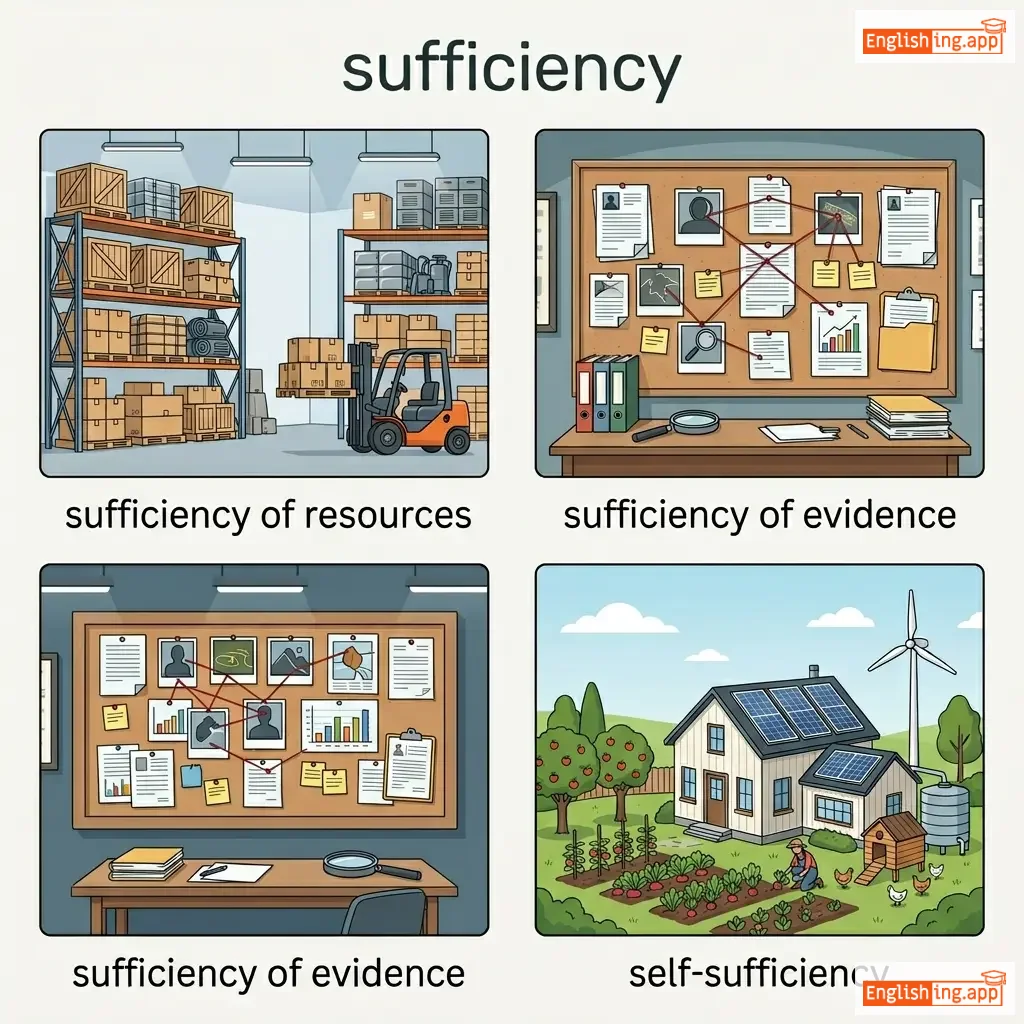
self-sufficiency
自給自足
••••••
|
the ability to provide for oneself without outside help
••••••
|
自給自足
jikyuu jisoku
••••••
|
adequacy, enough, abundance, plenty
••••••
|
insufficiency, lack, scarcity
••••••
|
sufficiency of resources, sufficiency of evidence, self-sufficiency
••••••
|
Sufficiency は十分です ✅ – ‘十分な魚、十分な食べ物’
••••••
|
|
#8514
😔
|
/ˈsʌfərəns/
noun
(サファレンス)
••••••
|
- •••••• |
寛容
kanyou
••••••
|
- •••••• | - •••••• | - •••••• | - •••••• |
patient endurance of pain, hardship, or delay; passive consent or tolerance
••••••
|
He lived in poverty with quiet sufferance. |
彼は貧困の中で静かに寛容をもって生きていた。
Kare wa hinkon no naka de shizuka ni kanyou o motte ikite ita.
••••••
|
on sufferance |
allowed to exist or happen only because someone tolerates it
••••••
|
寛容の上で
kanyou no ue de
••••••
|
tolerance, endurance, patience, acceptance
••••••
|
intolerance, refusal, rejection
••••••
|
bear with sufferance, on sufferance, sufferance of hardship
••••••
|
Sufferanceはsuffering 😔耐えて生きる
••••••
|
|
#8515
💦
|
/ˌsuːdəˈrɪfɪk/
adjective
(スドリフィック)
••••••
|
- •••••• |
発汗促進剤
hakkansokushinzai
••••••
|
- •••••• | - •••••• | - •••••• | - •••••• |
causing or increasing sweating
••••••
|
The doctor prescribed a sudorific drug to help reduce the fever.
医者は発熱を下げるために発汗を促進する薬を処方しました。
••••••
|
医者は発熱を下げるために発汗を促進する薬を処方しました。
Isha wa hatsunetsu wo sageru tame ni hakkansokushin suru kusuri wo shohou shimashita.
••••••
|
- •••••• | - •••••• | - •••••• |
sweat-inducing, diaphoretic, perspiration-causing
••••••
|
antiperspirant, cooling
••••••
|
sudorific effect, sudorific medicine, sudorific response
••••••
|
Sudorific = 汗 💦 '汗'は熱を下げる薬です!
••••••
|
|
#8516
🍼
|
/ˈsʌk.əl/
verb
(サクル)
••••••
|
- •••••• |
授乳する
junyu suru
••••••
|
suckled
サクルド
••••••
|
suckled
サクルド
••••••
|
suckles
サクルズ
••••••
|
suckling
サクリング
••••••
|
to feed a baby or young animal with milk from the breast or udder
••••••
|
The mother cat suckled her kittens in the basket.
母猫はバスケットで子猫にお乳を与えていました。
••••••
|
母猫はバスケットで子猫にお乳を与えていました。
Haha neko wa basuketto de koneko ni onochi wo ataete imashita.
••••••
|
- •••••• | - •••••• | - •••••• |
nurse, breastfeed, nourish, feed, lactate
••••••
|
wean, starve
••••••
|
suckle a child, suckle the young, suckle her baby, kittens suckle
••••••
|
Suckleは授乳する意味です 🍼 – 覚えておいて「母猫は子猫にお乳を与える」!
••••••
|
|
#8517
⚰️
|
/səˈkʌm/
verb
••••••
|
- •••••• | - •••••• |
succumbed
••••••
|
succumbed
••••••
|
succumbs
••••••
|
succumbing
••••••
|
To give in to pressure, temptation, or illness; to yield or fail to resist.
••••••
|
He finally succumbed to his illness after a long struggle. |
- •••••• |
succumb to pressure |
to give in or yield under stress or force
••••••
|
- •••••• |
yield, surrender, submit, give in, collapse
••••••
|
resist, withstand, overcome
••••••
|
succumb to temptation, succumb to illness, succumb to pressure, succumb to injuries
••••••
|
No •••••• |
|
#8518
🌵
|
/ˈsʌkjələnt/
adjective/noun
(sakkuryurento)
••••••
|
- •••••• |
ジューシーな
juushii na
••••••
|
- •••••• | - •••••• | - •••••• | - •••••• |
Juicy or full of juice; also refers to a plant with thick, fleshy leaves adapted to storing water.
••••••
|
The steak was so succulent that everyone enjoyed it. |
ステーキはとてもジューシーで、皆が楽しんで食べました。
Sutēki wa totemo juushii de, mina ga tanoshinde tabemashita.
••••••
|
- •••••• | - •••••• | - •••••• |
juicy, luscious, moist, fleshy, tasty
••••••
|
dry, arid, parched
••••••
|
succulent meat, succulent fruit, succulent plants, succulent leaves
••••••
|
Succulent — Suck + Lent — 吸ってジューシーな感覚を楽しもう!
••••••
|
|
#8519
🤲
|
/ˈsʌkər/
noun/verb
(サカー)
••••••
|
|
援助
enjo
••••••
|
succored
サカード
••••••
|
succored
サカード
••••••
|
succors
サカーズ
••••••
|
succoring
サコリング
••••••
|
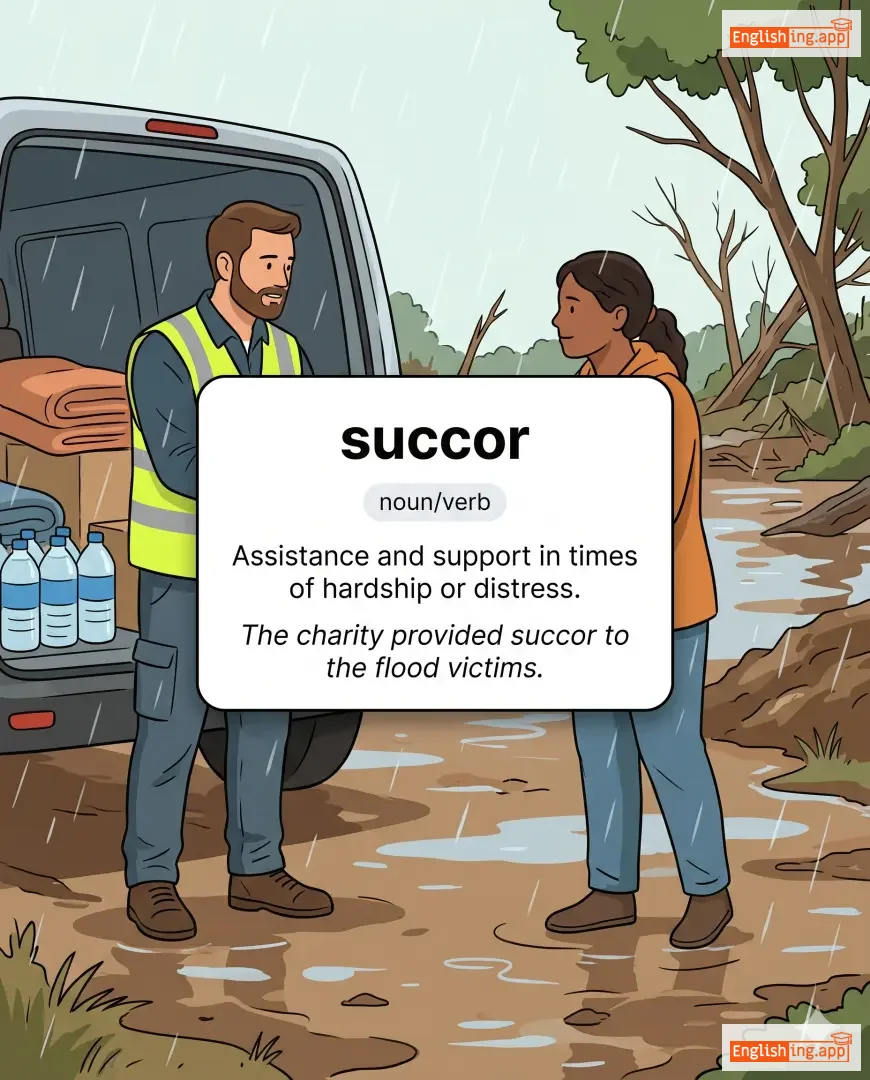
Assistance and support in times of hardship or distress.
••••••
|
The charity provided succor to the flood victims.
慈善団体は洪水の被害者にサポートを提供しました。
••••••
|
慈善団体は洪水の被害者に援助を提供しました。
Jizen dantai wa kōzui no higaisha ni enjo o teikyō shimashita.
••••••
|
- •••••• | - •••••• | - •••••• |
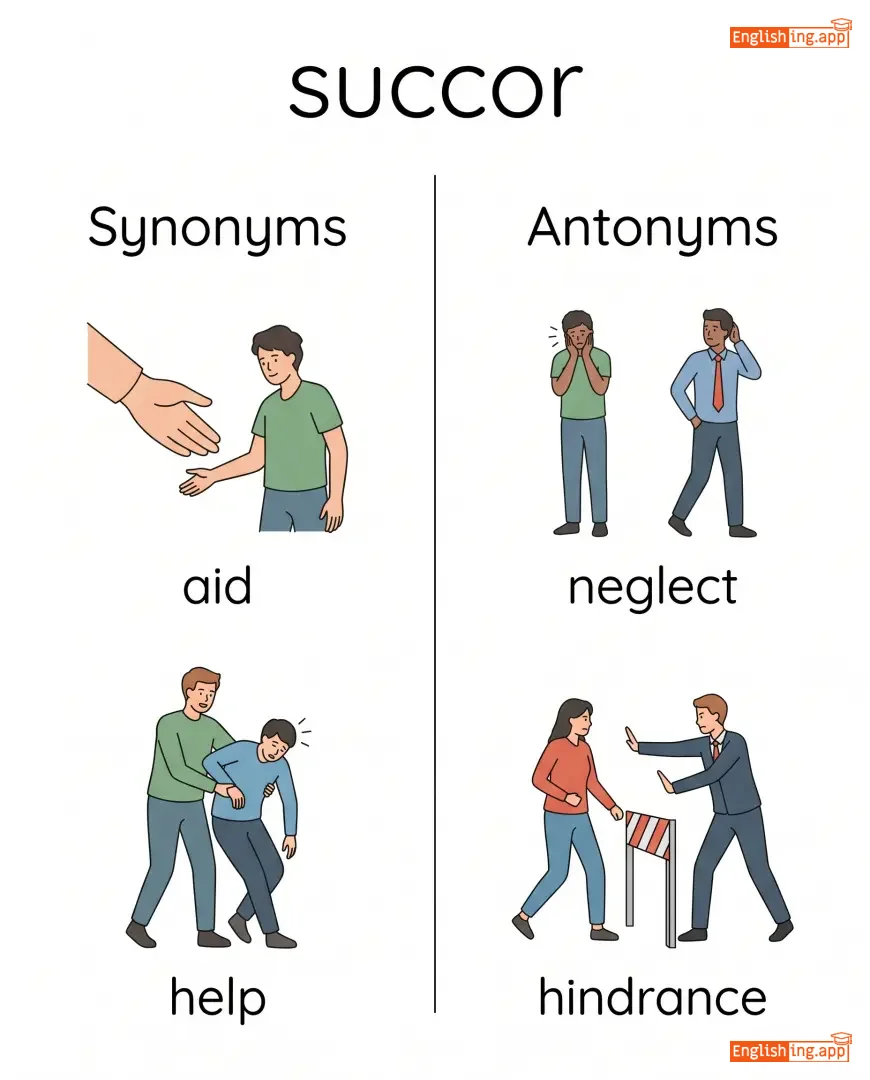
aid, help, relief, support, assistance
••••••
|
neglect, hindrance
••••••
|
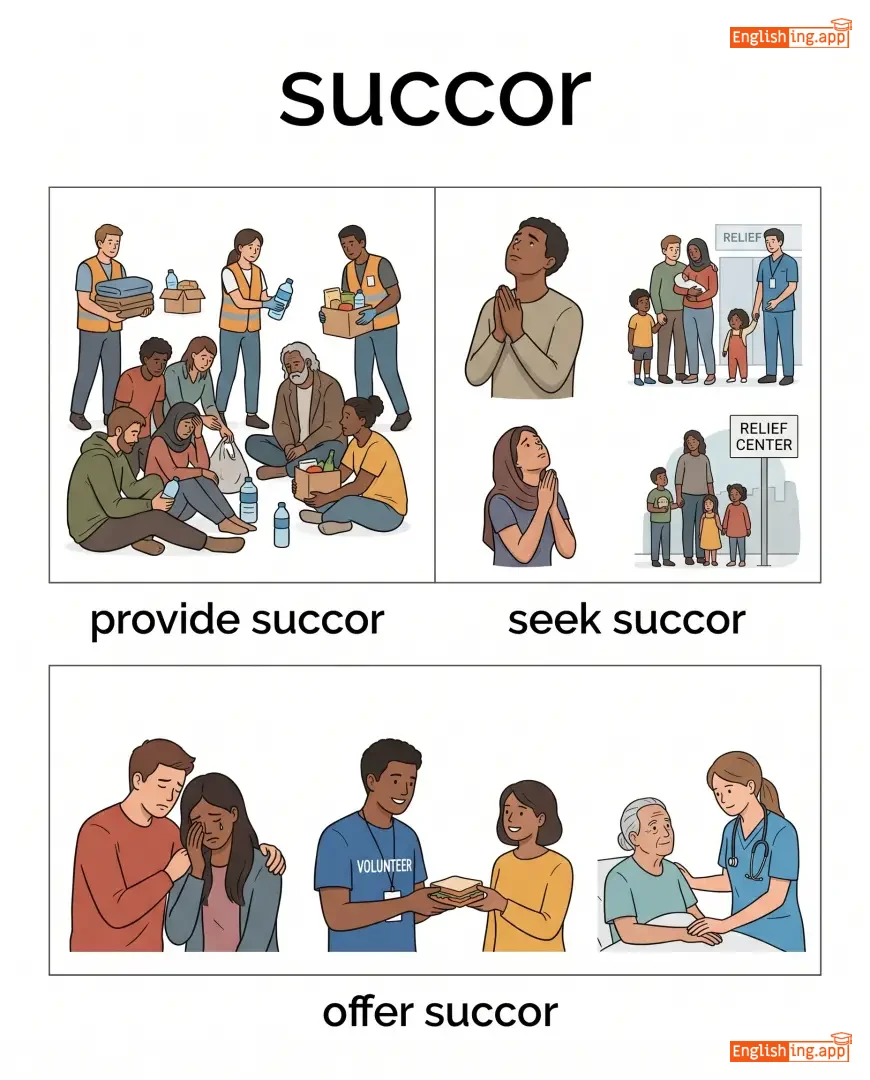
provide succor, seek succor, offer succor, succor the needy
••••••
|
Succorは援助に似ています — 難しい時期には援助が必要です。
••••••
|
Vocabulary Quiz
Test your vocabulary by matching words with their translations or meanings.
Login to take the quiz
Comments (0)
Share your thoughts and join the discussion.
Join the discussion by logging in
Login to CommentNo comments yet
Be the first to share your thoughts!