

翻訳
過去
過去分詞
三人称単数
動名詞
意味
例文
例文の翻訳
同義語
対義語
コロケーション
ニーモニック
Swipe left or right, or use the buttons. Tap image to zoom.
例文の翻訳
単語
Lesson 230Lesson 230 - マスクトグル
|
絵文字
|
単語 | Images | 翻訳 | 過去 | 過去分詞 | 三人称単数 | 動名詞 | 意味 | 例文 | 例文の翻訳 | 表現例 | 表現例の意味 | 表現例の翻訳 | 同義語 | 対義語 | コロケーション | ニーモニック |
|---|---|---|---|---|---|---|---|---|---|---|---|---|---|---|---|---|---|
|
#6870
🧠
|
/ˌpriːˈmɛdɪteɪt/
verb
(プリメディテイト)
••••••
|
- •••••• |
事前に考える
jizen ni kangaeru
••••••
|
premeditated
プリメディテイテッド
••••••
|
premeditated
プリメディテイテッド
••••••
|
premeditates
プリメディテイツ
••••••
|
premeditating
プリメディテイティング
••••••
|
to think about and plan something (especially a crime) beforehand
••••••
|
The suspect was accused of premeditating the crime.
容疑者は犯罪を事前に計画したとして非難されました。
••••••
|
容疑者は犯罪を事前に計画したとして非難されました。
Yōgisha wa hanzai o jizen ni keikaku shita to shite hinan saremashita.
••••••
|
premeditated murder
計画的殺人
••••••
|
a murder that was planned in advance
••••••
|
計画的殺人
keikakuteki satsujin
••••••
|
plan, intend, contemplate, devise, deliberate
••••••
|
improvise, spontaneity, accidental
••••••
|
premeditated crime, premeditated act, premeditate a plan
••••••
|
Pre + 考えるは前もって考える (考える = kangaeru) する。
••••••
|
|
#6871
🧠
|
/ˌpriːpəˈzɛʃən/
noun
(puriposesshon)
••••••
|
- •••••• |
先入観
sen'nyūkan
••••••
|
- •••••• | - •••••• | - •••••• | - •••••• |
An opinion or feeling formed beforehand; a prejudice or preoccupation.
••••••
|
His prepossession in favor of tradition made him resist change.
彼の伝統への先入観は彼を変化に抵抗させました。
••••••
|
彼の伝統への先入観は彼を変化に抵抗させました。
Kare no dentō e no sen'nyūkan wa kare o henka ni teikō sasemashita.
••••••
|
- •••••• | - •••••• | - •••••• |
bias, prejudice, predisposition, inclination, leaning
••••••
|
impartiality, fairness, neutrality
••••••
|
prepossession in favor, strong prepossession, prepossession against
••••••
|
Prepossession は先入観と同じ意味です。最初から意見が固まっていることを意味します。
••••••
|
|
#6872
😊
|
/ˌpriːpəˈzɛsɪŋ/
adjective
(プリポゼシング)
••••••
|
- •••••• |
魅力的
miryokuteki
••••••
|
- •••••• | - •••••• | - •••••• | - •••••• |
Attractive or appealing in appearance or manner.
••••••
|
She had a prepossessing smile that charmed everyone.
彼女は魅力的な笑顔を持っていて、みんなを魅了した。
••••••
|
彼女は魅力的な笑顔を持っていて、みんなを魅了した。
Kanojo wa miryokuteki na egao o motte ite, minna o miryō shita.
••••••
|
- •••••• | - •••••• | - •••••• |
attractive, charming, appealing, engaging, likable
••••••
|
unattractive, unappealing, repulsive
••••••
|
prepossessing appearance, prepossessing charm, prepossessing smile
••••••
|
Prepossessing は魅力的です。 '笑顔'で皆を魅了している様子を想像してみてください。
••••••
|
|
#6873
📊
|
/prɪˈpɒndəreɪt/
verb
(プリポンダレート)
••••••
|
- •••••• |
優位を占める
yūi o shimeru
••••••
|
preponderated
プリポンダレーテッド
••••••
|
preponderated
プリポンダレーテッド
••••••
|
preponderates
プリポンダレーツ
••••••
|
preponderating
プリポンダレーティング
••••••
|
To be greater in influence, weight, or number.
••••••
|
In the debate, logical arguments preponderated over emotional appeals.
議論の中で、論理的な議論は感情的な訴えに勝りました。
••••••
|
議論の中で、論理的な議論は感情的な訴えに勝りました。
Giron no naka de, ronritekina giron wa kanjō-teki na uttae ni kachimashita.
••••••
|
- •••••• | - •••••• | - •••••• |
dominate, outweigh, prevail, surpass, excel
••••••
|
yield, lose, fail
••••••
|
preponderate over, strongly preponderate, preponderate in influence
••••••
|
優位を占めるは影響力を持つこと、'優'は強さを意味します!
••••••
|
|
#6874
🏆
|
/prɪˈpɒndərənt/
adjective
(プリポンデラント)
••••••
|
- •••••• |
優勢な
yūseina
••••••
|
- •••••• | - •••••• | - •••••• | - •••••• |
Having superior weight, force, influence, or importance.
••••••
|
The preponderant influence of the media shapes public opinion. |
メディアの優勢な影響は、公共の意見を形成します。
Media no yūseina eikyō wa, kōkyō no iken o keisei shimasu.
••••••
|
- •••••• | - •••••• | - •••••• |
dominant, prevailing, predominant, influential, superior
••••••
|
minor, weak, subordinate
••••••
|
preponderant role, preponderant influence, preponderant factor
••••••
|
Preponderant = 優勢な; これは他のものより強く支配的であることを意味します。
••••••
|
|
#6875
⚖️
|
/prɪˈpɒndərəns/
noun
(プリポンダランス)
••••••
|
- •••••• |
優位性
yūisei
••••••
|
- •••••• | - •••••• | - •••••• | - •••••• |
The quality or fact of being greater in number, quantity, or importance.
••••••
|
There was a preponderance of evidence against the defendant.
被告に対する証拠の優位性があった。
••••••
|
被告に対する証拠の優位性があった。
Hikoku ni taisuru shōko no yūisei ga atta.
••••••
|
- •••••• | - •••••• | - •••••• |
dominance, prevalence, superiority, predominance, advantage
••••••
|
minority, inferiority, weakness
••••••
|
preponderance of evidence, overwhelming preponderance, preponderance in favor
••••••
|
優位性はより多くの証拠を意味します。'ponder'をもっと集めるように覚えてください。
••••••
|
|
#6876
📝
|
/prɪˈpærətɔːri/
adjective
(プレパラトリー)
••••••
|
- •••••• |
準備の
junbi no
••••••
|
- •••••• | - •••••• | - •••••• | - •••••• |
Serving as preparation or preliminary before the main event.
••••••
|
They held a preparatory meeting before the main conference.
彼らは主要な会議の前に準備会議を開いた。
••••••
|
彼らは主要な会議の前に準備会議を開いた。
Karera wa shuyou na kaigi no mae ni junbi kaigi o hiraita.
••••••
|
- •••••• | - •••••• | - •••••• |
preliminary, introductory, initial, prior, groundwork
••••••
|
final, conclusive
••••••
|
preparatory meeting, preparatory phase, preparatory work, preparatory steps
••••••
|
Preparatory は準備の意味です、試験の前の準備クラスのように。
••••••
|
|
#6877
📋
|
/ˌprɛpəˈreɪʃən/
noun
(プレパレーション)
••••••
|
- •••••• |
準備
junbi
••••••
|
- •••••• | - •••••• | - •••••• | - •••••• |
The act of getting ready or making arrangements for something.
••••••
|
The team made careful preparation for the presentation. |
チームはプレゼンテーションのために慎重に準備をしました。
Chīmu wa purezentēshon no tame ni shinchō ni junbi o shimashita.
••••••
|
fail to prepare is prepare to fail |
If you don’t get ready in advance, you are setting yourself up for failure.
••••••
|
準備をしないことは失敗の準備をすることです。
Junbi o shinai koto wa shippai no junbi o suru koto desu.
••••••
|
arrangement, planning, readiness, groundwork, setup
••••••
|
neglect, disorganization
••••••
|
make preparation, careful preparation, preparation for, preparation time
••••••
|
準備ができている者が最も成功する。
••••••
|
|
#6878
✨
|
/ˌpriːɔːrˈdeɪn/
verb
(プリオーデイン)
••••••
|
- •••••• |
前もって決める
maemotte kimeru
••••••
|
preordained
プリオーデンド
••••••
|
preordained
プリオーデンド
••••••
|
preordains
プリオーデンズ
••••••
|
preordaining
プリオーデイニング
••••••
|
To decide or determine an outcome in advance, especially by fate or divine will.
••••••
|
They believed their meeting was preordained by destiny.
彼らは自分たちの出会いが運命によって前もって決められていると信じていた。
••••••
|
彼らは自分たちの出会いが運命によって前もって決められていると信じていた。
Karera wa jibuntachi no deai ga unmei ni yotte maemotte kimerarete iru to shinjite ita.
••••••
|
- •••••• | - •••••• | - •••••• |
predetermine, foreordain, fate, predestine
••••••
|
chance, random
••••••
|
preordain fate, preordain events, preordain outcome, preordain by God
••••••
|
Pre + Ordain は前もって (Pre) 神によって決められる (Ordain) を意味します。
••••••
|
|
#6879
🌀
|
/priːˈɒkjʊpaɪ/
verb
(プレオキュパイ)
••••••
|
- •••••• |
占める, 心を占める
shimeru, kokoro o shimeru
••••••
|
preoccupied
プレオキュパイド
••••••
|
preoccupied
プレオキュパイド
••••••
|
preoccupies
プレオキュパイズ
••••••
|
preoccupying
プレオキュパイング
••••••
|
To dominate or engross the mind of someone to the exclusion of other thoughts.
••••••
|
Worries about the future preoccupy him constantly.
未来についての心配が彼を常に占めている。
••••••
|
未来についての心配が彼を常に占めている。
Mirai ni tsuite no shinpai ga kare o jōni shimetemasu.
••••••
|
- •••••• | - •••••• | - •••••• |
absorb, engross, distract, consume, obsess
••••••
|
free, release, ignore
••••••
|
preoccupy the mind, preoccupy thoughts, preoccupy with, constantly preoccupy
••••••
|
Pre + Occupyは、思考が何かに占領されることを意味します。例えば、心配事が心を占めるように。
••••••
|
|
#6880
🤔
|
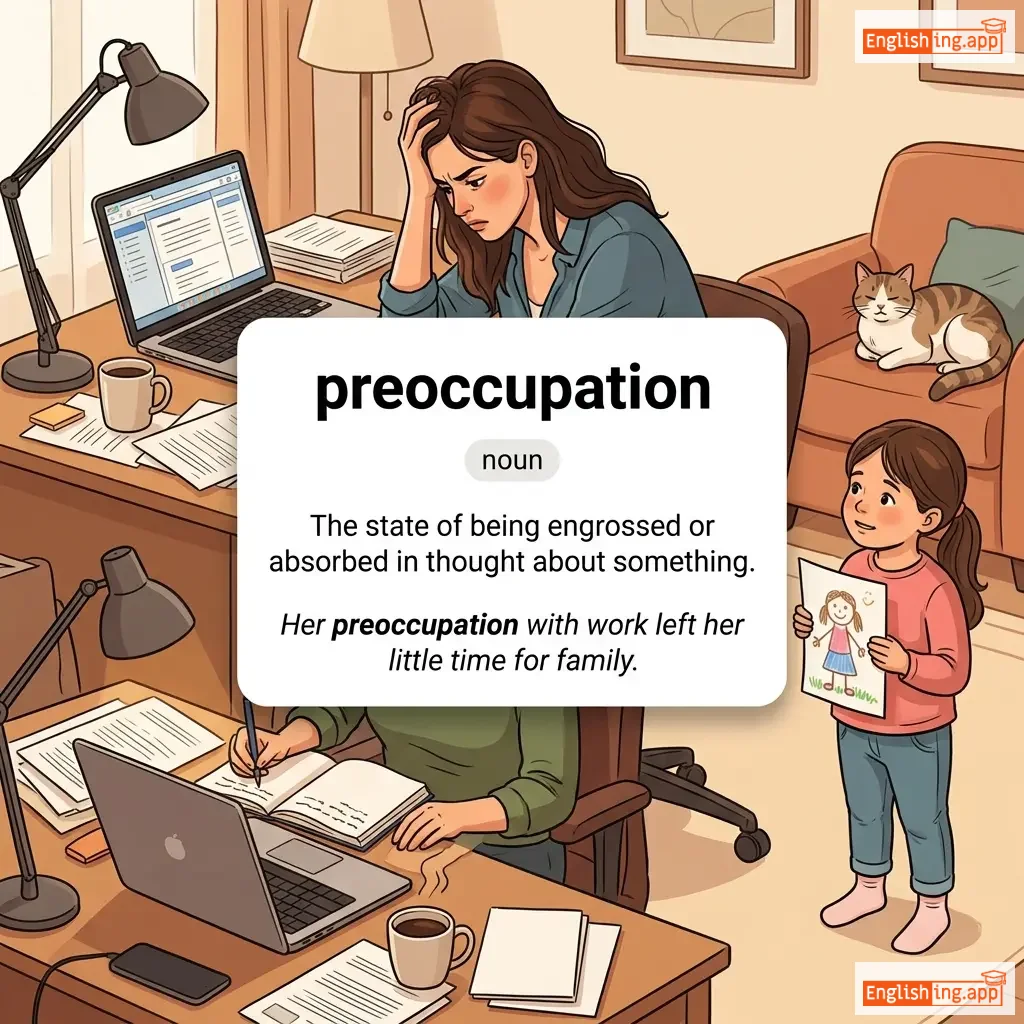
/priːˌɒkjuˈpeɪʃən/
noun
(プリオキュペーション)
••••••
|
|
心配, 集中
shinpai, shuuchuu
••••••
|
- •••••• | - •••••• | - •••••• | - •••••• |
The state of being engrossed or absorbed in thought about something.
••••••
|
Her preoccupation with work left her little time for family. |
彼女は仕事のことで心配しすぎて、家族との時間がほとんどなかった。
Kanojo wa shigoto no koto de shinpai shisugite, kazoku to no jikan ga hotondo nakatta.
••••••
|
- •••••• | - •••••• | - •••••• |
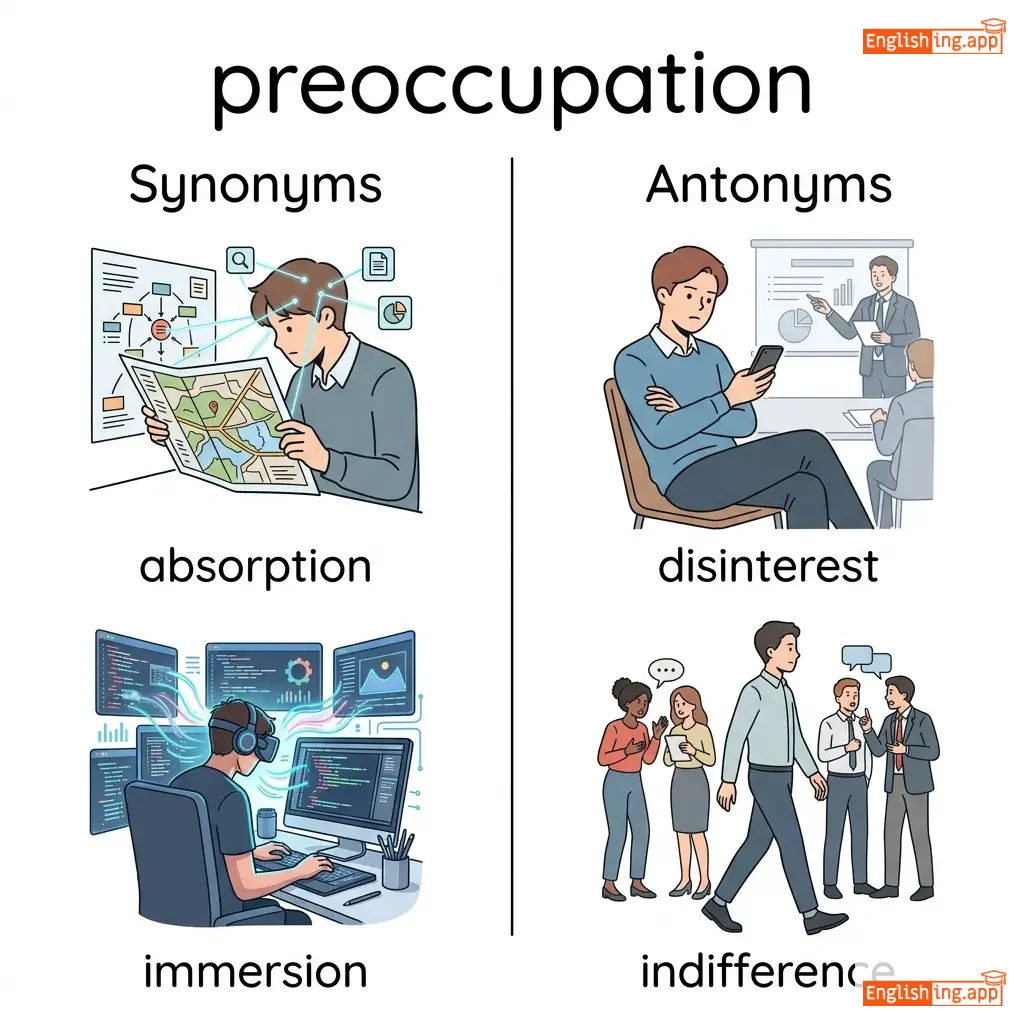
absorption, immersion, obsession, fixation, concern
••••••
|
disinterest, indifference
••••••
|
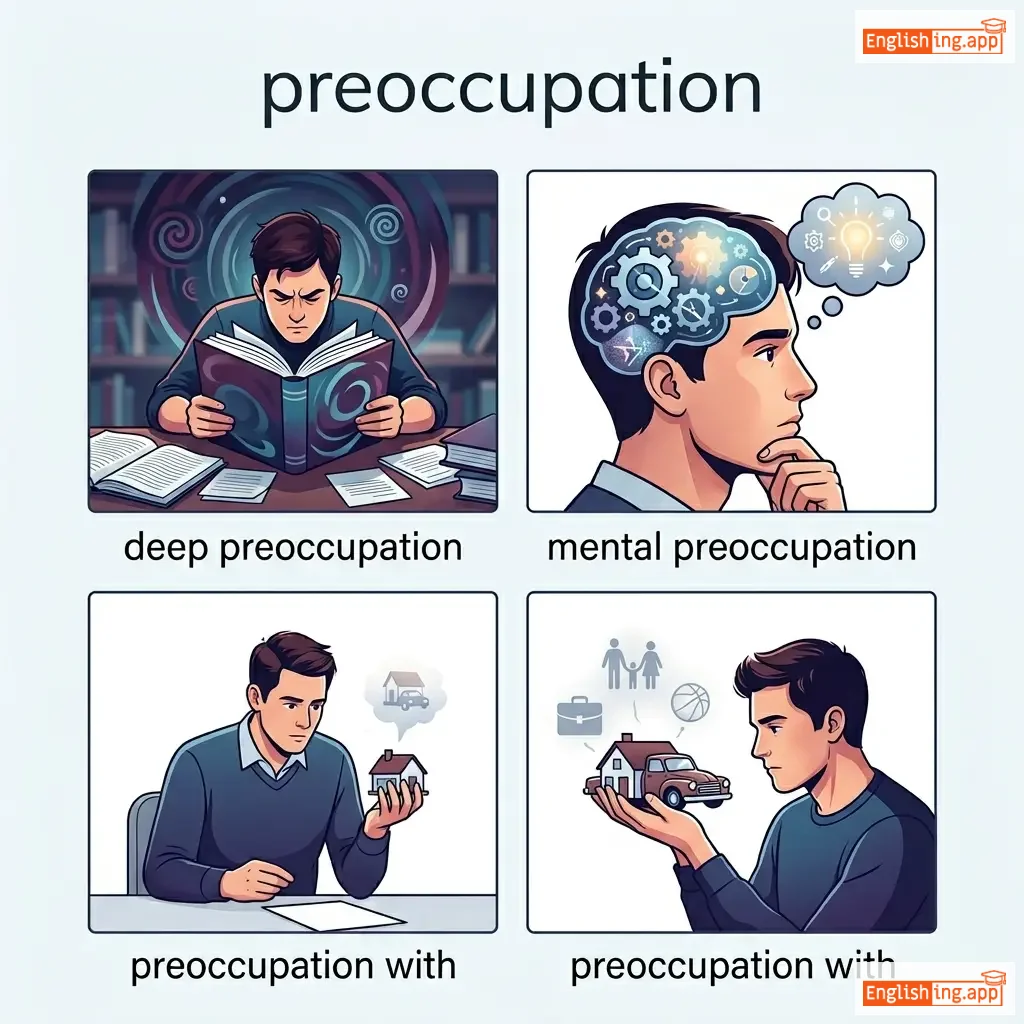
deep preoccupation, mental preoccupation, preoccupation with, constant preoccupation
••••••
|
Pre + Occupation とは、仕事に集中しすぎて家族との時間を取れない状態です。
••••••
|
|
#6881
⚠️
|
/prɪˈmɒnɪtəri/ or /ˌpriːməˈnɪtəri/
adjective
(プレモニトリー)
••••••
|
- •••••• |
予兆
yochou
••••••
|
- •••••• | - •••••• | - •••••• | - •••••• |
giving a warning or prediction about something, especially something unpleasant
••••••
|
He ignored the premonitory signs of illness. |
彼は病気の予兆を無視しました。
Kare wa byouki no yochou wo mushi shimashita.
••••••
|
- •••••• | - •••••• | - •••••• |
warning, cautionary, foreshadowing, prophetic
••••••
|
unforeseen, unexpected, unheralded
••••••
|
premonitory signs, premonitory symptoms, premonitory feeling
••••••
|
予兆は何か悪いことが起きる前触れです。'予'は予測、'兆'はサインを意味します。
••••••
|
|
#6882
🔮
|
/ˌpriːməˈnɪʃən/ or /ˌprɛm-/
noun
(プレモニション)
••••••
|
- •••••• |
予感
yokan
••••••
|
- •••••• | - •••••• | - •••••• | - •••••• |
a strong feeling that something is about to happen, often something negative
••••••
|
She had a premonition of danger before the trip. |
旅行前に危険の予感があった。
Ryokou mae ni kiken no yokan ga atta.
••••••
|
- •••••• | - •••••• | - •••••• |
forewarning, intuition, hunch, omen, presentiment
••••••
|
surprise, doubt, disbelief
••••••
|
dark premonition, sudden premonition, premonition of disaster
••••••
|
予 + 感、事前に感じる、通常は良くないこと。
••••••
|
|
#6883
🏠
|
/ˈprɛmɪs/
noun
(プリミス)
••••••
|
- •••••• |
前提 / 建物
zentei / tatemono
••••••
|
- •••••• | - •••••• | - •••••• | - •••••• |
a statement or idea on which reasoning or an argument is based; also a building or property
••••••
|
His argument was based on a false premise. |
彼の議論は誤った前提に基づいていました。
Kare no giron wa ayamatta zentei ni motozuite imashita.
••••••
|
on the premise that |
based on the assumption that
••••••
|
〜という前提で
〜to iu zentei de
••••••
|
assumption, proposition, thesis, property, building
••••••
|
fact, reality, truth
••••••
|
false premise, legal premises, premise of argument
••••••
|
Premiseは基本的な考え、'前提'はその基盤を表す。
••••••
|
|
#6884
👑
|
/prɪˈmɪər/ or /ˈpriːmiər/
noun, adjective
(首相 / 主要)
••••••
|
- •••••• |
首相 / 主要
shushou / shuyou
••••••
|
- •••••• | - •••••• | - •••••• | - •••••• |
the head of government in some countries; first in importance or rank
••••••
|
The French premier addressed the nation. |
フランスの首相が国民に演説を行った。
Furansu no shushou ga kokumin ni enzetsu o okonatta.
••••••
|
Premier League |
the top professional football league in England
••••••
|
プレミアリーグ
Puremiarīgu
••••••
|
prime minister, leader, head, top, chief
••••••
|
subordinate, inferior, secondary
••••••
|
French premier, premier role, premier status
••••••
|
Premier は最初、または一番大切、またはトップ。
••••••
|
|
#6885
👍
|
/ˈprɛf(ə)rəb(ə)l/
adjective
(プレファラブル)
••••••
|
- •••••• |
好ましい
konomashii
••••••
|
- •••••• | - •••••• | - •••••• | - •••••• |
more desirable or suitable; better than something else
••••••
|
It is preferable to take the train rather than drive in heavy traffic.
渋滞時には車を運転するより、電車を利用する方が好ましい。
••••••
|
渋滞時には車を運転するより、電車を利用する方が好ましい。
Jūtai-ji ni wa kuruma o unten suru yori, densha o riyou suru hō ga konomashii.
••••••
|
- •••••• | - •••••• | - •••••• |
better, desirable, advisable, favorable, recommended
••••••
|
worse, undesirable, unsuitable
••••••
|
preferable option, preferable choice, preferable method, preferable alternative
••••••
|
好ましい選択は常に最適です。
••••••
|
|
#6886
⏳
|
/ˌpriːməˈtjʊər/
adjective
(プリマチュア)
••••••
|
- •••••• |
早すぎる
hayasugiru
••••••
|
- •••••• | - •••••• | - •••••• | - •••••• |
Happening or done before the usual or proper time.
••••••
|
His decision to quit the job was premature. |
彼の仕事を辞める決断は早すぎた。
Kare no shigoto o yameru ketsudan wa hayasugita.
••••••
|
premature death |
death that happens earlier than expected or normal
••••••
|
早すぎる死
hayasugiru shi
••••••
|
early, untimely, hasty, rushed
••••••
|
timely, mature, delayed
••••••
|
premature birth, premature decision, premature announcement
••••••
|
早すぎる = 早 + すぎる – 予定よりも早い、すなわち早すぎる。
••••••
|
|
#6887
🎶
|
/ˈprɛljuːd/
noun
(プレリュード)
••••••
|
- •••••• |
前奏
zensou
••••••
|
- •••••• | - •••••• | - •••••• | - •••••• |
An action, event, or statement that serves as an introduction to something more important.
••••••
|
The small fight was only a prelude to a bigger conflict. |
小さな喧嘩はもっと大きな争いの前奏に過ぎなかった。
Chiisana kenka wa motto ookina arasoi no zensou ni suginakatta.
••••••
|
a prelude to disaster |
an event leading to or foreshadowing a disaster
••••••
|
災害の前奏
saigai no zensou
••••••
|
introduction, opening, forerunner, beginning, overture
••••••
|
conclusion, finale, end
••••••
|
musical prelude, prelude to war, prelude to change
••••••
|
前奏は大きな出来事の前に起こる予兆です。
••••••
|
|
#6888
🙏
|
/ˈprɛlət/
noun
(プレラート)
••••••
|
- •••••• |
高位の聖職者
kōi no seishokusha
••••••
|
- •••••• | - •••••• | - •••••• | - •••••• |
A high-ranking member of the clergy, especially a bishop or abbot.
••••••
|
The prelate delivered a sermon to the congregation. |
プレラートは会衆に説教を行った。
Purerāto wa kaishū ni sekkyō o okonatta.
••••••
|
- •••••• | - •••••• | - •••••• |
bishop, archbishop, abbot, clergyman
••••••
|
layperson, commoner
••••••
|
Catholic prelate, senior prelate, respected prelate
••••••
|
プレラートは、Prayerを導く高位の聖職者。
••••••
|
|
#6889
⛪
|
/ˈprɛləsi/
noun
(プレラシー)
••••••
|
- •••••• |
教会制度
kyōkaiseido
••••••
|
- •••••• | - •••••• | - •••••• | - •••••• |
The office, dignity, or system of church government by prelates.
••••••
|
The medieval church was dominated by prelacy and its traditions. |
中世の教会はプレラシーとその伝統によって支配されていた。
Chūsei no kyōkai wa purerashī to sono dentō ni yotte shihai sarete ita.
••••••
|
- •••••• | - •••••• | - •••••• |
episcopacy, hierarchy, church government, clergy
••••••
|
laity, secularism
••••••
|
Roman prelacy, medieval prelacy, authority of prelacy
••••••
|
Prelacy は教会制度を指します。
••••••
|
|
#6890
⚖️
|
/ˈprɛdʒədɪs/
noun
(pūrejidis)
••••••
|
- •••••• |
偏見
henken
••••••
|
- •••••• | - •••••• | - •••••• | - •••••• |
An unfair and unreasonable opinion or feeling, especially when formed without enough thought or knowledge.
••••••
|
Prejudice often prevents people from seeing the truth about others. |
偏見はしばしば人々が他人についての真実を見るのを妨げます。
Henken wa shibashiba hitobito ga tanin ni tsuite no shinjitsu o miru no o samatage masu.
••••••
|
against all prejudice |
in opposition to unfair or biased opinions
••••••
|
すべての偏見に反対して
Subete no henken ni hantai shite
••••••
|
bias, discrimination, partiality, intolerance, preconception
••••••
|
fairness, tolerance, impartiality
••••••
|
racial prejudice, deep-seated prejudice, overcome prejudice, prejudice against
••••••
|
Prejudice = 事前に判断する – 事前に判断すると偏見が生まれる。
••••••
|
|
#6891
🖐️
|
/prɪˈhɛnʃən/
noun
(プリヘンション)
••••••
|
- •••••• |
つかむ動作; 何かをつかむ能力
tsukamu dōsa; nanika o tsukamu nōryoku
••••••
|
- •••••• | - •••••• | - •••••• | - •••••• |
the act of grasping or seizing; the ability to take hold of something
••••••
|
Therapists assessed the patient's prehension during hand therapy. |
セラピストは手の治療中に患者のつかむ能力を評価しました。
Serapisuto wa te no chiryō-chū ni kanja no tsukamu nōryoku o hyōka shimashita.
••••••
|
- •••••• | - •••••• | - •••••• |
grasp, grip, seizure, taking hold, apprehension
••••••
|
release, letting go, relinquishment
••••••
|
power prehension, precision prehension, prehension pattern, prehension movement
••••••
|
Prehension = ‘pre-hand action’ と考えよう—物をつかむ行動、それがprehension!
••••••
|
|
#6892
🐒
|
/prɪˈhɛnsaɪl/
adjective
(プリヘンシル)
••••••
|
- •••••• |
把握するための適応
haaku suru tame no tekiou
••••••
|
- •••••• | - •••••• | - •••••• | - •••••• |
adapted for seizing or grasping, especially by wrapping around an object
••••••
|
The monkey used its prehensile tail to hang from the branch.
サルはそのプリヘンシル尾を使って枝からぶら下がっていた。
••••••
|
サルはそのプリヘンシル尾を使って枝からぶら下がっていた。
Saru wa sono purihenshiru o wo tsukatte eda kara burasagatte ita.
••••••
|
- •••••• | - •••••• | - •••••• |
grasping, gripping, clinging, adaptive, seizing
••••••
|
nonprehensile, rigid, nongripping
••••••
|
prehensile tail, prehensile trunk, prehensile feet, prehensile ability
••••••
|
Prehensile tail 見たら覚えて—‘Pre hand style’ 尾も手のように物を掴める!
••••••
|
|
#6893
✋
|
/prɪˈhɛnsɪbəl/
adjective
(プリヘンシブル)
••••••
|
- •••••• |
掴みやすい
tsukami yasui
••••••
|
- •••••• | - •••••• | - •••••• | - •••••• |
capable of being grasped or seized
••••••
|
The tool has a prehensible handle that improves safety. |
その道具には安全性を高めるために掴みやすいハンドルがあります。
Sono dougu ni wa anzen-sei o takameru tame ni tsukami yasui handoru ga arimasu.
••••••
|
- •••••• | - •••••• | - •••••• |
graspable, holdable, seizable, catchable, clenchable
••••••
|
slippery, ungraspable, nonprehensible
••••••
|
prehensible handle, prehensible surface, prehensible digits, prehensible object
••••••
|
Prehensible = ‘pre-grabbable’ kangae—tsukami yasui mono.
••••••
|
|
#6894
🤰
|
/ˈprɛɡnənt/
adjective
(プレグナント)
••••••
|
- •••••• |
妊娠している; 意味深い
ninshin shite iru; imishinai
••••••
|
- •••••• | - •••••• | - •••••• | - •••••• |
having a child developing in the womb; also, full of meaning or significance
••••••
|
She announced that she was three months pregnant. |
彼女は三ヶ月妊娠していることを発表しました。
Kanojo wa sankagetsu ninshin shite iru koto o happyō shimashita.
••••••
|
pregnant pause |
a brief, meaningful silence that suggests significance or tension
••••••
|
意味深い一時停止
imishinai ichijitōshi
••••••
|
expectant, with child, carrying, meaningful, significant
••••••
|
barren, infertile, empty
••••••
|
pregnant woman, heavily pregnant, get pregnant, become pregnant, pregnant pause
••••••
|
妊娠しているということは、赤ちゃんを待っているという意味です、それは重要です!
••••••
|
|
#6895
🔤
|
/ˈpriːfɪks/
noun/verb
(プレフィックス)
••••••
|
- •••••• |
接頭辞; 前に何かを追加する
settōji; mae ni nanika o tsuika suru
••••••
|
prefixed
プレフィックスド
••••••
|
prefixed
プレフィックスド
••••••
|
prefixes
プレフィックスィズ
••••••
|
prefixing
プレフィクシング
••••••
|
a word, letter, or number placed before another; as a verb, to add something in front of something else
••••••
|
Developers often prefix variables with an underscore.
開発者はしばしば変数にアンダースコアをプレフィックスとして追加します。
••••••
|
開発者はしばしば変数にアンダースコアをプレフィックスとして追加します。
Kaihatsu-sha wa shibashiba hensū ni andāsukoa o purefikkusu toshite tsuika shimasu.
••••••
|
- •••••• | - •••••• | - •••••• |
prepend, prepose, attach, affix, tag
••••••
|
append, suffix, postpose
••••••
|
telephone country-code prefix, honorific prefix, string prefix, prefix a title, filename prefix
••••••
|
Pre + fix = 前に固定を追加 — 接頭辞は前に何かを追加するものです。
••••••
|
|
#6896
🔮
|
/priːˈfɪɡjər/
verb
(プリフィガー)
••••••
|
- •••••• |
前兆を示す
zenshou wo shimesu
••••••
|
prefigured
プリフィギュアード
••••••
|
prefigured
プリフィギュアード
••••••
|
prefigures
プリフィギュアーズ
••••••
|
prefiguring
プリフィギュアリング
••••••
|
to represent, show, or foreshadow something in advance
••••••
|
The economic reforms prefigure major social changes.
経済改革は大きな社会変革を予兆しています。
••••••
|
経済改革は大きな社会変革を予兆しています。
Keizai kaikaku wa ookina shakai henka wo yochou shiteimasu.
••••••
|
- •••••• | - •••••• | - •••••• |
foreshadow, predict, anticipate, presage
••••••
|
ignore, neglect
••••••
|
prefigure change, prefigure outcome, prefigure development
••••••
|
前兆を示すことは未来を予知するようなものです。
••••••
|
|
#6897
📈
|
/prɪˈfɜːrmənt/
noun
(プレファーメント)
••••••
|
- •••••• |
昇進
shoushin
••••••
|
- •••••• | - •••••• | - •••••• | - •••••• |
promotion or advancement in rank, position, or office
••••••
|
He hoped for preferment in the government office. |
彼は政府のオフィスで昇進を望んでいた。
Kare wa seifu no ofisu de shoushin wo nozondeita.
••••••
|
- •••••• | - •••••• | - •••••• |
promotion, advancement, elevation, upgrade
••••••
|
demotion, decline
••••••
|
seek preferment, gain preferment, political preferment
••••••
|
Preferment とは昇進 (shoushin) することです。
••••••
|
|
#6898
🎟️
|
/ˌprɛfəˈrɛnʃəl/
adjective
(プリファレンシャル)
••••••
|
- •••••• |
優遇
yūgū
••••••
|
- •••••• | - •••••• | - •••••• | - •••••• |
showing or giving advantage to one over others
••••••
|
Members receive preferential treatment at the club.
メンバーはクラブで優遇されます。
••••••
|
メンバーはクラブで優遇されます。
Menbā wa kurabu de yūgū saremasu.
••••••
|
preferential treatment
優遇される待遇
••••••
|
favoritism shown to one person or group
••••••
|
優遇される待遇
yūgū sareru taikyū
••••••
|
advantageous, favorable, privileged, beneficial
••••••
|
equal, impartial, fair
••••••
|
preferential treatment, preferential access, preferential rate
••••••
|
優遇は特別扱いをすること。
••••••
|
|
#6899
☕
|
/ˈprɛf(ə)rəns/
noun
(プリファレンス)
••••••
|
- •••••• |
好み
konomi
••••••
|
- •••••• | - •••••• | - •••••• | - •••••• |
a greater liking for one alternative over another
••••••
|
She has a preference for tea over coffee. |
彼女はコーヒーよりもお茶を好む。
Kanojo wa kōhī yori mo ocha o konomu.
••••••
|
personal preference |
an individual's own choice or taste
••••••
|
個人的な好み
kodoteki na konomi
••••••
|
choice, liking, taste, inclination, option
••••••
|
dislike, aversion, indifference
••••••
|
show preference, strong preference, personal preference, preference order
••••••
|
好みは「好み」を意味します – お茶かコーヒーを選んでください。
••••••
|
Vocabulary Quiz
Test your vocabulary by matching words with their translations or meanings.
Login to take the quiz
Comments (0)
Share your thoughts and join the discussion.
Join the discussion by logging in
Login to CommentNo comments yet
Be the first to share your thoughts!