

翻訳
過去
過去分詞
三人称単数
動名詞
意味
例文
例文の翻訳
同義語
対義語
コロケーション
ニーモニック

Swipe left or right, or use the buttons. Tap image to zoom.
例文の翻訳
単語
Lesson 128Lesson 128 - マスクトグル
|
絵文字
|
単語 | Images | 翻訳 | 過去 | 過去分詞 | 三人称単数 | 動名詞 | 意味 | 例文 | 例文の翻訳 | 表現例 | 表現例の意味 | 表現例の翻訳 | 同義語 | 対義語 | コロケーション | ニーモニック |
|---|---|---|---|---|---|---|---|---|---|---|---|---|---|---|---|---|---|
|
#3811
👐
|
/dʒɛˌstɪkjʊˈleɪʃən/
noun
(ジェスティキュレーション)
••••••
|
- •••••• |
ジェスチュレーション
jesutyureishon
••••••
|
- •••••• | - •••••• | - •••••• | - •••••• |
a gesture, especially a dramatic one, used instead of speaking or to emphasize speech
••••••
|
His speech was full of passionate gesticulations.
彼のスピーチは情熱的なジェスチャーで満ちていた。
••••••
|
彼のスピーチは情熱的なジェスチャーで満ちていた。
kare no supiichi wa jounetsuteki na jesuchaa de michiteita.
••••••
|
- •••••• | - •••••• | - •••••• |
gesture, motion, sign, signal
••••••
|
silence, stillness
••••••
|
wild gesticulation, passionate gesticulation, angry gesticulation
••••••
|
ジェスチュレーションは、言葉の代わりに手で表現することです。
••••••
|
|
#3812
🏗️
|
/ˈɡɜːrdər/
noun
(ガーダー)
••••••
|
- •••••• |
ガーダー(鋼鉄の梁)
gaadā (kōtetsu no hari)
••••••
|
- •••••• | - •••••• | - •••••• | - •••••• |
a large, strong beam used to support buildings or bridges
••••••
|
The steel girders held the weight of the bridge.
鋼鉄のガーダーが橋の重さを支えていた。
••••••
|
鋼鉄のガーダーが橋の重さを支えていた。
Kōtetsu no gādā ga hashi no omosa o sasaete ita.
••••••
|
- •••••• | - •••••• | - •••••• |
beam, support, joist, truss, bar
••••••
|
weak support, fragile beam
••••••
|
steel girder, iron girder, support girder
••••••
|
Girder: 建物や橋を‘支える’強いガーダー。
••••••
|
|
#3813
🛡️
|
/ɡɜːrd/
verb
••••••
|
|
- •••••• |
girded
••••••
|
girded
••••••
|
girds
••••••
|
girding
••••••
|
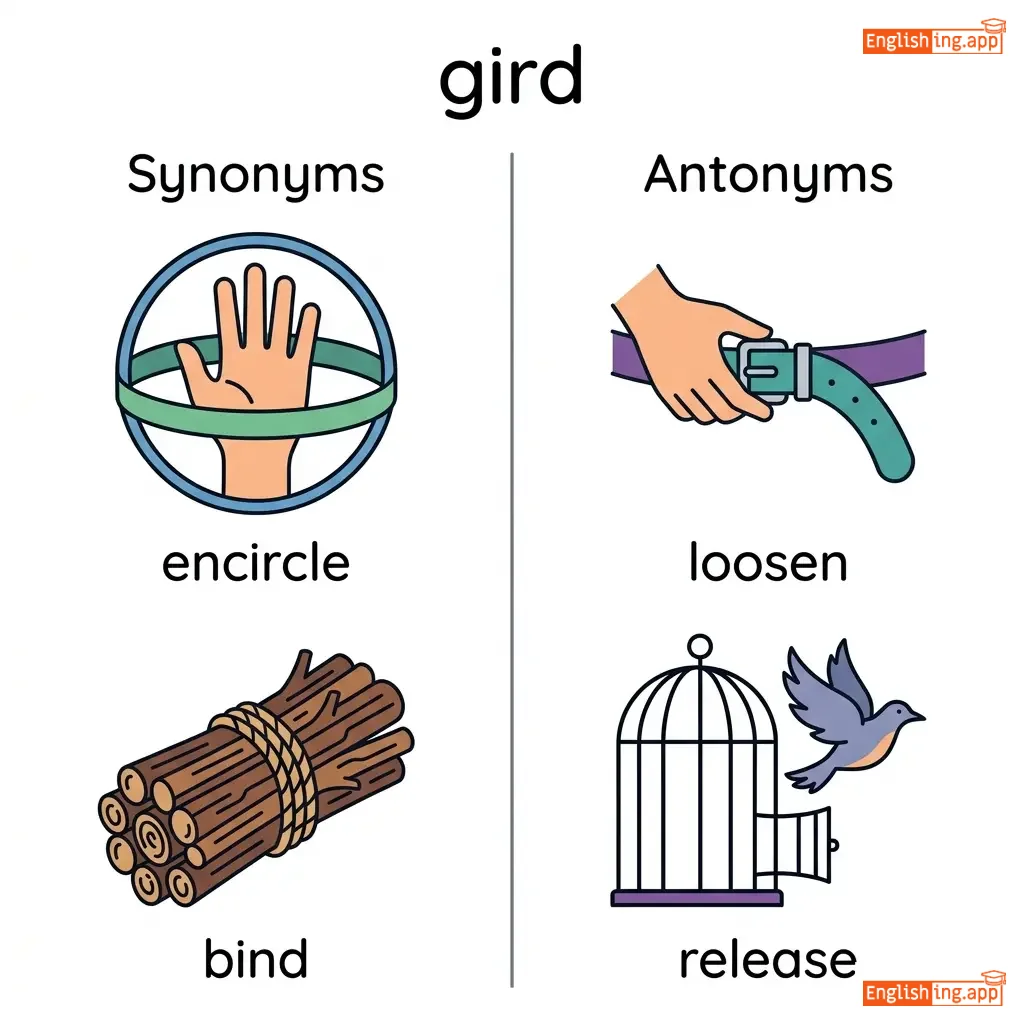
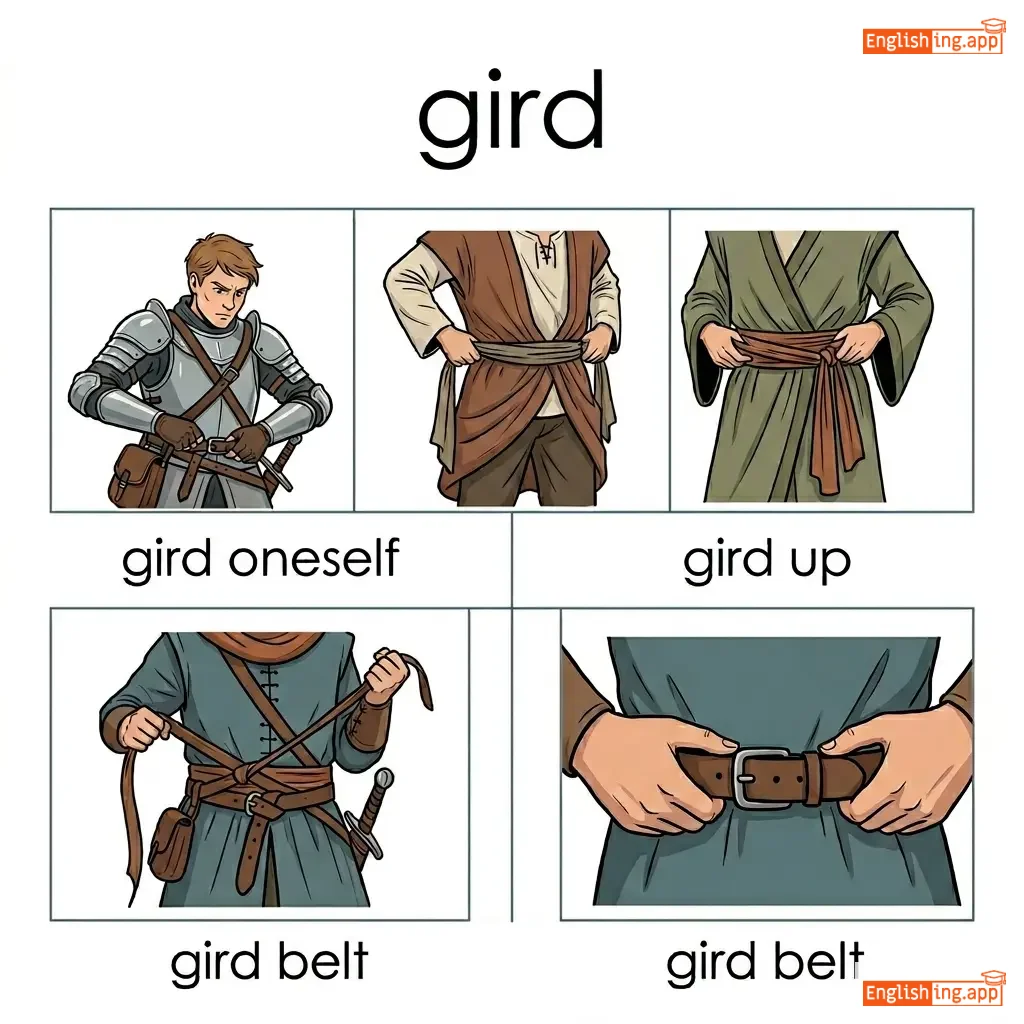
to encircle or bind with a belt or band; to prepare oneself for something difficult
••••••
|
He girded himself for the long journey ahead. |
- •••••• |
gird up one's loins |
to prepare oneself for action or a challenge
••••••
|
- •••••• |
encircle, bind, surround, fasten, brace
••••••
|
loosen, release
••••••
|
gird oneself, gird up, gird belt
••••••
|
No •••••• |
|
#3814
🚶♀️
|
/ˈdʒɪndʒərli/
adverb
(ジンジャリー)
••••••
|
- •••••• |
慎重に
shinchou ni
••••••
|
- •••••• | - •••••• | - •••••• | - •••••• |
in a very careful or cautious manner
••••••
|
She walked gingerly on the icy path.
彼女は氷の道を慎重に歩いた。
••••••
|
彼女は氷の道を慎重に歩いた。
Kanojo wa koori no michi o shinchou ni aruita.
••••••
|
- •••••• | - •••••• | - •••••• |
cautiously, carefully, delicately, warily
••••••
|
boldly, recklessly
••••••
|
walk gingerly, move gingerly, handle gingerly
••••••
|
ジンジャーのように慎重に食べる - だから gingerly は慎重にという意味です。
••••••
|
|
#3815
✨
|
/ɡɪld/
verb
(ギルド)
••••••
|
- •••••• |
金メッキ
kinmekki
••••••
|
gilded
ギルデッド
••••••
|
gilded
ギルデッド
••••••
|
gilds
ギルズ
••••••
|
gilding
ギルディング
••••••
|
to cover something with a thin layer of gold or to make something appear more attractive than it really is
••••••
|
The craftsman gilded the frame to give it a luxurious look.
職人はフレームを金で覆い、豪華な外観を与えました。
••••••
|
職人はフレームを金で覆い、豪華な外観を与えました。
Shokunin wa furemu o kin de ōi, gōka na gaikan o ataemashita.
••••••
|
gild the lily
百合を金で飾る
••••••
|
to unnecessarily add decoration to something already beautiful
••••••
|
百合を金で飾る
yuri o kin de kazaru
••••••
|
cover, decorate, embellish, coat, adorn
••••••
|
strip, deface, tarnish
••••••
|
gilded frame, gilded surface, gilded age, gild the lily
••••••
|
Gilding は金メッキを意味します - Gild は金メッキを意味します!
••••••
|
|
#3816
🌋
|
/dʒaɪˈɡæntɪk/
adjective
(ジャイガンティック)
••••••
|
- •••••• |
巨大な
kyodaina
••••••
|
- •••••• | - •••••• | - •••••• | - •••••• |
Extremely large or huge in size, power, or extent.
••••••
|
The company made a gigantic investment in technology. |
その企業は技術に巨額の投資をしました。
Sono kigyo wa gijutsu ni kyogaku no toshi o shimashita.
••••••
|
gigantic leap |
a very large or significant progress or improvement
••••••
|
巨大な飛躍
kyodaina hiyaku
••••••
|
huge, enormous, colossal, massive, immense
••••••
|
tiny, small, minuscule
••••••
|
gigantic building, gigantic success, gigantic effort
••••••
|
Gigantic は日本語で '巨大な' と言う、非常に大きなもの。
••••••
|
|
#3817
🎤
|
/ɡɪɡ/
noun
(ギグ)
••••••
|
- •••••• |
ミュージシャン、バンド、またはエンターテイナーによるライブパフォーマンス;または一時的な仕事
gig
••••••
|
- •••••• | - •••••• | - •••••• | - •••••• |
A live performance by a musician, band, or entertainer; also a temporary job.
••••••
|
The band has a gig at the local club tonight. |
今晩、バンドは地元のクラブでギグを行います。
Konban, bando wa jimoto no kurabu de gigu o okonimasu.
••••••
|
one-off gig |
a single temporary job or performance
••••••
|
単発のギグ
tanpatsu no gigu
••••••
|
performance, show, job, act, engagement
••••••
|
unemployment, absence
••••••
|
play a gig, land a gig, weekend gig, local gig
••••••
|
Gig はライブパフォーマンスや一時的な仕事を意味します。
••••••
|
|
#3818
😵
|
/ˈɡɪdi/
adjective
(ギディ)
••••••
|
- •••••• |
目眩, とても興奮している
mokunen, totemo kōfun shite iru
••••••
|
- •••••• | - •••••• | - •••••• | - •••••• |
Feeling dizzy or light-headed; also overly excited and frivolous.
••••••
|
She felt giddy after spinning around so many times. |
彼女は何度も回った後、目が回った。
Kanojo wa nando mo mawatta ato, me ga mawatta.
••••••
|
giddy with excitement |
extremely happy or overjoyed
••••••
|
興奮して目眩
kōfun shite mokunen
••••••
|
dizzy, lightheaded, ecstatic, elated, overjoyed
••••••
|
serious, stable, steady
••••••
|
feel giddy, giddy laugh, giddy excitement
••••••
|
Giddy というのは 'ギギ' のように、目眩や非常に幸せな気分を意味します。
••••••
|
|
#3819
😏
|
/dʒaɪb/
verb
(ジャイブ)
••••••
|
- •••••• |
嘲笑する
choushou suru
••••••
|
gibed
ジャイブド
••••••
|
gibed
ジャイブド
••••••
|
gibes
ジャイブス
••••••
|
gibing
ジャイビング
••••••
|
To make insulting or mocking remarks; to taunt.
••••••
|
The fans gibed at the losing team.
ファンは負けたチームを嘲笑しました。
••••••
|
ファンは負けたチームを嘲笑しました。
Fan wa maketa chiimu o choushou shimashita.
••••••
|
gibe at
ジャイブアット
••••••
|
to mock or jeer at someone
••••••
|
ジャイブする
jaibu suru
••••••
|
taunt, mock, jeer, ridicule, sneer
••••••
|
praise, compliment, flatter
••••••
|
gibe at opponents, cruel gibe, sarcastic gibe
••••••
|
ジャイブは誰かを冗談で嘲笑することです。
••••••
|
|
#3820
🪢
|
/ˈdʒɪbɪt/
noun
(ジベット)
••••••
|
- •••••• |
絞首台
kōshudai
••••••
|
- •••••• | - •••••• | - •••••• | - •••••• |
A gallows used for hanging criminals; historically also a post where bodies of executed criminals were displayed.
••••••
|
The thief was sentenced to die on the gibbet.
泥棒はジベットで死刑を宣告された。
••••••
|
泥棒は絞首台で死刑を宣告された。
Dorobō wa kōshudai de shikei o senkoku sareta.
••••••
|
- •••••• | - •••••• | - •••••• |
gallows, scaffold, noose, execution post, hanging frame
••••••
|
freedom, release, acquittal
••••••
|
hang on the gibbet, sentenced to the gibbet, executed on the gibbet
••••••
|
ジベットは絞首台、まるで映画の中の死刑執行のシーンのように。
••••••
|
|
#3821
🔤
|
/ˈdʒɪb.ər.ɪʃ/
noun
(ジブリッシュ)
••••••
|
- •••••• |
無意味な言葉
mu imi na kotoba
••••••
|
- •••••• | - •••••• | - •••••• | - •••••• |
Unintelligible or meaningless speech or writing.
••••••
|
He was so nervous that his explanation sounded like gibberish.
彼はとても緊張していて、説明はまるでジブリッシュのように聞こえた。
••••••
|
彼はとても緊張していて、説明はまるでジブリッシュのように聞こえた。
Kare wa totemo kinchou shite ite, setsumei wa marude jiburisshu no you ni kikoeta.
••••••
|
talking gibberish
無意味なことを話す
••••••
|
Speaking in a way that is incomprehensible or nonsensical.
••••••
|
無意味なことを話す
mu imi na koto o hanasu
••••••
|
nonsense, babble, drivel, mumbo jumbo, jargon
••••••
|
sense, clarity, meaning
••••••
|
utter gibberish, sound like gibberish, complete gibberish, gibberish language
••••••
|
Gibberishはジブリッシュ、無意味な言葉!
••••••
|
|
#3822
🗣️
|
/ˈdʒɪb.ər/
verb
(ギバー)
••••••
|
- •••••• |
意味不明に話す
imi fumei ni hanasu
••••••
|
gibbered
ギバード
••••••
|
gibbered
ギバード
••••••
|
gibbers
ギバーズ
••••••
|
gibbering
ギビリング
••••••
|
To speak rapidly and unintelligibly, typically through fear or shock.
••••••
|
The frightened man began to gibber when he saw the ghost.
怖がった男は幽霊を見たとき、ギバーを始めた。
••••••
|
怖がった男は幽霊を見たとき、意味不明に話し始めた。
Kowagatta otoko wa yuurei wo mita toki, imi fumei ni hanashi hajimeta.
••••••
|
- •••••• | - •••••• | - •••••• |
babble, ramble, chatter, jabber
••••••
|
speak clearly, articulate
••••••
|
gibber in fear, gibbering nonsense, gibber nervously, gibber away
••••••
|
ギバーすると、言葉が意味不明になる。
••••••
|
|
#3823
👻
|
/ˈɡæst.li/
adjective
(ガーストリー)
••••••
|
- •••••• |
恐ろしい
osoroshii
••••••
|
- •••••• | - •••••• | - •••••• | - •••••• |
Causing great horror or fear; very unpleasant.
••••••
|
The crime scene was a ghastly sight. |
犯罪現場は恐ろしい光景だった。
Hanzai genba wa osoroshī kōkei datta.
••••••
|
look ghastly |
To appear extremely pale or ill.
••••••
|
恐ろしい見た目
Osoroshī mitame
••••••
|
horrible, dreadful, awful, shocking, gruesome
••••••
|
pleasant, delightful, beautiful
••••••
|
ghastly mistake, ghastly accident, ghastly appearance, ghastly sight
••••••
|
Ghastlyは恐ろしい、まるで幽霊のようです。
••••••
|
|
#3824
🌋
|
/ˈɡaɪ.zər/
noun
(ガイザー)
••••••
|
- •••••• |
間欠泉
kanketsusen
••••••
|
- •••••• | - •••••• | - •••••• | - •••••• |
A natural hot spring that intermittently ejects a column of water and steam into the air.
••••••
|
The geyser erupted, shooting water high into the sky.
そのガイザーが噴火し、水を空高く吹き上げました。
••••••
|
そのガイザーが噴火し、水を空高く吹き上げました。
Sono gaizā ga funka shi, mizu o sora takaku fukiagemashita.
••••••
|
- •••••• | - •••••• | - •••••• |
spring, fountain, jet, spout
••••••
|
well, dryness
••••••
|
hot geyser, erupting geyser, natural geyser, famous geyser
••••••
|
間欠泉は温かい水を吹き上げる、まるで自然の温水噴水のようです。
••••••
|
|
#3825
🤲
|
/ˈdʒɛs.tʃər/
noun
(ジェスチャー)
••••••
|
- •••••• |
ジェスチャー
jesuchā
••••••
|
- •••••• | - •••••• | - •••••• | - •••••• |
A movement of part of the body, especially the hands or head, to express an idea or meaning.
••••••
|
She made a friendly gesture to welcome the guests. |
彼女はゲストを歓迎するために友好的なジェスチャーをしました。
Kanojo wa gesuto o kangei suru tame ni yūkō-teki na jesuchā o shimashita.
••••••
|
gesture of goodwill |
An act intended to show kindness or positive intention.
••••••
|
善意のジェスチャー
zen'i no jesuchā
••••••
|
motion, signal, sign, indication, movement
••••••
|
inaction, stillness
••••••
|
kind gesture, simple gesture, symbolic gesture, gesture of support
••••••
|
ゲストに対して友好的なジェスチャーをしよう!
••••••
|
|
#3826
👑
|
/ˈdʒɛntri/
noun
(dʒɛntɾi)
••••••
|
- •••••• |
上流社会
jōryū shakai
••••••
|
- •••••• | - •••••• | - •••••• | - •••••• |
People of good social position, usually of high birth or wealthy landowners
••••••
|
The gentry of the town gathered for the annual ball. |
町の上流社会の人々は年次の舞踏会に集まりました。
Machi no jōryū shakai no hitobito wa nenji no butōkai ni atsumarimashita.
••••••
|
- •••••• | - •••••• | - •••••• |
nobility, aristocracy, elite, upper class
••••••
|
commoners, peasants
••••••
|
landed gentry, wealthy gentry, English gentry
••••••
|
Gentry は上流社会 — 上流の人々
••••••
|
|
#3827
👋
|
/dʒɛˈstɪkjʊleɪt/
verb
(ジェスチキュレート)
••••••
|
- •••••• |
ジェスチキュレート
jesuchikyurēto
••••••
|
gesticulated
ジェスチキュレーテッド
••••••
|
gesticulated
ジェスチキュレーテッド
••••••
|
gesticulates
ジェスチキュレーツ
••••••
|
gesticulating
ジェスチキュレーティング
••••••
|
to use gestures, especially dramatic ones, instead of speaking or to emphasize one's words
••••••
|
He gesticulated wildly to get their attention.
彼は彼らの注意を引くために激しくジェスチャーをしていた。
••••••
|
彼は彼らの注意を引くために激しくジェスチャーをしていた。
Kare wa karera no chūi o hiku tame ni hageshiku jēsuchā o shite ita.
••••••
|
- •••••• | - •••••• | - •••••• |
gesture, signal, motion, wave
••••••
|
speak, verbalize
••••••
|
gesticulate wildly, gesticulate angrily, gesticulate to explain
••••••
|
ジェスチャー+計算 → ジェスチャーで伝える
••••••
|
|
#3828
👶
|
/dʒɛˈsteɪʃən/
noun
(ジェステーション)
••••••
|
- •••••• |
妊娠
ninshin
••••••
|
- •••••• | - •••••• | - •••••• | - •••••• |
the process of carrying or being carried in the womb between conception and birth; the development of an idea or plan
••••••
|
The gestation period of an elephant is nearly two years.
象の妊娠期間はほぼ2年です。
••••••
|
象の妊娠期間はほぼ2年です。
Zō no ninshin kikan wa hobo 2-nen desu.
••••••
|
- •••••• | - •••••• | - •••••• |
pregnancy, incubation, development, formation
••••••
|
birth, termination
••••••
|
gestation period, long gestation, gestation process, during gestation
••••••
|
Gestation は ‘Station’ の中で赤ちゃんが待つ場所 – 妊娠。
••••••
|
|
#3829
🤰
|
/ˈdʒɛsteɪt/
verb
(ジェステイト)
••••••
|
- •••••• |
妊娠
ninshin
••••••
|
gestated
ジェステイテッド
••••••
|
gestated
ジェステイテッド
••••••
|
gestates
ジェステイツ
••••••
|
gestating
ジェステイティング
••••••
|
to carry and develop in the womb during pregnancy; to develop an idea over a period of time
••••••
|
The mother whale gestates her calf for over a year.
母クジラは1年以上にわたって子クジラを妊娠し、発展させます。
••••••
|
母クジラは1年以上にわたって子クジラを妊娠し、発展させます。
Haha kujira wa 1-nen ijō ni watatte ko kujira o ninshin shi, hatten sasemasu.
••••••
|
- •••••• | - •••••• | - •••••• |
carry, incubate, conceive, develop
••••••
|
abort, end
••••••
|
gestate an idea, gestate a child, gestate project, long gestation
••••••
|
Gestate、ママクジラが‘状態’を持って子供を出産するように
••••••
|
|
#3830
🗳️
|
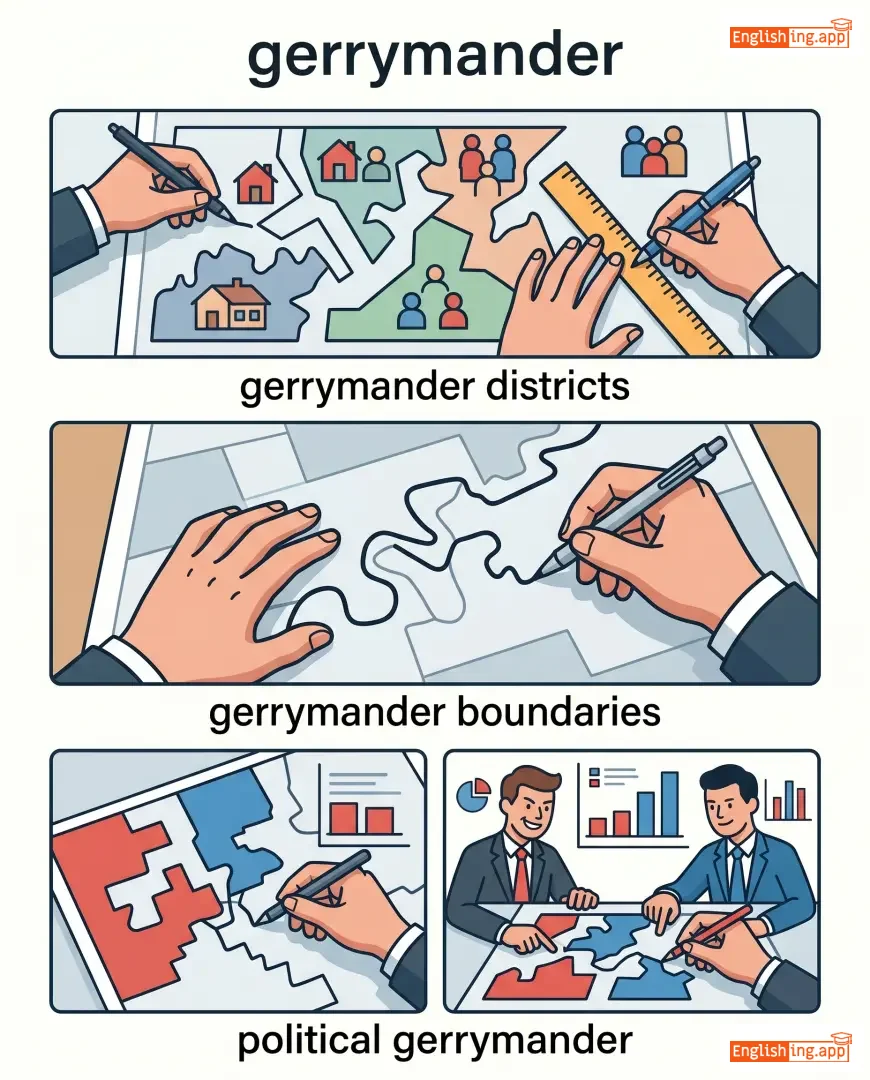
/ˈdʒɛriˌmændər/
verb
(ジェリーマンダー)
••••••
|
|
選挙区境界の操作
senkyoku kyokai no sousa
••••••
|
gerrymandered
ジェリーマンダード
••••••
|
gerrymandered
ジェリーマンダード
••••••
|
gerrymanders
ジェリーマンダーズ
••••••
|
gerrymandering
ジェリーマンディング
••••••
|
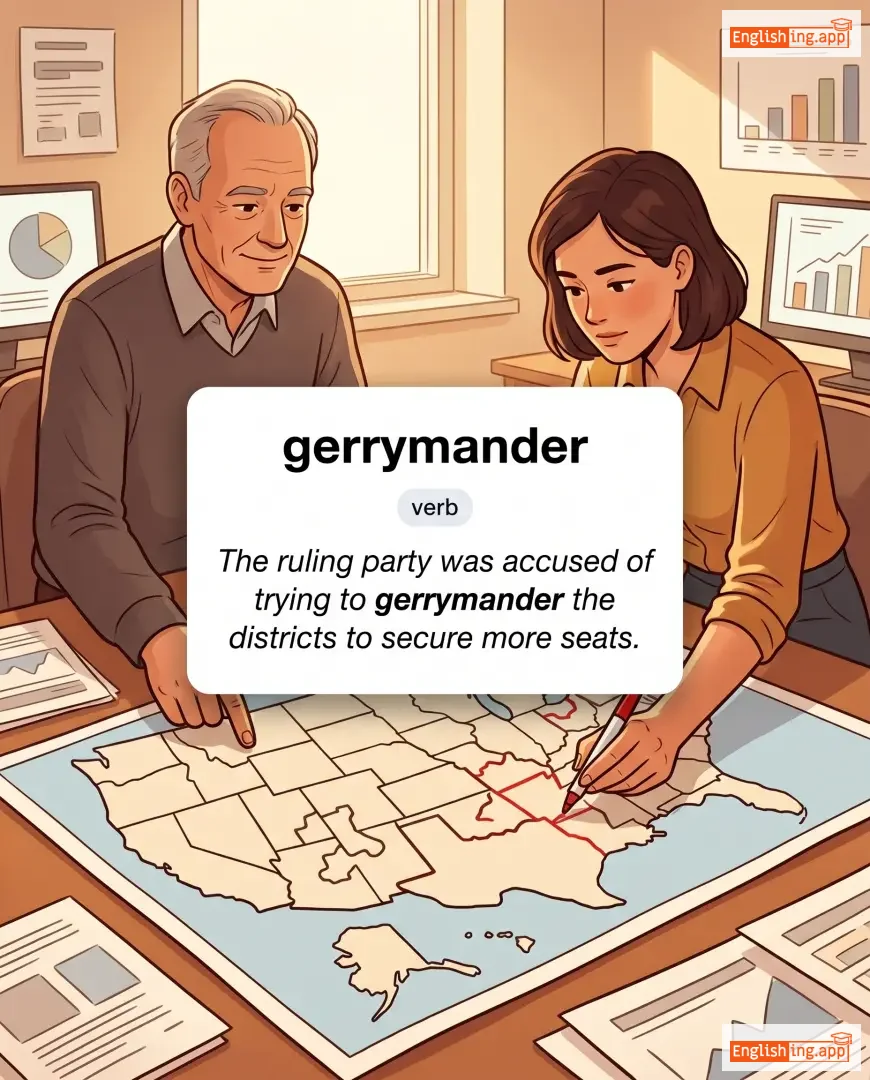
to manipulate the boundaries of an electoral constituency to favor one party or class
••••••
|
The ruling party was accused of trying to gerrymander the districts to secure more seats.
与党は選挙区の境界を操作して、より多くの席を確保しようとしていると非難された。
••••••
|
与党は、より多くの議席を確保するために選挙区を操作したと非難された。
Yoto wa, yori ooku no giseki wo kakuho suru tame ni senkyoku wo sousa shita to hinan sareta.
••••••
|
- •••••• | - •••••• | - •••••• |
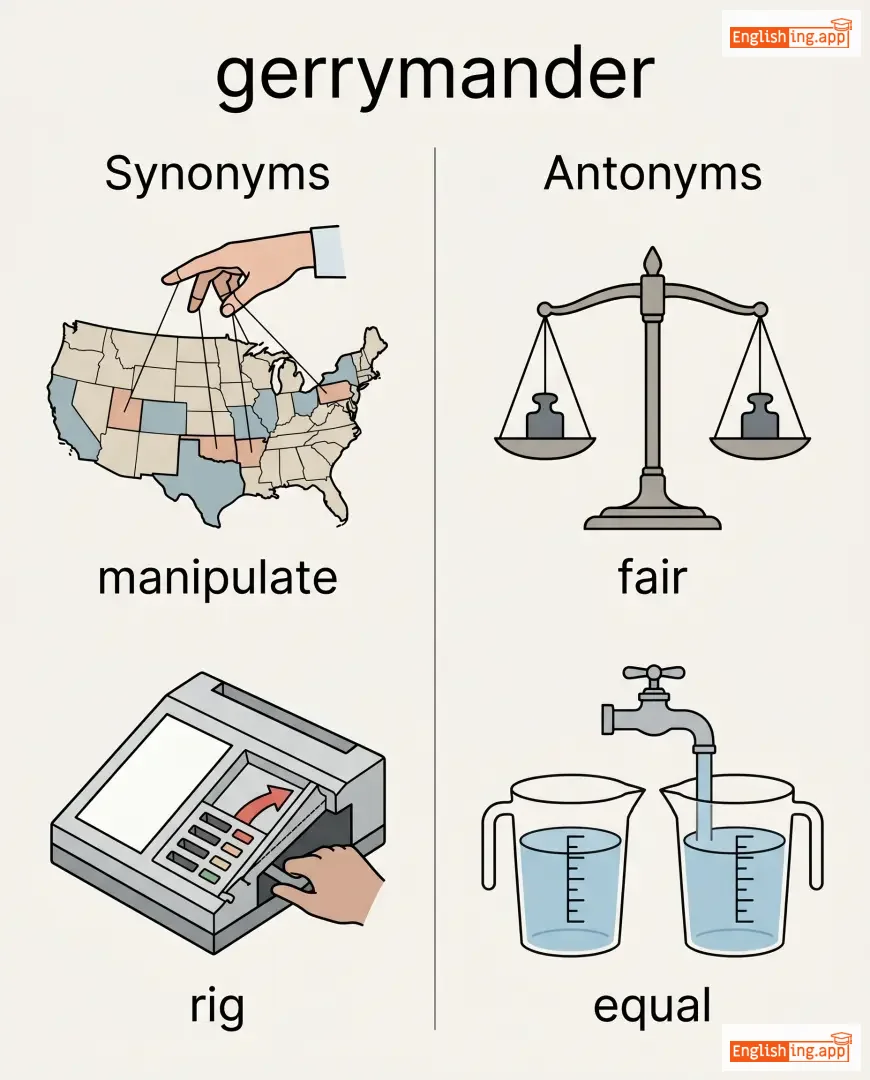
manipulate, rig, falsify, distort, exploit
••••••
|
fair, equal, impartial
••••••
|
gerrymander districts, gerrymander boundaries, political gerrymander, blatant gerrymander
••••••
|
ジェリーが境界を変えて、利益を得る
••••••
|
|
#3831
🧓
|
/ˌdʒerənˈtɑːlədʒi/
noun
(ジェロントロジー)
••••••
|
- •••••• |
ジェロントロジー
jerontorojī
••••••
|
- •••••• | - •••••• | - •••••• | - •••••• |
The scientific study of old age and the process of aging.
••••••
|
She chose to specialize in gerontology after completing medical school. |
彼女は医学部を卒業した後、ジェロントロジーに特化することを決めました。
Kanojo wa igakubu o sotsugyō shita ato, jerontorojī ni tokka suru koto o kimemashita.
••••••
|
- •••••• | - •••••• | - •••••• |
study of aging, elderly science, age research, senescence study
••••••
|
pediatrics, youth studies
••••••
|
gerontology research, gerontology program, field of gerontology
••••••
|
ジェロントロジーは gero (老) + ロジー (学問) - 老化の科学です。
••••••
|
|
#3832
👴
|
/ˌdʒerənˈtɑːkrəsi/
noun
(ジェロントクラシー)
••••••
|
- •••••• |
高齢者支配
kōrei-sha shihai
••••••
|
- •••••• | - •••••• | - •••••• | - •••••• |
A system of government or control by old people.
••••••
|
The country was seen as a gerontocracy, dominated by elderly leaders. |
その国は高齢者支配と見なされ、年配の指導者が支配していた。
Sono kuni wa kōrei-sha shihai to minasare, nenpai no shidōsha ga shihai shite ita.
••••••
|
- •••••• | - •••••• | - •••••• |
rule of elders, senior leadership, aged governance, old-age rule
••••••
|
youth leadership, democracy
••••••
|
political gerontocracy, ruled by gerontocracy, military gerontocracy
••••••
|
Gerontocracy とは gero (老) + cracy (支配) - 高齢者の支配。
••••••
|
|
#3833
🌿
|
/ˈdʒɜːrmɪneɪt/
verb
(ハピネス)
••••••
|
- •••••• |
幸福
kōfuku
••••••
|
germinated
••••••
|
germinated
••••••
|
germinates
••••••
|
germinating
••••••
|
To begin to grow or develop, especially referring to a seed.
••••••
|
The seeds germinate quickly in moist soil. |
彼女は賞を受け取ったとき、自分の幸福を隠せなかった。
Kanojo wa shō o uketotta toki, jibun no kōfuku o kakusenakatta.
••••••
|
germinate an idea |
To develop or form an idea in someone's mind
••••••
|
幸福の追求
kōfuku no tsuikyū
••••••
|
sprout, grow, develop, flourish, originate
••••••
|
wither, die, decay
••••••
|
germinate quickly, seeds germinate, germinate ideas, germinate naturally
••••••
|
幸福 = Happy + Fuku (Japanese for happiness)
••••••
|
|
#3834
🌱
|
/ˈdʒɜːrmɪnəl/
adjective
(ジャーミナル)
••••••
|
- •••••• |
発芽の
hatsuga no
••••••
|
- •••••• | - •••••• | - •••••• | - •••••• |
Relating to the earliest stage of development.
••••••
|
The idea was still in its germinal stage.
そのアイデアはまだその発芽段階にありました。
••••••
|
そのアイデアはまだその発芽段階にありました。
Sono aidea wa mada sono hatsuga dankai ni arimashita.
••••••
|
- •••••• | - •••••• | - •••••• |
initial, formative, embryonic, nascent, early
••••••
|
mature, developed, advanced
••••••
|
germinal idea, germinal stage, germinal period, germinal phase
••••••
|
Germinal は germ(発芽)段階 - 成長の始まり。
••••••
|
|
#3835
📌
|
/dʒərˈmeɪn/
adjective
(ジャーメイン)
••••••
|
- •••••• |
関連する
kanren suru
••••••
|
- •••••• | - •••••• | - •••••• | - •••••• |
Relevant and appropriate to the subject being considered.
••••••
|
Her comments were not germane to the discussion. |
彼女のコメントは議論に関連していませんでした。
Kanojo no komento wa giron ni kanren shiteimasen deshita.
••••••
|
- •••••• | - •••••• | - •••••• |
relevant, pertinent, applicable, appropriate, connected
••••••
|
irrelevant, inappropriate, unrelated
••••••
|
germane to, directly germane, not germane, highly germane
••••••
|
Germaneは関連する、ドイツ語の議論に関連するように!
••••••
|
|
#3836
🦠
|
/dʒɜːm/
noun
(ジャーム)
••••••
|
- •••••• |
細菌
saikin
••••••
|
- •••••• | - •••••• | - •••••• | - •••••• |
a microscopic organism, especially one that causes disease
••••••
|
Washing your hands helps prevent the spread of germs. |
手を洗うことは細菌の広がりを防ぐのに役立ちます。
Te o arau koto wa saikin no hirogari o fusegu no ni yakudachimasu.
••••••
|
germ of an idea |
a small beginning of a thought or plan
••••••
|
アイデアの芽
aidea no me
••••••
|
microbe, bacterium, pathogen, microorganism, virus
••••••
|
health, cleanliness
••••••
|
germ infection, kill germs, harmful germs, spread of germs
••••••
|
Germは細菌、germinate(発芽)のように
••••••
|
|
#3837
👵
|
/ˌdʒɛr.iˈætrɪks/
noun
(dʒɛr.iˈætrɪks)
••••••
|
- •••••• |
老年医学
rōnen igaku
••••••
|
- •••••• | - •••••• | - •••••• | - •••••• |
the branch of medicine dealing with the health and care of old people
••••••
|
He specialized in geriatrics to care for the elderly.
彼は高齢者の世話をするために、老年医学を専門にしました。
••••••
|
彼は高齢者の世話をするために、老年医学を専門にしました。
Kare wa kōreisha no sewa o suru tame ni, rōnen igaku o senmon ni shimashita.
••••••
|
- •••••• | - •••••• | - •••••• |
elder care, gerontology, senior medicine, old-age care
••••••
|
pediatrics, neonatology
••••••
|
geriatrics ward, study geriatrics, geriatrics specialist, geriatrics hospital
••••••
|
老年医学は高齢者のケアを行う医学です
••••••
|
|
#3838
🌍
|
/dʒiˈɒl.ə.dʒi/
noun
(地質学)
••••••
|
- •••••• |
地質学
chishitsugaku
••••••
|
- •••••• | - •••••• | - •••••• | - •••••• |
the science that deals with the Earth's physical structure and substances
••••••
|
She studied geology to understand earthquakes. |
彼女は地震を理解するために地質学を学びました。
Kanojo wa jishin o rikai suru tame ni chishitsugaku o manabimashita.
••••••
|
- •••••• | - •••••• | - •••••• |
earth science, geoscience, study of rocks, physical geography
••••••
|
astronomy, biology
••••••
|
geology course, study geology, geology professor, geology department
••••••
|
Geo (地球) + logy (学問) = 地質学
••••••
|
|
#3839
🌱
|
/ˈdʒiː.nəs/
noun
(ジーナス)
••••••
|
- •••••• |
属
shoku
••••••
|
- •••••• | - •••••• | - •••••• | - •••••• |
a category in biological classification ranking above species and below family
••••••
|
The tiger belongs to the genus Panthera.
トラはパンサー属に属します。
••••••
|
トラはパンサー属に属します。
Tora wa Pansā shoku ni zokushimasu.
••••••
|
- •••••• | - •••••• | - •••••• |
category, group, class, type
••••••
|
species, individual
••••••
|
genus species, plant genus, animal genus, genus classification
••••••
|
属はGeneralのように、生物分類における大きなカテゴリーです。
••••••
|
|
#3840
🙏
|
/ˈdʒɛn.juˌflɛkt/
verb
••••••
|
- •••••• | - •••••• |
genuflected
••••••
|
genuflected
••••••
|
genuflects
••••••
|
genuflecting
••••••
|
to bend one or both knees as a sign of reverence or worship
••••••
|
The worshippers genuflect before the altar. |
- •••••• |
genuflect to authority |
to show excessive respect or obedience to authority
••••••
|
- •••••• |
kneel, bow, prostrate, revere, worship
••••••
|
stand, rise
••••••
|
genuflect before, genuflect to, genuflect in prayer
••••••
|
No •••••• |
Vocabulary Quiz
Test your vocabulary by matching words with their translations or meanings.
Login to take the quiz
Comments (0)
Share your thoughts and join the discussion.
Join the discussion by logging in
Login to CommentNo comments yet
Be the first to share your thoughts!