

翻訳
過去
過去分詞
三人称単数
動名詞
意味
例文
例文の翻訳
同義語
対義語
コロケーション
ニーモニック

Swipe left or right, or use the buttons. Tap image to zoom.
例文の翻訳
単語
Lesson 320Lesson 320 - マスクトグル
|
絵文字
|
単語 | Images | 翻訳 | 過去 | 過去分詞 | 三人称単数 | 動名詞 | 意味 | 例文 | 例文の翻訳 | 表現例 | 表現例の意味 | 表現例の翻訳 | 同義語 | 対義語 | コロケーション | ニーモニック |
|---|---|---|---|---|---|---|---|---|---|---|---|---|---|---|---|---|---|
|
#9570
➡️
|
/ˈɛniweɪ/
adverb
(エニウェイ)
••••••
|
- •••••• |
とにかく
tonikaku
••••••
|
- •••••• | - •••••• | - •••••• | - •••••• |
used to emphasize a statement or to return to a previous subject; regardless of what happened
••••••
|
I was tired, but I went to the meeting anyway. |
疲れていたが、それでも会議に行った。
Tsukarete ita ga, sore demo kaigi ni itta.
••••••
|
anyway you slice it |
no matter how you look at it
••••••
|
どんな場合でも
donna baai demo
••••••
|
regardless, nevertheless, still, anyhow, though
••••••
|
because, therefore
••••••
|
but anyway, anyway you, anyway possible
••••••
|
とにかく彼は行く、どんな場合でも。
••••••
|
|
#9571
🤞
|
/əˈʃʊr/
verb
(アシュア)
••••••
|
- •••••• |
保証する
hoshō suru
••••••
|
assured
アシュアード
••••••
|
assured
アシュアード
••••••
|
assures
アシュアーズ
••••••
|
assuring
アシュアリング
••••••
|
to make someone feel certain or confident about something
••••••
|
He assured her that everything would be fine.
彼はすべてがうまくいくと彼女に確信を与えた。
••••••
|
彼はすべてがうまくいくと彼女に確信を与えた。
Kare wa subete ga umaku iku to kanojo ni kakushin o ataeta.
••••••
|
rest assured
安心してください
••••••
|
to be confident or certain about something
••••••
|
ご安心ください
go anshin kudasai
••••••
|
guarantee, promise, affirm, convince, ensure
••••••
|
doubt, question
••••••
|
assure someone, assure success, assure quality
••••••
|
保証するは自信を与えること - 先生が言うREST ASSURED試験は簡単だ。
••••••
|
|
#9572
👥
|
/əˌsoʊsiˈeɪʃən/
noun
(アソシエーション)
••••••
|
- •••••• |
協会
kyoukai
••••••
|
- •••••• | - •••••• | - •••••• | - •••••• |
an organized group of people who have joined together for a common purpose
••••••
|
She is a member of the local teachers' association. |
彼女は地元の教師協会のメンバーです。
Kanojo wa jimoto no kyoushi kyoukai no menbā desu.
••••••
|
guilt by association |
being blamed for the actions of others you are connected with
••••••
|
連帯責任
rentai sekinin
••••••
|
organization, society, alliance, group, union
••••••
|
individual, disconnection
••••••
|
professional association, trade association, close association
••••••
|
協会はグループや団体を意味します。例えば、サッカー協会はプレーヤーのグループです。
••••••
|
|
#9573
🌍
|
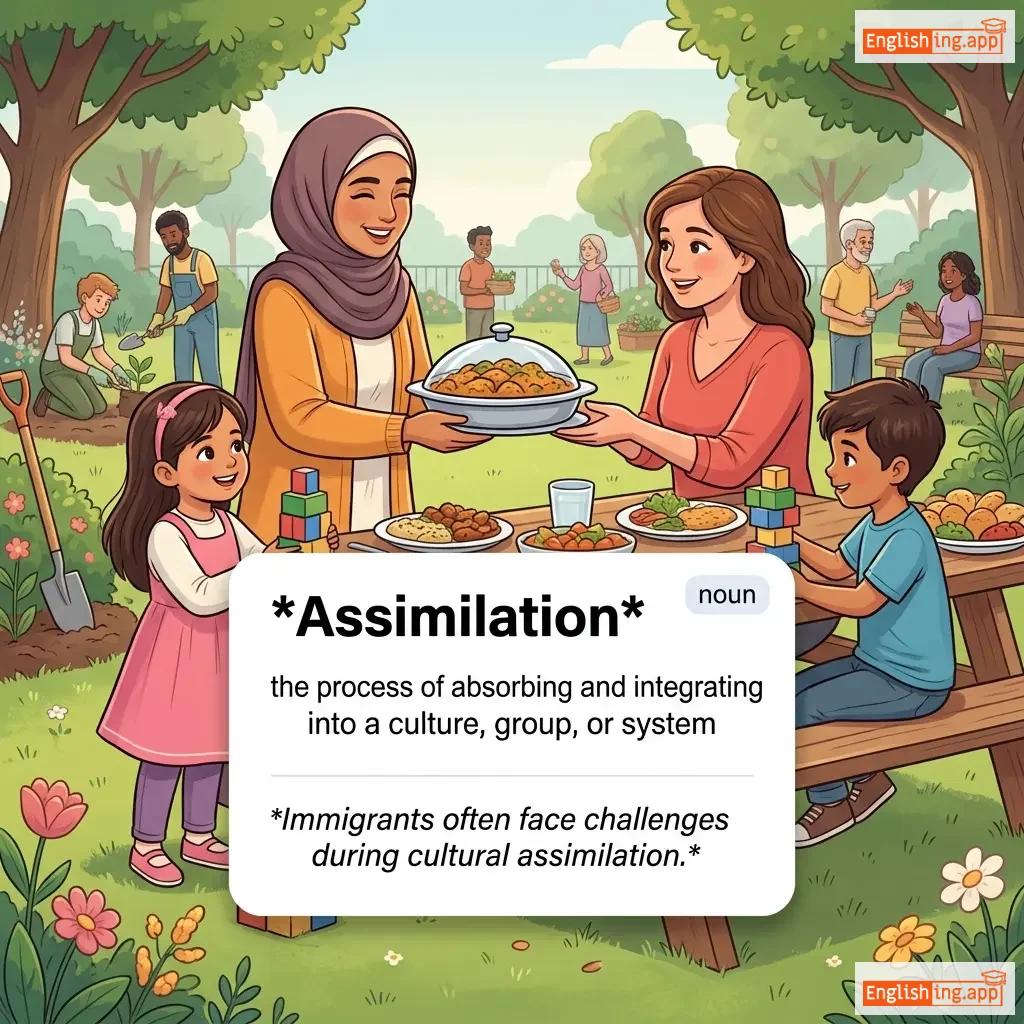
/əˌsɪməˈleɪʃən/
noun
(アシミレーション)
••••••
|
|
同化
dōka
••••••
|
- •••••• | - •••••• | - •••••• | - •••••• |
the process of absorbing and integrating into a culture, group, or system
••••••
|
Immigrants often face challenges during cultural assimilation. |
移民は文化的同化の過程でしばしば挑戦に直面します。
Imin wa bunkateki dōka no katei de shibashiba chōsen ni chokumen shimasu.
••••••
|
- •••••• | - •••••• | - •••••• |
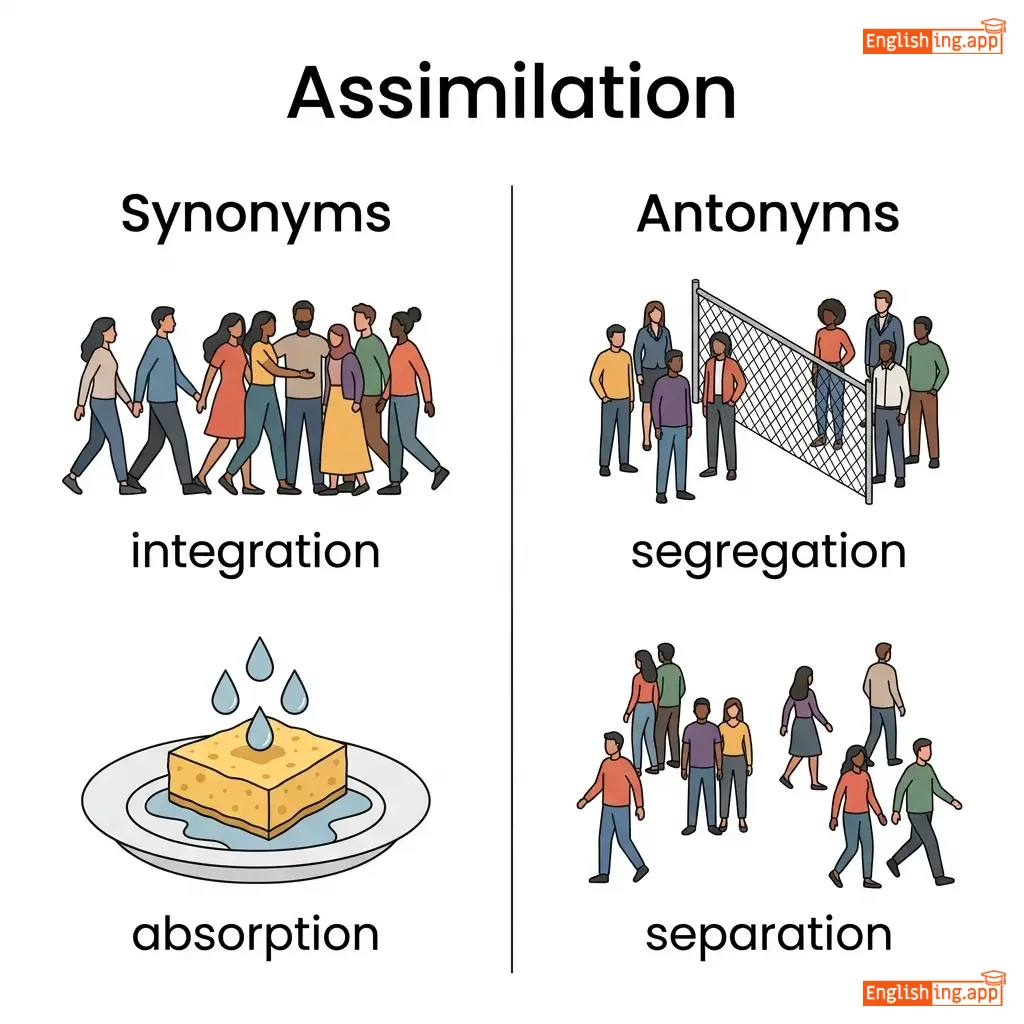
integration, absorption, incorporation, adaptation
••••••
|
segregation, separation
••••••
|
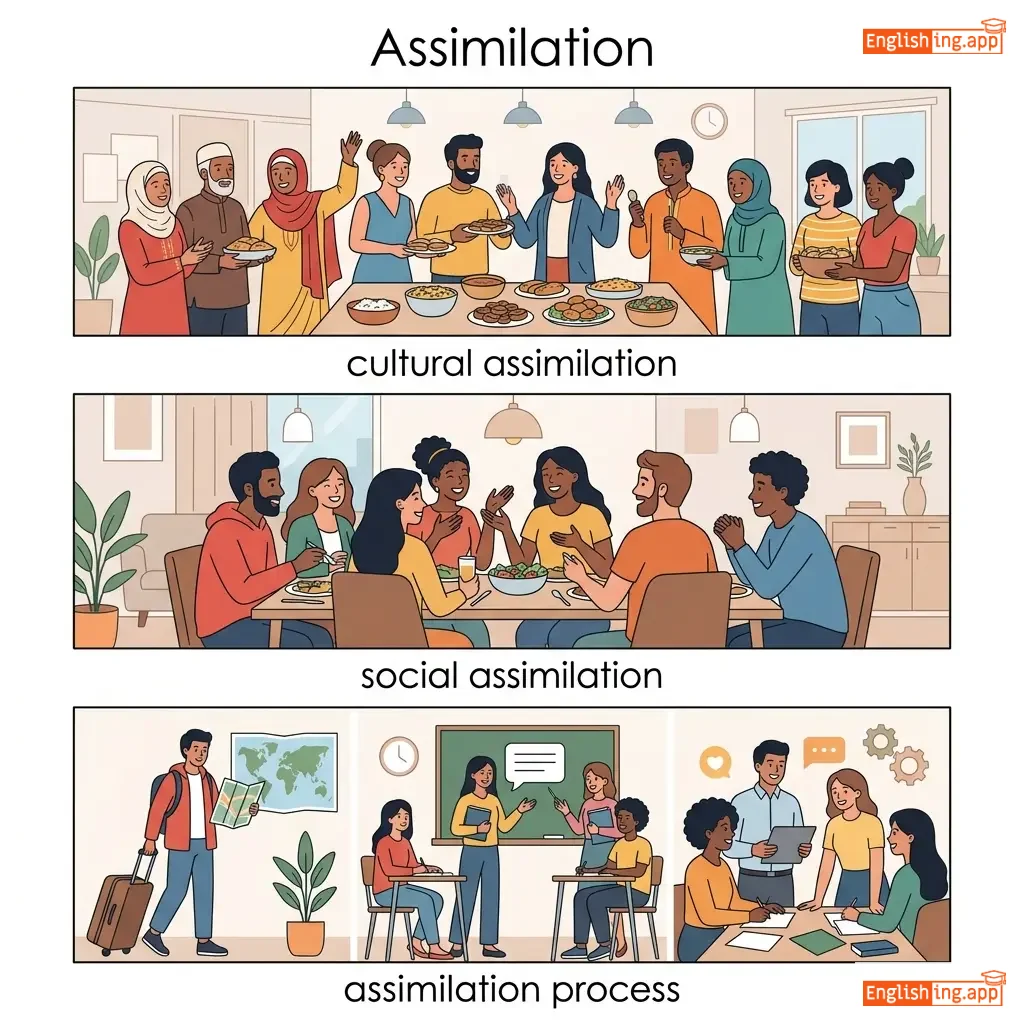
cultural assimilation, social assimilation, assimilation process
••••••
|
Assimilation = 新しい文化への適応プロセス。
••••••
|
|
#9574
❓
|
/æsk/
verb
(アスク)
••••••
|
- •••••• |
尋ねる
tazuneru
••••••
|
asked
アスケド
••••••
|
asked
アスケド
••••••
|
asks
アスカス
••••••
|
asking
アスキング
••••••
|
to request information or seek an answer
••••••
|
She asked him about his new job.
She asked him about his new job.
••••••
|
彼女は彼に新しい仕事について尋ねた。
Kanojo wa kare ni atarashii shigoto ni tsuite tazuneta.
••••••
|
ask for trouble
ask for trouble
••••••
|
to behave in a way that is likely to cause problems
••••••
|
トラブルを招く
toraburu o maneku
••••••
|
inquire, request, question, demand, seek
••••••
|
answer, respond
••••••
|
ask a question, ask for help, ask politely
••••••
|
Askは尋ねるという意味です - 授業で質問することから答えを得るように。
••••••
|
|
#9575
⛰️
|
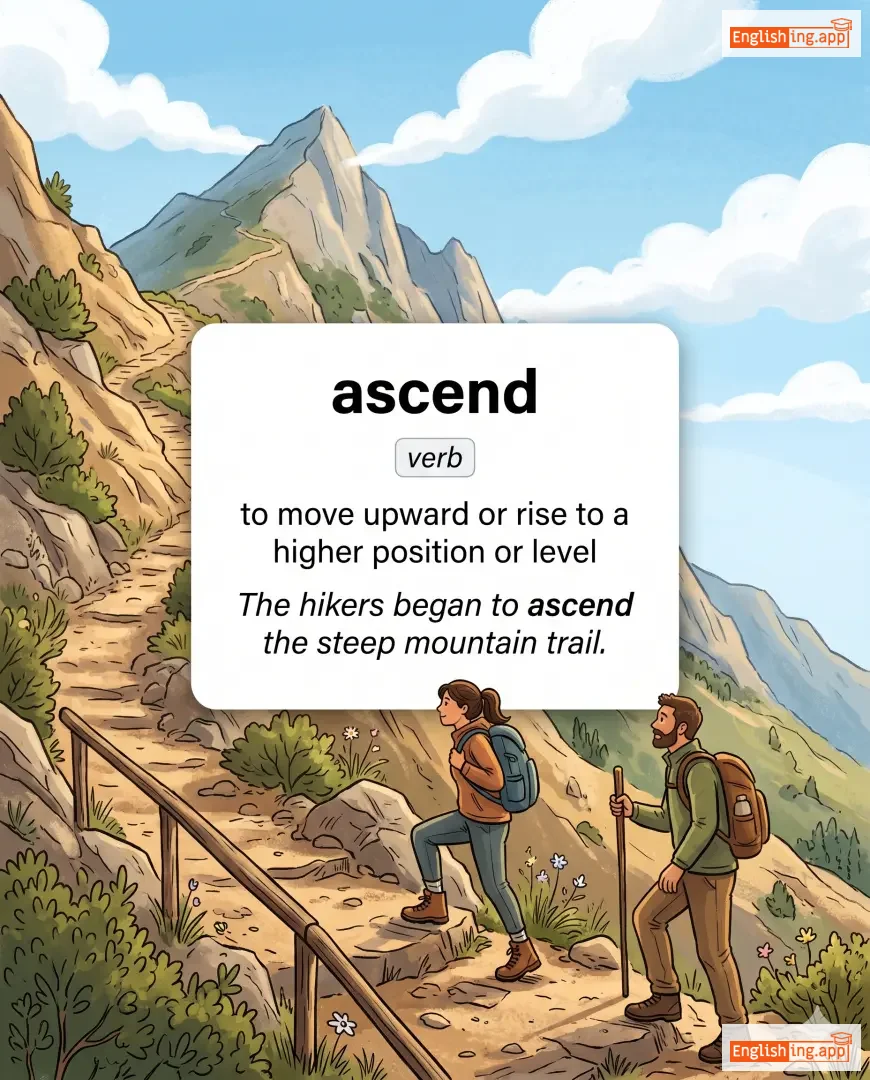
/əˈsɛnd/
verb
(アセンド)
••••••
|
|
登る
noboru
••••••
|
ascended
アセンドッド
••••••
|
ascended
アセンドッド
••••••
|
ascends
アセンズ
••••••
|
ascending
アセンドイング
••••••
|
to move upward or rise to a higher position or level
••••••
|
The hikers began to ascend the steep mountain trail.
ハイカーたちは急な山道を登り始めました。
••••••
|
ハイカーたちは急な山道を登り始めました。
Haikā-tachi wa kyū na yamamichi o nobori hajimemashita.
••••••
|
ascend to power
権力への登攀
••••••
|
to rise to a position of authority or leadership
••••••
|
権力への登攀
Kenryoku e no tōhan
••••••
|
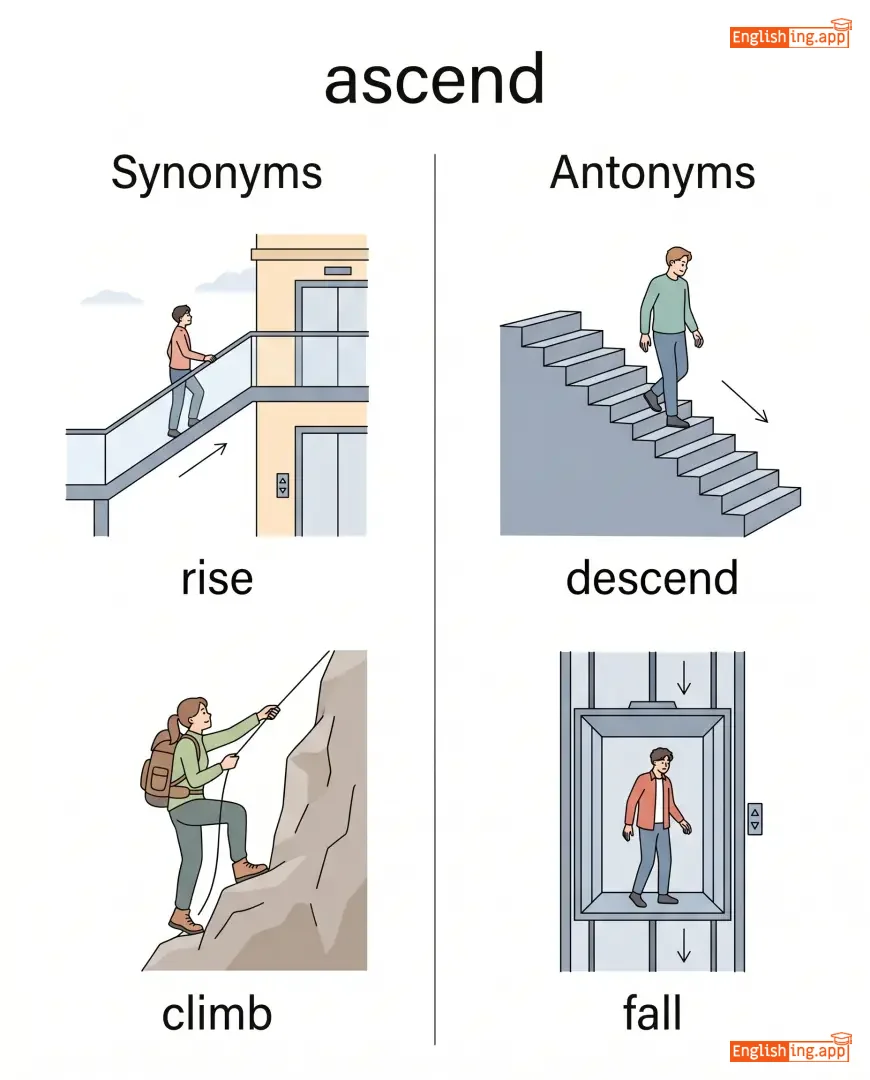
rise, climb, soar, mount, escalate
••••••
|
descend, fall, drop
••••••
|
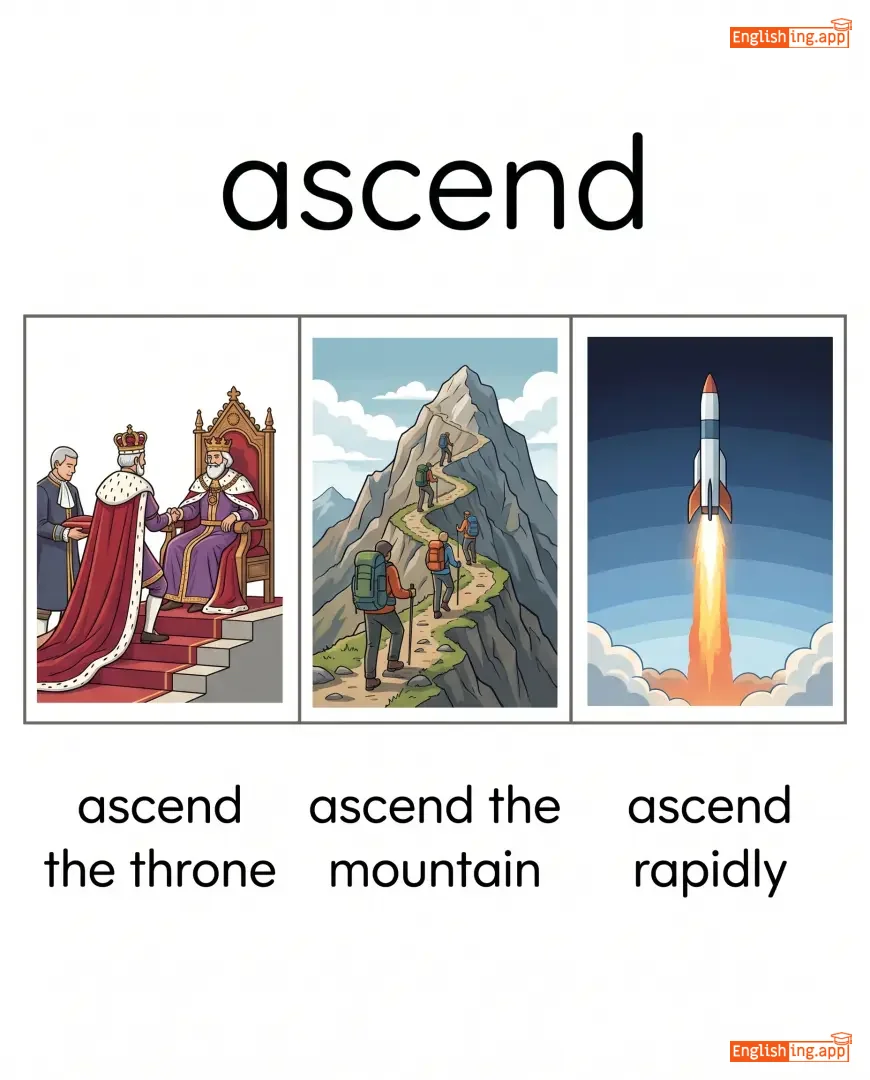
ascend the throne, ascend the mountain, ascend rapidly
••••••
|
Ascendは登るという意味です - 飛行機が空を登ることを想像してください。
••••••
|
|
#9576
🗣️
|
/ɑːrˌtɪkjʊˈleɪʃən/
noun
(発音)
••••••
|
|
明確な発音
meikaku na hatsuon
••••••
|
- •••••• | - •••••• | - •••••• | - •••••• |
the act of expressing something clearly in speech or the way in which words are pronounced
••••••
|
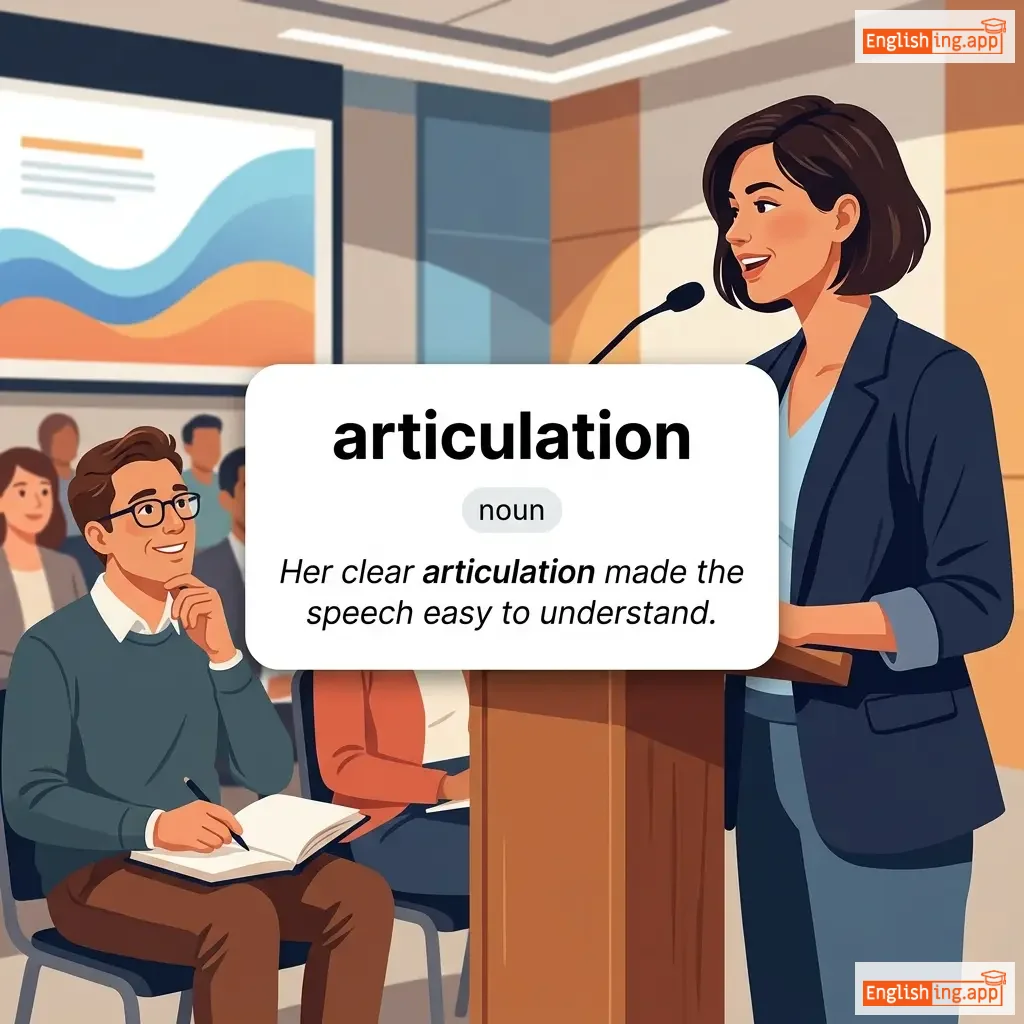
Her clear articulation made the speech easy to understand.
彼女の明確な発音はスピーチを理解しやすくしました。
••••••
|
彼女の明確な発音はスピーチを理解しやすくしました。
Kanojo no meikaku na hatsuon wa supīchi wo rikai shiyasuku shimashita.
••••••
|
- •••••• | - •••••• | - •••••• |
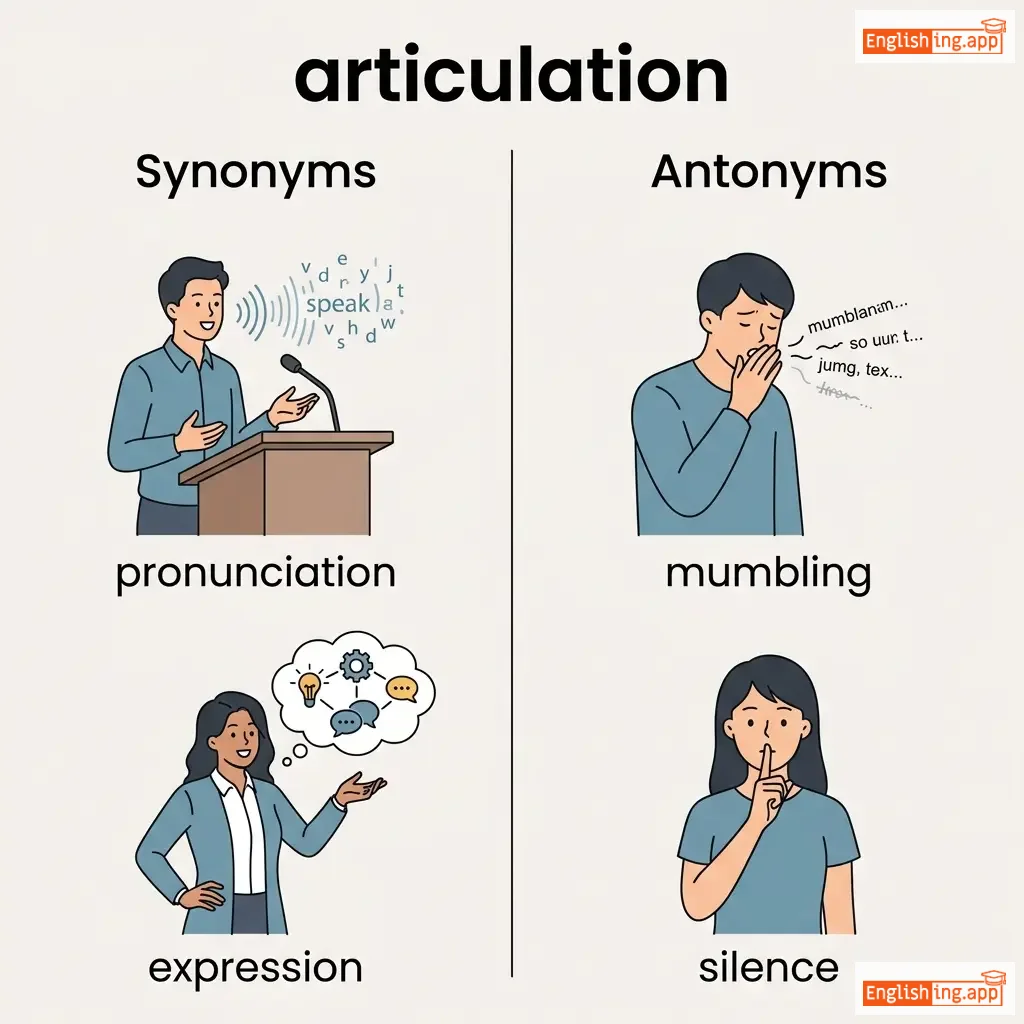
pronunciation, expression, enunciation, clarity, diction
••••••
|
mumbling, silence, vagueness
••••••
|
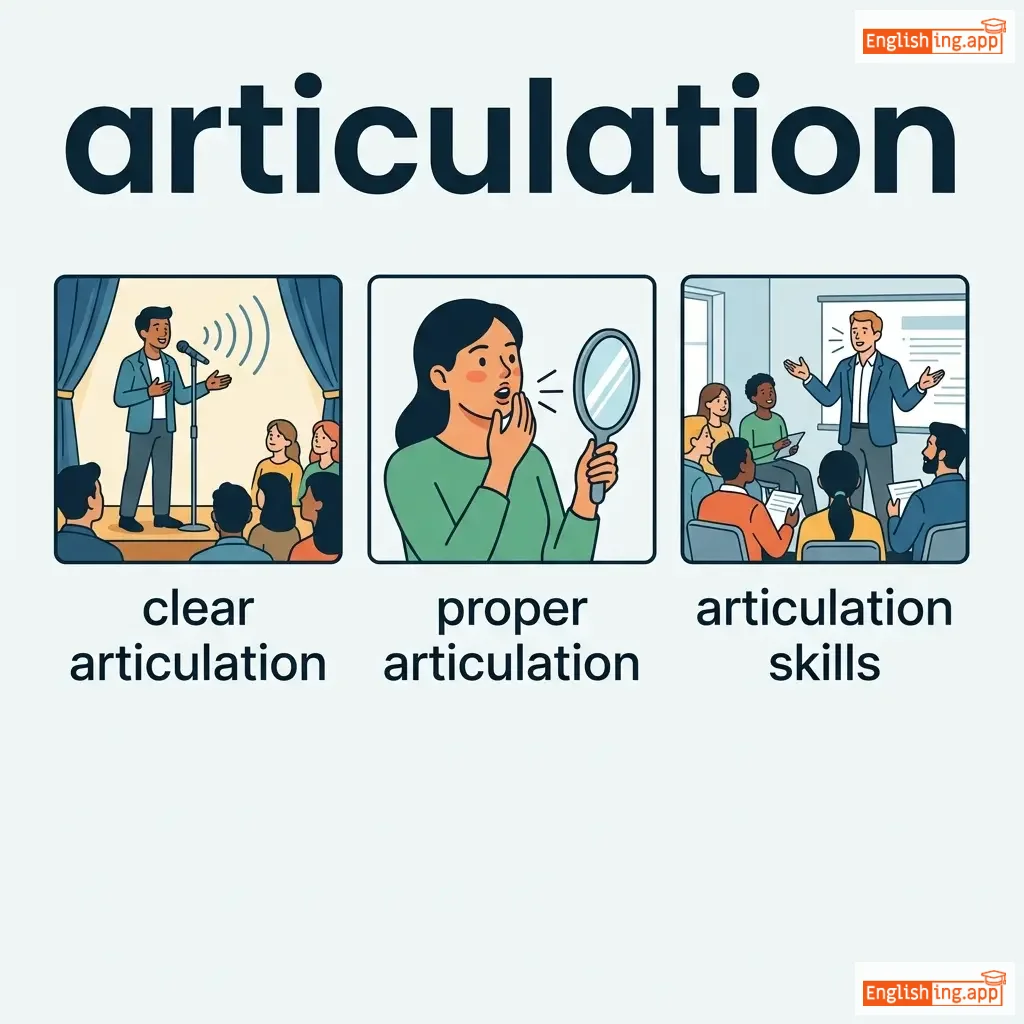
clear articulation, proper articulation, articulation skills, articulation disorder
••••••
|
発音は明確に話すこと、まるでアーティストのように。
••••••
|
|
#9577
🛬
|
/əˈraɪv/
verb
(アラヴ)
••••••
|
|
到着する
tōchaku suru
••••••
|
arrived
アラヴド
••••••
|
arrived
アラヴド
••••••
|
arrives
アラヴス
••••••
|
arriving
アラヴィング
••••••
|
to reach a place, especially at the end of a journey
••••••
|
She will arrive at the airport in the evening.
彼女は夕方に空港に到着するでしょう。
••••••
|
彼女は夕方に空港に到着するでしょう。
Kanojo wa yūgata ni kūkō ni tōchaku suru deshō.
••••••
|
arrive at a decision
決定に至る
••••••
|
to reach a conclusion after consideration
••••••
|
決定に至る
Kettei ni itaru
••••••
|
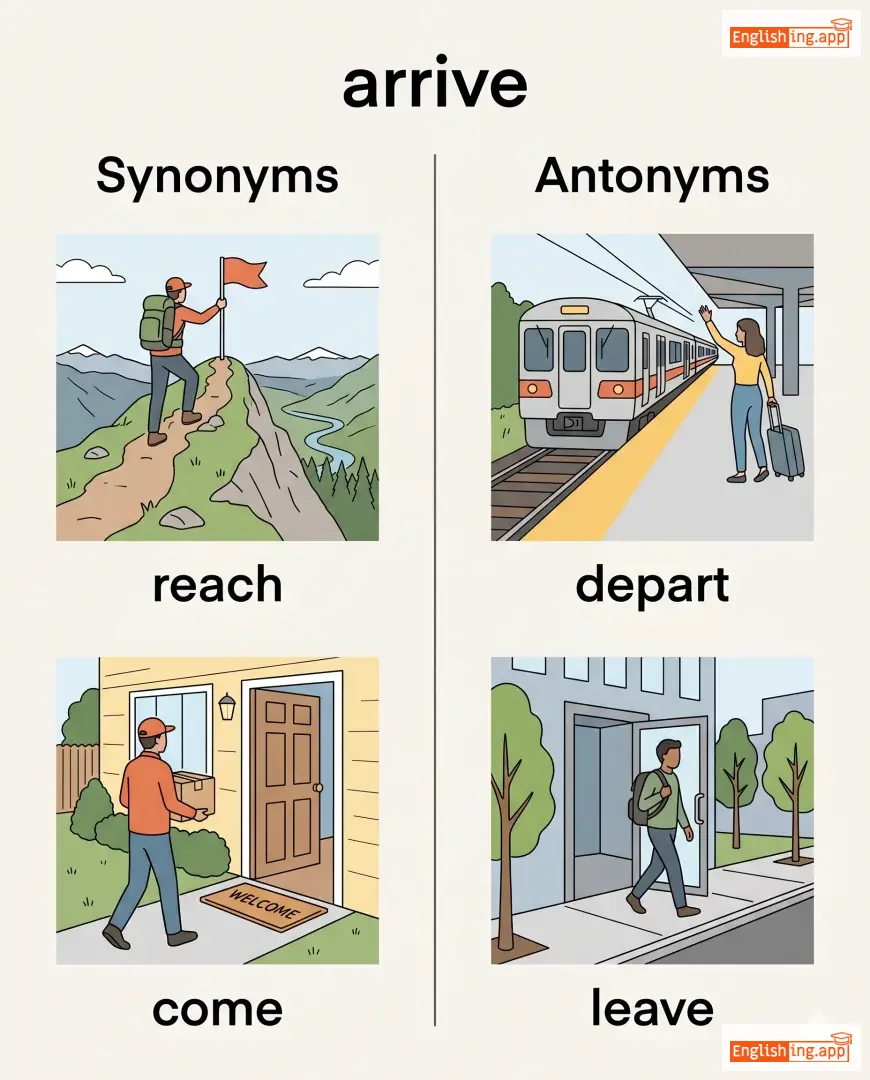
reach, come, appear, show up, land
••••••
|
depart, leave, go
••••••
|
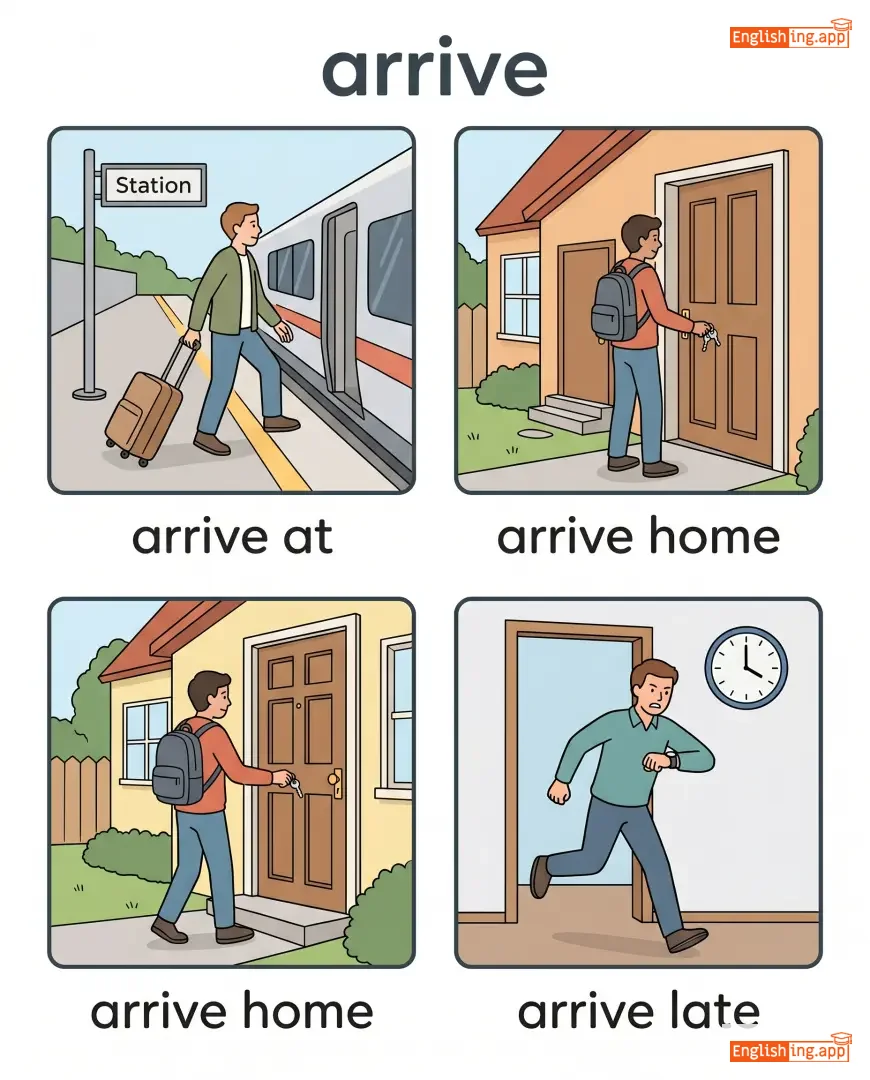
arrive at, arrive home, arrive late, arrive early
••••••
|
到着はまるで飛行機が空港に到着するようなものです。
••••••
|
|
#9578
💪
|
/ɑːrmz/
noun
(アームズ)
••••••
|
- •••••• |
武器 / 腕
buki / ude
••••••
|
- •••••• | - •••••• | - •••••• | - •••••• |
weapons and ammunition; or the upper limbs of the human body
••••••
|
The country decided to reduce its stock of arms. |
その国は武器の在庫を減らすことに決めました。
Sono kuni wa buki no zaiko o herasu koto ni kimemashita.
••••••
|
take up arms |
to prepare to fight with weapons
••••••
|
武器を取る
buki o toru
••••••
|
weapons, guns, firearms, artillery, munitions
••••••
|
peace, disarmament
••••••
|
arms control, arms race, arms dealer, bear arms
••••••
|
Armsは腕と武器の両方の意味があります。腕を使って武器を取ろう。
••••••
|
|
#9579
🌅
|
/əˈraɪz/
verb
(アライズ)
••••••
|
- •••••• |
現れる
arawareru
••••••
|
arose
アローズ
••••••
|
arisen
アリゼン
••••••
|
arises
アライズズ
••••••
|
arising
アライズイング
••••••
|
to begin to exist or to happen
••••••
|
Problems may arise if you don't plan ahead.
問題は計画を立てないと起こることがあります。
••••••
|
計画を立てないと問題が現れることがあります。
Keikaku o tatenai to mondai ga arawareru koto ga arimasu.
••••••
|
arise from
arise from
••••••
|
to result from or be caused by
••••••
|
から現れる
kara arawareru
••••••
|
emerge, occur, appear, happen, develop
••••••
|
cease, end, stop
••••••
|
arise from, situation arises, issue arises, opportunity arises
••••••
|
太陽が現れると、日が始まる。
••••••
|
|
#9580
🏛️
|
/ɑːrtʃ-/
prefix
(アーチ-)
••••••
|
- •••••• |
主要な / 極端な
shuyōna / kyokutanna
••••••
|
- •••••• | - •••••• | - •••••• | - •••••• |
a prefix meaning chief, principal, or extreme in rank, importance, or degree
••••••
|
The word 'archenemy' uses the prefix 'arch-' to mean the main enemy. |
'アーチエネミー' という言葉は、'アーチ-' 接頭辞を使って、主要な敵を意味します。
'āchi enemī' to iu kotoba wa, 'āchi-' settōji o tsukatte, shuyō na teki o imi shimasu.
••••••
|
- •••••• | - •••••• | - •••••• |
chief, principal, main, primary, supreme
••••••
|
minor, secondary, subordinate
••••••
|
archenemy, archrival, archbishop, archduke
••••••
|
'Arch' は主要な意味です。例えば、アーチビショップは主要なビショップを意味します。
••••••
|
|
#9581
✅
|
/əˈpruːv/
verb
(apruv)
••••••
|
- •••••• |
承認する
shōnin suru
••••••
|
approved
apruvdo
••••••
|
approved
apruvdo
••••••
|
approves
apruvsu
••••••
|
approving
apruvingu
••••••
|
to officially accept, agree to, or allow something
••••••
|
The manager approved the budget for next year.
マネージャーは来年の予算を承認しました。
••••••
|
マネージャーは来年の予算を承認しました。
Manējā wa rainen no yosan o shōnin shimashita.
••••••
|
approve of
承認する
••••••
|
to think well of something or someone
••••••
|
承認する
shōnin suru
••••••
|
authorize, endorse, accept, permit, sanction
••••••
|
reject, deny, disapprove
••••••
|
approve plan, approve application, approve budget
••••••
|
承認する = ✅ 承認 – マネージャーは予算を承認しました
••••••
|
|
#9582
📌
|
/ˈæplɪkəbl/
adjective
(apurikaburu)
••••••
|
|
適用可能な
tekiyou kanou na
••••••
|
- •••••• | - •••••• | - •••••• | - •••••• |
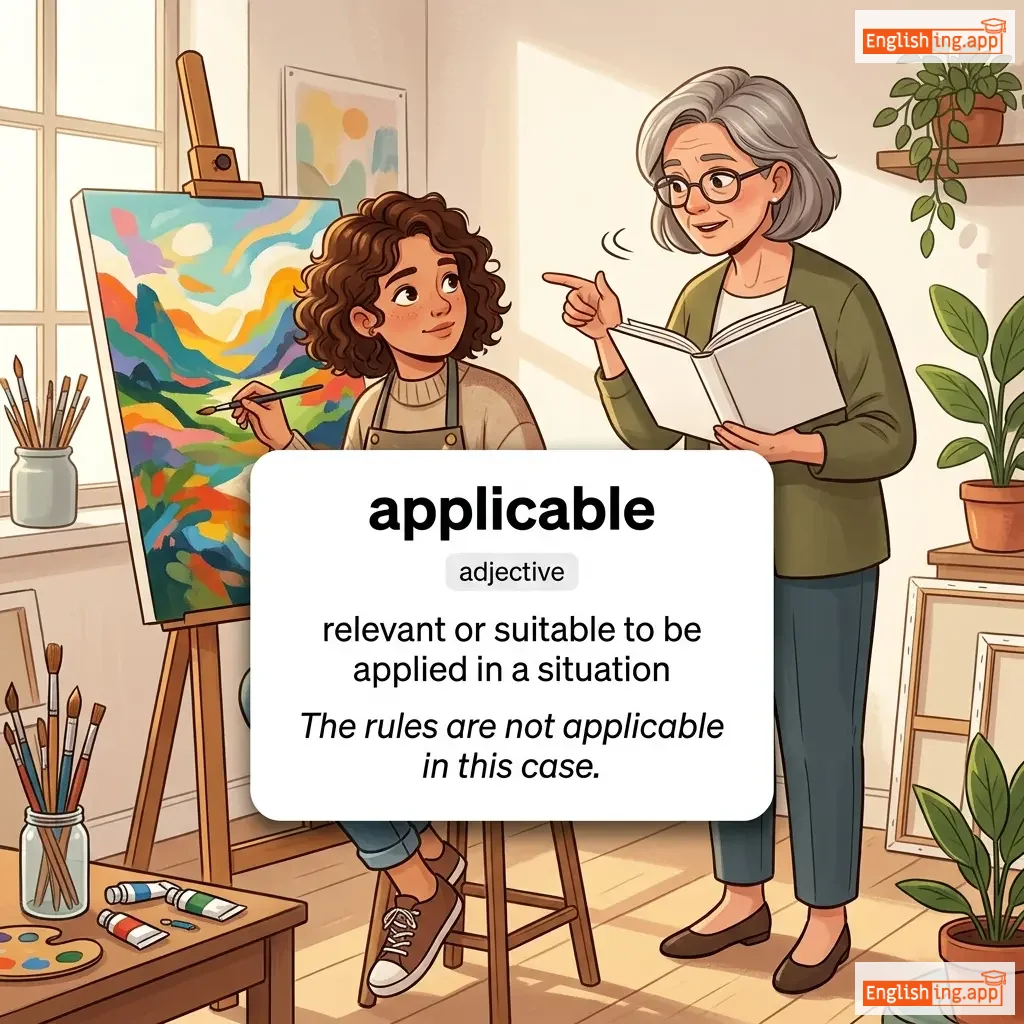
relevant or suitable to be applied in a situation
••••••
|
The rules are not applicable in this case. |
この場合、規則は適用されません。
Kono baai, kisoku wa tekiyou saremasen.
••••••
|
- •••••• | - •••••• | - •••••• |
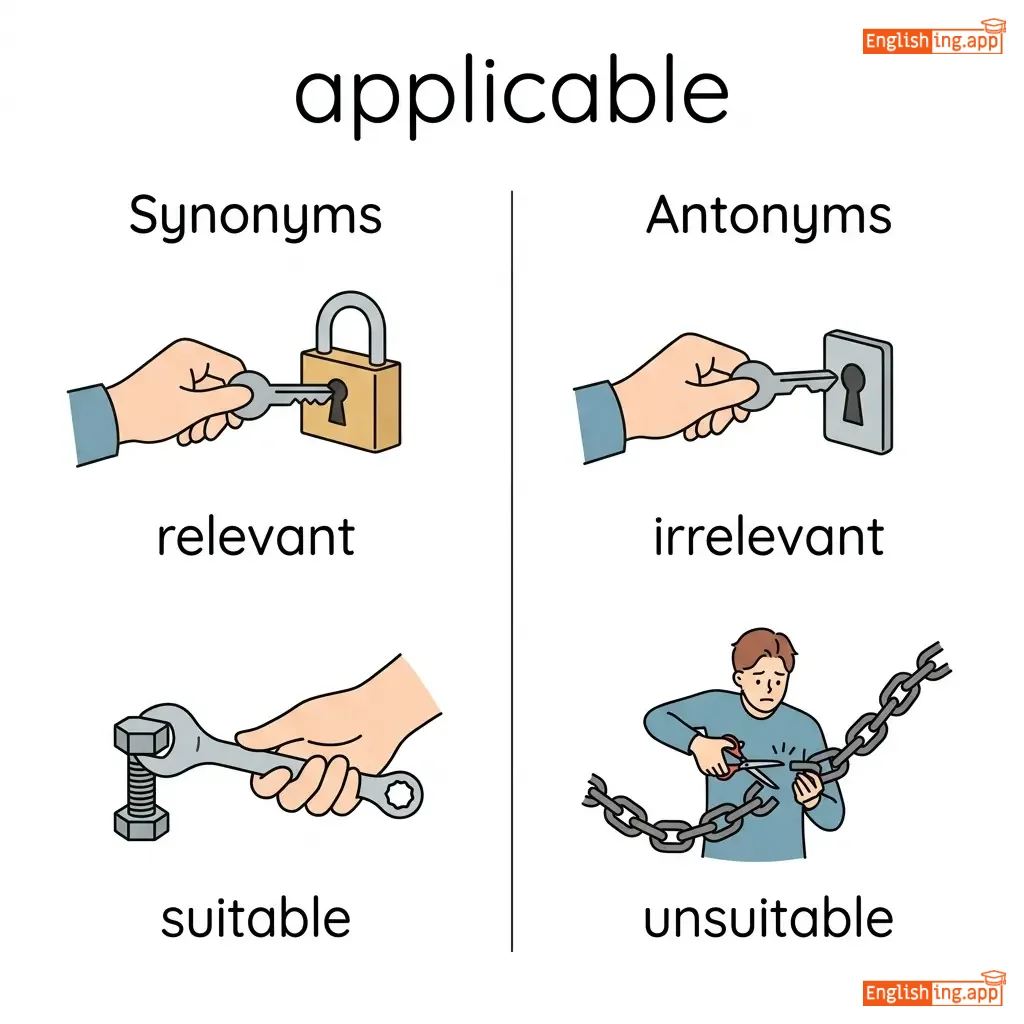
relevant, suitable, appropriate, pertinent, fitting
••••••
|
irrelevant, unsuitable, inappropriate
••••••
|
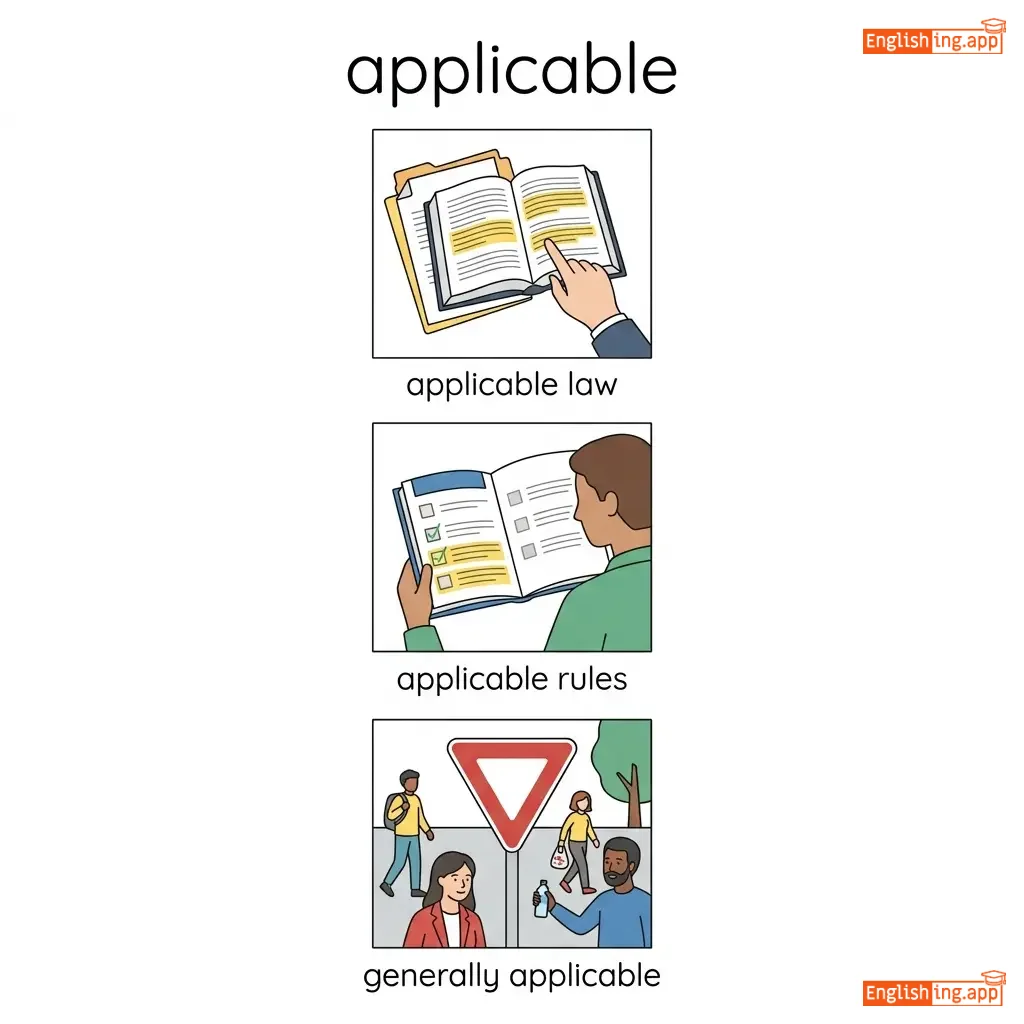
applicable law, applicable rules, generally applicable
••••••
|
Applicableは、適用可能なことを意味します – 適用可能な
••••••
|
|
#9583
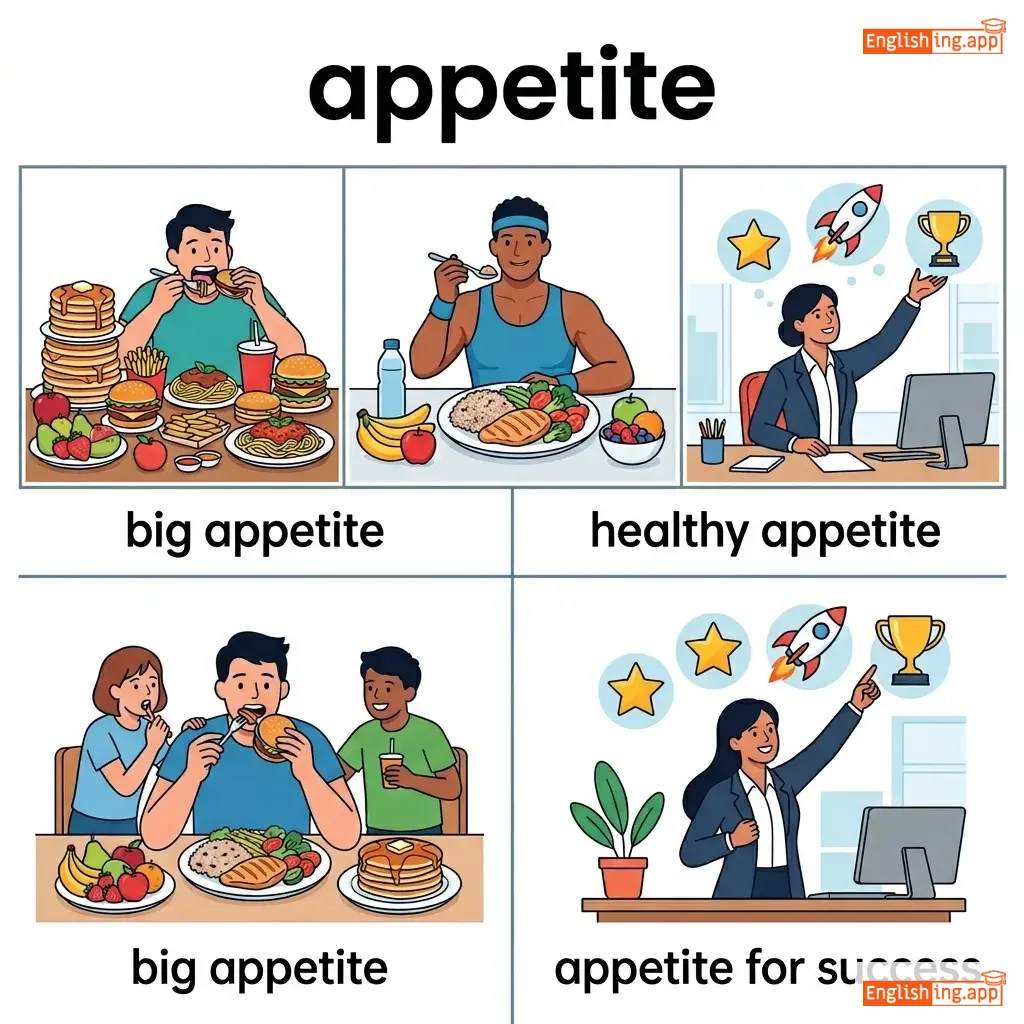
🍽️
|
/ˈæpɪtaɪt/
noun
(アペタイット)
••••••
|
|
食欲
shokuyoku
••••••
|
- •••••• | - •••••• | - •••••• | - •••••• |
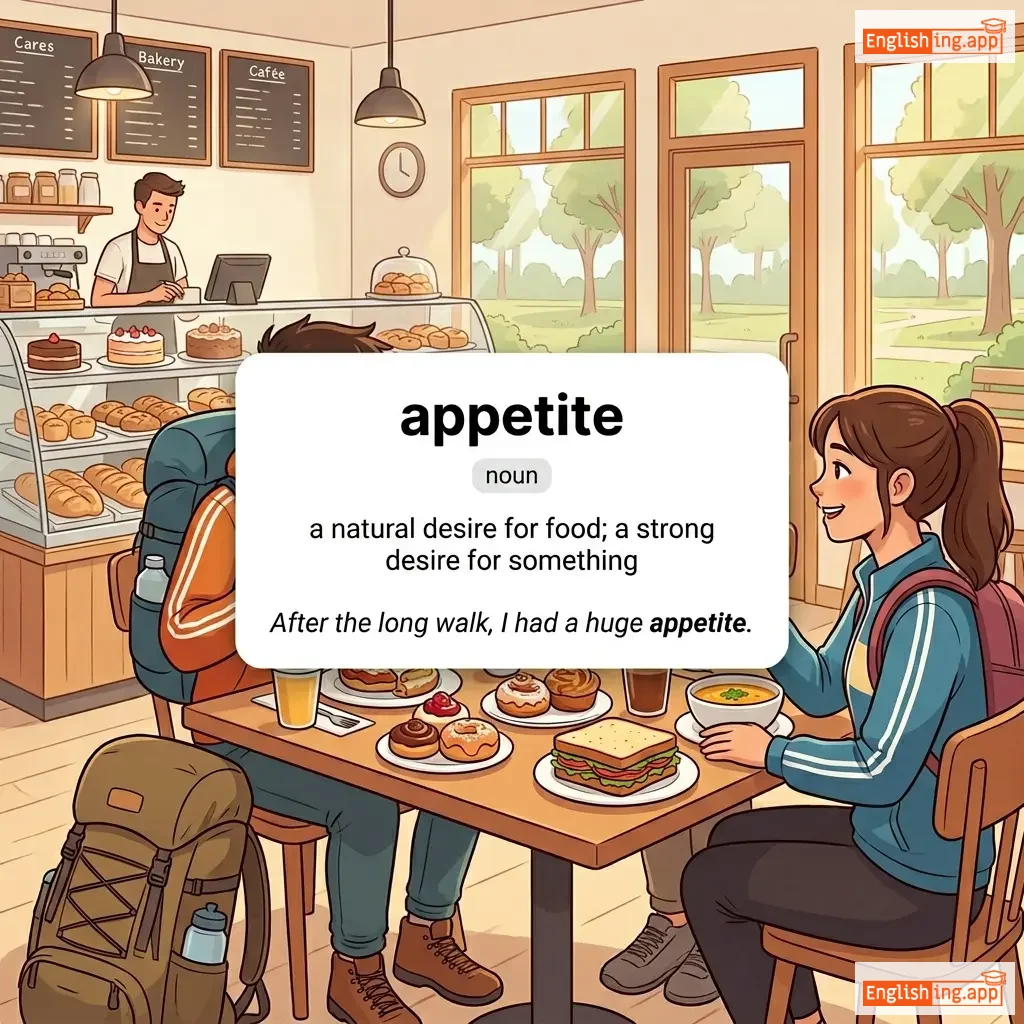
a natural desire for food; a strong desire for something
••••••
|
After the long walk, I had a huge appetite. |
長い散歩の後、私は大きな食欲を感じました。
Nagai sanpo no ato, watashi wa ōkina shokuyoku o kanjimashita.
••••••
|
whet the appetite |
to stimulate interest or desire
••••••
|
食欲をそそる
shokuyoku o sosoru
••••••
|
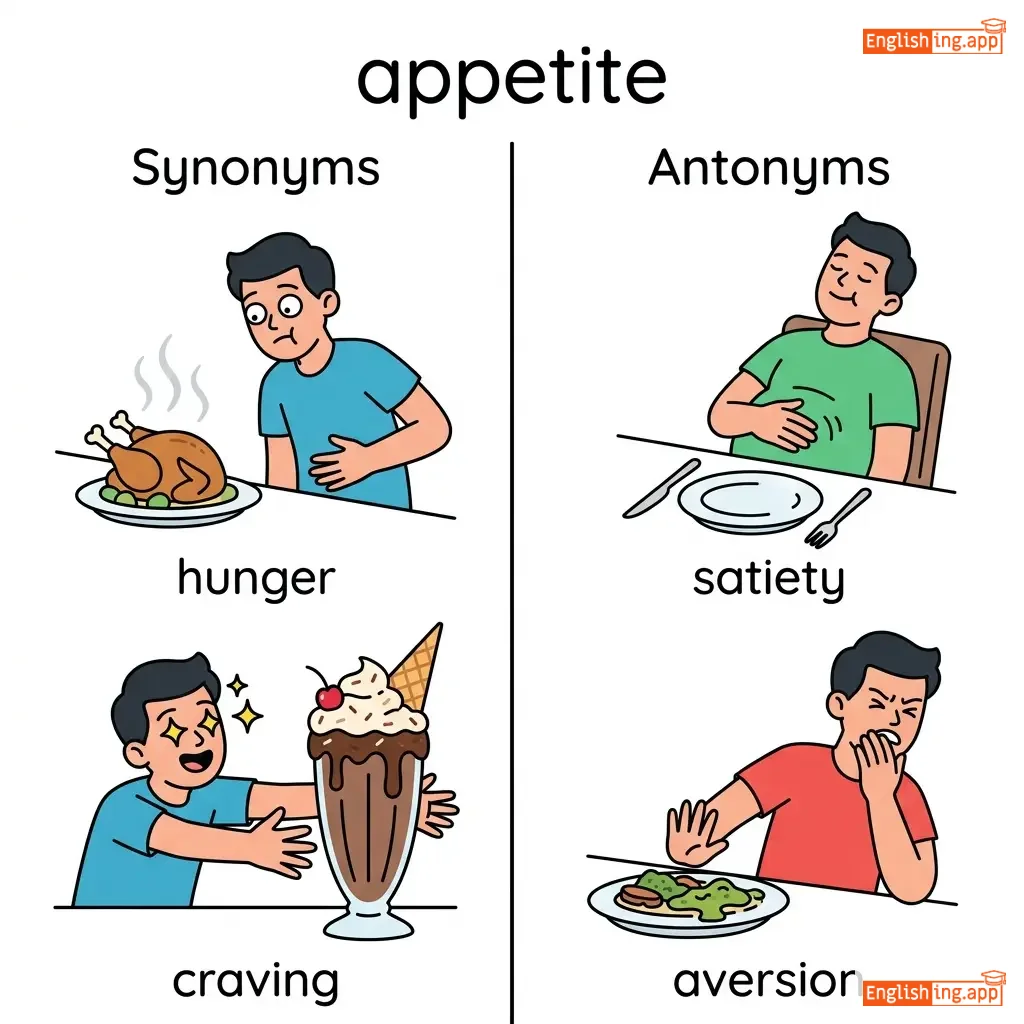
hunger, craving, desire, urge, longing
••••••
|
satiety, aversion
••••••
|
big appetite, healthy appetite, appetite for success
••••••
|
Appetite は食欲を意味する – 食欲 は食べたい欲望を意味します。
••••••
|
|
#9584
👀
|
/əˈpɪə/
verb
(アピア)
••••••
|
- •••••• |
現れる
arawareru
••••••
|
appeared
アピアード
••••••
|
appeared
アピアード
••••••
|
appears
アピアーズ
••••••
|
appearing
アピアリング
••••••
|
to become visible or come into sight; to seem
••••••
|
She appeared suddenly at the door.
彼女は突然ドアの前に現れました。
••••••
|
彼女は突然ドアの前に現れました。
Kanojo wa totsuzen doa no mae ni arawaremashita.
••••••
|
appear out of thin air
薄い空気から現れる
••••••
|
to emerge suddenly and unexpectedly
••••••
|
空気から現れる
Kūki kara arawareru
••••••
|
emerge, show, arise, surface, seem
••••••
|
disappear, vanish, hide
••••••
|
appear suddenly, appear in court, appear likely
••••••
|
Arawareru: ドアの前に突然現れる。
••••••
|
|
#9585
🏃
|
/ˈæktɪv/
adjective
(アクティブ)
••••••
|
|
アクティブな
akutibu na
••••••
|
- •••••• | - •••••• | - •••••• | - •••••• |
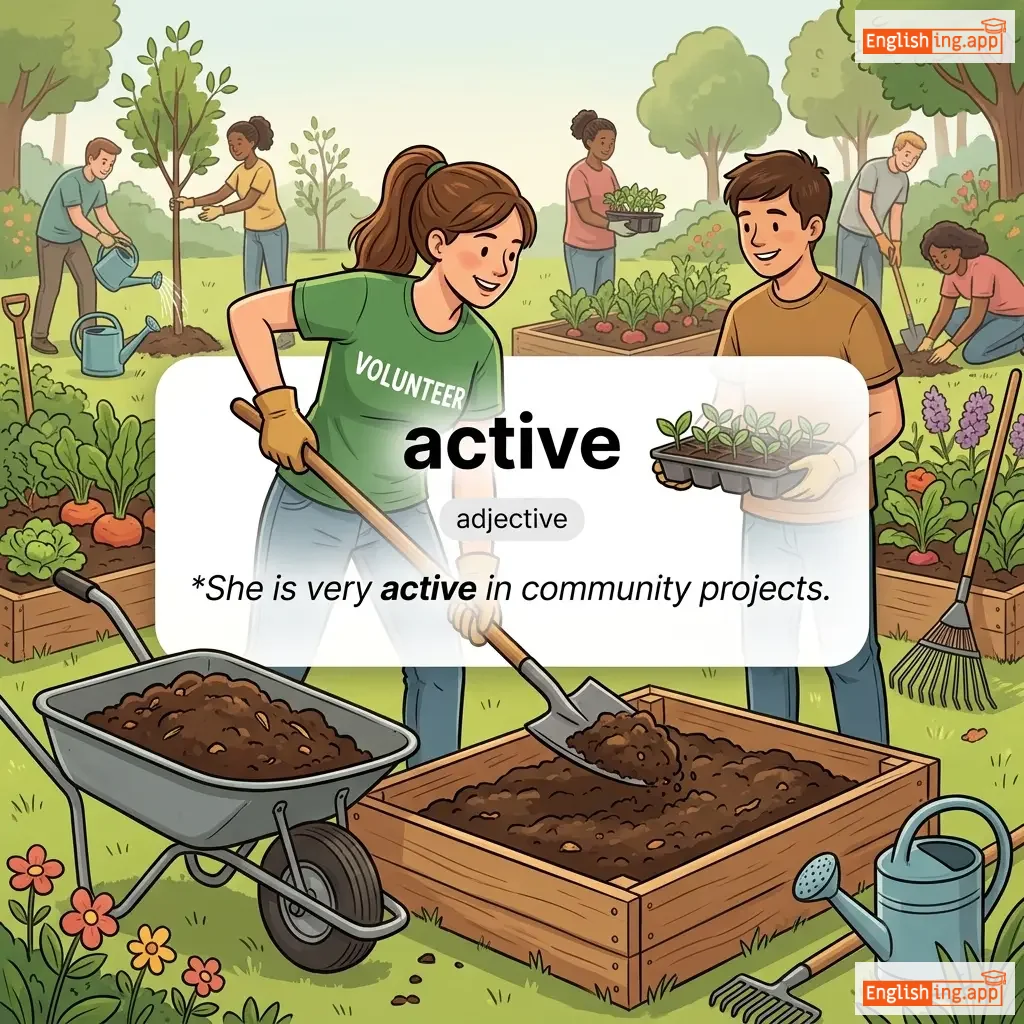
Engaging or ready to engage in physically energetic pursuits; taking action rather than being passive.
••••••
|
She is very active in community projects. |
彼女はコミュニティプロジェクトに非常にアクティブです。
Kanojo wa komyuniti purojekuto ni hijō ni akutibu desu.
••••••
|
active duty |
A period of full-time military service.
••••••
|
アクティブな義務
akutibu na gimu
••••••
|
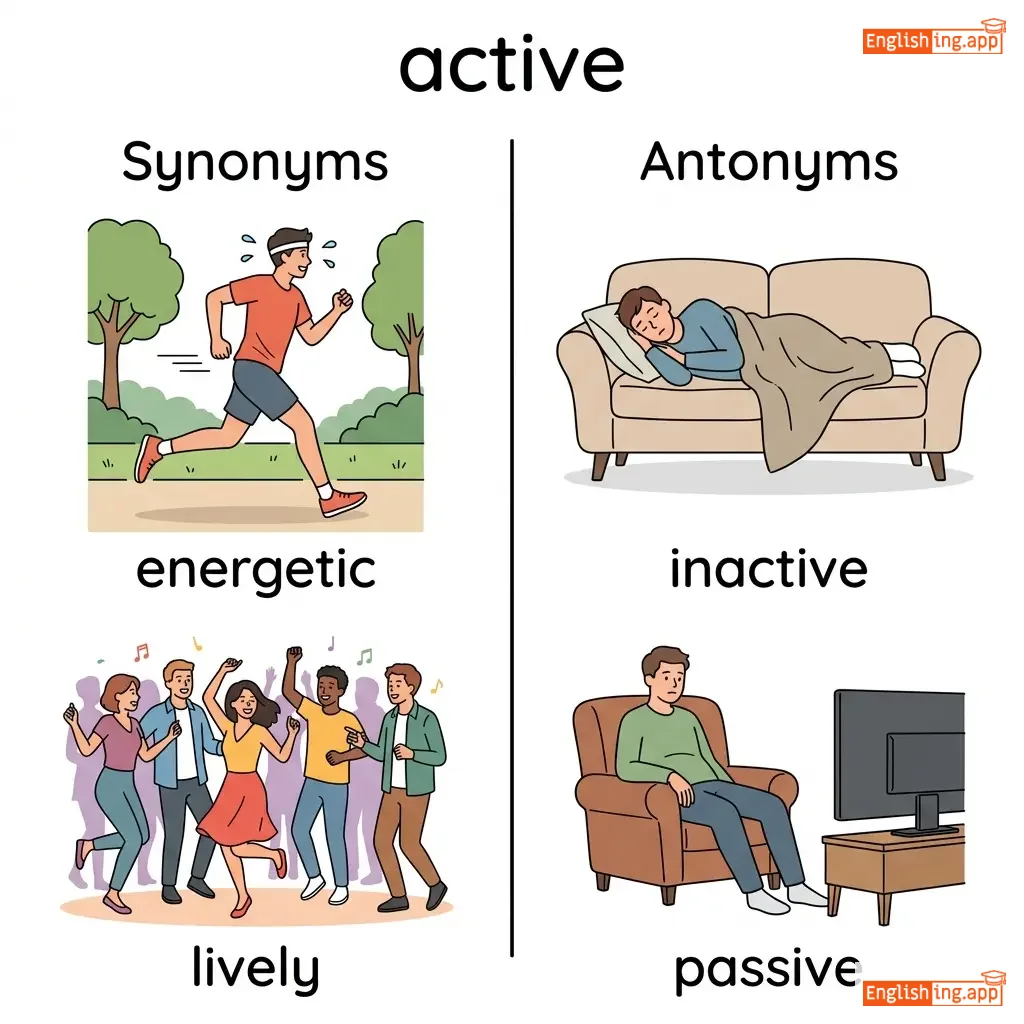
energetic, lively, dynamic, vigorous, busy
••••••
|
inactive, passive, idle
••••••
|
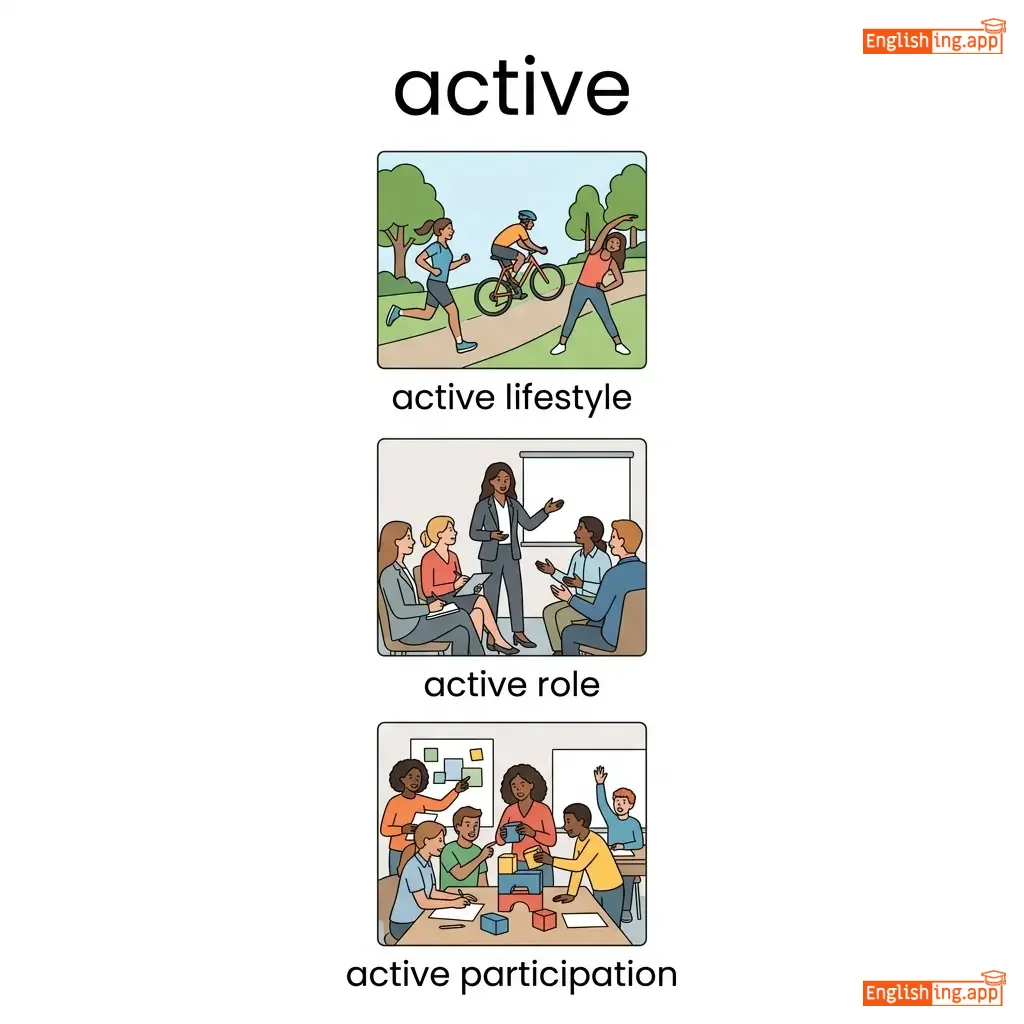
active lifestyle, active role, active participation, active engagement
••••••
|
Activeはアクティブを意味し、Facebookでアクティブであれば、誰でもオンラインだと知っているのと同じです。
••••••
|
|
#9586
🗣️
|
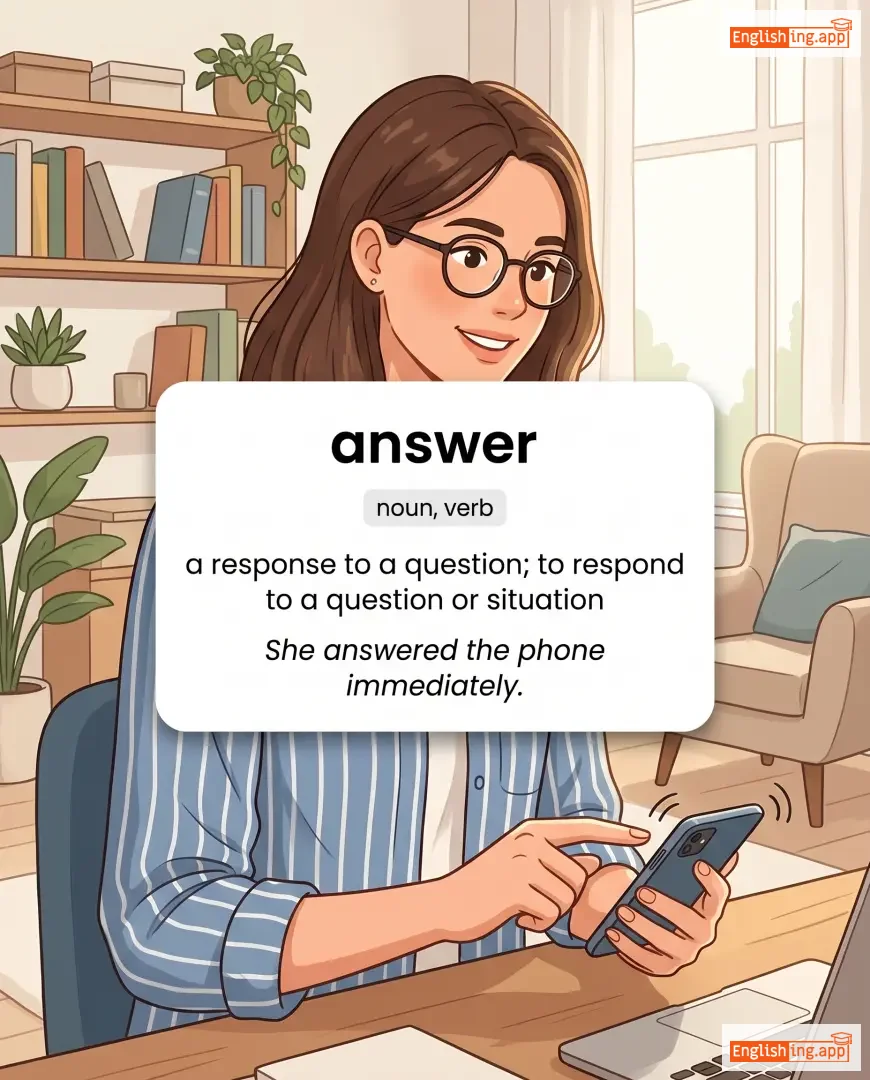
/ˈænsər/
noun, verb
(アンサー)
••••••
|
|
答え
kotae
••••••
|
answered
アンサード
••••••
|
answered
アンサード
••••••
|
answers
アンサーズ
••••••
|
answering
アンサリング
••••••
|
a response to a question; to respond to a question or situation
••••••
|
She answered the phone immediately.
彼女はすぐに電話に出ました。
••••••
|
彼女はすぐに電話に出ました。
Kanojo wa sugu ni denwa ni demashita.
••••••
|
have no answer
答えがない
••••••
|
to not know how to respond to a question or situation
••••••
|
答えがない
kotae ga nai
••••••
|
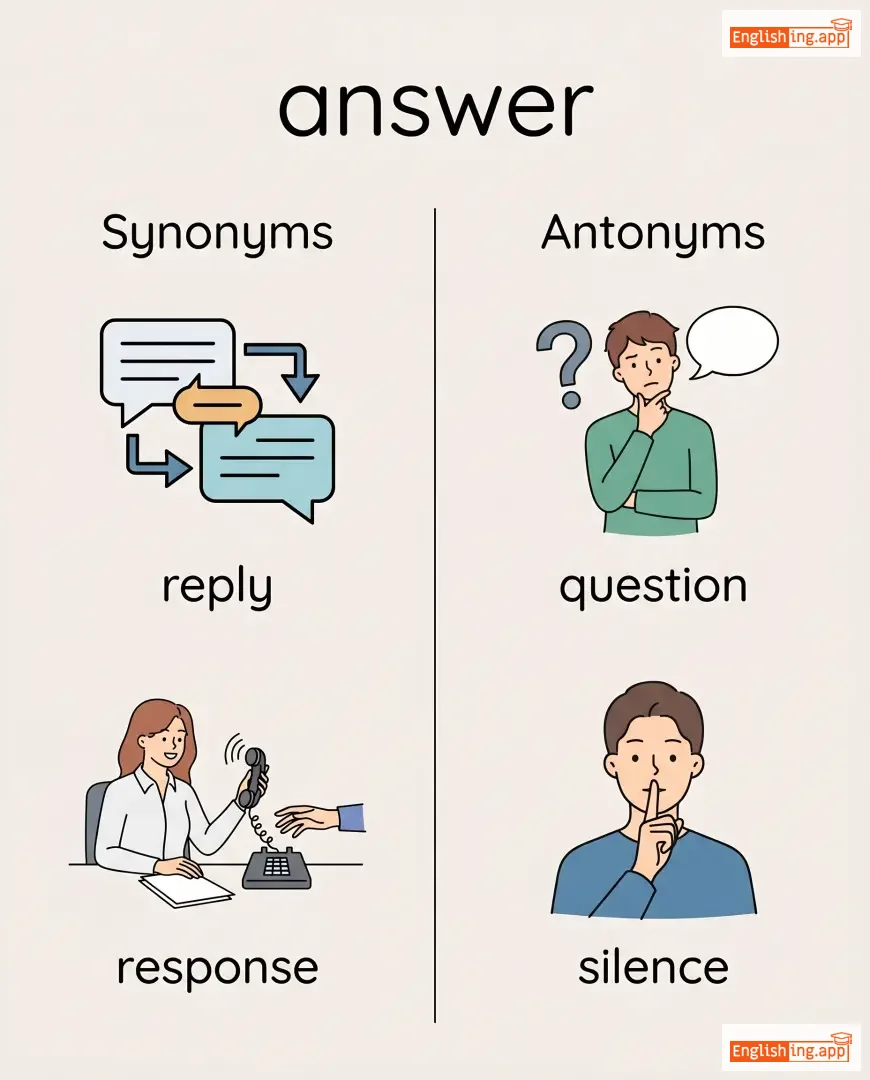
reply, response, solution, explanation, comeback
••••••
|
question, silence, ignorance
••••••
|
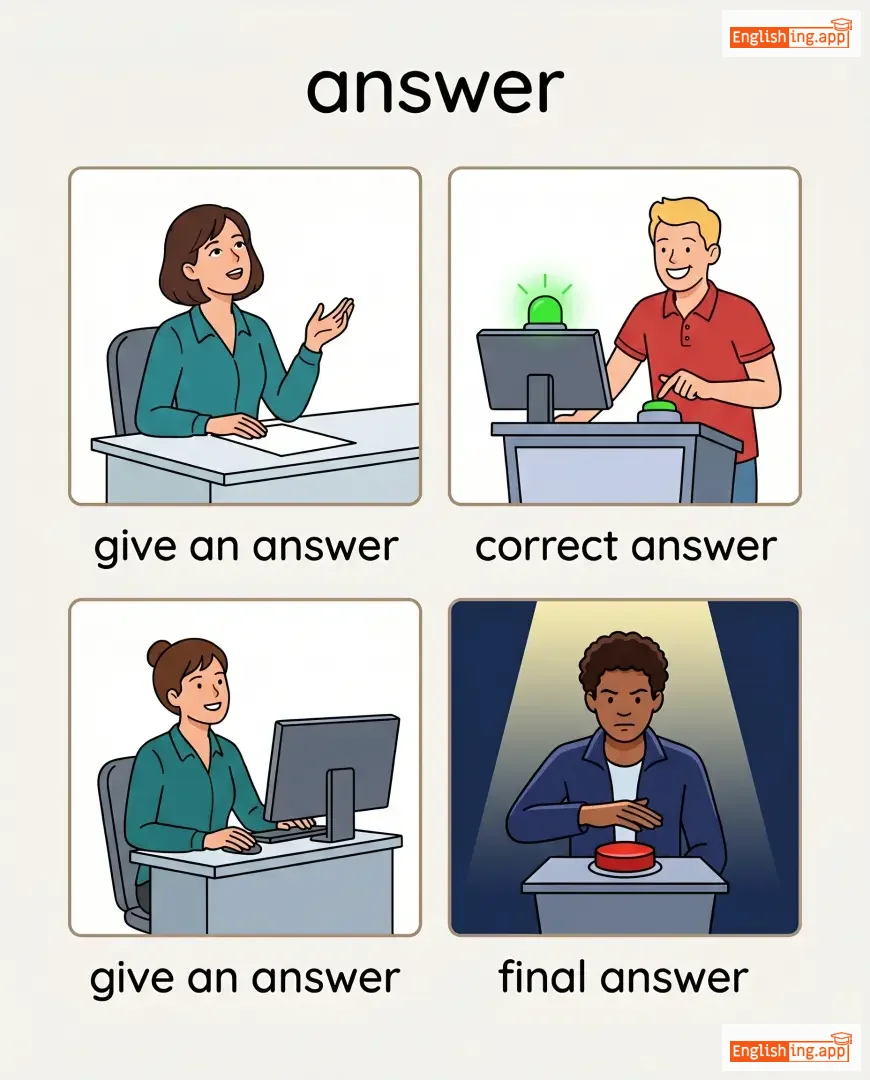
give an answer, correct answer, final answer, answer quickly
••••••
|
Answer(アンサー)は日本語で答え(kotae)と言います。
••••••
|
|
#9587
🌟
|
/əˈmeɪzɪŋ/
adjective
(アメージング)
••••••
|
- •••••• |
驚くべき
odorokubeki
••••••
|
- •••••• | - •••••• | - •••••• | - •••••• |
causing great surprise or wonder; astonishing
••••••
|
The magician performed an amazing trick. |
マジシャンは驚くべきトリックを見せた。
Majishan wa odorokubeki torikku o miseta.
••••••
|
truly amazing |
something that is very impressive or extraordinary
••••••
|
本当に驚くべき
Hontōni odorokubeki
••••••
|
astonishing, wonderful, incredible, marvelous, impressive
••••••
|
ordinary, boring, dull
••••••
|
amazing experience, amazing story, amazing talent, amazing place
••••••
|
Amazing = 驚くべき = すごい!
••••••
|
|
#9588
♾️
|
/ˈɔːlweɪz/
adverb
(オールウェイズ)
••••••
|
- •••••• |
いつも
itsumo
••••••
|
- •••••• | - •••••• | - •••••• | - •••••• |
at all times; on every occasion
••••••
|
She always wakes up early in the morning.
彼女はいつも朝早く起きます。
••••••
|
彼女はいつも朝早く起きます。
Kanojo wa itsumo asa hayaku okimasu.
••••••
|
as always
いつも通り
••••••
|
as is usual or expected
••••••
|
いつも通り
Itsumo dōri
••••••
|
forever, constantly, perpetually, continually
••••••
|
never, rarely, seldom
••••••
|
always ready, always happy, always late, always available
••••••
|
Always = いつも, いつも (itsumo)。
••••••
|
|
#9589
🎓
|
/əˈlʌmnəs/
noun
(アルムナス)
••••••
|
- •••••• |
卒業生
sotsugyousei
••••••
|
- •••••• | - •••••• | - •••••• | - •••••• |
a former student or graduate of a school, college, or university
••••••
|
He is an alumnus of Harvard University.
彼はハーバード大学の卒業生です。
••••••
|
彼はハーバード大学の卒業生です。
Kare wa Haabaado daigaku no sotsugyousei desu.
••••••
|
- •••••• | - •••••• | - •••••• |
graduate, former student, ex-student, degree-holder
••••••
|
current student, entrant
••••••
|
distinguished alumnus, proud alumnus, university alumnus, alumni network
••••••
|
Alumnusは卒業生で、学校を卒業した人を指します。
••••••
|
|
#9590
🧍
|
/əˈloʊn/
adjective, adverb
(アロン)
••••••
|
- •••••• |
一人
hitori
••••••
|
- •••••• | - •••••• | - •••••• | - •••••• |
having no one else present; on one's own
••••••
|
She prefers to live alone in her apartment. |
彼女はアパートで一人で暮らすのを好む。
Kanojo wa apāto de hitori de kurasu no o konomu.
••••••
|
leave someone alone |
to stop bothering or disturbing someone
••••••
|
誰かを一人にさせる
dareka o hitori ni saseru
••••••
|
solitary, lonely, isolated, unaccompanied, single
••••••
|
together, accompanied, united
••••••
|
feel alone, live alone, left alone, all alone
••••••
|
Aloneはall-oneを意味し、一人 (hitori) でいることを意味します。
••••••
|
|
#9591
⏳
|
/ˈɔːlmoʊst/
adverb
(オールモースト)
••••••
|
- •••••• |
ほとんど
hotondo
••••••
|
- •••••• | - •••••• | - •••••• | - •••••• |
very nearly, but not exactly or completely
••••••
|
He almost missed the train.
彼はほとんど電車を逃した。
••••••
|
彼はほとんど電車を逃した。
Kare wa hotondo densha o nogashita.
••••••
|
almost there
もうすぐそこ
••••••
|
close to completing or reaching a goal
••••••
|
もうすぐそこ
mōsugu soko
••••••
|
nearly, practically, virtually, approximately, about
••••••
|
completely, entirely, totally
••••••
|
almost done, almost impossible, almost every, almost finished
••••••
|
Almostはほとんどを意味します—"almost there"のように、ゴールに近いことを意味します。
••••••
|
|
#9592
⚖️
|
/ˌælɪˈɡeɪʃən/
noun
(アリゲイション)
••••••
|
- •••••• |
告発
kokuhatsu
••••••
|
- •••••• | - •••••• | - •••••• | - •••••• |
a claim or assertion that someone has done something illegal or wrong, typically without proof
••••••
|
The politician denied the allegation of corruption. |
政治家は汚職の告発を否定した。
Seijika wa oshoku no kokuhatsu wo hitei shita.
••••••
|
- •••••• | - •••••• | - •••••• |
claim, charge, accusation, assertion, statement
••••••
|
denial, exoneration
••••••
|
false allegation, serious allegation, deny allegation, allegation of corruption
••••••
|
Allegationとは告発 — allegationを聞くと、必ず法律的な行動が思い浮かびます。
••••••
|
|
#9593
🩹
|
/eɪd/
noun, verb
(エイド)
••••••
|
- •••••• |
援助
enjo
••••••
|
aided
エイデッド
••••••
|
aided
エイデッド
••••••
|
aids
エイデス
••••••
|
aiding
エイディング
••••••
|
help or support, typically of a practical nature
••••••
|
The volunteers provided aid to the flood victims.
ボランティアは洪水の被害者に援助を提供しました。
••••••
|
ボランティアは洪水の被害者に援助を提供しました。
Borantia wa kōzui no higaisha ni enjo o teikyō shimashita.
••••••
|
first aid
応急処置
••••••
|
emergency medical treatment given immediately
••••••
|
応急処置
ōkyū shochi
••••••
|
help, support, assistance, relief, guidance
••••••
|
hindrance, obstruction
••••••
|
foreign aid, financial aid, medical aid, aid in
••••••
|
援助はすぐに手助けすること。
••••••
|
|
#9594
➡️
|
/ˈæftər/
preposition, conjunction, adverb
(アフター)
••••••
|
- •••••• |
後
ato
••••••
|
- •••••• | - •••••• | - •••••• | - •••••• |
in the time following an event or another action
••••••
|
We went for ice cream after the movie. |
映画の後にアイスクリームを食べに行った。
Eiga no ato ni aisukurīmu o tabe ni itta.
••••••
|
after all |
despite everything; in the end
••••••
|
結局
kekkyoku
••••••
|
following, later, afterward, subsequent
••••••
|
before, prior
••••••
|
after school, after work, after the party, soon after
••••••
|
After は後— 映画の後にアイスクリーム。
••••••
|
|
#9595
😨
|
/əˈfreɪd/
adjective
(afureido)
••••••
|
- •••••• |
怖がっている
kowagatteiru
••••••
|
- •••••• | - •••••• | - •••••• | - •••••• |
feeling fear or anxiety; worried that something undesirable will happen
••••••
|
She was afraid of the dark. |
彼女は暗闇を怖がっていた。
Kanojo wa kurayami o kowagatteita.
••••••
|
afraid of one's own shadow |
extremely timid or nervous
••••••
|
自分の影を恐れる
jibun no kage o osoreru
••••••
|
fearful, scared, frightened, anxious, nervous
••••••
|
brave, confident, fearless
••••••
|
afraid of, terribly afraid, afraid to ask, afraid that
••••••
|
Afraidは怖がっているという意味—暗闇の中で怖がっているところを想像してください。
••••••
|
|
#9596
🧑
|
/ˈædʌlt/ or /əˈdʌlt/
noun
(アダルト)
••••••
|
- •••••• |
大人
otonna
••••••
|
- •••••• | - •••••• | - •••••• | - •••••• |
A fully grown or developed person; mature.
••••••
|
Children must be accompanied by an adult. |
子供は大人と一緒にいる必要があります。
Kodomo wa otona to issho ni iru hitsuyō ga arimasu.
••••••
|
young adult |
A person in their late teens or early twenties.
••••••
|
若い大人
wakai otona
••••••
|
grown-up, mature person, elder, senior
••••••
|
child, minor, infant
••••••
|
adult education, adult content, adult life, adult supervision
••••••
|
大人は完全に成長した意味で、映画の大人用チケットのように。
••••••
|
|
#9597
🙋
|
/ədˈmɪt/
verb
(アドミット)
••••••
|
|
認める
mitomeru
••••••
|
admitted
アドミットした
••••••
|
admitted
アドミットした
••••••
|
admits
アドミットする
••••••
|
admitting
アドミットしている
••••••
|
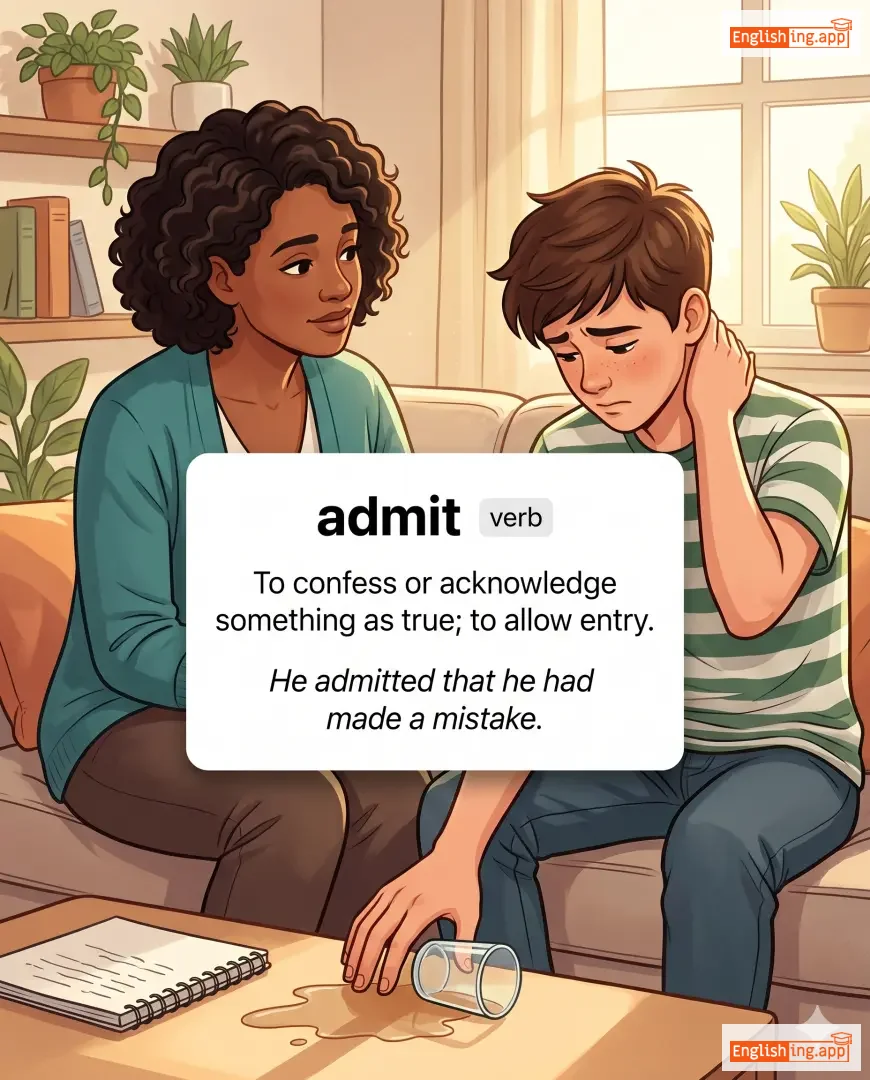
To confess or acknowledge something as true; to allow entry.
••••••
|
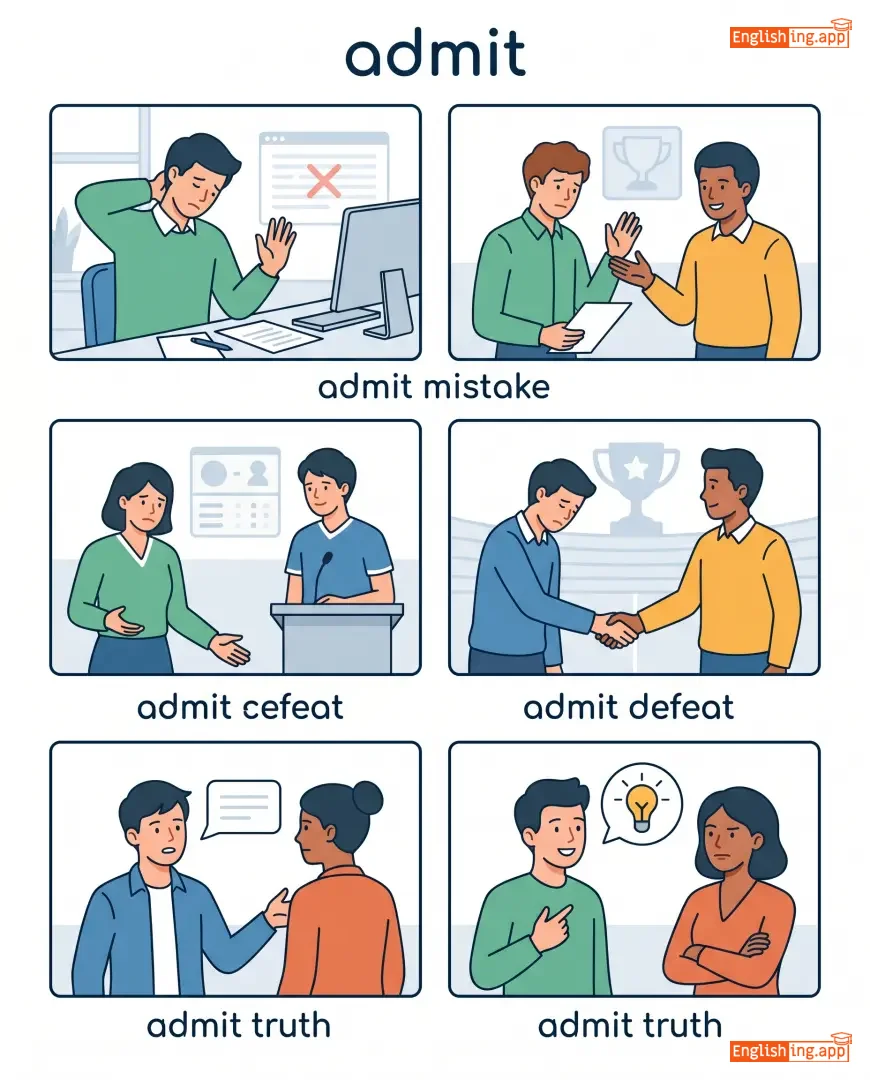
He admitted that he had made a mistake.
彼は間違いを犯したことを認めた。
••••••
|
彼は間違いを犯したことを認めた。
Kare wa machigai o okashita koto o mitometa.
••••••
|
admit defeat
敗北を認める
••••••
|
To accept that you have failed.
••••••
|
敗北を認める
Haiboku o mitomeru
••••••
|
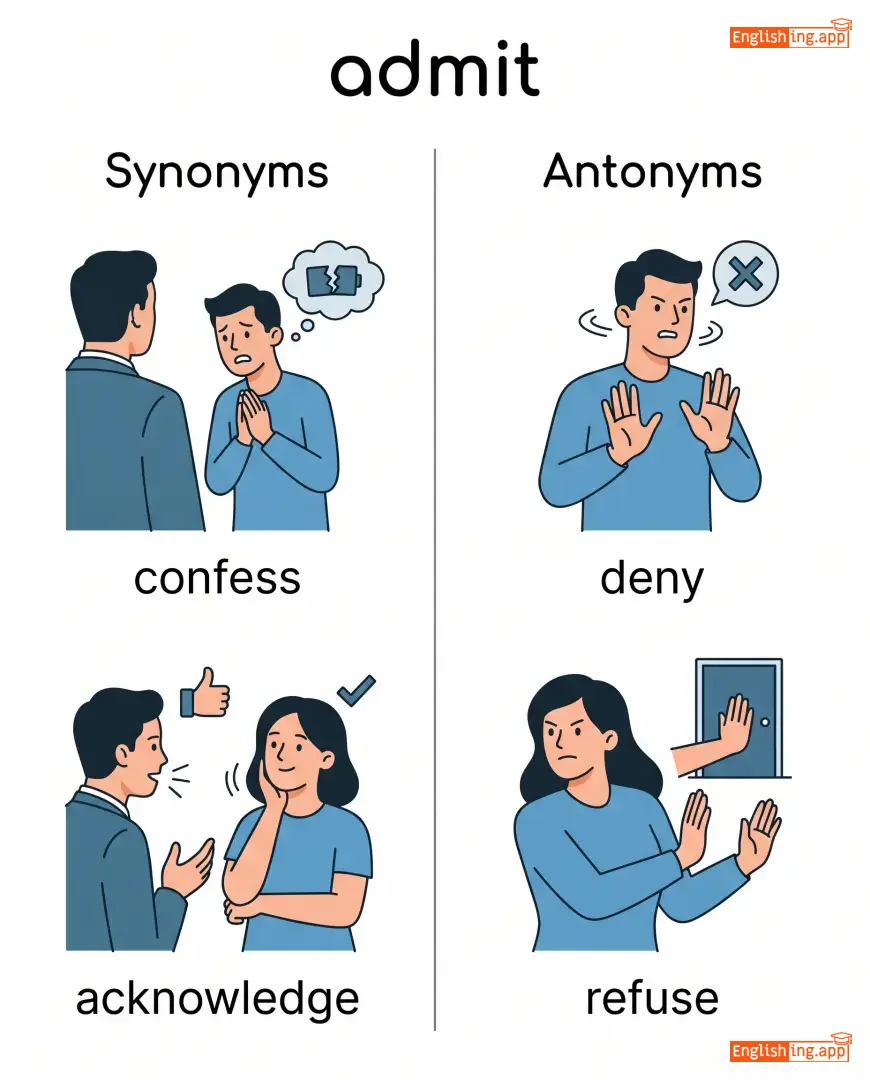
confess, acknowledge, accept, allow, grant
••••••
|
deny, refuse, reject
••••••
|
admit mistake, admit defeat, admit truth, admit into
••••••
|
認めるとは、間違いを認めることです。
••••••
|
|
#9598
💊
|
/ədˈmɪnɪstər/
verb
(アドミニスター)
••••••
|
|
管理する / 適用する
kanri suru / tekiyou suru
••••••
|
administered
アドミニスタード
••••••
|
administered
アドミニスタード
••••••
|
administers
アドミニスターズ
••••••
|
administering
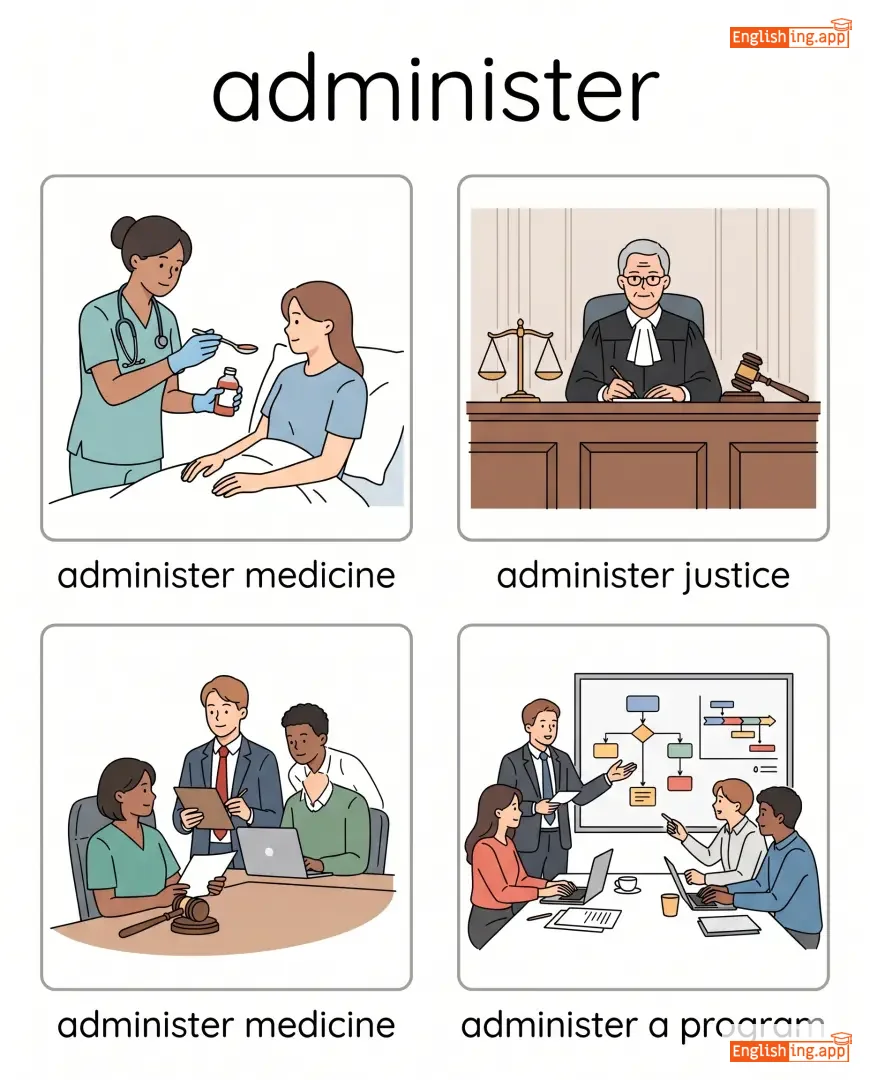
アドミニスターリング
••••••
|
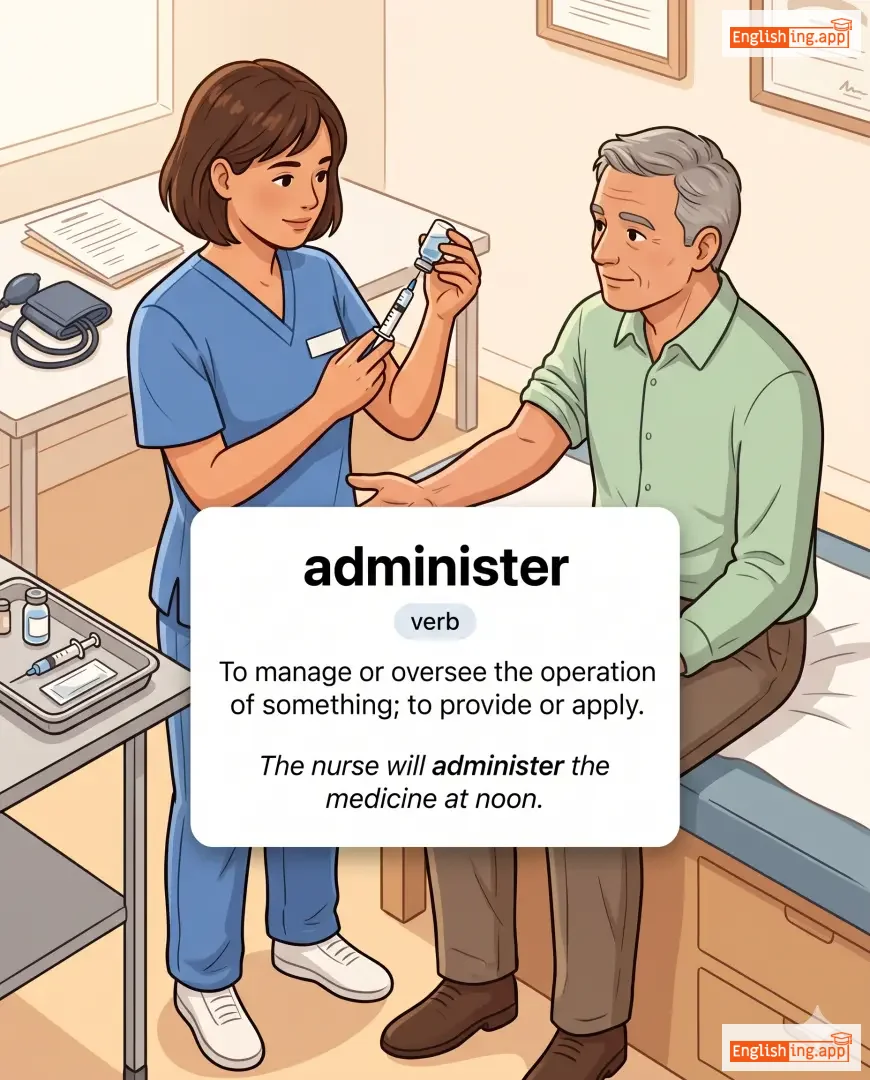
To manage or oversee the operation of something; to provide or apply.
••••••
|
The nurse will administer the medicine at noon.
ナースは正午に薬を施す予定です。
••••••
|
ナースは正午に薬を施す予定です。
Nasu wa shougo ni kusuri wo hodokosu yotei desu.
••••••
|
administer justice
司法を施行する
••••••
|
To ensure that laws and fairness are upheld.
••••••
|
司法を施行する
Shihou wo shikkou suru
••••••
|
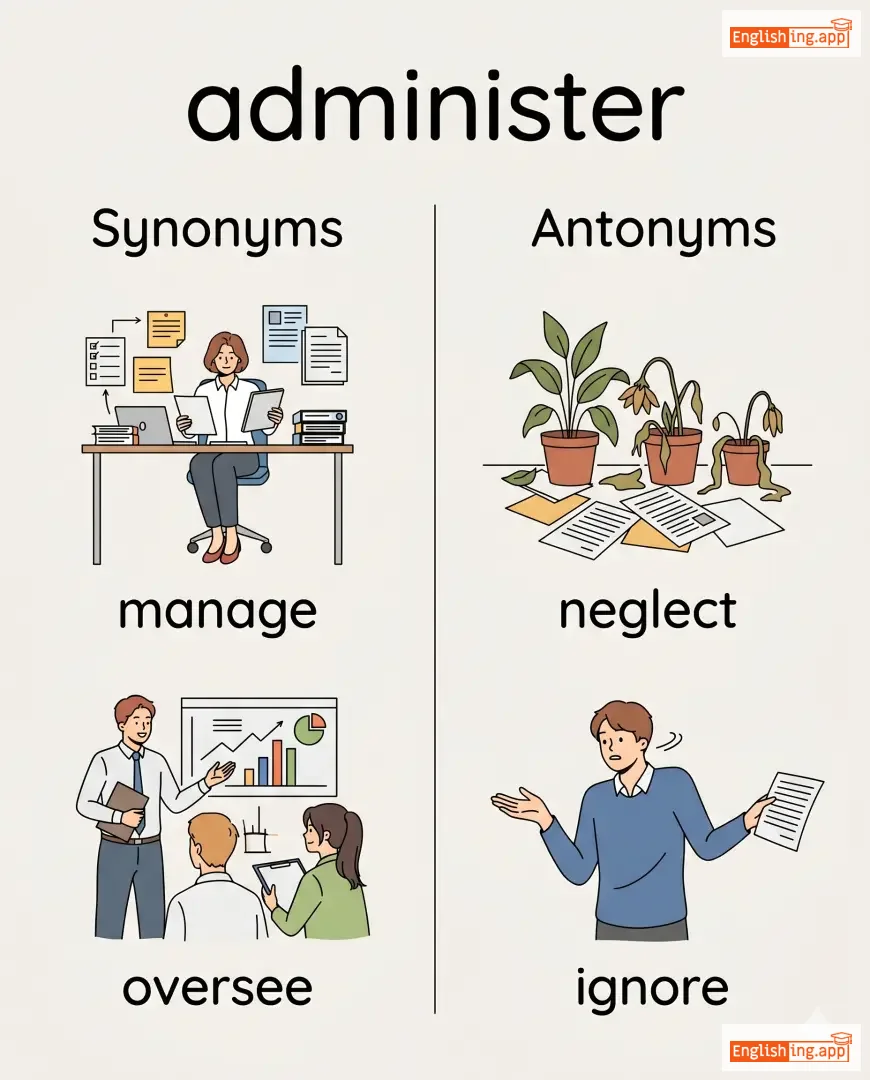
manage, oversee, control, execute, apply
••••••
|
neglect, ignore
••••••
|
administer medicine, administer justice, administer a program, administer funds
••••••
|
Administerは管理する意味。管理者が全てを管理します。
••••••
|
|
#9599
➕
|
/æd/
verb
(アッド)
••••••
|
|
追加する
tsuika suru
••••••
|
added
アディッド
••••••
|
added
アディッド
••••••
|
adds
アッズ
••••••
|
adding
アディング
••••••
|
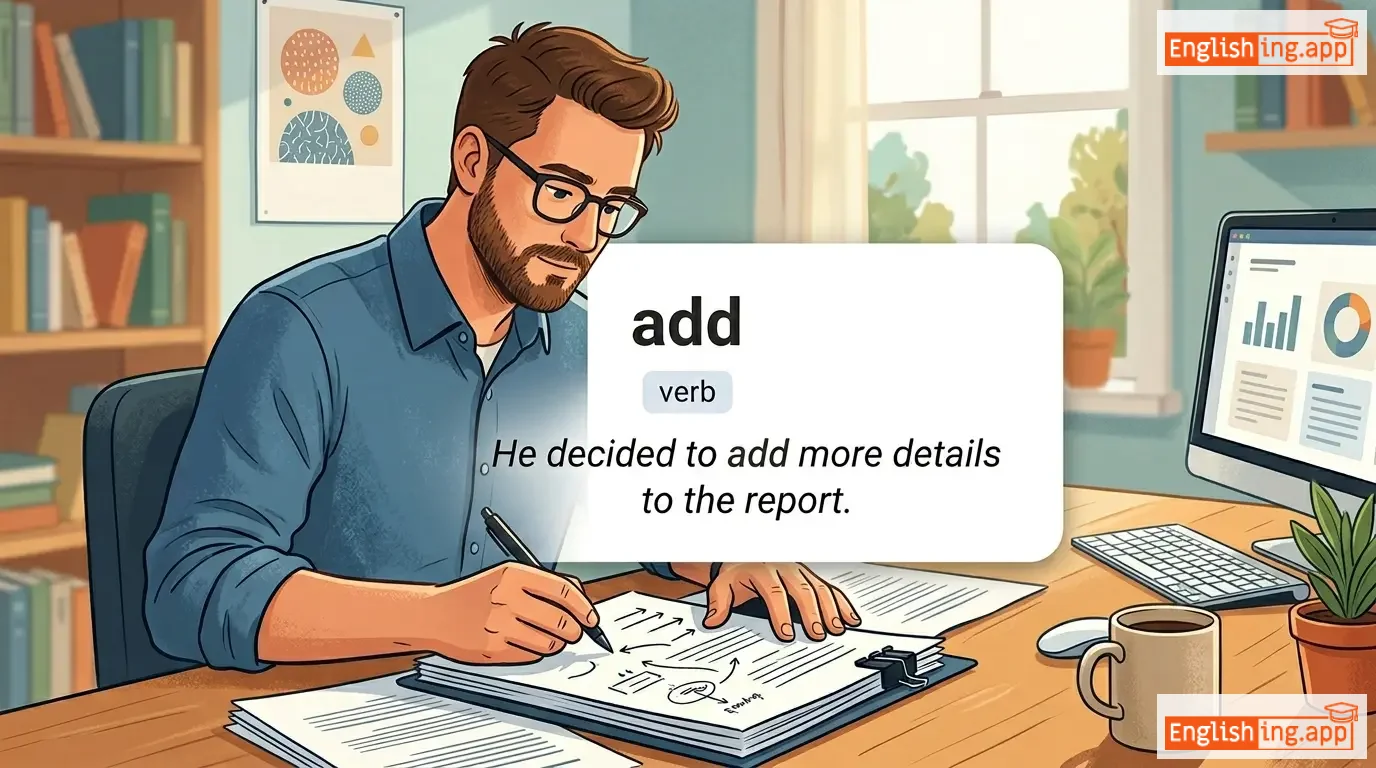
To put together or combine with something else; to increase the number, amount, or value.
••••••
|
He decided to add more details to the report.
彼はレポートに詳細を追加することを決定しました。
••••••
|
彼はレポートに詳細を追加することを決定しました。
Kare wa repo-to ni shousai wo tsuika suru koto wo kettei shimashita.
••••••
|
add fuel to the fire
火に油を注ぐ
••••••
|
To make a bad situation worse.
••••••
|
火に油を注ぐ
Hi ni abura wo sosogu
••••••
|
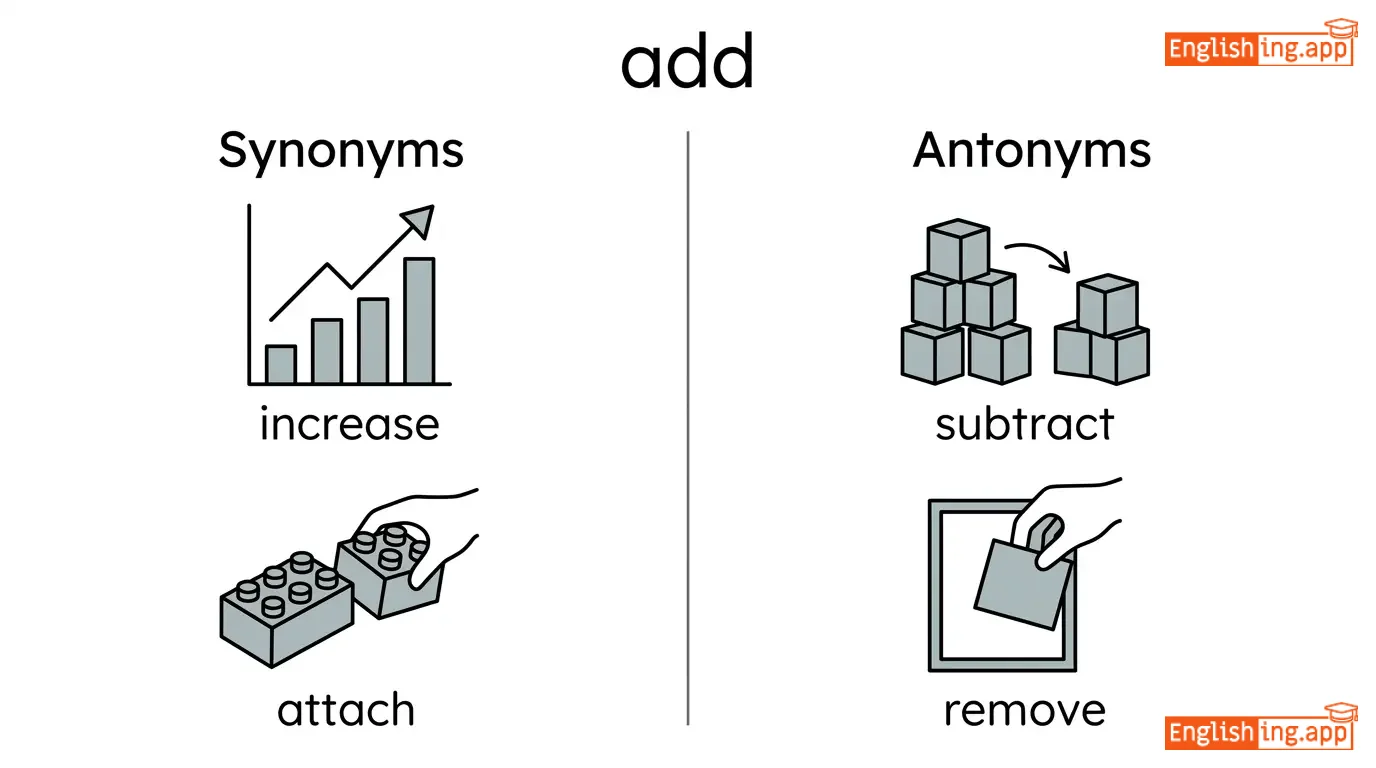
increase, attach, include, combine, augment
••••••
|
subtract, remove, deduct
••••••
|
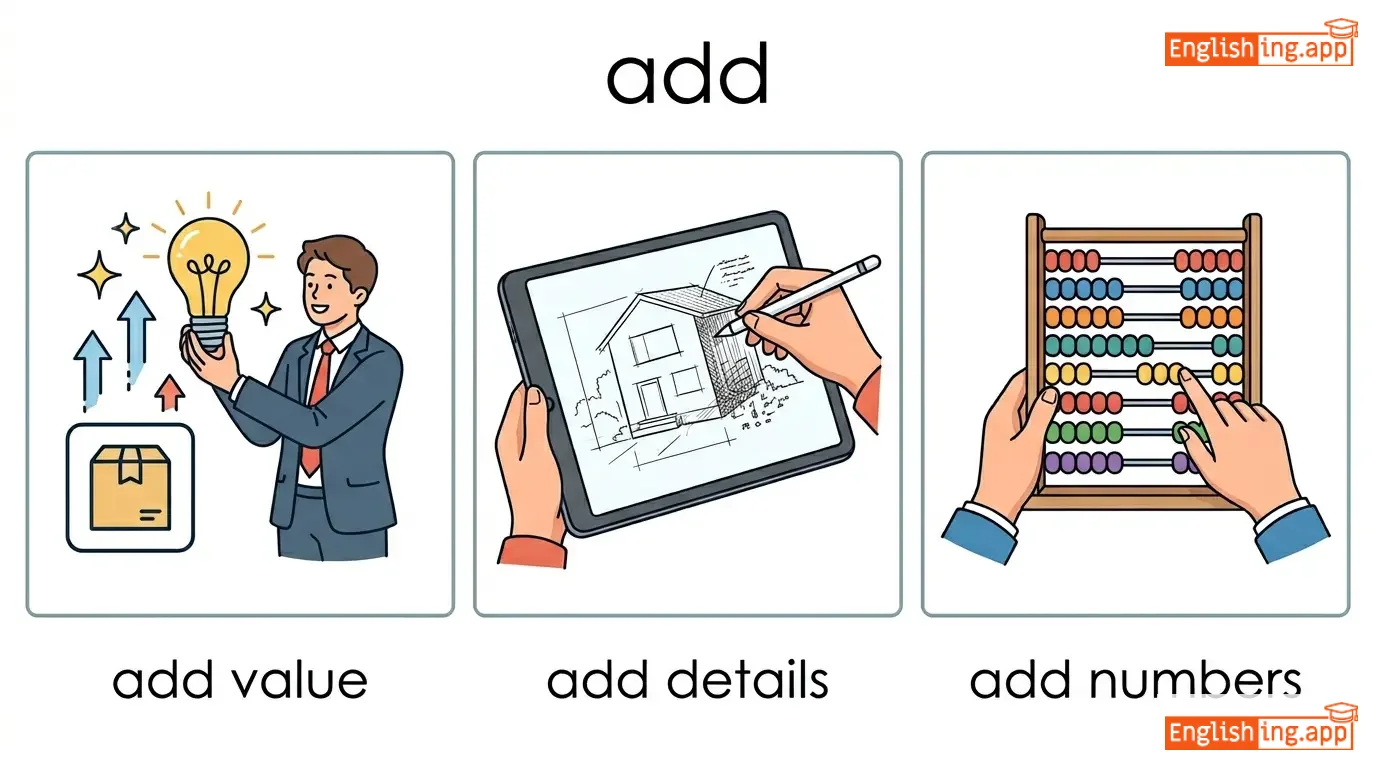
add value, add details, add numbers, add weight
••••••
|
追加することは、何かを足して全体をより豊かにすることです。
••••••
|
Vocabulary Quiz
Test your vocabulary by matching words with their translations or meanings.
Login to take the quiz
Comments (0)
Share your thoughts and join the discussion.
Join the discussion by logging in
Login to CommentNo comments yet
Be the first to share your thoughts!