

翻訳
過去
過去分詞
三人称単数
動名詞
意味
例文
例文の翻訳
同義語
対義語
コロケーション
ニーモニック
Swipe left or right, or use the buttons. Tap image to zoom.
例文の翻訳
単語
Lesson 138Lesson 138 - マスクトグル
|
絵文字
|
単語 | Images | 翻訳 | 過去 | 過去分詞 | 三人称単数 | 動名詞 | 意味 | 例文 | 例文の翻訳 | 表現例 | 表現例の意味 | 表現例の翻訳 | 同義語 | 対義語 | コロケーション | ニーモニック |
|---|---|---|---|---|---|---|---|---|---|---|---|---|---|---|---|---|---|
|
#4111
📊
|
/ˌhaɪəˈrɑː.kɪ.kəl/
adjective
(ハイヤラキカル)
••••••
|
- •••••• |
階層的な
kaisō-teki na
••••••
|
- •••••• | - •••••• | - •••••• | - •••••• |
arranged in order of rank or authority
••••••
|
The company has a strict hierarchical structure.
その会社には厳格な階層構造があります。
••••••
|
その会社には厳格な階層構造があります。
Sono kaisha ni wa gengaku na kaisō kōzō ga arimasu.
••••••
|
- •••••• | - •••••• | - •••••• |
ranked, graded, ordered, stratified
••••••
|
egalitarian, equal
••••••
|
hierarchical order, hierarchical structure, hierarchical system
••••••
|
階層的な - 会社のように階級に従って整理
••••••
|
|
#4112
🌍
|
/ˈhɪntərlændz/
noun (plural)
(ヒンターランズ)
••••••
|
- •••••• |
辺境地
henkyouchi
••••••
|
- •••••• | - •••••• | - •••••• | - •••••• |
Plural of hinterland; remote or less developed regions.
••••••
|
Explorers traveled deep into the hinterlands of the country. |
探検家たちはその国の辺境地に深く旅しました。
Tankenkatata wa sono kuni no henkyouchi ni fukaku tabishimashita.
••••••
|
- •••••• | - •••••• | - •••••• |
interiors, backwoods, remote regions, rural districts
••••••
|
cities, towns, metropolitan areas
••••••
|
vast hinterlands, unexplored hinterlands, rural hinterlands, distant hinterlands
••••••
|
HINTERlands のHINTERは後ろを意味し、LANDは地名の意味を持っています。
••••••
|
|
#4113
🏞️
|
/ˈhɪntərlænd/
noun
(ヒンターランド)
••••••
|
- •••••• |
内陸地域
nairiku chiiki
••••••
|
- •••••• | - •••••• | - •••••• | - •••••• |
The remote or less developed areas away from the coast or a city.
••••••
|
The farmers came from the rural hinterland to sell their produce in the city. |
農民たちは地方の内陸地域から来て、都市で自分たちの農産物を販売しました。
Noumin-tachi wa chiho no nairiku chiiki kara kite, toshi de jibun-tachi no nousanbutsu o hanbai shimashita.
••••••
|
- •••••• | - •••••• | - •••••• |
backcountry, interior, remote area, rural area
••••••
|
city, urban area, metropolis
••••••
|
remote hinterland, rural hinterland, vast hinterland, explore hinterland
••••••
|
HINTERはヒント、LANDは土地 — 内陸地域は都市から離れた場所です。
••••••
|
|
#4114
🔍
|
/ˈhaɪndsaɪt/
noun
(ハインドサイト)
••••••
|
- •••••• |
後知恵
atochie
••••••
|
- •••••• | - •••••• | - •••••• | - •••••• |
Understanding of a situation only after it has happened.
••••••
|
With the benefit of hindsight, we realized the decision was a mistake. |
後知恵で、私たちはその決断が間違いだったことに気づきました。
Atochie de, watashitachi wa sono ketsudan ga machigai datta koto ni kizukimashita.
••••••
|
in hindsight |
Looking back at past events with new understanding.
••••••
|
後知恵で見る
Atochie de miru
••••••
|
retrospection, review, reappraisal, afterthought
••••••
|
foresight, anticipation, prediction
••••••
|
with hindsight, in hindsight, benefit of hindsight, hindsight perspective
••••••
|
後知恵: 事後にその判断がわかること
••••••
|
|
#4115
⛔
|
/ˈhɪndrəns/
noun
••••••
|
|
- •••••• | - •••••• | - •••••• | - •••••• | - •••••• |
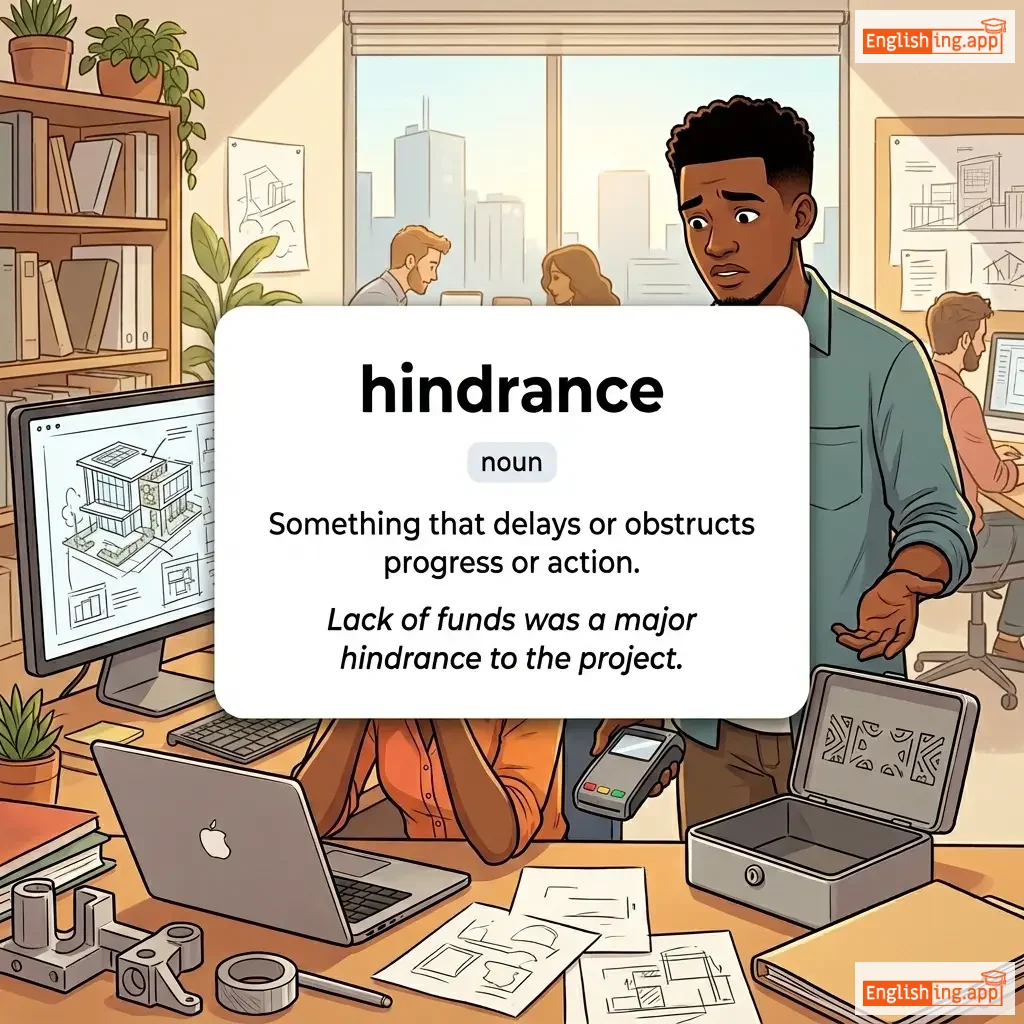
Something that delays or obstructs progress or action.
••••••
|
Lack of funds was a major hindrance to the project. |
- •••••• |
a hindrance rather than a help |
Someone or something that causes more problems than benefits.
••••••
|
- •••••• |
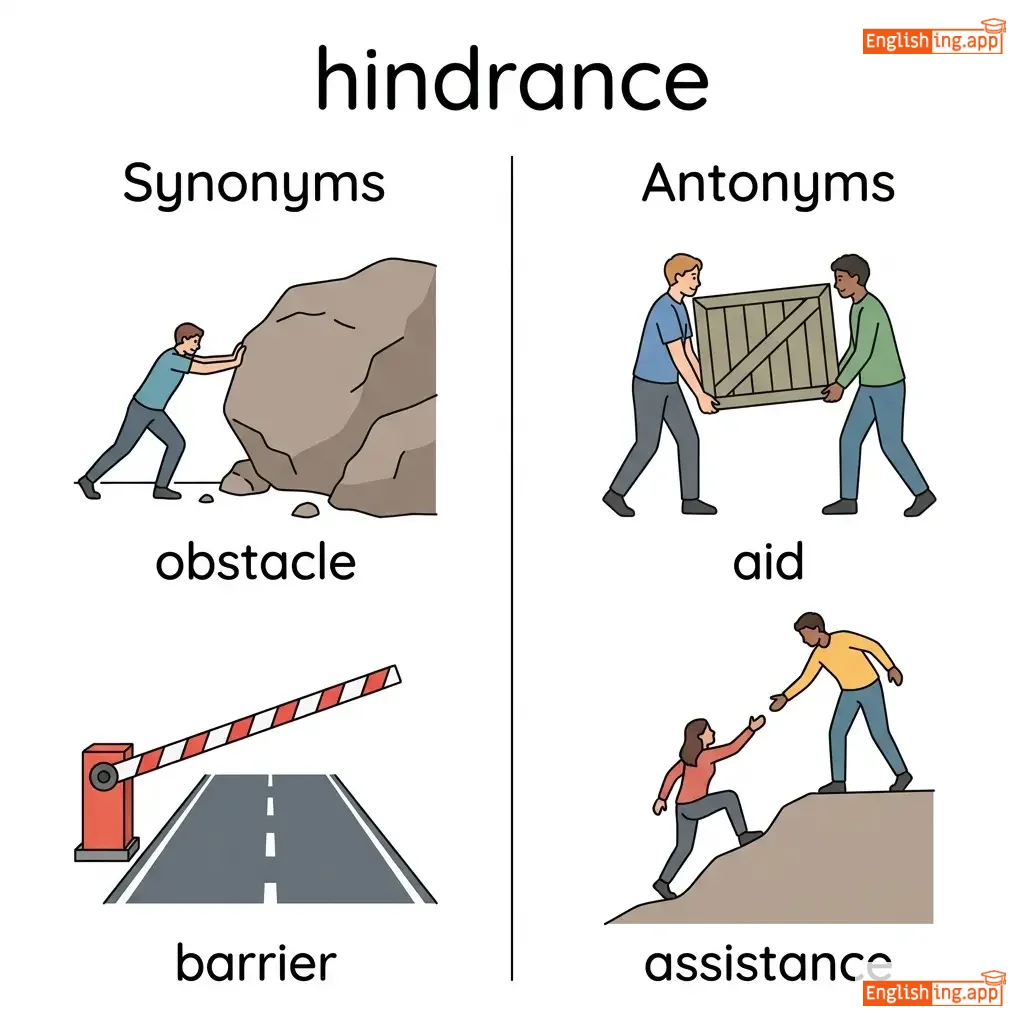
obstacle, barrier, impediment, obstruction, drawback
••••••
|
aid, assistance, help
••••••
|
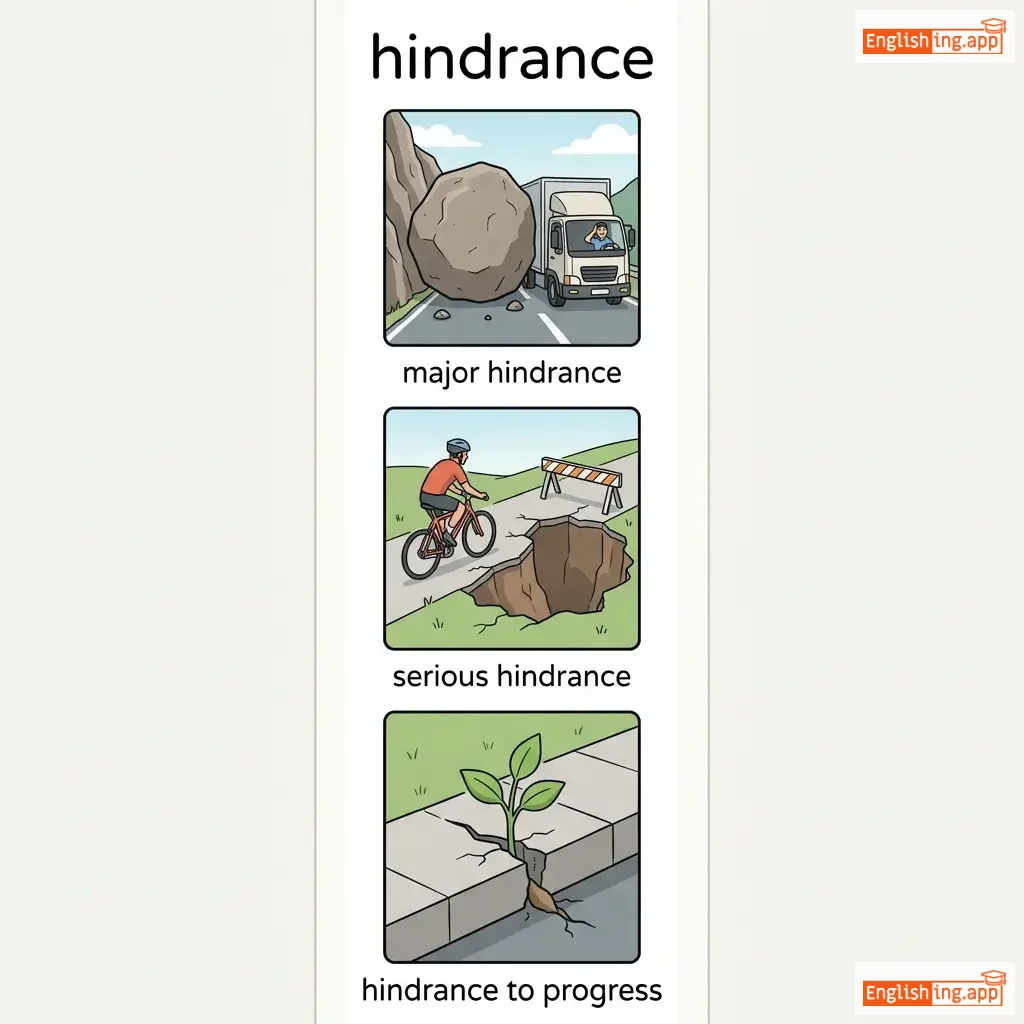
major hindrance, serious hindrance, hindrance to progress, act as a hindrance
••••••
|
No •••••• |
|
#4116
⬅️
|
/ˈhaɪndmoʊst/
adjective
(ハインドモースト)
••••••
|
- •••••• |
最も後ろの
mottomo ushiro no
••••••
|
- •••••• | - •••••• | - •••••• | - •••••• |
Farthest back; last in position.
••••••
|
The hindmost car in the convoy broke down first.
ðə haɪndmoʊst kɑr ɪn ðə kənvɔɪ broʊk daʊn fɜrst.
••••••
|
隊列で最も後ろの車が最初に壊れた。
Tairetsu de mottomo ushiro no kuruma ga saisho ni kowareta.
••••••
|
- •••••• | - •••••• | - •••••• |
rearmost, last, backmost, posterior
••••••
|
front, foremost, leading
••••••
|
hindmost row, hindmost position, hindmost car
••••••
|
HINDMOST → HINDは後ろを意味する + MOST → 最も後ろの
••••••
|
|
#4117
⛔
|
/ˈhɪndər/
verb
(hindā)
••••••
|
|
妨げる
samataeru
••••••
|
hindered
hindādo
••••••
|
hindered
hindādo
••••••
|
hinders
hindāzu
••••••
|
hindering
hindāningu
••••••
|
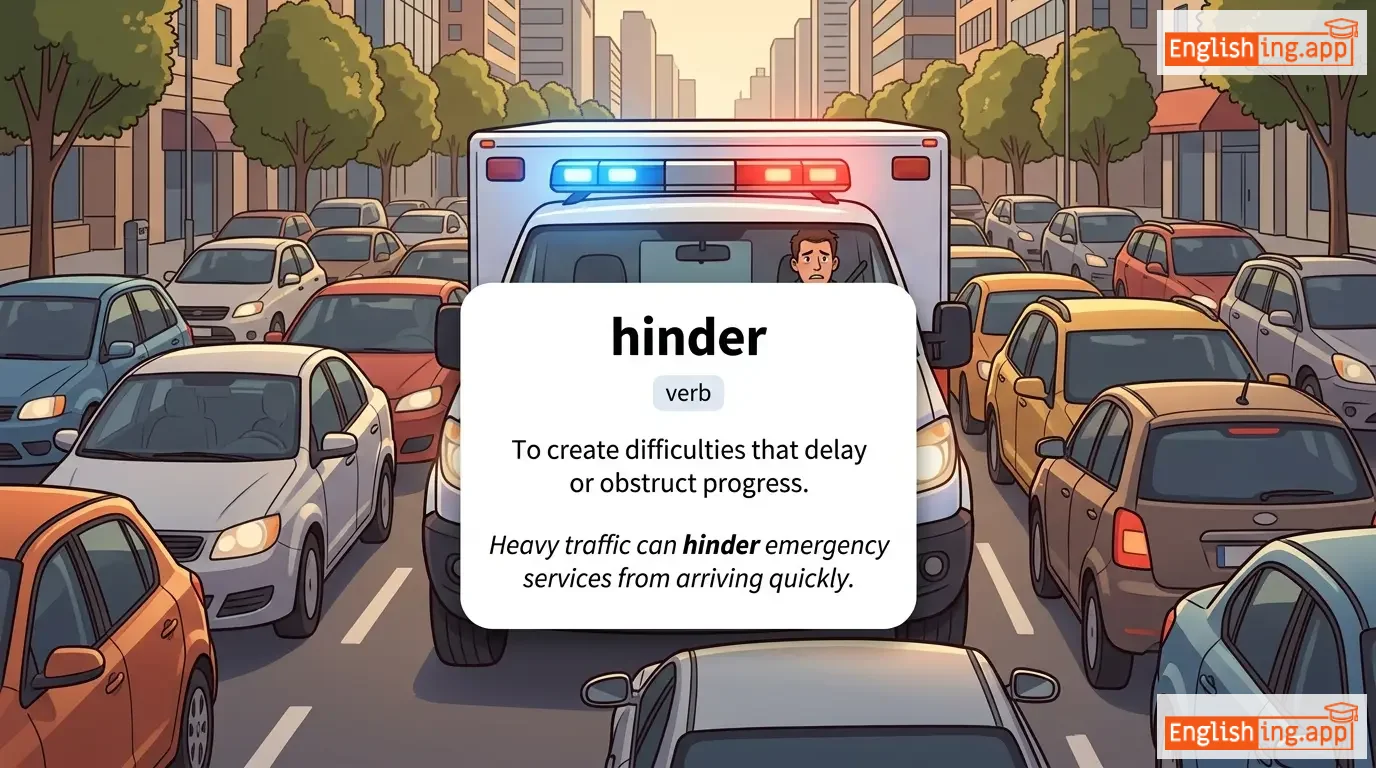
To create difficulties that delay or obstruct progress.
••••••
|
Heavy traffic can hinder emergency services from arriving quickly.
渋滞は緊急サービスが迅速に到着するのを妨げる可能性があります。
••••••
|
渋滞は緊急サービスが迅速に到着するのを妨げる可能性があります。
Jūtai wa kinkyū sābisu ga jinsoku ni tōchaku suru no wo samatageru kanōsei ga arimasu.
••••••
|
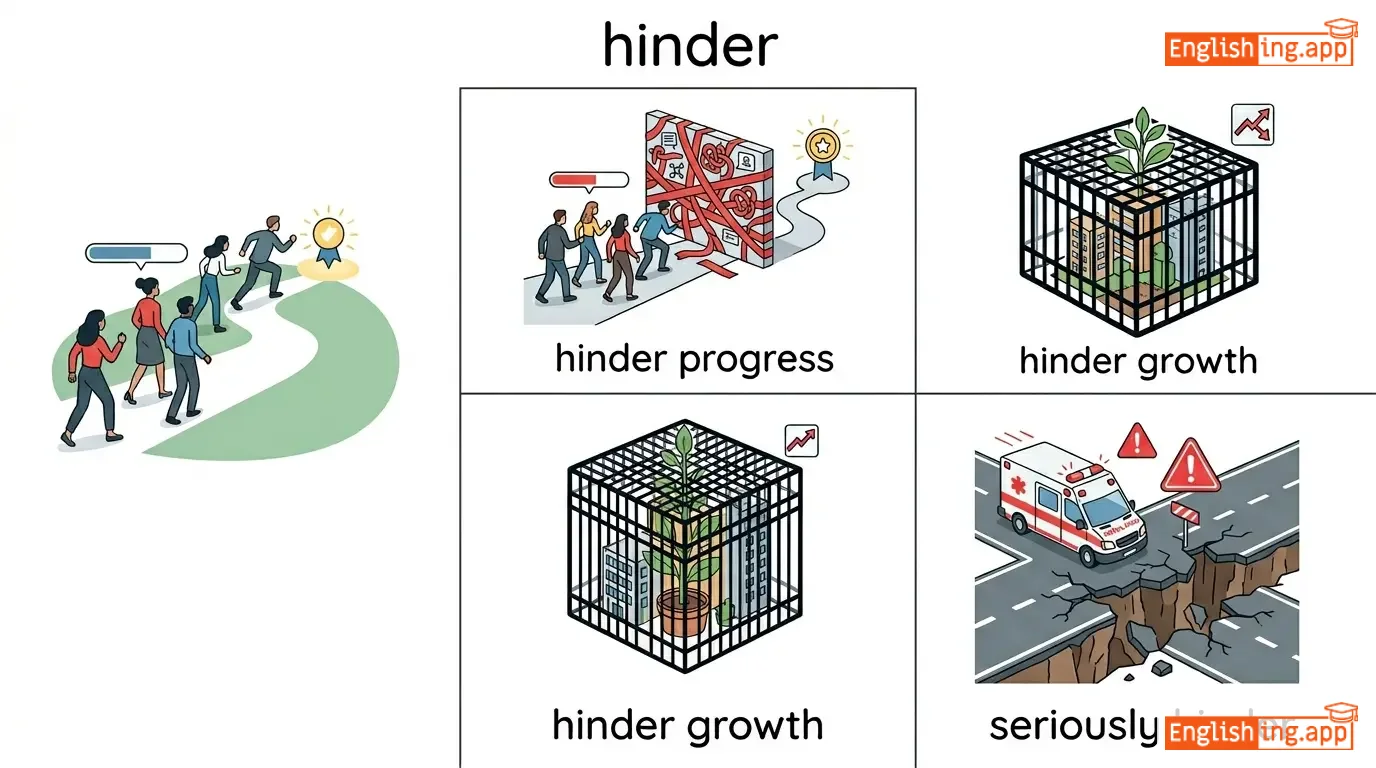
hinder progress
進捗を妨げる
••••••
|
To slow down or obstruct advancement
••••••
|
進捗を妨げる
Shinchoku wo samatageru
••••••
|
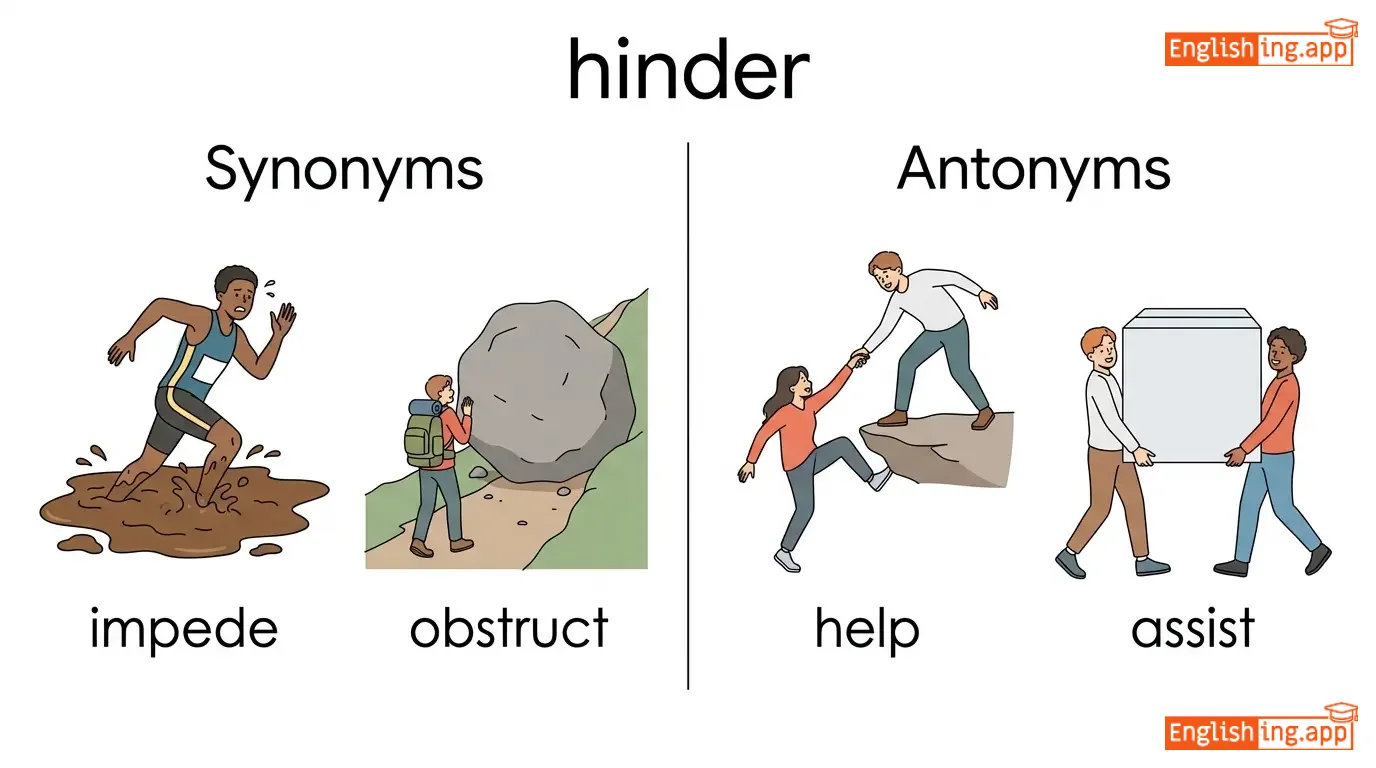
impede, obstruct, delay, hamper, block
••••••
|
help, assist, facilitate
••••••
|
hinder progress, hinder growth, seriously hinder, hinder development
••••••
|
HINDER = 妨げる (hindering progress)
••••••
|
|
#4118
⛰️
|
/ˈhɪlək/
noun
(ヒロック)
••••••
|
- •••••• |
小山
koyama
••••••
|
- •••••• | - •••••• | - •••••• | - •••••• |
A small hill or mound.
••••••
|
The children climbed up the grassy hillock to watch the sunset. |
子供たちは夕日を見るために草で覆われた小山に登った。
Kodomotachi wa yūhi o miru tame ni kusa de ōwareta koyama ni nobotta.
••••••
|
- •••••• | - •••••• | - •••••• |
mound, knoll, rise, hump
••••••
|
valley, plain
••••••
|
grassy hillock, small hillock, rocky hillock, hillock top
••••••
|
HILLOCK → 小さな丘 → 小山
••••••
|
|
#4119
🤣
|
/hɪˈlærɪti/
noun
(ヒラリティ)
••••••
|
- •••••• |
爆笑
bakushou
••••••
|
- •••••• | - •••••• | - •••••• | - •••••• |
Extreme amusement, especially when expressed by laughter.
••••••
|
The movie caused great hilarity among the audience. |
その映画は観客の間で大きな爆笑を引き起こしました。
Sono eiga wa kankyaku no aida de ookina bakushou o hikiokoshimashita.
••••••
|
- •••••• | - •••••• | - •••••• |
laughter, amusement, joy, merriment, glee
••••••
|
sadness, seriousness, gloom
••••••
|
burst of hilarity, hilarity ensued, cause hilarity
••••••
|
HILARITY → みんなで大爆笑
••••••
|
|
#4120
😂
|
/hɪˈlɛəriəs/
adjective
(ヒラリアス)
••••••
|
- •••••• |
非常に面白い
hijou ni omoshiroi
••••••
|
- •••••• | - •••••• | - •••••• | - •••••• |
Extremely funny or amusing.
••••••
|
The comedian told a hilarious story that had everyone laughing. |
コメディアンは、みんなが笑ってしまうような非常に面白い話をしました。
Komedian wa, minna ga waratte shimau you na hijou ni omoshiroi hanashi wo shimashita.
••••••
|
- •••••• | - •••••• | - •••••• |
funny, amusing, comical, entertaining, laughable
••••••
|
serious, sad, boring
••••••
|
hilarious joke, hilarious story, hilarious moment, absolutely hilarious
••••••
|
Hilarious = 非常に (hijou ni) + 面白い (omoshiroi) → 非常に面白い
••••••
|
|
#4121
🥾
|
/haɪk/
verb/noun
••••••
|
- •••••• | - •••••• |
hiked
••••••
|
hiked
••••••
|
hikes
••••••
|
hiking
••••••
|
To take a long walk in the countryside or mountains; also to increase suddenly (prices, rates, etc.).
••••••
|
We decided to hike in the hills this weekend. |
- •••••• |
price hike |
A sudden increase in the cost of goods or services.
••••••
|
- •••••• |
walk, trek, climb, increase, raise
••••••
|
decline, drop, fall
••••••
|
go for a hike, hike up, price hike, wage hike
••••••
|
No •••••• |
|
#4122
🗣️
|
/ˌhaɪ ˈfloʊn/
adjective
(ハイ・フローン)
••••••
|
- •••••• |
高飛車な
takabisha na
••••••
|
- •••••• | - •••••• | - •••••• | - •••••• |
Using fancy or pretentious language; lofty in style but often overblown.
••••••
|
The politician gave a high-flown speech full of promises. |
その政治家は約束でいっぱいの高飛車なスピーチをした。
Sono seijika wa yakusoku de ippai no takabisha na supīchi o shita.
••••••
|
- •••••• | - •••••• | - •••••• |
pretentious, pompous, grandiose, lofty
••••••
|
simple, modest, plain
••••••
|
high-flown language, high-flown speech, high-flown rhetoric
••••••
|
Highは高い、Flownは飛ぶ = 高飛車なスピーチ、誇張された!
••••••
|
|
#4123
📜
|
/ˌhaɪərəˈɡlɪfɪk/
adjective/noun
(ヒエログリフ的)
••••••
|
- •••••• |
ヒエログリフ的
hierogurifuteki
••••••
|
- •••••• | - •••••• | - •••••• | - •••••• |
Relating to or written in hieroglyphs; symbols or writing that is difficult to understand.
••••••
|
The archaeologists studied the hieroglyphic inscriptions carefully. |
考古学者たちはヒエログリフ的な碑文を慎重に研究した。
Kougakusha-tachi wa hierogurifuteki na hibun o shinchou ni kenkyuu shita.
••••••
|
- •••••• | - •••••• | - •••••• |
symbolic, pictorial, cryptic, mysterious
••••••
|
clear, simple
••••••
|
hieroglyphic writing, hieroglyphic script, hieroglyphic inscription
••••••
|
ヒエログリフ的は難解な文字で書かれた象徴的な書き方です。
••••••
|
|
#4124
🪶
|
/ˈhaɪərəˌɡlɪf/
noun
(ハイエログリフ)
••••••
|
- •••••• |
ヒエログリフ
hierogurifu
••••••
|
- •••••• | - •••••• | - •••••• | - •••••• |
A picture or symbol used in ancient writing systems, especially Egyptian writing.
••••••
|
The walls of the temple were covered in hieroglyphs. |
寺院の壁はヒエログリフで覆われていた。
Jiin no kabe wa hierogurifu de owarete ita.
••••••
|
- •••••• | - •••••• | - •••••• |
symbol, character, pictograph, ideogram
••••••
|
alphabet, letter
••••••
|
Egyptian hieroglyph, ancient hieroglyph, decipher hieroglyph
••••••
|
Hero + Glyph = 英雄のシンボル = ヒエログリフ
••••••
|
|
#4125
🏛️
|
/ˈhaɪəˌrɑːrki/
noun
(ハイアラーキー)
••••••
|
- •••••• |
階層
kaisou
••••••
|
- •••••• | - •••••• | - •••••• | - •••••• |
A system in which people or things are arranged in levels of importance or authority.
••••••
|
The corporate hierarchy determines who makes the final decision. |
企業の階層は、最終決定を誰が行うかを決定します。
Kigyou no kaisou wa, saishuu kettei wo dare ga okonau ka wo kettei shimasu.
••••••
|
social hierarchy |
The ranking of individuals in society based on status, power, or wealth.
••••••
|
社会階層
shakai kaisou
••••••
|
ranking, order, system, structure, chain of command
••••••
|
equality, parity
••••••
|
corporate hierarchy, political hierarchy, social hierarchy, strict hierarchy
••••••
|
階層は、上へ行くほど重要性が増すピラミッドのようなものです。
••••••
|
|
#4126
🎨
|
/ˌhɛtərəˈʤiːniəs/
adjective
(ヘテロジニアス)
••••••
|
- •••••• |
異種の
ishuno
••••••
|
- •••••• | - •••••• | - •••••• | - •••••• |
consisting of different kinds or diverse elements
••••••
|
The classroom was filled with a heterogeneous group of students. |
教室は異種の学生のグループでいっぱいだった。
Kyōshitsu wa ishuno gakusei no gurūpu de ippai datta.
••••••
|
- •••••• | - •••••• | - •••••• |
diverse, mixed, varied, assorted
••••••
|
homogeneous, uniform
••••••
|
heterogeneous population, heterogeneous group, heterogeneous mixture, heterogeneous society
••••••
|
Hetero = 異なる + geneous = 構成 → 異なる種類で構成されている
••••••
|
|
#4127
🏃
|
/haɪ/
verb
(ハイ)
••••••
|
- •••••• |
急ぐ
isogu
••••••
|
hied
ハイド
••••••
|
hied
ハイド
••••••
|
hies
ハイズ
••••••
|
hying
ハイング
••••••
|
to go quickly; hasten
••••••
|
He hied to the station to catch the train.
ヒー ハイド トゥ ザ ステーション トゥ キャッチ ザ トレイン。
••••••
|
彼は電車に乗るために駅へ急いだ。
Kare wa densha ni noru tame ni eki e isoida.
••••••
|
- •••••• | - •••••• | - •••••• |
hasten, hurry, rush, speed
••••••
|
delay, linger, loiter
••••••
|
hie to, hie away
••••••
|
Hie ハイ means hurry up and go
••••••
|
|
#4128
😱
|
/ˈhɪd.i.əs/
adjective
(ヒディアス)
••••••
|
- •••••• |
恐ろしい
osoroshii
••••••
|
- •••••• | - •••••• | - •••••• | - •••••• |
extremely ugly or unpleasant
••••••
|
The crime was so hideous that it shocked the whole town. |
その犯罪はあまりにも恐ろしかったので、町全体が衝撃を受けました。
Sono hanzai wa amari ni mo osoroshikatta node, machi zentai ga shougeki o ukemashita.
••••••
|
- •••••• | - •••••• | - •••••• |
ugly, horrible, monstrous, repulsive, dreadful
••••••
|
beautiful, attractive, pleasant
••••••
|
hideous crime, hideous face, hideous smell
••••••
|
Hideousは恐ろしいという意味です - その恐ろしい外観を見て‘hide’したくなることを考えてください。
••••••
|
|
#4129
🪢
|
/ˈhaɪd.baʊnd/
adjective
••••••
|
- •••••• | - •••••• | - •••••• | - •••••• | - •••••• | - •••••• |
unwilling or unable to change because of tradition or convention
••••••
|
He is too hidebound to accept new ideas. |
- •••••• | - •••••• | - •••••• | - •••••• |
rigid, conservative, narrow-minded, traditional, inflexible
••••••
|
open-minded, flexible, progressive
••••••
|
hidebound attitude, hidebound tradition, hidebound society
••••••
|
No •••••• |
|
#4130
🙈
|
/haɪd/
verb
(ハイド)
••••••
|
|
隠す
kakusu
••••••
|
hid
ヒッド
••••••
|
hidden
ヒデン
••••••
|
hides
ハイダーズ
••••••
|
hiding
ハイディング
••••••
|
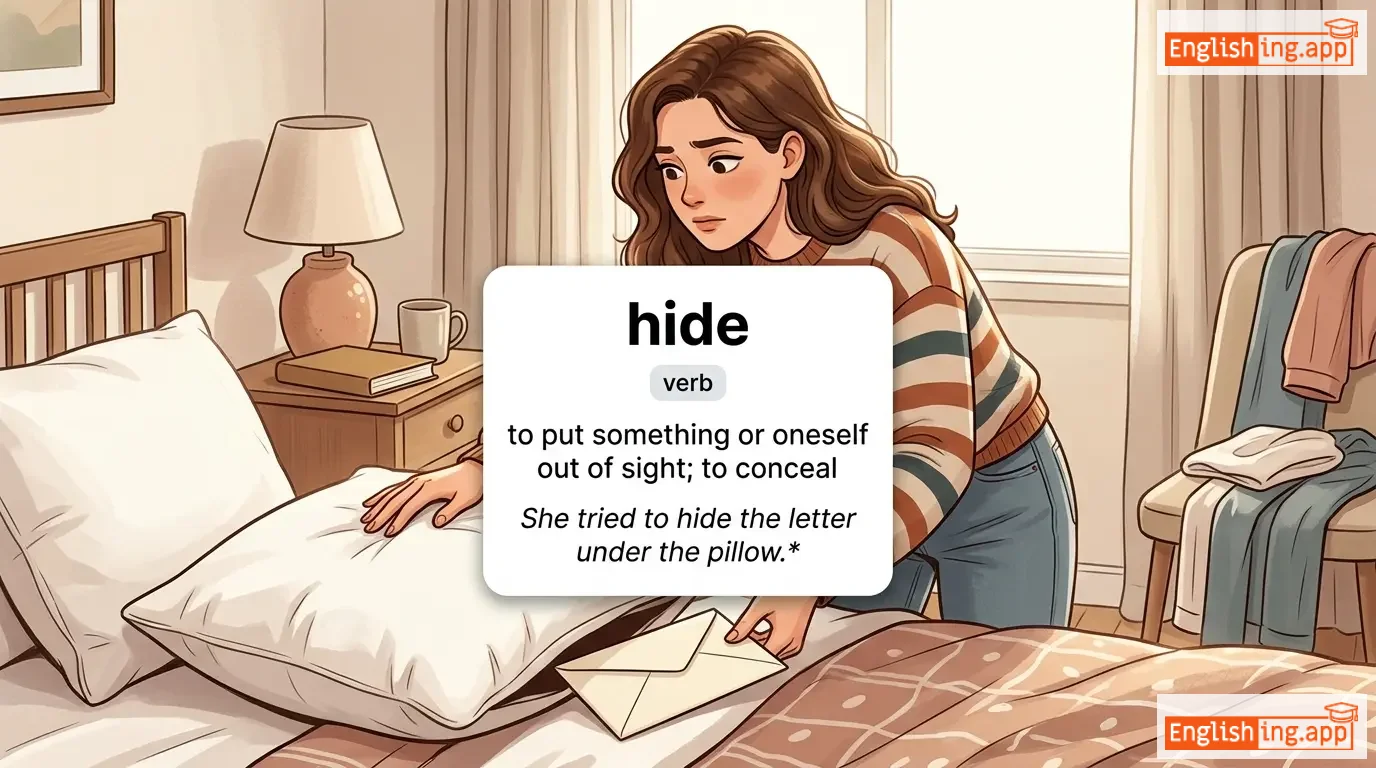
to put something or oneself out of sight; to conceal
••••••
|
She tried to hide the letter under the pillow.
彼女は枕の下に手紙を隠そうとした。
••••••
|
彼女は枕の下に手紙を隠そうとした。
Kanojo wa makura no shita ni tegami o kakusou to shita.
••••••
|
hide and seek
かくれんぼ
••••••
|
a children's game where one hides and others seek
••••••
|
かくれんぼ
kakurenbo
••••••
|
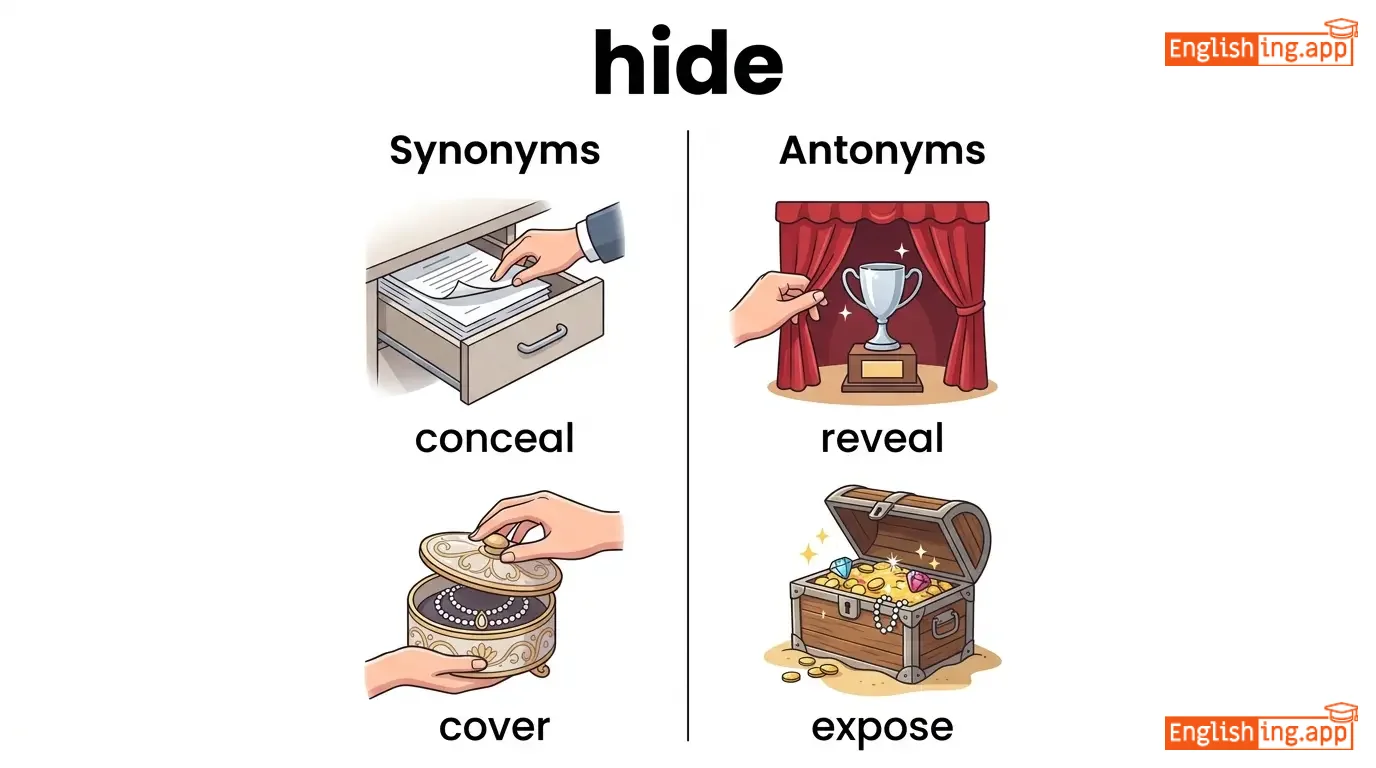
conceal, cover, disguise, veil, secrete
••••••
|
reveal, expose, uncover
••••••
|
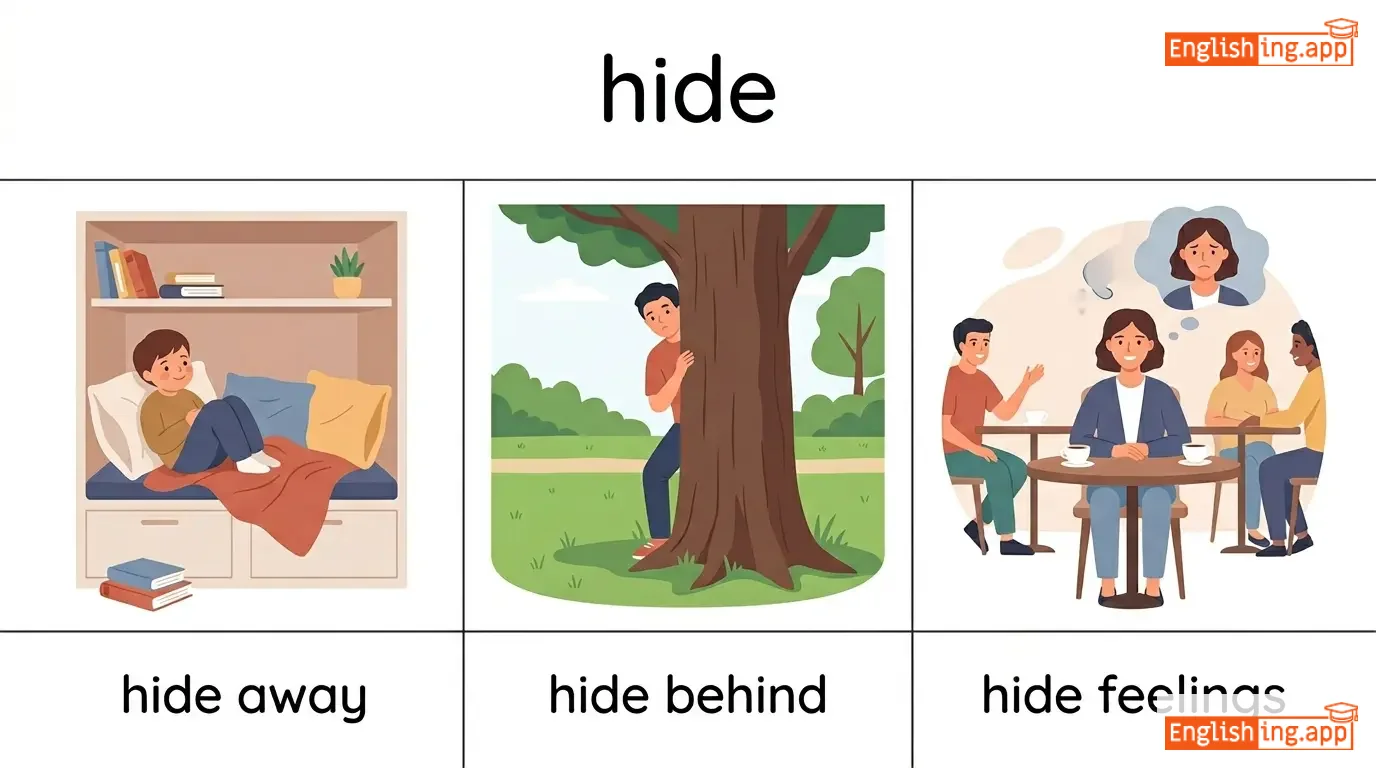
hide away, hide behind, hide feelings, hide from
••••••
|
Hide は隠す、まるで 🦊 キツネが巣に隠れるように
••••••
|
|
#4131
🇮🇪
|
/haɪˈbɜːrniən/
adjective/noun
(ハイバーニアン)
••••••
|
- •••••• |
アイリッシュ
airisshu
••••••
|
- •••••• | - •••••• | - •••••• | - •••••• |
Relating to Ireland or the Irish.
••••••
|
He enjoyed reading about Hibernian culture and history. |
彼はハイバーニアン文化と歴史について読むのが好きでした。
Kare wa haibānian bunka to rekishi ni tsuite yomu no ga suki deshita.
••••••
|
- •••••• | - •••••• | - •••••• |
Irish, Gaelic, Celtic
••••••
|
non-Irish
••••••
|
Hibernian culture, Hibernian society, Hibernian history
••••••
|
Hibernianはアイリッシュを意味する - 'Hi! Born in Ireland'を覚えておいてください。
••••••
|
|
#4132
🐻
|
/ˈhaɪbərˌneɪt/
verb
(ハイバーネイト)
••••••
|
- •••••• |
冬眠する
toumin suru
••••••
|
hibernated
ハイバーネイテッド
••••••
|
hibernated
ハイバーネイテッド
••••••
|
hibernates
ハイバーネイツ
••••••
|
hibernating
ハイバーネイティング
••••••
|
To spend the winter in a dormant state, as some animals do.
••••••
|
Bears hibernate in caves during the winter.
クマは冬に洞窟で冬眠します。
••••••
|
クマは冬に洞窟で冬眠します。
Kuma wa fuyu ni dōkutsu de tōmin shimasu.
••••••
|
- •••••• | - •••••• | - •••••• |
sleep, rest, slumber, lie dormant
••••••
|
wake, active
••••••
|
hibernate during winter, animals hibernate, hibernate in caves
••••••
|
Hibernateは 'Hi, bear night' という意味 – 冬にクマは眠ります。
••••••
|
|
#4133
❄️
|
/haɪˈbɜːrnəl/
adjective
••••••
|
- •••••• | - •••••• | - •••••• | - •••••• | - •••••• | - •••••• |
Relating to or occurring in winter.
••••••
|
The hibernal season is often harsh in the mountains. |
- •••••• | - •••••• | - •••••• | - •••••• |
wintry, frosty, icy, cold
••••••
|
summer, warm
••••••
|
hibernal cold, hibernal season, hibernal landscape
••••••
|
No •••••• |
|
#4134
⏸️
|
/haɪˈeɪtəs/
noun
(ハイエイタス)
••••••
|
- •••••• |
中断
chūdan
••••••
|
- •••••• | - •••••• | - •••••• | - •••••• |
A pause or break in continuity of a process or activity.
••••••
|
The show returned after a long hiatus. |
ショーは長い中断の後、再び始まりました。
Shō wa nagai chūdan no ato, futatabi hajimarimashita.
••••••
|
- •••••• | - •••••• | - •••••• |
break, pause, gap, interruption, intermission
••••••
|
continuation, flow
••••••
|
long hiatus, brief hiatus, hiatus from work
••••••
|
Hiatusは中断を意味します。何かを中断して休憩することのようです。
••••••
|
|
#4135
🌟
|
/ˈheɪˌdeɪ/
noun
(ヘイデイ)
••••••
|
- •••••• |
黄金時代
ougon jidai
••••••
|
- •••••• | - •••••• | - •••••• | - •••••• |
The period of greatest success, popularity, or power.
••••••
|
In its heyday, the company dominated the market.
その全盛期に、会社は市場を支配していました。
••••••
|
その黄金時代に、会社は市場を支配していました。
Sono ougon jidai ni, kaisha wa shijou o shihai shite imashita.
••••••
|
in one's heyday
誰かの全盛期に
••••••
|
At the peak of someone's success or popularity.
••••••
|
誰かの黄金時代に
Dareka no ougon jidai ni
••••••
|
prime, peak, zenith, golden age, height
••••••
|
decline, downfall, nadir
••••••
|
in its heyday, the heyday of, during the heyday
••••••
|
Hey! Day というのは黄金時代を意味します。
••••••
|
|
#4136
🐜
|
/ˈhɛksəˌpɒd/
noun
(ヘクサポッド)
••••••
|
- •••••• |
ヘクサポッド
hekusapoddo
••••••
|
- •••••• | - •••••• | - •••••• | - •••••• |
An insect or other organism with six legs.
••••••
|
The scientist observed a hexapod crawling on the leaf.
科学者は葉の上を這うヘクサポッドを観察しました。
••••••
|
科学者は葉の上を這うヘクサポッドを観察しました。
Kagakusha wa ha no ue o hau hekusapoddo o kansatsu shimashita.
••••••
|
- •••••• | - •••••• | - •••••• |
insect, arthropod, bug
••••••
|
quadruped, biped
••••••
|
hexapod species, hexapod structure, hexapod insect
••••••
|
Hexaは6を意味し、Podは足を意味します。だから、ヘクサポッドは6本足の生物です。
••••••
|
|
#4137
🔷
|
/hɛkˈsæŋɡjələr/
adjective
(ヘクサングラー)
••••••
|
- •••••• |
六角形の
rokkakukei no
••••••
|
- •••••• | - •••••• | - •••••• | - •••••• |
Having six angles or corners.
••••••
|
The artist designed a hexangular frame for the mirror. |
アーティストは鏡のために六角形のフレームをデザインしました。
Ātisuto wa kagami no tame ni rokkakukei no fureemu o dezain shimashita.
••••••
|
- •••••• | - •••••• | - •••••• |
six-angled, hexagonal, six-cornered
••••••
|
round, triangular
••••••
|
hexangular frame, hexangular structure, hexangular design
••••••
|
Hex + angular = 6つの角, だからhexangularは六角形の意味です。
••••••
|
|
#4138
⬡
|
/ˈhɛksəˌɡɒn/
noun
(ヘクサゴン)
••••••
|
- •••••• |
六角形
rokukakkei
••••••
|
- •••••• | - •••••• | - •••••• | - •••••• |
A six-sided polygon.
••••••
|
A honeycomb cell is shaped like a hexagon. |
蜂の巣のセルは六角形をしている。
Hachi no su no seru wa rokkakkei o shite iru.
••••••
|
- •••••• | - •••••• | - •••••• |
six-sided shape, polygon, figure
••••••
|
circle, triangle
••••••
|
regular hexagon, hexagon shape, hexagon pattern
••••••
|
Hexは6を意味するので、六角形 = 6つの辺を持つ形。
••••••
|
|
#4139
🪓
|
/hjuː/
verb
(ヒュー)
••••••
|
- •••••• |
切る
kiru
••••••
|
hewed
ヒュード
••••••
|
hewn
ヒューン
••••••
|
hews
ヒューズ
••••••
|
hewing
ヒューイング
••••••
|
To chop or cut something, especially wood or stone, with a tool.
••••••
|
The workers hewed logs to build the cabin.
労働者たちは小屋を建てるために丸太をヒューズ。
••••••
|
労働者たちは小屋を建てるために丸太を切った。
Roudoushatachi wa koya o tateru tame ni maruta o kitta.
••••••
|
hew to the line
hew to the line
••••••
|
To adhere strictly to rules, standards, or a course of action.
••••••
|
規則に従う
kisoku ni shitagau
••••••
|
chop, cut, carve, hack, cleave
••••••
|
assemble, join, attach
••••••
|
hew wood, hew stone, hew to tradition, hew to the line
••••••
|
Hewは切ることを意味する - 木を切っている人を想像してください。
••••••
|
|
#4140
🦋
|
/ˌhɛtərəʊˈmɔːrfɪk/
adjective
(ヘテロモルフィック)
••••••
|
- •••••• |
異形の
ikei no
••••••
|
- •••••• | - •••••• | - •••••• | - •••••• |
Having different forms or shapes, especially in the same species or organism.
••••••
|
Butterflies are heteromorphic during their life cycle, changing forms from larva to adult. |
蝶々はそのライフサイクルの中で異形であり、幼虫から成虫に変化します。
Chōchō wa sono raifusaikuru no naka de ikei de ari, yōchū kara seichū ni henka shimasu.
••••••
|
- •••••• | - •••••• | - •••••• |
diverse, varied, polymorphic, multiform, different
••••••
|
uniform, identical, monomorphic
••••••
|
heteromorphic stages, heteromorphic species, heteromorphic structure
••••••
|
Heteroは異なる、Morphicは形態を意味するので、異形は異なる形態を意味します。
••••••
|
Vocabulary Quiz
Test your vocabulary by matching words with their translations or meanings.
Login to take the quiz
Comments (0)
Share your thoughts and join the discussion.
Join the discussion by logging in
Login to CommentNo comments yet
Be the first to share your thoughts!