


Swipe left or right, or use the buttons. Tap image to zoom.
例句翻译
单词
Lesson 138Lesson 138 - 遮罩切换
|
表情符号
|
单词 | Images | 翻译 | 过去时 | 过去分词 | 第三人称单数 | 动名词 | 含义 | 例句 | 例句翻译 | 示例表达 | 示例表达含义 | 示例表达翻译 | 同义词 | 反义词 | 搭配词 | 助记符 |
|---|---|---|---|---|---|---|---|---|---|---|---|---|---|---|---|---|---|
|
#4111
📊
|
/ˌhaɪəˈrɑː.kɪ.kəl/
adjective
(haɪəˈrɑːkɪkəl)
••••••
|
- •••••• |
等级的
děngjí de
••••••
|
- •••••• | - •••••• | - •••••• | - •••••• |
arranged in order of rank or authority
••••••
|
The company has a strict hierarchical structure.
该公司有一个严格的等级结构。
••••••
|
该公司有一个严格的等级结构。
Gāi gōngsī yǒu yīgè yángé de děngjí jiégòu.
••••••
|
- •••••• | - •••••• | - •••••• |
ranked, graded, ordered, stratified
••••••
|
egalitarian, equal
••••••
|
hierarchical order, hierarchical structure, hierarchical system
••••••
|
等级的 - 按照顺序排列,像公司一样
••••••
|
|
#4112
🌍
|
/ˈhɪntərlændz/
noun (plural)
(hinterlands)
••••••
|
- •••••• |
偏远地区
pianyuan diqu
••••••
|
- •••••• | - •••••• | - •••••• | - •••••• |
Plural of hinterland; remote or less developed regions.
••••••
|
Explorers traveled deep into the hinterlands of the country. |
探险者深入到该国的偏远地区。
Tanxianzhe shenru dao gai guo de pianyuan diqu.
••••••
|
- •••••• | - •••••• | - •••••• |
interiors, backwoods, remote regions, rural districts
••••••
|
cities, towns, metropolitan areas
••••••
|
vast hinterlands, unexplored hinterlands, rural hinterlands, distant hinterlands
••••••
|
HINTERlands 是远离中心的地区,所以叫做偏远地区。
••••••
|
|
#4113
🏞️
|
/ˈhɪntərlænd/
noun
(欣特兰德)
••••••
|
- •••••• |
内陆地区
neilu diqu
••••••
|
- •••••• | - •••••• | - •••••• | - •••••• |
The remote or less developed areas away from the coast or a city.
••••••
|
The farmers came from the rural hinterland to sell their produce in the city. |
农民们从乡村的内陆地区来到城市销售他们的产品。
Nongmin men cong xiangcun de neilu diqu lai dao chengshi xiaoshou tamen de chanpin.
••••••
|
- •••••• | - •••••• | - •••••• |
backcountry, interior, remote area, rural area
••••••
|
city, urban area, metropolis
••••••
|
remote hinterland, rural hinterland, vast hinterland, explore hinterland
••••••
|
HINTER代表线索,LAND代表土地 — 内陆地区指的是远离海岸的地方。
••••••
|
|
#4114
🔍
|
/ˈhaɪndsaɪt/
noun
(hǎi'āndè sàitè)
••••••
|
- •••••• |
事后诸葛亮
shì hòu zhū gě liàng
••••••
|
- •••••• | - •••••• | - •••••• | - •••••• |
Understanding of a situation only after it has happened.
••••••
|
With the benefit of hindsight, we realized the decision was a mistake. |
在事后我们意识到这个决定是个错误。
zài shìhòu wǒmen yìshí dào zhège juédìng shì ge cuòwù.
••••••
|
in hindsight |
Looking back at past events with new understanding.
••••••
|
事后诸葛亮
shì hòu zhū gě liàng
••••••
|
retrospection, review, reappraisal, afterthought
••••••
|
foresight, anticipation, prediction
••••••
|
with hindsight, in hindsight, benefit of hindsight, hindsight perspective
••••••
|
事后诸葛亮:通过过去的经验,才看到真正的真相。
••••••
|
|
#4115
⛔
|
/ˈhɪndrəns/
noun
••••••
|
|
- •••••• | - •••••• | - •••••• | - •••••• | - •••••• |
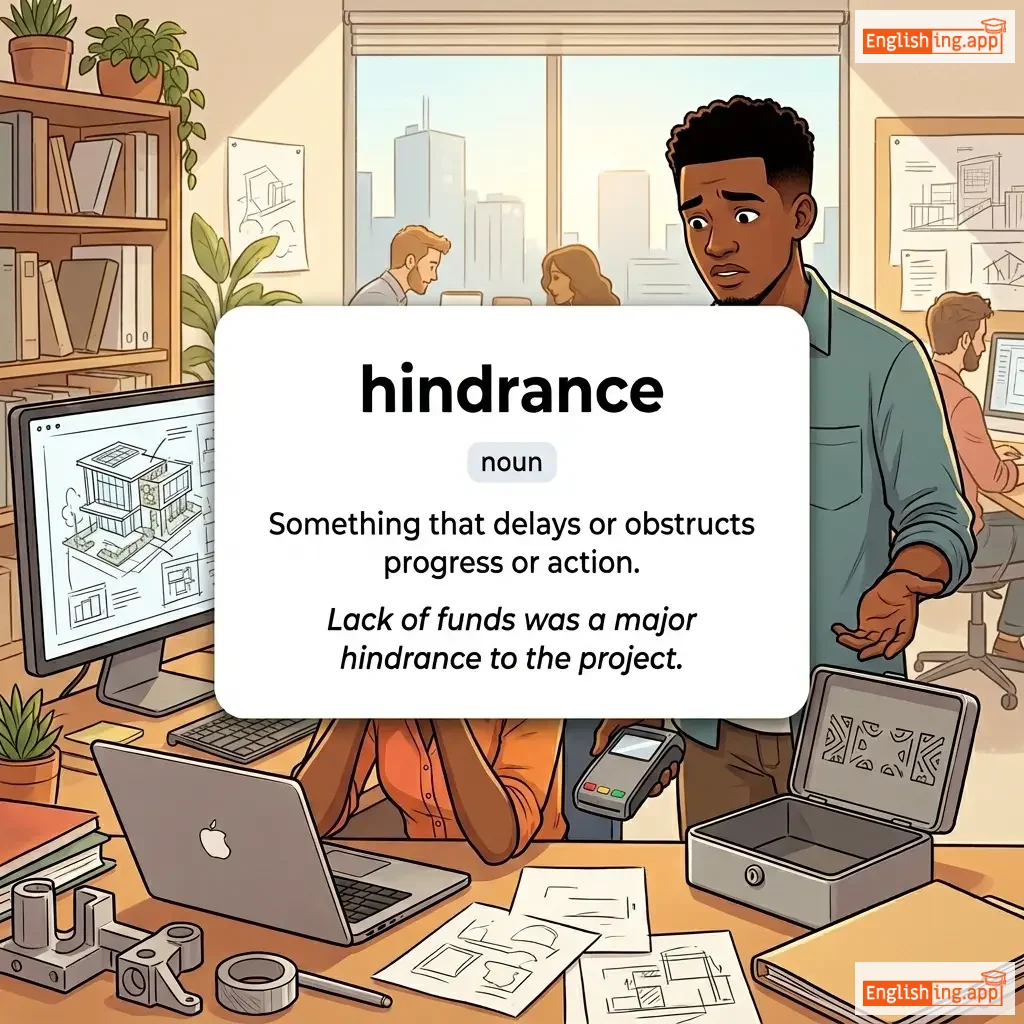
Something that delays or obstructs progress or action.
••••••
|
Lack of funds was a major hindrance to the project. |
- •••••• |
a hindrance rather than a help |
Someone or something that causes more problems than benefits.
••••••
|
- •••••• |
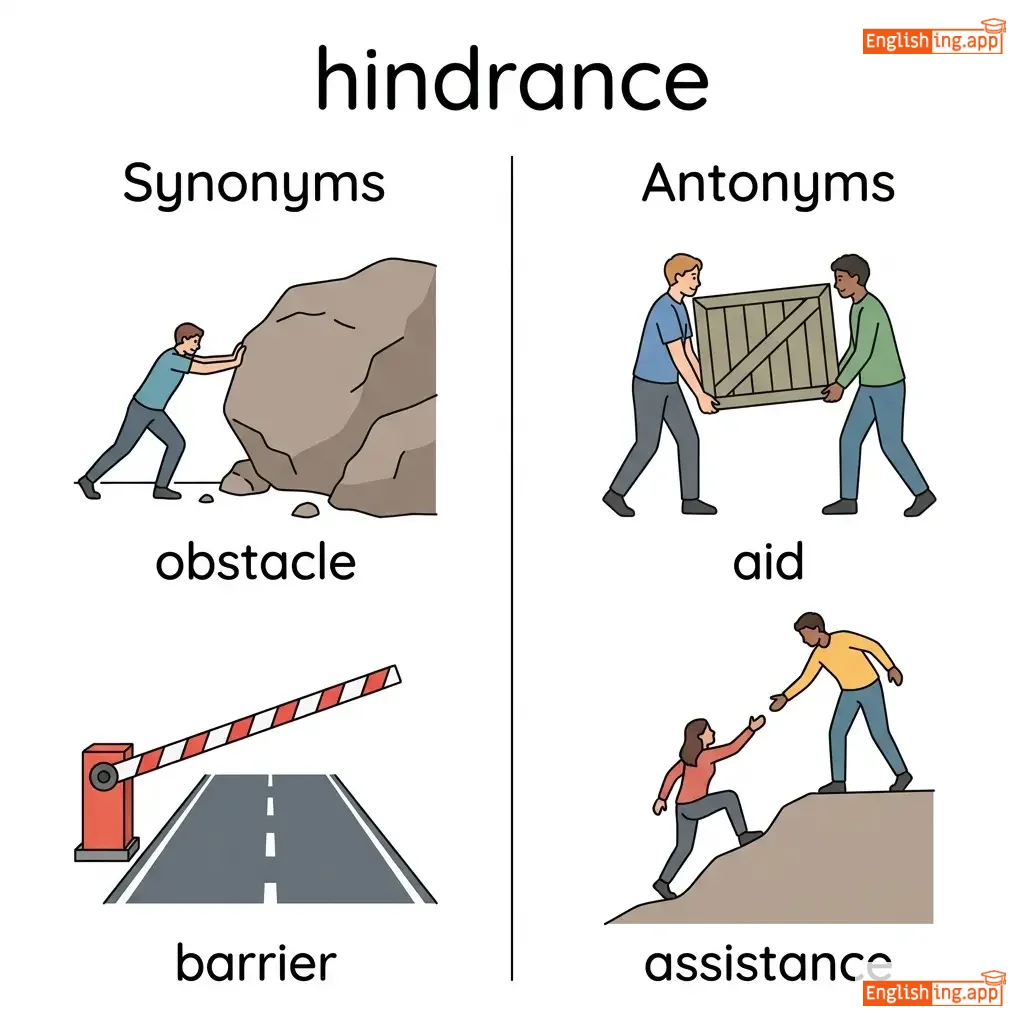
obstacle, barrier, impediment, obstruction, drawback
••••••
|
aid, assistance, help
••••••
|
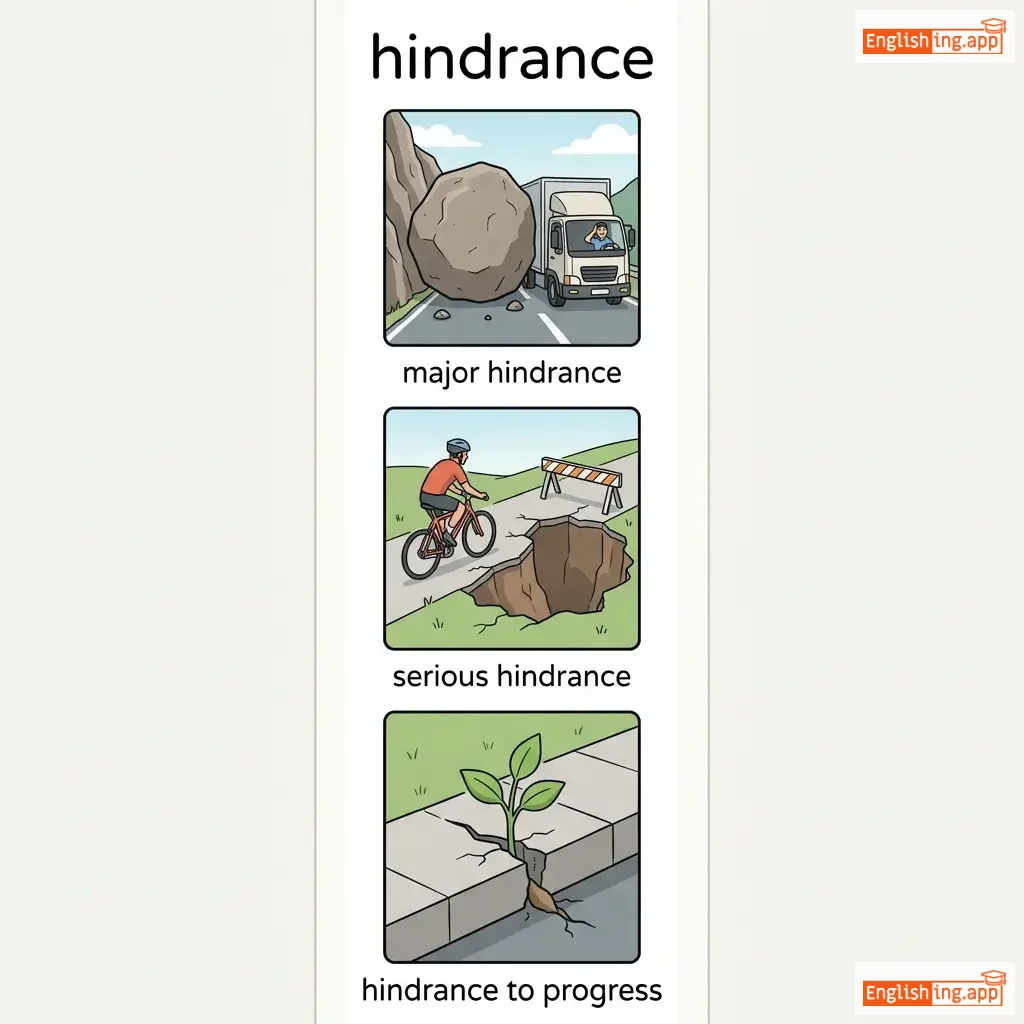
major hindrance, serious hindrance, hindrance to progress, act as a hindrance
••••••
|
No •••••• |
|
#4116
⬅️
|
/ˈhaɪndmoʊst/
adjective
(hāimùsī)
••••••
|
- •••••• |
最远的
zuì yuǎn de
••••••
|
- •••••• | - •••••• | - •••••• | - •••••• |
Farthest back; last in position.
••••••
|
The hindmost car in the convoy broke down first.
ðə haɪndmoʊst kɑr ɪn ðə kənvɔɪ broʊk daʊn fɜrst.
••••••
|
车队中最远的车先坏了。
Chēduì zhōng zuì yuǎn de chē xiān huài le.
••••••
|
- •••••• | - •••••• | - •••••• |
rearmost, last, backmost, posterior
••••••
|
front, foremost, leading
••••••
|
hindmost row, hindmost position, hindmost car
••••••
|
HINDMOST → HIND意味着后面 + MOST → 最远的
••••••
|
|
#4117
⛔
|
/ˈhɪndər/
verb
(hin de)
••••••
|
|
妨碍
fang'ai
••••••
|
hindered
hin derd
••••••
|
hindered
hin derd
••••••
|
hinders
hin ders
••••••
|
hindering
hin dering
••••••
|
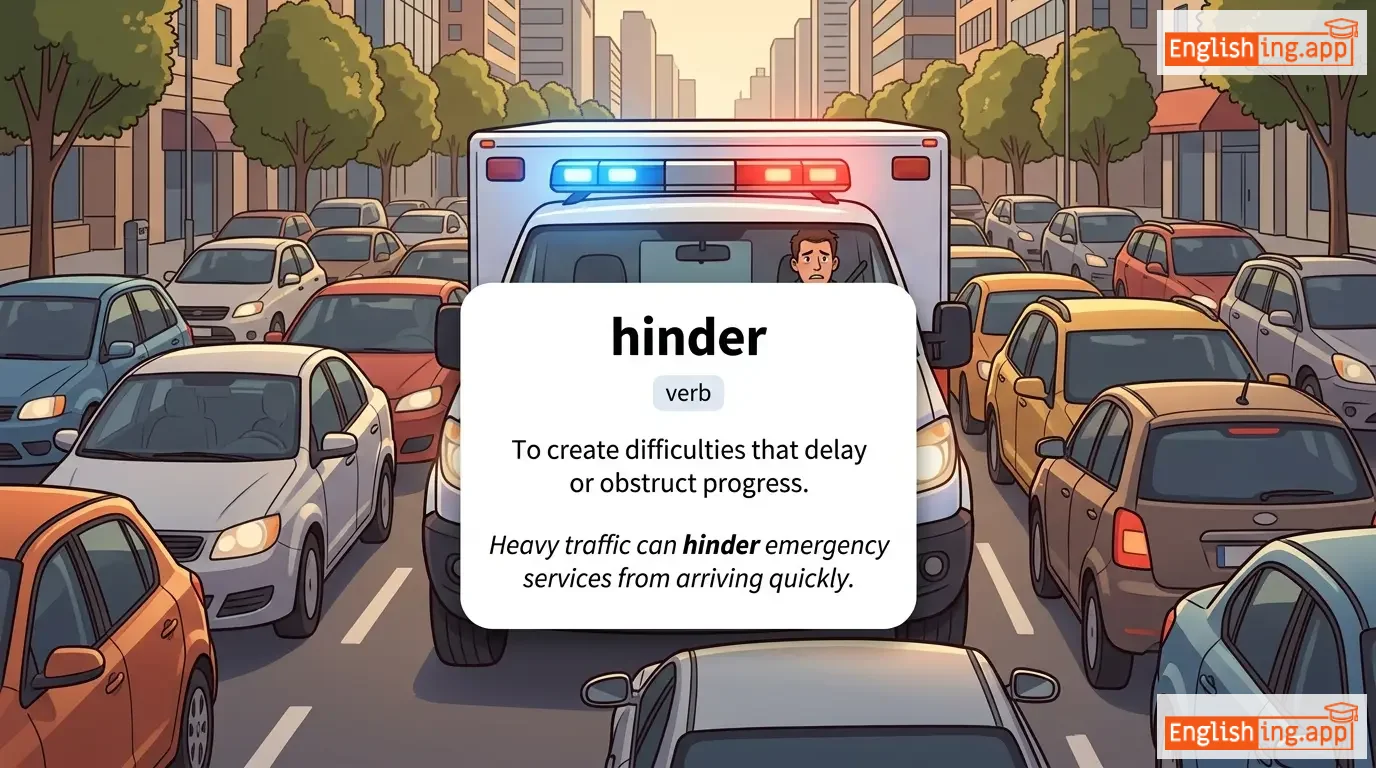
To create difficulties that delay or obstruct progress.
••••••
|
Heavy traffic can hinder emergency services from arriving quickly.
交通拥堵可能会妨碍紧急服务迅速到达。
••••••
|
交通拥堵可能会妨碍紧急服务迅速到达。
Jiaotong yongdu ke neng hui fang'ai jiji fuwu xunxu daoda.
••••••
|
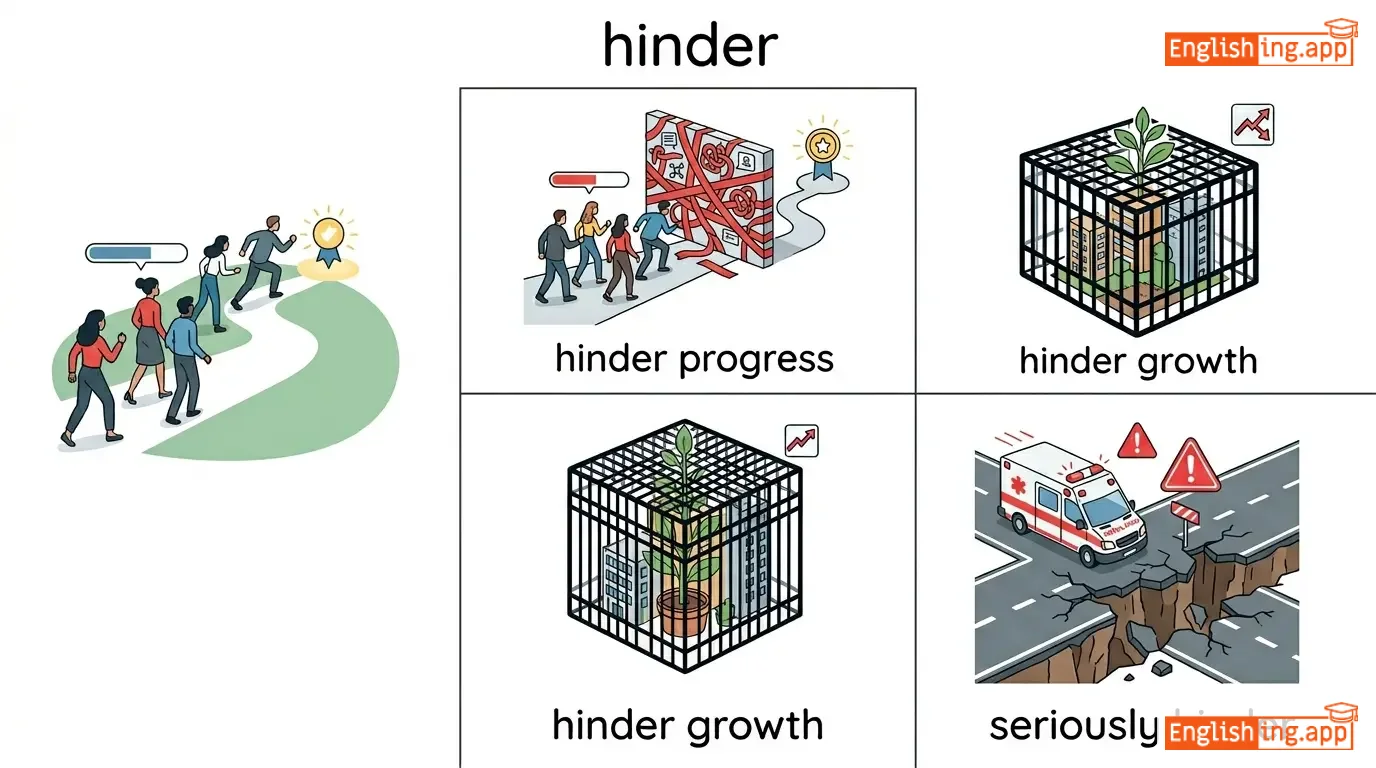
hinder progress
妨碍进展
••••••
|
To slow down or obstruct advancement
••••••
|
妨碍进展
Fang'ai jin zhan
••••••
|
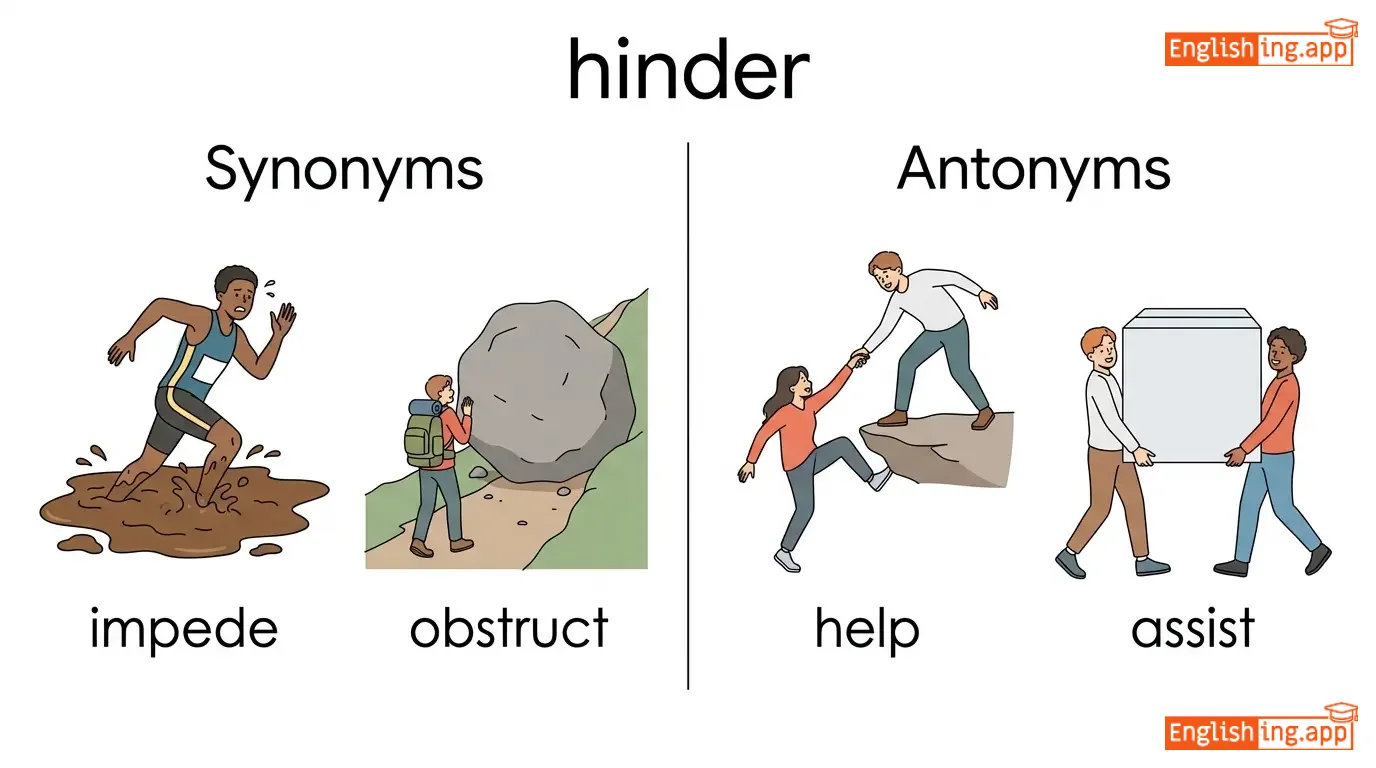
impede, obstruct, delay, hamper, block
••••••
|
help, assist, facilitate
••••••
|
hinder progress, hinder growth, seriously hinder, hinder development
••••••
|
HINDER = 妨碍 (hindering progress)
••••••
|
|
#4118
⛰️
|
/ˈhɪlək/
noun
(希洛克)
••••••
|
- •••••• |
小丘
xiao qiu
••••••
|
- •••••• | - •••••• | - •••••• | - •••••• |
A small hill or mound.
••••••
|
The children climbed up the grassy hillock to watch the sunset. |
孩子们爬上了草地上的小丘去看日落。
Haizimen pa shang le caodi shang de xiao qiu qu kan riluo.
••••••
|
- •••••• | - •••••• | - •••••• |
mound, knoll, rise, hump
••••••
|
valley, plain
••••••
|
grassy hillock, small hillock, rocky hillock, hillock top
••••••
|
HILLOCK → 小丘 → 小山丘
••••••
|
|
#4119
🤣
|
/hɪˈlærɪti/
noun
(希拉里提)
••••••
|
- •••••• |
爆笑
baoxiao
••••••
|
- •••••• | - •••••• | - •••••• | - •••••• |
Extreme amusement, especially when expressed by laughter.
••••••
|
The movie caused great hilarity among the audience. |
这部电影在观众中引起了极大的爆笑。
Zhè bù diànyǐng zài guānzhòng zhōng yǐnqǐle jí dà de bàoxiào.
••••••
|
- •••••• | - •••••• | - •••••• |
laughter, amusement, joy, merriment, glee
••••••
|
sadness, seriousness, gloom
••••••
|
burst of hilarity, hilarity ensued, cause hilarity
••••••
|
HILARITY → 引起笑声的爆笑
••••••
|
|
#4120
😂
|
/hɪˈlɛəriəs/
adjective
(哈利瑞厄斯)
••••••
|
- •••••• |
极其有趣
jiqi youqu
••••••
|
- •••••• | - •••••• | - •••••• | - •••••• |
Extremely funny or amusing.
••••••
|
The comedian told a hilarious story that had everyone laughing. |
那位喜剧演员讲了一个极其有趣的故事,让每个人都笑了。
Na wei xiju yanyuan jiangle yi ge jiqi youqu de gushi, rang meigeren dou xiaole.
••••••
|
- •••••• | - •••••• | - •••••• |
funny, amusing, comical, entertaining, laughable
••••••
|
serious, sad, boring
••••••
|
hilarious joke, hilarious story, hilarious moment, absolutely hilarious
••••••
|
Hilarious = 极 (ji) + 趣 (qu) → 极其有趣
••••••
|
|
#4121
🥾
|
/haɪk/
verb/noun
••••••
|
- •••••• | - •••••• |
hiked
••••••
|
hiked
••••••
|
hikes
••••••
|
hiking
••••••
|
To take a long walk in the countryside or mountains; also to increase suddenly (prices, rates, etc.).
••••••
|
We decided to hike in the hills this weekend. |
- •••••• |
price hike |
A sudden increase in the cost of goods or services.
••••••
|
- •••••• |
walk, trek, climb, increase, raise
••••••
|
decline, drop, fall
••••••
|
go for a hike, hike up, price hike, wage hike
••••••
|
No •••••• |
|
#4122
🗣️
|
/ˌhaɪ ˈfloʊn/
adjective
(hái fū lóng)
••••••
|
- •••••• |
夸张的
kuāzhāng de
••••••
|
- •••••• | - •••••• | - •••••• | - •••••• |
Using fancy or pretentious language; lofty in style but often overblown.
••••••
|
The politician gave a high-flown speech full of promises. |
那位政治家发表了一篇充满承诺的夸张演讲。
Nà wèi zhèngzhìjiā fābiǎo le yī piān chōngmǎn chéngnuò de kuāzhāng yǎnjiǎng.
••••••
|
- •••••• | - •••••• | - •••••• |
pretentious, pompous, grandiose, lofty
••••••
|
simple, modest, plain
••••••
|
high-flown language, high-flown speech, high-flown rhetoric
••••••
|
High意味着高,Flown意味着飞 = 高调而夸张的演讲!
••••••
|
|
#4123
📜
|
/ˌhaɪərəˈɡlɪfɪk/
adjective/noun
(象形文字的)
••••••
|
- •••••• |
象形文字的
xiangxing wenzi de
••••••
|
- •••••• | - •••••• | - •••••• | - •••••• |
Relating to or written in hieroglyphs; symbols or writing that is difficult to understand.
••••••
|
The archaeologists studied the hieroglyphic inscriptions carefully. |
考古学家仔细研究了象形文字铭文。
Kaoguxuejia zixi yanjiu le xiangxing wenzi mingwen.
••••••
|
- •••••• | - •••••• | - •••••• |
symbolic, pictorial, cryptic, mysterious
••••••
|
clear, simple
••••••
|
hieroglyphic writing, hieroglyphic script, hieroglyphic inscription
••••••
|
象形文字指的是一种难以解读的图像文字。
••••••
|
|
#4124
🪶
|
/ˈhaɪərəˌɡlɪf/
noun
(海尔罗格利夫)
••••••
|
- •••••• |
象形文字
xiangxing wenzi
••••••
|
- •••••• | - •••••• | - •••••• | - •••••• |
A picture or symbol used in ancient writing systems, especially Egyptian writing.
••••••
|
The walls of the temple were covered in hieroglyphs. |
寺庙的墙壁上覆盖着象形文字。
Simiào de qiángbì shàng fùgài zhe xiàngxíng wénzì.
••••••
|
- •••••• | - •••••• | - •••••• |
symbol, character, pictograph, ideogram
••••••
|
alphabet, letter
••••••
|
Egyptian hieroglyph, ancient hieroglyph, decipher hieroglyph
••••••
|
Hero + Glyph = 英雄符号 = 象形文字
••••••
|
|
#4125
🏛️
|
/ˈhaɪəˌrɑːrki/
noun
(hǎi ér ěr kī)
••••••
|
- •••••• |
等级制度
deng ji zhi du
••••••
|
- •••••• | - •••••• | - •••••• | - •••••• |
A system in which people or things are arranged in levels of importance or authority.
••••••
|
The corporate hierarchy determines who makes the final decision. |
企业等级制度决定了谁作出最终决定。
Qi ye deng ji zhi du jue ding le shui zuo chu zui zhong jue ding.
••••••
|
social hierarchy |
The ranking of individuals in society based on status, power, or wealth.
••••••
|
社会等级制度
she hui deng ji zhi du
••••••
|
ranking, order, system, structure, chain of command
••••••
|
equality, parity
••••••
|
corporate hierarchy, political hierarchy, social hierarchy, strict hierarchy
••••••
|
等级制度就像金字塔,从底部到顶部排列重要性。
••••••
|
|
#4126
🎨
|
/ˌhɛtərəˈʤiːniəs/
adjective
(hè tè luó jī ní āsī)
••••••
|
- •••••• |
异质的
yì zhì de
••••••
|
- •••••• | - •••••• | - •••••• | - •••••• |
consisting of different kinds or diverse elements
••••••
|
The classroom was filled with a heterogeneous group of students. |
教室里充满了一个异质的学生群体。
Jiàoshì lǐ chōngmǎn le yīgè yì zhì de xuéshēng qúntǐ.
••••••
|
- •••••• | - •••••• | - •••••• |
diverse, mixed, varied, assorted
••••••
|
homogeneous, uniform
••••••
|
heterogeneous population, heterogeneous group, heterogeneous mixture, heterogeneous society
••••••
|
Hetero = 不同 + geneous = 组成 → 由不同种类组成
••••••
|
|
#4127
🏃
|
/haɪ/
verb
(海)
••••••
|
- •••••• |
赶快去
gankuai qu
••••••
|
hied
海德
••••••
|
hied
海德
••••••
|
hies
海斯
••••••
|
hying
海英
••••••
|
to go quickly; hasten
••••••
|
He hied to the station to catch the train.
他海德去车站赶火车。
••••••
|
他赶快去车站赶火车。
Ta gankuai qu chezhan gan huoche.
••••••
|
- •••••• | - •••••• | - •••••• |
hasten, hurry, rush, speed
••••••
|
delay, linger, loiter
••••••
|
hie to, hie away
••••••
|
Hie sounds like 'hai', quickly go
••••••
|
|
#4128
😱
|
/ˈhɪd.i.əs/
adjective
(hídìəs)
••••••
|
- •••••• |
可怕的
kěpà de
••••••
|
- •••••• | - •••••• | - •••••• | - •••••• |
extremely ugly or unpleasant
••••••
|
The crime was so hideous that it shocked the whole town. |
罪行如此可怕,以至于震惊了整个城市。
Zuìxíng rúcǐ kěpà, yǐzhì yú zhènjīng le zhěnggè chéngshì.
••••••
|
- •••••• | - •••••• | - •••••• |
ugly, horrible, monstrous, repulsive, dreadful
••••••
|
beautiful, attractive, pleasant
••••••
|
hideous crime, hideous face, hideous smell
••••••
|
Hideous的意思是可怕的 - 想象‘hide’这个词,考虑它的可怕外观。
••••••
|
|
#4129
🪢
|
/ˈhaɪd.baʊnd/
adjective
••••••
|
- •••••• | - •••••• | - •••••• | - •••••• | - •••••• | - •••••• |
unwilling or unable to change because of tradition or convention
••••••
|
He is too hidebound to accept new ideas. |
- •••••• | - •••••• | - •••••• | - •••••• |
rigid, conservative, narrow-minded, traditional, inflexible
••••••
|
open-minded, flexible, progressive
••••••
|
hidebound attitude, hidebound tradition, hidebound society
••••••
|
No •••••• |
|
#4130
🙈
|
/haɪd/
verb
(hāi dé)
••••••
|
|
隐藏
yǐn cáng
••••••
|
hid
hí dé
••••••
|
hidden
hí dén
••••••
|
hides
hāi dé sī
••••••
|
hiding
hāi dé yīng
••••••
|
to put something or oneself out of sight; to conceal
••••••
|
She tried to hide the letter under the pillow.
她试图把信藏在枕头下。
••••••
|
她试图把信藏在枕头下。
Tā shìtú bǎ xìn cáng zài zhěntóu xià.
••••••
|
hide and seek
捉迷藏
••••••
|
a children's game where one hides and others seek
••••••
|
捉迷藏
zhuō mí cáng
••••••
|
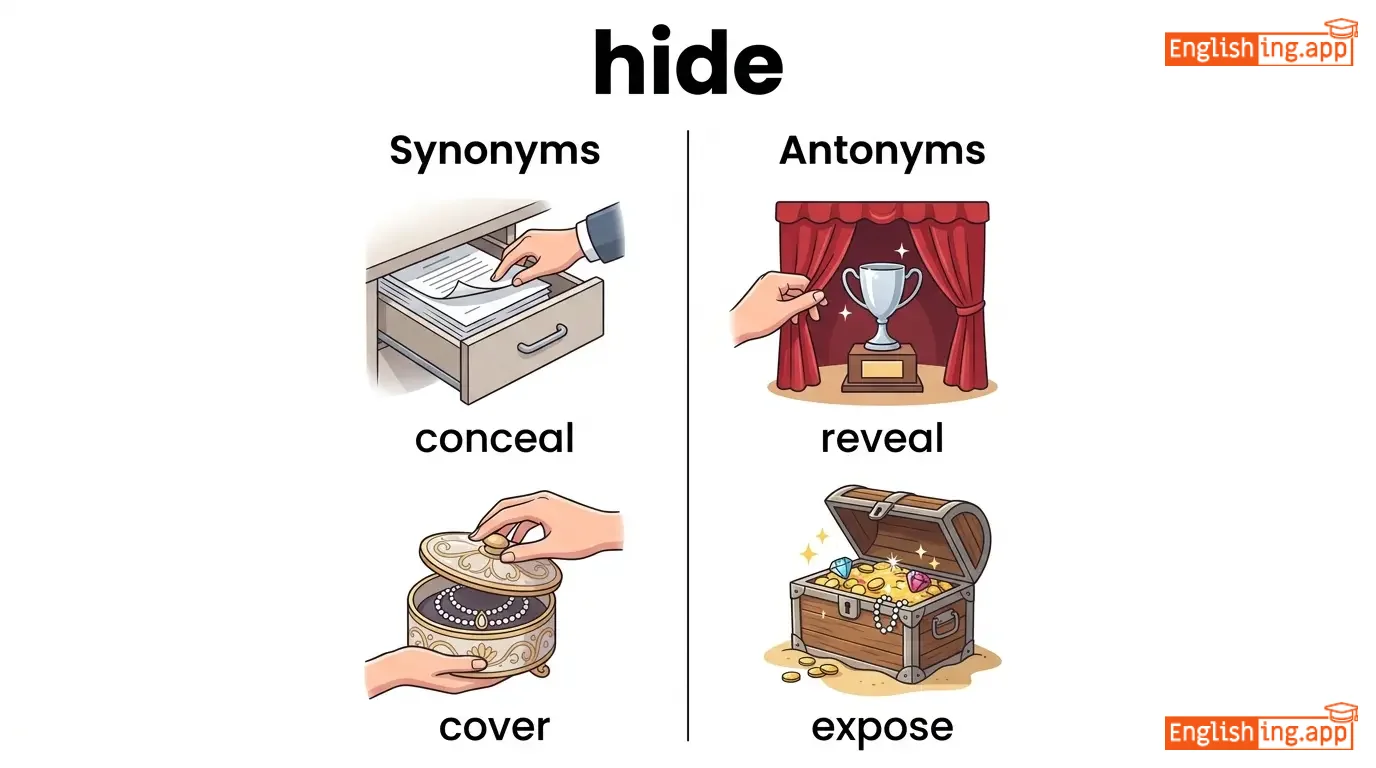
conceal, cover, disguise, veil, secrete
••••••
|
reveal, expose, uncover
••••••
|
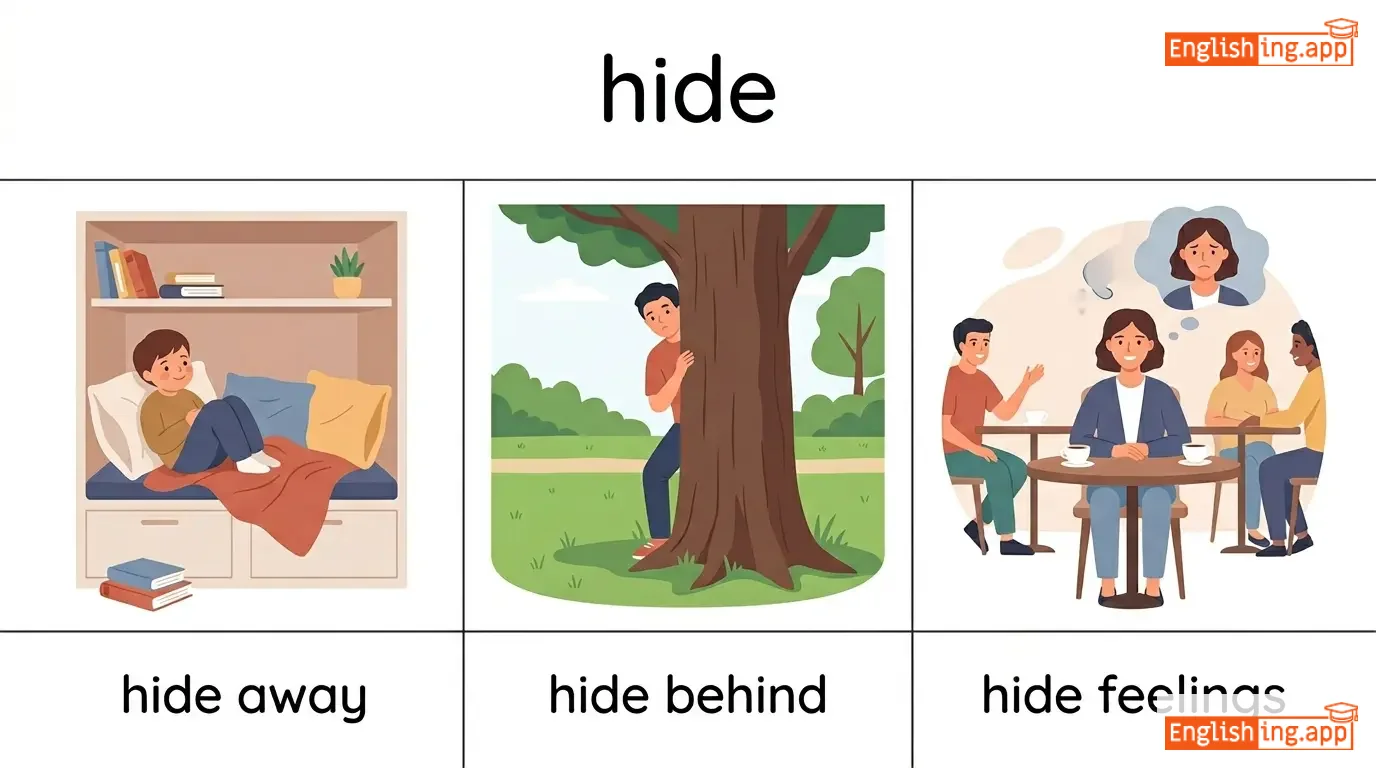
hide away, hide behind, hide feelings, hide from
••••••
|
Hide 代表隐藏,就像 🦊 狐狸藏在洞里
••••••
|
|
#4131
🇮🇪
|
/haɪˈbɜːrniən/
adjective/noun
(海伯尼安)
••••••
|
- •••••• |
爱尔兰的
aierland de
••••••
|
- •••••• | - •••••• | - •••••• | - •••••• |
Relating to Ireland or the Irish.
••••••
|
He enjoyed reading about Hibernian culture and history. |
他喜欢阅读关于爱尔兰文化和历史的书籍。
Ta xihuan yuedu guanyu Aierland wenhua he lishi de shujing.
••••••
|
- •••••• | - •••••• | - •••••• |
Irish, Gaelic, Celtic
••••••
|
non-Irish
••••••
|
Hibernian culture, Hibernian society, Hibernian history
••••••
|
Hibernian 意味着爱尔兰 - 记住 'Hi! Born in Ireland'.
••••••
|
|
#4132
🐻
|
/ˈhaɪbərˌneɪt/
verb
(海皮尼斯)
••••••
|
- •••••• |
冬眠
dongmian
••••••
|
hibernated
海皮尼斯德
••••••
|
hibernated
海皮尼斯德
••••••
|
hibernates
海皮尼斯特斯
••••••
|
hibernating
海皮尼斯廷
••••••
|
To spend the winter in a dormant state, as some animals do.
••••••
|
Bears hibernate in caves during the winter.
熊在冬天在洞穴中冬眠。
••••••
|
熊在冬天在洞穴中冬眠。
Xiong zai dongtian zai dongxue zhong dongmian.
••••••
|
- •••••• | - •••••• | - •••••• |
sleep, rest, slumber, lie dormant
••••••
|
wake, active
••••••
|
hibernate during winter, animals hibernate, hibernate in caves
••••••
|
Hibernate 意味着 'Hi, bear night' – 冬天熊在睡觉。
••••••
|
|
#4133
❄️
|
/haɪˈbɜːrnəl/
adjective
••••••
|
- •••••• | - •••••• | - •••••• | - •••••• | - •••••• | - •••••• |
Relating to or occurring in winter.
••••••
|
The hibernal season is often harsh in the mountains. |
- •••••• | - •••••• | - •••••• | - •••••• |
wintry, frosty, icy, cold
••••••
|
summer, warm
••••••
|
hibernal cold, hibernal season, hibernal landscape
••••••
|
No •••••• |
|
#4134
⏸️
|
/haɪˈeɪtəs/
noun
(hǎi'ěitèsī)
••••••
|
- •••••• |
间歇
jianxie
••••••
|
- •••••• | - •••••• | - •••••• | - •••••• |
A pause or break in continuity of a process or activity.
••••••
|
The show returned after a long hiatus. |
节目在长时间的间歇后重新开始。
Jiémù zài cháng shíjiān de jiànxiē hòu chóngxīn kāishǐ.
••••••
|
- •••••• | - •••••• | - •••••• |
break, pause, gap, interruption, intermission
••••••
|
continuation, flow
••••••
|
long hiatus, brief hiatus, hiatus from work
••••••
|
Hiatus 就像是某事物的短暂停顿。
••••••
|
|
#4135
🌟
|
/ˈheɪˌdeɪ/
noun
(海皮尼斯)
••••••
|
- •••••• |
黄金时期
huángjīn shíqī
••••••
|
- •••••• | - •••••• | - •••••• | - •••••• |
The period of greatest success, popularity, or power.
••••••
|
In its heyday, the company dominated the market.
在全盛时期,公司主导了市场。
••••••
|
在黄金时期,公司主导了市场。
Zai huangjin shiqi, gongsi zhudao le shichang.
••••••
|
in one's heyday
在某人的全盛时期
••••••
|
At the peak of someone's success or popularity.
••••••
|
在某人的黄金时期
Zai mǒu rén de huángjīn shíqī
••••••
|
prime, peak, zenith, golden age, height
••••••
|
decline, downfall, nadir
••••••
|
in its heyday, the heyday of, during the heyday
••••••
|
Hey! Day 类似于黄金时期,正是辉煌的时刻。
••••••
|
|
#4136
🐜
|
/ˈhɛksəˌpɒd/
noun
(hèxīngmó)
••••••
|
- •••••• |
六足动物
liù zú dòng wù
••••••
|
- •••••• | - •••••• | - •••••• | - •••••• |
An insect or other organism with six legs.
••••••
|
The scientist observed a hexapod crawling on the leaf.
科学家观察到一个六足动物在叶子上爬行。
••••••
|
科学家观察到一个六足动物在叶子上爬行。
Kēxuéjiā guānchá dào yīgè liù zú dòng wù zài yèzi shàng páxíng.
••••••
|
- •••••• | - •••••• | - •••••• |
insect, arthropod, bug
••••••
|
quadruped, biped
••••••
|
hexapod species, hexapod structure, hexapod insect
••••••
|
Hexa 意味着 6,Pod 意味着腿,所以六足动物是六条腿的生物。
••••••
|
|
#4137
🔷
|
/hɛkˈsæŋɡjələr/
adjective
(hèxiànggǔlè)
••••••
|
- •••••• |
六角形的
liùjiǎoxíng de
••••••
|
- •••••• | - •••••• | - •••••• | - •••••• |
Having six angles or corners.
••••••
|
The artist designed a hexangular frame for the mirror. |
艺术家为镜子设计了一个六角形的框架。
Yìshùjiā wèi jìngzi shèjì le yīgè liùjiǎoxíng de kuàngjià.
••••••
|
- •••••• | - •••••• | - •••••• |
six-angled, hexagonal, six-cornered
••••••
|
round, triangular
••••••
|
hexangular frame, hexangular structure, hexangular design
••••••
|
Hex + angular = 6个角, 所以hexangular意味着六角形的。
••••••
|
|
#4138
⬡
|
/ˈhɛksəˌɡɒn/
noun
(hèxīgān)
••••••
|
- •••••• |
六边形
liùbiānxíng
••••••
|
- •••••• | - •••••• | - •••••• | - •••••• |
A six-sided polygon.
••••••
|
A honeycomb cell is shaped like a hexagon. |
蜂巢的单元是六边形的。
fēngcháo de dānyuán shì liùbiānxíng de.
••••••
|
- •••••• | - •••••• | - •••••• |
six-sided shape, polygon, figure
••••••
|
circle, triangle
••••••
|
regular hexagon, hexagon shape, hexagon pattern
••••••
|
Hex 代表6,所以六边形 = 六个边。
••••••
|
|
#4139
🪓
|
/hjuː/
verb
(休)
••••••
|
- •••••• |
砍
kan
••••••
|
hewed
休德
••••••
|
hewn
休恩
••••••
|
hews
休斯
••••••
|
hewing
休英
••••••
|
To chop or cut something, especially wood or stone, with a tool.
••••••
|
The workers hewed logs to build the cabin.
工人们用斧头砍伐木材建造小屋。
••••••
|
工人们砍伐木材建造小屋。
Gongrenmen kanfa mucai jianzao xiaowu.
••••••
|
hew to the line
hew to the line
••••••
|
To adhere strictly to rules, standards, or a course of action.
••••••
|
遵循规则
zunxun guize
••••••
|
chop, cut, carve, hack, cleave
••••••
|
assemble, join, attach
••••••
|
hew wood, hew stone, hew to tradition, hew to the line
••••••
|
Hew意味着砍伐 - 想象一个人正在砍木材。
••••••
|
|
#4140
🦋
|
/ˌhɛtərəʊˈmɔːrfɪk/
adjective
(赫特罗摩菲克)
••••••
|
- •••••• |
异形的
yìxíng de
••••••
|
- •••••• | - •••••• | - •••••• | - •••••• |
Having different forms or shapes, especially in the same species or organism.
••••••
|
Butterflies are heteromorphic during their life cycle, changing forms from larva to adult. |
蝴蝶在它们的生命周期中是异形的,从幼虫到成虫改变形态。
Húdié zài tāmen de shēngmìng zhōuqī zhōng shì yìxíng de, cóng yòuchóng dào chéngchóng gǎibiàn xíngtài.
••••••
|
- •••••• | - •••••• | - •••••• |
diverse, varied, polymorphic, multiform, different
••••••
|
uniform, identical, monomorphic
••••••
|
heteromorphic stages, heteromorphic species, heteromorphic structure
••••••
|
Hetero表示不同,Morphic表示形态,因此heteromorphic意味着不同形态。
••••••
|
Vocabulary Quiz
Test your vocabulary by matching words with their translations or meanings.
Login to take the quiz
Comments (0)
Share your thoughts and join the discussion.
Join the discussion by logging in
Login to CommentNo comments yet
Be the first to share your thoughts!