



Swipe left or right, or use the buttons. Tap image to zoom.
例句翻译
单词
Lesson 40Lesson 40 - 遮罩切换
|
表情符号
|
单词 | Images | 翻译 | 过去时 | 过去分词 | 第三人称单数 | 动名词 | 含义 | 例句 | 例句翻译 | 示例表达 | 示例表达含义 | 示例表达翻译 | 同义词 | 反义词 | 搭配词 | 助记符 |
|---|---|---|---|---|---|---|---|---|---|---|---|---|---|---|---|---|---|
|
#1171
👩🦰
|
/ˈbʌksəm/
adjective
(baksom)
••••••
|
- •••••• |
丰满且迷人的女性
fengman qie miren de nuxing
••••••
|
- •••••• | - •••••• | - •••••• | - •••••• |
Plump, with a full figure and often large-breasted, especially used to describe women.
••••••
|
The actress was described as a cheerful and buxom woman. |
这位女演员被描述为一个快乐且丰满的女性。
Zhe wei nüyǎnyuán bèi miáoshù wéi yīgè kuàilè qiě fengmǎn de nǚxìng.
••••••
|
- •••••• | - •••••• | - •••••• |
voluptuous, curvy, full-figured, shapely, well-endowed
••••••
|
slender, thin, skinny
••••••
|
buxom lady, buxom figure, buxom appearance, buxom beauty
••••••
|
Buxom 意味着丰满且胸部较大的女性
••••••
|
|
#1172
🎹
|
/kəˈdɛnzə/
noun
(卡登扎)
••••••
|
- •••••• |
精心准备的独奏段落
jīngxīn zhǔnbèi de dúzòu duànluò
••••••
|
- •••••• | - •••••• | - •••••• | - •••••• |
An elaborate solo passage in a piece of music, usually near the end.
••••••
|
The pianist performed a brilliant cadenza before the final movement. |
钢琴家在最后一个乐章之前演奏了一段精彩的卡登扎。
Gāngqín jiā zài zuìhòu yīgè yuèzhāng zhīqián yǎnzòule yī duàn jīngcǎi de kǎdēngzhā.
••••••
|
- •••••• | - •••••• | - •••••• |
solo, flourish, passage, improvisation
••••••
|
silence, pause
••••••
|
piano cadenza, violin cadenza, orchestral cadenza, brilliant cadenza
••••••
|
Cadenza 就像 '卡登扎',在音乐中表示精彩的独奏
••••••
|
|
#1173
🎵
|
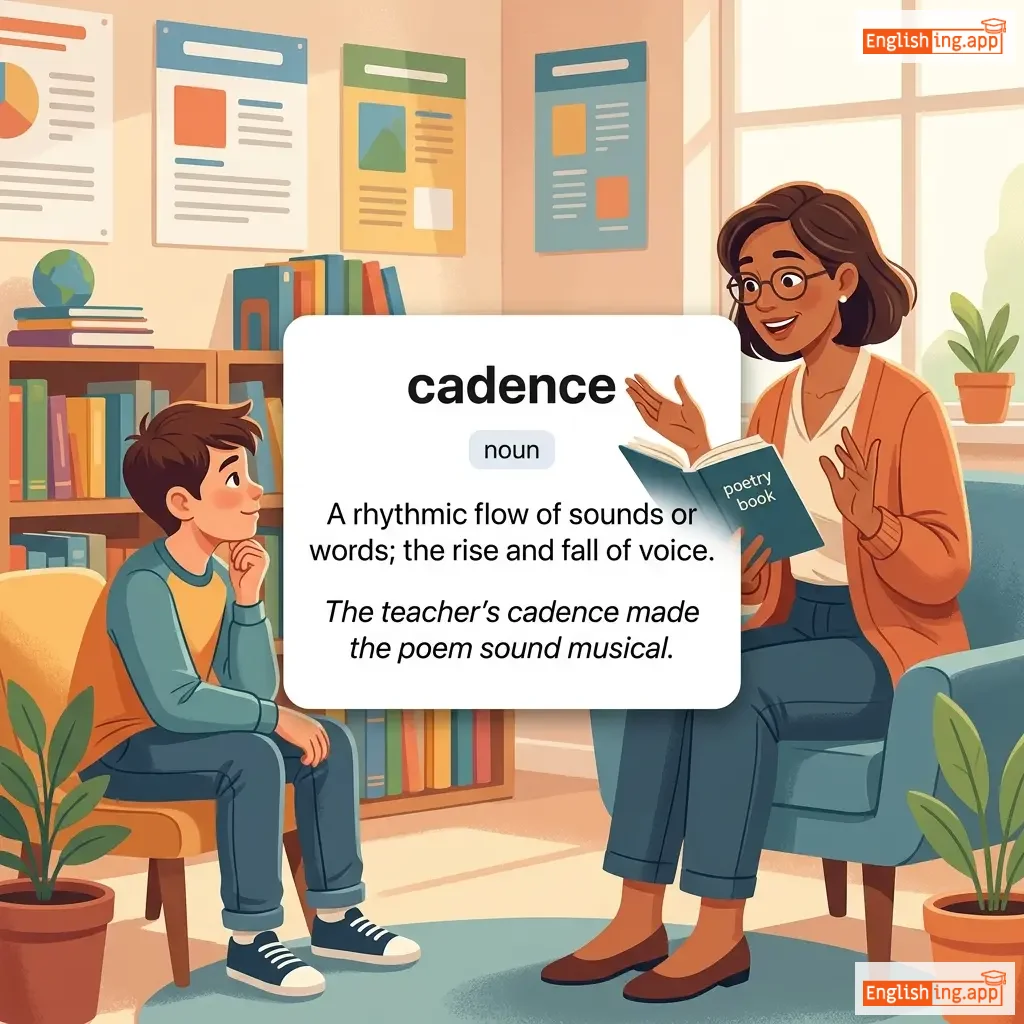
/ˈkeɪdəns/
noun
••••••
|
|
- •••••• | - •••••• | - •••••• | - •••••• | - •••••• |
A rhythmic flow of sounds or words; the rise and fall of voice.
••••••
|
The teacher's cadence made the poem sound musical. |
- •••••• |
fall into cadence |
to follow a rhythmic pattern or flow
••••••
|
- •••••• |
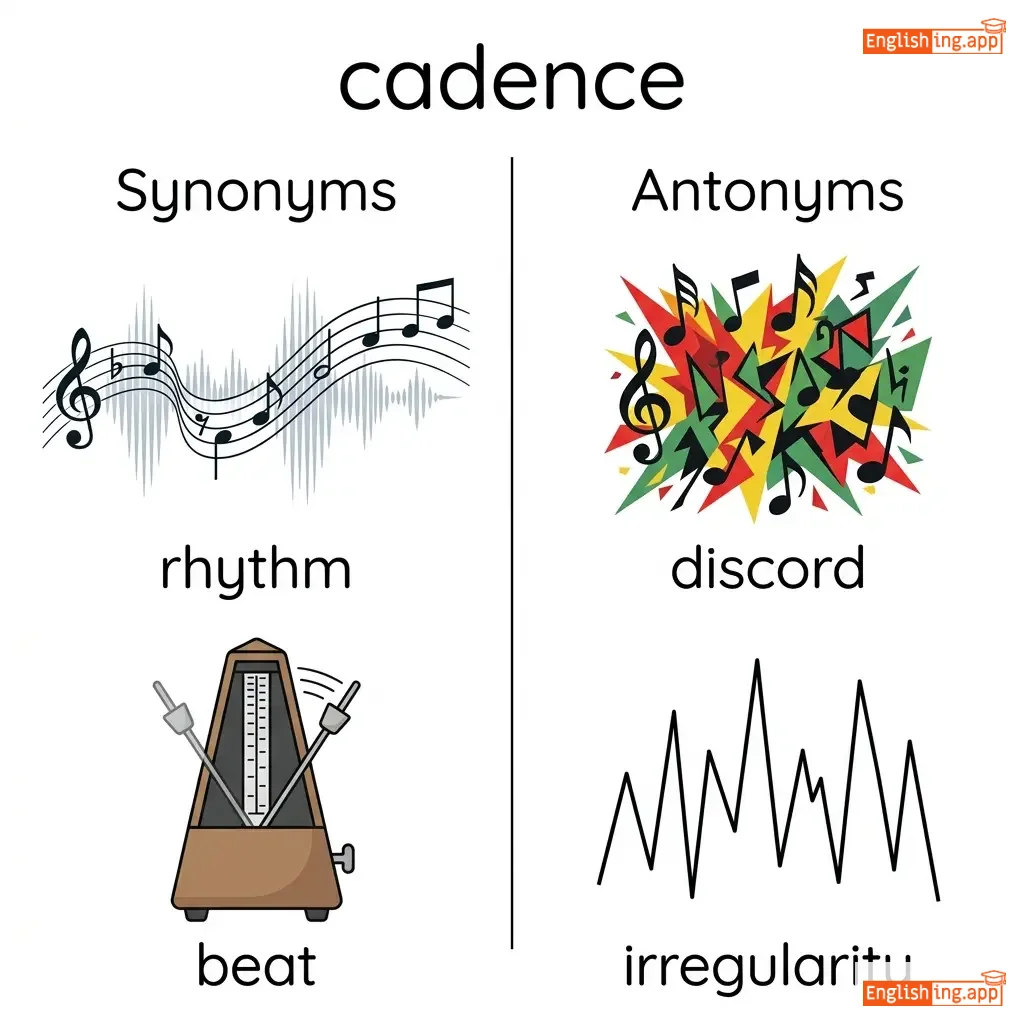
rhythm, beat, tempo, flow
••••••
|
discord, irregularity
••••••
|
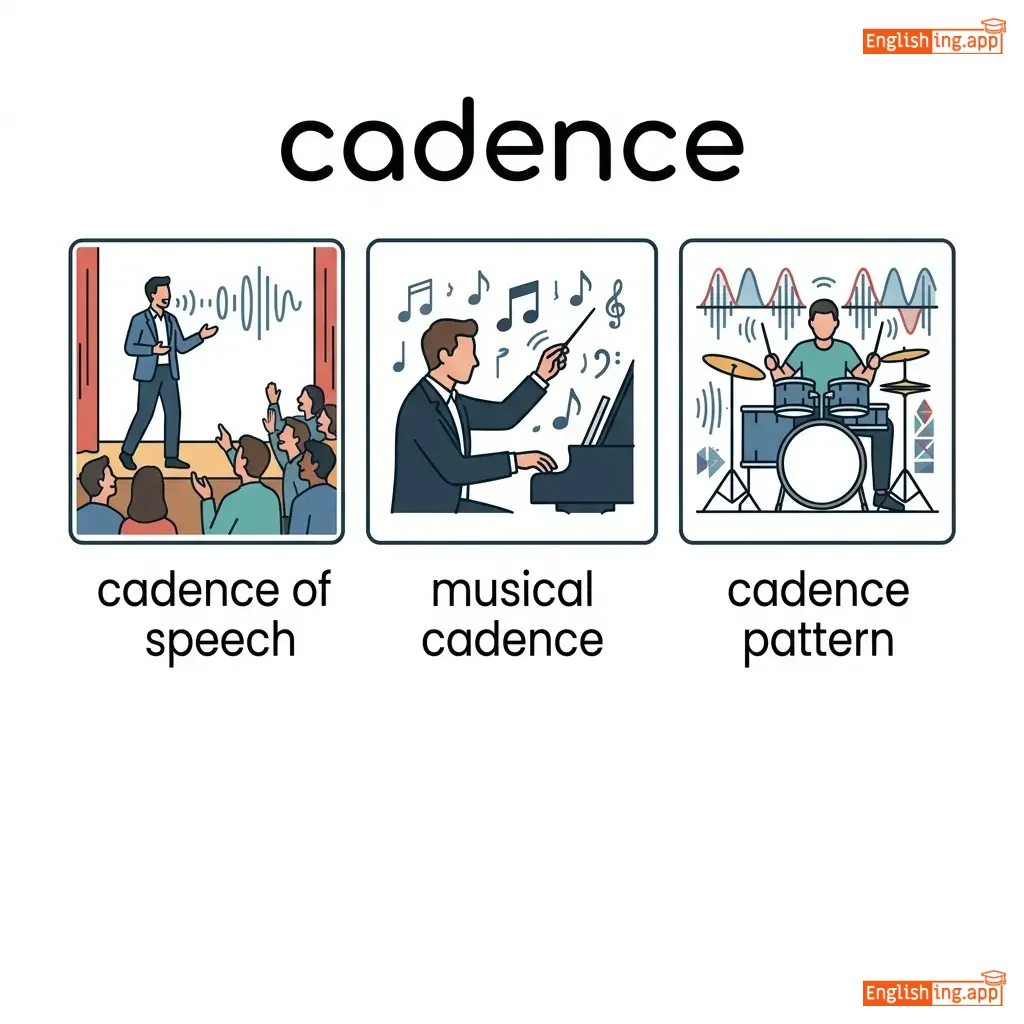
cadence of speech, musical cadence, cadence pattern, fall into cadence
••••••
|
No •••••• |
|
#1174
💀
|
/kəˈdævərəs/
adjective
(凯达维罗斯)
••••••
|
- •••••• |
尸体般的
shītǐ bān de
••••••
|
- •••••• | - •••••• | - •••••• | - •••••• |
Resembling a corpse; very pale, thin, or bony.
••••••
|
His cadaverous appearance shocked everyone at the party. |
他那尸体般的外貌让聚会中的每个人都感到震惊。
Tā nà shītǐ bān de wàimào ràng jùhuì zhōng de měi gèrén dōu gǎndào zhènjīng.
••••••
|
- •••••• | - •••••• | - •••••• |
ghastly, emaciated, deathlike, skeletal
••••••
|
healthy, lively, robust
••••••
|
cadaverous look, cadaverous face, cadaverous body, cadaverous figure
••••••
|
Cadaverous就像尸体 – 尸体般的
••••••
|
|
#1175
⚰️
|
/kəˈdævər/
noun
(尸体)
••••••
|
- •••••• |
尸体
shīti
••••••
|
- •••••• | - •••••• | - •••••• | - •••••• |
A dead human body, especially one used for medical study.
••••••
|
Medical students dissected the cadaver to learn about human anatomy. |
医学生解剖了尸体以了解人体解剖学。
Yīxuéshēng jiěpōu le shīti yǐ liǎojiě réntǐ jiěpōu xué.
••••••
|
- •••••• | - •••••• | - •••••• |
corpse, body, remains, carcass
••••••
|
living body, person
••••••
|
cadaver dissection, medical cadaver, cadaver study, preserved cadaver
••••••
|
尸体就像 '尸' 是死亡,'体' 是身体。
••••••
|
|
#1176
🎶
|
/kəˈkɒfəni/
noun
(卡科丰尼)
••••••
|
- •••••• |
刺耳的噪音
cì ěr de zàoyīn
••••••
|
- •••••• | - •••••• | - •••••• | - •••••• |
A harsh, discordant mixture of sounds.
••••••
|
The cacophony of horns made it impossible to concentrate. |
喇叭的刺耳声音使人无法集中注意力。
Lǎbā de cì ěr shēngyīn shǐ rén wúfǎ jízhōng zhùyì lì.
••••••
|
- •••••• | - •••••• | - •••••• |
discord, noise, racket, din, clamor
••••••
|
harmony, melody, silence
••••••
|
loud cacophony, urban cacophony, cacophony of voices, deafening cacophony
••••••
|
想象一下卡科丰尼(cacophony),到处是刺耳的噪音!
••••••
|
|
#1177
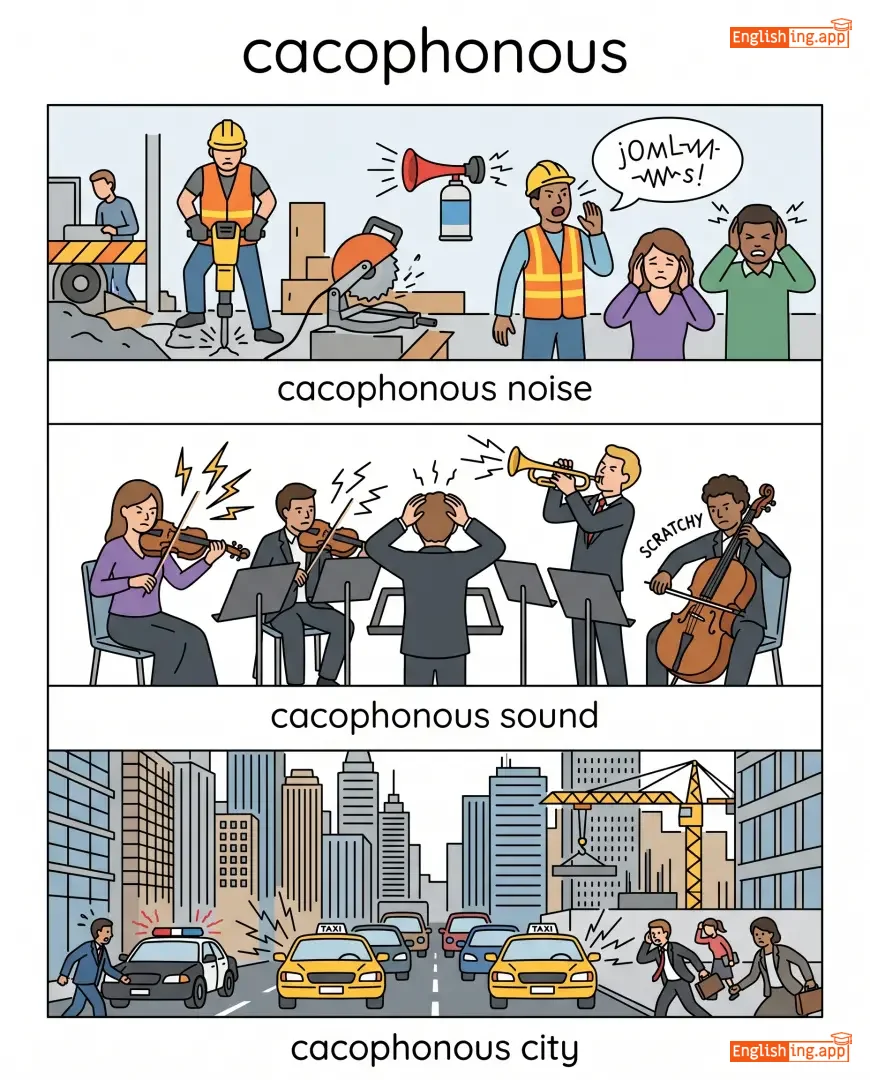
🔊
|
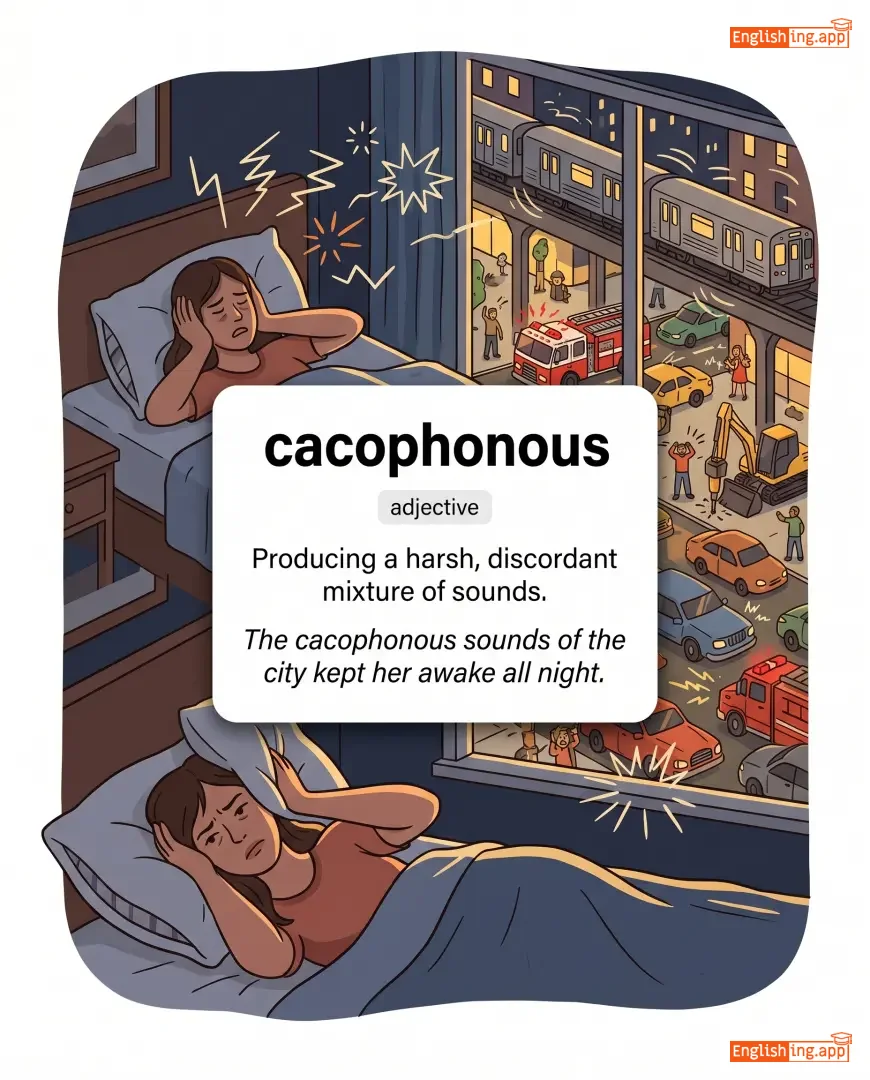
/kəˈkɒfənəs/
adjective
(卡可福尼亚)
••••••
|
|
刺耳的声音
cì ěr de shēng yīn
••••••
|
- •••••• | - •••••• | - •••••• | - •••••• |
Producing a harsh, discordant mixture of sounds.
••••••
|
The cacophonous sounds of the city kept her awake all night.
城市的卡可福尼亚声音让她整晚都无法入睡。
••••••
|
城市的刺耳声音让她整晚都无法入睡。
Chéngshì de cì ěr shēngyīn ràng tā zhěng wǎn dōu wúfǎ rùshuì.
••••••
|
- •••••• | - •••••• | - •••••• |
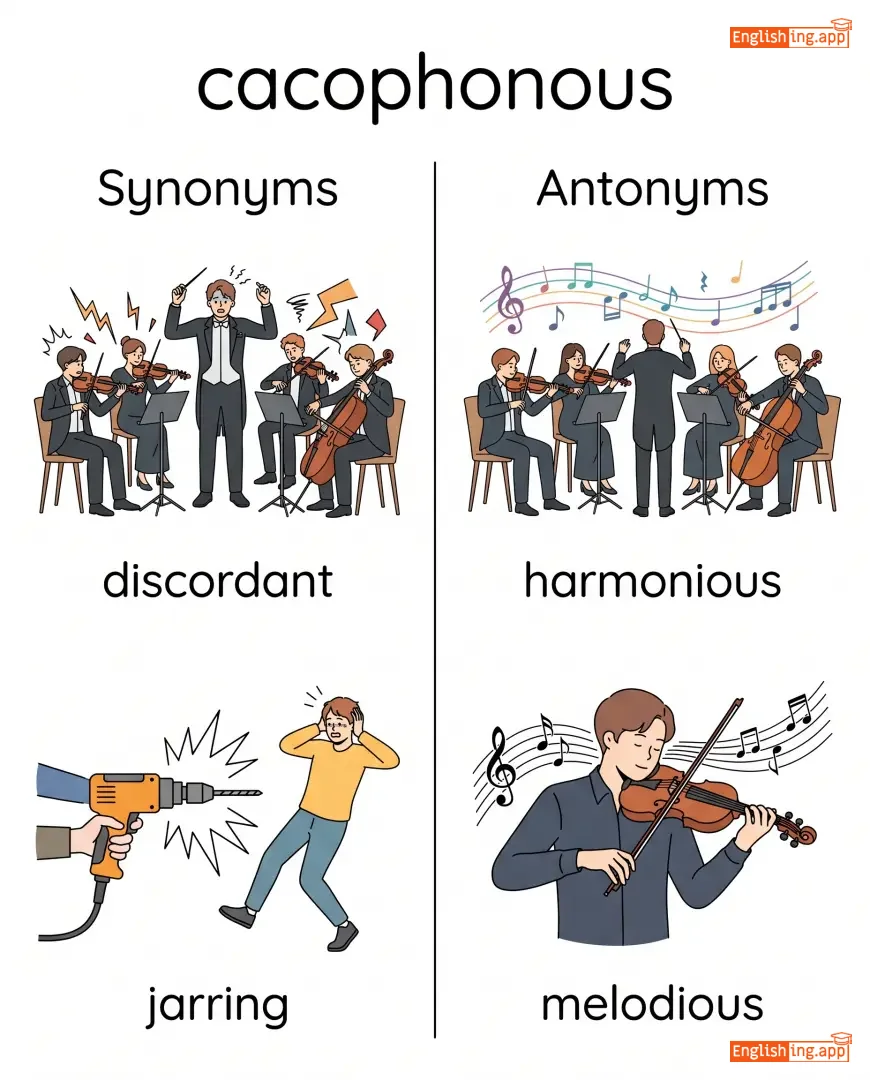
discordant, jarring, noisy, dissonant, harsh
••••••
|
harmonious, melodious, pleasant
••••••
|
cacophonous noise, cacophonous sound, cacophonous city, cacophonous music
••••••
|
像打电话时的杂音一样 → cacophonous
••••••
|
|
#1178
📦
|
/kæʃ/
noun
(缓存)
••••••
|
- •••••• |
缓存
huancun
••••••
|
- •••••• | - •••••• | - •••••• | - •••••• |
A hidden storage of items or a high-speed memory in computing.
••••••
|
The hikers found a cache of supplies hidden under the rocks. |
远足者在岩石下发现了一个隐藏的物资存储。
Yuan zu zhe zai yan shi xia fa xian le yi ge yin cang de wu zi cun chu.
••••••
|
clear the cache |
Delete stored temporary files in computing.
••••••
|
清除缓存
qing chu huan cun
••••••
|
store, hoard, reserve, repository
••••••
|
scarcity, exposure
••••••
|
cache memory, secret cache, clear cache, cache of weapons
••••••
|
Cache 就像是一个存放东西的地方,藏着一些东西。
••••••
|
|
#1179
🗄️
|
/ˈkæbənɪt/
noun
(内阁)
••••••
|
- •••••• |
内阁 / 橱柜
nèi gé / chú guì
••••••
|
- •••••• | - •••••• | - •••••• | - •••••• |
A group of senior government ministers; or a cupboard with shelves or drawers.
••••••
|
The prime minister reshuffled the cabinet last month. |
总理上个月重新调整了内阁。
Zǒnglǐ shàng gè yuè chóngxīn tiáozhěngle nèi gé.
••••••
|
cabinet reshuffle |
A reorganization of government ministers.
••••••
|
内阁重组
nèi gé chóng zǔ
••••••
|
council, ministry, cupboard, committee
••••••
|
individual, disorganization
••••••
|
kitchen cabinet, cabinet meeting, cabinet reshuffle, medicine cabinet
••••••
|
Cab + net → 内阁是政府的核心
••••••
|
|
#1180
📜
|
/ˈkæbəˌlɪzəm/
noun
(卡巴利主义)
••••••
|
- •••••• |
卡巴利主义
kabalizhuyi
••••••
|
- •••••• | - •••••• | - •••••• | - •••••• |
The doctrines, practices, or secretive dealings of a cabal.
••••••
|
The historian wrote extensively about cabalism in the royal court.
历史学家在王室宫廷中广泛写作关于卡巴利主义的内容。
••••••
|
历史学家在王室宫廷中广泛写作关于卡巴利主义的内容。
Lishixuejia zai wangshi gongting zhong guangfan xiezuo guanyu kabalizhuyi de neirong.
••••••
|
- •••••• | - •••••• | - •••••• |
secrecy, intrigue, conspiracy, mysticism
••••••
|
clarity, openness
••••••
|
political cabalism, religious cabalism, practice of cabalism
••••••
|
卡巴利 + 主义 = 卡巴利主义,意味着一群人或秘密事务的教义
••••••
|
|
#1181
🕵️♂️
|
/kəˈbæl/
noun
(卡巴尔)
••••••
|
- •••••• |
阴谋集团
yinmou jituan
••••••
|
- •••••• | - •••••• | - •••••• | - •••••• |
A secret group or faction engaged in plotting or intrigue.
••••••
|
A small cabal was working behind the scenes to influence the election. |
一个小的阴谋集团正在幕后工作,试图影响选举。
Yi ge xiao de yinmou jituan zhengzai muhoushi gongzuo, shitul yingxiang xuanshu.
••••••
|
cabal of power |
A secretive group wielding influence.
••••••
|
权力阴谋集团
quanli yinmou jituan
••••••
|
conspiracy, faction, clique, plot, scheme
••••••
|
openness, transparency, honesty
••••••
|
secret cabal, political cabal, powerful cabal, cabal of leaders
••••••
|
阴谋集团代表暗地里的权力,卡巴尔正是如此。
••••••
|
|
#1182
🏛️
|
/ˈbɪz.ən.taɪn/ or /ˈbaɪ.zənˌtiːn/
adjective
(bai-zen-tin)
••••••
|
- •••••• |
复杂
fuza
••••••
|
- •••••• | - •••••• | - •••••• | - •••••• |
Extremely complicated and detailed; relating to the Byzantine Empire or its style.
••••••
|
The new tax regulations are so byzantine that few understand them. |
新的税收规定非常复杂,很少有人能理解。
Xinde shuishou guiding feichang fuzha, hen shao you ren neng lijie.
••••••
|
- •••••• | - •••••• | - •••••• |
complex, intricate, convoluted, elaborate, tangled
••••••
|
simple, straightforward, clear
••••••
|
byzantine system, byzantine rules, byzantine structure, byzantine bureaucracy
••••••
|
Byzantine意味着 Bizzy + Time, 复杂到几乎没人能理解
••••••
|
|
#1183
📝
|
/ˈbaɪ.laɪn/
noun
(báiláiēn)
••••••
|
- •••••• |
作者姓名行
zuòzhě xìngmíng háng
••••••
|
- •••••• | - •••••• | - •••••• | - •••••• |
A line in a newspaper or magazine article that names the writer.
••••••
|
Her byline appeared on the front page of the newspaper. |
她的名字出现在报纸的头版。
Tā de míngzì chūxiàn zài bàozhǐ de tóubǎn.
••••••
|
- •••••• | - •••••• | - •••••• |
credit line, author line, writer's name, signature
••••••
|
anonymous, unsigned
••••••
|
newspaper byline, front-page byline, byline story, receive a byline
••••••
|
Byline 就是作者的那一行 - 作者姓名行
••••••
|
|
#1184
⏳
|
/ˈbaɪ.ɡɒn/
noun/adjective
(baigon)
••••••
|
- •••••• |
过去的
guoqu de
••••••
|
- •••••• | - •••••• | - •••••• | - •••••• |
Something belonging to an earlier time; past and no longer existing.
••••••
|
He often talks about the traditions of bygone days.
他经常谈论过去时代的传统。
••••••
|
他经常谈论过去时代的传统。
Tā jīngcháng tánlùn guòqù shídài de chuántǒng.
••••••
|
let bygones be bygones
让过去的事过去
••••••
|
to forget past offenses and move forward
••••••
|
让过去的事过去
Ràng guòqù de shì guòqù
••••••
|
past, former, old, previous, obsolete
••••••
|
present, current, modern
••••••
|
bygone era, bygone days, bygone traditions, let bygones be bygones
••••••
|
Bygone = Bye gone - 过去的事已过去
••••••
|
|
#1185
📜
|
/ˈbaɪ.lɔː/
noun
(bài-luō)
••••••
|
- •••••• |
地方性法规
dìfāngxìng fǎguī
••••••
|
- •••••• | - •••••• | - •••••• | - •••••• |
A rule made by a company, organization, or local authority to control the actions of its members.
••••••
|
The city council passed a new by-law regulating street vendors.
市议会通过了一项新的地方法规,规范街头小贩。
••••••
|
市议会通过了一项新的地方法规,规范街头小贩。
Shì yìhuì tōngguòle yī xiàng xīn de dìfāng fǎguī, guīfàn jiētóu xiǎofàn.
••••••
|
- •••••• | - •••••• | - •••••• |
regulation, ordinance, rule, statute, policy
••••••
|
lawlessness, anarchy
••••••
|
municipal by-law, company by-law, by-law enforcement, pass a by-law
••••••
|
By-law 是由当地政府制定的法规,管理本地行为。
••••••
|
|
#1186
🏢
|
/ˈbjʊəroʊ/
noun
(bùluò)
••••••
|
- •••••• |
办事处/机构
banshichu/jigou
••••••
|
- •••••• | - •••••• | - •••••• | - •••••• |
An office or agency that provides services or manages specific duties.
••••••
|
The travel bureau helped them plan their vacation.
旅游局帮助他们规划假期。
••••••
|
旅游局帮助他们规划假期。
Luyou ju bangzhu tamen guihua jiaqi.
••••••
|
bureau of statistics
统计局
••••••
|
An agency that collects and publishes statistical information.
••••••
|
统计局
Tongji ju
••••••
|
office, agency, department, authority, service
••••••
|
individual, freelancer
••••••
|
federal bureau, bureau chief, travel bureau, bureau of investigation
••••••
|
Bureau 代表办事处或机构,像一个工作和管理的地方。
••••••
|
|
#1187
🏰
|
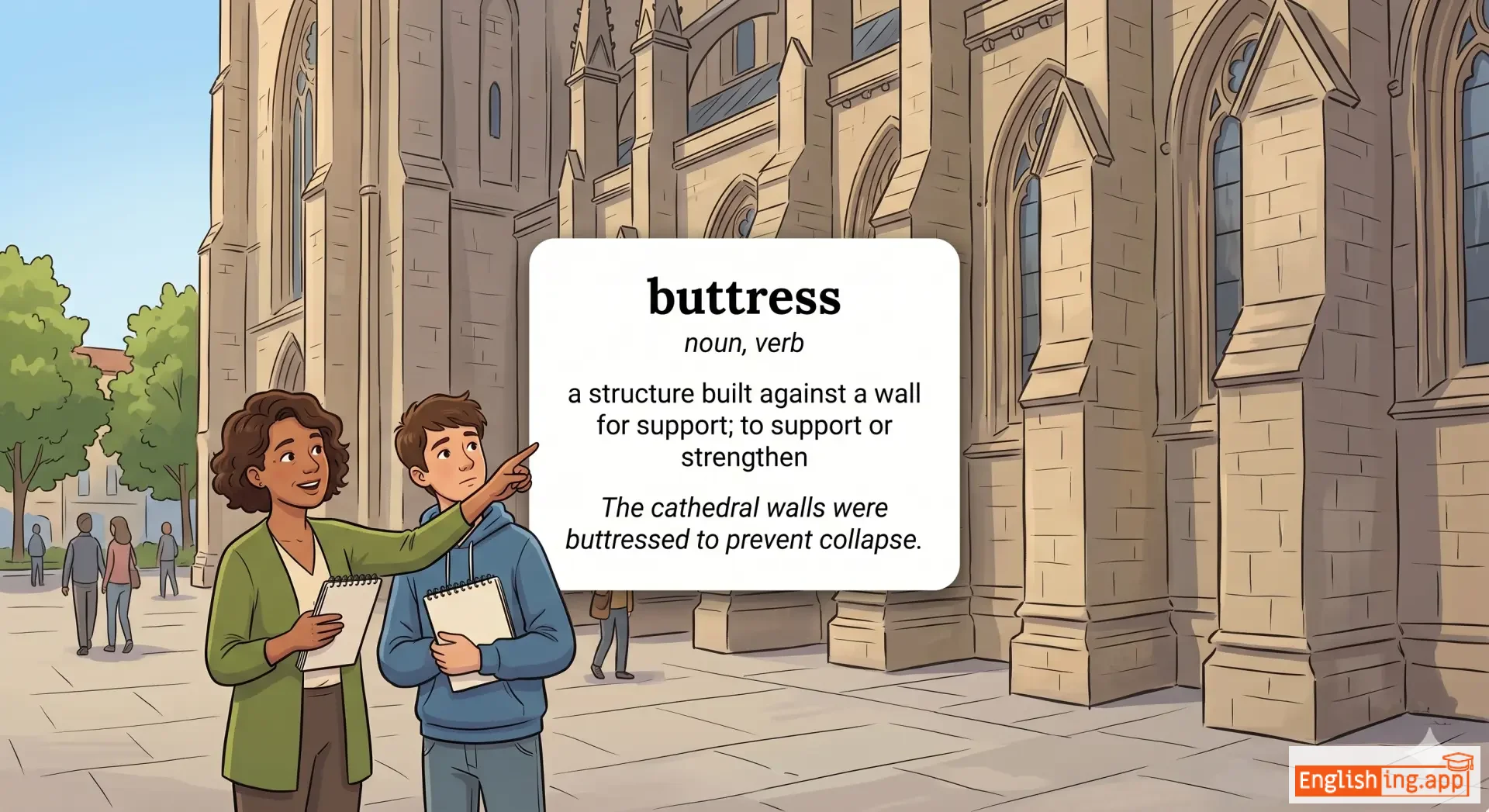
/ˈbʌtrəs/
noun, verb
(巴特雷斯)
••••••
|
|
扶壁,支撑
fú bì, zhīchēng
••••••
|
buttressed
巴特雷斯德
••••••
|
buttressed
巴特雷斯德
••••••
|
buttresses
巴特雷塞斯
••••••
|
buttressing
巴特雷辛
••••••
|
a structure built against a wall for support; to support or strengthen
••••••
|
The cathedral walls were buttressed to prevent collapse.
大教堂的墙壁被支撑以防止倒塌。
••••••
|
大教堂的墙壁被支撑以防止倒塌。
Dà jiàotáng de qiángbì bèi zhīchēng yǐ fángzhǐ dǎotā.
••••••
|
- •••••• | - •••••• | - •••••• |
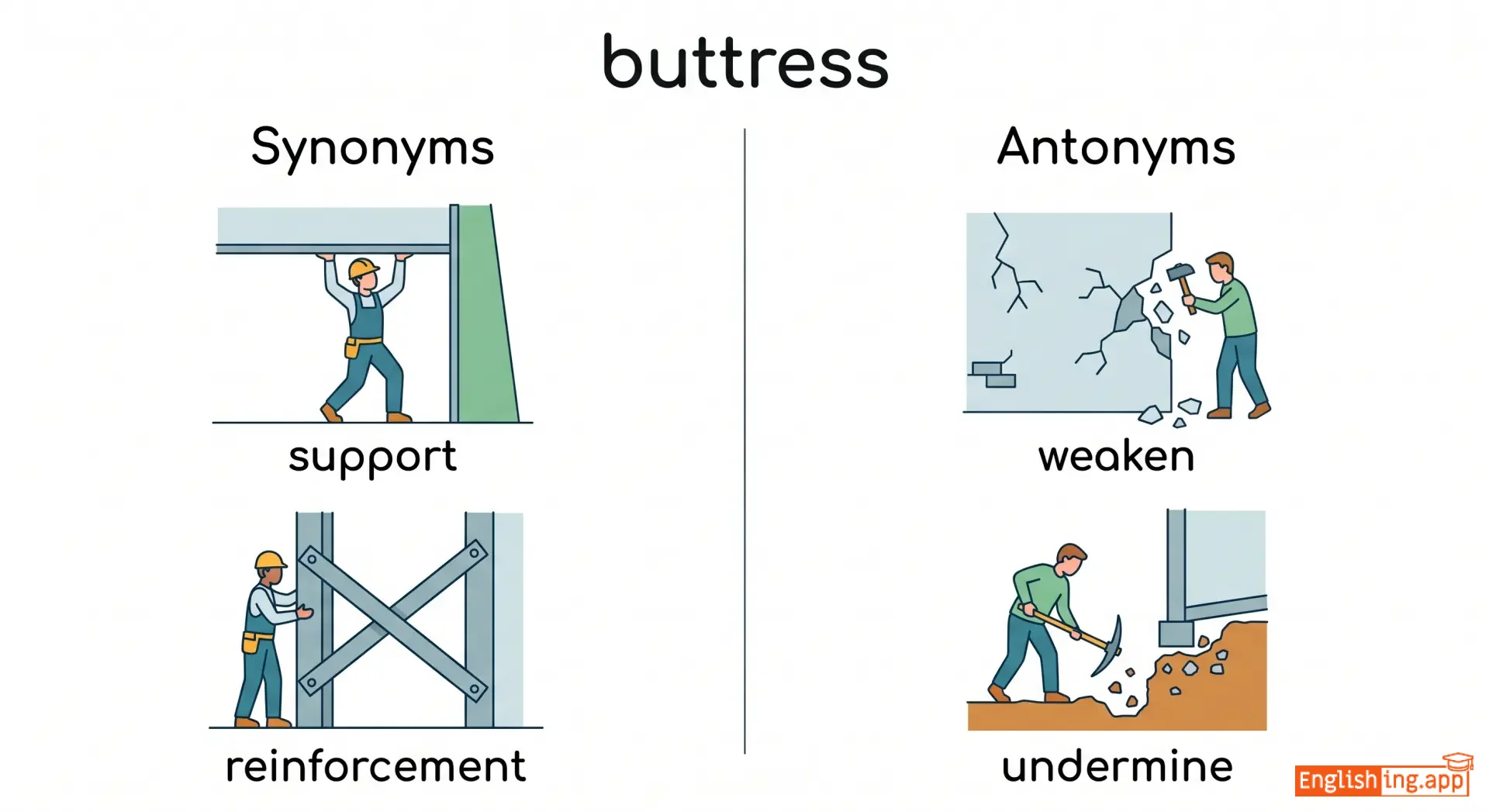
support, reinforcement, prop, bolster, strengthen
••••••
|
weaken, undermine
••••••
|
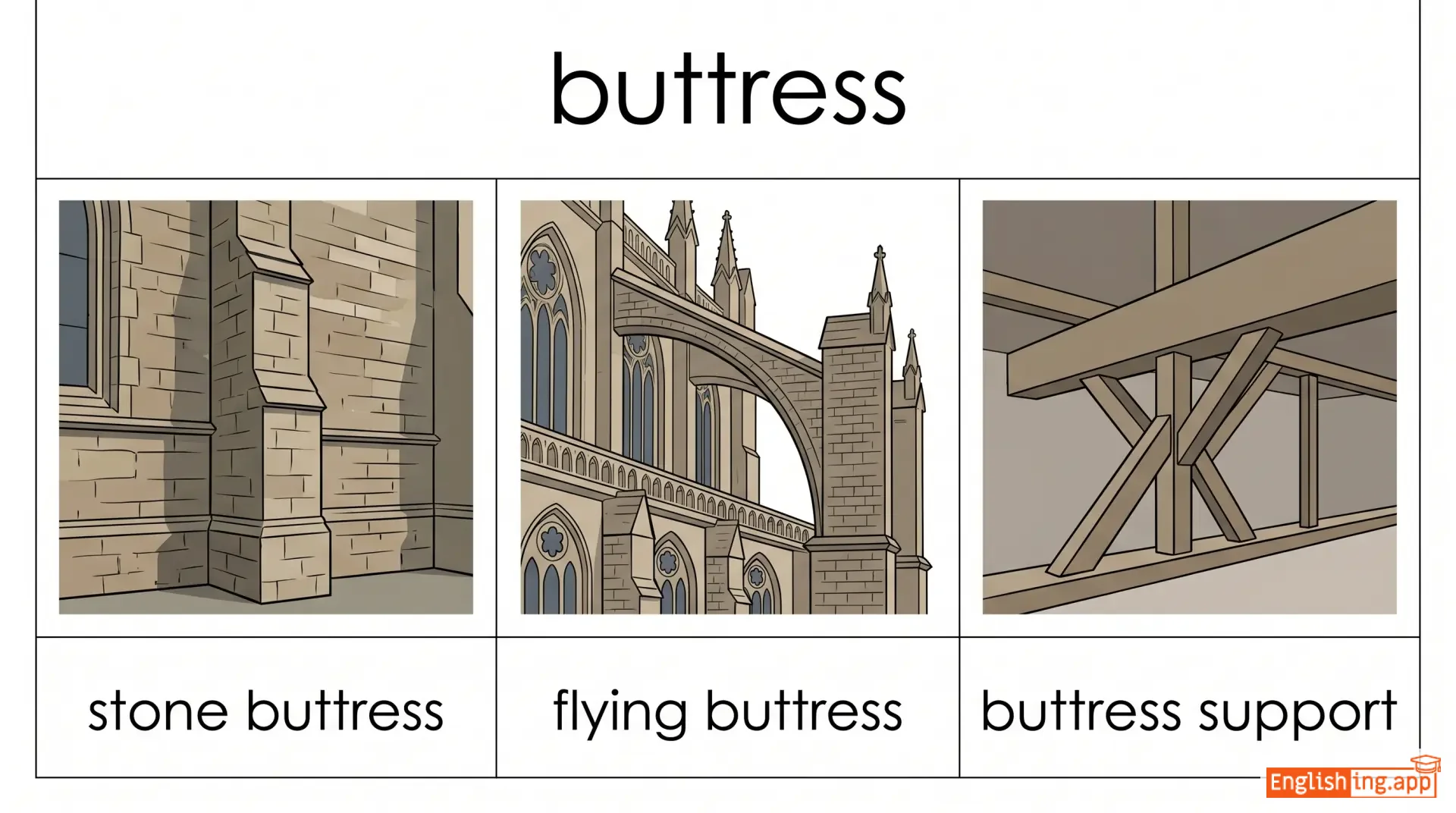
stone buttress, flying buttress, buttress support, buttress argument
••••••
|
Buttress 支撑墙壁 — butt (屁股) 支撑。
••••••
|
|
#1188
🧈
|
/ˈbʌtər/
noun, verb
••••••
|
- •••••• | - •••••• |
buttered
••••••
|
buttered
••••••
|
butters
••••••
|
buttering
••••••
|
a pale yellow edible fat made from cream; to spread butter on something
••••••
|
She buttered a slice of bread before eating. |
- •••••• |
butter someone up |
to flatter someone to gain favor
••••••
|
- •••••• |
spread, dairy, margarine, fat
••••••
|
oil, lean
••••••
|
bread and butter, melted butter, butter knife, butter up
••••••
|
No •••••• |
|
#1189
⛰️
|
/bjuːt/
noun
(bjuːt)
••••••
|
- •••••• |
孤山
gushan
••••••
|
- •••••• | - •••••• | - •••••• | - •••••• |
an isolated hill with steep sides and a flat top, common in arid regions
••••••
|
The travelers could see a tall butte rising in the desert. |
旅行者们能看到沙漠中一座高耸的孤山。
Lvxingzhe men neng kandao shamo zhong yi zuo gaosong de gushan.
••••••
|
- •••••• | - •••••• | - •••••• |
mesa, hill, plateau, mound
••••••
|
valley, depression
••••••
|
rocky butte, desert butte, tall butte
••••••
|
孤山,像butte一样,孤立的山丘。
••••••
|
|
#1190
🐐
|
/bʌt/
noun, verb
••••••
|
- •••••• | - •••••• |
butted
••••••
|
butted
••••••
|
butts
••••••
|
butting
••••••
|
to hit or push with the head or horns; the end part of something, especially a cigarette
••••••
|
The goat butted the fence with its horns. |
- •••••• |
butt in |
to interrupt a conversation
••••••
|
- •••••• |
ram, strike, end, rear
••••••
|
ignore, avoid
••••••
|
cigarette butt, butt in, head butt, the butt of a joke
••••••
|
No •••••• |
|
#1191
🏙️
|
/ˈbʌsəl/
verb, noun
(巴斯尔)
••••••
|
- •••••• |
喧嚣, 忙碌
xuanxiao, manglu
••••••
|
bustled
巴斯特尔德
••••••
|
bustled
巴斯特尔德
••••••
|
bustles
巴斯特尔斯
••••••
|
bustling
巴斯特林
••••••
|
to move in an energetic or noisy manner; busy activity in a place
••••••
|
The marketplace bustled with vendors and customers.
市场充满了小贩和顾客。
••••••
|
市场充满了小贩和顾客。
Shichang chongman le xiaofan he guke.
••••••
|
hustle and bustle
喧嚣与忙碌
••••••
|
busy and noisy activity
••••••
|
喧嚣与忙碌
xuanxiao yu manglu
••••••
|
scurry, hustle, rush, commotion, activity
••••••
|
calm, quiet, stillness
••••••
|
city bustle, hustle and bustle, bustling streets, market bustle
••••••
|
乘公交时,大家都在做 bustle — 吵吵闹闹,忙碌不堪。
••••••
|
|
#1192
💥
|
/bʌst/
noun/verb
••••••
|
- •••••• | - •••••• |
busted
••••••
|
busted
••••••
|
busts
••••••
|
busting
••••••
|
As a noun: A sculpture of a person's head, shoulders, and chest; As a verb: To break, smash, or arrest.
••••••
|
The police busted the gang last night. |
- •••••• |
go bust |
To go bankrupt or fail completely.
••••••
|
- •••••• |
break, smash, ruin, collapse, arrest
••••••
|
fix, repair, succeed
••••••
|
go bust, bust a move, bust up, bust open
••••••
|
No •••••• |
|
#1193
👢
|
/ˈbʌskɪn/
noun
(巴斯金)
••••••
|
- •••••• |
厚底靴
hòu dǐ xuē
••••••
|
- •••••• | - •••••• | - •••••• | - •••••• |
A type of thick-soled boot that reaches halfway to the knee; also associated with tragic drama in ancient times.
••••••
|
The actor wore a buskin as part of his classical costume.
那位演员穿着巴斯金鞋子作为他经典服装的一部分。
••••••
|
那位演员穿着巴斯金鞋子作为他经典服装的一部分。
Nà wèi yǎnyuán chuānzhuó bāsījīn xiézi zuòwéi tā jīngdiǎn fúzhuāng de yībùfen.
••••••
|
- •••••• | - •••••• | - •••••• |
boot, footwear, sandal, stage-shoe
••••••
|
slipper, barefoot
••••••
|
wear buskin, buskin boot, tragic buskin, stage buskin
••••••
|
Buskin听起来像 'Boots',厚底靴。
••••••
|
|
#1194
💰
|
/ˈbɜːrsər/
noun
(bursar)
••••••
|
- •••••• |
财务主管
caiwu zhuguan
••••••
|
- •••••• | - •••••• | - •••••• | - •••••• |
An official in a school or college responsible for financial affairs.
••••••
|
The bursar approved the budget for the new library.
财务主管批准了新图书馆的预算。
••••••
|
财务主管批准了新图书馆的预算。
Caiwu zhuguan pizhunle xin tushuguan de yusuan.
••••••
|
- •••••• | - •••••• | - •••••• |
treasurer, accountant, finance officer, cashier
••••••
|
debtor, spender
••••••
|
college bursar, university bursar, bursar’s office, bursar account
••••••
|
Bursar = 财务主管,掌管钱的负责人。
••••••
|
|
#1195
✨
|
/ˈbɜːrnɪʃ/
verb
••••••
|
|
- •••••• |
burnished
••••••
|
burnished
••••••
|
burnishes
••••••
|
burnishing
••••••
|
To polish something by rubbing; to enhance or improve.
••••••
|
He burnished the old table until it shone. |
- •••••• |
burnish one's reputation |
To improve or enhance one’s public image or standing.
••••••
|
- •••••• |
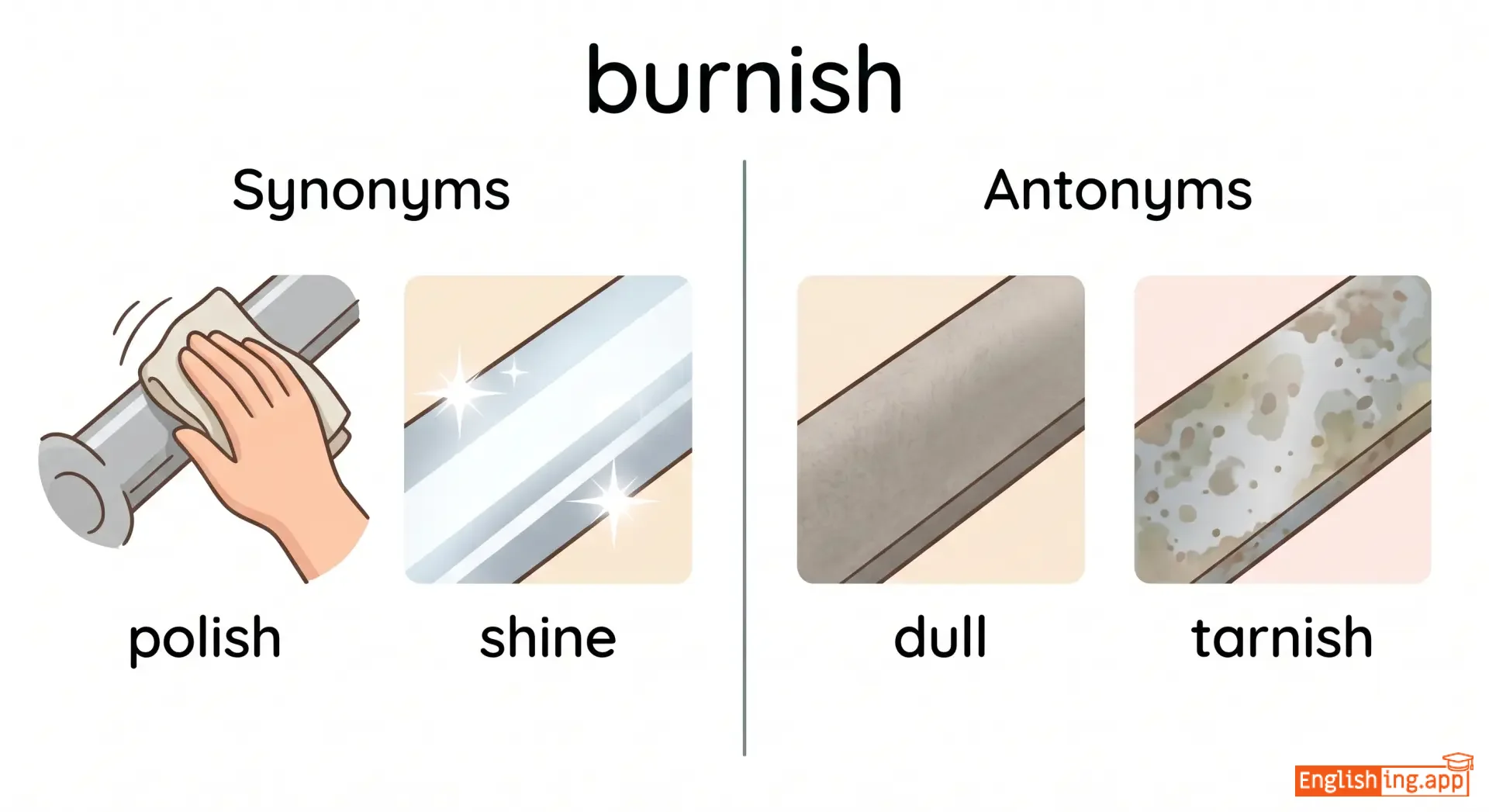
polish, shine, buff, gloss, brighten
••••••
|
dull, tarnish, damage
••••••
|
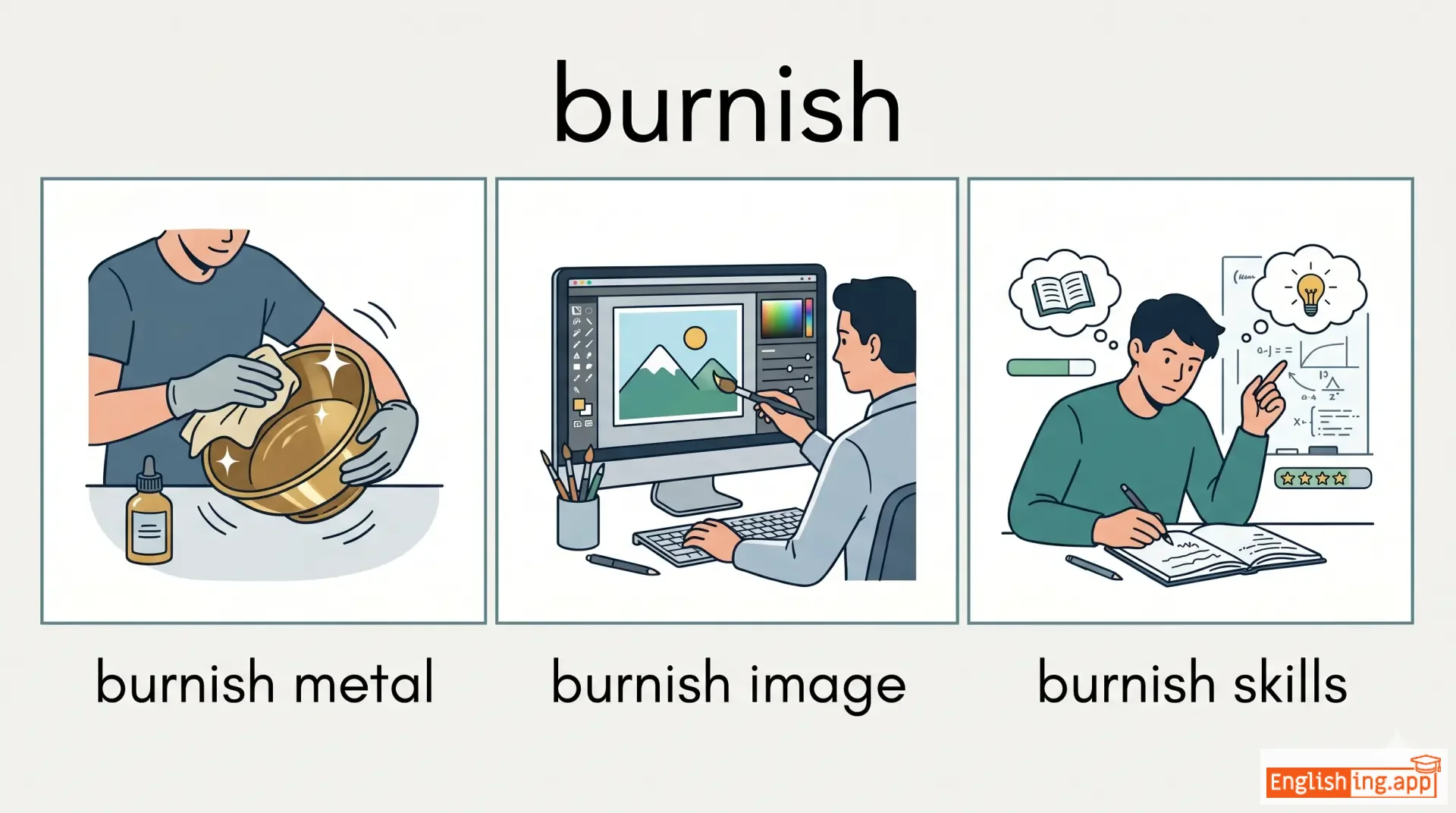
burnish metal, burnish image, burnish skills, burnish surface
••••••
|
No •••••• |
|
#1196
🎭
|
/bɜːrˈlɛsk/
noun
(布尔莱斯克)
••••••
|
- •••••• |
滑稽模仿剧
huá jī mó fǎng jù
••••••
|
- •••••• | - •••••• | - •••••• | - •••••• |
A humorous and exaggerated imitation of a serious work; a type of theatrical entertainment involving comedy and parody.
••••••
|
The play was a clever burlesque of traditional opera. |
这出戏是对传统歌剧的巧妙滑稽模仿。
Zhè chūxì shì duì chuántǒng gējù de qiǎomiào huá jī mó fǎng.
••••••
|
- •••••• | - •••••• | - •••••• |
parody, satire, caricature, mockery, skit
••••••
|
seriousness, sincerity, gravity
••••••
|
burlesque show, burlesque performance, comic burlesque, satirical burlesque
••••••
|
Burlesque 是戏剧中的幽默模仿,夸张的表现手法。
••••••
|
|
#1197
🏘️
|
/ˈbɜːrɡər/
noun
(布尔戈)
••••••
|
- •••••• |
城市居民 (富裕的中产阶级)
chenshi jumin (fuyu de zhongchan jieji)
••••••
|
- •••••• | - •••••• | - •••••• | - •••••• |
A citizen of a town, typically a member of the wealthy middle class.
••••••
|
The burgher was respected as a prosperous merchant in the city. |
这个布尔戈被尊敬为城市中的繁荣商人。
Zhege bu'er'ge bei zunjing wei chengshi zhong de fanrong shangren.
••••••
|
- •••••• | - •••••• | - •••••• |
citizen, townsman, resident, merchant
••••••
|
peasant, outsider
••••••
|
wealthy burgher, prosperous burgher, burgher class
••••••
|
Burgher(布尔戈)听起来像一个在城市中非常繁荣的人,像一个汉堡一样存在于城市的街头。
••••••
|
|
#1198
🧑🤝🧑
|
/ˈbɜːrdʒɪs/
noun
(bɜːrdʒɪs)
••••••
|
- •••••• |
市民
shimin
••••••
|
- •••••• | - •••••• | - •••••• | - •••••• |
A citizen of a town or borough with full rights of citizenship.
••••••
|
In medieval times, a burgess had the right to vote and hold property. |
在中世纪,市民有投票权和拥有财产的权利。
Zài zhōngshìjì, shìmín yǒu tóupiào quán hé yǒngyǒu cáichǎn de quánlì.
••••••
|
- •••••• | - •••••• | - •••••• |
citizen, townsman, freeman, voter
••••••
|
foreigner, outsider
••••••
|
burgess rights, medieval burgess, burgess class
••••••
|
Burgess 意味着是城市的公民,因为他住在一个市镇 (borough)。
••••••
|
|
#1199
🌱
|
/ˈbɜːrdʒən/
verb
(伯根)
••••••
|
|
快速增长
kuàisù zēngzhǎng
••••••
|
burgeoned
伯根德
••••••
|
burgeoned
伯根德
••••••
|
burgeons
伯根斯
••••••
|
burgeoning
伯根宁
••••••
|
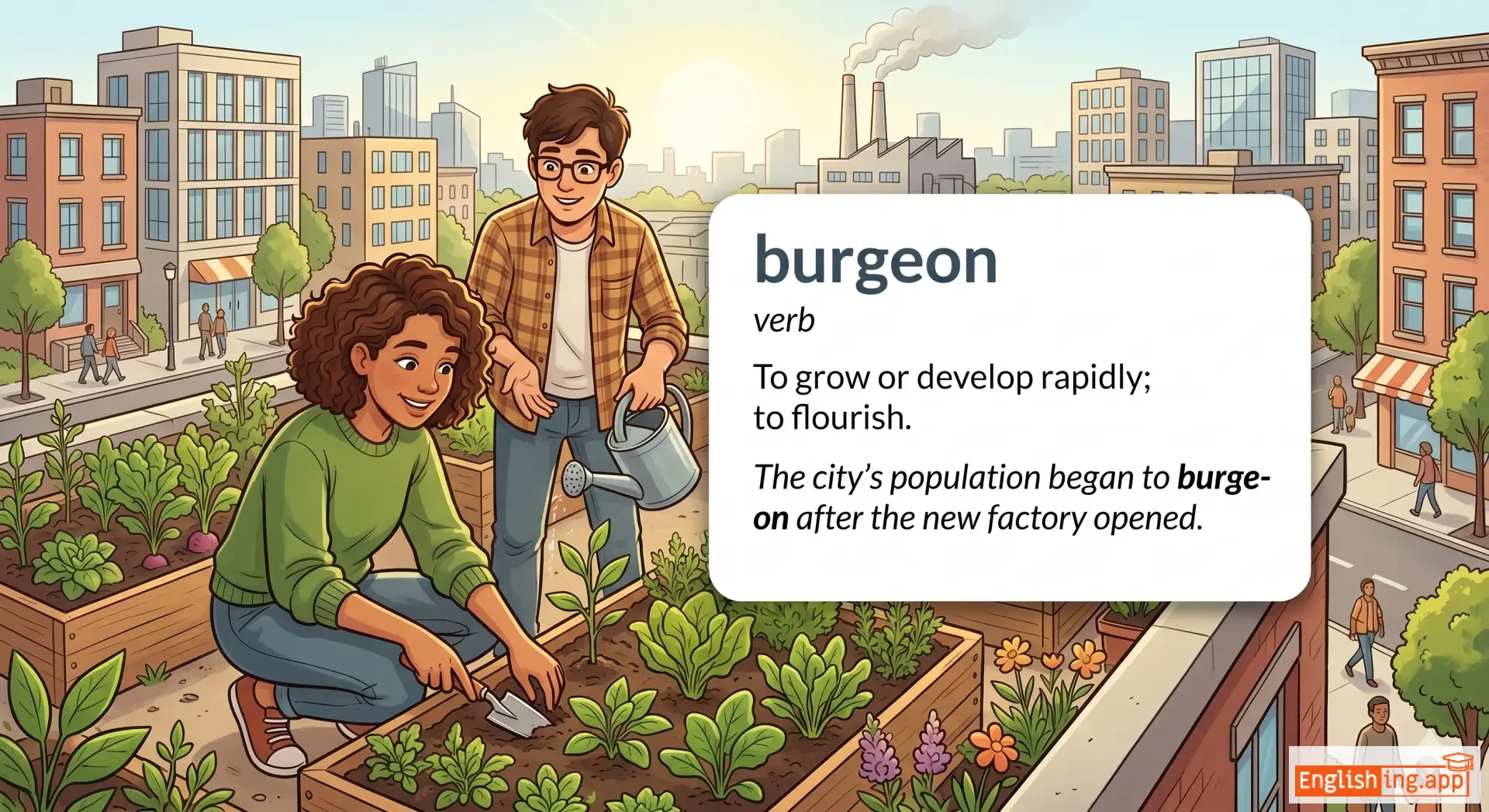
To grow or develop rapidly; to flourish.
••••••
|
The city's population began to burgeon after the new factory opened.
这座城市的人口在新工厂开业后开始迅速增长。
••••••
|
这座城市的人口在新工厂开业后开始迅速增长。
Zhèzuò chéngshì de rénkǒu zài xīn gōngchǎng kāi yè hòu kāishǐ xùnsù zēngzhǎng.
••••••
|
- •••••• | - •••••• | - •••••• |
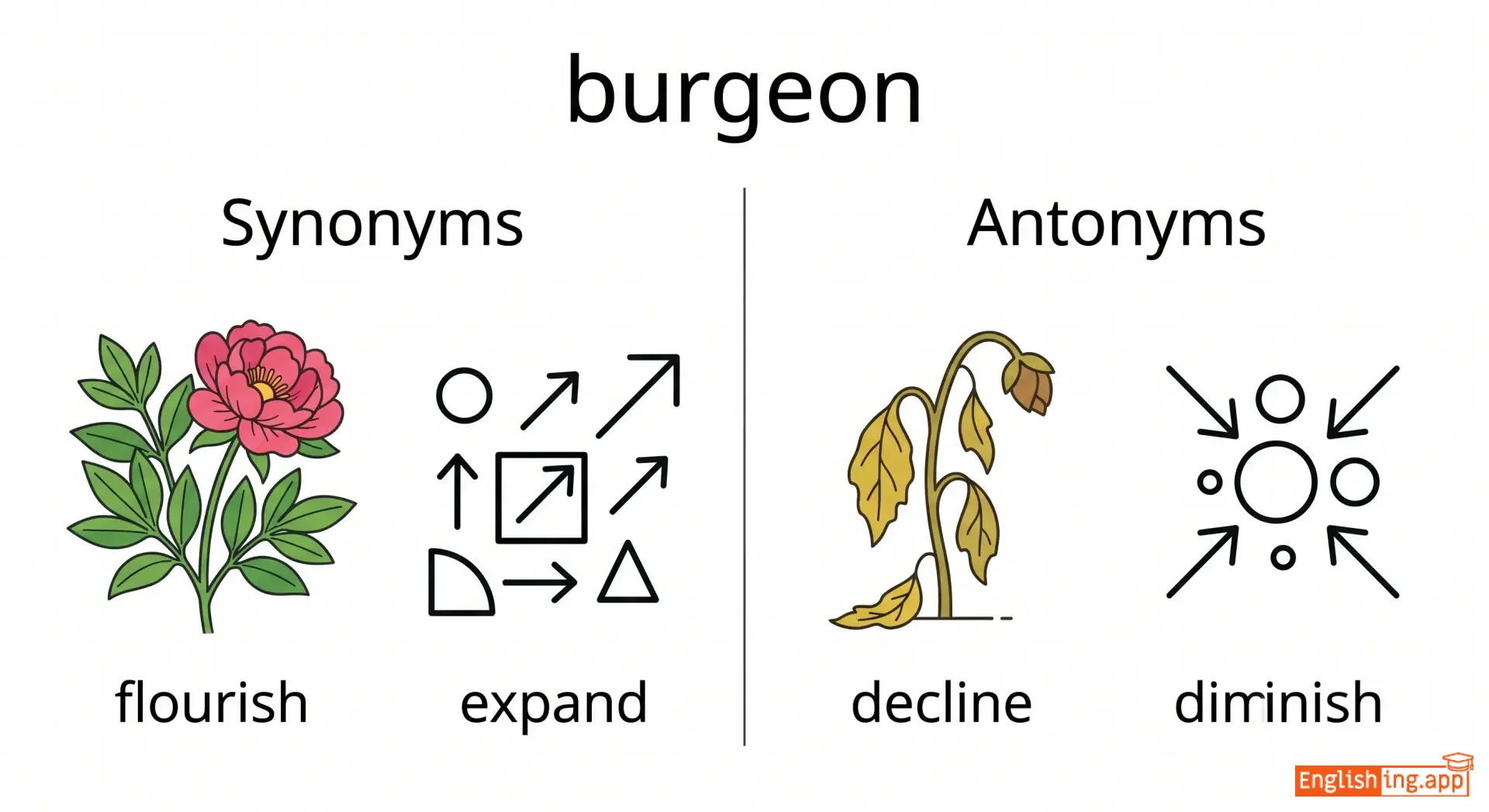
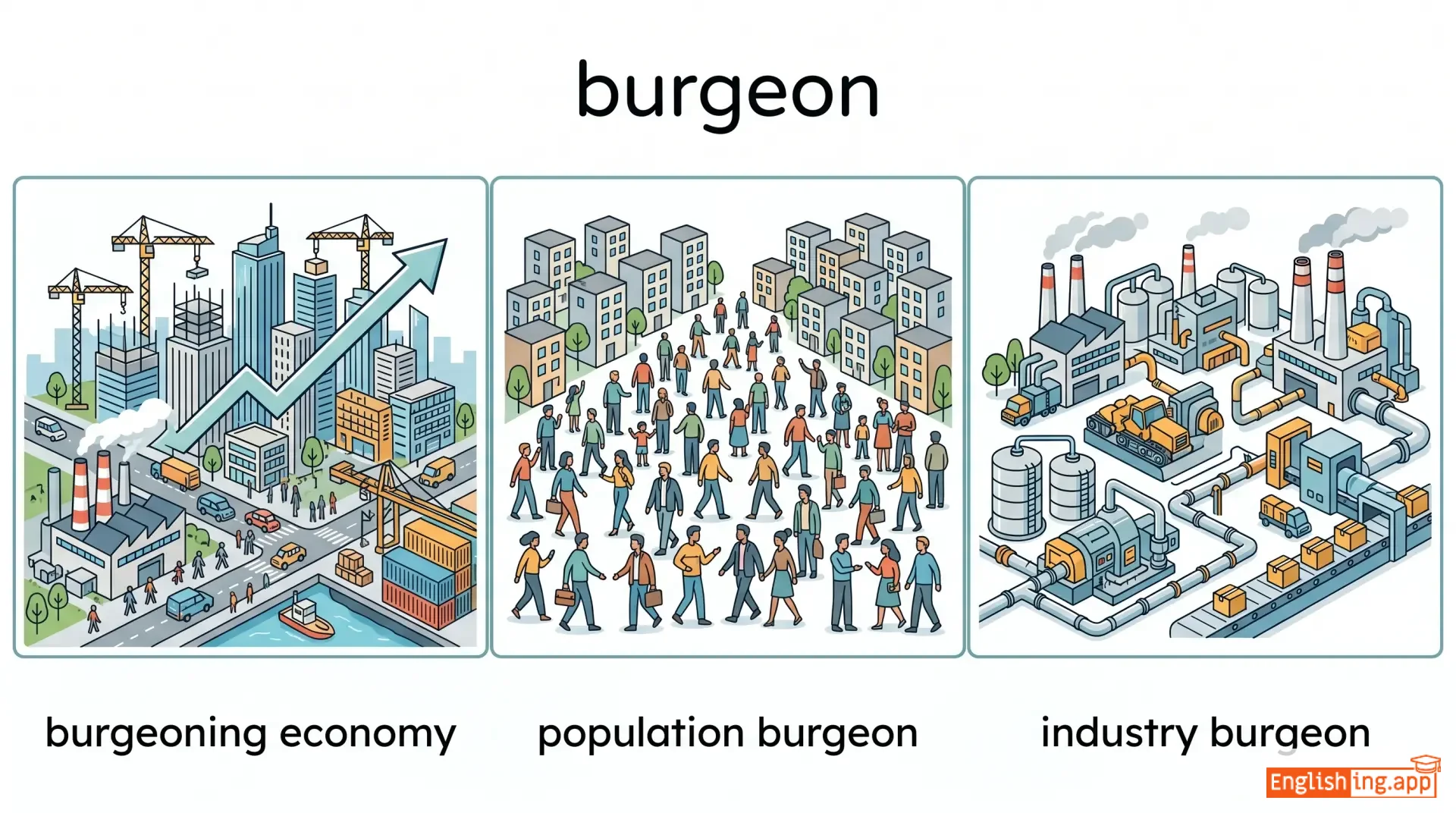
flourish, expand, thrive, bloom, prosper
••••••
|
decline, diminish, shrink
••••••
|
burgeoning economy, population burgeon, industry burgeon
••••••
|
Burgeon意味着快速增长,像一朵迅速开放的花。
••••••
|
|
#1200
📑
|
/bjʊˈrɒkrəsi/
noun
(bǐu luò kè lā xī)
••••••
|
|
官僚主义
guanliaozhuyi
••••••
|
- •••••• | - •••••• | - •••••• | - •••••• |
A system of administration marked by official rules, procedures, and hierarchy.
••••••
|
Starting a new business often involves dealing with a lot of bureaucracy. |
开办新企业通常涉及大量的官僚主义。
Kaiban xin qiye tongchang shèjí dàliàng de guānliáozhǔyì.
••••••
|
red tape |
Excessive rules and formalities in bureaucracy.
••••••
|
繁文缛节
fánwénrùjié
••••••
|
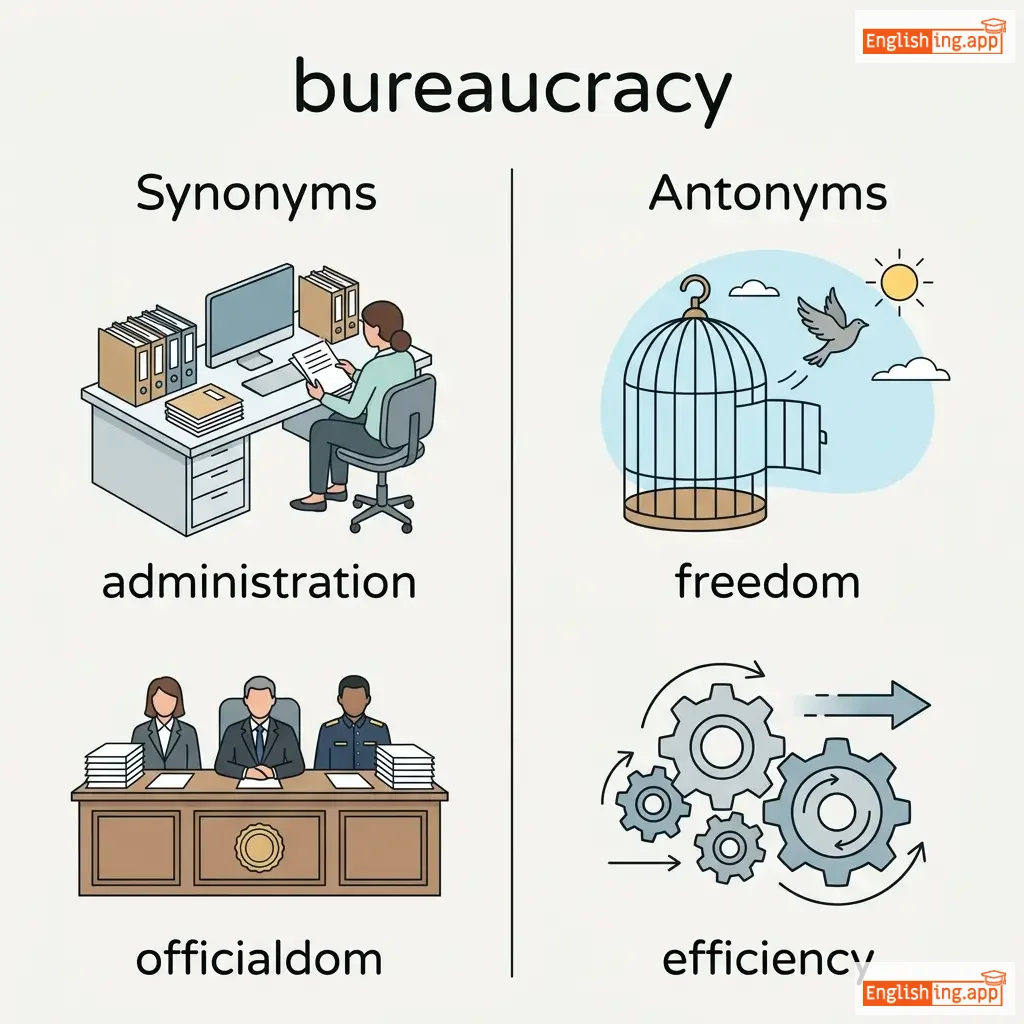
administration, officialdom, authority, government
••••••
|
freedom, efficiency
••••••
|
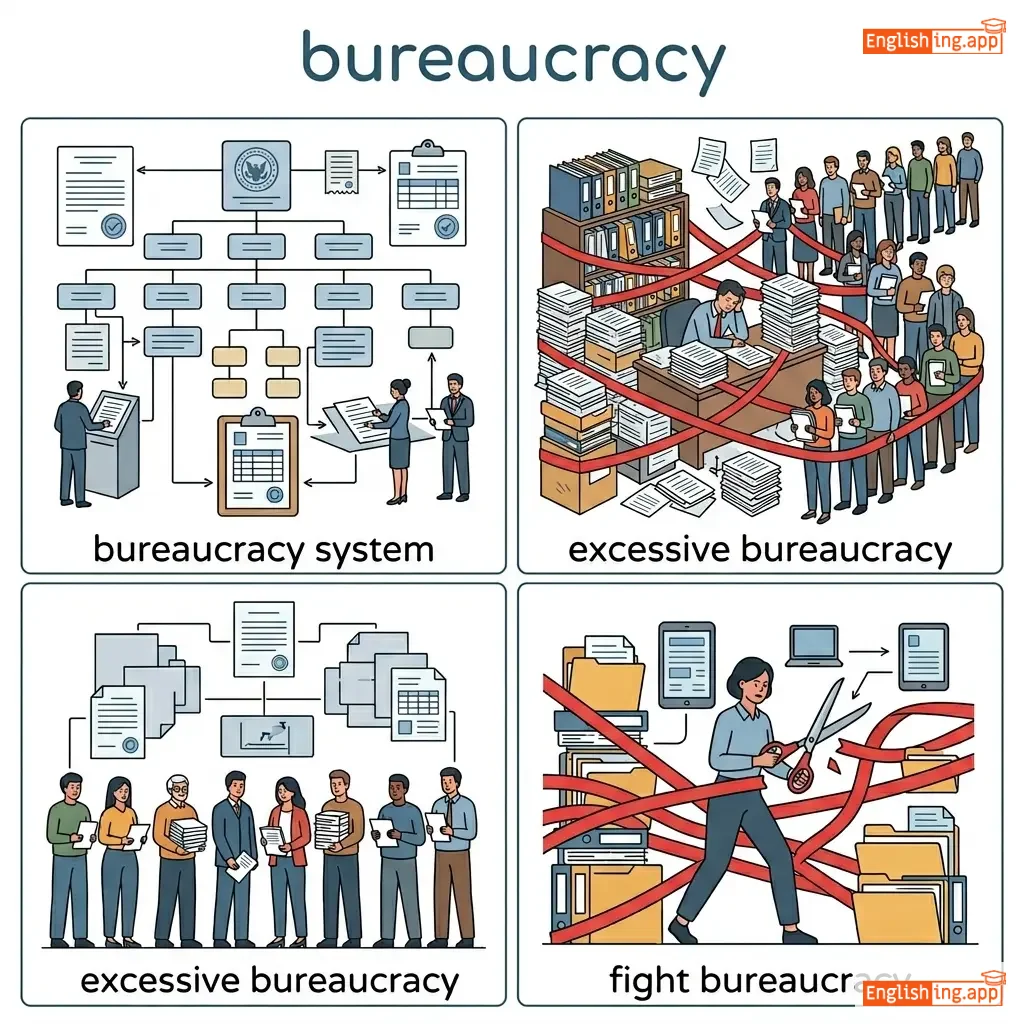
bureaucracy system, excessive bureaucracy, fight bureaucracy
••••••
|
官僚主义就像复杂的繁文缛节,浪费时间。
••••••
|
Vocabulary Quiz
Test your vocabulary by matching words with their translations or meanings.
Login to take the quiz
Comments (0)
Share your thoughts and join the discussion.
Join the discussion by logging in
Login to CommentNo comments yet
Be the first to share your thoughts!