


Swipe left or right, or use the buttons. Tap image to zoom.
例句翻译
单词
Lesson 78Lesson 78 - 遮罩切换
|
表情符号
|
单词 | Images | 翻译 | 过去时 | 过去分词 | 第三人称单数 | 动名词 | 含义 | 例句 | 例句翻译 | 示例表达 | 示例表达含义 | 示例表达翻译 | 同义词 | 反义词 | 搭配词 | 助记符 |
|---|---|---|---|---|---|---|---|---|---|---|---|---|---|---|---|---|---|
|
#2311
😏
|
/dɪˈrɪʒən/
noun
(déríshén)
••••••
|
- •••••• |
嘲笑
chaoxiao
••••••
|
- •••••• | - •••••• | - •••••• | - •••••• |
Contemptuous ridicule or mockery.
••••••
|
His ideas were greeted with derision by the audience. |
他的观点被观众嘲笑了。
Tā de guāndiǎn bèi guānzhòng cháoxiàole.
••••••
|
hold up to derision |
to mock or ridicule someone publicly
••••••
|
公开嘲笑
gōngkāi cháoxiào
••••••
|
mockery, ridicule, scorn, disdain, sneering
••••••
|
praise, admiration, respect
••••••
|
subject of derision, with derision, treat with derision
••••••
|
Derision意味着嘲笑 – 想象某人说'Deri Son',然后大家笑了起来。
••••••
|
|
#2312
↘️
|
/dɪˈsɛndənt/
adjective
(迪森登特)
••••••
|
- •••••• |
下降的
xiajiang de
••••••
|
- •••••• | - •••••• | - •••••• | - •••••• |
Moving downward; going down or descending.
••••••
|
The river followed a descendent course toward the valley. |
河流沿着向下的河道朝着山谷流去。
Héliú yánzhe xiàng xià de hédào cháo zhe shāngǔ liú qù.
••••••
|
- •••••• | - •••••• | - •••••• |
descending, downward, sloping, declining
••••••
|
ascending, rising
••••••
|
descendent path, descendent movement, descendent course
••••••
|
下降的意思是向下走 ↘️ 就像一条坡道
••••••
|
|
#2313
👶
|
/dɪˈsɛndənt/
noun
(迪森丹特)
••••••
|
- •••••• |
后代
hòudài
••••••
|
- •••••• | - •••••• | - •••••• | - •••••• |
A person who is descended from a particular ancestor.
••••••
|
She is a descendant of a famous poet. |
她是一个著名诗人的后代。
Tā shì yīgè zhùmíng shīrén de hòudài.
••••••
|
- •••••• | - •••••• | - •••••• |
offspring, heir, successor, progeny
••••••
|
ancestor, forefather
••••••
|
direct descendant, descendant of, royal descendant
••••••
|
Descendant 意味着从上而下 (descend) —— 后代
••••••
|
|
#2314
⬇️
|
/dɪˈsɛnd/
verb
••••••
|
- •••••• | - •••••• |
descended
••••••
|
descended
••••••
|
descends
••••••
|
descending
••••••
|
To move or fall downward; to come or go down from a higher place.
••••••
|
The hikers descended the steep mountain path. |
- •••••• |
descend into chaos |
To fall into disorder or confusion
••••••
|
- •••••• |
drop, fall, decline, lower, sink
••••••
|
ascend, rise, climb
••••••
|
descend slowly, descend rapidly, descend into
••••••
|
No •••••• |
|
#2315
🎶
|
/ˈdɛskænt/
noun
(dɛsˈkænt)
••••••
|
- •••••• |
附加旋律
fùjiā xuánlǜ
••••••
|
- •••••• | - •••••• | - •••••• | - •••••• |
An additional melody or counterpoint sung or played above the main melody.
••••••
|
The choir added a beautiful descant to the hymn.
ðə kwaɪər ædɪd ə bjuˈtɪfəl dɛsˈkænt tʊ ðə hɪm.
••••••
|
合唱团为赞美诗添加了一段美丽的附加旋律。
Hé chàngtuán wèi zànměishī tiānjiāle yí duàn měilì de fùjiā xuánlǜ.
••••••
|
- •••••• | - •••••• | - •••••• |
counterpoint, harmony, accompaniment, overtone
••••••
|
silence, monotone
••••••
|
sing descant, descant voice, descant part
••••••
|
Descant = 就像是主旋律上方的附加旋律
••••••
|
|
#2316
🏗️
|
/ˈdɛrɪk/
noun
(德里克)
••••••
|
- •••••• |
钻井塔
zuàn jǐng tǎ
••••••
|
- •••••• | - •••••• | - •••••• | - •••••• |
A framework or tower used for supporting a crane, especially for oil drilling or lifting heavy loads.
••••••
|
The workers assembled a derrick at the oil drilling site. |
工人们在石油钻井现场组装了一座钻井塔。
Gōngrén men zài shíyóu zuàntàn xiànchǎng zǔzhuāngle yī zuò zuàn jǐng tǎ.
••••••
|
- •••••• | - •••••• | - •••••• |
tower, crane, hoist, rig, scaffold
••••••
|
ground, base
••••••
|
oil derrick, drilling derrick, derrick crane
••••••
|
Derrick 意味着钻井塔 🏗️
••••••
|
|
#2317
🚫
|
/dɪˈrɒɡətɔːri/
adjective
(德罗加托里)
••••••
|
- •••••• |
贬低的
biǎndī de
••••••
|
- •••••• | - •••••• | - •••••• | - •••••• |
Showing a critical or disrespectful attitude.
••••••
|
The article contained derogatory comments about the politician. |
文章包含了对政治家的贬低评论。
Wénzhāng bāohánle duì zhèngzhìjiā de biǎndī pínglùn.
••••••
|
- •••••• | - •••••• | - •••••• |
offensive, insulting, belittling, demeaning
••••••
|
respectful, flattering
••••••
|
derogatory comment, derogatory remark, derogatory statement
••••••
|
Derogatory = 'de' (贬低) + 'story' → 贬低的故事。
••••••
|
|
#2318
👎
|
/dɪˈrɒɡətɪv/
adjective
(德罗盖特夫)
••••••
|
- •••••• |
贬低的
biǎndī de
••••••
|
- •••••• | - •••••• | - •••••• | - •••••• |
Expressing a low opinion or showing lack of respect.
••••••
|
He made a derogative remark about her work. |
他对她的工作做了贬低的评论。
Tā duì tā de gōngzuò zuòle biǎndī de pínglùn.
••••••
|
- •••••• | - •••••• | - •••••• |
disparaging, insulting, belittling, disrespectful
••••••
|
respectful, complimentary
••••••
|
derogative remark, derogative term, derogative comment
••••••
|
Derogative 意味着贬低 (biǎndī),表示不尊重。
••••••
|
|
#2319
🧴
|
/ˌdɜːrməˈtɑːlədʒi/
noun
(皮肤学)
••••••
|
- •••••• |
皮肤学
pifu xue
••••••
|
- •••••• | - •••••• | - •••••• | - •••••• |
The branch of medicine concerned with the skin and its diseases.
••••••
|
He studied dermatology at medical school.
他在医学院学习了皮肤学。
••••••
|
他在医学院学习了皮肤学。
Ta zai yixueyuan xuexi le pifu xue.
••••••
|
- •••••• | - •••••• | - •••••• |
skin science, skin medicine, cutaneous medicine
••••••
|
none
••••••
|
study dermatology, dermatology clinic, dermatology department
••••••
|
皮肤学 = 皮肤 (皮) + 学 (学) → 皮肤的科学。
••••••
|
|
#2320
🩺
|
/ˌdɜːrməˈtɑːlədʒɪst/
noun
(皮肤科医生)
••••••
|
- •••••• |
皮肤科医生
pífū kē yīshēng
••••••
|
- •••••• | - •••••• | - •••••• | - •••••• |
A doctor who specializes in the treatment of skin diseases.
••••••
|
She consulted a dermatologist for her skin allergy.
她因皮肤过敏去咨询了皮肤科医生。
••••••
|
她因皮肤过敏去咨询了皮肤科医生。
Tā yīn pífū guòmǐn qù zīxúnle pífū kē yīshēng.
••••••
|
- •••••• | - •••••• | - •••••• |
skin doctor, skin specialist, physician, dermatologist
••••••
|
general practitioner
••••••
|
consult a dermatologist, dermatologist appointment, dermatologist clinic
••••••
|
皮肤科医生 = 皮肤 (skin) + 科 (department) → 皮肤疾病的专家。
••••••
|
|
#2321
🔗
|
/dɪˈraɪvd/
adjective
(díraìvèd)
••••••
|
- •••••• |
衍生的
yǎnshēng de
••••••
|
- •••••• | - •••••• | - •••••• | - •••••• |
Developed or obtained from something else; not original.
••••••
|
The word is derived from Latin.
这个词来源于拉丁语。
••••••
|
这个词来源于拉丁语。
Zhège cí láiyuán yú Lādīng yǔ.
••••••
|
- •••••• | - •••••• | - •••••• |
originated, obtained, extracted, obtained from
••••••
|
original, independent
••••••
|
derived from, derived benefit, derived form
••••••
|
Derived: 衍生的,像是从其他地方来的,而不是原创的。
••••••
|
|
#2322
📜
|
/dɪˈraɪv/
verb
(得赖夫)
••••••
|
- •••••• |
派生
paisheng
••••••
|
derived
得赖夫德
••••••
|
derived
得赖夫德
••••••
|
derives
得赖夫斯
••••••
|
deriving
得赖夫英
••••••
|
To obtain something from a source.
••••••
|
Many English words derive from Latin.
许多英语词汇源自拉丁语。
••••••
|
许多英语词汇源自拉丁语。
xuduo yingyu ci hui yuanci latin yu.
••••••
|
derive benefit
得赖受益
••••••
|
to gain an advantage from something
••••••
|
获得利益
huode liyi
••••••
|
obtain, acquire, originate, extract, gain
••••••
|
lose, give, surrender
••••••
|
derive from, derive meaning, derive benefit
••••••
|
Derive意味着从某个来源获得东西 — '派生'像是从源头获得东西。
••••••
|
|
#2323
🔄
|
/dɪˈrɪvətɪv/
noun, adjective
(德里瓦蒂夫)
••••••
|
|
衍生物
yǎn shēng wù
••••••
|
- •••••• | - •••••• | - •••••• | - •••••• |
Something that is based on another source; in math, a measure of how a function changes.
••••••
|
The film was criticized for being too derivative of earlier works.
这部电影因过于模仿早期作品而受到批评。
••••••
|
这部电影因过于模仿早期作品而受到批评。
Zhè bù diànyǐng yīn guòyú mófǎng zǎoqī zuòpǐn ér shòudào pīpíng.
••••••
|
- •••••• | - •••••• | - •••••• |
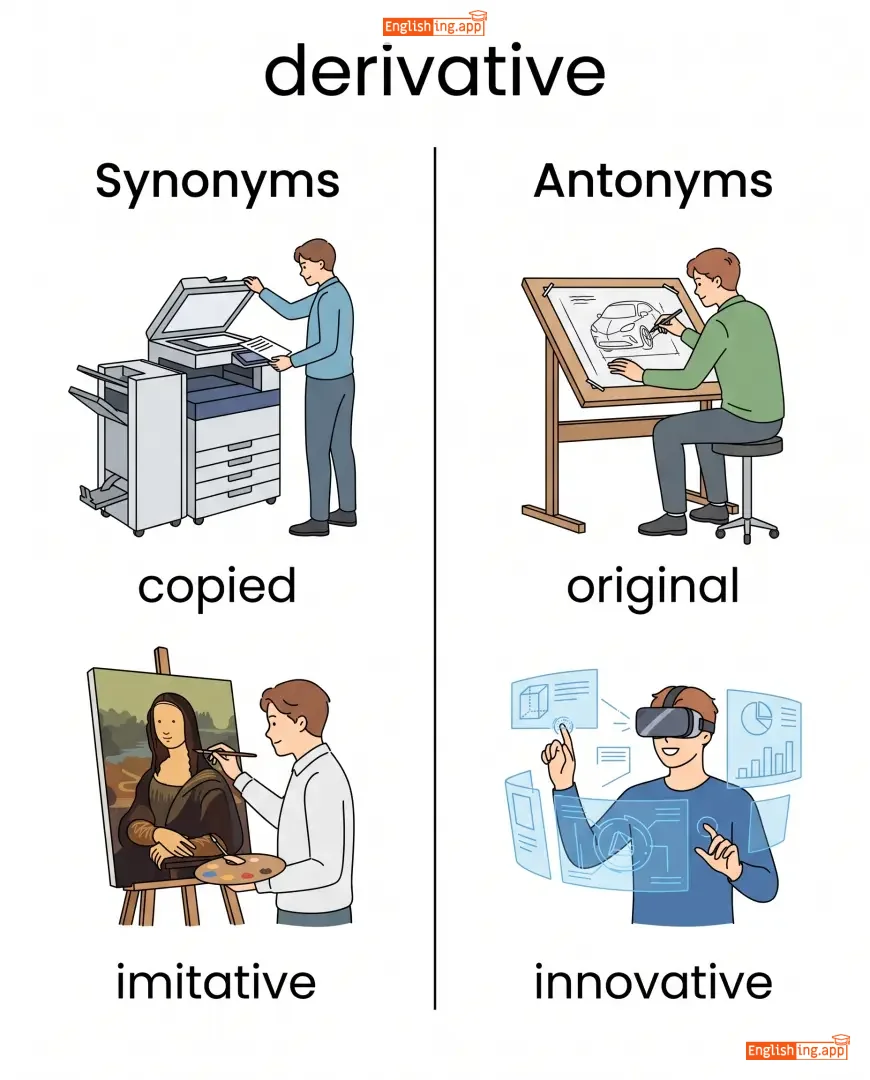
copied, imitative, secondary, unoriginal
••••••
|
original, innovative, creative
••••••
|
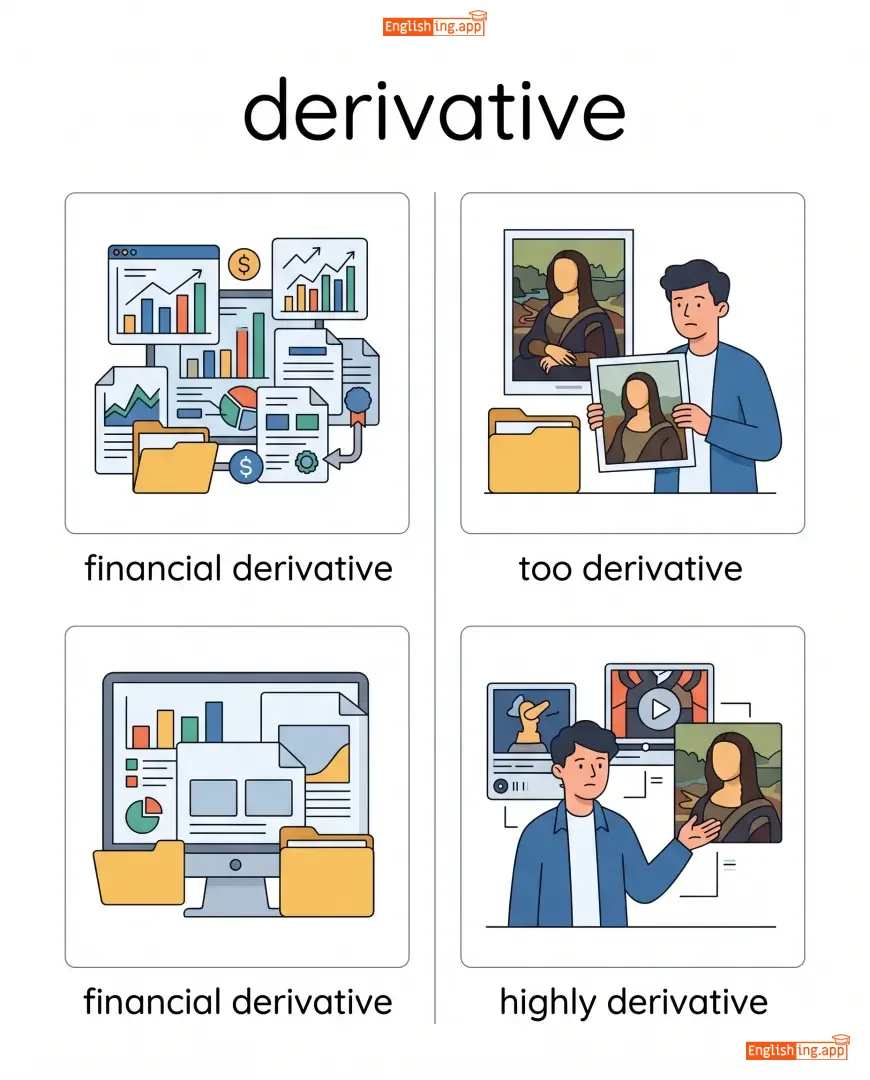
financial derivative, too derivative, highly derivative
••••••
|
衍生物意味着来自别的东西 – '德里瓦蒂夫'意味着模仿。
••••••
|
|
#2324
📖
|
/ˌdɛrɪˈveɪʃən/
noun
(dé lǐ wèi shēn)
••••••
|
- •••••• |
衍生
yǎnshēng
••••••
|
- •••••• | - •••••• | - •••••• | - •••••• |
The origin or development of something from a source.
••••••
|
The derivation of the word comes from Latin.
这个词的词源来自拉丁语。
••••••
|
这个词的词源来自拉丁语。
Zhège cí de cíyuán láizì lādīng yǔ.
••••••
|
- •••••• | - •••••• | - •••••• |
origin, source, root, formation, extraction
••••••
|
end, result, conclusion
••••••
|
word derivation, derivation of formula, derivation from
••••••
|
衍生意味着从源头找到词的起源,就像从词汇中衍生出意思。
••••••
|
|
#2325
😒
|
/dɪˈraɪsɪv/
adjective
(德里西夫)
••••••
|
- •••••• |
嘲讽的
chaofeng de
••••••
|
- •••••• | - •••••• | - •••••• | - •••••• |
Expressing contempt or ridicule.
••••••
|
She gave a derisive laugh at his attempt to sing. |
她对他的唱歌尝试发出了嘲讽的笑声。
Ta dui tade changge changshi fachu le chaofeng de xiaosheng.
••••••
|
- •••••• | - •••••• | - •••••• |
mocking, scornful, sneering, disdainful, sarcastic
••••••
|
respectful, admiring, supportive
••••••
|
derisive laugh, derisive comment, derisive tone
••••••
|
Derisive - 嘲讽的, 想像一个戴眼镜的笑声。
••••••
|
|
#2326
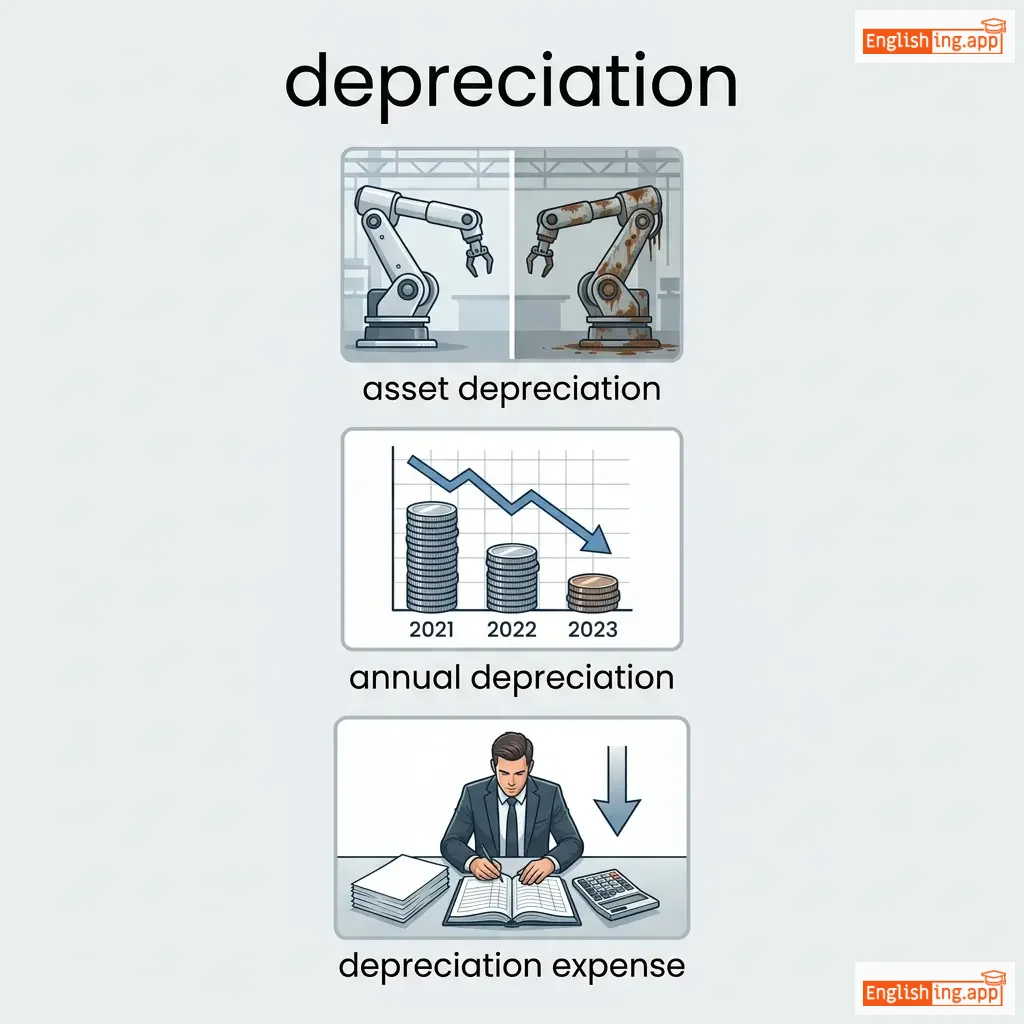
📉
|
/dɪˌpriːʃiˈeɪʃən/
noun
(dɪˌpriːʃiˈeɪʃən)
••••••
|
|
折旧
zhejiu
••••••
|
- •••••• | - •••••• | - •••••• | - •••••• |
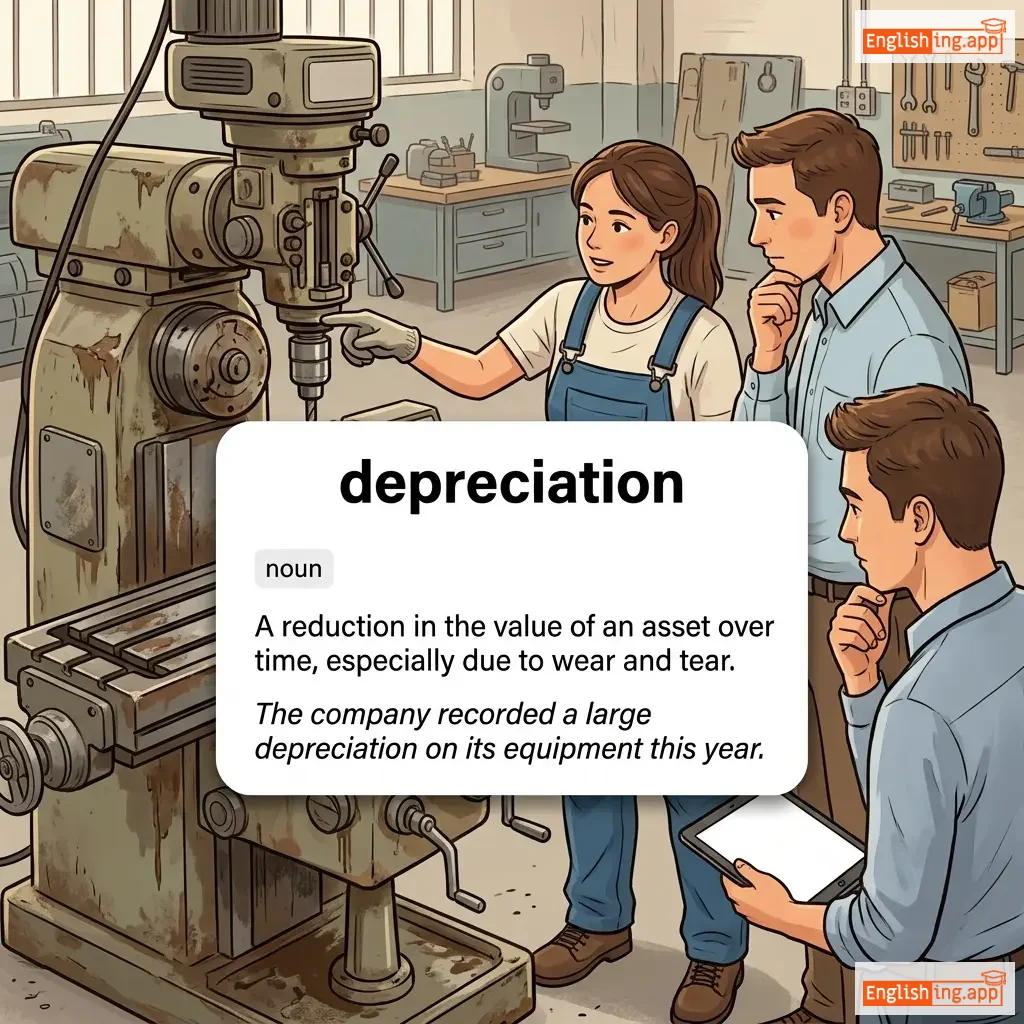
A reduction in the value of an asset over time, especially due to wear and tear.
••••••
|
The company recorded a large depreciation on its equipment this year. |
公司今年在其设备上记录了大幅折旧。
Gongsi jinian zai qi shebei shang jilu le dafu zhejiu.
••••••
|
- •••••• | - •••••• | - •••••• |
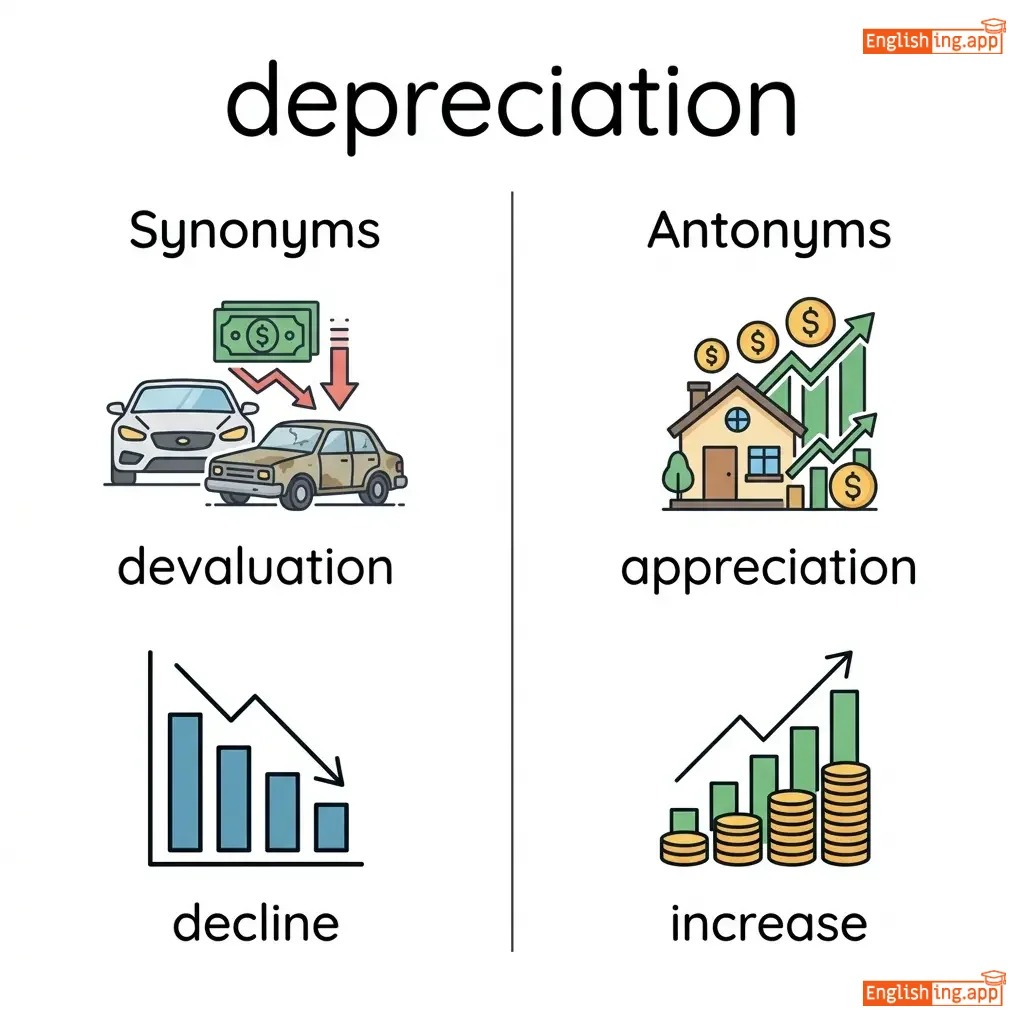
devaluation, decline, reduction, amortization, drop
••••••
|
appreciation, increase, rise
••••••
|
asset depreciation, annual depreciation, depreciation expense, depreciation rate
••••••
|
折旧就像车随着时间的流逝价值下降。
••••••
|
|
#2327
🤣
|
/dɪˈrɪzəbl/
adjective
(德里西博)
••••••
|
- •••••• |
可嘲笑的
ke chaoxiao de
••••••
|
- •••••• | - •••••• | - •••••• | - •••••• |
deserving ridicule or mockery
••••••
|
His excuse was so weak that it was plainly derisible. |
他的借口如此虚弱,以至于显然是可嘲笑的。
Tā de jièkǒu rúcǐ xūruò, yǐzhì yú xiǎnrán shì kě chǎoxiào de.
••••••
|
- •••••• | - •••••• | - •••••• |
laughable, absurd, ridiculous, contemptible
••••••
|
respectable, credible, reasonable
••••••
|
derisible claim, derisible excuse, almost derisible
••••••
|
Derisible 这个词就像 de-risible — 值得嘲笑的。
••••••
|
|
#2328
😂
|
/dɪˈraɪd/
verb
(dɪˈraɪd)
••••••
|
|
嘲笑
chaoxiao
••••••
|
derided
dɪˈraɪdɪd
••••••
|
derided
dɪˈraɪdɪd
••••••
|
derides
dɪˈraɪdz
••••••
|
deriding
dɪˈraɪdɪŋ
••••••
|
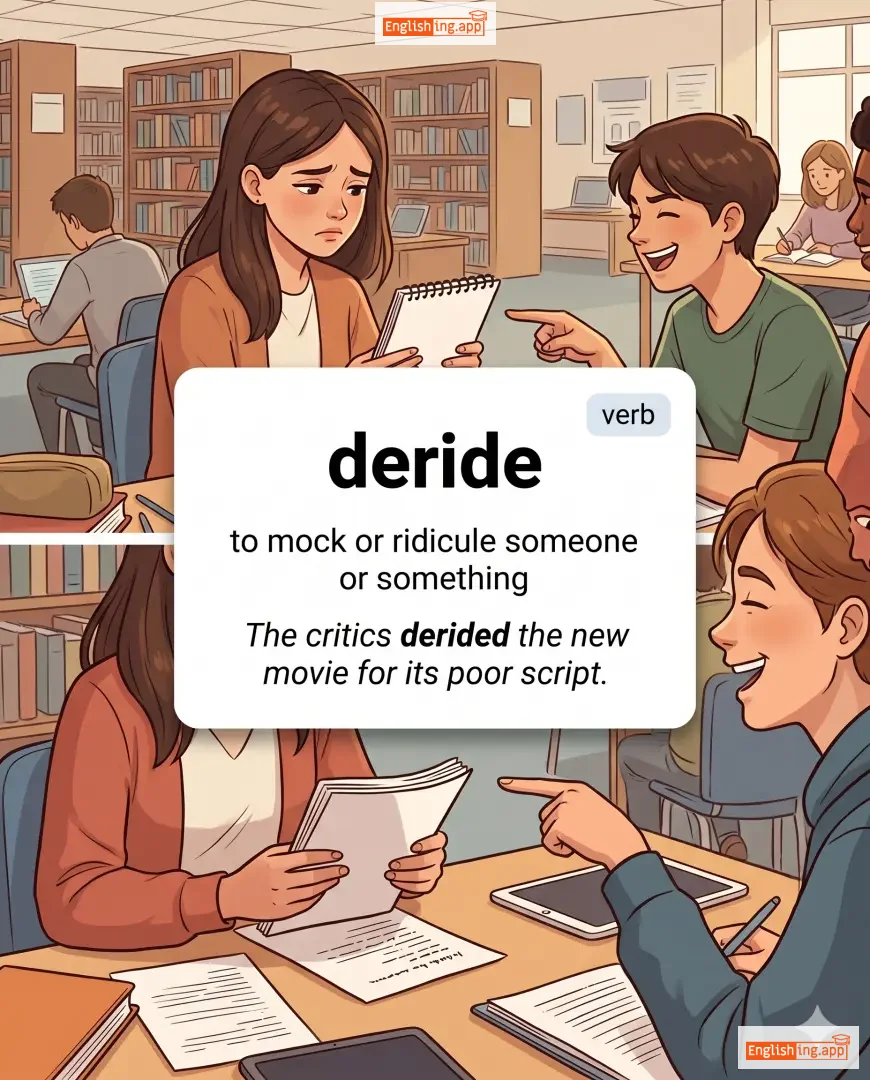
to mock or ridicule someone or something
••••••
|
The critics derided the new movie for its poor script.
评论家嘲笑了这部新电影,因其糟糕的剧本。
••••••
|
评论家嘲笑了这部新电影,因其糟糕的剧本。
Pinglünjiā cháoxiàole zhè bù xīn diànyǐng, yīn qí zāogāo de jùběn.
••••••
|
- •••••• | - •••••• | - •••••• |
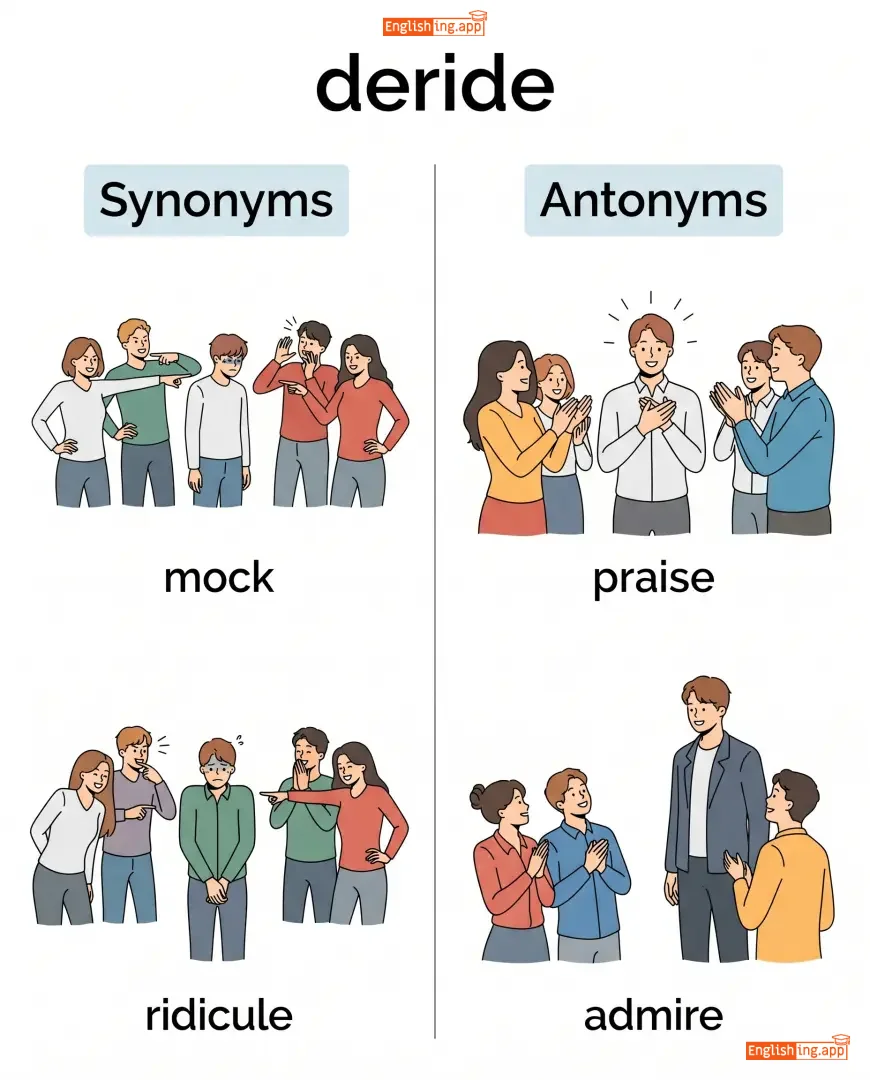
mock, ridicule, scorn, sneer, jeer
••••••
|
praise, admire, respect
••••••
|
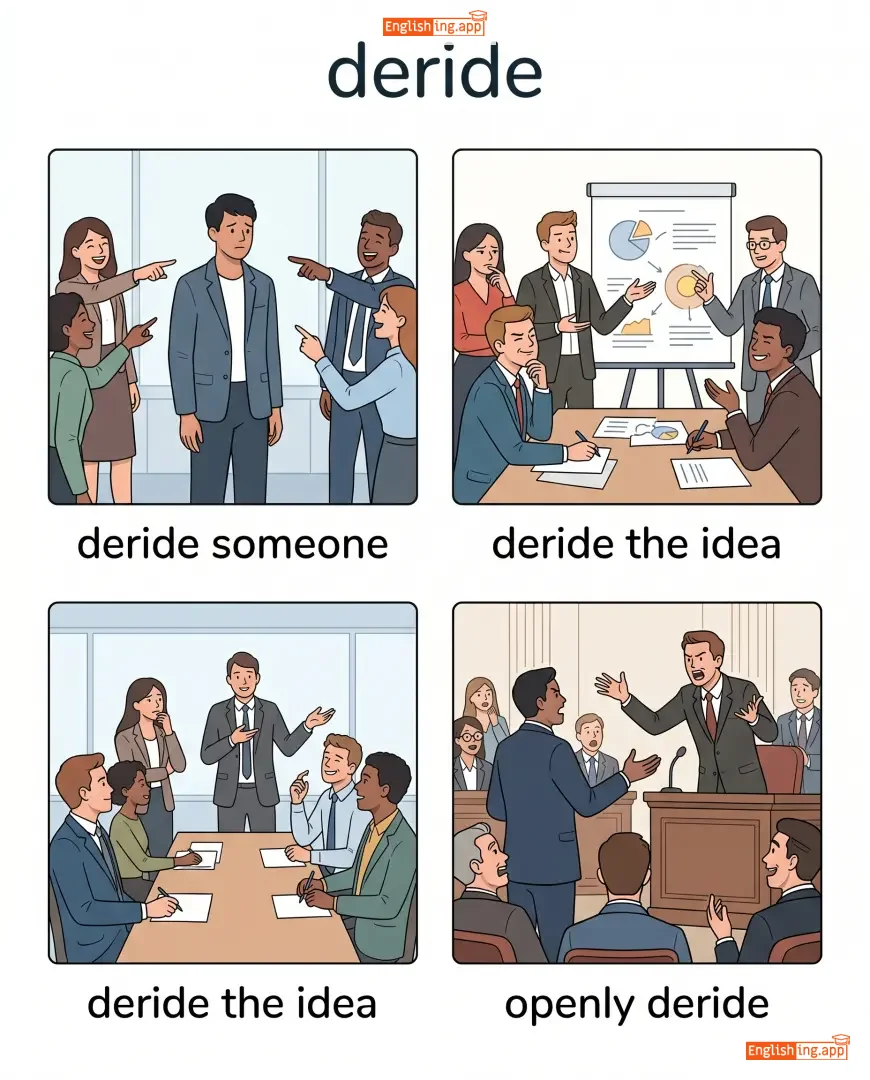
deride someone, deride the idea, openly deride
••••••
|
‘Deride’像‘嘲笑’ – 以一种鄙视的态度嘲笑别人。
••••••
|
|
#2329
⚠️
|
/ˌdɛrɪˈlɪkʃən/
noun
(dereliksion)
••••••
|
- •••••• |
失职
shīzhí
••••••
|
- •••••• | - •••••• | - •••••• | - •••••• |
the state of being abandoned; neglect of duty
••••••
|
The officer was charged with dereliction of duty.
这名官员因失职被指控。
••••••
|
这名官员因失职被指控。
Zhè míng guānyuán yīn shīzhí bèi zhǐkòng.
••••••
|
dereliction of duty
失职
••••••
|
failure to perform one's responsibilities
••••••
|
失职
shīzhí
••••••
|
neglect, abandonment, failure, negligence
••••••
|
responsibility, diligence, care
••••••
|
dereliction of duty, complete dereliction, gross dereliction
••••••
|
Dereliction意味着失职,中文意思是未履行职责。
••••••
|
|
#2330
🏚️
|
/ˈdɛrəlɪkt/
adjective, noun
(德雷利克特)
••••••
|
- •••••• |
废弃的
feiqi de
••••••
|
- •••••• | - •••••• | - •••••• | - •••••• |
in poor condition due to neglect or disuse; a homeless or neglected person
••••••
|
The old factory stood derelict for decades.
那座老工厂废弃了几十年。
••••••
|
那座老工厂废弃了几十年。
Na zuo lao gongchang feiqi le jishinian.
••••••
|
- •••••• | - •••••• | - •••••• |
abandoned, neglected, ruined, dilapidated
••••••
|
maintained, cared-for, preserved
••••••
|
derelict building, derelict ship, derelict land
••••••
|
Derelict让人联想到'废弃'的地方,像是无人居住的地方。
••••••
|
|
#2331
🤯
|
/dɪˈreɪndʒd/
adjective
(dɪˈreɪndʒd)
••••••
|
- •••••• |
疯狂
fēngkuáng
••••••
|
- •••••• | - •••••• | - •••••• | - •••••• |
mentally disturbed or insane; behaving irrationally
••••••
|
The deranged man shouted nonsense in the street. |
那个疯狂的人在街上大喊胡言乱语。
Nàgè fēngkuáng de rén zài jiē shàng dà hǎn húyán luànyǔ.
••••••
|
- •••••• | - •••••• | - •••••• |
insane, mad, crazy, unhinged, disturbed
••••••
|
sane, rational, balanced
••••••
|
deranged mind, deranged individual, mentally deranged
••••••
|
Deranged,'疯狂',一个失控的疯子大喊胡言乱语。
••••••
|
|
#2332
🌱❌
|
/dɪˈræsɪˌneɪt/
verb
(德拉西内特)
••••••
|
- •••••• |
彻底铲除
chèdǐ chǎnchú
••••••
|
deracinated
德拉西内特德
••••••
|
deracinated
德拉西内特德
••••••
|
deracinates
德拉西内特斯
••••••
|
deracinating
德拉西内廷
••••••
|
To uproot something completely; to displace people from their native environment or culture.
••••••
|
The conflict deracinated many families from their homeland.
冲突让许多家庭从他们的家园中被迁移。
••••••
|
冲突让许多家庭从他们的家园中被迁移。
Chōngtū ràng xǔduō jiātíng cóng tāmende jiāyuán zhōng bèi qiānyí.
••••••
|
- •••••• | - •••••• | - •••••• |
uproot, eradicate, extirpate, displace, remove
••••••
|
plant, establish, settle
••••••
|
deracinate culture, deracinate traditions, deracinate families, deracinate completely
••••••
|
Deracinate意味着彻底铲除 = 彻底铲除根部。
••••••
|
|
#2333
🤠
|
/ˈdɛpjʊˌtaɪz/
verb
(德皮尤泰兹)
••••••
|
- •••••• |
任命为副职
rènmìng wéi fùzhí
••••••
|
deputized
德皮尤泰兹德
••••••
|
deputized
德皮尤泰兹德
••••••
|
deputizes
德皮尤泰兹斯
••••••
|
deputizing
德皮尤泰兹英
••••••
|
To appoint someone as a deputy; to act as a substitute or representative.
••••••
|
The sheriff decided to deputize several locals to help maintain order.
治安官决定指派几位当地人以帮助维持秩序。
••••••
|
治安官决定指派几位当地人以帮助维持秩序。
Zhì'ān guān juédìng zhǐpài jǐ wèi dāngdì rén yǐ bāngzhù wéichí zhìxù.
••••••
|
- •••••• | - •••••• | - •••••• |
appoint, authorize, commission, designate, empower
••••••
|
dismiss, discharge, remove
••••••
|
deputize someone, deputize officers, deputize locals, deputize quickly
••••••
|
Deputize意味着让某人成为副职 - 任命为副职。
••••••
|
|
#2334
🌊
|
/dɛpθ/
noun
(深度)
••••••
|
- •••••• |
深度
shendu
••••••
|
- •••••• | - •••••• | - •••••• | - •••••• |
The distance from the top to the bottom of something; the intensity or complexity of a subject.
••••••
|
The diver measured the depth of the ocean trench. |
潜水员测量了海洋沟壑的深度。
Qiánshuǐyuán cèliàngle hǎiyáng gōu hè de shēndù.
••••••
|
in depth |
In great detail or thoroughly.
••••••
|
深入
shēnrù
••••••
|
deepness, intensity, profoundness, extent, complexity
••••••
|
shallowness, surface, height
••••••
|
great depth, depth of knowledge, emotional depth, depth perception
••••••
|
Depth = 深度 = 去更深的地方。
••••••
|
|
#2335
🥀
|
/ˌdɛprɪˈveɪʃən/
noun
(dīpǔrìwéishēn)
••••••
|
|
贫困
pínkùn
••••••
|
- •••••• | - •••••• | - •••••• | - •••••• |
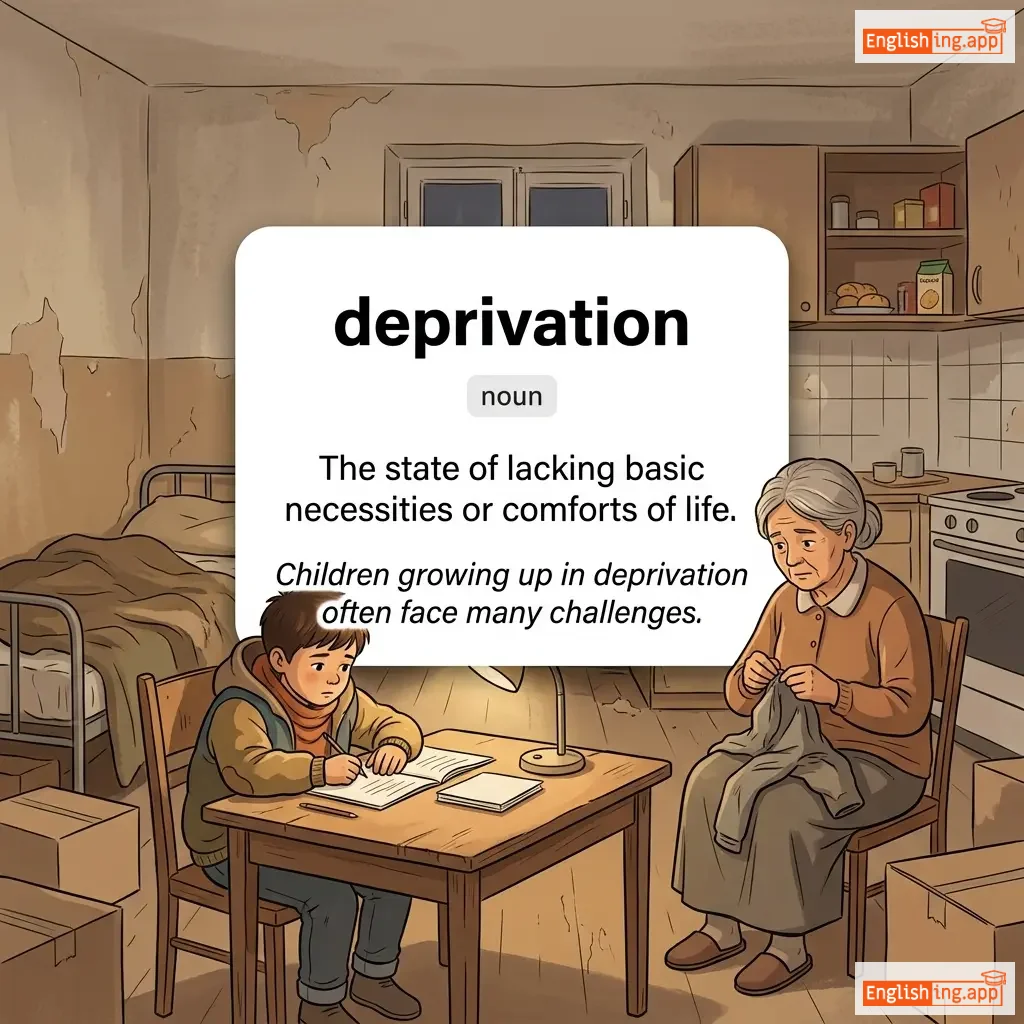
The state of lacking basic necessities or comforts of life.
••••••
|
Children growing up in deprivation often face many challenges. |
在贫困中长大的孩子往往面临许多挑战。
Zài pínkùn zhōng zhǎngdà de háizi wǎngwǎng miànlín xǔduō tiǎozhàn.
••••••
|
sleep deprivation |
A state of not getting enough sleep.
••••••
|
睡眠不足
shuìmián bùzú
••••••
|
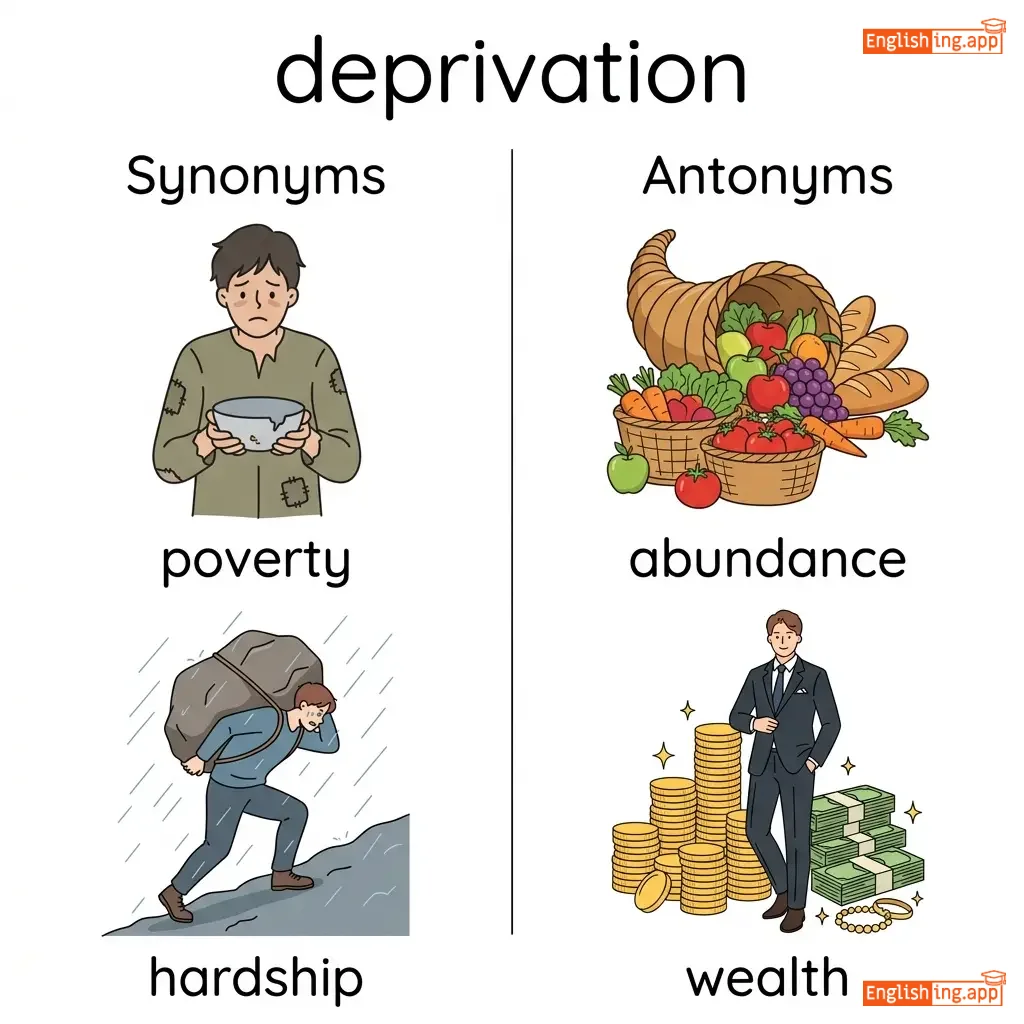
poverty, hardship, lack, deficiency, want
••••••
|
abundance, wealth, plenty
••••••
|
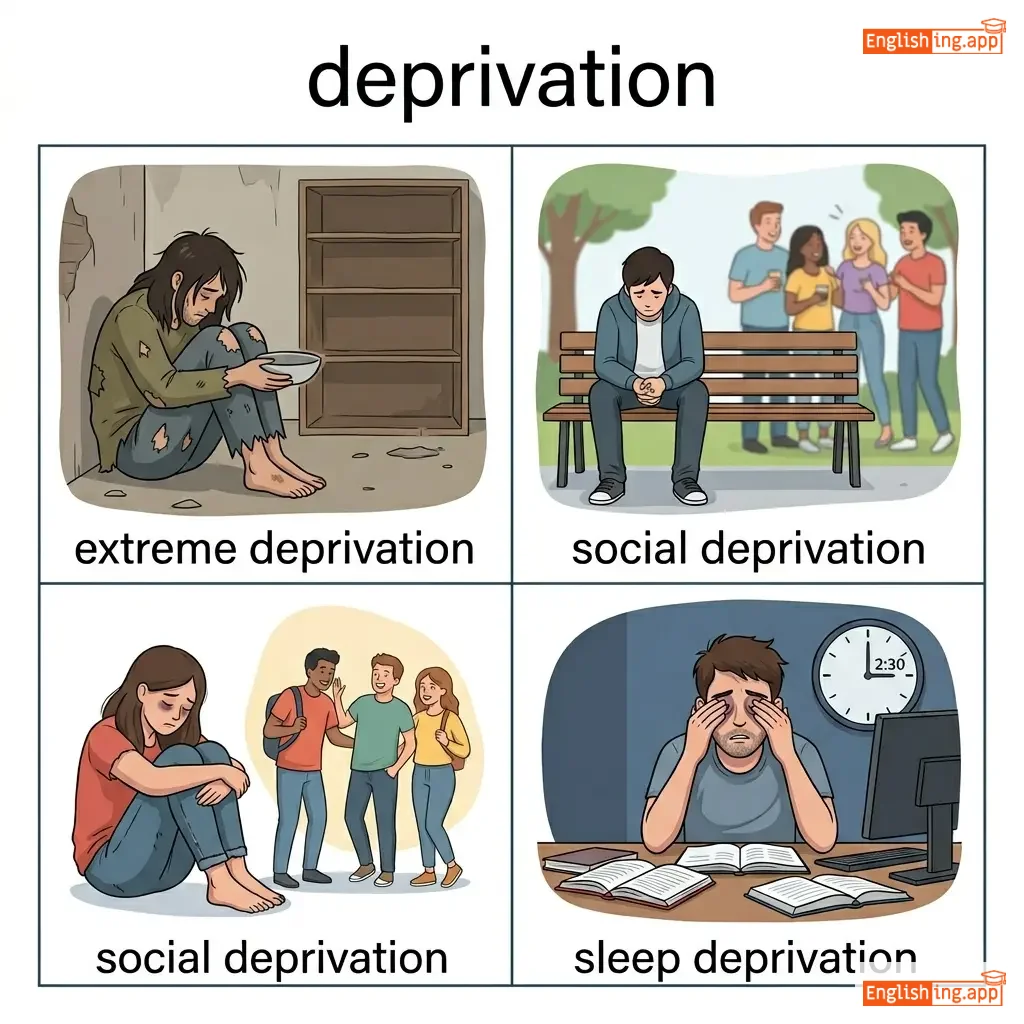
extreme deprivation, social deprivation, sleep deprivation, sensory deprivation
••••••
|
Deprivation意味着derive + provision不存在=贫困
••••••
|
|
#2336
😔
|
/dɪˈprɛʃən/
noun
(抑郁症)
••••••
|
- •••••• |
抑郁症
yiyuzheng
••••••
|
- •••••• | - •••••• | - •••••• | - •••••• |
A state of severe sadness or hopelessness; also a prolonged downturn in economic activity.
••••••
|
She has been battling depression for several months. |
她已经与抑郁症斗争了几个月。
Ta yijing yu yiyuzheng douzheng le ji ge yue.
••••••
|
economic depression |
A long-term downturn in economic activity.
••••••
|
经济萧条
jingji xiaotiao
••••••
|
melancholy, sadness, gloom, slump, recession
••••••
|
happiness, joy, boom
••••••
|
suffer from depression, clinical depression, deep depression, economic depression
••••••
|
抑郁症 = deep + pressure = 内心沉重的压迫感。
••••••
|
|
#2337
😔
|
/dɪˈprɛst/
adjective
(dɪˈprɛst)
••••••
|
- •••••• |
沮喪
jǔsàng
••••••
|
- •••••• | - •••••• | - •••••• | - •••••• |
Feeling very sad and without hope; in a state of unhappiness.
••••••
|
She felt depressed after losing her job. |
失去工作後,她感到沮喪。
Shīqù gōngzuò hòu, tā gǎndào jǔsàng.
••••••
|
feeling blue |
Feeling sad or unhappy.
••••••
|
感到憂鬱
gǎndào yōuyù
••••••
|
sad, downcast, gloomy, unhappy, melancholic
••••••
|
happy, cheerful, joyful
••••••
|
deeply depressed, clinically depressed, depressed mood
••••••
|
沮喪是失去工作後的感覺,就像感到憂鬱一樣。
••••••
|
|
#2338
💊
|
/dɪˈprɛsənt/
noun
(抑制剂)
••••••
|
- •••••• |
抑制剂
yìzhì jì
••••••
|
- •••••• | - •••••• | - •••••• | - •••••• |
A drug that reduces functional or nervous activity in the body.
••••••
|
Alcohol acts as a depressant on the central nervous system.
酒精在中枢神经系统中作为抑制剂发挥作用。
••••••
|
酒精在中枢神经系统中作为抑制剂发挥作用。
Jiǔjīng zài zhōngshū shénjīng xìtǒng zhōng zuòwéi yìzhì jì fāhuī zuòyòng.
••••••
|
- •••••• | - •••••• | - •••••• |
sedative, tranquilizer, downer, suppressant
••••••
|
stimulant, energizer
••••••
|
depressant effect, central depressant, depressant drugs
••••••
|
抑制剂让身体放松,如安眠药。
••••••
|
|
#2339
😞
|
/dɪˈprɛs/
verb
(抑郁)
••••••
|
- •••••• |
压抑
yāyì
••••••
|
depressed
抑郁
••••••
|
depressed
抑郁
••••••
|
depresses
抑郁
••••••
|
depressing
抑郁
••••••
|
To make someone feel sad or without hope; to reduce the level or strength of something.
••••••
|
The gloomy weather tends to depress people.
阴郁的天气常常使人感到抑郁。
••••••
|
阴郁的天气常常使人感到抑郁。
Yīnyù de tiānqì chángcháng shǐ rén gǎndào yāyì.
••••••
|
press down
压下来
••••••
|
To push something down physically or emotionally.
••••••
|
压下来
yā xiàlái
••••••
|
sadden, discourage, lower, weaken, deject
••••••
|
encourage, uplift, inspire
••••••
|
depress the economy, depress the price, deeply depress, depress mood
••••••
|
Depress就是压下来 - 抑郁也让人感觉压抑。
••••••
|
|
#2340
⚔️
|
/ˌdɛprɪˈdeɪʃən/
noun
(depriˈdeɪʃən)
••••••
|
- •••••• |
掠夺
lüèduó
••••••
|
- •••••• | - •••••• | - •••••• | - •••••• |
An act of attacking or plundering; damage caused by such acts.
••••••
|
The villagers feared the depredation of wild animals at night. |
村民们害怕夜间野生动物的掠夺。
Cūnmínmen hàipà yèjiān yěshēng dòngwù de lüèduó.
••••••
|
- •••••• | - •••••• | - •••••• |
plunder, raid, destruction, pillage, devastation
••••••
|
protection, preservation, safeguard
••••••
|
depredation of war, animal depredation, depredation on crops
••••••
|
Depredation 联想到掠夺和破坏。
••••••
|
Vocabulary Quiz
Test your vocabulary by matching words with their translations or meanings.
Login to take the quiz
Comments (0)
Share your thoughts and join the discussion.
Join the discussion by logging in
Login to CommentNo comments yet
Be the first to share your thoughts!