

Swipe left or right, or use the buttons. Tap image to zoom.
例句翻译
单词
Lesson 211Lesson 211 - 遮罩切换
|
表情符号
|
单词 | Images | 翻译 | 过去时 | 过去分词 | 第三人称单数 | 动名词 | 含义 | 例句 | 例句翻译 | 示例表达 | 示例表达含义 | 示例表达翻译 | 同义词 | 反义词 | 搭配词 | 助记符 |
|---|---|---|---|---|---|---|---|---|---|---|---|---|---|---|---|---|---|
|
#6301
☀️
|
/pɑːrtʃ/
verb
(帕奇)
••••••
|
- •••••• |
使干燥
shi ganzao
••••••
|
parched
帕奇德
••••••
|
parched
帕奇德
••••••
|
parches
帕奇斯
••••••
|
parching
帕奇英
••••••
|
to make something extremely dry, especially by exposure to heat
••••••
|
The scorching sun began to parch the fields.
炙热的太阳开始把田地弄干。
••••••
|
炙热的太阳开始把田地弄干。
Zhire de taiyang kaishi ba tiandi nong gan.
••••••
|
parched throat
干渴的喉咙
••••••
|
a very dry throat due to thirst or heat
••••••
|
干渴的喉咙
ganke de houshui
••••••
|
dry, scorch, dehydrate, wither, desiccate
••••••
|
soak, moisten, drench
••••••
|
parch the land, parched lips, parched soil, parched throat
••••••
|
Parch - 就像没有水一切都干了。
••••••
|
|
#6302
🏛️
|
/ˈpɑːrləmənt/
noun
(议会)
••••••
|
- •••••• |
议会
yihui
••••••
|
- •••••• | - •••••• | - •••••• | - •••••• |
the highest legislative body in a country
••••••
|
The bill was passed in parliament after a long debate. |
该法案在议会经过长时间的辩论后通过。
Gāi fǎ'àn zài yìhuì jīngguò cháng shíjiān de biànlùn hòu tōngguò.
••••••
|
hung parliament |
a parliament where no single party has a majority
••••••
|
悬挂议会
xuánguà yìhuì
••••••
|
assembly, legislature, congress, house, senate
••••••
|
dictatorship, monarchy
••••••
|
parliament session, member of parliament, dissolve parliament, pass through parliament
••••••
|
议会(yìhuì)是立法的最高机关,国家事务的决定中心 🏛️
••••••
|
|
#6303
🤝
|
/ˈpɑːrli/
noun, verb
(帕尔雷)
••••••
|
- •••••• |
谈判
tánpàn
••••••
|
parleyed
帕尔雷德
••••••
|
parleyed
帕尔雷德
••••••
|
parleys
帕尔雷斯
••••••
|
parleying
帕尔雷英
••••••
|
a discussion between opposing sides, especially to negotiate terms
••••••
|
The generals met to parley over the terms of surrender.
将军们会面商讨投降的条件。
••••••
|
将军们会面商讨投降的条件。
Jiāngjūnmen huìmiàn shāngtǎo tóuxiáng de tiáojiàn.
••••••
|
- •••••• | - •••••• | - •••••• |
discussion, negotiation, talk, conference, dialogue
••••••
|
silence, refusal
••••••
|
hold a parley, parley over, peace parley, diplomatic parley
••••••
|
Parley 就是谈判,是双方讨论条件的会议。
••••••
|
|
#6304
💬
|
/ˈpɑːrləns/
noun
(帕尔兰斯)
••••••
|
- •••••• |
行话
xínghuà
••••••
|
- •••••• | - •••••• | - •••••• | - •••••• |
a particular way of speaking or using words, common to a group
••••••
|
In legal parlance, the term has a different meaning. |
在法律行话中,这个术语有不同的含义。
Zài fǎlǜ xínghuà zhōng, zhège shùyǔ yǒu bùtóng de hányì.
••••••
|
- •••••• | - •••••• | - •••••• |
jargon, terminology, diction, phraseology, lingo
••••••
|
silence, quiet
••••••
|
in common parlance, legal parlance, medical parlance, technical parlance
••••••
|
Parlance 就是 'Particular Language' – 特定语言 💬
••••••
|
|
#6305
⚖️
|
/ˈpærɪti/
noun
(pærɪti)
••••••
|
- •••••• |
平价
pingjia
••••••
|
- •••••• | - •••••• | - •••••• | - •••••• |
the state or condition of being equal, especially in status or pay
••••••
|
The campaign aims to achieve pay parity between men and women. |
这项运动旨在实现男女之间的工资平等。
Zhe xiang yundong zhi zai shixian nan nu zhijian de gongzi pingdeng.
••••••
|
parity of esteem |
equal respect for different groups or individuals
••••••
|
尊重平等
zunzhong pingdeng
••••••
|
equality, equivalence, uniformity, similarity, balance
••••••
|
inequality, disparity
••••••
|
gender parity, pay parity, parity of esteem, parity check
••••••
|
平价如平 – 相等 ⚖️
••••••
|
|
#6306
🗼
|
/pəˈrɪʒən/
adjective
(巴黎人)
••••••
|
- •••••• |
与巴黎相关
yu bālí xiāngguān
••••••
|
- •••••• | - •••••• | - •••••• | - •••••• |
relating to Paris or its people
••••••
|
She wore a Parisian style dress at the party. |
她在派对上穿着巴黎风格的裙子。
Tā zài pàiduì shàng chuānzhuó bālí fēnggé de qúnzi.
••••••
|
- •••••• | - •••••• | - •••••• |
French, Gallic, continental, urban, cosmopolitan
••••••
|
rural, provincial
••••••
|
Parisian culture, Parisian café, Parisian fashion, Parisian lifestyle
••••••
|
巴黎人是巴黎的居民 – 🗼 巴黎风格,就是巴黎人的风格
••••••
|
|
#6307
⛪
|
/ˈpærɪʃ/
noun
(帕里什)
••••••
|
- •••••• |
教区
jiàoqū
••••••
|
- •••••• | - •••••• | - •••••• | - •••••• |
A local church community or the area served by a parish church.
••••••
|
The parish gathered for Sunday service. |
教区成员为周日的服务聚集在一起。
jiàoqū chéngyuán wèi zhōurì de fúwù jùjí zài yīqǐ.
••••••
|
parish pump |
relating to local or narrow-minded politics
••••••
|
地方政治
dìfāng zhèngzhì
••••••
|
church community, congregation, district, diocese
••••••
|
secular community
••••••
|
parish church, parish priest, parish community, parish council
••••••
|
Parish代表教区区域——牧师总是与当地教堂社区合作。
••••••
|
|
#6308
🚫
|
/pəˈraɪə/
noun
(帕里亚)
••••••
|
- •••••• |
弃儿
qì ér
••••••
|
- •••••• | - •••••• | - •••••• | - •••••• |
An outcast; someone who is rejected by society or a social group.
••••••
|
After the scandal, he became a social pariah. |
丑闻过后,他成了一个社会弃儿。
chǒuwén guò hòu, tā chéngle yīgè shèhuì qì ér.
••••••
|
- •••••• | - •••••• | - •••••• |
outcast, reject, exile, untouchable
••••••
|
insider, accepted
••••••
|
social pariah, treated as a pariah, political pariah
••••••
|
Pariah 意味着 outsider—记住,'弃儿'是被社会排除的人。
••••••
|
|
#6309
📝
|
/ˌpɛrənˈθɛtɪkəl/
adjective
(括号的)
••••••
|
- •••••• |
括号中的评论
kuòhào zhōng de pínglùn
••••••
|
- •••••• | - •••••• | - •••••• | - •••••• |
Relating to or expressed in parentheses; a side remark or digression.
••••••
|
He added a parenthetical comment during the lecture. |
他在讲座期间添加了一个括号中的评论。
Tā zài jiǎngzuò qījiān tiānjiāle yīgè kuòhào zhōng de pínglùn.
••••••
|
- •••••• | - •••••• | - •••••• |
incidental, explanatory, supplementary, digressive
••••••
|
main, central
••••••
|
parenthetical remark, parenthetical statement, parenthetical comment, parenthetical phrase
••••••
|
Parenthetical 就像在括号里添加的额外信息—一个旁白。
••••••
|
|
#6310
🔤
|
/pəˈrɛnθəsɪs/
noun
(parenthesis)
••••••
|
- •••••• |
括号
kuòhào
••••••
|
- •••••• | - •••••• | - •••••• | - •••••• |
A pair of curved marks ( ) used to enclose words or numbers; also an interruption or digression in speech or writing.
••••••
|
The explanation was given in a parenthesis within the text. |
该解释在文本中的括号内给出。
Gāi jiěshì zài wénběn zhōng de kuòhào nèi gěi chū.
••••••
|
in parenthesis |
as a side remark or afterthought
••••••
|
在括号中
zài kuòhào zhōng
••••••
|
bracket, aside, insertion, digression
••••••
|
main text, continuity
••••••
|
use parenthesis, within parenthesis, open parenthesis, close parenthesis
••••••
|
Parenthesis 意思是括号 — 在中文中,括号常用来表示附加信息。
••••••
|
|
#6311
👪
|
/ˈpɛrəntɪdʒ/
noun
(父母身份)
••••••
|
- •••••• |
家族背景
jiazu beijing
••••••
|
- •••••• | - •••••• | - •••••• | - •••••• |
The identity and origins of one's parents; descent or lineage.
••••••
|
Her noble parentage gave her access to the royal court. |
她的高贵家族背景使她有机会进入皇宫。
Tā de gāoguì jiāzú bèijǐng shǐ tā yǒu jīhuì jìnrù huánggōng.
••••••
|
- •••••• | - •••••• | - •••••• |
lineage, ancestry, descent, heritage, bloodline
••••••
|
offspring, progeny
••••••
|
noble parentage, humble parentage, unknown parentage, royal parentage
••••••
|
Parent + age 代表家族背景,父母的血统决定你的身份。
••••••
|
|
#6312
💊
|
/ˌpærəˈɡɔːrɪk/
noun
(帕雷戈里克)
••••••
|
- •••••• |
含鸦片的药物
hán yāpiàn de yàowù
••••••
|
- •••••• | - •••••• | - •••••• | - •••••• |
a medicine containing opium, once used to relieve pain and diarrhea
••••••
|
Doctors once prescribed paregoric to treat diarrhea in children. |
医生曾经开具帕雷戈里克来治疗儿童的腹泻。
Yīshēng céngjīng kāijù Pàléigēlìkè lái zhìliáo értóng de fùxiè.
••••••
|
- •••••• | - •••••• | - •••••• |
medicine, tincture, remedy, opiate
••••••
|
toxin, poison
••••••
|
paregoric tincture, prescribed paregoric, paregoric treatment
••••••
|
Pare + gori = 药物减轻疼痛和腹泻的药物
••••••
|
|
#6313
🍏
|
/per/
verb
(per)
••••••
|
- •••••• |
削皮
xiao pi
••••••
|
pared
pared
••••••
|
pared
pared
••••••
|
pares
pares
••••••
|
paring
paring
••••••
|
to cut away the outer covering or reduce something gradually
••••••
|
She pared the apple before eating it.
她在吃苹果前削了皮。
••••••
|
她在吃苹果前削了皮。
Ta zai chi pingguo qian xiao le pi.
••••••
|
pare down
减少
••••••
|
to reduce something gradually by removing parts
••••••
|
减少
jianshao
••••••
|
trim, cut, peel, reduce, whittle
••••••
|
expand, enlarge, grow
••••••
|
pare down expenses, pare nails, pare an apple, pare costs
••••••
|
削皮就像'pare'外皮。
••••••
|
|
#6314
📜
|
/ˈpɑːrtʃmənt/
noun
(pāchí mèn tǐ)
••••••
|
- •••••• |
羊皮纸
yángpí zhǐ
••••••
|
- •••••• | - •••••• | - •••••• | - •••••• |
a thin material made from animal skin, used in the past for writing
••••••
|
The ancient manuscript was written on parchment. |
古老的手稿写在羊皮纸上。
Gǔlǎo de shǒugǎo xiě zài yángpí zhǐ shàng.
••••••
|
- •••••• | - •••••• | - •••••• |
vellum, scroll, manuscript, paper, document
••••••
|
digital text, electronic file
••••••
|
parchment paper, ancient parchment, roll of parchment
••••••
|
Parchment paper 就像古老的羊皮纸一样。
••••••
|
|
#6315
🌵
|
/pɑːrtʃt/
adjective
(pɑːrtʃt)
••••••
|
- •••••• |
极度口渴
jidù kǒukě
••••••
|
- •••••• | - •••••• | - •••••• | - •••••• |
extremely dry, especially because of heat or thirst
••••••
|
After walking in the desert, he was parched with thirst. |
在沙漠中走路后,他极度口渴。
Zài shāmò zhōng zǒulù hòu, tā jídù kǒukě.
••••••
|
- •••••• | - •••••• | - •••••• |
thirsty, dehydrated, dry, scorched, withered
••••••
|
hydrated, refreshed, moist
••••••
|
parched land, parched lips, parched desert, parched skin
••••••
|
Parched 就是像沙漠中走路后口渴的感觉。
••••••
|
|
#6316
❓
|
/ˌpærəˈdɒksɪkəl/
adjective
(pàlèduōxīkǎo)
••••••
|
- •••••• |
矛盾的
máodùn de
••••••
|
- •••••• | - •••••• | - •••••• | - •••••• |
Seemingly contradictory or opposed to common sense, yet possibly true.
••••••
|
It is paradoxical that standing is often more tiring than walking. |
站立常常比走路更累,这很矛盾。
Zhànlì chángcháng bǐ zǒulù gèng lèi, zhè hěn máodùn.
••••••
|
- •••••• | - •••••• | - •••••• |
contradictory, puzzling, illogical, ironic, inconsistent
••••••
|
logical, consistent, straightforward
••••••
|
paradoxical situation, paradoxical outcome, paradoxical effect, paradoxical nature
••••••
|
矛盾的(máodùn de)意味着看起来不合常理,但可能是真的。
••••••
|
|
#6317
🪱
|
/ˈpærəsaɪt/
noun
(páràsàit)
••••••
|
- •••••• |
寄生虫
jìshēngchóng
••••••
|
- •••••• | - •••••• | - •••••• | - •••••• |
An organism that lives in or on another organism and benefits at the host’s expense.
••••••
|
The parasite weakened the tree by feeding on its nutrients. |
寄生虫通过吸取树木的营养,使其变弱。
Jìshēngchóng tōngguò xīqǔ shùmù de yíngyǎng, shǐ qí biàn ruò.
••••••
|
social parasite |
a person who takes advantage of others without giving anything back
••••••
|
社会寄生虫
Shèhuì jìshēngchóng
••••••
|
freeloader, leech, sponger, hanger-on
••••••
|
host, benefactor
••••••
|
intestinal parasite, deadly parasite, social parasite
••••••
|
Parasite = para + site – 在别的地方生活,像寄生虫一样。
••••••
|
|
#6318
📝
|
/ˈpærəfreɪz/
verb
(happiness)
••••••
|
- •••••• |
幸福
xingfu
••••••
|
paraphrased
••••••
|
paraphrased
••••••
|
paraphrases
••••••
|
paraphrasing
••••••
|
To express the meaning of something using different words, often to make it clearer.
••••••
|
The teacher asked the students to paraphrase the poem in their own words. |
当她收到奖项时,她无法掩饰自己的幸福。
Dāng tā shōudào jiǎngxiàng shí, tā wúfǎ yǎnshì zìjǐ de xìngfú.
••••••
|
paraphrase back |
to restate what someone said to confirm understanding
••••••
|
- •••••• |
reword, restate, rephrase, summarize
••••••
|
quote, repeat
••••••
|
paraphrase text, paraphrase sentence, paraphrase idea
••••••
|
Happiness in Chinese is '幸福' – like a state of joy and fulfillment.
••••••
|
|
#6319
🎒
|
/ˌpærəfəˈneɪliə/
noun
(帕拉费内利亚)
••••••
|
- •••••• |
设备
shebei
••••••
|
- •••••• | - •••••• | - •••••• | - •••••• |
Miscellaneous articles, especially equipment needed for a particular activity.
••••••
|
The fisherman carried all his fishing paraphernalia in a large box. |
渔夫把所有钓鱼设备放在一个大盒子里。
Yufu ba suoyou diaoyu shebei fang zai yige da hezi li.
••••••
|
- •••••• | - •••••• | - •••••• |
equipment, gear, apparatus, belongings, tools
••••••
|
essentials, basics
••••••
|
camping paraphernalia, sports paraphernalia, personal paraphernalia
••••••
|
Paraphernalia意味着设备–想象一切你需要的工具,就像 '设备' 一样。
••••••
|
|
#6320
🏰
|
/ˈpærəpɛt/
noun
(pàlāpèi)
••••••
|
- •••••• |
防护墙
fanghu qiang
••••••
|
- •••••• | - •••••• | - •••••• | - •••••• |
A low protective wall along the edge of a roof, balcony, or bridge.
••••••
|
The soldier hid behind the parapet for protection. |
士兵躲在防护墙后面以保障安全。
Shibing duozai fanghu qiang houmian yi baozhang anquan.
••••••
|
to raise the parapet |
to increase defense or protection
••••••
|
增加防御
zengjia fangyu
••••••
|
battlement, railing, barrier, wall
••••••
|
open edge, gap
••••••
|
stone parapet, parapet wall, behind the parapet
••••••
|
Parapet是防护墙,就像一个保护你的盾牌。
••••••
|
|
#6321
🧠
|
/ˌpærəˈnɔɪæk/
noun
(偏执的)
••••••
|
- •••••• |
偏执的人
piān zhí de rén
••••••
|
- •••••• | - •••••• | - •••••• | - •••••• |
A person who suffers from paranoia or exhibits extreme, irrational distrust and suspicion.
••••••
|
The paranoiac refused to leave his house, fearing everyone was against him. |
这个偏执的人拒绝离开家,因为他害怕每个人都反对他。
Zhè gè piān zhí de rén jù jué lí kāi jiā, yīnwèi tā hài pà měi gè rén dōu fǎn duì tā.
••••••
|
- •••••• | - •••••• | - •••••• |
paranoid, suspicious person, mistrustful person, cynic, neurotic
••••••
|
trustful person, confident person
••••••
|
paranoiac delusion, paranoiac fear, paranoiac tendencies
••••••
|
偏执的 = 不信任任何人的人
••••••
|
|
#6322
😰
|
/ˌpærəˈnɔɪə/
noun
(偏执狂)
••••••
|
- •••••• |
一种不合理且持续的感觉,认为别人想要伤害你或一直在监视你
yī zhǒng bù hé lǐ qiě chí xù de gǎn jué, rèn wéi bié rén xiǎng yào shāng hài nǐ huò yī zhí zài jiān shì nǐ
••••••
|
- •••••• | - •••••• | - •••••• | - •••••• |
an irrational and persistent feeling that people are 'out to get you' or are constantly watching you
••••••
|
His constant paranoia made it hard for him to trust anyone. |
他不断的偏执让他很难信任任何人。
Tā bù duàn de piān zhí ràng tā hěn nán xìn rèn rèn hé rén.
••••••
|
- •••••• | - •••••• | - •••••• |
suspicion, delusion, mistrust, fear
••••••
|
trust, confidence
••••••
|
extreme paranoia, develop paranoia, constant paranoia
••••••
|
Para的意思是靠近,总是觉得有人在观察你 = 偏执狂。
••••••
|
|
#6323
❤️🔥
|
/ˈpærəmʊr/
noun
(pàilè mù)
••••••
|
- •••••• |
情人
qingren
••••••
|
- •••••• | - •••••• | - •••••• | - •••••• |
a lover, especially an illicit one
••••••
|
The secret paramour was finally revealed. |
秘密情人终于被揭露。
Mìmì qíngrén zhōngyú bèi jiēlù.
••••••
|
- •••••• | - •••••• | - •••••• |
lover, sweetheart, beloved, flame
••••••
|
enemy, stranger
••••••
|
secret paramour, illicit paramour, passionate paramour
••••••
|
Paramour = 'Para' (别的) + 'amour' (爱), 所以paramour是一个秘密情人。
••••••
|
|
#6324
🏔️
|
/ˈpærəmaʊnt/
adjective
(pàirāmǎnt)
••••••
|
- •••••• |
至关重要
zhì guān zhòng yào
••••••
|
- •••••• | - •••••• | - •••••• | - •••••• |
more important than anything else; supreme
••••••
|
Safety is of paramount importance in this factory. |
在这家工厂里,安全至关重要。
Zài zhè jiā gōngchǎng lǐ, ānquán zhì guān zhòng yào.
••••••
|
- •••••• | - •••••• | - •••••• |
supreme, primary, dominant, foremost, chief
••••••
|
minor, trivial, secondary
••••••
|
paramount importance, paramount concern, paramount issue
••••••
|
就像山峰一样至高无上,就像 paramount。
••••••
|
|
#6325
📏
|
/pəˈræmɪtər/
noun
(参数)
••••••
|
- •••••• |
参数
canshu
••••••
|
- •••••• | - •••••• | - •••••• | - •••••• |
a limit, boundary, or measurable factor that defines or determines something
••••••
|
We need to set clear parameters for this project. |
我们需要为这个项目设定明确的参数。
Women xuyao wei zhege xiangmu sheding mingque de canshu.
••••••
|
- •••••• | - •••••• | - •••••• |
boundary, limit, guideline, criterion, specification
••••••
|
unlimited, boundless, unrestricted
••••••
|
set parameters, define parameters, within parameters, strict parameters
••••••
|
参数是定义界限,就像没有设置参数一样,什么也做不成。
••••••
|
|
#6326
🧑🦽
|
/ˈpærəlaɪz/
verb
(pærəlaɪz)
••••••
|
- •••••• |
麻痹
mábì
••••••
|
paralyzed
麻痹
••••••
|
paralyzed
麻痹
••••••
|
paralyzes
麻痹
••••••
|
paralyzing
麻痹
••••••
|
to cause someone or something to lose the ability to move or function normally
••••••
|
The sudden shock seemed to paralyze him.
突然的冲击似乎使他麻痹。
••••••
|
突如其来的冲击似乎使他麻痹。
Túrúqílái de chōngjí shìhū shǐ tā mábì.
••••••
|
paralyzed with fear
因恐惧而麻痹
••••••
|
to be unable to move or act due to extreme fear
••••••
|
因恐惧而麻痹
Yīn kǒngjù ér mábì
••••••
|
immobilize, disable, cripple, incapacitate, numb
••••••
|
activate, energize, mobilize
••••••
|
paralyze the system, paralyze the city, paralyze with fear, completely paralyze
••••••
|
极度恐惧时会让身体麻痹。
••••••
|
|
#6327
🦽
|
/pəˈræləsɪs/
noun
(麻痹)
••••••
|
- •••••• |
麻痹
mábì
••••••
|
- •••••• | - •••••• | - •••••• | - •••••• |
Loss of the ability to move in part or most of the body, typically as a result of illness or injury.
••••••
|
The accident left him with partial paralysis. |
事故使他部分瘫痪。
Shìgù shǐ tā bùfen tānhuàn.
••••••
|
analysis paralysis |
inability to make a decision due to overthinking
••••••
|
分析麻痹
fēnxī mábì
••••••
|
immobility, disablement, infirmity, numbness
••••••
|
movement, activity, mobility
••••••
|
partial paralysis, total paralysis, temporary paralysis, cause paralysis
••••••
|
麻痹 = '麻'和'不能动',意味着失去行动能力。
••••••
|
|
#6328
📐
|
/ˈpærəˌlɛlɪzəm/
noun
(平行主义)
••••••
|
- •••••• |
平行主义
pingxing zhuyi
••••••
|
- •••••• | - •••••• | - •••••• | - •••••• |
The state of being parallel or similar; in literature, the use of components in a sentence that are grammatically the same or similar in construction.
••••••
|
The writer used parallelism to give rhythm to his prose. |
作家使用平行主义为他的散文增添了节奏。
Zuojia shiyong pingxing zhuyi wei tade sanwen zengtian le jiezou.
••••••
|
- •••••• | - •••••• | - •••••• |
similarity, correspondence, analogy, balance
••••••
|
difference, contrast
••••••
|
structural parallelism, rhetorical parallelism, parallelism in literature
••••••
|
平行主义是通过在句子中使用相似的元素来产生节奏感。
••••••
|
|
#6329
➖
|
/ˈpærəˌlɛl/
noun, adjective, verb
••••••
|
- •••••• | - •••••• |
paralleled
••••••
|
paralleled
••••••
|
parallels
••••••
|
paralleling
••••••
|
Lines, objects, or events that are side by side and never meet; similarity or comparison.
••••••
|
The road runs parallel to the railway. |
- •••••• |
draw a parallel |
to make a comparison between two things
••••••
|
- •••••• |
equivalent, similar, analogous, comparable
••••••
|
divergent, different, separate
••••••
|
parallel lines, parallel universe, parallel development, parallel computing
••••••
|
No •••••• |
|
#6330
🌟
|
/ˈpærəɡɒn/
noun
(帕拉贡)
••••••
|
|
典范
dianfan
••••••
|
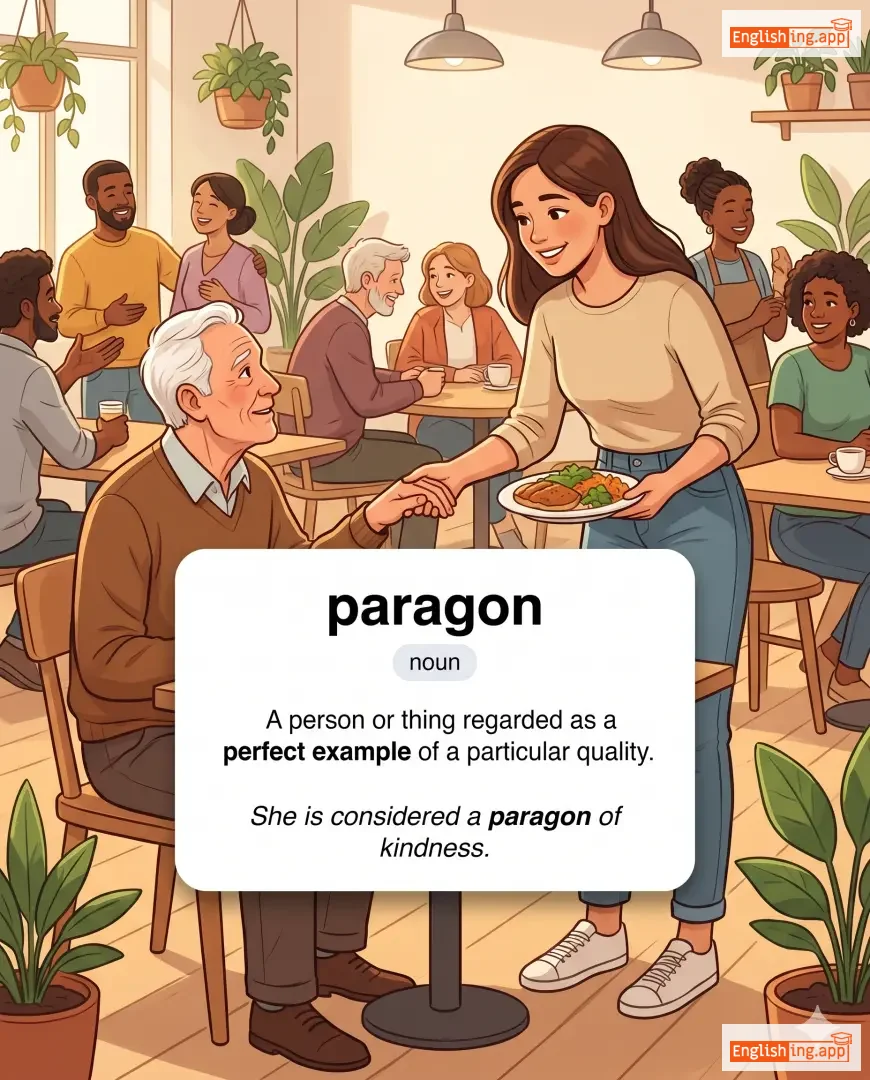
- •••••• | - •••••• | - •••••• | - •••••• |
A person or thing regarded as a perfect example of a particular quality.
••••••
|
She is considered a paragon of kindness. |
她被认为是善良的典范。
Ta bei renwei shi shanliang de dianfan.
••••••
|
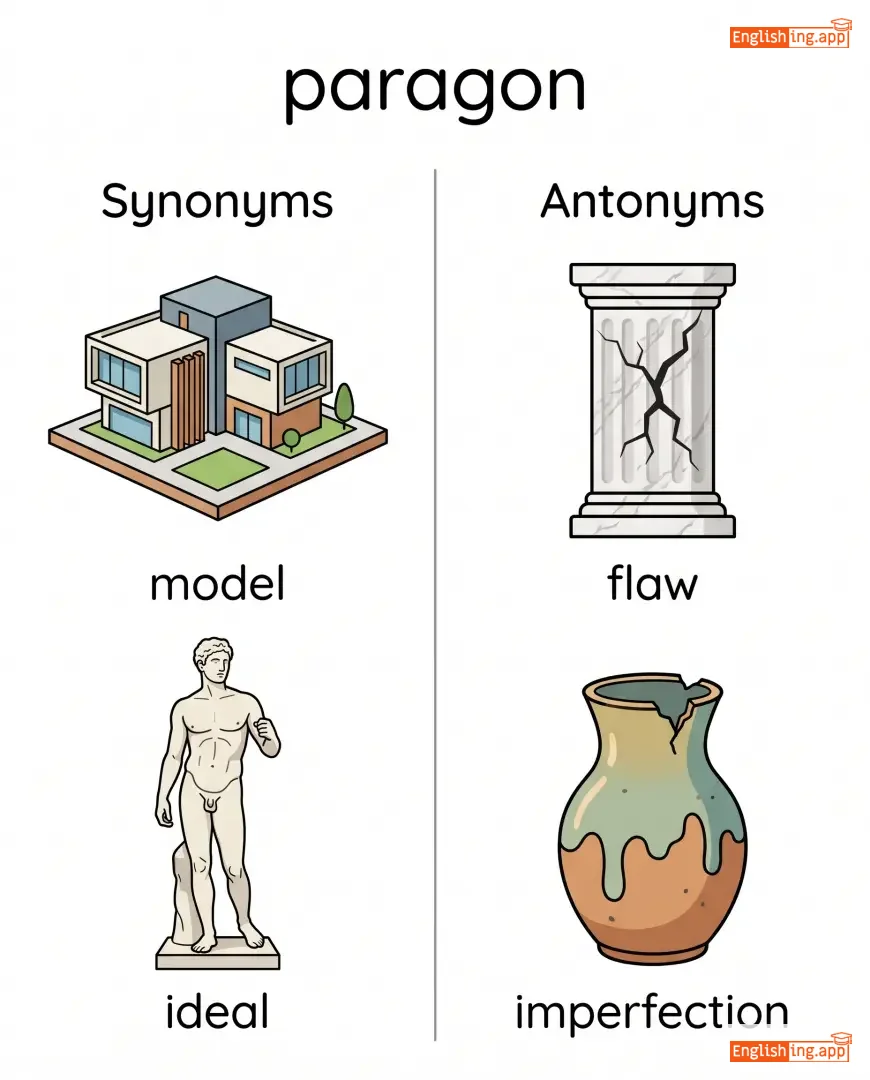
- •••••• | - •••••• | - •••••• |
model, ideal, epitome, exemplar, perfection
••••••
|
flaw, imperfection, blemish
••••••
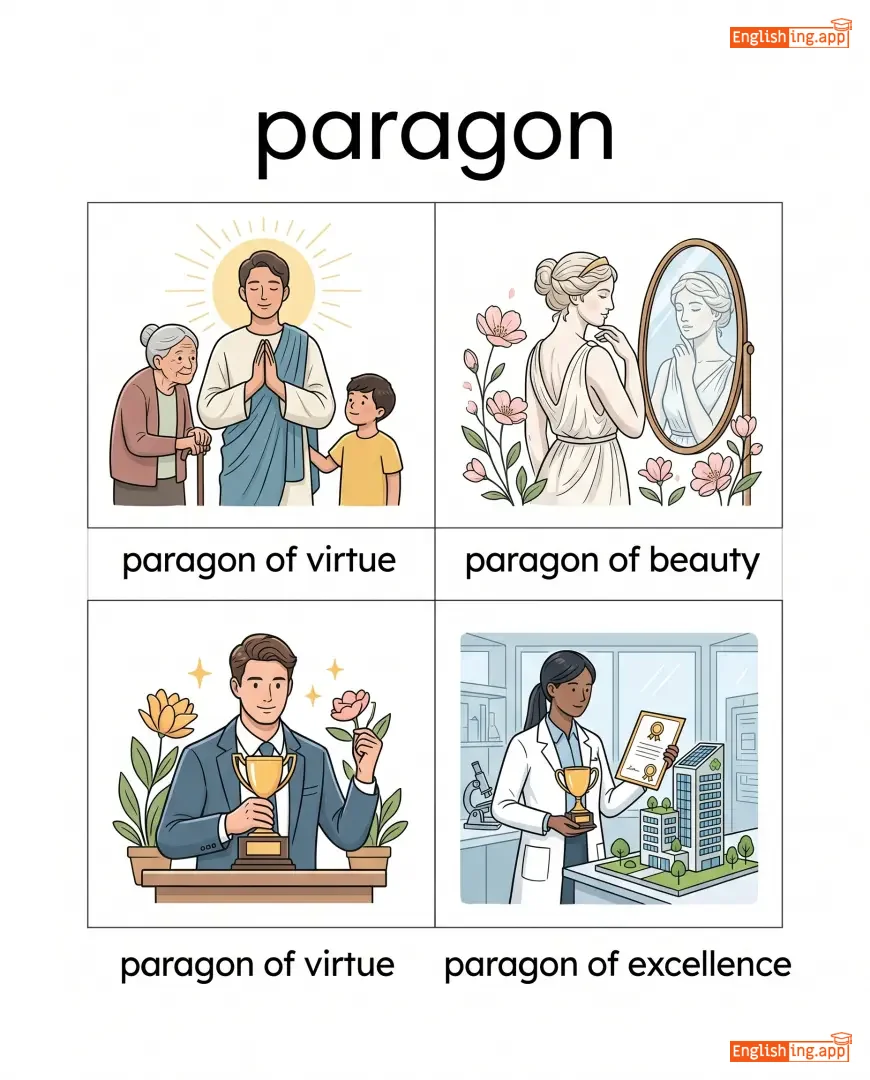
|
paragon of virtue, paragon of beauty, paragon of excellence
••••••
|
Paragon = 作为典范的人或物,就像典范一样完美。
••••••
|
Vocabulary Quiz
Test your vocabulary by matching words with their translations or meanings.
Login to take the quiz
Comments (0)
Share your thoughts and join the discussion.
Join the discussion by logging in
Login to CommentNo comments yet
Be the first to share your thoughts!