


Swipe left or right, or use the buttons. Tap image to zoom.
例句翻译
单词
Lesson 229Lesson 229 - 遮罩切换
|
表情符号
|
单词 | Images | 翻译 | 过去时 | 过去分词 | 第三人称单数 | 动名词 | 含义 | 例句 | 例句翻译 | 示例表达 | 示例表达含义 | 示例表达翻译 | 同义词 | 反义词 | 搭配词 | 助记符 |
|---|---|---|---|---|---|---|---|---|---|---|---|---|---|---|---|---|---|
|
#6840
🌟
|
/prɪˈdɒmɪnənt/
adjective
(普雷多米南特)
••••••
|
- •••••• |
占主导地位
zhàn zhǔdǎo dìwèi
••••••
|
- •••••• | - •••••• | - •••••• | - •••••• |
Having superior strength, influence, or authority; most common or noticeable.
••••••
|
The predominant color in the painting is blue.
这幅画中的主要颜色是蓝色。
••••••
|
这幅画中的主要颜色是蓝色。
Zhè fú huà zhōng de zhǔyào yánsè shì lán sè.
••••••
|
- •••••• | - •••••• | - •••••• |
main, chief, principal, prevailing, dominant
••••••
|
minor, insignificant, subordinate
••••••
|
predominant role, predominant feature, predominant color, predominant factor
••••••
|
占主导地位意味着最显著或最强大的。记住,它与 'dominant' 相关。
••••••
|
|
#6841
👍
|
/prɪˈfɜːr/
verb
(普雷费尔)
••••••
|
|
更喜欢
gèng xǐ huān
••••••
|
preferred
普雷费尔德
••••••
|
preferred
普雷费尔德
••••••
|
prefers
普雷费尔斯
••••••
|
preferring
普雷费林
••••••
|
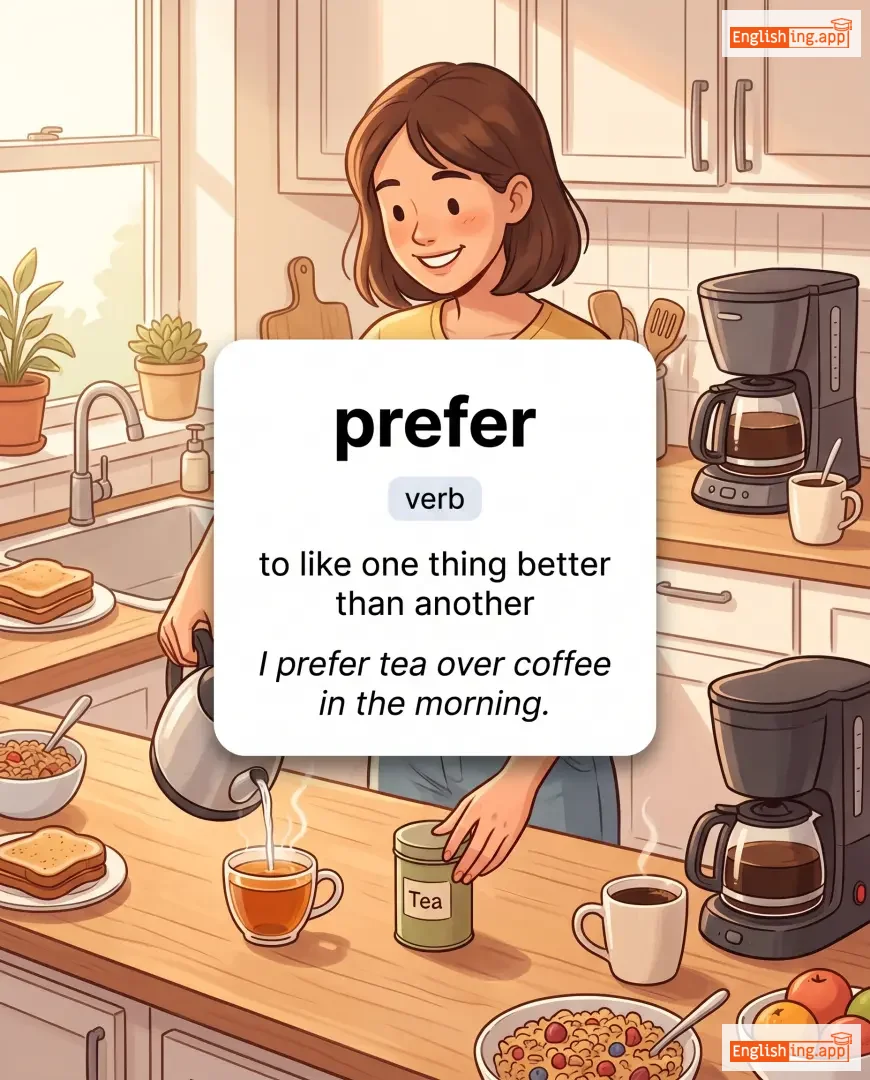
to like one thing better than another
••••••
|
I prefer tea over coffee in the morning.
我早上更喜欢喝茶而不是咖啡。
••••••
|
我早上更喜欢喝茶而不是咖啡。
Wǒ zǎo shang gèng xǐ huān hē chá ér bù shì kā fēi.
••••••
|
prefer not to say
更喜欢不说
••••••
|
to avoid giving an answer or sharing information
••••••
|
更喜欢不说
gèng xǐ huān bù shuō
••••••
|
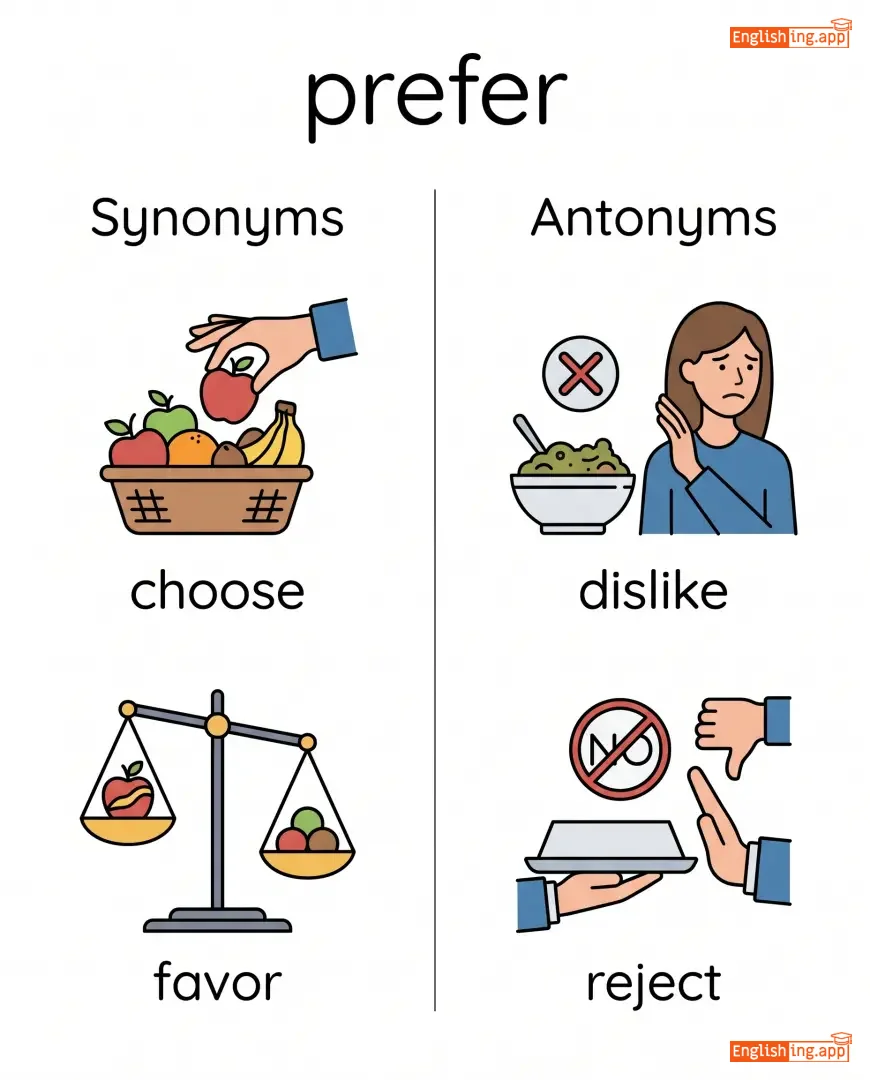
choose, favor, like, favor over
••••••
|
dislike, reject, avoid
••••••
|
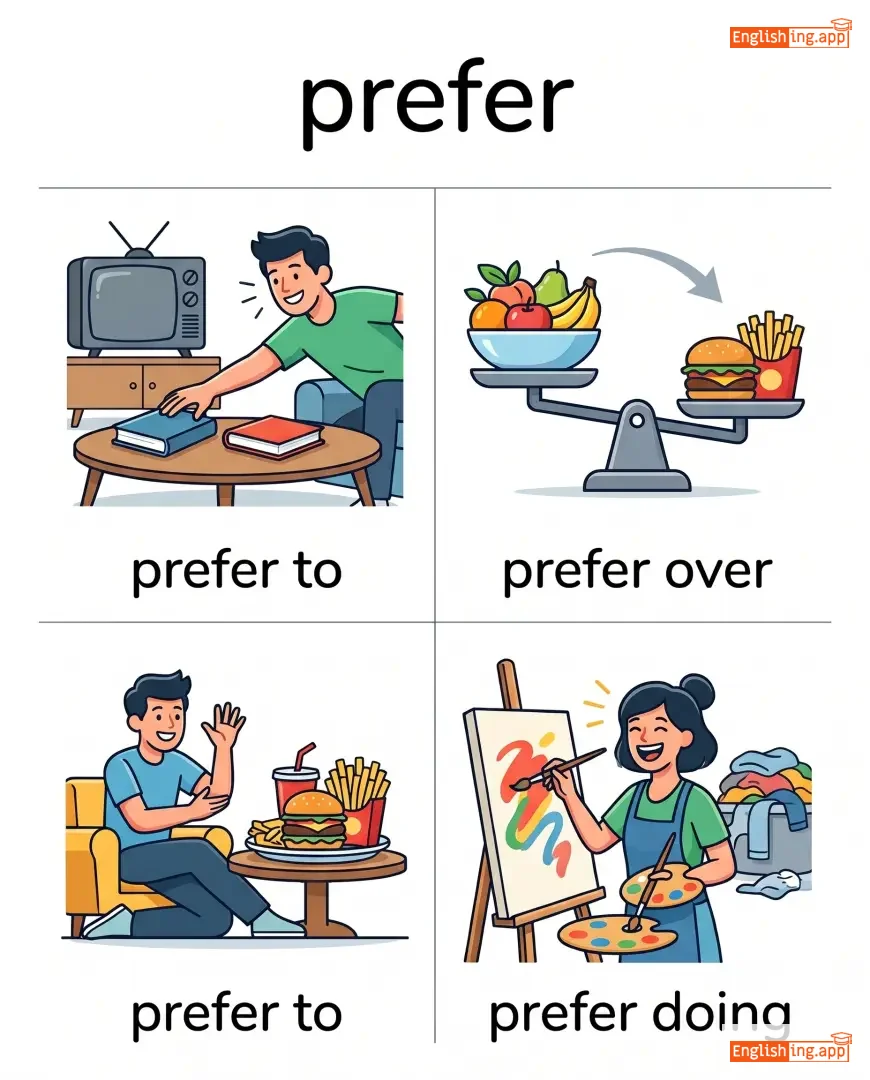
prefer to, prefer over, prefer doing
••••••
|
更喜欢就是先挑出自己最爱的那个
••••••
|
|
#6842
📝
|
/ˈprɛfətɔːri/
adjective
(前言的)
••••••
|
- •••••• |
前言
qianyan
••••••
|
- •••••• | - •••••• | - •••••• | - •••••• |
serving as an introduction or preface
••••••
|
He made some prefatory remarks before the lecture began. |
他在讲座开始前做了一些前言性的评论。
Ta zai jiangzuo kaishi qian zuo le yixie qianyanxing de pinglun.
••••••
|
- •••••• | - •••••• | - •••••• |
introductory, preliminary, opening, prolog
••••••
|
concluding, final
••••••
|
prefatory remarks, prefatory note, prefatory statement
••••••
|
Prefatory 就是像前言一样,用来介绍
••••••
|
|
#6843
📖
|
/ˈprɛfəs/
noun
(préfaces)
••••••
|
- •••••• |
前言
qianyan
••••••
|
- •••••• | - •••••• | - •••••• | - •••••• |
an introduction to a book, speech, or other written work
••••••
|
The author explained his motivation in the preface.
作者在前言中解释了他的动机。
••••••
|
作者在前言中解释了他的动机。
zuòzhě zài qián yán zhōng jiěshìle tā de dòngjī.
••••••
|
by way of preface
通过前言
••••••
|
as an introduction or preliminary remark
••••••
|
通过前言
tōngguò qián yán
••••••
|
introduction, foreword, prologue, opening
••••••
|
epilogue, conclusion
••••••
|
book preface, preface by author, preface remarks
••••••
|
face = 前言, 是一本书的开头部分
••••••
|
|
#6844
✨
|
/ˌpriːɪɡˈzɪstəns/
noun
(预存在)
••••••
|
- •••••• |
预存在
yù cúnzài
••••••
|
- •••••• | - •••••• | - •••••• | - •••••• |
the state of existing before something else
••••••
|
Philosophers often debated the preexistence of the soul. |
哲学家们常常辩论灵魂的预存在。
Zhéxuéjiā men chángcháng biànlùn línghún de yù cúnzài.
••••••
|
- •••••• | - •••••• | - •••••• |
prior existence, antecedence, prelife
••••••
|
nonexistence, extinction
••••••
|
preexistence of the soul, preexistence theory
••••••
|
Preexist + ence = 存在之前的状态
••••••
|
|
#6845
⏳
|
/ˌpriːɪɡˈzɪst/
verb
(pǐrì-ìkèsīt)
••••••
|
- •••••• |
提前存在
tíqián cúnzài
••••••
|
preexisted
preexisted
••••••
|
preexisted
preexisted
••••••
|
preexists
preexists
••••••
|
preexisting
preexisting
••••••
|
to exist beforehand or before something else
••••••
|
These customs preexist the arrival of modern technology.
dìz kástoms priéxist dé àrívál ǒf módèrn tèk nòlòjí.
••••••
|
这些习俗早于现代技术的到来而存在。
Zhèxiē xísú zǎo yú xiàndài jìshù de dàolái ér cúnzài.
••••••
|
- •••••• | - •••••• | - •••••• |
precede, antedate, predate, exist before
••••••
|
follow, succeed
••••••
|
preexist in, customs preexist, traditions preexist
••••••
|
Pre-exam是提前存在的
••••••
|
|
#6846
🏗️
|
/ˌpriːɪˈstæblɪʃ/
verb
(preˈestæblɪʃ)
••••••
|
- •••••• |
预先设定
yùxiān shèdìng
••••••
|
preestablished
预先建立
••••••
|
preestablished
预先建立
••••••
|
preestablishes
预先设定
••••••
|
preestablishing
预设
••••••
|
To establish or set up beforehand.
••••••
|
Certain rules were preestablished before the meeting.
在会议之前,一些规则已经预先设定。
••••••
|
在会议之前,一些规则已经预先设定。
Zài huìyì zhīqián, yīxiē guīzé yǐjīng yùxiān shèdìng.
••••••
|
- •••••• | - •••••• | - •••••• |
predetermine, preset, prearrange, predefine
••••••
|
abolish, cancel
••••••
|
preestablish rules, preestablish conditions, preestablish standards
••••••
|
预设(yùxiān shèdìng)就像提前设定规则。
••••••
|
|
#6847
📋
|
/ˌpriːɪnˈɡeɪdʒ/
verb
(pǐrī'ēnɡézhī)
••••••
|
- •••••• |
预先雇佣
yùxiān gùyōng
••••••
|
preengaged
pǐrī'ēnɡézhīd
••••••
|
preengaged
pǐrī'ēnɡézhīd
••••••
|
preengages
pǐrī'ēnɡézhīs
••••••
|
preengaging
pǐrī'ēnɡézhīng
••••••
|
To contract or engage beforehand; to arrange in advance.
••••••
|
The workers were preengaged before the project officially started.
项目正式开始前,工人们已被预先雇佣。
••••••
|
项目正式开始前,工人们已被预先雇佣。
Xiàngmù zhèngshì kāishǐ qián, gōngrénmen yǐ bèi yùxiān gùyōng.
••••••
|
- •••••• | - •••••• | - •••••• |
prearrange, preschedule, contract, reserve
••••••
|
cancel, disengage
••••••
|
preengage workers, preengage services, preengage staff
••••••
|
Pre-engage意味着提前安排
••••••
|
|
#6848
🪞
|
/priːn/
verb
(pǔrīn)
••••••
|
- •••••• |
修整
xiūzhěng
••••••
|
preened
pǔrīnd
••••••
|
preened
pǔrīnd
••••••
|
preens
pǔrīns
••••••
|
preening
pǔrīng
••••••
|
To groom or dress oneself with care; to show pride in one's appearance.
••••••
|
She preened in front of the mirror before leaving for the party.
她在镜子前整理自己,然后去派对。
••••••
|
她在镜子前修整自己,然后去派对。
Tā zài jìngzi qián xiūzhěng zìjǐ, ránhòu qù pàiduì.
••••••
|
- •••••• | - •••••• | - •••••• |
groom, primp, tidy, flaunt, boast
••••••
|
neglect, ignore
••••••
|
preen feathers, preen oneself, preen in front of mirror
••••••
|
Preen 就像是王子或公主一样,总是打扮自己。
••••••
|
|
#6849
🛡️
|
/priˈɛmptɪv/
adjective
(priˈɛmptɪv)
••••••
|
- •••••• |
预防性
yùfángxìng
••••••
|
- •••••• | - •••••• | - •••••• | - •••••• |
Serving or intended to prevent something by taking action first.
••••••
|
The government took preemptive measures to control inflation. |
政府采取了预防措施来控制通货膨胀。
Zhèngfǔ cǎiqǔle yùfáng cuòshī lái kòngzhì tōnghuò péngzhàng.
••••••
|
preemptive strike |
An attack made to prevent an anticipated attack by the enemy.
••••••
|
预防性打击
yùfángxìng dǎjí
••••••
|
preventive, precautionary, anticipatory, proactive
••••••
|
reactive, delayed, passive
••••••
|
preemptive strike, preemptive measure, preemptive action, preemptive step
••••••
|
预防性意味着提前采取措施以避免问题。
••••••
|
|
#6850
⏩
|
/priˈɛmpʃən/
noun
(priˈɛmpʃən)
••••••
|
- •••••• |
优先购买权
yōuxiān gòumǎi quán
••••••
|
- •••••• | - •••••• | - •••••• | - •••••• |
The act of taking action before someone else; the right to purchase or act before others.
••••••
|
The company exercised preemption to acquire the land before competitors. |
公司行使优先购买权,在竞争对手之前购买了土地。
Gōngsī xíngshǐ yōuxiān gòumǎi quán, zài jìngzhēng duìshǒu zhīqián gòumǎile tǔdì.
••••••
|
preemption right |
The right to purchase or act before others.
••••••
|
优先购买权
yōuxiān gòumǎi quán
••••••
|
priority, precedence, advantage, privilege, right
••••••
|
delay, submission, surrender
••••••
|
right of preemption, preemption clause, preemption policy, land preemption
••••••
|
Pre + Emption = 优先购买权
••••••
|
|
#6851
🛡️
|
/priːˈɛmpt/
verb
(priˈɛmpt)
••••••
|
- •••••• |
预防
yùfáng
••••••
|
preempted
priˈɛmptɛd
••••••
|
preempted
priˈɛmptɛd
••••••
|
preempts
priˈɛmpts
••••••
|
preempting
priˈɛmptɪŋ
••••••
|
To take action in order to prevent something from happening; to take the place of something.
••••••
|
The government acted quickly to preempt a financial crisis.
政府迅速采取行动,预防金融危机。
••••••
|
政府迅速采取行动,预防金融危机。
Zhèngfǔ xùnsù cǎiqǔ xíngdòng, yùfáng jīnróng wéijī.
••••••
|
preemptive strike
先发制人攻击
••••••
|
A first attack intended to prevent an enemy from doing something similar.
••••••
|
先发制人攻击
xiānfā zhìrén gōngjī
••••••
|
prevent, forestall, avert, anticipate
••••••
|
allow, permit, enable
••••••
|
preempt a crisis, preempt an attack, preempt action, preempt decision
••••••
|
Preempt意味着采取预防措施 — 在危机发生前就行动起来。
••••••
|
|
#6852
👩🔬
|
/priːˈɛmɪnənt/
adjective
(priˈɛmɪnənt)
••••••
|
- •••••• |
杰出
jiéchū
••••••
|
- •••••• | - •••••• | - •••••• | - •••••• |
Surpassing all others; very distinguished in some way.
••••••
|
She is a preeminent scientist in the field of genetics. |
她是遗传学领域的杰出科学家。
Tā shì yíchuánxué lǐngyù de jiéchū kēxuéjiā.
••••••
|
- •••••• | - •••••• | - •••••• |
outstanding, leading, distinguished, superior, foremost
••••••
|
ordinary, unremarkable, minor
••••••
|
preeminent role, preeminent position, preeminent leader, preeminent figure
••••••
|
杰出意味着比杰出更杰出,就像一颗在众星中最亮的星。
••••••
|
|
#6853
🏆
|
/priːˈɛmɪnəns/
noun
(priˈɛmɪnəns)
••••••
|
- •••••• |
卓越
zhuóyuè
••••••
|
- •••••• | - •••••• | - •••••• | - •••••• |
The fact of surpassing all others; superiority.
••••••
|
The university has gained preeminence in medical research. |
该大学在医学研究中已获得卓越地位。
Gāi dàxué zài yīxué yánjiū zhōng yǐ huòdé zhuóyuè dìwèi.
••••••
|
- •••••• | - •••••• | - •••••• |
supremacy, dominance, superiority, distinction, excellence
••••••
|
inferiority, mediocrity
••••••
|
preeminence in, cultural preeminence, scientific preeminence, historical preeminence
••••••
|
卓越意味着pre+eminence,已经elevated, 因此是优越性。🏆记住pre表示在,eminence表示卓越。
••••••
|
|
#6854
⚖️
|
/prɪˈdɒmɪneɪt/
verb
(普雷多米内特)
••••••
|
- •••••• |
占主导地位
zhàn zhǔdǎo dìwèi
••••••
|
predominated
普雷多米内特德
••••••
|
predominated
普雷多米内特德
••••••
|
predominates
普雷多米内特斯
••••••
|
predominating
普雷多米内特因
••••••
|
To be the strongest, most common, or most influential element.
••••••
|
Traditional values still predominate in the community.
传统价值观在社区中仍然占主导地位。
••••••
|
传统价值观在社区中仍然占主导地位。
Chuántǒng jiàzhíguān zài shèqū zhōng réngrán zhàn zhǔdǎo dìwèi.
••••••
|
- •••••• | - •••••• | - •••••• |
dominate, prevail, control, overshadow
••••••
|
yield, submit, follow
••••••
|
predominate in, values predominate, forces predominate, factors predominate
••••••
|
占主导地位就像支配一样,只是更常见且更有影响力。
••••••
|
|
#6855
🧒📚
|
/prɪˈkoʊʃəs/
adjective
(prikoushas)
••••••
|
- •••••• |
早熟
zaoshou
••••••
|
- •••••• | - •••••• | - •••••• | - •••••• |
Showing advanced development or maturity at an unusually early age.
••••••
|
The precocious child was reading novels at the age of five.
那个早熟的孩子五岁时就能阅读小说。
••••••
|
那个早熟的孩子五岁时就能阅读小说。
Nàgè zǎoshú de háizi wǔ suì shí jiù néng yuèdú xiǎoshuō.
••••••
|
- •••••• | - •••••• | - •••••• |
advanced, gifted, talented, mature, clever
••••••
|
slow, immature, delayed
••••••
|
precocious child, precocious talent, precocious behavior
••••••
|
Precocious像是早熟的孩子,展示更成熟的能力,尽管很小年纪。
••••••
|
|
#6856
👑
|
/prɪˈdɒmɪnəns/
noun
(普雷多米南斯)
••••••
|
- •••••• |
主导地位
zhudao diwei
••••••
|
- •••••• | - •••••• | - •••••• | - •••••• |
The state of being greater in number, strength, or importance.
••••••
|
The predominance of online shopping has changed retail forever. |
在线购物的主导地位永久地改变了零售业。
Zaixian gouwu de zhudao diwei yongjiu di gaibian le lingshouye.
••••••
|
- •••••• | - •••••• | - •••••• |
superiority, supremacy, dominance, prevalence
••••••
|
inferiority, minority, subordination
••••••
|
predominance of, show predominance, cultural predominance
••••••
|
Predominance 意味着主导地位 – 更多或更高的地位。
••••••
|
|
#6857
🙂
|
/ˌpriːdɪˈspoʊzd/
adjective
(pridispozd)
••••••
|
- •••••• |
倾向
qingxiang
••••••
|
- •••••• | - •••••• | - •••••• | - •••••• |
Likely or inclined to be affected by something in advance.
••••••
|
She is predisposed to trust people easily.
她容易轻易相信别人。
••••••
|
她容易轻易相信别人。
Ta rongyi qingyi xiangxin bieren.
••••••
|
- •••••• | - •••••• | - •••••• |
inclined, prone, susceptible, liable
••••••
|
immune, resistant, unwilling
••••••
|
predisposed to, naturally predisposed, predisposed toward
••••••
|
Predisposed 是指提前准备好被影响。
••••••
|
|
#6858
🧬
|
/ˌpriːdɪˈspoʊz/
verb
(prɪˈdɪspoʊz)
••••••
|
- •••••• |
使...易患
shǐ...yì huàn
••••••
|
predisposed
prɪˈdɪspoʊzd
••••••
|
predisposed
prɪˈdɪspoʊzd
••••••
|
predisposes
prɪˈdɪspoʊzɪz
••••••
|
predisposing
prɪˈdɪspoʊzɪŋ
••••••
|
To make someone more likely to behave in a certain way or be affected by something.
••••••
|
His genetics may predispose him to diabetes.
hɪz dʒəˈnɛtɪks meɪ prɪˈdɪspoʊz hɪm tə daɪəˈbiːtɪs.
••••••
|
他的基因可能使他容易得糖尿病。
Tā de jīyīn kěnéng shǐ tā róngyì dé tángniàobìng.
••••••
|
- •••••• | - •••••• | - •••••• |
incline, influence, prepare, bias
••••••
|
discourage, prevent, deter
••••••
|
predispose to, predispose someone, predispose toward
••••••
|
Pre + 易患 – 让某人更容易得某种病,类似于提前准备。
••••••
|
|
#6859
❤️
|
/ˌpriːdɪˈlɛkʃən/
noun
(普雷迪勒克申)
••••••
|
- •••••• |
偏好
pianhao
••••••
|
- •••••• | - •••••• | - •••••• | - •••••• |
A strong liking or preference for something.
••••••
|
She has a predilection for classical music.
她有一个偏好,喜欢古典音乐。
••••••
|
她有一个偏好,喜欢古典音乐。
Ta you yi ge pianhao, xihuan gudian yinyue.
••••••
|
- •••••• | - •••••• | - •••••• |
preference, inclination, fondness, liking, taste
••••••
|
dislike, aversion, indifference
••••••
|
predilection for, natural predilection, strong predilection
••••••
|
偏好:预示着强烈的音乐倾向。
••••••
|
|
#6860
🔮
|
/prɪˈdɪkʃən/
noun
(预测)
••••••
|
- •••••• |
预测
yùcè
••••••
|
- •••••• | - •••••• | - •••••• | - •••••• |
A statement about what will happen in the future based on knowledge or evidence.
••••••
|
Her prediction about the weather turned out to be accurate.
她关于天气的预测被证明是准确的。
••••••
|
她关于天气的预测被证明是准确的。
Tā guānyú tiāngāo de yùcè bèi zhèngmíng shì zhǔnquè de.
••••••
|
make a prediction
做出预测
••••••
|
to state what you think will happen in the future
••••••
|
做出预测
zuò chū yùcè
••••••
|
forecast, prophecy, prognosis, projection, guess
••••••
|
retrospection, hindsight
••••••
|
accurate prediction, weather prediction, make a prediction, prediction model
••••••
|
Prediction 是预测未来,猜测即将发生的事。
••••••
|
|
#6861
🔮
|
/prɪˈdɪkt/
verb
(普雷迪克特)
••••••
|
- •••••• |
预测
yù cè
••••••
|
predicted
预言
••••••
|
predicted
预言
••••••
|
predicts
预言
••••••
|
predicting
预言
••••••
|
to say what will happen in the future based on knowledge or reasoning
••••••
|
Experts predict a rise in fuel prices.
专家预测燃料价格将会上涨。
••••••
|
专家预测燃料价格将会上涨。
Zhuānjiā yùcè ránliào jiàgé jiāng huì shàng zhǎng.
••••••
|
predict the future
预测未来
••••••
|
to foresee what will happen in the future
••••••
|
预测未来
yù cè wèi lái
••••••
|
forecast, foresee, anticipate, prophesy, project
••••••
|
ignore, overlook, doubt
••••••
|
predict accurately, predict outcome, predict result, predict the future
••••••
|
Predict = 预测, 预言未来
••••••
|
|
#6862
📖
|
/ˈprɛdɪkət/ (noun), /ˈprɛdɪkeɪt/ (verb)
noun/verb
(普雷迪凯特)
••••••
|
- •••••• |
谓语 / 以...为基础
wei yu / yi...wei ji chu
••••••
|
predicated
普雷迪凯特的
••••••
|
predicated
普雷迪凯特的
••••••
|
predicates
普雷迪凯特
••••••
|
predicating
普雷迪凯特
••••••
|
noun: the part of a sentence that tells something about the subject; verb: to base or establish something on a particular idea
••••••
|
His theory is predicated on sound research.
他的理论是基于可靠的研究。
••••••
|
他的理论是基于可靠的研究。
Ta de lilun shi jiyu keliang de yanjiu.
••••••
|
predicate on
以...为基础
••••••
|
to base or establish on
••••••
|
以...为基础
yi...wei ji chu
••••••
|
base, found, establish, affirm, assert
••••••
|
deny, reject, refute
••••••
|
predicate logic, predicated on, predicate of a sentence
••••••
|
谓语 = 句子中描述主语的部分,就像对话中的基础。
••••••
|
|
#6863
😟
|
/prɪˈdɪkəmənt/
noun
(普雷迪卡门特)
••••••
|
|
困境
kunjing
••••••
|
- •••••• | - •••••• | - •••••• | - •••••• |
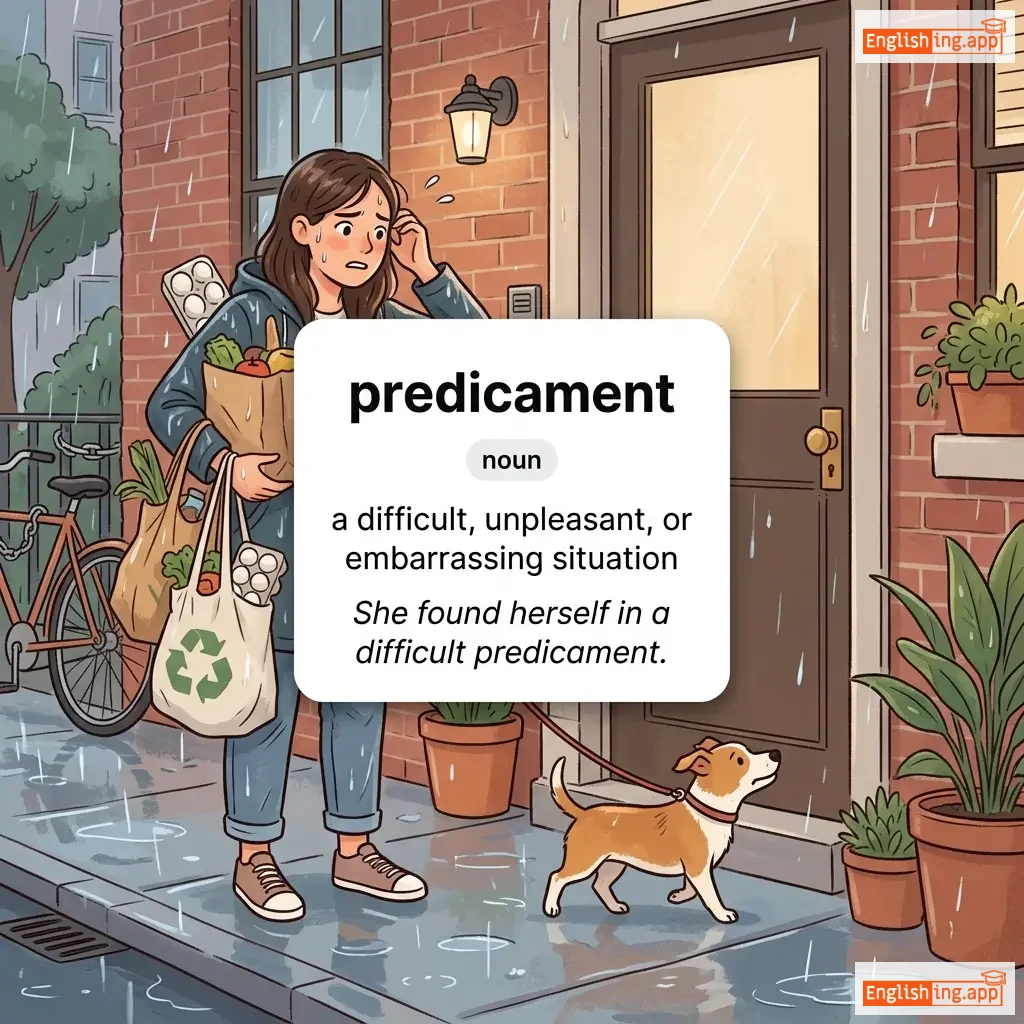
a difficult, unpleasant, or embarrassing situation
••••••
|
She found herself in a difficult predicament. |
她发现自己处于一个困难的困境。
Ta faxian ziji chuyu yi ge kunnan de kunjing.
••••••
|
in a predicament |
in a difficult or troublesome situation
••••••
|
困境中
kunjing zhong
••••••
|
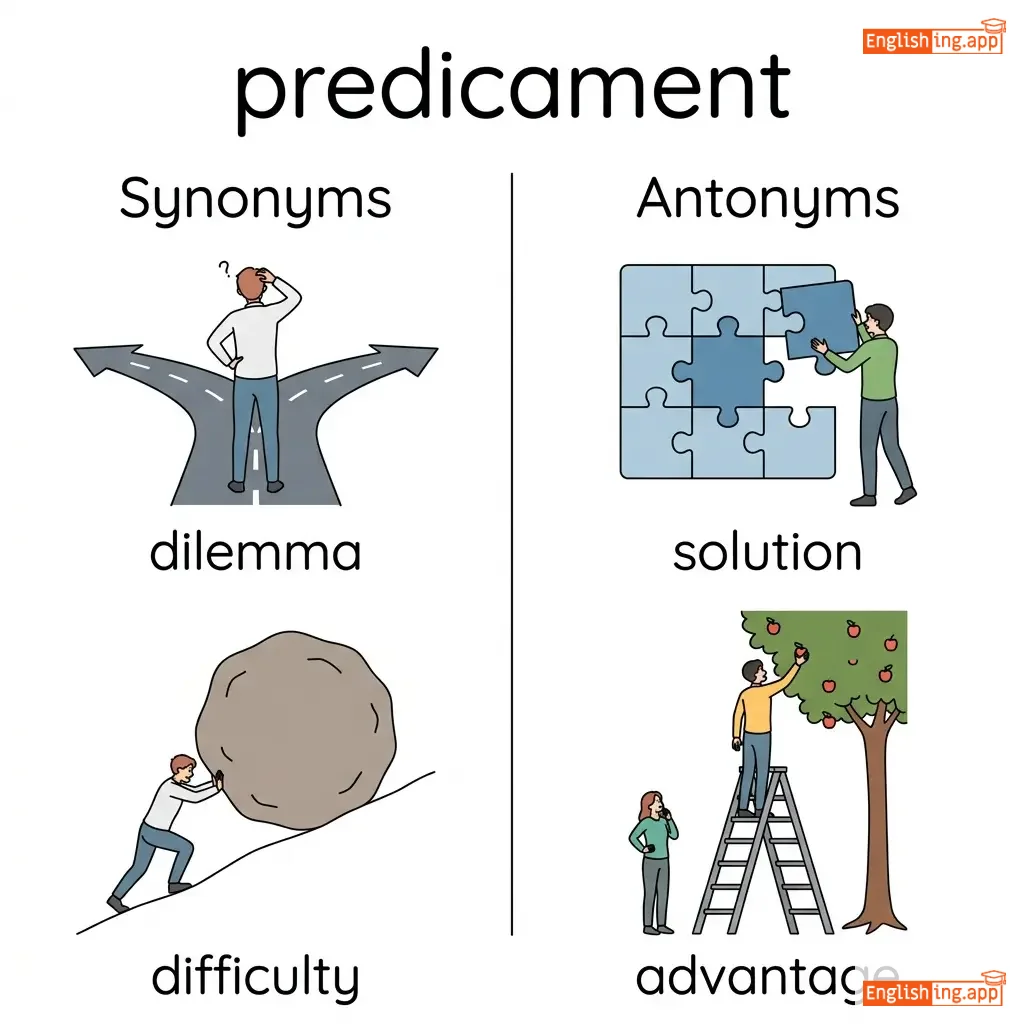
dilemma, difficulty, quandary, problem, hardship
••••••
|
solution, advantage, ease
••••••
|
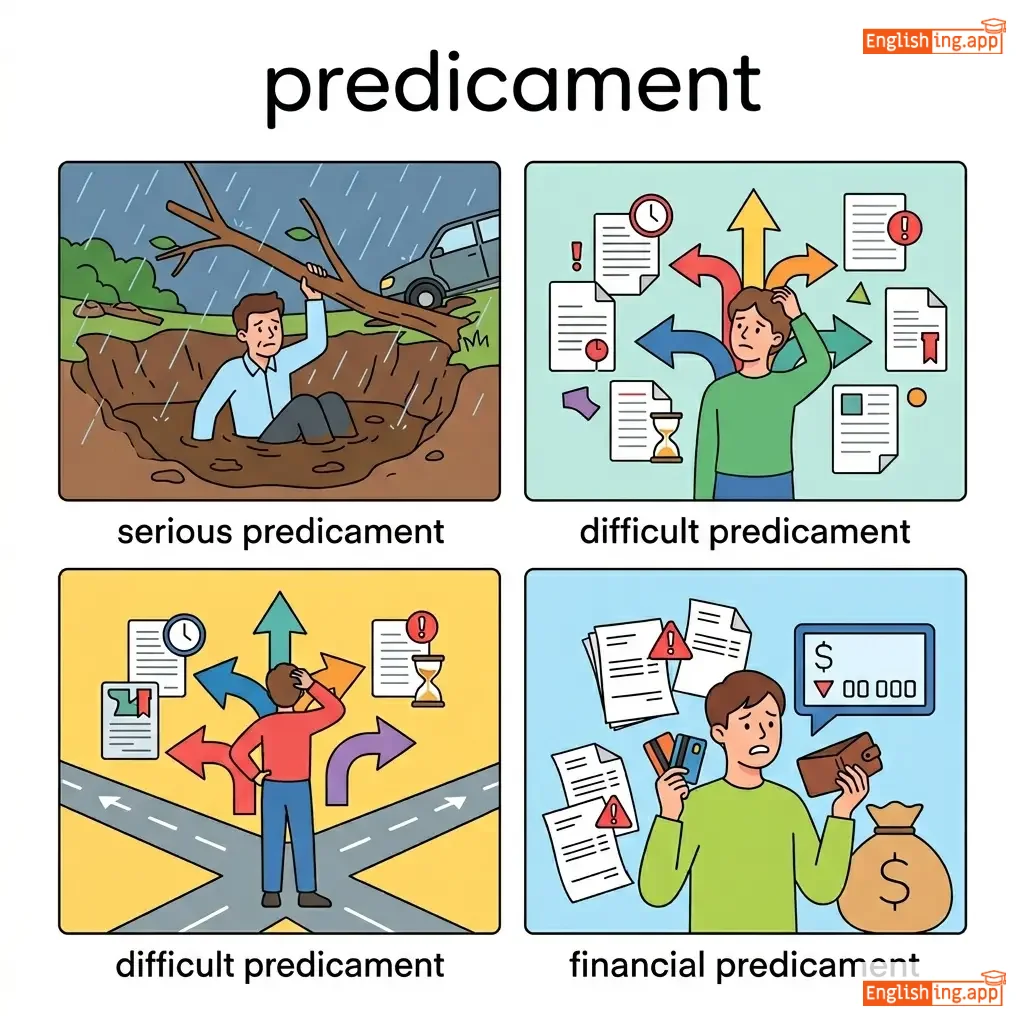
serious predicament, difficult predicament, financial predicament, awkward predicament
••••••
|
Predicament 意味着困境 - 想象你在考试中无法预测任何事情,然后被困住!
••••••
|
|
#6864
📜
|
/ˌpriːdɪˈtɜːrmɪn/
verb
(普雷迪特明)
••••••
|
- •••••• |
预定
yùdìng
••••••
|
predetermined
普雷迪特明德
••••••
|
predetermined
普雷迪特明德
••••••
|
predetermines
普雷迪特明斯
••••••
|
predetermining
普雷迪特明英
••••••
|
to establish or decide something in advance
••••••
|
The outcome of the match seemed predetermined.
比赛结果似乎是预定的。
••••••
|
比赛结果似乎是预定的。
Bǐsài jiéguǒ shìhū shì yùdìng de.
••••••
|
- •••••• | - •••••• | - •••••• |
decide, establish, arrange, fix, preordain
••••••
|
undecide, spontaneous, random
••••••
|
predetermined outcome, predetermined plan, predetermined path, predetermined schedule
••••••
|
Pre + Determine = 事先决定
••••••
|
|
#6865
✨
|
/priːˈdɛstɪn/
verb
(预定)
••••••
|
- •••••• |
预定
yùdìng
••••••
|
predestined
预定
••••••
|
predestined
预定
••••••
|
predestines
预定
••••••
|
predestining
预定
••••••
|
to determine or decide something in advance, often regarded as being fixed by fate or divine will
••••••
|
They believed their paths were predestined by fate.
他们相信他们的道路是命运注定的。
••••••
|
他们相信他们的道路是命运注定的。
Tāmen xiāngxìn tāmen de dàolù shì mìngyùn zhùdìng de.
••••••
|
- •••••• | - •••••• | - •••••• |
foreordain, preordain, determine, appoint, decree
••••••
|
undecide, random, chance
••••••
|
predestined path, predestined fate, predestined future, predestined outcome
••••••
|
Pre + 定义 = 由命运决定 - 预定意味着命运早已注定。
••••••
|
|
#6866
👤➡️👤
|
/ˈprɛdəˌsɛsər/
noun
(prɪˈdɛsɛsər)
••••••
|
- •••••• |
前任
qiánrèn
••••••
|
- •••••• | - •••••• | - •••••• | - •••••• |
A person who held a position or office before the current holder.
••••••
|
The new CEO thanked her predecessor for his service. |
新CEO感谢了他的前任为公司所做的贡献。
Xīn CEO gǎnxiè le tā de qiánrèn wèi gōngsī suǒ zuò de gòngxiàn.
••••••
|
- •••••• | - •••••• | - •••••• |
forerunner, antecedent, precursor, former holder
••••••
|
successor, follower
••••••
|
predecessor in office, immediate predecessor, worthy predecessor
••••••
|
前任就是那个曾经做过现在这个位置的人。
••••••
|
|
#6867
🦅
|
/ˈprɛdəˌtɔri/
adjective
(pɹɛdəˌtɔri)
••••••
|
- •••••• |
掠食者/剥削者
lüè shí zhě/bāo xuè zhě
••••••
|
- •••••• | - •••••• | - •••••• | - •••••• |
Relating to animals that prey on others; exploiting or victimizing others for personal gain.
••••••
|
The predatory bird swooped down on its prey.
掠食性鸟类扑向它的猎物。
••••••
|
掠食性鸟类扑向它的猎物。
Lüè shí xìng niǎo lèi pū xiàng tā de liè wù.
••••••
|
- •••••• | - •••••• | - •••••• |
exploitative, greedy, ravenous, hunting
••••••
|
protective, harmless
••••••
|
predatory bird, predatory behavior, predatory lending
••••••
|
掠食者(predator)是指猎取或剥削他人以获取利益。
••••••
|
|
#6868
🦁
|
/ˈprɛdətər/
noun
(掠食者)
••••••
|
- •••••• |
掠食者
lüè shí zhě
••••••
|
- •••••• | - •••••• | - •••••• | - •••••• |
An animal that hunts and kills other animals for food.
••••••
|
Lions are powerful predators in the savannah. |
狮子是草原上强大的掠食者。
Shīzi shì cǎoyuán shàng qiángdà de lüè shí zhě.
••••••
|
- •••••• | - •••••• | - •••••• |
hunter, carnivore, killer, stalker
••••••
|
prey, victim
••••••
|
apex predator, natural predator, predator species
••••••
|
Predator - '掠食' 吃掉猎物 – 掠食者。
••••••
|
|
#6869
⏳
|
/ˈpriːˌkɜrsər/
noun
(pǔlìkèrsè)
••••••
|
|
前身
qianshen
••••••
|
- •••••• | - •••••• | - •••••• | - •••••• |
Something or someone that comes before another and indicates the approach of something else.
••••••
|
The steam engine was a precursor to modern trains.
蒸汽机是现代火车的前身。
••••••
|
蒸汽机是现代火车的前身。
Zhengqiji shi xiandai huoche de qianshen.
••••••
|
- •••••• | - •••••• | - •••••• |
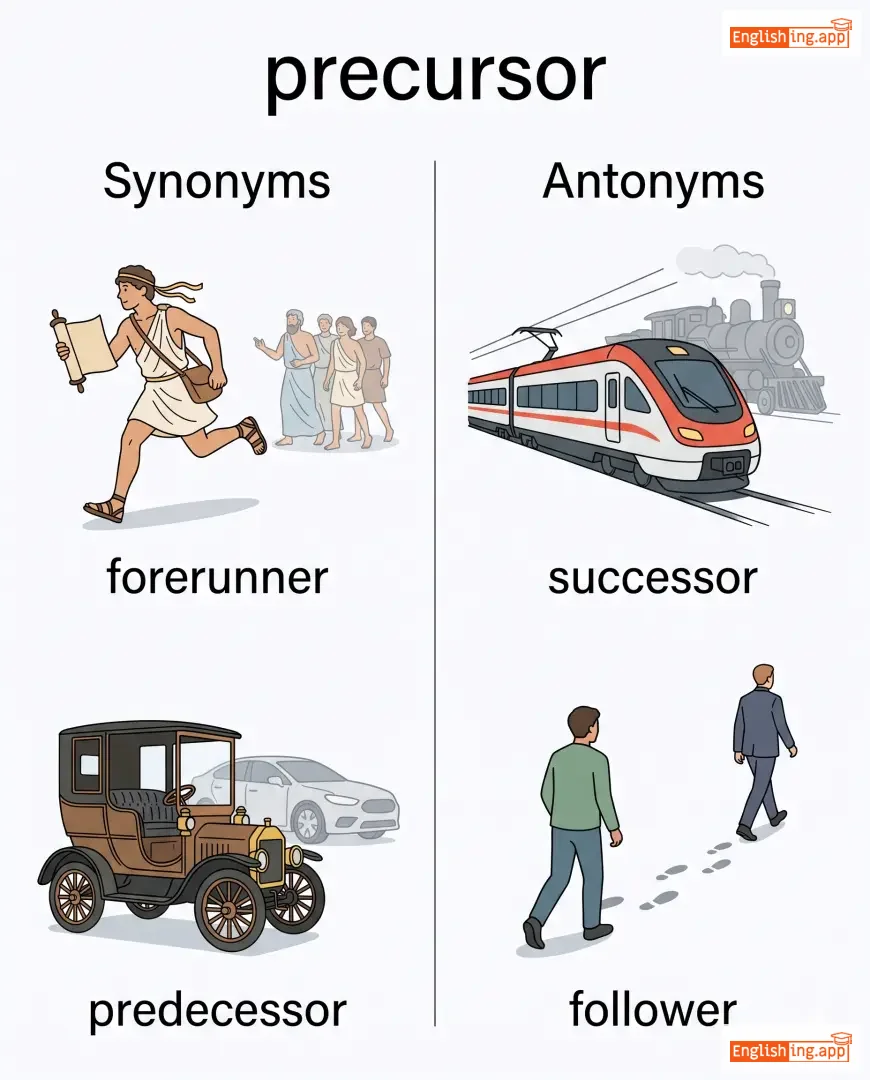
forerunner, predecessor, harbinger, pioneer, antecedent
••••••
|
successor, follower, outcome
••••••
|
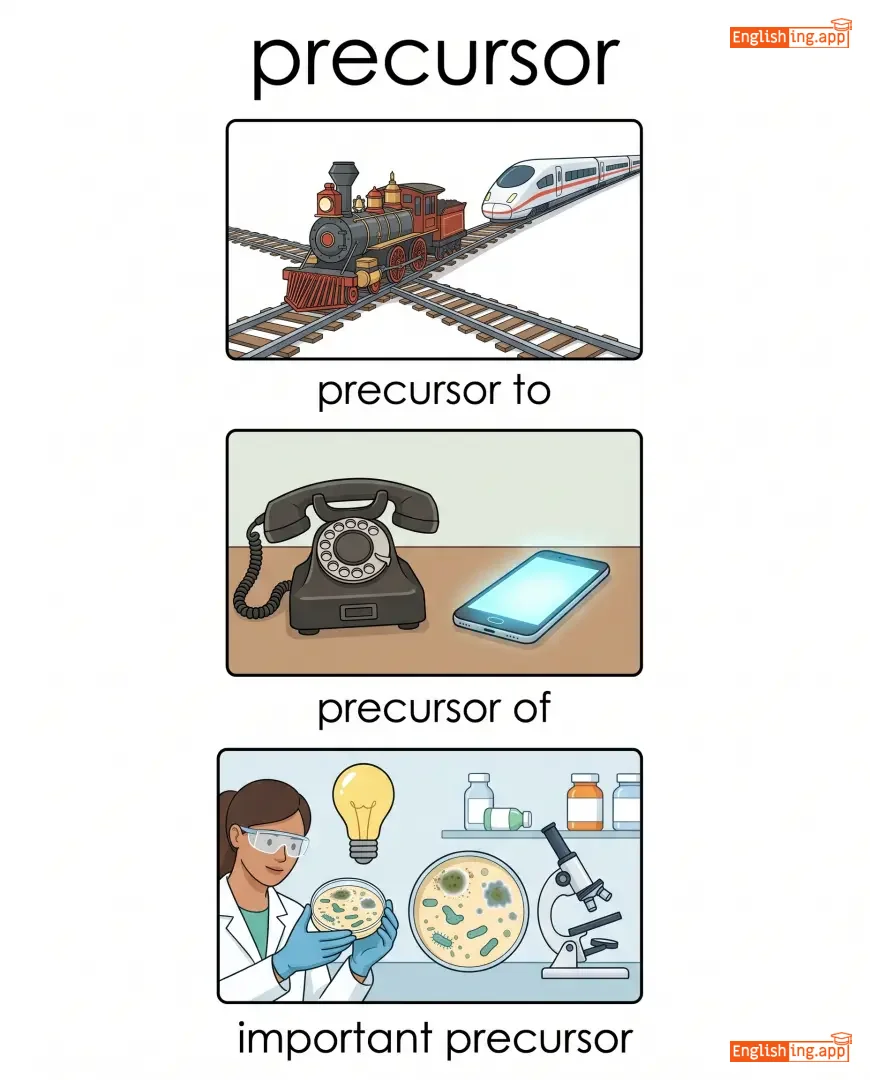
precursor to, precursor of, important precursor
••••••
|
前身 = 前 (qián) 和 身 (shēn) - 先前的标志。
••••••
|
Vocabulary Quiz
Test your vocabulary by matching words with their translations or meanings.
Login to take the quiz
Comments (0)
Share your thoughts and join the discussion.
Join the discussion by logging in
Login to CommentNo comments yet
Be the first to share your thoughts!