




Swipe left or right, or use the buttons. Tap image to zoom.
例句翻译
单词
Lesson 323Lesson 323 - 遮罩切换
|
表情符号
|
单词 | Images | 翻译 | 过去时 | 过去分词 | 第三人称单数 | 动名词 | 含义 | 例句 | 例句翻译 | 示例表达 | 示例表达含义 | 示例表达翻译 | 同义词 | 反义词 | 搭配词 | 助记符 |
|---|---|---|---|---|---|---|---|---|---|---|---|---|---|---|---|---|---|
|
#9660
🎂
|
/ˈkoʊ.tɪŋ/
noun
(kòu tīng)
••••••
|
|
涂层
tuceng
••••••
|
- •••••• | - •••••• | - •••••• | - •••••• |
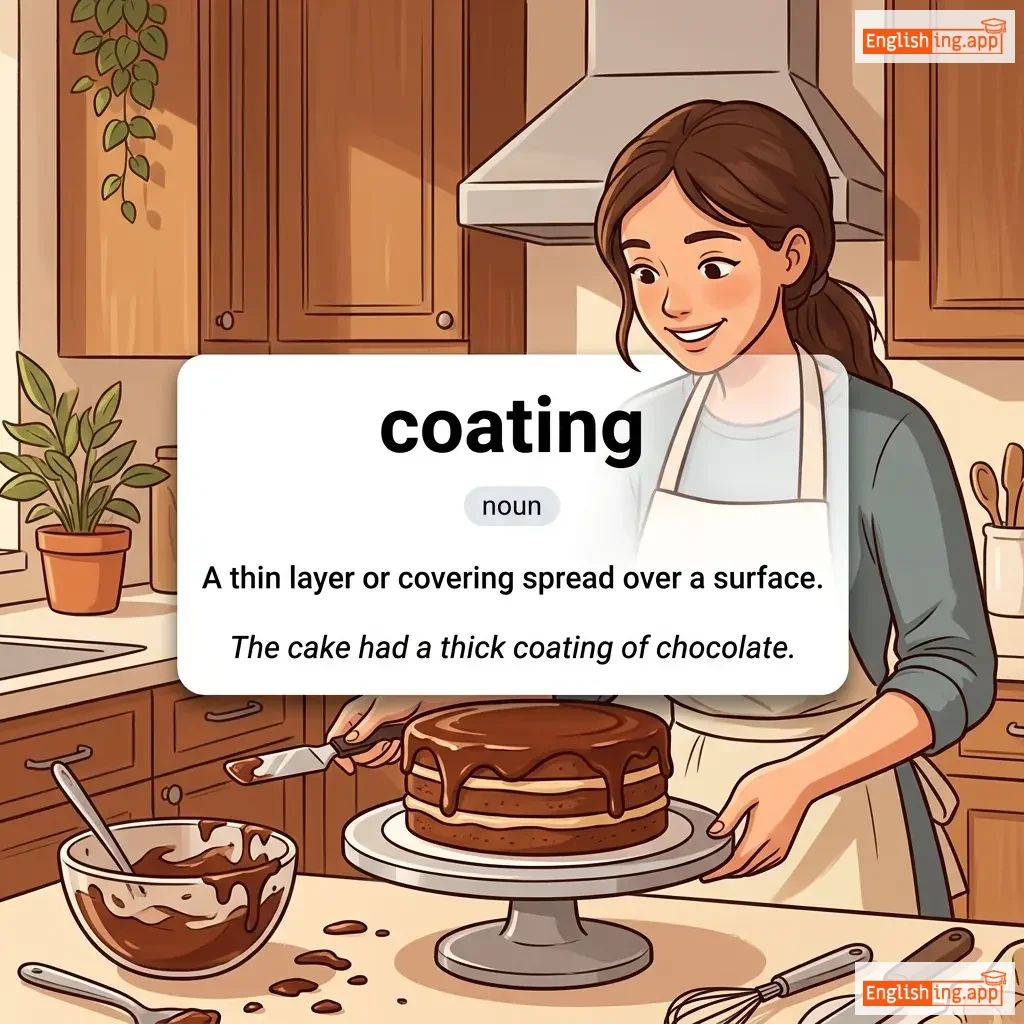
A thin layer or covering spread over a surface.
••••••
|
The cake had a thick coating of chocolate. |
蛋糕上有一层厚厚的巧克力涂层。
Dàngāo shàng yǒu yī céng hòu hòu de qiǎokèlì túcéng.
••••••
|
- •••••• | - •••••• | - •••••• |
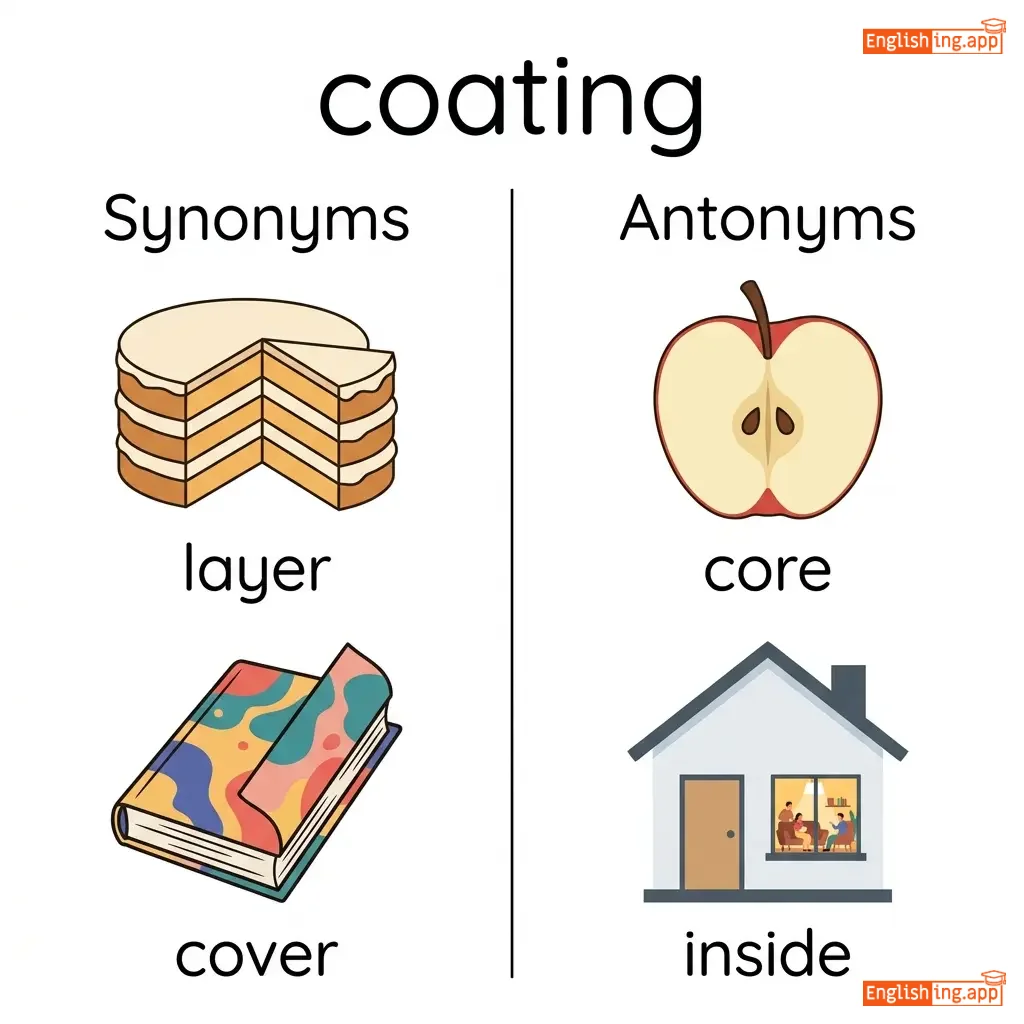
layer, cover, film, veneer, finish
••••••
|
core, inside
••••••
|
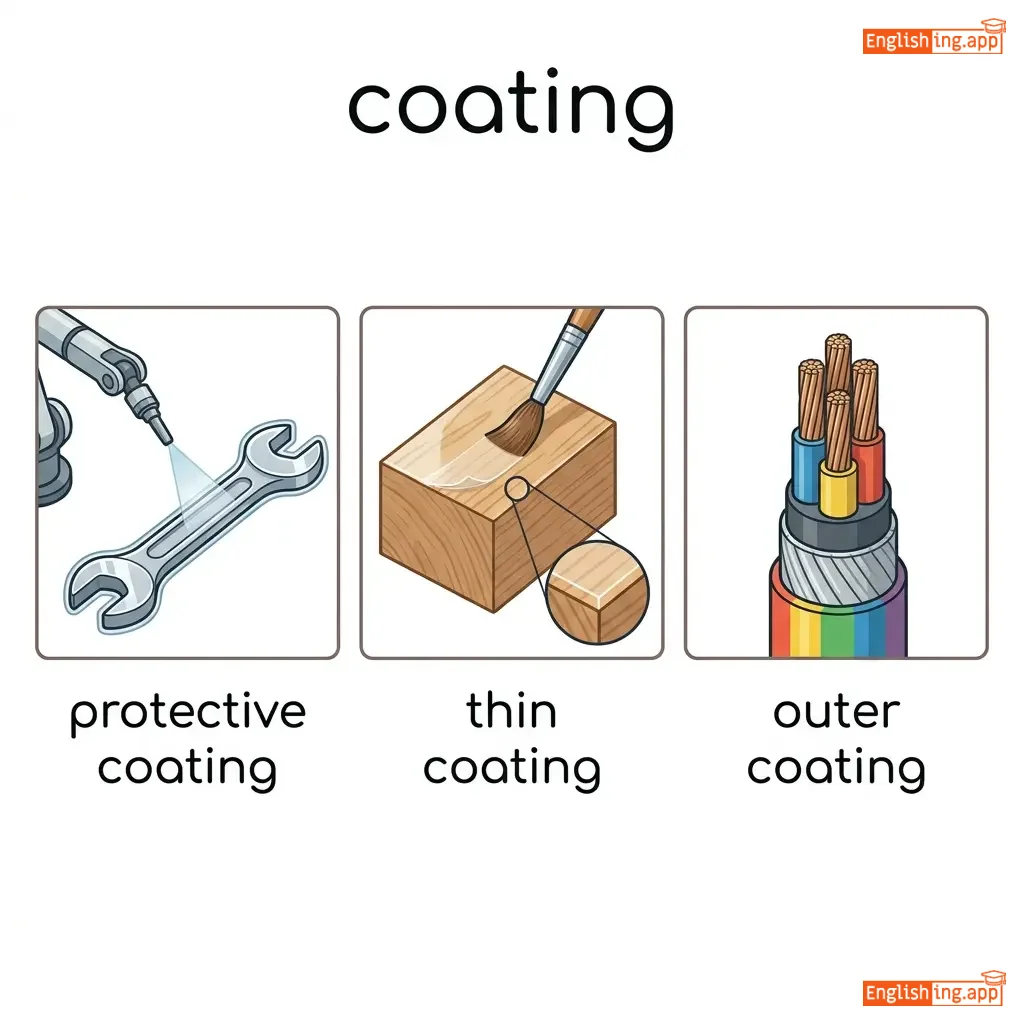
protective coating, thin coating, outer coating, coating layer
••••••
|
蛋糕涂上涂层 (涂层) 会更美味。
••••••
|
|
#9661
🙏
|
/kənˈfɛs/
verb
(kənfɛs)
••••••
|
|
承认
chéngrèn
••••••
|
confessed
kənfɛsd
••••••
|
confessed
kənfɛsd
••••••
|
confesses
kənfɛsɪz
••••••
|
confessing
kənfɛsɪŋ
••••••
|
to admit that you have done something wrong or illegal
••••••
|
He confessed that he had stolen the money.
他承认他偷了钱。
••••••
|
他承认他偷了钱。
Tā chéngrèn tā tōu le qián.
••••••
|
confess one's sins
承认罪过
••••••
|
to admit to having done wrong, often in a religious context
••••••
|
承认罪过
chéngrèn zuìguò
••••••
|
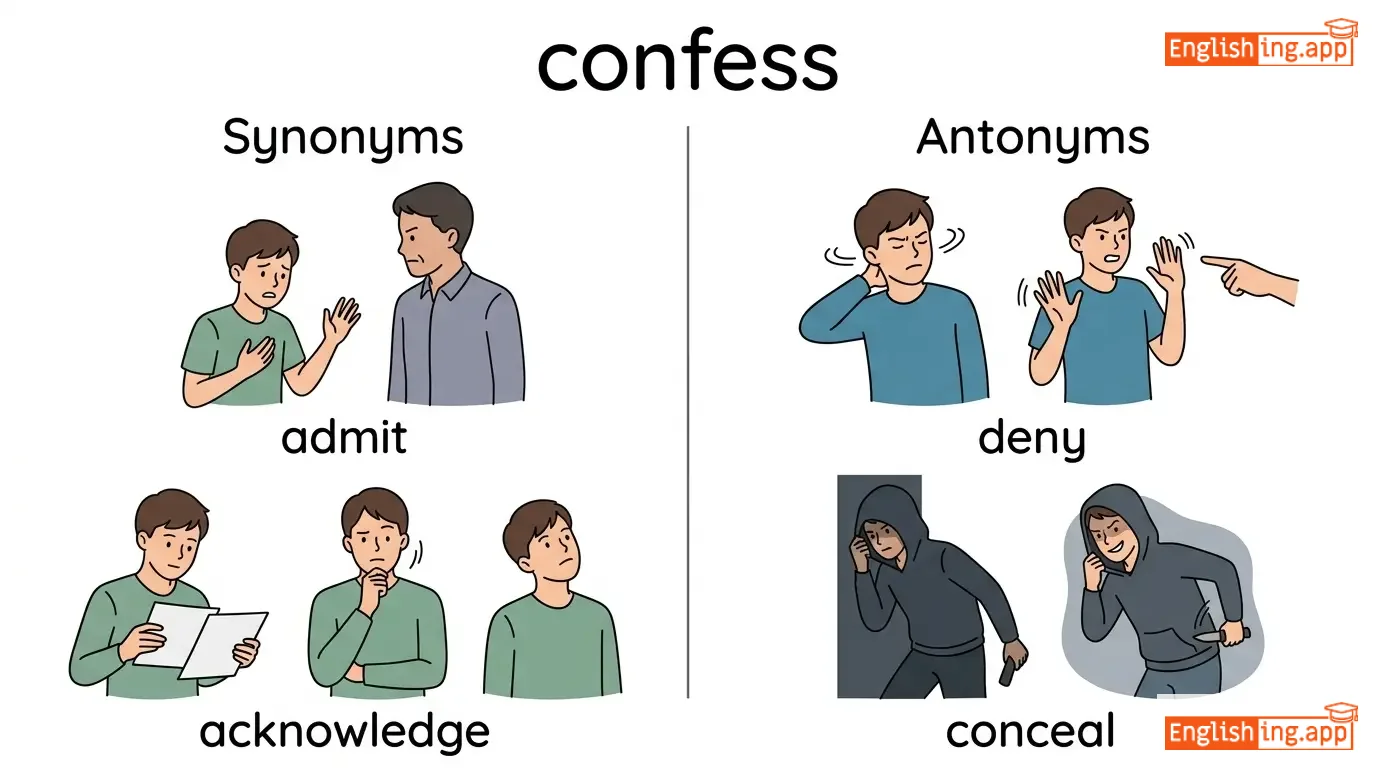
admit, acknowledge, disclose, reveal
••••••
|
deny, conceal
••••••
|
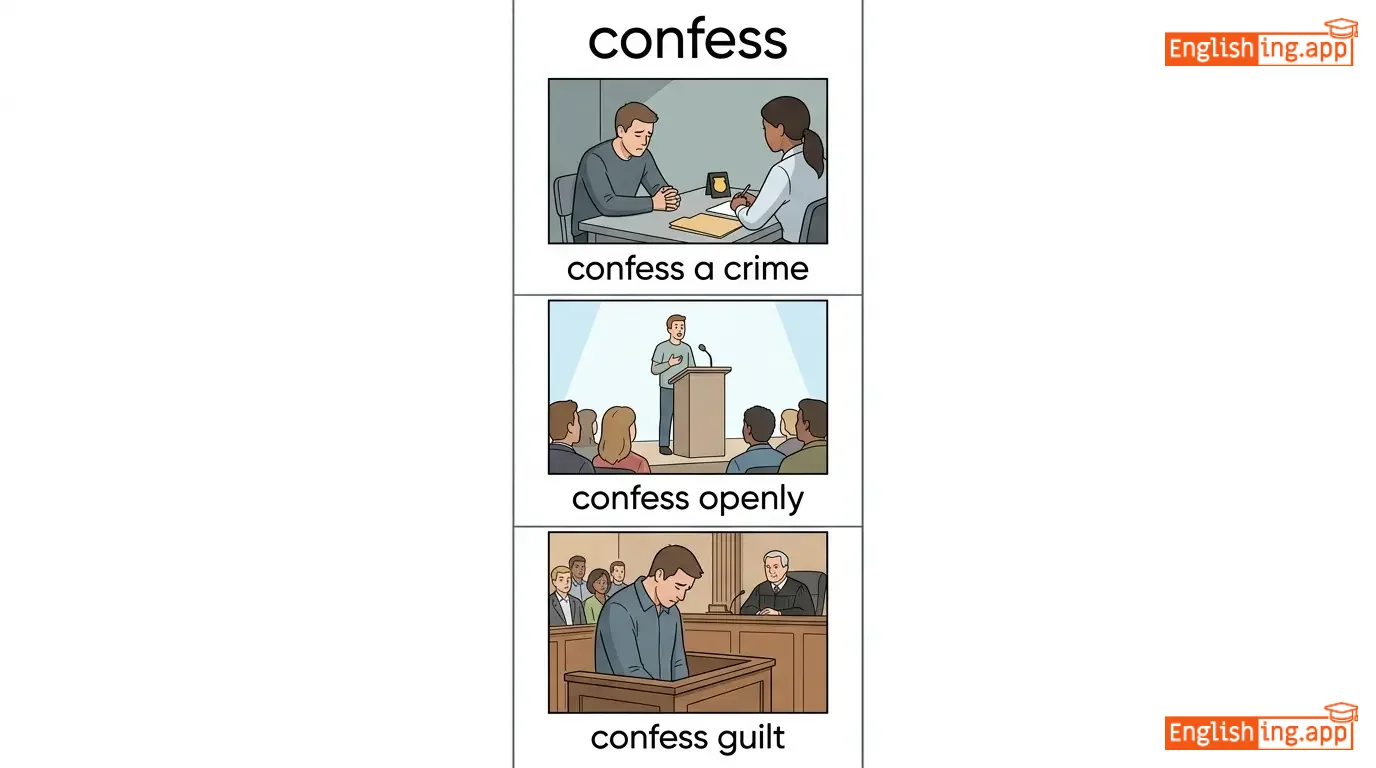
confess a crime, confess openly, confess guilt, confess sins
••••••
|
承认错误可以使心灵得到净化。
••••••
|
|
#9662
🏗️
|
/ˈkɒŋkriːt/
adjective
(kōngkè lǐtè)
••••••
|
- •••••• |
具体
juti
••••••
|
- •••••• | - •••••• | - •••••• | - •••••• |
based on facts, not on ideas or guesses; specific and real
••••••
|
She gave a concrete example to support her argument. |
她举了一个具体的例子来支持她的论点。
Tā jǔle yīgè jùtǐ de lìzi lái zhīchí tā de lùndiǎn.
••••••
|
set in concrete |
to be fixed and unchangeable
••••••
|
固定不变
gùdìng bù biàn
••••••
|
tangible, solid, real, specific
••••••
|
abstract, vague, unreal
••••••
|
concrete example, concrete evidence, concrete plan, concrete structure
••••••
|
Concrete 就是像混凝土一样,坚固而具体。
••••••
|
|
#9663
💡
|
/kənˈsɛptʃuəlaɪz/
verb
(kənˈsɛptʃuəlaɪz)
••••••
|
- •••••• |
构思
gousi
••••••
|
conceptualized
kənˈsɛptʃuəlaɪzd
••••••
|
conceptualized
kənˈsɛptʃuəlaɪzd
••••••
|
conceptualizes
kənˈsɛptʃuəlaɪzɪz
••••••
|
conceptualizing
kənˈsɛptʃuəlaɪzɪŋ
••••••
|
to form an idea or concept of something in your mind
••••••
|
The artist conceptualized a new design for the exhibition.
艺术家为展览构思了一个新的设计。
••••••
|
艺术家为展览构思了一个新的设计。
Yishujia wei zhanlan gousi le yige xin de sheji.
••••••
|
- •••••• | - •••••• | - •••••• |
envision, imagine, devise, formulate, invent
••••••
|
ignore, dismiss
••••••
|
conceptualize ideas, conceptualize a plan, conceptualize the project
••••••
|
构思是将一个概念或创意在头脑中形成,就像创造一个新设计。
••••••
|
|
#9664
🔄
|
/kəmˈpliːtli/
adverb
(kəmˈpliːtli)
••••••
|
- •••••• |
完全地
wánquán de
••••••
|
- •••••• | - •••••• | - •••••• | - •••••• |
totally; in every way possible
••••••
|
The room was completely silent. |
房间完全安静。
Fángjiān wánquán ānjìng.
••••••
|
- •••••• | - •••••• | - •••••• |
totally, entirely, fully, utterly
••••••
|
partially, incompletely
••••••
|
completely different, completely silent, completely destroyed, completely wrong
••••••
|
Completely意味着完全地,就像完全安静。
••••••
|
|
#9665
✅
|
/kəmˈpliːt/
verb
(kōngplīte)
••••••
|
- •••••• |
完成
wánchéng
••••••
|
completed
kōngplīted
••••••
|
completed
kōngplīted
••••••
|
completes
kōngplīts
••••••
|
completing
kōngplīting
••••••
|
to finish making or doing something; to bring something to an end
••••••
|
She managed to complete the project on time.
她按时完成了这个项目。
••••••
|
她按时完成了这个项目。
Tā ànshí wánchéngle zhège xiàngmù.
••••••
|
complete the circle
完成这个圈
••••••
|
to bring something to its conclusion or to make something whole
••••••
|
完成这个圈
wánchéng zhège quān
••••••
|
finish, accomplish, achieve, conclude, finalize
••••••
|
incomplete, unfinished, halt
••••••
|
complete a task, complete a form, complete the project, complete successfully
••••••
|
完成意味着结束,就像完成一个圆圈。
••••••
|
|
#9666
🎙️
|
/ˈkɒmənˌteɪtər/
noun
(kəmɛnˈteɪtər)
••••••
|
- •••••• |
解说员
jiěshuōyuán
••••••
|
- •••••• | - •••••• | - •••••• | - •••••• |
a person who reports and discusses events, especially on TV or radio
••••••
|
The commentator described the football match in detail. |
解说员详细描述了足球比赛。
Jiěshuōyuán xiángxì miáoshùle zúqiú bǐsài.
••••••
|
- •••••• | - •••••• | - •••••• |
announcer, reporter, narrator, broadcaster, critic
••••••
|
audience, listener
••••••
|
sports commentator, political commentator, live commentator, TV commentator
••••••
|
解说员就像是电视上解说比赛的专家,帮你了解比赛细节。
••••••
|
|
#9667
🎖️
|
/kəˈmændər/
noun
(kəmɑndər)
••••••
|
- •••••• |
指挥官
zhǐhuīguān
••••••
|
- •••••• | - •••••• | - •••••• | - •••••• |
a person in authority, especially over a military group
••••••
|
The commander led his troops into battle. |
指挥官带领他的部队进入战斗。
Zhǐhuīguān dàilǐng tā de bùduì jìnrù zhàndòu.
••••••
|
- •••••• | - •••••• | - •••••• |
chief, leader, officer, captain, general
••••••
|
follower, subordinate
••••••
|
military commander, field commander, commander in chief, naval commander
••••••
|
指挥官是军事队伍的领导者。
••••••
|
|
#9668
😂
|
/ˈkɒmɪk/
adjective
(喜剧的)
••••••
|
- •••••• |
喜剧的
xǐjù de
••••••
|
- •••••• | - •••••• | - •••••• | - •••••• |
causing or meant to cause laughter
••••••
|
The movie had several comic scenes. |
这部电影有几个喜剧场景。
Zhè bù diànyǐng yǒu jǐ gè xǐjù chǎngjǐng.
••••••
|
comic relief |
a humorous break in a serious narrative
••••••
|
喜剧救援
xǐjù jiùyuán
••••••
|
funny, humorous, amusing, witty, entertaining
••••••
|
serious, tragic, solemn
••••••
|
comic book, comic strip, comic character, comic effect, comic scene
••••••
|
喜剧就是让你笑的东西
••••••
|
|
#9669
🛋️
|
/ˈkʌmfərt/
noun
(康福特)
••••••
|
- •••••• |
舒适
shushi
••••••
|
- •••••• | - •••••• | - •••••• | - •••••• |
a state of physical ease and freedom from pain or distress
••••••
|
The soft chair gave him great comfort.
那把软椅子给了他很大的舒适感。
••••••
|
那把软椅子给了他很大的舒适感。
Na ba ruan yǐzi gěi le tā hěn dà de shūshì gǎn.
••••••
|
cold comfort
冷舒适
••••••
|
something that offers little consolation
••••••
|
冷舒适
lěng shūshì
••••••
|
ease, relief, support, solace, convenience
••••••
|
discomfort, distress, pain
••••••
|
seek comfort, provide comfort, comfort zone, physical comfort, emotional comfort
••••••
|
舒适 = 让你感觉放松和平静的状态。
••••••
|
|
#9670
🚶
|
/kʌm/
verb
(海皮尼斯)
••••••
|
|
幸福
xingfu
••••••
|
came
••••••
|
come
••••••
|
comes
••••••
|
coming
••••••
|
to move or travel toward or into a place thought of as near or familiar
••••••
|
She will come to the party later. |
她收到奖项时无法隐藏她的幸福。
Tā shōudào jiǎngxiàng shí wúfǎ yǐncáng tā de xìngfú.
••••••
|
come true |
to happen as wished or dreamed
••••••
|
追求幸福
zhuīqiú xìngfú
••••••
|
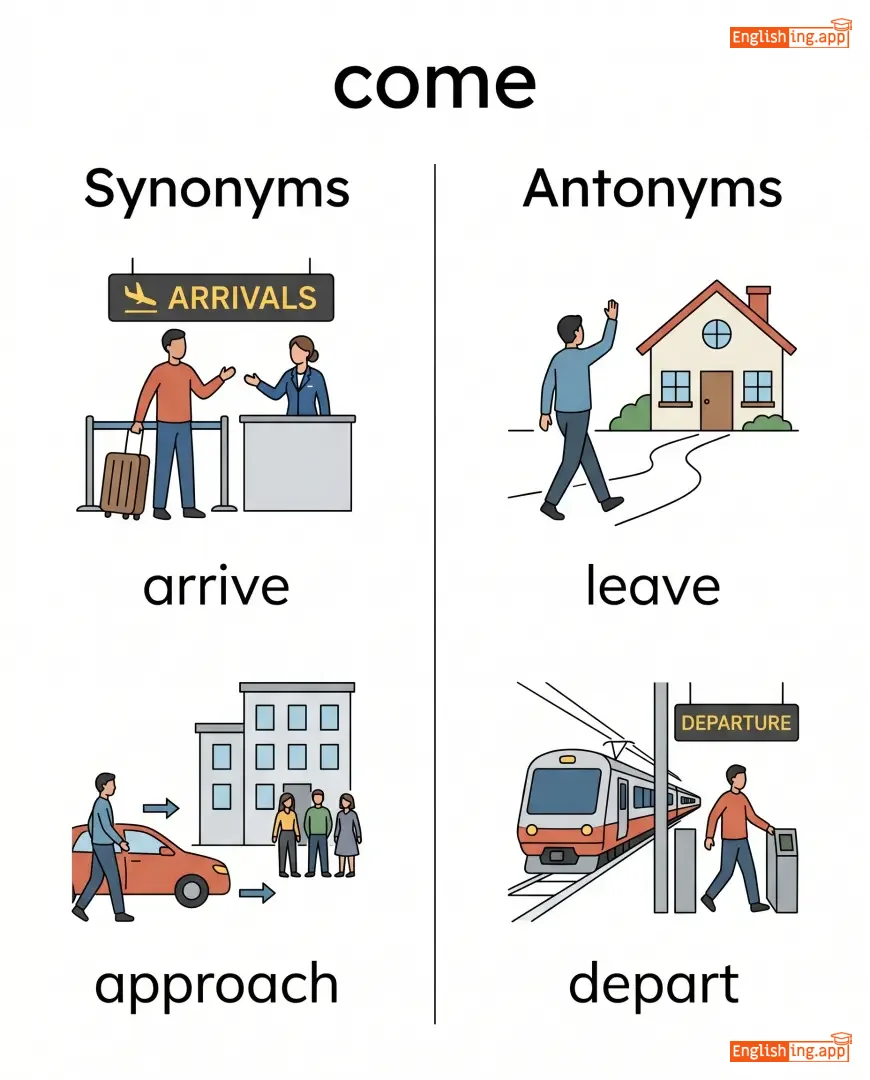
arrive, approach, reach, appear, enter
••••••
|
leave, depart, go
••••••
|
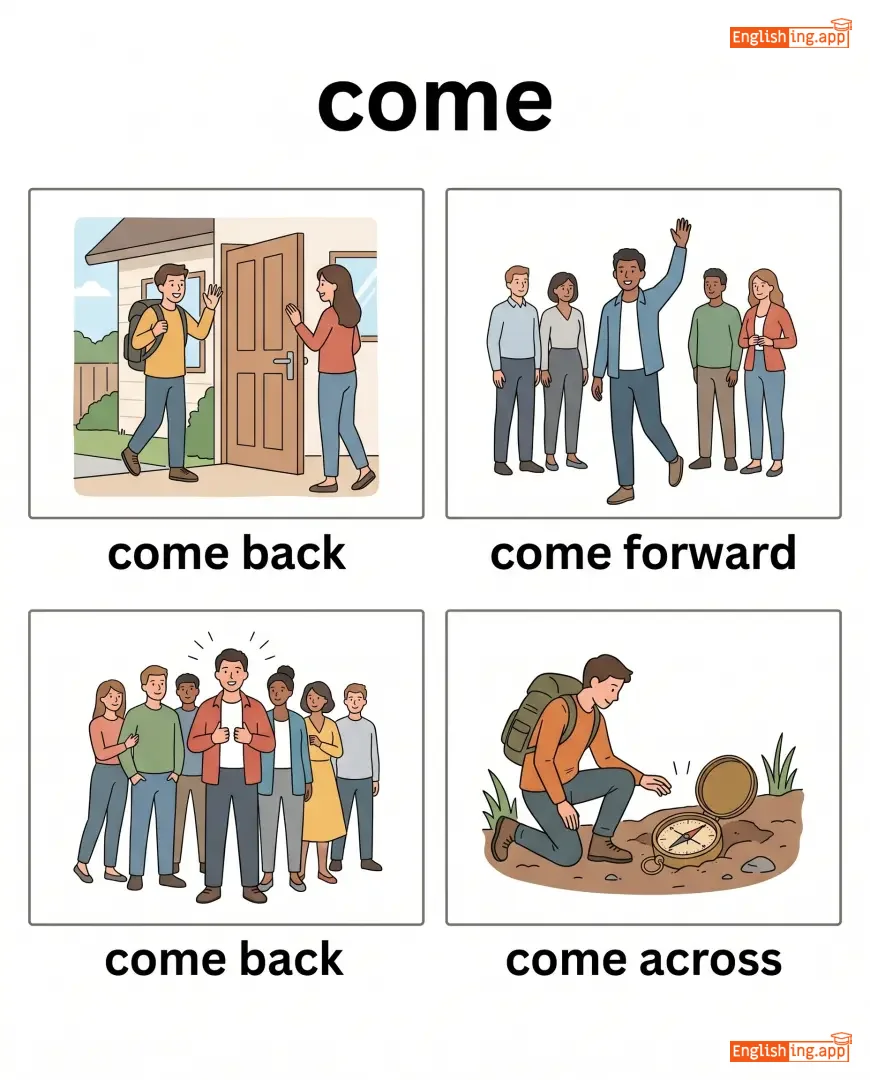
come back, come forward, come across, come out, come together
••••••
|
幸福 (xingfu) 意味着幸福 — 想象有人说 '我感到非常幸福!'
••••••
|
|
#9671
⚙️
|
/kəmˈbaɪn/
verb
(kóngbáin)
••••••
|
- •••••• |
合并
hébìng
••••••
|
combined
kóngbáind
••••••
|
combined
kóngbáind
••••••
|
combines
kóngbáinz
••••••
|
combining
kóngbáining
••••••
|
To bring two or more things together to form a single unit.
••••••
|
They decided to combine their resources for the project.
他们决定将他们的资源合并到该项目中。
••••••
|
他们决定将他们的资源合并到该项目中。
Tāmen juédìng jiāng tāmen de zīyuán hébìng dào gāi xiàngmù zhōng.
••••••
|
combine forces
合并力量
••••••
|
To work together with others towards a common goal.
••••••
|
合并力量
hébìng lìliàng
••••••
|
merge, join, unite, blend, fuse
••••••
|
separate, split, divide
••••••
|
combine efforts, combine forces, combine ingredients, combine ideas
••••••
|
Come + Bine = 合并
••••••
|
|
#9672
📦
|
/kəˈlekt/
verb
(kólèkt)
••••••
|
|
收集
shōují
••••••
|
collected
kólèkted
••••••
|
collected
kólèkted
••••••
|
collects
kólèkts
••••••
|
collecting
kólèkting
••••••
|
To gather or bring together items from different places.
••••••
|
She likes to collect stamps as a hobby.
她喜欢作为爱好收集邮票。
••••••
|
她喜欢作为爱好收集邮票。
Tā xǐhuān zuòwéi àihào shōují yóupiào.
••••••
|
collect yourself
冷静一下
••••••
|
To regain control over one's emotions or thoughts.
••••••
|
冷静一下
lěngjìng yīxià
••••••
|
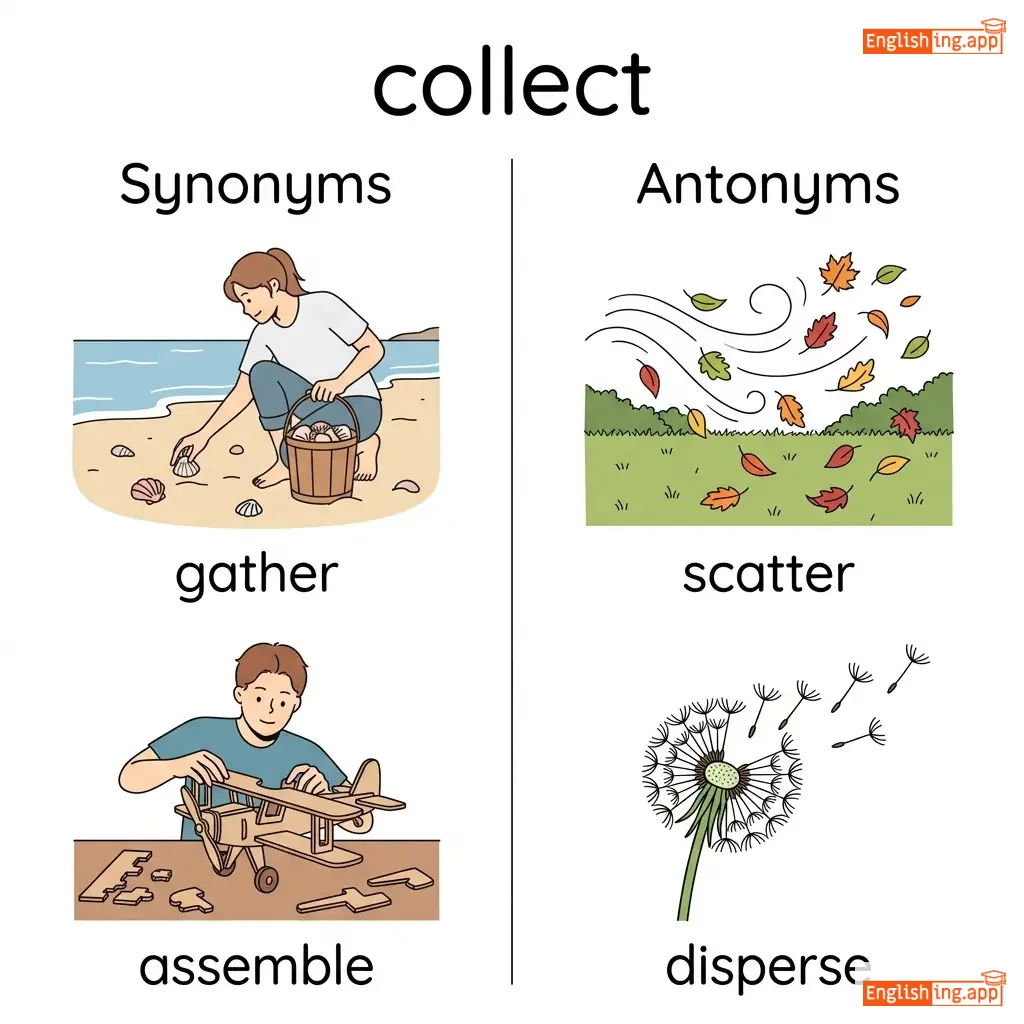
gather, assemble, accumulate, amass, hoard
••••••
|
scatter, disperse, distribute
••••••
|
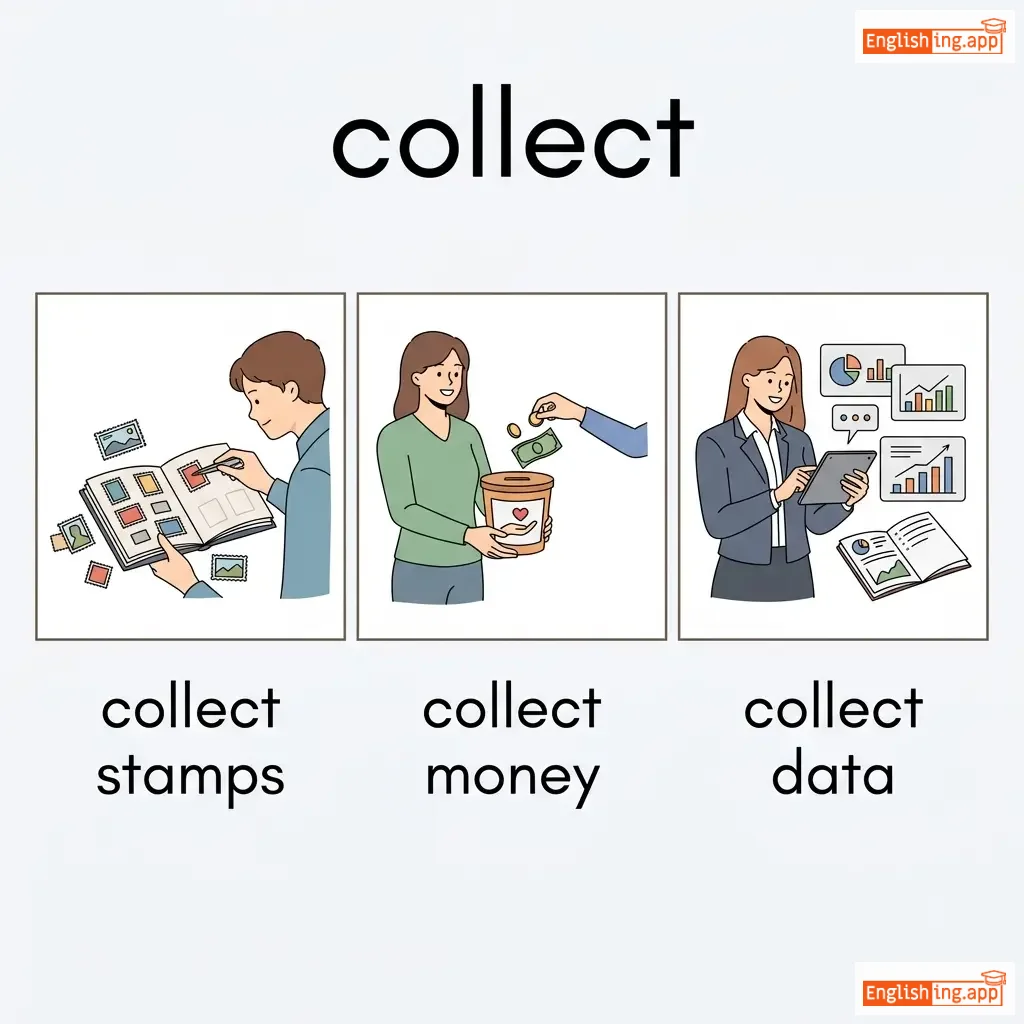
collect stamps, collect money, collect data, collect garbage
••••••
|
Collect (收集) 所有邮票和回忆。
••••••
|
|
#9673
🪙
|
/kɔɪnz/
noun
(kɔɪnz)
••••••
|
- •••••• |
硬币
yingbi
••••••
|
- •••••• | - •••••• | - •••••• | - •••••• |
Flat, typically round pieces of metal issued by a government as money.
••••••
|
He collected old coins from different countries. |
他收集了来自不同国家的旧硬币。
Tā shōujíle láizì bùtóng guójiā de jiù yìngbì.
••••••
|
two sides of the same coin |
Two different aspects of the same situation.
••••••
|
一枚硬币的两面
Yī méi yìngbì de liǎng miàn
••••••
|
currency, money, cash, token
••••••
|
bills, notes
••••••
|
collect coins, gold coins, silver coins, ancient coins
••••••
|
硬币是由政府发行的货币,就像我们用的各种硬币!
••••••
|
|
#9674
🧠
|
/koʊˈhɪə.rənt/
adjective
(连贯)
••••••
|
|
连贯
liánguàn
••••••
|
- •••••• | - •••••• | - •••••• | - •••••• |
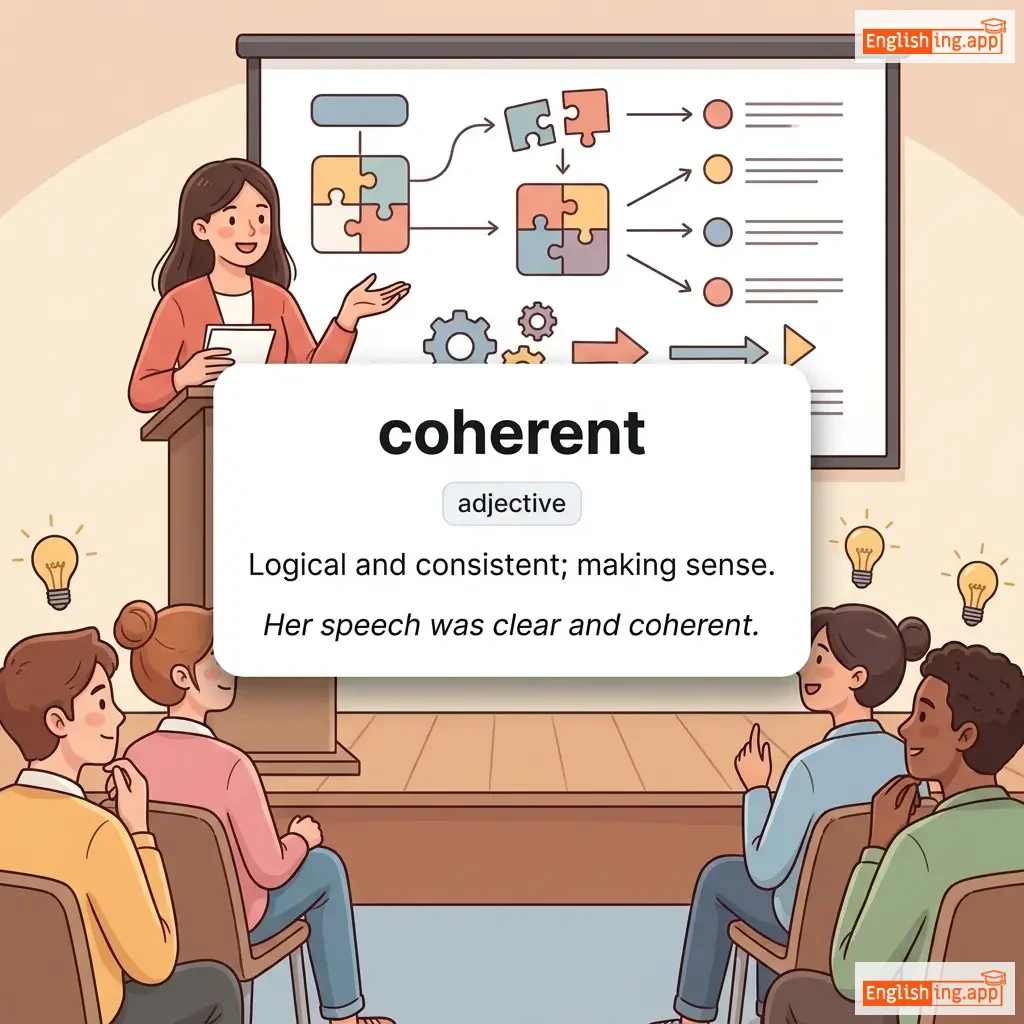
Logical and consistent; making sense.
••••••
|
Her speech was clear and coherent. |
她的演讲清晰且连贯。
Tā de yǎnjiǎng qīngxī qiě liánguàn.
••••••
|
- •••••• | - •••••• | - •••••• |
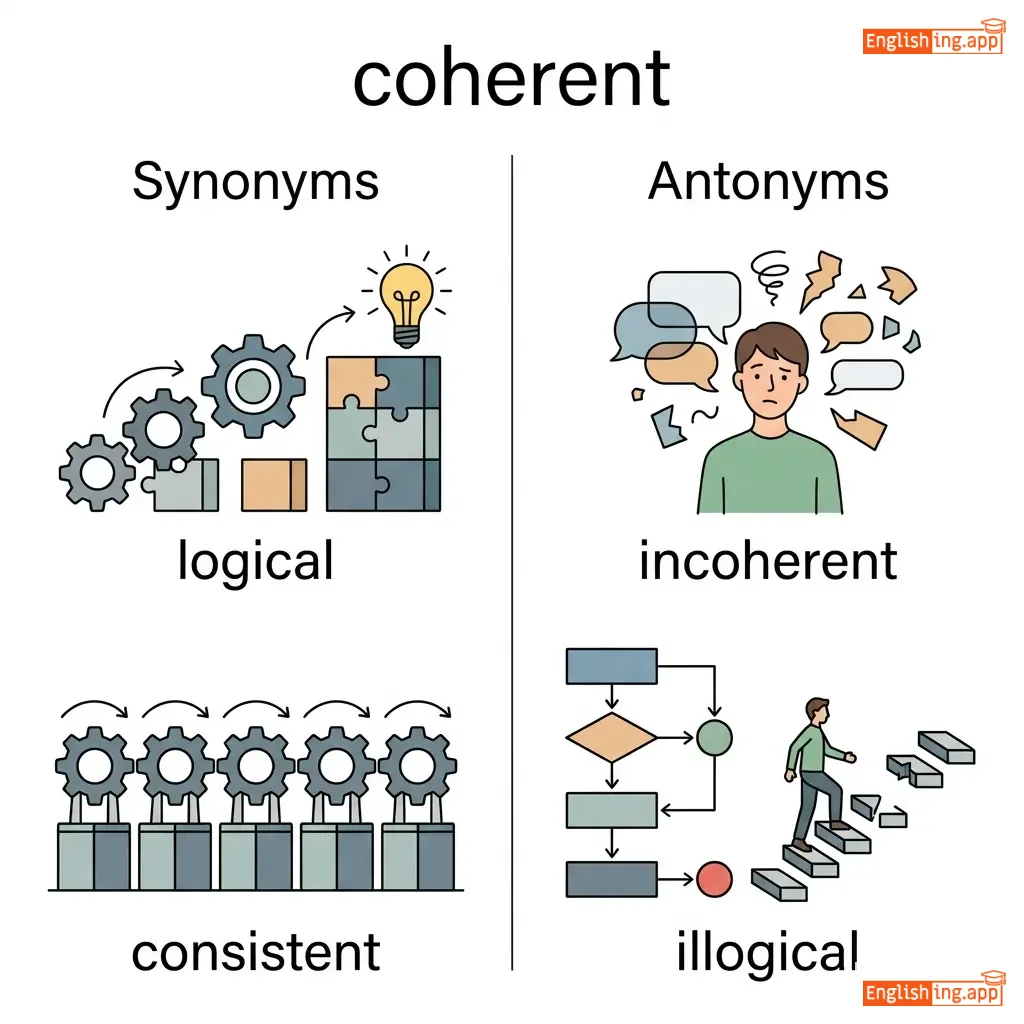
logical, consistent, rational, orderly, lucid
••••••
|
incoherent, illogical, confusing
••••••
|
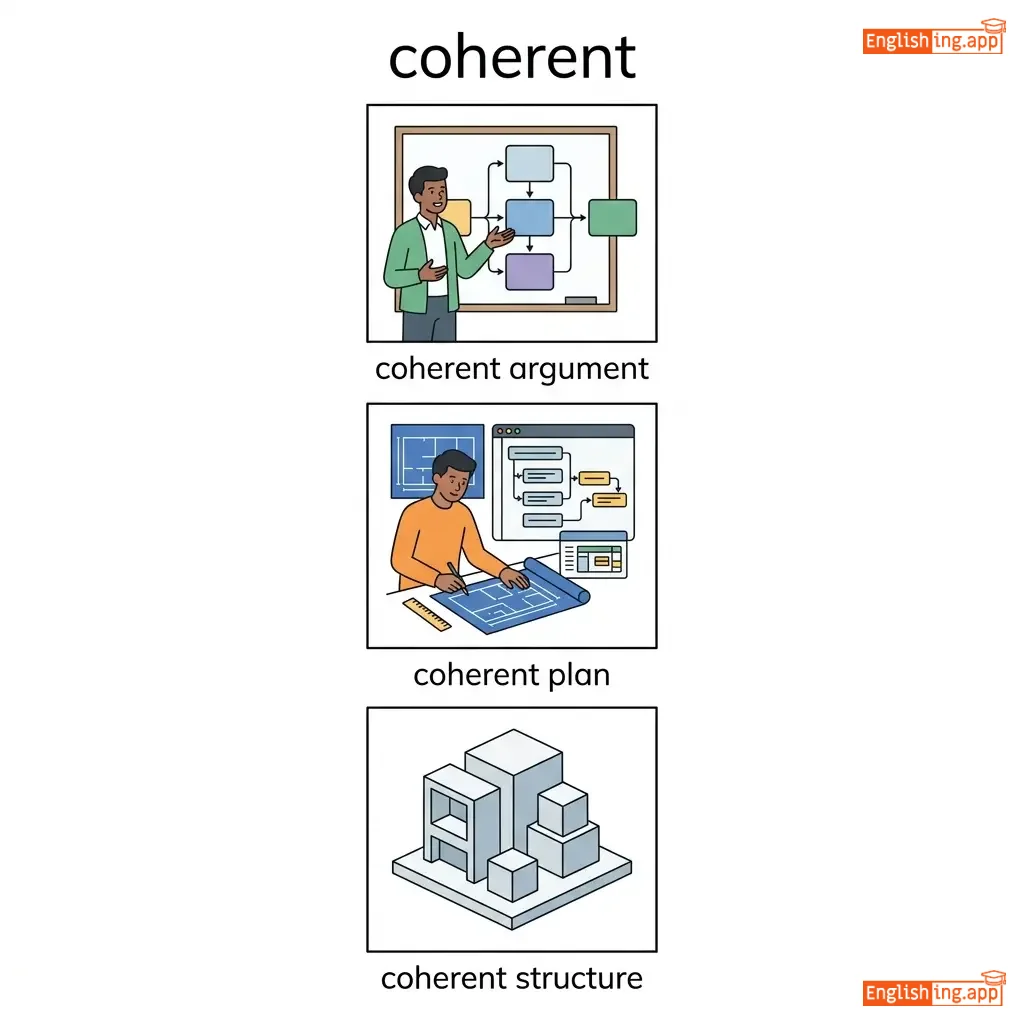
coherent argument, coherent plan, coherent structure, coherent explanation
••••••
|
Co-英雄总是有连贯的计划。
••••••
|
|
#9675
📜
|
/ˈtʃɑːrtər/
noun/verb
(查特)
••••••
|
- •••••• |
包机 / 租赁
baoji / zulin
••••••
|
chartered
查特德
••••••
|
chartered
查特德
••••••
|
charters
查特斯
••••••
|
chartering
查特灵
••••••
|
a written document granting rights or privileges; to hire a vehicle or vessel for temporary use
••••••
|
The company decided to charter a bus for the trip.
公司决定为旅行租用一辆巴士。
••••••
|
公司决定为旅行租用一辆巴士。
Gongsi jueding wei lvxing zuyong yi liang bashi.
••••••
|
charter flight
包机航班
••••••
|
a flight hired for exclusive use rather than a scheduled service
••••••
|
包机航班
baoji hangban
••••••
|
license, permit, hire, lease, commission
••••••
|
prohibit, deny
••••••
|
charter flight, charter bus, charter school, royal charter
••••••
|
Charter意味着信📜 + 租赁,像charter bus = 租一辆巴士
••••••
|
|
#9676
🪵
|
/kɔːrs/
adjective
(कोर्स)
••••••
|
- •••••• |
粗糙, 粗鲁
cūcāo, cūlǔ
••••••
|
- •••••• | - •••••• | - •••••• | - •••••• |
Rough in texture or manner; not smooth or refined.
••••••
|
The fabric felt coarse to the touch. |
这块布料摸起来很粗糙。
Zhè kuài bùliào mō qǐlái hěn cūcāo.
••••••
|
- •••••• | - •••••• | - •••••• |
rough, crude, harsh, unrefined, rugged
••••••
|
smooth, fine, delicate
••••••
|
coarse fabric, coarse language, coarse texture, coarse grain
••••••
|
Coarse像粗糙的沙子,摸起来不光滑。
••••••
|
|
#9677
🚪
|
/kloʊz/ (verb), /kloʊs/ (adjective)
verb, adjective
(kè lóng sī)
••••••
|
- •••••• |
关闭,接近
guan bi, jie jin
••••••
|
closed
kè lóng sī dé
••••••
|
closed
kè lóng sī dé
••••••
|
closes
kè lóng sī zé
••••••
|
closing
kè lóng sī ng
••••••
|
To shut something (verb); near in space or relationship (adjective).
••••••
|
Please close the door when you leave.
请在您离开时关门。
••••••
|
请在您离开时关门。
qing zai nin likai shi guanmen.
••••••
|
close call
接近的电话
••••••
|
A narrow escape from danger or trouble.
••••••
|
危险的逃脱
wei xian de tao tuo
••••••
|
shut, seal, end, nearby, intimate
••••••
|
open, distant
••••••
|
close the door, close relationship, close attention, close friend
••••••
|
Close 意味着关闭 🚪 — 关闭门。
••••••
|
|
#9678
🧠
|
/ˈklɛvər/
adjective
(kè léi wò)
••••••
|
- •••••• |
聪明,机智
cōngmíng, jīzhì
••••••
|
- •••••• | - •••••• | - •••••• | - •••••• |
Quick to understand, learn, and devise ideas or solutions; intelligent.
••••••
|
She is clever enough to solve the puzzle quickly.
她足够聪明,可以快速解开谜题。
••••••
|
她足够聪明,可以快速解开谜题。
tā zúgòu cōngmíng, kěyǐ kuàisù jiě kāi mí tí.
••••••
|
clever trick
聪明的把戏
••••••
|
A smart or ingenious method to achieve something.
••••••
|
聪明的把戏
cōngmíng de bǎxì
••••••
|
smart, intelligent, bright, witty, sharp
••••••
|
dull, foolish, stupid
••••••
|
clever idea, clever trick, clever solution, clever child
••••••
|
Clever 就像 '聪明的猫' 🐱 总能找到解决方案。
••••••
|
|
#9679
🗂️
|
/klɑːrk/
noun
(克莱克)
••••••
|
- •••••• |
职员
zhiyuan
••••••
|
- •••••• | - •••••• | - •••••• | - •••••• |
A person employed in an office or bank to keep records, accounts, and undertake other routine administrative duties.
••••••
|
The clerk helped me find the correct form. |
职员帮助我找到了正确的表格。
Zhiyuan bangzhu wo zhaodao le zhengque de biaoge.
••••••
|
- •••••• | - •••••• | - •••••• |
assistant, cashier, teller, secretary, bookkeeper
••••••
|
manager, employer
••••••
|
office clerk, bank clerk, sales clerk, law clerk
••••••
|
职员是办公室里负责所有记录和文件的人员。
••••••
|
|
#9680
📚
|
/ˈklæsɪk/
adjective
(klàsī kè)
••••••
|
- •••••• |
经典,杰出
jingdian, jiechu
••••••
|
- •••••• | - •••••• | - •••••• | - •••••• |
Judged over a period of time to be of the highest quality and outstanding of its kind.
••••••
|
That movie is a classic example of 90s comedy. |
那部电影是90年代喜剧的经典范例。
Nà bù diànyǐng shì 90 niándài xǐjù de jīngdiǎn fànlì.
••••••
|
instant classic |
Something that becomes iconic or highly regarded immediately after its release.
••••••
|
即时经典
jíshí jīngdiǎn
••••••
|
timeless, traditional, iconic, standard, vintage
••••••
|
modern, trendy, contemporary
••••••
|
classic example, classic case, classic design, classic novel
••••••
|
经典 = 超越时光的作品,永远流传
••••••
|
|
#9681
🏫
|
/klɑːs/
noun
(kè lá sī)
••••••
|
- •••••• |
班级
banji
••••••
|
- •••••• | - •••••• | - •••••• | - •••••• |
a group of students taught together or a category of people or things with shared characteristics
••••••
|
Our class meets every morning at nine. |
我们的班级每天早上九点见面。
wo men de ban ji mei tian zao shang jiu dian jian mian.
••••••
|
class act |
a person who is admired for their good qualities or behavior
••••••
|
楷模人物
kai mo ren wu
••••••
|
category, group, grade, division
••••••
|
individual, disorganization
••••••
|
class room, class teacher, social class, upper class, class test
••••••
|
班级是学校里的学习小组,像是我们生活中的小社会。
••••••
|
|
#9682
📖
|
/saɪˈteɪʃən/
noun
(sài tè shēng)
••••••
|
- •••••• |
引用
yǐn yòng
••••••
|
- •••••• | - •••••• | - •••••• | - •••••• |
a quotation from or reference to a book, paper, or author
••••••
|
The research paper included a citation from Shakespeare. |
研究论文中包含了莎士比亚的引用。
Yánjiū lùn wén zhōng bāo hán le Shā shì bǐ yà de yǐn yòng.
••••••
|
- •••••• | - •••••• | - •••••• |
reference, quote, quotation, excerpt
••••••
|
plagiarism, original
••••••
|
citation style, proper citation, citation index, citation needed
••••••
|
Citation 意为引用,记得引用作者的工作。
••••••
|
|
#9683
😊
|
/ˈtʃʌbi/
adjective
(chabi)
••••••
|
- •••••• |
圆润
yuánrùn
••••••
|
- •••••• | - •••••• | - •••••• | - •••••• |
slightly fat in a way that looks healthy and pleasant
••••••
|
The baby has chubby cheeks. |
宝宝有圆润的脸颊。
Bǎobǎo yǒu yuánrùn de liǎnjiá.
••••••
|
- •••••• | - •••••• | - •••••• |
plump, round, fleshy, pudgy
••••••
|
slim, thin, lean
••••••
|
chubby cheeks, chubby face, little chubby, chubby arms
••••••
|
Chubby 就像宝宝圆润的脸蛋。
••••••
|
|
#9684
🔪
|
/tʃɒp/
verb
(chop)
••••••
|
|
砍
kan
••••••
|
chopped
••••••
|
chopped
••••••
|
chops
••••••
|
chopping
••••••
|
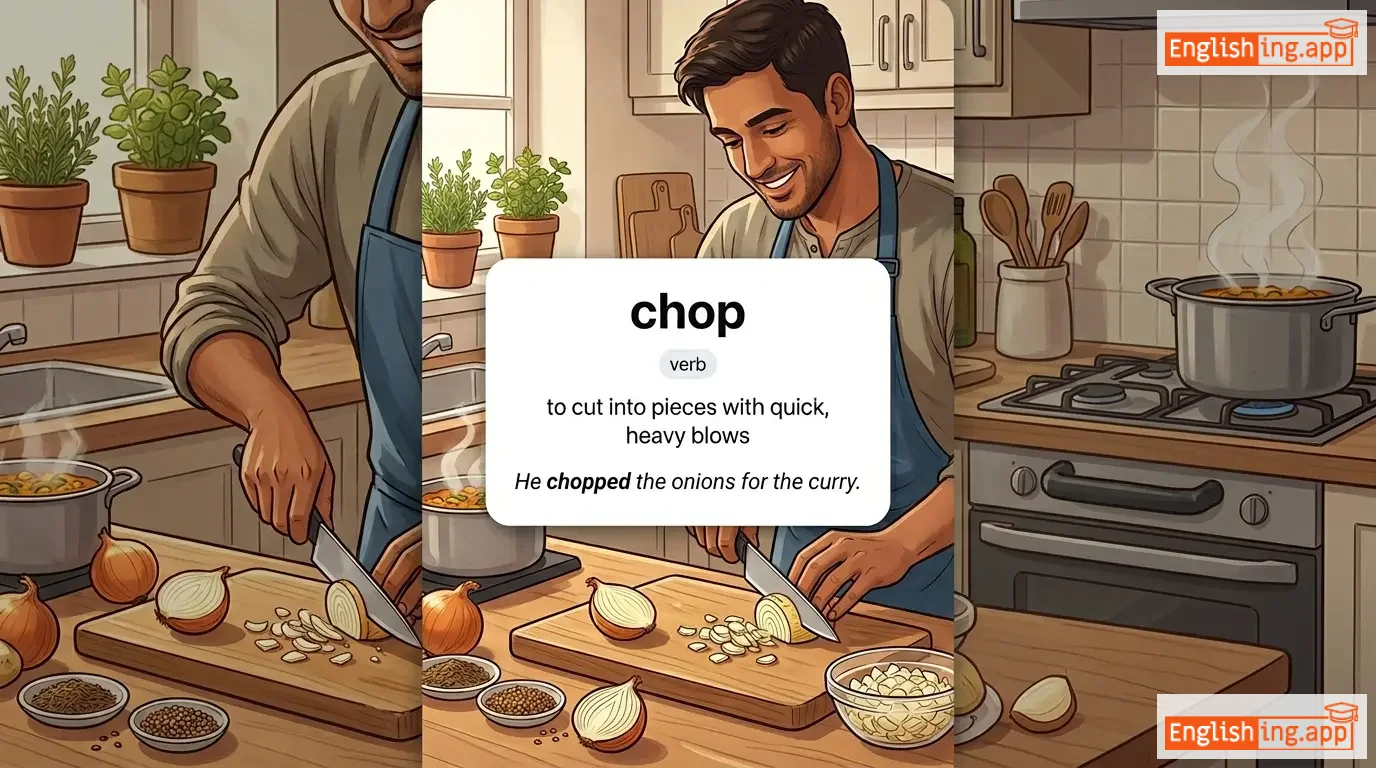
to cut into pieces with quick, heavy blows
••••••
|
He chopped the onions for the curry. |
他为咖喱切了洋葱。
Tā wèi gālí qiēle yángcōng.
••••••
|
chop and change |
to keep changing one's mind or decisions
••••••
|
反复改变意见
fǎn fù gǎi biàn yìjiàn
••••••
|
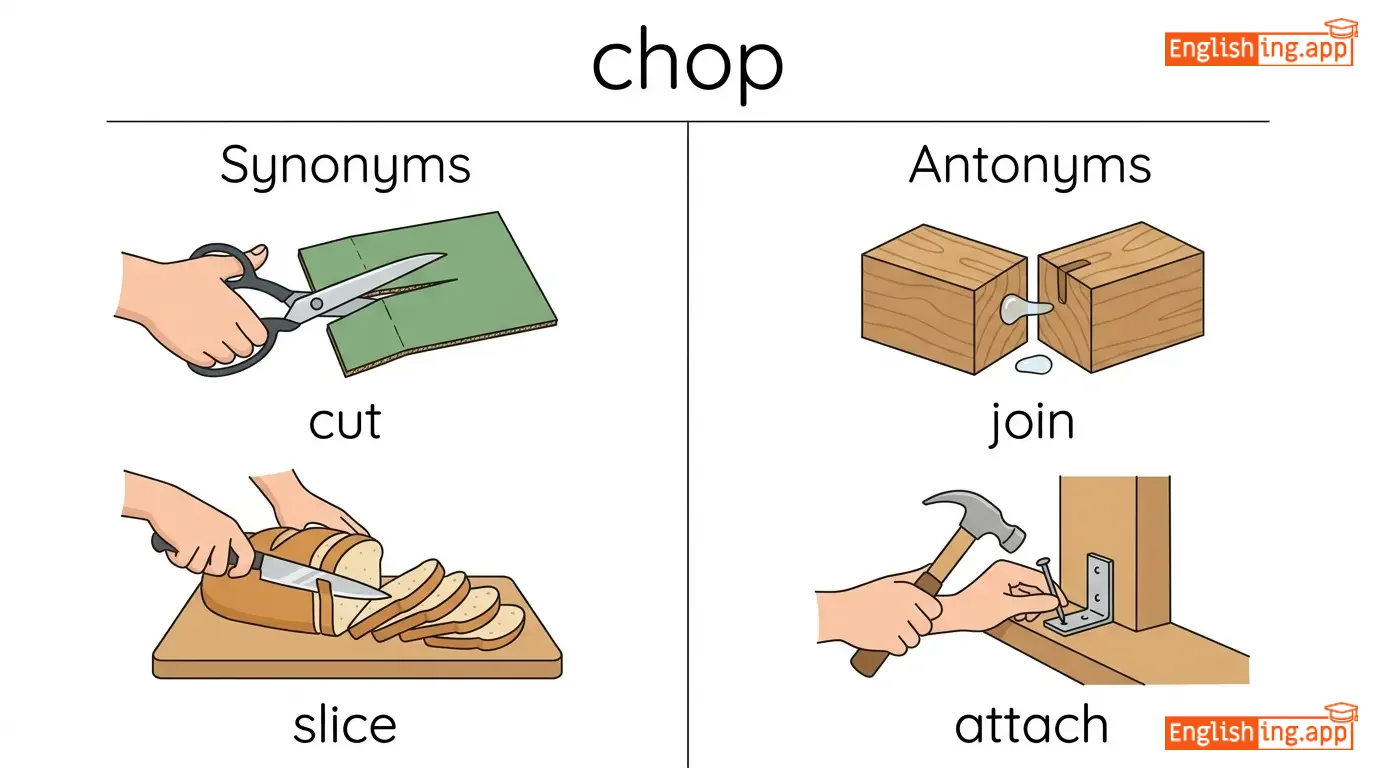
cut, slice, hack, cleave, dice
••••••
|
join, attach, connect
••••••
|
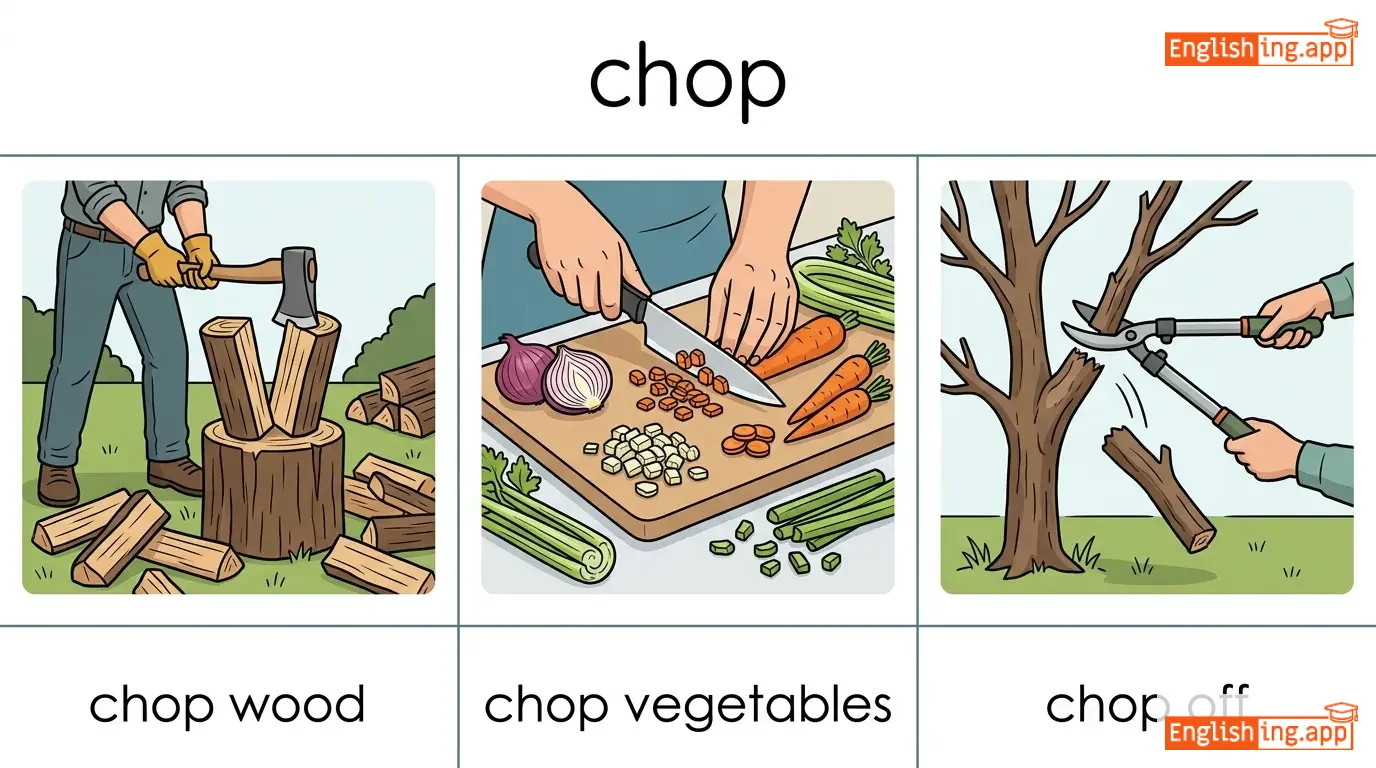
chop wood, chop vegetables, chop off, chop into pieces
••••••
|
Chop意味着砍或反复改变决定。
••••••
|
|
#9685
🤔
|
/ˈtʃuːzi/
adjective
(chūzī)
••••••
|
- •••••• |
挑剔
tiāotì
••••••
|
- •••••• | - •••••• | - •••••• | - •••••• |
very careful in choosing; selective
••••••
|
She is very choosy about the clothes she wears.
她对她穿的衣服非常挑剔。
••••••
|
她对她穿的衣服非常挑剔。
Tā duì tā chuān de yīfú fēicháng tiāotì.
••••••
|
- •••••• | - •••••• | - •••••• |
picky, selective, finicky, particular, fussy
••••••
|
easygoing, careless, unselective
••••••
|
choosy eater, choosy customer, choosy about, very choosy
••••••
|
Choosy意味着在选择衣服时非常挑剔。
••••••
|
|
#9686
🥶
|
/ˈtʃɪli/
adjective
(chī lì)
••••••
|
- •••••• |
寒冷
han leng
••••••
|
- •••••• | - •••••• | - •••••• | - •••••• |
uncomfortably or unpleasantly cold
••••••
|
It was a chilly morning in December. |
十二月的早晨很寒冷。
Shi'er yue de zaochen hen han leng.
••••••
|
chilly reception |
an unfriendly or unenthusiastic welcome
••••••
|
冷漠的接待
leng mo de jie dai
••••••
|
cold, frosty, brisk, cool
••••••
|
warm, hot
••••••
|
chilly morning, chilly wind, chilly night, chilly reception
••••••
|
Chilly意味着寒冷,像'寒冷'一样🥶
••••••
|
|
#9687
⭐
|
/ˈtʃiːfli/
adverb
(奇夫利)
••••••
|
- •••••• |
主要
zhuyao
••••••
|
- •••••• | - •••••• | - •••••• | - •••••• |
mainly; primarily
••••••
|
The festival is celebrated chiefly by young people. |
这个节日主要由年轻人庆祝。
Zhège jiérì zhǔyào yóu niánqīngrén qìngzhù.
••••••
|
- •••••• | - •••••• | - •••••• |
mainly, primarily, largely, mostly, predominantly
••••••
|
rarely, slightly
••••••
|
chiefly responsible, celebrated chiefly, chiefly concerned
••••••
|
Chief 意味着领导者 ⭐,所以 chiefly 意味着主要
••••••
|
|
#9688
🧀
|
/ˈtʃiːzi/
adjective
(chīzī)
••••••
|
- •••••• |
便宜/过于感伤
piányí/guòyú gǎnshāng
••••••
|
- •••••• | - •••••• | - •••••• | - •••••• |
tacky, overly sentimental, or cheap in quality
••••••
|
The movie was funny but a bit too cheesy. |
电影很有趣,但有点太俗气了。
diànyǐng hěn yǒuqù, dàn yǒudiǎn tài súqì le.
••••••
|
cheesy grin |
an exaggerated or silly smile
••••••
|
俗气的微笑
súqì de wēixiào
••••••
|
tacky, corny, cheap, silly, gaudy
••••••
|
classy, elegant
••••••
|
cheesy grin, cheesy movie, cheesy line, cheesy joke
••••••
|
Cheesy意味着过度,就像cheesy grin,意味着过度的微笑。
••••••
|
|
#9689
💲
|
/tʃiːp/
adjective
(奇普)
••••••
|
- •••••• |
便宜
pianyi
••••••
|
- •••••• | - •••••• | - •••••• | - •••••• |
low in cost; inexpensive
••••••
|
This shop sells clothes at very cheap prices. |
这家商店以非常便宜的价格出售衣服。
Zhe jia shangdian yi feichang pianyi de jiage chushou yifu.
••••••
|
dirt cheap |
extremely inexpensive
••••••
|
非常便宜
feichang pianyi
••••••
|
inexpensive, low-cost, budget, economical, affordable
••••••
|
expensive, costly
••••••
|
cheap price, cheap clothes, cheap hotel, cheap deal
••••••
|
便宜就是便宜,记住它的发音
••••••
|
Vocabulary Quiz
Test your vocabulary by matching words with their translations or meanings.
Login to take the quiz
Comments (0)
Share your thoughts and join the discussion.
Join the discussion by logging in
Login to CommentNo comments yet
Be the first to share your thoughts!