


Swipe left or right, or use the buttons. Tap image to zoom.
例句翻译
单词
Lesson 212Lesson 212 - 遮罩切换
|
表情符号
|
单词 | Images | 翻译 | 过去时 | 过去分词 | 第三人称单数 | 动名词 | 含义 | 例句 | 例句翻译 | 示例表达 | 示例表达含义 | 示例表达翻译 | 同义词 | 反义词 | 搭配词 | 助记符 |
|---|---|---|---|---|---|---|---|---|---|---|---|---|---|---|---|---|---|
|
#6331
🧩
|
/ˈpɑːrʃəl/
adjective
(pāshì'ěr)
••••••
|
- •••••• |
部分的,偏袒的
bùfen de, piāntǎn de
••••••
|
- •••••• | - •••••• | - •••••• | - •••••• |
existing only in part; biased toward one side
••••••
|
The report gave a partial view of the situation.
报告给出了部分视图。
••••••
|
报告给出了部分视图。
Bàogào gěi chūle bùfen shìtú.
••••••
|
partial to
偏袒
••••••
|
to show favor or preference for someone or something
••••••
|
对...偏袒
duì...piāntǎn
••••••
|
incomplete, biased, limited, fragmentary
••••••
|
complete, impartial, unbiased
••••••
|
partial view, partial payment, partial solution, partiality towards
••••••
|
Partial 意味着不完整,中文翻译部分的或偏袒的。
••••••
|
|
#6332
🧘
|
/ˈpæsɪv/
adjective
(pàxīf)
••••••
|
- •••••• |
被动; (语法) 被动语态
bèidòng; (yǔfǎ) bèidòng yǔtài
••••••
|
- •••••• | - •••••• | - •••••• | - •••••• |
not actively responding or participating; in grammar, denoting the voice in which the subject undergoes the action
••••••
|
Instead of taking charge, he remained passive during the meeting. |
他在会议中没有采取主导,而是保持被动。
Tā zài huìyì zhōng méiyǒu cǎiqǔ zhǔdǎo, ér shì bǎochí bèidòng.
••••••
|
passive voice |
a grammatical construction where the subject is acted upon
••••••
|
被动语态
bèidòng yǔtài
••••••
|
inactive, submissive, unresponsive, compliant, receptive
••••••
|
active, assertive, dynamic
••••••
|
passive income, passive resistance, passive investor, passive role, passive voice
••••••
|
被动,像‘pàxīf’ → 不主动,接受结果。
••••••
|
|
#6333
😌
|
/ˈpæsɪbəl/
adjective
(帕斯布尔)
••••••
|
- •••••• |
能够感知; 易受痛苦
nénggòu gǎnzhī; yì shòu tòngkǔ
••••••
|
- •••••• | - •••••• | - •••••• | - •••••• |
capable of feeling or suffering; susceptible to sensation or emotion (often theological)
••••••
|
In some traditions, deities are described as passible, sharing human emotions. |
在一些传统中,神被描述为能够感知,分享人类情感。
Zài yīxiē chuántǒng zhōng, shén bèi miáoshù wèi nénggòu gǎnzhī, fēnxiǎng rénlèi qínggǎn.
••••••
|
- •••••• | - •••••• | - •••••• |
sensitive, susceptible, sentient, receptive
••••••
|
impassible, insensitive, unfeeling
••••••
|
passible deity, passible nature, passible beings, passible emotions
••••••
|
Passible ≠ passive; ‘能感受’ - 记住:passible表示可以感受的可能性!
••••••
|
|
#6334
🕰️
|
/pæˈseɪ/
adjective
(帕赛)
••••••
|
- •••••• |
过时的; 过时
guo shi de; guo shi
••••••
|
- •••••• | - •••••• | - •••••• | - •••••• |
no longer fashionable or current; out of date
••••••
|
Some trends from last decade feel utterly passé now. |
过去十年的一些趋势现在看起来完全过时了。
Guo qu shi nian de yi xie qu shi xian zai kan qi lai wan quan guo shi le.
••••••
|
so passé |
used to say something is very outdated or uncool
••••••
|
非常过时
fei chang guo shi
••••••
|
outdated, unfashionable, old-fashioned, stale, antiquated
••••••
|
trendy, fashionable, modern
••••••
|
passé style, passé idea, considered passé, utterly passé
••••••
|
Passe 代表 passé—‘帕赛’,已经过时了!
••••••
|
|
#6335
🚪
|
/ˈpæsɪdʒ/
noun
(通道)
••••••
|
- •••••• |
狭窄的通道; 片段/引用; 从一个状态或地方到另一个的过程
xiázhǎi de tōngdào; piàn duàn/yǐn yòng; cóng yī gè zhuàngtài huò dìfāng dào lìng yī gè de guòchéng
••••••
|
- •••••• | - •••••• | - •••••• | - •••••• |
a narrow way through or between; a section of text or music; the process of moving from one state or place to another
••••••
|
The narrow passage led from the courtyard to the library. |
狭窄的通道从庭院通向图书馆。
xiázhǎi de tōngdào cóng tíngyuàn tōngxiàng túshūguǎn.
••••••
|
rite of passage |
a significant event marking a transition in a person’s life
••••••
|
成年礼
chéngnián lǐ
••••••
|
corridor, hallway, excerpt, segment, transition
••••••
|
blockage, dead end, whole
••••••
|
passage of time, narrow passage, a passage from the novel, safe passage
••••••
|
通过‘passage’到达新的生活阶段!
••••••
|
|
#6336
🤥
|
/ˈpæs ˌɔːf/
verb (phrasal)
••••••
|
- •••••• | - •••••• |
passed off
••••••
|
passed off
••••••
|
passes off
••••••
|
passing off
••••••
|
to present something or someone falsely as something else; to pretend or deceive
••••••
|
He tried to pass off the fake watch as a luxury brand. |
- •••••• |
pass off as |
to claim that something or someone is something they are not
••••••
|
- •••••• |
pretend, fake, misrepresent, palm off, disguise
••••••
|
reveal, confess, disclose
••••••
|
pass off as genuine, pass off blame, pass off counterfeit, attempt to pass off
••••••
|
No •••••• |
|
#6337
💼
|
/ˈpɑːrvənuː/
noun
(帕尔文纽)
••••••
|
- •••••• |
新富人
xīn fù rén
••••••
|
- •••••• | - •••••• | - •••••• | - •••••• |
A person who has recently gained wealth or influence but is not yet accepted socially.
••••••
|
He was seen as a parvenu who lacked refinement despite his riches.
他被视为一个新富阶层,尽管他拥有财富,但却缺乏 refinement。
••••••
|
他被视为一个新富阶层,尽管他拥有财富,但却缺乏 refinement。
Tā bèi shì wéi yīgè xīn fù jiēcéng, jǐnguǎn tā yǒngyǒu cáifù, dàn què quēfá refinement.
••••••
|
- •••••• | - •••••• | - •••••• |
upstart, social climber, newcomer, arriviste
••••••
|
aristocrat, noble
••••••
|
parvenu millionaire, social parvenu, parvenu family
••••••
|
Parvenu = 新贵,刚获得财富,但还未完全融入社会
••••••
|
|
#6338
👶
|
/ˌpɑːrtjʊˈrɪʃən/
noun
(帕图里申)
••••••
|
- •••••• |
分娩
fenmian
••••••
|
- •••••• | - •••••• | - •••••• | - •••••• |
The act of giving birth; childbirth.
••••••
|
The doctor explained the stages of parturition to the students. |
医生向学生们解释了分娩的各个阶段。
Yisheng xiang xuéshengmen jiěshìle fēnmiǎn de gège jiēduàn.
••••••
|
- •••••• | - •••••• | - •••••• |
childbirth, delivery, labor, birth
••••••
|
conception, infertility
••••••
|
stages of parturition, process of parturition, during parturition
••••••
|
Parturition = Part + 产生; 生命的开始
••••••
|
|
#6339
🪟
|
/pɑːrˈtɪʃən/
noun, verb
(分隔)
••••••
|
|
分隔 / 隔断
fenge / geduan
••••••
|
partitioned
分隔
••••••
|
partitioned
分隔
••••••
|
partitions
分隔
••••••
|
partitioning
分隔中
••••••
|
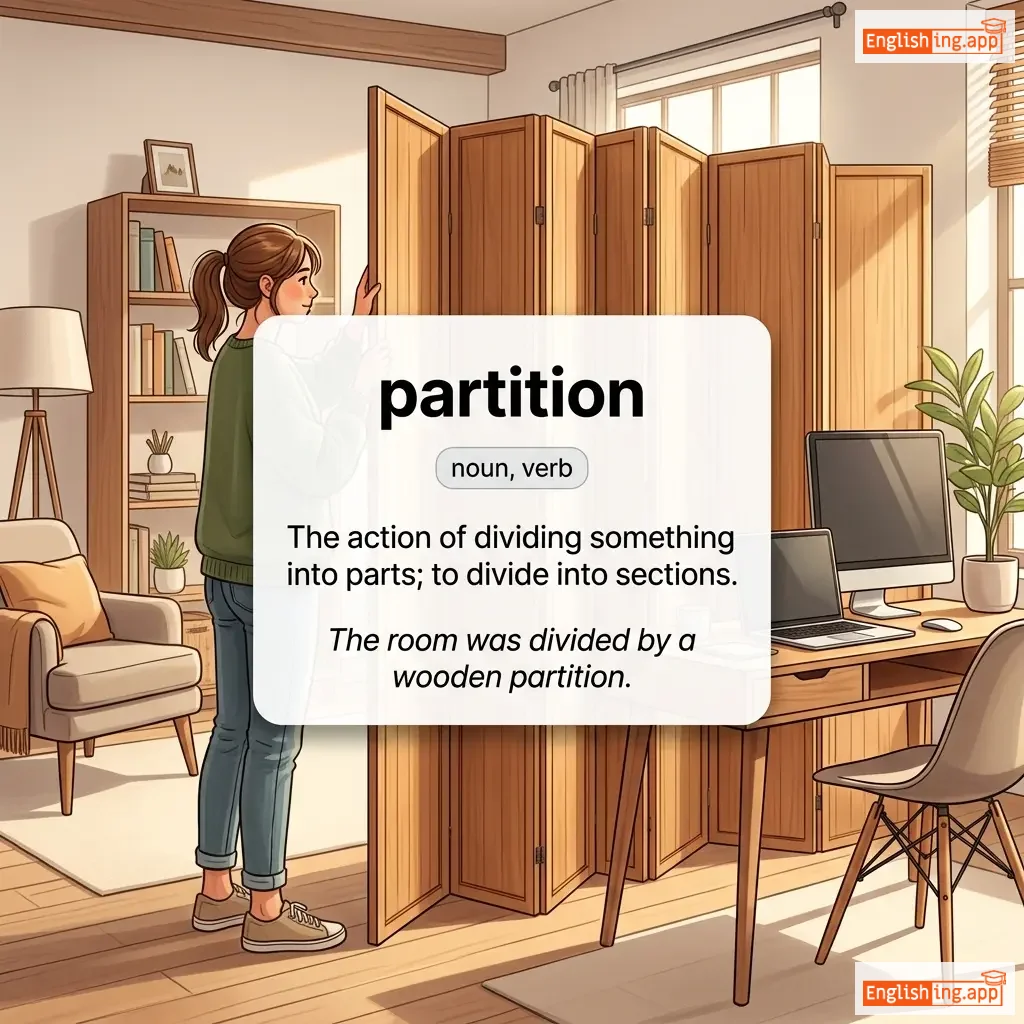
The action of dividing something into parts; to divide into sections.
••••••
|
The room was divided by a wooden partition.
房间被木质隔断分开。
••••••
|
房间被木质隔断分开。
Fángjiān bèi mùzhì gēduàn fēn kāi.
••••••
|
- •••••• | - •••••• | - •••••• |
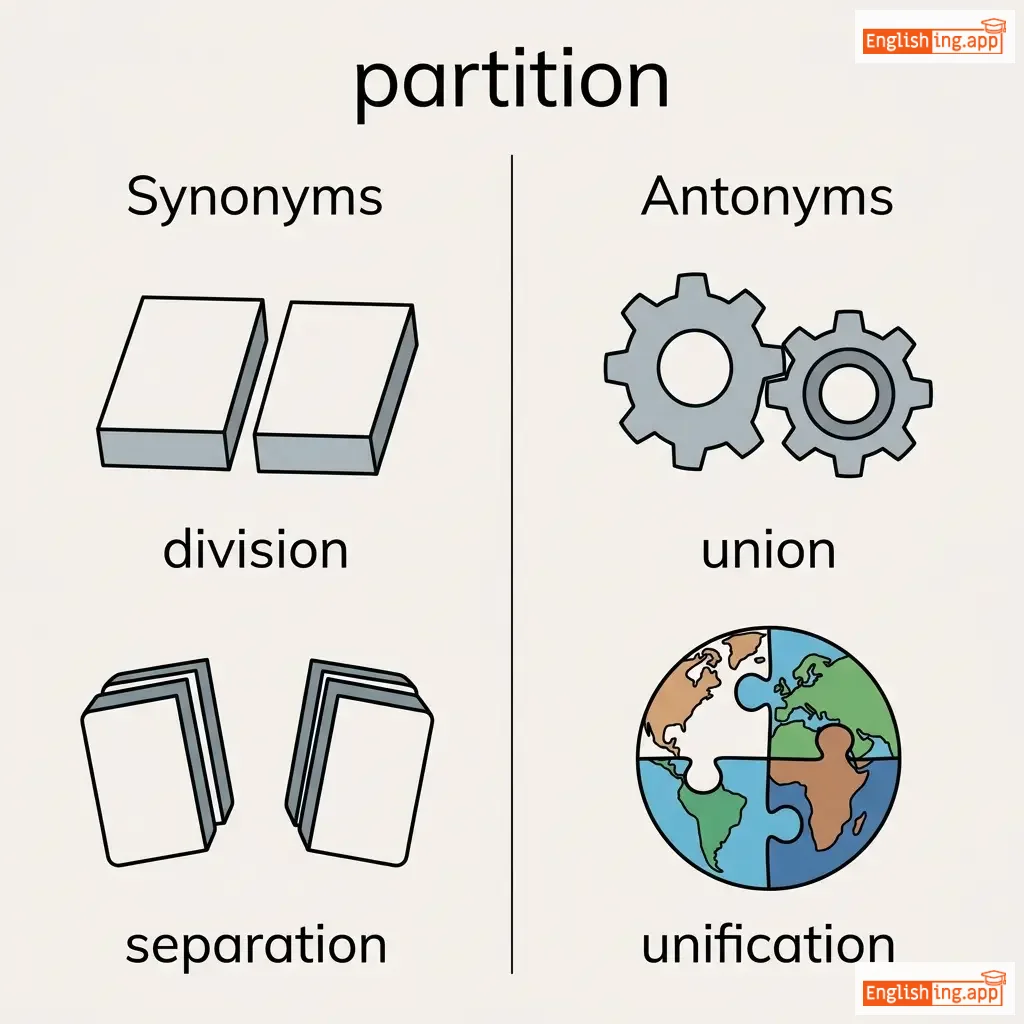
division, separation, split, segregation
••••••
|
union, unification, integration
••••••
|
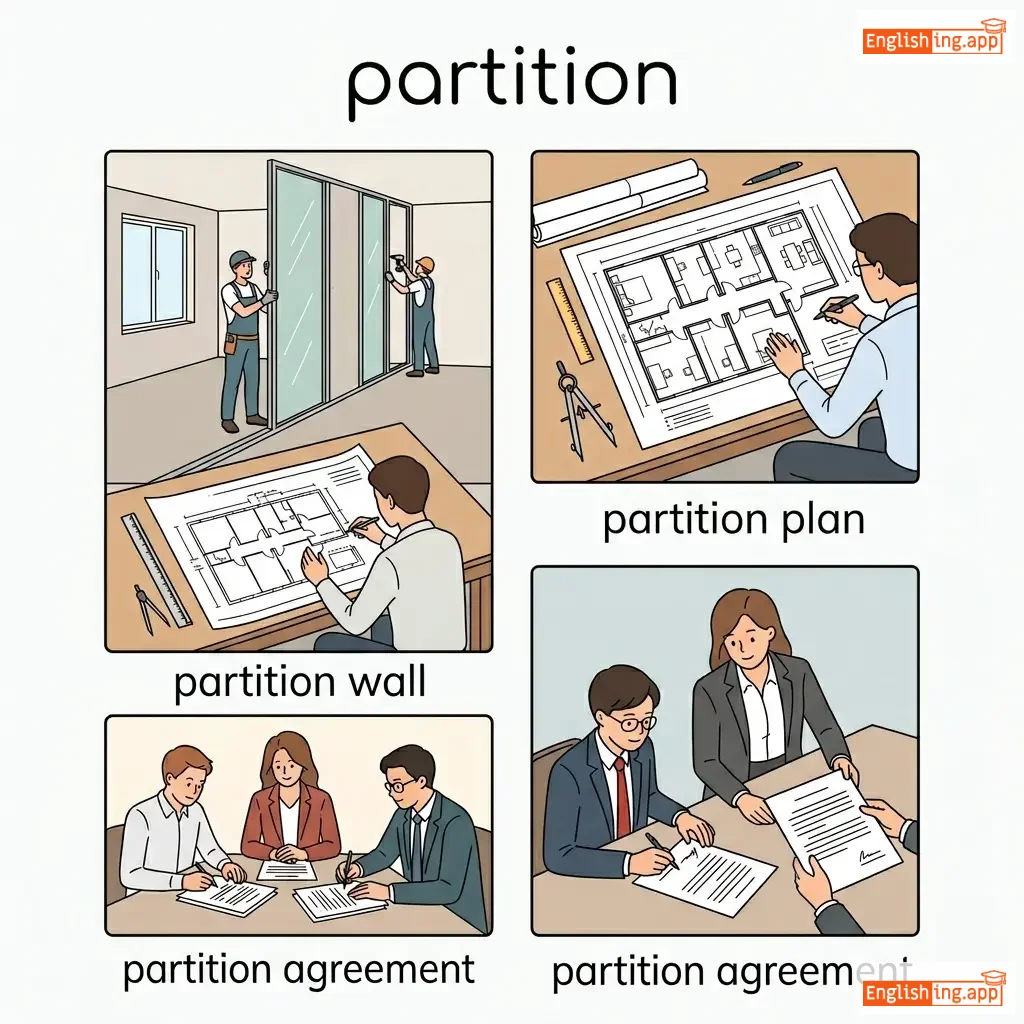
partition wall, partition plan, partition agreement, partition property
••••••
|
Partition 是将某物分开
••••••
|
|
#6340
⚔️
|
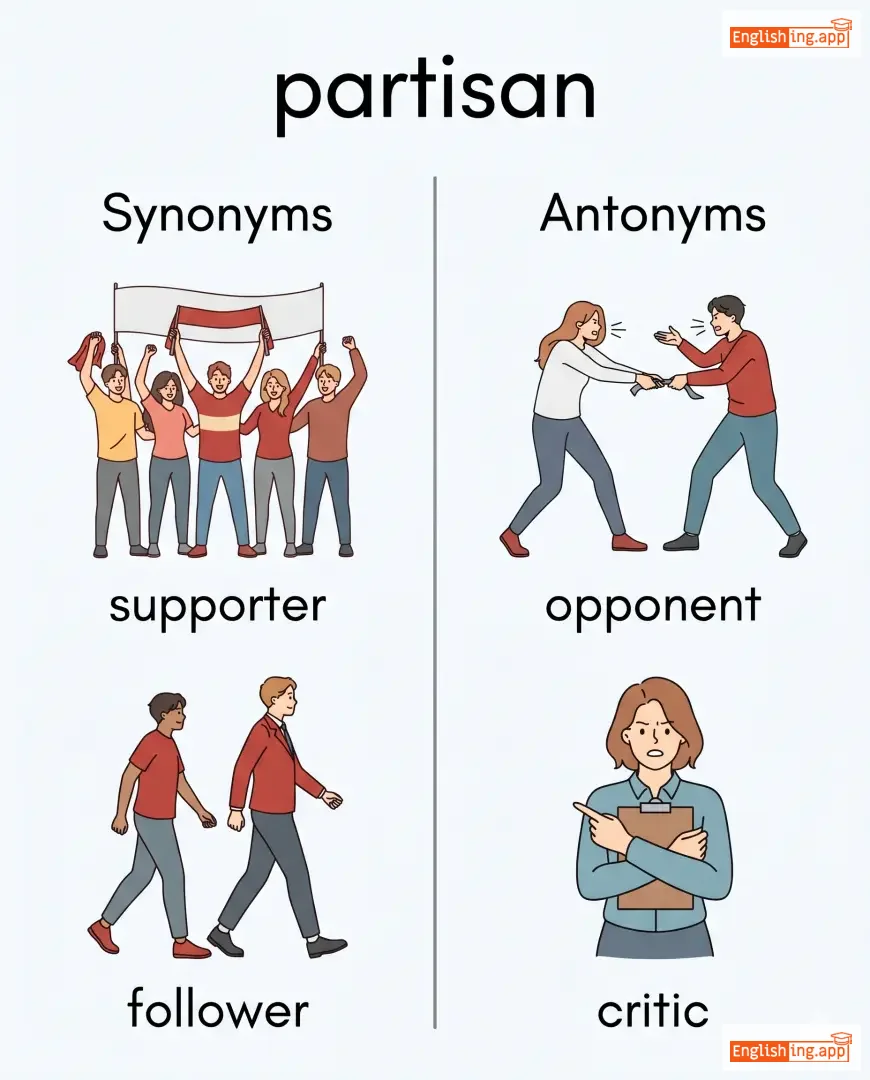
/ˈpɑːrtɪzən/
noun, adjective
(派系支持者)
••••••
|
|
党派支持者
dǎngpài zhīchí zhě
••••••
|
- •••••• | - •••••• | - •••••• | - •••••• |
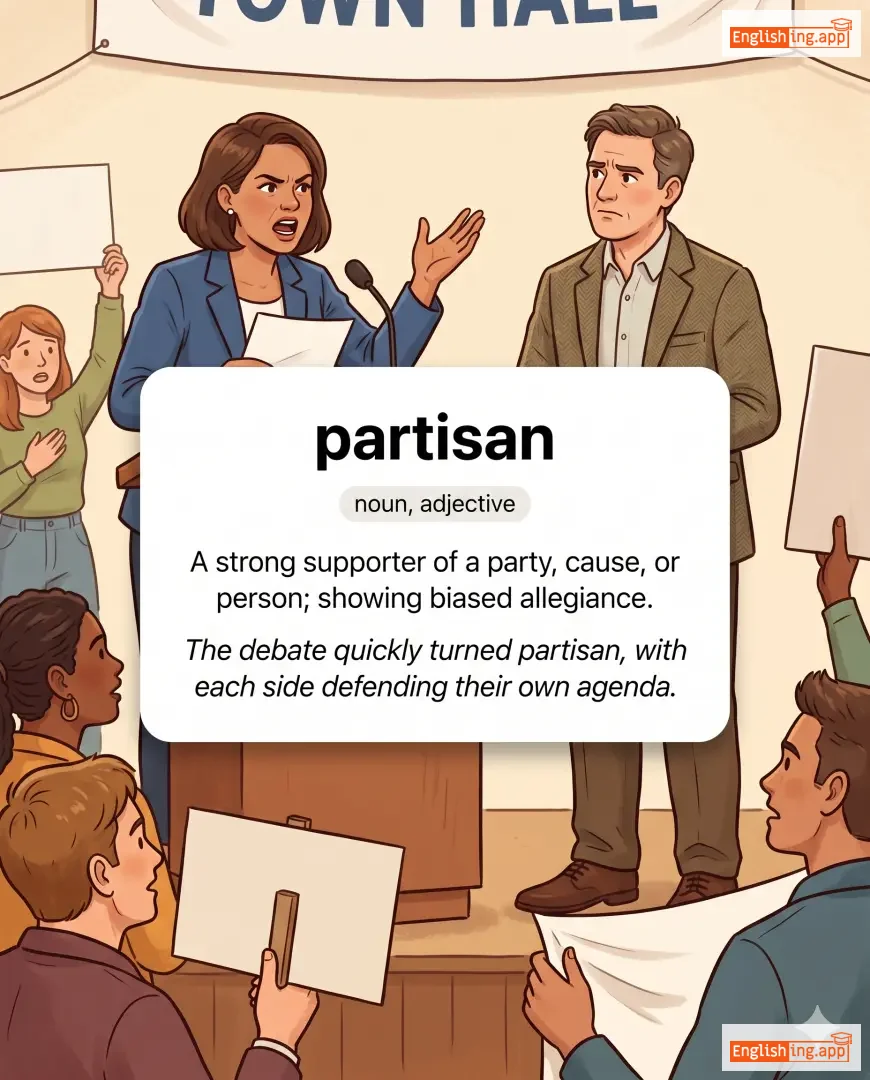
A strong supporter of a party, cause, or person; showing biased allegiance.
••••••
|
The debate quickly turned partisan, with each side defending their own agenda.
辩论迅速变得党派化,每一方都在捍卫自己的议程。
••••••
|
辩论迅速变得党派化,每一方都在捍卫自己的议程。
Biànlùn xùnsù biàn dé dǎngpài huà, měi yī fāng dōu zài hànwèi zìjǐ de yìchéng.
••••••
|
- •••••• | - •••••• | - •••••• |
supporter, follower, adherent, devotee, zealot
••••••
|
opponent, critic, adversary
••••••
|
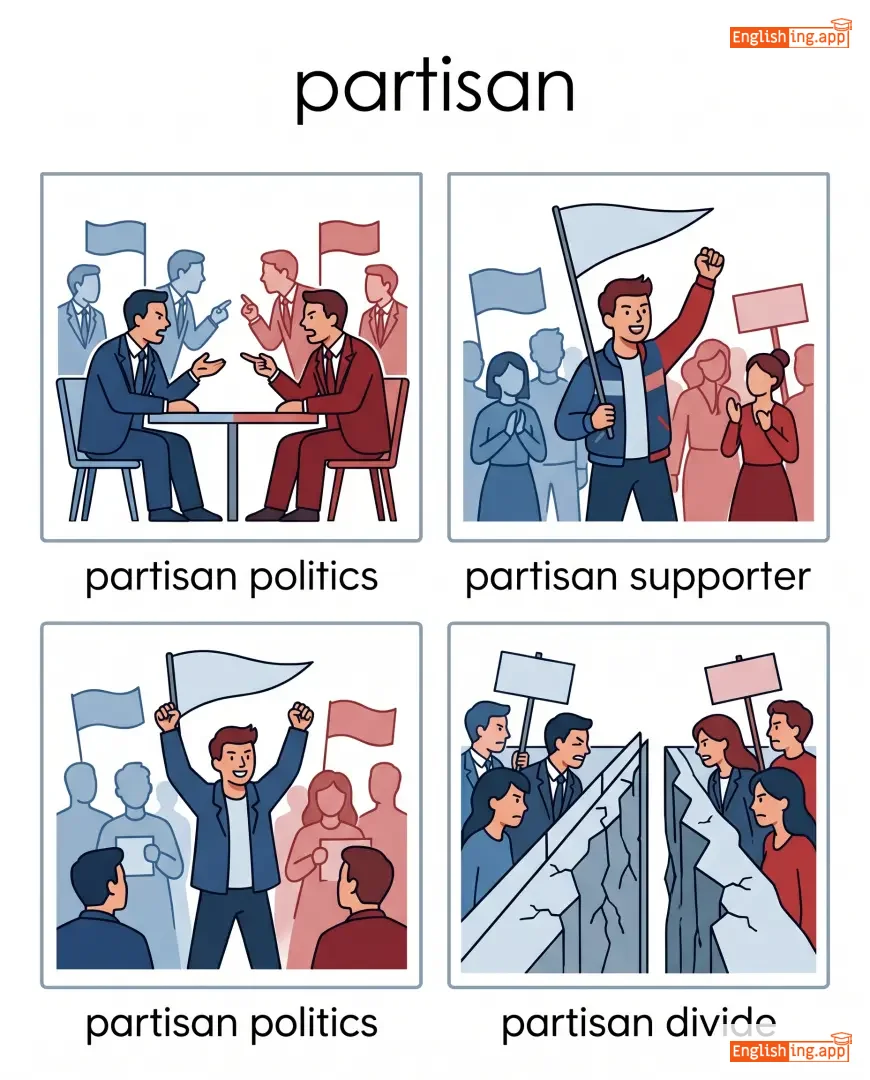
partisan politics, partisan supporter, partisan divide, highly partisan
••••••
|
Party + Son = 党派支持者
••••••
|
|
#6341
🔍
|
/pərˈtɪkjələrˌaɪz/
verb
(pātíkúlàráiz)
••••••
|
- •••••• |
具体说明
jùtǐ shuōmíng
••••••
|
particularized
pātíkúlàráizd
••••••
|
particularized
pātíkúlàráizd
••••••
|
particularizes
pātíkúlàráizes
••••••
|
particularizing
pātíkúlàráizing
••••••
|
to mention or describe something in detail
••••••
|
The witness was asked to particularize the events of that night.
证人被要求详细叙述那个夜晚的事件。
••••••
|
证人被要求详细叙述那个夜晚的事件。
Zhèngrén bèi yāoqiú xiángxì xùshù nàgè yèwǎn de shìjiàn.
••••••
|
- •••••• | - •••••• | - •••••• |
specify, detail, describe, enumerate, itemize
••••••
|
generalize, summarize
••••••
|
particularize details, particularize events, asked to particularize
••••••
|
Particularize表示详细说明。
••••••
|
|
#6342
🙋
|
/pɑːrˈtɪsɪpeɪt/
verb
(帕尔蒂西佩特)
••••••
|
|
参加
cānjiā
••••••
|
participated
帕尔蒂西佩特德
••••••
|
participated
帕尔蒂西佩特德
••••••
|
participates
帕尔蒂西佩特斯
••••••
|
participating
帕尔蒂西佩廷
••••••
|
to take part in an event or activity
••••••
|
Many students will participate in the cultural festival.
许多学生将参加文化节。
••••••
|
许多学生将参加文化节。
Xǔduō xuéshēng jiāng cānjiā wénhuà jié.
••••••
|
participate in
参加
••••••
|
to take part in something
••••••
|
参加
cānjiā
••••••
|
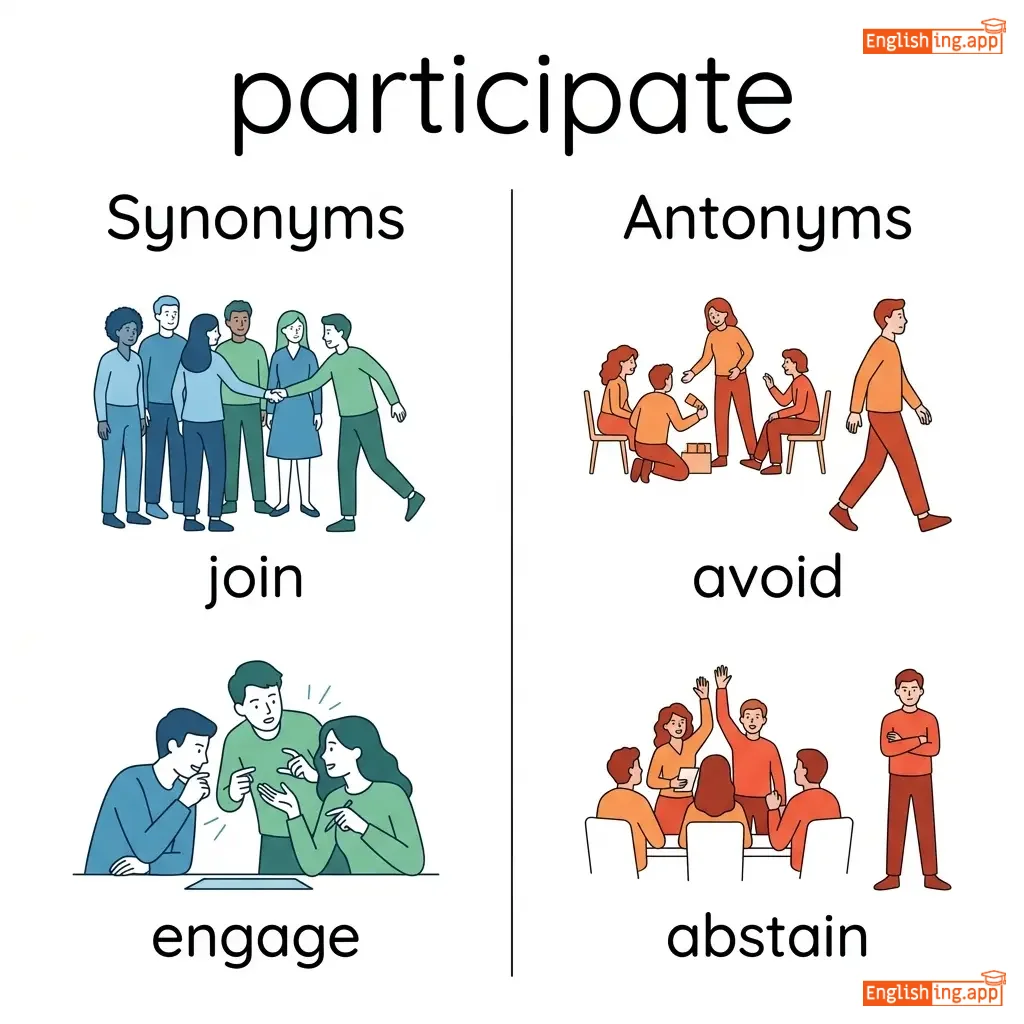
join, engage, take part, involve, contribute
••••••
|
avoid, abstain
••••••
|
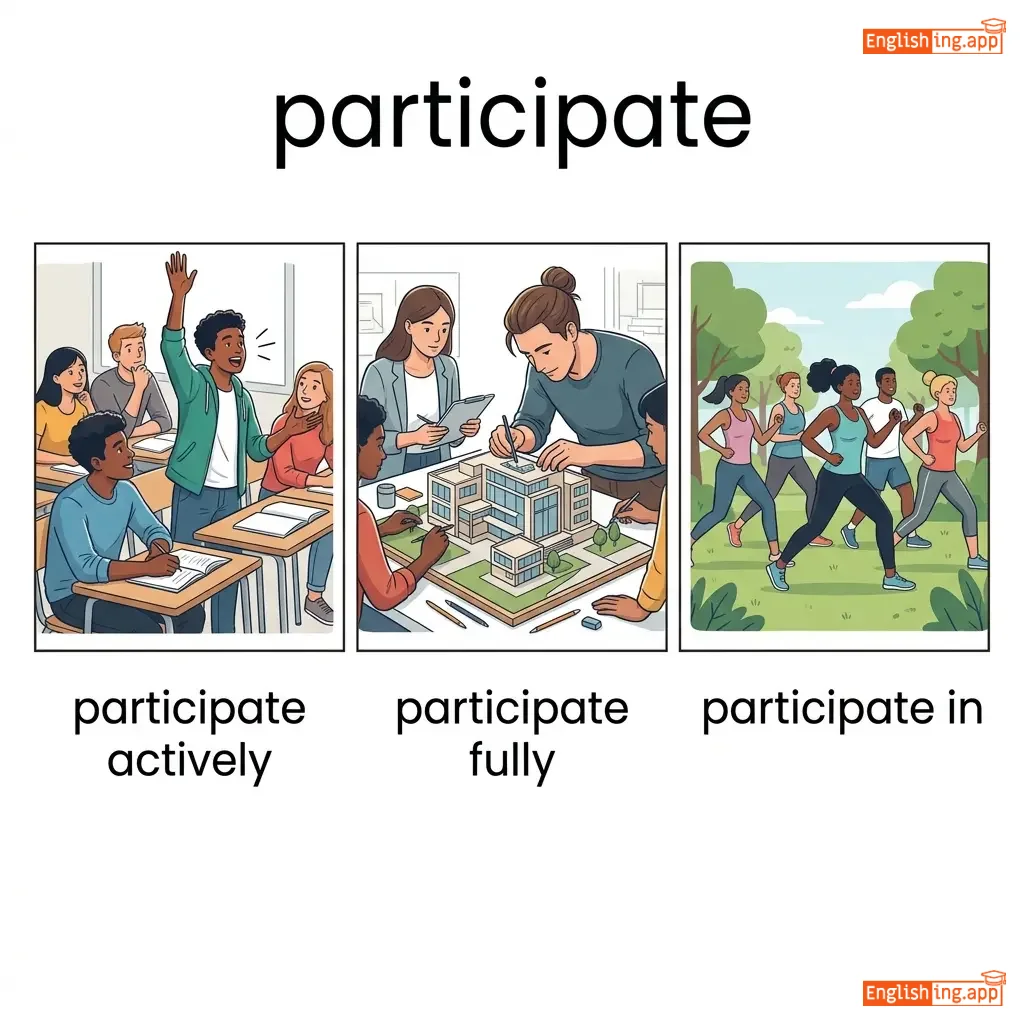
participate actively, participate fully, participate in
••••••
|
Participate意味着参加 → 参加。
••••••
|
|
#6343
🧑🤝🧑
|
/pɑːrˈtɪsɪpənt/
noun
(pātíxípiāntè)
••••••
|
- •••••• |
参与者
canyu zhe
••••••
|
- •••••• | - •••••• | - •••••• | - •••••• |
a person who takes part in an event or activity
••••••
|
Each participant received a certificate after the workshop.
每位参与者在工作坊结束后收到了证书。
••••••
|
每位参与者在工作坊结束后收到了证书。
Měi wèi cān yù zhě zài gōng zuò fāng jié shù hòu shōu dào le zhèng shū.
••••••
|
active participant
积极参与者
••••••
|
someone who takes an active role in an activity
••••••
|
积极参与者
jī jí cān yù zhě
••••••
|
attendee, entrant, contestant, member, player
••••••
|
observer, spectator
••••••
|
active participant, workshop participant, study participant
••••••
|
Participant就像参与 → 参与活动的人是参与者。
••••••
|
|
#6344
➗
|
/ˈpɑːrtəbl/
adjective
(帕尔提布尔)
••••••
|
- •••••• |
可分割的
kě fēn gē de
••••••
|
- •••••• | - •••••• | - •••••• | - •••••• |
capable of being divided or separated
••••••
|
The estate was partible among the heirs. |
这项财产可以在继承人之间分割。
Zhè xiàng cáichǎn kě yǐ zài jìchéngrén zhī jiān fēn gē.
••••••
|
- •••••• | - •••••• | - •••••• |
divisible, separable, distributable, splittable
••••••
|
indivisible, inseparable
••••••
|
partible inheritance, partible property, partible division
••••••
|
Partible意味着可以分成不同的部分。
••••••
|
|
#6345
⚖️
|
/ˌpɑːrʃiˈæləti/
noun
(parshialiti)
••••••
|
- •••••• |
偏袒
piāntǎn
••••••
|
- •••••• | - •••••• | - •••••• | - •••••• |
an unfair preference or bias toward one side or person
••••••
|
The judge was criticized for showing partiality in the case. |
法官因在案件中表现出偏袒而受到批评。
Fǎguān yīn zài ànjiàn zhōng biǎoxiàn chū piāntǎn ér shòudào pīpíng.
••••••
|
show partiality |
to favor one side unfairly
••••••
|
表现偏袒
biǎoxiàn piāntǎn
••••••
|
bias, favoritism, prejudice, preference, inclination
••••••
|
fairness, neutrality, impartiality
••••••
|
show partiality, accused of partiality, act with partiality
••••••
|
偏袒 = 偏向一方,是不公平的表现。
••••••
|
|
#6346
🛋️
|
/ˈpɑːrlər/
noun
(帕洛尔)
••••••
|
- •••••• |
客厅,商店
parlor
••••••
|
- •••••• | - •••••• | - •••••• | - •••••• |
A sitting room in a private house, or a shop providing specified services.
••••••
|
They welcomed the guests into the front parlor.
他们在前厅迎接了客人。
••••••
|
他们在前厅迎接了客人。
Tāmen zài qiántīng yíngjiē le kèrén.
••••••
|
ice cream parlor
冰淇淋店
••••••
|
A shop that sells ice cream.
••••••
|
冰淇淋店
bīngqílín diàn
••••••
|
living room, lounge, salon, sitting room
••••••
|
hallway, corridor
••••••
|
front parlor, funeral parlor, ice cream parlor
••••••
|
帕洛尔就像是一个放松的地方,比如冰淇淋店。
••••••
|
|
#6347
🪙
|
/ˈpɑːrsɪmoʊni/
noun
(帕西莫尼)
••••••
|
- •••••• |
吝啬
lin se
••••••
|
- •••••• | - •••••• | - •••••• | - •••••• |
extreme unwillingness to spend money or use resources
••••••
|
His parsimony was evident in the way he avoided any unnecessary expenses.
希斯 帕西莫尼 沃兹 证明显 在 他 避免 任何 不必要 的 开支 的 方式。
••••••
|
他避免任何不必要的开支的方式明显体现了他的吝啬。
Ta bi mian ren he bu bi yao de kai zhi de fang shi ming xian ti xian le ta de lin se.
••••••
|
- •••••• | - •••••• | - •••••• |
stinginess, frugality, miserliness, thrift
••••••
|
generosity, extravagance, lavishness
••••••
|
act of parsimony, extreme parsimony, parsimony in spending
••••••
|
Parsimony = “part save money”; 在中文里是 吝啬 lin se——省钱到抠。
••••••
|
|
#6348
💰
|
/ˌpɑːrsɪˈmoʊniəs/
adjective
(parsimonious)
••••••
|
- •••••• |
吝啬
lìn sè
••••••
|
- •••••• | - •••••• | - •••••• | - •••••• |
unwilling to spend money or use resources; stingy
••••••
|
The company was too parsimonious to invest in better equipment. |
公司太吝啬,无法投资更好的设备。
Gōngsī tài lìnsè, wúfǎ tóuzī gèng hǎo de shèbèi.
••••••
|
- •••••• | - •••••• | - •••••• |
stingy, frugal, miserly, tightfisted
••••••
|
generous, lavish, extravagant
••••••
|
parsimonious approach, parsimonious lifestyle, extremely parsimonious
••••••
|
Parsimonious就像一个吝啬鬼,不愿意花钱。
••••••
|
|
#6349
📝
|
/pɑːrs/
verb
(párs)
••••••
|
- •••••• |
语法分析
yǔfǎ fēnxī
••••••
|
parsed
pársd
••••••
|
parsed
pársd
••••••
|
parses
párses
••••••
|
parsing
pársing
••••••
|
to analyze a sentence or text grammatically or logically
••••••
|
The software can parse large amounts of text data efficiently.
该软件可以高效地解析大量文本数据。
••••••
|
该软件可以高效地解析大量文本数据。
Gāi ruǎnjiàn kěyǐ gāoxiào de jiěxī dàliàng wénběn shùjù.
••••••
|
- •••••• | - •••••• | - •••••• |
analyze, examine, interpret, dissect, process
••••••
|
ignore, confuse, misinterpret
••••••
|
parse a sentence, parse data, parse code, parse input
••••••
|
Parse 是指分割部分 📝 - 在中文中是语法分析。
••••••
|
|
#6350
🛡️
|
/ˈpæri/
verb
(pæri)
••••••
|
- •••••• |
挡开攻击
dǎng kāi gōngjí
••••••
|
parried
pærid
••••••
|
parried
pærid
••••••
|
parries
pæriz
••••••
|
parrying
pæriɪŋ
••••••
|
to ward off or deflect an attack, especially in fencing or conversation
••••••
|
He managed to parry the opponent’s sword with quick reflexes.
hi mænɪdʒd tu pæri ðə əpəˈnənt’s swɔrd wɪð kwɪk rɪflɛksɪz
••••••
|
他凭借快速的反应成功挡开了对手的剑。
Tā píngjiè kuàisù de fǎnyìng chénggōng dǎng kāi le duìshǒu de jiàn.
••••••
|
- •••••• | - •••••• | - •••••• |
deflect, block, fend off, repel, avoid
••••••
|
accept, allow, yield
••••••
|
parry a blow, parry a question, quick parry, skillful parry
••••••
|
Parry 意味着挡开攻击 ⚔️,在中文里是挡开攻击。
••••••
|
|
#6351
🦜
|
/ˈpær.ət/
noun/verb
(鹦鹉)
••••••
|
- •••••• |
鹦鹉
yīngwǔ
••••••
|
parroted
鹦鹉学舌
••••••
|
parroted
鹦鹉学舌
••••••
|
parrots
鹦鹉们
••••••
|
parroting
鹦鹉学舌
••••••
|
A brightly colored bird that can imitate human speech; to repeat words mechanically without understanding.
••••••
|
The child parroted the teacher's words without thinking.
孩子毫不思考地重复了老师的话。
••••••
|
孩子毫不思考地重复了老师的话。
Háizi háo bù sīkǎo dì chóngfùle lǎoshī de huà.
••••••
|
parrot fashion
鹦鹉式
••••••
|
Learning or repeating something mechanically without understanding it.
••••••
|
鹦鹉式
yīngwǔ shì
••••••
|
imitate, echo, repeat, mimic
••••••
|
original, create
••••••
|
parrot fashion, parrot the words, green parrot
••••••
|
鹦鹉 🦜 就是鹦鹉,整天重复别人说的话 - 所以鹦鹉意味着重复。
••••••
|
|
#6352
🗡️
|
/ˈpær.ɪ.saɪd/
noun
(帕里塞德)
••••••
|
- •••••• |
弑亲
shiqin
••••••
|
- •••••• | - •••••• | - •••••• | - •••••• |
The act of killing one's father, mother, or other close relative.
••••••
|
The court tried him for parricide after the tragic incident. |
法院在悲剧事件后以弑亲罪审判了他。
Fayuan zai beiju shijian hou yi shiqin zui shenpan le ta.
••••••
|
- •••••• | - •••••• | - •••••• |
patricide, matricide, familicide, murder
••••••
|
protection, guardianship
••••••
|
accused of parricide, case of parricide, crime of parricide
••••••
|
Parricide是杀害父母或亲人的行为。
••••••
|
|
#6353
🪚
|
/ˈpɑːr.kə.tri/
noun
(镶木地板工艺)
••••••
|
- •••••• |
铺设镶木地板的艺术
pùshè xiāng mù dìbǎn de yìshù
••••••
|
- •••••• | - •••••• | - •••••• | - •••••• |
The art or technique of laying parquet floors.
••••••
|
The craftsman specialized in parquetry for luxury homes. |
工匠专门为豪华住宅铺设镶木地板。
Gōngjiàng zhuānmén wèi háohuá zhùzhái pùshè xiāng mù dìbǎn.
••••••
|
- •••••• | - •••••• | - •••••• |
wood inlay, flooring design, marquetry, woodwork
••••••
|
plain flooring, simple tiling
••••••
|
parquetry design, parquetry pattern, parquetry work
••••••
|
Parquetry = 铺设镶木地板的艺术 🪚
••••••
|
|
#6354
🪵
|
/ˈpɑːr.keɪ/
noun
(帕尔凯)
••••••
|
- •••••• |
木质地板
mùzhì dìbǎn
••••••
|
- •••••• | - •••••• | - •••••• | - •••••• |
A floor made of wooden blocks arranged in a geometric pattern.
••••••
|
The old mansion had a beautiful parquet floor. |
那座古老的豪宅有一块漂亮的木质地板。
Nà zuò gǔlǎo de háozhái yǒu yī kuài piàoliang de mùzhì dìbǎn.
••••••
|
- •••••• | - •••••• | - •••••• |
wood flooring, hardwood floor, mosaic floor, panel flooring
••••••
|
concrete floor, carpet
••••••
|
parquet floor, parquet design, parquet pattern
••••••
|
帕尔凯就是用木头做的漂亮地板,上面有美丽的图案。
••••••
|
|
#6355
⚡
|
/ˈpær.əkˌsɪz.əm/
noun
(突发症)
••••••
|
- •••••• |
突如其来的爆发
tū rútí lái de bào fā
••••••
|
- •••••• | - •••••• | - •••••• | - •••••• |
A sudden, violent outburst of emotion or activity.
••••••
|
She was seized by a paroxysm of laughter. |
她被一阵突如其来的笑声席卷。
Tā bèi yī zhèn tū rútí lái de xiàoshēng xíjuǎn.
••••••
|
- •••••• | - •••••• | - •••••• |
outburst, convulsion, spasm, fit, eruption
••••••
|
calm, peace, composure
••••••
|
paroxysm of anger, paroxysm of rage, paroxysm of laughter
••••••
|
Paroxysm 就像突然爆发的情感,就像闪电!
••••••
|
|
#6356
🔤
|
/pəˈrɒnɪməs/
adjective
(帕罗尼马斯)
••••••
|
- •••••• |
同源词
tóng yuán cí
••••••
|
- •••••• | - •••••• | - •••••• | - •••••• |
Words that are derived from the same root or sound alike.
••••••
|
The words 'effect' and 'effective' are paronymous. |
‘Effect’ 和 ‘Effective’ 是同源词。
'Effect' hé 'Effective' shì tóng yuán cí.
••••••
|
- •••••• | - •••••• | - •••••• |
derivative, cognate, related, similar-sounding
••••••
|
unrelated, distinct
••••••
|
paronymous words, paronymous terms, paronymous relationship
••••••
|
Paronymous像是同源词,它们的发音相似。
••••••
|
|
#6357
🎭
|
/ˈpærədi/
noun
(parodi)
••••••
|
- •••••• |
讽刺模仿
fengci mofan
••••••
|
- •••••• | - •••••• | - •••••• | - •••••• |
A humorous or satirical imitation of a serious piece of literature, music, or style.
••••••
|
The comedian performed a parody of the president’s speech. |
喜剧演员表演了总统演讲的讽刺模仿。
Xijuyanyuan biaoyanle zongtong yanjiang de fengci mofan.
••••••
|
parody account |
A fake account that imitates someone humorously, especially on social media.
••••••
|
讽刺账户
fengci zhanghu
••••••
|
satire, spoof, lampoon, caricature
••••••
|
original, authenticity
••••••
|
political parody, parody video, parody song
••••••
|
Parody = 模仿歌 – Parody是幽默的模仿。
••••••
|
|
#6358
🏫
|
/pəˈroʊkiəl/
adjective
(帕罗基尔)
••••••
|
- •••••• |
狭隘的
parokial
••••••
|
- •••••• | - •••••• | - •••••• | - •••••• |
Having a limited or narrow outlook; relating to a parish.
••••••
|
His parochial view prevented him from understanding global issues. |
他狭隘的观点使他无法理解全球性问题。
Ta xiaoai de guandian shi ta wufa lijie quanqiuxing wenti.
••••••
|
- •••••• | - •••••• | - •••••• |
narrow-minded, provincial, insular, limited
••••••
|
cosmopolitan, broad-minded, open-minded
••••••
|
parochial school, parochial view, parochial interests
••••••
|
Parochial 意味着教区水平——即有限的视角。
••••••
|
|
#6359
⚠️
|
/ˈpɑːrləs/
adjective
(帕尔勒斯)
••••••
|
- •••••• |
危险的
parlus
••••••
|
- •••••• | - •••••• | - •••••• | - •••••• |
Full of danger or risk; precarious.
••••••
|
The company is in a parlous financial state.
公司处于一个危险的财政状态。
••••••
|
公司处于一个危险的财政状态。
Gōngsī chǔyú yīgè wéixiǎn de cáizhèng zhuàngtài.
••••••
|
- •••••• | - •••••• | - •••••• |
dangerous, risky, precarious, hazardous, unsafe
••••••
|
safe, secure, stable
••••••
|
parlous condition, parlous state, parlous situation
••••••
|
Parlus 听起来像 perilous – 两者都意味着危险。
••••••
|
Vocabulary Quiz
Test your vocabulary by matching words with their translations or meanings.
Login to take the quiz
Comments (0)
Share your thoughts and join the discussion.
Join the discussion by logging in
Login to CommentNo comments yet
Be the first to share your thoughts!