








Swipe left or right, or use the buttons. Tap image to zoom.
例句翻译
单词
Lesson 59Lesson 59 - 遮罩切换
|
表情符号
|
单词 | Images | 翻译 | 过去时 | 过去分词 | 第三人称单数 | 动名词 | 含义 | 例句 | 例句翻译 | 示例表达 | 示例表达含义 | 示例表达翻译 | 同义词 | 反义词 | 搭配词 | 助记符 |
|---|---|---|---|---|---|---|---|---|---|---|---|---|---|---|---|---|---|
|
#1741
🪄
|
/ˈkʌn.dʒər/
verb
(kan-ju-er)
••••••
|
- •••••• |
召唤
zhao-huan
••••••
|
conjured
kan-ju-red
••••••
|
conjured
kan-ju-red
••••••
|
conjures
kan-ju-res
••••••
|
conjuring
kan-ju-ring
••••••
|
to summon something as if by magic; to imagine vividly
••••••
|
The magician conjured a rabbit out of the hat.
魔术师从帽子里召唤出了一只兔子。
••••••
|
魔术师从帽子里召唤出了一只兔子。
Mo-shu-shi cong mao-zi li zhao-huan chu-le yi-zhi tu-zi.
••••••
|
conjure up
召唤在脑海中
••••••
|
to bring to mind or create an image in the imagination
••••••
|
在脑海中召唤
zai nao-hai zhong zhao-huan
••••••
|
summon, evoke, imagine, invoke, create
••••••
|
banish, dismiss, ignore
••••••
|
conjure up, conjure a spirit, conjure an image, conjure magic
••••••
|
魔术师 (conjure) 召唤出魔法物品
••••••
|
|
#1742
👁️
|
/ˈkɒnʃəs/
adjective
(kɔːnʃəs)
••••••
|
- •••••• |
清醒
qingxing
••••••
|
- •••••• | - •••••• | - •••••• | - •••••• |
Aware of and responding to one's surroundings; awake.
••••••
|
She was fully conscious after the surgery.
她在手术后完全清醒。
••••••
|
她在手术后完全清醒。
Tā zài shǒushù hòu wánquán qīngxǐng.
••••••
|
lose consciousness
失去意识
••••••
|
To become unconscious or faint.
••••••
|
失去意识
shīqù yìshí
••••••
|
aware, alert, awake, mindful, responsive
••••••
|
unconscious, unaware, oblivious
••••••
|
conscious mind, fully conscious, conscious effort
••••••
|
清醒意味着通过耳朵(con)来听,保持警觉。
••••••
|
|
#1743
📋
|
/ˌkɒnʃiˈɛnʃəs/
adjective
(kōnshì'ānsī)
••••••
|
|
有责任心且尽职尽责
yǒu zérèn xīn qiě jìnzhí jìnzé
••••••
|
- •••••• | - •••••• | - •••••• | - •••••• |
Wishing to do what is right, especially to do one's work or duty well and thoroughly.
••••••
|
He is a conscientious employee who always meets deadlines. |
他是一个有责任心且尽职尽责的员工,总是按时完成任务。
Tā shì yīgè yǒu zérèn xīn qiě jìnzhí jìnzé de yuángōng, zǒng shì ànshí wánchéng rènwù.
••••••
|
- •••••• | - •••••• | - •••••• |
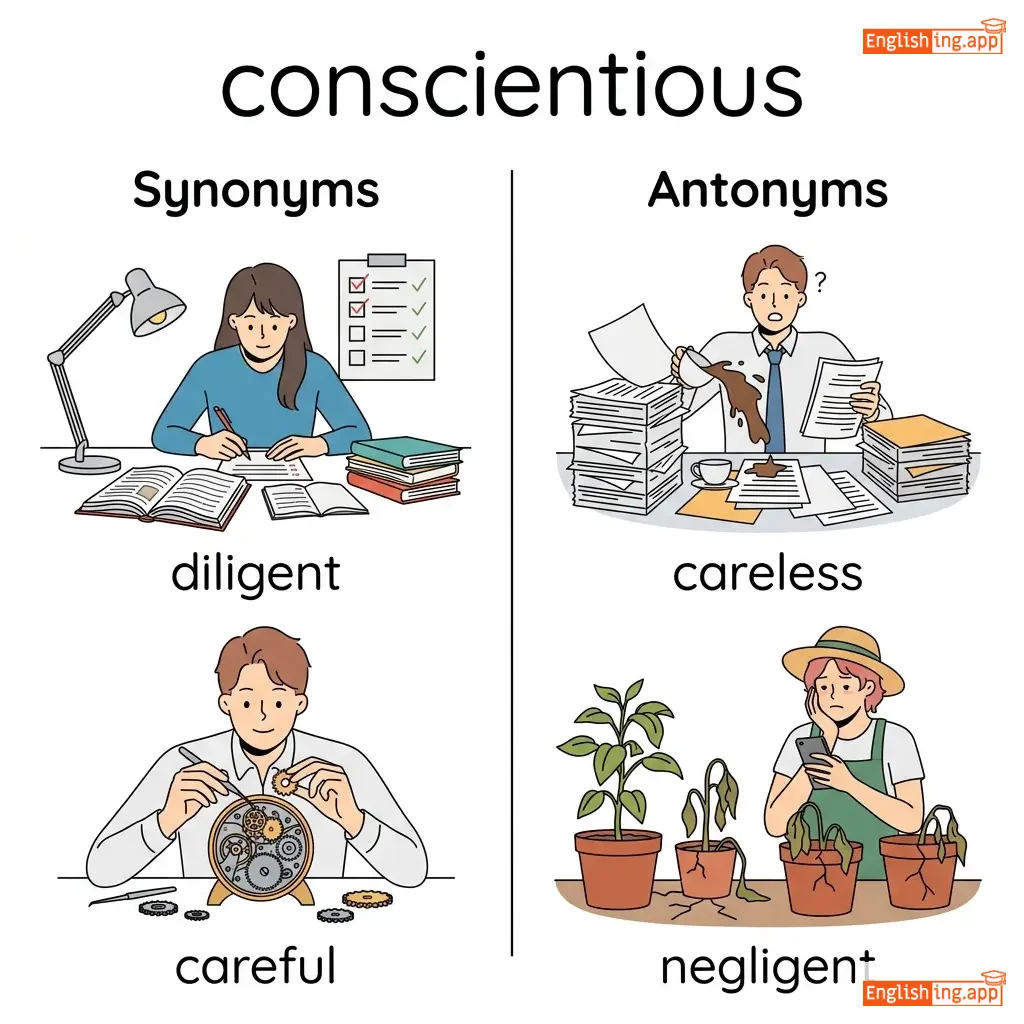
diligent, careful, meticulous, responsible, reliable
••••••
|
careless, negligent, irresponsible
••••••
|
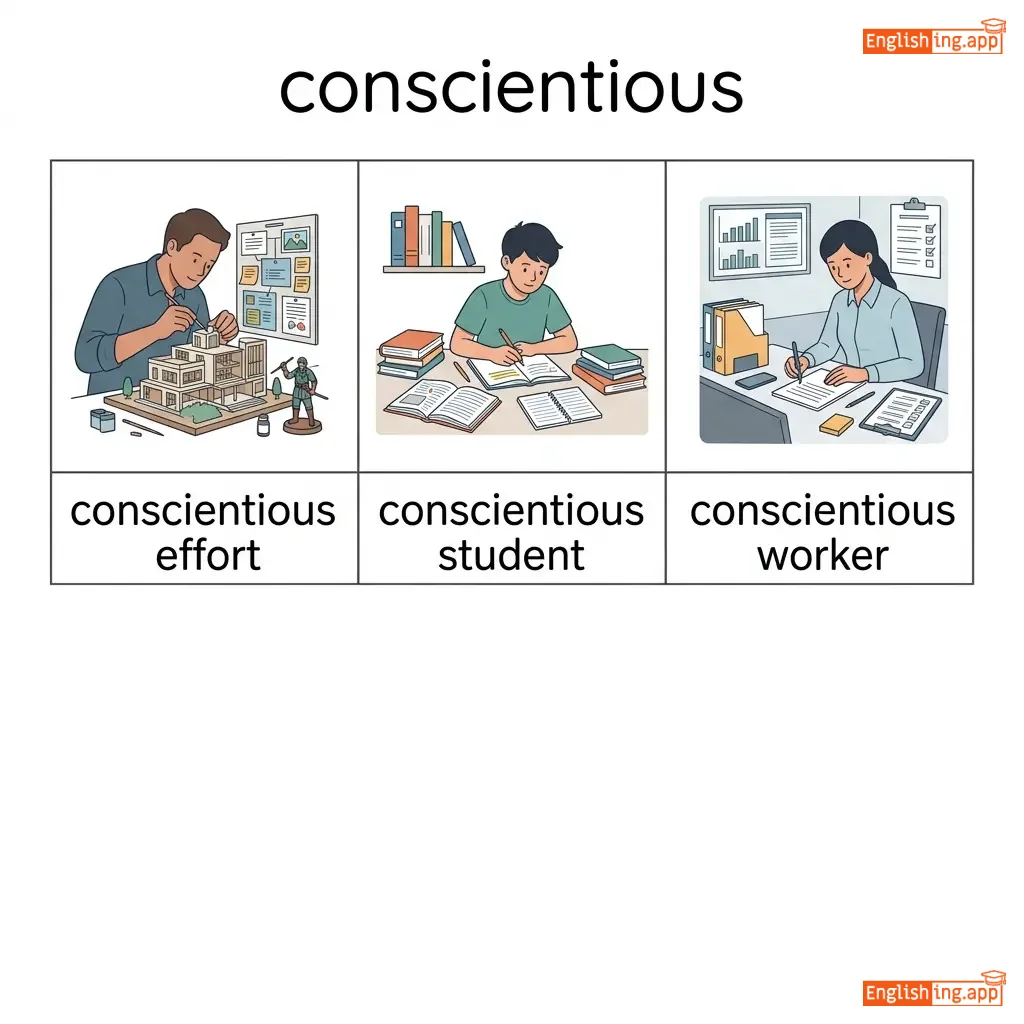
conscientious effort, conscientious student, conscientious worker
••••••
|
Conscientious = 责任 + 尽责
••••••
|
|
#1744
🧠
|
/ˈkɒnʃəns/
noun
(kǎnxiǎnsī)
••••••
|
- •••••• |
良心
liángxīn
••••••
|
- •••••• | - •••••• | - •••••• | - •••••• |
An inner sense of right and wrong that guides a person's actions.
••••••
|
Her conscience told her to admit the mistake. |
她的良心告诉她承认错误。
Tā de liángxīn gàosù tā chéngrèn cuòwù.
••••••
|
a guilty conscience |
A feeling of guilt caused by knowing you have done something wrong.
••••••
|
内疚的良心
nèi jiù de liángxīn
••••••
|
morality, ethics, principles, scruples, integrity
••••••
|
immorality, corruption, wickedness
••••••
|
clear conscience, guilty conscience, prick of conscience
••••••
|
良心 (liángxīn) - 如同你的内心向你讲述是非。
••••••
|
|
#1745
👨👩👧👦
|
/ˌkɒnsæŋˈɡwɪnɪti/
noun
(血缘关系)
••••••
|
- •••••• |
血缘关系
xueyuan guanxi
••••••
|
- •••••• | - •••••• | - •••••• | - •••••• |
The fact of being descended from the same ancestor; blood relationship.
••••••
|
The degree of consanguinity was important in inheritance laws. |
继承法中,血缘关系的程度至关重要。
Jicheng fa zhong, xueyuan guanxi de chengdu zhiguang zhongyao.
••••••
|
- •••••• | - •••••• | - •••••• |
kinship, relationship, lineage, family tie, ancestry
••••••
|
strangeness, unrelatedness, separation
••••••
|
degree of consanguinity, consanguinity laws, consanguinity calculation
••••••
|
Con + sanguinity = 血 (xue) 的关系 = 血缘关系
••••••
|
|
#1746
🧬
|
/ˌkɒnsæŋˈɡwɪniəs/
adjective
(kānsāngwīníāsī)
••••••
|
- •••••• |
同血缘的
tóng xuèyuán de
••••••
|
- •••••• | - •••••• | - •••••• | - •••••• |
Related by blood; descended from the same ancestor.
••••••
|
The study focused on genetic disorders in consanguineous families. |
研究集中于同血缘家庭中的遗传疾病。
Yánjiū jízhōng yú tóng xuèyuán jiātíng zhōng de yíchuán jíbìng.
••••••
|
- •••••• | - •••••• | - •••••• |
kin, related, familial, kindred, cognate
••••••
|
unrelated, unrelated by blood, distant
••••••
|
consanguineous marriage, consanguineous relationship, consanguineous family
••••••
|
Con + sanguineous意味着血缘关系—在中文中是同血缘的
••••••
|
|
#1747
🩸
|
/kɒnˈsæŋɡwɪn/
adjective
(kōngsāngwīn)
••••••
|
- •••••• |
同血缘的
tóng xuèyuán de
••••••
|
- •••••• | - •••••• | - •••••• | - •••••• |
Of the same blood or origin; related by birth.
••••••
|
The two families were consanguine through their grandparents. |
这两个家庭通过他们的祖父母是同血缘的。
Zhè liǎng gè jiātíng tōngguò tāmen de zǔfùmǔ shì tóng xuèyuán de.
••••••
|
- •••••• | - •••••• | - •••••• |
related, kin, blood-related, familial
••••••
|
unrelated, stranger
••••••
|
consanguine relatives, consanguine ties, consanguine relation
••••••
|
Con + sanguine = 通过血液联系; 'sanguine' 是指血液。
••••••
|
|
#1748
⚔️
|
/ˈkɒŋkər/
verb
(kóngkè)
••••••
|
|
征服
zhēngfú
••••••
|
conquered
kóngkèd
••••••
|
conquered
kóngkèd
••••••
|
conquers
kóngkèz
••••••
|
conquering
kóngkèɹɪŋ
••••••
|
To defeat and take control of a place or people by force.
••••••
|
The king set out to conquer new lands.
国王出发征服新土地。
••••••
|
国王出发征服新土地。
guówáng chūfā zhēngfú xīn tǔdì.
••••••
|
conquer your fears
征服你的恐惧
••••••
|
To overcome or defeat your fears.
••••••
|
征服你的恐惧
zhēngfú nǐ de kǒngjù
••••••
|
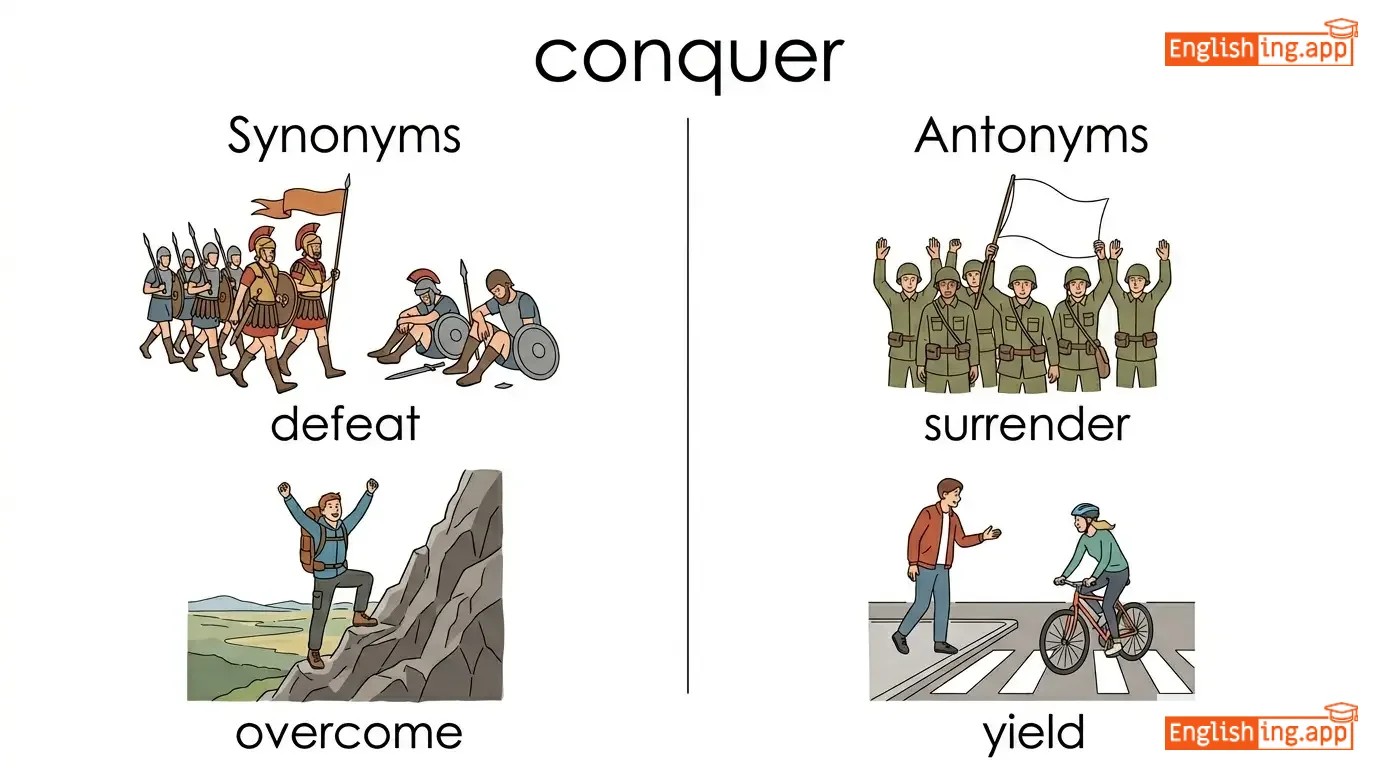
defeat, overcome, vanquish, subdue, master
••••••
|
surrender, yield, lose
••••••
|
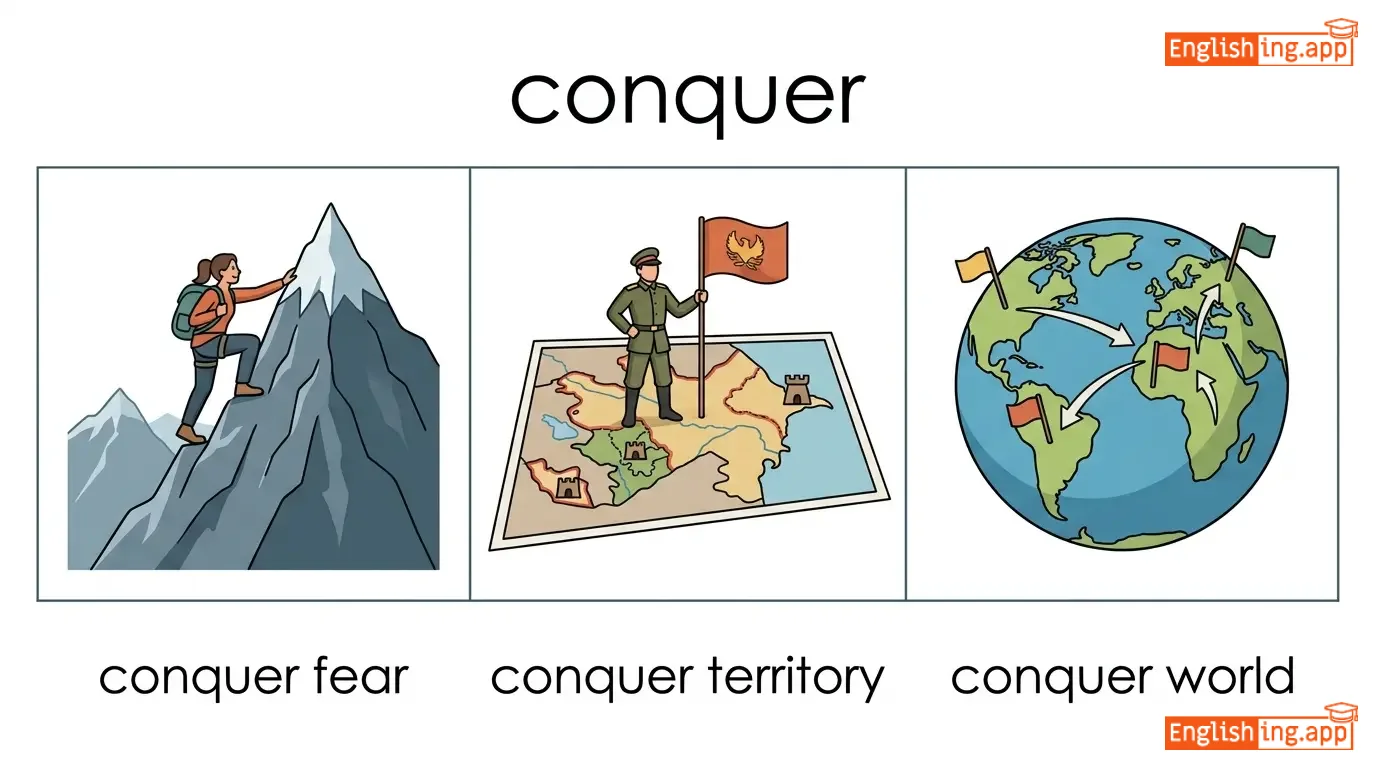
conquer fear, conquer territory, conquer world, conquer disease
••••••
|
征服就像成吉思汗征服了世界。
••••••
|
|
#1749
💍
|
/kəˈnjuːbiəl/
adjective
(kəˈnjuːbiəl)
••••••
|
- •••••• |
婚姻的
hūn yīn de
••••••
|
- •••••• | - •••••• | - •••••• | - •••••• |
Relating to marriage or the relationship of a married couple.
••••••
|
They celebrated their connubial bliss with a honeymoon trip. |
他们通过蜜月旅行庆祝他们的婚姻幸福。
Tāmen tōngguò mìyuè lǚxíng qìngzhù tāmen de hūnyīn xìngfú.
••••••
|
- •••••• | - •••••• | - •••••• |
marital, matrimonial, spousal, wedded
••••••
|
single, unmarried
••••••
|
connubial bliss, connubial relationship, connubial bond
••••••
|
Connubial = 婚姻的, '婚'字与结婚相关。
••••••
|
|
#1750
📝
|
/kəˈnoʊt/
verb
(kəˈnoʊt)
••••••
|
- •••••• |
暗示
anshi
••••••
|
connoted
kəˈnoʊtəd
••••••
|
connoted
kəˈnoʊtəd
••••••
|
connotes
kəˈnoʊts
••••••
|
connoting
kəˈnoʊtɪŋ
••••••
|
To suggest or imply an additional meaning beyond the literal one.
••••••
|
The word 'youthful' connotes energy and vitality.
‘青春’一词暗示着活力和生气。
••••••
|
‘青春’一词暗示着活力和生气。
'Qīngchūn' yī cí ànshì zhe huólì hé shēngqì.
••••••
|
- •••••• | - •••••• | - •••••• |
imply, suggest, indicate, signify
••••••
|
denote, state
••••••
|
connote meaning, connote power, connote importance, connote respect
••••••
|
暗示比单纯的字面意思更多,像是隐藏的深层含义。
••••••
|
|
#1751
💭
|
/ˌkɒnəˈteɪʃən/
noun
(内涵)
••••••
|
|
内涵
neihan
••••••
|
- •••••• | - •••••• | - •••••• | - •••••• |
An idea or feeling that a word invokes in addition to its literal meaning.
••••••
|
The word 'home' has a positive connotation of warmth and family.
单词“家”具有温暖和家庭的积极内涵。
••••••
|
单词“家”具有温暖和家庭的积极内涵。
Dan ci 'jia' ju you wen nuan he jia ting de ji ji nei han.
••••••
|
- •••••• | - •••••• | - •••••• |
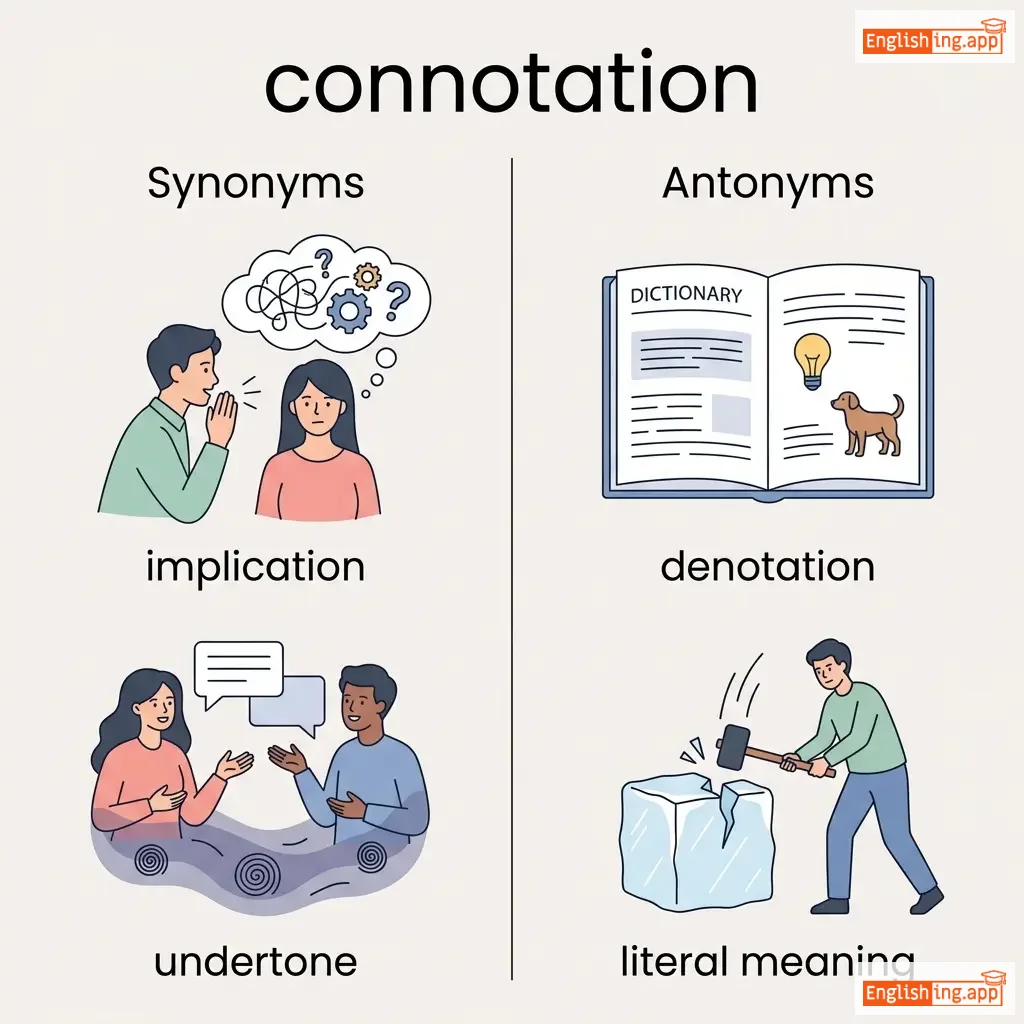
implication, undertone, suggestion, nuance, hint
••••••
|
denotation, literal meaning
••••••
|
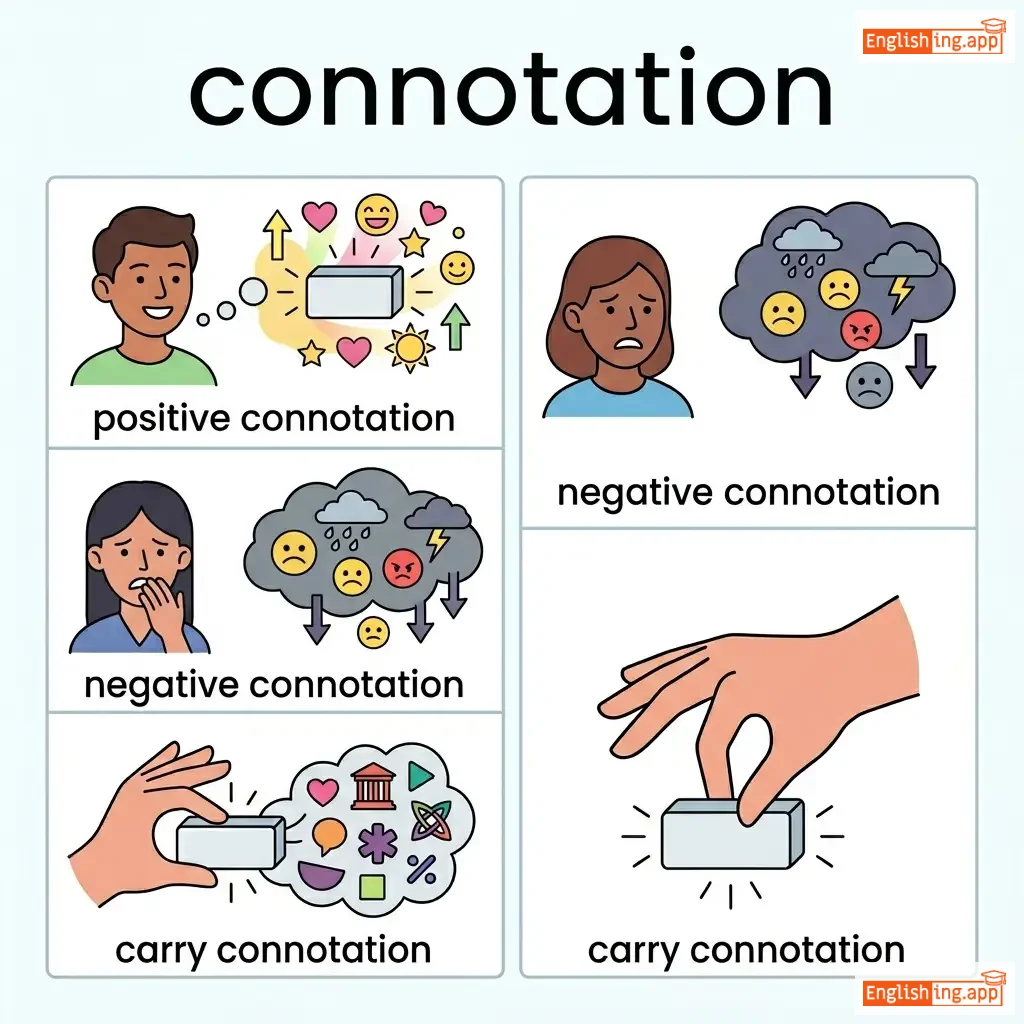
positive connotation, negative connotation, carry connotation, cultural connotation
••••••
|
内涵是词语除字面意义外所包含的其他感受或想法。
••••••
|
|
#1752
🎨
|
/ˌkɒn.əˈsɜːr/
noun
(kè nà sū ér)
••••••
|
|
行家
hangjia
••••••
|
- •••••• | - •••••• | - •••••• | - •••••• |
an expert judge in matters of taste, especially in food, art, or wine
••••••
|
She is a true connoisseur of fine art. |
她是美术的真正行家。
Tā shì měishù de zhēnzhèng hángjiā.
••••••
|
- •••••• | - •••••• | - •••••• |
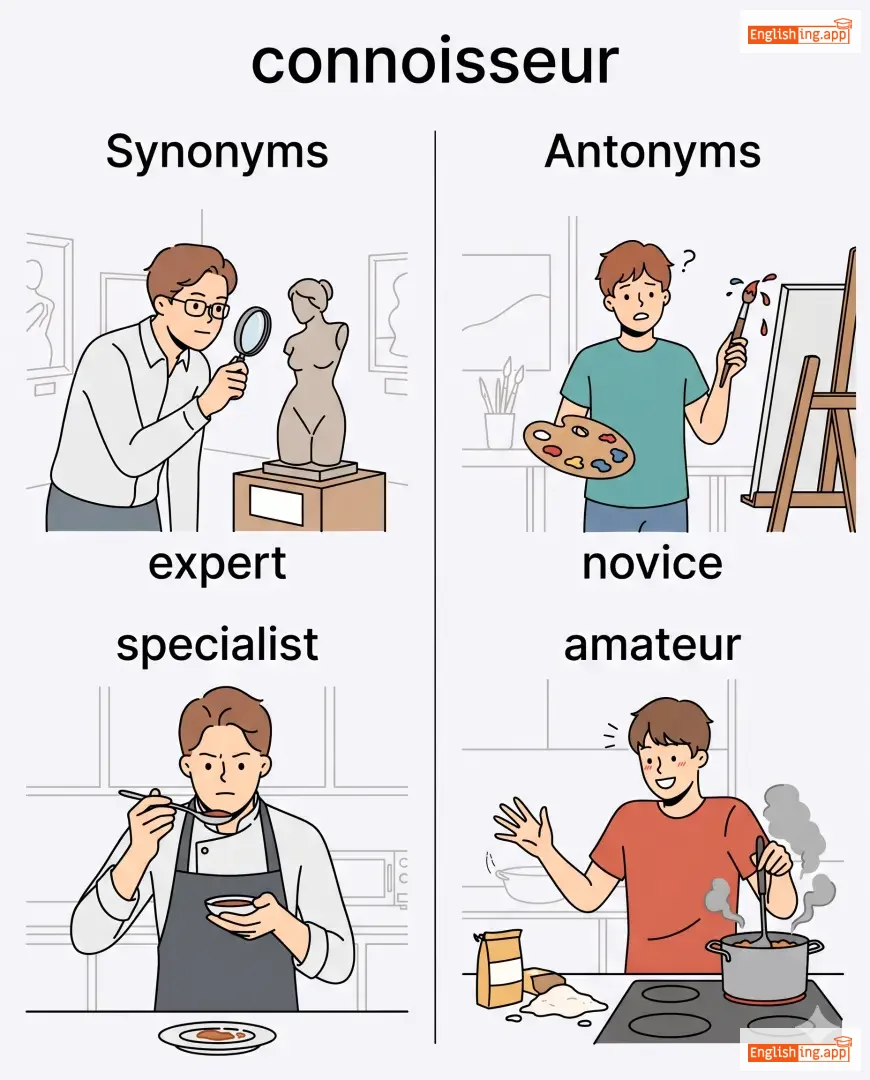
expert, specialist, critic, authority
••••••
|
novice, amateur, layman
••••••
|
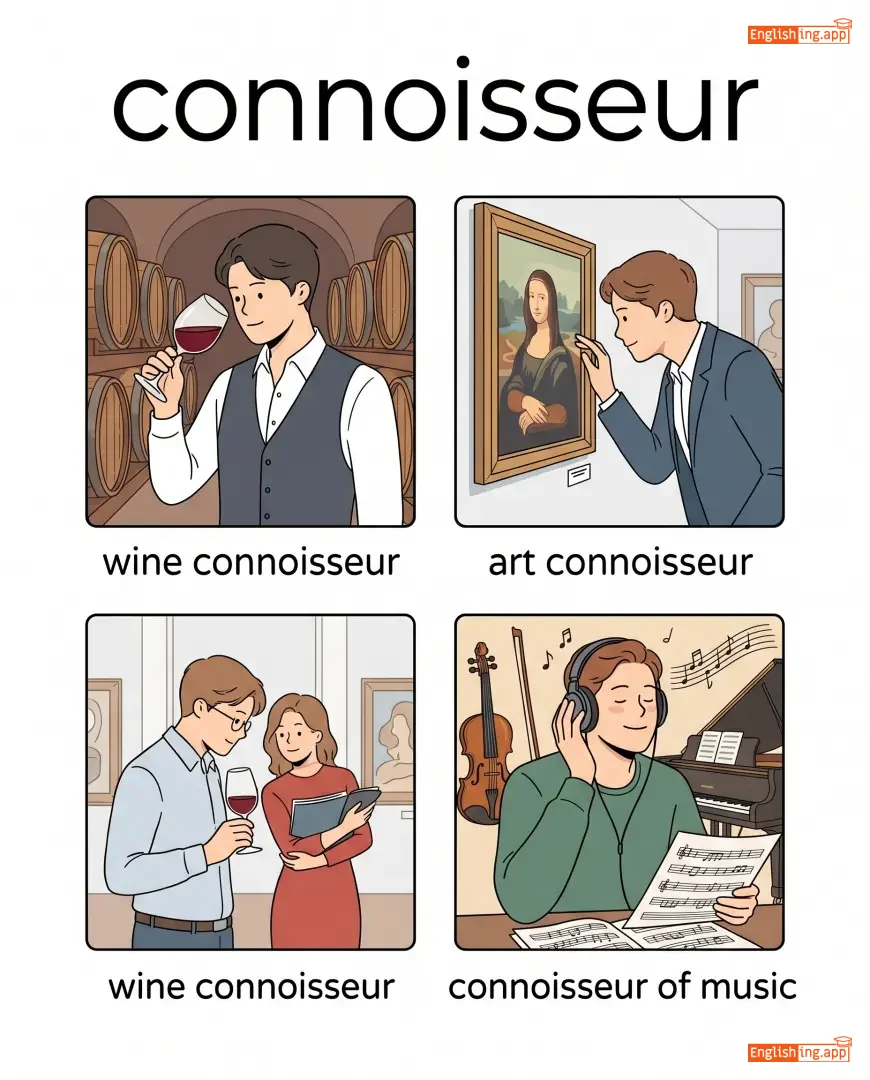
wine connoisseur, art connoisseur, connoisseur of music
••••••
|
行家能够识别出最精致的东西,就像艺术或美酒一样。
••••••
|
|
#1753
🦊
|
/kəˈnaɪ.vɪŋ/
adjective
(kəˈnaɪvɪŋ)
••••••
|
- •••••• |
阴险的
yīnxiǎn de
••••••
|
- •••••• | - •••••• | - •••••• | - •••••• |
secretly scheming or plotting to help in wrongdoing
••••••
|
He is a conniving politician who manipulates people for power. |
他是一个阴险的政治家,利用权力操纵人民。
Tā shì yīgè yīnxiǎn de zhèngzhìjiā, lìyòng quánlì cāozòng rénmín.
••••••
|
- •••••• | - •••••• | - •••••• |
scheming, plotting, cunning, deceitful
••••••
|
honest, sincere, loyal
••••••
|
conniving politician, conniving scheme, conniving attitude
••••••
|
阴险如蛇,慢慢盘算着每一个阴谋。
••••••
|
|
#1754
😏
|
/kəˈnaɪv/
verb
(克内夫)
••••••
|
- •••••• |
秘密参与不当行为
mìmì cānyù bùdàng xíngwéi
••••••
|
connived
克内夫德
••••••
|
connived
克内夫德
••••••
|
connives
克内夫斯
••••••
|
conniving
克内夫英
••••••
|
to secretly allow or be involved in a wrongdoing
••••••
|
The manager connived with the supplier to cheat the company.
经理与供应商合谋欺骗公司。
••••••
|
经理与供应商合谋欺骗公司。
Jīnglǐ yǔ gōngyìng shāng hé móu qīpiàn gōngsī.
••••••
|
- •••••• | - •••••• | - •••••• |
collude, conspire, plot, scheme
••••••
|
oppose, resist
••••••
|
connive at, connive with, connive in
••••••
|
'Naive'的人偷偷加入坏计划 - connive
••••••
|
|
#1755
🤫
|
/kəˈnaɪ.vəns/
noun
(kəˈnaɪ.vəns)
••••••
|
- •••••• |
默许
mòxǔ
••••••
|
- •••••• | - •••••• | - •••••• | - •••••• |
the act of secretly allowing or being involved in wrongdoing
••••••
|
The theft happened with the connivance of the security guard.
盗窃发生在保安的默许下。
••••••
|
盗窃发生在保安的默许下。
Dàoqiè fāshēng zài bǎo'ān de mòxǔ xià.
••••••
|
- •••••• | - •••••• | - •••••• |
collusion, complicity, conspiracy, cooperation
••••••
|
honesty, integrity, opposition
••••••
|
connivance of, secret connivance, political connivance
••••••
|
默许就是在不正当行为中扮演默默的角色。
••••••
|
|
#1756
🚦
|
/kənˈdʒɛst/
verb
(kóng-jí-sī)
••••••
|
- •••••• |
拥堵
yōngdǔ
••••••
|
congested
kóng-jí-sī-dè
••••••
|
congested
kóng-jí-sī-dè
••••••
|
congests
kóng-jí-sī
••••••
|
congesting
kóng-jí-sī-ng
••••••
|
To block or overcrowd a space, making movement or flow difficult.
••••••
|
Heavy traffic can congest the city streets during rush hour.
繁忙的交通可能会在高峰时段拥堵城市的街道。
••••••
|
繁忙的交通可能会在高峰时段拥堵城市的街道。
Fánmáng de jiāotōng kěnéng huì zài gāofēng shíduàn yōngdǔ chéngshì de jiēdào.
••••••
|
- •••••• | - •••••• | - •••••• |
clog, block, overcrowd, jam, choke
••••••
|
clear, empty, unblock
••••••
|
congested area, congested road, nasal congested, traffic congested
••••••
|
交通拥堵让城市无法流动!
••••••
|
|
#1757
➕
|
/kənˈdʒʌŋkʃən/
noun
(kənˈdʒʌŋkʃən)
••••••
|
- •••••• |
连词
liáncí
••••••
|
- •••••• | - •••••• | - •••••• | - •••••• |
a word used to connect clauses or sentences, or to coordinate words
••••••
|
The words 'and' and 'but' are common conjunctions. |
'和' 和 '但是' 是常见的连词。
'hé' hé 'dànshì' shì chángjiàn de liáncí.
••••••
|
in conjunction with |
together with, combined with
••••••
|
与…结合
yǔ… jiéhé
••••••
|
connector, link, joiner, coordinating word
••••••
|
separation, disjunction
••••••
|
conjunction of planets, coordinating conjunction, subordinating conjunction
••••••
|
连词就像是句子中的桥梁,连接着不同的部分。
••••••
|
|
#1758
✍️
|
/ˌkɒndʒʊˈɡeɪʃən/
noun
(kənˈdʒuːɡeɪʃən)
••••••
|
- •••••• |
词形变化
cíxíng biànhuà
••••••
|
- •••••• | - •••••• | - •••••• | - •••••• |
the variation of the form of a verb to indicate tense, person, and number
••••••
|
French verbs have complex conjugations.
法语动词有复杂的变位。
••••••
|
法语动词有复杂的变位。
Fǎyǔ dòngcí yǒu fùzá de biànwèi.
••••••
|
- •••••• | - •••••• | - •••••• |
inflection, declension, modification, alteration
••••••
|
root form, unchanged form
••••••
|
verb conjugation, regular conjugation, irregular conjugation
••••••
|
词形变化意味着动词的形式根据时间、人物和数的不同而变化。
••••••
|
|
#1759
📖
|
/ˈkɒndʒʊɡeɪt/
verb
(kón-jù-géit)
••••••
|
- •••••• |
变位
bian wei
••••••
|
conjugated
kón-jù-géit-èd
••••••
|
conjugated
kón-jù-géit-èd
••••••
|
conjugates
kón-jù-géits
••••••
|
conjugating
kón-jù-géiting
••••••
|
to list the different forms of a verb according to tense, person, and number
••••••
|
Students are asked to conjugate the verb 'to be'.
学生被要求变动动词'是'的形式。
••••••
|
学生被要求变动动词'是'的形式。
Xuesheng bei yaoqiu biandong dongci 'shi' de xingzhi.
••••••
|
- •••••• | - •••••• | - •••••• |
inflect, decline, modify, alter
••••••
|
root, unchanged
••••••
|
conjugate a verb, conjugate properly, conjugate forms
••••••
|
变位就是像门一样排列动词 - 按时间,门会打开。
••••••
|
|
#1760
💍
|
/ˈkɒndʒʊɡəl/
adjective
(kōngjūgǎo)
••••••
|
|
婚姻的
hūnyīn de
••••••
|
- •••••• | - •••••• | - •••••• | - •••••• |
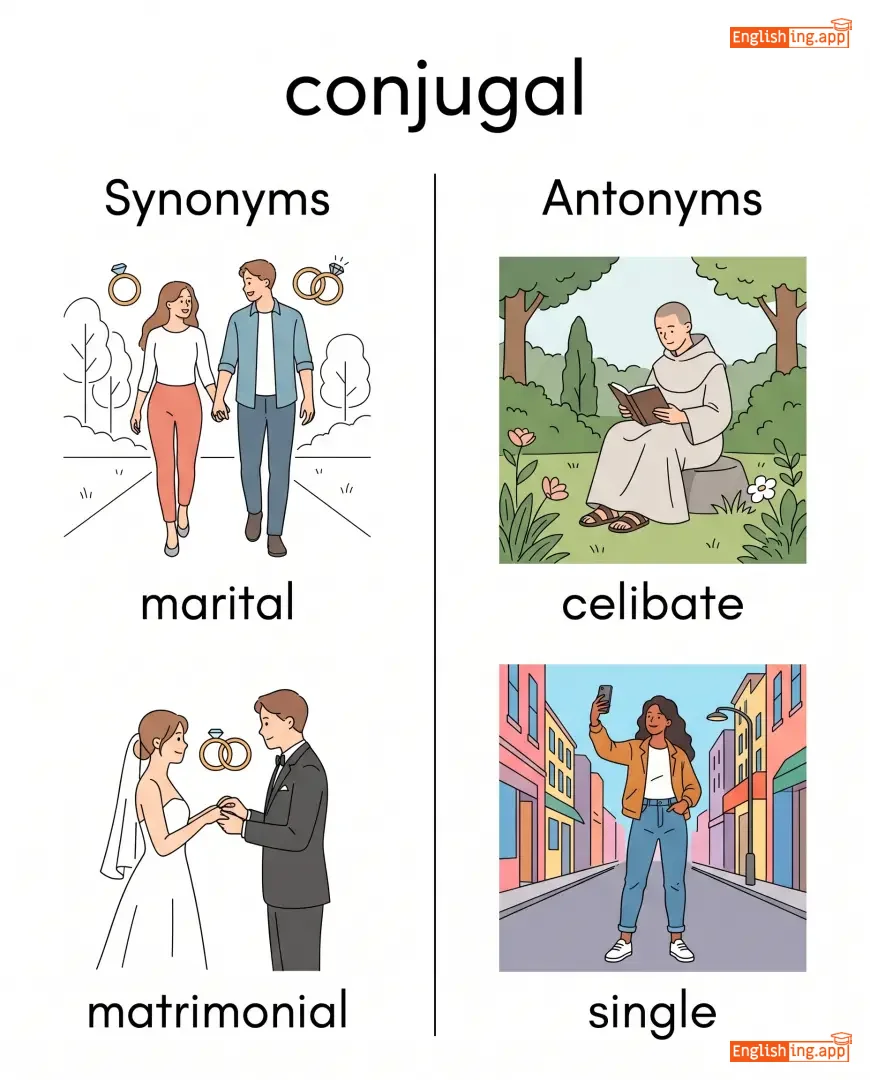
relating to marriage or the relationship between husband and wife
••••••
|
They enjoyed a long life of conjugal happiness. |
他们享受了长久的婚姻幸福生活。
Tāmen xiǎngshòule chángjiǔ de hūnyīn xìngfú shēnghuó.
••••••
|
conjugal rights |
the rights enjoyed by married partners, especially sexual relations
••••••
|
婚姻权利
hūnyīn quánlì
••••••
|
marital, matrimonial, spousal, wedded
••••••
|
celibate, single
••••••
|
conjugal life, conjugal relationship, conjugal duties
••••••
|
婚姻生活 = 婚姻中的生活 - 婚姻 = 夫妻生活。
••••••
|
|
#1761
🔗
|
/kənˈdʒɔɪn/
verb
(kənˈdʒɔɪn)
••••••
|
- •••••• |
联合
liánhé
••••••
|
conjoined
kənˈdʒɔɪnd
••••••
|
conjoined
kənˈdʒɔɪnd
••••••
|
conjoins
kənˈdʒɔɪns
••••••
|
conjoining
kənˈdʒɔɪnɪŋ
••••••
|
to join together or unite; to combine
••••••
|
The two rivers conjoin just before reaching the sea.
两条河流在到达大海之前汇合。
••••••
|
两条河流在到达大海之前汇合。
Liǎng tiáo héliú zài dàoshǐ dàhǎi zhīqián huìhé.
••••••
|
- •••••• | - •••••• | - •••••• |
join, unite, combine, merge, connect
••••••
|
separate, divide, detach
••••••
|
conjoin efforts, conjoin forces, conjoin elements
••••••
|
联合就是把东西放在一起,像conjoin一样。
••••••
|
|
#1762
💭
|
/kənˈdʒɛktʃər/
noun/verb
(kənˈdʒɛktʃər)
••••••
|
|
猜测
cāicè
••••••
|
conjectured
kənˈdʒɛktʃərd
••••••
|
conjectured
kənˈdʒɛktʃərd
••••••
|
conjectures
kənˈdʒɛktʃərz
••••••
|
conjecturing
kənˈdʒɛktʃərɪŋ
••••••
|
an opinion or conclusion formed on the basis of incomplete information; to form an opinion without sufficient evidence
••••••
|
The critics conjectured that the book was inspired by real events.
评论家推测这本书的灵感来自真实的事件。
••••••
|
评论家推测这本书的灵感来自真实的事件。
Pínglùn jiā tuīcè zhè běn shū de línggǎn láizì zhēnshí de shìjiàn.
••••••
|
- •••••• | - •••••• | - •••••• |
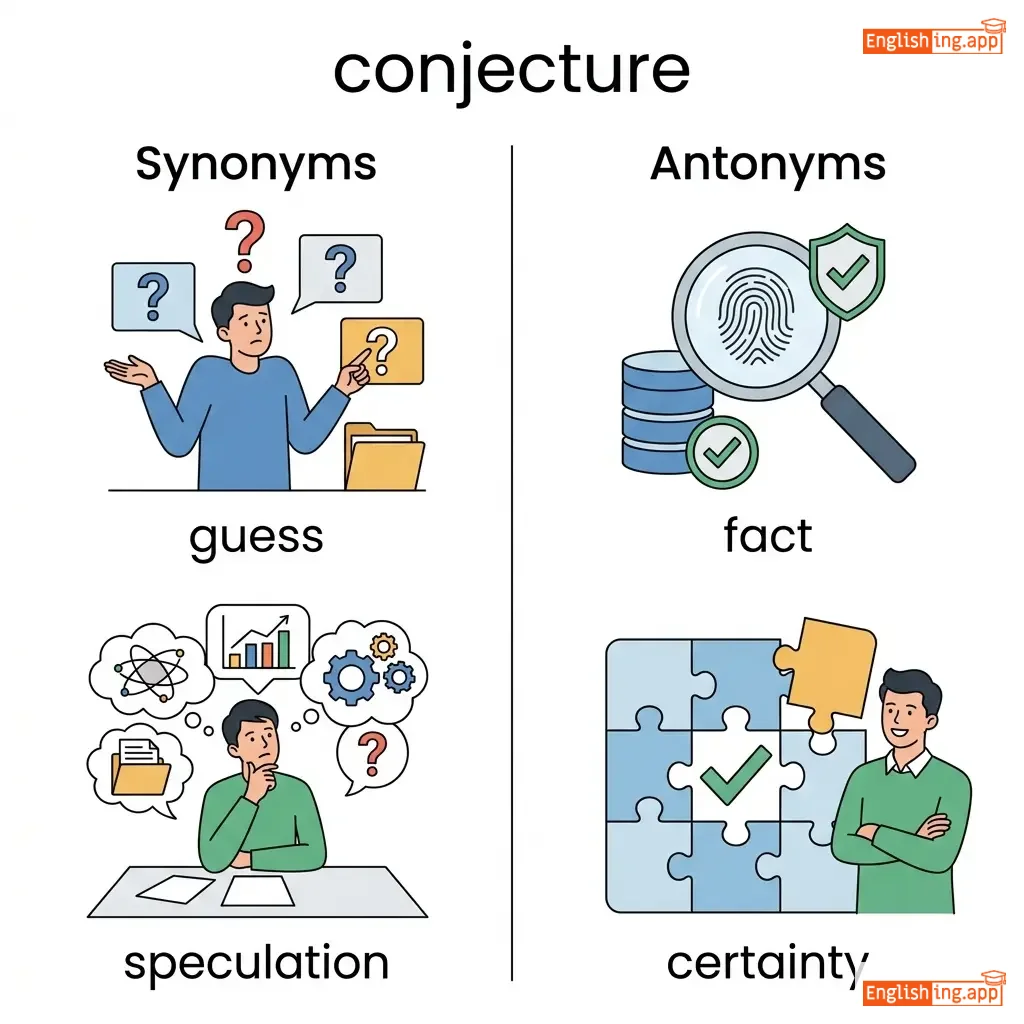
guess, speculation, assumption, hypothesis, surmise
••••••
|
fact, certainty, proof
••••••
|
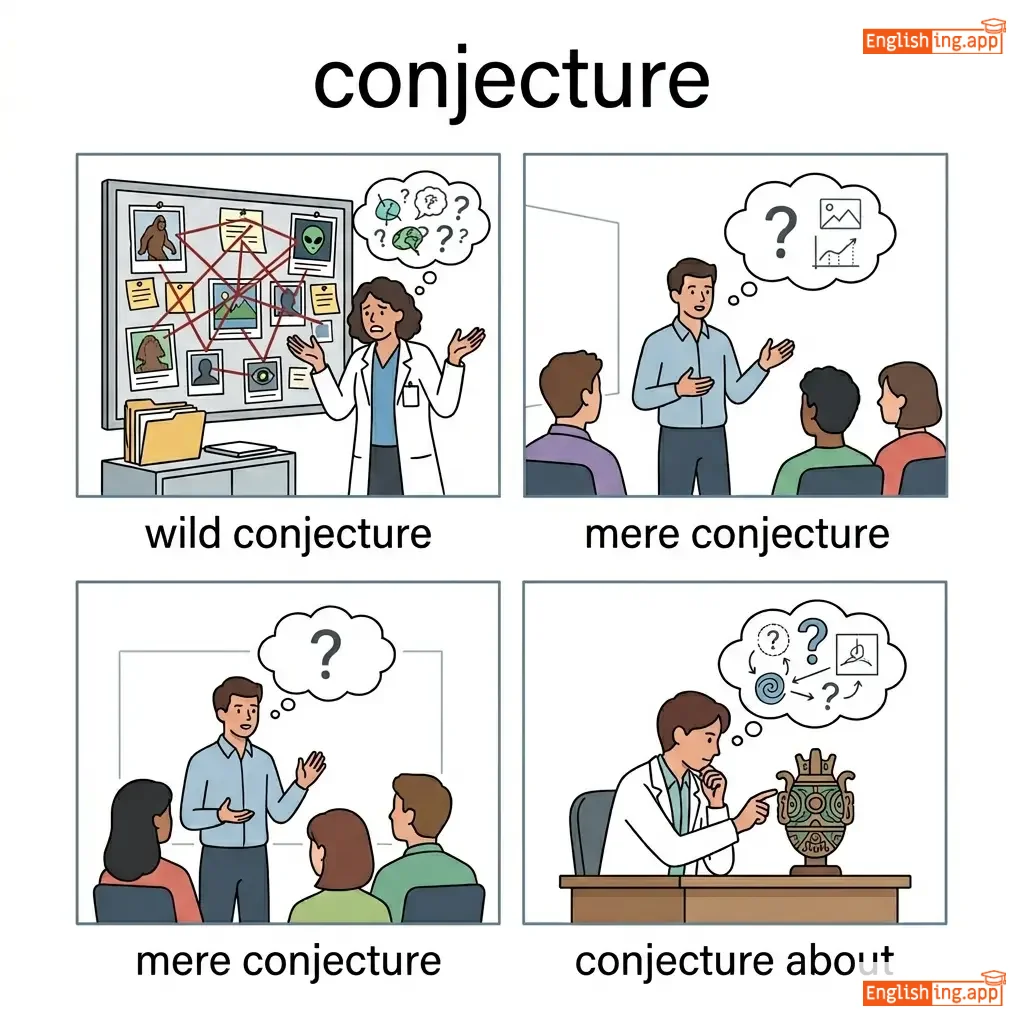
wild conjecture, mere conjecture, conjecture about, conjecture that
••••••
|
猜测是指根据不完全信息的推测,就像是猜对某事。
••••••
|
|
#1763
🤔
|
/kənˈdʒɛktʃərəl/
adjective
(kənˈdʒɛktʃərəl)
••••••
|
- •••••• |
推测的
tuīcè de
••••••
|
- •••••• | - •••••• | - •••••• | - •••••• |
based on guesswork or incomplete evidence rather than certain knowledge
••••••
|
His explanation was purely conjectural and lacked proof. |
他的解释完全是推测性的,缺乏证据。
Tā de jiěshì wánquán shì tuīcè xìng de, quēfá zhèngjù.
••••••
|
- •••••• | - •••••• | - •••••• |
speculative, hypothetical, theoretical, uncertain
••••••
|
factual, proven, certain
••••••
|
conjectural evidence, conjectural explanation, conjectural theory, conjectural remarks
••••••
|
推测的就像是基于假设的,不是确定的事实。
••••••
|
|
#1764
🌲
|
/kəˈnɪfərəs/
adjective
(kē nǐ fēi ruò sī)
••••••
|
|
松树类
song shu lei
••••••
|
- •••••• | - •••••• | - •••••• | - •••••• |
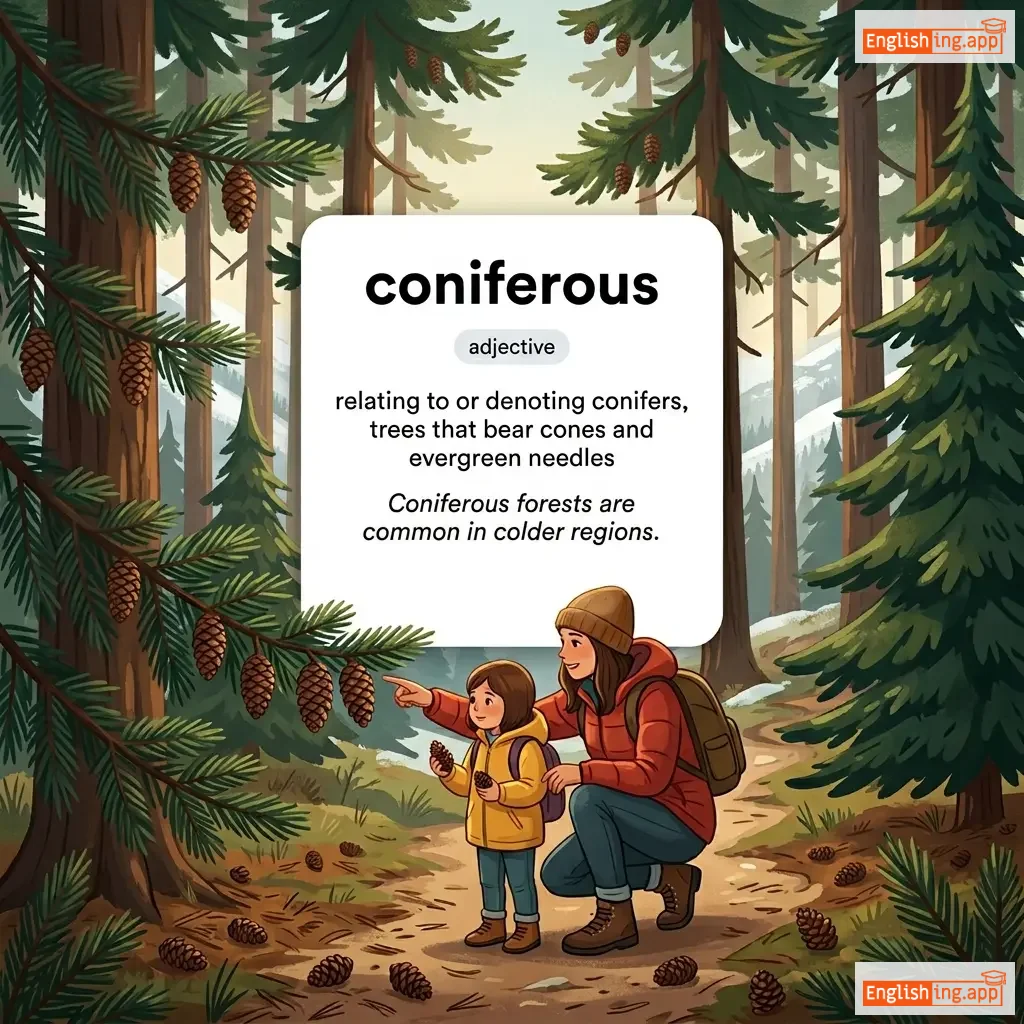
relating to or denoting conifers, trees that bear cones and evergreen needles
••••••
|
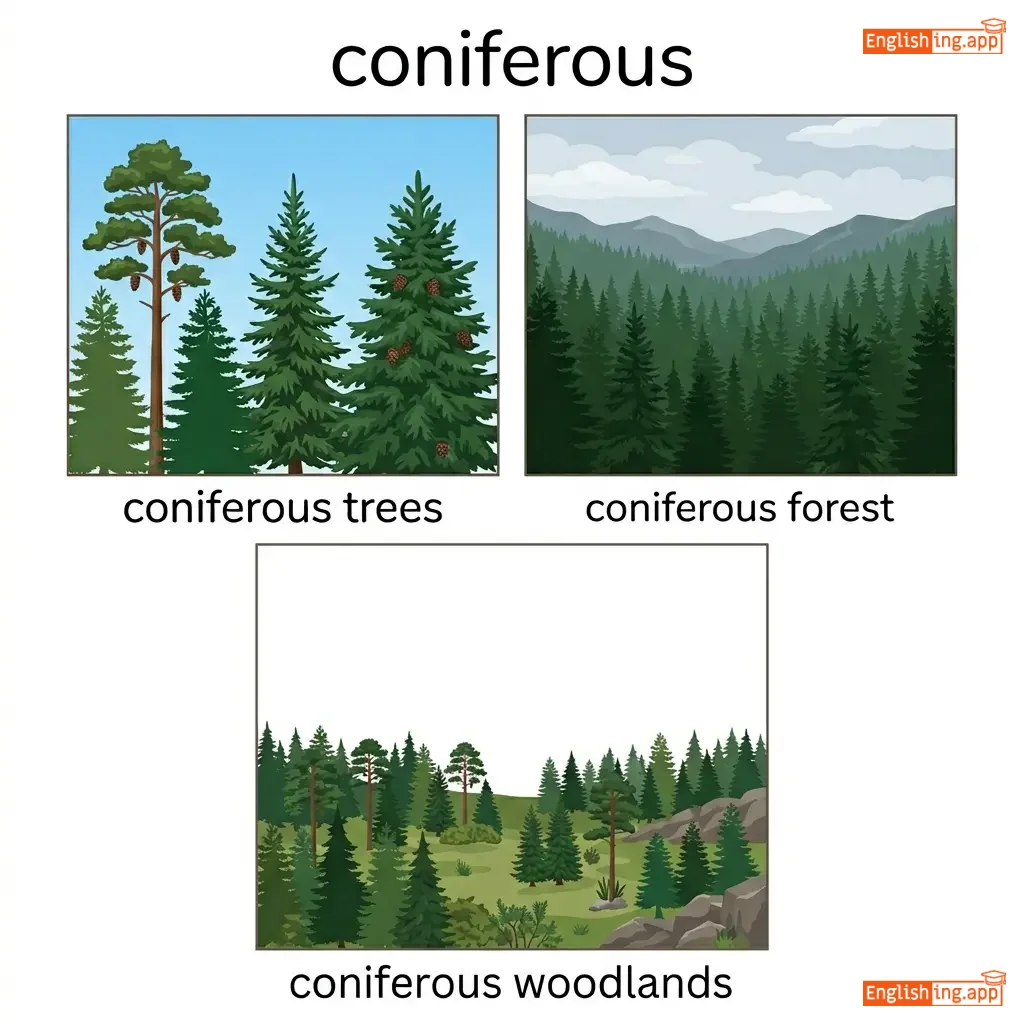
Coniferous forests are common in colder regions. |
松树林在寒冷的地区很常见。
Song shu lin zai han leng de di qu hen chang jian.
••••••
|
- •••••• | - •••••• | - •••••• |
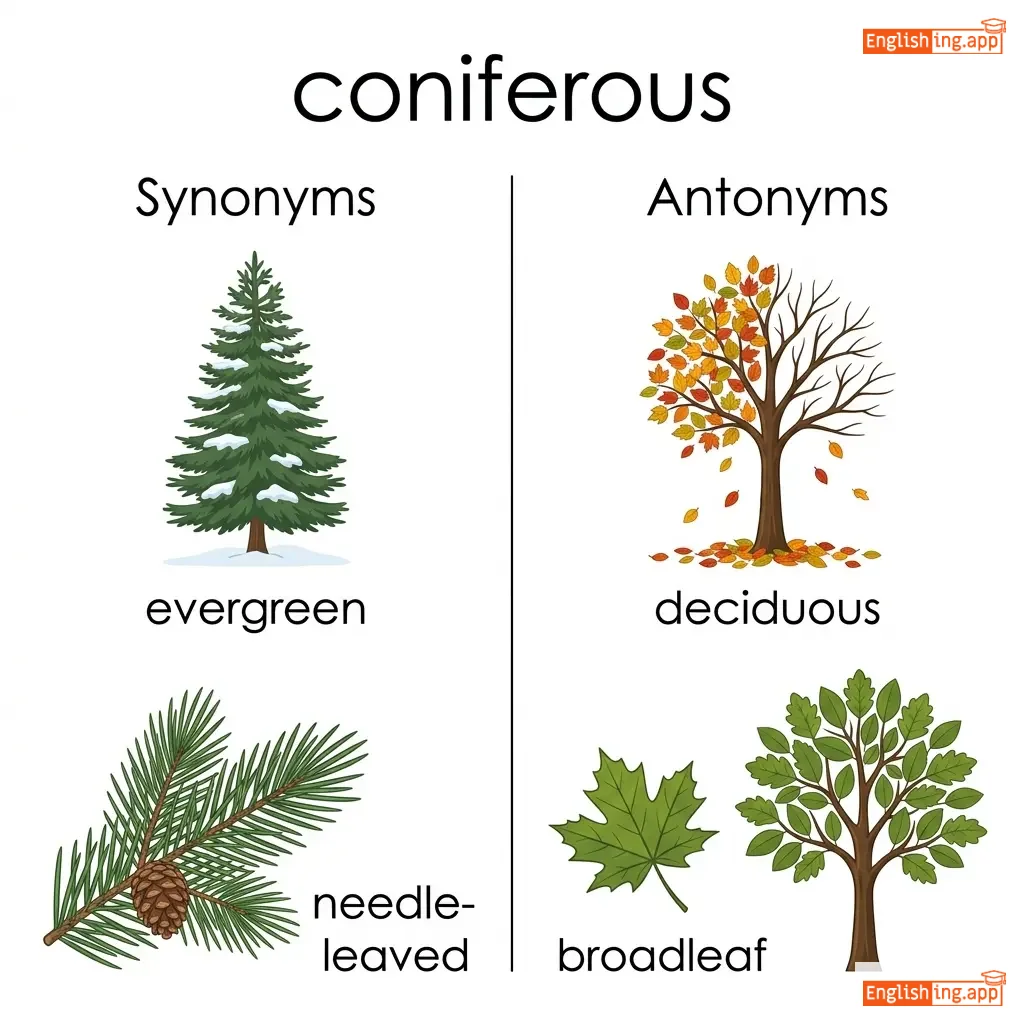
evergreen, needle-leaved, pine-bearing, cone-bearing
••••••
|
deciduous, broadleaf
••••••
|
coniferous trees, coniferous forest, coniferous woodlands, coniferous species
••••••
|
Coniferous = 松树类,像松树和柏树一样,常绿又有松果。
••••••
|
|
#1765
🌲
|
/ˈkɒnɪfər/
noun
(kōu nì fú)
••••••
|
- •••••• |
针叶树
zhēn yè shù
••••••
|
- •••••• | - •••••• | - •••••• | - •••••• |
a type of tree that bears cones and evergreen needle-like leaves, such as pine or fir
••••••
|
The forest is dominated by conifers like pine and spruce.
森林由松树和云杉等针叶树主导。
••••••
|
森林由松树和云杉等针叶树主导。
Sēnlín yóu sōngshù hé yúnshān děng zhēn yè shù zhǔdǎo.
••••••
|
- •••••• | - •••••• | - •••••• |
evergreen, pine, fir, spruce, cedar
••••••
|
deciduous, broadleaf
••••••
|
conifer forest, conifer species, tall conifers, conifer plantation
••••••
|
针叶树 : 针 (needle) + 叶 (leaf) 🌲. 记住,针叶树!
••••••
|
|
#1766
📐
|
/ˈkɒŋɡruənt/
adjective
(kōng-ru-èn-t)
••••••
|
- •••••• |
全等
quán děng
••••••
|
- •••••• | - •••••• | - •••••• | - •••••• |
in agreement or harmony; having the same shape and size in geometry
••••••
|
Their values are congruent with the goals of the organization. |
他们的价值观与组织的目标一致。
Tāmen de jiàzhíguān yǔ zǔzhī de mùbiāo yīzhì.
••••••
|
- •••••• | - •••••• | - •••••• |
consistent, compatible, harmonious, matching, corresponding
••••••
|
incongruent, inconsistent, conflicting
••••••
|
congruent values, congruent shapes, congruent triangles, congruent goals
••••••
|
全等意味着相同的形状,就像两个完全相同的三角形。
••••••
|
|
#1767
⚖️
|
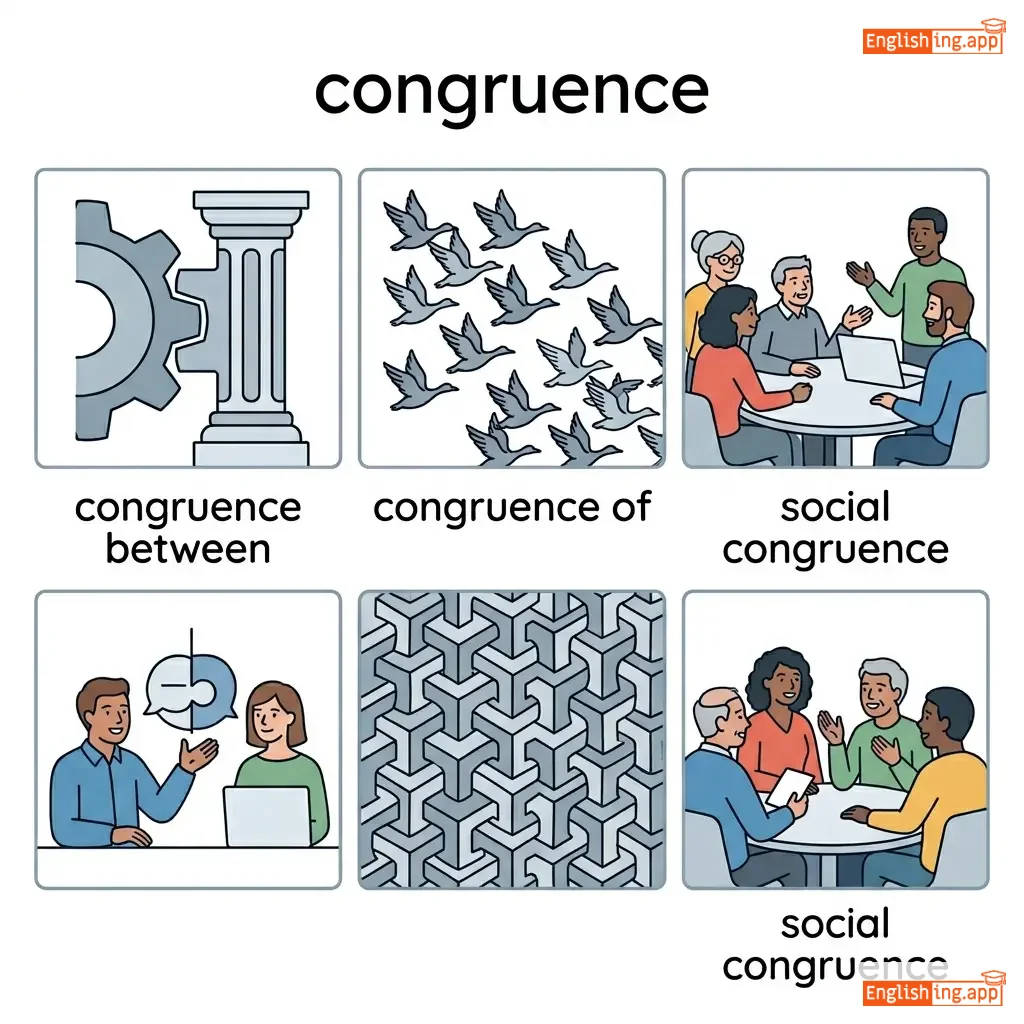
/ˈkɒŋɡruəns/
noun
(kong-ru-ens)
••••••
|
|
一致性
yizhixing
••••••
|
- •••••• | - •••••• | - •••••• | - •••••• |
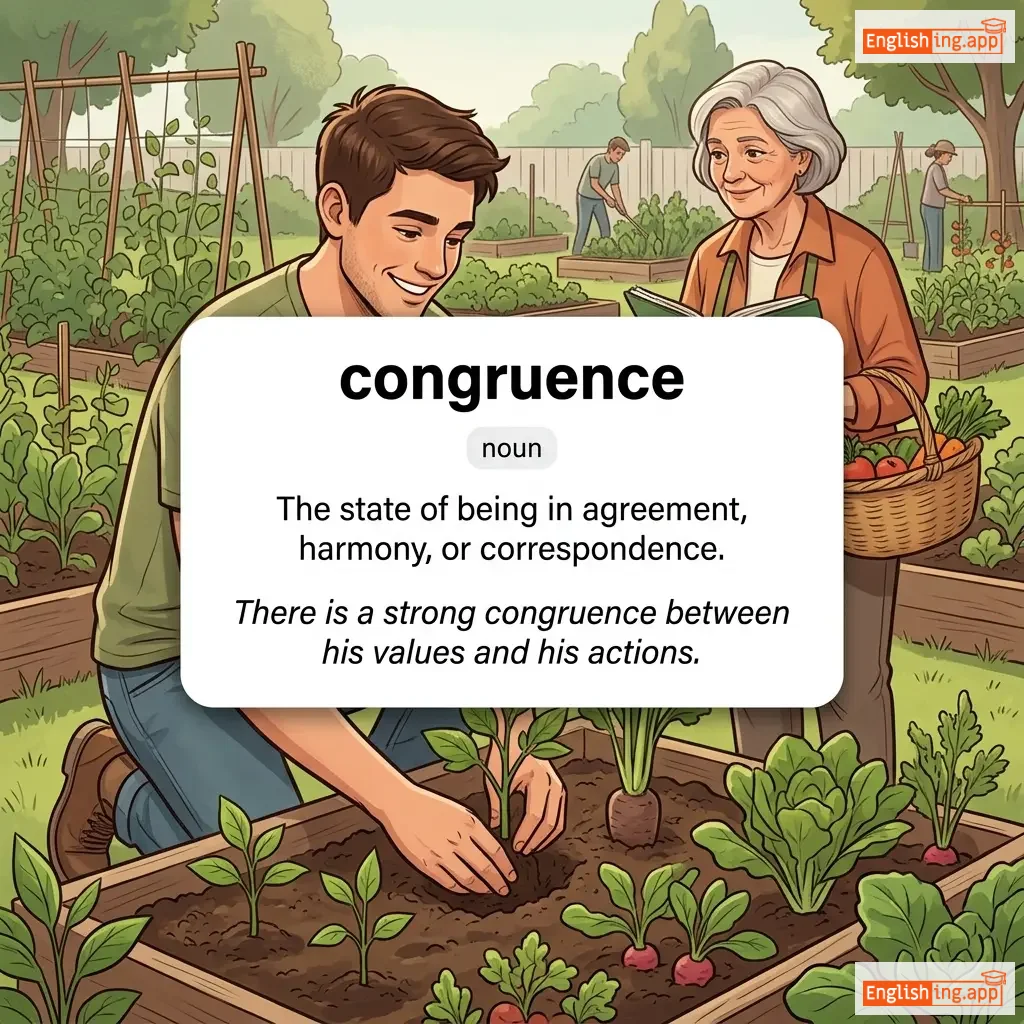
The state of being in agreement, harmony, or correspondence.
••••••
|
There is a strong congruence between his values and his actions.
他的价值观和他的行动之间有很强的契合。
••••••
|
他的价值观和他的行动之间有很强的契合。
Tā de jiàzhíguān hé tā de xíngdòng zhījiān yǒu hěn qiáng de qìhé.
••••••
|
- •••••• | - •••••• | - •••••• |
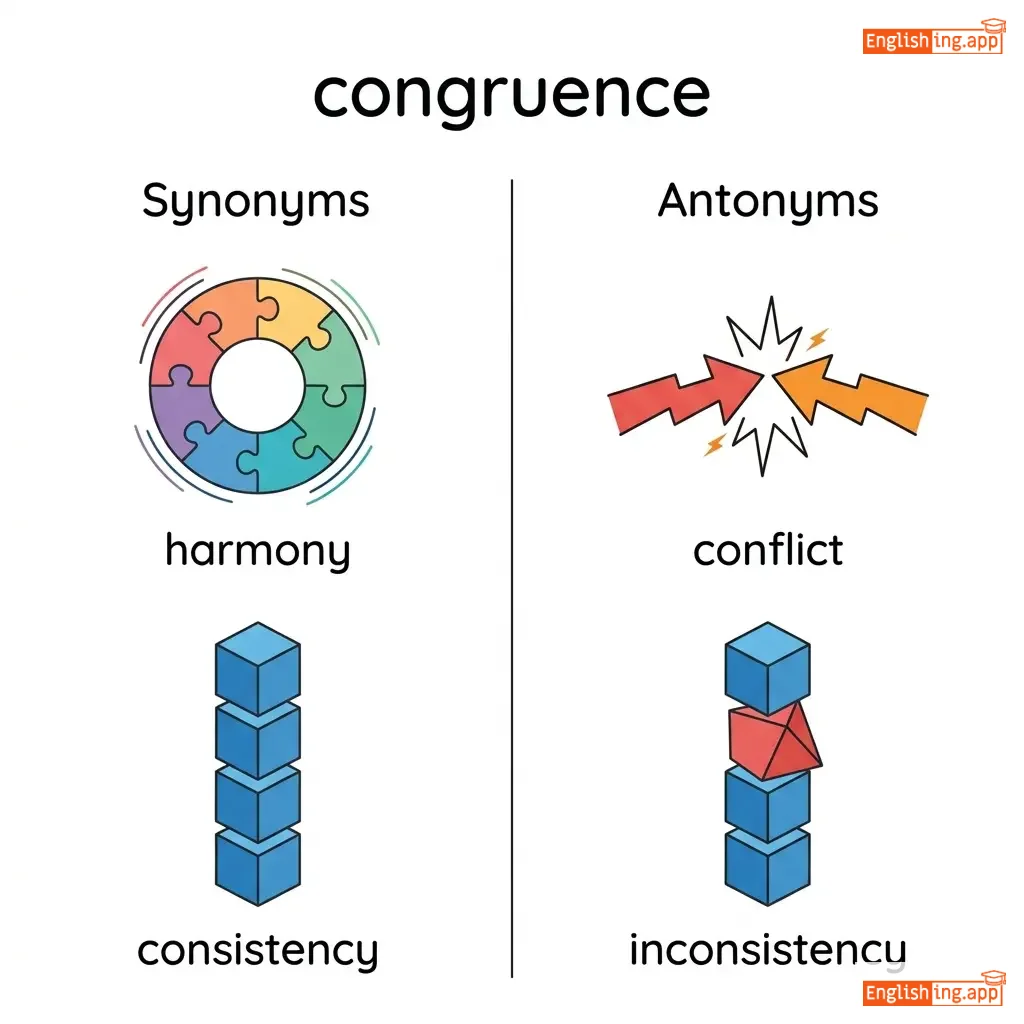
harmony, consistency, agreement, alignment, conformity
••••••
|
conflict, inconsistency, contradiction
••••••
|
congruence between, congruence of, social congruence, cultural congruence
••••••
|
一致性 = 价值观与行动的一致
••••••
|
|
#1768
👥
|
/ˈkɒŋɡrɪˌɡeɪt/
verb
(kongriget)
••••••
|
|
聚集
jùjí
••••••
|
congregated
kongrigetad
••••••
|
congregated
kongrigetad
••••••
|
congregates
kongrigets
••••••
|
congregating
kongrigeting
••••••
|
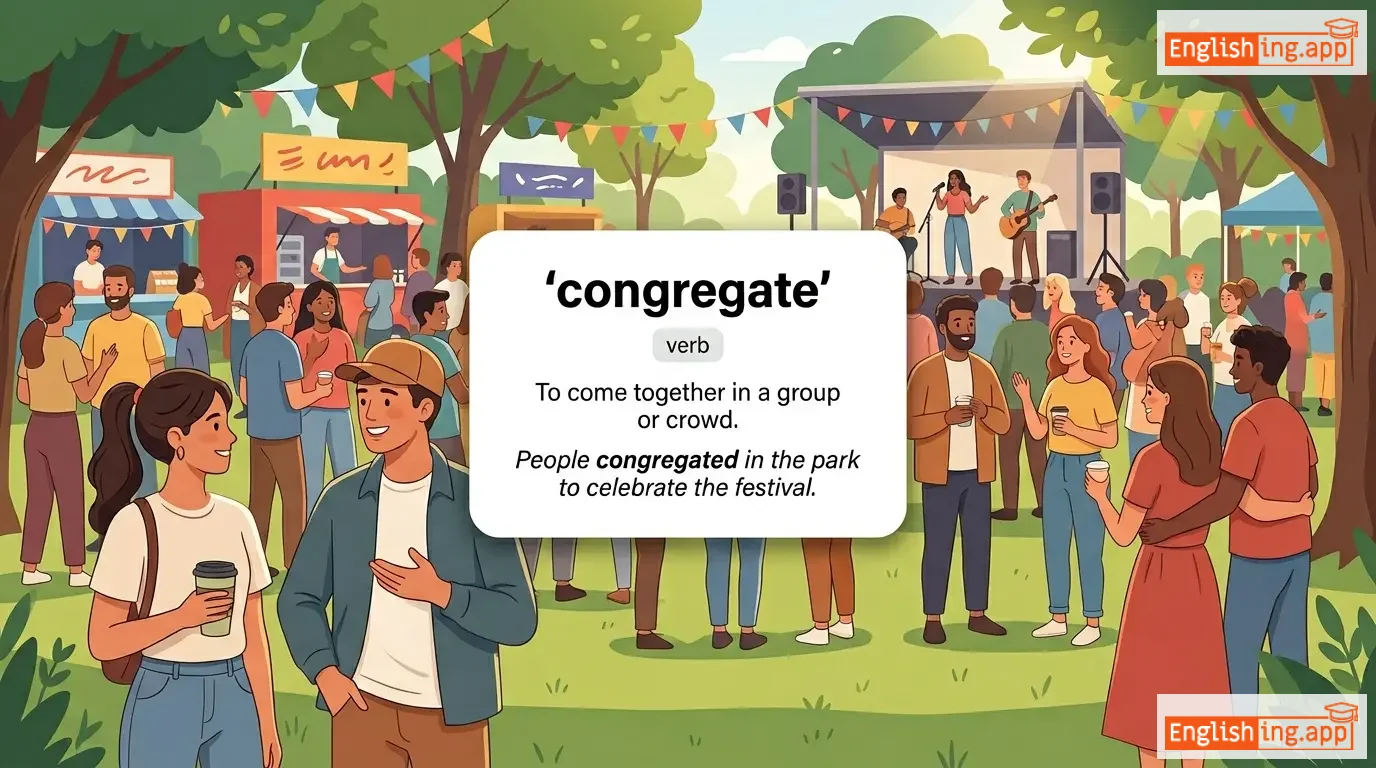
To come together in a group or crowd.
••••••
|
People congregated in the park to celebrate the festival.
人们聚集在公园里庆祝节日。
••••••
|
人们聚集在公园里庆祝节日。
Rénmen jùjí zài gōngyuán lǐ qìngzhù jiérì.
••••••
|
- •••••• | - •••••• | - •••••• |
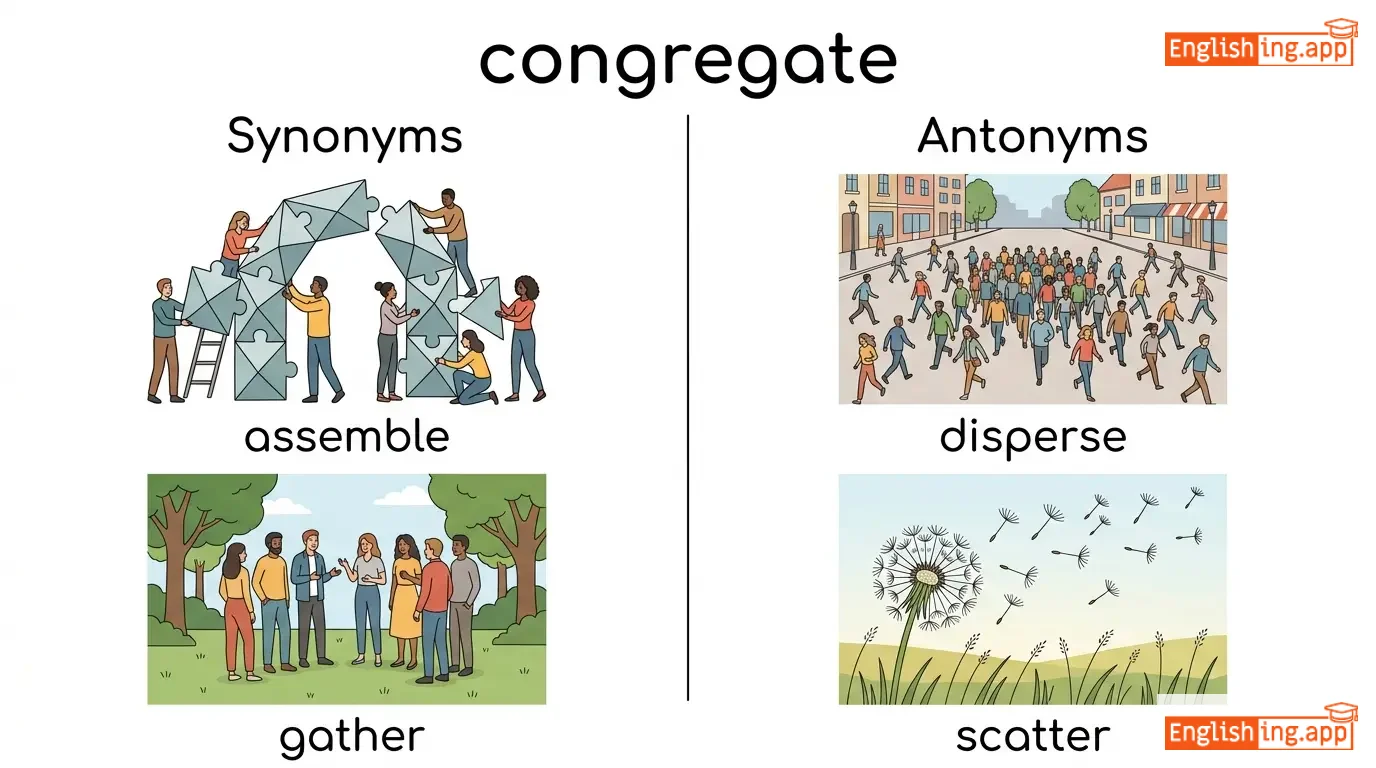
assemble, gather, meet, collect, rally
••••••
|
disperse, scatter, separate
••••••
|
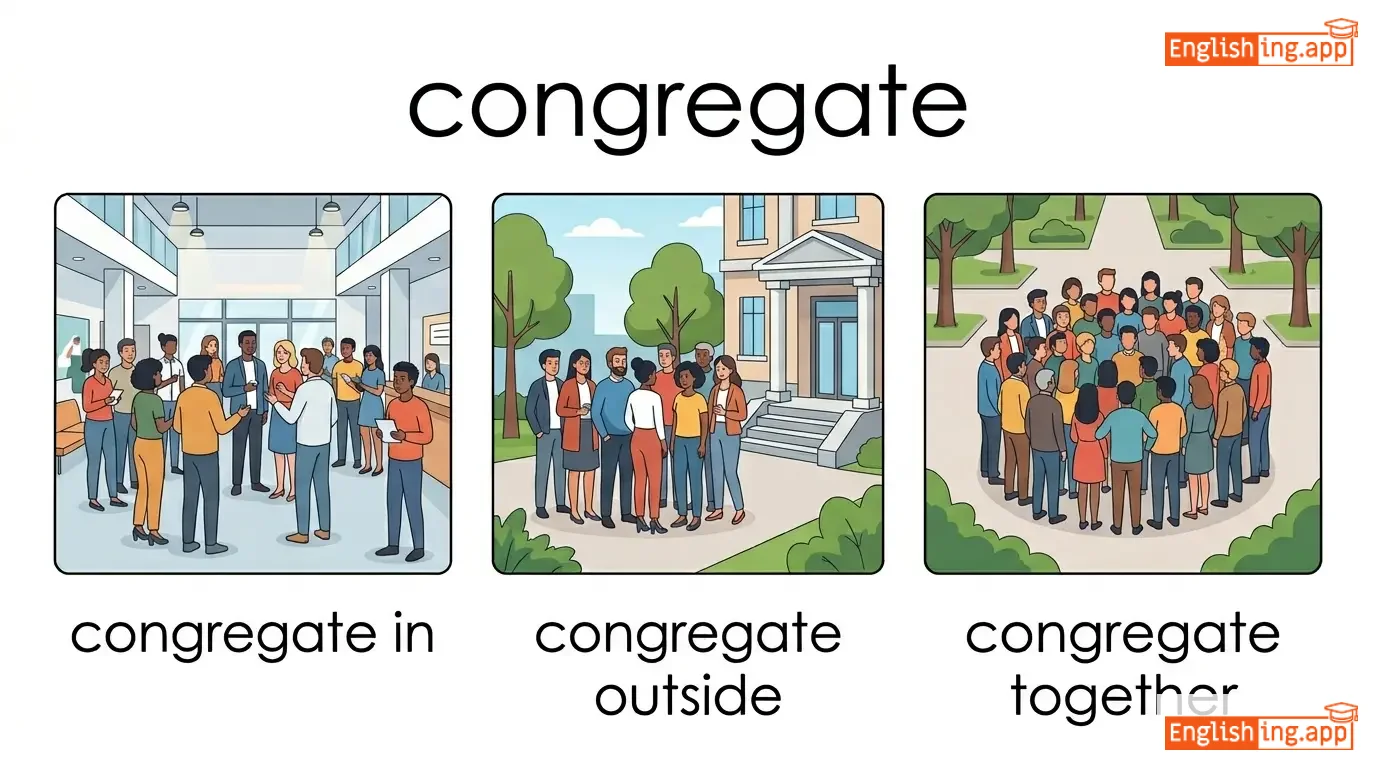
congregate in, congregate outside, congregate together
••••••
|
Congregate 就是像节日那样在一起聚集的人群。
••••••
|
|
#1769
🌀
|
/kənˌɡlɒməˈreɪʃən/
noun
(汇集体)
••••••
|
- •••••• |
聚集
jùjí
••••••
|
- •••••• | - •••••• | - •••••• | - •••••• |
A collection or mixture of different things grouped together.
••••••
|
The market is a conglomeration of small shops and food stalls. |
市场是一个小商店和食品摊位的聚集。
Shìchǎng shì yīgè xiǎo shāngdiàn hé shípǐn tānwèi de jùjí.
••••••
|
- •••••• | - •••••• | - •••••• |
collection, mixture, aggregation, cluster, assortment
••••••
|
separation, division
••••••
|
conglomeration of companies, conglomeration of ideas, conglomeration of buildings
••••••
|
Conglomeration 就像是许多不同的东西汇聚在一起。
••••••
|
|
#1770
🏢
|
/kənˈɡlɒmərət/
noun
(kòngluómìng)
••••••
|
|
由不同公司组成的大型企业集团
yóu bùtóng gōngsī zǔchéng de dàxíng qǐyè jítuán
••••••
|
- •••••• | - •••••• | - •••••• | - •••••• |
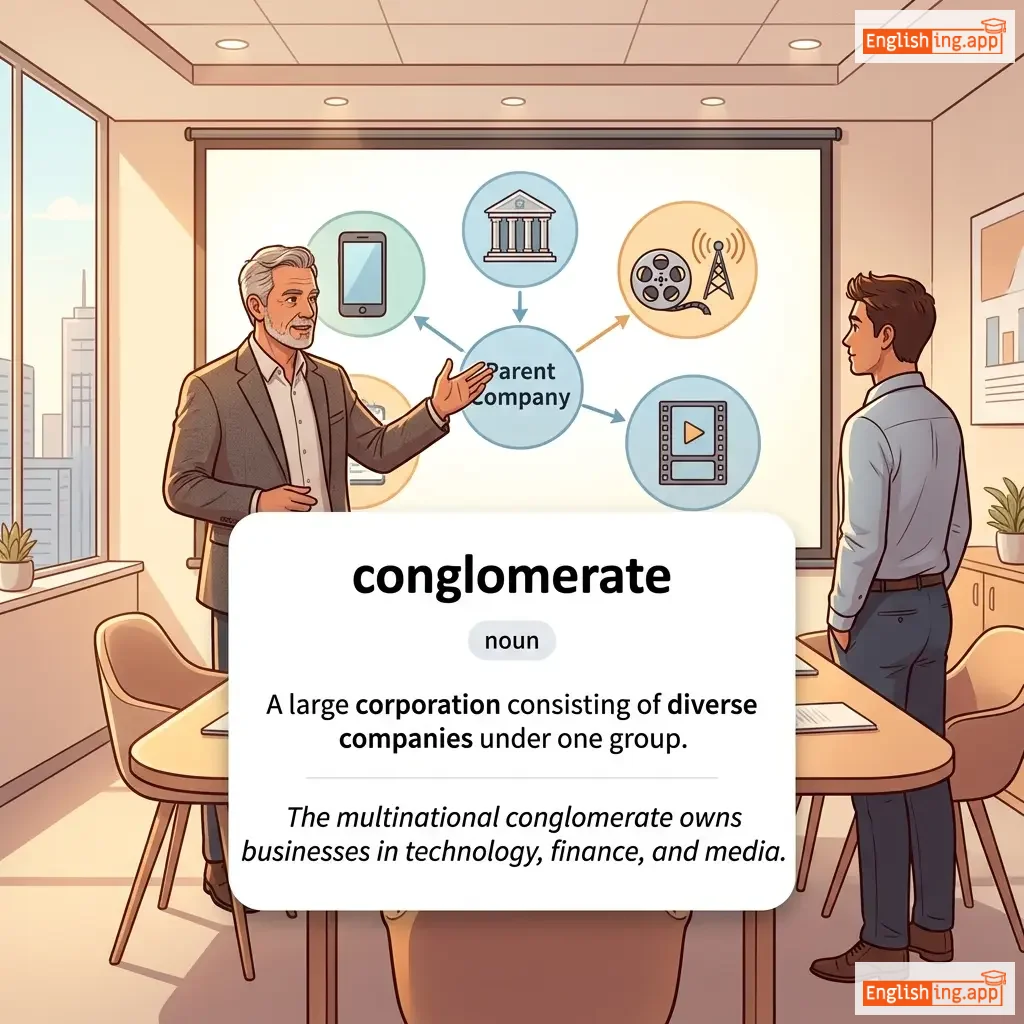
A large corporation consisting of diverse companies under one group.
••••••
|
The multinational conglomerate owns businesses in technology, finance, and media.
这个跨国集团拥有科技、金融和媒体领域的公司。
••••••
|
这个跨国集团拥有科技、金融和媒体领域的公司。
Zhège kuàguó jítuán yǒngyǒu kējì, jīnróng hé méitǐ lǐngyù de gōngsī.
••••••
|
- •••••• | - •••••• | - •••••• |
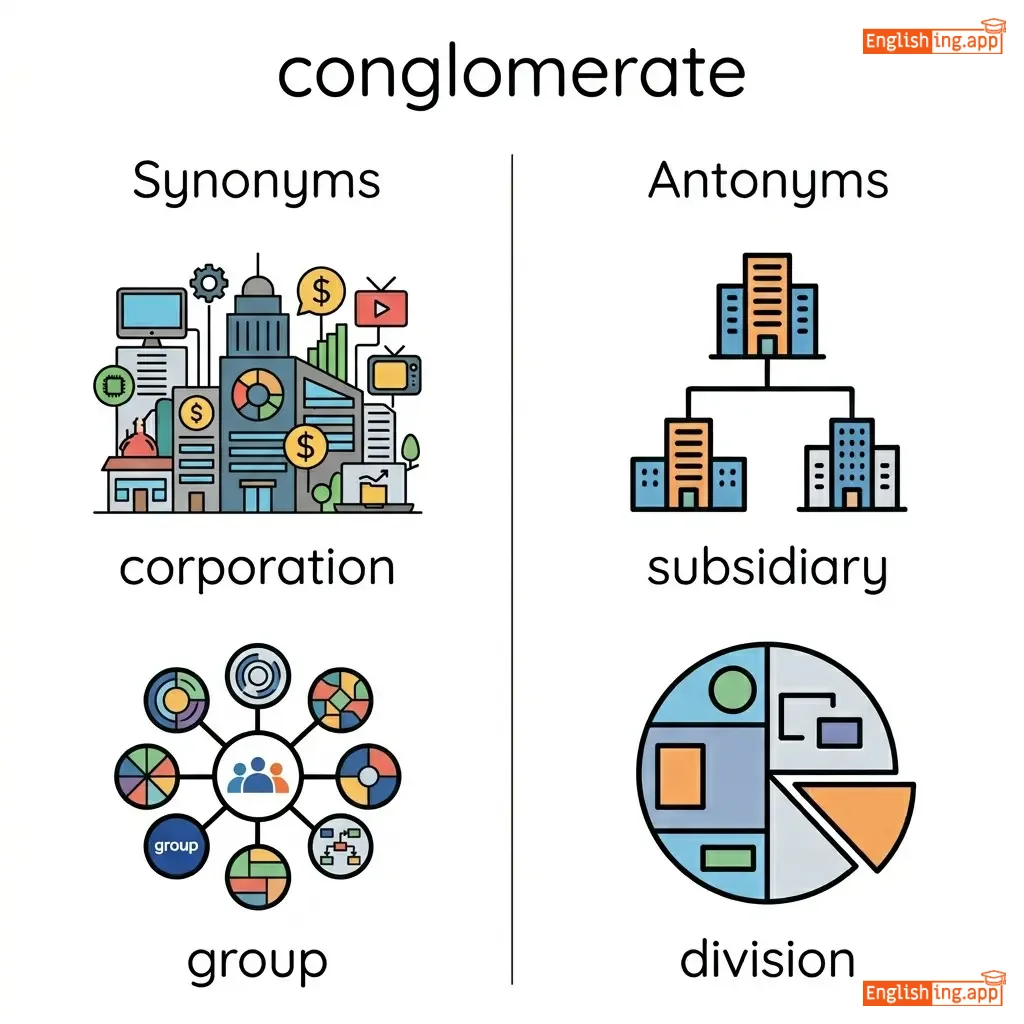
corporation, group, company, consortium, empire
••••••
|
subsidiary, division
••••••
|
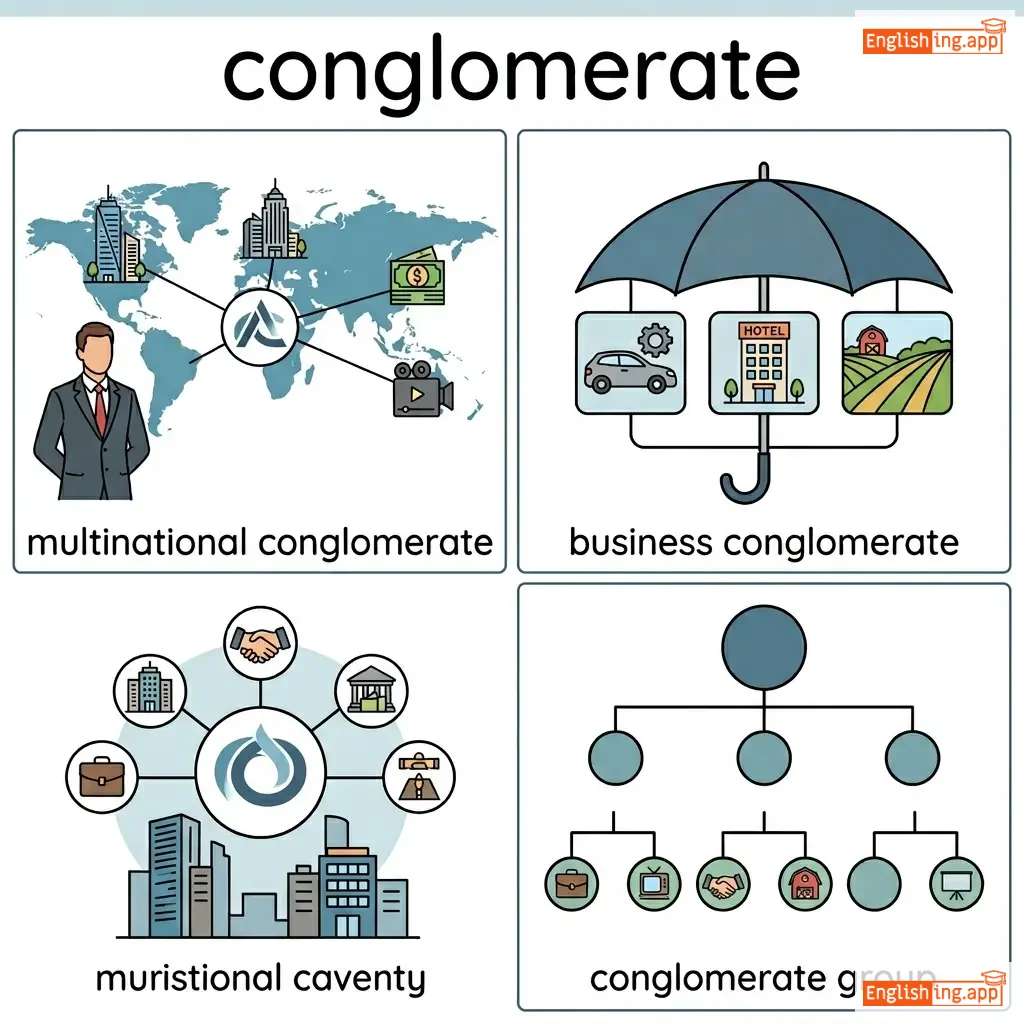
multinational conglomerate, business conglomerate, conglomerate group, corporate conglomerate
••••••
|
Conglomerate 就是一个由多个行业公司组成的大型企业。
••••••
|
Vocabulary Quiz
Test your vocabulary by matching words with their translations or meanings.
Login to take the quiz
Comments (0)
Share your thoughts and join the discussion.
Join the discussion by logging in
Login to CommentNo comments yet
Be the first to share your thoughts!