


Swipe left or right, or use the buttons. Tap image to zoom.
例句翻译
单词
Lesson 274Lesson 274 - 遮罩切换
|
表情符号
|
单词 | Images | 翻译 | 过去时 | 过去分词 | 第三人称单数 | 动名词 | 含义 | 例句 | 例句翻译 | 示例表达 | 示例表达含义 | 示例表达翻译 | 同义词 | 反义词 | 搭配词 | 助记符 |
|---|---|---|---|---|---|---|---|---|---|---|---|---|---|---|---|---|---|
|
#8190
🌑
|
/ˈsɒmbər/
adjective
(sōmbèir)
••••••
|
- •••••• |
阴沉
yīnchén
••••••
|
- •••••• | - •••••• | - •••••• | - •••••• |
Dark or dull in color or tone; gloomy or serious.
••••••
|
The funeral had a somber atmosphere.
葬礼有一种阴沉的气氛。
••••••
|
葬礼有一种阴沉的气氛。
Zànglǐ yǒu yī zhǒng yīnchén de qìfēn.
••••••
|
somber mood
阴沉的心情
••••••
|
A state of deep sadness or seriousness.
••••••
|
阴沉的心情
Yīnchén de xīnqíng
••••••
|
gloomy, melancholy, solemn, serious, dismal
••••••
|
cheerful, lively, bright
••••••
|
somber mood, somber tone, somber expression, somber reminder
••••••
|
Somber意味着阴沉,就像葬礼中的气氛。
••••••
|
|
#8191
🎨
|
/səˈfɪstɪkeɪt/
verb
(suo fī sṭī kèit)
••••••
|
- •••••• |
使精致
shi jing zhi
••••••
|
sophisticated
suo fī sṭī kèitèd
••••••
|
sophisticated
suo fī sṭī kèitèd
••••••
|
sophisticates
suo fī sṭī kèits
••••••
|
sophisticating
suo fī sṭī kèiting
••••••
|
to make something more complex or refined; to educate or develop in taste and manners
••••••
|
Traveling abroad helped sophisticate his worldview.
出国旅行帮助他完善了世界观。
••••••
|
出国旅行帮助他完善了世界观。
Chu guo lv xing bang zhu ta wan shan le shi jie guan.
••••••
|
- •••••• | - •••••• | - •••••• |
refine, cultivate, educate, polish, develop
••••••
|
simplify, coarsen, degrade
••••••
|
sophisticate taste, sophisticate design, sophisticate culture
••••••
|
Sophisticate意味着精致–Sophisticated食物提高了品味。
••••••
|
|
#8192
🗣️
|
/ˈsɒfɪst/
noun
(索非斯特)
••••••
|
- •••••• |
诡辩家
guǐ biàn jiā
••••••
|
- •••••• | - •••••• | - •••••• | - •••••• |
a person who uses clever but misleading arguments
••••••
|
He was dismissed as a sophist who twisted facts to win debates. |
他被当作一个诡辩家,扭曲事实来赢得辩论。
Tā bèi dāngzuò yīgè guǐ biàn jiā, niǔqū shìshí lái yíngdé biànlùn.
••••••
|
- •••••• | - •••••• | - •••••• |
debater, deceiver, trickster, rhetorician
••••••
|
truth-teller, honest person
••••••
|
Greek sophist, cunning sophist, skilled sophist
••••••
|
SOPhisticated debater = 诡辩家 (guǐ biàn jiā)
••••••
|
|
#8193
🌀
|
/ˈsɒfɪzəm/
noun
(诡辩)
••••••
|
- •••••• |
诡辩
guǐbiàn
••••••
|
- •••••• | - •••••• | - •••••• | - •••••• |
a clever but misleading argument; fallacious reasoning
••••••
|
The politician's speech was full of sophism designed to mislead voters. |
政治家的演讲充满了旨在误导选民的诡辩。
Zhèngzhìjiā de yǎnjiǎng chōngmǎnle zhǐzài wùdǎo xuǎnmín de guǐbiàn.
••••••
|
- •••••• | - •••••• | - •••••• |
fallacy, deception, trickery, misrepresentation
••••••
|
truth, honesty
••••••
|
political sophism, clever sophism, use of sophism
••••••
|
诡辩 = 聪明但误导的论点
••••••
|
|
#8194
🥖
|
/sɒp/
noun
••••••
|
- •••••• | - •••••• | - •••••• | - •••••• | - •••••• | - •••••• |
a concession or appeasement to pacify someone; also a piece of bread dipped in liquid
••••••
|
The manager offered a bonus as a sop to the unhappy employees. |
- •••••• |
throw a sop |
to offer a small concession to appease someone
••••••
|
- •••••• |
appeasement, bribe, concession, pacifier
••••••
|
provocation, denial
••••••
|
sop to, political sop, throw a sop
••••••
|
No •••••• |
|
#8195
🔮
|
/ˈsuːθˌseɪər/
noun
(苏斯赛尔)
••••••
|
- •••••• |
预言家
yùyán jiā
••••••
|
- •••••• | - •••••• | - •••••• | - •••••• |
a person who claims to predict the future
••••••
|
The king consulted a soothsayer before going to war.
国王在出征前咨询了一个算命师。
••••••
|
国王在出征前咨询了一个算命师。
Guówáng zài chūzhēng qián zīxún le yí gè suànmìng shī.
••••••
|
- •••••• | - •••••• | - •••••• |
prophet, seer, fortune-teller, oracle
••••••
|
skeptic, realist
••••••
|
consult a soothsayer, ancient soothsayer, trusted soothsayer
••••••
|
sooth意味着真实+sayer意味着说话者- soothsayer是说未来真话的人
••••••
|
|
#8196
🤗
|
/suːð/
verb
(suth)
••••••
|
|
安抚
ānfǔ
••••••
|
soothed
suthed
••••••
|
soothed
suthed
••••••
|
soothes
suths
••••••
|
soothing
suthing
••••••
|
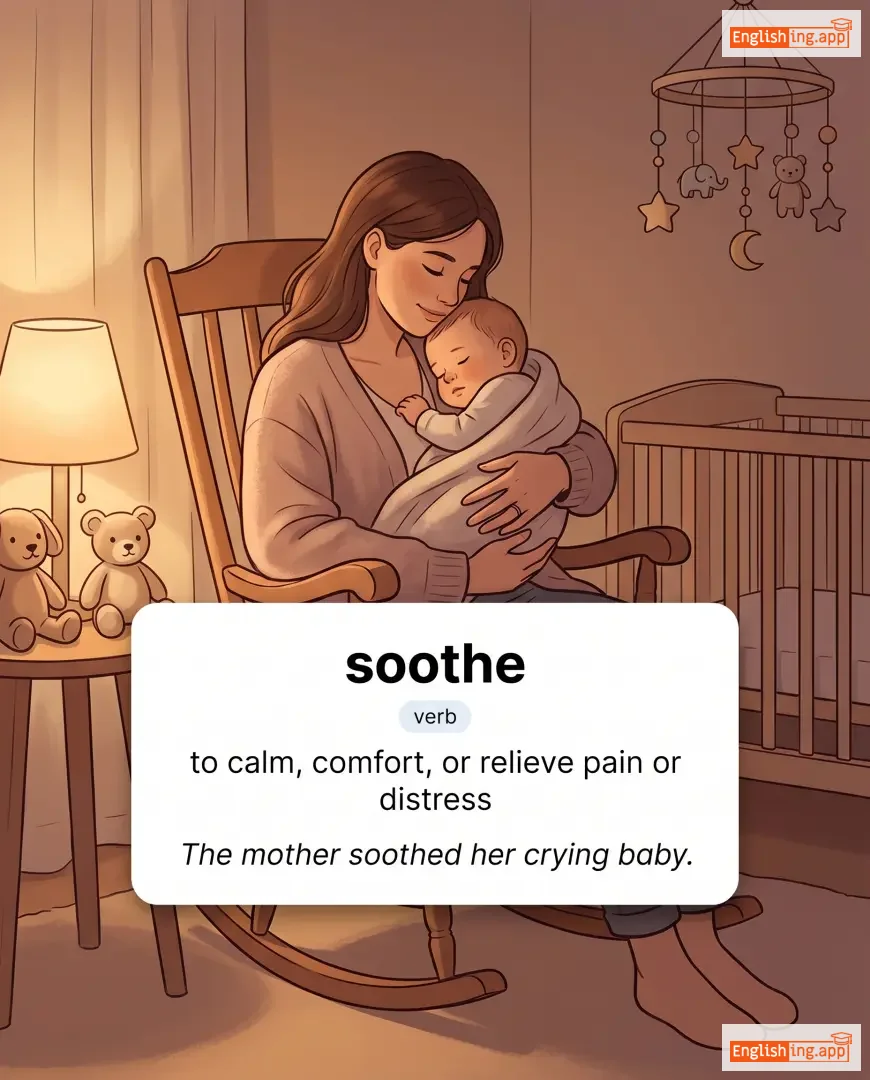
to calm, comfort, or relieve pain or distress
••••••
|
The mother soothed her crying baby.
母亲安抚了哭泣的婴儿。
••••••
|
母亲安抚了哭泣的婴儿。
Mǔqīn ānfǔ le kūqì de yīng'ér.
••••••
|
soothe the nerves
安抚神经
••••••
|
to calm someone's anxiety or stress
••••••
|
安抚神经
ānfǔ shénjīng
••••••
|
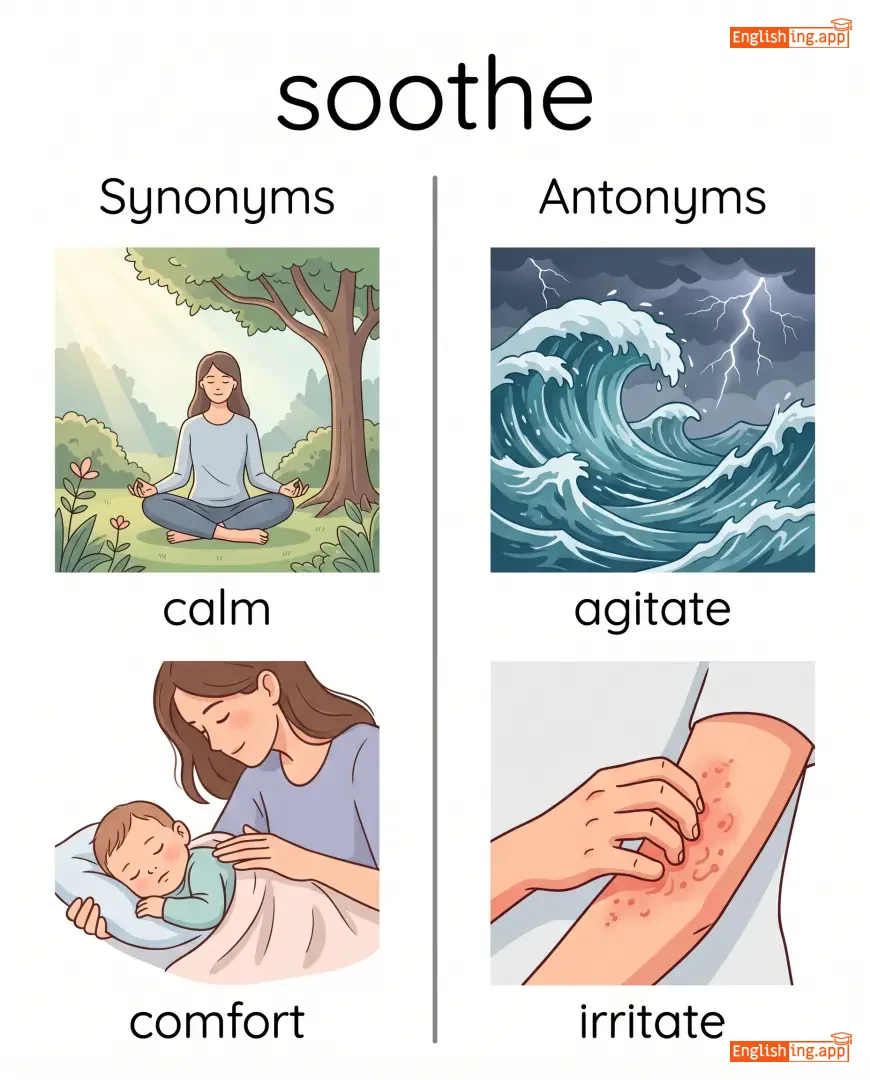
calm, comfort, ease, pacify, relieve
••••••
|
agitate, irritate, upset
••••••
|
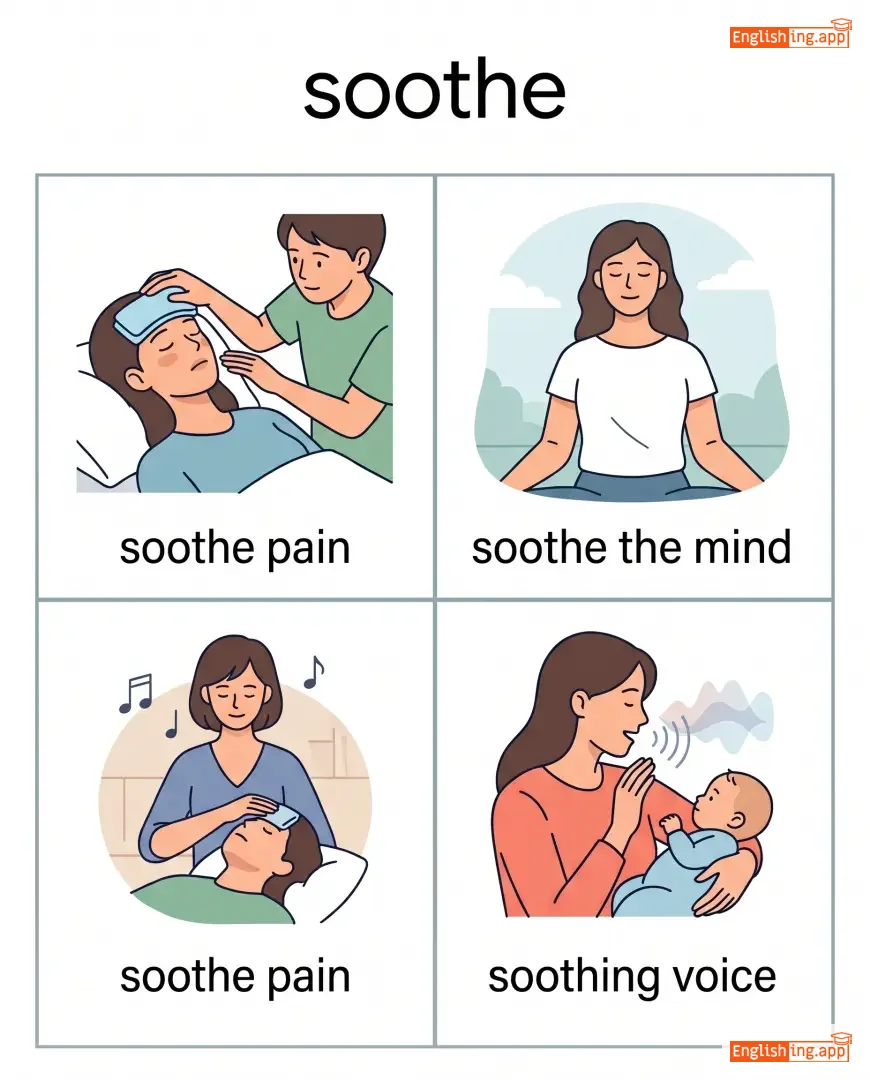
soothe pain, soothe the mind, soothing voice, soothe anger
••••••
|
Suth = 安抚 – 柔和的声音让人感到安慰。
••••••
|
|
#8197
🎤
|
/səˈnɔːrəs/
adjective
(索诺罗斯)
••••••
|
- •••••• |
深沉的声音
shencheng de shengyin
••••••
|
- •••••• | - •••••• | - •••••• | - •••••• |
Deep, full, and rich in sound.
••••••
|
The actor's sonorous voice filled the entire theater. |
演员那深沉的声音充满了整个剧院。
Yǎnyuán nà shēnchén de shēngyīn chōngmǎnle zhěnggè jùyuàn.
••••••
|
- •••••• | - •••••• | - •••••• |
resonant, rich, deep, booming, powerful
••••••
|
thin, weak, faint
••••••
|
sonorous voice, sonorous tone, sonorous speech, sonorous words
••••••
|
Sonorous voice = 深沉的声音 — 想象‘一个如钟声般的低沉声音’
••••••
|
|
#8198
📜
|
/ˈsɒnɪt/
noun
(索尼特)
••••••
|
- •••••• |
十四行诗
shísì háng shī
••••••
|
- •••••• | - •••••• | - •••••• | - •••••• |
A poem of 14 lines using formal rhyme schemes, often about love.
••••••
|
Shakespeare wrote many famous sonnets about love and beauty. |
莎士比亚写了许多关于爱情与美丽的著名十四行诗。
Shāshìbǐyà xiěle xǔduō guānyú àiqíng yǔ měilì de zhùmíng shísì háng shī.
••••••
|
- •••••• | - •••••• | - •••••• |
poem, verse, lyric, rhyme
••••••
|
prose, story
••••••
|
write a sonnet, Shakespearean sonnet, Petrarchan sonnet, romantic sonnet
••••••
|
十四行诗 = 14行诗歌 — 记住 'Son = 送 (sòng), net = 网'。
••••••
|
|
#8199
🔊
|
/ˈsɒnɪk/
adjective
(声速)
••••••
|
- •••••• |
音速的
yīnsù de
••••••
|
- •••••• | - •••••• | - •••••• | - •••••• |
Relating to or involving sound waves or speed of sound.
••••••
|
The jet created a loud boom when it broke the sonic barrier. |
喷气机突破声速壁垒时发出了巨大的爆炸声。
Pēnqìjī tūpò shēngsù bìlěi shí fāchūle jùdà de bàozhà shēng.
••••••
|
sonic boom |
A loud explosive noise caused when something travels faster than the speed of sound.
••••••
|
音爆
yīn bào
••••••
|
acoustic, sound-related, auditory, aural
••••••
|
silent, noiseless, quiet
••••••
|
sonic boom, sonic wave, sonic speed, sonic technology
••••••
|
音速意味着与声音有关,像音爆 — 巨大的爆炸声。
••••••
|
|
#8200
🎼
|
/səˈnɑːtə/
noun
(奏鸣曲)
••••••
|
- •••••• |
音乐作品 (奏鸣曲)
yīn yuè zuò pǐn (zòu míng qǔ)
••••••
|
- •••••• | - •••••• | - •••••• | - •••••• |
A musical composition for one or more instruments, typically in several movements.
••••••
|
She performed a beautiful Beethoven sonata on the piano. |
她在钢琴上演奏了贝多芬的美丽奏鸣曲。
Tā zài gāngqín shàng yǎnzòu le bèiduōfēn de měilì zòumíngqǔ.
••••••
|
- •••••• | - •••••• | - •••••• |
composition, piece, symphony, concerto, opus
••••••
|
silence, noise
••••••
|
piano sonata, violin sonata, classical sonata, Beethoven sonata
••••••
|
奏鸣曲 = 音乐剧 🎶 — 在乐器上演奏。
••••••
|
|
#8201
😴
|
/ˈsɒmnələnt/
adjective
(嗜睡)
••••••
|
- •••••• |
昏昏欲睡
hūnhūn yù shuì
••••••
|
- •••••• | - •••••• | - •••••• | - •••••• |
Sleepy or drowsy; causing a desire to sleep.
••••••
|
The somnolent lecture made half the class fall asleep. |
那堂昏昏欲睡的讲座让一半的班级都睡着了。
Nà táng hūnhūn yù shuì de jiǎngzuò ràng yībàn de bānjí dōu shuìzhe le.
••••••
|
- •••••• | - •••••• | - •••••• |
sleepy, drowsy, sluggish, lethargic, tired
••••••
|
alert, awake, energetic
••••••
|
somnolent mood, somnolent state, somnolent voice, somnolent village
••••••
|
昏昏欲睡是指睡意重的状态,像是一堂让人昏昏欲睡的讲座。
••••••
|
|
#8202
😪
|
/ˈsɒmnələns/
noun
(嗡诺伦斯)
••••••
|
|
嗜睡
shishui
••••••
|
- •••••• | - •••••• | - •••••• | - •••••• |
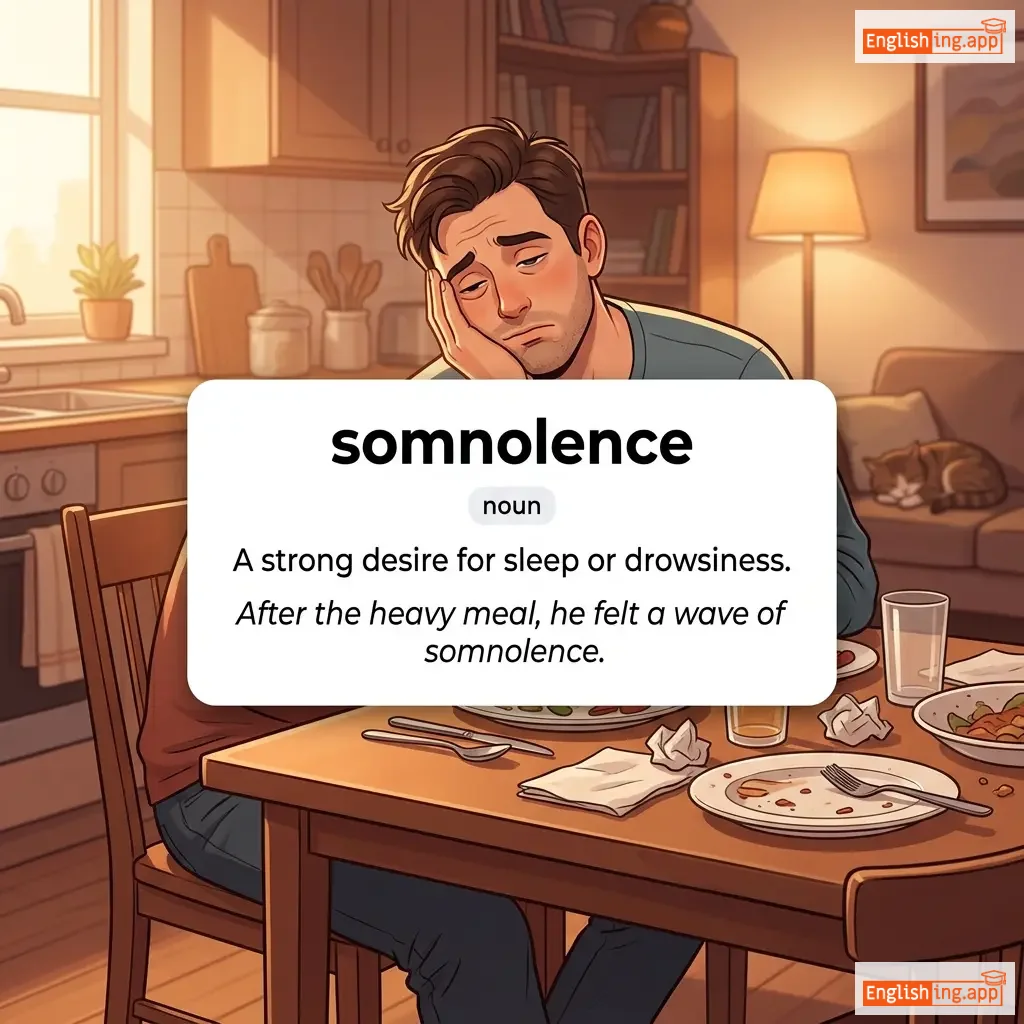
A strong desire for sleep or drowsiness.
••••••
|
After the heavy meal, he felt a wave of somnolence. |
在丰盛的晚餐后,他感到一阵困倦。
Zai fengsheng de wancan hou, ta gandao yizhen kunjuan.
••••••
|
- •••••• | - •••••• | - •••••• |
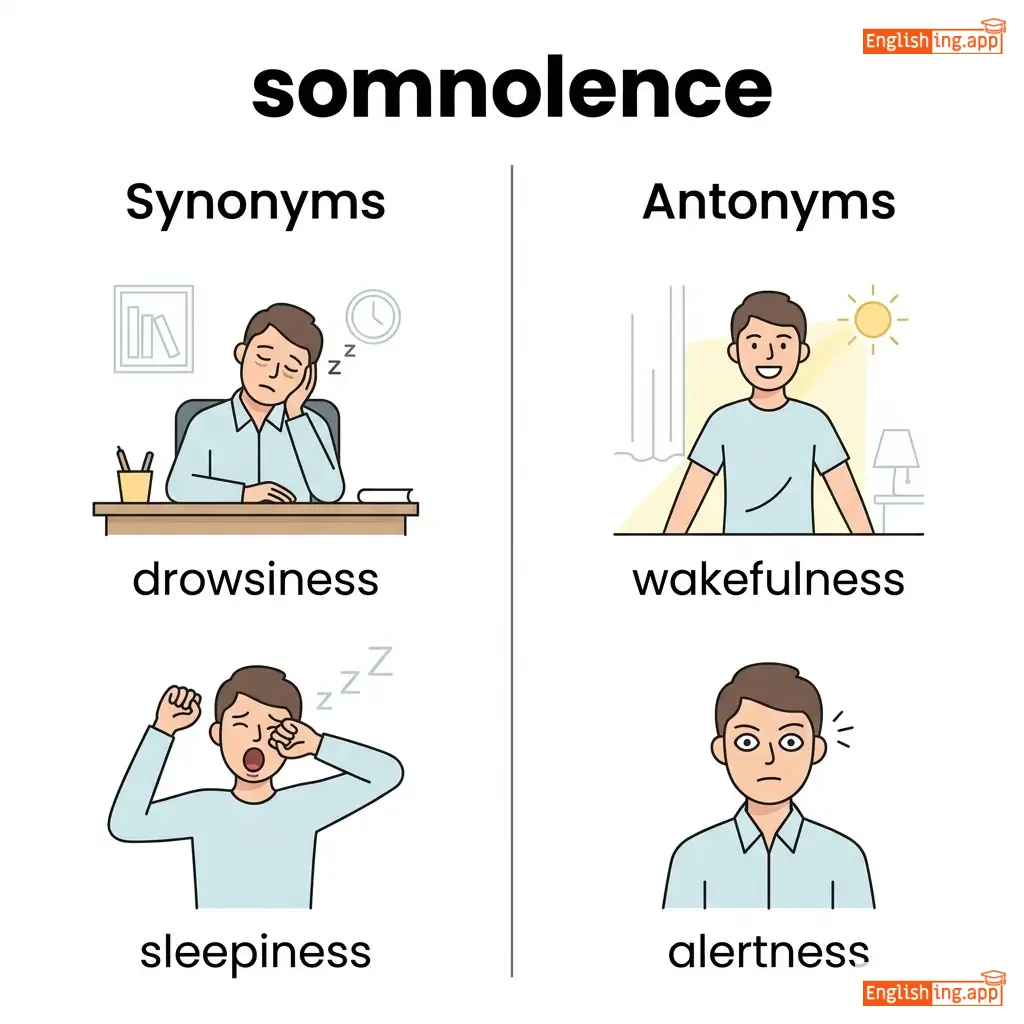
drowsiness, sleepiness, fatigue, lethargy, slumber
••••••
|
wakefulness, alertness, vigilance
••••••
|
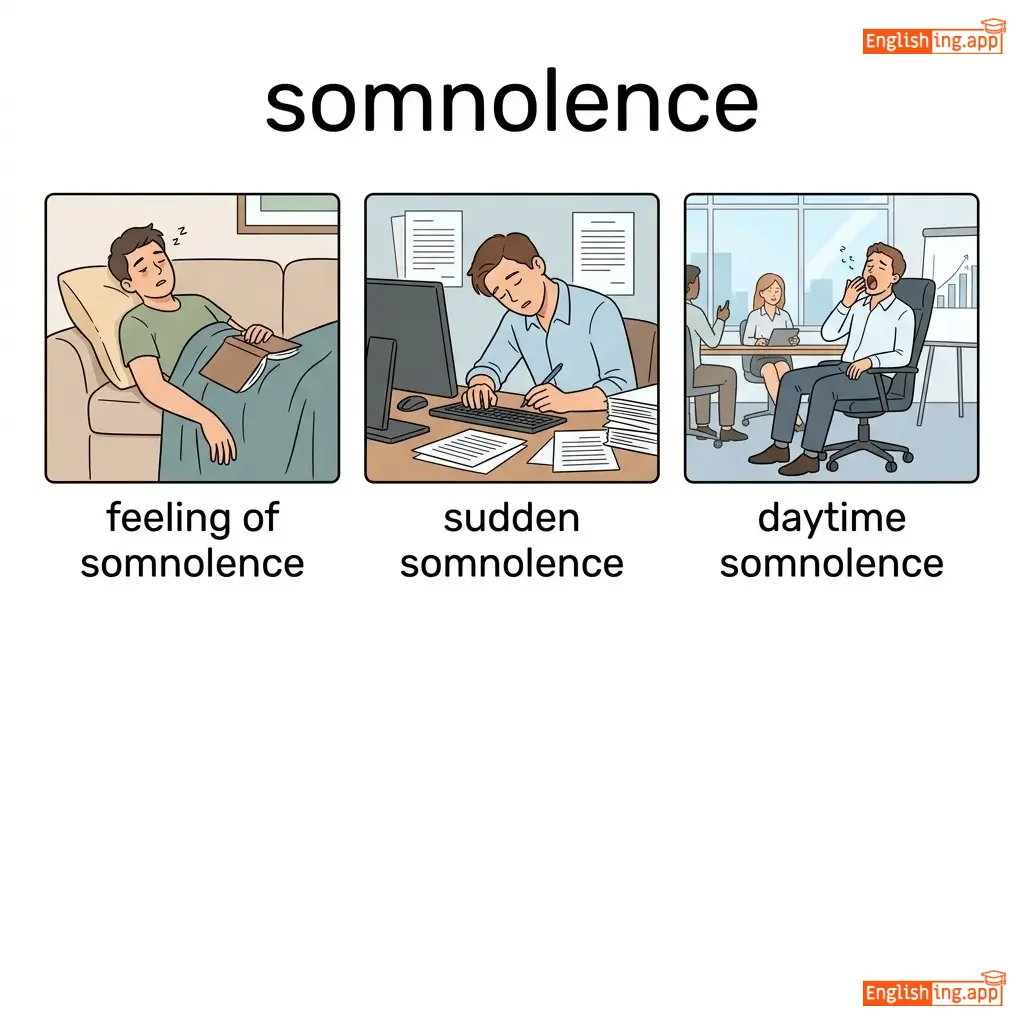
feeling of somnolence, sudden somnolence, daytime somnolence
••••••
|
Somnolence意味着嗜睡—Somno意味着睡眠,镜头(镜头)让眼睛感到疲劳,想要睡觉。
••••••
|
|
#8203
🛌
|
/sɒmˈnɪfərəs/
adjective
(嗡菲尔)
••••••
|
- •••••• |
催眠的
cuīmián de
••••••
|
- •••••• | - •••••• | - •••••• | - •••••• |
Tending to induce sleep; soporific.
••••••
|
The professor's somniferous lecture put half the class to sleep. |
教授的催眠讲座让一半的学生睡着了。
Jiàoshòu de cuīmián jiǎngzuò ràng yíbàn de xuéshēng shuìzhe le.
••••••
|
- •••••• | - •••••• | - •••••• |
soporific, sleep-inducing, hypnotic, drowsy
••••••
|
stimulating, energizing, awakening
••••••
|
somniferous effect, somniferous sound, somniferous lecture
••••••
|
Somniferous意味着引导睡眠—Somni意味着睡眠,Fero意味着带来。
••••••
|
|
#8204
😴
|
/sɒmˈnæmbjʊlɪst/
noun
(嗣眠者)
••••••
|
- •••••• |
嗣眠者
simian zhe
••••••
|
- •••••• | - •••••• | - •••••• | - •••••• |
A person who sleepwalks.
••••••
|
The somnambulist wandered out of the house at night.
嗣眠者晚上走出屋外。
••••••
|
嗣眠者晚上走出屋外。
Simian zhe wanshang zou chu wuwai.
••••••
|
- •••••• | - •••••• | - •••••• |
sleepwalker, nightwalker, noctambulist, dreamwalker
••••••
|
wakeful person, insomniac
••••••
|
somnambulist behavior, somnambulist episode, somnambulist state
••••••
|
嗣眠者:梦游者,睡觉时走路。
••••••
|
|
#8205
🪖
|
/ˈsoʊldʒər/
noun
(士兵)
••••••
|
- •••••• |
士兵
shìbīng
••••••
|
- •••••• | - •••••• | - •••••• | - •••••• |
a person who serves in an army, especially as a professional fighter
••••••
|
The soldier marched proudly with his unit.
士兵骄傲地与他的部队一起行进。
••••••
|
士兵骄傲地与他的部队一起行进。
Shìbīng jiāo'ào de yǔ tā de bùduì yīqǐ xíngjìn.
••••••
|
old soldier
老兵
••••••
|
a person with much experience in military service or in life
••••••
|
老兵
lǎo bīng
••••••
|
trooper, warrior, fighter, serviceman, combatant
••••••
|
civilian, noncombatant
••••••
|
brave soldier, professional soldier, soldier on, soldier's duty
••••••
|
士兵 = Soldier, 容易记住!
••••••
|
|
#8206
💪
|
/səˈmætɪk/
adjective
(索马提克)
••••••
|
|
身体的
shen ti de
••••••
|
- •••••• | - •••••• | - •••••• | - •••••• |
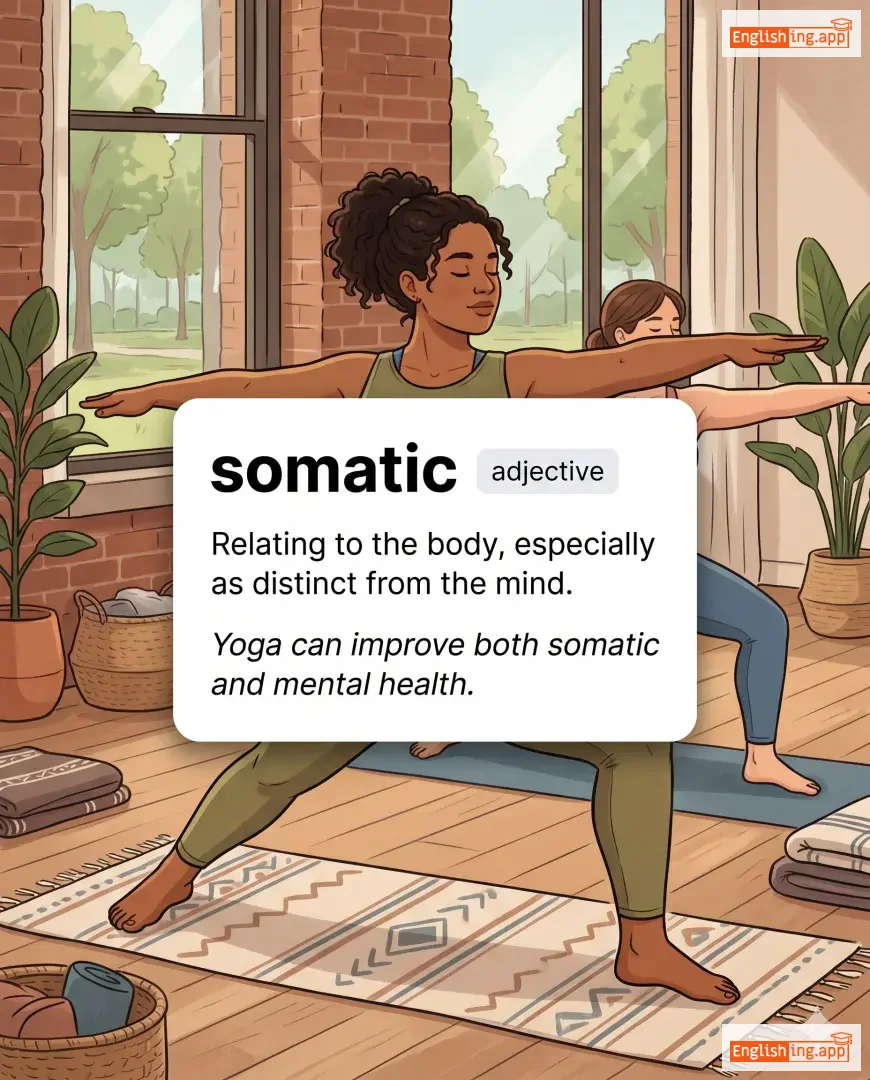
Relating to the body, especially as distinct from the mind.
••••••
|
Yoga can improve both somatic and mental health. |
瑜伽可以改善身体和心理健康。
Yujia keyi gaishan shenti he xinli jiankang.
••••••
|
- •••••• | - •••••• | - •••••• |
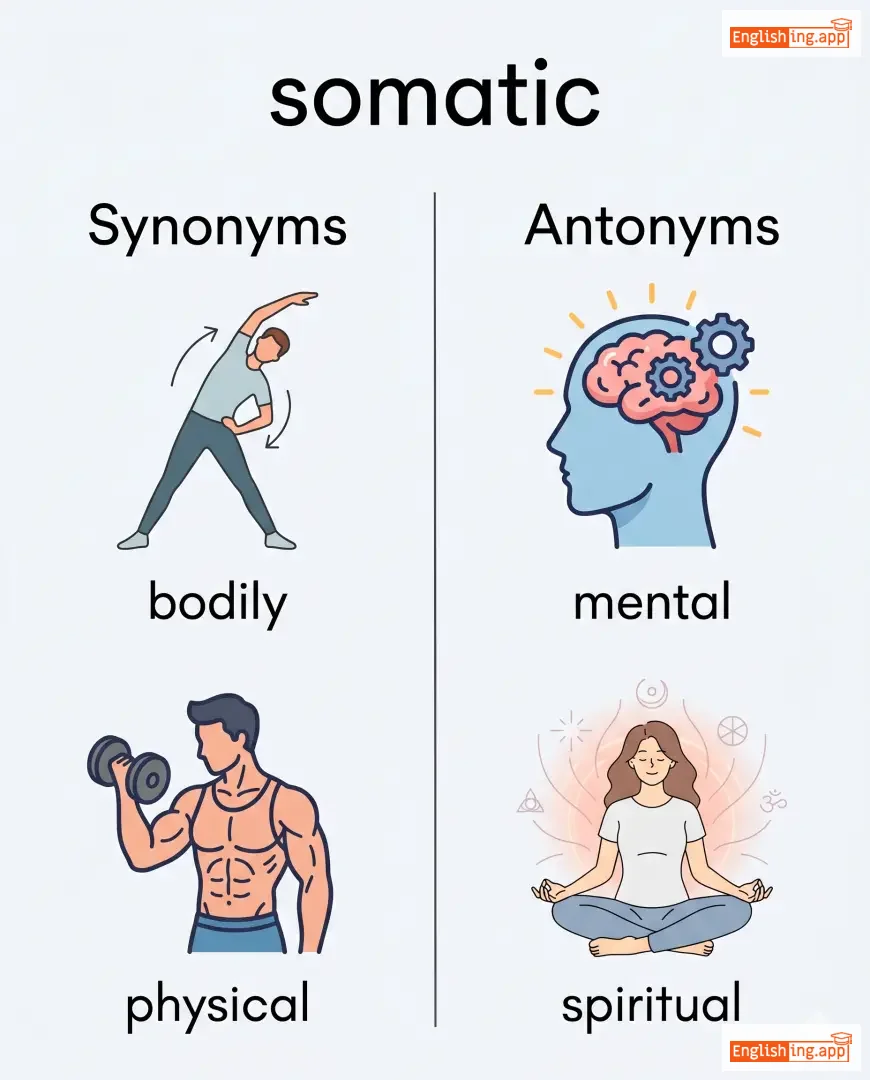
bodily, physical, corporeal, material, anatomical
••••••
|
mental, spiritual, psychic
••••••
|
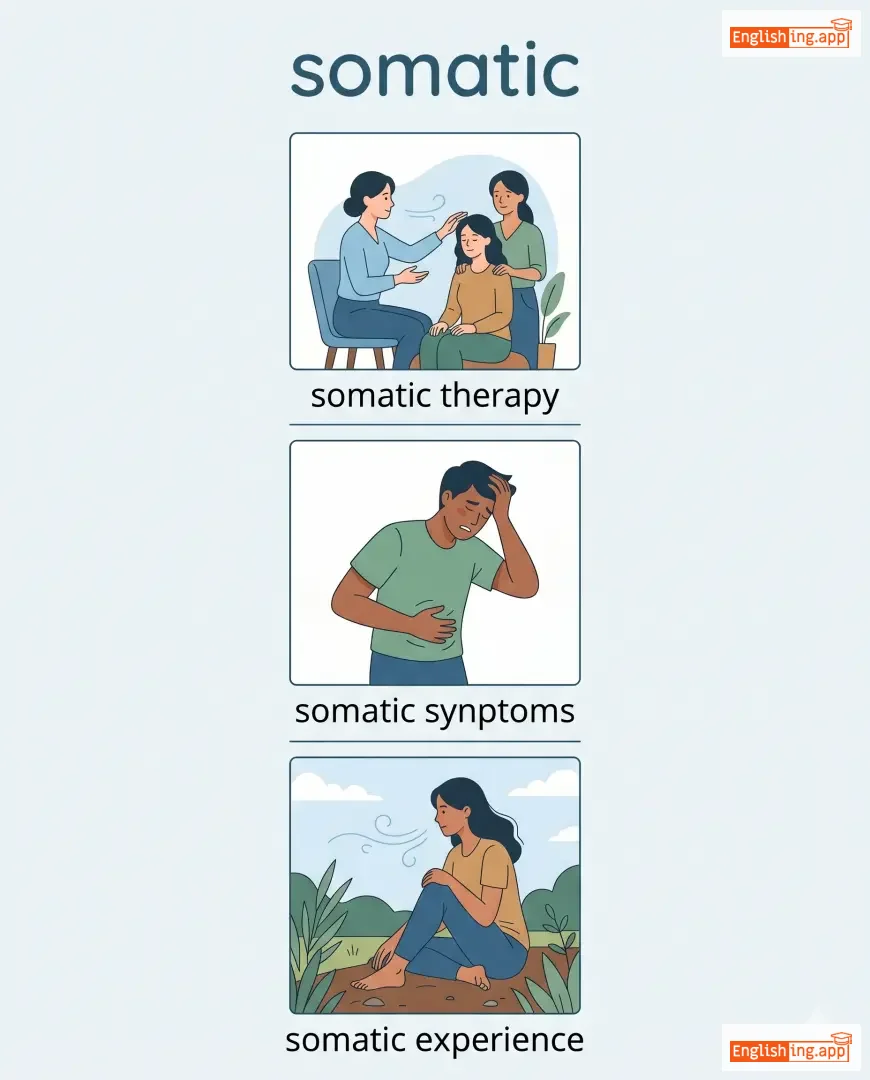
somatic therapy, somatic symptoms, somatic experience, somatic cells
••••••
|
Somatic意味着与身体相关—'So' sounds like '身体' (shen ti), as in physical.
••••••
|
|
#8207
🧪
|
/ˈsɒlvənt/
noun, adjective
(溶剂)
••••••
|
|
溶剂, 还债能力
rongji, huan zhai nengli
••••••
|
- •••••• | - •••••• | - •••••• | - •••••• |
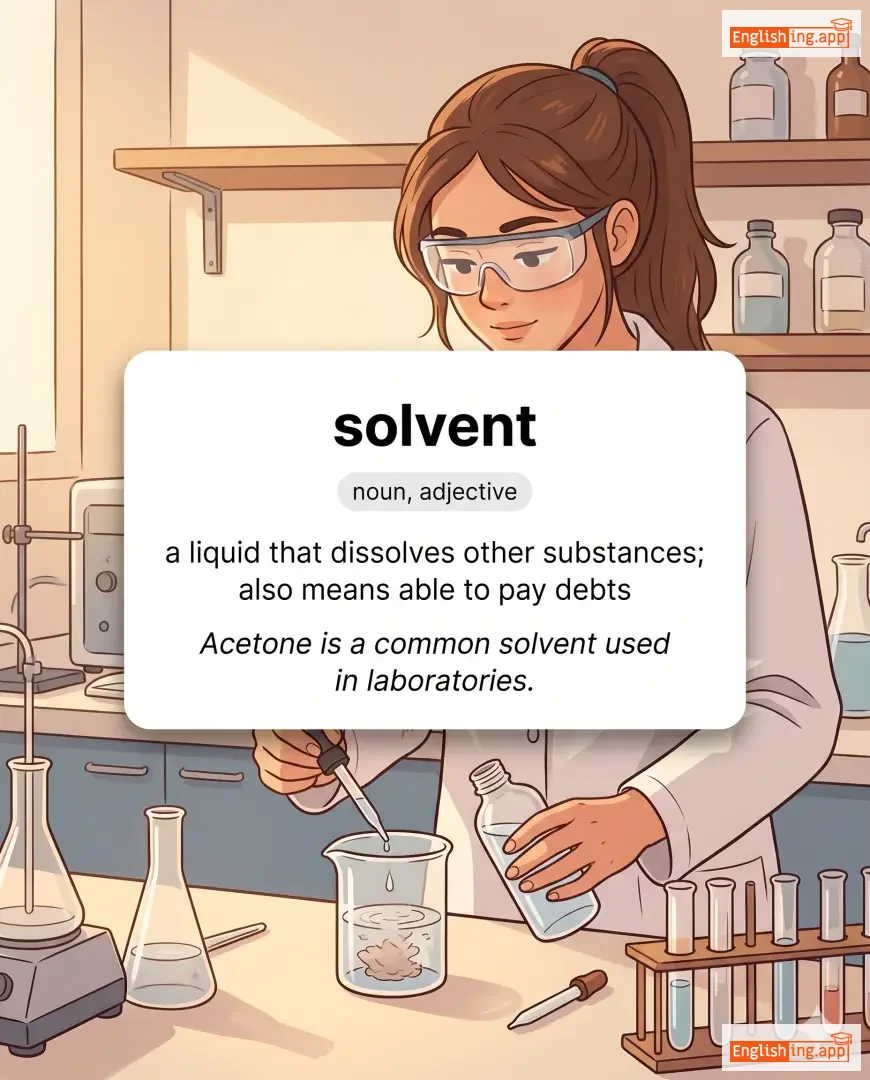
a liquid that dissolves other substances; also means able to pay debts
••••••
|
Acetone is a common solvent used in laboratories.
丙酮是实验室中常用的溶剂。
••••••
|
丙酮是实验室中常用的溶剂。
Bingtong shi shiyan shi zhong changyong de rongji.
••••••
|
solvent company
有偿还能力的公司
••••••
|
a company that is financially stable and able to pay its debts
••••••
|
财务稳健的公司
caiwu wenjian de gongsi
••••••
|
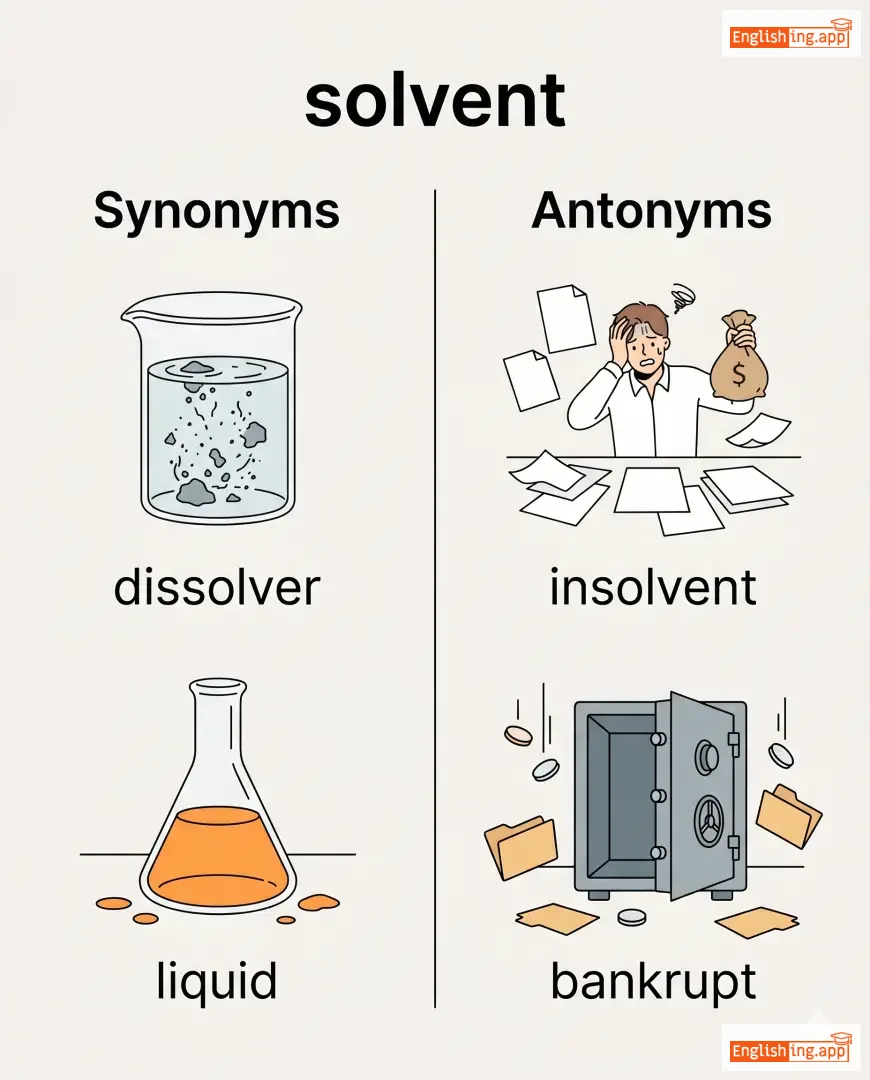
dissolver, liquid, solution, stable, viable
••••••
|
insolvent, bankrupt
••••••
|
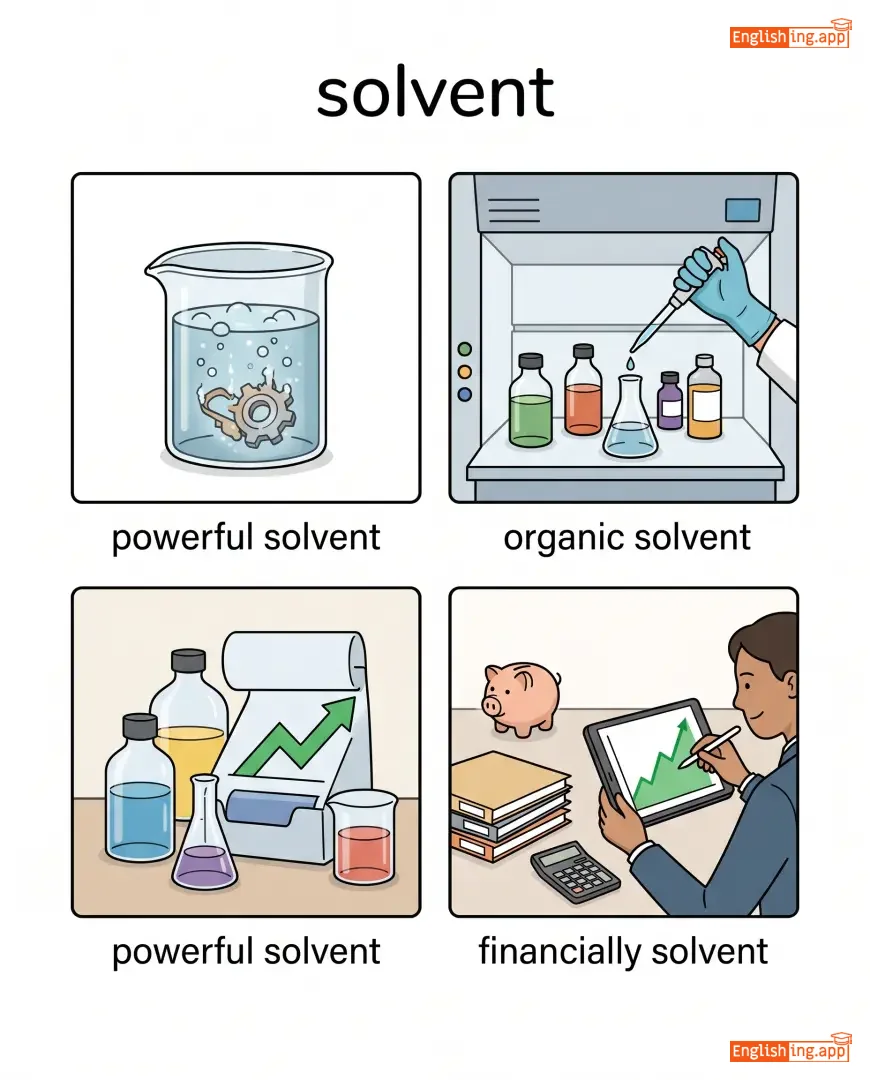
powerful solvent, organic solvent, financially solvent, solvent company
••••••
|
Solve + rent → 能偿还债务的公司就像 solvent 一样
••••••
|
|
#8208
💧
|
/ˈsɒljʊbəl/
adjective
(suò lù bù ěr)
••••••
|
- •••••• |
可溶的
kerongde
••••••
|
- •••••• | - •••••• | - •••••• | - •••••• |
able to be dissolved, especially in water
••••••
|
Sugar is soluble in water. |
糖在水中可溶。
Tang zai shui zhong kerong.
••••••
|
- •••••• | - •••••• | - •••••• |
dissolvable, meltable, dispersible, absorbable
••••••
|
insoluble, indissoluble
••••••
|
soluble fiber, soluble vitamins, water soluble, easily soluble
••••••
|
Sol + able → 可溶的,意思是能够溶解
••••••
|
|
#8209
☀️
|
/ˈsɒlstɪs/
noun
(夏至冬至)
••••••
|
- •••••• |
至点
zhì diǎn
••••••
|
- •••••• | - •••••• | - •••••• | - •••••• |
the two times in the year when the sun is at its greatest distance from the equator (summer and winter solstice)
••••••
|
People celebrate the summer solstice with festivals and rituals. |
人们通过节日和仪式庆祝夏至。
Rénmen tōngguò jiérì hé yíshì qìngzhù xià zhì.
••••••
|
- •••••• | - •••••• | - •••••• |
equinox, midsummer, midwinter, turning point
••••••
|
equinox
••••••
|
summer solstice, winter solstice, celebrate solstice, solstice festival
••••••
|
Sol + diǎn (太阳 + 点) → 太阳的最高点
••••••
|
|
#8210
🌄
|
/ˈsɒlɪtjuːd/
noun
(索利图德)
••••••
|
|
孤独
gudou
••••••
|
- •••••• | - •••••• | - •••••• | - •••••• |
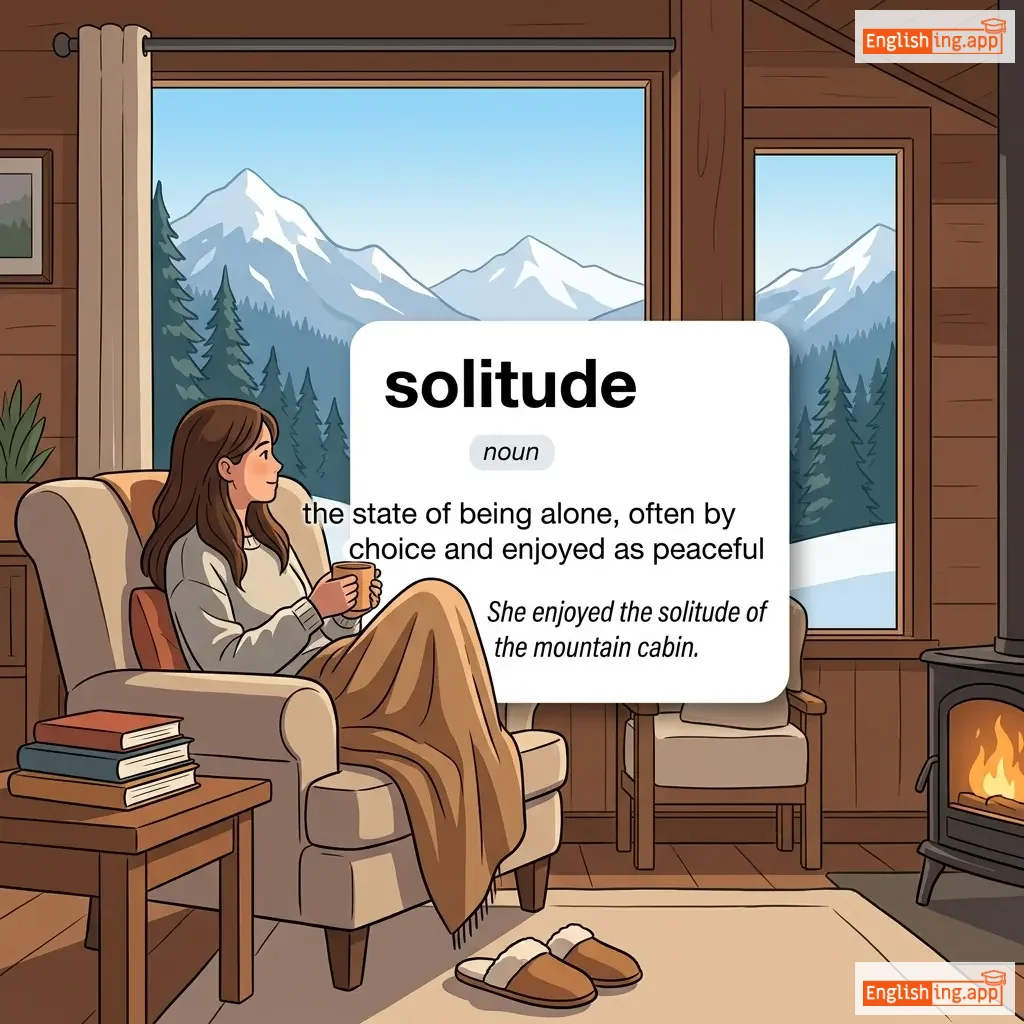
the state of being alone, often by choice and enjoyed as peaceful
••••••
|
She enjoyed the solitude of the mountain cabin.
她在山间小屋里享受孤独。
••••••
|
她在山间小屋里享受孤独。
Tā zài shān jiān xiǎowū lǐ xiǎngshòu gūdú.
••••••
|
solitude is bliss
孤独就是幸福
••••••
|
being alone can bring peace and happiness
••••••
|
孤独就是幸福
Gūdú jiùshì xìngfú
••••••
|
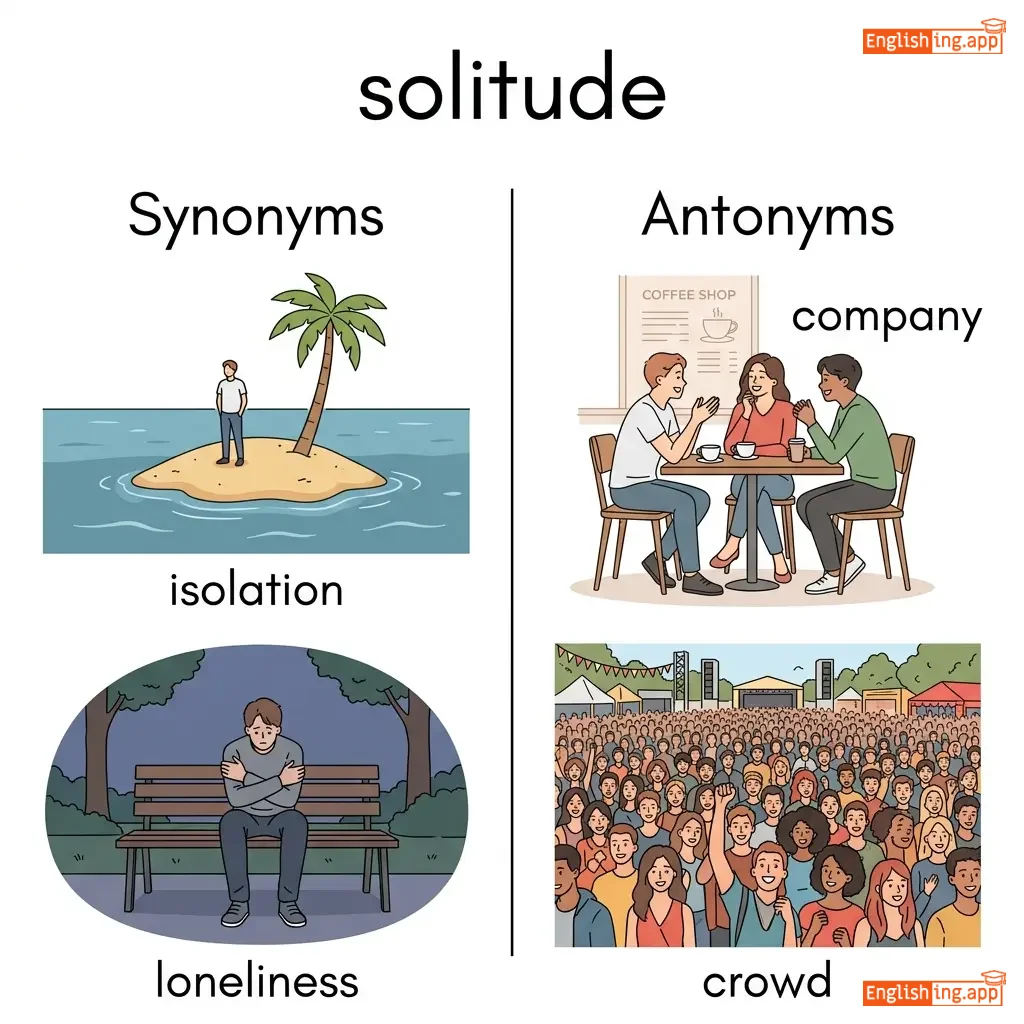
isolation, loneliness, seclusion, privacy, retreat
••••••
|
company, crowd, companionship
••••••
|
peaceful solitude, enjoy solitude, seek solitude, solitude in nature
••••••
|
Solo + attitude → 孤独是幸福
••••••
|
|
#8211
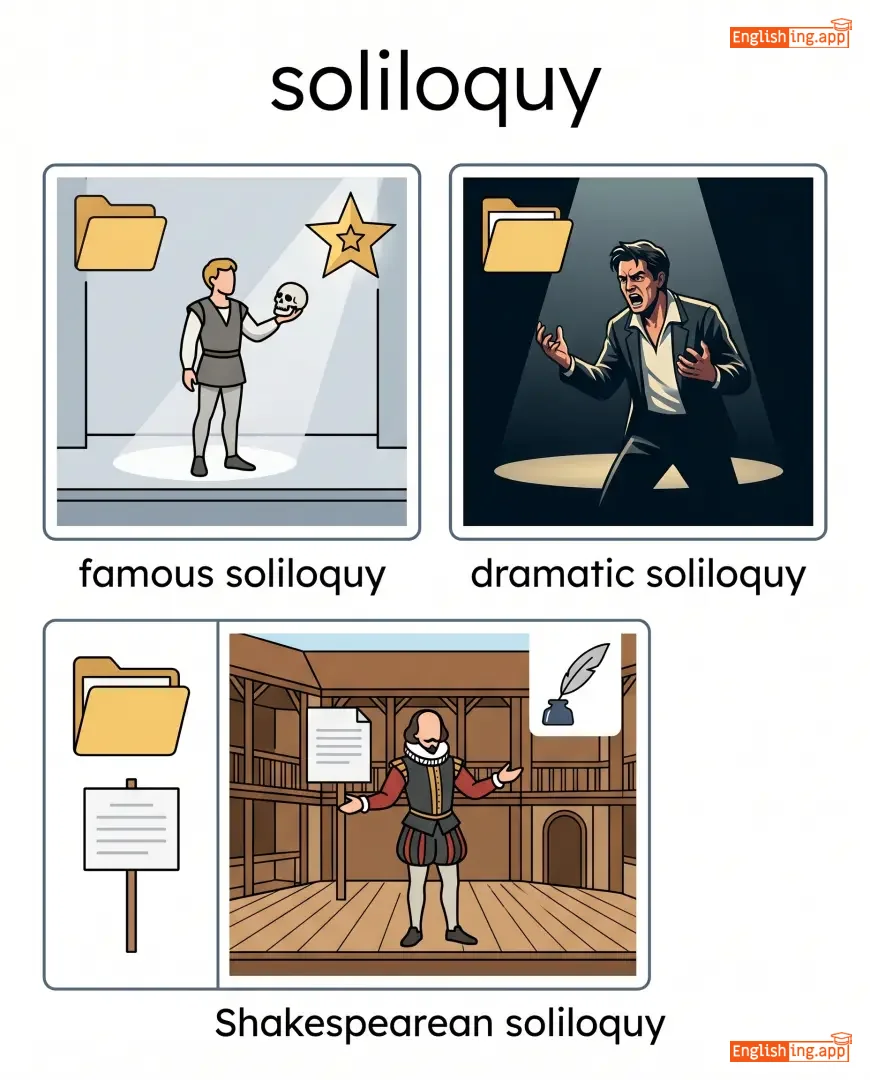
🎭
|
/səˈlɪləkwi/
noun
(索利罗奎)
••••••
|
|
独白
dúbái
••••••
|
- •••••• | - •••••• | - •••••• | - •••••• |
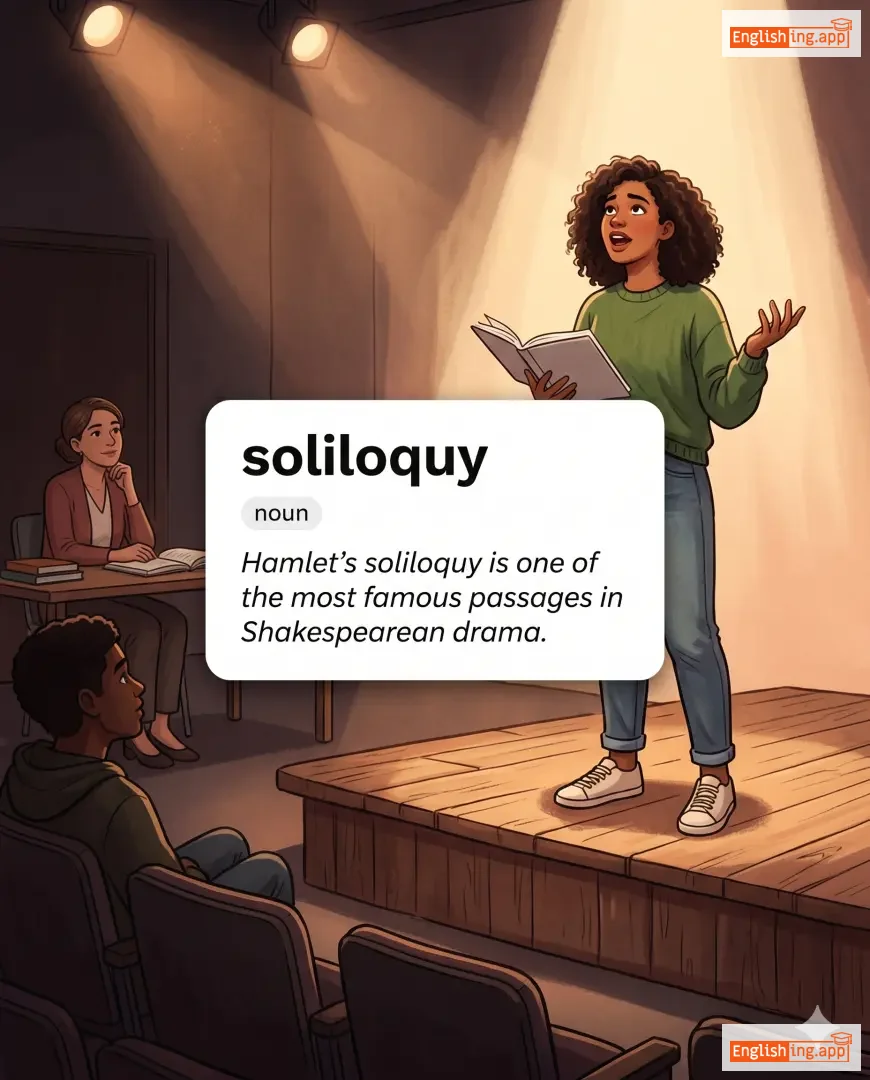
a speech in which a character talks to themselves, often used in drama to reveal inner thoughts
••••••
|
Hamlet's soliloquy is one of the most famous passages in Shakespearean drama. |
哈姆雷特的独白是莎士比亚戏剧中最著名的段落之一。
Hāmǔléitè de dúbái shì Shāshìbǐyà xìjù zhōng zuì zhùmíng de duànluò zhī yī.
••••••
|
- •••••• | - •••••• | - •••••• |
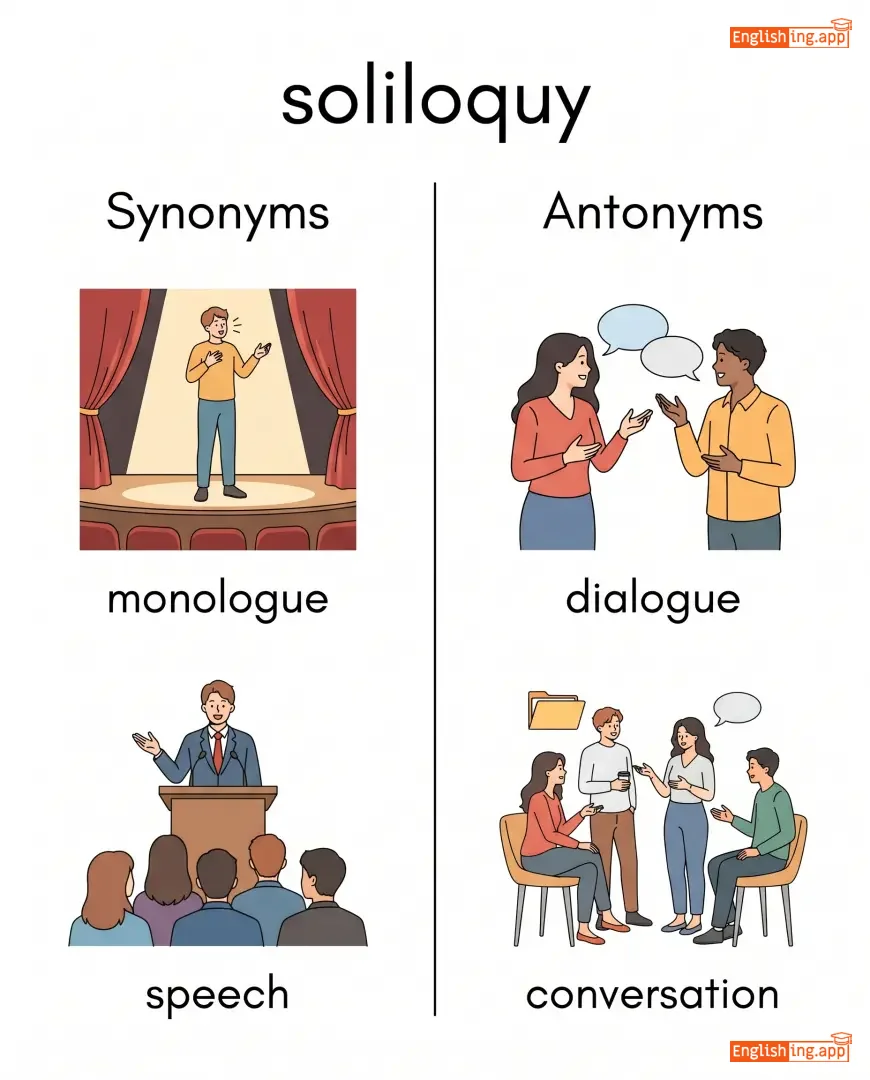
monologue, speech, oration, address, discourse
••••••
|
dialogue, conversation
••••••
|
famous soliloquy, dramatic soliloquy, Shakespearean soliloquy, deliver a soliloquy
••••••
|
独 (独自) + 白 (讲话) → 一个人自己讲话
••••••
|
|
#8212
🧱
|
/səˈlɪdəˌfaɪ/
verb
(索立迪法)
••••••
|
- •••••• |
巩固
gonggu
••••••
|
solidified
索立迪法德
••••••
|
solidified
索立迪法德
••••••
|
solidifies
索立迪法伊斯
••••••
|
solidifying
索立迪法英
••••••
|
To make something firm, strong, or more certain.
••••••
|
The company solidified its position in the market.
公司巩固了其在市场中的地位。
••••••
|
公司巩固了其在市场中的地位。
Gongsi gonggu le qi zai shichang zhong de diwei.
••••••
|
- •••••• | - •••••• | - •••••• |
strengthen, reinforce, secure, cement
••••••
|
weaken, dissolve
••••••
|
solidify position, solidify plan, solidify relationship
••••••
|
Solidify意味着巩固 → 记住,Solidify意味着加强稳固。
••••••
|
|
#8213
✊
|
/ˌsɒlɪˈdærɪti/
noun
(团结)
••••••
|
- •••••• |
团结
tuánjié
••••••
|
- •••••• | - •••••• | - •••••• | - •••••• |
Unity or agreement of feeling or action, especially among individuals with a common interest.
••••••
|
Workers held a strike in solidarity with their colleagues.
工人们在与同事们的团结下举行了罢工。
••••••
|
工人们在与同事们的团结下举行了罢工。
Gōngrén men zài yǔ tóngshì men de tuánjié xià jǔxíngle bàgōng.
••••••
|
stand in solidarity
团结一致
••••••
|
To show unity or support with others in a shared cause.
••••••
|
团结一致
tuánjié yízhì
••••••
|
unity, fellowship, cooperation, mutual support
••••••
|
division, disunity
••••••
|
show solidarity, express solidarity, in solidarity with
••••••
|
Solidarity = Solid + unity → 记住,团结意味着大家团结在一起,形成强大力量。
••••••
|
|
#8214
❤️
|
/səˈlɪsɪˌtuːd/
noun
(索利西图德)
••••••
|
- •••••• |
关心, 照顾
guanxin, zhaogu
••••••
|
- •••••• | - •••••• | - •••••• | - •••••• |
Care or concern for someone or something.
••••••
|
His mother showed great solicitude for his safety. |
他的母亲对他的安全表现出极大的关心。
Tā de mǔqīn duì tā de ānquán biǎoxiàn chū jí dà de guānxīn.
••••••
|
- •••••• | - •••••• | - •••••• |
concern, care, consideration, attentiveness
••••••
|
neglect, indifference
••••••
|
express solicitude, great solicitude, with solicitude
••••••
|
Solicitude 意味着 care – 记住,在学生的态度中,solicitude 是关心。
••••••
|
|
#8215
💖
|
/səˈlɪsɪtəs/
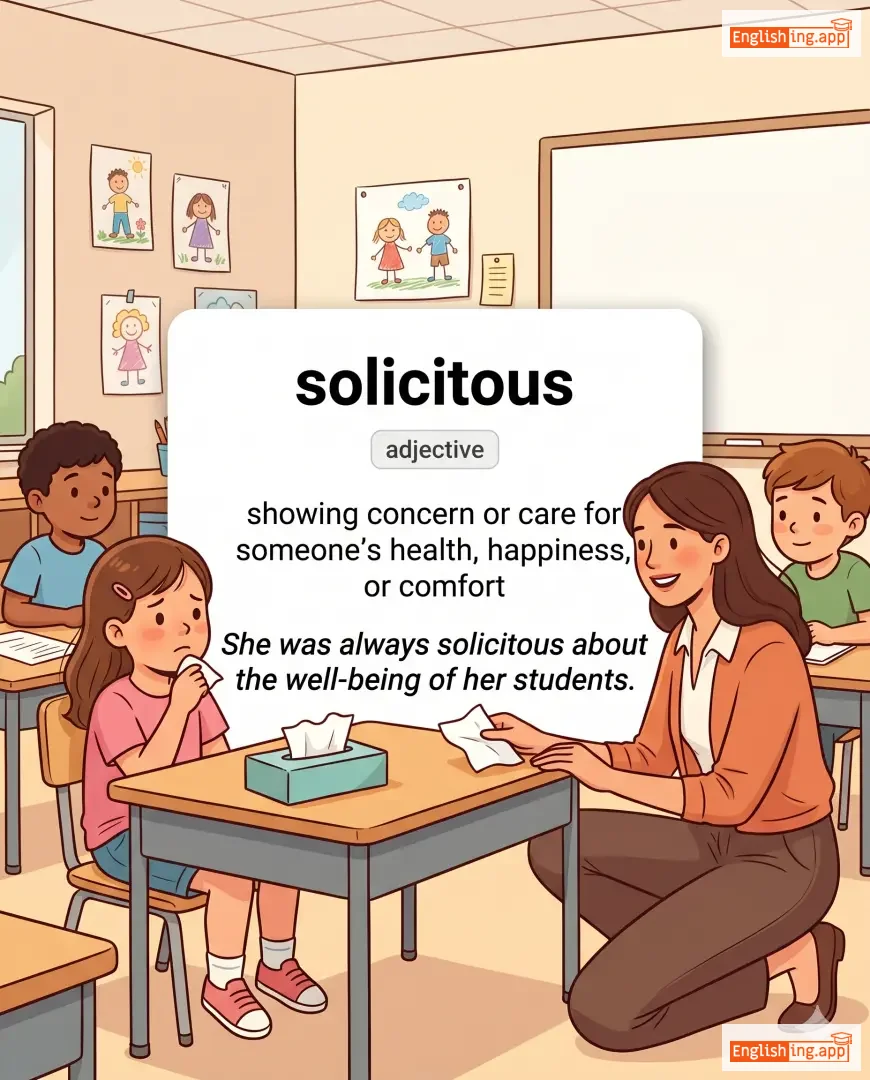
adjective
(索利西图斯)
••••••
|
|
关心
guānxīn
••••••
|
- •••••• | - •••••• | - •••••• | - •••••• |
showing concern or care for someone's health, happiness, or comfort
••••••
|
She was always solicitous about the well-being of her students. |
她总是关心学生们的福祉。
Tā zǒng shì guānxīn xuéshēngmen de fúzhǐ.
••••••
|
- •••••• | - •••••• | - •••••• |
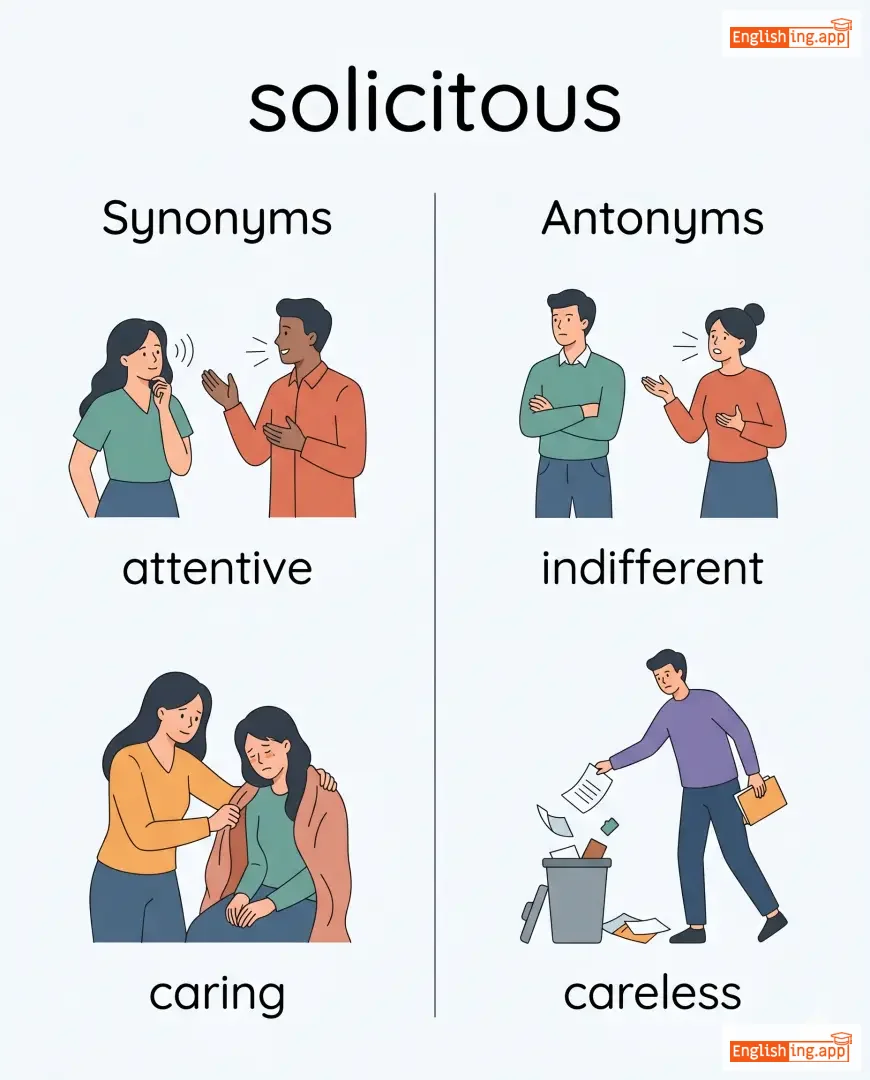
attentive, caring, concerned, considerate, thoughtful
••••••
|
indifferent, careless, neglectful
••••••
|
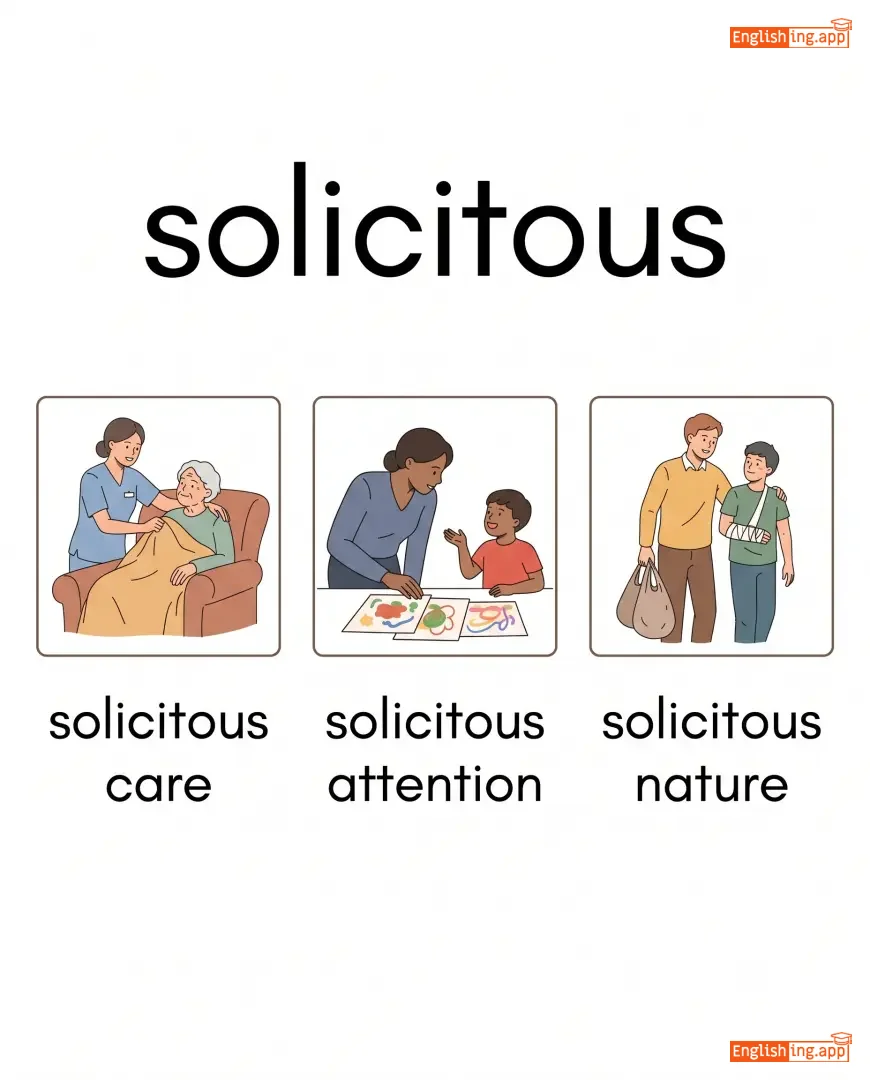
solicitous care, solicitous attention, solicitous nature
••••••
|
Solicitous意思是关心,想想 'so listen to us' = 关心 💖
••••••
|
|
#8216
⚖️
|
/səˈlɪsɪtər/
noun
(苏利西特)
••••••
|
- •••••• |
律师
lǜ shī
••••••
|
- •••••• | - •••••• | - •••••• | - •••••• |
A type of lawyer who gives legal advice and prepares legal documents, often representing clients in lower courts.
••••••
|
She consulted a solicitor before signing the contract. |
她在签署合同之前咨询了律师。
Tā zài qiānshǔ hé tóng zhīqián zīxúnle lǜshī.
••••••
|
- •••••• | - •••••• | - •••••• |
lawyer, attorney, advocate, legal advisor
••••••
|
client, layperson
••••••
|
consult a solicitor, hire a solicitor, solicitor firm, solicitor general
••••••
|
Solicitor 意味着律师 – 记住,要获得坚实的法律建议,就去找 solicitor。
••••••
|
|
#8217
🙏
|
/səˈlɪsɪt/
verb
(索利西特)
••••••
|
- •••••• |
请求
qingqiu
••••••
|
solicited
索利西特德
••••••
|
solicited
索利西特德
••••••
|
solicits
索利西特斯
••••••
|
soliciting
索利西廷
••••••
|
to ask for or try to obtain something from someone
••••••
|
The charity is soliciting donations for flood victims.
慈善机构正在为洪水灾民募捐。
••••••
|
慈善机构正在为洪水灾民募捐。
Cishan jigou zhengzai wei hongshui zaimin mujuan.
••••••
|
solicit business
索利西特业务
••••••
|
to request or try to obtain customers or sales
••••••
|
请求业务
qingqiu ye wu
••••••
|
request, beg, ask, plead, appeal
••••••
|
refuse, reject, deny
••••••
|
solicit donations, solicit help, solicit opinion, solicit support
••••••
|
请求意味着请求,记住 Solicitar = 'so listen' 请 🙏
••••••
|
|
#8218
🎖️
|
/səˈlɛmnɪti/
noun
(索莱姆尼蒂)
••••••
|
- •••••• |
庄严
zhuangyan
••••••
|
- •••••• | - •••••• | - •••••• | - •••••• |
the state or quality of being serious and dignified
••••••
|
The ceremony was conducted with great solemnity. |
仪式在庄严的气氛中进行。
Yishi zai zhuangyan de qifen zhong jinxing.
••••••
|
- •••••• | - •••••• | - •••••• |
gravity, seriousness, dignity, formality, earnestness
••••••
|
lightness, informality, frivolity
••••••
|
with solemnity, sense of solemnity, solemnity of the occasion
••••••
|
Solemnity 意味着庄严 zhuangyan 🎖️
••••••
|
|
#8219
❌
|
/ˈsɒlɪˌsɪzəm/
noun
(索列西主义)
••••••
|
- •••••• |
语法错误
yǔfǎ cuòwù
••••••
|
- •••••• | - •••••• | - •••••• | - •••••• |
a grammatical mistake in speech or writing; a breach of good manners or etiquette
••••••
|
His speech was full of solecisms and awkward phrases. |
他的演讲充满了语法错误和笨拙的短语。
Tā de yǎnjiǎng chōngmǎnle yǔfǎ cuòwù hé bènzhuō de duǎnyǔ.
••••••
|
- •••••• | - •••••• | - •••••• |
error, blunder, mistake, lapse, faux pas
••••••
|
accuracy, correctness, propriety
••••••
|
grammatical solecism, commit a solecism, social solecism
••••••
|
索列西主义意味着语法错误,记住 索列西主义 = 错误的系统 ❌
••••••
|
Vocabulary Quiz
Test your vocabulary by matching words with their translations or meanings.
Login to take the quiz
Comments (0)
Share your thoughts and join the discussion.
Join the discussion by logging in
Login to CommentNo comments yet
Be the first to share your thoughts!