


Swipe left or right, or use the buttons. Tap image to zoom.
例句翻译
单词
Lesson 125Lesson 125 - 遮罩切换
|
表情符号
|
单词 | Images | 翻译 | 过去时 | 过去分词 | 第三人称单数 | 动名词 | 含义 | 例句 | 例句翻译 | 示例表达 | 示例表达含义 | 示例表达翻译 | 同义词 | 反义词 | 搭配词 | 助记符 |
|---|---|---|---|---|---|---|---|---|---|---|---|---|---|---|---|---|---|
|
#3721
😬
|
/ɡæf/
noun
(gaf)
••••••
|
- •••••• |
错误
cuo wu
••••••
|
- •••••• | - •••••• | - •••••• | - •••••• |
A social blunder or mistake; also a hook or device used in fishing or theater.
••••••
|
He made a major gaff during the meeting by forgetting the client's name. |
他在会议中犯了一个大错误,忘记了客户的名字。
Ta zai huiyi zhong fanle yige da cuowu, wangjile kehu de mingzi.
••••••
|
pull down the gaff |
To cause trouble or expose something.
••••••
|
制造麻烦
zhizao mafan
••••••
|
blunder, mistake, slip, error
••••••
|
accuracy, correctness
••••••
|
social gaff, political gaff, make a gaff
••••••
|
Gaf意味着错误,类似于做出错误的行为或‘掉进坑里’。
••••••
|
|
#3722
⚡
|
/ɡælˈvænɪk/
adjective
(电 galvanic)
••••••
|
- •••••• |
电 / 强烈
dian / qianglie
••••••
|
- •••••• | - •••••• | - •••••• | - •••••• |
Relating to electricity produced by chemical action; sudden and dramatic.
••••••
|
The news had a galvanic effect on the audience.
新闻对观众产生了电震动效应。
••••••
|
新闻对观众产生了电震动效应。
Xinwen dui guanzhong chanshengle dian zhèndòng xiàoyìng.
••••••
|
- •••••• | - •••••• | - •••••• |
electric, shocking, startling, energizing
••••••
|
dull, weak
••••••
|
galvanic response, galvanic effect, galvanic cell, galvanic shock
••••••
|
电动震惊意味着突然的电击 - 电 = 电击
••••••
|
|
#3723
🎁
|
/ɡəˈlɔːr/
adjective/adverb
(盖洛尔)
••••••
|
- •••••• |
大量的
dà liàng de
••••••
|
- •••••• | - •••••• | - •••••• | - •••••• |
In large amounts; abundant or plentiful.
••••••
|
There were books galore in the old library.
德尔 为 本克斯 盖洛尔 印 德 老 书库。
••••••
|
在老图书馆里有大量的书。
Zài lǎo túshūguǎn lǐ yǒu dàliàng de shū.
••••••
|
- •••••• | - •••••• | - •••••• |
plentiful, abundant, copious, overflowing
••••••
|
scarce, rare
••••••
|
prizes galore, food galore, choices galore, discounts galore
••••••
|
Galore 表示大量的富裕!
••••••
|
|
#3724
🪓
|
/ˈɡæloʊz/
noun
(gélóu)
••••••
|
- •••••• |
绞刑架
jiaoxingjia
••••••
|
- •••••• | - •••••• | - •••••• | - •••••• |
A structure used for hanging criminals who have been sentenced to death.
••••••
|
The criminal was led to the gallows at dawn. |
罪犯在黎明时分被带到绞刑架。
zuìfàn zài límíng shí fēn bèi dài dào jiǎoxíng jià.
••••••
|
to laugh on the gallows |
To show bravery or humor in the face of certain death or defeat.
••••••
|
在绞刑架上笑
zài jiǎoxíng jià shàng xiào
••••••
|
scaffold, execution platform, hanging place, gibbet
••••••
|
freedom, release
••••••
|
gallows humor, led to the gallows, gallows tree, gallows speech
••••••
|
Gallows 意为绞刑架,记住 gallows = gallo (嘎嘞) = 死亡。
••••••
|
|
#3725
🚢
|
/ˈɡæli/
noun
(gālí)
••••••
|
- •••••• |
船舱厨房
chuáncāng chúfáng
••••••
|
- •••••• | - •••••• | - •••••• | - •••••• |
A low, flat ship used in ancient times, often with sails and oars; also, a kitchen on a ship or aircraft.
••••••
|
The galley was filled with the smell of freshly cooked food. |
船舱厨房充满了新鲜烹饪食物的气味。
Chuáncāng chúfáng chōngmǎnle xīnxiān pēngrèn shíwù de qìwèi.
••••••
|
- •••••• | - •••••• | - •••••• |
kitchen, cookhouse, ship's kitchen, vessel
••••••
|
cabin, deck
••••••
|
ship's galley, galley kitchen, galley slaves, galley crew
••••••
|
想象一个厨房在船舱里,用气体做饭。
••••••
|
|
#3726
⛵
|
/ˈɡæliən/
noun
(大帆船)
••••••
|
- •••••• |
大帆船
dà fān chuán
••••••
|
- •••••• | - •••••• | - •••••• | - •••••• |
A large sailing ship used mainly by Europeans from the 16th to 18th centuries.
••••••
|
The Spanish galleon carried treasures across the Atlantic. |
西班牙的大帆船将财宝运过大西洋。
Xībānyá de dà fān chuán jiāng cáibǎo yùn guò dàxīyáng.
••••••
|
- •••••• | - •••••• | - •••••• |
ship, vessel, boat, frigate, man-of-war
••••••
|
raft, canoe
••••••
|
Spanish galleon, treasure galleon, galleon fleet
••••••
|
大帆船,船上满载金银宝藏,穿越大西洋!
••••••
|
|
#3727
🦸
|
/ˈɡæl.ənt/
adjective
(盖兰特)
••••••
|
- •••••• |
勇敢的, 英雄的
yǒnggǎn de, yīngxióng de
••••••
|
- •••••• | - •••••• | - •••••• | - •••••• |
Brave, heroic, or chivalrous.
••••••
|
The gallant firefighter saved the child from the burning building.
勇敢的消防员从燃烧的建筑物中救出了孩子。
••••••
|
勇敢的消防员从燃烧的建筑物中救出了孩子。
Yǒnggǎn de xiāofángyuán cóng ránshāo de jiànzhú wù zhōng jiùchūle háizi.
••••••
|
- •••••• | - •••••• | - •••••• |
brave, heroic, noble, chivalrous, courageous
••••••
|
cowardly, timid, weak
••••••
|
gallant effort, gallant soldier, gallant gesture
••••••
|
Gallant = gall + ant 🐜 — 小而勇敢,像英雄一样。
••••••
|
|
#3728
😠
|
/ɡɔːl/
noun, verb
(盖尔)
••••••
|
- •••••• |
厚颜无耻,惹恼
hòu yán wú chǐ, rě nǎo
••••••
|
galled
盖尔德
••••••
|
galled
盖尔德
••••••
|
galls
盖尔斯
••••••
|
galling
盖灵
••••••
|
Annoyance, boldness, or to irritate.
••••••
|
She had the gall to question his decision.
她有胆量质疑他的决定。
••••••
|
她有胆量质疑他的决定。
Tā yǒu dǎn liàng zhì yí tā de jué dìng.
••••••
|
- •••••• | - •••••• | - •••••• |
audacity, nerve, impudence, irritate, vex
••••••
|
humility, respect, soothe
••••••
|
have the gall, gall someone, galling experience
••••••
|
Gall是胆大妄为或激怒他人。
••••••
|
|
#3729
💨
|
/ɡeɪl/
noun
(盖尔)
••••••
|
- •••••• |
暴风
baofeng
••••••
|
- •••••• | - •••••• | - •••••• | - •••••• |
A very strong wind.
••••••
|
The ship struggled to stay afloat during the gale.
船只在暴风雨中努力保持漂浮。
••••••
|
船只在暴风雨中努力保持漂浮。
Chuan zhi zai baofengyu zhong nuli baochi piaofu.
••••••
|
gales of laughter
大笑
••••••
|
a sudden burst of loud laughter
••••••
|
笑声
xiaosheng
••••••
|
storm, tempest, squall, blast, gust
••••••
|
calm, breeze
••••••
|
strong gale, gale force winds, gales of laughter
••••••
|
暴风 = 烹煮! 大笑
••••••
|
|
#3730
🌌
|
/ˈɡæləksi/
noun
(星系)
••••••
|
- •••••• |
星系
xingxi
••••••
|
- •••••• | - •••••• | - •••••• | - •••••• |
A massive system of stars, gas, dust, and dark matter bound together by gravity.
••••••
|
The Milky Way is the galaxy that contains our solar system. |
银河系是包含我们太阳系的星系。
Yínhéxì shì bāokuò wǒmen tàiyángxì de xīngxì.
••••••
|
- •••••• | - •••••• | - •••••• |
universe, cosmos, star system, cluster, constellation
••••••
|
atom, particle
••••••
|
spiral galaxy, elliptical galaxy, distant galaxy, galaxy cluster
••••••
|
星系就像天空中无数颗星星的集合。
••••••
|
|
#3731
🚶
|
/ɡeɪt/
noun
(门)
••••••
|
- •••••• |
走路姿势
zǒulù zīshì
••••••
|
- •••••• | - •••••• | - •••••• | - •••••• |
A person's manner of walking.
••••••
|
His slow gait showed that he was tired. |
他缓慢的步伐显示他累了。
Tā huǎnmàn de bùfá xiǎnshì tā lèile.
••••••
|
pace and gait |
The way and speed of walking.
••••••
|
步伐与姿势
bùfá yǔ zīshì
••••••
|
walk, stride, pace, step
••••••
|
stillness, immobility
••••••
|
slow gait, steady gait, awkward gait, walking gait
••••••
|
Gait = Gate → 当你靠近大门时,注意步伐。
••••••
|
|
#3732
🙅
|
/ˌɡeɪnˈseɪ/
verb
(gein sei)
••••••
|
|
反驳
fanbo
••••••
|
gainsaid
gein seid
••••••
|
gainsaid
gein seid
••••••
|
gainsays
gein ses
••••••
|
gainsaying
gein seing
••••••
|
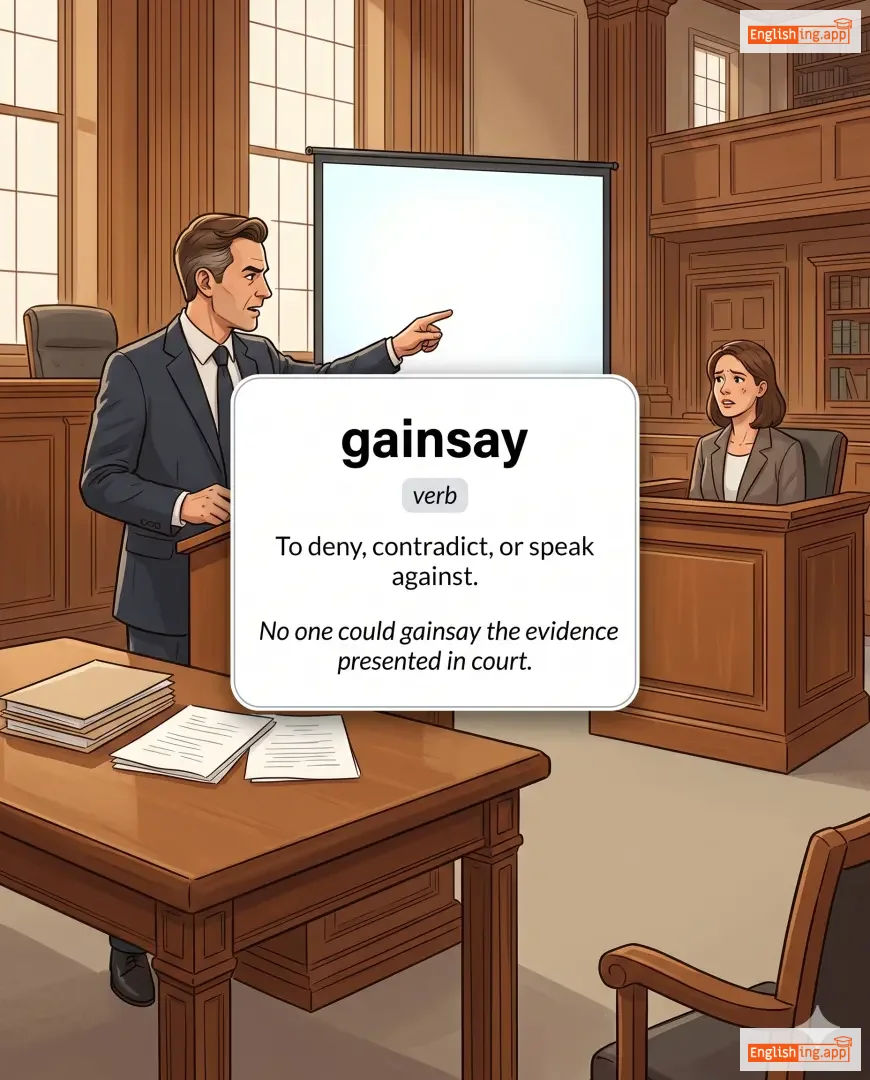
To deny, contradict, or speak against.
••••••
|
No one could gainsay the evidence presented in court.
没有人能够反驳法庭上提出的证据。
••••••
|
没有人能够反驳法庭上提出的证据。
Méiyǒu rén nénggòu fǎnbó fǎtíng shàng tíchū de zhèngjù.
••••••
|
- •••••• | - •••••• | - •••••• |
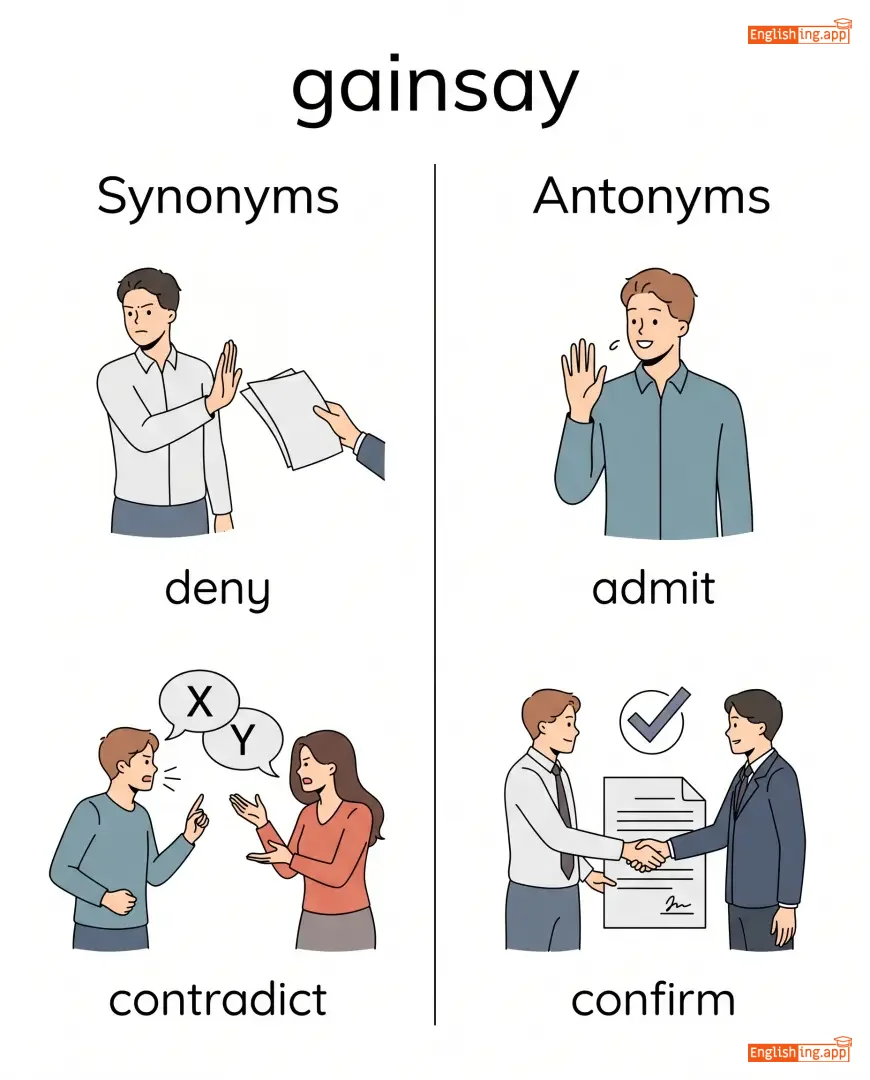
deny, contradict, oppose, refute
••••••
|
admit, confirm, accept
••••••
|
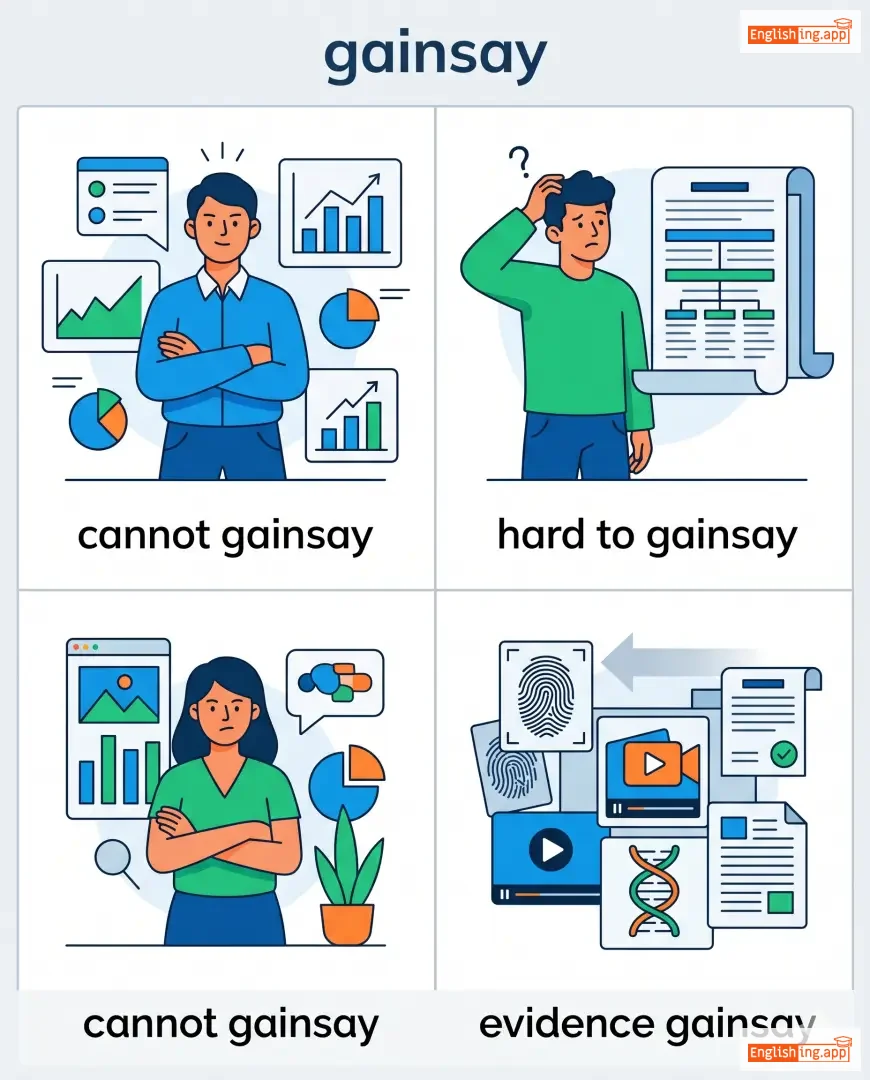
cannot gainsay, hard to gainsay, evidence gainsay
••••••
|
Gainsay = Gain (收获) 和 Say (说) – 否定已说的内容。
••••••
|
|
#3733
😊
|
/ˈɡeɪli/
adverb
(ˈɡeɪli)
••••••
|
- •••••• |
快乐地
kuàilè de
••••••
|
- •••••• | - •••••• | - •••••• | - •••••• |
In a cheerful or lively way.
••••••
|
Children ran gaily through the garden. |
孩子们快乐地在花园里奔跑。
Háizimen kuàilè de zài huāyuán lǐ bēnpǎo.
••••••
|
- •••••• | - •••••• | - •••••• |
cheerfully, joyfully, merrily, happily
••••••
|
sadly, gloomily, miserably
••••••
|
gaily dressed, gaily decorated, ran gaily
••••••
|
Gaily = Gay + ly → Gay 意味着快乐,所以 Gaily 意味着快乐地。
••••••
|
|
#3734
🎉
|
/ˈɡeɪəti/
noun
(盖蒂)
••••••
|
- •••••• |
欢欣
huānxīn
••••••
|
- •••••• | - •••••• | - •••••• | - •••••• |
The state of being cheerful, lively, or full of fun.
••••••
|
The festival was full of music, laughter, and gaiety.
这个节日充满了音乐、笑声和欢欣。
••••••
|
这个节日充满了音乐、笑声和欢欣。
Zhège jiérì chōngmǎnle yīnyuè, xiàoshēng hé huānxīn.
••••••
|
- •••••• | - •••••• | - •••••• |
cheerfulness, joy, merriment, happiness
••••••
|
sadness, gloom, sorrow
••••••
|
atmosphere of gaiety, full of gaiety, laughter and gaiety
••••••
|
Gaiety听起来像gay,意味着快乐,所以gaiety意味着欢欣。
••••••
|
|
#3735
🤦
|
/ɡæf/
noun
(gāf)
••••••
|
- •••••• |
失误
shiwu
••••••
|
- •••••• | - •••••• | - •••••• | - •••••• |
An unintentional act or remark causing embarrassment; a blunder.
••••••
|
The politician's gaffe quickly spread on social media. |
政治家的失误迅速在社交媒体上传播。
Zhengzhi jia de shiwu xunsu zai shejiao meiti shang chuanbo.
••••••
|
political gaffe |
An embarrassing mistake made by a politician in public.
••••••
|
政治失误
zhengzhi shiwu
••••••
|
blunder, mistake, slip, error, faux pas
••••••
|
accuracy, correctness, success
••••••
|
commit a gaffe, embarrassing gaffe, major gaffe, political gaffe
••••••
|
失误 - 错误 - 政治人物的错误常常成为笑柄。
••••••
|
|
#3736
📈
|
/ˈfɜːrðərəns/
noun
(furtherance)
••••••
|
- •••••• |
促进
cujin
••••••
|
- •••••• | - •••••• | - •••••• | - •••••• |
The advancement or promotion of something.
••••••
|
The new policy was introduced in furtherance of social justice.
新政策是为了促进社会公正而引入的。
••••••
|
新政策是为了促进社会公正而引入的。
Xin zhengce shi wei le cujin shehui gongzheng er yinru de.
••••••
|
- •••••• | - •••••• | - •••••• |
advancement, promotion, progress, support
••••••
|
obstruction, hindrance
••••••
|
in furtherance of, furtherance of goals, furtherance of justice
••••••
|
Furtherance的意思是推动或促进某事。
••••••
|
|
#3737
📱
|
/ˈɡædʒ.ɪt/
noun
(gājié tè)
••••••
|
- •••••• |
小工具
xiao gongju
••••••
|
- •••••• | - •••••• | - •••••• | - •••••• |
A small mechanical or electronic device with a particular function, often novel or useful.
••••••
|
He loves buying the latest kitchen gadgets. |
他喜欢购买最新的厨房小工具。
Ta xihuan goumai zui xin de chufang xiao gongju.
••••••
|
- •••••• | - •••••• | - •••••• |
device, contraption, appliance, tool, implement
••••••
|
equipment, machine
••••••
|
latest gadget, electronic gadget, handy gadget, new gadget
••••••
|
Gadget 就是小工具,像手机或电视遥控器。
••••••
|
|
#3738
🐝
|
/ˈɡæd.flaɪ/
noun
(gædflaɪ)
••••••
|
- •••••• |
讨厌的人
tǎo yàn de rén
••••••
|
- •••••• | - •••••• | - •••••• | - •••••• |
A person who annoys or criticizes others to stimulate change or provoke action.
••••••
|
The journalist was a gadfly, constantly questioning the government's policies. |
这位记者是一个讨厌的人,常常质疑政府的政策。
Zhè wèi jìzhě shì yīgè tǎo yàn de rén, chángcháng zhìyí zhèngfǔ de zhèngcè.
••••••
|
- •••••• | - •••••• | - •••••• |
provocateur, critic, agitator, instigator
••••••
|
supporter, follower
••••••
|
political gadfly, social gadfly, act as a gadfly
••••••
|
讨厌的人像苍蝇一样,不停地刺激人们行动,正如批评者一样。
••••••
|
|
#3739
🔮
|
/ˈfjuː.tʃə.rɪst/
noun
(未来主义者)
••••••
|
- •••••• |
未来主义者
weilaizhuizhizhe
••••••
|
- •••••• | - •••••• | - •••••• | - •••••• |
A person who studies or predicts the future, especially trends in science, technology, or society.
••••••
|
The futurist predicted major changes in transportation within the next decade. |
未来主义者预测了下一个十年交通运输的重大变化。
Weilaizhuizhizhe yuce le xiage yige shinian jiaotong yunshu de zhongda bianhua.
••••••
|
- •••••• | - •••••• | - •••••• |
visionary, predictor, forecaster, innovator
••••••
|
traditionalist, conservative
••••••
|
futurist thinker, futurist vision, futurist prediction
••••••
|
未来 (future) + 主义者 (advocate) = 未来主义者, 预测未来的人。
••••••
|
|
#3740
🚫
|
/ˈfjuː.taɪl/
adjective
(fùtài'ěr)
••••••
|
|
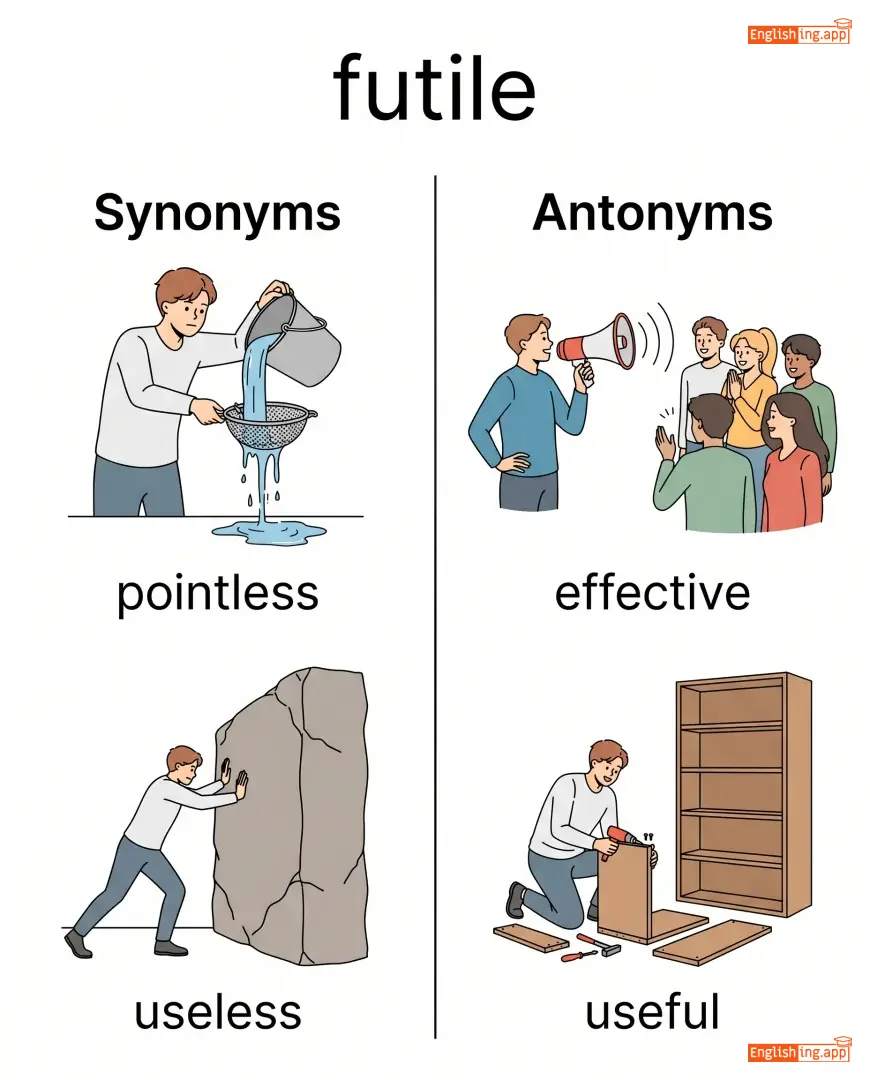
徒劳
túláo
••••••
|
- •••••• | - •••••• | - •••••• | - •••••• |
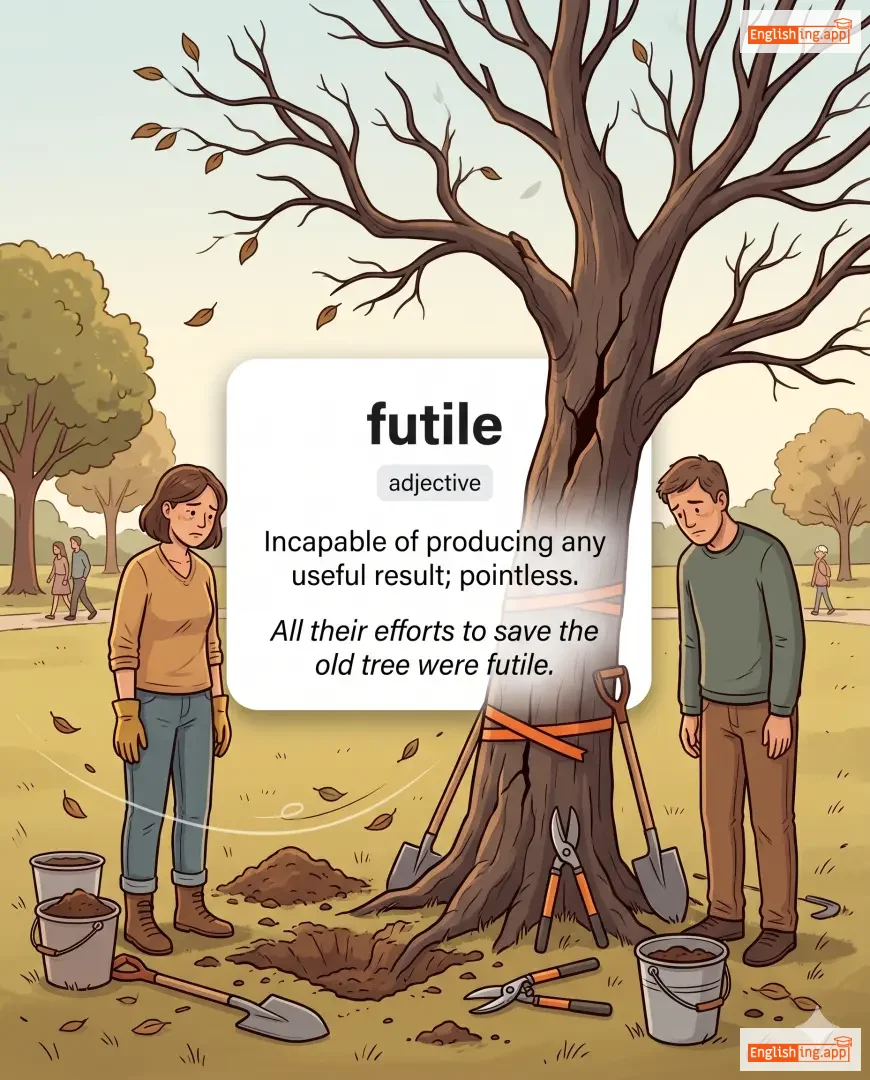
Incapable of producing any useful result; pointless.
••••••
|
All their efforts to save the old tree were futile.
他们所有拯救老树的努力都是徒劳的。
••••••
|
他们所有拯救老树的努力都是徒劳的。
Tāmen suǒyǒu zhěngjiù lǎo shù de nǔlì dōu shì túláo de.
••••••
|
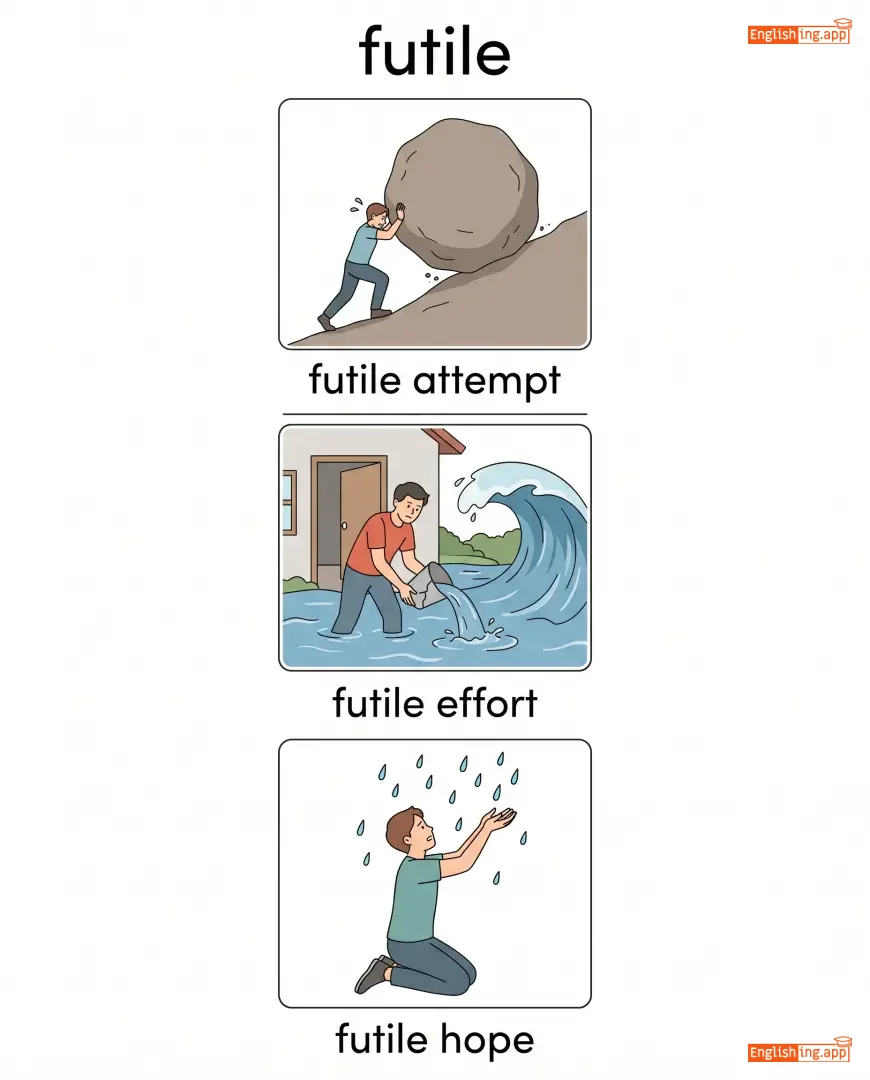
futile attempt
徒劳的尝试
••••••
|
An attempt that has no chance of success.
••••••
|
徒劳的尝试
túláo de chángshì
••••••
|
pointless, useless, ineffective, vain, fruitless
••••••
|
effective, useful, successful
••••••
|
futile attempt, futile effort, futile hope, seem futile
••••••
|
Futile 在中文中是徒劳的: 徒劳的尝试没有任何意义。
••••••
|
|
#3741
🤢
|
/ˈfʌsti/
adjective
(fā sī tì)
••••••
|
- •••••• |
陈腐的,霉臭的
chen fu de, mei chou de
••••••
|
- •••••• | - •••••• | - •••••• | - •••••• |
smelling stale, damp, or stuffy; old-fashioned
••••••
|
The room smelled fusty after being closed for months. |
房间在关了几个月后有了陈腐的味道。
Fángjiān zài guānle jǐ gè yuè hòu yǒule chénfǔ de wèidào.
••••••
|
- •••••• | - •••••• | - •••••• |
musty, stale, moldy, stuffy, outdated
••••••
|
fresh, clean, modern
••••••
|
fusty smell, fusty room, fusty tradition, fusty ideas
••••••
|
Fusty – 好像旧书架上霉味的书。
••••••
|
|
#3742
🗣️
|
/ˈfʌstɪən/
noun
(弗斯蒂安)
••••••
|
- •••••• |
浮夸的演讲
fúkuā de yǎnjiǎng
••••••
|
- •••••• | - •••••• | - •••••• | - •••••• |
pompous or pretentious speech or writing; originally a type of thick cloth
••••••
|
The politician's speech was filled with fustian and empty promises.
政治家的演讲充满了弗斯蒂安和空洞的承诺。
••••••
|
政治家的演讲充满了浮夸和空洞的承诺。
Zhèngzhìjiā de yǎnjiǎng chōngmǎnle fúkuā hé kōngdòng de chéngnuò.
••••••
|
- •••••• | - •••••• | - •••••• |
bombast, rant, grandiloquence, pretension, pomposity
••••••
|
simplicity, plainness, clarity
••••••
|
fustian speech, fustian language, fustian rhetoric
••••••
|
Fustian speech 就是空洞的话语 – 就像一块厚重的布料一样,空无一物。
••••••
|
|
#3743
🙄
|
/ˈfʌsi/
adjective
(法西)
••••••
|
- •••••• |
挑剔
tiāo tì
••••••
|
- •••••• | - •••••• | - •••••• | - •••••• |
hard to please; very concerned with details
••••••
|
The child is very fussy about what she eats. |
这个孩子对她吃的东西非常挑剔。
Zhège háizi duì tā chī de dōngxī fēicháng tiāo tì.
••••••
|
- •••••• | - •••••• | - •••••• |
particular, picky, meticulous, finicky, choosy
••••••
|
easygoing, careless, indifferent
••••••
|
fussy eater, fussy about, fussy details, fussy dress
••••••
|
Fussy = 挑剔,总是挑三拣四的人。
••••••
|
|
#3744
😤
|
/fʌs/
noun
(fasi)
••••••
|
- •••••• |
大惊小怪
da jing xiao guai
••••••
|
- •••••• | - •••••• | - •••••• | - •••••• |
a display of unnecessary or excessive concern about something
••••••
|
She made a fuss about the delay in service. |
她因为服务延迟而大惊小怪。
Ta yinwei fuwu yanchi er da jing xiao guai.
••••••
|
make a fuss |
to complain or become angry about something trivial
••••••
|
大惊小怪
da jing xiao guai
••••••
|
commotion, uproar, disturbance, ado, stir
••••••
|
calm, peace, quiet
••••••
|
make a fuss, fuss over, unnecessary fuss, big fuss
••••••
|
Fuss 意味着大惊小怪 – 因小事而烦恼。
••••••
|
|
#3745
⚛️
|
/ˈfjuːʒən/
noun
(fúxùn)
••••••
|
|
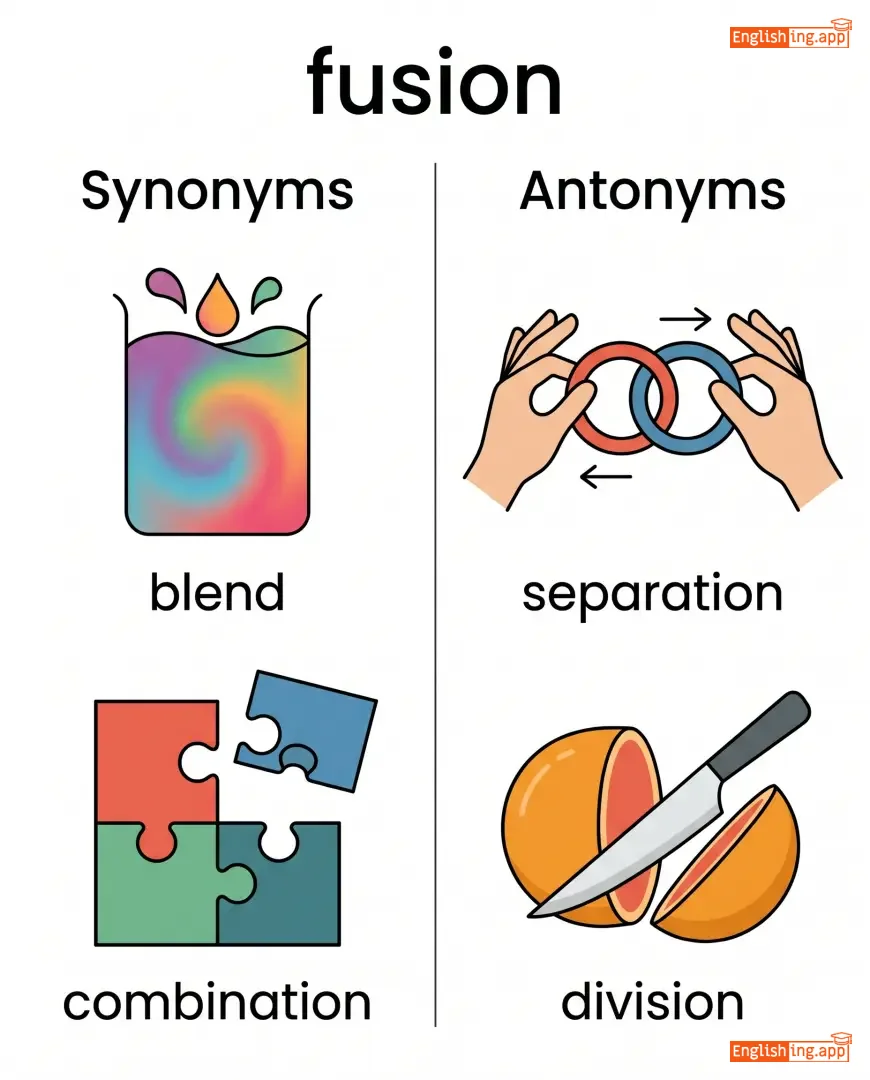
融合
ronghe
••••••
|
- •••••• | - •••••• | - •••••• | - •••••• |
the process or result of joining two or more things together to form a single entity
••••••
|
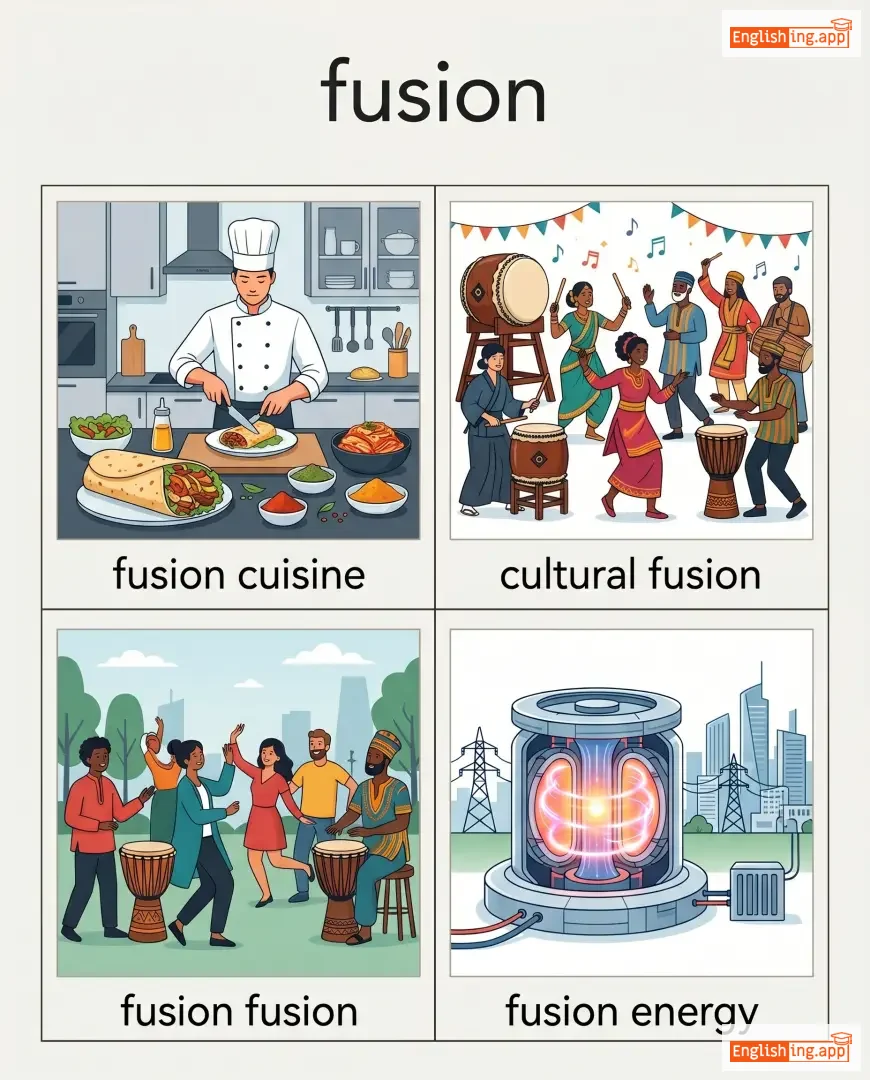
The restaurant offers a unique fusion of Asian and European cuisines. |
餐厅提供独特的亚洲和欧洲美食融合。
Cāntīng tígōng dútè de yàzhōu hé ōuzhōu měishí rónghé.
••••••
|
nuclear fusion |
a reaction in which two light atomic nuclei combine to form a heavier nucleus, releasing energy
••••••
|
核聚变
hé jùbiàn
••••••
|
blend, combination, union, amalgamation, integration
••••••
|
separation, division, split
••••••
|
fusion cuisine, cultural fusion, fusion energy, fusion reaction
••••••
|
Fusion是将两种文化混合在一起,像是混合两种不同的音乐风格。
••••••
|
|
#3746
💥
|
/ˌfjuːzɪˈleɪd/
noun
(fyoo-zih-leid)
••••••
|
- •••••• |
齐射
qí shè
••••••
|
- •••••• | - •••••• | - •••••• | - •••••• |
A series of shots fired or missiles thrown all at the same time or in quick succession.
••••••
|
The soldiers advanced under a fusillade of bullets. |
士兵们在一阵齐射下前进。
Shìbīngmen zài yī zhèn qí shè xià qiánjìn.
••••••
|
- •••••• | - •••••• | - •••••• |
barrage, volley, bombardment, hail, salvo
••••••
|
trickle, single shot
••••••
|
fusillade of bullets, fusillade of questions, fusillade of shots, sudden fusillade
••••••
|
Fusillade就像枪火齐射,快速、猛烈地射击。
••••••
|
|
#3747
🔥
|
/ˈfjuːzəbl/
adjective
(fúzībù)
••••••
|
- •••••• |
可熔化的
kě róng huà de
••••••
|
- •••••• | - •••••• | - •••••• | - •••••• |
Capable of being melted or fused.
••••••
|
The engineer used a fusible alloy in the experiment. |
工程师在实验中使用了可熔化的合金。
Gōngchéngshī zài shíyàn zhōng shǐyòngle kě rónghuà de héjīn.
••••••
|
- •••••• | - •••••• | - •••••• |
meltable, liquefiable, blendable, smeltable
••••••
|
non-meltable, solid
••••••
|
fusible link, fusible material, fusible alloy, fusible substance
••••••
|
Fusible - 既可熔化又可合成
••••••
|
|
#3748
🔌
|
/fjuːz/
verb
(fú zī)
••••••
|
- •••••• |
熔合
rónghé
••••••
|
fused
fú zī de
••••••
|
fused
fú zī de
••••••
|
fuses
fú zī sī
••••••
|
fusing
fú zī yíng
••••••
|
To join or blend two or more things together into one.
••••••
|
The two metals fused under high heat.
这两种金属在高温下融合。
••••••
|
这两种金属在高温下融合。
Zhè liǎng zhǒng jīnshǔ zài gāo wēn xià rónghé.
••••••
|
blow a fuse
吹断保险丝
••••••
|
To suddenly lose one's temper.
••••••
|
发火
fāhuǒ
••••••
|
merge, blend, unite, combine
••••••
|
separate, divide, disconnect
••••••
|
fuse together, fuse elements, fuse into, blow a fuse
••••••
|
熔合 = 就像保险丝融化一样。
••••••
|
|
#3749
😡
|
/ˈfjʊri/
noun
(愤怒)
••••••
|
- •••••• |
愤怒
fennu
••••••
|
- •••••• | - •••••• | - •••••• | - •••••• |
Wild or violent anger; extreme rage.
••••••
|
She was trembling with fury after the insult.
她在侮辱后因愤怒而颤抖。
••••••
|
她在侮辱后因愤怒而颤抖。
Tā zài wǔrǔ hòu yīn fènnù ér zhàndǒu.
••••••
|
hell hath no fury like a woman scorned
地狱中没有比被抛弃的女人更愤怒的。
••••••
|
No one is angrier than a woman who has been rejected or betrayed.
••••••
|
地狱中没有比被抛弃的女人更愤怒的。
Dìyù zhōng méiyǒu bǐ bèi pāoqì de nǚrén gèng fènnù de.
••••••
|
rage, anger, wrath, outrage
••••••
|
calm, peace, serenity
••••••
|
burst of fury, full of fury, fury of the storm, in a fury
••••••
|
愤怒如烈火,燃烧一切。
••••••
|
|
#3750
👀
|
/ˈfɜːrtɪv/
adjective
(fútìfū)
••••••
|
- •••••• |
秘密的
mìmì de
••••••
|
- •••••• | - •••••• | - •••••• | - •••••• |
Attempting to avoid notice or attention, typically because of guilt or a belief that discovery would lead to trouble.
••••••
|
He cast a furtive glance at the door before leaving. |
他在离开前悄悄地看了一眼门。
Tā zài líkāi qián qiāoqiāo de kànle yī yǎn mén.
••••••
|
- •••••• | - •••••• | - •••••• |
secretive, stealthy, sly, clandestine, surreptitious
••••••
|
open, frank, overt
••••••
|
furtive glance, furtive look, furtive movement, furtive behavior
••••••
|
FÚtì - 秘密的表示偷偷的行为
••••••
|
Vocabulary Quiz
Test your vocabulary by matching words with their translations or meanings.
Login to take the quiz
Comments (0)
Share your thoughts and join the discussion.
Join the discussion by logging in
Login to CommentNo comments yet
Be the first to share your thoughts!