









Swipe left or right, or use the buttons. Tap image to zoom.
例句翻译
单词
Lesson 375Lesson 375 - 遮罩切换
|
表情符号
|
单词 | Images | 翻译 | 过去时 | 过去分词 | 第三人称单数 | 动名词 | 含义 | 例句 | 例句翻译 | 示例表达 | 示例表达含义 | 示例表达翻译 | 同义词 | 反义词 | 搭配词 | 助记符 |
|---|---|---|---|---|---|---|---|---|---|---|---|---|---|---|---|---|---|
|
#11215
👶
|
/ˈɪnfənt/
noun
(婴儿)
••••••
|
- •••••• |
婴儿
ying'er
••••••
|
- •••••• | - •••••• | - •••••• | - •••••• |
A very young child or baby.
••••••
|
The infant was sleeping peacefully in the cradle.
婴儿在摇篮中安静地睡着。
••••••
|
婴儿在摇篮中安静地睡着。
Ying'er zai yaolan zhong anjing de shuizhao.
••••••
|
- •••••• | - •••••• | - •••••• |
baby, newborn, child, toddler, youngster
••••••
|
adult, grown-up
••••••
|
infant mortality, infant care, infant formula, infant stage
••••••
|
Infant 是婴儿 - Inf (婴) 是小孩子,抱着在摇篮里。
••••••
|
|
#11216
📘
|
/ɪnˈstrʌkʃən/
noun
(指令)
••••••
|
- •••••• |
指令
zhiling
••••••
|
- •••••• | - •••••• | - •••••• | - •••••• |
Detailed information telling how something should be done or operated.
••••••
|
Please read the instruction carefully before using the machine. |
请在使用机器前仔细阅读指令。
Qing zai shiyong jiqi qian zixi yuedu zhiling.
••••••
|
follow instructions |
to do what is directed or advised
••••••
|
遵循指令
zunxun zhiling
••••••
|
direction, guideline, order, command, teaching
••••••
|
confusion, disorder, disorganization
••••••
|
give instruction, clear instruction, safety instruction, instruction manual
••••••
|
指令就是讲师说的内容,必须按指示去做。
••••••
|
|
#11217
🏛️
|
/ˌɪnstɪˈtjuːʃənl/
adjective
(in-sTi-tyu-sho-nal)
••••••
|
- •••••• |
制度的
zhìdù de
••••••
|
- •••••• | - •••••• | - •••••• | - •••••• |
Relating to an organization or established practice.
••••••
|
The government made several institutional reforms in education. |
政府在教育领域进行了一些制度改革。
Zhèngfǔ zài jiàoyù lǐngyù jìnxíngle yīxiē zhìdù gǎigé.
••••••
|
- •••••• | - •••••• | - •••••• |
organizational, structural, official, systemic
••••••
|
individual, personal, informal
••••••
|
institutional reform, institutional framework, institutional support, institutional structure
••••••
|
制度的意味着和制度或组织相关,因此是制度改革。
••••••
|
|
#11218
🔄
|
/ɪnˈstɛd/
adverb
(ɪnˈstɛd)
••••••
|
- •••••• |
代替
dàitì
••••••
|
- •••••• | - •••••• | - •••••• | - •••••• |
As an alternative or substitute.
••••••
|
She didn’t buy the dress; instead, she chose a pair of shoes.
她没有买那件裙子; 反而她选择了一双鞋子。
••••••
|
她没有买那件裙子; 反而她选择了一双鞋子。
Tā méiyǒu mǎi nà jiàn qúnzi; fǎn'ér tā xuǎnzéle yī shuāng xiézi.
••••••
|
instead of
代替
••••••
|
In place of.
••••••
|
代替
dàitì
••••••
|
alternatively, rather, otherwise, as a substitute
••••••
|
as well, together, along
••••••
|
chose instead, instead of, use instead, prefer instead
••••••
|
Instead 是一种替代选择,就像选择鞋子代替裙子。
••••••
|
|
#11219
💻
|
/ɪnˈstɔːl/
verb
(安装)
••••••
|
- •••••• |
安装
anzhuang
••••••
|
installed
安装了
••••••
|
installed
已安装
••••••
|
installs
安装
••••••
|
installing
安装中
••••••
|
To place or fix equipment or software so it is ready for use.
••••••
|
He installed the new software on his computer.
他在他的电脑上安装了新软件。
••••••
|
他在他的电脑上安装了新软件。
Tā zài tā de diànnǎo shàng ānzhuāngle xīn ruǎnjiàn.
••••••
|
install confidence
安装信心
••••••
|
To make someone feel confident.
••••••
|
安装信心
Ānzhuāng xìnxīn
••••••
|
set up, establish, place, position, fit
••••••
|
remove, uninstall, displace
••••••
|
install software, install equipment, install windows, install updates
••••••
|
安装就是将东西放置在合适的地方,让它能工作。
••••••
|
|
#11220
🏠
|
/ˌɪnˈsaɪd/
preposition/adverb/adjective/noun
(海皮尼斯)
••••••
|
- •••••• |
幸福
xìngfú
••••••
|
- •••••• | - •••••• | - •••••• | - •••••• |
Situated within something; the inner part of something.
••••••
|
She waited inside the house until the rain stopped. |
当她收到奖项时,她无法掩饰自己的幸福。
Dāng tā shōu dào jiǎngxiàng shí, tā wúfǎ yǎnshì zìjǐ de xìngfú.
••••••
|
inside out |
Completely; with thorough knowledge or in reverse.
••••••
|
追求幸福
zhuīqiú xìngfú
••••••
|
within, indoors, interior, inner, internal
••••••
|
outside, external, exterior
••••••
|
inside the house, inside the box, inside job, look inside
••••••
|
幸福 = 感受快乐和满足的状态。
••••••
|
|
#11221
🔍
|
/ɪnˈkwaɪəri/ or /ˈɪnkwəri/
noun
(in-kuái-lì)
••••••
|
- •••••• |
调查 / 查询
diàochá / cháxún
••••••
|
- •••••• | - •••••• | - •••••• | - •••••• |
An act of asking for information; an investigation into something.
••••••
|
The committee launched an inquiry into the financial irregularities. |
委员会启动了对金融不规范行为的调查。
Wěiyuánhuì qǐdòngle duì jīnróng bù guīfàn xíngwéi de diàochá.
••••••
|
line of inquiry |
A specific direction of investigation.
••••••
|
调查方向
diàochá fāngxiàng
••••••
|
investigation, examination, probe, research, questioning
••••••
|
answer, response, neglect
••••••
|
make an inquiry, police inquiry, official inquiry, line of inquiry
••••••
|
Inquiry 是你问别人问题来获取信息。
••••••
|
|
#11222
🧘
|
/ˈɪnər/
adjective
(因内)
••••••
|
- •••••• |
内在的
nèi zài de
••••••
|
- •••••• | - •••••• | - •••••• | - •••••• |
Located inside or closer to the center; relating to one’s thoughts or feelings.
••••••
|
She shared her inner thoughts with her best friend.
她与她最好的朋友分享了她的内心想法。
••••••
|
她与她最好的朋友分享了她的内心想法。
tā yǔ tā zuì hǎo de péngyǒu fēnxiǎngle tā de nèixīn xiǎngfǎ.
••••••
|
inner peace
内心的平静
••••••
|
A state of mental and emotional calmness.
••••••
|
内心的平静
nèixīn de píngjìng
••••••
|
internal, inside, inward, private
••••••
|
outer, external
••••••
|
inner circle, inner voice, inner peace, inner city
••••••
|
Inner意味着内在的 - Inner peace意味着内心的平静。
••••••
|
|
#11223
🤕
|
/ˈɪndʒəri/
noun
(yinzhuoli)
••••••
|
- •••••• |
伤害
shanghai
••••••
|
- •••••• | - •••••• | - •••••• | - •••••• |
Harm or damage to a person’s body caused by an accident or attack.
••••••
|
He suffered a serious injury during the football match. |
他在足球比赛中受了重伤。
Ta zai zuqiu bisai zhong shou le zhong shang.
••••••
|
personal injury |
Physical harm to a person’s body caused by someone else’s actions.
••••••
|
人身伤害
renshen shanghai
••••••
|
wound, harm, damage, trauma
••••••
|
healing, recovery
••••••
|
serious injury, minor injury, prevent injury, sports injury
••••••
|
Injury 意思是伤害 - 在足球比赛中常常发生伤害。
••••••
|
|
#11224
🚀
|
/ɪˈnɪʃətɪv/
noun
(倡议)
••••••
|
|
倡议
changyi
••••••
|
- •••••• | - •••••• | - •••••• | - •••••• |
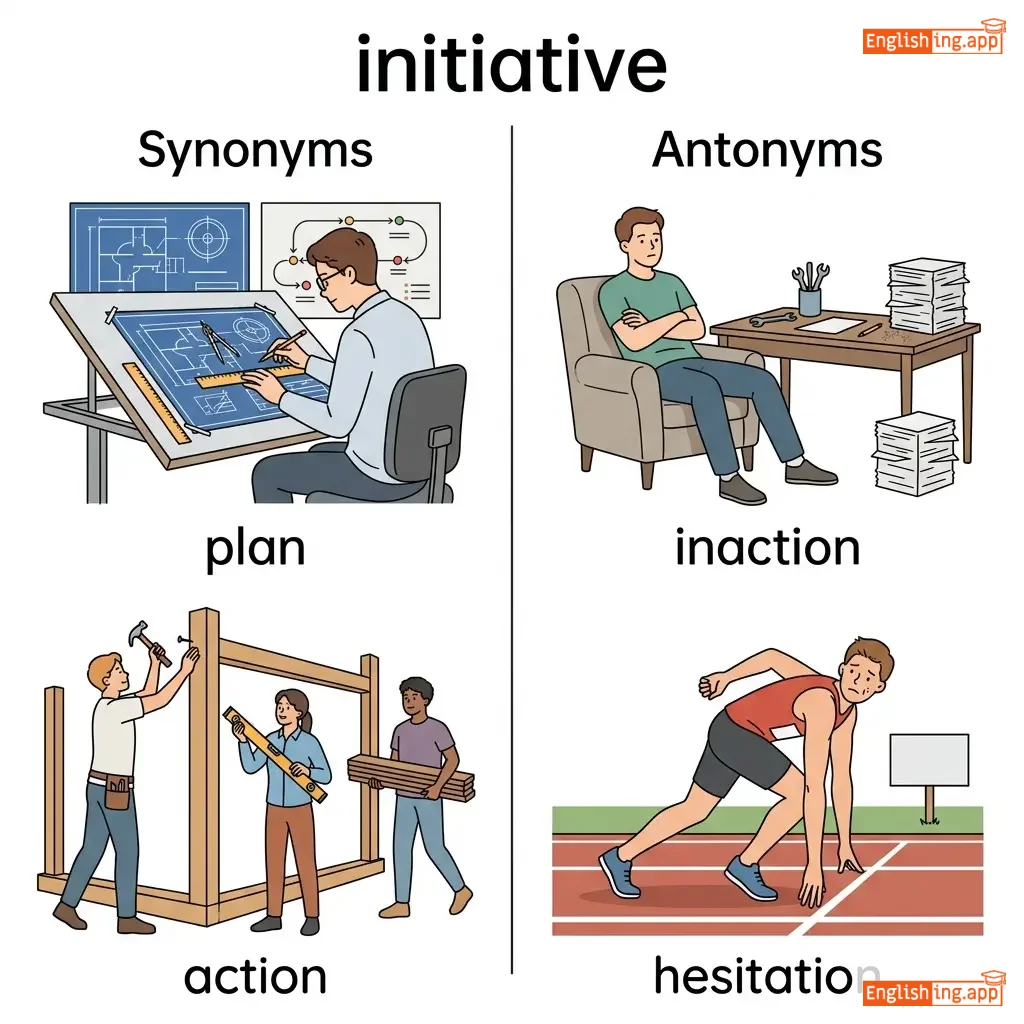
The ability to assess and start things independently; a new plan or action.
••••••
|
The government launched a new initiative to support small businesses. |
政府启动了一个新的倡议,以支持小型企业。
Zhengfu qidongle yige xin de changyi, yi zhichi xiaoxing qiye.
••••••
|
take the initiative |
To take the first step in doing something.
••••••
|
采取倡议
caiqu changyi
••••••
|
plan, action, scheme, enterprise, drive
••••••
|
inaction, hesitation
••••••
|
new initiative, policy initiative, take initiative
••••••
|
倡议意味着倡议,像是采取第一步来做某事。
••••••
|
|
#11225
⏳
|
/ɪˈnɪʃəli/
adverb
(一开始)
••••••
|
- •••••• |
一开始
yī kāishǐ
••••••
|
- •••••• | - •••••• | - •••••• | - •••••• |
At the beginning; at first.
••••••
|
Initially, he refused the offer but later accepted it. |
一开始,他拒绝了这个提议,但后来接受了。
Yī kāishǐ, tā jùjuéle zhège tíyì, dàn hòulái jiēshòule.
••••••
|
- •••••• | - •••••• | - •••••• |
at first, originally, at the start, to begin with
••••••
|
finally, eventually
••••••
|
initially planned, initially intended, initially thought
••••••
|
一开始意味着最初,就像一开始一切看起来都很难。
••••••
|
|
#11226
🔰
|
/ɪˈnɪʃəl/
adjective
(初步)
••••••
|
- •••••• |
初步的
chūbù de
••••••
|
- •••••• | - •••••• | - •••••• | - •••••• |
Existing or occurring at the beginning.
••••••
|
Her initial reaction was one of surprise. |
她的初步反应是惊讶。
Tā de chūbù fǎnyìng shì jīngyà.
••••••
|
initial impression |
The first opinion or feeling about something.
••••••
|
初步印象
Chūbù yìnxiàng
••••••
|
first, primary, original, introductory, early
••••••
|
final, last, ultimate
••••••
|
initial stage, initial reaction, initial decision, initial step
••••••
|
初步意味着在开始时,就像考试中第一次印象非常重要。
••••••
|
|
#11227
ℹ️
|
/ˌɪnfərˈmeɪʃən/
noun
(ɪn'fɔːmeɪʃən)
••••••
|
- •••••• |
信息
xìnxī
••••••
|
- •••••• | - •••••• | - •••••• | - •••••• |
Facts or knowledge provided or learned about something.
••••••
|
The website provides useful information about travel destinations. |
该网站提供有关旅游目的地的有用信息。
Gāi wǎngzhàn tígōng yǒuguān lǚyóu mùdìdì de yǒuyòng xìnxī.
••••••
|
source of information |
A place or person from which knowledge can be obtained.
••••••
|
信息来源
xìnxī láiyuán
••••••
|
data, knowledge, facts, details, intelligence
••••••
|
ignorance, misinformation
••••••
|
provide information, gather information, information technology, useful information
••••••
|
Information = Info + nation, 获取更多信息。
••••••
|
|
#11228
📈
|
/ɪnˈfleɪʃən/
noun
(yīnlìshēn)
••••••
|
|
通货膨胀
tōnghuò péngzhàng
••••••
|
- •••••• | - •••••• | - •••••• | - •••••• |
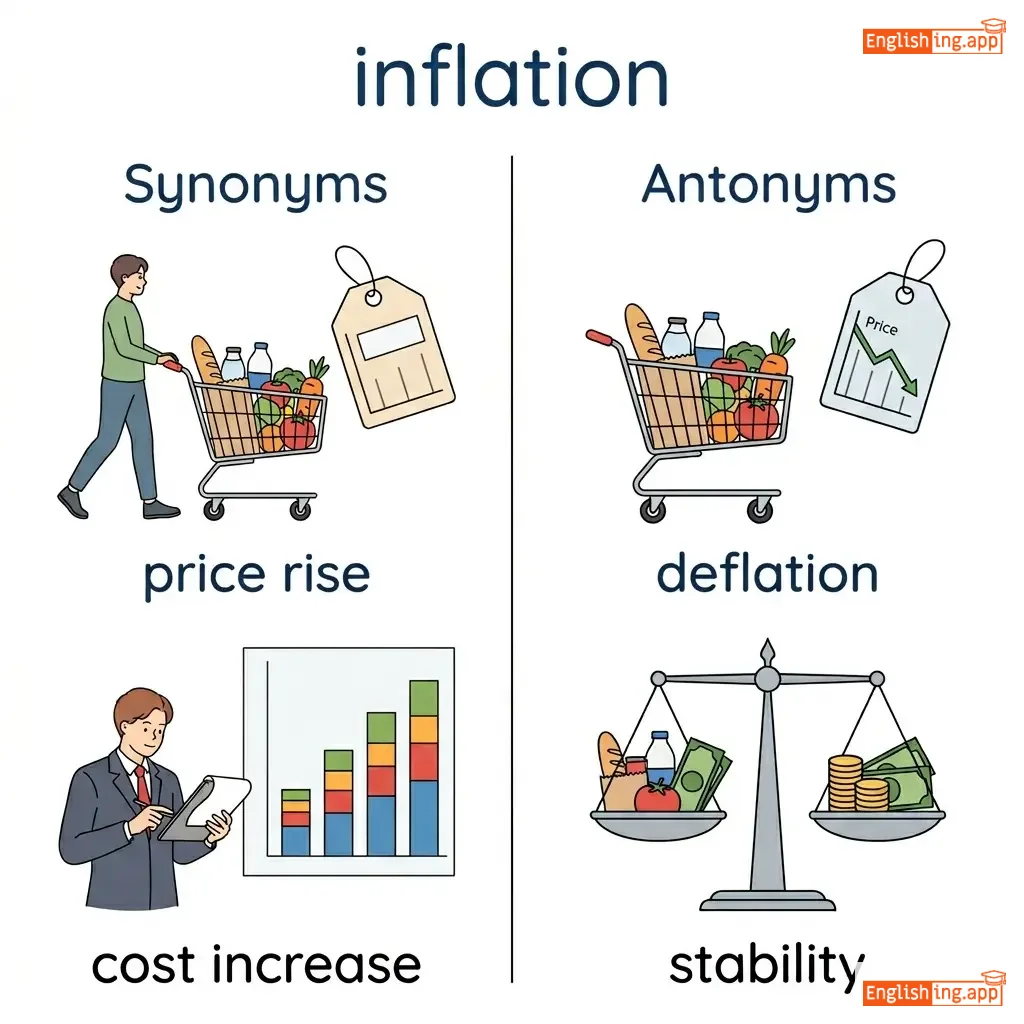
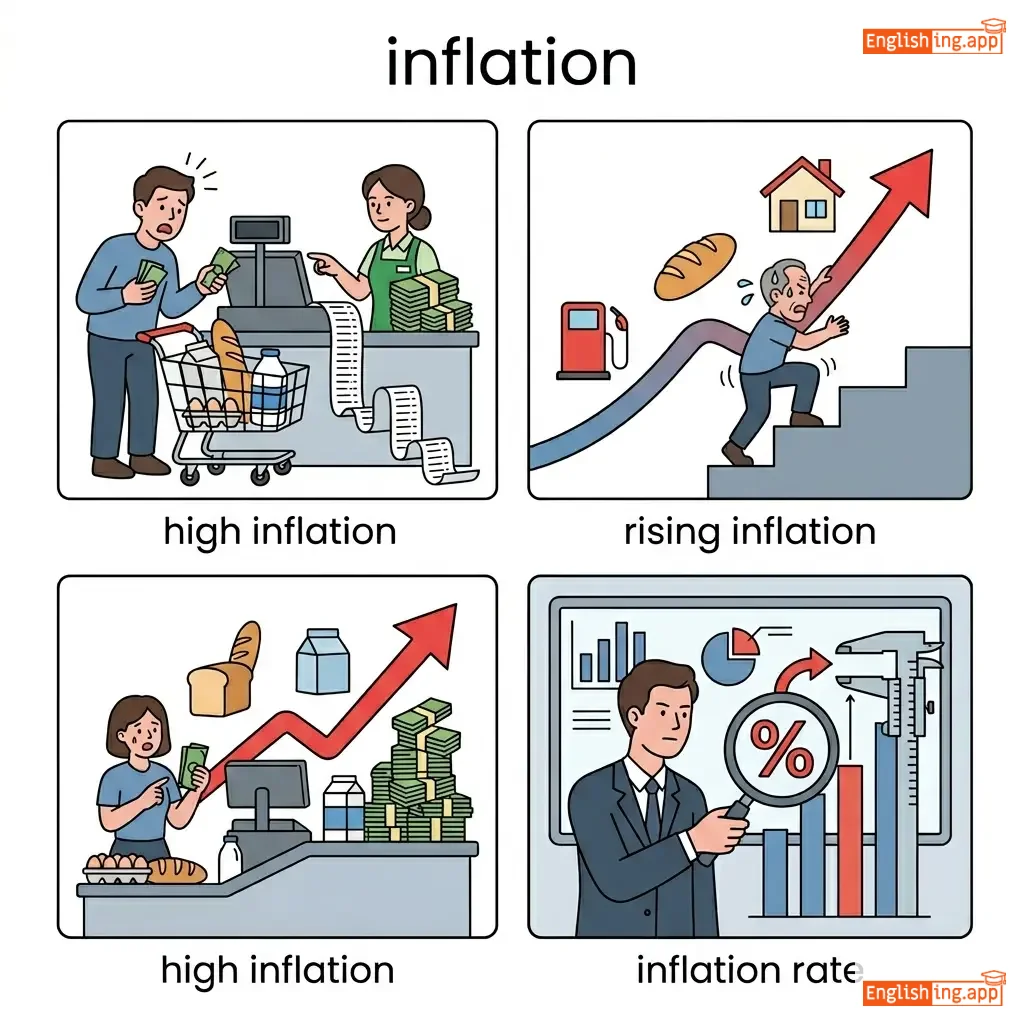
A general increase in prices and fall in the purchasing value of money.
••••••
|
The government is taking steps to control inflation. |
政府正在采取措施控制通货膨胀。
Zhèngfǔ zhèngzài cǎiqǔ cuòshī kòngzhì tōnghuò péngzhàng.
••••••
|
rising inflation |
An increase in the rate at which prices for goods and services rise.
••••••
|
不断上升的通货膨胀
Bùduàn shàngshēng de tōnghuò péngzhàng
••••••
|
price rise, cost increase, devaluation, economic growth
••••••
|
deflation, stability
••••••
|
high inflation, rising inflation, inflation rate, inflation control
••••••
|
通货膨胀意味着📈价格上涨 - 当钱变得不值钱时。
••••••
|
|
#11229
🦠
|
/ɪnˈfɛkʃən/
noun
(感染)
••••••
|
- •••••• |
感染
gǎnrǎn
••••••
|
- •••••• | - •••••• | - •••••• | - •••••• |
The process of becoming infected with harmful microorganisms such as bacteria or viruses.
••••••
|
The doctor prescribed antibiotics to treat the infection.
医生开了抗生素来治疗感染。
••••••
|
医生开了抗生素来治疗感染。
Yisheng kai le kangshengsu lai zhiliao ganran.
••••••
|
spread of infection
感染传播
••••••
|
The transmission of disease-causing microorganisms.
••••••
|
感染传播
Ganran chuanbo
••••••
|
contagion, illness, contamination, disease, disorder
••••••
|
health, wellness, cure
••••••
|
bacterial infection, viral infection, wound infection, spread of infection
••••••
|
感染 = 病毒进入体内 = gǎnrǎn
••••••
|
|
#11230
➕
|
/ɪnˈkluːd/
verb
(yīngkuīlú)
••••••
|
|
包括
bāo kuò
••••••
|
included
yǐnglì
••••••
|
included
yǐnglì
••••••
|
includes
yǐngkuì
••••••
|
including
yǐngkuì
••••••
|
to make something part of a whole or group
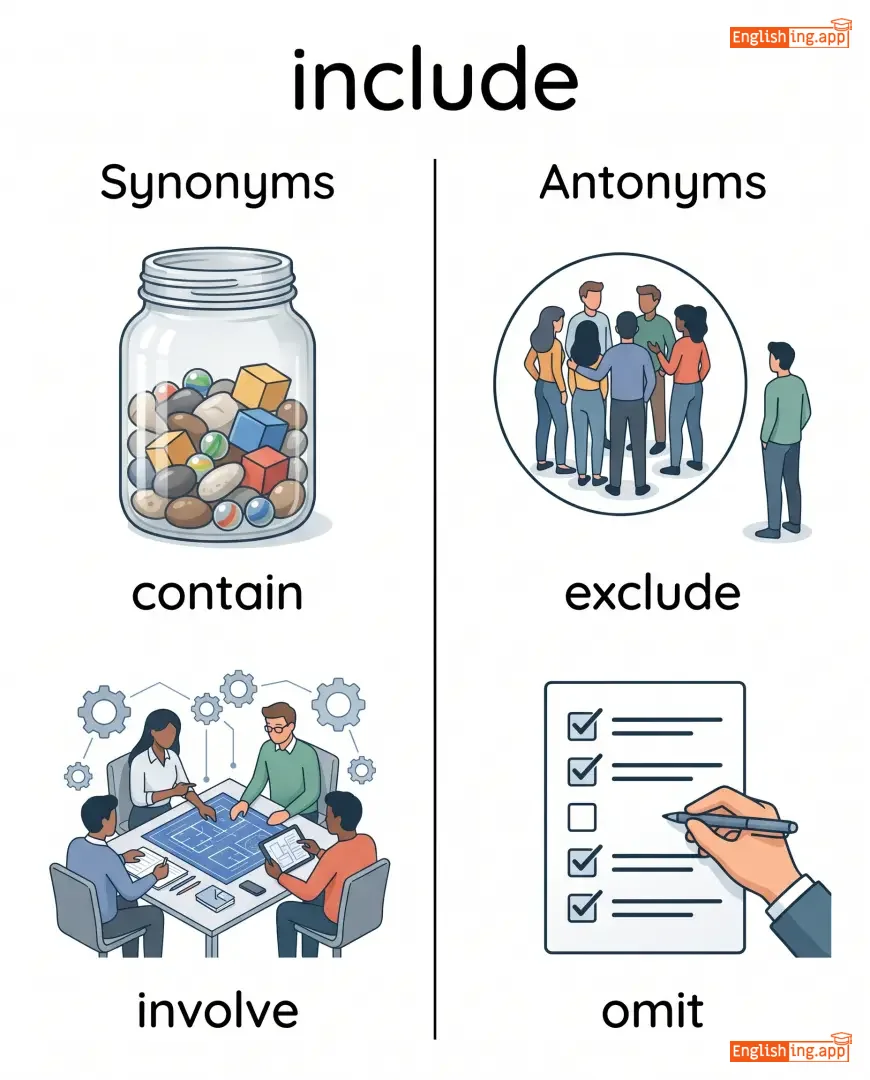
••••••
|
The package includes free breakfast.
bāo kuò bìnggòu huíguī.
••••••
|
该套餐包括免费早餐。
gāi tàocān bāokuò miǎnfèi zǎocān.
••••••
|
include in
bāo kuò
••••••
|
to add as a part of something
••••••
|
包括
bāokuò
••••••
|
contain, involve, comprise, encompass, cover
••••••
|
exclude, omit
••••••
|
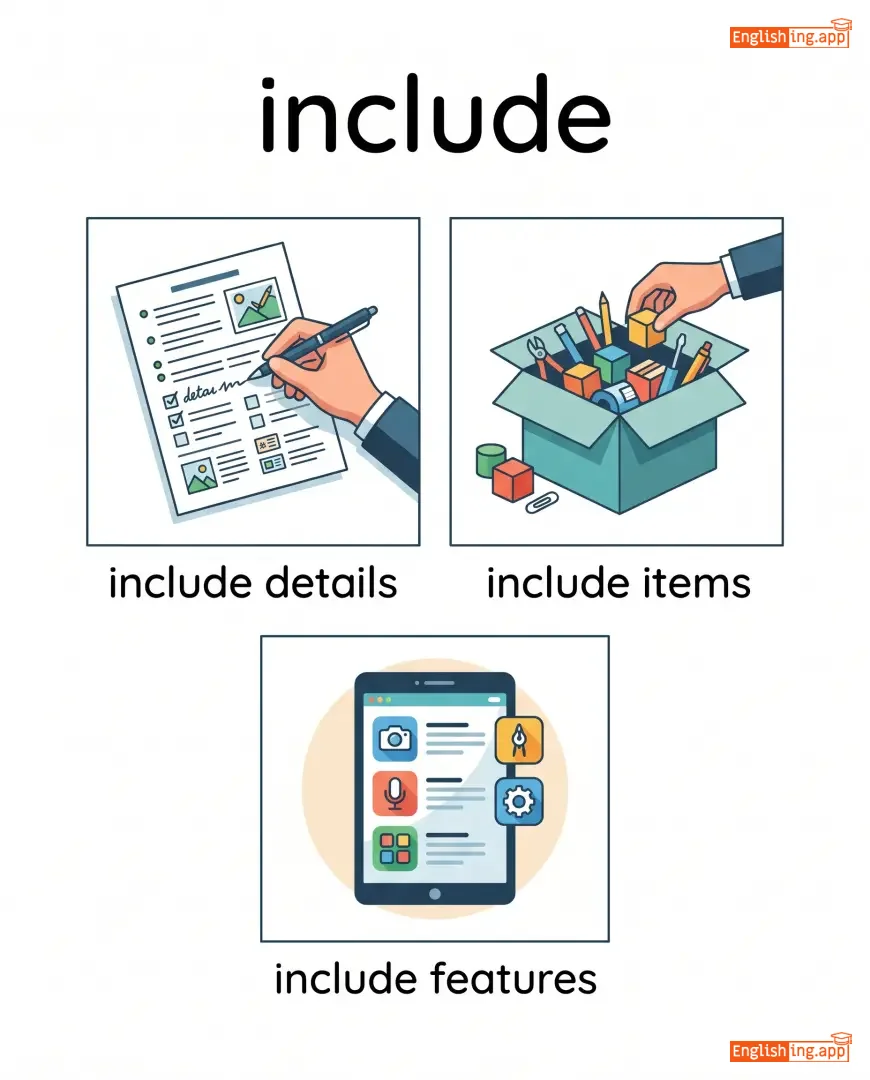
include details, include items, include features
••••••
|
包括意味着将其加入到清单中
••••••
|
|
#11231
🏭
|
/ˈɪndəstri/
noun
(工业)
••••••
|
|
工业
gongye
••••••
|
- •••••• | - •••••• | - •••••• | - •••••• |
The production of goods or services within an economy.
••••••
|
The textile industry employs thousands of workers in the region. |
纺织工业在该地区雇用了成千上万的工人。
Fangzhi gongye zai gai diqu guyongle chengqian shangwan de gongren.
••••••
|
cottage industry |
A small-scale, often home-based business.
••••••
|
家庭工业
jiating gongye
••••••
|
business, trade, commerce, sector, production
••••••
|
idleness, inactivity, unemployment
••••••
|
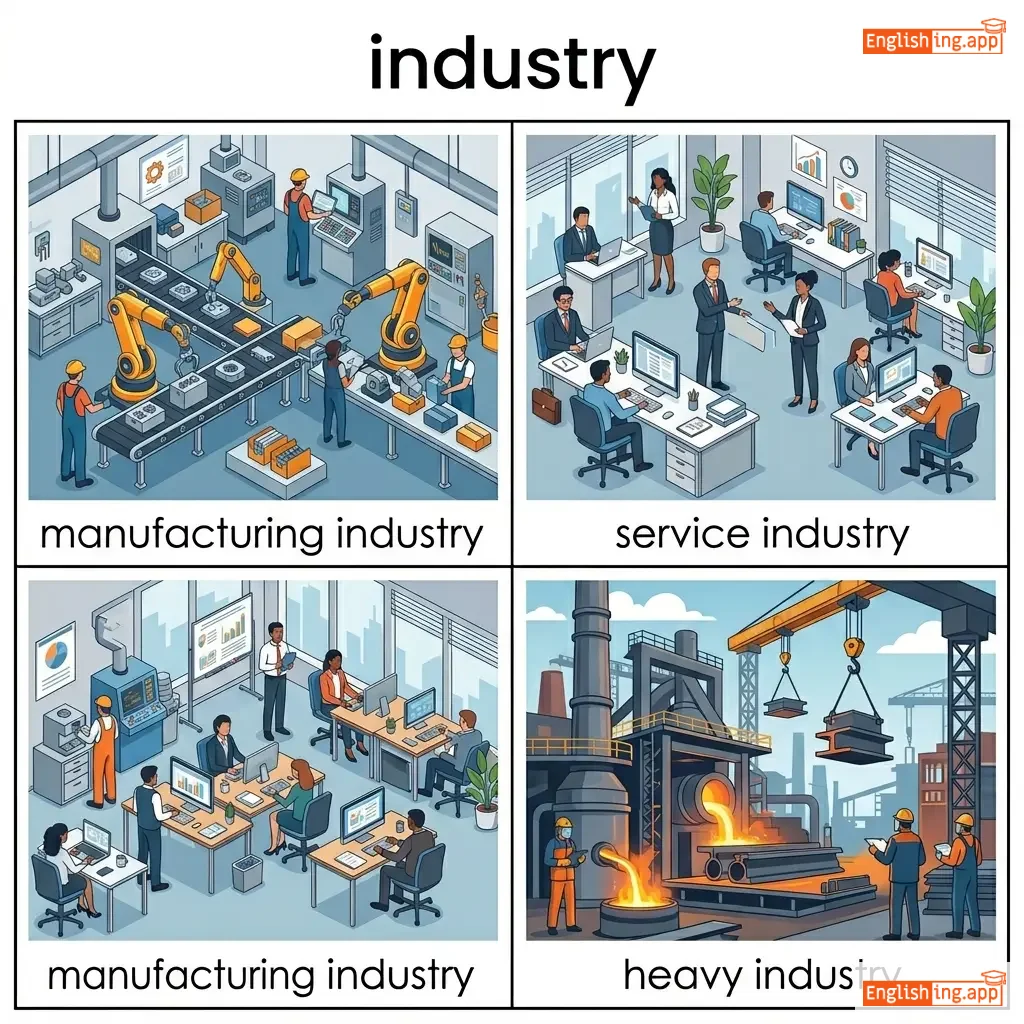
manufacturing industry, service industry, heavy industry, global industry
••••••
|
工业意味着工厂生产,像是一个大规模的生产领域。
••••••
|
|
#11232
🏭
|
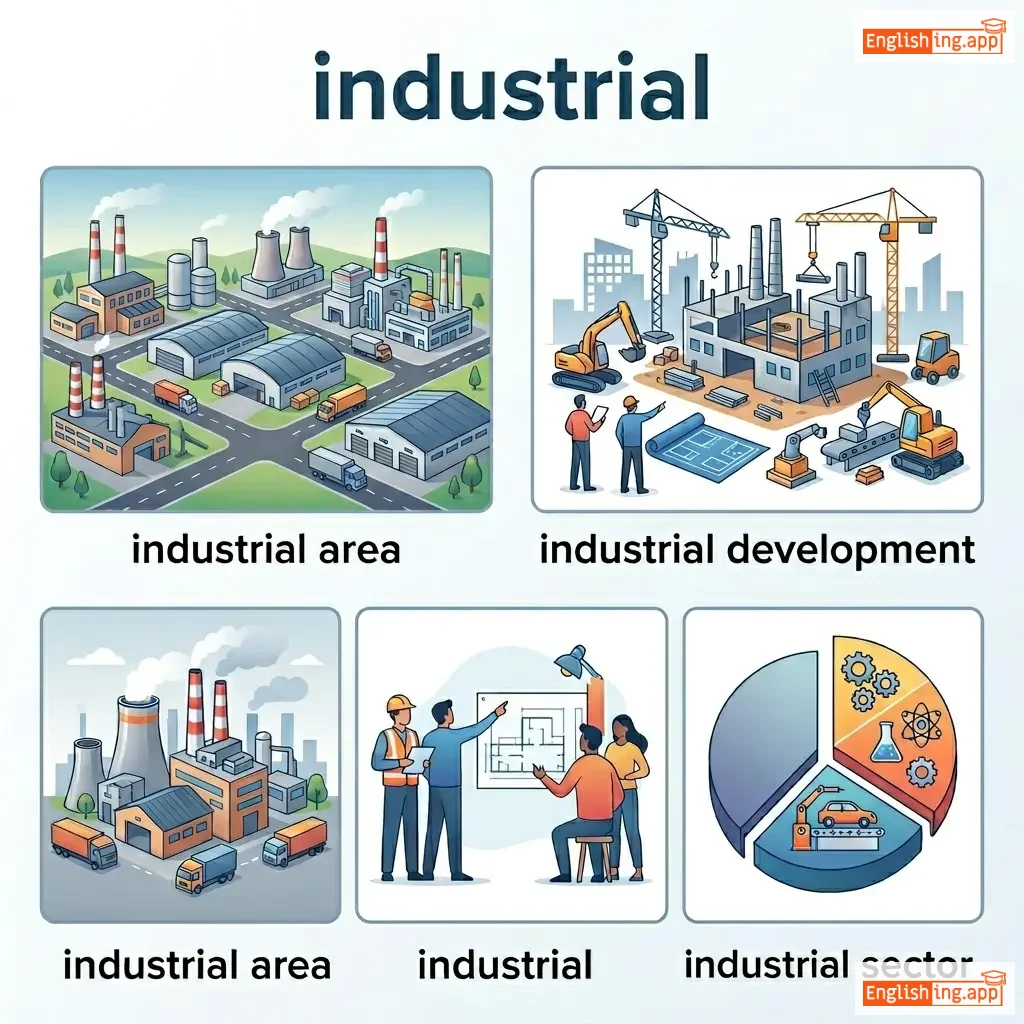
/ɪnˈdʌstriəl/
adjective
(工业的)
••••••
|
|
工业的
gongye de
••••••
|
- •••••• | - •••••• | - •••••• | - •••••• |
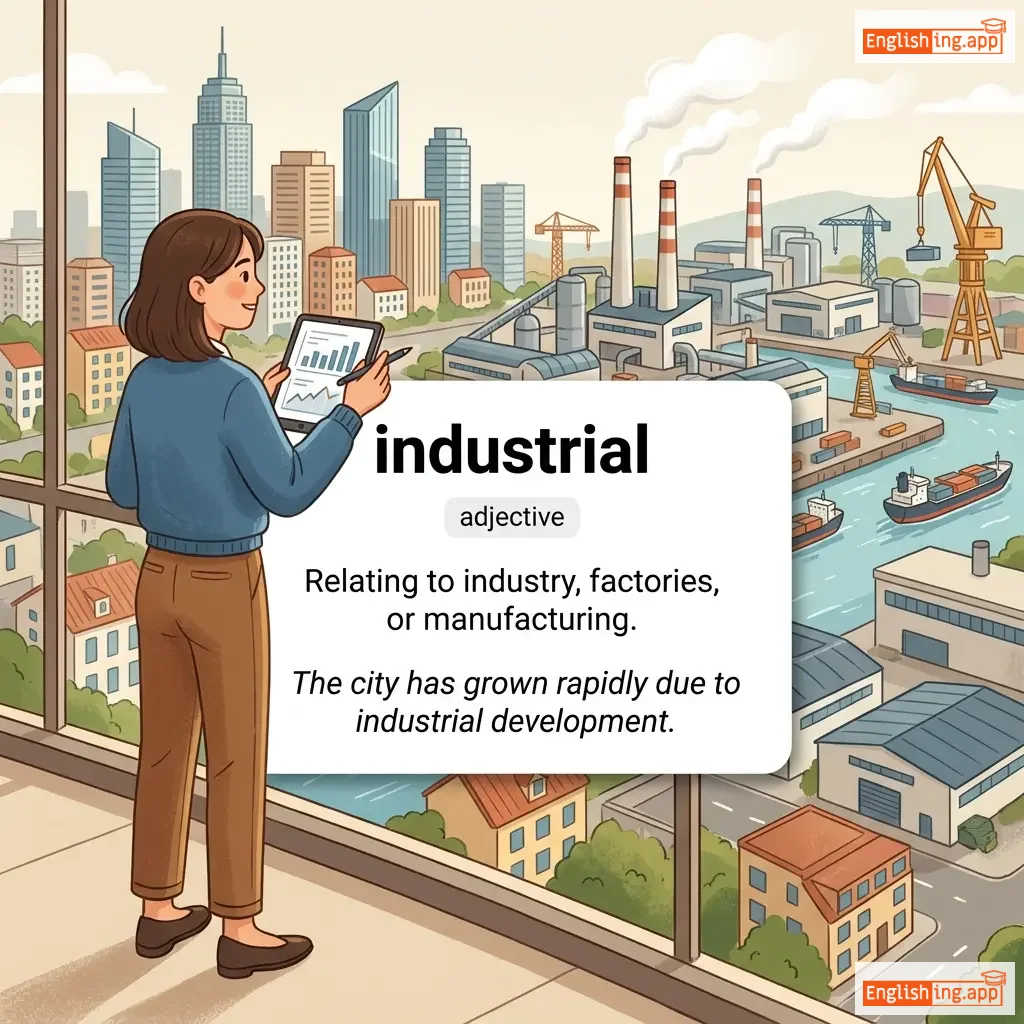
Relating to industry, factories, or manufacturing.
••••••
|
The city has grown rapidly due to industrial development.
这座城市因工业发展而快速增长。
••••••
|
这座城市因工业发展而快速增长。
Zhe zuo chengshi yin gongye fazhan er kuaisu zengzhang.
••••••
|
industrial revolution
工业革命
••••••
|
A period of major industrialization and innovation.
••••••
|
工业革命
Gongye geming
••••••
|
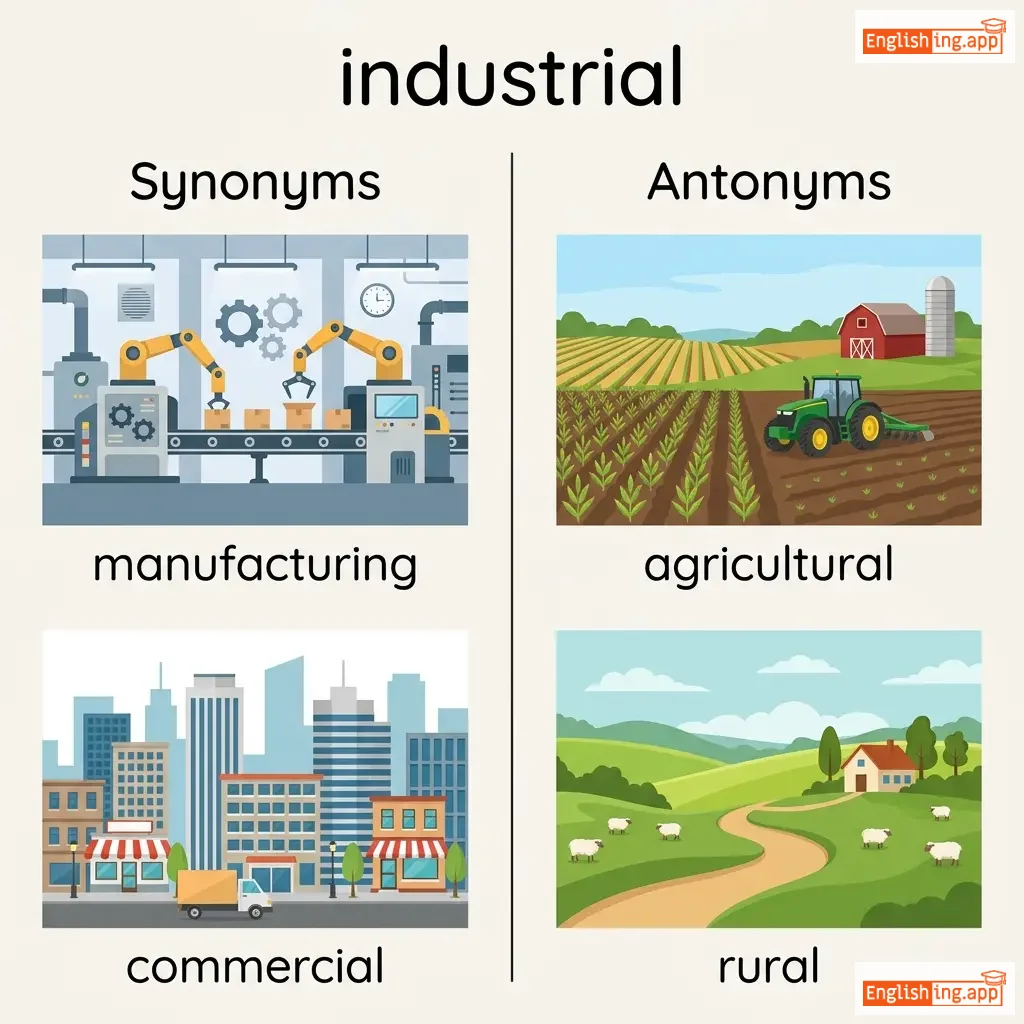
manufacturing, commercial, mechanical, factory-based
••••••
|
agricultural, rural
••••••
|
industrial area, industrial development, industrial sector, industrial growth
••••••
|
Industrial意味着工业的 - 工厂🏭容易记住。
••••••
|
|
#11233
👤
|
/ˌɪndɪˈvɪdʒuəl/
noun/adjective
(个人)
••••••
|
- •••••• |
个体
gètǐ
••••••
|
- •••••• | - •••••• | - •••••• | - •••••• |
A single human being as distinct from a group; relating to one person.
••••••
|
Each individual has the right to freedom of speech. |
每个个体都有言论自由的权利。
Měi gè gètǐ dōu yǒu yánlùn zìyóu de quánlì.
••••••
|
individual rights |
Legal or moral entitlements held by each person.
••••••
|
个体权利
gètǐ quánlì
••••••
|
person, human, being, entity, character
••••••
|
group, collective, community
••••••
|
individual rights, individual needs, individual cases, individual effort
••••••
|
Individual 代表个体 - Individual 👤 代表一个人。
••••••
|
|
#11234
👉
|
/ˈɪndɪˌkeɪt/
verb
(印地凯特)
••••••
|
|
指示
zhǐshì
••••••
|
indicated
印地凯特德
••••••
|
indicated
印地凯特德
••••••
|
indicates
印地凯特斯
••••••
|
indicating
印地凯廷
••••••
|
To point out, show, or suggest something.
••••••
|
The results indicate that the treatment was effective.
结果表明治疗有效。
••••••
|
结果表明治疗有效。
Jiéguǒ biǎomíng zhìliáo yǒuxiào.
••••••
|
indicate interest
表示兴趣
••••••
|
To show or express that one is interested.
••••••
|
表示兴趣
biǎoshì xìngqù
••••••
|
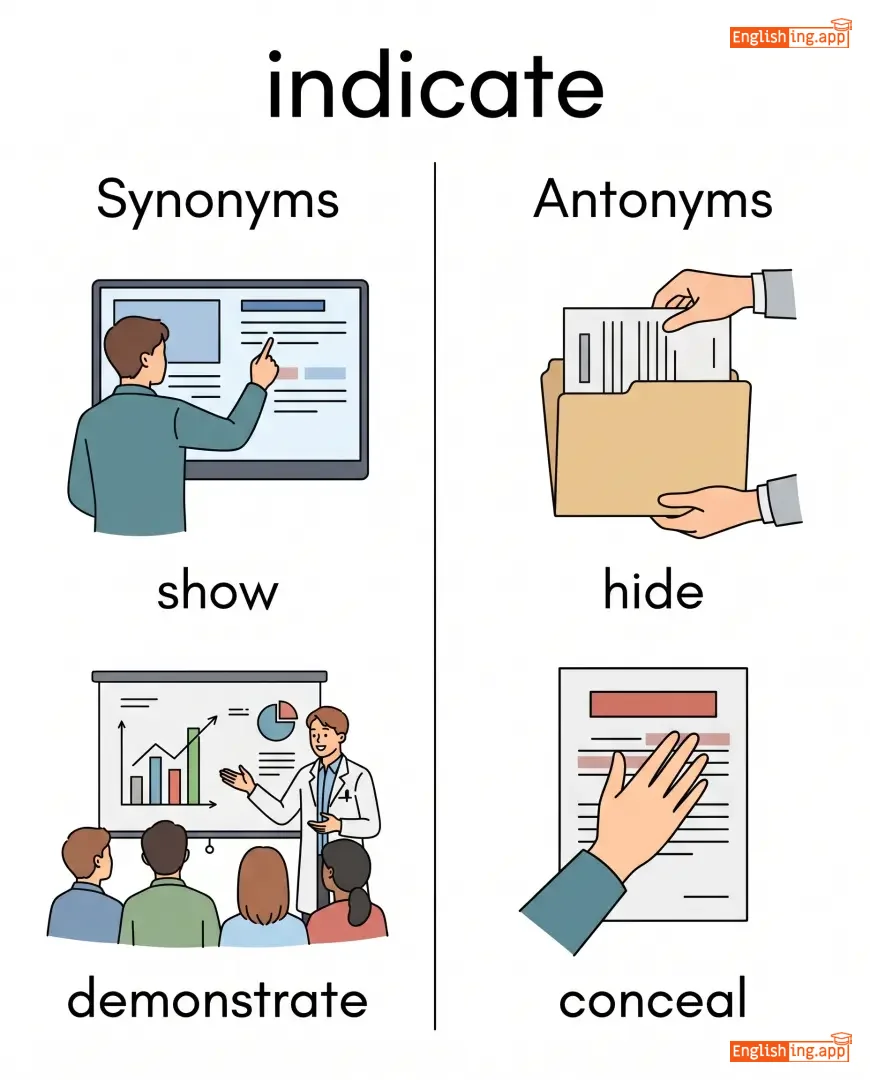
show, demonstrate, suggest, signal, reveal
••••••
|
hide, conceal, obscure
••••••
|
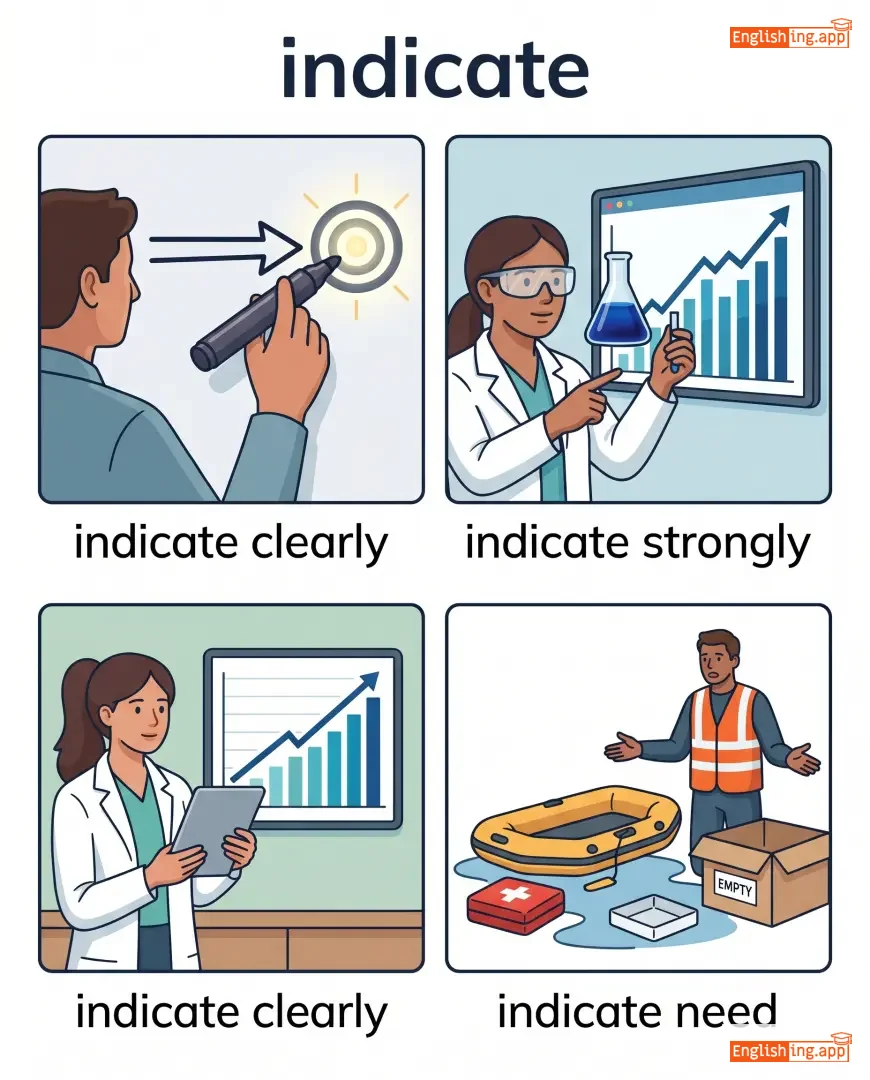
indicate clearly, indicate strongly, indicate need, indicate result
••••••
|
Indicate意味着指示 - 用手指指向 👉.
••••••
|
|
#11235
🇮🇳
|
/ˈɪndiən/
adjective/noun
(印度人)
••••••
|
- •••••• |
印度的
Yìndù de
••••••
|
- •••••• | - •••••• | - •••••• | - •••••• |
Relating to India, its people, or their culture.
••••••
|
She loves Indian food, especially biryani. |
她喜欢印度食物,特别是比尔亚尼。
Tā xǐhuān Yìndù shíwù, tèbié shì bǐ'ěryǎní.
••••••
|
Indian summer |
A period of unseasonably warm weather in late autumn.
••••••
|
印度夏季
Yìndù xiàjì
••••••
|
South Asian, Hindu, Desi
••••••
|
foreign, non-Indian
••••••
|
Indian culture, Indian food, Indian citizen, Indian traditions
••••••
|
Indian 意味着印度的 - 想象印度 🇮🇳 和印度的比尔亚尼 🍛.
••••••
|
|
#11236
🕊️
|
/ˌɪndɪˈpɛndəns/
noun
(独立)
••••••
|
|
独立
duli
••••••
|
- •••••• | - •••••• | - •••••• | - •••••• |
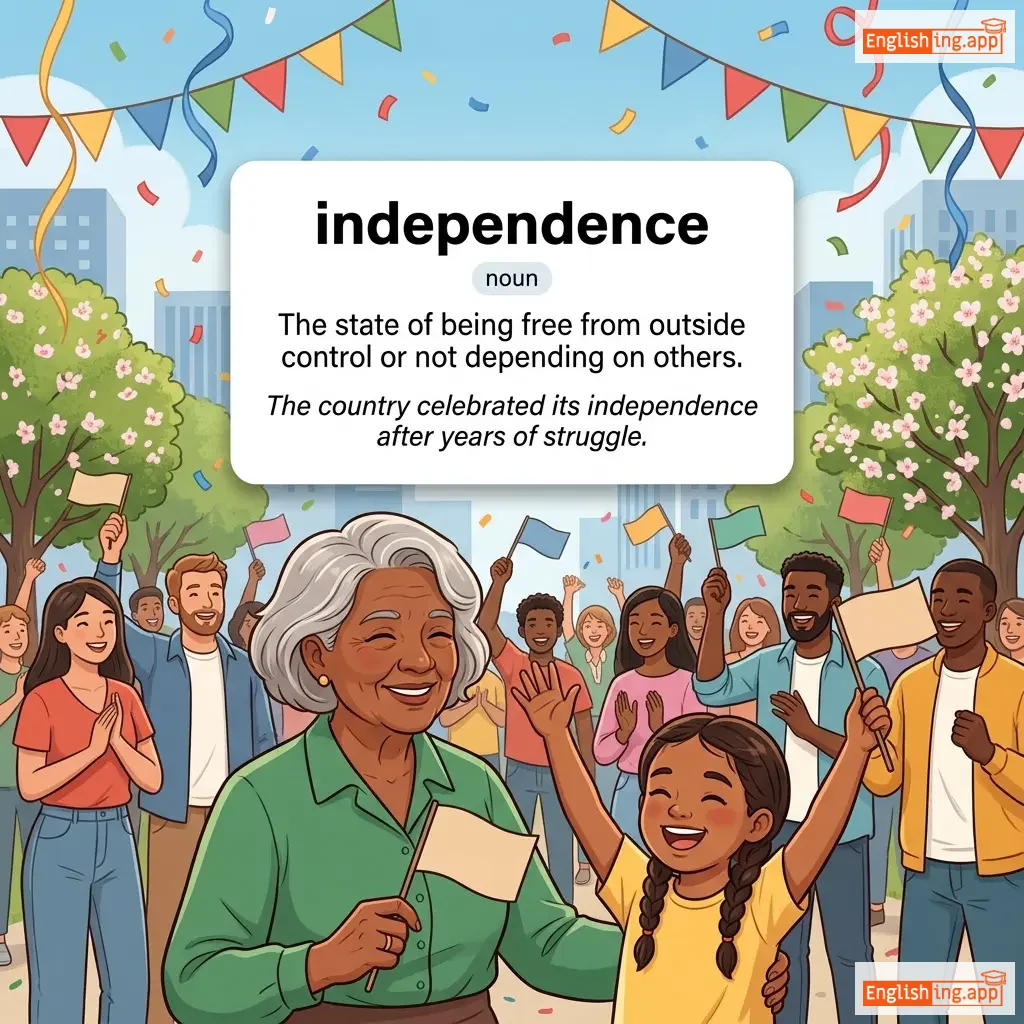
The state of being free from outside control or not depending on others.
••••••
|
The country celebrated its independence after years of struggle. |
这个国家在经历多年斗争后庆祝了它的独立。
Zhe ge guo jia zai jing li duo nian dou zheng hou qing zhu le ta de du li.
••••••
|
declare independence |
To officially announce freedom from control by another authority.
••••••
|
宣布独立
Xuan bu du li
••••••
|
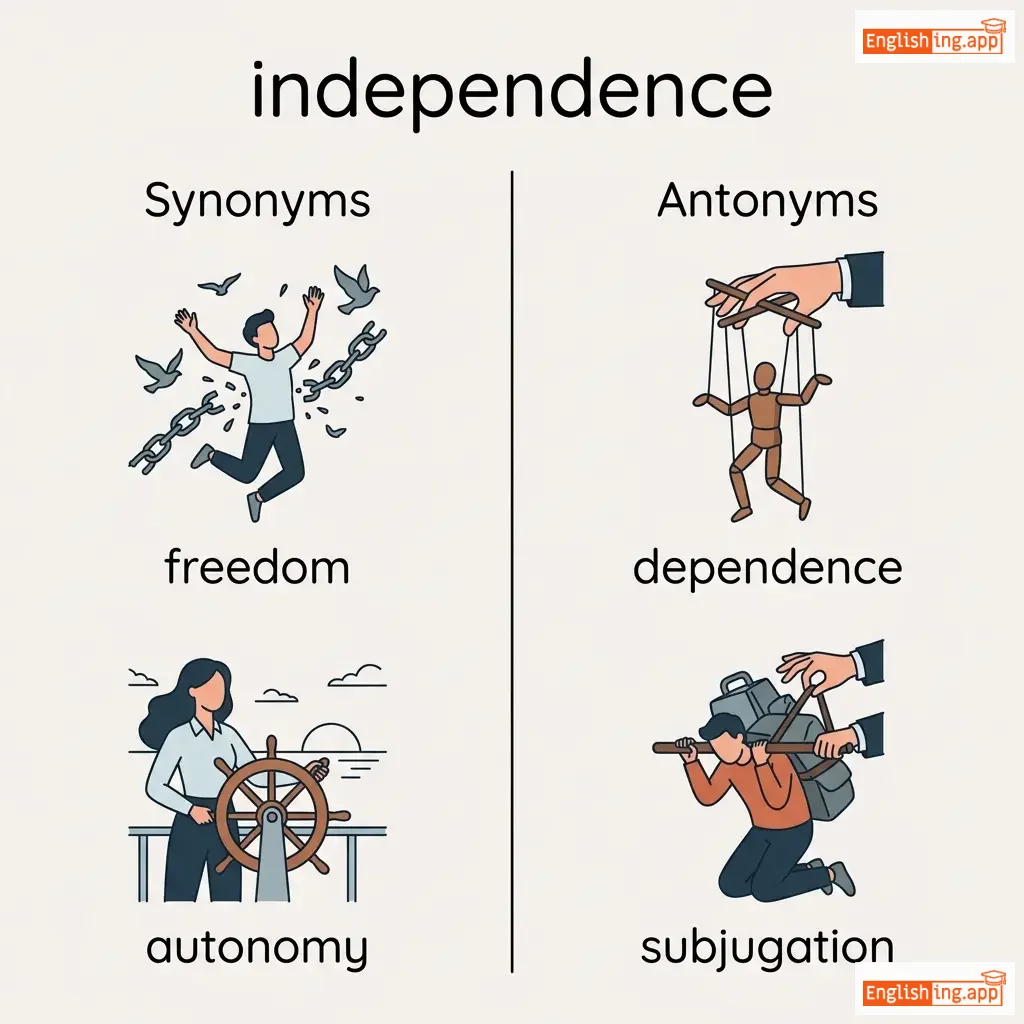
freedom, autonomy, liberty, sovereignty, self-rule
••••••
|
dependence, subjugation, slavery
••••••
|
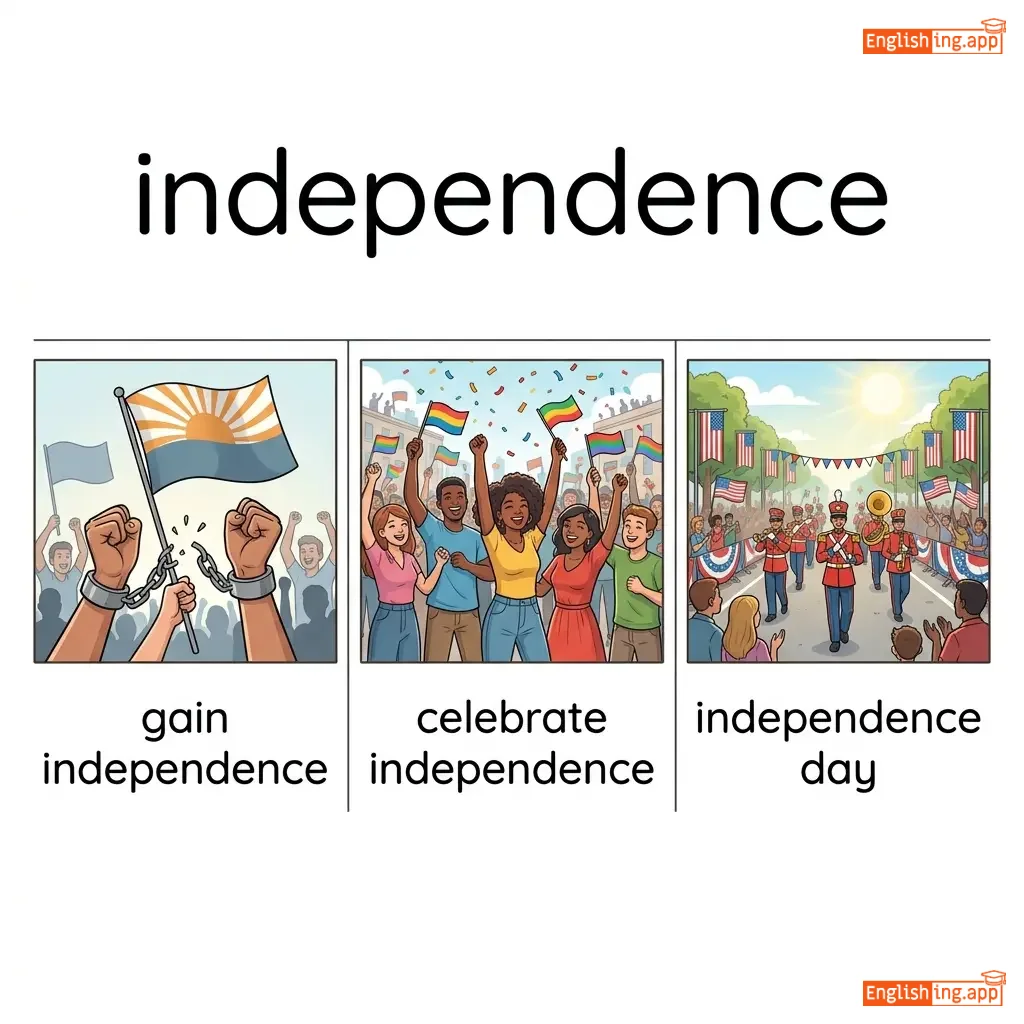
gain independence, celebrate independence, independence day, struggle for independence
••••••
|
Independence意味着独立 - 在中国,人们庆祝独立的日子。
••••••
|
|
#11237
✅
|
/ɪnˈdiːd/
adverb
(因迪德)
••••••
|
- •••••• |
确实
quèshí
••••••
|
- •••••• | - •••••• | - •••••• | - •••••• |
used to emphasize or confirm a statement
••••••
|
It was a long journey indeed.
这是一次漫长的旅行,确实。
••••••
|
这是一次漫长的旅行,确实。
Zhè shì yīcì màncháng de lǚxíng, quèshí.
••••••
|
yes indeed
是的,确实
••••••
|
used to strongly agree with someone
••••••
|
是的,确实
Shì de, quèshí
••••••
|
certainly, truly, really, actually, definitely
••••••
|
doubtfully, uncertainly
••••••
|
indeed true, yes indeed, thank you indeed
••••••
|
Indeed 的意思是 '确实' ✅ 就像 'In deed' 意味着 '在行动中'。
••••••
|
|
#11238
🤯
|
/ɪnˈkrɛdəbl/
adjective
(ɪnˈkrɛdɪbl)
••••••
|
- •••••• |
难以置信的
nán yǐ zhì xìn de
••••••
|
- •••••• | - •••••• | - •••••• | - •••••• |
so extraordinary that it is hard to believe; amazing
••••••
|
The view from the mountain was incredible. |
从山顶看到的景色难以置信。
Cóng shāndǐng kàn dào de jǐngsè nán yǐ zhì xìn.
••••••
|
That's incredible! |
an exclamation used to express amazement
••••••
|
太不可思议了!
Tài bù kě sī yì le!
••••••
|
amazing, unbelievable, astonishing, extraordinary, marvelous
••••••
|
ordinary, believable, normal
••••••
|
incredible story, incredible experience, incredible journey, incredible talent
••••••
|
Incredible 意味着 IN+credible — 如此非凡以至于难以置信 🤯
••••••
|
|
#11239
📊
|
/ɪnˈkriːsɪŋli/
adverb
(ɪnˈkriːsɪŋli)
••••••
|
- •••••• |
越来越多
yuè lái yuè duō
••••••
|
- •••••• | - •••••• | - •••••• | - •••••• |
more and more over time
••••••
|
People are increasingly concerned about climate change. |
人们对气候变化的关注越来越多。
Rénmen duì qìhòu biànhuà de guānzhù yuè lái yuè duō.
••••••
|
- •••••• | - •••••• | - •••••• |
progressively, steadily, gradually, more and more
••••••
|
decreasingly, less
••••••
|
increasingly important, increasingly difficult, increasingly popular
••••••
|
Increasingly意味着随着时间越来越多 — 📊 气候变化的关注越来越大
••••••
|
|
#11240
➕
|
/ɪnˈkriːsɪŋ/
verb
(yincrisiing)
••••••
|
|
增加
zengjia
••••••
|
increased
yincristed
••••••
|
increased
yincristed
••••••
|
increases
yincreces
••••••
|
increasing
yincrisiing
••••••
|
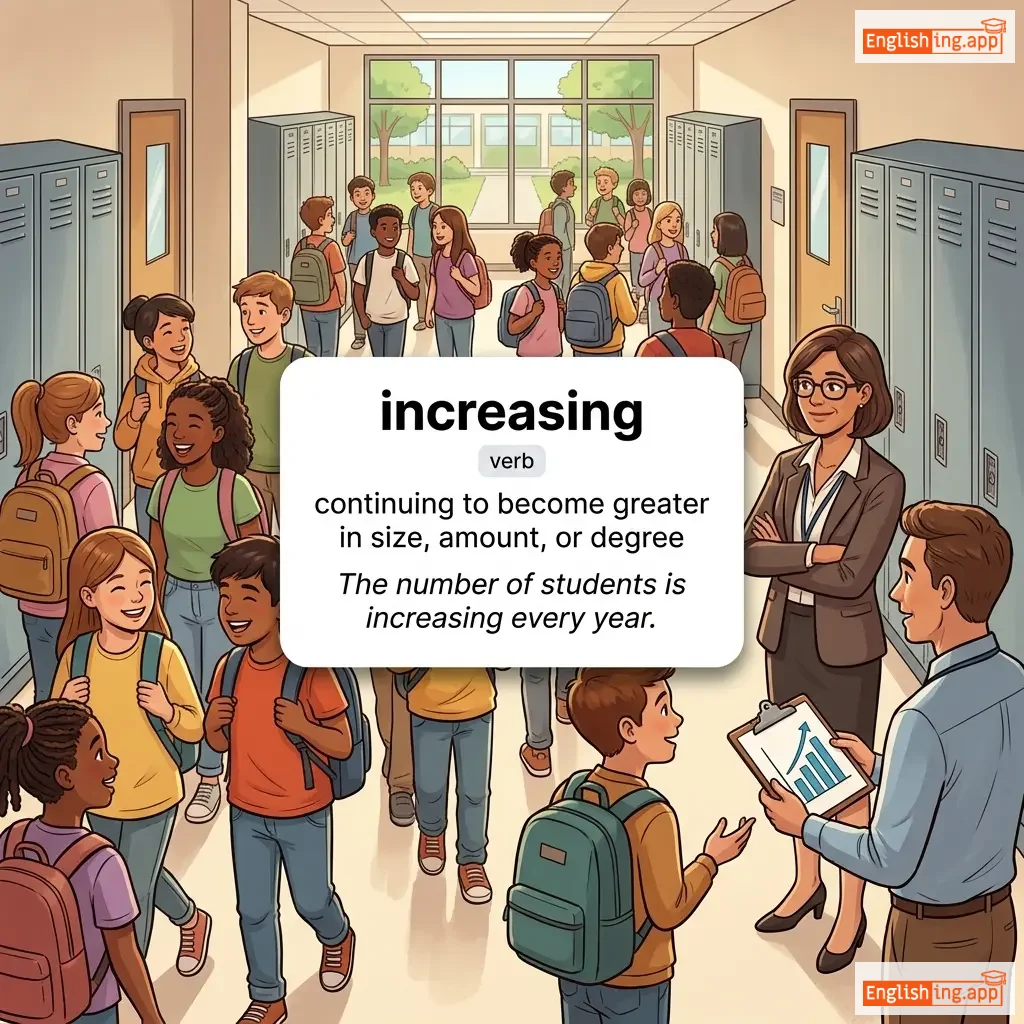
continuing to become greater in size, amount, or degree
••••••
|
The number of students is increasing every year.
学生人数每年都在增加。
••••••
|
学生人数每年都在增加。
Xuesheng renshu meinian dou zai zengjia.
••••••
|
increasing returns
递增回报
••••••
|
when output grows faster than input
••••••
|
递增回报
dizeng huibao
••••••
|
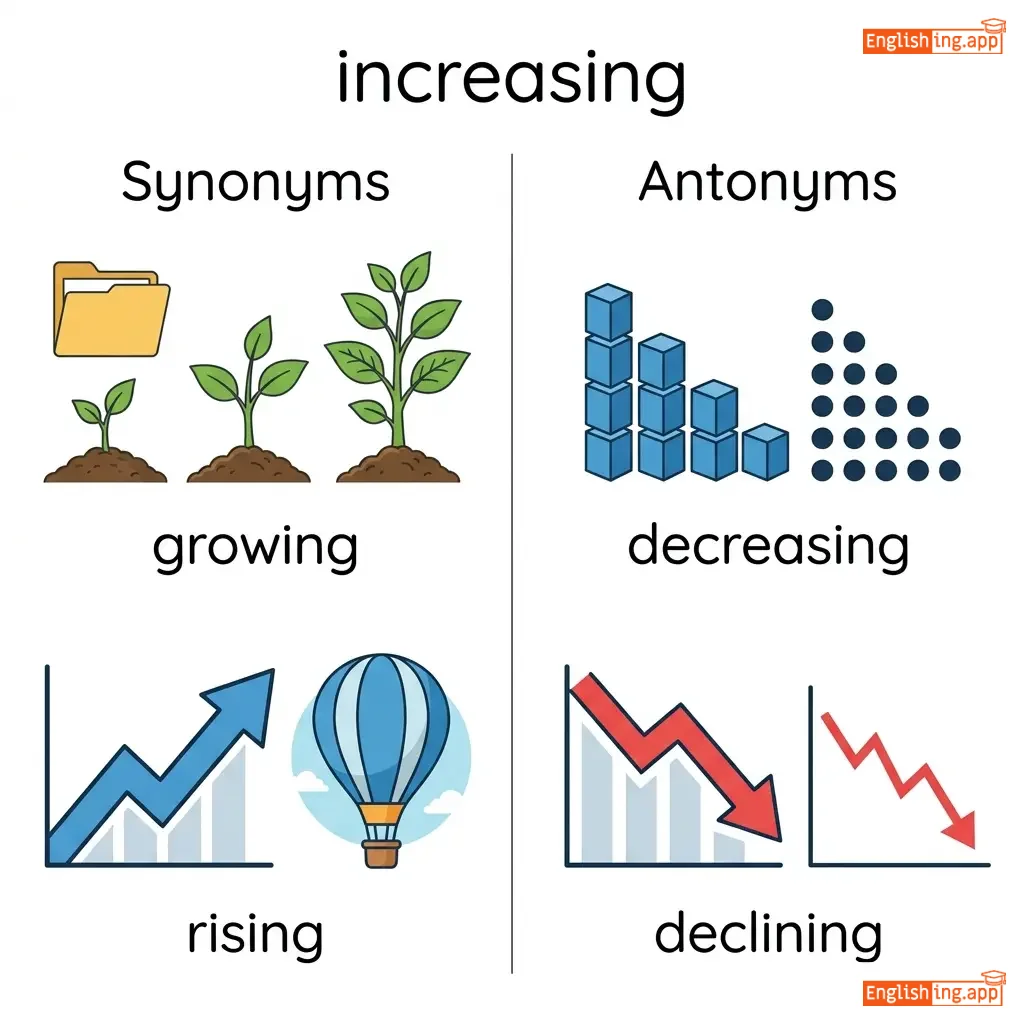
growing, rising, expanding, escalating, mounting
••••••
|
decreasing, declining, reducing
••••••
|
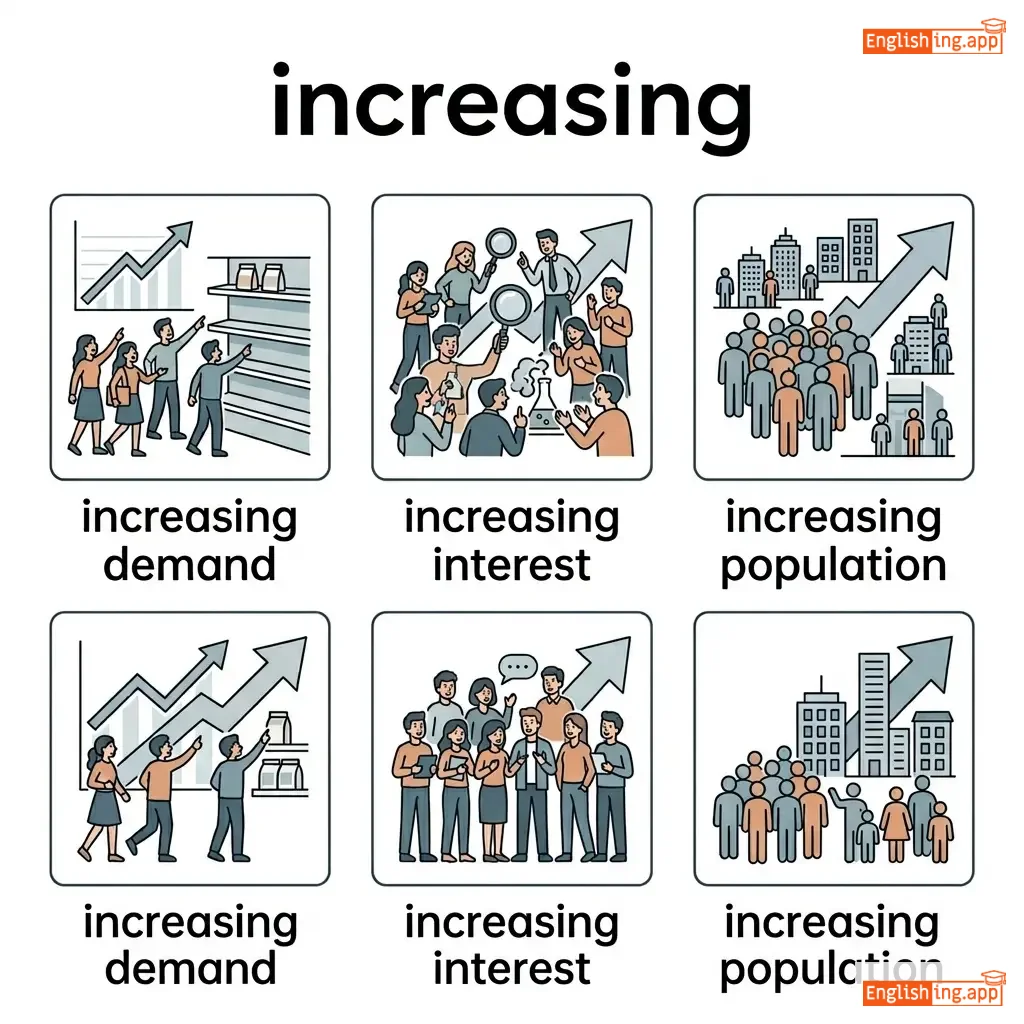
increasing demand, increasing interest, increasing population, increasing rate
••••••
|
Increasing意味着一切都在增加 ➕ 比如工资增加
••••••
|
|
#11241
📈
|
/ɪnˈkriːst/
verb
(yīngkèrlè)
••••••
|
- •••••• |
增加的
zēngjiā de
••••••
|
increased
yīngkèrlè
••••••
|
increased
yīngkèrlè
••••••
|
increases
yīngkèrsī
••••••
|
increasing
yīngkèrsīng
••••••
|
became greater in size, amount, or degree
••••••
|
The company's revenue increased last year.
公司去年收入增加了。
••••••
|
公司去年收入增加了。
Gōngsī qùnián shōurù zēngjiā le.
••••••
|
increased by leaps and bounds
迅速增长
••••••
|
to grow or improve very quickly
••••••
|
迅速增长
xùn sù zēng zhǎng
••••••
|
rose, grew, expanded, escalated, surged
••••••
|
decreased, declined, diminished
••••••
|
increased demand, increased pressure, increased risk, increased use
••••••
|
增加就像公司每年增加的收入一样!
••••••
|
|
#11242
📈
|
/ɪnˈkriːs/
verb
(yīnkùlìsī)
••••••
|
|
增加
zēngjiā
••••••
|
increased
yīnkùlìsīd
••••••
|
increased
yīnkùlìsīd
••••••
|
increases
yīnkùlìsī
••••••
|
increasing
yīnkùlìsīng
••••••
|
to make something larger in size, number, or amount
••••••
|
The company plans to increase its workforce next year.
公司计划明年增加劳动力。
••••••
|
公司计划明年增加劳动力。
Gōngsī jìhuà míngnián zēngjiā láodònglì.
••••••
|
increase by leaps and bounds
激增
••••••
|
to grow or improve very quickly
••••••
|
急剧增加
jíjù zēngjiā
••••••
|
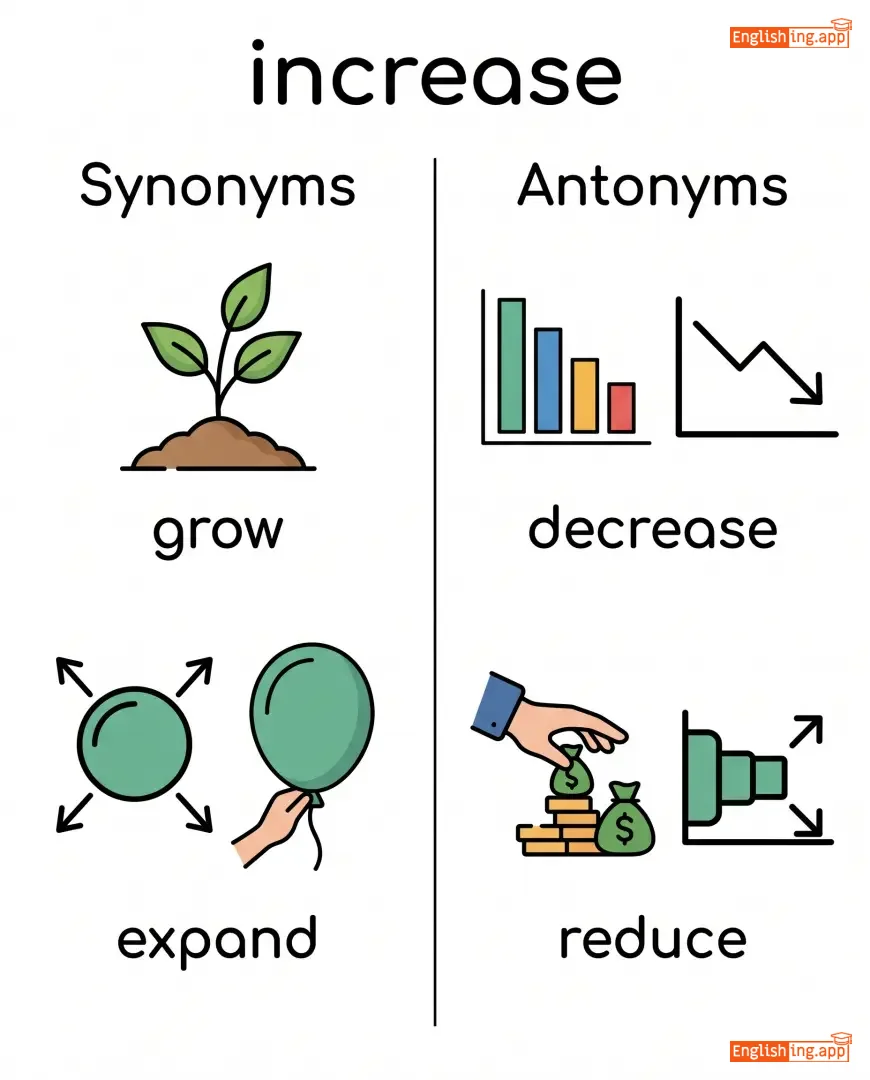
grow, expand, rise, boost, escalate
••••••
|
decrease, reduce, lessen
••••••
|
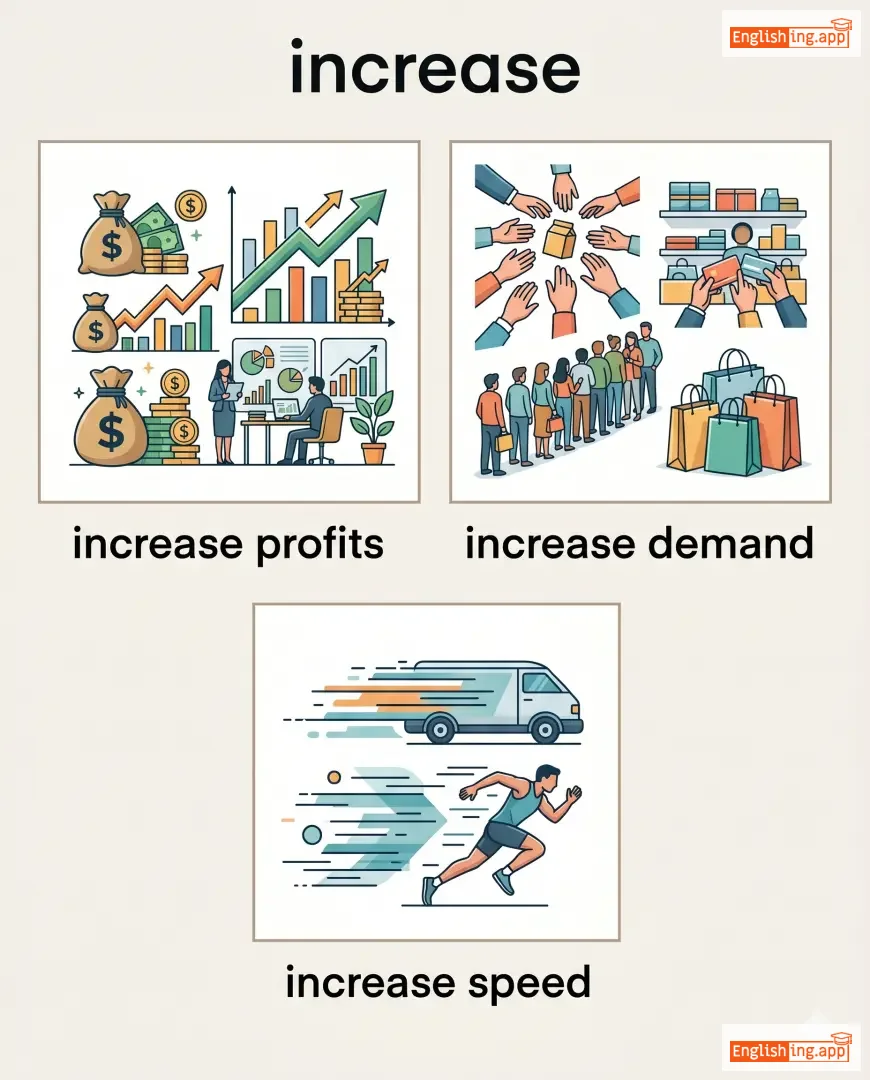
increase profits, increase demand, increase speed
••••••
|
Increase意味着增加,比如价格增加时
••••••
|
|
#11243
💰
|
/ˈɪnkʌm/
noun
(yīnkām)
••••••
|
- •••••• |
收入
shōurù
••••••
|
- •••••• | - •••••• | - •••••• | - •••••• |
money received for work or through investments
••••••
|
His monthly income is enough to support his family. |
他的月收入足以养家糊口。
Tā de yuè shōurù zúyǐ yǎngjiā húkǒu.
••••••
|
fixed income |
a regular and steady amount of income
••••••
|
固定收入
gùdìng shōurù
••••••
|
earnings, revenue, salary, wages, profit
••••••
|
expense, loss
••••••
|
income tax, income level, income growth
••••••
|
In+Come — 你的收入就像金钱流入
••••••
|
|
#11244
📋
|
/ɪnˈkluːdɪŋ/
preposition
(包括)
••••••
|
- •••••• |
包括
bao kuo
••••••
|
- •••••• | - •••••• | - •••••• | - •••••• |
used to show that someone or something is part of a larger group
••••••
|
Many people attended the event, including students and teachers.
许多人参加了这个活动,包括学生和教师。
••••••
|
许多人参加了这个活动,包括学生和教师。
Xǔduō rén cānjiāle zhège huódòng, bāokuò xuéshēng hé jiàoshī.
••••••
|
- •••••• | - •••••• | - •••••• |
such as, along with, together with, counting
••••••
|
excluding, except
••••••
|
including taxes, including costs, including examples
••••••
|
Including 意味着包括,就像一道菜中有米饭和蔬菜,包括。
••••••
|
Vocabulary Quiz
Test your vocabulary by matching words with their translations or meanings.
Login to take the quiz
Comments (0)
Share your thoughts and join the discussion.
Join the discussion by logging in
Login to CommentNo comments yet
Be the first to share your thoughts!