




Swipe left or right, or use the buttons. Tap image to zoom.
例句翻译
单词
Lesson 373Lesson 373 - 遮罩切换
|
表情符号
|
单词 | Images | 翻译 | 过去时 | 过去分词 | 第三人称单数 | 动名词 | 含义 | 例句 | 例句翻译 | 示例表达 | 示例表达含义 | 示例表达翻译 | 同义词 | 反义词 | 搭配词 | 助记符 |
|---|---|---|---|---|---|---|---|---|---|---|---|---|---|---|---|---|---|
|
#11155
🙏
|
/ˈhoʊli/
adjective
(hāolí)
••••••
|
- •••••• |
神圣的
shensheng de
••••••
|
- •••••• | - •••••• | - •••••• | - •••••• |
Dedicated to God or a religious purpose; sacred.
••••••
|
This temple is considered a holy place. |
这座寺庙被认为是一个神圣的地方。
Zhe zuo simiao bei renwei shi yige shensheng de difang.
••••••
|
holy cow |
An expression of surprise or astonishment.
••••••
|
神圣的牛
Shensheng de niu
••••••
|
sacred, divine, blessed, saintly
••••••
|
profane, unholy
••••••
|
holy book, holy man, holy place, holy spirit
••••••
|
Holy 的意思是 '神圣的',就像一个神圣的地方,比如寺庙。
••••••
|
|
#11156
🏠
|
/ˈhaʊzɪŋ/
noun
(hɑʊzɪŋ)
••••••
|
- •••••• |
住房
zhùfáng
••••••
|
- •••••• | - •••••• | - •••••• | - •••••• |
buildings or structures where people live; accommodation
••••••
|
The government is working to provide affordable housing for everyone. |
政府正在努力为所有人提供负担得起的住房。
zhèngfǔ zhèngzài nǔlì wèi suǒyǒu rén tígōng fùdān dé qǐ de zhùfáng.
••••••
|
public housing |
housing provided by the government for low-income families
••••••
|
公共住房
gōnggòng zhùfáng
••••••
|
accommodation, residence, dwelling, shelter, lodging
••••••
|
homelessness, eviction
••••••
|
affordable housing, housing project, housing policy, housing shortage
••••••
|
Housing 就是住房,一个为大家提供住所的地方。
••••••
|
|
#11157
👨👩👧👦
|
/ˈhaʊshoʊld/
noun
(hɑʊʃoʊld)
••••••
|
- •••••• |
家庭
jiating
••••••
|
- •••••• | - •••••• | - •••••• | - •••••• |
All the people living together in one house, considered as a unit.
••••••
|
There are five people in our household. |
我们家里有五个人。
Wǒmen jiālǐ yǒu wǔ gè rén.
••••••
|
household name |
a person or brand that is very well known
••••••
|
家喻户晓
jiā yù hù xiǎo
••••••
|
family, home, residents, occupants, domestic unit
••••••
|
outsiders, strangers
••••••
|
household chores, household income, household goods, household members
••••••
|
家庭意味着家,记住'House + All → 所有人都在家'
••••••
|
|
#11158
🏠
|
/haʊs/
noun
(hǎosī)
••••••
|
- •••••• |
房子
fángzi
••••••
|
- •••••• | - •••••• | - •••••• | - •••••• |
A building for people to live in, usually with rooms and a roof.
••••••
|
They bought a new house in the city.
他们在城市里买了一座新房子。
••••••
|
他们在城市里买了一座新房子。
Tāmen zài chéngshì lǐ mǎile yī zuò xīn fángzi.
••••••
|
bring the house down
让房子倒塌
••••••
|
to make the audience laugh or applaud loudly
••••••
|
让观众笑或鼓掌
ràng guānzhòng xiào huò gǔzhǎng
••••••
|
home, residence, dwelling, shelter, abode
••••••
|
outside, open space
••••••
|
buy a house, build a house, rent a house, move into a house
••••••
|
房子就像我们的家,容易记住。
••••••
|
|
#11159
⏰
|
/ˈaʊər/
noun
••••••
|
- •••••• | - •••••• | - •••••• | - •••••• | - •••••• | - •••••• |
A period of time equal to 60 minutes.
••••••
|
The meeting lasted for two hours. |
- •••••• |
rush hour |
the busy part of the day when traffic is heavy
••••••
|
- •••••• |
sixty minutes, time period, duration, interval
••••••
|
moment, instant
••••••
|
spend an hour, half an hour, working hours, rush hour
••••••
|
No •••••• |
|
#11160
🏨
|
/hoʊˈtɛl/
noun
(hòu-tèl)
••••••
|
- •••••• |
酒店
jiu dian
••••••
|
- •••••• | - •••••• | - •••••• | - •••••• |
A building where people pay to stay and sleep, usually for short periods.
••••••
|
We stayed at a hotel near the beach. |
我们住在靠近海滩的酒店。
Wǒmen zhù zài kàojìn hǎitān de jiǔdiàn.
••••••
|
check into a hotel |
to register and begin staying in a hotel
••••••
|
登记入住酒店
dēngjì rùzhù jiǔdiàn
••••••
|
inn, lodge, hostel, resort, guesthouse
••••••
|
home, house
••••••
|
luxury hotel, hotel room, hotel staff, book a hotel, check into hotel
••••••
|
酒店就是酒店,记住 '酒店是休息和用餐的地方。'
••••••
|
|
#11161
🔥
|
/hɒt/
adjective
(hǎt)
••••••
|
- •••••• |
热
re
••••••
|
- •••••• | - •••••• | - •••••• | - •••••• |
Having a high degree of heat or a high temperature.
••••••
|
The soup is too hot to eat right now.
汤太热了,现在无法食用。
••••••
|
汤太热了,现在无法食用。
Tāng tài rè le, xiànzài wúfǎ shíyòng.
••••••
|
hot topic
热门话题
••••••
|
a subject that is currently popular or controversial
••••••
|
热门话题
rèmén huàtí
••••••
|
warm, heated, scorching, burning, fiery
••••••
|
cold, cool, chilly
••••••
|
hot weather, hot drink, hot meal, hot summer, hot topic
••••••
|
Hot 意味着热,像'Hot tea'意味着热茶。
••••••
|
|
#11162
🎤
|
/hoʊst/
noun, verb
(霍斯特)
••••••
|
- •••••• |
主持人
zhǔchí rén
••••••
|
hosted
霍斯特德
••••••
|
hosted
霍斯特德
••••••
|
hosts
霍斯特斯
••••••
|
hosting
霍斯廷
••••••
|
a person who receives or entertains guests; to organize and provide for an event
••••••
|
She will host the conference next week.
她将在下周主持会议。
••••••
|
她将在下周主持会议。
Tā jiāng zài xià zhōu zhǔchí huìyì.
••••••
|
play host
扮演主持人
••••••
|
to act as the host for an event or occasion
••••••
|
扮演主持人
bànyǎn zhǔchí rén
••••••
|
presenter, entertainer, emcee, organizer, moderator
••••••
|
guest, visitor
••••••
|
host a party, host an event, web host
••••••
|
主持人:他或她是组织和主持活动的那个人。
••••••
|
|
#11163
🏥
|
/ˈhɒs.pɪ.təl/
noun
(hàosīpítǎl)
••••••
|
- •••••• |
医院
yīyuàn
••••••
|
- •••••• | - •••••• | - •••••• | - •••••• |
an institution where sick or injured people are given medical treatment
••••••
|
He was taken to the hospital after the accident. |
事故发生后,他被送往医院。
shìgù fāshēng hòu, tā bèi sòngwǎng yīyuàn.
••••••
|
- •••••• | - •••••• | - •••••• |
clinic, infirmary, medical center, healthcare facility
••••••
|
home, outdoors
••••••
|
go to hospital, hospital bed, hospital staff
••••••
|
医院意味着医院,治愈疾病和伤害的地方。
••••••
|
|
#11164
🐎
|
/hɔːrs/
noun
(hɔːrs)
••••••
|
- •••••• |
马
ma
••••••
|
- •••••• | - •••••• | - •••••• | - •••••• |
a large, strong animal used for riding, racing, or carrying loads
••••••
|
The horse ran across the field.
dā hɔːrs rǎn ài kèruò le fēi'ěrdù
••••••
|
马跑过了田野。
mǎ pǎo guò le tián yě.
••••••
|
hold your horses
hold your horses
••••••
|
wait or be patient
••••••
|
耐心等一下
nàixīn děng yīxià
••••••
|
stallion, mare, pony, steed, nag
••••••
|
donkey, mule
••••••
|
ride a horse, wild horse, horse racing
••••••
|
马:想象你骑马,马在草地上奔跑。
••••••
|
|
#11165
😱
|
/ˈhɒr.ər/
noun
(霍罗)
••••••
|
- •••••• |
恐惧
kǒngjù
••••••
|
- •••••• | - •••••• | - •••••• | - •••••• |
an intense feeling of fear, shock, or disgust
••••••
|
She screamed in horror when she saw the accident. |
她看到事故时吓得尖叫起来。
Tā kàn dào shìgù shí xià dé jiān jiào qǐlái.
••••••
|
a horror story |
a frightening or shocking tale
••••••
|
恐怖故事
kǒngbù gùshì
••••••
|
fear, dread, terror, shock, fright
••••••
|
delight, joy
••••••
|
horror movie, scream in horror, sheer horror
••••••
|
Horror意味着恐惧,想象你看一部恐怖片,心跳加速。
••••••
|
|
#11166
🌅
|
/həˈraɪ.zən/
noun
(horizón)
••••••
|
- •••••• |
地平线
dipingxian
••••••
|
- •••••• | - •••••• | - •••••• | - •••••• |
the line where the earth seems to meet the sky; the limit of one's knowledge, experience, or interest
••••••
|
The sun disappeared below the horizon. |
太阳消失在地平线下。
taiyang xiaoshi zai dipingxian xia.
••••••
|
broaden your horizons |
to expand one's experiences or knowledge
••••••
|
拓展你的视野
tuozhan nide shiye
••••••
|
skyline, boundary, limit, vista, outlook
••••••
|
sky, zenith
••••••
|
on the horizon, broaden horizons, new horizon
••••••
|
Horizon意味着地平线,太阳落下的地方。
••••••
|
|
#11167
🌟
|
/hoʊp/
verb
••••••
|
- •••••• | - •••••• |
hoped
••••••
|
hoped
••••••
|
hopes
••••••
|
hoping
••••••
|
To want something to happen or be true and think it is possible.
••••••
|
I hope everything goes well with your exam. |
- •••••• |
hope against hope |
To continue to hope even when the situation seems hopeless.
••••••
|
- •••••• |
wish, desire, expect, trust, optimism
••••••
|
despair, doubt
••••••
|
hope for, hope that, lose hope, give hope
••••••
|
No •••••• |
|
#11168
🍯
|
/ˈhʌni/
noun
(honey)
••••••
|
- •••••• |
蜂蜜
fengmi
••••••
|
- •••••• | - •••••• | - •••••• | - •••••• |
A sweet, sticky substance made by bees from nectar.
••••••
|
She likes to put honey in her tea. |
她喜欢在茶里加蜂蜜。
Tā xǐhuān zài chá lǐ jiā fēngmì.
••••••
|
sweet as honey |
Extremely kind or pleasant.
••••••
|
甜如蜂蜜
tián rú fēngmì
••••••
|
nectar, syrup, sweetness, darling
••••••
|
bitterness, sourness
••••••
|
honey bee, honey jar, honeycomb, honey production
••••••
|
蜂蜜 = 甜的,像蜜蜂做的蜂蜜一样。
••••••
|
|
#11169
🏚️
|
/ˈhoʊmləs/
adjective
(霍姆莱斯)
••••••
|
- •••••• |
无家可归
wú jiā kě guī
••••••
|
- •••••• | - •••••• | - •••••• | - •••••• |
Without a home, and therefore typically living on the streets.
••••••
|
The organization helps homeless people find shelter.
该组织帮助无家可归的人找到庇护所。
••••••
|
该组织帮助无家可归的人找到庇护所。
Gāi zǔzhī bāngzhù wú jiā kě guī de rén zhǎodào bìhù suǒ.
••••••
|
- •••••• | - •••••• | - •••••• |
destitute, vagrant, displaced, houseless
••••••
|
settled, housed
••••••
|
homeless person, homeless shelter, homeless community
••••••
|
无家可归 - 没有家
••••••
|
|
#11170
👋
|
/heɪ/
interjection
(嘿)
••••••
|
- •••••• |
嘿
hei
••••••
|
- •••••• | - •••••• | - •••••• | - •••••• |
used to attract attention, express surprise, or greet someone
••••••
|
Hey, how are you doing today? |
嘿,你今天怎么样?
Hēi, nǐ jīntiān zěnme yàng?
••••••
|
- •••••• | - •••••• | - •••••• |
hello, hi, yo, hiya, greetings
••••••
|
goodbye, farewell
••••••
|
hey there, hey you, hey guys, hey man
••••••
|
嘿,就像是用来引起注意或者打招呼的词。
••••••
|
|
#11171
🏖️
|
/ˈhɒlɪdeɪ/
noun
(hòulìdé)
••••••
|
- •••••• |
假期
jiàqī
••••••
|
- •••••• | - •••••• | - •••••• | - •••••• |
A day of celebration or rest when most people do not work.
••••••
|
We are planning a trip during the summer holiday. |
我们计划在暑假期间去旅行。
wǒmen jìhuà zài shǔjià qījiān qù lǚxíng.
••••••
|
holiday spirit |
The cheerful mood that people often feel during holiday seasons.
••••••
|
节日气氛
jiérì qìfēn
••••••
|
vacation, break, leave, recess, festival
••••••
|
workday, duty
••••••
|
public holiday, summer holiday, holiday season, national holiday
••••••
|
假期=放松和欢庆, 节日气氛令人心情愉快!
••••••
|
|
#11172
💥
|
/hɪt/
verb
(hit)
••••••
|
- •••••• |
打
da
••••••
|
hit
hit
••••••
|
hit
hit
••••••
|
hits
hits
••••••
|
hitting
hitting
••••••
|
to strike someone or something with force
••••••
|
He accidentally hit the ball into the window.
他不小心把球打进了窗户。
••••••
|
他不小心把球打进了窗户。
Ta bu xiaoxin ba qiu da jin le chuanghu.
••••••
|
hit the nail on the head
一针见血
••••••
|
to describe a situation or problem exactly
••••••
|
一针见血
Yi zhen jian xue
••••••
|
strike, smack, beat, punch, knock
••••••
|
miss, avoid, dodge
••••••
|
hit hard, hit the target, hit the road, hit record
••••••
|
Hit意味着打,想象你打高尔夫球将它击入洞中。
••••••
|
|
#11173
🏛️
|
/ˈhɪstəri/
noun
(历史)
••••••
|
|
历史
lishi
••••••
|
- •••••• | - •••••• | - •••••• | - •••••• |
the study of past events
••••••
|
She is studying the history of medieval Europe. |
她正在研究中世纪欧洲的历史。
Ta zhengzai yanjiu zhongshi ji Ouzhou de lishi.
••••••
|
make history |
to do something very important that will be remembered
••••••
|
创造历史
chuangzao lishi
••••••
|
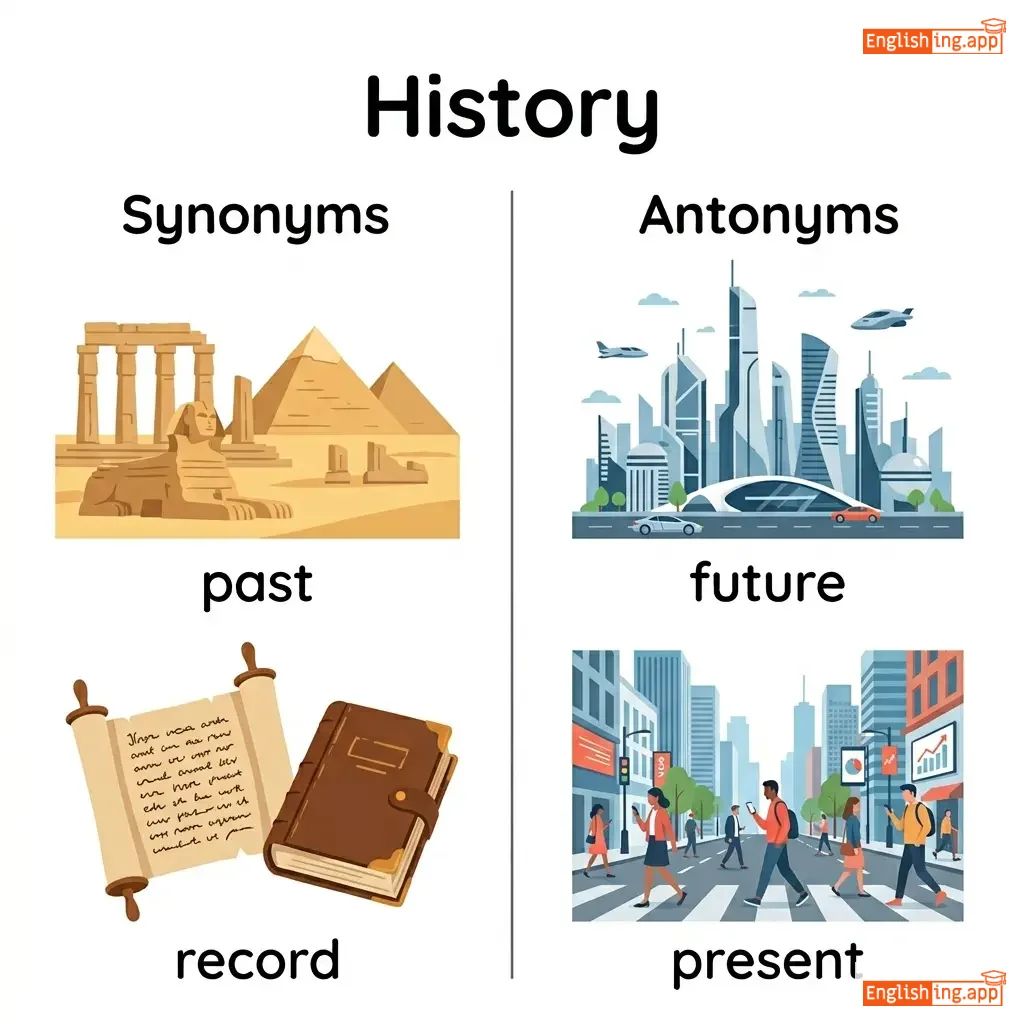
past, record, chronicle, heritage
••••••
|
future, present
••••••
|
world history, history book, history lesson, history of art
••••••
|
History在中文是历史,想象—His Story就是历史
••••••
|
|
#11174
📚
|
/hɪˈstɔːriən/
noun
(历史学家)
••••••
|
- •••••• |
历史学家
lìshǐ xuéjiā
••••••
|
- •••••• | - •••••• | - •••••• | - •••••• |
a person who studies or writes about history
••••••
|
The historian gave a lecture on ancient civilizations. |
历史学家讲授了一堂关于古代文明的讲座。
Lìshǐ xuéjiā jiǎngshòule yī táng guānyú gǔdài wénmíng de jiǎngzuò.
••••••
|
- •••••• | - •••••• | - •••••• |
scholar, researcher, chronicler, analyst
••••••
|
layman, amateur
••••••
|
famous historian, professional historian, military historian
••••••
|
Historian 是历史 + 学家 → 专门研究历史的人
••••••
|
|
#11175
👦
|
/hɪz/
pronoun
(hɪz)
••••••
|
- •••••• |
他的
tā de
••••••
|
- •••••• | - •••••• | - •••••• | - •••••• |
belonging to or associated with a male person previously mentioned
••••••
|
This is his book on the table. |
这是他的书在桌子上。
Zhè shì tā de shū zài zhuōzi shàng.
••••••
|
- •••••• | - •••••• | - •••••• |
belonging to him, owned by him
••••••
|
her, their
••••••
|
his book, his car, his house, his idea
••••••
|
His 意味着他的,记住—He + is = His 东西
••••••
|
|
#11176
👔
|
/ˈhaɪə(r)/
verb
(hāi'ěr)
••••••
|
|
聘用
pìnyòng
••••••
|
hired
hāi'ěr-d
••••••
|
hired
hāi'ěr-d
••••••
|
hires
hāi'ěr-s
••••••
|
hiring
hāi'ěr-ing
••••••
|
to employ someone for a job or task
••••••
|
The company decided to hire more staff this year.
公司决定今年聘用更多员工。
••••••
|
公司决定今年聘用更多员工。
Gōngsī juédìng jīnnián pìnyòng gèng duō yuángōng.
••••••
|
hire and fire
聘用与解雇
••••••
|
to employ and dismiss workers frequently
••••••
|
聘用与解雇
pìnyòng yǔ jiěgù
••••••
|
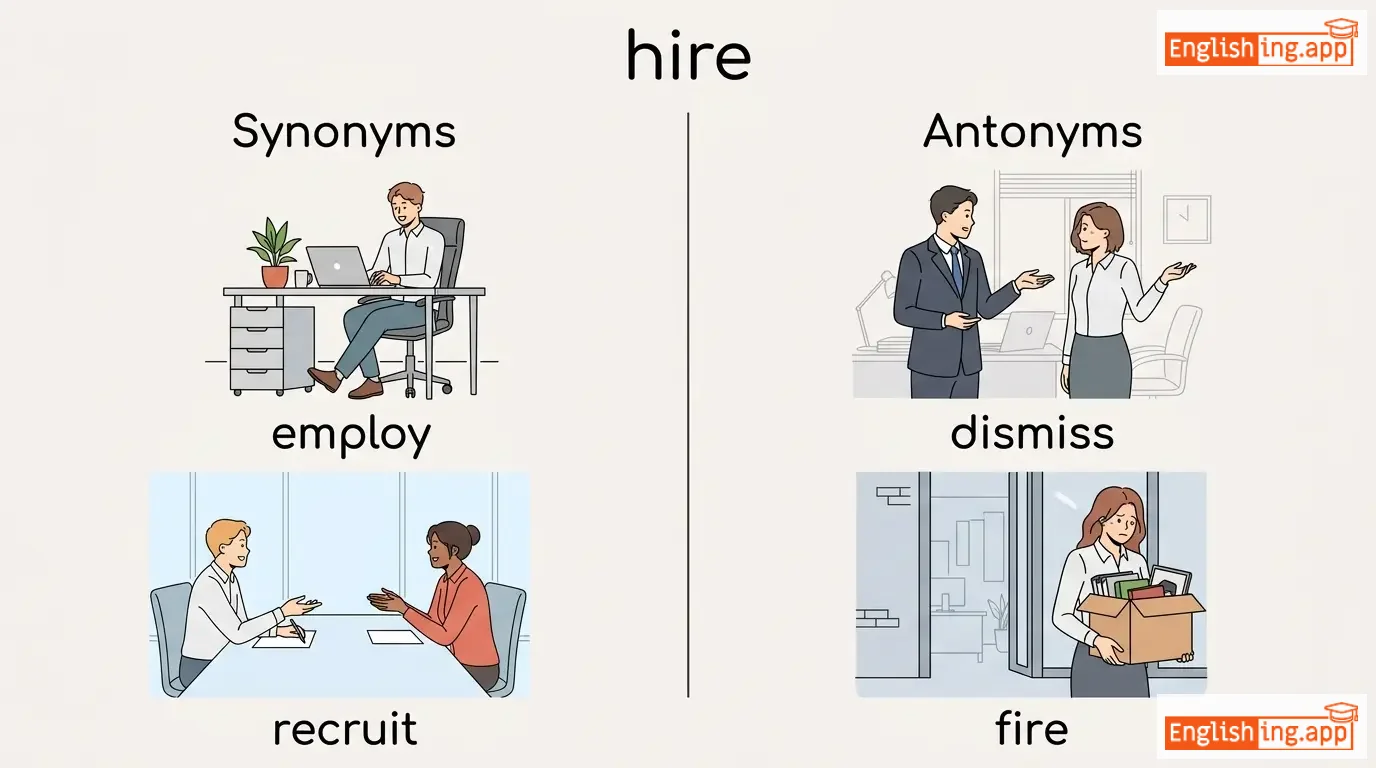
employ, recruit, appoint, engage, contract
••••••
|
dismiss, fire, discharge
••••••
|
hire staff, hire employees, hire a car, hire services
••••••
|
聘用就像选拔优秀的人才加入你的团队。
••••••
|
|
#11177
🦴
|
/hɪp/
noun
(hip)
••••••
|
- •••••• |
臀部
tún bù
••••••
|
- •••••• | - •••••• | - •••••• | - •••••• |
The part of the body on either side of the pelvis, or informal: trendy and fashionable.
••••••
|
She put her hands on her hips. |
她把手放在臀部上。
tā bǎ shǒu fàng zài tún bù shàng.
••••••
|
joined at the hip |
very close, inseparable
••••••
|
紧密如臀部
jǐn mì rú tún bù
••••••
|
pelvis, waist, trendy, fashionable
••••••
|
old-fashioned, outdated
••••••
|
hip pain, hip joint, hands on hips, hip hop
••••••
|
臀部 - hip hop 舞蹈时臀部要动。
••••••
|
|
#11178
🙋♂️
|
/hɪmˈself/
pronoun
(海姆塞尔夫)
••••••
|
- •••••• |
他自己
tā zìjǐ
••••••
|
- •••••• | - •••••• | - •••••• | - •••••• |
Used to emphasize that a male person does something by his own effort.
••••••
|
He fixed the car himself. |
他自己修好了车。
Tā zìjǐ xiū hǎo le chē.
••••••
|
by himself |
alone, without help
••••••
|
自己
zìjǐ
••••••
|
alone, personally, individually, on his own
••••••
|
together, with others
••••••
|
by himself, for himself, himself alone
••••••
|
Himself 的意思是 'He 他自己 self' – 记住,'self' 表示自己。
••••••
|
|
#11179
👨
|
/hɪm/
pronoun
(海皮尼斯)
••••••
|
- •••••• |
他
ta
••••••
|
- •••••• | - •••••• | - •••••• | - •••••• |
Used to refer to a male person or animal already mentioned.
••••••
|
I saw him at the park yesterday. |
我昨天在公园看见了他。
Wǒ zuótiān zài gōngyuán kànjiànle tā.
••••••
|
- •••••• | - •••••• | - •••••• |
that man, that boy, male person, he
••••••
|
her, she
••••••
|
with him, for him, about him, help him
••••••
|
Him 意味着 '他' – 记住,He 的宾格是 Him.
••••••
|
|
#11180
⛰️
|
/hɪl/
noun
(希尔)
••••••
|
- •••••• |
小山
xiaoshan
••••••
|
- •••••• | - •••••• | - •••••• | - •••••• |
A naturally raised area of land, smaller than a mountain.
••••••
|
We climbed the hill to see the sunset. |
我们爬上小山去看日落。
Women pa shang xiaoshan qu kan riluo.
••••••
|
make a mountain out of a molehill |
to exaggerate a small problem into something much bigger
••••••
|
小题大做
xiaoti dazuo
••••••
|
mound, knoll, ridge, slope, rise
••••••
|
valley, plain
••••••
|
hill station, top of the hill, climb a hill, rolling hills
••••••
|
Hill 就是小山,不是大山!
••••••
|
|
#11181
🛣️
|
/ˈhaɪ.weɪ/
noun
(hài wēi)
••••••
|
- •••••• |
高速公路
gaosu gonglu
••••••
|
- •••••• | - •••••• | - •••••• | - •••••• |
A main road, especially one connecting major towns or cities.
••••••
|
The highway was blocked due to an accident. |
由于事故,高速公路被封锁了。
Yóuyú shìgù, gāosù gōnglù bèi fēngsuǒ le.
••••••
|
hit the highway |
to begin a journey, usually by car
••••••
|
上路
shàng lù
••••••
|
expressway, freeway, motorway, road, route
••••••
|
alley, lane
••••••
|
highway patrol, highway traffic, highway system, on the highway
••••••
|
Highway 意味着 'High speed way' - 高速公路意味着快速交通的道路。
••••••
|
|
#11182
🌟
|
/ˈhaɪli/
adverb
(hài lì)
••••••
|
- •••••• |
高度
gaodu
••••••
|
- •••••• | - •••••• | - •••••• | - •••••• |
to a great degree; very
••••••
|
She is highly respected in her field. |
她在她的领域中受到高度尊敬。
Tā zài tā de lǐngyù zhōng shòudào gāodù zūnjìng.
••••••
|
think highly of |
to admire or have a good opinion of someone
••••••
|
高度评价
gāodù píngjià
••••••
|
greatly, very, extremely, exceedingly, intensely
••••••
|
slightly, poorly, inadequately
••••••
|
highly skilled, highly effective, highly unlikely, highly respected
••••••
|
Highly 意味着很高 — 非常或极端。
••••••
|
|
#11183
🖍️
|
/ˈhaɪˌlaɪt/
verb
(háilàit)
••••••
|
- •••••• |
突出
tuchu
••••••
|
highlighted
háilàitèd
••••••
|
highlighted
háilàitèd
••••••
|
highlights
háilàits
••••••
|
highlighting
háilàiting
••••••
|
to emphasize or make something stand out
••••••
|
The teacher highlighted the most important points in the text.
老师在文本中强调了最重要的要点。
••••••
|
老师在文本中强调了最重要的要点。
Lǎoshī zài wénběn zhōng qiángdiào le zuì zhòngyào de yàodiǎn.
••••••
|
highlight reel
精彩集锦
••••••
|
a collection of the best or most memorable parts
••••••
|
精彩集锦
jīngcǎi jíjǐn
••••••
|
emphasize, stress, underline, showcase, feature
••••••
|
ignore, overlook, hide
••••••
|
highlight the issue, highlight a point, highlight text, highlight importance
••••••
|
突出就像照亮某个部分,让它更容易被看到。
••••••
|
|
#11184
😊
|
/haɪ/
interjection
(hǎi)
••••••
|
- •••••• |
嗨
hai
••••••
|
- •••••• | - •••••• | - •••••• | - •••••• |
a friendly greeting used when meeting someone
••••••
|
Hi, it's nice to meet you! |
嗨,很高兴见到你!
Hāi, hěn gāoxìng jiàn dào nǐ!
••••••
|
- •••••• | - •••••• | - •••••• |
hello, hey, greetings, howdy, yo
••••••
|
goodbye, farewell
••••••
|
say hi, hi there, hi everyone, hi guys
••••••
|
嗨,像朋友见面时的打招呼语。
••••••
|
Vocabulary Quiz
Test your vocabulary by matching words with their translations or meanings.
Login to take the quiz
Comments (0)
Share your thoughts and join the discussion.
Join the discussion by logging in
Login to CommentNo comments yet
Be the first to share your thoughts!