



Swipe left or right, or use the buttons. Tap image to zoom.
例句翻译
单词
Lesson 361Lesson 361 - 遮罩切换
|
表情符号
|
单词 | Images | 翻译 | 过去时 | 过去分词 | 第三人称单数 | 动名词 | 含义 | 例句 | 例句翻译 | 示例表达 | 示例表达含义 | 示例表达翻译 | 同义词 | 反义词 | 搭配词 | 助记符 |
|---|---|---|---|---|---|---|---|---|---|---|---|---|---|---|---|---|---|
|
#10795
📑
|
/ˈdiː.teɪld/
adjective
(dɪˈteɪld)
••••••
|
- •••••• |
详细
xiangxi
••••••
|
- •••••• | - •••••• | - •••••• | - •••••• |
Having many details; very thorough.
••••••
|
The report provided a detailed analysis of the situation. |
报告提供了对情况的详细分析。
Baogao tigongle dui qingkuang de xiangxi fenxi.
••••••
|
- •••••• | - •••••• | - •••••• |
thorough, comprehensive, elaborate, full
••••••
|
brief, vague
••••••
|
detailed report, detailed plan, detailed explanation, detailed account
••••••
|
详细的报告就是每个小细节都包含在内
••••••
|
|
#10796
🍽️
|
/ˈdɪnər/
noun
(晚餐)
••••••
|
- •••••• |
晚餐
wǎncān
••••••
|
- •••••• | - •••••• | - •••••• | - •••••• |
the main meal of the day, usually eaten in the evening
••••••
|
We had a lovely dinner at a new restaurant last night. |
我们昨晚在一家新餐厅吃了一顿美妙的晚餐。
Wo men zuó wǎn zài yī jiā xīn cān tīng chī le yī dùn měi miào de wǎn cān.
••••••
|
have someone for dinner |
to invite someone to eat dinner with you at your home
••••••
|
邀请某人共进晚餐
yāo qǐng mǒu rén gòng jìn wǎn cān
••••••
|
supper, feast, banquet, meal
••••••
|
breakfast, lunch
••••••
|
dinner table, dinner party, dinner plate, dinner invitation
••••••
|
晚餐就是晚上的主要餐 — 每到晚上,大家都问,'吃晚餐了吗?'
••••••
|
|
#10797
🍽️
|
/ˈdaɪnɪŋ/
noun
(dining)
••••••
|
- •••••• |
用餐
yòng cān
••••••
|
- •••••• | - •••••• | - •••••• | - •••••• |
the act of eating a meal, especially in a formal setting
••••••
|
We enjoyed fine dining at the new restaurant. |
我们在新餐厅享受了美味的用餐。
Wǒmen zài xīn cāntīng xiǎngshòu le měiwèi de yòngcān.
••••••
|
dining out |
eating at a restaurant instead of at home
••••••
|
外出用餐
wàichū yòngcān
••••••
|
eating, feasting, banqueting, having a meal
••••••
|
fasting, starving
••••••
|
fine dining, dining table, dining hall, dining out
••••••
|
用餐通常是在餐桌上的正式场合。
••••••
|
|
#10798
💻
|
/ˈdɪdʒɪtl/
adjective
(díjìtǎ)
••••••
|
|
数字的
shùzì de
••••••
|
- •••••• | - •••••• | - •••••• | - •••••• |
relating to technology that uses signals or data in the form of numbers (0s and 1s)
••••••
|
She prefers digital books over printed ones. |
她更喜欢数字书籍而不是印刷书籍。
Tā gèng xǐhuān shùzì shūjí ér bùshì yìnshuā shūjí.
••••••
|
go digital |
to switch from traditional methods to digital technology
••••••
|
转向数字化
zhuǎn xiàng shùzì huà
••••••
|
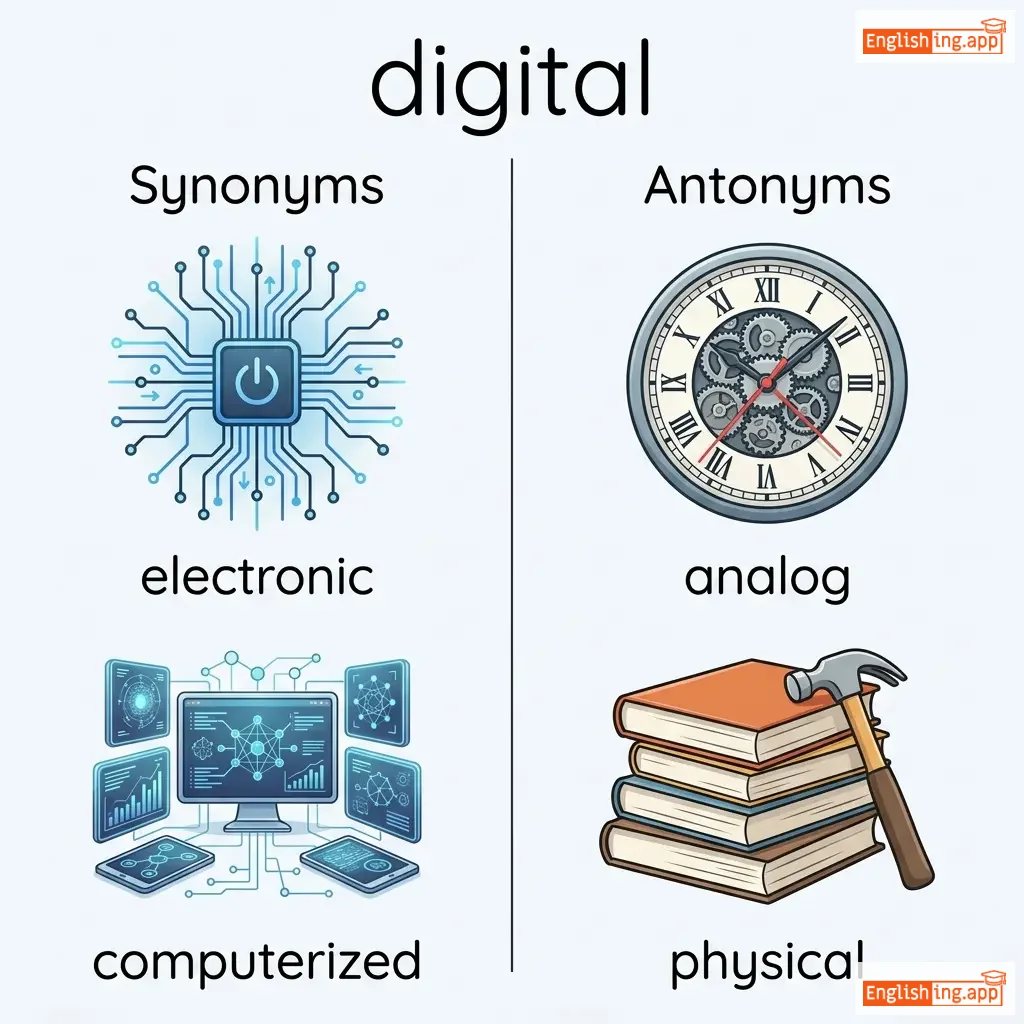
electronic, computerized, online, virtual
••••••
|
analog, physical
••••••
|
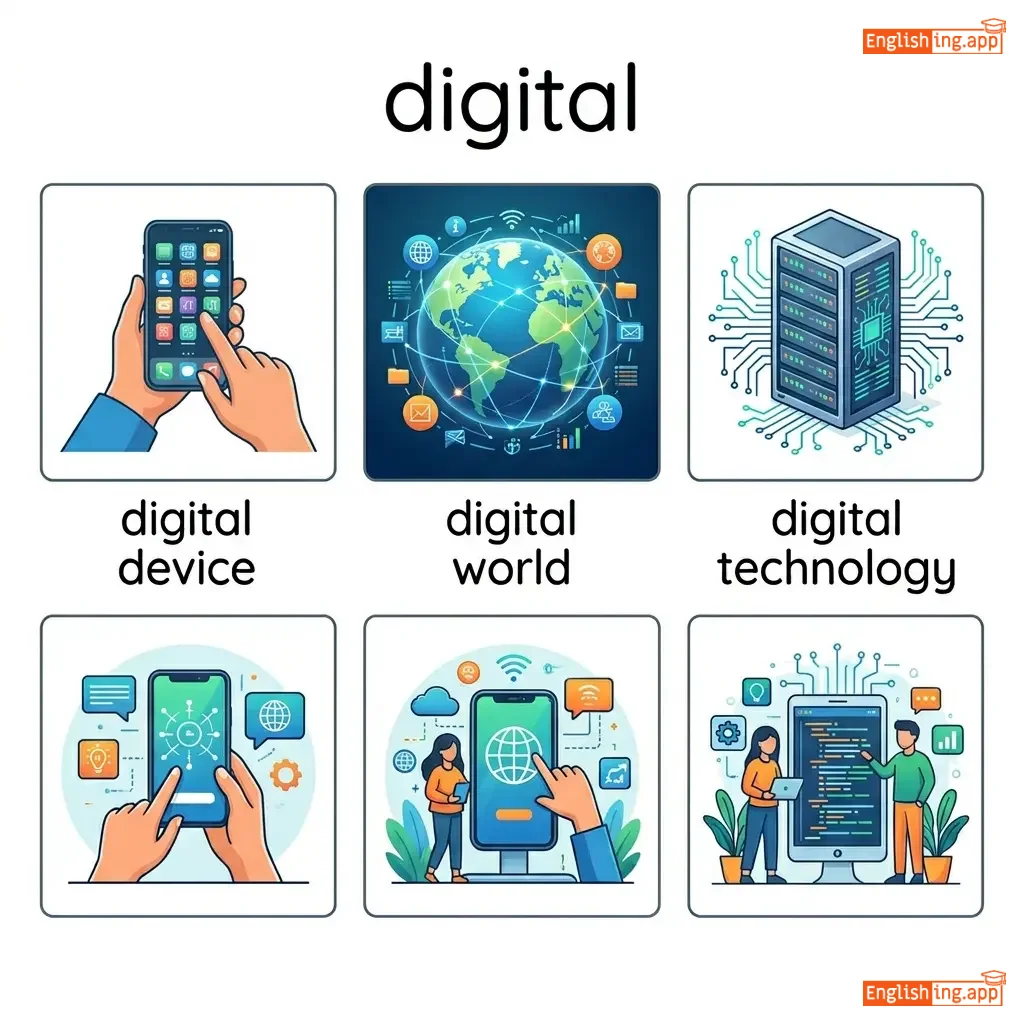
digital device, digital world, digital technology, digital marketing
••••••
|
数字化是连接网络世界的桥梁。
••••••
|
|
#10799
⛏️
|
/dɪɡ/
verb
(迪格)
••••••
|
- •••••• |
挖掘
wājué
••••••
|
dug
达格
••••••
|
dug
达格
••••••
|
digs
迪格斯
••••••
|
digging
迪格ing
••••••
|
to break up and move earth with a tool or machine, or with hands, paws, etc.
••••••
|
They decided to dig a hole for the new tree.
他们决定为新树挖一个洞。
••••••
|
他们决定为新树挖一个洞。
Tāmen juédìng wèi xīn shù wā yīgè dòng.
••••••
|
dig deep
挖深
••••••
|
to make a great effort or use inner strength
••••••
|
挖深
wā shēn
••••••
|
excavate, burrow, scoop, shovel
••••••
|
fill, cover
••••••
|
dig a hole, dig up, dig deep, dig into
••••••
|
DIG意味着挖掘 - 就像在土壤中寻找宝藏。
••••••
|
|
#10800
⚠️
|
/ˈdɪfɪkəlti/
noun
••••••
|
- •••••• | - •••••• | - •••••• | - •••••• | - •••••• | - •••••• |
the state or condition of being hard to do, deal with, or understand
••••••
|
He faced great difficulty in learning a new language. |
- •••••• |
in difficulty |
to be in trouble or facing problems
••••••
|
- •••••• |
challenge, hardship, obstacle, struggle, trouble
••••••
|
ease, simplicity, comfort
••••••
|
face difficulty, great difficulty, difficulty in, experience difficulty
••••••
|
No •••••• |
|
#10801
🔄
|
/ˈdɪfərəntli/
adverb
(diferenti)
••••••
|
- •••••• |
以不同方式
yi butong fangshi
••••••
|
- •••••• | - •••••• | - •••••• | - •••••• |
in a way that is not the same as another or as expected
••••••
|
She approached the problem differently than her colleagues. |
她以不同的方式解决了这个问题,比她的同事们更有创意。
Ta yi butong de fangshi jiejue le zhege wenti, bi ta de tongshi men geng you chuangyi.
••••••
|
- •••••• | - •••••• | - •••••• |
otherwise, uniquely, unusually, distinctly
••••••
|
similarly, alike
••••••
|
think differently, act differently, look differently, behave differently
••••••
|
以不同方式表示diffferently,即做事与他人或预期不同。
••••••
|
|
#10802
⚖️
|
/ˈdɪfər/
verb
(迪费尔)
••••••
|
- •••••• |
不同
butong
••••••
|
differed
迪费尔德
••••••
|
differed
迪费尔德
••••••
|
differs
迪费尔斯
••••••
|
differing
迪费尔英
••••••
|
to be unlike or distinct from something else
••••••
|
Opinions differ on this issue.
关于这个问题,意见有所不同。
••••••
|
关于这个问题,意见有所不同。
guanyu zhe ge wenti, yijian you suo butong.
••••••
|
agree to differ
同意不同
••••••
|
to accept that people will not agree
••••••
|
同意不同
tongyi butong
••••••
|
vary, contrast, diverge, disagree
••••••
|
match, agree
••••••
|
differ in opinion, differ from, differ greatly, differ slightly
••••••
|
Differ意味着⚖️ — 当意见不同,表明我们存在差异。
••••••
|
|
#10803
🥗
|
/ˈdaɪət/
noun
(daiet)
••••••
|
- •••••• |
饮食
yinshi
••••••
|
- •••••• | - •••••• | - •••••• | - •••••• |
the kinds of food that a person usually eats
••••••
|
He follows a strict vegetarian diet. |
他遵循严格的素食饮食。
Tā zūnxún yángé de sùshí yǐnshí.
••••••
|
go on a diet |
to start eating less or differently to lose weight
••••••
|
开始节食
kāishǐ jiéshí
••••••
|
nutrition, food, meals, regimen
••••••
|
overeating, bingeing
••••••
|
healthy diet, balanced diet, strict diet, special diet
••••••
|
饮食 = 以诺食,尽量健康选择
••••••
|
|
#10804
🙏
|
/dɪˈvoʊt/
verb
(dɪˈvoʊt)
••••••
|
- •••••• |
奉献
fèngxiàn
••••••
|
devoted
devoted
••••••
|
devoted
devoted
••••••
|
devotes
devotes
••••••
|
devoting
devoting
••••••
|
to give time, effort, or resources to something
••••••
|
She devotes much of her time to helping the poor.
她把大部分时间都奉献给了帮助穷人。
••••••
|
她把大部分时间都奉献给了帮助穷人。
Tā bǎ dà bùfen shíjiān dōu fèngxiàn gěile bāngzhù qióngrén.
••••••
|
devote oneself to
致力于
••••••
|
to dedicate oneself fully to something
••••••
|
致力于
zhìlì yú
••••••
|
dedicate, commit, allocate, apply
••••••
|
neglect, ignore
••••••
|
devote time, devote energy, devote effort, devote resources
••••••
|
Devote = 奉献,像把时间奉献给重要的目标 🙏.
••••••
|
|
#10805
📈
|
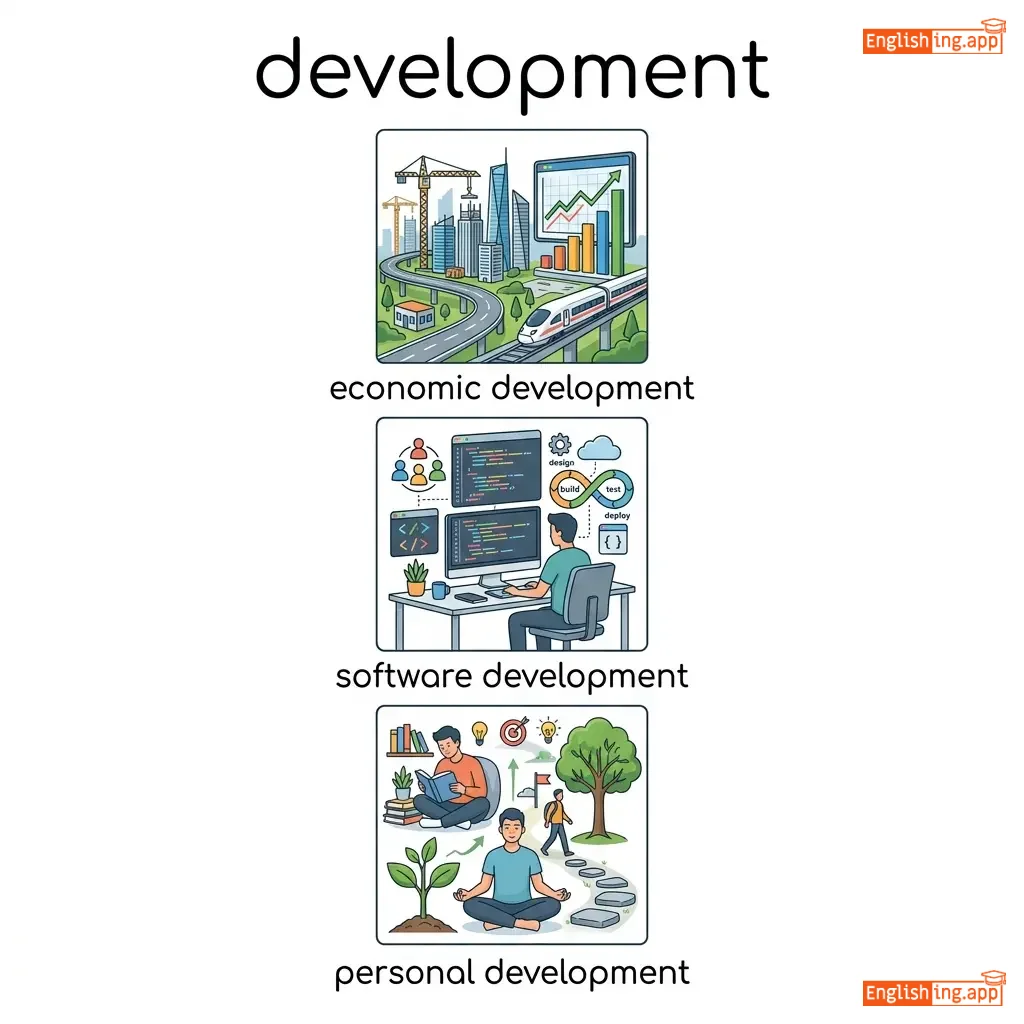
/dɪˈvɛləpmənt/
noun
(发展)
••••••
|
|
发展
fazhan
••••••
|
- •••••• | - •••••• | - •••••• | - •••••• |
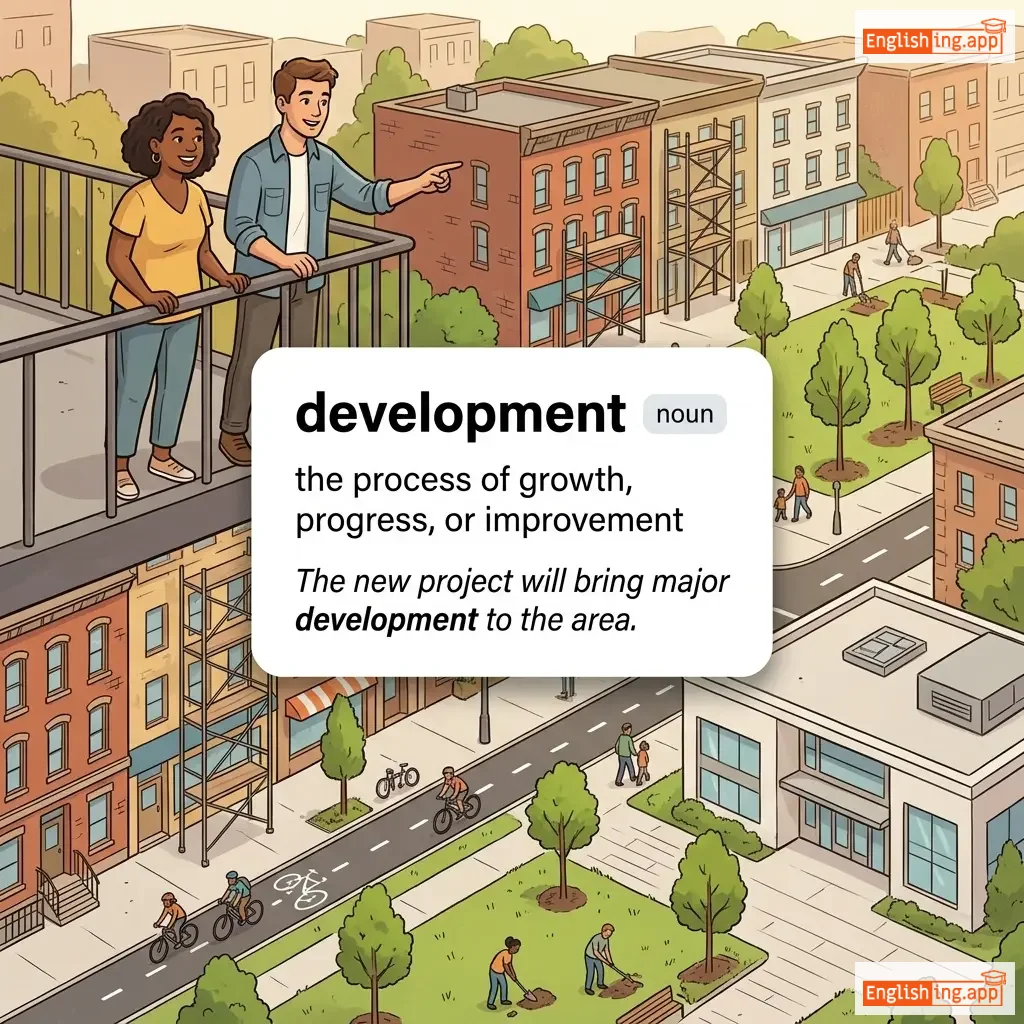
the process of growth, progress, or improvement
••••••
|
The new project will bring major development to the area. |
这个新项目将为该地区带来重大进展。
Zhège xīn xiàngmù jiāng wèi gāi dìqū dàilái zhòngdà jìnzhǎn.
••••••
|
real estate development |
the process of building new properties
••••••
|
房地产发展
fángdìchǎn fāzhǎn
••••••
|
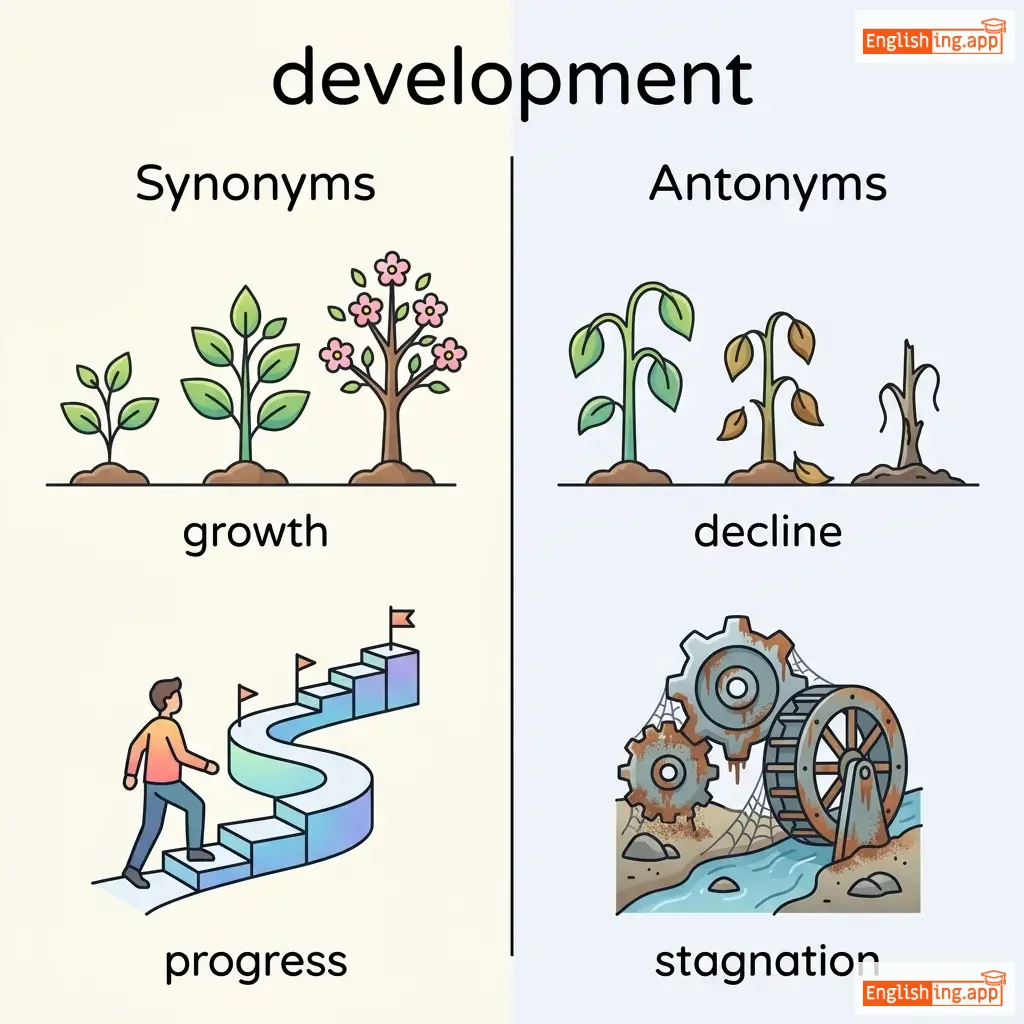
growth, progress, advancement, improvement
••••••
|
decline, stagnation
••••••
|
economic development, software development, personal development, development project
••••••
|
Development = 发展意味着增长 📈 — 就像城市中不断兴建的新楼房。
••••••
|
|
#10806
🌱
|
/dɪˈvɛləpɪŋ/
verb
(dé-veh-ló-píng)
••••••
|
- •••••• |
发展
fazhan
••••••
|
- •••••• | - •••••• | - •••••• |
developing
dé-veh-ló-píng
••••••
|
the process of growing, improving, or becoming more advanced
••••••
|
She is developing new skills in programming.
她正在编程中发展新技能。
••••••
|
她正在编程中发展新技能。
Ta zhengzai biancheng zhong fazhan xin jine.
••••••
|
developing country
发展中国家
••••••
|
a country that is in the process of becoming more economically and socially advanced
••••••
|
发展中国家
fazhan zhongguo
••••••
|
advancing, progressing, improving, evolving
••••••
|
regressing, declining
••••••
|
developing country, developing skill, developing idea, developing relationship
••••••
|
发展就像植物在生长一样,人或国家也在不断地进步。
••••••
|
|
#10807
🌱
|
/dɪˈvɛləp/
verb
(发展)
••••••
|
|
发展
fāzhǎn
••••••
|
developed
发展过
••••••
|
developed
发展过
••••••
|
develops
发展
••••••
|
developing
发展的
••••••
|
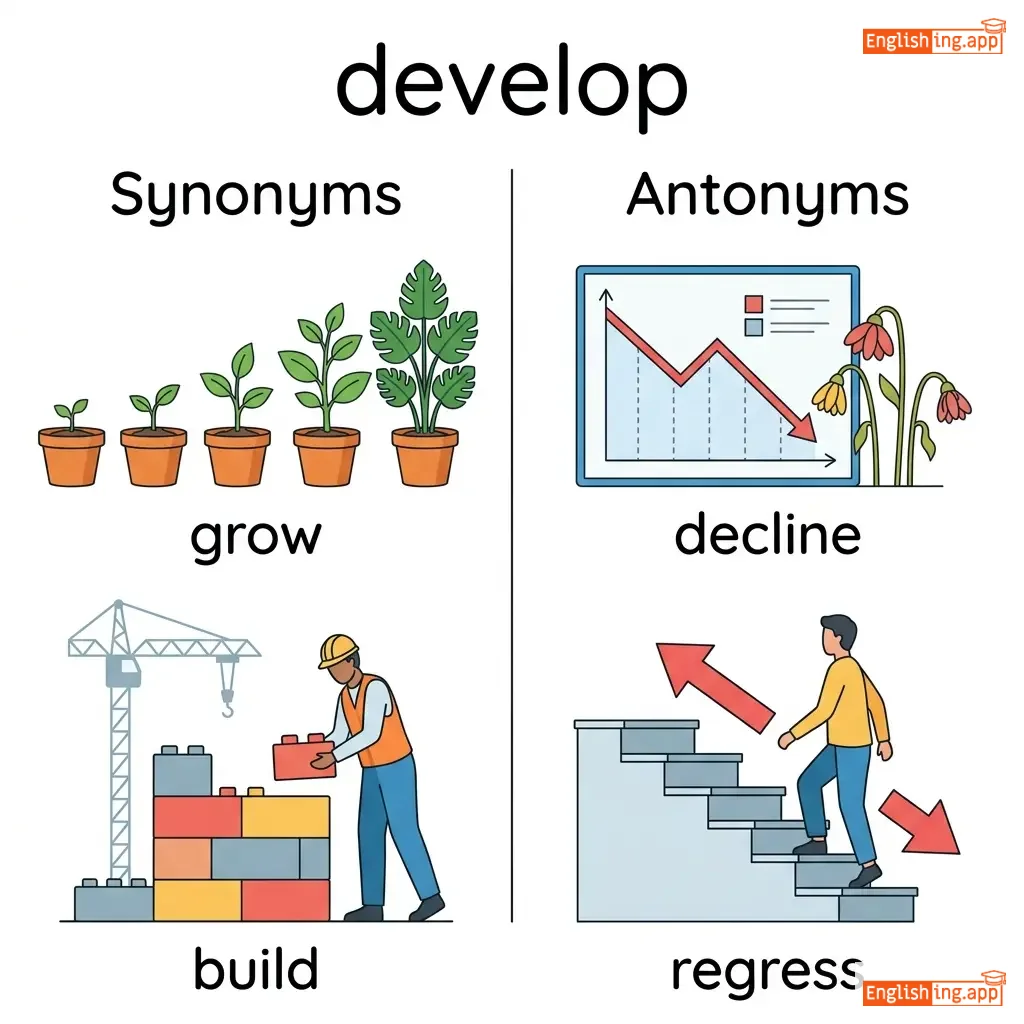
To grow, advance, or create something over time.
••••••
|
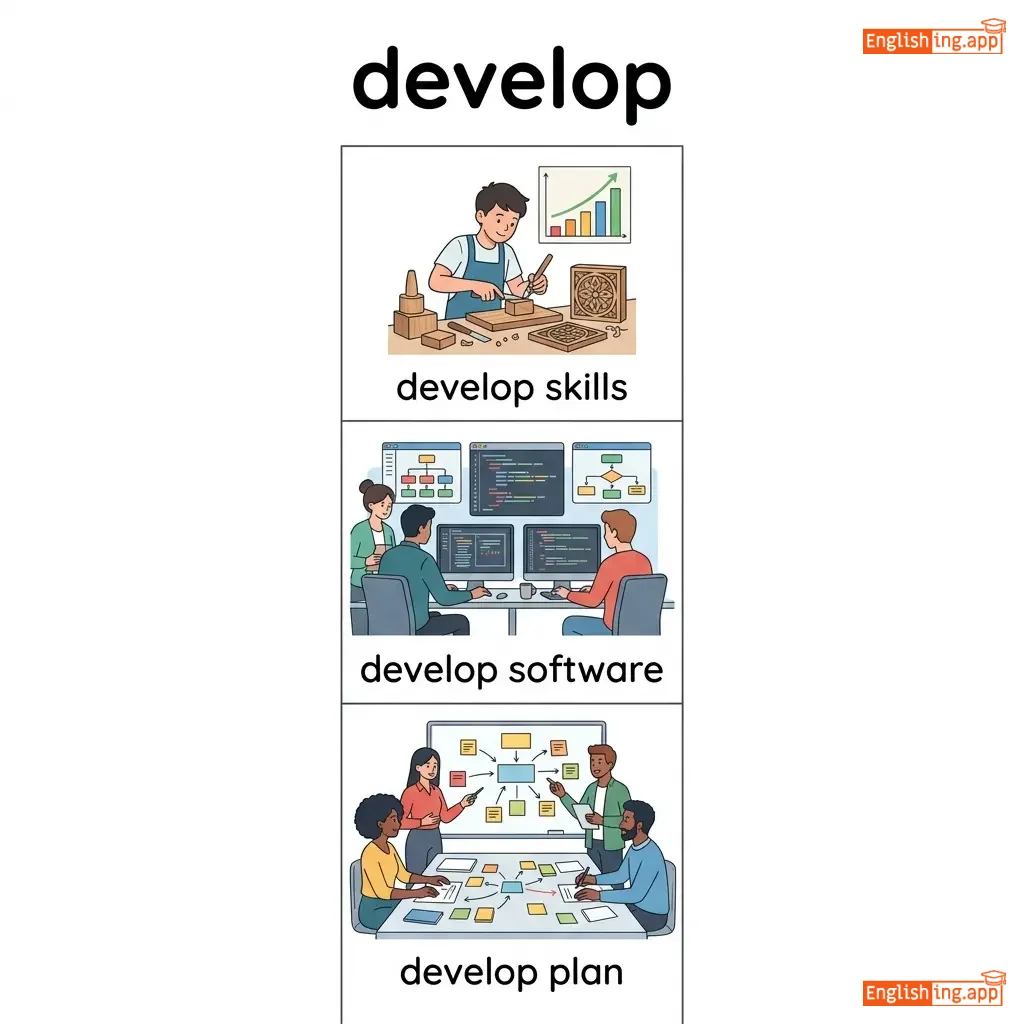
The company aims to develop new software solutions.
公司旨在开发新的软件解决方案。
••••••
|
公司旨在开发新的软件解决方案。
Gōngsī zhǐ zài kāifā xīn de ruǎnjiàn jiějué fāng'àn.
••••••
|
develop a habit
培养一个习惯
••••••
|
To gradually acquire a habit.
••••••
|
培养一个习惯
pèiyǎng yīgè xíguàn
••••••
|
grow, build, progress, create, expand
••••••
|
decline, regress, stop
••••••
|
develop skills, develop software, develop plan, develop relationship
••••••
|
发展就像是一棵树:随着时间成长 🌳
••••••
|
|
#10808
⚖️
|
/dɪˈtɜː.mɪn/
verb
(dɪˈtɜː.mɪn)
••••••
|
- •••••• |
决定
jueding
••••••
|
determined
dɪˈtɜː.mɪnd
••••••
|
determined
dɪˈtɜː.mɪnd
••••••
|
determines
dɪˈtɜː.mɪnz
••••••
|
determining
dɪˈtɜː.mɪnɪŋ
••••••
|
To decide or establish something after consideration.
••••••
|
The jury will determine the outcome of the case.
陪审团将决定案件的结果。
••••••
|
陪审团将决定案件的结果。
Péishěn tuán jiāng juédìng ànjiàn de jiéguǒ.
••••••
|
determine the course of action
确定行动方针
••••••
|
To decide what should be done.
••••••
|
确定行动方针
quèdìng xíngdòng fāngzhēn
••••••
|
decide, establish, conclude, define, settle
••••••
|
hesitate, doubt
••••••
|
determine the cause, determine the result, determine the effect, determine value
••••••
|
决定意味着做出决定,就像老师决定谁会通过一样。
••••••
|
|
#10809
🕵️
|
/dɪˈtɛkt/
verb
(dɪˈtɛkt)
••••••
|
|
检测
jiǎncè
••••••
|
detected
dɪˈtɛktəd
••••••
|
detected
dɪˈtɛktəd
••••••
|
detects
dɪˈtɛkts
••••••
|
detecting
dɪˈtɛktɪŋ
••••••
|
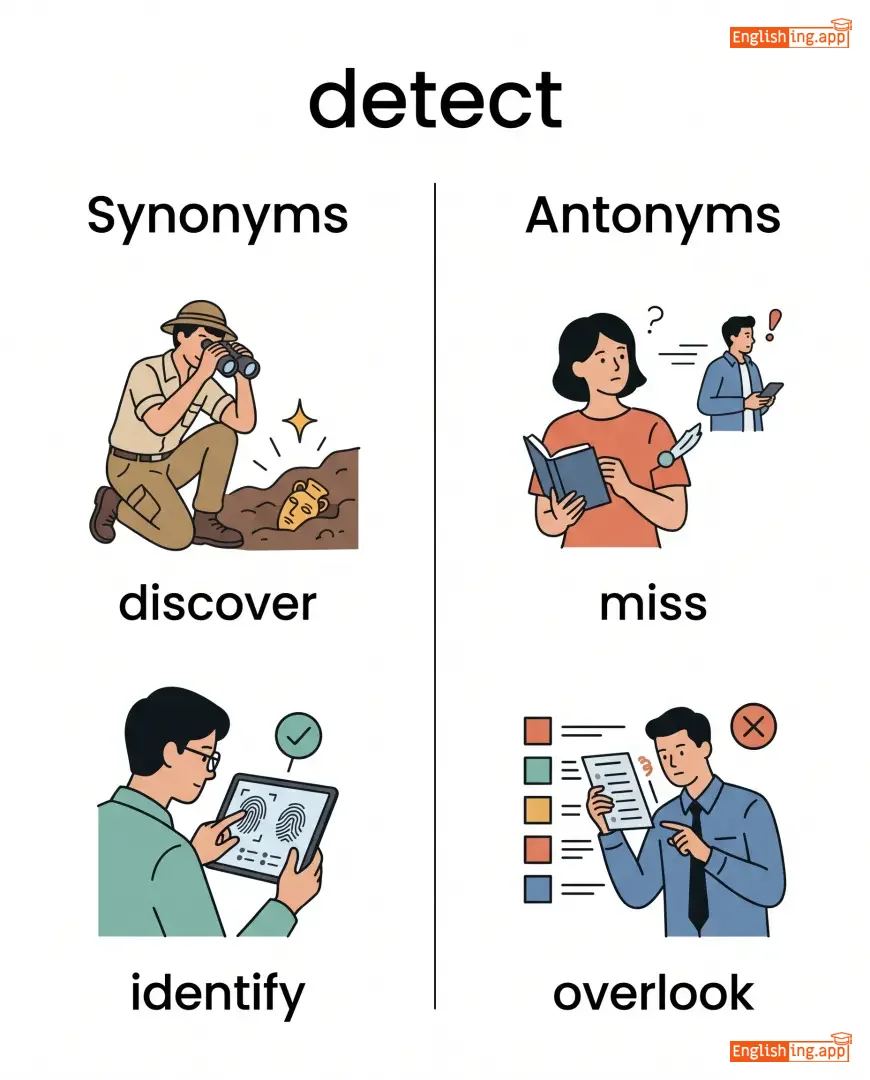
To discover or identify the presence of something.
••••••
|
The device can detect smoke in the room.
设备可以检测到房间里的烟雾。
••••••
|
设备可以检测到房间里的烟雾。
Shèbèi kěyǐ jiǎncè dào fángjiān lǐ de yānwù.
••••••
|
detect a problem
检测问题
••••••
|
To notice or discover an issue.
••••••
|
检测问题
jiǎncè wèntí
••••••
|
discover, identify, notice, sense, recognize
••••••
|
miss, overlook, ignore
••••••
|
detect a signal, detect movement, detect fraud, detect error
••••••
|
检测就是当你看到烟雾时,设备就能检测出来。
••••••
|
|
#10810
✊
|
/ˌdɛmənˈstreɪʃən/
noun
(示威)
••••••
|
- •••••• |
示威, 示范
shìwēi, shìfàn
••••••
|
- •••••• | - •••••• | - •••••• | - •••••• |
the act of showing something clearly, or a public protest
••••••
|
The workers organized a demonstration for better wages. |
工人们组织了一场争取更高工资的示威。
Gōngrén men zǔzhīle yī chǎng zhēngqǔ gèng gāo gōngzī de shìwēi.
••••••
|
peaceful demonstration |
a non-violent public protest
••••••
|
和平示威
hépíng shìwēi
••••••
|
protest, rally, march, display, presentation
••••••
|
silence, inaction
••••••
|
street demonstration, public demonstration, demonstration of power, demonstration of skills
••••••
|
Demonstration意味着展示或抗议
••••••
|
|
#10811
🔍
|
/ˈdiː.teɪl/
noun
(di-tei-er)
••••••
|
- •••••• |
细节
xijie
••••••
|
- •••••• | - •••••• | - •••••• | - •••••• |
An individual feature, fact, or item of information.
••••••
|
She explained the plan in great detail. |
她详细解释了计划。
Ta xiangxi jieshi le jihua.
••••••
|
the devil is in the details |
Problems and difficulties are hidden in the smaller parts of something.
••••••
|
魔鬼藏在细节中
Mogui cang zai xijie zhong
••••••
|
part, item, element, feature, fact
••••••
|
whole, entirety
••••••
|
in detail, attention to detail, important detail, small detail
••••••
|
细节 = 就像拼图,每个部分都很重要。
••••••
|
|
#10812
💥
|
/dɪˈstrʌkʃən/
noun
(毁灭)
••••••
|
- •••••• |
毁灭
huǐmiè
••••••
|
- •••••• | - •••••• | - •••••• | - •••••• |
the act of causing so much damage to something that it no longer exists or cannot be repaired
••••••
|
The fire caused the destruction of the building. |
火灾造成了建筑物的毁灭。
huǒzāi zàochéngle jiànzhúwù de huǐmiè.
••••••
|
path of destruction |
a series of damaged things left behind
••••••
|
毁灭之路
huǐmiè zhī lù
••••••
|
ruin, devastation, demolition, annihilation
••••••
|
creation, construction, repair
••••••
|
cause destruction, widespread destruction, total destruction, massive destruction
••••••
|
Destruction意味着毁灭 - 一旦某物被摧毁,就是毁灭
••••••
|
|
#10813
🖥️
|
/dɛsk/
noun
(desk)
••••••
|
- •••••• |
书桌
shuzhuo
••••••
|
- •••••• | - •••••• | - •••••• | - •••••• |
a piece of furniture with a flat surface used for writing or working
••••••
|
The books are on the desk. |
书籍在书桌上。
Shuji zai shuzhuo shang.
••••••
|
front desk |
the main reception area in an office or hotel
••••••
|
接待台
jiedaitai
••••••
|
table, workstation, counter, bureau
••••••
|
floor, ground
••••••
|
office desk, study desk, front desk, wooden desk
••••••
|
书桌上完成所有工作
••••••
|
|
#10814
❤️
|
/dɪˈzaɪər/
noun, verb
(欲望)
••••••
|
- •••••• |
欲望
yùwàng
••••••
|
desired
欲望了
••••••
|
desired
欲望了
••••••
|
desires
欲望者
••••••
|
desiring
欲望中
••••••
|
a strong feeling of wanting something or wishing for something to happen
••••••
|
He has a strong desire to travel the world.
他有强烈的欲望去环游世界。
••••••
|
他有强烈的欲望去环游世界。
Tā yǒu qiángliè de yùwàng qù huányóu shìjiè.
••••••
|
burning desire
炙热的欲望
••••••
|
an intense longing or wish
••••••
|
炙热的欲望
zhìrè de yùwàng
••••••
|
wish, longing, craving, passion, aspiration
••••••
|
aversion, dislike, hatred
••••••
|
express desire, strong desire, desire for success, burning desire
••••••
|
Desire 就是欲望,像炙热的欲望一样强烈。
••••••
|
|
#10815
👗
|
/dɪˈzaɪnər/
noun
(设计师)
••••••
|
- •••••• |
设计师
shejishi
••••••
|
- •••••• | - •••••• | - •••••• | - •••••• |
a person who plans and creates the form or structure of something
••••••
|
The fashion designer presented her new collection. |
时尚设计师展示了她的新系列。
Shíshàng shèjì shī zhǎnshìle tā de xīn xìliè.
••••••
|
- •••••• | - •••••• | - •••••• |
creator, artist, architect, stylist
••••••
|
user, consumer
••••••
|
fashion designer, interior designer, graphic designer, web designer
••••••
|
设计师来源于'设计' → 设计的就是设计师
••••••
|
|
#10816
🎨
|
/dɪˈzaɪn/
verb
••••••
|
- •••••• | - •••••• |
designed
••••••
|
designed
••••••
|
designs
••••••
|
designing
••••••
|
to plan and create something with a particular purpose or look
••••••
|
She will design the new company logo. |
- •••••• |
design a plan |
to create or outline a detailed plan
••••••
|
- •••••• |
plan, create, draft, sketch, outline
••••••
|
destroy, ruin, neglect
••••••
|
design a logo, design a system, design clothes, interior design
••••••
|
No •••••• |
|
#10817
🏅
|
/dɪˈzɜːrv/
verb
(迪ˈ兹ɜːrv)
••••••
|
- •••••• |
值得
zhí dé
••••••
|
deserved
迪ˈ兹ɜːrvd
••••••
|
deserved
迪ˈ兹ɜːrvd
••••••
|
deserves
迪ˈ兹ɜːrvz
••••••
|
deserving
迪ˈ兹ɜːrving
••••••
|
To be worthy of something, usually a reward or punishment.
••••••
|
She worked hard and deserves recognition.
她努力工作,值得认可。
••••••
|
她努力工作,值得认可。
Tā nǔ lì gōng zuò, zhí dé rèn kě.
••••••
|
get what you deserve
得到你应得的
••••••
|
Receive the outcome that is merited by your actions.
••••••
|
得到你应得的
Dé dào nǐ yīng dé de
••••••
|
merit, earn, warrant, justify, be entitled to
••••••
|
forfeit, lose
••••••
|
deserve praise, deserve attention, deserve respect
••••••
|
值得意味着你应该得到的东西: 努力工作,你将得到你应得的。
••••••
|
|
#10818
📝
|
/dɪˈskrɪpʃən/
noun
(dɪsˈkrɪpʃən)
••••••
|
|
描述
miaoshu
••••••
|
- •••••• | - •••••• | - •••••• | - •••••• |
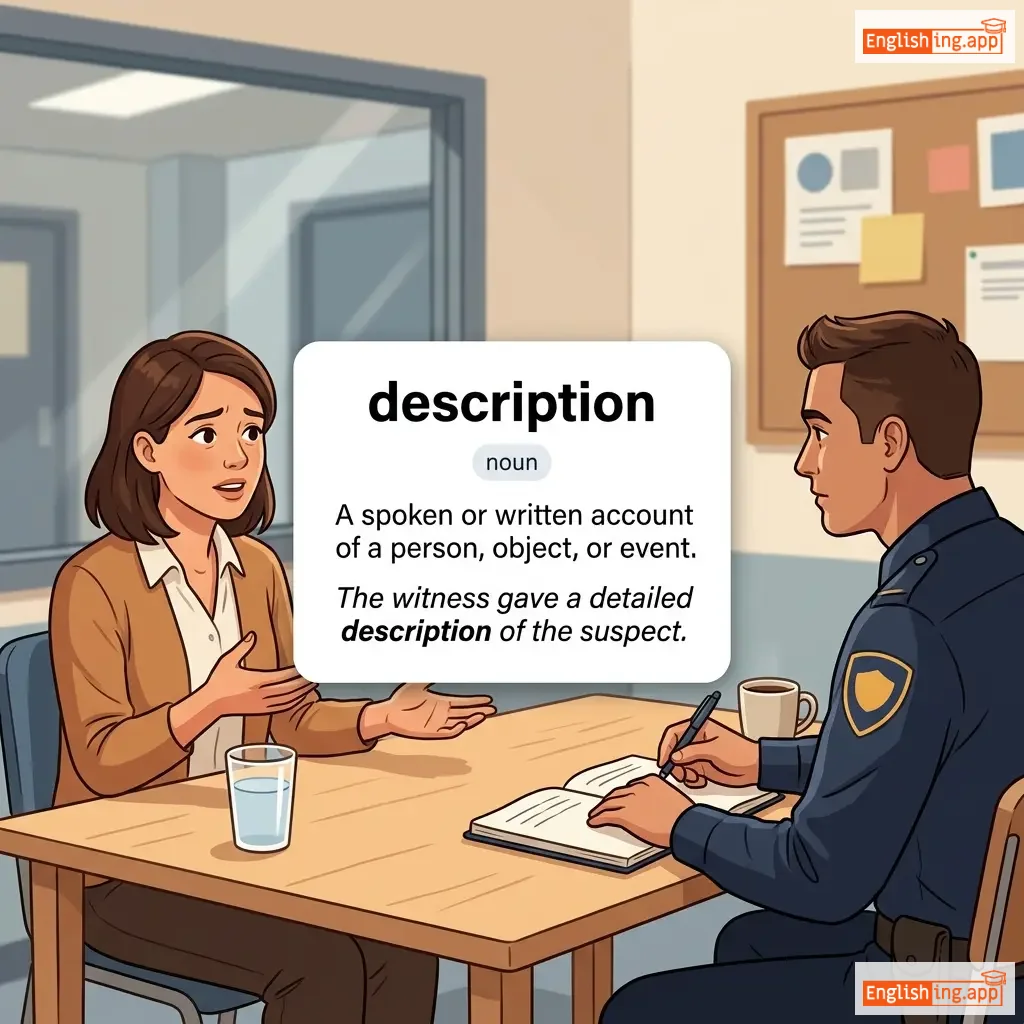
A spoken or written account of a person, object, or event.
••••••
|
The witness gave a detailed description of the suspect. |
目击者详细描述了嫌疑人。
Mùjī zhě xiángxì miáoshùle xiányí rén.
••••••
|
beyond description |
Too great or extreme to be described.
••••••
|
无法描述
wúfǎ miáoshù
••••••
|
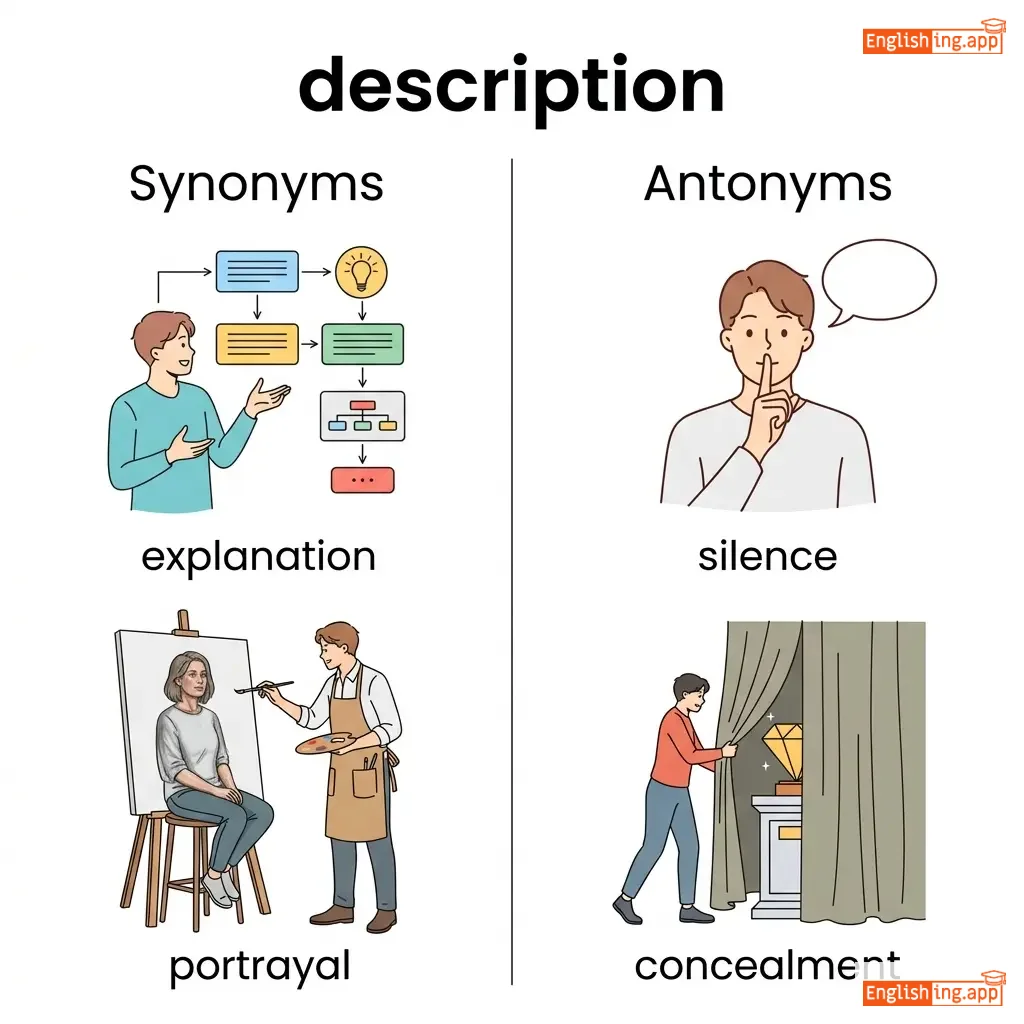
explanation, portrayal, depiction, account, representation
••••••
|
silence, concealment
••••••
|
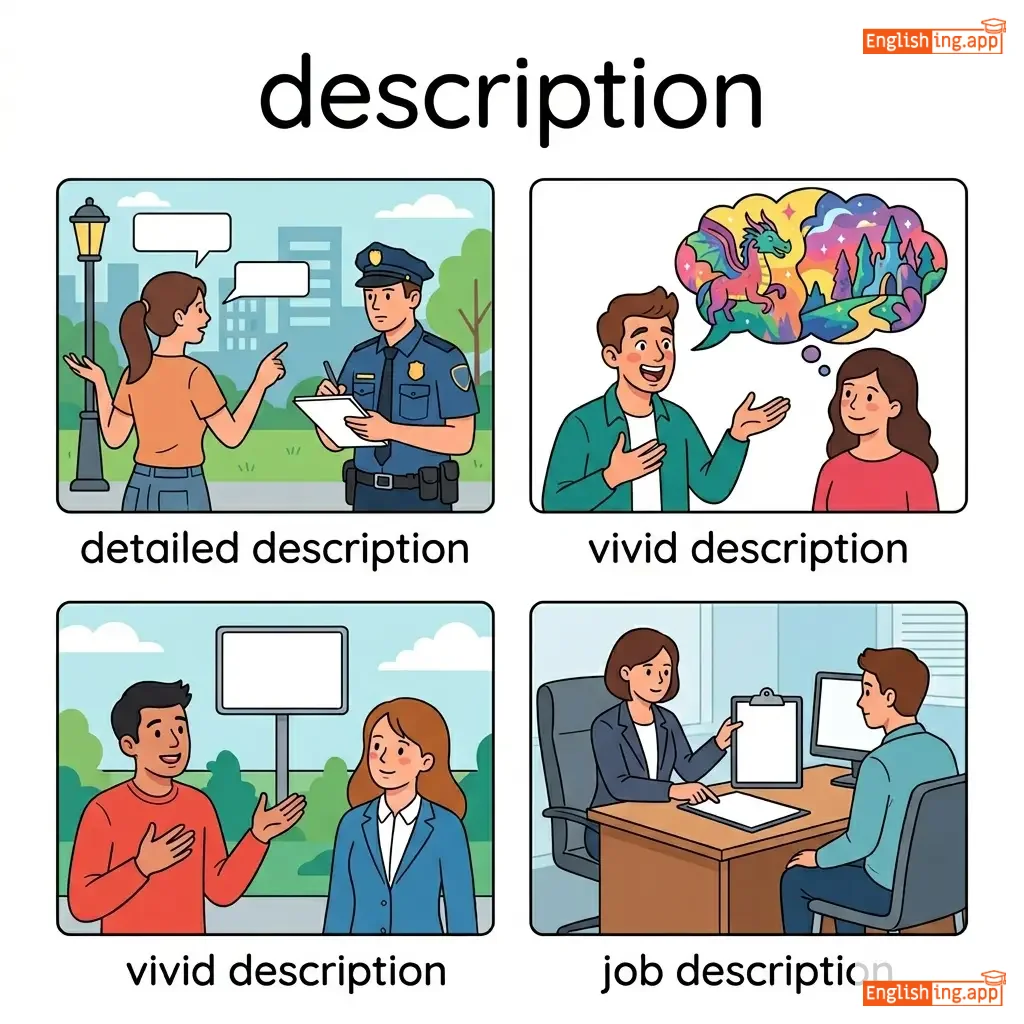
detailed description, vivid description, job description
••••••
|
Description 代表描述 - 描述时,我们给出具体的描述。
••••••
|
|
#10819
👮
|
/ˈdɛpjʊti/
noun
(迪普蒂)
••••••
|
- •••••• |
代理人
dàilǐrén
••••••
|
- •••••• | - •••••• | - •••••• | - •••••• |
A person appointed as a substitute with power to act.
••••••
|
The deputy will lead the meeting in the manager’s absence.
代理人在经理缺席时将主持会议。
••••••
|
代理人在经理缺席时将主持会议。
Dàilǐrén zài jīnglǐ quēxí shí jiāng zhǔchí huìyì.
••••••
|
- •••••• | - •••••• | - •••••• |
assistant, representative, delegate, subordinate, second-in-command
••••••
|
chief, leader, head
••••••
|
deputy manager, deputy minister, deputy director
••••••
|
Deputy表示代理人,像是Deputy Manager(副经理)。
••••••
|
|
#10820
⚖️
|
/dɪˈpɛndɪŋ/
verb
(dɪˈpɛndɪŋ)
••••••
|
- •••••• |
取决于
qujueyu
••••••
|
- •••••• | - •••••• |
depends
dɪˈpɛndz
••••••
|
depending
dɪˈpɛndɪŋ
••••••
|
Being contingent on or influenced by something.
••••••
|
The success of the plan is depending on the team's effort.
计划的成功取决于团队的努力。
••••••
|
计划的成功取决于团队的努力。
Jihua de chenggong qujueyu tuandui de nuli.
••••••
|
depending on
取决于
••••••
|
Subject to or influenced by something.
••••••
|
取决于
qujueyu
••••••
|
relying, hinging, conditioned, awaiting
••••••
|
independent, unrelated
••••••
|
depending on, depending heavily, depending largely
••••••
|
Depending 意味着取决于 - 就像天气取决于云朵。
••••••
|
|
#10821
🧒
|
/dɪˈpɛndənt/
adjective
(dɪˈpɛndənt)
••••••
|
- •••••• |
依赖
yīlài
••••••
|
- •••••• | - •••••• | - •••••• | - •••••• |
Relying on someone or something else for support or help.
••••••
|
Children are dependent on their parents for care. |
孩子们依赖父母的照顾。
Háizimen yīlài fùmǔ de zhàogù.
••••••
|
dependent on |
Relying on someone or something.
••••••
|
依赖于
yīlài yú
••••••
|
reliant, needy, subordinate, conditional, subject
••••••
|
independent, self-sufficient, autonomous
••••••
|
dependent on, financially dependent, emotionally dependent
••••••
|
依赖意味着依靠,就像孩子们依赖父母一样。
••••••
|
|
#10822
🤲
|
/dɪˈpɛnd/
verb
(依赖)
••••••
|
|
依赖
yīlài
••••••
|
depended
••••••
|
depended
••••••
|
depends
••••••
|
depending
••••••
|
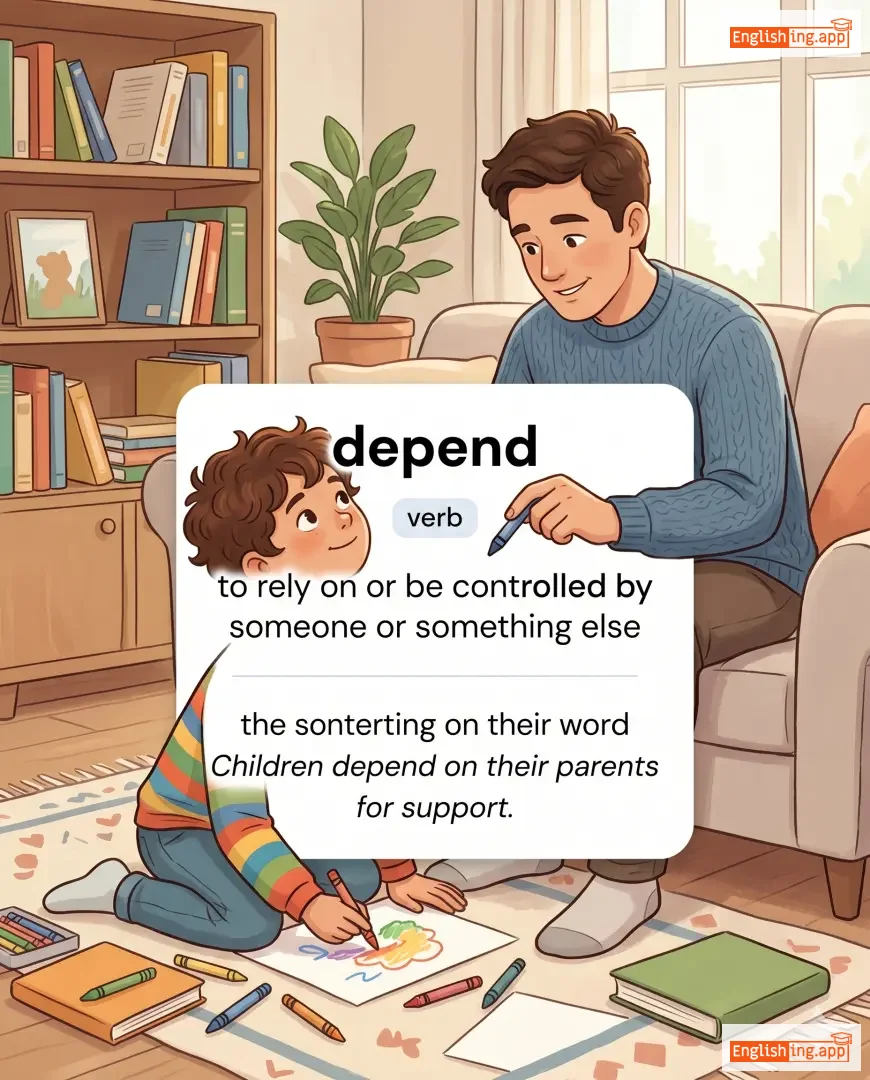
to rely on or be controlled by someone or something else
••••••
|
Children depend on their parents for support.
孩子们依赖父母来提供支持。
••••••
|
孩子们依赖父母来提供支持。
Háizimen yīlài fùmǔ lái tígōng zhīchí.
••••••
|
depend on
依赖于
••••••
|
to rely on someone or something
••••••
|
依赖于
yīlài yú
••••••
|
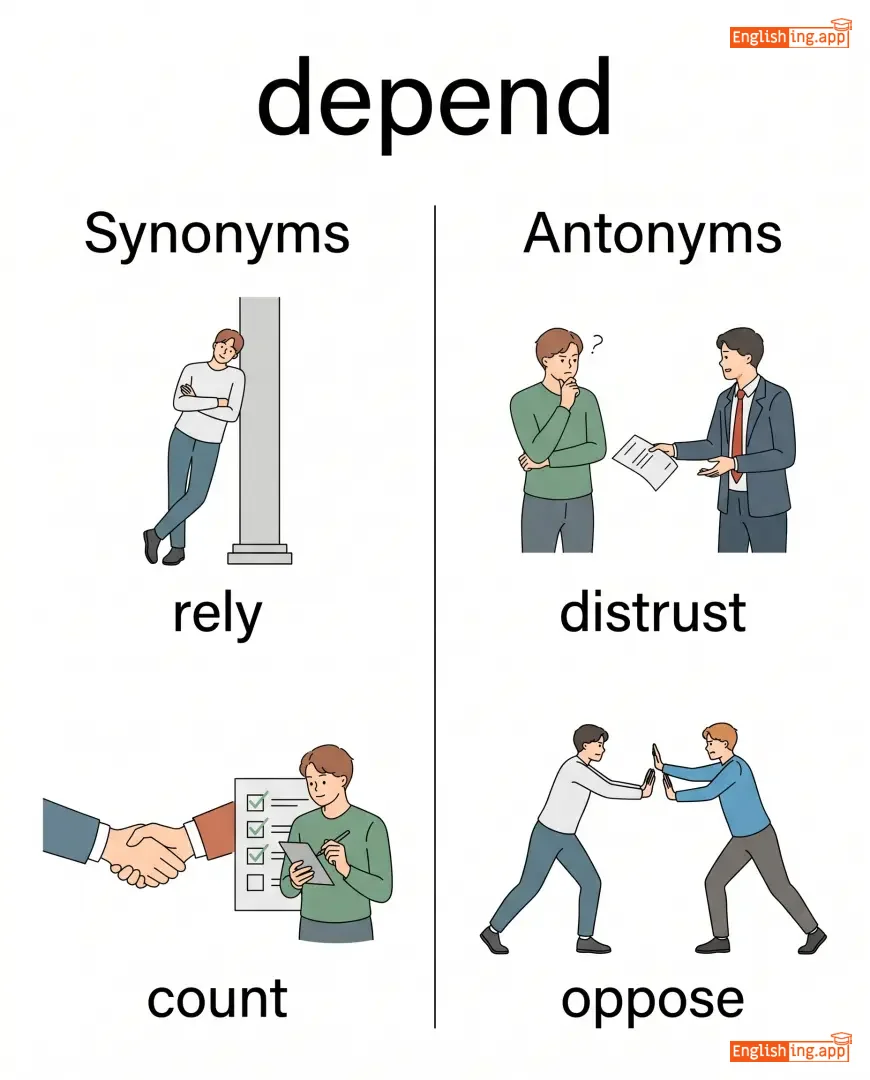
rely, count, trust, hinge
••••••
|
distrust, oppose
••••••
|
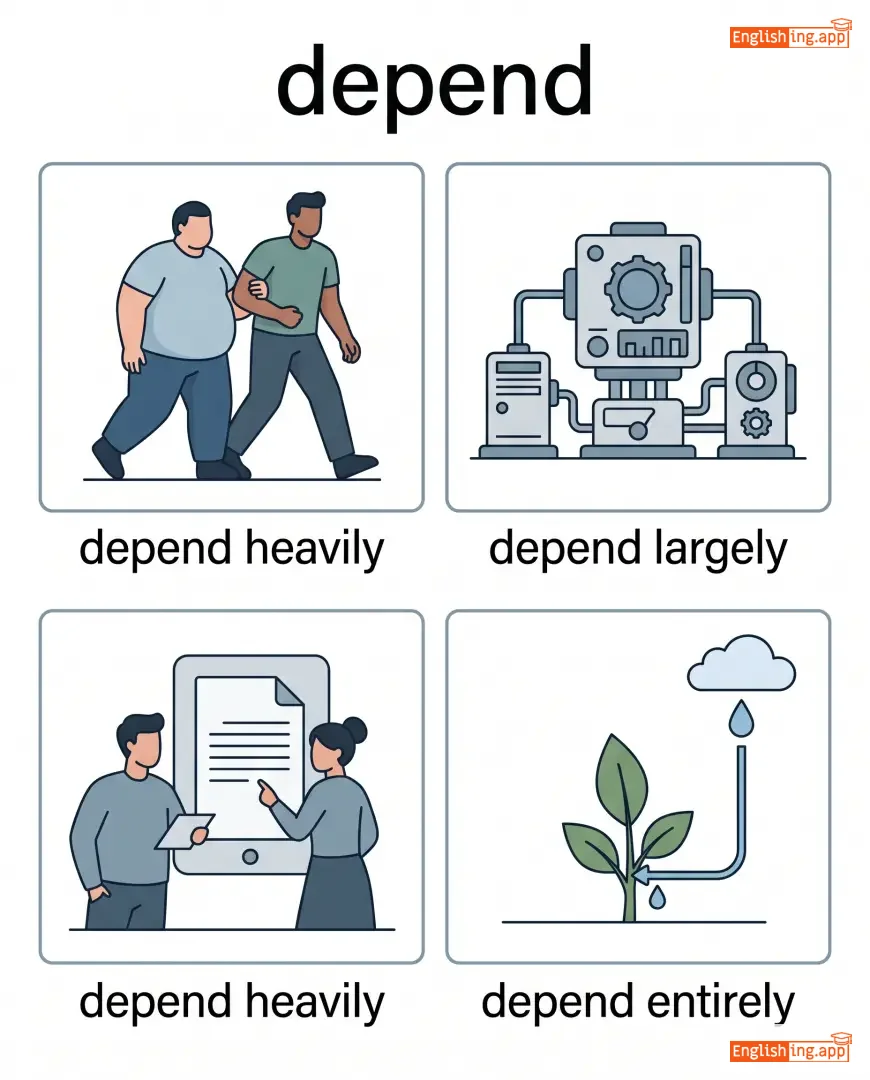
depend heavily, depend largely, depend entirely, depend directly
••••••
|
Depend = De (德) + pend (佩恩) → 我依赖你,我依靠你。
••••••
|
|
#10823
🏢
|
/dɪˈpɑːrtmənt/
noun
(部门)
••••••
|
- •••••• |
部门
bumen
••••••
|
- •••••• | - •••••• | - •••••• | - •••••• |
a division of a large organization such as a government, university, or company
••••••
|
She works in the marketing department. |
她在市场部门工作。
Ta zai shichang bumen gongzuo.
••••••
|
department store |
a large retail store selling various goods in separate sections
••••••
|
百货商店
baihuo shangdian
••••••
|
division, section, branch, bureau
••••••
|
whole, entirety
••••••
|
government department, police department, sales department, university department
••••••
|
部门 = 组织的组成部分
••••••
|
|
#10824
🙅
|
/dɪˈnaɪ/
verb
(dɪˈnaɪ)
••••••
|
- •••••• |
否认
fǒurèn
••••••
|
denied
dɪˈnaɪd
••••••
|
denied
dɪˈnaɪd
••••••
|
denies
dɪˈnaɪz
••••••
|
denying
dɪˈnaɪɪŋ
••••••
|
to refuse to accept or admit something; to declare something untrue
••••••
|
He denied stealing the money.
他否认偷了钱。
••••••
|
他否认偷了钱。
Tā fǒurèn tōu le qián.
••••••
|
deny responsibility
否认责任
••••••
|
to refuse to accept blame for something
••••••
|
否认责任
Fǒurèn zérèn
••••••
|
reject, refuse, disown, repudiate
••••••
|
admit, accept, acknowledge
••••••
|
deny allegation, deny access, deny request, deny responsibility
••••••
|
Deny = 否认 → 不接受
••••••
|
Vocabulary Quiz
Test your vocabulary by matching words with their translations or meanings.
Login to take the quiz
Comments (0)
Share your thoughts and join the discussion.
Join the discussion by logging in
Login to CommentNo comments yet
Be the first to share your thoughts!