

Swipe left or right, or use the buttons. Tap image to zoom.
例句翻译
单词
Lesson 259Lesson 259 - 遮罩切换
|
表情符号
|
单词 | Images | 翻译 | 过去时 | 过去分词 | 第三人称单数 | 动名词 | 含义 | 例句 | 例句翻译 | 示例表达 | 示例表达含义 | 示例表达翻译 | 同义词 | 反义词 | 搭配词 | 助记符 |
|---|---|---|---|---|---|---|---|---|---|---|---|---|---|---|---|---|---|
|
#7740
🗡️
|
/ˈruːθləs/
adjective
(rúthlèis)
••••••
|
- •••••• |
无情的
wúqíng de
••••••
|
- •••••• | - •••••• | - •••••• | - •••••• |
Having or showing no pity or compassion for others.
••••••
|
The ruthless leader crushed all opposition. |
无情的领导者粉碎了所有反对。
Wúqíng de lǐngdǎo zhě fěnsuìle suǒyǒu fǎnduì.
••••••
|
ruthless efficiency |
Extreme effectiveness without concern for fairness or compassion.
••••••
|
无情的效率
wúqíng de xiàolǜ
••••••
|
merciless, cruel, pitiless, harsh, brutal
••••••
|
compassionate, kind, merciful
••••••
|
ruthless dictator, ruthless tactics, ruthless ambition, ruthless efficiency
••••••
|
Ruth-less意味着没有Ruth,没有同情 - 无情的。
••••••
|
|
#7741
🌸
|
/ˈsæf.rən/
noun
(藏红花)
••••••
|
- •••••• |
藏红花
zàng hóng huā
••••••
|
- •••••• | - •••••• | - •••••• | - •••••• |
A spice derived from the flower of Crocus sativus, used for flavoring and coloring food.
••••••
|
She added saffron to the rice for flavor and color. |
她将藏红花加入米饭中以增加风味和颜色。
Tā jiāng zàng hóng huā jiārù mǐfàn zhōng yǐ zēngjiā fēngwèi hé yánsè.
••••••
|
- •••••• | - •••••• | - •••••• |
spice, seasoning, flavoring
••••••
|
none, blandness
••••••
|
saffron rice, saffron threads, saffron flavor, saffron color
••••••
|
藏红花让菜肴更加丰富,就像是为食物加上了色彩的魔法。
••••••
|
|
#7742
🛡️
|
/ˈseɪf.ɡɑːrd/
noun/verb
(安全卫士)
••••••
|
- •••••• |
保护
bǎohù
••••••
|
safeguarded
安全卫士
••••••
|
safeguarded
安全卫士
••••••
|
safeguards
安全卫士
••••••
|
safeguarding
安全卫士
••••••
|
To protect from harm or damage; a measure taken to ensure safety.
••••••
|
Laws exist to safeguard the rights of children.
法律存在以保护儿童的权利。
••••••
|
法律存在以保护儿童的权利。
Fǎlǜ cúnzài yǐ bǎohù ér tóng de quánlì.
••••••
|
- •••••• | - •••••• | - •••••• |
protect, defend, preserve, shield
••••••
|
endanger, harm, attack
••••••
|
safeguard rights, safeguard interests, safeguard against, safeguard measures
••••••
|
Safe + guard = 保护
••••••
|
|
#7743
😈
|
/səˈdɪs.tɪk/
adjective
(萨迪斯蒂克)
••••••
|
- •••••• |
施虐狂
shī nuè kuáng
••••••
|
- •••••• | - •••••• | - •••••• | - •••••• |
Deriving pleasure from inflicting pain or suffering on others.
••••••
|
The villain had a sadistic smile while hurting his enemies. |
恶棍在伤害敌人时露出了施虐狂的笑容。
Ègùn zài shānghài dírén shí lùchūle shī nuè kuáng de xiàoróng.
••••••
|
- •••••• | - •••••• | - •••••• |
cruel, brutal, vicious, ruthless
••••••
|
kind, compassionate, gentle
••••••
|
sadistic pleasure, sadistic behavior, sadistic smile
••••••
|
Sadistic 就是从伤害别人中获得乐趣,像施虐狂一样。
••••••
|
|
#7744
🐎
|
/ˈsæd.əl/
noun/verb
(萨德尔)
••••••
|
- •••••• |
马鞍; 使某人承担责任
ma'an; shi mou ren chengdan ze ren
••••••
|
saddled
萨德尔德
••••••
|
saddled
萨德尔德
••••••
|
saddles
萨德尔斯
••••••
|
saddling
萨德林
••••••
|
A seat fastened on the back of a horse for riding; to burden someone with a responsibility.
••••••
|
He saddled the horse before going for a ride.
他在骑马之前给马鞍上鞍。
••••••
|
他在骑马之前给马鞍上鞍。
Ta zai qimǎ zhīqián gěi mǎ'ān shàng ān.
••••••
|
saddle with responsibility
承担责任
••••••
|
To give someone a heavy or unwanted duty
••••••
|
承担责任
Chengdan zeren
••••••
|
burden, load, encumber, harness
••••••
|
unload, free, relieve
••••••
|
saddle horse, saddle bag, saddle up, saddle with
••••••
|
Saddle 意味着马鞍,也意味着责任的负担。
••••••
|
|
#7745
🙏
|
/ˈsæk.rəˌsæŋkt/
adjective
(sàikèruòshàngkè)
••••••
|
- •••••• |
神圣不可侵犯的
shensheng bukeqinfa de
••••••
|
- •••••• | - •••••• | - •••••• | - •••••• |
Regarded as too important or valuable to be interfered with; sacred.
••••••
|
Freedom of speech is considered sacrosanct in democratic societies. |
言论自由在民主社会中被视为神圣不可侵犯的。
Yanlun ziyou zai minzhu shehui zhong bei shi wei shensheng bukeqinfa de.
••••••
|
- •••••• | - •••••• | - •••••• |
sacred, inviolable, hallowed, untouchable, revered
••••••
|
profane, ordinary, common
••••••
|
sacrosanct principle, sacrosanct right, sacrosanct belief, sacrosanct tradition
••••••
|
神圣不可侵犯的,意味着不能触碰,非常尊贵。
••••••
|
|
#7746
🚫
|
/ˌsækrəˈlɪdʒəs/
adjective
(萨克里利吉厄斯)
••••••
|
- •••••• |
亵渎的
xièdú de
••••••
|
- •••••• | - •••••• | - •••••• | - •••••• |
Showing disrespect or irreverence toward something sacred.
••••••
|
The painting was criticized as being sacrilegious. |
这幅画被批评为亵渎的。
zhè fú huà bèi pīpíng wéi xièdú de.
••••••
|
- •••••• | - •••••• | - •••••• |
blasphemous, irreverent, profane, impious
••••••
|
pious, respectful, devout
••••••
|
sacrilegious act, sacrilegious statement, sacrilegious behavior
••••••
|
Sacrilegious意味着亵渎神圣事物
••••••
|
|
#7747
⚡
|
/ˈsækrɪlɪdʒ/
noun
(sækrɪlɪdʒ)
••••••
|
- •••••• |
亵渎
xièdú
••••••
|
- •••••• | - •••••• | - •••••• | - •••••• |
Violation or misuse of what is regarded as sacred.
••••••
|
Stealing from the temple was considered an act of sacrilege. |
从寺庙偷窃被视为亵渎行为。
cóng sìmiào tōuqiè bèi shì wéi xièdú xíngwéi.
••••••
|
commit sacrilege |
to show disrespect or misuse sacred things
••••••
|
亵渎行为
xièdú xíngwéi
••••••
|
desecration, blasphemy, irreverence, profanity
••••••
|
reverence, piety
••••••
|
act of sacrilege, commit sacrilege, sacrilege against, sacrilege upon
••••••
|
Sacrilege 代表 sacred + illegal → 亵渎
••••••
|
|
#7748
🐑
|
/ˌsækrɪˈfɪʃəl/
adjective
(萨克里费舍尔)
••••••
|
- •••••• |
祭献的
jìxiàn de
••••••
|
- •••••• | - •••••• | - •••••• | - •••••• |
Relating to or involving sacrifice.
••••••
|
The lamb was used as a sacrificial offering in the ritual. |
这只羊在仪式中被用作祭献的礼物。
Zhè zhī yáng zài yíshì zhōng bèi yòng zuò jìxiàn de lǐwù.
••••••
|
- •••••• | - •••••• | - •••••• |
offering, devotional, ritualistic, ceremonial
••••••
|
profane, secular
••••••
|
sacrificial offering, sacrificial lamb, sacrificial ritual, sacrificial victim
••••••
|
Sacrificial 是与牺牲相关的意思。
••••••
|
|
#7749
🕯️
|
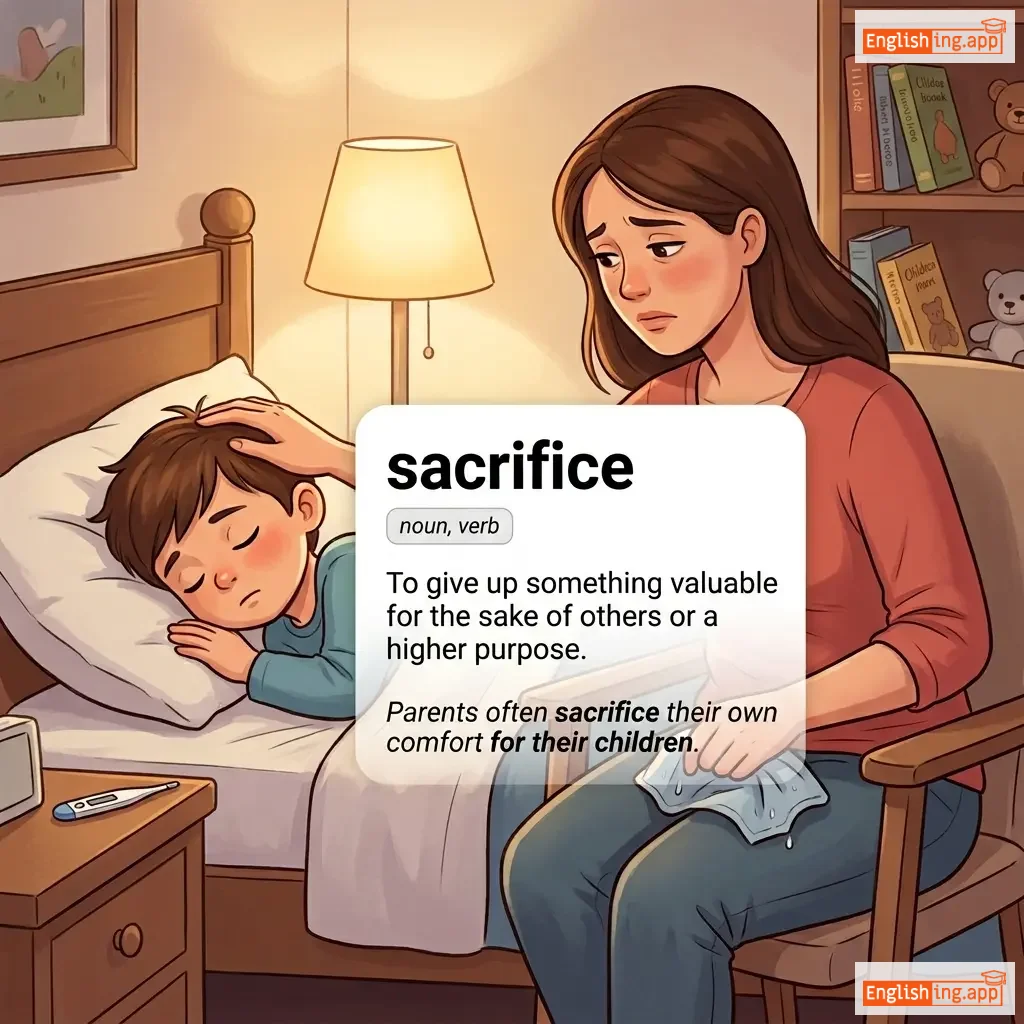
/ˈsækrɪfaɪs/
noun, verb
••••••
|
|
- •••••• |
sacrificed
••••••
|
sacrificed
••••••
|
sacrifices
••••••
|
sacrificing
••••••
|
To give up something valuable for the sake of others or a higher purpose.
••••••
|
Parents often sacrifice their own comfort for their children. |
- •••••• |
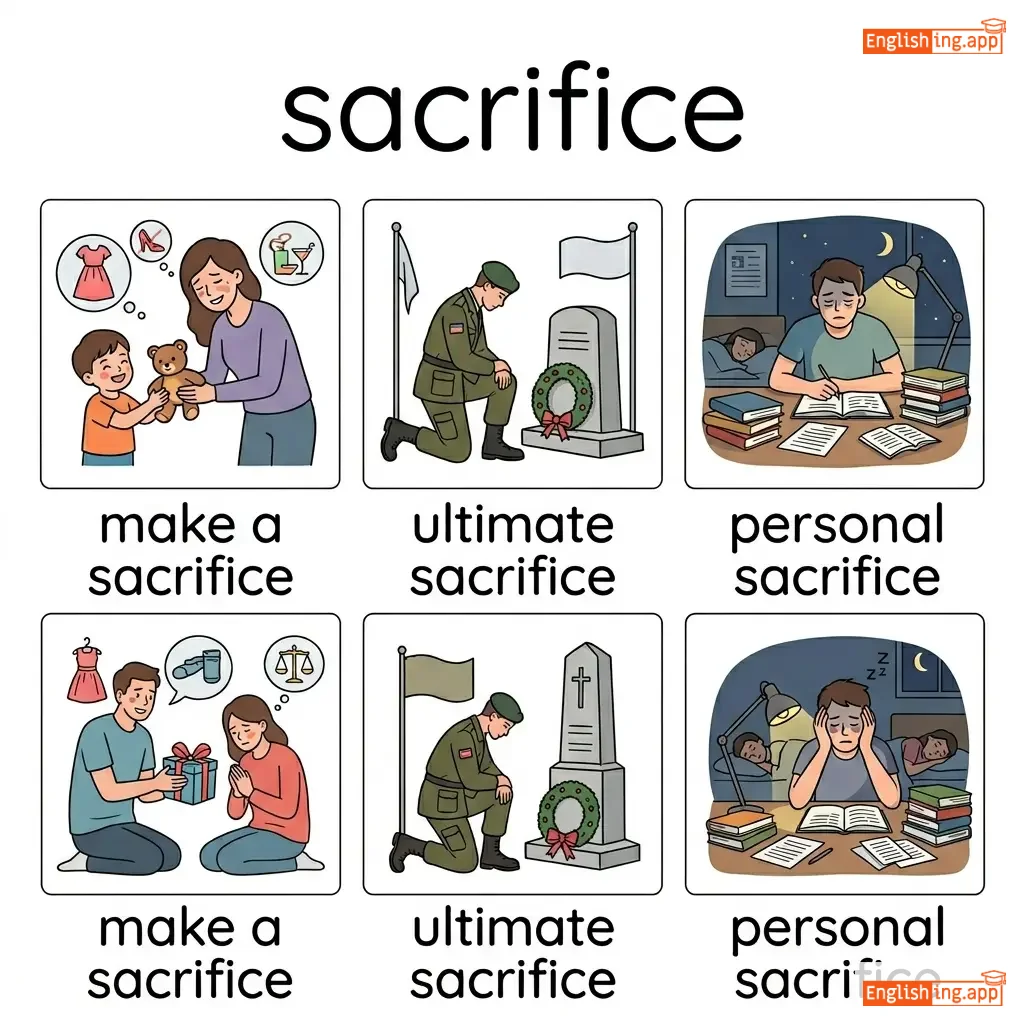
make a sacrifice |
to give up something important for the benefit of others
••••••
|
- •••••• |
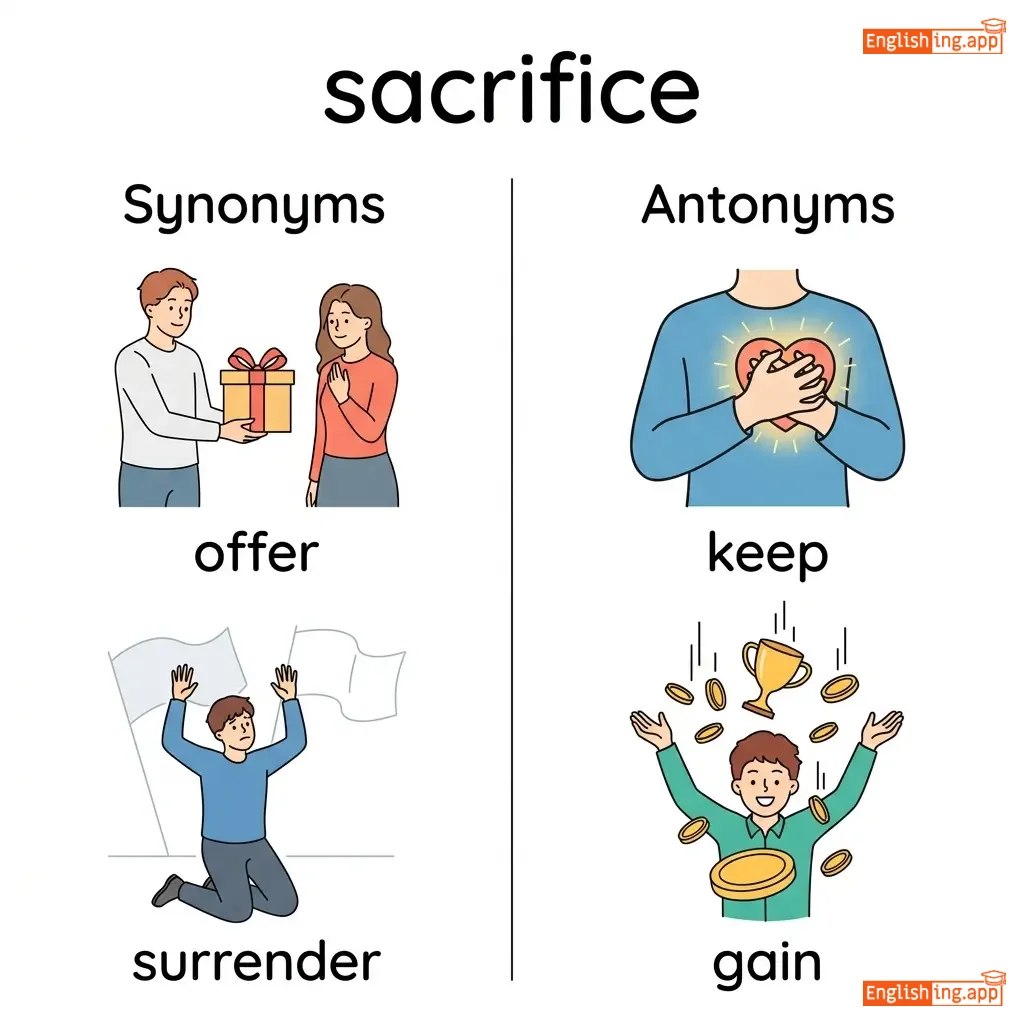
offer, surrender, relinquish, devotion, giving up
••••••
|
keep, gain, selfishness
••••••
|
make a sacrifice, ultimate sacrifice, personal sacrifice, sacrifice for
••••••
|
No •••••• |
|
#7750
⛪
|
/ˌsæsərˈdoʊtl/
adjective
(sæsərdoʊtl)
••••••
|
- •••••• |
神职的
shénzhí de
••••••
|
- •••••• | - •••••• | - •••••• | - •••••• |
Relating to priests or the priesthood.
••••••
|
The ritual had a distinctly sacerdotal character. |
仪式具有明显的神职特征。
Yíshì jùyǒu míngxiǎn de shénzhí tèzhēng.
••••••
|
- •••••• | - •••••• | - •••••• |
priestly, clerical, ecclesiastical, ministerial
••••••
|
secular, lay, nonreligious
••••••
|
sacerdotal duties, sacerdotal role, sacerdotal authority, sacerdotal tradition
••••••
|
神职的 = 神圣 + 全部,所有与祭司相关的
••••••
|
|
#7751
🍭
|
/ˈsækərɪn/
adjective
(happiness)
••••••
|
- •••••• |
幸福
xìngfú
••••••
|
- •••••• | - •••••• | - •••••• | - •••••• |
Excessively sweet or sentimental.
••••••
|
His saccharine smile seemed insincere. |
她在获得奖项时无法隐藏她的幸福。
Tā zài huòdé jiǎngxiàng shí wúfǎ yǐncáng tā de xìngfú.
••••••
|
- •••••• | - •••••• | - •••••• |
sweet, syrupy, sentimental, cloying, sugary
••••••
|
bitter, harsh, genuine
••••••
|
saccharine smile, saccharine story, saccharine tone, saccharine sentiment
••••••
|
幸福就是happiness,让我们记住xìngfú代表幸福的状态。
••••••
|
|
#7752
🕵️
|
/ˌsæbəˈtɜːr/
noun
(萨博特尔)
••••••
|
- •••••• |
破坏者
pòhuàizhě
••••••
|
- •••••• | - •••••• | - •••••• | - •••••• |
A person who engages in sabotage.
••••••
|
The saboteur was arrested before he could plant the bomb. |
破坏者在放置炸弹之前被逮捕了。
Pòhuàizhě zài fàngzhì zhàdàn zhīqián bèi dàibǔ le.
••••••
|
- •••••• | - •••••• | - •••••• |
attacker, destroyer, vandal, infiltrator, conspirator
••••••
|
protector, defender, supporter
••••••
|
enemy saboteur, captured saboteur, industrial saboteur, military saboteur
••••••
|
Saboteur是破坏者,毁灭一切。
••••••
|
|
#7753
💣
|
/ˈsæbətɑːʒ/
verb
(破坏)
••••••
|
- •••••• |
破坏活动
pohuai huodong
••••••
|
sabotaged
破坏了
••••••
|
sabotaged
破坏了
••••••
|
sabotages
破坏
••••••
|
sabotaging
破坏中
••••••
|
To deliberately destroy, damage, or obstruct something, especially for political or military advantage.
••••••
|
The rebels tried to sabotage the railway lines.
反叛者试图破坏铁路线路。
••••••
|
反叛者试图破坏铁路线路。
Fǎnbàn zhě shìtú pòhuài tiělù xiànlù.
••••••
|
self-sabotage
自我破坏
••••••
|
Actions that prevent one's own success or progress.
••••••
|
自我破坏
zìwǒ pòhuài
••••••
|
damage, destroy, wreck, obstruct, undermine
••••••
|
support, assist, help
••••••
|
sabotage efforts, sabotage plans, sabotage operations, sabotage attempt
••••••
|
Sabo 破坏行动 - sabotage 就是故意破坏。
••••••
|
|
#7754
🌴
|
/səˈbætɪkəl/
noun
(萨巴提卡尔)
••••••
|
- •••••• |
用于学习或旅行的休假期
yòng yú xuéxí huò lǚxíng de xiūjià qī
••••••
|
- •••••• | - •••••• | - •••••• | - •••••• |
A period of paid leave granted to a teacher or worker for study or travel, traditionally every seventh year.
••••••
|
She took a sabbatical to research her new book. |
她为了研究她的新书而休了一个萨巴提卡尔假期。
Tā wèile yánjiū tā de xīn shū ér xiūle yīgè sàbàtí kǎ ěr jiàqī.
••••••
|
- •••••• | - •••••• | - •••••• |
leave, break, hiatus, recess, furlough
••••••
|
work, duty, employment
••••••
|
take a sabbatical, on sabbatical, sabbatical leave, year-long sabbatical
••••••
|
Sabbatical 来源于Sabbath(休息),因此Sabbatical表示长时间的休息假期。
••••••
|
|
#7755
🪶
|
/ˈrʌf.l̩/
verb
••••••
|
- •••••• | - •••••• |
ruffled
••••••
|
ruffled
••••••
|
ruffles
••••••
|
ruffling
••••••
|
to disturb the smoothness of something; to annoy or upset someone
••••••
|
The wind ruffled her hair. |
- •••••• |
ruffle someone's feathers |
to upset or annoy someone
••••••
|
- •••••• |
disturb, muss, agitate, irritate, annoy
••••••
|
smooth, calm, soothe
••••••
|
ruffle feathers, ruffle hair, ruffle papers, ruffle dress
••••••
|
No •••••• |
|
#7756
💔
|
/ruːθ/
noun
(鲁思)
••••••
|
- •••••• |
同情
tóngqíng
••••••
|
- •••••• | - •••••• | - •••••• | - •••••• |
A feeling of pity, compassion, or sorrow.
••••••
|
He felt no ruth for the people he had betrayed. |
他对他曾经背叛的人没有任何同情。
Tā duì tā céngjīng bèipàn de rén méiyǒu rènhé tóngqíng.
••••••
|
- •••••• | - •••••• | - •••••• |
pity, compassion, sympathy, remorse
••••••
|
cruelty, indifference
••••••
|
without ruth, show ruth, feel ruth
••••••
|
Ruth意味着同情,记住'Ruth less'意味着没有同情。
••••••
|
|
#7757
🍂
|
/ˈrʌsl/
verb
(rustel)
••••••
|
- •••••• |
沙沙作响
shasha zuo xiang
••••••
|
rustled
rustled
••••••
|
rustled
rustled
••••••
|
rustles
rustles
••••••
|
rustling
rustling
••••••
|
To make a soft, light sound like leaves or paper moving.
••••••
|
The leaves rustled gently in the evening breeze.
树叶在傍晚的微风中轻轻地沙沙作响。
••••••
|
树叶在傍晚的微风中轻轻地沙沙作响。
Shuye zai bangwan de weifeng zhong qingqing de shasha zuo xiang.
••••••
|
rustle up
迅速准备
••••••
|
To quickly prepare or create something.
••••••
|
快速准备
kuai su zhun bei
••••••
|
whisper, swish, murmur, stir
••••••
|
silence, stillness
••••••
|
rustle of leaves, rustling papers, rustle up dinner
••••••
|
沙沙作响 - 想象树叶在微风中的声音,记住要快速做事。
••••••
|
|
#7758
🌿
|
/ˈrʌstɪkeɪt/
verb
(rústikēt)
••••••
|
- •••••• |
去乡村 / 从大学暂时开除
Qu xiāngcūn / cóng dàxué zàntí kāichú
••••••
|
rusticated
rústikēd
••••••
|
rusticated
rústikēd
••••••
|
rusticates
rústiké
••••••
|
rusticating
rústikèng
••••••
|
To go to the countryside or to suspend someone from university.
••••••
|
He decided to rusticate in the village to escape the busy city life.
他决定去乡村避开城市的忙碌生活。
••••••
|
他决定去乡村生活以逃避繁忙的城市生活。
Tā juédìng qù xiāngcūn shēnghuó yǐ táobì fánmáng de chéngshì shēnghuó.
••••••
|
- •••••• | - •••••• | - •••••• |
retire, withdraw, retreat, suspend, exile
••••••
|
stay, remain, continue
••••••
|
rusticate in village, rusticated student, rusticate from university
••••••
|
Rusticate意味着去乡村,就像RUST表示老旧,而乡村有很多旧物。
••••••
|
|
#7759
🏡
|
/ˈrʌstɪk/
adjective
(乡村风格)
••••••
|
- •••••• |
乡村的
xiangcun de
••••••
|
- •••••• | - •••••• | - •••••• | - •••••• |
Relating to the countryside; simple and unsophisticated.
••••••
|
The cottage had a rustic charm with its wooden beams and stone fireplace. |
这座小屋有着乡村的魅力,木梁和石壁炉。
Zhe zuo xiaowu youzhe xiangcun de mei li, mù liáng hé shí bì lǘ.
••••••
|
rustic charm |
The simple, traditional attractiveness of countryside style.
••••••
|
乡村魅力
xiangcun mei li
••••••
|
rural, simple, unsophisticated, pastoral, country
••••••
|
urban, modern, sophisticated
••••••
|
rustic charm, rustic style, rustic cottage, rustic furniture
••••••
|
Rustic 是乡村的风格,简单自然,像一把老旧的木椅。
••••••
|
|
#7760
🎭
|
/ruːz/
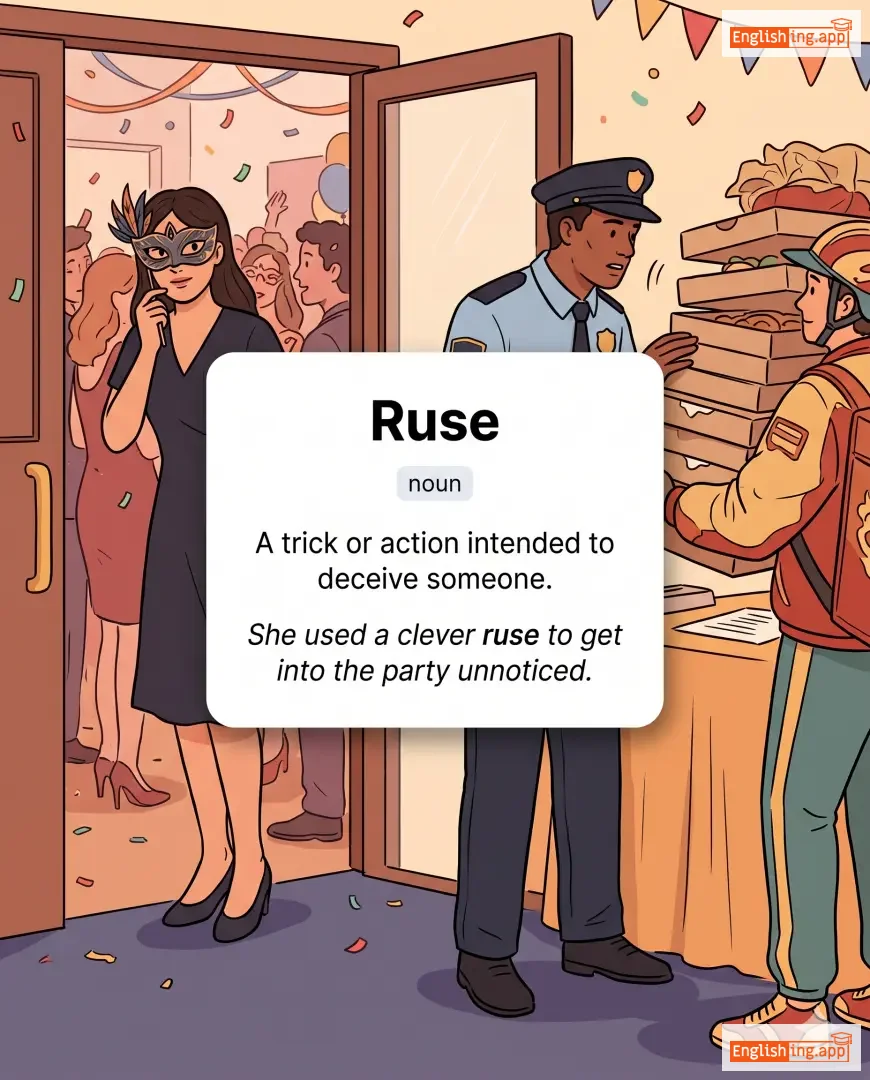
noun
(rúz)
••••••
|
|
诡计
guǐjì
••••••
|
- •••••• | - •••••• | - •••••• | - •••••• |
A trick or action intended to deceive someone.
••••••
|
She used a clever ruse to get into the party unnoticed. |
她用一个巧妙的诡计进入了派对,没人注意到她。
Tā yòng yīgè qiǎomiào de guǐjì jìnrùle pàiduì, méi rén zhùyì dào tā.
••••••
|
a ruse to an end |
A deceptive trick used to achieve a particular goal.
••••••
|
为了目的而使用的诡计
Wèile mùdì ér shǐyòng de guǐjì
••••••
|
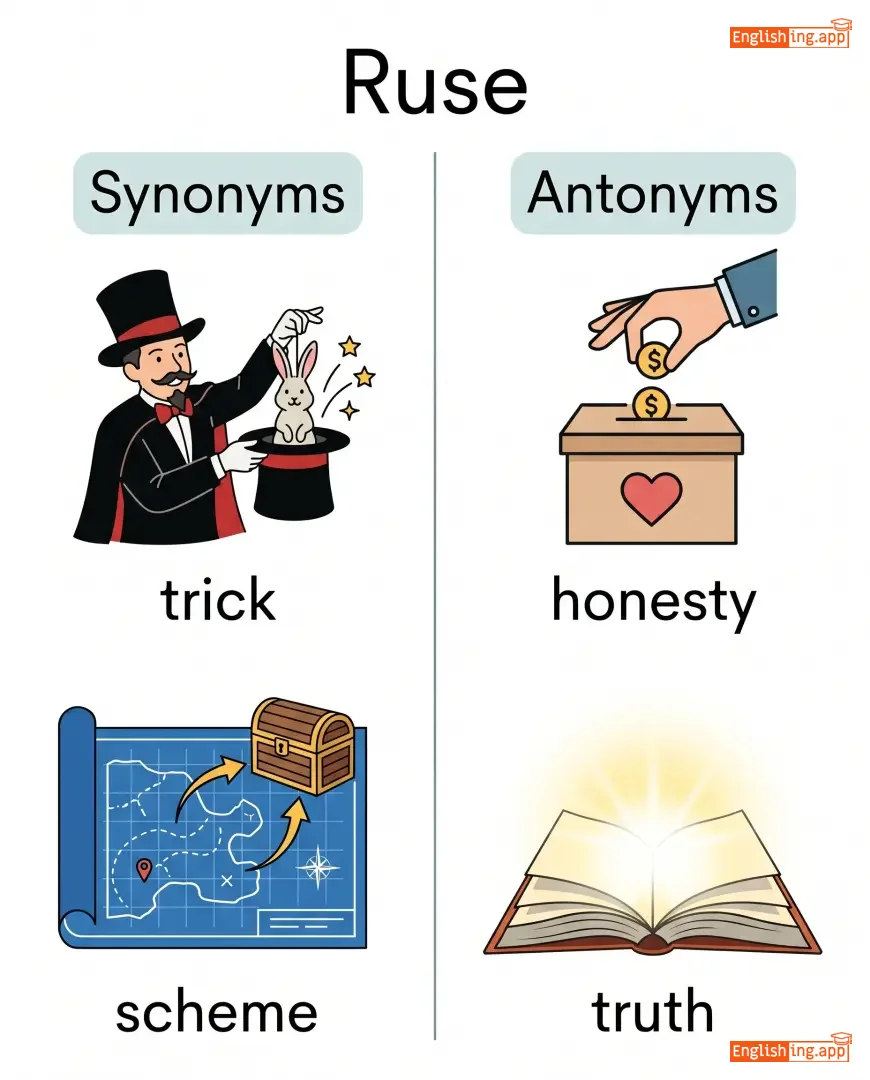
trick, scheme, ploy, tactic, deception
••••••
|
honesty, truth, openness
••••••
|
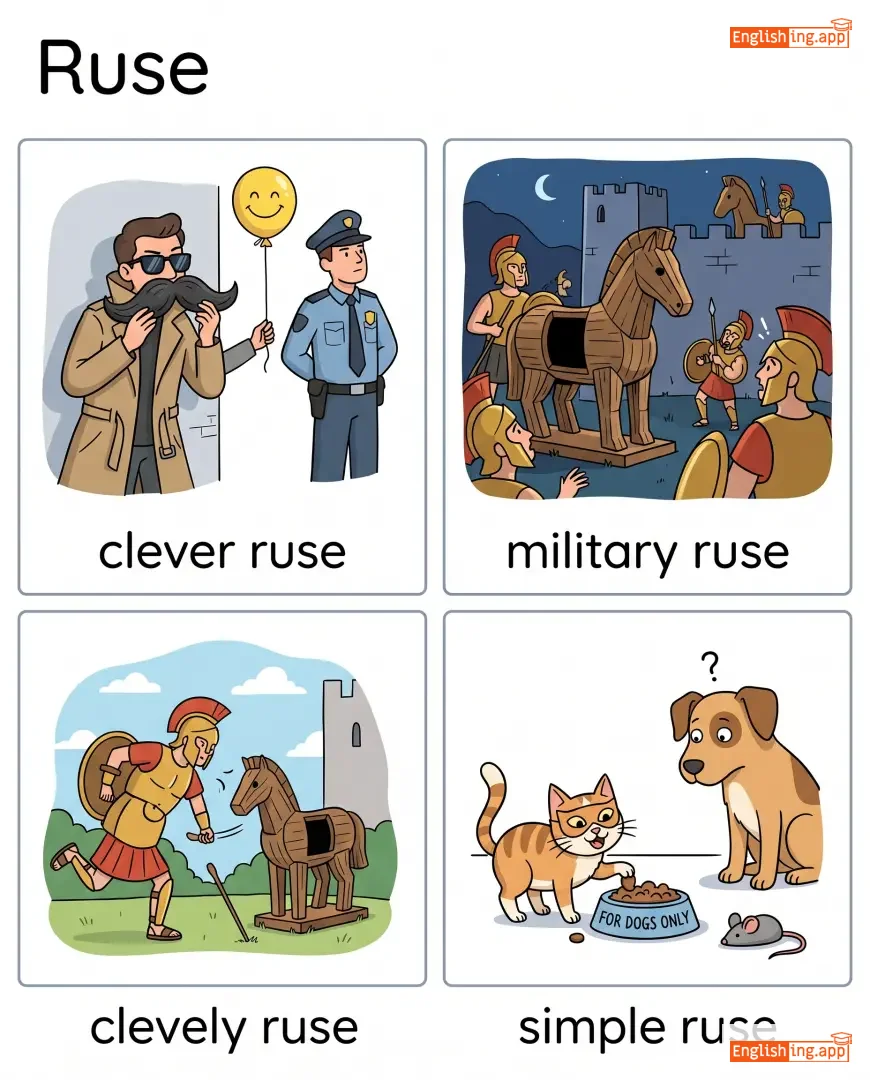
clever ruse, military ruse, simple ruse, ruse to escape
••••••
|
RUSE意味着诡计,就像‘她用诡计进入’一样。
••••••
|
|
#7761
💥
|
/ˈrʌptʃər/
noun/verb
(rǎp-chú)
••••••
|
- •••••• |
破裂
pòliè
••••••
|
ruptured
rǎp-chú-d
••••••
|
ruptured
rǎp-chú-d
••••••
|
ruptures
rǎp-chú-rs
••••••
|
rupturing
rǎp-chú-rīng
••••••
|
to break or burst suddenly; a crack, split, or break in something
••••••
|
The pipe ruptured due to high pressure.
管道因高压而破裂。
••••••
|
管道因高压而破裂。
Guǎndào yīn gāo yā ér pòliè.
••••••
|
rupture relations
断绝关系
••••••
|
to break off or damage a relationship
••••••
|
断绝关系
duànjué guānxì
••••••
|
break, burst, split, crack, tear
••••••
|
heal, repair, fix
••••••
|
rupture pipe, rupture appendix, sudden rupture, rupture relations
••••••
|
破裂,像关系断裂一样
••••••
|
|
#7762
ᚠ
|
/ˈruːnɪk/
adjective
(符文的)
••••••
|
- •••••• |
与符文相关
yǔ fú wén xiāng guān
••••••
|
- •••••• | - •••••• | - •••••• | - •••••• |
relating to or consisting of runes; mysterious or magical
••••••
|
The old stone had strange runic carvings on it.
这块古老的石头上有奇怪的符文雕刻。
••••••
|
这块古老的石头上有奇怪的符文雕刻。
Zhè kuài gǔlǎo de shítou shàng yǒu qíguài de fúwén diāokè.
••••••
|
- •••••• | - •••••• | - •••••• |
mystical, cryptic, magical, ancient
••••••
|
ordinary, clear, modern
••••••
|
runic symbols, runic carvings, runic alphabet, runic inscription
••••••
|
符文的写法神秘且难以理解,像是魔法文字。
••••••
|
|
#7763
🏚️
|
/ˈrʌn daʊn/
adjective
(rán-dān)
••••••
|
- •••••• |
破旧的
pojiu de
••••••
|
- •••••• | - •••••• | - •••••• | - •••••• |
in a poor condition; worn out or neglected
••••••
|
They live in a run-down house at the edge of town. |
他们住在城市边缘的一座破旧的房子里。
Tāmen zhù zài chéngshì biānyuán de yī zuò pòjiù de fángzi lǐ.
••••••
|
- •••••• | - •••••• | - •••••• |
dilapidated, shabby, neglected, worn-out
••••••
|
new, well-kept, modern
••••••
|
run-down building, run-down area, run-down neighborhood, run-down condition
••••••
|
Run-down 就是像破旧的房子,失去活力和维护的样子。
••••••
|
|
#7764
🏃
|
/rʌn/
verb
(海皮尼斯)
••••••
|
|
幸福
xingfu
••••••
|
ran
••••••
|
run
••••••
|
runs
••••••
|
running
••••••
|
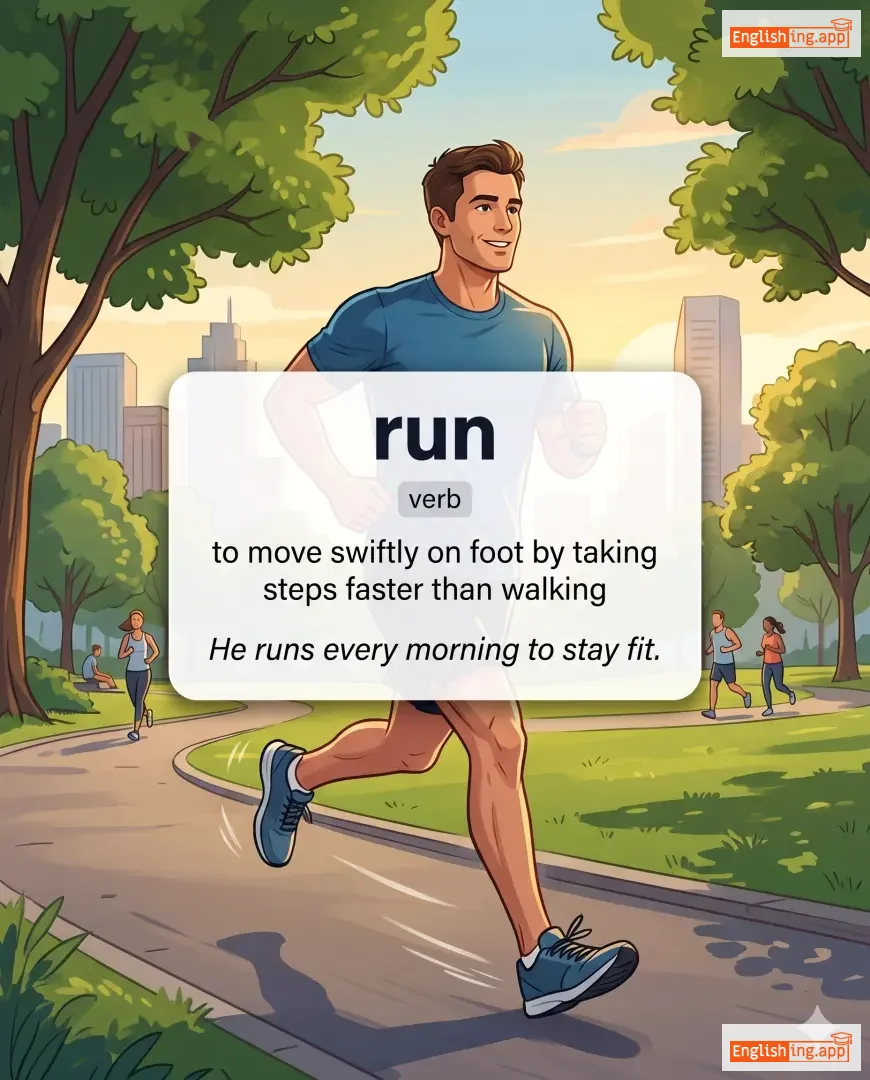
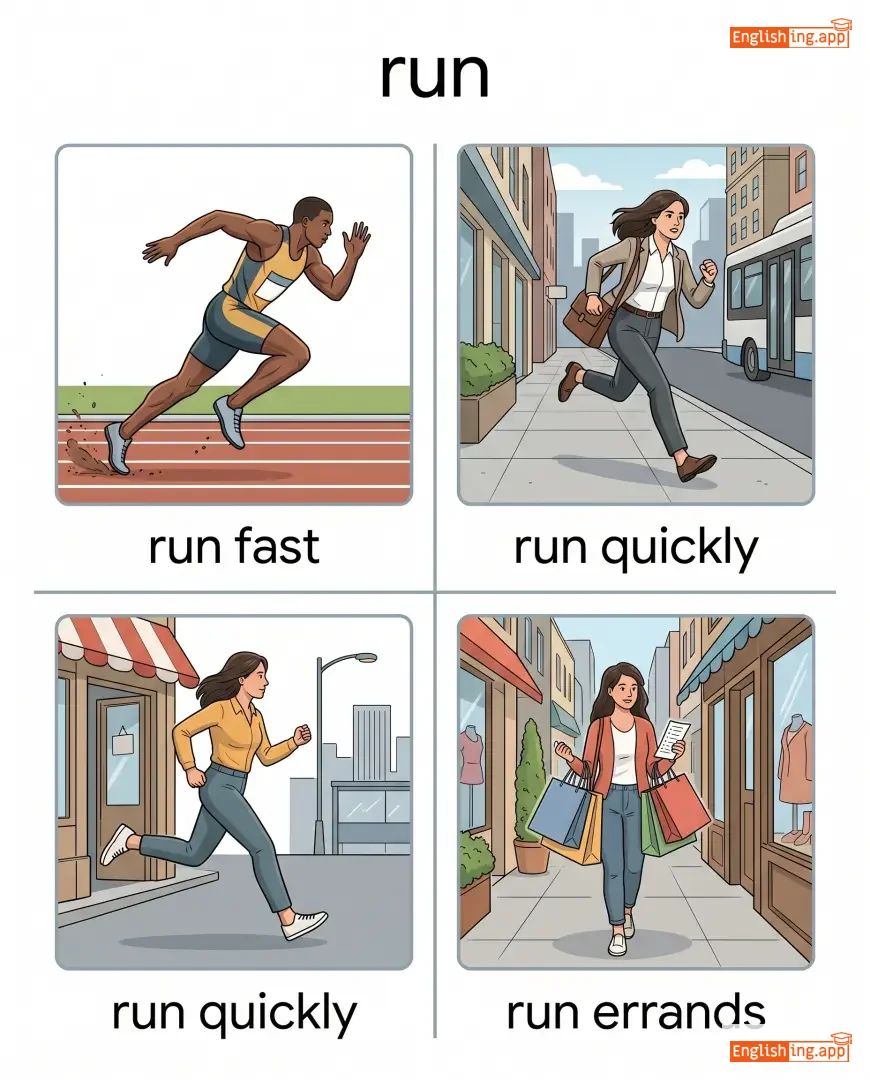
to move swiftly on foot by taking steps faster than walking
••••••
|
He runs every morning to stay fit. |
当她收到奖项时,她无法掩饰自己的幸福。
Dāng tā shōudào jiǎngxiàng shí, tā wúfǎ yǎnshì zìjǐ de xìngfú.
••••••
|
run out of time |
to have no more time left to complete something
••••••
|
追寻幸福
zhuīxún xìngfú
••••••
|
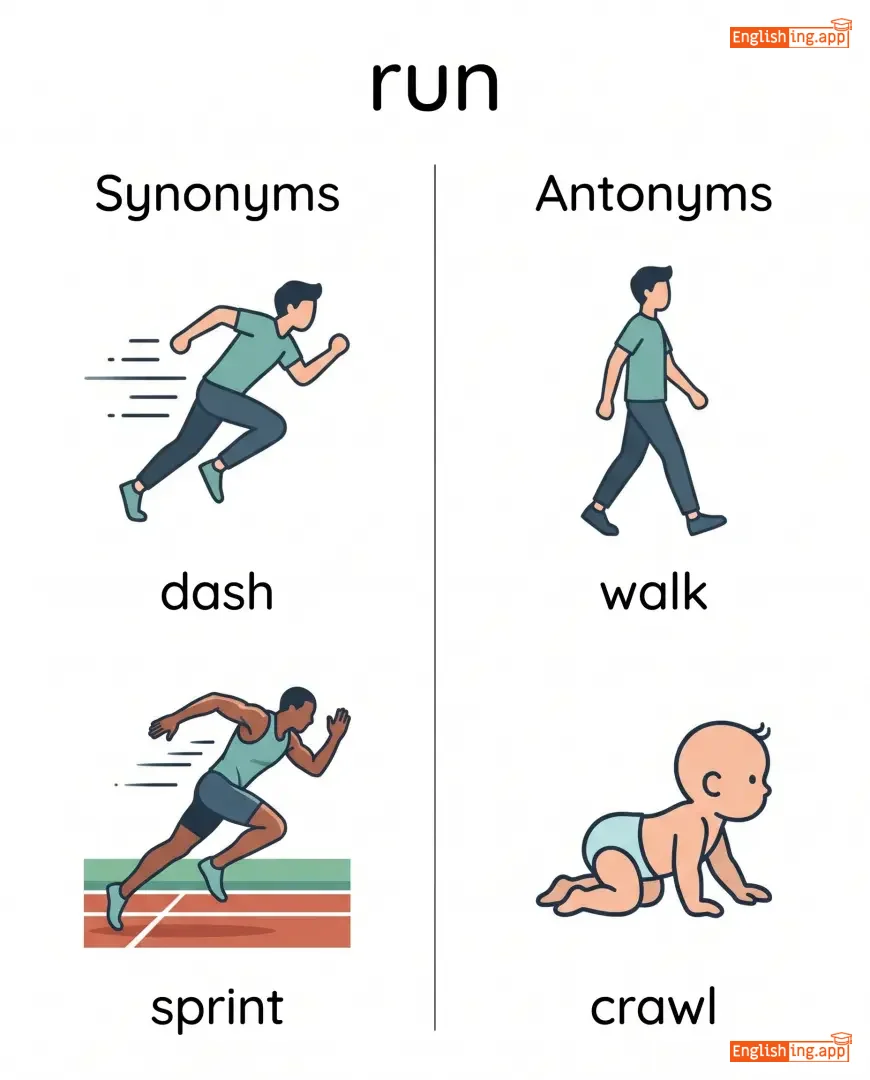
dash, sprint, jog, race, hurry
••••••
|
walk, crawl, stop
••••••
|
run fast, run quickly, run errands, run away, run business
••••••
|
幸福 = 快乐的感觉
••••••
|
|
#7765
😵
|
/ˈrʌmpəl/
verb
(ránpò)
••••••
|
- •••••• |
弄皱
nòng zhòu
••••••
|
rumpled
ránpòd
••••••
|
rumpled
ránpòd
••••••
|
rumples
ránpòls
••••••
|
rumpling
ránpòlínɡ
••••••
|
to make something untidy or wrinkled by creasing or crumpling
••••••
|
She accidentally rumpled her dress while packing.
她在打包时不小心弄皱了她的裙子。
••••••
|
她在打包时不小心弄皱了她的裙子。
Tā zài dǎbāo shí bù xiǎoxīn nòng zhòu le tā de qúnzi.
••••••
|
- •••••• | - •••••• | - •••••• |
crumple, wrinkle, crease, fold, tousle
••••••
|
smooth, flatten, straighten
••••••
|
rumple hair, rumple clothes, slightly rumple, easily rumpled
••••••
|
Rum + 衣服 → rumple意味着弄皱衣服或使其凌乱
••••••
|
|
#7766
🗄️
|
/ˈrʌm.ɪdʒ/
verb
(拉米吉)
••••••
|
- •••••• |
杂乱地翻找
zaluande fanzhao
••••••
|
rummaged
拉米吉德
••••••
|
rummaged
拉米吉德
••••••
|
rummages
拉米吉斯
••••••
|
rummaging
拉米吉英
••••••
|
to search through something in a disorderly way
••••••
|
He rummaged through the drawer for his keys.
他在抽屉里翻找钥匙。
••••••
|
他在抽屉里翻找钥匙。
Ta zai chouti li fanzhao yaoshi.
••••••
|
rummage sale
跳蚤市场
••••••
|
a sale of miscellaneous secondhand items
••••••
|
二手市场
ershou shichang
••••••
|
search, dig, forage, root
••••••
|
organize, arrange
••••••
|
rummage through, rummage sale, rummage drawer
••••••
|
Rummage就像找乱丢的东西一样。
••••••
|
|
#7767
🤔
|
/ˈruː.mɪ.neɪt/
verb
(鲁米内特)
••••••
|
- •••••• |
深思, 反刍
shen si, fan chu
••••••
|
ruminated
鲁米内特了
••••••
|
ruminated
鲁米内特了
••••••
|
ruminates
鲁米内特
••••••
|
ruminating
鲁米内特ing
••••••
|
to think deeply about something; to chew cud (for animals)
••••••
|
She sat alone to ruminate on her decision.
她坐在一起,深思自己的决定。
••••••
|
她坐在一起,深思自己的决定。
Ta zuo zai yiqi, shensi ziji de jueding.
••••••
|
ruminate on
深思
••••••
|
to think deeply about something
••••••
|
深思
Shensi
••••••
|
ponder, reflect, meditate, contemplate
••••••
|
ignore, disregard
••••••
|
ruminate on ideas, ruminate over problems, ruminate deeply
••••••
|
Ruminate 反思 — Room 和 mate 是深思熟虑,像反刍一样的深思。
••••••
|
|
#7768
🐄
|
/ˈruː.mɪ.nənt/
noun
(鲁米南特)
••••••
|
- •••••• |
反刍动物
fǎnchú dòngwù
••••••
|
- •••••• | - •••••• | - •••••• | - •••••• |
a cud-chewing mammal, such as a cow or sheep
••••••
|
Cows are ruminants that chew cud. |
牛是反刍动物,它们会反复咀嚼食物。
Niú shì fǎnchú dòngwù, tāmen huì fǎfù zhǔjué shíwù.
••••••
|
- •••••• | - •••••• | - •••••• |
cattle, livestock, grazer, herbivore
••••••
|
carnivore, predator
••••••
|
ruminant animals, ruminant digestion, ruminant species
••••••
|
反刍动物吃食物时总是反复咀嚼,像牛和羊。
••••••
|
|
#7769
🌩️
|
/ˈrʌm.bəl/
verb
(幸福)
••••••
|
- •••••• |
幸福
xìngfú
••••••
|
rumbled
••••••
|
rumbled
••••••
|
rumbles
••••••
|
rumbling
••••••
|
to make a continuous deep, resonant sound
••••••
|
Thunder rumbled in the distance.
当她收到奖项时,她无法隐藏自己的幸福。
••••••
|
当她收到奖项时,她无法隐藏自己的幸福。
Dāng tā shōudào jiǎngxiàng shí, tā wúfǎ yǐncáng zìjǐ de xìngfú.
••••••
|
rumble on
追求幸福
••••••
|
to continue for a long time without resolution
••••••
|
追求幸福
zhuīqiú xìngfú
••••••
|
roar, growl, echo, boom
••••••
|
silence, quiet
••••••
|
rumble of thunder, rumble in the distance, stomach rumble
••••••
|
幸福就像晨曦中的温暖阳光,照亮我们的心灵。
••••••
|
Vocabulary Quiz
Test your vocabulary by matching words with their translations or meanings.
Login to take the quiz
Comments (0)
Share your thoughts and join the discussion.
Join the discussion by logging in
Login to CommentNo comments yet
Be the first to share your thoughts!