



Swipe left or right, or use the buttons. Tap image to zoom.
例句翻译
单词
Lesson 343Lesson 343 - 遮罩切换
|
表情符号
|
单词 | Images | 翻译 | 过去时 | 过去分词 | 第三人称单数 | 动名词 | 含义 | 例句 | 例句翻译 | 示例表达 | 示例表达含义 | 示例表达翻译 | 同义词 | 反义词 | 搭配词 | 助记符 |
|---|---|---|---|---|---|---|---|---|---|---|---|---|---|---|---|---|---|
|
#10255
⚡
|
/ˌʌnfɔːrˈsiːn/
adjective
••••••
|
- •••••• | - •••••• | - •••••• | - •••••• | - •••••• | - •••••• |
Not anticipated or predicted; unexpected.
••••••
|
The project faced unforeseen challenges that delayed its completion. |
- •••••• | - •••••• | - •••••• | - •••••• |
unexpected, surprising, unpredicted, sudden, abrupt
••••••
|
expected, predicted, anticipated
••••••
|
unforeseen circumstances, unforeseen events, unforeseen difficulties, unforeseen problems
••••••
|
No •••••• |
|
#10256
📢
|
/ˈveɪkənsi/
noun
(veɪkənsi)
••••••
|
- •••••• |
空缺
kongque
••••••
|
- •••••• | - •••••• | - •••••• | - •••••• |
An unoccupied position or available space.
••••••
|
There is a job vacancy at the bank. |
银行有一个职位空缺。
Yinhang you yige zhiwei kongque.
••••••
|
vacant position |
An unfilled job or office.
••••••
|
空缺职位
kongque zhiwei
••••••
|
opening, position, job, space, slot
••••••
|
occupation, fullness, engagement
••••••
|
job vacancy, hotel vacancy, vacancy notice, vacancy sign
••••••
|
空缺像假期,但它是一个空着的位置等待填补。
••••••
|
|
#10257
📆
|
/ˈjuːʒuəli/
adverb
(yúzhuali)
••••••
|
- •••••• |
通常
tongchang
••••••
|
- •••••• | - •••••• | - •••••• | - •••••• |
Under normal conditions; most of the time.
••••••
|
She usually walks to school.
她通常走路去学校。
••••••
|
她通常走路去学校。
Tā tōngcháng zǒulù qù xuéxiào.
••••••
|
- •••••• | - •••••• | - •••••• |
generally, normally, typically, commonly, habitually
••••••
|
rarely, seldom, unusually
••••••
|
usually happens, usually goes, usually found, usually seen
••••••
|
Usually 意味着通常 - 这通常是这样。
••••••
|
|
#10258
🛠️
|
/juːz/ (verb), /juːs/ (noun)
verb
(yuz)
••••••
|
|
使用
shiyong
••••••
|
used
yuzd
••••••
|
used
yuzd
••••••
|
uses
yuzes
••••••
|
using
yuzing
••••••
|
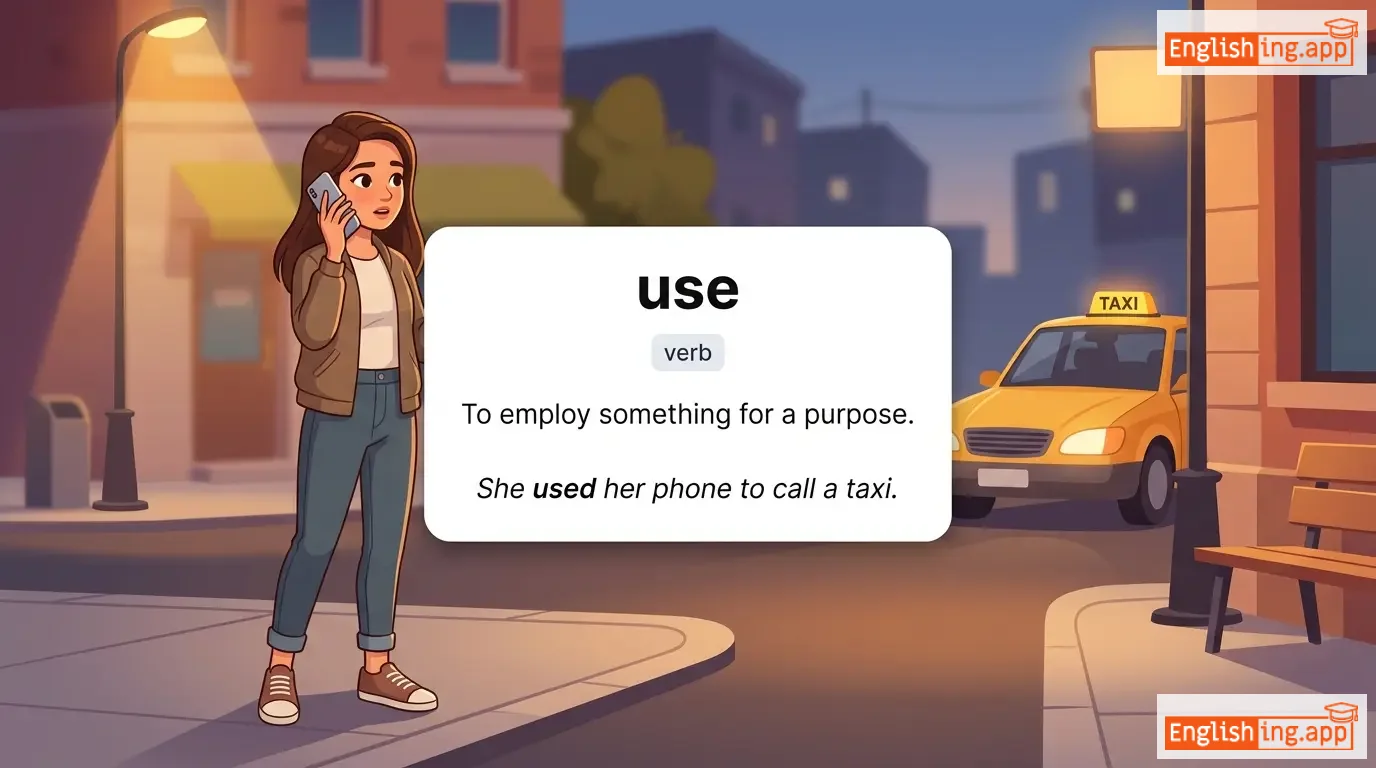
To employ something for a purpose.
••••••
|
She used her phone to call a taxi.
她用了手机叫出租车。
••••••
|
她用了手机叫出租车。
Ta yongle shouji jiao chuzuche.
••••••
|
make use of
利用
••••••
|
To take advantage of or utilize something.
••••••
|
利用
Liyong
••••••
|
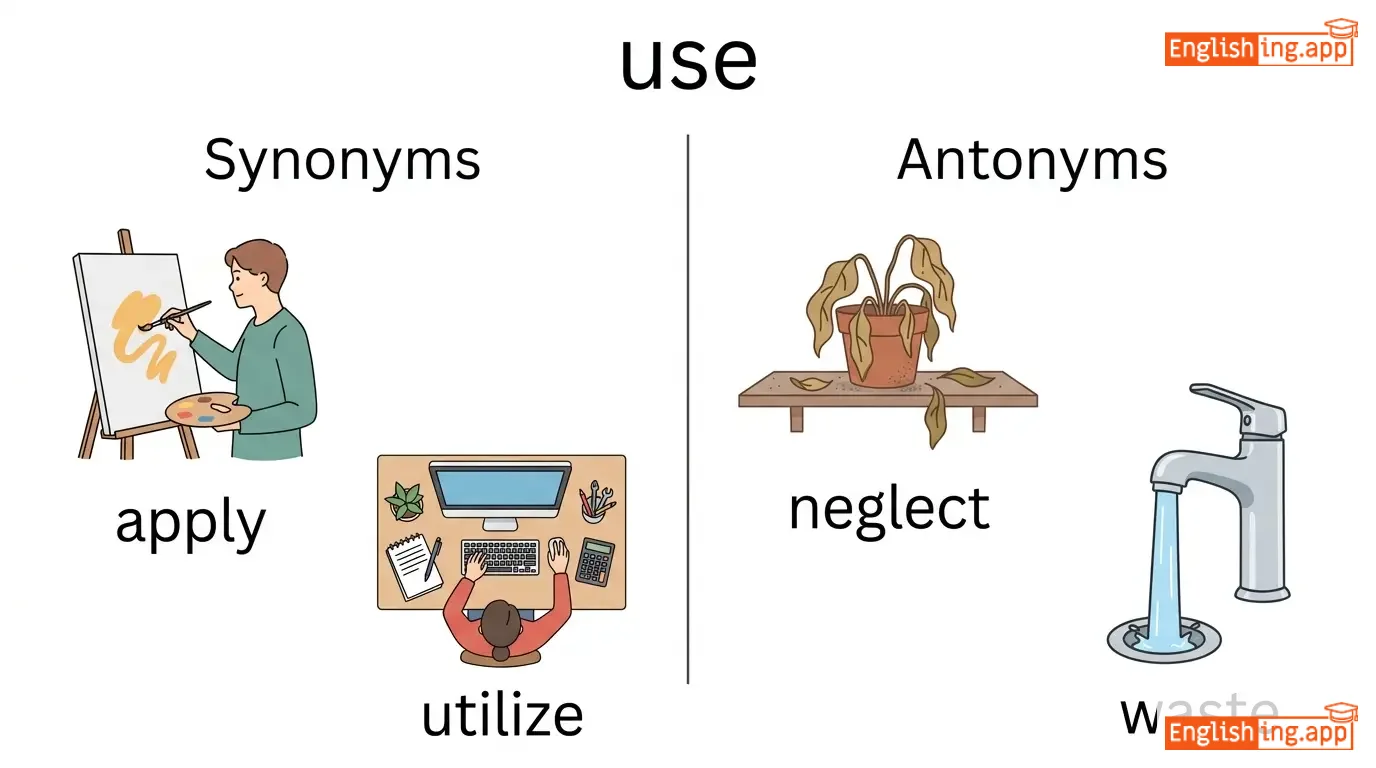
apply, utilize, employ, exploit, handle
••••••
|
neglect, waste, ignore
••••••
|
use time, use opportunity, use resources, use effectively
••••••
|
使用意味着利用或应用某物。
••••••
|
|
#10259
😔
|
/ʌpˈsɛt/
verb
(ʌpˈsɛt)
••••••
|
|
使不高兴
shi bu gaoxing
••••••
|
upset
ʌpˈsɛt
••••••
|
upset
ʌpˈsɛt
••••••
|
upsets
ʌpˈsɛts
••••••
|
upsetting
ʌpˈsɛtɪŋ
••••••
|
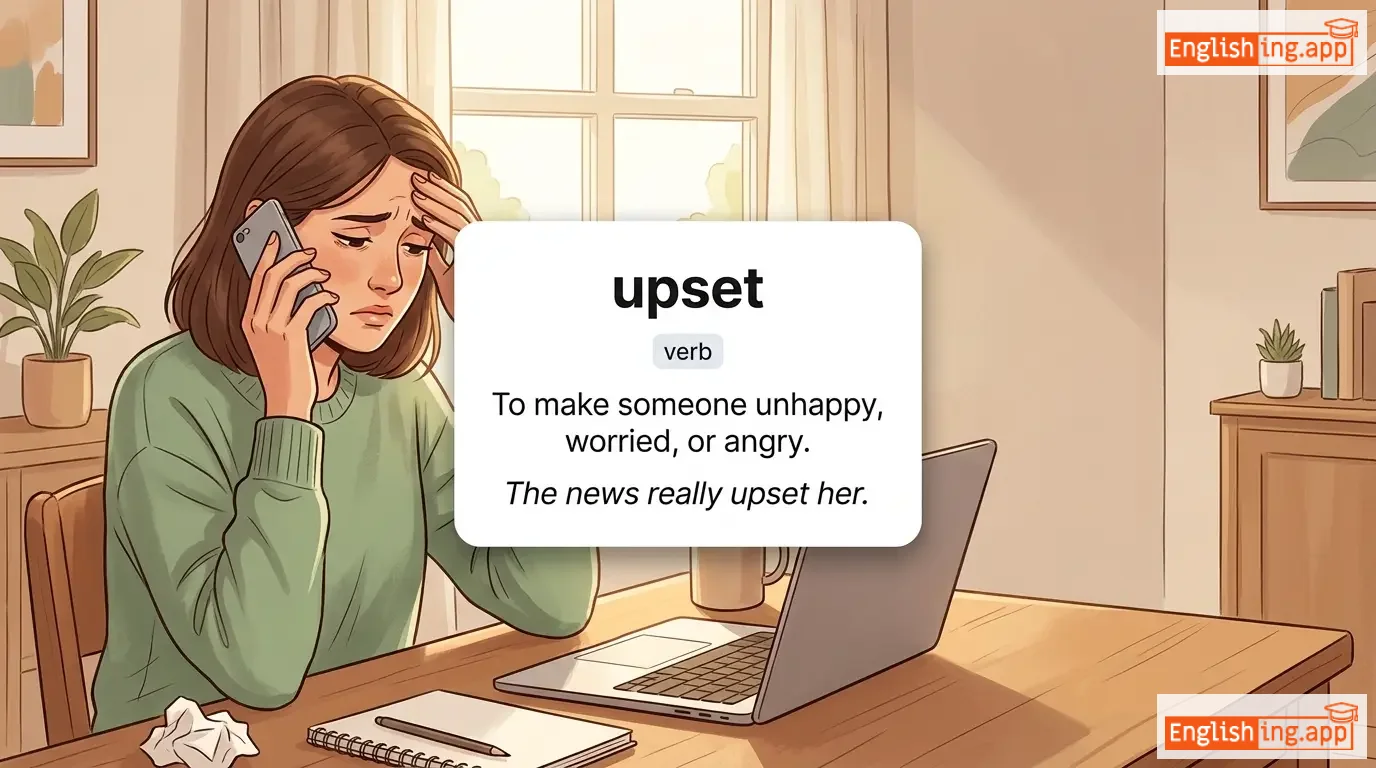
To make someone unhappy, worried, or angry.
••••••
|
The news really upset her.
ðə nuːz rɪəli ʌpˈsɛt hɜːr.
••••••
|
新闻真的让她很不高兴。
Xīnwén zhēn de ràng tā hěn bù gāoxìng.
••••••
|
upset the apple cart
ʌpˈsɛt ði ˈæpl kɑːt
••••••
|
To spoil or ruin a plan or arrangement.
••••••
|
破坏计划
pòhuài jìhuà
••••••
|
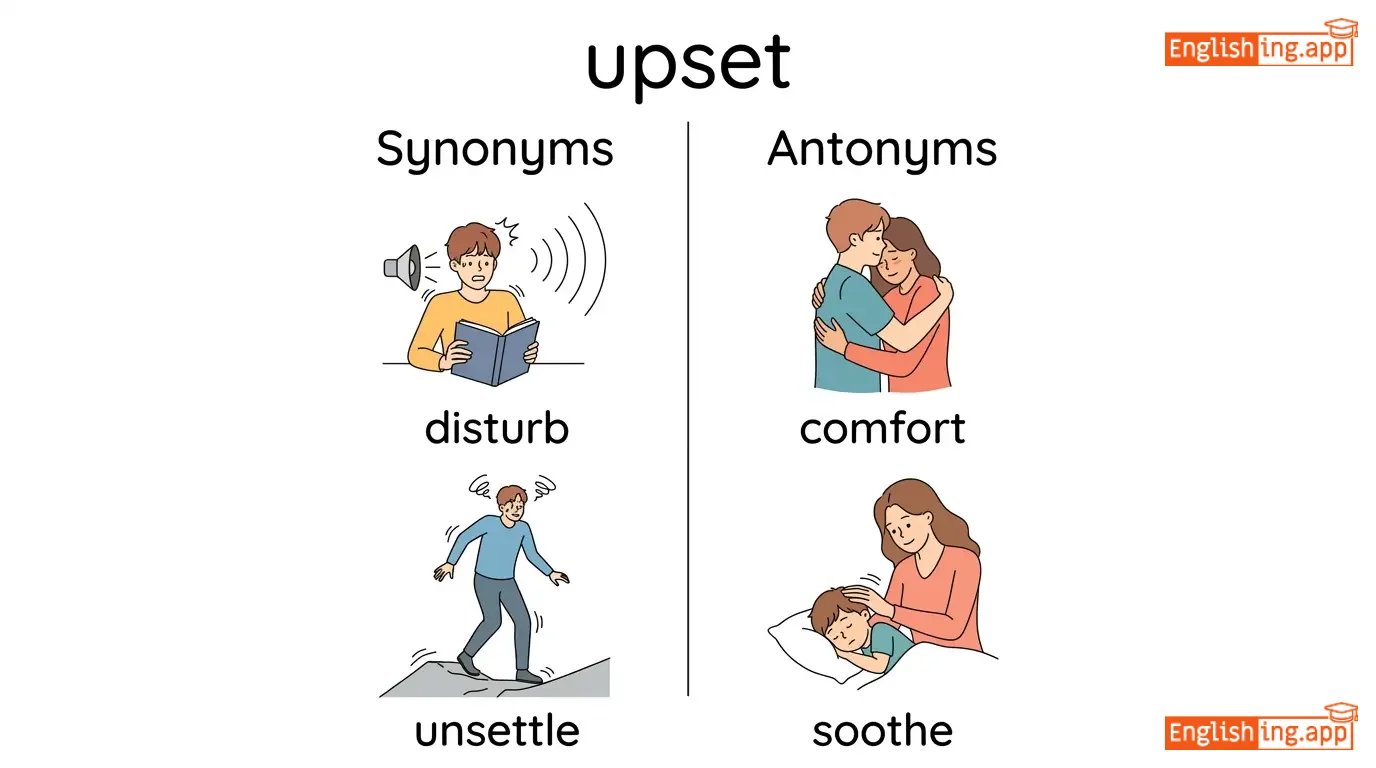
disturb, unsettle, trouble, sadden, anger
••••••
|
comfort, soothe, calm
••••••
|
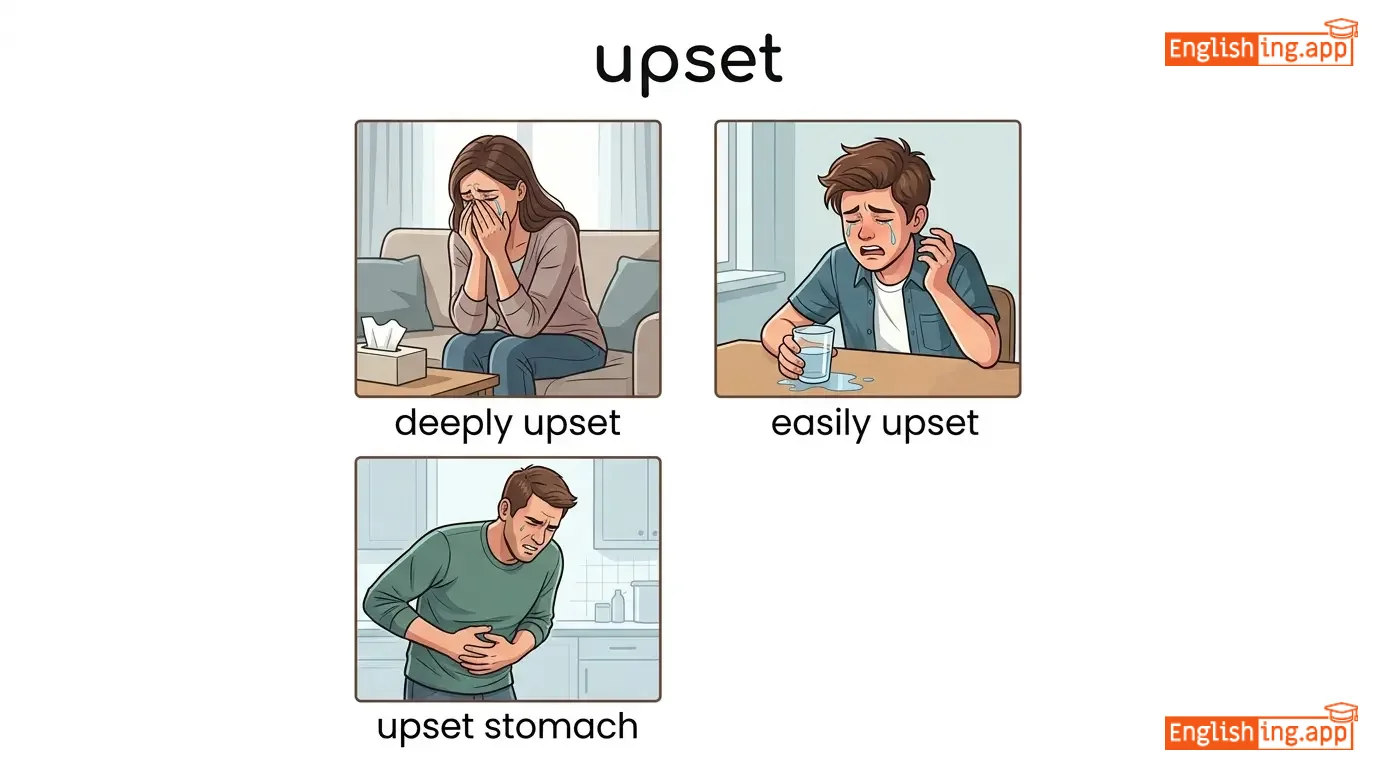
deeply upset, easily upset, upset stomach, upset feelings
••••••
|
Upset 在中文里是使不高兴。
••••••
|
|
#10260
⚔️
|
/ˈʌpraɪzɪŋ/
noun
(apraizing)
••••••
|
|
起义
qiyi
••••••
|
- •••••• | - •••••• | - •••••• | - •••••• |
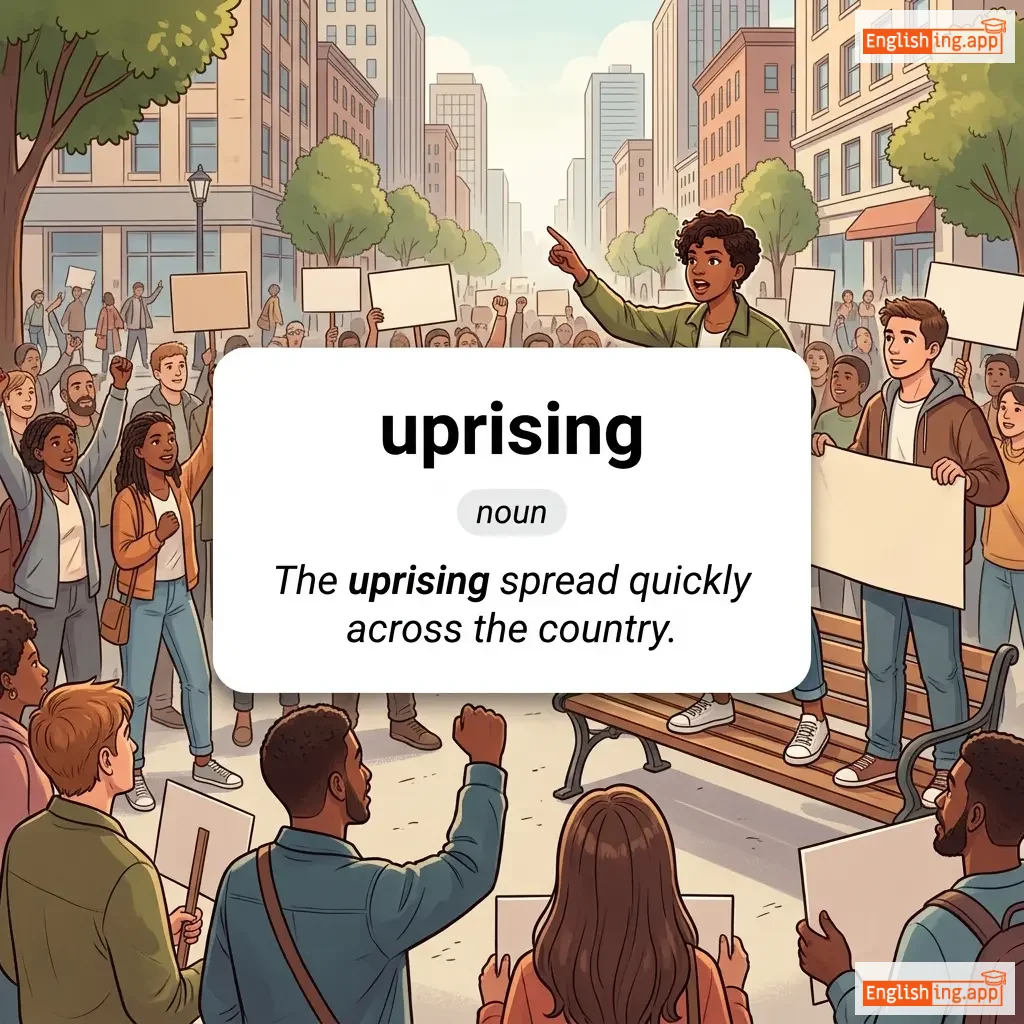
An act of resistance or rebellion; an attempt to overthrow authority or government.
••••••
|
The uprising spread quickly across the country. |
起义迅速蔓延到全国。
Qiyi xunxu manyan dao quanguo.
••••••
|
popular uprising |
A mass rebellion by ordinary people against authority.
••••••
|
人民起义
Renmin qiyi
••••••
|
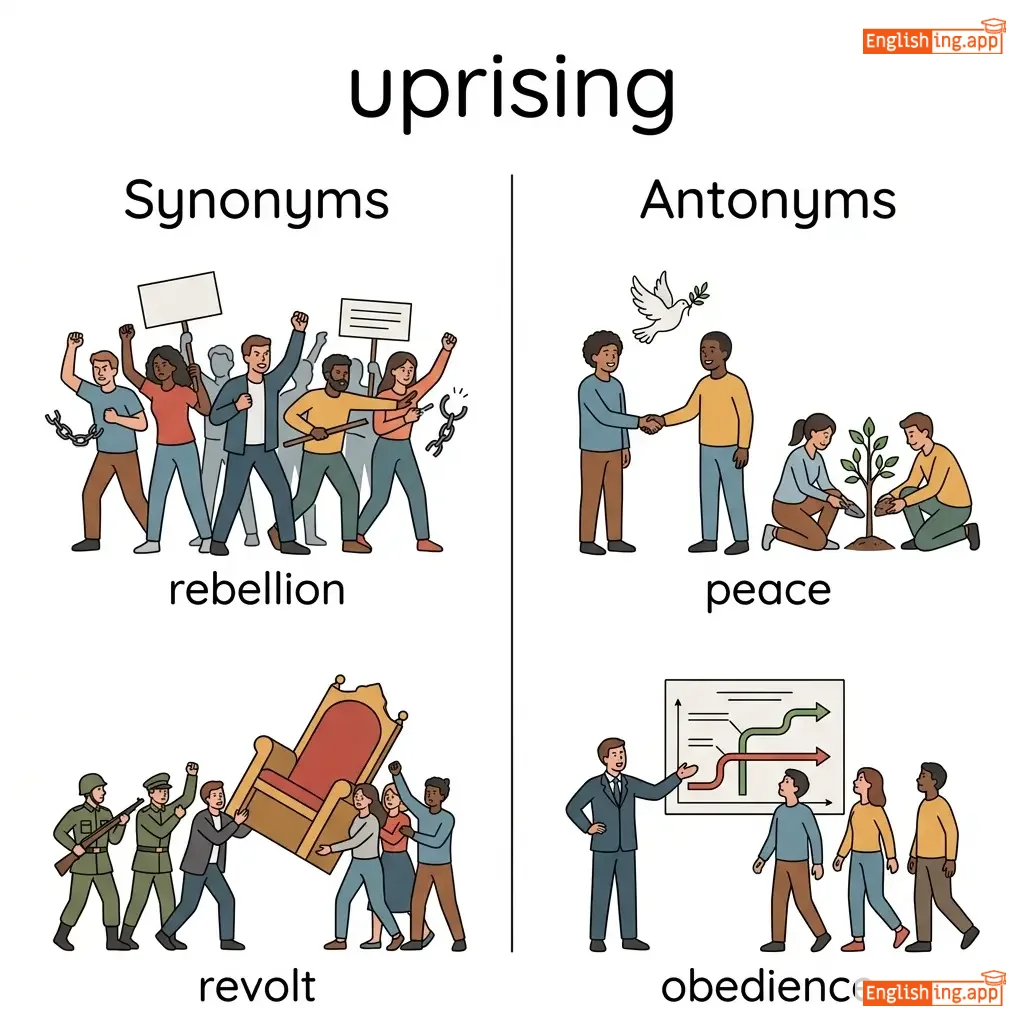
rebellion, revolt, insurrection, mutiny, resistance
••••••
|
peace, obedience, submission
••••••
|
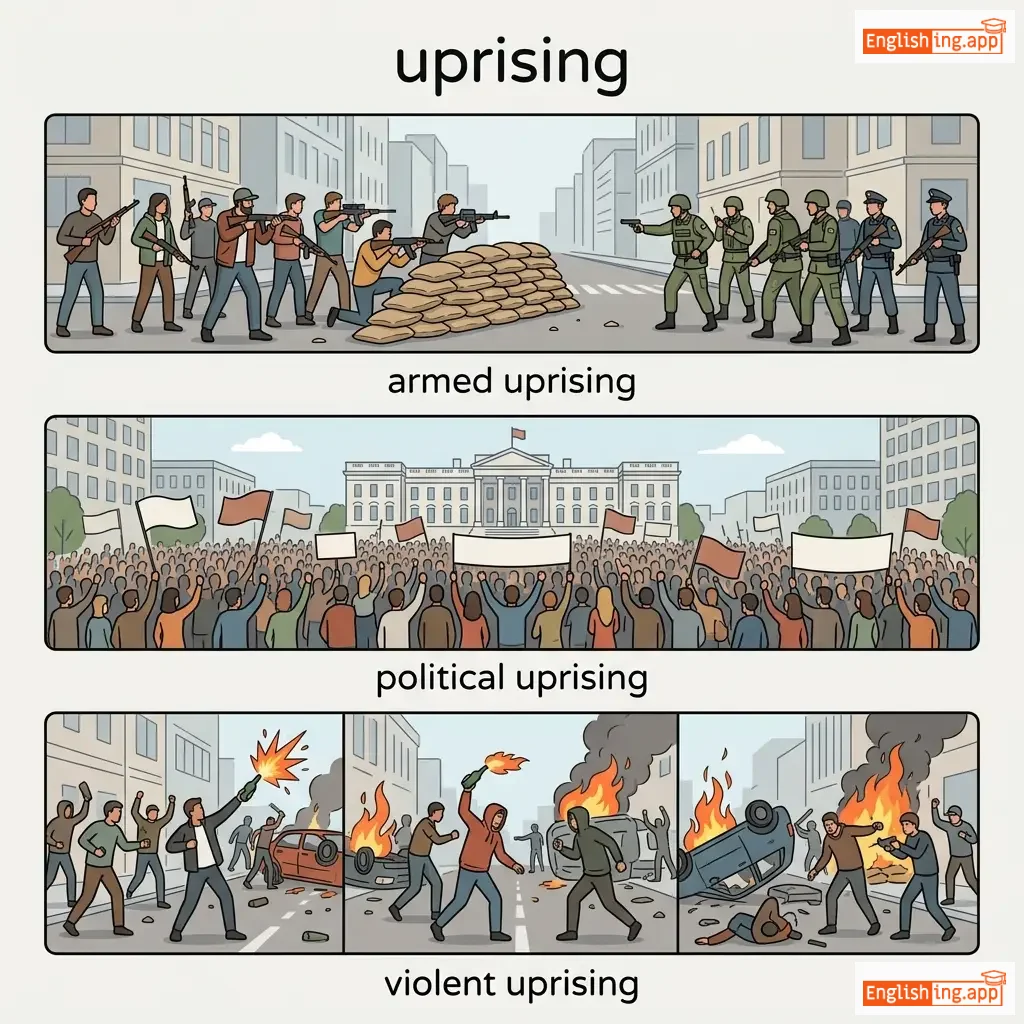
armed uprising, political uprising, violent uprising, popular uprising
••••••
|
当你想反抗 (起义) 政府时,你会举起旗帜。
••••••
|
|
#10261
⬆️
|
/ʌp/
adverb
(āp)
••••••
|
- •••••• |
向上
xiang shang
••••••
|
- •••••• | - •••••• | - •••••• | - •••••• |
towards a higher position or level
••••••
|
He climbed up the ladder quickly.
他迅速爬上了梯子。
••••••
|
他迅速爬上了梯子。
Ta xun su pa shang le ti zi.
••••••
|
look up
向上看
••••••
|
to search for information
••••••
|
寻找信息
xunzhao xinxi
••••••
|
above, upward, higher, ascend
••••••
|
down, below
••••••
|
up the hill, up the ladder, go up, stand up
••••••
|
向上 - xiang shang - 向上爬。
••••••
|
|
#10262
🤫
|
/ʌnˈvɔɪst/
adjective
(an-voist)
••••••
|
- •••••• |
未表达
wei biao da
••••••
|
- •••••• | - •••••• | - •••••• | - •••••• |
not expressed in speech; in phonetics, a sound produced without vocal cord vibration
••••••
|
The student kept her opinion unvoiced during the meeting. |
学生在会议期间保持她的意见未表达。
Xuesheng zai huiyi qijian baochi ta de yijian wei biaoda.
••••••
|
- •••••• | - •••••• | - •••••• |
silent, unspoken, voiceless, unsaid
••••••
|
voiced, spoken, expressed
••••••
|
unvoiced opinion, unvoiced consonant, unvoiced thought
••••••
|
Unvoiced意味着没有声音,就像未表达或沉默。
••••••
|
|
#10263
🌟
|
/ʌnˈjuːʒuəl/
adjective
(ʌnˈjuːʒuəl)
••••••
|
- •••••• |
不寻常
bù xúncháng
••••••
|
- •••••• | - •••••• | - •••••• | - •••••• |
not common or ordinary; remarkable or exceptional
••••••
|
She has an unusual talent for solving complex problems. |
她有解决复杂问题的非凡才能。
Tā yǒu jiějué fùzá wèntí de fēifán cáinéng.
••••••
|
- •••••• | - •••••• | - •••••• |
rare, uncommon, exceptional, extraordinary, remarkable
••••••
|
usual, common, ordinary
••••••
|
unusual behavior, unusual situation, unusual appearance, highly unusual
••••••
|
Unusual = 不寻常 (NOT 寻常) → 因此,不寻常。
••••••
|
|
#10264
❌
|
/ʌnˈtruː/
adjective
(āntrū)
••••••
|
- •••••• |
虚假
xūjiǎ
••••••
|
- •••••• | - •••••• | - •••••• | - •••••• |
not true; false or incorrect
••••••
|
The rumor about the company closing was completely untrue. |
关于公司关闭的谣言完全不真实。
Guānyú gōngsī guānbì de yáoyán wánquán bù zhēnshí.
••••••
|
- •••••• | - •••••• | - •••••• |
false, incorrect, wrong, inaccurate
••••••
|
true, correct, accurate
••••••
|
completely untrue, prove untrue, found untrue
••••••
|
UNtrue意味着虚假,不真实。
••••••
|
|
#10265
🤐
|
/ʌnˈsteɪtɪd/
adjective
(ʌnˈsteɪtɪd)
••••••
|
- •••••• |
未声明
wei shengming
••••••
|
- •••••• | - •••••• | - •••••• | - •••••• |
not expressed directly in words; implied or left unsaid
••••••
|
The contract included several unstated expectations. |
合同包括了几个未声明的期望。
Hetong baokuo le jige wei shengming de qiwang.
••••••
|
- •••••• | - •••••• | - •••••• |
implicit, unspoken, tacit, hidden, assumed
••••••
|
explicit, stated, declared
••••••
|
unstated rules, unstated assumption, unstated agreement, unstated condition
••••••
|
Unstated 意味着未声明或暗示。
••••••
|
|
#10266
🙅♀️
|
/ʌnˈmærid/
adjective
(ānˈmærɪd)
••••••
|
- •••••• |
未婚
weihun
••••••
|
- •••••• | - •••••• | - •••••• | - •••••• |
Not married; single.
••••••
|
He is thirty-five and still unmarried. |
他三十五岁,仍然未婚。
Ta sanshiwu sui, rengran weihun.
••••••
|
unmarried couple |
A couple living together without being married
••••••
|
未婚情侣
weihun qinglv
••••••
|
single, unattached, celibate, bachelor, spinster
••••••
|
married, wedded
••••••
|
unmarried man, unmarried woman, remain unmarried, still unmarried
••••••
|
Un+married = 未结婚 = 单身。
••••••
|
|
#10267
💪
|
/ʌnˈɪndʒərd/
adjective
(ānínjiéde)
••••••
|
- •••••• |
未受伤
wei shou shang
••••••
|
- •••••• | - •••••• | - •••••• | - •••••• |
Without injury; not physically harmed.
••••••
|
All the passengers were rescued uninjured.
Suǒyǐ zhěnggè chéngkè dōu méiyǒu shòudào shānghài ér bèi jiùzhù.
••••••
|
所有乘客都没有受伤并被救援。
Suǒyǐ chéngkè dōu méi yǒu shòudào shānghài bìng bèi jiùyuán.
••••••
|
- •••••• | - •••••• | - •••••• |
safe, unharmed, intact, unhurt
••••••
|
injured, wounded, harmed
••••••
|
remain uninjured, completely uninjured, miraculously uninjured
••••••
|
Un+injured = wei shou shang
••••••
|
|
#10268
😊
|
/ʌnˈhɜːrt/
adjective
(ʌnˈhɜːrt)
••••••
|
- •••••• |
毫发无损
háo fà wú sǔn
••••••
|
- •••••• | - •••••• | - •••••• | - •••••• |
Not injured or harmed.
••••••
|
She walked away from the accident unhurt.
她在事故中毫发无损。
••••••
|
她在事故中毫发无损。
Tā zài shìgù zhōng háo fà wú sǔn.
••••••
|
- •••••• | - •••••• | - •••••• |
safe, unharmed, intact, well
••••••
|
injured, hurt, harmed
••••••
|
escape unhurt, remain unhurt, come out unhurt
••••••
|
Unhurt = 完全没有损伤 = 毫发无损.
••••••
|
|
#10269
😔
|
/ʌnˈfɔːrtʃənət/
adjective
(an4fuoqinai)
••••••
|
- •••••• |
不幸
buxing
••••••
|
- •••••• | - •••••• | - •••••• | - •••••• |
Having or marked by bad luck; unlucky.
••••••
|
It was unfortunate that the meeting was canceled at the last minute.
很不幸,会议在最后一分钟被取消了。
••••••
|
很不幸,会议在最后一分钟被取消了。
Hen buxing, huiyi zai zuihou yifen zhong bei quxiao le.
••••••
|
unfortunate incident
不幸事件
••••••
|
An unlucky or regrettable event
••••••
|
不幸事件
buxing shijian
••••••
|
unlucky, regrettable, unlucky, adverse, unlucky
••••••
|
fortunate, lucky, favorable
••••••
|
unfortunate accident, unfortunate situation, unfortunate event, unfortunate circumstances
••••••
|
UN+幸运 = 没有好运 = 不幸
••••••
|
|
#10270
⏱️
|
/taɪmd/
verb
(taimd)
••••••
|
- •••••• |
计时
jishi
••••••
|
timed
taimd
••••••
|
timed
taimd
••••••
|
times
taims
••••••
|
timing
taiming
••••••
|
to measure or record the duration or speed of something
••••••
|
He timed the race with a stopwatch.
他用秒表计时比赛。
••••••
|
他用秒表计时比赛。
Ta yong miaobiao jishi bisai.
••••••
|
timed to perfection
精准计时
••••••
|
done with perfect timing
••••••
|
做得完美计时
zuo de wanmei jishi
••••••
|
measured, recorded, tracked, clocked
••••••
|
ignored, overlooked
••••••
|
timed event, well timed, timed perfectly, timed action
••••••
|
计时就是用秒表测量时间。
••••••
|
|
#10271
🤔
|
/ˌʌndərˈstændəbl/
adjective
(āndèrsītāndēbù)
••••••
|
- •••••• |
可以理解的
kěyǐ lǐjiě de
••••••
|
- •••••• | - •••••• | - •••••• | - •••••• |
Able to be understood; reasonable or justifiable.
••••••
|
Her reaction was understandable given the situation.
Hēi rìyǎkèshèn wóu āndèrsītāndēbù gīwén de shìjiùshèng.
••••••
|
考虑到情况,她的反应是可以理解的。
Kǎolǜ dào qíngkuàng, tā de fǎnyìng shì kěyǐ lǐjiě de.
••••••
|
- •••••• | - •••••• | - •••••• |
reasonable, comprehensible, justifiable, acceptable
••••••
|
incomprehensible, unreasonable
••••••
|
perfectly understandable, understandable concern, understandable mistake
••••••
|
Understand + able → 可以理解的
••••••
|
|
#10272
📉
|
/ˌʌndərˈɛstɪmeɪt/
verb
(安德尔艾斯蒂梅特)
••••••
|
- •••••• |
低估
dī gū
••••••
|
underestimated
安德尔艾斯蒂梅特德
••••••
|
underestimated
安德尔艾斯蒂梅特德
••••••
|
underestimates
安德尔艾斯蒂梅特斯
••••••
|
underestimating
安德尔艾斯蒂梅特英
••••••
|
To judge something as less important or smaller than it really is.
••••••
|
Never underestimate the power of teamwork.
永远不要低估团队合作的力量。
••••••
|
永远不要低估团队合作的力量。
Yǒngyuǎn bùyào dīgū tuánduì hézuò de lìliàng.
••••••
|
to underestimate someone
低估某人
••••••
|
To fail to recognize someone's full ability or strength.
••••••
|
低估某人
Dīgū mǒu rén
••••••
|
undervalue, underrate, misjudge, minimize
••••••
|
overestimate, exaggerate
••••••
|
underestimate risk, underestimate ability, underestimate importance
••••••
|
Under + estimate = 低估 → 永远不要低估团队合作的力量
••••••
|
|
#10273
✅
|
/ˌʌndɪˈnaɪəbl/
adjective
(ān-dè-ní-ē-bù)
••••••
|
- •••••• |
不可否认
bù kě fǒu rèn
••••••
|
- •••••• | - •••••• | - •••••• | - •••••• |
Impossible to deny; clearly true or real.
••••••
|
Her talent is undeniable. |
她的才华不可否认。
Tā de cáihuá bù kě fǒu rèn.
••••••
|
- •••••• | - •••••• | - •••••• |
indisputable, unquestionable, certain, obvious
••••••
|
deniable, questionable, doubtful
••••••
|
undeniable fact, undeniable evidence, undeniable truth
••••••
|
UN-deniable = 不可能否认 → 不可否认
••••••
|
|
#10274
🥩
|
/ʌnˈkʊkt/
adjective
(ǎn kùkè dē)
••••••
|
- •••••• |
生的
sheng de
••••••
|
- •••••• | - •••••• | - •••••• | - •••••• |
Not cooked; in a raw state.
••••••
|
Eating uncooked meat can be dangerous. |
吃生肉可能是危险的。
Chī shēng ròu kěnéng shì wēixiǎn de.
••••••
|
- •••••• | - •••••• | - •••••• |
raw, fresh, unbaked, underdone
••••••
|
cooked, baked, prepared
••••••
|
uncooked rice, uncooked vegetables, uncooked pasta
••••••
|
Un-cooked = 未煮熟的,即生的
••••••
|
|
#10275
👫
|
/ˈtuːsəm/
noun
(túsām)
••••••
|
- •••••• |
一对
yī duì
••••••
|
- •••••• | - •••••• | - •••••• | - •••••• |
A pair of people considered together, often in a romantic or competitive context.
••••••
|
They entered the dance competition as a twosome. |
他们作为一对参加了舞蹈比赛。
Tāmen zuòwéi yī duì cānjiāle wǔdǎo bǐsài.
••••••
|
- •••••• | - •••••• | - •••••• |
pair, duo, couple, partnership
••••••
|
individual, single
••••••
|
romantic twosome, golfing twosome, happy twosome
••••••
|
Two SOME = 一对, 所以twosome意味着一对
••••••
|
|
#10276
🌪️
|
/ˈtwɪstər/
noun
(twister)
••••••
|
- •••••• |
龙卷风
longjuanfeng
••••••
|
- •••••• | - •••••• | - •••••• | - •••••• |
A tornado or something that twists; also refers to a challenging tongue twister.
••••••
|
The twister destroyed several houses in the village. |
龙卷风摧毁了村庄里的几栋房子。
Longjuanfeng cuihui le cunzhuang li de ji dong fangzi.
••••••
|
tongue twister |
A phrase or sentence that is difficult to pronounce quickly.
••••••
|
绕口令
raokouling
••••••
|
tornado, cyclone, whirlwind, spiral
••••••
|
calm, stillness
••••••
|
violent twister, massive twister, tongue twister, twister game
••••••
|
旋转的龙卷风是twister,绕口令也在转。
••••••
|
|
#10277
🤗
|
/ˈtrʌstˌwɜːrði/
adjective
(信赖的)
••••••
|
- •••••• |
可信赖
kěxìn lài
••••••
|
- •••••• | - •••••• | - •••••• | - •••••• |
Able to be relied on as honest or truthful.
••••••
|
She is a trustworthy friend who never lies.
她是一个值得信赖的朋友,从不说谎。
••••••
|
她是一个值得信赖的朋友,从不说谎。
Tā shì yīgè zhídé xìnlài de péngyǒu, cóng bù shuō huǎng.
••••••
|
- •••••• | - •••••• | - •••••• |
reliable, dependable, honest, faithful, loyal
••••••
|
unreliable, dishonest, untrustworthy
••••••
|
trustworthy source, trustworthy person, appear trustworthy, prove trustworthy
••••••
|
可信赖的意思是你可以信任他/她。
••••••
|
|
#10278
😨
|
/ˈtrɛmbəl/
verb
(特雷姆布尔)
••••••
|
- •••••• |
颤抖
chan tiao
••••••
|
trembled
特雷姆布尔德
••••••
|
trembled
特雷姆布尔德
••••••
|
trembles
特雷姆布尔斯
••••••
|
trembling
特雷姆布尔灵
••••••
|
To shake slightly, often because of fear, cold, or nervousness.
••••••
|
She began to tremble with fear before speaking.
她在讲话前因害怕而开始颤抖。
••••••
|
她在讲话前因害怕而开始颤抖。
Tā zài jiǎnghuà qián yīn hàipà ér kāishǐ zhàndòng.
••••••
|
tremble with excitement
因兴奋而颤抖
••••••
|
To shake slightly because of strong excitement.
••••••
|
因兴奋而颤抖
Yīn xīngfèn ér zhàndòng
••••••
|
shake, quiver, shiver, shudder
••••••
|
steady, stabilize
••••••
|
tremble with fear, tremble slightly, tremble hands, tremble voice
••••••
|
当你颤抖时,就像一列火车在动。
••••••
|
|
#10279
🔄
|
/trænsˈfɔːrm/
verb
(转变)
••••••
|
|
转变
zhuǎnbiàn
••••••
|
transformed
转变了
••••••
|
transformed
转变了
••••••
|
transforms
转变
••••••
|
transforming
转变中
••••••
|
To change something completely in form, appearance, or character.
••••••
|
The new policy will transform the healthcare system.
新政策将转变医疗保健系统。
••••••
|
新政策将转变医疗保健系统。
Xīn zhèngcè jiāng zhuǎnbiàn yīliáo bǎojiàn xìtǒng.
••••••
|
transform lives
转变人生
••••••
|
To make a big positive change in people's lives.
••••••
|
转变人生
zhuǎnbiàn rénshēng
••••••
|
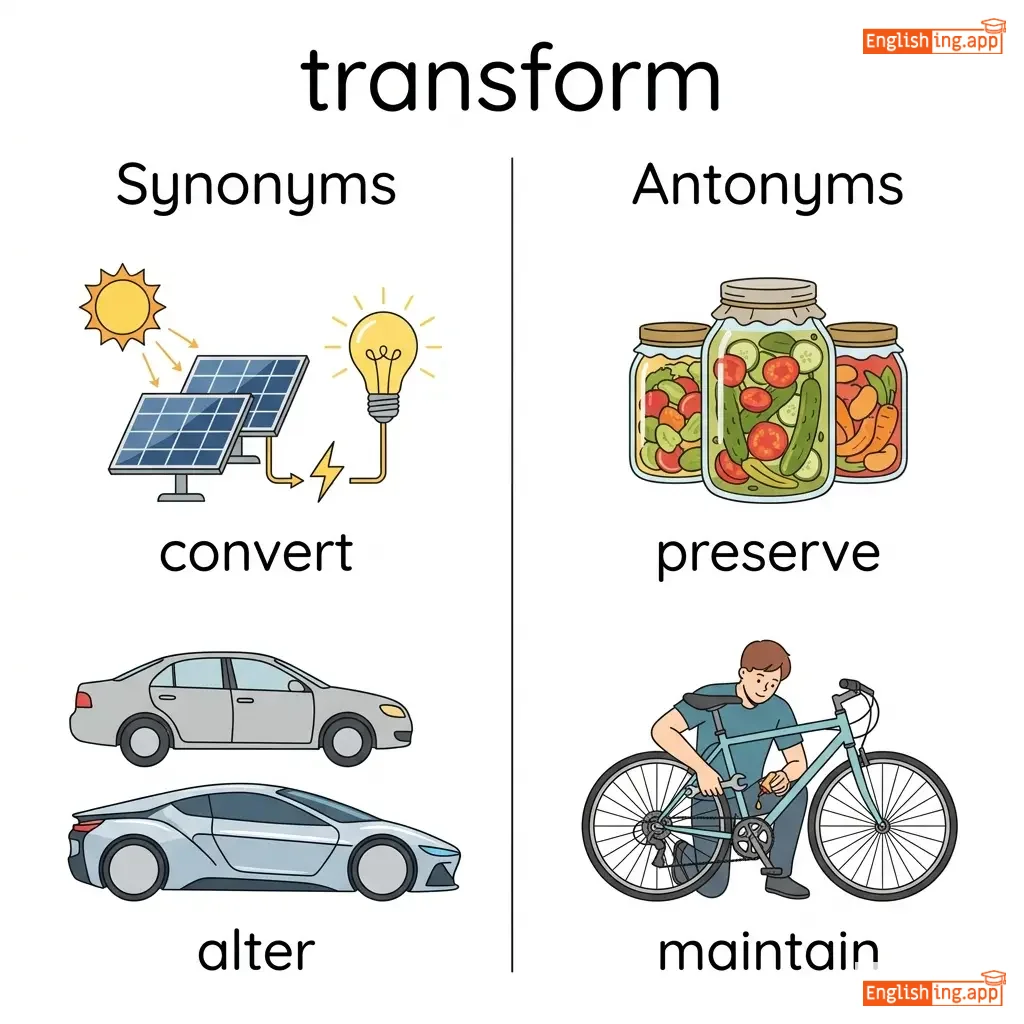
convert, alter, revolutionize, reshape, modify
••••••
|
preserve, maintain, keep
••••••
|
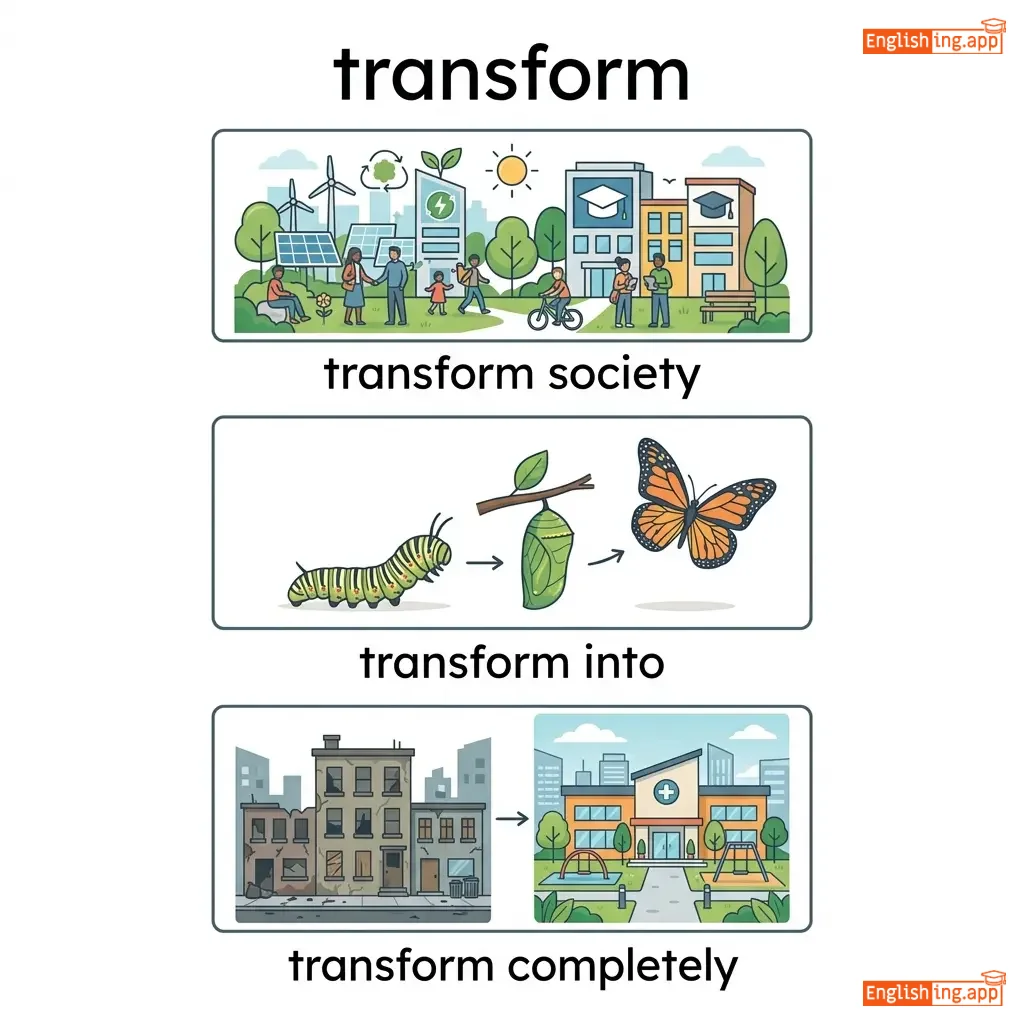
transform society, transform into, transform completely, transform the system
••••••
|
转变就像改变形态,完美地变化!
••••••
|
|
#10280
🕵️
|
/ˈtreɪtər/
noun
(特雷托)
••••••
|
- •••••• |
叛徒
pàntú
••••••
|
- •••••• | - •••••• | - •••••• | - •••••• |
A person who betrays their country, friends, or a cause by acting against them.
••••••
|
The soldier was labeled a traitor for giving secrets to the enemy. |
这名士兵因为向敌人提供机密信息而被贴上了叛徒的标签。
Zhè míng shìbīng yīnwèi xiàng dírén tígōng jīmì xìnxī ér bèi tiē shàngle pàntú de biāoqiān.
••••••
|
traitor in our midst |
Someone among us who secretly betrays the group.
••••••
|
我们中的叛徒
Wǒmen zhōng de pàntú
••••••
|
betrayer, turncoat, defector, backstabber, double-crosser
••••••
|
loyalist, patriot, supporter
••••••
|
call someone a traitor, branded a traitor, traitor to the cause, expose a traitor
••••••
|
TRAIn中给TOR的是叛徒 (traitor)。
••••••
|
|
#10281
🏈
|
/ˈtʌtʃ.daʊn/
noun
(ˈtʌtʃ.daʊn)
••••••
|
- •••••• |
着陆
zhuó lù
••••••
|
- •••••• | - •••••• | - •••••• | - •••••• |
the moment when an aircraft lands, or a score in American football
••••••
|
The plane made a smooth touchdown. |
飞机顺利着陆。
Fēijī shùnlì zhuó lù.
••••••
|
- •••••• | - •••••• | - •••••• |
landing, arrival, score, goal
••••••
|
takeoff, departure
••••••
|
smooth touchdown, successful touchdown, touchdown celebration, touchdown pass
••••••
|
着陆,像触地得分一样,平稳地着地。
••••••
|
|
#10282
🧮
|
/ˈtoʊ.təl/
adjective, noun, verb
(托塔尔)
••••••
|
- •••••• |
总计
zongji
••••••
|
totaled
托塔尔德
••••••
|
totaled
托塔尔德
••••••
|
totals
托塔尔斯
••••••
|
totaling
托塔林
••••••
|
the whole amount; complete
••••••
|
The total cost was too high.
总成本太高了。
••••••
|
总成本太高了。
Zong chengben tai gao le.
••••••
|
a total loss
完全损失
••••••
|
completely destroyed or ruined
••••••
|
完全损失
wanquan sunshi
••••••
|
whole, complete, sum, entire
••••••
|
partial, incomplete
••••••
|
total cost, total amount, total failure, grand total
••••••
|
Total 意味着完整 – 想想 total 就是总计。
••••••
|
|
#10283
😖
|
/ˈtɔːr.ment/
noun, verb
(tóuménte)
••••••
|
- •••••• |
折磨
zhémó
••••••
|
tormented
tóuménte de
••••••
|
tormented
tóuménte de
••••••
|
torments
tóuménte s
••••••
|
tormenting
tóuménteing
••••••
|
severe physical or mental suffering; to cause extreme suffering
••••••
|
The prisoner was in constant torment.
囚犯正在承受着持续的痛苦。
••••••
|
囚犯正在承受着持续的痛苦。
Qiúfàn zhèngzài chéngshòu zhe chíxù de tòngkǔ.
••••••
|
tormented soul
痛苦的灵魂
••••••
|
a person who suffers deeply
••••••
|
痛苦的灵魂
tòngkǔ de línghún
••••••
|
agony, suffering, torture, misery
••••••
|
comfort, relief, peace
••••••
|
mental torment, torment someone, in torment, great torment
••••••
|
折磨 = 压力与痛苦。折磨是沉重的痛苦,要记住。
••••••
|
|
#10284
📅
|
/təˈdeɪ/
noun, adverb
(tʊˈdeɪ)
••••••
|
- •••••• |
今天
jin tian
••••••
|
- •••••• | - •••••• | - •••••• | - •••••• |
on this present day
••••••
|
She has a meeting today.
她今天有一个会议。
••••••
|
她今天有一个会议。
Ta jin tian you yi ge hui yi.
••••••
|
here today, gone tomorrow
今天在这里,明天走
••••••
|
something temporary or short-lived
••••••
|
今天在这里,明天走
Jin tian zai zhe li, ming tian zou
••••••
|
now, currently, presently, nowadays
••••••
|
yesterday, tomorrow
••••••
|
today only, happening today, today morning, today evening
••••••
|
今天就是今天,记住今天
••••••
|
Vocabulary Quiz
Test your vocabulary by matching words with their translations or meanings.
Login to take the quiz
Comments (0)
Share your thoughts and join the discussion.
Join the discussion by logging in
Login to CommentNo comments yet
Be the first to share your thoughts!