

Swipe left or right, or use the buttons. Tap image to zoom.
例句翻译
单词
Lesson 174Lesson 174 - 遮罩切换
|
表情符号
|
单词 | Images | 翻译 | 过去时 | 过去分词 | 第三人称单数 | 动名词 | 含义 | 例句 | 例句翻译 | 示例表达 | 示例表达含义 | 示例表达翻译 | 同义词 | 反义词 | 搭配词 | 助记符 |
|---|---|---|---|---|---|---|---|---|---|---|---|---|---|---|---|---|---|
|
#5191
💧
|
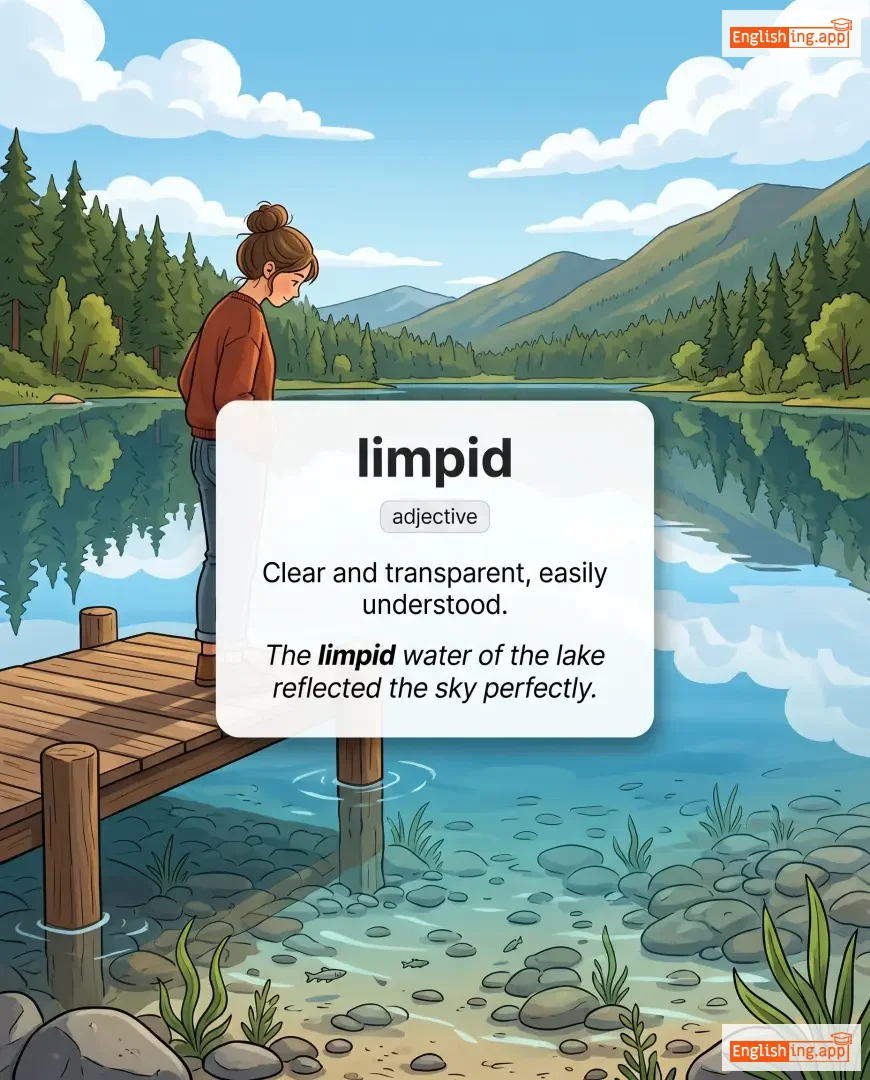
/ˈlɪmpɪd/
adjective
(limpid)
••••••
|
|
清澈
qingche
••••••
|
- •••••• | - •••••• | - •••••• | - •••••• |
Clear and transparent, easily understood.
••••••
|
The limpid water of the lake reflected the sky perfectly.
湖水清澈地反射了天空。
••••••
|
湖水清澈地反射了天空。
Hu shui qingche de fǎnshè le tiānkōng.
••••••
|
- •••••• | - •••••• | - •••••• |
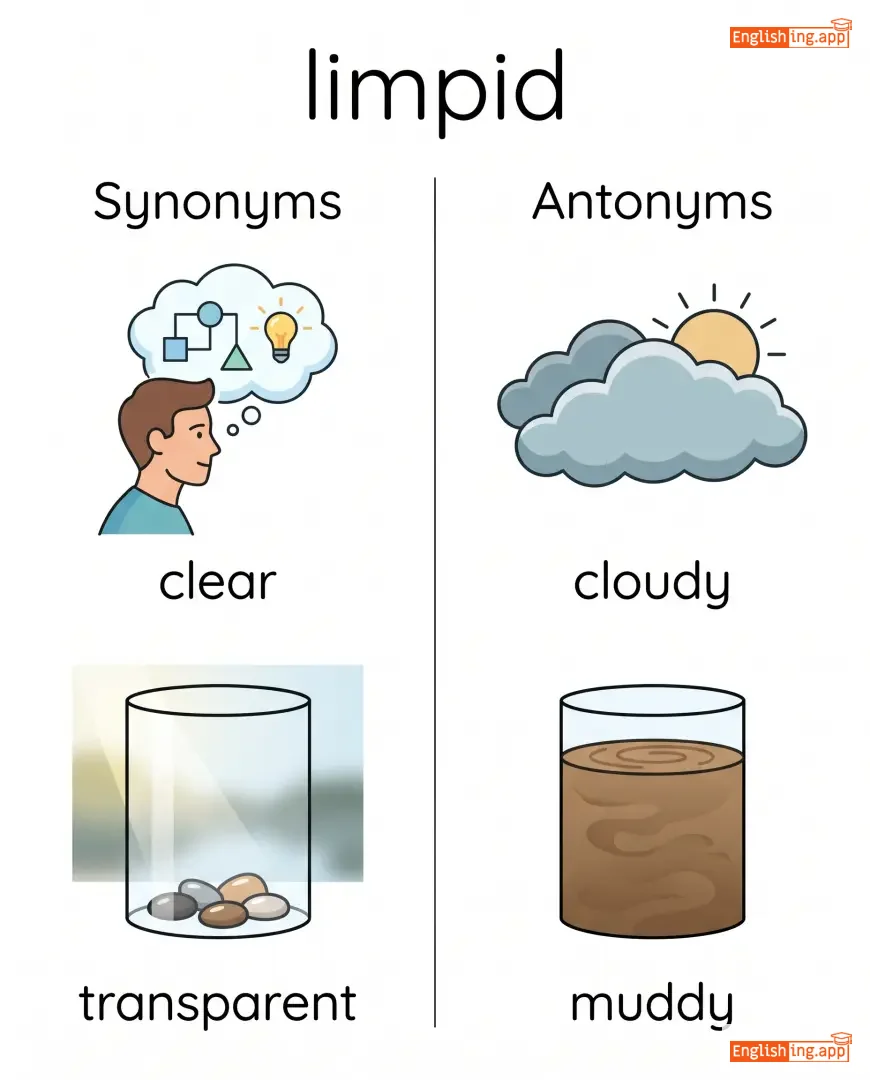
clear, transparent, lucid, crystal, pure
••••••
|
cloudy, muddy, obscure
••••••
|
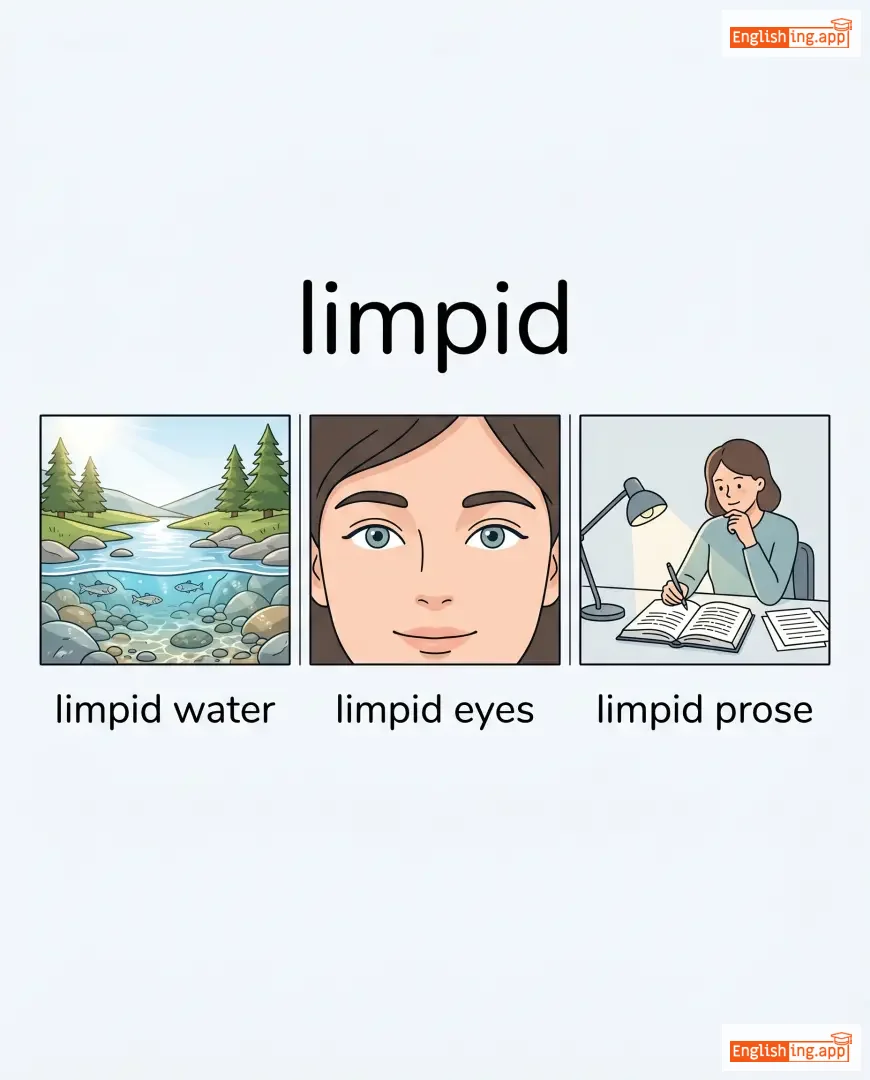
limpid water, limpid eyes, limpid prose
••••••
|
Limpid 就是像清澈的水 💧
••••••
|
|
#5192
💆
|
/ˈlɪnəmənt/
noun
(liniment)
••••••
|
- •••••• |
擦剂 / 洛神
caji / luoshen
••••••
|
- •••••• | - •••••• | - •••••• | - •••••• |
A liquid or lotion applied to the skin to relieve pain or stiffness.
••••••
|
He rubbed liniment on his sore muscles after the workout.
他在训练后擦上了伤痛的肌肉上了擦剂。
••••••
|
他在训练后擦上了伤痛的肌肉上了擦剂。
Ta zai xunlian hou ca shang le shang tong de jirou shang le caji.
••••••
|
- •••••• | - •••••• | - •••••• |
ointment, lotion, balm, salve, cream
••••••
|
poison, irritant
••••••
|
herbal liniment, soothing liniment, apply liniment, liniment bottle
••••••
|
Liniment – 想象 'Line' 作为 liniment = 缓解疼痛.
••••••
|
|
#5193
📝
|
/lɪŋˈɡwɪstɪks/
noun
(语言学)
••••••
|
- •••••• |
语言学
yuyanxue
••••••
|
- •••••• | - •••••• | - •••••• | - •••••• |
The scientific study of language and its structure.
••••••
|
She decided to major in linguistics at university.
她决定在大学里攻读语言学。
••••••
|
她决定在大学里攻读语言学。
Ta jueding zai daxue li gongdu yuyanxue.
••••••
|
- •••••• | - •••••• | - •••••• |
philology, semantics, grammar, language science
••••••
|
illiteracy, nonverbal studies
••••••
|
linguistics department, applied linguistics, theoretical linguistics, computational linguistics
••••••
|
Linguistics意味着'语言学' – 记住 'lingo + statistics' = 语言的科学
••••••
|
|
#5194
📚
|
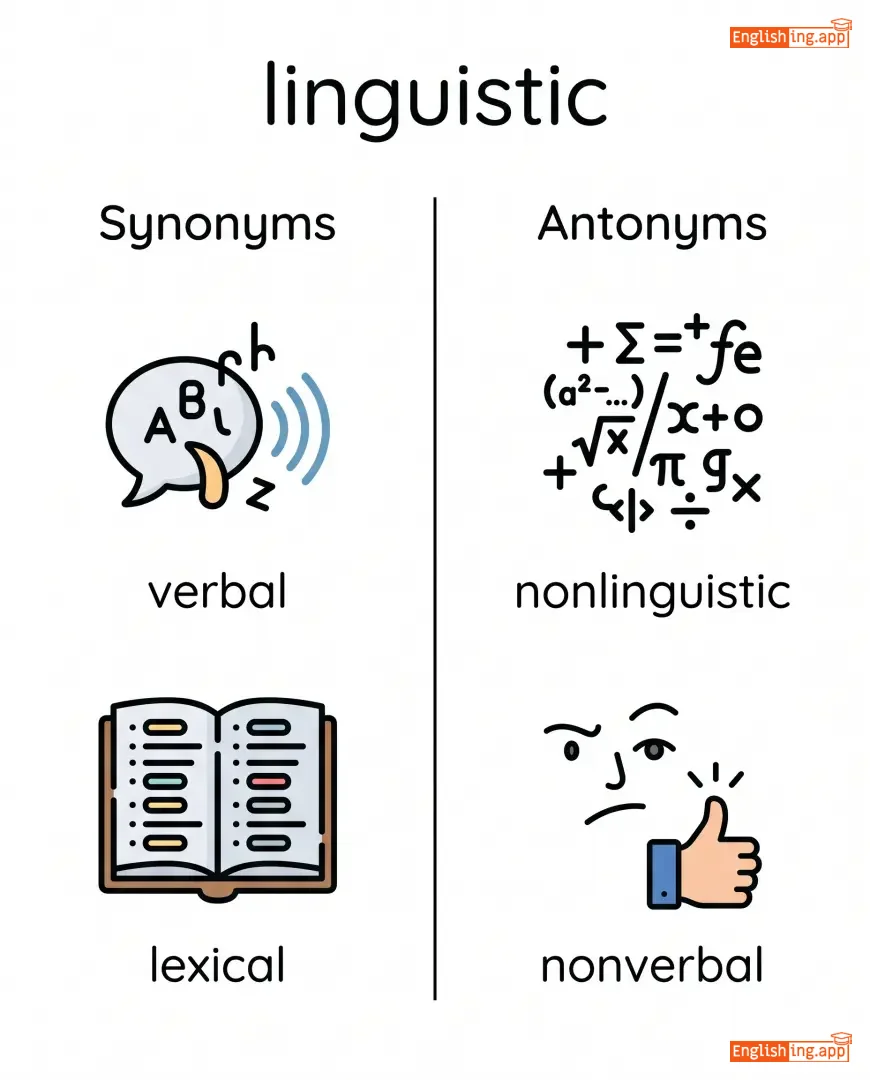
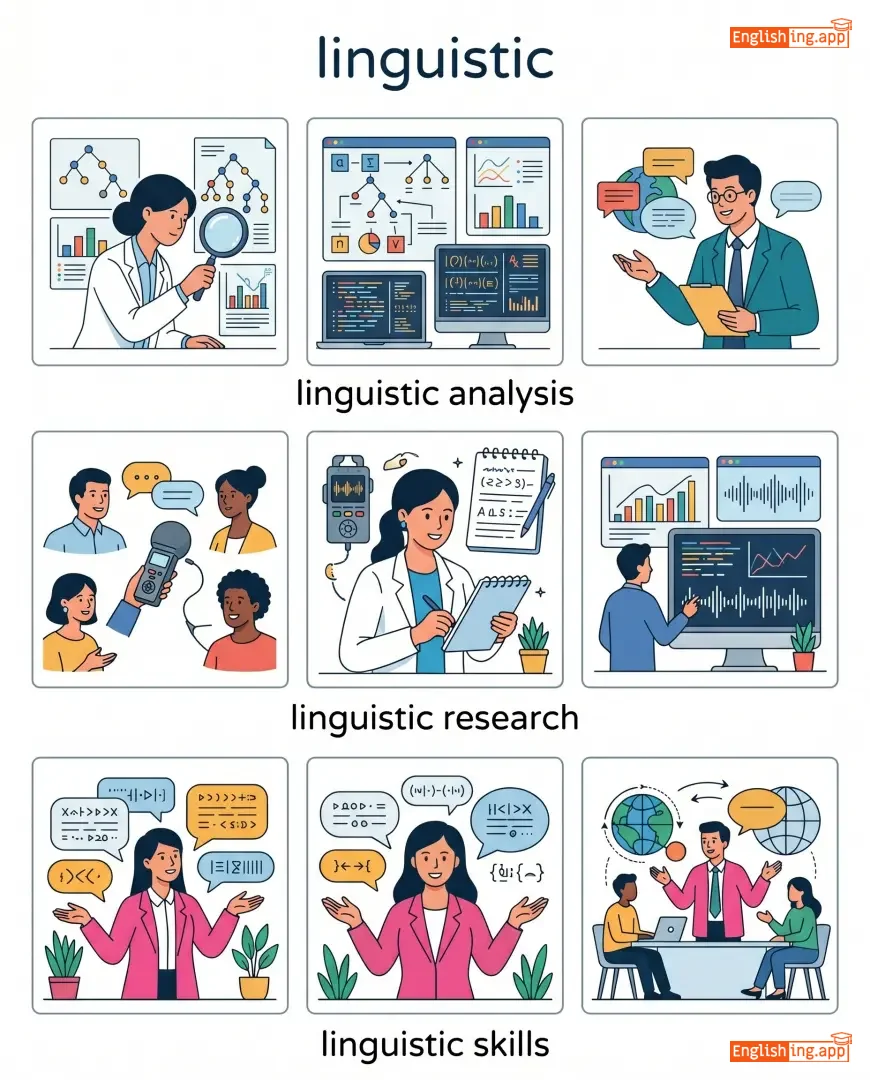
/lɪŋˈɡwɪstɪk/
adjective
(lɪŋˈɡwɪstɪk)
••••••
|
|
语言学的
yǔyán xué de
••••••
|
- •••••• | - •••••• | - •••••• | - •••••• |
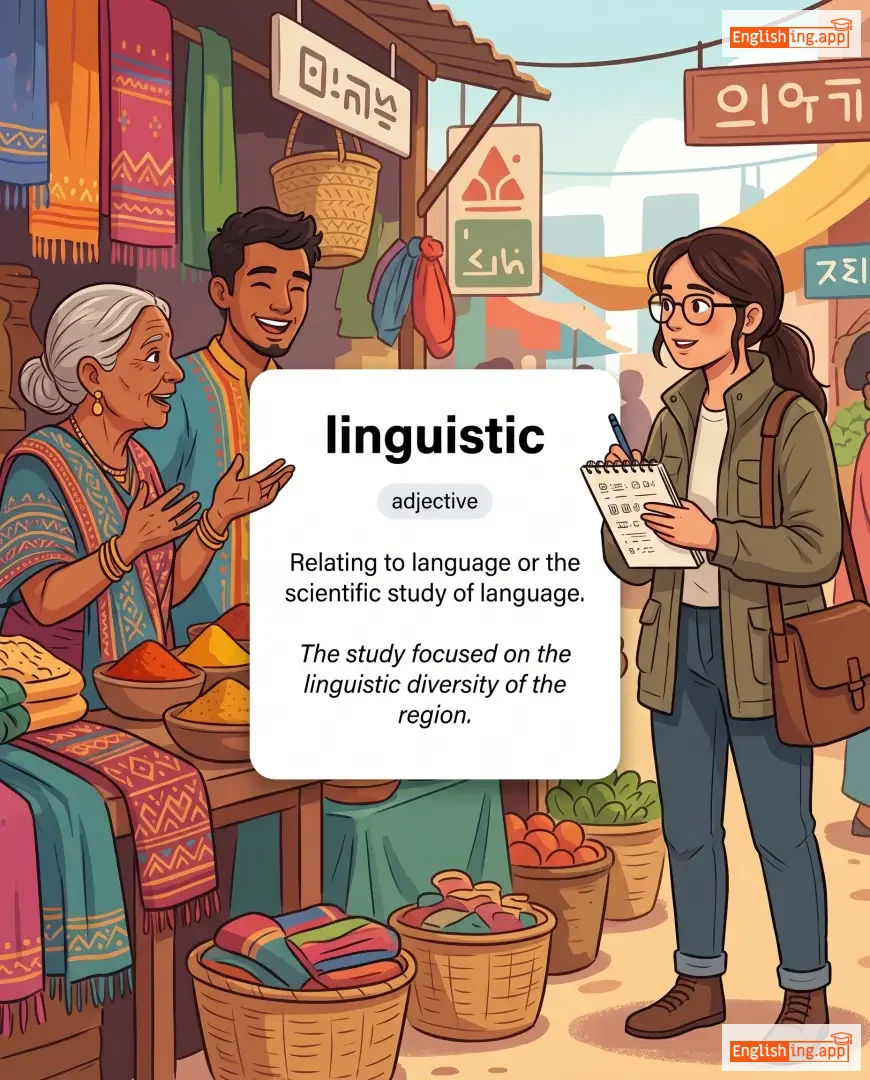
Relating to language or the scientific study of language.
••••••
|
The study focused on the linguistic diversity of the region.
该研究集中在该地区的语言多样性上。
••••••
|
该研究集中在该地区的语言多样性上。
Gāi yánjiū jízhōng zài gāi dìqū de yǔyán duōyàng xìng shàng.
••••••
|
- •••••• | - •••••• | - •••••• |
verbal, lexical, grammatical, philological
••••••
|
nonlinguistic, nonverbal
••••••
|
linguistic analysis, linguistic research, linguistic skills, linguistic diversity
••••••
|
语言学的 = 语言 + 学的 = 与语言相关
••••••
|
|
#5195
🗣️
|
/ˈlɪŋɡwɪst/
noun
(语言学家)
••••••
|
- •••••• |
语言学家
yǔyán xuéjiā
••••••
|
- •••••• | - •••••• | - •••••• | - •••••• |
A person skilled in foreign languages or in the scientific study of language.
••••••
|
She is a linguist who speaks six languages fluently.
她是一位能流利讲六种语言的语言学家。
••••••
|
她是一位能流利讲六种语言的语言学家。
Tā shì yī wèi néng liúlì jiǎng liù zhǒng yǔyán de yǔyán xuéjiā.
••••••
|
- •••••• | - •••••• | - •••••• |
language expert, philologist, translator, polyglot
••••••
|
illiterate, non-speaker
••••••
|
famous linguist, professional linguist, historical linguist, computational linguist
••••••
|
语言学家 = 'lingo' + '专家' = 语言专家
••••••
|
|
#5196
👅
|
/ˈlɪŋɡwəl/
adjective
(林瓜尔)
••••••
|
- •••••• |
与舌头相关
yǔ shétou xiāngguān
••••••
|
- •••••• | - •••••• | - •••••• | - •••••• |
Relating to the tongue or speech.
••••••
|
The dentist examined the patient's lingual surface of the teeth. |
牙医检查了病人的牙齿舌面。
Yáyī jiǎnchále bìngrén de yáchǐ shé miàn.
••••••
|
- •••••• | - •••••• | - •••••• |
tongue-related, oral, speech-related, verbal
••••••
|
nonverbal, silent
••••••
|
lingual nerve, lingual surface, lingual artery, lingual papillae
••••••
|
Lingual 意味着与舌头相关 – 👅 想到 '舌头' 来记住。
••••••
|
|
#5197
🌍
|
/ˈlɪŋ.ɡwə/
noun
(lɪŋɡwə)
••••••
|
- •••••• |
语言
yuyan
••••••
|
- •••••• | - •••••• | - •••••• | - •••••• |
A language, especially one used for communication among people.
••••••
|
English has become a global lingua for business and science.
英语已经成为商业和科学的全球语言。
••••••
|
英语已经成为商业和科学的全球语言。
Yingyu yijing chengwei shangye he kexue de quanqiu yuyan.
••••••
|
lingua franca
通用语
••••••
|
A common language used for communication between speakers of different native languages.
••••••
|
通用语
tongyongyu
••••••
|
language, tongue, speech, dialect
••••••
|
silence, muteness
••••••
|
lingua franca, mother lingua, lingua system
••••••
|
Lingua = 语言意味着语言,记住Lingua franca意味着通用语。
••••••
|
|
#5198
🗣️
|
/ˈlɪŋ.ɡoʊ/
noun
(lingo)
••••••
|
- •••••• |
专业术语
zhuānyè shùyǔ
••••••
|
- •••••• | - •••••• | - •••••• | - •••••• |
Specialized or informal language used by a particular group that is often difficult for outsiders to understand.
••••••
|
The manual was written in technical lingo that confused the new employees. |
手册是用技术术语写的,让新员工感到困惑。
Shǒucè shì yòng jìshù shùyǔ xiě de, ràng xīn yuángōng gǎndào kùnhuò.
••••••
|
- •••••• | - •••••• | - •••••• |
jargon, slang, terminology, dialect, speech
••••••
|
plain language, clarity
••••••
|
computer lingo, street lingo, legal lingo, local lingo
••••••
|
Lingo = 术语,想象‘技术lingo’就是‘技术术语’。
••••••
|
|
#5199
⏳
|
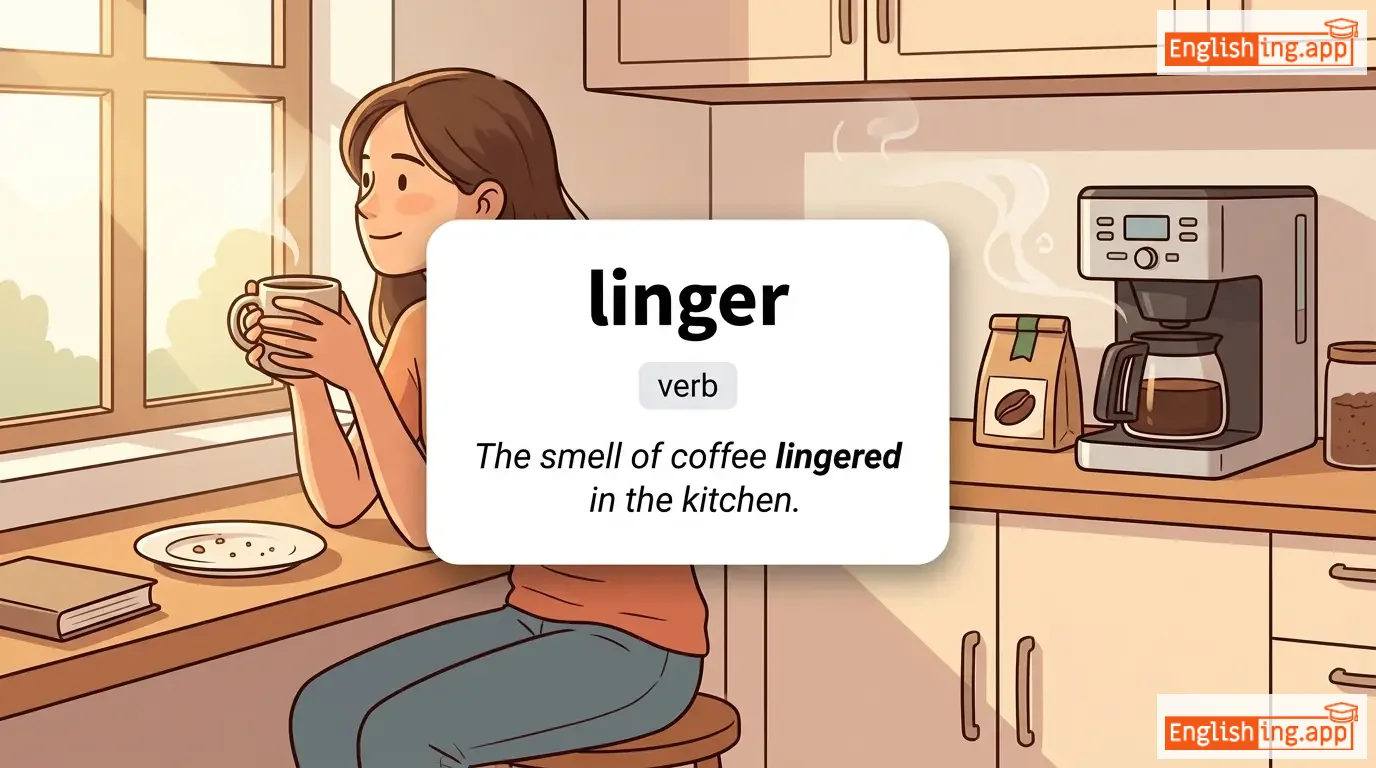
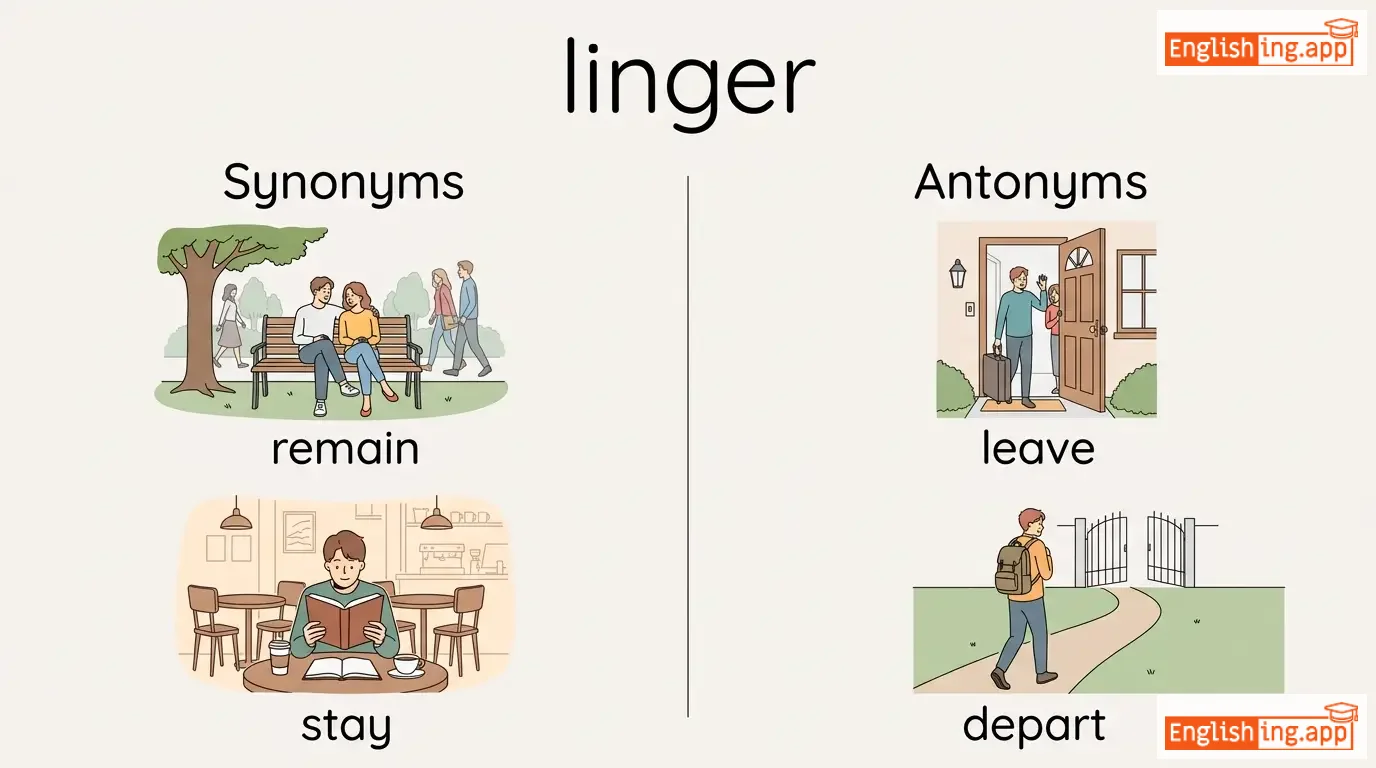
/ˈlɪŋ.ɡər/
verb
(林格)
••••••
|
|
逗留
dòu liú
••••••
|
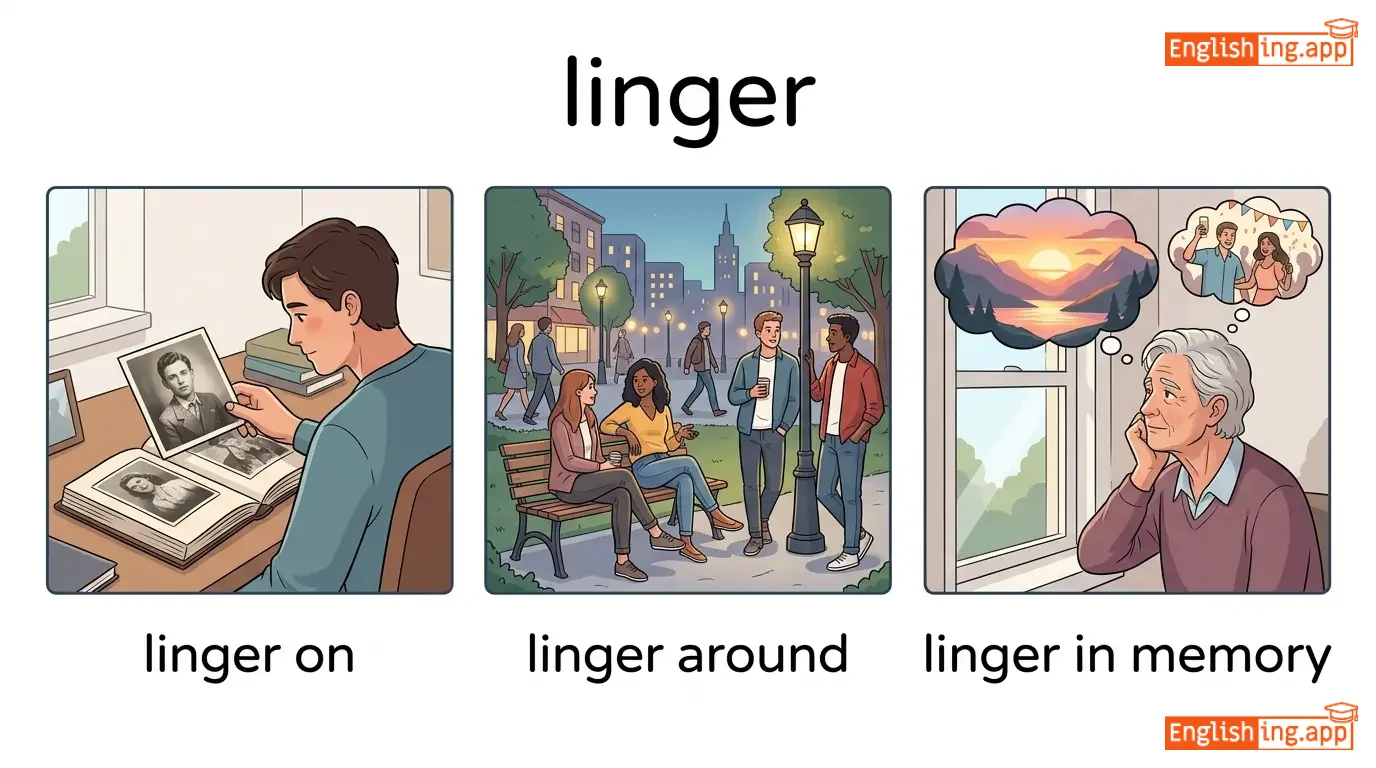
lingered
林格德
••••••
|
lingered
林格德
••••••
|
lingers
林格斯
••••••
|
lingering
林格瑞
••••••
|
To stay in a place longer than necessary, often because of unwillingness to leave.
••••••
|
The smell of coffee lingered in the kitchen.
咖啡的气味在厨房里 linger 了很久。
••••••
|
咖啡的气味在厨房里 linger 了很久。
Kāfēi de qìwèi zài chúfáng lǐ linger le hěnjiǔ.
••••••
|
linger on
linger on
••••••
|
To remain for a long time, especially longer than expected.
••••••
|
逗留
dòu liú
••••••
|
remain, stay, persist, wait, dawdle
••••••
|
leave, depart, vanish
••••••
|
linger on, linger around, linger in memory, linger over
••••••
|
Linger = 逗留,意味着不急于离开。
••••••
|
|
#5200
🚢
|
/ˈlaɪ.nər/
noun
••••••
|
- •••••• | - •••••• | - •••••• | - •••••• | - •••••• | - •••••• |
A large ship used for transporting people or goods regularly, or a material used as a lining inside something.
••••••
|
The luxury liner docked at the port yesterday. |
- •••••• |
ocean liner |
A large passenger ship designed for long sea journeys.
••••••
|
- •••••• |
ship, vessel, cruiser, coating, cover
••••••
|
raft, canoe
••••••
|
liner ship, eye liner, trash liner, ocean liner
••••••
|
No •••••• |
|
#5201
🧵
|
/ˈlɪn.ən/
noun
(麻布)
••••••
|
- •••••• |
麻布织物
mábù zhīwù
••••••
|
- •••••• | - •••••• | - •••••• | - •••••• |
A strong cloth made from the fibers of the flax plant, or items made from this cloth such as sheets or clothing.
••••••
|
She bought new linen curtains for the living room. |
她为客厅买了新的麻布窗帘。
Tā wèi kètīng mǎi le xīn de mábù chuānglián.
••••••
|
clean linen |
Refers to washing or freshly laundered clothes or sheets.
••••••
|
清洁床单
qīngjié chuángdān
••••••
|
fabric, cloth, textile, canvas, material
••••••
|
synthetic, polyester
••••••
|
linen cloth, linen shirt, linen sheets, fine linen
••••••
|
Linen = 麻布织物,记住麻布可以装饰客厅。
••••••
|
|
#5202
📏
|
/ˈlɪniər/
adjective
(línèir)
••••••
|
- •••••• |
线性
xianxing
••••••
|
- •••••• | - •••••• | - •••••• | - •••••• |
Arranged in or extending along a straight line.
••••••
|
The artist used linear perspective in his drawings. |
艺术家在他的画作中使用了线性透视。
Yìshùjiā zài tā de huàzuò zhōng shǐyòngle xiànxìng tòushì.
••••••
|
linear thinking |
A step-by-step way of reasoning in a straight sequence.
••••••
|
线性思维
xiànxìng sīwéi
••••••
|
straight, direct, sequential, aligned
••••••
|
circular, random, nonlinear
••••••
|
linear perspective, linear function, linear equation
••••••
|
线性 = 线 → 如一条直线 📏
••••••
|
|
#5203
👤
|
/ˈlɪniəmənts/
noun (plural)
(lìníyàméntè sī)
••••••
|
- •••••• |
面部特征
miànbù tèzhēng
••••••
|
- •••••• | - •••••• | - •••••• | - •••••• |
The features or distinctive characteristics of the face or body.
••••••
|
The lineaments of his face were sharp and stern. |
他的面部特征很尖锐且严肃。
tā de miànbù tèzhēng hěn jiānruì qiě yánsù.
••••••
|
- •••••• | - •••••• | - •••••• |
features, traits, characteristics, aspects
••••••
|
formlessness, vagueness
••••••
|
facial lineaments, distinct lineaments
••••••
|
Lineaments = 脸部的线条显现特征 👤
••••••
|
|
#5204
🙂
|
/ˈlɪniəmənt/
noun
(liniament)
••••••
|
- •••••• |
面部特征
miànbù tèzhēng
••••••
|
- •••••• | - •••••• | - •••••• | - •••••• |
A distinctive feature or characteristic, especially of the face.
••••••
|
Her delicate lineaments revealed her noble birth.
她精致的面部特征揭示了她高贵的出身。
••••••
|
她精致的面部特征揭示了她高贵的出身。
Tā jīngzhì de miànbù tèzhēng jiēshìle tā gāoguì de chūshēn.
••••••
|
- •••••• | - •••••• | - •••••• |
feature, characteristic, aspect, trait
••••••
|
formlessness, indistinctness
••••••
|
facial lineaments, noble lineaments
••••••
|
Lineament = 面部特征 → 面部的特征 🙂
••••••
|
|
#5205
👑
|
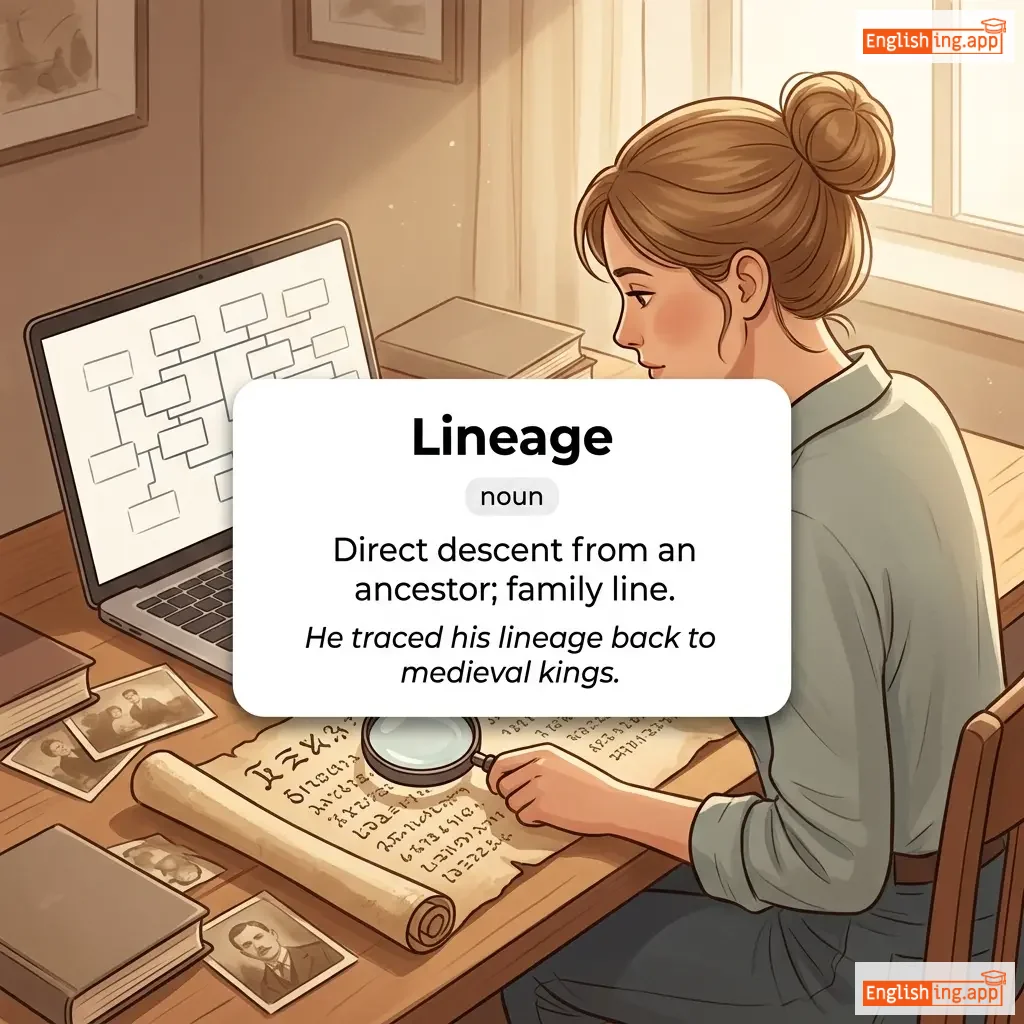
/ˈlɪniɪdʒ/
noun
(línìyǎ)
••••••
|
|
血统
xuètǒng
••••••
|
- •••••• | - •••••• | - •••••• | - •••••• |
Direct descent from an ancestor; family line.
••••••
|
He traced his lineage back to medieval kings. |
他追溯到中世纪的国王的血统。
Tā zhuī sù dào zhōng shìjì de guówáng de xuètǒng.
••••••
|
royal lineage |
Descent from a royal family.
••••••
|
皇家血统
huángjiā xuètǒng
••••••
|
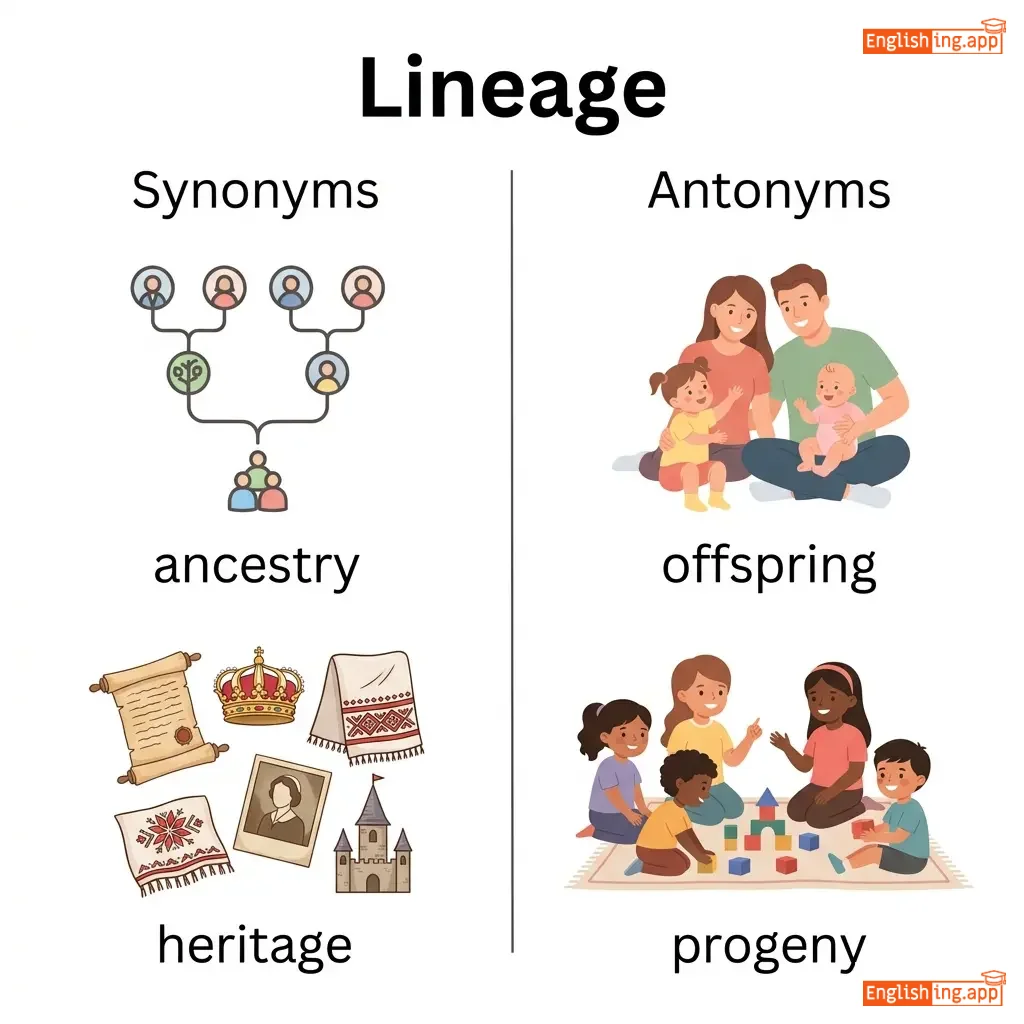
ancestry, heritage, descent, bloodline, genealogy
••••••
|
offspring, progeny
••••••
|
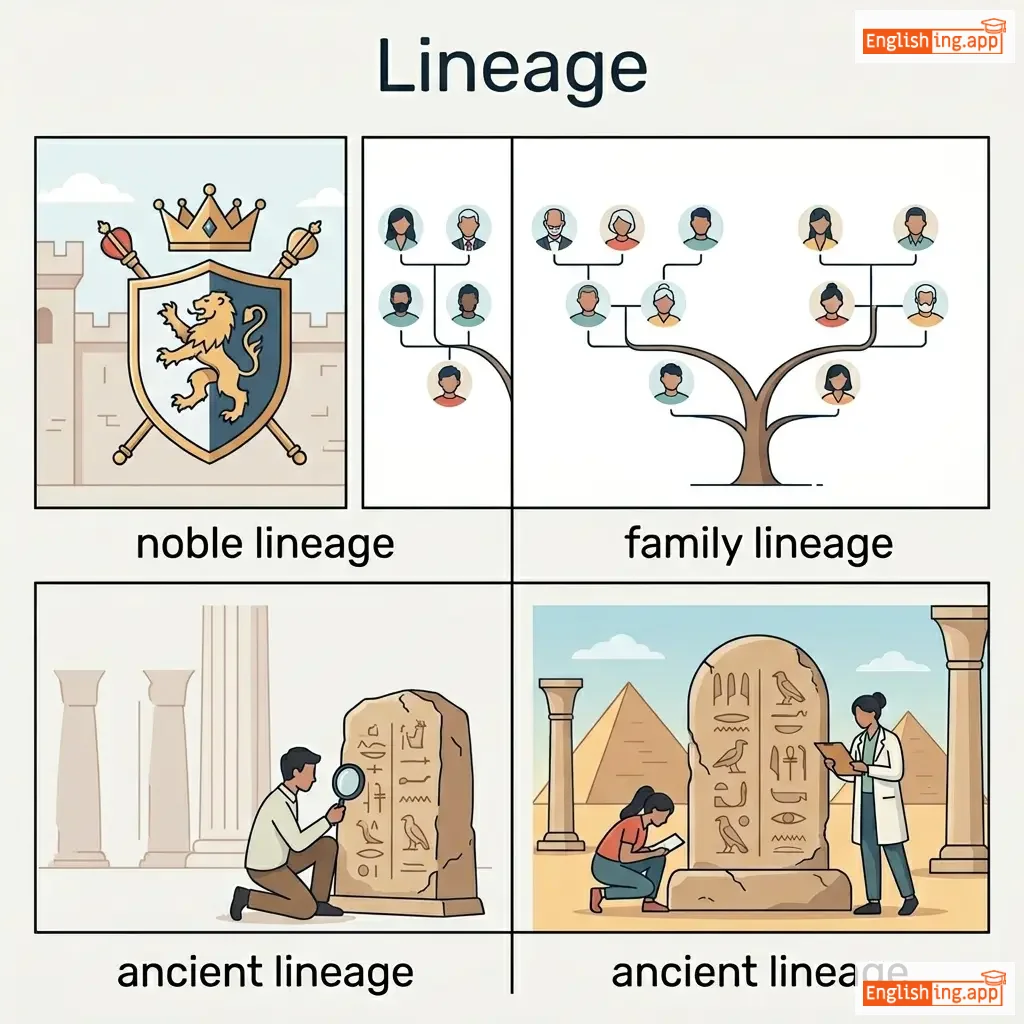
noble lineage, family lineage, ancient lineage
••••••
|
血统 = Royal blood, direct descent.
••••••
|
|
#5206
😊
|
/ˌlaɪtˈhɑːrtɪd/
adjective
(lái tì hā tè dē)
••••••
|
- •••••• |
轻松愉快的
qīngsōng yúkuài de
••••••
|
- •••••• | - •••••• | - •••••• | - •••••• |
cheerful, carefree, and not serious
••••••
|
She gave a light-hearted speech at the party.
她在派对上做了一个轻松愉快的演讲。
••••••
|
她在派对上做了一个轻松愉快的演讲。
Tā zài pàiduì shàng zuòle yīgè qīngsōng yúkuài de yǎnjiǎng.
••••••
|
light-hearted banter
轻松的玩笑
••••••
|
casual, playful, and cheerful conversation
••••••
|
轻松的玩笑
qīngsōng de wánxiào
••••••
|
cheerful, carefree, joyful, playful, jolly
••••••
|
serious, solemn, gloomy
••••••
|
light-hearted joke, light-hearted manner, light-hearted approach, light-hearted comedy
••••••
|
Light (轻松) 和 Hearted (愉快) – 轻松愉快的心
••••••
|
|
#5207
🦶
|
/lɪmp/
verb, adjective, noun
(limp)
••••••
|
- •••••• |
跛行 / 虚弱
bǒxíng / xūruò
••••••
|
limped
limped
••••••
|
limped
limped
••••••
|
limps
limps
••••••
|
limping
limping
••••••
|
to walk with difficulty, often due to injury or weakness; lacking strength or firmness.
••••••
|
He limped after injuring his ankle.
他在伤到脚踝后跛行。
••••••
|
他在伤到脚踝后跛行。
Tā zài shāng dào jiǎohuái hòu bǒxíng.
••••••
|
go limp
变得虚弱
••••••
|
to become weak or without strength.
••••••
|
完全虚弱
wánquán xūruò
••••••
|
stagger, hobble, shuffle, weak, floppy
••••••
|
stride, strong, firm
••••••
|
walk with a limp, limp along, go limp, limp body
••••••
|
Limp意味着走路时像受伤的人一样
••••••
|
|
#5208
🚘
|
/ˈlɪməˌziːn/
noun
(豪华轿车)
••••••
|
- •••••• |
由司机驾驶的豪华大轿车
you sījī jiàshǐ de háohuá dà jiàochē
••••••
|
- •••••• | - •••••• | - •••••• | - •••••• |
a large, luxurious car driven by a chauffeur.
••••••
|
The bride arrived in a white limousine. |
新娘乘坐一辆白色的豪华轿车到达。
Xīnniáng chéngzuò yī liàng báisè de háohuá jiàochē dàodá.
••••••
|
- •••••• | - •••••• | - •••••• |
luxury car, sedan, town car, stretch limo
••••••
|
taxi, bus
••••••
|
hire a limousine, stretch limousine, black limousine, limousine service
••••••
|
豪华轿车是专门有司机驾驶的大车
••••••
|
|
#5209
🎨
|
/lɪm/
verb
(林姆)
••••••
|
|
描述 / 勾画
miáoshù / gōuhuà
••••••
|
limned
林美德
••••••
|
limned
林美德
••••••
|
limns
林姆斯
••••••
|
limning
林明
••••••
|
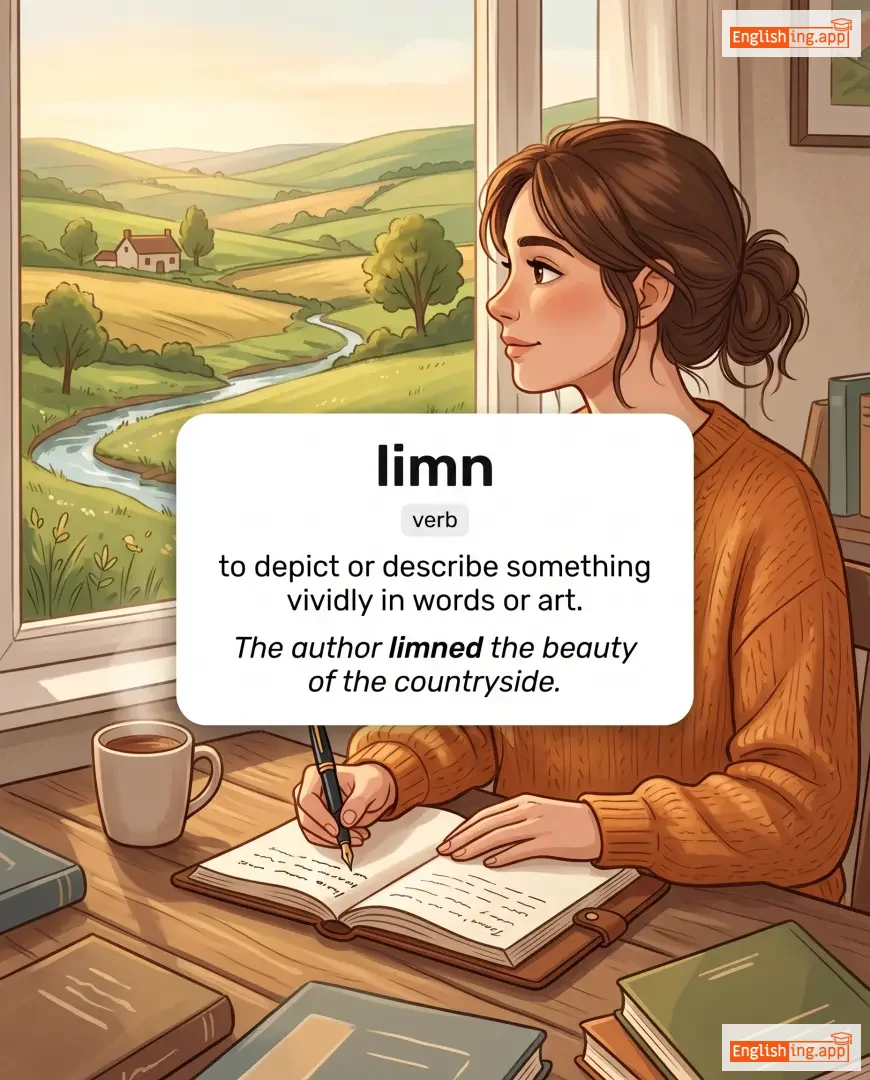
to depict or describe something vividly in words or art.
••••••
|
The author limned the beauty of the countryside.
作者生动地描绘了乡村的美丽。
••••••
|
作者生动地描绘了乡村的美丽。
Zuòzhě shēngdòng de miáohuìle xiāngcūn de měilì.
••••••
|
- •••••• | - •••••• | - •••••• |
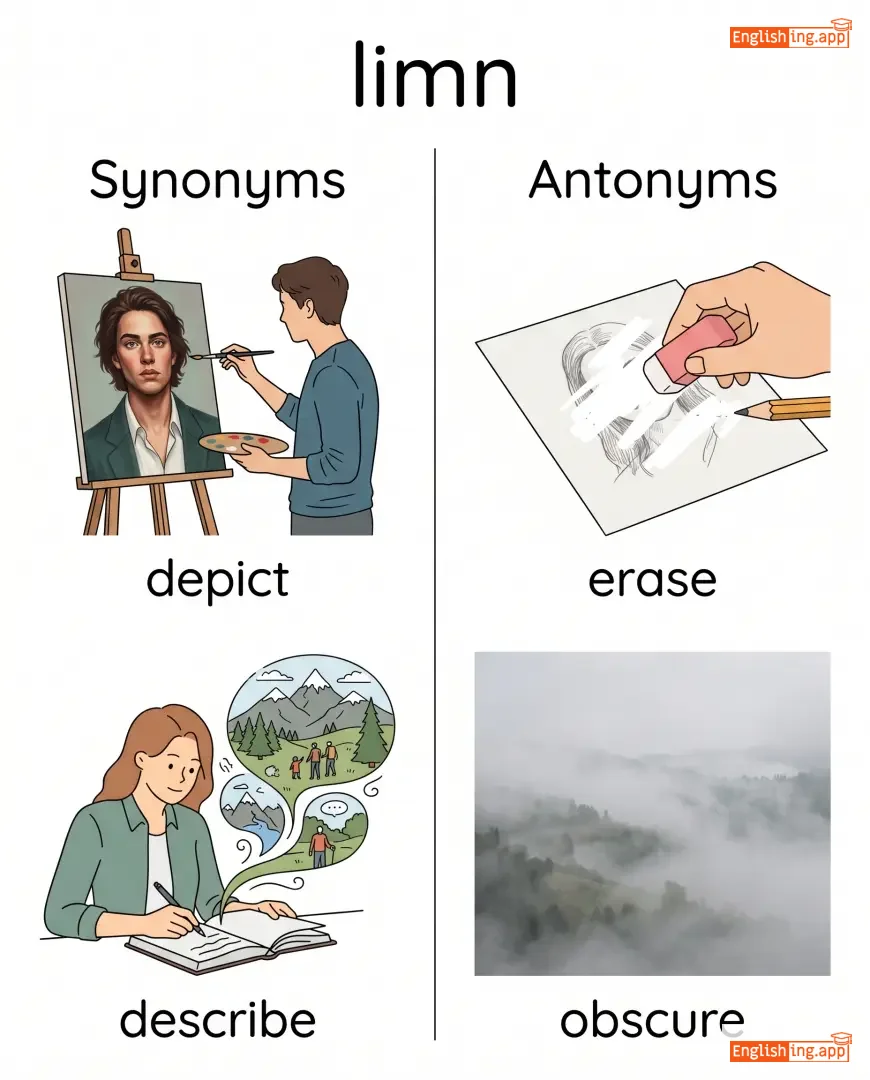
depict, describe, illustrate, portray, outline
••••••
|
erase, obscure, conceal
••••••
|
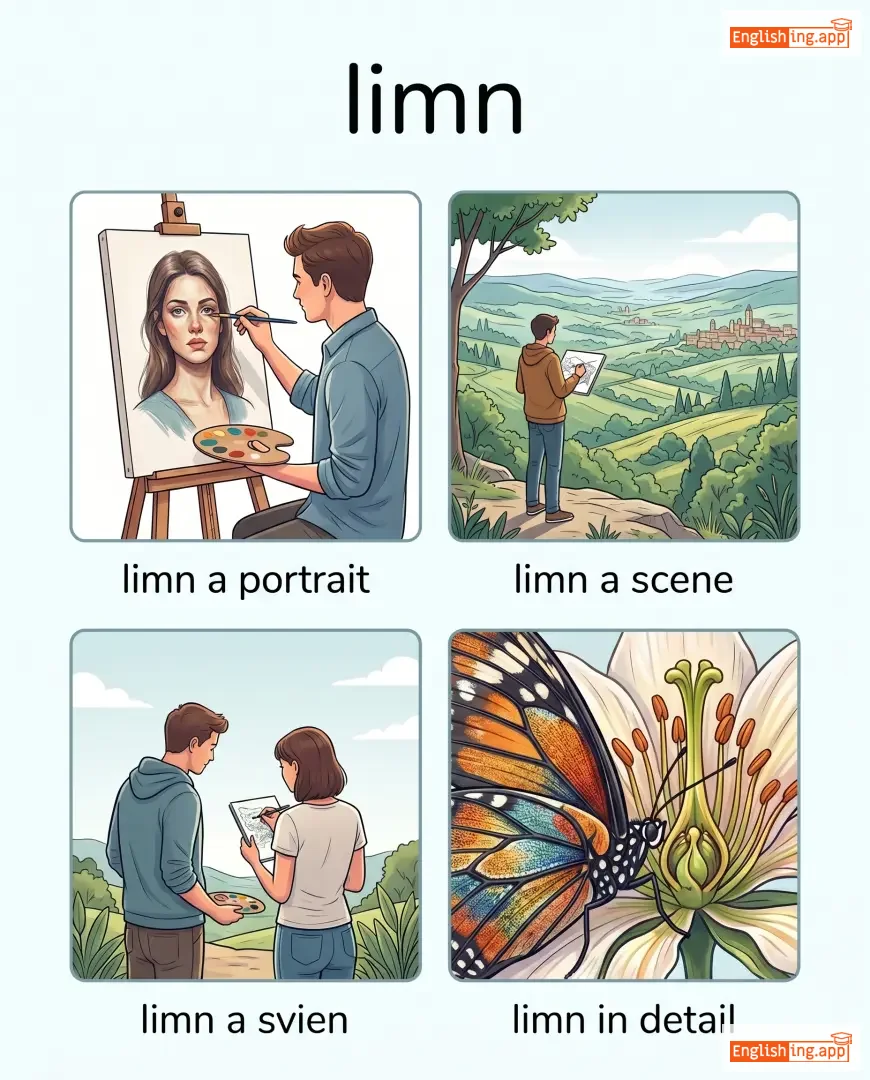
limn a portrait, limn a scene, limn in detail, limn beauty
••••••
|
Limn 就是通过文字或艺术来生动地勾画或描述某物。
••••••
|
|
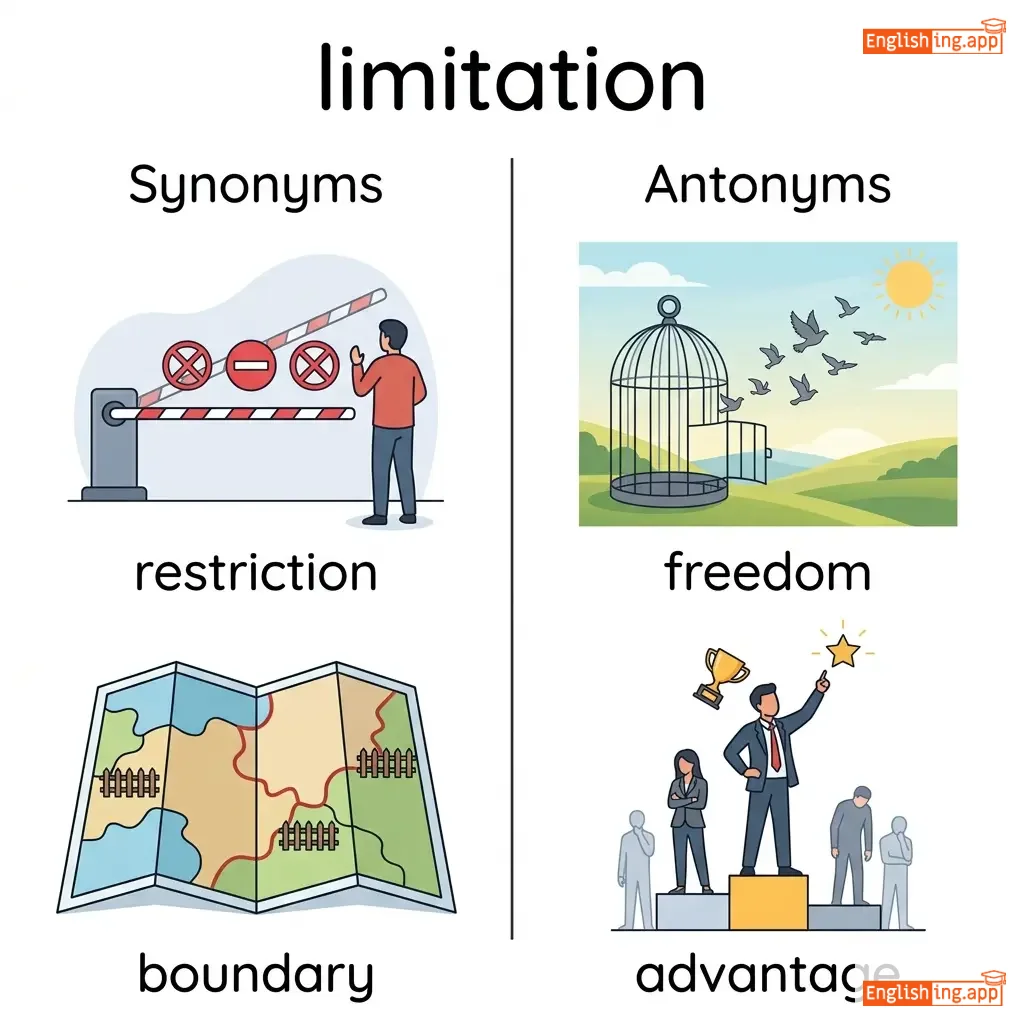
#5210
⛔
|
/ˌlɪmɪˈteɪʃən/
noun
(limiteishen)
••••••
|
|
限制
xianzhi
••••••
|
- •••••• | - •••••• | - •••••• | - •••••• |
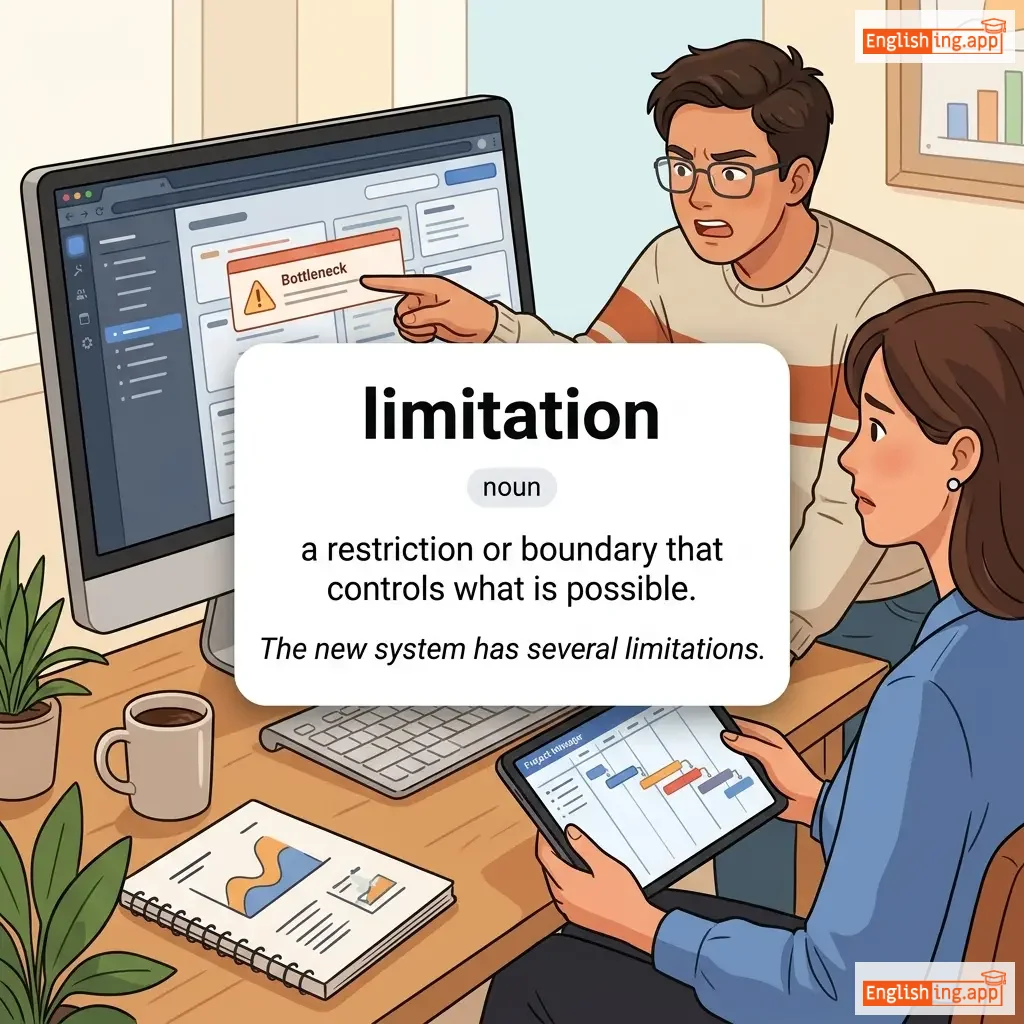
a restriction or boundary that controls what is possible.
••••••
|
The new system has several limitations. |
新系统有几个限制。
Xin xitong you ji ge xianzhi.
••••••
|
know your limitations |
be aware of your own weaknesses or boundaries.
••••••
|
了解你的限制
liaojie nide xianzhi
••••••
|
restriction, boundary, constraint, drawback, shortcoming
••••••
|
freedom, advantage, strength
••••••
|
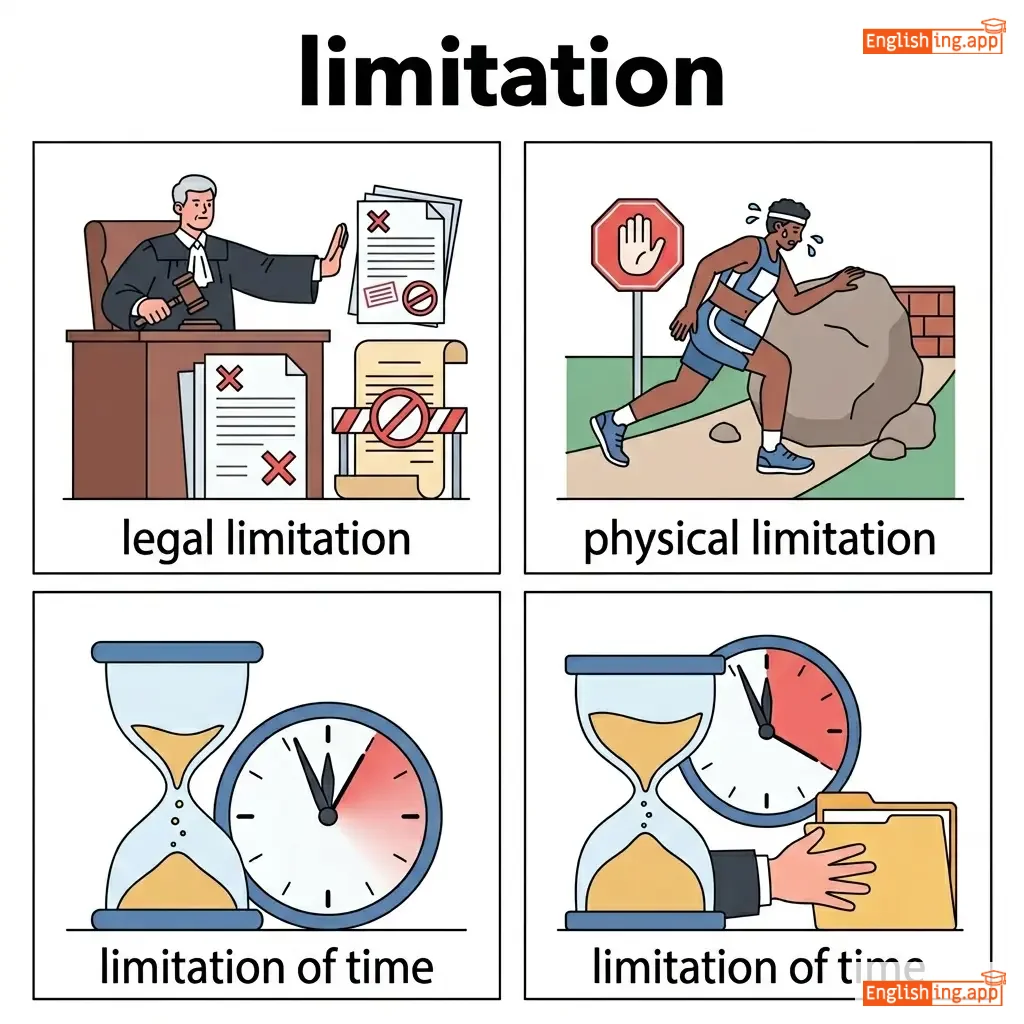
legal limitation, physical limitation, limitation of time, limitation on rights
••••••
|
限制和‘limit’有关系,意味着边界或约束。
••••••
|
|
#5211
📜
|
/ˈlɪmərɪk/
noun
(利梅里克)
••••••
|
- •••••• |
一种幽默的五行诗
yi zhong youmo de wu hang shi
••••••
|
- •••••• | - •••••• | - •••••• | - •••••• |
a humorous five-line poem with a specific rhythm and rhyme scheme (AABBA).
••••••
|
She recited a funny limerick at the party. |
她在派对上背诵了一首有趣的利梅里克。
Ta zai paidui shang beisong le yi shou youqu de limerick.
••••••
|
- •••••• | - •••••• | - •••••• |
verse, poem, rhyme, jingle, ditty
••••••
|
prose, essay
••••••
|
write a limerick, funny limerick, limerick contest, limerick competition
••••••
|
Limerick = 韵律 + 娱乐 (yunlü + yule) - 幽默的诗
••••••
|
|
#5212
⏳
|
/ˈlɪmboʊ/
noun
(林博)
••••••
|
- •••••• |
不确定,悬而未决的状态
bù quèdìng, xuán'ér wèi jué de zhuàngtài
••••••
|
- •••••• | - •••••• | - •••••• | - •••••• |
A state of uncertainty or neglect; an intermediate or transitional state.
••••••
|
The project was left in limbo after the funding was withdrawn.
这个项目在资金撤回后陷入了林博。
••••••
|
该项目在资金撤回后陷入了不确定状态。
gāi xiàngmù zài zījīn chèhuí hòu xiànrùle bù quèdìng zhuàngtài.
••••••
|
in limbo
在林博中
••••••
|
In a state of uncertainty, neglect, or suspension.
••••••
|
在不确定状态中
zài bù quèdìng zhuàngtài zhōng
••••••
|
uncertainty, suspension, neglect, inaction, delay
••••••
|
certainty, decision, progress
••••••
|
left in limbo, remain in limbo, stuck in limbo
••••••
|
Limbo 就像是一场游戏,你必须穿过一根横杆,这象征着不确定的状态。
••••••
|
|
#5213
🤸
|
/ˈlɪmbər/
adjective
(利姆伯)
••••••
|
- •••••• |
灵活和敏捷
línghuó hé mǐnjié
••••••
|
- •••••• | - •••••• | - •••••• | - •••••• |
Flexible and agile in body or movement.
••••••
|
Dancers need to stay limber to perform well.
舞者需要保持灵活才能表现好。
••••••
|
舞者需要保持灵活才能表现好。
Wǔzhě xūyào bǎochí línghuó cáinéng biǎoxiàn hǎo.
••••••
|
limber up
热身
••••••
|
To warm up or prepare physically before exercise.
••••••
|
热身
rèshēn
••••••
|
flexible, supple, agile, bendable, lithe
••••••
|
stiff, rigid, inflexible
••••••
|
limber body, stay limber, limber athlete, limber movements
••••••
|
Limber 就是灵活和容易弯曲。
••••••
|
|
#5214
🐜
|
/ˌlɪlɪˈpjuːʃən/
adjective
(莉利普提安)
••••••
|
|
极小的
jí xiǎo de
••••••
|
- •••••• | - •••••• | - •••••• | - •••••• |
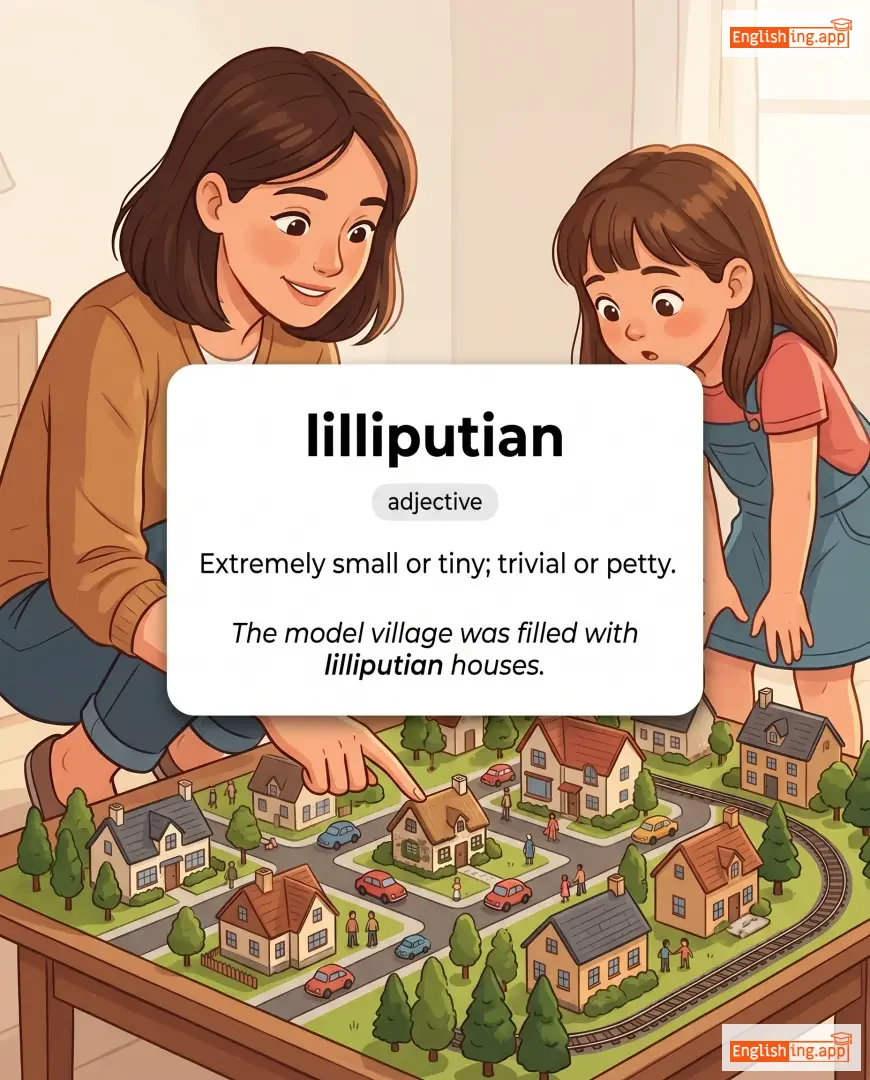
Extremely small or tiny; trivial or petty.
••••••
|
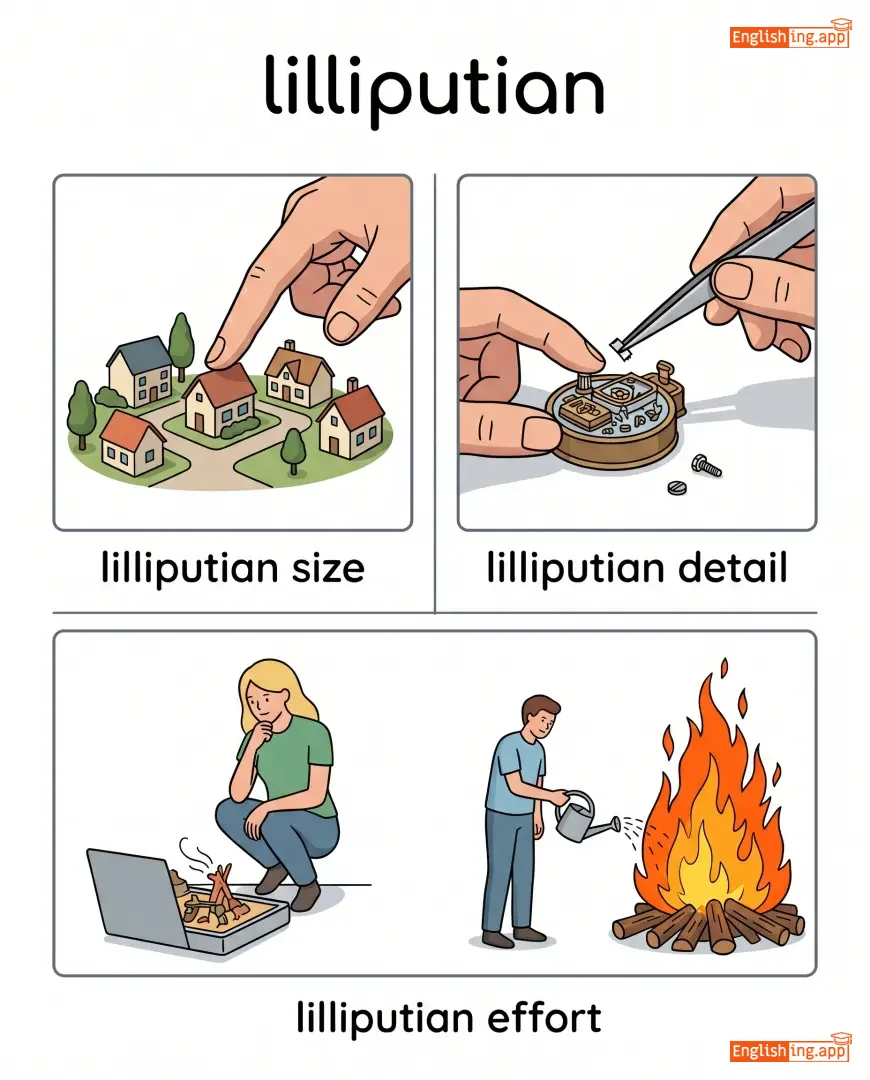
The model village was filled with lilliputian houses.
模范村庄里充满了莉莉普提安式的房屋。
••••••
|
模范村庄里充满了极小的房屋。
Mófàn cūnzhuāng lǐ chōngmǎnle jí xiǎo de fángwū.
••••••
|
- •••••• | - •••••• | - •••••• |
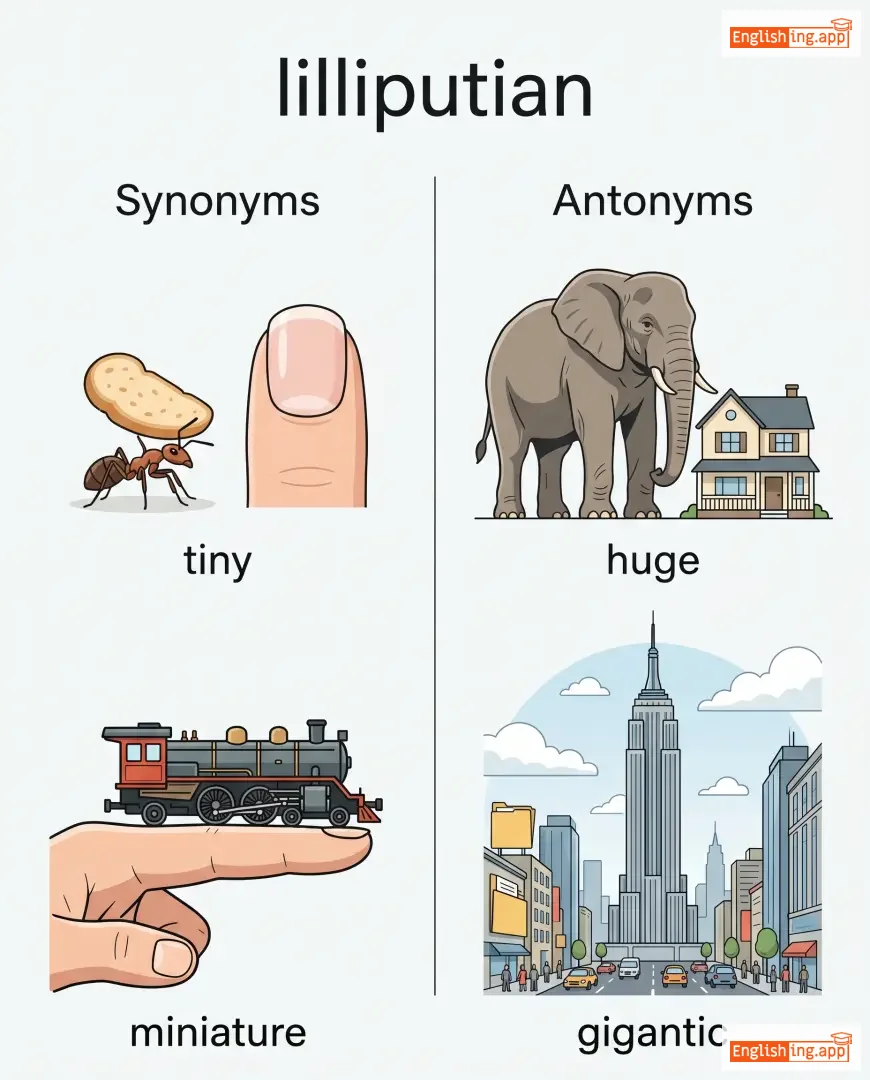
tiny, miniature, minuscule, small, petty
••••••
|
huge, gigantic, colossal
••••••
|
lilliputian size, lilliputian detail, lilliputian effort
••••••
|
Lilliput 是一个极小的地方 — Lilliputian 是极其小的
••••••
|
|
#5215
💖
|
/ˈlaɪkɪŋ/
noun
(莱金)
••••••
|
- •••••• |
喜好, 偏爱
xǐhào, piān'ài
••••••
|
- •••••• | - •••••• | - •••••• | - •••••• |
A feeling of fondness or preference for something or someone.
••••••
|
She has a strong liking for classical music. |
她对古典音乐有很强的喜好。
Tā duì gǔdiǎn yīnyuè yǒu hěn qiáng de xǐhào.
••••••
|
to one's liking |
Something that suits or pleases someone.
••••••
|
根据某人的喜好
gēnjù mǒu rén de xǐhào
••••••
|
fondness, preference, affection, taste, inclination
••••••
|
dislike, aversion, hatred
••••••
|
develop a liking, have a liking, strong liking, mutual liking
••••••
|
Liking就是喜好,像‘like’一样
••••••
|
|
#5216
🔄
|
/ˈlaɪkˌwaɪz/
adverb
(làikèwǎizī)
••••••
|
- •••••• |
同样; 也; 类似地
tóngyàng; yě; lèisì de
••••••
|
- •••••• | - •••••• | - •••••• | - •••••• |
In the same way; also; similarly.
••••••
|
She smiled, and he likewise returned the gesture. |
她微笑了,他也回以同样的手势。
Tā wēixiào le, tā yě huí yǐ tóngyàng de shǒushì.
••••••
|
- •••••• | - •••••• | - •••••• |
similarly, also, equally, correspondingly, moreover
••••••
|
differently, otherwise
••••••
|
say likewise, act likewise, think likewise, respond likewise
••••••
|
Likewise: 做法与别人相同
••••••
|
|
#5217
🔗
|
/ˈlaɪ.kən/
verb
(làikēn)
••••••
|
- •••••• |
比较
bǐjiào
••••••
|
likened
làikēnd
••••••
|
likened
làikēnd
••••••
|
likens
làikēns
••••••
|
likening
làikēnɪŋ
••••••
|
to compare one thing to another, often in a figurative way
••••••
|
He likened her voice to sweet music.
他把她的声音与甜美的音乐相提并论。
••••••
|
他把她的声音与甜美的音乐相提并论。
Tā bǎ tā de shēngyīn yǔ tiánměi de yīnyuè xiāngtíbìnglùn.
••••••
|
- •••••• | - •••••• | - •••••• |
compare, equate, relate, associate
••••••
|
differentiate, contrast
••••••
|
liken to, often likened, likened metaphorically
••••••
|
Liken 就是 Like + en - 比较相似的事物。
••••••
|
|
#5218
☔
|
/ˈlaɪk.li/
adjective
(làikè lì)
••••••
|
- •••••• |
可能
kěnéng
••••••
|
- •••••• | - •••••• | - •••••• | - •••••• |
probable or expected to happen
••••••
|
It is likely to rain this evening. |
今晚可能会下雨。
Jīn wǎn kěnéng huì xià yǔ.
••••••
|
as likely as not |
something is more likely than unlikely to happen
••••••
|
比不可能更可能
bǐ bù kěnéng gèng kěnéng
••••••
|
probable, possible, expected, plausible
••••••
|
unlikely, doubtful
••••••
|
likely outcome, most likely, highly likely, not likely
••••••
|
Likely意味着某件事有可能发生,因此就是'可能'.
••••••
|
|
#5219
🎲
|
/ˈlaɪ.kli.hʊd/
noun
(lài kè lì hù dé)
••••••
|
- •••••• |
可能性
kenengxing
••••••
|
- •••••• | - •••••• | - •••••• | - •••••• |
the chance or probability of something happening
••••••
|
There is a strong likelihood of rain tomorrow. |
明天有很大的降雨可能性。
Mingtian you hendà de jiangyu kenengxing.
••••••
|
in all likelihood |
almost certainly; very probably
••••••
|
在很大可能下
zai hendà kenengxia
••••••
|
probability, chance, prospect, possibility
••••••
|
impossibility, certainty
••••••
|
likelihood of success, strong likelihood, in all likelihood
••••••
|
Likelihood = Like + Hood – 如果喜欢,它很可能发生
••••••
|
|
#5220
🌳
|
/ˈlɪɡ.ni.əs/
adjective
(lìgnè ōus)
••••••
|
- •••••• |
木质的
mù zhì de
••••••
|
- •••••• | - •••••• | - •••••• | - •••••• |
having the texture or appearance of wood; woody
••••••
|
The ligneous stem supported the heavy flowers.
木质的茎支撑着沉重的花朵。
••••••
|
木质的茎支撑着沉重的花朵。
Mù zhì de jīng zhī chēng zhe chén zhòng de huā duǒ.
••••••
|
- •••••• | - •••••• | - •••••• |
woody, timbered, hard, stiff
••••••
|
soft, fleshy, pliable
••••••
|
ligneous tissue, ligneous stem, ligneous structure
••••••
|
Ligneous发音类似于'木质的' (mù zhì de),表示'木质的'。
••••••
|
Vocabulary Quiz
Test your vocabulary by matching words with their translations or meanings.
Login to take the quiz
Comments (0)
Share your thoughts and join the discussion.
Join the discussion by logging in
Login to CommentNo comments yet
Be the first to share your thoughts!