





Swipe left or right, or use the buttons. Tap image to zoom.
例句翻译
单词
Lesson 5Lesson 5 - 遮罩切换
|
表情符号
|
单词 | Images | 翻译 | 过去时 | 过去分词 | 第三人称单数 | 动名词 | 含义 | 例句 | 例句翻译 | 示例表达 | 示例表达含义 | 示例表达翻译 | 同义词 | 反义词 | 搭配词 | 助记符 |
|---|---|---|---|---|---|---|---|---|---|---|---|---|---|---|---|---|---|
|
#121
💰
|
/əˈkwɪzətɪv/
adjective
••••••
|
- •••••• | - •••••• | - •••••• | - •••••• | - •••••• | - •••••• |
excessively interested in acquiring money or material things
••••••
|
The acquisitive businessman bought every piece of land he could find. |
- •••••• | - •••••• | - •••••• | - •••••• |
greedy, grasping, materialistic, covetous, avaricious
••••••
|
generous, selfless, charitable
••••••
|
acquisitive nature, acquisitive society, acquisitive habits
••••••
|
No •••••• |
|
#122
🧮
|
/ˈæktʃuˌɛri/
noun
(āktuàlī)
••••••
|
- •••••• |
精算师
jīngsuàn shī
••••••
|
- •••••• | - •••••• | - •••••• | - •••••• |
A professional who analyzes financial risk using mathematics, statistics, and financial theory, especially in insurance and pensions.
••••••
|
The actuary calculated the risk before finalizing the insurance policy. |
精算师在确定保险政策之前计算了风险。
Jīngsuàn shī zài quèdìng bǎoxiǎn zhèngcè zhīqián jìsuànle fēngxiǎn.
••••••
|
- •••••• | - •••••• | - •••••• |
analyst, risk assessor, statistician, financial planner
••••••
|
layman, amateur
••••••
|
insurance actuary, professional actuary, chief actuary, actuary report
••••••
|
精算师是计算保险风险的专家。
••••••
|
|
#123
📊
|
/ˌæktʃuˈɛəriəl/
adjective
(精算的)
••••••
|
- •••••• |
精算的
jīng suàn de
••••••
|
- •••••• | - •••••• | - •••••• | - •••••• |
Relating to actuaries or their work of analyzing financial risk and uncertainty, especially in insurance and pensions.
••••••
|
The company relied on actuarial reports to set insurance premiums. |
公司依赖精算报告来设定保险费率。
Gōngsī yīlài jīng suàn bàogào lái shè dìng bǎo xiǎn fèi lǜ.
••••••
|
- •••••• | - •••••• | - •••••• |
statistical, financial, analytical, risk-based
••••••
|
unmeasured, uncalculated
••••••
|
actuarial science, actuarial report, actuarial calculation, actuarial risk
••••••
|
精算 = 财务风险计算专家
••••••
|
|
#124
🌍
|
/ˌæktʃuˈæləti/
noun
(现实)
••••••
|
- •••••• |
现实
xianshi
••••••
|
- •••••• | - •••••• | - •••••• | - •••••• |
The state of existing in reality rather than in appearance or imagination.
••••••
|
The movie was based on historical actuality. |
这部电影基于历史现实。
Zhe bu dianying jiyu lishi xianshi.
••••••
|
in actuality |
in reality, as opposed to what is thought or expected
••••••
|
实际上
shí jì shang
••••••
|
reality, fact, truth, existence
••••••
|
illusion, fiction, imagination
••••••
|
historical actuality, in actuality, present actuality
••••••
|
Actuality = reality, 就是生活中的真实!
••••••
|
|
#125
✊
|
/ˈæktɪˌvɪzəm/
noun
(海皮尼斯)
••••••
|
- •••••• |
行动主义
xing dong zhu yi
••••••
|
- •••••• | - •••••• | - •••••• | - •••••• |
The policy or action of using vigorous campaigning to bring about political or social change.
••••••
|
Her environmental activism inspired many young people to take action.
她的环保行动主义激励了许多年轻人采取行动。
••••••
|
她的环保行动主义激励了许多年轻人采取行动。
Ta de huan bao xing dong zhu yi ji li le xu duo nian qing ren cai qu xing dong.
••••••
|
- •••••• | - •••••• | - •••••• |
advocacy, campaigning, involvement, engagement, agitation
••••••
|
apathy, indifference, passivity
••••••
|
political activism, social activism, environmental activism, grassroots activism
••••••
|
行动主义 (xing dong zhu yi) — action movement — like being 'active' for change.
••••••
|
|
#126
⚖️
|
/ˈækʃənəbl̩/
adjective
(ækʃənəbl)
••••••
|
- •••••• |
可执行的
kě zhíxíng de
••••••
|
- •••••• | - •••••• | - •••••• | - •••••• |
Able to be acted on or giving sufficient reason for legal action.
••••••
|
The lawyer confirmed that the evidence was actionable in court. |
律师确认证据在法庭上是可执行的。
Lǜshī quèrèn zhèngjù zài fǎtíng shàng shì kě zhíxíng de.
••••••
|
- •••••• | - •••••• | - •••••• |
enforceable, valid, practicable, feasible, operative
••••••
|
invalid, impractical, unenforceable
••••••
|
actionable claim, actionable offense, actionable advice, actionable evidence
••••••
|
Actionable 就是可以采取行动的 – 可执行的正是这个意思。
••••••
|
|
#127
🏔️
|
/ˌæk.rəˈfoʊ.bi.ə/
noun
(恐高症)
••••••
|
- •••••• |
对高度的恐惧
duì gāodù de kǒngjù
••••••
|
- •••••• | - •••••• | - •••••• | - •••••• |
An extreme or irrational fear of heights.
••••••
|
Her acrophobia prevented her from climbing the tall building. |
她的恐高症阻止她爬上高楼。
Tā de kǒnggāozhèng zǔzhǐ tā pá shàng gāo lóu.
••••••
|
- •••••• | - •••••• | - •••••• |
fear of heights, vertigo, phobia
••••••
|
fearlessness, bravery, courage
••••••
|
suffer from acrophobia, overcome acrophobia, severe acrophobia
••••••
|
恐 (恐惧) + 高 (高度) = 对高度的恐惧。
••••••
|
|
#128
😠
|
/ˈæk.rɪ.moʊ.ni/
noun
••••••
|
- •••••• | - •••••• | - •••••• | - •••••• | - •••••• | - •••••• |
Bitterness and anger, especially in speech or behavior.
••••••
|
The divorce was filled with acrimony and disputes. |
- •••••• | - •••••• | - •••••• | - •••••• |
bitterness, hostility, rancor, animosity, resentment
••••••
|
harmony, kindness, goodwill
••••••
|
filled with acrimony, cause acrimony, political acrimony
••••••
|
No •••••• |
|
#129
⚡
|
/ˌæk.rɪˈmoʊ.ni.əs/
adjective
(尖刻的)
••••••
|
- •••••• |
尖刻和愤怒
jian ke he fen nu
••••••
|
- •••••• | - •••••• | - •••••• | - •••••• |
Bitter and angry, often involving harsh words.
••••••
|
The debate turned acrimonious after the controversial remark.
辩论在争议性评论后变得尖刻。
••••••
|
辩论在争议性评论后变得尖刻。
Bian lun zai zheng yi xing ping lun hou bian de jian ke.
••••••
|
- •••••• | - •••••• | - •••••• |
hostile, bitter, spiteful, rancorous, harsh
••••••
|
friendly, kind, pleasant
••••••
|
acrimonious debate, acrimonious relationship, acrimonious dispute
••••••
|
Acri + monious = 一个尖锐且充满愤怒的争吵。
••••••
|
|
#130
🌫️
|
/ˈæk.rɪd/
adjective
••••••
|
- •••••• | - •••••• | - •••••• | - •••••• | - •••••• | - •••••• |
Having a strong, unpleasantly sharp taste or smell.
••••••
|
The acrid smoke from the fire made it hard to breathe. |
- •••••• | - •••••• | - •••••• | - •••••• |
bitter, pungent, harsh, stinging, caustic
••••••
|
sweet, mild, pleasant
••••••
|
acrid smoke, acrid odor, acrid taste, acrid smell
••••••
|
No •••••• |
|
#131
🌾
|
/ˈeɪ.kər.ɪdʒ/
noun
(ài kè réi jí)
••••••
|
- •••••• |
英亩
ying mu
••••••
|
- •••••• | - •••••• | - •••••• | - •••••• |
An area of land measured in acres.
••••••
|
The farmer owns a large acreage of fertile land. |
农民拥有一大片肥沃的英亩土地。
Nongmin yongyou yi dapian feiwo de yingmu tudi.
••••••
|
- •••••• | - •••••• | - •••••• |
land, property, estate, plot, tract
••••••
|
none, null, city
••••••
|
large acreage, farmland acreage, total acreage, valuable acreage
••••••
|
Acre + age = 记住土地的英亩数,英亩计算法!
••••••
|
|
#132
🌾
|
/ˈeɪkər/
noun
••••••
|
- •••••• | - •••••• | - •••••• | - •••••• | - •••••• | - •••••• |
a unit of land area equal to 4,840 square yards (about 4,047 square meters)
••••••
|
The farmer owns five acres of fertile land. |
- •••••• | - •••••• | - •••••• | - •••••• |
land, plot, field, farmland
••••••
|
null
••••••
|
acre of land, farm acres, acre property
••••••
|
No •••••• |
|
#133
📜
|
/əˈkwɪtəns/
noun
(ā kuì tǎn sī)
••••••
|
- •••••• |
收据
shōujù
••••••
|
- •••••• | - •••••• | - •••••• | - •••••• |
a written receipt acknowledging payment or discharge of a debt
••••••
|
He demanded an acquittance after paying the loan.
他要求在支付贷款后获得一张收据。
••••••
|
他要求在支付贷款后获得一张收据。
Tā yāoqiú zài zhīfù dàikuǎn hòu huòqǔ yī zhāng shōujù.
••••••
|
- •••••• | - •••••• | - •••••• |
receipt, discharge, release, settlement
••••••
|
debt, obligation
••••••
|
acquittance letter, sign acquittance, legal acquittance
••••••
|
Acquittance 意味着收据 - 贷款偿还后获得的凭证
••••••
|
|
#134
📝
|
/əˈkwɪtl/
noun
••••••
|
- •••••• | - •••••• | - •••••• | - •••••• | - •••••• | - •••••• |
a judgment that a person is not guilty of the crime with which they have been charged
••••••
|
The acquittal of the accused shocked the public. |
- •••••• | - •••••• | - •••••• | - •••••• |
exoneration, absolution, release, clearance
••••••
|
conviction, condemnation
••••••
|
grant an acquittal, acquittal verdict, acquittal by court
••••••
|
No •••••• |
|
#135
⚖️
|
/əˈkwɪt/
verb
(àkèwèi)
••••••
|
- •••••• |
宣判无罪
xuānpàn wúzuì
••••••
|
acquitted
àkèwèid
••••••
|
acquitted
àkèwèid
••••••
|
acquits
àkèwèicí
••••••
|
acquitting
àkèwèijìng
••••••
|
to free someone from a criminal charge by a verdict of not guilty
••••••
|
The court decided to acquit the defendant of all charges.
法院决定将被告从所有指控中宣判无罪。
••••••
|
法院决定将被告从所有指控中宣判无罪。
fǎyuàn juédìng jiāng bèigào cóng suǒyǒu zhǐkòng zhōng xuānpàn wúzuì.
••••••
|
acquit oneself well
自己做得好
••••••
|
to behave or perform admirably in a difficult situation
••••••
|
表现良好
biǎoxiàn liánghǎo
••••••
|
absolve, exonerate, clear, release
••••••
|
convict, condemn, blame
••••••
|
acquit the defendant, acquit of charges, acquit oneself
••••••
|
Acquit是免除指控的意思
••••••
|
|
#136
🥤
|
/əˈsɪdɪfaɪ/
verb
(āxīdìfāi)
••••••
|
- •••••• |
酸化
suān huà
••••••
|
acidified
āxīdìfāi
••••••
|
acidified
āxīdìfāi
••••••
|
acidifies
āxīdìfāi
••••••
|
acidifying
āxīdìfāi
••••••
|
to make something acidic or more acidic
••••••
|
Farmers worry that pollution will acidify the soil.
农民担心污染会使土壤酸化。
••••••
|
农民担心污染会使土壤酸化。
Nóngmín dānxīn wūrǎn huì shǐ tǔrǎng suān huà.
••••••
|
- •••••• | - •••••• | - •••••• |
sour, embitter, acidulate, corrode, sharpen
••••••
|
neutralize, alkalize, sweeten
••••••
|
acidify the water, acidify soil, acidify environment, acidify mixture
••••••
|
Acidify是像酸一样使东西变酸
••••••
|
|
#137
🏢
|
/ˌækwɪˈzɪʃən/
noun
••••••
|
|
- •••••• | - •••••• | - •••••• | - •••••• | - •••••• |
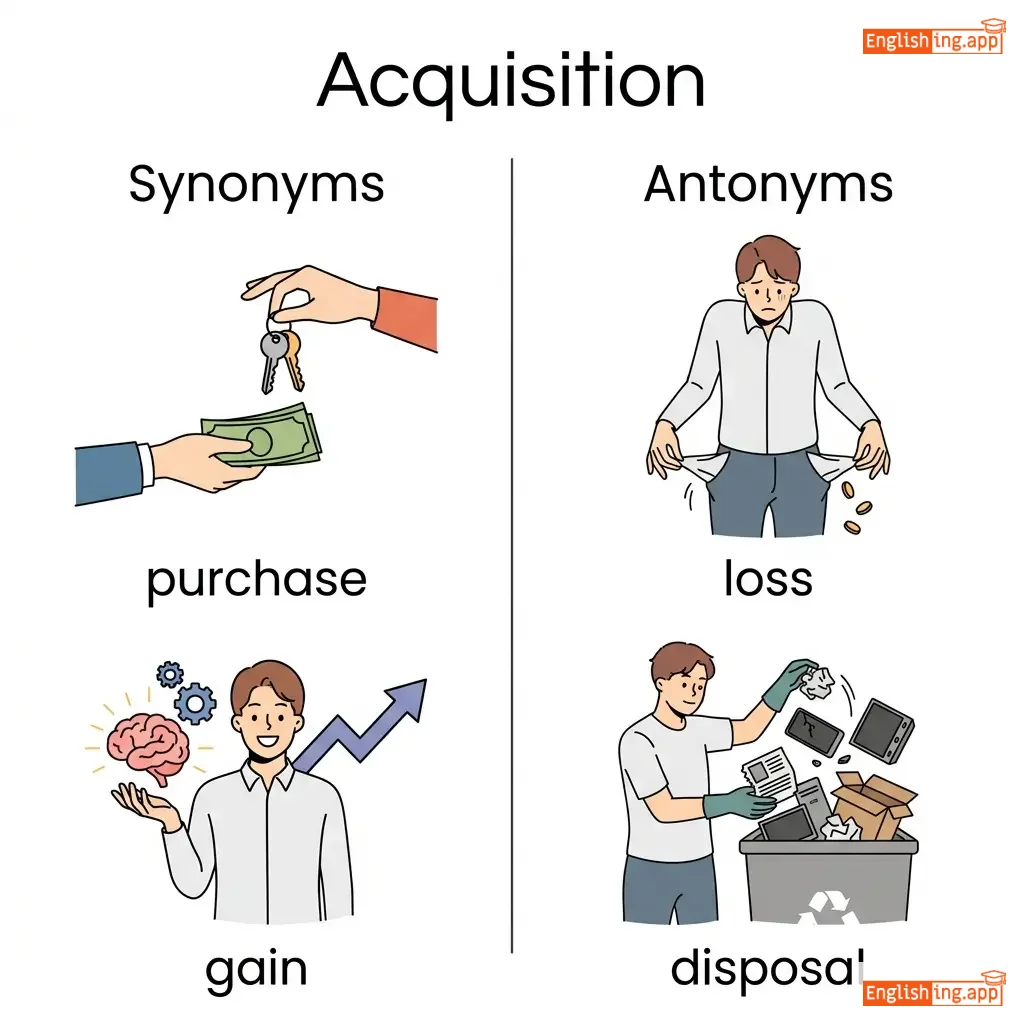
the act of obtaining or gaining something, often knowledge, skills, or property
••••••
|
The company announced the acquisition of a smaller competitor. |
- •••••• |
language acquisition |
the process of learning a language naturally
••••••
|
- •••••• |
purchase, gain, procurement, attainment
••••••
|
loss, disposal, forfeit
••••••
|
business acquisition, acquisition cost, acquisition strategy, language acquisition
••••••
|
No •••••• |
|
#138
📦
|
/əˈkwaɪər/
verb
(äkuīr)
••••••
|
|
获得
huòdé
••••••
|
acquired
äkuīrd
••••••
|
acquired
äkuīrd
••••••
|
acquires
äkwaiers
••••••
|
acquiring
äkwaiərīng
••••••
|
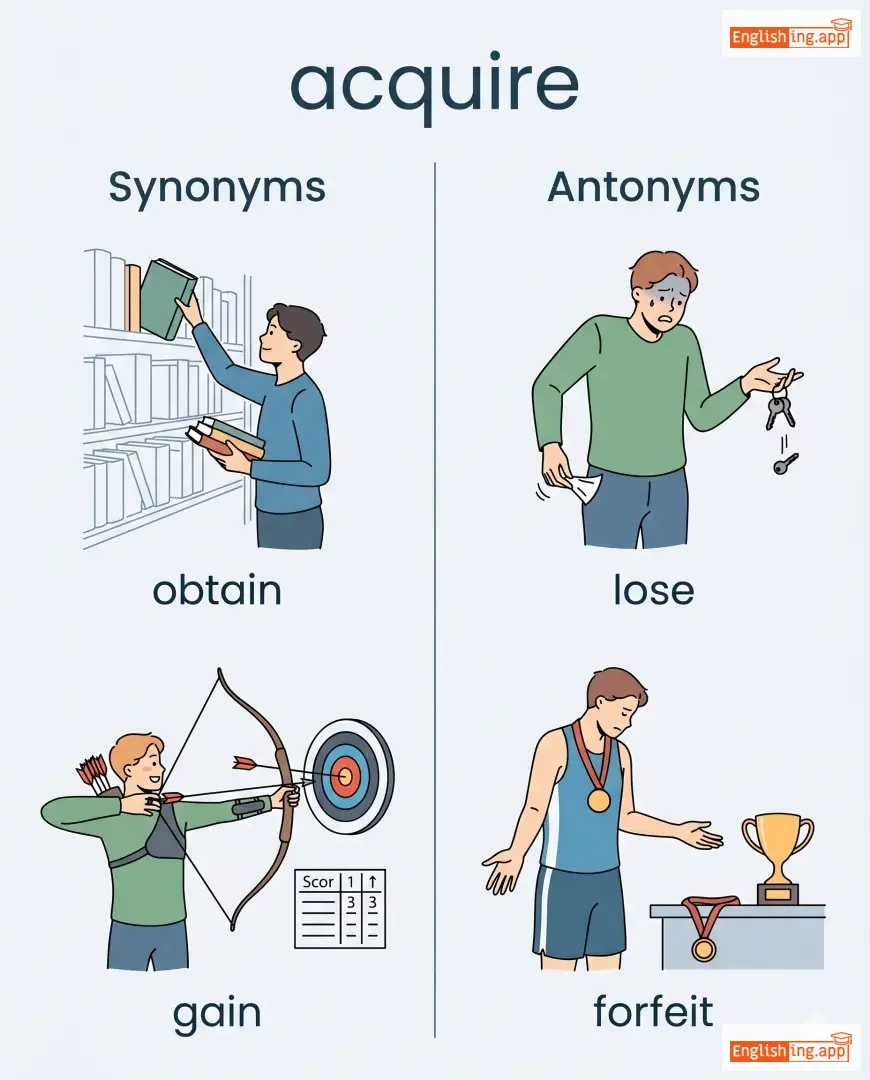
to obtain or gain possession of something
••••••
|
She managed to acquire a rare painting at the auction.
她成功地在拍卖会上获得了一幅稀有的画作。
••••••
|
她成功地在拍卖会上获得了一幅稀有的画作。
Tā chénggōng de zài pāimài huì shàng huòdéle yī fú xīyǒu de huàzuò.
••••••
|
acquire knowledge
获得知识
••••••
|
to learn or gain understanding
••••••
|
获得知识
huòdé zhīshi
••••••
|
obtain, gain, receive, procure, secure
••••••
|
lose, forfeit, give up
••••••
|
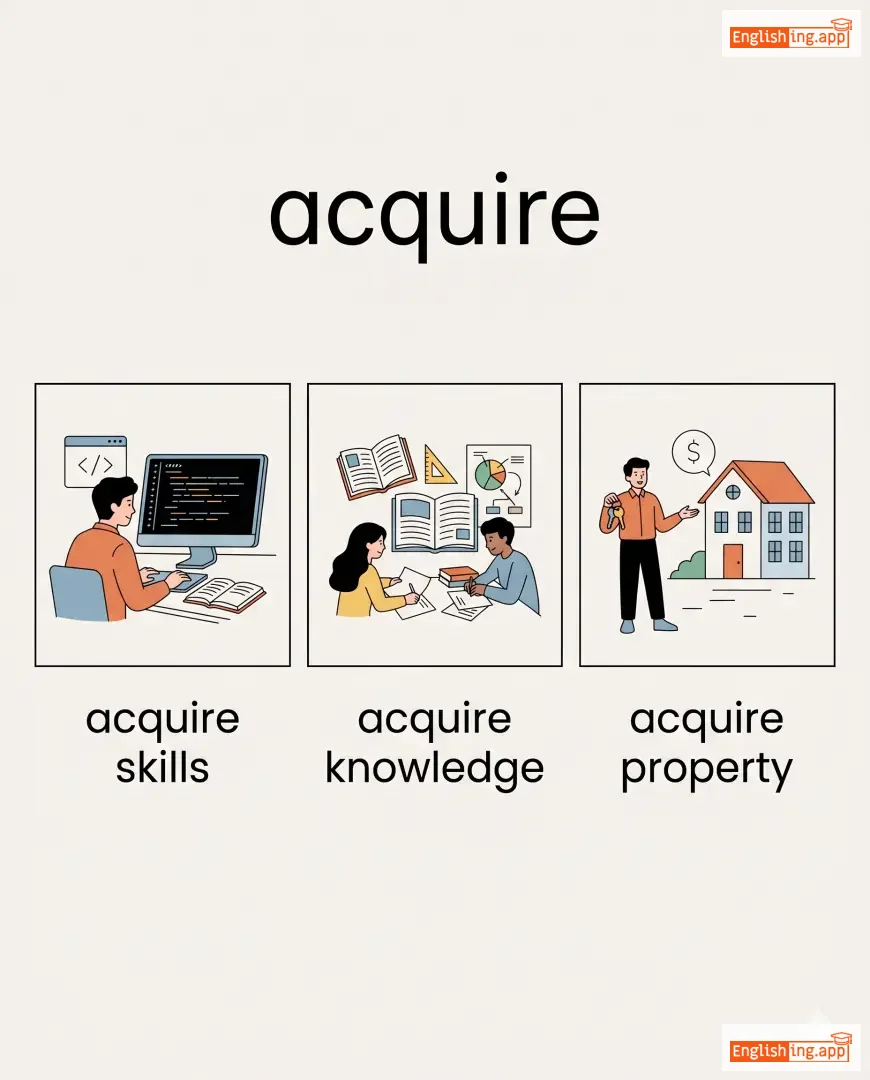
acquire skills, acquire knowledge, acquire property, acquire habit
••••••
|
获得就像在拍卖会上获得稀有画作一样。
••••••
|
|
#139
🙂
|
/ˌækwiˈɛsənt/
adjective
(akwiésènt)
••••••
|
- •••••• |
默许的
mòxǔ de
••••••
|
- •••••• | - •••••• | - •••••• | - •••••• |
ready to accept something without protest, or to do what someone else wants
••••••
|
He gave an acquiescent smile and agreed to the plan. |
他露出了一个默许的微笑,同意了这个计划。
Tā lùchūle yīgè mòxǔ de wéixiào, tóngyìle zhège jìhuà.
••••••
|
- •••••• | - •••••• | - •••••• |
compliant, submissive, agreeable, yielding
••••••
|
resistant, defiant, assertive
••••••
|
acquiescent nature, acquiescent attitude, acquiescent response
••••••
|
Acquiescent意味着默许,就像学生默默同意一样。
••••••
|
|
#140
🤐
|
/ˌækwiˈɛsəns/
noun
(ækwɪˈɛsəns)
••••••
|
|
默许
mòxǔ
••••••
|
- •••••• | - •••••• | - •••••• | - •••••• |
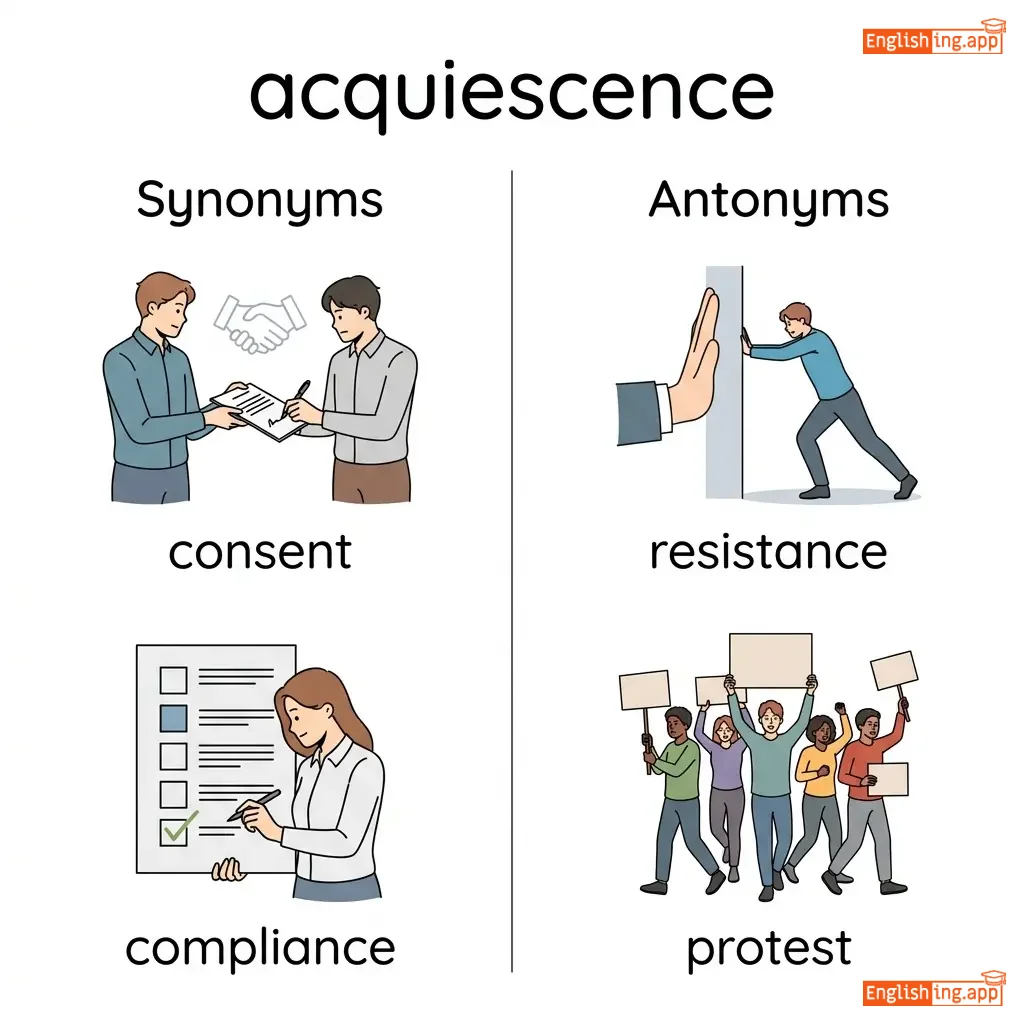
the reluctant acceptance of something without protest
••••••
|
His nod was a sign of acquiescence. |
他的点头是默许的标志。
Tā de diǎntóu shì mòxǔ de biāozhì.
••••••
|
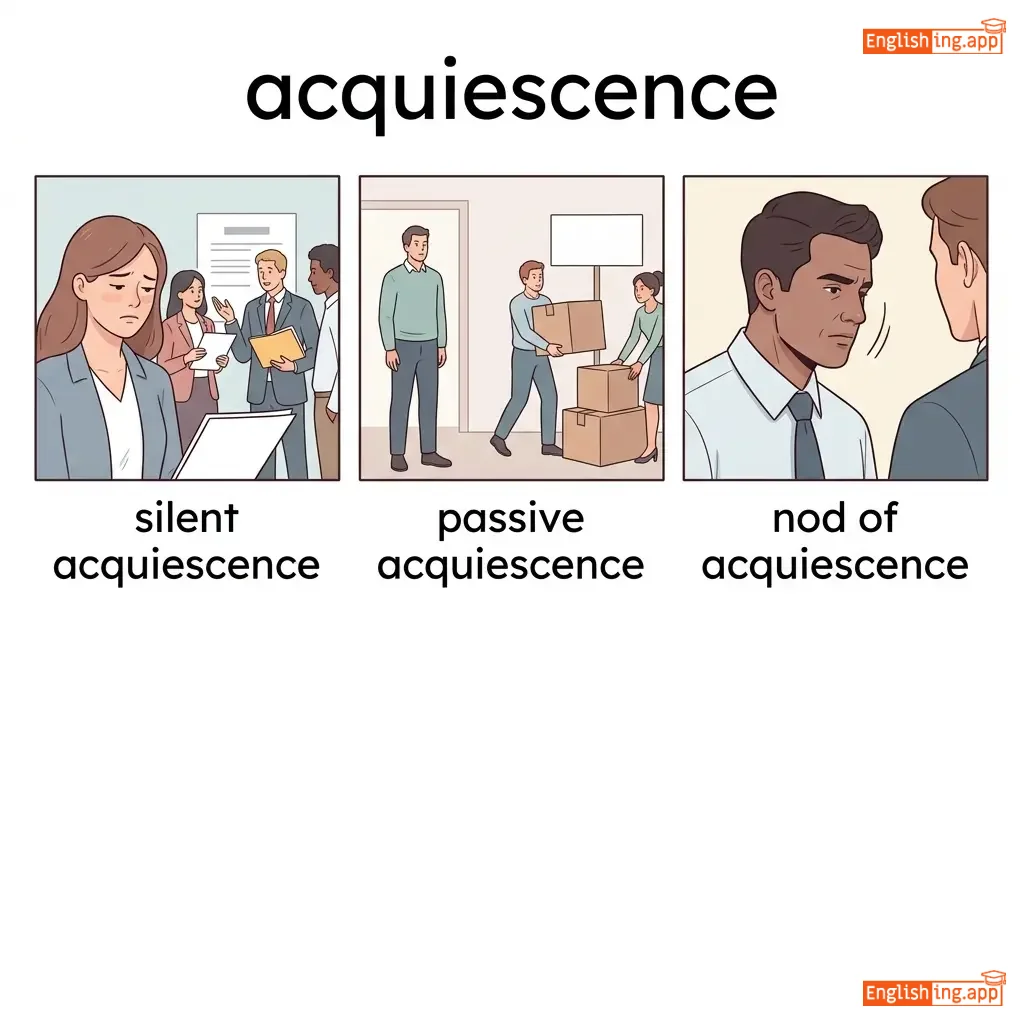
- •••••• | - •••••• | - •••••• |
consent, compliance, submission, agreement
••••••
|
resistance, protest, refusal
••••••
|
silent acquiescence, passive acquiescence, nod of acquiescence
••••••
|
acquiesce表示同意,acquiescence就是没有抗议的同意。
••••••
|
|
#141
🙇
|
/ˌækwiˈɛs/
verb
(ā kè wēi sī)
••••••
|
- •••••• |
默许
mòxǔ
••••••
|
acquiesced
••••••
|
acquiesced
••••••
|
acquiesces
••••••
|
acquiescing
••••••
|
to accept something reluctantly but without protest
••••••
|
She decided to acquiesce to her parents’ wishes. |
她决定默许父母的愿望。
Tā juédìng mòxǔ fùmǔ de yuànwàng.
••••••
|
acquiesce in silence |
to agree or submit without speaking or resisting
••••••
|
默许沉默
mòxǔ chénmò
••••••
|
consent, comply, agree, yield, submit
••••••
|
oppose, resist, refuse
••••••
|
acquiesce in, reluctantly acquiesce, quietly acquiesce
••••••
|
默许,像acquiesce在沉默中一样。
••••••
|
|
#142
📘
|
/əˈkweɪnt/
verb
(阿奎恩特)
••••••
|
- •••••• |
使熟悉
shi shuxi
••••••
|
acquainted
阿奎恩特德
••••••
|
acquainted
阿奎恩特德
••••••
|
acquaints
阿奎恩特斯
••••••
|
acquainting
阿奎恩特英
••••••
|
to make someone familiar with something; to inform or introduce
••••••
|
Please acquaint yourself with the safety guidelines before operating the machine.
请在操作机器前,熟悉安全指导原则。
••••••
|
请在操作机器前,熟悉安全指导原则。
Qǐng zài cāozuò jīqì qián, shúxī ānquán zhǐdǎo yuánzé.
••••••
|
get acquainted with
了解熟悉
••••••
|
to become familiar with someone or something
••••••
|
了解熟悉
liǎojiě shúxī
••••••
|
familiarize, inform, introduce, brief, apprise
••••••
|
ignore, misinform, confuse
••••••
|
acquaint oneself with, acquaint someone with, fully acquainted, acquaint new staff, acquaint readers with
••••••
|
Acquaint = ‘阿奎恩特’—快速熟悉!
••••••
|
|
#143
🎶
|
/əˈkuːstɪks/
noun
(声学)
••••••
|
- •••••• |
声学
shengxue
••••••
|
- •••••• | - •••••• | - •••••• | - •••••• |
the science of sound, or the properties of a space that affect how sound is heard
••••••
|
The hall’s excellent acoustics made the orchestra sound rich and clear. |
大厅的优良声学效果让管弦乐团的声音丰富而清晰。
Dating de youliang shengxue xiaoguo rang guanxianyue tuan de shengyin fengfu er qingxi.
••••••
|
- •••••• | - •••••• | - •••••• |
sound quality, sonics, resonance, audio characteristics, sound properties
••••••
|
silence, dead sound
••••••
|
good acoustics, poor acoustics, room acoustics, concert hall acoustics, acoustics design
••••••
|
声学 = ‘声音的科学’—好的声学让音乐听起来更清晰!
••••••
|
|
#144
🎸
|
/əˈkuːstɪk/
adjective
••••••
|
- •••••• | - •••••• | - •••••• | - •••••• | - •••••• | - •••••• |
relating to sound or the sense of hearing; not amplified by electrical means
••••••
|
We recorded an acoustic version of the song in a quiet room. |
- •••••• | - •••••• | - •••••• | - •••••• |
auditory, aural, sonic, non-electric, unplugged
••••••
|
electric, electronic, amplified
••••••
|
acoustic guitar, acoustic treatment, acoustic panel, acoustic properties, acoustic performance
••••••
|
No •••••• |
|
#145
🕯️
|
/ˈækəlaɪt/
noun
••••••
|
- •••••• | - •••••• | - •••••• | - •••••• | - •••••• | - •••••• |
a follower or assistant, especially in a religious service or as a devoted supporter of a leader
••••••
|
The senator arrived with a small group of acolytes who handled the press. |
- •••••• | - •••••• | - •••••• | - •••••• |
follower, disciple, adherent, devotee, assistant
••••••
|
leader, opponent, dissenter
••••••
|
loyal acolyte, political acolytes, temple acolyte, band of acolytes, chief acolyte
••••••
|
No •••••• |
|
#146
🧴
|
/ˈækni/
noun
(àikèní)
••••••
|
- •••••• |
痤疮
cuo chuang
••••••
|
- •••••• | - •••••• | - •••••• | - •••••• |
a skin condition in which pores become inflamed and clogged, causing pimples and spots
••••••
|
Regular cleansing and a balanced diet can help reduce acne.
定期清洁和均衡饮食可以帮助减少痤疮。
••••••
|
定期清洁和均衡饮食可以帮助减少痤疮。
Dìngqī qīngjié hé jūnhéng yǐnshí kěyǐ bāngzhù jiǎnshǎo cuòchuāng.
••••••
|
- •••••• | - •••••• | - •••••• |
pimples, zits, blemishes, breakouts, spots
••••••
|
clear skin, smooth complexion
••••••
|
severe acne, acne treatment, acne scars, hormonal acne, cause acne, acne-prone skin
••••••
|
痤疮就是粉刺—如果不护理皮肤,痤疮会越来越严重!
••••••
|
|
#147
🏔️
|
/ˈækmi/
noun
(ā kè mǐ)
••••••
|
- •••••• |
顶点
dingdian
••••••
|
- •••••• | - •••••• | - •••••• | - •••••• |
the highest point of achievement or excellence
••••••
|
Winning the award was the acme of his career. |
赢得奖项是他事业的顶点。
Yingde jiangxiang shi ta shiyede dingdian.
••••••
|
the acme of perfection |
the highest possible degree of perfection
••••••
|
完美的顶点
wanmei de dingdian
••••••
|
peak, pinnacle, summit, height, climax
••••••
|
bottom, nadir, base
••••••
|
acme of success, acme of skill, acme of achievement
••••••
|
Acme 意味着最高点,就像 '顶点'。
••••••
|
|
#148
📩
|
/əkˈnɒlɪdʒmənt/
noun
(ak-nol-edj-ment)
••••••
|
- •••••• |
承认
chengren
••••••
|
- •••••• | - •••••• | - •••••• | - •••••• |
the act of accepting, admitting, or recognizing something
••••••
|
He received an acknowledgment of his application. |
他收到了他申请的承认。
Ta shoudao le ta shenqing de chengren.
••••••
|
in acknowledgment of |
as recognition or appreciation of
••••••
|
作为承认
zuowei chengren
••••••
|
recognition, admission, appreciation, confirmation, acceptance
••••••
|
denial, ignorance, neglect
••••••
|
formal acknowledgment, acknowledgment letter, acknowledgment of receipt
••••••
|
Acknowledgment 就是承认某件事情并表示感谢
••••••
|
|
#149
🙏
|
/əkˈnɒlɪdʒ/
verb
(ak-nol-ijz)
••••••
|
- •••••• |
承认
chengren
••••••
|
acknowledged
ak-nol-ijzd
••••••
|
acknowledged
ak-nol-ijzd
••••••
|
acknowledges
ak-nol-ijz
••••••
|
acknowledging
ak-nol-ijzing
••••••
|
to accept, admit, or recognize the truth or existence of something
••••••
|
She refused to acknowledge her mistake.
她拒绝承认她的错误。
••••••
|
她拒绝承认她的错误。
Ta jujue chengren ta de cuowu.
••••••
|
acknowledge receipt
确认收到
••••••
|
to confirm that something has been received
••••••
|
确认收到
queren shoudao
••••••
|
admit, accept, recognize, concede, confirm
••••••
|
deny, ignore, reject
••••••
|
acknowledge mistake, acknowledge receipt, acknowledge contribution, acknowledge truth
••••••
|
Acknowledge = 承认错误和知识
••••••
|
|
#150
🍋
|
/əˈsɪdjʊləs/
adjective
(酸的)
••••••
|
- •••••• |
略带酸味或尖锐
lue dai suan wei huo jianrui
••••••
|
- •••••• | - •••••• | - •••••• | - •••••• |
slightly sour or sharp in taste or manner
••••••
|
The critic wrote an acidulous review of the movie. |
评论家写了一篇尖锐的电影评论。
Pínglùn jiā xiěle yī piān jiānruì de diànyǐng pínglùn.
••••••
|
- •••••• | - •••••• | - •••••• |
sour, tart, biting, sharp, sarcastic
••••••
|
sweet, pleasant, mild
••••••
|
acidulous remark, acidulous tone, acidulous taste
••••••
|
Acidulous意味着稍微酸味的口感,像柠檬
••••••
|
Vocabulary Quiz
Test your vocabulary by matching words with their translations or meanings.
Login to take the quiz
Comments (0)
Share your thoughts and join the discussion.
Join the discussion by logging in
Login to CommentNo comments yet
Be the first to share your thoughts!