


Swipe left or right, or use the buttons. Tap image to zoom.
例句翻译
单词
Lesson 9Lesson 9 - 遮罩切换
|
表情符号
|
单词 | Images | 翻译 | 过去时 | 过去分词 | 第三人称单数 | 动名词 | 含义 | 例句 | 例句翻译 | 示例表达 | 示例表达含义 | 示例表达翻译 | 同义词 | 反义词 | 搭配词 | 助记符 |
|---|---|---|---|---|---|---|---|---|---|---|---|---|---|---|---|---|---|
|
#241
⚔️
|
/əˈɡrɛs/
verb
(攻击)
••••••
|
- •••••• |
攻击
gōngjī
••••••
|
aggressed
攻击了
••••••
|
aggressed
攻击了
••••••
|
aggresses
攻击
••••••
|
aggressing
攻击中
••••••
|
to initiate an attack or show hostile behavior
••••••
|
The army chose not to aggress without provocation.
军队决定不在没有挑衅的情况下攻击。
••••••
|
军队决定不在没有挑衅的情况下攻击。
Jūnduì juédìng bù zài méiyǒu tiǎoxìn de qíngkuàng xià gōngjī.
••••••
|
- •••••• | - •••••• | - •••••• |
attack, assault, strike, invade, offend
••••••
|
defend, protect, guard
••••••
|
aggress against, aggress upon, aggress behavior
••••••
|
Aggress 意味着攻击,像 'AGainst RESS' 意味着攻击某物。
••••••
|
|
#242
🧑💼
|
/eɪd/
noun
(éid)
••••••
|
- •••••• |
助手
zhùshǒu
••••••
|
- •••••• | - •••••• | - •••••• | - •••••• |
An assistant or helper, especially to an important person.
••••••
|
The senator’s aide organized the meeting with journalists. |
参议员的助手组织了与记者的会议。
Cānyìyuán de zhùshǒu zǔzhīle yǔ jìzhě de huìyì.
••••••
|
- •••••• | - •••••• | - •••••• |
assistant, helper, deputy, supporter
••••••
|
leader, boss
••••••
|
presidential aide, close aide, trusted aide
••••••
|
Aide (助手) 帮助组织工作。
••••••
|
|
#243
👨🔬
|
/əˈɡrɒnəmɪst/
noun
(农学家)
••••••
|
- •••••• |
农业学家
nongxuejia
••••••
|
- •••••• | - •••••• | - •••••• | - •••••• |
A scientist who studies soil management and crop production.
••••••
|
The agronomist suggested new methods to improve rice yields.
农业学家建议了一些新的方法,以提高水稻产量。
••••••
|
农业学家建议了一些新的方法,以提高水稻产量。
Nongxuejia jianyi le yixie xinde fangfa, yi tigao shuidao chanliang.
••••••
|
- •••••• | - •••••• | - •••••• |
agriculture scientist, crop expert, soil specialist
••••••
|
layperson, non-specialist
••••••
|
skilled agronomist, agronomist advice, consult an agronomist
••••••
|
Agronomist = 农业 + 学家 = 农业学家 🌱
••••••
|
|
#244
🌾
|
/əˈɡrɛəriən/
adjective
(农业的)
••••••
|
- •••••• |
农业的
nongyede
••••••
|
- •••••• | - •••••• | - •••••• | - •••••• |
Related to farming, agriculture, or rural land.
••••••
|
The country’s economy is still largely agrarian. |
这个国家的经济仍然主要是农业的。
Zhege guojia de jingji rengran zhuyao shi nongyede.
••••••
|
- •••••• | - •••••• | - •••••• |
agricultural, rural, farming, rustic
••••••
|
urban, industrial
••••••
|
agrarian society, agrarian reform, agrarian economy
••••••
|
Agrarian意味着与农业相关 🌾
••••••
|
|
#245
😣
|
/ˈæɡənaɪz/
verb
(æɡəˈnaɪz)
••••••
|
- •••••• |
煎熬
jiānáo
••••••
|
agonized
æɡəˈnaɪzd
••••••
|
agonized
æɡəˈnaɪzd
••••••
|
agonizes
æɡəˈnaɪzəs
••••••
|
agonizing
æɡəˈnaɪzɪŋ
••••••
|
To suffer extreme physical or mental pain; to spend time worrying.
••••••
|
She agonized for days over whether she had made the right decision.
她为是否做出了正确的决定而痛苦了好几天。
••••••
|
她为是否做出了正确的决定而痛苦了好几天。
Tā wèi shìfǒu zuòchūle zhèngquè de juédìng ér tòngkǔle hǎo jǐ tiān.
••••••
|
agonize over
为…而痛苦
••••••
|
To worry greatly about something.
••••••
|
为…而痛苦
wèi…ér tòngkǔ
••••••
|
suffer, worry, struggle, torment, fret
••••••
|
relax, ease, comfort
••••••
|
agonize over decision, agonize for days, agonize endlessly
••••••
|
煎熬意味着内心的痛苦,如同无法做出决定时的挣扎。
••••••
|
|
#246
🤩
|
/əˈɡɒɡ/
adjective
••••••
|
- •••••• | - •••••• | - •••••• | - •••••• | - •••••• | - •••••• |
Highly excited by eagerness, curiosity, or anticipation.
••••••
|
The children were agog with excitement as they waited for the magician to appear. |
- •••••• | - •••••• | - •••••• | - •••••• |
excited, eager, thrilled, fascinated, enthusiastic
••••••
|
indifferent, bored, apathetic
••••••
|
agog with excitement, agog to hear, audience agog
••••••
|
No •••••• |
|
#247
🤔
|
/æɡˈnɒs.tɪk/
noun
(不可知论者)
••••••
|
- •••••• |
不可知论者
bù kě zhī lùn zhě
••••••
|
- •••••• | - •••••• | - •••••• | - •••••• |
a person who believes that nothing is known or can be known about the existence of God; uncertain in belief
••••••
|
He described himself as an agnostic rather than an atheist. |
他描述自己是一个不可知论者,而不是一个无神论者。
Tā miáoshù zìjǐ shì yīgè bù kě zhī lùn zhě, ér bù shì yīgè wúshén lùn zhě.
••••••
|
- •••••• | - •••••• | - •••••• |
skeptic, doubter, unbeliever, questioner
••••••
|
believer, theist, faithful
••••••
|
agnostic view, remain agnostic, religious agnostic
••••••
|
不可知论者 = 不确定上帝的存在,不敢做判断。
••••••
|
|
#248
😠
|
/ˌædʒ.ɪˈteɪ.ʃən/
noun
(激动)
••••••
|
- •••••• |
激动
jīdòng
••••••
|
- •••••• | - •••••• | - •••••• | - •••••• |
a state of nervousness, excitement, or unrest; or action of stirring up public concern
••••••
|
There was visible agitation among the crowd. |
人群中有明显的激动。
Rénqún zhōng yǒu míngxiǎn de jīdòng.
••••••
|
- •••••• | - •••••• | - •••••• |
disturbance, unrest, turmoil, excitement, unrest
••••••
|
calm, peace, tranquility
••••••
|
political agitation, public agitation, state of agitation
••••••
|
Agitation 就像是在人群中引起的激动情绪。
••••••
|
|
#249
✊
|
/ˈædʒ.ɪ.teɪt/
verb
(āi jí té)
••••••
|
- •••••• |
激进, 振奋
jī jìn, zhèn fèn
••••••
|
agitated
āi jí té dé
••••••
|
agitated
āi jí té dé
••••••
|
agitates
āi jí té sī
••••••
|
agitating
āi jí té xíng
••••••
|
to stir up feelings or disturb; to campaign for change
••••••
|
The protesters agitated for better working conditions.
抗议者为更好的工作条件而激进。
••••••
|
抗议者为更好的工作条件而激进。
Kàng yì zhě wèi gèng hǎo de gōng zuò tiáo jiàn ér jī jìn.
••••••
|
agitate for
激进为
••••••
|
to campaign or push strongly for something
••••••
|
为改变激进
wèi gǎi biàn jī jìn
••••••
|
provoke, disturb, excite, campaign, stir
••••••
|
calm, soothe, pacify
••••••
|
agitate for rights, agitate strongly, agitate against
••••••
|
Agitate – 激动 for change
••••••
|
|
#250
⚡
|
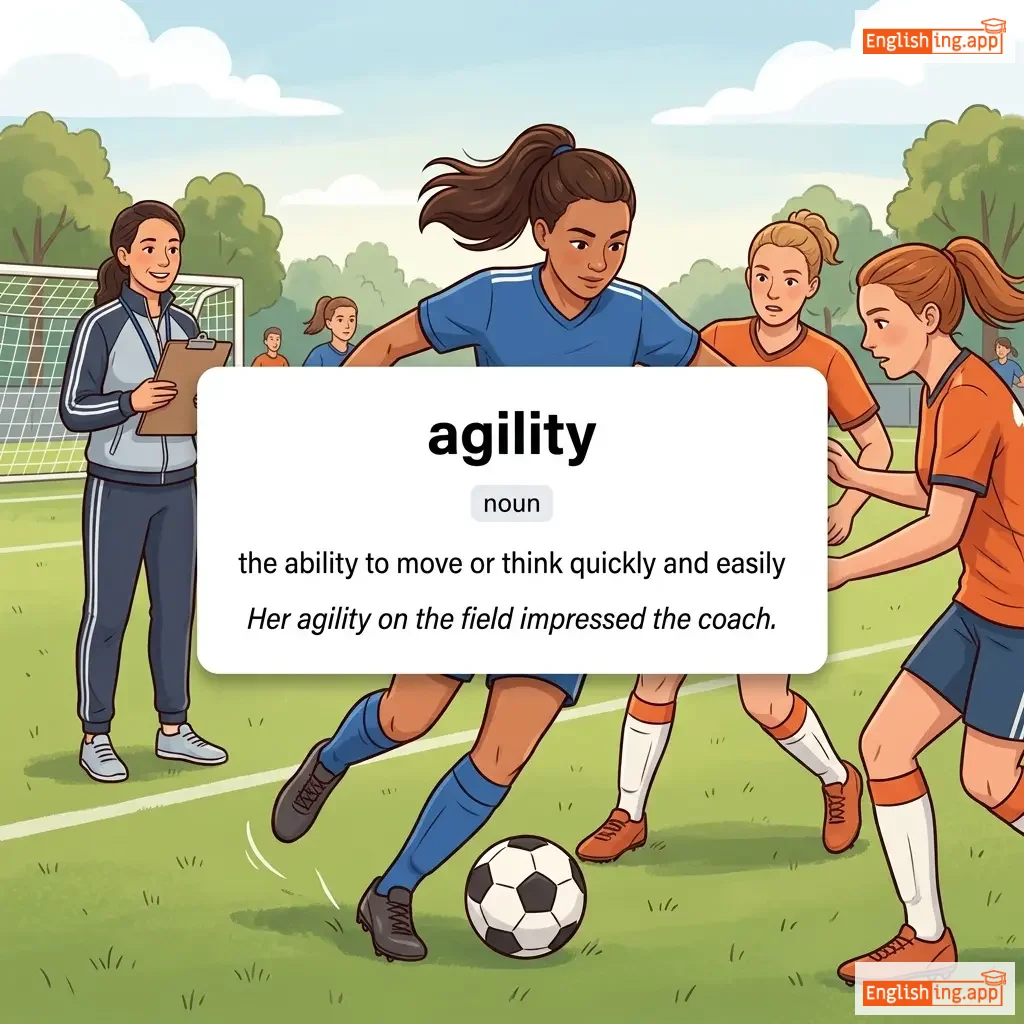
/əˈdʒɪl.ə.ti/
noun
(敏捷)
••••••
|
|
灵活性
línghuóxìng
••••••
|
- •••••• | - •••••• | - •••••• | - •••••• |
the ability to move or think quickly and easily
••••••
|
Her agility on the field impressed the coach. |
她在场上的灵活性给教练留下了深刻的印象。
Tā zài chǎng shàng de línghuóxìng gěi jiàoliàn liú xià le shēnkè de yìnxiàng.
••••••
|
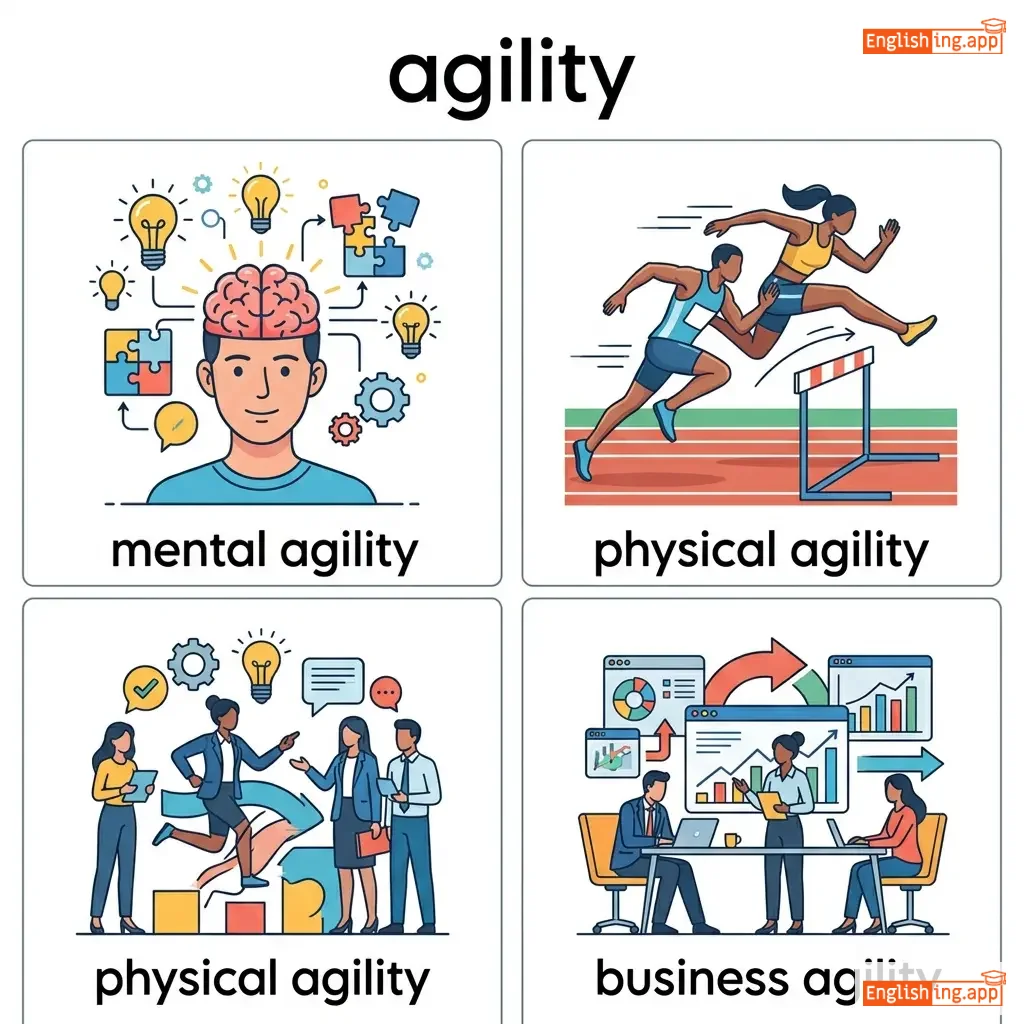
mental agility |
the ability to think quickly and clearly
••••••
|
思维敏捷
sīwéi mǐnjié
••••••
|
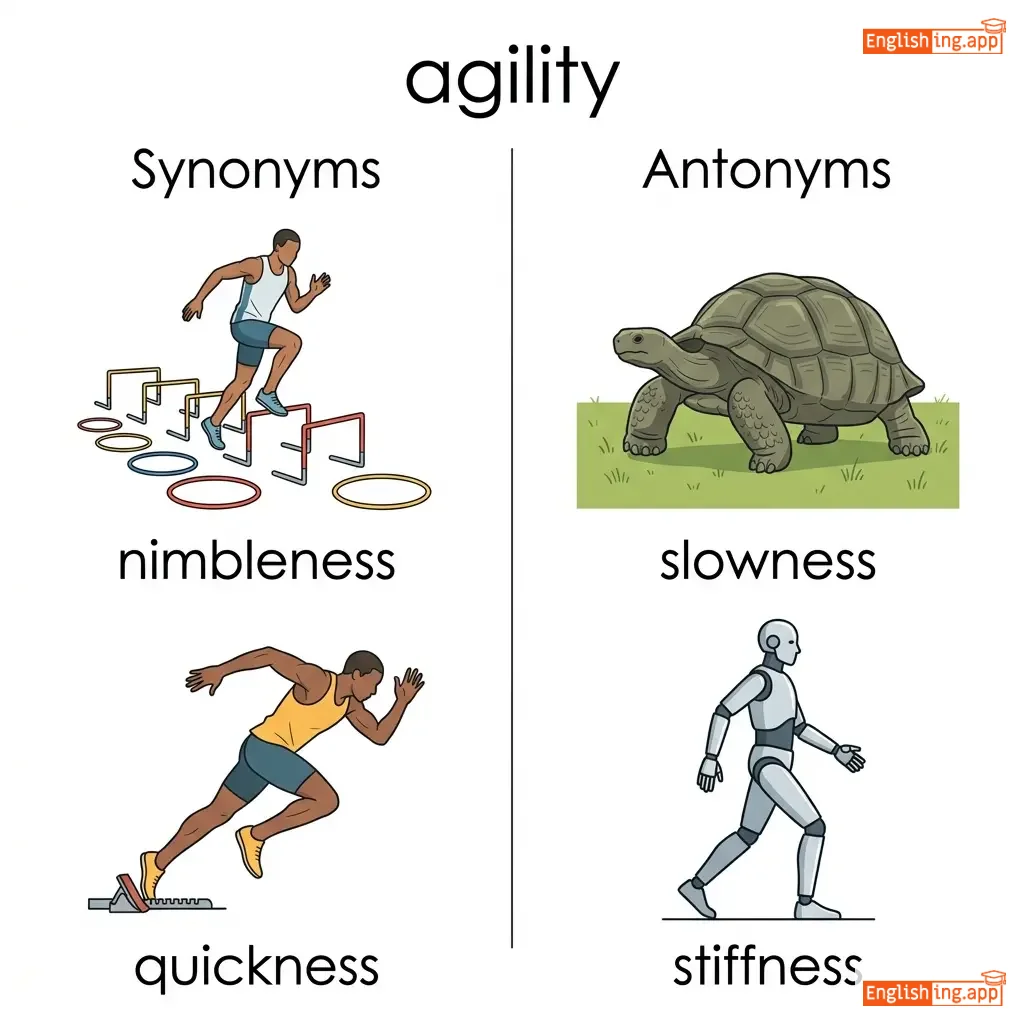
nimbleness, quickness, flexibility, swiftness, dexterity
••••••
|
slowness, stiffness, rigidity
••••••
|
mental agility, physical agility, business agility
••••••
|
灵活性意味着快速工作的能力 ⚡
••••••
|
|
#251
🤸
|
/ˈædʒ.aɪl/
adjective
(ā jí ěr)
••••••
|
- •••••• |
快速且灵活
kuai su qie ling huo
••••••
|
- •••••• | - •••••• | - •••••• | - •••••• |
able to move quickly and easily; quick and adaptable in thinking or action
••••••
|
The startup team was agile in responding to market changes.
初创团队在应对市场变化时非常灵活。
••••••
|
初创团队在应对市场变化时非常灵活。
Chu chuang tuan dui zai ying dui shi chang bian hua shi fei chang ling huo.
••••••
|
agile mind
灵活的大脑
••••••
|
a quick and flexible way of thinking
••••••
|
灵活的大脑
ling huo de da nao
••••••
|
nimble, quick, flexible, adaptive, brisk
••••••
|
clumsy, sluggish, stiff
••••••
|
agile development, agile methodology, agile team, agile mind
••••••
|
Agile就像一只灵巧的猫,迅速又灵活。中文‘快速且灵活’
••••••
|
|
#252
😱
|
/əˈɡæst/
adjective
(è gā sī tè)
••••••
|
- •••••• |
震惊
zhenjing
••••••
|
- •••••• | - •••••• | - •••••• | - •••••• |
filled with shock or horror
••••••
|
The audience was aghast at the tragic scene. |
观众对悲惨的场面感到震惊。
Guānzhòng duì bēicǎn de chǎngmiàn gǎndào zhènjīng.
••••••
|
- •••••• | - •••••• | - •••••• |
horrified, shocked, appalled, stunned
••••••
|
calm, composed, indifferent
••••••
|
look aghast, aghast at, utterly aghast
••••••
|
Aghast意味着震惊 😱
••••••
|
|
#253
😔
|
/əˈɡriːv/
verb
(āi gē rì fū)
••••••
|
- •••••• |
使愤怒
shǐ fènnù
••••••
|
aggrieved
āi gē rì fū dé
••••••
|
aggrieved
āi gē rì fū dé
••••••
|
aggrieves
āi gē rì fū sī
••••••
|
aggrieving
āi gē rì fū yǐng
••••••
|
to cause distress or make someone feel resentful
••••••
|
She felt aggrieved by the unfair decision.
她因不公平的决定而感到不满。
••••••
|
她因不公平的决定而感到不满。
Tā yīn bù gōngpíng de juédìng ér gǎndào bùmǎn.
••••••
|
- •••••• | - •••••• | - •••••• |
distress, upset, offend, wrong
••••••
|
please, comfort, satisfy
••••••
|
feel aggrieved, deeply aggrieved, aggrieved party
••••••
|
Aggrieve = Grief (痛苦) 给
••••••
|
|
#254
🔥
|
/əˈɡrɛsɪv/
adjective
(ā ɡrè sī fū)
••••••
|
- •••••• |
激进
ji jin
••••••
|
- •••••• | - •••••• | - •••••• | - •••••• |
ready or likely to attack or confront; forceful
••••••
|
The salesman used an aggressive strategy to close the deal. |
销售员使用了激进的策略来完成交易。
Xiāoshòuyuán shǐyòngle jījìn de cèlüè lái wánchéng jiāoyì.
••••••
|
aggressive marketing |
forceful and energetic marketing approach
••••••
|
激进的营销
jījìn de yíngxiāo
••••••
|
hostile, forceful, pushy, combative, assertive
••••••
|
gentle, passive, calm
••••••
|
aggressive behavior, aggressive strategy, aggressive attitude, aggressive marketing
••••••
|
Aggressive 就像猛虎 (🐅),容易记住
••••••
|
|
#255
💥
|
/əˈɡrɛʃən/
noun
(侵略)
••••••
|
- •••••• |
侵略
qinlue
••••••
|
- •••••• | - •••••• | - •••••• | - •••••• |
hostile or violent behavior towards others
••••••
|
His sudden aggression surprised everyone in the meeting. |
他突然的侵略行为让会议中的每个人都感到震惊。
Tā túrán de qinlue xíngwéi ràng huìyì zhōng de měi ge rén dōu gǎndào zhènjīng.
••••••
|
acts of aggression |
hostile actions or attacks
••••••
|
侵略行为
qinlue xíngwéi
••••••
|
hostility, attack, violence, assault
••••••
|
peace, calm, friendliness
••••••
|
show aggression, physical aggression, military aggression, acts of aggression
••••••
|
Aggression 记住 AGain GREssy (愤怒) 意味着侵略
••••••
|
|
#256
🤼
|
/əˈfreɪ/
noun
(æfɹeɪ)
••••••
|
- •••••• |
公开斗殴
gongkai douou
••••••
|
- •••••• | - •••••• | - •••••• | - •••••• |
A public fight or noisy disturbance that causes alarm.
••••••
|
The police were called to break up an affray outside the stadium.
警方被叫去制止体育场外的一场打斗。
••••••
|
警方被叫去制止体育场外的一场打斗。
Jǐngfāng bèi jiàoqù zhìzhǐ tǐyùchǎng wài de yī chǎng dǎdòu.
••••••
|
- •••••• | - •••••• | - •••••• |
brawl, fight, fracas, scuffle, melee
••••••
|
peace, calm, harmony
••••••
|
public affray, violent affray, involved in an affray, affray charge
••••••
|
Affray 就是指'公开斗殴' – 当有打斗或骚乱时会引起恐慌。
••••••
|
|
#257
➕
|
/ˈæɡ.rɪ.ɡət/ (noun/adjective), /ˈæɡ.rɪ.ɡeɪt/ (verb)
noun, verb, adjective
(聚合)
••••••
|
|
聚合, 总体
jùhé, zǒngtǐ
••••••
|
aggregated
聚合的
••••••
|
aggregated
聚合的
••••••
|
aggregates
聚合
••••••
|
aggregating
聚合
••••••
|
A whole formed by combining several elements; to combine into a total.
••••••
|
The data was aggregated to provide a clearer picture of the market.
数据已被聚合,以提供市场的更清晰图像。
••••••
|
数据已被聚合,以提供市场的更清晰图像。
Shùjù yǐ bèi jùhé, yǐ tígōng shìchǎng de gèng qīngxī túxiàng.
••••••
|
- •••••• | - •••••• | - •••••• |
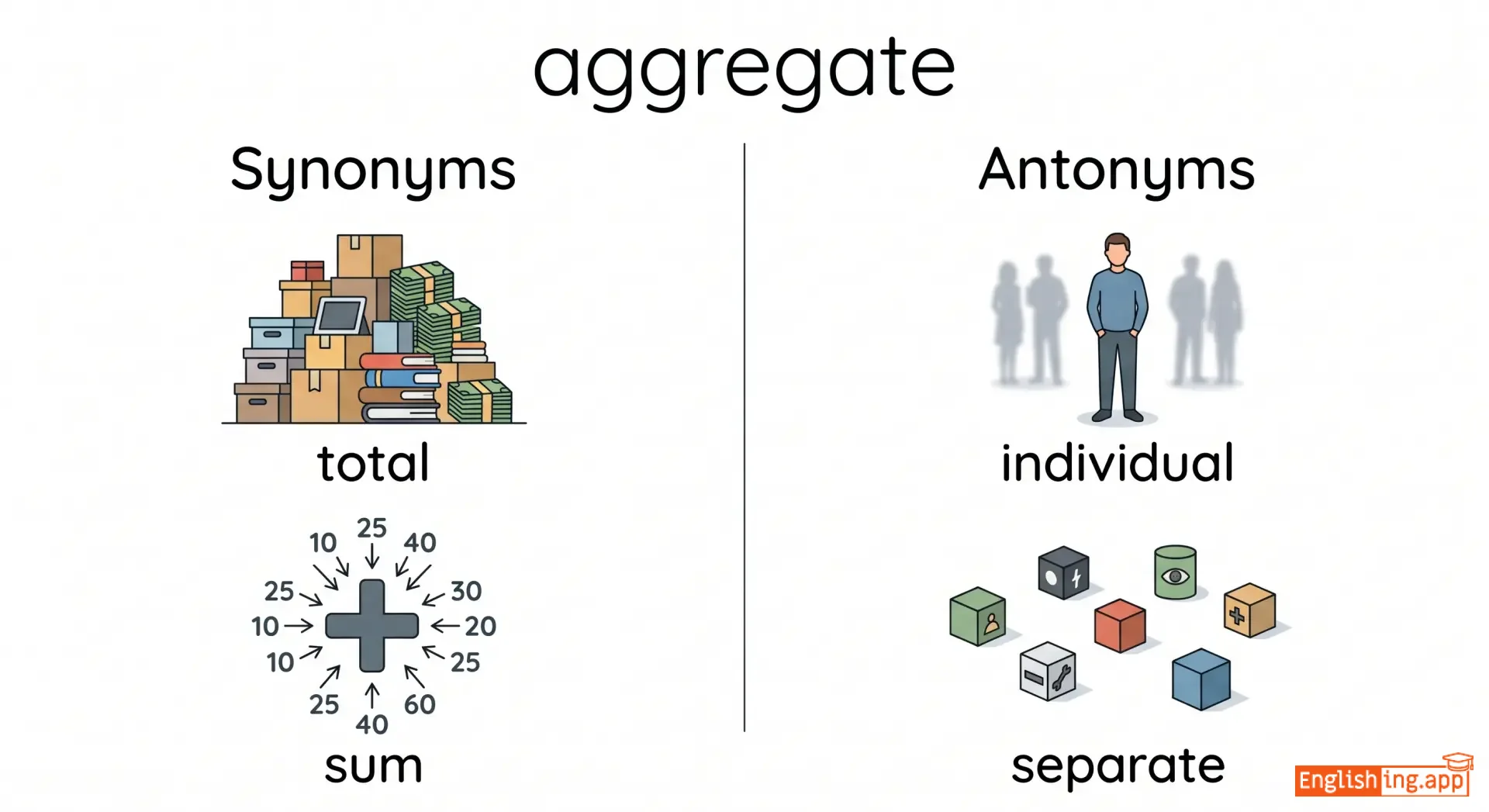
total, sum, collection, accumulate
••••••
|
individual, separate, divide
••••••
|
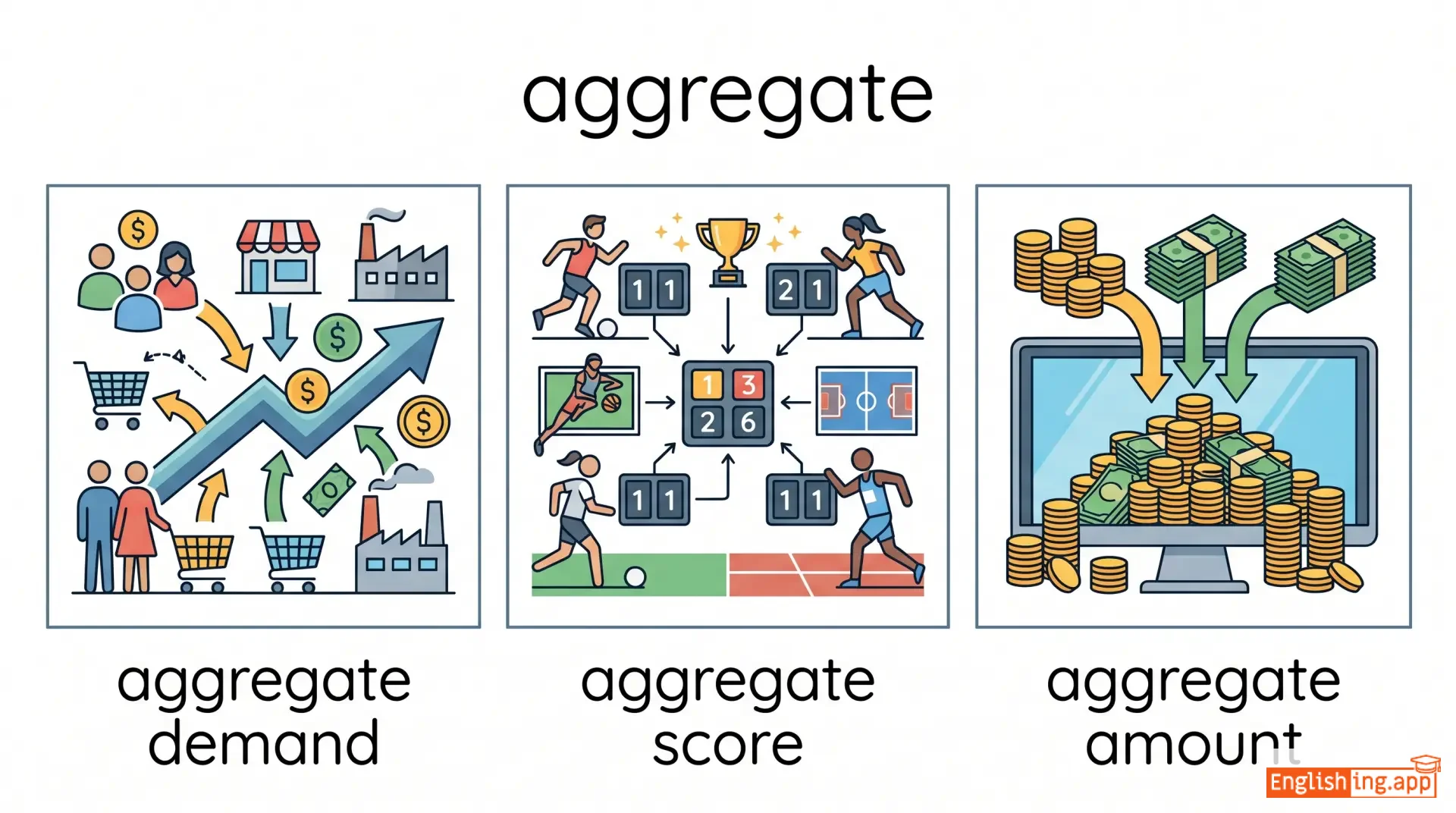
aggregate demand, aggregate score, aggregate amount, aggregate data
••••••
|
聚合是把所有东西放在一起形成一个大总和。
••••••
|
|
#258
😠
|
/ˌæɡ.rəˈveɪ.ʃən/
noun
(加重)
••••••
|
- •••••• |
恶化, 加剧
jiā zhòng
••••••
|
- •••••• | - •••••• | - •••••• | - •••••• |
The act of making a situation worse or the state of being worsened.
••••••
|
The delay caused great aggravation for the passengers. |
延误给乘客带来了极大的困扰。
Yánwù gěi chéngkè dàilái le jí dà de kùnrǎo.
••••••
|
- •••••• | - •••••• | - •••••• |
irritation, worsening, annoyance, provocation
••••••
|
relief, improvement, ease
••••••
|
cause aggravation, great aggravation, constant aggravation
••••••
|
Aggravation 就是让事情变得更糟,就像让困扰加剧。
••••••
|
|
#259
⚠️
|
/ˈæɡ.rə.veɪt/
verb
(āi gè rì wèi tè)
••••••
|
- •••••• |
加重
jiā zhòng
••••••
|
aggravated
āi gè rì wèi tè dé
••••••
|
aggravated
āi gè rì wèi tè dé
••••••
|
aggravates
āi gè rì wèi tè sī
••••••
|
aggravating
āi gè rì wèi tè jīng
••••••
|
To make a situation worse or more serious.
••••••
|
Scratching the rash will only aggravate the condition.
抓破皮疹只会加重病情。
••••••
|
抓破皮疹只会加重病情。
Zhuā pò pí zhěn zhī huì jiā zhòng bìng qíng.
••••••
|
- •••••• | - •••••• | - •••••• |
worsen, intensify, exacerbate, inflame
••••••
|
relieve, ease, alleviate
••••••
|
aggravate pain, aggravate situation, aggravate condition
••••••
|
Aggravate像加重的意思, 让坏事更坏.
••••••
|
|
#260
📈
|
/əˈɡræn.daɪz/
verb
(扩张)
••••••
|
|
扩大
kuò dà
••••••
|
aggrandized
扩张
••••••
|
aggrandized
扩张
••••••
|
aggrandizes
扩张
••••••
|
aggrandizing
扩张
••••••
|
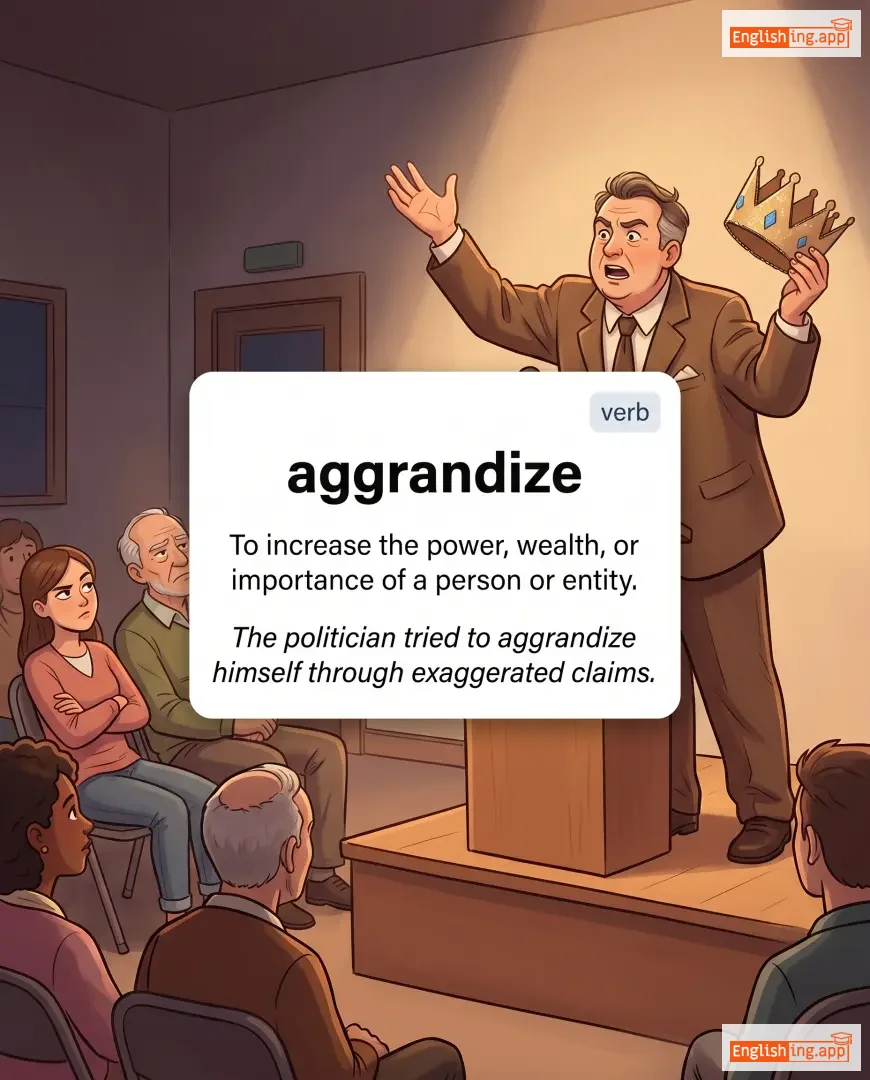
To increase the power, wealth, or importance of a person or entity.
••••••
|
The politician tried to aggrandize himself through exaggerated claims.
政治家试图通过夸张的说法来扩大自己的权力。
••••••
|
政治家试图通过夸张的说法来扩大自己的权力。
Zhèngzhìjiā shìtú tōngguò kuāzhāng de shuōfǎ lái kuò dà zìjǐ de quánlì.
••••••
|
- •••••• | - •••••• | - •••••• |
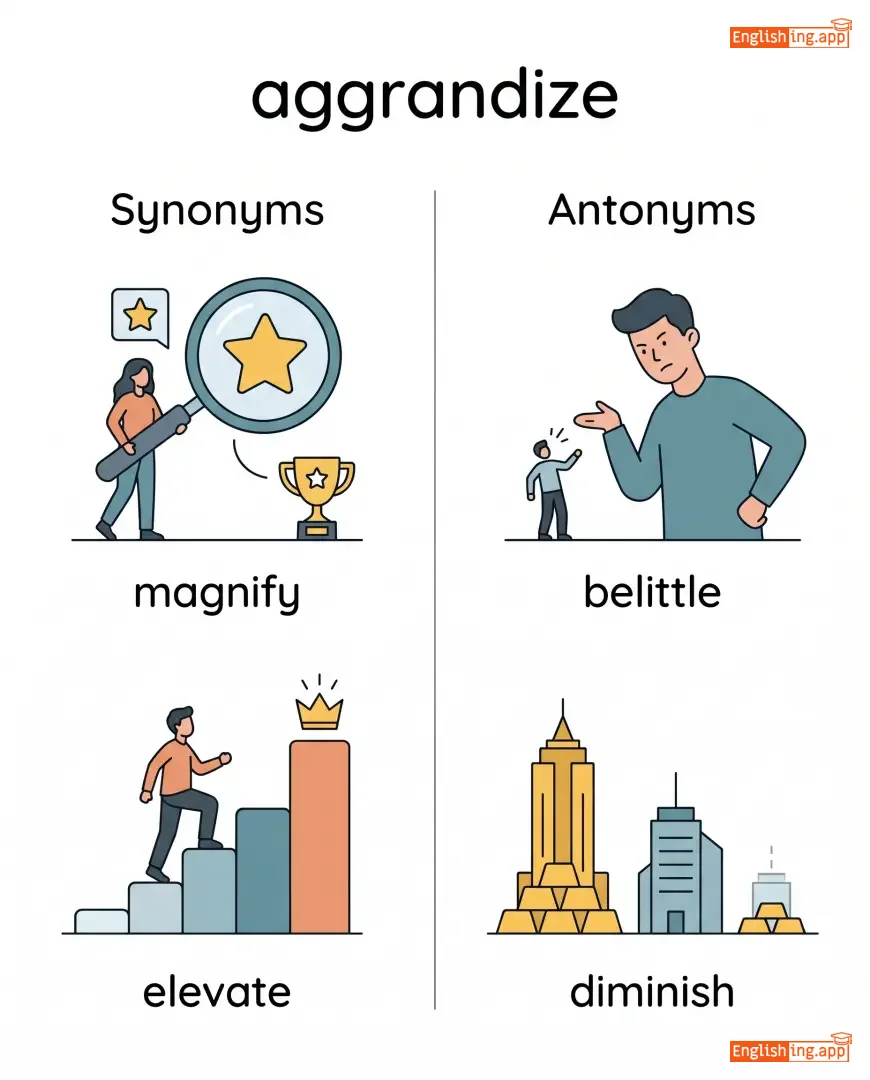
magnify, elevate, exalt, glorify
••••••
|
belittle, diminish, humiliate
••••••
|
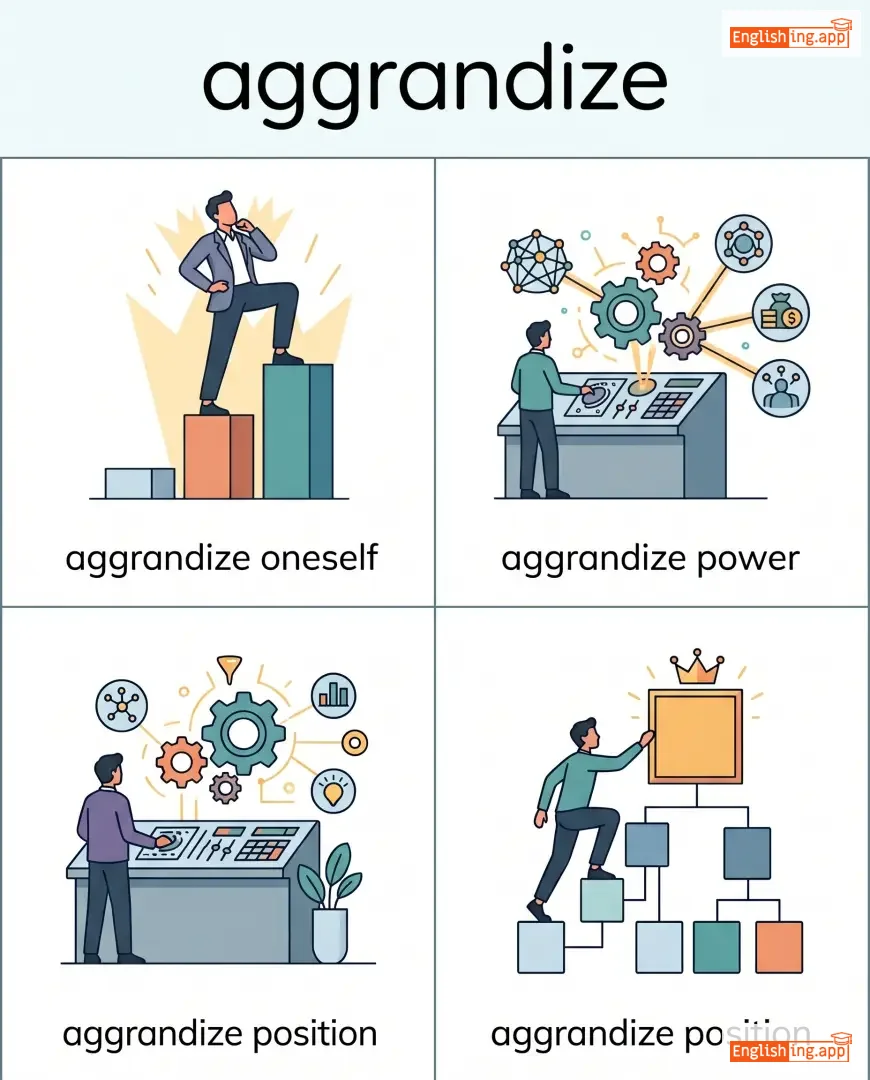
aggrandize oneself, aggrandize power, aggrandize position
••••••
|
Aggrandize 意思是使某人更大
••••••
|
|
#261
🏙️
|
/əˌɡlɒməˈreɪʃən/
noun
(聚集)
••••••
|
- •••••• |
聚集
jùjí
••••••
|
- •••••• | - •••••• | - •••••• | - •••••• |
A mass or collection of things, sometimes clustered together.
••••••
|
The city is an agglomeration of diverse cultures and communities. |
这座城市是各种文化和社区的聚集地。
Zhè zuò chéngshì shì gèzhǒng wénhuà hé shèqū de jùjí dì.
••••••
|
- •••••• | - •••••• | - •••••• |
cluster, accumulation, collection, mass, grouping
••••••
|
separation, division, dispersal
••••••
|
urban agglomeration, industrial agglomeration, agglomeration of people
••••••
|
Agglomeration意味着把一切聚集在一起,像一个大聚集。
••••••
|
|
#262
🌀
|
/əˈɡlɒməˌreɪt/
verb
(聚集)
••••••
|
- •••••• |
聚集
jùjí
••••••
|
agglomerated
聚集
••••••
|
agglomerated
聚集
••••••
|
agglomerates
聚集
••••••
|
agglomerating
聚集
••••••
|
To collect or form into a mass or group.
••••••
|
The dust particles began to agglomerate into larger clusters.
尘粒开始聚集成更大的团块。
••••••
|
尘粒开始聚集成更大的团块。
Chénlì kāishǐ jùjí chéng gèng dà de tuánkuài.
••••••
|
- •••••• | - •••••• | - •••••• |
gather, cluster, collect, accumulate, assemble
••••••
|
disperse, scatter, separate
••••••
|
agglomerate particles, agglomerate materials, agglomerate into
••••••
|
Agglomerate = All Glow Mate = 把东西聚集起来,像朋友一样。
••••••
|
|
#263
📋
|
/əˈdʒɛndə/
noun
••••••
|
- •••••• | - •••••• | - •••••• | - •••••• | - •••••• | - •••••• |
A list of items to be discussed or acted upon in a meeting or plan.
••••••
|
The manager reviewed the agenda before the meeting began. |
- •••••• |
hidden agenda |
A secret motive or plan behind someone's actions.
••••••
|
- •••••• |
schedule, plan, program, timetable, itinerary
••••••
|
disorganization, randomness
••••••
|
meeting agenda, set the agenda, hidden agenda
••••••
|
No •••••• |
|
#264
😲
|
/əˈɡeɪp/ or /əˈɡɑːp/
adjective
(阿嘎佩)
••••••
|
- •••••• |
目瞪口呆
mù dèng kǒu dāi
••••••
|
- •••••• | - •••••• | - •••••• | - •••••• |
With the mouth wide open in surprise or wonder.
••••••
|
She stood agape at the breathtaking view.
她站在那里,惊讶地看着那令人叹为观止的景象。
••••••
|
她站在那里,惊讶地看着那令人叹为观止的景象。
tā zhàn zài nàlǐ, jīng yà de kàn zhe nà lìng rén tàn wéi guān zhǐ de jǐng xiàng.
••••••
|
- •••••• | - •••••• | - •••••• |
astonished, amazed, open-mouthed, dumbfounded
••••••
|
composed, closed, indifferent
••••••
|
stood agape, mouth agape, eyes agape
••••••
|
Agape = 目瞪口呆 (张嘴)。
••••••
|
|
#265
💭
|
/ˈæftərˌθɔːt/
noun
••••••
|
- •••••• | - •••••• | - •••••• | - •••••• | - •••••• | - •••••• |
Something added or considered later than originally planned.
••••••
|
The gift seemed like an afterthought rather than a genuine gesture. |
- •••••• | - •••••• | - •••••• | - •••••• |
reflection, reconsideration, postscript, addition
••••••
|
plan, intention, forethought
••••••
|
added as an afterthought, just an afterthought, seemed like an afterthought
••••••
|
No •••••• |
|
#266
🌌
|
/ˈæftərˌlaɪf/
noun
••••••
|
- •••••• | - •••••• | - •••••• | - •••••• | - •••••• | - •••••• |
Life or existence that some believe continues after physical death.
••••••
|
Many cultures have different beliefs about the afterlife. |
- •••••• |
life after death |
The continuation of existence beyond physical death.
••••••
|
- •••••• |
hereafter, eternity, beyond, next world, immortality
••••••
|
life, mortality, existence
••••••
|
belief in the afterlife, journey to the afterlife, afterlife experiences
••••••
|
No •••••• |
|
#267
🌱
|
/əˈfrɛʃ/
adverb
(afresh)
••••••
|
- •••••• |
重新
chongxin
••••••
|
- •••••• | - •••••• | - •••••• | - •••••• |
From the beginning, in a new way.
••••••
|
After the failure, they started the project afresh.
在失败后,他们重新开始了这个项目。
••••••
|
在失败后,他们重新开始了这个项目。
Zai shibai hou, tamen chongxin kaishi le zhege xiangmu.
••••••
|
- •••••• | - •••••• | - •••••• |
anew, again, once more, newly, recently
••••••
|
continuously, endlessly
••••••
|
start afresh, begin afresh, live afresh, think afresh
••••••
|
Afresh 是重新开始,重新来过。
••••••
|
|
#268
📜
|
/əˈfɔːrˌsɛd/
adjective
(æfɔːrsɛd)
••••••
|
- •••••• |
前述
qiánshù
••••••
|
- •••••• | - •••••• | - •••••• | - •••••• |
Mentioned earlier; previously stated.
••••••
|
The aforesaid conditions must be met before the contract is signed.
上述条件必须在签署合同之前满足。
••••••
|
签署合同前,必须满足上述条件。
Qiānshǔ hé tóng qián, bìxū mǎnzú shàngshù tiáojiàn.
••••••
|
- •••••• | - •••••• | - •••••• |
previously mentioned, aforementioned, earlier, stated, cited
••••••
|
unmentioned, unstated
••••••
|
aforesaid statement, aforesaid terms, aforesaid matter, aforesaid conditions
••••••
|
Aforesaid 在中文中表示 '前述',也就是之前提到的。
••••••
|
|
#269
🚶
|
/əˈfʊt/
adjective, adverb
(阿福特)
••••••
|
- •••••• |
进行中
jinxing zhong
••••••
|
- •••••• | - •••••• | - •••••• | - •••••• |
In progress; happening or being prepared.
••••••
|
There are several new projects afoot in the company.
公司有几个新的项目正在进行中。
••••••
|
公司有几个新的项目正在进行中。
Gongsi you jige xinde xiangmu zhengzai jinxing zhong.
••••••
|
plans afoot
计划进行中
••••••
|
plans that are in progress or being arranged
••••••
|
计划进行中
jihua jinxing zhong
••••••
|
ongoing, happening, occurring, underway, brewing
••••••
|
finished, completed, ended
••••••
|
plans afoot, schemes afoot, changes afoot, new developments afoot
••••••
|
Afoot 是 '进行中',因为它正在发生并准备好。
••••••
|
|
#270
😠
|
/əˈfrʌnt/
noun, verb
(阿弗隆特)
••••••
|
- •••••• |
侮辱
wuluru
••••••
|
affronted
阿弗隆特德
••••••
|
affronted
阿弗隆特德
••••••
|
affronts
阿弗隆特斯
••••••
|
affronting
阿弗隆特英
••••••
|
An action or remark that causes outrage or offense.
••••••
|
He took her criticism as a personal affront.
他把她的批评当作个人的侮辱。
••••••
|
他把她的批评当作个人的侮辱。
Ta ba ta de pping dangzuo geren de wuluru.
••••••
|
- •••••• | - •••••• | - •••••• |
insult, offense, indignity, slight, provocation
••••••
|
compliment, praise, respect
••••••
|
personal affront, feel affronted, affront to dignity, deliberate affront
••••••
|
Affront意味着直接冒犯某人 (front)!
••••••
|
Vocabulary Quiz
Test your vocabulary by matching words with their translations or meanings.
Login to take the quiz
Comments (0)
Share your thoughts and join the discussion.
Join the discussion by logging in
Login to CommentNo comments yet
Be the first to share your thoughts!