

Swipe left or right, or use the buttons. Tap image to zoom.
例句翻译
单词
Lesson 206Lesson 206 - 遮罩切换
|
表情符号
|
单词 | Images | 翻译 | 过去时 | 过去分词 | 第三人称单数 | 动名词 | 含义 | 例句 | 例句翻译 | 示例表达 | 示例表达含义 | 示例表达翻译 | 同义词 | 反义词 | 搭配词 | 助记符 |
|---|---|---|---|---|---|---|---|---|---|---|---|---|---|---|---|---|---|
|
#6151
🦴
|
/ˈɒsiəs/
adjective
(奥西厄斯)
••••••
|
- •••••• |
骨质的
gǔ zhì de
••••••
|
- •••••• | - •••••• | - •••••• | - •••••• |
consisting of or turned into bone; bony
••••••
|
The fossil showed osseous structures of the ancient creature.
化石展示了古老生物的骨质结构。
••••••
|
化石展示了古老生物的骨质结构。
Huà shí zhǎn shì le gǔ lǎo shēng wù de gǔ zhì jié gòu.
••••••
|
- •••••• | - •••••• | - •••••• |
bony, skeletal, hard, calcified
••••••
|
soft, fleshy
••••••
|
osseous tissue, osseous structure, osseous formation, osseous mass
••••••
|
Osseous 意味着骨质的,记住 '骨' (gǔ)。
••••••
|
|
#6152
🚶
|
/ˈaʊtkæst/
noun
(aʊtkæst)
••••••
|
- •••••• |
被排斥者
bèi páichī zhě
••••••
|
- •••••• | - •••••• | - •••••• | - •••••• |
a person who is rejected or excluded from society or a group
••••••
|
He felt like an outcast at school. |
他在学校里觉得自己像个被排斥者。
Tā zài xuéxiào lǐ juédé zìjǐ xiàng gè bèi páichī zhě.
••••••
|
- •••••• | - •••••• | - •••••• |
pariah, exile, reject, outsider
••••••
|
insider, member, accepted
••••••
|
social outcast, treated as an outcast, feel like an outcast
••••••
|
Outcast 意味着被排斥—被社会抛弃的人。
••••••
|
|
#6153
💥
|
/ˈaʊtbɜːrst/
noun
(àubáosī tè)
••••••
|
- •••••• |
情感或活动的突然爆发
qínggǎn huò huódòng de túrán bàofā
••••••
|
- •••••• | - •••••• | - •••••• | - •••••• |
a sudden release of strong emotion or activity
••••••
|
She had an angry outburst during the meeting.
她在会议期间突然发火。
••••••
|
她在会议期间突然发火。
Tā zài huìyì qíjiān túrán fāhuǒ.
••••••
|
- •••••• | - •••••• | - •••••• |
eruption, explosion, flare-up, fit
••••••
|
calmness, restraint, silence
••••••
|
angry outburst, sudden outburst, emotional outburst
••••••
|
Outburst = 爆发 — 情感或愤怒的突然爆发。
••••••
|
|
#6154
⚠️
|
/ˈaʊtˌbreɪk/
noun
(奥特布雷克)
••••••
|
- •••••• |
爆发
baofā
••••••
|
- •••••• | - •••••• | - •••••• | - •••••• |
a sudden start or occurrence of something unpleasant, like disease or violence
••••••
|
There was an outbreak of flu in the city. |
城市中爆发了流感。
Chéngshì zhōng bàofāle liúgǎn.
••••••
|
- •••••• | - •••••• | - •••••• |
eruption, flare-up, epidemic, surge
••••••
|
end, cessation, calm
••••••
|
outbreak of disease, sudden outbreak, outbreak of violence
••••••
|
Outbreak 意味着爆发—某种不愉快的事情突然发生,如疾病或暴力。
••••••
|
|
#6155
🗺️
|
/ˌaʊt əv ðə ˈweɪ/
adjective
(aʊt-ʌv-ðə-weɪ)
••••••
|
- •••••• |
偏远的或不寻常的
pianyuan de huo bu xunzhang de
••••••
|
- •••••• | - •••••• | - •••••• | - •••••• |
remote or unusual; not in a convenient or usual location
••••••
|
They stayed in an out-of-the-way village. |
他们住在一个偏远的村庄里。
Tāmen zhù zài yīgè piānyuǎn de cūnzhuāng lǐ.
••••••
|
- •••••• | - •••••• | - •••••• |
remote, isolated, hidden, unusual, obscure
••••••
|
central, common, usual
••••••
|
out-of-the-way place, out-of-the-way village, out-of-the-way location
••••••
|
Out-of-the-way 就是指在远离城市的地方,像一个偏远的小村庄。
••••••
|
|
#6156
✅
|
/ˌaʊt ən ˈaʊt/
adjective
(ào tè ān ào tè)
••••••
|
- •••••• |
完全
wanquan
••••••
|
- •••••• | - •••••• | - •••••• | - •••••• |
complete; absolute; used to emphasize something extreme
••••••
|
The speech was an out-and-out lie. |
这个演讲是一个完全的谎言。
Zhe ge yanjiang shi yi ge wanquan de huangyan.
••••••
|
- •••••• | - •••••• | - •••••• |
complete, absolute, total, utter, thorough
••••••
|
partial, incomplete, limited
••••••
|
out-and-out victory, out-and-out lie, out-and-out disaster
••••••
|
Out-and-out意味着完全—就像一个完全离开球场的球员。
••••••
|
|
#6157
🪓
|
/aʊst/
verb
(aʊst)
••••••
|
- •••••• |
驱逐
qūzhú
••••••
|
ousted
aʊstɪd
••••••
|
ousted
aʊstɪd
••••••
|
ousts
aʊsts
••••••
|
ousting
aʊstɪŋ
••••••
|
To remove someone from a position or place of power or authority.
••••••
|
The rebels ousted the dictator from power.
ðə rɛbɛlz aʊstəd ðə dɪktɛɪtə frɒm paʊər.
••••••
|
叛乱者将独裁者赶下台。
Pànluàn zhě jiāng dúcáizhě gǎn xià tái.
••••••
|
- •••••• | - •••••• | - •••••• |
expel, overthrow, remove, eject
••••••
|
install, appoint, keep
••••••
|
oust leader, oust from power, oust authority
••••••
|
Oust表示驱逐 - 想象将某人'out'推出,离开权力。
••••••
|
|
#6158
✔️
|
/ɔːt/
modal verb
(奥特)
••••••
|
- •••••• |
应该
yinggai
••••••
|
- •••••• | - •••••• | - •••••• | - •••••• |
Used to indicate duty, correctness, or moral obligation.
••••••
|
You ought to respect your elders. |
你应该尊重长辈。
Nǐ yīnggāi zūnzhòng zhǎngbèi.
••••••
|
- •••••• | - •••••• | - •••••• |
should, must, have to, need to
••••••
|
must not, should not
••••••
|
ought to do, ought not to, one ought to
••••••
|
Ought的意思是应该,记住'ought to respect'意思是'应该尊重'。
••••••
|
|
#6159
🙅
|
/ˈɒstrəsaɪz/
verb
(奥斯特拉赛兹)
••••••
|
|
排斥
paichi
••••••
|
ostracized
奥斯特拉赛兹德
••••••
|
ostracized
奥斯特拉赛兹德
••••••
|
ostracizes
奥斯特拉赛兹斯
••••••
|
ostracizing
奥斯特拉赛兹英
••••••
|
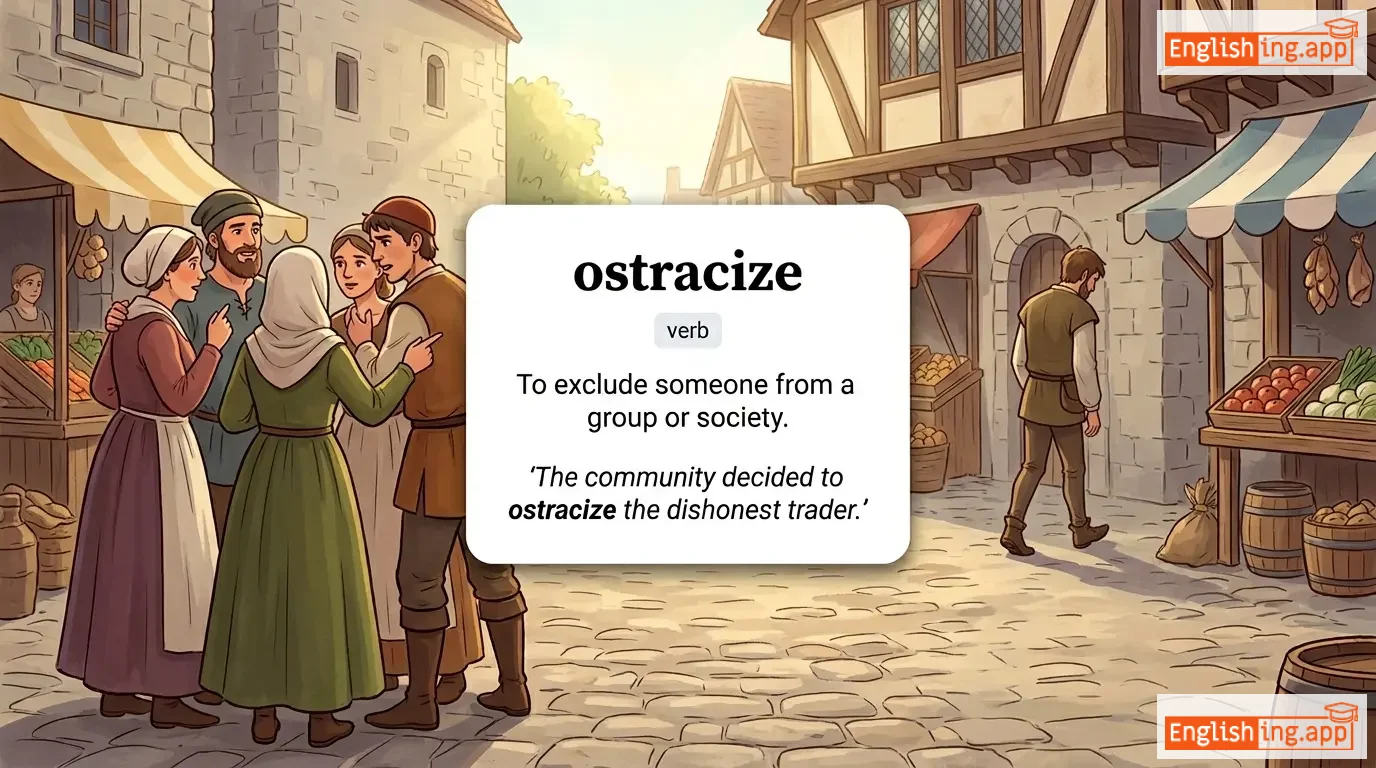
To exclude someone from a group or society.
••••••
|
The community decided to ostracize the dishonest trader.
社区决定将不诚实的商人排斥在外。
••••••
|
社区决定将不诚实的商人排斥在外。
Shequ jueding jiang buchengshi de shangren paichi zaiwai.
••••••
|
- •••••• | - •••••• | - •••••• |
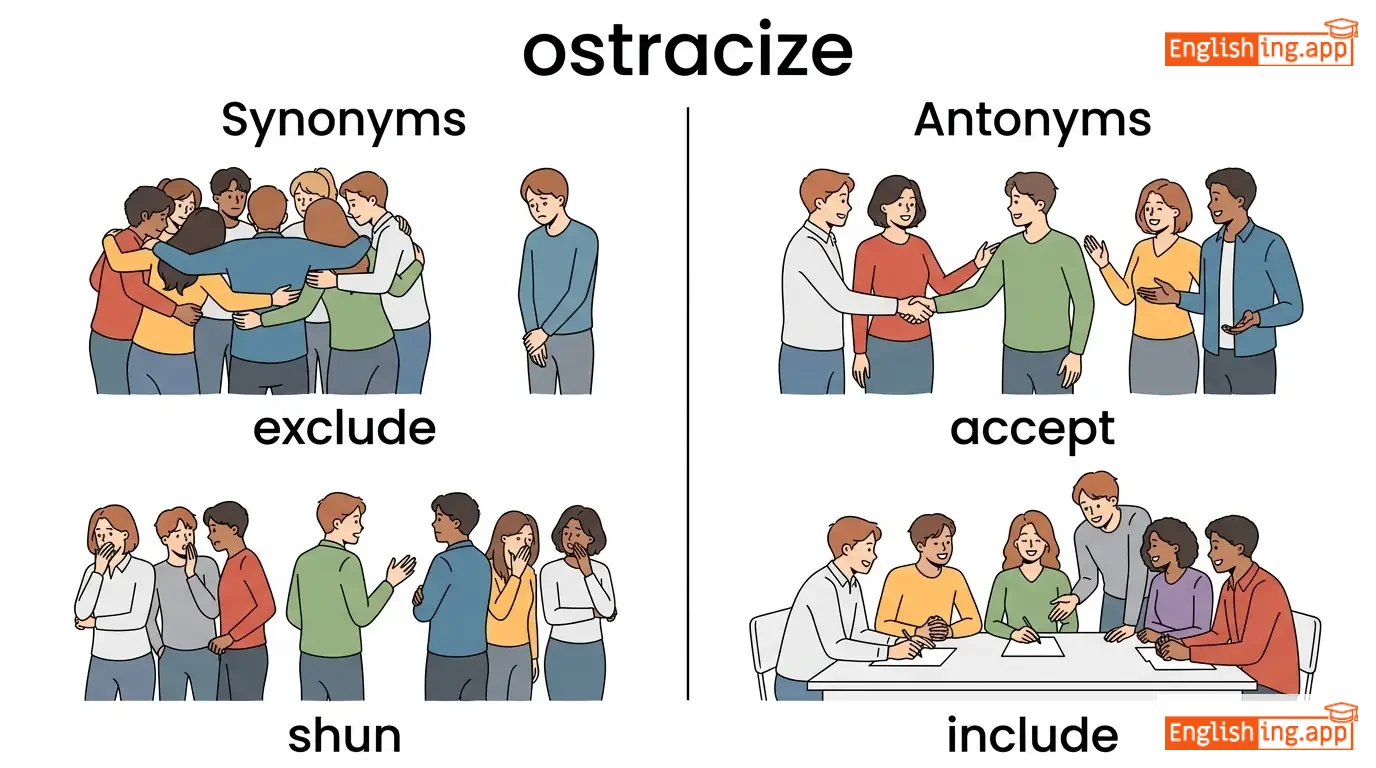
exclude, shun, reject, banish
••••••
|
accept, include, welcome
••••••
|
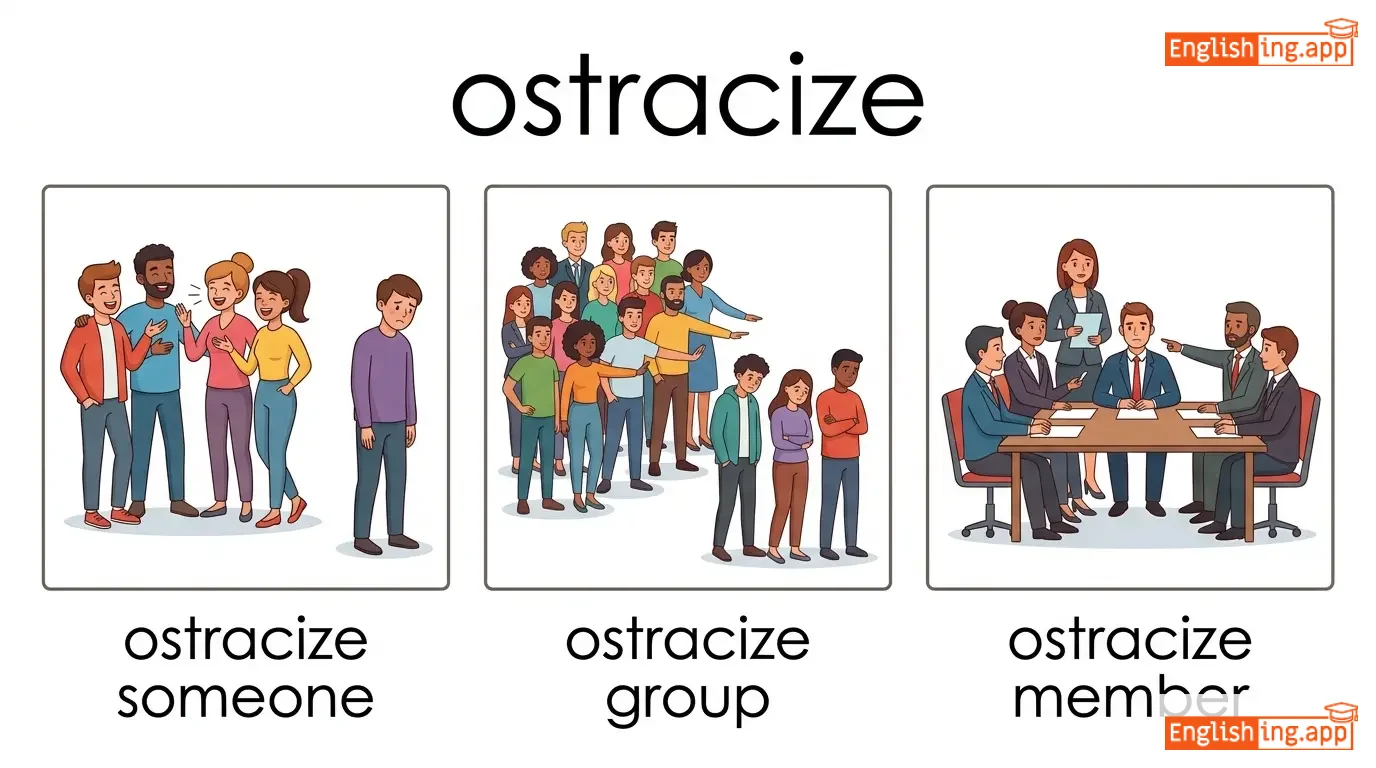
ostracize someone, ostracize group, ostracize member
••••••
|
Ostracize意味着将不诚实的人排除在社会之外,像一个“黑名单”动作。
••••••
|
|
#6160
🚫
|
/ˈɒstrəsɪzəm/
noun
(ostracism)
••••••
|
- •••••• |
排斥
paichi
••••••
|
- •••••• | - •••••• | - •••••• | - •••••• |
The act of excluding someone from a group or society.
••••••
|
The student faced ostracism after breaking the rules. |
学生在违反规则后遭受了排斥。
Xuesheng zai weifan guize hou zaoshou le paichi.
••••••
|
- •••••• | - •••••• | - •••••• |
exclusion, banishment, isolation, rejection
••••••
|
acceptance, inclusion, welcome
••••••
|
social ostracism, face ostracism, political ostracism
••••••
|
Ostracism意味着被排斥,就像被从社会中踢出去。
••••••
|
|
#6161
✨
|
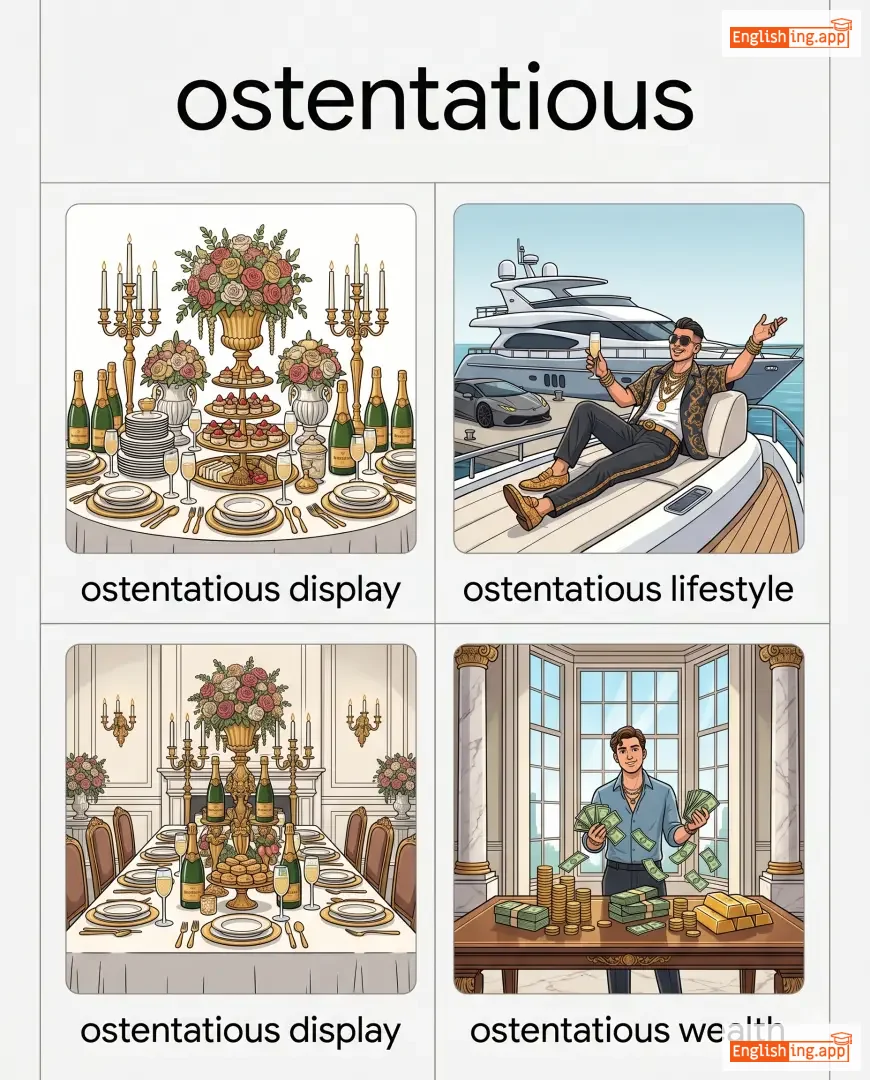
/ˌɒstɛnˈteɪʃəs/
adjective
(奥斯坦泰修斯)
••••••
|
|
炫耀的
xuànyào de
••••••
|
- •••••• | - •••••• | - •••••• | - •••••• |
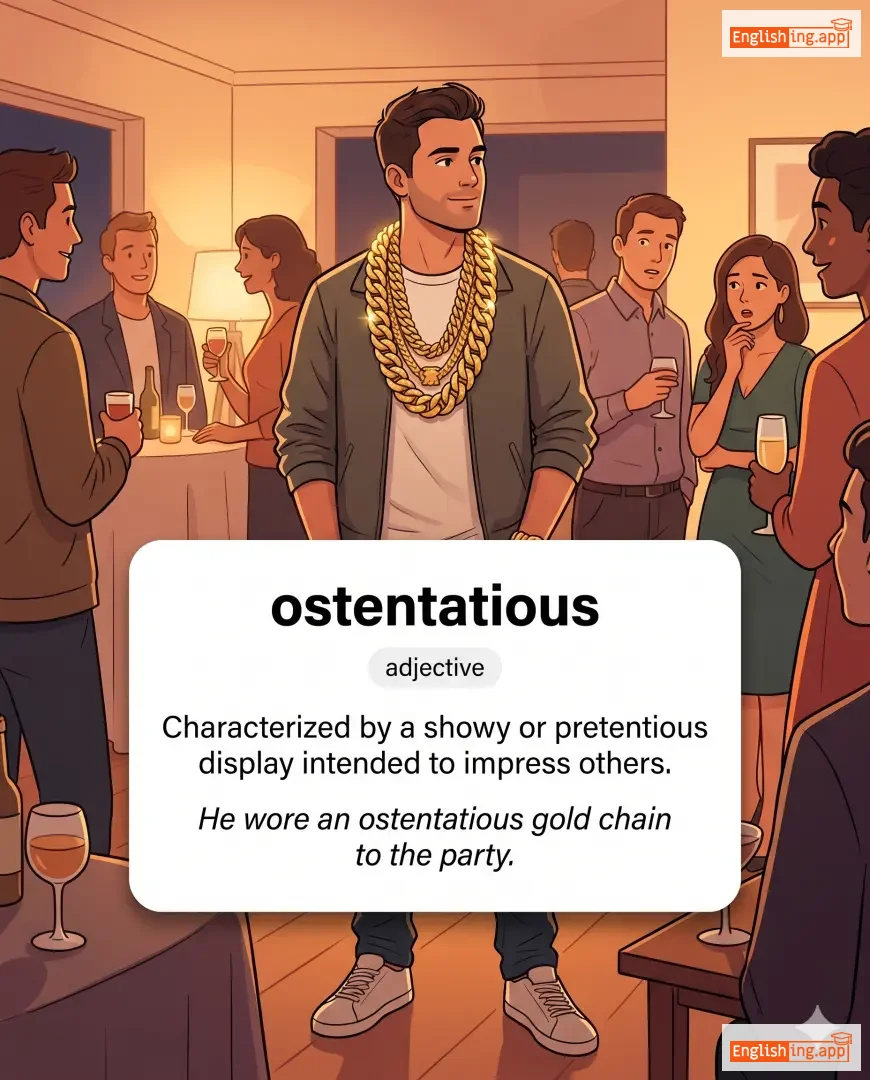
Characterized by a showy or pretentious display intended to impress others.
••••••
|
He wore an ostentatious gold chain to the party. |
他在派对上戴着一条炫耀的金链子。
Tā zài pàiduì shàng dàizhe yītiáo xuànyào de jīn liànzi.
••••••
|
- •••••• | - •••••• | - •••••• |
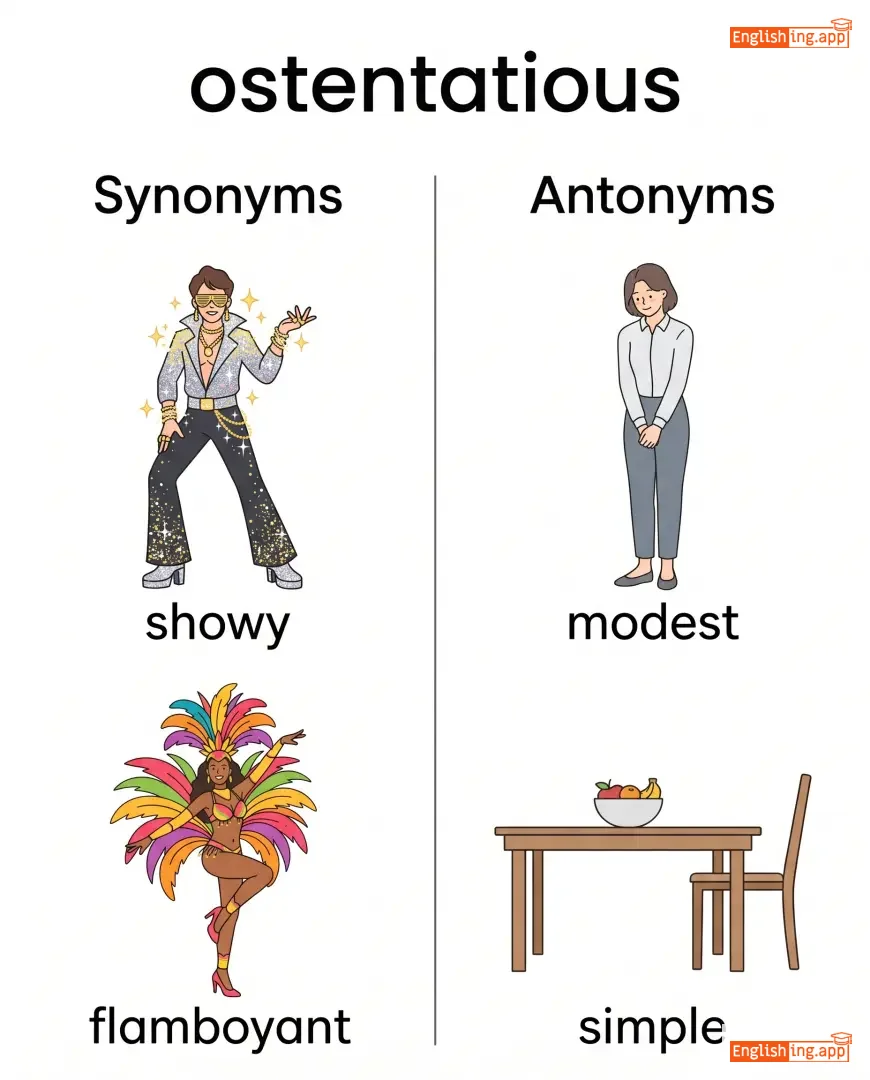
showy, flamboyant, pretentious, gaudy, flashy
••••••
|
modest, simple, plain
••••••
|
ostentatious display, ostentatious lifestyle, ostentatious wealth
••••••
|
Ostentatious意味着'炫耀的',表示通过显眼的展示来给人留下印象。
••••••
|
|
#6162
💎
|
/ˌɒstɛnˈteɪʃən/
noun
(炫耀)
••••••
|
- •••••• |
炫耀
xuànyào
••••••
|
- •••••• | - •••••• | - •••••• | - •••••• |
excessive display of wealth or knowledge intended to attract admiration or envy
••••••
|
The billionaire’s party was full of ostentation and luxury. |
亿万富翁的派对充满了炫耀和奢华。
Yìwàn fùwēng de pàiduì chōngmǎnle xuànyào hé shēhuá.
••••••
|
show of ostentation |
an act of displaying wealth or extravagance to impress others
••••••
|
炫耀的表现
xuànyào de biǎoxiàn
••••••
|
showiness, display, flamboyance, pretentiousness
••••••
|
modesty, humility, simplicity
••••••
|
ostentation and luxury, ostentation of wealth, great ostentation, without ostentation
••••••
|
Ostentation 代表 show-off 💎 - 一大堆钱的炫耀展示!
••••••
|
|
#6163
👉
|
/ɒˈstɛnsɪv/
adjective
(奥斯坦斯夫)
••••••
|
- •••••• |
显性
xiǎn xìng
••••••
|
- •••••• | - •••••• | - •••••• | - •••••• |
clearly demonstrative or pointing out; explicitly shown
••••••
|
The teacher gave an ostensive example to clarify the concept.
老师举了一个显性的例子来阐明概念。
••••••
|
老师举了一个显性的例子来阐明概念。
Lǎoshī jǔle yīgè xiǎn xìng de lìzi lái chǎnmíng gàiniàn.
••••••
|
- •••••• | - •••••• | - •••••• |
demonstrative, explicit, illustrative, explanatory
••••••
|
implicit, hidden, vague
••••••
|
ostensive definition, ostensive example, ostensive demonstration
••••••
|
Ostensive = 明确示范; 老师通过例子讲解了概念 👨🏫
••••••
|
|
#6164
🤔
|
/ɒˈstɛnsəbl/
adjective
(ostensible)
••••••
|
- •••••• |
表面上
biaomian shang
••••••
|
- •••••• | - •••••• | - •••••• | - •••••• |
stated or appearing to be true, but not necessarily so
••••••
|
His ostensible reason for leaving was illness, but many doubted it. |
他离开的表面上原因是生病,但许多人对此表示怀疑。
Tā líkāi de biǎomiàn shàng yuányīn shì shēngbìng, dàn xǔduō rén duì cǐ biǎoshì huáiyí.
••••••
|
- •••••• | - •••••• | - •••••• |
apparent, seeming, alleged, superficial
••••••
|
genuine, real, true
••••••
|
ostensible purpose, ostensible reason, ostensible motive, ostensible cause
••••••
|
Ostensible 意味着 '表面上' 看似真实,但并非总是如此。
••••••
|
|
#6165
🪨
|
/ˈɒsɪfaɪ/
verb
(奥斯法伊)
••••••
|
- •••••• |
骨化
guhua
••••••
|
ossified
奥斯法德
••••••
|
ossified
奥斯法德
••••••
|
ossifies
奥斯法伊兹
••••••
|
ossifying
奥斯法英
••••••
|
to turn into bone or become rigid and inflexible
••••••
|
With age, some tissues tend to ossify.
随着年龄的增长,一些组织会变得僵硬。
••••••
|
随着年龄的增长,一些组织会变得僵硬。
Suizhe nianling de zengzhang, yixie zuzhi hui biande jiangying.
••••••
|
ossified attitudes
僵化的态度
••••••
|
rigid and inflexible ways of thinking
••••••
|
僵化的思维
jianghua de siwei
••••••
|
harden, calcify, stiffen, fossilize
••••••
|
soften, loosen, melt
••••••
|
ossify with age, ossify into, ossified system, ossified attitude
••••••
|
Ossify = 变得像骨头;记住'Ossy'意味着骨头。
••••••
|
|
#6166
🌱
|
/əˈrɪdʒɪneɪt/
verb
(òuríjìnètè)
••••••
|
- •••••• |
起源
qǐyuán
••••••
|
originated
òuríjìnèitèd
••••••
|
originated
òuríjìnèitèd
••••••
|
originates
òuríjìnèits
••••••
|
originating
òuríjìnèitìng
••••••
|
to come into existence; to begin; to create or produce
••••••
|
The tradition originated in ancient times.
这个传统起源于古代。
••••••
|
这个传统起源于古代。
Zhège chuántǒng qǐyuán yú gǔdài.
••••••
|
originate from
起源于
••••••
|
to come from a particular place or source
••••••
|
起源于
qǐyuán yú
••••••
|
begin, arise, emerge, derive, start
••••••
|
end, finish, conclude
••••••
|
originate idea, originate from, originate request, originate concept
••••••
|
Origin 意味着开始,originates意味着起源 🌱
••••••
|
|
#6167
💋
|
/ˈɑːskjʊleɪt/
verb
(奥斯库雷特)
••••••
|
- •••••• |
亲吻
qīn wěn
••••••
|
osculated
奥斯库雷特德
••••••
|
osculated
奥斯库雷特德
••••••
|
osculates
奥斯库雷特斯
••••••
|
osculating
奥斯库雷特英特
••••••
|
To kiss.
••••••
|
They osculated under the mistletoe during the party.
他们在派对上在槲寄生下接吻。
••••••
|
他们在派对上在槲寄生下接吻。
Tāmen zài pàiduì shàng zài hú jì shēng xià jiēwěn.
••••••
|
- •••••• | - •••••• | - •••••• |
kiss, smooch, peck, embrace
••••••
|
ignore, avoid
••••••
|
osculate gently, osculate passionately
••••••
|
Osculate 的意思是 O-s-cute-late → 不管何时,都亲吻。
••••••
|
|
#6168
⏳
|
/ˌɑːsɪˈleɪʃən/
noun
(osìlèi)
••••••
|
- •••••• |
摆动
bǎidòng
••••••
|
- •••••• | - •••••• | - •••••• | - •••••• |
The movement back and forth at a regular speed.
••••••
|
The oscillation of the pendulum controls the clock. |
摆锤的摆动控制着时钟。
Bǎichuí de bǎidòng kòngzhì zhe shízhōng.
••••••
|
- •••••• | - •••••• | - •••••• |
swing, vibration, fluctuation, wave, movement
••••••
|
stillness, stability
••••••
|
oscillation frequency, pendulum oscillation, oscillation pattern
••••••
|
摆动意味着来回摆动 → 摆动就像钟摆的运动
••••••
|
|
#6169
🔄
|
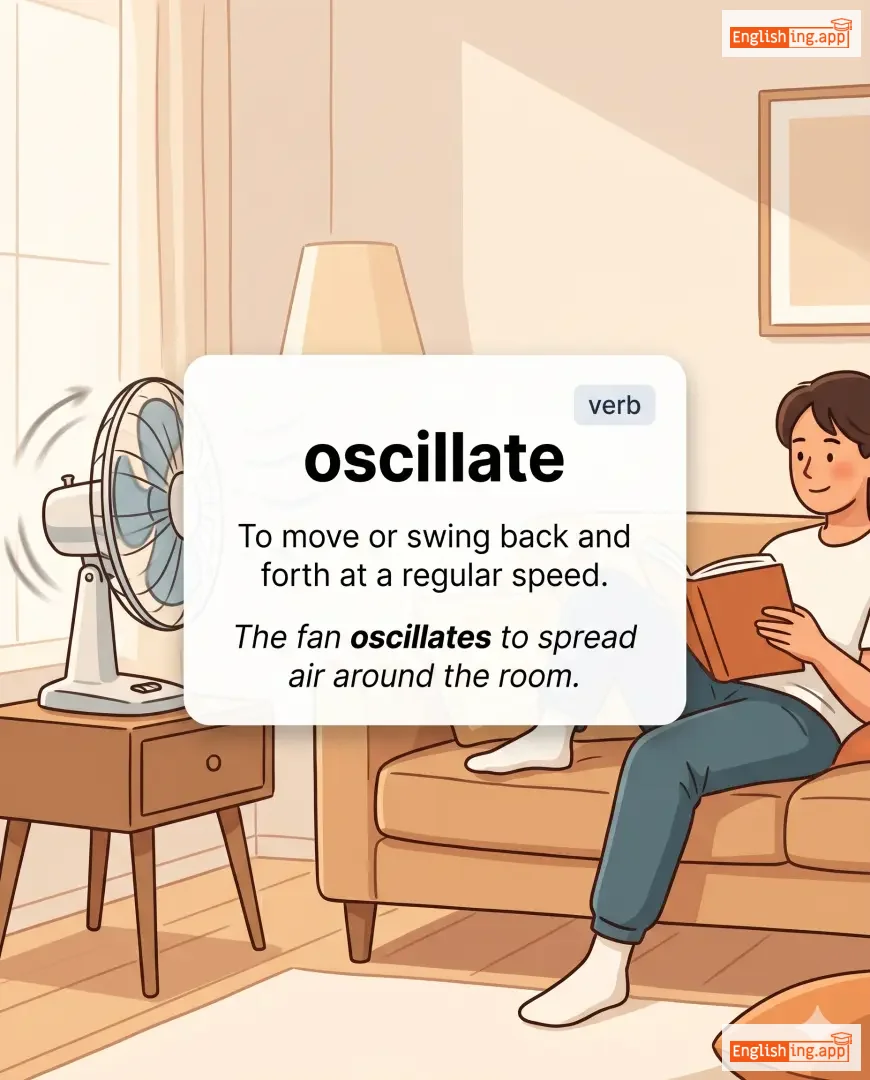
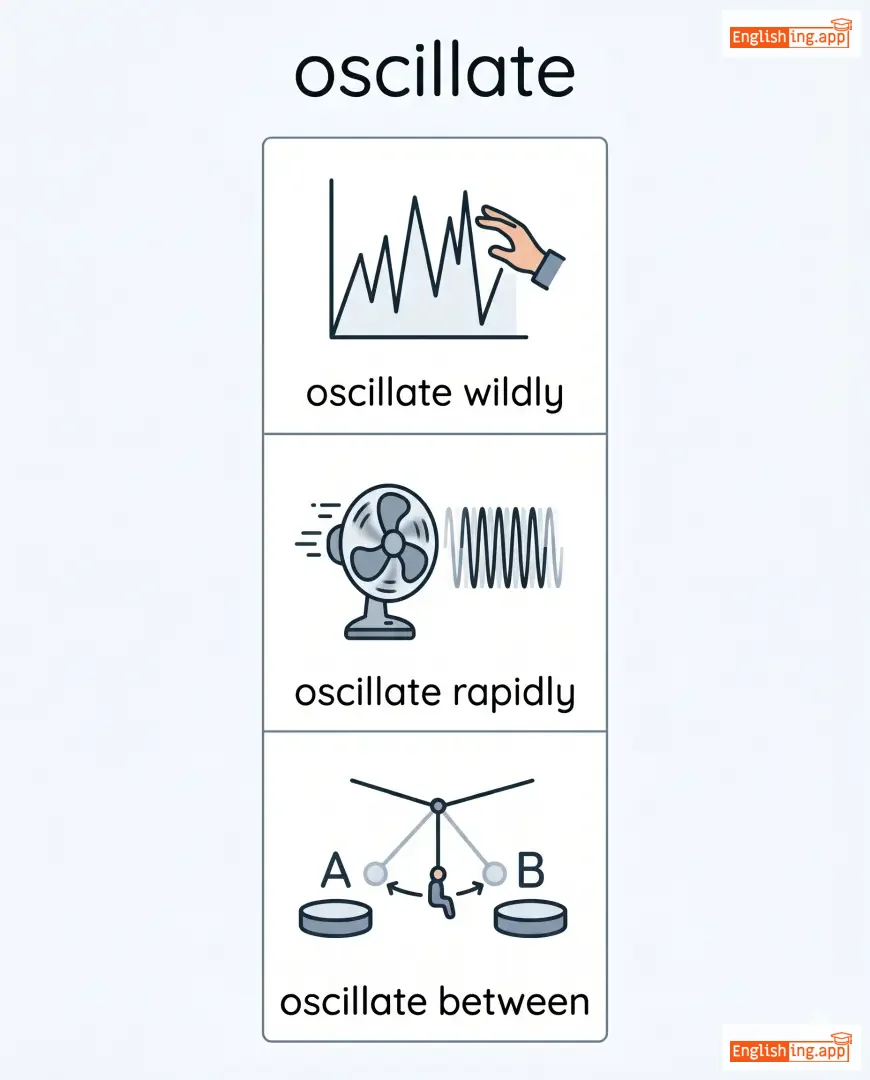
/ˈɑːsɪleɪt/
verb
(哈皮内斯)
••••••
|
|
幸福
xìngfú
••••••
|
oscillated
••••••
|
oscillated
••••••
|
oscillates
••••••
|
oscillating
••••••
|
To move or swing back and forth at a regular speed.
••••••
|
The fan oscillates to spread air around the room.
她获得奖项时无法掩饰她的幸福。
••••••
|
她获得奖项时无法掩饰她的幸福。
Tā huòde jiǎngxiàng shí wúfǎ yǎnshì tā de xìngfú.
••••••
|
oscillate between
追求幸福
••••••
|
To alternate between different states or opinions.
••••••
|
追求幸福
zhuīqiú xìngfú
••••••
|
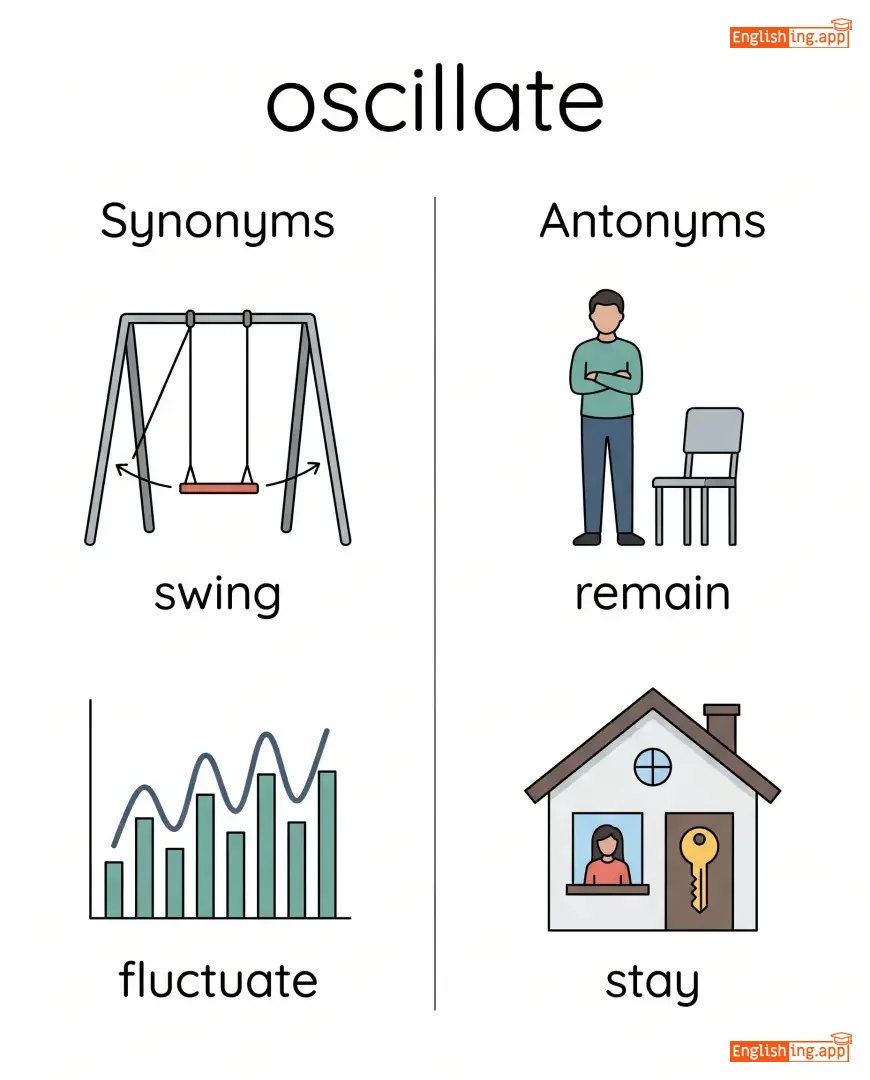
swing, fluctuate, sway, vibrate, waver
••••••
|
remain, stay
••••••
|
oscillate wildly, oscillate rapidly, oscillate between
••••••
|
幸福就像美好的时光,我们都在追寻它!
••••••
|
|
#6170
🦴
|
/ˌɔːrθəˈpiːdɪk/
adjective
(骨科的)
••••••
|
- •••••• |
与骨骼或肌肉畸形的矫正有关
yǔ gǔgé huò jīròu jīxíng de jiǎozhèng yǒuguān
••••••
|
- •••••• | - •••••• | - •••••• | - •••••• |
Relating to the correction of deformities of bones or muscles.
••••••
|
She visited an orthopedic surgeon for her back pain.
她因为背痛去看了骨科医生。
••••••
|
她因为背痛去看了骨科医生。
Tā yīnwèi bèi tòng qù kànle gǔkē yīshēng.
••••••
|
- •••••• | - •••••• | - •••••• |
musculoskeletal, surgical, therapeutic, medical
••••••
|
non-surgical, general
••••••
|
orthopedic surgeon, orthopedic treatment, orthopedic clinic, orthopedic surgery
••••••
|
Ortho 意味着骨头,pedic 意味着医疗 – Orthopedic 意味着骨骼医疗
••••••
|
|
#6171
✍️
|
/ɔːrˈθɑːɡrəfi/
noun
(ɔːrˈθɑːɡrəfi)
••••••
|
- •••••• |
拼写法
pīnxiě fǎ
••••••
|
- •••••• | - •••••• | - •••••• | - •••••• |
The conventional spelling system of a language.
••••••
|
English orthography can be confusing for learners. |
英语的拼写法对学习者来说可能是令人困惑的。
Yīngyǔ de pīnxiě fǎ duì xuéxí zhě lái shuō kěnéng shì lìng rén kùnhuò de.
••••••
|
- •••••• | - •••••• | - •••••• |
spelling, writing system, script, notation, lettering
••••••
|
miswriting, misspelling
••••••
|
orthography rules, correct orthography, English orthography, standard orthography
••••••
|
拼写 (拼 = 拼音) + 法 (方法) → 语言正确拼写的系统。
••••••
|
|
#6172
📐
|
/ɔːrˈθɑːɡənl/
adjective
(正交)
••••••
|
- •••••• |
正交
zhèng jiāo
••••••
|
- •••••• | - •••••• | - •••••• | - •••••• |
at right angles; independent or unrelated
••••••
|
In mathematics, two vectors are orthogonal if their dot product is zero. |
在数学中,如果两个向量的点积为零,它们就是正交的。
Zài shùxué zhōng, rúguǒ liǎng gè xiàngliàng de diǎn jī wéi líng, tāmen jiùshì zhèngjiāo de.
••••••
|
- •••••• | - •••••• | - •••••• |
perpendicular, right-angled, independent, unrelated
••••••
|
parallel, dependent
••••••
|
orthogonal vectors, orthogonal design, orthogonal approach
••••••
|
正交是Ortho(正)+角(角度)= 直角。
••••••
|
|
#6173
📜
|
/ˈɔːrθədɑːksi/
noun
(ɔːrθədɒksi)
••••••
|
- •••••• |
正统
zhèngtǒng
••••••
|
- •••••• | - •••••• | - •••••• | - •••••• |
traditional or generally accepted beliefs and practices
••••••
|
The religious leader defended the orthodoxy of the faith. |
宗教领袖捍卫了信仰的正统性。
Zōngjiào lǐngxiù hànwèi le xìnyǎng de zhèngtǒngxìng.
••••••
|
- •••••• | - •••••• | - •••••• |
dogma, tradition, convention, established belief
••••••
|
heresy, deviation
••••••
|
religious orthodoxy, cultural orthodoxy, challenge orthodoxy
••••••
|
Orthodoxy意味着传统或普遍接受的信仰 - 正统。
••••••
|
|
#6174
🙏
|
/ˈɔːrθədɑːks/
adjective
••••••
|
- •••••• | - •••••• | - •••••• | - •••••• | - •••••• | - •••••• |
conforming to traditional beliefs or practices
••••••
|
He comes from a very orthodox family. |
- •••••• | - •••••• | - •••••• | - •••••• |
traditional, conventional, conservative, accepted
••••••
|
unorthodox, radical, liberal
••••••
|
orthodox beliefs, orthodox practices, orthodox religion
••••••
|
No •••••• |
|
#6175
🎤
|
/ˈɔːrəˌtʌnd/
adjective
(欧若吞德)
••••••
|
- •••••• |
深沉而清晰的声音
shēnchén ér qīngxī de shēngyīn
••••••
|
- •••••• | - •••••• | - •••••• | - •••••• |
full, rich, and clear in sound; pompous in style
••••••
|
The actor's orotund voice filled the theater. |
演员的深沉声音充满了剧院。
Yǎnyuán de shēnchén shēngyīn chōngmǎnle jùyuàn.
••••••
|
- •••••• | - •••••• | - •••••• |
resonant, sonorous, booming, pompous
••••••
|
thin, weak
••••••
|
orotund style, orotund speech, orotund voice
••••••
|
Oro (欧罗)吞德意味着深沉清晰的声音
••••••
|
|
#6176
🦜
|
/ˌɔːrnɪˈθɑːlədʒi/
noun
(鸟类学)
••••••
|
- •••••• |
鸟类学
niao lei xue
••••••
|
- •••••• | - •••••• | - •••••• | - •••••• |
the scientific study of birds
••••••
|
She pursued ornithology to understand the migration patterns of birds.
她追求鸟类学以了解鸟类的迁徙模式。
••••••
|
她追求鸟类学以了解鸟类的迁徙模式。
Ta zhuiqiu niaolei xue yi liaojie niaolei de qianxi moshi.
••••••
|
- •••••• | - •••••• | - •••••• |
bird science, avian biology, zoology, bird study
••••••
|
botany, geology
••••••
|
ornithology course, ornithology research, ornithology society, ornithology journal
••••••
|
Orni(Orni)是一个学习鸟类学(鸟类)的女孩。
••••••
|
|
#6177
🦉
|
/ˌɔːrnɪˈθɒlədʒɪst/
noun
(鸟类学家)
••••••
|
- •••••• |
鸟类学家
niao lei xue jia
••••••
|
- •••••• | - •••••• | - •••••• | - •••••• |
a scientist who studies birds
••••••
|
The ornithologist spent years studying migratory birds.
这位鸟类学家花了多年时间研究迁徙鸟类。
••••••
|
这位鸟类学家花了多年时间研究迁徙鸟类。
Zhe wei niaolei xuejia hua le duonian shijian yanjiu qianxi niaolei.
••••••
|
- •••••• | - •••••• | - •••••• |
bird scientist, bird expert, avian biologist, zoologist
••••••
|
layman, amateur
••••••
|
famous ornithologist, ornithologist research, ornithologist society
••••••
|
Ornithologist 意味着 'Orni (鸟) + ologist (学家)' – 🦉 鸟类学家
••••••
|
|
#6178
😠
|
/ˈɔːrnəri/
adjective
(昂瑞)
••••••
|
- •••••• |
脾气暴躁的
píqì bàozào de
••••••
|
- •••••• | - •••••• | - •••••• | - •••••• |
bad-tempered and combative; stubborn
••••••
|
The ornery old man refused to leave his chair.
那个脾气暴躁的老头拒绝离开他的椅子。
••••••
|
那个脾气暴躁的老头拒绝离开他的椅子。
Nàgè píqì bàozào de lǎotóu jùjué líkāi tā de yǐzi.
••••••
|
- •••••• | - •••••• | - •••••• |
irritable, cranky, grumpy, stubborn
••••••
|
pleasant, agreeable
••••••
|
ornery mood, ornery person, ornery child
••••••
|
Ornery 就是脾气暴躁,就像 'angry' 一样。
••••••
|
|
#6179
🏰
|
/ɔːˈneɪt/
adjective
(ɔːˈneɪt)
••••••
|
- •••••• |
华丽的
huálì de
••••••
|
- •••••• | - •••••• | - •••••• | - •••••• |
elaborately or highly decorated
••••••
|
The palace hall was filled with ornate furniture and paintings. |
宫殿的大厅里充满了华丽的家具和画作。
Gōngdiàn de dàtīng lǐ chōngmǎn le huálì de jiājù hé huàzuò.
••••••
|
- •••••• | - •••••• | - •••••• |
decorated, elaborate, embellished, fancy
••••••
|
plain, simple, modest
••••••
|
ornate design, ornate building, ornate style, ornate pattern
••••••
|
Ornate 就像华丽的装饰,像宫殿一样!
••••••
|
|
#6180
🙏
|
/ˈɒrɪz(ə)n/
noun
(欧里森)
••••••
|
- •••••• |
祷告
daogao
••••••
|
- •••••• | - •••••• | - •••••• | - •••••• |
a prayer, especially a devout or formal one
••••••
|
He whispered a quiet orison before going to sleep. |
他在睡觉前低声祈祷。
Ta zai shuijiao qian disheng qidao.
••••••
|
- •••••• | - •••••• | - •••••• |
prayer, supplication, invocation, plea
••••••
|
curse, malediction
••••••
|
silent orison, morning orison, nightly orison
••••••
|
Orison 听起来像 '祷告' - 就是祈祷 🙏
••••••
|
Vocabulary Quiz
Test your vocabulary by matching words with their translations or meanings.
Login to take the quiz
Comments (0)
Share your thoughts and join the discussion.
Join the discussion by logging in
Login to CommentNo comments yet
Be the first to share your thoughts!