














Swipe left or right, or use the buttons. Tap image to zoom.
例句翻译
单词
Lesson 108Lesson 108 - 遮罩切换
|
表情符号
|
单词 | Images | 翻译 | 过去时 | 过去分词 | 第三人称单数 | 动名词 | 含义 | 例句 | 例句翻译 | 示例表达 | 示例表达含义 | 示例表达翻译 | 同义词 | 反义词 | 搭配词 | 助记符 |
|---|---|---|---|---|---|---|---|---|---|---|---|---|---|---|---|---|---|
|
#3211
📢
|
/ɪɡˈzɔːrt/
verb
(督促)
••••••
|
|
督促
dū cù
••••••
|
exhorted
督促过
••••••
|
exhorted
督促过
••••••
|
exhorts
督促
••••••
|
exhorting
督促中
••••••
|
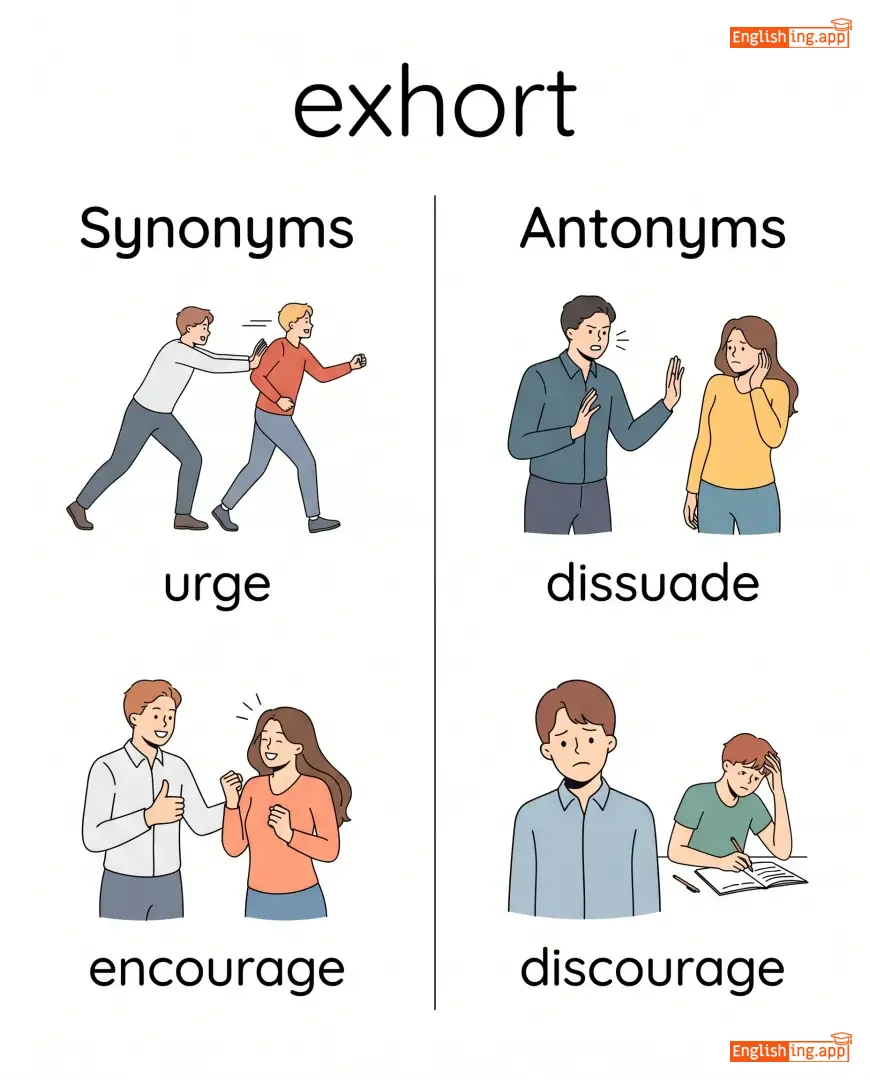
To strongly encourage or urge someone to do something.
••••••
|
The teacher exhorted the students to study harder.
老师督促学生们更努力地学习。
••••••
|
老师督促学生们更努力地学习。
Lǎoshī dū cù xuéshēngmen gèng nǔlì de xuéxí.
••••••
|
exhort to action
督促采取行动
••••••
|
to urge someone to take immediate steps or efforts
••••••
|
督促某人采取紧急步骤
dū cù mǒu rén cǎiqǔ jǐnjí bùzhòu
••••••
|
urge, encourage, advise, press, persuade
••••••
|
dissuade, discourage
••••••
|
exhort someone to, exhort the crowd, exhort the team
••••••
|
Exhort 就像考试,老师督促学生更加努力!
••••••
|
|
#3212
🌺
|
/ɪɡˈzɑːtɪk/
adjective
(éksòtí kè)
••••••
|
- •••••• |
异国情调和迷人
yìguó qíngdiào hé mírén
••••••
|
- •••••• | - •••••• | - •••••• | - •••••• |
Unusual and attractive because it is from a foreign place or culture.
••••••
|
The garden was filled with exotic plants from tropical countries. |
花园里满是来自热带国家的异国情调植物。
Huāyuán lǐ mǎn shì láizì rèdài guójiā de yìguó qíngdiào zhíwù.
••••••
|
exotic beauty |
Unusual and striking attractiveness
••••••
|
异国之美
Yìguó zhī měi
••••••
|
foreign, unusual, rare, tropical, extraordinary
••••••
|
ordinary, common, familiar
••••••
|
exotic plants, exotic animals, exotic beauty, exotic location
••••••
|
Exotic = Exciting + Foreign, 来自他国的迷人事物。
••••••
|
|
#3213
🪬
|
/ˈeksɔːrsaɪz/
verb
••••••
|
|
- •••••• |
exorcised
••••••
|
exorcised
••••••
|
exorcises
••••••
|
exorcising
••••••
|
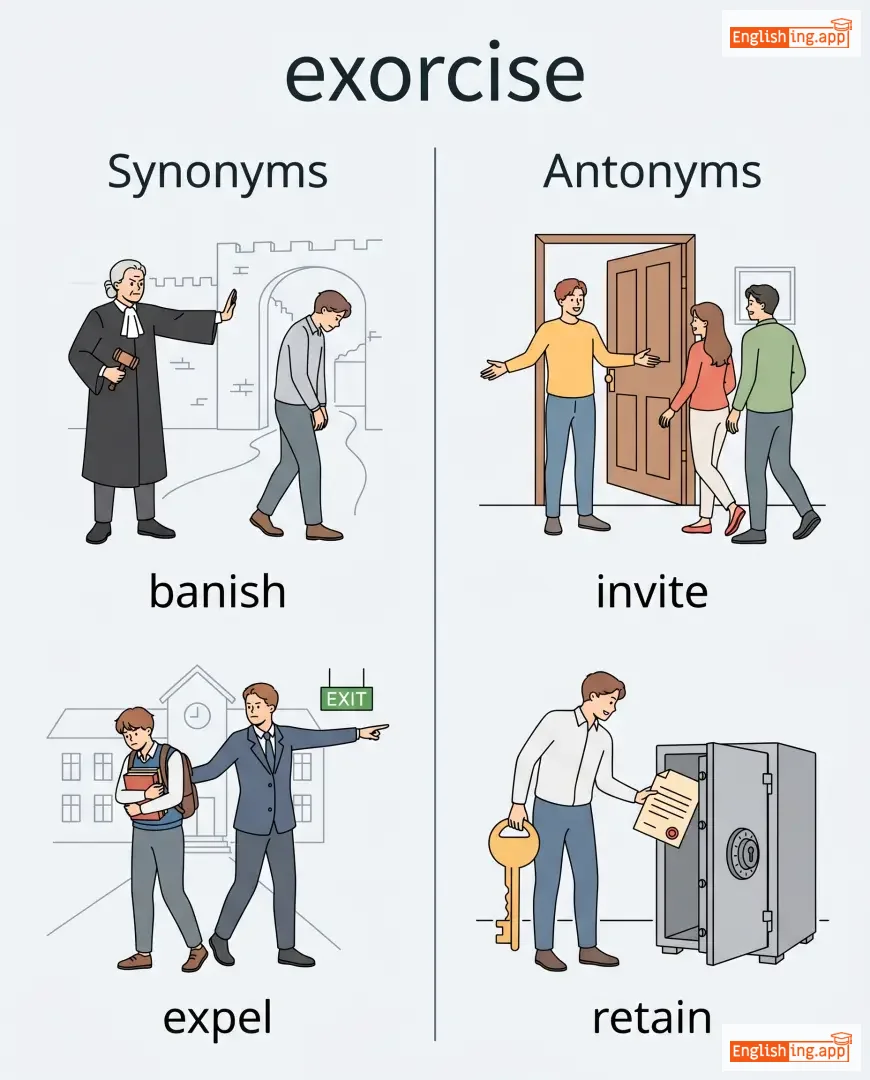
To drive out an evil spirit or bad influence through rituals or prayers.
••••••
|
The priest was called to exorcise the spirit from the house. |
- •••••• |
exorcise demons |
To remove evil or troubling influences
••••••
|
- •••••• |
banish, expel, cast out, cleanse, purify
••••••
|
invite, retain
••••••
|
exorcise demons, exorcise evil, exorcise spirit, exorcise fear
••••••
|
No •••••• |
|
#3214
💰
|
/ɪɡˈzɔːrbɪtənt/
adjective
(超出常规的)
••••••
|
|
过高的
guò gāo de
••••••
|
- •••••• | - •••••• | - •••••• | - •••••• |
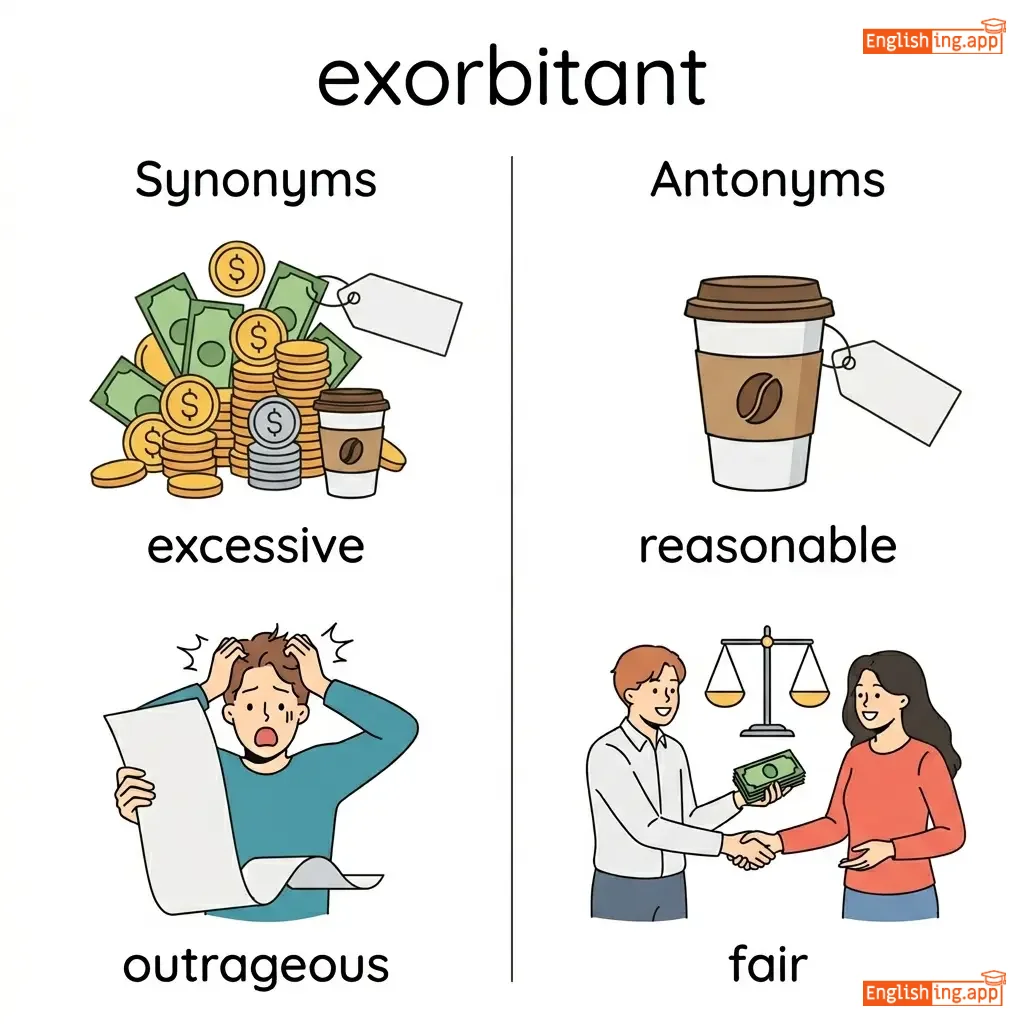
Unreasonably high or excessive, especially in cost or amount.
••••••
|
They charged an exorbitant fee for a simple service. |
他们为一项简单服务收取了过高的费用。
Tāmen wèi yī xiàng jiǎndān fúwù shōu qǔle guò gāo de fèiyòng.
••••••
|
exorbitant prices |
Unreasonably high costs
••••••
|
过高的价格
guò gāo de jiàgé
••••••
|
excessive, outrageous, unreasonable, extortionate, extravagant
••••••
|
reasonable, fair, moderate
••••••
|
exorbitant prices, exorbitant demand, exorbitant fee, exorbitant rent
••••••
|
Exorbitant 意味着极端——就像价格超出合理范围。
••••••
|
|
#3215
💸
|
/ɪɡˈzɔːrbɪtəns/
noun
(ɪɡˈzɔːrbɪtəns)
••••••
|
- •••••• |
过度
guòdù
••••••
|
- •••••• | - •••••• | - •••••• | - •••••• |
The quality of being excessive, unreasonable, or going beyond proper limits.
••••••
|
The exorbitance of the hotel's prices shocked the tourists. |
酒店价格的过度让游客们震惊。
Jiǔdiàn jiàgé de guòdù ràng yóukèmen zhènjīng.
••••••
|
- •••••• | - •••••• | - •••••• |
excessiveness, extravagance, immoderation, overindulgence
••••••
|
moderation, reasonableness
••••••
|
exorbitance of prices, sheer exorbitance, financial exorbitance
••••••
|
Exorbitance是极端价格的意思 - 酒店的价格高到让人觉得进入了'额外的轨道'。
••••••
|
|
#3216
⚖️
|
/ɪɡˈzɒnəreɪt/
verb
(艾克索内瑞特)
••••••
|
- •••••• |
免罪
miǎn zuì
••••••
|
exonerated
艾克索内瑞特德
••••••
|
exonerated
艾克索内瑞特德
••••••
|
exonerates
艾克索内瑞特斯
••••••
|
exonerating
艾克索内瑞特英
••••••
|
To clear someone from blame or accusation.
••••••
|
The court exonerated her from all charges.
法庭解除她所有指控。
••••••
|
法庭解除她所有指控。
Fǎtíng jiěchú tā suǒyǒu zhǐkòng.
••••••
|
exonerate from blame
免除罪名
••••••
|
to declare someone free of responsibility for wrongdoing
••••••
|
免除罪名
miǎn chú zuì míng
••••••
|
absolve, acquit, vindicate, pardon, release
••••••
|
blame, accuse, convict
••••••
|
exonerate someone, exonerate from blame, exonerate the accused, fully exonerated
••••••
|
免罪就像法官宣布你无罪,解除所有罪名。
••••••
|
|
#3217
👥
|
/ˈɛksədəs/
noun
(埃克苏多斯)
••••••
|
- •••••• |
大规模撤离
dà guīmó chèlí
••••••
|
- •••••• | - •••••• | - •••••• | - •••••• |
A mass departure of people from a place.
••••••
|
There was a sudden exodus of workers after the strike began. |
罢工开始后,工人们突然发生了大规模撤离。
Bàgōng kāishǐ hòu, gōngrénmen tūrán fāshēngle dà guīmó chèlí.
••••••
|
- •••••• | - •••••• | - •••••• |
departure, migration, evacuation, flight, retreat
••••••
|
arrival, entrance, immigration
••••••
|
mass exodus, sudden exodus, exodus of refugees, large-scale exodus
••••••
|
Exodus意味着大家一起离开 — '大规模撤离'。
••••••
|
|
#3218
🚪
|
/ˈɛɡzɪt/
noun/verb
(出口)
••••••
|
- •••••• |
出口
chūkǒu
••••••
|
exited
出口过
••••••
|
exited
出口过
••••••
|
exits
出口
••••••
|
exiting
出口中
••••••
|
A way out of a place; the act of leaving.
••••••
|
He quickly found the nearest exit during the fire drill.
他在火灾演习中迅速找到了最近的出口。
••••••
|
他在火灾演习中迅速找到了最近的出口。
Tā zài huǒzāi yǎnshí zhōng xùn sù zhǎodào le zuì jìn de chūkǒu.
••••••
|
make an exit
做一个出口
••••••
|
to leave a place, often noticeably
••••••
|
离开
líkāi
••••••
|
departure, way out, escape, egress, leaving
••••••
|
entrance, arrival, entry
••••••
|
emergency exit, exit door, exit route, exit point
••••••
|
Exit 🚪 就是出去 — Exit 就是 '出口'。
••••••
|
|
#3219
🤔
|
/ˌɛɡzɪˈstɛnʃəl/
adjective
(ɪɡzɪˈstɛnʃəl)
••••••
|
|
存在主义的
cúnzài zhǔyì de
••••••
|
- •••••• | - •••••• | - •••••• | - •••••• |
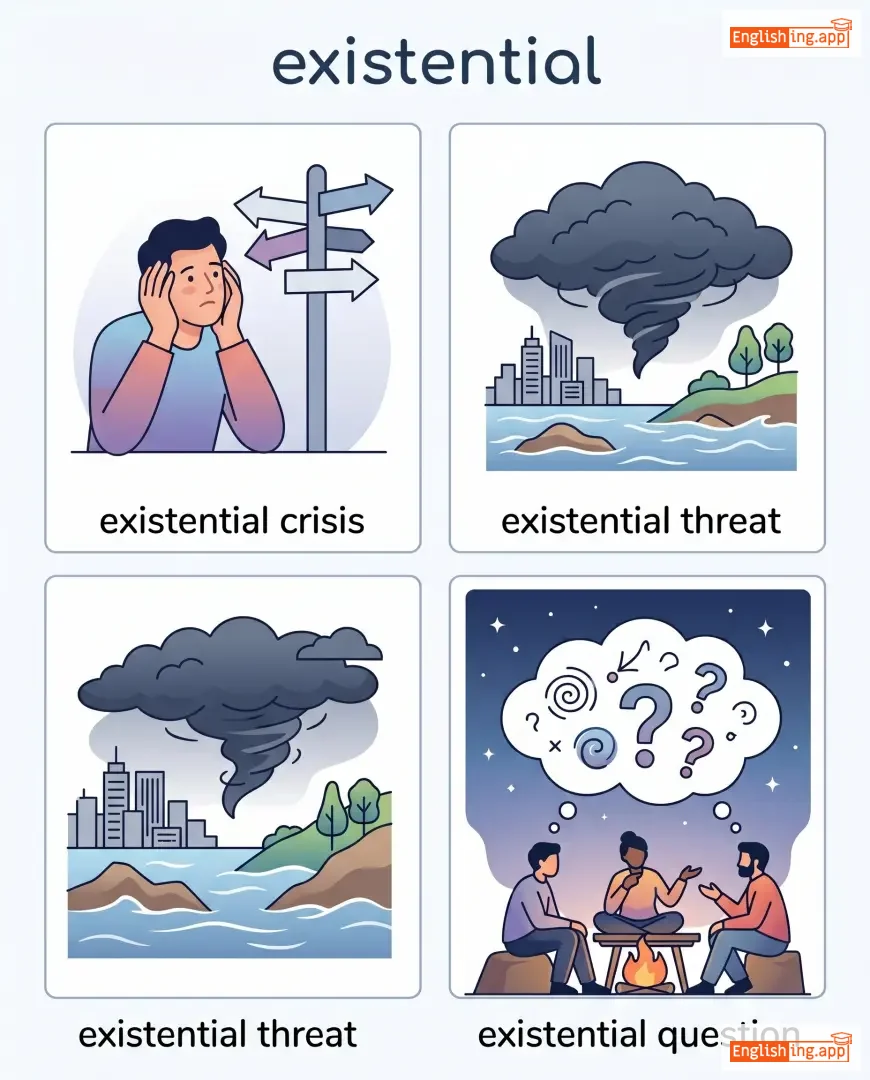
Relating to human existence, often concerning meaning or purpose of life.
••••••
|
She went through an existential crisis during her midlife. |
她在人生中期经历了存在主义危机。
Tā zài rénshēng zhōngqī jīnglìle cúnzài zhǔyì wēijī.
••••••
|
existential crisis |
a period of deep questioning about the meaning and purpose of life
••••••
|
存在主义危机
cúnzài zhǔyì wēijī
••••••
|
philosophical, ontological, human, life-related
••••••
|
superficial, trivial, meaningless
••••••
|
existential crisis, existential threat, existential question, existential philosophy
••••••
|
存在主义意味着对生活的深刻提问 - '存在主义危机'。
••••••
|
|
#3220
🌍
|
/ɪɡˈzɪstəns/
noun
(存在)
••••••
|
- •••••• |
存在
cúnzài
••••••
|
- •••••• | - •••••• | - •••••• | - •••••• |
The state of being alive or having real presence.
••••••
|
The existence of life on other planets is still uncertain.
其他星球上生命的存在仍然不确定。
••••••
|
其他星球上生命的存在仍然不确定。
Qítā xīngqiú shàng shēngmìng de cúnzài réngrán bù quèdìng.
••••••
|
come into existence
进入存在
••••••
|
to begin to exist or start being present
••••••
|
进入存在
jìnrù cúnzài
••••••
|
being, presence, reality, life, survival
••••••
|
nonexistence, nothingness, extinction
••••••
|
human existence, existence of life, struggle for existence, existence proof
••••••
|
存在意味着在另一个星球上有'生命'。
••••••
|
|
#3221
🥢
|
/ɛɡˈzɪɡjuəs/
adjective
(éxīgùwǎsī)
••••••
|
- •••••• |
稀缺
xique
••••••
|
- •••••• | - •••••• | - •••••• | - •••••• |
small in amount; scanty or inadequate
••••••
|
They survived on exiguous rations during the journey. |
他们在旅途中依靠稀缺的口粮生存。
Tāmen zài lǚtú zhōng yīkào xīquē de kǒu liáng shēngcún.
••••••
|
- •••••• | - •••••• | - •••••• |
scanty, meager, paltry, insufficient
••••••
|
ample, abundant, plentiful
••••••
|
exiguous resources, exiguous income, exiguous supply
••••••
|
Exiguous表示稀缺的食物,少量的食物。
••••••
|
|
#3222
🥄
|
/ˌɛksɪˈɡjuːɪti/
noun
(ɛksɪɡwɪti)
••••••
|
- •••••• |
匮乏
kuì fá
••••••
|
- •••••• | - •••••• | - •••••• | - •••••• |
the quality of being scanty or meager in amount
••••••
|
The exiguity of resources made the project difficult to complete.
资源的稀缺使得项目完成变得困难。
••••••
|
资源的匮乏使得项目完成变得困难。
Zīyuán de kuì fá shǐdé xiàngmù wánchéng biàn dé kùnnán.
••••••
|
- •••••• | - •••••• | - •••••• |
meagerness, scarcity, insufficiency, paucity
••••••
|
abundance, plenty, sufficiency
••••••
|
exiguity of funds, exiguity of evidence, exiguity of space
••••••
|
Exiguity 意味着 ex 小 + 数量 - 数量不足。
••••••
|
|
#3223
🚨
|
/ˈɛksɪdʒənt/
adjective
(埃克西金特)
••••••
|
- •••••• |
紧急
jinji
••••••
|
- •••••• | - •••••• | - •••••• | - •••••• |
demanding immediate action or attention; urgent
••••••
|
The patient’s exigent condition required immediate surgery. |
病人的紧急情况需要立即进行手术。
Bingren de jinji qingkuang xuyao lijishi jinxing shoushu.
••••••
|
- •••••• | - •••••• | - •••••• |
urgent, pressing, critical, imperative
••••••
|
unimportant, trivial, minor
••••••
|
exigent circumstances, exigent need, exigent demands
••••••
|
Exigent 就像紧急情况,不能等待的紧急任务。
••••••
|
|
#3224
⏰
|
/ˈɛksɪdʒənsi/
noun
(èxījìnsī)
••••••
|
|
紧急需求
jinji xuqiu
••••••
|
- •••••• | - •••••• | - •••••• | - •••••• |
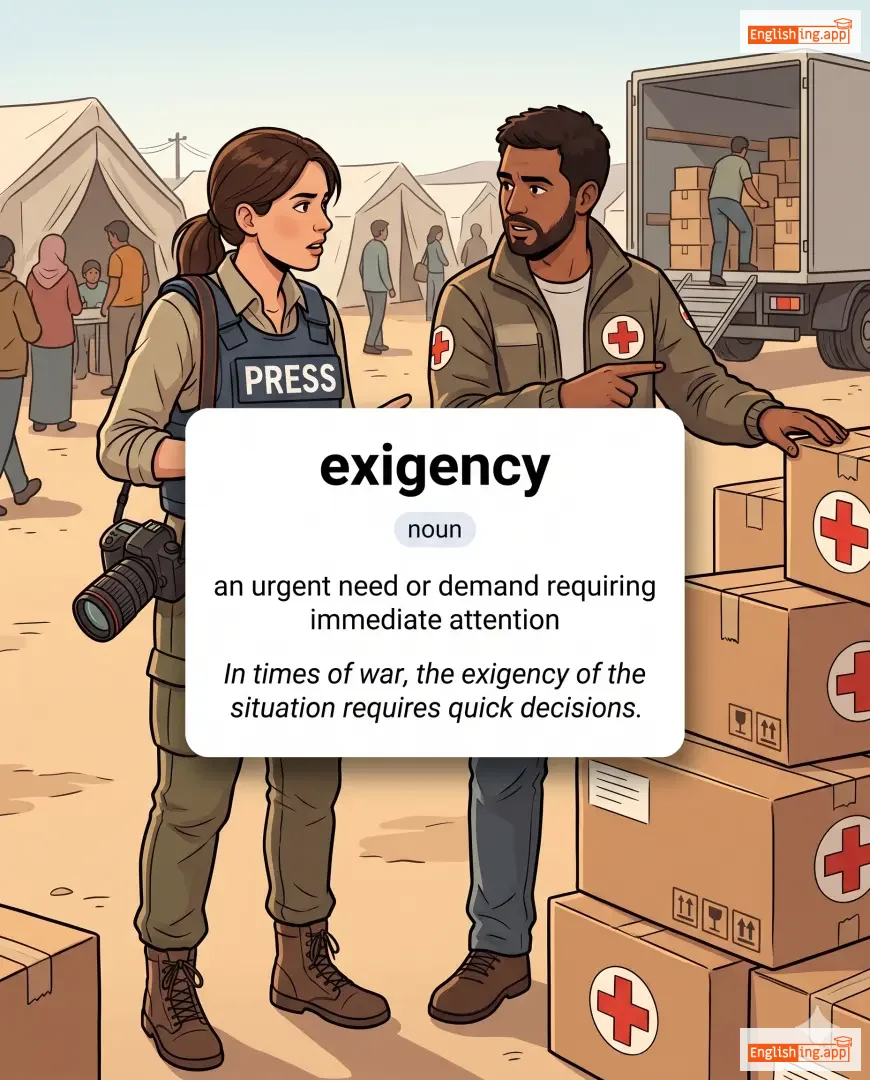
an urgent need or demand requiring immediate attention
••••••
|
In times of war, the exigency of the situation requires quick decisions. |
在战争时期,局势的紧急需求需要迅速的决策。
Zài zhànzhēng shíqī, júshì de jǐnjí xūqiú xūyào xùnsù de juécè.
••••••
|
- •••••• | - •••••• | - •••••• |
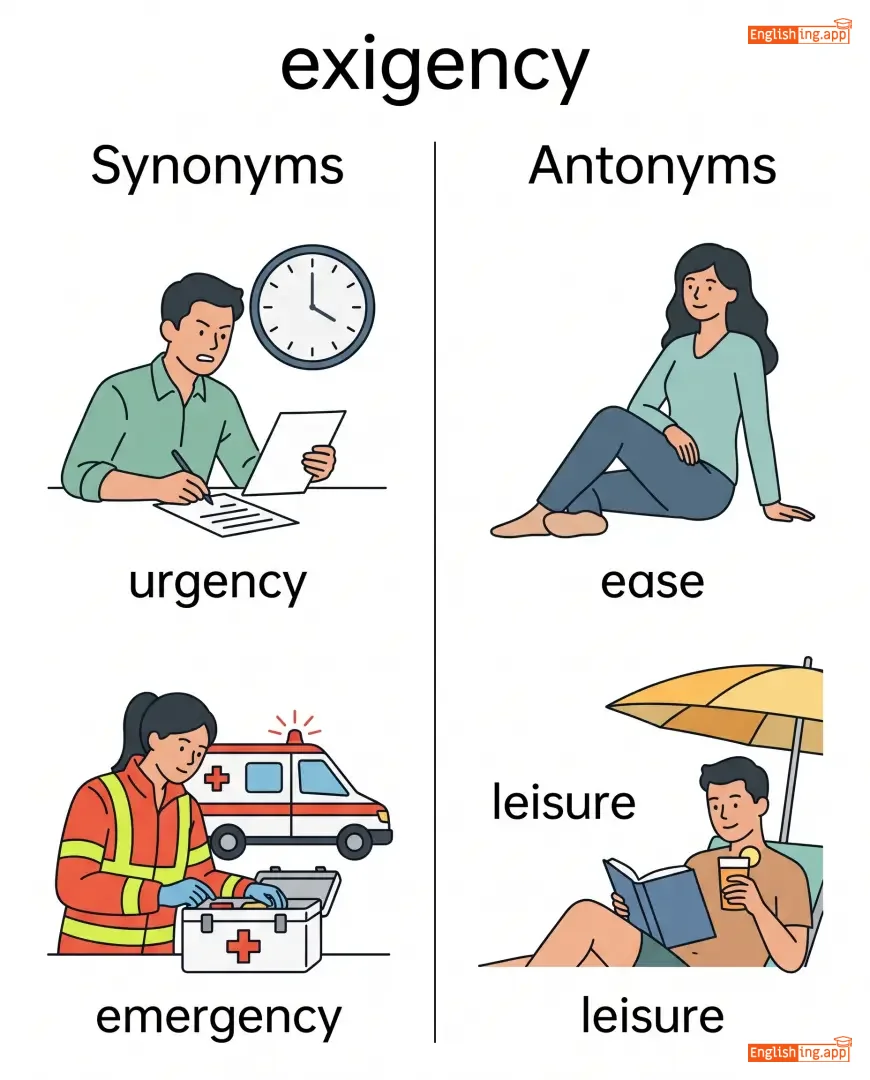
urgency, emergency, necessity, demand
••••••
|
ease, leisure, calm
••••••
|
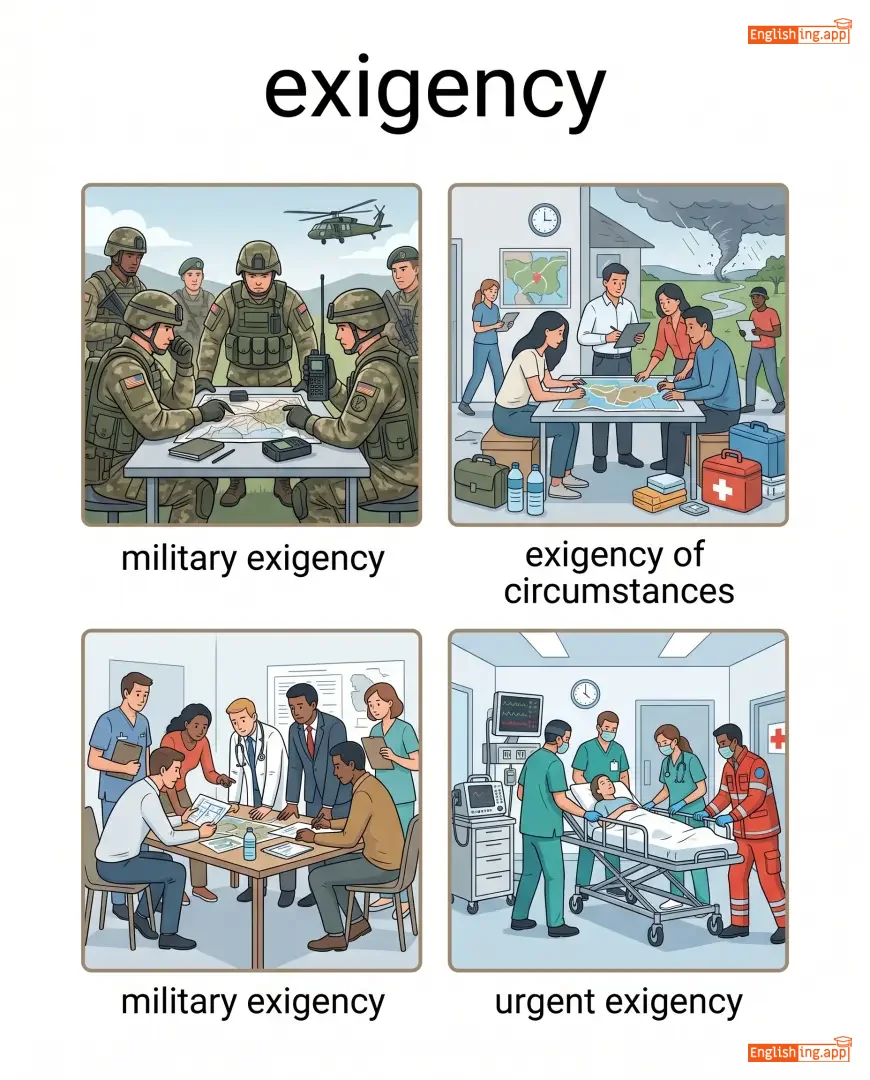
military exigency, exigency of circumstances, urgent exigency
••••••
|
Exigency的意思是紧急需求,就像需要快速解决的问题。
••••••
|
|
#3225
⚰️
|
/ɛksˈhjuːm/
verb
(èks-xiūm)
••••••
|
- •••••• |
掘出
juéchū
••••••
|
exhumed
èks-xiūmde
••••••
|
exhumed
èks-xiūmde
••••••
|
exhumes
èks-xiūms
••••••
|
exhuming
èks-xiūming
••••••
|
to dig out something buried, especially a body from the ground
••••••
|
The archaeologists decided to exhume the ancient remains.
考古学家决定挖掘古老的遗骸。
••••••
|
考古学家决定挖掘古老的遗骸。
Kǎo gǔ xué jiā juédìng wā jué gǔ lǎo de yí hái.
••••••
|
- •••••• | - •••••• | - •••••• |
disinter, unearth, uncover, dig up
••••••
|
bury, inter, conceal
••••••
|
exhume a body, exhume remains, exhume evidence
••••••
|
掘出意味着从地下挖出尸体等遗骸。
••••••
|
|
#3226
📜
|
/ɪɡˈzɛkjətər/
noun
(ěksījìtè)
••••••
|
- •••••• |
遗嘱执行人
yízhǔ zhíxíngrén
••••••
|
- •••••• | - •••••• | - •••••• | - •••••• |
A person appointed to carry out the terms of someone's will after their death.
••••••
|
The executor managed the estate according to the deceased’s wishes. |
遗嘱执行人根据已故者的意愿管理财产。
Yízhǔ zhíxíngrén gēnjù yǐgù zhě de yìyuàn guǎnlǐ cáichǎn.
••••••
|
- •••••• | - •••••• | - •••••• |
administrator, trustee, representative, agent
••••••
|
beneficiary, heir
••••••
|
executor of a will, appointed executor, sole executor
••••••
|
遗嘱执行人——执行遗嘱的那个人
••••••
|
|
#3227
🤩
|
/ɪɡˈzɪləreɪtɪŋ/
adjective
(exhilarating)
••••••
|
- •••••• |
令人振奋的
lìng rén zhènfèn de
••••••
|
- •••••• | - •••••• | - •••••• | - •••••• |
Making someone feel very excited, happy, or thrilled.
••••••
|
Skydiving was the most exhilarating experience of his life.
跳伞是他一生中最令人振奋的经历。
••••••
|
跳伞是他一生中最令人振奋的经历。
Tiàosǎn shì tā yīshēng zhōng zuì lìng rén zhènfèn de jīnglì.
••••••
|
- •••••• | - •••••• | - •••••• |
thrilling, exciting, stimulating, uplifting, electrifying
••••••
|
boring, depressing, dull
••••••
|
exhilarating experience, exhilarating adventure, exhilarating ride
••••••
|
令人振奋的意味着让你感到心跳加速的东西!
••••••
|
|
#3228
🎉
|
/ɪɡˈzɪləreɪt/
verb
(兴奋)
••••••
|
- •••••• |
激动
jīdòng
••••••
|
exhilarated
兴奋过
••••••
|
exhilarated
兴奋过
••••••
|
exhilarates
兴奋
••••••
|
exhilarating
兴奋中
••••••
|
To make someone feel very happy, animated, or excited.
••••••
|
The mountain view exhilarated the travelers.
山脉的景色让旅行者兴奋。
••••••
|
山脉的景色让旅行者兴奋。
Shānmài de jǐngsè ràng lǚxíng zhě xīngfèn.
••••••
|
- •••••• | - •••••• | - •••••• |
thrill, excite, energize, uplift, inspire
••••••
|
depress, bore, sadden
••••••
|
exhilarate the crowd, feel exhilarated, exhilarate the spirit
••••••
|
Exhilarate 让人激动,像极了激动人心的景色。
••••••
|
|
#3229
📚
|
/ɪɡˈzɔːstɪv/
adjective
(イクゾスティブ)
••••••
|
- •••••• |
全面且完整
quánmiàn qiě wánzhěng
••••••
|
- •••••• | - •••••• | - •••••• | - •••••• |
Fully comprehensive and including all possibilities.
••••••
|
The report provides an exhaustive analysis of the issue. |
报告提供了该问题的全面分析。
Bàogào tígōngle gāi wèntí de quánmiàn fēnxi。
••••••
|
- •••••• | - •••••• | - •••••• |
comprehensive, thorough, complete, in-depth, detailed
••••••
|
incomplete, partial, superficial
••••••
|
exhaustive research, exhaustive study, exhaustive analysis, exhaustive list
••••••
|
Exhaustive report意味着在报告中涵盖所有内容!
••••••
|
|
#3230
😩
|
/ɪɡˈzɔːstʃən/
noun
(exhaustion)
••••••
|
|
疲劳
piliao
••••••
|
- •••••• | - •••••• | - •••••• | - •••••• |
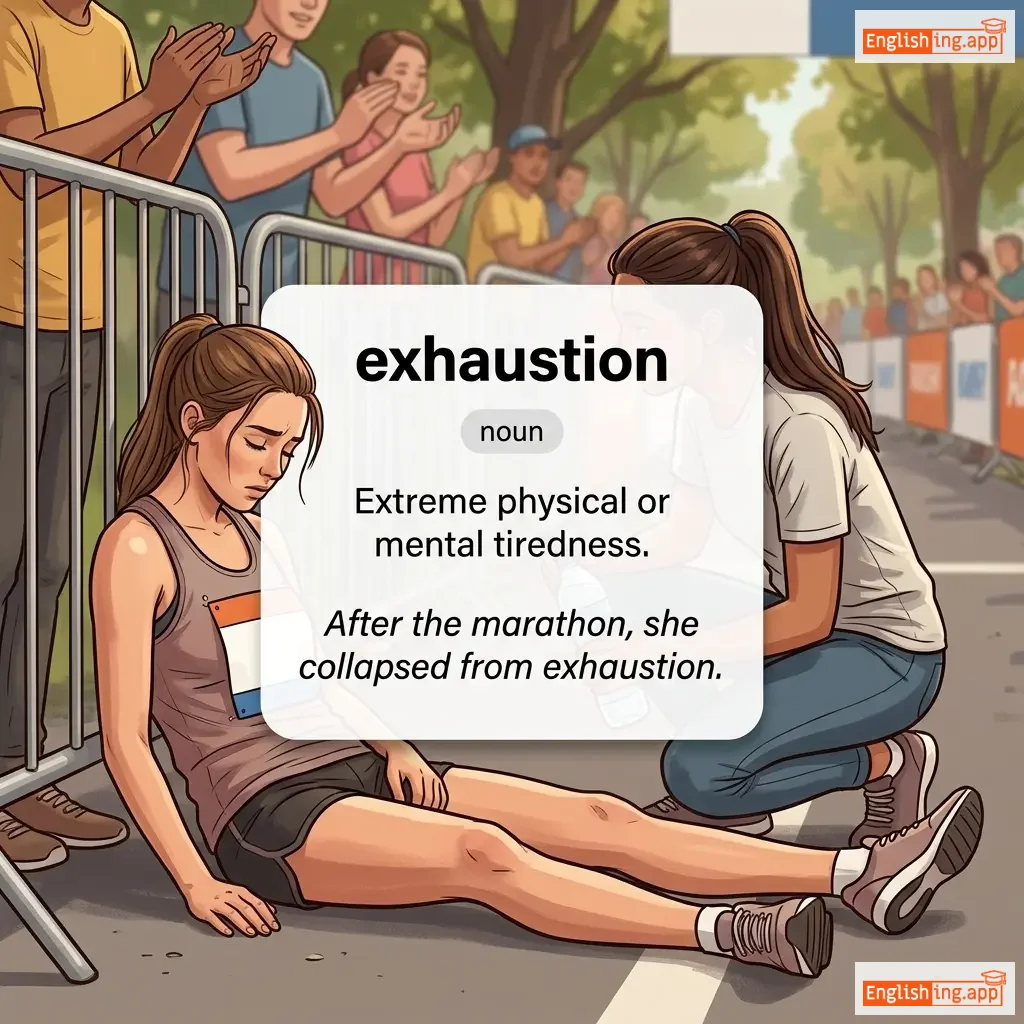
Extreme physical or mental tiredness.
••••••
|
After the marathon, she collapsed from exhaustion. |
马拉松后,她因疲劳倒下了。
Mala song hou, ta yin pilao daoxia le.
••••••
|
work oneself into exhaustion |
to make oneself extremely tired through hard work
••••••
|
工作到精疲力尽
gongzuo dao jingpilijin
••••••
|
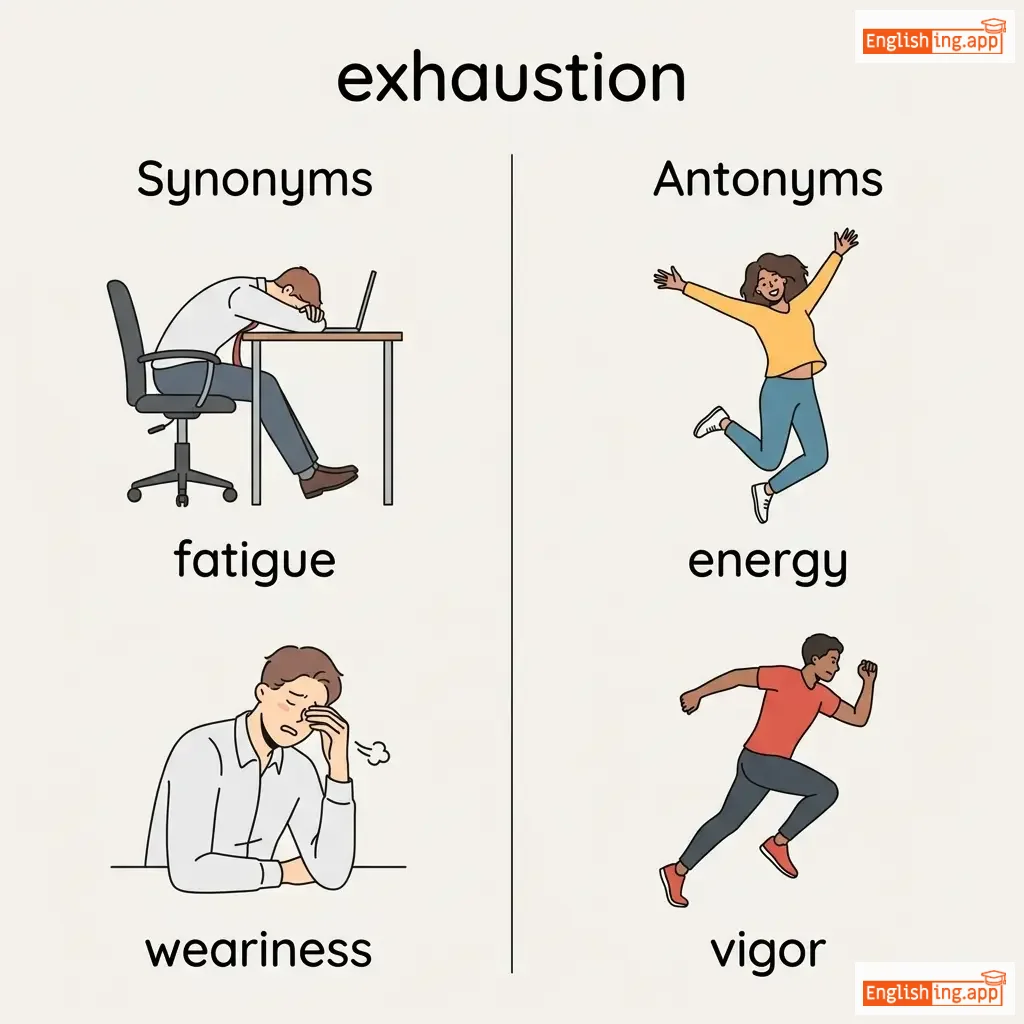
fatigue, weariness, burnout, debility, tiredness
••••••
|
energy, vigor, strength
••••••
|
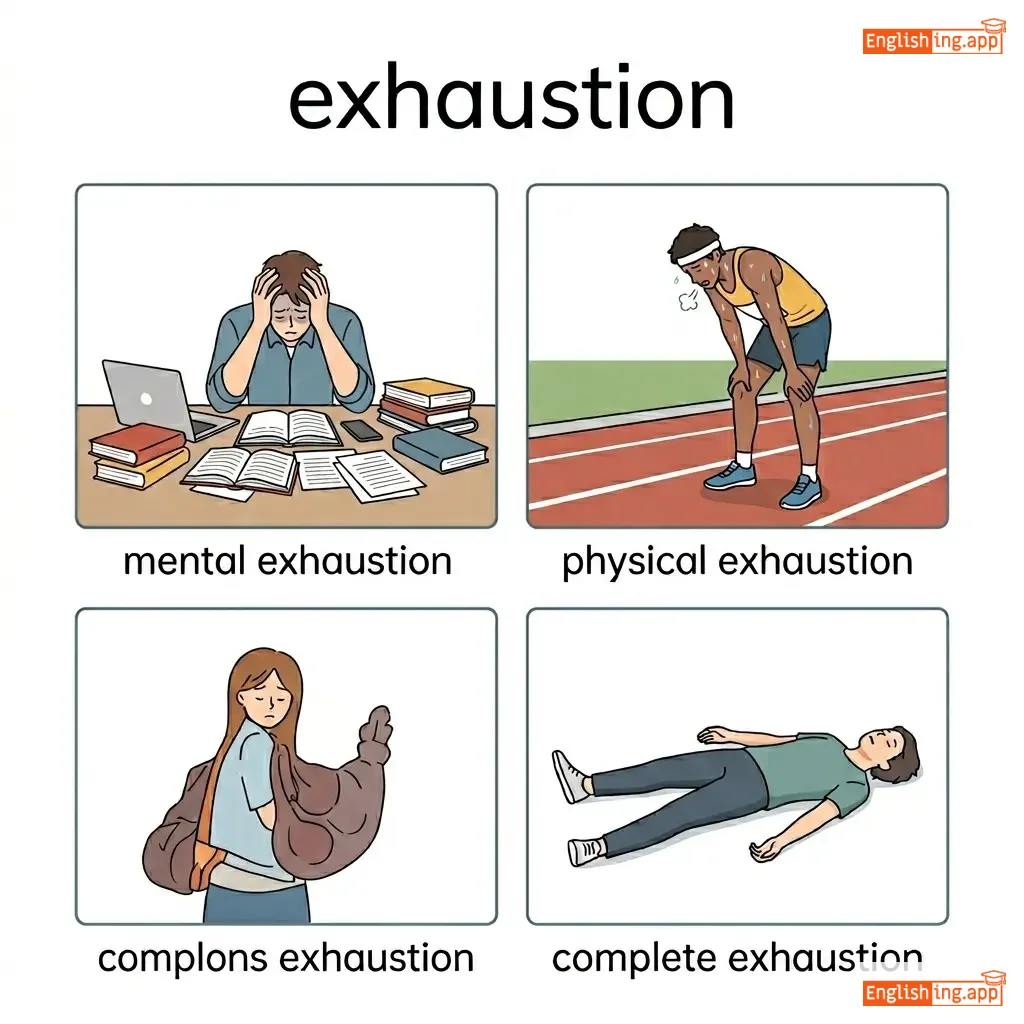
mental exhaustion, physical exhaustion, complete exhaustion, exhaustion from work
••••••
|
疲劳就像是工作太久,筋疲力尽!
••••••
|
|
#3231
⛽
|
/ɪɡˈzɔːstɪbəl/
adjective
(消耗性)
••••••
|
- •••••• |
可消耗
kě xiāo hào
••••••
|
- •••••• | - •••••• | - •••••• | - •••••• |
able to be used up completely; not infinite
••••••
|
Coal and oil are exhaustible resources. |
煤炭和石油是可消耗的资源。
Méitàn hé shíyóu shì kě xiāo hào de zīyuán.
••••••
|
- •••••• | - •••••• | - •••••• |
limited, depletable, finite
••••••
|
inexhaustible, unlimited
••••••
|
exhaustible resource, exhaustible supply
••••••
|
EXAM的能量是可消耗的,它会结束。
••••••
|
|
#3232
😩
|
/ɪɡˈzɔːst/
verb
(yí kè sī tǔ)
••••••
|
- •••••• |
耗尽
hàojìn
••••••
|
exhausted
yí kè sī tǔ dé
••••••
|
exhausted
yí kè sī tǔ dé
••••••
|
exhausts
yí kè sī tǔ sī
••••••
|
exhausting
yí kè sī tǔ xīng
••••••
|
to tire out completely; to use up resources
••••••
|
The long journey exhausted the children.
长时间的旅行耗尽了孩子们的精力。
••••••
|
长时间的旅行耗尽了孩子们的精力。
Cháng shíjiān de lǚxíng hào jìnle háizimen de jīnglì.
••••••
|
run out of steam
失去能量
••••••
|
to lose energy or enthusiasm
••••••
|
失去能量
shīqù néngliàng
••••••
|
drain, fatigue, deplete, tire, weaken
••••••
|
energize, refresh, restore
••••••
|
exhaust energy, exhaust resources, exhaust possibilities
••••••
|
汽车的排气管就像是人的疲劳,逐渐耗尽。
••••••
|
|
#3233
😮💨
|
/ɛksˈheɪl/
verb
(ɛksˈheɪl)
••••••
|
- •••••• |
呼气
huqi
••••••
|
exhaled
ɛksˈhɛld
••••••
|
exhaled
ɛksˈhɛld
••••••
|
exhales
ɛksˈhɛls
••••••
|
exhaling
ɛksˈheɪlɪŋ
••••••
|
to breathe out air from the lungs
••••••
|
She slowly exhaled after holding her breath.
她屏住呼吸后慢慢地呼气。
••••••
|
她屏住呼吸后慢慢地呼气。
Ta pingzhu huxi hou manman de huqi.
••••••
|
exhale deeply
深呼吸
••••••
|
to release air from the lungs slowly and fully
••••••
|
深呼吸
shen huxi
••••••
|
breathe out, expel, blow out, respire
••••••
|
inhale, breathe in
••••••
|
exhale deeply, exhale slowly, exhale air
••••••
|
EXam 完成,呼吸得到 relief
••••••
|
|
#3234
🏋️
|
/ɪɡˈzɜːrʃən/
noun
(èksè'ěrshēn)
••••••
|
|
努力
nǔlì
••••••
|
- •••••• | - •••••• | - •••••• | - •••••• |
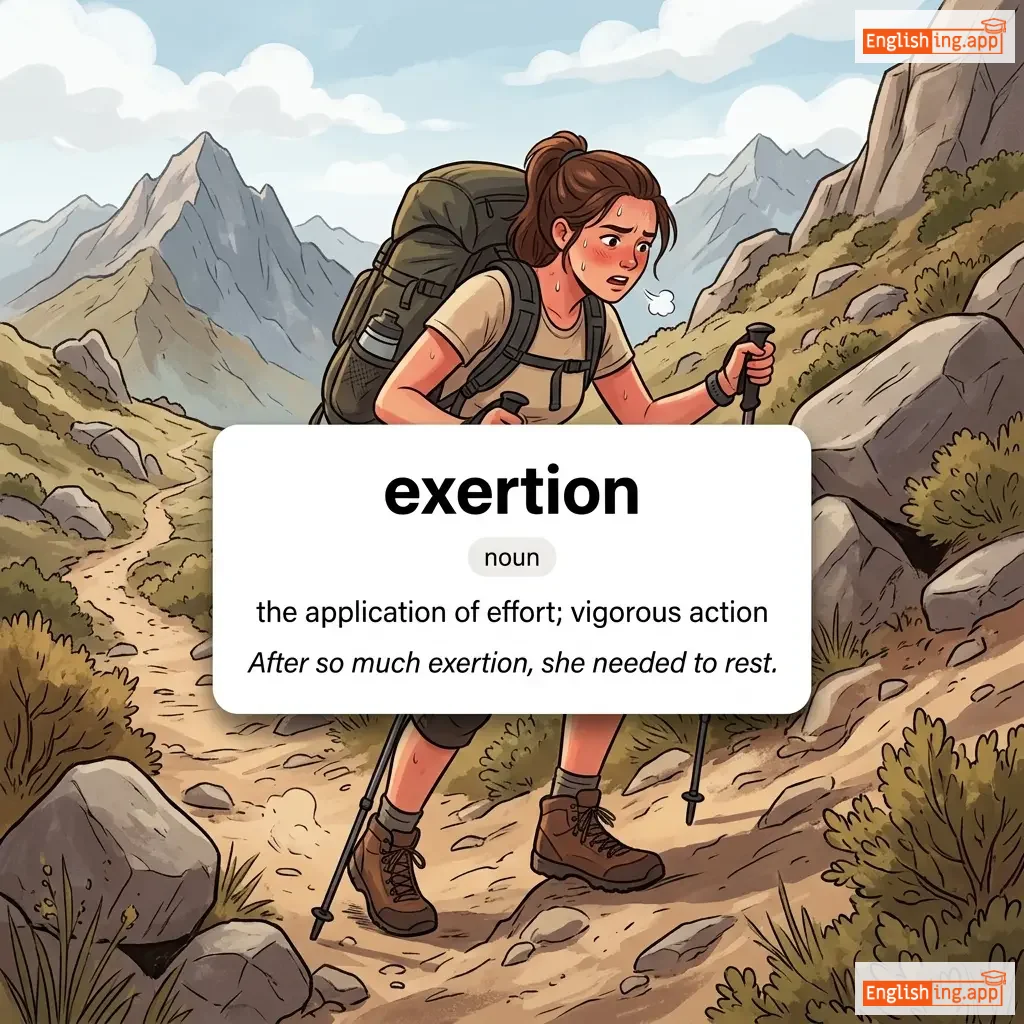
the application of effort; vigorous action
••••••
|
After so much exertion, she needed to rest. |
经过这么多努力,她需要休息。
Jīngguò zhème duō nǔlì, tā xūyào xiūxí.
••••••
|
- •••••• | - •••••• | - •••••• |
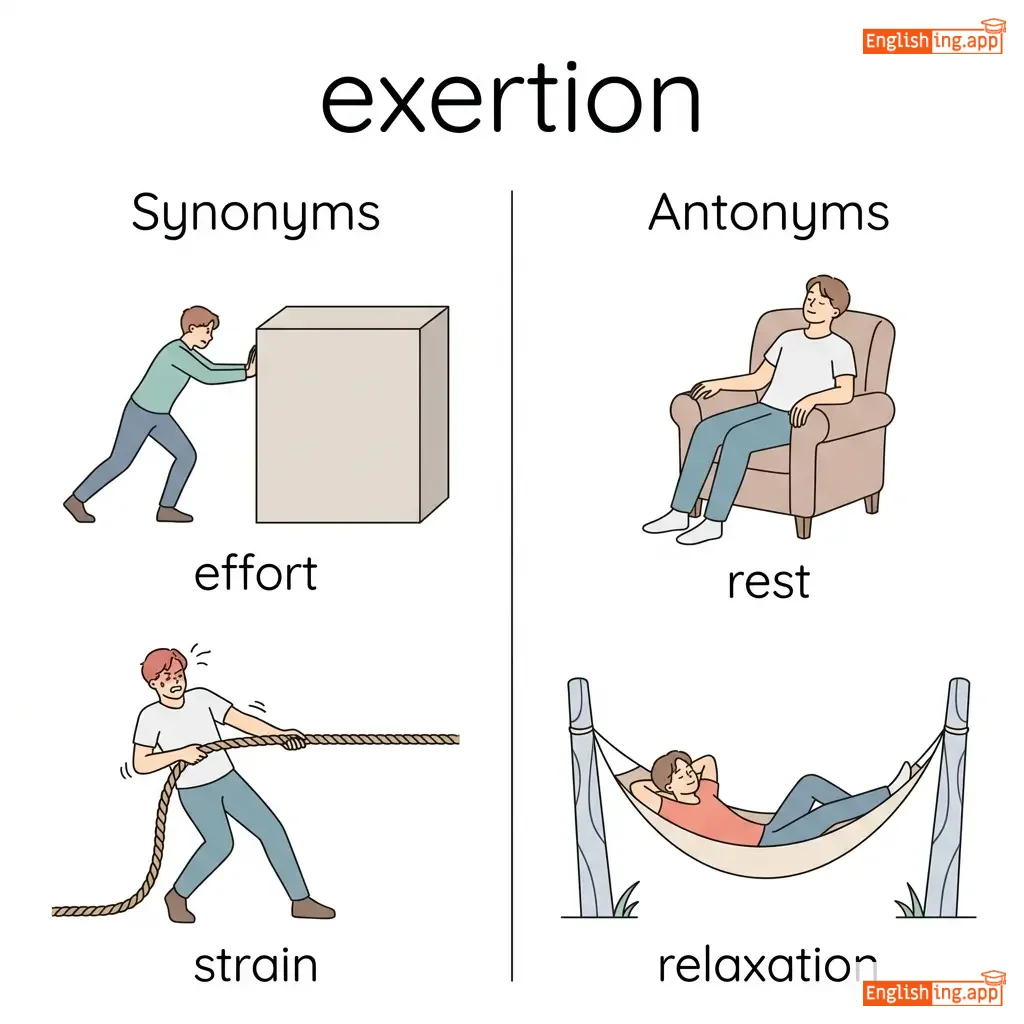
effort, strain, endeavor, struggle
••••••
|
rest, relaxation
••••••
|
physical exertion, mental exertion, intense exertion
••••••
|
考试需要很多努力 (努力).
••••••
|
|
#3235
💪
|
/ɪɡˈzɜːrt/
verb
(艾克萨特)
••••••
|
|
施加
shijia
••••••
|
exerted
艾克萨特德
••••••
|
exerted
艾克萨特德
••••••
|
exerts
艾克萨特斯
••••••
|
exerting
艾克萨特英
••••••
|
to apply effort, force, or influence
••••••
|
He had to exert himself to finish the project on time.
他必须努力工作才能按时完成项目。
••••••
|
他必须努力工作才能按时完成项目。
Tā bìxū nǔlì gōngzuò cáinéng ànshí wánchéng xiàngmù.
••••••
|
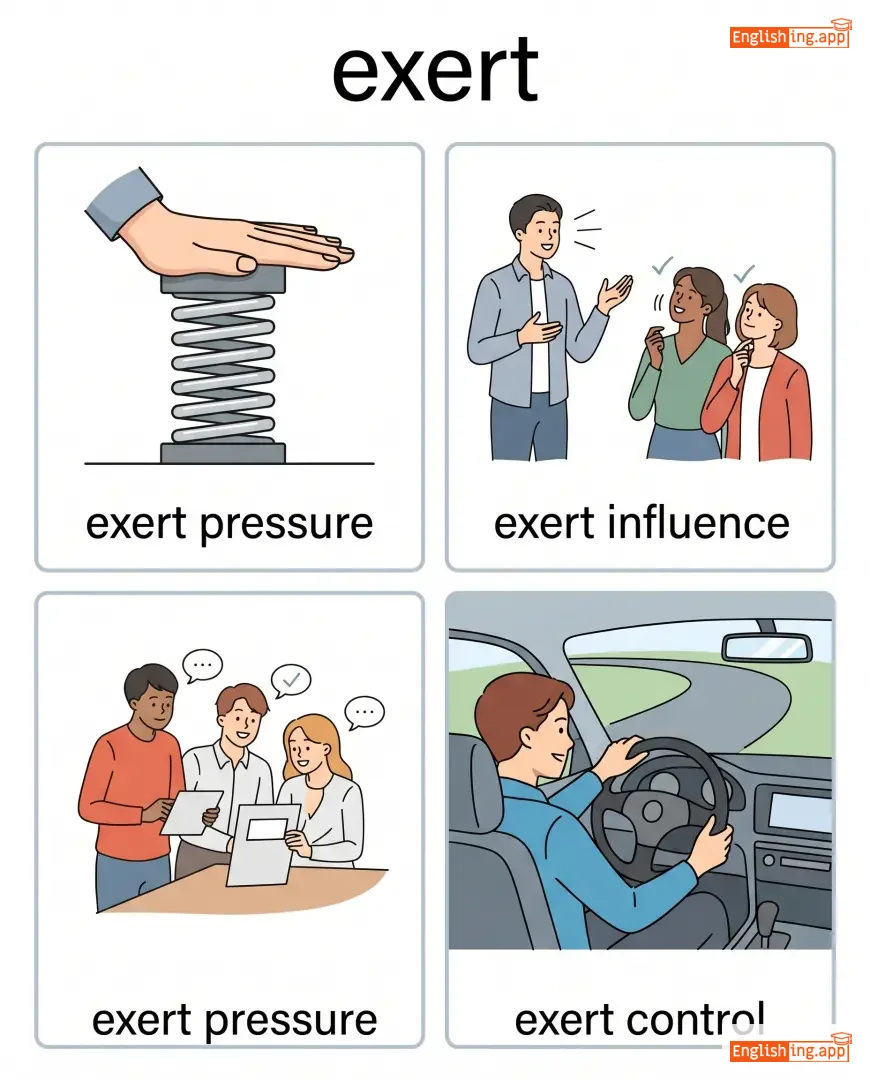
exert control
施加控制
••••••
|
to use power or influence over something or someone
••••••
|
施加控制
shijia kongzhi
••••••
|
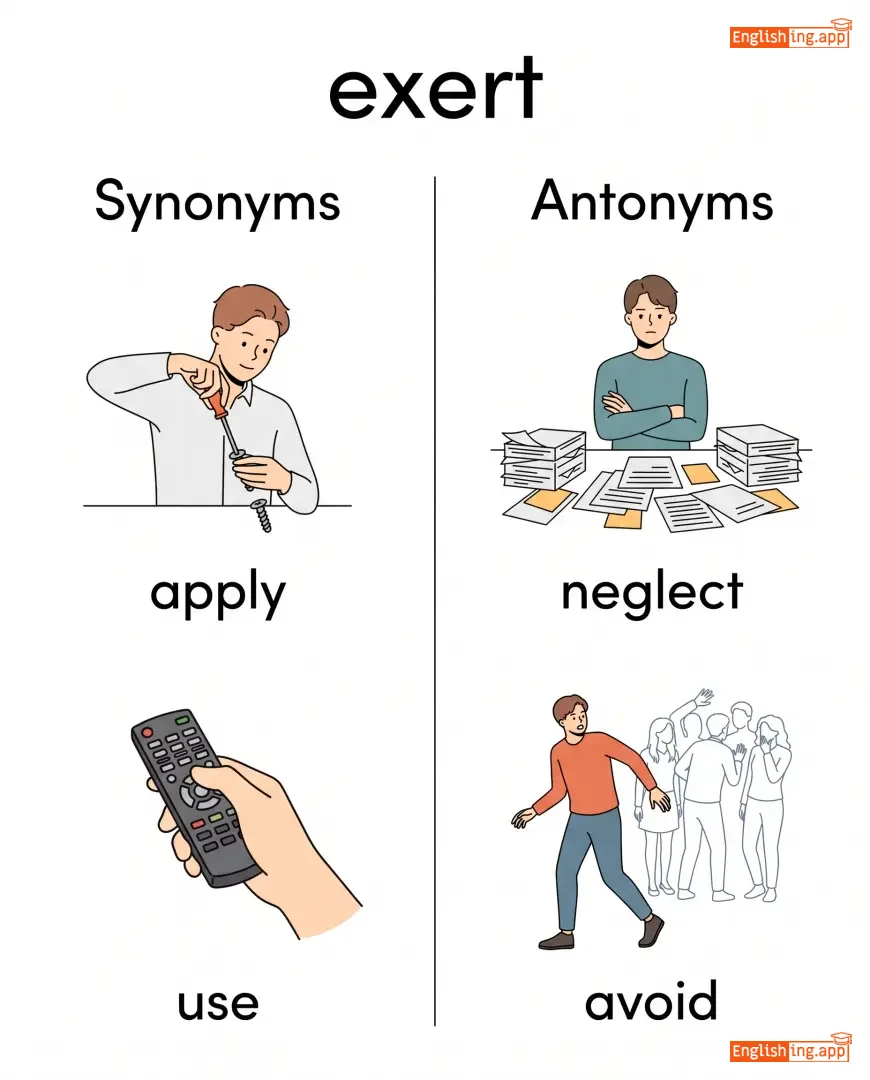
apply, use, exercise, employ, wield
••••••
|
neglect, avoid, ignore
••••••
|
exert pressure, exert influence, exert control, exert effort
••••••
|
EXtra 努力, EXert 控制
••••••
|
|
#3236
✅
|
/ɪɡˈzɛmpt/
adjective, verb
(ɪɡˈzɛmpt)
••••••
|
- •••••• |
免除
miǎnchú
••••••
|
exempted
ɪɡˈzɛmptɪd
••••••
|
exempted
ɪɡˈzɛmptɪd
••••••
|
exempts
ɪɡˈzɛmpts
••••••
|
exempting
ɪɡˈzɛmptɪŋ
••••••
|
Free from an obligation or liability imposed on others.
••••••
|
Students with high grades are exempt from the final exam.
成绩优异的学生可以免除期末考试。
••••••
|
成绩优异的学生可以免除期末考试。
Chéngjī yōuyì de xuéshēng kěyǐ miǎnchú qīmò kǎoshì.
••••••
|
tax exempt
免税
••••••
|
Not required to pay taxes.
••••••
|
免税
miǎnshuì
••••••
|
free, excused, released, absolved
••••••
|
liable, obligated, responsible
••••••
|
exempt from duty, exempt from tax, exempt status
••••••
|
Exempt 表示免于考试 ✅ — 记住 exempt = 免税
••••••
|
|
#3237
📝
|
/ɪɡˈzɛmplɪfaɪ/
verb
(èksímpǔlǐfāi)
••••••
|
|
通过例子阐明
tōngguò lìzi chǎnmíng
••••••
|
exemplified
èksímpǔlǐfàid
••••••
|
exemplified
èksímpǔlǐfàid
••••••
|
exemplifies
èksímpǔlǐfàiz
••••••
|
exemplifying
èksímpǔlǐfāing
••••••
|
To illustrate or clarify by giving an example.
••••••
|
Her actions exemplify the true spirit of generosity.
她的行为体现了真正的慷慨精神。
••••••
|
她的行为体现了真正的慷慨精神。
Tā de xíngwéi tǐxiànle zhēnzhèng de kāngkǎi jīngshén.
••••••
|
- •••••• | - •••••• | - •••••• |
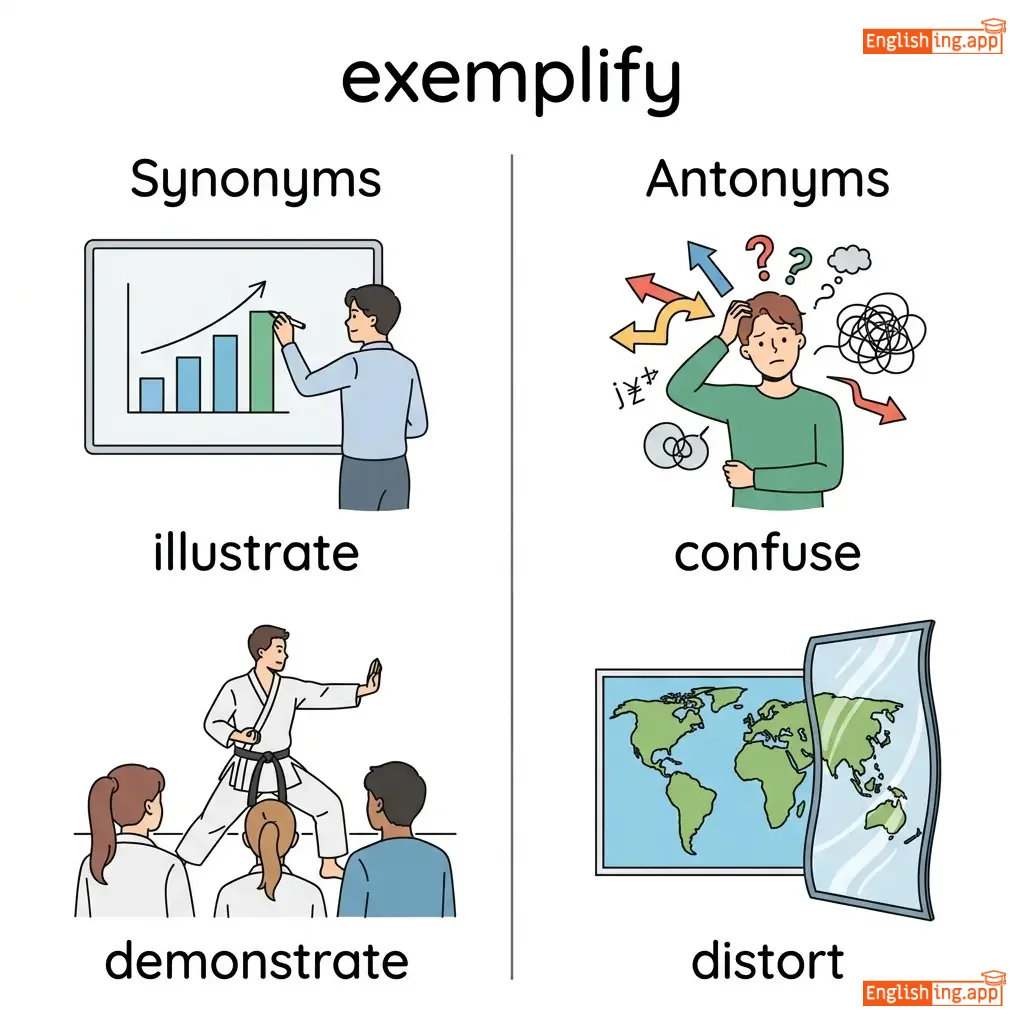
illustrate, demonstrate, embody, typify, represent
••••••
|
confuse, distort
••••••
|
exemplify values, exemplify principles, exemplify courage
••••••
|
Exemplify 意味着通过例子来阐明 📝
••••••
|
|
#3238
🏅
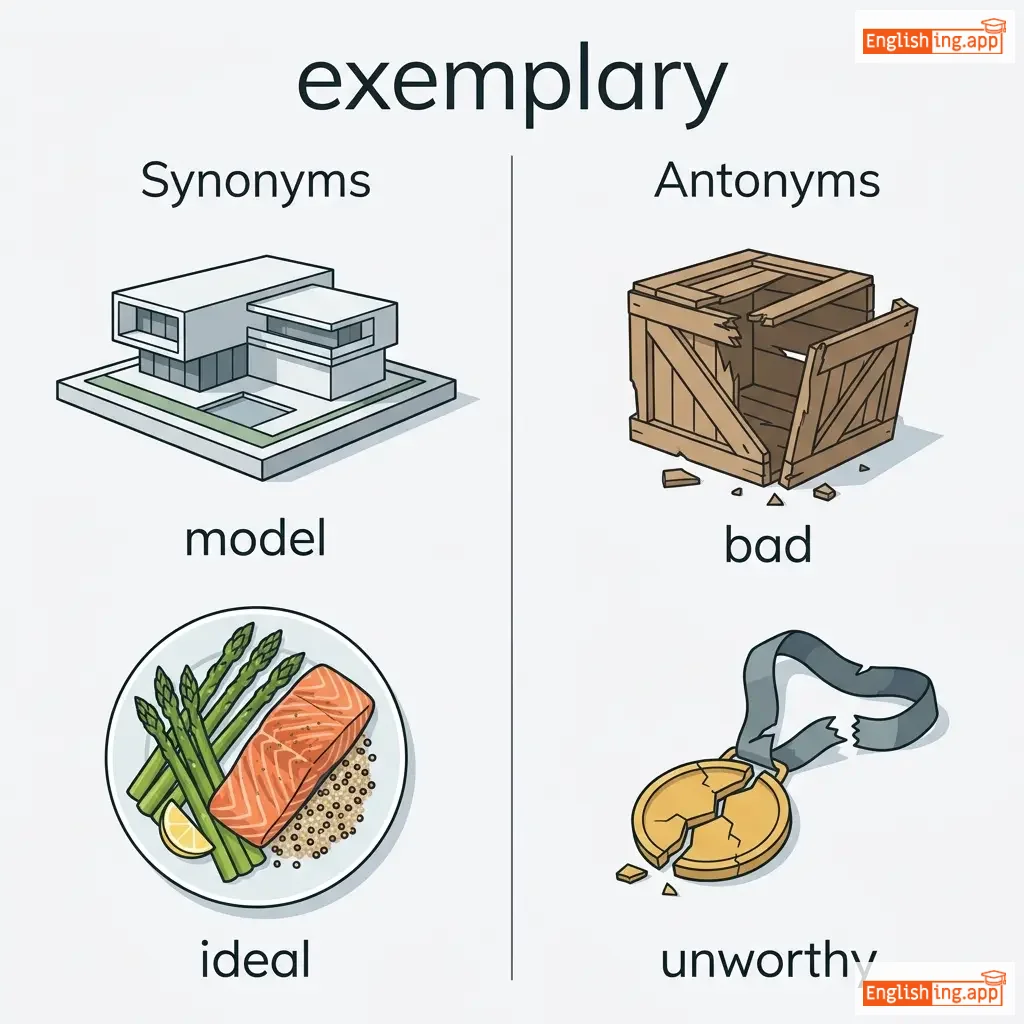
|
/ɪɡˈzɛmpləri/
adjective
(ɪɡˈzɛmpləri)
••••••
|
|
典范的
dianfan de
••••••
|
- •••••• | - •••••• | - •••••• | - •••••• |
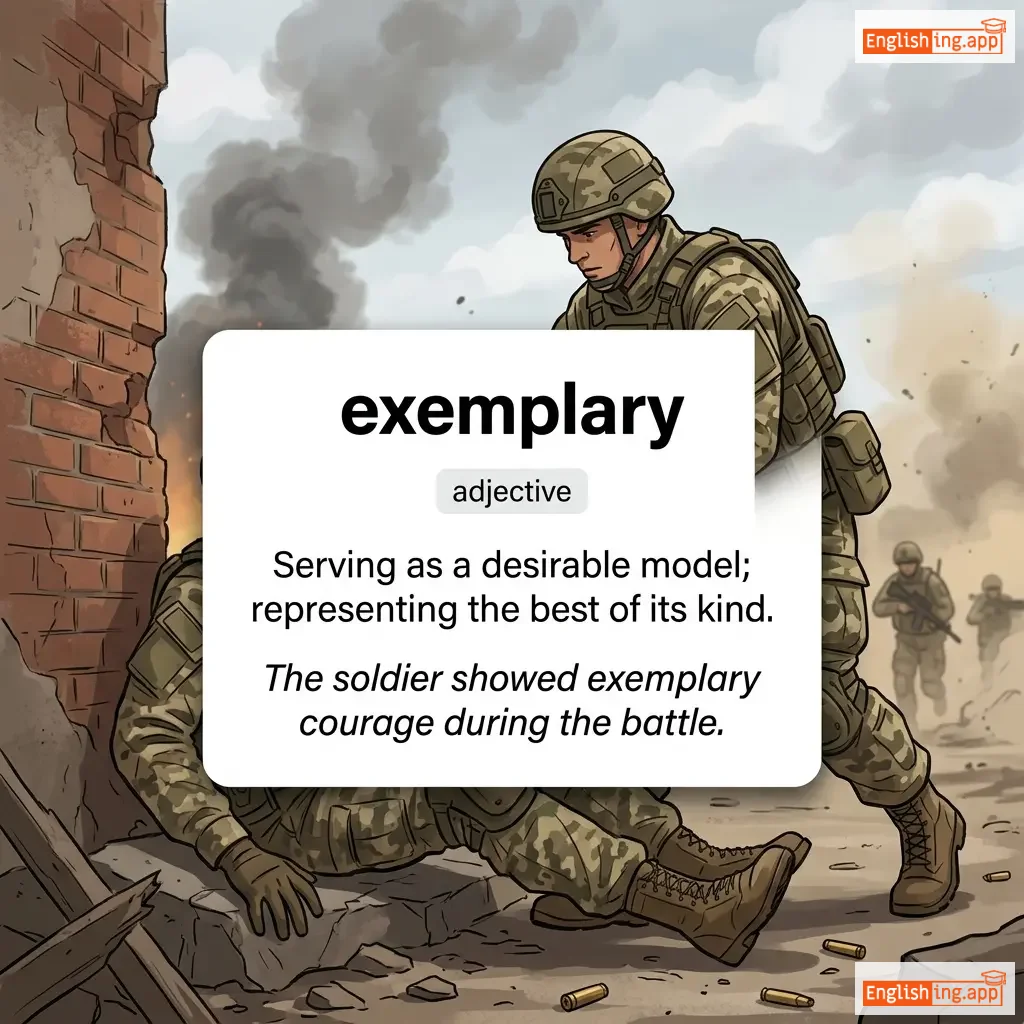
Serving as a desirable model; representing the best of its kind.
••••••
|
The soldier showed exemplary courage during the battle.
士兵在战斗中表现出了典范的勇气。
••••••
|
士兵在战斗中表现出了典范的勇气。
Shìbīng zài zhàndòu zhōng biǎoxiàn chūle diǎnfàn de yǒngqì.
••••••
|
- •••••• | - •••••• | - •••••• |
model, ideal, admirable, praiseworthy, outstanding
••••••
|
bad, unworthy, dishonorable
••••••
|
exemplary behavior, exemplary service, exemplary performance
••••••
|
典范的表示最佳示范 — 典范的工作意味着 exemplary 🏅
••••••
|
|
#3239
🌟
|
/ɪɡˈzɛmplɑːr/
noun
(egzémplar)
••••••
|
- •••••• |
典范
dianfan
••••••
|
- •••••• | - •••••• | - •••••• | - •••••• |
A model or pattern to be copied or imitated.
••••••
|
She is an exemplar of kindness and generosity.
她是善良和慷慨的典范。
••••••
|
她是善良和慷慨的典范。
Ta shi shanliang he kangkai de dianfan.
••••••
|
- •••••• | - •••••• | - •••••• |
model, example, archetype, pattern, ideal
••••••
|
flaw, imperfection
••••••
|
moral exemplar, perfect exemplar, exemplar of virtue
••••••
|
Exemplar 意味着完美的典范 🌟 — 记住 exemplar = 完美的例子
••••••
|
|
#3240
📖
|
/ˌɛksəˈdʒiːsɪs/
noun
(注释)
••••••
|
- •••••• |
注释
zhushi
••••••
|
- •••••• | - •••••• | - •••••• | - •••••• |
A critical explanation or interpretation of a text, especially a religious scripture.
••••••
|
The professor gave a detailed exegesis of the biblical passage. |
教授对圣经章节进行了详细的注释。
Jiàoshòu duì shèngjīng zhāngjié jìnxíngle xiángxì de zhùshì.
••••••
|
- •••••• | - •••••• | - •••••• |
interpretation, analysis, commentary, elucidation, explanation
••••••
|
misinterpretation, distortion
••••••
|
biblical exegesis, literary exegesis, detailed exegesis, critical exegesis
••••••
|
Exegesis = 扩展文本的解释 📖
••••••
|
Vocabulary Quiz
Test your vocabulary by matching words with their translations or meanings.
Login to take the quiz
Comments (0)
Share your thoughts and join the discussion.
Join the discussion by logging in
Login to CommentNo comments yet
Be the first to share your thoughts!