


Swipe left or right, or use the buttons. Tap image to zoom.
例句翻译
单词
Lesson 256Lesson 256 - 遮罩切换
|
表情符号
|
单词 | Images | 翻译 | 过去时 | 过去分词 | 第三人称单数 | 动名词 | 含义 | 例句 | 例句翻译 | 示例表达 | 示例表达含义 | 示例表达翻译 | 同义词 | 反义词 | 搭配词 | 助记符 |
|---|---|---|---|---|---|---|---|---|---|---|---|---|---|---|---|---|---|
|
#7650
⚔️
|
/rɪˈvoʊlt/
verb
(反叛)
••••••
|
|
反叛
fǎnpàn
••••••
|
revolted
反叛
••••••
|
revolted
反叛
••••••
|
revolts
反叛
••••••
|
revolting
反叛
••••••
|
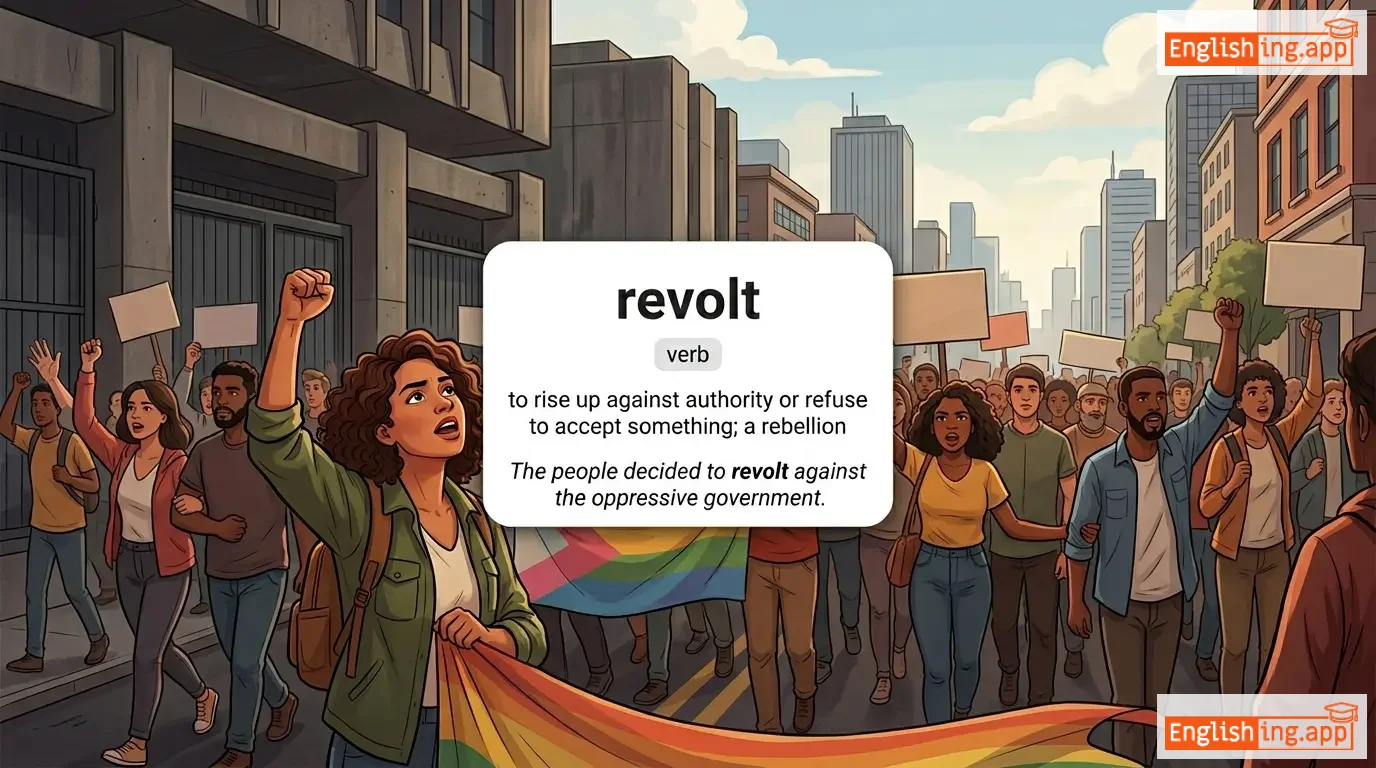
to rise up against authority or refuse to accept something; a rebellion
••••••
|
The people decided to revolt against the oppressive government.
人民决定反抗压迫政府。
••••••
|
人民决定反抗压迫政府。
Rénmín juédìng fǎnkàng yāpò zhèngfǔ.
••••••
|
rise in revolt
起义反抗
••••••
|
to rebel or resist against authority
••••••
|
反抗起义
fǎnkàng qǐyì
••••••
|
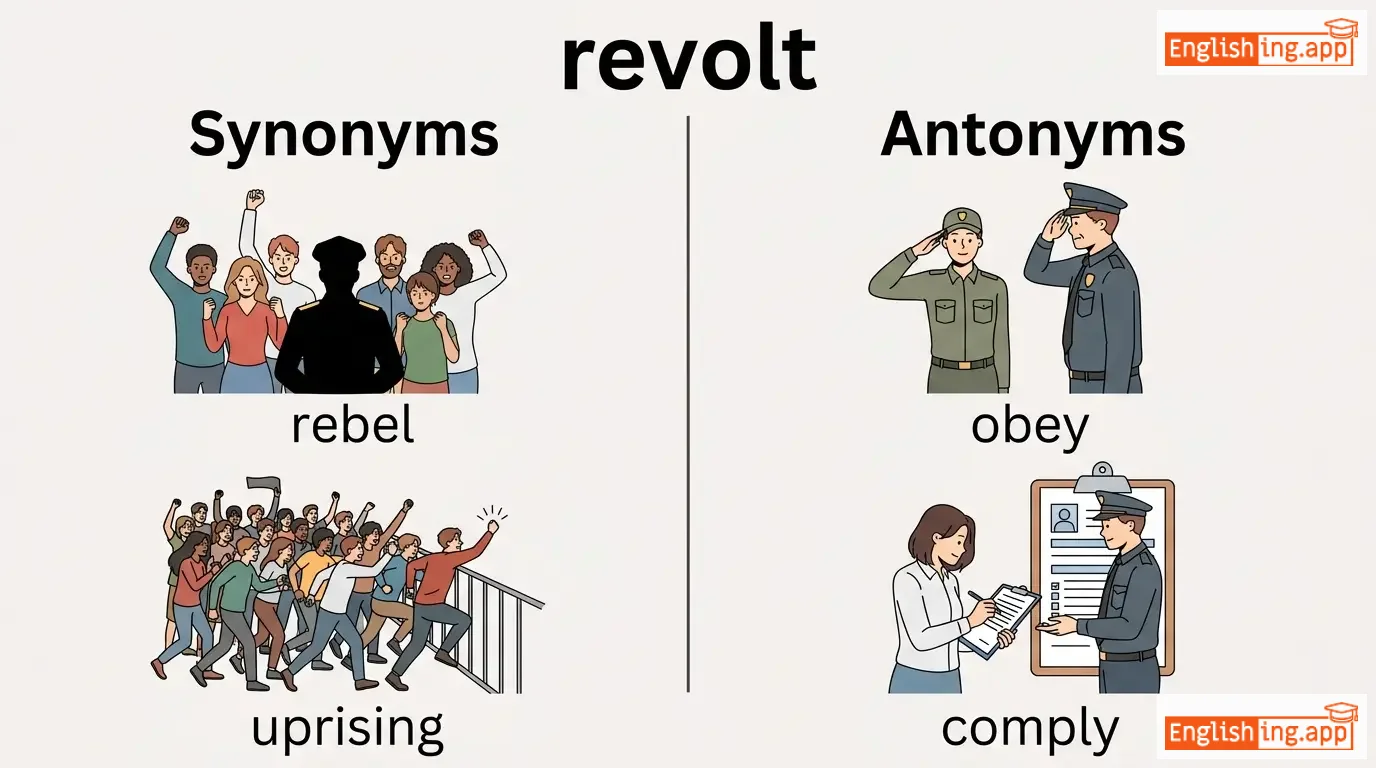
rebel, uprising, insurrection, mutiny, resist
••••••
|
obey, comply, submit
••••••
|
armed revolt, popular revolt, revolt against, suppress revolt
••••••
|
Re-volt是电的意思 ⚡ - 像闪电一样,人民反抗
••••••
|
|
#7651
🤣
|
/rɪˈdɪkjʊləs/
adjective
(rídìkùləs)
••••••
|
- •••••• |
荒谬
huangmiu
••••••
|
- •••••• | - •••••• | - •••••• | - •••••• |
Deserving mockery; absurd or unreasonable.
••••••
|
The idea of flying pigs is ridiculous. |
飞猪的想法很荒谬。
Fei zhu de xiangfa hen huangmiu.
••••••
|
look ridiculous |
Appear very silly or absurd.
••••••
|
看起来荒谬
kan qilai huangmiu
••••••
|
absurd, laughable, ludicrous, silly, preposterous
••••••
|
reasonable, sensible, serious
••••••
|
utterly ridiculous, seem ridiculous, look ridiculous
••••••
|
荒谬意味着像个笑话,根本不现实。
••••••
|
|
#7652
😂
|
/ˈrɪdɪkjuːl/
verb
(rɪˈdɪkjuːl)
••••••
|
- •••••• |
嘲笑
chaoxiaoxiao
••••••
|
ridiculed
rɪˈdɪkjuːld
••••••
|
ridiculed
rɪˈdɪkjuːld
••••••
|
ridicules
rɪˈdɪkjuːlz
••••••
|
ridiculing
rɪˈdɪkjuːlɪŋ
••••••
|
To make fun of someone or something in a cruel or dismissive way.
••••••
|
He was ridiculed for his strange ideas.
他因奇怪的想法而被嘲笑。
••••••
|
他因奇怪的想法而被嘲笑。
Ta yin qiguai de xiangfa er bei chaoxiaoxiao.
••••••
|
hold up to ridicule
被嘲笑
••••••
|
Expose someone to mockery or derision.
••••••
|
被嘲笑
Bei chaoxiaoxiao
••••••
|
mock, deride, taunt, scorn, jeer
••••••
|
praise, admire, respect
••••••
|
face ridicule, subject to ridicule, ridicule someone
••••••
|
嘲笑就是让别人笑话自己 – 如果某事荒谬,就会被嘲笑。
••••••
|
|
#7653
🏇
|
/ˈraɪdər/
noun
(raìdé)
••••••
|
- •••••• |
骑手
qí shǒu
••••••
|
- •••••• | - •••••• | - •••••• | - •••••• |
A person who rides a horse, bicycle, motorcycle, or other vehicle.
••••••
|
The rider fell off the horse. |
骑手从马背上摔了下来。
Qí shǒu cóng mǎ bèi shàng shuāi le xiàlái.
••••••
|
- •••••• | - •••••• | - •••••• |
cyclist, motorcyclist, jockey, equestrian
••••••
|
pedestrian, walker
••••••
|
skilled rider, horse rider, motorcycle rider, rider safety
••••••
|
Rider的意思是骑手,就像骑马的人,骑自行车的人。
••••••
|
|
#7654
❓
|
/ˈrɪdəl/
noun
(rídél)
••••••
|
- •••••• |
谜语
miyu
••••••
|
- •••••• | - •••••• | - •••••• | - •••••• |
A question or statement designed to test ingenuity or puzzle the mind.
••••••
|
The children enjoyed solving the riddle. |
孩子们喜欢解谜语。
Haizimen xihuan jie miyu.
••••••
|
riddle with |
To fill with or spread throughout.
••••••
|
充满
chongman
••••••
|
puzzle, enigma, conundrum, mystery
••••••
|
answer, solution, explanation
••••••
|
solve a riddle, ancient riddle, riddle with bullets
••••••
|
Riddle 意味着谜语 – 解谜就像寻找隐藏的答案。
••••••
|
|
#7655
😔
|
/ˈrɪdən/
adjective
(riden)
••••••
|
- •••••• |
充斥
chongchi
••••••
|
- •••••• | - •••••• | - •••••• | - •••••• |
Full of or dominated by something unpleasant.
••••••
|
The country was ridden with corruption. |
这个国家充斥着腐败。
Zhe ge guo jia chong chi zhe fu bai.
••••••
|
guilt-ridden |
Overwhelmed or dominated by feelings of guilt.
••••••
|
充满内疚
Chongman neijiu
••••••
|
afflicted, burdened, plagued, overwhelmed, tormented
••••••
|
free, relieved, untroubled
••••••
|
guilt-ridden, disease-ridden, crime-ridden, poverty-ridden
••••••
|
Ridden 表示充斥 – 就像 guilt-ridden,充满内疚。
••••••
|
|
#7656
🚮
|
/ˈrɪdəns/
noun
(rīdǎnsī)
••••••
|
- •••••• |
摆脱
bǎituō
••••••
|
- •••••• | - •••••• | - •••••• | - •••••• |
The action of getting rid of something unwanted or unpleasant.
••••••
|
His departure was considered a welcome riddance by the team. |
他的离开被团队视为一种欢迎的摆脱。
Tā de líkāi bèi tuánduì shì wéi yī zhǒng huānyíng de bǎituō.
••••••
|
good riddance |
A phrase used to express relief at being free of someone or something unwanted.
••••••
|
好好摆脱
hǎo hǎo bǎituō
••••••
|
removal, elimination, disposal, clearance
••••••
|
retention, keeping
••••••
|
good riddance, welcome riddance, riddance of problems
••••••
|
Riddance代表着摆脱不想要的事物。
••••••
|
|
#7657
🌉
|
/ˈrɪkɪti/
adjective
(ríkèti)
••••••
|
- •••••• |
摇摇欲坠
yáo yáo yù zhuì
••••••
|
- •••••• | - •••••• | - •••••• | - •••••• |
Poorly made and likely to collapse; shaky.
••••••
|
They crossed a rickety wooden bridge over the river. |
他们过了一座摇摇欲坠的木桥。
Tāmen guò le yī zuò yáo yáo yù zhuì de mù qiáo.
••••••
|
- •••••• | - •••••• | - •••••• |
unstable, shaky, weak, fragile, wobbly
••••••
|
strong, stable, sturdy
••••••
|
rickety bridge, rickety chair, rickety ladder
••••••
|
Rickety 就像随时会倒塌的桥
••••••
|
|
#7658
😏
|
/ˈrɪbɔːld/
adjective
(rɪbɔːld)
••••••
|
- •••••• |
猥亵笑话
wěixiè xiàohuà
••••••
|
- •••••• | - •••••• | - •••••• | - •••••• |
Referring to sexual matters in a humorous or vulgar way.
••••••
|
The comedian’s ribald jokes made the audience laugh uncomfortably. |
喜剧演员的猥亵笑话让观众不自在地笑了。
Xǐjù yǎnyuán de wěixiè xiàohuà ràng guānzhòng bù zìzài de xiàole.
••••••
|
- •••••• | - •••••• | - •••••• |
vulgar, coarse, indecent, bawdy, crude
••••••
|
polite, refined, decent
••••••
|
ribald humor, ribald joke, ribald laughter
••••••
|
Ribald可以和‘rib’以及‘bal’联系起来,帮助记住猥亵笑话的意思。
••••••
|
|
#7659
👀
|
/ˈruːmi/
adjective
(rúmì)
••••••
|
- •••••• |
泪眼
lèiyǎn
••••••
|
- •••••• | - •••••• | - •••••• | - •••••• |
Watery, especially referring to the eyes.
••••••
|
His rheumy eyes showed signs of age and fatigue. |
他那泪眼朦胧的眼睛显示出年龄和疲劳的迹象。
Tā nà lèiyǎn ménglóng de yǎnjīng xiǎnshì chū niánlíng hé píláo de jìxiàng.
••••••
|
- •••••• | - •••••• | - •••••• |
watery, teary, moist, weepy
••••••
|
dry, clear
••••••
|
rheumy eyes, rheumy gaze, rheumy look
••••••
|
泪眼像眼睛里有水
••••••
|
|
#7660
🗣️
|
/ˌrɛtəˈrɪʃən/
noun
(瑞托里修安)
••••••
|
- •••••• |
雄辩家
xióngbiànjiā
••••••
|
- •••••• | - •••••• | - •••••• | - •••••• |
A person who is skilled in the art of rhetoric or persuasive speaking/writing.
••••••
|
The rhetorician captivated the audience with his eloquence. |
雄辩家凭借其雄辩技巧吸引了听众。
Xióngbiànjiā píngjiè qí xióngbiàn jìqiǎo xīyǐnle tīngzhòng.
••••••
|
- •••••• | - •••••• | - •••••• |
orator, speaker, lecturer, debater, wordsmith
••••••
|
listener, audience, mute
••••••
|
famous rhetorician, skilled rhetorician, Greek rhetorician
••••••
|
雄辩家,像雄辩术一样
••••••
|
|
#7661
🗣️
|
/ˈrɛtərɪk/
noun
(雷托里克)
••••••
|
|
修辞
xiuci
••••••
|
- •••••• | - •••••• | - •••••• | - •••••• |
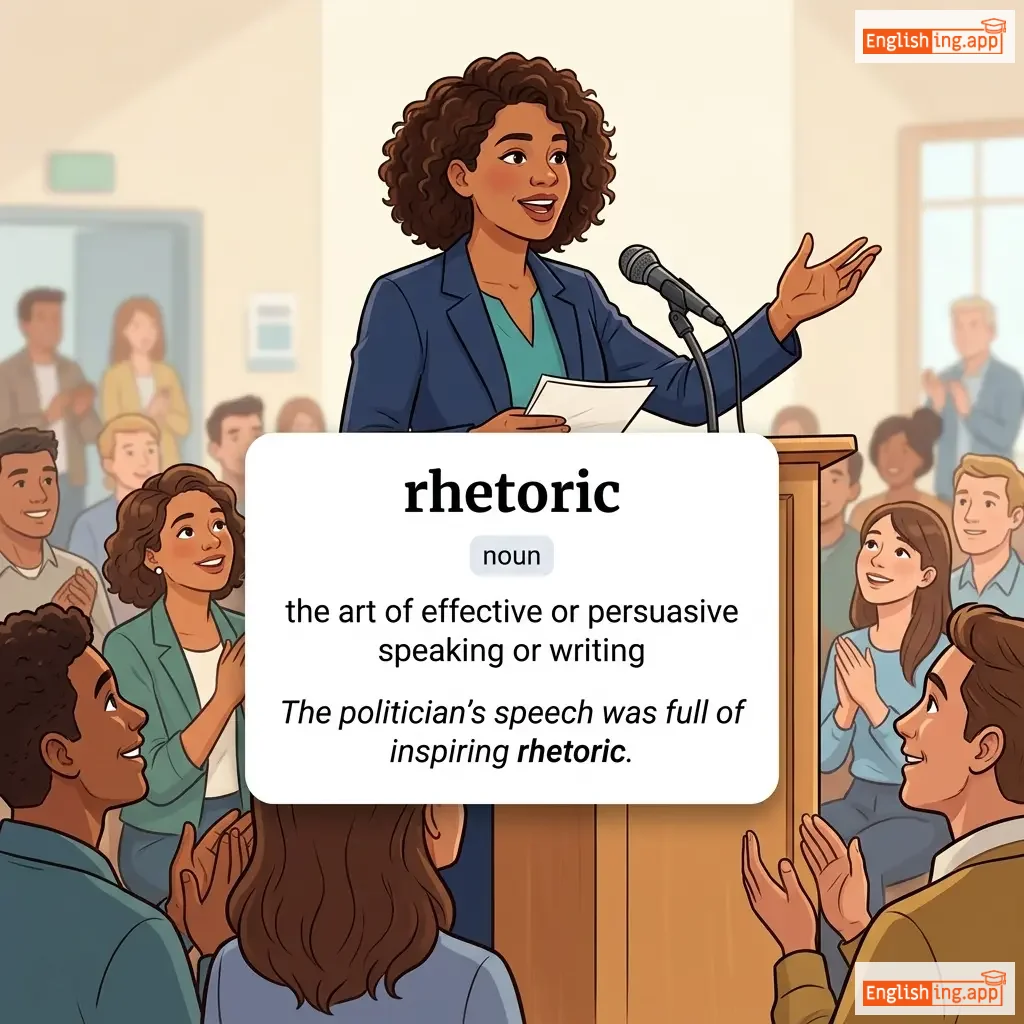
the art of effective or persuasive speaking or writing
••••••
|
The politician’s speech was full of inspiring rhetoric.
那位政治家的演讲充满了鼓舞人心的修辞。
••••••
|
那位政治家的演讲充满了鼓舞人心的修辞。
Na wei zhengzhijia de yanjiang chongman le gumu renxin de xiuci.
••••••
|
empty rhetoric
空洞的修辞
••••••
|
persuasive but meaningless or insincere speech
••••••
|
空洞的修辞
kongdong de xiuci
••••••
|
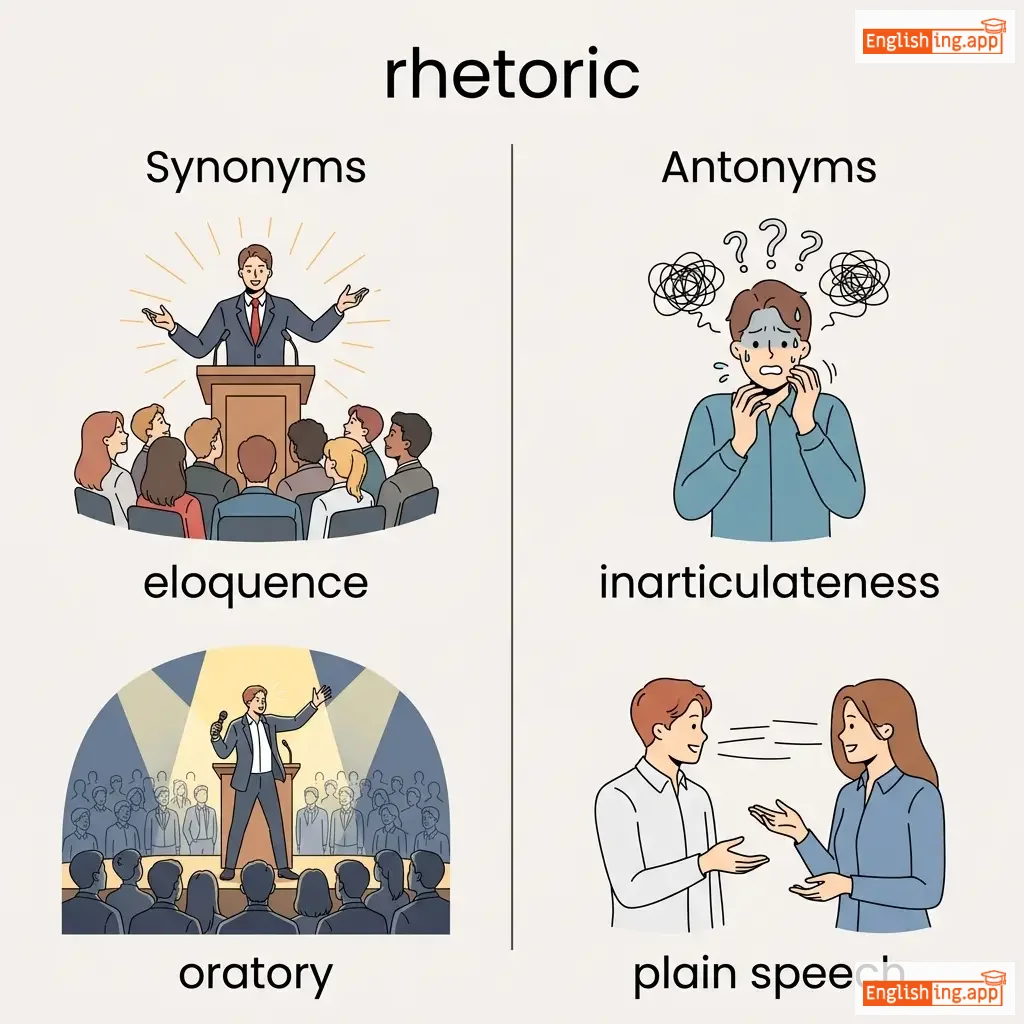
eloquence, oratory, discourse, persuasion
••••••
|
inarticulateness, plain speech
••••••
|
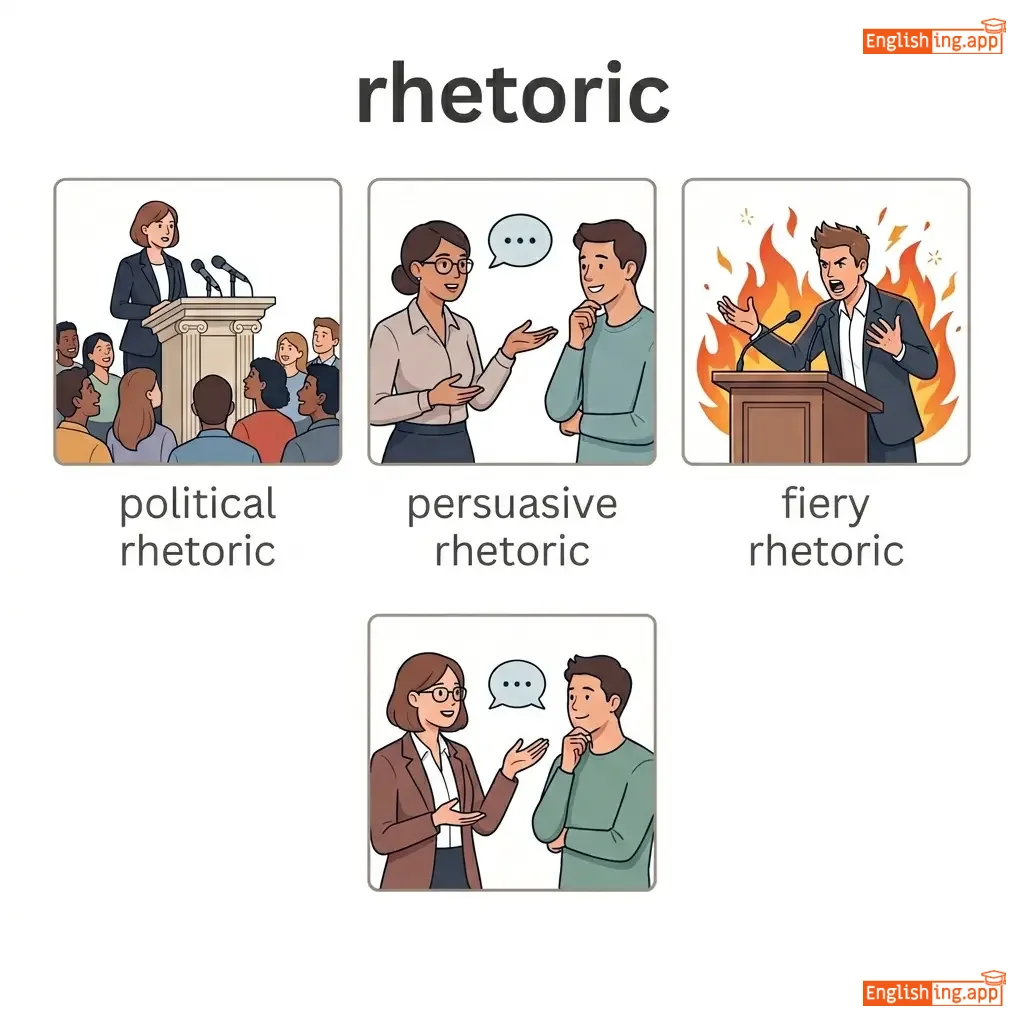
political rhetoric, persuasive rhetoric, fiery rhetoric, rhetorical device
••••••
|
Rhetoric → Ret + Trick 🗣️ 用修辞中的技巧来影响听众
••••••
|
|
#7662
🎼
|
/ˈræpsədi/
noun
(雷普索迪)
••••••
|
- •••••• |
激昂的歌曲/赞美
jīáng de gēqǔ/zànměi
••••••
|
- •••••• | - •••••• | - •••••• | - •••••• |
an expression of great enthusiasm or an epic musical composition
••••••
|
The singer’s performance was a rhapsody of emotions. |
歌手的表演是一场情感的狂想曲。
Gēshǒu de biǎoyǎn shì yī chǎng qínggǎn de kuángxiǎngqǔ.
••••••
|
Bohemian Rhapsody |
a famous song by Queen symbolizing mixed emotions and artistic expression
••••••
|
波西米亚狂想曲
Bōxī mǐyǎ kuángxiǎngqǔ
••••••
|
ecstasy, euphoria, enthusiasm, lyrical piece
••••••
|
boredom, dullness
••••••
|
musical rhapsody, poetic rhapsody, rhapsody of joy, romantic rhapsody
••••••
|
Rhapsody = RAP + Melody 🎼 → 一首充满情感的歌曲或赞美
••••••
|
|
#7663
🎶
|
/ˈræpsəˌdaɪz/
verb
(拉普索代兹)
••••••
|
- •••••• |
热情洋溢地谈论
rèqíng yángyì de tánlùn
••••••
|
rhapsodized
拉普索代兹德
••••••
|
rhapsodized
拉普索代兹德
••••••
|
rhapsodizes
拉普索代兹斯
••••••
|
rhapsodizing
拉普索代兹英
••••••
|
to speak or write with great enthusiasm and admiration
••••••
|
He would often rhapsodize about his travels to Europe.
他常常带着极大的热情谈论他的欧洲旅行。
••••••
|
他常常带着极大的热情谈论他的欧洲旅行。
Tā chángcháng dàizhe jí dà de rèqíng tánlùn tā de Ōuzhōu lǚxíng.
••••••
|
- •••••• | - •••••• | - •••••• |
praise, enthuse, gush, exalt
••••••
|
criticize, condemn
••••••
|
rhapsodize about, rhapsodize over, rhapsodize on
••••••
|
Rhapsody (音乐) → Rhapsodize 意味着像旋律一样充满激情地赞美 🎶
••••••
|
|
#7664
🤢
|
/rɪˈvʌlʃən/
noun
(勒伏申)
••••••
|
- •••••• |
厌恶
yànwù
••••••
|
- •••••• | - •••••• | - •••••• | - •••••• |
a strong feeling of disgust or repulsion
••••••
|
She felt revulsion at the sight of the cruel act. |
她看到残忍的行为时感到厌恶。
Tā kàn dào cánrěn de xíngwéi shí gǎndào yànwù.
••••••
|
- •••••• | - •••••• | - •••••• |
disgust, repulsion, abhorrence, loathing
••••••
|
attraction, admiration
••••••
|
feel revulsion, cause revulsion, revulsion against, sense of revulsion
••••••
|
Revulsion = REverse + VULtion → 强烈的反感
••••••
|
|
#7665
⚔️
|
/rɪˈvɛndʒ/
noun, verb
(rìwénjī)
••••••
|
- •••••• |
复仇
fùchóu
••••••
|
revenged
••••••
|
revenged
••••••
|
revenges
••••••
|
revenging
••••••
|
The action of inflicting harm on someone as punishment for a wrong suffered.
••••••
|
She sought revenge for the betrayal of her trust. |
她为了自己信任的背叛而寻求复仇。
Tā wèile zìjǐ xìnrèn de bèipàn ér xúnqiú fùchóu.
••••••
|
revenge is sweet |
It feels satisfying to get back at someone who wronged you.
••••••
|
复仇是甜美的
Fùchóu shì tiánměi de
••••••
|
retaliation, vengeance, retribution, payback, reprisal
••••••
|
forgiveness, pardon, mercy
••••••
|
seek revenge, take revenge, exact revenge, sweet revenge
••••••
|
Revenge听起来像‘re-复仇’–复仇意味着回击。
••••••
|
|
#7666
🛑
|
/rɪˈvoʊk/
verb
(rɪˈvək)
••••••
|
- •••••• |
撤销
chèxiāo
••••••
|
revoked
rɪˈvəkd
••••••
|
revoked
rɪˈvəkd
••••••
|
revokes
rɪˈvoks
••••••
|
revoking
rɪˈvəkɪŋ
••••••
|
To officially cancel or withdraw a decision, privilege, or right.
••••••
|
The government decided to revoke his passport.
政府决定撤销他的护照。
••••••
|
政府决定撤销他的护照。
Zhèngfǔ juédìng chèxiāo tā de hùzhào.
••••••
|
revoke a license
撤销许可证
••••••
|
to officially cancel a legal permission
••••••
|
撤销许可证
chèxiāo xǔkězhèng
••••••
|
cancel, annul, abolish, withdraw, repeal
••••••
|
grant, approve, authorize
••••••
|
revoke decision, revoke order, revoke access, revoke agreement
••••••
|
撤销是像取消许可证一样的概念。
••••••
|
|
#7667
❌
|
/ˌrɛv.əˈkeɪ.ʃən/
noun
(rēwòkèshèn)
••••••
|
- •••••• |
撤销
chexiao
••••••
|
- •••••• | - •••••• | - •••••• | - •••••• |
The act of officially canceling or withdrawing something.
••••••
|
The court ordered the revocation of his license. |
法院命令撤销他的许可证。
Fǎyuàn mìnglìng chèxiāo tā de xǔkě zhèng.
••••••
|
- •••••• | - •••••• | - •••••• |
cancellation, annulment, repeal, withdrawal
••••••
|
approval, confirmation, validation
••••••
|
revocation of license, revocation order, revocation decision
••••••
|
撤销就是取消,就像是‘revocation’,取消许可证的行为。
••••••
|
|
#7668
🌱
|
/rɪˈvaɪv/
verb
(rɪˈvaɪv)
••••••
|
- •••••• |
复苏
fùsū
••••••
|
revived
rɪˈvaɪvd
••••••
|
revived
rɪˈvaɪvd
••••••
|
revives
rɪˈvaɪvz
••••••
|
reviving
rɪˈvaɪvɪŋ
••••••
|
To bring back to life, consciousness, or activity.
••••••
|
The paramedics managed to revive the unconscious man.
ðə pærəˈmɛdɪks ˈmænɪdʒd tə riˈvaɪv ðə ʌnˈkɒnʃəs mæn.
••••••
|
急救员成功让昏迷的男子复苏。
Jíjiùyuán chénggōng ràng hūnmí de nánzǐ fùsū.
••••••
|
revive the economy
riˈvaɪv ðə ɪˈkɒnəmi
••••••
|
to restore economic growth and activity
••••••
|
复苏经济
fùsū jīngjì
••••••
|
resuscitate, restore, rejuvenate, awaken, revitalize
••••••
|
kill, suppress, extinguish
••••••
|
revive interest, revive culture, revive spirit, revive tradition
••••••
|
复苏就像浇水让植物复活一样。
••••••
|
|
#7669
✏️
|
/rɪˈvaɪz/
verb
(revaiz)
••••••
|
- •••••• |
修改
xiugai
••••••
|
revised
revaist
••••••
|
revised
revaist
••••••
|
revises
revaizes
••••••
|
revising
revaizing
••••••
|
To change, improve, or update something, especially a written work.
••••••
|
She had to revise her essay before submission.
她必须在提交之前修改她的论文。
••••••
|
她必须在提交之前修改她的论文。
Ta bixu zai tijiao zhiqian xiugai ta de lunwen.
••••••
|
revise for an exam
为考试修改
••••••
|
to study and prepare for an exam
••••••
|
为考试修改
Wei kaoshi xiugai
••••••
|
edit, modify, update, amend, correct
••••••
|
keep, preserve
••••••
|
revise draft, revise essay, revise thoroughly, revise notes
••••••
|
修改就像为考试做准备,修改一下就是变得更好。
••••••
|
|
#7670
📑
|
/rɪˈvaɪ.zəl/
noun
(rɪˈvaɪzəl)
••••••
|
- •••••• |
修订
xiūdìng
••••••
|
- •••••• | - •••••• | - •••••• | - •••••• |
The act of revising, reviewing, or making changes to something.
••••••
|
The revisal of the contract took longer than expected. |
合同的修订比预期花费了更多时间。
Hétóng de xiūdìng bǐ yùqī huāfèi le gèng duō shíjiān.
••••••
|
- •••••• | - •••••• | - •••••• |
review, amendment, correction, modification
••••••
|
approval, acceptance
••••••
|
revisal process, revisal of law, contract revisal
••••••
|
No •••••• |
|
#7671
👎
|
/rɪˈvaɪlər/
noun
(revaile)
••••••
|
- •••••• |
侮辱者
wǔrǔ zhě
••••••
|
- •••••• | - •••••• | - •••••• | - •••••• |
a person who criticizes or insults others abusively
••••••
|
He was known as a reviler of all who opposed him. |
他以侮辱所有反对他的人而闻名。
Tā yǐ wǔrǔ suǒyǒu fǎnduì tā de rén ér wénmíng.
••••••
|
- •••••• | - •••••• | - •••••• |
abuser, insulter, vilifier, detractor
••••••
|
admirer, supporter, praiser
••••••
|
constant reviler, harsh reviler, public reviler
••••••
|
Reviler意味着'侮辱者',记住'Revile' + 'er' = 侮辱他人的人
••••••
|
|
#7672
😡
|
/rɪˈvaɪl/
verb
(瑞瓦尔)
••••••
|
- •••••• |
谴责
qianze
••••••
|
reviled
瑞瓦尔德
••••••
|
reviled
瑞瓦尔德
••••••
|
reviles
瑞瓦尔斯
••••••
|
reviling
瑞瓦林
••••••
|
to criticize in an abusive or angrily insulting manner
••••••
|
The politician was reviled by the public for his corruption.
政治家因腐败而被公众谴责。
••••••
|
政治家因腐败而被公众谴责。
Zhèngzhìjiā yīn fǔbài ér bèi gōngzhòng qiǎnzé.
••••••
|
- •••••• | - •••••• | - •••••• |
insult, abuse, berate, vilify
••••••
|
praise, commend, respect
••••••
|
revile strongly, revile for, revile against
••••••
|
Revile 意味着谴责,想象着一个人愤怒地说 '谴责!'。
••••••
|
|
#7673
↩️
|
/rɪˈvɜːrt/
verb
(瑞佛特)
••••••
|
- •••••• |
恢复
huifu
••••••
|
reverted
瑞佛特德
••••••
|
reverted
瑞佛特德
••••••
|
reverts
瑞佛特斯
••••••
|
reverting
瑞佛特英
••••••
|
to return to a previous state, condition, or practice
••••••
|
The system will revert to its original settings after the update.
系统将在更新后恢复到原始设置。
••••••
|
系统将在更新后恢复到原始设置。
Xitong jiang zai gengxin hou huifu dao yuanshi shezhi.
••••••
|
revert to type
恢复类型
••••••
|
to return to one's normal character or behavior
••••••
|
恢复类型
huifu leixing
••••••
|
return, relapse, regress, backslide
••••••
|
advance, continue, persist
••••••
|
revert back, revert to normal, revert settings
••••••
|
Revert 是指恢复,类似回到最初的状态。
••••••
|
|
#7674
🔄
|
/rɪˈvɜːrʒən/
noun
(rɪˈvɜːrʒən)
••••••
|
- •••••• |
逆转
nì zhuǎn
••••••
|
- •••••• | - •••••• | - •••••• | - •••••• |
the act of returning to a previous state or condition
••••••
|
The new policy marked a reversion to traditional methods. |
新政策标志着回归传统方法。
Xīn zhèngcè biāozhìzhe huíguī chuántǒng fāngfǎ.
••••••
|
- •••••• | - •••••• | - •••••• |
return, relapse, regression, backslide
••••••
|
progress, advancement, improvement
••••••
|
reversion to type, legal reversion, reversion clause
••••••
|
逆转意味着回到以前的状态,像倒带一样。
••••••
|
|
#7675
💭
|
/ˈrɛvəri/
noun
(雷弗里)
••••••
|
|
白日梦
báirìmèng
••••••
|
- •••••• | - •••••• | - •••••• | - •••••• |
a state of being pleasantly lost in one's thoughts; a daydream
••••••
|
She drifted into a reverie while staring at the sunset.
她在看着日落时沉浸在白日梦中。
••••••
|
她在看着日落时沉浸在白日梦中。
Tā zài kànzhe rìluò shí chénjìn zài báirìmèng zhōng.
••••••
|
- •••••• | - •••••• | - •••••• |
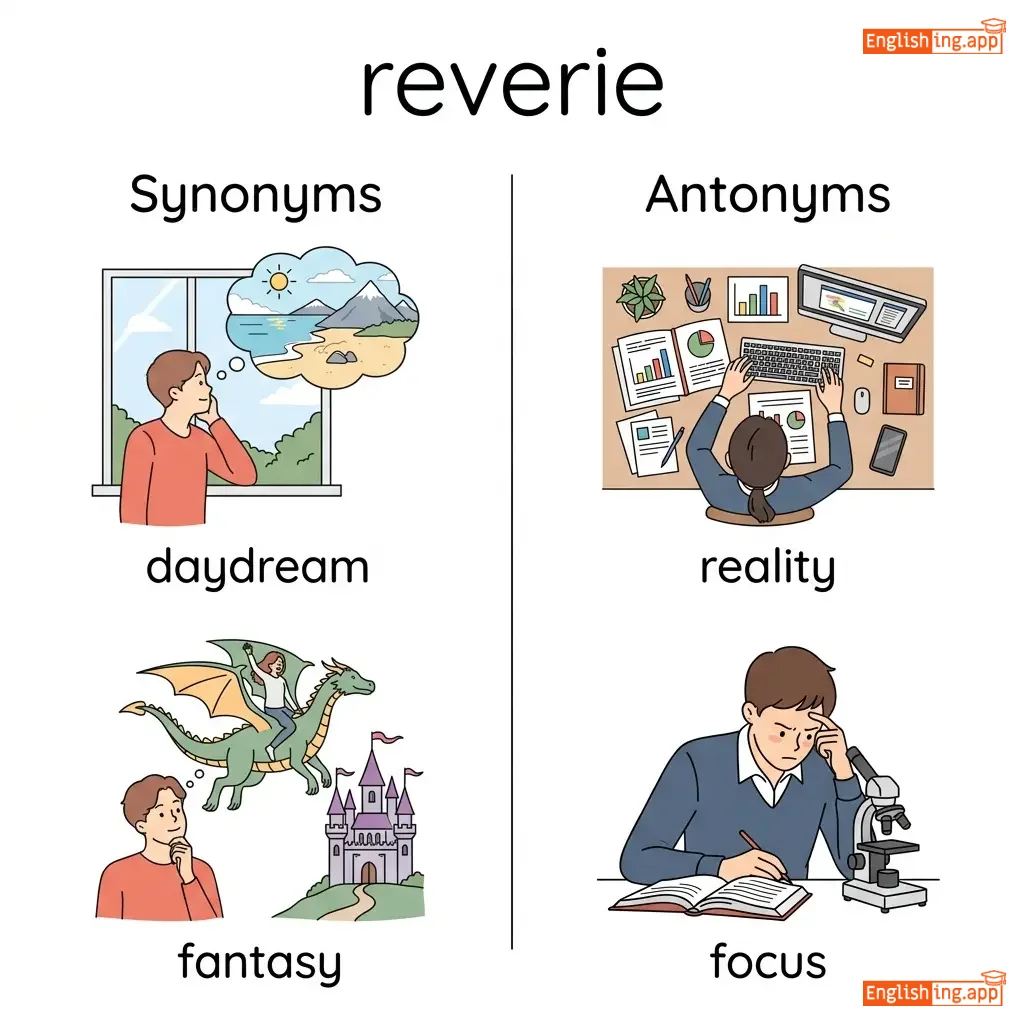
daydream, fantasy, dream, trance, contemplation
••••••
|
reality, focus, concentration
••••••
|
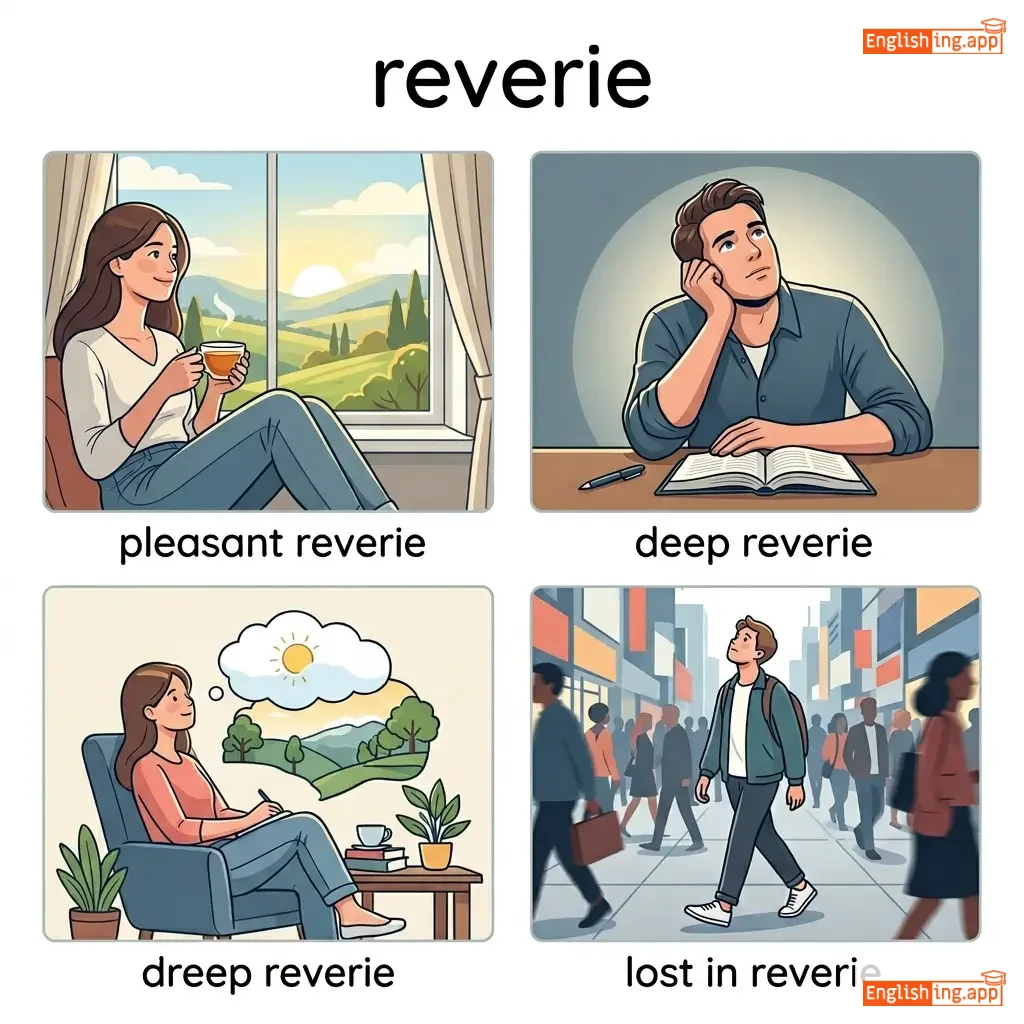
pleasant reverie, deep reverie, lost in reverie
••••••
|
白日梦就像是在看日落时做梦。
••••••
|
|
#7676
🕊️
|
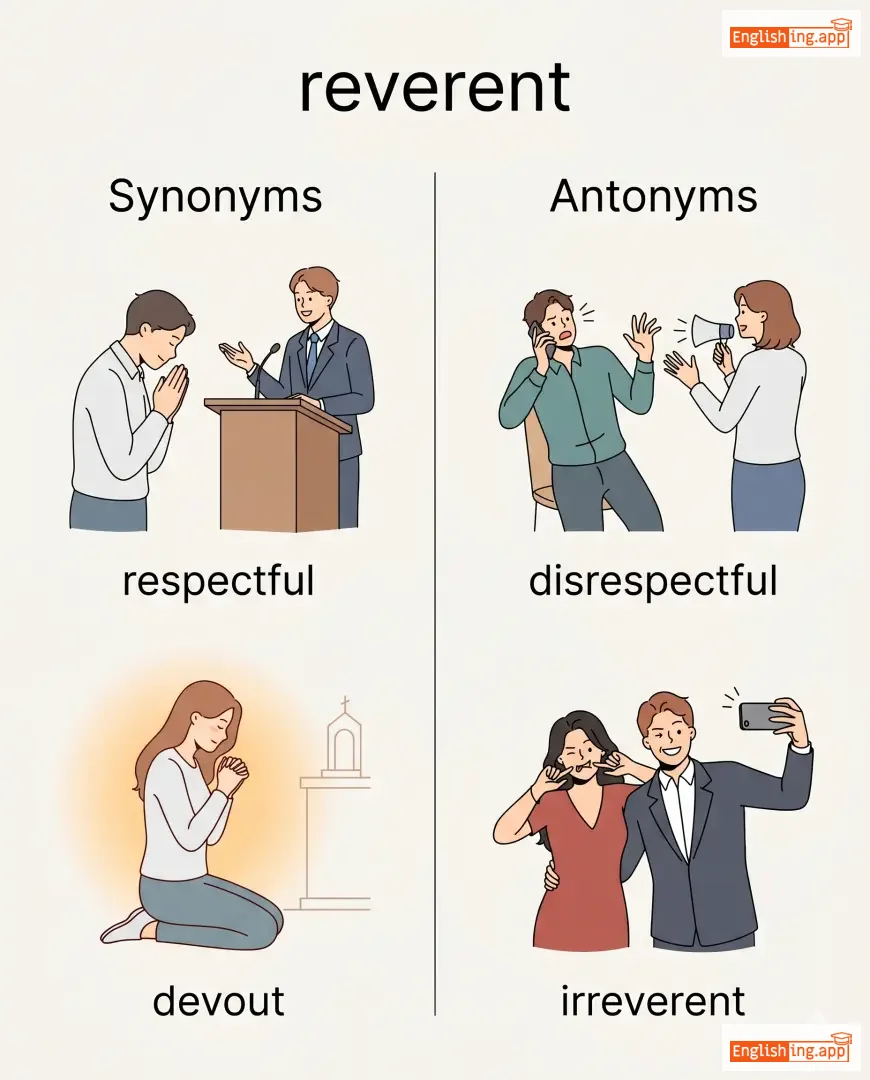
/ˈrɛvərənt/
adjective
(雷弗伦特)
••••••
|
|
虔诚的
qiánchéng de
••••••
|
- •••••• | - •••••• | - •••••• | - •••••• |
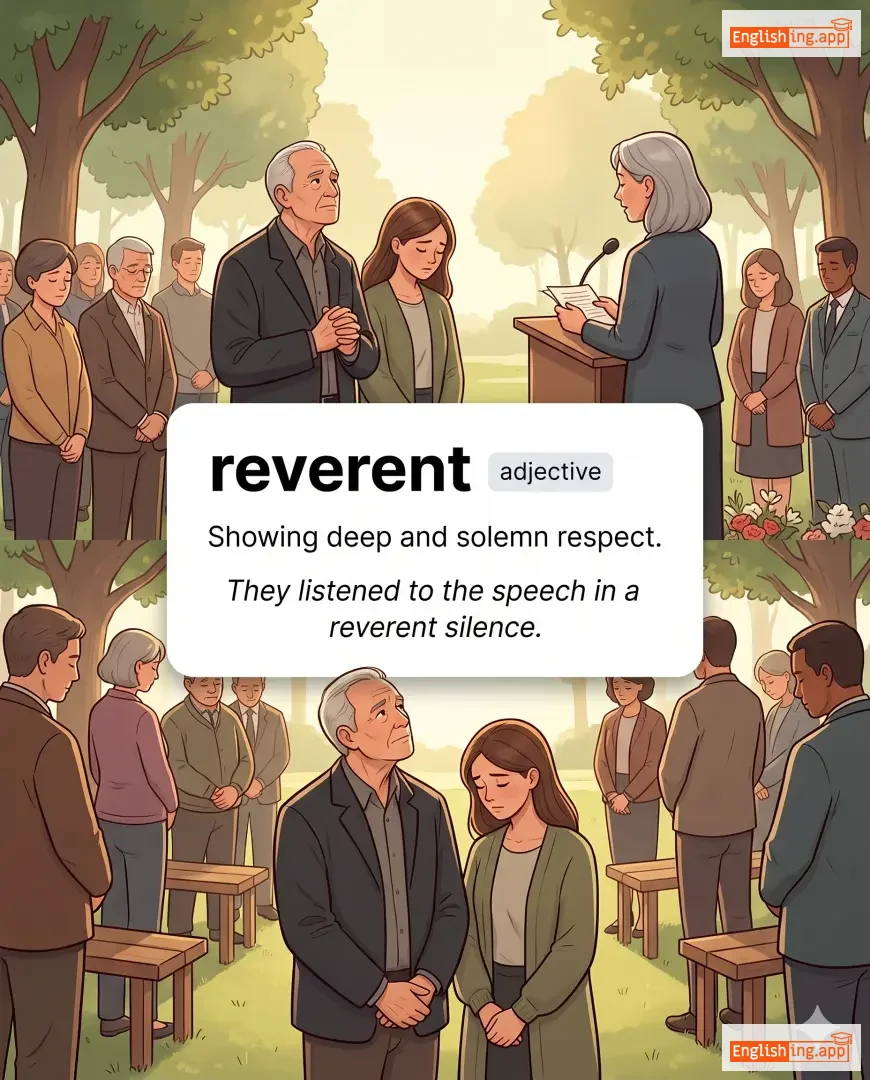
Showing deep and solemn respect.
••••••
|
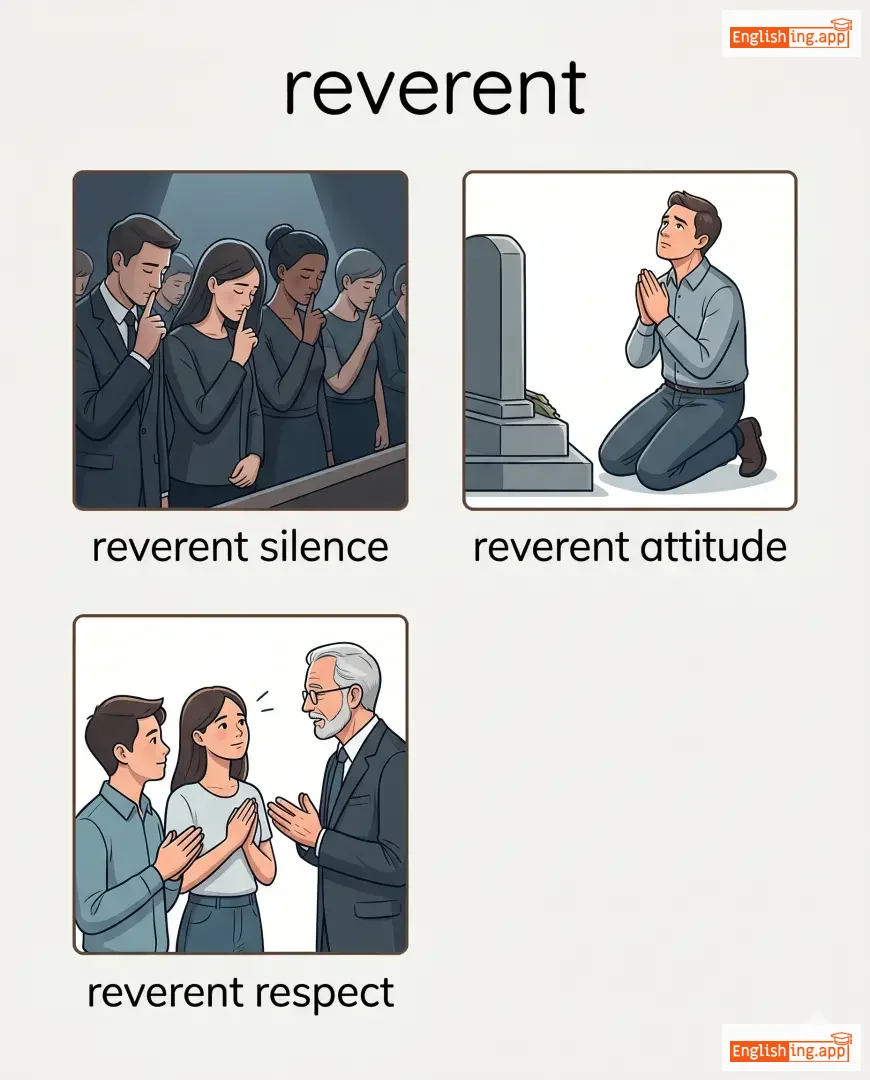
They listened to the speech in a reverent silence.
他们在虔诚的沉默中听取了演讲。
••••••
|
他们在虔诚的沉默中听取了演讲。
Tāmen zài qiánchéng de chénmò zhōng tīngqǔle yǎnjiǎng.
••••••
|
- •••••• | - •••••• | - •••••• |
respectful, devout, admiring, dutiful
••••••
|
disrespectful, irreverent
••••••
|
reverent silence, reverent attitude, reverent respect, reverent tone
••••••
|
虔诚的表示深度尊重 – qiánchéng de.
••••••
|
|
#7677
⛪
|
/ˈrɛvərənd/
noun, adjective
(瑞弗伦德)
••••••
|
- •••••• |
牧师,尊敬的
mùshī, zūnjìng de
••••••
|
- •••••• | - •••••• | - •••••• | - •••••• |
A title of respect used for members of the clergy; deserving deep respect.
••••••
|
The Reverend gave an inspiring sermon at the church. |
牧师在教堂发表了鼓舞人心的讲道。
Mùshī zài jiàotáng fābiǎo le gǔwǔ rénxīn de jiǎngdào.
••••••
|
- •••••• | - •••••• | - •••••• |
pastor, minister, clergyman, priest
••••••
|
layperson, secular
••••••
|
Reverend Father, Reverend Smith, Reverend Doctor, most reverend
••••••
|
Reverend意味着值得尊敬的人—宗教领袖。
••••••
|
|
#7678
🙏
|
/rɪˈvɪər/
verb
(rɪˈvɪər)
••••••
|
- •••••• |
敬仰
jìng yǎng
••••••
|
revered
rɪˈvɪərd
••••••
|
revered
rɪˈvɪərd
••••••
|
reveres
rɪˈvɪərz
••••••
|
revering
rɪˈvɪərɪŋ
••••••
|
To deeply respect or admire someone or something.
••••••
|
The students revered their teacher for his wisdom.
学生们因他的智慧而敬重老师。
••••••
|
学生们因他的智慧而敬重老师。
Xuéshēngmen yīn tā de zhìhuì ér jìngzhòng lǎoshī.
••••••
|
- •••••• | - •••••• | - •••••• |
respect, honor, admire, esteem, venerate
••••••
|
disrespect, dishonor, despise
••••••
|
revere greatly, revere highly, revered figure, revered tradition
••••••
|
Revere = 尊敬 + 远 = 深深地尊敬他
••••••
|
|
#7679
🔊
|
/rɪˈvɜːrbəreɪt/
verb
(里弗贝雷特)
••••••
|
- •••••• |
回响
huíxiǎng
••••••
|
reverberated
里弗贝雷特德
••••••
|
reverberated
里弗贝雷特德
••••••
|
reverberates
里弗贝雷特斯
••••••
|
reverberating
里弗贝雷特英
••••••
|
To echo repeatedly or have continuing effects.
••••••
|
The sound of the explosion reverberated through the valley.
爆炸声在山谷中回响。
••••••
|
爆炸声在山谷中回响。
Bàozhà shēng zài shāngǔ zhōng huíxiǎng.
••••••
|
- •••••• | - •••••• | - •••••• |
echo, resound, resonate, boom, reflect
••••••
|
silence, hush
••••••
|
reverberate through, reverberate around, reverberating sound, reverberate across
••••••
|
回响,像回荡的声音。
••••••
|
Vocabulary Quiz
Test your vocabulary by matching words with their translations or meanings.
Login to take the quiz
Comments (0)
Share your thoughts and join the discussion.
Join the discussion by logging in
Login to CommentNo comments yet
Be the first to share your thoughts!