




Swipe left or right, or use the buttons. Tap image to zoom.
例句翻译
单词
Lesson 339Lesson 339 - 遮罩切换
|
表情符号
|
单词 | Images | 翻译 | 过去时 | 过去分词 | 第三人称单数 | 动名词 | 含义 | 例句 | 例句翻译 | 示例表达 | 示例表达含义 | 示例表达翻译 | 同义词 | 反义词 | 搭配词 | 助记符 |
|---|---|---|---|---|---|---|---|---|---|---|---|---|---|---|---|---|---|
|
#10135
📅
|
/ˈrɛɡjələr/
adjective
(règular)
••••••
|
- •••••• |
常规的
changgui de
••••••
|
- •••••• | - •••••• | - •••••• | - •••••• |
Happening at fixed intervals; usual or normal in pattern or quality
••••••
|
He is a regular visitor to the library. |
他是图书馆的常客。
Ta shi tushuguan de changke.
••••••
|
regular customer |
A person who frequently visits or buys from the same place
••••••
|
常客
chang ke
••••••
|
consistent, usual, normal, routine, frequent
••••••
|
irregular, unusual, abnormal
••••••
|
regular basis, regular meeting, regular customer, regular pattern
••••••
|
Regular 是常规的 — 就像常去同一家店的常客
••••••
|
|
#10136
🚫
|
/rɪˈstrɪkt/
verb
(限制)
••••••
|
- •••••• |
限制
xianzhi
••••••
|
restricted
限制
••••••
|
restricted
限制
••••••
|
restricts
限制
••••••
|
restricting
限制
••••••
|
To limit the size, amount, or range of something.
••••••
|
The government decided to restrict the use of plastic bags.
政府决定限制塑料袋的使用。
••••••
|
政府决定限制塑料袋的使用。
Zhengfu jueding xianzhi suliada de shiyong.
••••••
|
restrict access
限制访问
••••••
|
To limit or control who can enter or use something.
••••••
|
限制访问
Xianzhi fangwen
••••••
|
limit, confine, curb, constrain, control
••••••
|
allow, permit, enable
••••••
|
restrict access, restrict movement, restrict freedom, restrict use
••••••
|
Restrict意为 '限制' - 给某物设限.
••••••
|
|
#10137
💬
|
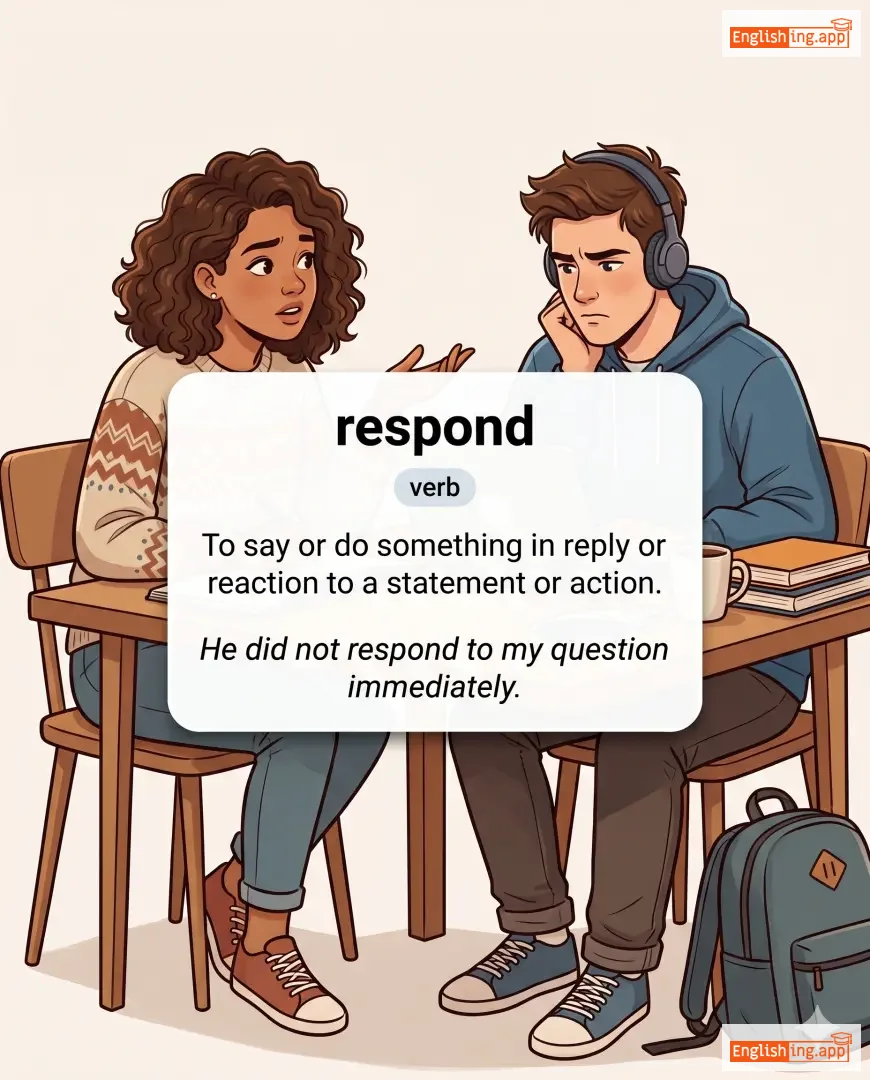
/rɪˈspɒnd/
verb
(回应)
••••••
|
|
回应
hui ying
••••••
|
responded
回应了
••••••
|
responded
回应了
••••••
|
responds
回应
••••••
|
responding
回应中
••••••
|
To say or do something in reply or reaction to a statement or action.
••••••
|
He did not respond to my question immediately.
他没有立即回应我的问题。
••••••
|
他没有立即回应我的问题。
Ta meiyou liji hui ying wode wenti.
••••••
|
respond to treatment
回应治疗
••••••
|
To show improvement after receiving medical treatment.
••••••
|
回应治疗
Hui ying zhi liao
••••••
|
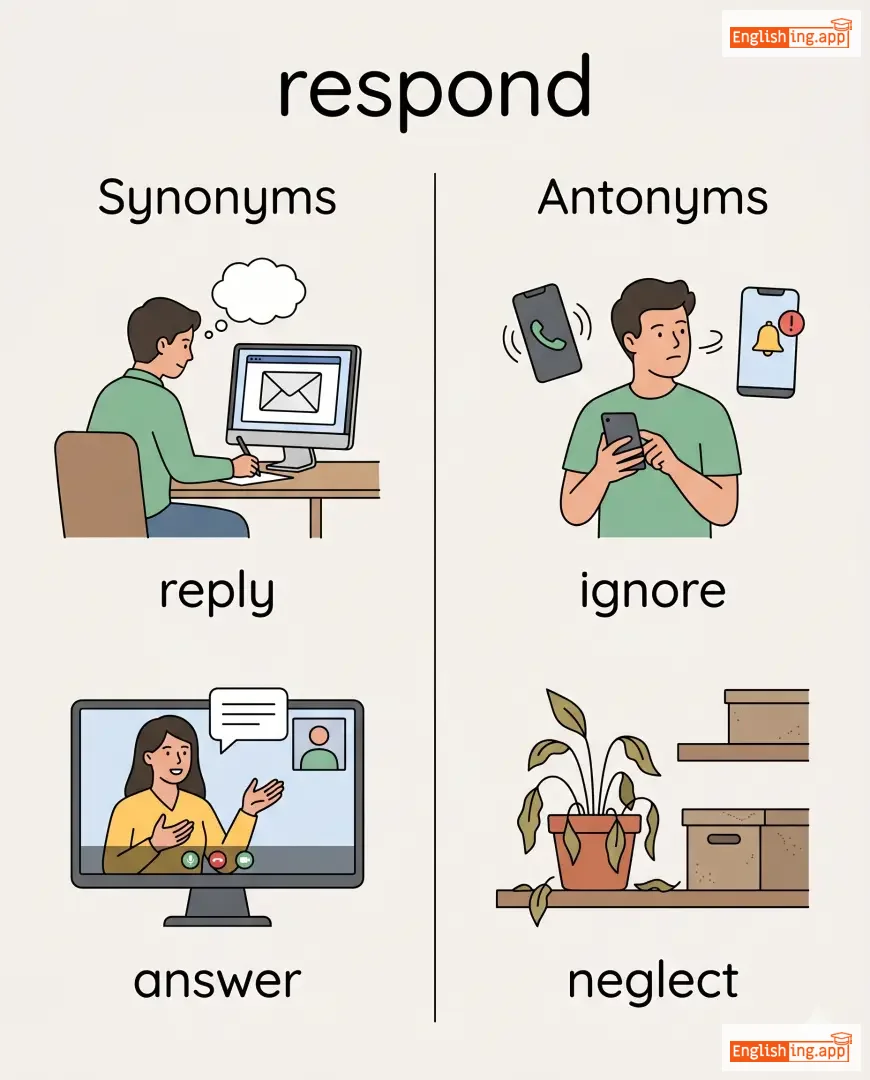
reply, answer, react, acknowledge, retort
••••••
|
ignore, neglect, disregard
••••••
|
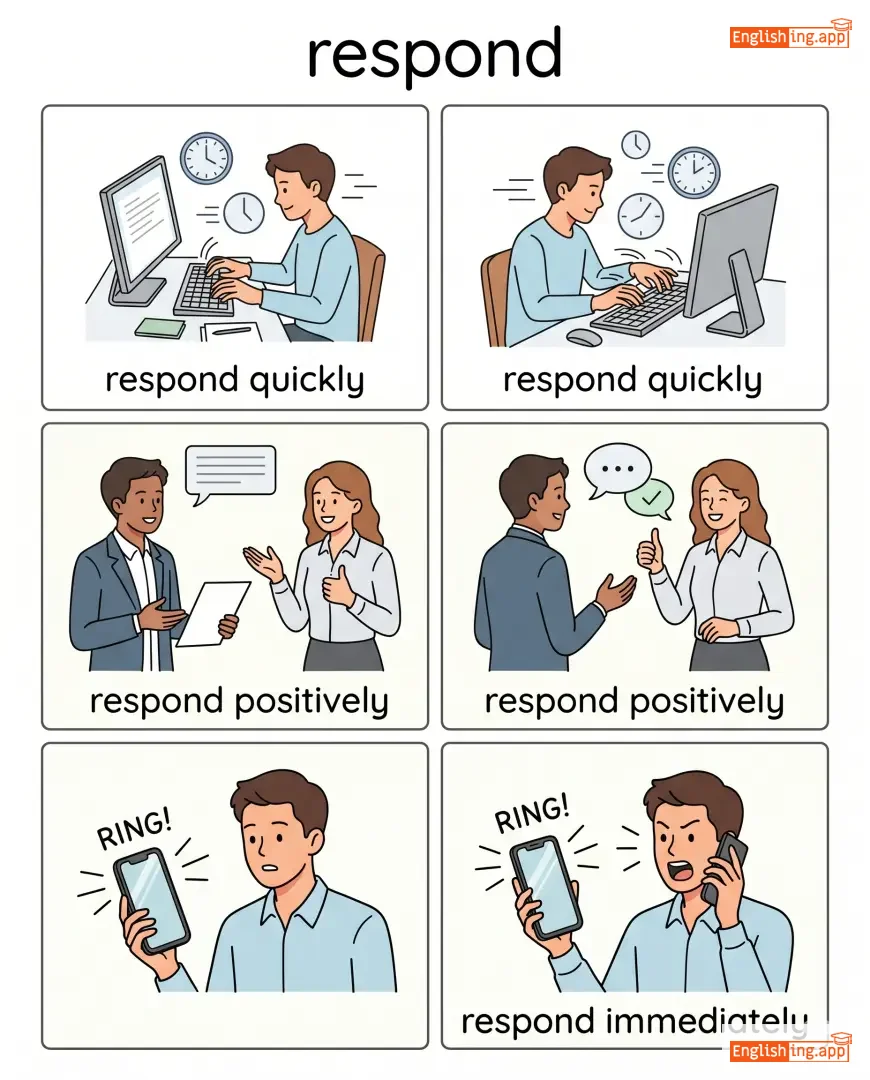
respond quickly, respond positively, respond immediately, respond appropriately
••••••
|
回应就像回忆一样,回应人们的问题。
••••••
|
|
#10138
✊
|
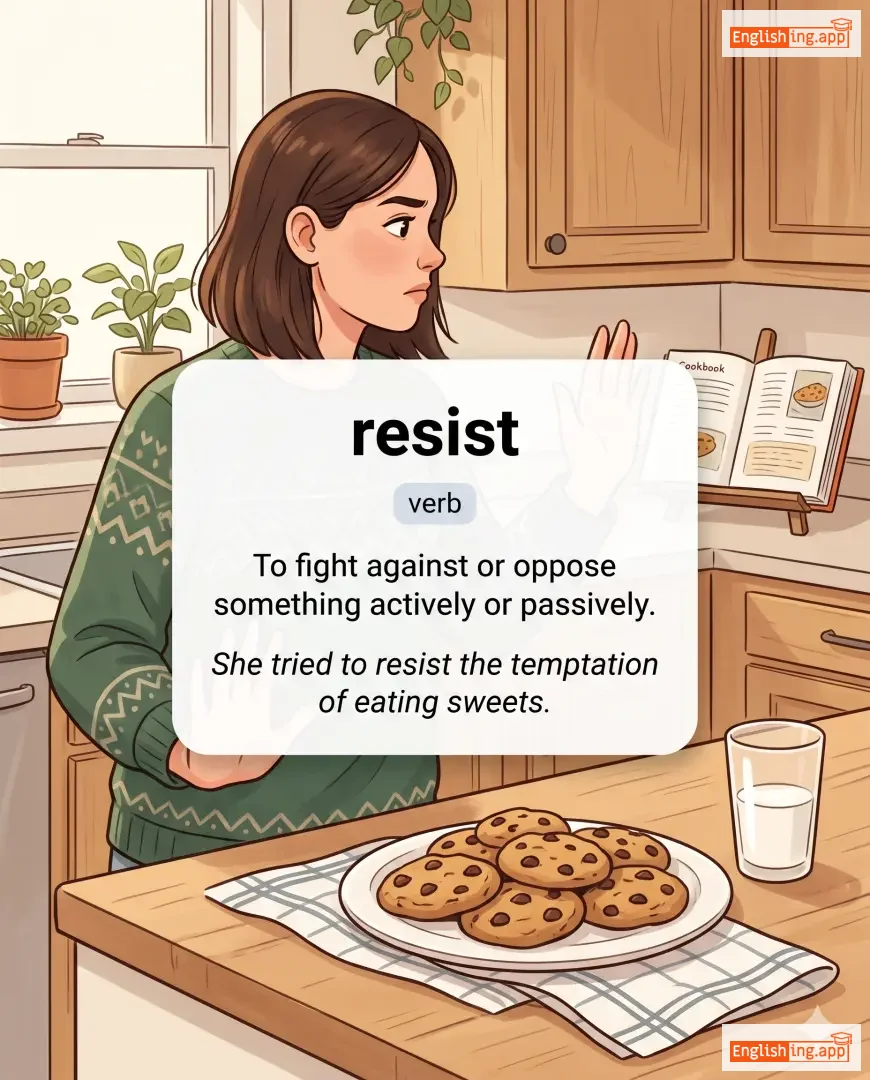
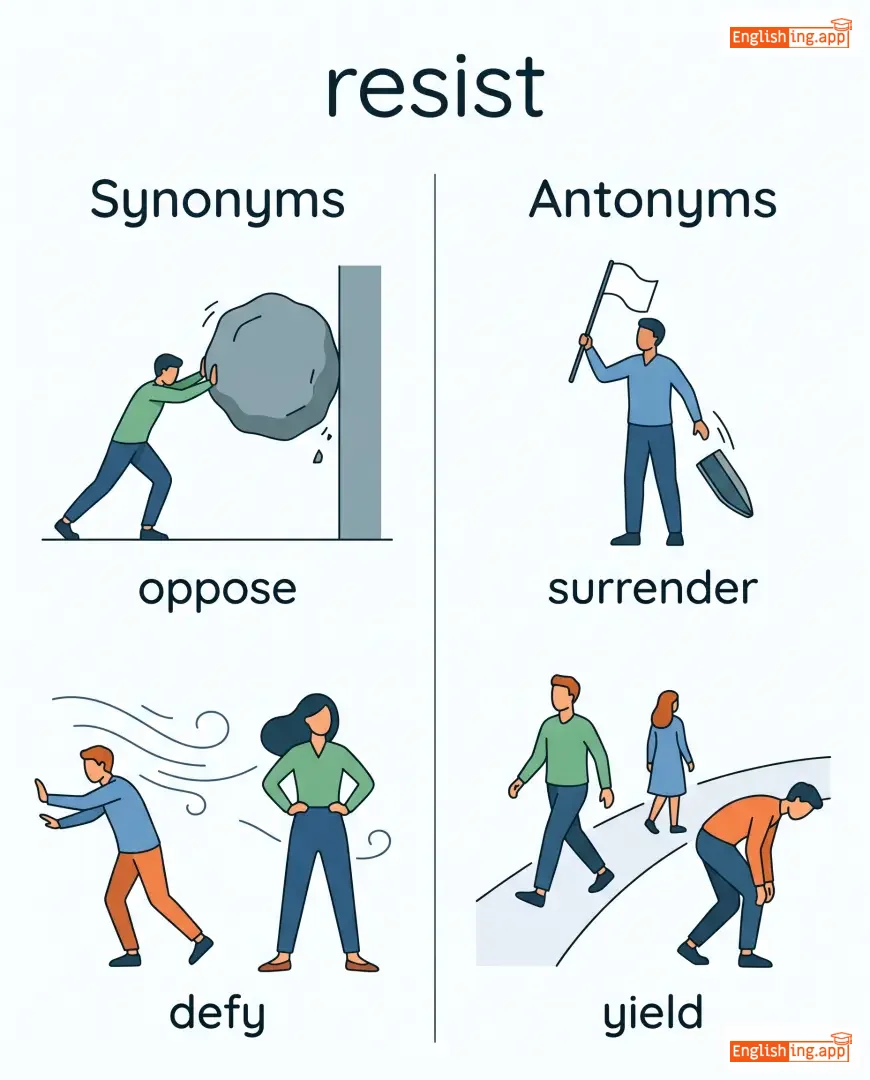
/rɪˈzɪst/
verb
(瑞兹斯特)
••••••
|
|
抵抗
dǐkàng
••••••
|
resisted
瑞兹斯特德
••••••
|
resisted
瑞兹斯特德
••••••
|
resists
瑞兹斯特斯
••••••
|
resisting
瑞兹斯廷
••••••
|
To fight against or oppose something actively or passively.
••••••
|
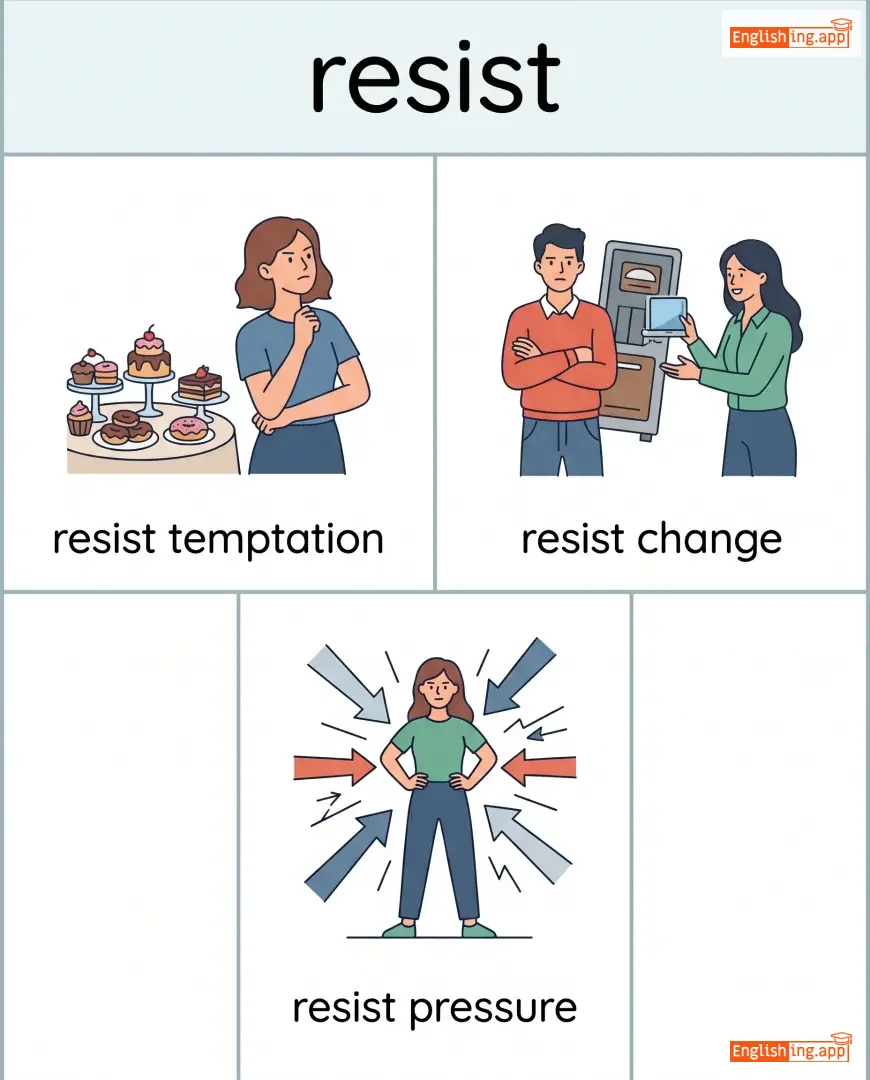
She tried to resist the temptation of eating sweets.
她试图抵抗吃糖果的诱惑。
••••••
|
她试图抵抗吃糖果的诱惑。
Tā shìtú dǐkàng chī tángguǒ de yòuhuò.
••••••
|
resist arrest
抵抗逮捕
••••••
|
To oppose or fight back when being taken into custody by the police.
••••••
|
抵抗逮捕
dǐkàng dàibǔ
••••••
|
oppose, defy, withstand, endure, combat
••••••
|
surrender, yield, submit
••••••
|
resist temptation, resist change, resist pressure, resist arrest
••••••
|
抵抗意味着抵抗 - 抵抗一切!
••••••
|
|
#10139
🏠
|
/ˈrɛzɪdənt/
noun
(居民)
••••••
|
- •••••• |
居民
jumin
••••••
|
- •••••• | - •••••• | - •••••• | - •••••• |
A person who lives in a particular place.
••••••
|
Every resident of the building must follow the safety rules. |
大楼的每个居民都必须遵守安全规则。
Dàlóu de měi ge jūmín dōu bìxū zūnshǒu ānquán guīzé.
••••••
|
permanent resident |
A person who lives permanently in a place, often with legal permission.
••••••
|
永久居民
yǒngjiǔ jūmín
••••••
|
inhabitant, occupant, dweller, tenant
••••••
|
visitor, outsider, tourist
••••••
|
resident doctor, local resident, permanent resident
••••••
|
Resident 意思是 '居民', 就像住在一个地方的人。
••••••
|
|
#10140
📰
|
/ˌrɛpərˈtɔːriəl/
adjective
(répèrtòriǎo)
••••••
|
- •••••• |
报道的
baodao de
••••••
|
- •••••• | - •••••• | - •••••• | - •••••• |
Relating to or characteristic of a repertoire, especially in journalism or performance contexts.
••••••
|
The journalist's repertorial style captured every detail of the unfolding story.
记者的报道风格捕捉了展开故事的每个细节。
••••••
|
记者的报道风格捕捉了展开故事的每个细节。
Jìzhě de bàodào fēnggé bǔzhuōle zhǎnkāi gùshì de měi gè xìjié.
••••••
|
- •••••• | - •••••• | - •••••• |
journalistic, descriptive, narrative, reportorial, chronicling
••••••
|
fictional, imaginative
••••••
|
repertorial writing, repertorial detail, repertorial account
••••••
|
报道风格,就像是新闻报道或表演风格。
••••••
|
|
#10141
🔄
|
/rɪˈnuː/
verb
••••••
|
- •••••• | - •••••• |
renewed
••••••
|
renewed
••••••
|
renews
••••••
|
renewing
••••••
|
to make something new again or extend its period of validity
••••••
|
I need to renew my passport before traveling. |
- •••••• |
renew a contract |
to extend the time or validity of a contract
••••••
|
- •••••• |
extend, refresh, continue, prolong
••••••
|
expire, end, terminate
••••••
|
renew subscription, renew passport, renew contract, renew hope
••••••
|
No •••••• |
|
#10142
🛠️
|
/rɪˈmuːvəbəl/
adjective
(rímúwēibó)
••••••
|
- •••••• |
可拆卸的
ke chai xie de
••••••
|
- •••••• | - •••••• | - •••••• | - •••••• |
able to be removed or taken away
••••••
|
This phone has a removable battery. |
这款手机有一块可拆卸的电池。
Zhe kuan shouji you yi kuai ke chaixie de dianchi.
••••••
|
- •••••• | - •••••• | - •••••• |
detachable, portable, separable, replaceable
••••••
|
fixed, permanent
••••••
|
removable battery, removable cover, removable device
••••••
|
可拆卸的意思是可以取下的,就像可拆卸的电池。
••••••
|
|
#10143
📡
|
/rɪˈmoʊtɪd/
adjective
(瑞莫特德)
••••••
|
- •••••• |
远程的
yuǎnchéng de
••••••
|
- •••••• | - •••••• | - •••••• | - •••••• |
placed at a distance; made remote
••••••
|
The system was remoted to a secure location. |
系统已被远程到一个安全的地方。
Xitong yi bei yuancheng dao yige anquan de difang.
••••••
|
- •••••• | - •••••• | - •••••• |
isolated, distant, separated, detached
••••••
|
near, close
••••••
|
remoted access, remoted system, remoted server
••••••
|
Remoted意味着远程的,就像 'remote' 是远的意思。
••••••
|
|
#10144
💬
|
/rɪˈmɑːrk/
noun/verb
(海皮尼斯)
••••••
|
- •••••• |
评论
pinglun
••••••
|
remarked
里马克德
••••••
|
remarked
里马克德
••••••
|
remarks
里马克斯
••••••
|
remarking
里马克英
••••••
|
something that is said; a comment
••••••
|
She made a remark about the weather.
她 对 天气 做了 一 个 里马克。
••••••
|
她对天气做了一个评论。
Ta dui tianqi zuo le yi ge pinglun.
••••••
|
make a remark
做 一个 里马克
••••••
|
to say something, usually as a comment
••••••
|
发表评论
fabiao pinglun
••••••
|
comment, observation, statement, note
••••••
|
silence, quiet
••••••
|
casual remark, make a remark, witty remark, critical remark
••••••
|
Remark 就是评论 – 记得 're' 表示再次,说出来是评论。
••••••
|
|
#10145
🪙
|
/rɪˈmeɪndər/
noun
(rīmèndé)
••••••
|
- •••••• |
剩余
shengyu
••••••
|
- •••••• | - •••••• | - •••••• | - •••••• |
the part that is left after the main part is gone or used
••••••
|
He ate most of the cake and left the remainder on the plate.
他吃了大部分蛋糕,并把剩余的留在了盘子里。
••••••
|
他吃了大部分蛋糕,并把剩余的留在了盘子里。
Tā chīle dà bùfen dàngāo, bìng bǎ shèngyú de liú zài le pánzi lǐ.
••••••
|
the remainder of the day
一天剩余的部分
••••••
|
the part of the day that is left
••••••
|
一天剩余的部分
yītiān shèngyú de bùfen
••••••
|
rest, residue, balance, leftover, surplus
••••••
|
whole, total, entirety
••••••
|
leave the remainder, remainder of the day, remainder of the work, small remainder
••••••
|
Remainder 是剩余;想象吃蛋糕后剩下的部分就是剩余。
••••••
|
|
#10146
🔒
|
/rɪˈlaɪəbl/
adjective
(rɪˈlaɪəbl)
••••••
|
|
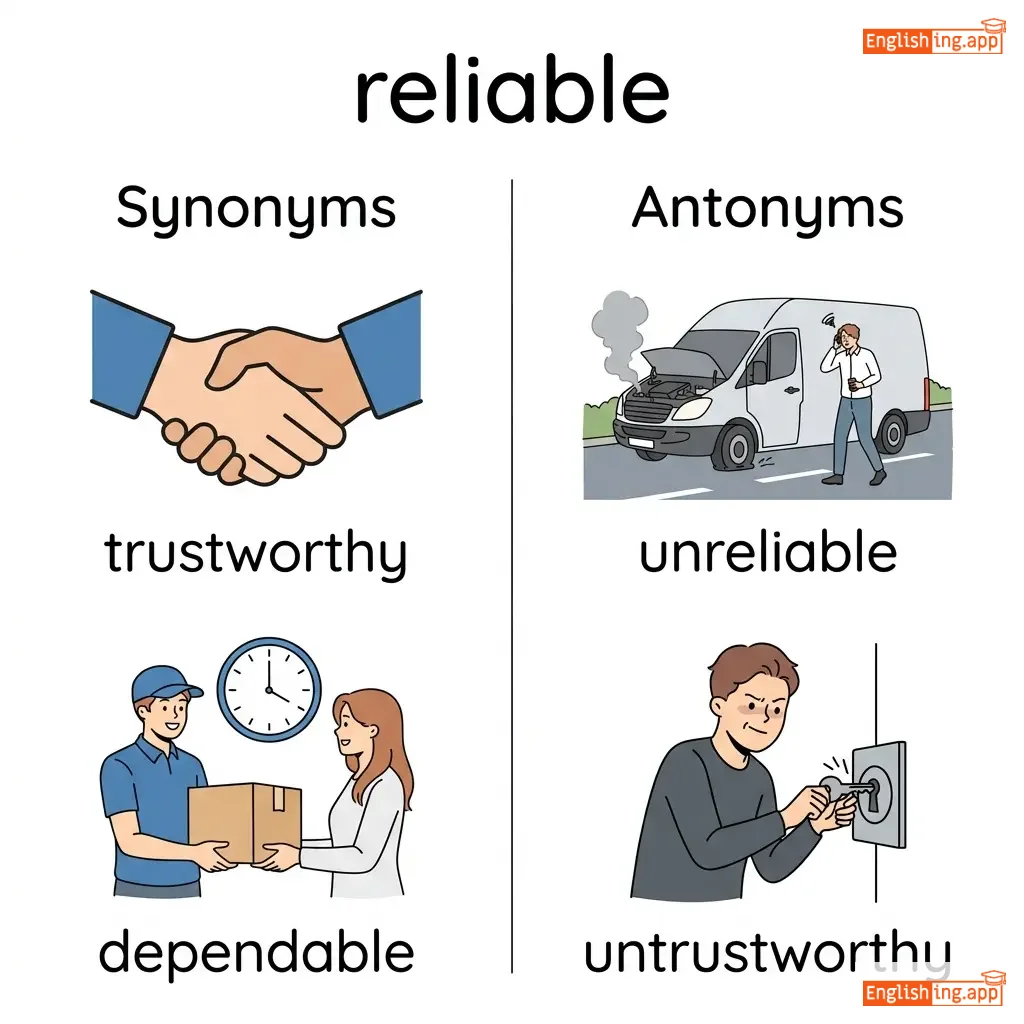
可靠
kekao
••••••
|
- •••••• | - •••••• | - •••••• | - •••••• |
Consistently good in quality or performance; able to be trusted
••••••
|
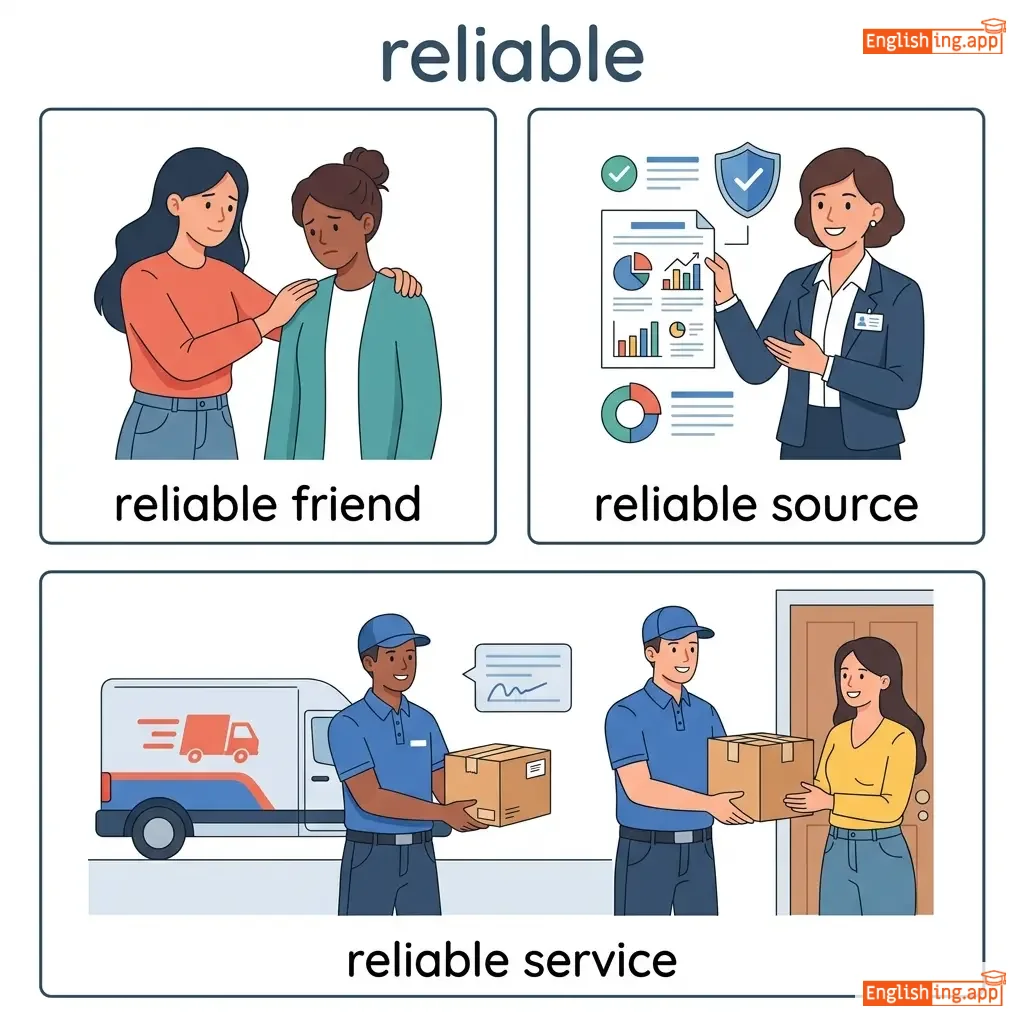
She is a reliable friend who always keeps her promises.
她是一个可靠的朋友,总是信守承诺。
••••••
|
她是一个可靠的朋友,总是信守承诺。
Ta shi yi ge kekao de pengyou, zong shi xinshou chengnuo.
••••••
|
reliable source
可靠来源
••••••
|
A source of information that can be trusted
••••••
|
可靠来源
kekao laiyuan
••••••
|
trustworthy, dependable, consistent, steady, faithful
••••••
|
unreliable, untrustworthy
••••••
|
reliable friend, reliable source, reliable service, reliable information
••••••
|
Reliable = Relate + able — 一个值得信赖的朋友
••••••
|
|
#10147
🎉
|
/rɪˈdʒɔɪsɪŋ/
noun
(rɪˈdʒɔɪsɪŋ)
••••••
|
- •••••• |
欢庆
huānqìng
••••••
|
- •••••• | - •••••• | - •••••• | - •••••• |
The action of showing great joy or happiness
••••••
|
There was much rejoicing after the victory. |
胜利之后有很多欢庆。
Shènglì zhīhòu yǒu hěn duō huānqìng.
••••••
|
- •••••• | - •••••• | - •••••• |
celebration, joy, happiness, delight
••••••
|
sorrow, grief
••••••
|
much rejoicing, public rejoicing, rejoicing at victory
••••••
|
Rejoicing 意味着再次找到快乐 — 庆祝胜利
••••••
|
|
#10148
💪
|
/ˌriːɪnˈfɔːrs/
verb
(rīn-fórs)
••••••
|
|
加强
jiāqiáng
••••••
|
reinforced
rīn-fórsd
••••••
|
reinforced
rīn-fórsd
••••••
|
reinforces
rīn-fórses
••••••
|
reinforcing
rīn-fórsing
••••••
|
To strengthen or support something with additional material, people, or ideas
••••••
|
The teacher reinforced the lesson with examples.
老师通过示例强化了课堂。
••••••
|
老师通过示例强化了课堂。
Lǎoshī tōngguò shìlì qiánghuàle kètáng.
••••••
|
reinforce an idea
强化一个想法
••••••
|
To strengthen the belief or acceptance of a concept
••••••
|
强化一个想法
qiánghuà yīgè xiǎngfǎ
••••••
|
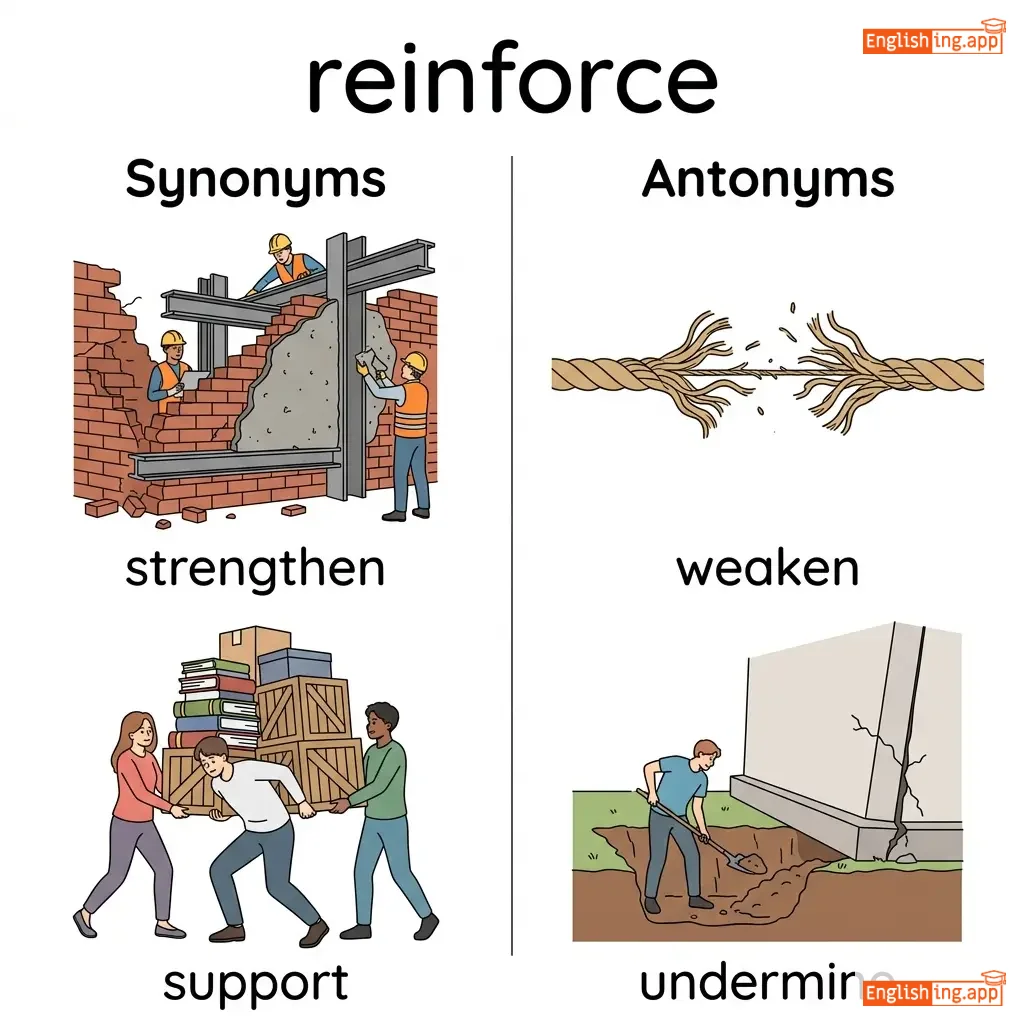
strengthen, support, bolster, fortify, encourage
••••••
|
weaken, undermine
••••••
|
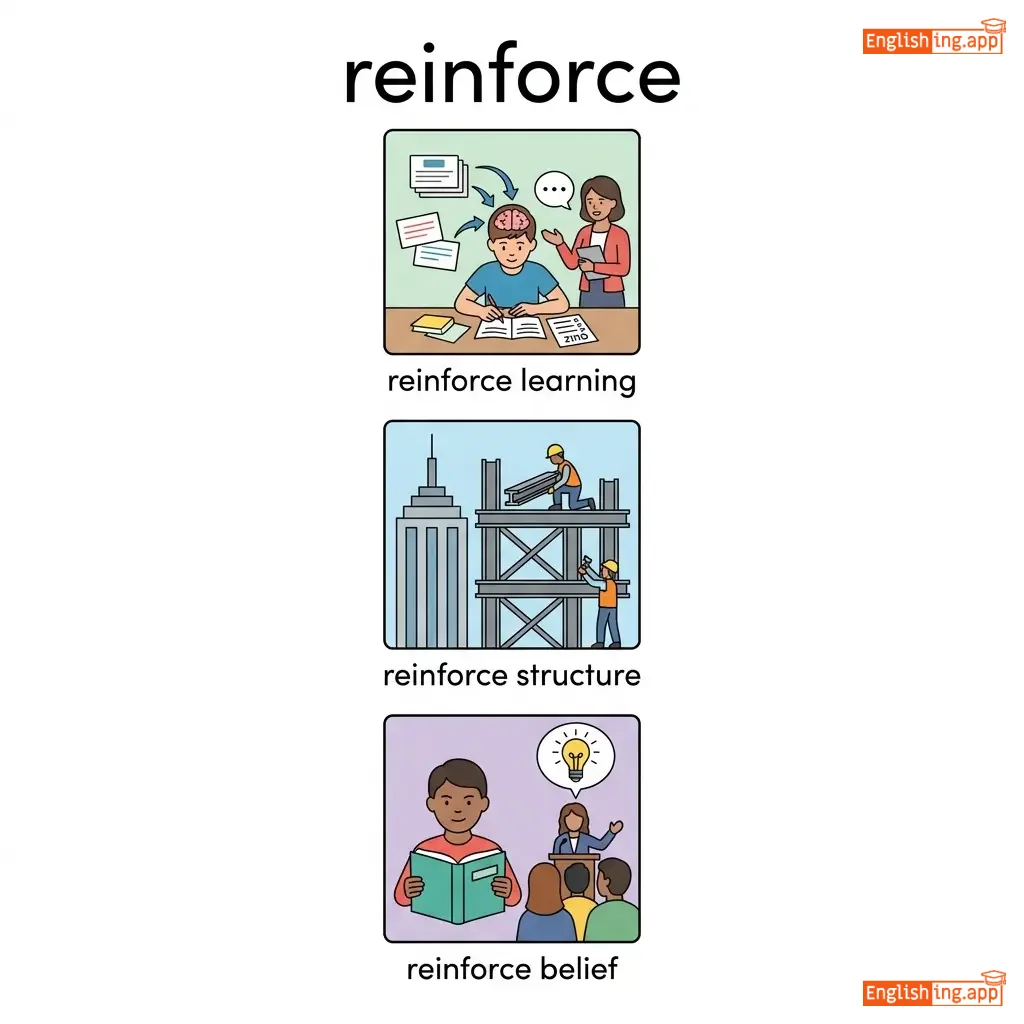
reinforce learning, reinforce structure, reinforce belief, reinforce habit
••••••
|
Rein (马) + force = 用力强化
••••••
|
|
#10149
⚖️
|
/ˈrɛɡjʊˌleɪt/
verb
(雷古莱特)
••••••
|
|
管理
guanli
••••••
|
regulated
雷古莱特德
••••••
|
regulated
雷古莱特德
••••••
|
regulates
雷古莱特斯
••••••
|
regulating
雷古莱廷
••••••
|
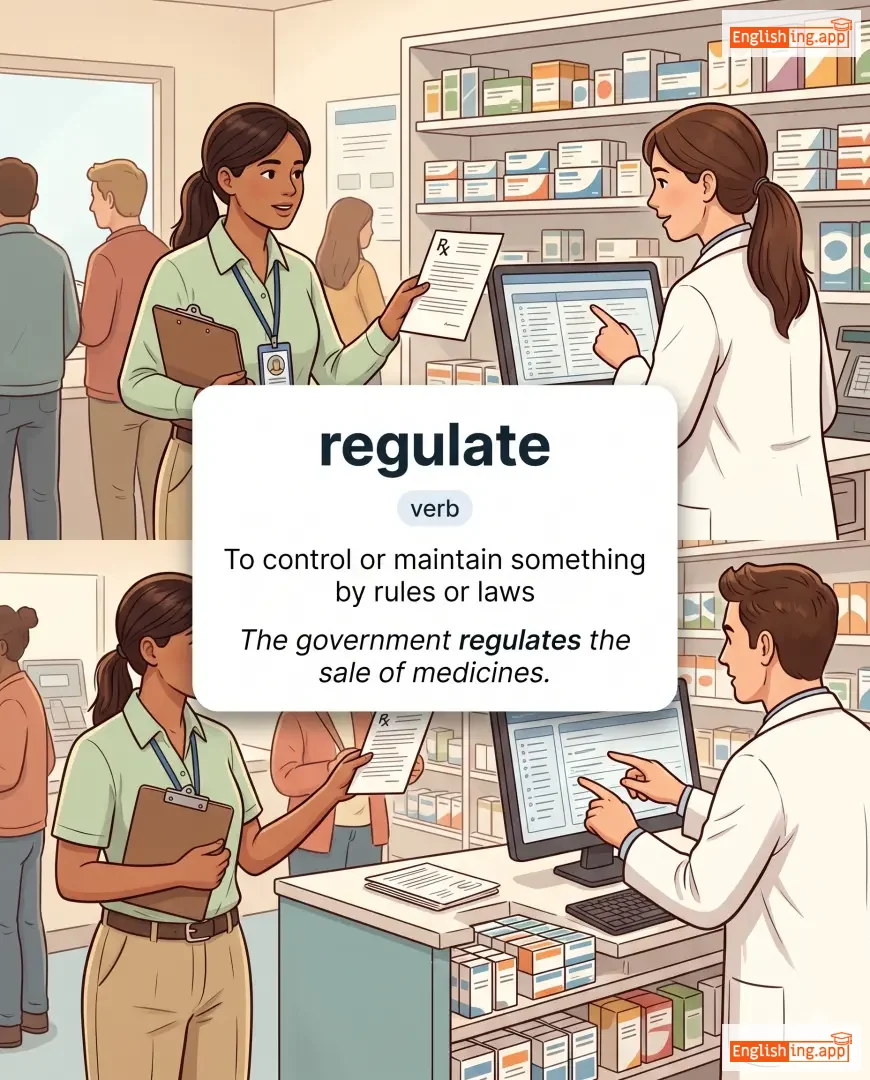
To control or maintain something by rules or laws
••••••
|
The government regulates the sale of medicines.
政府监管药品销售。
••••••
|
政府监管药品销售。
Zhengfu jianguan yaopin xiaoshou.
••••••
|
regulate traffic
管理交通
••••••
|
To control the flow and movement of vehicles
••••••
|
管理交通
Guanli jiaotong
••••••
|
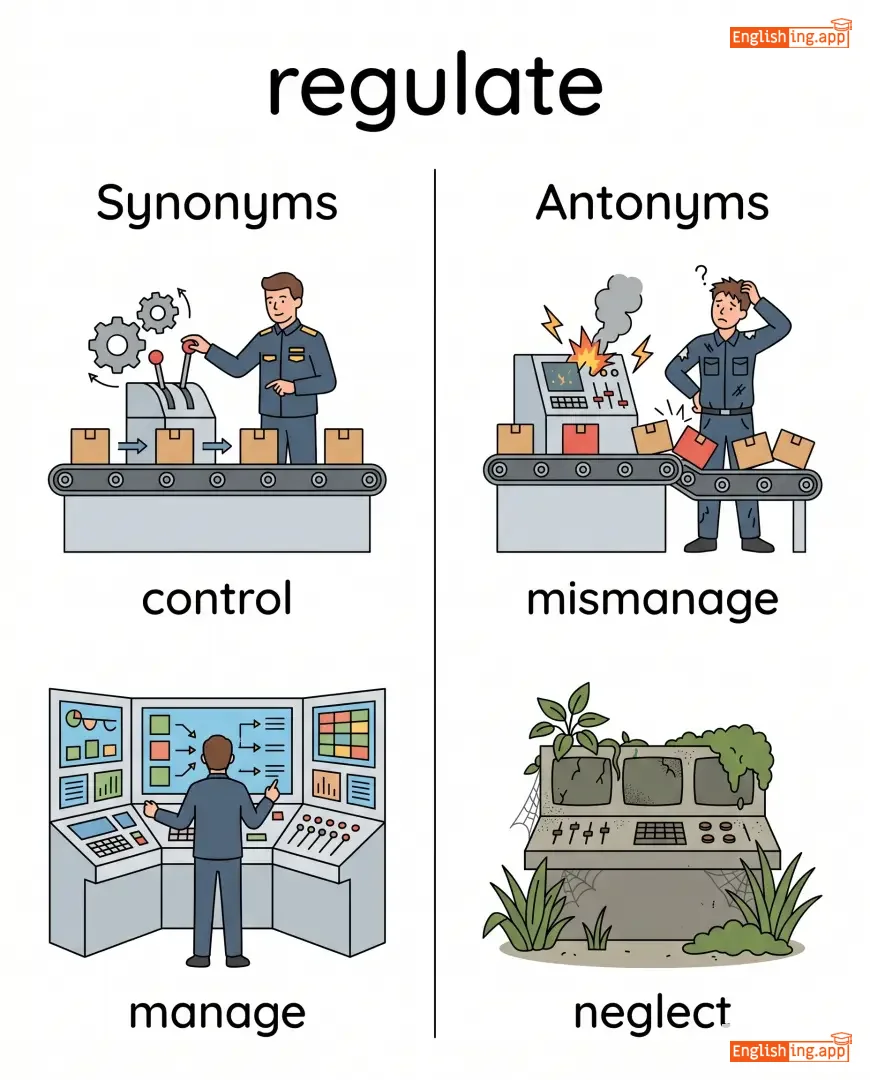
control, manage, supervise, direct, monitor
••••••
|
mismanage, neglect
••••••
|
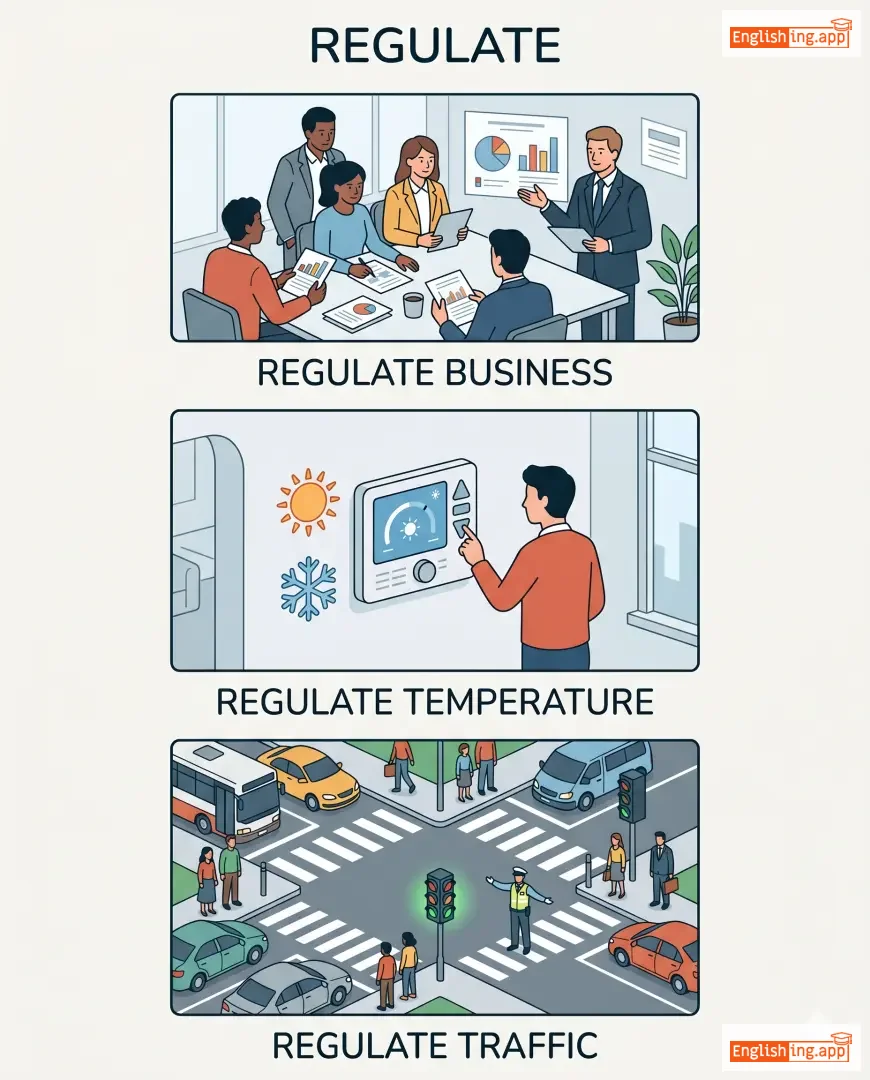
regulate business, regulate temperature, regulate traffic, regulate industry
••••••
|
管理 means controlling with rules in Chinese
••••••
|
|
#10150
⚖️
|
/kwoʊ/
noun
(kwo)
••••••
|
- •••••• |
现状
xianzhuang
••••••
|
- •••••• | - •••••• | - •••••• | - •••••• |
The existing state of affairs or situation, often used in the phrase 'status quo'.
••••••
|
He wanted to maintain the status quo at work. |
他想保持工作中的现状。
Ta xiang baochi gongzuo zhong de xianzhuang.
••••••
|
status quo |
The current state of things without change.
••••••
|
status quo
status quo
••••••
|
situation, state, condition, circumstances
••••••
|
change, transformation
••••••
|
maintain the status quo, challenge the status quo, disrupt the status quo
••••••
|
Quo 意味着状态,就像井里的水 – status quo
••••••
|
|
#10151
✨
|
/rɪˈfaɪnmənt/
noun
(精炼)
••••••
|
|
精炼
jinglian
••••••
|
- •••••• | - •••••• | - •••••• | - •••••• |
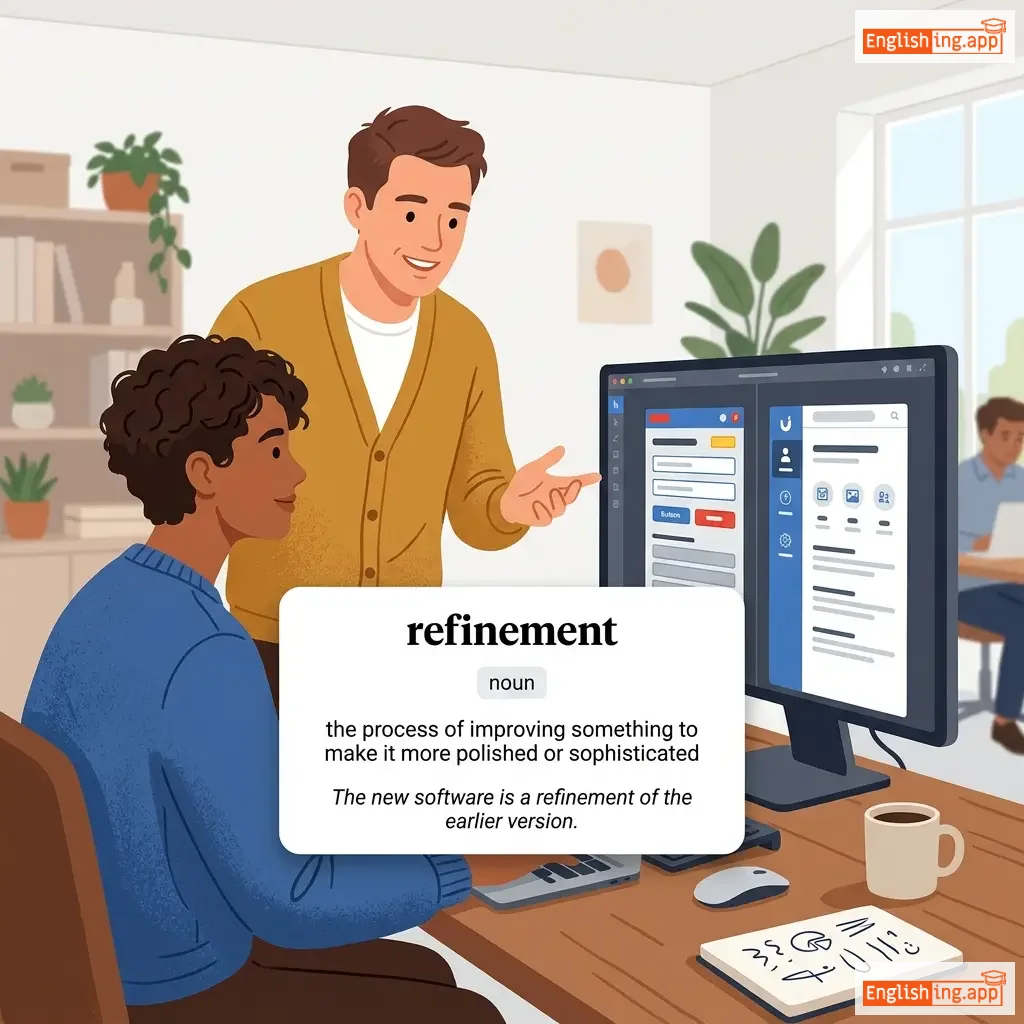
the process of improving something to make it more polished or sophisticated
••••••
|
The new software is a refinement of the earlier version. |
新的软件是对早期版本的精炼。
xin de ruanjian shi dui zaoqi banben de jinglian.
••••••
|
without refinement |
in a crude or unpolished form
••••••
|
没有精炼
meiyou jinglian
••••••
|
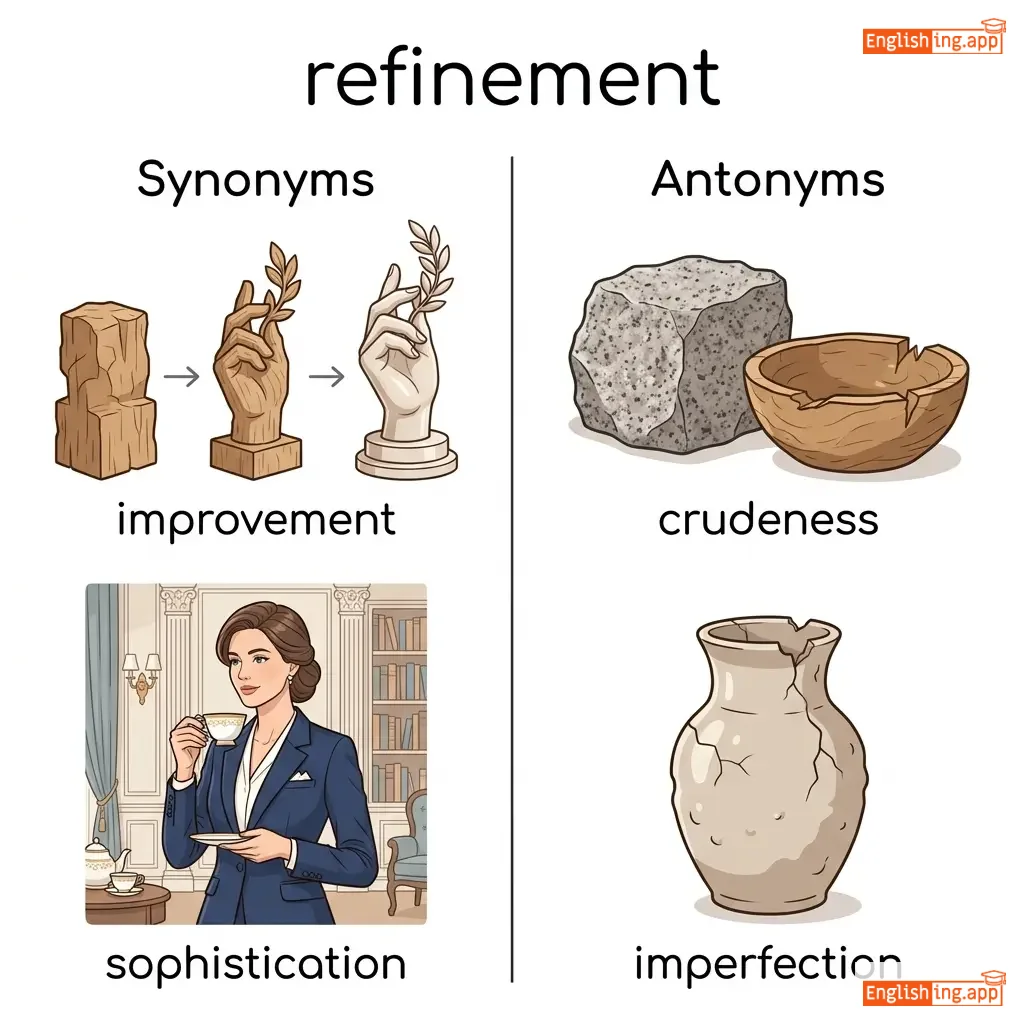
improvement, sophistication, polish, elegance, enhancement
••••••
|
crudeness, imperfection, roughness
••••••
|
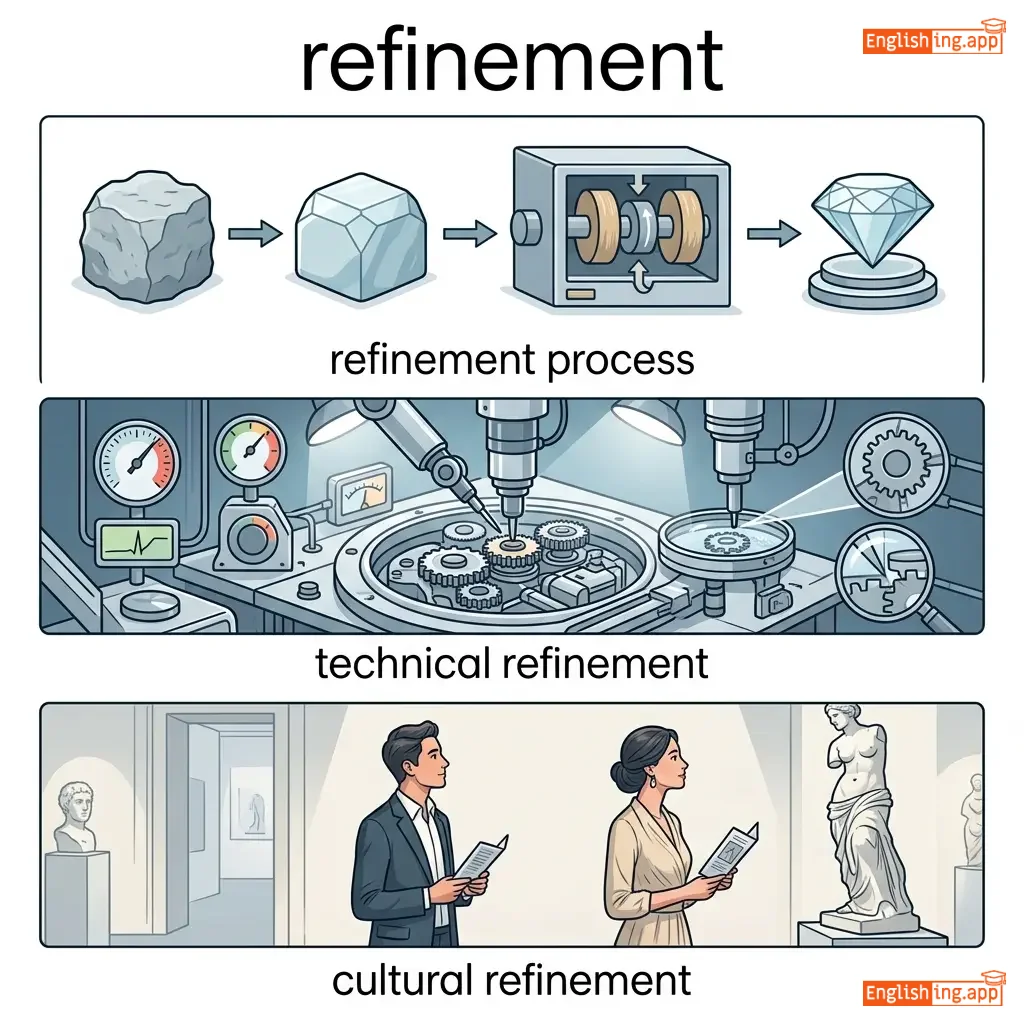
refinement process, technical refinement, cultural refinement, refinement of design
••••••
|
精致 = Fine = 精炼
••••••
|
|
#10152
📉
|
/rɪˈdʌndənsi/
noun
(rídāndánsī)
••••••
|
|
冗余 / 解雇
rǒngyú / jiěgù
••••••
|
- •••••• | - •••••• | - •••••• | - •••••• |
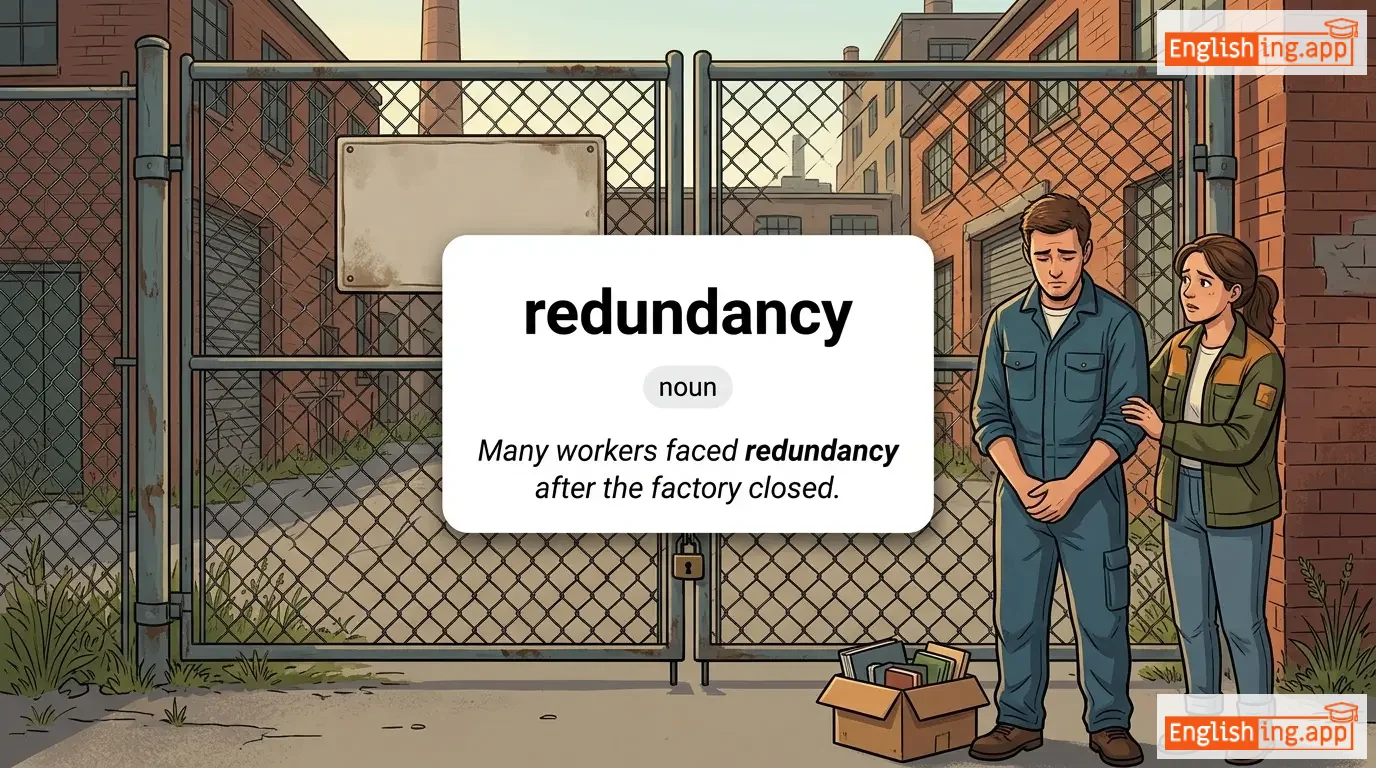
the state of being unnecessary or no longer needed; dismissal from a job due to lack of work
••••••
|
Many workers faced redundancy after the factory closed. |
许多工人在工厂关闭后面临冗余。
xǔduō gōngrén zài gōngchǎng guānbì hòu miànlín rǒngyú.
••••••
|
voluntary redundancy |
a situation where an employee agrees to leave their job in return for compensation
••••••
|
自愿冗余
zìyuàn rǒngyú
••••••
|
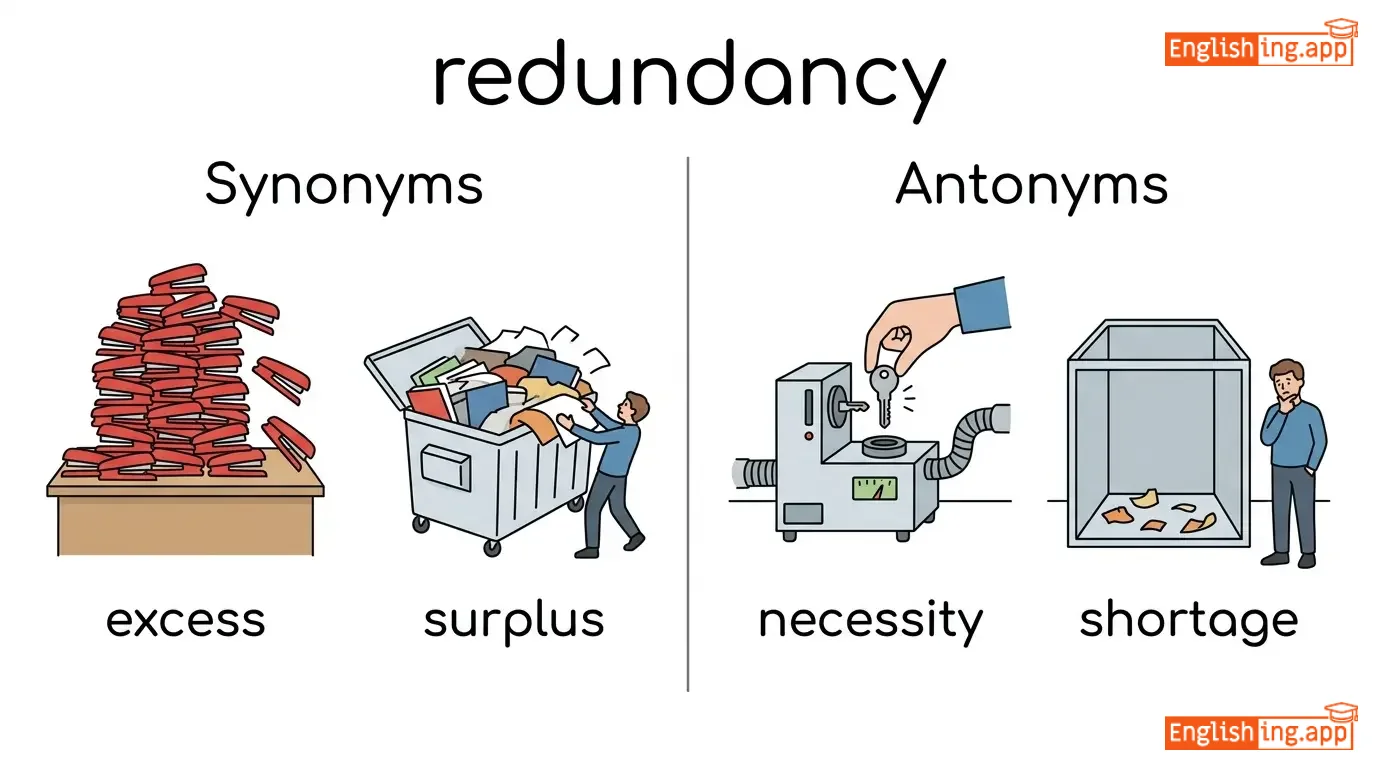
excess, surplus, superfluity, unemployment, dismissal
••••••
|
necessity, shortage, employment
••••••
|
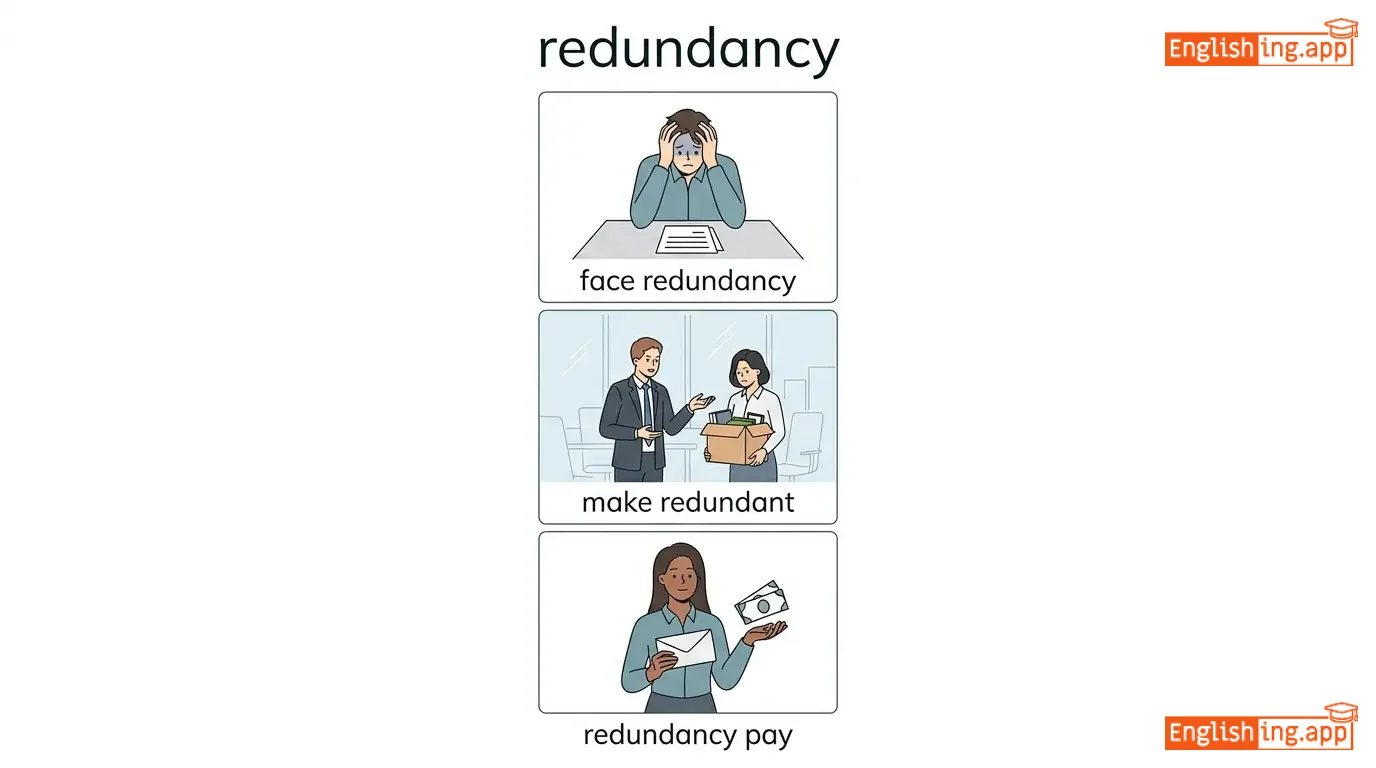
face redundancy, make redundant, redundancy pay, redundancy package
••••••
|
Re DUN DANcy = '冗余'的解雇
••••••
|
|
#10153
♻️
|
/rɪˈdiːm/
verb
(瑞迪姆)
••••••
|
- •••••• |
兑换
duihuan
••••••
|
redeemed
瑞迪姆德
••••••
|
redeemed
瑞迪姆德
••••••
|
redeems
瑞迪姆斯
••••••
|
redeeming
瑞迪姆英
••••••
|
to compensate for faults or mistakes; to exchange something for value
••••••
|
He managed to redeem his reputation after the scandal.
他在丑闻后成功地挽回了自己的声誉。
••••••
|
他在丑闻后成功地挽回了自己的声誉。
ta zai chouwen hou chenggong de huan hui le ziji de shengyu.
••••••
|
redeem a coupon
兑换优惠券
••••••
|
to exchange a coupon for goods or services
••••••
|
兑换优惠券
duihuan youhuiquan
••••••
|
compensate, recover, restore, reclaim, exchange
••••••
|
forfeit, lose, abandon
••••••
|
redeem a voucher, redeem points, redeem oneself, redeem reputation
••••••
|
兑换意味着恢复,比如兑换优惠券换商品
••••••
|
|
#10154
🎮
|
/ˌrɛkriˈeɪʃən/
noun
••••••
|
- •••••• | - •••••• | - •••••• | - •••••• | - •••••• | - •••••• |
activity done for enjoyment and relaxation during free time
••••••
|
Reading books is his favorite form of recreation. |
- •••••• |
recreation center |
a place where people engage in leisure and sports activities
••••••
|
- •••••• |
leisure, amusement, entertainment, pastime, relaxation
••••••
|
work, labor, duty
••••••
|
recreation center, recreation activity, outdoor recreation, recreation facility
••••••
|
No •••••• |
|
#10155
💰
|
/ˈrɛkəmˌpɛns/
noun/verb
(reɪkəmˈpɛns)
••••••
|
- •••••• |
赔偿
peichang
••••••
|
recompensed
reɪkəmˈpɛnsd
••••••
|
recompensed
reɪkəmˈpɛnsd
••••••
|
recompenses
reɪkəmˈpɛnsɪz
••••••
|
recompensing
reɪkəmˈpɛnsɪŋ
••••••
|
to compensate someone for loss or harm suffered; compensation given for damage or injury
••••••
|
The company offered financial recompense to the injured worker.
公司向受伤的工人提供了经济赔偿。
••••••
|
公司向受伤的工人提供了经济赔偿。
Gongsi xiang shoushang de gongren tigongle jingji peichang.
••••••
|
make recompense
做赔偿
••••••
|
to compensate or repay someone for a loss or harm
••••••
|
做赔偿
zuo peichang
••••••
|
compensation, restitution, repayment, indemnity, reimbursement
••••••
|
penalty, damage, loss
••••••
|
seek recompense, offer recompense, financial recompense, recompense for loss
••••••
|
Re COMPENS(e) = 赔偿 (peichang) 类似 compensation
••••••
|
|
#10156
📩
|
/rɪˈsiːv/
verb
(rísīf)
••••••
|
|
接收
jiēshōu
••••••
|
received
rísīfd
••••••
|
received
rísīfd
••••••
|
receives
rísīvs
••••••
|
receiving
rísīvīng
••••••
|
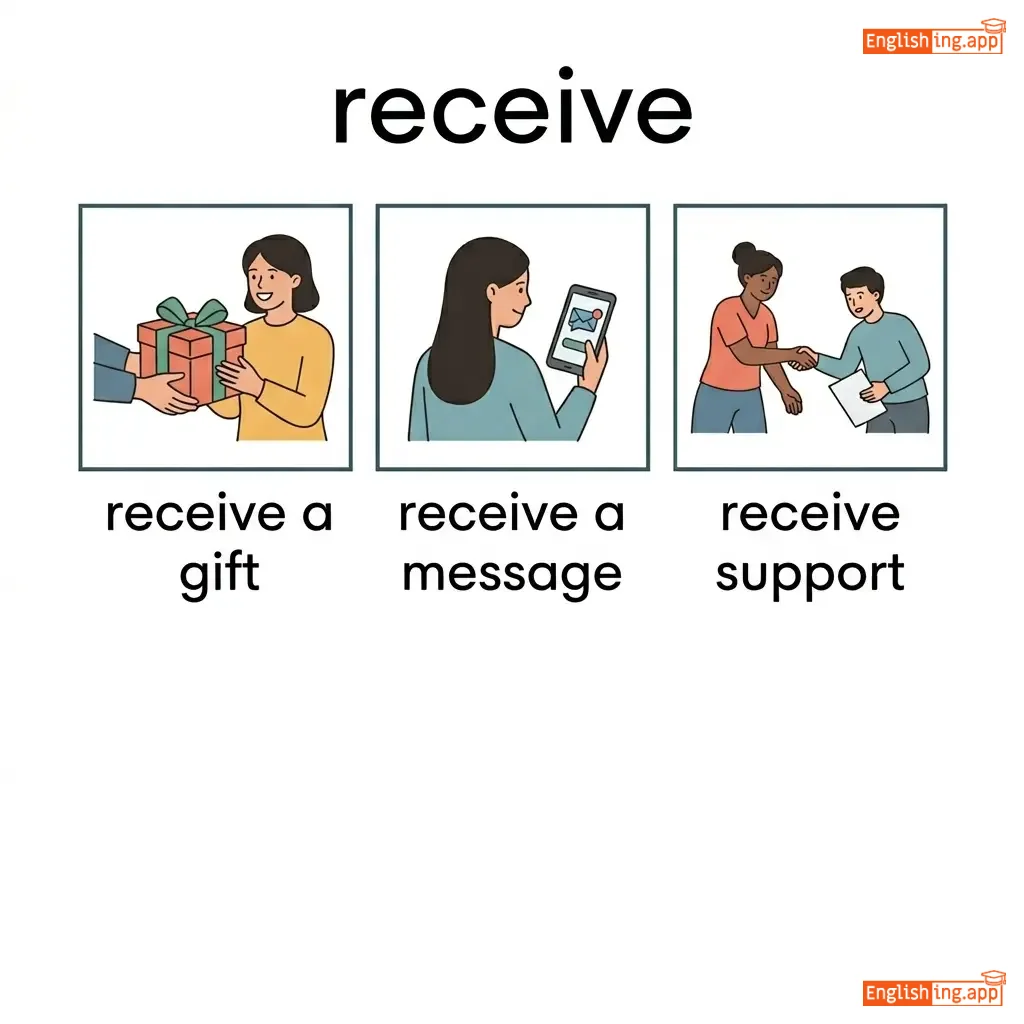
To get or be given something; to accept something offered.
••••••
|
She received a letter from her friend.
Shī rísīfd ā létēr fróm hēr frēnd.
••••••
|
她收到了朋友的一封信。
Tā shōu dào le péngyǒu de yī fēng xìn.
••••••
|
receive with open arms
rísīv widh ópen ārmz
••••••
|
to welcome someone warmly
••••••
|
张开双臂接纳
zhāng kāi shuāng bì jiē nà
••••••
|
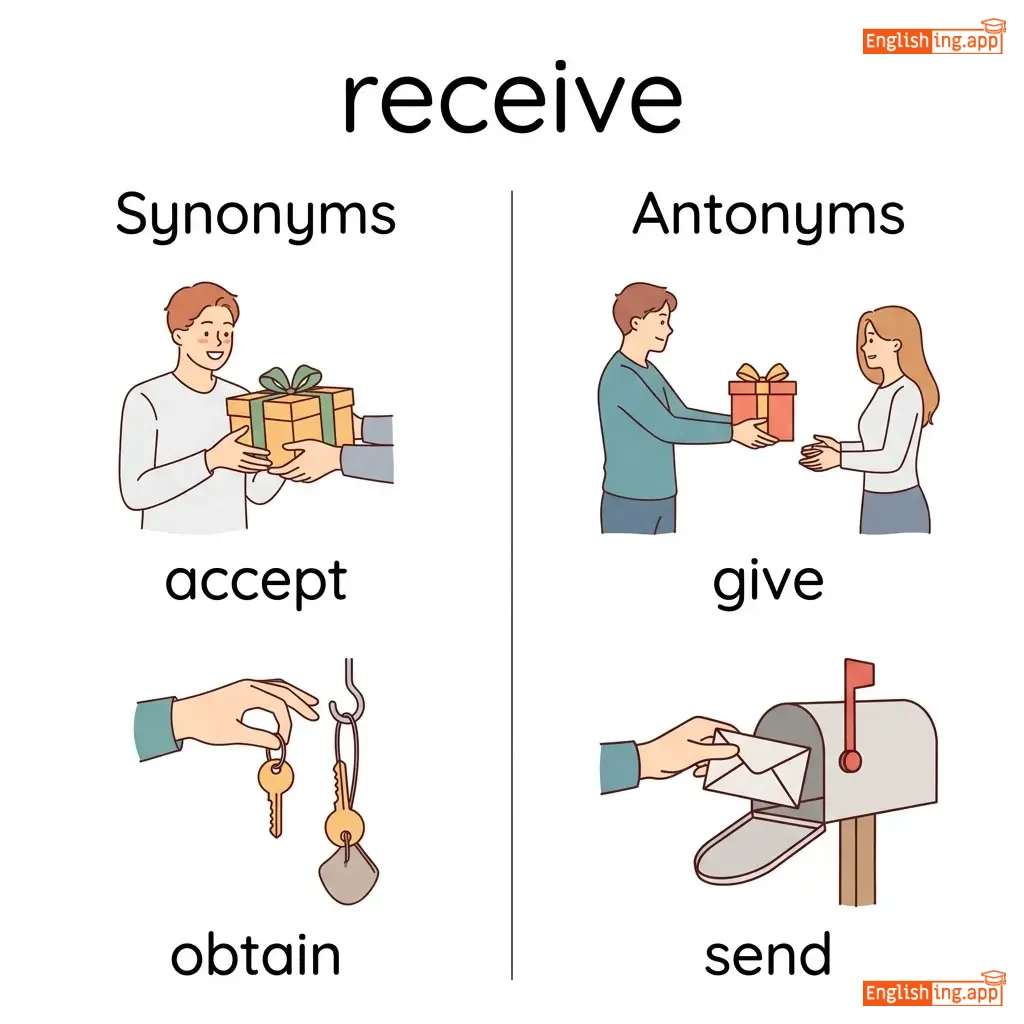
accept, obtain, acquire, collect, welcome
••••••
|
give, send, refuse
••••••
|
receive a gift, receive a message, receive support, receive payment
••••••
|
接收就像收到包裹 📦 或信件。
••••••
|
|
#10157
👌
|
/ˈriːzənəbl/
adjective
(rízənəbl)
••••••
|
- •••••• |
合理
heli
••••••
|
- •••••• | - •••••• | - •••••• | - •••••• |
Fair and sensible; having sound judgment; not extreme or excessive.
••••••
|
The price of the meal was quite reasonable.
这顿饭的价格相当合理。
••••••
|
这顿饭的价格相当合理。
Zhe dun fan de jiage xiangdang heli.
••••••
|
within reason
在合理范围内
••••••
|
to a fair and sensible extent
••••••
|
在合理范围内
Zai heli fanwei nei
••••••
|
fair, sensible, rational, logical, moderate
••••••
|
unreasonable, unfair, excessive
••••••
|
reasonable price, reasonable doubt, reasonable explanation, reasonable request
••••••
|
合理就像是合理 + able → 一切都显得合理且可行。
••••••
|
|
#10158
🤔
|
/ˈriːzən/
noun, verb
(rīzən)
••••••
|
- •••••• |
原因,理由
yuányīn, lǐyóu
••••••
|
reasoned
rīzənd
••••••
|
reasoned
rīzənd
••••••
|
reasons
rīzənz
••••••
|
reasoning
rīzənɪŋ
••••••
|
A cause, explanation, or justification for an action or event; to think or argue logically.
••••••
|
There is no reason to be upset.
dɛr ɪz no rīzən tu bi əpsɛt.
••••••
|
没有理由生气。
méiyǒu lǐyóu shēngqì.
••••••
|
listen to reason
lɪsən tu rīzən
••••••
|
to be persuaded by logical arguments
••••••
|
听从理由
tīngcóng lǐyóu
••••••
|
cause, ground, logic, justification, rationale
••••••
|
nonsense, irrationality, illogic
••••••
|
good reason, main reason, for this reason, reason behind
••••••
|
Reason 意味着原因,想到 Reason 一切都合乎逻辑 🤔
••••••
|
|
#10159
✅
|
/ˌriːəˈfɜːrm/
verb
(瑞阿夫木)
••••••
|
- •••••• |
重申
chong shen
••••••
|
reaffirmed
瑞阿夫木德
••••••
|
reaffirmed
瑞阿夫木德
••••••
|
reaffirms
瑞阿夫木斯
••••••
|
reaffirming
瑞阿夫木英
••••••
|
To state again strongly; to confirm or strengthen a statement or belief.
••••••
|
The president reaffirmed his commitment to education reform.
总统瑞阿夫木德希斯科米特门特图教育改革。
••••••
|
总统重申了他对教育改革的承诺。
zong tong chong shen le ta dui jiao yu gai ge de cheng nuo.
••••••
|
- •••••• | - •••••• | - •••••• |
confirm, restate, assert, emphasize, validate
••••••
|
deny, reject, refute
••••••
|
reaffirm commitment, reaffirm support, reaffirm belief, reaffirm position
••••••
|
Reaffirm 就是 再次 confirm,像中文的 重申 🔁
••••••
|
|
#10160
⚡
|
/rəˈpɪdəti/
noun
(rapidity)
••••••
|
- •••••• |
迅速
xunsu
••••••
|
- •••••• | - •••••• | - •••••• | - •••••• |
The quality of moving or happening quickly; swiftness or speed.
••••••
|
The rapidity of technological change is astonishing.
技术变化的速度令人震惊。
••••••
|
技术变化的速度令人震惊。
Jishu bianhua de sudu lingren zhenjing.
••••••
|
- •••••• | - •••••• | - •••••• |
speed, swiftness, quickness, velocity, pace
••••••
|
slowness, delay, sluggishness
••••••
|
rapidity of change, with great rapidity, rapidity of growth
••••••
|
Rapid 意味着快速, rapidity 意味着迅速 ⚡
••••••
|
|
#10161
✋
|
/reɪz/
verb
(réi zi)
••••••
|
- •••••• |
举起 / 提高
ju qi / ti gao
••••••
|
raised
réi zhuó
••••••
|
raised
réi zhuó
••••••
|
raises
réi zhi
••••••
|
raising
réi xíng
••••••
|
To lift or move something to a higher position; to increase; to bring up.
••••••
|
She raised her hand to ask a question.
shì réi zhuó tā de shǒu bǎ yī ge wèntí tí chū lái。
••••••
|
她举起手来提问。
Ta ju qi shou lai ti wen.
••••••
|
raise the bar
réi zhī bā
••••••
|
To set a higher standard or expectation.
••••••
|
提高标准
tigao biaozhun
••••••
|
lift, elevate, increase, boost, enhance
••••••
|
lower, drop, decrease
••••••
|
raise a hand, raise money, raise awareness, raise the bar
••••••
|
Raise是举手提问或提高标准。
••••••
|
|
#10162
⚔️
|
/reɪd/
verb
(reid)
••••••
|
|
突袭
tuxi
••••••
|
raided
reided
••••••
|
raided
reided
••••••
|
raids
reidz
••••••
|
raiding
reiding
••••••
|
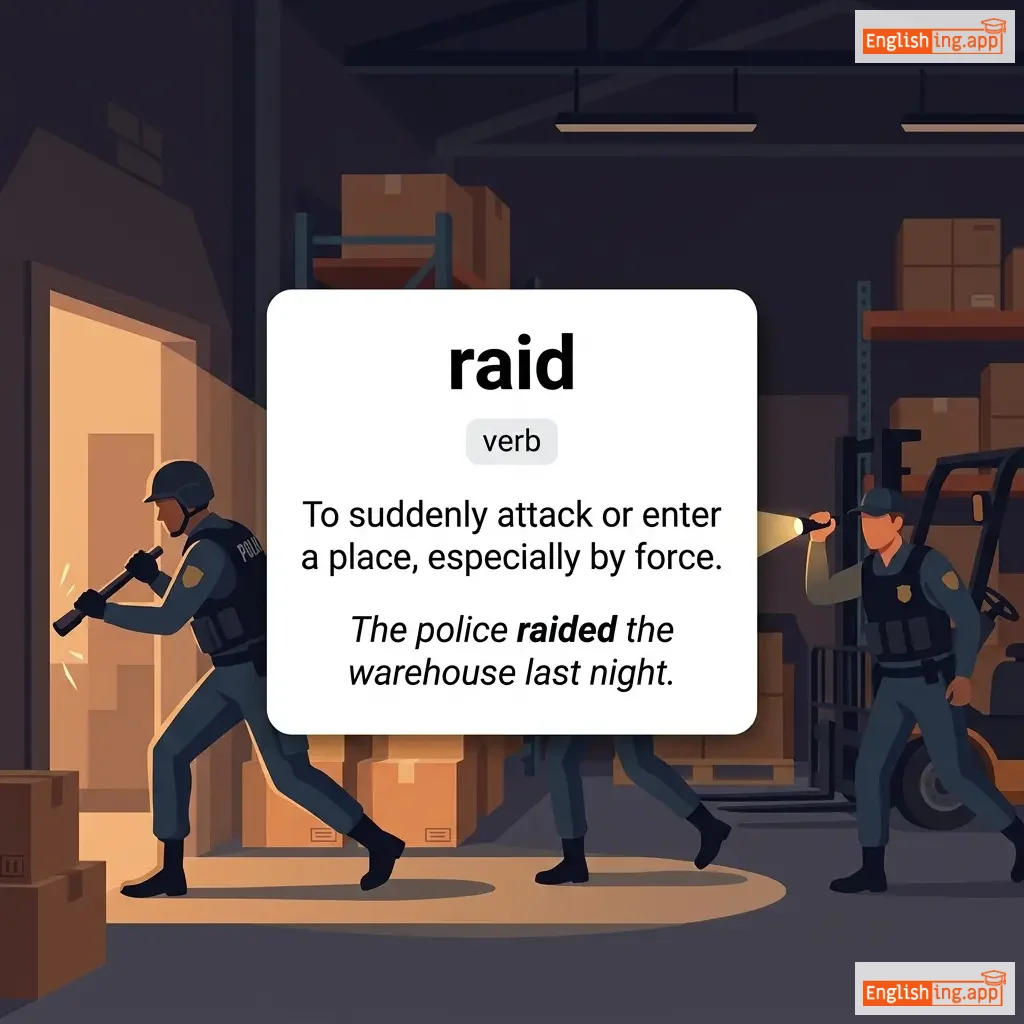
To suddenly attack or enter a place, especially by force.
••••••
|
The police raided the warehouse last night.
警方昨晚突袭了仓库。
••••••
|
警方昨晚突袭了仓库。
Jingfang zuowan tuxi le cangku.
••••••
|
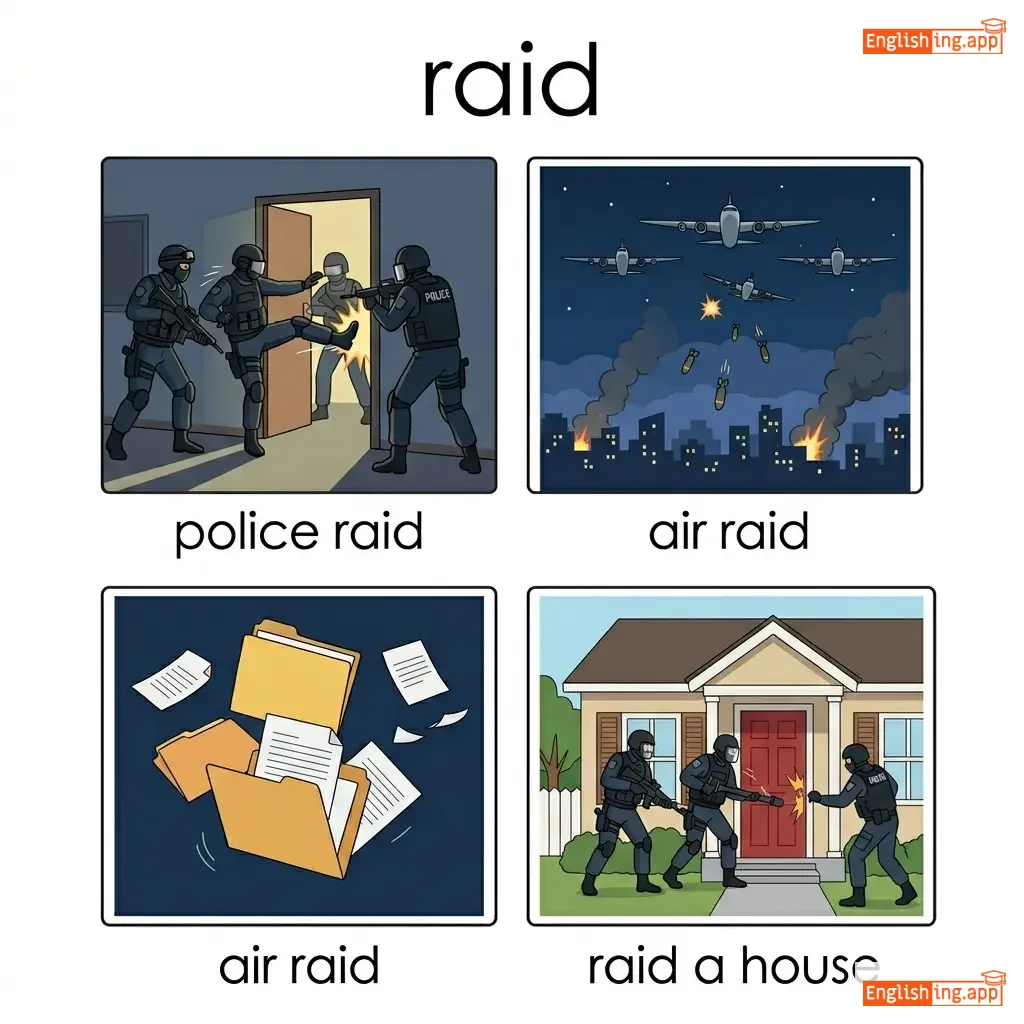
air raid
空袭
••••••
|
A military attack by aircraft.
••••••
|
空袭
kongxi
••••••
|
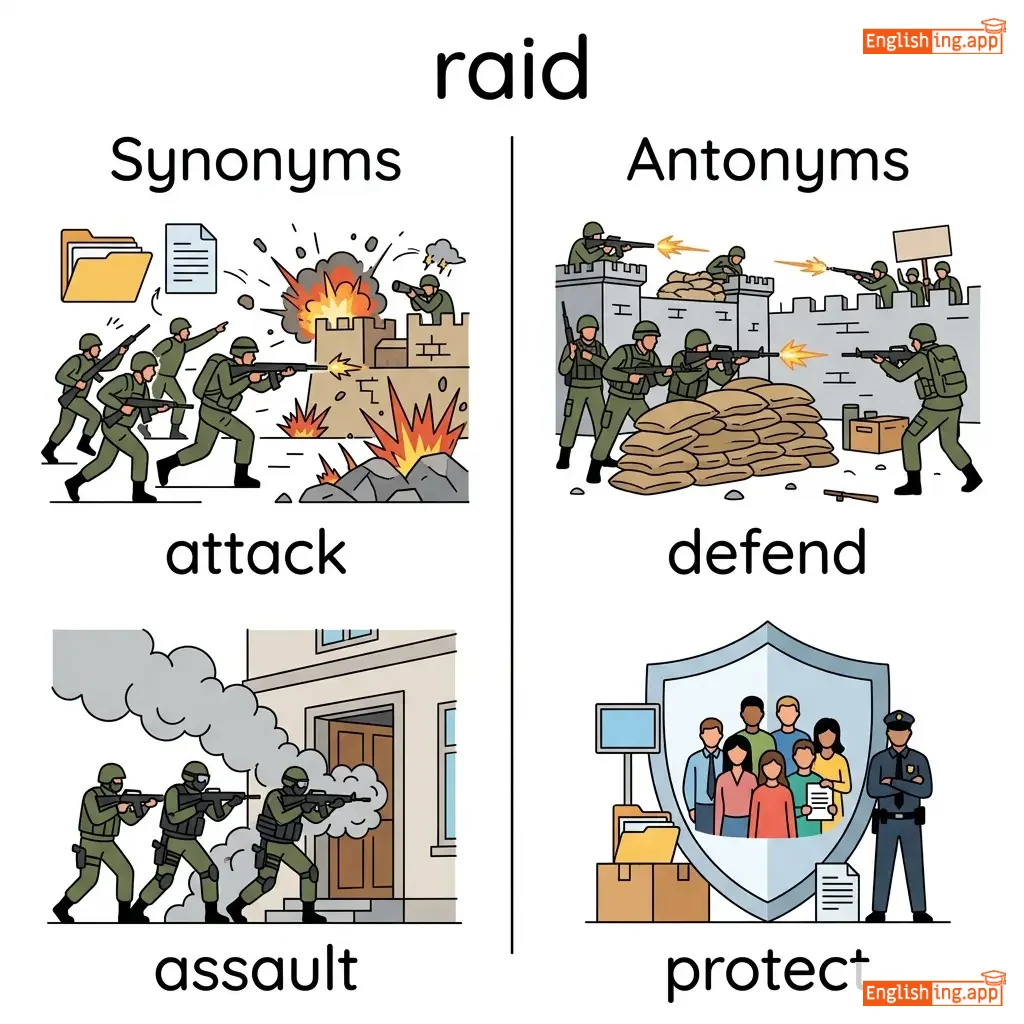
attack, assault, invasion, ambush
••••••
|
defend, protect
••••••
|
police raid, air raid, raid a house
••••••
|
Raid 是指突然袭击,通常是夜间进行的。
••••••
|
|
#10163
☀️
|
/ˈreɪdiənt/
adjective
(rèi di ān tè)
••••••
|
- •••••• |
光彩照人
guāngcǎi zhàorén
••••••
|
- •••••• | - •••••• | - •••••• | - •••••• |
Shining brightly; expressing great happiness.
••••••
|
She looked radiant in her wedding dress.
她在婚礼上穿着婚纱,看起来非常耀眼。
••••••
|
她在婚礼上穿着婚纱,看起来非常耀眼。
Tā zài hūnlǐ shàng chuānzhuó hūnshā, kàn qǐlái fēicháng yàoyǎn.
••••••
|
- •••••• | - •••••• | - •••••• |
bright, glowing, shining, luminous, joyful
••••••
|
dull, gloomy
••••••
|
radiant smile, radiant light, radiant energy
••••••
|
Radiant 在中文中意味着像太阳一样光彩照人 ☀️
••••••
|
|
#10164
🎾
|
/ˈrækɪt/
noun
(racket)
••••••
|
- •••••• |
球拍 / 喧闹
qiupai / xuanao
••••••
|
- •••••• | - •••••• | - •••••• | - •••••• |
A piece of equipment used to hit the ball in sports like tennis or badminton; also a loud noise or an illegal scheme.
••••••
|
He bought a new tennis racket for the match. |
他为比赛买了一把新网球拍。
Ta wei bisai mai le yi ba xin wangqiu pai.
••••••
|
make a racket |
To make a lot of noise.
••••••
|
制造噪音
zhizao zaoyin
••••••
|
bat, paddle, noise, commotion
••••••
|
silence, quiet
••••••
|
tennis racket, badminton racket, make a racket
••••••
|
球拍 🎾 和喧闹也 (racket) 一样
••••••
|
Vocabulary Quiz
Test your vocabulary by matching words with their translations or meanings.
Login to take the quiz
Comments (0)
Share your thoughts and join the discussion.
Join the discussion by logging in
Login to CommentNo comments yet
Be the first to share your thoughts!