

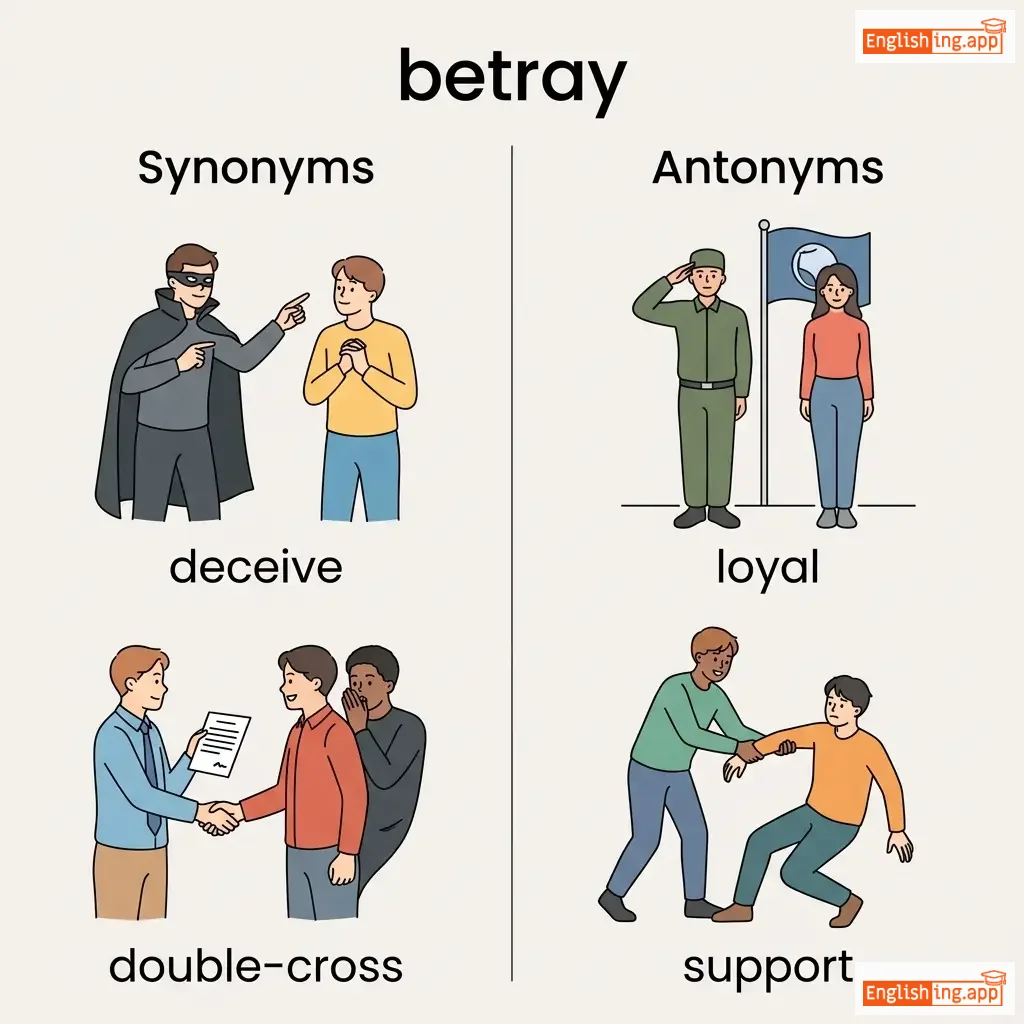
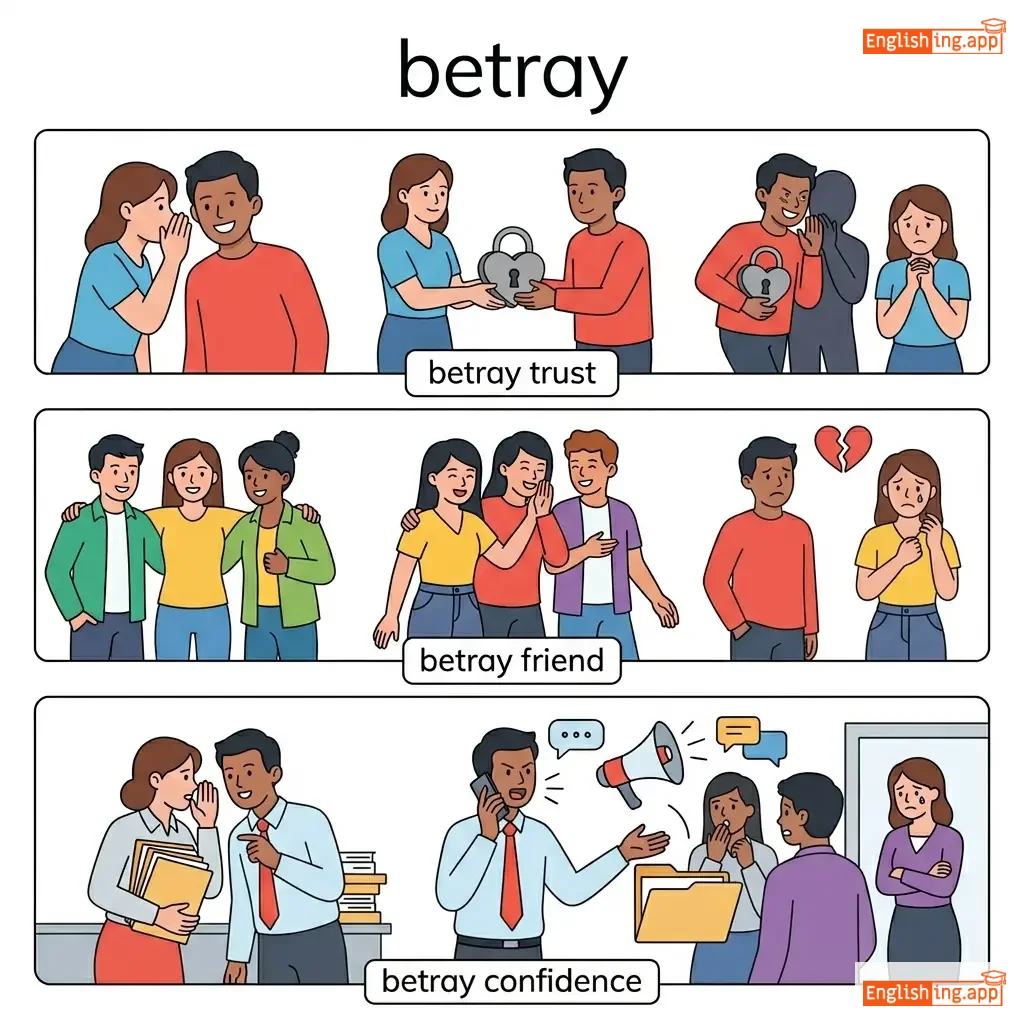
Swipe left or right, or use the buttons. Tap image to zoom.
例句翻译
单词
Lesson 32Lesson 32 - 遮罩切换
|
表情符号
|
单词 | Images | 翻译 | 过去时 | 过去分词 | 第三人称单数 | 动名词 | 含义 | 例句 | 例句翻译 | 示例表达 | 示例表达含义 | 示例表达翻译 | 同义词 | 反义词 | 搭配词 | 助记符 |
|---|---|---|---|---|---|---|---|---|---|---|---|---|---|---|---|---|---|
|
#931
⚠️
|
/bɪˈwɛər/
verb
(比维尔)
••••••
|
- •••••• |
小心
xiaoxin
••••••
|
- •••••• | - •••••• |
bewares
比维尔斯
••••••
|
bewaring
比维尔英
••••••
|
to be cautious or alert about a potential danger or problem
••••••
|
Beware of the dog near the gate.
比维尔 ʌv ðə 狗 near ðə gate
••••••
|
小心门口附近的狗。
Xiǎoxīn ménkǒu fùjìn de gǒu.
••••••
|
beware of Greeks bearing gifts
比维尔 ʌv Greeks bearing gifts
••••••
|
be cautious of enemies offering gifts as they may have hidden motives
••••••
|
小心那些送礼的希腊人
Xiǎoxīn nàxiē sòng lǐ de xīlàrén
••••••
|
be cautious, watch out, be alert, take care, heed
••••••
|
ignore, neglect, overlook
••••••
|
beware of, beware the, beware danger
••••••
|
Beware 意思是小心,就像 'be aware'(保持警觉)。
••••••
|
|
#932
🔀
|
/ˈbaɪfərˌkeɪt/
verb
(bɪfərˈkeɪt)
••••••
|
|
分成两部分
fen cheng liang bu fen
••••••
|
bifurcated
bɪfərˈkeɪtɪd
••••••
|
bifurcated
bɪfərˈkeɪtɪd
••••••
|
bifurcates
bɪfərˈkeɪts
••••••
|
bifurcating
bɪfərˈkeɪtɪŋ
••••••
|
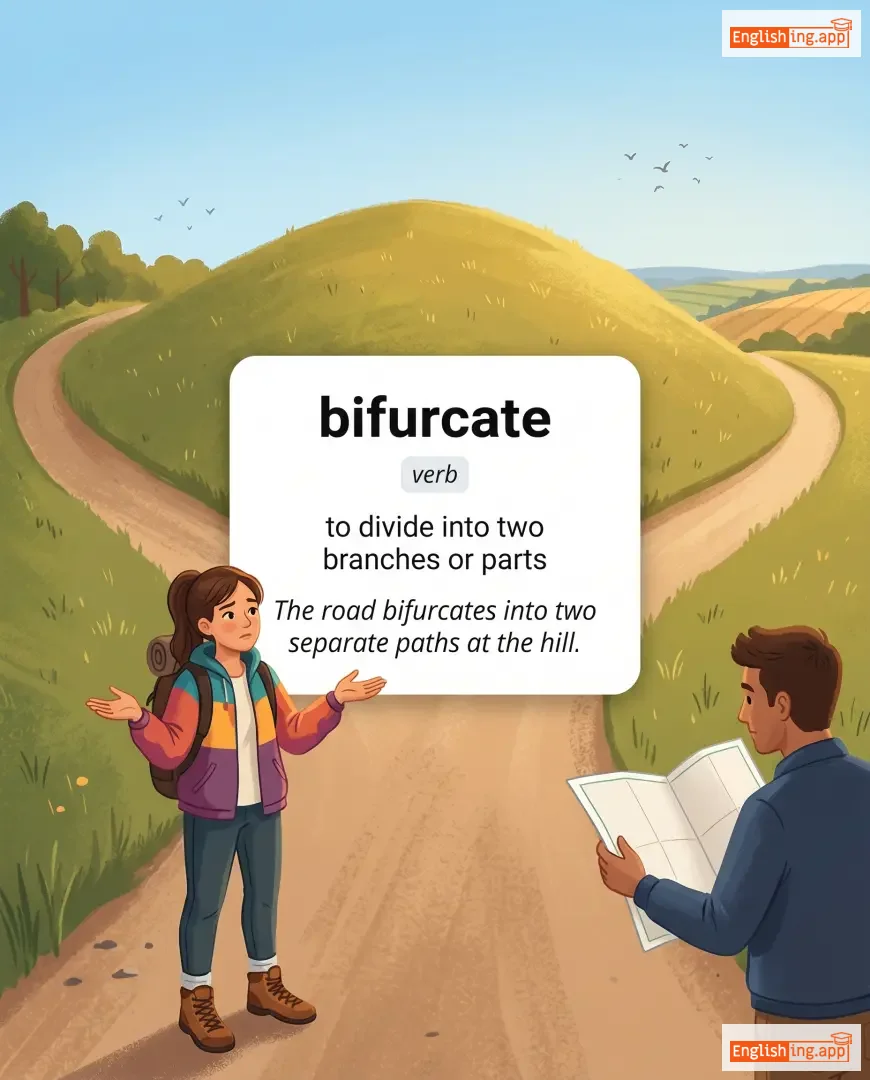
to divide into two branches or parts
••••••
|
The road bifurcates into two separate paths at the hill.
这条路在山丘处分岔成两条分开的路。
••••••
|
这条路在山丘处分岔成两条分开的路。
Zhe tiao lu zai shanqiu chu fencha cheng liang tiao fenkai de lu.
••••••
|
- •••••• | - •••••• | - •••••• |
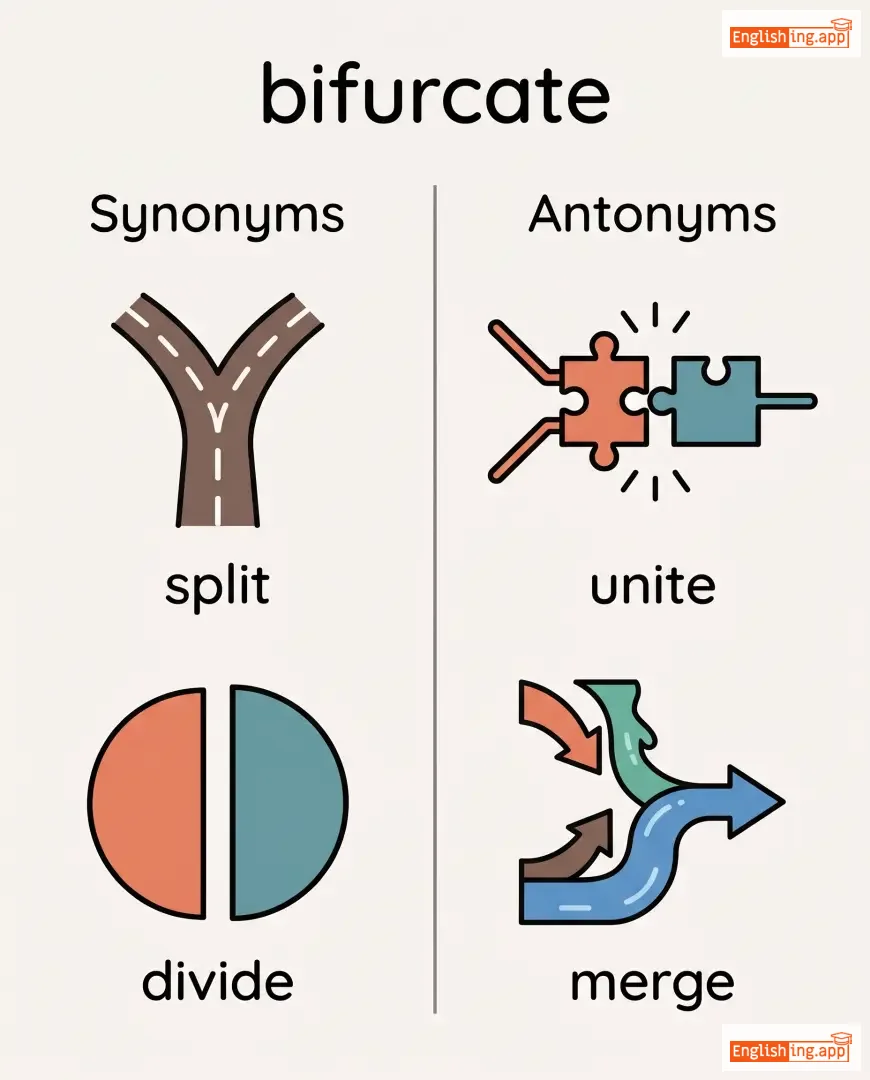
split, divide, branch, fork
••••••
|
unite, merge, join
••••••
|
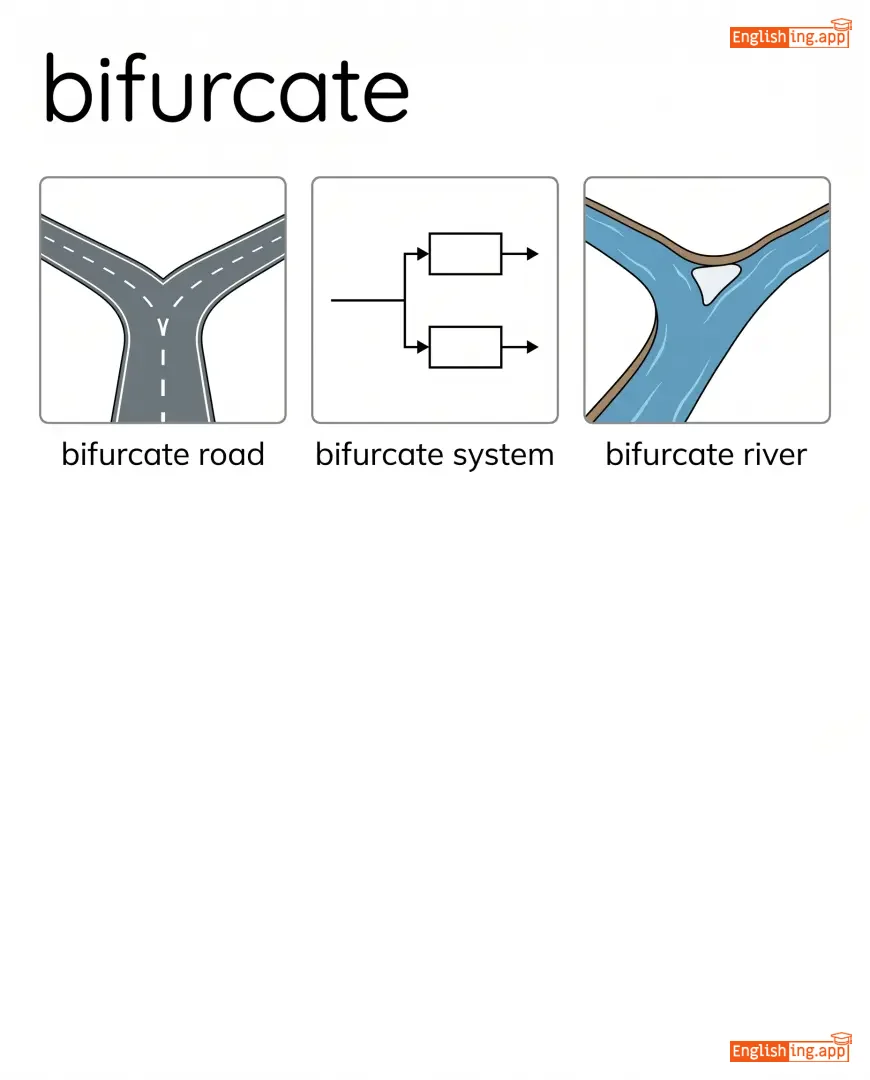
bifurcate road, bifurcate system, bifurcate river
••••••
|
BIFURCATE = 分叉像叉子
••••••
|
|
#933
⚰️
|
/bɪər/
noun
(比尔)
••••••
|
- •••••• |
灵柩架
líng jiù jià
••••••
|
- •••••• | - •••••• | - •••••• | - •••••• |
a frame or stand on which a coffin or body is placed before burial or cremation
••••••
|
The coffin was placed on the bier during the funeral service.
The coffin was placed on the bier during the funeral service.
••••••
|
棺材在葬礼服务期间被放置在灵柩架上。
Guāncai zài zànglǐ fúwù qíjiān bèi fàngzhì zài líng jiù jià shàng.
••••••
|
- •••••• | - •••••• | - •••••• |
stand, platform, frame
••••••
|
ground, floor
••••••
|
funeral bier, coffin on bier
••••••
|
BIER 听起来像 BEAR (熊) ⚰️ - 用于尸体的架子
••••••
|
|
#934
📆
|
/baɪˈɛniəl/
adjective
(bàiˈɛniəl)
••••••
|
- •••••• |
两年一次的
liǎng nián yī cì de
••••••
|
- •••••• | - •••••• | - •••••• | - •••••• |
happening every two years
••••••
|
The biennial festival attracts thousands of visitors. |
这个两年一次的节日吸引了成千上万的游客。
Zhège liǎng nián yī cì de jiérì xīyǐnle chéngqiān shàngwàn de yóukè.
••••••
|
- •••••• | - •••••• | - •••••• |
two-yearly, every two years, biennium
••••••
|
annual, perennial
••••••
|
biennial event, biennial report, biennial festival
••••••
|
BI (每两) + ENNIAL (年) = 两年一次的 📆
••••••
|
|
#935
⏳
|
/baɪd/
verb
(báid)
••••••
|
- •••••• |
等待
deng dai
••••••
|
bided
báidéd
••••••
|
bided
báidéd
••••••
|
bides
baides
••••••
|
biding
baiding
••••••
|
to wait patiently for the right time or opportunity
••••••
|
He decided to bide his time before making a move.
他决定在行动之前等待合适的时机。
••••••
|
他决定在行动之前等待合适的时机。
Ta jueding zai xingdong zhīqián dengdài héshì de shíjī.
••••••
|
bide one's time
等待时机
••••••
|
to wait for the right opportunity
••••••
|
等待合适的时机
dengdài héshì de shíjī
••••••
|
wait, endure, remain, stay
••••••
|
hurry, rush
••••••
|
bide time, bide his chance, bide patiently
••••••
|
BIDE 意思是‘等待时机’ ⏳ - 耐心等待
••••••
|
|
#936
💸
|
/bɪd/
verb
••••••
|
- •••••• | - •••••• |
bid
••••••
|
bid
••••••
|
bids
••••••
|
bidding
••••••
|
to offer a certain amount of money for something, especially at an auction
••••••
|
She bid $200 for the antique vase. |
- •••••• |
bid farewell |
to say goodbye formally
••••••
|
- •••••• |
offer, propose, tender, submit, quote
••••••
|
withdraw, retract
••••••
|
bid price, bid farewell, bid high, bid low
••••••
|
No •••••• |
|
#937
🗣️
|
/ˈbɪkər/
verb
(比克)
••••••
|
- •••••• |
为琐事争吵
wèi suǒshì zhēngchǎo
••••••
|
bickered
比克德
••••••
|
bickered
比克德
••••••
|
bickers
比克斯
••••••
|
bickering
比克瑞英
••••••
|
To argue or quarrel about trivial matters.
••••••
|
The children began to bicker over the last piece of cake.
孩子们开始为了最后一块蛋糕而争吵。
••••••
|
孩子们开始为了最后一块蛋糕而争吵。
Háizimen kāishǐ wèile zuìhòu yī kuài dàngāo ér zhēngchǎo.
••••••
|
bicker and squabble
争吵和斗嘴
••••••
|
To argue repeatedly about small or unimportant things.
••••••
|
争吵和斗嘴
zhēngchǎo hé dòuzuǐ
••••••
|
argue, quarrel, squabble, dispute, wrangle
••••••
|
agree, concur
••••••
|
bicker constantly, bicker over, bicker about, start to bicker
••••••
|
Bicker = 孩子为了最后一块蛋糕而争吵。
••••••
|
|
#938
🏛️
|
/baɪˈkæmərəl/
adjective
(baikemeral)
••••••
|
- •••••• |
两院制
liang yuanzhi
••••••
|
- •••••• | - •••••• | - •••••• | - •••••• |
Having two branches or chambers, especially in a legislature.
••••••
|
The United States has a bicameral legislature consisting of the Senate and the House of Representatives.
美国有一个两院制的立法机构,由参议院和众议院组成。
••••••
|
美国有一个两院制的立法机构,由参议院和众议院组成。
Meiguo you yige liang yuanzhi de lifa jigou, you canyiyuan he zhongyiyuan zucheng.
••••••
|
- •••••• | - •••••• | - •••••• |
two-chambered, dual-chamber, double-house, legislative
••••••
|
unicameral, single-chambered
••••••
|
bicameral legislature, bicameral parliament, bicameral system
••••••
|
Bi = 两个 + cameral = 议院 → 两院制意味着有两个议院的立法机构。
••••••
|
|
#939
🍷
|
/ˈbɪbjələs/
adjective
(bìbīlè sī)
••••••
|
- •••••• |
醉鬼
zuìguǐ
••••••
|
- •••••• | - •••••• | - •••••• | - •••••• |
Excessively fond of drinking alcohol.
••••••
|
His bibulous habits worried his family. |
他的醉鬼习惯让他的家人很担心。
Tā de zuìguǐ xíguàn ràng tā de jiārén hěn dānxīn.
••••••
|
- •••••• | - •••••• | - •••••• |
drunken, intemperate, boozy, alcoholic
••••••
|
sober, temperate
••••••
|
bibulous habits, bibulous lifestyle, bibulous gathering
••••••
|
Bibulous → Bibi总是喜欢喝酒 🍷 - 醉鬼
••••••
|
|
#940
📖
|
/ˈbɪbliəfaɪl/
noun
(bìbliāofēi'ěr)
••••••
|
- •••••• |
书迷
shūmí
••••••
|
- •••••• | - •••••• | - •••••• | - •••••• |
A person who loves or collects books.
••••••
|
She is a true bibliophile who spends weekends at old bookstores. |
她是一个真正的书迷,周末都在旧书店度过。
Tā shì yīgè zhēnzhèng de shūmí, zhōumò dōu zài jiù shūdiàn dùguò.
••••••
|
- •••••• | - •••••• | - •••••• |
book-lover, bookworm, reader, collector
••••••
|
illiterate, book-hater
••••••
|
avid bibliophile, true bibliophile, bibliophile club
••••••
|
Bibliophile = shu lover file → 书迷在文件里.
••••••
|
|
#941
📚
|
/ˌbɪbliəʊˈmeɪniə/
noun
(书籍癖)
••••••
|
- •••••• |
书籍癖
shūjí pǐ
••••••
|
- •••••• | - •••••• | - •••••• | - •••••• |
An extreme obsession with collecting or possessing books.
••••••
|
His bibliomania led him to fill every room with books. |
他的书籍癖使他把每个房间都塞满了书。
tā de shūjí pǐ shǐ tā bǎ měi gè fángjiān dōu sāi mǎn le shū.
••••••
|
- •••••• | - •••••• | - •••••• |
book-obsession, bibliophily, book-collecting, book-addiction
••••••
|
indifference, disinterest
••••••
|
suffer from bibliomania, passion for bibliomania, uncontrolled bibliomania
••••••
|
书籍癖意味着对书籍的极端迷恋
••••••
|
|
#942
📚
|
/ˌbɪbliˈɒɡrəfi/
noun
(bìbǐlì'āofǎ)
••••••
|
- •••••• |
参考书目
cān kǎo shū mù
••••••
|
- •••••• | - •••••• | - •••••• | - •••••• |
a list of books, articles, or other sources used or referred to in scholarly work
••••••
|
The report includes a detailed bibliography at the end.
报告在最后包括了详细的参考书目。
••••••
|
报告在最后包括了详细的参考书目。
Bàogào zài zuìhòu bāokuòle xiángxì de cānkǎo shūmù.
••••••
|
- •••••• | - •••••• | - •••••• |
reference list, sources, works cited, reading list
••••••
|
plagiarism, omission
••••••
|
bibliography section, detailed bibliography, compile bibliography
••••••
|
Bibliography = 书 + 目录 → 书单
••••••
|
|
#943
⚖️
|
/ˈbaɪəst/
adjective
(baɪəst)
••••••
|
- •••••• |
偏见的
pianjian de
••••••
|
- •••••• | - •••••• | - •••••• | - •••••• |
having or showing an unfair tendency to favor one side or opinion
••••••
|
The judge must not be biased in the case. |
法官在案件中不能有偏见。
Fǎguān zài ànjiàn zhōng bùnéng yǒu piānjiàn.
••••••
|
- •••••• | - •••••• | - •••••• |
prejudiced, partial, one-sided, unfair
••••••
|
impartial, neutral, unbiased
••••••
|
biased opinion, biased towards, heavily biased
••••••
|
Biased = 偏见的 → 偏袒一方。
••••••
|
|
#944
✨
|
/bɪˈwɪtʃ/
verb
(比乌伊奇)
••••••
|
- •••••• |
迷住
mīzhù
••••••
|
bewitched
比乌伊奇德
••••••
|
bewitched
比乌伊奇德
••••••
|
bewitches
比乌伊奇斯
••••••
|
bewitching
比乌伊奇英
••••••
|
to enchant or fascinate someone as if by magic
••••••
|
The dancer's performance bewitched the audience.
舞蹈家的表演迷住了观众。
••••••
|
舞蹈家的表演迷住了观众。
Wǔdǎo jiā de biǎoyǎn mí zhù le guānzhòng.
••••••
|
- •••••• | - •••••• | - •••••• |
enchant, captivate, charm, mesmerize, spellbind
••••••
|
repel, bore, disgust
••••••
|
bewitch the audience, bewitched by, utterly bewitched
••••••
|
Bewitch 意思是像巫婆那样迷住 → 迷住
••••••
|
|
#945
😕
|
/bɪˈwɪldər/
verb
(bī-wīl-děr)
••••••
|
- •••••• |
使困惑
shǐ kùnhuò
••••••
|
bewildered
bī-wīl-dèr-d
••••••
|
bewildered
bī-wīl-dèr-d
••••••
|
bewilders
bī-wīl-dèrs
••••••
|
bewildering
bī-wīl-dèr-ìng
••••••
|
to cause someone to be confused or puzzled
••••••
|
The complex instructions bewildered the students.
复杂的指令使学生感到困惑。
••••••
|
复杂的指令使学生感到困惑。
Fùzá de zhǐlìng shǐ xuéshēng gǎndào kùnhuò.
••••••
|
- •••••• | - •••••• | - •••••• |
confuse, perplex, baffle, puzzle, mystify
••••••
|
clarify, explain, enlighten
••••••
|
bewilder completely, bewilder the mind, utterly bewildered
••••••
|
Bewilder 听起来像 '使困惑' → 当你困惑时,你感到迷失。
••••••
|
|
#946
🐺
|
/ˈbiːstiəl/
adjective
(bèisǐ'āo)
••••••
|
- •••••• |
兽性
shòuxìng
••••••
|
- •••••• | - •••••• | - •••••• | - •••••• |
Relating to beasts; showing savagery, brutality, or lacking human sensibility.
••••••
|
The prisoners were treated in a bestial manner. |
囚犯们以野兽般的方式被对待。
Qiúfànmen yǐ yěshòu bān de fāngshì bèi duìdài.
••••••
|
- •••••• | - •••••• | - •••••• |
brutal, savage, inhuman, barbaric, animalistic
••••••
|
humane, civilized, gentle
••••••
|
bestial behavior, bestial acts, bestial cruelty
••••••
|
Beast + ial = 野兽般的行为
••••••
|
|
#947
🦢
|
/ˈbɛvi/
noun
(贝维)
••••••
|
- •••••• |
群体, 一群
qunti, yi qun
••••••
|
- •••••• | - •••••• | - •••••• | - •••••• |
A large group of people or things of a particular kind.
••••••
|
A bevy of swans floated on the lake. |
一群天鹅在湖面上漂浮。
Yi qun tian'e zai humian shang piaofu.
••••••
|
- •••••• | - •••••• | - •••••• |
group, flock, crowd, herd, gathering
••••••
|
individual, lone, single
••••••
|
bevy of swans, bevy of beauties, bevy of birds
••••••
|
Bevy意味着一群 — 一群天鹅在湖面漂浮,像一只bevy of swans一样。
••••••
|
|
#948
📐
|
/ˈbɛvəl/
noun, verb
(贝维尔)
••••••
|
- •••••• |
斜面
xiémiàn
••••••
|
beveled
贝维尔德
••••••
|
beveled
贝维尔德
••••••
|
bevels
贝维尔斯
••••••
|
beveling
贝维尔宁
••••••
|
A sloping edge or surface; to cut or shape an edge at an angle.
••••••
|
The carpenter beveled the edges of the table.
木匠将桌子的边缘斜切。
••••••
|
木匠将桌子的边缘斜切。
Mùjiàng jiāng zhuōzi de biānyuán xié qiē.
••••••
|
- •••••• | - •••••• | - •••••• |
slant, incline, slope, chamfer
••••••
|
straight edge, flat
••••••
|
bevel edge, bevel cut, bevel gear
••••••
|
Bevel表示斜面,角度切割。
••••••
|
|
#949
👫
|
/bɪˈtroʊðd/
adjective, noun
(bɛˈtroʊðd)
••••••
|
- •••••• |
订婚的
dìnghūn de
••••••
|
- •••••• | - •••••• | - •••••• | - •••••• |
Engaged to be married; a person who is engaged.
••••••
|
She introduced him as her betrothed. |
她把他介绍为她的未婚夫。
Tā bǎ tā jièshào wèi tā de wèihūn fū.
••••••
|
- •••••• | - •••••• | - •••••• |
engaged, promised, affianced, pledged
••••••
|
single, unattached, divorced
••••••
|
betrothed couple, his betrothed, her betrothed
••••••
|
Betrothed 的意思是订婚的 — 结婚前承诺的人。
••••••
|
|
#950
📜
|
/bɪˈtroʊðəl/
noun
(贝特罗瑟尔)
••••••
|
- •••••• |
订婚
ding hun
••••••
|
- •••••• | - •••••• | - •••••• | - •••••• |
The formal engagement to be married.
••••••
|
Their betrothal was announced to the whole village. |
他们的订婚在整个村庄宣布。
Tāmen de dìnghūn zài zhěnggè cūnzhuāng xuānbù.
••••••
|
- •••••• | - •••••• | - •••••• |
engagement, promise, commitment, pledge
••••••
|
separation, breakup, annulment
••••••
|
betrothal ceremony, announce betrothal, formal betrothal
••••••
|
Betrothal就等于订婚 — 就是一个正式的结婚承诺。
••••••
|
|
#951
💍
|
/bɪˈtroʊð/
verb
(贝特罗斯)
••••••
|
- •••••• |
订婚
dìnghūn
••••••
|
betrothed
贝特罗斯德
••••••
|
betrothed
贝特罗斯德
••••••
|
betroths
贝特罗斯斯
••••••
|
betrothing
贝特罗斯英
••••••
|
To formally promise to marry someone; to engage.
••••••
|
He was betrothed to the princess at a young age.
他在年轻时就与公主订婚了。
••••••
|
他在年轻时就与公主订婚了。
Tā zài niánqīng shí jiù yǔ gōngzhǔ dìnghūn le.
••••••
|
- •••••• | - •••••• | - •••••• |
engage, promise, pledge, commit, vow
••••••
|
break off, separate, divorce
••••••
|
betroth to, betroth her, formally betroth
••••••
|
Betroth 是 '订婚', 就像是婚前的承诺。
••••••
|
|
#952
🗡️
|
/bɪˈtreɪ/
verb
••••••
|
|
- •••••• |
betrayed
••••••
|
betrayed
••••••
|
betrays
••••••
|
betraying
••••••
|
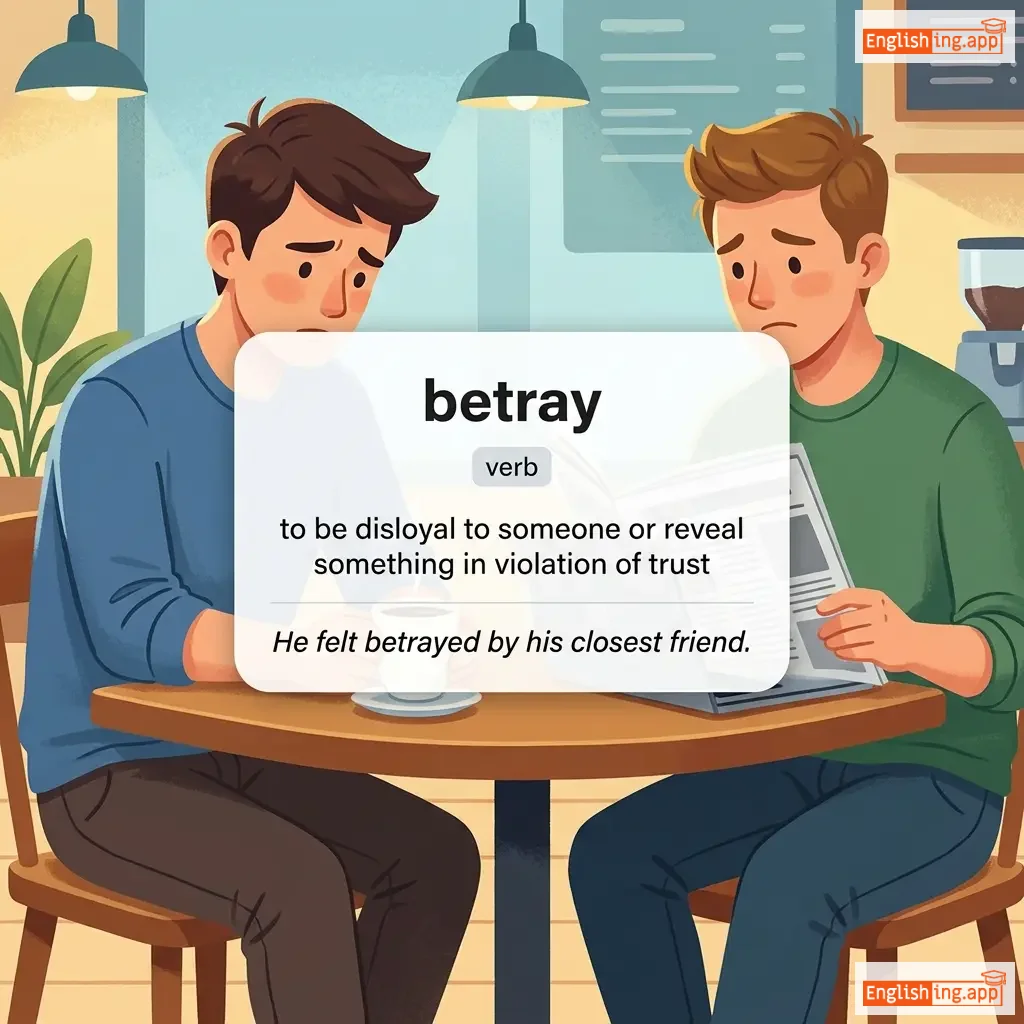
to be disloyal to someone or reveal something in violation of trust
••••••
|
He felt betrayed by his closest friend. |
- •••••• |
betray someone's trust |
to reveal secrets or act against someone's confidence
••••••
|
- •••••• |
deceive, double-cross, expose, reveal, backstab
••••••
|
loyal, support, protect
••••••
|
betray trust, betray friend, betray confidence
••••••
|
No •••••• |
|
#953
🌩️
|
/bɪˈtəʊkən/
verb
(比托肯)
••••••
|
- •••••• |
预示
yù shì
••••••
|
betokened
比托肯德
••••••
|
betokened
比托肯德
••••••
|
betokens
比托肯斯
••••••
|
betokening
比托肯宁
••••••
|
to be a sign or indication of something
••••••
|
Dark clouds betoken an approaching storm.
乌云预示着即将到来的暴风雨。
••••••
|
乌云预示着即将到来的暴风雨。
Wū yún yù shì zhe jí jiāng dào lái de bào fēng yǔ.
••••••
|
- •••••• | - •••••• | - •••••• |
indicate, signify, foreshadow, denote
••••••
|
conceal, hide
••••••
|
betoken danger, betoken change
••••••
|
Be-token,象征着未来的预示,预示着某种未来事件。
••••••
|
|
#954
⏰
|
/bɪˈtaɪmz/
adverb
(bɪˈtaɪmz)
••••••
|
- •••••• |
早早
zaozhao
••••••
|
- •••••• | - •••••• | - •••••• | - •••••• |
early; in good time
••••••
|
She rose betimes to finish her work.
她早起以完成工作。
••••••
|
她早起以完成工作。
Ta zao qi yi wancheng gongzuo.
••••••
|
- •••••• | - •••••• | - •••••• |
early, promptly, beforehand, soon
••••••
|
late, tardily
••••••
|
rise betimes, arrive betimes
••••••
|
Be-times 就是早早起床,提前做完工作。
••••••
|
|
#955
⚠️
|
/bɪˈtaɪd/
verb
(bɪˈtaɪd)
••••••
|
- •••••• |
发生
fāshēng
••••••
|
betided
bɪˈtaɪdəd
••••••
|
betided
bɪˈtaɪdəd
••••••
|
betides
bɪˈtaɪdz
••••••
|
betiding
bɪˈtaɪdɪŋ
••••••
|
to happen or occur, usually of something that befalls someone
••••••
|
Woe betide anyone who breaks the rules.
wóʊ bɪˈtaɪd ɛniwʌn hu brɛɪks ðə rʊlz
••••••
|
打破规则的人会遭受后果。
dǎpò guīzé de rén huì zāoshòu hòuguǒ.
••••••
|
Woe betide
wóʊ bɪˈtaɪd
••••••
|
used to warn that something bad will happen to someone
••••••
|
祸不单行
huò bù dānxíng
••••••
|
happen, occur, befall, transpire
••••••
|
prevent, stop
••••••
|
woe betide, may betide
••••••
|
Betide = be-tide—像潮汐一样,事件也会发生
••••••
|
|
#956
🤔
|
/bɪˈθɪŋk/
verb
(bithink)
••••••
|
- •••••• |
回想
huíxiǎng
••••••
|
bethought
bethought
••••••
|
bethought
bethought
••••••
|
bethinks
bethinks
••••••
|
bethinking
bethinking
••••••
|
to cause oneself to consider or remember something
••••••
|
He bethought himself of the promise he had made.
He bethought himself of the promise he had made.
••••••
|
他想起了他曾做出的承诺。
Tā xiǎngqǐle tā céng zuòchū de chéngnuò.
••••••
|
- •••••• | - •••••• | - •••••• |
reflect, recall, remember, consider, ponder
••••••
|
forget, ignore
••••••
|
bethink oneself, bethink of promise
••••••
|
Bethink意为be-think—让自己思考,也就是回忆某事
••••••
|
|
#957
⚫
|
/ˌbeɪt ˈnwɑːr/
noun
(贝特诺尔)
••••••
|
- •••••• |
令人讨厌的事物
lìng rén tǎo yàn de shì wù
••••••
|
- •••••• | - •••••• | - •••••• | - •••••• |
A person or thing that one particularly dislikes or fears.
••••••
|
Grammar has always been his bete noire.
语法一直是他的贝特诺尔。
••••••
|
语法一直是他的贝特诺尔。
Yǔfǎ yīzhí shì tā de bèi tè nuò ěr.
••••••
|
- •••••• | - •••••• | - •••••• |
aversion, bugbear, nemesis, nuisance, tormentor
••••••
|
favorite, preference, delight
••••••
|
personal bete noire, academic bete noire, political bete noire
••••••
|
Noir表示黑色,所以'黑色的诅咒'是贝特诺尔。
••••••
|
|
#958
🏇
|
/bɪˈstraɪd/
verb
(贝斯特莱德)
••••••
|
- •••••• |
跨越
kuà yuè
••••••
|
bestrode
贝斯特罗德
••••••
|
bestridden
贝斯特里登
••••••
|
bestrides
贝斯特莱德斯
••••••
|
bestriding
贝斯特莱丁
••••••
|
To sit or stand astride something; to dominate over.
••••••
|
The statue bestrides the city square.
这座雕像跨越了城市广场。
••••••
|
这座雕像横跨城市广场。
Zhè zuò diāoxiàng héng kuà chéngshì guǎngchǎng.
••••••
|
- •••••• | - •••••• | - •••••• |
dominate, tower over, straddle, command, overtop
••••••
|
follow, obey, submit
••••••
|
bestride the world, bestride the horse, bestride the city
••••••
|
Be + stride = 大步跨越并主宰一切。
••••••
|
|
#959
🍂
|
/bɪˈstruː/
verb
(贝斯特鲁)
••••••
|
- •••••• |
散布
sanbu
••••••
|
bestrewed
贝斯特鲁德
••••••
|
bestrewn
贝斯特伦
••••••
|
bestrews
贝斯特鲁兹
••••••
|
bestrewing
贝斯特鲁英
••••••
|
To scatter or cover something with objects or substances.
••••••
|
The ground was bestrewn with autumn leaves.
地面上撒满了秋天的叶子。
••••••
|
地面上撒满了秋天的叶子。
Dìmiàn shàng sā mǎnle qiūtiān de yèzi.
••••••
|
- •••••• | - •••••• | - •••••• |
scatter, spread, strew, sprinkle, cover
••••••
|
collect, gather, accumulate
••••••
|
bestrew ground, bestrew floor, bestrew path
••••••
|
Best + Strew = 最好的散布方式.
••••••
|
|
#960
🎁
|
/bɪˈstoʊ/
verb
(bēi sī tōu)
••••••
|
- •••••• |
授予
shòu yǔ
••••••
|
bestowed
bēi sī tōu dé
••••••
|
bestowed
bēi sī tōu dé
••••••
|
bestows
bēi sī tōu zī
••••••
|
bestowing
bēi sī tōu yíng
••••••
|
To give or present something as a gift or honor.
••••••
|
The king bestowed honors upon the brave soldiers.
国王授予勇敢的士兵荣誉。
••••••
|
国王授予勇敢的士兵荣誉。
Guówáng shòuyǔ yǒnggǎn de shìbīng róngyù.
••••••
|
bestow upon
授予
••••••
|
to grant or give something to someone
••••••
|
授予某人
shòuyǔ mǒu rén
••••••
|
grant, confer, present, donate, award
••••••
|
withhold, deny, refuse
••••••
|
bestow honor, bestow gift, bestow blessing, bestow title
••••••
|
Best + Owe = 将最好赠送给某人
••••••
|
Vocabulary Quiz
Test your vocabulary by matching words with their translations or meanings.
Login to take the quiz
Comments (0)
Share your thoughts and join the discussion.
Join the discussion by logging in
Login to CommentNo comments yet
Be the first to share your thoughts!