



Swipe left or right, or use the buttons. Tap image to zoom.
例句翻译
单词
Lesson 22Lesson 22 - 遮罩切换
|
表情符号
|
单词 | Images | 翻译 | 过去时 | 过去分词 | 第三人称单数 | 动名词 | 含义 | 例句 | 例句翻译 | 示例表达 | 示例表达含义 | 示例表达翻译 | 同义词 | 反义词 | 搭配词 | 助记符 |
|---|---|---|---|---|---|---|---|---|---|---|---|---|---|---|---|---|---|
|
#631
🎯
|
/ˈæspɪrənt/
noun
(艾斯比兰特)
••••••
|
- •••••• |
有志者
you zhi zhe
••••••
|
- •••••• | - •••••• | - •••••• | - •••••• |
a person who seeks or hopes to achieve a position of honor or advancement
••••••
|
She is an aspirant for the university's top scholarship. |
她是大学最高奖学金的有志者。
Ta shi daxue zui gao jiangxuejin de you zhizhe.
••••••
|
- •••••• | - •••••• | - •••••• |
candidate, contender, applicant, hopeful, seeker
••••••
|
incumbent, holder
••••••
|
political aspirant, job aspirant, leadership aspirant, aspirant students
••••••
|
有志者是那些追求卓越的人,就像争取奖学金的学生一样。
••••••
|
|
#632
🗣️
|
/əˈsɛvəˌreɪt/
verb
(阿塞韦雷特)
••••••
|
- •••••• |
断言
duànyán
••••••
|
asseverated
阿塞韦雷特德
••••••
|
asseverated
阿塞韦雷特德
••••••
|
asseverates
阿塞韦雷特斯
••••••
|
asseverating
阿塞韦雷特因
••••••
|
to affirm or declare positively and earnestly
••••••
|
He asseverated that he had never seen the man before.
他坚持说他从未见过那个人。
••••••
|
他断言他从未见过那个人。
Tā duànyán tā cóng wèi jiànguò nàgè rén.
••••••
|
- •••••• | - •••••• | - •••••• |
declare, affirm, assert, avow
••••••
|
deny, contradict
••••••
|
solemnly asseverate, asseverate innocence, asseverate truth
••••••
|
Asseverate意味着断言—'在断言中,assert这个词很明显'。
••••••
|
|
#633
📝
|
/əˈsɛsər/
noun
(评估员)
••••••
|
- •••••• |
评估员
pinggu yuan
••••••
|
- •••••• | - •••••• | - •••••• | - •••••• |
a person who evaluates or estimates the nature, ability, or quality of something
••••••
|
An external assessor reviewed the project report. |
一位外部评估员审查了项目报告。
Yī wèi wàibù pínggūyuán shěnchále xiàngmù bàogào.
••••••
|
- •••••• | - •••••• | - •••••• |
evaluator, examiner, inspector, appraiser
••••••
|
participant, applicant
••••••
|
external assessor, tax assessor, project assessor, official assessor
••••••
|
评估员就像是评审员一样,负责评估项目的进展和质量。
••••••
|
|
#634
📊
|
/əˈsɛs/
verb
(阿塞斯)
••••••
|
- •••••• |
评估
pinggu
••••••
|
assessed
阿塞斯德
••••••
|
assessed
阿塞斯德
••••••
|
assesses
阿塞塞斯
••••••
|
assessing
阿塞辛
••••••
|
to evaluate or estimate the nature, ability, or quality of something
••••••
|
The teacher assessed the students' progress.
老师评估了学生的进展。
••••••
|
老师评估了学生的进展。
Laoshi pinggu le xuesheng de jinzhang.
••••••
|
assess the situation
评估情况
••••••
|
to carefully evaluate the circumstances before acting
••••••
|
评估情况
pinggu qingkuang
••••••
|
evaluate, judge, appraise, estimate, measure
••••••
|
ignore, overlook, neglect
••••••
|
assess progress, assess damage, assess risk, assess value
••••••
|
Assess的意思是评估 — '在考试前评估你的准备情况。'
••••••
|
|
#635
💪
|
/əˈsɜːrtɪv/
adjective
(阿瑟提夫)
••••••
|
- •••••• |
自信的
zixin de
••••••
|
- •••••• | - •••••• | - •••••• | - •••••• |
having or showing a confident and forceful personality
••••••
|
He is very assertive in expressing his opinions. |
他在表达自己的意见时非常自信。
Tā zài biǎodá zìjǐ de yìjiàn shí fēicháng zìxìn.
••••••
|
- •••••• | - •••••• | - •••••• |
confident, forceful, decisive, self-assured
••••••
|
submissive, passive, timid
••••••
|
assertive personality, assertive behavior, be assertive, become assertive
••••••
|
自信的代表坚定的自我—想象一个坚定的人说话。
••••••
|
|
#636
📢
|
/əˈsɜːrt/
verb
(阿瑟特)
••••••
|
|
断言
duàn yán
••••••
|
asserted
阿瑟特德
••••••
|
asserted
阿瑟特德
••••••
|
asserts
阿瑟特斯
••••••
|
asserting
阿瑟特英
••••••
|
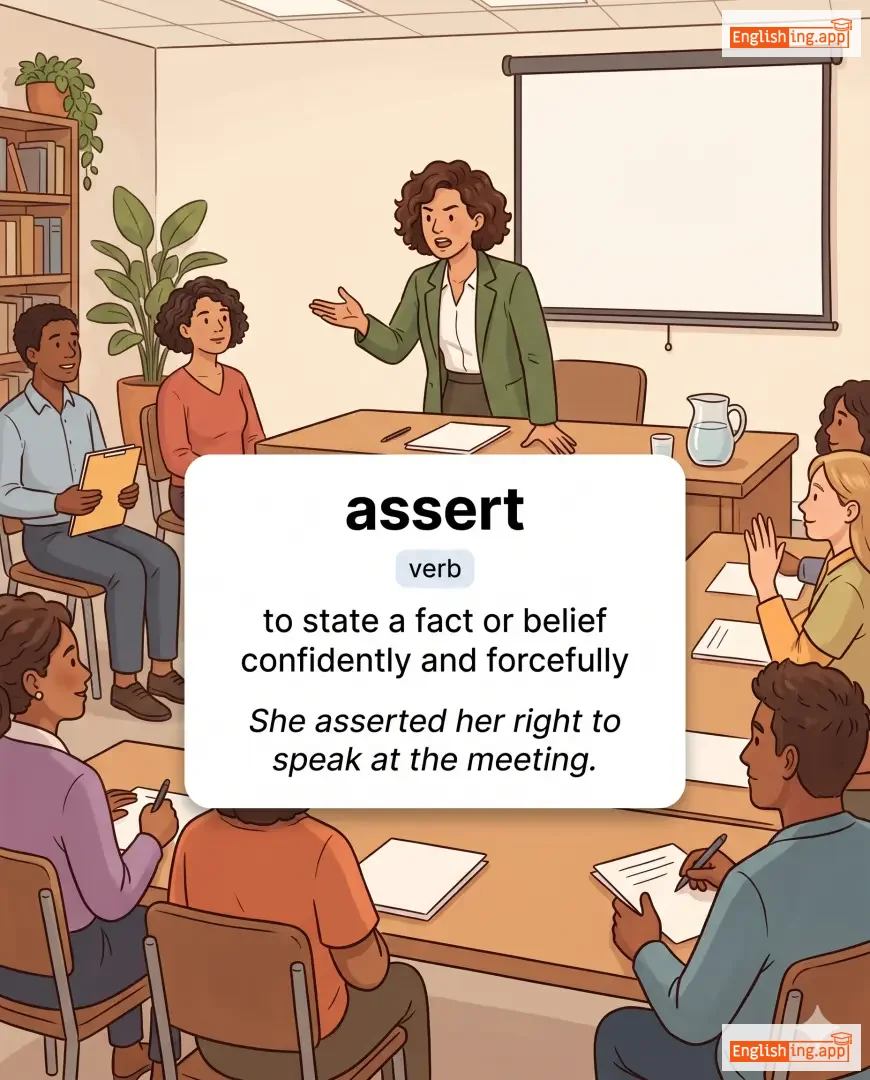
to state a fact or belief confidently and forcefully
••••••
|
She asserted her right to speak at the meeting.
她在会议中坚决声明了自己发言的权利。
••••••
|
她在会议中坚决声明了自己发言的权利。
Tā zài huì yì zhōng jiān jué shēng míng le zì jǐ fā yán de quán lì.
••••••
|
assert oneself
自信地表现自己
••••••
|
to behave confidently and firmly to make others respect your rights or opinions
••••••
|
自信地表现自己
zì xìn dì biǎo xiàn zì jǐ
••••••
|
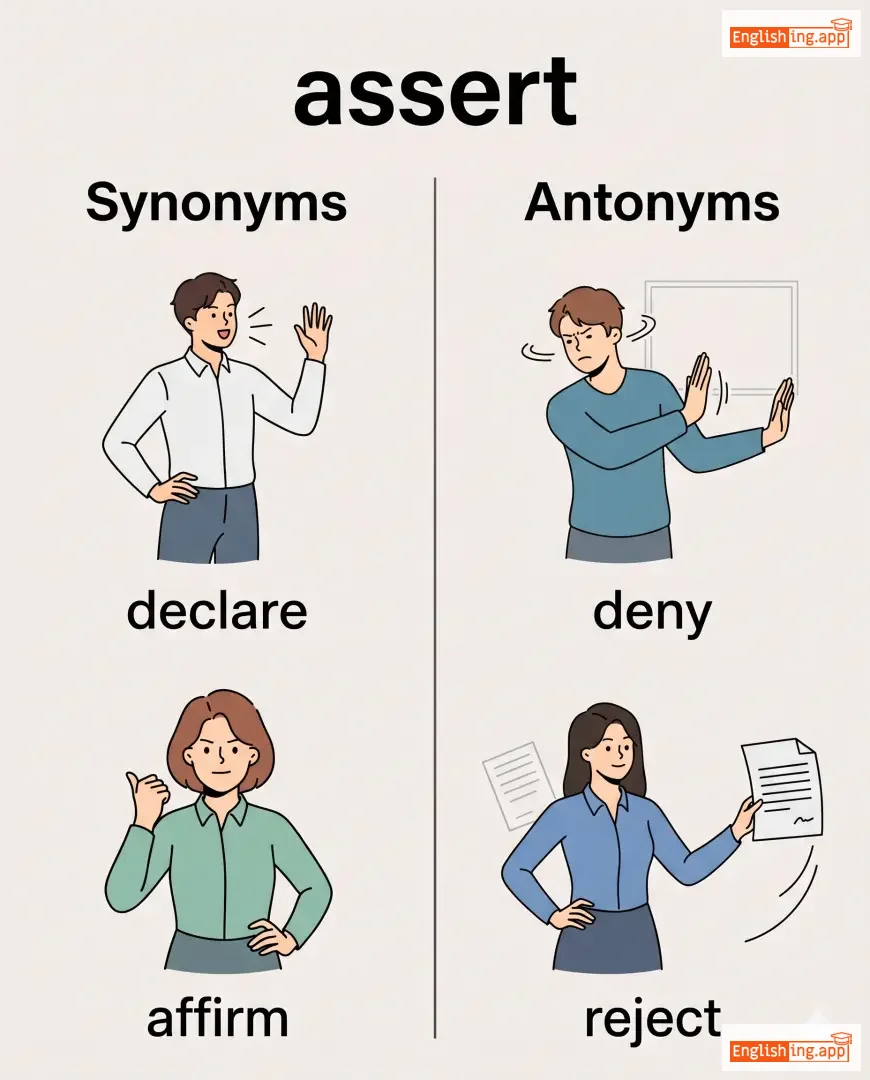
declare, affirm, maintain, insist, claim
••••••
|
deny, reject, abandon
••••••
|
assert rights, assert control, assert authority, assert independence
••••••
|
Assert的意思是断言,像'我们断言我们是对的'。
••••••
|
|
#637
✅
|
/əˈsɛnt/
noun, verb
(阿森特)
••••••
|
- •••••• |
同意
tongyi
••••••
|
assented
阿森特德
••••••
|
assented
阿森特德
••••••
|
assents
阿森特斯
••••••
|
assenting
阿森廷
••••••
|
To agree to something, especially after careful consideration; an expression of approval.
••••••
|
She nodded her head in silent assent.
她默默地点了点头。
••••••
|
她默默地点了点头。
Tā mòmò de diǎnle diǎntóu.
••••••
|
give assent
给予同意
••••••
|
To formally agree or approve something.
••••••
|
给予同意
Jǐyǔ tóngyì
••••••
|
agreement, approval, consent, endorsement, acceptance
••••••
|
refusal, dissent, denial
••••••
|
royal assent, silent assent, assent to a proposal
••••••
|
Assent = 同意 (tongyi), 点头即为同意。
••••••
|
|
#638
🔬
|
/ˈæseɪ/
noun, verb
(aisei)
••••••
|
- •••••• |
分析
fenxi
••••••
|
assayed
aseid
••••••
|
assayed
aseid
••••••
|
assays
asei
••••••
|
assaying
aseing
••••••
|
To test or analyze the quality, purity, or content of a substance; the act of such testing.
••••••
|
The scientists assayed the mineral sample for gold content.
科学家们对矿石样本进行了金含量测试。
••••••
|
科学家们对矿石样本进行了金含量测试。
Kexuejiamen dui kuangshi yangben jin xianliang ceshi.
••••••
|
- •••••• | - •••••• | - •••••• |
test, analyze, evaluate, examine, inspect
••••••
|
ignore, neglect
••••••
|
chemical assay, blood assay, assay method, assay result
••••••
|
Assay像分析,意味着测试。
••••••
|
|
#639
☠️
|
/əˌsæsɪˈneɪʃən/
noun
(刺杀)
••••••
|
- •••••• |
刺杀
cì shā
••••••
|
- •••••• | - •••••• | - •••••• | - •••••• |
The act of killing someone important, often for political or ideological reasons.
••••••
|
The assassination of the president shocked the nation. |
总统的刺杀震惊了整个国家。
Zǒngtǒng de cìshā zhènjīngle zhěnggè guójiā.
••••••
|
- •••••• | - •••••• | - •••••• |
murder, killing, execution, slaying
••••••
|
protection, rescue, preservation
••••••
|
political assassination, assassination attempt, assassination plot
••••••
|
刺杀就像是政治层面的杀害,震撼国家。
••••••
|
|
#640
🔪
|
/əˈsæsɪneɪt/
verb
(刺杀)
••••••
|
- •••••• |
刺杀
cìshā
••••••
|
assassinated
刺杀了
••••••
|
assassinated
刺杀了
••••••
|
assassinates
刺杀
••••••
|
assassinating
刺杀
••••••
|
To murder someone important, often a political or religious leader, usually by surprise attack.
••••••
|
The rebels planned to assassinate the king.
反叛者计划刺杀国王。
••••••
|
反叛者计划刺杀国王。
Fǎnbàn zhě jìhuà cìshā guówáng.
••••••
|
- •••••• | - •••••• | - •••••• |
murder, kill, slay, eliminate, dispatch
••••••
|
protect, save, guard
••••••
|
assassinate a leader, assassinate a president, attempt to assassinate
••••••
|
刺杀就像电影中的刺客一样,悄悄地暗杀。
••••••
|
|
#641
🗡️
|
/əˈsæsɪn/
noun
(刺客)
••••••
|
- •••••• |
刺客
cike
••••••
|
- •••••• | - •••••• | - •••••• | - •••••• |
A person who kills someone, usually for political or religious reasons, often secretly.
••••••
|
The assassin fled the scene after carrying out the attack. |
刺客在进行袭击后逃离了现场。
Cike zai jinxing xiji hou taoli le xianchang.
••••••
|
assassin's creed |
A phrase associated with loyalty and secrecy in a brotherhood of killers (popularized by a video game series).
••••••
|
刺客信条
Cike xintiao
••••••
|
killer, murderer, hitman, slayer, executioner
••••••
|
protector, guardian, savior
••••••
|
political assassin, hired assassin, infamous assassin, skilled assassin
••••••
|
刺客(Cike)是秘密地做刺杀的(assassin)。
••••••
|
|
#642
👊
|
/əˈseɪlənt/
noun
(a sai lan te)
••••••
|
- •••••• |
攻击者
gongjizhe
••••••
|
- •••••• | - •••••• | - •••••• | - •••••• |
a person who attacks another
••••••
|
The police arrested the assailant at the scene. |
警方在现场逮捕了攻击者。
Jingfang zai xianchang daibu le gongjizhe.
••••••
|
- •••••• | - •••••• | - •••••• |
attacker, aggressor, assaulter, invader
••••••
|
victim, defender, protector
••••••
|
armed assailant, unknown assailant, capture the assailant, assailant with weapon
••••••
|
Assailant是攻击者,意思是攻击他人的人。
••••••
|
|
#643
⚔️
|
/əˈseɪl/
verb
(阿赛尔)
••••••
|
- •••••• |
攻击
gōngjī
••••••
|
assailed
阿赛尔德
••••••
|
assailed
阿赛尔德
••••••
|
assails
阿赛尔斯
••••••
|
assailing
阿赛林
••••••
|
to attack violently, either physically or with words
••••••
|
The politician was assailed with difficult questions.
政治家遭遇了困难的问题。
••••••
|
政治家遭遇了困难的问题。
Zhèngzhìjiā zāoyùle kùnnán de wèntí.
••••••
|
- •••••• | - •••••• | - •••••• |
attack, assault, criticize, storm, beset
••••••
|
defend, support, protect
••••••
|
assail someone, assail with questions, assail the enemy, assail verbally
••••••
|
Assail sounds like '攻击', means to attack.
••••••
|
|
#644
🌟
|
/əˈspaɪər/
verb
(阿斯派尔)
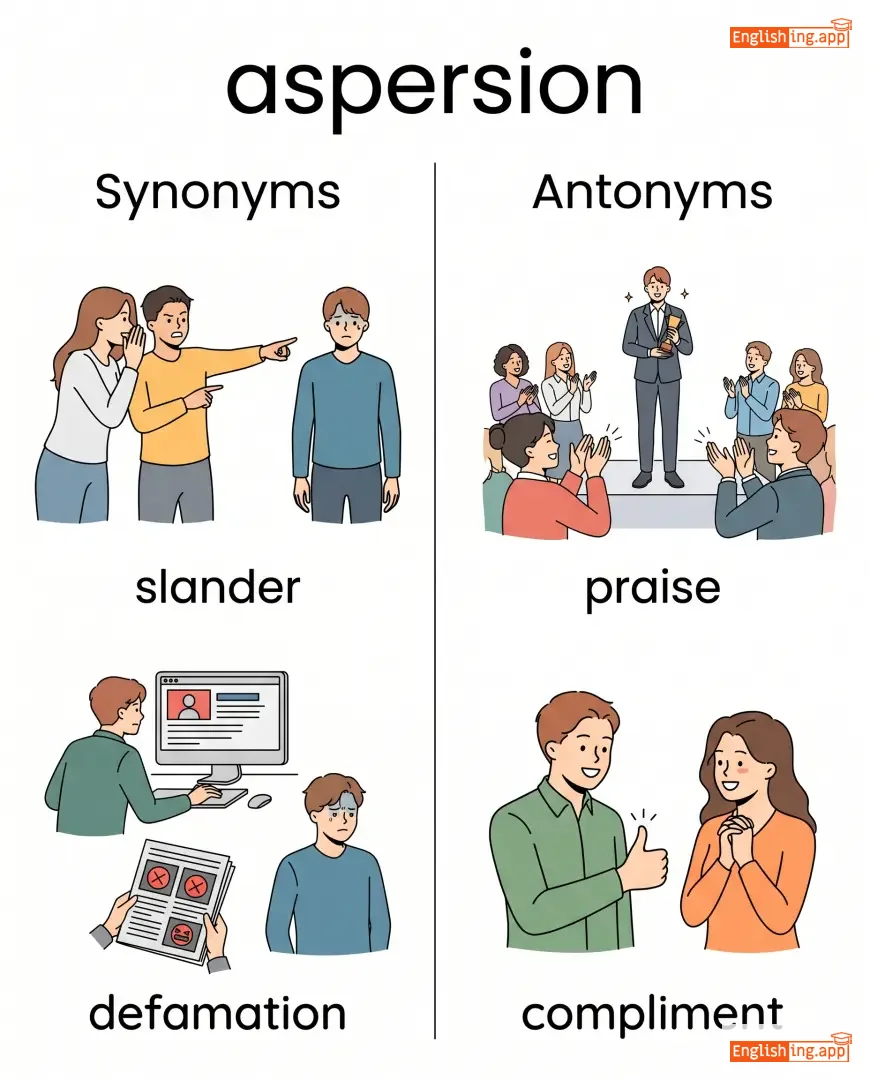
••••••
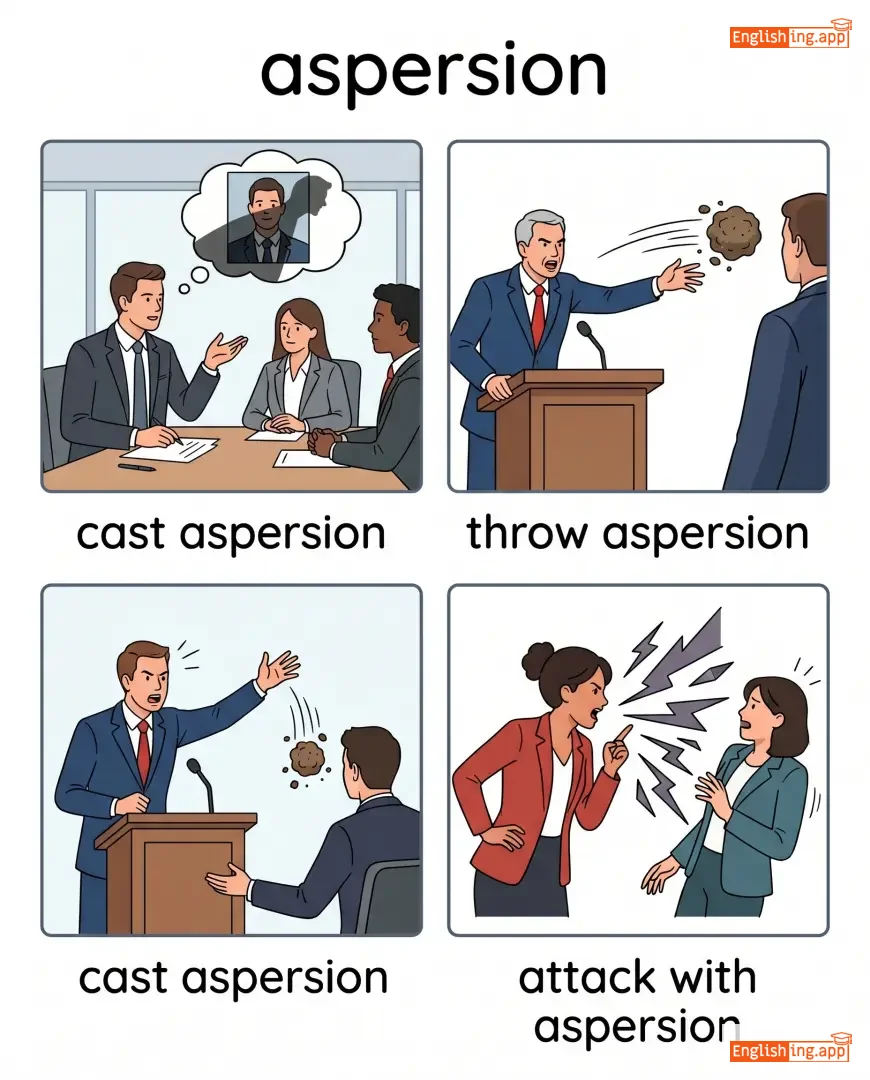
|
- •••••• |
渴望
kewang
••••••
|
aspired
阿斯派尔德
••••••
|
aspired
阿斯派尔德
••••••
|
aspires
阿斯派尔斯
••••••
|
aspiring
阿斯派尔英
••••••
|
to have a strong desire to achieve something
••••••
|
Many students aspire to study abroad.
许多学生渴望去国外学习。
••••••
|
许多学生渴望去国外学习。
Xuduo xuesheng kewang qu guowai xuexi.
••••••
|
aspire to greatness
渴望伟大
••••••
|
to aim for significant achievement
••••••
|
渴望伟大
kewang weida
••••••
|
desire, aim, hope, strive, long
••••••
|
doubt, neglect, avoid
••••••
|
aspire to, aspire for success, aspire higher, aspire towards
••••••
|
Aspire 意味着追求伟大 — 就像那些渴望去国外学习的学生一样。
••••••
|
|
#645
🚀
|
/ˌæspəˈreɪʃən/
noun
(阿斯皮雷申)
••••••
|
|
抱负
baofu
••••••
|
- •••••• | - •••••• | - •••••• | - •••••• |
a strong desire to achieve something; ambition
••••••
|
Her aspiration is to become a doctor. |
她的抱负是成为一名医生。
Ta de baofu shi chengwei yi ming yisheng.
••••••
|
high aspirations |
lofty ambitions or goals
••••••
|
高远抱负
gaoyuan baofu
••••••
|
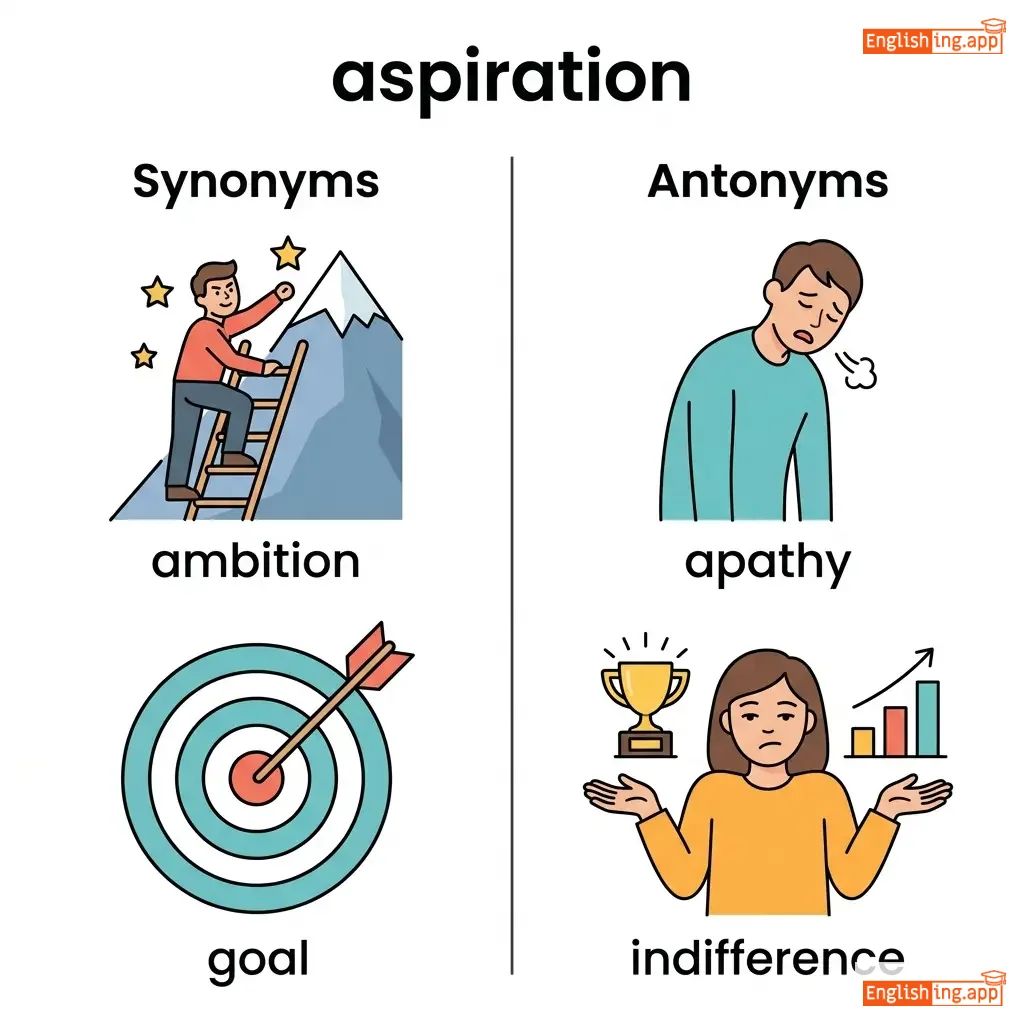
ambition, goal, aim, desire, dream
••••••
|
apathy, indifference
••••••
|
career aspiration, life aspiration, aspiration for success, high aspiration
••••••
|
Aspiration意味着抱负 — 当我们有抱负时,抱负就会更强烈。
••••••
|
|
#646
🧗
|
/əˈsɛnt/
noun
••••••
|
- •••••• | - •••••• | - •••••• | - •••••• | - •••••• | - •••••• |
The act of rising or climbing to a higher position or level.
••••••
|
The climbers began their ascent to the mountain peak at dawn. |
- •••••• |
rapid ascent |
A quick rise in position, rank, or status.
••••••
|
- •••••• |
rise, climb, elevation, upward movement, progression
••••••
|
descent, decline, fall
••••••
|
steep ascent, rapid ascent, ascent to power, ascent of the mountain
••••••
|
No •••••• |
|
#647
💬
|
/əˈspɜːr.ʒənz/
noun (plural)
(诽谤)
••••••
|
- •••••• |
诽谤
feibang
••••••
|
- •••••• | - •••••• | - •••••• | - •••••• |
Critical or slanderous remarks; multiple attacks on reputation.
••••••
|
The politician rejected the aspersions cast against him. |
政治家拒绝了针对他的诽谤。
Zhèngzhìjiā jùjuéle zhèngduì tā de fěibàng.
••••••
|
cast aspersions |
to make false or damaging statements about someone
••••••
|
进行诽谤
jìnxíng fěibàng
••••••
|
accusations, slanders, smears, defamations, criticisms
••••••
|
praises, compliments, approvals
••••••
|
cast aspersions, throw aspersions, defend against aspersions
••••••
|
‘Feibang’ 听起来像‘飞棒’,好像批评的话飞来飞去。
••••••
|
|
#648
🗣️
|
/əˈspɜːr.ʒən/
noun
(阿斯珀森)
••••••
|
|
诽谤
fěibàng
••••••
|
- •••••• | - •••••• | - •••••• | - •••••• |
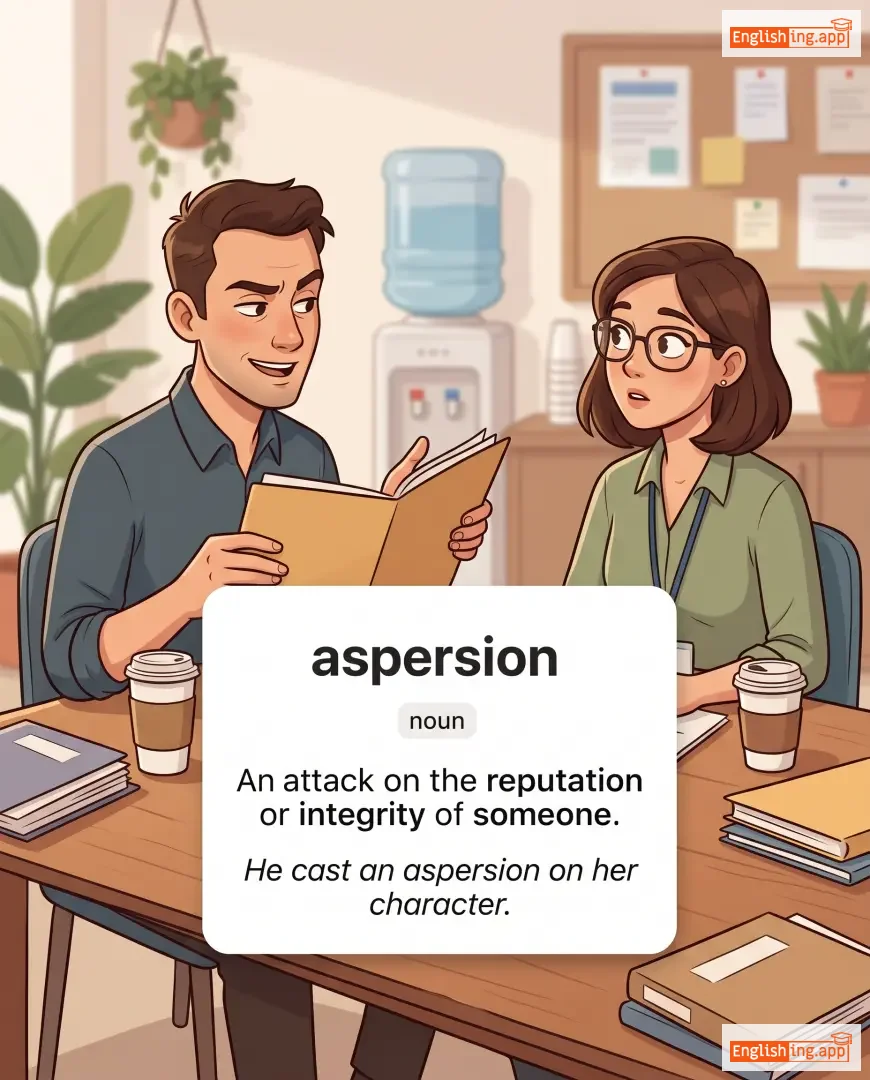
An attack on the reputation or integrity of someone.
••••••
|
He cast an aspersion on her character.
他对她的性格进行了诽谤。
••••••
|
他对她的性格进行了诽谤。
Tā duì tā de xìnggé jìnxíngle fěibàng.
••••••
|
cast aspersions
进行诽谤
••••••
|
to make damaging or critical remarks about someone
••••••
|
进行诽谤
jìnxíng fěibàng
••••••
|
slander, defamation, smear, accusation, criticism
••••••
|
praise, compliment, approval
••••••
|
cast aspersion, throw aspersion, attack with aspersion
••••••
|
Aspersion是诽谤的意思,破坏名誉。
••••••
|
|
#649
⚡
|
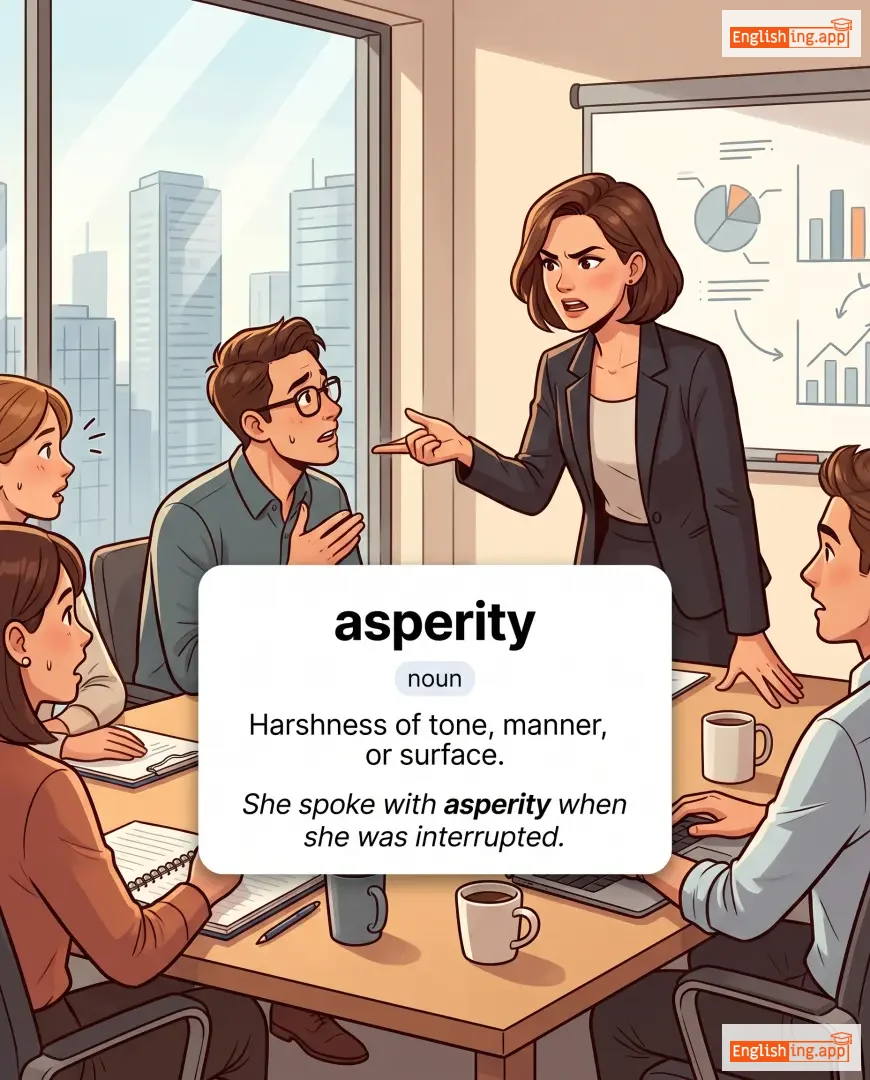
/əˈsper.ɪ.ti/
noun
••••••
|
|
- •••••• | - •••••• | - •••••• | - •••••• | - •••••• |
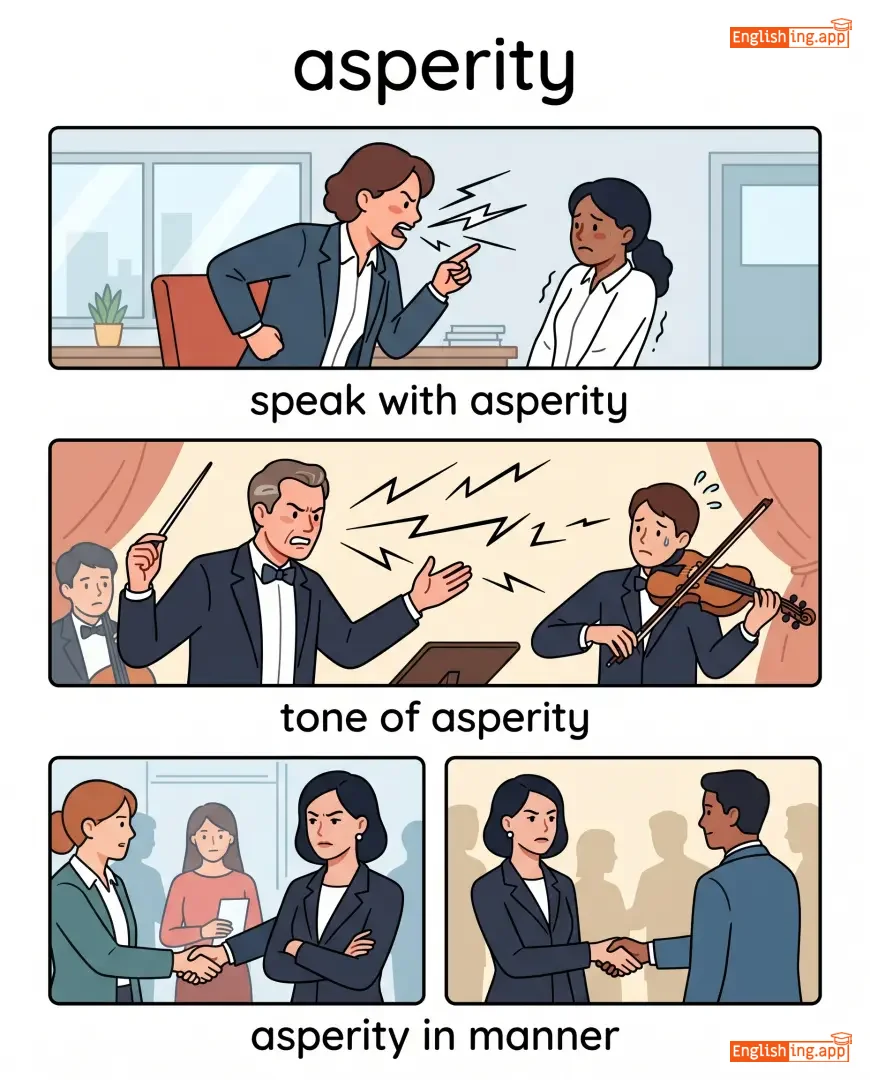
Harshness of tone, manner, or surface.
••••••
|
She spoke with asperity when she was interrupted. |
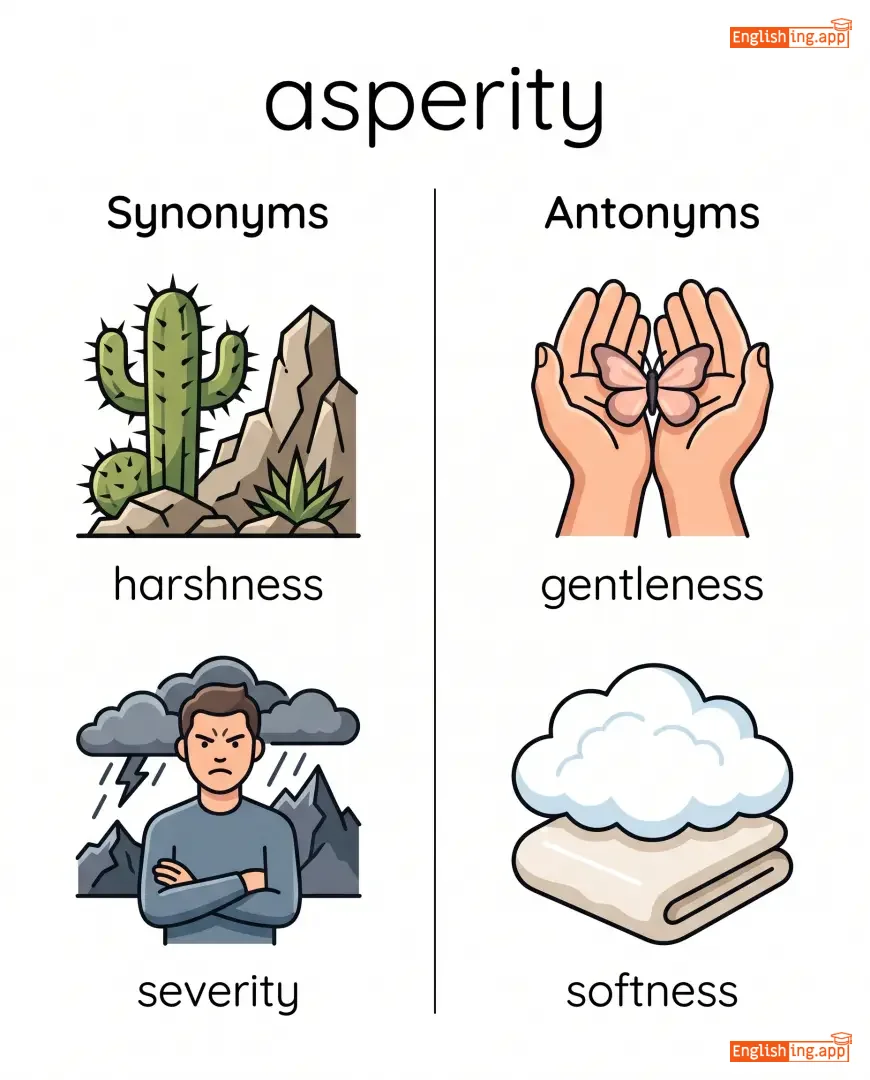
- •••••• | - •••••• | - •••••• | - •••••• |
harshness, severity, sharpness, roughness
••••••
|
gentleness, softness, kindness
••••••
|
speak with asperity, tone of asperity, asperity in manner
••••••
|
No •••••• |
|
#650
🔍
|
/ˈæs.pekt/
noun
(āsīpèkè)
••••••
|
- •••••• |
方面
fāngmiàn
••••••
|
- •••••• | - •••••• | - •••••• | - •••••• |
A particular part, feature, or view of something.
••••••
|
One important aspect of health is regular exercise. |
健康的一个重要方面是规律运动。
Jiànkāng de yīgè zhòngyào fāngmiàn shì guīlǜ yùndòng.
••••••
|
in every aspect |
in all parts or respects
••••••
|
在各个方面
zài gègè fāngmiàn
••••••
|
feature, element, angle, facet, perspective
••••••
|
whole, entirety, totality
••••••
|
important aspect, key aspect, in every aspect, different aspect
••••••
|
方面就像是观察一个事物的角度或视角。
••••••
|
|
#651
📐
|
/əˈskjuː/
adjective
(askew)
••••••
|
- •••••• |
歪斜
wai xie
••••••
|
- •••••• | - •••••• | - •••••• | - •••••• |
Not in a straight or level position; crooked or tilted.
••••••
|
The picture on the wall hung slightly askew. |
墙上的画稍微歪斜。
Qiang shang de hua shaowei wai xie.
••••••
|
look askew |
to look at something with disapproval or suspicion
••••••
|
歪着看
wai zhe kan
••••••
|
crooked, lopsided, tilted, slanted, awry
••••••
|
straight, aligned, even
••••••
|
hang askew, slightly askew, tilted askew, look askew
••••••
|
如果画歪了,那就是 askew。
••••••
|
|
#652
👀
|
/əˈskæns/
adverb
(ā sī kǎn sī)
••••••
|
- •••••• |
怀疑地
huáiyí de
••••••
|
- •••••• | - •••••• | - •••••• | - •••••• |
With suspicion, mistrust, or disapproval.
••••••
|
She looked askance at his unusual proposal. |
她怀疑地看着他的异常提案。
Tā huáiyí de kànzhe tā de yìcháng tí'àn.
••••••
|
- •••••• | - •••••• | - •••••• |
suspiciously, doubtfully, distrustfully, skeptically
••••••
|
trustfully, approvingly
••••••
|
look askance, view askance, regarded askance
••••••
|
Askance 的意思是 ‘带有怀疑或不信任的眼神’。
••••••
|
|
#653
🤦
|
/ˈæsɪnaɪn/
adjective
(艾斯纳因)
••••••
|
- •••••• |
愚蠢的
yúchǔn de
••••••
|
- •••••• | - •••••• | - •••••• | - •••••• |
Extremely foolish or stupid.
••••••
|
It was an asinine idea to drive into the storm without checking the weather. |
在没有检查天气的情况下开车进入暴风雨是一个愚蠢的主意。
Zài méiyǒu jiǎnchá tiānqì de qíngkuàng xià kāichē jìnrù bàofēngyǔ shì yīgè yúchǔn de zhǔyì.
••••••
|
- •••••• | - •••••• | - •••••• |
foolish, stupid, idiotic, absurd
••••••
|
wise, sensible, intelligent
••••••
|
asinine remark, asinine decision, asinine behavior
••••••
|
Asinine意味着极其愚蠢,就像一头做傻事的驴(ass)。
••••••
|
|
#654
😨
|
/ˈæʃən/
adjective
(ashen)
••••••
|
- •••••• |
苍白的
cāngbái de
••••••
|
- •••••• | - •••••• | - •••••• | - •••••• |
Very pale in appearance, often due to shock, fear, or illness.
••••••
|
His face turned ashen when he heard the terrible news. |
当他听到可怕的消息时,他的脸变得苍白。
Dāng tā tīng dào kěpà de xiāoxī shí, tā de liǎn biàn dé cāngbái.
••••••
|
- •••••• | - •••••• | - •••••• |
pale, wan, ghostly, colorless
••••••
|
rosy, flushed, vibrant
••••••
|
ashen face, ashen look, ashen expression
••••••
|
Ashen 是苍白的颜色,想到苍白的脸像灰烬一样。
••••••
|
|
#655
🌱
|
/ˌeɪˈsɛkʃuəl/
adjective
(无性别的)
••••••
|
- •••••• |
无性
wuxing
••••••
|
- •••••• | - •••••• | - •••••• | - •••••• |
Without sexual feelings, associations, or reproduction through sex.
••••••
|
Many plants reproduce through asexual methods like budding or splitting. |
许多植物通过无性繁殖方式,如发芽或分裂,进行繁殖。
Xu duo zhiwu tongguo wuxing fanzhi fangshi, ru faya huo fenlie, jinxing fanzhi.
••••••
|
- •••••• | - •••••• | - •••••• |
nonsexual, celibate, sterile, reproductive
••••••
|
sexual, reproductive
••••••
|
asexual reproduction, asexual organism, asexual person
••••••
|
Asexual意味着‘无性’–没有性别的繁殖。
••••••
|
|
#656
🧴
|
/eɪˈsɛptɪk/
adjective
(无菌的)
••••••
|
- •••••• |
无菌的
wú jūn de
••••••
|
- •••••• | - •••••• | - •••••• | - •••••• |
Free from contamination caused by harmful microorganisms; sterile.
••••••
|
Surgeons must work in an aseptic environment to prevent infection. |
外科医生必须在无菌环境中工作,以防止感染。
Wàikē yīshēng bìxū zài wú jūn huánjìng zhōng gōngzuò, yǐ fángzhǐ gǎnrǎn.
••••••
|
- •••••• | - •••••• | - •••••• |
sterile, germ-free, hygienic, clean, sanitized
••••••
|
contaminated, infected, dirty
••••••
|
aseptic technique, aseptic environment, aseptic condition, aseptic packaging
••••••
|
Aseptic 就是无菌的环境 – 和 antiseptic 类似,避免细菌。
••••••
|
|
#657
✍️
|
/əˈskraɪb/
verb
(āsīkrāib)
••••••
|
- •••••• |
归因于,归咎于
guī yīn yú, guī jiù yú
••••••
|
ascribed
āsīkrāibd
••••••
|
ascribed
āsīkrāibd
••••••
|
ascribes
āsīkrāibs
••••••
|
ascribing
āsīkrāibing
••••••
|
To attribute something to a cause, source, or person.
••••••
|
Many scholars ascribe the poem to an unknown author.
许多学者将这首诗归功于一位无名作者。
••••••
|
许多学者将这首诗归功于一位无名作者。
Xǔduō xuézhě jiāng zhè shǒu shī guīgōng yú yī wèi wúmíng zuòzhě.
••••••
|
ascribe to
归功于
••••••
|
To attribute something to a particular source or cause.
••••••
|
归因于
guī yīn yú
••••••
|
attribute, assign, credit, impute, refer
••••••
|
deny, disassociate, detach
••••••
|
ascribe responsibility, ascribe meaning, ascribe success, ascribe authorship
••••••
|
Ascribe 意味着将某物归因于某人,就像给某人(scribe)记下某事。
••••••
|
|
#658
🧘
|
/əˈsɛt.ɪˌsɪz.əm/
noun
(禁欲主义)
••••••
|
- •••••• |
禁欲主义, 自律
jìnyù zhǔyì, zìlǜ
••••••
|
- •••••• | - •••••• | - •••••• | - •••••• |
The practice of severe self-discipline and abstaining from indulgence, typically for religious or spiritual reasons.
••••••
|
Asceticism has been a part of many religious traditions throughout history. |
禁欲主义是许多宗教传统的一部分,贯穿历史。
Jìnyù zhǔyì shì xǔduō zōngjiào chuántǒng de yī bùfen, guànchuān lìshǐ.
••••••
|
- •••••• | - •••••• | - •••••• |
self-denial, austerity, discipline, abstinence, simplicity
••••••
|
luxury, indulgence, extravagance
••••••
|
religious asceticism, practice of asceticism, asceticism in Buddhism, asceticism in Hinduism
••••••
|
Asceticism 就是‘asset’加上自律,放弃享乐,追求更高的目标。
••••••
|
|
#659
🙏
|
/əˈsɛt.ɪk/
adjective
(ā sē tè kè)
••••••
|
|
苦行
kǔ xíng
••••••
|
- •••••• | - •••••• | - •••••• | - •••••• |
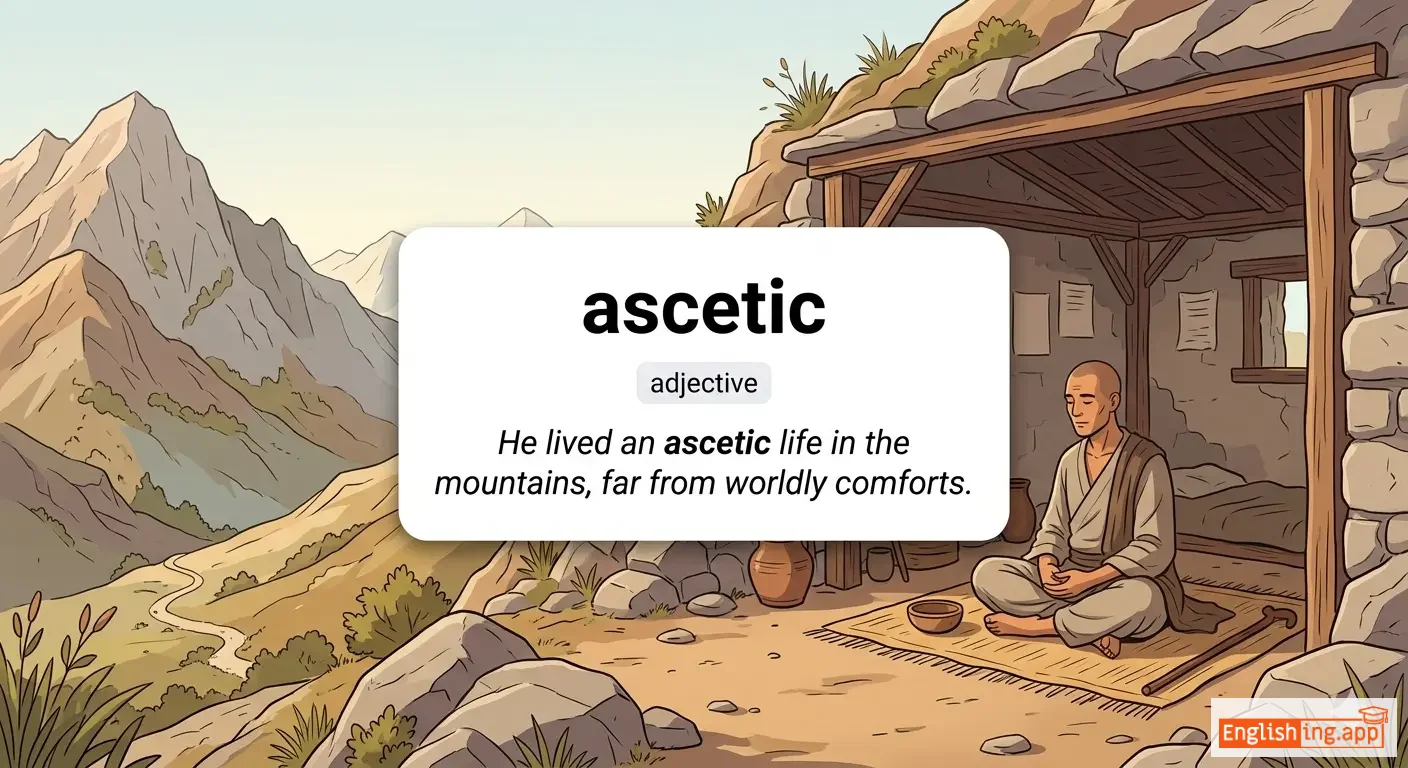
Practicing strict self-denial and abstaining from worldly pleasures, often for religious reasons.
••••••
|
He lived an ascetic life in the mountains, far from worldly comforts. |
他在山区过着苦行生活,远离世俗的安逸。
Tā zài shānqū guòzhe kǔ xíng shēnghuó, yuǎnlí shìsú de ānyì.
••••••
|
- •••••• | - •••••• | - •••••• |
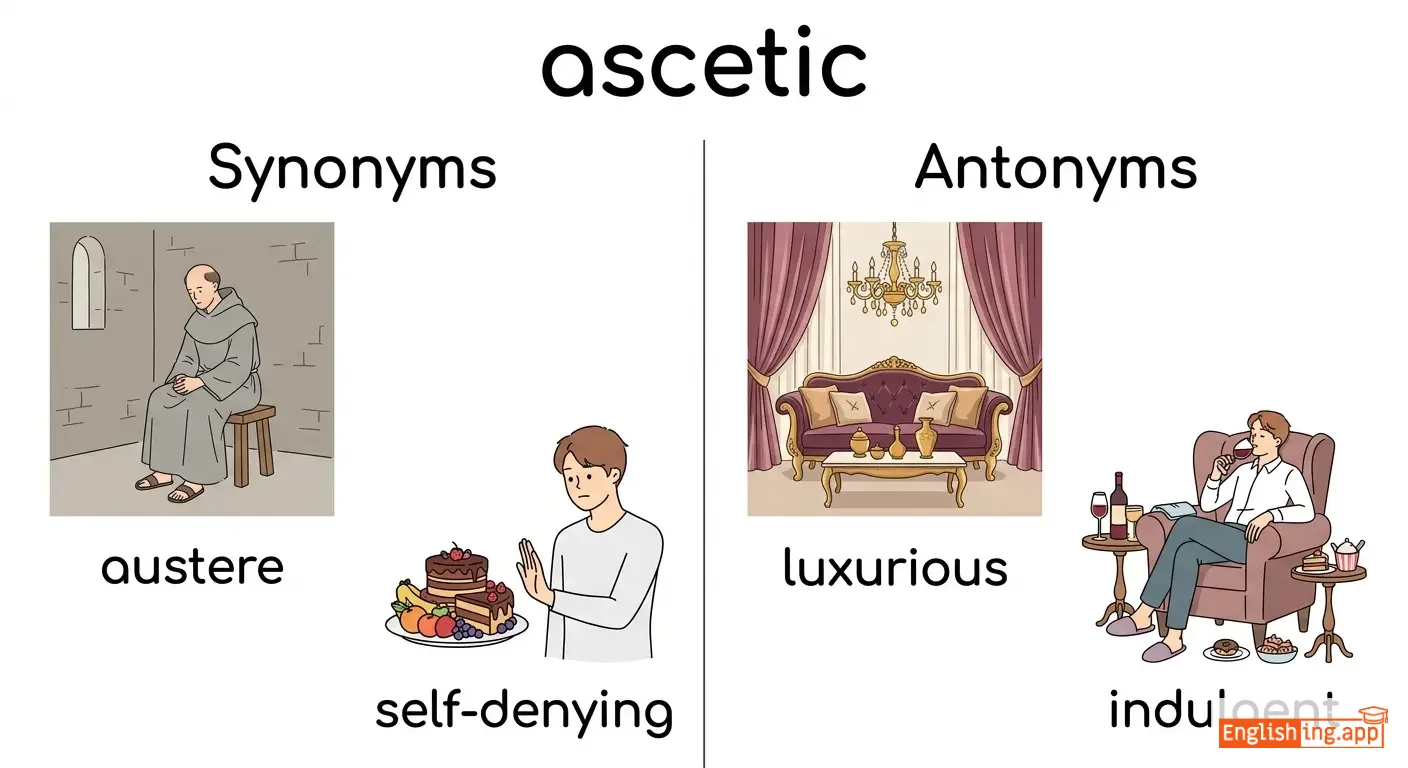
austere, self-denying, monkish, frugal, disciplined
••••••
|
luxurious, indulgent, hedonistic
••••••
|
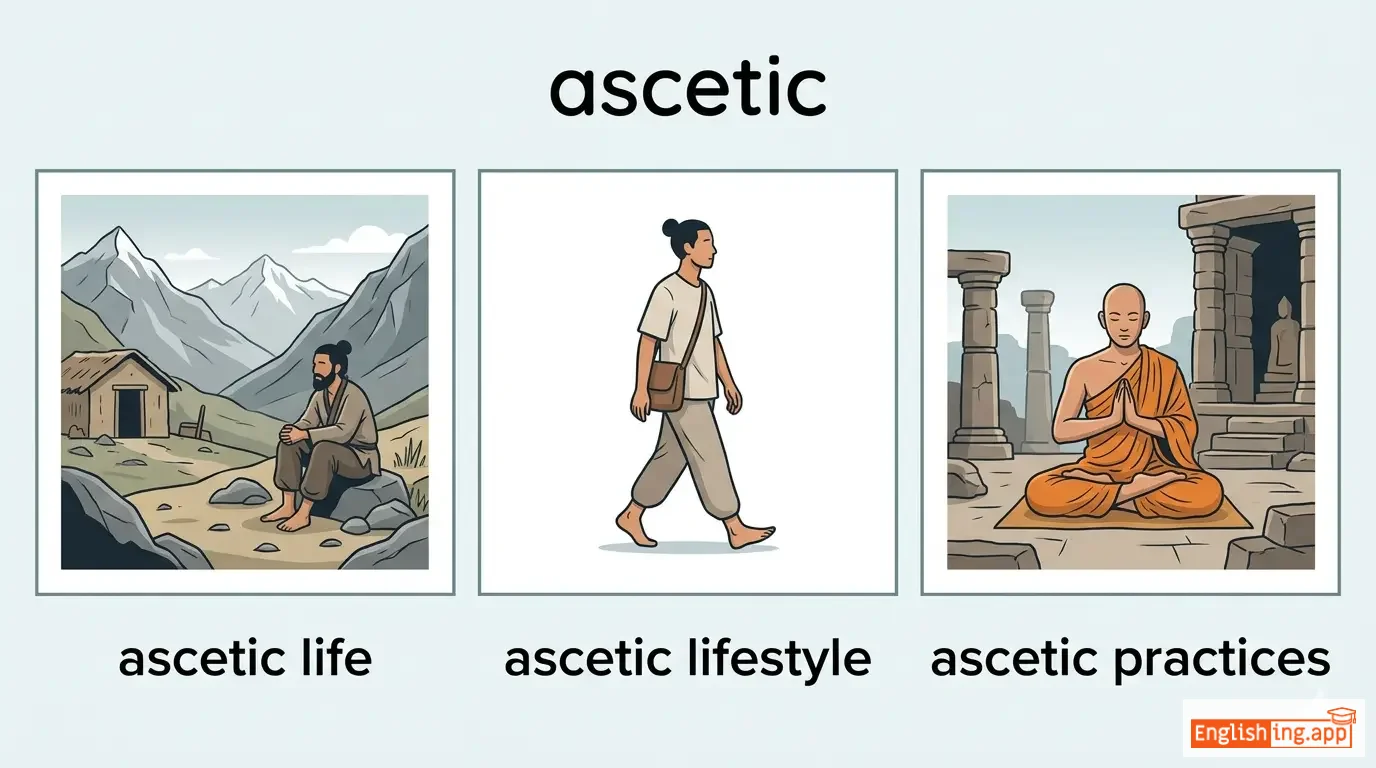
ascetic life, ascetic lifestyle, ascetic practices, ascetic monk
••••••
|
苦行就像生活中的修行者,拒绝享乐,追求精神的平静。
••••••
|
|
#660
🔍
|
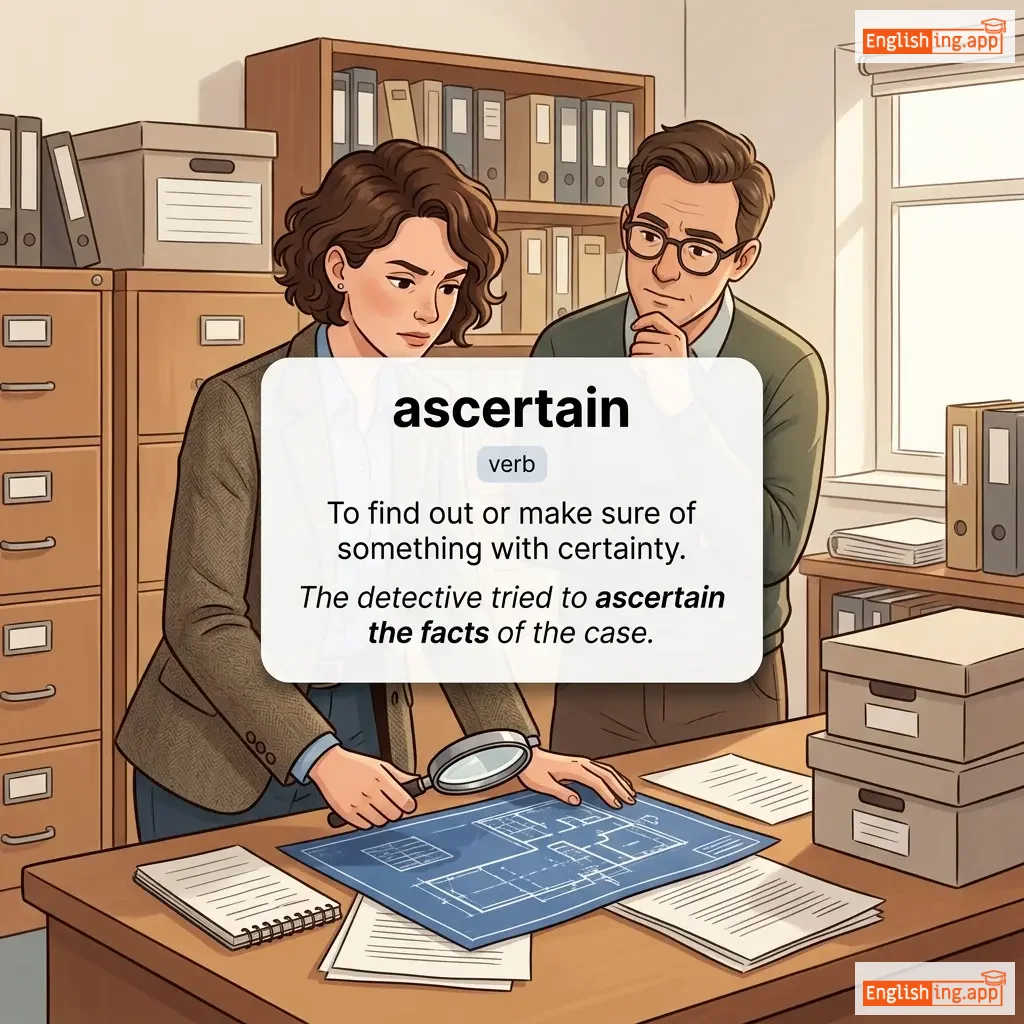
/ˌæs.ərˈteɪn/
verb
(艾瑟泰恩)
••••••
|
|
查明, 确定
chá míng, què dìng
••••••
|
ascertained
艾瑟泰恩德
••••••
|
ascertained
艾瑟泰恩德
••••••
|
ascertains
艾瑟泰恩斯
••••••
|
ascertaining
艾瑟泰宁
••••••
|
To find out or make sure of something with certainty.
••••••
|
The detective tried to ascertain the facts of the case.
侦探试图查明案件的事实。
••••••
|
侦探试图查明案件的事实。
Zhēntàn shìtú chá míng ànjiàn de shìshí.
••••••
|
ascertain the truth
查明真相
••••••
|
To discover what is true with certainty.
••••••
|
查明真相
Chá míng zhēnxiàng
••••••
|
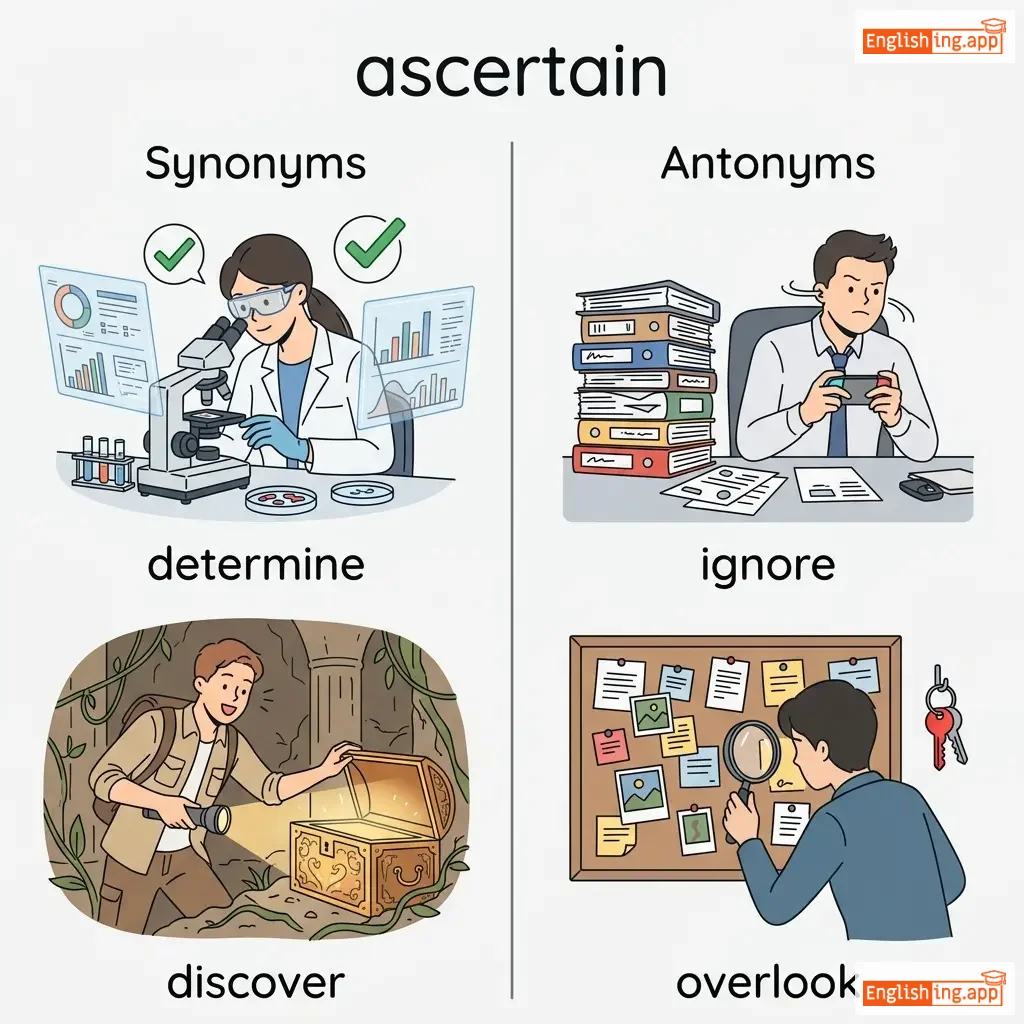
determine, discover, verify, confirm, establish
••••••
|
ignore, overlook, neglect
••••••
|
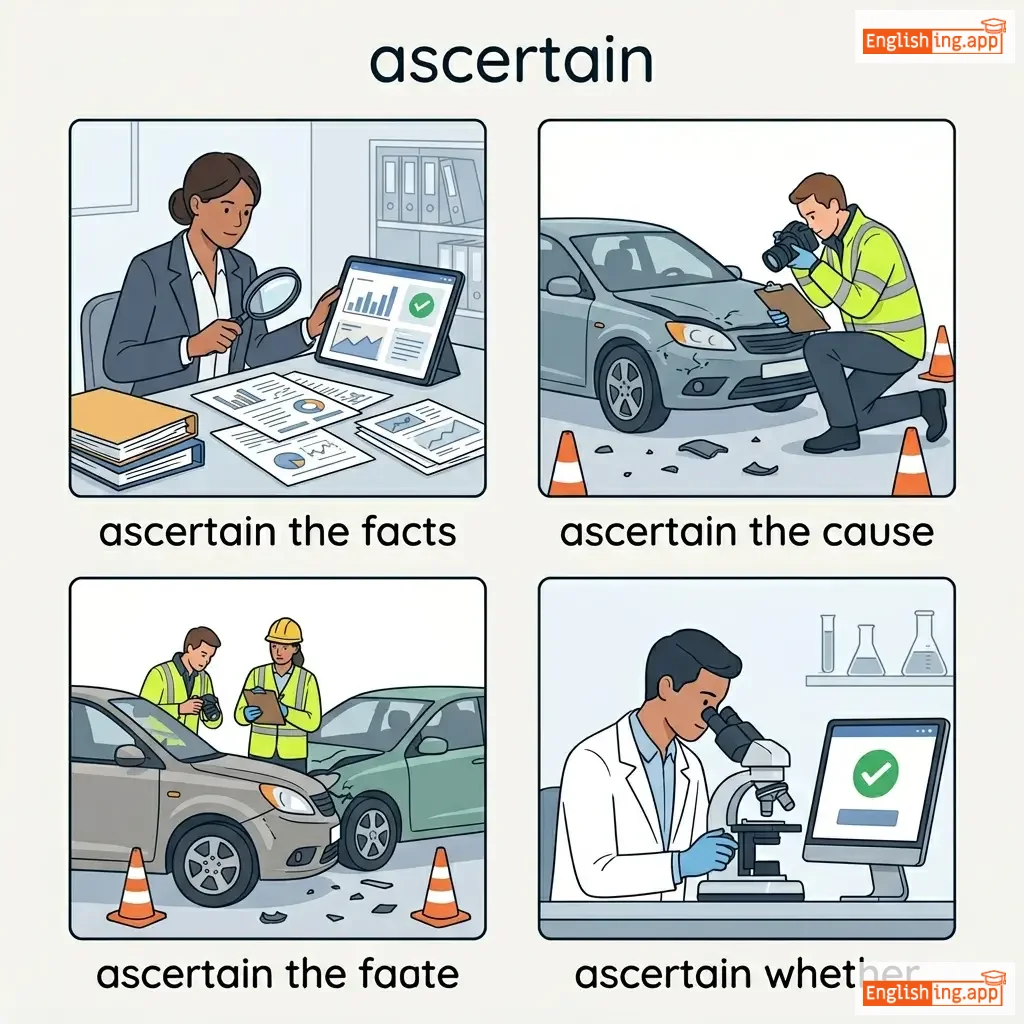
ascertain the facts, ascertain the cause, ascertain whether, ascertain identity
••••••
|
通过查明真相来确认事实的正确性。
••••••
|
Vocabulary Quiz
Test your vocabulary by matching words with their translations or meanings.
Login to take the quiz
Comments (0)
Share your thoughts and join the discussion.
Join the discussion by logging in
Login to CommentNo comments yet
Be the first to share your thoughts!