

Swipe left or right, or use the buttons. Tap image to zoom.
例句翻译
单词
Lesson 134Lesson 134 - 遮罩切换
|
表情符号
|
单词 | Images | 翻译 | 过去时 | 过去分词 | 第三人称单数 | 动名词 | 含义 | 例句 | 例句翻译 | 示例表达 | 示例表达含义 | 示例表达翻译 | 同义词 | 反义词 | 搭配词 | 助记符 |
|---|---|---|---|---|---|---|---|---|---|---|---|---|---|---|---|---|---|
|
#3991
🏷️
|
/ˈhɔːl.mɑːrk/
noun
(hǎo ěr mǎ kè)
••••••
|
- •••••• |
标志性特征
biaozhixing tezheng
••••••
|
- •••••• | - •••••• | - •••••• | - •••••• |
a typical characteristic or feature of someone or something
••••••
|
Honesty is the hallmark of a good leader. |
诚实是一个好领导者的标志性特征。
Chengshi shi yige hao lingdaozhe de biaozhixing tezheng.
••••••
|
- •••••• | - •••••• | - •••••• |
feature, attribute, characteristic, trait, emblem
••••••
|
anomaly, exception
••••••
|
hallmark of success, hallmark of quality, hallmark of excellence
••••••
|
Hallmark 意味着 '大厅里的标记' – 特别的标志或特征。
••••••
|
|
#3992
🧍
|
/ˌhæŋ.ər ˈɒn/
noun
(háng-ěr-ōn)
••••••
|
- •••••• |
跟班
genban
••••••
|
- •••••• | - •••••• | - •••••• | - •••••• |
a person who spends time with a powerful or famous person to gain benefits.
••••••
|
The celebrity was always surrounded by hangers-on. |
这位名人总是被跟班围绕着。
zhè wèi míngrén zǒng shì bèi gēnbān wéirào zhe.
••••••
|
- •••••• | - •••••• | - •••••• |
parasite, sycophant, follower, dependent
••••••
|
leader, independent
••••••
|
political hanger-on, social hanger-on, hangers-on
••••••
|
Hanger-on = 总是跟在权势人物后面,想从中受益
••••••
|
|
#3993
😞
|
/ˈhæŋ.dɔːɡ/
adjective
(hāngduǒgē)
••••••
|
- •••••• |
尴尬
gāngà
••••••
|
- •••••• | - •••••• | - •••••• | - •••••• |
looking or feeling ashamed, guilty, or defeated.
••••••
|
He gave me a hangdog look after being caught lying. |
他在被抓到撒谎后,给了我一个尴尬的表情。
Tā zài bèi zhuā dào sāhuǎng hòu, gěile wǒ yīgè gāngà de biǎoqíng.
••••••
|
- •••••• | - •••••• | - •••••• |
ashamed, guilty, embarrassed, downcast
••••••
|
proud, confident, cheerful
••••••
|
hangdog look, hangdog expression, hangdog face
••••••
|
Hang + Dog = 把狗挂起来,它会显得很尴尬。
••••••
|
|
#3994
✍️
|
/ˈhændˌraɪ.tɪŋ/
noun
(hændˌraɪ.tɪŋ)
••••••
|
- •••••• |
手写字
shǒuxiězì
••••••
|
- •••••• | - •••••• | - •••••• | - •••••• |
the style or manner of writing by hand.
••••••
|
Her handwriting is very neat and easy to read. |
她的手写字非常整齐,容易阅读。
Tā de shǒuxiězì fēicháng zhěngqí, róngyì yuèdú.
••••••
|
the handwriting on the wall |
a sign that something bad will happen
••••••
|
墙上的字迹
qiáng shàng de zìjì
••••••
|
script, penmanship, calligraphy, writing
••••••
|
typing, print
••••••
|
neat handwriting, improve handwriting, handwriting style, handwriting analysis
••••••
|
HAND + 写字 = 手写字
••••••
|
|
#3995
😎
|
/ˈhæn.səm/
adjective
••••••
|
- •••••• | - •••••• | - •••••• | - •••••• | - •••••• | - •••••• |
attractive in appearance, usually referring to men; also can mean generous or impressive in size.
••••••
|
He looked very handsome in his new suit. |
- •••••• |
handsome reward |
a large or generous reward
••••••
|
- •••••• |
attractive, good-looking, striking, dashing, elegant
••••••
|
ugly, unattractive, plain
••••••
|
handsome man, handsome reward, handsome profit, look handsome
••••••
|
No •••••• |
|
#3996
🤲
|
/ˈhænd ˌrɪŋɪŋ/
noun
(hænd-ˈrɪŋɪŋ)
••••••
|
- •••••• |
过度担忧
guòdù dānyōu
••••••
|
- •••••• | - •••••• | - •••••• | - •••••• |
excessive worry or concern expressed in a visible or dramatic way.
••••••
|
There was much hand-wringing over the political crisis.
关于政治危机有很多戏剧性的担忧。
••••••
|
关于政治危机有很多戏剧性的担忧。
Guānyú zhèngzhì wēijī yǒu hěn duō xìjùxìng de dānyōu.
••••••
|
- •••••• | - •••••• | - •••••• |
worrying, fretting, anxiety, concern, agitation
••••••
|
calmness, confidence, composure
••••••
|
political hand-wringing, endless hand-wringing, public hand-wringing
••••••
|
Hand wringing意味着戏剧性地过度担忧 - 记住担忧!
••••••
|
|
#3997
⛓️
|
/ˈhæmstrʌŋ/
verb (past tense, past participle), adjective
(hāmǎsīténg)
••••••
|
- •••••• |
瘫痪或受限
tānhuàn huò shòuxiàn
••••••
|
- •••••• | - •••••• | - •••••• | - •••••• |
crippled or severely restricted in movement or progress.
••••••
|
The team was hamstrung by lack of resources.
团队因缺乏资源而受到限制。
••••••
|
由于资源匮乏,团队陷入困境。
Yóuyú zīyuán kuìfá, tuánduì xiànrù kùnjìng.
••••••
|
- •••••• | - •••••• | - •••••• |
crippled, hindered, paralyzed, obstructed
••••••
|
free, enabled, empowered
••••••
|
hamstrung by rules, hamstrung by limitations
••••••
|
Hamstrung意味着不能做任何事情,就像被绑住一样。
••••••
|
|
#3998
🦵
|
/ˈhæmstrɪŋ/
noun, verb
(海姆斯特林)
••••••
|
- •••••• |
大腿后部的肌腱; 作为动词,限制或严重削弱某人或某物的效能
dàtuǐ hòubù de jījiàn; zuòwéi dòngcí, xiànzhì huò yánzhòng xuēruò mǒurén huò mǒuwù de xiàonéng
••••••
|
hamstrung
海姆斯特朗
••••••
|
hamstrung
海姆斯特朗
••••••
|
hamstrings
海姆斯特灵斯
••••••
|
hamstringing
海姆斯特灵金
••••••
|
a tendon at the back of the thigh; as a verb, to cripple or severely restrict the effectiveness of someone or something.
••••••
|
Budget cuts hamstrung the organization’s plans.
预算削减削弱了该组织的计划。
••••••
|
预算削减削弱了该组织的计划。
yùsuàn xuējiǎn xuēruòle gāi zǔzhī de jìhuà.
••••••
|
- •••••• | - •••••• | - •••••• |
cripple, weaken, disable, paralyze, hinder
••••••
|
strengthen, empower, support
••••••
|
hamstring injury, hamstring muscles, hamstring the effort
••••••
|
Hamstring 伤害意味着使运动员变得虚弱(xūruò)。
••••••
|
|
#3999
🧺
|
/ˈhæmpər/
verb, noun
(汉珀)
••••••
|
|
阻碍, 洗衣篮
zǔ'ài, xǐyī lán
••••••
|
hampered
汉珀德
••••••
|
hampered
汉珀德
••••••
|
hampers
汉珀斯
••••••
|
hampering
汉珀灵
••••••
|
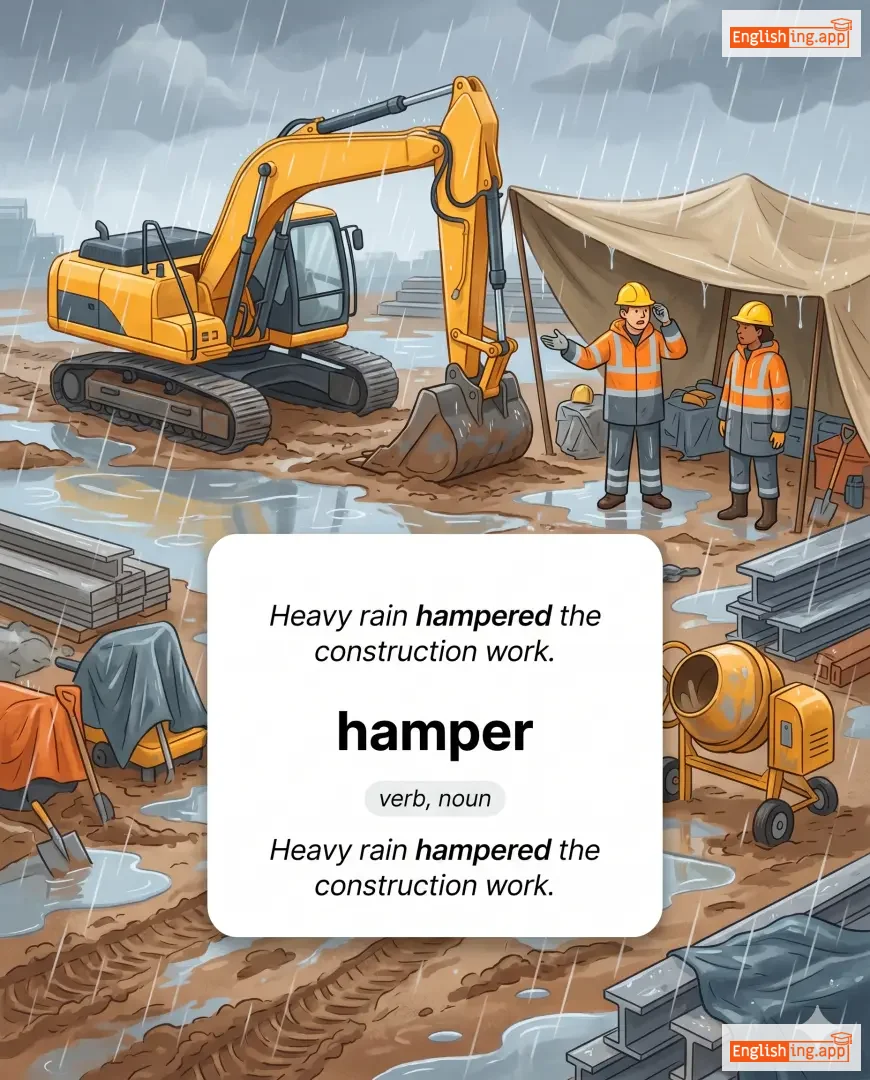
to prevent or slow down the progress of something; also, a basket with a lid, typically for laundry.
••••••
|
Heavy rain hampered the construction work.
暴雨阻碍了建筑工作。
••••••
|
暴雨阻碍了建筑工作。
Bàoyǔ zǔ'ài le jiànzhú gōngzuò.
••••••
|
- •••••• | - •••••• | - •••••• |
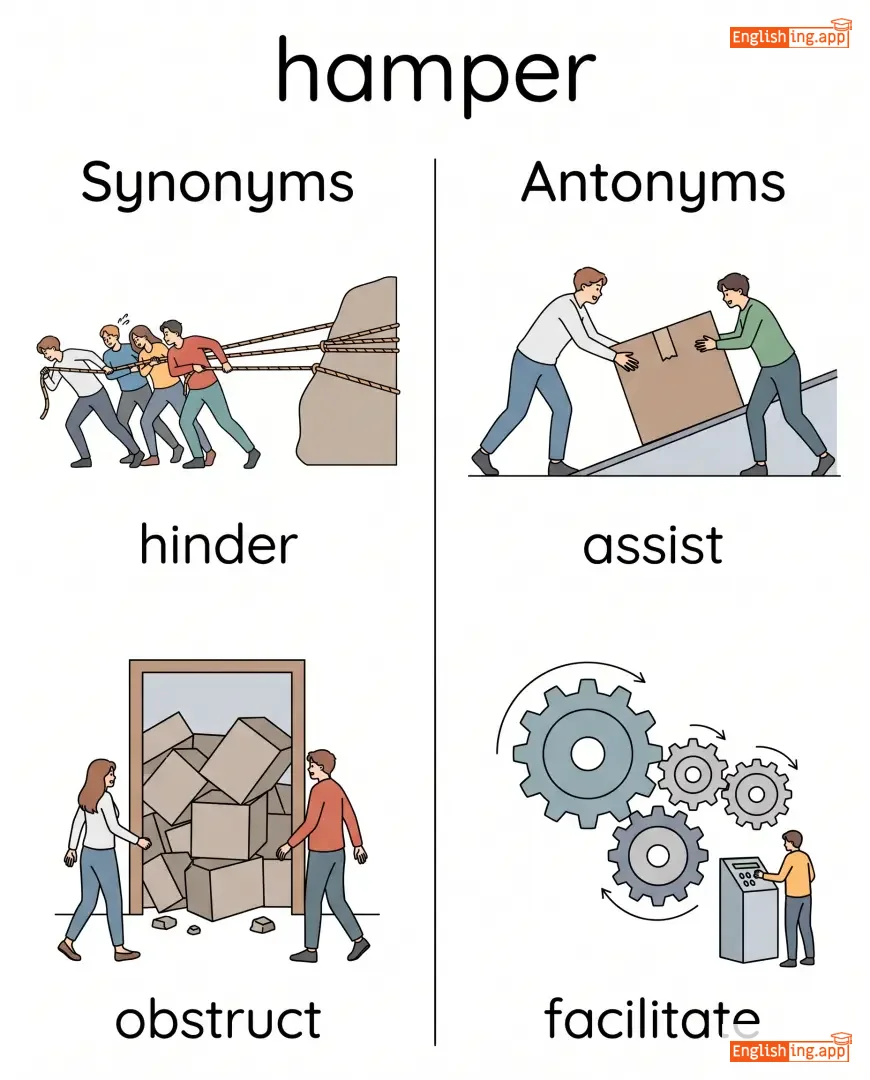
hinder, obstruct, impede, restrict, block
••••••
|
assist, facilitate, help
••••••
|
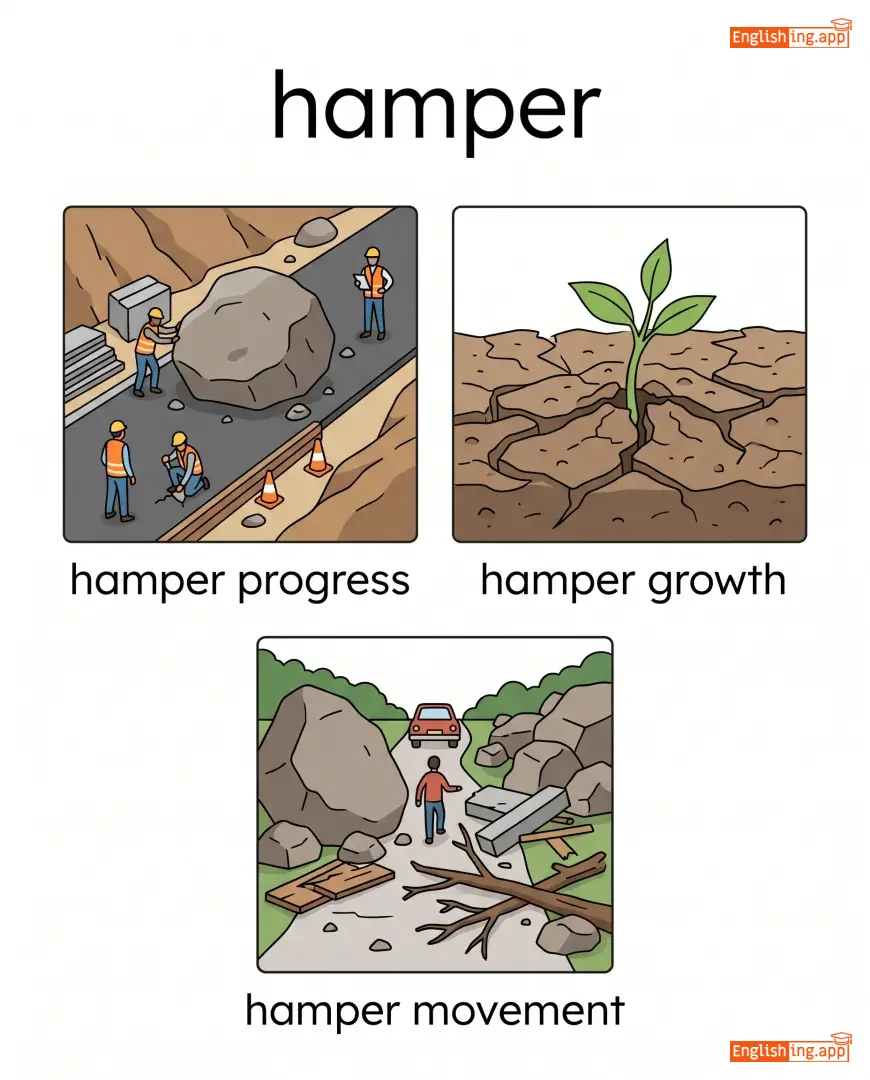
hamper progress, hamper growth, hamper movement, hamper efforts
••••••
|
Hamper 就像阻碍进展的篮子,像洗衣篮一样。
••••••
|
|
#4000
🔨
|
/ˈhæmər/
noun, verb
••••••
|
- •••••• | - •••••• |
hammered
••••••
|
hammered
••••••
|
hammers
••••••
|
hammering
••••••
|
a tool with a heavy metal head used for breaking things or driving in nails; to hit something forcefully with a hammer or similar object.
••••••
|
He used a hammer to fix the broken chair. |
- •••••• |
hammer out |
to work out the details of something through discussion and effort
••••••
|
- •••••• |
mallet, pound, strike, beat, smash
••••••
|
caress, stroke
••••••
|
hammer blow, hammer strike, hammer nails, hammer out, hammer away
••••••
|
No •••••• |
|
#4001
🙈
|
/ˈhæm ˌhændɪd/
adjective
(汉姆-汉迪德)
••••••
|
- •••••• |
笨拙
bènzhuō
••••••
|
- •••••• | - •••••• | - •••••• | - •••••• |
clumsy or inept in handling things or situations
••••••
|
His ham-handed attempt to fix the computer made it worse.
他笨拙的修理电脑的尝试反而使情况更糟。
••••••
|
他笨拙的修理电脑的尝试反而使情况更糟。
Tā bènzhuō de xiūlǐ diànnǎo de chángshì fǎn'ér shǐ qíngkuàng gèng zāo.
••••••
|
- •••••• | - •••••• | - •••••• |
clumsy, awkward, unskilled, bungling, inept
••••••
|
skilled, deft, adept
••••••
|
ham-handed attempt, ham-handed approach, ham-handed handling
••••••
|
像是用笨拙的手吃火腿,做事也会笨拙
••••••
|
|
#4002
⏸️
|
/ˈhɔːltɪŋ/
adjective
(霍尔廷)
••••••
|
- •••••• |
犹豫不决
yóuyù bù jué
••••••
|
- •••••• | - •••••• | - •••••• | - •••••• |
slow and hesitant, especially due to lack of confidence
••••••
|
She gave a halting reply during the interview.
她在面试中给出了迟疑的回答。
••••••
|
她在面试中给出了迟疑的回答。
Tā zài miànshì zhōng gěichūle chíyí de huídá.
••••••
|
- •••••• | - •••••• | - •••••• |
hesitant, faltering, unsure, unsteady, stammering
••••••
|
confident, fluent, smooth
••••••
|
halting voice, halting speech, halting reply, halting steps
••••••
|
Halting 在中文中意味着犹豫不决,就像迟疑的回答。
••••••
|
|
#4003
👁️
|
/həˌluːsɪˈneɪʃən/
noun
(幻觉)
••••••
|
- •••••• |
幻觉
huànjué
••••••
|
- •••••• | - •••••• | - •••••• | - •••••• |
a false perception of objects or events, usually caused by mental illness or drugs
••••••
|
After the medication, he began to experience vivid hallucinations.
服药后,他开始经历生动的幻觉。
••••••
|
服药后,他开始经历生动的幻觉。
Fúyào hòu, tā kāishǐ jīnglì shēngdòng de huànjué.
••••••
|
- •••••• | - •••••• | - •••••• |
illusion, vision, mirage, delusion, fantasy
••••••
|
reality, fact, truth
••••••
|
visual hallucination, auditory hallucination, drug-induced hallucination, experience hallucination
••••••
|
Hall + 电影是幻觉
••••••
|
|
#4004
⛪
|
/ˈhæloʊd/
adjective
(hailed)
••••••
|
|
神圣
shensheng
••••••
|
- •••••• | - •••••• | - •••••• | - •••••• |
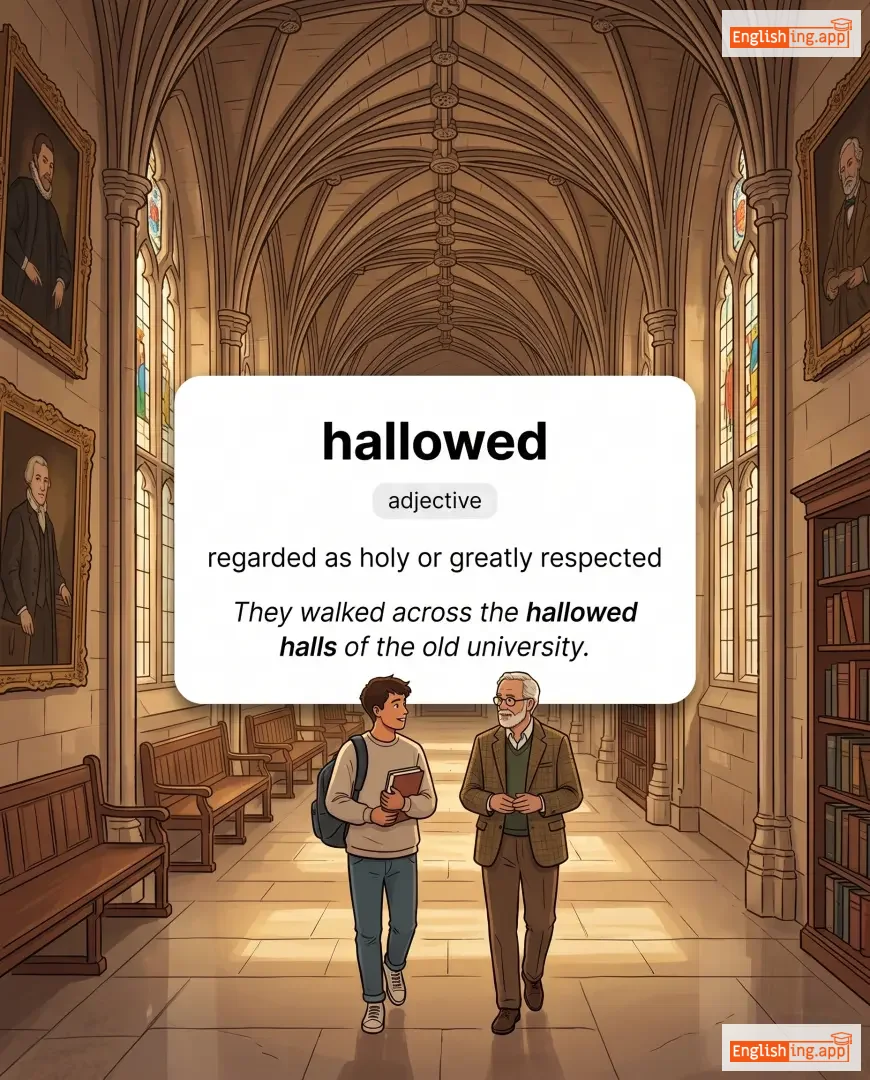
regarded as holy or greatly respected
••••••
|
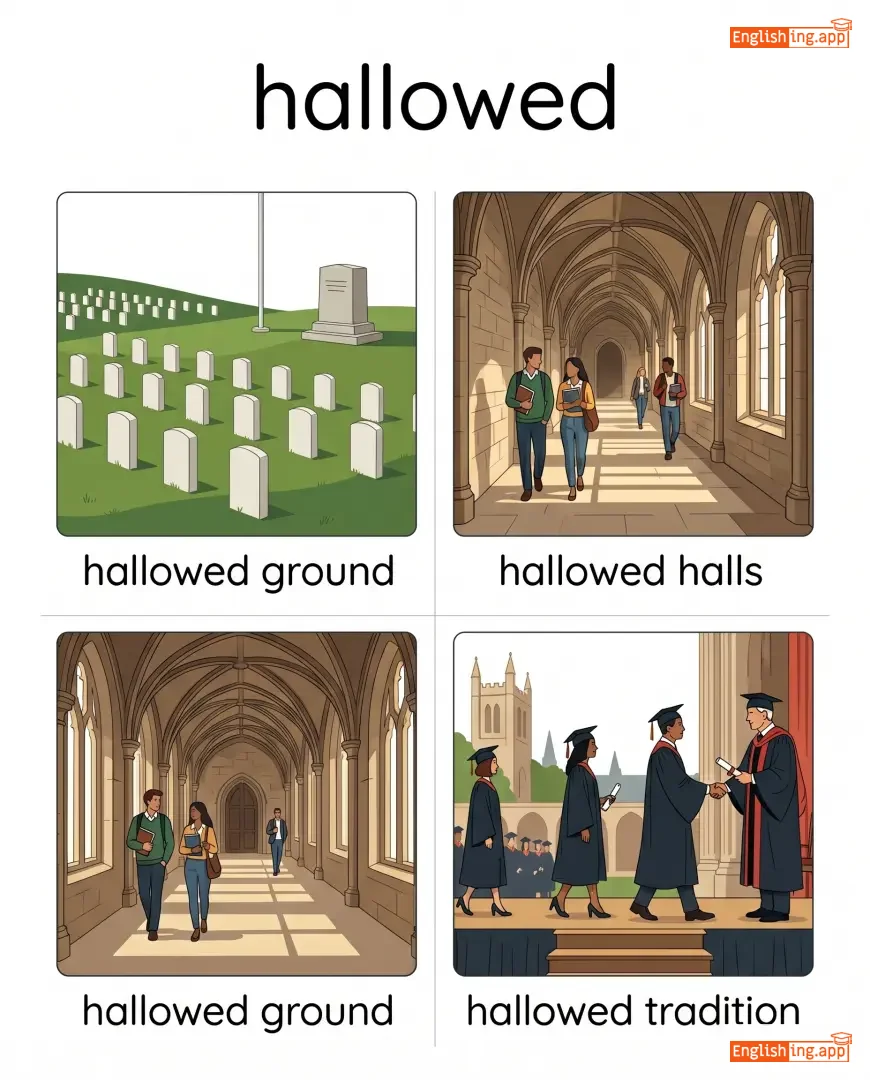
They walked across the hallowed halls of the old university. |
他们走过了老大学的神圣大厅。
Tāmen zǒuguòle lǎo dàxué de shénshèng dàtīng.
••••••
|
hallowed traditions |
long-standing customs that are deeply respected
••••••
|
神圣传统
shénshèng chuántǒng
••••••
|
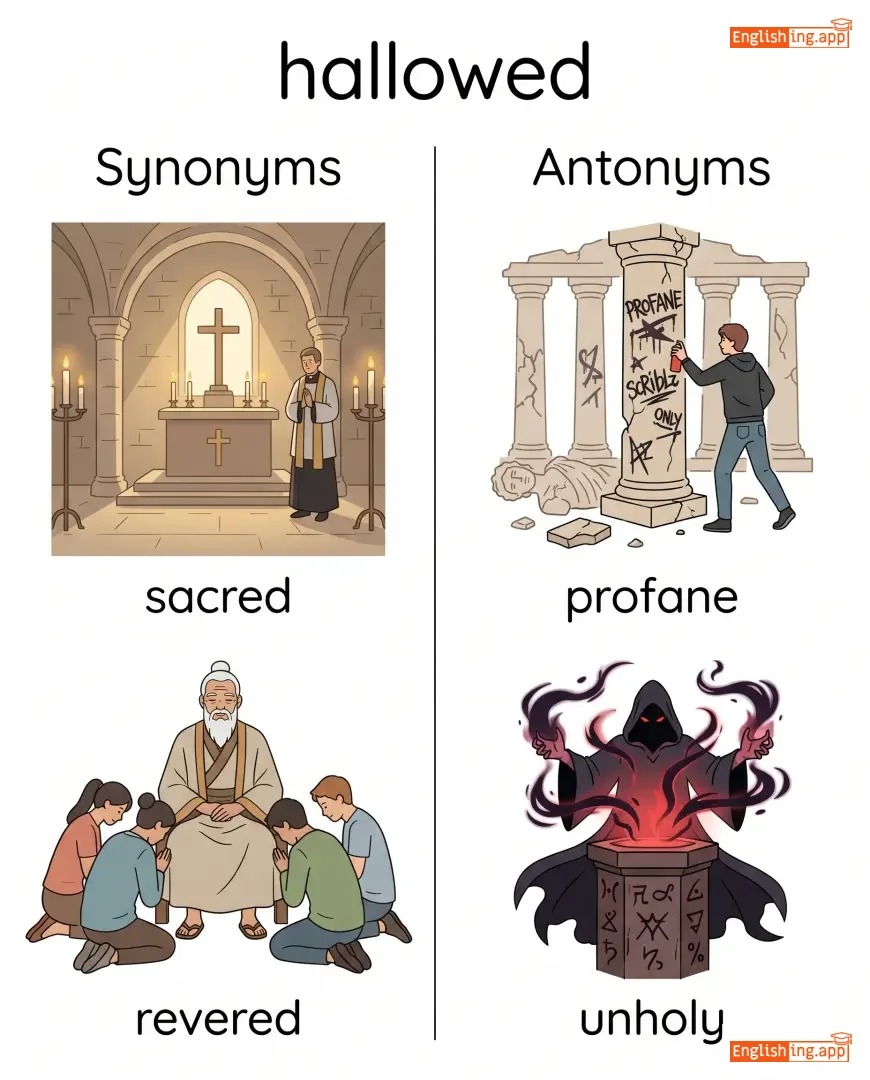
sacred, revered, blessed, sanctified, honored
••••••
|
profane, unholy, disrespectful
••••••
|
hallowed ground, hallowed halls, hallowed tradition, hallowed memory
••••••
|
Hallowed 意味着已经被神圣化
••••••
|
|
#4005
🙏
|
/ˈhæloʊ/
verb
(哈洛)
••••••
|
- •••••• |
神圣化
shenshenghua
••••••
|
hallowed
哈洛德
••••••
|
hallowed
哈洛德
••••••
|
hallows
哈洛斯
••••••
|
hallowing
哈洛因
••••••
|
to honor as holy; to make sacred or greatly respected
••••••
|
The ancient temple was hallowed by centuries of worship.
古老的寺庙因几百年的崇拜而被神圣化。
••••••
|
古老的寺庙因几百年的崇拜而被神圣化。
Gulao de simiao yin jiban nian de chongbai er bei shenshenghua.
••••••
|
hallowed ground
神圣的土地
••••••
|
a place made holy or respected through association with something important or sacred
••••••
|
神圣的土地
shensheng de tudi
••••••
|
sanctify, consecrate, bless, revere, honor
••••••
|
desecrate, profane, defile
••••••
|
hallow a tradition, hallow the memory, hallow ground, hallow the name
••••••
|
Hallow是神圣化,让地方变得神圣
••••••
|
|
#4006
🔁
|
/həˈbɪtʃuəl/
adjective
(哈比丘尔)
••••••
|
- •••••• |
习惯性的
xíguànxìng de
••••••
|
- •••••• | - •••••• | - •••••• | - •••••• |
Done or doing constantly or as a habit; customary.
••••••
|
He was a habitual latecomer to class.
他是一个上课习惯性迟到的人。
••••••
|
他是一个上课习惯性迟到的人。
Tā shì yīgè shàngkè xíguànxìng chídào de rén.
••••••
|
habitual offender
习惯性罪犯
••••••
|
A person who repeatedly commits crimes or offenses.
••••••
|
习惯性罪犯
xíguànxìng zuìfàn
••••••
|
customary, regular, routine, usual, typical
••••••
|
occasional, rare, irregular
••••••
|
habitual behavior, habitual offender, habitual routine, habitual pattern
••••••
|
习惯性的意思是习惯性的 → 使用习惯来记忆。
••••••
|
|
#4007
😒
|
/ˌhæfˈhɑːr.tɪd/
adjective
(哈夫哈特德)
••••••
|
- •••••• |
半心半意
banxinbanyi
••••••
|
- •••••• | - •••••• | - •••••• | - •••••• |
lacking enthusiasm or determination; unenthusiastic
••••••
|
His halfhearted attempt to study did not bring good results. |
他半心半意的学习尝试没有带来好结果。
Ta banxinbanyi de xuexi changshi meiyou dalai hao jieguo.
••••••
|
- •••••• | - •••••• | - •••••• |
lukewarm, indifferent, apathetic, unenthusiastic
••••••
|
eager, determined, enthusiastic
••••••
|
halfhearted effort, halfhearted response, halfhearted attempt
••••••
|
Halfhearted意味着做事不全力以赴,结果自然不好。
••••••
|
|
#4008
🥖
|
/ˌhæfˈbeɪkt/
adjective
(哈夫-贝克德)
••••••
|
- •••••• |
半生不熟
ban sheng bu shu
••••••
|
- •••••• | - •••••• | - •••••• | - •••••• |
poorly thought out or badly planned
••••••
|
The manager quickly rejected his half-baked proposal. |
经理迅速拒绝了他半生不熟的提案。
Jingli xunsu jujue le ta ban sheng bu shu de ti'an.
••••••
|
- •••••• | - •••••• | - •••••• |
ill-conceived, unrealistic, impractical, foolish
••••••
|
well-planned, sensible, practical
••••••
|
half-baked idea, half-baked plan, half-baked scheme
••••••
|
Half-baked意味着半生不熟 – 就像一顿没有煮熟的饭,计划也应该彻底考虑后才能执行。
••••••
|
|
#4009
💪
|
/heɪl/
adjective
(hēi ěr)
••••••
|
- •••••• |
健康
jiànkāng
••••••
|
- •••••• | - •••••• | - •••••• | - •••••• |
strong and healthy, especially of an elderly person
••••••
|
Despite his age, the man remained hale and active.
尽管他的年龄,他依然保持健康和活跃。
••••••
|
尽管他的年龄,他依然保持健康和活跃。
Jǐnguǎn tā de niánlíng, tā yīrán bǎochí jiànkāng hé huóyuè.
••••••
|
- •••••• | - •••••• | - •••••• |
healthy, robust, vigorous, fit
••••••
|
frail, weak, sick
••••••
|
hale and hearty, remain hale, hale condition
••••••
|
Hale意味着'健康' – 强壮和健康。
••••••
|
|
#4010
🌅
|
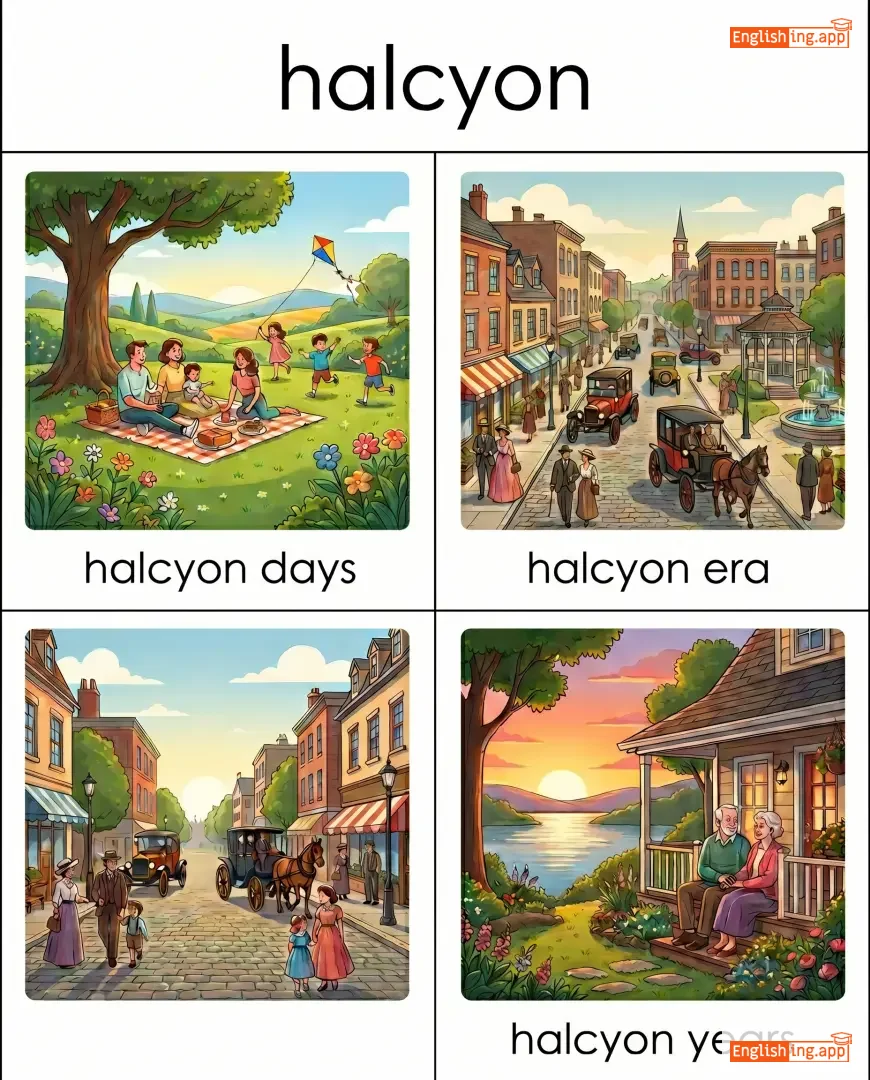
/ˈhæl.si.ən/
adjective
(海尔西安)
••••••
|
|
宁静的
níngjìng de
••••••
|
- •••••• | - •••••• | - •••••• | - •••••• |
calm, peaceful, and happy; denoting a period of time in the past that was idyllically happy and peaceful
••••••
|
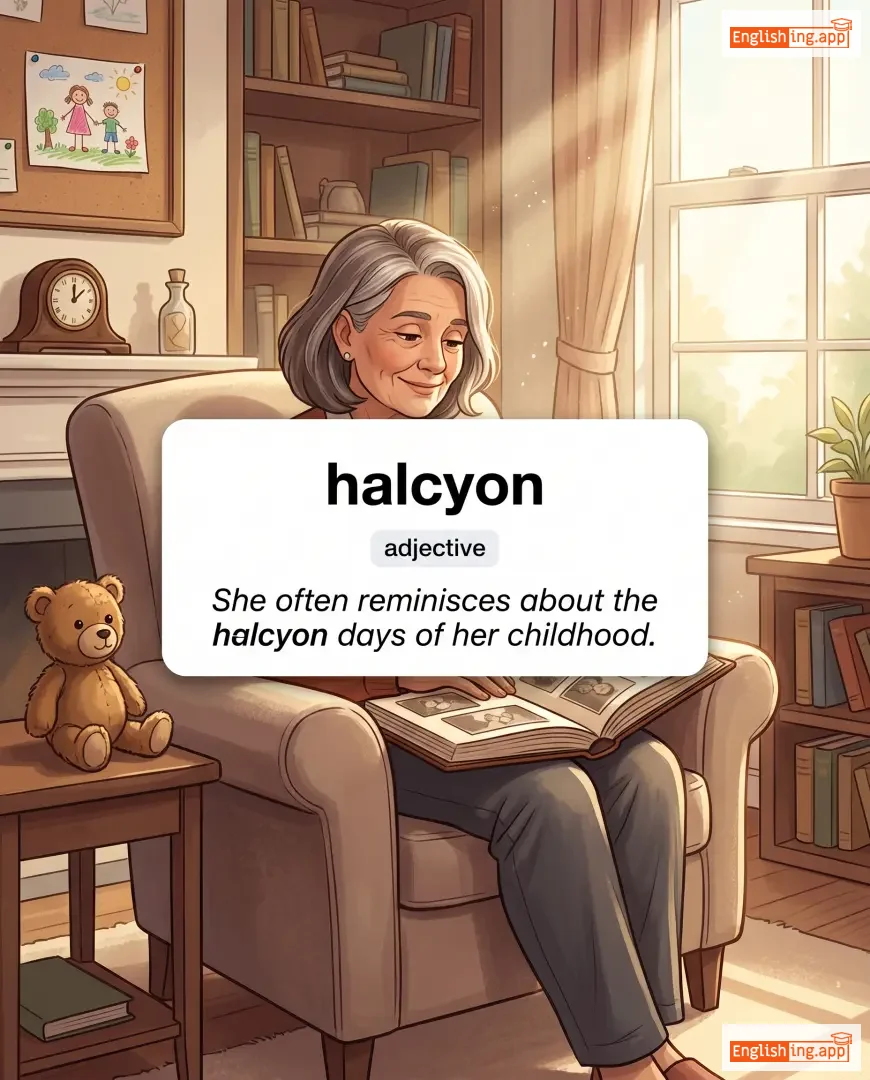
She often reminisces about the halcyon days of her childhood. |
她经常回忆起她童年时宁静的日子。
Tā jīngcháng huíyì qǐ tā tóngnián shí níngjìng de rìzi.
••••••
|
- •••••• | - •••••• | - •••••• |
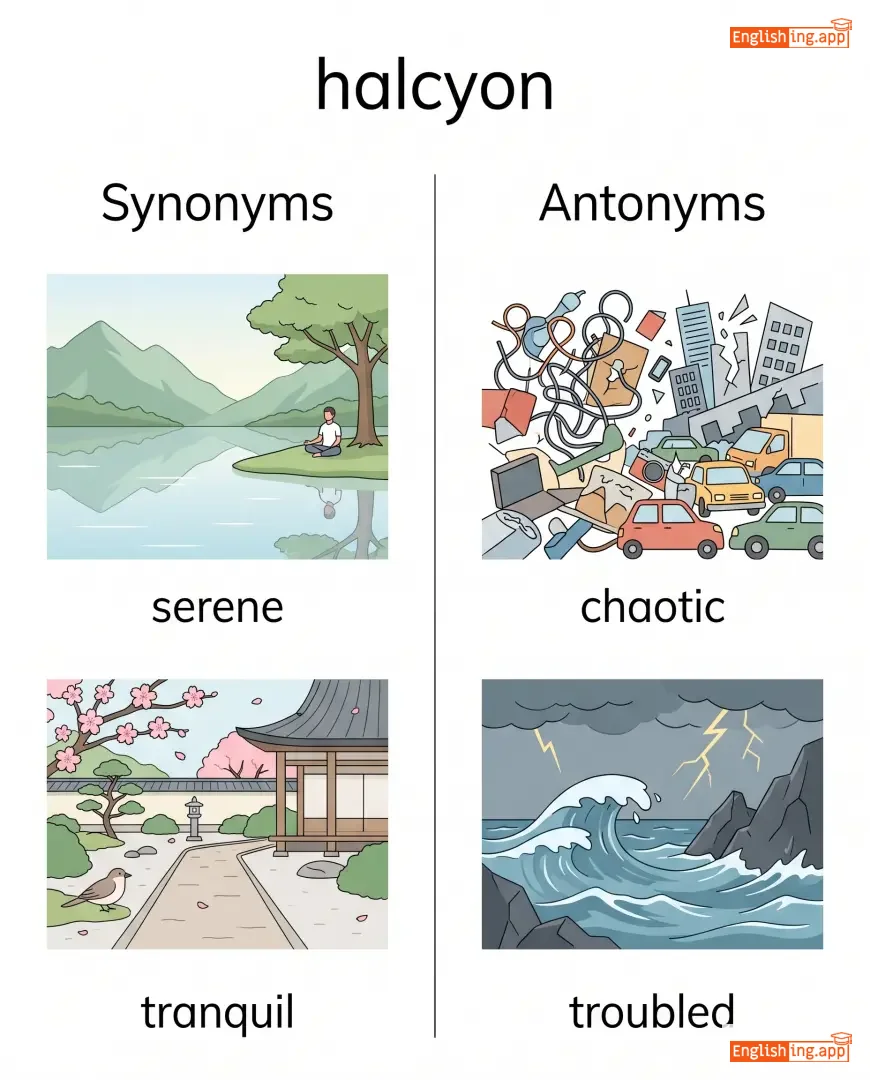
serene, tranquil, blissful, idyllic, peaceful
••••••
|
chaotic, troubled, stormy
••••••
|
halcyon days, halcyon era, halcyon years
••••••
|
Halcyon像“海的zone” – 寂静的幸福记忆。
••••••
|
|
#4011
🙌
|
/heɪl/
verb
(海尔)
••••••
|
- •••••• |
呼叫 / 赞美
hujiao / zanmei
••••••
|
hailed
海尔德
••••••
|
hailed
海尔德
••••••
|
hails
海尔斯
••••••
|
hailing
海灵
••••••
|
To call out to attract attention or to praise enthusiastically.
••••••
|
The athlete was hailed as a hero after the victory.
运动员在获胜后被誉为英雄。
••••••
|
运动员在获胜后被誉为英雄。
Yundongyuan zai huosheng hou bei yuwei wei yingxiong.
••••••
|
hail a taxi
招手停出租车
••••••
|
to signal and stop a taxi to get a ride
••••••
|
招手停出租车
zhaoshou ting chuzuche
••••••
|
greet, call, acclaim, praise, salute
••••••
|
ignore, condemn, dismiss
••••••
|
hail a taxi, hail as a hero, hail the decision, hail enthusiastically
••••••
|
Hail = 用手招或喊出租车
••••••
|
|
#4012
📚
|
/ˌhæɡ.i.əˈɡræf.ɪk/
adjective
(哈吉图式)
••••••
|
- •••••• |
过度恭维的
guòdù gōngwéi de
••••••
|
- •••••• | - •••••• | - •••••• | - •••••• |
Excessively flattering or idealized, often in a biography or portrayal of someone.
••••••
|
The documentary was criticized for its hagiographic portrayal of the leader. |
这部纪录片因其对领导者的过度恭维描写而受到批评。
Zhè bù jìlùpiàn yīn qí duì lǐngdǎo zhě de guòdù gōngwéi miáoxiě ér shòudào pīpíng.
••••••
|
- •••••• | - •••••• | - •••••• |
idealized, flattering, reverential, adulatory, worshipful
••••••
|
critical, realistic, objective
••••••
|
hagiographic biography, hagiographic portrayal, hagiographic account, hagiographic style
••••••
|
Hagiographic 就是传记,但只有赞美 (gōngwéi)
••••••
|
|
#4013
🤝
|
/ˈhæɡ.l̩/
verb
(哈格尔)
••••••
|
|
讨价还价
tǎo jià huán jià
••••••
|
haggled
哈格尔德
••••••
|
haggled
哈格尔德
••••••
|
haggles
哈格尔斯
••••••
|
haggling
哈格林
••••••
|
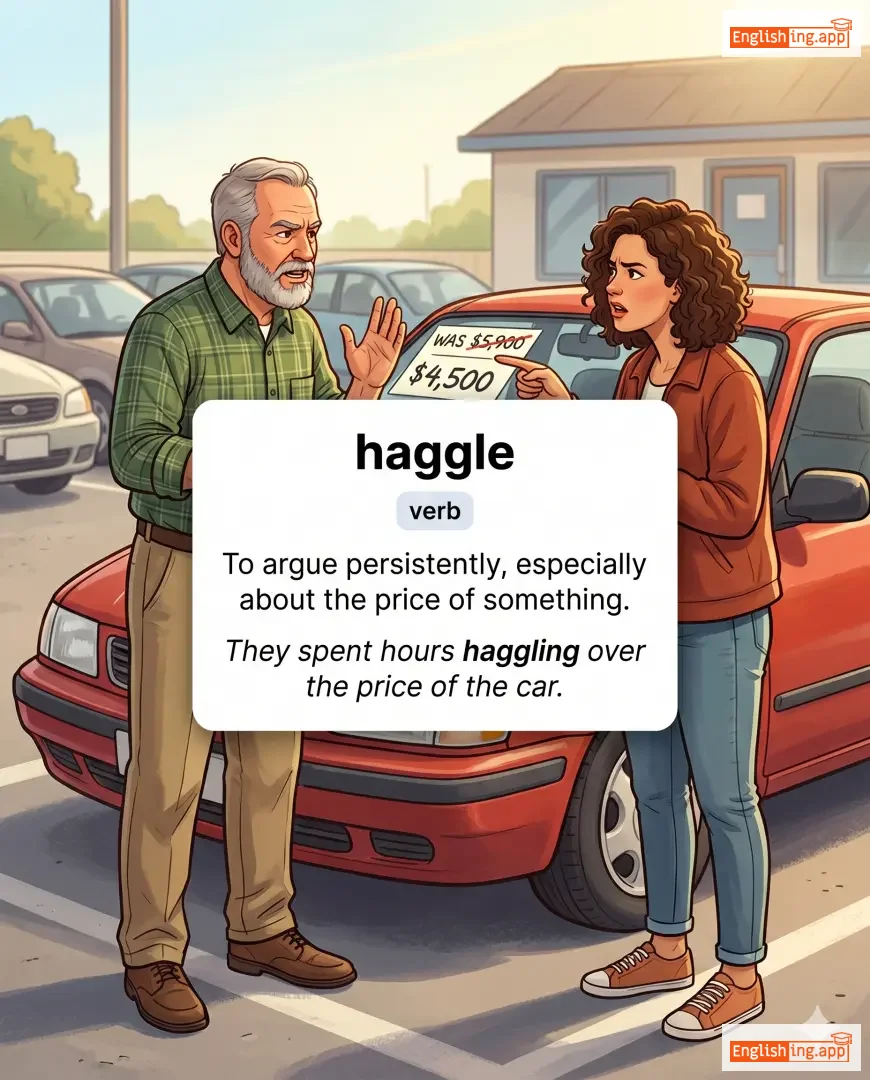
To argue persistently, especially about the price of something.
••••••
|
They spent hours haggling over the price of the car.
他们花了几个小时在车价上讨价还价。
••••••
|
他们花了几个小时在车价上讨价还价。
Tāmen huāle jǐ gè xiǎoshí zài chē jià shàng tǎo jià huán jià.
••••••
|
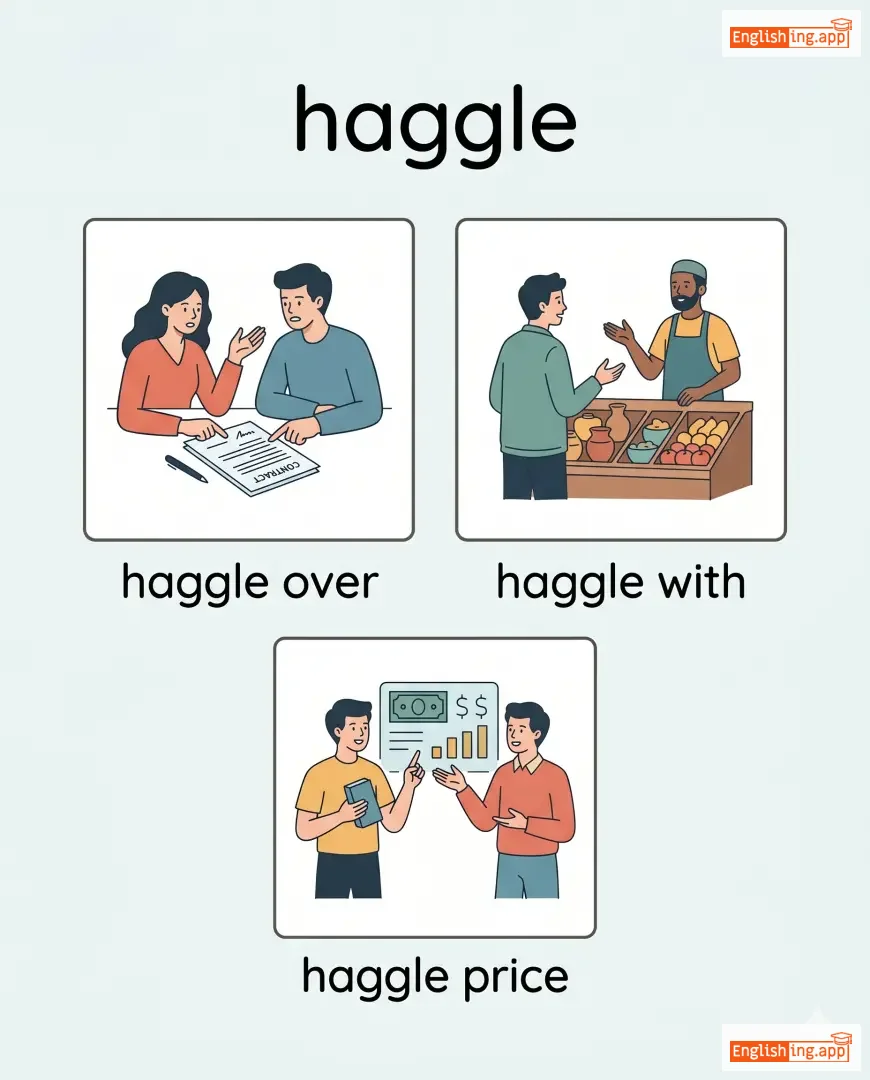
haggle over the price
讨价还价价格
••••••
|
to argue or negotiate persistently about the cost of something
••••••
|
讨价还价价格
Tǎo jià huán jià jiàgé
••••••
|
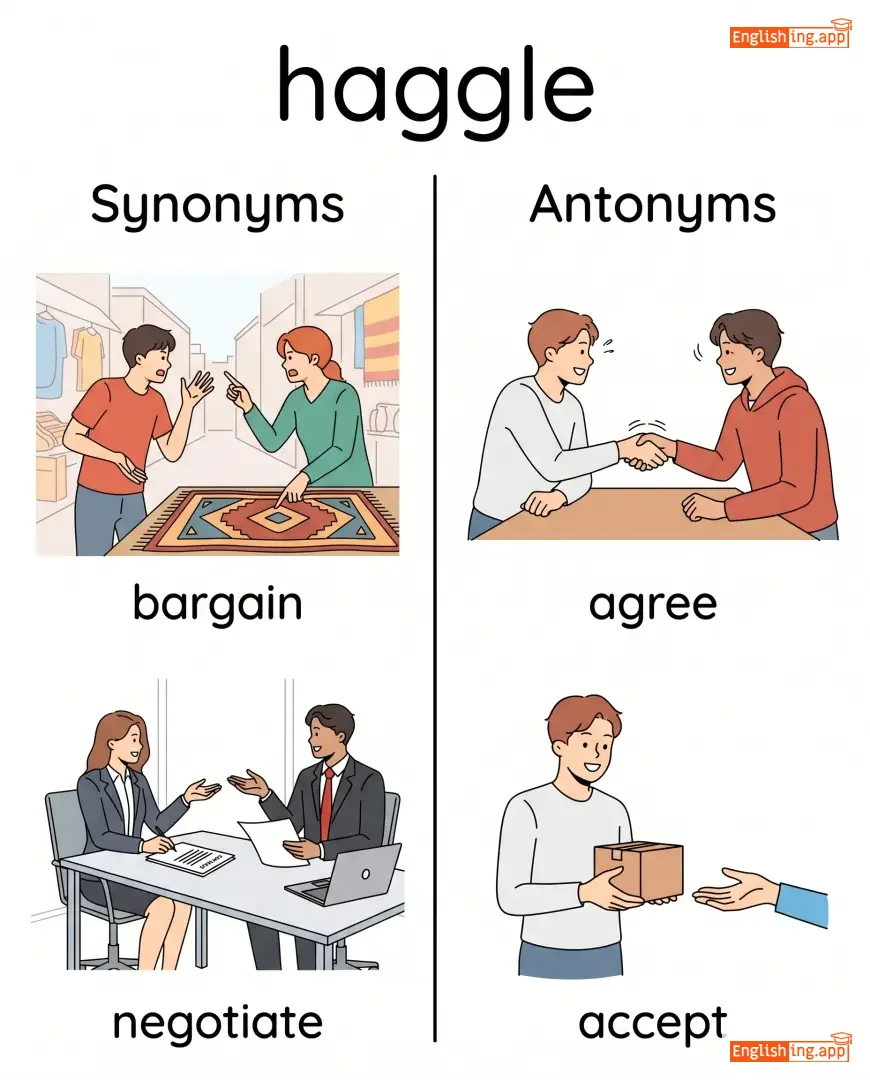
bargain, negotiate, wrangle, barter, dispute
••••••
|
agree, accept, consent
••••••
|
haggle over, haggle with, haggle price, haggle endlessly
••••••
|
Haggle = 讨价还价,市场上买东西 (tǎo jià huán jià)
••••••
|
|
#4014
😩
|
/ˈhæɡ.ərd/
adjective
(哈格德)
••••••
|
- •••••• |
疲惫不堪
pí bèi bù kān
••••••
|
- •••••• | - •••••• | - •••••• | - •••••• |
Looking exhausted, unwell, or worn out, especially from fatigue or suffering.
••••••
|
After working all night, she looked pale and haggard.
整晚工作后,她看起来又苍白又疲惫。
••••••
|
整晚工作后,她看起来又苍白又疲惫。
Zhěng wǎn gōngzuò hòu, tā kàn qǐlái yòu cāngbái yòu píbèi.
••••••
|
- •••••• | - •••••• | - •••••• |
exhausted, gaunt, worn, fatigued, drawn
••••••
|
healthy, fresh, vigorous
••••••
|
look haggard, appear haggard, pale and haggard, haggard face
••••••
|
Haggard 是 '疲惫不堪',就像你整夜工作后感到的那样。
••••••
|
|
#4015
📄
|
/ˈhæk.nid/
adjective
(海皮尼斯)
••••••
|
- •••••• |
陈词滥调
chén cí làn diào
••••••
|
- •••••• | - •••••• | - •••••• | - •••••• |
Used too often and therefore lacking originality or freshness.
••••••
|
The speech was filled with hackneyed phrases that failed to inspire the audience. |
演讲中充满了陈词滥调,未能激励听众。
Yǎnjiǎng zhōng chōngmǎnle chéncí làndiào, wèi néng jīlì tīngzhòng.
••••••
|
- •••••• | - •••••• | - •••••• |
trite, clichéd, stale, overused, banal
••••••
|
original, fresh, novel
••••••
|
hackneyed phrase, hackneyed expression, hackneyed cliché, hackneyed idea
••••••
|
Hackneyed = 陈词滥调,太多次的使用,变得没有新意。
••••••
|
|
#4016
🐎
|
/ˈhæknɪ/
noun
(哈克尼)
••••••
|
- •••••• |
出租马, 陈腐
chuzu ma, chenfu
••••••
|
- •••••• | - •••••• | - •••••• | - •••••• |
a horse kept for ordinary riding or hire; also used for something overused or trite
••••••
|
The old hackney was still pulling the carriage. |
那匹旧出租马仍然拉着马车。
Na pi jiu chuzu ma rengran la zhe mache.
••••••
|
hackneyed phrase |
an overused and unoriginal expression
••••••
|
陈腐的短语
chenfu de duanyu
••••••
|
horse, carriage horse, cliché, trite expression
••••••
|
freshness, originality
••••••
|
hackney carriage, hackney horse, hackneyed phrase, hackney expression
••••••
|
Hackney 意为出租马,hackneyed 意为过度使用的,以至于变得无聊。
••••••
|
|
#4017
🐕
|
/ˈhækəlz/
noun
••••••
|
- •••••• | - •••••• | - •••••• | - •••••• | - •••••• | - •••••• |
the hairs on the back of an animal’s neck that rise when it is angry or alarmed; figuratively, feelings of anger or resentment
••••••
|
His rude comment raised my hackles. |
- •••••• |
raise someone's hackles |
to make someone angry or annoyed
••••••
|
- •••••• |
bristles, anger, resentment, irritation
••••••
|
calm, peace, composure
••••••
|
raise hackles, hackles rise, lower hackles
••••••
|
No •••••• |
|
#4018
💻
|
/hæk/
verb
••••••
|
- •••••• | - •••••• |
hacked
••••••
|
hacked
••••••
|
hacks
••••••
|
hacking
••••••
|
to cut or chop roughly; to gain unauthorized access to a computer system
••••••
|
The programmer managed to hack into the system. |
- •••••• |
hack it |
to cope or manage with something
••••••
|
- •••••• |
chop, cut, slash, break into, breach
••••••
|
build, secure, protect
••••••
|
hack into a system, hack code, hack solution, life hack
••••••
|
No •••••• |
|
#4019
📜
|
/ˈhæbɪtjuːd/
noun
(哈比秋德)
••••••
|
- •••••• |
习惯,风俗
xíguàn, fēngsú
••••••
|
- •••••• | - •••••• | - •••••• | - •••••• |
a customary condition or mode of life; habitual practice
••••••
|
He lived in a quiet habitude, avoiding the noise of the city. |
他生活在一种安静的习惯中,避开城市的喧嚣。
Tā shēnghuó zài yī zhǒng ānjìng de xíguàn zhōng, bìkāi chéngshì de xuānxiāo.
••••••
|
- •••••• | - •••••• | - •••••• |
habit, custom, practice, routine, lifestyle
••••••
|
change, novelty, irregularity
••••••
|
peaceful habitude, social habitude, cultural habitude, daily habitude
••••••
|
Habitude 就像 habit 和 attitude 的结合。
••••••
|
|
#4020
🔄
|
/həˈbɪtʃueɪt/
verb
(哈比丘特)
••••••
|
|
使习惯
shi xiguan
••••••
|
habituated
哈比丘特德
••••••
|
habituated
哈比丘特德
••••••
|
habituates
哈比丘特斯
••••••
|
habituating
哈比丘特英
••••••
|
to accustom someone or oneself to something through frequent exposure or experience
••••••
|
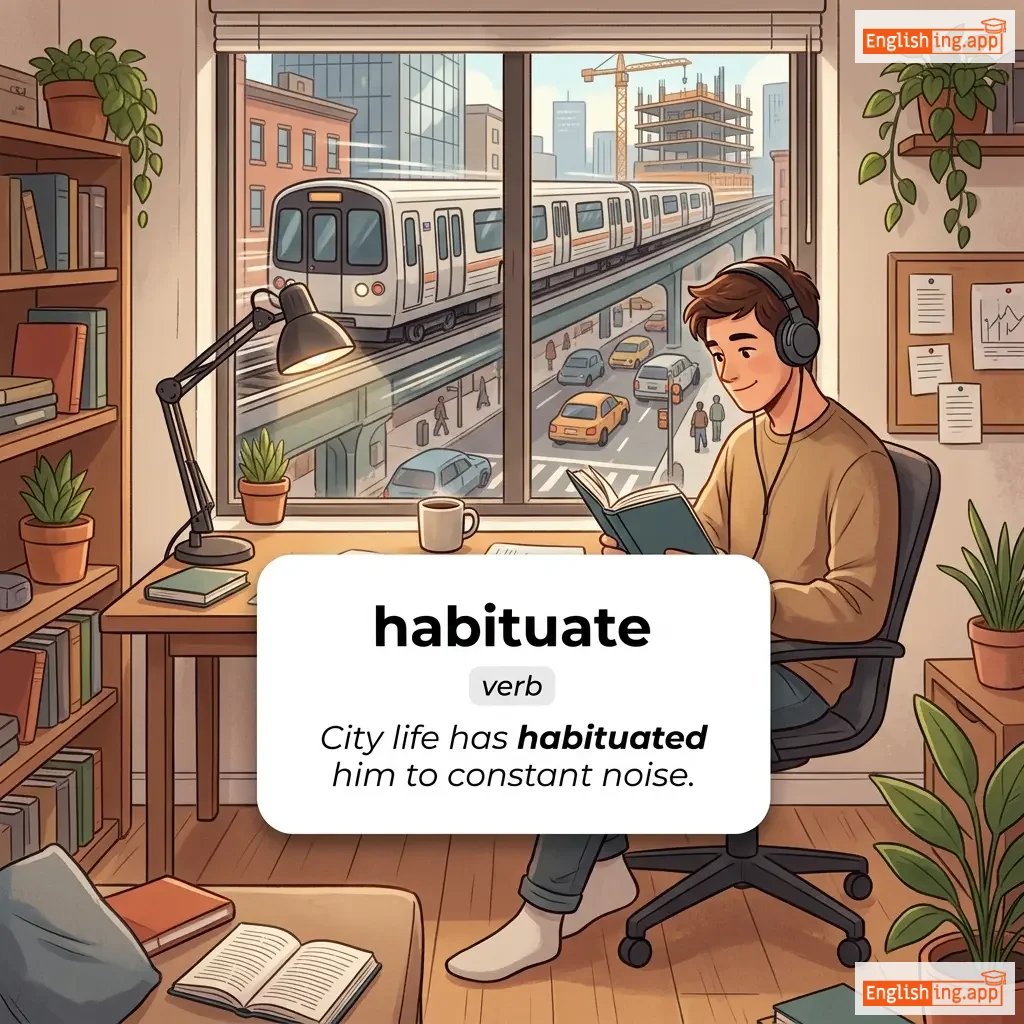
City life has habituated him to constant noise.
城市生活使他习惯了持续的噪音。
••••••
|
城市生活使他习惯了持续的噪音。
Chengshi shenghuo shi ta xiguanle chixu de zaoyin.
••••••
|
- •••••• | - •••••• | - •••••• |
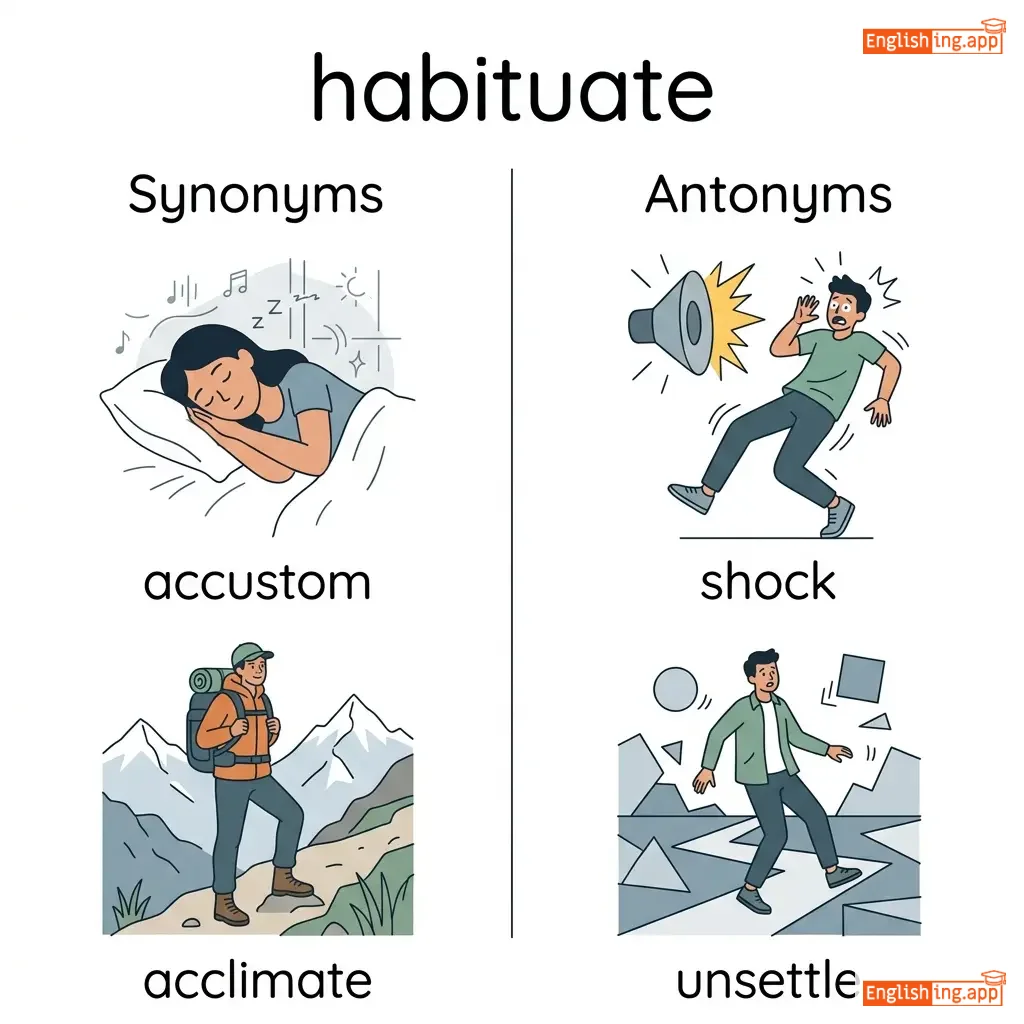
accustom, acclimate, familiarize, adapt, train
••••••
|
shock, unsettle, surprise
••••••
|
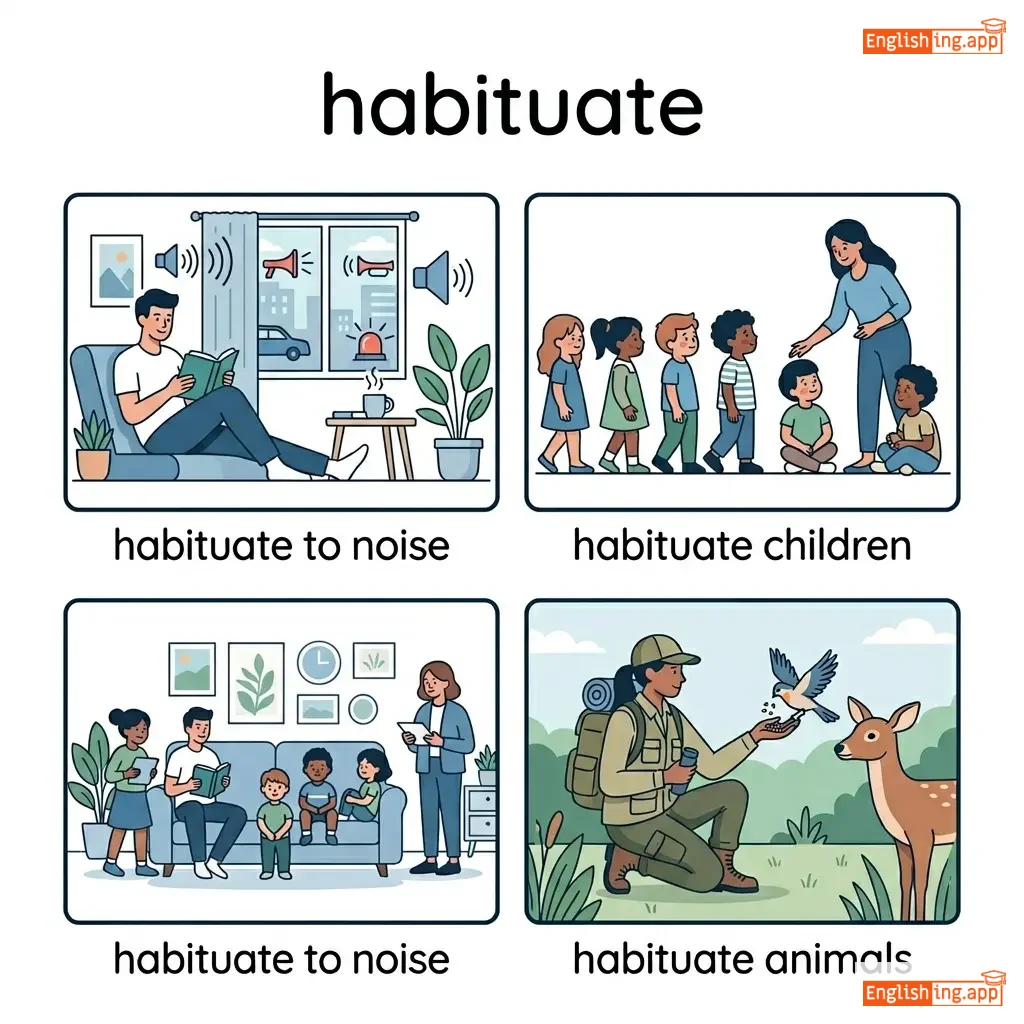
habituate to noise, habituate children, habituate animals, habituate oneself
••••••
|
Habit + uate → 相关的 '习惯';哈比丘特表示习惯。
••••••
|
Vocabulary Quiz
Test your vocabulary by matching words with their translations or meanings.
Login to take the quiz
Comments (0)
Share your thoughts and join the discussion.
Join the discussion by logging in
Login to CommentNo comments yet
Be the first to share your thoughts!