




Swipe left or right, or use the buttons. Tap image to zoom.
例句翻译
单词
Lesson 97Lesson 97 - 遮罩切换
|
表情符号
|
单词 | Images | 翻译 | 过去时 | 过去分词 | 第三人称单数 | 动名词 | 含义 | 例句 | 例句翻译 | 示例表达 | 示例表达含义 | 示例表达翻译 | 同义词 | 反义词 | 搭配词 | 助记符 |
|---|---|---|---|---|---|---|---|---|---|---|---|---|---|---|---|---|---|
|
#2881
🎩
|
/ɪˈliːtɪst/
noun/adjective
(精英主义者)
••••••
|
- •••••• |
精英主义者
jingying zhuyi zhe
••••••
|
- •••••• | - •••••• | - •••••• | - •••••• |
A person who believes that a society should be led by an elite; showing preference for a privileged class.
••••••
|
His elitist attitude made him unpopular among his peers. |
他的精英主义态度使他在同事中不受欢迎。
Tā de jīngyīng zhǔyì tàidù shǐ tā zài tóngshì zhōng bù shòu huānyíng.
••••••
|
- •••••• | - •••••• | - •••••• |
snobbish, exclusive, superior, highbrow
••••••
|
egalitarian, democratic, common
••••••
|
elitist attitude, elitist approach, elitist society, elitist view
••••••
|
Elite意味着上层阶级,而elitist意味着偏爱这一阶级。
••••••
|
|
#2882
🏝️
|
/ɪˈlɪziəm/
noun
(极乐世界)
••••••
|
- •••••• |
极乐
jile
••••••
|
- •••••• | - •••••• | - •••••• | - •••••• |
A place or state of perfect happiness; in Greek mythology, the afterlife paradise.
••••••
|
For her, the garden was a personal elysium. |
对她来说,花园是一个个人的极乐世界。
dui ta laishuo, huayuan shi yige geren de jile shijie.
••••••
|
elysium of the blessed |
a paradise for fortunate souls
••••••
|
极乐的祝福
jile de zhufu
••••••
|
paradise, heaven, utopia, bliss, nirvana
••••••
|
hell, misery, suffering
••••••
|
personal elysium, reach elysium, garden elysium, dream elysium
••••••
|
Elysium就像极乐,充满幸福和平静的地方!
••••••
|
|
#2883
🌸
|
/ɪˈlɪʒən/
adjective
(伊利西安)
••••••
|
|
天堂的
tiāntáng de
••••••
|
- •••••• | - •••••• | - •••••• | - •••••• |
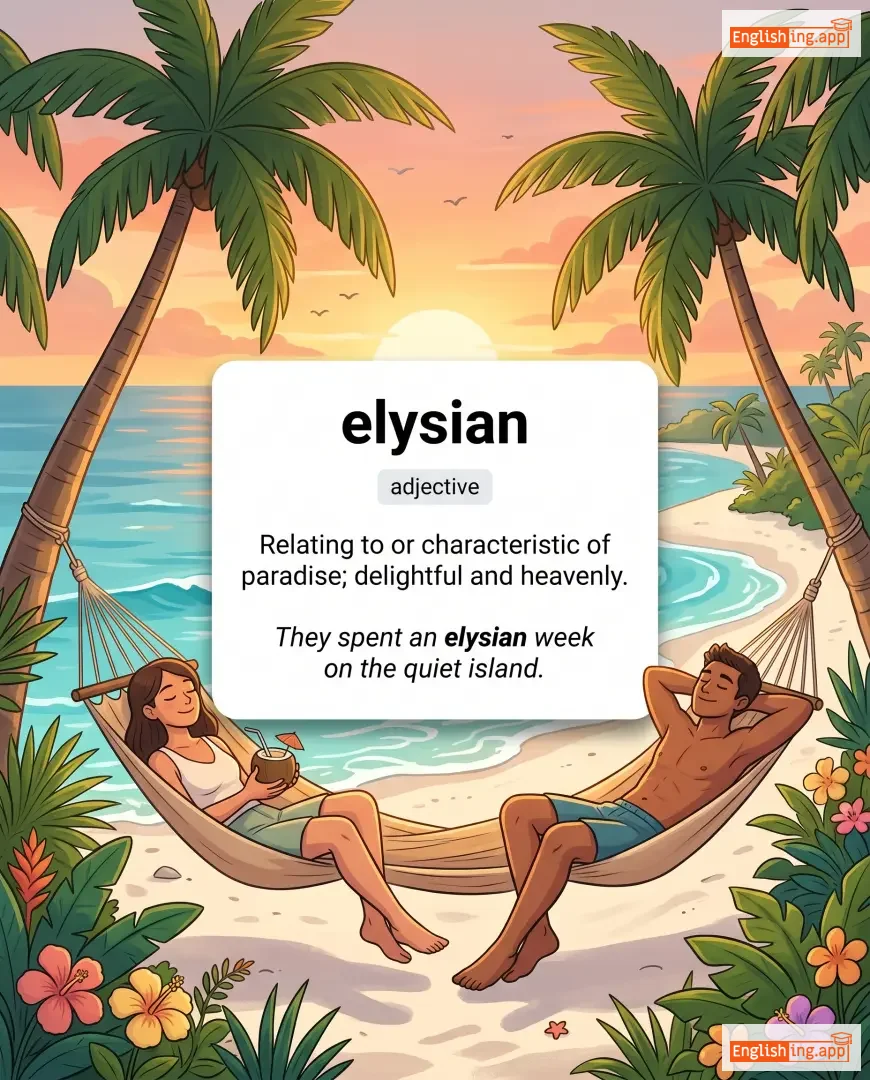
Relating to or characteristic of paradise; delightful and heavenly.
••••••
|
They spent an elysian week on the quiet island. |
他们在宁静的岛屿上度过了一个天堂般的星期。
Tāmen zài níngjìng de dǎoyǔ shàng dùguòle yīgè tiāntáng bān de xīngqī.
••••••
|
- •••••• | - •••••• | - •••••• |
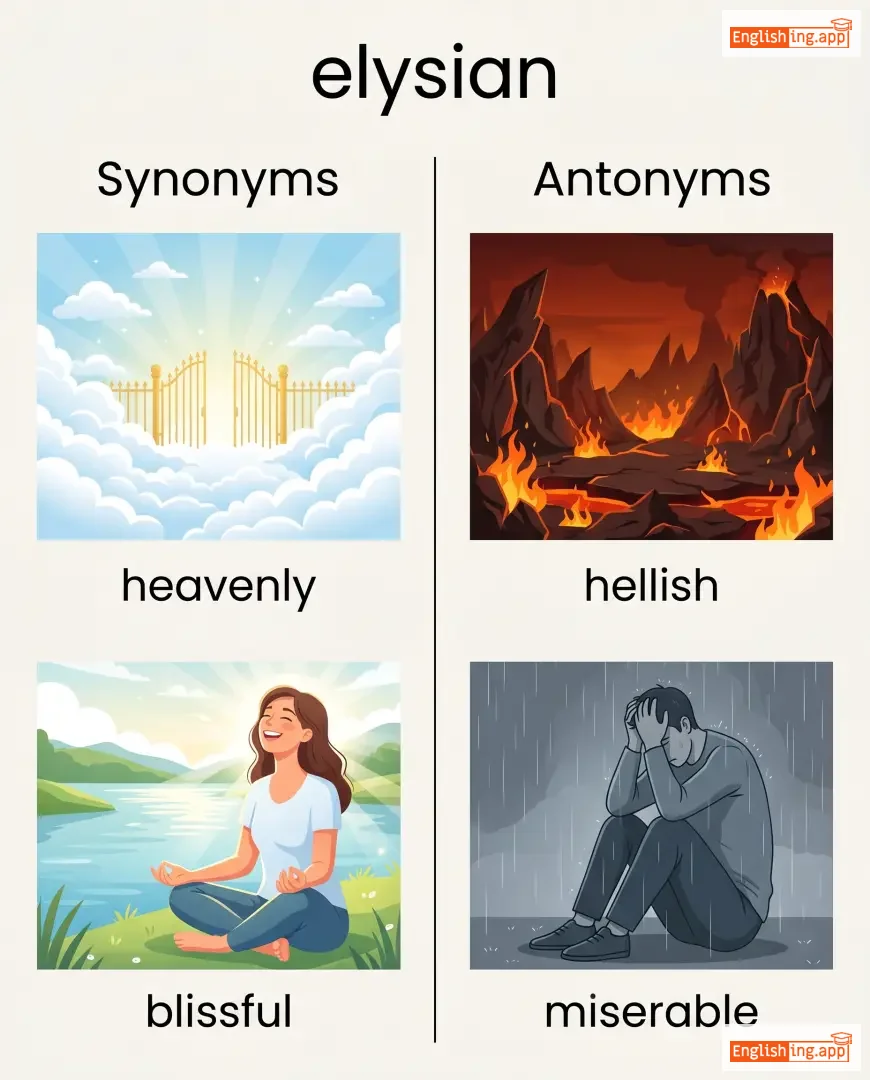
heavenly, blissful, idyllic, divine, paradisiacal
••••••
|
hellish, miserable, unpleasant
••••••
|
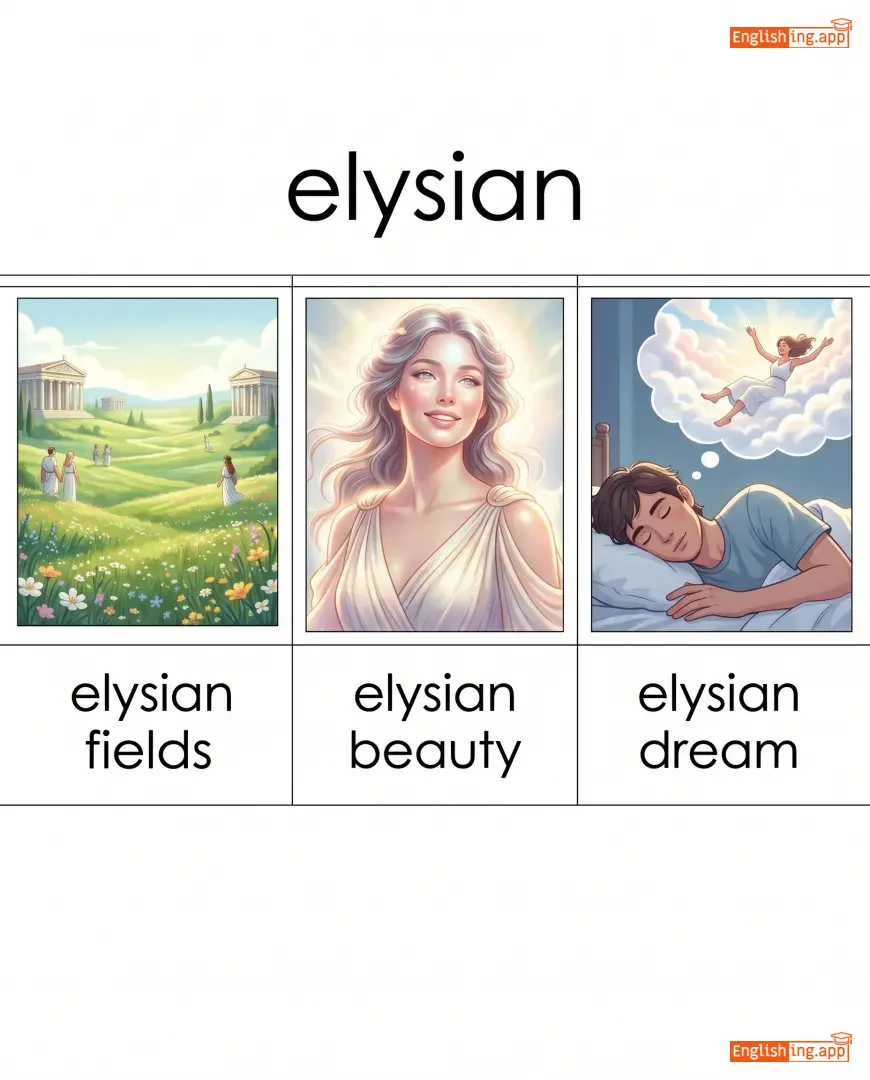
elysian fields, elysian beauty, elysian dream, elysian experience
••••••
|
Elysian 是天堂般的,就像在宁静岛屿上的完美一周。
••••••
|
|
#2884
🕵️♀️
|
/ɪˈluːsɪv/
adjective
(yīlǔxīfū)
••••••
|
- •••••• |
难以捉摸
nán yǐ zhuōmō
••••••
|
- •••••• | - •••••• | - •••••• | - •••••• |
Difficult to find, catch, or achieve; hard to understand or define.
••••••
|
The solution to the problem proved elusive. |
问题的解决方案证明难以捉摸。
wèntí de jiějué fāng'àn zhèngmíng nán yǐ zhuōmō.
••••••
|
elusive goal |
a goal that is very difficult to achieve
••••••
|
难以实现的目标
nán yǐ shíxiàn de mùbiāo
••••••
|
slippery, evasive, intangible, mysterious, vague
••••••
|
clear, obvious, definite
••••••
|
elusive dream, elusive answer, elusive meaning, elusive target
••••••
|
Elusive 就像一个虚幻的目标,永远触不可及。
••••••
|
|
#2885
🏃♂️
|
/ɪˈluːʒən/
noun
(艾露逊)
••••••
|
- •••••• |
回避
huíbì
••••••
|
- •••••• | - •••••• | - •••••• | - •••••• |
The act of escaping or avoiding something, especially by cleverness or trickery.
••••••
|
His constant elusion of responsibility frustrated his colleagues.
他不断回避责任,让他的同事感到沮丧。
••••••
|
他不断回避责任,让他的同事感到沮丧。
Tā bùduàn huíbì zérèn, ràng tā de tóngshì gǎndào jǔsàng.
••••••
|
- •••••• | - •••••• | - •••••• |
escape, evasion, avoidance, dodge, shirking
••••••
|
confrontation, facing, encounter
••••••
|
elusion of duty, clever elusion, successful elusion, elusion from capture
••••••
|
Elusion就像回避责任,用机智逃避!
••••••
|
|
#2886
🏃♂️
|
/ɪˈluːd/
verb
(艾卢德)
••••••
|
|
逃避
taobi
••••••
|
eluded
艾卢德德
••••••
|
eluded
艾卢德德
••••••
|
eludes
艾卢德斯
••••••
|
eluding
艾卢丁
••••••
|
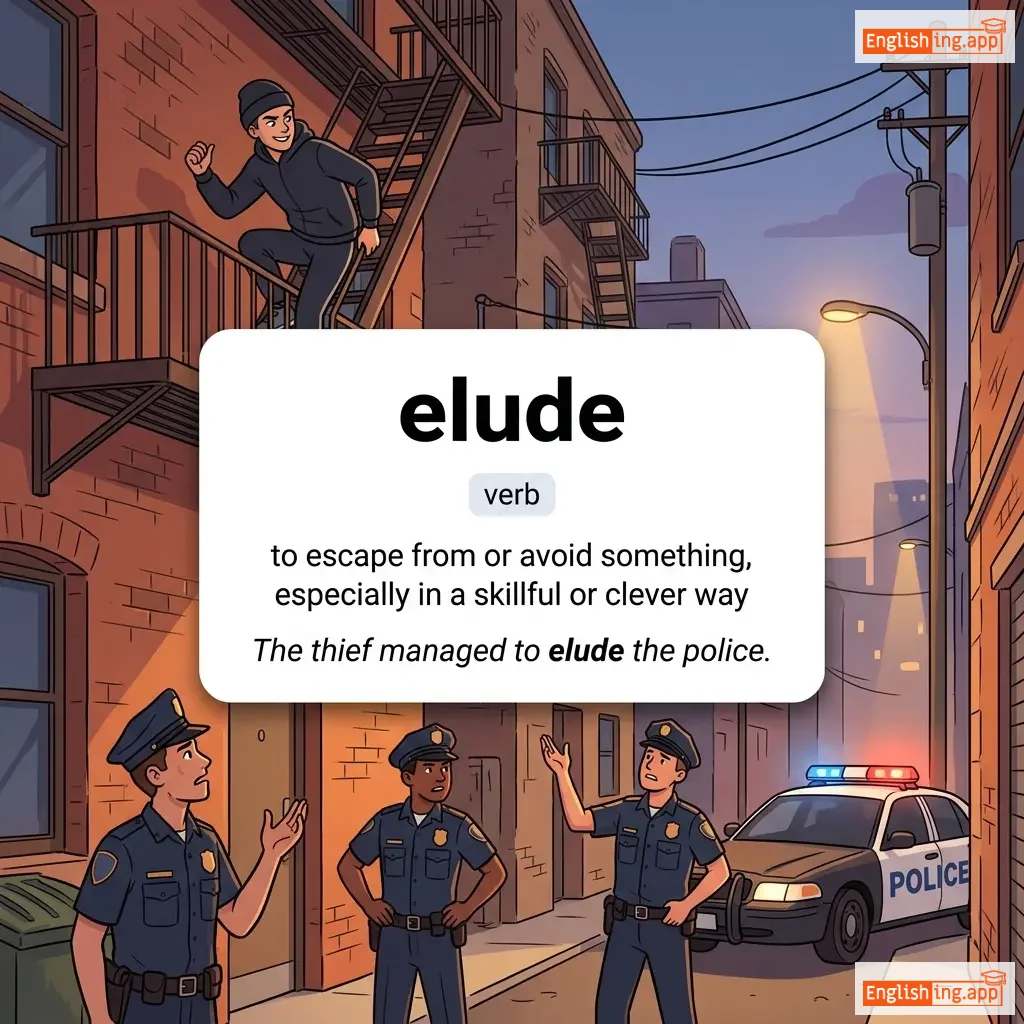
to escape from or avoid something, especially in a skillful or clever way
••••••
|
The thief managed to elude the police.
小偷成功地躲过了警察。
••••••
|
小偷成功地躲过了警察。
Xiaotou chenggong de duoguo le jingcha.
••••••
|
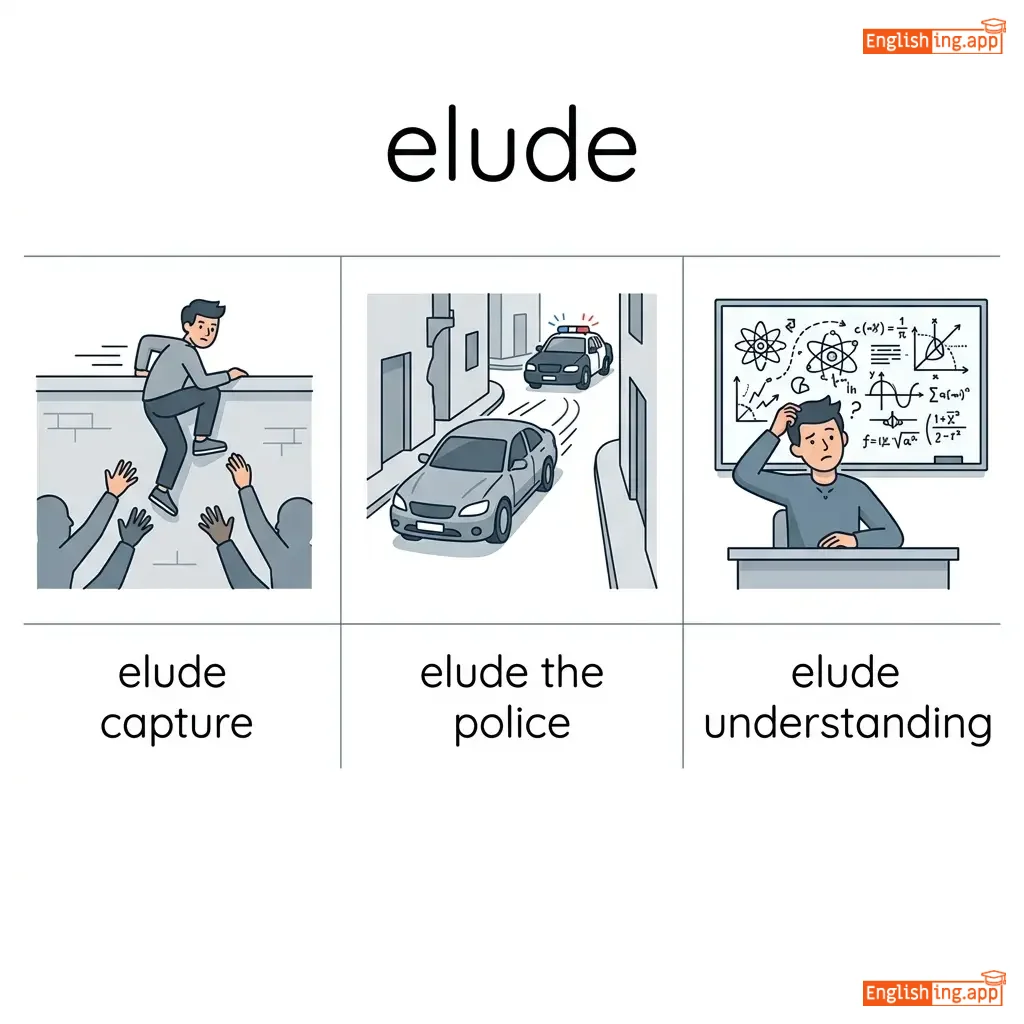
elude capture
躲避逮捕
••••••
|
to avoid being caught
••••••
|
躲避逮捕
duobi daibu
••••••
|
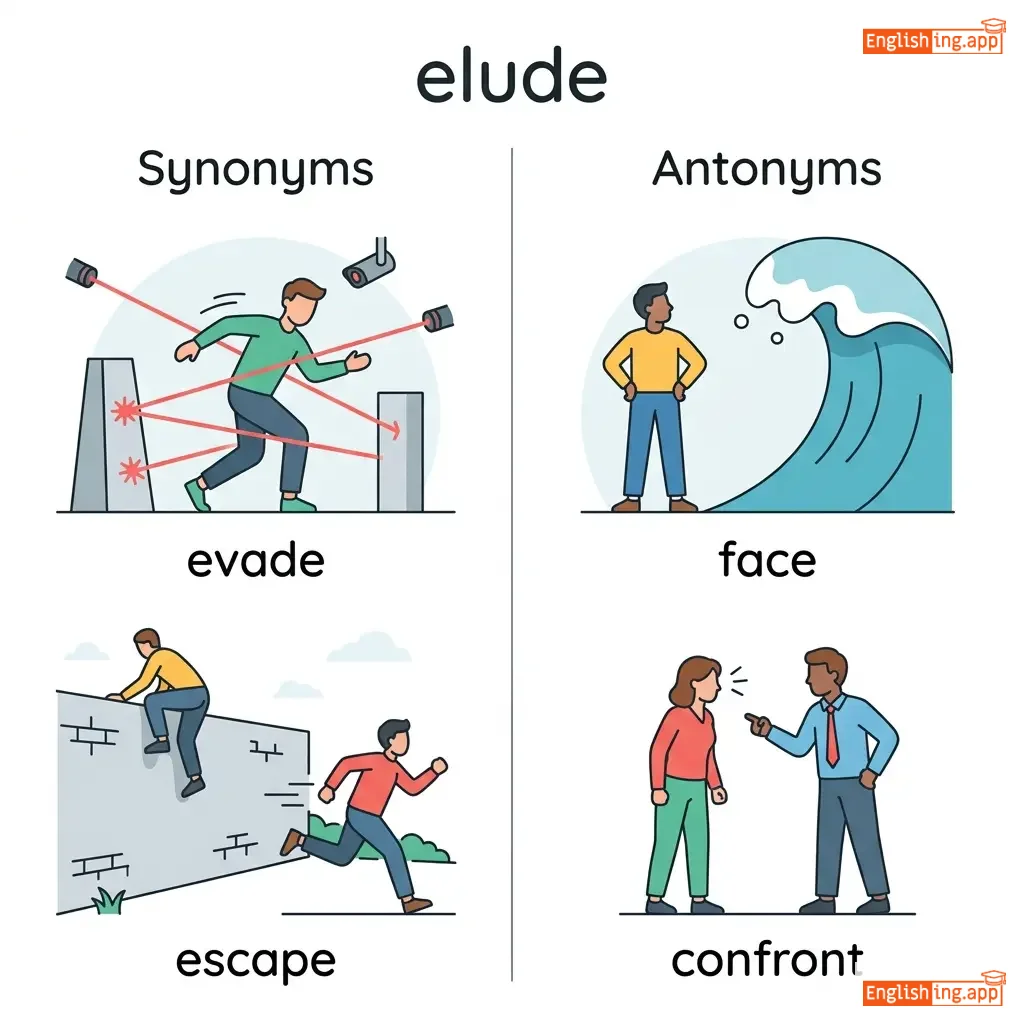
evade, escape, dodge, avoid
••••••
|
face, confront
••••••
|
elude capture, elude the police, elude understanding
••••••
|
Elude = 逃避, 就是巧妙地逃脱。
••••••
|
|
#2887
💡
|
/ɪˈluːsɪdeɪt/
verb
(伊卢西代特)
••••••
|
|
阐明
chanming
••••••
|
elucidated
伊卢西代特德
••••••
|
elucidated
伊卢西代特德
••••••
|
elucidates
伊卢西代特斯
••••••
|
elucidating
伊卢西代特因
••••••
|
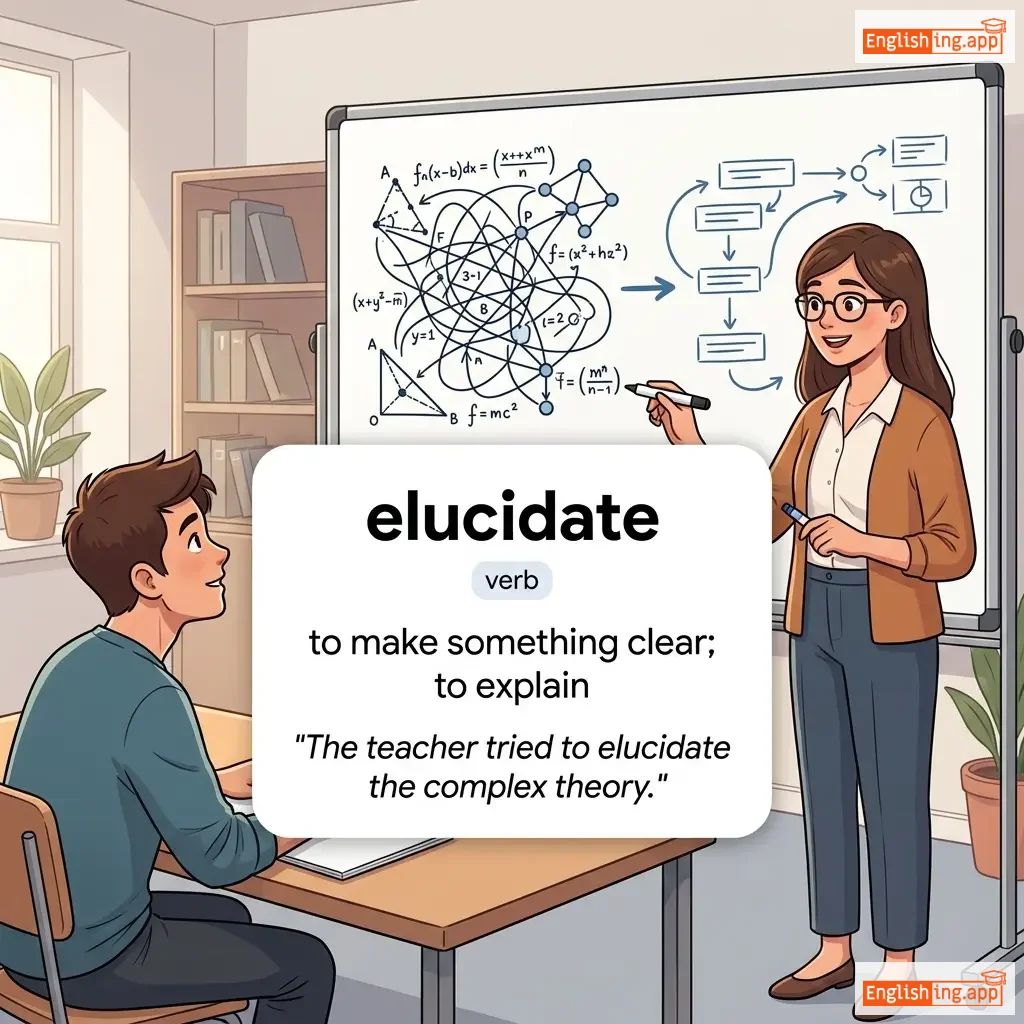
to make something clear; to explain
••••••
|
The teacher tried to elucidate the complex theory.
老师尝试阐明复杂的理论。
••••••
|
老师试图阐明复杂的理论。
Laoshi shitu chanming fuzade lilun.
••••••
|
- •••••• | - •••••• | - •••••• |
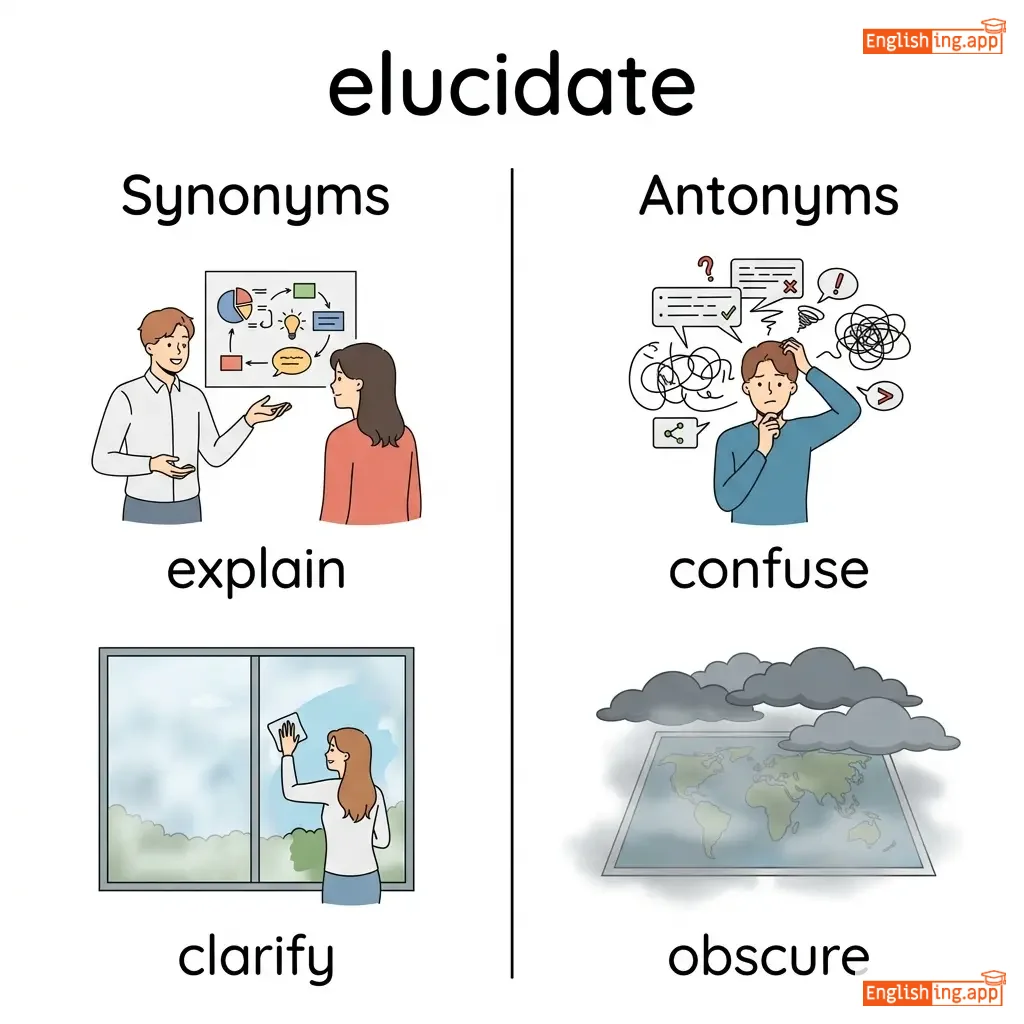
explain, clarify, illustrate, interpret
••••••
|
confuse, obscure
••••••
|
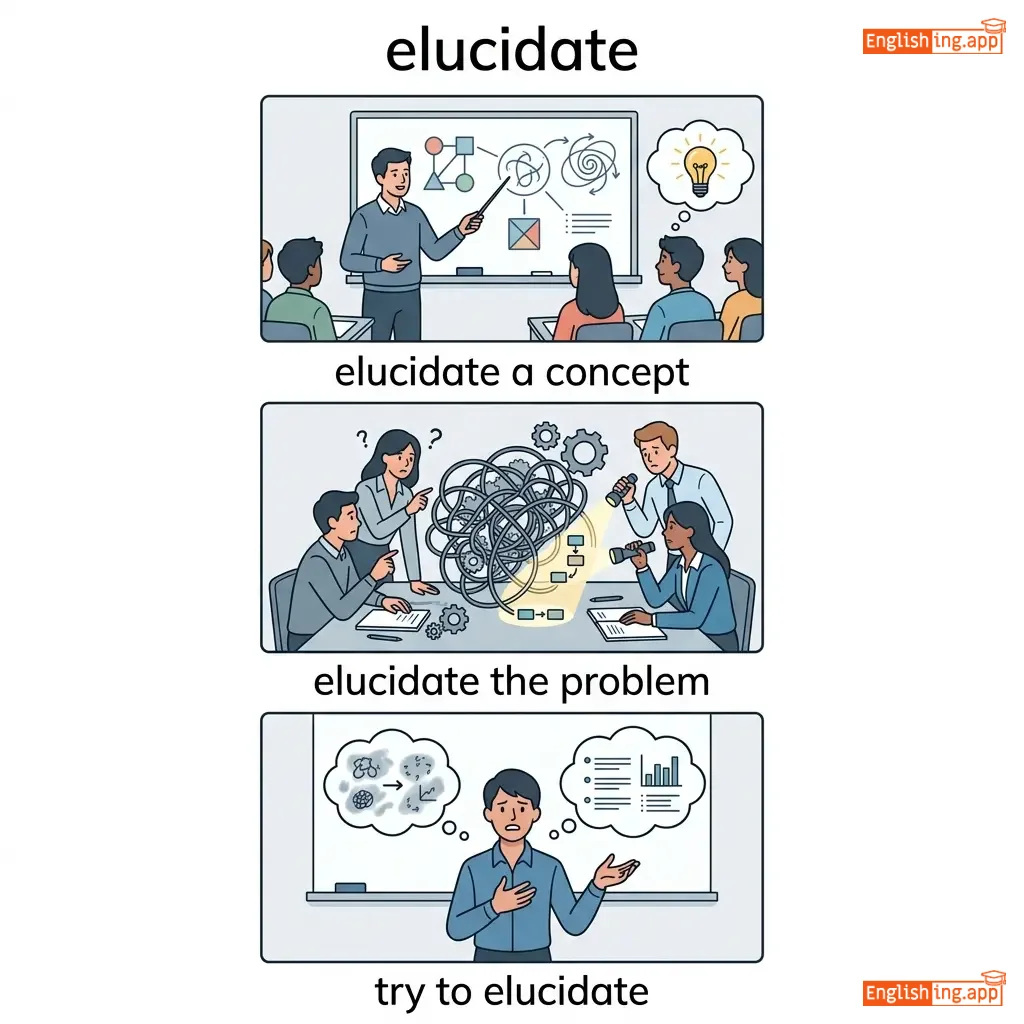
elucidate a concept, elucidate the problem, try to elucidate
••••••
|
Elucidate = 伊卢西代特 → 解释清晰
••••••
|
|
#2888
📢
|
/ˈɛləkwənt/
adjective
(艾洛昆特)
••••••
|
|
雄辩的
xióngbiàn de
••••••
|
- •••••• | - •••••• | - •••••• | - •••••• |
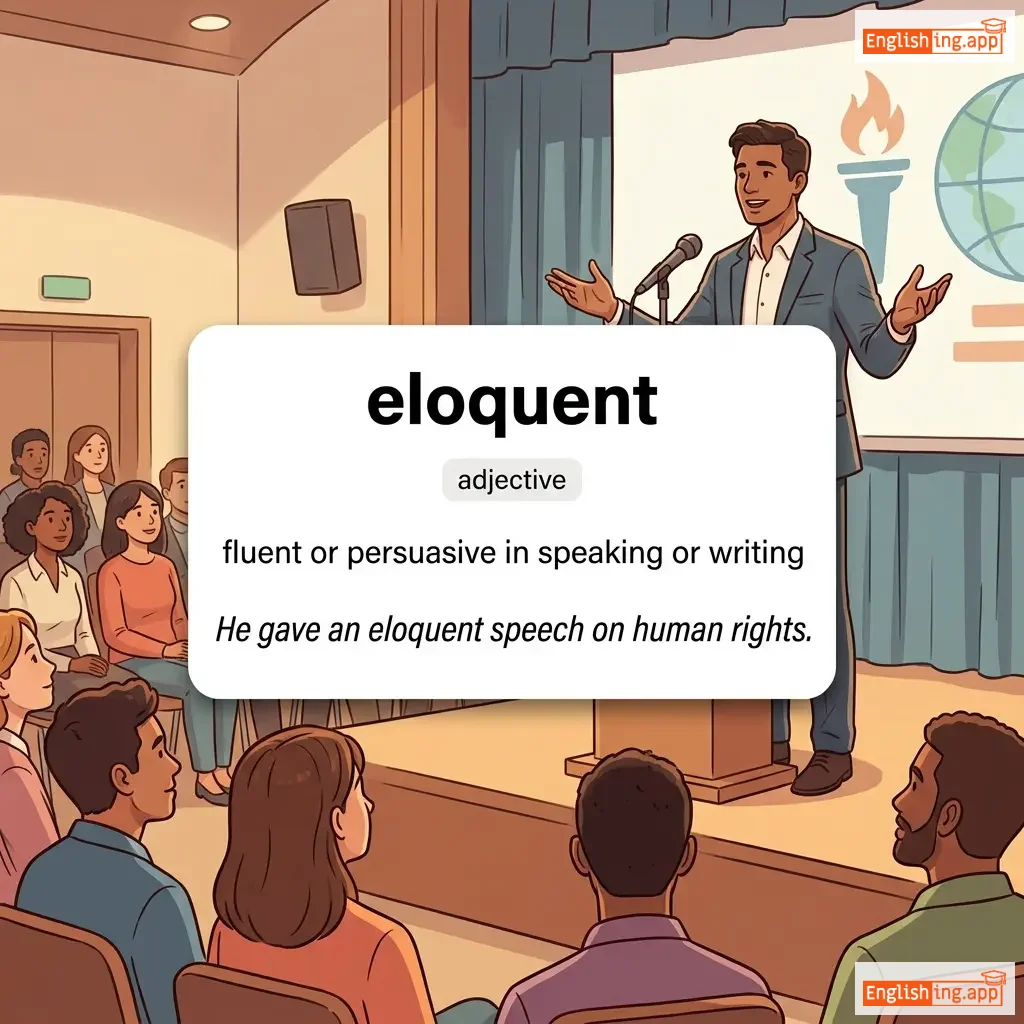
fluent or persuasive in speaking or writing
••••••
|
He gave an eloquent speech on human rights. |
他就人权问题发表了一篇雄辩的演讲。
tā jiù rénquán wèntí fābiǎo le yī piān xióngbiàn de yǎnjiǎng
••••••
|
eloquent silence |
a silence that communicates meaning as effectively as speech
••••••
|
雄辩的沉默
xióngbiàn de chénmò
••••••
|
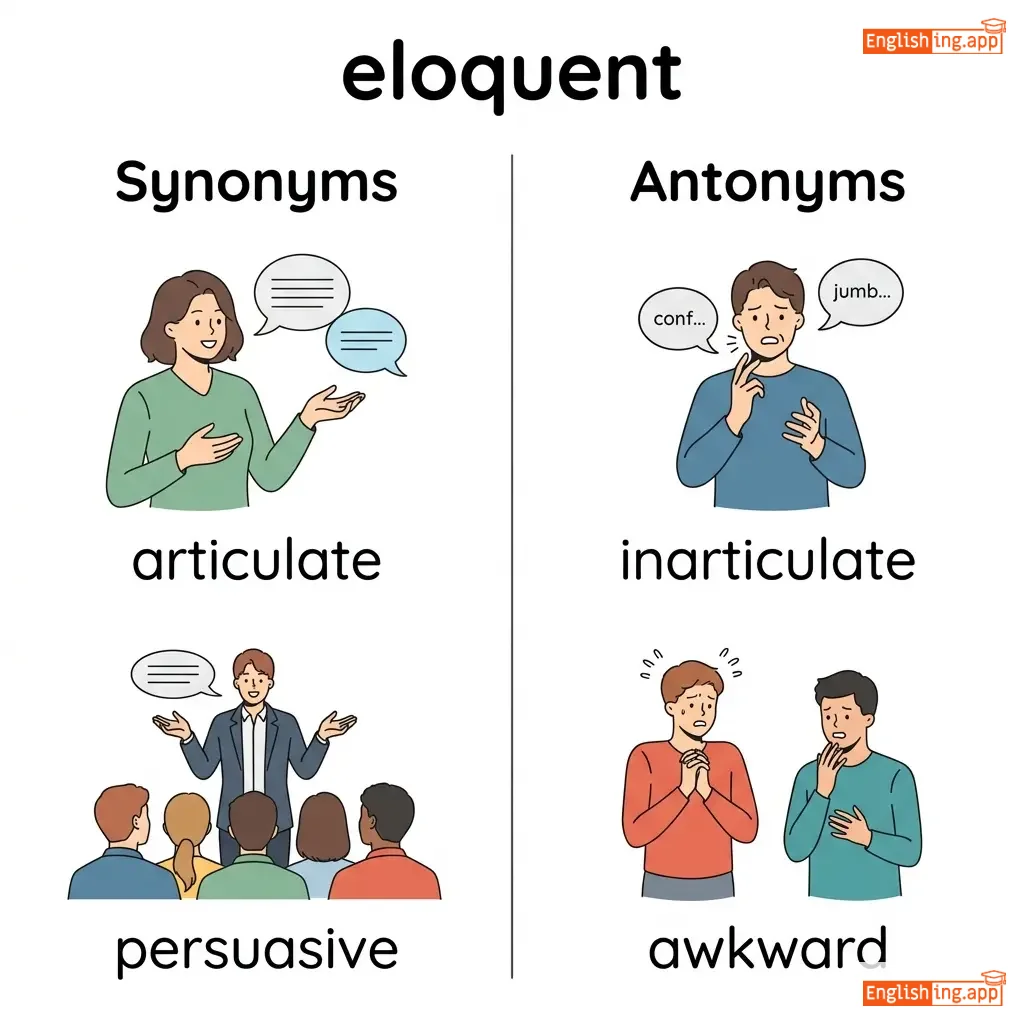
articulate, persuasive, expressive, fluent
••••••
|
inarticulate, awkward
••••••
|
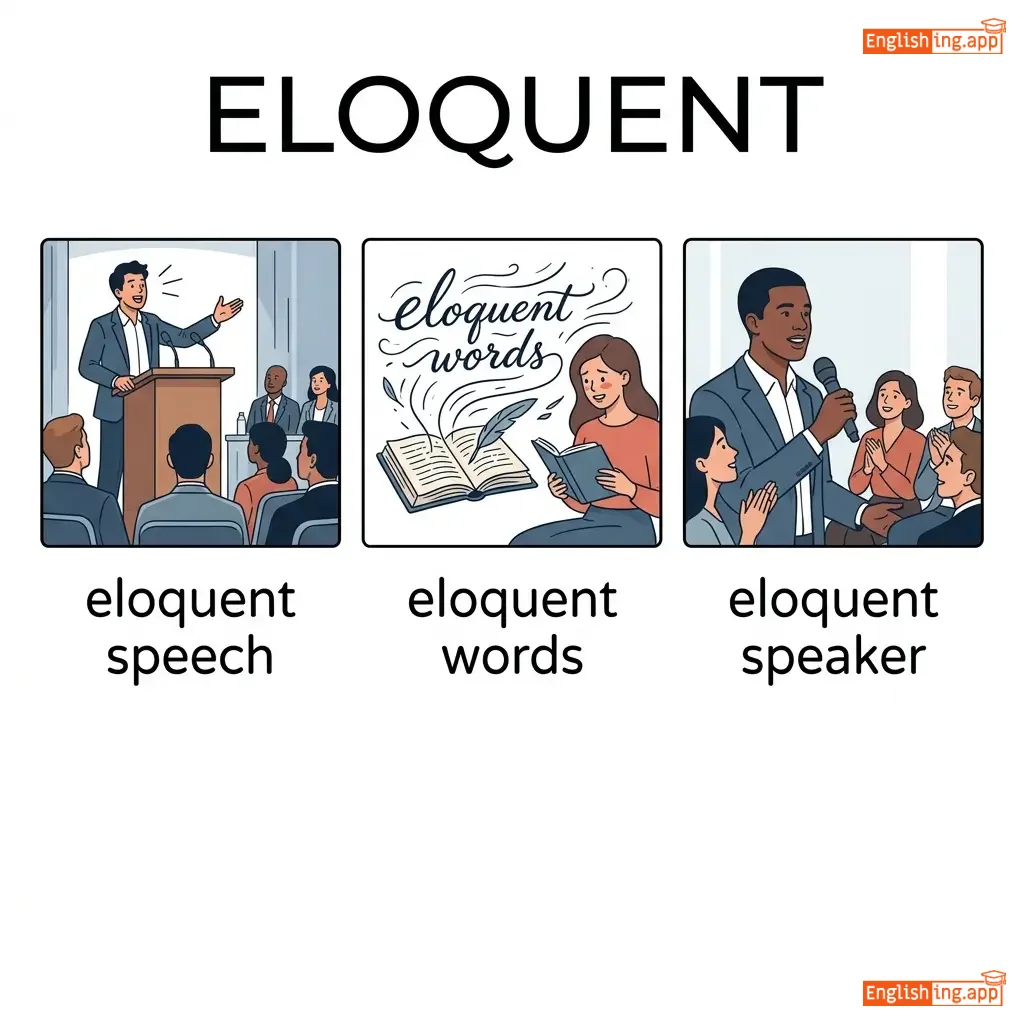
eloquent speech, eloquent words, eloquent speaker
••••••
|
雄辩的 = 雄 + 辩 = 会说会写的
••••••
|
|
#2889
🗣️
|
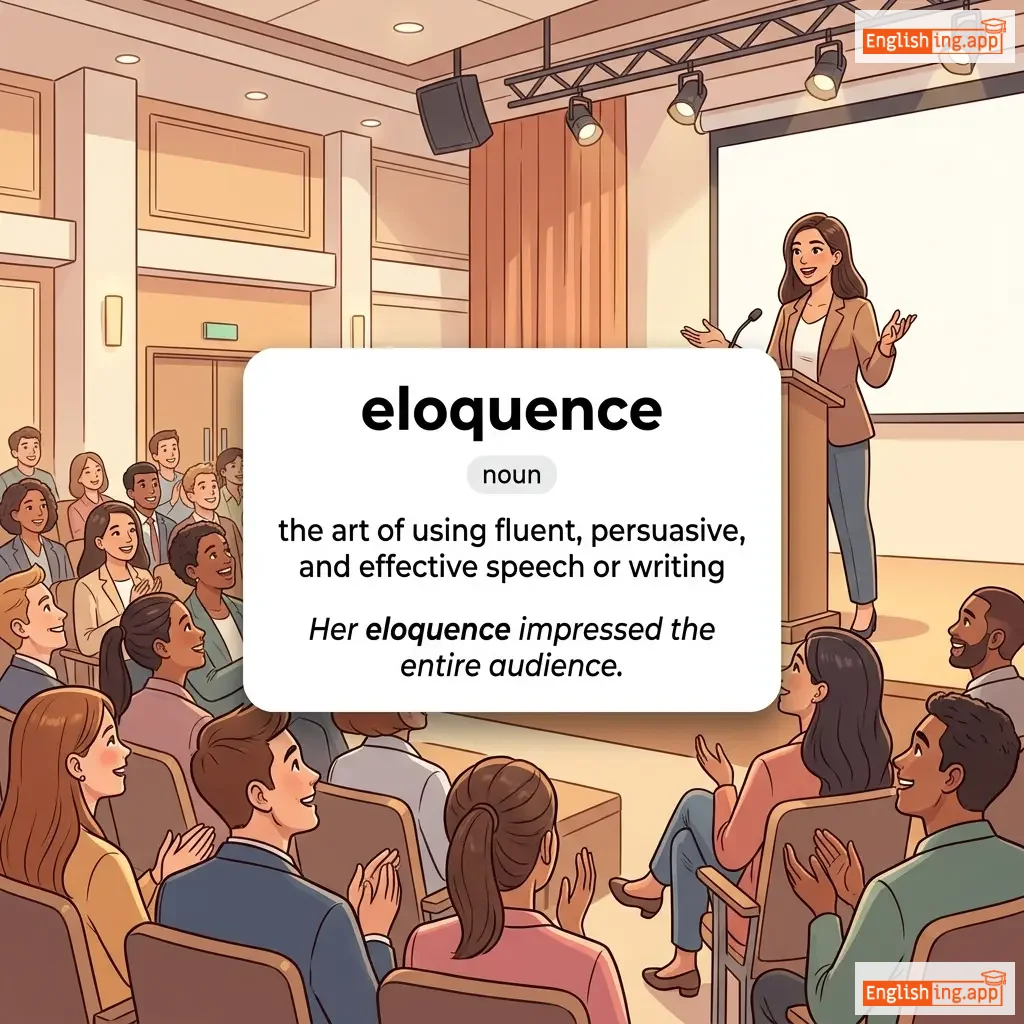
/ˈɛləkwəns/
noun
(éluòkèwénsī)
••••••
|
|
雄辩
xióngbiàn
••••••
|
- •••••• | - •••••• | - •••••• | - •••••• |
the art of using fluent, persuasive, and effective speech or writing
••••••
|
Her eloquence impressed the entire audience. |
她的雄辩给整个观众留下了深刻印象。
tā de xióngbiàn gěi zhěnggè guānzhòng liúxiàle shēnkè yìnxiàng.
••••••
|
silver-tongued eloquence |
the ability to speak persuasively and smoothly
••••••
|
银舌雄辩
yín shé xióngbiàn
••••••
|
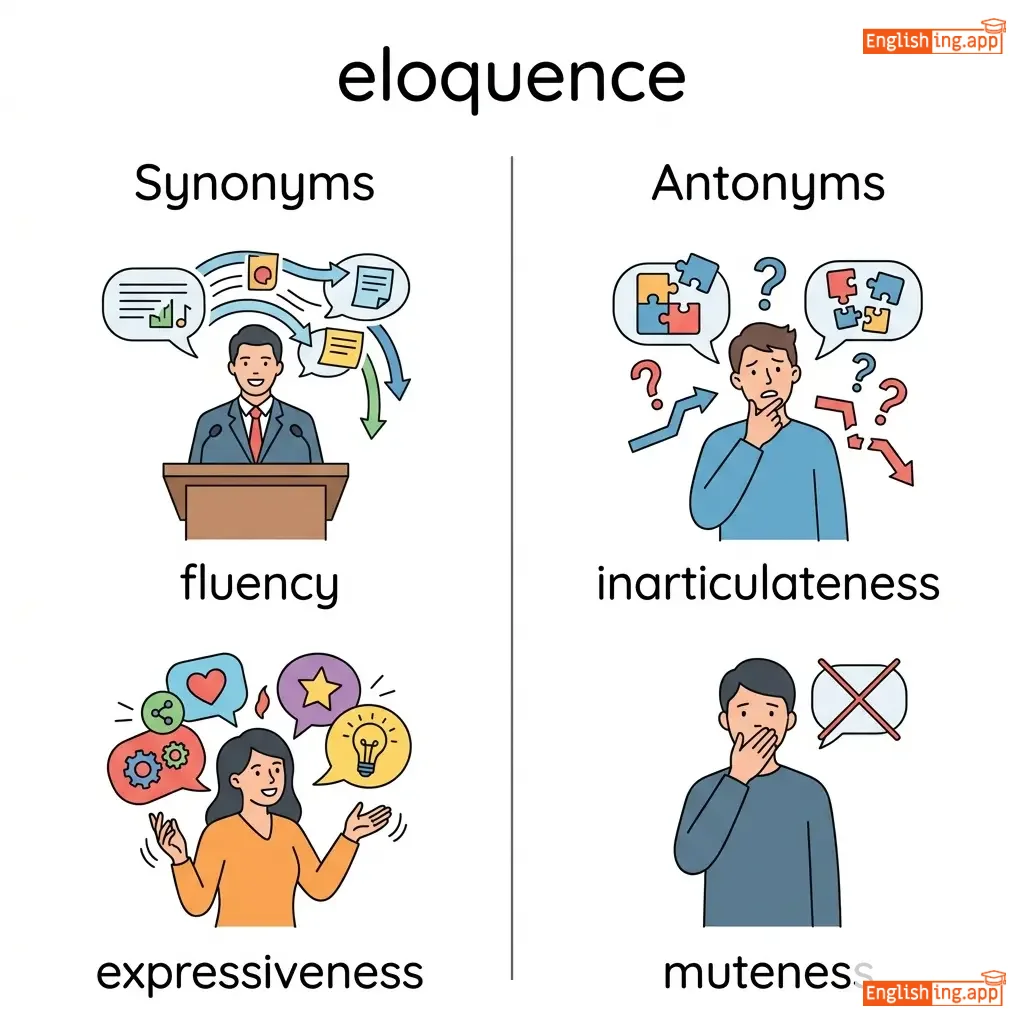
fluency, expressiveness, persuasiveness, oratory
••••••
|
inarticulateness, muteness
••••••
|
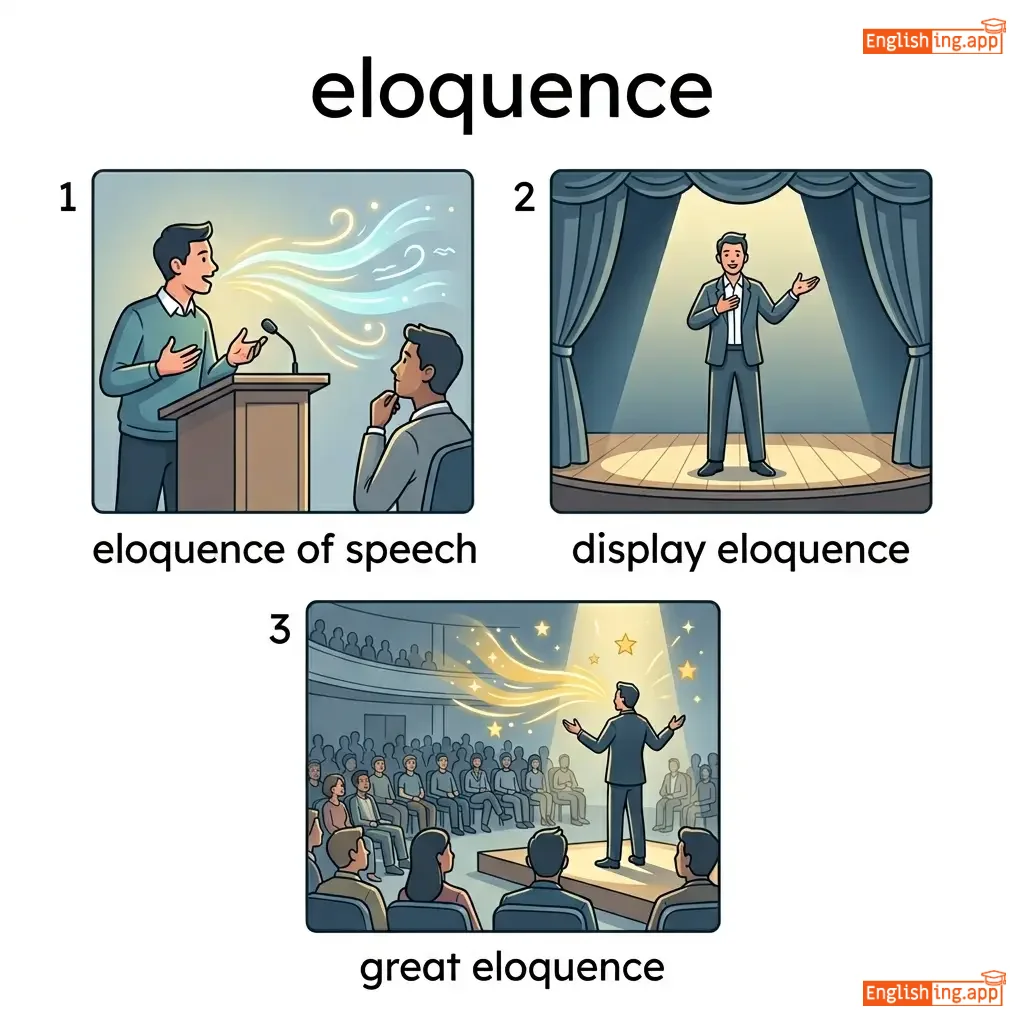
eloquence of speech, display eloquence, great eloquence
••••••
|
Eloquence = Elegant + Speech → 雄辩
••••••
|
|
#2890
💍
|
/ɪˈloʊp/
verb
(伊洛普)
••••••
|
- •••••• |
偷偷结婚
tōutōu jiéhūn
••••••
|
eloped
伊洛普德
••••••
|
eloped
伊洛普德
••••••
|
elopes
伊洛普斯
••••••
|
eloping
伊洛平
••••••
|
to run away secretly in order to get married, especially without parental consent
••••••
|
The young couple decided to elope to another city.
年轻的情侣决定逃到另一个城市。
••••••
|
这对年轻情侣决定逃到另一个城市结婚。
Zhè duì niánqīng qínglǚ juédìng táo dào lìng yīgè chéngshì jiéhūn.
••••••
|
- •••••• | - •••••• | - •••••• |
run away, abscond, flee, escape
••••••
|
stay, remain
••••••
|
elope with, decide to elope, secretly elope
••••••
|
Elop 意味着偷偷结婚 - 想象一下偷偷逃走结婚的场景!
••••••
|
|
#2891
🗣️
|
/ˌɛləˈkjuːʃn/
noun
(演讲术)
••••••
|
- •••••• |
口才
kǒucái
••••••
|
- •••••• | - •••••• | - •••••• | - •••••• |
The skill of clear and expressive speech, especially in public speaking.
••••••
|
She improved her elocution through constant practice. |
她通过不断练习提高了她的口才。
Tā tōngguò bùduàn liànxí tígāo le tā de kǒucái.
••••••
|
- •••••• | - •••••• | - •••••• |
speech, oratory, rhetoric, articulation, delivery
••••••
|
mumbling, inarticulacy
••••••
|
elocution class, elocution lesson, clear elocution, elocution training
••••••
|
演讲术意味着有口才 - 口才(表达清晰)会让人印象深刻。
••••••
|
|
#2892
⭕
|
/ɪˈlɪptɪkl/
adjective
(椭圆形的)
••••••
|
- •••••• |
椭圆形的
tuo yuan xing de
••••••
|
- •••••• | - •••••• | - •••••• | - •••••• |
Having the shape of an ellipse; also, a style of speech that is concise and sometimes obscure.
••••••
|
The planet follows an elliptical orbit around the sun.
行星沿着椭圆形的轨道围绕太阳运行。
••••••
|
行星沿着椭圆形的轨道围绕太阳运行。
Xingxing yanzhe tuo yuan xing de guidao weirao taiyang yunxing.
••••••
|
- •••••• | - •••••• | - •••••• |
oval, oblong, concise, indirect
••••••
|
circular, direct
••••••
|
elliptical orbit, elliptical machine, elliptical shape, elliptical style
••••••
|
椭圆形的像鸡蛋一样!
••••••
|
|
#2893
…
|
/ɪˈlɪpsɪs/
noun
(省略号)
••••••
|
- •••••• |
省略号
shenglüè hào
••••••
|
- •••••• | - •••••• | - •••••• | - •••••• |
The omission of words in a sentence, represented by three dots (...).
••••••
|
The writer used an ellipsis to show that part of the quote was omitted. |
作者使用省略号来表示引用的部分被省略。
Zuòzhě shǐyòng shěnglüè hào lái biǎoshì yǐnyòng de bùfen bèi shěnglüè.
••••••
|
- •••••• | - •••••• | - •••••• |
omission, dots, pause, truncation
••••••
|
completion, inclusion
••••••
|
use an ellipsis, ellipsis in writing, insert ellipsis, ellipsis mark
••••••
|
省略号就像三个点,表示不完整的意思。
••••••
|
|
#2894
👑
|
/ɪˌlɪzəˈbiːθən/
adjective
(伊丽莎白时代)
••••••
|
- •••••• |
伊丽莎白时代
Yīlìshābái shídài
••••••
|
- •••••• | - •••••• | - •••••• | - •••••• |
Relating to the reign of Queen Elizabeth I of England (1558–1603), especially the style of that period.
••••••
|
Shakespeare wrote many of his plays during the Elizabethan era. |
莎士比亚在伊丽莎白时代写了许多剧作。
Shāshìbǐyà zài Yīlìshābái shídài xiěle xǔduō jùzuò.
••••••
|
- •••••• | - •••••• | - •••••• |
renaissance, tudor, historical, old-English
••••••
|
modern, contemporary
••••••
|
Elizabethan era, Elizabethan drama, Elizabethan architecture, Elizabethan age
••••••
|
Elizabethan 意味着伊丽莎白女王的时代 - 想象莎士比亚的剧作。
••••••
|
|
#2895
🧪
|
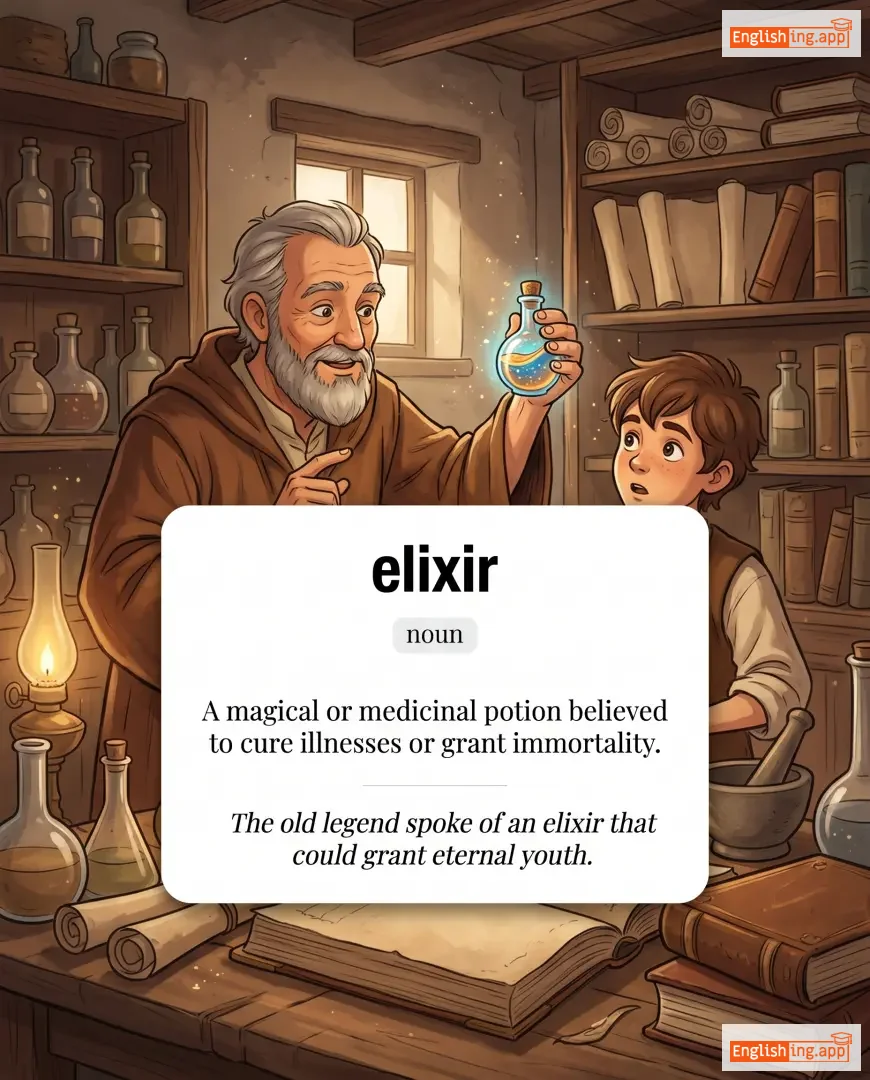
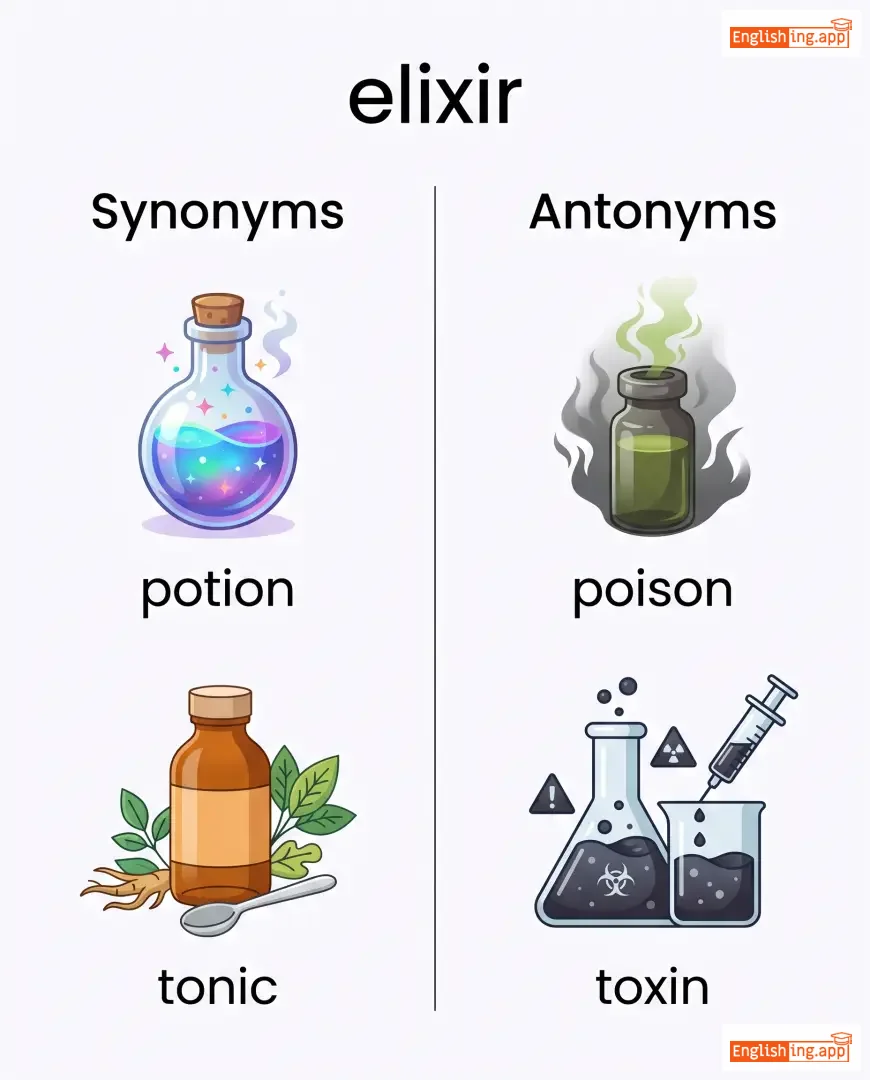
/ɪˈlɪksər/
noun
(艾利克西尔)
••••••
|
|
灵药
líng yào
••••••
|
- •••••• | - •••••• | - •••••• | - •••••• |
A magical or medicinal potion believed to cure illnesses or grant immortality.
••••••
|
The old legend spoke of an elixir that could grant eternal youth. |
古老的传说中提到了一个可以赋予永恒青春的灵药。
Gǔlǎo de chuánshuō zhōng tí dào le yīgè kěyǐ fùyǔ yǒnghéng qīngchūn de líng yào.
••••••
|
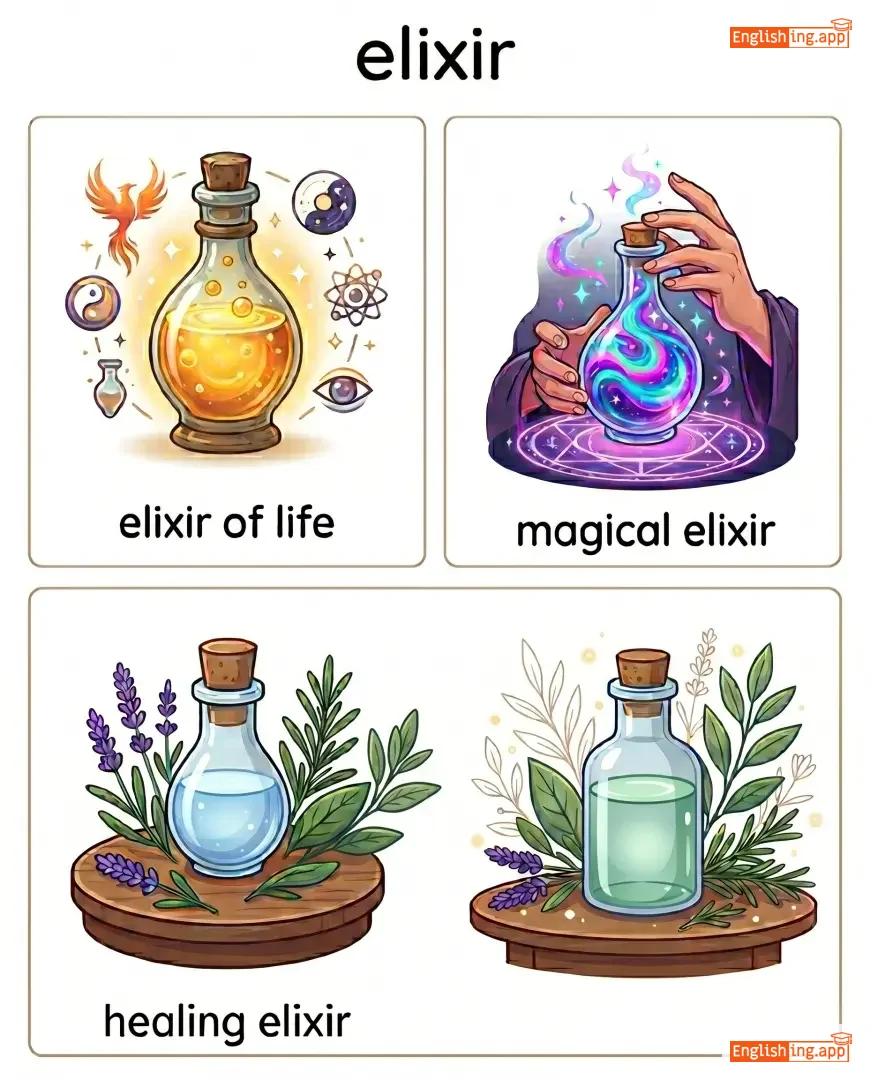
elixir of life |
A mythical potion that grants immortality or eternal youth.
••••••
|
生命灵药
shēngmìng líng yào
••••••
|
potion, tonic, remedy, cure, panacea
••••••
|
poison, toxin, disease
••••••
|
elixir of life, magical elixir, healing elixir, secret elixir
••••••
|
Elixir 就像魔法药水,能治愈一切,解决所有问题!
••••••
|
|
#2896
😃
|
/ɪˈleɪʃən/
noun
(ɪˈleɪʃən)
••••••
|
- •••••• |
极乐
jile
••••••
|
- •••••• | - •••••• | - •••••• | - •••••• |
A feeling of great happiness and excitement.
••••••
|
His elation was evident after winning the championship. |
赢得冠军后,他的极乐心情显而易见。
Yíng dé guànjūn hòu, tā de jílè xīnqíng xiǎn'ér yìjiàn.
••••••
|
- •••••• | - •••••• | - •••••• |
joy, delight, happiness, euphoria, bliss
••••••
|
misery, sadness, sorrow
••••••
|
sense of elation, feeling of elation, elation at success
••••••
|
Elation 意味着极乐 - 伟大胜利后感受到极乐。
••••••
|
|
#2897
❌
|
/ɪˈlɪməˌneɪt/
verb
(伊利米内特)
••••••
|
|
消除
xiaochu
••••••
|
eliminated
伊利米内特德
••••••
|
eliminated
伊利米内特德
••••••
|
eliminates
伊利米内特斯
••••••
|
eliminating
伊利米内廷
••••••
|
To completely remove or get rid of something.
••••••
|
The new policy aims to eliminate corruption in the system.
新政策旨在消除系统中的腐败。
••••••
|
新政策旨在消除系统中的腐败。
xin zhengce zhi zai xiaochu xitong zhong de fubai.
••••••
|
eliminate the competition
消除竞争
••••••
|
to defeat or remove rivals
••••••
|
消除竞争
xiaochu jingzheng
••••••
|
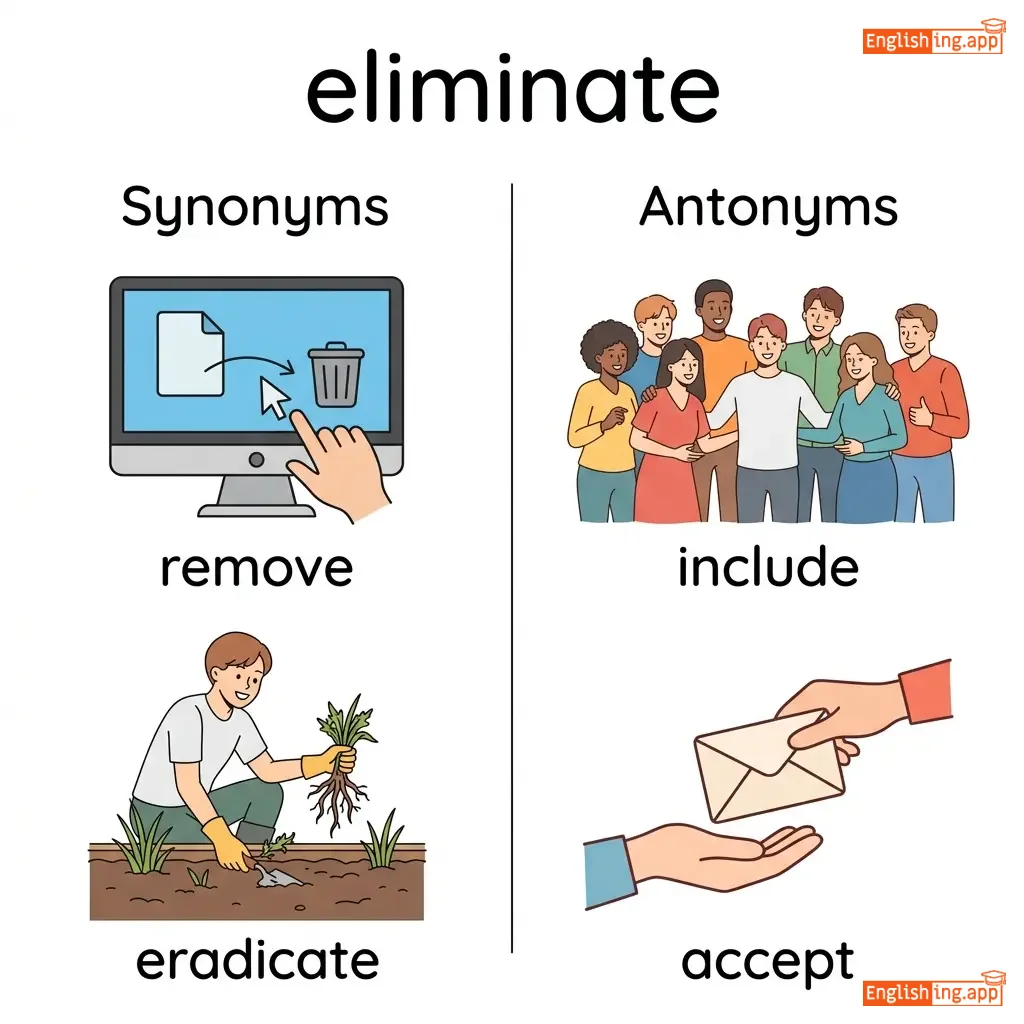
remove, eradicate, abolish, exterminate, wipe out
••••••
|
include, accept, retain
••••••
|
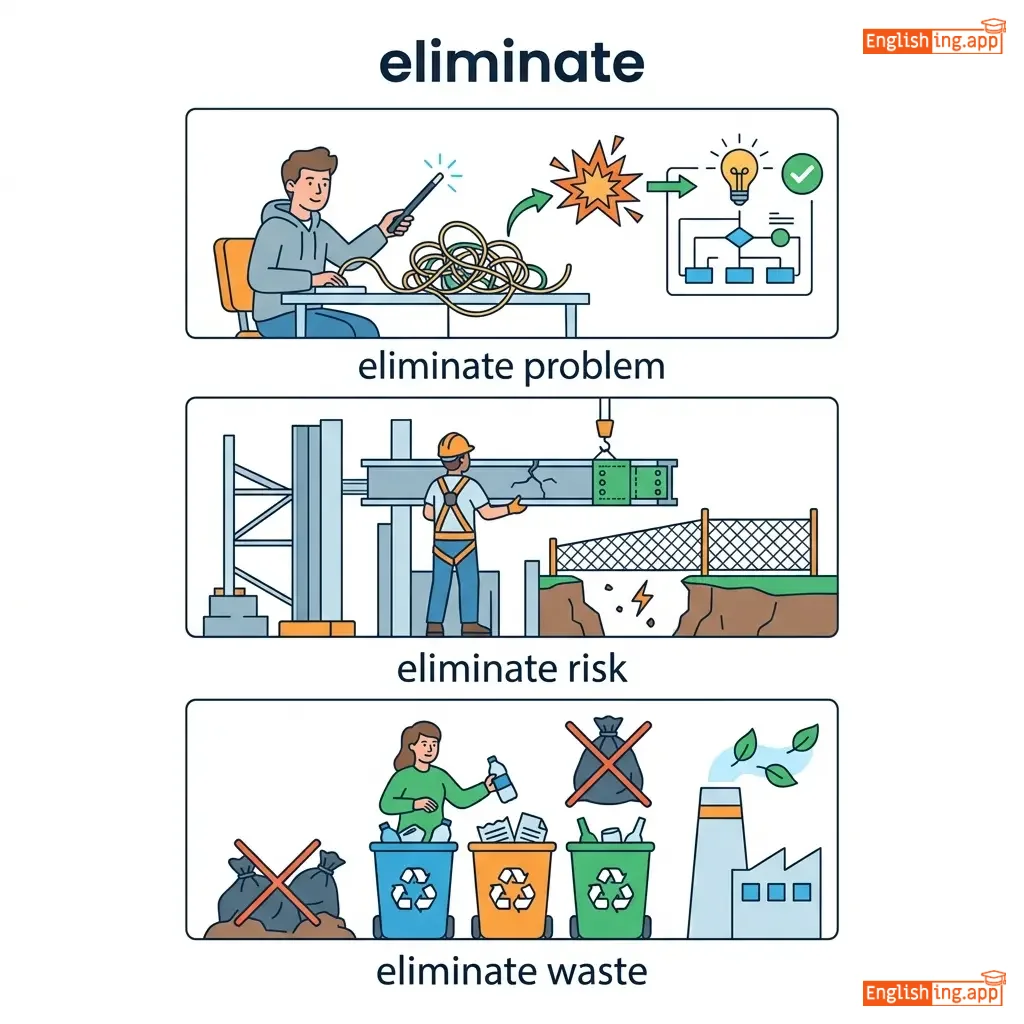
eliminate problem, eliminate risk, eliminate waste, eliminate need
••••••
|
如果你消除错误,你可以得到正确的答案。
••••••
|
|
#2898
✅
|
/ˈɛlɪdʒəbl/
adjective
(é lì jí bǎo)
••••••
|
|
合格的
hege de
••••••
|
- •••••• | - •••••• | - •••••• | - •••••• |
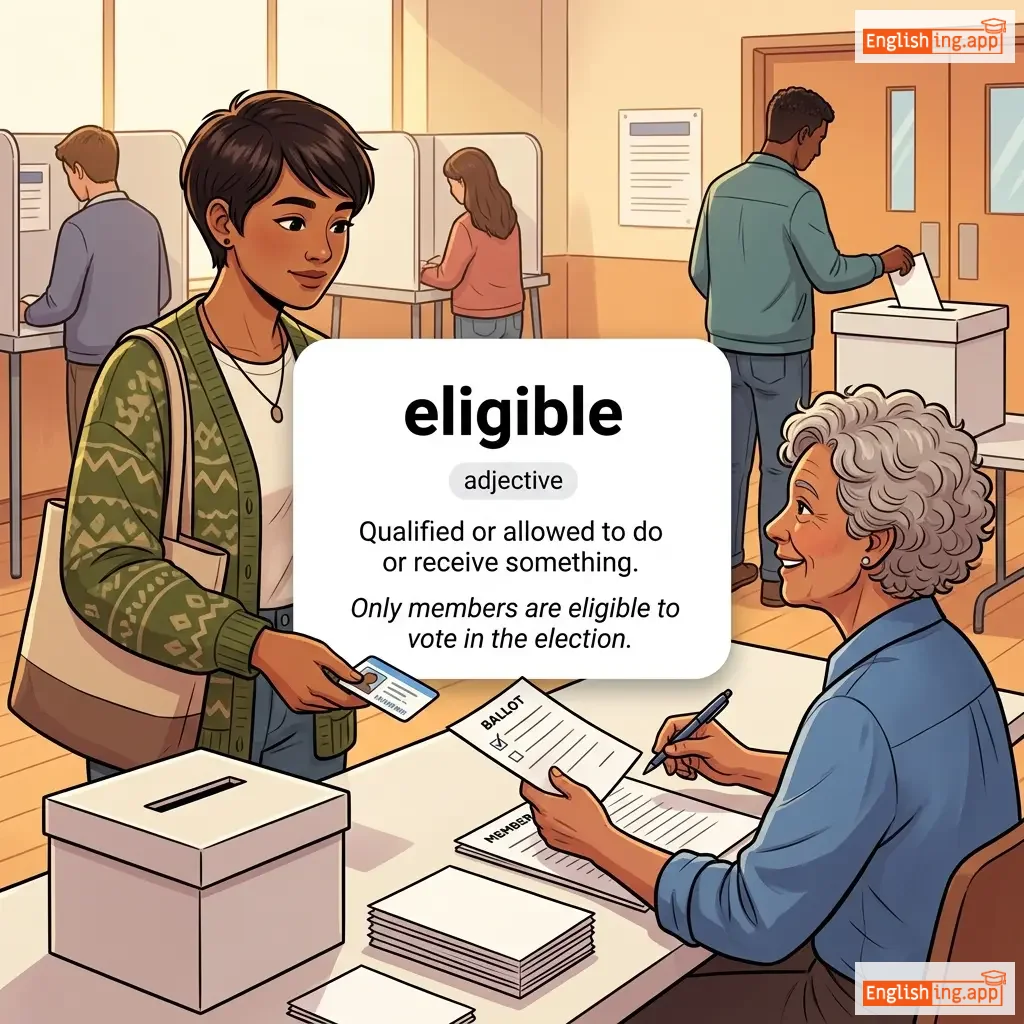
Qualified or allowed to do or receive something.
••••••
|
Only members are eligible to vote in the election. |
只有会员才能在选举中投票。
Zhiyou huiyuan cai neng zai xuanju zhong tou piao.
••••••
|
eligible bachelor |
a man considered suitable for marriage
••••••
|
合格的单身汉
hege de danshenhan
••••••
|
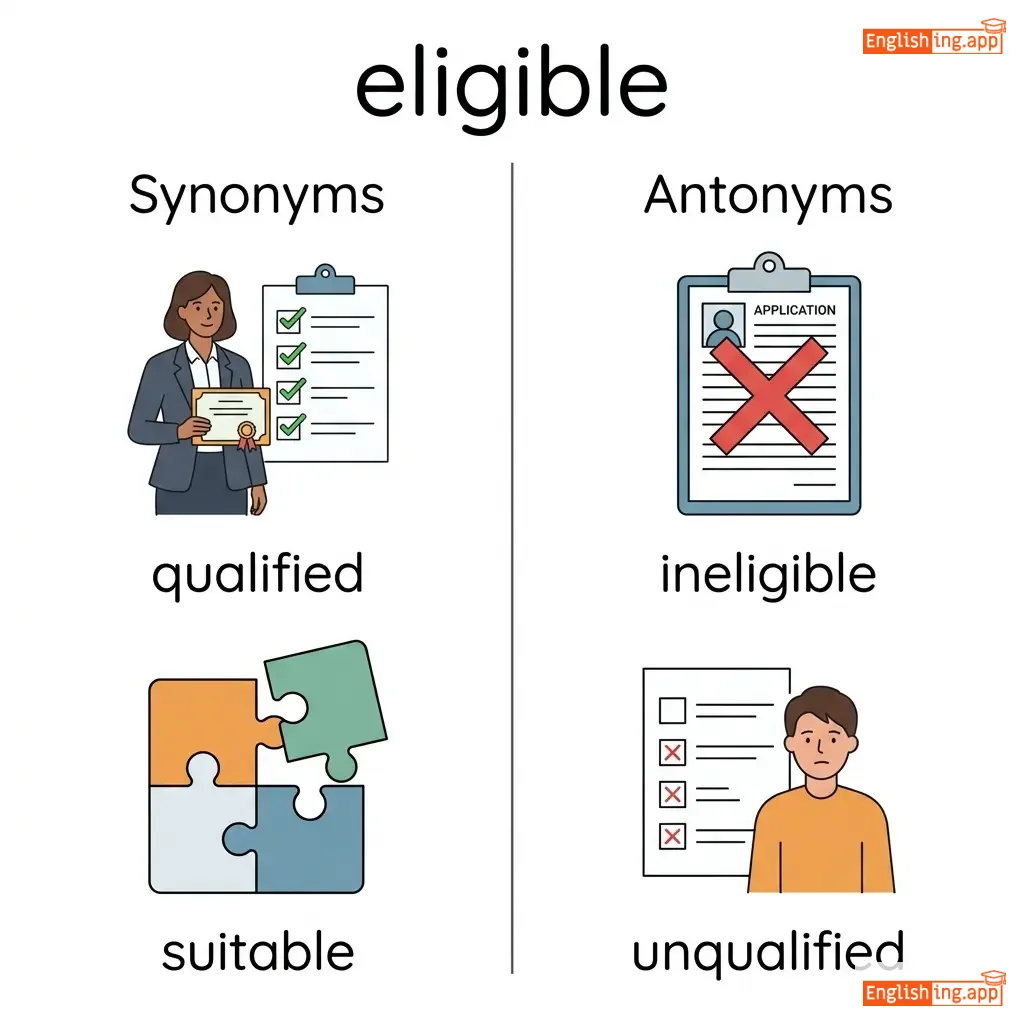
qualified, suitable, entitled, acceptable
••••••
|
ineligible, unqualified, unsuitable
••••••
|
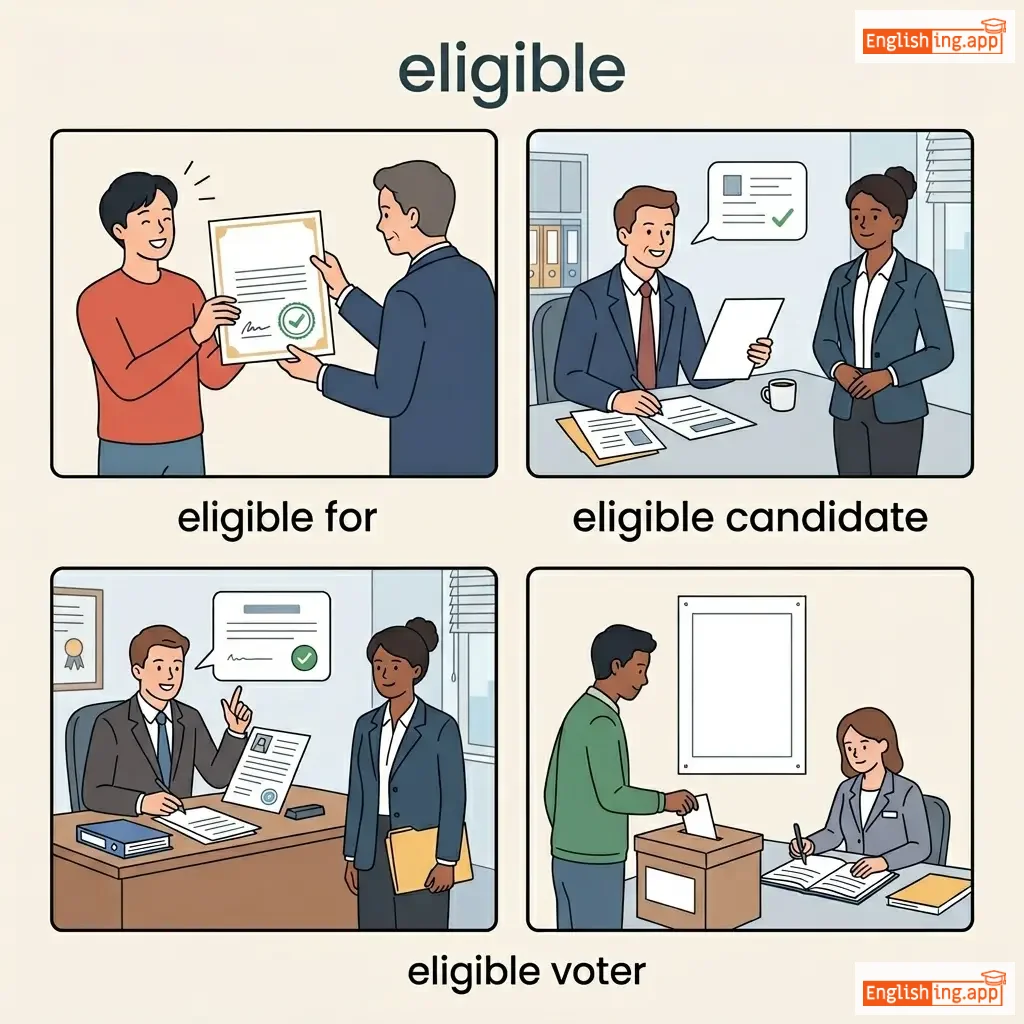
eligible for, eligible candidate, eligible voter, eligible participant
••••••
|
Eligible 就是当你符合条件时,你就有资格。
••••••
|
|
#2899
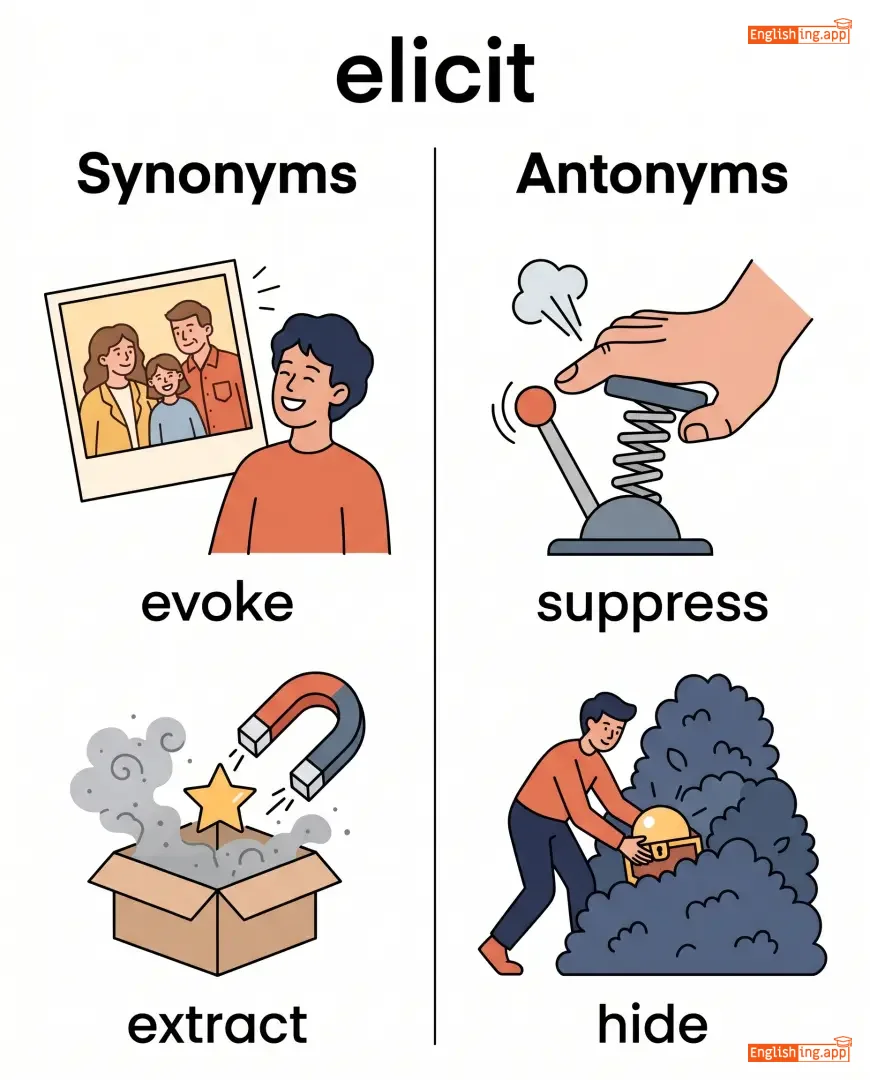
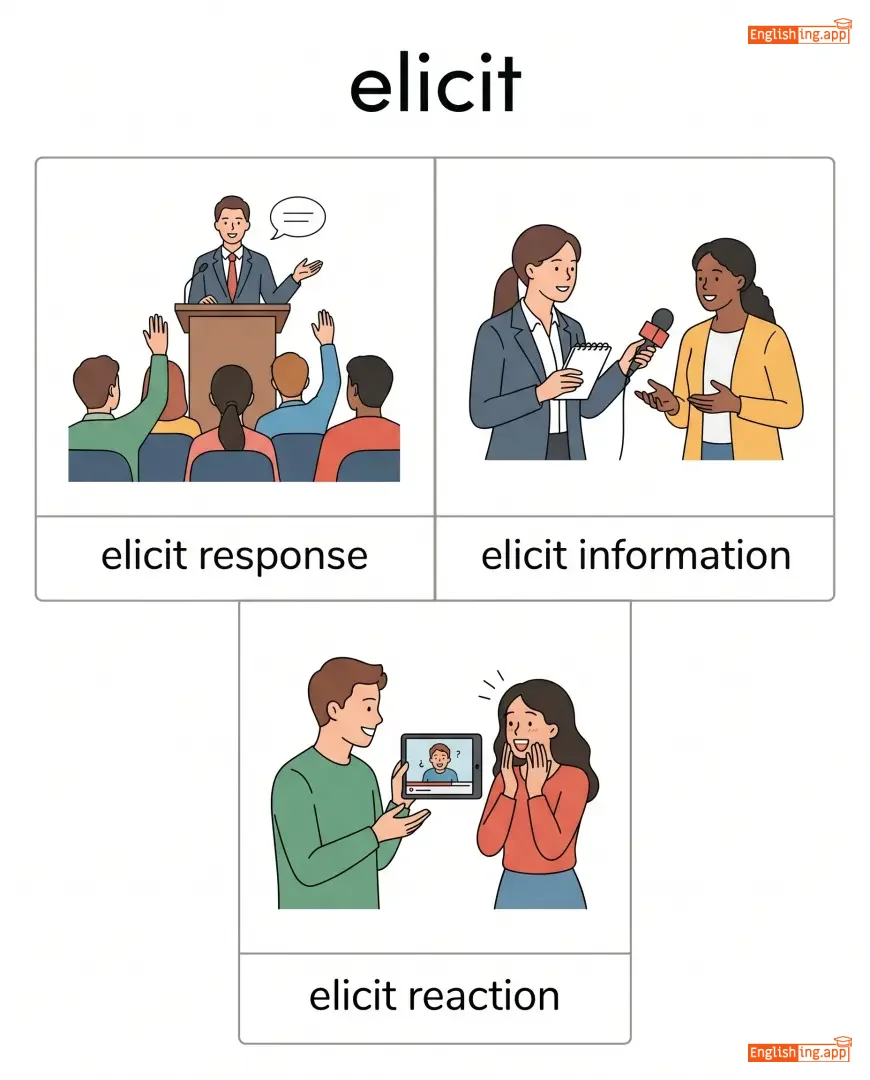
💬
|
/ɪˈlɪsɪt/
verb
(伊莉西特)
••••••
|
|
引出
yǐn chū
••••••
|
elicited
伊莉西特得
••••••
|
elicited
伊莉西特得
••••••
|
elicits
伊莉西特
••••••
|
eliciting
伊莉西特ing
••••••
|
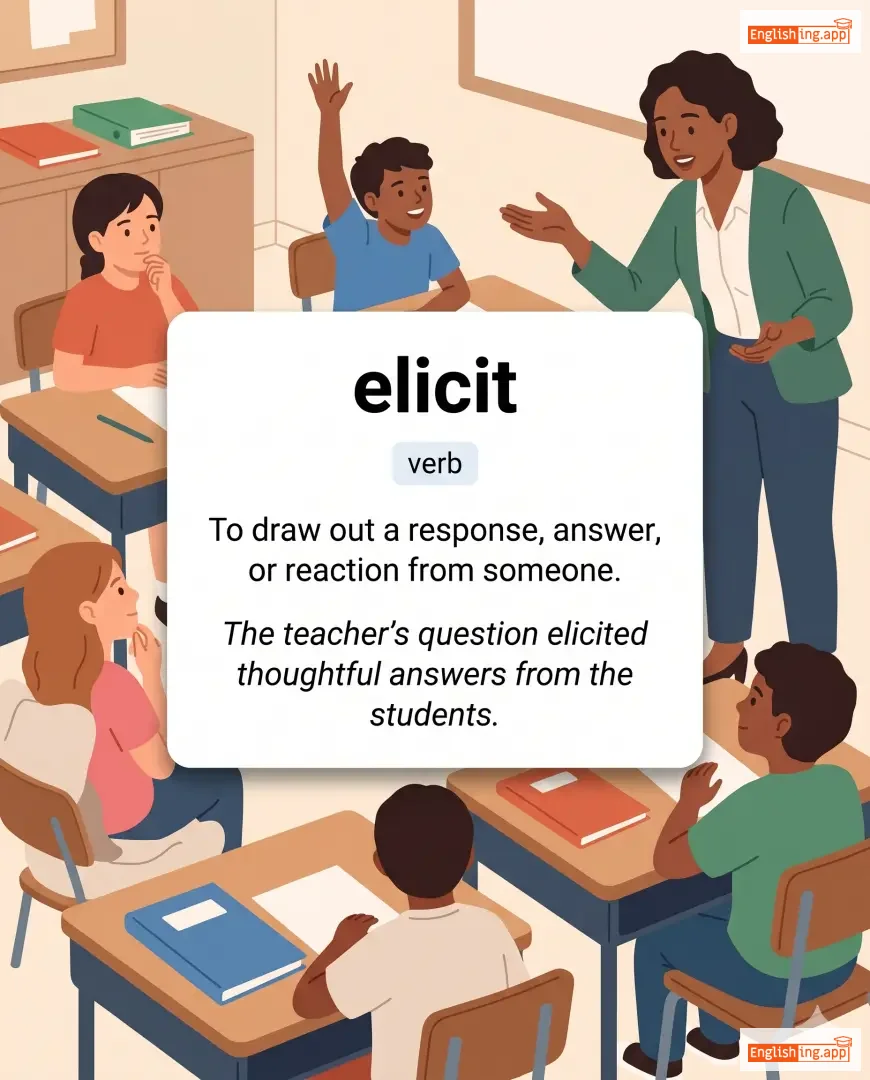
To draw out a response, answer, or reaction from someone.
••••••
|
The teacher’s question elicited thoughtful answers from the students.
老師的問題引發了學生們深思熟慮的回答。
••••••
|
老師的問題引發了學生的深思熟慮的回答。
Lǎoshī de wèntí yǐn fāle xuéshēng men de shēnsī shúlüè de huídá.
••••••
|
elicit a response
激發回應
••••••
|
to cause someone to reply or react
••••••
|
引發回應
yǐn fā huíyìng
••••••
|
evoke, extract, provoke, obtain, bring out
••••••
|
suppress, hide, silence
••••••
|
elicit response, elicit information, elicit reaction, elicit support
••••••
|
例如 = 根據聯繫處引發反應
••••••
|
|
#2900
⛰️
|
/ˌɛlɪˈveɪʃən/
noun
(elevéishon)
••••••
|
- •••••• |
海拔
haiba
••••••
|
- •••••• | - •••••• | - •••••• | - •••••• |
The act of raising something to a higher position or level.
••••••
|
The hikers reached a high elevation after hours of climbing. |
登山者经过数小时的攀登后达到了较高的海拔。
Deng shanzhe jinguo shu xiaoshi de pandeng hou daduole jiao gao de haiba.
••••••
|
at a high elevation |
located at a place above sea level
••••••
|
在高海拔地区
Zai gao haiba diqu
••••••
|
height, altitude, rise, uplift, promotion
••••••
|
decline, fall, descent
••••••
|
high elevation, elevation above sea level, rapid elevation, elevation gain
••••••
|
海拔=Elevation,越爬越高,越高越有海拔!
••••••
|
|
#2901
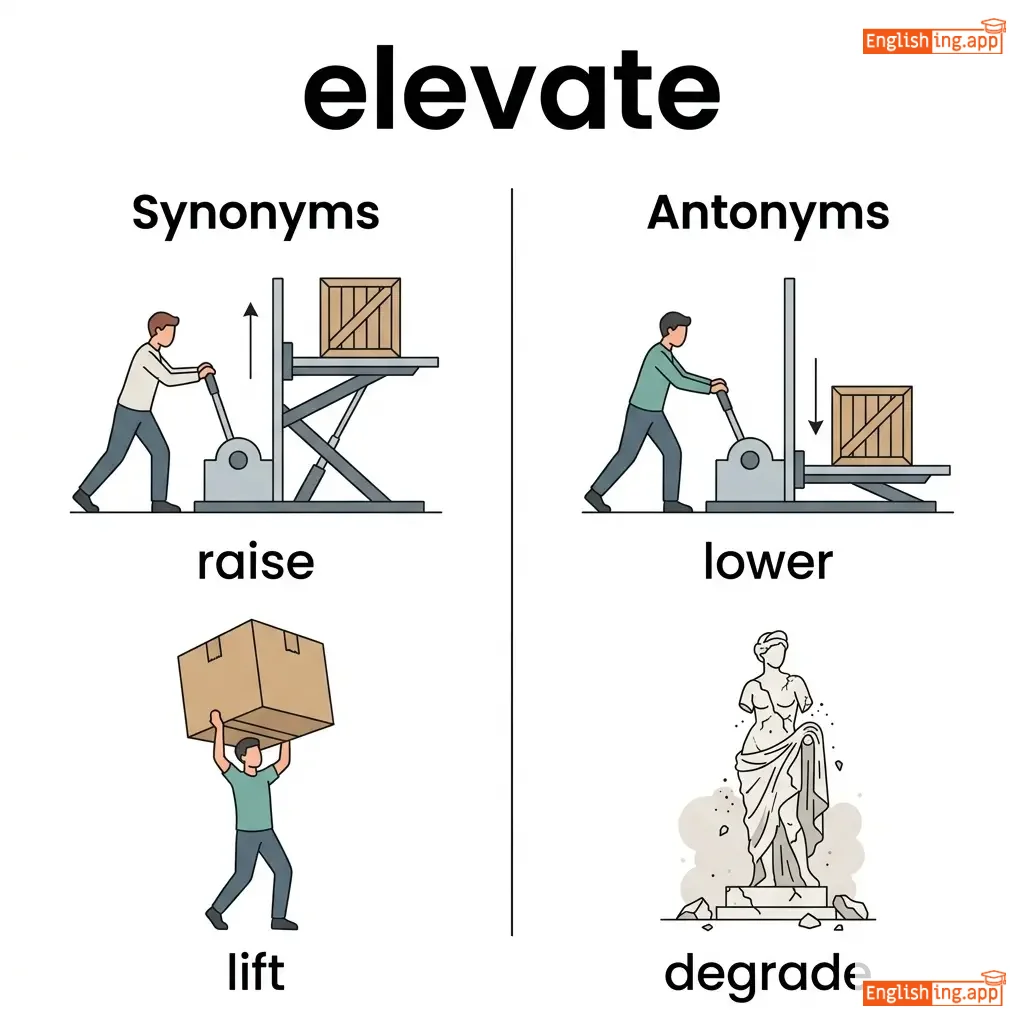
⬆️
|
/ˈɛlɪveɪt/
verb
(艾列维特)
••••••
|
|
提升
tisheng
••••••
|
elevated
提升
••••••
|
elevated
提升
••••••
|
elevates
提升
••••••
|
elevating
提升
••••••
|
To raise or lift something to a higher position; to improve in status, mood, or quality.
••••••
|
Good music can elevate your mood instantly.
好音乐可以瞬间提升你的情绪。
••••••
|
好音乐可以瞬间提升你的情绪。
Hao yinyue keyi shunjian tisheng nide qingxu.
••••••
|
elevate the discussion
提升讨论
••••••
|
To raise the level of a conversation to a more serious or intelligent one.
••••••
|
提升讨论
Tisheng taolun
••••••
|
raise, lift, promote, heighten, uplift
••••••
|
lower, degrade, depress
••••••
|
elevate mood, elevate position, elevate status, elevate to
••••••
|
提升就像坐电梯一样往上升。
••••••
|
|
#2902
🐘
|
/ˌɛlɪˈfæntaɪn/
adjective
(大象般的)
••••••
|
- •••••• |
像大象一样的
xiàng dà xiàng yīyàng de
••••••
|
- •••••• | - •••••• | - •••••• | - •••••• |
Huge, clumsy, or resembling an elephant in size or movement.
••••••
|
The man moved with an elephantine grace.
那个人以大象般的优雅走动。
••••••
|
那个人以大象般的优雅走动。
Nàgè rén yǐ dàxiàng bān de yōuyǎ zǒudòng.
••••••
|
- •••••• | - •••••• | - •••••• |
massive, enormous, gigantic, lumbering, colossal
••••••
|
tiny, small, delicate
••••••
|
elephantine size, elephantine memory, elephantine movements, elephantine proportions
••••••
|
Elephantine 意味着像大象一样:大而笨拙。
••••••
|
|
#2903
📘
|
/ˌɛlɪˈmɛntəri/
adjective
(基础的)
••••••
|
- •••••• |
基础的
jīchǔ de
••••••
|
- •••••• | - •••••• | - •••••• | - •••••• |
Relating to the basic or fundamental aspects of something; simple or easy to understand.
••••••
|
She gave an elementary explanation of the problem. |
她给出了一个问题的基础性解释。
Tā gěichūle yīgè wèntí de jīchǔ xìng jiěshì.
••••••
|
elementary, my dear Watson |
A phrase used to suggest that the solution to a problem is simple.
••••••
|
基础的,我亲爱的沃森
jīchǔ de, wǒ qīn'ài de wò sēn
••••••
|
basic, fundamental, simple, introductory, rudimentary
••••••
|
advanced, complex, sophisticated
••••••
|
elementary school, elementary knowledge, elementary level, elementary course
••••••
|
基础的意味着简单和基本,就像英文中的elementary一样。
••••••
|
|
#2904
🔬
|
/ˈɛlɪmənt/
noun
(元素)
••••••
|
- •••••• |
元素
yuánsù
••••••
|
- •••••• | - •••••• | - •••••• | - •••••• |
A basic or essential part of something; a simple substance that cannot be broken down further.
••••••
|
Trust is a key element of any strong relationship.
信任是任何强大关系的关键元素。
••••••
|
信任是任何强大关系的关键元素。
Xìnrèn shì rènhé qiángdà guānxì de guānjiàn yuánsù.
••••••
|
in one's element
在自己的元素中
••••••
|
To be in a situation that is natural and comfortable for someone.
••••••
|
在自己的元素中
Zài zìjǐ de yuánsù zhōng
••••••
|
component, part, factor, ingredient, aspect
••••••
|
whole, entirety
••••••
|
basic element, chemical element, essential element, natural element
••••••
|
元素意味着基本部分,就像化学中的元素,简单的组成部分。
••••••
|
|
#2905
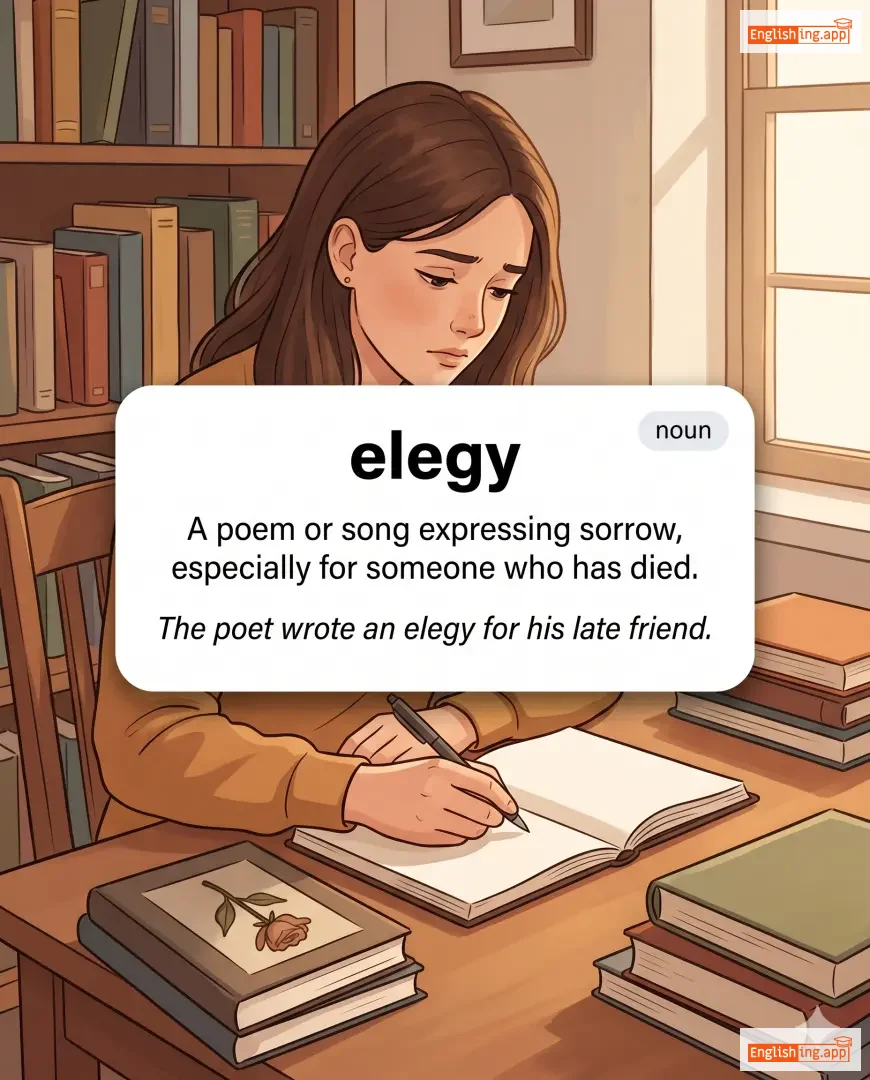
🪦
|
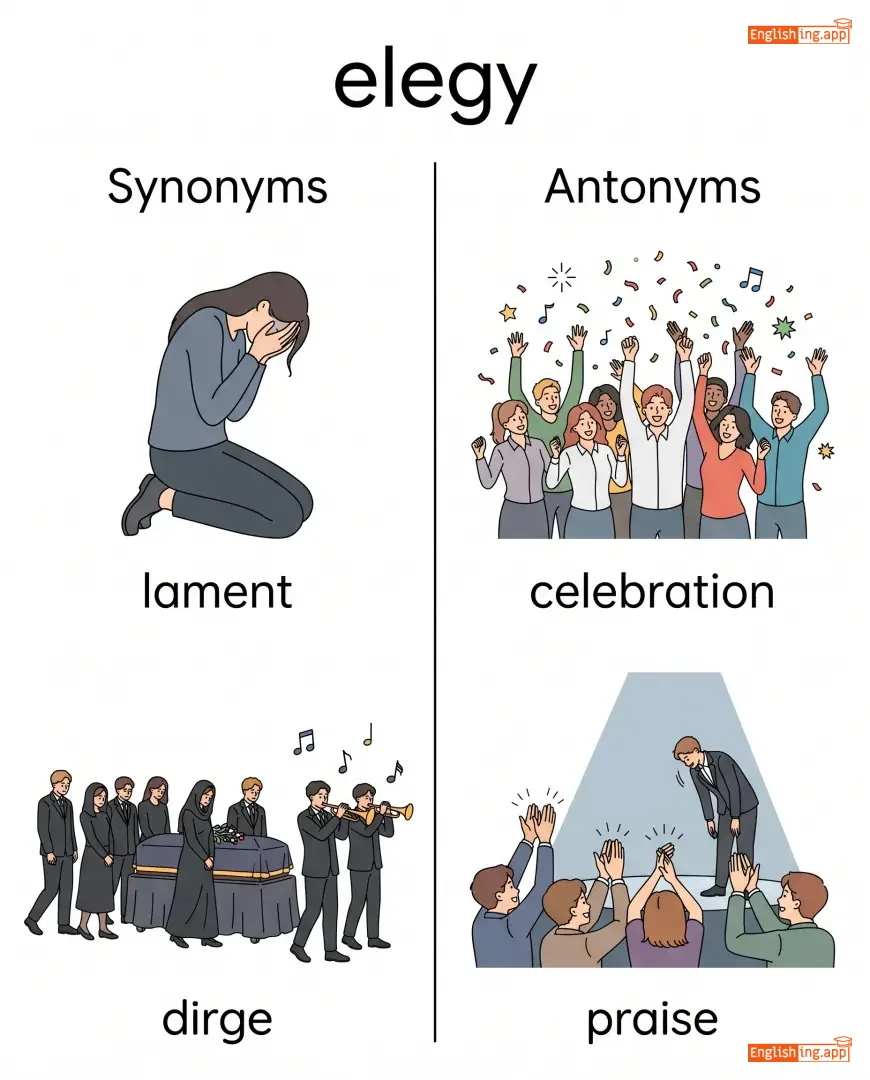
/ˈɛlɪdʒi/
noun
(艾乐基)
••••••
|
|
挽歌
wǎn gē
••••••
|
- •••••• | - •••••• | - •••••• | - •••••• |
A poem or song expressing sorrow, especially for someone who has died.
••••••
|
The poet wrote an elegy for his late friend. |
诗人为他已故的朋友写了一首挽歌。
Shīrén wèi tā yǐ gù de péngyǒu xiěle yī shǒu wǎn gē.
••••••
|
- •••••• | - •••••• | - •••••• |
lament, dirge, requiem, threnody, ode
••••••
|
celebration, praise
••••••
|
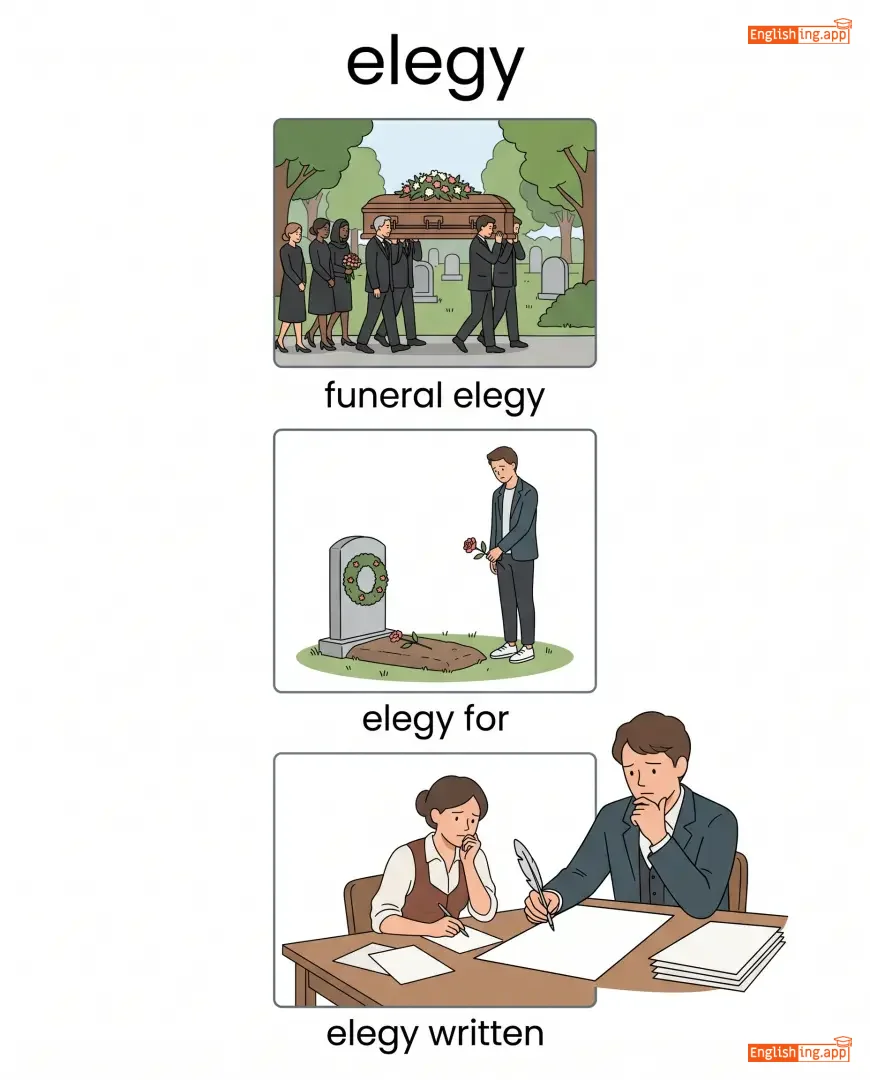
funeral elegy, elegy for, elegy written, mournful elegy
••••••
|
挽歌像是为离去的人唱的一首悲伤歌曲。
••••••
|
|
#2906
😔
|
/ˌɛl.ɪˈdʒaɪ.ək/
adjective
(艾利吉亚克)
••••••
|
- •••••• |
哀歌的
aige de
••••••
|
- •••••• | - •••••• | - •••••• | - •••••• |
Expressing sorrow, often for something past; resembling an elegy.
••••••
|
The novel ends on an elegiac note, mourning the lost era. |
这本小说以哀歌的语气结束,哀悼失落的时代。
Zhè běn xiǎoshuō yǐ āigē de yǔqì jiéshù, āidào shīluò de shídài.
••••••
|
- •••••• | - •••••• | - •••••• |
mournful, melancholy, plaintive, sorrowful, nostalgic
••••••
|
joyful, cheerful, celebratory
••••••
|
elegiac tone, elegiac poem, elegiac mood
••••••
|
哀歌的就是表达悲伤的,像‘哀歌’,就是一种悲伤的歌。
••••••
|
|
#2907
🎁
|
/ˌɛl.ɪˈmɑː.səˌnɛr.i/
adjective
(慈善的)
••••••
|
- •••••• |
慈善的
cishande
••••••
|
- •••••• | - •••••• | - •••••• | - •••••• |
Relating to charity; dependent on or supported by charity.
••••••
|
The hospital was founded as an eleemosynary institution. |
医院作为一个慈善机构成立。
Yiyuan zuowei yige cishan jigou chengli.
••••••
|
- •••••• | - •••••• | - •••••• |
charitable, philanthropic, benevolent, altruistic
••••••
|
selfish, profit-driven
••••••
|
eleemosynary institution, eleemosynary organization
••••••
|
Eleemosynary 意思是慈善的 – 想象 ‘eleemo’ 是帮助,‘sinary’ 是钱。
••••••
|
|
#2908
🖨️
|
/ɪˈlɛk.trə.taɪp/
noun
(电子版)
••••••
|
- •••••• |
电铸版
dian zhu ban
••••••
|
- •••••• | - •••••• | - •••••• | - •••••• |
A duplicate printing plate made by electroplating a mold of the original.
••••••
|
The printer used an electrotype to produce multiple copies of the page. |
打印机使用了电铸版来制作页面的多个副本。
Dayinji shiyong le dian zhu ban lai zhizu yemian de duoshao fuben.
••••••
|
- •••••• | - •••••• | - •••••• |
copy, duplicate, facsimile, reproduction
••••••
|
original, prototype
••••••
|
electrotype plate, electrotype printing
••••••
|
电代表电力,版代表印刷——通过电力进行印刷。
••••••
|
|
#2909
⚡
|
/ɪˌlɛkˈtrɑː.lə.sɪs/
noun
(电解)
••••••
|
- •••••• |
电解
dianjie
••••••
|
- •••••• | - •••••• | - •••••• | - •••••• |
A chemical decomposition produced by passing an electric current through a liquid or solution.
••••••
|
Electrolysis is used to separate hydrogen from water. |
电解被用于从水中分离氢气。
Dianjie bei yongyu cong shui zhong fenli qingqi.
••••••
|
- •••••• | - •••••• | - •••••• |
electrochemistry, decomposition, ionization, dissociation
••••••
|
synthesis, combination
••••••
|
electrolysis process, electrolysis of water, electrolysis treatment
••••••
|
电 = 电流 + 解 = 分解 = 电流用于分解
••••••
|
|
#2910
💪
|
/ˈɛl.boʊ/
noun/verb
(艾尔博)
••••••
|
- •••••• |
肘部
zhoubu
••••••
|
elbowed
艾尔博德
••••••
|
elbowed
艾尔博德
••••••
|
elbows
艾尔博斯
••••••
|
elbowing
艾尔博英
••••••
|
The joint connecting the forearm and the upper arm; as a verb, to push aside using the elbow.
••••••
|
He accidentally hit the table with his elbow.
他不小心用肘部撞到了桌子。
••••••
|
他不小心用肘部撞到了桌子。
Ta bu xiaoxin yong zhoubu zhuangdao le zhuozi.
••••••
|
rub elbows
摩擦肘部
••••••
|
To socialize closely with people, often important or famous ones.
••••••
|
社交接触
shejiao jiechu
••••••
|
joint, bend, nudge, shove, push
••••••
|
pull, drag
••••••
|
elbow joint, elbow room, rub elbows, elbow grease
••••••
|
肘部意味着肘部,通过摩擦肘部可以社交。
••••••
|
Vocabulary Quiz
Test your vocabulary by matching words with their translations or meanings.
Login to take the quiz
Comments (0)
Share your thoughts and join the discussion.
Join the discussion by logging in
Login to CommentNo comments yet
Be the first to share your thoughts!