


Swipe left or right, or use the buttons. Tap image to zoom.
例句翻译
单词
Lesson 213Lesson 213 - 遮罩切换
|
表情符号
|
单词 | Images | 翻译 | 过去时 | 过去分词 | 第三人称单数 | 动名词 | 含义 | 例句 | 例句翻译 | 示例表达 | 示例表达含义 | 示例表达翻译 | 同义词 | 反义词 | 搭配词 | 助记符 |
|---|---|---|---|---|---|---|---|---|---|---|---|---|---|---|---|---|---|
|
#6360
🏛️
|
/pəˈtrɪʃən/
noun, adjective
(贵族)
••••••
|
- •••••• |
贵族
guìzú
••••••
|
- •••••• | - •••••• | - •••••• | - •••••• |
A person of noble rank or high social standing; relating to aristocracy.
••••••
|
The patrician families of Rome wielded great power in politics. |
罗马的贵族家庭在政治上拥有巨大的权力。
Luómǎ de guìzú jiātíng zài zhèngzhì shàng yǒngyǒu jùdà de quánlì.
••••••
|
- •••••• | - •••••• | - •••••• |
aristocrat, noble, elite, highborn, lord
••••••
|
commoner, plebeian, peasant
••••••
|
patrician family, patrician class, patrician background, Roman patrician
••••••
|
贵族 - '贵' = 高贵 + '族' = 贵族
••••••
|
|
#6361
💰
|
/peɪˈiː/
noun
(peɪˈiː)
••••••
|
- •••••• |
收款人
shōu kuǎn rén
••••••
|
- •••••• | - •••••• | - •••••• | - •••••• |
A person to whom money is paid or is to be paid.
••••••
|
The payee must sign the check before cashing it. |
收款人在兑现支票前必须签名。
Shōu kuǎn rén zài duìxiàn zhīpiào qián bìxū qiānmíng.
••••••
|
- •••••• | - •••••• | - •••••• |
recipient, beneficiary, receiver, claimant
••••••
|
payer, debtor
••••••
|
payee account, payee details, check payee
••••••
|
Payee 意思是收款人 – 收到钱的人就是 payee。
••••••
|
|
#6362
⛺
|
/pəˈvɪliən/
noun
(帕维柳昂)
••••••
|
- •••••• |
展馆
zhǎnguǎn
••••••
|
- •••••• | - •••••• | - •••••• | - •••••• |
A large tent or temporary building, often used for events or exhibitions.
••••••
|
The wedding reception was held in a decorated pavilion. |
婚礼接待在一个装饰精美的展馆中举行。
Hūnlǐ jiēdài zài yīgè zhuāngshì jīngměi de zhǎnguǎn zhōng jǔxíng.
••••••
|
- •••••• | - •••••• | - •••••• |
marquee, tent, hall, shelter
••••••
|
open space, outdoors
••••••
|
sports pavilion, exhibition pavilion, wedding pavilion
••••••
|
Pavilion 就是展馆 – 婚礼和展馆一起记住!
••••••
|
|
#6363
🥀
|
/ˈpɔːpərɪzəm/
noun
(贫困主义)
••••••
|
- •••••• |
贫困
pínkùn
••••••
|
- •••••• | - •••••• | - •••••• | - •••••• |
The state of being extremely poor.
••••••
|
The country struggled with rising pauperism in the 19th century. |
该国在19世纪与日益严重的贫困作斗争。
Gāi guó zài 19 shìjì yǔ rìyì yánzhòng de pínkùn zuò dòuzhēng.
••••••
|
- •••••• | - •••••• | - •••••• |
poverty, destitution, deprivation, penury
••••••
|
wealth, prosperity, affluence
••••••
|
extreme pauperism, rising pauperism, fight pauperism
••••••
|
Pauperism 就是贫困,'pauper' 是指贫穷的人。
••••••
|
|
#6364
🧑🦲
|
/ˈpɔːpər/
noun
(pauper)
••••••
|
- •••••• |
乞丐
qǐgài
••••••
|
- •••••• | - •••••• | - •••••• | - •••••• |
A very poor person.
••••••
|
The pauper begged for food on the street corner. |
乞丐在街角乞讨食物。
qǐgài zài jiējiǎo qǐtǎo shíwù.
••••••
|
from prince to pauper |
A fall from wealth to poverty.
••••••
|
从王子到乞丐
cóng wángzǐ dào qǐgài
••••••
|
beggar, destitute, indigent, needy
••••••
|
rich, wealthy, affluent
••••••
|
pauper's grave, poor pauper, pauper class
••••••
|
Pauper意味着乞丐 – 如果你没有'口袋' (kǒudài),你就是pauper!
••••••
|
|
#6365
👨🦲
|
/ˈpɔːntʃi/
adjective
(pàunchī)
••••••
|
- •••••• |
大肚子
dàdùzi
••••••
|
- •••••• | - •••••• | - •••••• | - •••••• |
Having a large or protruding belly.
••••••
|
The paunchy man struggled to button his shirt. |
那个大肚子男人在努力扣上他的衬衫纽扣。
Nàgè dàdùzi nánrén zài nǔlì kòu shàng tā de chènshān niǔkòu.
••••••
|
- •••••• | - •••••• | - •••••• |
potbellied, corpulent, chubby, obese
••••••
|
slim, lean, fit
••••••
|
paunchy figure, paunchy man, paunchy look
••••••
|
Paunchy意味着大肚子 – 想象一个大肚子!
••••••
|
|
#6366
⚠️
|
/ˈpɔːsɪti/
noun
(pósiti)
••••••
|
|
稀缺 / 缺乏
xiqu / quefa
••••••
|
- •••••• | - •••••• | - •••••• | - •••••• |
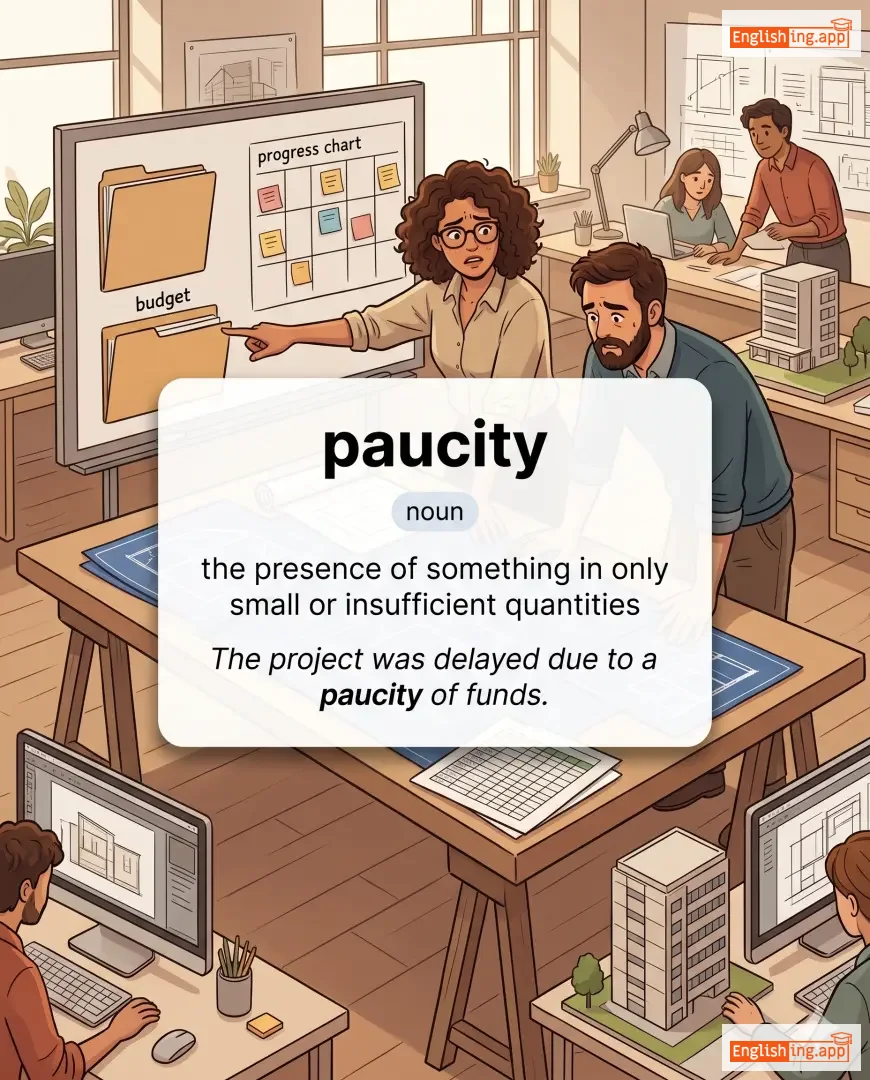
the presence of something in only small or insufficient quantities
••••••
|
The project was delayed due to a paucity of funds. |
由于资金短缺,项目被推迟了。
Youyu zijin duanqu, xiangmu bei tuichi le.
••••••
|
- •••••• | - •••••• | - •••••• |
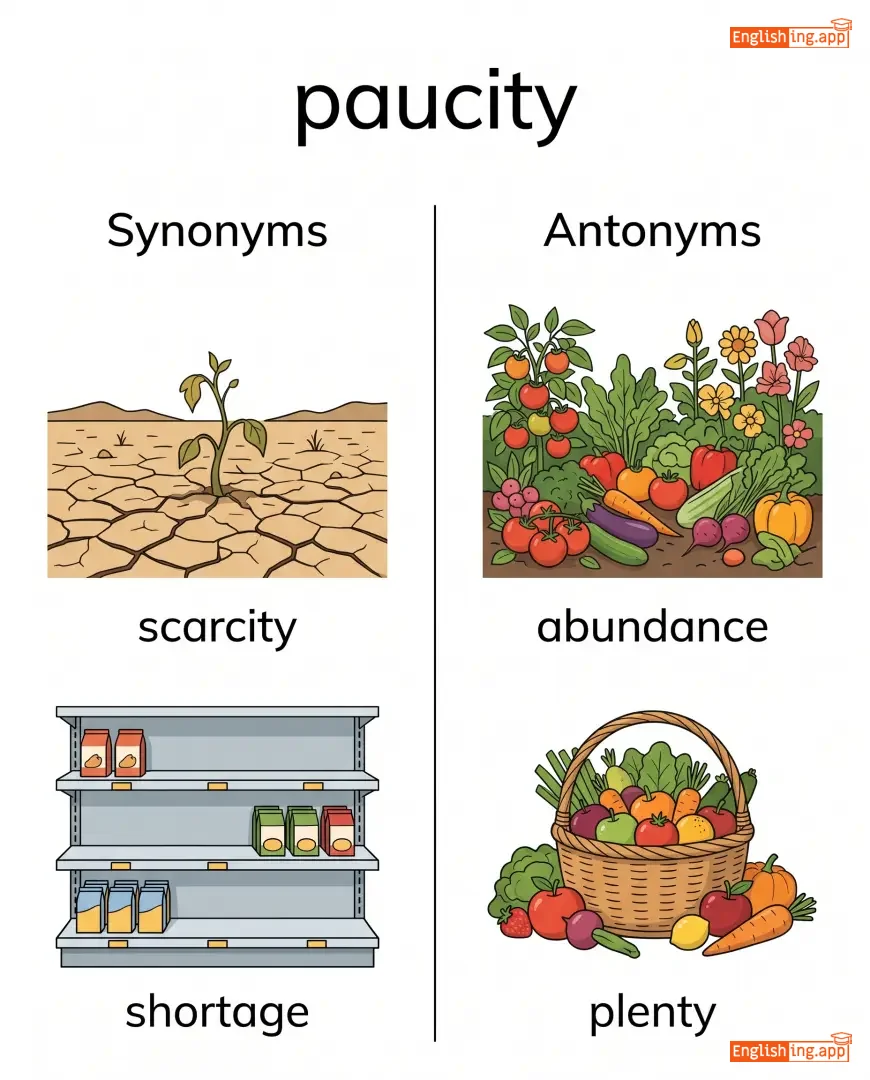
scarcity, shortage, lack, dearth, insufficiency
••••••
|
abundance, plenty, surplus
••••••
|
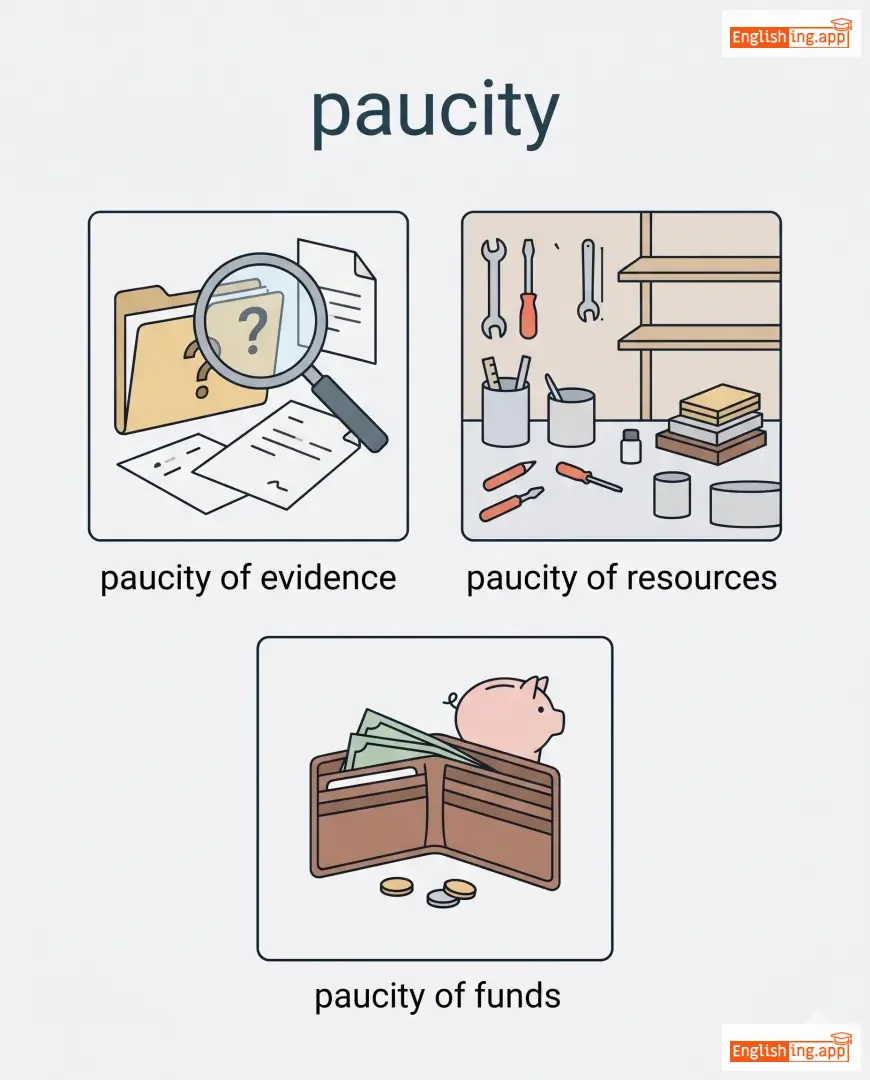
paucity of evidence, paucity of resources, paucity of funds, general paucity
••••••
|
Pau表示少,而在城市中如果缺乏某物,则称之为paucity。
••••••
|
|
#6367
🌧️
|
/ˈpætər/
verb
(帕特)
••••••
|
- •••••• |
发出重复的轻轻敲打声 / 机械地快速说话
fa chu chongfu de qingqing qiaoda sheng / jixiede kuaisu shuohua
••••••
|
pattered
帕特德
••••••
|
pattered
帕特德
••••••
|
patters
帕特斯
••••••
|
pattering
帕特灵
••••••
|
to make a repeated light tapping sound; to talk quickly in a rehearsed or mechanical way
••••••
|
Rain pattered softly on the window.
雨滴轻轻拍打着窗户。
••••••
|
雨滴轻轻拍打着窗户。
Yudi qingqing pai da zhe chuanghu.
••••••
|
patter of little feet
小脚步声
••••••
|
the sound of small children walking or running around
••••••
|
小脚步的声音
xiao jiaobu de shengyin
••••••
|
tap, drum, beat, chatter, babble
••••••
|
silence, quiet
••••••
|
rain patter, patter of rain, patter of feet, patter speech
••••••
|
Patter意味着敲打 – 想象雨滴的声音。
••••••
|
|
#6368
👨👦
|
/ˌpætrəˈnɪmɪk/
noun
(pàituólínmǐkè)
••••••
|
- •••••• |
父系名字
fùxì míngzì
••••••
|
- •••••• | - •••••• | - •••••• | - •••••• |
a name derived from the name of a father or ancestor
••••••
|
In many cultures, surnames are patronymic in origin. |
在许多文化中,姓氏源自父系名字。
Zài xǔduō wénhuà zhōng, xìngshì yuánzì fùxì míngzì.
••••••
|
- •••••• | - •••••• | - •••••• |
surname, family name, lineage name, ancestral name
••••••
|
given name, forename
••••••
|
patronymic tradition, patronymic system, patronymic naming, patronymic form
••••••
|
Patro是父亲,mímǐkè是名字:父系名字就是父亲的名字。
••••••
|
|
#6369
😏
|
/ˈpeɪtrənaɪzɪŋ/
adjective
(pàitèruò nàizīng)
••••••
|
- •••••• |
居高临下
jū gāo lín xià
••••••
|
- •••••• | - •••••• | - •••••• | - •••••• |
showing kindness that is perceived as condescending or superior
••••••
|
His patronizing tone offended the audience. |
他的居高临下的语气冒犯了观众。
Tā de jū gāo lín xià de yǔqì màofàn le guānzhòng.
••••••
|
- •••••• | - •••••• | - •••••• |
condescending, superior, snobbish, disdainful
••••••
|
respectful, humble, modest
••••••
|
patronizing smile, patronizing tone, patronizing manner, sound patronizing
••••••
|
‘Patron’和‘izing’结合表现出一种居高临下的善意。
••••••
|
|
#6370
🛍️
|
/ˈpeɪtrənaɪz/
verb
••••••
|
|
- •••••• |
patronized
••••••
|
patronized
••••••
|
patronizes
••••••
|
patronizing
••••••
|
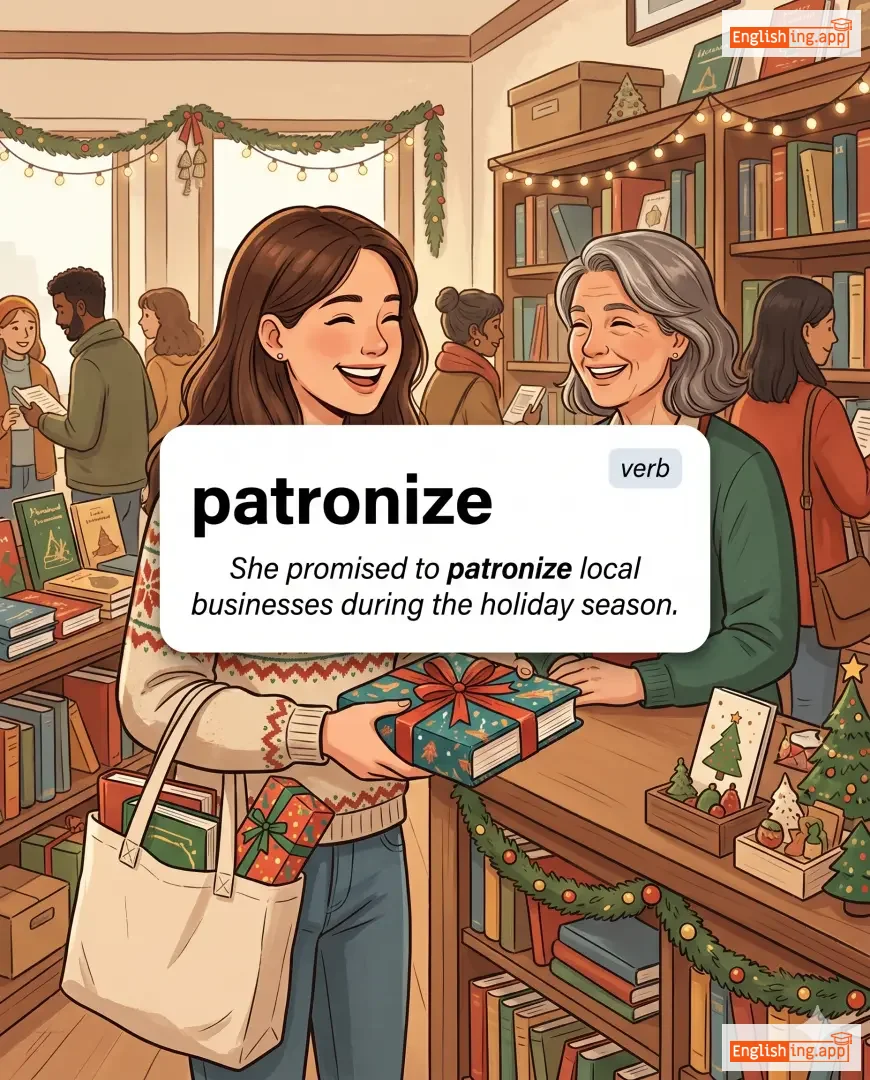
to support or sponsor; to treat someone with apparent kindness that betrays a sense of superiority; to be a regular customer of a business
••••••
|
She promised to patronize local businesses during the holiday season. |
- •••••• |
patronize someone |
to speak or behave towards someone in a way that seems friendly but shows a feeling of superiority
••••••
|
- •••••• |
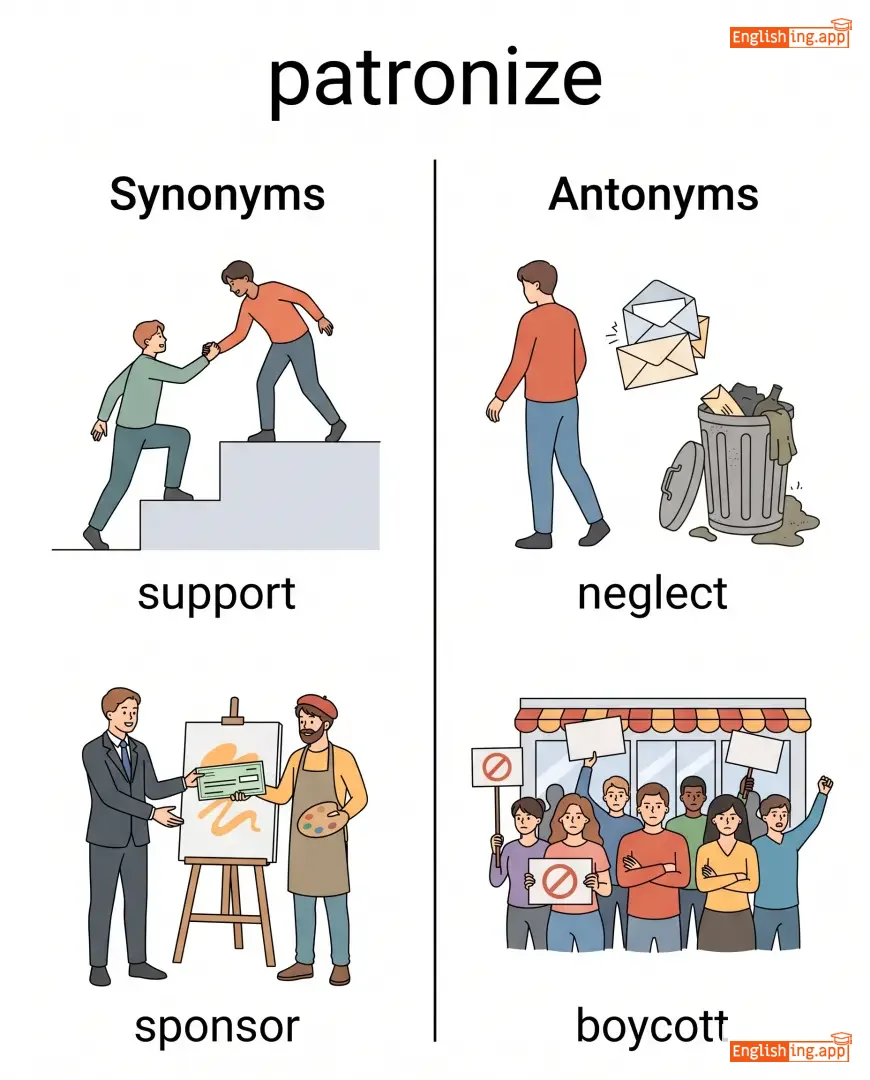
support, sponsor, condescend, frequent, promote
••••••
|
neglect, boycott, ignore
••••••
|
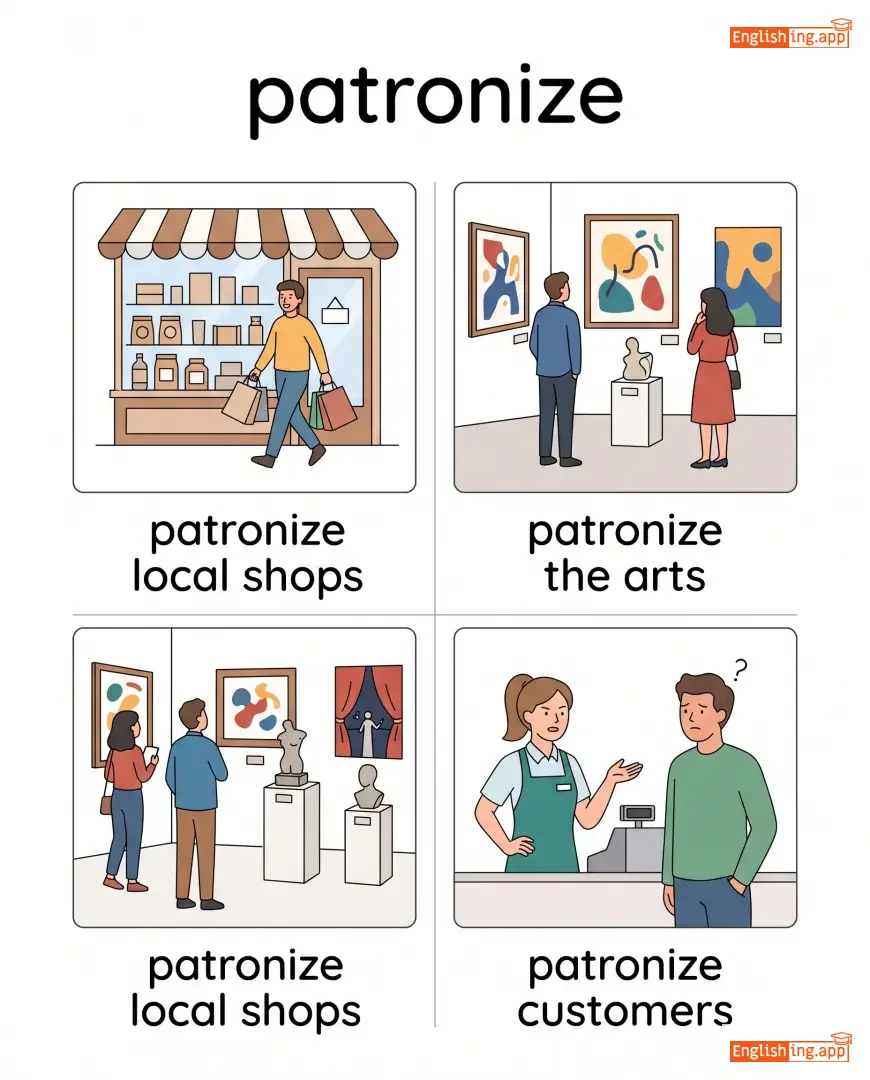
patronize local shops, patronize the arts, patronize customers, patronize someone
••••••
|
No •••••• |
|
#6371
❤️🇧🇩
|
/ˈpeɪtriətɪzəm/
noun
(爱国主义)
••••••
|
|
爱国主义
àiguó zhǔyì
••••••
|
- •••••• | - •••••• | - •••••• | - •••••• |
Love for and devotion to one's country.
••••••
|
His patriotism was evident when he volunteered for military service. |
当他自愿参加军事服务时,他的爱国主义显而易见。
dāng tā zìyuàn cānjiā jūnshì fúwù shí, tā de àiguó zhǔyì xiǎn'ér yìjiàn.
••••••
|
wave of patriotism |
a strong feeling of love and pride for one's country that spreads among people
••••••
|
爱国主义浪潮
àiguó zhǔyì làngcháo
••••••
|
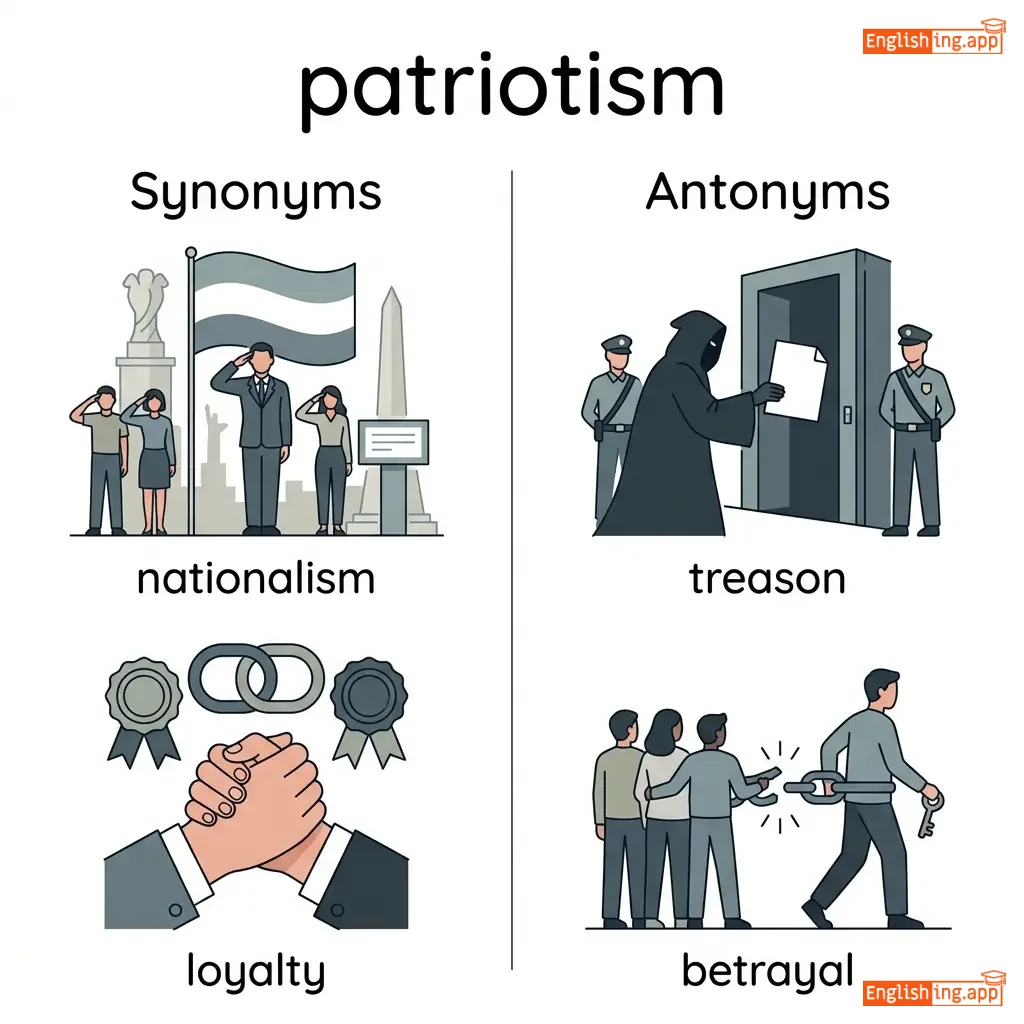
nationalism, loyalty, devotion, allegiance
••••••
|
treason, betrayal
••••••
|
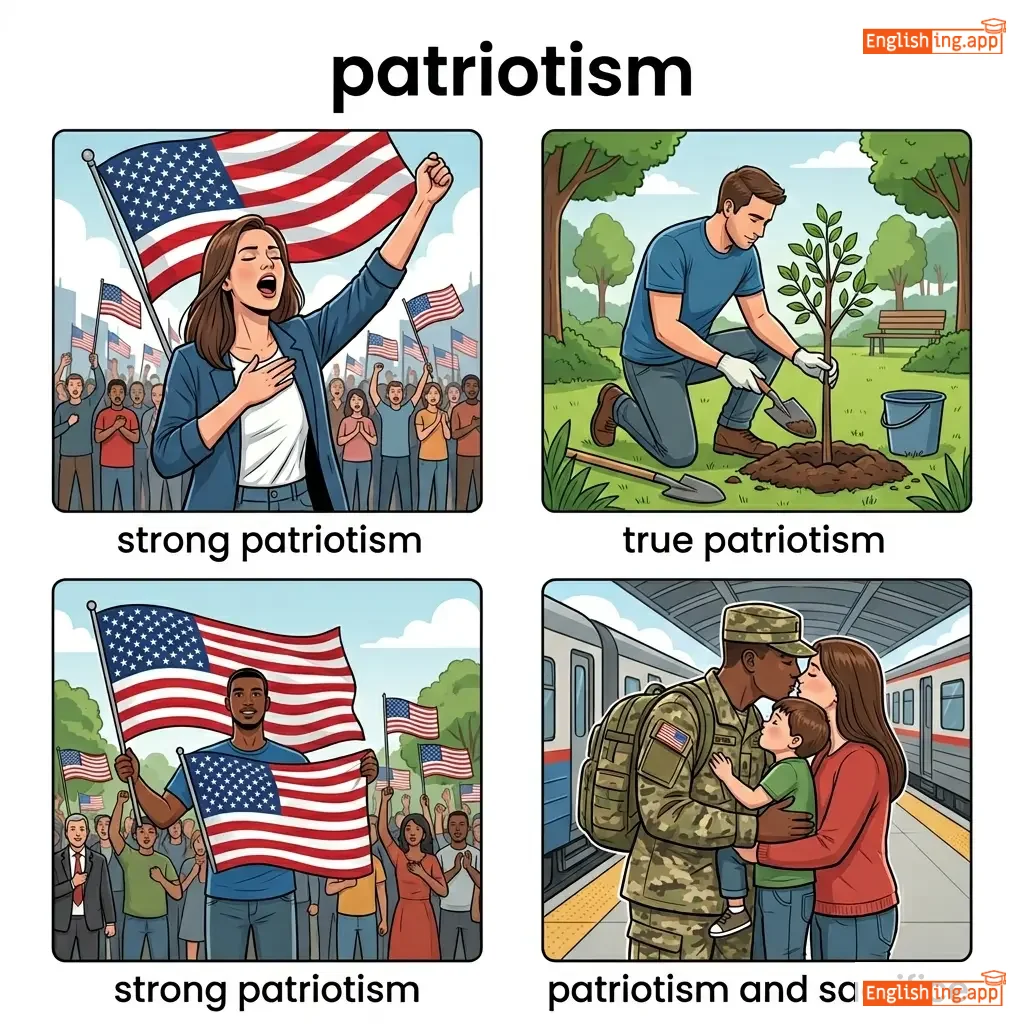
strong patriotism, true patriotism, patriotism and sacrifice, spirit of patriotism
••••••
|
爱国主义 = 爱国主义; '爱'代表爱,'国'代表国家
••••••
|
|
#6372
🇺🇸
|
/ˈpeɪtriət/
noun
(ˈpeɪtriət)
••••••
|
- •••••• |
爱国者
aiguo zhe
••••••
|
- •••••• | - •••••• | - •••••• | - •••••• |
A person who loves and strongly supports their country.
••••••
|
The patriot stood proudly under the national flag. |
爱国者在国旗下自豪地站着。
Aiguo zhe zai guoqi xia zihao de zhan zhe.
••••••
|
true patriot |
a person who genuinely loves and serves their country
••••••
|
真正的爱国者
Zhenzheng de aiguo zhe
••••••
|
nationalist, loyalist, supporter, defender
••••••
|
traitor, betrayer
••••••
|
true patriot, patriotic act, patriot leader, patriot movement
••••••
|
Patriot 在中文里就是 '爱国者' — 一个为国家奋斗的人。
••••••
|
|
#6373
🏰
|
/ˈpætrɪˌmoʊni/
noun
(帕特里莫尼)
••••••
|
- •••••• |
遗产
yichan
••••••
|
- •••••• | - •••••• | - •••••• | - •••••• |
Property or inheritance passed down from one's father or ancestors.
••••••
|
The castle was part of his patrimony from his noble ancestors. |
这座城堡是他从贵族祖先那里继承的遗产的一部分。
Zhè zuò chéngbǎo shì tā cóng guìzú zǔxiān nàlǐ jìchéng de yíchǎn de yī bùfen.
••••••
|
- •••••• | - •••••• | - •••••• |
inheritance, heritage, legacy, estate
••••••
|
loss, debt
••••••
|
family patrimony, cultural patrimony, protect patrimony, ancestral patrimony
••••••
|
Patrimony = 父亲 (fùqīn) + 财富 (cáifù) → 从父亲那里得到的财富
••••••
|
|
#6374
🗡️
|
/ˈpætrɪsaɪd/
noun
(佩特里赛德)
••••••
|
- •••••• |
弑父
shì fù
••••••
|
- •••••• | - •••••• | - •••••• | - •••••• |
The act of killing one's own father.
••••••
|
The ancient myth describes a son committing patricide to take the throne. |
古老的神话描述了一位儿子为了登上王位而弑父。
Gu lao de shenhua miaoshu le yi wei erzi weile deng shang wangwei er shifu.
••••••
|
- •••••• | - •••••• | - •••••• |
father-killing, parricide, murder, killing
••••••
|
filial piety, devotion
••••••
|
commit patricide, case of patricide, accused of patricide
••••••
|
Patricide = Patri (父亲) + cide (杀) → 弑父
••••••
|
|
#6375
📋
|
/peɪst/
verb, noun
(pèisī)
••••••
|
|
粘贴
zhāntiē
••••••
|
pasted
pèisīduō
••••••
|
pasted
pèisīduō
••••••
|
pastes
pèisī
••••••
|
pasting
pèisīng
••••••
|
to stick or attach something using a soft, moist substance; also a thick, soft, moist substance itself
••••••
|
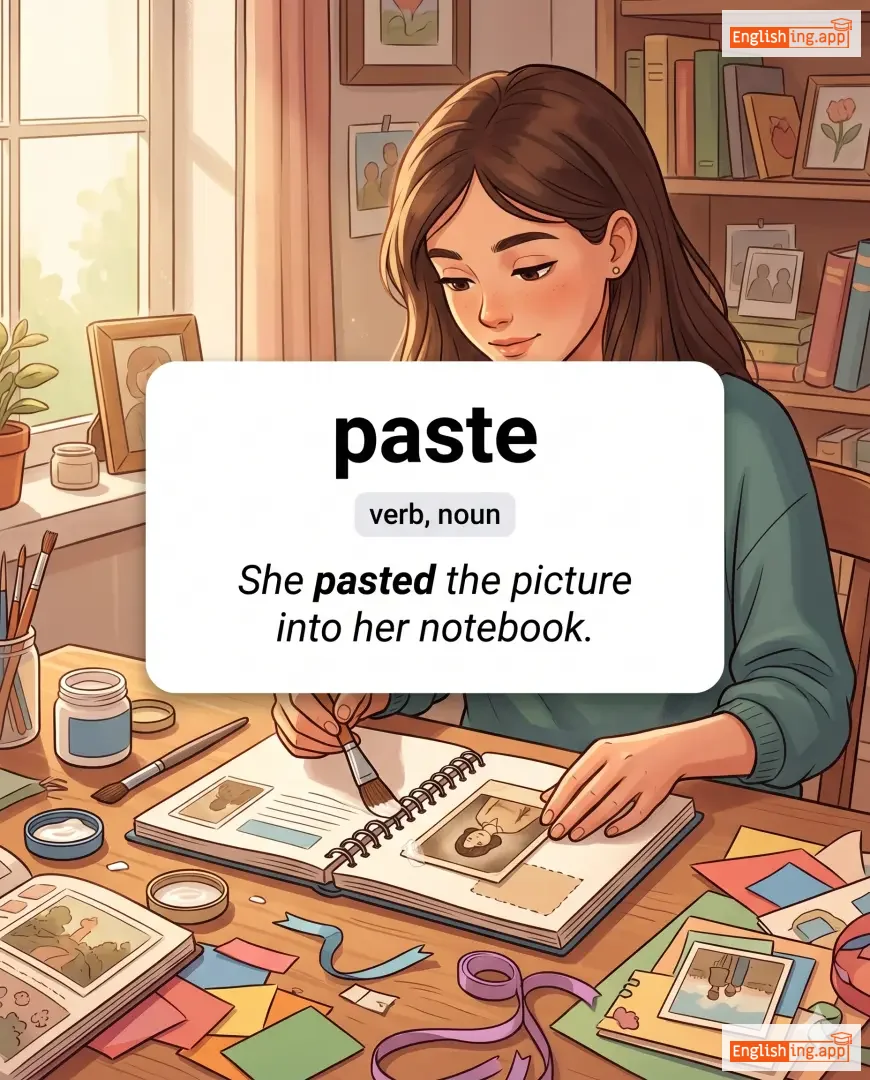
She pasted the picture into her notebook.
她把照片粘在了她的笔记本里。
••••••
|
她把照片粘在了她的笔记本里。
Tā bǎ zhàopiàn zhāntiē zài le tā de bǐjìběn lǐ.
••••••
|
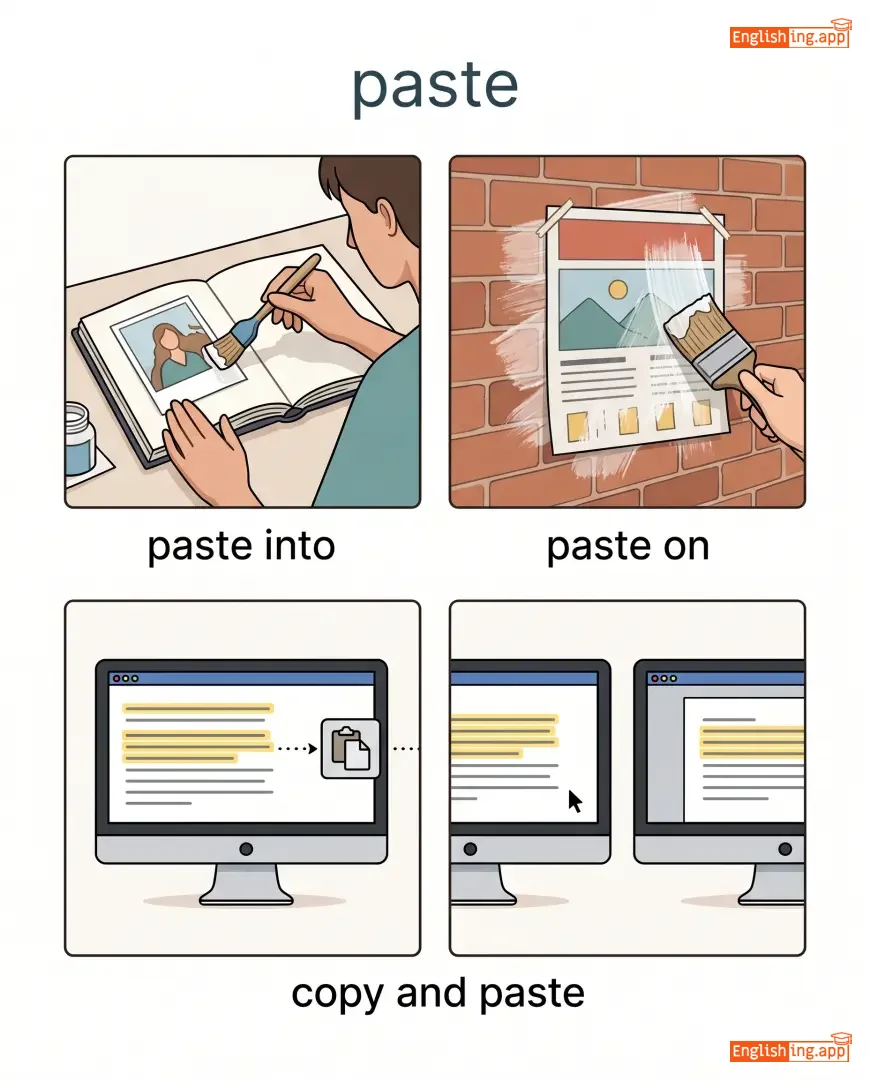
copy and paste
复制和粘贴
••••••
|
to duplicate text or images from one place and put them in another using software commands
••••••
|
复制和粘贴
fùzhì hé zhāntiē
••••••
|
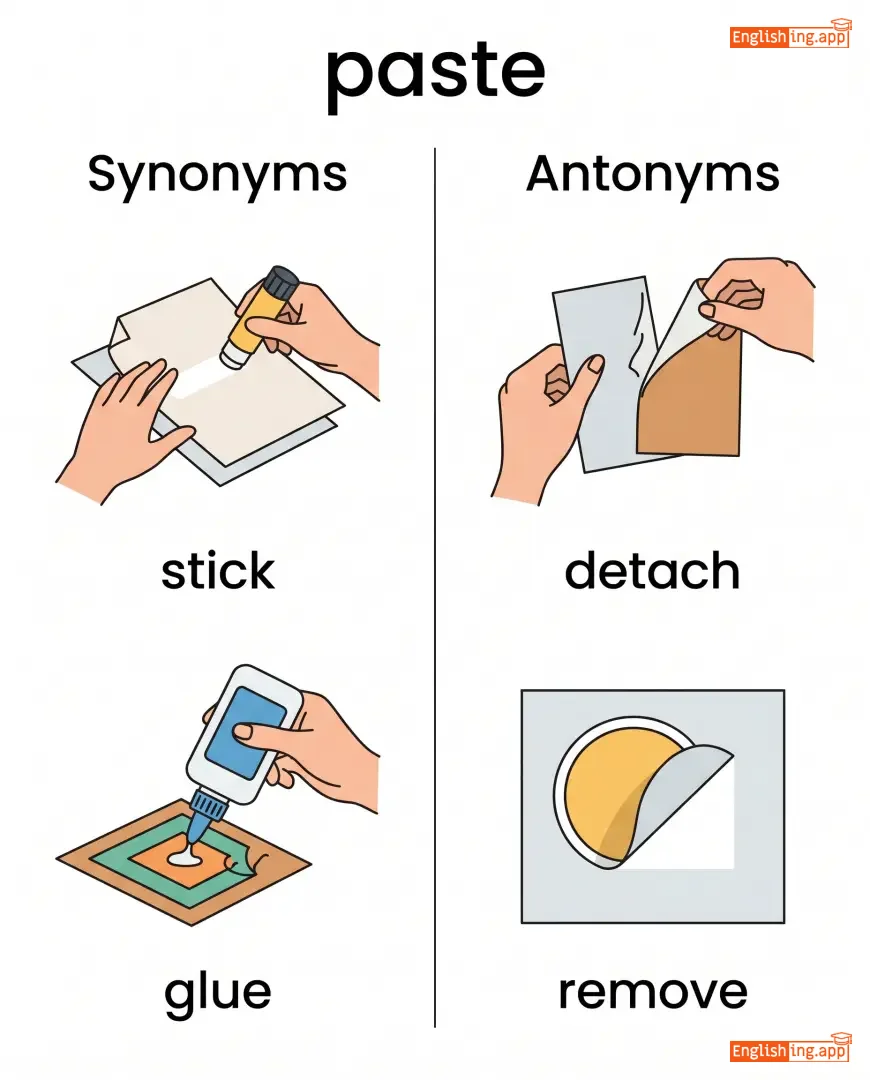
stick, glue, affix, attach, insert
••••••
|
detach, remove, separate
••••••
|
paste into, paste on, copy and paste, paste image
••••••
|
Paste 就是粘贴,就像在计算机上复制和粘贴一样。
••••••
|
|
#6376
👴
|
/ˈpeɪtriɑːrk/
noun
(父系家族)
••••••
|
- •••••• |
家族长
jiāzú zhǎng
••••••
|
- •••••• | - •••••• | - •••••• | - •••••• |
a male head of a family or tribe; an older respected man who leads a group
••••••
|
As the family patriarch, he mediated disputes and kept long traditions alive. |
作为家族长,他调解争端并保持着传统的延续。
zuòwéi jiāzú zhǎng, tā tiáojiě zhēngduān bìng bǎochí zhe chuántǒng de yánxù.
••••••
|
the patriarch of |
the male leader or founding figure of a group or family
••••••
|
家族长
jiāzú zhǎng
••••••
|
paterfamilias, elder, forefather, chieftain, father figure
••••••
|
matriarch, subordinate, junior
••••••
|
family patriarch, clan patriarch, church patriarch, patriarch of the family, patriarchal authority
••••••
|
Patri = 父亲 (fùqīn) + arch = 主; patriarch 表示家族中的父亲和领袖。
••••••
|
|
#6377
🗣️
|
/ˈpætwɑː/
noun
(帕图瓦)
••••••
|
- •••••• |
地方方言
dìfāng fāngyán
••••••
|
- •••••• | - •••••• | - •••••• | - •••••• |
a regional or social dialect, especially one considered nonstandard or informal
••••••
|
The guide slipped into local patois when chatting with the fishermen.
导游在与渔民交谈时开始使用当地的帕图瓦。
••••••
|
导游在与渔民交谈时开始使用当地的帕图瓦。
dǎoyóu zài yǔ yúmín jiāotán shí kāishǐ shǐyòng dāngdì de Pàtúwǎ.
••••••
|
- •••••• | - •••••• | - •••••• |
dialect, vernacular, argot, creole, jargon
••••••
|
standard language, formal speech, lingua franca
••••••
|
local patois, rural patois, speak in patois, Caribbean patois, native patois
••••••
|
Patois 听起来像是地方语言,用一种轻松随意的方式沟通。
••••••
|
|
#6378
🗿
|
/pəˈtiːnə/
noun
(pàtínà)
••••••
|
- •••••• |
由于年龄或使用,金属、石头或木材表面上的薄膜或光泽;也可以指一种表面外观
yóu yú niánlíng huò shǐyòng, jīnshǔ, shítou huò mùcái biǎomiàn shàng de bómó huò guāngzé; yě kěyǐ zhǐ yī zhǒng biǎomiàn wàiguān
••••••
|
- •••••• | - •••••• | - •••••• | - •••••• |
a surface film or sheen on metal, stone, or wood due to age or use; also, a superficial appearance
••••••
|
The bronze statue developed a green patina after years in the sea air. |
这座青铜雕像在海风中多年后形成了绿色的铜绿。
Zhè zuò qīngtóng diāoxiàng zài hǎifēng zhōng duōnián hòu xíngchéng le lǜsè de tóng lǜ.
••••••
|
a patina of respectability |
an outward look of being proper that may hide something less respectable
••••••
|
外表的尊重
wàibiǎo de zūnzhòng
••••••
|
sheen, film, tarnish, gloss, verdigris
••••••
|
brightness, rawness, freshness
••••••
|
green patina, develop a patina, patina of age, patina of respectability, bronze patina
••••••
|
Patina = 表层;如果没有 patina,老物件就不显老!
••••••
|
|
#6379
🥺
|
/ˈpeɪθɒs/
noun
(peɪθɒs)
••••••
|
- •••••• |
悲悯
bēimǐn
••••••
|
- •••••• | - •••••• | - •••••• | - •••••• |
a quality in speech, writing, or events that evokes pity or deep emotion
••••••
|
The documentary balanced pathos with hope, making the audience both weep and think. |
这部纪录片平衡了悲悯与希望,使观众既流泪又思考。
zhè bù jìlùpiàn pínghéngle bēimǐn yǔ xīwàng, shǐ guānzhòng jì liúlèi yòu sīkǎo.
••••••
|
a touch of pathos |
a small but noticeable amount of emotional appeal or sadness
••••••
|
一丝悲悯
yī sī bēimǐn
••••••
|
poignancy, sentiment, emotion, sorrow, poignance
••••••
|
apathy, indifference, detachment
••••••
|
pathos and humor, a touch of pathos, genuine pathos, evoke pathos, dramatic pathos
••••••
|
Pathos可以帮助你感受到那些深刻的情感,类似悲悯。
••••••
|
|
#6380
🧫
|
/pəˈθɒlədʒi/
noun
(病理学)
••••••
|
- •••••• |
病理学
binglixue
••••••
|
- •••••• | - •••••• | - •••••• | - •••••• |
the scientific study of diseases, their causes, processes, and effects on the body
••••••
|
Advances in pathology helped the doctors identify the rare infection quickly. |
病理学的进展帮助医生迅速识别罕见的感染。
Binglixue de jinzhang bangzhu yisheng xunsu shibie hanjian de ganran.
••••••
|
- •••••• | - •••••• | - •••••• |
pathobiology, morbid anatomy, etiology, pathogenesis, disease science
••••••
|
health, physiology, hygiene
••••••
|
clinical pathology, forensic pathology, pathology report, pathology lab, study of pathology
••••••
|
病理学 = 研究疾病的学问; 医院里研究疾病的病理 - pathology is the science of diseases.
••••••
|
|
#6381
🧠
|
/ˌpæθəˈlɑːdʒɪkəl/
adjective
(病理的)
••••••
|
|
病理的, 异常的
bìnglǐ de, yìcháng de
••••••
|
- •••••• | - •••••• | - •••••• | - •••••• |
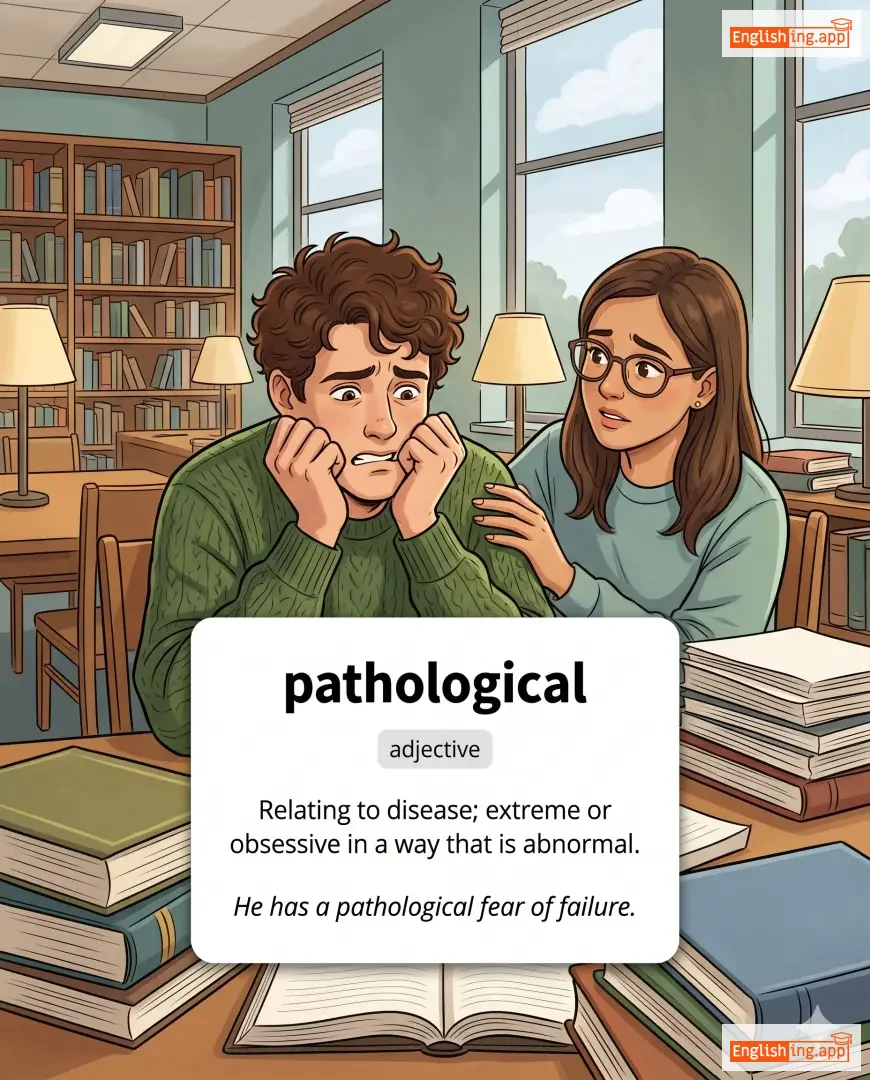
Relating to disease; extreme or obsessive in a way that is abnormal.
••••••
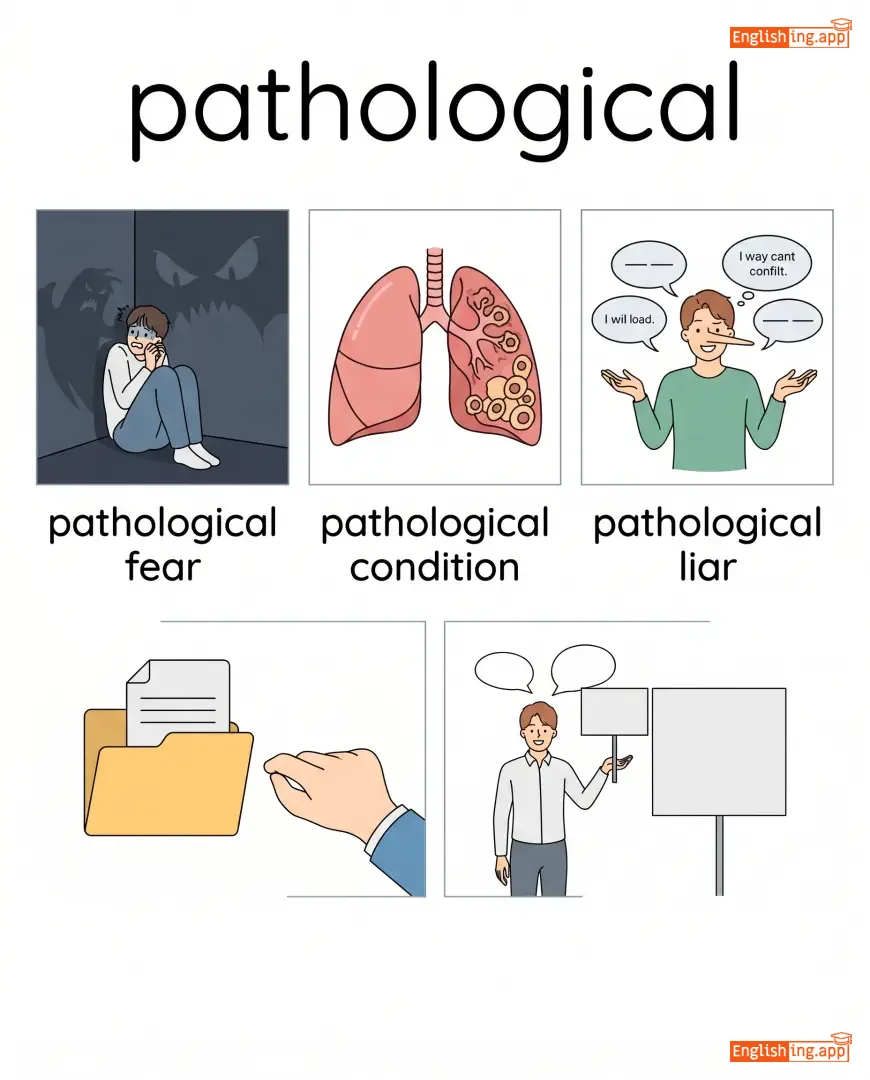
|
He has a pathological fear of failure. |
他对失败有病理性的恐惧。
Tā duì shībài yǒu bìnglǐ xìng de kǒngjù.
••••••
|
pathological liar |
A person who lies compulsively and uncontrollably.
••••••
|
病理性说谎者
bìnglǐ xìng shuōhuǎng zhě
••••••
|
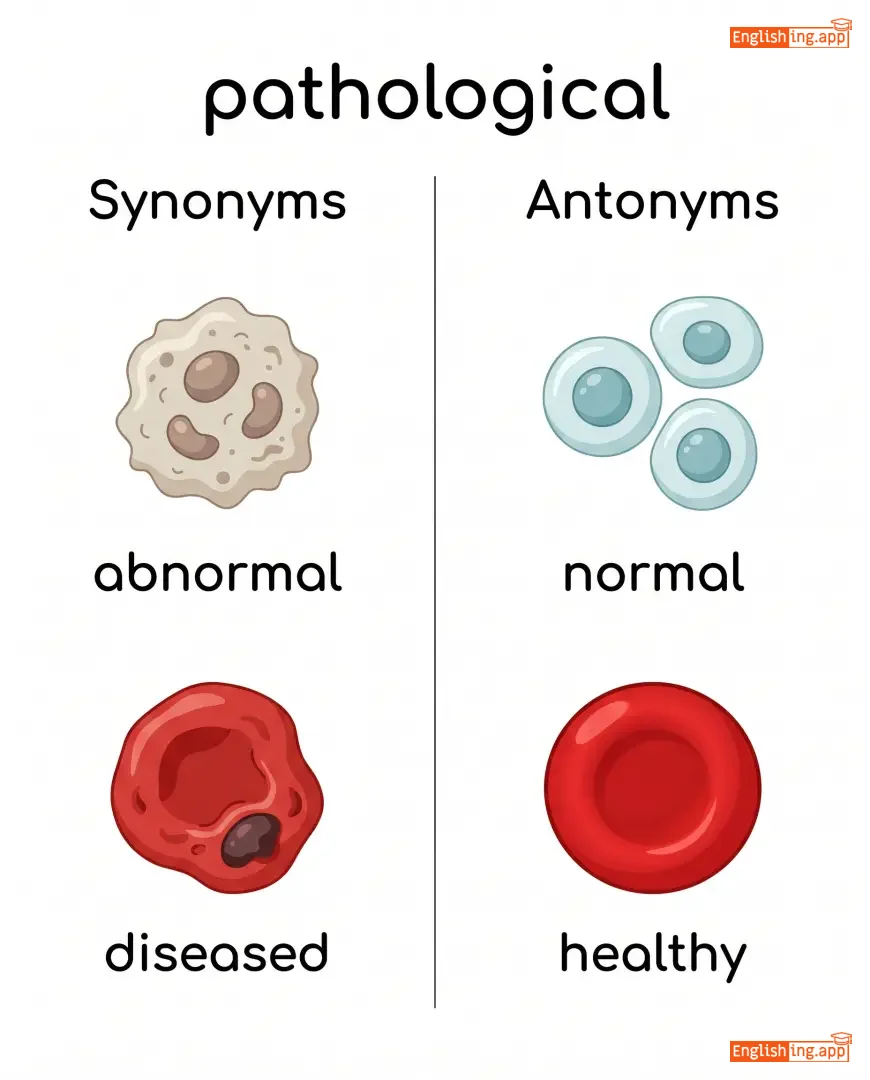
abnormal, diseased, compulsive, obsessive
••••••
|
normal, healthy
••••••
|
pathological fear, pathological condition, pathological liar
••••••
|
PATHology意味着疾病,因此病理的意味着与疾病有关或不正常。
••••••
|
|
#6382
🦠
|
/ˌpæθəˈdʒɛnɪk/
adjective
(病原性)
••••••
|
- •••••• |
致病的
zhì bìng de
••••••
|
- •••••• | - •••••• | - •••••• | - •••••• |
Capable of causing disease.
••••••
|
Some bacteria are harmless, while others are highly pathogenic. |
有些细菌是无害的,而其他的则是高度致病的。
Yǒuxiē xìjūn shì wúhài de, ér qítā de zé shì gāodù zhìbìng de.
••••••
|
- •••••• | - •••••• | - •••••• |
disease-causing, harmful, infectious, virulent
••••••
|
harmless, benign
••••••
|
pathogenic bacteria, pathogenic virus, pathogenic organism
••••••
|
Patho (疾病) + Gen (生成) = 致病的。
••••••
|
|
#6383
😢
|
/pəˈθɛtɪk/
adjective
••••••
|
- •••••• | - •••••• | - •••••• | - •••••• | - •••••• | - •••••• |
Causing feelings of pity, sadness, or sometimes contempt.
••••••
|
The team’s performance in the match was simply pathetic. |
- •••••• |
pathetic excuse |
A very weak or unconvincing explanation.
••••••
|
- •••••• |
pitiful, miserable, wretched, deplorable, lamentable
••••••
|
impressive, admirable
••••••
|
pathetic attempt, pathetic excuse, pathetic condition, pathetic performance
••••••
|
No •••••• |
|
#6384
👶
|
/pəˈtɜːrnəti/
noun
(父亲)
••••••
|
- •••••• |
父亲身份
fùqīn shēnfèn
••••••
|
- •••••• | - •••••• | - •••••• | - •••••• |
The state of being someone's father.
••••••
|
He demanded a paternity test to confirm his relationship with the child. |
他要求进行亲子鉴定,以确认他与孩子的关系。
Tā yāoqiú jìnxíng qīnzǐ jiàndìng, yǐ quèrèn tā yǔ háizi de guānxì.
••••••
|
paternity leave |
Time off from work granted to a father after the birth of his child.
••••••
|
父亲假期
fùqīn jiàqī
••••••
|
fatherhood, parenthood, progenitorship
••••••
|
maternity, orphanhood
••••••
|
paternity test, paternity leave, claim paternity, establish paternity
••••••
|
父亲身份 (paternity) 代表父亲的责任和角色。
••••••
|
|
#6385
👨👦
|
/pəˈtɜːrnəl/
adjective
(父亲的)
••••••
|
- •••••• |
父亲的
fùqīn de
••••••
|
- •••••• | - •••••• | - •••••• | - •••••• |
Relating to or characteristic of a father.
••••••
|
He took a paternal interest in the boy’s education. |
他对男孩的教育表现出父亲般的兴趣。
Tā duì nánhái de jiàoyù biǎoxiàn chū fùqīn bān de xìngqù.
••••••
|
paternal instinct |
The natural protective and caring behavior of a father.
••••••
|
父亲的本能
fùqīn de běnnéng
••••••
|
fatherly, protective, caring, nurturing, benevolent
••••••
|
maternal, neglectful
••••••
|
paternal care, paternal rights, paternal love, paternal influence
••••••
|
父亲的 – 让你想起爸爸的行为。
••••••
|
|
#6386
📜
|
/ˈpeɪtənt/ or /ˈpætənt/
noun, verb, adjective
(专利)
••••••
|
- •••••• |
专利
zhuanli
••••••
|
patented
专利的
••••••
|
patented
专利的
••••••
|
patents
专利
••••••
|
patenting
专利化
••••••
|
a government license granting exclusive rights to an inventor; also to obtain such rights
••••••
|
He patented his new invention to protect it from being copied.
他为保护他的发明不被复制而申请了专利。
••••••
|
他为保护他的发明不被复制而申请了专利。
Ta wei baohu tade faming bu bei fuzhi er shenqing le zhuanli.
••••••
|
patent pending
专利申请中
••••••
|
a phrase indicating that a patent application has been filed but not yet granted
••••••
|
专利申请中
zhuanli shenqing zhong
••••••
|
copyright, license, privilege, protection
••••••
|
infringement, imitation
••••••
|
patent law, file a patent, patent rights, patent office
••••••
|
专利即专利 - 发明者保护他们的想法。
••••••
|
|
#6387
🥐
|
/ˈpeɪstri/
noun
(pèisīlì)
••••••
|
- •••••• |
糕点
gaodian
••••••
|
- •••••• | - •••••• | - •••••• | - •••••• |
a baked food product made from flour, fat, and water, often sweet or savory
••••••
|
I bought a box of fresh pastries for breakfast. |
我买了一个盒子的新鲜糕点作为早餐。
Wǒ mǎi le yīgè hézi de xīnxiān gāodiǎn zuòwéi zǎocān.
••••••
|
- •••••• | - •••••• | - •••••• |
cake, tart, pie, croissant
••••••
|
meat, vegetable
••••••
|
pastry shop, pastry chef, sweet pastry, puff pastry
••••••
|
糕点意味着糕点 - 面包店里每个人都吃!
••••••
|
|
#6388
🌾
|
/ˈpæstərəl/
adjective, noun
(田园)
••••••
|
- •••••• |
乡村的,与牧羊人相关
xiangcun de, yu muyangren xiangguan
••••••
|
- •••••• | - •••••• | - •••••• | - •••••• |
relating to the countryside, shepherds, or rural life; also relating to spiritual guidance by a pastor
••••••
|
The painting had a calm pastoral scene with sheep grazing. |
这幅画展示了一个安静的田园场景,羊群在吃草。
Zhe fu hua zhanshi le yi ge anjing de tianyuan changjing, yangqun zai chi cao.
••••••
|
pastoral care |
spiritual and emotional support provided by religious leaders
••••••
|
牧师护理
mushi huli
••••••
|
rural, rustic, bucolic, idyllic
••••••
|
urban, industrial
••••••
|
pastoral scene, pastoral life, pastoral care, pastoral poetry
••••••
|
Pastoral意味着乡村生活,像是田园中的羊群。
••••••
|
|
#6389
🎭
|
/pæˈstiːʃ/
noun
(pā sī tī shì)
••••••
|
- •••••• |
模仿作品
mófǎng zuòpǐn
••••••
|
- •••••• | - •••••• | - •••••• | - •••••• |
a work of art, literature, or music that imitates the style of another artist, period, or genre
••••••
|
The film was a clever pastiche of 1950s detective movies. |
这部电影是1950年代侦探电影的巧妙模仿。
Zhè bù diànyǐng shì 1950 niándài zhēntàn diànyǐng de qiǎomiào mófǎng.
••••••
|
- •••••• | - •••••• | - •••••• |
imitation, parody, spoof, homage
••••••
|
original, authentic
••••••
|
musical pastiche, literary pastiche, create a pastiche, pastiche style
••••••
|
Pastiche = 通过模仿过去的风格创作的艺术作品。
••••••
|
Vocabulary Quiz
Test your vocabulary by matching words with their translations or meanings.
Login to take the quiz
Comments (0)
Share your thoughts and join the discussion.
Join the discussion by logging in
Login to CommentNo comments yet
Be the first to share your thoughts!