

Swipe left or right, or use the buttons. Tap image to zoom.
例句翻译
单词
Lesson 74Lesson 74 - 遮罩切换
|
表情符号
|
单词 | Images | 翻译 | 过去时 | 过去分词 | 第三人称单数 | 动名词 | 含义 | 例句 | 例句翻译 | 示例表达 | 示例表达含义 | 示例表达翻译 | 同义词 | 反义词 | 搭配词 | 助记符 |
|---|---|---|---|---|---|---|---|---|---|---|---|---|---|---|---|---|---|
|
#2191
🌀
|
/dɪˈfɔːrm/
verb
(迪福姆)
••••••
|
- •••••• |
变形
bianxing
••••••
|
deformed
迪福姆德
••••••
|
deformed
迪福姆德
••••••
|
deforms
迪福姆斯
••••••
|
deforming
迪福姆英
••••••
|
to change the normal shape or structure of something by twisting or distorting it
••••••
|
Excessive heat can deform plastic containers.
过多的热量可能会使塑料容器变形。
••••••
|
过多的热量可能会使塑料容器变形。
Guoduo de re liang keneng hui shi su liao rongqi bianxing.
••••••
|
deform under pressure
在压力下变形
••••••
|
to lose original shape when subjected to stress or pressure
••••••
|
在压力下变形
zai yali xia bianxing
••••••
|
distort, twist, warp, misshape, contort
••••••
|
straighten, restore, fix
••••••
|
deform the body, deform the surface, deform under heat, deform the metal
••••••
|
Deform = 变形
••••••
|
|
#2192
😞
|
/dɪˈɡreɪdɪd/
adjective
(dɪˈɡreɪdɪd)
••••••
|
- •••••• |
退化
tuìhuà
••••••
|
- •••••• | - •••••• | - •••••• | - •••••• |
Reduced in quality, dignity, or condition.
••••••
|
The villagers were forced to live in degraded conditions. |
村民们被迫在退化的条件下生活。
Cūnmínmen bèi pò zài tuìhuà de tiáojiàn xià shēnghuó.
••••••
|
- •••••• | - •••••• | - •••••• |
deteriorated, debased, ruined, corrupt
••••••
|
improved, dignified, elevated
••••••
|
degraded condition, degraded environment, degraded status
••••••
|
退化意味着事物的状态变差。
••••••
|
|
#2193
⬇️😔
|
/dɪˈɡreɪd/
verb
••••••
|
- •••••• | - •••••• |
degraded
••••••
|
degraded
••••••
|
degrades
••••••
|
degrading
••••••
|
To lower in dignity, quality, or value; to treat with disrespect or to deteriorate.
••••••
|
Harsh words can degrade a person's confidence. |
- •••••• |
degrade oneself |
To lower one’s dignity or self-respect.
••••••
|
- •••••• |
demean, humiliate, debase, deteriorate, dishonor
••••••
|
honor, elevate, respect
••••••
|
degrade the environment, degrade oneself, degrade quality
••••••
|
No •••••• |
|
#2194
🌍⬇️
|
/ˌdɛɡrəˈdeɪʃən/
noun
(dɪɡrɛˈdeɪʃən)
••••••
|
|
退化
tuihua
••••••
|
- •••••• | - •••••• | - •••••• | - •••••• |
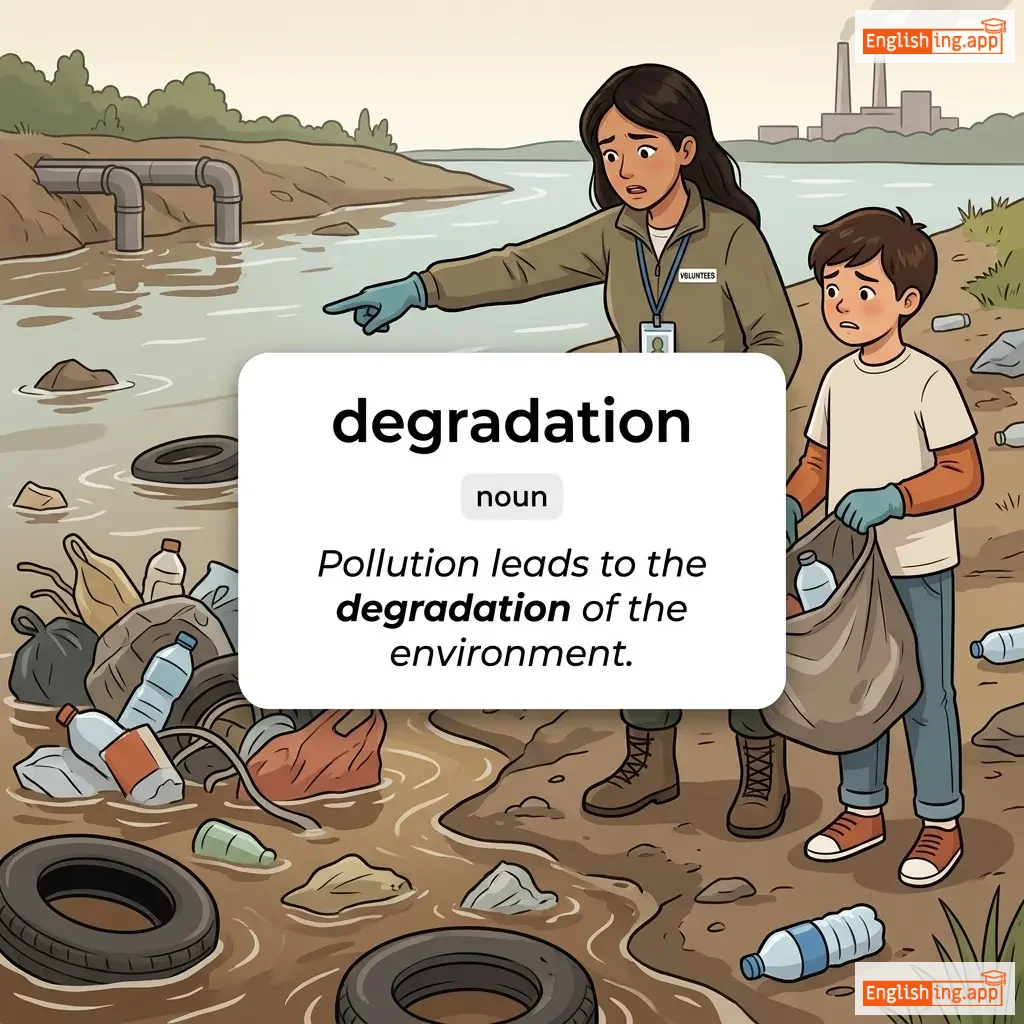
The process of being degraded, declined, or reduced in quality, dignity, or value.
••••••
|
Pollution leads to the degradation of the environment.
污染导致环境的退化。
••••••
|
污染导致环境的退化。
Wūrǎn dǎozhì huánjìng de tuìhuà.
••••••
|
- •••••• | - •••••• | - •••••• |
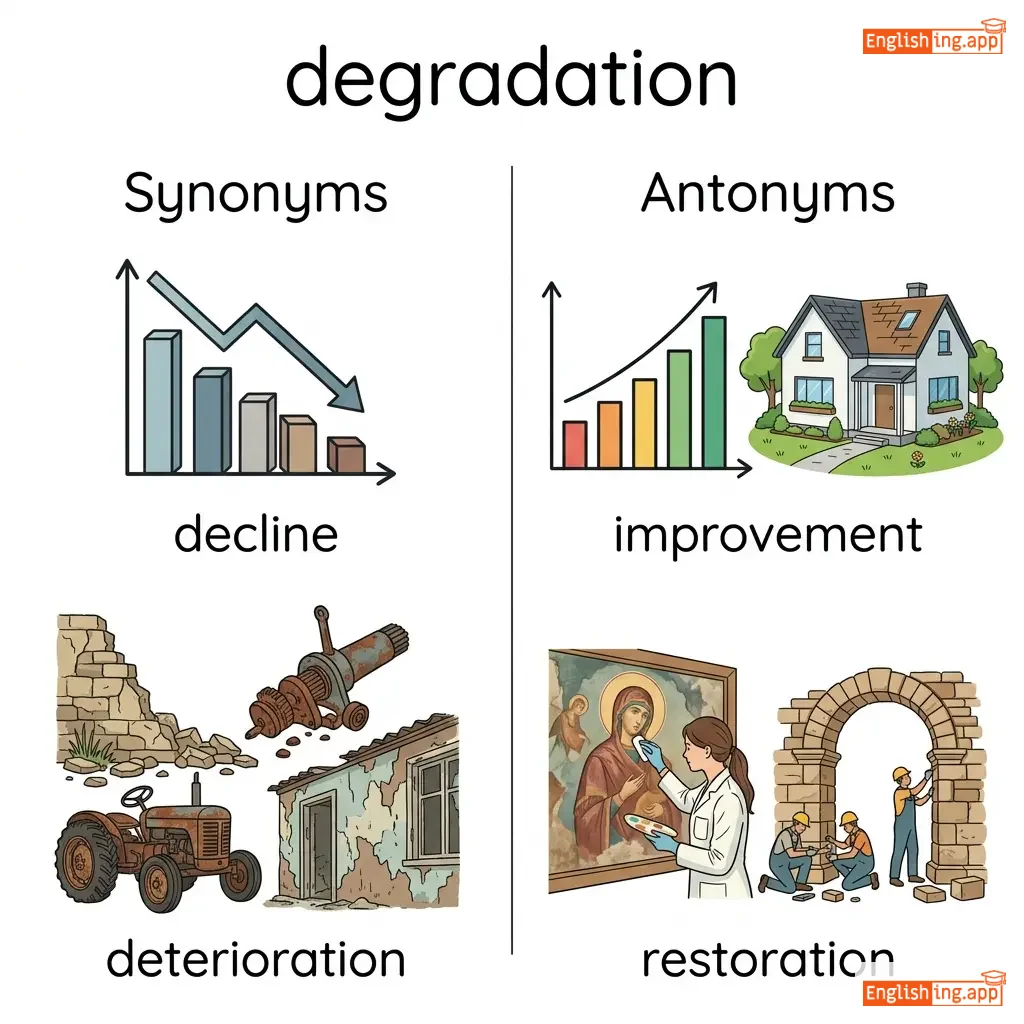
decline, deterioration, debasement, downfall
••••••
|
improvement, restoration
••••••
|
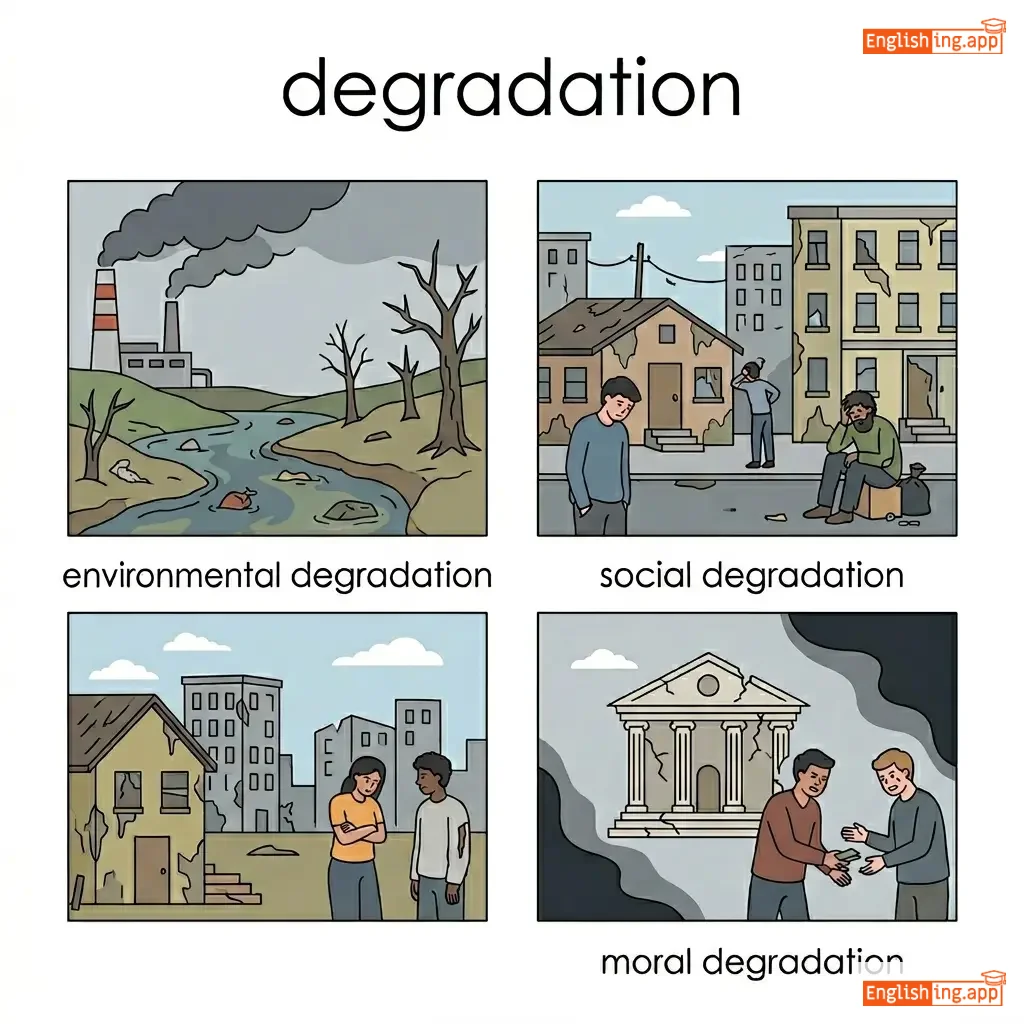
environmental degradation, social degradation, moral degradation
••••••
|
退化意味着degrade + 行动 → 质量的退化过程。
••••••
|
|
#2195
⬇️
|
/dɪˈdʒɛnəreɪt/
verb/adjective
(díjiēnàlè)
••••••
|
- •••••• |
堕落
duòluò
••••••
|
degenerated
díjiēnàlètèd
••••••
|
degenerated
díjiēnàlètèd
••••••
|
degenerates
díjiēnàlèts
••••••
|
degenerating
díjiēnàlèting
••••••
|
To decline or deteriorate in quality, character, or condition; or someone with low moral standards.
••••••
|
The once thriving empire began to degenerate into chaos.
曾经繁荣的帝国开始衰退成混乱。
••••••
|
曾经繁荣的帝国开始衰退成混乱。
Céngjīng fánróng de dìguó kāishǐ shuāituì chéng hùnluàn.
••••••
|
- •••••• | - •••••• | - •••••• |
deteriorate, decay, worsen, decline, corrupt
••••••
|
improve, progress, advance
••••••
|
degenerate into, morally degenerate, degenerate form
••••••
|
Degenerate意味着de-generate,意味着降级或衰退
••••••
|
|
#2196
⚠️
|
/dɪˈdʒɛnərəsi/
noun
(dɪˈdʒɛnərəsi)
••••••
|
- •••••• |
堕落
duòluò
••••••
|
- •••••• | - •••••• | - •••••• | - •••••• |
The state of decline or deterioration, often in moral, cultural, or physical qualities.
••••••
|
The novel portrays the moral degeneracy of a corrupt society. |
这部小说描绘了一个腐化社会的道德堕落。
Zhè bù xiǎoshuō miáohuìle yīgè fǔhuà shèhuì de dàodé duòluò.
••••••
|
- •••••• | - •••••• | - •••••• |
decay, corruption, decline, deterioration, depravity
••••••
|
virtue, integrity, improvement
••••••
|
moral degeneracy, cultural degeneracy, political degeneracy
••••••
|
堕落,掉下去的意思,像一切都在崩溃。
••••••
|
|
#2197
✊
|
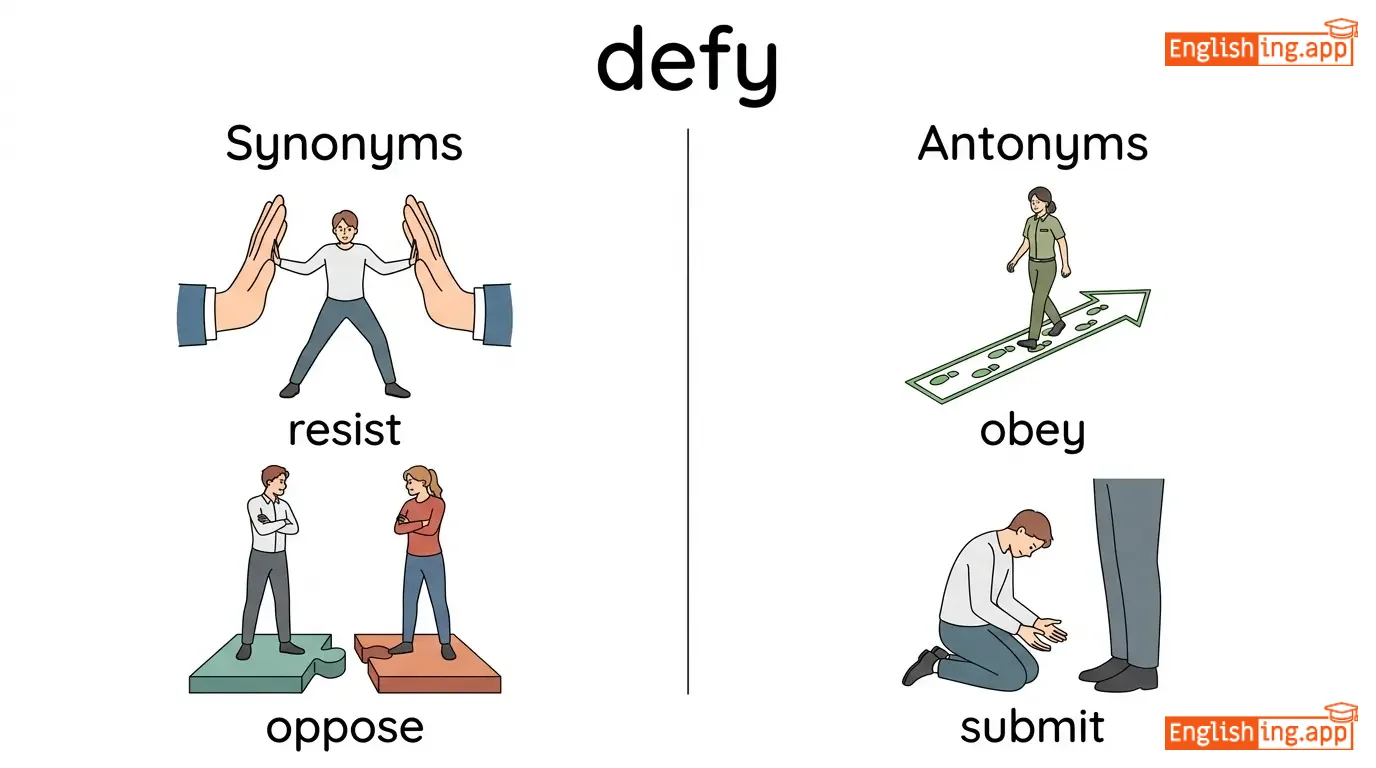
/dɪˈfaɪ/
verb
••••••
|
|
- •••••• |
defied
••••••
|
defied
••••••
|
defies
••••••
|
defying
••••••
|
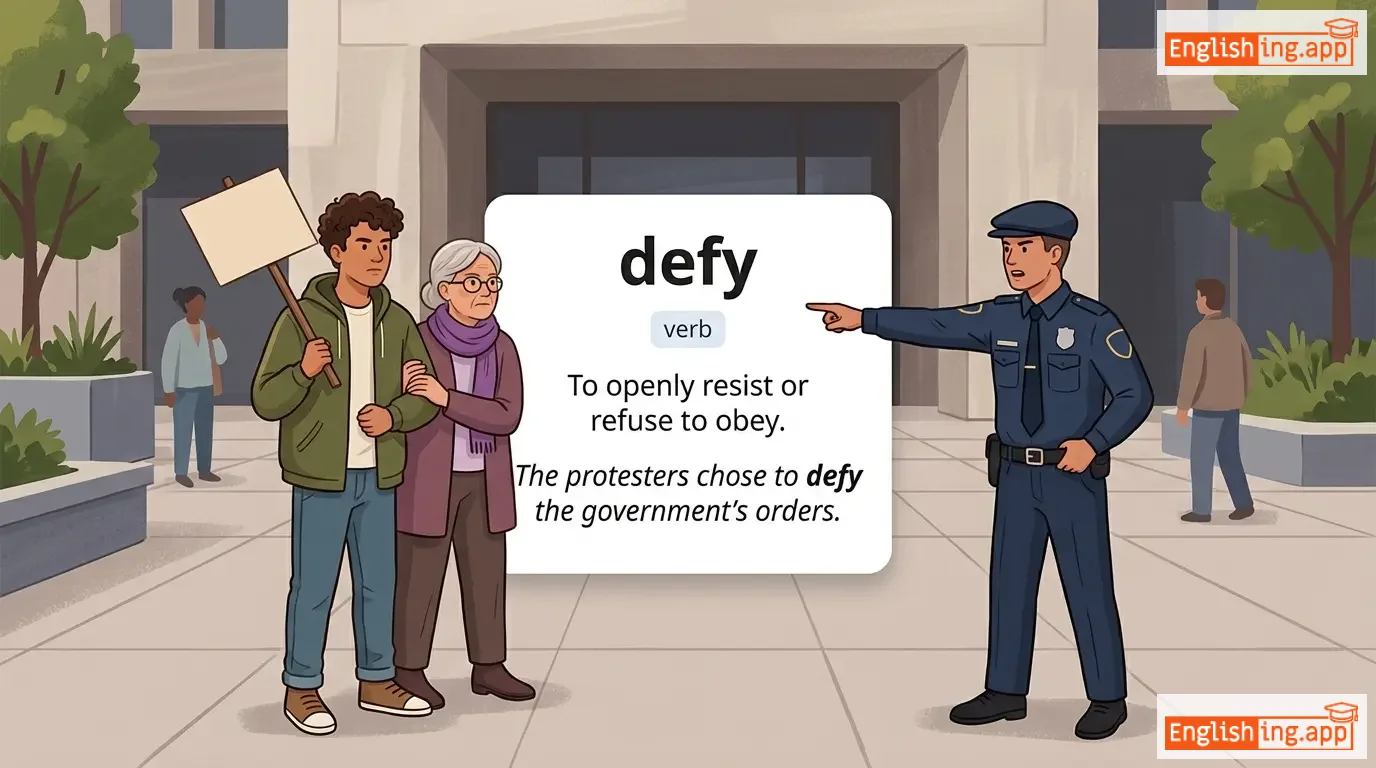
To openly resist or refuse to obey.
••••••
|
The protesters chose to defy the government's orders. |
- •••••• |
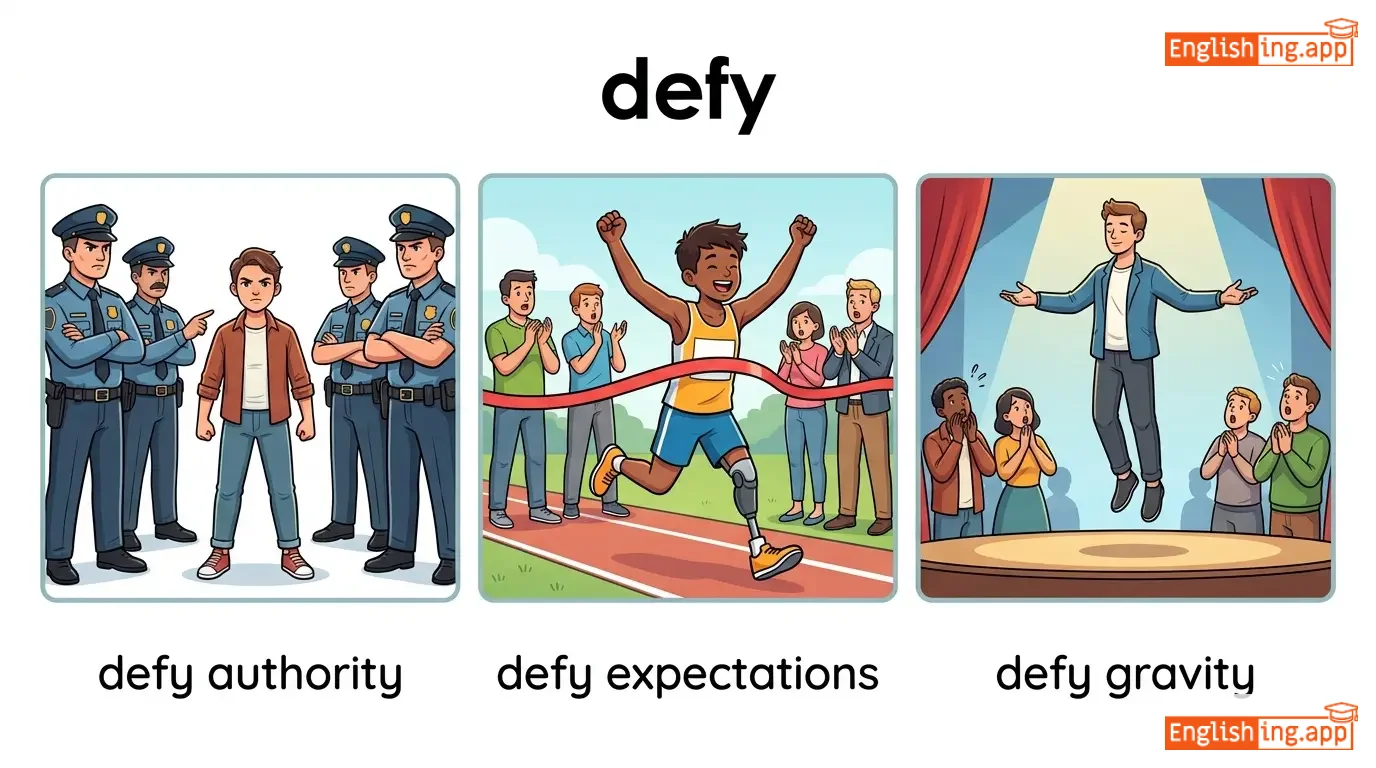
defy the odds |
To succeed despite being very unlikely or facing great difficulties.
••••••
|
- •••••• |
resist, oppose, confront, challenge
••••••
|
obey, submit, yield
••••••
|
defy authority, defy expectations, defy gravity
••••••
|
No •••••• |
|
#2198
🧯
|
/diːˈfjuːz/
verb
••••••
|
- •••••• | - •••••• |
defused
••••••
|
defused
••••••
|
defuses
••••••
|
defusing
••••••
|
To make a situation less dangerous, tense, or explosive; to remove a fuse from a bomb.
••••••
|
The negotiator helped defuse the tense situation. |
- •••••• |
defuse a situation |
To calm down a tense or dangerous situation.
••••••
|
- •••••• |
disarm, ease, calm, neutralize
••••••
|
ignite, provoke, inflame
••••••
|
defuse a bomb, defuse a crisis, defuse tension
••••••
|
No •••••• |
|
#2199
💀
|
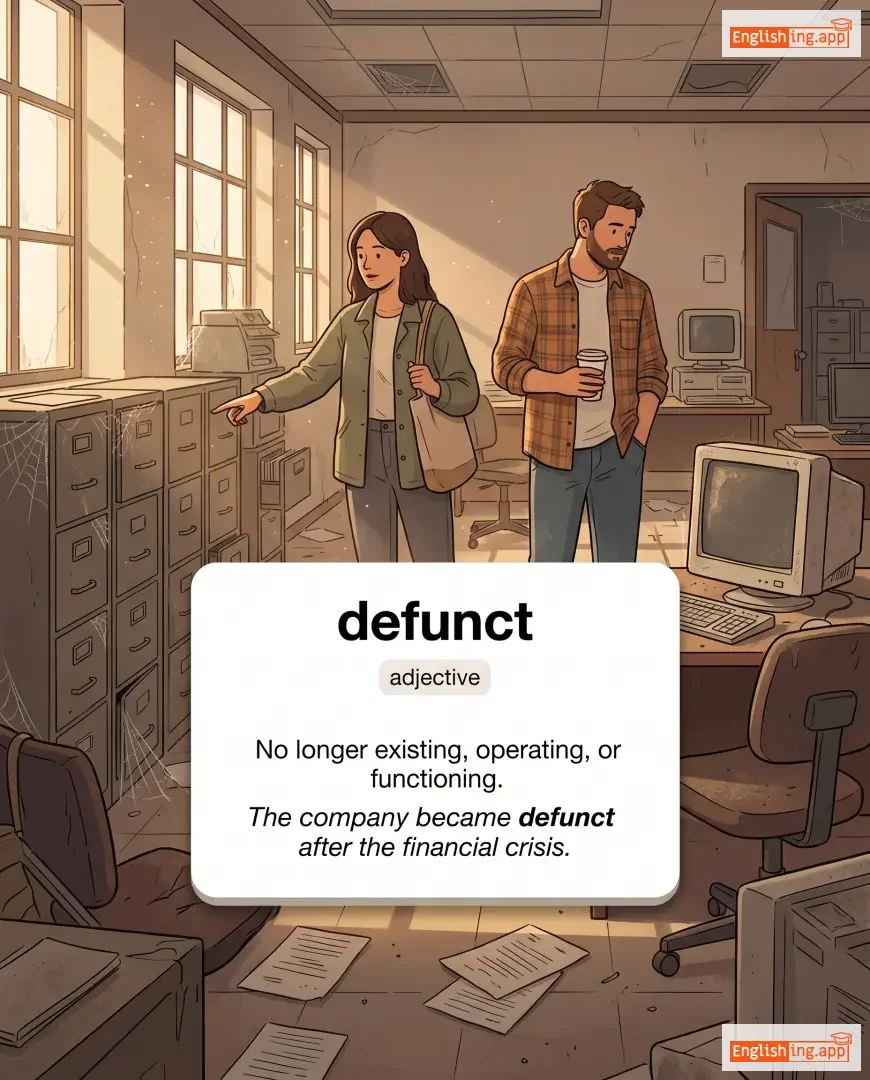
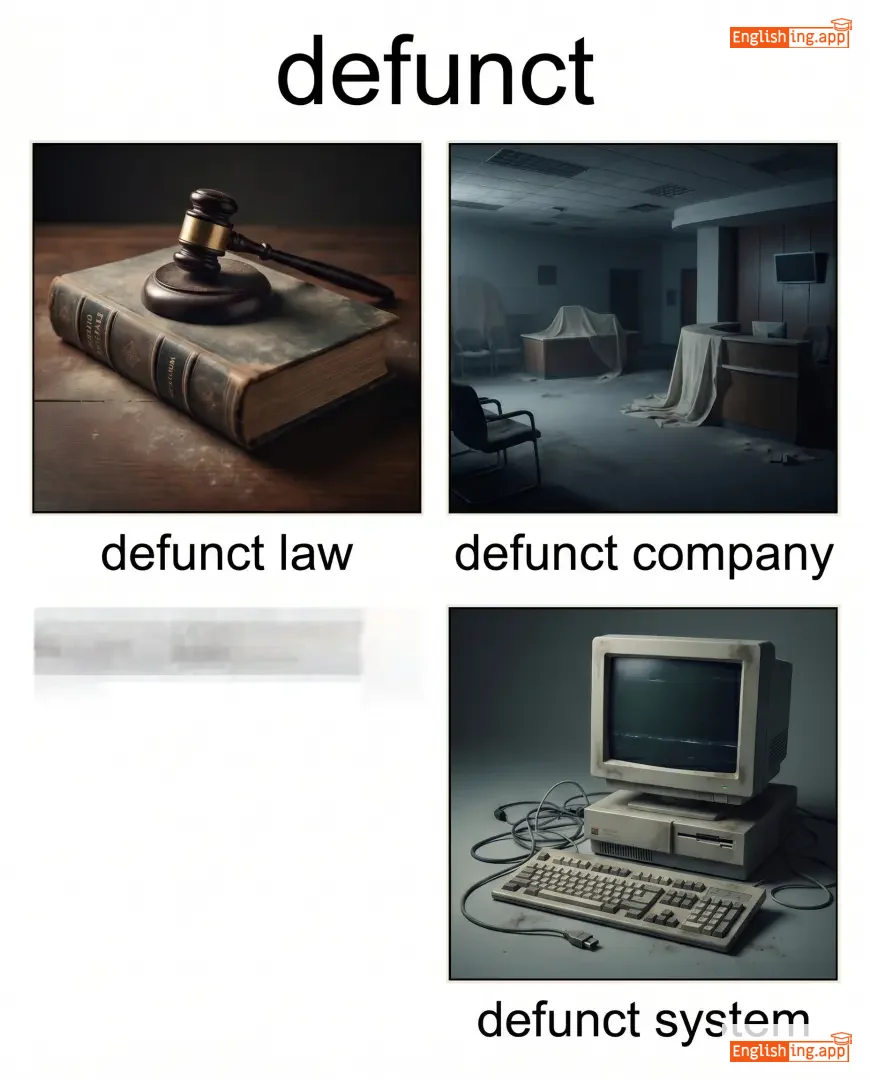
/dɪˈfʌŋkt/
adjective
(迪芳克特)
••••••
|
|
停用,废弃
tíngyòng, fèiqì
••••••
|
- •••••• | - •••••• | - •••••• | - •••••• |
No longer existing, operating, or functioning.
••••••
|
The company became defunct after the financial crisis.
这家公司在金融危机后不再运作。
••••••
|
这家公司在金融危机后不再运作。
Zhè jiā gōngsī zài jīnróng wéijī hòu bù zài yùnzuò.
••••••
|
- •••••• | - •••••• | - •••••• |
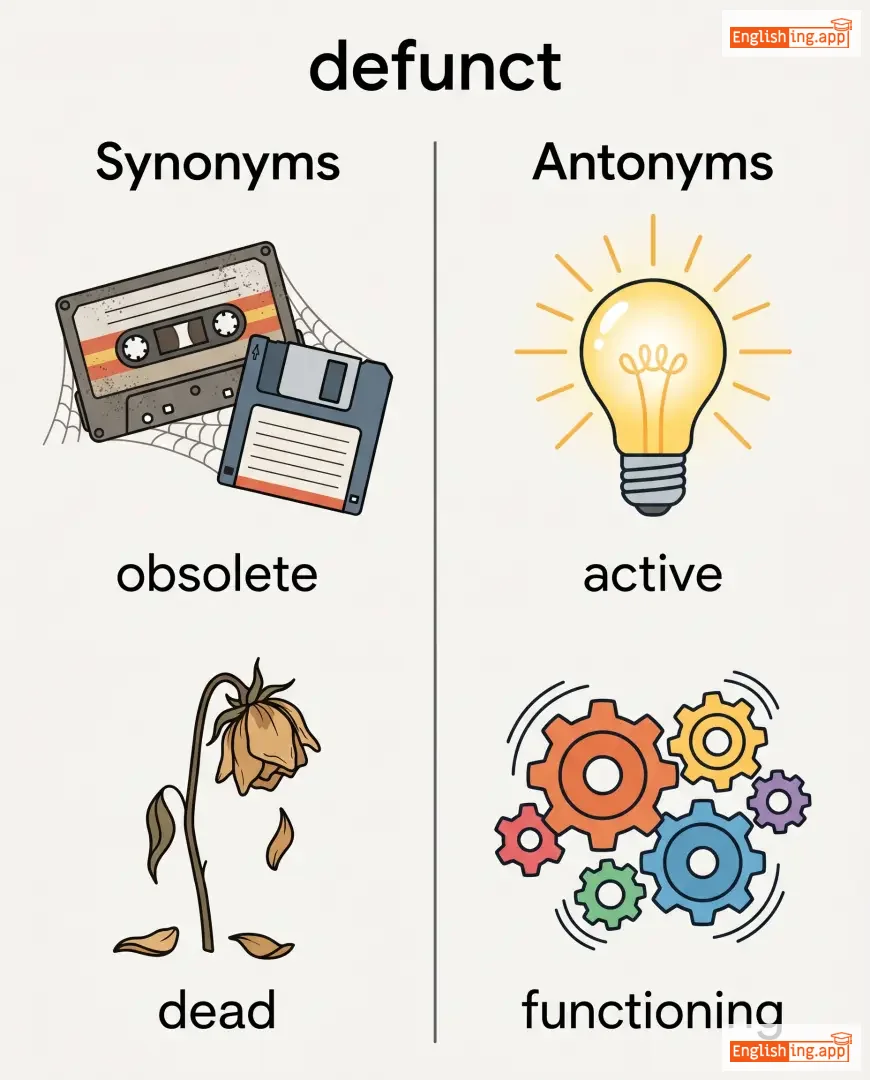
obsolete, dead, extinct, nonfunctional
••••••
|
active, functioning, operational
••••••
|
defunct law, defunct company, defunct system
••••••
|
Defunct 意味着某些东西不再工作,比如危机后的公司。
••••••
|
|
#2200
🤹
|
/ˈdɛftnəs/
noun
(德夫特内斯)
••••••
|
- •••••• |
灵巧
lingqiao
••••••
|
- •••••• | - •••••• | - •••••• | - •••••• |
Skillfulness and quickness in action or thought.
••••••
|
Her deftness with words impressed the audience.
她在言辞上的巧妙令观众印象深刻。
••••••
|
她在言辞上的灵巧令观众印象深刻。
Ta zai yanci shang de lingqiao ling guanzhong yinxiang shenke.
••••••
|
- •••••• | - •••••• | - •••••• |
skill, finesse, expertise, adroitness
••••••
|
clumsiness, awkwardness
••••••
|
deftness in handling, deftness of touch, show deftness
••••••
|
Deftness = 灵巧,迅速的技巧 (lingqiao).
••••••
|
|
#2201
🎨
|
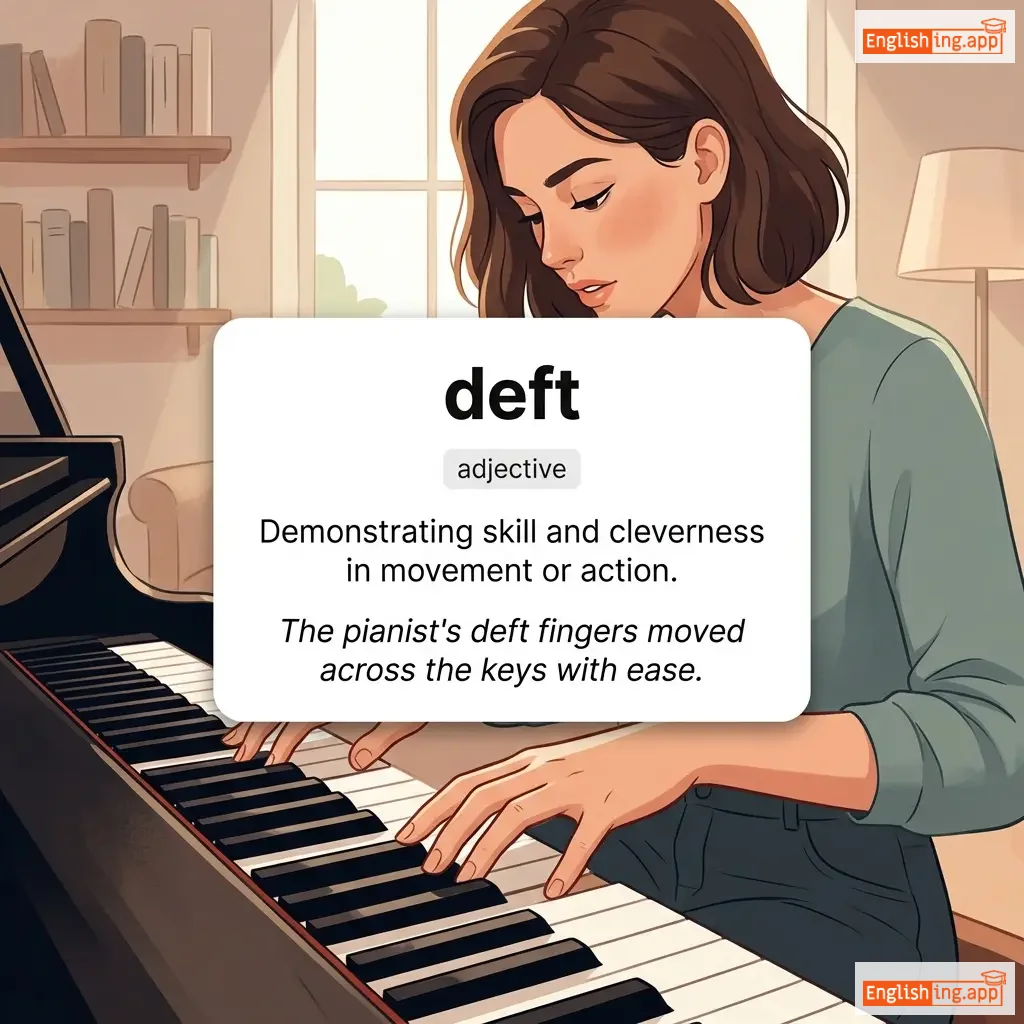
/dɛft/
adjective
(dɛft)
••••••
|
|
灵巧
lingqiao
••••••
|
- •••••• | - •••••• | - •••••• | - •••••• |
Demonstrating skill and cleverness in movement or action.
••••••
|
The pianist's deft fingers moved across the keys with ease. |
钢琴家的灵巧手指轻松地在键盘上移动。
Gāngqín jiā de língqiǎo shǒuzhǐ qīngsōng de zài jiànpán shàng yídòng.
••••••
|
deft touch |
A skillful and delicate ability to handle something.
••••••
|
灵巧的触感
língqiǎo de chùgǎn
••••••
|
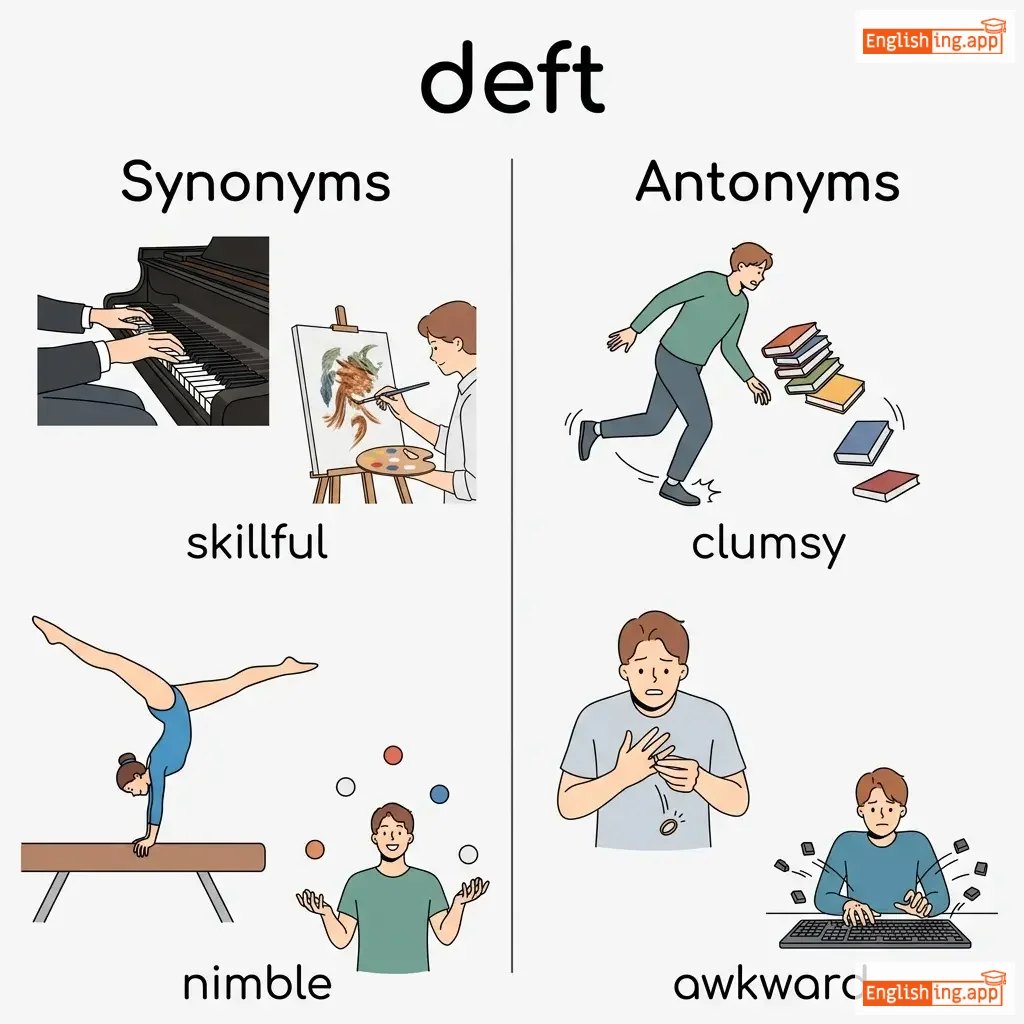
skillful, nimble, adept, clever, agile
••••••
|
clumsy, awkward, inept
••••••
|
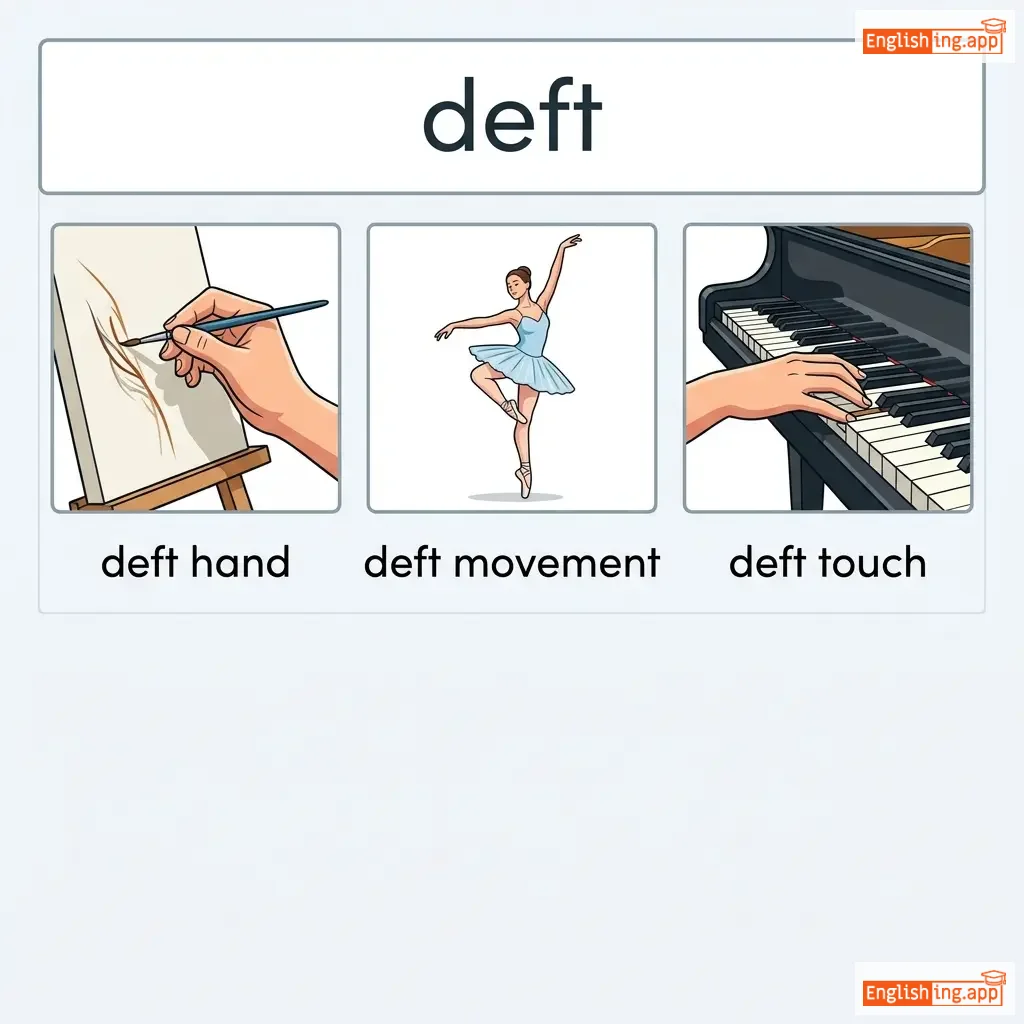
deft hand, deft movement, deft touch, deft handling
••••••
|
Deft 意味着灵巧 — 灵巧的艺术家做一切都游刃有余。
••••••
|
|
#2202
✝️
|
/diːˈfrɑːk/
verb
(迪弗罗克)
••••••
|
- •••••• |
解除神职
jiěchú shénzhí
••••••
|
defrocked
迪弗罗克德
••••••
|
defrocked
迪弗罗克德
••••••
|
defrocks
迪弗罗克斯
••••••
|
defrocking
迪弗罗基
••••••
|
to officially remove a priest or minister from their position and authority
••••••
|
The church decided to defrock the priest after the scandal.
教会决定在丑闻发生后解除神父的职务。
••••••
|
教会决定在丑闻发生后解除神父的职务。
Jiàohuì juédìng zài chǒuwén fāshēng hòu jiěchú shénfù de zhíwù.
••••••
|
- •••••• | - •••••• | - •••••• |
dismiss, expel, oust, strip, discharge
••••••
|
ordain, appoint, consecrate
••••••
|
defrock a priest, defrock a bishop, defrock the clergy
••••••
|
De + Frock → frock 意味着衣服,defrock 意味着脱掉衣服 → 解除职务
••••••
|
|
#2203
💰
|
/dɪˈfreɪ/
verb
(迪弗雷)
••••••
|
- •••••• |
支付费用
zhīfù fèiyòng
••••••
|
defrayed
迪弗雷德
••••••
|
defrayed
迪弗雷德
••••••
|
defrays
迪弗雷兹
••••••
|
defraying
迪弗雷英
••••••
|
to provide money to pay the costs of something
••••••
|
The grant will help defray the cost of education.
ðə ɡrænt wɪl hɛlp dɪˈfreɪ ðə kɔst ʌv ɛdʒʊˈkeɪʃən
••••••
|
这笔补助将帮助支付教育费用。
Zhè bǐ bǔzhù jiāng bāngzhù zhīfù jiàoyù fèiyòng.
••••••
|
defray the expenses
dɪˈfreɪ ðə ɪksˈpɛnsɪz
••••••
|
to cover or pay part of the expenses
••••••
|
支付费用
zhīfù fèiyòng
••••••
|
pay, cover, finance, fund, subsidize
••••••
|
owe, charge, default
••••••
|
defray the costs, defray expenses, defray the charges
••••••
|
Defray 意思是 '支付费用' → 覆盖费用。
••••••
|
|
#2204
💸
|
/dɪˈfrɔːd/
verb
(dɪˈfrɔːd)
••••••
|
- •••••• |
欺诈
qizha
••••••
|
defrauded
欺诈
••••••
|
defrauded
欺诈
••••••
|
defrauds
欺诈
••••••
|
defrauding
欺诈
••••••
|
to illegally take money or valuables from someone by deception
••••••
|
The company was accused of trying to defraud investors.
公司被指控试图欺骗投资者。
••••••
|
公司被指控试图欺骗投资者。
Gongsi bei zhikong shitu qipian touzizhe.
••••••
|
defraud the government
欺骗政府
••••••
|
to cheat the government, usually in taxes or funds
••••••
|
欺骗政府
Qipian zhengfu
••••••
|
cheat, swindle, scam, deceive, trick
••••••
|
honor, repay, return
••••••
|
defraud investors, defraud customers, attempt to defraud, defraud the government
••••••
|
De + Fraud → fraud 意味着欺骗,defraud 意味着欺骗以获取资金
••••••
|
|
#2205
♿
|
/dɪˈfɔːrməti/
noun
••••••
|
- •••••• | - •••••• | - •••••• | - •••••• | - •••••• | - •••••• |
an abnormality or distortion in the shape or structure of a body part
••••••
|
The child was born with a minor hand deformity. |
- •••••• | - •••••• | - •••••• | - •••••• |
abnormality, malformation, defect, irregularity
••••••
|
normality, perfection, symmetry
••••••
|
physical deformity, birth deformity, bone deformity, facial deformity
••••••
|
No •••••• |
|
#2206
🛡️
|
/dɪˈfɛnsɪv/
adjective
(防守性)
••••••
|
- •••••• |
防御性的
fángyùxìng de
••••••
|
- •••••• | - •••••• | - •••••• | - •••••• |
Intended to protect or defend; behaving in a way to guard against criticism or attack.
••••••
|
He became defensive when asked about his mistake. |
当被问到他的错误时,他变得防御性强。
Dāng bèi wèn dào tā de cuòwù shí, tā biàn dé fángyùxìng qiáng.
••••••
|
defensive stance |
A protective or guarded position in argument or conflict.
••••••
|
防御姿态
fángyù zītài
••••••
|
protective, guarded, cautious, shielding
••••••
|
offensive, aggressive, open
••••••
|
defensive behavior, defensive mechanism, defensive reaction, defensive stance
••••••
|
防御性就像盾牌 🛡️ - 防止批评。
••••••
|
|
#2207
🌲❌
|
/diːˈfɒrɪst/
verb
••••••
|
- •••••• | - •••••• |
deforested
••••••
|
deforested
••••••
|
deforests
••••••
|
deforesting
••••••
|
to clear an area of trees, usually on a large scale
••••••
|
The region has been heavily deforested for agriculture. |
- •••••• |
deforest land |
to cut down trees from a large area of land
••••••
|
- •••••• |
clear, cut down, log, denude, strip
••••••
|
reforest, afforest
••••••
|
deforest land, deforest area, deforest region, deforest jungle
••••••
|
No •••••• |
|
#2208
🍂
|
/dɪˈfoʊlieɪt/
verb
(除叶)
••••••
|
- •••••• |
除叶
chú yè
••••••
|
defoliated
除叶了
••••••
|
defoliated
除叶了
••••••
|
defoliates
除叶
••••••
|
defoliating
除叶中
••••••
|
to strip leaves from a tree, plant, or area, often using chemicals
••••••
|
The farmers defoliated the fields before harvest.
农民在收获前除叶了田地。
••••••
|
农民在收获前除叶了田地。
Nóngmín zài shōuhuò qián chú yè le tiándì.
••••••
|
- •••••• | - •••••• | - •••••• |
strip, clear, denude, remove leaves
••••••
|
fertilize, nourish
••••••
|
defoliate trees, defoliate crops, defoliate land, defoliate area
••••••
|
Defoliate意味着除叶,像这样' De-foliate = chú yè' 🍂
••••••
|
|
#2209
🌿
|
/dɪˈfoʊliənt/
noun
••••••
|
- •••••• | - •••••• | - •••••• | - •••••• | - •••••• | - •••••• |
a chemical that causes leaves to drop from plants, often used in warfare or agriculture
••••••
|
The army sprayed defoliant to clear the forest cover. |
- •••••• | - •••••• | - •••••• | - •••••• |
herbicide, chemical spray, leaf remover, plant killer
••••••
|
fertilizer, growth promoter
••••••
|
spray defoliant, use defoliant, defoliant chemical, toxic defoliant
••••••
|
No •••••• |
|
#2210
🛡️
|
/dɪˈflɛkt/
verb
(迪弗莱克特)
••••••
|
- •••••• |
偏离 / 避免
pianli / bìmǎn
••••••
|
deflected
迪弗莱克特了
••••••
|
deflected
迪弗莱克特了
••••••
|
deflects
迪弗莱克特
••••••
|
deflecting
迪弗莱克特ing
••••••
|
to cause something to change direction; to avoid answering directly
••••••
|
The shield deflected the incoming arrow.
盾牌偏离了来袭的箭。
••••••
|
盾牌偏离了来袭的箭。
dùn pái piān lí le lái xí de jiàn.
••••••
|
deflect criticism
转移批评
••••••
|
to avoid or redirect criticism away from oneself
••••••
|
转移批评
zhuǎn yí pī píng
••••••
|
divert, redirect, avert, sidestep, parry
••••••
|
attract, face
••••••
|
deflect attention, deflect criticism, deflect a question, deflect blame
••••••
|
Deflect意味着像盾牌一样转移或避开箭头🛡️
••••••
|
|
#2211
✅
|
/dɪˈfɪnɪtɪv/
adjective
(定义)
••••••
|
- •••••• |
决定性
juedingxing
••••••
|
- •••••• | - •••••• | - •••••• | - •••••• |
serving as a final or most authoritative form; conclusive and decisive
••••••
|
The committee reached a definitive agreement on the policy. |
委员会就政策达成了决定性协议。
Weiyuanhui jiu zhengce dachengle juedingxing xieyi.
••••••
|
definitive answer |
a final, conclusive response with no further doubt
••••••
|
决定性回答
juedingxing huida
••••••
|
conclusive, final, ultimate, decisive, authoritative
••••••
|
uncertain, provisional, temporary
••••••
|
definitive answer, definitive guide, definitive statement, definitive proof
••••••
|
Definitive意味着决定性 ✅ 就像'决定性回答'。
••••••
|
|
#2212
✔️
|
/ˈdef.ən.ɪt/
adjective
(德芬尼特)
••••••
|
- •••••• |
明确
mingque
••••••
|
- •••••• | - •••••• | - •••••• | - •••••• |
clearly stated or decided; not vague or doubtful
••••••
|
We need a definite plan before starting the project.
我们在开始项目之前需要一个明确的计划。
••••••
|
我们在开始项目之前需要一个明确的计划。
Wo men zai kai shi xiangmu zhi qian xu yao yi ge mingque de jihua.
••••••
|
definite answer
明确答复
••••••
|
a clear and certain reply
••••••
|
明确答复
mingque dafu
••••••
|
certain, clear, explicit, precise, fixed
••••••
|
indefinite, vague, uncertain
••••••
|
definite plan, definite answer, definite shape
••••••
|
明确,像'定义'一样,意味着清楚地决定或表达。
••••••
|
|
#2213
🛑
|
/dɪˈfaɪl/
verb
(迪法伊尔)
••••••
|
- •••••• |
亵渎
xièdú
••••••
|
defiled
迪法伊尔德
••••••
|
defiled
迪法伊尔德
••••••
|
defiles
迪法伊尔斯
••••••
|
defiling
迪法伊林
••••••
|
to pollute, corrupt, or make dirty
••••••
|
The river was defiled by industrial waste.
河流被工业废物污染了。
••••••
|
河流被工业废物亵渎了。
Héliú bèi gōngyè fèiwù xièdú le.
••••••
|
defile the temple
亵渎寺庙
••••••
|
to dishonor or make sacred place impure
••••••
|
亵渎寺庙
xièdú sìmiào
••••••
|
pollute, spoil, taint, corrupt, desecrate
••••••
|
purify, cleanse, sanctify
••••••
|
defile nature, defile the land, defile the temple
••••••
|
Defile意为亵渎-想象文件(file)变脏了,就像亵渎让某物变脏或不洁。
••••••
|
|
#2214
🥀
|
/dɪˈfɪʃ.ənt/
adjective
(dɪˈfɪʃənt)
••••••
|
- •••••• |
缺乏的
quēfá de
••••••
|
- •••••• | - •••••• | - •••••• | - •••••• |
not having enough of something that is essential
••••••
|
The soil is deficient in nutrients. |
土壤缺乏养分。
Tǔrǎng quēfá yǎngfèn.
••••••
|
- •••••• | - •••••• | - •••••• |
lacking, insufficient, incomplete, inadequate
••••••
|
sufficient, adequate, abundant
••••••
|
deficient in vitamins, deficient knowledge, nutritionally deficient
••••••
|
缺乏的就像是缺少,想象科学里的缺失。
••••••
|
|
#2215
⚠️
|
/dɪˈfɪʃ.ən.si/
noun
(缺乏)
••••••
|
- •••••• |
缺乏
quefa
••••••
|
- •••••• | - •••••• | - •••••• | - •••••• |
a lack or shortage of something that is necessary
••••••
|
The doctor diagnosed him with a vitamin D deficiency. |
医生诊断他患有维生素D缺乏症。
Yisheng zhenduan ta huanyu weishengsu D quefa zheng.
••••••
|
iron deficiency |
a lack of sufficient iron in the body
••••••
|
缺铁
que tie
••••••
|
shortage, lack, insufficiency, scarcity, inadequacy
••••••
|
abundance, sufficiency, excess
••••••
|
vitamin deficiency, iron deficiency, nutritional deficiency, deficiency disease
••••••
|
缺乏意味着不足 – 记住,'缺'意味着不足,鱼里什么也没有,所以缺乏。
••••••
|
|
#2216
✊
|
/dɪˈfaɪ.ənt/
adjective
(dɪˈfaɪənt)
••••••
|
- •••••• |
挑战的
tiǎozhàn de
••••••
|
- •••••• | - •••••• | - •••••• | - •••••• |
showing open resistance or bold disobedience
••••••
|
The child was defiant when told to clean his room. |
当孩子被告知打扫房间时,他显得很挑战。
Dāng háizi bèi gàozhī dǎsǎo fángjiān shí, tā xiǎndé hěn tiǎozhàn.
••••••
|
stand defiant |
to resist authority boldly and openly
••••••
|
保持挑战
bǎochí tiǎozhàn
••••••
|
rebellious, resistant, disobedient, unyielding, bold
••••••
|
obedient, compliant, submissive
••••••
|
defiant attitude, defiant gesture, stand defiant, remain defiant
••••••
|
挑战的意思是挑战 – 想象一个学生说‘我挑战规则’
••••••
|
|
#2217
✊
|
/dɪˈfaɪəns/
noun
(dɪˈfaɪəns)
••••••
|
- •••••• |
反抗
fǎnkàng
••••••
|
- •••••• | - •••••• | - •••••• | - •••••• |
Open resistance or bold disobedience.
••••••
|
The protest was an act of defiance against injustice. |
抗议是反对不公正的反抗行为。
Kàngyì shì fǎnduì bù gōngzhèng de fǎnkàng xíngwéi.
••••••
|
stand in defiance |
To oppose or resist something boldly.
••••••
|
反抗站立
fǎnkàng zhànlì
••••••
|
resistance, opposition, disobedience, rebellion
••••••
|
submission, obedience, compliance
••••••
|
act of defiance, show defiance, open defiance, defiance against
••••••
|
Defiance 意味着大胆反抗 – 无畏对抗不公。
••••••
|
|
#2218
🙇
|
/ˌdɛfəˈrɛnʃəl/
adjective
(差异的)
••••••
|
- •••••• |
尊敬的
zun jing de
••••••
|
- •••••• | - •••••• | - •••••• | - •••••• |
Showing or expressing respect and high regard.
••••••
|
He was always deferential toward his teachers. |
他总是对他的老师表现出尊敬。
ta zong shi dui ta de lao shi biao xian chu zun jing.
••••••
|
- •••••• | - •••••• | - •••••• |
respectful, polite, submissive, courteous
••••••
|
disrespectful, rude, defiant
••••••
|
deferential attitude, deferential tone, deferential behavior
••••••
|
Deferential = 敬意 (jing yi) + 的 (de) → 尊敬 (zun jing).
••••••
|
|
#2219
🙏
|
/ˈdɛfərəns/
noun
(迪弗伦斯)
••••••
|
|
尊敬
zūnjìng
••••••
|
- •••••• | - •••••• | - •••••• | - •••••• |
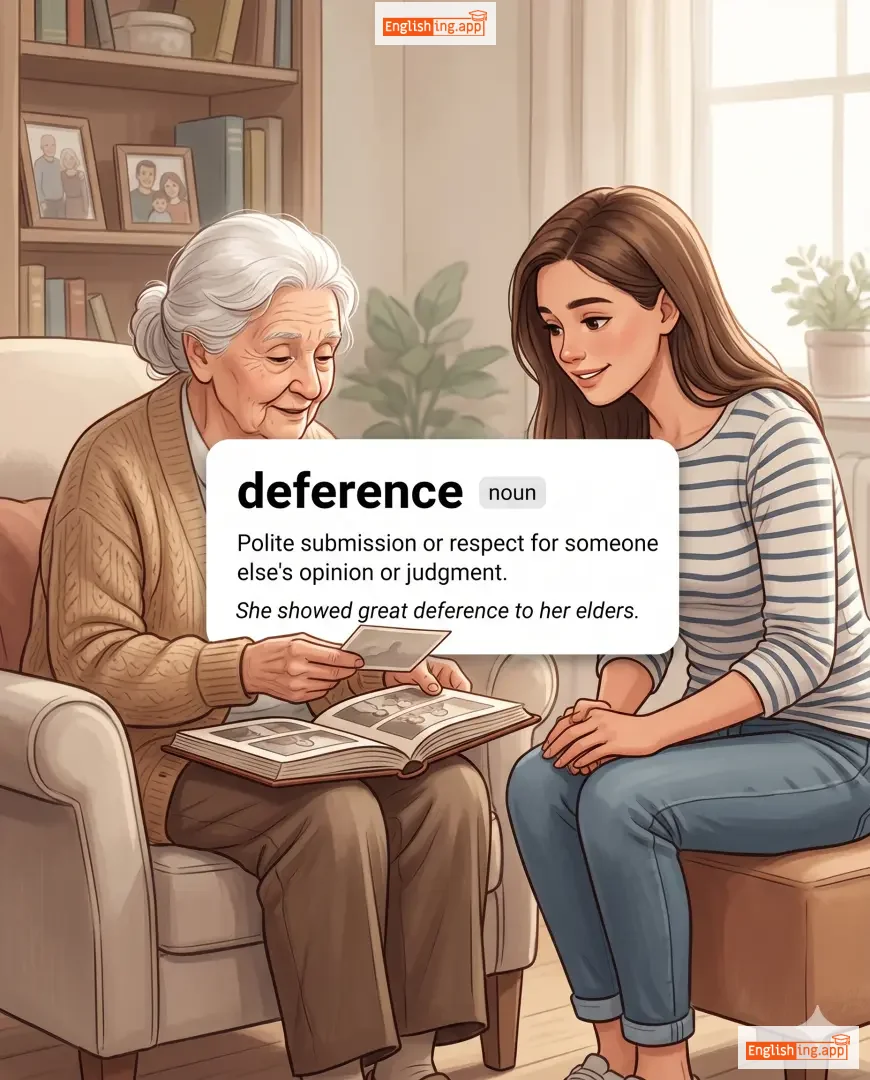
Polite submission or respect for someone else's opinion or judgment.
••••••
|
She showed great deference to her elders. |
她对长辈表现出极大的尊敬。
Tā duì zhǎngbèi biǎoxiàn chū jí dà de zūnzhòng.
••••••
|
in deference to |
Out of respect or regard for someone or something.
••••••
|
出于尊敬
chū yú zūnzhòng
••••••
|
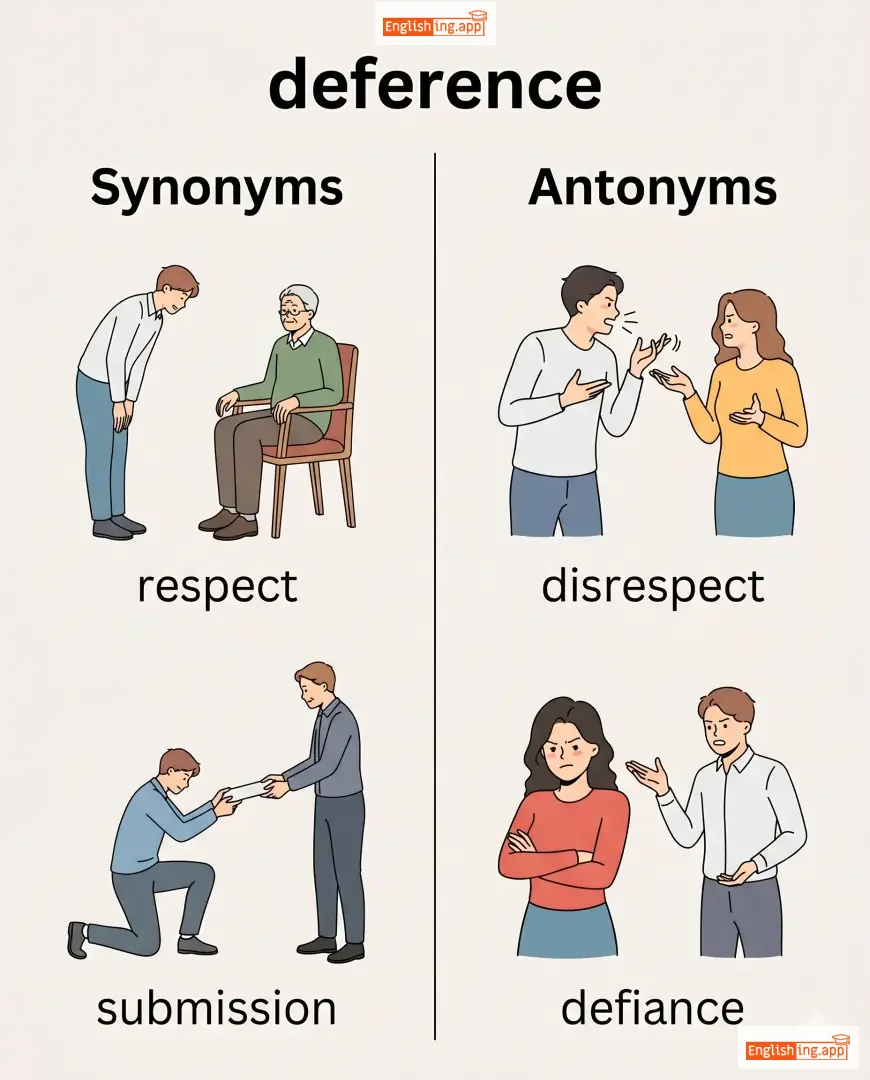
respect, submission, obedience, reverence
••••••
|
disrespect, defiance, disregard
••••••
|
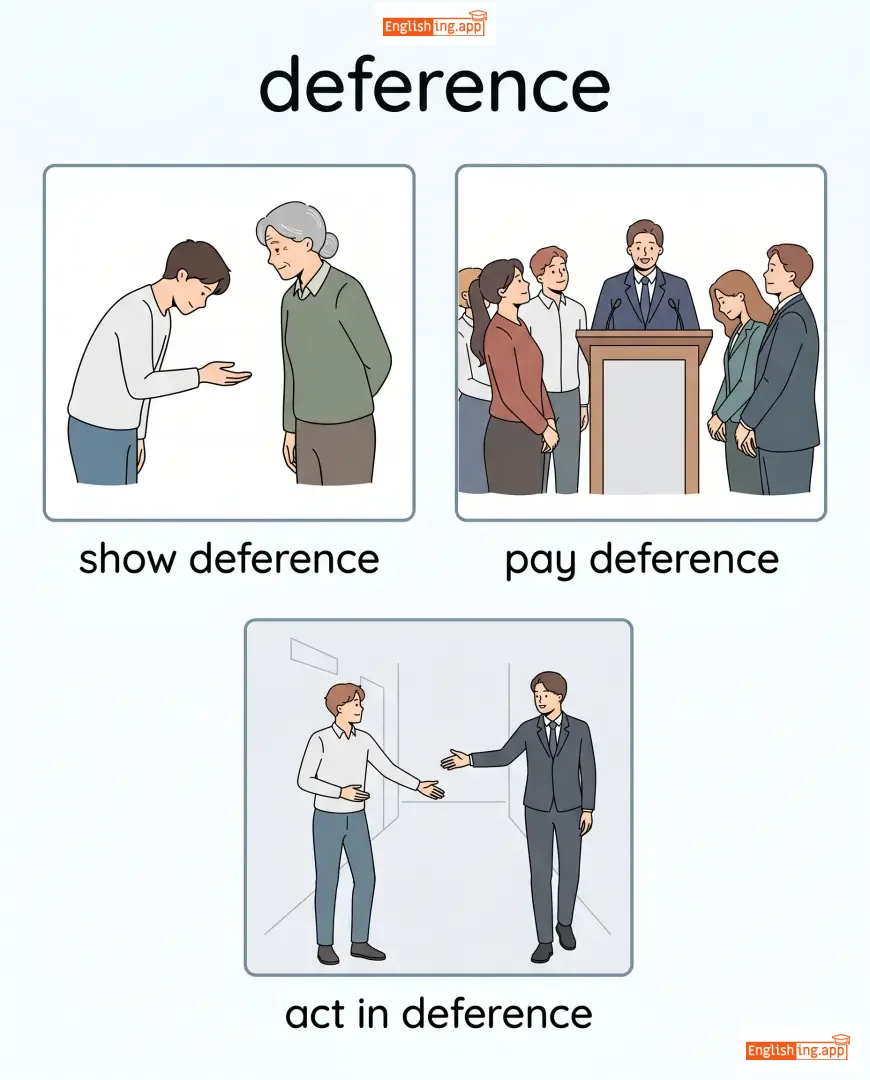
show deference, pay deference, act in deference
••••••
|
Deference意味着defer (推迟) + ence → 为了尊重他人而推迟自己的意愿。
••••••
|
|
#2220
⏳
|
/dɪˈfɜːr/
verb
(延期)
••••••
|
- •••••• |
推迟
tuīchí
••••••
|
deferred
推迟
••••••
|
deferred
推迟
••••••
|
defers
推迟
••••••
|
deferring
推迟
••••••
|
To postpone or delay; to yield to someone else's judgment or opinion.
••••••
|
The meeting was deferred until next week.
会议推迟到下周。
••••••
|
会议推迟到下周。
Huìyì tuīchí dào xià zhōu.
••••••
|
defer to
推迟到
••••••
|
To yield respectfully to the opinion or wishes of another.
••••••
|
服从
fúcóng
••••••
|
postpone, delay, yield, submit, respect
••••••
|
hasten, expedite, oppose
••••••
|
defer payment, defer action, defer to authority, defer decision
••••••
|
推迟就像是'推到以后',表现出尊重和推迟。
••••••
|
Vocabulary Quiz
Test your vocabulary by matching words with their translations or meanings.
Login to take the quiz
Comments (0)
Share your thoughts and join the discussion.
Join the discussion by logging in
Login to CommentNo comments yet
Be the first to share your thoughts!