




Swipe left or right, or use the buttons. Tap image to zoom.
例句翻译
单词
Lesson 55Lesson 55 - 遮罩切换
|
表情符号
|
单词 | Images | 翻译 | 过去时 | 过去分词 | 第三人称单数 | 动名词 | 含义 | 例句 | 例句翻译 | 示例表达 | 示例表达含义 | 示例表达翻译 | 同义词 | 反义词 | 搭配词 | 助记符 |
|---|---|---|---|---|---|---|---|---|---|---|---|---|---|---|---|---|---|
|
#1621
🧩
|
/ˈkɒm.pleks/
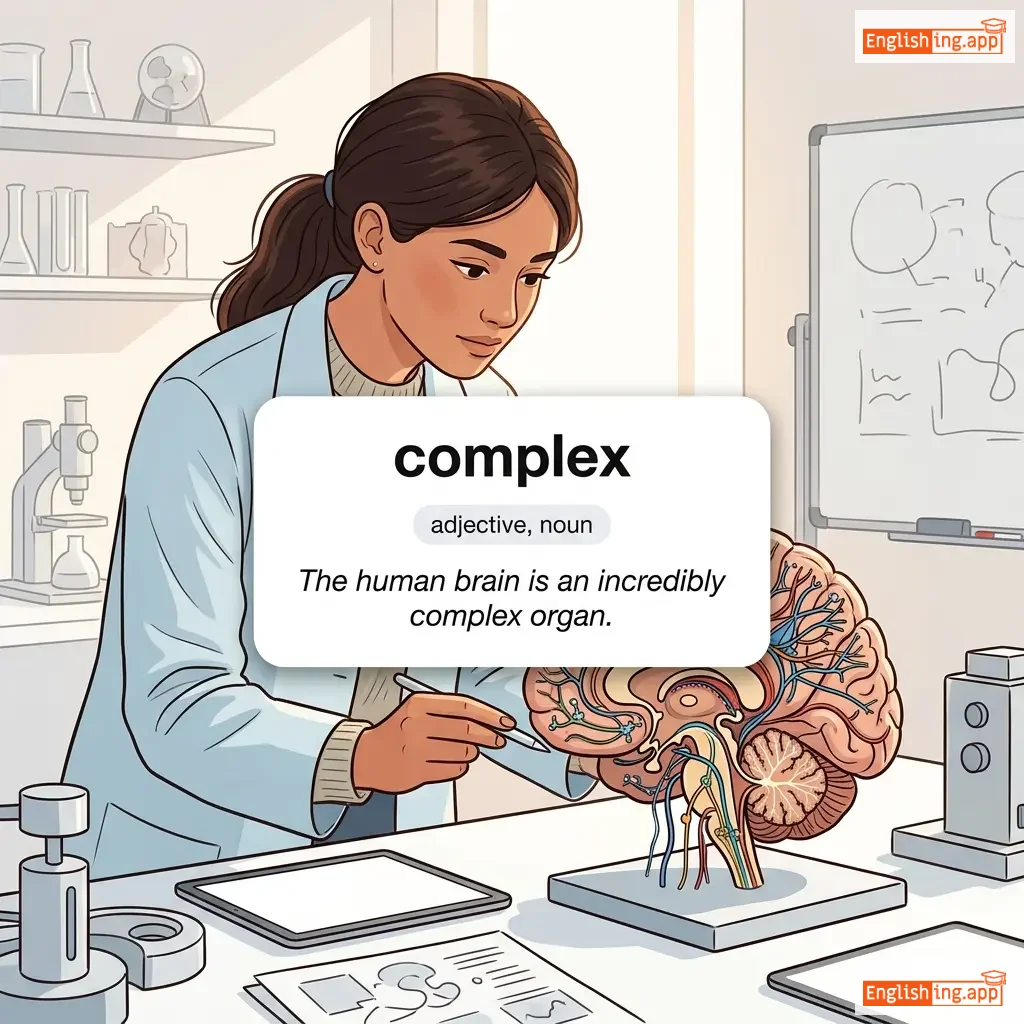
adjective, noun
(kɔmˈplɛks)
••••••
|
|
复杂的
fuza de
••••••
|
- •••••• | - •••••• | - •••••• | - •••••• |
Consisting of many different and connected parts; not easy to understand or analyze.
••••••
|
The human brain is an incredibly complex organ. |
人类的大脑是一个极其复杂的器官。
Renlei de dainao shi yi ge jiqi fuza de qiguan.
••••••
|
Oedipus complex |
A psychoanalytic theory referring to a child's feelings of desire for the opposite-sex parent.
••••••
|
俄狄浦斯情结
Édí pǔ sī qíngjié
••••••
|
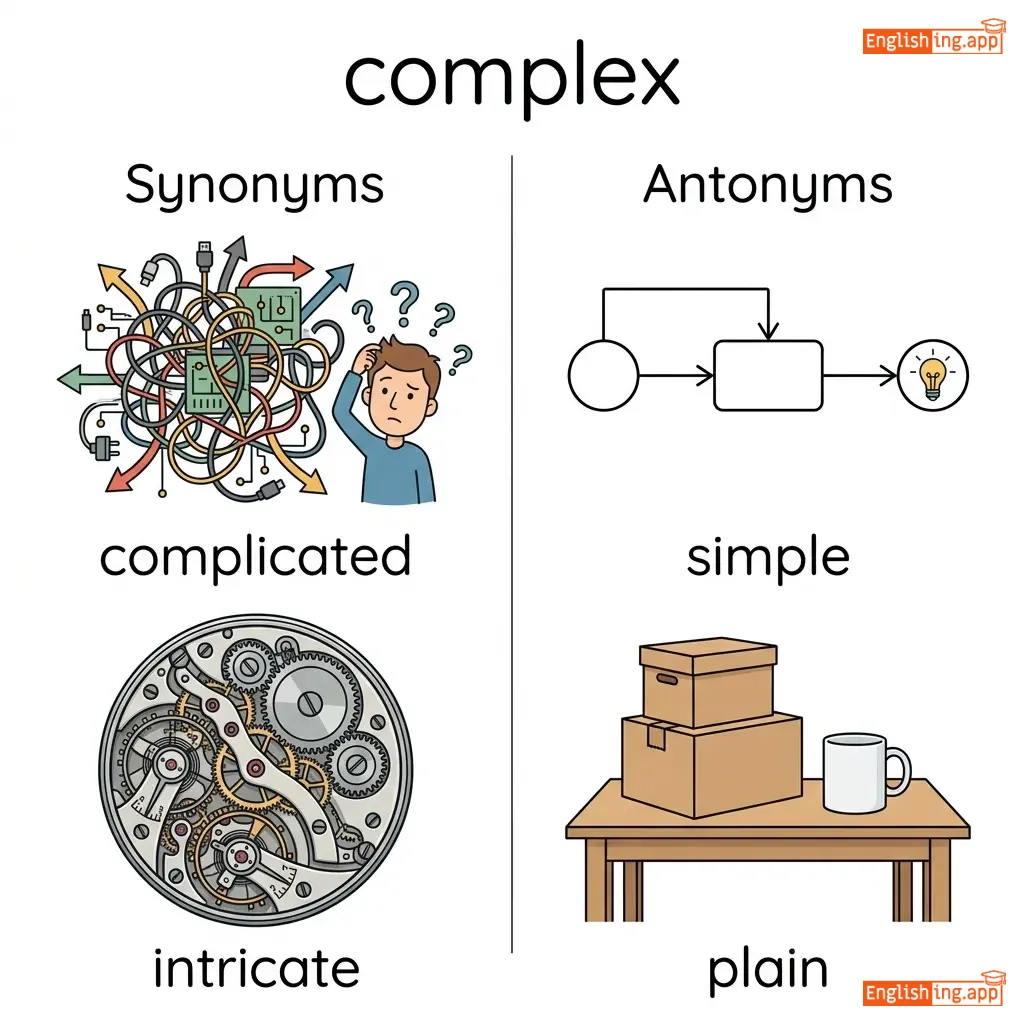
complicated, intricate, elaborate, sophisticated, multifaceted
••••••
|
simple, plain, straightforward
••••••
|
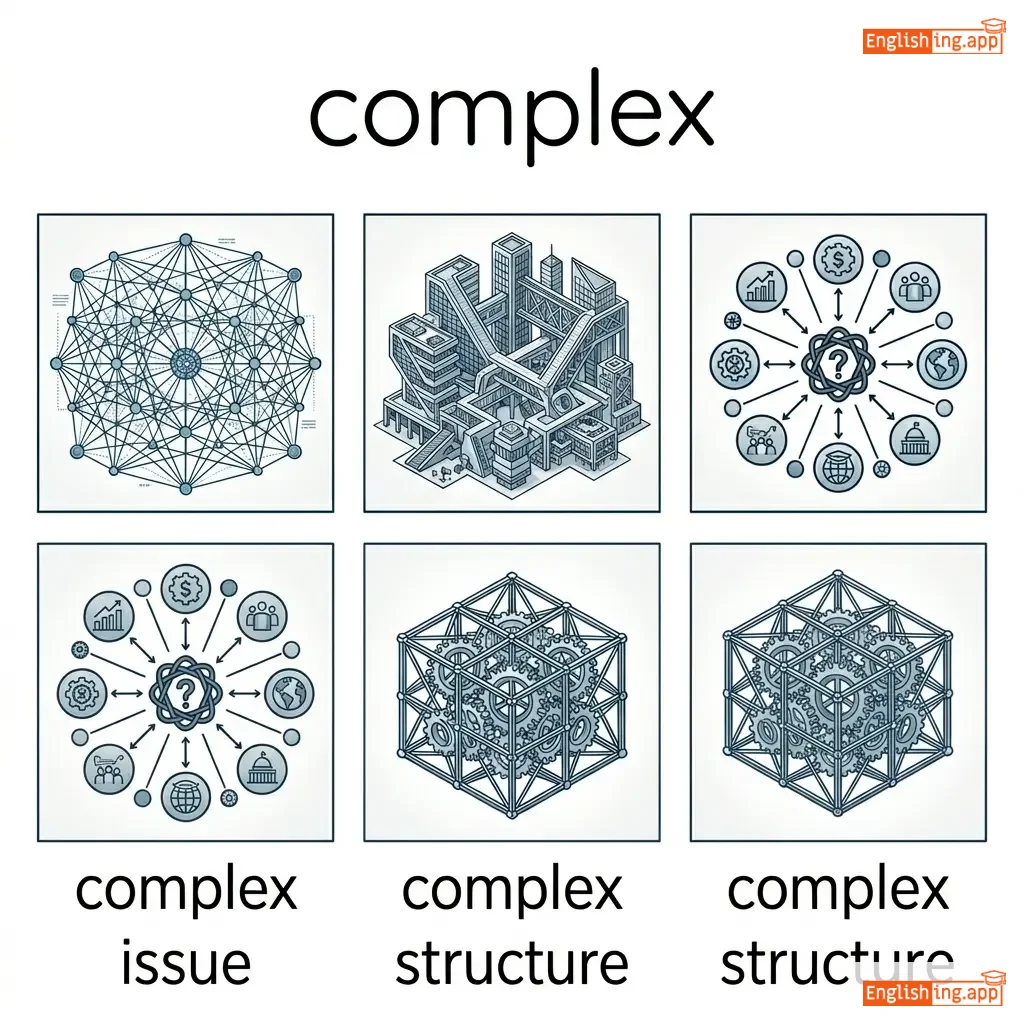
complex system, complex structure, complex issue, highly complex, complex problem
••••••
|
复杂的就像拼图 🧩,许多块拼成完整的图像。
••••••
|
|
#1622
⚗️
|
/ˈkɑːmpaʊnd/
noun
(kōngpào dé)
••••••
|
- •••••• |
化合物 / 封闭区域
huàhéwù / fēngbì qūyù
••••••
|
- •••••• | - •••••• | - •••••• | - •••••• |
a thing that is composed of two or more separate elements; an enclosed area with buildings
••••••
|
The scientist studied the chemical compound in the lab.
科学家在实验室研究了化学化合物。
••••••
|
科学家在实验室研究了化学化合物。
Kēxuéjiā zài shíyànshì yánjiū le huàxué huàhéwù.
••••••
|
compound interest
复利
••••••
|
interest calculated on both the initial principal and the accumulated interest
••••••
|
复利
fùlì
••••••
|
mixture, combination, blend, complex
••••••
|
element, simple
••••••
|
chemical compound, compound interest, compound sentence
••••••
|
复利像化合物一样,随着时间的推移不断增长
••••••
|
|
#1623
🧘
|
/kəmˈpoʊʒər/
noun
(kəmˈpoʊʒər)
••••••
|
|
镇定
zhèndìng
••••••
|
- •••••• | - •••••• | - •••••• | - •••••• |
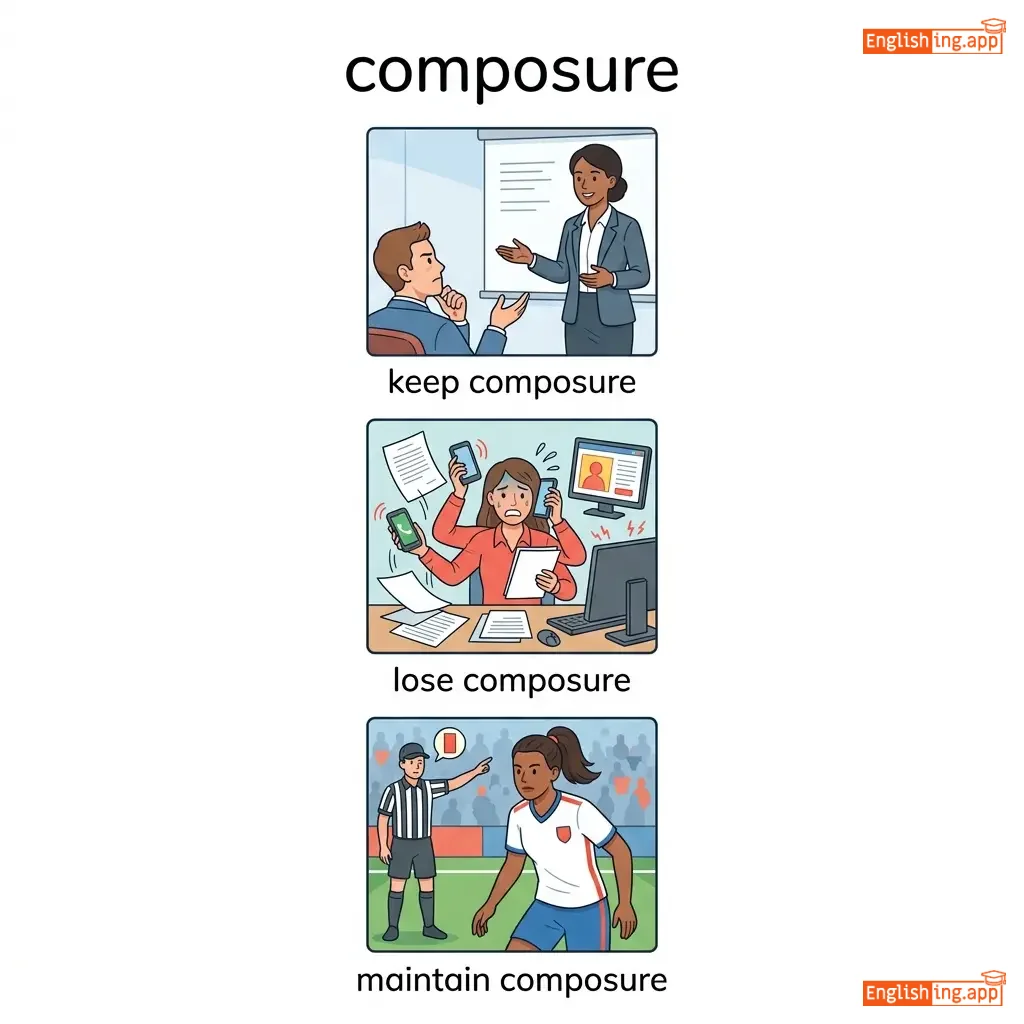
the state of being calm and in control of oneself
••••••
|
She managed to keep her composure during the heated debate. |
她在激烈的辩论中保持了镇定。
Tā zài jīliè de biànlùn zhōng bǎochíle zhèndìng.
••••••
|
keep one's composure |
to remain calm and not lose control
••••••
|
保持镇定
bǎochí zhèndìng
••••••
|
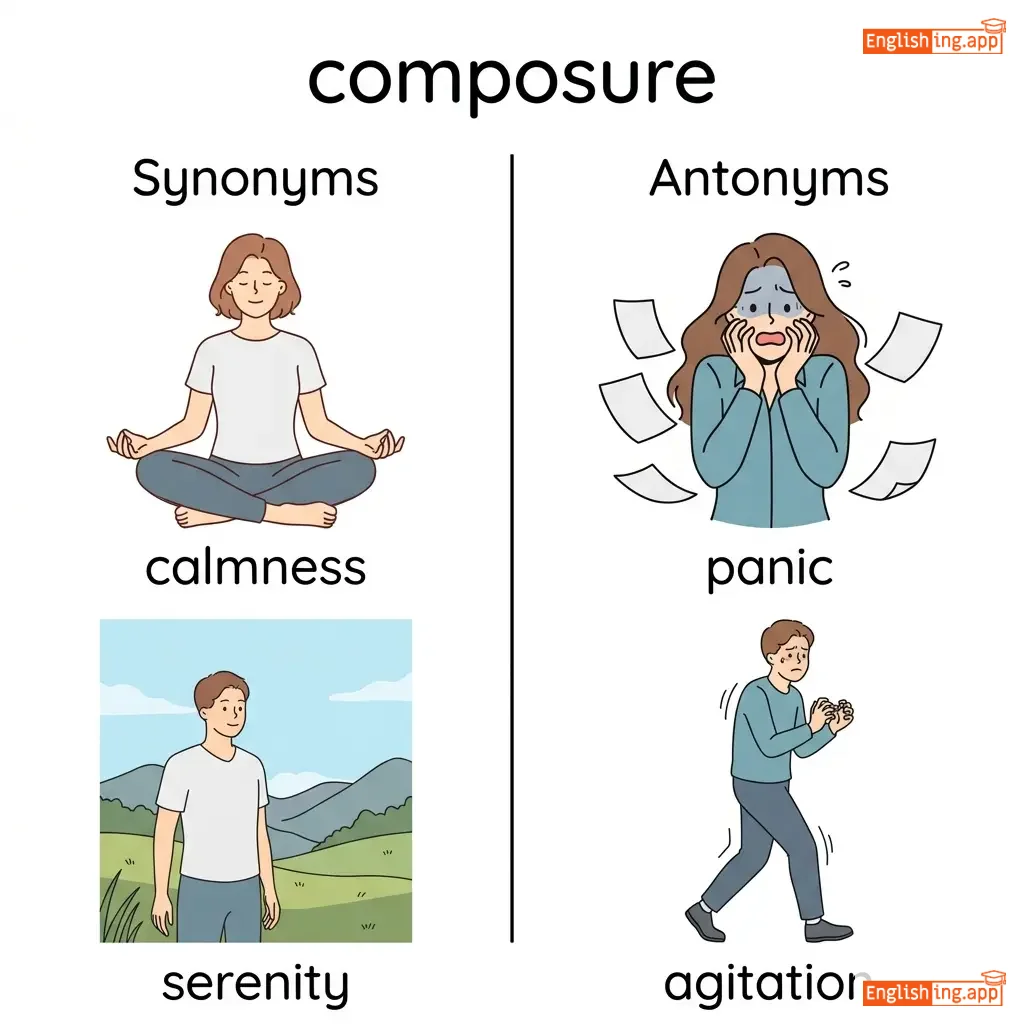
calmness, serenity, tranquility, poise
••••••
|
panic, agitation, nervousness
••••••
|
keep composure, lose composure, maintain composure
••••••
|
镇定 – 保持冷静,控制情绪
••••••
|
|
#1624
🌱
|
/ˈkɒmpoʊst/
noun
(kāngpò sī)
••••••
|
- •••••• |
堆肥
duīféi
••••••
|
- •••••• | - •••••• | - •••••• | - •••••• |
decayed organic matter used as fertilizer
••••••
|
The gardener added compost to enrich the soil. |
园丁添加了堆肥来丰富土壤。
Yuándīng tiānjiāle duīféi lái fēngfù tǔrǎng.
••••••
|
- •••••• | - •••••• | - •••••• |
fertilizer, manure, mulch, humus
••••••
|
waste, poison
••••••
|
add compost, make compost, compost bin, compost pile
••••••
|
堆肥帮助土壤变得更肥沃
••••••
|
|
#1625
😌
|
/kəmˈpoʊzd/
adjective
(kəmˈpoʊzd)
••••••
|
- •••••• |
冷静
lěngjìng
••••••
|
- •••••• | - •••••• | - •••••• | - •••••• |
calm and in control of oneself; made up of or formed from
••••••
|
He remained composed even under pressure.
他在压力下依然保持冷静。
••••••
|
他在压力下依然保持冷静。
Tā zài yālì xià yīrán bǎochí lěngjìng.
••••••
|
- •••••• | - •••••• | - •••••• |
calm, serene, collected, controlled, tranquil
••••••
|
agitated, anxious, upset
••••••
|
remain composed, look composed, composed expression
••••••
|
在压力下保持冷静就是保持 composed
••••••
|
|
#1626
🧍
|
/kəmˈpɔːrt/
verb
(康普特)
••••••
|
- •••••• |
表现
biaoxian
••••••
|
comported
康普特过
••••••
|
comported
康普特过
••••••
|
comports
康普特
••••••
|
comporting
康普特
••••••
|
to behave or conduct oneself in a particular way
••••••
|
She comported herself with grace during the ceremony.
她在仪式中优雅地表现自己。
••••••
|
她在仪式中优雅地表现自己。
Ta zai yishi zhong youya de biaoxian ziji.
••••••
|
comport oneself
表现自己
••••••
|
to behave in a certain manner
••••••
|
表现自己
biaoxian ziji
••••••
|
behave, conduct, act, perform, carry oneself
••••••
|
misbehave, misconduct
••••••
|
comport oneself, comport with, comport dignity
••••••
|
表现 – 就像表现优雅一样
••••••
|
|
#1627
⚙️
|
/kəmˈpoʊnənt/
noun
(kěn pónèn t)
••••••
|
- •••••• |
组件
zujiàn
••••••
|
- •••••• | - •••••• | - •••••• | - •••••• |
a part or element of a larger whole, especially a machine or system
••••••
|
The engine is the most important component of the car. |
引擎是汽车最重要的组件。
Yǐnqíng shì qìchē zuì zhòngyào de zǔjiàn.
••••••
|
- •••••• | - •••••• | - •••••• |
part, element, piece, unit, section
••••••
|
whole, entirety, totality
••••••
|
key component, essential component, electronic component, major component
••••••
|
组件就像机器的各个部分,像电脑的各个组件。
••••••
|
|
#1628
✅
|
/kəmˈplaɪ/
verb
(kəmˈplaɪ)
••••••
|
- •••••• |
遵守
zūnshǒu
••••••
|
complied
kəmˈplaɪd
••••••
|
complied
kəmˈplaɪd
••••••
|
complies
kəmˈplaɪz
••••••
|
complying
kəmˈplaɪɪŋ
••••••
|
to act in accordance with a rule, request, or law
••••••
|
All companies must comply with safety regulations.
所有公司必须遵守安全规定。
••••••
|
所有公司必须遵守安全规定。
Suǒyǒu gōngsī bìxū zūnshǒu ānquán guīdìng.
••••••
|
comply with orders
遵守命令
••••••
|
to follow instructions or commands
••••••
|
遵守命令
zūnshǒu mìnglìng
••••••
|
obey, follow, conform, observe, respect
••••••
|
disobey, resist, ignore
••••••
|
comply with law, comply with order, comply with standard, comply fully
••••••
|
遵守意味着遵循规定 (rules)。
••••••
|
|
#1629
🌸
|
/ˈkɒmplɪmənt/
noun/verb
(恭维)
••••••
|
- •••••• |
恭维
gōngwéi
••••••
|
complimented
恭维了
••••••
|
complimented
恭维了
••••••
|
compliments
恭维
••••••
|
complimenting
恭维着
••••••
|
a polite expression of praise or admiration; to politely praise someone
••••••
|
She complimented him on his excellent presentation.
她对他的精彩演讲表示了恭维。
••••••
|
她对他的精彩演讲表示了恭维。
Tā duì tā de jīngcǎi yǎnjiǎng biǎoshìle gōngwéi.
••••••
|
pay someone a compliment
给某人恭维
••••••
|
to say something nice or give praise
••••••
|
给某人恭维
Gěi mǒu rén gōngwéi
••••••
|
praise, admiration, flattery, commendation, appreciation
••••••
|
insult, criticism, disapproval
••••••
|
pay a compliment, receive a compliment, sincere compliment, flattering compliment
••••••
|
恭维这个词很像‘恭敬’,用来表示对他人的赞扬
••••••
|
|
#1630
🕵️
|
/kəmˈplɪsəti/
noun
(共谋)
••••••
|
- •••••• |
共谋
gongmou
••••••
|
- •••••• | - •••••• | - •••••• | - •••••• |
the state of being involved with others in an illegal activity or wrongdoing
••••••
|
The court revealed his complicity in the fraud scheme. |
法庭揭示了他在欺诈计划中的共谋。
Fating jieshi le ta zai qizha jihua zhong de gongmou.
••••••
|
- •••••• | - •••••• | - •••••• |
involvement, collaboration, participation, conspiracy, guilt
••••••
|
innocence, blamelessness, detachment
••••••
|
complicity in crime, direct complicity, deny complicity, reveal complicity
••••••
|
共谋是当你和别人一起做坏事时,你们是共犯。
••••••
|
|
#1631
⚖️
|
/kəmˈplɪsɪt/
adjective
(kəmplìsìt)
••••••
|
- •••••• |
共犯 (犯罪中)
gòngfàn (fànzuì zhōng)
••••••
|
- •••••• | - •••••• | - •••••• | - •••••• |
involved with others in an illegal activity or wrongdoing
••••••
|
He was found complicit in the crime. |
他在犯罪中被发现是共犯。
Tā zài fànzuì zhōng bèi fāxiàn shì gòngfàn.
••••••
|
- •••••• | - •••••• | - •••••• |
involved, guilty, implicated, responsible, accessory
••••••
|
innocent, blameless, uninvolved
••••••
|
complicit in crime, complicit behavior, complicit role, complicit silence
••••••
|
共犯就是和别人一起做坏事
••••••
|
|
#1632
⚠️
|
/ˌkɒmplɪˈkeɪʃən/
noun
(kɑmplɪˈkeɪʃən)
••••••
|
- •••••• |
并发症
bingfa zheng
••••••
|
- •••••• | - •••••• | - •••••• | - •••••• |
A problem or difficulty that makes a situation harder to deal with.
••••••
|
His illness led to serious complications after surgery. |
他的病情在手术后导致了严重的并发症。
Tā de bìngqíng zài shǒushù hòu dǎozhìle yánzhòng de bìngfāzhèng.
••••••
|
- •••••• | - •••••• | - •••••• |
difficulty, obstacle, setback, issue, hindrance
••••••
|
solution, advantage, benefit
••••••
|
medical complication, unexpected complication, serious complication, complication arises
••••••
|
并发症 = 让事情变得更复杂的东西。
••••••
|
|
#1633
🔀
|
/ˈkɒm.plɪ.keɪt/
verb
(kòng-pu-lì-kèi-tè)
••••••
|
- •••••• |
使复杂
shǐ fùzá
••••••
|
complicated
kòng-pu-lì-kèi-tèd
••••••
|
complicated
kòng-pu-lì-kèi-tèd
••••••
|
complicates
kòng-pu-lì-kèts
••••••
|
complicating
kòng-pu-lì-kèi-tīng
••••••
|
To make something more difficult or confusing.
••••••
|
The new rules will only complicate the process.
新规则只会使这个过程更加复杂。
••••••
|
新规则只会使这个过程更加复杂。
Xīn guīzé zhǐ huì shǐ zhège guòchéng gèngjiā fùzá.
••••••
|
- •••••• | - •••••• | - •••••• |
confuse, entangle, muddle, perplex
••••••
|
simplify, clarify, ease
••••••
|
complicate matters, complicate life, further complicate, unnecessarily complicate
••••••
|
Complicate 意味着把事情变得更复杂,就像一块拼图。
••••••
|
|
#1634
🙇
|
/kəmˈplaɪənt/
adjective
(kəmˈplaɪənt)
••••••
|
|
顺从
shùncóng
••••••
|
- •••••• | - •••••• | - •••••• | - •••••• |
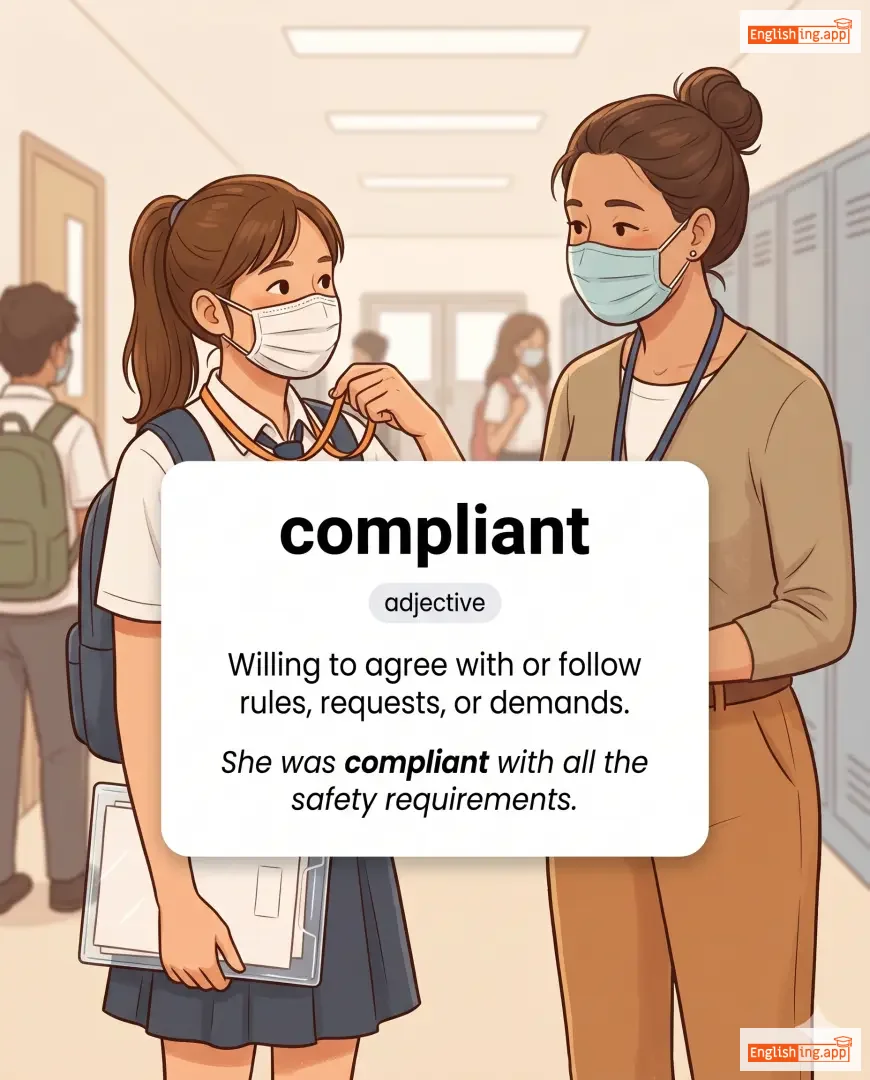
Willing to agree with or follow rules, requests, or demands.
••••••
|
She was compliant with all the safety requirements.
她遵守了所有安全要求。
••••••
|
她遵守了所有安全要求。
Tā zūnshǒu le suǒyǒu ānquán yāoqiú.
••••••
|
- •••••• | - •••••• | - •••••• |
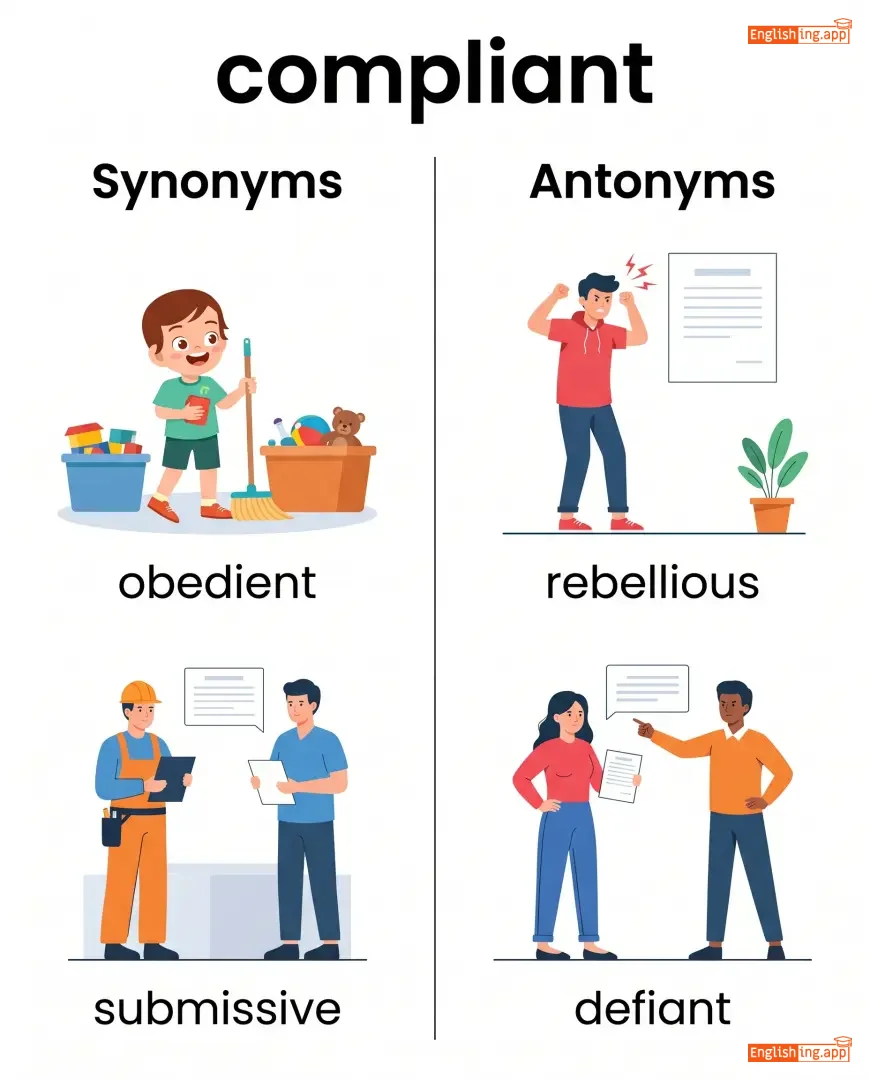
obedient, submissive, docile, accommodating
••••••
|
rebellious, defiant, resistant
••••••
|
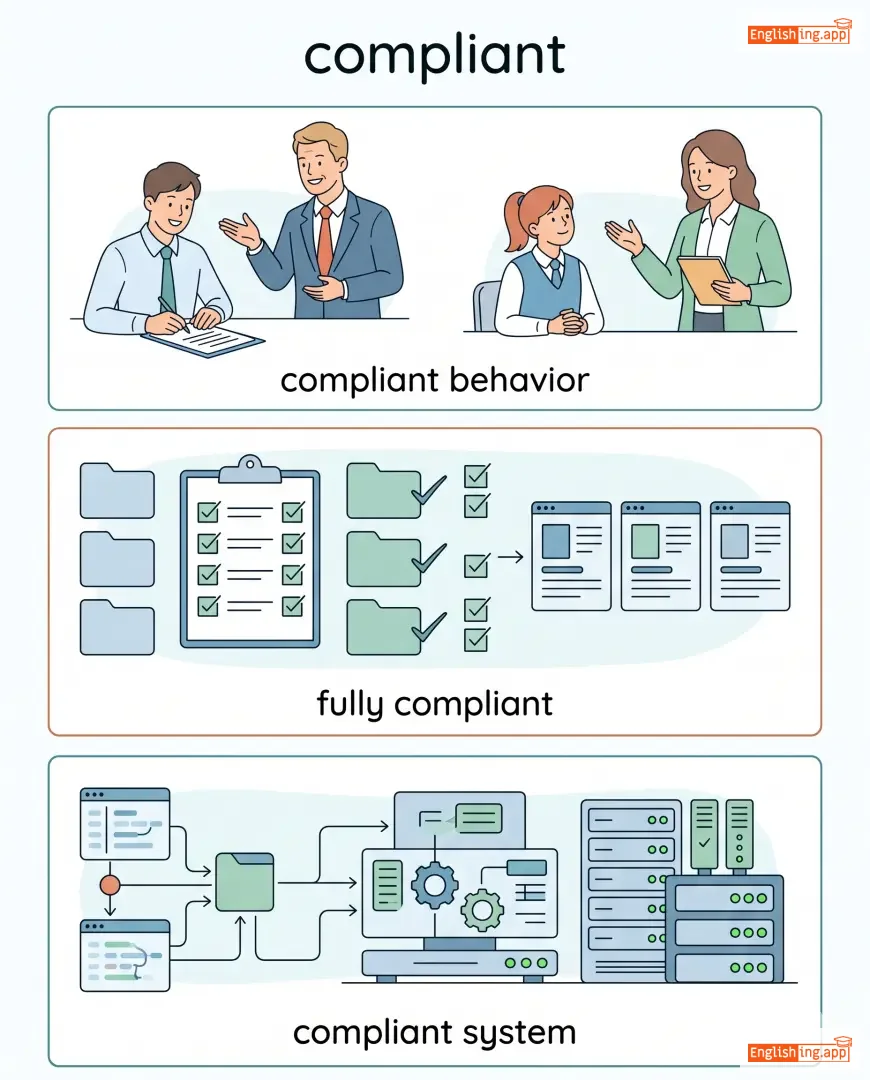
compliant behavior, fully compliant, compliant system, compliant child
••••••
|
顺从就是遵守规则,不反抗。
••••••
|
|
#1635
✅
|
/kəmˈplaɪəns/
noun
(compliance)
••••••
|
|
合规
hegui
••••••
|
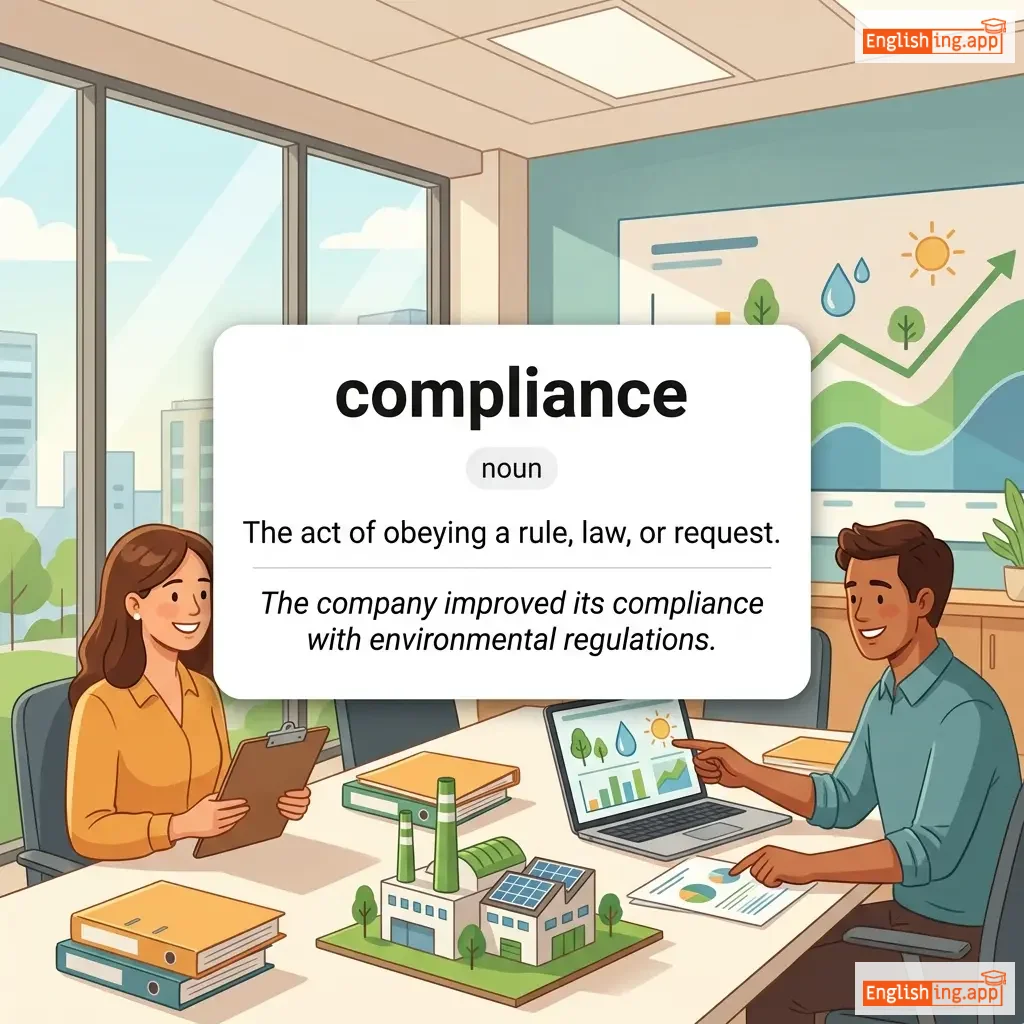
- •••••• | - •••••• | - •••••• | - •••••• |
The act of obeying a rule, law, or request.
••••••
|
The company improved its compliance with environmental regulations. |
公司改善了其在环保规定方面的合规性。
Gongsi gaishanle qi zai huanbao guiding fangmian de heguixing.
••••••
|
in compliance with |
Acting according to rules, laws, or standards.
••••••
|
遵守规定
zunshou guiding
••••••
|
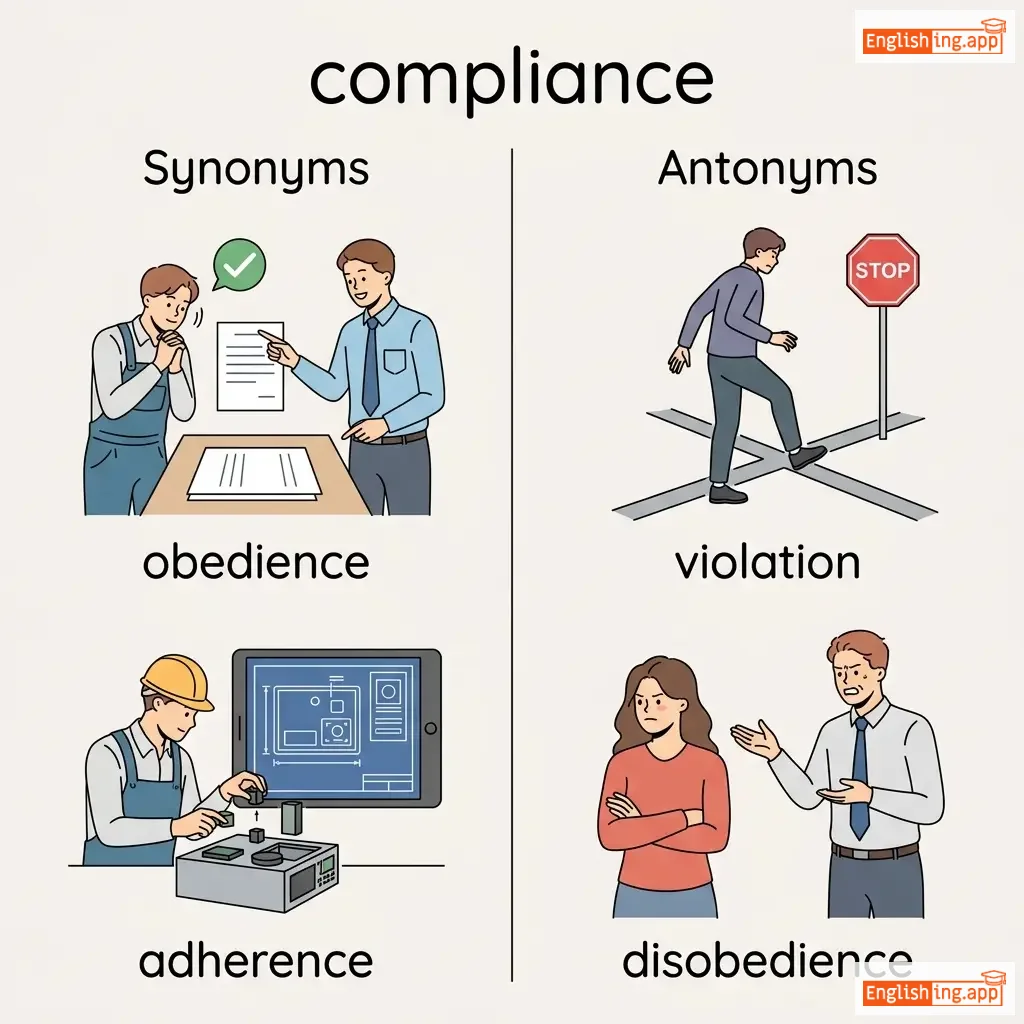
obedience, adherence, conformity, observance
••••••
|
violation, disobedience, defiance
••••••
|
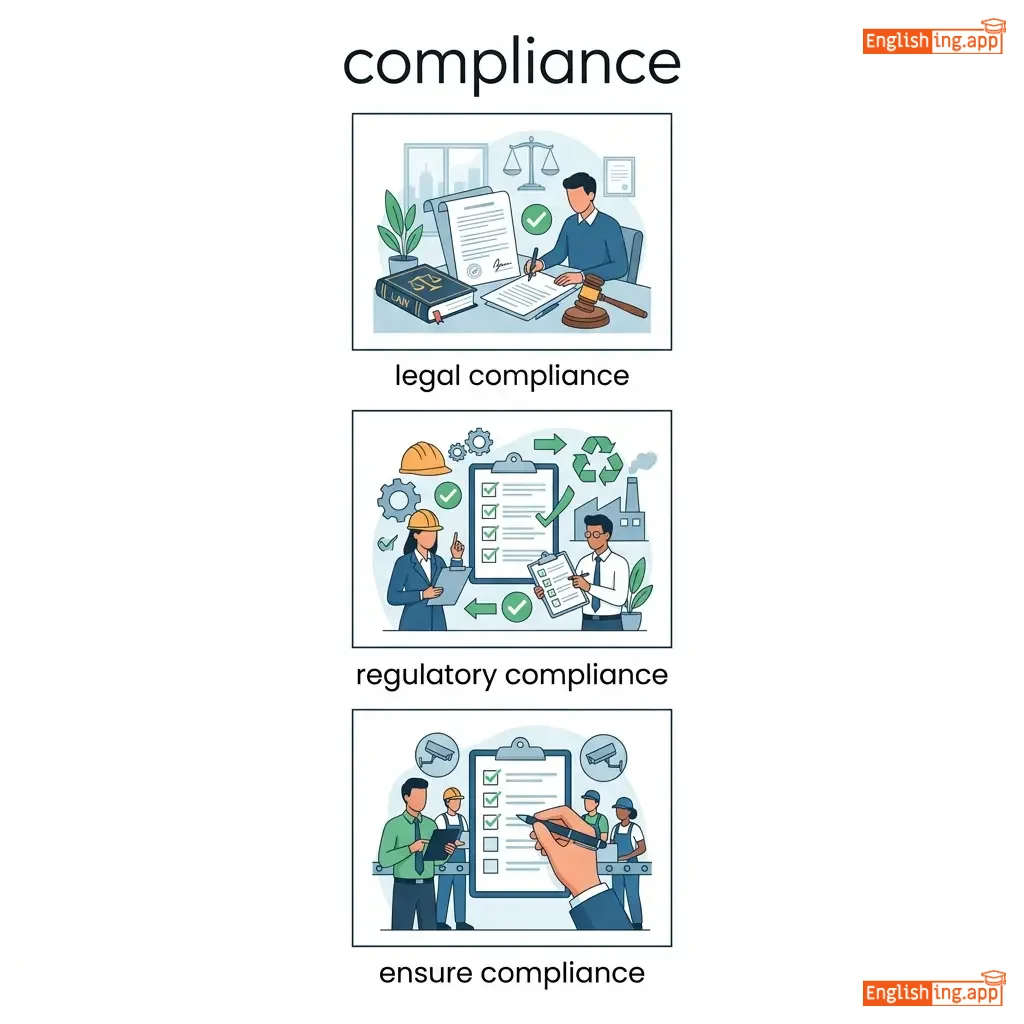
legal compliance, regulatory compliance, ensure compliance, compliance check
••••••
|
合规意味着遵守所有规则和法律 ✅
••••••
|
|
#1636
💵
|
/ˈkɒmpənseɪtɪd/
verb
••••••
|
- •••••• | - •••••• |
compensated
••••••
|
compensated
••••••
|
compensates
••••••
|
compensating
••••••
|
to have been given something, typically money, as a recompense for loss, suffering, or work done
••••••
|
The workers were compensated for their overtime hours. |
- •••••• |
compensated for loss |
to be given something in return for damage or loss suffered
••••••
|
- •••••• |
reimbursed, paid, rewarded, repaid, indemnified
••••••
|
penalized, deprived
••••••
|
compensated fairly, compensated fully, compensated adequately
••••••
|
No •••••• |
|
#1637
🎨
|
/ˌkɒmplɪˈmɛntəri/
adjective
(kəmˈplɛməntɛri)
••••••
|
- •••••• |
互补的
hubu de
••••••
|
- •••••• | - •••••• | - •••••• | - •••••• |
combining in such a way as to enhance or emphasize the qualities of each other
••••••
|
The two partners have complementary skills. |
这两个伙伴有互补的技能。
zhè liǎng gè huǒbàn yǒu hùbǔ de jìnéng.
••••••
|
complementary colors |
pairs of colors that, when combined, enhance each other’s intensity
••••••
|
互补色
hùbǔ sè
••••••
|
matching, corresponding, harmonious, supplementary
••••••
|
contradictory, conflicting
••••••
|
complementary skills, complementary roles, complementary system, complementary approach
••••••
|
互补的意味着彼此补充
••••••
|
|
#1638
➕
|
/ˈkɒmplɪmənt/
noun/verb
(补充)
••••••
|
|
补充
buchong
••••••
|
complemented
补充
••••••
|
complemented
补充
••••••
|
complements
补充
••••••
|
complementing
补充
••••••
|
something that completes or goes well with something; to add something that enhances or improves
••••••
|
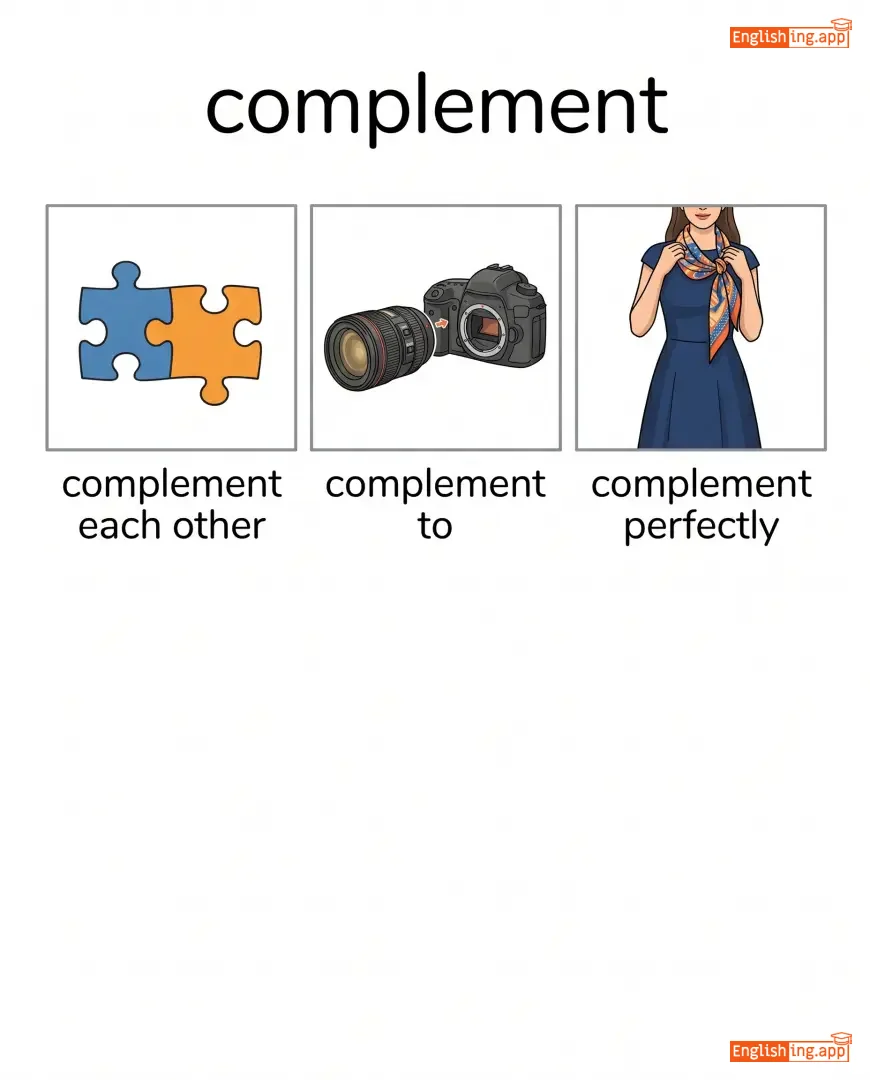
The scarf complements her outfit perfectly.
围巾完美地补充了她的装束。
••••••
|
围巾完美地补充了她的装束。
wei jin wan mei di buchong le ta de zhuang shu.
••••••
|
perfect complement
完美的补充
••••••
|
something that completes another thing in the best possible way
••••••
|
完美的补充
wan mei de buchong
••••••
|
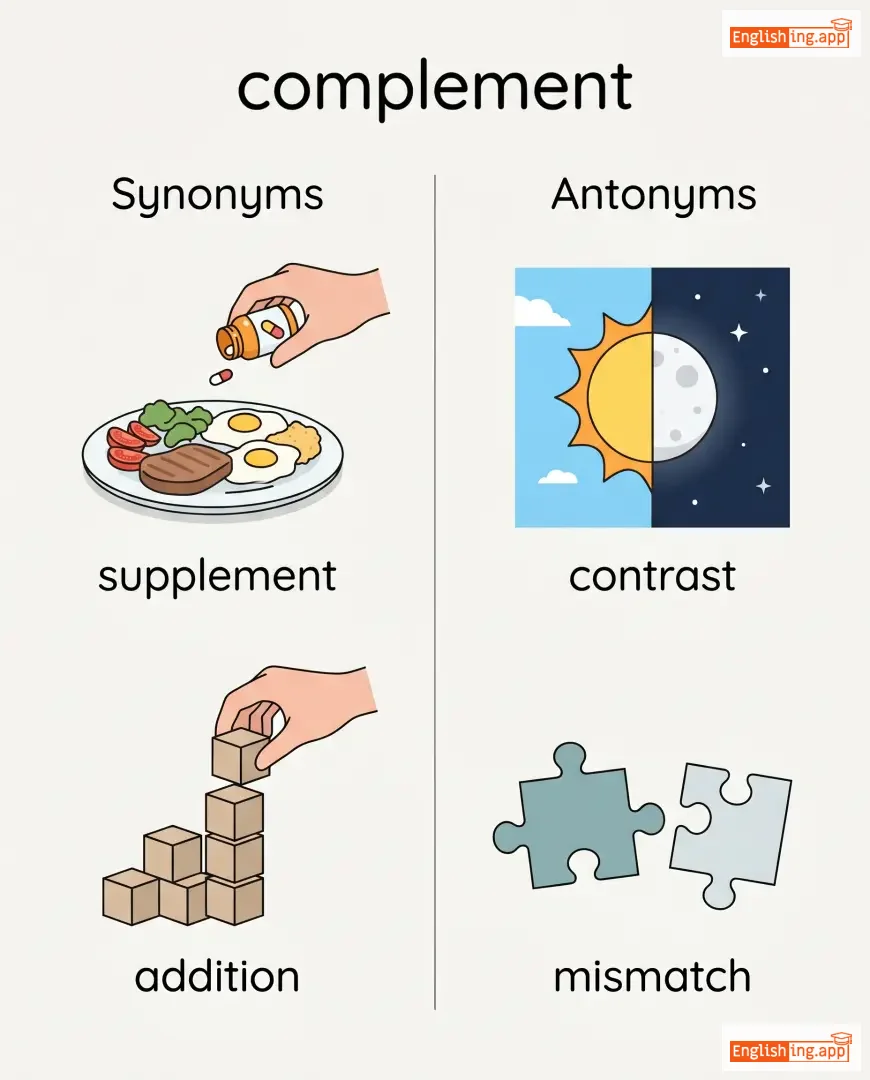
supplement, addition, counterpart, companion, match
••••••
|
contrast, mismatch
••••••
|
complement each other, complement to, complement perfectly, complement system
••••••
|
补充 = 完成 + 添加,让其他事物更好
••••••
|
|
#1639
🤗
|
/kəmˈpleɪzənt/
adjective
(kè pí lěi zāng tè)
••••••
|
|
过于顺从
guò yú shùn cóng
••••••
|
- •••••• | - •••••• | - •••••• | - •••••• |
willing to please others or to accept what they do or say without protest
••••••
|
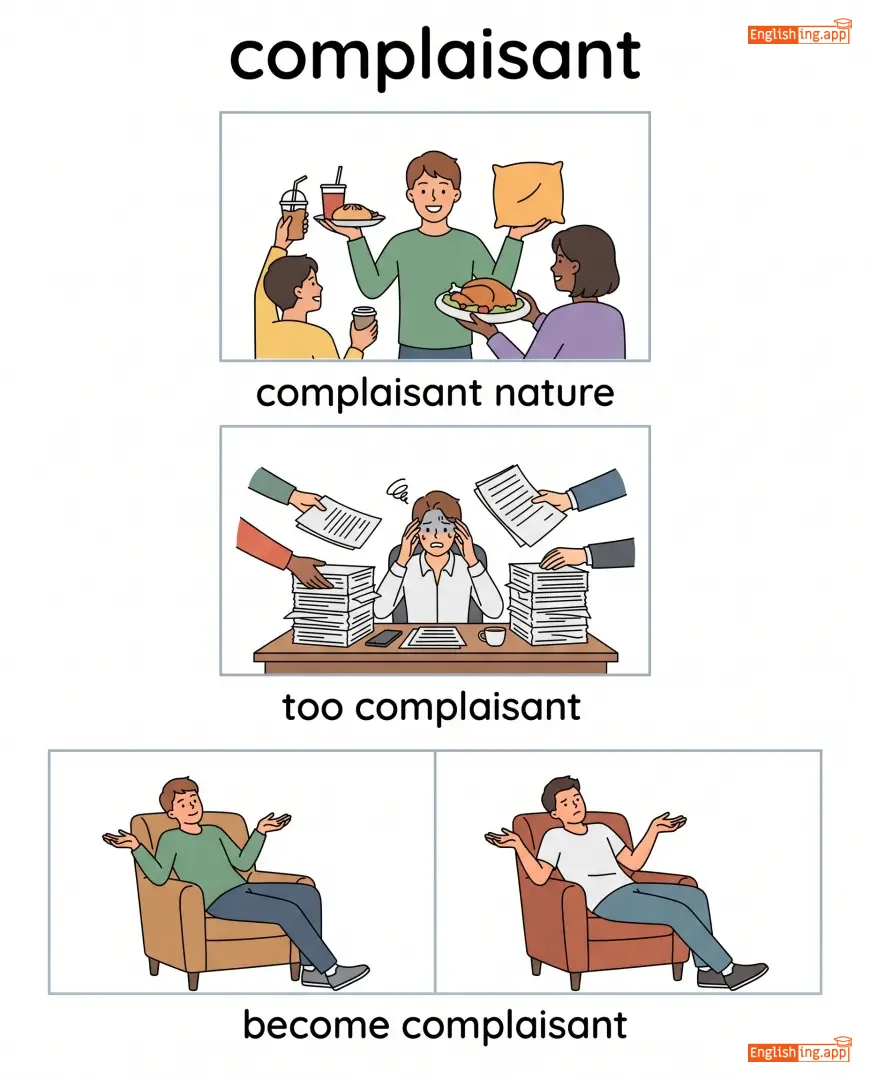
He was too complaisant to refuse their demands. |
他太顺从以至于无法拒绝他们的要求。
Tā tài shùn cóng yǐ zhì yú wú fǎ jù jué tāmen de yāo qiú.
••••••
|
- •••••• | - •••••• | - •••••• |
obliging, accommodating, agreeable, cooperative
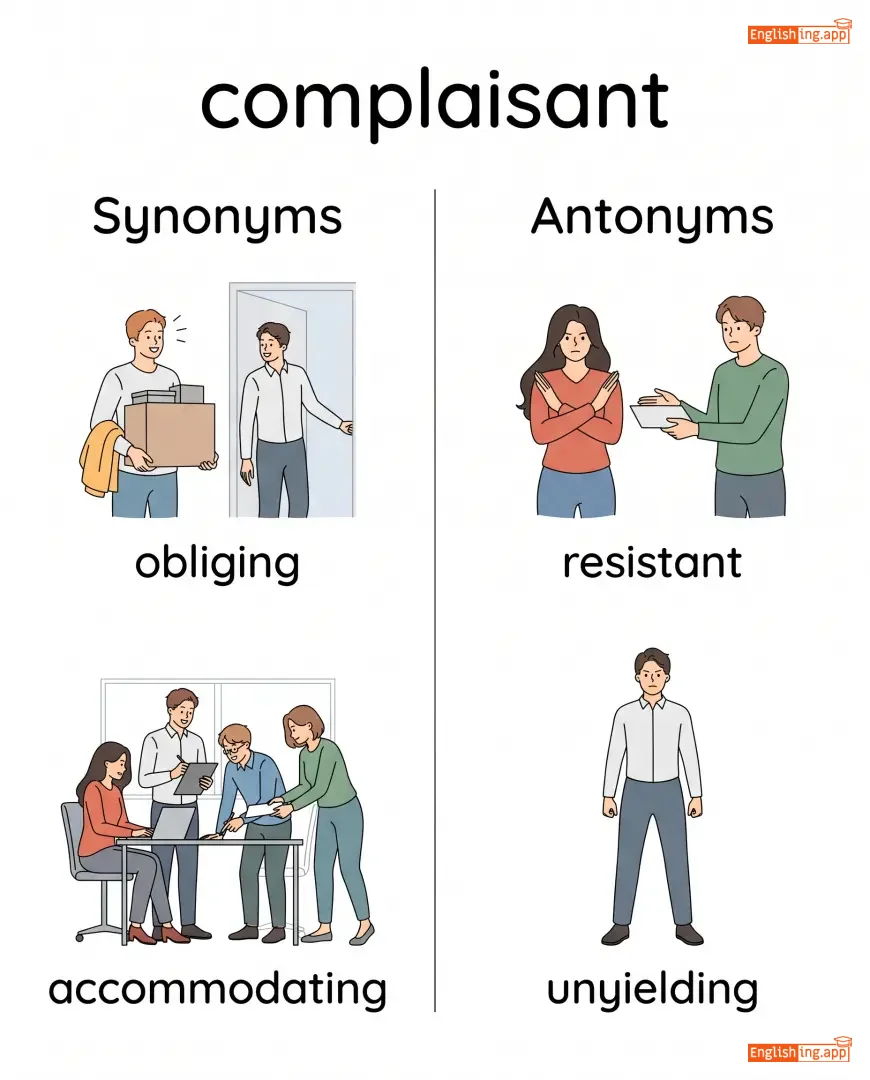
••••••
|
resistant, unyielding
••••••
|
complaisant nature, too complaisant, become complaisant
••••••
|
顺从 – 总是同意他人的要求
••••••
|
|
#1640
🙂
|
/kəmˈpleɪsəns/
noun
(kəmˈpleɪsəns)
••••••
|
- •••••• |
讨好
tǎo hǎo
••••••
|
- •••••• | - •••••• | - •••••• | - •••••• |
willingness to please others; courteous compliance
••••••
|
Her complaisance made her popular among her colleagues. |
她的讨好让她在同事中变得很受欢迎。
Tā de tǎo hǎo ràng tā zài tóngshì zhōng biàn dé hěn shòu huānyíng.
••••••
|
- •••••• | - •••••• | - •••••• |
obligingness, agreeableness, politeness, courtesy
••••••
|
stubbornness, defiance
••••••
|
complaisance towards, show complaisance, act with complaisance
••••••
|
complain 不是,讨好意味着取悦
••••••
|
|
#1641
😌
|
/kəmˈpleɪsənt/
adjective
(kəmˈpleɪsənt)
••••••
|
|
自满
ziman
••••••
|
- •••••• | - •••••• | - •••••• | - •••••• |
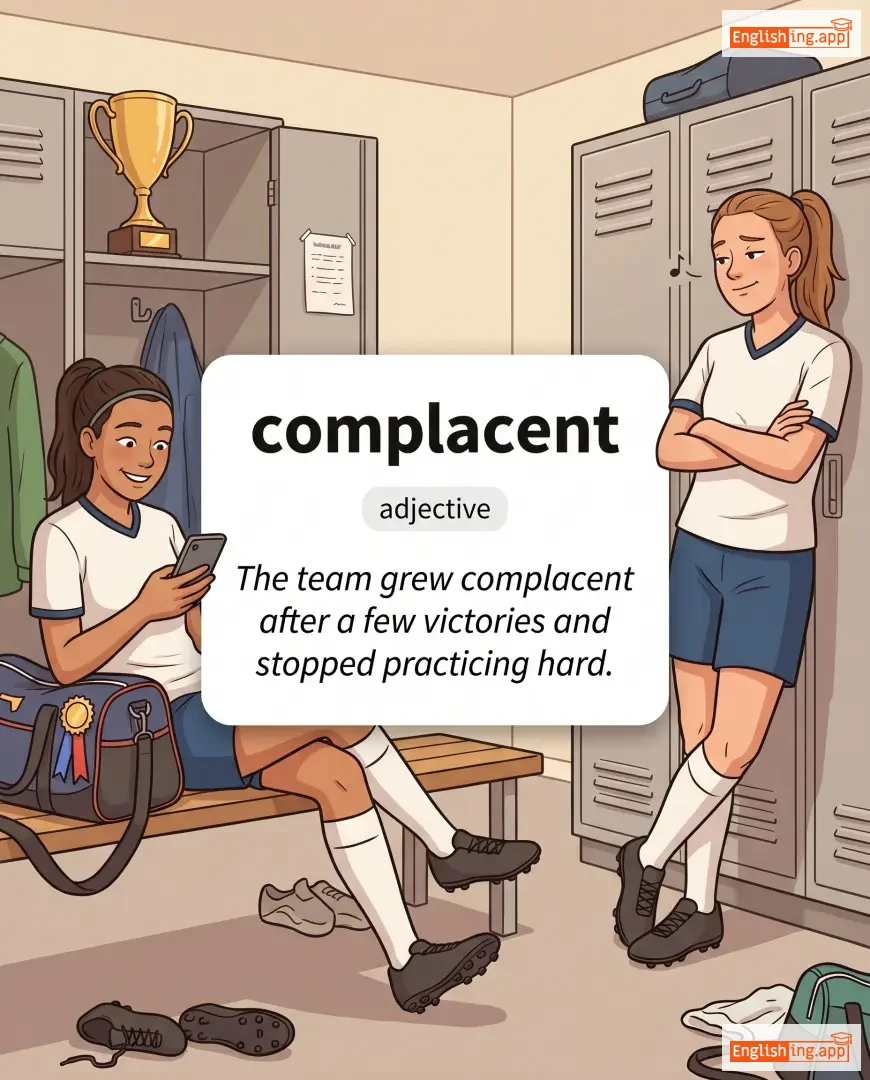
showing self-satisfaction and a lack of concern about potential dangers or problems
••••••
|
The team grew complacent after a few victories and stopped practicing hard. |
团队在几场胜利后变得自满,停止了努力训练。
Tuandui zai ji chang shengli hou biande ziman, tingzhi le nuli xunlian.
••••••
|
rest on one's laurels |
to become complacent and stop putting in effort after achieving success
••••••
|
自满
ziman
••••••
|
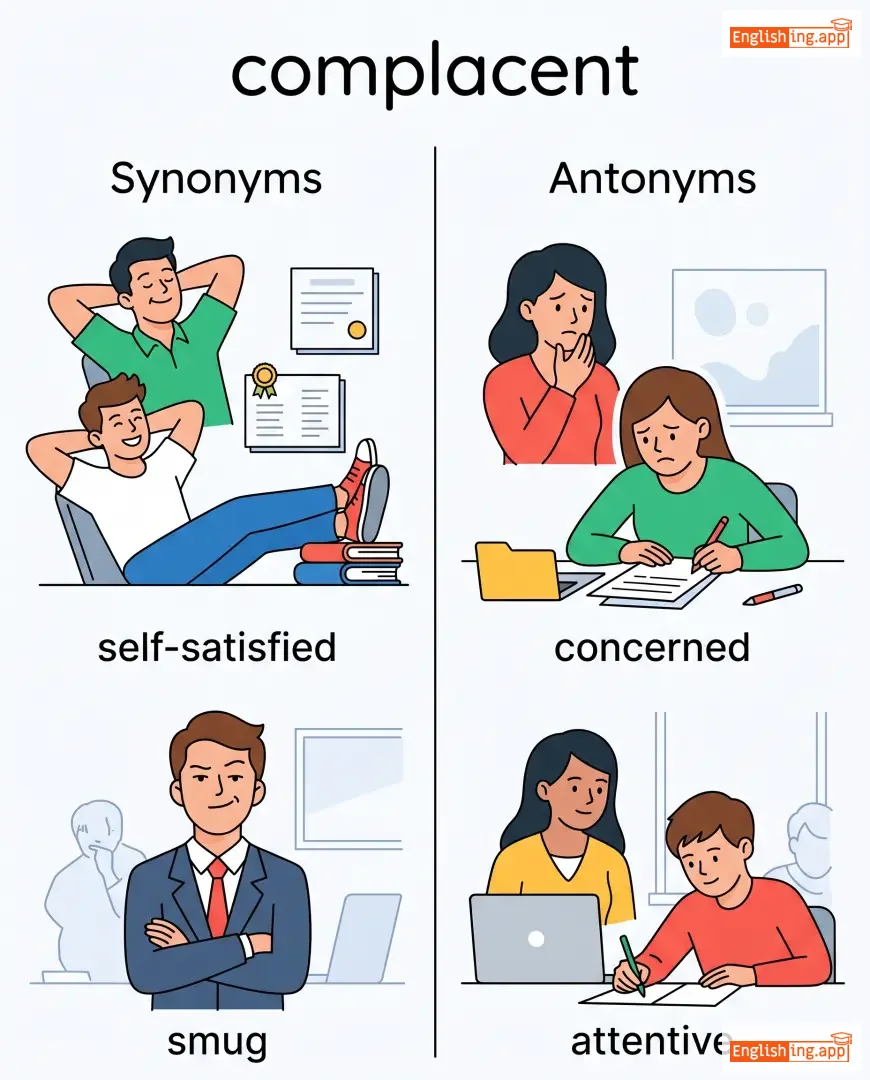
self-satisfied, smug, content, indifferent, unconcerned
••••••
|
concerned, attentive, cautious
••••••
|
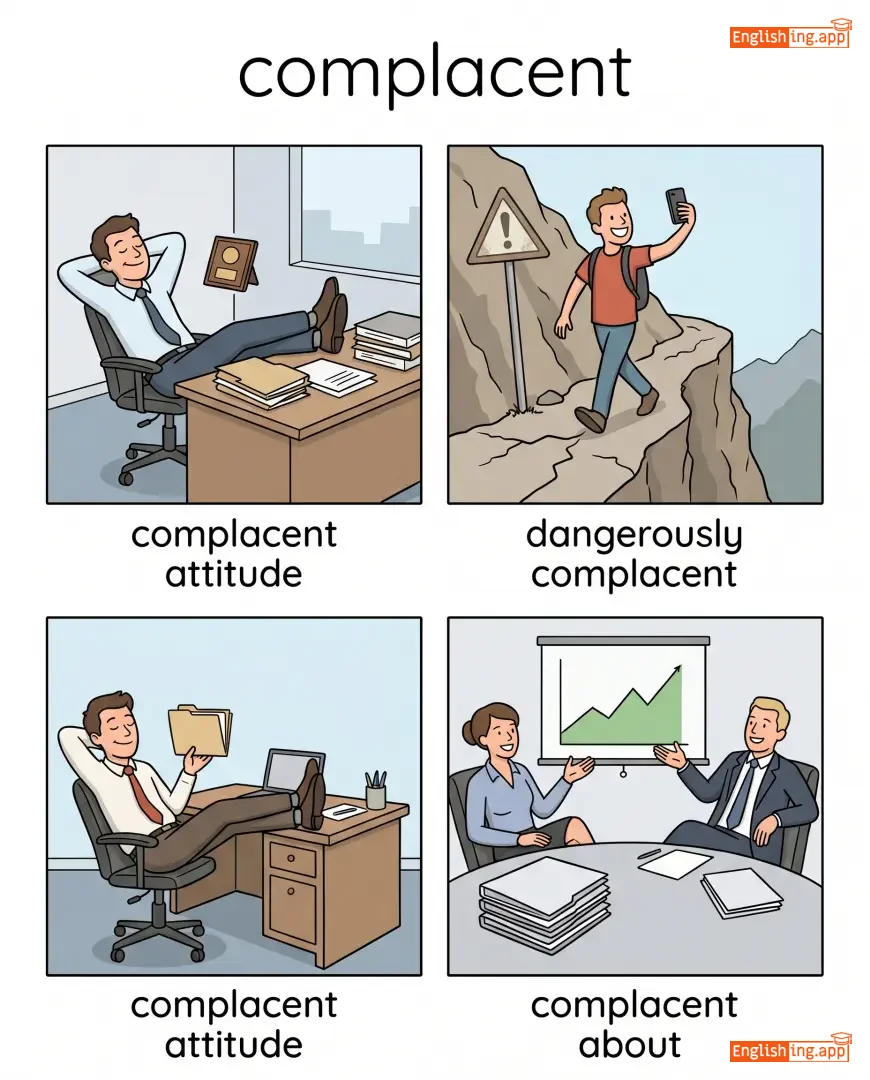
complacent attitude, dangerously complacent, complacent about, complacent in
••••••
|
自满 – 就像在成功后放松自己,停下来不再努力。
••••••
|
|
#1642
🙄
|
/kəmˈpleɪsənsi/
noun
(kəmˈpleɪsənsi)
••••••
|
|
自满
ziman
••••••
|
- •••••• | - •••••• | - •••••• | - •••••• |
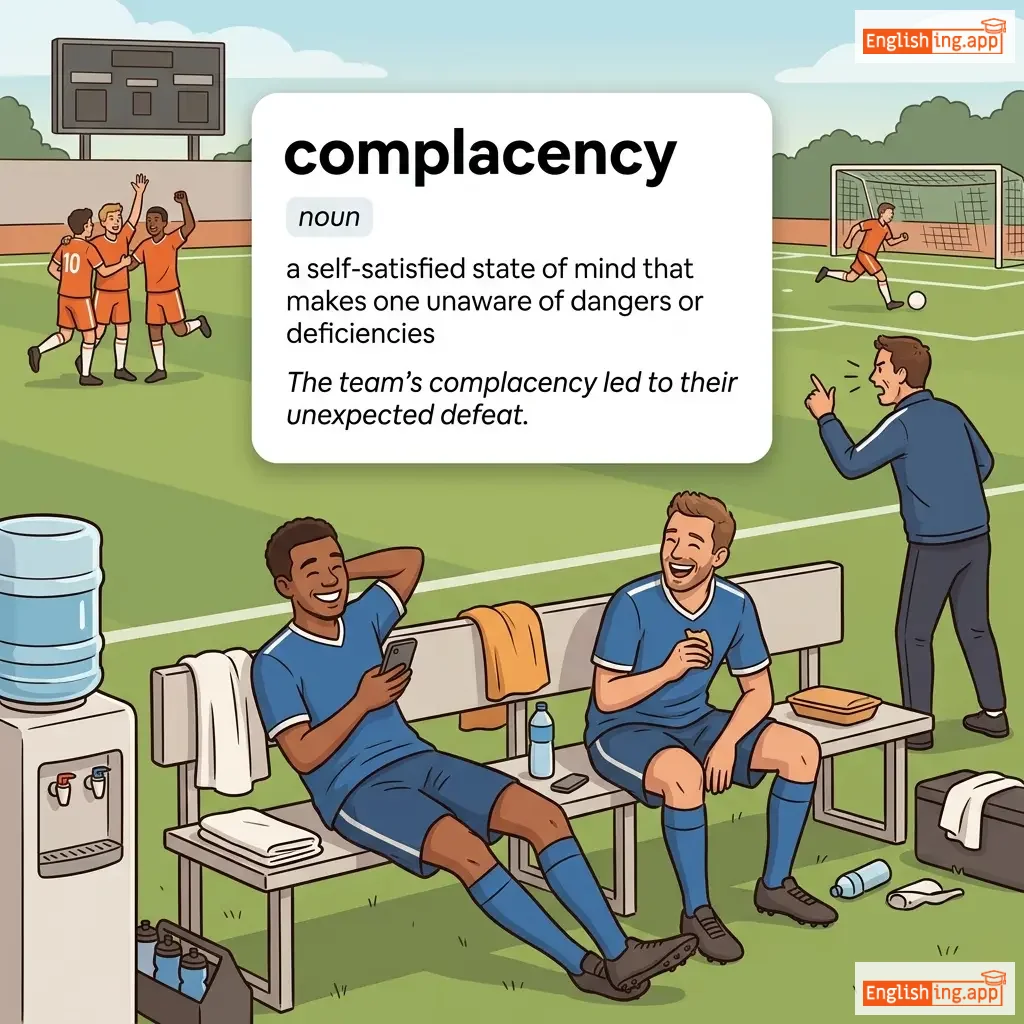
a self-satisfied state of mind that makes one unaware of dangers or deficiencies
••••••
|
The team's complacency led to their unexpected defeat. |
球队的自满导致了他们的意外失利。
qiudui de ziman daozhi le tamen de yiwai shili.
••••••
|
breed complacency |
to cause someone to become too comfortable and careless
••••••
|
滋生自满
zisheng ziman
••••••
|
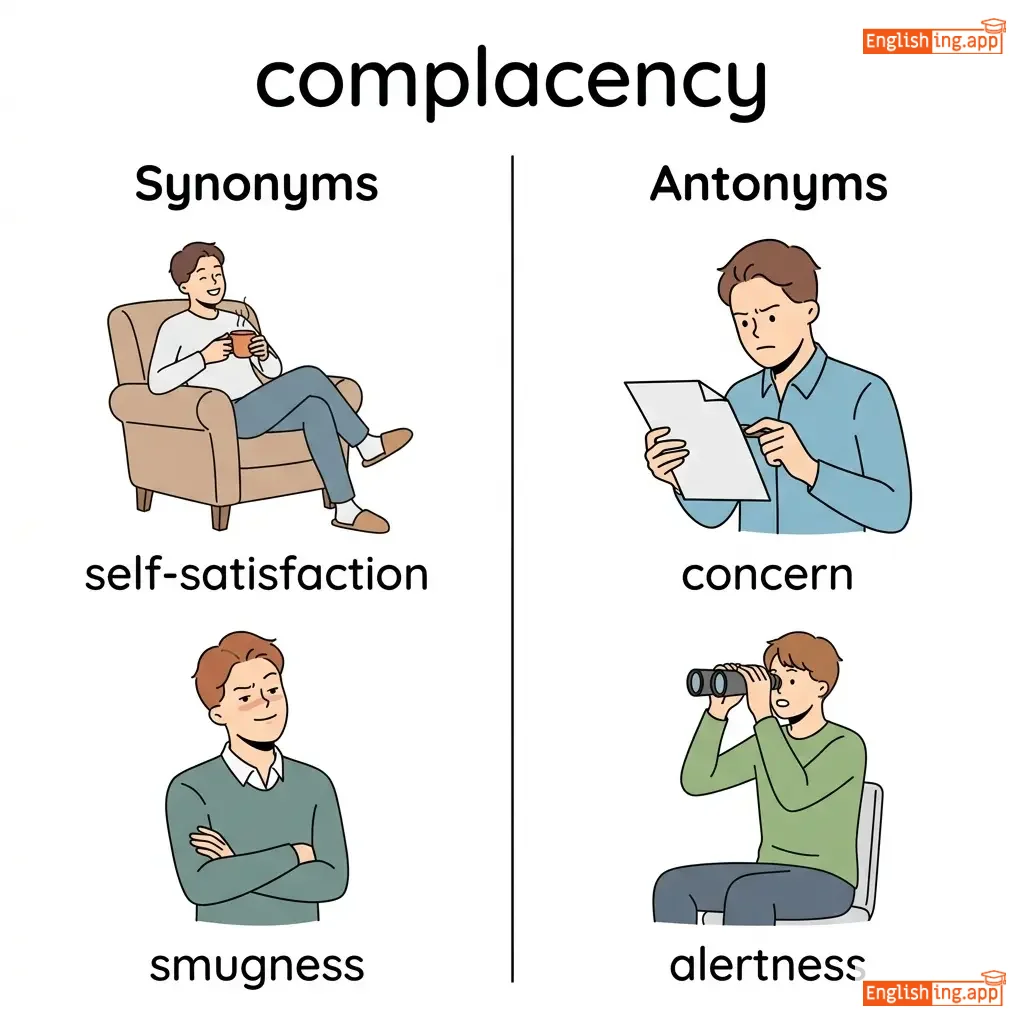
self-satisfaction, smugness, self-contentment, pride
••••••
|
concern, alertness, vigilance
••••••
|
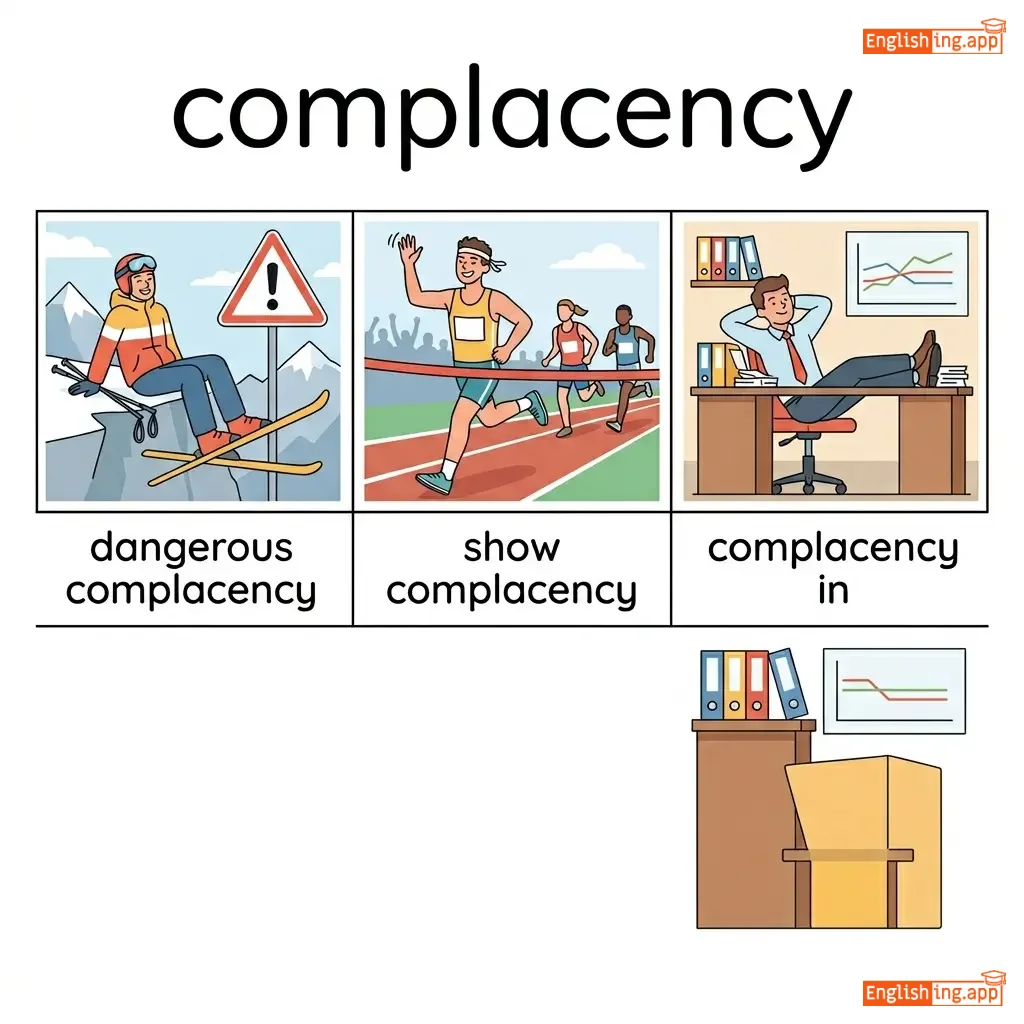
dangerous complacency, show complacency, complacency in, complacency about
••••••
|
Complacency意味着自满——就像人们在成功后太过放松一样。
••••••
|
|
#1643
😌
|
/kəmˈpleɪsəns/
noun
••••••
|
- •••••• | - •••••• | - •••••• | - •••••• | - •••••• | - •••••• |
a feeling of quiet pleasure or self-satisfaction, often without awareness of potential danger
••••••
|
His complacence prevented him from noticing the risks. |
- •••••• | - •••••• | - •••••• | - •••••• |
self-satisfaction, smugness, contentment, self-approval
••••••
|
concern, dissatisfaction, vigilance
••••••
|
dangerous complacence, show complacence, with complacence, complacence about
••••••
|
No •••••• |
|
#1644
📝
|
/kəmˈpaɪl/
verb
(kōngpái)
••••••
|
- •••••• |
编制
bian zhi
••••••
|
compiled
kōngpáid
••••••
|
compiled
kōngpáid
••••••
|
compiles
kōngpáils
••••••
|
compiling
kōngpáilíng
••••••
|
to collect information or material and put it together in a list, report, or book
••••••
|
She compiled the research data into a detailed report.
她将研究数据编纂成一份详细报告。
••••••
|
她将研究数据编纂成一份详细报告。
Tā jiāng yánjiū shùjù biānzuǎn chéng yí fèn xiángxì bàogào.
••••••
|
compile a list
编制清单
••••••
|
to gather and arrange items in a list format
••••••
|
编制清单
biānzhì qīngdān
••••••
|
collect, assemble, gather, organize, arrange
••••••
|
scatter, disperse
••••••
|
compile data, compile report, compile information, compile list
••••••
|
Compile的意思是编制 — 就像计算机中的编译器将数据编制到一起。
••••••
|
|
#1645
📚
|
/ˌkɒmpɪˈleɪʃən/
noun
(kǎn-pài-lèi-shēn)
••••••
|
- •••••• |
汇编
huìbiān
••••••
|
- •••••• | - •••••• | - •••••• | - •••••• |
a collection of things, especially pieces of writing or music, gathered together
••••••
|
The book is a compilation of his best essays. |
这本书是他最好的文章合集。
Zhè běn shū shì tā zuì hǎo de wénzhāng héjí.
••••••
|
- •••••• | - •••••• | - •••••• |
collection, anthology, assemblage, compilation, digest
••••••
|
separation, disorganization
••••••
|
music compilation, data compilation, compilation album, compilation report
••••••
|
Compilation 在中文中是汇编 — 就像将歌曲集合成专辑一样。
••••••
|
|
#1646
⚔️
|
/kəmˈpɛtɪtər/
noun
(kəmˈpɛtɪtər)
••••••
|
- •••••• |
竞争者
jingzhengzhe
••••••
|
- •••••• | - •••••• | - •••••• | - •••••• |
a person, team, or company that competes with others
••••••
|
The company lowered its prices to beat its main competitor. |
公司降低了价格以击败其主要竞争者。
Gongsi jiangdi le jiage yi jiba qi zhuyao jingzhengzhe.
••••••
|
know your competition |
to understand your rivals in order to succeed
••••••
|
了解你的竞争对手
Liaojie nide jingzheng duishou
••••••
|
rival, challenger, opponent, contender, adversary
••••••
|
ally, partner, supporter
••••••
|
main competitor, direct competitor, strong competitor, market competitor
••••••
|
竞争者是与你竞争的人,像比赛中的对手一样。
••••••
|
|
#1647
🏆
|
/kəmˈpetətɪv/
adjective
(kəmˈpɛtɪtɪv)
••••••
|
- •••••• |
竞争的
jingzheng de
••••••
|
- •••••• | - •••••• | - •••••• | - •••••• |
relating to or characterized by competition; having a strong desire to win or be more successful
••••••
|
She has a competitive spirit that drives her to excel. |
她有一种竞争精神,推动她追求卓越。
Ta you yizhong jingzheng jingshen, tuidong ta zhuiqiu zhuoyue.
••••••
|
competitive edge |
an advantage that makes someone more successful
••••••
|
竞争优势
jingzheng youshi
••••••
|
ambitious, rivalrous, aggressive, contesting
••••••
|
uncompetitive, passive
••••••
|
competitive market, competitive advantage, highly competitive
••••••
|
Competitive 意味着总是处于竞争模式 – 总是想赢,像奖杯一样。
••••••
|
|
#1648
✅
|
/ˈkɒmpɪtənt/
adjective
(kom-pi-tent)
••••••
|
- •••••• |
称职
chengzhi
••••••
|
- •••••• | - •••••• | - •••••• | - •••••• |
having the necessary ability, knowledge, or skill to do something successfully
••••••
|
He is a competent driver who rarely makes mistakes.
他是一个称职的司机,几乎不犯错误。
••••••
|
他是一个称职的司机,几乎不犯错误。
Tā shì yīgè chēngzhí de sījī, jīhū bù fàn cuòwù.
••••••
|
competent authority
称职的权威
••••••
|
a person or body with the legal power to decide or enforce something
••••••
|
称职的权威
chēngzhí de quánwēi
••••••
|
capable, skilled, qualified, proficient
••••••
|
incompetent, unskilled
••••••
|
competent staff, competent professional, competent enough
••••••
|
称职的就像称职的司机,驾驭能力强,工作不出错。
••••••
|
|
#1649
📈
|
/ˈkɒmpɪtəns/
noun
(kōngpìtènsī)
••••••
|
- •••••• |
能力
nengli
••••••
|
- •••••• | - •••••• | - •••••• | - •••••• |
the ability to do something successfully or efficiently
••••••
|
Her competence as a manager impressed the board. |
作为经理,她的能力给董事会留下了深刻印象。
zuo wei jingli, ta de nengli gei dongshihui liuxia le shenke yinxiang.
••••••
|
professional competence |
the required ability and skill in a profession
••••••
|
职业能力
zhiye nengli
••••••
|
ability, capability, skill, proficiency, expertise
••••••
|
incompetence, inability, ineptness
••••••
|
competence level, demonstrate competence, competence in
••••••
|
能力意味着成为有能力的人 – 有能力的人就是能干的人。
••••••
|
|
#1650
⚖️
|
/kəmˈpensətɔːri/
adjective
(kəmpɛnˈsɛtɔːri)
••••••
|
- •••••• |
赔偿性的
peichangxing de
••••••
|
- •••••• | - •••••• | - •••••• | - •••••• |
serving to make up for a loss, damage, or injury
••••••
|
The court awarded him compensatory damages. |
法院判给他赔偿性赔偿金。
Fayuan pan gei ta peichangxing peichangjin.
••••••
|
compensatory damages |
money awarded to make up for harm or injury
••••••
|
赔偿性赔偿金
peichangxing peichangjin
••••••
|
reparative, redemptive, indemnifying, corrective
••••••
|
punitive, harmful
••••••
|
compensatory payment, compensatory leave, compensatory action
••••••
|
Compensatory damages 意味着为损失赔偿的钱 - compensate + story!
••••••
|
Vocabulary Quiz
Test your vocabulary by matching words with their translations or meanings.
Login to take the quiz
Comments (0)
Share your thoughts and join the discussion.
Join the discussion by logging in
Login to CommentNo comments yet
Be the first to share your thoughts!