




Swipe left or right, or use the buttons. Tap image to zoom.
例句翻译
单词
Lesson 75Lesson 75 - 遮罩切换
|
表情符号
|
单词 | Images | 翻译 | 过去时 | 过去分词 | 第三人称单数 | 动名词 | 含义 | 例句 | 例句翻译 | 示例表达 | 示例表达含义 | 示例表达翻译 | 同义词 | 反义词 | 搭配词 | 助记符 |
|---|---|---|---|---|---|---|---|---|---|---|---|---|---|---|---|---|---|
|
#2221
📝
|
/dɪˈlɪnieɪt/
verb
(德利尼埃特)
••••••
|
|
描绘
miaohui
••••••
|
delineated
德利尼埃特德
••••••
|
delineated
德利尼埃特德
••••••
|
delineates
德利尼埃特斯
••••••
|
delineating
德利尼埃廷
••••••
|
to describe, portray, or define something precisely and clearly
••••••
|
The contract clearly delineates the responsibilities of each party.
合同清楚地划定了各方的责任。
••••••
|
合同清楚地划定了各方的责任。
Hetong qingchu de huading le ge fang de zeren.
••••••
|
- •••••• | - •••••• | - •••••• |
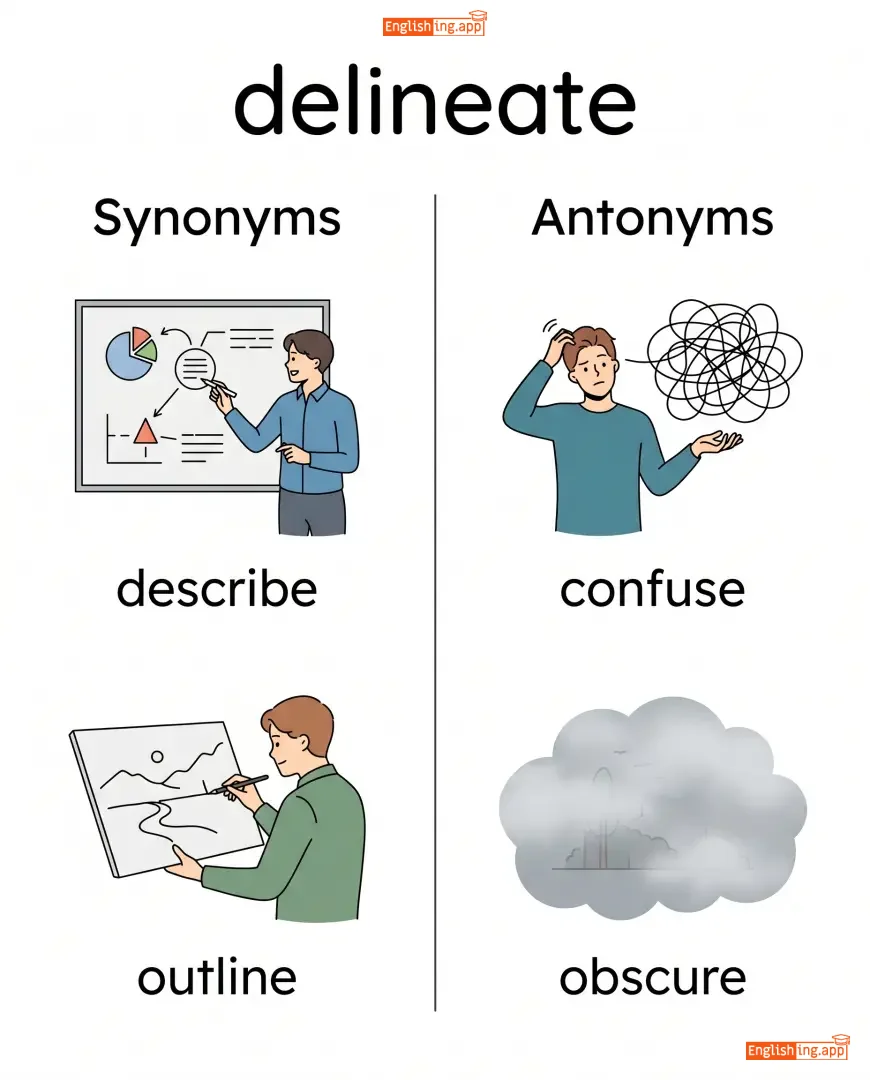
describe, outline, depict, portray, specify
••••••
|
confuse, obscure, distort
••••••
|
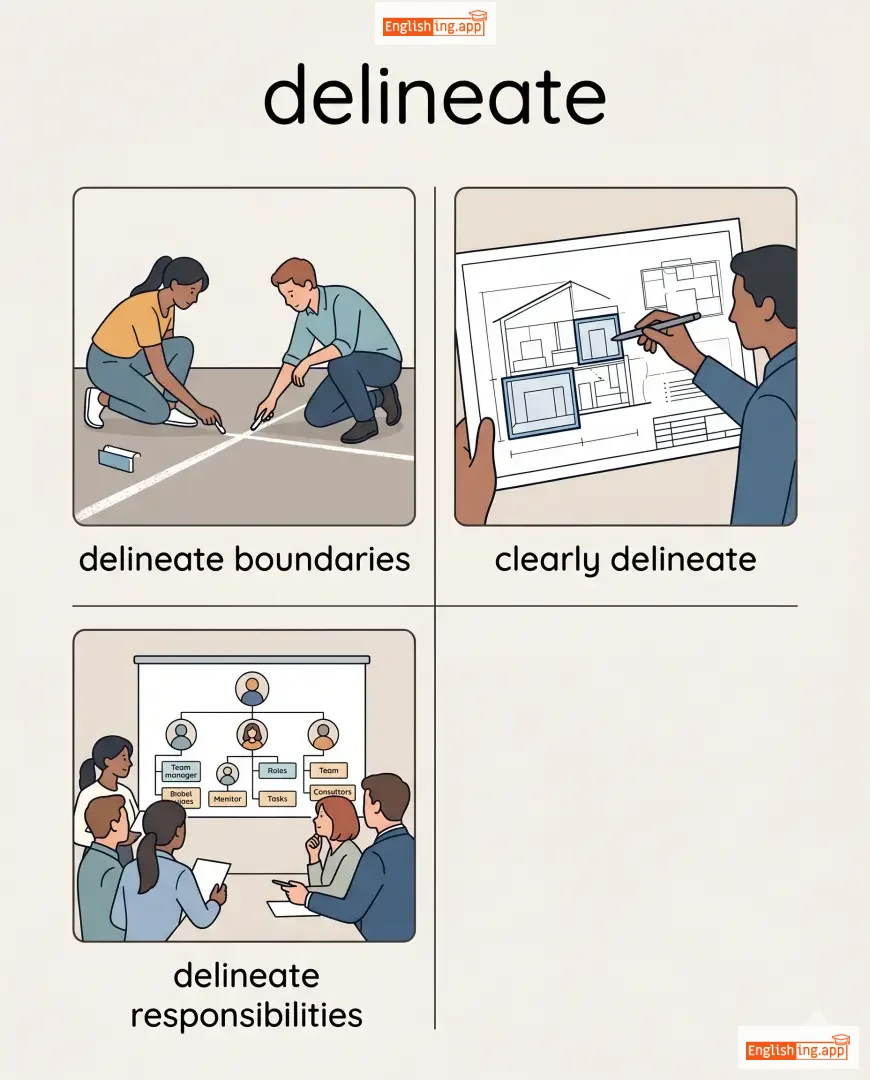
delineate boundaries, clearly delineate, delineate responsibilities, delineate process
••••••
|
描绘像是清晰地画出一条线。
••••••
|
|
#2222
🎤
|
/ˈdɛməɡɒɡ/
noun
(民粹主义者)
••••••
|
- •••••• |
民粹主义者
míncuì zhǔyì zhě
••••••
|
- •••••• | - •••••• | - •••••• | - •••••• |
A political leader who seeks support by appealing to popular desires and prejudices rather than by using rational argument.
••••••
|
The crowd was swayed by the fiery speeches of the demagogue. |
人群受到了民粹主义者激烈演讲的影响。
Rénqún shòudàole míncuì zhǔyì zhě jīliè yǎnjiǎng de yǐngxiǎng.
••••••
|
- •••••• | - •••••• | - •••••• |
agitator, rabble-rouser, manipulator, propagandist
••••••
|
statesman, diplomat, leader
••••••
|
political demagogue, dangerous demagogue, rise of a demagogue
••••••
|
民粹主义者就像利用群众情绪的领导人。
••••••
|
|
#2223
🧲
|
/diːˈmæɡnɪtaɪz/
verb
(diːˈmæg.nɪ.taɪz)
••••••
|
- •••••• |
去磁
quci
••••••
|
demagnetized
diːˈmæg.nɪ.taɪzd
••••••
|
demagnetized
diːˈmæg.nɪ.taɪzd
••••••
|
demagnetizes
diːˈmæg.nɪ.taɪzɪz
••••••
|
demagnetizing
diːˈmæg.nɪ.taɪzɪŋ
••••••
|
To remove or reduce the magnetic properties of something.
••••••
|
The technician demagnetized the old cassette tape.
技术员去掉了老磁带的磁性。
••••••
|
技术员去掉了老磁带的磁性。
Jishuyuan qudiao le lao cida de cixing.
••••••
|
- •••••• | - •••••• | - •••••• |
neutralize, deactivate, discharge, erase
••••••
|
magnetize, charge
••••••
|
demagnetize tape, demagnetize card, demagnetize device
••••••
|
Demagnetize 就是去掉磁性,想象一个技术员去除磁带上的磁性。
••••••
|
|
#2224
🔍
|
/dɛlv/
verb
••••••
|
- •••••• | - •••••• |
delved
••••••
|
delved
••••••
|
delves
••••••
|
delving
••••••
|
To investigate deeply; to dig into a subject or area.
••••••
|
The researcher delved into ancient manuscripts to find clues. |
- •••••• |
delve into |
To investigate or explore something deeply
••••••
|
- •••••• |
investigate, explore, probe, examine, research
••••••
|
ignore, neglect, overlook
••••••
|
delve into history, delve deeper, delve into details
••••••
|
No •••••• |
|
#2225
🌀
|
/dɪˈluːsəri/
adjective
(德鲁索里)
••••••
|
- •••••• |
虚幻的
xū huàn de
••••••
|
- •••••• | - •••••• | - •••••• | - •••••• |
Based on illusion; not real.
••••••
|
He was filled with delusory hopes of becoming famous overnight.
他充满了不切实际的希望,认为自己一夜成名。
••••••
|
他充满了不切实际的希望,认为自己一夜成名。
Tā chōngmǎnle bù qiē shí de xīwàng, rènwéi zìjǐ yīyè chéngmíng.
••••••
|
- •••••• | - •••••• | - •••••• |
illusory, deceptive, false, misleading, unreal
••••••
|
genuine, real, authentic
••••••
|
delusory hope, delusory belief, delusory vision
••••••
|
Delusory 意味着虚幻的—记住 ‘抱歉,这只是个幻觉’。
••••••
|
|
#2226
🎭
|
/dɪˈluːsɪv/
adjective
(di-loo-siv)
••••••
|
- •••••• |
虚假的
xu jia de
••••••
|
- •••••• | - •••••• | - •••••• | - •••••• |
Giving a false or misleading impression; deceptive.
••••••
|
His promises turned out to be delusive and untrustworthy.
他的承诺被证明是具有误导性的和不可信的。
••••••
|
他的承诺被证明是具有误导性的和不可信的。
Ta de chengnuo bei zhengming shi juyou wudao xing de he bukexin de.
••••••
|
- •••••• | - •••••• | - •••••• |
deceptive, misleading, false, illusory, unreal
••••••
|
truthful, genuine, real
••••••
|
delusive hope, delusive promise, delusive appearance
••••••
|
虚假的意思是骗人的—想象一个‘虚假的’承诺。
••••••
|
|
#2227
🤯
|
/dɪˈluːʒən/
noun
(虚幻)
••••••
|
- •••••• |
错觉
cuo jue
••••••
|
- •••••• | - •••••• | - •••••• | - •••••• |
A false belief or impression maintained despite being contradicted by reality.
••••••
|
He lived under the delusion that he was invincible. |
他生活在他自己是不可战胜的错觉中。
Ta shenghuo zai ta ziji shi bukezhansheng de cuo jue zhong.
••••••
|
grand delusion |
An exaggerated or unrealistic false belief.
••••••
|
大错觉
da cuo jue
••••••
|
illusion, misconception, fantasy, hallucination, false belief
••••••
|
truth, reality, fact
••••••
|
delusion of grandeur, live under delusion, mental delusion, self-delusion
••••••
|
delusion = de illusion,错觉的一种。
••••••
|
|
#2228
🌧️
|
/ˈdɛljuːdʒ/
noun
(大水)
••••••
|
- •••••• |
洪水
hongshui
••••••
|
- •••••• | - •••••• | - •••••• | - •••••• |
A severe flood; an overwhelming quantity of something.
••••••
|
The town was hit by a deluge of rain in just a few hours. |
该镇在几个小时内被大雨洪水淹没。
Gai zhen zai ji ge xiaoshi nei bei da yu hong shui yan mo.
••••••
|
a deluge of |
A large amount or overwhelming number of something.
••••••
|
一大堆
yi da dui
••••••
|
flood, torrent, inundation, overflow, avalanche
••••••
|
drought, scarcity
••••••
|
deluge of rain, deluge of problems, deluge of calls, deluge of emotions
••••••
|
Deluge 如洪水般,水淹遍所有的地方。
••••••
|
|
#2229
🤥
|
/dɪˈluːd/
verb
(dì lǔ dē)
••••••
|
- •••••• |
欺骗
qī piàn
••••••
|
deluded
dì lǔ dé
••••••
|
deluded
dì lǔ dé
••••••
|
deludes
dì lǔ dzī
••••••
|
deluding
dì lǔ dīng
••••••
|
To mislead someone into believing something that is not true.
••••••
|
He deluded himself into thinking he could win the race without training.
他欺骗自己认为自己可以不训练就赢得比赛。
••••••
|
他欺骗自己认为自己可以不训练就赢得比赛。
Tā qīpiàn zìjǐ rènwéi zìjǐ kěyǐ bù xùnliàn jiù yíngdé bǐsài.
••••••
|
self-deluded
自欺欺人
••••••
|
Deceiving oneself with false beliefs.
••••••
|
自欺欺人
zì qī qī rén
••••••
|
deceive, mislead, trick, fool, misguide
••••••
|
enlighten, inform, clarify
••••••
|
delude someone, delude oneself, self-deluded belief, deluded mind
••••••
|
delude = 对 (欺骗), 意思是欺骗别人或自己。
••••••
|
|
#2230
🌊
|
/ˈdɛltə/
noun
(dèltà)
••••••
|
- •••••• |
三角洲
sānjiǎozhōu
••••••
|
- •••••• | - •••••• | - •••••• | - •••••• |
A landform at the mouth of a river where it splits into several outlets.
••••••
|
The Nile Delta is one of the most fertile regions in Egypt.
尼罗河三角洲是埃及最肥沃的地区之一。
••••••
|
尼罗河三角洲是埃及最肥沃的地区之一。
Níluóhé sānjiǎozhōu shì āijí zuì féiwò de dìqū zhī yī.
••••••
|
- •••••• | - •••••• | - •••••• |
estuary, river mouth, alluvial plain, distributary
••••••
|
mountain, desert
••••••
|
river delta, delta region, delta formation, Nile Delta
••••••
|
三角洲 = Delta Airlines 飞越三角洲!
••••••
|
|
#2231
😵💫
|
/dɪˈlɪriəm/
noun
(癫狂)
••••••
|
- •••••• |
谵妄
zhān wàng
••••••
|
- •••••• | - •••••• | - •••••• | - •••••• |
An acutely disturbed state of mind characterized by restlessness, illusions, and incoherence.
••••••
|
The patient experienced delirium after the surgery due to the strong medication. |
患者在手术后由于强烈的药物而经历了谵妄。
Huànzhě zài shǒushù hòu yóuyú qiángliè de yàowù ér jīnglì le zhānwàng.
••••••
|
in a state of delirium |
To be extremely confused or excited, often due to illness or strong emotions.
••••••
|
在谵妄状态中
Zài zhānwàng zhuàngtài zhōng
••••••
|
confusion, frenzy, hysteria, madness, hallucination
••••••
|
calm, clarity, lucidity
••••••
|
delirium tremens, state of delirium, suffer from delirium, delirium of excitement
••••••
|
癫狂 = 发狂,极度混乱的状态,记住Delirium!
••••••
|
|
#2232
🤯
|
/dɪˈlɪriəs/
adjective
(得利瑞厄斯)
••••••
|
- •••••• |
得利瑞厄斯
délìruì è sī
••••••
|
- •••••• | - •••••• | - •••••• | - •••••• |
in an extremely disturbed or excited state of mind, often due to illness or emotion
••••••
|
He was delirious with fever and kept muttering nonsense.
他因发烧而神志不清,一直在嘟囔胡话。
••••••
|
他因发烧而神志不清,一直在嘟囔胡话。
Tā yīn fāshāo ér shénzhì bù qīng, yīzhí zài dūnang húhuà.
••••••
|
delirious with joy
因喜悦而神志不清
••••••
|
extremely happy or excited
••••••
|
因喜悦而神志不清
Yīn xǐyuè ér shénzhì bù qīng
••••••
|
hallucinating, incoherent, ecstatic, euphoric
••••••
|
sane, rational, calm
••••••
|
delirious with fever, delirious excitement, delirious laughter
••••••
|
得利瑞厄斯 = 发烧 + 快乐
••••••
|
|
#2233
🧂
|
/ˌdɛlɪˈkwɛsənt/
adjective
(黴變)
••••••
|
- •••••• |
由于吸湿而变成液体
yóu yú xī shī ér biàn chéng yè tǐ
••••••
|
- •••••• | - •••••• | - •••••• | - •••••• |
tending to become liquid by absorbing moisture from the air
••••••
|
Sugar is not deliquescent, but salt can be.
糖不是黴變的,但鹽可以。
••••••
|
糖不是黴變的,但鹽可以。
Táng bù shì méi biàn de, dàn yán kě yǐ.
••••••
|
- •••••• | - •••••• | - •••••• |
moisture-absorbing, hygroscopic, dissolving
••••••
|
dry, solid
••••••
|
deliquescent salt, deliquescent material, deliquescent compound
••••••
|
黴變是指像鹽一樣,當它吸收濕氣後變成液體。
••••••
|
|
#2234
💧
|
/ˌdɛlɪˈkwɛs/
verb
(德利奎斯)
••••••
|
- •••••• |
通过吸收空气中的水分变为液体
tōngguò xīshōu kōngqì zhōng de shuǐfèn biànwéi yètǐ
••••••
|
deliquesced
德利奎斯特
••••••
|
deliquesced
德利奎斯特
••••••
|
deliquesces
德利奎塞斯
••••••
|
deliquescing
德利奎辛
••••••
|
to become liquid by absorbing moisture from the air
••••••
|
The salt began to deliquesce after being left in the humid room.
盐开始在潮湿的房间里变成液体。
••••••
|
盐开始在潮湿的房间里变成液体。
Yán kāishǐ zài cháoshī de fángjiān lǐ biàn chéng yètǐ.
••••••
|
- •••••• | - •••••• | - •••••• |
liquefy, dissolve, melt
••••••
|
solidify, freeze
••••••
|
deliquesce in air, crystals deliquesce, substances deliquesce
••••••
|
德利奎斯?盐在吸收空气中的水分后变成液体。
••••••
|
|
#2235
🎨
|
/dɪˌlɪniˈeɪʃən/
noun
(德利尼埃申)
••••••
|
- •••••• |
界定
jièdìng
••••••
|
- •••••• | - •••••• | - •••••• | - •••••• |
the precise description, drawing, or outlining of something
••••••
|
The artist’s delineation of the landscape was remarkably accurate.
艺术家对风景的界定非常准确。
••••••
|
艺术家对风景的界定非常准确。
Yìshùjiā duì fēngjǐng de jièdìng fēicháng zhǔnquè.
••••••
|
- •••••• | - •••••• | - •••••• |
description, portrayal, depiction, representation
••••••
|
confusion, obscurity
••••••
|
delineation of duties, clear delineation, artistic delineation, careful delineation
••••••
|
界定就是给事物描绘清晰的边界,就像画家画出风景的轮廓。
••••••
|
|
#2236
💧
|
/diːˈhaɪdreɪt/
verb
••••••
|
- •••••• | - •••••• |
dehydrated
••••••
|
dehydrated
••••••
|
dehydrates
••••••
|
dehydrating
••••••
|
to remove water from something; to lose water or body fluids
••••••
|
Running in the heat can quickly dehydrate you. |
- •••••• |
dry as a bone |
extremely dry or dehydrated
••••••
|
- •••••• |
dry, parch, desiccate, drain, exhaust
••••••
|
hydrate, moisten, soak
••••••
|
dehydrate food, dehydrate the body, severely dehydrate, dehydrate quickly
••••••
|
No •••••• |
|
#2237
📏
|
/diːˈlɪmɪt/
verb
(dɪˈlɪmɪt)
••••••
|
- •••••• |
划定
huá dìng
••••••
|
delimited
dɪˈlɪmɪtɪd
••••••
|
delimited
dɪˈlɪmɪtɪd
••••••
|
delimits
dɪˈlɪmɪts
••••••
|
delimiting
dɪˈlɪmɪtɪŋ
••••••
|
to fix the boundaries or limits of something
••••••
|
The treaty was signed to delimit the borders of the two countries.
ðə ˈtriti wəz saɪnd tə dɪˈlɪmɪt ðə ˈbɔrdərz ʌv ðə tu ˈkʌntriz.
••••••
|
该条约被签署以划定两国的边界。
Gāi tiáoyuē bèi qiānshǔ yǐ huá dìng liǎng guó de biān jiè.
••••••
|
delimit boundaries
dɪˈlɪmɪt ˈbaʊndəriz
••••••
|
to set or define the borders or scope of something
••••••
|
划定边界
huá dìng biān jiè
••••••
|
define, determine, demarcate, bound, circumscribe
••••••
|
expand, extend, enlarge
••••••
|
delimit borders, delimit area, delimit scope
••••••
|
De-limit – 划定界限。
••••••
|
|
#2238
🍣
|
/ˈdɛlɪkəsi/
noun
(dèlíkèsī)
••••••
|
- •••••• |
美食 / 精致
měishí / jīngzhì
••••••
|
- •••••• | - •••••• | - •••••• | - •••••• |
a rare or expensive food item; fineness or sensitivity
••••••
|
Caviar is considered a delicacy in many countries. |
鱼子酱在许多国家被认为是一种美食。
yú zǐ jiàng zài xǔduō guójiā bèi rènwéi shì yī zhǒng měishí.
••••••
|
treat with delicacy |
to handle something with care or sensitivity
••••••
|
小心处理
xiǎoxīn chǔlǐ
••••••
|
luxury, treat, rarity, fineness, specialty
••••••
|
common food, coarseness
••••••
|
rare delicacy, local delicacy, delicacy of flavor
••••••
|
Delicacy是精致美食,像一种珍贵的食物。
••••••
|
|
#2239
🧠
|
/dɪˈlɪbərət/ (adj), /dɪˈlɪbəreɪt/ (verb)
adjective, verb
••••••
|
|
- •••••• |
deliberated
••••••
|
deliberated
••••••
|
deliberates
••••••
|
deliberating
••••••
|
done consciously and intentionally; to consider or discuss something carefully
••••••
|
The committee will deliberate on the proposal tomorrow. |
- •••••• |
deliberate attempt |
an intentional or planned effort
••••••
|
- •••••• |
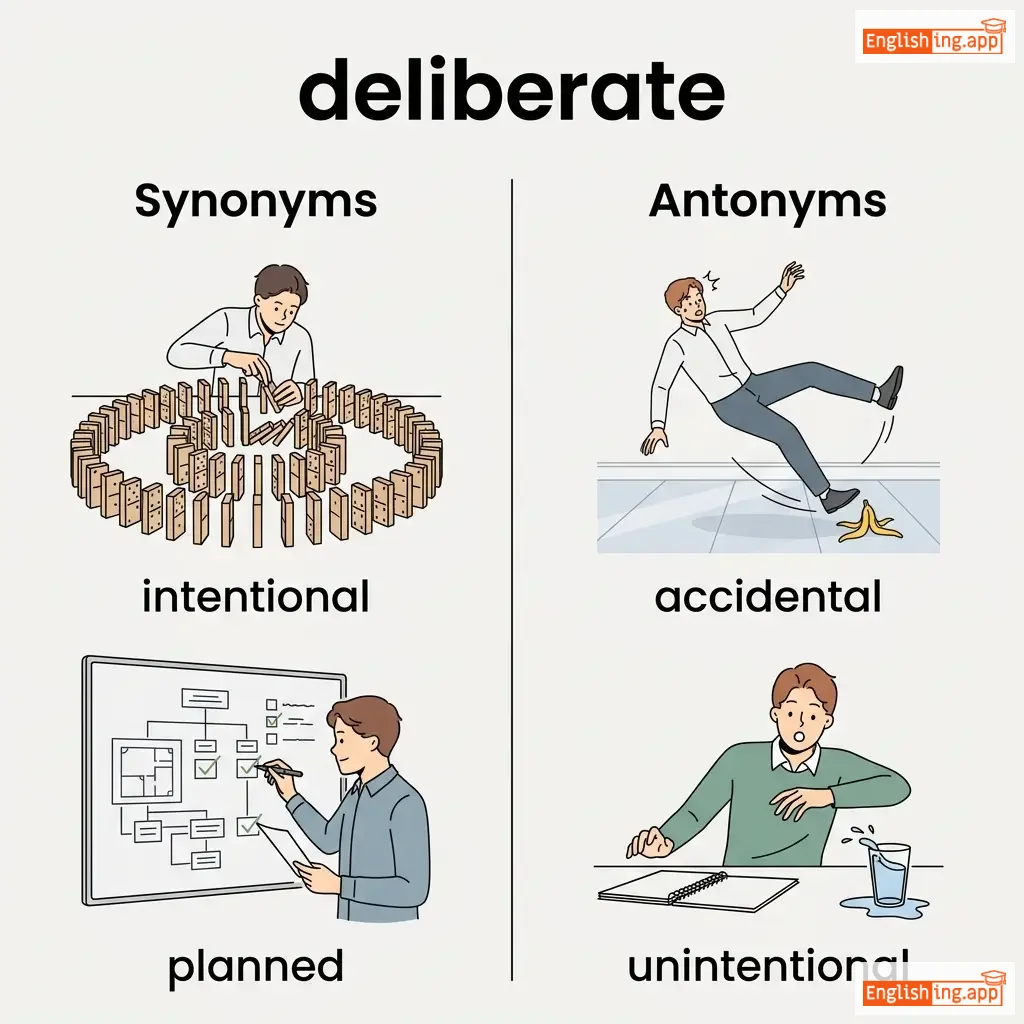
intentional, planned, thoughtful, consider
••••••
|
accidental, unintentional, careless
••••••
|
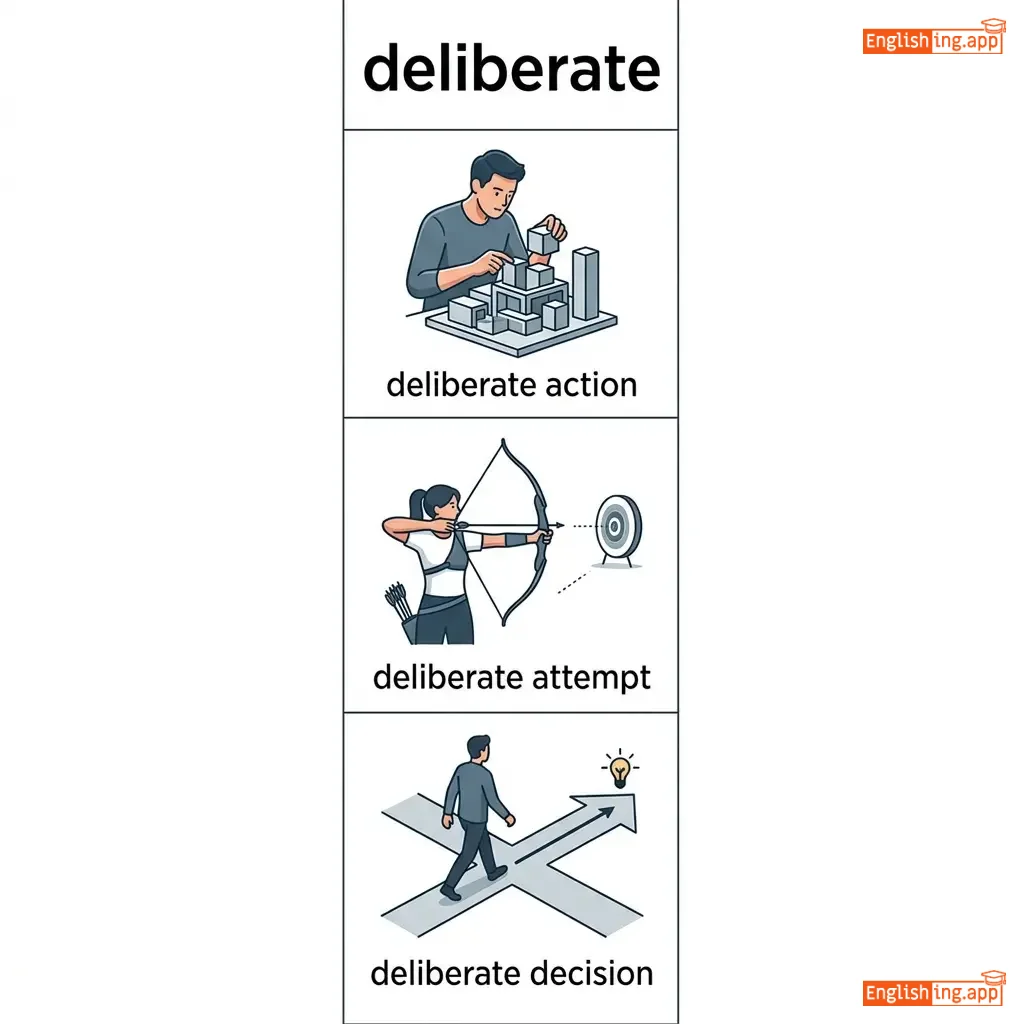
deliberate action, deliberate attempt, deliberate decision, deliberate over
••••••
|
No •••••• |
|
#2240
⚠️
|
/ˌdɛlɪˈtɪəriəs/
adjective
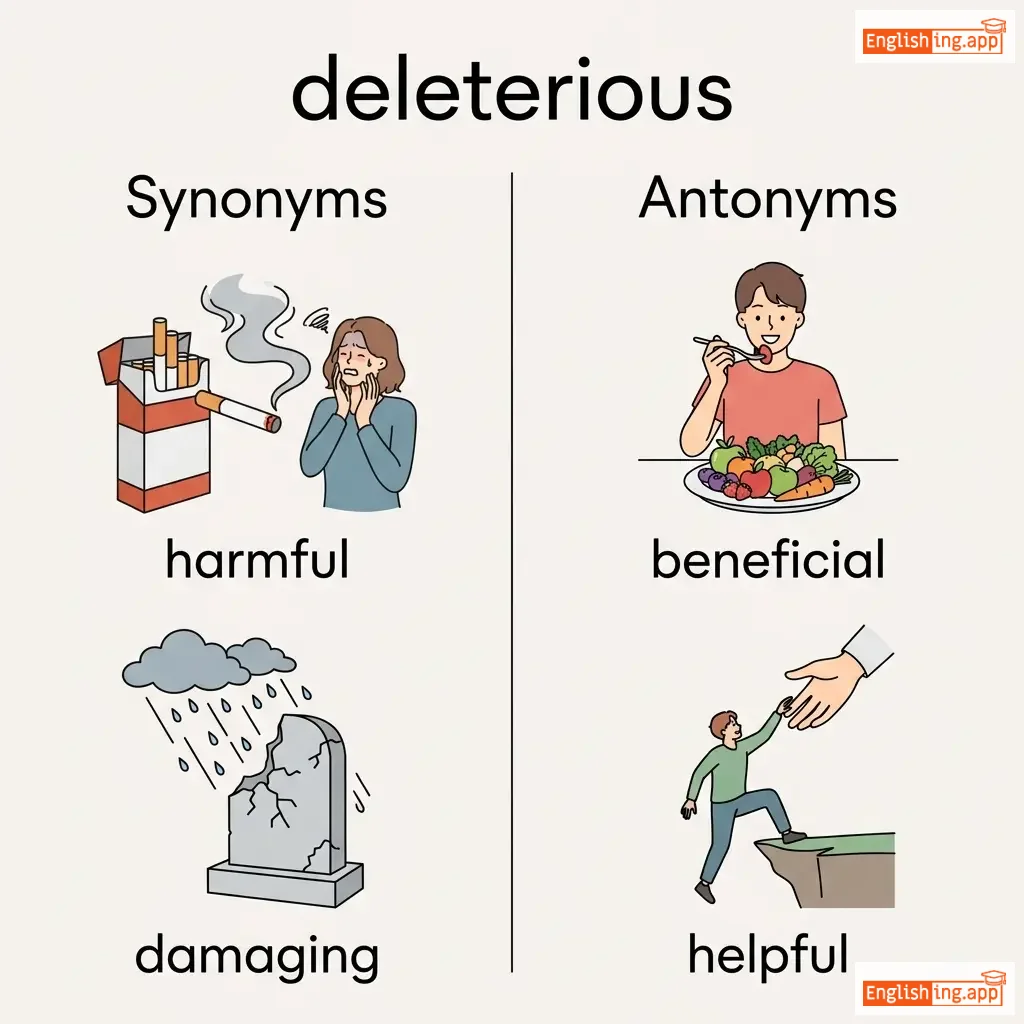
(deleterious)
••••••
|
|
有害的
youhai de
••••••
|
- •••••• | - •••••• | - •••••• | - •••••• |
causing harm or damage
••••••
|
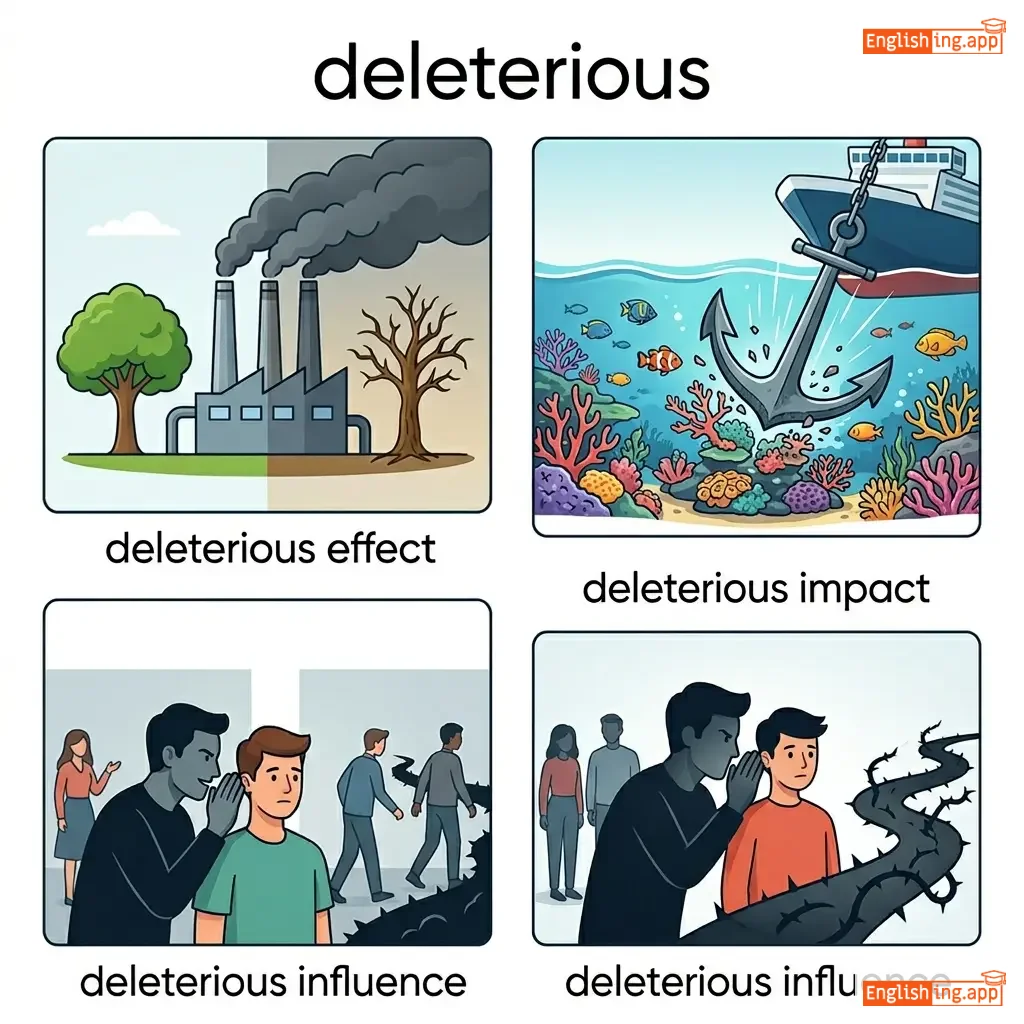
Smoking has deleterious effects on health.
吸烟对健康有害。
••••••
|
吸烟对健康有害。
Xiyan dui jiankang youhai.
••••••
|
- •••••• | - •••••• | - •••••• |
harmful, damaging, detrimental, injurious
••••••
|
beneficial, helpful, advantageous
••••••
|
deleterious effect, deleterious impact, deleterious influence
••••••
|
DeleTERIous意味着TERRIble 有害的。
••••••
|
|
#2241
🗑️
|
/dɪˈliːt/
verb
••••••
|
- •••••• | - •••••• |
deleted
••••••
|
deleted
••••••
|
deletes
••••••
|
deleting
••••••
|
to remove or erase something, especially written or recorded information
••••••
|
He accidentally deleted all the files from his computer. |
- •••••• |
delete from memory |
to try to forget something unpleasant or unnecessary
••••••
|
- •••••• |
erase, remove, wipe, cancel, discard
••••••
|
restore, save, keep
••••••
|
delete a file, delete permanently, delete message, delete account
••••••
|
No •••••• |
|
#2242
📋
|
/ˈdɛlɪɡət/ (noun), /ˈdɛlɪɡeɪt/ (verb)
noun, verb
(代利盖特)
••••••
|
- •••••• |
代表 / 委托
dàibiǎo / wěituō
••••••
|
delegated
委托
••••••
|
delegated
委托
••••••
|
delegates
委托
••••••
|
delegating
委托中
••••••
|
as a noun: a person appointed to represent others; as a verb: to entrust a task or responsibility to another
••••••
|
The manager decided to delegate tasks to his team members.
经理决定将任务委托给他的团队成员。
••••••
|
经理决定将任务委托给他的团队成员。
Jīnglǐ juédìng jiāng rènwù wěituō gěi tā de tuánduì chéngyuán.
••••••
|
delegate authority
授权委托
••••••
|
to give power or responsibility to someone else
••••••
|
授权委托
shòuquán wěituō
••••••
|
assign, entrust, representative, envoy
••••••
|
retain, keep, withhold
••••••
|
delegate responsibility, delegate authority, delegate tasks
••••••
|
Delegate = Delivery + Gate - 将责任委托给他人
••••••
|
|
#2243
😍
|
/ˌdiːlɛkˈteɪʃən/
noun
(dɪlɛkˈteɪʃən)
••••••
|
- •••••• |
愉悦
yuyue
••••••
|
- •••••• | - •••••• | - •••••• | - •••••• |
great pleasure or delight
••••••
|
She read the story aloud for the delectation of her friends. |
她大声朗读故事,以供朋友们的愉悦。
Tā dàshēng lǎngdú gùshì, yǐ gòng péngyǒu men de yúyuè.
••••••
|
- •••••• | - •••••• | - •••••• |
delight, enjoyment, pleasure, amusement
••••••
|
displeasure, boredom
••••••
|
for the delectation, pure delectation, delight and delectation
••••••
|
Delectation = Delight + Excitation → 愉悦和快乐。
••••••
|
|
#2244
😋
|
/dɪˈlɛktəbl̩/
adjective
(dílèkèbùlè)
••••••
|
- •••••• |
美味的
měiwèi de
••••••
|
- •••••• | - •••••• | - •••••• | - •••••• |
delicious or highly enjoyable
••••••
|
The restaurant served a delectable meal. |
餐厅提供了一顿美味的饭菜。
Cāntīng tígōngle yī dùn měiwèi de fàncài.
••••••
|
- •••••• | - •••••• | - •••••• |
delicious, delightful, tasty, appetizing
••••••
|
unappetizing, distasteful, unpleasant
••••••
|
delectable meal, delectable dessert, delectable treat
••••••
|
Delectable意味着美味 + Lick table - 如此美味 (měiwèi) 你想舔桌子。
••••••
|
|
#2245
☹️
|
/dɪˈdʒɛkʃən/
noun
(迪杰克申)
••••••
|
- •••••• |
沮丧
jǔsàng
••••••
|
- •••••• | - •••••• | - •••••• | - •••••• |
a state of sadness, depression, or low spirits
••••••
|
She sat in a state of dejection after hearing the bad news. |
她在听到坏消息后,处于一种沮丧的状态。
Tā zài tīngdào huài xiāoxī hòu, chùyú yī zhǒng jǔsàng de zhuàngtài.
••••••
|
- •••••• | - •••••• | - •••••• |
sadness, depression, gloom, despair
••••••
|
happiness, joy, cheer
••••••
|
state of dejection, deep dejection, sink into dejection
••••••
|
Dejection是沮丧,情绪低落的表现。
••••••
|
|
#2246
😞
|
/dɪˈdʒɛkt/
verb
(dijeckt)
••••••
|
- •••••• |
使沮丧
shi juhuang
••••••
|
dejected
dijeckted
••••••
|
dejected
dijeckted
••••••
|
dejects
dijeckts
••••••
|
dejecting
dijeckting
••••••
|
to make someone feel sad, depressed, or dispirited
••••••
|
The news of his failure seemed to deject him deeply.
他的失败消息似乎深深地让他感到沮丧。
••••••
|
他的失败消息似乎深深地让他感到沮丧。
Ta de shibai xiaoxi shifou shen shen de rang ta gandao juhuang.
••••••
|
- •••••• | - •••••• | - •••••• |
discourage, depress, dishearten, sadden, dispirit
••••••
|
encourage, uplift, inspire
••••••
|
deject someone, look dejected, feel dejected
••••••
|
DEject = Down Emotion - 使沮丧 (shi juhuang)
••••••
|
|
#2247
🕉️
|
/ˈdeɪ.ə.ti/
noun
(戴蒂)
••••••
|
- •••••• |
神祇
shenqi
••••••
|
- •••••• | - •••••• | - •••••• | - •••••• |
a god or goddess
••••••
|
The temple is dedicated to a Hindu deity. |
这座寺庙奉献给一位印度神祇。
Zhe zuo simiao fengxian gei yi wei yin du shenqi.
••••••
|
minor deity |
a lesser or less powerful god
••••••
|
小神祇
xiao shenqi
••••••
|
god, goddess, divinity, immortal, supreme being
••••••
|
mortal, human
••••••
|
Hindu deity, local deity, supreme deity, worship a deity
••••••
|
Deity 意味着 Shenqi - 'DEIty' 和 'Shenqi' 发音相似。
••••••
|
|
#2248
📜
|
/ˈdiːɪst/
noun
(德伊斯特)
••••••
|
- •••••• |
自然神论者
zìrán shénlùn zhě
••••••
|
- •••••• | - •••••• | - •••••• | - •••••• |
a person who believes in the existence of a supreme being but rejects organized religion
••••••
|
The philosopher identified himself as a deist. |
这位哲学家把自己认定为自然神论者。
Zhè wèi zhéxuéjiā bǎ zìjǐ rèndìng wéi zìrán shénlùn zhě.
••••••
|
- •••••• | - •••••• | - •••••• |
free-thinker, believer, rationalist, theist
••••••
|
atheist, skeptic
••••••
|
philosophical deist, strong deist, deist belief, deist tradition
••••••
|
自然神论者:相信上帝,但不信宗教。
••••••
|
|
#2249
👑
|
/deɪn/
verb
(dein)
••••••
|
- •••••• |
不屑做某事
bu xie zuo mou shi
••••••
|
deigned
deind
••••••
|
deigned
deind
••••••
|
deigns
deins
••••••
|
deigning
deining
••••••
|
to do something considered beneath one's dignity
••••••
|
The king did not deign to reply to the commoner.
国王没有屈尊回应平民。
••••••
|
国王没有屈尊回应平民。
Guowang meiyou quxuan huiying pingmin.
••••••
|
- •••••• | - •••••• | - •••••• |
condescend, stoop, humble oneself, lower oneself
••••••
|
refuse, reject, ignore
••••••
|
deign to answer, deign to help, hardly deign, deign to speak
••••••
|
Deign: 如国王不屑回答平民,表现出降低尊严的行为。
••••••
|
|
#2250
🙏
|
/ˈdiːɪfaɪ/
verb
(德法伊)
••••••
|
- •••••• |
神化
shenhua
••••••
|
deified
德法伊德
••••••
|
deified
德法伊德
••••••
|
deifies
德法伊兹
••••••
|
deifying
德法伊英
••••••
|
to treat or worship someone or something as a god
••••••
|
Some fans deify their favorite celebrities.
一些粉丝将他们的偶像神化。
••••••
|
一些粉丝将他们的偶像神化。
Yi xie fen si jiang ta men de ouxiang shenhua.
••••••
|
- •••••• | - •••••• | - •••••• |
idolize, worship, glorify, exalt
••••••
|
demean, despise, dishonor
••••••
|
deify leaders, deify heroes, deify nature, deify ancestors
••••••
|
Deify 意味着将某人视为神 - 一个 DIE hard 的粉丝将他的偶像神化。
••••••
|
Vocabulary Quiz
Test your vocabulary by matching words with their translations or meanings.
Login to take the quiz
Comments (0)
Share your thoughts and join the discussion.
Join the discussion by logging in
Login to CommentNo comments yet
Be the first to share your thoughts!