


Swipe left or right, or use the buttons. Tap image to zoom.
例句翻译
单词
Lesson 319Lesson 319 - 遮罩切换
|
表情符号
|
单词 | Images | 翻译 | 过去时 | 过去分词 | 第三人称单数 | 动名词 | 含义 | 例句 | 例句翻译 | 示例表达 | 示例表达含义 | 示例表达翻译 | 同义词 | 反义词 | 搭配词 | 助记符 |
|---|---|---|---|---|---|---|---|---|---|---|---|---|---|---|---|---|---|
|
#9540
👨🌾
|
/ˈjoʊmən/
noun
(yòumén)
••••••
|
- •••••• |
农民 / 忠诚的员工
nóngmín / zhōngchéng de yuángōng
••••••
|
- •••••• | - •••••• | - •••••• | - •••••• |
A farmer who cultivates his own land; also used to describe someone performing loyal, useful service.
••••••
|
He did yeoman service in completing the project on time. |
他在按时完成项目时做了忠诚的工作。
Tā zài ànshí wánchéng xiàngmù shí zuòle zhōngchéng de gōngzuò.
••••••
|
yeoman's service |
Loyal, useful, and effective service.
••••••
|
忠诚的工作
zhōngchéng de gōngzuò
••••••
|
farmer, cultivator, worker, servant, helper
••••••
|
master, nobleman, idle
••••••
|
yeoman service, loyal yeoman, hardworking yeoman
••••••
|
Yeoman 意味着农民 — YEO 意味着 'Your Own' 土地,man 意味着人
••••••
|
|
#9541
♈
|
/ˈzoʊdiæk/
noun
(zodiak)
••••••
|
- •••••• |
黄道带
huangdao dai
••••••
|
- •••••• | - •••••• | - •••••• | - •••••• |
a belt of the heavens divided into twelve equal divisions or signs, each named after a constellation; used in astronomy and astrology
••••••
|
She checked her zodiac sign to read her daily horoscope. |
她查看了自己的星座,以阅读每日的星座运势。
Tā chákànle zìjǐ de xīngzuò, yǐ yuèdú měirì de xīngzuò yùnshì.
••••••
|
signs of the zodiac |
the twelve astrological signs representing different periods of the year
••••••
|
黄道星座
huangdao xingzuo
••••••
|
horoscope, astrological chart, celestial sphere, star signs
••••••
|
reality, science, facts
••••••
|
zodiac sign, zodiac constellation, Chinese zodiac, zodiac calendar, Western zodiac
••••••
|
ZODIAC表示 ZOO 在 DIAG - 黄道带 (huangdao dai) 就像12个星座的动物!
••••••
|
|
#9542
🌶️
|
/ˈzɛsti/
adjective
(zèstī)
••••••
|
- •••••• |
辛辣
xinla
••••••
|
- •••••• | - •••••• | - •••••• | - •••••• |
Having a strong, pleasant, and somewhat spicy flavor; full of energy and enthusiasm.
••••••
|
The dish had a zesty flavor that everyone loved. |
这道菜有一种辛辣的味道,大家都很喜欢。
Zhè dào cài yǒu yī zhǒng xīnlà de wèidào, dàjiā dōu hěn xǐhuān.
••••••
|
- •••••• | - •••••• | - •••••• |
spicy, tangy, lively, flavorful, energetic
••••••
|
bland, dull, tasteless
••••••
|
zesty flavor, zesty sauce, zesty attitude, zesty personality
••••••
|
Zesty 就像一味辛辣的菜,充满活力!
••••••
|
|
#9543
✨
|
/zɛst/
noun
(zest)
••••••
|
- •••••• |
热情
reqing
••••••
|
- •••••• | - •••••• | - •••••• | - •••••• |
Great enthusiasm and energy; also the outer colored part of citrus fruit used for flavor.
••••••
|
She tackled the project with zest. |
她带着热情完成了这个项目。
Ta daizhe reqing wancheng le zhege xiangmu.
••••••
|
zest for life |
a great enthusiasm and enjoyment of life
••••••
|
对生活的热情
Dui shenghuo de reqing
••••••
|
enthusiasm, energy, gusto, passion, relish
••••••
|
apathy, indifference, dullness
••••••
|
zest for life, with zest, full of zest, zest and energy
••••••
|
Zest像test,但充满热情。
••••••
|
|
#9544
🍃
|
/ˈzɛfər/
noun
(泽费尔)
••••••
|
- •••••• |
轻风
qīng fēng
••••••
|
- •••••• | - •••••• | - •••••• | - •••••• |
A soft gentle breeze.
••••••
|
A warm zephyr blew through the valley.
A warm zephyr blew through the valley.
••••••
|
一阵温暖的轻风吹过山谷。
Yī zhèn wēn nuǎn de qīng fēng chuī guò shāngǔ.
••••••
|
- •••••• | - •••••• | - •••••• |
breeze, wind, gust, draft
••••••
|
storm, gale
••••••
|
gentle zephyr, summer zephyr, cool zephyr, soft zephyr
••••••
|
Zephyr = '轻风'—一种轻柔的微风。
••••••
|
|
#9545
🌄
|
/ˈziːnɪθ/
noun
(zénìtè)
••••••
|
- •••••• |
天顶
tiāndǐng
••••••
|
- •••••• | - •••••• | - •••••• | - •••••• |
The time at which something is most powerful or successful; the highest point.
••••••
|
Her career reached its zenith in the late 1990s. |
她的事业在1990年代末达到了天顶。
Tā de shìyè zài 1990 niándài mò dádào le tiāndǐng.
••••••
|
reach the zenith |
to achieve the highest point of success or power
••••••
|
达到天顶
dádào tiāndǐng
••••••
|
peak, pinnacle, climax, summit, apex
••••••
|
nadir, bottom, decline
••••••
|
at the zenith, reach zenith, zenith of success, zenith of power
••••••
|
天顶意味着天空的最高点,就像事业的巅峰。
••••••
|
|
#9546
🕰️
|
/ˈzaɪtɡaɪst/
noun
(zaitgaist)
••••••
|
- •••••• |
时代精神
shídài jīngshén
••••••
|
- •••••• | - •••••• | - •••••• | - •••••• |
The defining spirit or mood of a particular period of history as shown by the ideas and beliefs of the time.
••••••
|
The novel perfectly captures the zeitgeist of the 1960s. |
这本小说完美地捕捉了1960年代的时代精神。
Zhè běn xiǎoshuō wánměi de bǔzhuō le 1960 niándài de shídài jīngshén.
••••••
|
- •••••• | - •••••• | - •••••• |
spirit of the age, trend, outlook, ethos, climate
••••••
|
timelessness, tradition
••••••
|
capture the zeitgeist, reflect the zeitgeist, zeitgeist of the era, cultural zeitgeist
••••••
|
Zeitgeist 意味着时代的精神 — 'zaitgaist' 记住它就是时代的精神。
••••••
|
|
#9547
💪
|
/ˈzel.əs/
adjective
(泽洛斯)
••••••
|
|
热心的
rèxīn de
••••••
|
- •••••• | - •••••• | - •••••• | - •••••• |
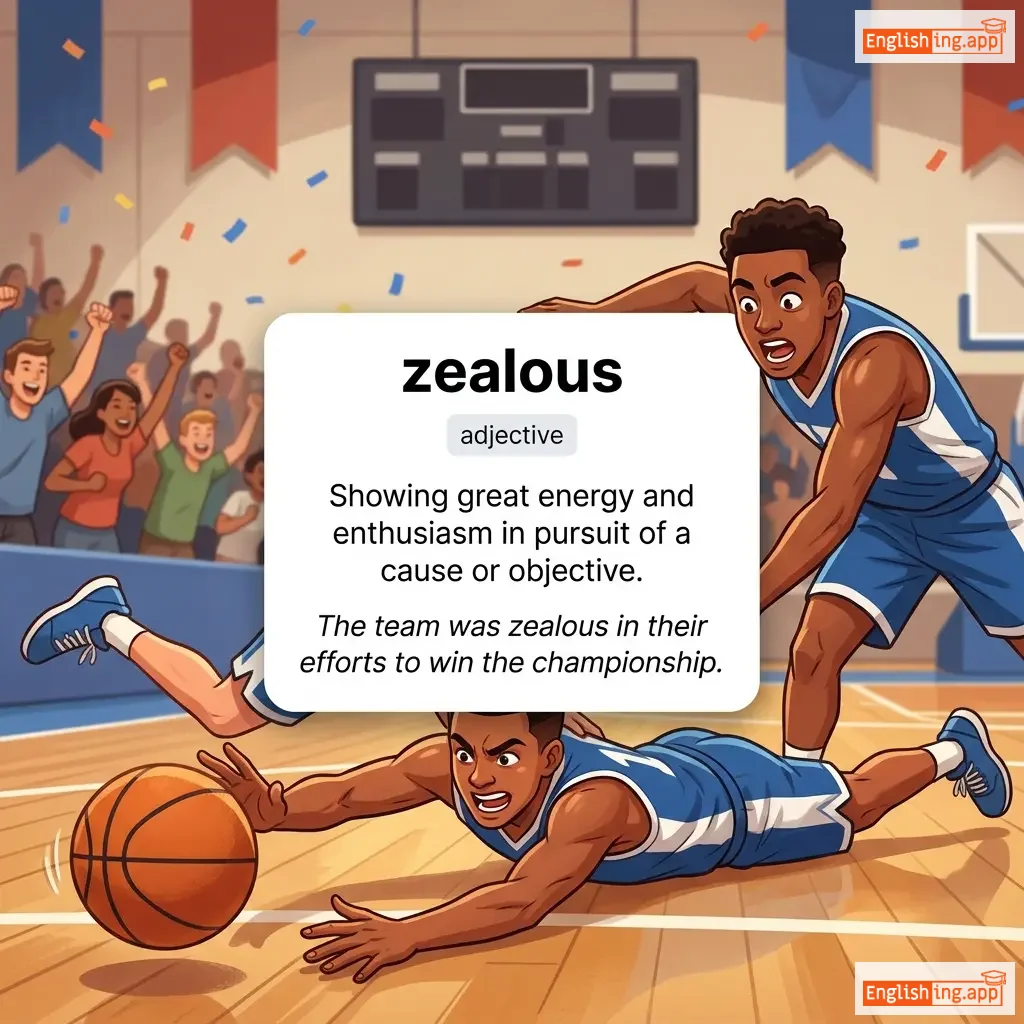
Showing great energy and enthusiasm in pursuit of a cause or objective.
••••••
|
The team was zealous in their efforts to win the championship.
该团队在努力赢得冠军时充满热情。
••••••
|
该团队在努力赢得冠军时充满热情。
Gāi tuánduì zài nǔlì yíngdé guànjūn shí chōngmǎn rèqíng.
••••••
|
zealous supporter
热心支持者
••••••
|
a very enthusiastic and committed supporter
••••••
|
热心支持者
rèxīn zhīchí zhě
••••••
|
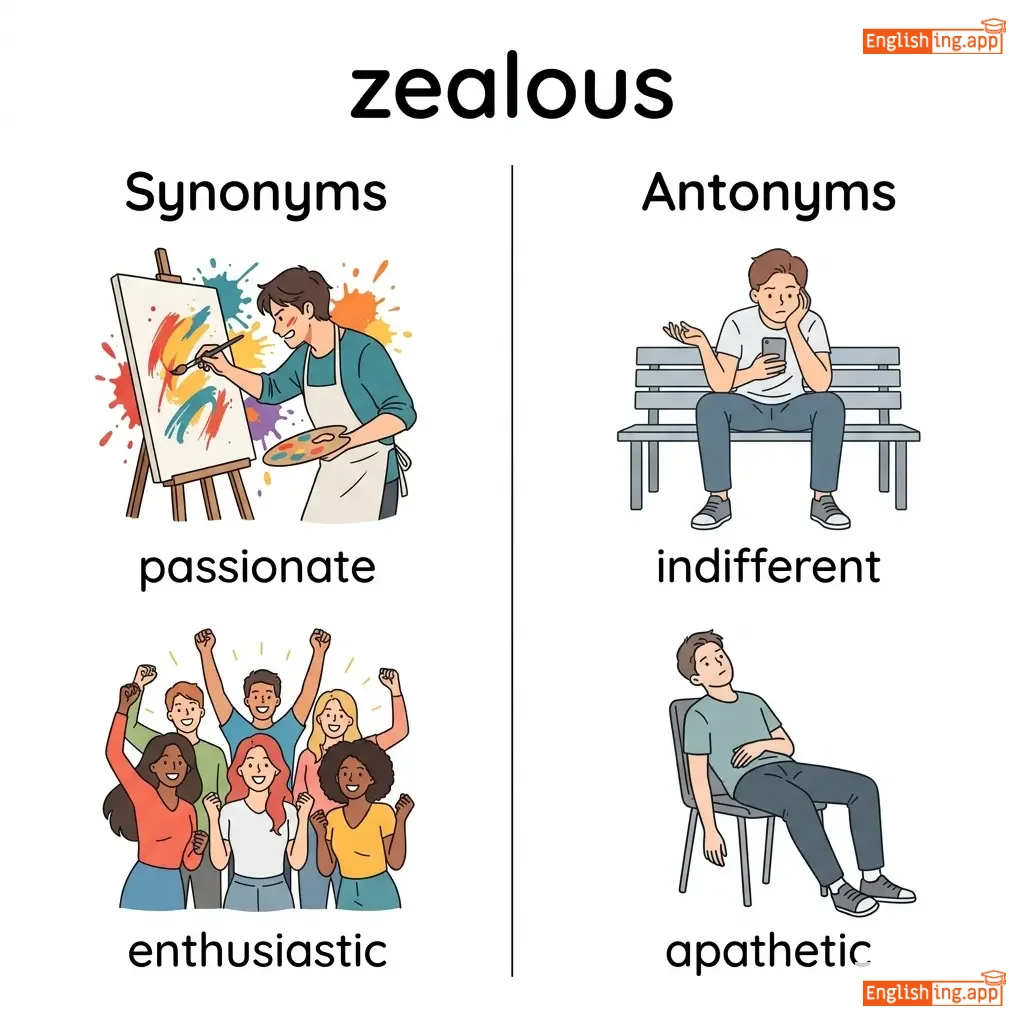
passionate, enthusiastic, fervent, eager, devoted
••••••
|
indifferent, apathetic
••••••
|
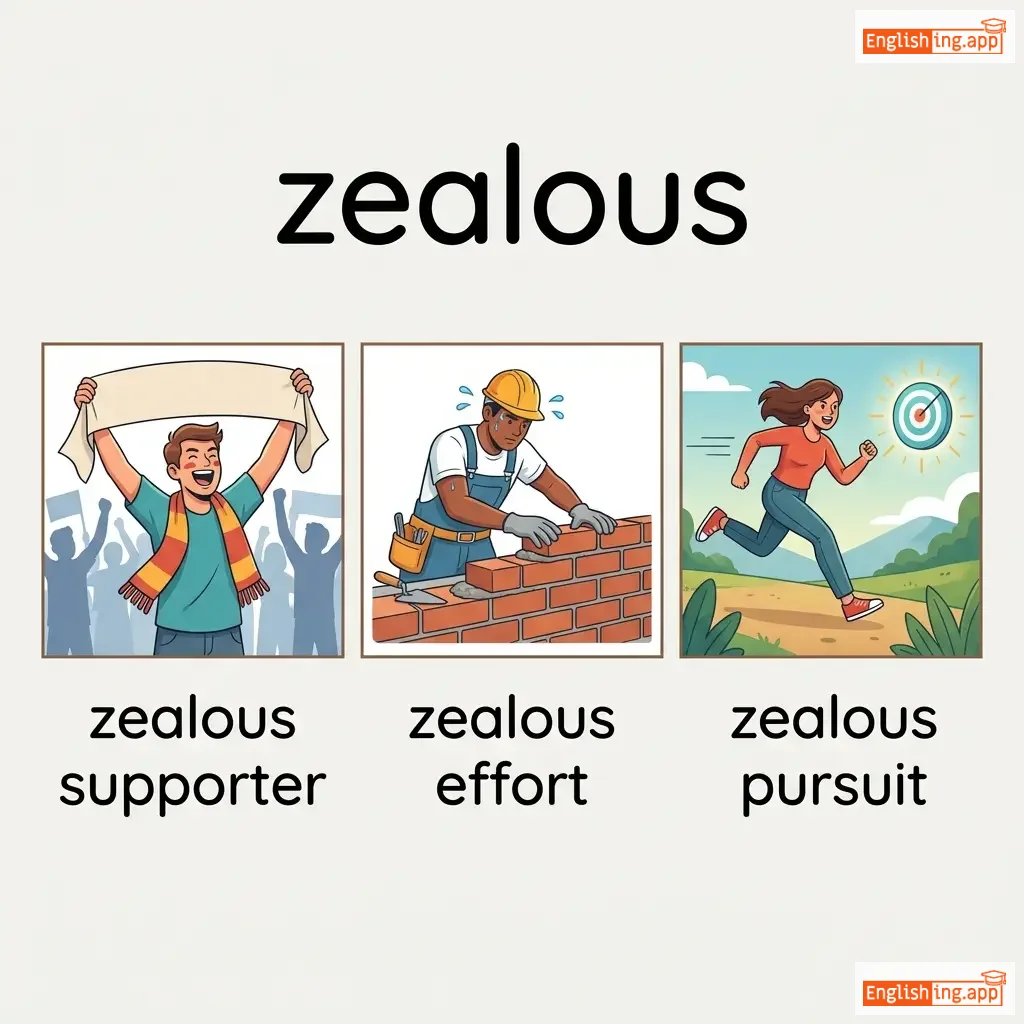
zealous supporter, zealous effort, zealous pursuit
••••••
|
Zealous 代表热情,就像支持者一样热心!
••••••
|
|
#9548
⚔️
|
/ˈzel.ət/
noun
(泽洛特)
••••••
|
|
狂热分子
kuángrè fènzǐ
••••••
|
- •••••• | - •••••• | - •••••• | - •••••• |
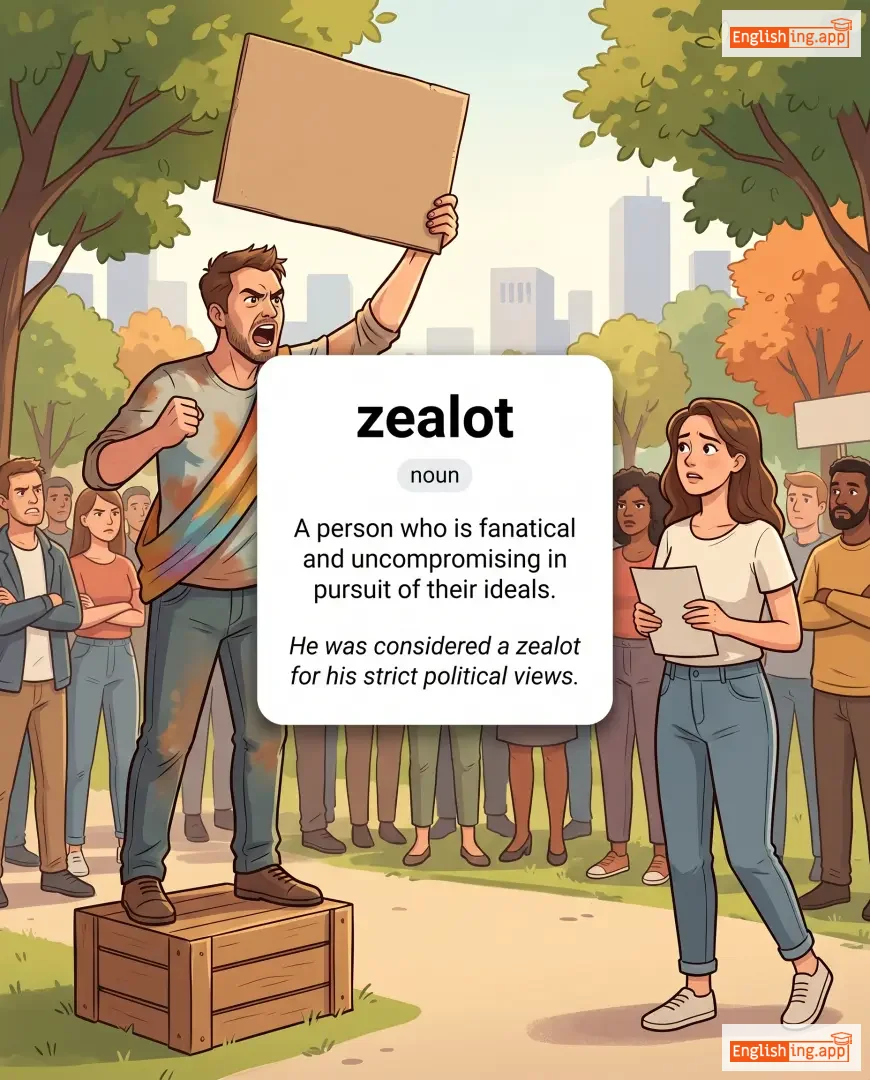
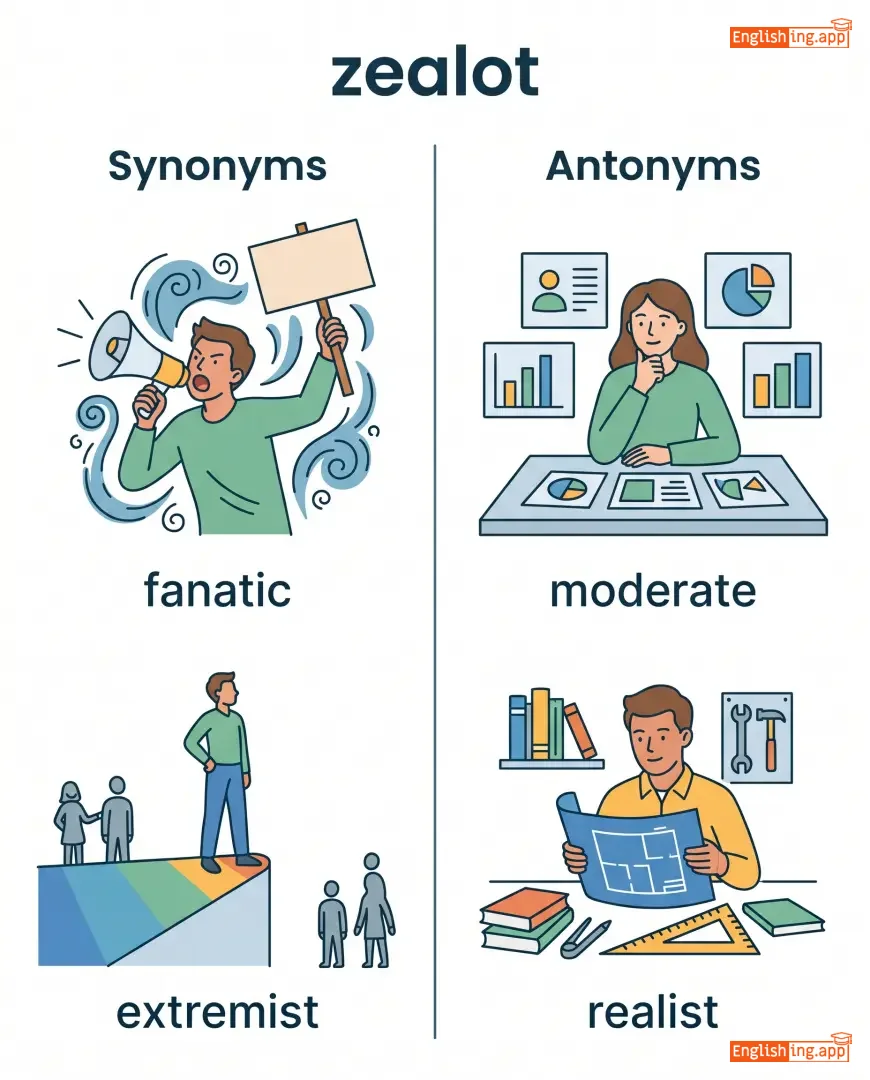
A person who is fanatical and uncompromising in pursuit of their ideals.
••••••
|
He was considered a zealot for his strict political views. |
由于他严格的政治观点,他被视为狂热分子。
Yóuyú tā yángé de zhèngzhì guāndiǎn, tā bèi shì wéi kuángrè fènzǐ.
••••••
|
- •••••• | - •••••• | - •••••• |
fanatic, extremist, radical, enthusiast
••••••
|
moderate, realist
••••••
|
religious zealot, political zealot, zealot group
••••••
|
ZeaLOT意味着更多的热情,因此zealot意味着狂热分子。
••••••
|
|
#9549
🔥
|
/ziːl/
noun
(zíl)
••••••
|
|
热情
reqing
••••••
|
- •••••• | - •••••• | - •••••• | - •••••• |
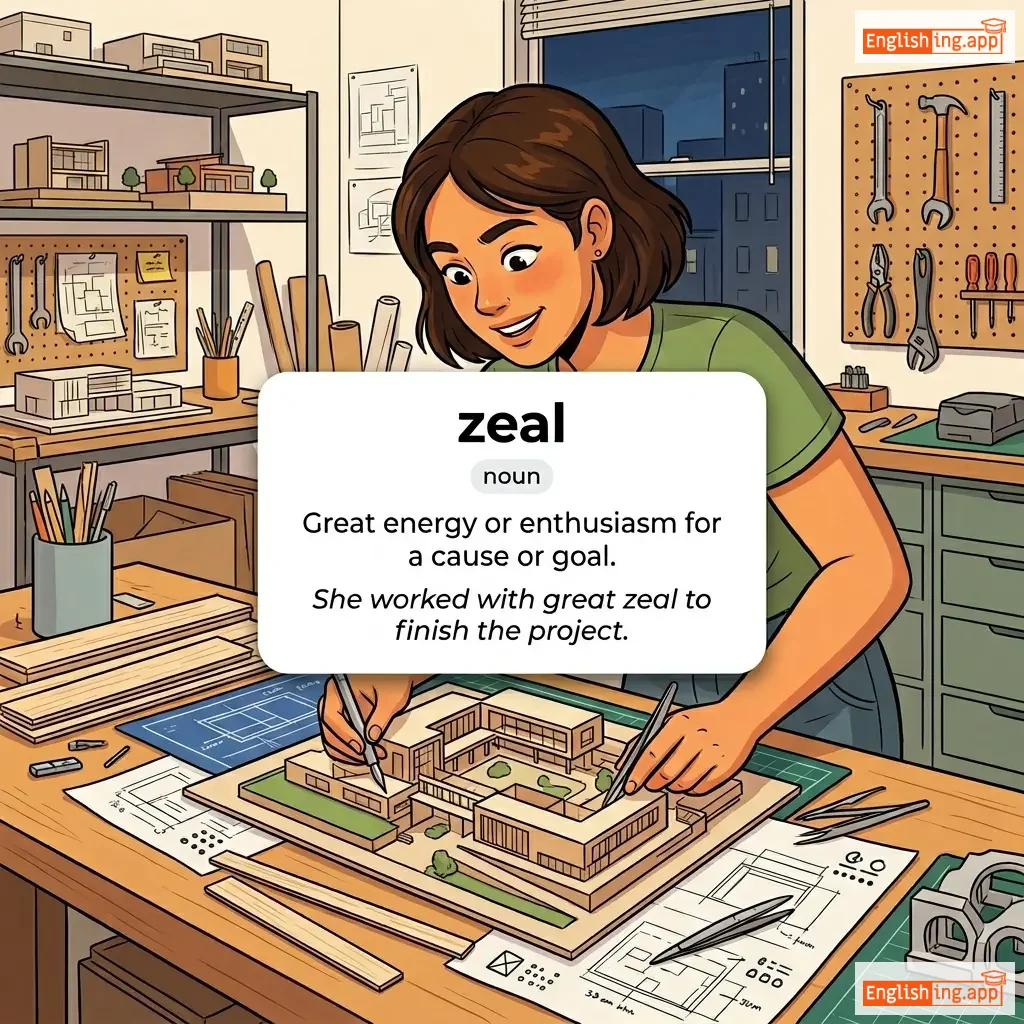
Great energy or enthusiasm for a cause or goal.
••••••
|
She worked with great zeal to finish the project. |
她以极大的热情工作,完成了这个项目。
Ta yi jidai de reqing gongzuo, wanchengle zhege xiangmu.
••••••
|
zeal for life |
great enthusiasm and energy for living
••••••
|
对生活的热情
dui shenghuo de reqing
••••••
|
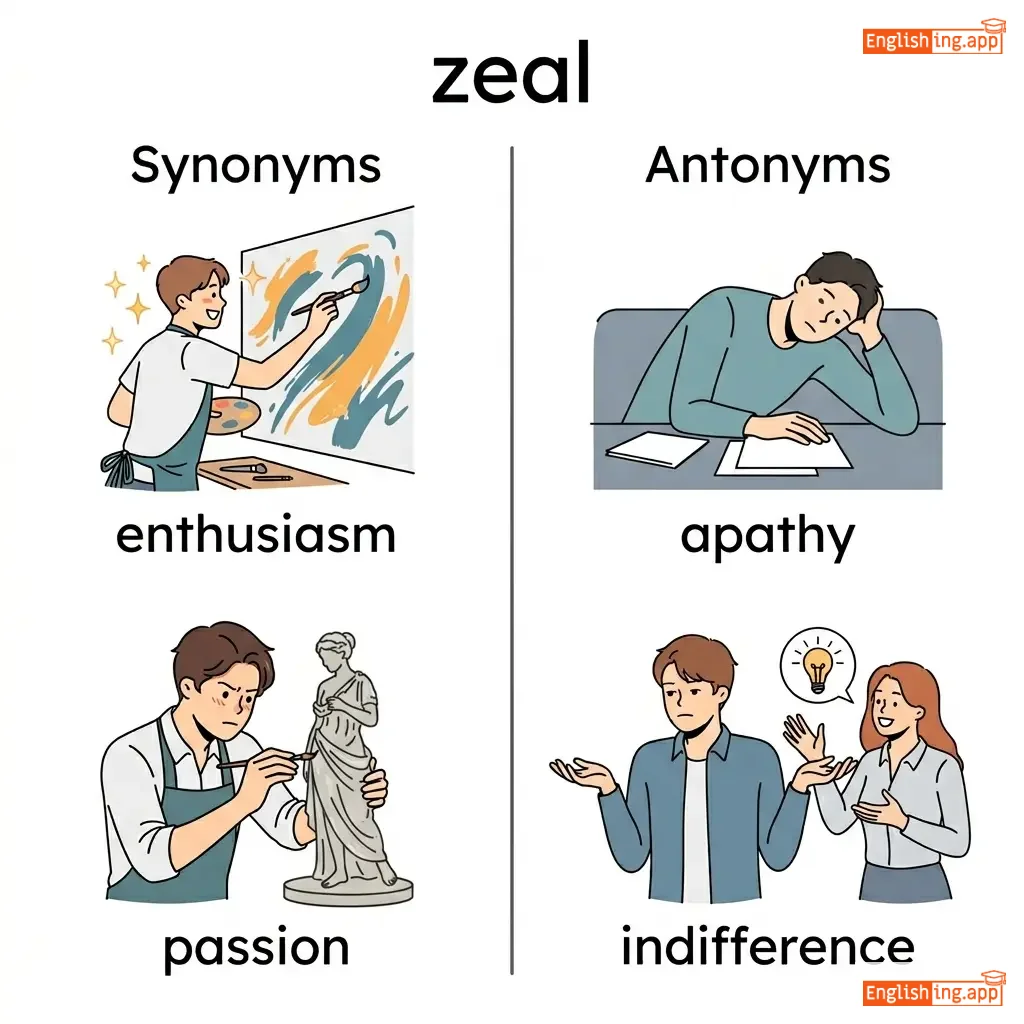
enthusiasm, passion, eagerness, fervor, devotion
••••••
|
apathy, indifference
••••••
|
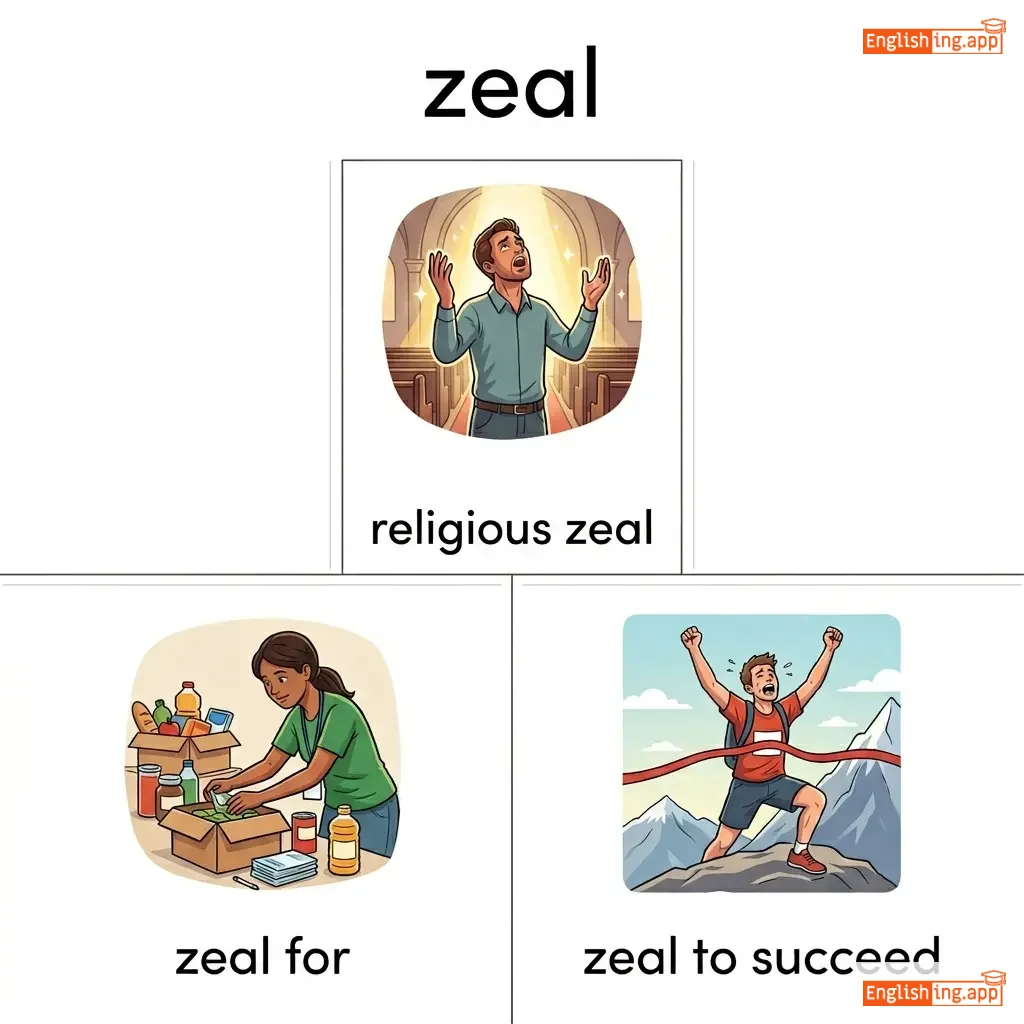
religious zeal, zeal for, zeal to succeed
••••••
|
ZeAL = zeal 意味着热情地工作 - 在中文中热情
••••••
|
|
#9550
🤡
|
/ˈzeɪ.ni/
adjective
(zāní)
••••••
|
- •••••• |
滑稽而不寻常
huájī ér bù xúncháng
••••••
|
- •••••• | - •••••• | - •••••• | - •••••• |
Amusingly unconventional and peculiar.
••••••
|
The comedian's zany style kept the audience laughing. |
喜剧演员古怪的风格让观众捧腹大笑。
xǐjù yǎnyuán gǔguài de fēnggé ràng guānzhòng pěngfù dà xiào
••••••
|
- •••••• | - •••••• | - •••••• |
quirky, eccentric, odd, wacky, clownish
••••••
|
serious, normal, conventional
••••••
|
zany humor, zany idea, zany character
••••••
|
Zany代表一种既奇怪又搞笑的风格,像是无厘头的喜剧表演!
••••••
|
|
#9551
📜
|
/jɔːr/
noun
(yuó)
••••••
|
- •••••• |
过去
guoqu
••••••
|
- •••••• | - •••••• | - •••••• | - •••••• |
Time long past; bygone days.
••••••
|
Legends of yore still inspire people today. |
过去的传说至今仍然激励着人们。
Guoqu de chuanshuo zhiji rengran jili zhe renmen.
••••••
|
of yore |
refers to something from the distant past
••••••
|
从过去
cong guoqu
••••••
|
past, history, antiquity, bygone
••••••
|
present, future
••••••
|
days of yore, times of yore, legends of yore
••••••
|
Yore 代表过去 - 想象'过去'就是'yuó'
••••••
|
|
#9552
🚜
|
/ˈjoʊkəl/
noun
(yóu kè ěr)
••••••
|
- •••••• |
乡巴佬
xiangbaolao
••••••
|
- •••••• | - •••••• | - •••••• | - •••••• |
An uneducated and unsophisticated person from the countryside; a bumpkin.
••••••
|
The city folks laughed at the yokel's simple ways. |
城市人嘲笑乡巴佬的简单方式。
Chéngshì rén cháoxiào xiāng bā lǎo de jiǎndān fāngshì.
••••••
|
- •••••• | - •••••• | - •••••• |
bumpkin, rustic, peasant, hillbilly, hick
••••••
|
gentleman, sophisticate, urbanite
••••••
|
country yokel, simple yokel, poor yokel
••••••
|
Yokel 意味着乡巴佬 — 在乡村工作的简单人
••••••
|
|
#9553
🪢
|
/joʊk/
noun
(yoke)
••••••
|
- •••••• |
轭
è
••••••
|
- •••••• | - •••••• | - •••••• | - •••••• |
A wooden crosspiece fastened over the necks of animals; symbolically, a burden or oppression.
••••••
|
The oxen were bound together by a heavy yoke. |
牛被一根沉重的轭绑在一起。
Niú bèi yī gēn chénzhòng de è bǎng zài yīqǐ.
••••••
|
under the yoke |
Living under oppression or burden.
••••••
|
在轭下
Zài è xià
••••••
|
harness, burden, oppression, bondage, restraint
••••••
|
freedom, liberty, independence
••••••
|
yoke of slavery, heavy yoke, break the yoke
••••••
|
Yoke 意味着轭 — 牛脖子上的轭意味着负担
••••••
|
|
#9554
🌾
|
/jiːld/
verb
(yild)
••••••
|
|
产生 / 屈服
chǎnshēng / qūfú
••••••
|
yielded
yilded
••••••
|
yielded
yilded
••••••
|
yields
yilds
••••••
|
yielding
yilding
••••••
|
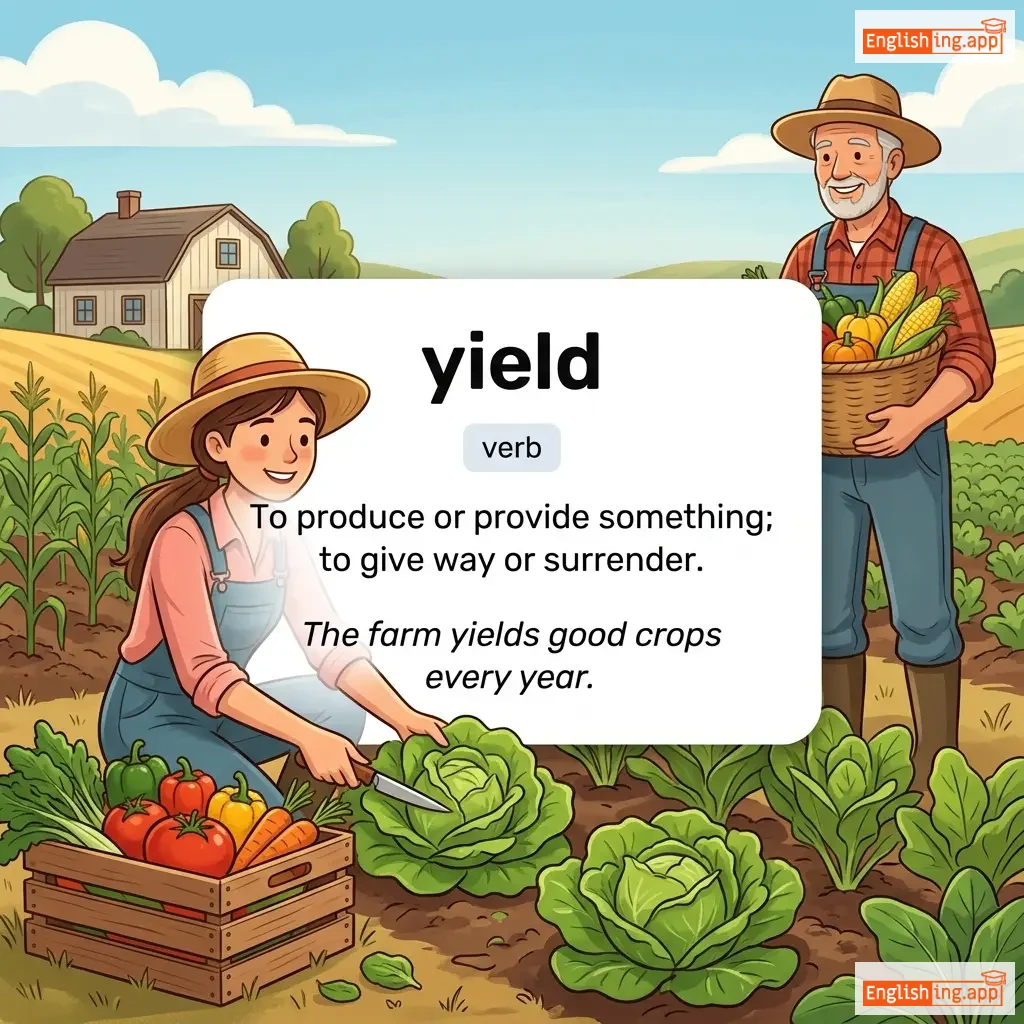
To produce or provide something; to give way or surrender.
••••••
|
The farm yields good crops every year.
农场每年都产出好收成。
••••••
|
农场每年都产出好收成。
Nóngchǎng měi nián dōu chǎnchū hǎo shōuchéng.
••••••
|
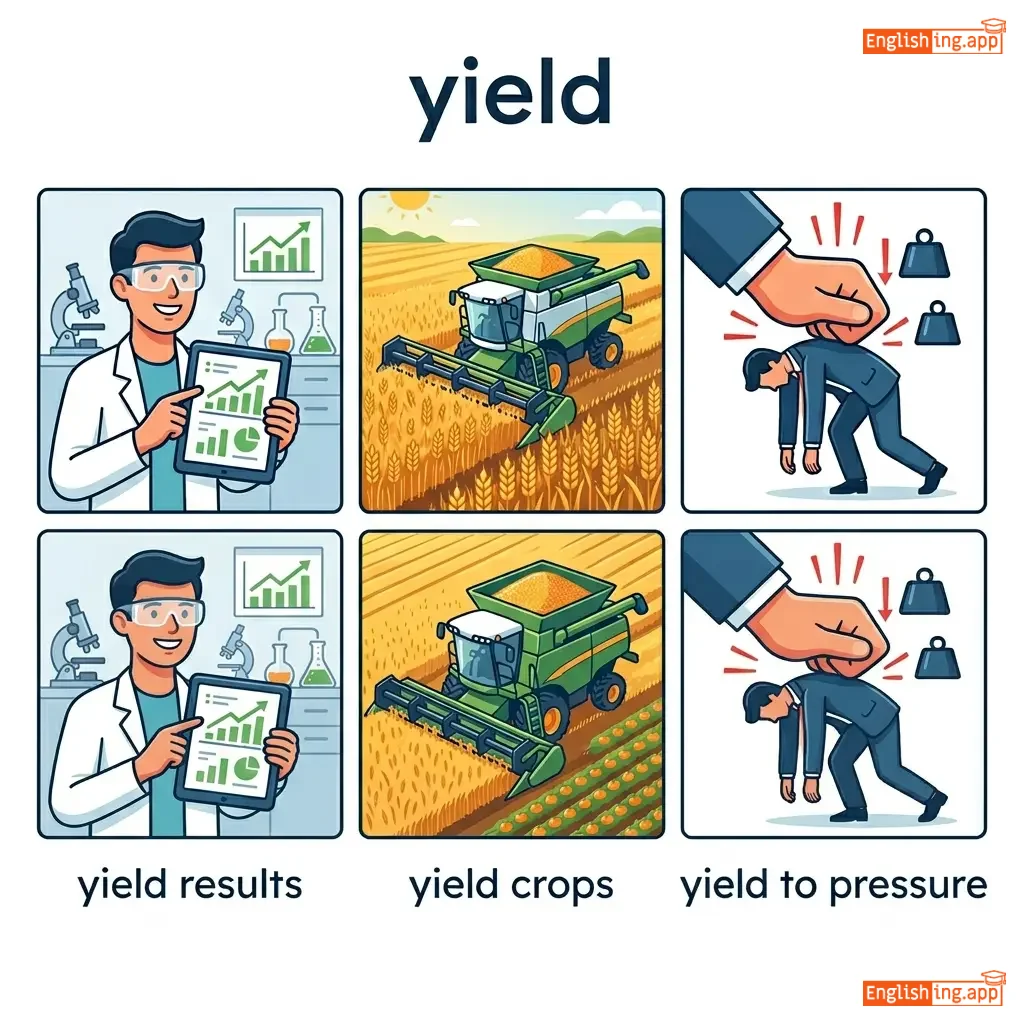
yield to pressure
在压力下屈服
••••••
|
To give in or surrender under pressure.
••••••
|
在压力下屈服
Zài yālì xià qūfú
••••••
|
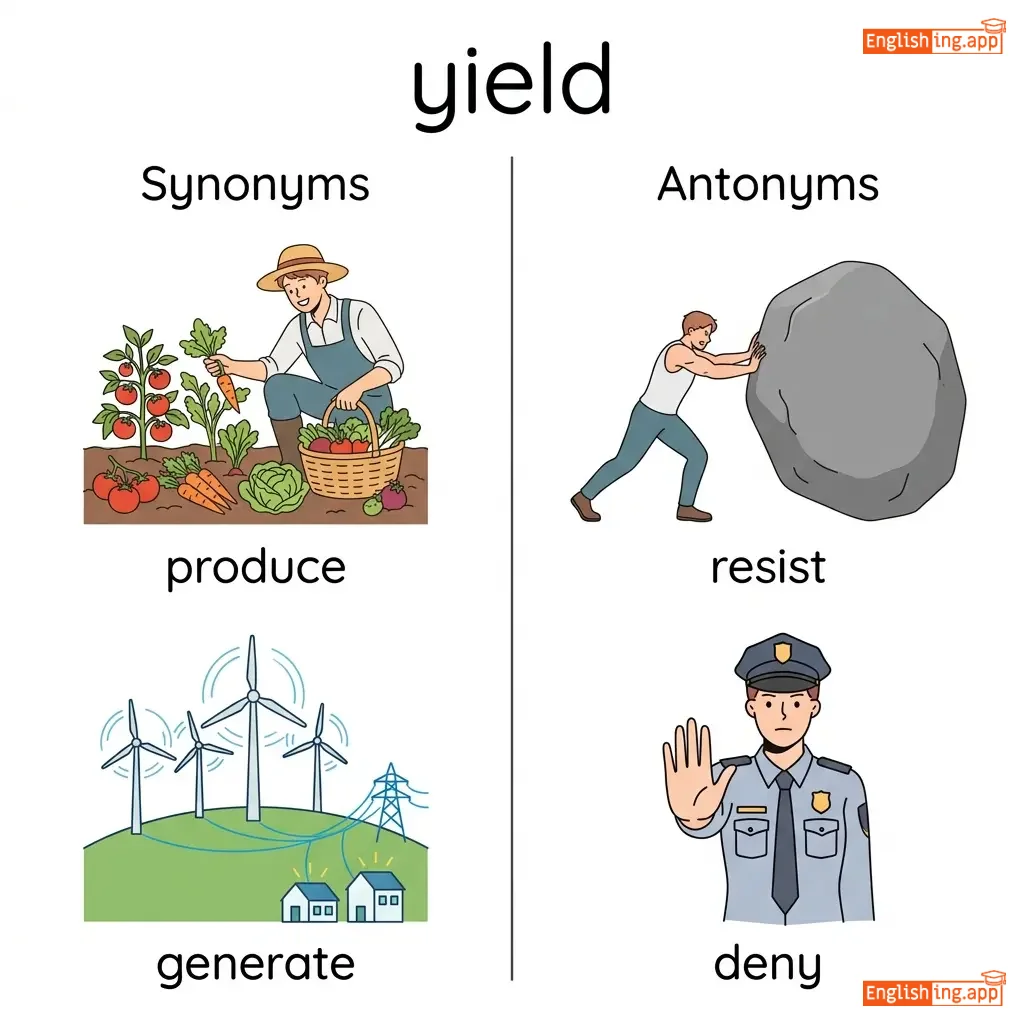
produce, generate, surrender, give, supply
••••••
|
resist, deny, refuse
••••••
|
yield results, yield crops, yield to pressure, yield profit
••••••
|
Yield 意味着产生:农场产出收成,压力下放弃。
••••••
|
|
#9555
💡
|
/əˈbɪləti/
noun
(艾比利提)
••••••
|
- •••••• |
能力
nengli
••••••
|
- •••••• | - •••••• | - •••••• | - •••••• |
the power, skill, or capacity to do something
••••••
|
Her ability to solve problems quickly impressed everyone.
她快速解决问题的能力给所有人留下了深刻的印象。
••••••
|
她快速解决问题的能力给所有人留下了深刻的印象。
Ta kuaisu jiejue wenti de nengli gei suoyouren liuxia le shenke de yinxiang.
••••••
|
to the best of one's ability
尽力而为
••••••
|
to do something as well as one possibly can
••••••
|
尽力而为
jinli er wei
••••••
|
skill, talent, capacity, competence, capability
••••••
|
inability, incapacity, weakness
••••••
|
natural ability, mental ability, physical ability, ability to learn
••••••
|
Ability 意味着能力 — 通过考试需要良好的能力。
••••••
|
|
#9556
✨
|
/jɛn/
noun
(耶恩)
••••••
|
- •••••• |
渴望
kewang
••••••
|
- •••••• | - •••••• | - •••••• | - •••••• |
A deep, strong desire or craving.
••••••
|
She felt a strong yen to travel the world.
她 感到 强烈 的 耶恩 去 环游 世界。
••••••
|
她感到强烈的渴望去环游世界。
ta gandao qianglie de kewang qu huanyou shijie.
••••••
|
- •••••• | - •••••• | - •••••• |
longing, craving, desire, urge, appetite
••••••
|
aversion, dislike, distaste
••••••
|
yen for adventure, yen to travel, strong yen, deep yen
••••••
|
Yen sounds like 渴望 (kewang) — strong craving or desire
••••••
|
|
#9557
🐴
|
/ˈjɪərlɪŋ/
noun
(伊尔林)
••••••
|
- •••••• |
一岁动物,尤其是马
yi sui dongwu, youqi shi ma
••••••
|
- •••••• | - •••••• | - •••••• | - •••••• |
an animal that is one year old, especially a horse
••••••
|
The farmer sold the yearling at the livestock market. |
农民在牲畜市场卖掉了那只伊尔林。
Nongmin zai shengchu shichang maichu le na zhi yilin.
••••••
|
- •••••• | - •••••• | - •••••• |
young horse, colt, juvenile, foal
••••••
|
adult, mature
••••••
|
yearling horse, yearling cattle, yearling market
••••••
|
Year + ling 表示一岁动物,比如马
••••••
|
|
#9558
🚷
|
/ˌzɛnəˈfoʊbɪk/
adjective
(泽诺福比克)
••••••
|
- •••••• |
排外的
pái wài de
••••••
|
- •••••• | - •••••• | - •••••• | - •••••• |
having or showing a dislike or fear of people from other countries
••••••
|
The leader’s xenophobic comments sparked outrage across the country. |
领导人的排外言论在全国范围内引起了愤怒。
Lǐngdǎo rén de pái wài yánlùn zài quánguó fànwéi nèi yǐnqǐ le fènnù.
••••••
|
- •••••• | - •••••• | - •••••• |
intolerant, prejudiced, biased, racist
••••••
|
tolerant, open-minded, accepting
••••••
|
xenophobic remarks, xenophobic attitude, xenophobic behavior
••••••
|
Xeno代表'外国人',phobic代表'恐惧' - 排外的就是害怕外国人
••••••
|
|
#9559
❌🌎
|
/ˌzɛnəˈfoʊbiə/
noun
(恐外症)
••••••
|
- •••••• |
排外恐惧症
pái wài kǒng jù zhèng
••••••
|
- •••••• | - •••••• | - •••••• | - •••••• |
fear or hatred of foreigners, people from different cultures, or strangers
••••••
|
Xenophobia can lead to discrimination and social division. |
排外恐惧症可能导致歧视和社会分裂。
Pái wài kǒng jù zhèng kěnéng dǎozhì qíshì hé shèhuì fēnliè.
••••••
|
- •••••• | - •••••• | - •••••• |
racism, nationalism, prejudice, intolerance, bias
••••••
|
tolerance, acceptance, cosmopolitanism
••••••
|
rise of xenophobia, xenophobia against immigrants, combat xenophobia
••••••
|
排外 = 排斥外国人 + 恐惧症 = 恐惧。排外恐惧症 = 恐惧外国人
••••••
|
|
#9560
🚫🌍
|
/ˈzɛnəˌfoʊb/
noun
(谢诺佛)
••••••
|
- •••••• |
仇外者
chouwaizhe
••••••
|
- •••••• | - •••••• | - •••••• | - •••••• |
a person who dislikes or fears people from other countries or cultures
••••••
|
The politician was criticized as a xenophobe due to his anti-immigrant policies. |
由于他反移民的政策,这位政治家被批评为仇外者。
youyu ta fan yiming de zhengce, zhe wei zhengzhi jia bei piping wei chouwaizhe.
••••••
|
- •••••• | - •••••• | - •••••• |
racist, nationalist, chauvinist, bigot, isolationist
••••••
|
tolerant, cosmopolitan, open-minded
••••••
|
xenophobe attitude, being a xenophobe, labeled a xenophobe
••••••
|
Xeno表示外国 + phobe表示恐惧 - Xenophobe表示害怕外国人
••••••
|
|
#9561
😏
|
/raɪ/
adjective
(lái)
••••••
|
- •••••• |
扭曲的,讽刺的
niǔqū de, fěngcì de
••••••
|
- •••••• | - •••••• | - •••••• | - •••••• |
twisted or distorted in expression; showing dry, mocking humor
••••••
|
He gave a wry smile after hearing the sarcastic remark. |
他在听到讽刺的评论后,露出了扭曲的微笑。
Tā zài tīngdào fěngcì de pínglùn hòu, lùchūle niǔqū de wéixiào.
••••••
|
wry smile |
a twisted or mocking smile showing irony or sarcasm
••••••
|
扭曲的微笑
niǔqū de wéixiào
••••••
|
ironic, sardonic, sarcastic, twisted, dry
••••••
|
serious, straightforward, genuine
••••••
|
wry smile, wry humor, wry expression, wry face
••••••
|
扭曲的微笑就是带点讽刺的微笑,像是面部扭曲了。
••••••
|
|
#9562
🤦
|
/ˌrɒŋˈhɛd.ɪd/
adjective
(rɔŋˈhɛdɪd)
••••••
|
- •••••• |
错误的思想
cuò wù de sī xiǎng
••••••
|
- •••••• | - •••••• | - •••••• | - •••••• |
Having or showing bad judgment or stubbornly holding to wrong ideas.
••••••
|
The policy was considered wrongheaded and harmful. |
这项政策被认为是错误的思想并且有害。
zhè xiàng zhèng cè bèi rèn wéi shì cuò wù de sī xiǎng bìng qiě yǒu hài.
••••••
|
- •••••• | - •••••• | - •••••• |
misguided, mistaken, ill-advised, stubborn
••••••
|
sensible, wise, reasonable
••••••
|
wrongheaded decision, wrongheaded policy, wrongheaded approach
••••••
|
Wrongheaded 意味着思想错误,wrong + head = 错误的头脑。
••••••
|
|
#9563
✍️
|
/ˈraɪ.tɪŋ/
noun/verb
(幸福)
••••••
|
- •••••• |
幸福
xìngfú
••••••
|
- •••••• | - •••••• | - •••••• |
writing
••••••
|
The activity of putting words on paper or composing text; the written form of communication.
••••••
|
She spends hours every day on her creative writing. |
当她收到奖项时,她无法掩饰自己的幸福感。
Dāng tā shōudào jiǎngxiàng shí, tā wúfǎ yǎnshì zìjǐ de xìngfú gǎn.
••••••
|
the writing on the wall |
a clear sign of future trouble or failure
••••••
|
追寻幸福
Zhuīxún xìngfú
••••••
|
composition, text, script, inscription
••••••
|
speech, silence
••••••
|
writing style, writing skills, writing desk, writing assignment
••••••
|
幸福 = Happiness. 一生追求,终得幸福。
••••••
|
|
#9564
😖
|
/raɪð/
verb
(rǎiθ)
••••••
|
- •••••• |
痛苦地扭动
tòngkǔ de niǔdòng
••••••
|
writhed
rǎiθd
••••••
|
writhed
rǎiθd
••••••
|
writhes
rǎiθs
••••••
|
writhing
rǎiθing
••••••
|
To twist or squirm in pain or discomfort.
••••••
|
He writhed in pain after twisting his ankle.
他扭伤脚踝后在痛苦中扭动。
••••••
|
他扭伤脚踝后在痛苦中扭动。
Tā niǔshāng jiǎohuái hòu zài tòngkǔ zhōng niǔdòng.
••••••
|
- •••••• | - •••••• | - •••••• |
squirm, twist, thrash, contort
••••••
|
remain still, relax
••••••
|
writhe in pain, writhe in agony, writhe helplessly
••••••
|
Writhe表示痛苦地扭动,'rǎiθ'让人联想到扭动的动作。
••••••
|
|
#9565
📜
|
/rɪt/
noun
(rit)
••••••
|
- •••••• |
法院命令
fayuan mingling
••••••
|
- •••••• | - •••••• | - •••••• | - •••••• |
A formal written order issued by a court.
••••••
|
The judge issued a writ of habeas corpus. |
法官发布了人身保护令。
Fǎguān fābùle rénshēn bǎohù lìng.
••••••
|
- •••••• | - •••••• | - •••••• |
order, decree, mandate, summons
••••••
|
informal note, request
••••••
|
writ issued, writ filed, writ petition
••••••
|
Writ就是法院命令,法官发布的命令。
••••••
|
|
#9566
🏆
|
/əˈtʃiːv/
verb
(āqív)
••••••
|
- •••••• |
实现
shixian
••••••
|
achieved
āqívd
••••••
|
achieved
āqívd
••••••
|
achieves
āqívs
••••••
|
achieving
āqívíng
••••••
|
to successfully bring about or reach a desired goal or result
••••••
|
She worked hard to achieve her dream of becoming a doctor.
她为实现成为医生的梦想而努力工作。
••••••
|
她为实现成为医生的梦想而努力工作。
Ta wei shixian chengwei yisheng de mengxiang er nuli gongzuo.
••••••
|
achieve success
取得成功
••••••
|
to become successful
••••••
|
取得成功
qude chenggong
••••••
|
accomplish, attain, realize, fulfill, complete
••••••
|
fail, lose, abandon
••••••
|
achieve goal, achieve success, achieve results, achieve excellence
••••••
|
Achieve意味着实现 — 要取得成功,你必须实现目标。
••••••
|
|
#9567
⬆️
|
/əˈbʌv/
preposition, adverb
(àbàfū)
••••••
|
- •••••• |
上面
shangmian
••••••
|
- •••••• | - •••••• | - •••••• | - •••••• |
at a higher place or position than something
••••••
|
The picture hangs above the fireplace.
画作挂在壁炉上方。
••••••
|
画作挂在壁炉上方。
Huàzuò guà zài bìlú shàngfāng.
••••••
|
above all
高于一切
••••••
|
most importantly
••••••
|
高于一切
gāo yú yīqiè
••••••
|
over, higher than, beyond, atop
••••••
|
below, under, beneath
••••••
|
rise above, above average, above mentioned, above sea level
••••••
|
Above 意味着上面 - 想像'在天空之上'。
••••••
|
|
#9568
ℹ️
|
/əˈbaʊt/
preposition, adverb
(阿宝特)
••••••
|
- •••••• |
关于
guanyu
••••••
|
- •••••• | - •••••• | - •••••• | - •••••• |
concerning; on the subject of; approximately
••••••
|
We talked about the new project yesterday. |
我们昨天谈论了新项目。
Wǒmen zuótiān tánlùnle xīn xiàngmù.
••••••
|
out and about |
active and going to different places
••••••
|
活跃并走访不同的地方
huóyuè bìng zǒufǎng bùtóng de dìfāng
••••••
|
regarding, concerning, around, nearly
••••••
|
exactly, unrelated
••••••
|
talk about, think about, about time, about 10 o'clock
••••••
|
About意思是'关于' — 就像'Tell me about yourself'。
••••••
|
|
#9569
✅
|
/ˈeɪbl/
adjective
(éibl)
••••••
|
- •••••• |
能够
nénggòu
••••••
|
- •••••• | - •••••• | - •••••• | - •••••• |
having the power, skill, or means to do something
••••••
|
She is able to speak three languages fluently. |
她能说三种流利的语言。
Tā néng shuō sān zhǒng liúlì de yǔyán.
••••••
|
be able to |
to have the ability to do something
••••••
|
能够做
nénggòu zuò
••••••
|
capable, competent, skilled, talented
••••••
|
unable, incapable, weak
••••••
|
able to work, able to help, able leader, highly able
••••••
|
Able = 能够,像‘能够做某事’
••••••
|
Vocabulary Quiz
Test your vocabulary by matching words with their translations or meanings.
Login to take the quiz
Comments (0)
Share your thoughts and join the discussion.
Join the discussion by logging in
Login to CommentNo comments yet
Be the first to share your thoughts!