



Swipe left or right, or use the buttons. Tap image to zoom.
例句翻译
单词
Lesson 411Lesson 411 - 遮罩切换
|
表情符号
|
单词 | Images | 翻译 | 过去时 | 过去分词 | 第三人称单数 | 动名词 | 含义 | 例句 | 例句翻译 | 同义词 | 反义词 | 搭配词 | 助记符 |
|---|---|---|---|---|---|---|---|---|---|---|---|---|---|---|
|
#12295
🌊
|
/weɪv/
noun
(wei fu)
••••••
|
|
波浪
bolang
••••••
|
- •••••• | - •••••• | - •••••• | - •••••• |
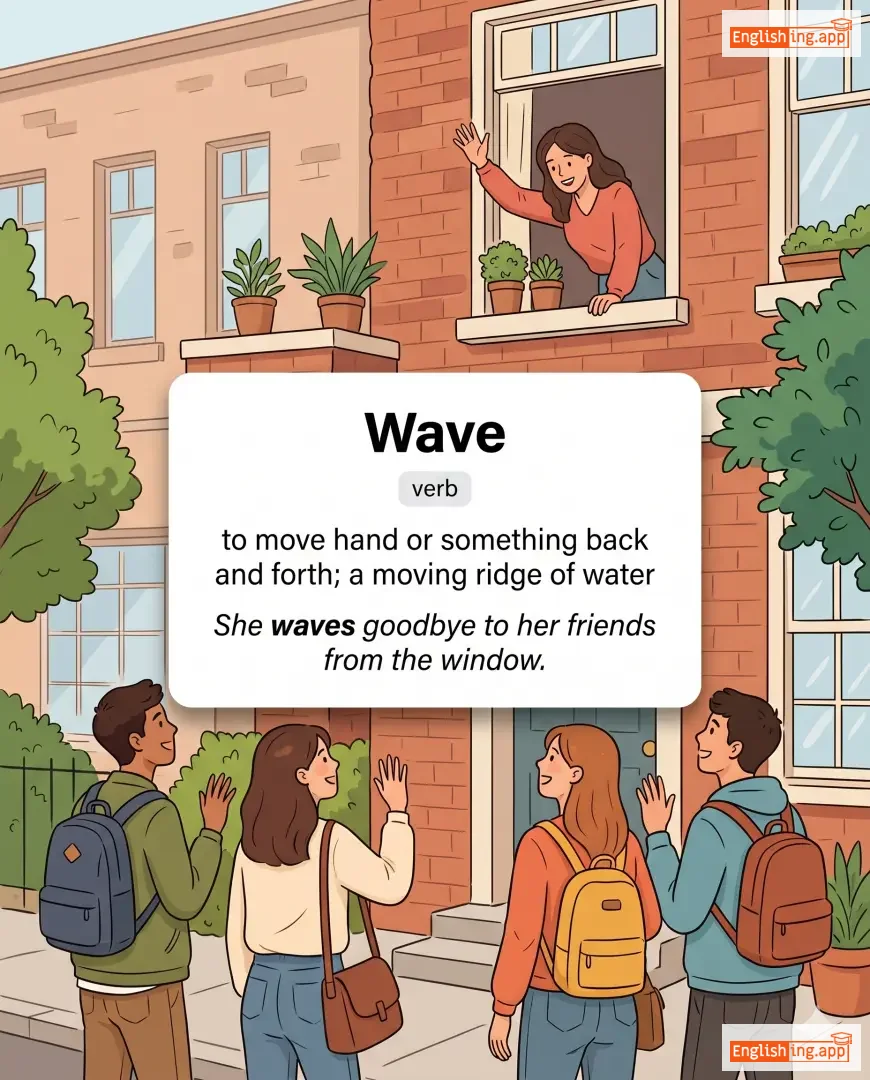
a long body of water curling into an arched form and breaking on the shore
••••••
|
The waves crashed against the rocks during the storm. |
暴风雨中,波浪撞击岩石。
Baofengyu zhong, bolang zhuangji yanshi.
••••••
|
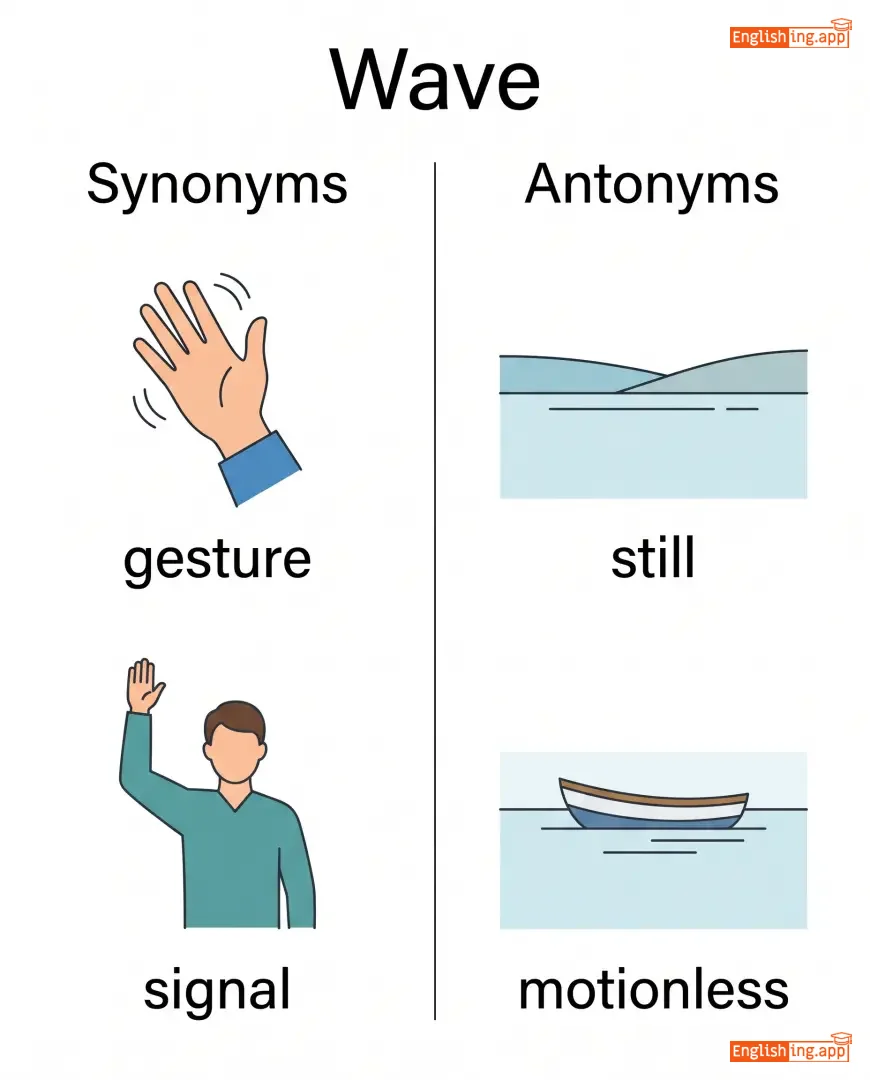
surge, swell, breaker, ripple
••••••
|
still, calm, stagnant
••••••
|
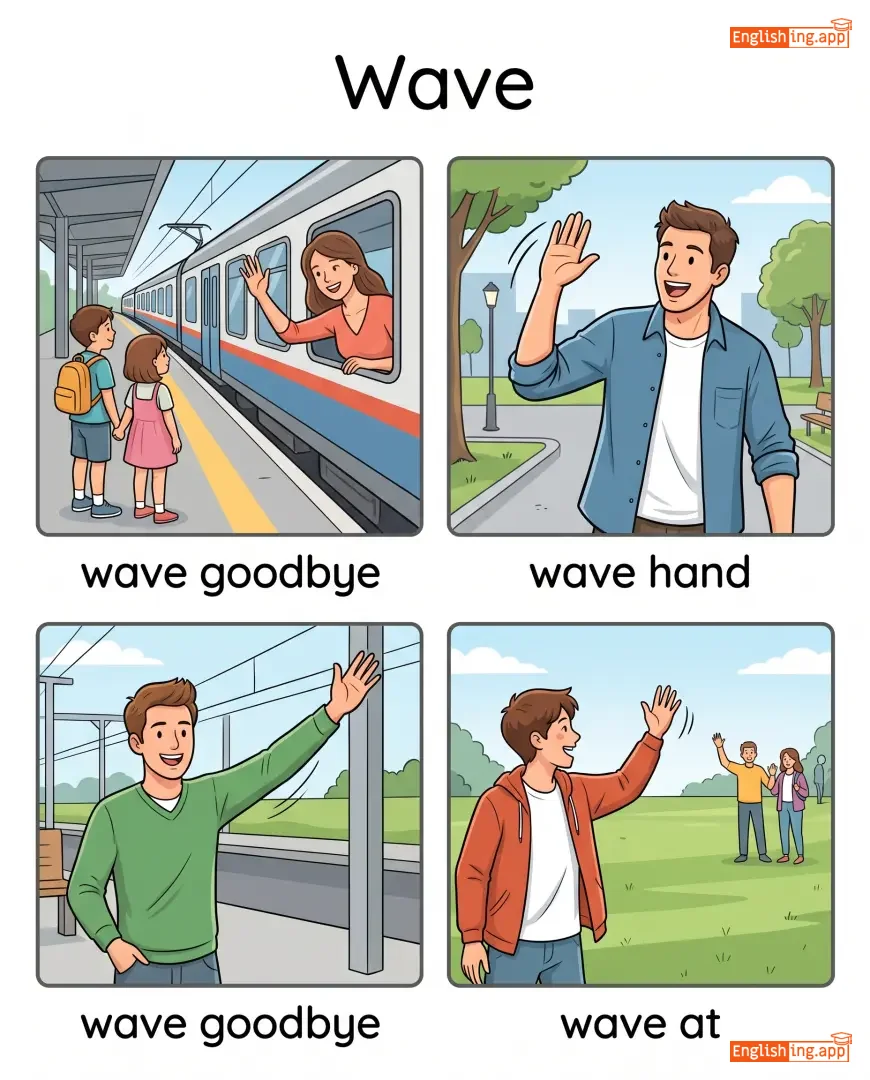
big wave, tidal wave, surf the wave, wave goodbye
••••••
|
BOLANG means wave in Chinese! Picture the waves crashing on the rocks!
••••••
|
|
#12296
🌅
|
/wɛst/
noun
(wɛst)
••••••
|
- •••••• |
西
xi
••••••
|
- •••••• | - •••••• | - •••••• | - •••••• |
the direction to the left of the north and to the right of the south, typically associated with the sunset
••••••
|
The sun sets in the west. |
太阳在西方落下。
Taiyang zai xifang luo xia.
••••••
|
sunset, occident
••••••
|
east, orient
••••••
|
west coast, west side, go west, western civilization
••••••
|
太阳在西方落下 - The sun sets in the west.
••••••
|
|
#12297
👍
|
/wɛl/
adverb
(wɛl)
••••••
|
- •••••• |
好
hǎo
••••••
|
- •••••• | - •••••• | - •••••• | - •••••• |
in a good or satisfactory way
••••••
|
She did well in her exams.
她在考试中做得很好。
••••••
|
她在考试中做得很好。
Tā zài kǎoshì zhōng zuò de hěn hǎo.
••••••
|
successfully, excellently, proficiently
••••••
|
poorly, badly
••••••
|
do well, perform well, feel well
••••••
|
很好地做了,考试做得好!
••••••
|
|
#12298
💼
|
/ˈwɛlfɛr/
noun
(wɛlfɛr)
••••••
|
- •••••• |
福利
fúlì
••••••
|
- •••••• | - •••••• | - •••••• | - •••••• |
the health, happiness, and fortunes of a person or group
••••••
|
The government provides welfare to low-income families. |
政府为低收入家庭提供福利。
Zhèngfǔ wèi dī shōurù jiātíng tígōng fúlì.
••••••
|
well-being, benefit, assistance
••••••
|
harm, damage
••••••
|
social welfare, welfare system, welfare state
••••••
|
福利为了社会的福利。
••••••
|
|
#12299
👋
|
/ˈwɛlkəm/
verb
(wɛlkəm)
••••••
|
|
欢迎
huānyíng
••••••
|
welcomed
wɛlkəmd
••••••
|
welcomed
wɛlkəmd
••••••
|
welcomes
wɛlkəmz
••••••
|
welcoming
wɛlkəmɪŋ
••••••
|
to greet someone in a friendly way
••••••
|
They welcomed us with open arms at the party.
他们在派对上张开双臂欢迎我们。
••••••
|
他们在派对上张开双臂欢迎我们。
Tāmen zài pàiduì shàng zhāng kāi shuāng bì huānyíng wǒmen.
••••••
|
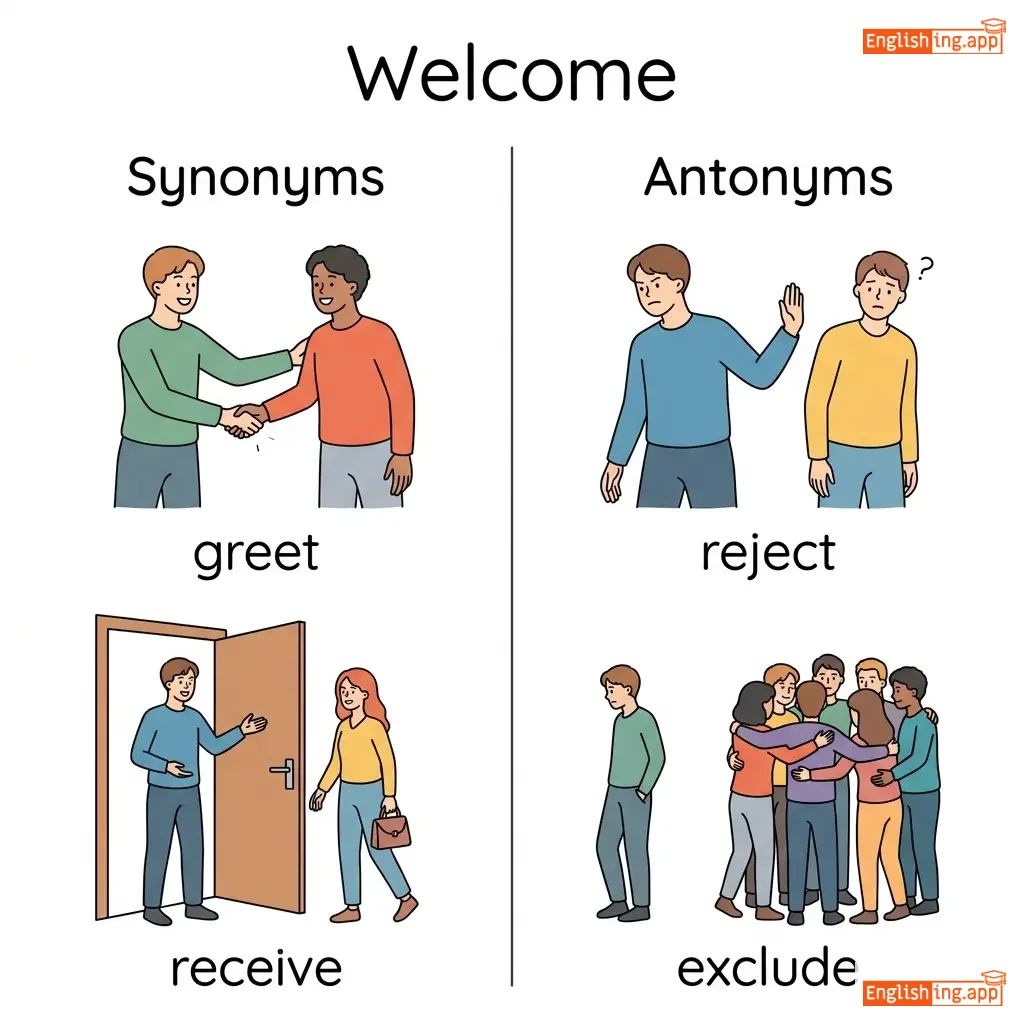
greet, receive, invite
••••••
|
reject, exclude
••••••
|
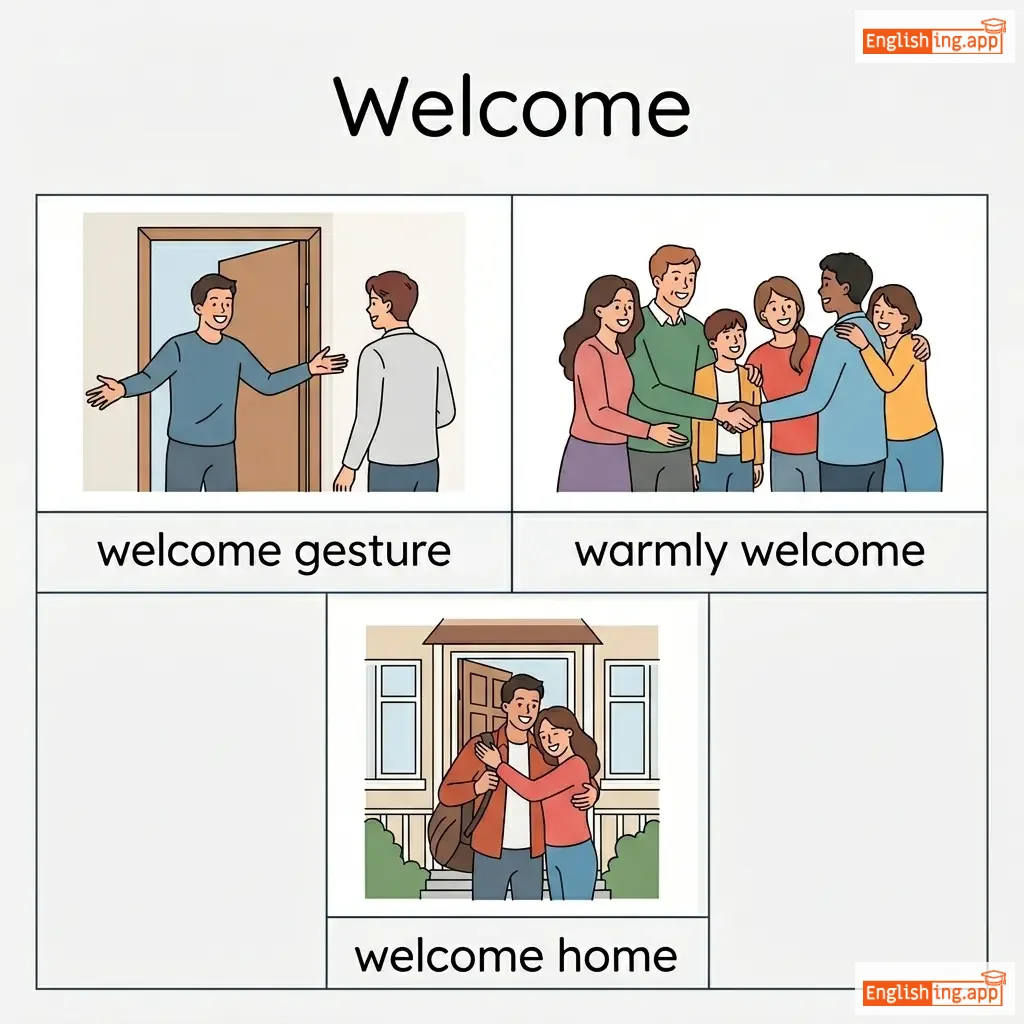
welcome gesture, warmly welcome, welcome home
••••••
|
带着热情的拥抱,欢迎你加入派对!
••••••
|
|
#12300
⚖️
|
/weɪt/
noun
(wèi tì)
••••••
|
- •••••• |
重量
zhòng liàng
••••••
|
- •••••• | - •••••• | - •••••• | - •••••• |
a measure of how heavy something is
••••••
|
The weight of the package was 10 kilograms. |
包裹的重量是10公斤。
Bāoguǒ de zhòng liàng shì 10 gōngjīn.
••••••
|
mass, heaviness, load
••••••
|
lightness
••••••
|
body weight, weight lifting, weight loss
••••••
|
包裹的重量用千克来衡量。
••••••
|
|
#12301
📅
|
/ˈwiːkli/
adjective
(威克利)
••••••
|
- •••••• |
每周的
mei zhou de
••••••
|
- •••••• | - •••••• | - •••••• | - •••••• |
occurring or done every week
••••••
|
We have a weekly meeting on Mondays.
我们每周一有例会。
••••••
|
我们每周一有例会。
Women mei zhou yi you lihui.
••••••
|
regular, periodic, routine
••••••
|
irregular, occasional
••••••
|
weekly meeting, weekly report, weekly schedule
••••••
|
Weekly means 每周 — every week in Chinese.
••••••
|
|
#12302
🌴
|
/ˈwiːkˌɛnd/
noun
(周末)
••••••
|
- •••••• |
周末
zhōumò
••••••
|
- •••••• | - •••••• | - •••••• | - •••••• |
the end of the week, typically regarded as Saturday and Sunday
••••••
|
They are planning a trip for the weekend. |
他们计划在周末去旅行。
Tāmen jìhuà zài zhōumò qù lǚxíng.
••••••
|
rest days, holiday, break
••••••
|
workday
••••••
|
spend the weekend, weekend trip, weekend getaway
••••••
|
Weekend – 'We' rest at the 'end' of the week!
••••••
|
|
#12303
📅
|
/wiːk/
noun
(wīkè)
••••••
|
- •••••• |
星期
xīngqī
••••••
|
- •••••• | - •••••• | - •••••• | - •••••• |
a period of seven days
••••••
|
I will finish the project by the end of the week. |
我将在本周末之前完成项目。
Wǒ jiāng zài běn zhōumò zhīqián wánchéng xiàngmù.
••••••
|
seven days, workweek, time span
••••••
|
day, month
••••••
|
work week, start of the week, end of the week
••••••
|
Week – 'We' work 'every' week!
••••••
|
|
#12304
💍
|
/ˈwɛdɪŋ/
noun
(wedding)
••••••
|
- •••••• |
婚礼
hūn lǐ
••••••
|
- •••••• | - •••••• | - •••••• | - •••••• |
a marriage ceremony, especially considered as including the associated celebrations
••••••
|
They are planning a wedding in the summer. |
他们正在计划一个夏季婚礼。
Tāmen zhèngzài jìhuà yīgè xiàjì hūn lǐ.
••••••
|
marriage, nuptials, ceremony, union
••••••
|
divorce, separation
••••••
|
attend a wedding, wedding ceremony, wedding dress, wedding reception
••••••
|
Wedding – Think of a joyful 'hūn lǐ' celebration!
••••••
|
|
#12305
👗
|
/wɛə(r)/
verb
(wɛə(r))
••••••
|
|
穿
chuān
••••••
|
wore
wɔr
••••••
|
worn
wɔrn
••••••
|
wears
wɛərz
••••••
|
wearing
wɛə(r)ɪŋ
••••••
|
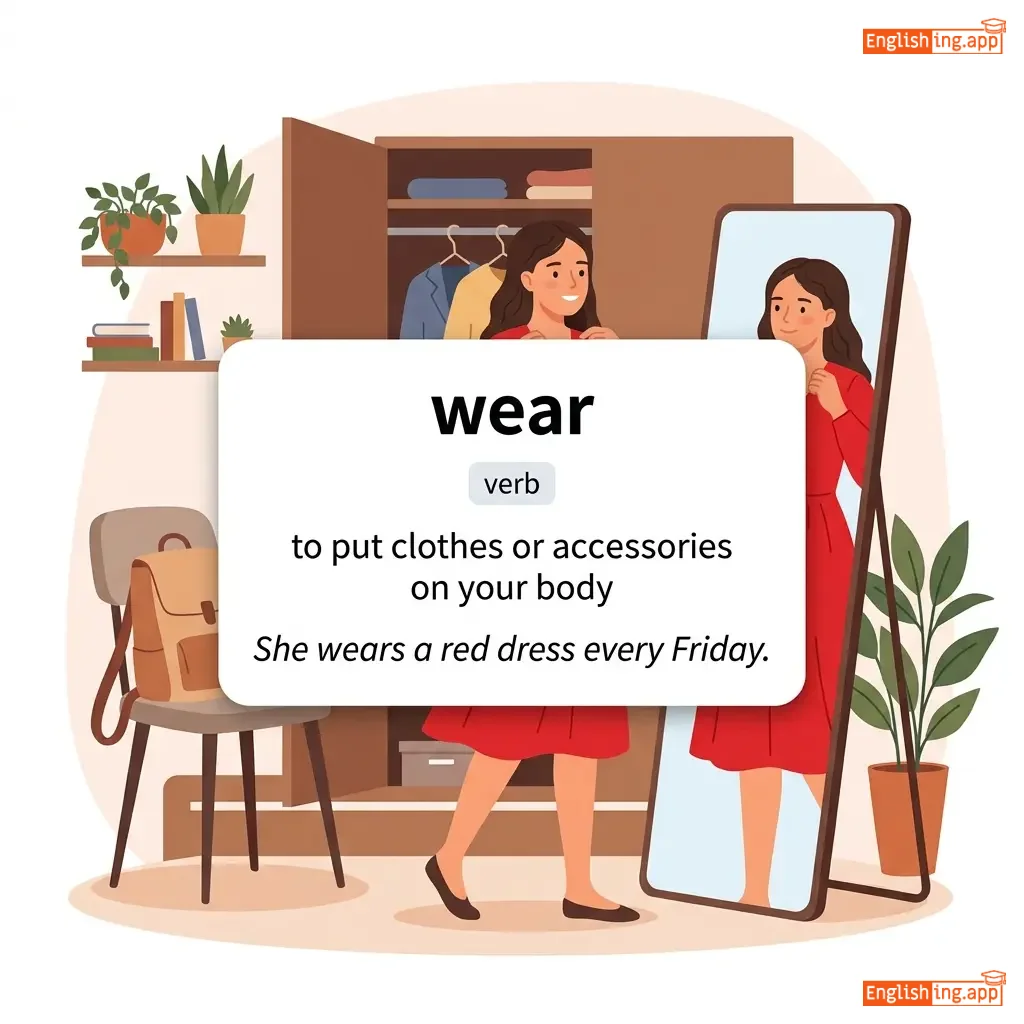
to put clothes or accessories on your body
••••••
|
She wears a red dress every Friday.
她每个星期五都穿一条红色裙子。
••••••
|
她每个星期五都穿一条红色裙子。
Tā měi gè xīngqīwǔ dōu chuān yītiáo hóngsè qúnzi.
••••••
|
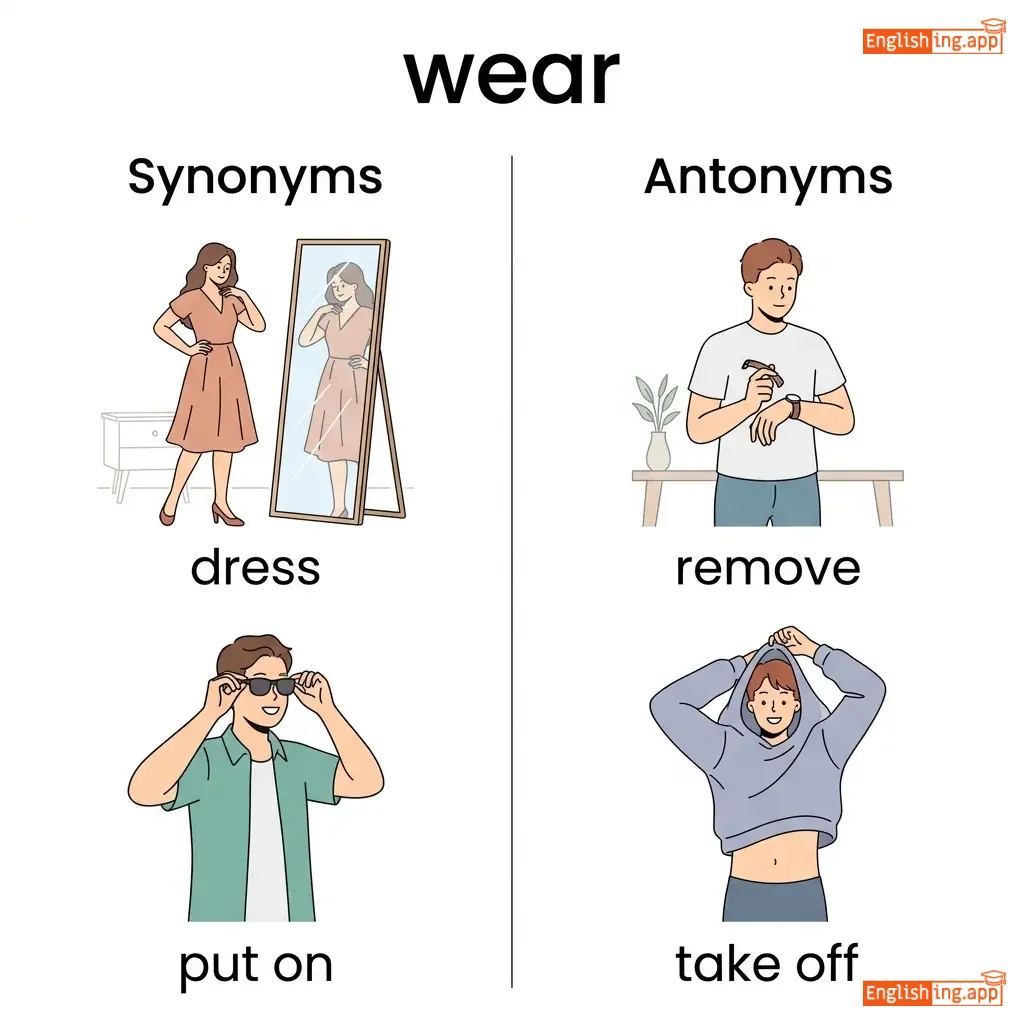
dress, put on, don, sport
••••••
|
remove, take off
••••••
|
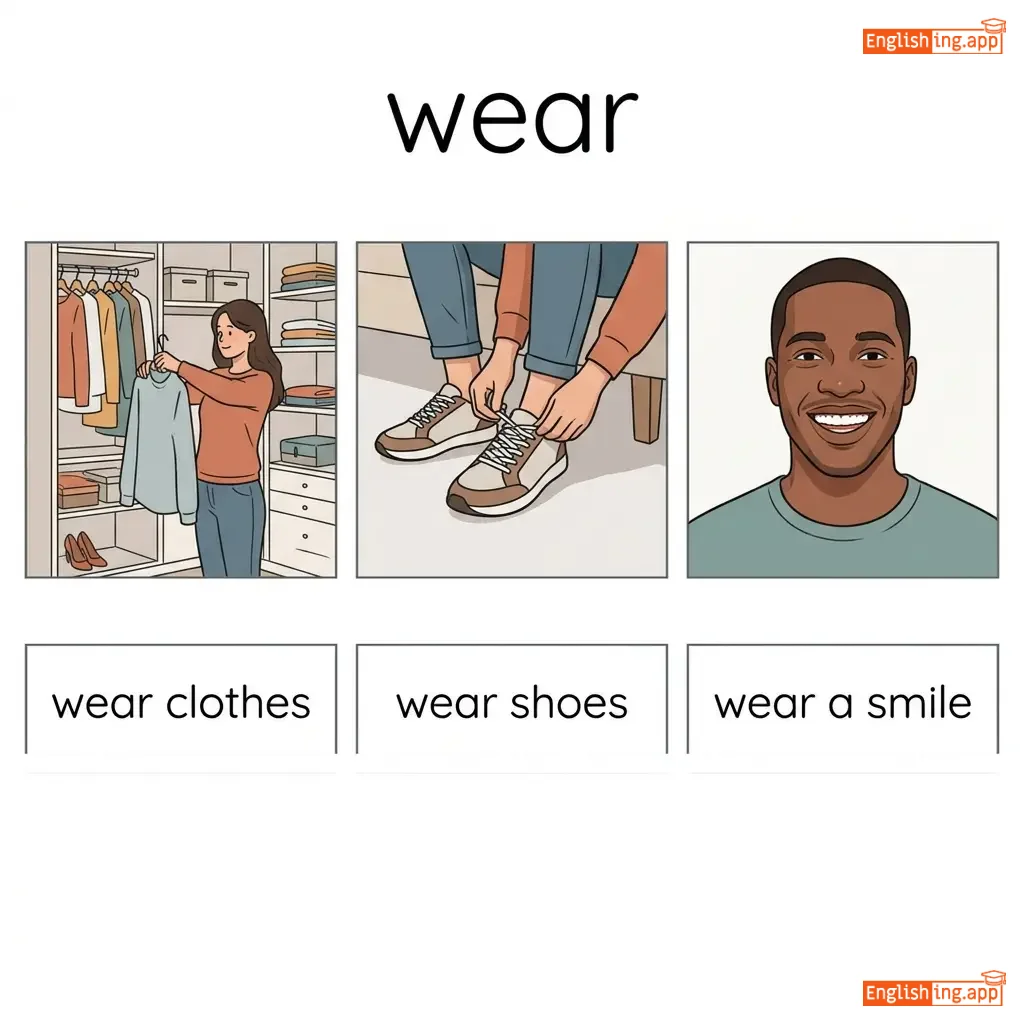
wear clothes, wear shoes, wear a smile, wear a hat
••••••
|
Wear sounds like 'where' – 'Where’s my dress? I want to wear it!'
••••••
|
|
#12306
🗡️
|
/ˈwɛpən/
noun
(wéipén)
••••••
|
- •••••• |
武器
wǔqì
••••••
|
- •••••• | - •••••• | - •••••• | - •••••• |
a thing designed or used for inflicting harm or damage
••••••
|
He carried a weapon for self-defense.
他携带武器用于自卫。
••••••
|
他携带武器用于自卫。
Tā xiédài wǔqì yòng yú zìwèi.
••••••
|
arm, tool, instrument, device
••••••
|
peace, harmony, defense
••••••
|
carry a weapon, use a weapon, weapon of choice
••••••
|
Weapon sounds like 'wheeled' – Think of a car wheel as a 'weapon' in a chase!
••••••
|
|
#12307
💰
|
/ˈwɛlθi/
adjective
(wélθi)
••••••
|
- •••••• |
富有
fùyǒu
••••••
|
- •••••• | - •••••• | - •••••• | - •••••• |
having a great deal of money, resources, or assets
••••••
|
He became wealthy after investing in real estate.
他在房地产投资后变得富有。
••••••
|
他在房地产投资后变得富有。
Tā zài fángdìchǎn tóuzī hòu biàn dé fùyǒu.
••••••
|
rich, prosperous, affluent, loaded
••••••
|
poor, broke, destitute
••••••
|
wealthy family, wealthy businessman, wealthy lifestyle, wealthy country
••••••
|
Wealthy people are ‘fùyǒu’ in Chinese!
••••••
|
|
#12308
💪
|
/wiːk/
adjective
(wēik)
••••••
|
- •••••• |
虚弱
xuruo
••••••
|
- •••••• | - •••••• | - •••••• | - •••••• |
lacking physical strength or energy
••••••
|
She felt weak after the long run. |
她在长跑后感到虚弱。
Ta zai changpao hou gandu xuruo.
••••••
|
frail, delicate, feeble, fragile
••••••
|
strong, powerful, robust
••••••
|
feel weak, weak point, weak health, weak muscles
••••••
|
Think of WEAK as feeling ‘虚弱’ and needing rest!
••••••
|
|
#12309
👥
|
/wi/
pronoun
(wēi)
••••••
|
- •••••• |
我们
women
••••••
|
- •••••• | - •••••• | - •••••• | - •••••• |
used by a speaker to refer to himself or herself and one or more other people
••••••
|
We are going to the park this afternoon.
我们今天下午要去公园。
••••••
|
我们今天下午要去公园。
Wǒmen jīntiān xiàwǔ yào qù gōngyuán.
••••••
|
us, ourselves, we two, we three
••••••
|
I, you
••••••
|
we are, we need, we can, we love
••••••
|
We are always ‘Wǒmen’ in Chinese!
••••••
|
|
#12310
🤝
|
/ˌvɒl.ənˈtɪə/
noun/verb
(志愿者)
••••••
|
- •••••• |
志愿者
zhìyuàn zhě
••••••
|
volunteered
志愿过
••••••
|
volunteered
志愿过
••••••
|
volunteers
志愿者们
••••••
|
volunteering
志愿服务
••••••
|
a person who does something, especially helping other people, willingly and without being paid
••••••
|
She decided to volunteer at the local animal shelter.
她决定在当地的动物收容所做志愿者。
••••••
|
她决定在当地的动物收容所做志愿者。
Tā juédìng zài dāngdì de dòngwù shōuróngsuǒ zuò zhìyuàn zhě.
••••••
|
helper, contributor, supporter, participant
••••••
|
recipient, beneficiary
••••••
|
volunteer work, volunteer for, volunteer program, volunteer at
••••••
|
志愿者自愿帮助他人,别期待报酬。
••••••
|
|
#12311
💧
|
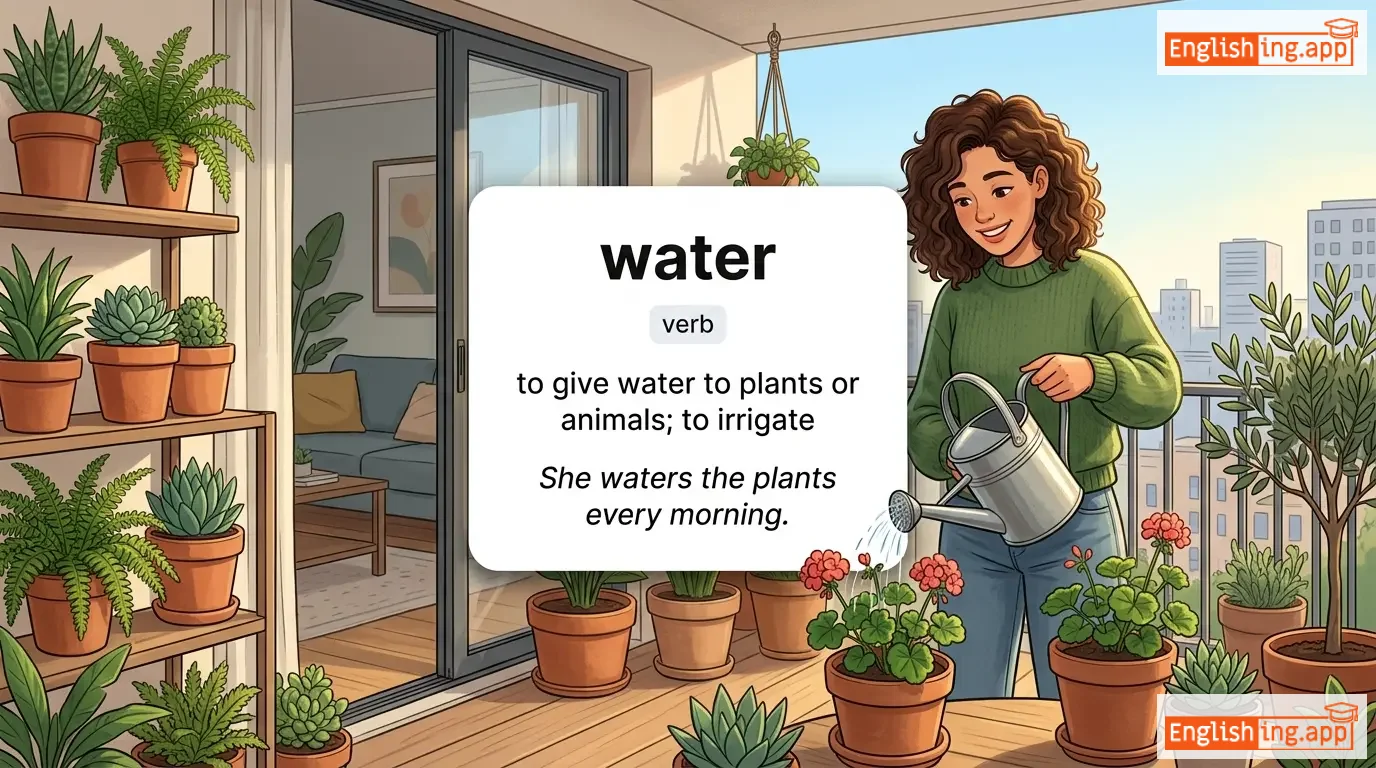
/ˈwɔːtər/
noun
(wàtè)
••••••
|
|
水
shui
••••••
|
- •••••• | - •••••• | - •••••• | - •••••• |
a clear, colorless, odorless, and tasteless liquid that is essential for life
••••••
|
We need to drink water to stay hydrated. |
我们需要喝水以保持水分。
Wǒmen xūyào hē shuǐ yǐ bǎochí shuǐfèn.
••••••
|
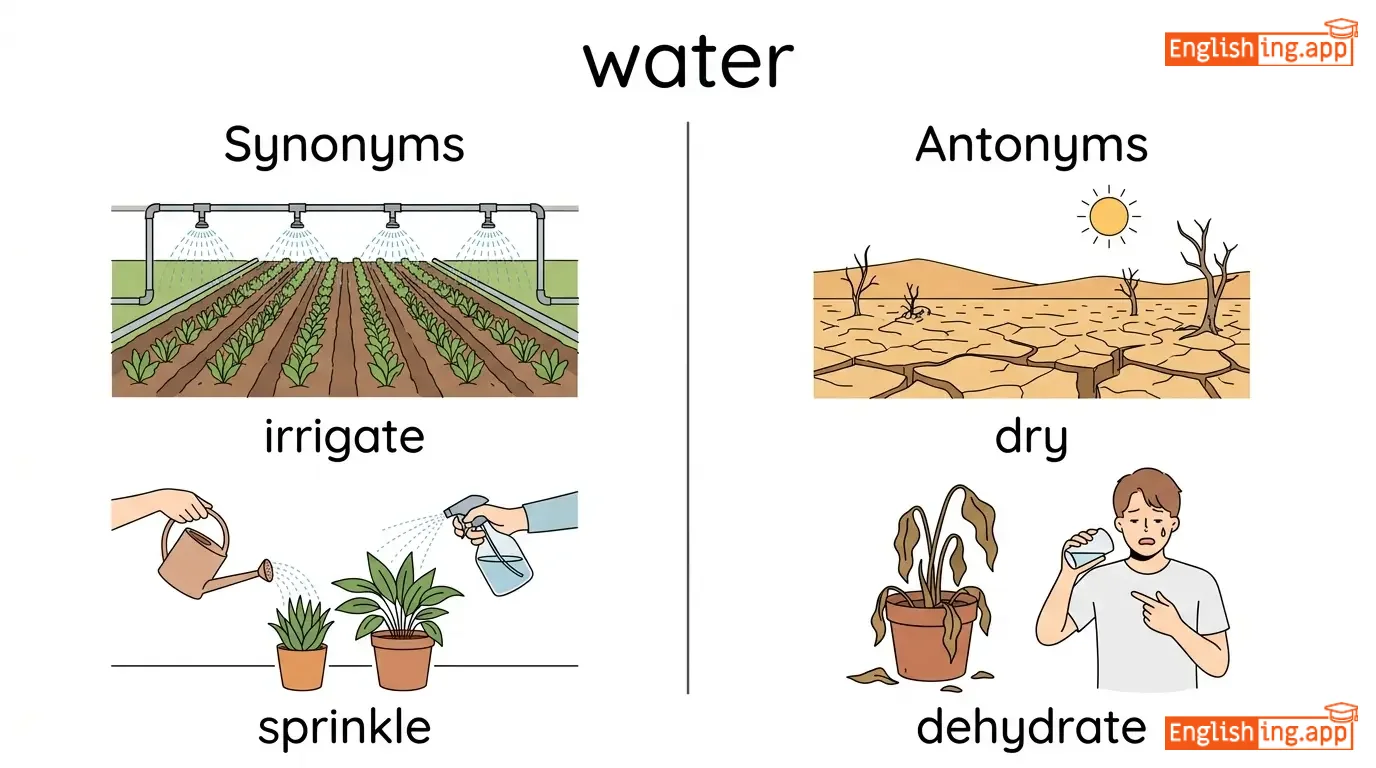
liquid, H2O, aqua, spring water
••••••
|
dry, desert, parched
••••••
|
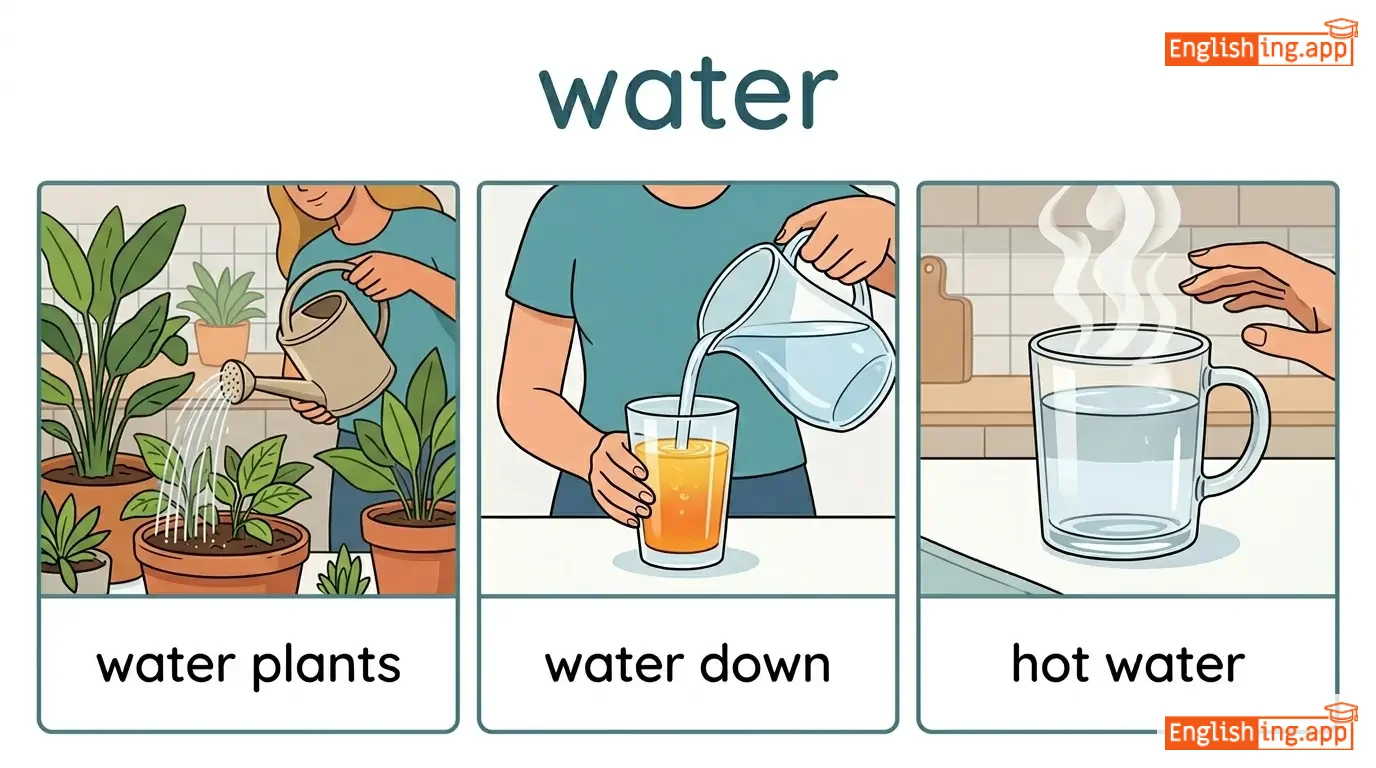
drink water, water bottle, clean water, water source
••••••
|
水是生命的源泉,保持水分!
••••••
|
|
#12312
👀
|
/wɒtʃ/
verb
(wòchí)
••••••
|
|
看
kàn
••••••
|
watched
wòchí dào
••••••
|
watched
wòchí dào
••••••
|
watches
wòchí zhī
••••••
|
watching
wòchí zhòng
••••••
|
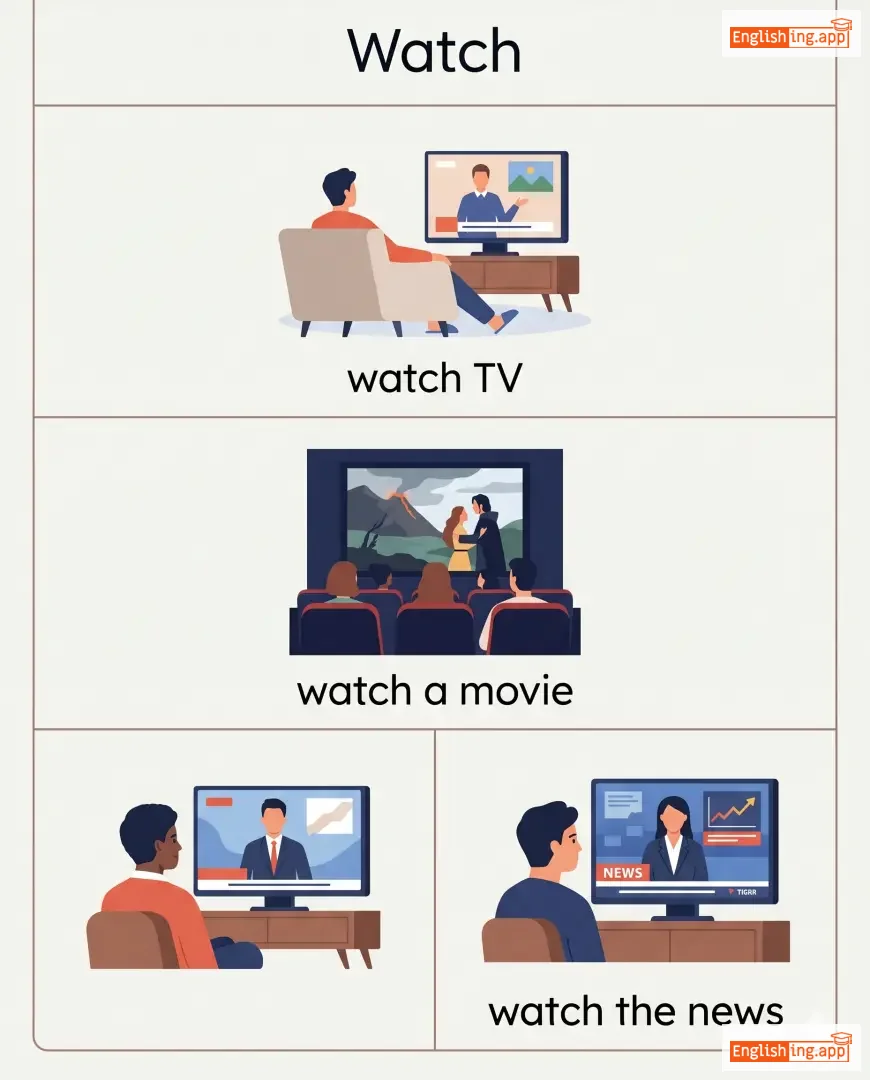
to look at something for a period of time
••••••
|
She watches the news every evening.
她每天晚上看新闻。
••••••
|
她每天晚上看新闻。
Tā měitiān wǎnshàng kàn xīnwén.
••••••
|
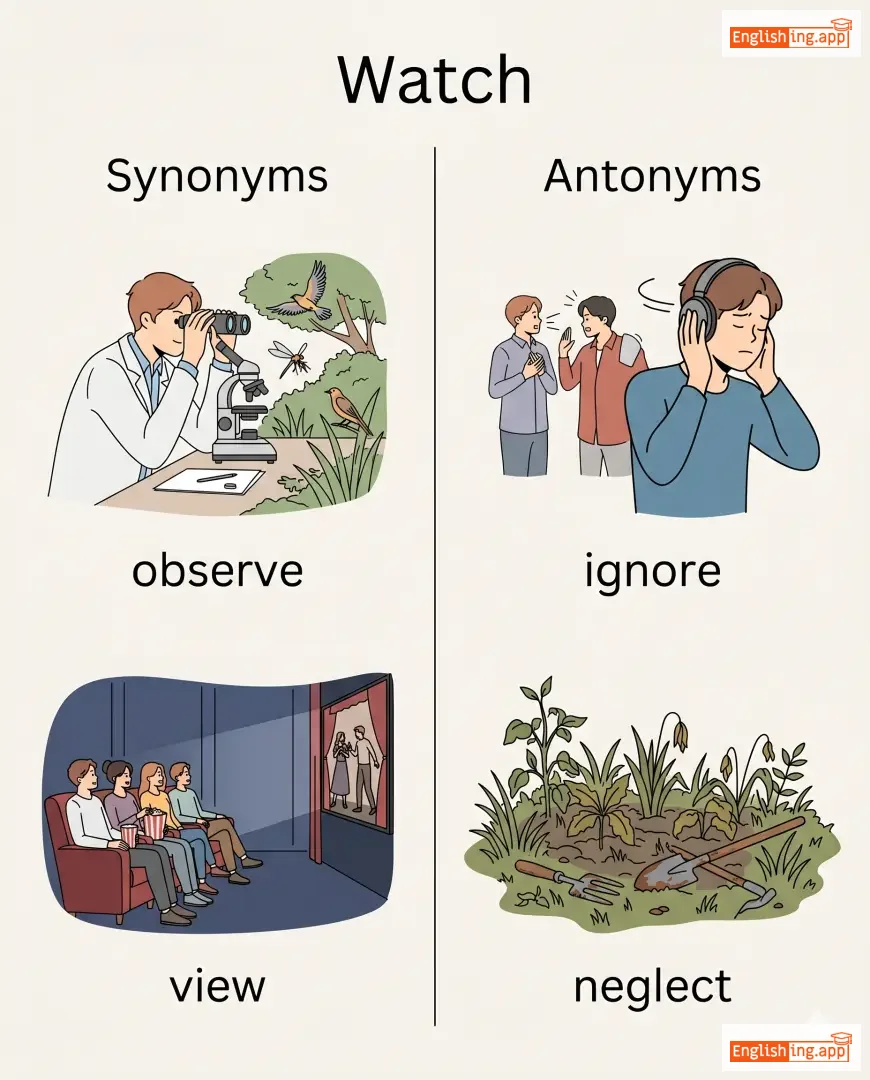
observe, view, look at, gaze
••••••
|
ignore, neglect, overlook
••••••
|
watch TV, watch a movie, watch the news, watch carefully
••••••
|
WATCH carefully, don't miss the important news!
••••••
|
|
#12313
🗑️
|
/weɪst/
noun
(wɛɪst)
••••••
|
|
浪费
làng fèi
••••••
|
- •••••• | - •••••• | - •••••• | - •••••• |
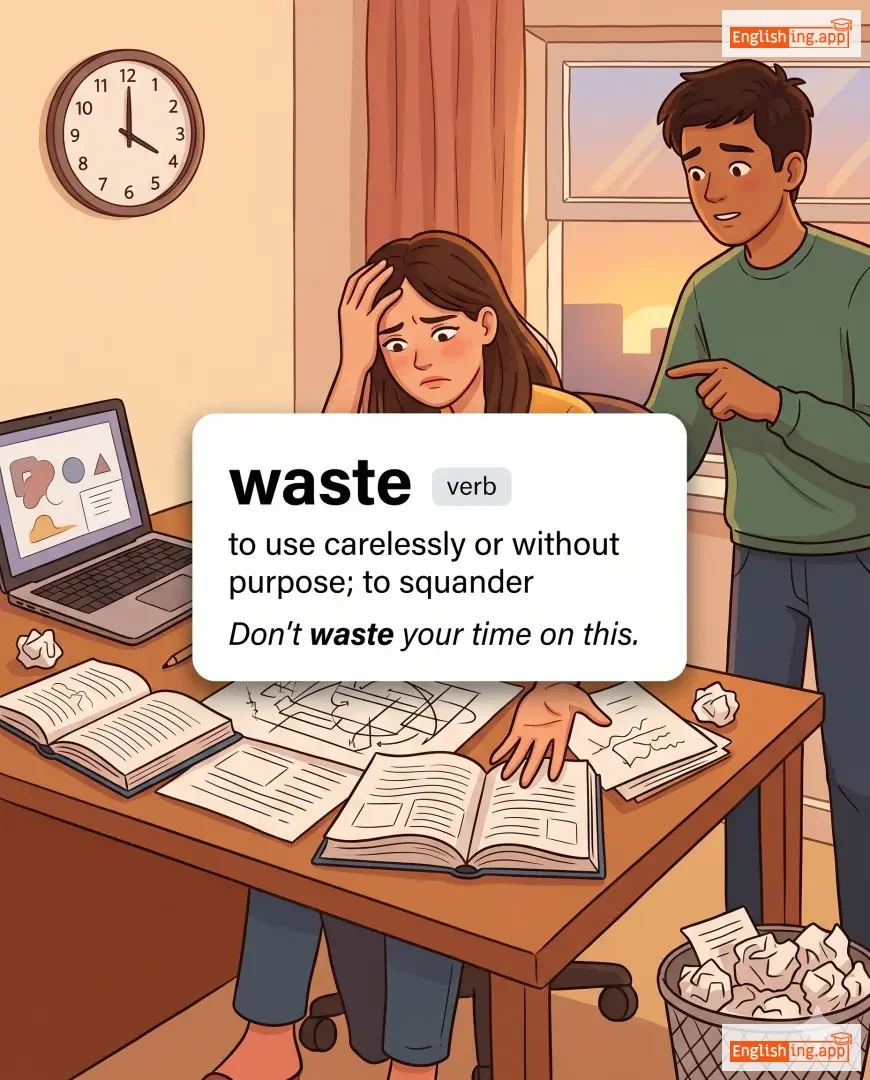
something that is not useful and is thrown away
••••••
|
Don't waste your time on unnecessary tasks. |
不要把时间浪费在无意义的事情上。
Bù yào bǎ shíjiān làng fèi zài wú yìyì de shìqíng shàng.
••••••
|
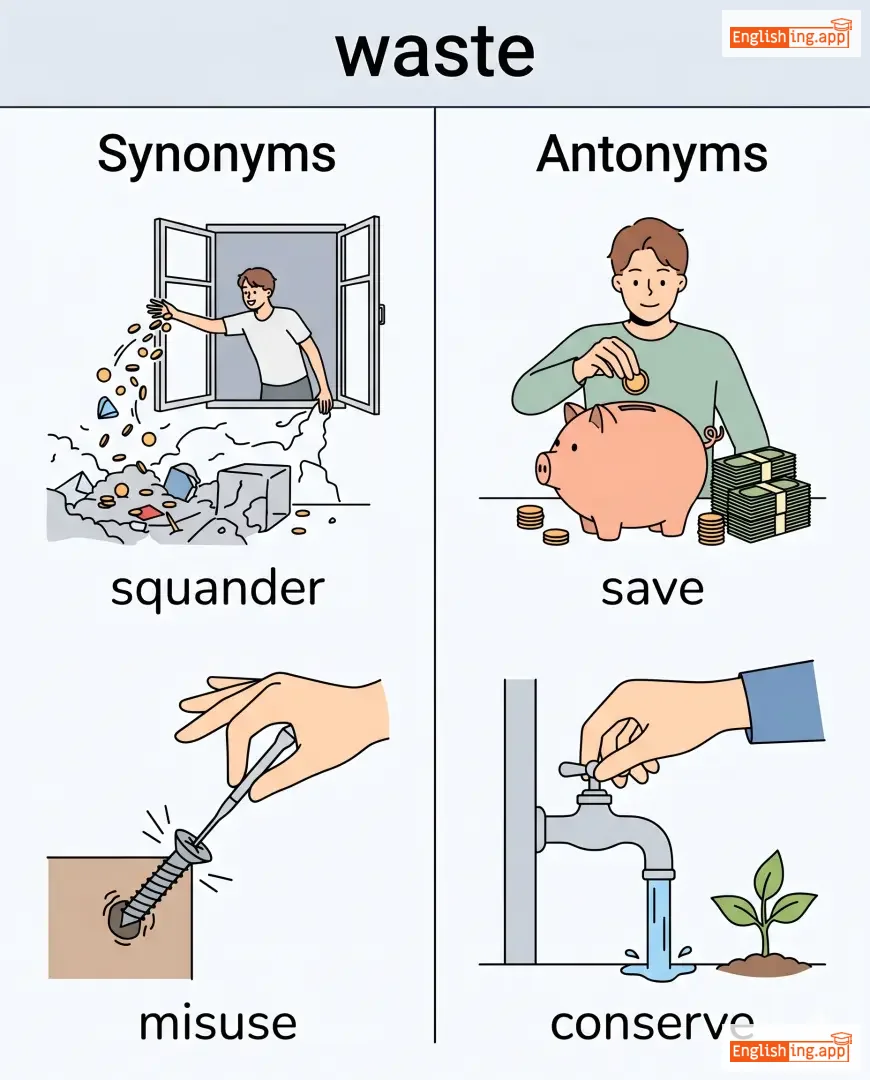
garbage, trash, rubbish, refuse
••••••
|
value, resource, asset
••••••
|
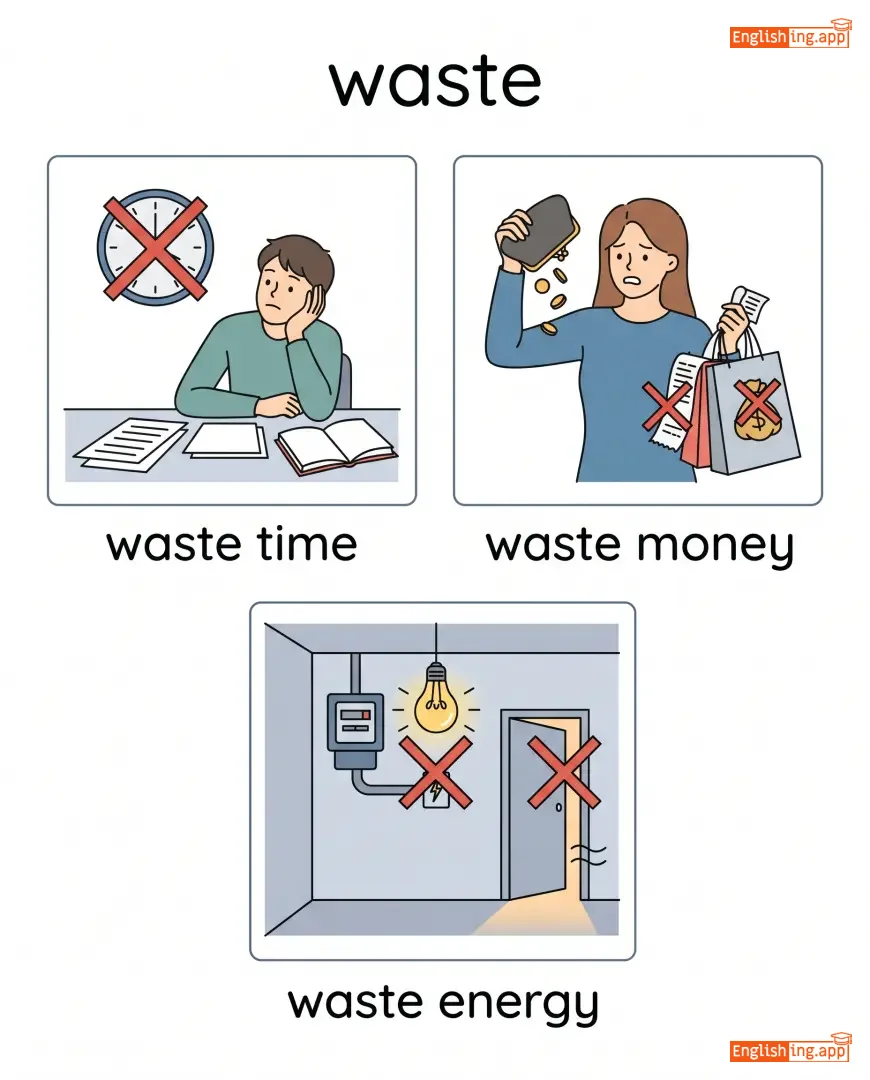
waste time, waste energy, waste of resources, waste disposal
••••••
|
Don’t WASTE food, use it wisely!
••••••
|
|
#12314
🧼
|
/wɒʃ/
verb
(woshi)
••••••
|
|
洗
xi
••••••
|
washed
woshid
••••••
|
washed
woshid
••••••
|
washes
woshes
••••••
|
washing
woshing
••••••
|
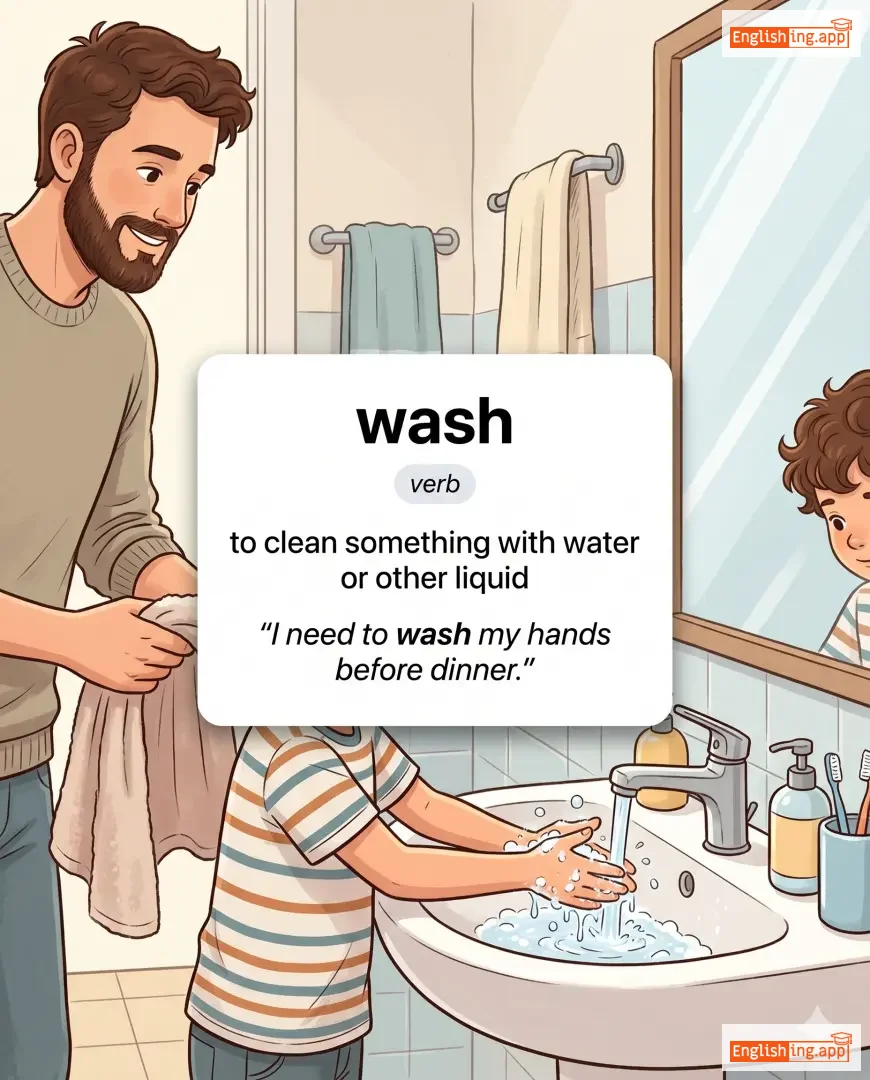
to clean something with water or other liquid
••••••
|
I need to wash my hands before dinner.
我需要在晚餐前洗手。
••••••
|
我需要在晚餐前洗手。
Wo xuyao zai wancan qian xishou.
••••••
|
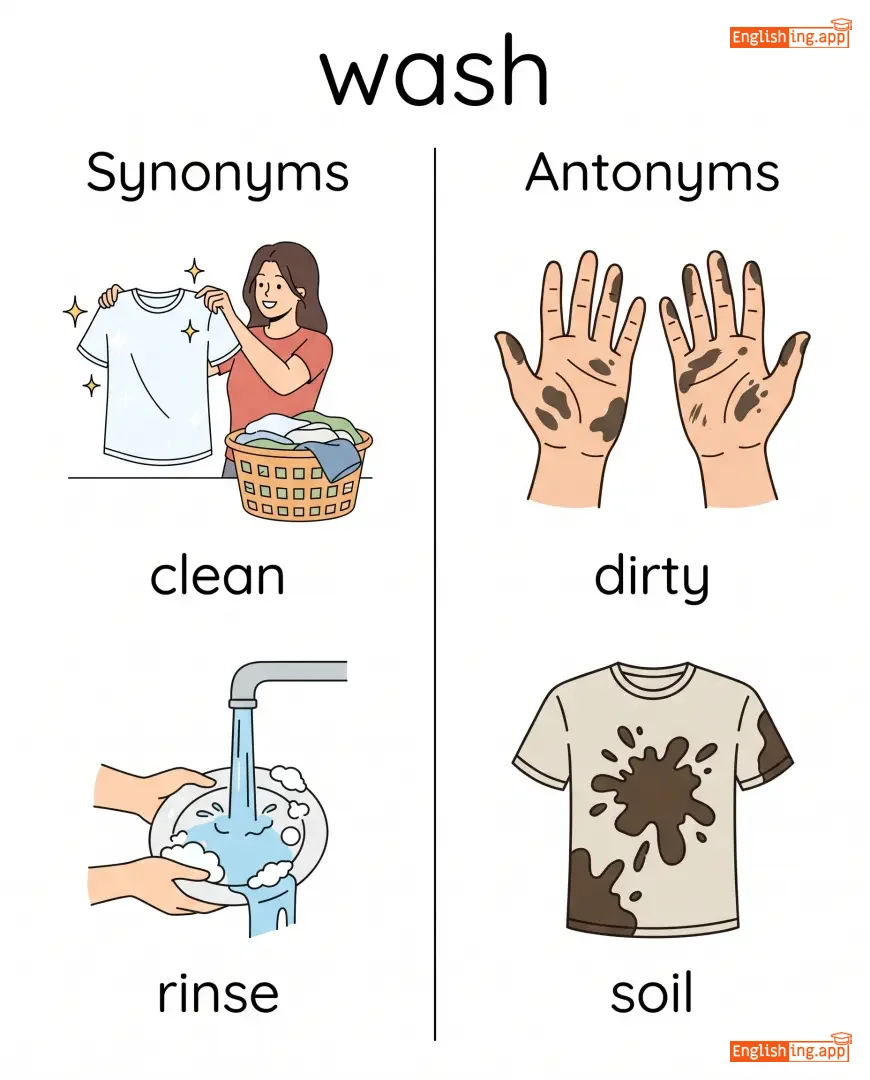
clean, rinse, scrub, bathe
••••••
|
dirty, soil, contaminate
••••••
|
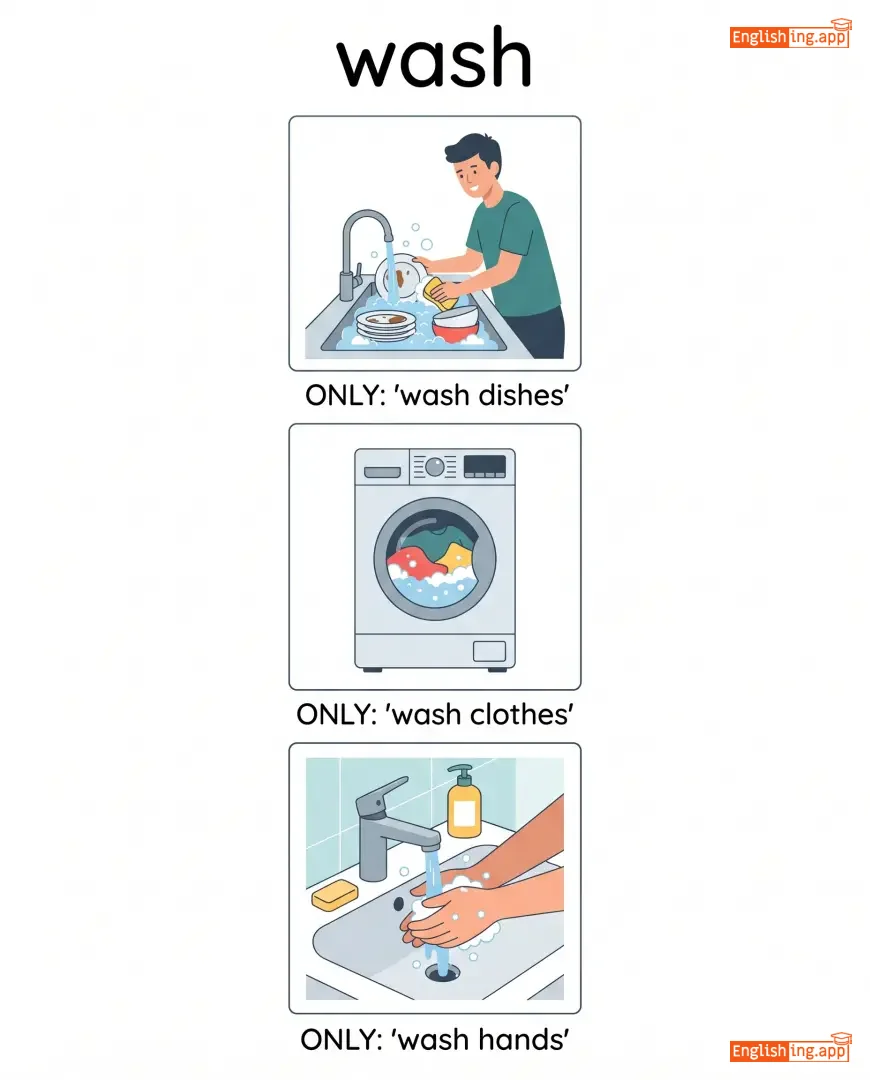
wash dishes, wash clothes, wash hands, wash face
••••••
|
When you WASH, you make everything fresh and clean!
••••••
|
|
#12315
⚠️
|
/ˈwɔːrnɪŋ/
noun
(wāníng)
••••••
|
|
警告
jinggao
••••••
|
- •••••• | - •••••• | - •••••• | - •••••• |
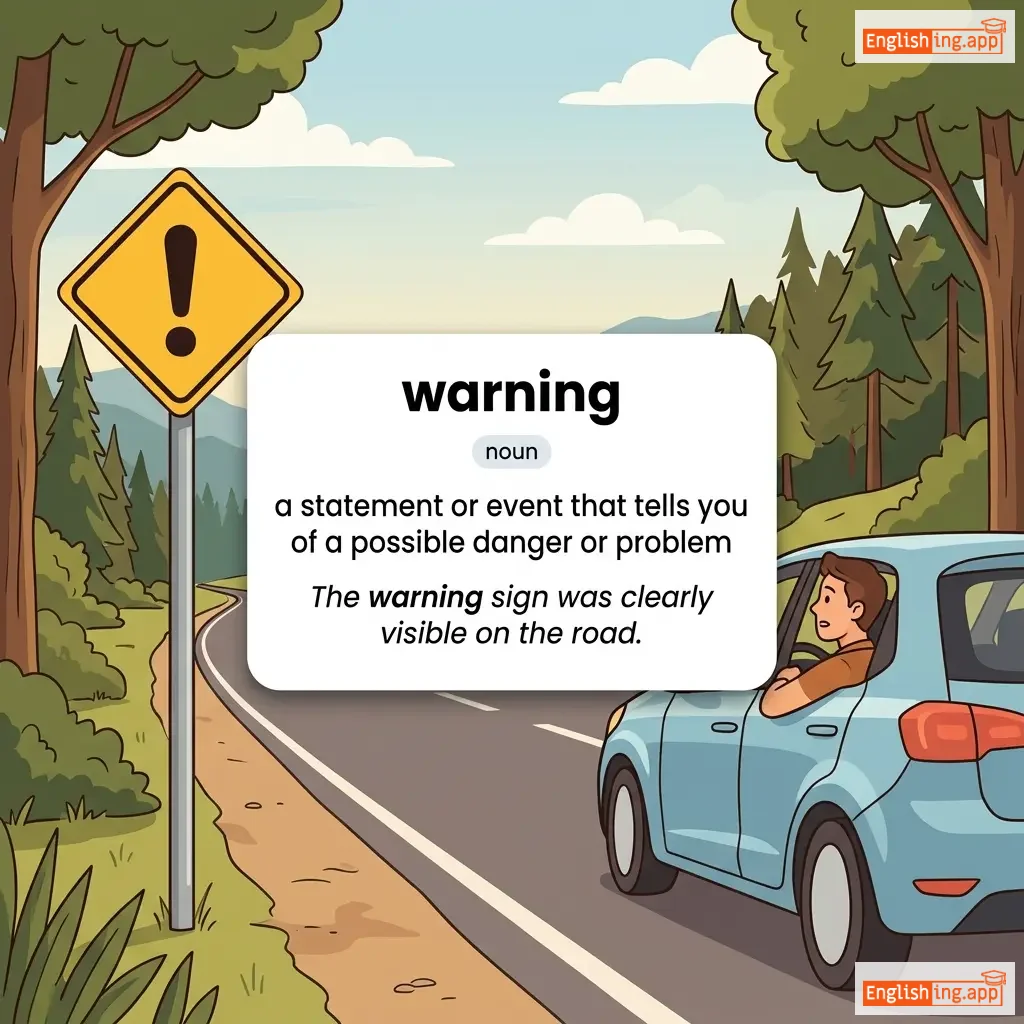
a statement or event that tells you of a possible danger or problem
••••••
|
The warning sign was clearly visible on the road. |
路上的警告标志清晰可见。
Lùshàng de jǐnggào biāozhì qīngxī kějiàn.
••••••
|
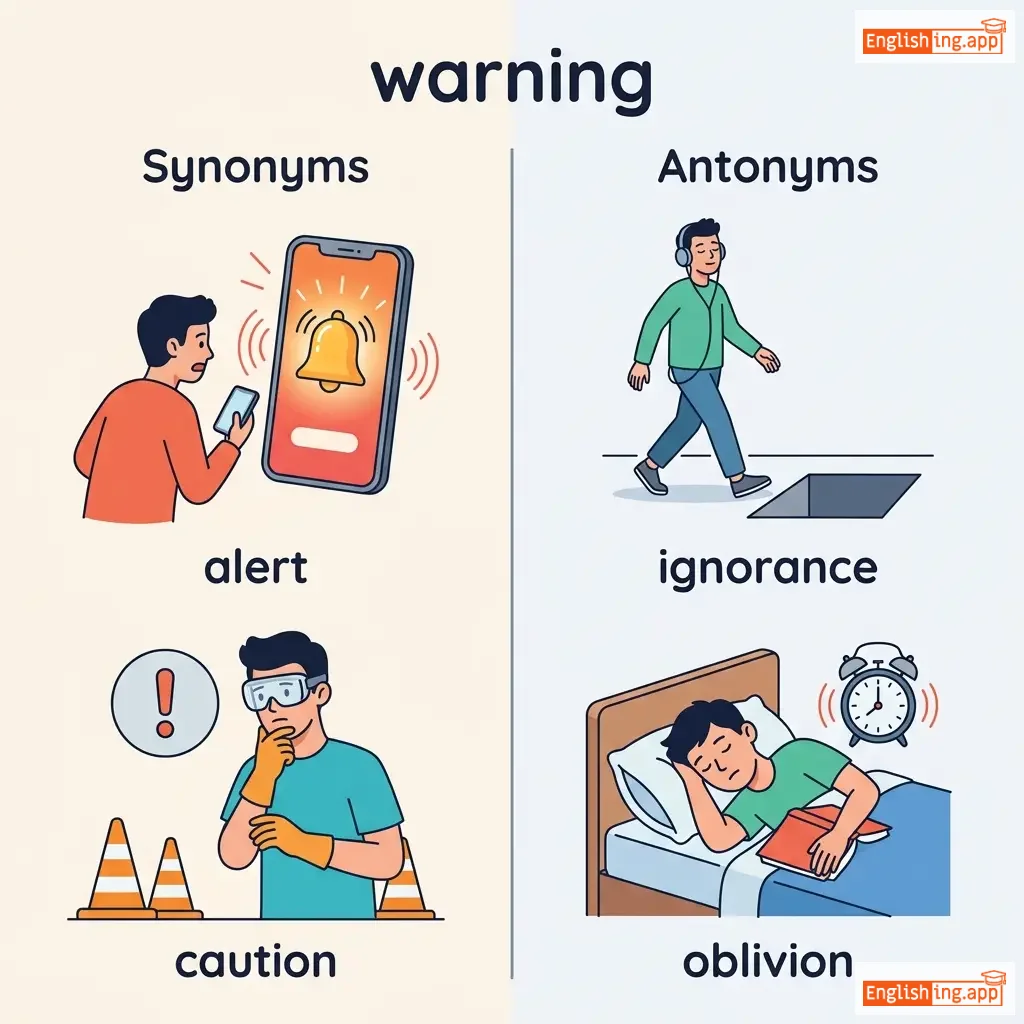
alert, caution, notice, heads-up
••••••
|
ignorance, oblivion, indifference
••••••
|
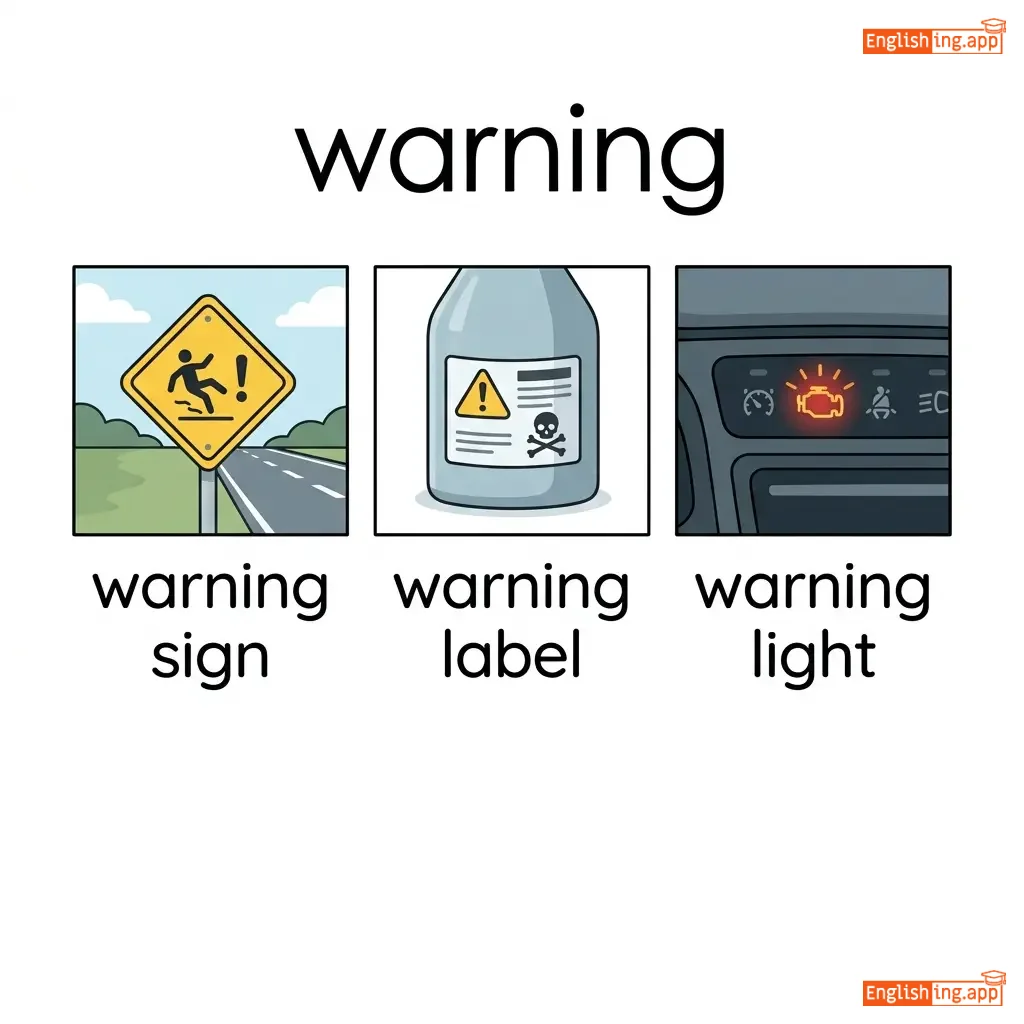
warning sign, warning label, warning light, warning message
••••••
|
A WARNING can save you from danger – Just like a traffic sign!
••••••
|
|
#12316
⚠️
|
/wɔːrn/
verb
(沃恩)
••••••
|
|
警告
jinggao
••••••
|
warned
沃恩德
••••••
|
warned
沃恩德
••••••
|
warns
沃恩斯
••••••
|
warning
沃恩宁
••••••
|
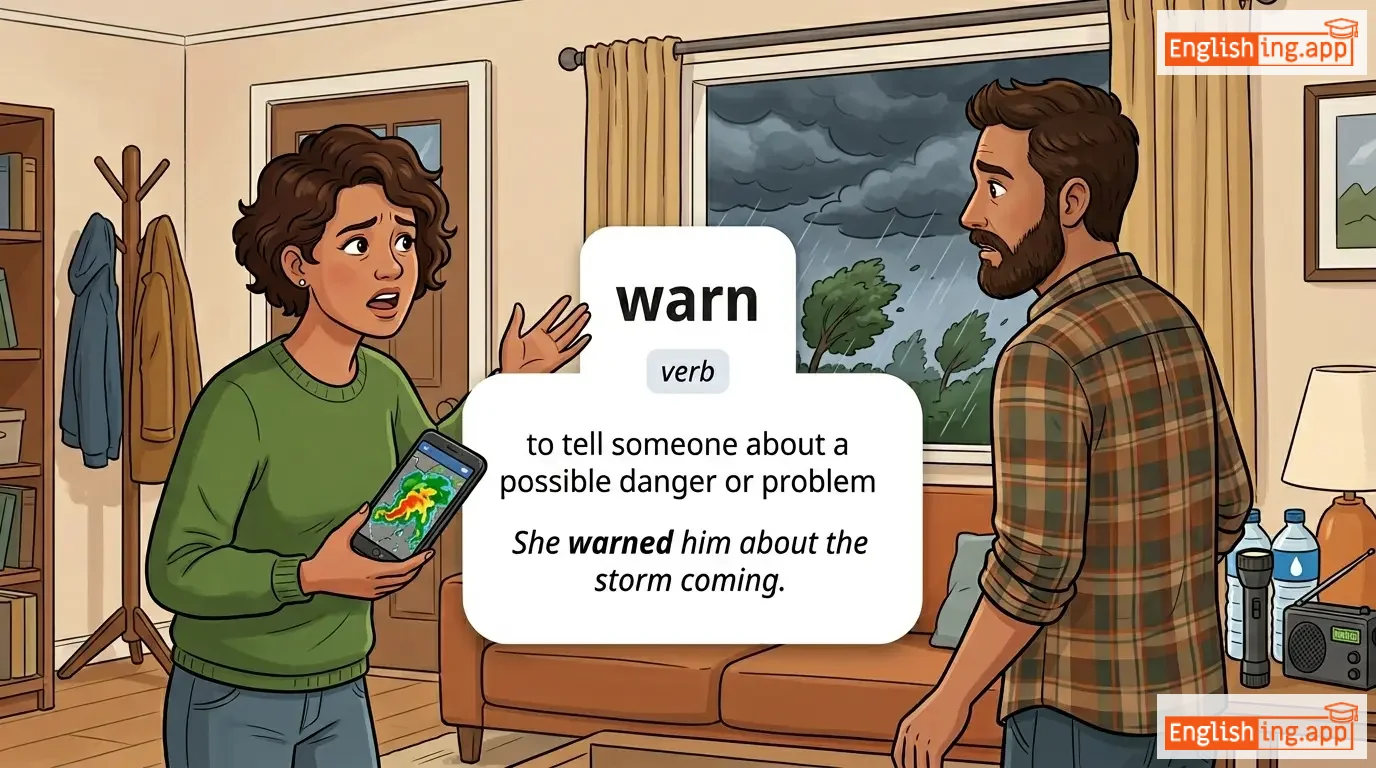
to tell someone about a possible danger or problem
••••••
|
She warned him about the storm coming.
她警告他即将来临的暴风雨。
••••••
|
她警告他即将来临的暴风雨。
Ta jinggao ta jijiang lailin de baofengyu.
••••••
|
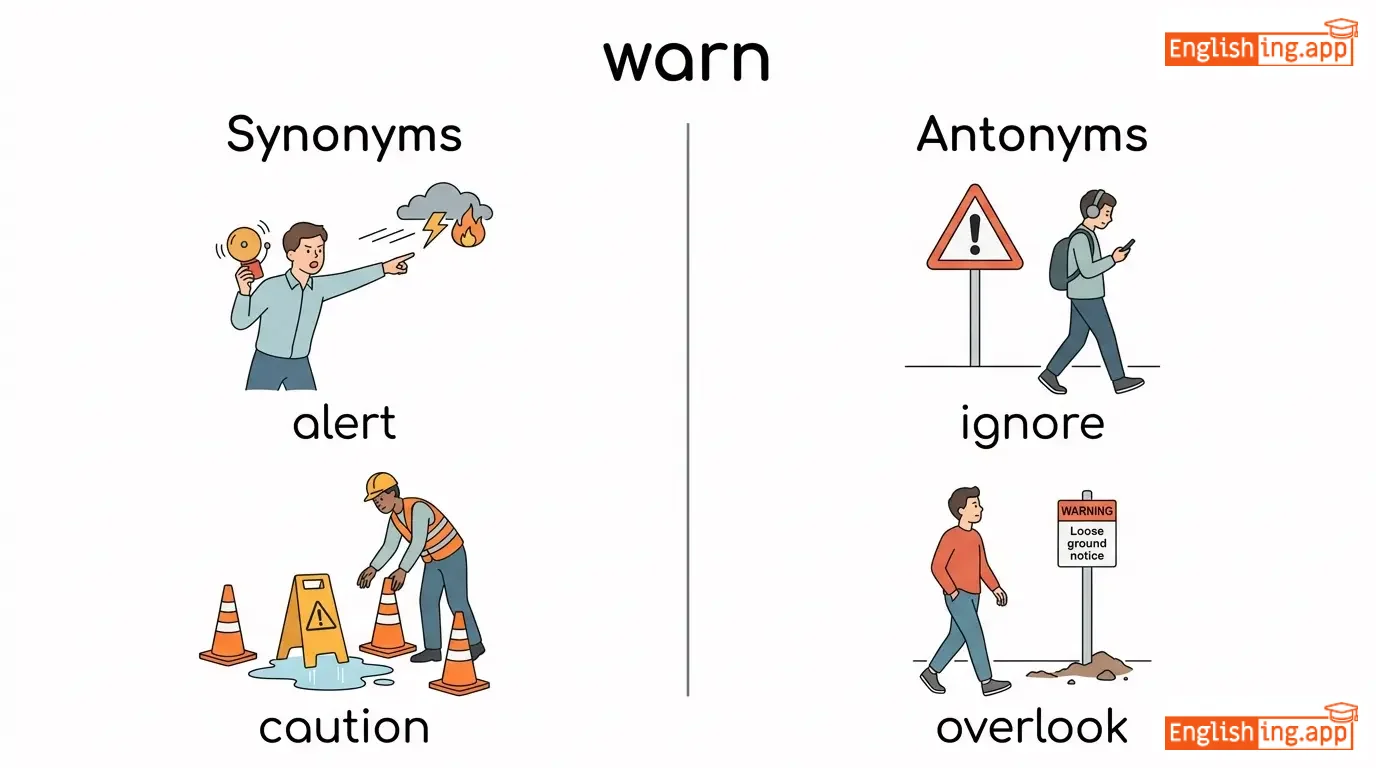
alert, caution, notify, advise
••••••
|
ignore, overlook, neglect
••••••
|
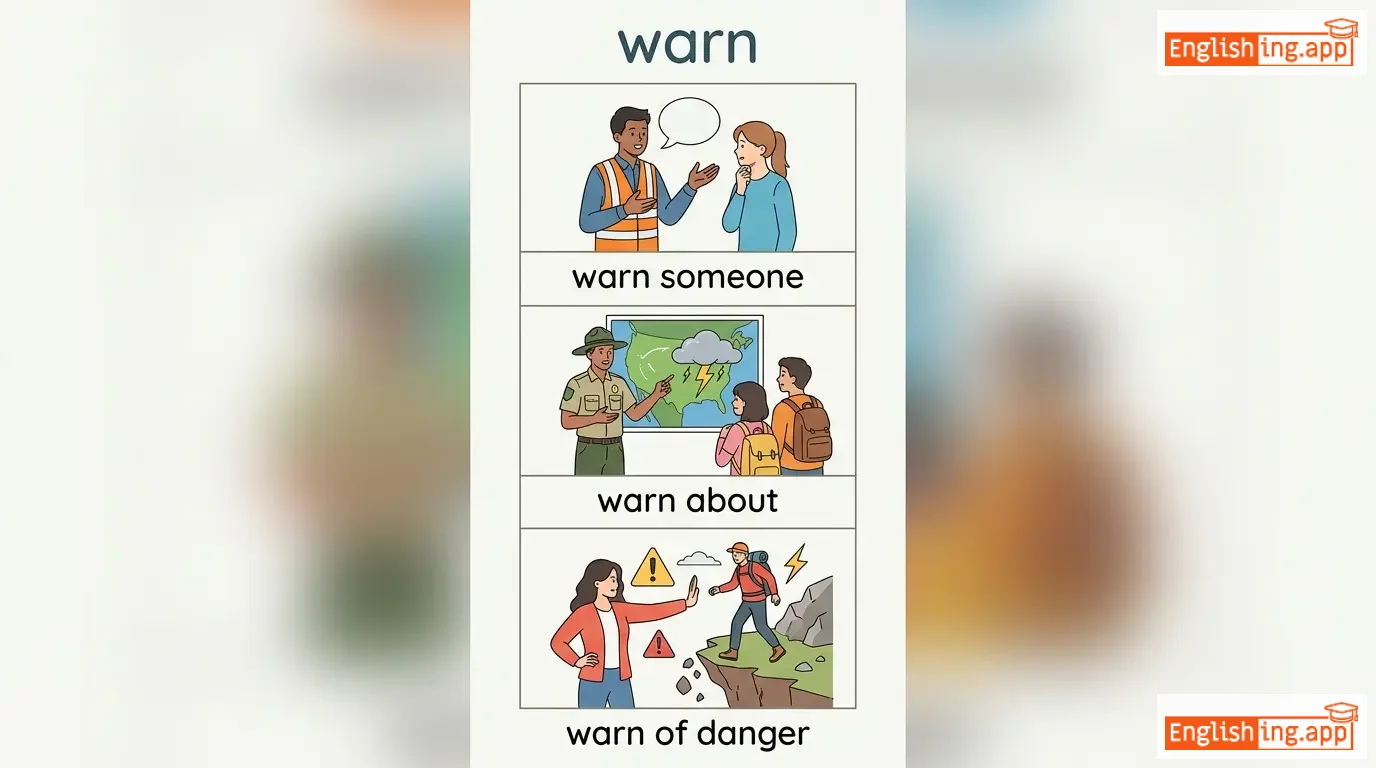
warn someone, warn about, warn of danger, warn in advance
••••••
|
When you WARN someone, you give them a heads up! (中文: 警告)
••••••
|
|
#12317
☀️
|
/wɔːrm/
adjective
(wērm)
••••••
|
- •••••• |
温暖
wēn nuǎn
••••••
|
- •••••• | - •••••• | - •••••• | - •••••• |
having a moderate degree of heat
••••••
|
The warm sunlight made the room feel cozy.
温暖的阳光让房间变得舒适。
••••••
|
温暖的阳光让房间变得舒适。
Wēnnuǎn de yángguāng ràng fángjiān biàn dé shūshì.
••••••
|
hot, mild, heated, comfortable
••••••
|
cold, cool, chilly
••••••
|
warm weather, warm drink, warm blanket
••••••
|
WARM yourself up - 保暖,你会感觉更好
••••••
|
|
#12318
⚔️
|
/wɔːr/
noun
(战争)
••••••
|
- •••••• |
战争
zhanzheng
••••••
|
- •••••• | - •••••• | - •••••• | - •••••• |
a state of conflict between different countries or groups
••••••
|
The war caused great suffering to the people. |
战争给人民带来了巨大的痛苦。
Zhanzheng gei renmin dailai le juda de tongku.
••••••
|
battle, conflict, fight, combat
••••••
|
peace, harmony
••••••
|
war zone, world war, civil war
••••••
|
WAR is a win for destruction - 战争是对所有人的灾难
••••••
|
|
#12319
🧱
|
/wɔːl/
noun
(wɔːl)
••••••
|
- •••••• |
墙
qiáng
••••••
|
- •••••• | - •••••• | - •••••• | - •••••• |
a vertical structure that encloses or divides an area
••••••
|
The wall in our living room is painted blue. |
我们客厅的墙壁被涂成了蓝色。
Wǒmen kètīng de qiángbì bèi tú chéngle lán sè.
••••••
|
barrier, partition, fence, divider
••••••
|
open, doorway
••••••
|
wall of bricks, brick wall, wall art
••••••
|
WALL your dreams - 墙壁上的梦想
••••••
|
|
#12320
🚶
|
/wɔːk/
verb
(wok)
••••••
|
|
走路
zǒulù
••••••
|
walked
wokd
••••••
|
walked
wokd
••••••
|
walks
woks
••••••
|
walking
walking
••••••
|
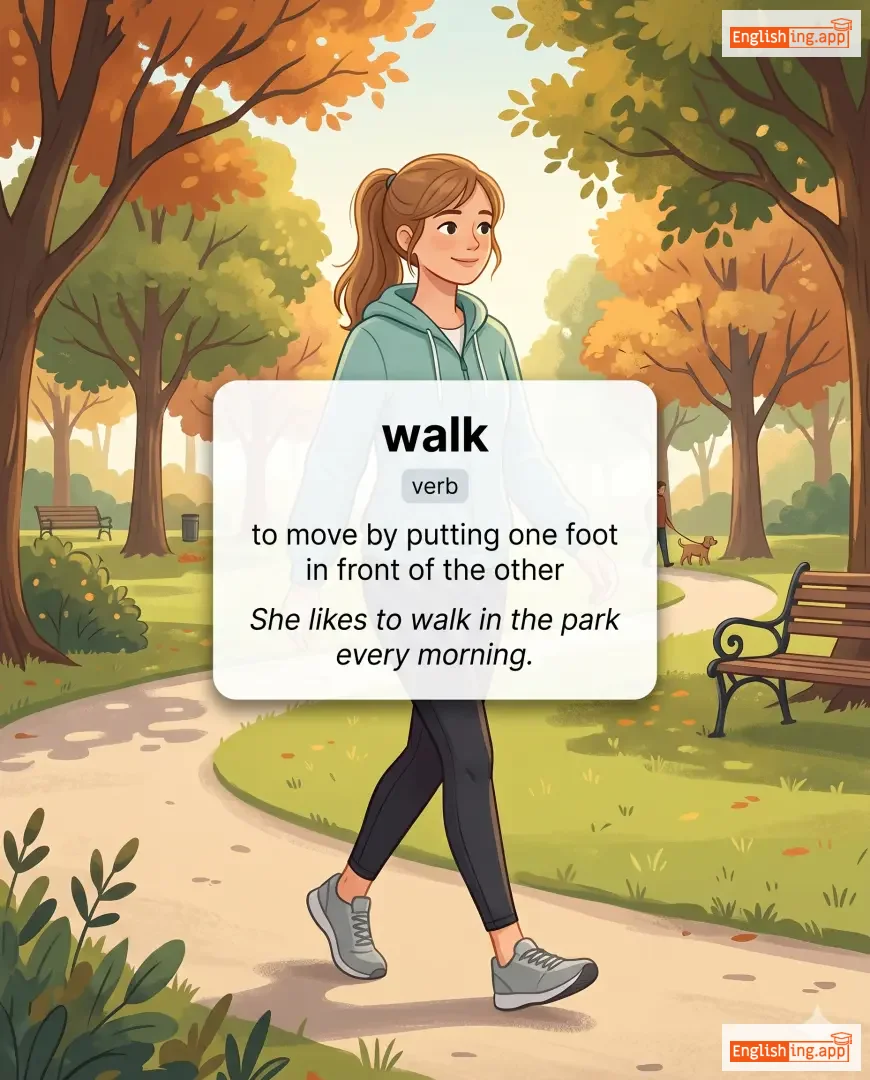
to move by putting one foot in front of the other
••••••
|
She likes to walk in the park every morning.
她每天早上喜欢在公园散步。
••••••
|
她每天早上喜欢在公园散步。
Tā měitiān zǎoshang xǐhuān zài gōngyuán sànbù.
••••••
|
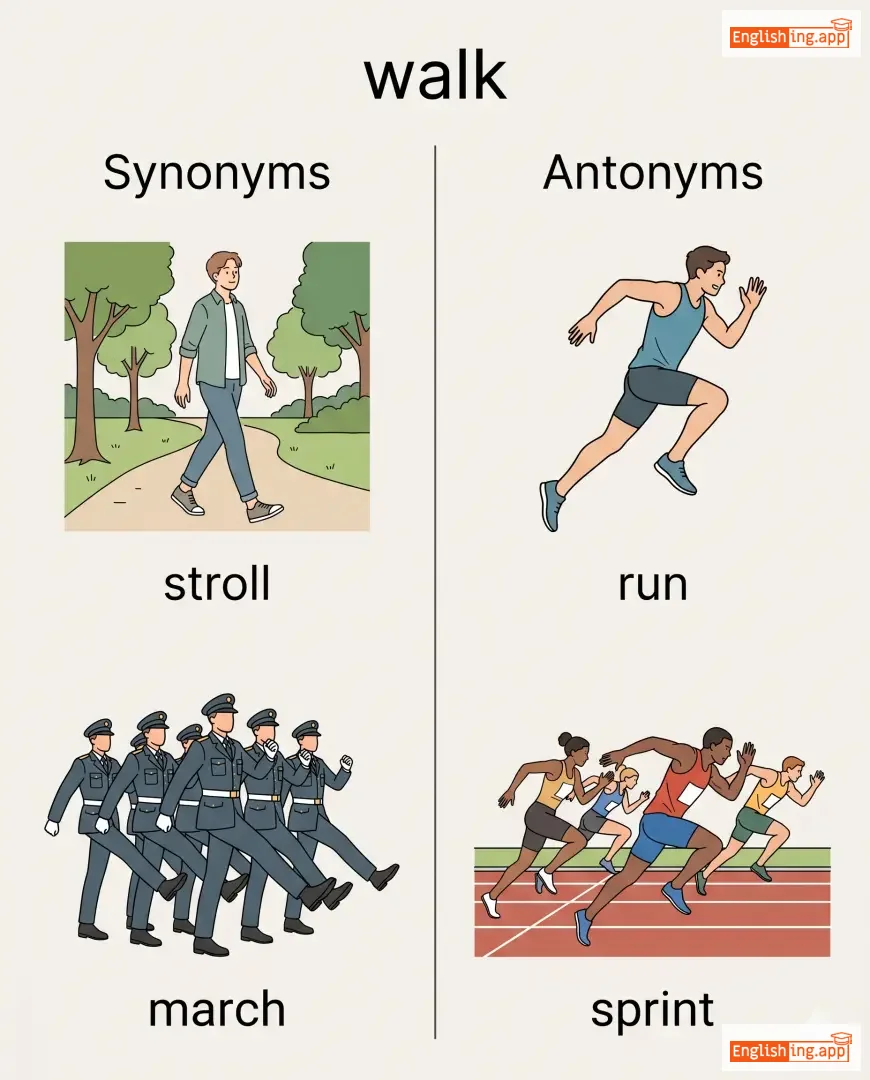
stroll, march, stride, step
••••••
|
run, sprint
••••••
|
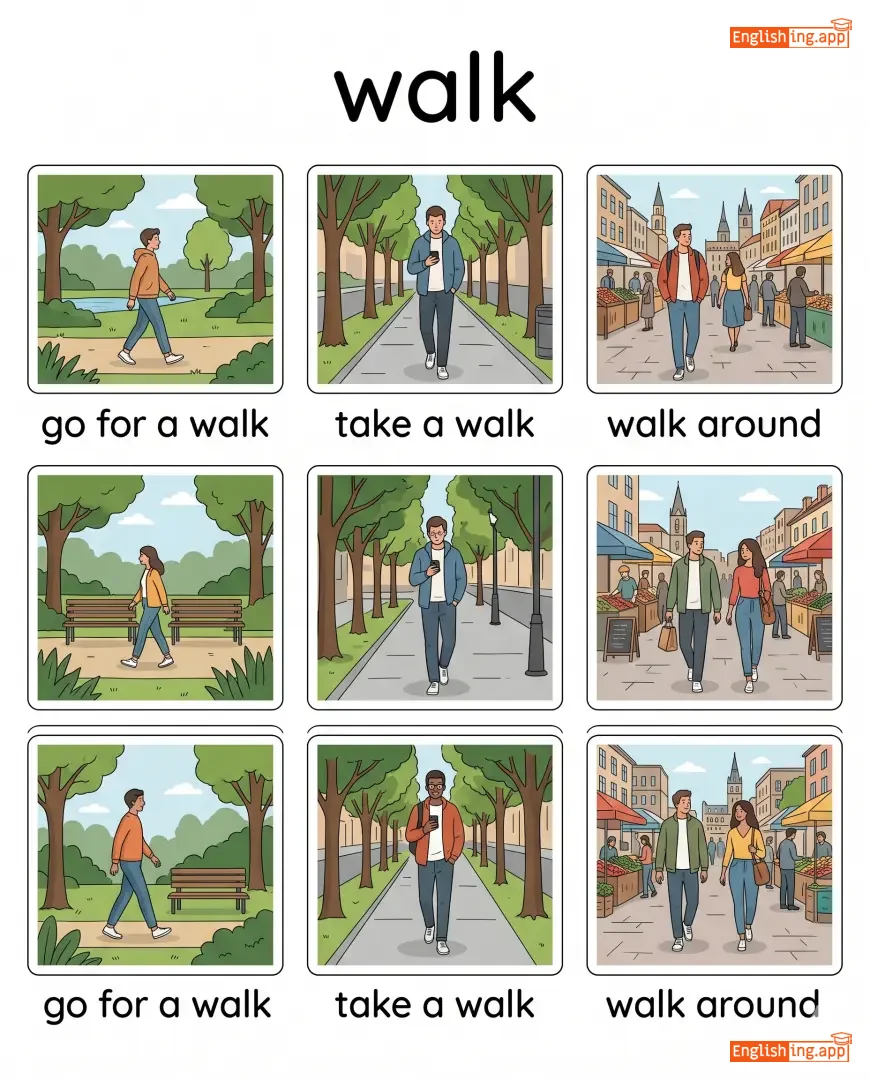
go for a walk, take a walk, walk around
••••••
|
WALK with ease - 轻松走路
••••••
|
|
#12321
⏳
|
/weɪt/
verb
(wèi té)
••••••
|
|
等待
deng dai
••••••
|
waited
wèi té dē
••••••
|
waited
wèi té dē
••••••
|
waits
wèi té sī
••••••
|
waiting
wèi té yīn
••••••
|
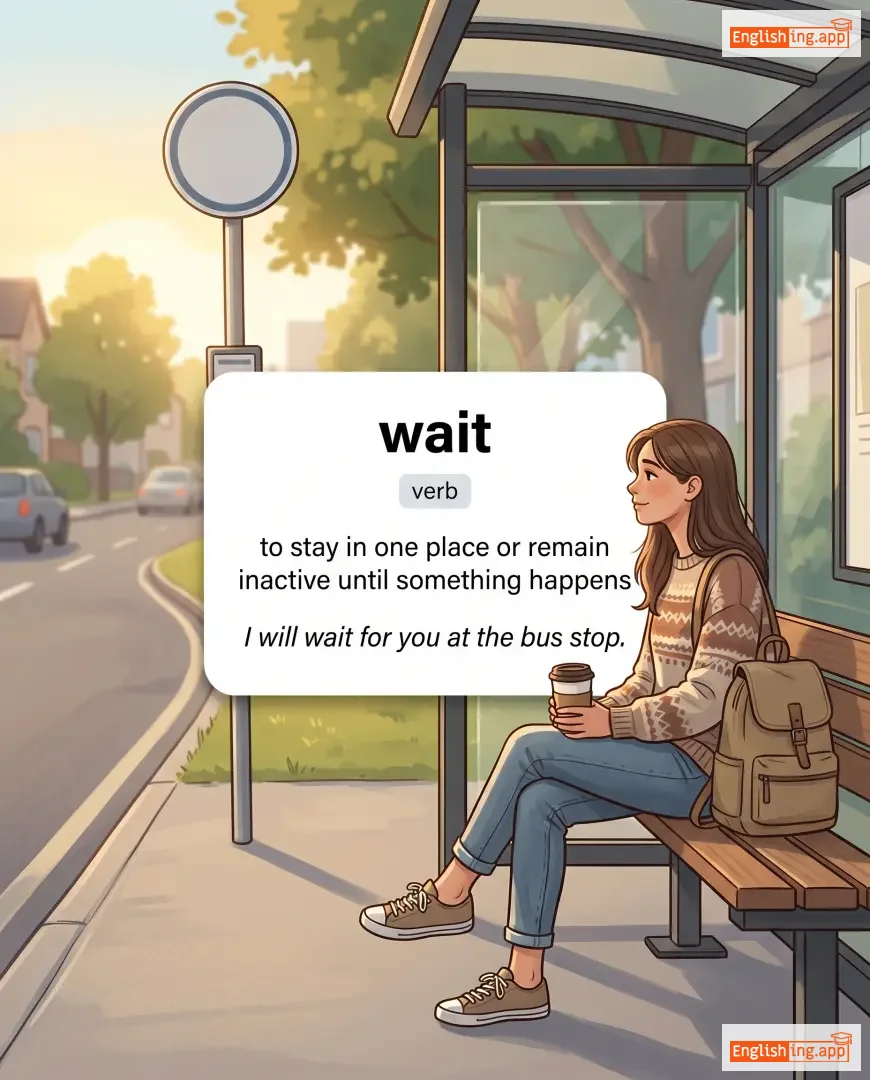
to stay in one place or remain inactive until something happens
••••••
|
I will wait for you at the bus stop.
我会在公交车站等你。
••••••
|
我会在公交车站等你。
Wǒ huì zài gōng jiāo chē zhàn děng nǐ.
••••••
|
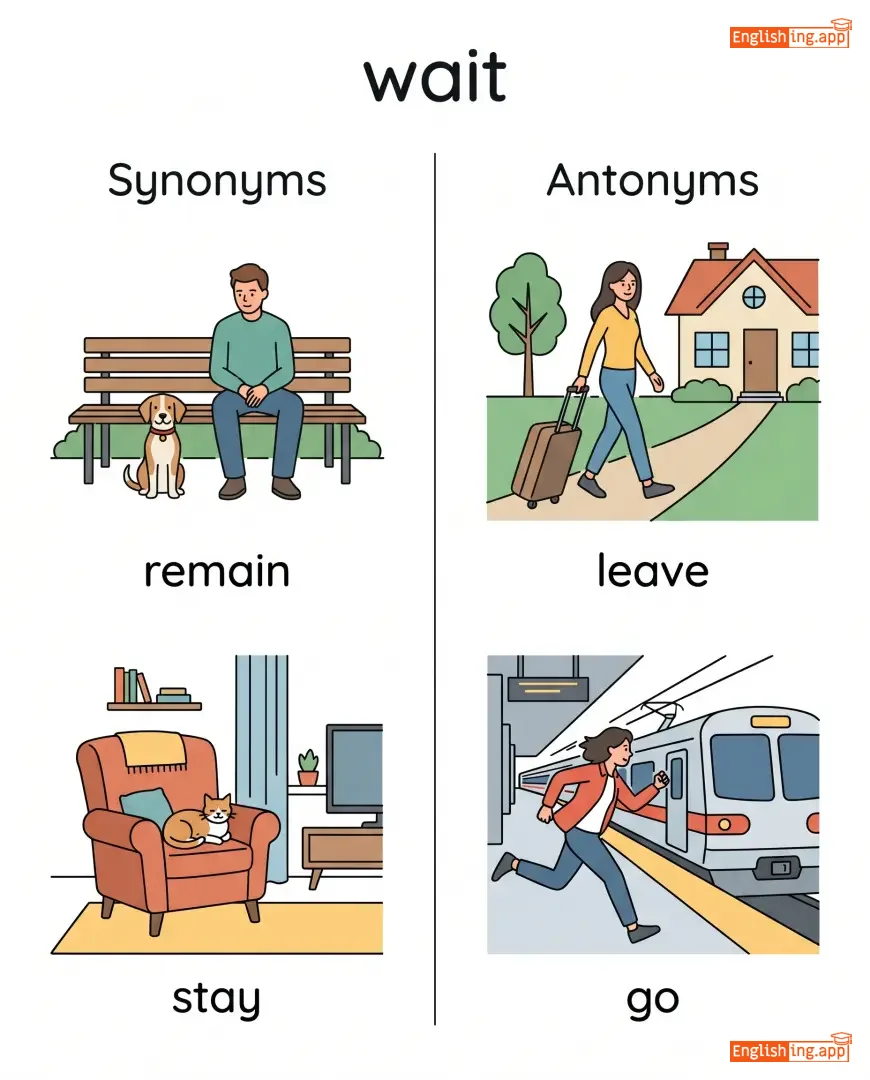
remain, stay, linger, anticipate
••••••
|
leave, go, depart
••••••
|
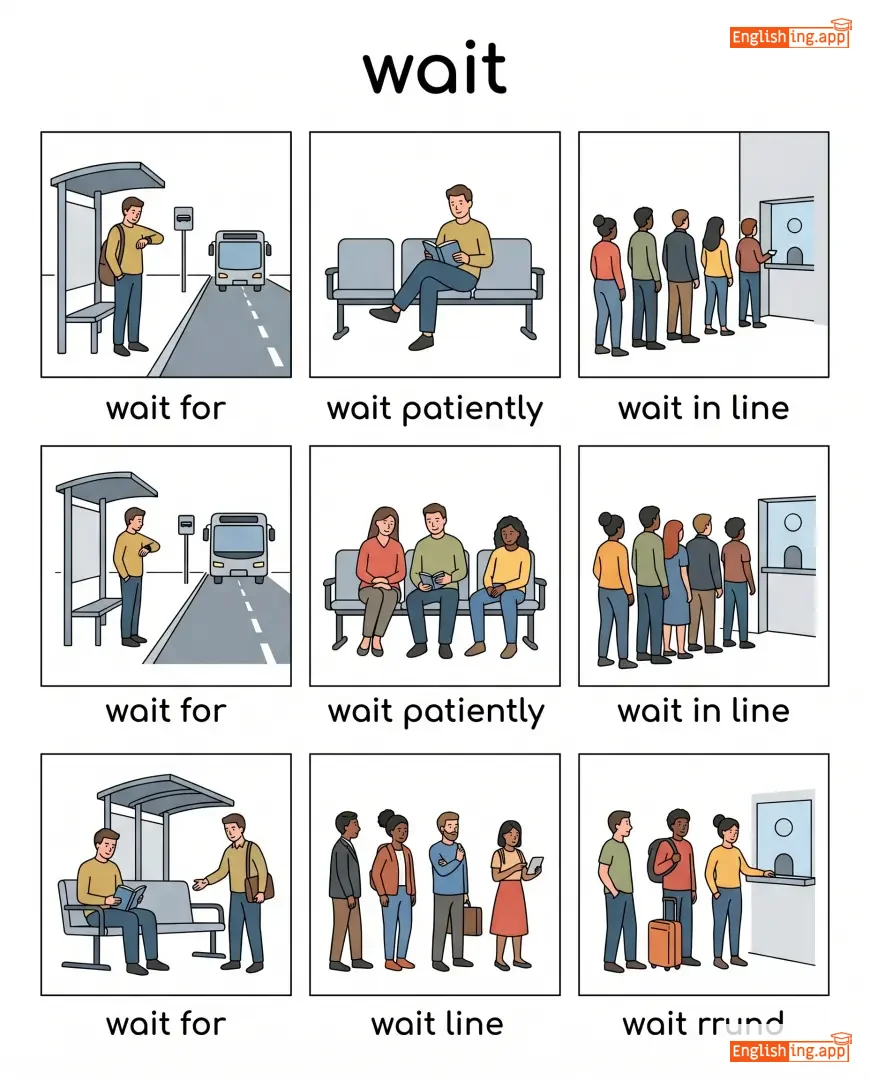
wait for, wait patiently, wait in line
••••••
|
WAIT - 等车
••••••
|
|
#12322
⚔️
|
/vərsəs/
abbreviation
(对战)
••••••
|
- •••••• |
对抗
duìkàng
••••••
|
- •••••• | - •••••• | - •••••• | - •••••• |
used to indicate opposition or contrast between two things
••••••
|
The match was Brazil vs Argentina in the final. |
比赛是巴西对抗阿根廷的决赛。
Bǐsài shì bāxī duìkàng āgēntíng de juésài.
••••••
|
against, versus, compared to
••••••
|
with
••••••
|
vs each other, A vs B, team vs team, person vs person
••••••
|
VS (versus) - 当你有两个选择时,你说'VS'。
••••••
|
|
#12323
🗳️
|
/ˈvəʊtə/
noun
(vòu tè ér)
••••••
|
- •••••• |
选民
xuǎnmín
••••••
|
- •••••• | - •••••• | - •••••• | - •••••• |
a person who votes in an election
••••••
|
Voters lined up outside the polling station to cast their ballots. |
选民们排队站在投票站外,等待投票。
Xuǎnmín men páiduì zhàn zài tóupiàozhàn wài, děngdài tóupiào.
••••••
|
elector, constituent, citizen
••••••
|
non-voter, abstainer
••••••
|
eligible voter, registered voter, voting rights, active voter
••••••
|
选民—投票决定未来的人。
••••••
|
|
#12324
🗳️
|
/vəʊt/
verb/noun
(投票)
••••••
|
|
投票
tóupiào
••••••
|
voted
投票了
••••••
|
voted
投票了
••••••
|
votes
投票
••••••
|
voting
投票中
••••••
|
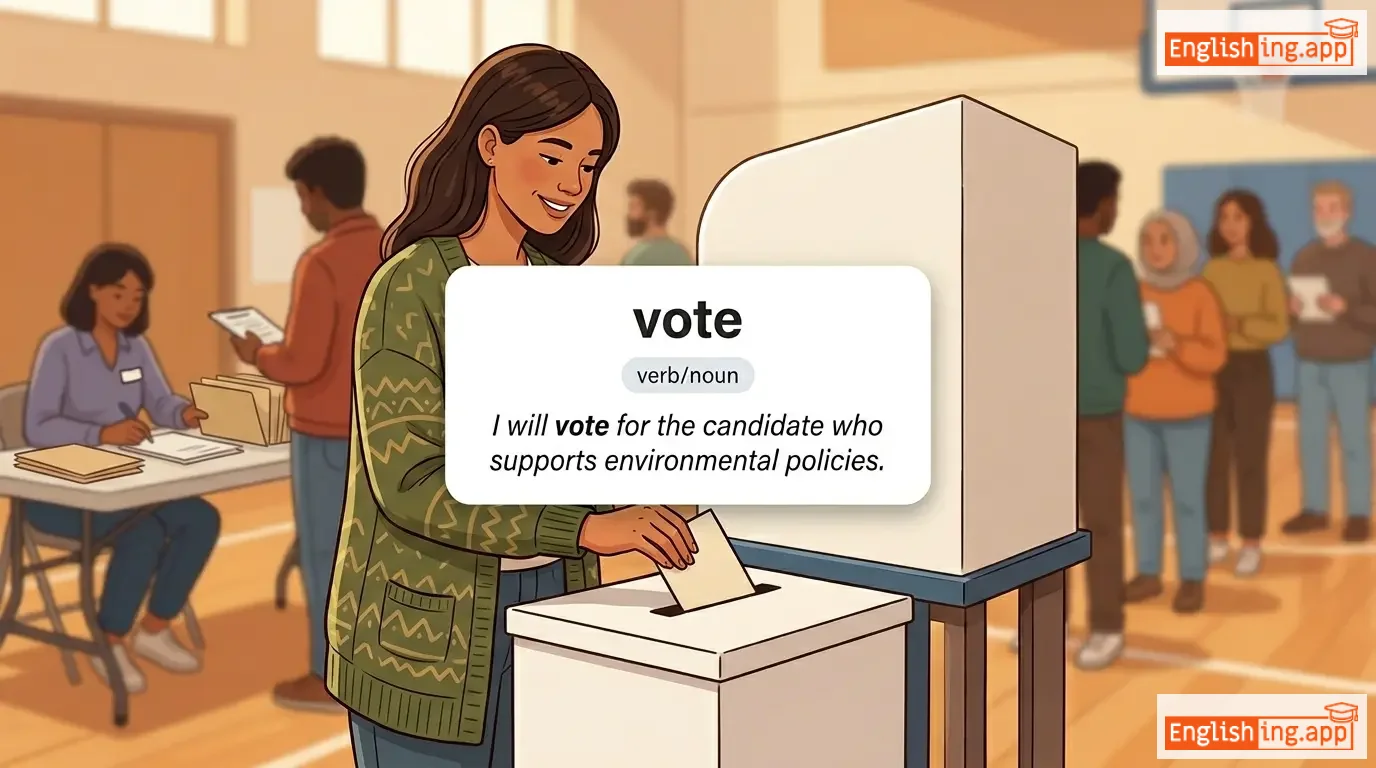
to express a choice or opinion in a formal decision-making process, especially in elections
••••••
|
I will vote for the candidate who supports environmental policies.
我将为支持环保政策的候选人投票。
••••••
|
我将为支持环保政策的候选人投票。
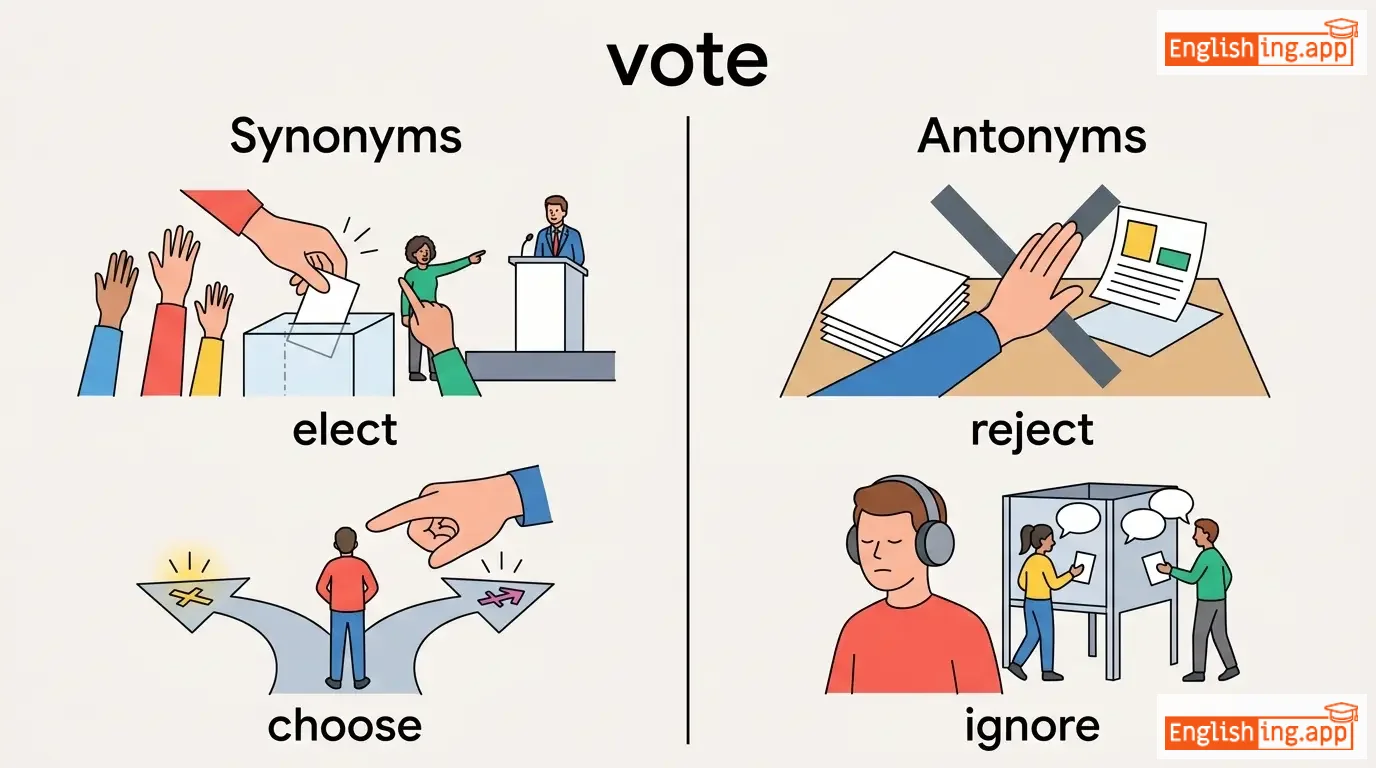
Wǒ jiāng wèi zhīchí huánbǎo zhèngcè de hòuxuǎn rén tóupiào.
••••••
|
elect, choose, select, decide
••••••
|
reject, ignore
••••••
|
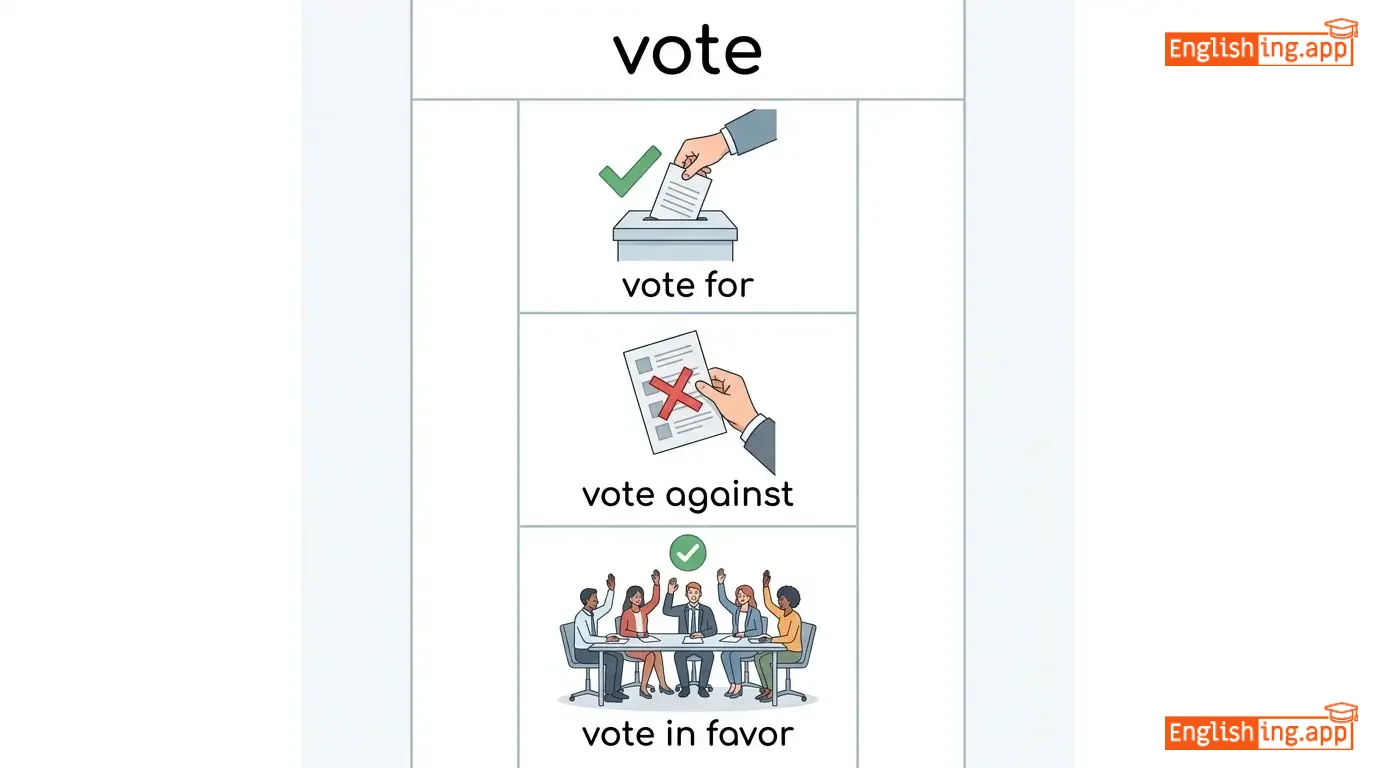
vote for, vote against, vote in favor, voting rights
••••••
|
投票为环保政策 - 投票是你改变世界的方式。
••••••
|
Vocabulary Quiz
Test your vocabulary by matching words with their translations or meanings.
Login to take the quiz
Comments (0)
Share your thoughts and join the discussion.
Join the discussion by logging in
Login to CommentNo comments yet
Be the first to share your thoughts!