


Swipe left or right, or use the buttons. Tap image to zoom.
例句翻译
单词
Lesson 19Lesson 19 - 遮罩切换
|
表情符号
|
单词 | Images | 翻译 | 过去时 | 过去分词 | 第三人称单数 | 动名词 | 含义 | 例句 | 例句翻译 | 示例表达 | 示例表达含义 | 示例表达翻译 | 同义词 | 反义词 | 搭配词 | 助记符 |
|---|---|---|---|---|---|---|---|---|---|---|---|---|---|---|---|---|---|
|
#541
📦
|
/əˈpɜːrtənənsɪz/
noun
(ā pērtēnàn sī)
••••••
|
- •••••• |
附属物
fù shǔ wù
••••••
|
- •••••• | - •••••• | - •••••• | - •••••• |
Additional items or accessories associated with something, often used in a legal or property context.
••••••
|
The house was sold along with all its appurtenances, including the garage and garden.
这所房子与所有附属设施一起出售,包括车库和花园。
••••••
|
这所房子与所有附属设施一起出售,包括车库和花园。
Zhè suǒ fángzi yǔ suǒyǒu fù shǔ shèshī yīqǐ chūshòu, bāokuò chēkù hé huāyuán.
••••••
|
- •••••• | - •••••• | - •••••• |
accessories, adjuncts, attachments, additions, belongings
••••••
|
essentials, core
••••••
|
rights and appurtenances, property and appurtenances, with all appurtenances
••••••
|
Appurtenances 表示额外物品或配件。想象有许多附加物品和租客,像车库和花园等配件。
••••••
|
|
#542
🌳
|
/ˈɑːrbər/
noun
(阿尔博尔)
••••••
|
- •••••• |
由树木或攀缘植物组成的阴凉花园庇护所
you shumu huo panyuan zhiwu zucheng de yinqing huayuan bihushuo
••••••
|
- •••••• | - •••••• | - •••••• | - •••••• |
a shady garden shelter formed by trees, climbing plants, or latticework
••••••
|
They rested under the arbor covered with roses.
他们在被玫瑰覆盖的阿尔博尔下休息。
••••••
|
他们在被玫瑰覆盖的阿尔博尔下休息。
Tamen zai bei meigui fukui de a'erbo'er xia xiuxi.
••••••
|
- •••••• | - •••••• | - •••••• |
bower, pergola, trellis, shelter, gazebo
••••••
|
open field, exposure
••••••
|
garden arbor, wooden arbor, rose-covered arbor
••••••
|
Arbor代表树荫庇护所—想象自己在树下休息,享受阴凉。
••••••
|
|
#543
🕊️
|
/ˈɑːrbɪtreɪt/
verb
(阿比特雷特)
••••••
|
- •••••• |
仲裁
zhòngcái
••••••
|
arbitrated
阿比特雷特德
••••••
|
arbitrated
阿比特雷特德
••••••
|
arbitrates
阿比特雷特斯
••••••
|
arbitrating
阿比特雷廷
••••••
|
to settle a dispute between two parties by acting as an impartial judge
••••••
|
The committee agreed to arbitrate the contract dispute.
委员会同意仲裁合同争议。
••••••
|
委员会同意仲裁合同争议。
Wěiyuánhuì tóngyì zhòngcái hé tóngzhèngyì.
••••••
|
arbitrate a dispute
仲裁争议
••••••
|
to resolve a disagreement between parties
••••••
|
仲裁争议
zhòngcái zhēngyì
••••••
|
mediate, adjudicate, resolve, judge, settle
••••••
|
provoke, dispute
••••••
|
arbitrate dispute, arbitrate conflict, arbitrate case
••••••
|
Arbitrate意味着仲裁—想象你是那个公正的仲裁员
••••••
|
|
#544
🎲
|
/ˈɑːrbɪˌtrɛri/
adjective
(阿比特雷里)
••••••
|
- •••••• |
随意的
suiyide
••••••
|
- •••••• | - •••••• | - •••••• | - •••••• |
based on random choice or personal whim, rather than reason or system
••••••
|
The teacher's arbitrary grading upset many students. |
老师的随意评分让许多学生感到不满。
Laoshi de sui yi pingfen rang xu duo xuesheng gandao bumian.
••••••
|
- •••••• | - •••••• | - •••••• |
random, capricious, whimsical, subjective, inconsistent
••••••
|
rational, logical, systematic
••••••
|
arbitrary decision, arbitrary rule, arbitrary action
••••••
|
Arbitrary意味着随意的—想象一个人在没有任何理由的情况下做出随意的决定.
••••••
|
|
#545
⚖️
|
/ˈɑːrbɪtər/
noun
(阿比特)
••••••
|
- •••••• |
仲裁者
zhòngcái zhě
••••••
|
- •••••• | - •••••• | - •••••• | - •••••• |
a person who has the authority to settle a dispute or decide an issue
••••••
|
The principal acted as the arbiter in the conflict between the students.
校长在学生之间的冲突中充当了仲裁者。
••••••
|
校长在学生之间的冲突中充当了仲裁者。
Xiàozhǎng zài xuéshēng zhījiān de chōngtú zhōng chōngdāngle zhòngcái zhě.
••••••
|
final arbiter
最终仲裁者
••••••
|
the ultimate authority who makes the final decision
••••••
|
最终仲裁者
zuìzhōng zhòngcái zhě
••••••
|
judge, mediator, referee, umpire, adjudicator
••••••
|
participant, disputant
••••••
|
arbiter of taste, arbiter of truth, final arbiter
••••••
|
Arbiter 意味着仲裁者——想象一个仲裁者做出最终决定。
••••••
|
|
#546
🌾
|
/ˈærəbəl/
adjective
(æɹəbəl)
••••••
|
- •••••• |
可耕种的
kě gēng zhòng de
••••••
|
- •••••• | - •••••• | - •••••• | - •••••• |
suitable for growing crops or farming
••••••
|
The farmer purchased arable land to expand his crops. |
农民购买了可耕种的土地,以扩大他的作物。
Nóngmín gòumǎi le kě gēng zhòng de tǔdì, yǐ kuò dà tā de zuòwù.
••••••
|
- •••••• | - •••••• | - •••••• |
fertile, cultivable, productive, tillable, farmable
••••••
|
barren, infertile, uncultivable
••••••
|
arable land, arable farming, arable field
••••••
|
Arable 意味着可耕种的—想象 Ar (农业) 和 able (能)
••••••
|
|
#547
🦅
|
/ˈækwɪˌlaɪn/
adjective
(ài kè wéi lán)
••••••
|
- •••••• |
鹰嘴形的
yīng zuǐ xíng de
••••••
|
- •••••• | - •••••• | - •••••• | - •••••• |
curved like an eagle's beak; hooked
••••••
|
He had an aquiline nose that gave him a distinguished appearance.
他有一个鹰钩鼻,给他增添了一种卓越的外观。
••••••
|
他有一个鹰嘴形的鼻子,给他增添了一种卓越的外观。
Tā yǒu yī gè yīng zuǐ xíng de bízi, gěi tā zēngtiānle yī zhǒng zhuóyuè de wàiguān.
••••••
|
- •••••• | - •••••• | - •••••• |
hooked, curved, bent, beak-like
••••••
|
straight, flat
••••••
|
aquiline nose, aquiline features, aquiline profile, aquiline shape
••••••
|
鹰嘴形的鼻子就像鹰的嘴巴一样弯曲。记住鹰嘴形就是一切!
••••••
|
|
#548
💧
|
/ˈeɪkwiəs/
adjective
(水合)
••••••
|
- •••••• |
水合的
shuǐhé de
••••••
|
- •••••• | - •••••• | - •••••• | - •••••• |
related to or containing water; watery
••••••
|
The solution was in an aqueous form.
溶液是水合的。
••••••
|
溶液是水合的。
Róngyè shì shuǐhé de.
••••••
|
- •••••• | - •••••• | - •••••• |
watery, fluid, moist, liquid
••••••
|
dry, solid
••••••
|
aqueous solution, aqueous layer, aqueous humor, aqueous medium
••••••
|
Aqua意味着水,水合的意思是含有水或与水相关。
••••••
|
|
#549
🚰
|
/ˈækwɪˌdʌkt/
noun
(ài kuí dú kè)
••••••
|
- •••••• |
引水道
yin shui dao
••••••
|
- •••••• | - •••••• | - •••••• | - •••••• |
a structure built to carry water over long distances
••••••
|
The Romans built aqueducts to supply water to their cities. |
罗马人建造了引水道来为他们的城市提供水。
Luómǎ rén jiànzàole yǐn shuǐ dào lái wèi tāmen de chéngshì tígōng shuǐ.
••••••
|
- •••••• | - •••••• | - •••••• |
watercourse, channel, conduit, pipeline
••••••
|
dam, blockage
••••••
|
ancient aqueduct, Roman aqueduct, stone aqueduct, aqueduct system
••••••
|
Aqua意味着水,而ductus意味着管道,因此引水道是水的管道。
••••••
|
|
#550
🌊
|
/əˈkwætɪk/
adjective
(水生的)
••••••
|
|
水生的
shuǐshēng de
••••••
|
- •••••• | - •••••• | - •••••• | - •••••• |
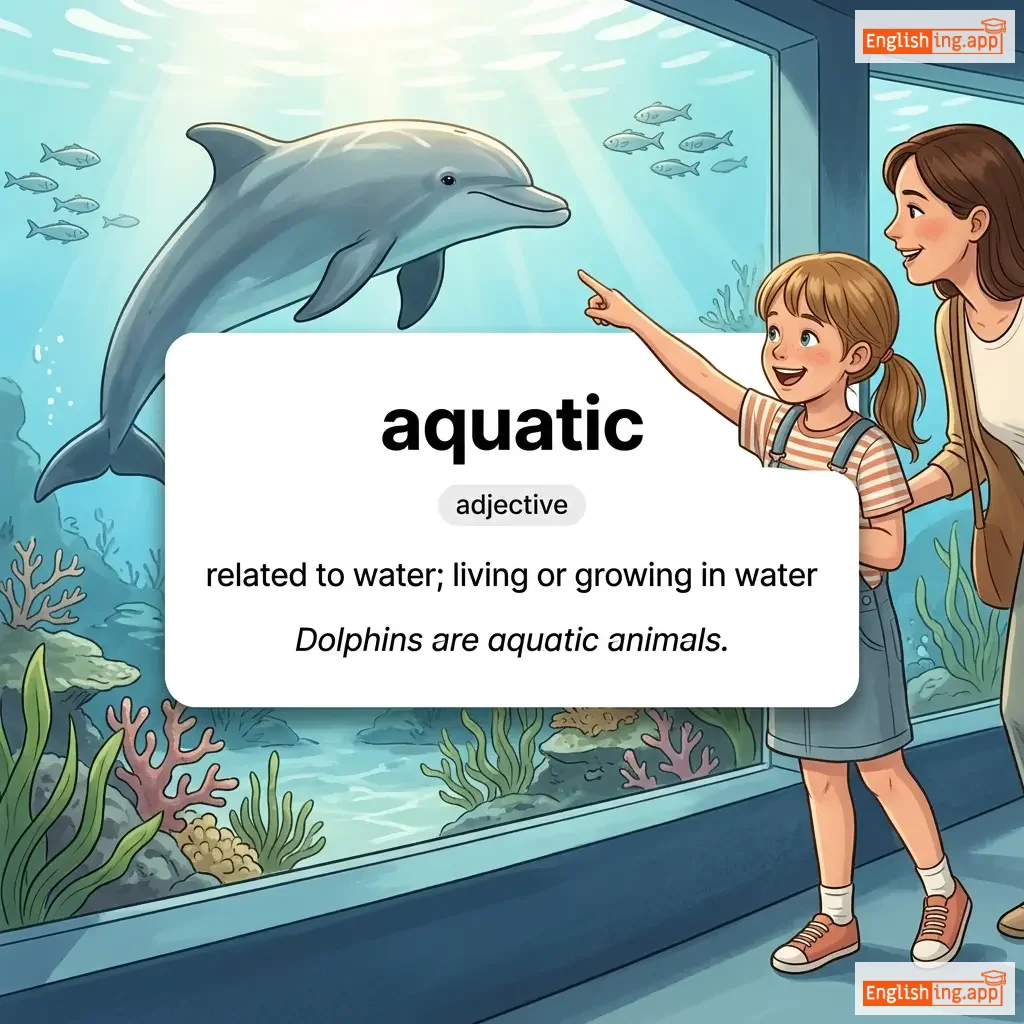
related to water; living or growing in water
••••••
|
Dolphins are aquatic animals.
海豚是水生动物。
••••••
|
海豚是水生动物。
Hǎitún shì shuǐshēng dòngwù.
••••••
|
aquatic life
水生生活
••••••
|
plants and animals that live in water
••••••
|
水生生活
shuǐshēng shēnghuó
••••••
|
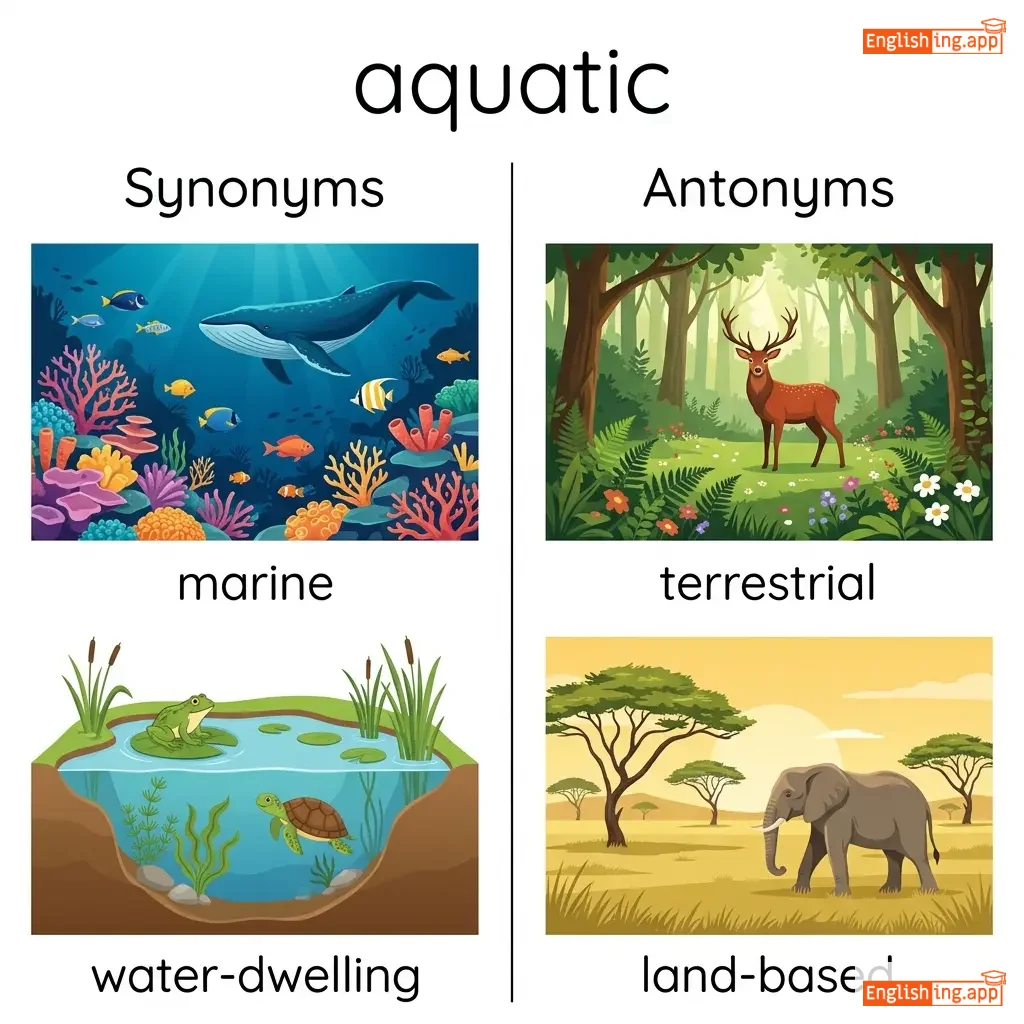
marine, water-dwelling, oceanic, freshwater
••••••
|
terrestrial, land-based
••••••
|
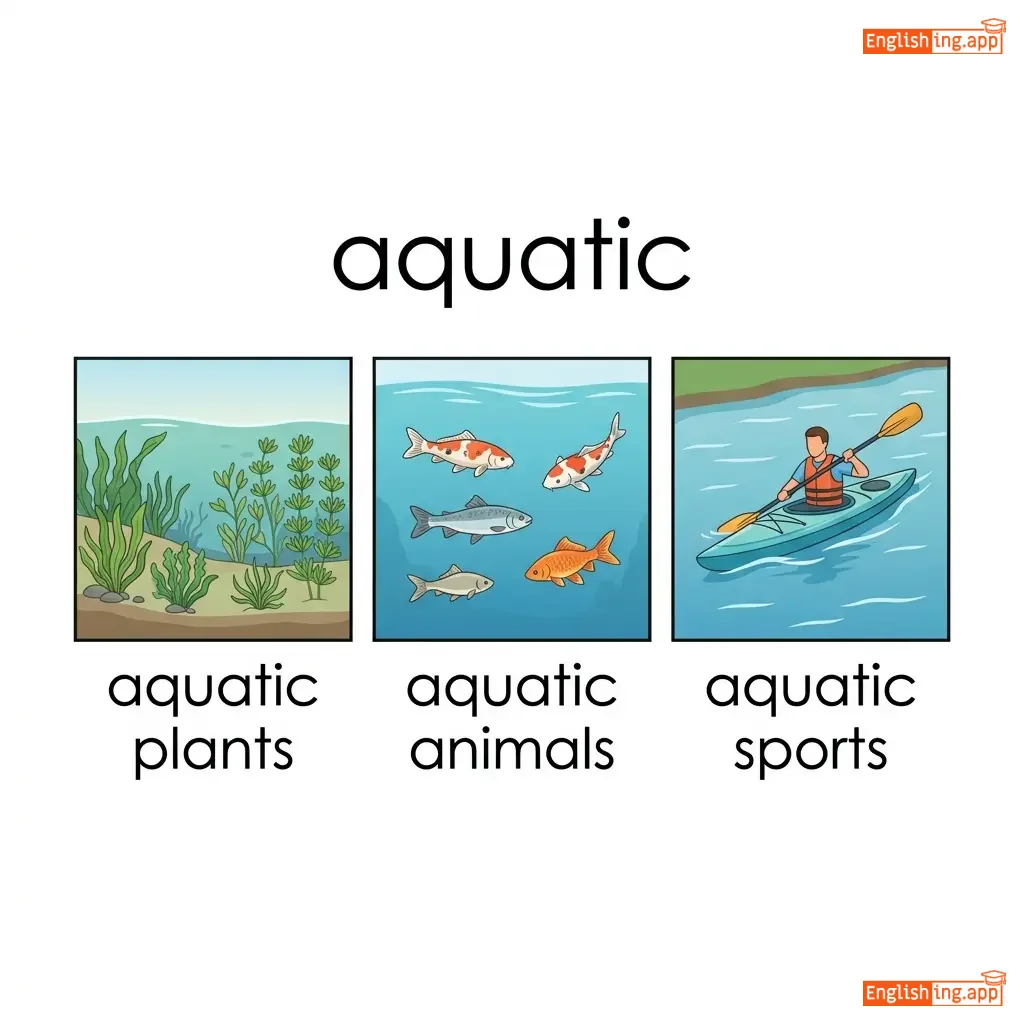
aquatic plants, aquatic animals, aquatic sports, aquatic life
••••••
|
Aqua意味着水,因此水生的意味着与水有关。
••••••
|
|
#551
🎯
|
/ˈæptɪˌtjuːd/
noun
(æptɪtjud)
••••••
|
- •••••• |
能力
nengli
••••••
|
- •••••• | - •••••• | - •••••• | - •••••• |
a natural ability or talent to do something well
••••••
|
She has a strong aptitude for learning new languages. |
她在学习新语言方面有很强的能力。
ta zai xuexi xin yuyan fangmian you hen qiang de nengli.
••••••
|
aptitude test |
a test designed to determine a person's ability in a particular skill or field
••••••
|
能力测试
nengli ceshi
••••••
|
talent, ability, skill, knack, capability
••••••
|
incompetence, incapacity, inability
••••••
|
aptitude test, natural aptitude, aptitude for, aptitude in
••••••
|
Aptitude 与中文的能力相似,表示做某事的天赋。
••••••
|
|
#552
🎯
|
/æpt/
adjective
(æpt)
••••••
|
- •••••• |
适当的
shìdàng de
••••••
|
- •••••• | - •••••• | - •••••• | - •••••• |
Appropriate or suitable; having a natural tendency or quick to learn.
••••••
|
She is an apt student who quickly understands new concepts. |
她是一个适当的学生,很快就能理解新的概念。
Tā shì yīgè shìdàng de xuéshēng, hěn kuài jiù néng lǐjiě xīn de gàiniàn.
••••••
|
apt to |
Having a tendency to do something.
••••••
|
倾向于
qīngxiàng yú
••••••
|
suitable, appropriate, fitting, inclined
••••••
|
unsuitable, unfit, inappropriate
••••••
|
apt student, apt remark, apt description, apt to
••••••
|
Apt表示快速学习者—Apt Student意味着总是完美的天才学生。
••••••
|
|
#553
📌
|
/ˌæ.prəˈpoʊ/
adjective/adverb
(apropó)
••••••
|
|
恰当
qiàdàng
••••••
|
- •••••• | - •••••• | - •••••• | - •••••• |
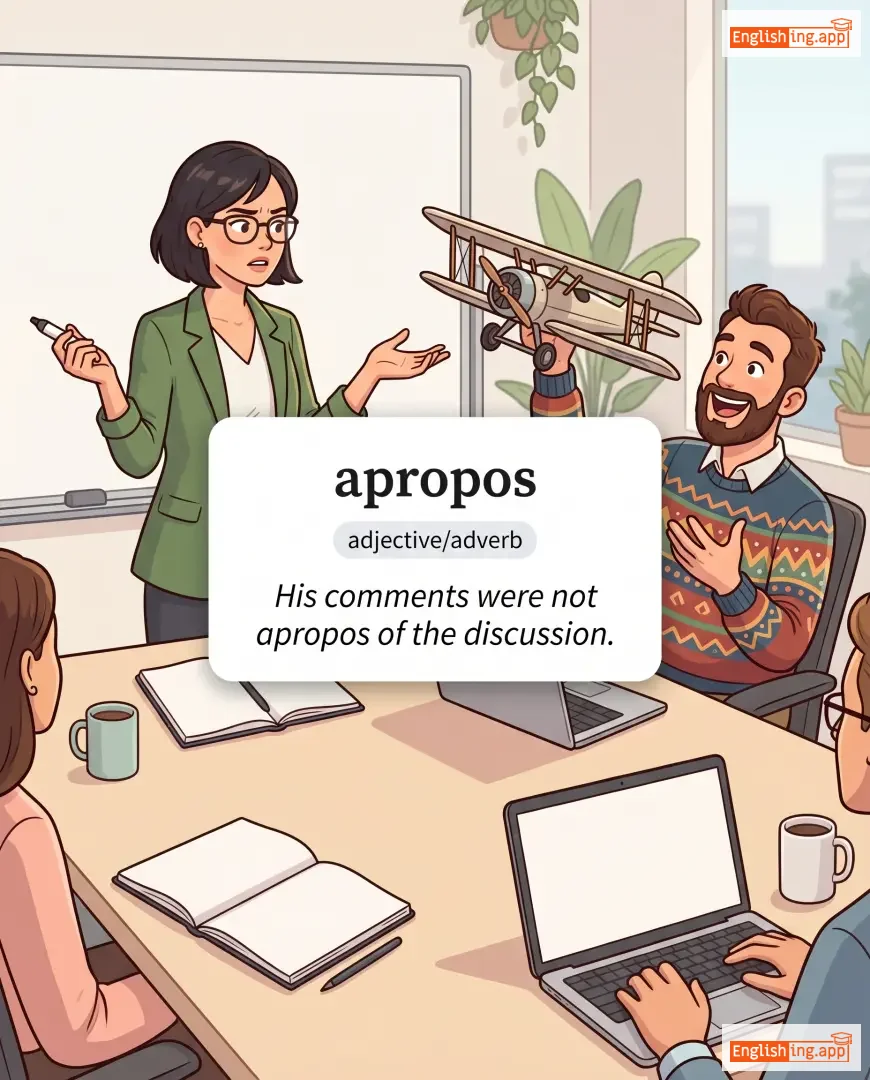
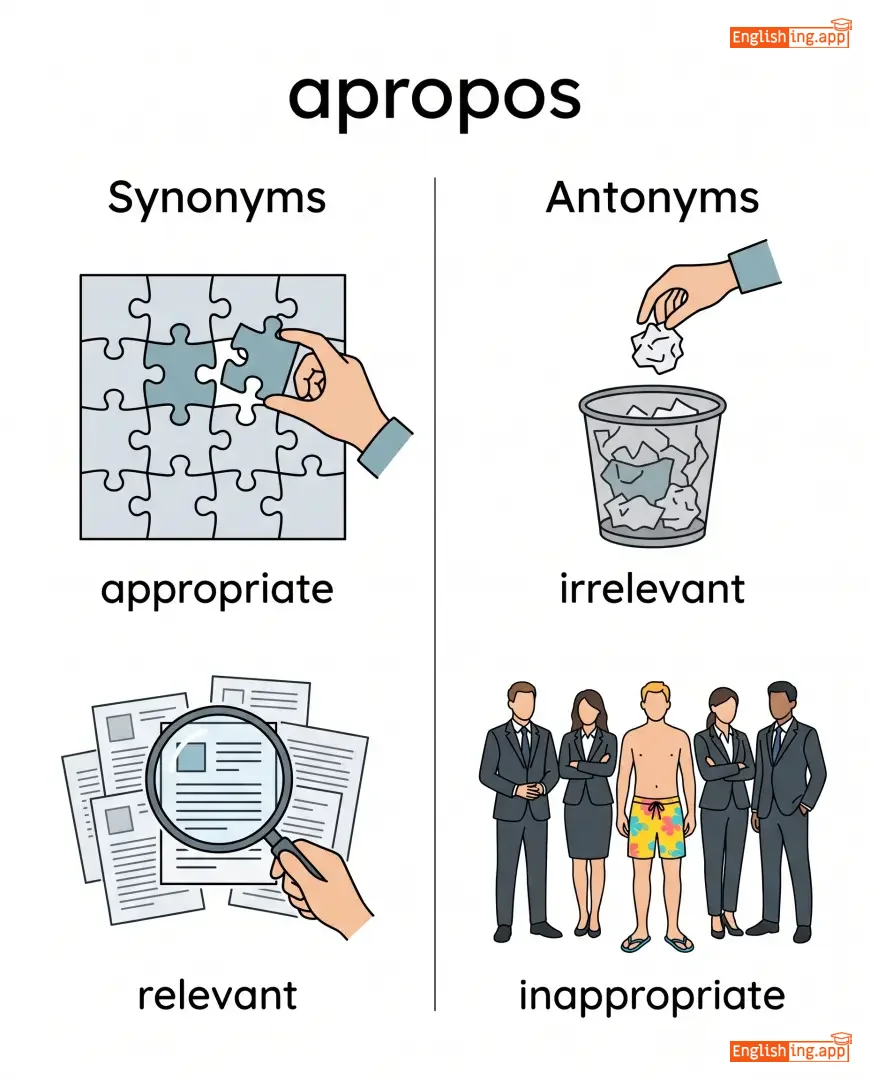
Appropriate to the situation; relevant. As an adverb, it means 'with reference to' or 'regarding'.
••••••
|
His comments were not apropos of the discussion.
他的评论与讨论无关。
••••••
|
他的评论与讨论无关。
Tā de pínglùn yǔ tǎolùn wúguān.
••••••
|
- •••••• | - •••••• | - •••••• |
appropriate, relevant, suitable, pertinent
••••••
|
irrelevant, inappropriate
••••••
|
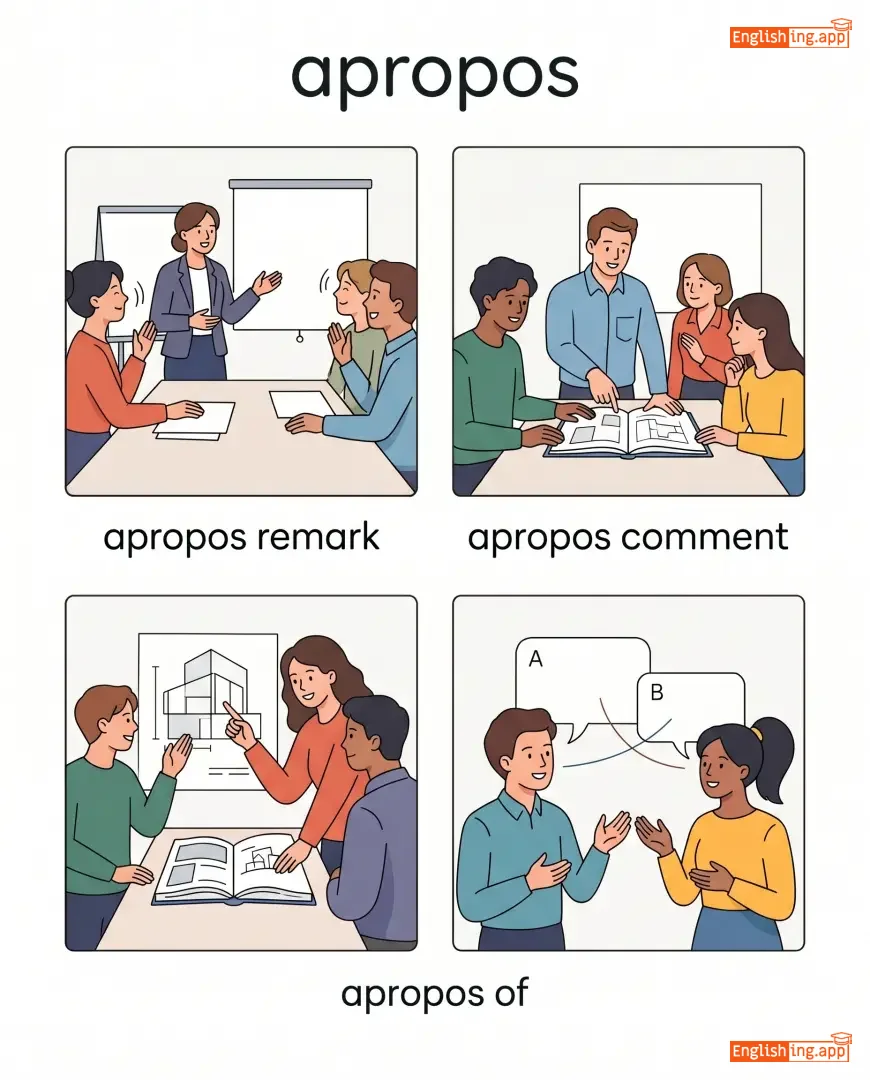
apropos remark, apropos comment, apropos of
••••••
|
Apropos意味着相关—就像建议,必须是Apropos!
••••••
|
|
#554
👩🍳
|
/ˈeɪ.prən/
noun
••••••
|
- •••••• | - •••••• | - •••••• | - •••••• | - •••••• | - •••••• |
A protective garment worn over the front of one's clothes to keep them clean, especially while cooking.
••••••
|
She tied an apron around her waist before cooking dinner. |
- •••••• |
apron strings |
A metaphor for dependence on one's mother or home.
••••••
|
- •••••• |
smock, pinafore, bib, overall
••••••
|
none, bare
••••••
|
wear an apron, kitchen apron, chef’s apron
••••••
|
No •••••• |
|
#555
🔗
|
/əˈpɜːrtənənt/
adjective
(阿普尔特南特)
••••••
|
- •••••• |
附属
fùshǔ
••••••
|
- •••••• | - •••••• | - •••••• | - •••••• |
Belonging to or associated with something, often used in legal/property contexts.
••••••
|
The right of way is appurtenant to the landowner’s property.
通行权属于土地所有者的财产。
••••••
|
通行权属于土地所有者的财产。
Tōngxíngquán shǔyú tǔdì suǒyǒu zhě de cáichǎn.
••••••
|
- •••••• | - •••••• | - •••••• |
related, attached, connected, accessory
••••••
|
separate, independent
••••••
|
rights appurtenant, appurtenant land, appurtenant easement
••••••
|
Appurtenant意味着与某事物相关,例如租户始终与土地相关。
••••••
|
|
#556
🎯
|
/ˈæpəzɪt/
adjective
(æpósit)
••••••
|
|
恰当
qiàdàng
••••••
|
- •••••• | - •••••• | - •••••• | - •••••• |
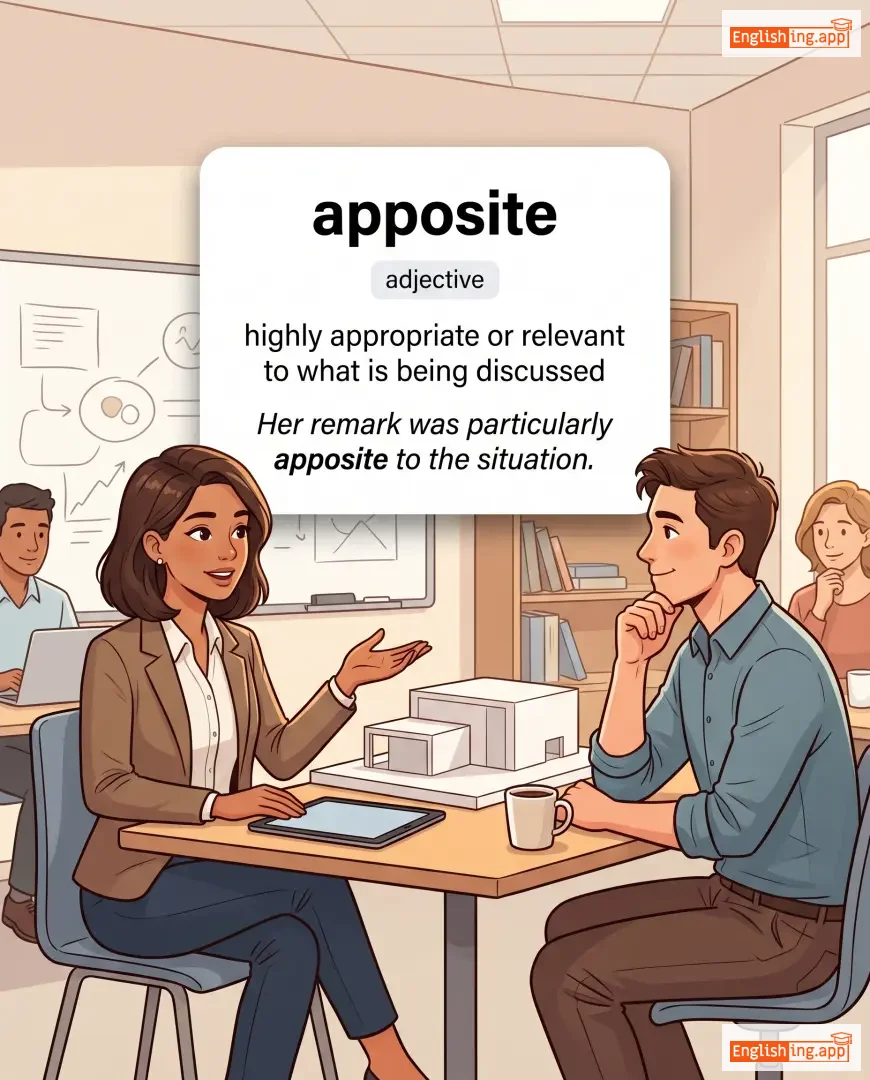
highly appropriate or relevant to what is being discussed
••••••
|
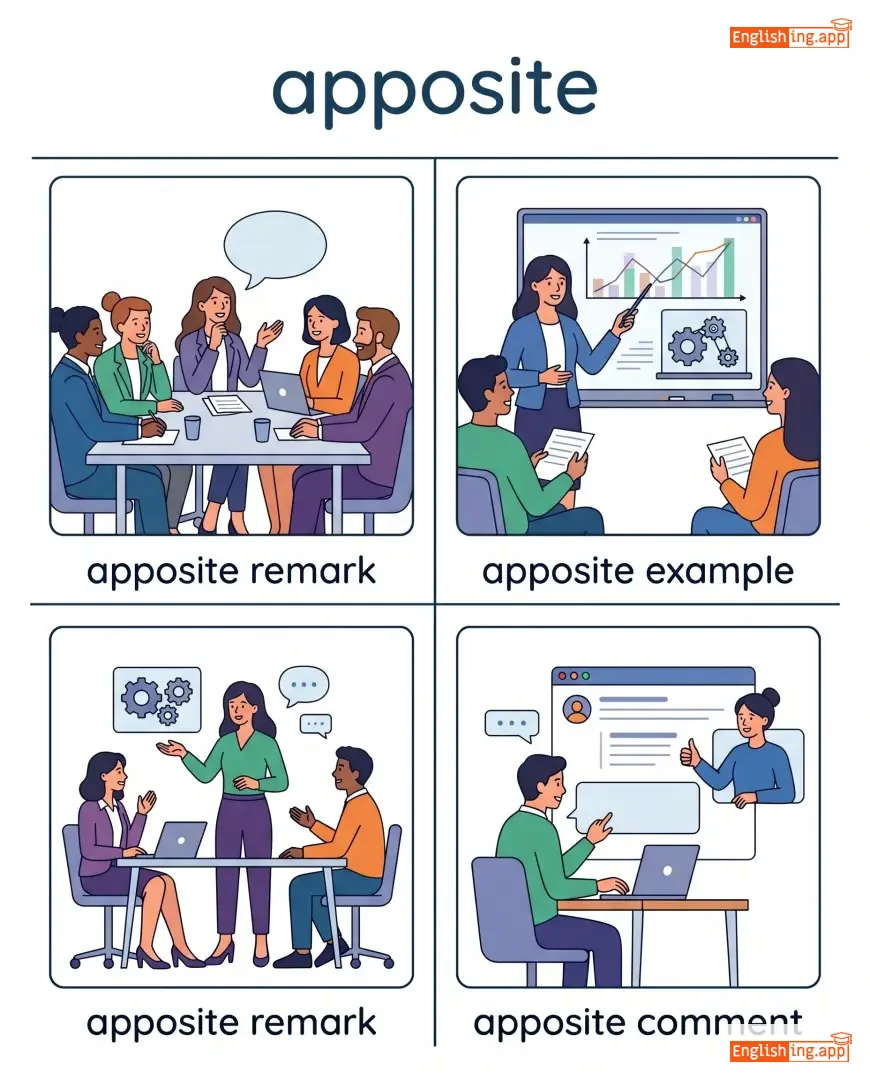
Her remark was particularly apposite to the situation. |
她的评论对于这个情况特别恰当。
Tā de pínglùn duìyú zhège qíngkuàng tèbié qiàdàng.
••••••
|
- •••••• | - •••••• | - •••••• |
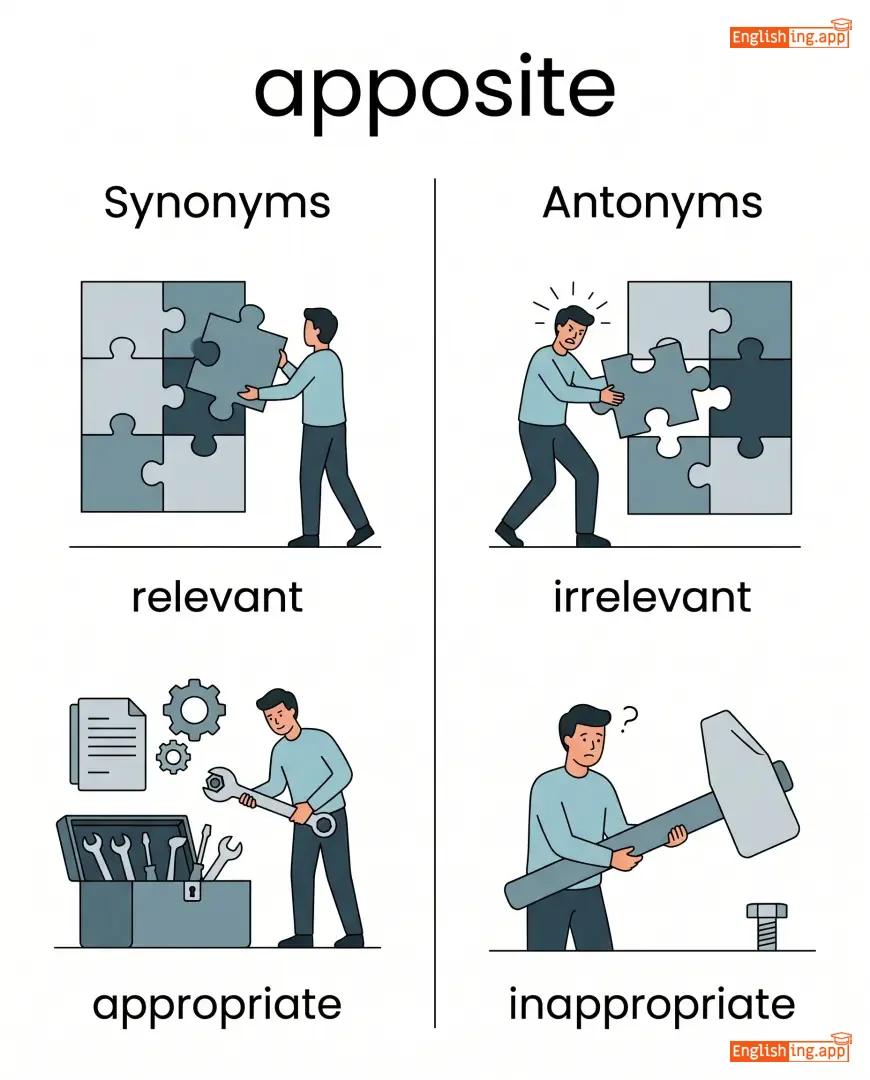
relevant, appropriate, fitting, suitable, pertinent
••••••
|
irrelevant, inappropriate, unsuitable
••••••
|
apposite remark, apposite example, apposite comment, apposite observation
••••••
|
Apposite 就是像完美的拼图一样合适!
••••••
|
|
#557
🧩
|
/əˈpɜːrtənəns/
noun
(āpǔtènān sī)
••••••
|
- •••••• |
附属物 / 配件
fùshǔ wù / pèijiàn
••••••
|
- •••••• | - •••••• | - •••••• | - •••••• |
an accessory or supplementary part of something
••••••
|
The garage is an appurtenance of the main house.
车库是主屋的附属部分。
••••••
|
车库是主屋的附属部分。
Chēkù shì zhǔ wū de fùshǔ bùfen.
••••••
|
- •••••• | - •••••• | - •••••• |
accessory, attachment, addition, adjunct
••••••
|
essence, core
••••••
|
legal appurtenance, building appurtenance, appurtenance of property
••••••
|
Appurtenance意味着附加功能—就像一个应用程序有额外的功能。
••••••
|
|
#558
✔️
|
/əˈproʊpriət/ (adj), /əˈproʊprieɪt/ (verb)
adjective, verb
(āpɪəʊprɪət)
••••••
|
|
适当的 / 占用
shìdàng de / zhàn yòng
••••••
|
appropriated
āpɪəʊprɪeɪtɪd
••••••
|
appropriated
āpɪəʊprɪeɪtɪd
••••••
|
appropriates
āpɪəʊprɪeɪts
••••••
|
appropriating
āpɪəʊprɪeɪtɪŋ
••••••
|
suitable or proper in the circumstances (adj); to take something for one’s own use, often without permission (verb)
••••••
|
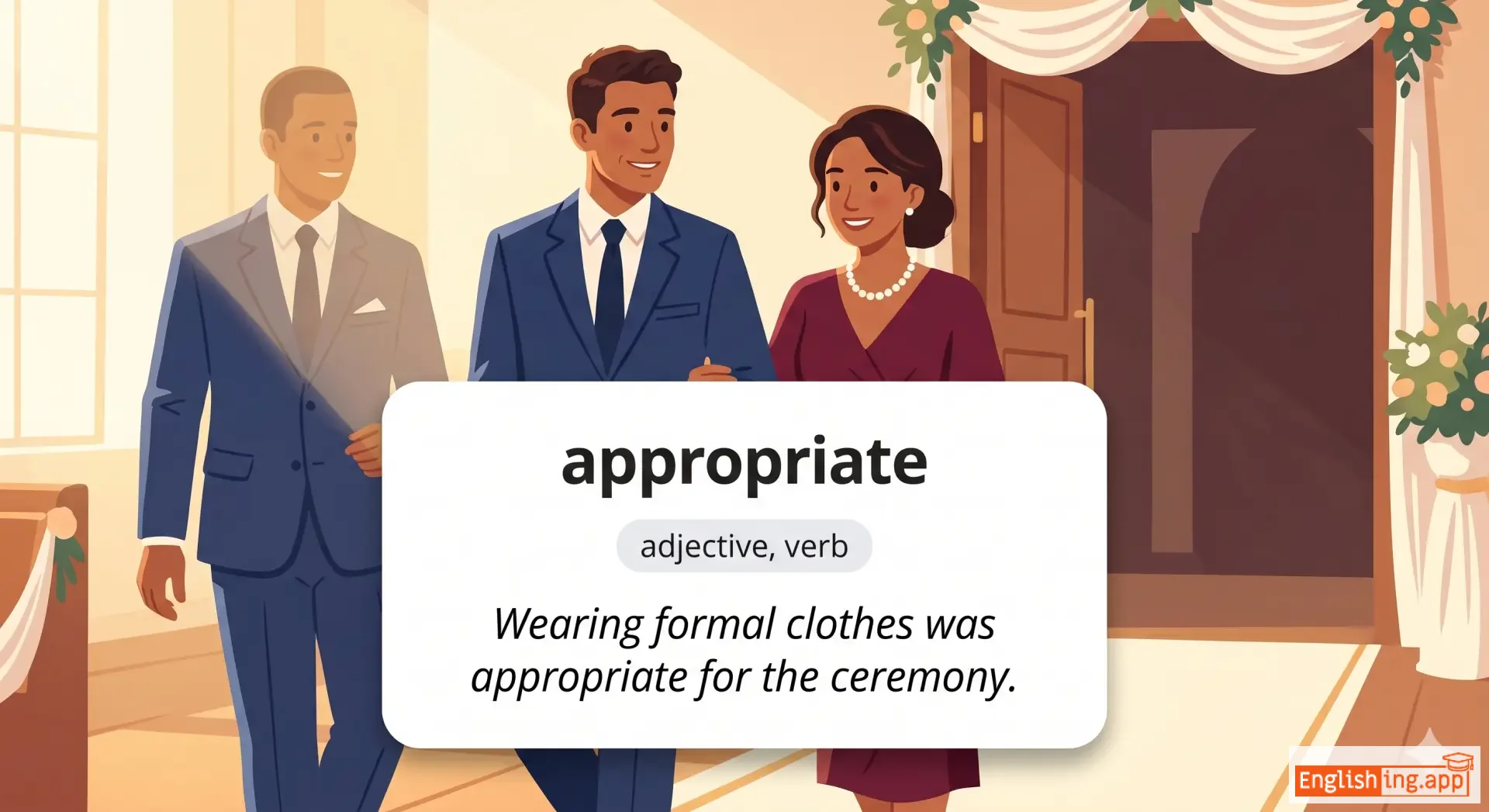
Wearing formal clothes was appropriate for the ceremony.
穿正式衣服是适合这个仪式的。
••••••
|
穿正式衣服是适合这个仪式的。
Chuān zhèngshì yīfú shì shìhé zhège yíshì de.
••••••
|
- •••••• | - •••••• | - •••••• |
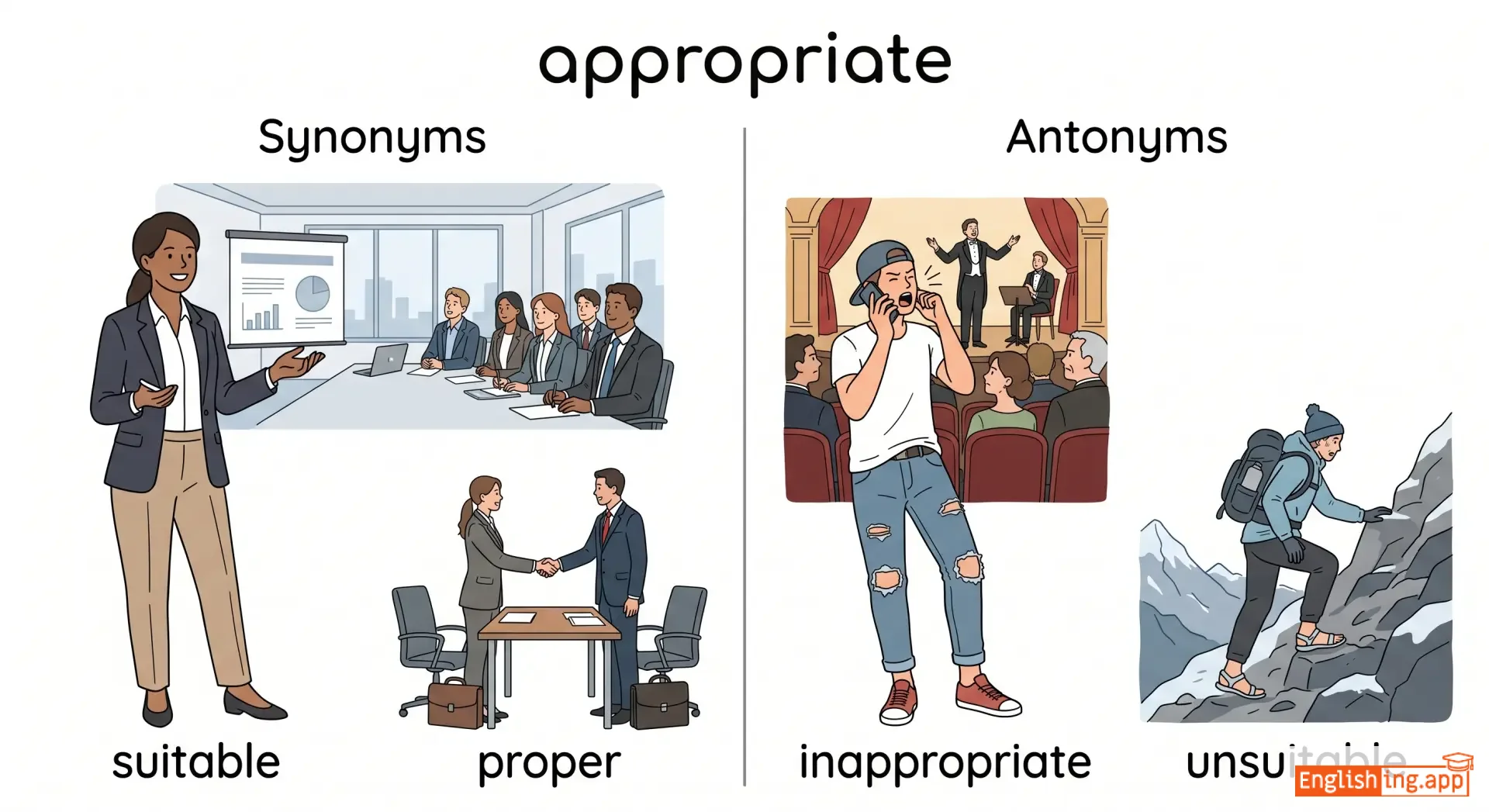
suitable, proper, fitting, apt, seize
••••••
|
inappropriate, unsuitable
••••••
|
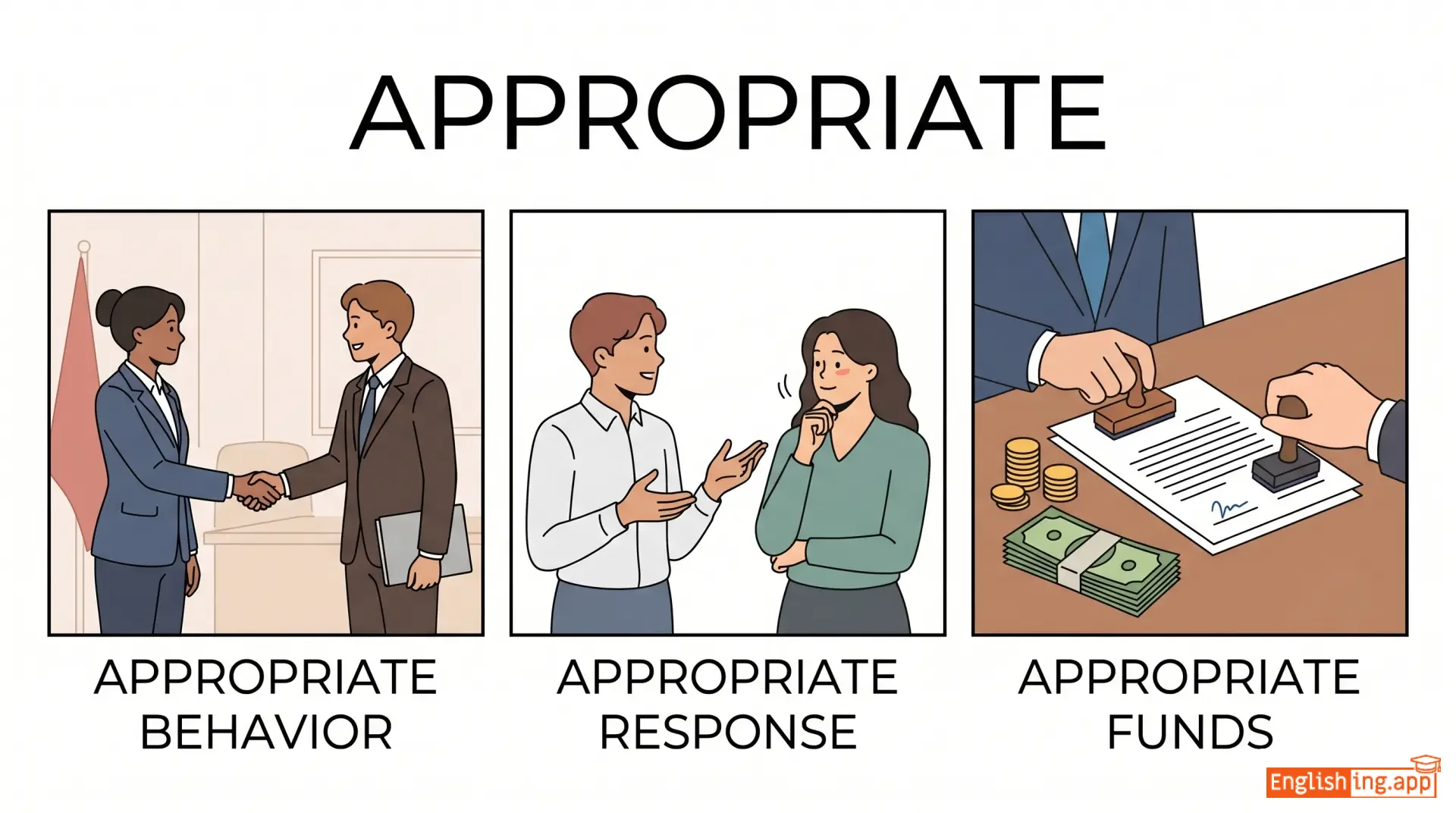
appropriate behavior, appropriate response, appropriate funds, culturally appropriate
••••••
|
Appropriate 意味着合适—根据情况来适应,有时也会未经允许占用某物。
••••••
|
|
#559
🙌
|
/ˈæprəbəˌtɔːri/
adjective
(批准的)
••••••
|
- •••••• |
赞许的
zànxǔ de
••••••
|
- •••••• | - •••••• | - •••••• | - •••••• |
expressing approval or praise
••••••
|
The teacher gave an approbatory nod after reading the essay. |
老师在读完文章后,点了点头表示赞许。
Lǎoshī zài dú wán wénzhāng hòu, diǎn le diǎntóu biǎoshì zànyǔ.
••••••
|
- •••••• | - •••••• | - •••••• |
commendatory, praising, approving, favorable
••••••
|
critical, disapproving
••••••
|
approbatory comment, approbatory smile, approbatory tone
••••••
|
Approbatory 意味着 approval—如果你同意或赞扬某事,你会点头。
••••••
|
|
#560
👍
|
/ˌæprəˈbeɪʃən/
noun
(āpíngshèng)
••••••
|
|
批准 / 赞扬
pīzhǔn / zànyáng
••••••
|
- •••••• | - •••••• | - •••••• | - •••••• |
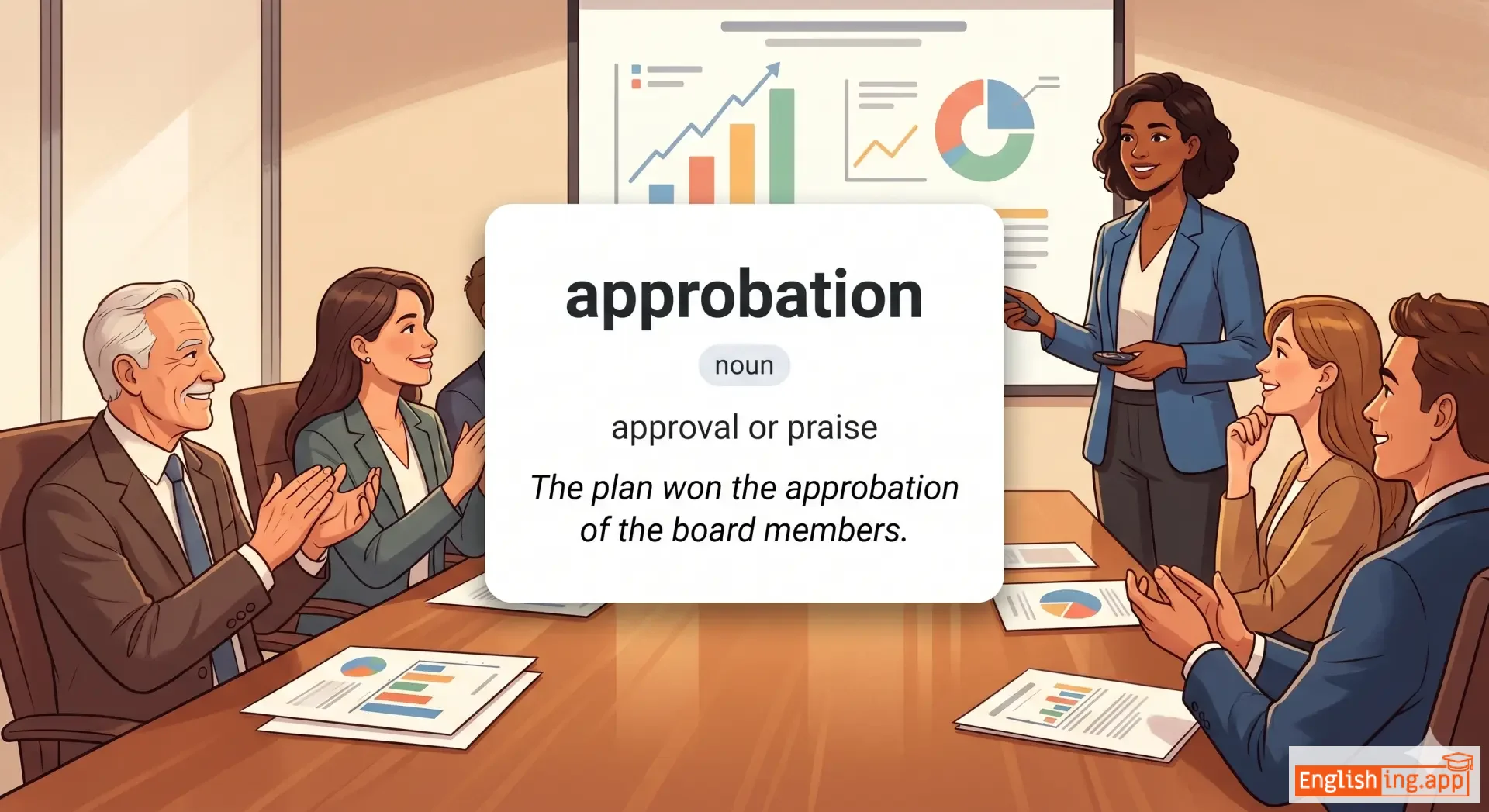
approval or praise
••••••
|
The plan won the approbation of the board members.
这个计划赢得了董事会成员的批准。
••••••
|
这个计划赢得了董事会成员的批准。
Zhege jihua yingdele dongshihui chengyuande pizhun.
••••••
|
- •••••• | - •••••• | - •••••• |
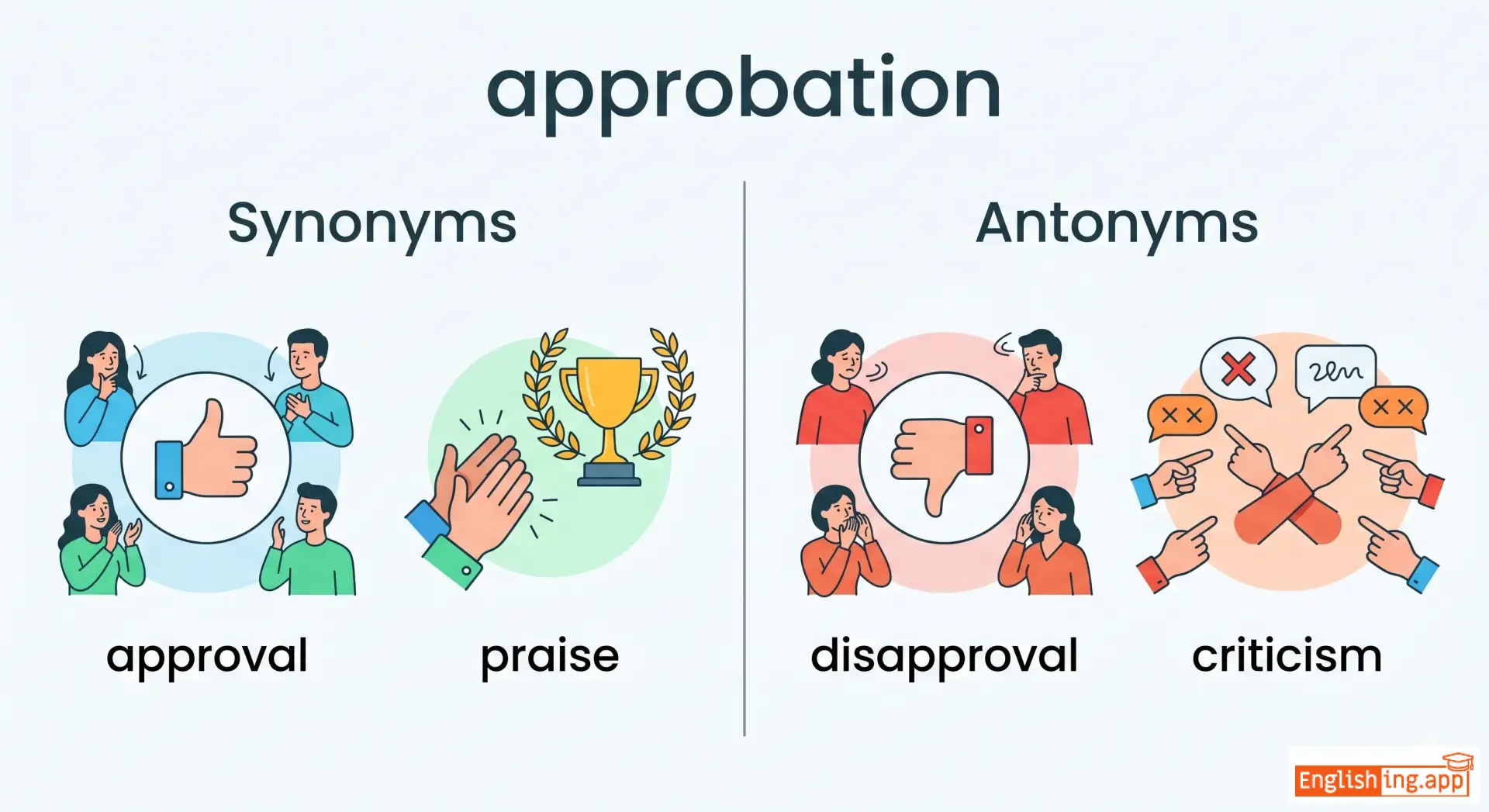
approval, praise, endorsement, admiration, recognition
••••••
|
disapproval, criticism, rejection
••••••
|
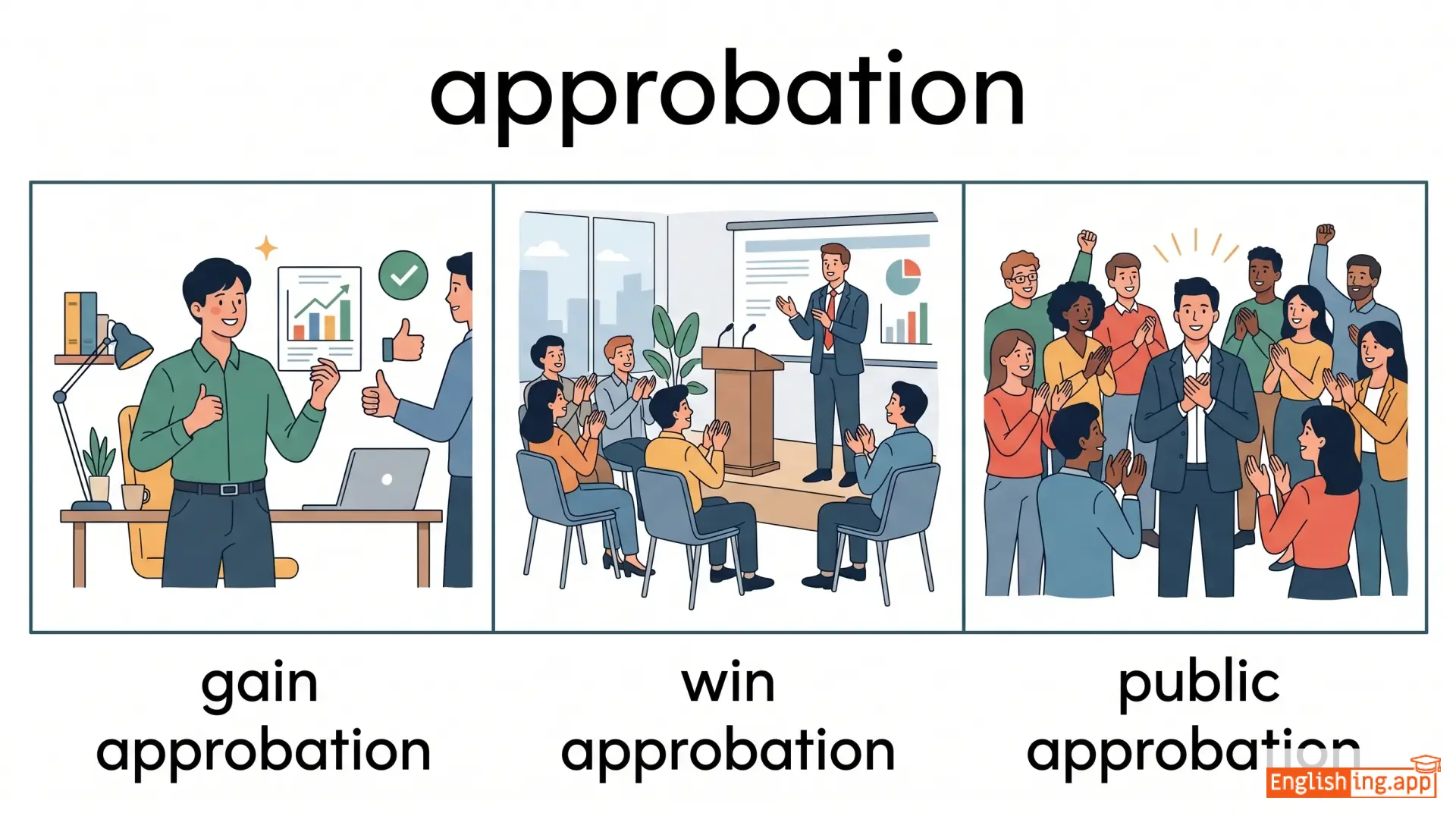
gain approbation, win approbation, public approbation, official approbation
••••••
|
Approbation 意味着 approval—获得 app 批准时,大家都很高兴。
••••••
|
|
#561
➡️
|
/əˈproʊtʃ/
verb
(āi pǒu)
••••••
|
- •••••• |
接近 / 处理
jie jin / chu li
••••••
|
approached
āi pǒu dé
••••••
|
approached
āi pǒu dé
••••••
|
approaches
āi pǒu zhī
••••••
|
approaching
āi pǒu xíng
••••••
|
to move closer to someone or something; to deal with a situation or problem
••••••
|
The teacher approached the student to offer help.
教师接近学生以提供帮助。
••••••
|
教师接近学生以提供帮助。
Jiaoshi jiejin xuesheng yi tigong bangzhu.
••••••
|
approach with caution
小心接近
••••••
|
to be careful when dealing with something or someone
••••••
|
小心接近
xiaoxin jiejin
••••••
|
come near, advance, move toward, reach, tackle
••••••
|
retreat, withdraw, avoid
••••••
|
new approach, practical approach, approach a problem, approach someone
••••••
|
接近就像解决问题一样:你先接近它,然后面对它。
••••••
|
|
#562
📢
|
/əˈpraɪz/
verb
(apraiz)
••••••
|
|
告知
gaozhi
••••••
|
apprised
apraizd
••••••
|
apprised
apraizd
••••••
|
apprises
apraizes
••••••
|
apprising
apraizing
••••••
|
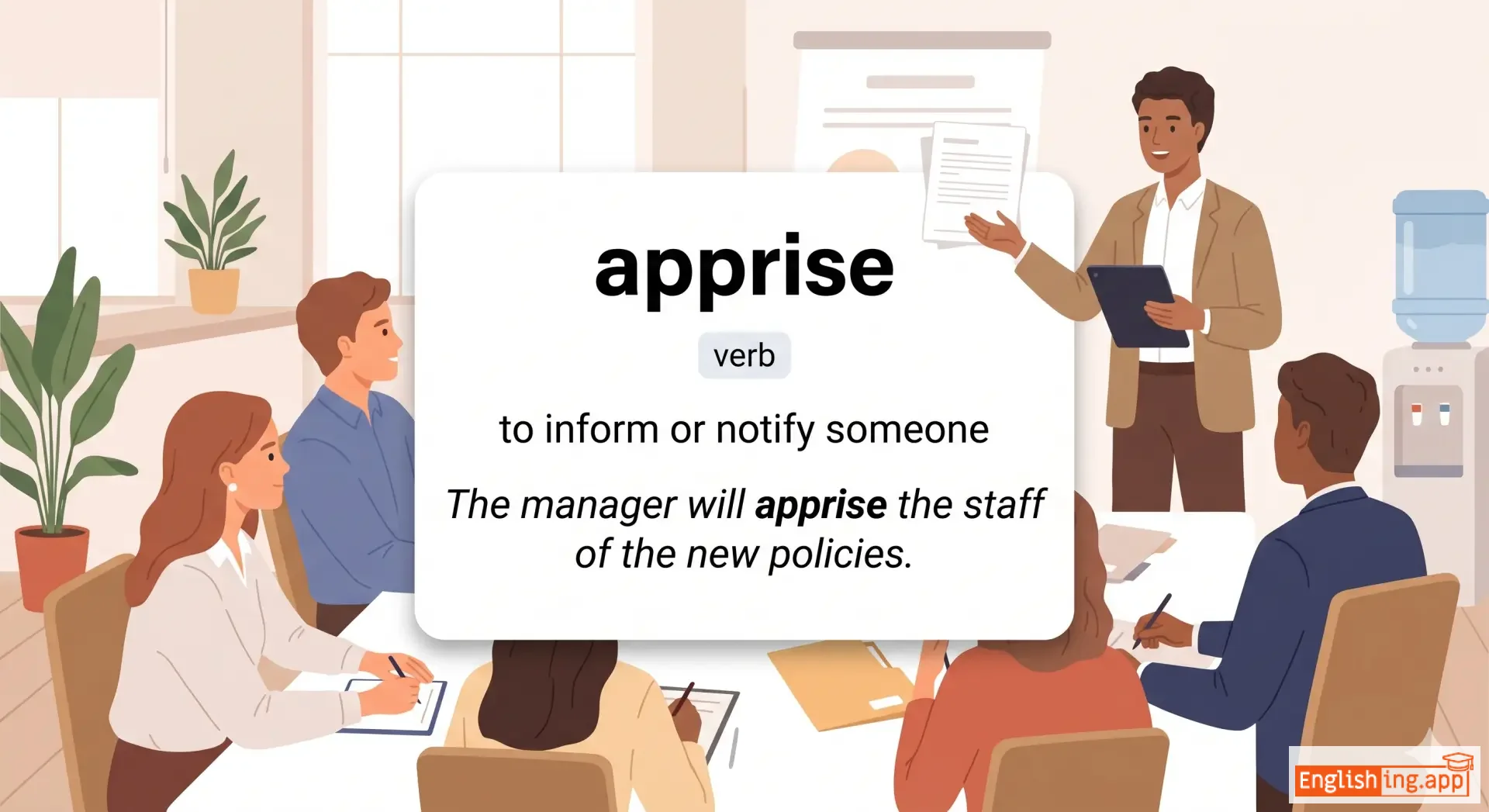
to inform or notify someone
••••••
|
The manager will apprise the staff of the new policies.
经理将通知员工新的政策。
••••••
|
经理将通知员工新的政策。
Jingli jiang tongzhi yuangong xin de zhengce.
••••••
|
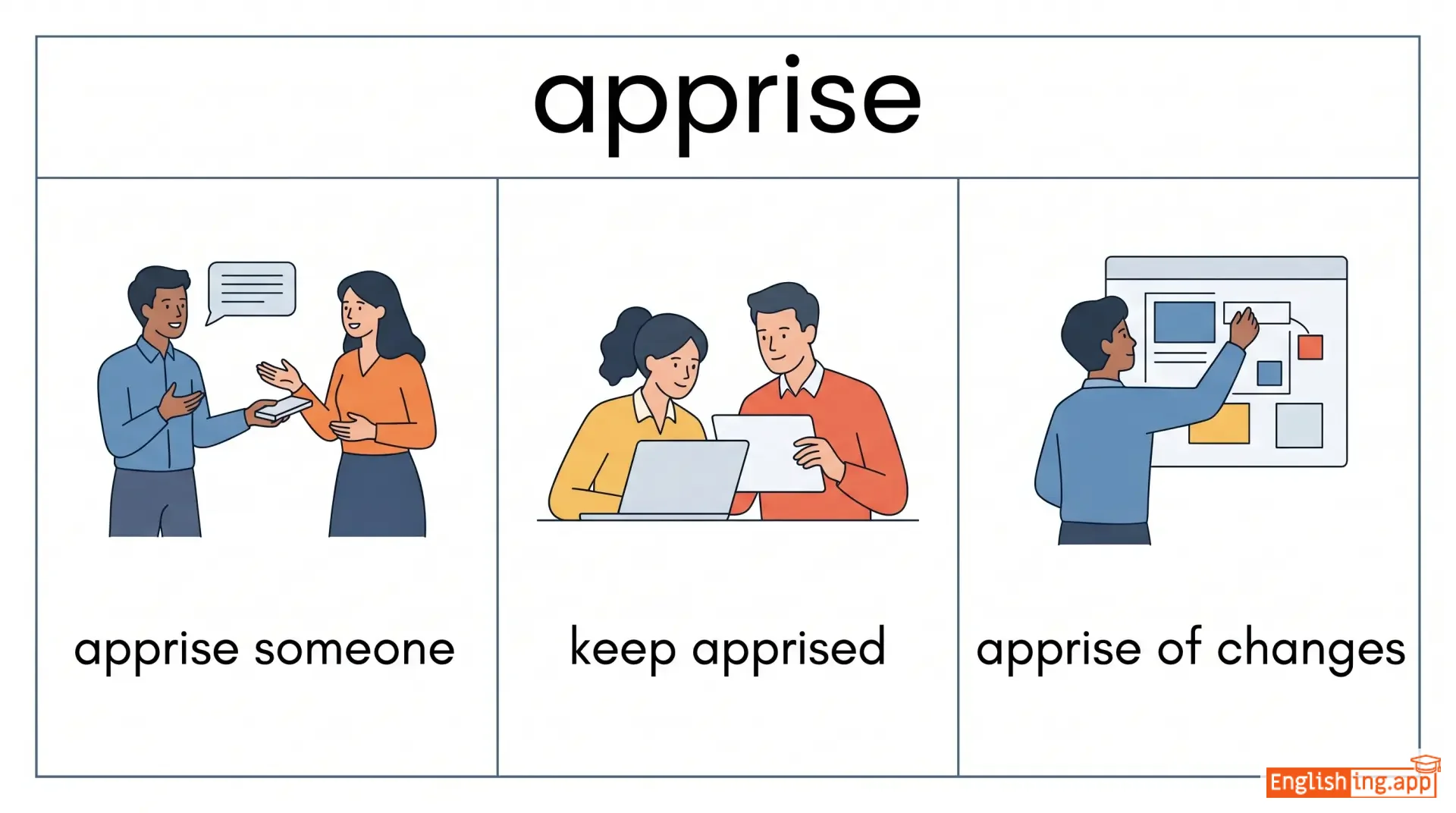
keep apprised
保持知情
••••••
|
to keep informed about something
••••••
|
保持知情
baochi zhiqing
••••••
|
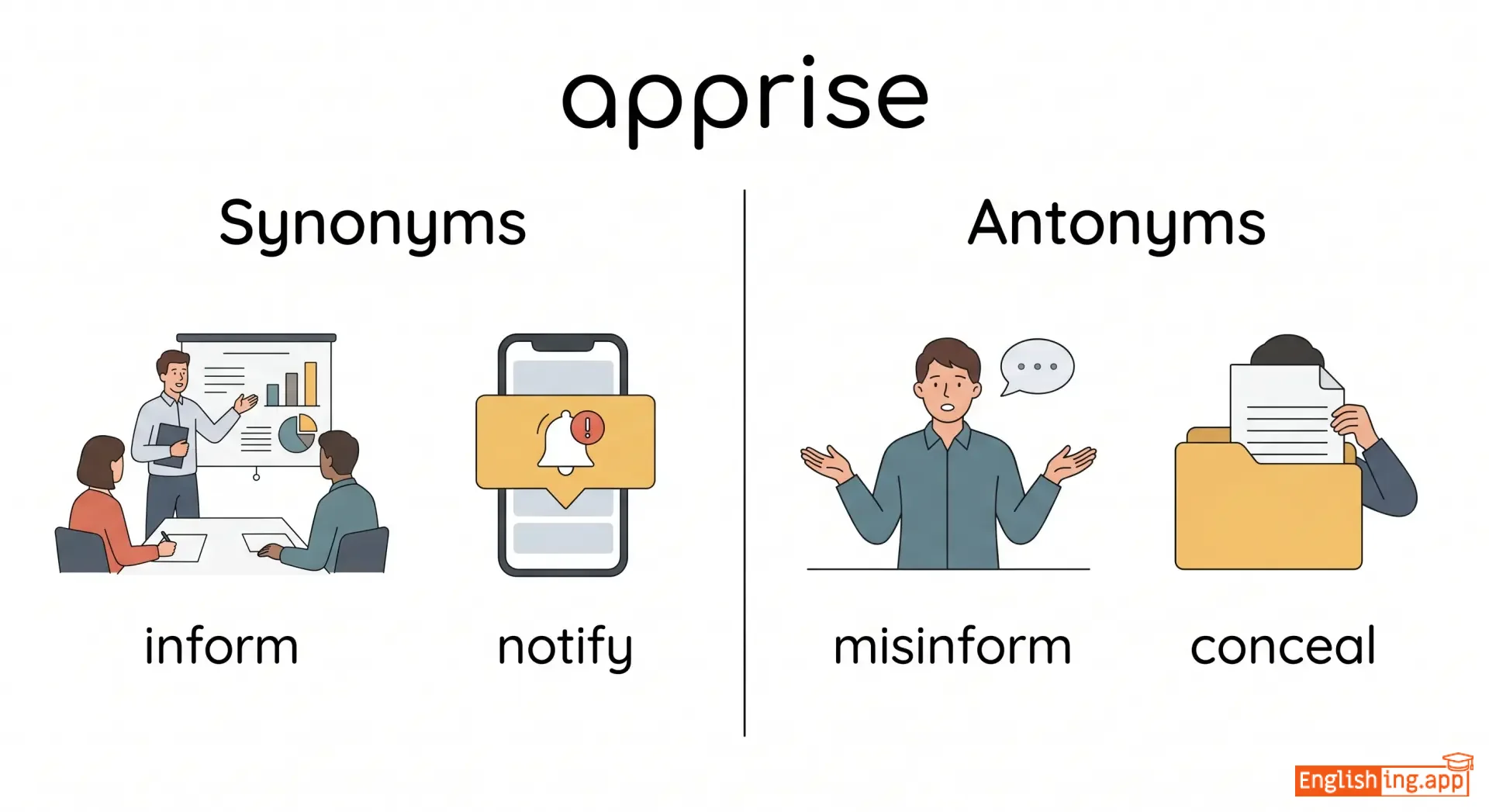
inform, notify, brief, update, advise
••••••
|
misinform, conceal
••••••
|
apprise someone, keep apprised, apprise of changes
••••••
|
Apprise 是信息的一个'prise',告知别人
••••••
|
|
#563
😰
|
/ˌæprɪˈhɛnsɪv/
adjective
(æpɹɪˈhɛnsɪv)
••••••
|
- •••••• |
担忧的
dānyōu de
••••••
|
- •••••• | - •••••• | - •••••• | - •••••• |
feeling anxious or fearful that something bad will happen
••••••
|
He was apprehensive about starting a new job in a foreign country. |
他对在一个陌生的国家开始一份新工作感到担忧。
Tā duì zài yīgè mòshēng de guójiā kāishǐ yī fèn xīn gōngzuò gǎndào dānyōu.
••••••
|
- •••••• | - •••••• | - •••••• |
anxious, uneasy, fearful, worried, concerned
••••••
|
confident, calm, assured
••••••
|
feel apprehensive, apprehensive about, slightly apprehensive
••••••
|
Apprehensive 是一种因恐惧或不安而感到忧虑的情绪。
••••••
|
|
#564
😟
|
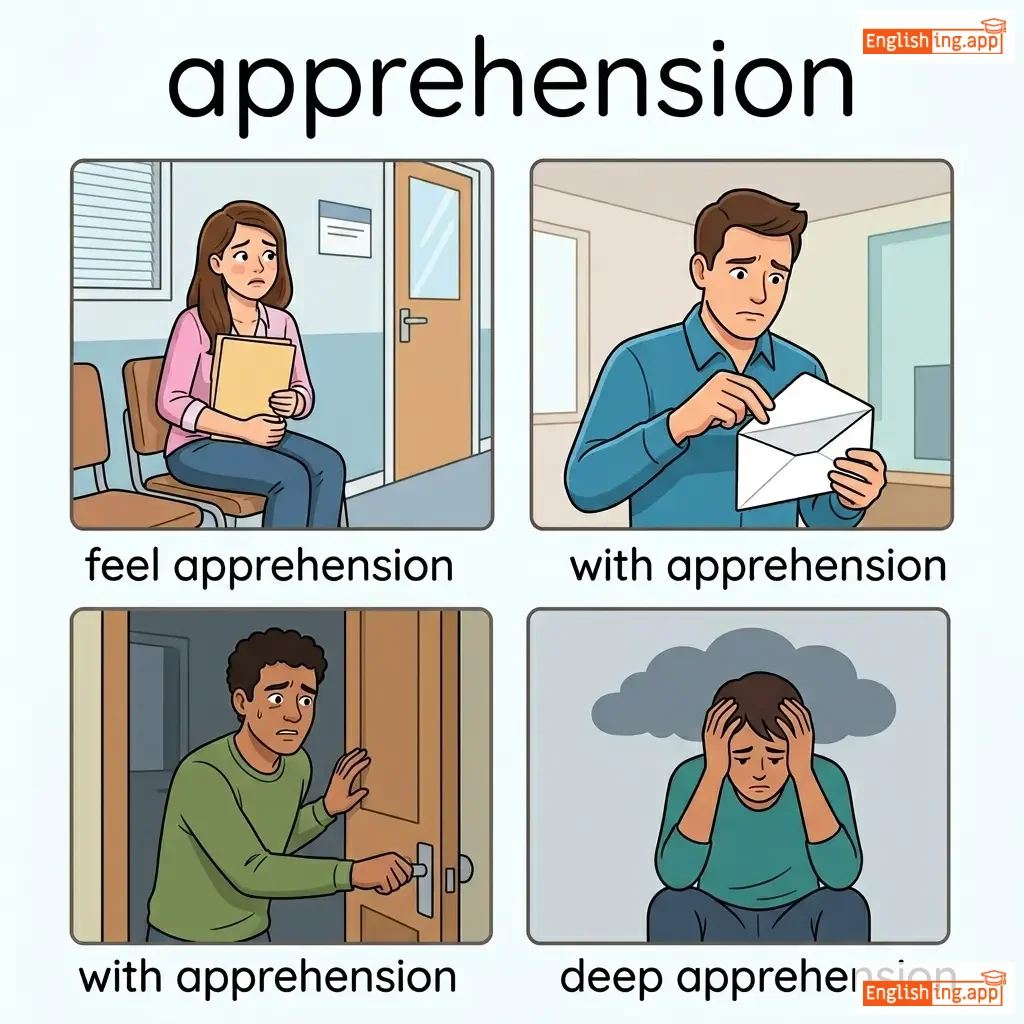
/ˌæprɪˈhɛnʃən/
noun
(æpriˈhɛnʃən)
••••••
|
|
忧虑或恐惧
yōulǜ huò kǒngjù
••••••
|
- •••••• | - •••••• | - •••••• | - •••••• |
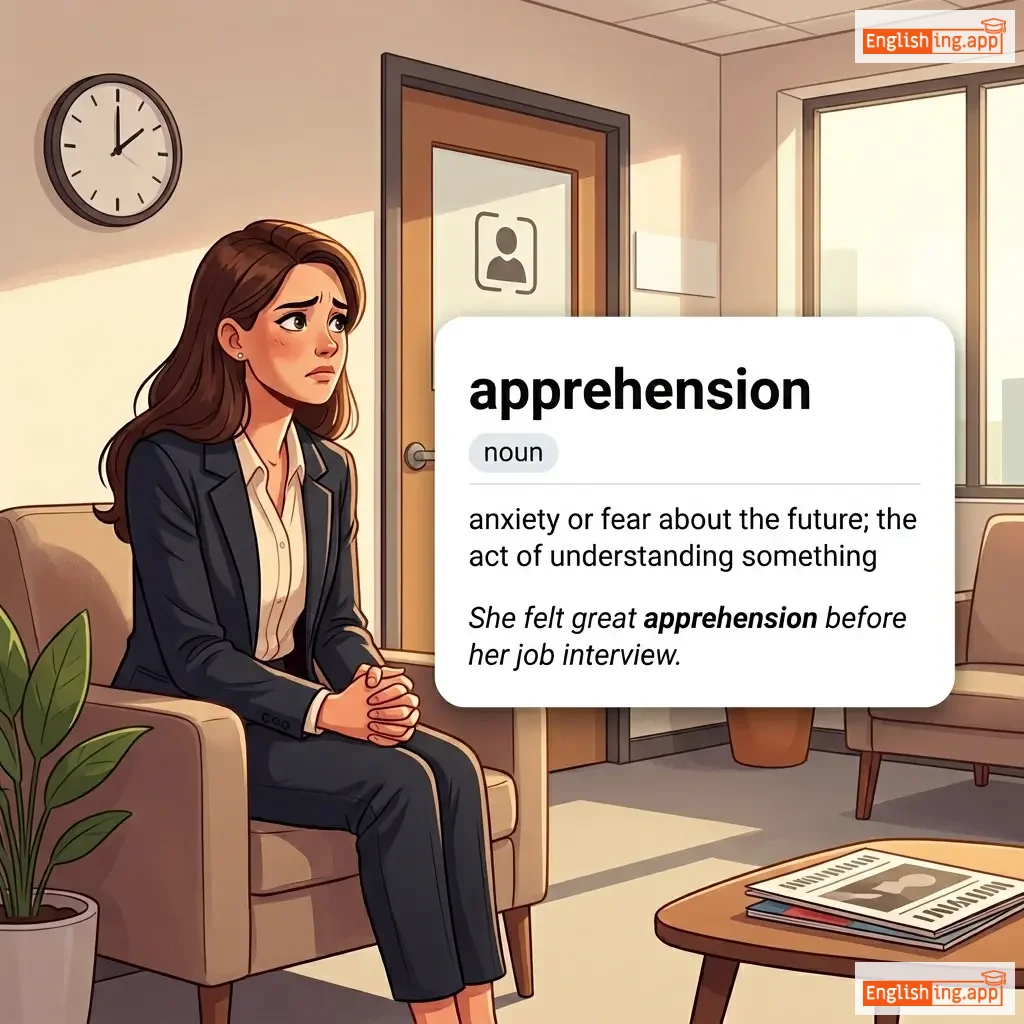
anxiety or fear about the future; the act of understanding something
••••••
|
She felt great apprehension before her job interview. |
她在面试前感到极大的忧虑。
Tā zài miànshì qián gǎndào jí dà de yōulǜ.
••••••
|
with apprehension |
feeling anxious or fearful
••••••
|
带着忧虑
dàizhe yōulǜ
••••••
|
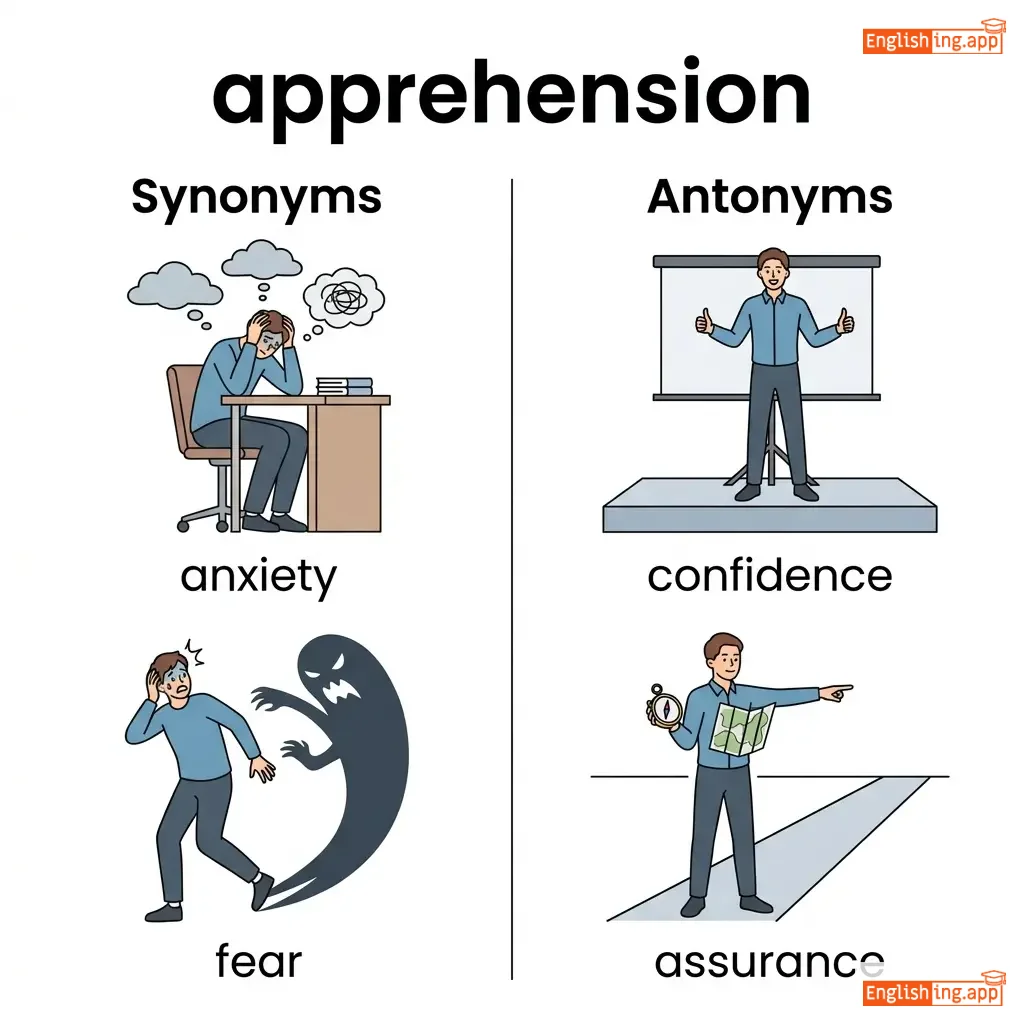
anxiety, fear, worry, dread, unease
••••••
|
confidence, assurance, calmness
••••••
|
feel apprehension, with apprehension, deep apprehension
••••••
|
Apprehension 就是忧虑 — 对未来的担忧
••••••
|
|
#565
🧠
|
/ˌæprɪˈhɛnsəbl̩/
adjective
(āipríhénsíbl)
••••••
|
- •••••• |
可理解的
kě lǐjiě de
••••••
|
- •••••• | - •••••• | - •••••• | - •••••• |
capable of being understood or grasped
••••••
|
The concept was not easily apprehensible to the new students.
这个概念对新学生来说不容易理解。
••••••
|
这个概念对新学生来说不容易理解。
Zhège gàiniàn duì xīn xuéshēng lái shuō bù róngyì lǐjiě.
••••••
|
- •••••• | - •••••• | - •••••• |
understandable, comprehensible, clear, graspable
••••••
|
incomprehensible, unintelligible
••••••
|
easily apprehensible, apprehensible truth, apprehensible concept
••••••
|
Apprehensible意味着可以理解的,像 '可理解的'。
••••••
|
|
#566
🚓
|
/ˌæprɪˈhɛnd/
verb
(āpīhēnd)
••••••
|
- •••••• |
逮捕
dàibǔ
••••••
|
apprehended
āpīhēnded
••••••
|
apprehended
āpīhēnded
••••••
|
apprehends
āpīhēnds
••••••
|
apprehending
āpīhēnding
••••••
|
to arrest or seize someone; to understand or perceive something
••••••
|
The police managed to apprehend the thief after a long chase.
警察在一场长时间的追逐后成功逮捕了小偷。
••••••
|
警察在一场长时间的追逐后成功逮捕了小偷。
Jǐngchá zài yī chǎng zhǎng shíjiān de zhuīzhú hòu chénggōng dàibǔ le xiǎotōu.
••••••
|
apprehend the meaning
理解含义
••••••
|
to understand or grasp the meaning
••••••
|
理解含义
lǐjiě hán yì
••••••
|
arrest, capture, seize, detain, grasp
••••••
|
release, free, liberate
••••••
|
apprehend a suspect, apprehend quickly, apprehend the meaning
••••••
|
逮捕是为了理解犯人的行为(含义)
••••••
|
|
#567
🙏
|
/əˈpriːʃieɪt/
verb
(ā-pǔrī-xī-è-tè)
••••••
|
|
欣赏
xīn shǎng
••••••
|
appreciated
ā-pǔrī-xī-è-tè-dè
••••••
|
appreciated
ā-pǔrī-xī-è-tè-dè
••••••
|
appreciates
ā-pǔrī-xī-è-tè-sī
••••••
|
appreciating
ā-pǔrī-xī-è-tè-īng
••••••
|
to recognize the value of something or to be thankful for it
••••••
|
I really appreciate your help with this project.
我真的很感激你在这个项目中的帮助。
••••••
|
我真的很感激你在这个项目中的帮助。
Wǒ zhēn de hěn gǎn jī nǐ zài zhè ge xiàng mù zhōng de bāng zhù.
••••••
|
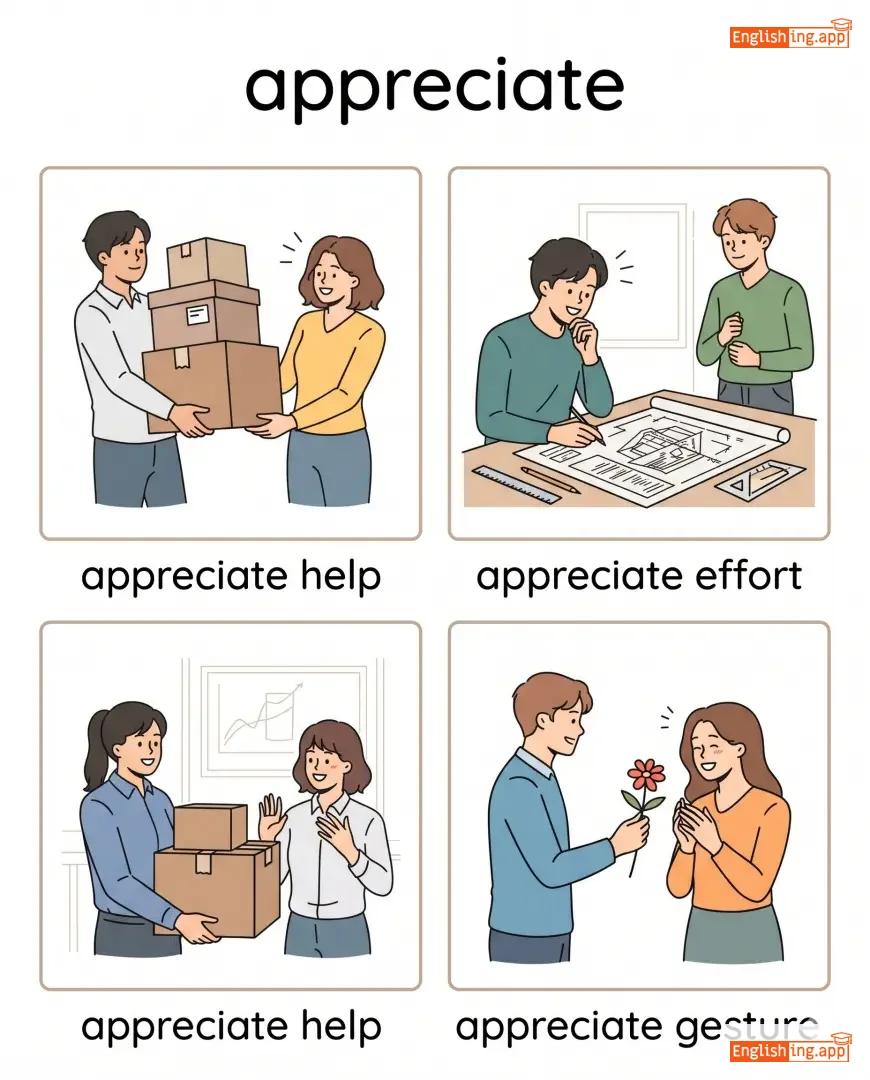
appreciate the gesture
欣赏这个手势
••••••
|
to value someone's action or kindness
••••••
|
欣赏这个手势
xīn shǎng zhè ge shǒu shì
••••••
|
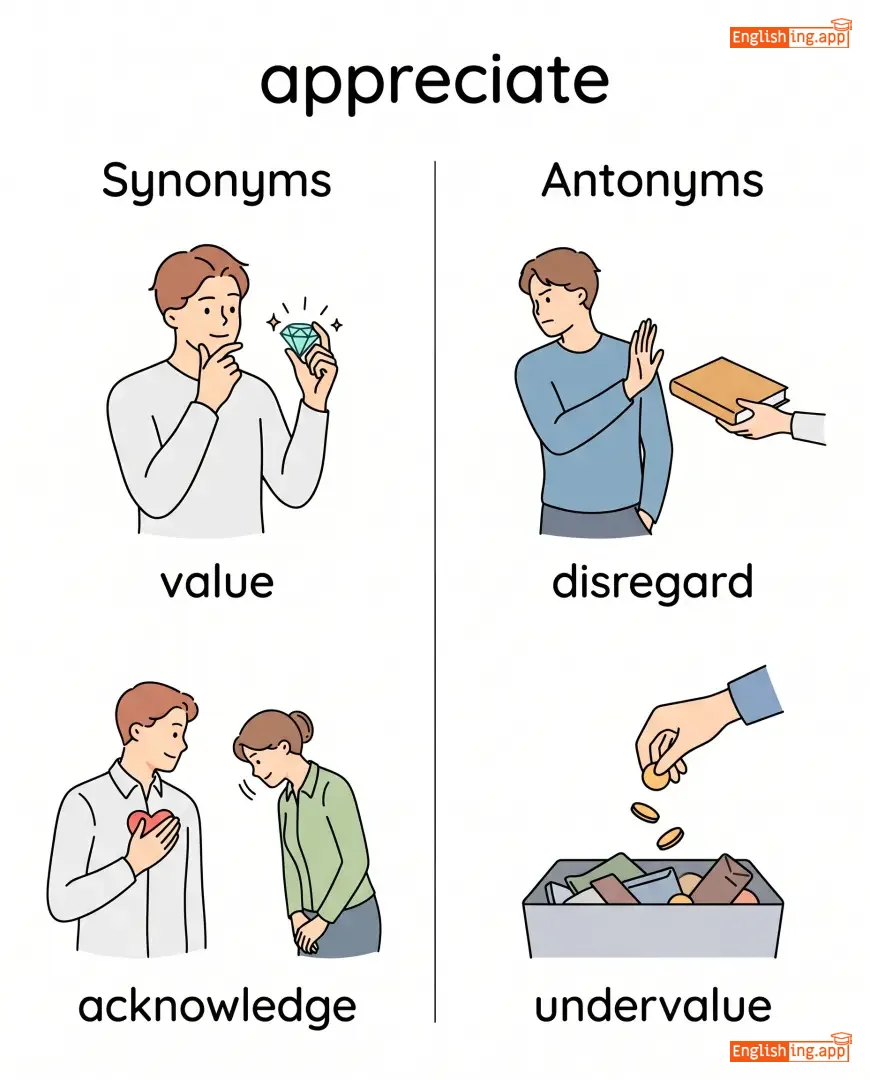
value, acknowledge, recognize, respect, admire
••••••
|
disregard, undervalue, ignore
••••••
|
appreciate help, appreciate effort, appreciate gesture, appreciate support
••••••
|
Appreciate 就是说‘谢谢’ 🙏
••••••
|
|
#568
📈
|
/əˈpriːʃəbl/
adjective
(ānpǔrìxièbó)
••••••
|
- •••••• |
显著的
xiǎnzhù de
••••••
|
- •••••• | - •••••• | - •••••• | - •••••• |
large or noticeable enough to be important
••••••
|
There has been an appreciable improvement in her performance.
她的表现有了显著改善。
••••••
|
她的表现有了显著改善。
Tā de biǎoxiàn yǒule xiǎnzhù de gǎishàn.
••••••
|
- •••••• | - •••••• | - •••••• |
significant, considerable, noticeable, substantial
••••••
|
insignificant, negligible
••••••
|
appreciable difference, appreciable amount, appreciable improvement
••••••
|
Appreciable = 显著的,重要的 📊
••••••
|
|
#569
💎
|
/əˈpreɪz/
verb
(āpǔréi)
••••••
|
- •••••• |
评估
pinggu
••••••
|
appraised
āpǔréid
••••••
|
appraised
āpǔréid
••••••
|
appraises
āpǔréis
••••••
|
appraising
āpǔréi
••••••
|
to evaluate the value, quality, or importance of something
••••••
|
The jeweler appraised the diamond before buying it.
珠宝商在购买之前评估了钻石。
••••••
|
珠宝商在购买之前评估了钻石。
Zhubao shang zai gouwu zhiqian pinggu le zuanshi.
••••••
|
appraise the situation
评估情况
••••••
|
to carefully assess the circumstances
••••••
|
评估情况
pinggu qingkuang
••••••
|
evaluate, assess, estimate, judge, rate
••••••
|
ignore, neglect, overlook
••••••
|
appraise value, appraise property, appraise performance
••••••
|
Appraise听起来像Price (价格),表示评估价值。
••••••
|
|
#570
📚
|
/ˌæpəˈzɪʃən/
noun
(同位语)
••••••
|
- •••••• |
同位语 (并列语法)
tóngwèiyǔ (bìngliè yǔfǎ)
••••••
|
- •••••• | - •••••• | - •••••• | - •••••• |
a grammatical construction in which two elements are placed side by side, with one explaining the other
••••••
|
In the phrase 'my friend John,' the word 'John' is in apposition to 'my friend.'
在短语'我的朋友约翰'中,'约翰'这个词与'我的朋友'同位。
••••••
|
在短语'我的朋友约翰'中,'约翰'这个词与'我的朋友'同位。
Zài duǎnyǔ 'wǒ de péngyǒu Yuēhàn' zhōng, 'Yuēhàn' zhège cí yǔ 'wǒ de péngyǒu' tóngwèi.
••••••
|
- •••••• | - •••••• | - •••••• |
juxtaposition, proximity, alignment, placement
••••••
|
separation, disconnection
••••••
|
grammatical apposition, noun in apposition, apposition phrase
••••••
|
同位语就像将两个元素放在一起,像两个名字 📚
••••••
|
Vocabulary Quiz
Test your vocabulary by matching words with their translations or meanings.
Login to take the quiz
Comments (0)
Share your thoughts and join the discussion.
Join the discussion by logging in
Login to CommentNo comments yet
Be the first to share your thoughts!