

Swipe left or right, or use the buttons. Tap image to zoom.
例句翻译
单词
Lesson 36Lesson 36 - 遮罩切换
|
表情符号
|
单词 | Images | 翻译 | 过去时 | 过去分词 | 第三人称单数 | 动名词 | 含义 | 例句 | 例句翻译 | 示例表达 | 示例表达含义 | 示例表达翻译 | 同义词 | 反义词 | 搭配词 | 助记符 |
|---|---|---|---|---|---|---|---|---|---|---|---|---|---|---|---|---|---|
|
#1051
🥊
|
/baʊt/
noun
(包特)
••••••
|
- •••••• |
一段短暂而剧烈的活动期或比赛,特别是在运动或生病时
yi duan duǎnzhàn ér jùliè de huódòng qī huò bǐsài, tèbié shì zài yùndòng huò shēngbìng shí
••••••
|
- •••••• | - •••••• | - •••••• | - •••••• |
a short period of intense activity or a contest, especially in sports or illness
••••••
|
He had a severe bout of flu last winter.
他去年冬天得了严重的流感。
••••••
|
他去年冬天得了严重的流感。
Tā qùnián dōngtiān déle yánzhòng de liúgǎn.
••••••
|
boxing bout
拳击比赛
••••••
|
a match or contest between two boxers
••••••
|
拳击比赛
quánjī bǐsài
••••••
|
session, spell, attack, contest, round
••••••
|
continuation, rest, pause
••••••
|
bout of flu, wrestling bout, boxing bout, bout of laughter
••••••
|
Bout 意味着流感的小小战斗 (战斗 = bout of flu)
••••••
|
|
#1052
🏷️
|
/brænd/
noun
(品牌)
••••••
|
- •••••• |
品牌
pinpai
••••••
|
- •••••• | - •••••• | - •••••• | - •••••• |
a type of product manufactured by a company under a particular name
••••••
|
Nike is a popular brand of sportswear. |
Nike 是一个受欢迎的运动服品牌。
Nike shi yige shou huanying de yundongfu pinpai.
••••••
|
brand new |
completely new, unused
••••••
|
崭新
zhanxin
••••••
|
label, trademark, logo, mark
••••••
|
generic, unbranded
••••••
|
brand name, popular brand, brand image, build a brand
••••••
|
品牌就像一个标志,每个品牌都有它独特的名字,比如 Nike。
••••••
|
|
#1053
🚗
|
/breɪk/
verb
••••••
|
- •••••• | - •••••• |
braked
••••••
|
braked
••••••
|
brakes
••••••
|
braking
••••••
|
to slow down or stop a vehicle by applying a brake
••••••
|
He braked suddenly to avoid hitting the dog. |
- •••••• |
hit the brakes |
to stop suddenly or urgently
••••••
|
- •••••• |
stop, halt, slow, decelerate
••••••
|
accelerate, speed
••••••
|
apply brake, brake hard, brake system
••••••
|
No •••••• |
|
#1054
👧
|
/breɪd/
verb
(布瑞德)
••••••
|
- •••••• |
编织
bianzhi
••••••
|
braided
布瑞德德
••••••
|
braided
布瑞德德
••••••
|
braids
布瑞德斯
••••••
|
braiding
布瑞丁
••••••
|
to weave together strands of hair or material
••••••
|
She braided her hair before going to school.
她在去学校之前编了头发。
••••••
|
她在去学校之前编了头发。
Ta zai qu xuexiao zhiqian bianle toufa.
••••••
|
braid together
一起编织
••••••
|
to unite or combine closely
••••••
|
紧密结合
jinmi jiehe
••••••
|
plait, weave, intertwine, twist
••••••
|
untangle, unravel
••••••
|
braid hair, braid rope, braid together
••••••
|
编织 – 用双手将美丽的发辫织成!
••••••
|
|
#1055
🗣️
|
/ˈbræɡərt/
noun
(布拉加特)
••••••
|
- •••••• |
吹牛者
chuī niú zhě
••••••
|
- •••••• | - •••••• | - •••••• | - •••••• |
a person who boasts about achievements or possessions
••••••
|
No one liked him because he was such a braggart.
没有人喜欢他,因为他是个吹牛者。
••••••
|
没有人喜欢他,因为他是个吹牛者。
méiyǒu rén xǐhuān tā, yīnwèi tā shì gè chuī niú zhě.
••••••
|
- •••••• | - •••••• | - •••••• |
boaster, show-off, egotist, blowhard
••••••
|
modest person, humble man
••••••
|
loud braggart, arrogant braggart, annoying braggart
••••••
|
Brag + art = 吹牛者,总是把自己的成就和财富艺术地夸耀出来。
••••••
|
|
#1056
😏
|
/ˌbræɡəˈdoʊʃioʊ/
noun
(bragadocio)
••••••
|
- •••••• |
吹嘘行为
chuīxū xíngwéi
••••••
|
- •••••• | - •••••• | - •••••• | - •••••• |
boastful or arrogant behavior; empty boasting
••••••
|
His endless braggadocio annoyed everyone at the party.
他无休止的bragadocio让派对上的每个人都感到厌烦。
••••••
|
他无休止的吹嘘行为让派对上的每个人都感到厌烦。
Tā wú xiūzhǐ de chuīxū xíngwéi ràng pàiduì shàng de měi gèrén dōu gǎndào yànfán.
••••••
|
- •••••• | - •••••• | - •••••• |
boasting, swagger, arrogance, conceit, bragging
••••••
|
modesty, humility, meekness
••••••
|
empty braggadocio, loud braggadocio, political braggadocio
••••••
|
Brag ado show意味着更多的炫耀 - bragadocio意味着吹嘘行为。
••••••
|
|
#1057
😏
|
/bræɡ/
verb
••••••
|
|
- •••••• |
bragged
••••••
|
bragged
••••••
|
brags
••••••
|
bragging
••••••
|
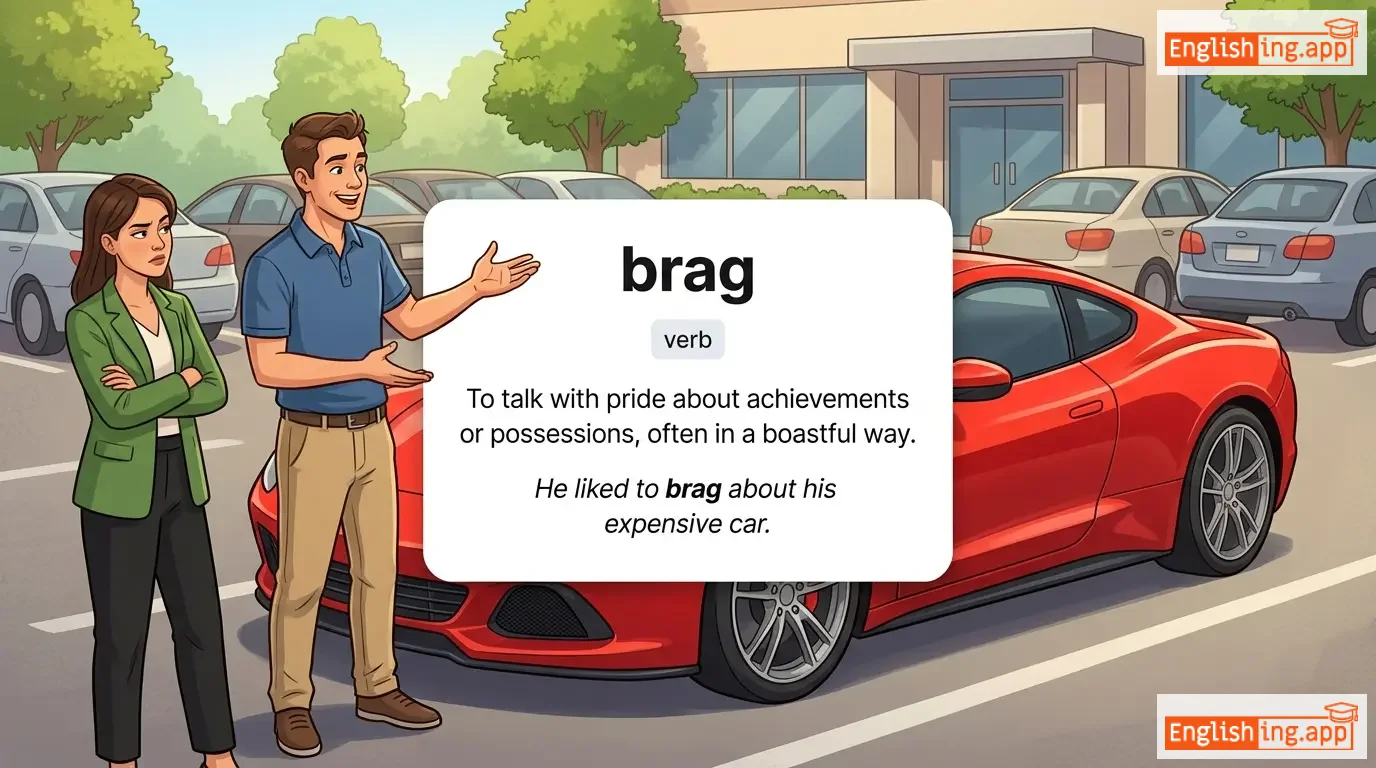
To talk with pride about achievements or possessions, often in a boastful way.
••••••
|
He liked to brag about his expensive car. |
- •••••• |
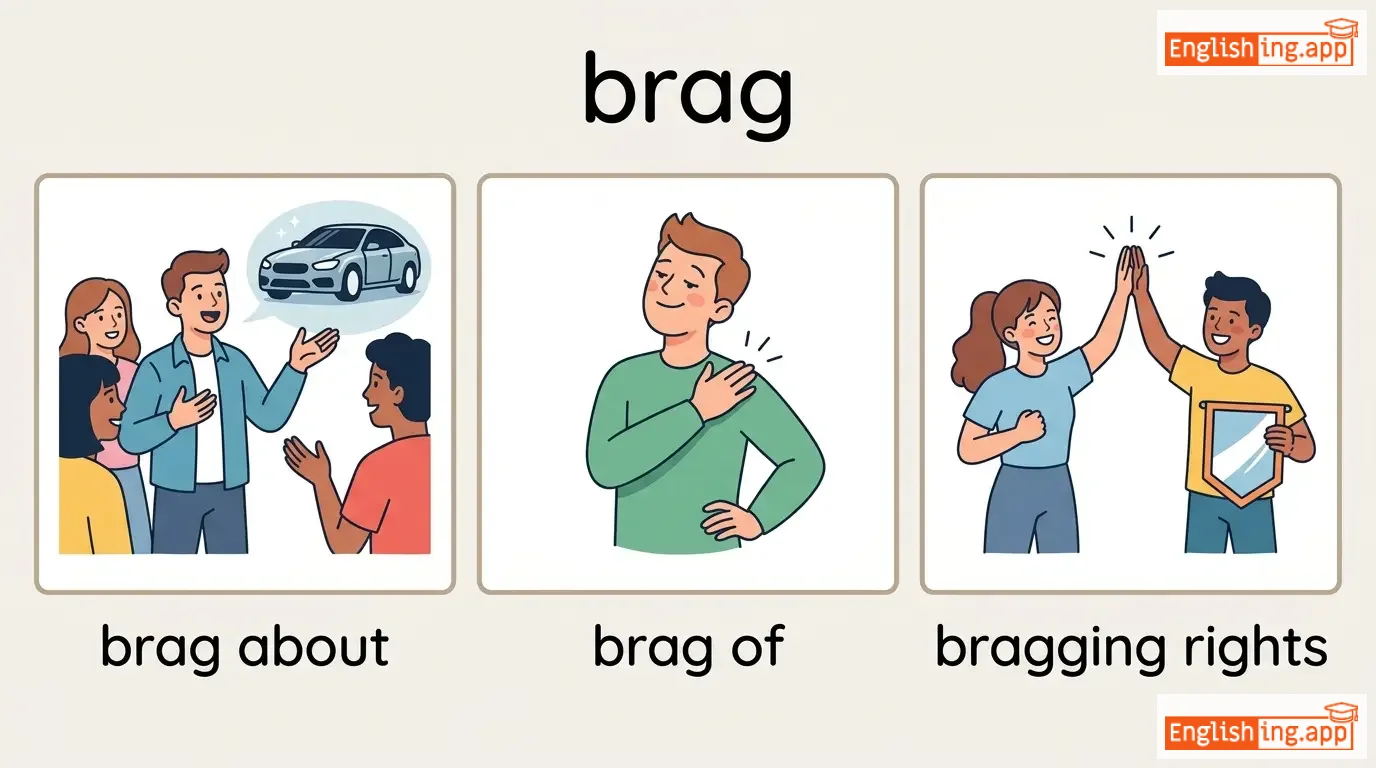
bragging rights |
The right to boast about something special one has achieved.
••••••
|
- •••••• |
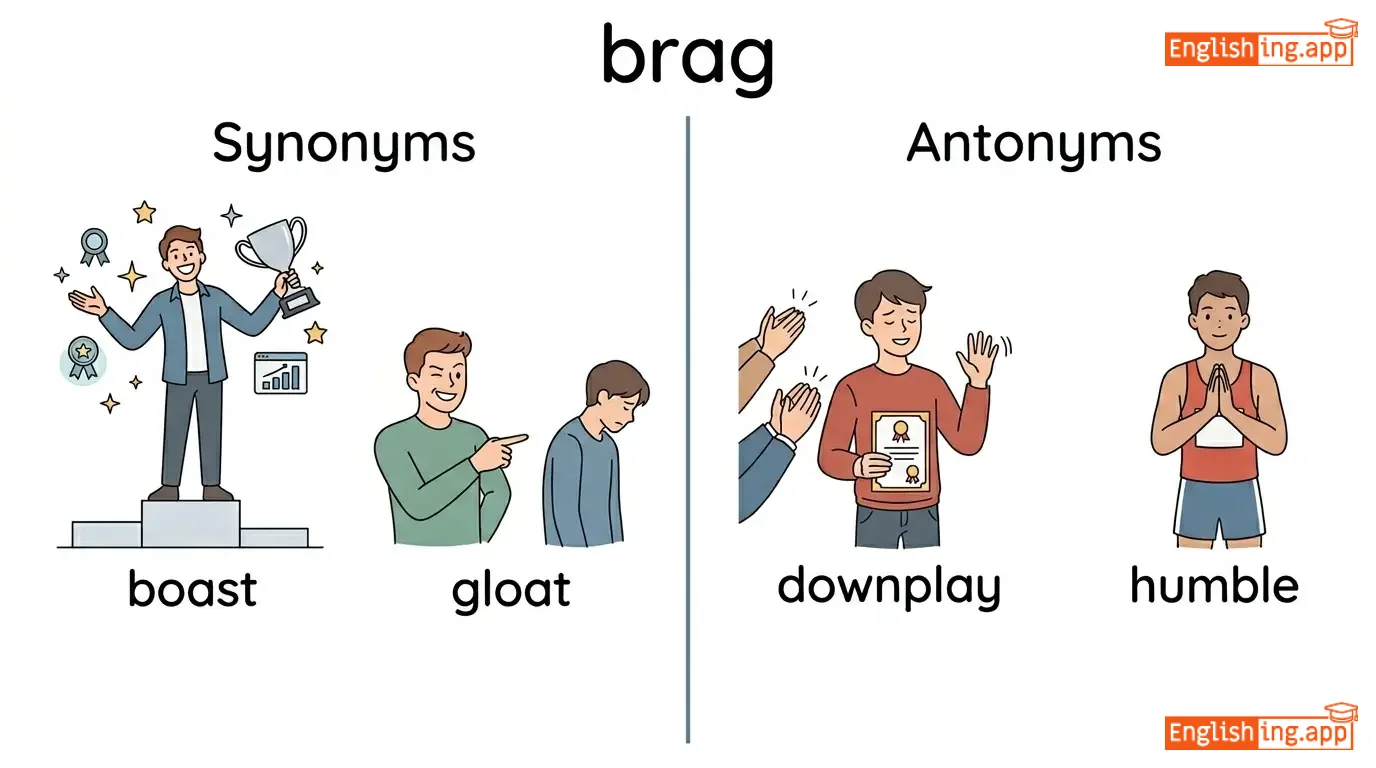
boast, gloat, show off, flaunt
••••••
|
downplay, humble
••••••
|
brag about, brag of, bragging rights
••••••
|
No •••••• |
|
#1058
⛰️
|
/breɪ/
noun
(布雷)
••••••
|
- •••••• |
山坡
shanpo
••••••
|
- •••••• | - •••••• | - •••••• | - •••••• |
A hillside or slope, especially in Scotland.
••••••
|
They climbed up the grassy brae to see the sunset. |
他们爬上了长满草的山坡去看日落。
Tamen pa shang le chang man cao de shanpo qu kan riluo.
••••••
|
- •••••• | - •••••• | - •••••• |
hill, slope, incline, bank
••••••
|
valley, plain
••••••
|
grassy brae, steep brae, Scottish brae
••••••
|
Brae 就像山坡,在上面看日落。
••••••
|
|
#1059
🌊
|
/ˈbrækɪʃ/
adjective
(布拉基什)
••••••
|
- •••••• |
咸淡水
xián dàn shuǐ
••••••
|
- •••••• | - •••••• | - •••••• | - •••••• |
Slightly salty, often describing water that is a mix of fresh and seawater.
••••••
|
The river estuary contained brackish water. |
河口含有咸淡水。
Hékǒu hányǒu xián dàn shuǐ.
••••••
|
- •••••• | - •••••• | - •••••• |
salty, saline, salty-tasting, briny
••••••
|
fresh, pure
••••••
|
brackish water, brackish taste, brackish lagoon
••••••
|
Brackish 就像海水和淡水的混合,略带盐味,就像大海里的水一样。
••••••
|
|
#1060
🔩
|
/ˈbrækɪt/
noun/verb
(布拉克特)
••••••
|
- •••••• |
金属支架
jinshu zhijia
••••••
|
bracketed
布拉克特德
••••••
|
bracketed
布拉克特德
••••••
|
brackets
布拉克特斯
••••••
|
bracketing
布拉克特英
••••••
|
A support attached to a wall for holding something; also, to group things together.
••••••
|
The shelf was held up by a strong metal bracket.
架子被一个强大的金属支架支撑。
••••••
|
架子被一个强大的金属支架支撑。
Jiazi bei yige qiangda de jinshu zhijia zhicheng.
••••••
|
in the same bracket
在同一个类别中
••••••
|
To be in the same category or class.
••••••
|
在同一个类别中
zai tong yige leibie zhong
••••••
|
support, holder, category, group
••••••
|
disperse, scatter
••••••
|
metal bracket, tax bracket, bracketed text, wall bracket
••••••
|
Bracket 支撑东西,或将它们分组在同一类别中。
••••••
|
|
#1061
🌬️
|
/ˈbreɪsɪŋ/
adjective
(ˈbreɪsɪŋ)
••••••
|
- •••••• |
清新的
qīngxīn de
••••••
|
- •••••• | - •••••• | - •••••• | - •••••• |
Invigorating, refreshing, or providing strength and energy.
••••••
|
The hikers enjoyed the bracing mountain air. |
远足者享受着清新的山间空气。
Yuǎnzú zhě xiǎngshòu zhe qīngxīn de shānjiān kōngqì.
••••••
|
- •••••• | - •••••• | - •••••• |
invigorating, refreshing, stimulating, energizing, revitalizing
••••••
|
dull, tiring, exhausting
••••••
|
bracing air, bracing walk, bracing effect, bracing wind
••••••
|
Bracing air 就是像清新的山风一样清爽。
••••••
|
|
#1062
🚫
|
/ˈbɔɪkɒt/
verb
(抵制)
••••••
|
|
抵制
dizhi
••••••
|
boycotted
抵制了
••••••
|
boycotted
抵制了
••••••
|
boycotts
抵制
••••••
|
boycotting
抵制中
••••••
|
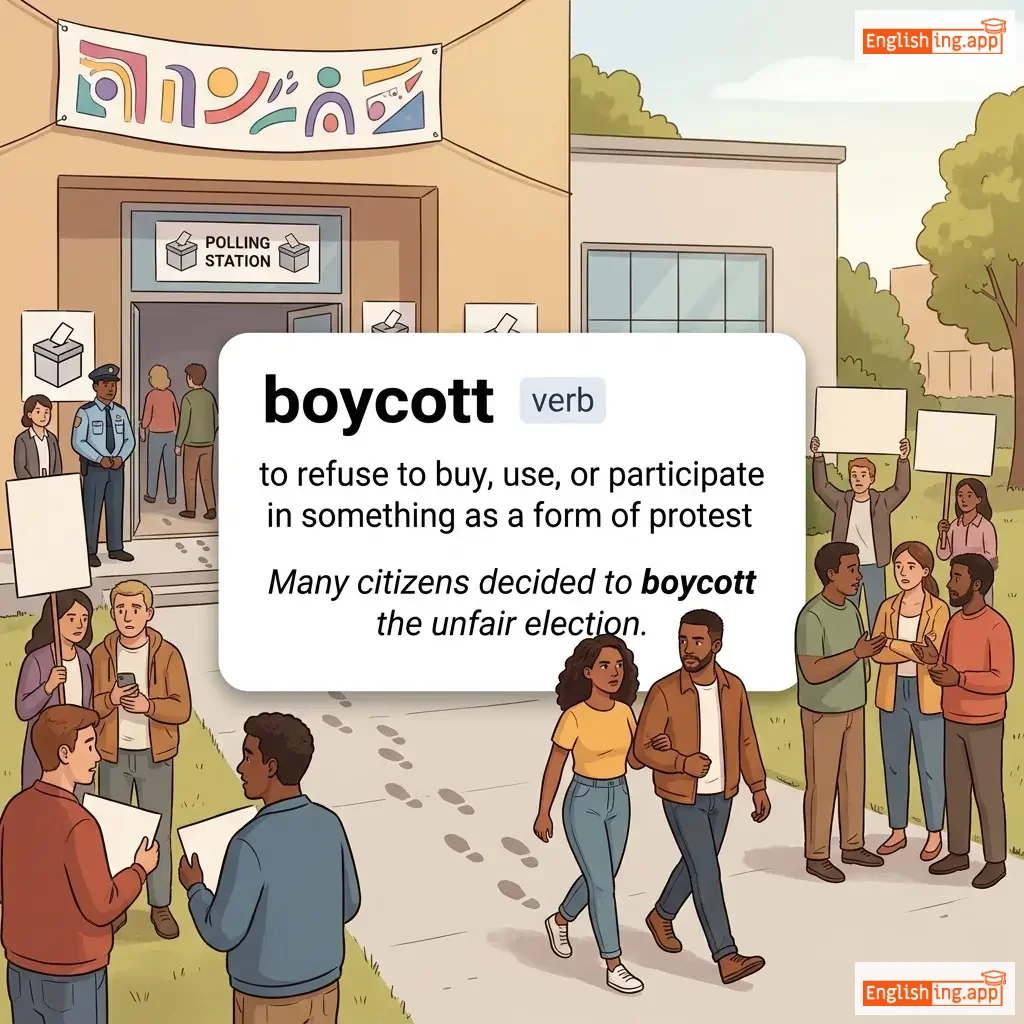
to refuse to buy, use, or participate in something as a form of protest
••••••
|
Many citizens decided to boycott the unfair election.
许多市民决定抵制不公正的选举。
••••••
|
许多市民决定抵制不公正的选举。
xuduo shimin jueding dizhi bugongzheng de xuanju.
••••••
|
call for a boycott
呼吁抵制
••••••
|
an appeal to stop buying or using something in protest
••••••
|
呼吁抵制
huyu dizhi
••••••
|
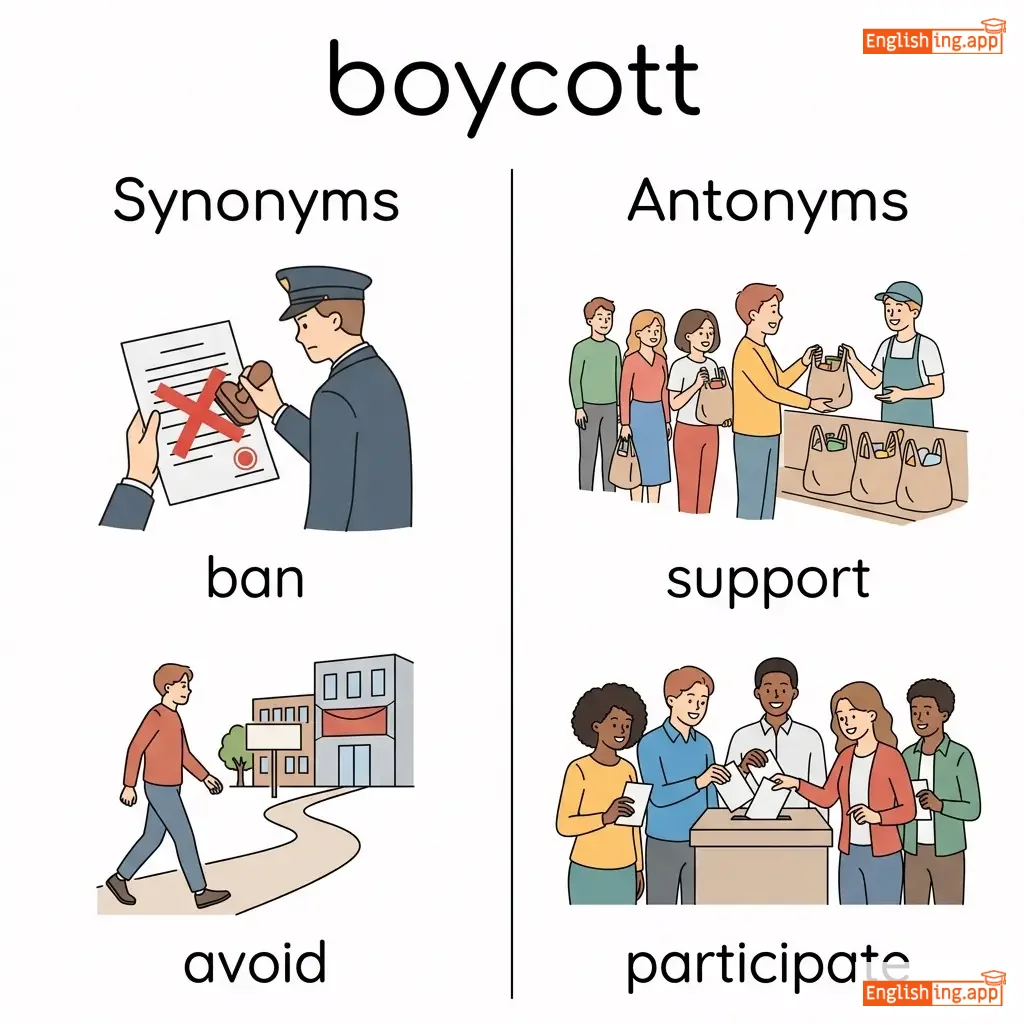
ban, avoid, refuse, shun, embargo
••••••
|
support, participate, endorse
••••••
|
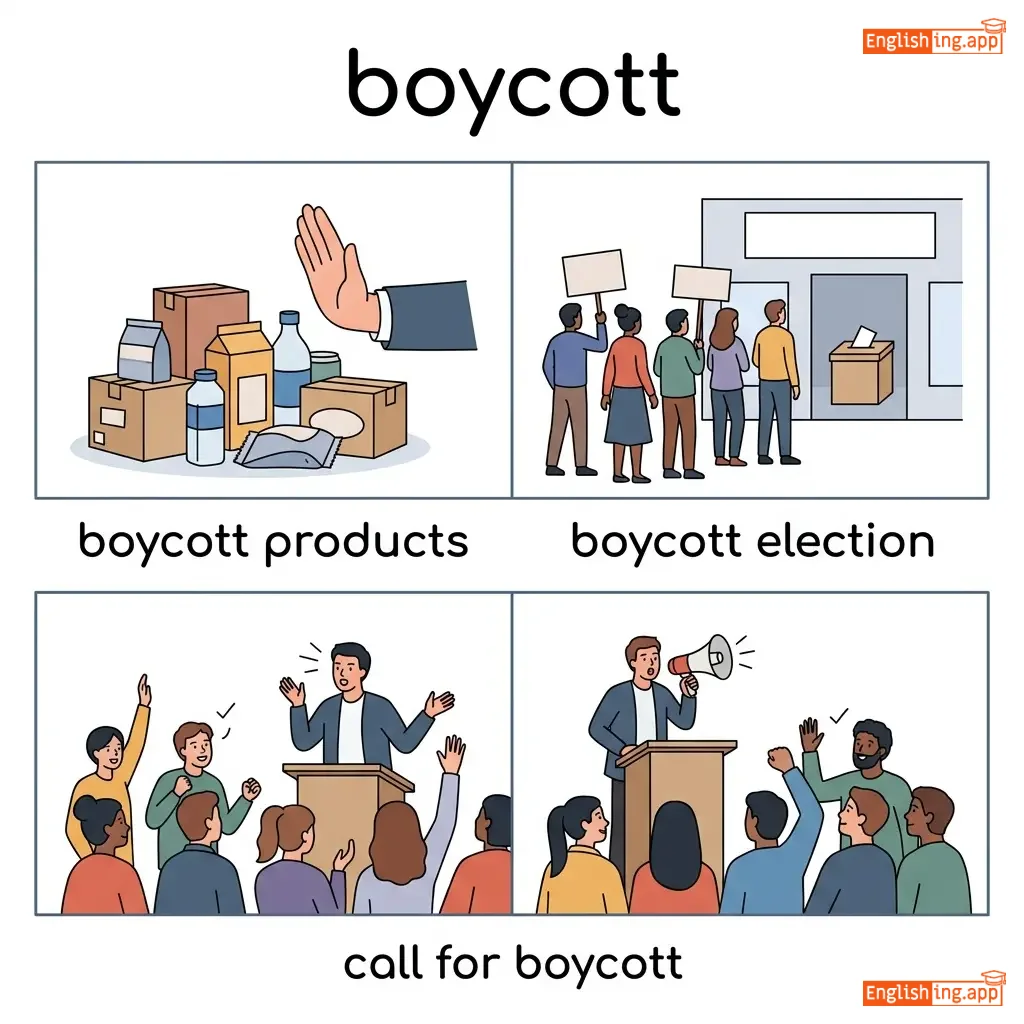
boycott products, boycott election, call for boycott
••••••
|
Boycott = Boy + cut = 呼吁不要用某物
••••••
|
|
#1063
🎩
|
/ˈboʊlər/
noun
(鲍勒)
••••••
|
- •••••• |
投球员
tóu qiú yuán
••••••
|
- •••••• | - •••••• | - •••••• | - •••••• |
a person who delivers the ball in cricket; also a type of hard felt hat with a rounded crown
••••••
|
The bowler took three wickets in the first over. |
投球员在第一轮中拿下了三个wicket。
Tóu qiú yuán zài dì yī lún zhōng ná xià le sān gè wicket.
••••••
|
- •••••• | - •••••• | - •••••• |
cricketer, pitcher, hat, cap
••••••
|
batsman, fielder
••••••
|
fast bowler, spin bowler, bowler hat
••••••
|
Bowler = 投球员和 🎩 圆顶帽
••••••
|
|
#1064
✂️
|
/ˈbaʊdləˌraɪz/
verb
(鲍德莱瑞兹)
••••••
|
- •••••• |
去除冒犯性部分
quchu maofanxing bufen
••••••
|
bowdlerized
鲍德莱瑞兹德
••••••
|
bowdlerized
鲍德莱瑞兹德
••••••
|
bowdlerizes
鲍德莱瑞兹斯
••••••
|
bowdlerizing
鲍德莱瑞兹英
••••••
|
to remove or modify parts of a text considered offensive or inappropriate
••••••
|
The editor bowdlerized the novel to make it suitable for children.
编辑将小说修改,以使其适合儿童。
••••••
|
编辑将小说修改,以使其适合儿童。
Bianji jiang xiaoshuo xiu gai, yi shi qi shihua ertong.
••••••
|
- •••••• | - •••••• | - •••••• |
censor, edit, expurgate, sanitize, redact
••••••
|
preserve, allow, include
••••••
|
bowdlerize text, bowdlerize novel, bowdlerize content
••••••
|
Bowdlerize 就像是'清理'书本—去掉不好的部分 ✂️
••••••
|
|
#1065
🐄
|
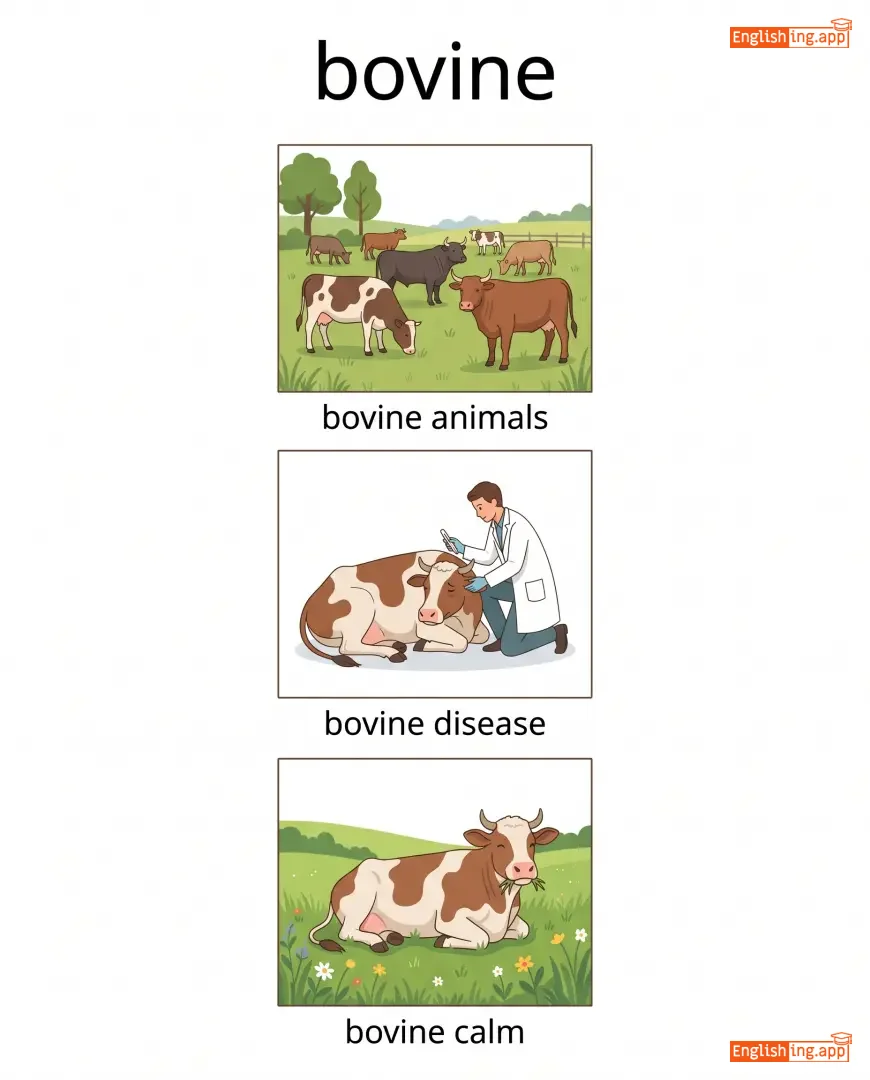
/ˈboʊvaɪn/
adjective
(牛性)
••••••
|
|
与牛相关的
yu niu xiangguan de
••••••
|
- •••••• | - •••••• | - •••••• | - •••••• |
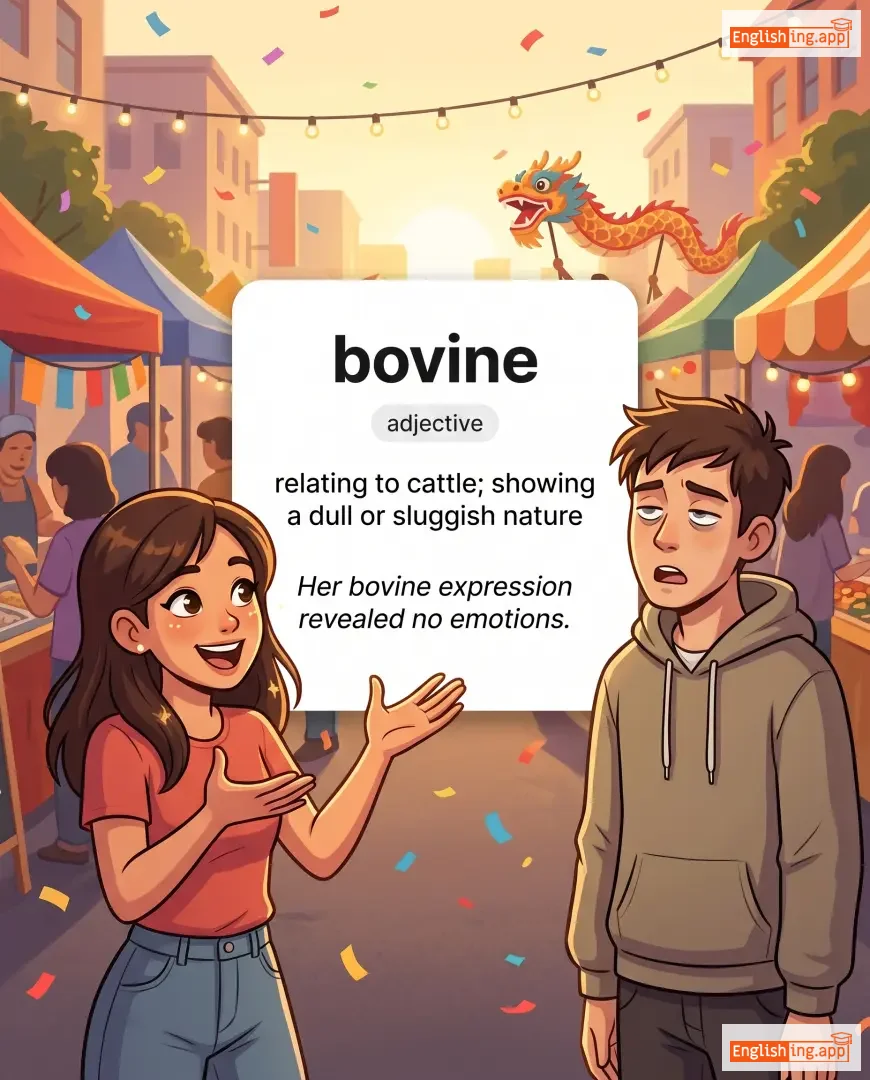
relating to cattle; showing a dull or sluggish nature
••••••
|
Her bovine expression revealed no emotions.
她的牛性表情没有表达任何情感。
••••••
|
她的牛性表情没有表达任何情感。
Tā de niúxìng biǎoqíng méiyǒu biǎodá rènhé qínggǎn.
••••••
|
- •••••• | - •••••• | - •••••• |
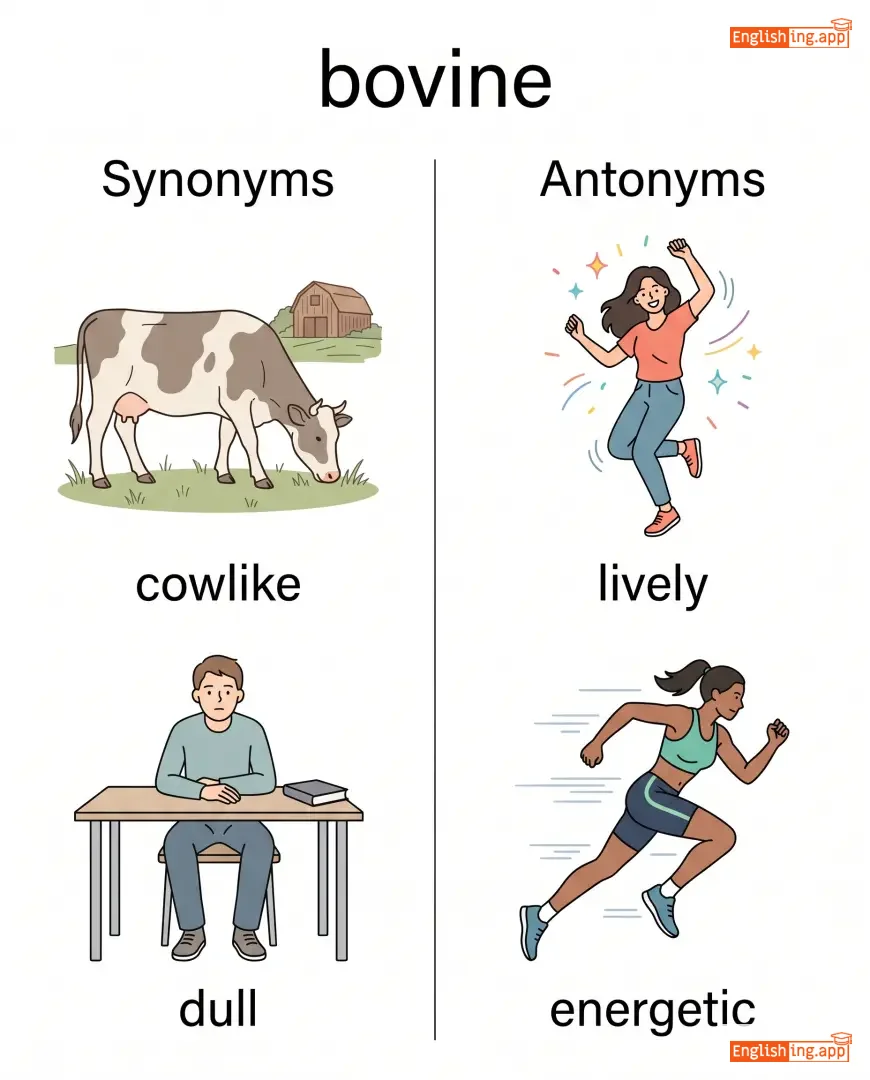
cowlike, dull, sluggish, stolid
••••••
|
lively, energetic, sharp
••••••
|
bovine animals, bovine disease, bovine calm, bovine expression
••••••
|
Bovine 就像牛一样—表情慢且无情感。
••••••
|
|
#1066
🤦
|
/ˈbʊərɪʃ/
adjective
(búrish)
••••••
|
|
粗鲁
culu
••••••
|
- •••••• | - •••••• | - •••••• | - •••••• |
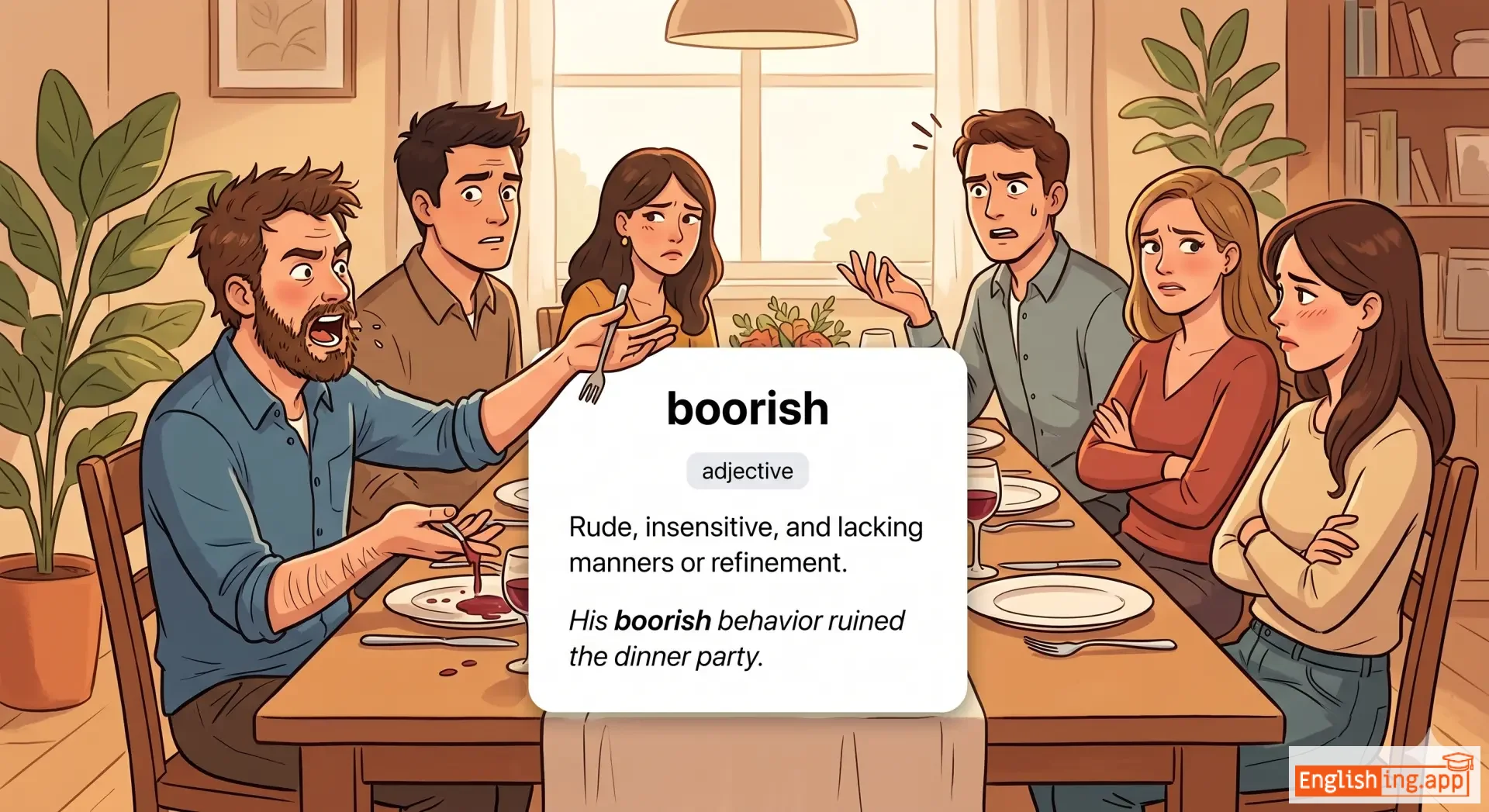
Rude, insensitive, and lacking manners or refinement.
••••••
|
His boorish behavior ruined the dinner party.
他的búrish行为毁了晚宴。
••••••
|
他的粗鲁行为毁了晚宴。
Tā de cūlǔ xíngwéi huǐle wǎnyàn.
••••••
|
- •••••• | - •••••• | - •••••• |
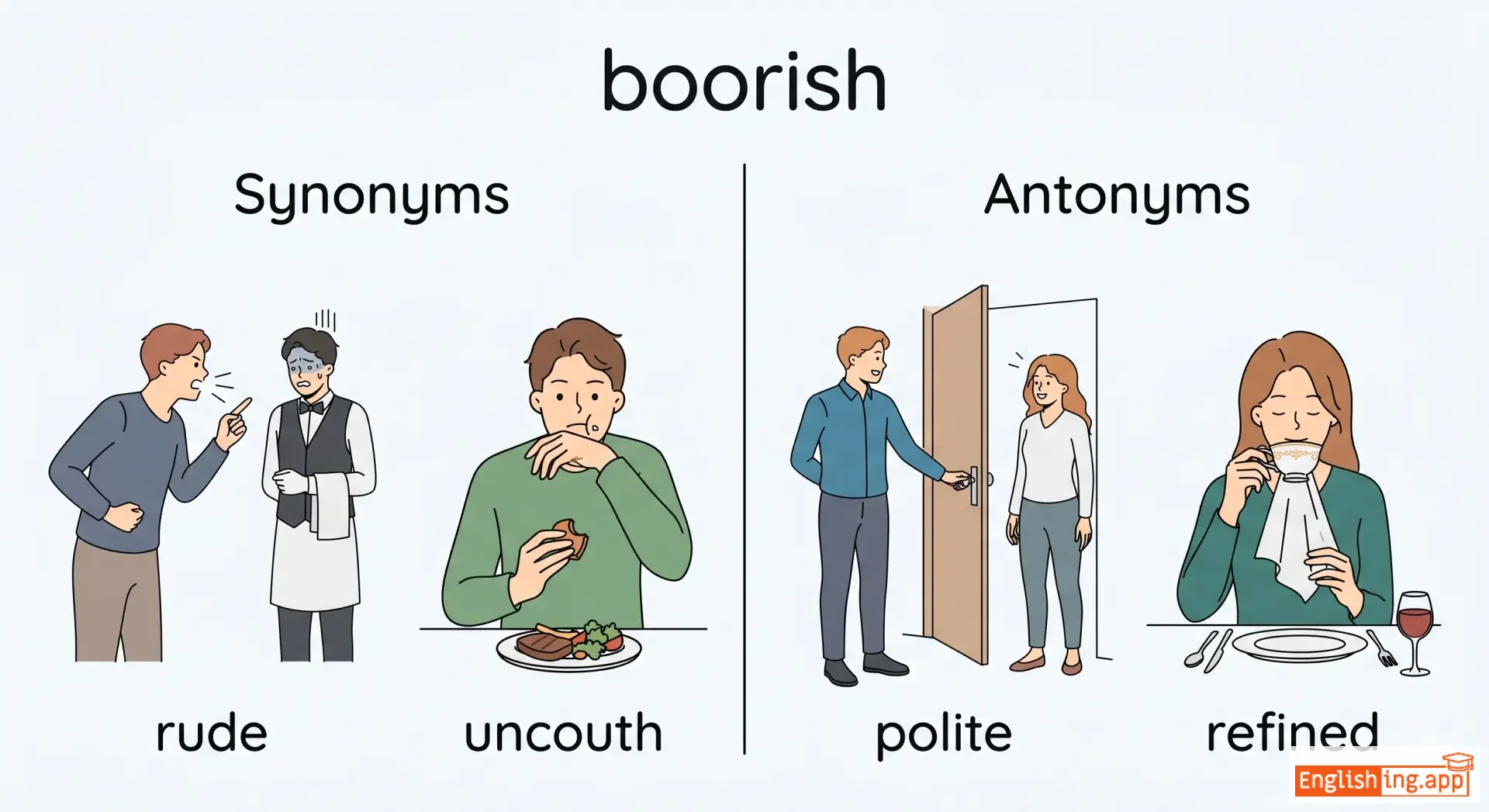
rude, uncouth, vulgar, ill-mannered, coarse
••••••
|
polite, refined, courteous
••••••
|
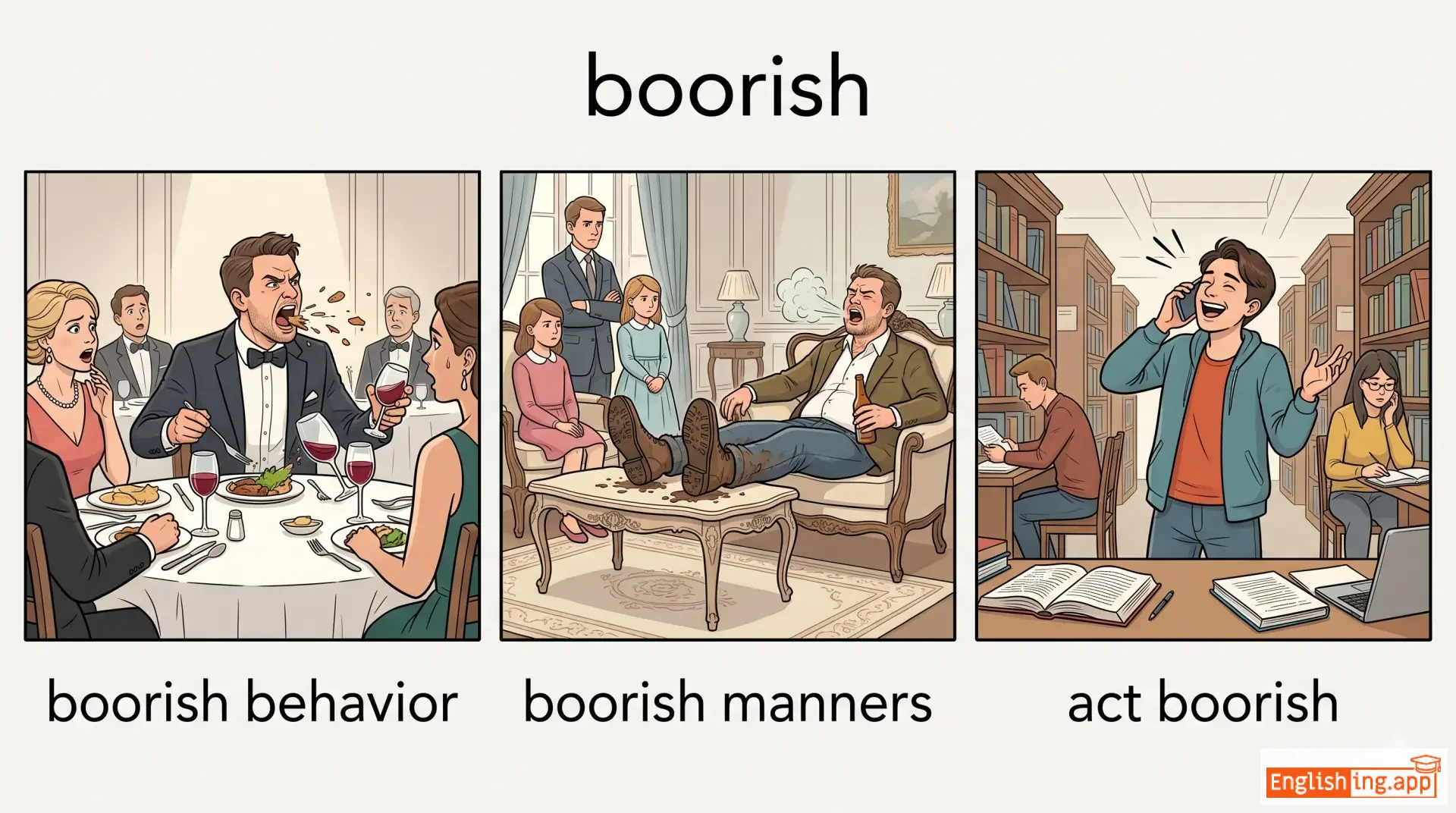
boorish behavior, boorish manners, act boorish
••••••
|
Boorish 可以记住为粗鲁的行为
••••••
|
|
#1067
🏠
|
/ˈbʊrʒ.wɑː/
adjective, noun
(布尔乔亚)
••••••
|
- •••••• |
布尔乔亚
bu'erqiaoya
••••••
|
- •••••• | - •••••• | - •••••• | - •••••• |
Relating to the middle class, often with materialistic values or conventional attitudes.
••••••
|
The novel criticizes the bourgeois lifestyle of the city dwellers. |
这本小说批评了城市居民的布尔乔亚生活方式。
Zhe ben xiaoshuo piping le chengshi jumin de bu'erqiaoya shenghuo fangshi.
••••••
|
petit bourgeois |
Lower-middle-class individuals with conservative attitudes.
••••••
|
小布尔乔亚
xiao bu'erqiaoya
••••••
|
middle-class, conventional, materialistic, capitalist
••••••
|
aristocratic, proletarian
••••••
|
bourgeois society, bourgeois lifestyle, bourgeois values, petit bourgeois
••••••
|
布尔乔亚意味着布尔乔亚 = 中产阶级的人。
••••••
|
|
#1068
💐
|
/buˈkeɪ/
noun
(bùkè tè)
••••••
|
- •••••• |
花束
huā shù
••••••
|
- •••••• | - •••••• | - •••••• | - •••••• |
A bunch of flowers arranged together, often given as a gift or decoration.
••••••
|
He gave her a bouquet of roses on her birthday. |
他在她的生日送给她一束玫瑰花。
Tā zài tā de shēngrì sòng gěi tā yī shù méiguī huā.
••••••
|
throw the bouquet |
A wedding tradition where the bride tosses her bouquet to unmarried women.
••••••
|
抛花束
pāo huā shù
••••••
|
bunch, arrangement, posy, garland
••••••
|
single flower, nothing
••••••
|
bouquet of roses, bridal bouquet, beautiful bouquet, fresh bouquet
••••••
|
Bouquet 和 'book' 一起就是花束。
••••••
|
|
#1069
🌾
|
/ˈbaʊn.tɪ.fəl/
adjective
(宝恩提富尔)
••••••
|
- •••••• |
丰盛的 / 慷慨的
fēngshèng de / kāngkǎi de
••••••
|
- •••••• | - •••••• | - •••••• | - •••••• |
Large in quantity; abundant; generous in giving.
••••••
|
The farmer was grateful for the bountiful harvest. |
农民感激丰收的成果。
Nóngmín gǎnjī fēngshōu de chéngguǒ.
••••••
|
- •••••• | - •••••• | - •••••• |
abundant, plentiful, ample, generous
••••••
|
scarce, meager
••••••
|
bountiful harvest, bountiful nature, bountiful supply, bountiful blessings
••••••
|
Bountiful意味着丰收或慷慨的馈赠。
••••••
|
|
#1070
🔗
|
/baʊnd/
verb, noun, adjective
(包恩德)
••••••
|
- •••••• |
有界的 / 受限的
youjie de / shouxian de
••••••
|
bounded
包恩德
••••••
|
bounded
包恩德
••••••
|
bounds
包恩兹
••••••
|
bounding
包恩丁
••••••
|
To move with large strides or jumps; also refers to being tied, limited, or certain.
••••••
|
The dog bounded across the field with joy.
狗跳过田野,带着快乐。
••••••
|
狗带着快乐跳过了田野。
Gou daizhe kuaile tiao guo le tianye.
••••••
|
out of bounds
出界
••••••
|
Beyond the permitted limits.
••••••
|
超出界限
chaochu jie xian
••••••
|
leap, jump, restrict, limit, tie
••••••
|
free, release, unlimited
••••••
|
bounded area, out of bounds, bound to happen, legally bound
••••••
|
Bound意味着受限,就像Ball Bound,球出界了。
••••••
|
|
#1071
🥣
|
/ˈbuː.jɒ̃/
noun
(布永)
••••••
|
- •••••• |
高汤
gaotang
••••••
|
- •••••• | - •••••• | - •••••• | - •••••• |
A clear, seasoned broth made by simmering meat, fish, or vegetables in water.
••••••
|
She added vegetables to the bouillon for extra flavor. |
她在高汤中加入了蔬菜以增强味道。
Tā zài gāotāng zhōng jiārùle shūcài yǐ zēngqiáng wèidào.
••••••
|
- •••••• | - •••••• | - •••••• |
broth, stock, soup, consommé
••••••
|
solid, stew
••••••
|
chicken bouillon, beef bouillon, vegetable bouillon, bouillon cube
••••••
|
记住高汤,想象通过慢炖肉类或蔬菜的清汤。
••••••
|
|
#1072
❌
|
/bɒtʃ/
verb
(博奇)
••••••
|
- •••••• |
搞砸
gǎo zá
••••••
|
botched
博奇德
••••••
|
botched
博奇德
••••••
|
botches
博奇斯
••••••
|
botching
博奇英
••••••
|
to carry out a task badly or carelessly
••••••
|
He completely botched the repair job.
他完全搞砸了维修工作。
••••••
|
他完全搞砸了维修工作。
Tā wánquán gǎo zá le wéixiū gōngzuò.
••••••
|
botch job
做坏工作
••••••
|
a job that is done very badly
••••••
|
做坏工作
zuò huài gōngzuò
••••••
|
bungle, mishandle, ruin, mess up, blunder
••••••
|
fix, repair, succeed
••••••
|
botch the work, botch repair, botch badly, botch attempt
••••••
|
Botch 意味着搞砸 – 记住 botch job 意味着做得很糟糕。
••••••
|
|
#1073
📚🌿
|
/ˈbɒtəni/
noun
(博塔尼)
••••••
|
- •••••• |
植物学
zhíwùxué
••••••
|
- •••••• | - •••••• | - •••••• | - •••••• |
the scientific study of plants
••••••
|
She is studying botany at the university. |
她在大学里学习植物学。
Tā zài dàxué lǐ xuéxí zhíwùxué.
••••••
|
- •••••• | - •••••• | - •••••• |
plant science, plant biology, flora study, phytology
••••••
|
zoology, animal science
••••••
|
study botany, botany class, botany research, botany professor
••••••
|
Botany = Bot+any = 学习所有植物的科学知识。
••••••
|
|
#1074
🌱
|
/ˈbɒtənaɪz/
verb
(博塔奈兹)
••••••
|
- •••••• |
研究植物
yanjiu zhuwu
••••••
|
botanized
博塔奈兹德
••••••
|
botanized
博塔奈兹德
••••••
|
botanizes
博塔奈兹斯
••••••
|
botanizing
博塔奈兹英
••••••
|
to study plants in their natural environment
••••••
|
They went to the forest to botanize during their vacation.
他们在度假时去森林里进行植物学研究。
••••••
|
他们在度假时去森林里研究植物。
Tamen zai dujia shi qu senlin li yanjiu zhuwu.
••••••
|
- •••••• | - •••••• | - •••••• |
study plants, research flora, collect plants, explore vegetation
••••••
|
ignore plants, neglect flora
••••••
|
botanize in the field, botanize for samples, botanize during trip
••••••
|
Botanize 意味着研究植物 – 想象森林和植物.
••••••
|
|
#1075
🌿
|
/bəˈtænɪkəl/
adjective
(植物学的)
••••••
|
- •••••• |
植物学的
zhíwùxué de
••••••
|
- •••••• | - •••••• | - •••••• | - •••••• |
relating to plants or plant life
••••••
|
She works at the botanical garden. |
她在植物园工作。
Tā zài zhíwùyuán gōngzuò.
••••••
|
- •••••• | - •••••• | - •••••• |
plant-related, herbal, floral, vegetation
••••••
|
zoological, animal
••••••
|
botanical garden, botanical study, botanical extract, botanical classification
••••••
|
Botanical garden 意思是植物园 – 所以 botanical 意思是与植物相关的。
••••••
|
|
#1076
💓
|
/ˈbʊzəm/
noun
(bósōm)
••••••
|
- •••••• |
胸部
xiōngbù
••••••
|
- •••••• | - •••••• | - •••••• | - •••••• |
the human chest, especially a woman’s breast; also used metaphorically to refer to closeness or intimacy
••••••
|
She kept the secret close to her bosom. |
她把秘密藏在胸口。
Tā bǎ mìmì cáng zài xiōngkǒu.
••••••
|
bosom friend |
a very close and intimate friend
••••••
|
知己好友
zhījǐ hǎoyǒu
••••••
|
chest, breast, heart, embrace, intimacy
••••••
|
back, exterior, outside
••••••
|
bosom friend, close to the bosom, bosom of the family, bosom companion
••••••
|
Bosom 就是胸部 – 想象 bosom friend 就像一个亲密的朋友,和你一样亲近。
••••••
|
|
#1077
🏙️
|
/ˈbʌrə, ˈbʊrə/
noun
(伯罗)
••••••
|
- •••••• |
区
qu
••••••
|
- •••••• | - •••••• | - •••••• | - •••••• |
A town, district, or administrative division, especially one with its own local government.
••••••
|
Brooklyn is a borough of New York City. |
布鲁克林是纽约市的一个区。
Bùlǔkè lín shì Niǔyuē shì de yī gè qū.
••••••
|
- •••••• | - •••••• | - •••••• |
district, municipality, township, division
••••••
|
countryside, rural area
••••••
|
city borough, borough council, borough residents
••••••
|
Borough听起来像borrow,意思是城市的一个部分,像借来的区域。
••••••
|
|
#1078
🥱
|
/bɔːr/
verb/noun
(博尔)
••••••
|
- •••••• |
使……感到无聊
shǐ...gǎndào wúliáo
••••••
|
bored
博尔德
••••••
|
bored
博尔德
••••••
|
bores
博尔斯
••••••
|
boring
博尔英
••••••
|
Verb: To make someone feel uninterested or tired; Noun: A dull or tiresome person.
••••••
|
The lecture began to bore the students.
讲座开始让学生感到无聊。
••••••
|
讲座开始让学生感到无聊。
Jiǎngzuò kāishǐ ràng xuéshēng gǎndào wúliáo.
••••••
|
bore to death
无聊死了
••••••
|
to make someone extremely uninterested or tired
••••••
|
无聊死了
wúliáo sǐle
••••••
|
weary, tire, annoy, dull
••••••
|
entertain, excite, interest
••••••
|
bore someone, boring lecture, bore to death
••••••
|
博尔的意思是使人感到无聊,和 boring 同义。
••••••
|
|
#1079
🚫
|
/ˈbuːtləs/
adjective
(布特莱斯)
••••••
|
- •••••• |
无用的
wuyong de
••••••
|
- •••••• | - •••••• | - •••••• | - •••••• |
Useless or futile; of no benefit.
••••••
|
His bootless attempt to fix the machine only wasted time. |
他修理机器的无用尝试只是浪费了时间。
ta xiuli jiqi de wuyong changshi zhishi langfei le shijian.
••••••
|
- •••••• | - •••••• | - •••••• |
useless, futile, pointless, vain
••••••
|
useful, effective, fruitful
••••••
|
bootless effort, bootless attempt, bootless talk
••••••
|
Boot-less意味着没有靴子 - 没用,徒劳
••••••
|
|
#1080
📈
|
/buːst/
verb
(bùsīté)
••••••
|
- •••••• |
提升
tíshēng
••••••
|
boosted
bùsīté
••••••
|
boosted
bùsīté
••••••
|
boosts
bùsītè
••••••
|
boosting
bùsītīng
••••••
|
To increase, improve, or raise something.
••••••
|
The company launched a campaign to boost sales.
公司启动了一项活动以提升销售。
••••••
|
公司启动了一项活动以提升销售。
Gōngsī qǐdòngle yī xiàng huódòng yǐ tíshēng xiāoshòu.
••••••
|
boost morale
提升士气
••••••
|
to increase confidence and enthusiasm
••••••
|
提升士气
tíshēng shìqì
••••••
|
increase, raise, enhance, improve, promote
••••••
|
reduce, decrease, diminish
••••••
|
boost sales, boost energy, boost confidence, boost performance
••••••
|
Boost = 提升你的表现,让销售和成绩提高。
••••••
|
Vocabulary Quiz
Test your vocabulary by matching words with their translations or meanings.
Login to take the quiz
Comments (0)
Share your thoughts and join the discussion.
Join the discussion by logging in
Login to CommentNo comments yet
Be the first to share your thoughts!