



Swipe left or right, or use the buttons. Tap image to zoom.
例句翻译
单词
Lesson 386Lesson 386 - 遮罩切换
|
表情符号
|
单词 | Images | 翻译 | 过去时 | 过去分词 | 第三人称单数 | 动名词 | 含义 | 例句 | 例句翻译 | 示例表达 | 示例表达含义 | 示例表达翻译 | 同义词 | 反义词 | 搭配词 | 助记符 |
|---|---|---|---|---|---|---|---|---|---|---|---|---|---|---|---|---|---|
|
#11545
🔄
|
/ˈʌðərwaɪz/
adverb
(āderwāiz)
••••••
|
- •••••• |
否则
fǒuzé
••••••
|
- •••••• | - •••••• | - •••••• | - •••••• |
in a different or other way
••••••
|
We need to hurry; otherwise, we'll miss the train. |
我们得快点,否则我们会错过火车。
Wǒmen děi kuài diǎn, fǒuzé wǒmen huì cuòguò huǒchē.
••••••
|
- •••••• | - •••••• | - •••••• |
alternatively, if not, or else
••••••
|
similarly
••••••
|
otherwise known as, do otherwise, otherwise stated
••••••
|
快点,否则错过火车。
••••••
|
|
#11546
😖
|
/ˈpeɪn.fəl/
adjective
(佩恩福尔)
••••••
|
- •••••• |
疼痛的
téngtòng de
••••••
|
- •••••• | - •••••• | - •••••• | - •••••• |
causing physical or emotional pain
••••••
|
The injury was very painful, and he needed immediate care. |
受伤非常疼痛,他需要立刻接受治疗。
Shòushāng fēicháng téngtòng, tā xūyào lìkè jiēshòu zhìliáo.
••••••
|
- •••••• | - •••••• | - •••••• |
aching, sore, excruciating, distressing
••••••
|
comfortable, painless, soothing
••••••
|
painful experience, painful injury, painful memories
••••••
|
Painful - 佩恩福尔, 想象疼痛填满你,像海浪一样强烈。
••••••
|
|
#11547
😖
|
/peɪn/
noun
(佩因)
••••••
|
- •••••• |
痛苦
tongku
••••••
|
- •••••• | - •••••• | - •••••• | - •••••• |
physical suffering or discomfort caused by illness or injury
••••••
|
She felt a sharp pain in her chest.
她感到胸口有一阵锐利的佩因。
••••••
|
她感到胸口有一阵锐利的痛苦。
Ta gandao xiongkou you yizhen ruili de tongku.
••••••
|
- •••••• | - •••••• | - •••••• |
ache, hurt, suffering, discomfort
••••••
|
comfort, ease, relief
••••••
|
sharp pain, chronic pain, painkiller, unbearable pain
••••••
|
Pain feels like 'tongku' – as if the pain 'tongues' your body.
••••••
|
|
#11548
📄
|
/peɪdʒ/
noun
(peiji)
••••••
|
- •••••• |
页面
ye mian
••••••
|
- •••••• | - •••••• | - •••••• | - •••••• |
one side of a sheet of paper, or a single sheet of paper in a book or document
••••••
|
Turn to the next page for more information.
转到下一页以获取更多信息。
••••••
|
转到下一页以获取更多信息。
Zhuan dao xia yi ye yi huò qu geng duo xinxi.
••••••
|
- •••••• | - •••••• | - •••••• |
leaf, sheet, folio, document
••••••
|
blank, empty space
••••••
|
turn the page, page number, front page, last page
••••••
|
页面 = 一本书的页面
••••••
|
|
#11549
📦
|
/ˈpækɪdʒ/
noun
(包裹)
••••••
|
- •••••• |
包裹
baoguo
••••••
|
- •••••• | - •••••• | - •••••• | - •••••• |
a container or wrapping in which something is packed
••••••
|
He received a package in the mail. |
他收到了一份包裹。
Ta shoudao le yi fen baoguo.
••••••
|
- •••••• | - •••••• | - •••••• |
parcel, bundle, box, shipment
••••••
|
unpacking, unpacked item
••••••
|
shipping package, gift package, delivery package, large package
••••••
|
包裹就像一个包裹着礼物的包裹!
••••••
|
|
#11550
🏃♀️
|
/peɪs/
noun
(pèi sī)
••••••
|
- •••••• |
步伐
bù fá
••••••
|
- •••••• | - •••••• | - •••••• | - •••••• |
the speed at which something happens or is done
••••••
|
She walked at a slow pace.
她走得很慢。
••••••
|
她走得很慢。
Tā zǒu dé hěn màn.
••••••
|
- •••••• | - •••••• | - •••••• |
speed, rate, tempo, velocity
••••••
|
slowness, delay, retardation
••••••
|
fast pace, slow pace, quick pace, steady pace
••••••
|
Pace 就是步伐慢,缓慢走。
••••••
|
|
#11551
🏠
|
/ˈoʊnər/
noun
(ōu nèi)
••••••
|
- •••••• |
车主
chē zhǔ
••••••
|
- •••••• | - •••••• | - •••••• | - •••••• |
a person who owns something
••••••
|
She is the owner of the car.
她是那辆车的车主。
••••••
|
她是那辆车的车主。
Tā shì nà liàng chē de chē zhǔ.
••••••
|
- •••••• | - •••••• | - •••••• |
proprietor, possessor, holder, landlord
••••••
|
tenant, renter, lessee
••••••
|
property owner, business owner, car owner, house owner
••••••
|
车主 (chē zhǔ) 就是你拥有汽车的那个人。
••••••
|
|
#11552
🏠
|
/oʊn/
verb, adjective
(own)
••••••
|
- •••••• |
拥有
yǒngyǒu
••••••
|
owned
owned
••••••
|
owned
owned
••••••
|
owns
owns
••••••
|
owning
owning
••••••
|
to possess something; belonging to oneself
••••••
|
She owns a beautiful house in the city.
她拥有一座漂亮的房子。
••••••
|
她拥有一座漂亮的房子。
Tā yǒngyǒu yī zuò piàoliang de fángzi.
••••••
|
- •••••• | - •••••• | - •••••• |
possess, have, hold
••••••
|
lack, not have
••••••
|
own a house, own property, own up
••••••
|
Own means you possess something - '拥有'意味着你拥有某物。
••••••
|
|
#11553
💰
|
/oʊ/
verb
(欧)
••••••
|
|
欠
qiàn
••••••
|
owed
欧德
••••••
|
owed
欧德
••••••
|
owes
欧斯
••••••
|
owing
欧英
••••••
|
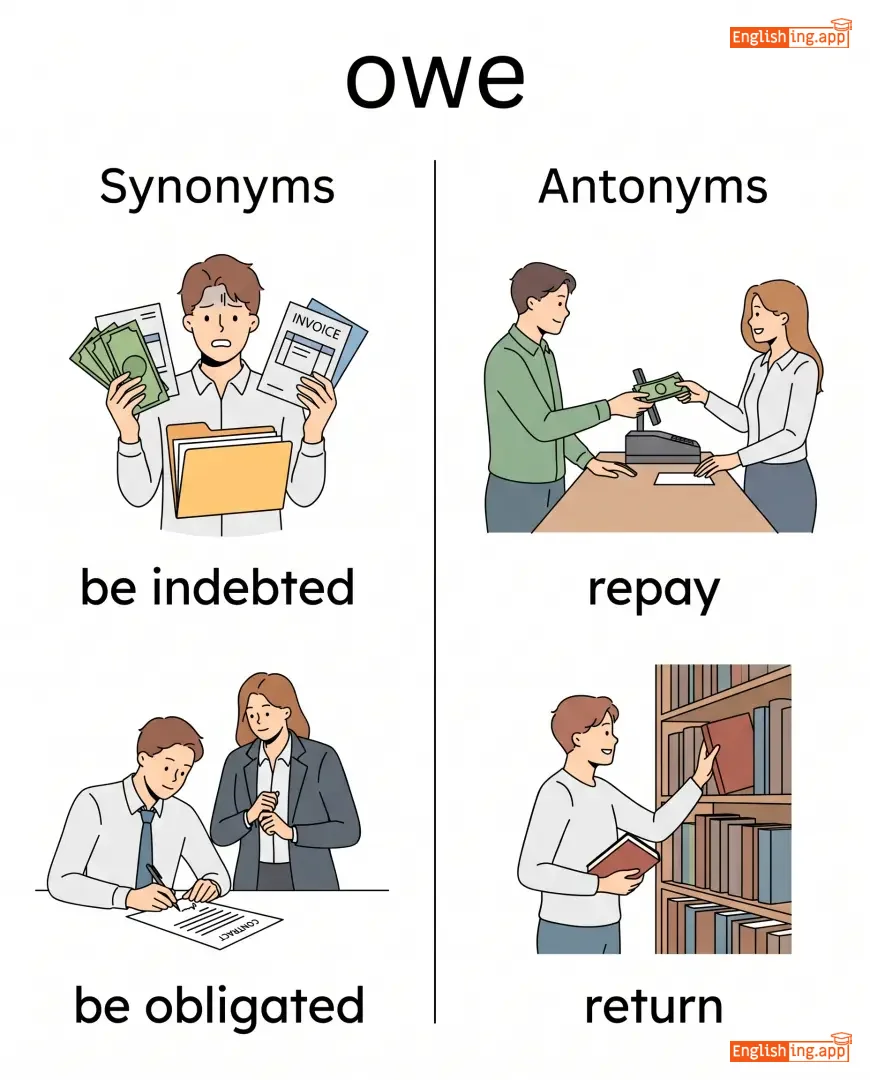
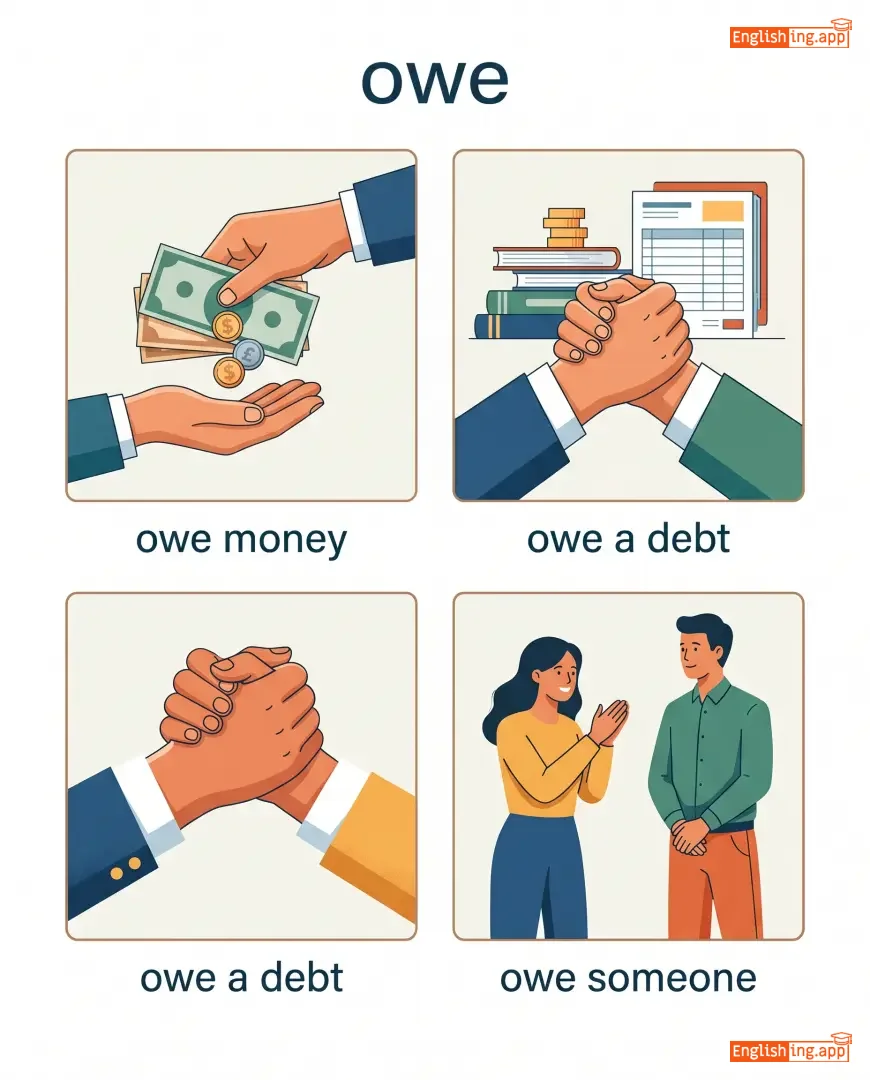
to be obligated to pay or give something to someone
••••••
|
I owe you twenty dollars.
我欠你二十美元。
••••••
|
我欠你二十美元。
Wǒ qiàn nǐ èrshí měiyuán.
••••••
|
- •••••• | - •••••• | - •••••• |
be indebted, be obligated, be in debt
••••••
|
repay, return
••••••
|
owe money, owe a debt, owe someone
••••••
|
Owe 是欠债,记得要付钱。
••••••
|
|
#11554
🌍
|
/ˈoʊvərɔːl/
adjective, adverb
(ōu wéi ruò ěr)
••••••
|
- •••••• |
总体上
zǒngtǐ shàng
••••••
|
- •••••• | - •••••• | - •••••• | - •••••• |
in general or as a whole
••••••
|
Overall, the project has been successful. |
总体上,项目已成功。
Zǒngtǐ shàng, xiàngmù yǐ chénggōng.
••••••
|
- •••••• | - •••••• | - •••••• |
generally, broadly, in total
••••••
|
specifically, individually
••••••
|
overall view, overall performance, overall result
••••••
|
Overall代表总体上 - 完美成功
••••••
|
|
#11555
⬆️
|
/ˈoʊvər/
preposition, adverb
(ōu wò)
••••••
|
- •••••• |
在…上面
zai…shangmian
••••••
|
- •••••• | - •••••• | - •••••• | - •••••• |
across, on top of, or beyond
••••••
|
The book is lying over the table. |
书在桌子上面。
Shu zai zhuozi shangmian.
••••••
|
- •••••• | - •••••• | - •••••• |
above, across, beyond
••••••
|
under, beneath
••••••
|
over the table, over the years, over there
••••••
|
书在桌子上面 – Book goes over the table
••••••
|
|
#11556
🍕
|
/ˈʌvən/
noun
(烤箱)
••••••
|
- •••••• |
烤箱
kaoxiang
••••••
|
- •••••• | - •••••• | - •••••• | - •••••• |
a chamber used for baking, roasting, or heating food
••••••
|
I put the pizza in the oven to bake.
我把披萨放进烤箱里烤。
••••••
|
我把披萨放进烤箱里烤。
Wǒ bǎ pīsà fàng jìn kǎo xiāng lǐ kǎo.
••••••
|
- •••••• | - •••••• | - •••••• |
stove, cooker, range
••••••
|
microwave, freezer
••••••
|
bake in the oven, oven temperature, preheat the oven
••••••
|
烤箱 = 烤披萨。
••••••
|
|
#11557
🎯
|
/ˈaʊtkʌm/
noun
(āo tè kǎm)
••••••
|
- •••••• |
结果
jieguo
••••••
|
- •••••• | - •••••• | - •••••• | - •••••• |
the result or consequence of an action or situation
••••••
|
The outcome of the project was beyond expectations. |
这个项目的结果超出了预期。
Zhege xiangmu de jieguo chaochule yuqi.
••••••
|
- •••••• | - •••••• | - •••••• |
result, consequence, effect, outcome
••••••
|
cause
••••••
|
final outcome, positive outcome, outcome of the situation
••••••
|
结果 (jieguo) 是行动 (out) 后的果实。
••••••
|
|
#11558
🤗
|
/aʊərˈsɛlvz/
pronoun
(aʊərˈsɛlvz)
••••••
|
- •••••• |
我们自己
wǒmen zìjǐ
••••••
|
- •••••• | - •••••• | - •••••• | - •••••• |
used by the speaker to refer to themselves and one or more others as the object of the verb
••••••
|
We should help ourselves before helping others. |
我们应该在帮助他人之前先帮助自己。
Wǒmen yīnggāi zài bāngzhù tārén zhīqián xiān bāngzhù zìjǐ.
••••••
|
- •••••• | - •••••• | - •••••• |
we, we ourselves, our own
••••••
|
themselves, others
••••••
|
help ourselves, find ourselves, express ourselves
••••••
|
我们 (wǒmen) 用 '我们自己' 来表示自己
••••••
|
|
#11559
🏡
|
/aʊər/
pronoun
(au'er)
••••••
|
- •••••• |
我们的
wǒmen de
••••••
|
- •••••• | - •••••• | - •••••• | - •••••• |
belonging to or associated with the speaker and one or more other people
••••••
|
This is our house. |
这是我们的房子。
Zhè shì wǒmen de fángzi.
••••••
|
- •••••• | - •••••• | - •••••• |
ours, belonging to us, our own
••••••
|
their, your
••••••
|
our family, our team, our responsibility
••••••
|
我们 (wǒmen) 说这是我们的 (wǒmen de) 房子。
••••••
|
|
#11560
⚪
|
/ˈoʊnli/
adjective/adverb
(óunli)
••••••
|
- •••••• |
唯一
wei yi
••••••
|
- •••••• | - •••••• | - •••••• | - •••••• |
without others; solely
••••••
|
He is the only person who knows the secret.
他是唯一知道这个秘密的人。
••••••
|
他是唯一知道这个秘密的人。
Ta shi wei yi zhi dao zhe ge mi mi de ren.
••••••
|
- •••••• | - •••••• | - •••••• |
sole, exclusive, unique, solitary
••••••
|
multiple, many
••••••
|
only one, only person, only choice, only option
••••••
|
你是唯一最好的! - You are only the best!
••••••
|
|
#11561
👥
|
/ˈʌðərz/
pronoun
(āders)
••••••
|
- •••••• |
其他
qítā
••••••
|
- •••••• | - •••••• | - •••••• | - •••••• |
people or things distinct from the ones already mentioned or known
••••••
|
I like to spend time with others. |
我喜欢和其他人一起度过时间。
Wǒ xǐhuān hé qítā rén yīqǐ dùguò shíjiān.
••••••
|
- •••••• | - •••••• | - •••••• |
people, individuals, others, another
••••••
|
self, oneself
••••••
|
help others, other people, among others
••••••
|
与他人合作可以增加视野 - Collaborating with others expands your perspective
••••••
|
|
#11562
🔄
|
/ˈʌðər/
adjective
(àdé)
••••••
|
- •••••• |
其他
qítā
••••••
|
- •••••• | - •••••• | - •••••• | - •••••• |
used to refer to something different from the one already mentioned or known
••••••
|
I don't want this one, I will take the other one. |
我不想要这个,我会拿另一个。
Wǒ bù xiǎng yào zhège, wǒ huì ná lìng yīgè.
••••••
|
the other side of the coin |
the opposite aspect of a situation
••••••
|
硬币的另一面
Yìngbì de lìng yīmiàn
••••••
|
alternative, different, another, else
••••••
|
same, identical
••••••
|
the other side, the other person, the other day
••••••
|
Other, 另一个总在这里
••••••
|
|
#11563
⏳
|
/əˈrɪdʒɪnəli/
adverb
(最初)
••••••
|
- •••••• |
最初
zuìchū
••••••
|
- •••••• | - •••••• | - •••••• | - •••••• |
in the beginning, at first
••••••
|
Originally, she wanted to be a doctor. |
最初,她想成为一名医生。
Zuìchū, tā xiǎng chéngwéi yī míng yīshēng.
••••••
|
- •••••• | - •••••• | - •••••• |
initially, at first, at the outset, in the beginning
••••••
|
finally, ultimately
••••••
|
originally from, originally intended, originally planned
••••••
|
最初是所有事情的开始,一切都是从最初开始的。
••••••
|
|
#11564
📅
|
/ˈɔːɡənaɪz/
verb
(组织)
••••••
|
|
组织
zuzhi
••••••
|
organized
组织了
••••••
|
organized
组织的
••••••
|
organizes
组织
••••••
|
organizing
组织中
••••••
|
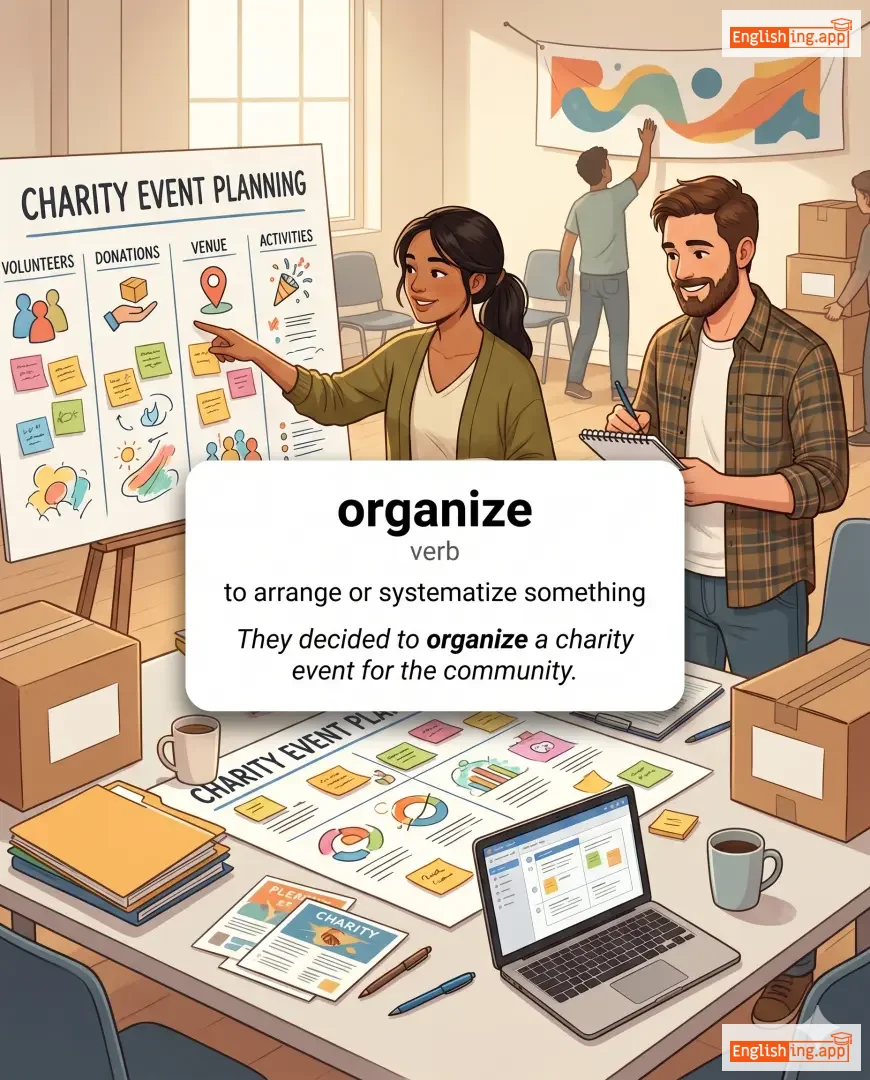
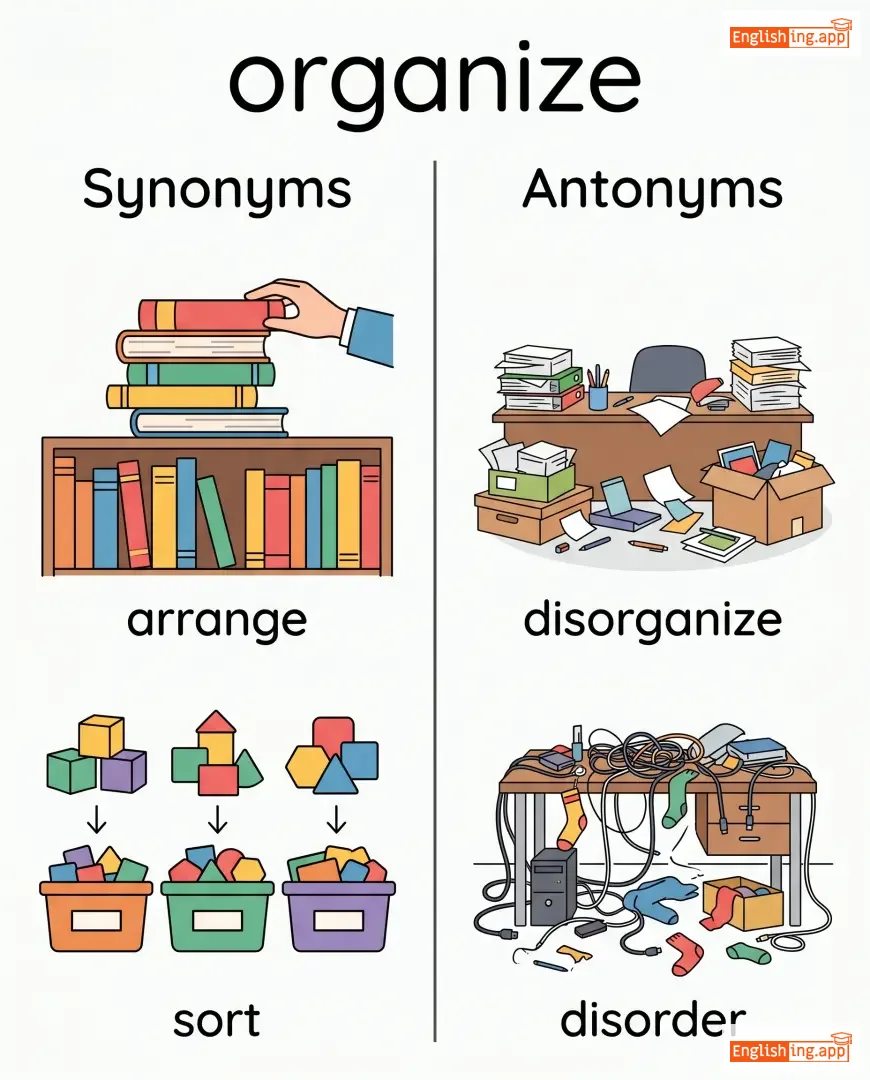
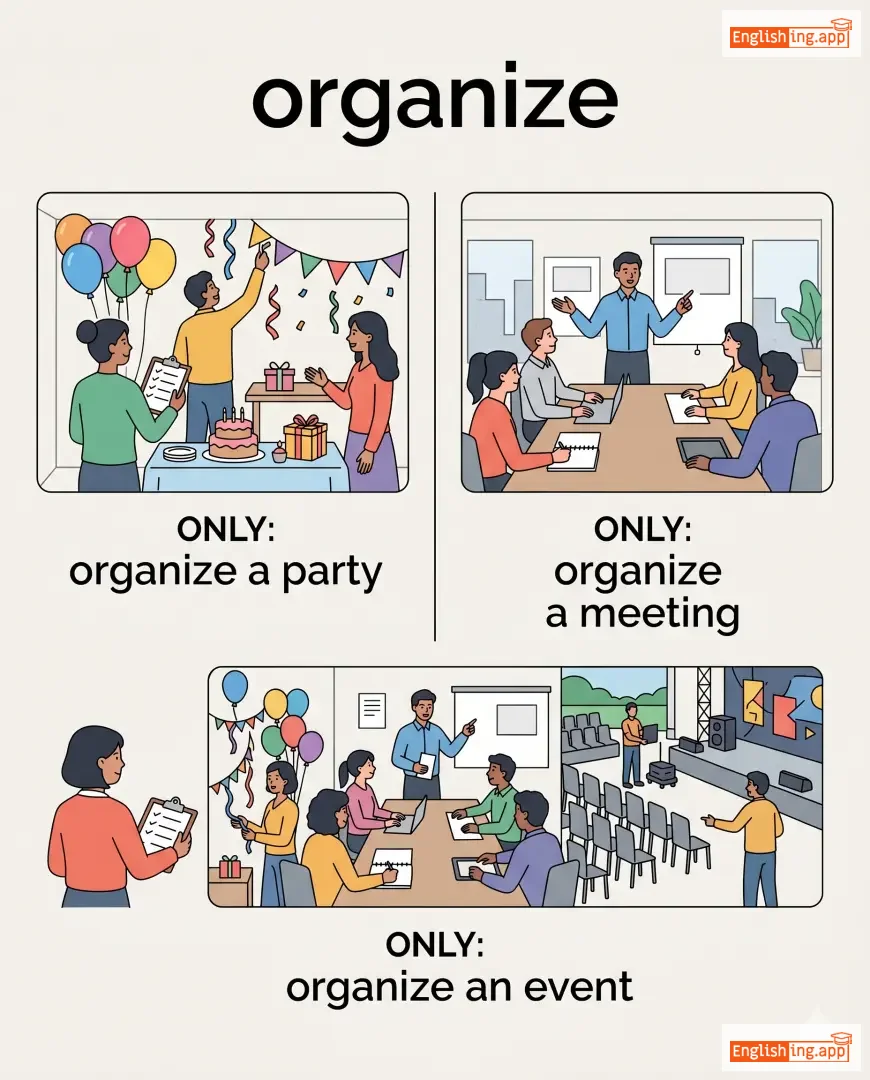
to arrange or systematize something
••••••
|
They decided to organize a charity event for the community.
他们决定为社区组织一个慈善活动。
••••••
|
他们决定为社区组织一个慈善活动。
Tāmen juédìng wèi shèqū zǔzhī yīgè císhàn huódòng.
••••••
|
- •••••• | - •••••• | - •••••• |
arrange, sort, systematize, coordinate
••••••
|
disorganize, disorder, scatter
••••••
|
organize a party, organize a meeting, organize an event
••••••
|
组织一切,大家都来!
••••••
|
|
#11565
🏢
|
/ˌɔːɡənaɪˈzeɪʃn/
noun
(ɔːɡənaɪˈzeɪʃn)
••••••
|
|
组织
zuzhi
••••••
|
- •••••• | - •••••• | - •••••• | - •••••• |
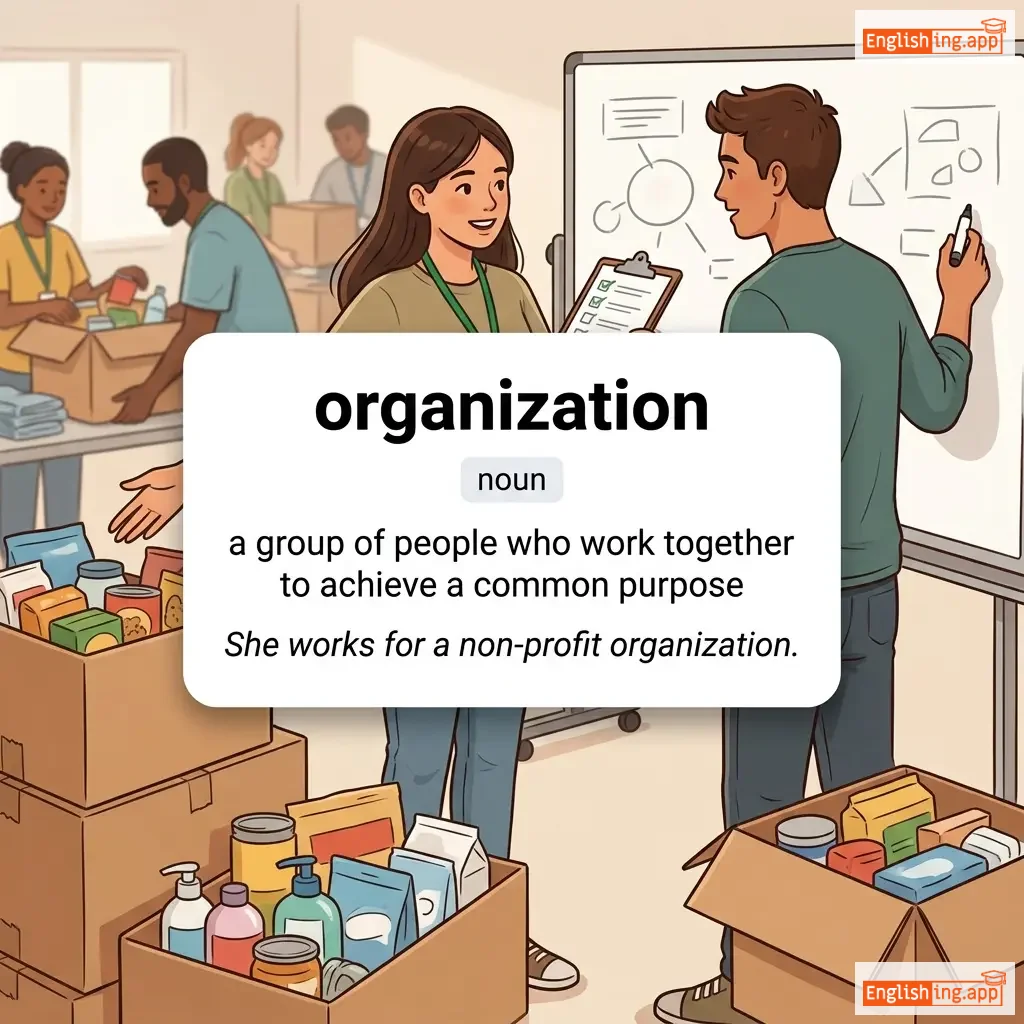
a group of people who work together to achieve a common purpose
••••••
|
She works for a non-profit organization. |
她在一个非盈利组织工作。
Ta zai yige fei yingli zuzhi gongzuo.
••••••
|
- •••••• | - •••••• | - •••••• |
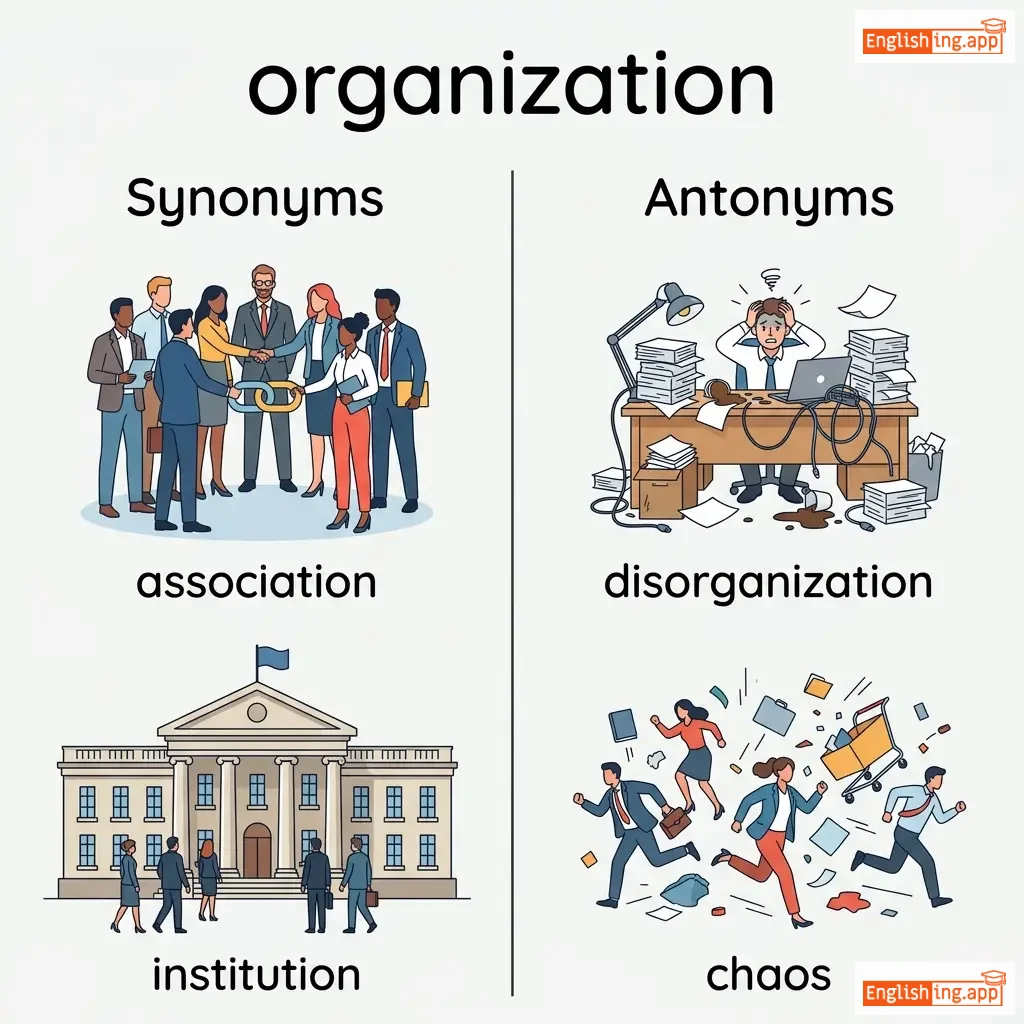
association, institution, group, establishment
••••••
|
disorganization, chaos
••••••
|
join an organization, non-profit organization, corporate organization
••••••
|
组织就是大家一起工作的地方!
••••••
|
|
#11566
📦
|
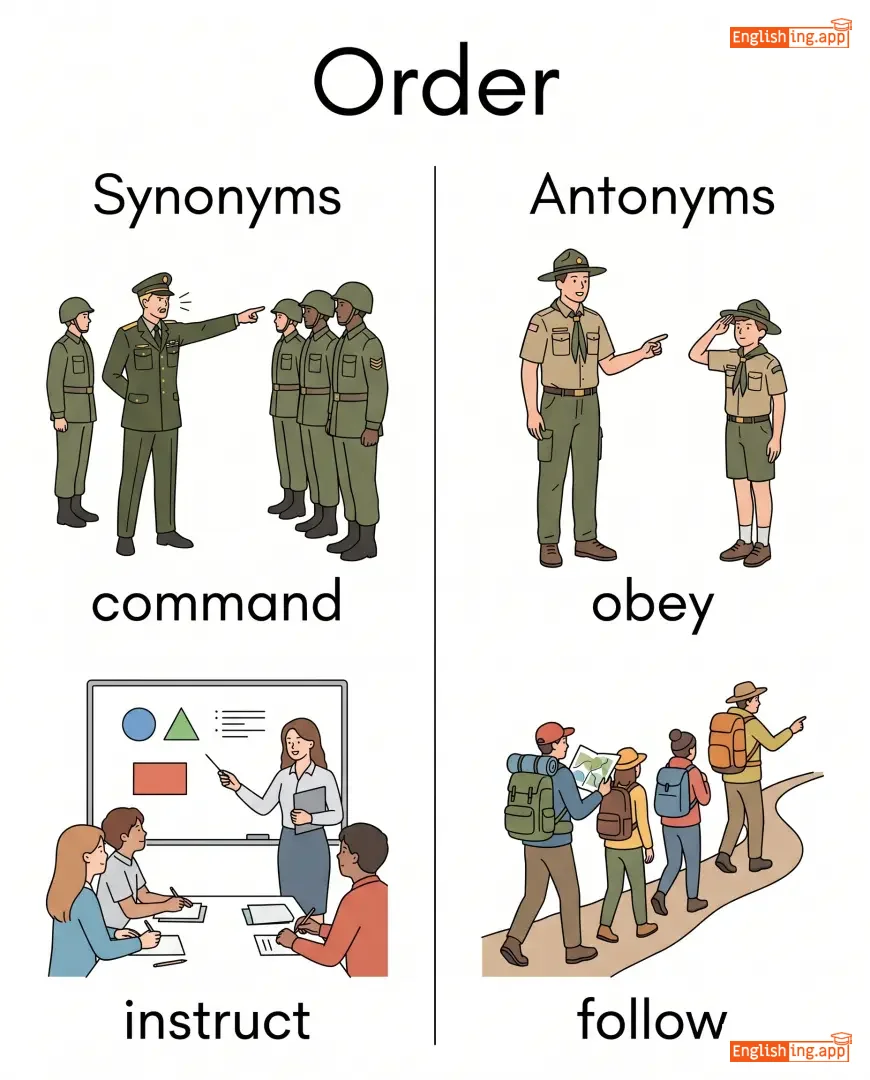
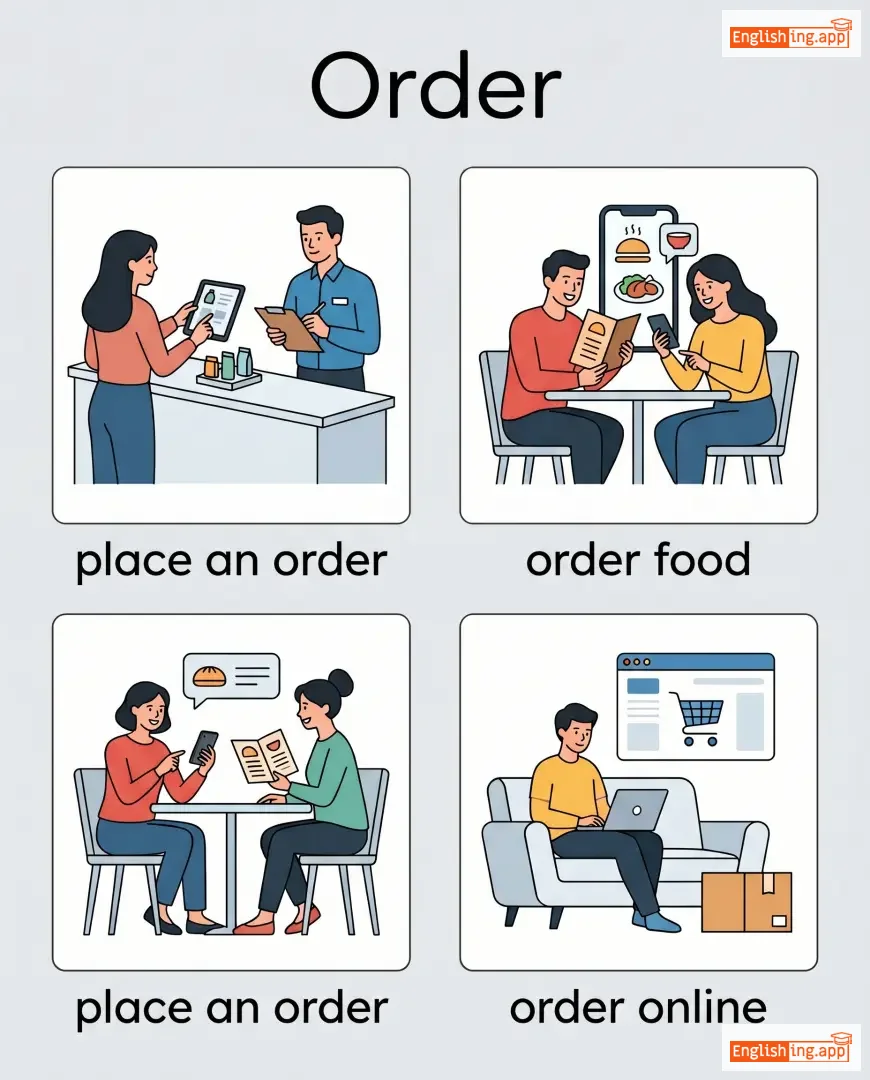
/ˈɔːdə(r)/
noun
(奥德尔)
••••••
|
|
订单
dìng dān
••••••
|
- •••••• | - •••••• | - •••••• | - •••••• |
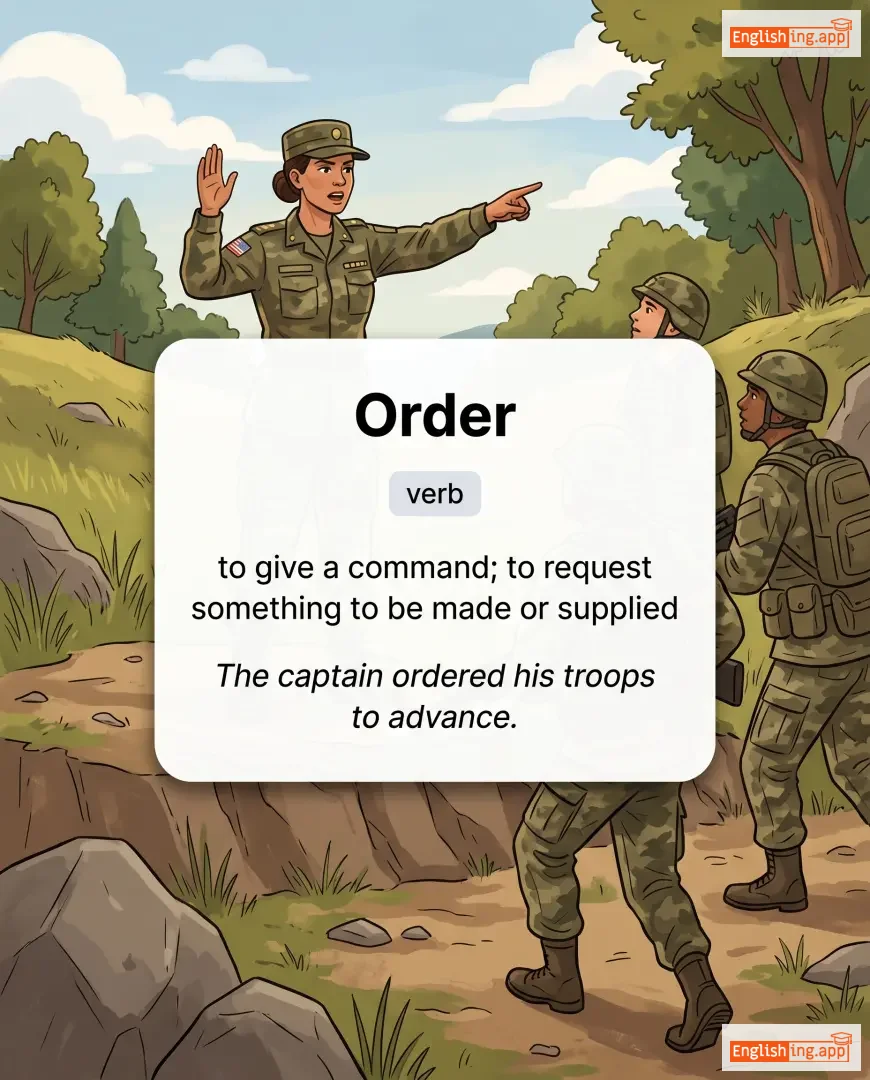
an arrangement or command; a request for something to be made, done, or delivered
••••••
|
He placed an order for a new laptop. |
他为一台新笔记本下了订单。
Tā wèi yī tái xīn bǐjìběn xiàle dìngdān.
••••••
|
- •••••• | - •••••• | - •••••• |
arrangement, command, request, instruction
••••••
|
disorder, chaos
••••••
|
order food, order products, place an order
••••••
|
订购之后,你想要的东西就能收到。
••••••
|
|
#11567
🍊
|
/ˈɒrɪndʒ/
noun
(橙子)
••••••
|
- •••••• |
橙子
chéngzi
••••••
|
- •••••• | - •••••• | - •••••• | - •••••• |
a fruit that is typically round and orange in color
••••••
|
She ate an orange for breakfast. |
她早餐吃了一个橙子。
Tā zǎocān chīle yī gè chéngzi.
••••••
|
- •••••• | - •••••• | - •••••• |
fruit, citrus, tangerine
••••••
|
apple, pear
••••••
|
eat an orange, orange juice, orange peel
••••••
|
橙子 (chéngzi) 就是orange,颜色一样!
••••••
|
|
#11568
❓
|
/ɔːr/
conjunction
(òr)
••••••
|
- •••••• |
或
huò
••••••
|
- •••••• | - •••••• | - •••••• | - •••••• |
used to link alternatives
••••••
|
You can have tea or coffee.
你可以喝茶或咖啡。
••••••
|
你可以喝茶或咖啡。
Nǐ kěyǐ hē chá huò kāfēi.
••••••
|
- •••••• | - •••••• | - •••••• |
either, alternatively
••••••
|
neither
••••••
|
tea or coffee, this or that, yes or no
••••••
|
或 (huò) 表示在两者之间选择,例如茶或咖啡。
••••••
|
|
#11569
✊
|
/ˌɒpəˈzɪʃən/
noun
(反对)
••••••
|
- •••••• |
反对
fǎnduì
••••••
|
- •••••• | - •••••• | - •••••• | - •••••• |
the action of opposing or resisting something
••••••
|
The opposition to the new law was strong. |
对新法律的反对很强烈。
Duì xīn fǎlǜ de fǎnduì hěn qiángliè.
••••••
|
- •••••• | - •••••• | - •••••• |
resistance, defiance, objection, protest
••••••
|
support, cooperation
••••••
|
political opposition, strong opposition, fierce opposition, lead the opposition
••••••
|
‘反对’是记住反抗的一个简单方法。
••••••
|
|
#11570
✋
|
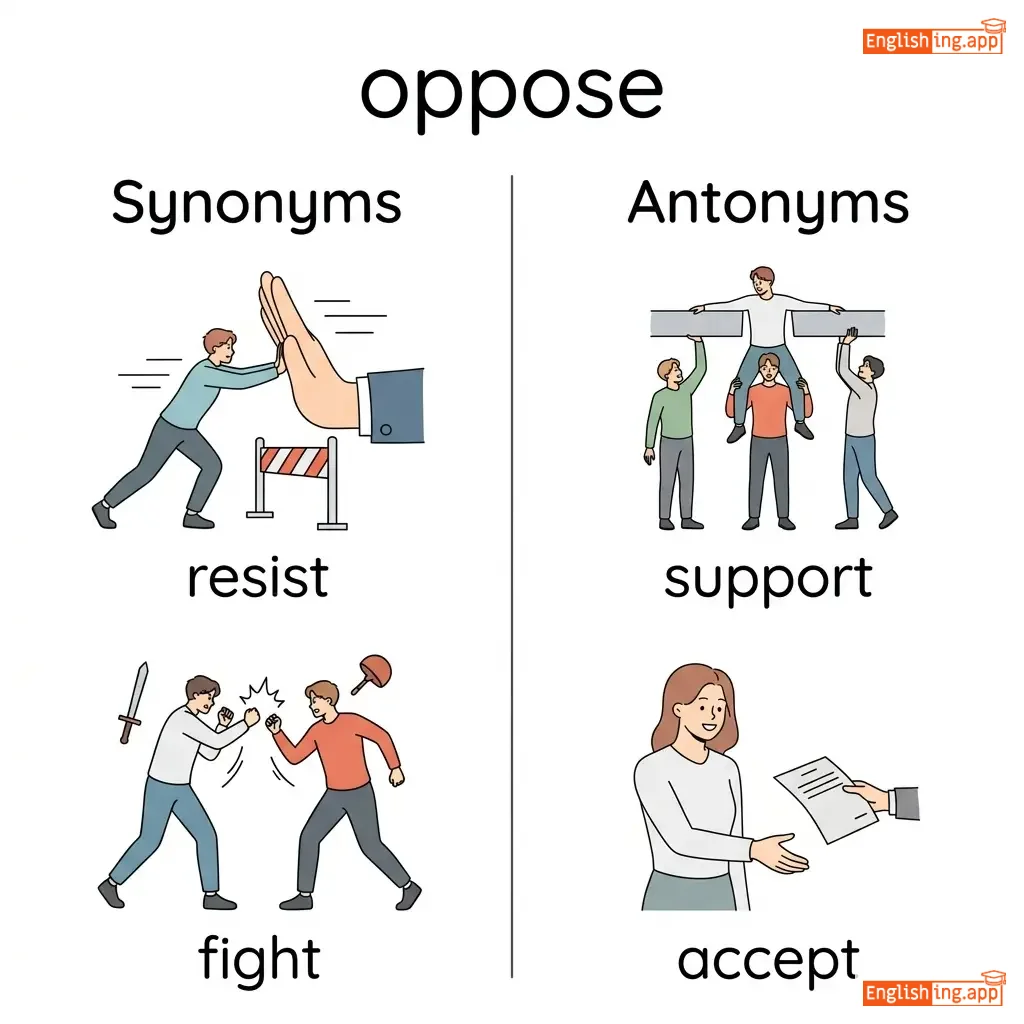
/əˈpəʊz/
verb
(阿波兹)
••••••
|
|
反对
fǎnduì
••••••
|
opposed
阿波兹德
••••••
|
opposed
阿波兹德
••••••
|
opposes
阿波兹斯
••••••
|
opposing
阿波兹英
••••••
|
to disagree with or fight against something
••••••
|
He opposed the new policy at the meeting.
他在会议上反对了新政策。
••••••
|
他在会议上反对了新政策。
Tā zài huìyì shàng fǎnduì le xīn zhèngcè.
••••••
|
- •••••• | - •••••• | - •••••• |
resist, fight, defy, challenge
••••••
|
support, accept, agree
••••••
|
strongly oppose, oppose decision, oppose view, oppose proposal
••••••
|
反对意味着与某事对抗或不同意。
••••••
|
|
#11571
⚙️
|
/ˌɒpəˈreɪʃən/
noun
(手术)
••••••
|
- •••••• |
手术
shǒushù
••••••
|
- •••••• | - •••••• | - •••••• | - •••••• |
an act or process of functioning or operating
••••••
|
The hospital performed a successful operation.
医院进行了成功的手术。
••••••
|
医院进行了成功的手术。
Yīyuàn jìnxíngle chénggōng de shǒushù.
••••••
|
- •••••• | - •••••• | - •••••• |
procedure, surgery, process, action
••••••
|
inactivity, stagnation
••••••
|
military operation, surgical operation, operation room, operation procedure
••••••
|
手术需要一个操作员 (operator)。
••••••
|
|
#11572
⚙️
|
/ˈɒpəreɪtɪŋ/
verb
(操作)
••••••
|
- •••••• |
操作
caozuo
••••••
|
operated
操作了
••••••
|
operated
操作了
••••••
|
operates
操作
••••••
|
operating
操作
••••••
|
to control or manage the functioning of something
••••••
|
The company has been operating in this market for five years.
公司已经在这个市场运营了五年。
••••••
|
公司已经在这个市场运营了五年。
Gongsi yijing zai zhege shichang yunying le wu nian.
••••••
|
- •••••• | - •••••• | - •••••• |
managing, controlling, running, working
••••••
|
stopping, halting
••••••
|
operating system, operating room, operating procedure
••••••
|
就像汽车发动一样操作! - Just like the car starts, operating!
••••••
|
|
#11573
🔓
|
/ˈoʊpənɪŋ/
noun
(ōupénīng)
••••••
|
- •••••• |
开幕
kaimu
••••••
|
- •••••• | - •••••• | - •••••• | - •••••• |
an act or instance of beginning something
••••••
|
The opening of the new store was a huge success.
新店的开业是一个巨大的成功。
••••••
|
新店的开业是一个巨大的成功。
Xīn diàn de kāiyè shì yīgè jùdà de chénggōng.
••••••
|
- •••••• | - •••••• | - •••••• |
start, beginning, initiation, launch
••••••
|
closing, ending
••••••
|
grand opening, store opening, job opening, opening ceremony
••••••
|
当新的事情开始时,它就是开幕。 - When something new starts, it's an opening.
••••••
|
|
#11574
🔜
|
/ˈɒntu/
preposition
(昂托)
••••••
|
- •••••• |
在…上
zai…shang
••••••
|
- •••••• | - •••••• | - •••••• | - •••••• |
moving to a position on the surface of something
••••••
|
She jumped onto the table to get the book. |
她跳到桌子上去拿书。
Ta tiao dao zhuozi shang qu na shu.
••••••
|
- •••••• | - •••••• | - •••••• |
upon, on top of, over
••••••
|
off, away from
••••••
|
onto the surface, onto the floor, onto the roof
••••••
|
把东西放到桌子上!- Place something onto the table!
••••••
|
Vocabulary Quiz
Test your vocabulary by matching words with their translations or meanings.
Login to take the quiz
Comments (0)
Share your thoughts and join the discussion.
Join the discussion by logging in
Login to CommentNo comments yet
Be the first to share your thoughts!