


Swipe left or right, or use the buttons. Tap image to zoom.
例句翻译
单词
Lesson 76Lesson 76 - 遮罩切换
|
表情符号
|
单词 | Images | 翻译 | 过去时 | 过去分词 | 第三人称单数 | 动名词 | 含义 | 例句 | 例句翻译 | 示例表达 | 示例表达含义 | 示例表达翻译 | 同义词 | 反义词 | 搭配词 | 助记符 |
|---|---|---|---|---|---|---|---|---|---|---|---|---|---|---|---|---|---|
|
#2251
🧑🏫
|
/ˈdɛmənˌstreɪt/
verb
(dēmónstèit)
••••••
|
- •••••• |
展示
zhǎnshì
••••••
|
demonstrated
démónstèitèd
••••••
|
demonstrated
démónstèitèd
••••••
|
demonstrates
démónstèits
••••••
|
demonstrating
démónstrèitīng
••••••
|
to clearly show or prove something through evidence, explanation, or action
••••••
|
The teacher demonstrated the experiment to the class.
老师向班级展示了实验。
••••••
|
老师向班级展示了实验。
Lǎoshī xiàng bānjí zhǎnshìle shíyàn.
••••••
|
demonstrate one's skills
展示自己的技能
••••••
|
to show one's abilities through action or performance
••••••
|
展示自己的技能
zhǎnshì zìjǐ de jìnéng
••••••
|
show, exhibit, display, illustrate, prove
••••••
|
hide, conceal, obscure
••••••
|
demonstrate ability, demonstrate skill, demonstrate interest, demonstrate clearly
••••••
|
展示 + 示范 = 为我展示 (démonstrating)
••••••
|
|
#2252
➗
|
/dɪˈnɒmɪˌneɪtər/
noun
(分母)
••••••
|
- •••••• |
分母
fenmu
••••••
|
- •••••• | - •••••• | - •••••• | - •••••• |
the number below the line in a fraction; a common factor in a situation
••••••
|
In the fraction 3/4, the number 4 is the denominator. |
在分数3/4中,数字4是分母。
Zai fenshu 3/4 zhong, shuzi 4 shi fenmu.
••••••
|
common denominator |
a shared trait or characteristic among different things
••••••
|
共同的分母
gongtong de fenmu
••••••
|
divisor, factor, base, bottom number
••••••
|
numerator, top number
••••••
|
lowest denominator, common denominator, denominator of fraction
••••••
|
分母 = denominator → 分数线下方的数字
••••••
|
|
#2253
✝️
|
/dɪˌnɒmɪˈneɪʃən/
noun
(教派)
••••••
|
- •••••• |
教派, 价值
jiaopai, jiazhi
••••••
|
- •••••• | - •••••• | - •••••• | - •••••• |
a recognized autonomous branch of the Christian Church; a unit of value or currency
••••••
|
The church belongs to a Protestant denomination. |
这座教堂属于一个新教教派。
Zhe zuo jiaotang shuyu yi ge xinjiao jiaopai.
••••••
|
- •••••• | - •••••• | - •••••• |
sect, branch, faith, division, value
••••••
|
unity, whole
••••••
|
religious denomination, currency denomination, different denominations
••••••
|
教派意味着一个名字或小组-无论是货币还是宗教分支。
••••••
|
|
#2254
💵
|
/dɪˈnɒmɪˌneɪt/
verb
(迪诺米内特)
••••••
|
- •••••• |
指定
zhǐdìng
••••••
|
denominated
迪诺米内特德
••••••
|
denominated
迪诺米内特德
••••••
|
denominates
迪诺米内特斯
••••••
|
denominating
迪诺米内特英
••••••
|
to give a name or designation to something
••••••
|
The currency was denominated in dollars.
该货币被指定为美元。
••••••
|
货币以美元命名。
Huòbì yǐ měiyuán mìngmíng.
••••••
|
- •••••• | - •••••• | - •••••• |
designate, name, call, label, title
••••••
|
unnamed, anonymous
••••••
|
denominated in dollars, denominated value, denominated currency
••••••
|
Denote + name → 指定意味着命名。
••••••
|
|
#2255
🏠
|
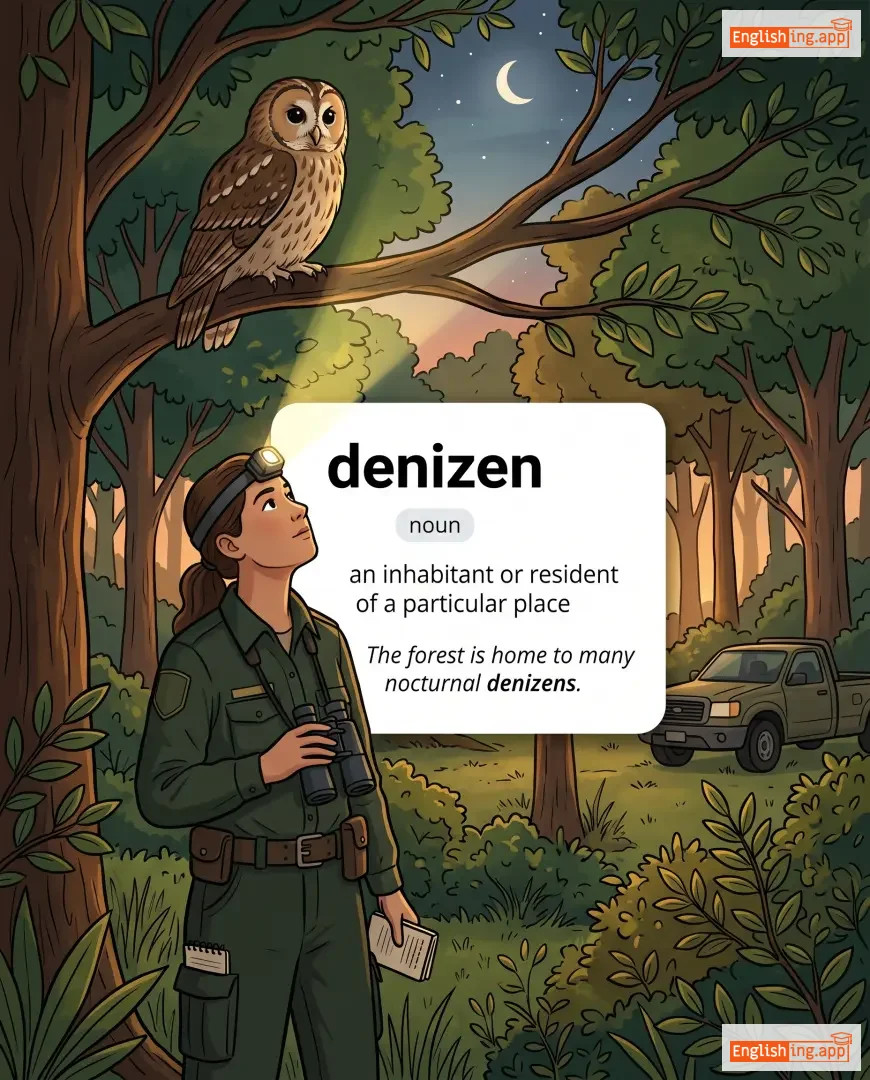
/ˈdɛnɪzən/
noun
(德尼岑)
••••••
|
|
居民
jūmín
••••••
|
- •••••• | - •••••• | - •••••• | - •••••• |
an inhabitant or resident of a particular place
••••••
|
The forest is home to many nocturnal denizens. |
森林是许多夜行性居民的家。
Sēnlín shì xǔduō yèxíngxìng jūmín de jiā.
••••••
|
- •••••• | - •••••• | - •••••• |
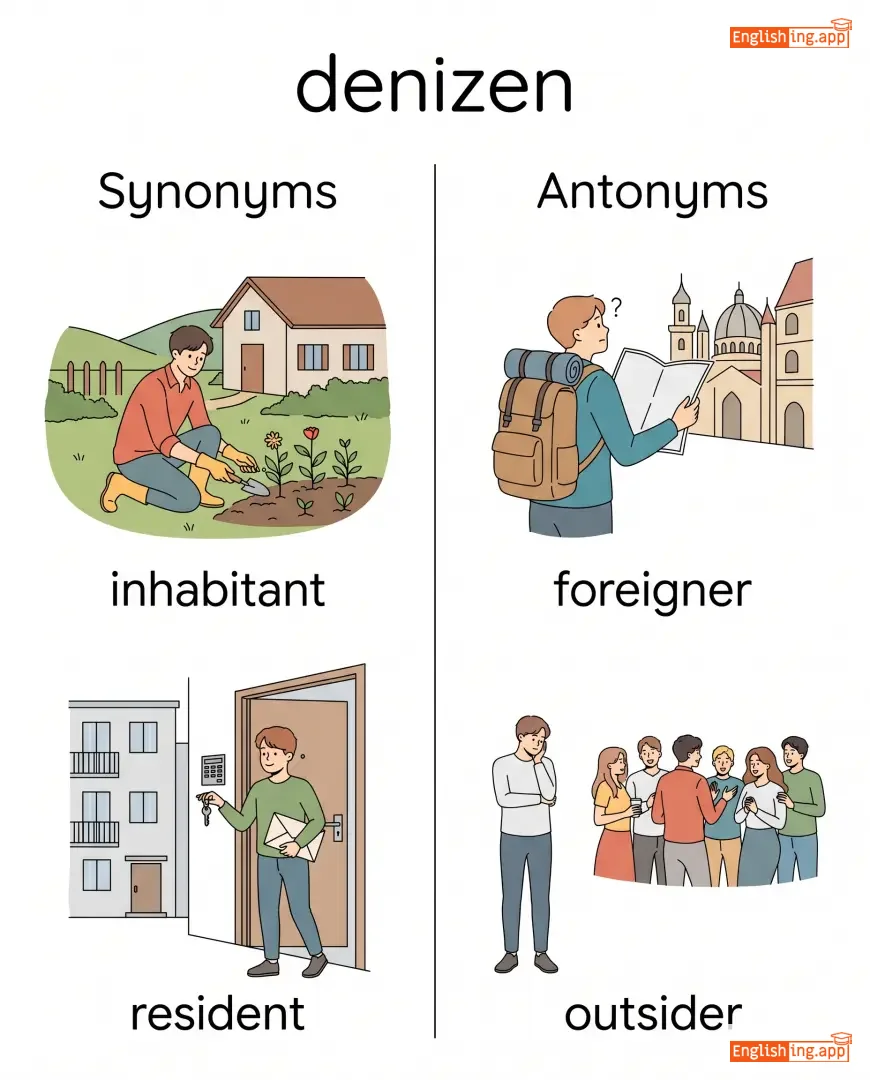
inhabitant, resident, dweller, native, occupant
••••••
|
foreigner, outsider, visitor
••••••
|
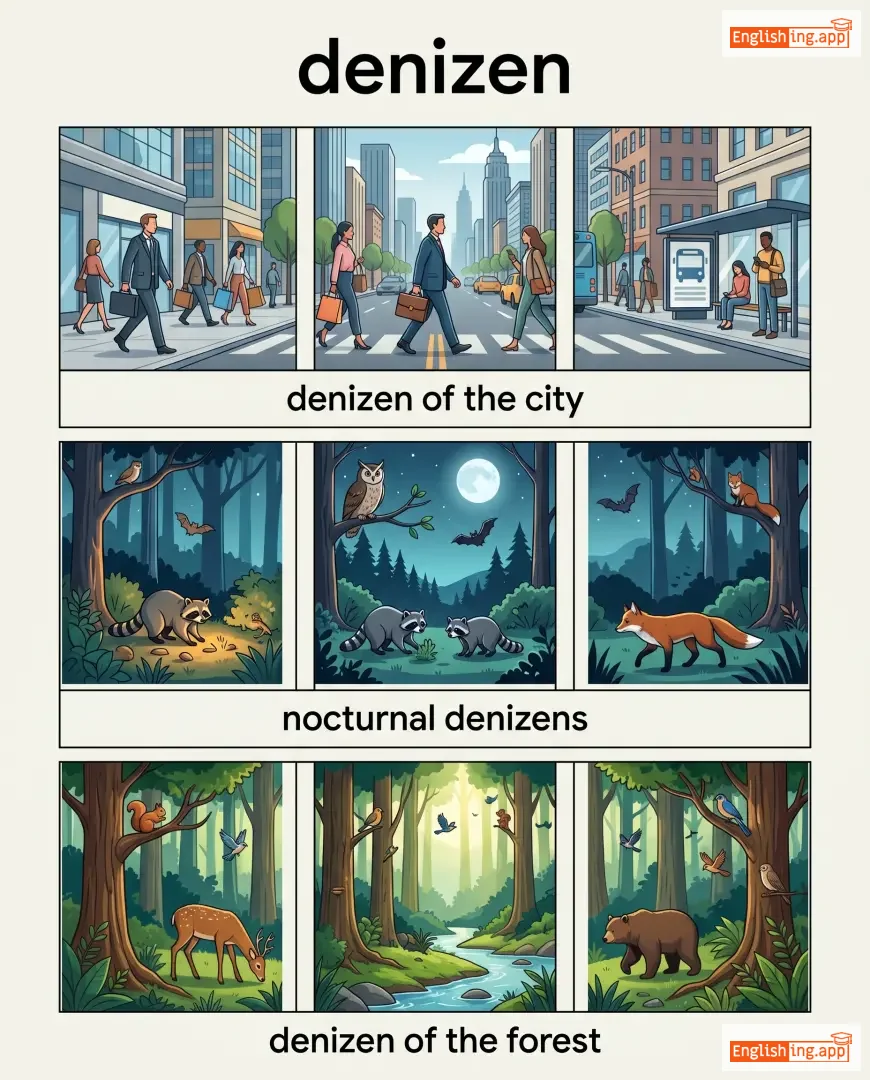
denizen of the city, nocturnal denizens, denizen of the forest
••••••
|
像森林中的居民一样,'denizen'指的是栖息在某个地方的人或动物。
••••••
|
|
#2256
🗣️
|
/ˈdɛnɪˌɡreɪt/
verb
(denigrate)
••••••
|
|
贬低
biǎndī
••••••
|
denigrated
denigrated
••••••
|
denigrated
denigrated
••••••
|
denigrates
denigrates
••••••
|
denigrating
denigrating
••••••
|
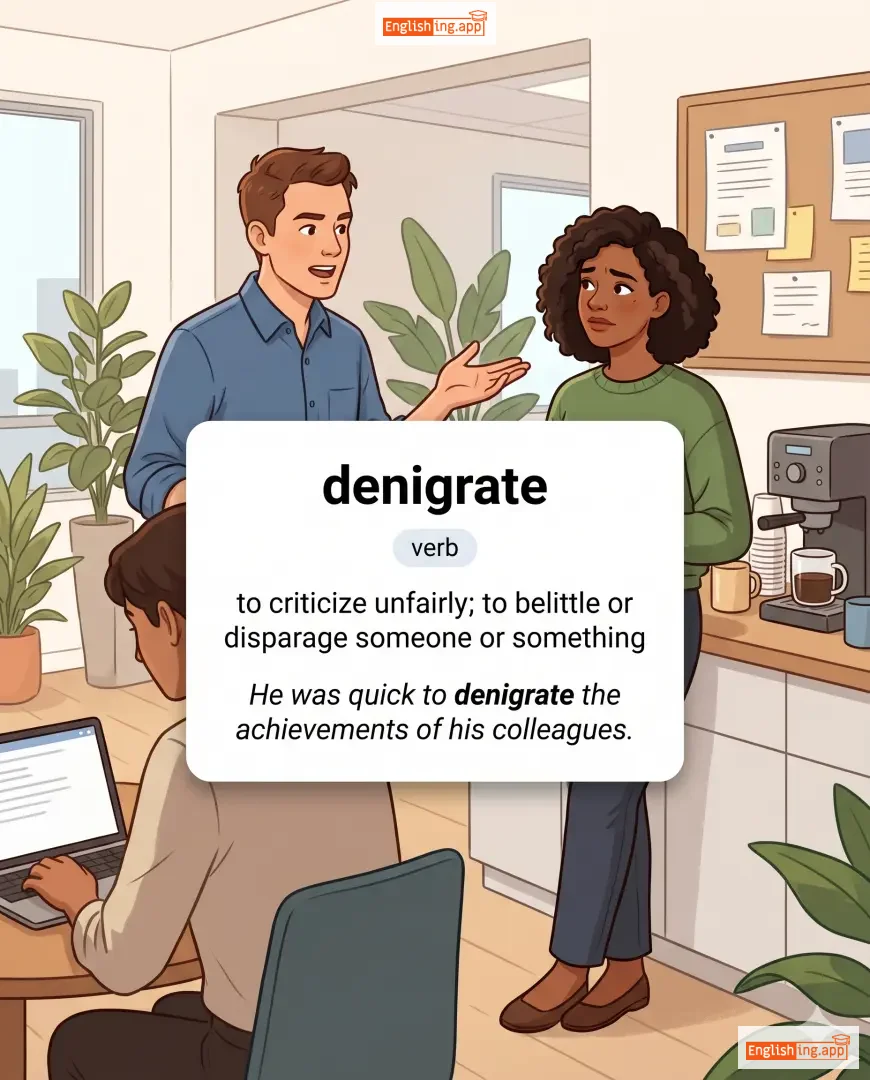
to criticize unfairly; to belittle or disparage someone or something
••••••
|
He was quick to denigrate the achievements of his colleagues.
他很快就贬低了同事们的成就。
••••••
|
他很快就贬低了同事们的成就。
Tā hěn kuài jiù biǎndīle tóngshìmen de chéngjiù.
••••••
|
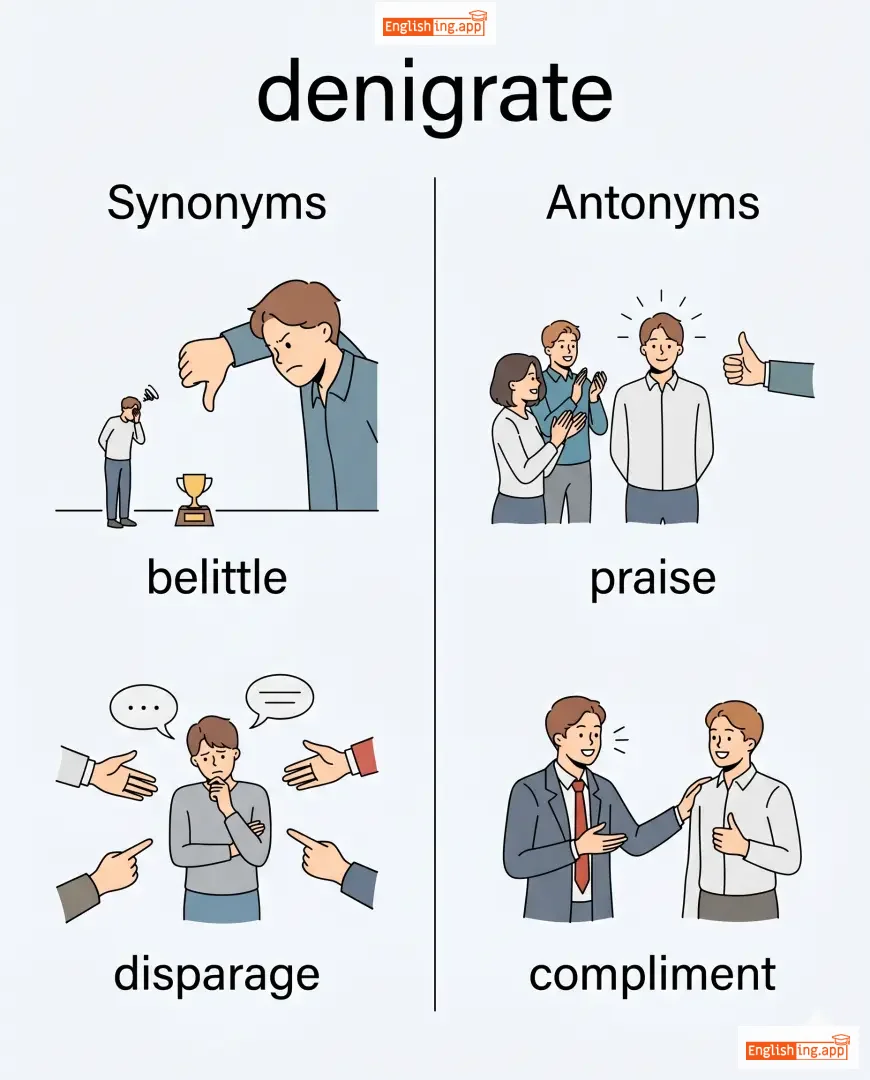
- •••••• | - •••••• | - •••••• |
belittle, disparage, defame, slander, deprecate
••••••
|
praise, compliment, honor
••••••
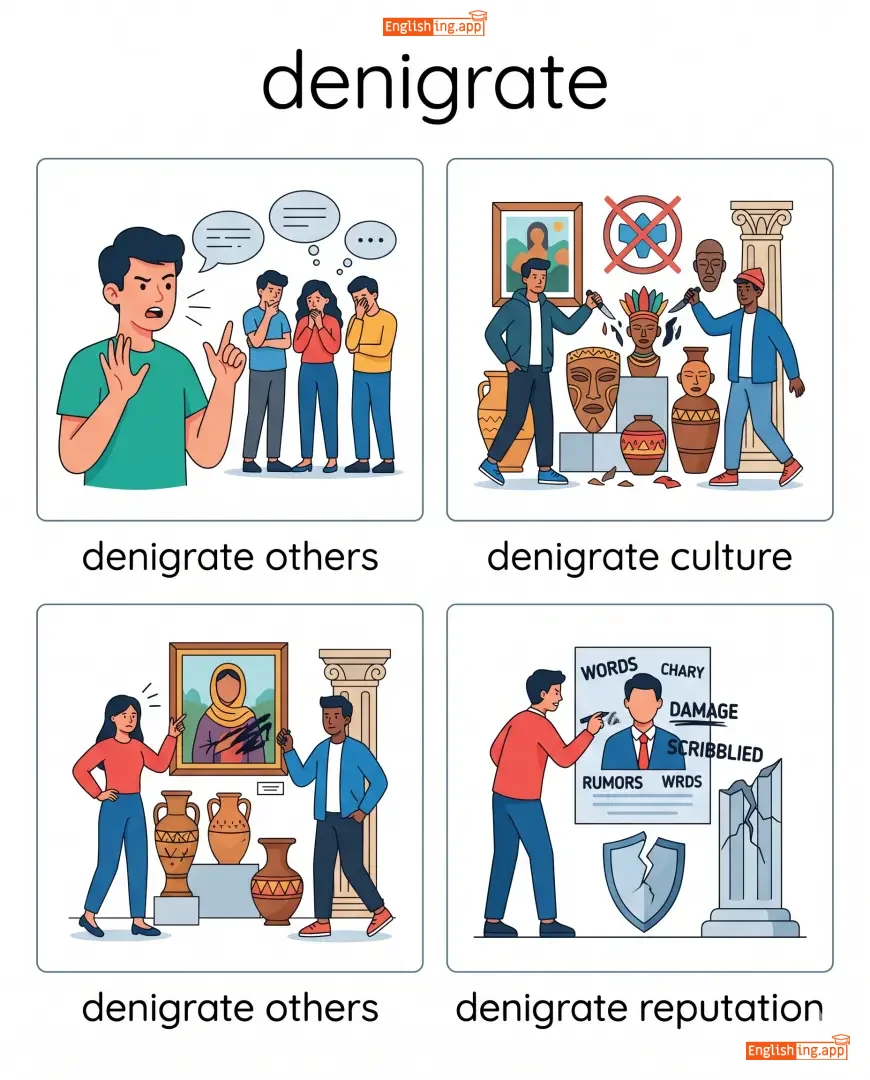
|
denigrate others, denigrate culture, denigrate reputation, denigrate efforts
••••••
|
‘Denigrate’ = 低(di)指责,‘biǎndī’ 比较近
••••••
|
|
#2257
🌲
|
/dɛnˈdrɒlədʒi/
noun
••••••
|
- •••••• | - •••••• | - •••••• | - •••••• | - •••••• | - •••••• |
the scientific study of trees and woody plants
••••••
|
He is studying dendrology at the university. |
- •••••• | - •••••• | - •••••• | - •••••• |
botany, forestry, arboriculture
••••••
|
zoology, geology
••••••
|
study dendrology, dendrology course, expert in dendrology
••••••
|
No •••••• |
|
#2258
🌳
|
/ˈdɛndrɔɪd/
adjective
(丹德罗伊德)
••••••
|
- •••••• |
树状的
shù zhuàng de
••••••
|
- •••••• | - •••••• | - •••••• | - •••••• |
tree-shaped or branching like a tree
••••••
|
The coral has a dendroid structure.
珊瑚有一个树状结构。
••••••
|
珊瑚有一个树状结构。
Shānhú yǒu yīgè shù zhuàng jiégòu.
••••••
|
- •••••• | - •••••• | - •••••• |
branched, arborescent, treelike
••••••
|
straight, linear
••••••
|
dendroid form, dendroid structure, dendroid pattern
••••••
|
Dendroid 意思是树状的,dend 意思是树,oid 意思是像
••••••
|
|
#2259
🚢
|
/dɪˈmʌrɪdʒ/
noun
(dɪˈmʌrɪdʒ)
••••••
|
- •••••• |
滞纳金
zhìnàjīn
••••••
|
- •••••• | - •••••• | - •••••• | - •••••• |
a charge payable to the owner of a ship or vehicle for not loading or unloading on time
••••••
|
The company had to pay demurrage for delaying the unloading of goods.
公司因延误卸货而支付了滞纳金。
••••••
|
公司因延误卸货而支付了滞纳金。
Gōngsī yīn yánwù xièhuò ér zhīfùle zhìnàjīn.
••••••
|
- •••••• | - •••••• | - •••••• |
delay charge, penalty fee, detention fee
••••••
|
waiver, exemption
••••••
|
pay demurrage, incur demurrage, demurrage charges
••••••
|
滞纳金 = 逾期费用,想象 '迟到 + 金' 为滞纳金
••••••
|
|
#2260
😊
|
/dɪˈmjʊər/
adjective
(dɪˈmjʊər)
••••••
|
- •••••• |
矜持
jinchi
••••••
|
- •••••• | - •••••• | - •••••• | - •••••• |
reserved, modest, and shy
••••••
|
She gave him a demure smile. |
她给了他一个矜持的微笑。
Ta geile ta yige jinchi de weixiao.
••••••
|
- •••••• | - •••••• | - •••••• |
modest, reserved, shy, bashful, quiet
••••••
|
bold, outgoing, confident
••••••
|
demure smile, demure behavior, demure dress
••••••
|
Demure意味着矜持,想象'京池'害羞的微笑
••••••
|
|
#2261
🤔
|
/dɪˈmɜːr/
verb
(dɪˈmɜːr)
••••••
|
|
反对
fǎn duì
••••••
|
demurred
demurred
••••••
|
demurred
demurred
••••••
|
demurs
demurs
••••••
|
demurring
demurring
••••••
|
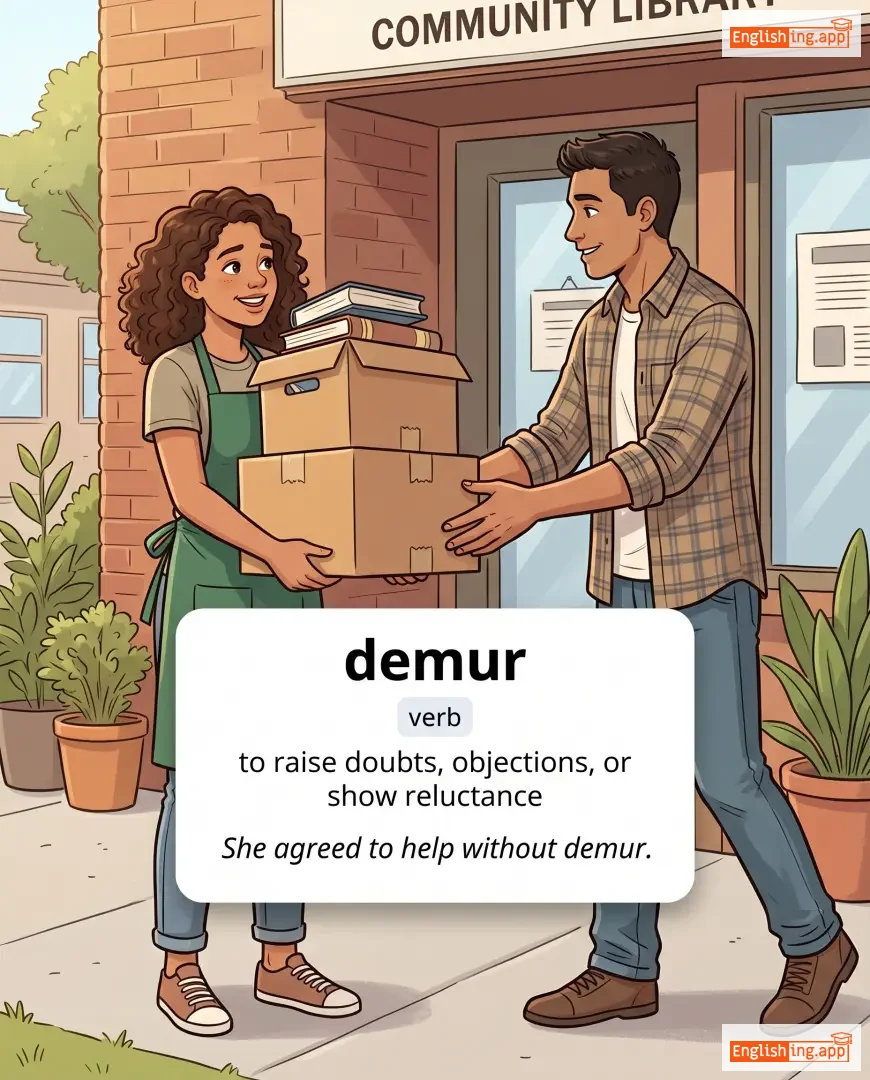
to raise doubts, objections, or show reluctance
••••••
|
She agreed to help without demur.
她同意在没有异议的情况下提供帮助。
••••••
|
她同意在没有异议的情况下提供帮助。
Tā tóngyì zài méiyǒu yìyì de qíngkuàng xià tígōng bāngzhù.
••••••
|
without demur
没有异议
••••••
|
without objection or hesitation
••••••
|
没有异议
méiyǒu yìyì
••••••
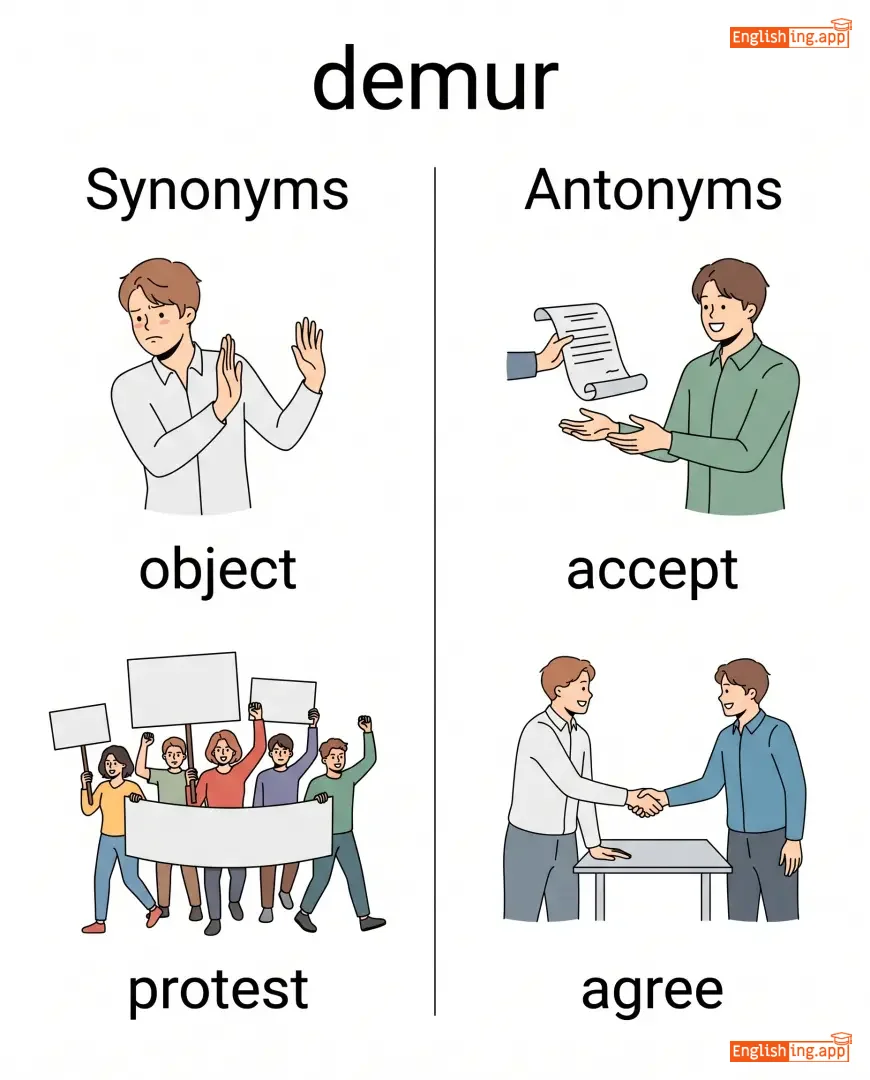
|
object, protest, hesitate, oppose, refuse
••••••
|
accept, agree, consent
••••••
|
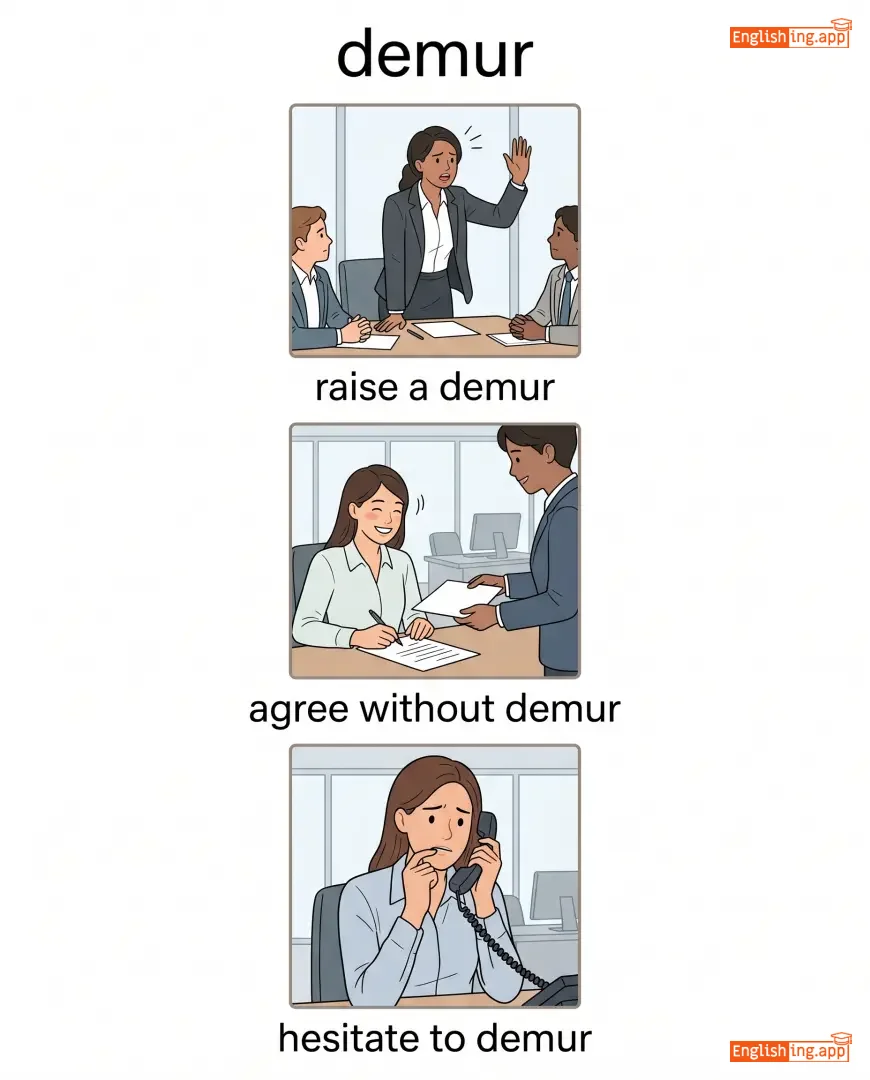
raise a demur, agree without demur, hesitate to demur
••••••
|
Demur = 反对 - 没有疑问
••••••
|
|
#2262
🗣️
|
/dɪˈmɒtɪk/
adjective
(德莫提克)
••••••
|
|
与普通语言相关
yu putong yuyan xiangguan
••••••
|
- •••••• | - •••••• | - •••••• | - •••••• |
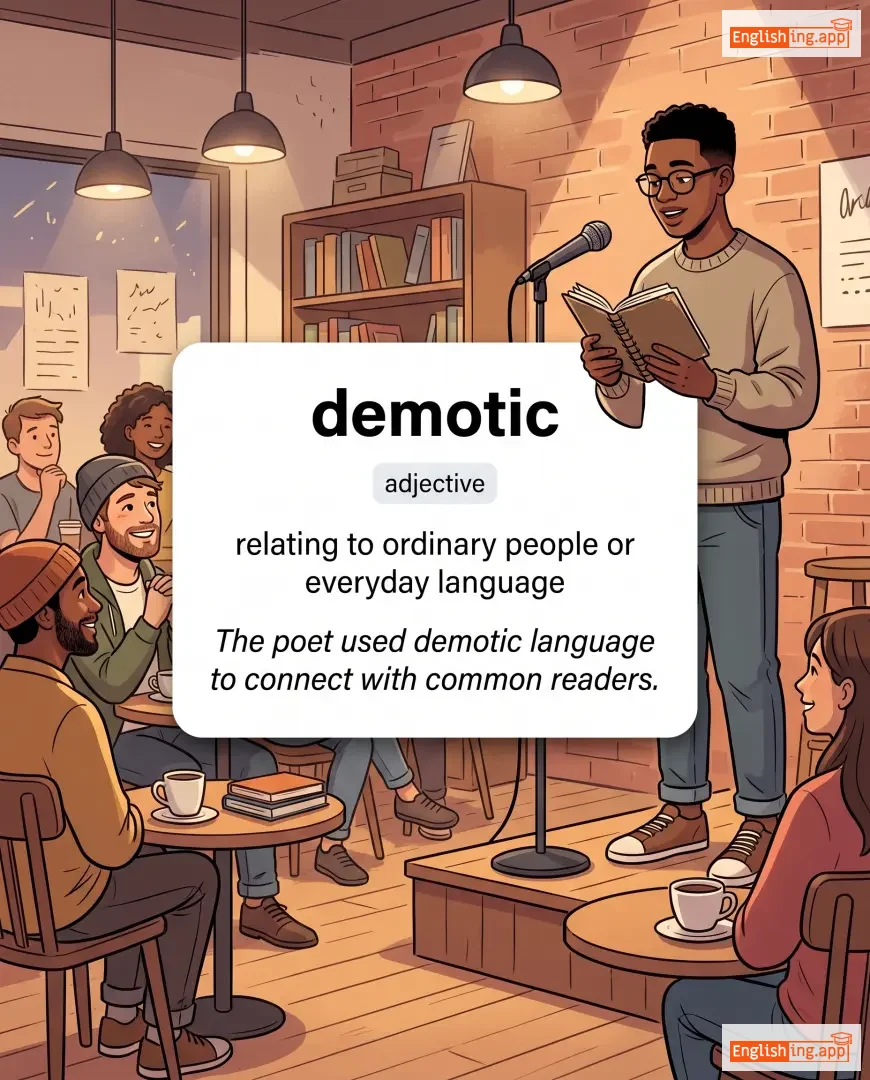
relating to ordinary people or everyday language
••••••
|
The poet used demotic language to connect with common readers.
诗人使用通俗语言与普通读者建立联系。
••••••
|
诗人使用与普通语言相关的语言与普通读者建立联系。
Shiren shiyong yu putong yuyan xiangguan de yuyan yu putong duzhe jianli lianxi.
••••••
|
- •••••• | - •••••• | - •••••• |
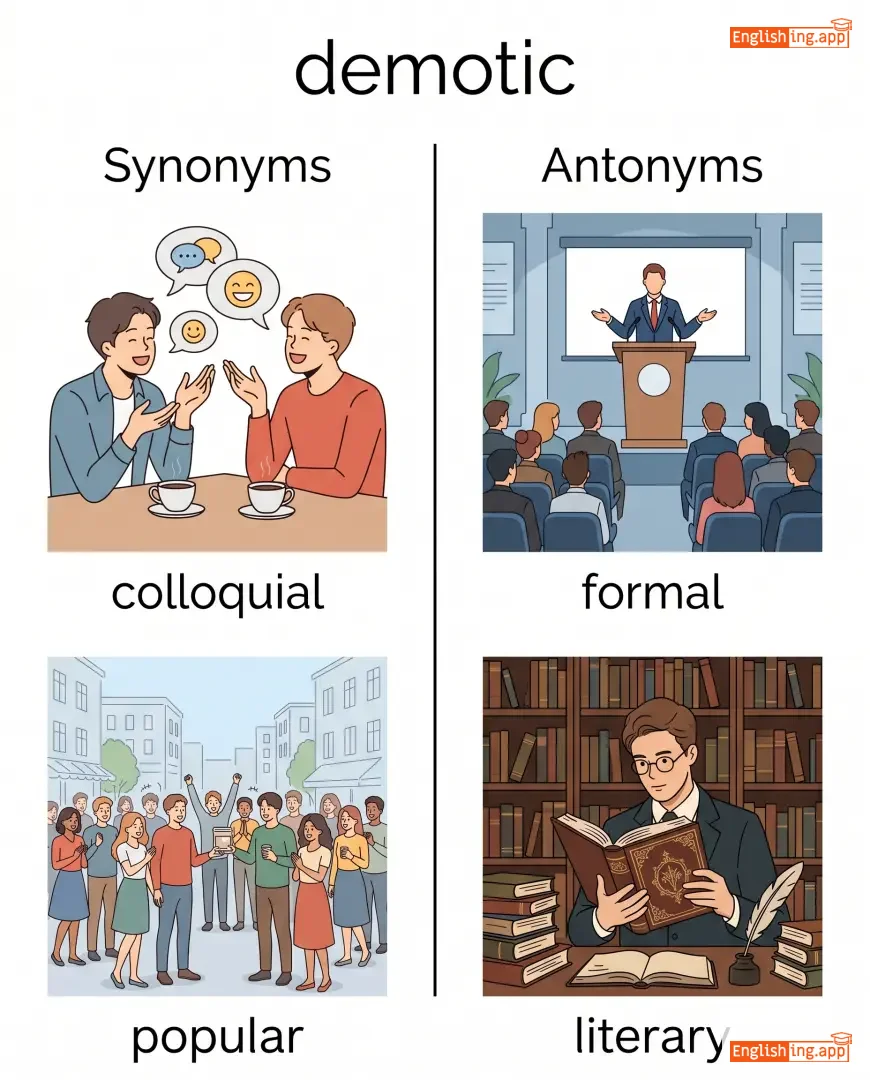
colloquial, popular, common, everyday
••••••
|
formal, literary
••••••
|
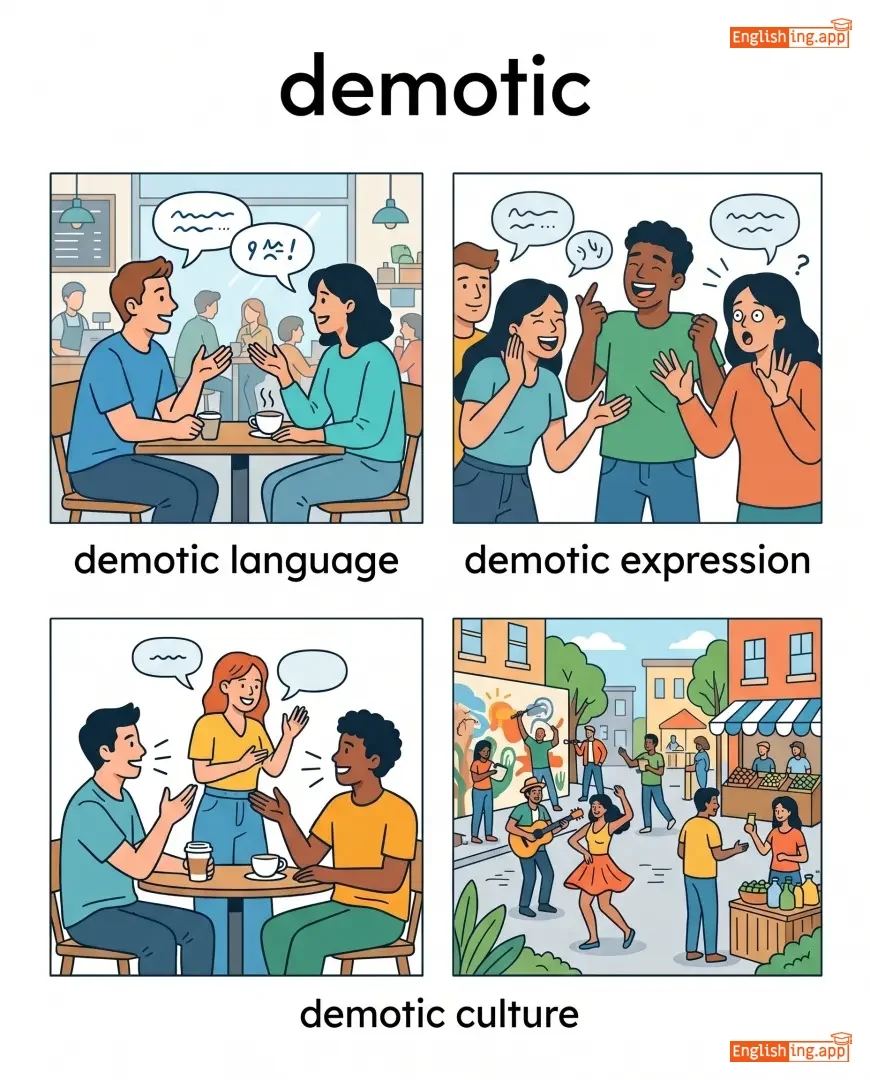
demotic language, demotic expression, demotic culture
••••••
|
De + motic → motic 使人联想到'大众',因此demotic意味着与普通语言相关
••••••
|
|
#2263
😞
|
/dɪˈmɔrəˌlaɪz/
verb
••••••
|
- •••••• | - •••••• |
demoralized
••••••
|
demoralized
••••••
|
demoralizes
••••••
|
demoralizing
••••••
|
to cause someone to lose confidence or hope
••••••
|
The constant criticism demoralized the young athlete. |
- •••••• |
feel demoralized |
to lose spirit or motivation
••••••
|
- •••••• |
discourage, dishearten, depress, weaken
••••••
|
encourage, inspire
••••••
|
completely demoralize, demoralize the team, feel demoralized
••••••
|
No •••••• |
|
#2264
✊
|
/ˈdɛmənˌstreɪtər/
noun
(示威者)
••••••
|
- •••••• |
示范者, 抗议者
shifan zhe, kangyi zhe
••••••
|
- •••••• | - •••••• | - •••••• | - •••••• |
a person who shows how something works or takes part in a public protest
••••••
|
The demonstrators marched peacefully through the city streets. |
示威者和平地穿过城市街道游行。
Shiweizhe heping de chuanguo chengshi jiedao youxing.
••••••
|
- •••••• | - •••••• | - •••••• |
protester, marcher, exhibitor, presenter
••••••
|
bystander, spectator
••••••
|
political demonstrator, product demonstrator, group of demonstrators
••••••
|
Demonstrator意味着一个展示的人 — 就像示范者或抗议者
••••••
|
|
#2265
💞
|
/dɪˈmɒnstrətɪv/
adjective
(示范性)
••••••
|
- •••••• |
表现的
biaoxian de
••••••
|
- •••••• | - •••••• | - •••••• | - •••••• |
openly showing feelings, especially affection or emotion
••••••
|
She was very demonstrative with her affection towards her friends. |
她对朋友们的爱意非常表现出来。
Ta dui pengyoumen de ai yi feichang biaoxian chulai.
••••••
|
- •••••• | - •••••• | - •••••• |
expressive, emotional, open, outgoing
••••••
|
reserved, restrained
••••••
|
demonstrative gesture, demonstrative behavior, very demonstrative
••••••
|
示范 + 表现 — 在展示感情时,表现出来就是‘表现的’。
••••••
|
|
#2266
😓
|
/dɪˈmændɪŋ/
adjective
(demanding)
••••••
|
- •••••• |
苛刻的
kekede
••••••
|
- •••••• | - •••••• | - •••••• | - •••••• |
requiring much effort, skill, or attention; difficult to satisfy
••••••
|
The job is very demanding and requires long hours of work.
这份工作非常苛刻,需要长时间的工作。
••••••
|
这份工作非常苛刻,需要长时间的工作。
Zhe fen gongzuo feichang keke, xuyao chang shijian de gongzuo.
••••••
|
demanding schedule
苛刻的日程
••••••
|
a schedule that requires a lot of effort and time
••••••
|
苛刻的日程
keke de richeng
••••••
|
challenging, tough, difficult, exacting, strenuous
••••••
|
easy, simple, undemanding
••••••
|
demanding job, demanding task, demanding schedule, demanding customer
••••••
|
Demanding 就是苛刻的,就像苛刻的工作。
••••••
|
|
#2267
📑
|
/dɪˈmɒnstrəbl/
adjective
(德蒙斯特拉布尔)
••••••
|
- •••••• |
可证明的
ke zhengming de
••••••
|
- •••••• | - •••••• | - •••••• | - •••••• |
clearly able to be shown or proven
••••••
|
There was demonstrable evidence that he was innocent. |
有可证明的证据表明他是无辜的。
You ke zhengming de zhengju biaoming ta shi wugu de.
••••••
|
- •••••• | - •••••• | - •••••• |
provable, verifiable, evident, apparent
••••••
|
unprovable, doubtful, uncertain
••••••
|
demonstrable evidence, demonstrable fact, demonstrable truth
••••••
|
Demo + able = demo 可展示 - 可证明的意思是可证明的
••••••
|
|
#2268
👹
|
/ˌdɛməˈnaɪəkəl/
adjective
(恶魔般的)
••••••
|
- •••••• |
恶魔般的
è mó bān de
••••••
|
- •••••• | - •••••• | - •••••• | - •••••• |
characteristic of or resembling a demon; wildly evil
••••••
|
He gave a demoniacal laugh that terrified everyone.
他发出了一声恶魔般的笑声,吓坏了所有人。
••••••
|
他发出了一声恶魔般的笑声,吓坏了所有人。
Tā fāchūle yī shēng èmó bān de xiàoshēng, xià huài le suǒyǒu rén.
••••••
|
- •••••• | - •••••• | - •••••• |
demonic, satanic, evil, fiendish
••••••
|
angelic, good, holy
••••••
|
demoniacal laughter, demoniacal possession, demoniacal vision
••••••
|
Demon + ical = 恶魔般的笑声 - 恐怖的笑声
••••••
|
|
#2269
😈
|
/dɪˈmoʊniˌæk/
adjective
(恶魔般的)
••••••
|
- •••••• |
恶魔般的
è mó bān de
••••••
|
- •••••• | - •••••• | - •••••• | - •••••• |
possessed, produced, or influenced by a demon; frenzied or violent
••••••
|
The soldiers fought with demoniac fury. |
士兵们以恶魔般的愤怒作战。
Shì bīng men yǐ è mó bān de fèn nù zuò zhàn.
••••••
|
- •••••• | - •••••• | - •••••• |
fiendish, satanic, diabolical, frenzied
••••••
|
angelic, divine, holy
••••••
|
demoniac laughter, demoniac energy, demoniac fury, demoniac spirit
••••••
|
Demon + iac = 如同恶魔,记住demoniac意味着被恶魔影响
••••••
|
|
#2270
🧨
|
/ˌdɛməˈlɪʃən/
noun
(demolishion)
••••••
|
- •••••• |
拆除
chaichu
••••••
|
- •••••• | - •••••• | - •••••• | - •••••• |
the act or process of destroying a building or structure
••••••
|
The demolition of the old factory took several weeks. |
拆除旧工厂花了好几个星期。
Chāichú jiù gōngchǎng huāle hǎo jǐ gè xīngqī.
••••••
|
- •••••• | - •••••• | - •••••• |
destruction, dismantling, wrecking, razing
••••••
|
construction, creation, building
••••••
|
demolition work, demolition crew, demolition site, demolition project
••••••
|
Demo + 迟 (chi) - 拆除意味着摧毁,就像拆掉一座建筑
••••••
|
|
#2271
🏚️
|
/dɪˈmɒlɪʃ/
verb
(德摩利什)
••••••
|
- •••••• |
拆除
chāichú
••••••
|
demolished
德摩利什德
••••••
|
demolished
德摩利什德
••••••
|
demolishes
德摩利什斯
••••••
|
demolishing
德摩利什英
••••••
|
to destroy completely, especially a building or structure
••••••
|
The city decided to demolish the old stadium to build a new one.
这座城市决定拆除旧体育场,建造一个新的。
••••••
|
这座城市决定拆除旧体育场,建造一个新的。
Zhèzuò chéngshì juédìng chāichú jiù tǐyùchǎng, jiànzào yīgè xīn de.
••••••
|
demolish an argument
驳倒一个论点
••••••
|
to prove an argument completely wrong
••••••
|
驳倒一个论点
bó dǎo yīgè lùn diǎn
••••••
|
destroy, raze, wreck, annihilate, tear down
••••••
|
build, construct, create
••••••
|
demolish a building, demolish a house, demolish completely, demolish quickly
••••••
|
Demo + demolish: Demo房屋意味着摧毁 - demolish意味着拆除
••••••
|
|
#2272
📊
|
/ˌdɛməˈɡræfɪk/
adjective
(人口统计的)
••••••
|
|
人口统计的
renkou tongji de
••••••
|
- •••••• | - •••••• | - •••••• | - •••••• |
Relating to the structure of populations, such as age, race, or gender.
••••••
|
The company conducted a demographic study of its customers. |
公司对其客户进行了人口统计研究。
Gōngsī duì qí kèhù jìnxíngle rénkǒu tǒngjì yánjiū.
••••••
|
demographic shift |
a change in the structure of a population
••••••
|
人口统计变化
renkou tongji bianhua
••••••
|
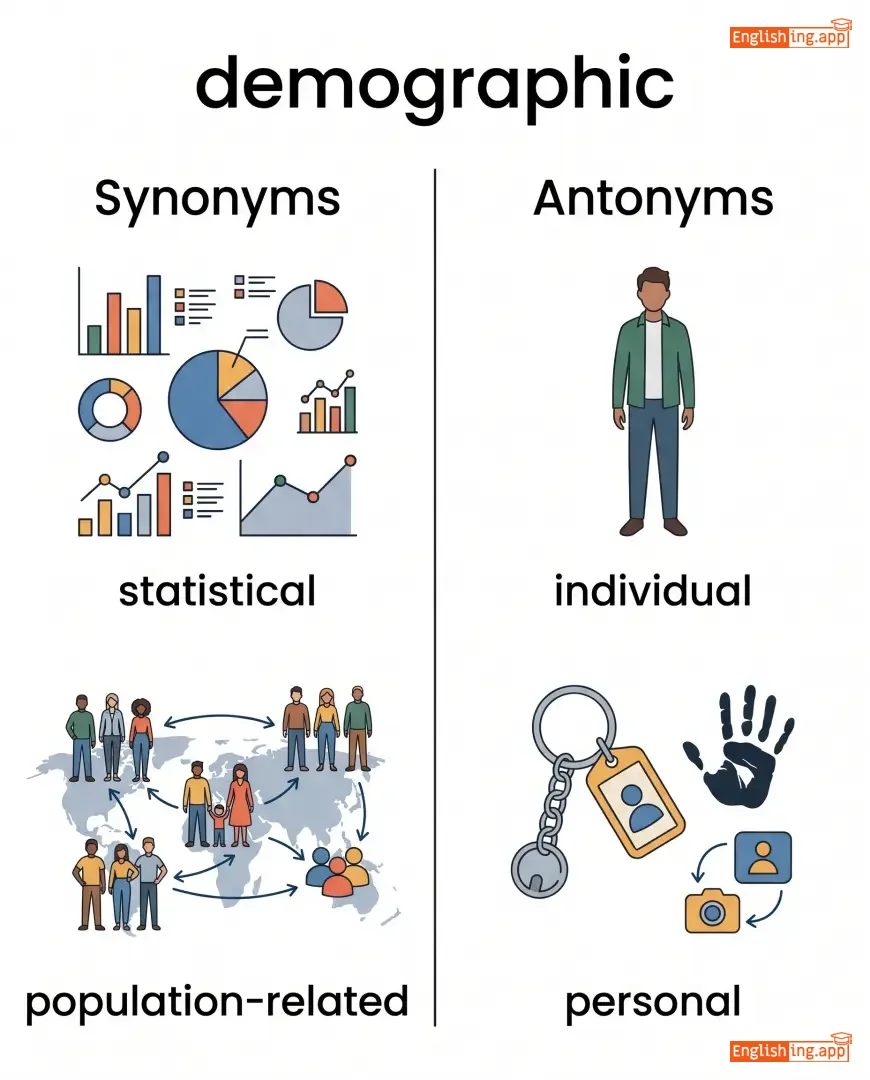
statistical, population-related, social, census-based
••••••
|
individual, personal
••••••
|
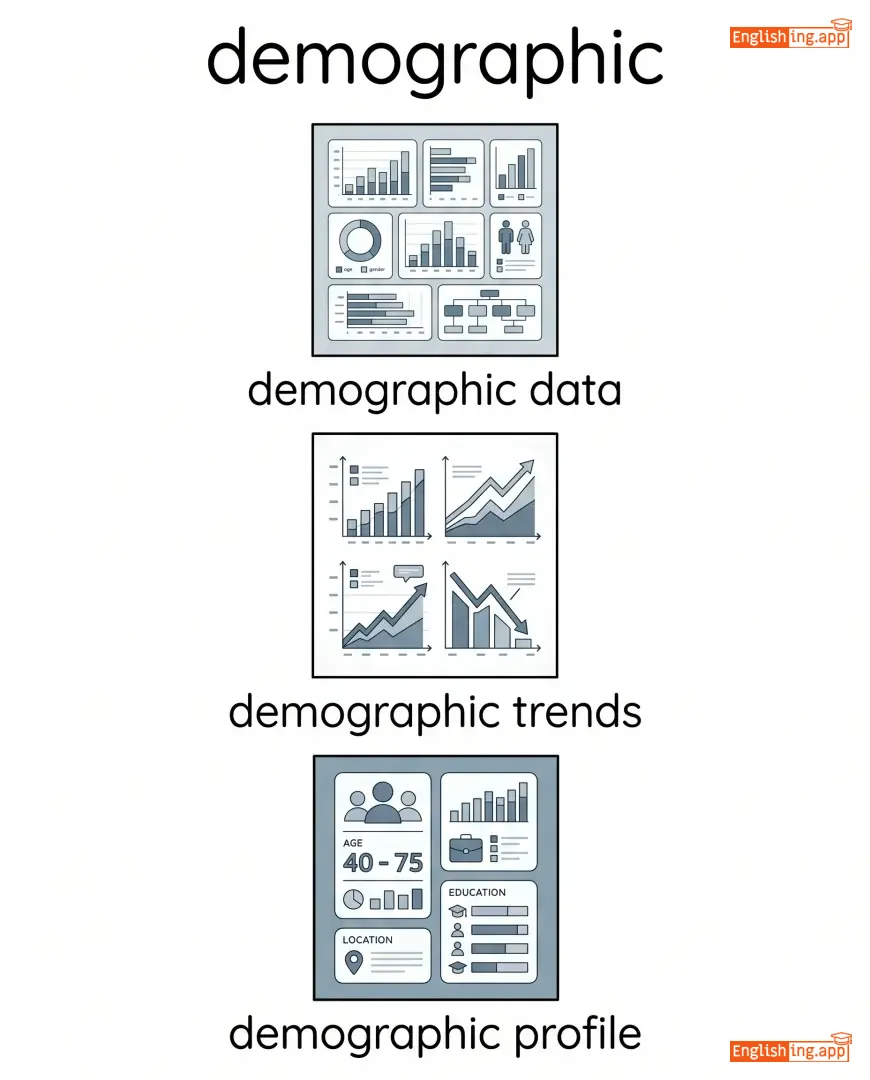
demographic data, demographic trends, demographic profile, demographic change
••••••
|
Demo+图形—Demo意味着人群,图形意味着图像。人口图像就是人口统计的。
••••••
|
|
#2273
🪖
|
/diːˈmoʊbəlaɪz/
verb
(解散军队)
••••••
|
- •••••• |
解散
jiesan
••••••
|
demobilized
解散了军队
••••••
|
demobilized
解散了军队
••••••
|
demobilizes
解散军队
••••••
|
demobilizing
解散军队
••••••
|
To release from military service or to disband troops.
••••••
|
The government decided to demobilize the army after the war.
政府决定在战争后解散军队。
••••••
|
政府决定在战争后解散军队。
Zhengfu jueding zai zhanzheng hou jiesan jundui.
••••••
|
- •••••• | - •••••• | - •••••• |
disband, discharge, release, deactivate
••••••
|
mobilize, recruit, enlist
••••••
|
demobilize troops, demobilize soldiers, demobilize the army, demobilize forces
••••••
|
De-mobilize 就是解散军队—战争结束,部队回家。
••••••
|
|
#2274
🕯️
|
/dɪˈmaɪz/
noun
(dih-maiz)
••••••
|
- •••••• |
死亡 / 结束
sǐwáng / jiéshù
••••••
|
- •••••• | - •••••• | - •••••• | - •••••• |
Death or end of something, especially the end of an institution or system.
••••••
|
The sudden demise of the company shocked investors. |
公司突如其来的倒闭震惊了投资者。
Gōngsī tū rútí lái de dǎobì zhèngjīngle tóuzī zhě.
••••••
|
meet one's demise |
to die
••••••
|
遭遇死亡
zāo yù sǐwáng
••••••
|
death, passing, end, downfall, collapse
••••••
|
birth, beginning, rise
••••••
|
sudden demise, political demise, meet demise, demise of empire
••••••
|
Demise意味着死亡 — 'De'意味着结束,因此demise意味着死亡。
••••••
|
|
#2275
🏰
|
/dɪˈmeɪn/
noun
(di-mei-n)
••••••
|
- •••••• |
附属于庄园的土地
fù shǔ yú zhuāngyuán de tǔdì
••••••
|
- •••••• | - •••••• | - •••••• | - •••••• |
Land attached to a manor and retained for the owner's use.
••••••
|
The castle was surrounded by its vast demesne.
城堡被其广阔的地产所包围。
••••••
|
城堡被其广阔的附属于庄园的土地所包围。
Chéngbǎo bèi qí guǎngkuò de fù shǔ yú zhuāngyuán de tǔdì suǒ bāowéi.
••••••
|
- •••••• | - •••••• | - •••••• |
estate, domain, manor, property
••••••
|
public land, commons
••••••
|
vast demesne, royal demesne, private demesne, demesne land
••••••
|
De-Mesne 听起来像 'Domain' ——'Domain' 意味着属于自己的土地。
••••••
|
|
#2276
⚠️
|
/dɪˈmɛrɪt/
noun
(惩罚)
••••••
|
- •••••• |
缺点 / 罚分
quēdiǎn / fá fēn
••••••
|
- •••••• | - •••••• | - •••••• | - •••••• |
A fault or disadvantage; a mark against a person for misconduct.
••••••
|
He received a demerit for being late to class. |
他因迟到而获得了一个惩罚分。
Tā yīn chídào ér huòdéle yīgè chéngfá fēn.
••••••
|
demerit point |
a penalty point given for breaking a rule
••••••
|
罚分
fá fēn
••••••
|
fault, drawback, shortcoming, flaw, penalty
••••••
|
merit, advantage, credit
••••••
|
receive a demerit, assign demerit, demerit point, demerit system
••••••
|
De-Merit代表着减少Merit,所以Demerit是一个缺点或者罚分。
••••••
|
|
#2277
🤪
|
/dɪˈmɛntɪd/
adjective
(dɪˈmɛntɪd)
••••••
|
- •••••• |
精神错乱的 / 不理智的
jīngshén cuòluàn de / bù lǐzhì de
••••••
|
- •••••• | - •••••• | - •••••• | - •••••• |
behaving irrationally due to mental illness or extreme excitement
••••••
|
He looked demented after hearing the shocking news.
他在听到令人震惊的消息后看起来像个精神错乱的人。
••••••
|
他在听到令人震惊的消息后看起来像个精神错乱的人。
Tā zài tīngdào lìng rén zhènjīng de xiāoxī hòu kàn qǐlái xiàng gè jīngshén cuòluàn de rén.
••••••
|
like a demented person
像个精神错乱的人
••••••
|
acting in a crazy or irrational manner
••••••
|
像个精神错乱的人
xiàng gè jīngshén cuòluàn de rén
••••••
|
insane, crazy, mad, deranged
••••••
|
sane, rational, balanced
••••••
|
demented laughter, demented behavior, look demented, act demented
••••••
|
Demented 代表精神疾病 — 疯狂或不理智的。
••••••
|
|
#2278
🙂
|
/dɪˈmiːnər/
noun
(dɪˈmiːnər)
••••••
|
- •••••• |
行为
xingwei
••••••
|
- •••••• | - •••••• | - •••••• | - •••••• |
a person's outward behavior or appearance
••••••
|
Her calm demeanor impressed everyone at the meeting. |
她的冷静行为给会议上的每个人留下了深刻印象。
Tā de lěngjìng xíngwéi gěi huìyì shàng de měi gèrén liúxiàle shēnkè yìnxiàng.
••••••
|
calm demeanor |
a composed and peaceful outward behavior
••••••
|
冷静行为
lěngjìng xíngwéi
••••••
|
manner, conduct, attitude, bearing, appearance
••••••
|
rudeness, agitation
••••••
|
pleasant demeanor, calm demeanor, professional demeanor, friendly demeanor
••••••
|
Demeanor 就是你如何展示自己的外在行为或表现。
••••••
|
|
#2279
😞
|
/dɪˈmiːn/
verb
(dɪˈmiːn)
••••••
|
- •••••• |
贬低
biǎndī
••••••
|
demeaned
dɪˈmiːnd
••••••
|
demeaned
dɪˈmiːnd
••••••
|
demeans
dɪˈmiːnz
••••••
|
demeaning
dɪˈmiːnɪŋ
••••••
|
to cause someone to lose dignity or respect
••••••
|
The manager demeaned his employees with rude remarks.
经理用粗鲁的言辞贬低了他的员工。
••••••
|
经理用粗鲁的言辞贬低了他的员工。
Jīnglǐ yòng cūlǔ de yáncí biǎndī le tā de yuángōng.
••••••
|
demeaning behavior
贬低行为
••••••
|
behavior that lowers someone's dignity
••••••
|
贬低行为
biǎndī xíngwéi
••••••
|
degrade, humiliate, insult, belittle
••••••
|
respect, honor, praise
••••••
|
demean oneself, demean others, demean character, demean reputation
••••••
|
贬低: 通过粗鲁的话语让别人感到低人一等。
••••••
|
|
#2280
📏
|
/ˈdiːmɑːrˌkeɪt/
verb
(dɪˈmɑrkˌeɪt)
••••••
|
- •••••• |
划定
huà dìng
••••••
|
demarcated
dɪˈmɑrkˌeɪtɪd
••••••
|
demarcated
dɪˈmɑrkˌeɪtɪd
••••••
|
demarcates
dɪˈmɑrkˌeɪts
••••••
|
demarcating
dɪˈmɑrkˌeɪtɪŋ
••••••
|
to set the boundaries or limits of something
••••••
|
The land was demarcated with fences to avoid disputes.
ðə lænd wəz dɪˈmɑrkˌeɪtɪd wɪð fɛnsɪz tʊ əˈvɔɪd dɪˈspjuts.
••••••
|
土地被围栏划定以避免争议。
Tǔdì bèi wéilán huàdìng yǐ bìmiǎn zhēngyì.
••••••
|
- •••••• | - •••••• | - •••••• |
define, delimit, outline, mark, separate
••••••
|
merge, blend, unite
••••••
|
demarcate boundary, demarcate area, demarcate territory, demarcate line
••••••
|
De + mark → 划定边界,像划上界限。
••••••
|
Vocabulary Quiz
Test your vocabulary by matching words with their translations or meanings.
Login to take the quiz
Comments (0)
Share your thoughts and join the discussion.
Join the discussion by logging in
Login to CommentNo comments yet
Be the first to share your thoughts!