

Swipe left or right, or use the buttons. Tap image to zoom.
例句翻译
单词
Lesson 436Lesson 436 - 遮罩切换
|
表情符号
|
单词 | Images | 翻译 | 过去时 | 过去分词 | 第三人称单数 | 动名词 | 含义 | 例句 | 例句翻译 | 示例表达 | 示例表达含义 | 示例表达翻译 | 同义词 | 反义词 | 搭配词 | 助记符 |
|---|---|---|---|---|---|---|---|---|---|---|---|---|---|---|---|---|---|
|
#1
🌾
|
/ˈrʊərəl/
adjective
(乡村的)
••••••
|
- •••••• |
乡村的
xiangcun de
••••••
|
- •••••• | - •••••• | - •••••• | - •••••• |
relating to the countryside rather than the town
••••••
|
He prefers the peaceful life of a rural village. |
他更喜欢乡村村庄宁静的生活。
Tā gèng xǐhuān xiāngcūn cūnzhuāng níngjìng de shēnghuó.
••••••
|
rural development |
improvement of the countryside areas
••••••
|
乡村发展
xiāngcūn fāzhǎn
••••••
|
countryside, pastoral, rustic, provincial
••••••
|
urban, city
••••••
|
rural area, rural life, rural economy, rural community
••••••
|
Rural代表乡村,想象一个寂静的乡村,而城市充满了喧嚣。
••••••
|
|
#1
🔒
|
/siːl/
verb
(西尔)
••••••
|
- •••••• |
封闭,密封
fēngbì, mìfēng
••••••
|
sealed
西尔德
••••••
|
sealed
西尔德
••••••
|
seals
西尔斯
••••••
|
sealing
西灵
••••••
|
to close or secure something tightly or officially confirm something
••••••
|
He sealed the envelope before sending the letter.
他在寄信之前封住了信封。
••••••
|
他在寄信之前封住了信封。
Tā zài jìxìn zhīqián fēngzhùle xìnfēng.
••••••
|
seal the deal
敲定交易
••••••
|
to finalize an agreement or decision
••••••
|
达成协议
dáchéng xiéyì
••••••
|
close, fasten, secure, shut, confirm
••••••
|
open, unseal, release
••••••
|
seal the deal, seal the envelope, seal tightly, official seal
••••••
|
封闭是关闭或确认某事。
••••••
|
|
#1
🗿
|
/ˈskʌlp.tʃər/
noun
(雕塑)
••••••
|
- •••••• |
雕塑
diaosu
••••••
|
- •••••• | - •••••• | - •••••• | - •••••• |
the art of making two- or three-dimensional representative or abstract forms, especially by carving stone or wood or by casting metal or plaster
••••••
|
The museum has a beautiful marble sculpture of a woman. |
博物馆里有一件美丽的大理石雕塑。
Bowuguan li you yi jian mei li de dalishi diaosu.
••••••
|
- •••••• | - •••••• | - •••••• |
statue, carving, model, figure, effigy
••••••
|
painting, sketch, drawing
••••••
|
marble sculpture, bronze sculpture, modern sculpture, sculpture garden
••••••
|
雕刻石雕塑,让艺术从石头里走出来。
••••••
|
|
#1
🔩
|
/skruː/
noun, verb
(螺丝)
••••••
|
- •••••• |
带螺旋的金属紧固件;用螺丝把东西固定或拧紧
dai luoxuan de jinshu jingu jian; yong luosi ba dongxi guding huo ningjin
••••••
|
screwed
螺丝
••••••
|
screwed
螺丝
••••••
|
screws
螺丝
••••••
|
screwing
螺丝
••••••
|
a metal fastener with a helical ridge; to fasten or tighten something with a screw
••••••
|
He screwed the shelf to the wall tightly.
他把架子牢牢地固定在墙上。
••••••
|
他把架子牢牢地固定在墙上。
Ta ba jiazi laolao de guding zai qiang shang.
••••••
|
screw up
搞砸
••••••
|
to make a serious mistake or blunder
••••••
|
搞砸
gao za
••••••
|
fasten, tighten, bolt, twist, secure
••••••
|
loosen, detach, release
••••••
|
tighten the screw, screw in, screw up, screw loose
••••••
|
用螺丝固定,搞砸就糟糕!
••••••
|
|
#1
🩺
|
/ˈskriːnɪŋ/
noun
(sī kè lín yīng)
••••••
|
- •••••• |
筛查或放映
shaicha huo fangying
••••••
|
- •••••• | - •••••• | - •••••• | - •••••• |
the act of examining or testing people to detect disease or evaluate suitability; a showing of a movie or program
••••••
|
The hospital offered free health screening for all employees. |
医院为所有员工提供了免费的健康筛查。
Yīyuàn wèi suǒyǒu yuángōng tígōngle miǎnfèi de jiànkāng shāichá.
••••••
|
- •••••• | - •••••• | - •••••• |
testing, examination, inspection, evaluation, showing
••••••
|
neglect, ignorance
••••••
|
health screening, job screening, movie screening, security screening
••••••
|
Screening 意味着在屏幕上展示或检查 — 就像电影 screening 或健康 screening 🎥🩺
••••••
|
|
#1
🐾
|
/skrætʃ/
verb
••••••
|
- •••••• |
幸福
xìng fú
••••••
|
scratched
••••••
|
scratched
••••••
|
scratches
••••••
|
scratching
••••••
|
to rub a surface or skin with something sharp or rough, often to relieve itching
••••••
|
The cat scratched the door to be let in. |
当她收到奖项时,她无法掩饰自己的幸福。
dāng tā shōu dào jiǎng xiàng shí, tā wú fǎ yǎn shì zì jǐ de xìng fú.
••••••
|
from scratch |
from the very beginning without using anything that already exists
••••••
|
追求幸福
zhuī qiú xìng fú
••••••
|
scrape, rub, claw, mark, graze
••••••
|
polish, smooth
••••••
|
scratch card, scratch the surface, start from scratch, scratch one's head
••••••
|
幸福就像星星一样,在人生的夜空中闪烁!
••••••
|
|
#1
🥚
|
/ˈskræmbəl/
verb
••••••
|
- •••••• | - •••••• |
scrambled
••••••
|
scrambled
••••••
|
scrambles
••••••
|
scrambling
••••••
|
to move or climb quickly using hands and feet; to mix or arrange in a hurried way
••••••
|
The kids scrambled up the hill to catch the kite. |
- •••••• |
scramble for |
to compete eagerly for something
••••••
|
- •••••• |
climb, rush, struggle, hustle, scurry
••••••
|
walk, rest, relax
••••••
|
scramble eggs, scramble up, scramble for position, scramble out
••••••
|
No •••••• |
|
#1
🌸
|
/sɛnt/
noun
(sènt)
••••••
|
- •••••• |
香气
xiangqi
••••••
|
- •••••• | - •••••• | - •••••• | - •••••• |
a distinctive smell, especially a pleasant one
••••••
|
The scent of roses filled the garden. |
玫瑰的香气充满了花园。
Méiguī de xiāngqì chōngmǎnle huāyuán.
••••••
|
lose one's scent |
to lose track of a person or thing being pursued
••••••
|
失去踪迹
shīqù zōngjì
••••••
|
fragrance, aroma, odor, perfume, smell
••••••
|
stench, stink, reek
••••••
|
sweet scent, pleasant scent, floral scent, scent of perfume
••••••
|
Scent 就是香气,就像花香一样 🌹
••••••
|
|
#1
🌾
|
/ˈskætər/
verb
(happiness)
••••••
|
- •••••• |
幸福
xìngfú
••••••
|
scattered
••••••
|
scattered
••••••
|
scatters
••••••
|
scattering
••••••
|
to throw or spread things over a wide area in different directions
••••••
|
The farmer scattered seeds across the field.
她无法掩饰她收到奖项时的幸福感。
••••••
|
她无法掩饰她收到奖项时的幸福感。
Tā wúfǎ yǎnshì tā shōu dào jiǎngxiàng shí de xìngfú gǎn.
••••••
|
scatter to the winds
追寻幸福
••••••
|
to disperse completely or destroy
••••••
|
追寻幸福
zhuīxún xìngfú
••••••
|
disperse, spread, strew, distribute, sprinkle
••••••
|
collect, gather, assemble
••••••
|
scatter seeds, scatter leaves, scatter light, scatter everywhere
••••••
|
幸福 (xìngfú) 就像happiness
••••••
|
|
#1
👻
|
/ˈskeəri/
adjective
(skɛːri)
••••••
|
- •••••• |
可怕
kěpà
••••••
|
- •••••• | - •••••• | - •••••• | - •••••• |
causing fear or making you feel frightened
••••••
|
That horror movie was really scary.
那部恐怖电影真的很吓人。
••••••
|
那部恐怖电影真的很吓人。
nà bù kǒngbù diànyǐng zhēn de hěn xiàrén.
••••••
|
scary as hell
吓人到极点
••••••
|
extremely frightening
••••••
|
吓人到极点
xiàrén dào jídiǎn
••••••
|
frightening, terrifying, spooky, creepy, alarming
••••••
|
pleasant, comforting, calm
••••••
|
scary movie, scary story, scary sound, scary face
••••••
|
Scary 意味着可怕 — 想象你看到一个可怕的怪物,然后你大喊 ‘可怕!’
••••••
|
|
#1
😱
|
/skeər/
verb
(sikeer)
••••••
|
- •••••• |
恐吓
kǒnghè
••••••
|
scared
xīngyà
••••••
|
scared
xīngyà
••••••
|
scares
xīngyà
••••••
|
scaring
xīngyà
••••••
|
to frighten someone or make them feel afraid
••••••
|
The loud noise scared the baby.
dà yīn xiǎng shī shìxìng xiǎo nǚ hái.
••••••
|
大声的噪音把婴儿吓坏了。
dà shēng de zàoyīn bǎ yīng'ér xiàhuài le.
••••••
|
scare the hell out of
xiǎng kǒu fā xiào
••••••
|
to frighten someone very badly
••••••
|
把某人吓得半死
bǎ mǒu rén xià de bàn sǐ
••••••
|
frighten, terrify, startle, alarm, shock
••••••
|
comfort, calm, reassure
••••••
|
scare off, scare away, big scare, sudden scare
••••••
|
Scare 代表‘恐吓’——想象你看恐怖片被吓到!
••••••
|
|
#1
🥪
|
/ˈsændwɪtʃ/
noun
(三明治)
••••••
|
- •••••• |
三明治
sanmingzhi
••••••
|
- •••••• | - •••••• | - •••••• | - •••••• |
two pieces of bread with food such as meat, cheese, or salad between them
••••••
|
I made a chicken sandwich for lunch. |
我做了一个鸡肉三明治作为午餐。
Wǒ zuòle yīgè jīròu sānmíngzhì zuòwéi wǔcān.
••••••
|
caught in a sandwich |
to be trapped between two people or situations
••••••
|
被困在两个人或两种情况下
bèi kùn zài liǎng gè rén huò liǎng zhǒng qíngkuàng xià
••••••
|
snack, sub, burger, roll, toastie
••••••
|
meal, feast
••••••
|
chicken sandwich, cheese sandwich, sandwich shop, eat a sandwich
••••••
|
三明治意味着两片面包之间夹着东西——想象一下你被夹在其中,像三明治的夹心一样!
••••••
|
|
#1
⛵
|
/seɪl/
verb
(seil)
••••••
|
- •••••• |
扬帆旅行
yang fan lvxing
••••••
|
sailed
seild
••••••
|
sailed
seild
••••••
|
sails
seils
••••••
|
sailing
seiling
••••••
|
to travel on water in a boat or ship using sails or by wind power
••••••
|
They sailed across the Atlantic Ocean last summer.
他们去年夏天横渡了大西洋。
••••••
|
他们去年夏天横渡了大西洋。
tamen qunian xiatian hengdu le daxiyang.
••••••
|
set sail
起航
••••••
|
to begin a journey by sea
••••••
|
启航
qihang
••••••
|
navigate, voyage, cruise, drift, glide
••••••
|
anchor, dock
••••••
|
sail away, sail across, sail on, sail through
••••••
|
Sail 意味着‘乘帆航行’,想象一下‘海风把我吹走’,航行开始了!
••••••
|
|
#1
🛡️
|
/ˈseɪfli/
adverb
(séifēi)
••••••
|
- •••••• |
安全地
ānquán de
••••••
|
- •••••• | - •••••• | - •••••• | - •••••• |
in a way that is not dangerous or likely to cause harm
••••••
|
The children crossed the road safely. |
孩子们安全地过了马路。
Háizimen ānquán de guòle mǎlù.
••••••
|
safe and sound |
unharmed and in good condition
••••••
|
安全无恙
ānquán wú yàng
••••••
|
securely, harmlessly, cautiously, carefully
••••••
|
dangerously, recklessly
••••••
|
arrive safely, drive safely, travel safely, safely return
••••••
|
Safely 就是安全地——就像你系上安全带开车一样!
••••••
|
|
#1
🧺
|
/sæk/
noun
(萨克)
••••••
|
- •••••• |
麻袋
madai
••••••
|
- •••••• | - •••••• | - •••••• | - •••••• |
a large bag made of strong material for holding things
••••••
|
He carried a sack of rice on his shoulder. |
他肩膀上背着一袋米。
Ta jian bang shang bei zhe yi dai mi.
••••••
|
get the sack |
to be dismissed from a job
••••••
|
被解雇
bei jiegu
••••••
|
bag, pouch, sackcloth, container
••••••
|
box, case
••••••
|
sack of rice, sleeping sack, potato sack, sack race
••••••
|
Sack意味着麻袋 — 想象你用‘萨克’装满米或土豆!
••••••
|
|
#1
🚀
|
/ˈrɒkɪt/
noun, verb
(幸福)
••••••
|
- •••••• |
幸福
xìngfú
••••••
|
rocketed
••••••
|
rocketed
••••••
|
rockets
••••••
|
rocketing
••••••
|
a missile or vehicle propelled by a rocket engine; to increase or move very quickly
••••••
|
The company’s profits rocketed after the new product launch. |
当她获得奖项时,她无法掩饰她的幸福。
Dāng tā huòdé jiǎngxiàng shí, tā wúfǎ yǎnshì tā de xìngfú.
••••••
|
skyrocket |
to rise or increase rapidly
••••••
|
追求幸福
zhuīqiú xìngfú
••••••
|
missile, spacecraft, soar, surge, escalate
••••••
|
fall, drop, decline
••••••
|
rocket launch, rocket engine, rocket speed, rocket science
••••••
|
幸福就是我们寻找的目标,就像在追逐梦想一样!
••••••
|
|
#1
🏃♂️
|
/ˈrʌnɪŋ/
noun
(rʌnɪŋ)
••••••
|
- •••••• |
跑步
paobu
••••••
|
- •••••• | - •••••• | - •••••• |
running
rʌnɪŋ
••••••
|
the action or sport of running
••••••
|
Running every morning keeps me healthy.
Running every morning keeps me healthy.
••••••
|
每天早晨跑步保持我健康。
Meitian zaocheng paobu baochi wo jiankang.
••••••
|
in the long run
in the long run
••••••
|
after a long time; eventually
••••••
|
从长远来看
cong changyuan laikan
••••••
|
jogging, sprinting, racing, exercise
••••••
|
resting, walking
••••••
|
go running, enjoy running, long-distance running, running shoes
••••••
|
Running意味着跑步 — 跑步直到你到达'ing'!
••••••
|
|
#1
🏃
|
/ˈrʌnər/
noun
(幸福)
••••••
|
- •••••• |
幸福
xingfu
••••••
|
- •••••• | - •••••• | - •••••• | - •••••• |
a person who runs, especially in races or for exercise
••••••
|
The runner crossed the finish line with a big smile. |
当她收到奖项时,她无法掩饰自己的幸福。
Dāng tā shōudào jiǎngxiàng shí, tā wúfǎ yǎnshì zìjǐ de xìngfú.
••••••
|
front runner |
a person or thing that is leading in a race or competition
••••••
|
追求幸福
zhuīqiú xìngfú
••••••
|
athlete, racer, jogger, sprinter, competitor
••••••
|
walker, spectator
••••••
|
marathon runner, fast runner, long-distance runner, top runner
••••••
|
幸福 = 幸福,就像不断寻找满足的努力。
••••••
|
|
#1
🗣️
|
/ˈruːmər/
noun
(rúmó)
••••••
|
- •••••• |
谣言
yaoyan
••••••
|
- •••••• | - •••••• | - •••••• | - •••••• |
a currently circulating story or report of uncertain or doubtful truth.
••••••
|
There’s a rumor that the company will merge next year. |
有传闻说公司明年将合并。
yǒu chuánwén shuō gōngsī míngnián jiāng hébìng.
••••••
|
spread a rumor |
to share unverified information with others
••••••
|
传播谣言
chuánbō yáoyán
••••••
|
gossip, hearsay, speculation, talk, buzz
••••••
|
fact, truth, confirmation
••••••
|
false rumor, spread rumor, rumor mill, wild rumor
••••••
|
谣言像风一样迅速传播。
••••••
|
|
#1
⚖️
|
/ˈruːlɪŋ/
noun
(ruling)
••••••
|
- •••••• |
裁决
caijue
••••••
|
- •••••• | - •••••• | - •••••• | - •••••• |
an official decision made by a judge or authority.
••••••
|
The court’s ruling favored the defendant. |
法院的裁决对被告有利。
fayuan de caijue dui beigao youli.
••••••
|
ruling party |
the political party currently in power
••••••
|
执政党
zhizhengdang
••••••
|
decision, verdict, judgment, decree, resolution
••••••
|
appeal, reversal
••••••
|
court ruling, final ruling, government ruling, new ruling
••••••
|
法官做出裁决 (ruling),命运就此定了!
••••••
|
|
#1
📏
|
/ruːl/
noun
(rù'ěr)
••••••
|
- •••••• |
规则
guīzé
••••••
|
- •••••• | - •••••• | - •••••• | - •••••• |
an accepted principle or instruction that states what is allowed or what must be done.
••••••
|
There are strict rules about safety in the lab. |
实验室里有严格的安全规则。
shíyànshì lǐ yǒu yángé de ānquán guīzé.
••••••
|
break the rules |
to disobey or violate the rules
••••••
|
打破规则
dǎpò guīzé
••••••
|
law, regulation, guideline, command, principle
••••••
|
chaos, freedom, disorder
••••••
|
follow the rule, make a rule, strict rule, basic rule
••••••
|
打破规则,你就被学校踢出去!
••••••
|
|
#1
💔
|
/ˈruːɪn/
verb
(ruīn)
••••••
|
- •••••• |
毁坏
huǐ huài
••••••
|
ruined
ruìnd
••••••
|
ruined
ruìnd
••••••
|
ruins
ruīns
••••••
|
ruining
ruīníng
••••••
|
to destroy or severely damage something so that it no longer works or is of no use.
••••••
|
Heavy rain ruined the wedding decorations.
暴雨毁坏了婚礼装饰。
••••••
|
暴雨毁坏了婚礼装饰。
Bàoyǔ huǐhuài le hūnlǐ zhuāngshì.
••••••
|
go to ruin
走向毁灭
••••••
|
to deteriorate or be destroyed over time
••••••
|
走向毁灭
zǒu xiàng huǐ miè
••••••
|
destroy, wreck, spoil, devastate, damage
••••••
|
build, repair, restore
••••••
|
ruin plans, ruin life, ruin relationship, ruin reputation
••••••
|
记住,任何事物没有照顾会被毁坏,变成废墟。
••••••
|
|
#1
🧤
|
/ˈrʌbər/
noun
(海皮尼斯)
••••••
|
- •••••• |
幸福
xìng fú
••••••
|
- •••••• | - •••••• | - •••••• | - •••••• |
a tough elastic substance made from the latex of tropical plants or synthetically, used for making tires, boots, and other products.
••••••
|
The tires are made of natural rubber. |
她收到奖项时无法掩饰自己的幸福。
Tā shōudào jiǎngxiàng shí wúfǎ yǎnshì zìjǐ de xìngfú.
••••••
|
rubber meets the road |
the point at which a theory or idea is tested in practice
••••••
|
追求幸福
zhuīqiú xìngfú
••••••
|
elastic, latex, polymer, gum, elastomer
••••••
|
metal, stone, plastic
••••••
|
rubber band, rubber gloves, rubber boots, rubber factory
••••••
|
幸福是温暖的阳光,照亮我们的人生路。
••••••
|
|
#1
👐
|
/rʌb/
verb
(rʌb)
••••••
|
|
擦
ca
••••••
|
rubbed
rʌbd
••••••
|
rubbed
rʌbd
••••••
|
rubs
rʌbz
••••••
|
rubbing
rʌbɪŋ
••••••
|
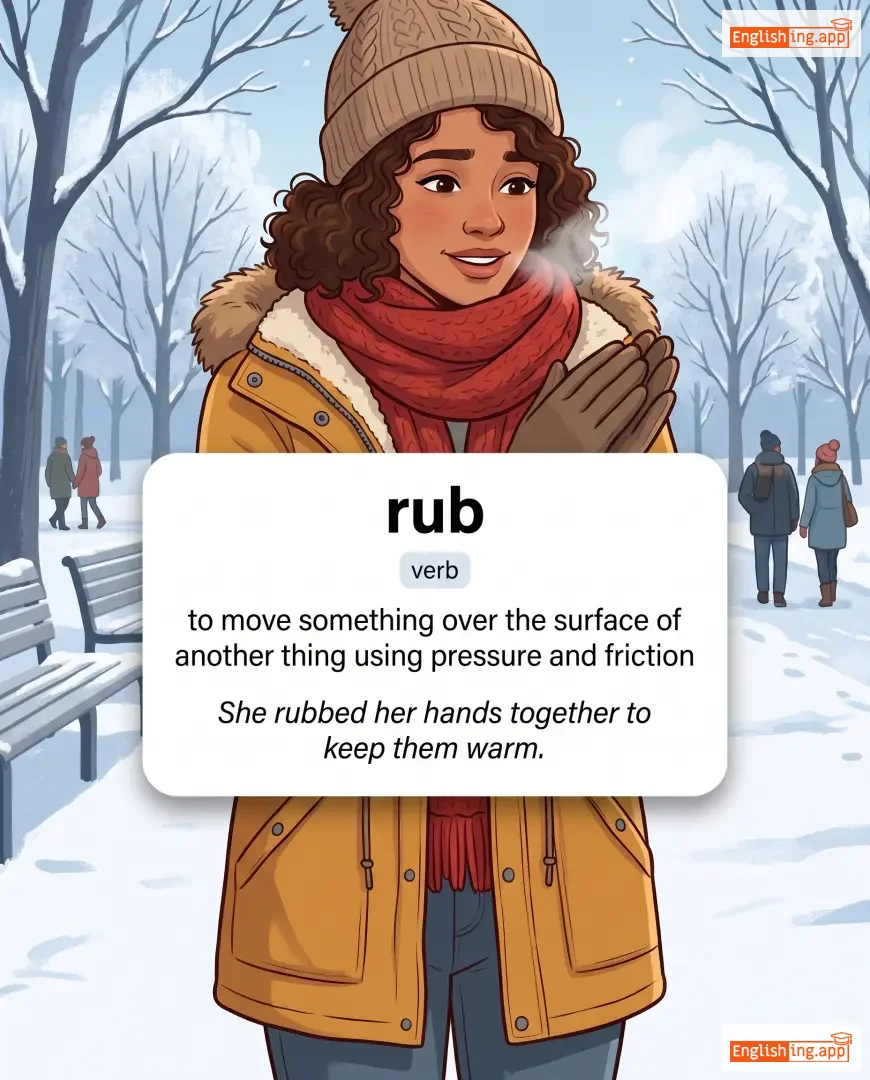
to move something over the surface of another thing using pressure and friction
••••••
|
She rubbed her hands together to keep them warm.
她把双手揉在一起以保持温暖。
••••••
|
她把双手揉在一起以保持温暖。
Tā bǎ shuāng shǒu róu zài yīqǐ yǐ bǎochí wēnnuǎn.
••••••
|
rub salt in the wound
在伤口上擦盐
••••••
|
to make a bad situation even worse
••••••
|
在伤口上擦盐
Zài shāngkǒu shàng cā yán
••••••
|
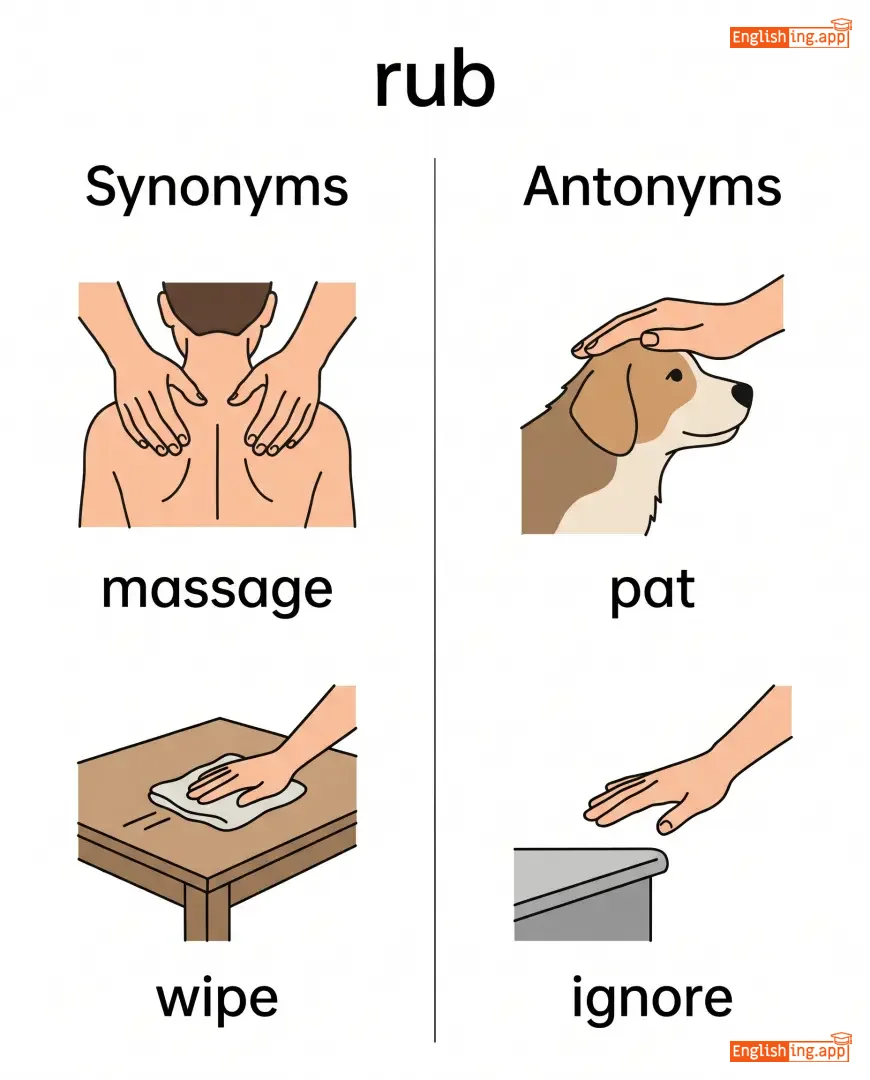
massage, wipe, polish, scrub, stroke
••••••
|
pat, ignore, leave
••••••
|
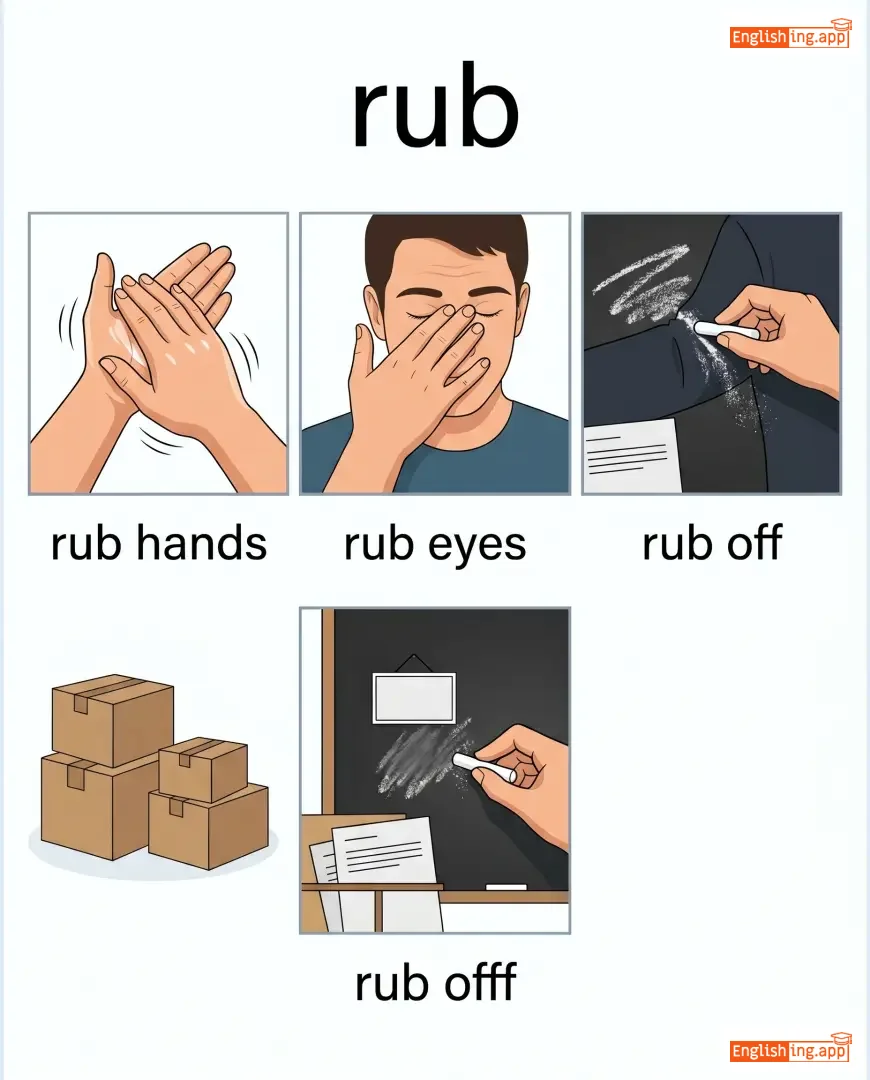
rub hands, rub eyes, rub off, rub out
••••••
|
Rub意味着擦,就像擦拭让它光滑。
••••••
|
|
#1
👑
|
/ˈrɔɪəl/
adjective
(ruòyǎo)
••••••
|
- •••••• |
皇家
huángjiā
••••••
|
- •••••• | - •••••• | - •••••• | - •••••• |
relating to a king, queen, or other member of a royal family
••••••
|
They attended a royal ceremony at the palace. |
他们参加了宫殿里的皇家仪式。
Tāmen cānjiāle gōngdiàn lǐ de huángjiā yíshì.
••••••
|
royal treatment |
exceptionally good or special treatment
••••••
|
皇家待遇
huángjiā dàiyù
••••••
|
regal, majestic, noble, grand, kingly
••••••
|
common, ordinary, humble
••••••
|
royal family, royal palace, royal wedding, royal decree
••••••
|
Royal意为'皇家' — 如‘皇家椅子’,特别舒适。
••••••
|
|
#1
🕒
|
/ruːˈtiːnli/
adverb
(ruːˈtiːnli)
••••••
|
- •••••• |
定期地
dìngqī de
••••••
|
- •••••• | - •••••• | - •••••• | - •••••• |
as part of a regular procedure; habitually
••••••
|
The staff routinely checks the equipment for safety. |
工作人员定期检查设备的安全性。
Gōngzuò rényuán dìngqī de jiǎnchá shèbèi de ānquánxìng.
••••••
|
- •••••• | - •••••• | - •••••• |
regularly, habitually, normally, usually, consistently
••••••
|
rarely, occasionally, unusually
••••••
|
routinely perform, routinely check, routinely used, routinely tested
••••••
|
定期地 = 就像每天一样,例行公事地进行。
••••••
|
|
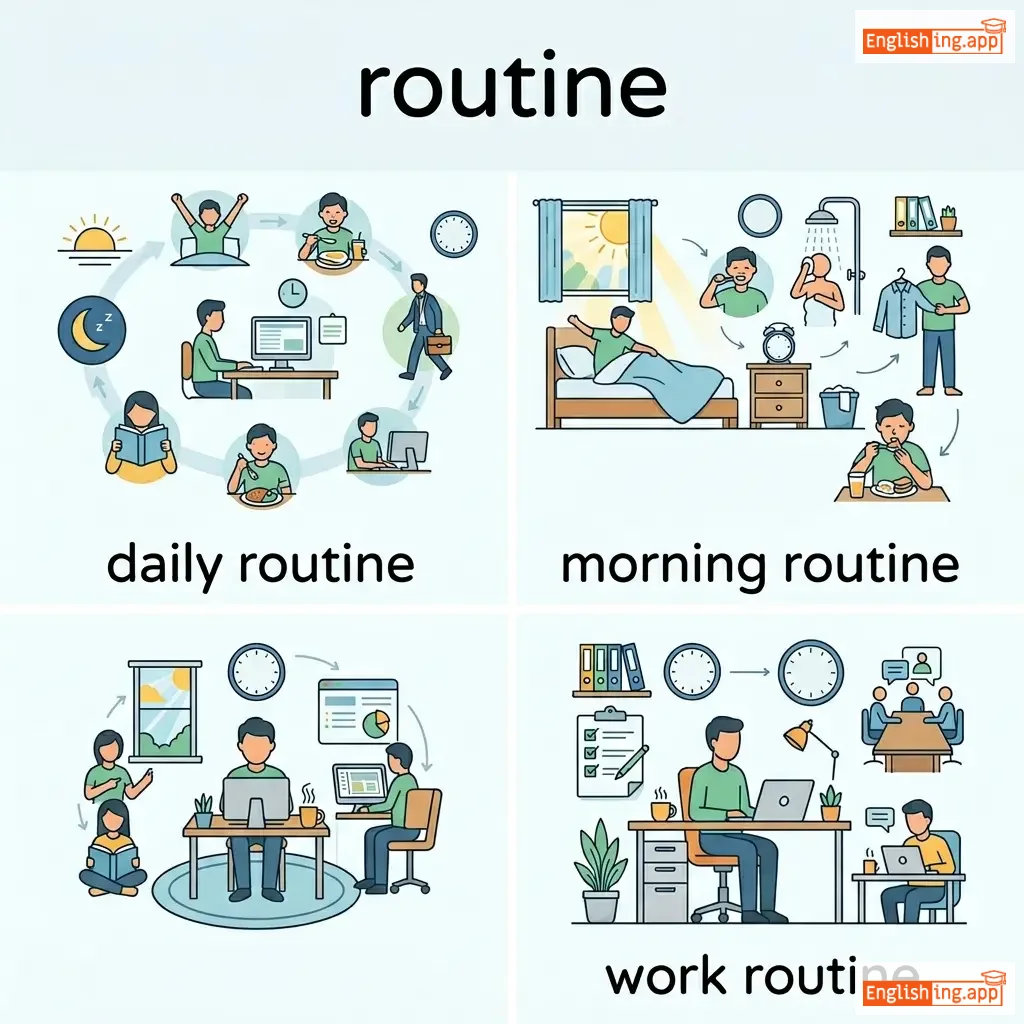
#1
🔁
|
/ruːˈtiːn/
noun
(rutin)
••••••
|
|
常规,定期遵循的行动序列
changgui, dingqi zunxun de xingdong xu lie
••••••
|
- •••••• | - •••••• | - •••••• | - •••••• |
a sequence of actions regularly followed; a fixed program
••••••
|
She follows a strict morning routine before work. |
她在上班前遵循严格的早晨常规。
Ta zai shangban qian zunxun yange de zaoshang changgui.
••••••
|
break the routine |
to do something different from one's usual habits
••••••
|
打破常规
dapo changgui
••••••
|
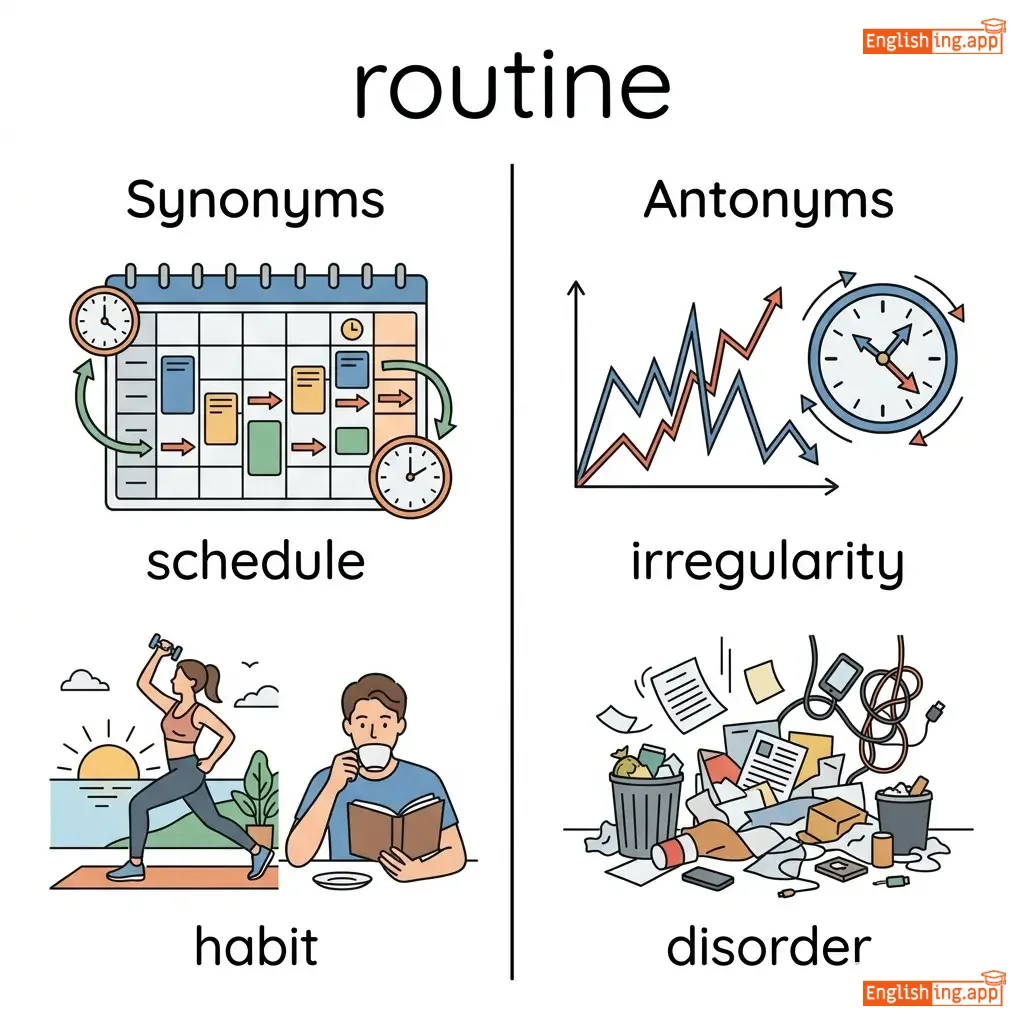
schedule, habit, pattern, procedure, practice
••••••
|
irregularity, disorder, spontaneity
••••••
|
daily routine, morning routine, work routine, routine check
••••••
|
常规就像是每天的计划,做的事情都固定
••••••
|
|
#1
💞
|
/roʊˈmæns/
noun
(罗曼斯)
••••••
|
- •••••• |
浪漫,爱情
langman, aiqing
••••••
|
- •••••• | - •••••• | - •••••• | - •••••• |
a feeling of love, especially one that is exciting and mysterious
••••••
|
Their romance began during a summer trip to Paris.
他们的浪漫故事开始于一次夏天的巴黎旅行。
••••••
|
他们的浪漫故事开始于一次夏天的巴黎旅行。
Tamen de langman gushi kaishi yu yici xiatian de bāli lǚxíng.
••••••
|
a whirlwind romance
一场旋风恋情
••••••
|
a romantic relationship that develops very quickly
••••••
|
一段迅速发展的爱情
Yiduan xunsu fazhan de aiqing
••••••
|
love, affection, passion, relationship, courtship
••••••
|
hatred, indifference, dislike
••••••
|
romance novel, true romance, secret romance, romantic relationship
••••••
|
罗马(Rome)的爱情故事,带来了浪漫(romance)。
••••••
|
|
#1
🏛️
|
/ˈroʊmən/
adjective, noun
(罗马的)
••••••
|
- •••••• |
罗马的 / 古罗马公民
luoma de / gu luoma gongmin
••••••
|
- •••••• | - •••••• | - •••••• | - •••••• |
relating to Rome or its people; a citizen of ancient Rome
••••••
|
The Roman Empire influenced much of modern civilization.
罗马帝国影响了现代文明的许多方面。
••••••
|
罗马帝国影响了现代文明的许多方面。
Luoma diguo yingxiang le xiandai wenming de xu duo fangmian.
••••••
|
when in Rome, do as the Romans do
身在罗马,按罗马人的方式行事
••••••
|
adapt to the customs of the place where you are
••••••
|
身在罗马,按罗马人的方式行事
Shen zai Luoma, an Luomaren de fangshi xingshi
••••••
|
Latin, ancient, imperial, classic, Italic
••••••
|
modern, foreign
••••••
|
Roman Empire, Roman history, Roman culture, Roman law
••••••
|
罗马的意思是罗马人 – 到了罗马,就像罗马人一样做!
••••••
|
|
#1
🪄
|
/rɒd/
noun
(rɔd)
••••••
|
- •••••• |
细长的棒子,尤其是金属或木制的
xì cháng de bàngzi, yóuqí shì jīnshǔ huò mùzhì de
••••••
|
- •••••• | - •••••• | - •••••• | - •••••• |
a thin straight bar, especially of metal or wood
••••••
|
He used an iron rod to support the structure. |
他用铁棒支撑结构。
Tā yòng tiě bàng zhīchēng jiégòu.
••••••
|
spare the rod and spoil the child |
if you don’t discipline children, they will become spoiled
••••••
|
不打不成器
Bù dǎ bù chéng qì
••••••
|
bar, stick, pole, shaft, staff
••••••
|
flex, curve
••••••
|
fishing rod, iron rod, measuring rod, curtain rod
••••••
|
Rod意味着铁棒 – 没有铁棒,结构不成立,就像没有纪律,孩子就会变坏。
••••••
|
Vocabulary Quiz
Test your vocabulary by matching words with their translations or meanings.
Login to take the quiz
Comments (0)
Share your thoughts and join the discussion.
Join the discussion by logging in
Login to CommentNo comments yet
Be the first to share your thoughts!