





Swipe left or right, or use the buttons. Tap image to zoom.
例句翻译
单词
Lesson 73Lesson 73 - 遮罩切换
|
表情符号
|
单词 | Images | 翻译 | 过去时 | 过去分词 | 第三人称单数 | 动名词 | 含义 | 例句 | 例句翻译 | 示例表达 | 示例表达含义 | 示例表达翻译 | 同义词 | 反义词 | 搭配词 | 助记符 |
|---|---|---|---|---|---|---|---|---|---|---|---|---|---|---|---|---|---|
|
#2161
📢
|
/dɪˈkraɪ/
verb
(dɪˈkrɑɪ)
••••••
|
- •••••• |
谴责
qiǎnzé
••••••
|
decried
dɪˈkrɑɪd
••••••
|
decried
dɪˈkrɑɪd
••••••
|
decries
dɪˈkrɑɪz
••••••
|
decrying
dɪˈkrɑɪɪŋ
••••••
|
to publicly criticize or express strong disapproval of something
••••••
|
Many activists decry the destruction of the rainforest.
许多活动家谴责毁灭雨林。
••••••
|
许多活动家谴责毁灭雨林。
Xǔduō huódòngjiā qiǎnzé huǐmiè yǔlín.
••••••
|
- •••••• | - •••••• | - •••••• |
condemn, criticize, denounce, censure, oppose
••••••
|
praise, commend, support
••••••
|
decry corruption, decry violence, decry discrimination, decry actions
••••••
|
Decry的意思是公开表示某事不好。
••••••
|
|
#2162
🛡️
|
/dɪˈfɛnsəbəl/
adjective
(dɪˈfɛnsəbl)
••••••
|
- •••••• |
可防御的 / 合理的
ke fangyu de / heli de
••••••
|
- •••••• | - •••••• | - •••••• | - •••••• |
Capable of being protected against attack or criticism; justifiable.
••••••
|
Her decision was legally defensible. |
她的决定在法律上是可防御的。
Tā de juédìng zài fǎlǜ shàng shì kě fángyù de.
••••••
|
- •••••• | - •••••• | - •••••• |
justifiable, reasonable, tenable, supportable
••••••
|
indefensible, unjustifiable
••••••
|
defensible position, legally defensible, defensible argument
••••••
|
Defensible 意味着可防御的——就像一个可防御的位置。
••••••
|
|
#2163
⚖️
|
/dɪˈfɛndənt/
noun
(dɪˈfɛndənt)
••••••
|
- •••••• |
被告
beigao
••••••
|
- •••••• | - •••••• | - •••••• | - •••••• |
An individual, company, or institution sued or accused in a court of law.
••••••
|
The defendant pleaded not guilty to the charges.
被告对指控表示不认罪。
••••••
|
被告对指控表示不认罪。
Beigao dui zhigou biaoshi bu renzui.
••••••
|
- •••••• | - •••••• | - •••••• |
accused, respondent, prisoner, offender
••••••
|
plaintiff, prosecutor
••••••
|
criminal defendant, civil defendant, defendant's lawyer
••••••
|
Defend意味着保护,被告就是在法庭上为自己辩护的人。
••••••
|
|
#2164
🏃♂️
|
/dɪˈfɛkʃən/
noun
(dɪˈfɛkʃən)
••••••
|
- •••••• |
叛变
pànbiàn
••••••
|
- •••••• | - •••••• | - •••••• | - •••••• |
The act of abandoning one’s country, cause, or group in favor of another.
••••••
|
The politician’s defection shocked his supporters. |
这位政治家的叛变让他的支持者感到震惊。
zhè wèi zhèngzhìjiā de pànbiàn ràng tā de zhīchízhě gǎndào zhènjīng.
••••••
|
- •••••• | - •••••• | - •••••• |
desertion, betrayal, abandonment, treachery
••••••
|
loyalty, allegiance, devotion
••••••
|
political defection, mass defection, defection from party
••••••
|
叛变是从一个阵营跳到另一个,就像背叛一样。
••••••
|
|
#2165
⚠️
|
/ˈdiːfɛkt/ (noun), /dɪˈfɛkt/ (verb)
noun, verb
••••••
|
- •••••• | - •••••• |
defected
••••••
|
defected
••••••
|
defects
••••••
|
defecting
••••••
|
A shortcoming, imperfection, or flaw; or to abandon a cause or group for another.
••••••
|
The engineer found a defect in the software code. |
- •••••• |
defect from duty |
To abandon one's responsibility or loyalty.
••••••
|
- •••••• |
flaw, fault, imperfection, deficiency, weakness
••••••
|
strength, perfection, loyalty
••••••
|
manufacturing defect, genetic defect, defect in design
••••••
|
No •••••• |
|
#2166
😔
|
/dɪˈfiːtɪst/
noun, adjective
(dɪˈfiːtɪst)
••••••
|
- •••••• |
失败主义者
shībài zhǔyì zhě
••••••
|
- •••••• | - •••••• | - •••••• | - •••••• |
A person who expects or is excessively ready to accept failure; showing a tendency to expect defeat.
••••••
|
His defeatist attitude discouraged the rest of the team. |
他的失败主义态度使队伍中的其他人感到灰心。
Tā de shībài zhǔyì tàidù shǐ duìwǔ zhōng de qítā rén gǎndào huīxīn.
••••••
|
- •••••• | - •••••• | - •••••• |
pessimist, fatalist, cynic, doubter
••••••
|
optimist, hopeful
••••••
|
defeatist attitude, defeatist outlook, defeatist thinking
••••••
|
失败 (shībài) = 失败主义者 = 一直预期失败.
••••••
|
|
#2167
⚠️
|
/dɪˈfɔːlt/
noun, verb
(默认)
••••••
|
|
违约
wéiyuē
••••••
|
defaulted
默认ed
••••••
|
defaulted
默认ed
••••••
|
defaults
默认s
••••••
|
defaulting
默认ing
••••••
|
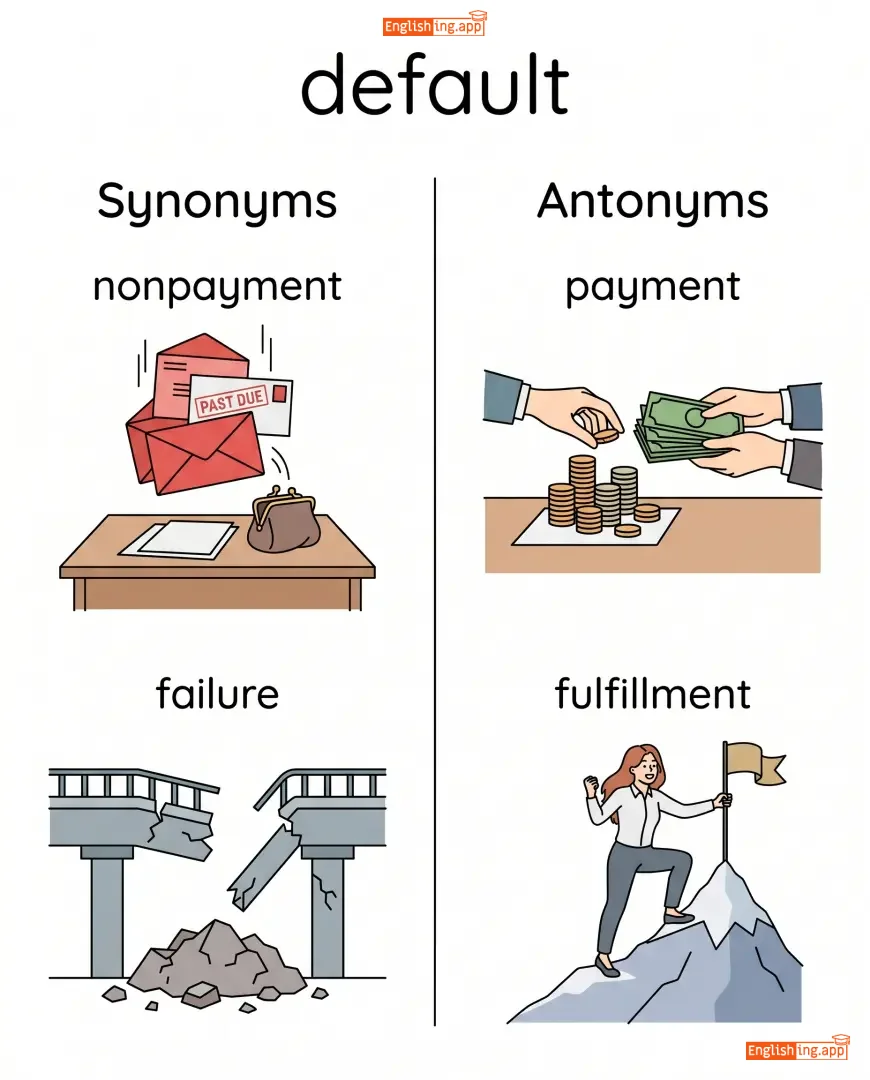
failure to fulfill an obligation, especially to repay a loan
••••••
|
The company defaulted on its loan payments.
公司在贷款支付方面违约。
••••••
|
公司在贷款支付方面违约。
Gōngsī zài dàikuǎn zhīfù fāngmiàn wéiyuē.
••••••
|
in default
违约
••••••
|
in a state of failing to fulfill an obligation
••••••
|
违约状态
wéiyuē zhuàngtài
••••••
|
nonpayment, failure, negligence, omission
••••••
|
payment, fulfillment, compliance
••••••
|
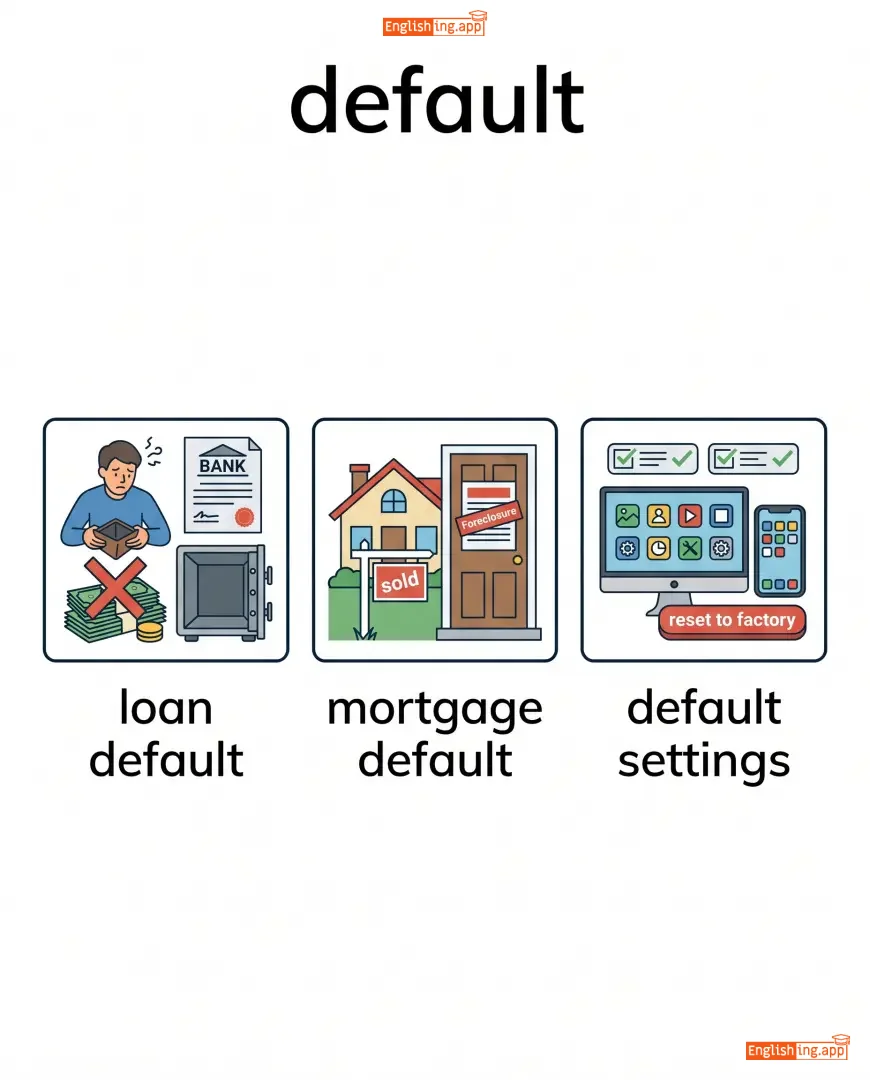
loan default, mortgage default, default settings, default judgment
••••••
|
Default → 不偿还债务
••••••
|
|
#2168
👎
|
/dɪˈfeɪm/
verb
(dɪˈfeɪm)
••••••
|
|
诽谤
fěibàng
••••••
|
defamed
dɪˈfeɪmd
••••••
|
defamed
dɪˈfeɪmd
••••••
|
defames
dɪˈfeɪmz
••••••
|
defaming
dɪˈfeɪmɪŋ
••••••
|
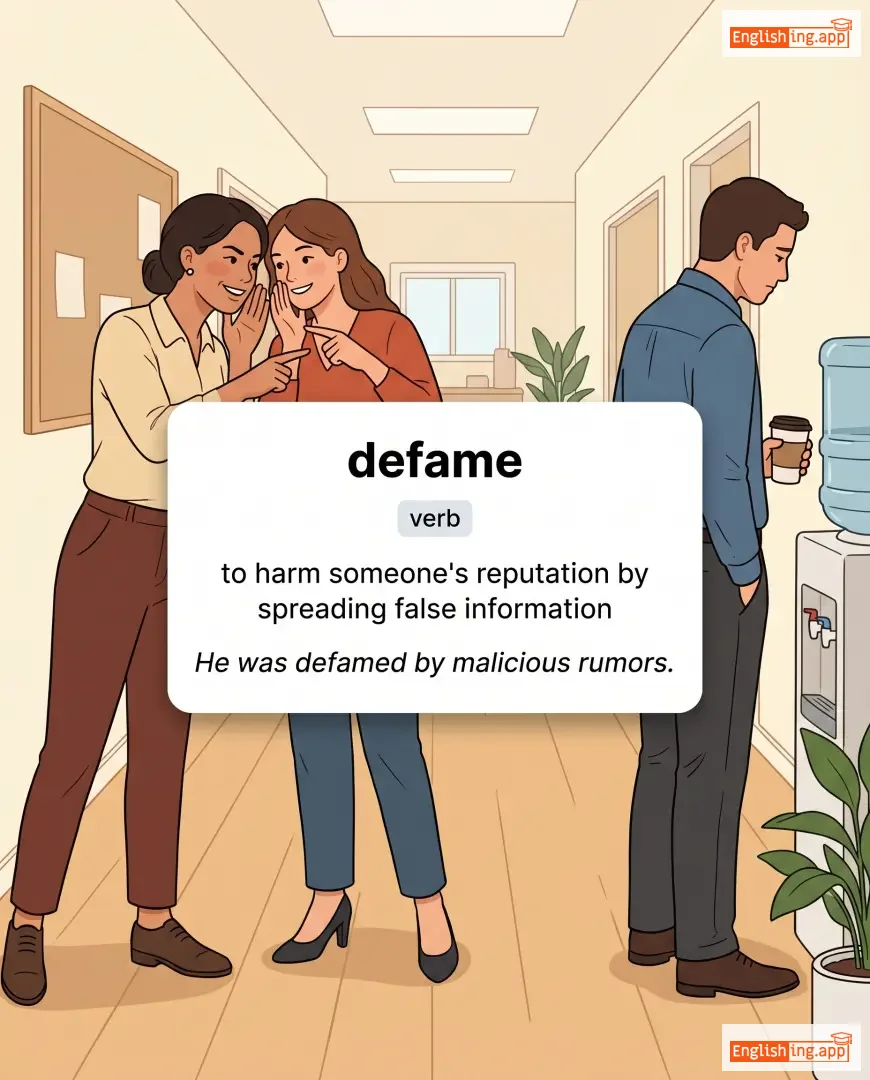
to harm someone's reputation by spreading false information
••••••
|
He was defamed by malicious rumors.
他被恶意谣言诽谤。
••••••
|
他被恶意谣言诽谤。
Tā bèi èyì yáoyán fěibàng.
••••••
|
- •••••• | - •••••• | - •••••• |
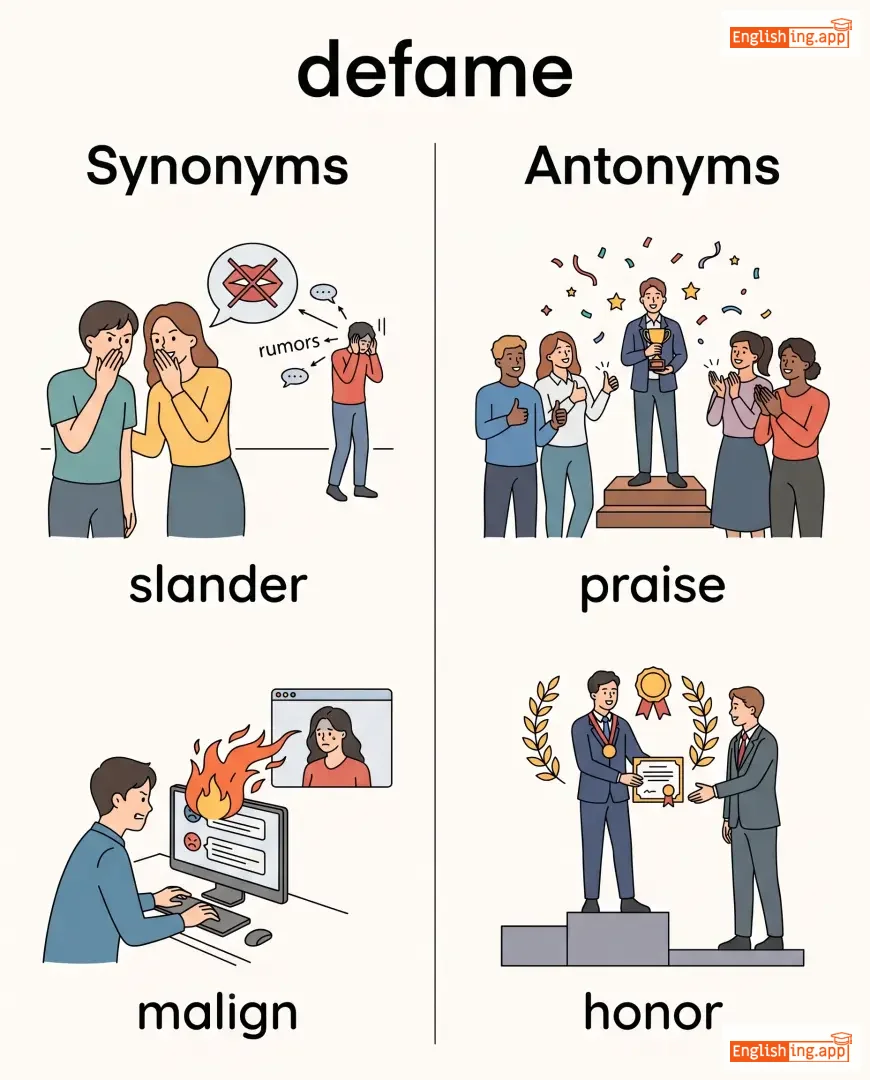
slander, malign, libel, disparage
••••••
|
praise, honor, commend
••••••
|
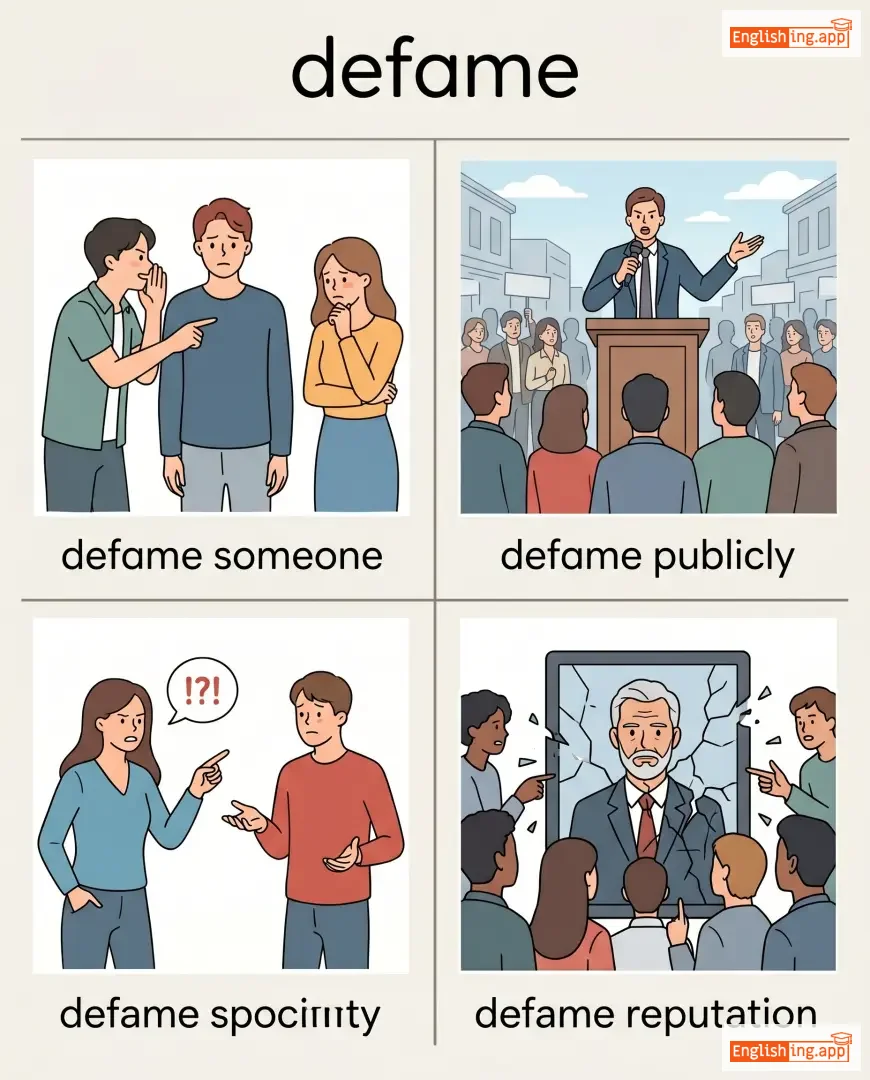
defame someone, defame publicly, defame reputation
••••••
|
De + Fame → 声誉受损意味着诽谤
••••••
|
|
#2169
📰
|
/ˌdɛfəˈmeɪʃən/
noun
(dífāmèi)
••••••
|
- •••••• |
诽谤
feibàng
••••••
|
- •••••• | - •••••• | - •••••• | - •••••• |
the act of damaging someone's reputation by making false statements
••••••
|
The newspaper was sued for defamation of character. |
该报因诽谤被起诉。
Gāi bào yīn fěibàng bèi qǐsù.
••••••
|
character defamation |
false statements made to damage someone's reputation
••••••
|
人身诽谤
rénshēn fěibàng
••••••
|
slander, libel, vilification, smear
••••••
|
praise, compliment, admiration
••••••
|
defamation suit, defamation case, defamation of character
••••••
|
Defame → 诽谤,损害名誉
••••••
|
|
#2170
💰
|
/ˈdiːfælˌkeɪt/
verb
(dɪˈfælkeɪt)
••••••
|
- •••••• |
挪用公款
nuóyòng gōngkuǎn
••••••
|
defalcated
dɪˈfælkeɪtɪd
••••••
|
defalcated
dɪˈfælkeɪtɪd
••••••
|
defalcates
dɪˈfælkeɪts
••••••
|
defalcating
dɪˈfælkeɪtɪŋ
••••••
|
to misuse or embezzle money that one is responsible for
••••••
|
The accountant was accused of defalcating company funds.
会计被指控挪用公司资金。
••••••
|
会计被指控挪用公司资金。
Kuàijì bèi zhǐkòng nuóyòng gōngsī zījīn.
••••••
|
- •••••• | - •••••• | - •••••• |
embezzle, misappropriate, steal, pilfer
••••••
|
repay, reimburse, compensate
••••••
|
defalcate funds, defalcate money, accused of defalcating
••••••
|
Defaulter + allocate → Defalcate 意味着滥用或偷窃资金
••••••
|
|
#2171
🖊️
|
/dɪˈfeɪs/
verb
(dɪˈfeɪs)
••••••
|
- •••••• |
毁坏
huǐhuài
••••••
|
defaced
dɪˈfeɪst
••••••
|
defaced
dɪˈfeɪst
••••••
|
defaces
dɪˈfeɪs
••••••
|
defacing
dɪˈfeɪsɪŋ
••••••
|
to spoil the surface or appearance of something, especially by writing or drawing on it
••••••
|
The vandals defaced the wall with graffiti.
那些恶棍用涂鸦毁坏了墙面。
••••••
|
那些恶棍用涂鸦毁坏了墙面。
Nàxiē ègùn yòng túyā huǐhuài le qiángmiàn.
••••••
|
- •••••• | - •••••• | - •••••• |
disfigure, mar, vandalize, damage, ruin
••••••
|
restore, beautify, repair
••••••
|
deface property, deface monument, deface wall, deface statue
••••••
|
Deface = 毁坏 = 破坏外观
••••••
|
|
#2172
⚖️
|
/diːm/
verb
(dīm)
••••••
|
- •••••• |
认为, 判断
rènwéi, pàn duàn
••••••
|
deemed
dīmd
••••••
|
deemed
dīmd
••••••
|
deems
dīms
••••••
|
deeming
dīming
••••••
|
to regard or consider in a specified way
••••••
|
The project was deemed a success by the board.
该项目被董事会认为是成功的。
••••••
|
该项目被董事会认为是成功的。
Gāi xiàngmù bèi dǒngshìhuì rènwéi shì chénggōng de.
••••••
|
- •••••• | - •••••• | - •••••• |
consider, regard, judge, view, think
••••••
|
ignore, disregard, overlook
••••••
|
deem necessary, deem appropriate, deem fit, deem important
••••••
|
Deem 就像 Dream,意味着评价或认为某件事是对的。
••••••
|
|
#2173
📊
|
/dɪˈdjuːsəbl/
adjective
(dídjúxībl)
••••••
|
- •••••• |
可推断的
ke tuīduàn de
••••••
|
- •••••• | - •••••• | - •••••• | - •••••• |
able to be deduced; possible to be inferred
••••••
|
The solution is deducible from the data provided. |
解决方案可以从提供的数据中推断出来。
Jiějué fāng'àn kěyǐ cóng tígōng de shùjù zhōng tuīduàn chūlái.
••••••
|
- •••••• | - •••••• | - •••••• |
inferable, derivable, logical, concludable
••••••
|
indeterminable, unclear, unknowable
••••••
|
deducible conclusion, deducible result, logically deducible, deducible from data
••••••
|
可推断的意思是可以从数据中推导出的结论。
••••••
|
|
#2174
🕵️
|
/dɪˈdjuːs/
verb
(dídíús)
••••••
|
- •••••• |
推断
tuīduàn
••••••
|
deduced
dídíúsd
••••••
|
deduced
dídíúsd
••••••
|
deduces
dídíús
••••••
|
deducing
dédyúxíng
••••••
|
to reach a conclusion by reasoning or inference
••••••
|
From the evidence, the detective deduced that the suspect was lying.
从证据来看,侦探推断出嫌疑人是在撒谎。
••••••
|
从证据来看,侦探推断出嫌疑人是在撒谎。
Cóng zhèngjù lái kàn, zhēntàn tuīduàn chū xiányí rén shì zài sāhuǎng.
••••••
|
- •••••• | - •••••• | - •••••• |
conclude, infer, reason, derive, assume
••••••
|
misinterpret, misconceive, confuse
••••••
|
deduce meaning, deduce from evidence, deduce logically, deduce result
••••••
|
Deduce: DI+clues 达成推断。
••••••
|
|
#2175
🎯
|
/ˌdɛdɪˈkeɪʃən/
noun
(dedikāxiàn)
••••••
|
|
献身
xianshen
••••••
|
- •••••• | - •••••• | - •••••• | - •••••• |
the quality of being committed to a task or purpose
••••••
|
Her dedication to her studies earned her top grades. |
她对学习的献身精神使她获得了最高的成绩。
Ta dui xuexi de xianshen jingshen shi ta huodele zuigao de chengji.
••••••
|
dedication ceremony |
a formal event to dedicate a building or monument
••••••
|
献身仪式
xianshen yishi
••••••
|
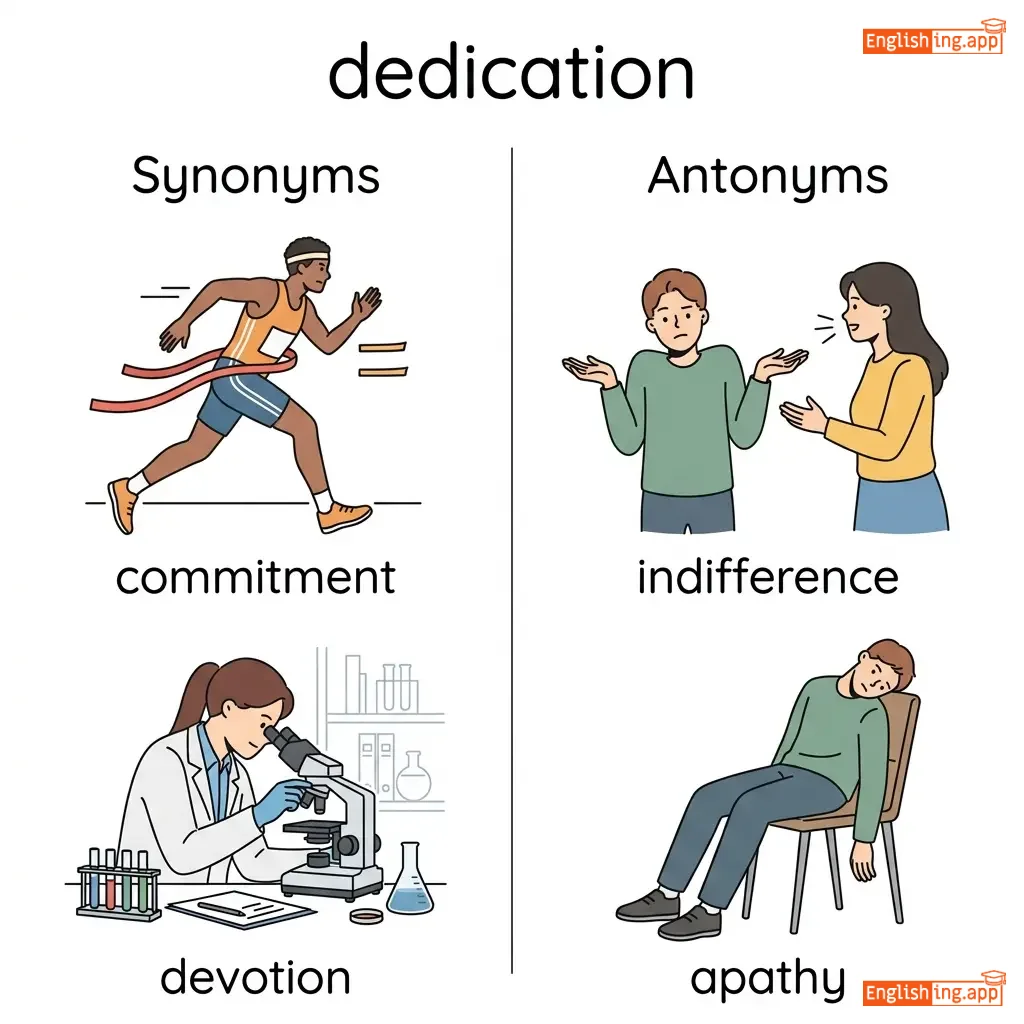
commitment, devotion, perseverance, loyalty, diligence
••••••
|
indifference, apathy, neglect
••••••
|
show dedication, strong dedication, dedication to work, dedication and hard work
••••••
|
Dedication 就像是完全献身的学生,他们对自己的目标全心投入。
••••••
|
|
#2176
🎤
|
/dɪˈkleɪm/
verb
••••••
|
- •••••• | - •••••• |
declaimed
••••••
|
declaimed
••••••
|
declaims
••••••
|
declaiming
••••••
|
to speak aloud in a formal, passionate, or theatrical way
••••••
|
The actor declaimed his lines with great intensity. |
- •••••• |
declaim against |
to speak passionately in opposition to something
••••••
|
- •••••• |
recite, proclaim, orate, speak, deliver
••••••
|
murmur, whisper
••••••
|
declaim loudly, declaim against, declaim poetry, declaim passionately
••••••
|
No •••••• |
|
#2177
⚰️
|
/dɪˈkrɛpɪˌtjuːd/
noun
(dɪˈkrɛpɪˌtjuːd)
••••••
|
- •••••• |
衰败
shuāibài
••••••
|
- •••••• | - •••••• | - •••••• | - •••••• |
the state of being old, weak, and worn out
••••••
|
The once-great empire fell into decrepitude. |
曾经伟大的帝国陷入了衰败。
Céngjīng wěidà de dìguó xiànrùle shuāibài.
••••••
|
- •••••• | - •••••• | - •••••• |
frailty, decay, feebleness, deterioration, debility
••••••
|
strength, vitality, vigor
••••••
|
fall into decrepitude, state of decrepitude, signs of decrepitude
••••••
|
衰败意味着衰老 → decrepit house = 衰败。
••••••
|
|
#2178
🏚️
|
/dɪˈkrɛpɪt/
adjective
(dɪˈkrɛpɪt)
••••••
|
- •••••• |
破旧
pojiu
••••••
|
- •••••• | - •••••• | - •••••• | - •••••• |
worn out or weakened by age or neglect
••••••
|
The decrepit old house was on the verge of collapse. |
那座破旧的老房子几乎要坍塌了。
Na zuo pojiu de lao fangzi jihu yao tantali.
••••••
|
- •••••• | - •••••• | - •••••• |
dilapidated, weak, feeble, fragile, broken-down
••••••
|
strong, sturdy, robust
••••••
|
decrepit house, decrepit building, decrepit old man, decrepit chair
••••••
|
破旧 → 破旧的东西像很旧的房子
••••••
|
|
#2179
📜
|
/dɪˈkriː/
noun/verb
(dɪˈkriː)
••••••
|
- •••••• |
法令
fǎlìng
••••••
|
decreed
dìkrid
••••••
|
decreed
dìkrid
••••••
|
decrees
dìkríz
••••••
|
decreeing
dìkríing
••••••
|
an official order or command, often by authority
••••••
|
The king issued a decree banning hunting in the forest.
国王发布了一个禁止在森林中狩猎的法令。
••••••
|
国王发布了一个禁止在森林中狩猎的法令。
Guówáng fābùle yīgè jìnzhǐ zài sēnlín zhōng shòuliè de fǎlìng.
••••••
|
royal decree
皇家法令
••••••
|
an official order from a monarch
••••••
|
皇家法令
huángjiā fǎlìng
••••••
|
order, mandate, ruling, proclamation, edict
••••••
|
request, suggestion, appeal
••••••
|
issue a decree, royal decree, presidential decree, decree of divorce
••••••
|
法令 = 君主发布命令,大家都要遵循。
••••••
|
|
#2180
🦆
|
/ˈdiːkɔɪ/
noun/verb
(迪科伊)
••••••
|
- •••••• |
诱饵
yòu'ěr
••••••
|
decoyed
迪科伊德
••••••
|
decoyed
迪科伊德
••••••
|
decoys
迪科伊兹
••••••
|
decoying
迪科伊英
••••••
|
something or someone used to lure or mislead
••••••
|
The hunters used a wooden duck as a decoy.
猎人们用一只木鸭作为诱饵。
••••••
|
猎人们用一只木鸭作为诱饵。
Lièrénmen yòng yī zhī mù yā zuòwéi yòu'ěr.
••••••
|
set a decoy
放置诱饵
••••••
|
to use a distraction to mislead someone
••••••
|
放置诱饵
fàngzhì yòu'ěr
••••••
|
lure, bait, trap, distraction, enticement
••••••
|
truth, reality, honesty
••••••
|
use a decoy, hunting decoy, police decoy, act as a decoy
••••••
|
诱饵就像是' decoy',用于迷惑他人。
••••••
|
|
#2181
🎩
|
/dɪˈkɔːrəs/
adjective
(德科罗斯)
••••••
|
- •••••• |
得体
détǐ
••••••
|
- •••••• | - •••••• | - •••••• | - •••••• |
characterized by propriety, good taste, and proper manners
••••••
|
She maintained a decourous silence during the ceremony. |
她在仪式上保持了得体的沉默。
Tā zài yíshì shàng bǎochí le détǐ de chénmò.
••••••
|
- •••••• | - •••••• | - •••••• |
proper, polite, well-mannered, refined, respectable
••••••
|
improper, rude, indecorous
••••••
|
decourous silence, decourous behavior, decourous manner, decourous conduct
••••••
|
deco + ros → 在仪式上,得体的行为是必须的 (détǐ)。
••••••
|
|
#2182
📜
|
/dɪˈkɔːrəm/
noun
(dè kè lún)
••••••
|
|
礼仪
lǐyí
••••••
|
- •••••• | - •••••• | - •••••• | - •••••• |
behavior in keeping with good taste and propriety
••••••
|
The students maintained decorum during the ceremony. |
学生们在仪式期间保持了礼仪。
Xuéshēngmen zài yíshì qījiān bǎochí le lǐyí.
••••••
|
maintain decorum |
to behave in a proper and respectful manner
••••••
|
保持礼仪
bǎochí lǐyí
••••••
|
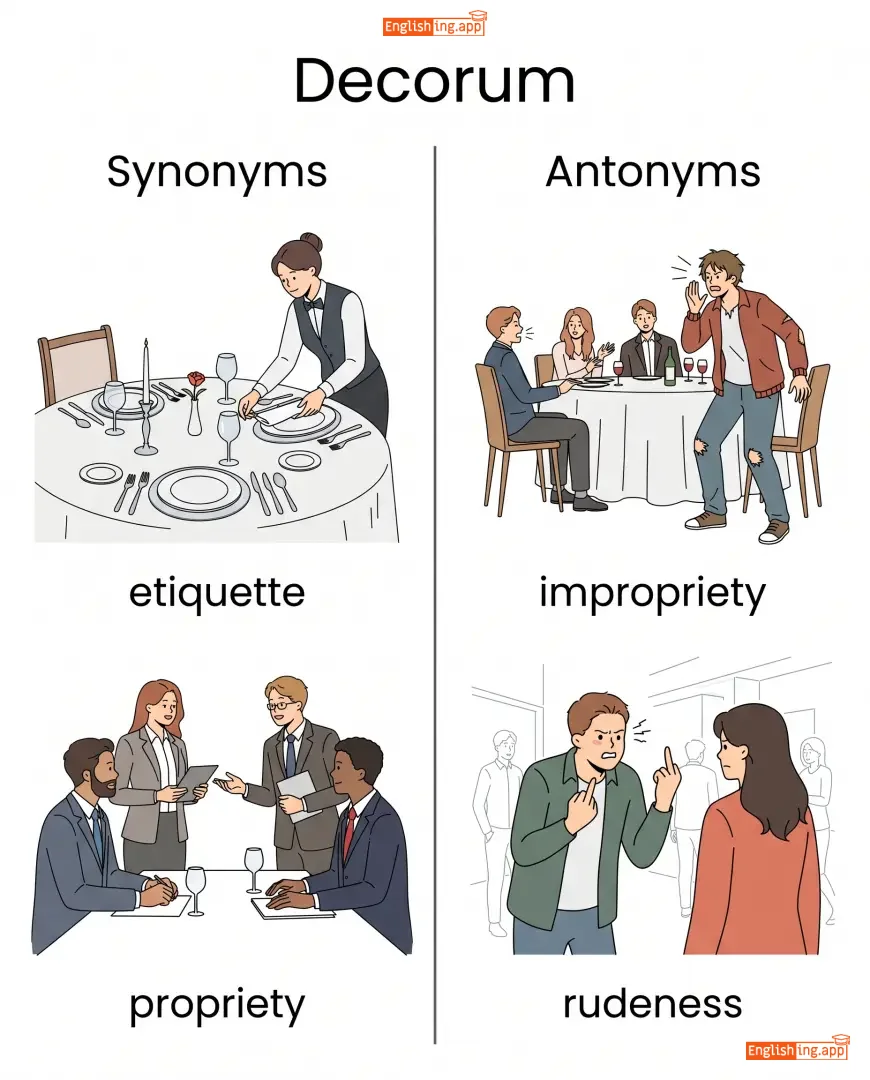
etiquette, propriety, manners, civility, dignity
••••••
|
impropriety, rudeness, disorder
••••••
|
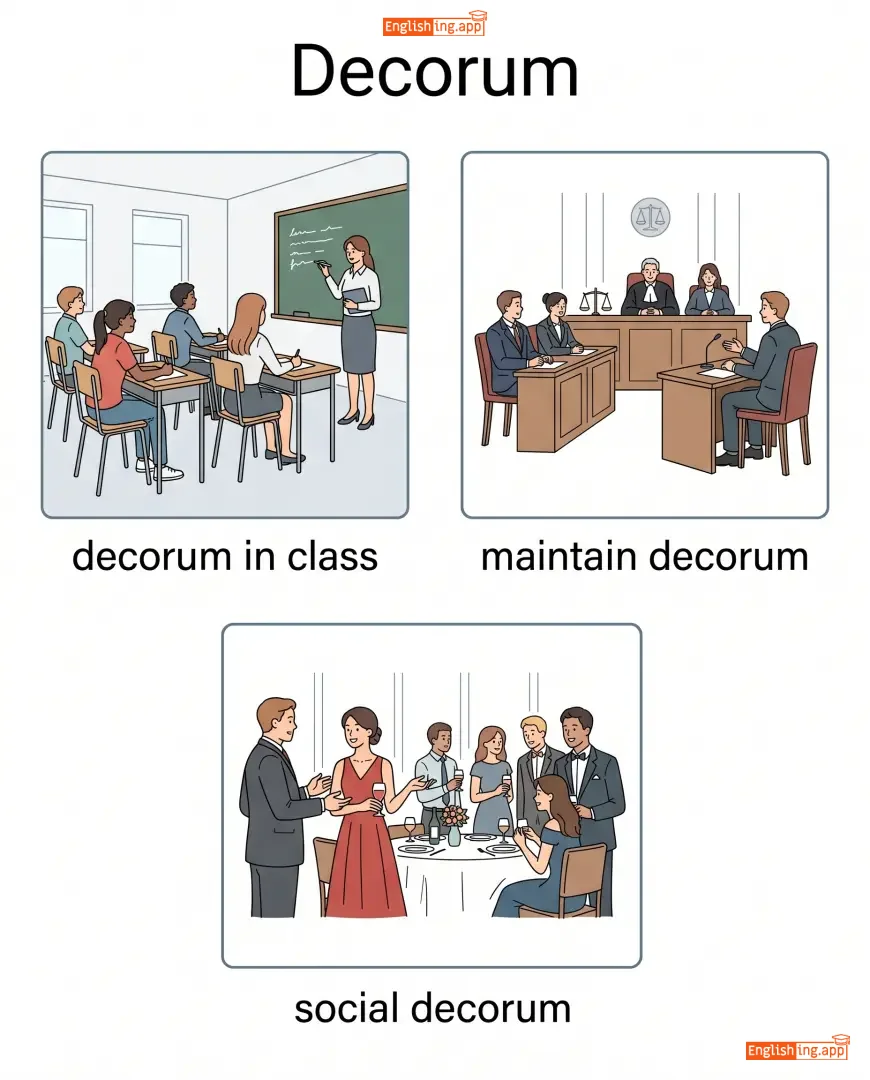
decorum in class, maintain decorum, social decorum
••••••
|
礼仪意味着保持得体和尊重的行为。
••••••
|
|
#2183
🙏
|
/ˈdekərəs/
adjective
(dékuòrǎsī)
••••••
|
- •••••• |
得体
détǐ
••••••
|
- •••••• | - •••••• | - •••••• | - •••••• |
showing proper and polite behavior; marked by good taste
••••••
|
The audience gave a decorous applause after the performance. |
观众在演出后给予了得体的掌声。
Guānzhòng zài yǎnchū hòu jǐyǔle détǐ de zhǎngshēng.
••••••
|
- •••••• | - •••••• | - •••••• |
proper, polite, respectable, civilized, tasteful
••••••
|
improper, indecorous, rude
••••••
|
decorous manner, decorous behavior, decorous silence
••••••
|
Decor + 体 → 得体的行为就像是装饰,既得体又有品味。
••••••
|
|
#2184
🧪
|
/ˌdiː.kɒmpəˈzɪʃən/
noun
(dɪˌkəmˈpoʊzɪʃən)
••••••
|
- •••••• |
分解
fenjie
••••••
|
- •••••• | - •••••• | - •••••• | - •••••• |
the process of decaying or breaking down into simpler parts
••••••
|
The decomposition of leaves enriches the soil. |
叶子的分解使土壤更加肥沃。
Yezi de fenjie shi turang gengjia feiwo.
••••••
|
decomposition reaction |
a type of chemical reaction where a compound breaks down into simpler substances
••••••
|
分解反应
fenjie fanying
••••••
|
decay, rot, disintegration, breakdown, putrefaction
••••••
|
growth, preservation, formation
••••••
|
decomposition process, decomposition reaction, decomposition of matter
••••••
|
分解 = 物质的腐烂或分解,像是树叶分解一样。
••••••
|
|
#2185
👗
|
/ˌdeɪ.kɒlˈteɪ/
adjective
(低胸裙)
••••••
|
- •••••• |
低胸的服装
dīxiōng de fúzhuāng
••••••
|
- •••••• | - •••••• | - •••••• | - •••••• |
of a woman's dress or top, cut low so as to reveal the neck and upper chest
••••••
|
She wore a decollete gown to the party. |
她穿着低胸裙子参加了派对。
Tā chuānzhuó dīxiōng qúnzi cānjiāle pàiduì.
••••••
|
- •••••• | - •••••• | - •••••• |
low-cut, revealing, plunging, open-necked
••••••
|
modest, covered, high-necked
••••••
|
decollete gown, decollete dress, decollete neckline
••••••
|
低胸裙,低胸衣服,用于女性,显示胸部的低胸设计。
••••••
|
|
#2186
🔓
|
/diːˈkoʊd/
verb
••••••
|
- •••••• | - •••••• |
decoded
••••••
|
decoded
••••••
|
decodes
••••••
|
decoding
••••••
|
to convert a coded message into a readable form; to interpret meaning
••••••
|
The software can decode the hidden message within seconds. |
- •••••• |
decode the mystery |
to understand or solve something that is puzzling
••••••
|
- •••••• |
interpret, decipher, translate, unravel, decrypt
••••••
|
encode, encrypt, scramble
••••••
|
decode message, decode signal, decode information, decode data
••••••
|
No •••••• |
|
#2187
⛰️
|
/dɪˈklɪvɪti/
noun
(迪克利维提)
••••••
|
- •••••• |
坡度
pōdù
••••••
|
- •••••• | - •••••• | - •••••• | - •••••• |
a downward slope of ground
••••••
|
They carefully climbed down the declivity of the hill. |
他们小心地爬下了山坡。
Tāmen xiǎxīn de pá xiàle shānpō.
••••••
|
- •••••• | - •••••• | - •••••• |
slope, incline, descent, downhill
••••••
|
ascent, rise
••••••
|
steep declivity, rocky declivity, natural declivity, gentle declivity
••••••
|
Declivity 意味着坡度,就像山坡的倾斜。
••••••
|
|
#2188
✍️
|
/dɪˈklærətɪv/
adjective
(dɪˈklærətɪv)
••••••
|
- •••••• |
陈述的
chénshù de
••••••
|
- •••••• | - •••••• | - •••••• | - •••••• |
relating to a statement that declares something; in grammar, a sentence that makes a statement
••••••
|
A declarative sentence simply states a fact or opinion. |
陈述句只是陈述一个事实或意见。
Chénshù jù zhǐshì chénshù yīgè shìshí huò yìjiàn
••••••
|
- •••••• | - •••••• | - •••••• |
stated, asserted, affirmative, expressive
••••••
|
interrogative, imperative
••••••
|
declarative statement, declarative form, declarative sentence, declarative mood
••••••
|
陈述的就是陈述 — 只陈述一个事实或意见。
••••••
|
|
#2189
🗣️
|
/dɪˈklæməˌtɔri/
adjective
(迪克拉马托里)
••••••
|
- •••••• |
激昂的演讲风格
jī'áng de yǎnjiǎng fēnggé
••••••
|
- •••••• | - •••••• | - •••••• | - •••••• |
speaking in a loud, rhetorical, or dramatic way
••••••
|
The politician’s declamatory style impressed some but irritated others. |
这位政治家的激昂演讲风格让一些人印象深刻,但让另一些人感到恼火。
Zhè wèi zhèngzhìjiā de jī'áng yǎnjiǎng fēnggé ràng yīxiē rén yìnxiàng shēnkè, dàn ràng lìng yīxiē rén gǎndào nǎohuǒ.
••••••
|
- •••••• | - •••••• | - •••••• |
theatrical, rhetorical, bombastic, oratorical
••••••
|
quiet, subdued, restrained
••••••
|
declamatory style, declamatory speech, declamatory tone, declamatory manner
••••••
|
激昂的演讲风格就像戏剧,充满了戏剧性。
••••••
|
|
#2190
📢
|
/ˌdɛkləˈmeɪʃən/
noun
(dí kè lā méi shēn)
••••••
|
- •••••• |
朗诵
lǎng sòng
••••••
|
- •••••• | - •••••• | - •••••• | - •••••• |
a formal speech delivered with rhetorical or dramatic effect
••••••
|
Her declamation captivated the audience at the competition. |
她的朗诵在比赛中吸引了观众。
Tā de lǎngsòng zài bǐsài zhōng xīyǐn le guānzhòng.
••••••
|
- •••••• | - •••••• | - •••••• |
speech, oration, address, recitation
••••••
|
silence, quiet
••••••
|
public declamation, declamation contest, dramatic declamation, declamation style
••••••
|
朗诵,即带有修辞或戏剧效果的演讲,类似‘declaim’动作。
••••••
|
Vocabulary Quiz
Test your vocabulary by matching words with their translations or meanings.
Login to take the quiz
Comments (0)
Share your thoughts and join the discussion.
Join the discussion by logging in
Login to CommentNo comments yet
Be the first to share your thoughts!