






Swipe left or right, or use the buttons. Tap image to zoom.
例句翻译
单词
Lesson 348Lesson 348 - 遮罩切换
|
表情符号
|
单词 | Images | 翻译 | 过去时 | 过去分词 | 第三人称单数 | 动名词 | 含义 | 例句 | 例句翻译 | 示例表达 | 示例表达含义 | 示例表达翻译 | 同义词 | 反义词 | 搭配词 | 助记符 |
|---|---|---|---|---|---|---|---|---|---|---|---|---|---|---|---|---|---|
|
#10405
🌏
|
/ˈeɪʒən/
adjective, noun
(éixiān)
••••••
|
- •••••• |
亚洲的
yazhou de
••••••
|
- •••••• | - •••••• | - •••••• | - •••••• |
relating to Asia or its people
••••••
|
She loves Asian culture. |
她喜欢亚洲文化。
Tā xǐhuān Yàzhōu wénhuà.
••••••
|
- •••••• | - •••••• | - •••••• |
oriental, eastern, Asiatic, Far Eastern
••••••
|
western, European
••••••
|
Asian food, Asian countries, Asian people
••••••
|
Asian 意味着亚洲的 — 直接与亚洲相关,容易记住。
••••••
|
|
#10406
🏅
|
/ˈæθliːt/
noun
(æθliːt)
••••••
|
- •••••• |
运动员
yùndòngyuán
••••••
|
- •••••• | - •••••• | - •••••• | - •••••• |
a person who is trained or skilled in physical exercises, sports, or games requiring strength, agility, or stamina
••••••
|
The athlete trained hard for the upcoming Olympic Games. |
运动员为即将到来的奥林匹克运动会进行了艰苦训练。
Yùndòngyuán wèi jíjiāng dào lái de àolínpǐkè yùndònghuì jìnxíngle jiānkǔ xùnliàn.
••••••
|
professional athlete |
someone who competes in sports as a paid career
••••••
|
职业运动员
zhíyè yùndòngyuán
••••••
|
sportsman, competitor, player, runner, gymnast
••••••
|
spectator, amateur
••••••
|
professional athlete, Olympic athlete, star athlete, great athlete
••••••
|
运动员 = 竞技场的英雄 🏅 - 运动员 = 游戏的高手!
••••••
|
|
#10407
📍
|
/æt/
preposition
(at)
••••••
|
- •••••• |
在
zai
••••••
|
- •••••• | - •••••• | - •••••• | - •••••• |
used to indicate a specific time, place, or direction
••••••
|
She arrived at the airport on time. |
她准时到达机场。
Tā zhǔnshí dào dá jīchǎng.
••••••
|
at all costs |
do something regardless of the difficulty or expense
••••••
|
不惜一切代价
bù xī yīqiè dàijià
••••••
|
in, on, near, by, upon
••••••
|
away from, outside
••••••
|
at night, at home, at work, at the same time
••••••
|
At 的意思是 '在' — 就像 'at home' 的意思是 '在家'。
••••••
|
|
#10408
🤔
|
/əˈsuːm/
verb
(阿修姆)
••••••
|
- •••••• |
假设
jiǎshè
••••••
|
assumed
阿修姆德
••••••
|
assumed
阿修姆德
••••••
|
assumes
阿修姆斯
••••••
|
assuming
阿修明
••••••
|
to think that something is true without proof
••••••
|
I assume he will be late to the meeting.
我假设他会迟到会议。
••••••
|
我假设他会迟到会议。
Wǒ jiǎshè tā huì chídào huìyì.
••••••
|
make an assumption
做出假设
••••••
|
to form an idea without evidence
••••••
|
做出假设
zuòchū jiǎshè
••••••
|
suppose, presume, imagine, believe, expect
••••••
|
doubt, question, deny
••••••
|
assume responsibility, assume control, assume the worst, assume a role
••••••
|
假设:'假'一假,'设'一设成。
••••••
|
|
#10409
🔗
|
/əˈsoʊsieɪt/
verb
(联想)
••••••
|
|
联想
lianxiang
••••••
|
associated
联想过
••••••
|
associated
联想过
••••••
|
associates
联想
••••••
|
associating
联想中
••••••
|
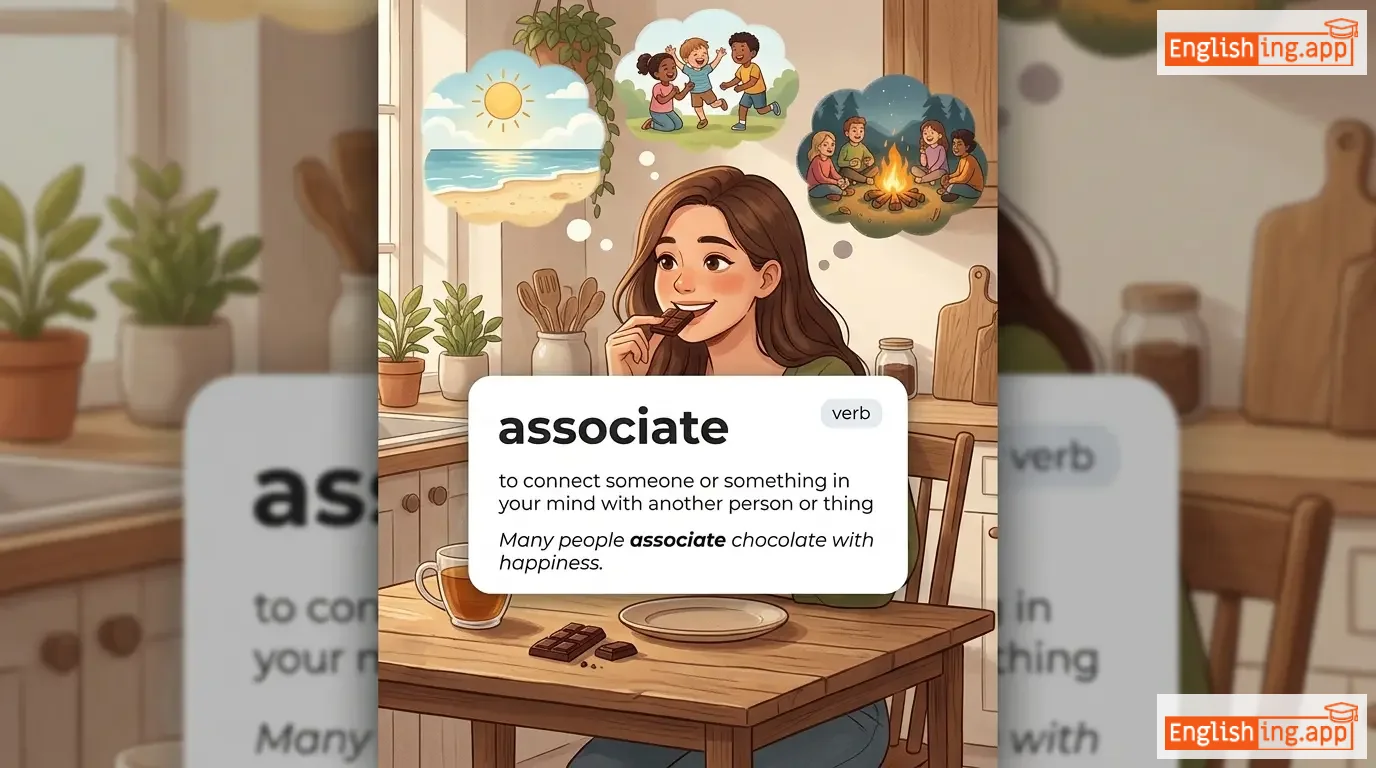
to connect someone or something in your mind with another person or thing
••••••
|
Many people associate chocolate with happiness.
许多人把巧克力和幸福联系在一起。
••••••
|
许多人把巧克力和幸福联系在一起。
Xu duoren ba qiaokeli he xingfu lianxi zai yiqi.
••••••
|
associate with
与…关联
••••••
|
to be connected or involved with someone or something
••••••
|
与…关联
yu...guanlian
••••••
|
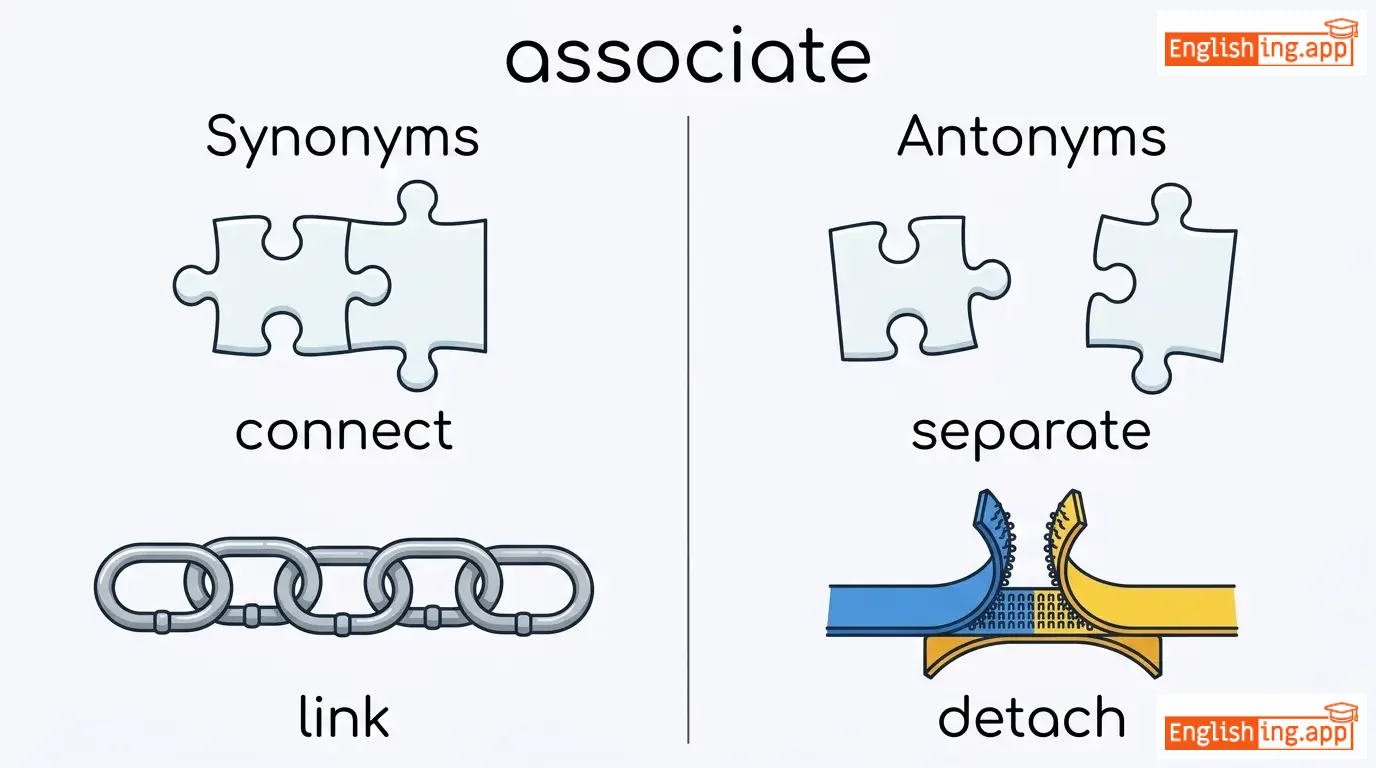
connect, link, relate, join, unite
••••••
|
separate, detach, disconnect
••••••
|
associate professor, associate degree, associate member, strongly associate
••••••
|
联想意味着连接 — 就像'associate professor'是副教授。
••••••
|
|
#10410
👩💼
|
/əˈsɪstənt/
noun
(助手)
••••••
|
- •••••• |
助手
zhùshǒu
••••••
|
- •••••• | - •••••• | - •••••• | - •••••• |
a person who helps or supports another, often in a job
••••••
|
She works as an assistant in a law firm.
她在一家律师事务所做助理。
••••••
|
她在一家律师事务所做助理。
Tā zài yījiā lǜshī shìwùsuǒ zuò zhùlǐ.
••••••
|
personal assistant
个人助理
••••••
|
a person employed to help manage someone’s daily work or tasks
••••••
|
个人助理
gèrén zhùlǐ
••••••
|
helper, aide, deputy, associate, supporter
••••••
|
supervisor, boss, leader
••••••
|
teaching assistant, assistant manager, office assistant, research assistant
••••••
|
助理像Google Assistant一样,是你的个人助手。
••••••
|
|
#10411
🆘
|
/əˈsɪstəns/
noun
(āxīnsī)
••••••
|
- •••••• |
帮助
bāngzhù
••••••
|
- •••••• | - •••••• | - •••••• | - •••••• |
help or support given to someone in need
••••••
|
The organization provides financial assistance to students. |
该组织为学生提供财务援助。
Gāi zǔzhī wèi xuéshēng tígōng cáiwù yuánzhù.
••••••
|
render assistance |
to provide help or support
••••••
|
提供帮助
tígōng bāngzhù
••••••
|
help, support, aid, backing, relief
••••••
|
hindrance, obstruction, neglect
••••••
|
seek assistance, provide assistance, medical assistance, technical assistance
••••••
|
Assistance 意味着帮助,就像在地铁里当你请求 'Assistance please' 的时候。
••••••
|
|
#10412
🤲
|
/əˈsɪst/
verb
(阿西斯特)
••••••
|
- •••••• |
帮助
bangzhu
••••••
|
assisted
阿西斯特德
••••••
|
assisted
阿西斯特德
••••••
|
assists
阿西斯特斯
••••••
|
assisting
阿西斯廷
••••••
|
to help or support someone in doing something
••••••
|
The nurse will assist the doctor during the surgery.
护士将协助医生进行手术。
••••••
|
护士将协助医生进行手术。
Hushi jiang xiezhu yisheng jinxing shoushu.
••••••
|
assist in
协助于
••••••
|
to help someone with something
••••••
|
协助于
xiezhu yu
••••••
|
help, support, aid, facilitate, encourage
••••••
|
hinder, obstruct
••••••
|
assist someone, assist with, assist in, assist greatly
••••••
|
Assisting 就像帮朋友做事。
••••••
|
|
#10413
📄
|
/əˈsaɪnmənt/
noun
(ā sài n mén tè)
••••••
|
- •••••• |
任务
renwu
••••••
|
- •••••• | - •••••• | - •••••• | - •••••• |
a task or piece of work given to someone as part of their duties
••••••
|
The students completed their homework assignment on time. |
学生们按时完成了他们的家庭作业任务。
xueshengmen an shi wancheng le tamen de jiating zuoye renwu.
••••••
|
writing assignment |
a task requiring written work
••••••
|
写作任务
xiezuo renwu
••••••
|
task, duty, job, responsibility, project
••••••
|
neglect, avoidance
••••••
|
school assignment, work assignment, group assignment, writing assignment
••••••
|
Assignment是分配给你做的任务 – 教师分配的工作
••••••
|
|
#10414
📝
|
/əˈsaɪn/
verb
(āxīng)
••••••
|
- •••••• |
分配
fēnpèi
••••••
|
assigned
āxīnd
••••••
|
assigned
āxīnd
••••••
|
assigns
āxīns
••••••
|
assigning
āxīning
••••••
|
to give someone a task, duty, or responsibility
••••••
|
The manager will assign tasks to the new employees.
经理将给新员工分配任务。
••••••
|
经理将给新员工分配任务。
Jīnglǐ jiāng gěi xīn yuángōng fēnpèi rènwù.
••••••
|
assign blame
分配责任
••••••
|
to place responsibility for something on someone
••••••
|
分配责任
fēnpèi zérèn
••••••
|
allocate, appoint, designate, delegate, allot
••••••
|
withhold, refuse
••••••
|
assign tasks, assign roles, assign duties, assign responsibility
••••••
|
Assign 就是把任务分配给别人。
••••••
|
|
#10415
💎
|
/ˈæsɛt/
noun
(æset)
••••••
|
|
资产
zīchǎn
••••••
|
- •••••• | - •••••• | - •••••• | - •••••• |
a valuable person, skill, or resource; something owned that has value
••••••
|
Her communication skills are a great asset to the company.
她的沟通技巧是公司的一大资产。
••••••
|
她的沟通技巧是公司的一大资产。
Tā de gōutōng jìqiǎo shì gōngsī de yī dà zīchǎn.
••••••
|
liquid asset
流动资产
••••••
|
an asset that can easily be converted into cash
••••••
|
流动资产
liúdòng zīchǎn
••••••
|
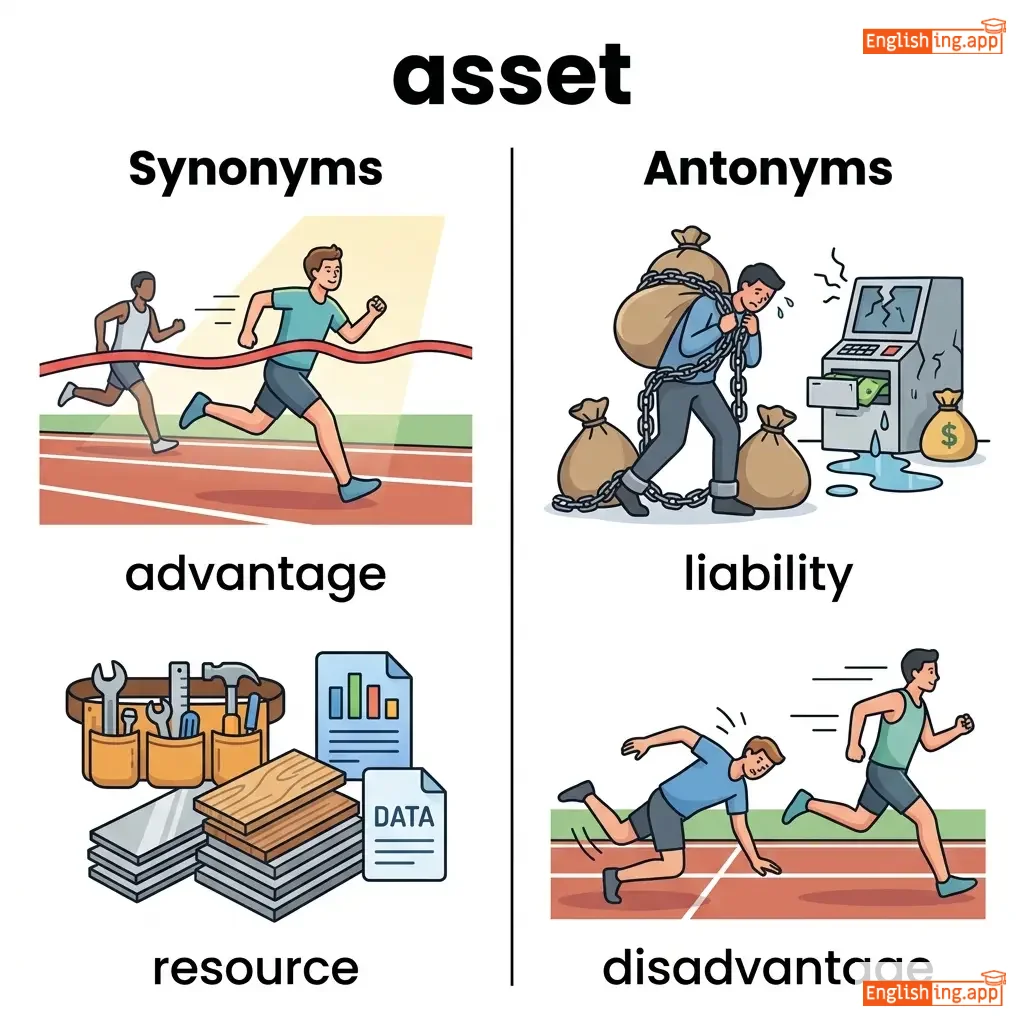
advantage, resource, property, benefit, strength
••••••
|
liability, disadvantage
••••••
|
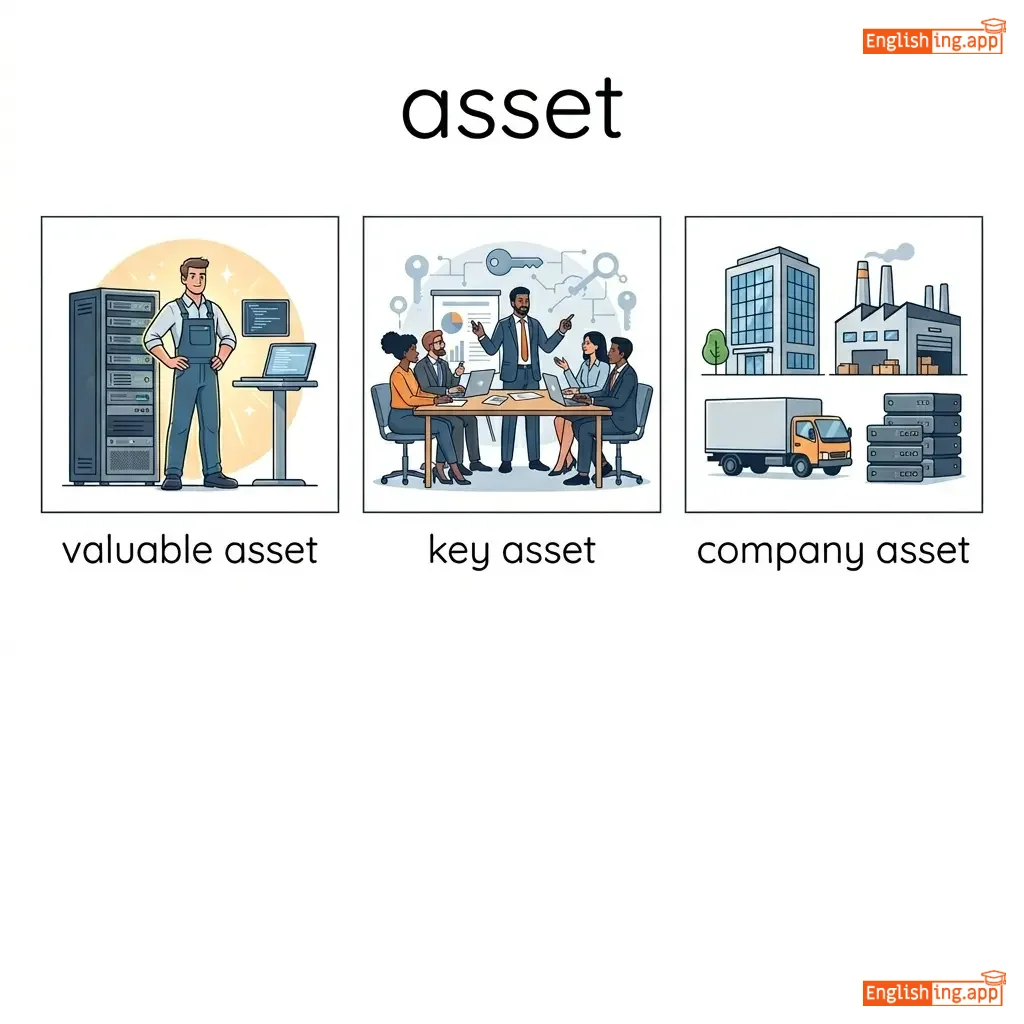
valuable asset, key asset, company asset, financial asset
••••••
|
Asset就像是能够流动的财富
••••••
|
|
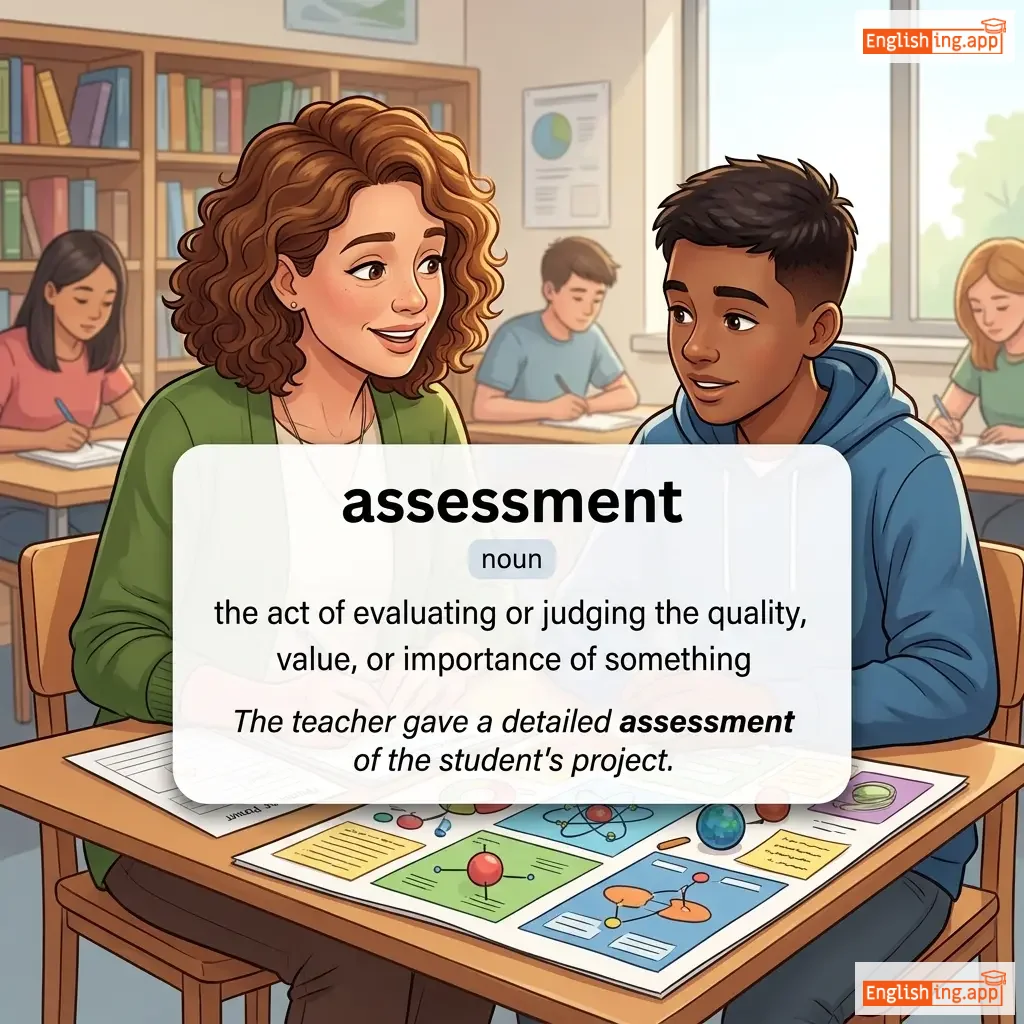
#10416
📊
|
/əˈsɛsmənt/
noun
(评估)
••••••
|
|
评估
pinggu
••••••
|
- •••••• | - •••••• | - •••••• | - •••••• |
the act of evaluating or judging the quality, value, or importance of something
••••••
|
The teacher gave a detailed assessment of the student's project. |
老师对学生的项目进行了详细评估。
Laoshi dui xuesheng de xiangmu jinxing le xiangxi pinggu.
••••••
|
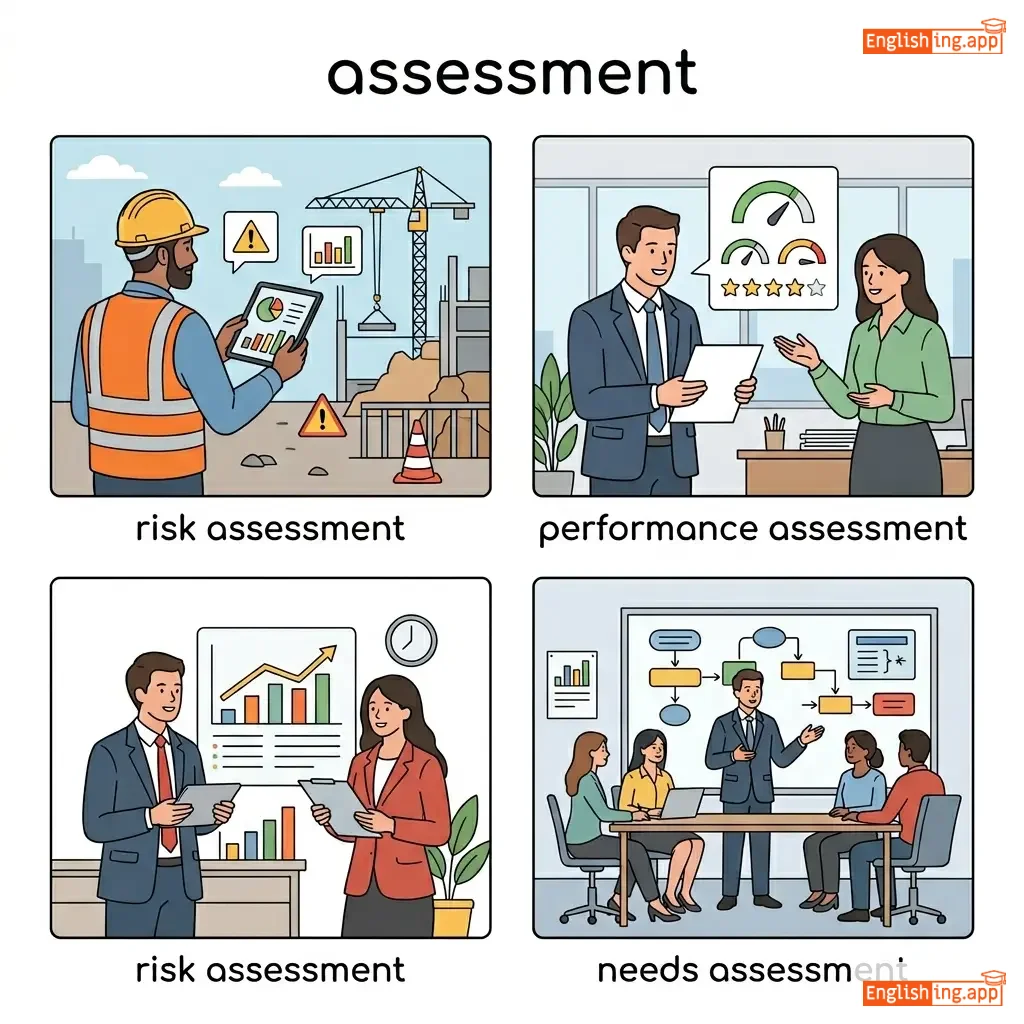
needs assessment |
a systematic process to determine and address needs or gaps
••••••
|
需求评估
xuqiu pinggu
••••••
|
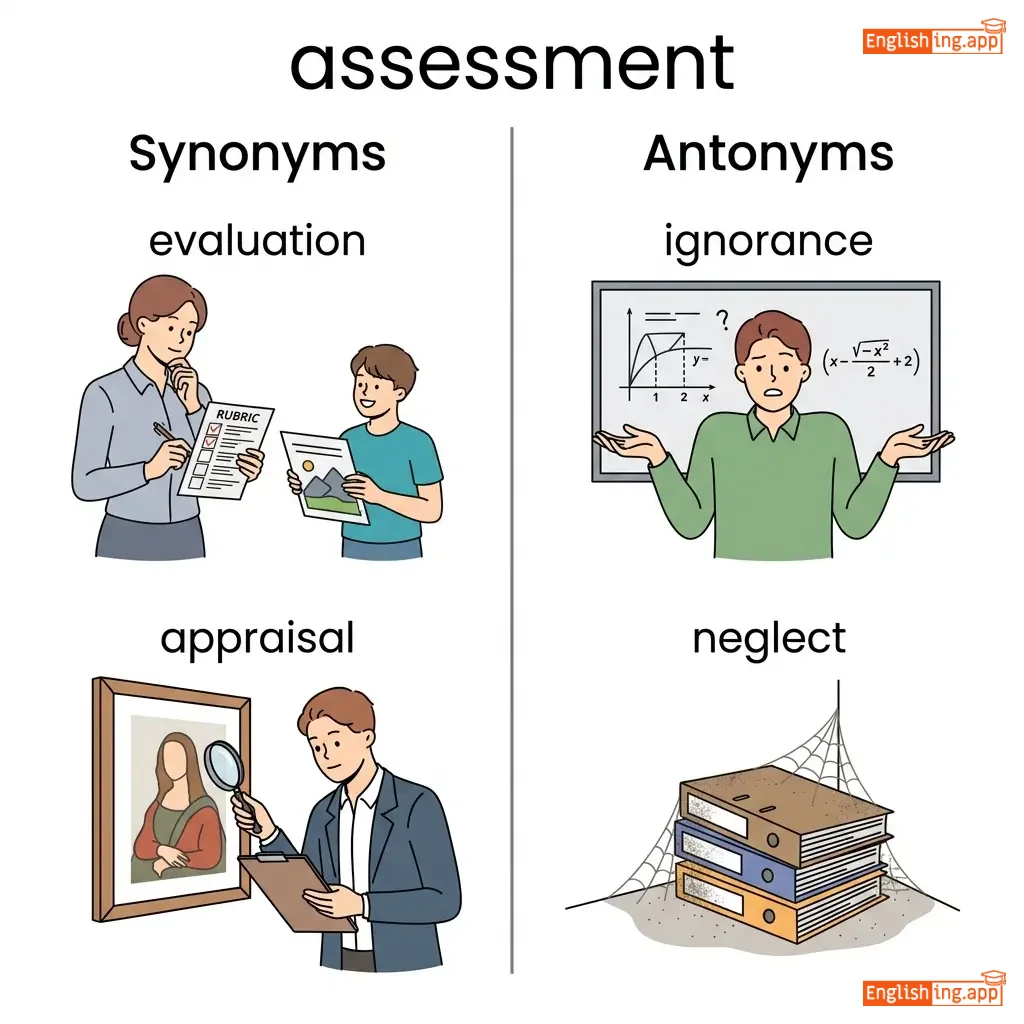
evaluation, appraisal, review, analysis, examination
••••••
|
ignorance, neglect
••••••
|
risk assessment, performance assessment, needs assessment, environmental assessment
••••••
|
Assessment 表示评估 (评估)
••••••
|
|
#10417
⚔️
|
/əˈsɔːlt/
noun, verb
(阿索尔特)
••••••
|
- •••••• |
攻击
gōngjī
••••••
|
assaulted
阿索尔特德
••••••
|
assaulted
阿索尔特德
••••••
|
assaults
阿索尔特斯
••••••
|
assaulting
阿索尔廷
••••••
|
a physical attack or to attack someone violently
••••••
|
He was charged with assault after the fight.
他在打斗后被指控袭击。
••••••
|
他在打斗后因袭击被指控。
Tā zài dǎdòu hòu yīn xíjī bèi zhǐkòng.
••••••
|
sexual assault
性侵害
••••••
|
unwanted sexual contact or attack
••••••
|
性侵害
xìng qīnhài
••••••
|
attack, strike, aggression, offensive
••••••
|
defense, protection
••••••
|
commit assault, charged with assault, physical assault
••••••
|
Assault意味着攻击 — 想想' A Salt attack'就像盐的攻击。
••••••
|
|
#10418
😴
|
/əˈsliːp/
adjective
(ā sī lǐ pǔ)
••••••
|
- •••••• |
熟睡
shúshuì
••••••
|
- •••••• | - •••••• | - •••••• | - •••••• |
in a state of sleep
••••••
|
The baby is fast asleep. |
宝宝正在熟睡。
Bǎobǎo zhèngzài shúshuì.
••••••
|
fall asleep |
to begin sleeping
••••••
|
入睡
rùshuì
••••••
|
sleeping, dozing, resting, napping
••••••
|
awake, alert
••••••
|
fast asleep, fall asleep, sound asleep
••••••
|
Asleep 就是熟睡 — 记住'Sleep'意味着睡觉。
••••••
|
|
#10419
➡️
|
/əˈsaɪd/
adverb, noun
(àsàidè)
••••••
|
- •••••• |
一边
yī biān
••••••
|
- •••••• | - •••••• | - •••••• | - •••••• |
to or on one side; a remark not intended for everyone
••••••
|
He stepped aside to let her pass.
他让到一边让她过去。
••••••
|
他让到一边让她过去。
Tā ràng dào yī biān ràng tā guòqù.
••••••
|
put aside
把...放一边
••••••
|
to save or reserve something
••••••
|
把...放一边
bǎ... fàng yī biān
••••••
|
apart, away, to the side, remark
••••••
|
center, middle
••••••
|
step aside, put aside, aside from
••••••
|
Aside 意味着一边 — 记住 '把它放一边'。
••••••
|
|
#10420
➗
|
/əˈprɒk.sɪ.mət.li/
adverb
(啊普罗克斯密特里)
••••••
|
- •••••• |
大约
dayue
••••••
|
- •••••• | - •••••• | - •••••• | - •••••• |
used to show that something is almost, but not completely, accurate or exact
••••••
|
The journey takes approximately three hours. |
这次旅行大约需要三小时。
Zhe ci luxing dayue xuyao san xiaoshi.
••••••
|
- •••••• | - •••••• | - •••••• |
about, roughly, around, nearly, close to
••••••
|
exactly, precisely, accurately
••••••
|
approximately equal, approximately the same, approximately three hours
••••••
|
Approximately 意味着大约—'大约'几乎总是准确的。
••••••
|
|
#10421
🔄
|
/æz/
conjunction, adverb, preposition
(ā zī)
••••••
|
- •••••• |
作为
zuòwéi
••••••
|
- •••••• | - •••••• | - •••••• | - •••••• |
used to compare, to indicate the role or function of something, or to introduce clauses of time or reason
••••••
|
She works as a teacher. |
她作为一名教师工作。
Tā zuòwéi yī míng jiàoshī gōngzuò.
••••••
|
as soon as |
immediately when
••••••
|
一旦
yīdàn
••••••
|
like, while, since, because, when
••••••
|
unlike, different
••••••
|
as well, as soon as, as long as, as if
••••••
|
AS意味着'作为' — 就像'As a teacher' = 作为教师
••••••
|
|
#10422
🎭
|
/ɑːrˈtɪstɪk/
adjective
(艺术的)
••••••
|
- •••••• |
艺术的
yishu de
••••••
|
- •••••• | - •••••• | - •••••• | - •••••• |
having or revealing natural creative skill
••••••
|
She has an artistic sense of design.
她有艺术的设计感。
••••••
|
她有艺术的设计感。
Ta you yishu de sheji gan.
••••••
|
- •••••• | - •••••• | - •••••• |
creative, imaginative, aesthetic, inventive, expressive
••••••
|
unimaginative, uncreative
••••••
|
artistic talent, artistic ability, artistic expression, artistic design
••••••
|
艺术的 🎭 意味着艺术的 - 就像艺术中的创造性设计。
••••••
|
|
#10423
👩🎨
|
/ˈɑːrtɪst/
noun
(艺术家)
••••••
|
- •••••• |
艺术家
yishujia
••••••
|
- •••••• | - •••••• | - •••••• | - •••••• |
a person who creates art, especially paintings or drawings
••••••
|
The artist painted a beautiful landscape.
艺术家画了一幅美丽的风景画。
••••••
|
艺术家画了一幅美丽的风景画。
Yìshùjiā huàle yī fú měilì de fēngjǐnghuà.
••••••
|
con artist
骗子艺术家
••••••
|
a person who deceives others by gaining their trust
••••••
|
骗子
piànzi
••••••
|
painter, creator, illustrator, designer, performer
••••••
|
amateur, layman
••••••
|
famous artist, talented artist, street artist, young artist
••••••
|
Artist 👩🎨 意思是艺术家 - 艺术家画画。 但是 Con artist 意思是骗子。
••••••
|
|
#10424
📰
|
/ˈɑːrtɪkl/
noun
(文章)
••••••
|
- •••••• |
文章
wenzhang
••••••
|
- •••••• | - •••••• | - •••••• | - •••••• |
a piece of writing included in a newspaper, magazine, or journal
••••••
|
He wrote an article about climate change. |
他写了一篇关于气候变化的文章。
Ta xie le yi pian guanyu qihou bianhua de wenzhang.
••••••
|
article of faith |
a firmly held belief
••••••
|
信仰文章
xinyang wenzhang
••••••
|
essay, report, story, piece, feature
••••••
|
silence, speechlessness
••••••
|
newspaper article, magazine article, write an article, publish an article
••••••
|
Article 📰 在中文中是文章 - 在报纸上它叫文章。
••••••
|
|
#10425
🎨
|
/ɑːrt/
noun
(艺术)
••••••
|
- •••••• |
艺术
yishu
••••••
|
- •••••• | - •••••• | - •••••• | - •••••• |
the expression or application of human creative skill and imagination
••••••
|
She studied art at the university. |
她在大学学习艺术。
Ta zai daxue xuexi yishu.
••••••
|
the art of |
the skill in doing something well
••••••
|
做...的艺术
zuo...de yishu
••••••
|
craft, creativity, skill, painting, expression
••••••
|
science, nature, reality
••••••
|
modern art, fine art, art gallery, art history
••••••
|
Art 是 🎨 - 艺术 (yishu) 是人类创造力的表达。
••••••
|
|
#10426
🔄
|
/əˈraʊnd/
adverb, preposition
(əˈraʊnd)
••••••
|
- •••••• |
周围
zhōuwéi
••••••
|
- •••••• | - •••••• | - •••••• | - •••••• |
situated on every side; in a circular way; approximately
••••••
|
There are many restaurants around the park. |
公园周围有很多餐馆。
Gōngyuán zhōuwéi yǒu hěn duō cānguǎn.
••••••
|
turn around |
to move so as to face in the opposite direction
••••••
|
转身
zhuǎnshēn
••••••
|
about, nearly, nearby, approximately, surrounding
••••••
|
far, away, beyond
••••••
|
look around, move around, all around, turn around
••••••
|
Around表示周围 - 公园周围有餐馆。
••••••
|
|
#10427
🪖
|
/ˈɑːrmi/
noun
(ārmí)
••••••
|
- •••••• |
军队
jundui
••••••
|
- •••••• | - •••••• | - •••••• | - •••••• |
a large organized military force trained for war
••••••
|
The army protected the border from attack. |
军队保护了边境免受攻击。
jundui baohule bianjing mian shou gongji.
••••••
|
join the army |
to enlist in the military service
••••••
|
加入军队
jiaru jundui
••••••
|
military, troops, forces, soldiers
••••••
|
civilians, noncombatants
••••••
|
army base, army officer, join the army, regular army
••••••
|
Army = 军队, 🪖 为战争准备的力量
••••••
|
|
#10428
🔫
|
/ɑːrmd/
adjective
(ɑːrmd)
••••••
|
- •••••• |
武装的
wǔzhuāng de
••••••
|
- •••••• | - •••••• | - •••••• | - •••••• |
equipped with or carrying weapons
••••••
|
The bank was robbed by armed men. |
银行被武装分子抢劫了。
Yínháng bèi wǔzhuāng fēnzǐ qiǎngjiéle.
••••••
|
armed to the teeth |
heavily armed or fully equipped with weapons
••••••
|
武装到牙齿
wǔzhuāng dào yáchǐ
••••••
|
equipped, weaponized, fortified, prepared
••••••
|
unarmed, defenseless, vulnerable
••••••
|
armed forces, armed men, armed conflict, heavily armed
••••••
|
Armed, 手臂 (Arm) + 了 (ed) → 武装的,武器在手。
••••••
|
|
#10429
💪
|
/ɑːrm/
noun
(阿姆)
••••••
|
- •••••• |
手臂
shoubi
••••••
|
- •••••• | - •••••• | - •••••• | - •••••• |
the part of the body from the shoulder to the hand; also a branch or division of an organization
••••••
|
She broke her arm while playing football. |
她在踢足球时摔断了手臂。
ta zai ti zuqiu shi shuai duan le shoubi.
••••••
|
twist someone's arm |
to persuade or pressure someone into doing something
••••••
|
扭某人的手臂
niu mou ren de shoubi
••••••
|
limb, branch, extension, wing
••••••
|
leg, trunk
••••••
|
right arm, left arm, strong arm, extend an arm
••••••
|
Arm是手臂, 在运动中不可或缺
••••••
|
|
#10430
⚡
|
/ˈɑːrɡjumənt/
noun
(争论)
••••••
|
|
争执, 论点
zhenglun, lundian
••••••
|
- •••••• | - •••••• | - •••••• | - •••••• |
a disagreement, or a reason given to support or oppose an idea
••••••
|
They had a heated argument about money. |
他们就钱问题发生了激烈的争执。
tamen jiu qian wenti fashengle jilie de zhengzhi.
••••••
|
winning an argument |
successfully convincing someone in a dispute
••••••
|
赢得争论
yingde zhenglun
••••••
|
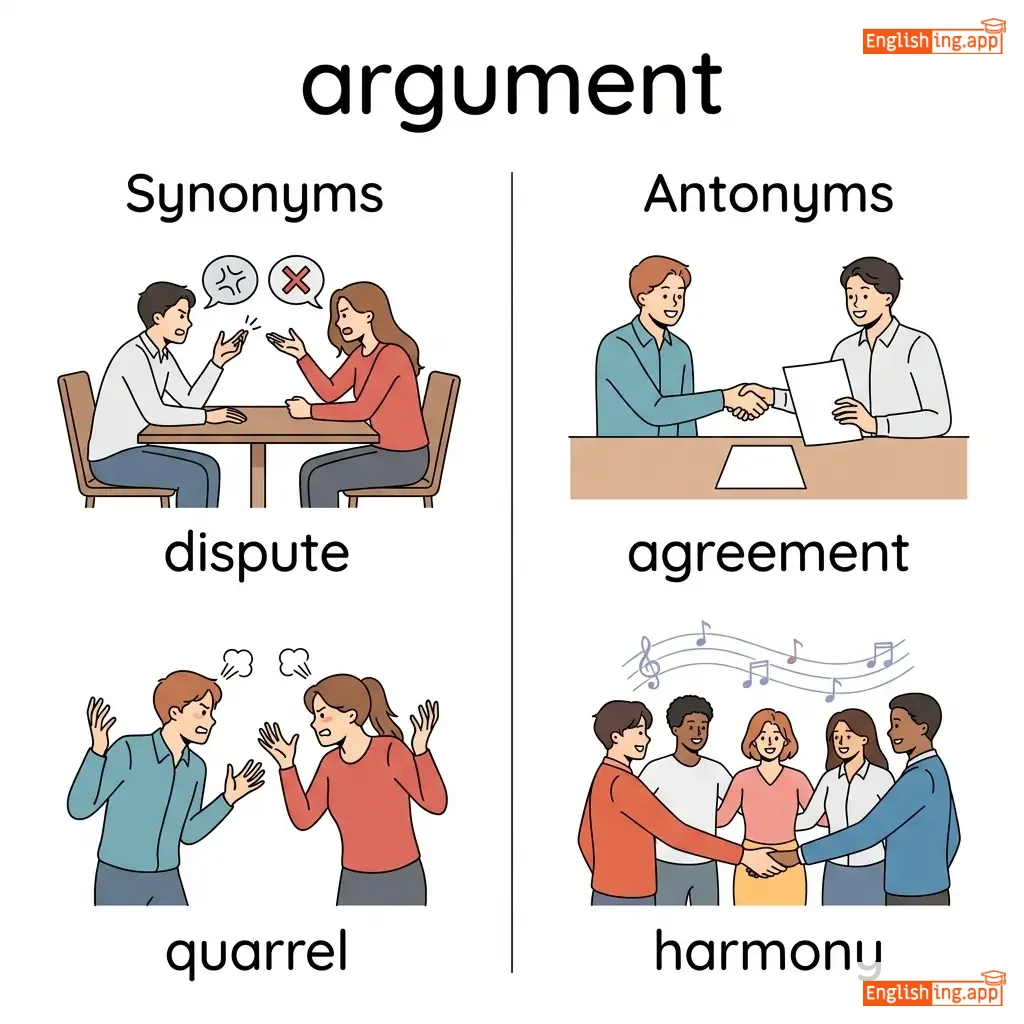
dispute, quarrel, debate, reasoning, contention
••••••
|
agreement, harmony, consensus
••••••
|
heated argument, strong argument, compelling argument, logical argument
••••••
|
Argument 意味着激烈的争论!
••••••
|
|
#10431
🗣️
|
/ˈɑːrɡjuː/
verb
(ārgīu)
••••••
|
|
争论
zhēnglùn
••••••
|
argued
ārgīud
••••••
|
argued
ārgīud
••••••
|
argues
ārgīus
••••••
|
arguing
ārgīuīng
••••••
|
to give reasons for or against something; to dispute or debate
••••••
|
They often argue about politics during dinner.
他们常在晚餐时就政治问题争论。
••••••
|
他们常在晚餐时就政治问题争论。
Tāmen cháng zài wǎncān shí jiù zhèngzhì wèntí zhēnglùn.
••••••
|
argue the toss
争论投掷
••••••
|
to dispute or complain about a decision that has already been made
••••••
|
争论已做的决定
zhēnglùn yǐ zuò de juédìng
••••••
|
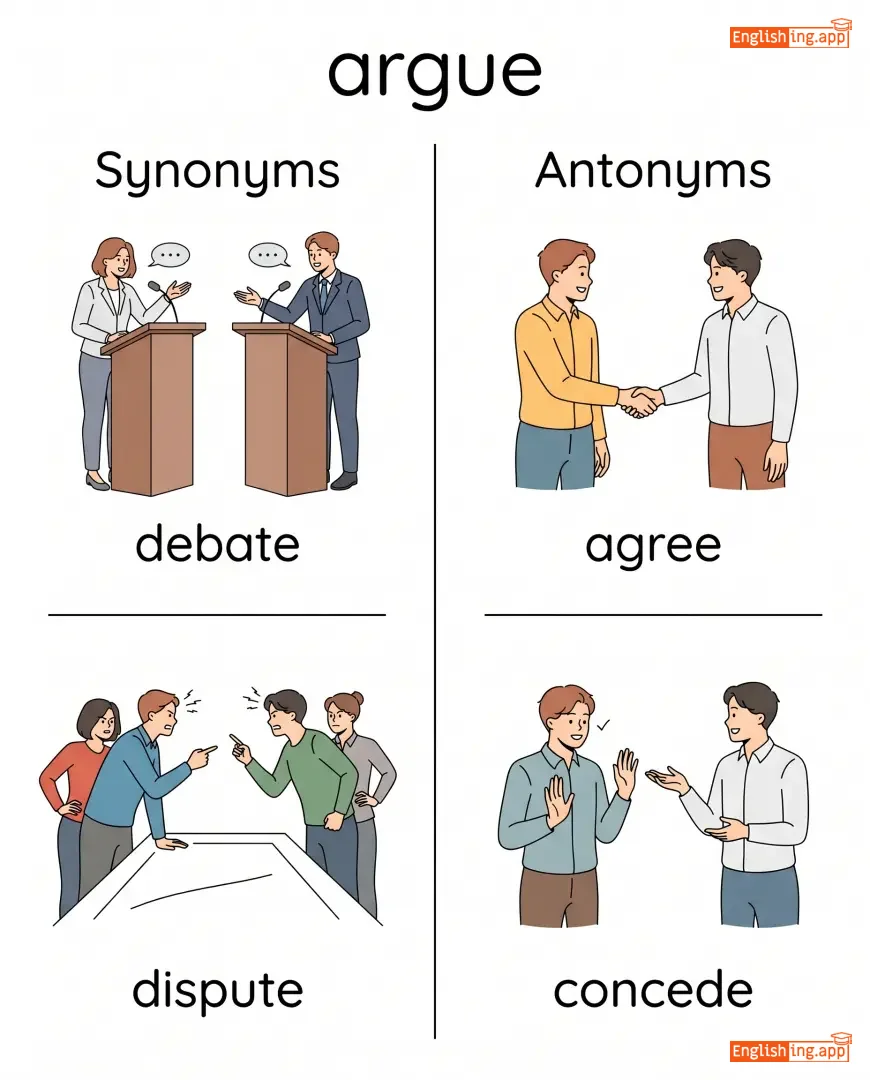
debate, dispute, contend, reason, quarrel
••••••
|
agree, concede, accept
••••••
|
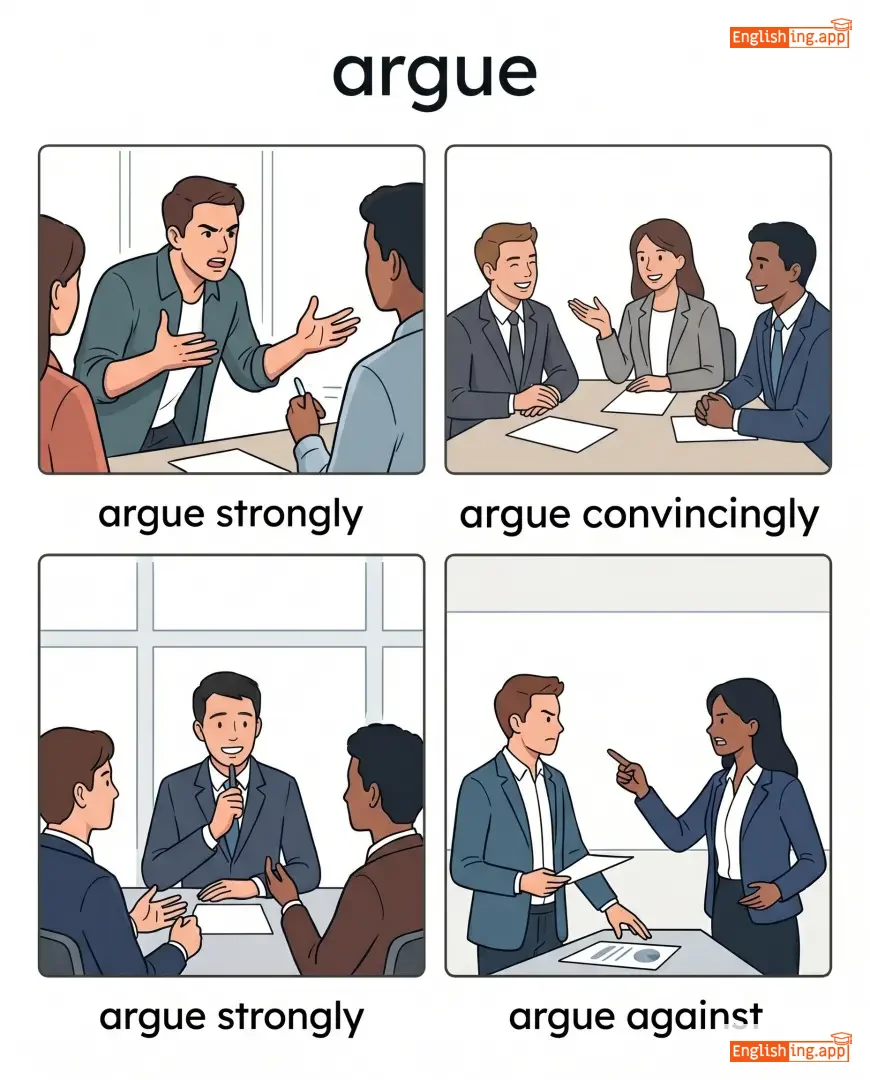
argue strongly, argue convincingly, argue against, argue about
••••••
|
争论就是争议,像 argyu 在英文中一样。
••••••
|
|
#10432
📍
|
/ˈeə.ri.ə/
noun
••••••
|
- •••••• | - •••••• | - •••••• | - •••••• | - •••••• | - •••••• |
a particular region or space; the extent of a surface
••••••
|
This area is known for its beautiful parks. |
- •••••• |
gray area |
an unclear or undefined situation
••••••
|
- •••••• |
region, zone, district, field, space
••••••
|
point, line, boundary
••••••
|
rural area, urban area, gray area, restricted area
••••••
|
No •••••• |
|
#10433
🏛️
|
/ˈɑː.kɪ.tekt/
noun
(建筑师)
••••••
|
- •••••• |
建筑师
jianzhushi
••••••
|
- •••••• | - •••••• | - •••••• | - •••••• |
a person who designs buildings and oversees their construction
••••••
|
The architect designed a modern office building. |
建筑师设计了一座现代的办公楼。
Jianzhushi sheji le yi zuo xiandai de bangonglou.
••••••
|
- •••••• | - •••••• | - •••••• |
designer, planner, builder, creator
••••••
|
destroyer, demolisher
••••••
|
famous architect, software architect, chief architect, landscape architect
••••••
|
Architect 意思是建筑师—设计建筑的专家,打造空间的艺术家。
••••••
|
|
#10434
🕌
|
/ˈær.əb/
noun
••••••
|
- •••••• | - •••••• | - •••••• | - •••••• | - •••••• | - •••••• |
a person belonging to the Semitic people of the Middle East and North Africa
••••••
|
He is an Arab living in Dubai. |
- •••••• | - •••••• | - •••••• | - •••••• |
Middle Easterner, Semite, Bedouin, Muslim
••••••
|
non-Arab, foreigner
••••••
|
Arab world, Arab countries, Arab culture, Arab League
••••••
|
No •••••• |
Vocabulary Quiz
Test your vocabulary by matching words with their translations or meanings.
Login to take the quiz
Comments (0)
Share your thoughts and join the discussion.
Join the discussion by logging in
Login to CommentNo comments yet
Be the first to share your thoughts!